

Running News Daily
Top Ten Stories of the Week
12/7/2019
These are the top ten stories based on views over the last week.



Irish Marathon runner Paul Pollock run his personal best at the Valencia Marathon, 2:10:25 securing the automatic qualifying time for next year’s Tokyo Olympic marathon
It was an improvement of over five minutes on Pollock’s previous best and also moves the Belfast runner to number two on the Irish all-time list behind John Treacy’s 2:09.15 set 31 years ago in Boston, and moving Mark Carroll into third with his 2:10.52 run in New York in 2002. Pollock finished in 20th position in Valencia.
The 33-year-old also qualified for the Rio Olympic marathon in 2015, and has been one of Ireland’s top performers on the road in recent years, his previous best being 2:15.30. A qualified doctor, he has also endured his share of injuries in recent years and as recently as September was out with a broken metatarsal.
Pollock also becomes the first Irish men’s qualifier in the marathon for Tokyo; Fionnuala McCormack becoming the first Irish woman to qualify in Chicago in October. Fellow Belfast runner Stephen Scullion is also eyeing up the Tokyo standard of 2:11.30, eyeing up the Houston marathon next month.
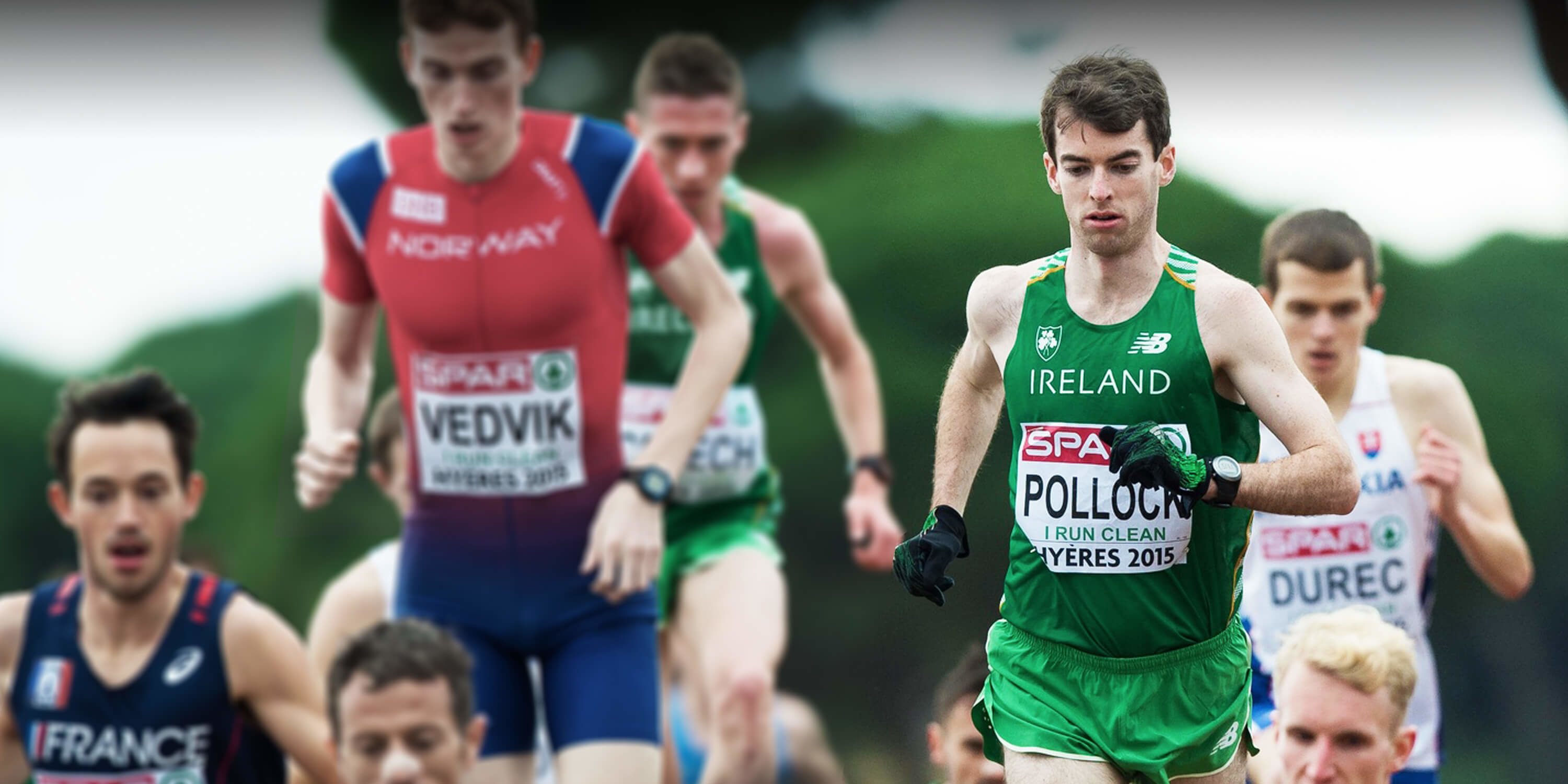
Interestingly Pollock was also wearing the Nike Zoom Vaporfly Next Percent, the running shoes that have courted some controversy for the series of faster marathon times this year.

Also running in Valencia over the 10km, Joshua Cheptegei smashed the world record in that distance, clocking 26.38. The Ugandan clipped six seconds from the previous record of 26.44 set by Kenya’s Patrick Komon in 2010 to complete a sensational 2019 hat-trick that included world titles in cross-country and 10,000m on the track.
Running on his own over the entire second half, a determined Cheptegei reached 6km in 16.02 and 7km in 18.42. Cheptegei forged on, reaching 8km in 21.37, when it became clear that the world record was within reach.
With 23.59 on the clock at the 9km point, Cheptegei needed to cover the final kilometer in 2.45, a close well within his capabilities.
“World cross champion in Denmark, 10,000m world champion in Doha and now the world record here in Valencia. What a year it has been,” the 23-year-old said. “I can’t believe it. I knew that Valencia was going to be a really fast course, one of the fastest in the world. So to get to achieve what we came here for is something really special.”
(12/02/19) Views: 744lan O'Riordan
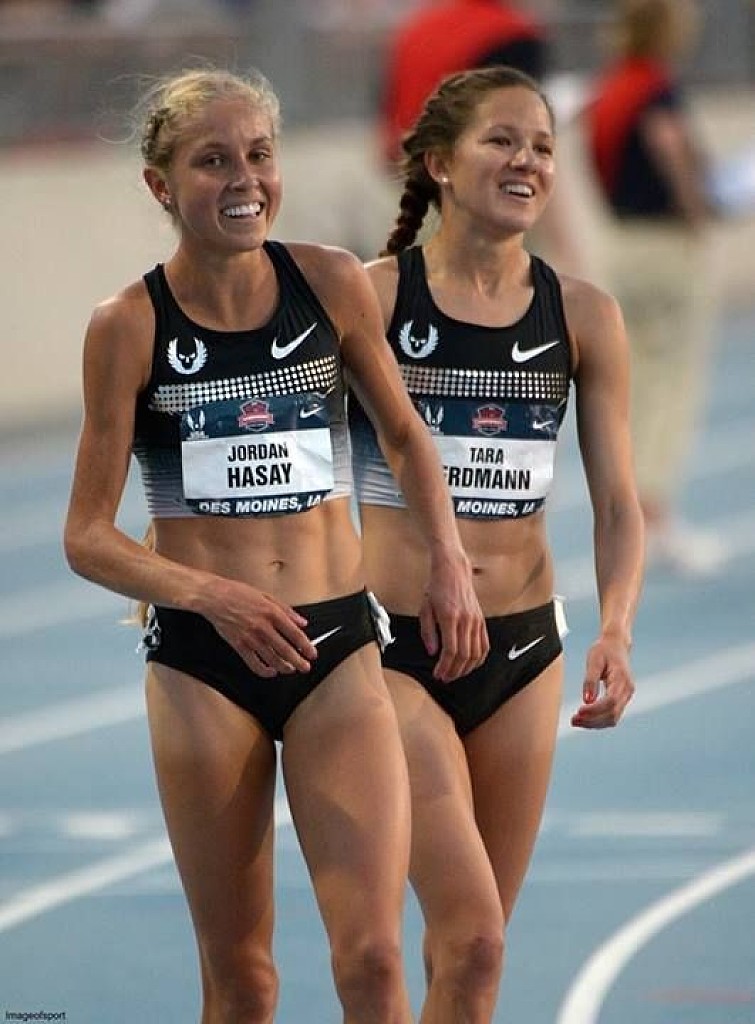
Jordan Hasay says she is going to be ready for the US Olympic Trials after making some changes
Jordan Hasay went into the Chicago Marathon on October 13 in excellent shape, hoping to make a run at the American record in the distance. But about two miles into the race, she tore her left hamstring. She limped past the 5K mark in 22 minutes before dropping out of the race.It was the bitter end of a tumultuous two weeks.
On September 30, her longtime coach, Alberto Salazar, was hit with a four-year ban from track and field for anti-doping violations. Hasay, 28, said she never witnessed anything improper in her time with Salazar and his team, the Nike Oregon Project. On October 11, Nike shut down the Oregon Project, leaving the athletes who had trained with Salazar to work out new coaching and training situations.
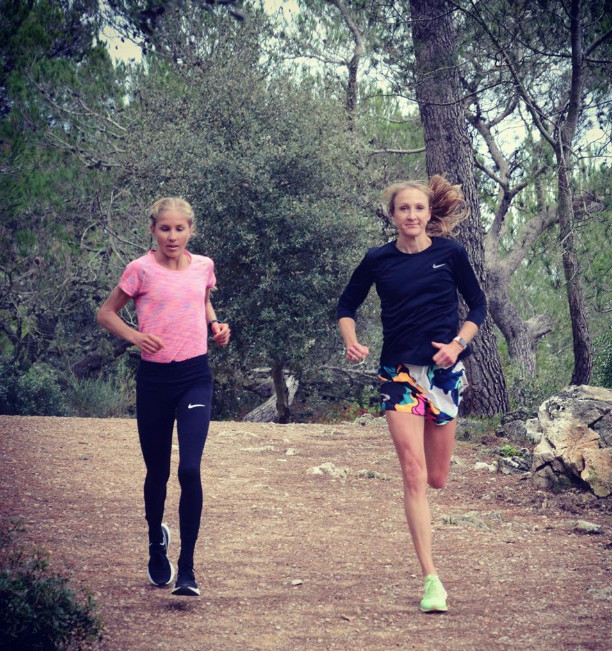
The timing of Hasay’s injury and the coaching upheaval were not ideal: American marathoners are preparing for the Olympic Marathon Trials on February 29, 2020 in Atlanta.
The upheaval has continued this month: On November 7, in an explosive opinion video in The New York Times, Mary Cain, a former teen prodigy who trained with Hasay and others at the Oregon Project, alleged she was “emotionally and physically abused” in her time with Salazar.
On a recent trip to Monaco, she formalized a relationship with Radcliffe to be her “mentor-coach.” Radcliffe held the world record in the women’s marathon, 2:15:25, for 16 years. The record fell last month to Brigid Kosgei, who ran 2:14:04, at the Chicago Marathon, where Hasay dropped out.
Hasay has long admired Radcliffe. As Hasay was training for her first marathon, Boston in 2017, her late mother used to call Hasay by the pet name “Paula.” Radcliffe and Hasay first met at the 2017 Chicago Marathon, where Hasay ran 2:20:57 and became the second-fastest American marathoner behind Deena Kastor. Hasay and Radcliffe have kept in touch since then.
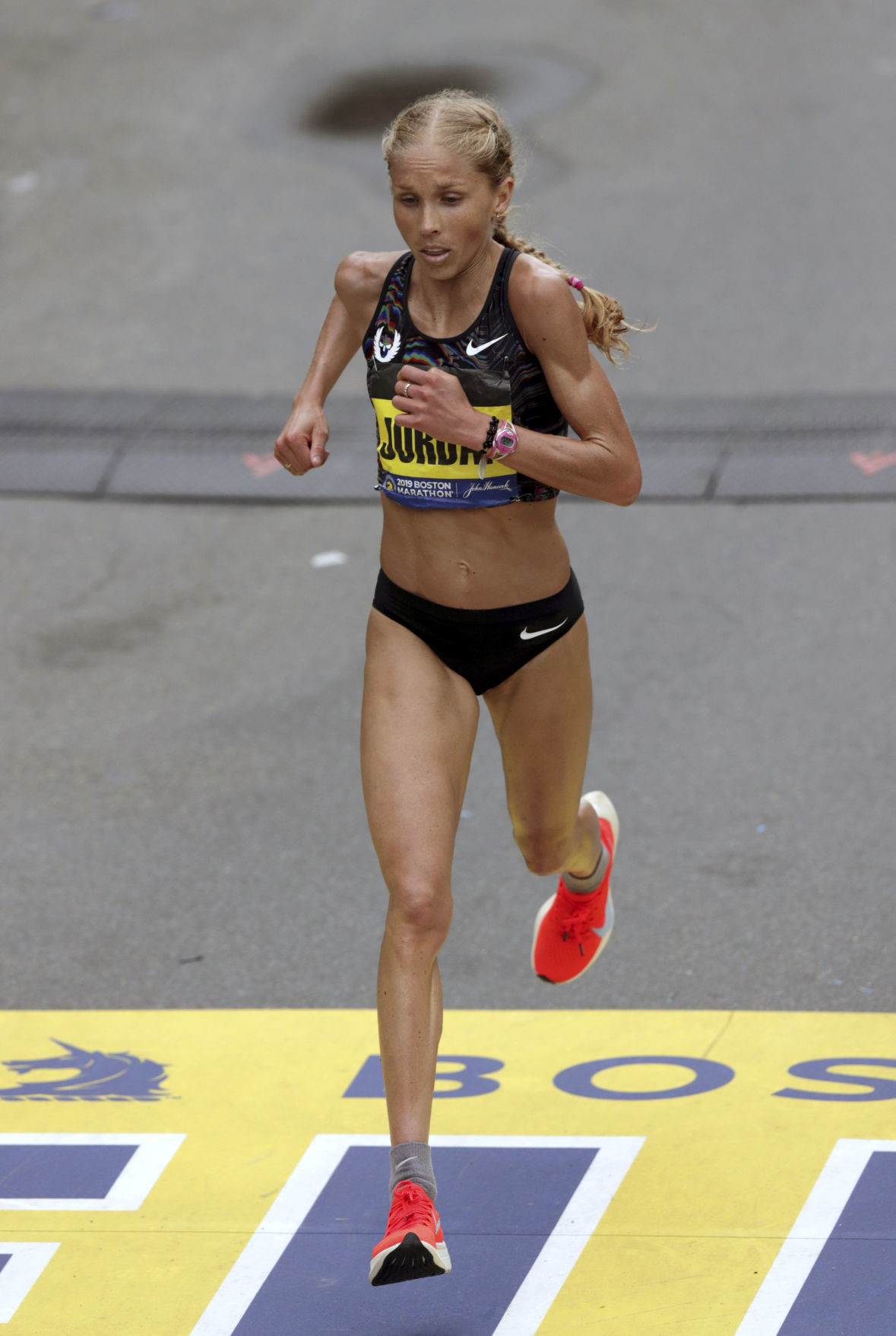
Last week, together in Monaco, they sat down and mapped out Hasay’s training for the next 15 weeks until the Trials. Hasay said she believes she’s the first athlete to be coached by Radcliffe and specified that Radcliffe, and not her husband, Gary Lough, who oversees the training of Mo Farah, will be in charge.
Hasay will stay in California and communicate remotely with Radcliffe. “I’ve always really looked up to her as a role model,” Hasay said. “Since we first met two years ago in Chicago, we’ve kept in touch and she’s given me a lot of advice. She knows that I have had some very good coaches in the past. We’re not going to go in and change a bunch of things. At this point, I mainly need someone to hold me back and make sure I stay injury free. She’s such a kind person.”
After two weeks off from running after the Chicago Marathon, Hasay has returned to running almost pain free, she said, although the hamstring feels tight at faster speeds. On November 19, she did a hill workout.
Hasay said Nike staff were “incredibly supportive” of her as she considered new coaches, and they were open to her having a coach who didn’t have a relationship with the company if that is what she wanted. Radcliffe, though, was a Nike-sponsored athlete throughout her career and maintains a relationship with the company.
She is in the process of selling her home in Beaverton, Oregon, near Nike headquarters, and she will live with her father in Arroyo Grande, California, until she eventually buys a home in that area. She is more suited to the climate there, she said, where it is sunny and warm year-round, than the rainy winters of the Pacific Northwest. She also said the community has supported her since she began running at age 12. Being home “will add a lot of happiness,” she said.
When asked about Cain, Hasay said she knew her teammate was struggling during her 10 months training in Portland with the Oregon Project, but she didn’t know the extent of the problems.
“I was pretty shocked with the video,” Hasay said. “Obviously I feel really sad and I texted her and said I’m really sorry. That if I knew that it was that bad, if there was anything I could have done, I just apologize.”
Hasay said she and Cain were fairly close but she had “no idea” that Cain was cutting herself, as she said in the Times video. Cain also said Salazar was constantly trying to get her to lose weight to hit an arbitrary number, 114 pounds.
Hasay said she thought Cain’s youth and the intensity of the training and the program were a poor combination, but she expressed sympathy for both Cain and Salazar.
“It’s so sad, everyone was trying their best, though,” she said. “I really think you can’t point fingers and it’s really easy from the outside to kick Alberto under the bus. People make mistakes. He could have handled it at times differently. He really was doing his best. He wasn’t trying to cause any of the problems that she described. I sympathize with both sides.
“That’s why it’s hard—I haven’t commented on it—I don’t really have a side. I didn’t experience what she experienced, but I can see how it was so difficult. I think that her message is a good one, addressing these issues, they are important, I think it’s good overall that we’re looking at some of things.”
Hasay continued that when an athlete is still growing and going through puberty, getting to a certain weight is “difficult.” Older athletes on the team, she said, were able to push back in discussions with Salazar on weight.
“Alberto, if you ask me is he obsessed about weight? Yes, but he’s obsessed about everything,” she said. “He wanted to cut my hair [to reduce drag], he wanted me to wear a wetsuit in the Boston Marathon. It’s just every little detail is covered and weight happens to be one of those things.”
Salazar told Hasay she needed to gain weight at times. “He’s told me, ‘You don’t need to be this lean all year. I’d like you to go back up.’ We’ve had discussions. I think when you’re older and more experienced, you can speak up. It’s hard when she’s so young and still growing. It was just the whole situation wasn’t the right fit, unfortunately.”
(11/29/19) Views: 307Runner’s World

The Philadelphia Marathon removed 147 entries of course-cutters from its 2019 results
The Philadelphia Marathon, a popular Boston qualifier with around 24,000 finishers every year, removed 147 entries from its 2019 results when it was clear that those people cut the course. A notice on the race’s website gives them the benefit of the doubt, indicating they were either tired or injured and “trying not to cheat,” adding that “We don’t embarrass people, we try and help.”
Derek Murphy of MarathonInvestigation.com takes the unusual step of agreeing with the race. “I do agree with their statement that the majority of the runners that skipped from the 13.1 timing mat to the finish likely did not do so with the intent to cheat. It was a miserable day, and most likely just wanted to call it a day.”
Moreover, the race identified more than 8,000 people who did not start in the wave they were assigned to, which could legitimately have resulted in their being disqualified, but instead they corrected their results.
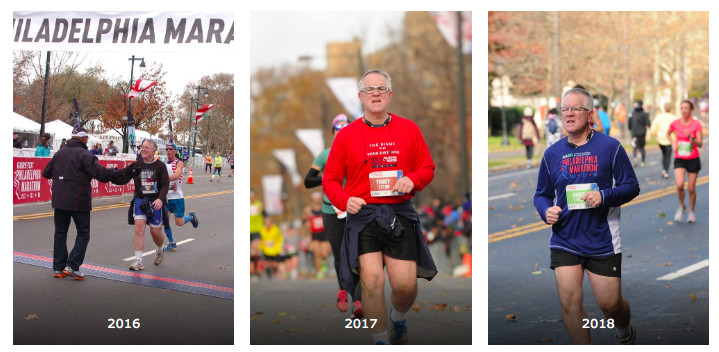
Murphy praised the race organizers for the appropriate way they dealt with suspicious results. “I have been critical of The Philadelphia Marathon in the past,” says Murphy. “As such, I feel it is my obligation to acknowledge when they get it right. This year, they got it right.”

After receiving a tip, Murphy did identify one serial cheater, a man named Tracy, who has made a habit of jumping onto marathon courses around the halfway point and then cutting to yield impressive-looking result–in this case a 3:18 finish. Tracy was apparently walking on the course while “cluelessly” staring at his phone, blocking the way for fast runners and a handcycle wheelchair athlete, who was blowing his whistle to get him to move out of the way and who was forced to swerve around him. When the tipster moved across to cheer at the return portion of the course, she saw Tracy again, and knew he had obviously cut across. Murphy suspected it was Tracy, which was later confirmed by photos and by analyzing his results.
Tracy’s history of course-cutting goes back to 2013, when he recorded a 2:50 split for a half-marathon and a 3:07 finish (17 minutes later). He finished a 2016 race with a 3:02 finish and was later disqualified, and he recorded results from 2017 and 2018 (from which he was not disqualified) showing 3:26 and 4:07 finishes, respectively, but with no splits.
Murphy notes that Tracy is not attempting to use his times to apply for Boston.
(12/02/19) Views: 126Anne Francis
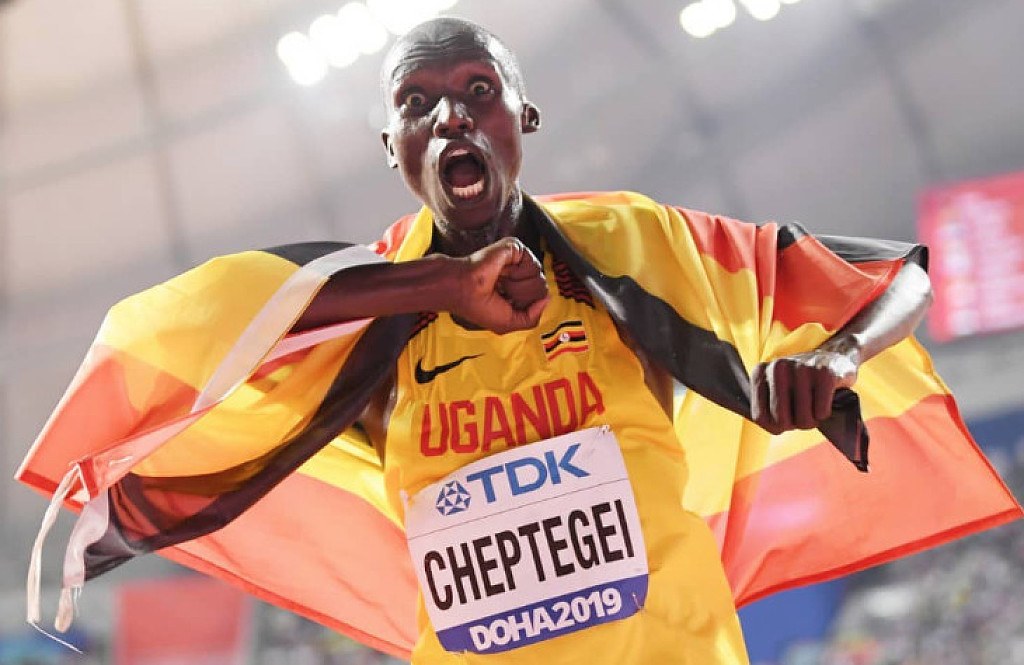
Uganda’s Joshua Cheptegei breaks World 10K record in Valencia
Joshua Cheptegei smashed the world record in the 10km, clocking 26:38 at the 10K Valencia Trinidad Alfonso, a World Athletics Silver Label road race, on Sunday (1).
The Ugandan star clipped six seconds from the previous record of 26:44 set by Kenya's Leonard Patrick Komon in 2010 to complete a sensational 2019 hat-trick that included world titles in cross country and 10,000m on the track.
Pacesetter Roy Hoornweg covered the opening kilometre in 2:42 before Cheptegei moved to the front briefly demanding a quicker pace, a demand that was met - by the second kilometre the clock read 5:42 for a 2:40-kilometre split. Once Hoorweg dropped out, Stephen Kissa and Abdallah Mande took command with Cheptegei in tow, with the trio covering three kilometres in 7:57, well inside the word record schedule.
Following a 2:41 split for the fourth kilometre, Cheptegei overtook the pacemakers before the halfway point, reaching 5km in 13:23, one second shy of the world record for that distance.Running on his own over the entire second half, a determined Cheptegei reached 6km in 16:02 and 7km in 18:42. Cheptegei forged on, reaching 8km in 21:37, when it became clear that the world record was within reach.
With 23:59 on the clock at the 9km point, Cheptegei needed to cover the final kilometre in 2:45, a close well within his capabilities.
“World cross champion in Denmark, 10,000m world champion in Doha and now the world record here in Valencia. What a year it has been," the 23-year-old said. "I can’t believe it! I knew that Valencia was going to be a really fast course, one of the fastest in the world. So to get to achieve what we came here for is something really special."
(12/01/19) Views: 109
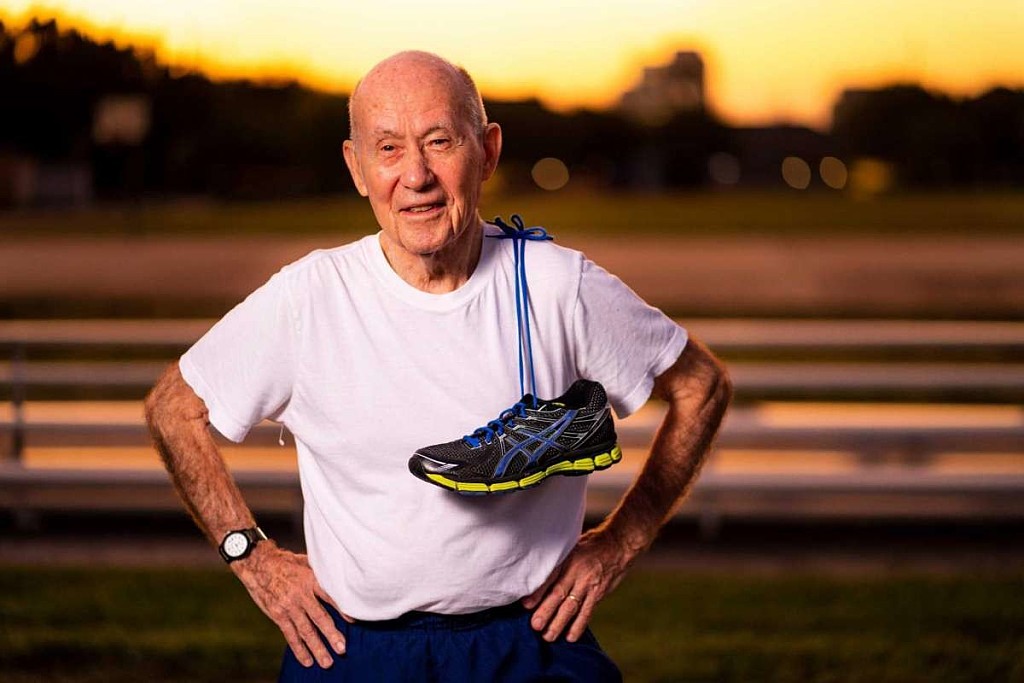
Ruger Winchester, at 89, is training to run the We Are Houston 5K in January
Once an Air Force pilot for 22 years, Ruger Winchester had to run to stay in shape. Now at 89, he runs for the heath and discipline of it.
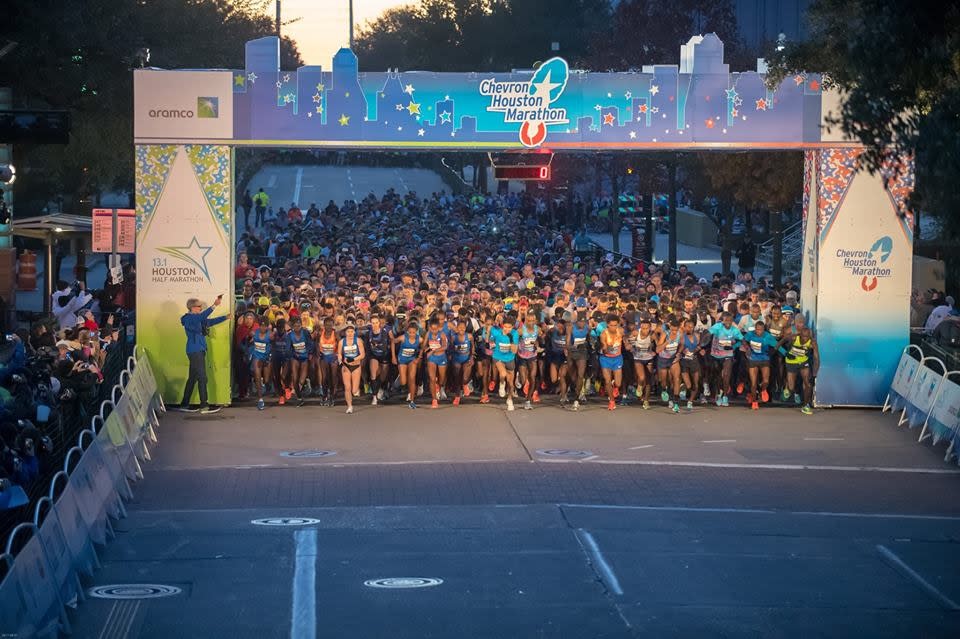
The Buckner Parkway Place resident is prepping to complete the We Are Houston 5K in January. He has actually completed the race that is part of the Chevron Houston Marathon weekend before and is usually one of about eight men, he said, in the 80-and-over bracket.
At 70, Winchester visited his son and granddaughter in Michigan. Knowing he was already very active on a stationary bike, they urged him to join them on a outdoor run.
“I was exercising at home. I was in full-blown exercise: hour and a half, two hours a day of exercising. But I wasn’t running,” Winchester said.
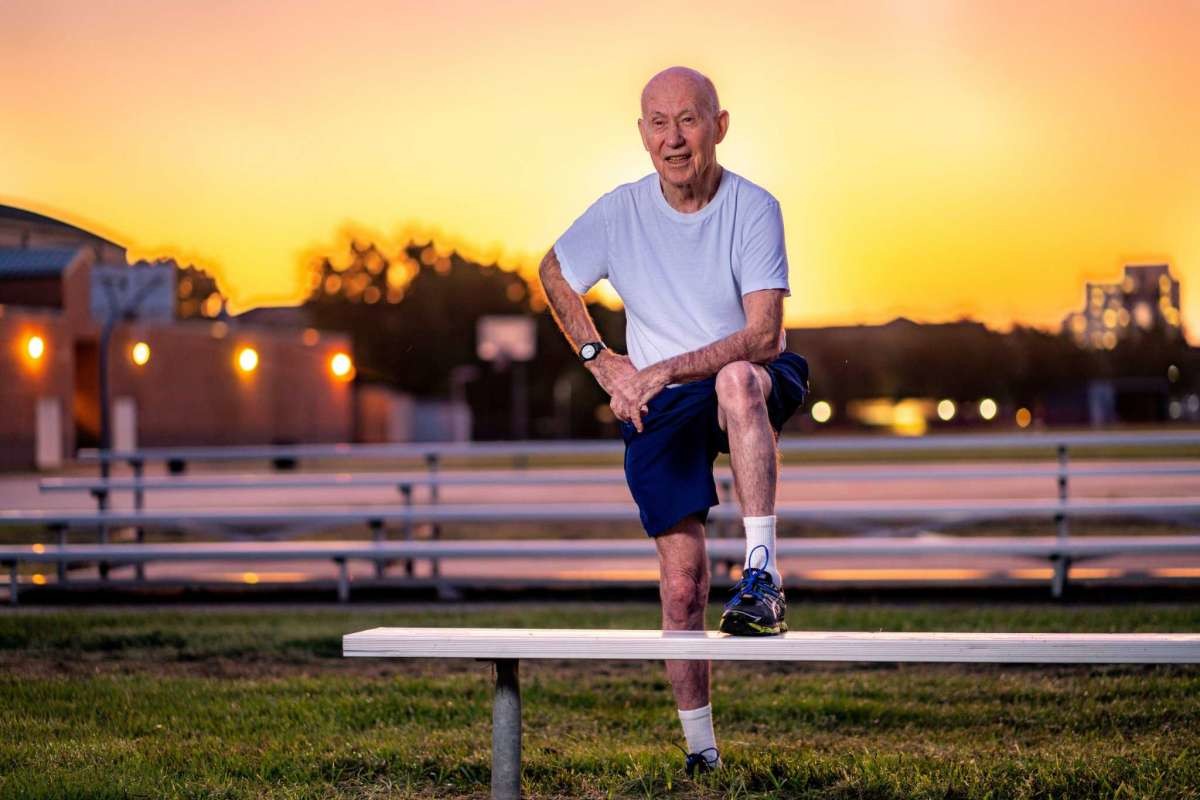
You could say he got hooked. Nineteen years later, he plans to reach 3 miles in training in December because the 5K race on Saturday, January 18, 2020, is 3.1 miles long. He is hoping for good weather, maybe 45 degrees.
Winchester was commanding a base in Guam when he accepted Jesus Christ as his lord. Changed and considering his plans, he said “I knew God has something else for me.” He and his wife, who he affectionately calls “Mikey,” left the Air Force. They started seminary together in 1973. After graduation, they moved to North Dakota, where Winchester pastored several churches.
Diagnosed with lung cancer in early 2017, Winchester moved to Houston to seek treatment at the University of Texas MD Anderson Cancer Center because the cancer had not improved by that fall. Buckner Parkway Place, which is a senior residential community in the Houston Energy Corridor, became their home.
After a lot of treatment, Winchester said today he is “without cancer.” He has to get checked every six months to make sure it stays that way though.
Winchester and his wife are members at Tallowood Baptist Church, but he said he is supposed to start preaching some at the Parkway Place chapel soon.
“It’s just discipline. Discipline. I run every day because I want to stay in shape, and there’s a discipline to it,” he said.
(11/29/19) Views: 70Tracy Maness
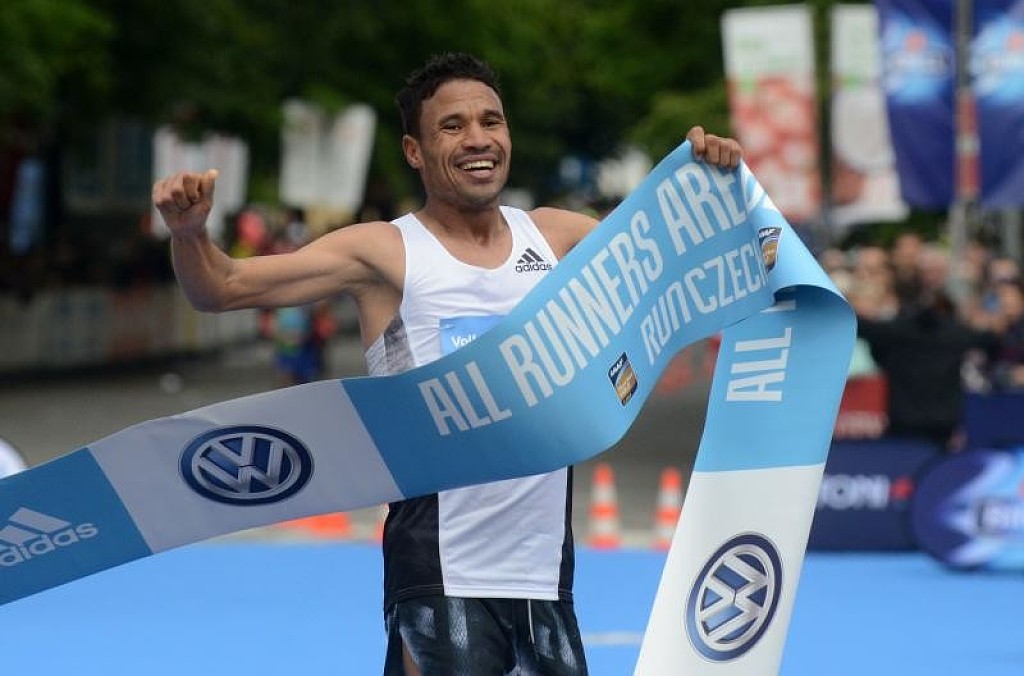
El Mahjoub Dazza, Koen Naert, Ayana Tsedat, and Yuki Kawauchi are set to compete for the title at Fukuoka Marathon
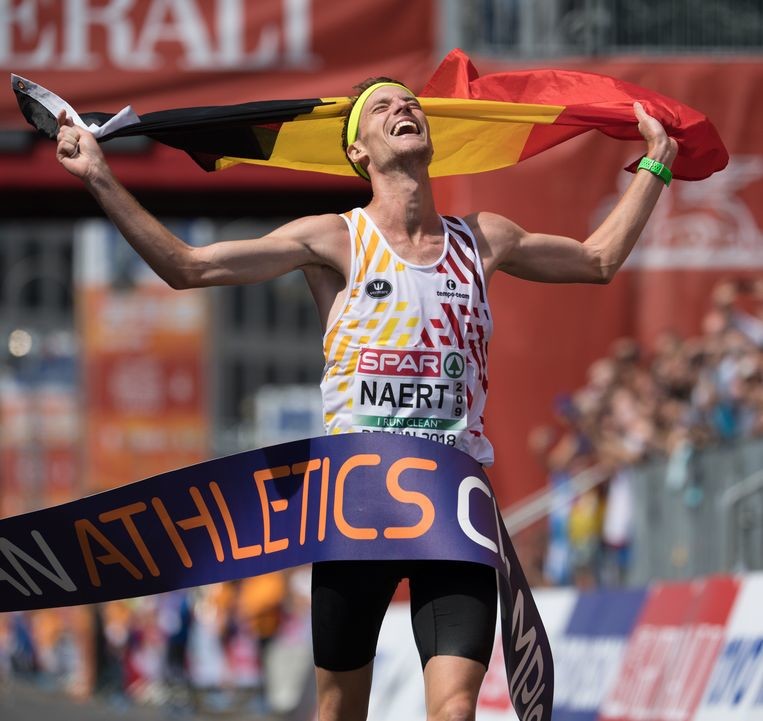
When the Fukuoka International Marathon became a non-domestic race in 1966, the intent of the organizer was to invite the winners from all the international championship marathons which took place over the previous 12 months. In keeping with the spirit of the event, this year’s edition of the World Athletics Gold Label road race, set to take place on Sunday, December 1st, , features European champion Koen Naert and Pan American Games gold medalist Christian Pachoco.
Naert recorded his marathon personal best, 2:07:39, at this year’s Rotterdam Marathon. But Morocco’s El Mahjoub Dazza is the fastest in the field as he recorded 2:05:26 at the 2018 Valencia Marathon and 2:05:58 in Prague earlier this year. Those two performances are faster than the PBs of all the other runners in the field.
“I am ready,” he said. “If the weather is good, I can run fast.”
Other invited runners include Tsedat Abeje Ayana, who set a PB of 2:06:36 in Seville earlier this year, as well as sub-2:09 performers Raymond Choge, Amanuel Mesel, Abdi Ibrahim Abdo, and Shadrack Kiplagat. Mesel has competed in the past four editions of Fukuoka Marathon and has broken 2:10 in 2017 and 2018.
Kenyans running for a corporate sponsored team won the race on three occasions between 2011 and 2013. This year Michael Githae, who runs for Suzuki Hamamatsu Athletics Club, will try to become fourth Kenyan with a Japanese connection to win the Fukuoka Marathon. He was eighth at the 2017 Fukuoka Marathon and recorded a personal best of 2:09:21 at the 2018 Lake Biwa Marathon.
For Japanese runners, the significance of the race is that anybody who improves the national marathon record, 2:05:50, will clinch the third spot on the Japanese Olympic Marathon team – unless someone else improves the record further at the 2020 Tokyo or the Lake Biwa Marathon. Given the Japanese entrants for Sunday’s race, however, a national record appears unlikely in Fukuoka.
Taku Fujimoto, who ran 2:07:57 at the 2018 Chicago Marathon, is the fastest Japanese runner in the field, while Yuki Sato, who has a 10,000m best of 27:38.25, may have the best marathon potential.
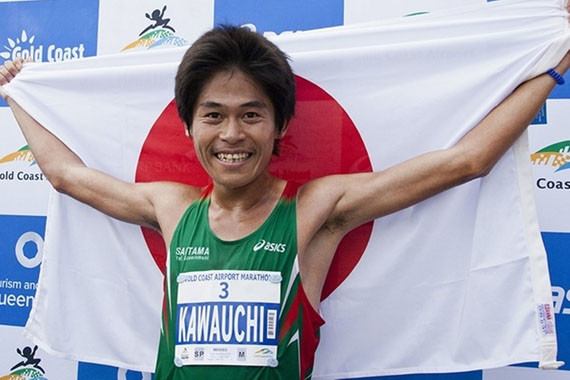
Yuki Kawauchi will run the Fukuoka Marathon for the fifth straight year. His personal best is 2:08:14, while his best time in Fukuoka is 2:09:05 from 2013. Now that Kawauchi no longer works for Saitama prefecture government, he may be ready for a quicker time.
(11/30/19) Views: 60
World Athletics
Newcomer Kinde Atanaw Alayew wins the Trinidad Alfonso Valencia Marathon and shatters the record
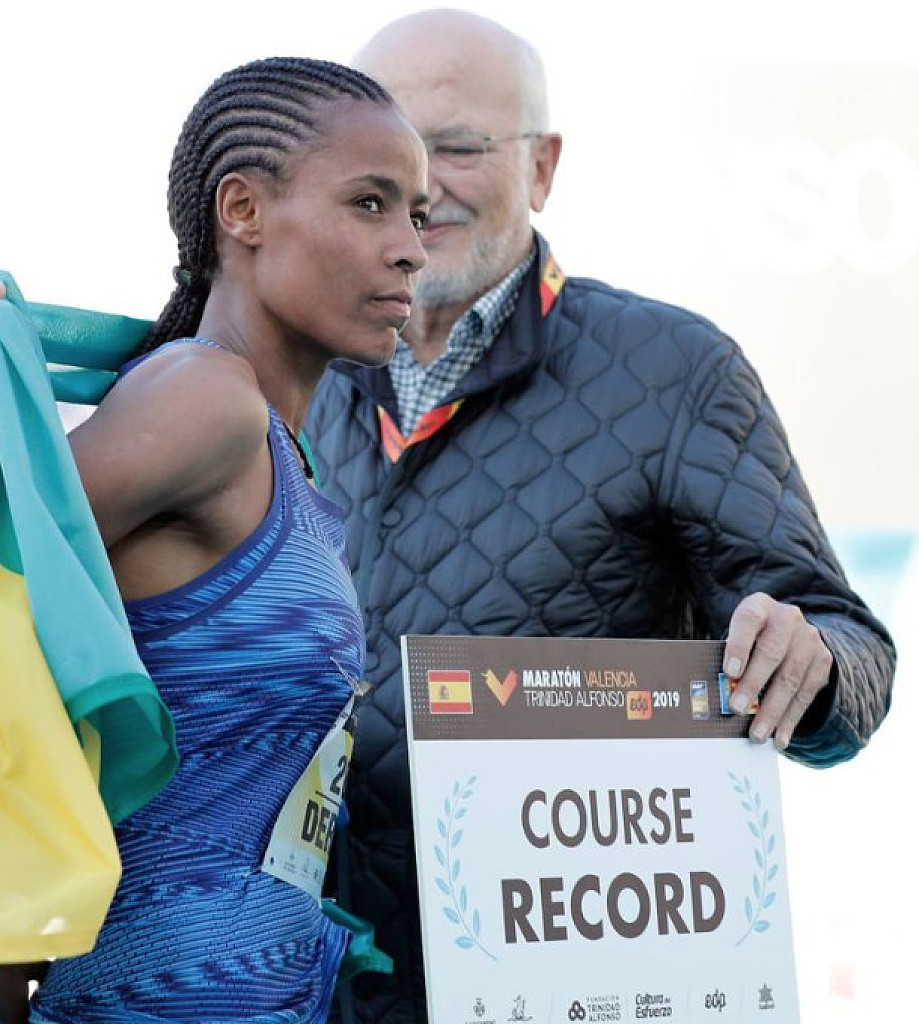
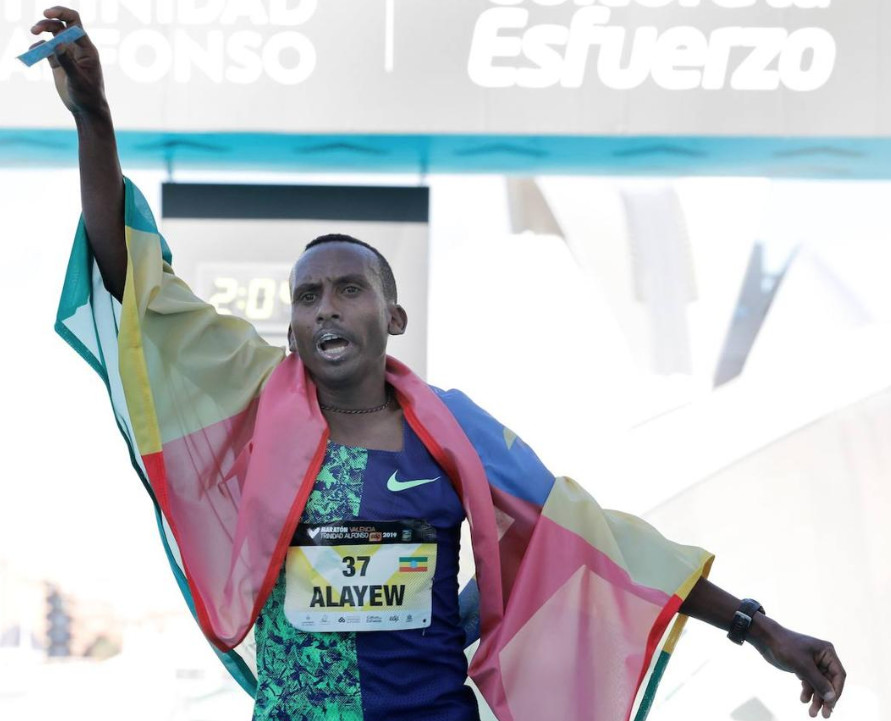
Ethiopians Roza Dereje and Kinde Atanaw Alayew produced impressive victories at the Maraton Valencia Trinidad Alfonso, a World Athletics Gold Label road race, in the eastern Spanish city on Sunday (1).
In the women’s race Dereje clocked 2:18:30 to move up to No. 8 on the all-time world list while pulling the next three finishers under 2:19, the first time four women have broken that barrier in the same race.

In the men’s contest the 26-year-old Alayew clocked 2:03:53 in his debut over the distance to finish 38 seconds inside the previous Spanish all-comers record set at this race last year.
Extraordinary depth - women’s race
The early pace in the women’s race was ambitious with Kenya’s Purity Rionoripo plus the Ethiopian pair of Workenesh Edesa and Dereje going through 10 kilometres in 32:33. Meanwhile, pre-race favourite Vivian Cheruiyot proved to be a bit more conservative but even so the Kenyan ace clocked 32:47 running with Ethiopia’s Birhane Dibaba.
Cheruiyot and Dibaba caught the leading pack at 15 kilometres (49:12) before reaching the half in 1:09:18, well inside the race record schedule with Ethiopia’s Azmera Abreha, a 2:21:51 performer, running alone another 22 seconds behind.
The leading quintet covered 30 kilometres in 1:38:36 while behind them Abreha cut their lead to nine seconds. Shortly afterwards, first Rionoripo and then Edesa began to drift back and were easily overtaken by Abreha.
At 40 kilometres, Dereje lead in 1:55:04 alongside Dibaba, with Cheruiyot one second adrift and Abreha, who finally joined the trio, for company. From there, Dereje began to step up her pace to open a sizeable margin on Cheruiyot and Dibaba. But Abreha kept up the pressure.
Dereje, who was third in this year’s London Marathon, kept her compatriot at bay to finish in 2:18:30, improving her lifetime best by 47 seconds to break into the all-time top-10. Abreha was next in 2:18:33, a massive 3:18 improvement for the 21-year-old.
Dereje, who managed her second victory on Spanish soil this year following her 1:06:01 career best to win the Barcelona half marathon in February, said, "I love the city of Valencia and its course. I'm doubly happy as I broke the race record and also improved my career best."
In a race of astounding depth, Dibaba was third in 2:18:46 and Cheruiyot fourth in 2:18:51 also personal bests. Zeineba Yimer was fifth in 2:19:27 - only five women had run faster this year prior to this race.
First time lucky for Alayew
The men’s race was nearly as impressive, with the top-four all dipping under 2:05.
Boosted by a triumvirate of pacemakers in the guise of Kenyans Bernard Ngeno, Victor Chumo and William Wanjiru, the men’s opening splits were fast as well with the large leading group going through the five and 10-kilometre points in 14:36 and 29:15 respectively. All the main favourites – Kenya’s Emmanuel Saina and Philemon Kacheran plus Ethiopia’s Leul Gebrselassie and Gude Ayola among others – were running together in almost ideal conditions, 15C and very slight winds.
A large group of ten – pacesetters aside – led by Saina, Kacheran and Adola reached the half in a promising 1:01:58, well on schedule to break the race record of 2:04:31 set last year by Gebrselassie. By then Turkey’s Kaan Ozbilen and Norway’s Sondre Moen were still in the leading pack, targeting the 2:05:11 European record. Surprisingly, Ethiopia’s Alayew was in the pack as well in first appearance over the 42.195km distance, likely boosted by his 1:00:13 half marathon career best set in Copenhagen in September.
But that demanding rhythm soon whittled down the pack. Saina and Ethiopia’s Tsegaye Kebede were the first to fall, and shortly after the 30-kilometre point (1:28:20) defending champion Gebrselassie dropped out of contention. By 35 kilometres, the lead pack was composed of Ethiopians Abebe Negewo Degefa, Alayew, Guye Adola, Kenya’s Kacheran and Turkey’s Ozbilen.
The key move came in the 37th kilometre when Alayew injected successive splits of 2:48, 2:46 and 2:40 to reach 40km in 1:57:33, on pace to break 2:04. Behind him, Ozbilen dropped Adola and Degefa to secure the runner-up spot.
The 26-year-old Alayew broke the tape in 2:03:53 while Ozbilen clocked 2:04:16 to clip nearly a full minute from Mo Farah’s European record and lower his previous best by 1:11. Adola completed a quality podium at 2:04:42 with Degefa next in 2:04:5, improving his career best by two minutes.
"I knew that my time to make the marathon debut has already come," Alayew said. "I had a lot of confidence on my chances as the training sessions had gone really well."
(12/01/19) Views: 59
Jonathan Negretti, principal of a personal injury law firm will run 7 marathons on 7 continents in 7 days for charity
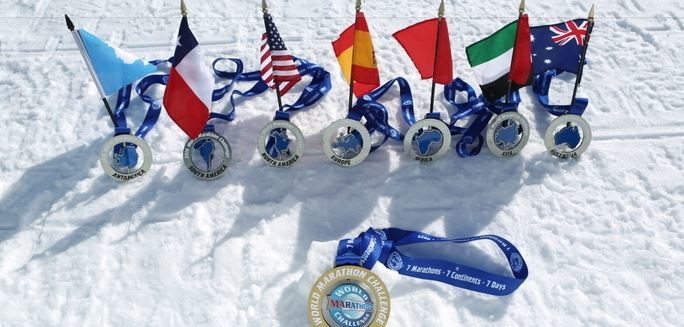
Jonathan Negretti will be one the competitors in the 2020 World Marathon Challenge. The World Marathon Challenge, which involves running seven full marathons on seven continents in seven days, will kick-off on Feb. 6, 2020 in Novo, Antartica.
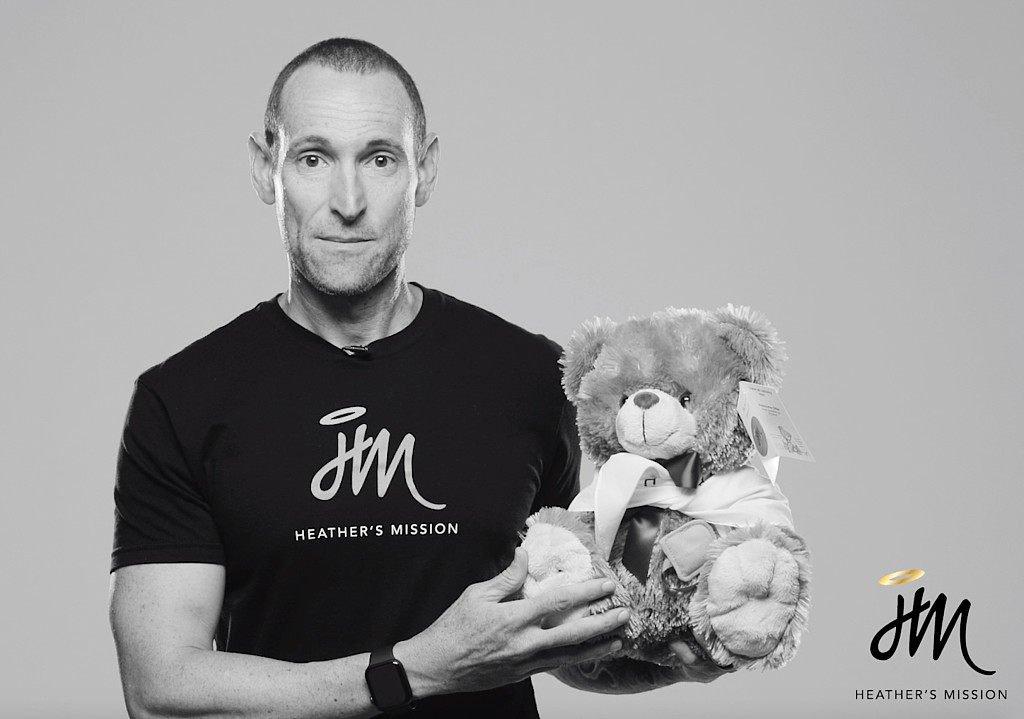
Negretti will be one of only 50 competitors and will be competing to raise funds and awareness for Heather’s Mission, a nonprofit organization co-founded by Negretti’s wife to help those suffering from Crohn’s and Colitis Disease.
Negretti is personally afflicted with Ulcerative Colitis (UC), a type of inflammatory bowel disease that is a chronic and oftentimes debilitating disorder. It is predicted by the Crohn’s & Colitis Foundation that the two diseases affect more than 1.7 million Americans, but their unpredictability and the stigma attached to them makes them hard to diagnose and treat, so most people suffer in silence.
Negretti was diagnosed with UC 20 years ago and eventually had to have surgery to remove most of his large intestine, which now requires him to live full-time with an ostomy bag. Negretti will be the only World Marathon Challenge competitor with a “disability,” even though he doesn’t consider it that.
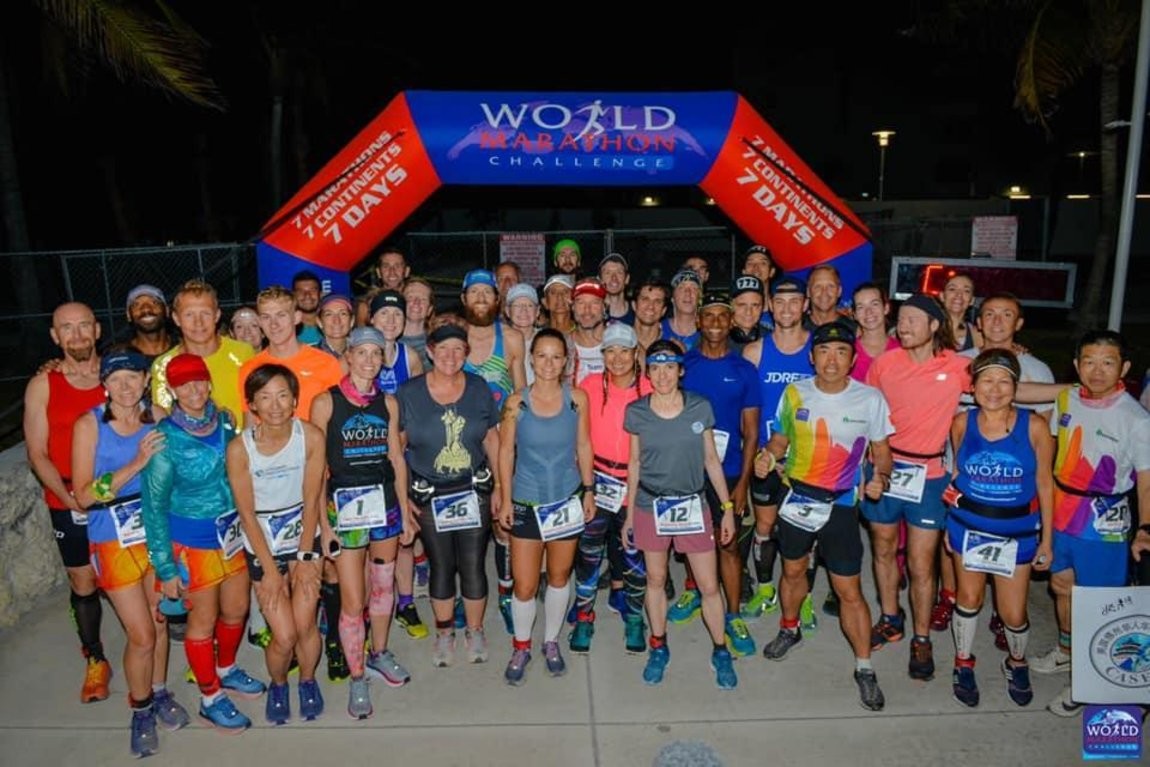
“Participating in the World Marathon Challenge is not only an epic personal challenge, but an incredible platform for me to raise awareness for Heather’s Mission,” said Negretti. “My hope is to garner enough attention to make a difference in people’s lives and inspire others who are living with an ostomy.”
Heather’s Mission has adopted a stuffed animal bear called “Awesome Ollie the Ostomy Bear,” which it is working to get into the hands of patients who have undergone an ostomy surgery.
Negretti is raising funds for Heather’s Mission with a goal of donating one thousand Awesome Ollie Bears to the nonprofit organization. If he meets this goal, he will take Awesome Ollie around the globe with him on the World Marathon Challenge.
(11/30/19) Views: 56

The most recent allegations echo reports by Kara Goucher about athletes being encouraged to take unnecessary medications to lose weight and improve performance
Britain’s Daily Mail reports that top UK athletes allege they were repeatedly encouraged by team doctors to have their thyroids checked, even when they exhibited no symptoms, leading to speculation about the use of thyroid medications to boost their performance.
The report echoes the report by the US Anti-Doping Agency (USADA) that former Nike Oregon Project Alberto Salazar inappropriately used thyroid medication with athletes.

This is only the latest in a series of issues plaguing British athletics. Head coach Neil Black, known to be a strong supporter of Salazar’s, resigned shortly after the ban was announced, in the midst of the World Championships, from which British athletes brought home a disappointing five medals.
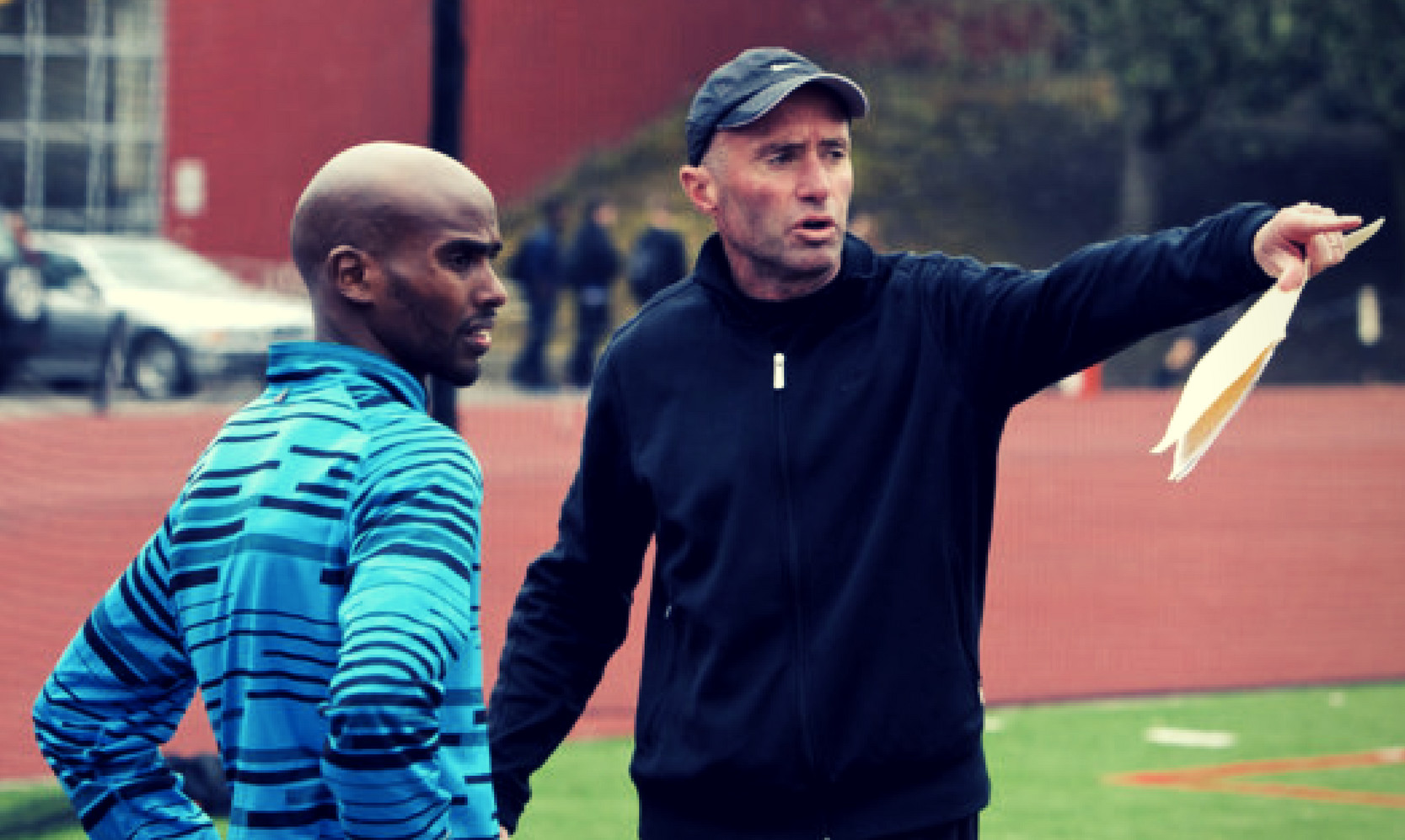
UK Athletics also announced it would mount an investigation into why one of its top athletes, Sir Mo Farah, was encouraged to continue training with Salazar at the NOP in 2015 after Salazar came under investigation by USADA. And last week the newly appointed UKA chair, Zara Hyde Peters, was forced to step down before taking up her duties when it was discovered that her husband, who had been banned from teaching after an “inappropriate relationship” with a 15-year-old girl, had been allowed to coach at the club where Hyde Peters was vice chair.
Medications to improve thyroid function, including L-thyroxine and Cynomel, are not on WADA’s list of prohibited substances (and do not even require a Therapeutic Use Exemption, or TUE), though both USADA and UK Anti-Doping have called for them to be banned except in cases where a need is clearly demonstrated. Such medications, which can lead to serious heart issues when taken inappropriately, are known to aid weight loss, which is perceived to lead to faster times on the track. In the wake of being banned from athletics, Salazar has been the subject of numerous reports that he was obsessive about female athletes’ weight, publicly shaming those he thought were too heavy.
The report quotes athletes Jo Pavey and Matthew Yates, who say thyroid medications should be banned except in cases where they are necessary to maintain adequate thyroid function, and only with a TUE. The rate of hypothyroidism is estimated at one in 20 in females and one in 100 in males, and a physician consulted by the paper claimed that inappropriate use of thyroid medication can lead to serious heart issues. One athlete claims they were tested after a race and encouraged to visit their family doctor to confirm a suspicious result, but that a second test showed a normal result. In another case, an athlete who tested negative was encouraged to take another test after a hard workout, which can influence the result.
The report names Dr. Robert Chakraverty, chief medical officer for UK Athletics from 2013 to 2016 and his successor, Dr Noel Pollock, as having encouraged the tests.
(12/02/19) Views: 55Anne Francis
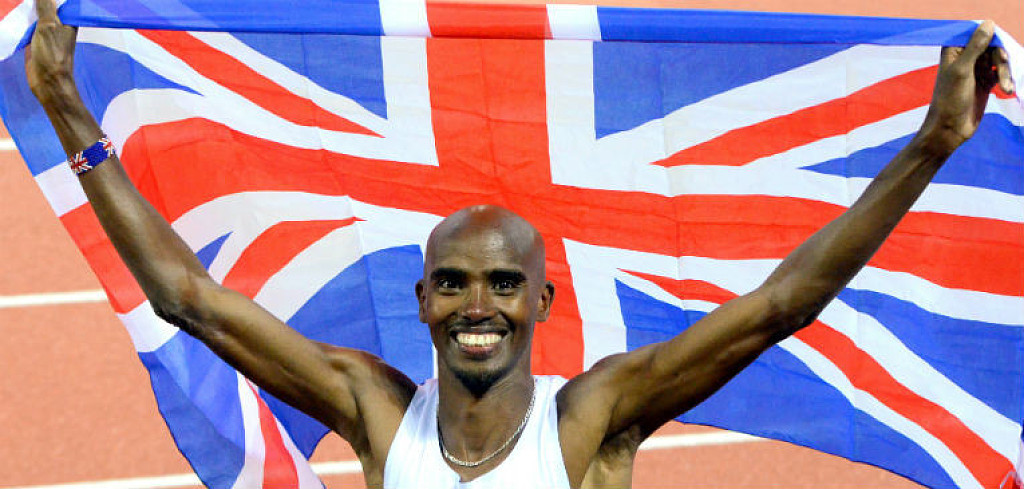
Four-time Olympic gold medallist Mo Farah has announced he will return to the 10,000m on the track next year in a bid to win a fifth Olympic title in Tokyo
The British distance runner hung up his track spikes at the end of 2017 after the World Athletics Championships in London, where he earned his sixth world title by winning the 10,000m and claimed silver in the 5000m.
He shifted his focus to the roads in 2018, placing third at the London Marathon and then winning in Chicago with a European record of 2:05:11.
He came close to his marathon PB in London earlier this year, finishing fifth in 2:05:39, three minutes behind eventual winner Eliud Kipchoge. In his most recent race, last month’s Chicago Marathon, Farah placed eighth in 2:09:58, four minutes adrift of winner Lawrence Cherono.

“It has been really exciting to compete in the marathon for the past couple of years,” said Farah, who won Olympic 5000m-10,000m doubles in 2012 and 2016. “To win the Chicago Marathon, a major marathon, was nice. To finish third at the London Marathon was good.
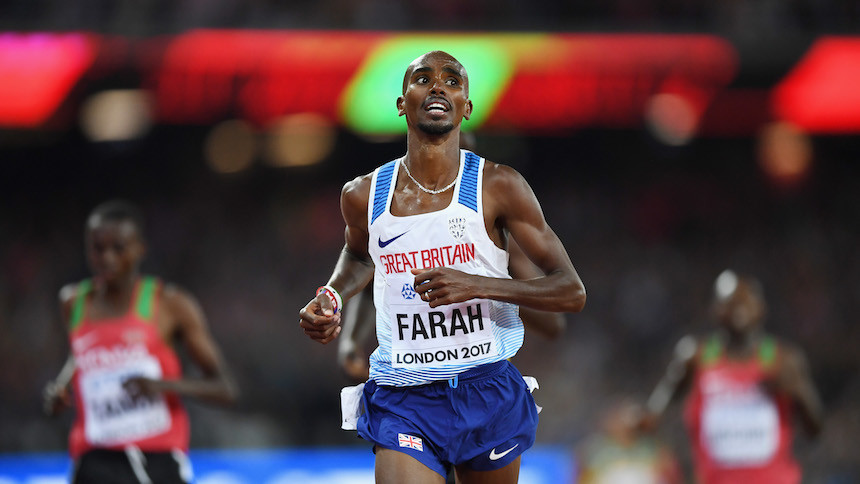
“It’s been a great learning curve for me. Doing a marathon and to run 2:05, a European record, it was very exciting. The training for it was totally different to the track.
“I have decided that next year at the Tokyo 2020 Olympic Games I’m going to be back on the track,” he added. “I’m really excited to be competing back on the track and to give it a go in the 10,000m. Hopefully I haven’t lost my speed, but I’ll train hard for it and see what I can do. It’s exciting.”
Farah’s last 10,000m on the track was at the 2017 World Championships where he won in 26:49.51 with Uganda’s Joshua Cheptegei finishing second. Cheptegei, the world cross-country champion, has now succeeded Farah as the world champion at the distance after the 23-year-old won in Doha in 26:48.36.
Farah’s 2017 victory in London and Cheptegei’s recent triumph in Doha played out in similar fashion. Their splits at 9000m were near identical (Farah 24:20.69 in London, Cheptegei 24:20.79 in Doha). But Cheptegei was faster than Farah in the final 1000m (2:27.57 v 2:28.82), 800m (1:56.63 v 1:57.55) and 400m (55.38 v 55.63).
Should Farah recapture his speed from his peak track-racing days, it would make for a mouth-watering clash against Cheptegei, one of the most exciting distance runners in the world at present.
If Farah, who will turn 37 in March next year, earns a medal or even simply finishes in the top 10 in Tokyo, he will make history. No one aged 37 or older has ever finished in the top 10 in a men’s 10,000m final at the Olympic Games. Mamo Wolde was 36 years and four months when he earned silver in 1968, while fellow Ethiopian Miruts Yifter was 36 years and two months when he claimed gold in 1980.
(11/29/19) Views: 51World Athletics
