

Running News Daily
Top Ten Stories of the Week
10/1/2022
These are the top ten stories based on views over the last week.
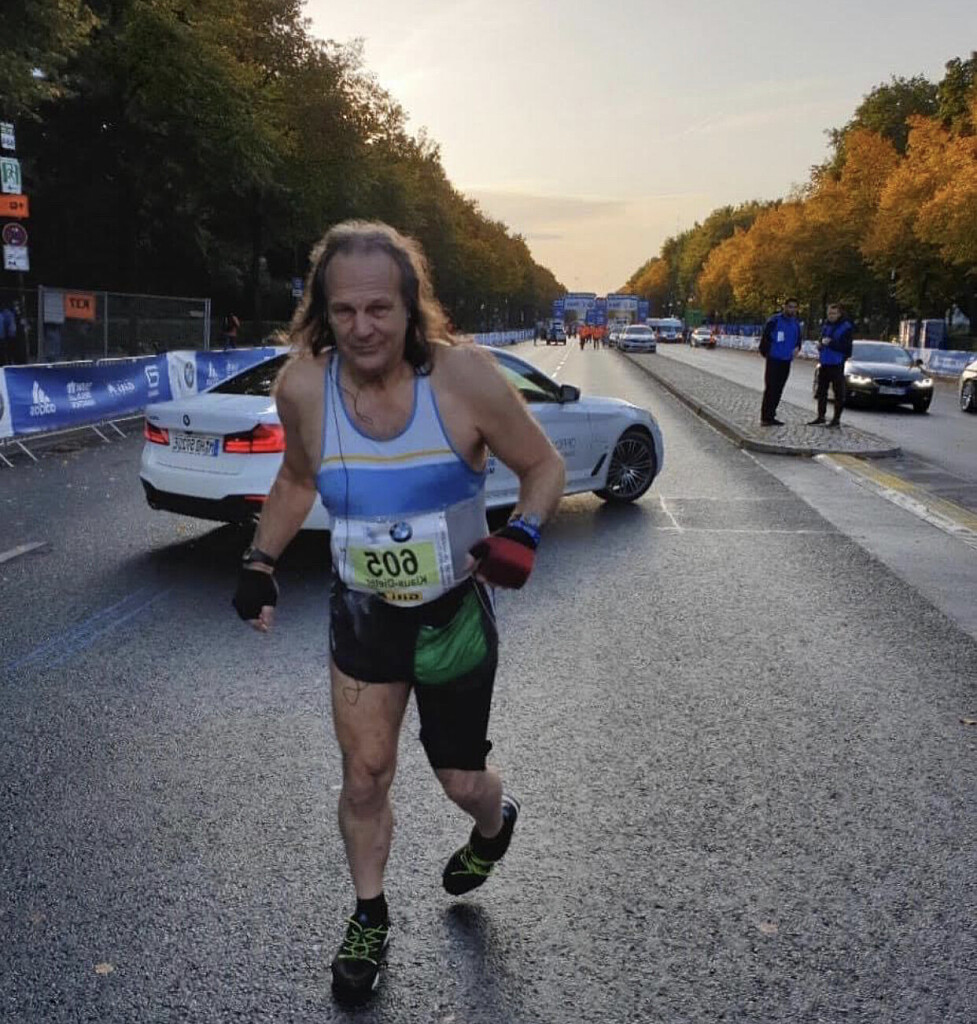


Klaus-Dieter Knapp gets to start the Berlin Marathon early
This man is an inspiration:
While everyone is waiting for their start, Klaus-Dieter Knapp will be already on the course from 7:45 am.
Klaus-Dieter has suffered from incomplete paraplegia for many years. For example, it takes him up 8.5 hours to finish the marathon. For this reason, Klaus-Dieter is exceptionally allowed to start earlier.

Klaus-Dieter is ready to run his 36th BMW BERLIN-MARATHON this year.
"We wish Klaus-Dieter and all of you good luck on the course," says the organizers on FB.
(09/24/22) Views: 2,448
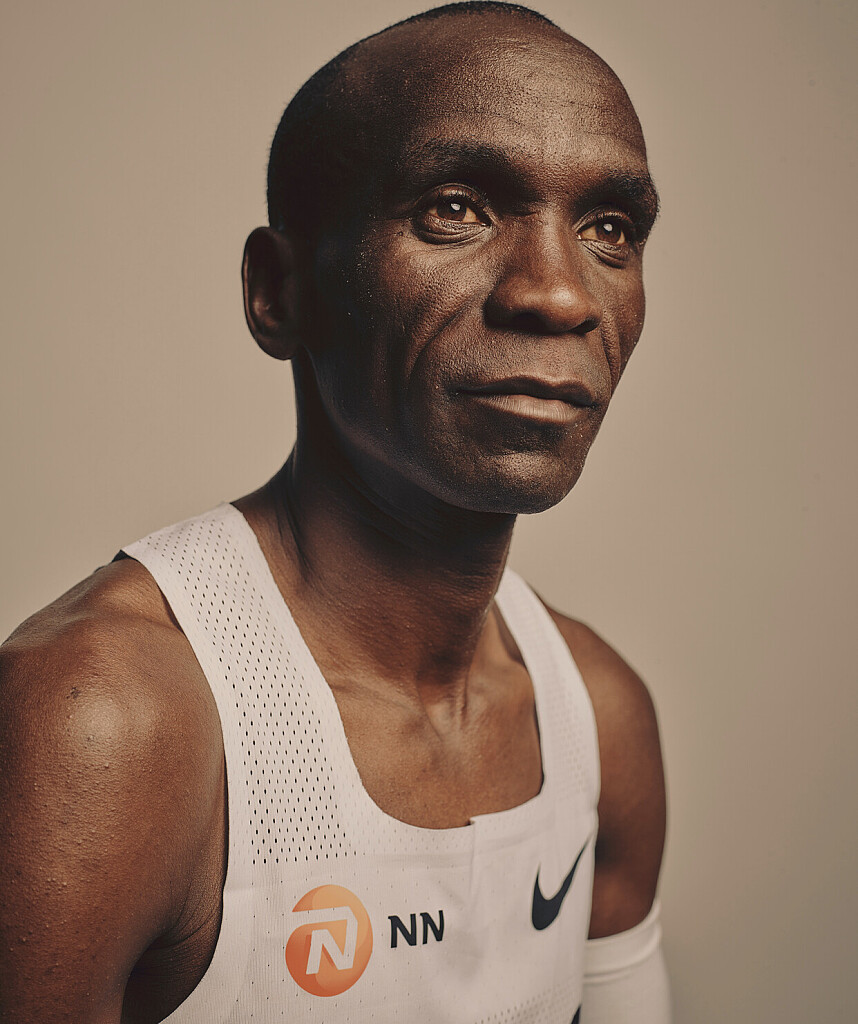
Eluid Kipchoge will lose $200,000 with the Abbott World Marathon Majors drastic reduction of prize money but this is not right says MBR publisher
Two days after Eliud Kipchoge clocked a 2:01:09 world record in Berlin, the Abbott World Marathon Majors announced on Tuesday a drastic reduction in the series’ prize money for runners.
Abbott, currently a $45 billion dollar global healthcare company based in Illinois, was the first title sponsor of the World Marathon Majors.

Let's Run posted this: "The change will take effect immediately, applying to the current series, which began at the Tokyo Marathon in March (starting this year, the WMM seasons are based on calendar years rather than the multi-year format of years past). As a result, Kipchoge, who has all but locked up the 2022 WWM Series title, will receive $200,000 less for his efforts.
When the World Marathon Majors — which consists of Tokyo, Boston, London, Berlin, Chicago, and New York — launched in 2006, one of its signature elements was the $500,000 prize awarded each year to the men’s and women’s series champions. In 2017, WMM altered its prize structure, reducing the grand prize to $250,000 (but adding $50,000 for second and $25,000 for third) while increasing prize money for wheelchair athletes and adding a charitable donation component of $280,000.
WMM announced that moving forward series champions will receive $50,000 each — just one-fifth of what was awarded last year and the same amount the wheelchair series champions receive. The prizes for second and third were also halved to $25,000 and $12,500, respectively, while WMM added prize money for fourth ($7,500) and fifth ($5,000). There was no mention of a charitable donation component (though the amateur runners at the World Marathon Major races raise significant money for charity each year)."
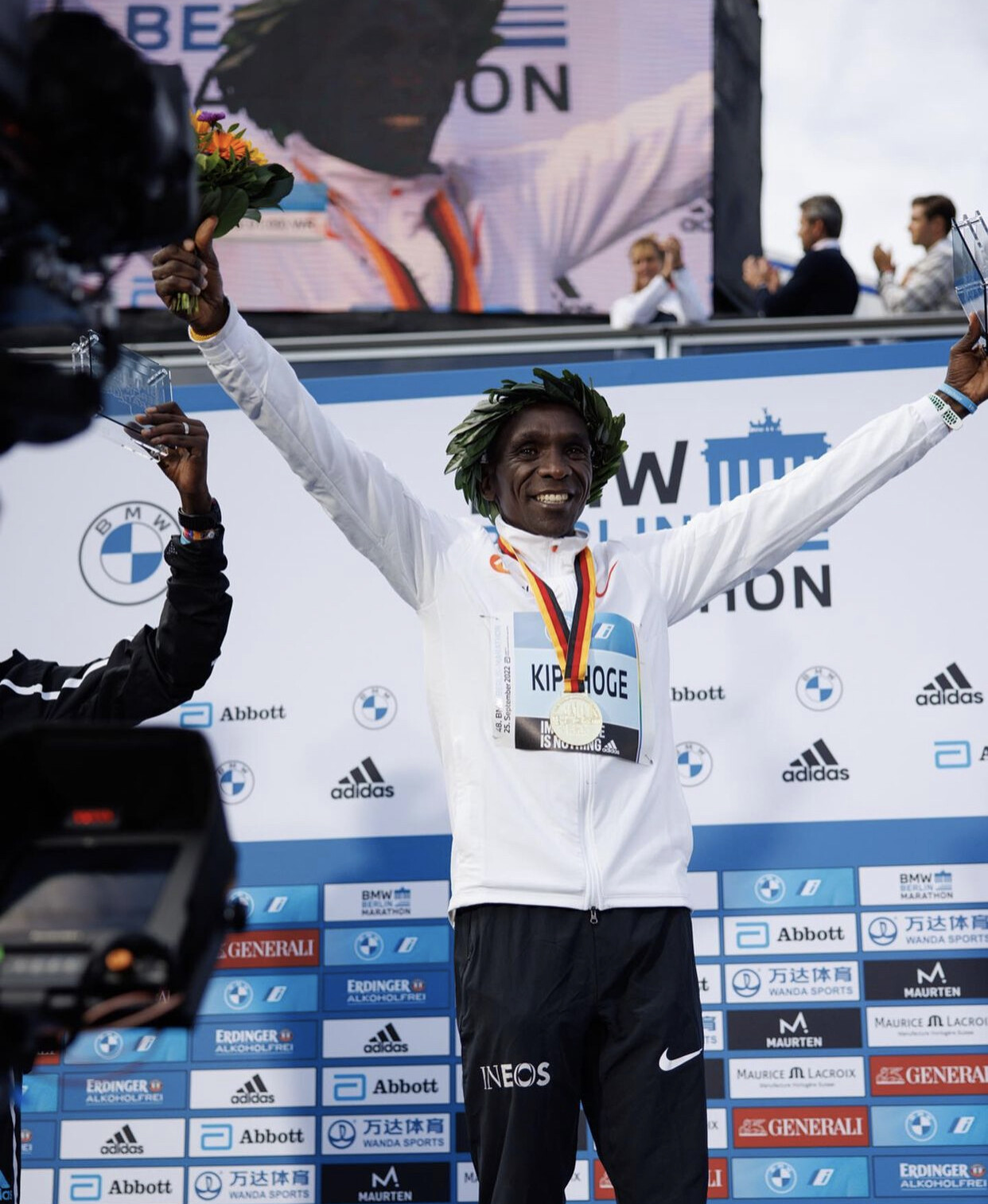
"This is not good news," says Bob Anderson, My Best Runs publisher, "but millions of dollars have been awarded over the years and maybe we should not have taken it for granted?"
"However, how can they make a change like this when it was already announced? A major change like this should not go into effect until the next season. Kipchoge should not be pentalized because Abbott decided after the fact to reduce marketing expenses or something in my opinion," says Bob.
"I do remember when my friend Derek Clayton set the world record clocking 2:08:32 May 30, 1969. He did not win any prize money. That record stood for 12 years. Or another friend Geoff Smith won the 1984 and 1985 Boston Marathon and won no prize money. Running was not a pro sport back in those days and no one was paid above the table until 1986 or so.
"Racing and for sure the Marathon offer sponsors a lot of exposure," Bob continues. "Hopefully new sponsors will come to the table. However, the economy right now is not good and expenses like this can be the first to be cut but lets think positive."
Abbott Laboratories is an American multinational medical devices and health care company with headquarters in Abbott Park, Illinois, United States. The company was founded by Chicago physician Wallace Calvin Abbott in 1888 to formulate known drugs; today, it sells medical devices, diagnostics, branded generic medicines and nutritional products.
"In 2021 Abbott (ABT) revenues were 43 billion and their income was 7 billion. However in the last six months their stock price has decreased 18.2%. Off but better than many companies," says Bob Anderson. "I wonder if this has anything to do with this decision to cut prize money but regardless Eluid Kipchoge should not lose $200,000 in the process."
Let us know your opinion.
(09/29/22) Views: 228
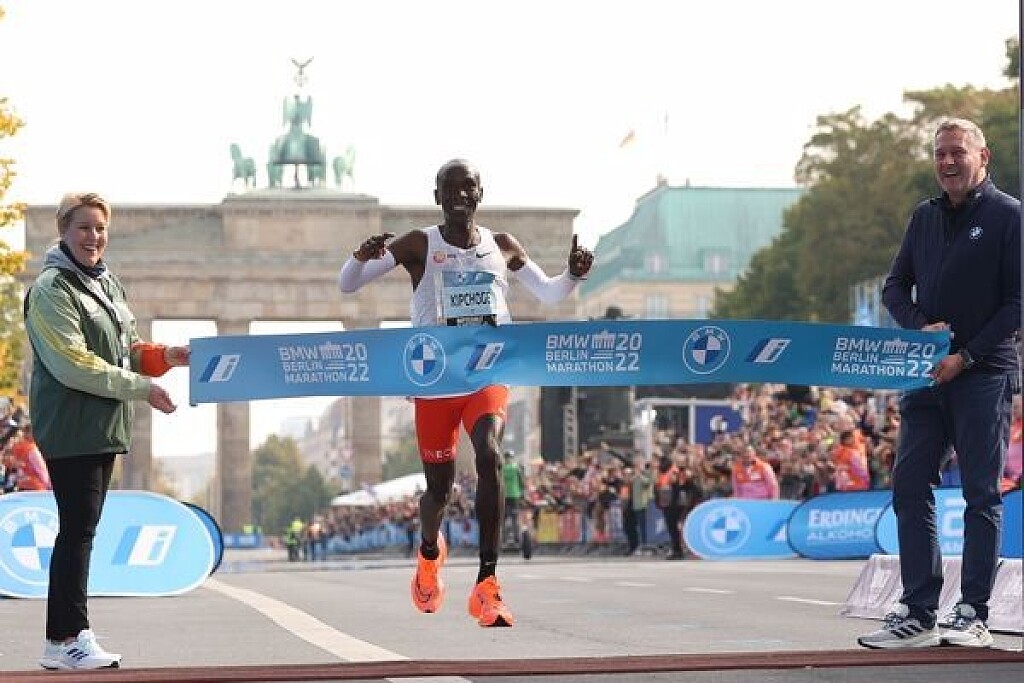
Eliud Kipchoge sets new world marathon record in Berlin clocking 2:01:09
Eliud Kipchoge sliced half a minute from his own world record to win the BMW Berlin Marathon, clocking a sensational 2:01:09 at the World Athletics Elite Platinum Label road race on Sunday (25).
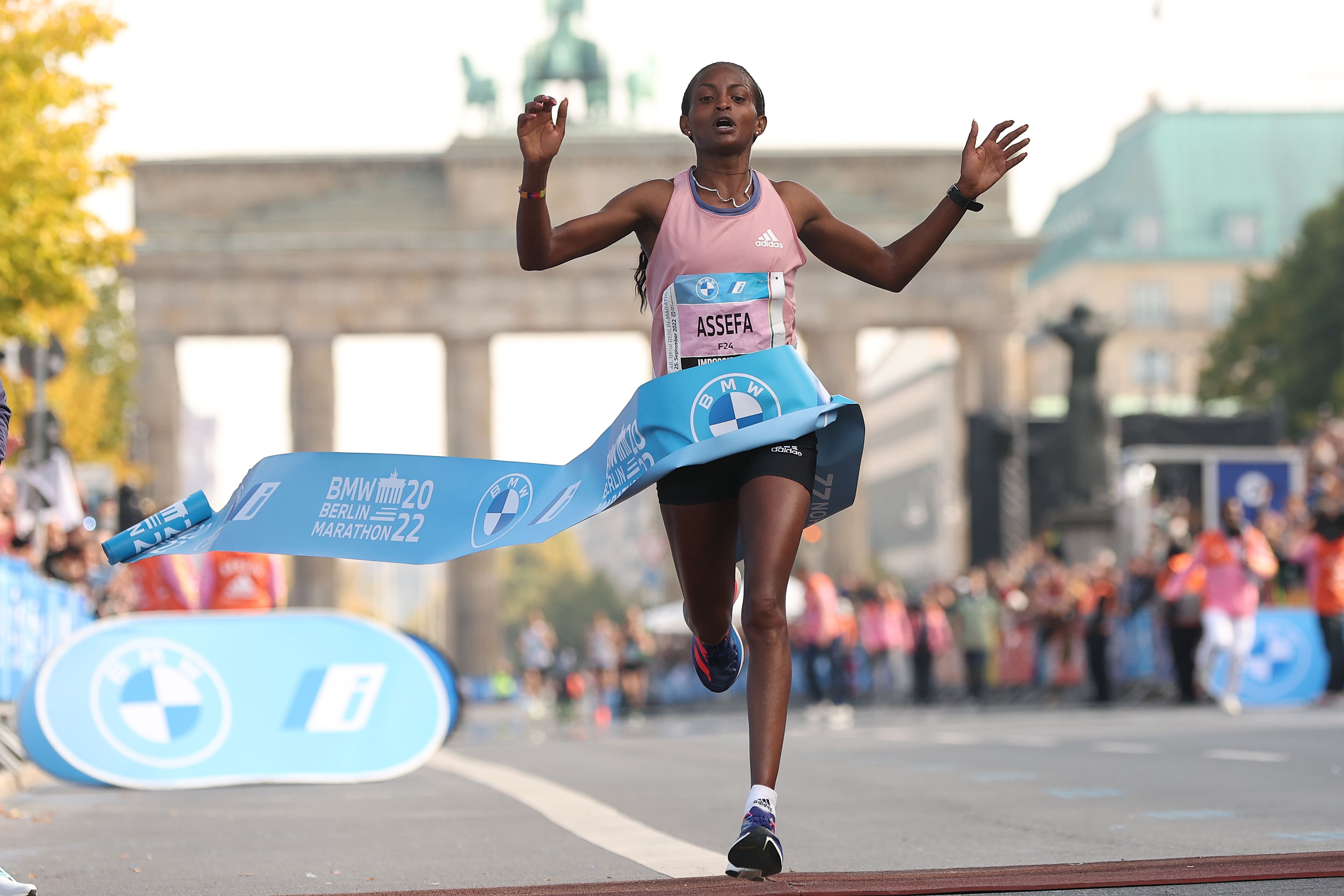
There was also a stunning breakthrough for Ethiopia’s Tigist Assefa in the women’s race as she smashed the course record by more than two minutes with 2:15:37, becoming the third-fastest woman in history.
Just when it seemed Kipchoge had achieved everything he possibly could over the classic distance, the legendary pushed the world record further out of reach for the rest of the distance-running world.
Unlike his last world record run, the double Olympic champion went out hard on this occasion, passing through 5km in 14:14 and 10km in 28:22 – not just comfortably inside world record pace, but also well inside a projected two-hour finish.
Kipchoge maintained that pace through half way, which was reached in 59:50, but his pace started to drop slightly from then on, and by 25km (1:11:08) his projected finish had slipped to just outside two hours – still more than a minute inside world record pace, though.
Ethiopia’s Andamlak Belihu was just about staying level with Kipchoge up until this point, but the Kenyan superstar then gradually pulled clear and was out on his own.
He passed through 30km in 1:25:40, then reached 35km in 1:40:10. By the time he passed through 40km in 1:54:53, his lead had grown to move than four minutes with Mark Korir having moved into second place.
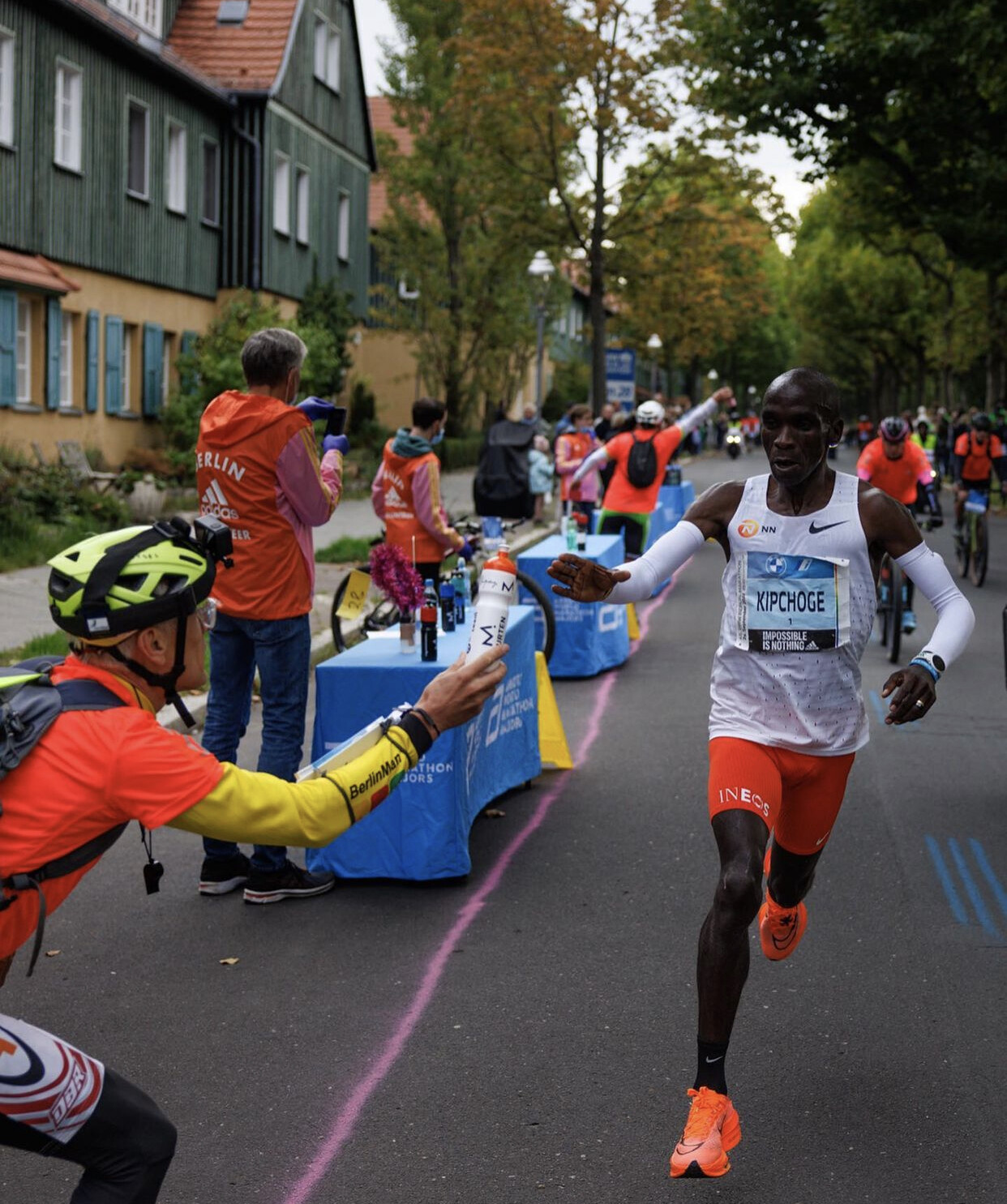
His victory – and world record – nor a formality, Kipchoge went on to cross the line in 2:01:09, taking 30 seconds off the world record he set in the German capital four years ago. Korir held on to second place in 2:05:58 and Ethiopia’s Tadu Abate came through to finish third in 2:06:28.
"I am overjoyed to have broken the world record in Berlin," said Kipchoge. "I wanted to run the first half so fast. No limitations.
"After 38km I knew I would be capable of breaking the world record. The circumstances were great, and so was the organisation of the event. I’m really happy with today and impressed by the fans and their support."
By contrast, several runners were in contention for most of the women’s race. A group of six women passed through half way in 1:08 - well inside course record pace – but by 30km, reached in 1:36:41, just three women remained at the front: Assefa, along with Ethiopian compatriots Tigist Abayechew and Meseret Gola.
Despite running significantly quicker than she ever had done before, Assefa – a former 800m specialist – maintained her relentless pace and opened up a gap of about 20 seconds by 35km.
She continued to pull away from the rest of the field and crossed the line in an Ethiopian record of 2:15:37 – a time that has only ever been beaten by world record-holders Brigid Kosgei (2:14:04) and Paula Radcliffe (2:15:25).
Kenya’s marathon debutante Rosemary Wanjiru came through to take second place in 2:18:00, finishing just three seconds ahead of Abayechew.
Leading results
Women
1. Tigist Assefa (ETH) 2:15:37 2. Rosemary Wanjiru (KEN) 2:18:00 3. Tigist Abayechew (ETH) 2:18:03 4. Workenesh Edesa (ETH) 2:18:51 5. Meseret Gola (ETH) 2:20:58 6. Keira D'Amato (USA) 2:21:48 7. Rika Kaseda (JPN) 2:21:55 8. Ayuko Suzuki (JPN) 2:22:02 9. Sayaka Sato (JPN) 2:22:13 10. Vibian Chepkirui (KEN) 2:22:21
Men
1. Eliud Kipchoge (KEN) 2:01:09 2. Mark Korir (KEN) 2:05:58 3. Tady Abate (ETH) 2:06:28 4. Andamlak Belihu (ETH) 2:06:40 5. Abel Kipchumba (KEN) 2:06:49 6. Limenih Getachew (ETH) 2:07:07 7. Kenya Sonota (JPN) 2:07:14 8. Tatsuya Maruyama (JPN) 2:07:50 9. Kento Kikutani (JPN) 2:07:56 10. Zablon Chumba (KEN) 2:08:01
(09/25/22) Views: 223World Athletics
Are records going to be broken at the Berlin Marathon this weekend?
The fall marathon season kicks off this Sunday, Sept. 25, in Germany for the 48th annual Berlin Marathon, which is the first of four Abbott World Marathon Majors over the next six weeks. The biggest name is distance running Eliud Kipchoge returns to the course he set the world record on four years ago, but the question everyone is asking is whether he can run 2:01:39 again?
He also looks to become the second man to win four Berlin Marathon titles, joining the great Haile Gebrselassie, who won four consecutive between 2006 and 2009.
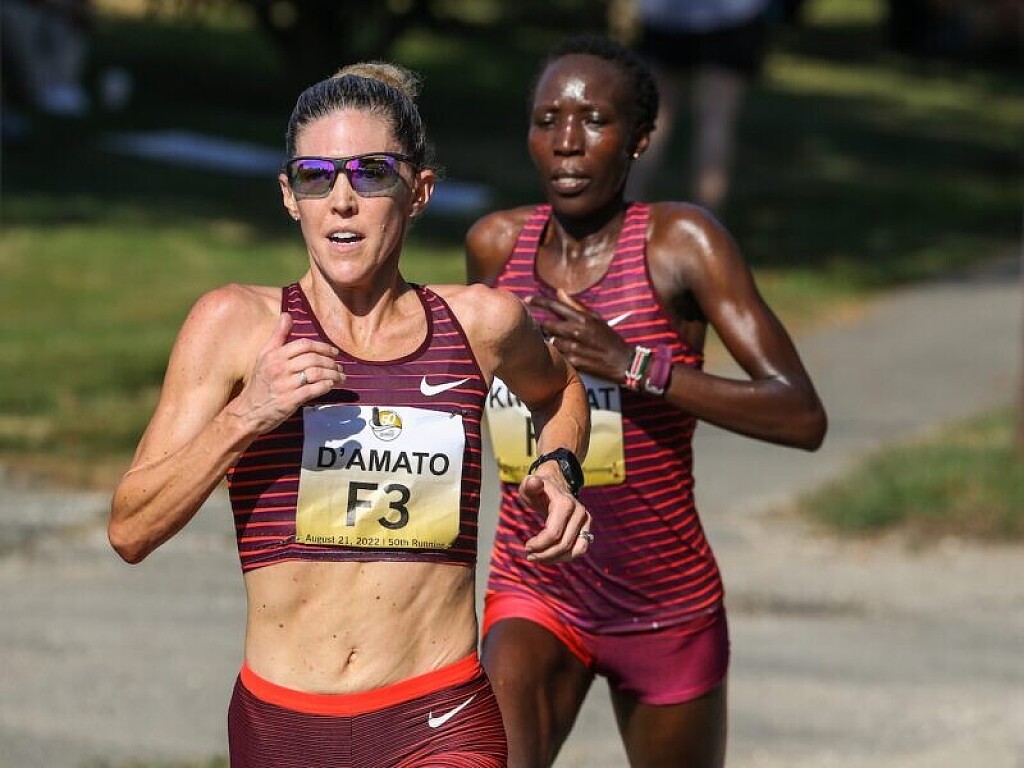
Kipchoge isn’t the only athlete chasing a record in Berlin. U.S. marathon record holder Keira D’Amato has made a quick turnaround from her eighth place finish at World Championships and has her eyes on the American record of 2:19:12, which she ran in Houston earlier this year.
Vancouver’s Natasha Wodak is the lone Canadian in the elite field, and she is looking to take advantage of the fast Berlin course. In 2020, Wodak ran the second fastest marathon time by a Canadian woman, 2:26:19, at The Marathon Project in Arizona. She followed up that performance with an impressive 13th place finish in the marathon at the 2020 Olympics Games.
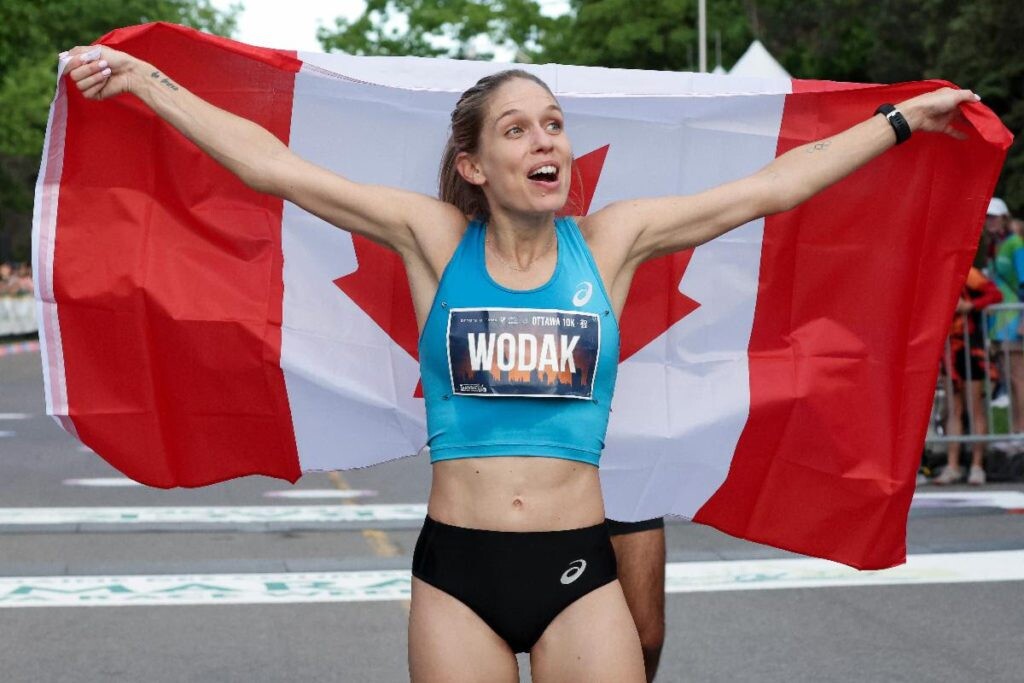
Wodak hopes to shake 90 seconds off her marathon PB Sunday to challenge Malindi Elmore’s Canadian record of 2:24:50 from 2019.
The weather
The race starts at 9:15 a.m. local time on Sunday (which is 3:15 a.m. E.T. in Canada). The temperature looks to be perfect for marathoning — between 10 C and 14 C, with next to no wind.
Men who hope to finish near Kipchoge
It is well-known that Kipchoge is the favorite, but who are the guys most likely to finish second or stick with him until 30K?
Ethiopia’s Guye Adola, who was second to Kipchoge in 2017, won Berlin last fall in 2:05:45. The win marked his first major victory after struggling with injury earlier in his career. Like Kipchoge, Adola is fast and knows what it takes to win on this course. In 2017, he ran the fastest marathon debut in history on this course but since has not run near 2:03.
Adola is the only other sub-2:05 runner, which Kipchoge is bound to finish under. If anyone else wins this race, it would take a miracle, or mean both Kipchoge and Adola have blown up.
Ghirmay Ghebreslassie of Eritrea won the 2015 World Championships in Beijing and the New York Marathon in 2016 after missing the podium at the Rio Olympics. Although Ghebreslassie has the experience, in a sub-2:05 race, he may not have the speed to keep up with Adola and Kipchoge.
Marley’s Pick: Eliud Kipchoge (KEN) – 2:02:29
Can Keira D’Amato become the first American winner?
D’Amato has the fastest time out of the 24 runners in the women’s elite field with a time of 2:19:12, but she has only had nine weeks to prepare for Berlin after her 2:23:34 at the World Championships in Eugene. She was only selected for the U.S. team after Molly Seidel dropped out a few weeks before the championships.
To run 2:23 at worlds off not much training is impressive and should be a confidence booster for D’Amato on a faster Berlin course.
Many of the top Kenyan and Ethiopian runners will be competing later this fall, but there are other sub-2:22 runners in Berlin. Kenya’s Nancy Jelagat Meto (2:19:31 – Valencia) and Vibian Chepkirui, the winner of the Vienna City Marathon in 2:20:59 in April, have the experience and speed to deny D’Amato the title.
Rosemary Wanjiru of Kenya, a 65:34 half marathoner, is making her marathon debut here in Berlin. Although this is her first marathon, she will likely be in contention most of the race.
Marley’s Pick: Rosemary Wanjiru (KEN) – 2:18:39.
(09/23/22) Views: 101Marley Dickinson

Why more men than women are running in ultra and trail races?
A recent study published in the Sport and Society journal set out to determine what barriers prevent women from entering ultra-distance races. It’s certainly not news that far more men sign up and race ultra and trail races than women.
Hardrock 100 recently added changes to their lottery system so that the percentage of women that enter the lottery is equal to the percentage of women racing, and other races are following their lead and promoting inclusivity in ultra and trail racing. In a sport where we are seeing women beat men at longer distances, why are so few women signing up to race?
The study

The research was conducted via online questionnaires sent to participants of all genders in two ultras in the U.K., the Highland Fling 85 km (53-mile) Ultratrail Race, and the Jedburgh Three Peaks Ultra. Jedburgh Three Peaks Ultra is a 61 km (38-mile) race that notably takes a firm stance on promoting inclusivity within their race and the larger Jedburgh Running Festival, offering a non-binary category for all of their races and encouraging transgender athletes to sign up in the category they identify with.
Following the online questionnaires, one-on-one phone interviews were conducted to compare the racing and training experiences between men and women and to determine what differentiated them.
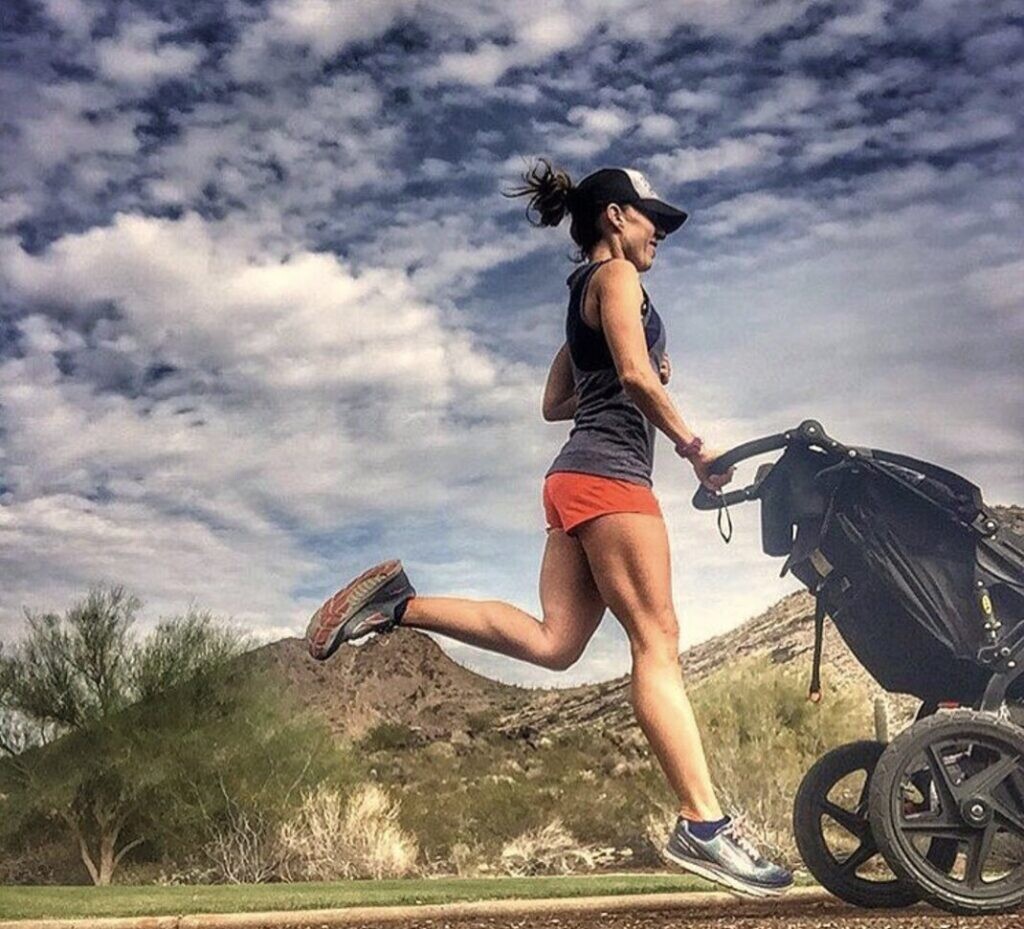
The takeaway
The conclusions researchers arrived at probably aren’t surprising to many women. While time was a factor impeding both men and women from training for longer or terrain-specific (ie. trail) races, it impacted women more. Interestingly, more men than women within the study had dependents, and the study determined that traditional gender roles seem to be the greatest barrier to women signing up for ultras.
Both male and female participants shared that negotiating time for running with family and work commitments required considerable planning and prioritizing and that sometimes this process of negotiation efficacy was a family or team effort.
"Despite gradual shifts towards egalitarian family roles in society, more restrictive traditional gender roles persist, and these may still influence the negotiating-efficacy of female ultrarunners more than males, thereby potentially reducing the availability of female training time,” researchers said.
While this suggests that women are still carrying a greater burden of workload within families, the study concluded with optimism, reporting that more women are signing up for races than ever before. Researchers determined that the current historical influence of traditional gender roles is diminishing, and the ratio of women to men in ultra and trail races should continue to improve.
(09/23/22) Views: 100
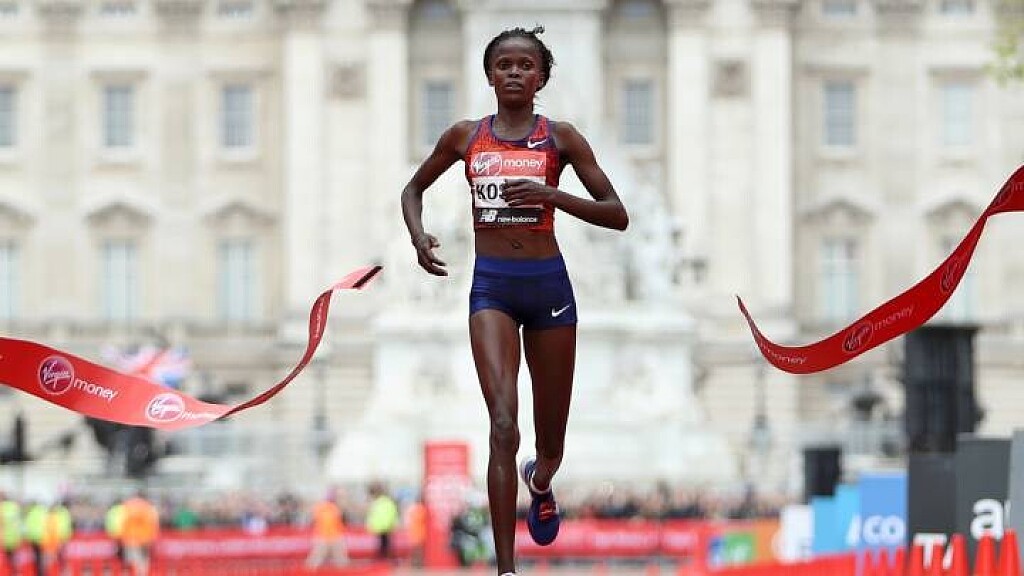
World record holder Brigid Kosgei withdraws from London Marathon with injury
World record holder and twice London Marathon champion Brigid Kosgei has been forced to withdraw from Sunday's race due to a minor hamstring injury, organisers said on Monday.
Kosgei, who won the London Marathon in 2019 and 2020, was one of the favourites going into the event. She also won the Tokyo Marathon earlier this year after a silver medal at the Olympics last year.
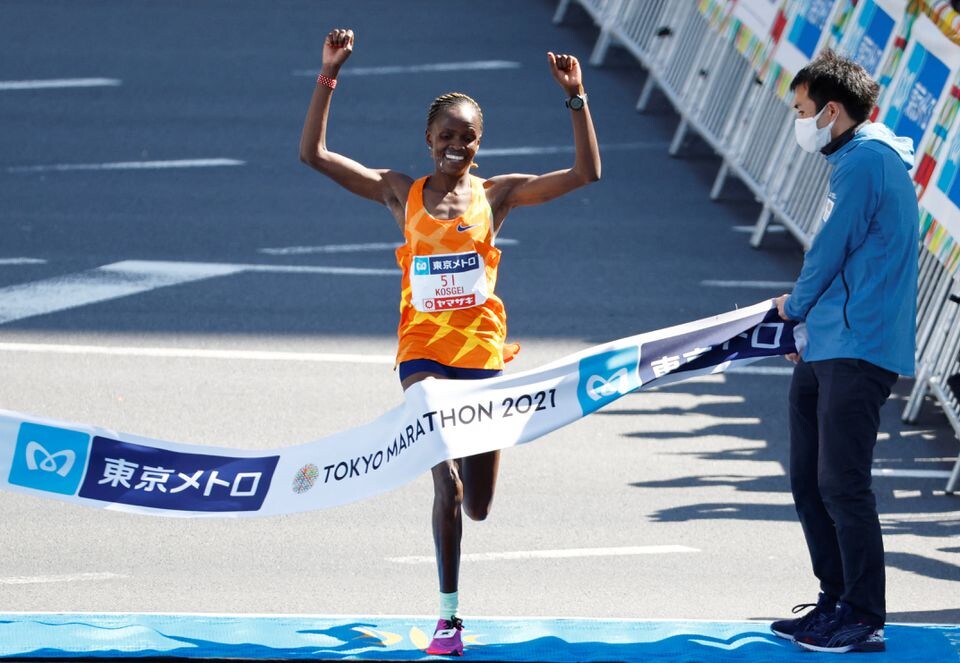
"I have been struggling over the past month with an issue in the hamstring of my right leg. My training has been up and down and not the way I would like to prepare to be in top condition for the 2022 TCS London Marathon," she said in a statement.
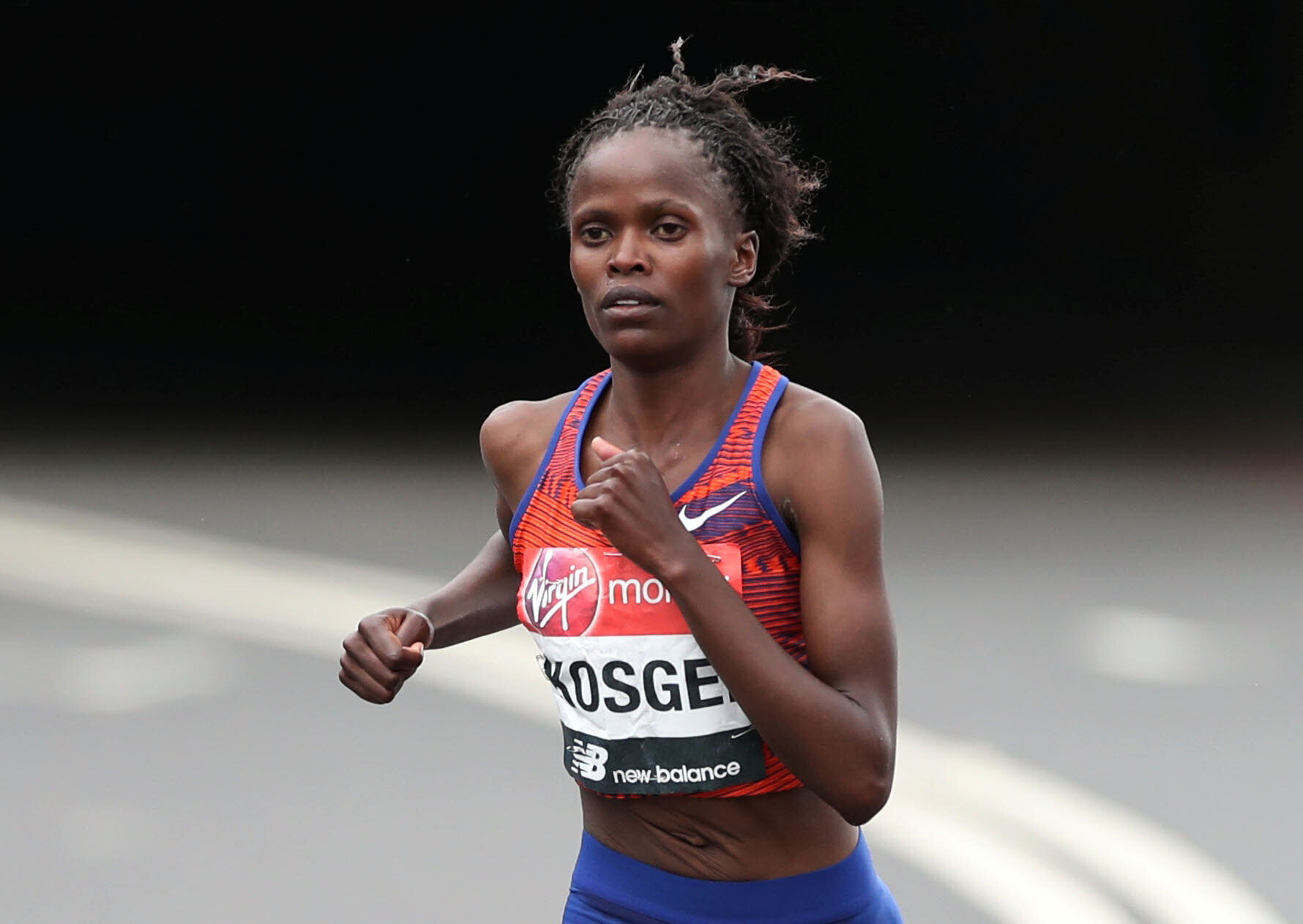
"We've decided it's best I withdraw from this year's race and get further treatment on my injuries in order to enter 2023 stronger than ever."
Kosgei set a world record time of 2:14:04 in Chicago in 2019. She was upset in London last year when she finished fourth in a race won by her compatriot Joyciline Jepkosgei, who is set to headline the event this weekend.
(09/26/22) Views: 94
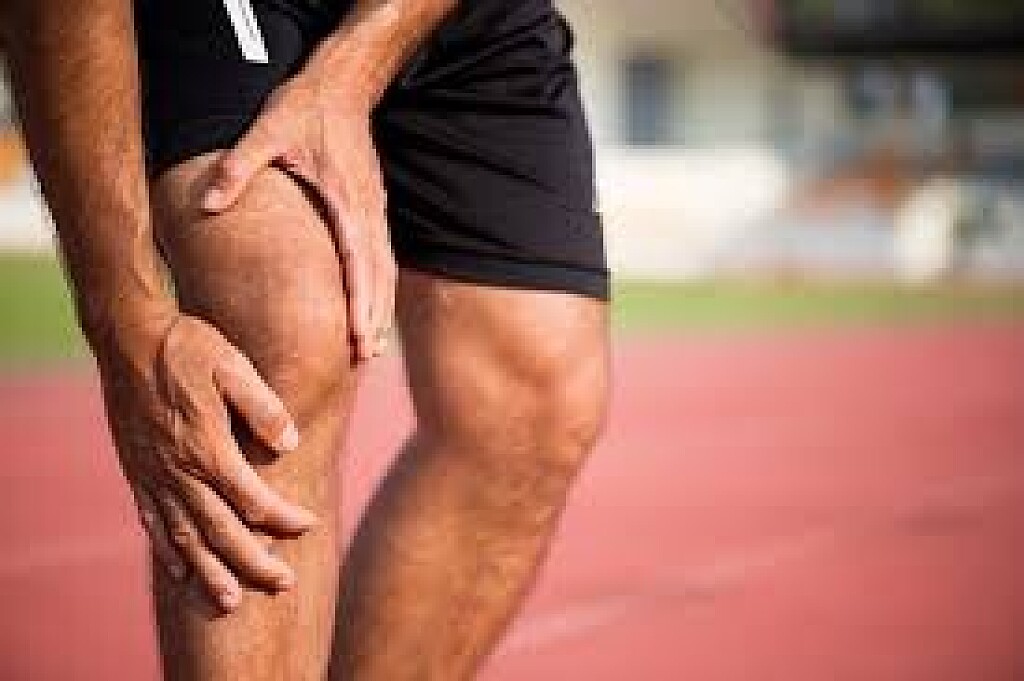
Leg pain? Four running mistakes you’re making
Running – how hard could it be? After all, you’re just putting one foot in front of the other, right?
Unfortunately, it’s exactly that attitude that’s behind so many leg and foot injuries!
There’s much more to running than just putting on a pair of trainers and going for it. Believe it or not however, there’s a lot going on behind the scenes when you go out for a run.
And with that comes the risk of lower leg pain – especially if you have no idea how to run properly!

What kind of problems might I run into?
Injuries and falls aren’t the only problems you might run into when you go out for a jog – each step you take when you run sends shockwaves up your legs.
Over time, these shockwaves can damage the tissue, ligaments and cartilage in your legs.
This can lead to a whole host of different lower leg pains, including:
Microfractures
Muscle tears
Runner’s knee
Shin splints
Needless to say, any one of these problems may result in lower leg pain strong enough to stop you from running… or worse!
As such, you’ll want to make sure you that you’re running properly, and not making one of these common running mistakes…
Running mistake 1: wearing the wrong shoes
A good pair of shoes is essential – think of them like shock-absorbers for your feet, soaking up and distributing the impacts that come with running and minimising the stress on your lower legs.
When choosing running shoes, it’s essential that you select shoes that are designed with your particular running-style in mind. This directly affects how much of the impact your feet and lower legs are exposed to.
For example, if your footfalls tend to be on the outside of your soles, then you’ll want extra thickness and padding in those parts of your shoe.
Running mistake 2: not warming up
While it can be tempting to skip the pre-run warmup (especially when you’re short of time), we strongly advise against it!
Warm-up exercises “activate” your body, signalling to your organs and muscles to prepare for physical activity.
In particular, this results in increased flexibility, speed and range of motion in your limbs and muscles, reducing your chances of accidentally overstretching your lower legs.
Not to mention, they also prepare you for exercise by starting up blood flow and psyching you up!
When preparing for a run, we recommend cycling through a range of mobility movements for your lower legs – we show our clients complete warm up routines that have them ready to run in under 5 mins.
After that, it’s a good idea to not dive straight into your run, but to open with a brisk walk or gentle jog, gradually working your way up to your normal pace.
Running mistake 3: overstriding
Many people assume that having long strides is a good thing.
However, that’s not always the case!
Think of the amount of force that goes up your legs every time you take a step.
When you overstride, your heel strikes the ground at a harsher angle, sending greater force up your leg than shorter strides would and consequently, leading to a higher risk of lower leg pain.
Ideally, you’ll want your feet to land midsole, with your foot closer to your body. This results in the optimum distribution of force, and is the safest way to run.
Luckily, this type of problem can be trained around with the help of a physiotherapist.
At Physio AUS, our Highett physio work with all sorts of athletes, runners included, to improve their technique.
Running mistake 4: biting off more than you can chew
Running is deceptively simple – after all, the only thing you’ll need are some shoes and a stretch of road to get started.
Unfortunately, that’s also why so many first-time runners end up with lower leg pain – they inadvertently wind up pushing their bodies too far!
Instead, we recommend starting small and gradually bumping up the distances and times.
It’s also a good idea to take periodic “rests” to give your body time to bounce back.
How an Highett physiotherapist helps you run
If you’re keen to get back into running, you may want to touch base with your local physiotherapist.
Physiotherapists may be able to help runners such as yourself get back into running a number of ways.
Conditioning and training that help you get back into running
First-time runners and people who are getting back into exercise after a long time away are especially prone to lower leg pain.
As such, we suggest booking an appointment with your local Highett physio before you take to the track.Using a range of exercises, stretches and other treatments, your Highett physio will help condition, enhance resilience and build strength in your lower leg muscles.
(09/23/22) Views: 92Physio Aus
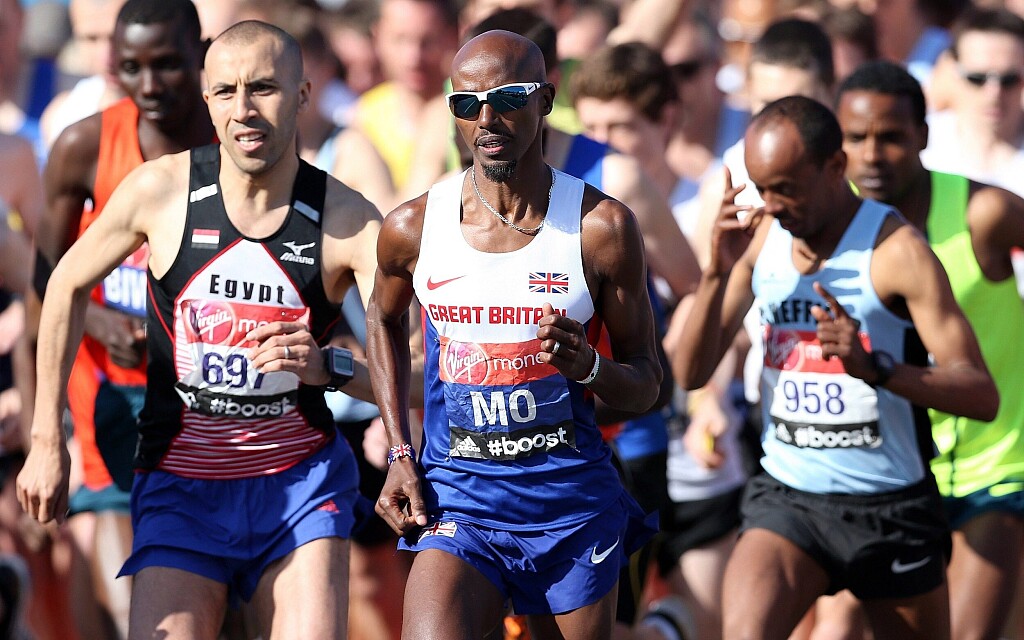
London Marathon chief urges Mo Farah to take inspiration from Kipchoge
Mo Farah has been urged not to make any hasty decisions about retirement and to take inspiration from the world record holder Eliud Kipchoge when he returns to run the London Marathon on Sunday.
Farah, who turns 40 in March, has looked a shadow of his best over the past couple of seasons. However the London Marathon’s event director, Hugh Brasher, said it would be wrong to write him off after a couple of poor performances.
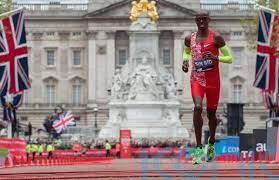
“I think Eliud is proving aged 37 and running a PB that the age barriers that we used to think existed do not necessarily now exist,” Brasher said.
“I think that what we should be doing is allowing Mo time to decide what he wants. One bad performance, a couple of bad performances, do not mean that people should write somebody off. He is an absolutely superb athlete and he will always be welcome back.
“I hope he runs fantastically well but you never can tell because marathon running is the hardest thing. If you’re 99% not 100% you won’t get away with it – it’s really, really hard.”

Farah has given no indication he plans to retire yet, despite failing to qualify for the Olympics last year or any major championships in 2022. And Brasher made it clear he would be delighted for him to run in London next year – and also promised him a special retirement send-off when he decided to finally quit.
“The door will always be open to Mo – he is Britain’s greatest endurance athlete in terms of number of Olympic gold medals and world championship gold medals. We have a long history with him, going back to the mini marathon through the fact that we supported him through his university time, which is something that’s not publicised.
“When you look at what happened with Paula Radcliffe, her final run was in the London Marathon in 2015. It was the most incredible send-off that I think that the British crowd were ever able to give any athlete and they came out in their droves. Whenever Mo decides to do his last marathon we would absolutely love it to be London. I think the crowd would love it. He should be celebrated.”
(09/27/22) Views: 85Sean Ingle
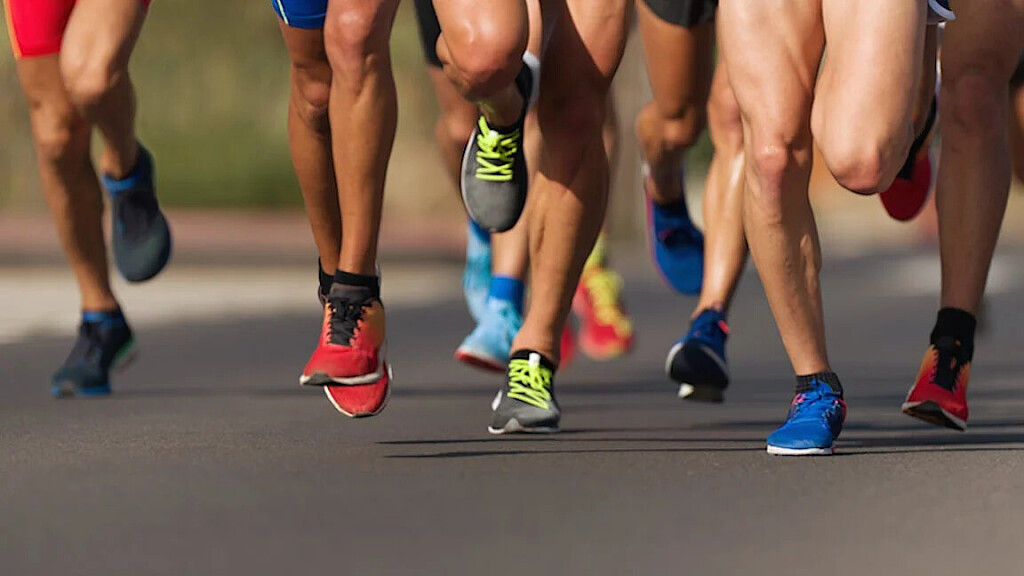
How to prevent heavy legs while running?
Tired, aching legs are not only a discomfort, they can also discourage potential runners from maintaining a regular training regime. So, to help you keep running, here are a few tips to help with heavy legs - as you will soon see, these are simple yet effective measures to put into place.
1. Warm up
We’ve all heard this advice before, but it is worth taking heed. Warming up before exercise encourages more efficient blood flow to the muscles thus allowing them to contract more efficiently. This should help you get the most out of your workout, whilst also preventing the onset of heavy legs.
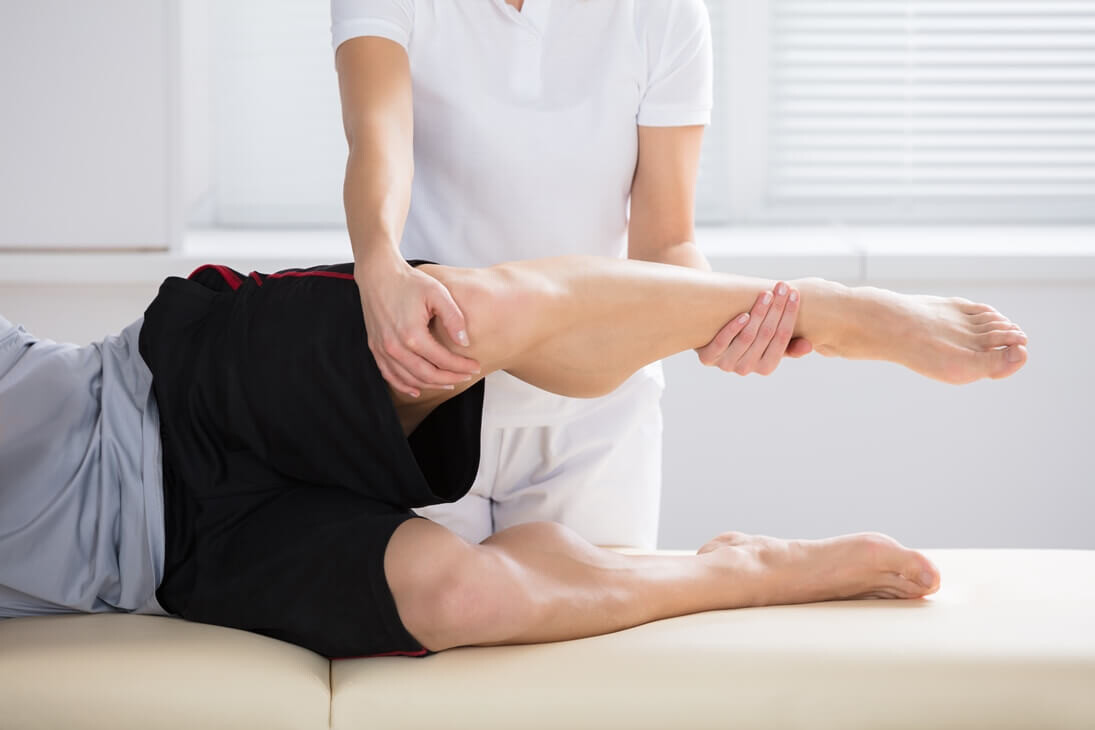
An effective warm up will also deliver nutrients to the muscles more efficiently. This, in turn, can prevent a quick build-up of lactic acid – too much lactic acid is known to contribute to muscle aches and even a burning sensation in the limbs.
The ideal warm up should last for at least ten minutes and it should cover all muscles. Take a look at our blog ‘Stretches for runners’ for more information and easy to follow videos.
2. Adjust your route
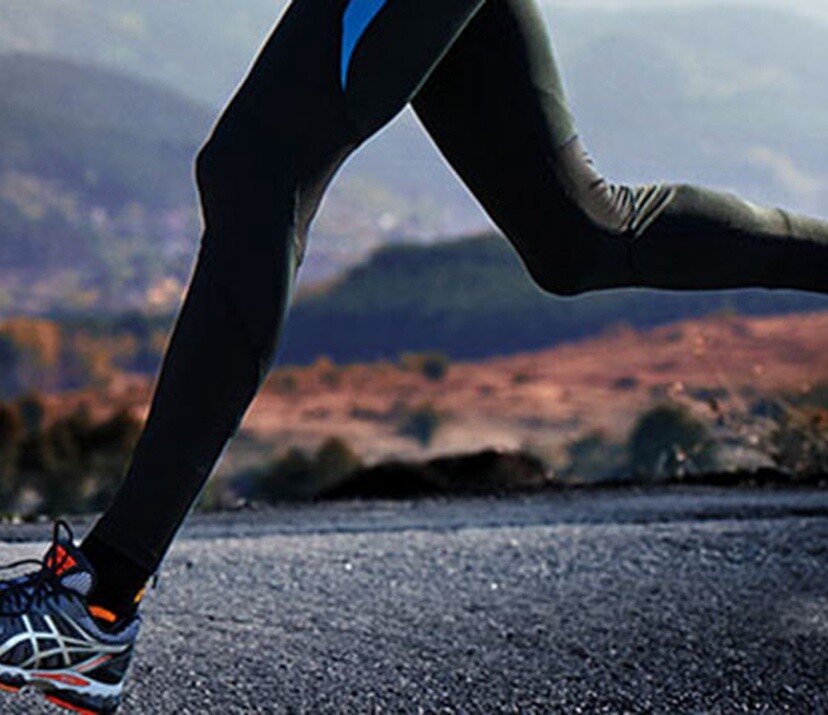
Even though you may have managed to run 10km on Monday, that doesn’t mean you will be able to run the same distance or more on Tuesday. That’s because fatigue in the legs can build up over several days. Therefore, instead of doing the same run over and over, it is essential to allow yourself short runs, or rest days in between long runs. On the whole, it is more important to ensure your run is of a high quality, rather than trying to achieve a certain distance. This will strengthen your muscles and improve performance in the long run.
3. Adjust your stride
Sprinting in short bursts, and keeping the pace slower in between, is thought to be a more effective training regime than continuing to run at a moderate pace. That’s because this approach builds muscle strength and fitness.
As soon as you feel your legs getting tired, try to lengthen your stride, without increasing the pace. This will stretch your muscles and disperse the build-up of lactic acid. As I’ve already mentioned, too much lactic acid is a contributing factor in heavy, painful legs whilst running.
4. Adjust your focus
Running along a stretch of straight road with nothing to look at, or pounding it out on a treadmill in the gym, can be pretty dull. Therefore, with nothing else to focus on, it is likely you will soon become absorbed in the tired feeling of your legs.
To distract yourself from this, try listening to music or a podcast. Alternatively, running a new route, or a route with lots of twists and turns, should give you something else to turn your attention to.
How to relieve heavy legs after running
5. Stretch
Just as warming up before a run is important, so too is stretching out your muscles afterwards. If you do not do this, your muscles are more likely to cramp and become painful the next day. Stretching your muscles also helps to minimise the effects of lactic acid in the muscles, and also makes you less prone to developing injuries.
6. Rest
A small amount of rest will speed up the recovery process, and prevent further injury from occurring. Rest will also help ensure your legs are ready for their next run, should you decide to do one in the days ahead.
Our blog ‘How to recover from a workout’ will provide more information about what to do to help your body after a period of exercise.
7. Massage your legs
If your legs need that extra bit of help to get moving the next day, then a massage may be just the thing. This encourages blood flow to the deep tissues thus removing waste products such as lactic acid from the muscles. Not only that, a massage may encourage nutrients and water to enter the muscles, therefore, repairing and restoring the tissue.
Massages are a particularly good idea if you are training hard and regularly, as this also helps to prevent injury to muscle.
8. Check for injuries
As a runner, the worst thing you can do is run on injured joints or muscles. Not only will your legs feel very painful, but it is likely to cause lasting damage. Therefore, do not battle on regardless of aches and pains, and do not ignore warning signs of pain and muscle fatigue as developing strains, sprains or stress fractures will take you off the running scene for a long time. It’s definitely not worth running for an extra mile if it means you can’t put your running shoes on for the next couple of months!
Remedies for tired legs
9 – Watch your diet
Not only is it important to run whilst full of nutrients to sustain you, but it is also critical to stay properly hydrated. Just ensure you take small sips, however, rather than big gulps as, coupled with the movement of running, too much water has the potential to cause digestive upset. If you are going for a particularly hard or long run, you could consider taking an energy bar with you as well.
You need to feed your muscles by giving them the correct balance of protein, carbohydrate, healthy fats and salt. Wholegrain varieties of bread, pasta and rice are higher in fibre and energy than their white or refined counterparts. Also, treating yourself to a small piece of dark chocolate after each run will not do any harm.
(09/23/22) Views: 84
A. Vogel
Eliud Kipchoge ready for fast times in Berlin
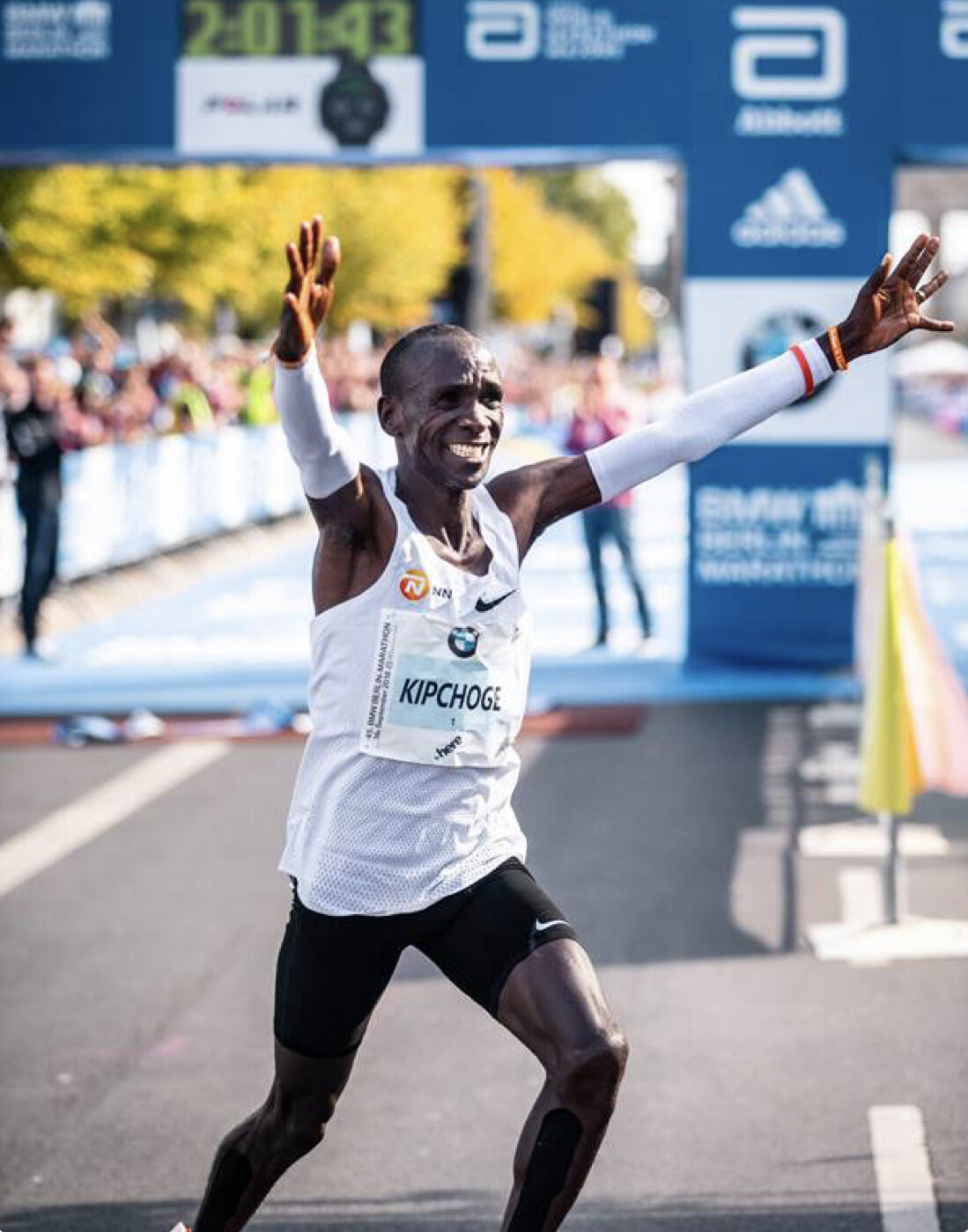
Eliud Kipchoge is ready for a very fast race in the BMW BERLIN-MARATHON on Sunday which may well lead him to break the world record here for the second time.
The double Olympic champion, who set the current world record of 2:01:39 in Berlin four years ago and also broke the two-hour barrier when he ran 1:59:40.2 in a race in Vienna in 2019 which did not conform to regulations, will start as the clear favourite.
Organisers of the BMW BERLIN-MARATHON have registered 45,527 runners from 157 nations for the 48th edition of the event. Germany’s most spectacular road race is part of the Abbott World Marathon Majors (AWMM) and is also a Platinum Label Road Race of the international athletics federation, World Athletics.
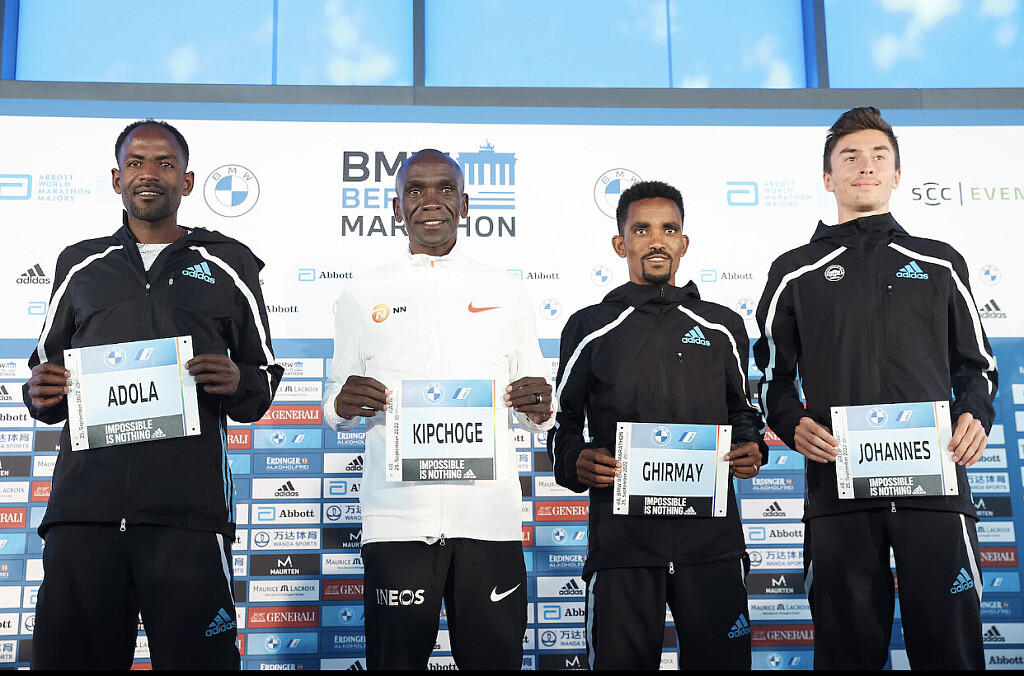
The 37-year-old Kenyan held back from making any hard and fast promises when he spoke two days before the BMW BERLIN-MARATHON. “I’d like to thank the organisers for letting me race again in Berlin after four years and expect a very good race. I’ve trained well as usual – every training day is a challenge.”In response to the question at the press conference, what would be “a very good race” for him, Eliud Kipchoge answered: “A very good race is a good race.”
That got the audience on his side before he added: “I want to inspire people and if a course record comes out of this at the end, I will appreciate it,” added this outstanding athlete. It should be noted that the course record is, of course, the world record, but Eliud Kipchoge was careful not to utter these words.
The world record holder, whose career so far has brought him victory in all but two of his 18 marathons, could well achieve his fourth win in Berlin after taking the title in 2015, 2017 and 2018. That would bring him equal with the Ethiopian legend Haile Gebrselassie as the two men with most wins in Berlin. If the world athlete of the year for 2018 and 2019 is in world record form, Eliud Kipchoge should prove unbeatable on Sunday.
On the other hand, the elite field has plenty of strength in depth. Heading the list of challengers is last year’s champion Guye Adola from Ethiopia, winning the title in unseasonably warm conditions in 2:05:45 and beating the Ethiopian superstar Kenenisa Bekele into the bargain.
It was in Berlin in 2017 that Guye Adola ran what remains his personal best of 2:03:46 and on his debut at the distance. Only Eliud Kipchoge finished ahead of him though from time to time Adola took the lead. “I have prepared well and look forward to the race,” said the 31-year-old, who described Kipchoge as “a hero.”
The BMW BERLIN-MARATHON has greater strength in depth among the men’s elite field than ever before. As many as 18 runners have personal bests under 2:08. Among them is Ghirmay Ghebreslassie who caused a surprise when winning the world title in 2015 and also won in New York the following year. The Eritrean athlete has a best of 2:05:34 which he set in finishing third in Seville in February.
“It’s a big challenge to run in such a field and against Eliud Kipchoge. I’ll do my best and my aim is a place on the podium,” said Ghirmay Ghebreslassie.
An unusually large number of Japanese runners will be among the elite starters, the reason being that they are trying to qualify for the 2024 Olympics. There will be 13 of them with personal bests of under 2:10 in the BMW BERLIN-MARATHON. The fastest of them is Ryu Takaku with a best of 2:06:45.
The leading German in the field is Johannes Motschmann, who was a member of the German team at the European Championships which won the silver medal in Munich. Despite a short recovery time of six weeks since that competition, the 28-year-old wants to improve his personal best of 2:12:18 in the direction of 2:10.
The race in Berlin is the biggest of my career so far. Since I’m a hometown boy here, I’d even rate it above the European Championship marathon,” said Motschmann, who runs for the Marathon Team Berlin.
The Austrian record holder, Peter Herzog, will also be aiming to take advantage of conditions at the BMW BERLIN-MARATHON and run faster than ever before. His current best is 2:10:06 and his ambition is to become the first Austrian.
While a double world athlete of the Year in Eliud Kipchoge will take centre stage, a former star of world sport will be running some way behind him: the Brazilian football legend Kaká, a member of the team which won the World Cup in 2002, and also a Champions League winner and Footballer of the Year.
“I definitely wanted to run a major marathon and asked friends who recommended Berlin to me. That’s why I’m here. On Sunday I want to run 3:40. The marathon is something very special in that we, as mass runners, run together with the elite. I’m very excited,” admitted Kaká at the press conference.
Elite runners with personal bests
Eliud Kipchoge KEN 2:01:39
Guye Adola ETH 2:03:46
Ghirmay Ghebreslassie ERI 2:05:34
Dejene Debela ETH 2:05:46
Mark Korir KEN 2:05:49
Ashenafi Moges ETH 2:06:12
Tadu Abate ETH 2:06:13
Bethwel Yegon KEN 2:06:14
Awet HabteERI2:06:25
Ryu TakakuJPN2:06:45
Limenih Getachew ETH2:06:47
Hiroto InoueJPN2:06:47
Zablon Chumba KEN 2:07:18
Kenya Sonota JPN 2:07:23
Kento Kikutani JPN 2:07:26
Kazuki Muramoto JPN 2:07:36
Tadashi Isshiki JPN2:07:39
Atsumi Ashiwa JPN 2:07:54
Daisuke DoiJPN2:08:13
Rintaro TakedaJPN2:08:48
Yuki Matsumura JPN 2:09:01
Peter Herzog AUT 2:10:06
Johannes Motschmann GER 2:12:18
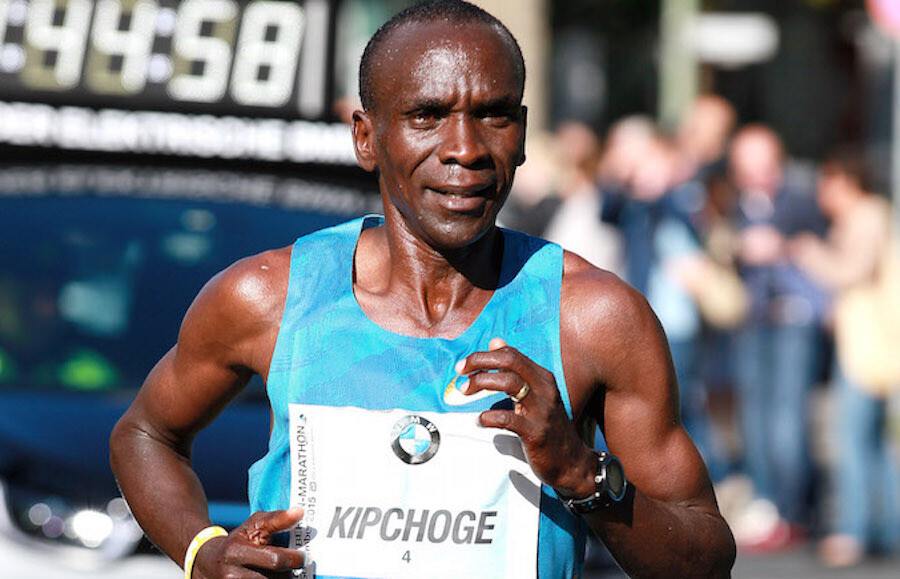
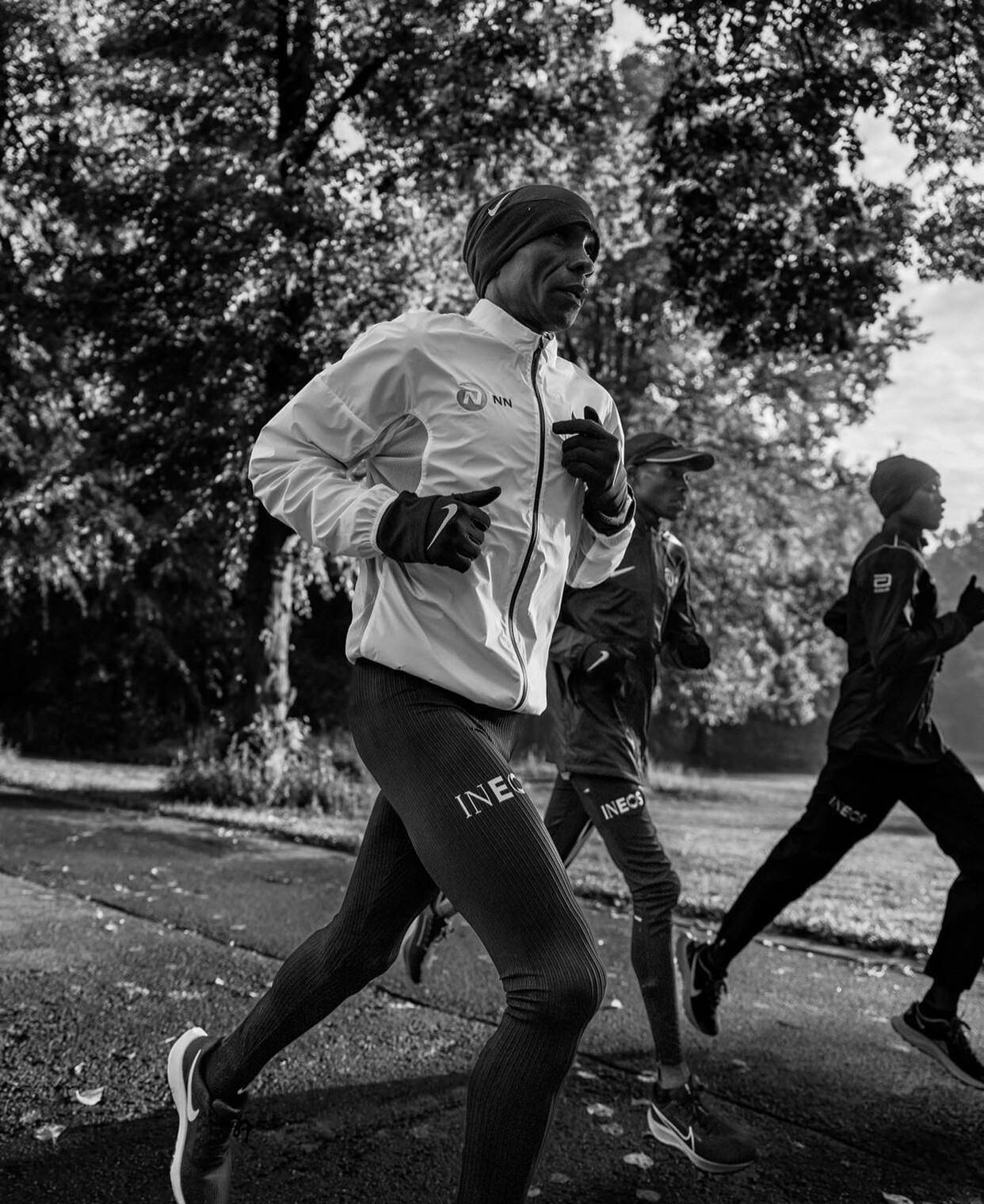
Third photo: Kipchoge's first run in Berlin
(09/23/22) Views: 81
