

Running News Daily
Top Ten Stories of the Week
8/27/2022
These are the top ten stories based on views over the last week.
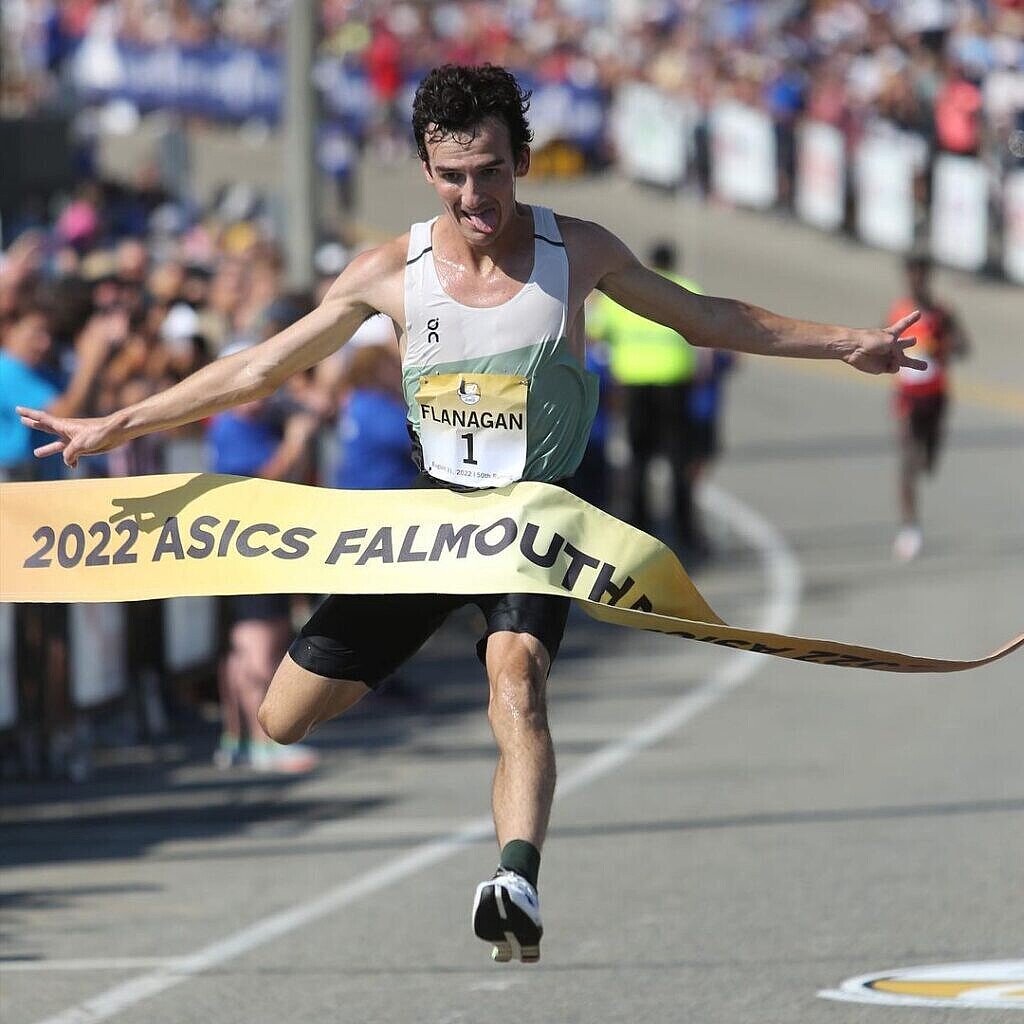


Ben Flanagan wins his third Falmouth Road Race
Kitchener, Ont. native Ben Flanagan has done it again, winning his third Falmouth Road Race in four years. Flanagan finished the seven-mile (11.3 km) course in 32:25, outlasting runner-up Biya Simbassa (32:32) for a second straight year in Falmouth, Mass.
With two Falmouth victories to Flanagan’s name, and his partner, Hannah, growing up in Falmouth, he was the race favourite heading in and was keen to defend his 2021 title. In a pre-race interview, Flanagan chatted about his familiarity with the course and how he was already dreaming of his celebration when he won his third.
Like in previous years, the 27-year-old broke the tape by jumping into it, holding up the “number three” with his hand.
Flanagan again made his attack at the top of the Scranton Ave. hill at the 5.5-mile marker. Simbassa, who lives and trains in Flagstaff, Ariz., followed Flanagan’s move along with David Bett of Kenya. The Canadian 10K record holder ousted Bett and Simbassa on the final downhill to win, nine seconds shy of his personal best on the course: 32:16 from 2021.

Flanagan now joins an exclusive group of six runners to successfully defended their titles at Falmouth. The group of six features: Alberto Salazar (‘81 and ‘82), Frank Shorter (’75 and ’76), and David Murphy (‘84 and ‘85). Next year, he will have the chance to join Kenya’s Gilbert Okari as the only men to win three straight (2004-06)
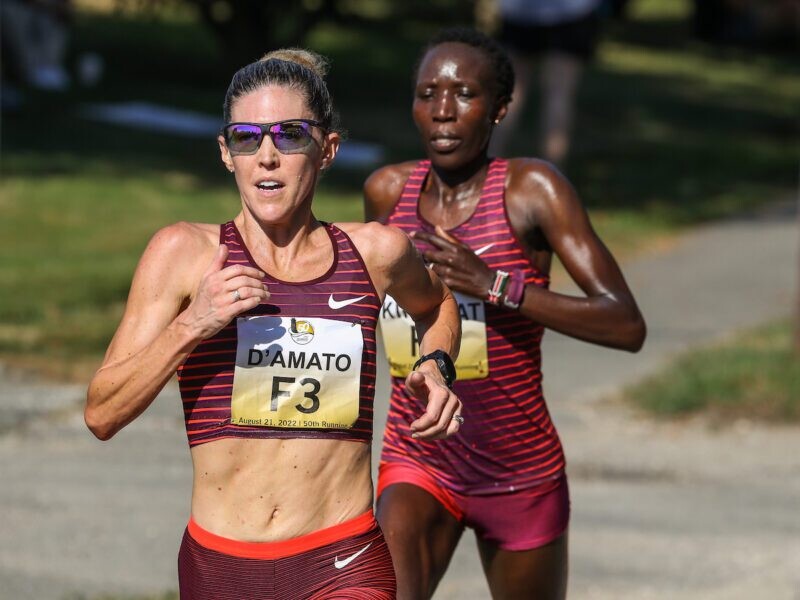
The American women’s marathon record holder, Keira D’Amato, won the women’s 11.3 km race in a nail-biting finish (36:14). She managed to hold off a surging 2017 Boston Marathon champion Edna Kiplagat (36:28) to claim the women’s title in her Falmouth debut.
This race was a quick bounce back for the 37-year-old, who placed eighth at last month’s 2022 World Athletics Championships marathon for Team USA in 2:23:34. Earlier this year at the Houston Marathon, D’Amato set the U.S. marathon record of 2:19:12.
D’Amato will take another stab at breaking her American marathon record on Sept, 25. at the Berlin Marathon.
Daniel Romanchuk won the men’s wheelchair title in 22:02, and Susannah Scaroni won the women’s division in 25:30.
(08/21/22) Views: 129
Marley Dickinson

Matt Hudson-Smith wins 400m gold in the European Championships
Matt Hudson-Smith continued his hugely impressive season by winning 400m gold at the European Championships in Munich last night, retaining the title he won in Berlin in 2018.
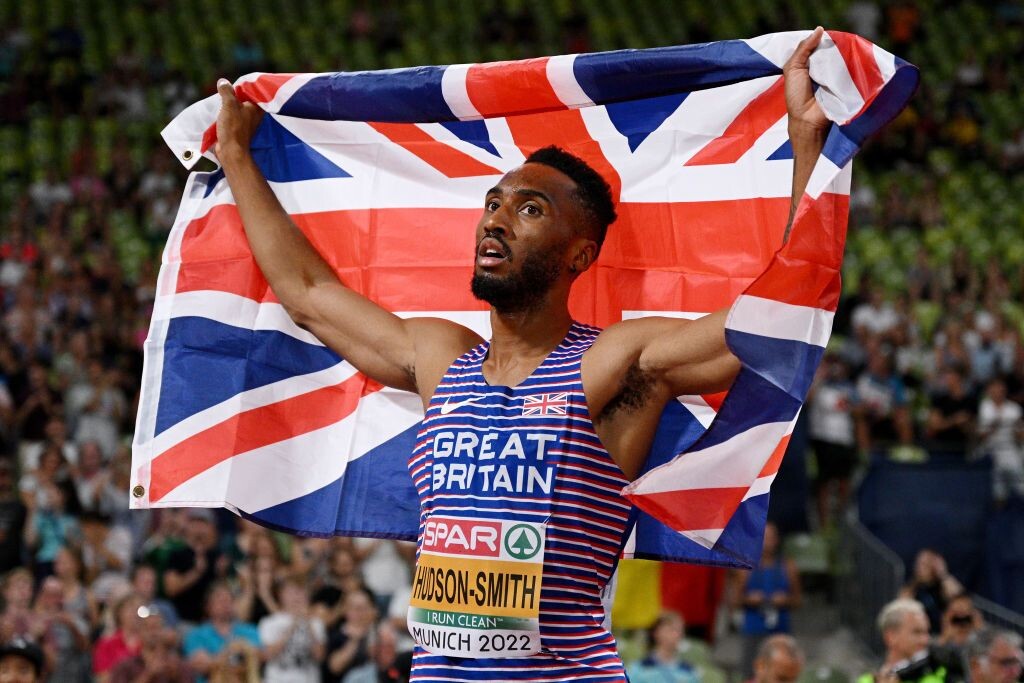
By doing so he made history by becoming the first British athlete to win three major medals in three different outdoor championships in the same year, after taking World Championships bronze in Oregon in July, followed by Commonwealth silver in his home city of Birmingham earlier this month.
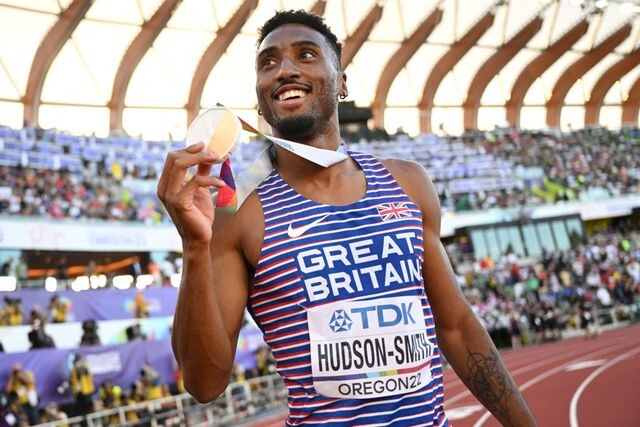
The 27-year-old sprinter ran a pretty much flawless race, moving clear of the pack on the closing bend before extending his lead in the home straight to win in 44.53 seconds, securing Great Britain and Northern Ireland's first gold medal of the Championships.
Another Briton, Alex Haydock-Wilson, took bronze in 45.17. Separating them was Ricky Petrucciani of Switzerland, who came second in 45.03.
(08/20/22) Views: 106Andy Dixon

Kilian Jornet and NNormal launch their first trail shoe
Kilian Jornet calls the Kjerag "a shoe that can be used for everything from a VK to a 100-mile race”
The Kjerag [pronounced: sche-rak], a trail running shoe and the first product launched by ultrarunning phenom Killan Jornet’s brand NNormal. The Kjerag is named for a 1,100-metre-high mountain in Norway, which can be conquered by running up challenging trails or tackled via some moderate hiking.

The made-for-everyone versatility of the mountain inspired the name of the shoe, touted as being made for every runner at every level. At 200 g, the Kjerag is a lightweight shoe boasting unique shock absorption and stability, with a stack height of 23.5 mm and a heel-to-toe offset/drop of 6 mm.
The design team at NNormal worked with Jornet to create a shoe that’s made to be versatile enough to switch between road running and scrambling up technical trails.
Jornet explained in a press release on Monday: “Our goal with Kjerag was to find the highest-quality materials, cutting-edge technologies, planet-friendly production processes–the best of everything. Then to bring them together in a shoe that can be used for everything from a VK (vertical kilometer) to a 100-mile race.”

The Kjerag has a generous front volume to provide comfort for runners tackling long races or trekking through hot days. Jornet has been test-driving the shoe throughout the 2022 season. “You forget about them when you run,” he reports. “They follow the natural movement of the foot, which helps prevent muscle fatigue and blisters. The shoes adapt to you.”
The Kjerag has a super-sticky, extra durable Megagrip Vibram sole, with 3.5 mm lugs intended to prioritize speed and allow sensitivity to the terrain. The shoe boasts a “new generation of foam” with its EExpure midsole, sitting in direct contact with your feet via a very thin membrane. “No inner sole means best-possible propulsion and compression, less slippage and fewer blisters,” explains NNormal.
NNormal will be launching a range of apparel and accessories alongside the Kjerag that align with the same principles: lightweight and breathable attire made for both intense and less strenuous activities at every level. All the clothing designs are intended to be both timeless and durable.
A shoe as all-encompassing as the Kjerag is hard to imagine, and it will be interesting to see if regular runners find the trail runner as versatile as NNormal claims it to be.
(08/23/22) Views: 103Running Magazine

Tim Murphy founder of San Diego Elite Racing Inc has died at age 77
Tim Murphy, founder of San Diego’s Elite Racing, Inc., the man who reinvented running, not once but three times, succumbed to pneumonia Wednesday night (August 17, 2022) passing in hospice care at his home in San Diego, California. He was 77 years old.
Today, though smaller than it once was, the Rock ‘n’ Roll Marathon Series remains the largest purveyor of running events in the world, with 29 events in 16 U.S. states, Washington D.C., and seven foreign countries. But a quarter century ago, who knew what lay ahead in the wild open spaces of the first Rock `n` Roll Marathon?
Some observers even questioned the concept of rock bands strung along the marathon course altogether. What does rock`n` roll have to do with San Diego, much less with running a marathon, the ultimate test of endurance?
Well, on June 21, 1998 the world got its answer. With the snarl of a blistering guitar solo, the tight syncopation of a snare drum, and the slap of millions of accompanying footfalls, the second-wave running boom announced its arrival in San Diego with a carnival of music, endorphins, and sweat. It’s like Tim turned over the calendar two years early to introduce the new century.
“We created a theme marathon without intending to,” said Tracy Sundlun, Tim’s long-time partner at Elite Racing.
NEW DEMOGRAPHICS
No new major marathon had sprung up in the U.S. or the world since the Los Angeles Marathon arrived in 1986. In its first year, LA registered 10,787 runners, making it the largest inaugural marathon in history. Instantly, that number became Tim‘s goal for San Diego to beat LA.
Even before its first steps were run, though, there was the feel of a major marathon about the Rock ‘n’ Roll Marathon. Tim had conceived the idea years before while running the final lonely miles of the Heart of San Diego Marathon out along Friar’s Road to Qualcomm Stadium in Mission Valley. Wishing there were some kind of support along the road to help out, Murphy thought, wouldn’t it be great to have music to run to.
It took a long time for his idea to gestate, but the seed had been planted.
After a decade of developing his reputation as an event innovator, beginning in 1986 with the Carlsbad 5000 just north of San Diego – the event that proved runners in a then 10k / marathon focused world would run a 3.1 mile race, while introducing “spectator running” where the professional field followed age and gender specific races over the same tight-looped course – Murphy’s idea of a musical marathon came to life, born out of two separate, but catalyzing events.
“When they opened the Rock & Roll Hall of Fame in Cleveland (1995), there was so much hype about it,” Tim told San Diego YuYu in 2004. “So I was running along one morning and I thought, “If I lived in Cleveland I would do a marathon that would start and finish at the Rock & Roll Hall of Fame and do a big concert afterwards.”
One year later 273 San Diegans were among the record 38,000 entrants at the 100th anniversary of the Boston Marathon.
“Afterwards, they had this get together and all they could talk about was why there wasn’t a major marathon in San Diego. And all the runners, some of them pretty important, just wouldn’t leave me alone about it. So I essentially dusted off the old idea I had for Cleveland and started.”
With the backing of a set of investors, led by Hollywood A-list producers Frank Marshall and wife Catherine Kennedy – “Jurassic Park”, “Indiana Jones” , “Jason Bourne” – along with celebrity ambassadors like basketball Hall of Famer Wilt Chamberlain, Tim promoted his concept relentlessly at race expos around the country, touting his new baby with posters and ads that said, ‘You missed the first Boston. Don’t miss the first Rock ‘n’ Roll!’
No longer a simple feat of speed endurance, the grueling marathon had been reinvented as a rollicking 26-mile long block party through America’s Finest City.
Despite a 37-minute delay at the start due to some perceived traffic issues on the course – which led to a water-dousing through the first aid station – the high-spirited music rocking the sidelines caused an immediate sensation.
Nearly 20,000 entrants from 30 countries and all 50 states passed the word, ‘You gotta try this one!” And that was before they got to the post-race concert that night featuring Huey Lewis and the News, Pat Benatar, and the Lovin’ Spoonful!
The makeup of year one’s field proved historic, as well. 50% of the field was women, far and away the largest such percentage of any co-ed road race of any distance to date, and a pivot-point in the history of the sport. Before RnR San Diego, the largest percentage of women in a major marathon had been just 23% at New York City. Most road races had only 10% to 15% women at the time.
Rock ‘n’ Roll’s runners were also slightly older than the norm, slightly wealthier, and slightly slower than the average marathon runners.
At a time when road race courses were designed to be minimally visible and impact their communities as little as possible, the initial Rock ‘n’ Roll Marathon layout was designed to be an infomercial for the city, regardless of the potential inconvenience for some.
When city officials asked how long they would have to keep the streets closed, Tim based his projections on the New York City Marathon, saying, ‘we might have 50 or 60 runners who will take longer than six hours 30 minutes. But we’ll just direct them onto the sidewalk, so you can reopen the streets.’ As it turned out, 1500 runners took over seven hours to complete their 26.2 mile journey.
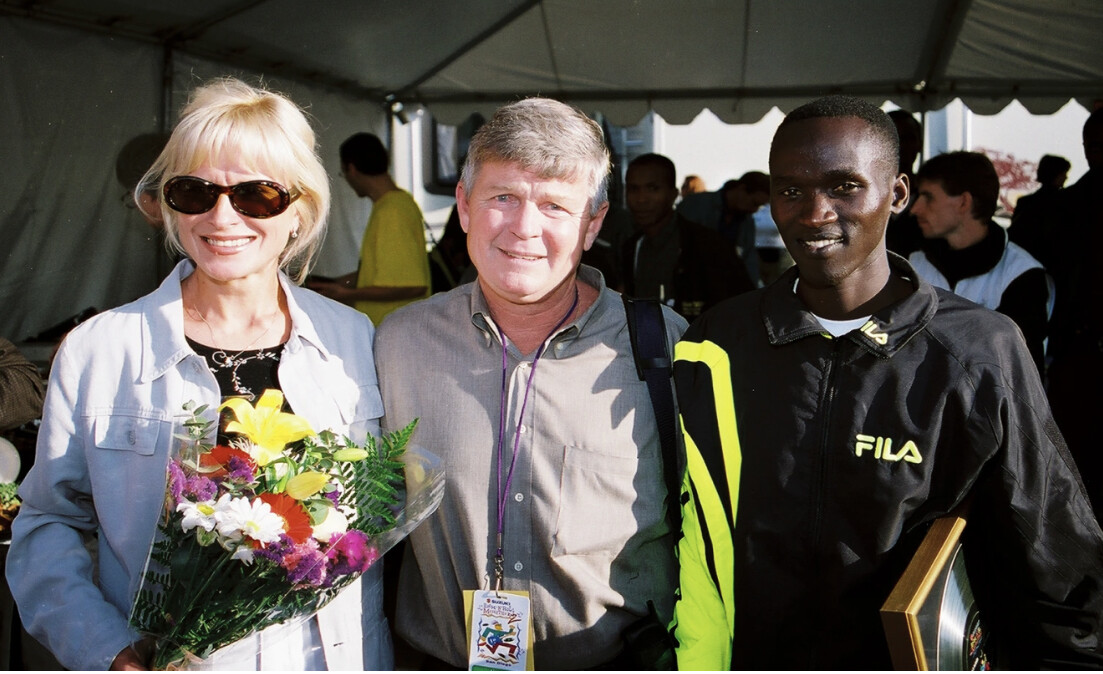
But Tim Murphy wasn’t just in it for the large participation numbers, important as they were. He always had his eye on top talent, too, and urged elite athlete coordinator Mike Long to pull in a world-class field, like he did every year for the Carlsbad 5000 where so many world records were set.
Mike Long, the late Elite Racing athlete recruiter with Rock `n` Roll 1999 champs Tarus & Bogacheva
Nobody knew how fast RnR could be run until young Kenyan, Philip Tarus, busted a 2:10 opener for the men, with Russian women Nadezhda Ilyina and Irina Bogacheva battling just nine seconds apart at the finish for the women in 2:34. That told the athletes of the world, ‘This one is worth having a go,” especially after all the Suzuki products and prize money checks were handed out.
Not since the New York City Marathon’s first five-borough extravaganza in 1976 had a marathon come on the calendar with such dramatic impact: The largest first-time running event in history; the most ingenious show along the sidelines and at the finish ever produced; $18.6 million (net) raised by and for The Leukemia & Lymphoma Society’s Team In Training charity – the largest amount ever for a single-day sporting event; and to cap it off, world-class performances by its champions.
Though the race lost over $1 million in its first year, it instantly became the number one economic impact event in Southern California, generating $39.3 million in its inaugural year, as two-thirds of its entrants came from outside the region. With Murphy’s persistence and the continued backing of his investors, Rock ‘n’ Roll eventually broke even in year three. Thus was the foundation set for what has become a global phenomenon, the so-called second-wave running boom.
Born and raised with two sisters in Denver, Colorado, Tim attended high school in Nebraska where he competed in the 880-yard run and threw the discus. He then spent the first part of his professional life toiling in the health care industry, selling hospital supplies on the road while moving across the country time and time again. Finally, in the late 70s, he decided to abandon the rat race and settle in San Diego where his two sisters lived.
Though he ran track in high school, he wasn’t a distance man. But once in San Diego and introduced to the area’s vibrant running community, like so many before him, he got hooked on the sport. Tim often trained up to 10 miles a day, which led him into the race organization business and the founding of Elite Racing in 1988.
Always more of a behind the scenes workaholic than a flashy frontman, Tim did serve as interim race director for the troubled Chicago Marathon in 1989. But mostly he focused like a laser on the business side of Elite Racing. Tracy Sundlun, former head of New York City’s Metropolitan Athletics Congress, and a former collegiate and club track coach, joined as Tim’s partner in 1997, taking on the role of political go-between and liaison with the sporting world.
Through it all, Tim used his marketing and sales skills to build his race business from a fledgling local concern into the most successful for-profit organization in running.
“We have lost someone who – I don’t think many of the insiders even grasp his importance, his significance,“ said Tracy Sundlun. “Besides Fred Lebow in New York City, Tim was the best retail marketer the sport has ever known. It makes me happy all the people who’ve reached out from all over the world when they heard news of his passing. Tim would’ve felt good knowing the people recognized what he built, what he reinvented.”
Beginning with the Carlsbad 5000 in 1986, Tim bucked the conventional norms of the sport. Nobody thought people would pay to run a 5K. Running at the time was a 10K and marathon trade. But Tim turned it into a 5K and half marathon business and the sport soon followed along.
Ethiopian great Tirunesh Dibaba breaks another world record at Carlsbad 2005 (14:51)
The success of the Rock ‘n’ Roll Marathon in San Diego changed Murphy’s fortunes for good. Over the next several years, Tim developed the brand into a seven event juggernaut that spread from San Diego to Virginia Beach, Nashville to Phoenix, San Jose, California to San Antonio, Texas.
Elite Racing was the first organization to stage more than one marathon in a year, and the first to put on events outside their own home city. Designed as a for-profit company in a not-for-profit industry, Elite Racing was the first organization to build a brand in the sport, though, initially they didn’t realize they were doing it. They were also the first to buy events and the first to sell to private-equity.
When the City of Virginia Beach, VA wanted to start a new marathon on Labor Day weekend in 2001, Tim made a site visit. He realized that with the heat and humidity of late summer in Virginia Beach, and not wanting to conflict with the fall marathons which had been so supportive of his races in San Diego in the summer and Nashville in the spring, there was no way that a full marathon would work. So Tim convinced VB to create the first destination half-marathon, The Rock ‘n’ Roll Virginia Beach Half Marathon. Until then, half marathons were just local training races for marathons.
“Just like with Carlsbad in the 5K, nobody thought people would travel to run a half marathon,“ remembered Sundlun. “When we proposed Virginia Beach, we were one of Runner’s World Magazine‘s biggest advertisers. We said we were going to sell out at 12,000 for the Labor Day weekend race. People at Runner’s World said we were nuts. At the time, the largest half marathon was the Philadelphia Distance Run at 6000, the largest inaugural half marathon was on Long Island at 2900.
“Runner’s World bet us a full, center-spread, double page ad that we wouldn’t hit our number. They didn’t even think vendors would come to a Labor Day weekend race in Virginia Beach. But we sold out by July and eventually got 14,990 entrants. Getting that check back from Runner’s World, that was really something.”
Deena Kastor headlined the inaugural Rock ‘n’ Roll Virginia Beach Half Marathon in 2001, setting an American debut record as a prep race for her marathon debut in New York City that fall. Kenyan superstars Martin Lel and Paul Tergat both tuned up for fall marathon victories with wins in Virginia Beach.
Records were always important to Tim. He would often have side bets with Mike Long about the outcome of races. Two-time Olympic champion and multiple-time world record holder Haile Gebrselassie of Ethiopia broke the half marathon world record at Rock ‘n’ Roll Arizona in 2006 (58:55). And with 16 World Records / Bests and 11 American Records, Carlsbad was always recognized as The World’s Fastest 5K.
“Tim felt if you created special events with a team of people who were passionate about the space they were in, the money would follow,” Sundlun told me. “He also understood that an event was only as good as its weakest link. So he was laser-focused on every aspect of the event, from the expo to the medal to the course to the elite athletes to the give-a-ways to the ads to the water stations, you name it.
“We never had a meeting about what to cut, just about how to improve. Tim understood you had to invest and promote relentlessly. He was tireless in his pursuit of greatness. Good people would join him and he empowered them and got out of their way. But he refused to take no for an answer, and had a single-minded focus.”
Tim even bought television’s Road Race of the Month from Salmini Films in 1991, the series that aired on ESPN for over a decade featuring the best races in the country and around the world. Tim understood that with television as a promotional arm, he could sell more advertising and attract more runners.
The string of happy days ended abruptly in July 2007, however, when Elite Racing’s beloved athlete recruiter Mike Long died suddenly of a heart attack. Mike’s passing seemed to take the spark out of Tim.
Later that year he sold the business to Falconhead Capital for more than $40 million. Elite Racing essentially became the event division of the new Competitor Group, Inc., and Tim moved on. Eventually, after Tracy also left, CGI abandoned the elite aspect of running altogether, before leaving San Diego, as well.
At times, Tim could be a volcanic boss, as his business was his life’s passion. Yet he engendered a deep dedication and respect from his Elite Racing family, out of which 17 marriages were spawned (including my own with Toya), growing families, and lifelong friendships. Tim’s final years were spent quietly, visiting with friends and his two sisters who were with him at the last.
R.I.P., Tim. You were a true visionary who has left a legacy that moved us all both body and soul.
(08/23/22) Views: 103Toni Reavis
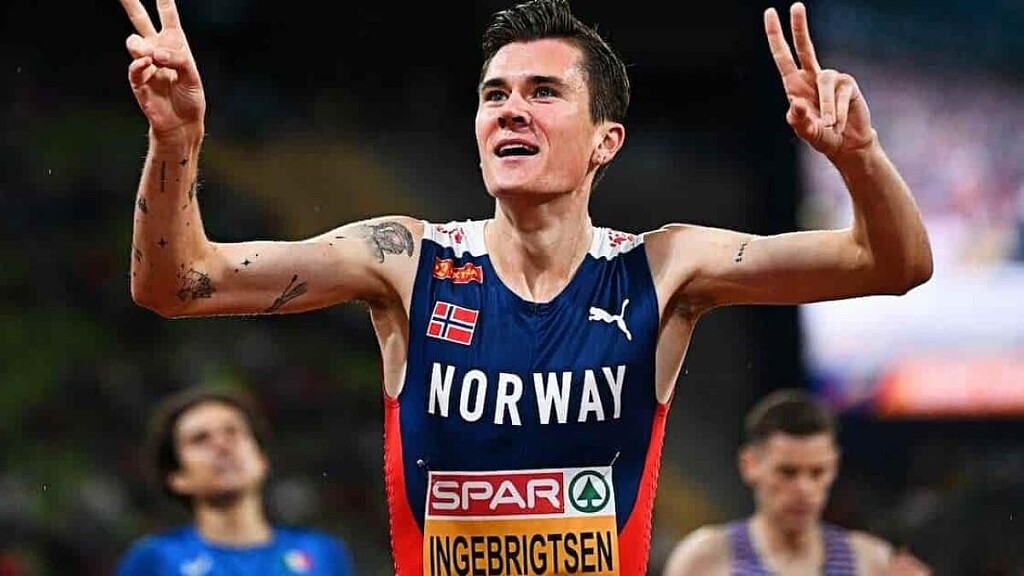
Jakob Ingebrigtsen Completes “Double-Double” by Winning 2022 European 1500 Title
Jakob Ingebrigtsen is golden again.
After claiming 5,000-meter gold at the European Athletics Championships in Munich on Tuesday, Ingebrigtsen doubled back and won Thursday’s 1500-meter final in wire-to-wire fashion, setting a championship record of 3:32.76 in the process. Jake Heyward, who just missed out on making the British team for the World Championships and finished 5th at the Commonwealth Games for Wales, took silver in 3:34.44, running down Spain’s Mario Garcia Romo, who held on for bronze in 3:34.88.

The victory for Ingebrigtsen improves his record to 4-0 in European outdoor finals and means he has completed the “double-double” by winning the 1500 and 5000 at both the 2018 and 2022 European championships. All at the age of 21.
As is his custom, Ingebrigtsen started slowly off the line, but worked his way into the lead on the home straight of the first lap and would stay there the rest of the way. He hit 400 in a quick 56.34, 800 in 1:54.11 (57.77 lap), and 1200 in 2:51.68 (57.57 lap), at which point a pack of four men — Garcia Romo, Heyward, Italy’s Pietro Arese, and Poland’s Michal Rozmys were in close pursuit. Ingebrigtsen opened a small gap on the back straight before blasting away over the final 200, using a 55.24 last lap (27.14 last 100) to crush all opposition.
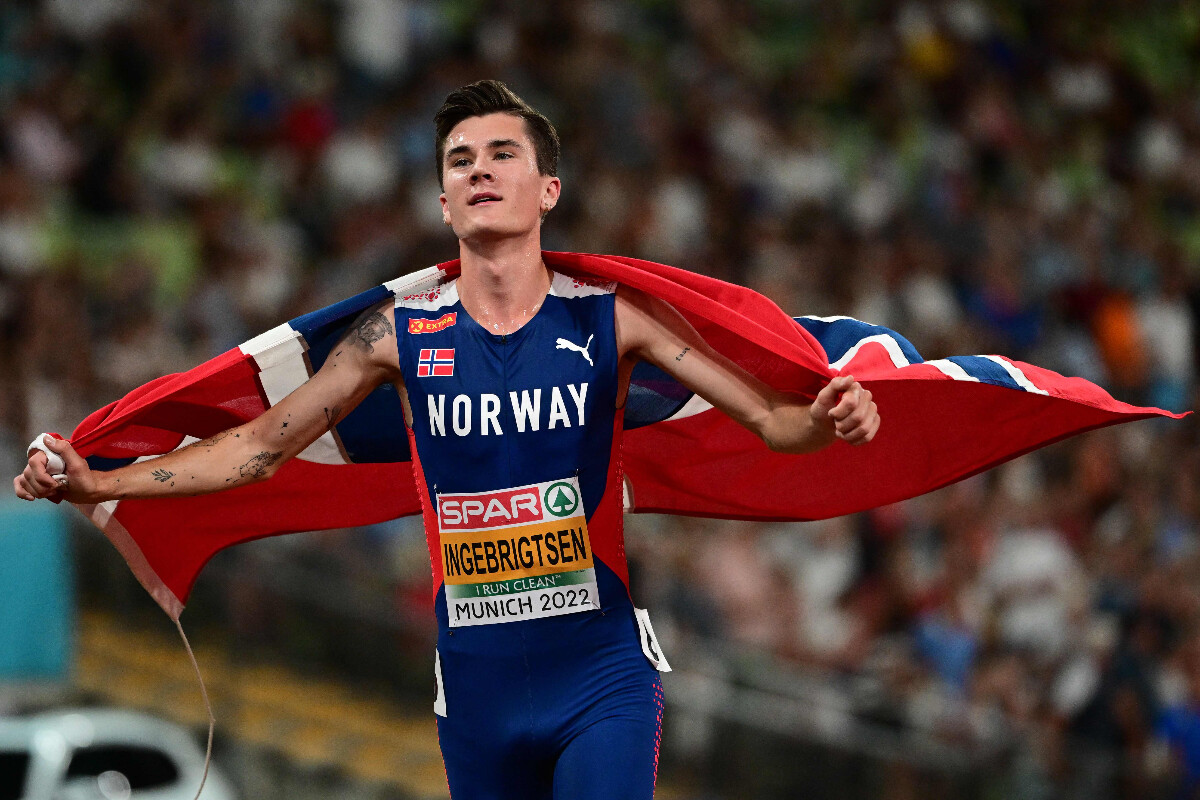
The only drama in the final half-lap centered around silver and bronze as Heyward passed Garcia Romo in the home straight to take silver and Garcia Romo held off the 22-year-old Arese — who ran a 2+ second pb of 3:35.00 — to earn bronze to go with the Euro U23 silver he won last year.
(08/19/22) Views: 95Jonathan Gault

Super star Eilish McColgan takes a much deserved short break but still got in ten miles
"Treated myself to 48hrs of R&R but back to work tomorrow! I say 'rest and recovery' but really it was a mental break. I still did 10 mile this morning on the treadmill," twitted Eilish this morning.

"Few road races on my calendar! So I'll have a proper holiday and a two week break after those!"
Eilish McColgan won the women’s 10,000 metres in Birmingham, setting a new Commonwealth Games record after a stunning last lap in the closing stages of the event.

The sold-out crowd of 32,000 at Birmingham’s Alexander Stadium roared as McColgan sprinted to her first gold medal at an international competition. She ran straight to the arms of her mother, Liz, where the two shed tears of joy and triumph, while wrapped in the Scottish flag.
Eilish followed in the footsteps of her mother Liz - Commonwealth 10,000m champion in both 1986 and 1990 - as she recorded the biggest win of her career on August 4.
(08/22/22) Views: 89

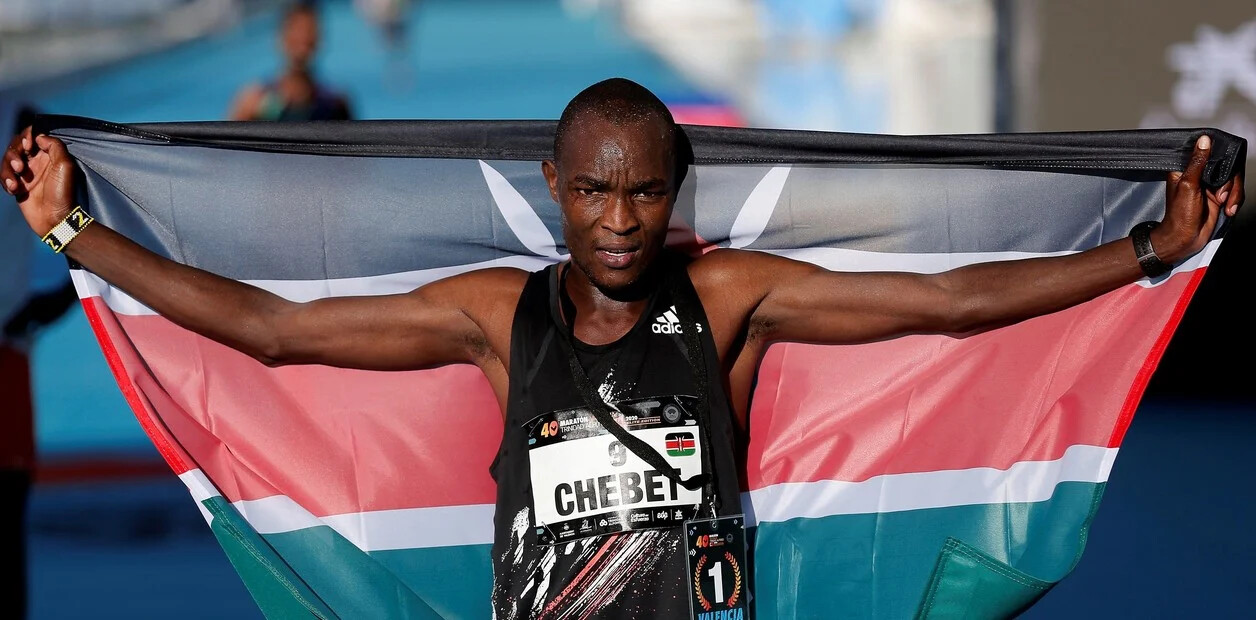
Kenyan Evans Chebet eyes course record in New York Marathon race
Boston Marathon champion Evans Chebet will be looking to extend his winning form during the New York Marathon which goes down on November 6.
Chebet will be battling it out with defending champion Albert Korir among other top names in the elite field.
Korir stormed to victory last year after clocking two hours, 8:22 seconds ahead of Mohamed El Aaraby with 2:09:06 and Eyob Faniel came third in 2:09:56.
Four of the six Abott World Marathon Majors will be taking place this season. Berlin Marathon will be held on September 26, London Marathon on October 2, Chicago Marathon October 9 and New York Marathon in November.
In an interview with Nation Sport, Chebet said that he has started preparations to make his debut in the New York Marathon race.
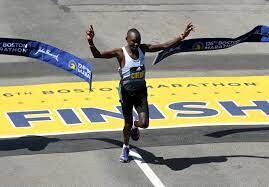
He said that the race looks competitive, given that only two Kenyans will be lining up for the contest, but he will do his best.
“I have started preparations for my first New Marathon race. I understand the course is tough but I believe with good training I will be able to register good results,” said Chebet.
The athlete said that he will apply the same tactics he used to win the Boston Marathon during the New York race, and if possible, run a course record.
But this could be a tall order because since Geoffrey Mutai registered the 2:05:06 course record in 2011, no athlete has run close to that time due to weather conditions.
“I have asked around and I have been told that the course is tough, and I have to prepare well for that. Marathon racing needs a lot of calculation and you just can’t run without thinking what awaits you in the last few kilometres,” added Chebet.
At the same time, he said that there is need for athletes to travel with translators because they can use Kiswahili language to express themselves during the pre-race conference and interviews after the race.
“I feel comfortable expressing myself in Kiswahili, and I know many athletes are struggling but I think it is high time we have translators when we compete abroad just like the way Ethiopians do when they talk in Amharic,” he said.
The big names in the New York Marathon include; the 2020 London Marathon champion Ethiopia’s Shura Kitata, Brazilian Olympian Daniel Do Nascimento, Japan’s Suguru Osako who was third at the 2018 Chicago Marathon, Dutcs Olympic silver medallist and national record holder Abdi Nageeye and four-time Olympian American Galen Rupp.
World Athletics Championships marathon champion Ethiopia’s Tamirat Tola is also in the mix. He won the world having won the World Championships marathon title in Oregon, USA on July 17.
Albert Korir won the last Abott Marathon Majors series after accumulating 41 points for the 2019-2021 season.
The Abott Marathon Majors series this season began with the delayed 2021 Tokyo Marathon race which world marathon record holder Eliud Kipchoge won on March 6 this year. Thereafter, Chebet won the Boston Marathon title on April 18.
Ethiopia’s Tamirat Tola is also in the mix having won the World Championships marathon title last month in Oregon, USA.
(08/24/22) Views: 85Bernard Rotich
Does the 80/20 Rule Apply to Low-Mileage Runners?
Even those running less get faster in races when abiding by this golden ratio of training intensity.
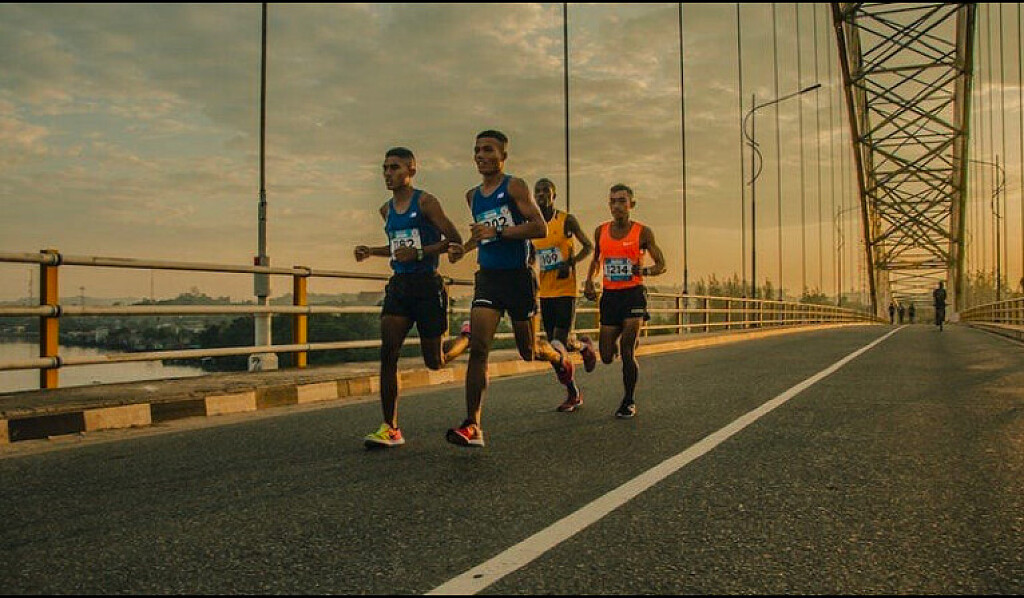
The well-known 80/20 rule of intensity balance stipulates that runners should aim to spend about 80% of their weekly training time at moderate intensity (i.e. at a pace at which you can comfortably carry on a conversation) and about 20% at moderate to high intensity. This ratio was first observed in elite endurance athletes by exercise physiologist Stephen Seiler in the early 2000’s. His research found that the 80/20 rule is followed almost universally by top-level runners, cyclists, swimmers, triathletes, cross-country skiers, and rowers around the globe.

But it wasn’t always. Historical analysis has shown that elite endurance athletes of the mid-20th century and earlier did not train this way. Because today’s top athletes are a lot faster than those of earlier generations, Seiler believes that an 80/20 intensity balance is optimal for them, yielding better results than any alternative.
The thing about elite endurance athletes, though, is that they train at very high volumes. So it’s natural to ask whether the same ratio is also optimal for non-elite athletes who train at lower volumes, or whether these athletes are better off spending more time at higher intensities to make up for training less. If you only run three times per week, for example, should each run be equivalent to one of an elite’s harder workouts, since you took a day off when the elite was putting in more long easy miles and so you’re ready to roll hard again?
Seiler and other scientists have not only asked themselves this very question, but also addressed it in controlled studies. In one such study, 30 club runners with 10K times just under 40 minutes were divided into two groups and placed on separate training programs for nine weeks. One group adhered to an 80/20 intensity balance while the other hewed to a 50/50 ratio, which is actually what most recreational runners do. All of the runners completed 10K time trials before and after the training period.
On average, members of the 80/20 group improved by 5% and members of the 50/50 group improved by 3.6%. This seemingly small difference in percentage improvement translated into a 35-second difference on the clock. And when the authors of the study looked at the six individuals in the 80/20 group who did the best job of adhering to the prescribed ratio, the performance improvement jumped to 7%, equal to an additional an 12-second lowering of 10K times.
The runners in this study ran just over 30 miles per week, or slightly less than the typical self-described “recreationally competitive” runner does, according to one survey. Thus, we have pretty solid evidence that if there is a threshold of training volume below which the 80/20 rule no longer applies, it’s under 30 miles per week. Additional research is needed to find out exactly how much lower this threshold might lie.
As a coach, I encourage runners who log substantially less than 30 miles per week and want to improve their race times to stick with an 80/20 balance and run more rather than try to make up for running less by spending more time at high intensity. It is true that, minute for minute, high intensity yields bigger improvements in aerobic capacity than lower intensity. But this doesn’t mean that high intensity can completely substitute for low intensity.
No amount of high-intensity interval training, for example, will give you the endurance you need to complete a marathon. Regardless of how little you train, it’s important that you balance your workouts in a way that develops all of the fitness components you need to race successfully (assuming that’s your goal).
Recently I asked Stephen Seiler — a former competitive rower and cyclist who still keeps fit — how he would approach his own training if he were confined to the extreme low end of the volume spectrum. “If I could only train two times a week,” he replied, “I would probably end up combining some high-intensity and low-intensity work in both sessions, aiming to try to stimulate every muscle fiber I could, as much as I could!” As you see, even in this extreme scenario, the person who knows more than anyone about optimizing intensity ratios would not go all-in on high intensity.
It should be added, however, that Seiler would never voluntarily train just twice per week in the first place if he intended to race, nor choose to race if he could only train twice per week — and I hope you wouldn’t either!
(08/21/22) Views: 78Outside

Self-reporting is as accurate as blood testing and other objective measurements, new study finds
Researchers determined that you can trust how you feel when it comes to training load, recovery and general well-being.
A study published in the British Journal of Sports Medicine found that athletes’ self-reported info on stress, fatigue and well-being did not line up with information reflected in objectively measured data, such as heart rate response and blood markers; the self-reported data was actually more sensitive and more accurate, not less.

As a regular runner, you may have struggled with conflicting info in your own training: your heart rate is elevated, but you feel great. Should you still go for your run?
Maybe you’ve experienced the opposite, where you feel terrible but there seems to be nothing physiologically wrong with you. It can be hard to determine what information is most important and will help you stay healthy without overtraining.
Researchers reviewed and compared subjective information (self-reporting, including athletes responding to surveys on fatigue or general well-being) and objective data (measurements including heart rate, blood markers, oxygen levels), both to see whether the responses correlated and which type of information was most useful.
Athletes’ self-reporting consistently accurately reflected training load–general well-being was impaired with a large increase in training load and improved with a reduction.
While the study recognizes that it was limited in not being able to take non-training stressors into account (for example, work or family stress that may influence how an athlete feels), the results determine that self-reporting is a useful and reliable tool for both coaches and athletes.
The researchers explain: “given that subjective measures reflect changes in athlete well-being and provide a practical method for athlete monitoring, coaches and support staff may employ self-report measures with confidence.”
The takeaway for regular runners
Blood markers, heart rate variability, and VO2 max measurements can all be useful and informative ways to track how your body is handling your training load, or the amount of physical stress you are putting on it.
Self-reporting, however, is more accurate than physiological measurements and can be relied upon as a reflection of how you are doing. As a regular runner, you may not have access to the objective data that elite athletes do, and you don’t necessarily need it.
Paying attention to how well you feel on a regular basis, and occasionally doing a self-assessment of how rested and energized you are is an accurate way to determine how hard you should run or train.
(08/22/22) Views: 76Keeley Milne

Keira D’Amato Will Attempt to Lower Her American Record at Berlin Marathon
After winning the Falmouth Road Race on Sunday morning, Keira D’Amato confirmed that she will be running the Berlin Marathon on September 25 in an attempt to lower her own American record.
D’Amato set the current record of 2:19:12 in Houston in January, eclipsing Deena Kastor‘s 16-year-old American record of 2:19:36.
“I think I can run faster than I did in Houston, and I’m going to go to try to prove it in Berlin,” D’Amato told Citius Mag after Falmouth, confirming what many insiders expected as she wasn’t listed in the NY or Chicago elite fields and former NY elite athlete coordinator David Monti had previously tweeted out (but then deleted) that D’Amato was headed to Berlin.
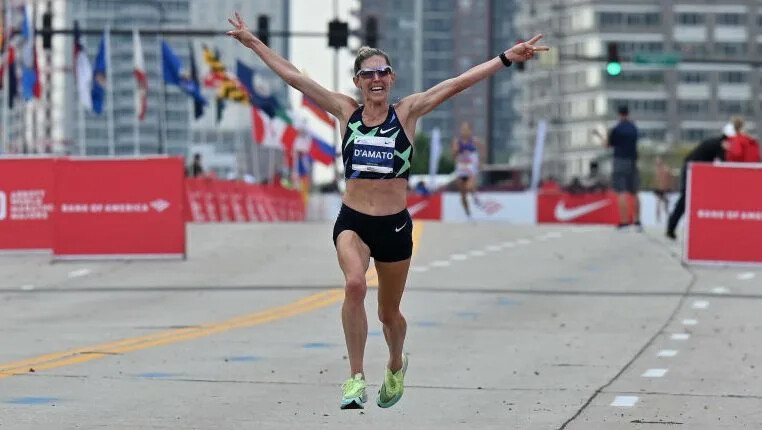
This will be D’Amato’s second Berlin Marathon. In 2019, she finished 17th in 2:34:55 in what was then a PR of more than six minutes. This time around, she will be looking to run more than 35 seconds per mile faster.
As the American record holder, D’Amato would have attracted a hefty appearance fee from either of the two American major marathons this fall, Chicago and New York. She also would have had more time to recover from her last marathon, an eighth-place finish at the World Championships on July 18 (there are 10 weeks between Worlds and Berlin; there are 12 weeks between Worlds and Chicago and 16 between Worlds and NYC).
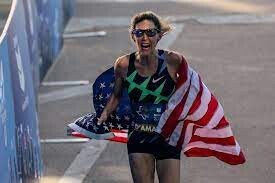
But D’Amato typically bounces back quickly between races — she won Falmouth less than five weeks after Worlds — and did not log a full buildup for Worlds as she was named as a late injury replacement for Molly Seidel barely two weeks before the championships. Additionally, American records result in big endorsement bonuses from shoe sponsors.
Berlin has become the go-to course for world record attempts in recent years, as it has hosted the last seven men’s world records and was also the venue of choice for Shalane Flanagan‘s American record attempt in 2014 (Flanagan fell short of the AR but still ran her lifetime best of 2:21:14). But three of the last four women’s world records have fallen in Chicago, including the current mark of 2:14:04 set by Brigid Kosgei in 2019. Either would have been fine options for an American record attempt; the better option may come down to weather on race day.
(08/23/22) Views: 76Jonathan Gault
