

Running News Daily
Running News Daily is edited by Bob Anderson and team. Send your news items to bob@mybestruns.com Advertising opportunities available.
Index to Daily Posts · Sign Up For Updates · Run The World Feed
Search Results for Ultra
Today's Running News



Here’s how to run faster just by thinking about it
Mental imagery for running performance has been used by elite athletes for decades and is simple enough for the regular runner to start trying tonight. You’ll give your brain a workout along with preparing yourself for your event. Ultrarunner and author of Mental Training for Ultrarunners, Addy Bracy, explains: “thinking about a specific exercise produces the same brain activity that occurs when the actual task is performed.” Here’s how to get started.
Repetition
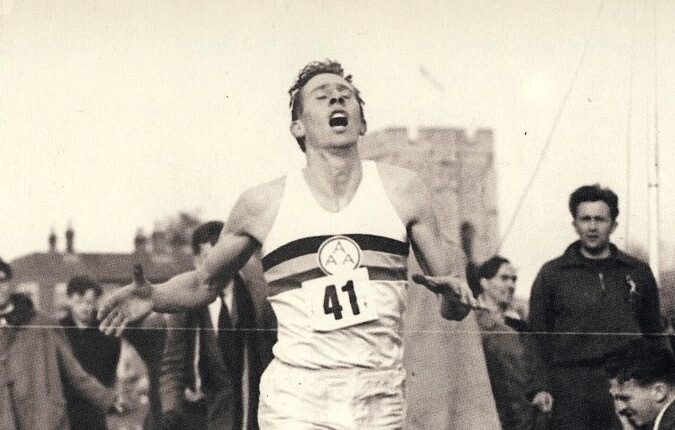
Sir Roger Bannister, the first man to run a 4-minute mile, used visualization techniques to get ready to tackle that famous distance. “Each night in the week before the race there came a moment when I saw myself at the starting line. My whole body would go nervous and tremble. I ran the race over in my mind. Then I would calm myself and sometimes go off to sleep” he wrote. If you’re familiar with the course or area that you’re going to run in, visualize yourself making your way through the course in your mind. If you’re training for a longer race, choose portions of it to run through. When you actually run the race it will feel familiar and comfortable. Try to incorporate as many of the five senses as possible: envision what you’re feeling in your body, what the air smells like, and notice the sights around you–you may feel silly doing this at first, but know that you’re training your brain to help you be a faster runner.
Visualize working through obstacles
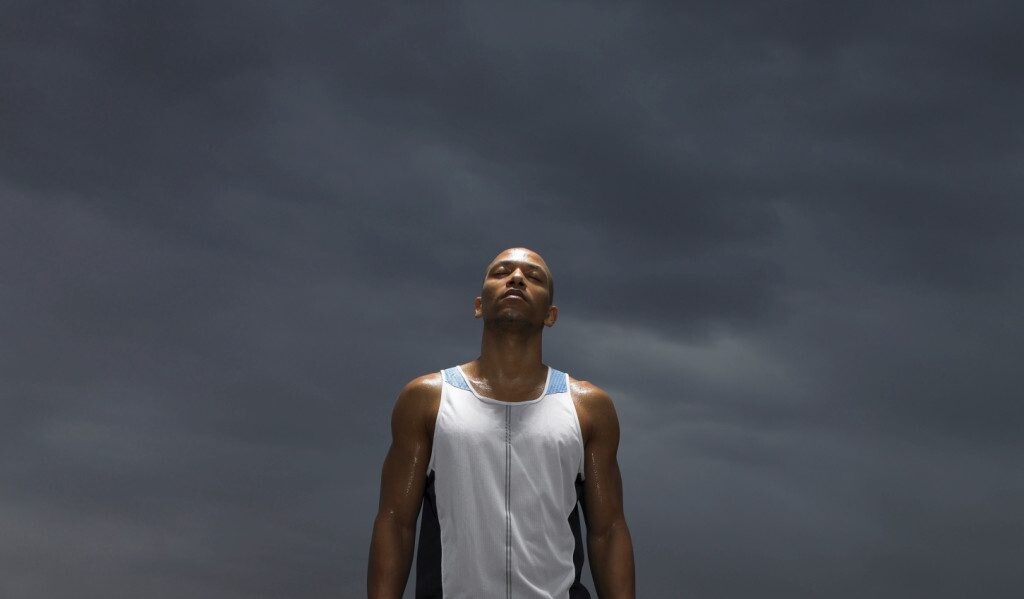
Remember a time when you encountered something challenging in a race, whether it was discouraging thoughts, heavy legs or nausea. Imagine yourself working through that issue during your race with ease and finesse. Try this with a variety of obstacles. When you run into similar issues, your brain won’t react with shock and overwhelm; ideally, it will remember your mental practice and you’ll move fluidly through any problems. “Once you have identified possible stressors, see and feel yourself using your tools to calm your anxiety,” Bracy says. The more diverse the situations you work through in your brain, the more prepared you’ll actually be on race day.
Imagine a strong race finish
Research suggests that our brain becomes fatigued and starts signaling us to stop running in the final quarter of a race. Spend more time focusing on this last section, and envision yourself tuning out any mental chatter to stride strongly towards that finish line. Bracy suggests linking together images of several past successes, “making sure to include the emotions and feelings you derived from those experiences. Use this to enhance feelings of confidence, belief and excitement leading into a race.” The brain is a powerful tool, and adding some brain training techniques to your regime will help you on race day.
(07/08/2022) ⚡AMPby Running Magazine

Why you need type-two fun in your life
It can seem inexplicable to those who’ve never tried it: running for hours or days, dealing with blisters and injuries, rogue wildlife and the challenge of trying to eat enough food without vomiting. Type-two fun, or the kind of experience that is fun after you’ve completed it, is a given in most endurance events. Fun in the moment? Not so much, although there are certain parts of every wild adventure that are enjoyable; there’s also a fair amount of suffering. Afterward, though, when you have washed the dirt off, patched yourself up, and had a good night’s rest, you’ll probably find yourself looking back at your accomplishment with fondness, even delight.
Despite all evidence that would predict otherwise, you will likely already be anticipating your next type-two experience. Here’s why you should try some type-two fun this summer.

It builds resilience
Doing tough things prepares you for when life-challenges crop up. Whether it is running an extremely hard training session or spending several days hiking through a challenging trail, once you’ve completed the adventure you’re left with self-knowledge. Life is continuously throwing unique twists and turns our way: sharpening our mental toughness through races or outdoor adventures can help us feel better prepared to face those challenges. After I completed my first ultra, I tucked the experience into my mental toolbox to pull out on bad days. When I’m going through a stressful time or have a hard task in front of me, reminding myself that I am physically and mentally strong enough to run 100K is a huge confidence booster.

Type two fun lasts a lifetime
My daily walk with my dogs involves zero suffering and always brings me joy. Definitely type-one fun. Not to be discounted, type-one fun is important and worthwhile. When I’m walking, I notice my surroundings, enjoy the antics of my pets, and get a dose of nature. In the same way that type-one fun brings us pockets of gratitude or happiness throughout our day, type-two adventures are the ones we look back on decades later with pride. The week spent running in the mountains, alone, is reflected on with a sense of accomplishment and pride. Testing our own personal limits is a way of living life to the fullest.
Researchers have called the positive feelings that we experience from tackling a particularly grueling adventure harmonious passion: the result of choosing to engage in something you love, even if it is hard. Obsessive passion, where we are driven by external pressure or self-imposed expectations, is associated with less happiness and life-fulfillment. Tackling something ridiculously hard takes mental grit and physical endurance, and can be incredibly rewarding.
(07/07/2022) ⚡AMPby Keeley Milne

When you have an urge to pack it in, try these tips to get back on track
Running can be tough, and it’s challenging for all of us to stick to goals. Everyone, from elites to recreational runners, have moments when they want to give up. When you feel an urge to throw in the towel, here are a few pointers to keep yourself moving.
According to coach and author Steve Magness in his Science of Running newsletter, navigating the urge to quit involves three simple steps.
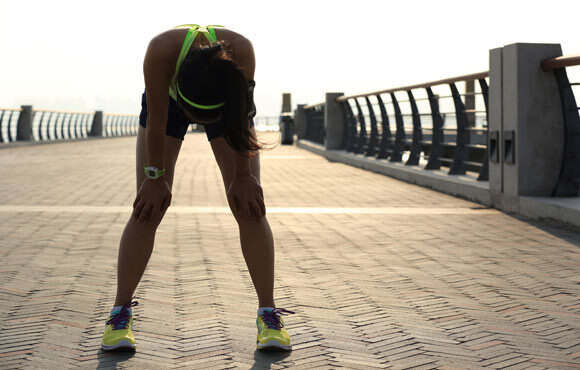
Choose appropriate goals
Big goals are appealing. Imagining that you’ll prepare for a tough race with a few week’s training, or that you’ll revamp your fitness entirely in a month, can get your enthusiasm and blood flowing—at first. “Setting high goals can backfire, sending us towards finding that hole to step in,” Magness says. Similarly, setting goals that are too easy won’t motivate you to keep going. Objectives should be reasonable, but meaningful and challenging. If you find yourself calling it quits early or lacking the motivation to get out the door at all, reassess your goals.
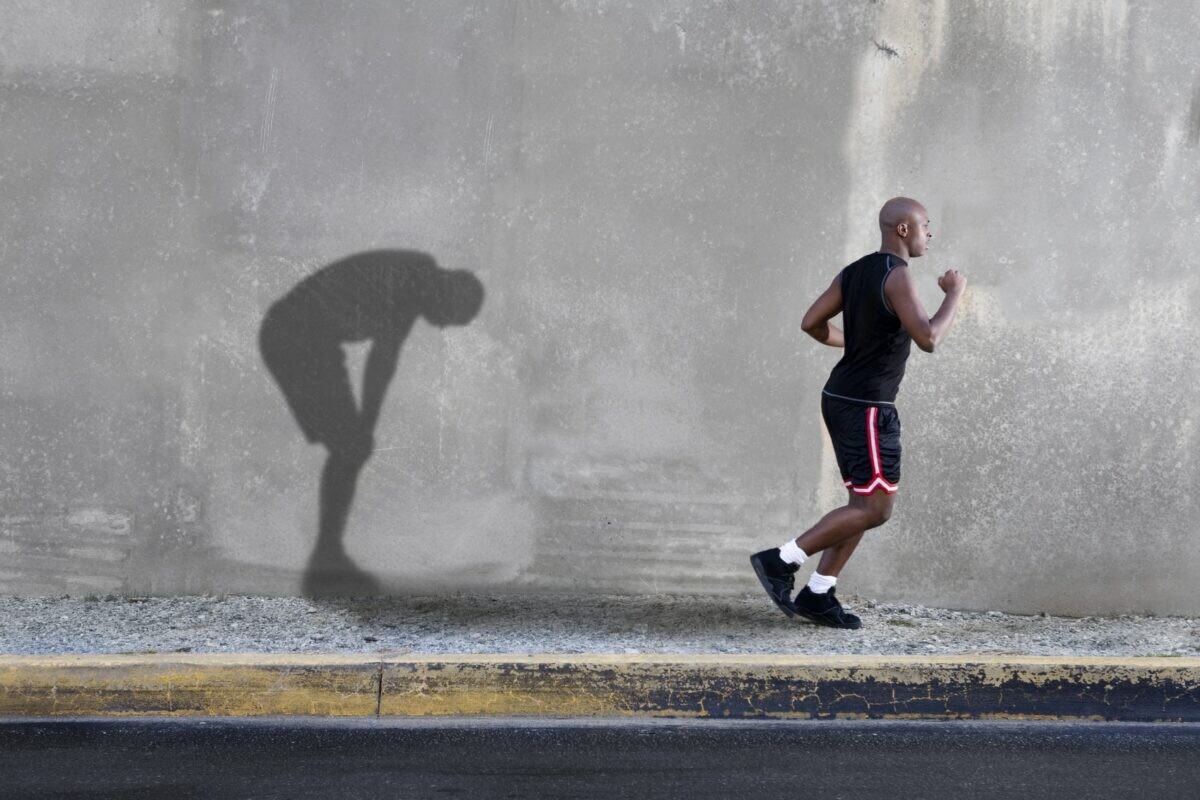
Put yourself “in the mix”
Make sure the group of people you’re surrounding yourself with are working towards similar things. If you’re very new to running, don’t join a run club that’s preparing for Boston. Likewise, if you’ve always been an ultra-distance runner, don’t expect to suddenly start winning your local 5K races without some practice. Find a group of people working towards similar goals to align yourself with, immerse yourself with them, and use them for support and encouragement.
Use intrinsic motivation and embrace the process
Focusing on inner motivation, rather than ego-driven end goals can be helpful in staying the course. Magness describes intrinsic motivation as “a focus on putting forth a best effort, of competing for the joy of the activity itself.” These are also sometimes called process goals. While we can’t control factors in a race (or in life) like weather, we can control how we approach the situation we face. We can reward ourselves for troubleshooting effectively and seeing something challenging through to the end, rather than being stuck on whether we win the race or nail a PB.
It’s inevitable that you’ll have days that you want to quit running, but the way you approach those days has the potential to make you a stronger athlete. You’ll also find that running carries over to life, and those frustrating situations at home and work become easier to embrace when you follow the same guidelines.
(07/06/2022) ⚡AMPby Running Magazine
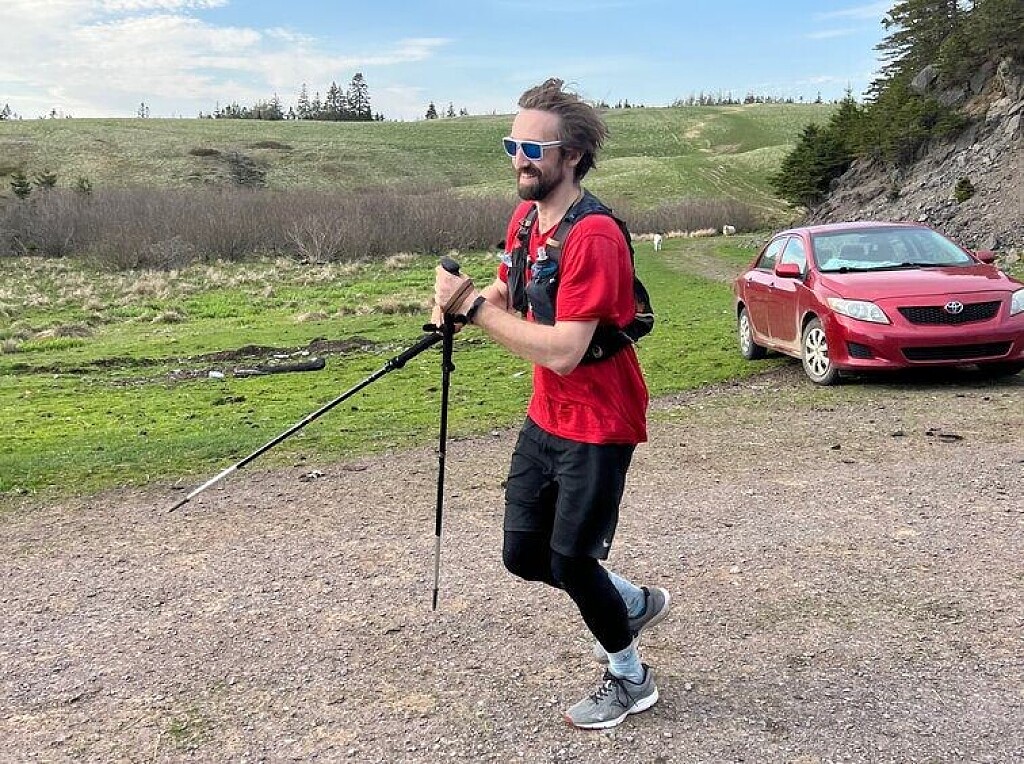
Alex MacLean 20 step guide to run 100k
Alex MacLean was recently inspired to run 100K on his family farm in Arichat on Cape Breton Island., N.S. He didn’t intentionally set out to run so far, and here he shares the experience and his tongue-in-cheek description of the 20-step process that took him to that ultrarunning milestone.
MacLean describes himself as a general outdoor enthusiast based out of Halifax. “Primarily a climber until recently, my interest in ultrarunning began when I set out for an 18-kilometer run, accidentally missed my turn-around point, and ran 30 kilometers instead,” he says. “As for the 104K, I was really just curious if I could do it! I’d been working on clearing the trail on the farm whenever I visited home, since about January.” MacLean adds “a trail run with a friend inspired me to explore my own backyard and the outdoor spaces I grew up in.”
Alex’s guide to running 100K
1. Surround yourself with friends who like big days. Eventually, someone will ask you to run a 50km trail with them.
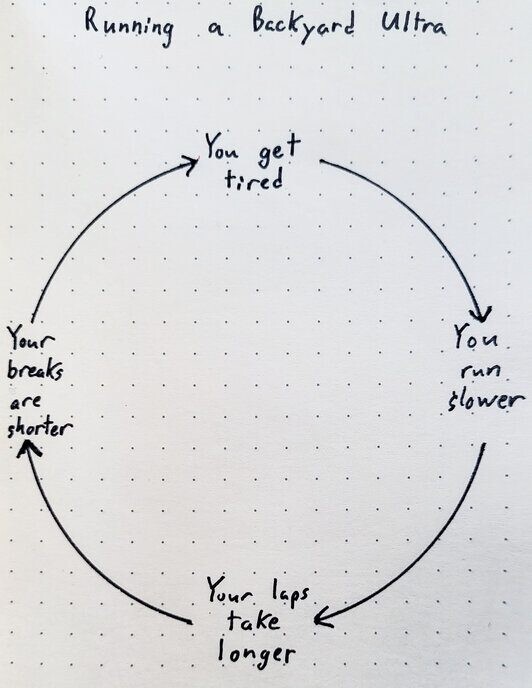
2. Tell everyone you know you’re training for a big trail run.
3. Have the race get canceled for reasons outside of your control.
4. Realize you’ve told too many people about it to not do some sort of big day outside.
5. Create a ~5.5km loop on the family farm, and organize your own run.
6. Plan to run 10 laps of said loop, in order to reach the original goal of 50 km.
7. Finish lap number nine and realize the loop is slightly more than 5.5 km, you’ve already hit 50 km.
8. You’ve done nine, may as well go for 10 laps.
9. Realize you’re so close to 60 km, just one more lap.
10. That’s 11, may as well make it 12. Half a day of running!
11. Two more laps and you’ll hit the next ultra milestone, a 50-miler (80K)!
12. Realize that if you want to run 100 miles someday, you’re gonna have to run all 80 of those kilometers that you just ran all over again.
13. Do some rough math in your head. Realize you MIGHT be able to get away with only three more laps.
14. Say out loud “Oh boy, here we go.”
15. Fall less than 2 km short of the 100 km mark. One more lap it is.
16. Finish your eighteenth 5.78 km run of the day and text Mom to see if she’ll pick you up in the truck so you don’t have to walk the 200 meters through the field to the house.
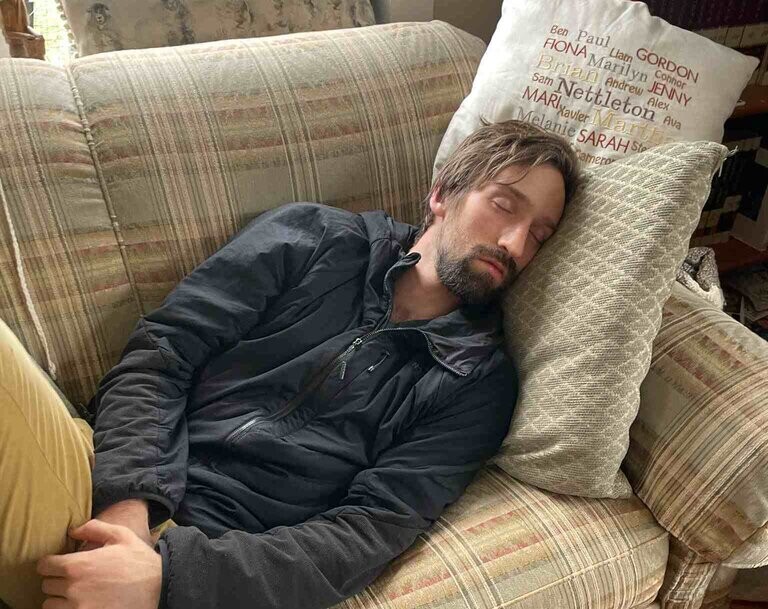
17. Wake up on the dining room floor because you fell asleep while trying to foam roll your legs.
18. Drag yourself to bed.
19. Eat everything and anything you want the following day, if you can manage to hobble over to the kitchen.
20. Congratulations, you’ve just run your first 100K! Celebrate!
(07/05/2022) ⚡AMPby Running Magazine
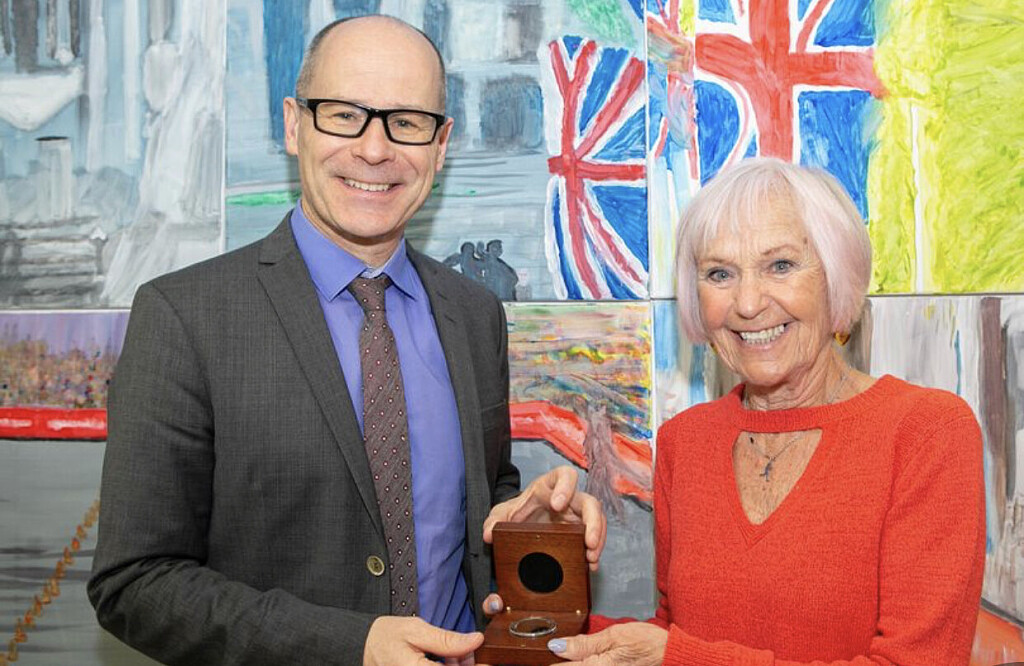
Gina Little age 77 is going to be running the London Marathon for the 38th time
A runner who has taken part in more London Marathons than any other woman plans to complete her 600th marathon later this year. Gina Little, 77, who lives in Greenwich, has run the London event 37 times since she was inspired after watching the second race pass her road in 1982.
She has chosen to mark her 600th marathon at Richmond Runfest on September 11 as a celebration with her club, Plumstead Runners, all dressed in special T-shirts. “I wanted my running club to be part of it. We have got a coach going up,” she told the PA news agency.
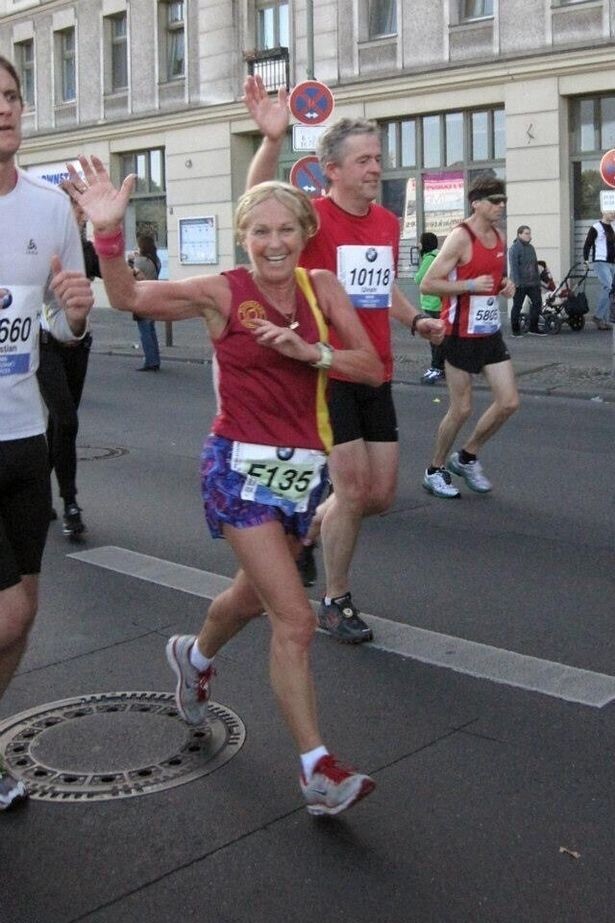
Gina has always been active and was inspired to try a marathon after seeing the London runners go past. “I didn’t know anything about the first one. I only saw the second one as it goes past the top of my road,” she said.
“I saw the French guy with a tray and a bottle of wine and a glass, and thought ‘how can he do that?'”
Gina said she was very nervous before her first London Marathon: “I ran with my friend all the way. We just enjoyed the crowds, took our time, went in pubs to use the loos. No Portaloos back then.
“We were only going to do one. Then I got the bug, I suppose.”
She recorded a personal best of three hours and 26 minutes in 1993 and now usually finishes in four hours and 30-40 minutes. Her achievement was recently rewarded with a Spirit of the London Marathon award and Mrs Little said she was “gobsmacked” to get the accolade, adding: “I have been quite lucky as I have got in as good for my age.”
While many hope for an elusive ballot place for the heavily over-subscribed London Marathon or run for charity, faster runners in each age category can apply for a good for age place. She added: “I have always been involved in it.
“When I didn’t run I have helped at a drinks station. One time I helped at the elite station.” She has also run the Berlin Marathon more than 30 times but it has fallen close to the London race since the latter was moved to October due to the Covid-19 pandemic.
“Last year I had to do Berlin one week and London the next week,” she said, "I have also got Chicago the following week. Chicago is always October. Chicago is my sixth major, so I obviously want to do that.”
There is a special medal for those who complete all six of the Abbott World Marathon Majors – Tokyo, Boston, London, Berlin, Chicago and New York. The married mother of two and grandmother of five also belongs to the 100 marathon worldwide club who meet at races and wear special vests.
Mrs Little said she has met interesting people through running, adding: “I never go to a race where I don’t know someone, which is really nice.” Running marathons and ultramarathons has taken her to 46 countries and 22 islands, including places like Hawaii and New Zealand.
“I’ve seen the world and seen the country,” she said, “When I got to 500 I thought that would be it. I don’t think there’ll be a 700th.”
(07/05/2022) ⚡AMP

TCS London Marathon
The London Marathon was first run on March 29, 1981 and has been held in the spring of every year since 2010. It is sponsored by Virgin Money and was founded by the former Olympic champion and journalist Chris Brasher and Welsh athlete John Disley. It is organized by Hugh Brasher (son of Chris) as Race Director and Nick Bitel...
more...
Stay cool on your next run with these three tricks, use these tips to keep your core temperature down
If you’re training for a summer race this year, you’ll want to prepare for that event by exercising in the heat, as unpleasant as it sometimes may be. Heat training will pay off, especially if race day is warmer than expected. There are ways to keep the heat from getting to you, especially during longer runs. Your goal is to keep your core body temperature down while staying aware of the signs of heat-related illnesses. Use these three tips to keep your body temperature down on your next hot-weather training session.
Choose your clothing wisely

Make sure you’re wearing light-colored clothing, in a sweat-wicking material, polyester, or polypropylene. Cotton attire may feel cool at first, but will get heavy and uncomfortable once you add sweat. Wearing a hat you can dip in water will keep your head (and core, as a result!) cool, and feels nice as well. Chris Kostman, race director of the Badwater 135 ultramarathon in Death Valley, Cali., has more than a little experience with hot-weather events. In an interview with GearHub Kostman suggested spritzing your clothes with water before setting out: you’ll cool as the water evaporates.
Have a cold drink before you start, and keep drinking
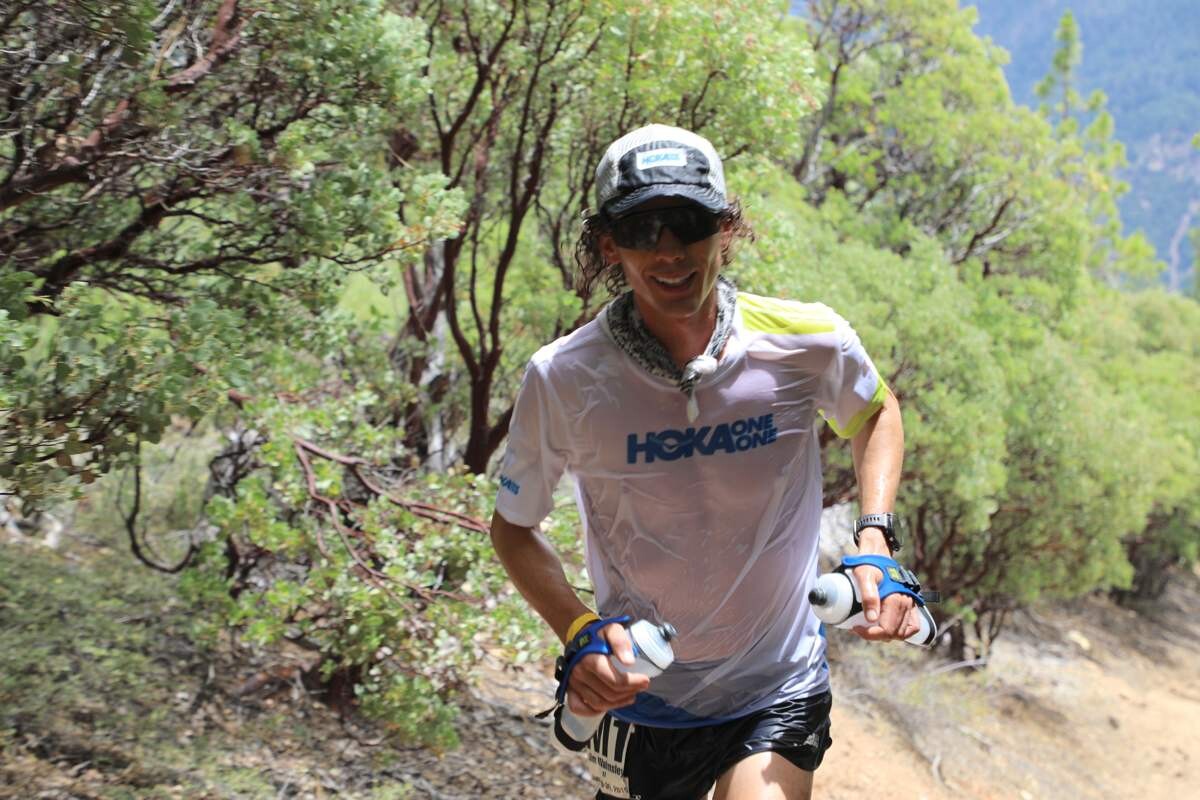
Staying hydrated is essential during the hot months. Not only will it help prevent potentially life-threatening ailments like heat exhaustion and heat stroke, but it will also keep you feeling better and running faster. When we get dehydrated, our blood thickens, increasing our heart rate through a process called cardiac drift. Being mindful of how much you are drinking before, during, and after your outdoor workout is important. Studies show that drinking something partially frozen before exercising can keep your body temperature down for even longer than simply imbibing a cold drink, so stick that sports drink in the freezer before your run so that it’s icy. If you find you’re taking in a lot of water, or you’re participating in a long, hot endurance event, make sure that you’re also taking in electrolytes and sodium so that you replenish what you’re sweating out and avoid conditions like hyponatrema.
Learn from the pros: ice, ice, everywhere
The recent Western States 100-mile race reportedly had 5 pounds of ice, per athlete, per aid station. Ultrarunners at these warm races have devised techniques to wear the ice all over their bodies, and no matter the distance of your next hot training run or race, you may want to try some of their efficient ways to beat the heat. Fill a bandanna or tube sock with ice and tie it around your neck. The icy water it releases as you continue will keep you cool as you move. Sticking a baggie of ice into your hat can work as well, or wearing sleeves that you stuff with ice cubes and allow to melt.
The most important thing during hot-weather runs: take the signs of heat exhaustion seriously. If you’re very hot but aren’t sweating, you have a throbbing headache that doesn’t abate or you start to feel unwell, get inside, cool your body down, and monitor your symptoms.
(07/04/2022) ⚡AMPby Keeley Milne

Western States 100
The Western States ® 100-Mile Endurance Run is the world’s oldest and most prestigious 100-mile trail race. Starting in Squaw Valley, California near the site of the 1960 Winter Olympics and ending 100.2 miles later in Auburn, California, Western States, in the decades since its inception in 1974, has come to represent one of the ultimate endurance tests in the...
more...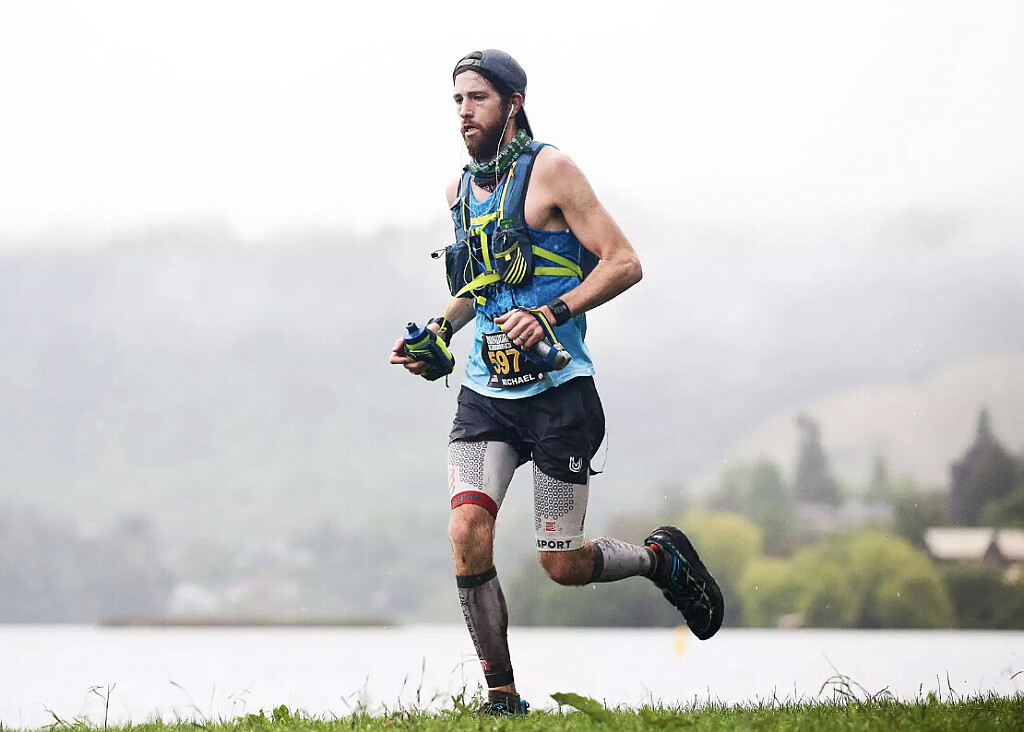
Ultramarathoner Michael Wardian Runs Across the U.S. in 62 Days: 'I Feel Like I Was Made to Do This'
Wardian ran roughly 50 miles every day to complete the cross-country adventure in under 75 days
Move aside Forrest Gump: Michael Wardian, a 48-year-old man from Arlington, Virginia, ran more than 3,200 miles to cross the U.S. in 62 days, finishing on Friday.
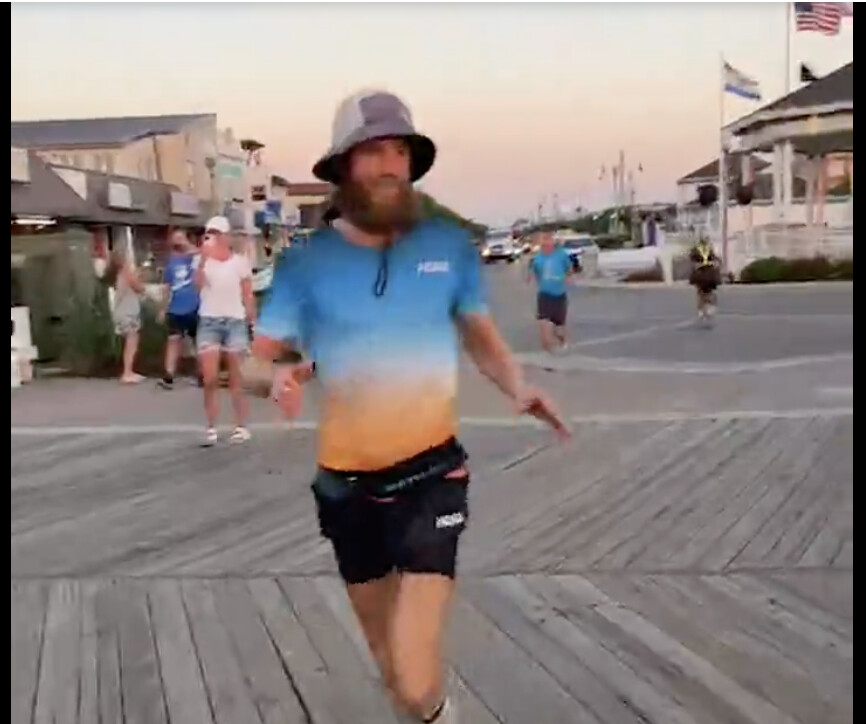
Wardian is a former Michigan State lacrosse player who has since turned his athletic focus to running, and ultramarathons in particular. "Starting on May 1st, 2022, I will be running across the entire continental USA, starting in San Francisco, CA, and ending at my home in Rehoboth Beach, DE," Wardian wrote.
"This will be my longest run ever," said Wardian.
The ambitious athlete planned to run primarily along Route 50, with a goal of completing the journey in 75 days or less. Wardian ultimately finished ahead of schedule, arriving at Delaware's Dewey Beach on July 1, 62 days after he departed from San Francisco, California.A video of Wardian's big finish can be seen on his Instagram account. He celebrated by running through the finish line and straight into the ocean for a swim.
"Every day I'm seeing new things, getting to have new experiences," he told reporter Tom Schad of USA Today on day 59 of his adventure.
"I feel like I was made to do this," Wardian said. "This is my jam, for sure."
According to USA Today, Wardian has previously tackled other monumental runs, including doing seven marathons on seven continents in just seven days. He also once held the world records for fastest marathons on a treadmill and while pushing a stroller.
The outlet reported that Wardian's average time running per day was between 11 and 15 hours. At night, Wardian joined crew chief Eric Belz who drove an RV along the runner's route.
"It takes a lot of grit and a lot of passion," Belz told USA Today.
The Forrest Gump inspired journey had been on Wardian's bucket list for years, but when he started dealing with health issues — Wardian has what's known as athlete's heart, where the heart is enlarged — the runner knew it was now or never.
It was really humbling," Wardian said of his health concerns. "You always think you have more time."
Wardian had the support of his wife, Jennifer and teenage sons on his journey. What's more, Wardian's cross-country trip raised over $107,000 for World Vision's clean water work around the globe, for children and families to have access to clean and safe drinking water.
(07/02/2022) ⚡AMP
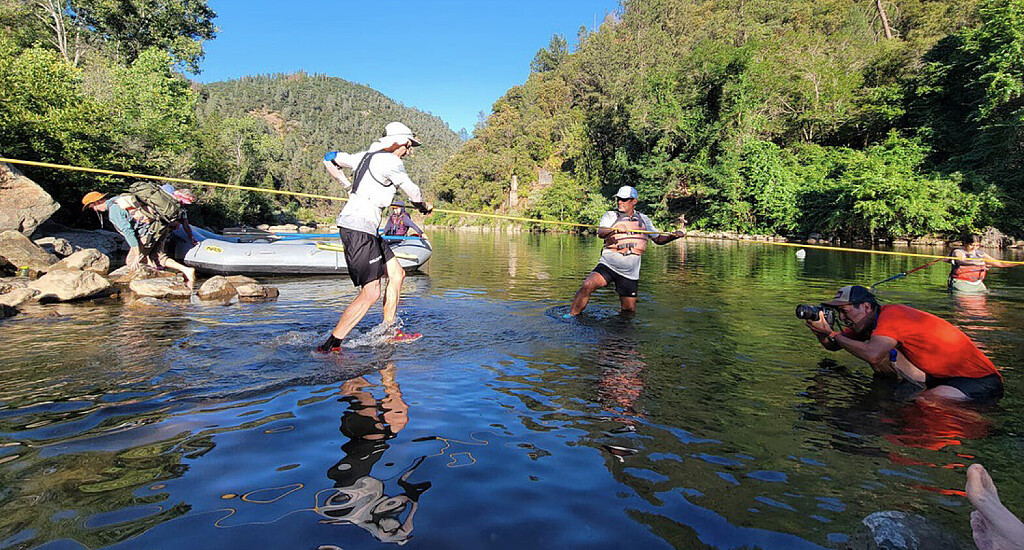
How a Two-Time Olympic Marathoner Finished Western States 100
For a guy who's run solid marathons at the world's most competitive level, Reid Coolsaet admits he felt like a wide-eyed rookie at times during the 2022 Western States 100.
The two-time Olympic marathoner for Canada turned in a solid performance in his first time running 100 miles, finishing in 19 hours, 27 minutes, and 3 seconds. That placed him 25th overall and 17th among men, which isn't bad for a guy who has been more accustomed to running sub-5-minute mile pace for 26.2 miles at the peak of his career. (For reference, his Western States time averages out to 11:39 per mile.)
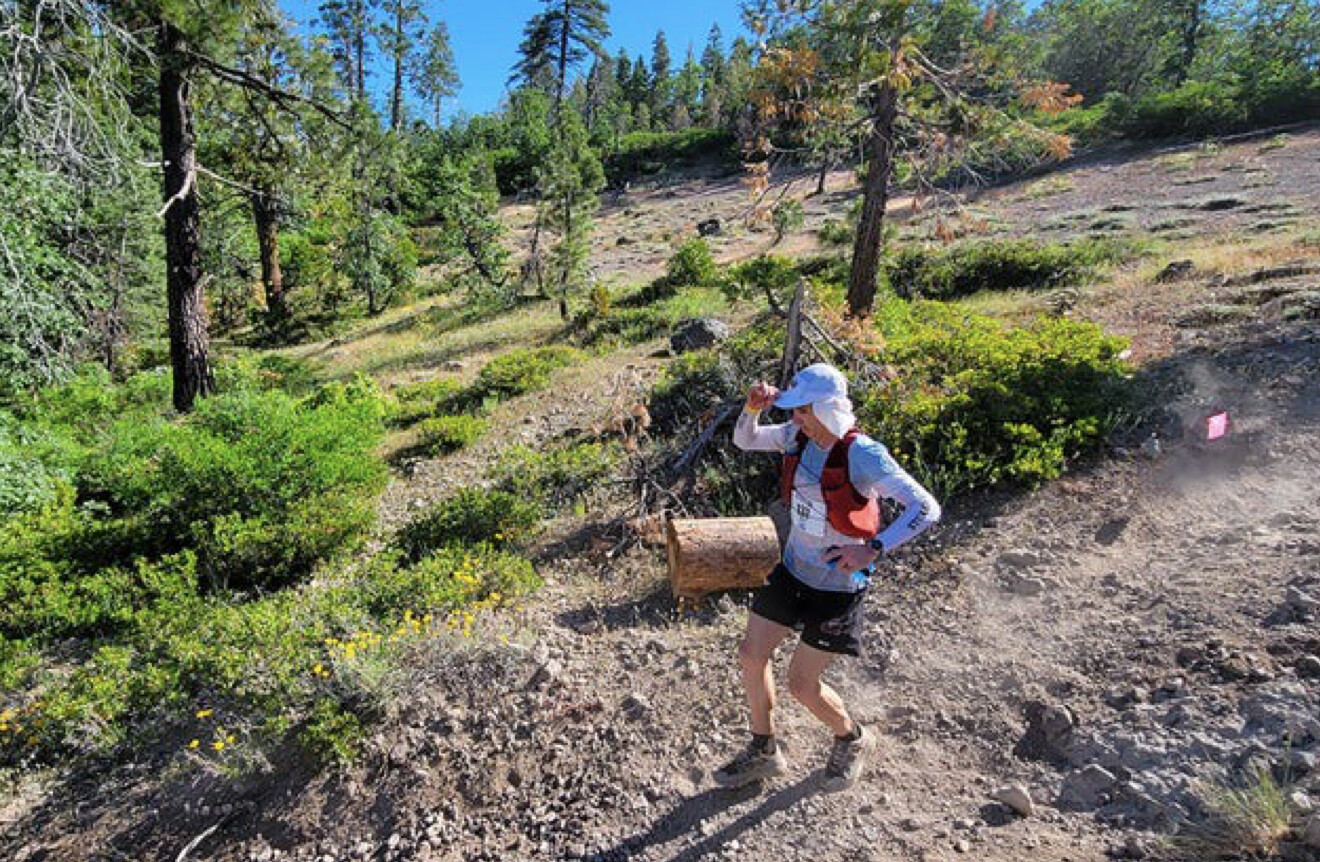
The 42-year-old from Hamilton, Ontario, had great moments and humbling moments during the race and says he learned plenty along the way, including a slow run-walk effort over the final 20 miles to the finish. Still, he left Auburn in good spirits with the notion that he might run another 100-miler at some point in his future
"I actually feel pretty good," he said this week after returning home. "I thought I would be a lot more wrecked than I am, which is a bit of a weird thing with ultras. I find myself barely able to run at the end and figure I won't be able to walk for a few days, but then I feel OK and think, 'Why didn't I run harder?' I feel like I had a 30K cooldown at Western States and I think that's what helped me recover."
Coolsaet owns a respectable 2:10:28 marathon PR at the 2015 Berlin Marathon and also raced well in two Olympic games - all before the advent of carbon-plated super shoes. At the 2012 Games in London, he finished 27th in the marathon (2:16:29) and four years later improved to 23rd overall (2:14:58) in Rio de Janeiro.
He's believed to be the only Olympic runner to run in the Western States 100 aside from Magda Boulet, a 2008 Olympic marathoner for the U.S. who was the 2015 Western States women's champion and 2017 runner-up.
Coolsaet started running ultra-distance races last summer after ending one final quest to qualify for the Tokyo Olympics. In his last attempt to run 2:11 or faster at a race in Siena, Italy, last April, he went through the halfway point in 65 minutes but faded to 2:16:38.
From there, he shifted to trail running and won the Quebec Mega Trail 110K race last August (14:24). But even though he was successful, he found out that he needed to do a lot more work to handle long descents and technical trails after his legs locked up on a long, downhill section.
He's believed to be the only Olympic runner to run in the Western States 100 aside from Magda Boulet, a 2008 Olympic marathoner for the U.S. who was the 2015 Western States women's champion and 2017 runner-up.
Coolsaet trained through the winter and turned in a good performance at the Canyons Endurance Runs 100K in Auburn in April, placing 15th overall (14th among men) in 10:12. He didn't earn a Golden Ticket, but was able to get a sponsor's entry for Western States.
When he arrived in Olympic Valley before the race, he hoped to compete for a top-10 finish and pegged Scott Traer and Jeff Colt as two runners he might be able to run with based on the smart races they had run at the Canyons 100K. He said his first 25 miles went about how he hoped as he was in the top 15 and staying hydrated and fueled.
He prepared for the heat by doing considerable sauna training in the weeks before the race. When temperatures rose into the mid-90s by mid-day, he kept the sun's impact at bay by taking on ice and wearing white arm sleeves and a sun hat. But from about the 30.3-mile Robinson Flat aid station to roughly the 50-mile point on the descent from Devil's Thumb to the El Dorado aid station, he started to lose contact with Traer and Colt (who would go on to finish 10th and 11th, respectively).
Thanks to his crew, Coolsaet recovered and still had a competitive mindset when he left the 62-mile Foresthill aid station, but running alone in the heat down to Rucky Chucky and the river crossing was the beginning of the end. By the time he picked up his second pacer at Green Gate near mile 80, he felt nauseous and had dead legs, which forced him to shift to survival mode.
"I was like 'Yeah, I'm just finishing this thing.' At that point, in my mind, I was just determined to finish," he says. "When I'm hurting that much, I have to be really excited about trying to catch people. And with the way I felt, I would have had to kill myself to catch two more people. That was a big ask for a little reward. I was just struggling to get one foot in front of the other for the last 30K. My legs were just shot. I could always run slow, but I would find myself at a small incline and just have to start walking."
He finished at 12:27 a.m. and was surprised to see his family there to greet him. He ran the final 300 meters on the track at Placer High School with his wife, Marie, and kids, Louis, 5, and Elodie, 4.
"It's fun because it's a lot more interactive than running marathons, where I won't even break a stride when I pass someone," he says. "In road races that my kids saw me run, I would zoom by at a fast pace and that was it. But in ultras, my wife has helped out a lot by crewing me, and I can high-five my kids at aid stations and then run the last 300 meters with them, so that's pretty cool."
For the time being, Coolsaet says he'll take time off to recover but quickly adds that he's as motivated as ever to run more trail races, both sub-ultra and ultra-distance events. Although he has no plans for another 100-miler anytime soon, he says he'll continue to pursue trail running and develop his technical trail running skills.
"I'd always rather been on the trails, but there just wasn't the Olympics on the trails," he says. "Without the Olympics, this is really where I want to be. Obviously, I would like to do really well at it, but I don't feel like I need to do well. When running was my job, I was super-motivated to be at the top in Canada and be on an international stage. There is just so much more unknown, but I'm not really dwelling on it too much and more just enjoying it. It's not that I don't want to be competitive, but I don't feel the same urgency to be at the top. So if I'm just doing all right at it and having fun, that's fine with me."
(07/02/2022) ⚡AMPby Trail Runner Magazine

Why a DNF could be your best learning tool, here's how to use a bad race to your advantage
So you dropped out of a race–what can you learn from it? You may be surprised what you are able to take away from a less-than-ideal experience.
If you enter enough races, you’re bound to experience one that doesn’t go as planned. A DNF (did not finish) result can initially be heartbreaking, especially if you’ve been working up to your race for a long time. You can do everything possible to prepare for an event and still have a race day that doesn’t go well, particularly in longer distances like marathons or ultras. Stomach problems, hot weather, shoe issues—reasons for a DNF are wide-ranging. If you need a day to process your disappointment after a bad race, go for it: but no longer than that.
Revisiting your experience and looking at what you can learn from it can be a game-changer. You will head into your next race with greater insight, new ways to tackle problems and the mental toughness from experience that you simply wouldn’t have gained without struggle.
Consider where the problem started

Did you veer off your regular pre-race meal routine when out of town? Maybe you need to plan ahead so that you can have food you’re comfortable with available. Perhaps you went into the race without enough rest, or chose the wrong shoes for a particular course. By revisiting your race and looking for clues to where problems were initiated, you’ll often see that mistakes were made before you even laced up your shoes. Finding that critical first error can be helpful as you figure out how to spin your experience from a negative to a positive.
Pinpoint your weaknesses
It is easy to avoid reflecting on problem areas. For me, after running a race and becoming quite ill afterward with heat exhaustion, it was tempting to chalk it up to the weather, and not alter any of my training habits. Instead, I decided to take a good look at what I had failed to do during the race to adapt to warmer temperatures and increased hydration needs. As in many things, awareness is key. Make a list, and don’t be afraid to do the work: being honest with yourself about areas to improve is key to becoming a better runner. If you determine that your taper was inadequate, do some research and ask others for tips and suggestions.
Figure out what you need to change, and get to work
Now that you have an idea of things to work on, put them into practise now. If your problems were with nutrition, start troubleshooting nutritional strategies on long runs, or try out new food prior to training runs. Far better to have something go wrong during a training run than in a much-anticipated race. Digestion has always been one of my own challenges in longer races, so now I work on this on almost every run. Just being conscious of what I was eating before and after a run and noticing how it affected my performance was hugely beneficial to my race-day performance. The knowledge gains also gave me a pre-race boost in confidence.
A coach once told me that the only time a DNF was a bad thing was when the athlete didn’t make the experience an opportunity for growth. Sure, a poorly executed race day feels unpleasant at the time, but viewing it as a tool to enhance your future performance can turn it into a stepping-stone on the way to your next PB.
(06/29/2022) ⚡AMP
by Keeley Milne
Do this to improve your running form in seconds, Use this quick check-in to run more efficiently right now
If you’re looking to improve your running form, you’ll find no shortage of information. Entire books devoted to proper footstrike, gait analysis sessions and shoes promising to fix your bad habits are all popular (and expensive). Insert a minute focused on form into your training sessions regularly, and you’ll soon be running more smoothly by habit. Your natural form will become more loose and efficient, with minimal effort or cost. Here’s a quick rundown on how to check and improve your form in under 60 seconds.
Relax

It sounds simple, but it can be tricky, especially if you’re running at a challenging pace or experiencing life stress. Both will carry over to tension in your body during a run, a common form-destroyer. If you’ve ever ended a running workout and discovered that your arms and shoulders were sore, you’ve fallen prey to this common issue. By taking a moment to consciously relax your face, drop your shoulders and give your arms a shake-out, you can release any tight spots and give yourself a reset.
Don’t lean too far forward, or back
When fatigue sets in, it’s easy to stop paying attention to the way you’re carrying yourself. At the very end of ultras, you can usually see a few people coming in with “the lean,” an exhausted-looking forward slant. After you’ve shaken out your arms and relaxed your face, check in with your carriage. You might find it most comfortable to lean slightly forward while running: that’s fine, as long as you aren’t compromising your ability to breathe easily. If you find yourself overstriding, or your feet are connecting with the ground in front of your body, you need to adjust. Imagine the crown of your head reaching skyward, or envision yourself as a puppet with a piece of string stretching up through the top of your head. Keeping your gaze focused forward rather than down can help you find your natural running stride.
Breathe deeply
Using your breath as a tool can take some practice, but simply taking a couple of deep breaths improves your oxygen intake immediately. If you’ve ever tried yoga, you are probably familiar with “belly breathing” or diaphragmatic breathing: inhale through the nose while expanding your abdomen, then exhale deeply through your nose or mouth. Deep breathing will help your body relax, and with a bit of experience, you’ll find yourself belly-breathing naturally, even in hard runs and races. If you notice breathing deeply is a challenge during your one-minute form check, try adding a few minutes of belly-breathing practice before or after your run.
(06/27/2022) ⚡AMPby Running Magazine
Why you should try a backyard ultra
The creator of the backyard ultra, Lazarus Lake, sums his event up perfectly: “We run in the backyard for many different reasons. We run because it is fun. We run to socialize with our friends (old and new). We run to go further than we have ever gone before.” Whether you are an experienced trail runner or completely new to the scene, a backyard ultra is worth experiencing. Lake hosts the most famous backyard ultra, Big’s Backyard, but you don’t need to have your hopes set on Big’s to try out one of the many backyard races hosted each year.
Backyard ultras follow a simple rule: runners start every hour on the hour, and follow a 6.706 km course. Pace doesn’t matter, as long as you finish the loop before the one-hour cutoff and are ready to start the next loop on time. After runners finish each loop (or “yard” as it’s called in a backyard race) they may rest, eat, refuel, cry—the options are endless. Racers must simply be at the starting line ready to run every hour on the hour until only one runner is left. A backyard ultra can go on for many hours or even days, with current record holder Merijn Geerts boasting 90 laps, or 600 km. While that might sound daunting, a backyard ultra can be a unique and valuable experience for any runner, regardless of distance and time goals. Here’s why you should sign up for one this season.
It doesn’t matter how fast or far you run
I ran three loops at my first backyard race–not remotely close to an ultra distance, despite the word being in the race name. Recovering from an injury and just starting to add mileage, I knew I was done just shy of a half-marathon. I had never been to an endurance event of this kind, and I hung around after to soak in the atmosphere. I wasn’t the first person to drop out. At the end of a backyard race, every single person aside from the winner takes a DNF (did not finish). There’s no second place; everyone is equal.
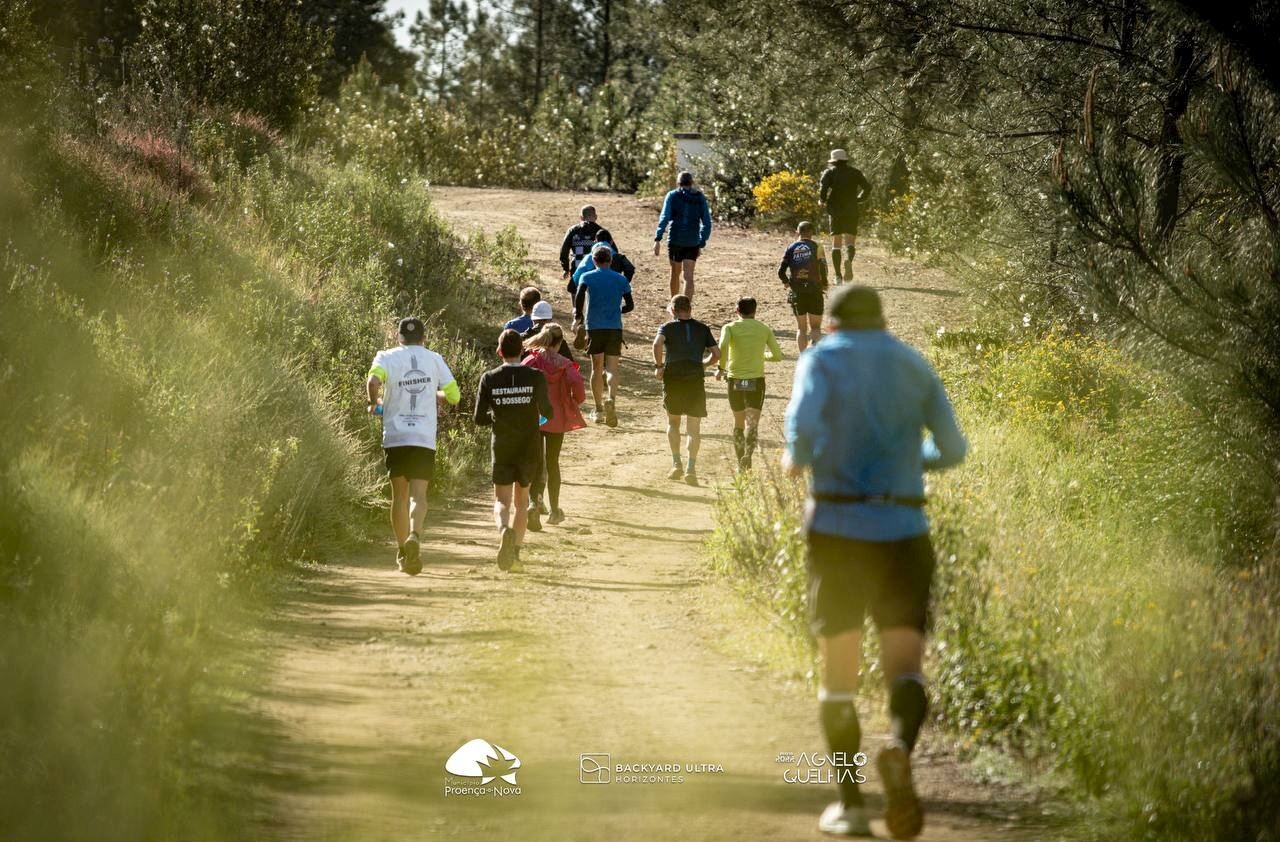
Running fast at a backyard ultra sounds like a positive—lots of time to recover, right? Many of the top backyard athletes actually run very slowly, even taking walk breaks, to minimize the toll on their bodies and extend their ability to run for hours (or days). There are very few perks to running quickly through the course and burning through your energy, fuel, and enthusiasm. If you are usually a back-of-the-packer, you’ll find you’re never alone.
It’s the perfect place to learn and practice troubleshooting
Most runners have experienced a less-than-ideal racing situation. From wardrobe malfunctions to GI distress, if you run long enough, you’ll have to work through an issue of some kind. In a backyard ultra, because you’re with your crew and around aid stations after each loop, you have the perfect opportunity to practise handling situations as they arise. If you’re training for an ultra, this can be essential. Not only are you only a maximum of 6.706 km away from your crew if your shoelace breaks or you start to feel sick; but you also get to experience handling potential setbacks on the fly. Backyard ultras often have both a daytime course, run on trails, and a nighttime course, on road or smooth paths that are safer during the dark hours.
My mom crews me at most of my races, and instead of trying to anticipate what I would need when I came flying into an aid station (as is usually the case), I was able to ask her to have something ready for me when I came back in from my loop. There’s a mental boost to knowing you only have to run 6.706 km and you’ll find fresh clothing prepped for you, or the snack you’ve been craving.
You’ll experience a community like no other
Backyard ultras are unique in that you’re always fairly close to the rest of the group, as well as the crowd and crew. A team atmosphere emerges, since a backyard racer can only go as long as their “assist” or the second-place finisher, runs. Racers need one another in order to keep going, and the larger the crowd, the more fun. If you make it until the nighttime loops, you will find that team atmosphere growing stronger, as runners personally battle their own fatigue and desire to stop running when darkness takes over. In my most recent backyard race, the inaugural Lewiston Backyard Ultra in Salmon Arm, B.C., it was most certainly the camaraderie among the runners that kept me moving through the night. One particularly cheerful (and renowned backyard athlete) Matt Shepard, of Valleyview, Alta., performed a resounding rendition of Macklemore’s Downtown, while running, to rally the group in the wee hours of the morning, and it worked–our spirits were lifted. You’ll experience tiny magical moments like this sprinkled throughout every backyard event.
(06/27/2022) ⚡AMPby Keeley Milne
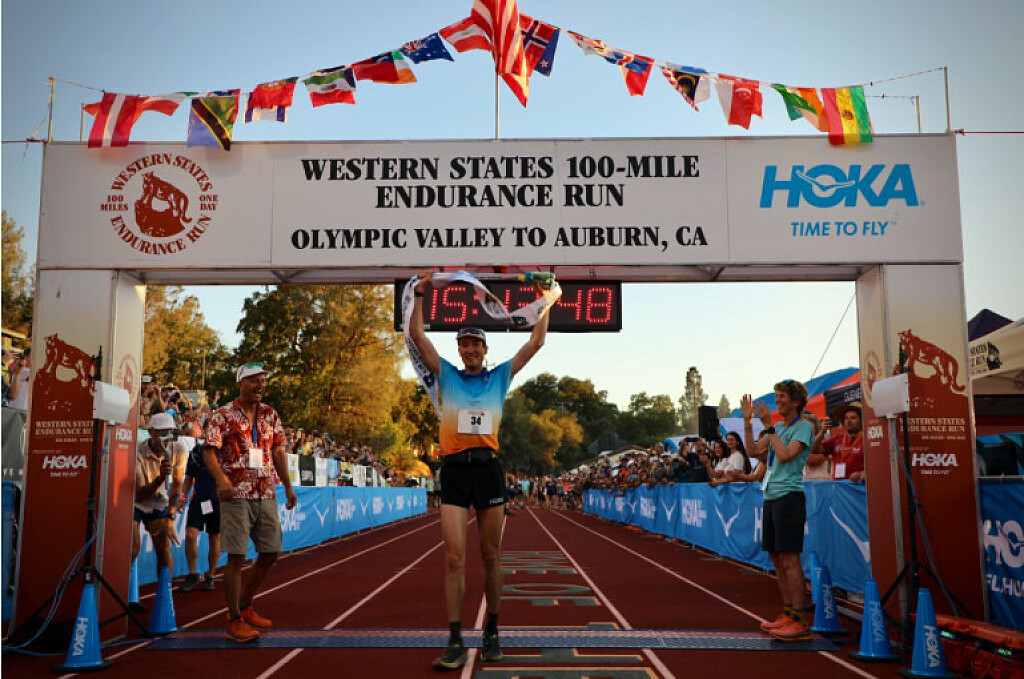
2022 Western States 100 Men’s Race
This year’s men’s race had the notable absence of course record holder Jim Walmsley, who has dominated the race in recent years, leaving it wide open for a good number of runners with potential to win. Among them were seven of last year’s top 10, including second-place finisher Tyler Green, and Tim Tollefson, who was fifth last year but hotly fancied to be capable of winning this race on a good day. Last year’s eighth place man, Hayden Hawks, who ran Western States as his debut 100 miler, was also believed to have more to offer in this race.
Notably, joining them as a Golden Ticket entrant was Jared Hazen, the second fastest Western States finisher of all time.
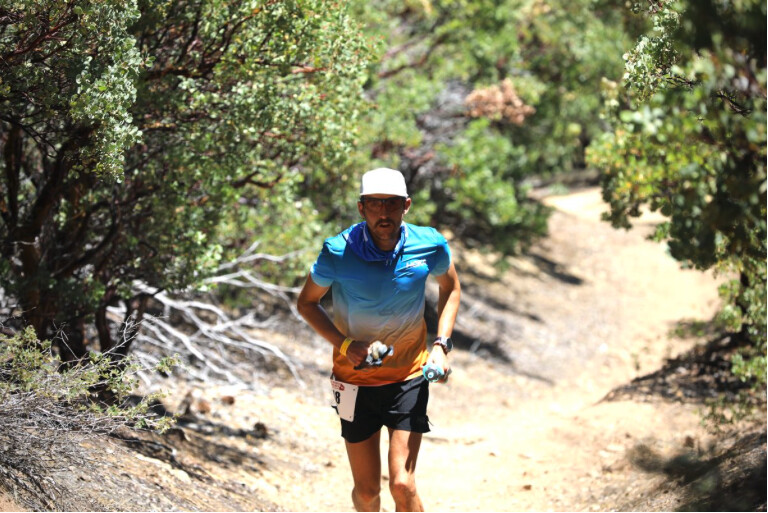
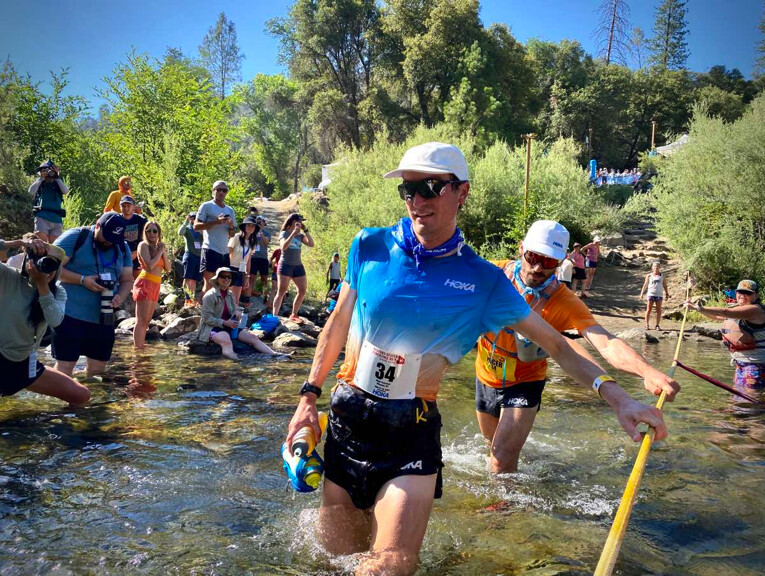
And last but certainly not least, the relative new kid on the block, who has quickly shot up through the distances and dominated every ultra he’s ever started — Adam Peterman.
Peterman won his way into Western States at the Canyons by UTMB 100k, where he toppled the course record in his first ever 100-kilometer race. He took a gamble by taking on his first 100 miler a little over two months later, and defended the decision to iRunFar in his pre-race interview saying: “I don’t feel like I always need to just make logical steps because we’re running 100 miles, that’s an illogical game.”
The first 3.5 miles of Western States features 2,550 feet of climbing, to the first landmark at the Escarpment. First to the top was Adam Kimble, closely followed by France’s Ludovic Pommeret — with Hawks, France’s Seb Spehler, and Hazen coming through in quick succession.
Tollefson, Tom Owens (U.K.), Peterman, Jonathan Rea, and Alex Nichols completed the front 10, all within a couple of minutes of each other.
By Lyon Ridge at mile 10, Ludovic had taken the lead and he came through Red Star Ridge at mile 15, four minutes clear of Spehler in second, with Kimble in third, and Hawks and Tollefson a few minutes back, followed by Hazen, Peterman, and Arlen Glick. Nine minutes separated the first eight runners to this point.
The two Frenchmen held the top positions into mile 24, just before Duncan Canyon, with Pommeret coming through six minutes off course record pace. At this point Tollefson had moved up to third and Hawks and Peterman sat comfortably in fourth and fifth, 8:10 back from the lead, with Glick following 10 seconds behind.
Pommeret held the lead into Robinson Flat, mile 30, with the pressure starting to show. Hawks had moved up to second by now and was looking a lot more comfortable, just two minutes back from the leader. Peterman had then moved up the field also to third position, just in front of Spehler, who’d dropped back to fourth, with Tollefson seconds behind. This chasing pack were just four-and-a-half minutes off the leader.By Millers Defeat at mile 34, Hawks had closed the gap to a minute, and by Dusty Corners, mile 38, he’d taken the lead from Pommeret.
Through Deadwood Cemetery, mile 49.5, Hawks maintained the lead and looked like he was having a super day. There had been some reshuffling in the other top positions, with Peterman, Hazen, and Glick all still in the mix.
By Foresthill, mile 62, Hawks was still in the lead but Peterman had separated himself from the other chasers in second. He arrived just three minutes back from Hawks and almost eight minutes clear of Hazen in third. Spehler, who had a promising first half, had dropped back the field suffering stomach issues, and Tollefson had also fallen back from the front runners.
Hawks was still in the lead after Foresthill, but by Cal 2, mile 70, Peterman had joined him at the front and the race was on! Hazen held third place, 14 minutes back from the leaders, with Glick in fourth another 15 minutes back from Hazen.
When the race reached the Rucky Chucky river crossing at mile 78, Hawks still looked comfortable but Peterman had stretched four minutes ahead, putting 30 seconds per mile on his opponent since Cal 2, showing unbelievable strength and determination for a 100-mile debut.
Hazen maintained third position, now 24 minutes off the lead, with Glick and France’s Vincent Vietmaking up the front five.
Hazen had started to struggle and dropped out at mile 85, with Glick moving up to third. Peterman had by now extended his lead to 10 minutes.
The top three positions remained unchanged for the remainder of the race, but Peterman utterly dominated in the closing miles, finishing in 15:13:48, almost 34 minutes clear of Hawks in 15:47:27. Glick rounded out the top three in 15:56:17.
t’s clear from this 100-mile debut that we will be seeing a lot more of Adam Peterman. He executed this win in a similarly patient manner to his win at the Canyons 100k, and he races like a runner with a lot more ultrarunning experience than he has.
Moving up all race again, Green ended the day in fourth position in 15:57:10, what was two places back but some 13 minutes faster than his debut at this race last year. Drew Holmen (pre-race interview) finished fifth after a strong, all-day performance. His 16:09 finish this year is also two places back but 14 minutes faster than last year. These two gentlemen have much in common.
Frenchman Pommeret stayed strong to finish in sixth place and first masters, and he was closely chased by fellow Frenchman Viet. Nichols moved up two spots this year to take eighth. Cody Lind moved back from fourth last year to ninth this year. And Scott Traer meted out his race effort perfectly to run his way into the men’s top 10 for 10th place.
Men’s DNFs included Spehler and Hazen, both due to various physical issues.
(06/26/2022) ⚡AMP
Western States 100
The Western States ® 100-Mile Endurance Run is the world’s oldest and most prestigious 100-mile trail race. Starting in Squaw Valley, California near the site of the 1960 Winter Olympics and ending 100.2 miles later in Auburn, California, Western States, in the decades since its inception in 1974, has come to represent one of the ultimate endurance tests in the...
more...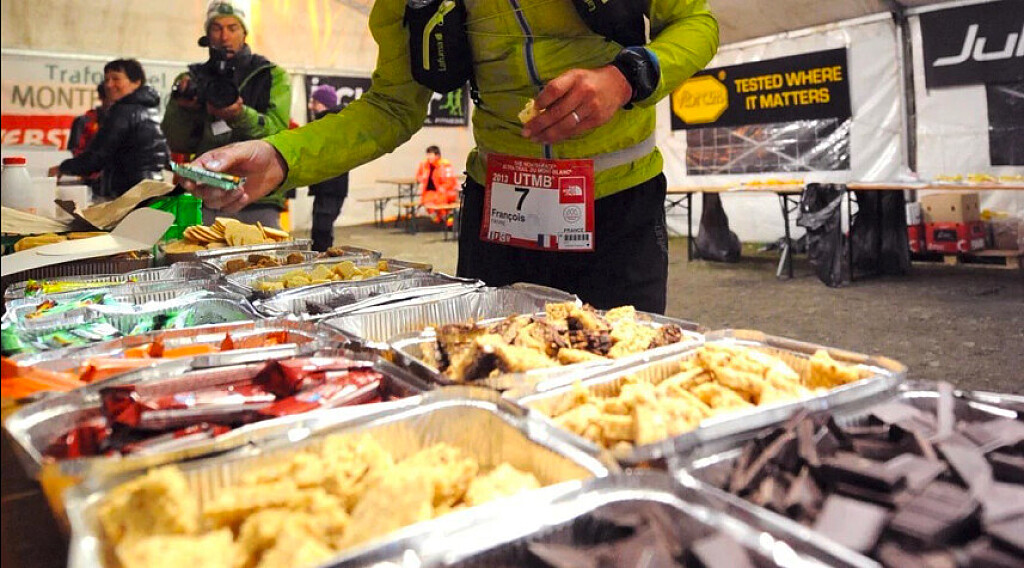
More Carbs Correlates With Less GI Distress in Runners
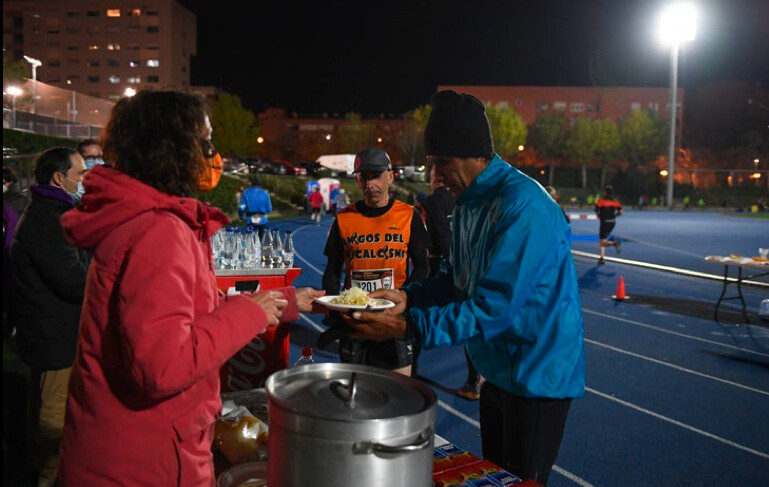
Race nutrition is a popular subject of discussion and a frequent source of anxiety for runners. Specifically, anxiety about getting nutrition in and keeping it down. This is because gastrointestinal (GI) distress is a common complaint among endurance athletes, and something that can undo even the best thought out plans and undo months of training.
A recent publication may provide some guidance for those who suffer this common affliction in events. The paper was a collaboration between researchers in the Netherlands, Norway, and the United States and looked at ultramarathon runners participating in a 60K race.

The researchers were interested in determining how frequently athletes complained of GI distress during the event and whether or not the type and amount of nutrition being taken in had any impact on the frequency and severity of those symptoms. In addition, the scientists hypothesized a specific biological premise that leads to GI distress in athletes-and they set out to find evidence to prove or disprove that theory.
This is important because to date there have been many reasons postulated as to why endurance athletes develop GI symptoms but none have ever been shown definitively to be at the root of the issue.
These authors believed that during exercise blood flow is diverted away from the organs of the GI tract and this would result in inflammation and injury that in turn would cause all those symptoms that stop you from being able to take on additional nutrition. They set out to prove this by measuring markers of inflammation taken from the blood of the runners obtained before and after the event, looking for generic markers of inflammation that can be present anywhere in the body and for levels of a marker very specific to the GI tract.
Intestinal fatty acid binding protein or I-FABP is a marker in the blood that shows up in very specific conditions of inflammation and of damage to the organs and tissues of the GI tract. By looking for this specific marker, the authors hoped to show that GI tract injury was occurring and that this was the cause of GI symptoms.
So what did they find?
There were 33 athletes in this study, 28 of whom were male, and nearly three-quarters of them reported experiencing some symptoms of GI distress. This could have been anything from nausea to abdominal pain to diarrhea. While so many experienced symptoms, very few of the athletes reported these as being particularly severe. In fact on a 10-point scale of severity, with 10 being the worst, the average score was only 1.9-so not exactly anywhere near debilitating.
As to the markers of inflammation, blood samples taken before and after the event did show that the non-specific markers of inflammation did rise, but this was true whether or not an athlete suffered GI distress of any kind (this is consistent with previously reported research on inflammatory markers in exercise). I-FABP levels, though, did not increase even in those athletes with the worst GI symptoms. So gut specific injury and inflammation did not appear to be the mechanism that caused these symptoms.
The one thing that was associated with symptoms was the amount of nutrition taken during the event. There was an inverse relationship in this regard. That is to say, those athletes that took the most nutrition, and especially when that nutrition was in the form of carbohydrates, experienced the fewest and least severe symptoms.
The reason for this appeared to be that when carbohydrates were being ingested, this improved blood flow to the gut through various mechanisms and prevented many of the symptoms often associated with low blood flow states.
This study definitely has to be interpreted with a certain degree of caution because it was small and included very few women. Still, the findings are consistent with previously published research-though the specific results related to increased carbohydrate consumption being associated with fewer symptoms is new and of interest.
Despite these limitations, the idea that athletes who take in more nutrition in the form of carbohydrates tend to do better with respect to GI symptoms is an important one. This suggests that athletes who have had issues in the past should consider a race nutrition plan that has them taking in a higher amount of fuel earlier in their event and doing this with carbohydrates as the preferred fuel.
While this study did not confirm the cause of GI symptoms being inflammatory in nature, it did rule it out, and so the search for specific causes of these problem will continue.
(06/25/2022) ⚡AMPby Trail Runner Magazine
Amanda Nelson has only been running ultras since 2020, but has had incredible results
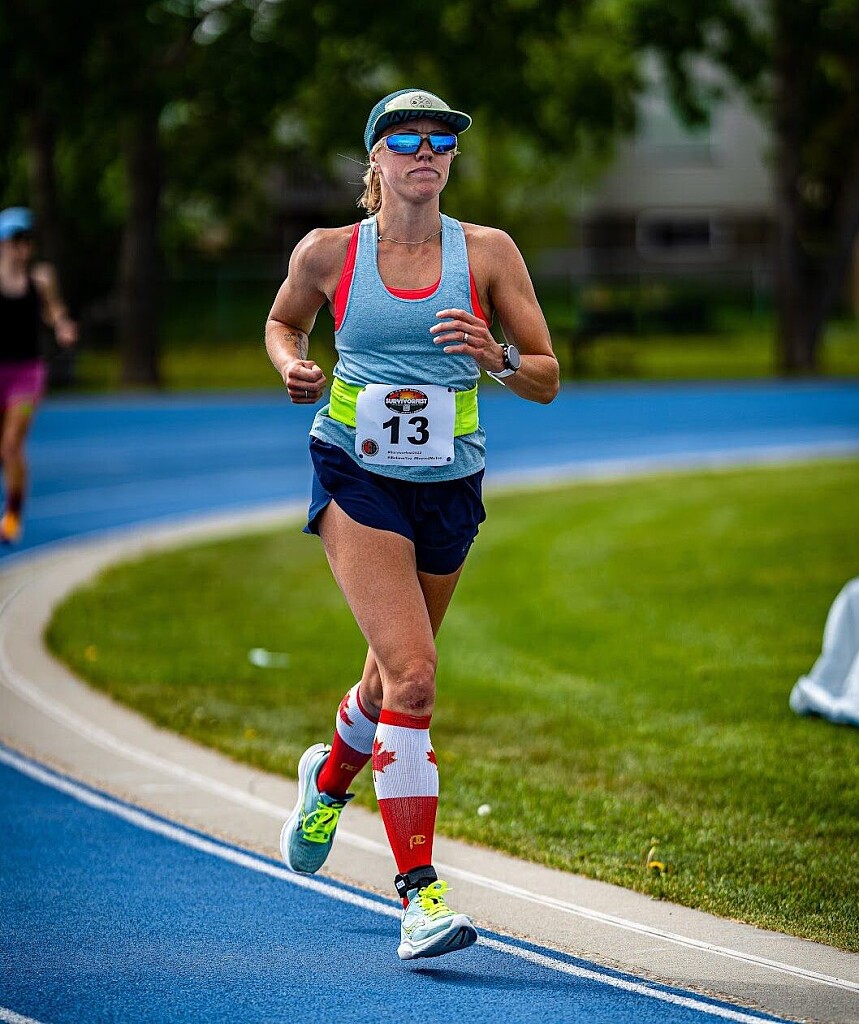
In her first race outside of Ontario, Woodstock native Amanda Nelson managed to secure new female 100-mile and 12-hour records (pending ACU verification) at Survivorfest in mid-June. Survivorfest is the official six-hour and 24-hour Canadian national championship, held annually in Edmonton, Alta. Nelson also won the entire race and set new course records.
Nelson has a remarkable running resume for someone who has only been participating in the sport since 2020. In September, she secured the Canadian soil 24 hour record from previous owner Viktoria Brown with 227.33K at That Dam Hill Race in London, Ont., setting a course record and winning the race as well.
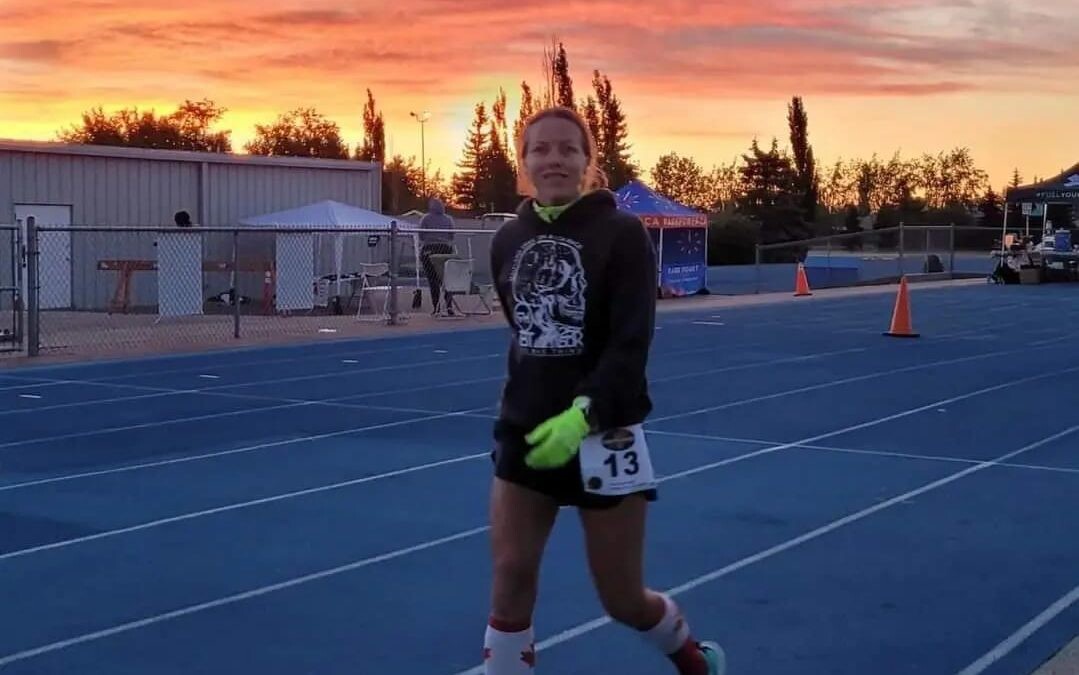
Heading into Survivorfest, Nelson, 33, had hopes of going after the 100-mile and 24-hour national records. Nelson and her crew, including husband Danny Nelson, flew in to Edmonton to prepare a few days in advance.
Three days out from the event, Nelson noticed her legs were very sore. “I noticed that evening that my quads were really hurting. I don’t know if it was from the flight or not but it definitely worried me. I went for a couple small runs in the days leading up to the race, and that made me feel even more worried because they weren’t feeling much better,” Nelson says. After doing some pre-race work on her legs with an ultrasound machine, Nelson started the race feeling slightly better.
“The heat was brutal!” Nelson reported in her post on Instagram. She kept her post-reward treat of seeing the Rocky Mountains for the first time in her life in mind, a dream she had had since childhood.
Nelson is a busy mom and works on a dairy farm. She says she has a lot of support to allow her to flexibly schedule in long runs. Her record-setting 12-hour distance was 134.025 km, with a 100-mile record of 14:45:51.
Brown congratulated Nelson on her new records. She added, “When I went after the 100-mile record last December, I had a strong feeling that it would be a question of “who gets there first” and I was very happy that I did. But I am also fully aware that both Amanda and Stephanie Simpson, who tried to break this record last year, are much faster runners than I am, and, in my opinion, they both can run a faster 100 miler than I can when the stars align–which they did for Amanda this time. Of course, I’m a bit sad that my record is broken, but that’s what records are for–they are meant to be broken.”
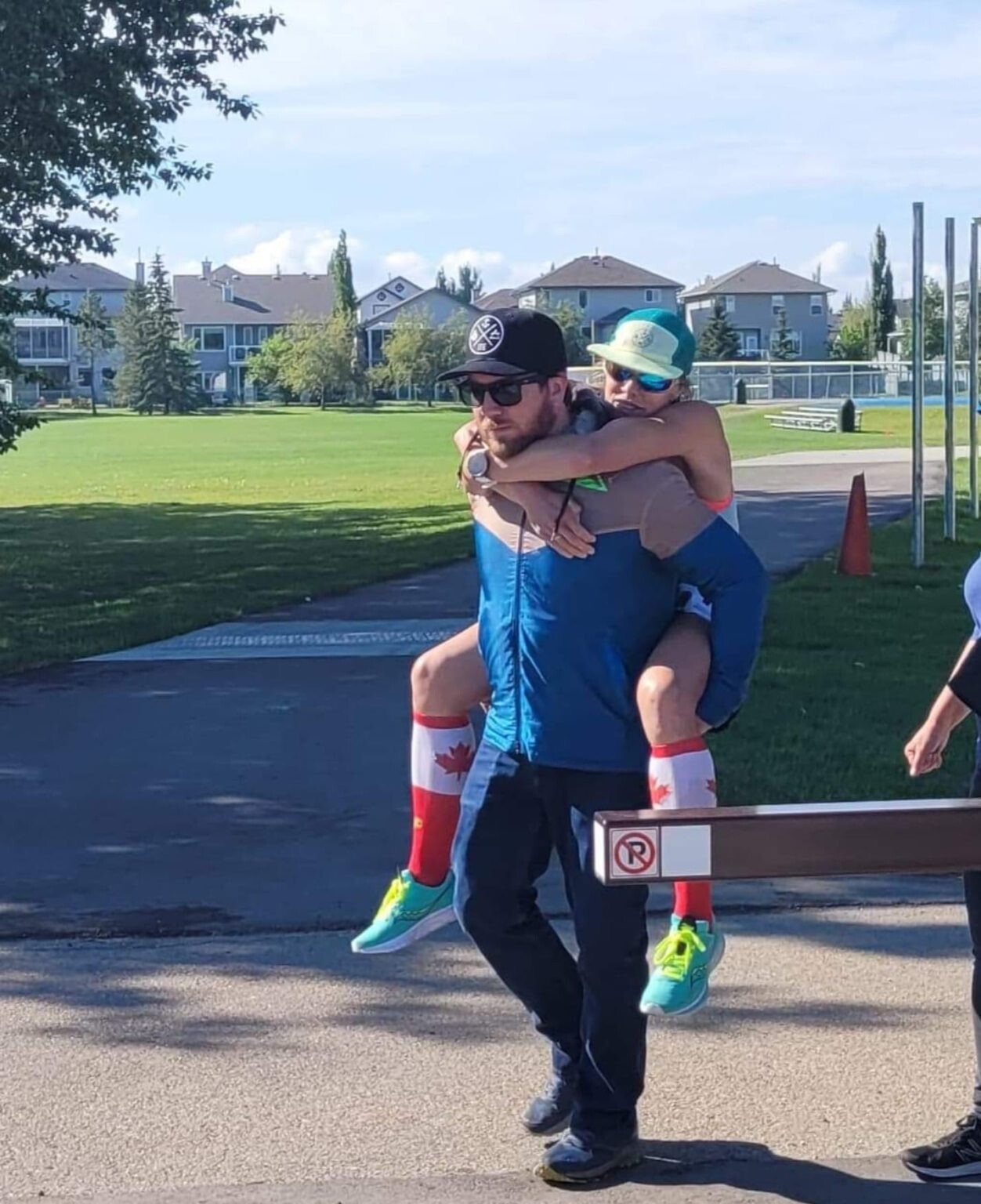
Nelson and Brown will compete with one another at Persistence Backyard Ultra in London, Ont. at the end of July. Brown says she looks forward to it: “I’m just extremely happy that the Canadian women’s ultrarunning field seems to be so strong, and I hope we can inspire and push each other to better and greater performances together. I will specifically need Amanda at the backyard race at the end of July to show a strong performance so we can both go further than ever before!”
With one record-setting performance after another, both Nelson and Brown are athletes to watch on the Canadian ultrarunning scene.
(06/21/2022) ⚡AMPby Running Magazine
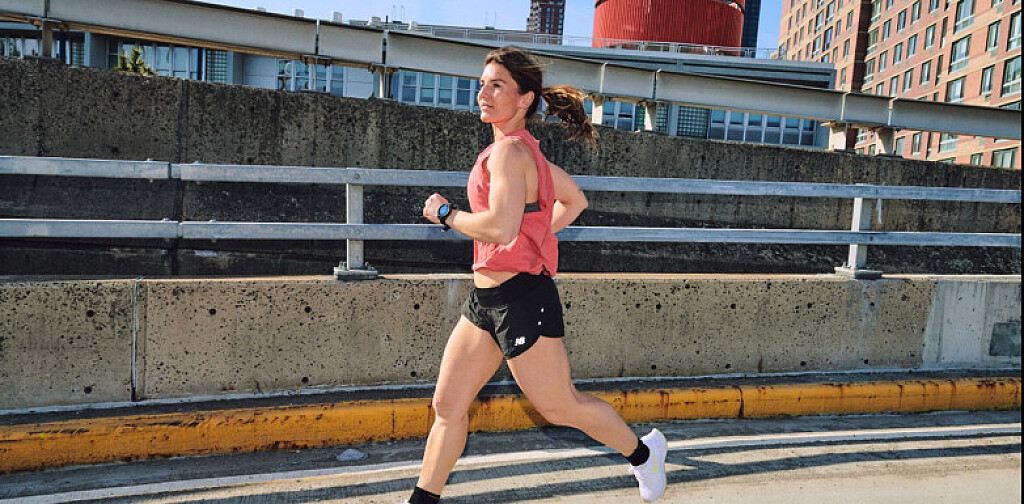
Run Commutes Aren’t Just for Getting to Work
If you’re looking for ways to stay motivated during your Streak, try using the daily jog as transport.
The second half of the Run Streak is when most of us start to crave a rest day or feel a slump in motivation. It’s also the time that I dip into what has been a streak-saving secret: run commuting.

After all, running was transport way before it was sport, and the idea of bookending your work day with runs to and from the office isn’t a new one—especially during the summer Streak when we’ve got more daylight and try to avoid the hottest hours of the day. (Even if you work from home, you can still jog a “fake” commute like ultrarunner Mike Wardian does each morning when he’s trying to get in extra mileage.)
Personally, the majority of my run commuting isn’t from home to office and back again. Rather, it’s for heading to other destinations that I would have otherwise hopped in a car. I can’t help but mention that at a time when gas prices have soared over 5 bucks (6 in some areas!) per gallon. It may not save you a significant amount at the tank, but I feel like it counts double when the mileage that would have been going on your car is going in your training log instead.
If you’re dragging a bit and need something new in your Streak, or just need to squeeze in a quick mile with a task you’ve already got on your schedule, I’ve got a few suggestions. I’ve done them all myself, and each has either added a little convenience or excitement to my Streak. My challenge to you is to try one of these during the final days of yours:
Run to a local coffee shop for your morning coffee.
Jog to meet a friend you haven’t seen in a while.
Get an errand out of the way. (I run to get my groceries and count carrying them home as my weight training.)
Experiment with a run commute to work
End a hot run with ice cream for the walk home.
Save the delivery fee on something small you’ve Uber Eats’d (These apps offer more than just food orders now.)
Pick up birthday or holiday cards for friends and family.
A Few Tips
If you have a watch that offers built-in payment methods, get it set up before you head out so you can leave your wallet at home.
Remember that you don’t have to run the whole way. Maybe you’ll ask a friend for a lift home, carpool with a coworker, or use public transport for a portion of your trip.
Plan your route ahead of time. Use turn-by-turn GPS navigation on your phone’s app or watch as back up.
If you’re commuting during busy hours, incorporate parks into your route to avoid busier roads and sidewalks.
Use hear-through mode on your headphones, or just leave them at home.
Seal your cash or cards in a Ziplock baggy to keep them from getting sweaty.
Short, easy jogs during cooler hours won’t leave you stinky or drenched.
Always give yourself about 10 more minutes than you think you’ll need.
(06/19/2022) ⚡AMP
After Suffering from Years of Drug Addiction, Running Helped This Dad Get Clean
Now he’s finishing triathlons and conquering ultramarathons.As a teenager, I grew up in St. Louis, Missouri, and found myself in trouble constantly. I started smoking cigarettes and marijuana, and stealing alcohol at a very young age. And by the time I was 15, I had already started using cocaine, LSD, and ecstasy frequently.
Prescription pills took hold of me at a young age and led me into an opiate addiction. At the climax of my addiction, I was homeless and living on the street. I was the guy you would see at a highway exit holding a sign begging people for money. I tried to get off the opiates by going to a methadone clinic and taking methadone (a FDA-approved drug in the opioid family, used to treat opioid use disorder), and wound up more addicted to that drug.

In the clinic, I also met tons of heroin addicts that introduced me to that drug. Being an addict took me to prison and almost took my life several times, and all the relationships in my life were broken as a result. I tried to commit suicide and found myself in psychiatric units, treatment centers, halfway houses, and rehabs frequently.
The worst of my overdoses was the week of February 4th, 2015, where I had a total of three heroin overdoses in one week. I was found unresponsive with a needle in my arm. During one of those overdoses, I had locked myself in a bathroom with my back to the door and feet against the vanity so nobody would be able to open the door. My father, who had been trying to intervene, actually got into my apartment and broke the door to get me out. He gave me CPR and called 911.
The paramedics gave me several doses of Narcan to try and save my life, and I was put on a ventilator in the ICU due to the fluid in my lungs and pneumonia. After a very scary nine days in the ICU, by the grace of God, I woke up.
At this point, I had a decision to make: either run away like a coward or run toward my failures and take responsibility for my life. At this time, my wife was six months pregnant with our first child, so I made the decision to find help at a men’s faith-based recovery center called Lifeline-connect in Urbana, Illinois, that completely changed my life.
Lifeline-connect is a one-year residential program, so I knew I was going to be there for a while. One of my mentors in the program, RJ Eaton, was into fitness and challenged me to get into shape spirituality, mentally, and physically. Up to that point, my lungs were in bad condition. I smoked two packs of cigarettes a day for over a decade.
I had been running off and on since the first time I went to Lifeline-connect in 2009. And after my relapse in 2015, I started running again this time, and at first could barely run a tenth of a mile without stopping because my lungs hurt.
One day while running, someone saw me running in a really old pair of beat up shoes that were falling apart and blessed me with a brand new pair of Saucony shoes, which really encouraged me. A tenth of a mile turned into two and then a half-mile, and with consistency day by day, it wasn’t long until I was running several miles every day.
By the end of my time at Lifeline-connect, I was running five miles a day, five days a week. As I continued on through my recovery, I kept running and fell in love with it.
In 2019, I competed in the Illinois half marathon and remember thinking at the time about how difficult it was to run a half marathon. But following that race, I realized that running was helping me forge mental toughness to stay strong in other areas of my life. Running helped me to have the same mental fortitude to not quit on longer runs, which is the same mental toughness that has helped me not give into temptation in rough times.
Since then, I’ve run three full marathons, one a personal 26.2-mile run, then a 35-mile ultra that wasn’t a sanctioned event. I also set a PR at the Illinois half marathon this past spring, finishing in 1:42, and have also come to love mountain and road cycling.
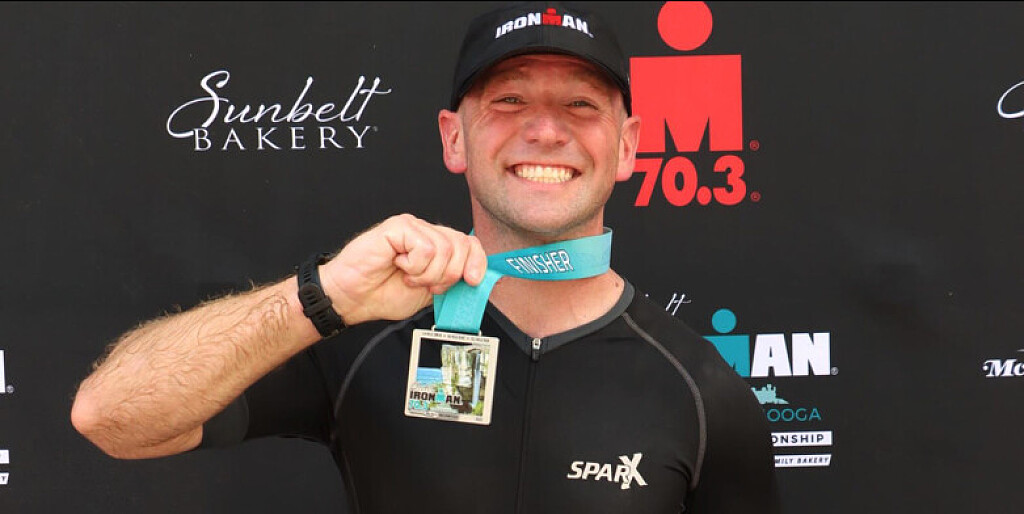
To keep pushing the bar, I signed up for and completed the Ironman 70.3 Chattanooga this year and finished with a time that I was pleased with accomplishing. I have a goal to summit all 58 14-ers (mountains above 14,000 feet elevation) in Colorado.
Currently, my running schedule is between 25 and 35 miles a week. Every once in a while, I sign up for a 5K, 10K, marathon, or triathlon to keep me motivated because I really enjoy the community of runners/cyclists/triathletes. I’ve actually connected with a number of local athletes who are now friends of mine and I get to meet up with them for runs or rides.
Next on my running goals list is to do a 50-mile ultramarathon, then a 100K run.
Overall, running makes me feel alive and accomplished. It’s one of my personal devotional times where I express my gratitude to my God for keeping me alive. Because of running, today I now have a beautiful life with my three beautiful children: Eden, Amaeya, and Summit. My wife, Maegan, is my biggest cheerleader. She’s my rock who stuck by my side, always encouraging and believing in me. I am so grateful that I get to tuck my three beautiful children in to sleep at night and be their dad. The only thing running didn't prepare me for was raising these three kiddos ages 2, 4, and 6—talk about an endurance event!
A special shout-out to my 2-year-old Siberian husky, Slushy, who has been my running partner over the years. I train with him regularly because he holds me accountable when running. He’s ready to go every day at 5:30 a.m. rain or shine, and he has helped me to be better. We all need a husky in our lives: personally, spirituality, and professionally.
For anyone reading this, I want them to know that no matter what struggle they are going through, there is an opportunity to come out of the fire stronger than before. Sometimes it takes a fire in our lives to clear and burn away all the impurities that were holding us down. Now is the time to get up, lace your shoes, and march forth. If I can do it, anyone can.
These three trips have made my running journey a success:
1. Smile when you run
It helps me to remind myself why I love this.
2. Practice gratitude
When running gets tough, I try to remind myself of how lucky I am to be able to run. I am blessed to have found this path, when others close to me have lost their lives.
3. Run everywhere you travel.
I run everywhere, even on vacation or staying at a friend or family’s house out of state to keep the spirit of adventure alive!
(06/19/2022) ⚡AMPby Runner’s World
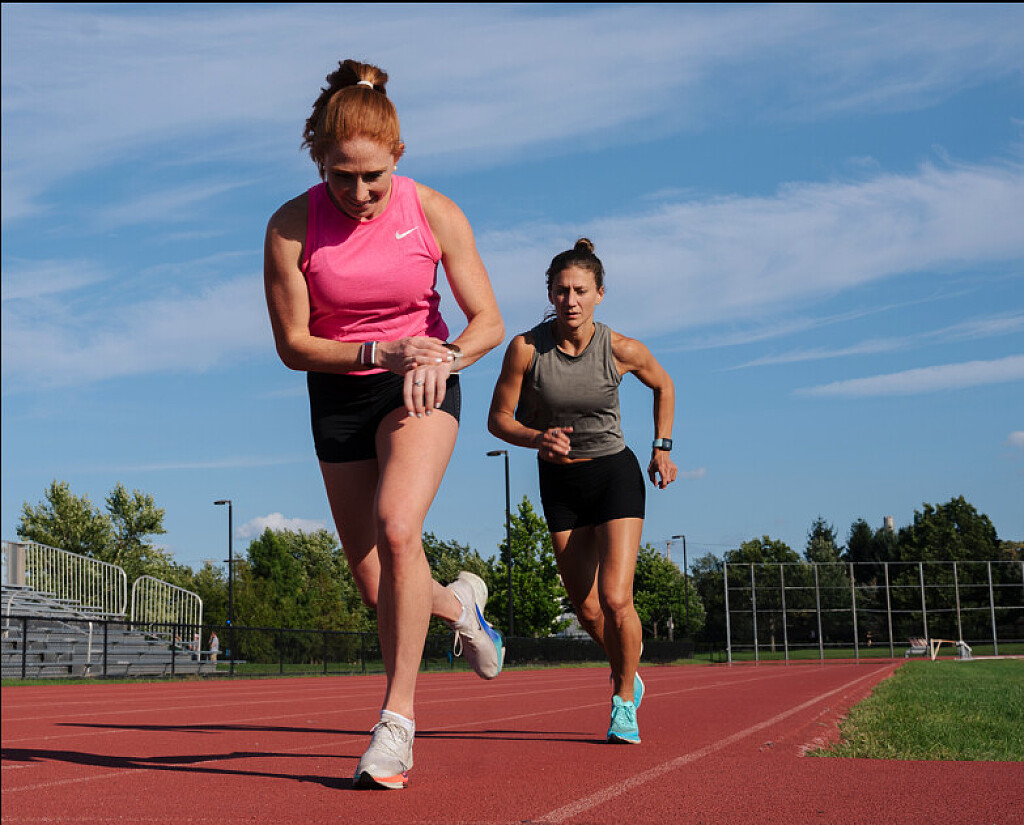
How to Run (When You Hate Running)
If you slog through the same boring miles week after week, can’t even imagine slogging through miles every week, or if your high school coach used laps as punishment... of course you’re gonna hate running. Here’s how you won’t.
If you’re not a fan of running, you’re definitely not alone. Forty-six percent of the 1,800 people who answered our MH poll said they hate it too. But here’s the thing: Running’s not about banging it out anymore. It’s still an incredibly efficient cardio workout that you don’t get with weights alone.
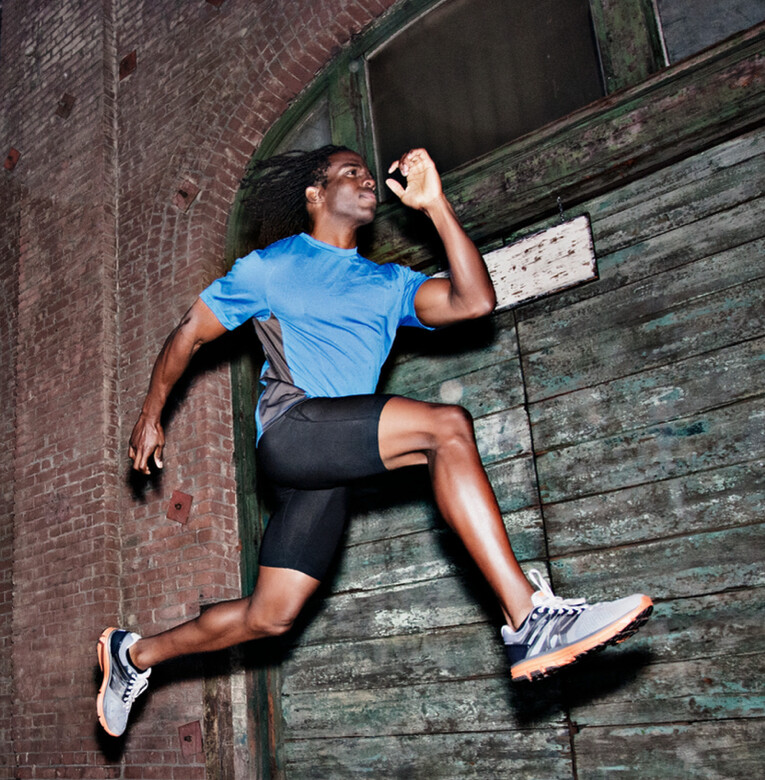
Now, however, running itself isn’t really the point. It’s just what happens to be going on in the morning, with friends. Or at night, when the city’s yours and you may or may not be breaking some rules. It’s a game you play with yourself, a way to test yourself, a way to find yourself, a way to forget. You don’t really hate running. You hate the way you’ve been running. And we’ve got six cures for that.
CURE 1:
Add a new level of exploration—or competition—by lacing up after dark.
There’s a version of running in which you don’t wake up early, you don’t pay hundreds in race fees, and the finish line, at least sometimes, is a bar. It doesn’t quite have a name, or at least it hasn’t been branded yet. It’s punk rock. It’s returning running to the people from the hands of corporate sponsors and type A, predawn joyless slogs. Call it night running if you want, since that’s when it happens.
Many groups start weekly workouts around 8:00 P.M.—not too late for us normies but late enough for the pack to be defined by the flecks of light bouncing off hidden reflective patches on clothes, shoes, caps. But there’s another kind of night running that really sets you free.
It’s not as much about a time of day as it is about a mind-set. These are unsanctioned adventures—underground races with mostly word-of-mouth buzz in which a small group of people (maybe ten friends, maybe 100 entrants) chase a win by running between checkpoints by themselves, picking whatever route they want. There are no closed roads, no signs, no aid stations or port-a-johns. Some races are pretty hardcore—strategic, competitive, and ruled by local studs.
Others, like one I did from a bar in Brooklyn to one in Manhattan, are less aggressive, and your finish time includes drinking a can of beer. That type of gritty night running is the closest you can get to the pure spirit of racing—of grinding your body into the pavement until you’re doubled over. The streets have quieted down, and you’re out in them on your own. Along with every other runner who shares this passion. —MATT ALLYN
CURE 2:
Don’t run, glide. Bound. And sometimes walk.
As the editorial director of a group that includes Runner’s World, I spend more days than not surrounded by real runners, so what I am saying to you is not opinion but lived and learned fact: Real runners rarely seem to be running. They glide. They bound. They kiss the earth with their tippy-toes as a courtesy to gravity rather than a necessity of physics.
I, however, run as if I got into a brawl with a much bigger opponent and am paying for it. Yet: I run. It’s more efficient than cycling (my sport of choice), and it’s easier to manage when you’re traveling. I highly recommend getting the shit kicked out of you by a run. But you can’t be afraid to walk. If you only run for as long as you can actually run, you’re not going to be out there long enough to do yourself much good.
At first, the only way I could do a 30-minute “run” was to run for a few minutes, walk a few, then run some more. Walking is not only okay but pretty much mandatory. Real runners know this and won’t shame you for not running while you run. Anyone else can go suck it, because they’re not even in the damn fight. —BILL STRICKLAND

CURE 3
Sprint and Get It Over With
Forget 30 minutes. Crash through just six all-out 100-meter sprints with two minutes’ rest between each (you’ll need it) and you’ll be done with all your running in less than 15 minutes. Here’s how. —EBENEZER SAMUEL, C.S.C.S.
1. A Tight Core
A rock-solid core keeps you exploding straight ahead. Train this with mountain climbers. Do 3 sets, working for 30 seconds, resting for 30. Avoid the common flaw: Don’t let your butt rise!
2. Explosive Arms
Pump your arms to generate speed. Struggling? Sit on the ground, legs extended, then pump your arms as aggressively as possible, as if running. Focus on moving from the shoulders. Do three 30-second sets, resting 30 seconds after each.
3. Back Strength
Don’t just throw your arms forward when you run; build back strength to drive your elbows high. Do 3 sets of 8 to 10 dumbbell rows per side at least twice a week.
4. Strong Feet
Toe and foot strength is key for sprinters. Build it with single-foot jump-rope hops. Jump for 45 seconds, then rest 15 seconds. Do 3 sets.
5. High Knees
Drive your knees powerfully on every stride. Practice this by doing high knees in place for 15 seconds, then resting 15 seconds. Do 3 sets. Focus on driving your knees higher than your hips.
CURE 4
Run with Friends
About two years ago, after I’d put on about ten pounds, I sent a text to two friends at 8:00 on a Sunday morning, saying, “I’m going running at 9:00. Would either or both of you like to join?” Although we’d never discussed running together, I got a “Yup” from one and a “Sure” from the other. Then I got an “I don’t understand what’s going on” from the “Yup,” but—too late!—we had a plan. An hour later, we met up and ran five miles at the slowest pace I’ve ever run, and we’ve run virtually every weekend since then.
Now it’s a ritual. We’re a lot faster, but that isn’t the point. We keep it up because we also don’t want to fail at the opportunity we’ve created. When else do three fathers— three people—get an hour of uninterrupted weekly conversation? That the conversation has the added benefit of regulating our breathing, keeping us at a sensible pace, means we never go too hard—and going too hard is probably one of the reasons I used to stop running.
CURE 5
Try the (New, Gamified) Treadmill
The treadmill’s no longer a cataclysmic-weather default. Tech has brought competition and camaraderie to what used to be just running on a belt in your basement. These three options are changing everything.
Top the Leaderboard: PELOTON
On-demand streaming puts the workout you want right in front of you, along with everyone’s stats on a leader board so you can outpace that 18-year-old in L. A. (or your dad). Buy the treadmill (with a special belt for softer landings, starting at $4,295) or get the workouts, but not the stats, on your own treadmill via an app for $19.50 a month. OnePeloton.com
Run with Far-flung Friends: ZWIFT RUNNING
Run with a friend—even if you’re in St. Louis and they’re in Toronto—via this app. Set it up on a tablet or computer by your treadmill, pick an avatar, and have your friend do it too. You’ll both show up on the same virtual course. The app is free, but you’ll need a foot pod (as little as $30)—a device that clips to your shoe and sends your pace and distance to the app. Zwift.com —M. M.
THE MILE IS THE NEW MARATHON
Train for this everything-you-got sprint to get a fitness bump and bragging rights.
For the past few years, Ironpeople and cardiovores have tried to one-up one another with epic training efforts, competing on the number of miles they run, the number of Ironmans they do, and the number of ultra-early-morning sessions they knock out. Yet one of the most effective ways to train—and one of the most beneficial for your physical and mental health—has always been the shortest and the simplest: mastering the mile.
“The mile is an amazing blend of speed and endurance, and a good indicator of your overall cardiovascular health,” says Danny Mackey, head coach of the Brooks Beasts, an elite pro track team. “You can hammer it, and because it doesn’t take long to recover, you can run it again soon to see how much you’ve improved.
You can’t say that about a marathon, where most people are just trying to finish.” Even better, Mackey says you’ll notice yourself getting faster in three weeks. While a typical in-shape guy can run a mile in ten minutes, running one in 6:30—under the 6:47 average time for a man in the 5th Avenue Mile, the largest one-mile race in the country—can win you bragging rights. (The fastest finishing time in that race last year was 3:52.) Here’s exactly how to get after it.
(06/18/2022) ⚡AMPby Runner’s World

Trail-running podcast host creates job board for runners
If you’ve always longed to find a career that aligns with your love of running (especially trail running), Finn Melanson may have some options for you. Melanson, ultrarunner and host of the Singletrack podcast, has created a website for people seeking jobs in the running industry.
Melanson calls the job board a work in progress, and explains that “every aspect of our sport improves as more talented people decide to invest their life’s work here.” Passionate runners or trail enthusiasts with useful skill sets may still find it challenging to find opportunities in today’s rapidly changing job market, and Melanson hopes to eliminate some of the struggle.
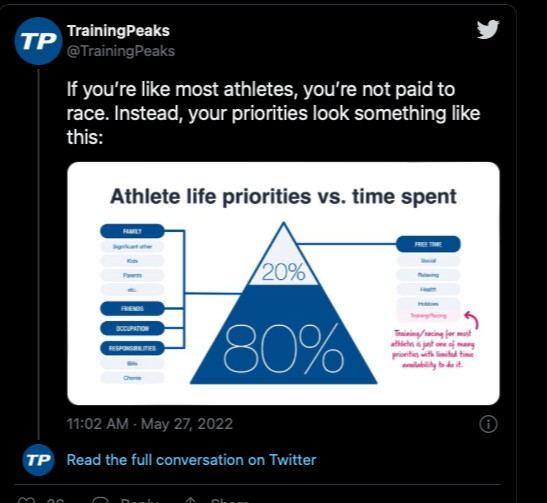
“There’s been a lot of recent discussion in the ultrarunning world about what it’s going to take to improve the sport, grow the sport and generally get it to a place where it’s more relevant in a 21st century world. I’m attracted to that kind of big picture, forward-thinking and I wanted to lend a hand,” says Melanson. He adds: “Maybe by the mid 21st century, the running industry (and the outdoor industry in general) becomes THE place where people want to invest their intellectual and physical energies. I bet that will generate a lot of laughs, but why not?”
The job board is updated daily, and currently has a variety of openings posted by well-known industry names like Strava, Tracksmith, Training Peaks, and AllTrails.
While the postings are currently largely U.S. based, many have remote options. Melanson asks for employers from locations worldwide to reach out to him and help grow the site. He adds: “A jobs board plays a small role by creating awareness and routing these people to the opportunities available in our community.”
Melanson has plans for expansion: “I envision a day in the near future, to give one example, where an applicant not only sees a job posting for a company like Strava, but also a Youtube link to an interview with a recruiter discussing what they look for in an application, why someone should be interested in working there, and more” he says.
Melanson has experience in marketing from his day job as a low-code technology platform called OutSystems. Both the job board and the Singletrack podcast are passion projects he works on in his free time.
(06/18/2022) ⚡AMPby Running Magazine

Next up is the Wanda Diamond League meeting in Paris on Saturday June 18
At 35, Jamaica’s two-time Olympic 100m champion Shelly-Ann Fraser-Pryce has done it all. But she still hasn’t finished, and her appearance at the Wanda Diamond League meeting in Paris on Saturday (18) will represent another significant step in her campaign to defend her world 100m title in Oregon next month.
Fraser-Pryce established her name early on this season’s world list when she ran in the rarified air of Nairobi and won in 10.67 - only seven-hundredths off the personal best she ran last year to put herself third on the all-time list.
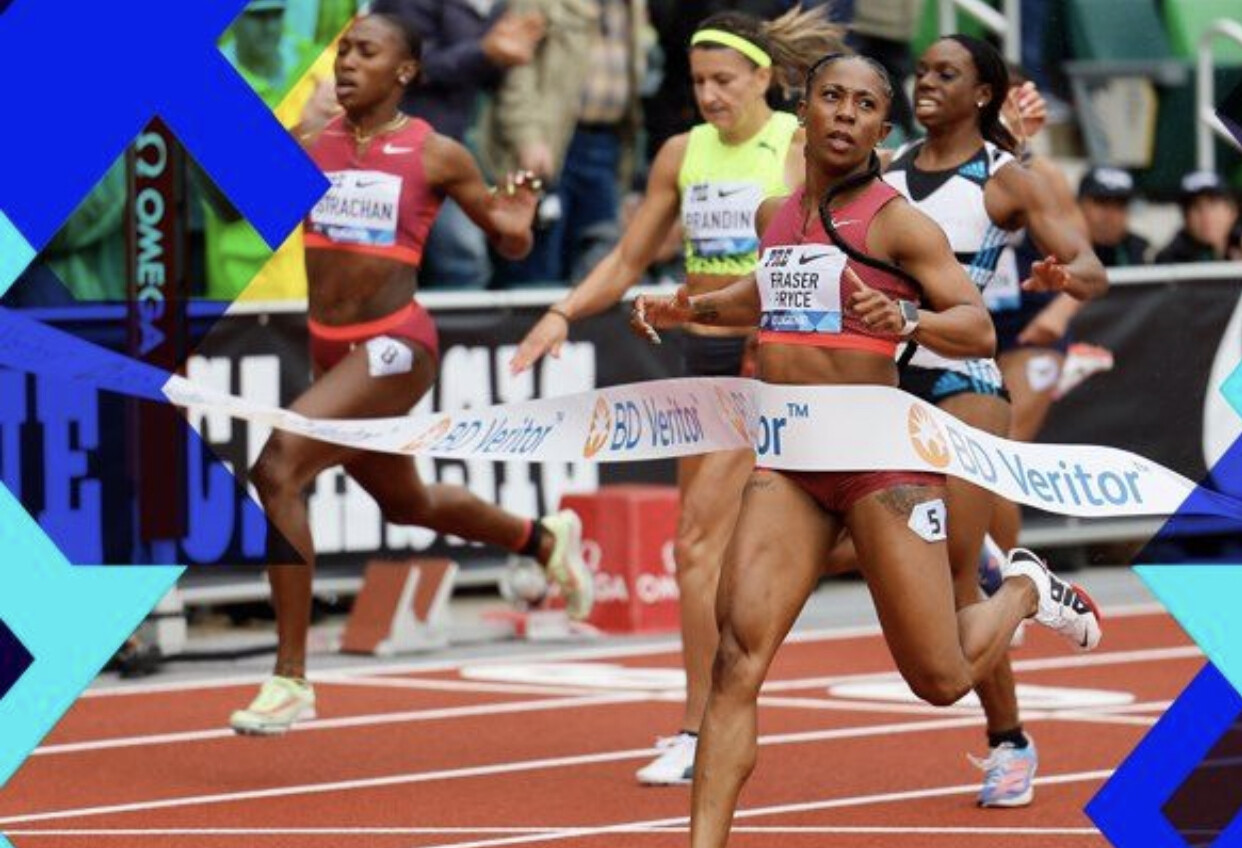
Her Jamaican compatriot and twice successor as Olympic 100m champion, Elaine Thompson-Herah, has since made a good start to her pursuit of a first individual world title with a best of 10.79 on the Eugene track that will stage the World Athletics Championships Oregon22.
But now Fraser-Pryce is back to make another impression in top-level competition at the Meeting de Paris on the ultra-fast blue track at Stade Charlety, which was renovated in 2019.
She will be taking on some talented sprinters including Switzerland’s Mujinga Kambundji, the surprise – and surprised – winner of the world indoor 60m title in Belgrade earlier this year in a personal best of 6.96. Kambundji, who turns 30 on the day before the race, will be targeting her personal best of 10.94.
Also in the mix will be Michelle-Lee Ahye of Trinidad and Tobago, who has run 10.94 this season and has a personal best of 10.82, and Marie-Josee Ta Lou of the Ivory Coast, who missed a 100m medal by one place in Tokyo as she ran 10.91.
Two-time Olympic 400m champion Shaunae Miller-Uibo, who has raced well but not exceptionally at 200m this season, will get down to serious business at her specialist event.
The 28-year-old Bahamian, who lowered her own continental record to 48.36 in Tokyo last summer, is third in this year’s top list with her time of 49.91, but that was set in April and the Olympic champion will want to check in on her current form having run over 200m recently.
She faces a strong Polish trio of Natalia Kaczmarek, who ran a huge personal best of 50.16 in Ostrava and stands sixth in this year’s world list, European champion Justyna Swiety-Ersetic and Anna Kielbasinska.
The Bahamas will be providing both Olympic 400m champions in Paris, with Steven Gardiner hoping to further fine-tune his world title defence in Oregon with a rare Diamond League appearance.
The leggy 26-year-old, who is 1.93m tall and has run 43.48, making him the sixth best performer of all time, did not compete in any Diamond League race last year and only raced once in Europe, at Szekesfehervar in Hungary.
His last appearance on the sport’s top circuit was at Monaco in 2019, when he won. Gardiner is already in good shape, having run 44.22 at Baton Rouge in Louisiana on 23 April - the fastest time recorded so far this year.
Meanwhile, European champion Matthew Hudson-Smith, who recently took one hundredth of a second off the British record of 43.36, set by Iwan Thomas in 1997, could be in position to better a record of even longer standing, this time the European one of 44.33 set by East Germany’s Thomas Schoenlebe in 1987.
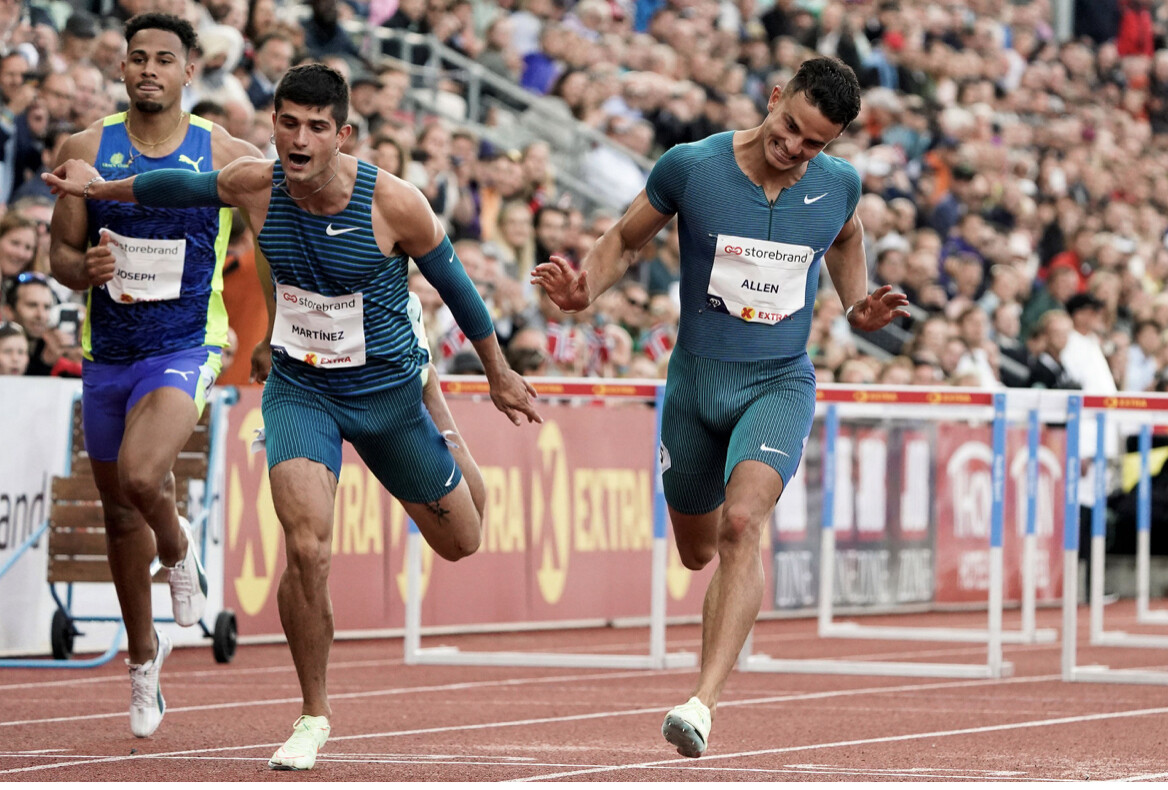
Devon Allen of the United States, whose 12.84 clocking in last Saturday’s New York Grand Prix – the third-fastest ever run – earned him a handsome victory ahead of world champion and compatriot Grant Holloway, maintained winning momentum over 110m hurdles in Oslo, although this victory was earned in 13.22 into a headwind of -1.2 m/s.
Allen, who will take up a professional American football career at the end of this season as a wide receiver with National Football League side Philadelphia Eagles, is due to run in Paris against a field that includes home hurdler Wilhem Belocian.
Canada’s Olympic 200m champion Andre De Grasse has been running 100m recently to sharpen up, but after clocking 10.24 at the Birmingham Diamond League on 21 May he dropped out of the Fanny Blankers-Koen Games on 5 June. On Thursday in Oslo, however, he returned to form in the 100m – in which he won Rio 2016 bronze – as he earned victory in 10.05 from Britain’s Reece Prescod, who clocked 10.06.
On Saturday, like Miller-Uibo, he will get down to business in his main event against a field that includes Prescod, who produced a big personal best over 100m of 9.93 in blustery conditions at the Ostrava Golden Spike meeting on 31 May. Meanwhile, Alexander Ogando of the Dominican Republic will be seeking to build on what has been a good start to the season, in which he has run 20.07.
Olympic 10,000m champion Selemon Barega, who won the Ethiopian World Championships trials race in Hengelo and then finished fourth in the 5000m in Rome, is expected to race over the shorter distance in Paris.
(06/17/2022) ⚡AMPby World Athletics
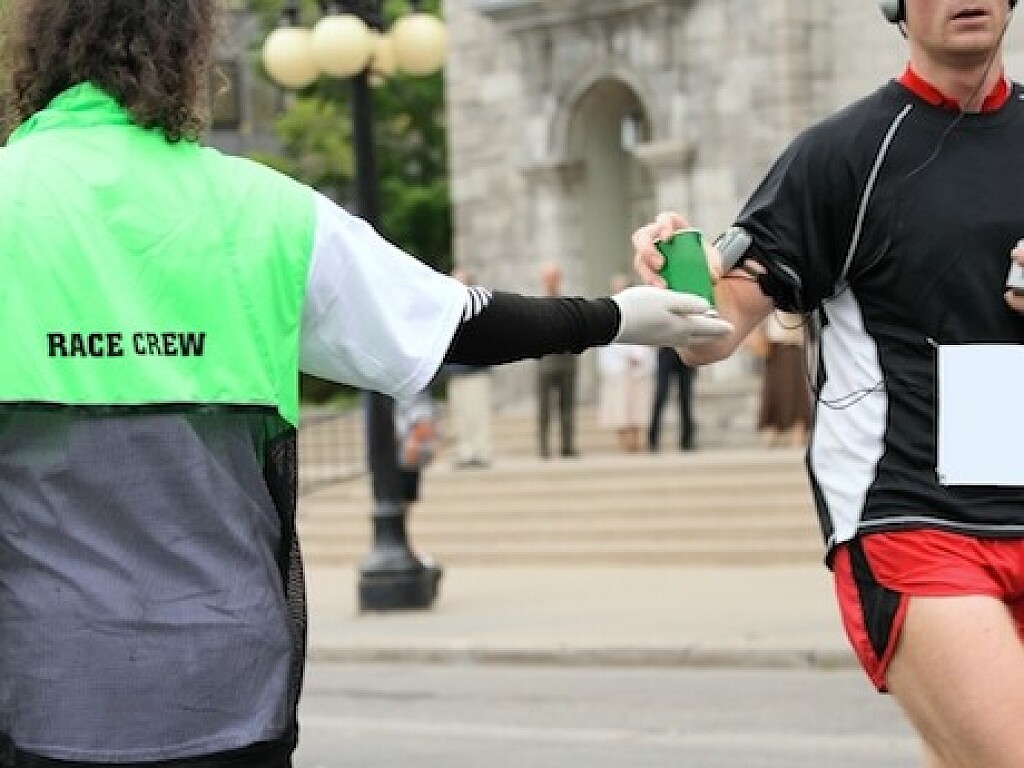
Injured or in a running rut? Try volunteering, a day spent volunteering at a race just might be the best thing you do all summer
While it’s temping to pack the warmer months with training and racing, taking a weekend off to volunteer at an event may be more rewarding than you’d expect. Last summer, an injury sidelined me right before an 80km race I had entered. Disappointed, and with a weekend at the race locale already booked, I offered to take on some volunteer shifts, dragging my race crew (hey, they’d already planned to help me that weekend) along with me. It was the best choice I had made all year. Here’s why you should sign up to volunteer this season:
The running community is incredible, and you’ll be reminded of that over and over
When my crew and I showed up at the aid station we were set to handle, we had no idea what was ahead of us. It was neat to see the incredibly fast first runners go through, but it was the midpack and back of the pack runners that won our hearts. Always thankful, some runners came in needing a quick electrolyte-mix refill and headed back out, while others needed to rest for a bit, or asked for ice (or a bucket to throw up in). Despite clearly feeling the full gamut of race-day emotion, they expressed gratitude and enthusiasm and cheered one another on.
You get an opportunity to give back
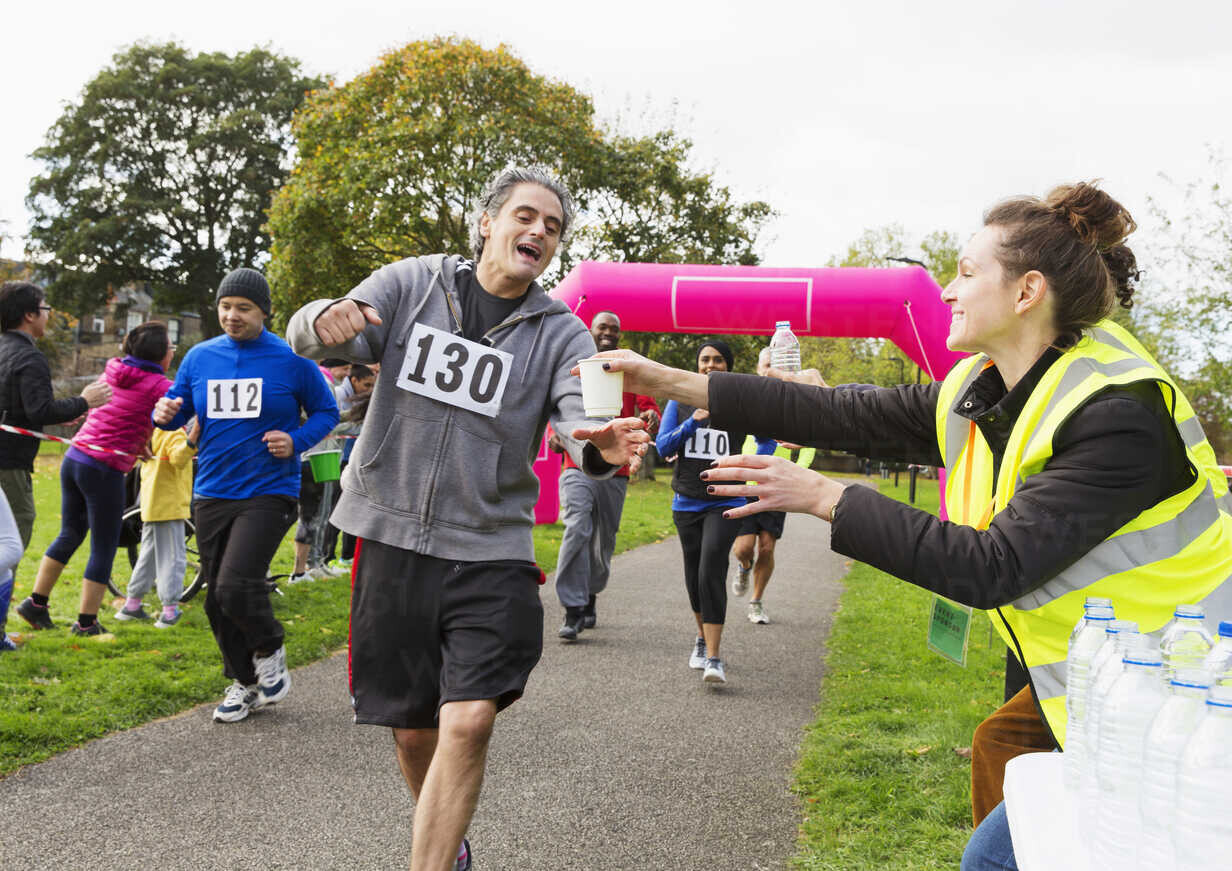
If you’ve raced before, you know how essential the volunteers are. They’ll give you directions, a pep talk, or find a first-aid kit for you, all with a smile. From a 5 km local fun-run to a 100-mile ultra, volunteers are often the backbone of the event. Being on the other side of the table is an act of service to your running family and your community at large.
You’ll learn valuable lessons for your next race
After noticing many runners asking for Coke at our aid station (which, to our dismay, we didn’t have), I decided to try one the next time I was able to go on a long training run, and I discovered how satisfying it was. I noticed how contagious positivity was, and made a mental note to be more thankful of the volunteers the next time I competed. It was also a great reminder of how fun races can be, something that can get lost when chasing personal bests.
It’s good for you
Studies show volunteering boosts mental health. Not only do volunteers feel connected to their community, but they meet new people and experience health benefits. We all know volunteering in general is helpful to others, but you’ll also be benefiting while you hand out medals or refill water bottles.
It’s as much fun as running (and maybe even more)
Our day at the aid station was so enjoyable that we picked up an additional night shift, and found it exhilarating to see runners of all speeds finish the event. I was surprised to discover that the enhanced sense of community and well-being I basked in after running in a race carried over to volunteering. For weeks, my husband and I reminisced about the people we met and the interesting things we witnessed, and we immediately signed up to volunteer regularly at a local event.
(06/16/2022) ⚡AMPby Running Magazine
Ultrarunners stranded in Birdsville, Australia after river floods
Dozens of ultramarathon runners have been stranded in the Australian township of Birdsville, Queensland after the Diamantina River flooded road access to the area. The runners were participating in the Simpson Desert Ultra, an annual multi-distance ultra event.
Prior to race start, race directors issued an announcement that the river had reached a high point, and they anticipated the river dropping over the next few days. Runners entering Birdsville for the start of the race had to wade through floodwaters, helped by local police.
While the race was a success, the river continued to rise, and runners now find themselves stranded in Birdsville. They have few options aside from waiting for the Diamintina river to abate.
Birdsville has flooded numerous times in the past. Race officials provided reassurance regarding contingency measures to gain access prior to the race in their statement:
“We anticipate the river height will drop over the next couple of days. As a community we have a long list of contingencies in place if it doesn’t drop fast enough to allow vehicles access by mid week; these include planes, boats and a tow truck.”
Races camp spots between #Birdsville and the #DiamantinaRiver now underwater from flooding. #flashbackto2016 pic.twitter.com/KBBO253VvH
— Birdsville Races (@birdsvilleraces) April 6, 2018
(06/12/2022) ⚡AMPby Running Magazine
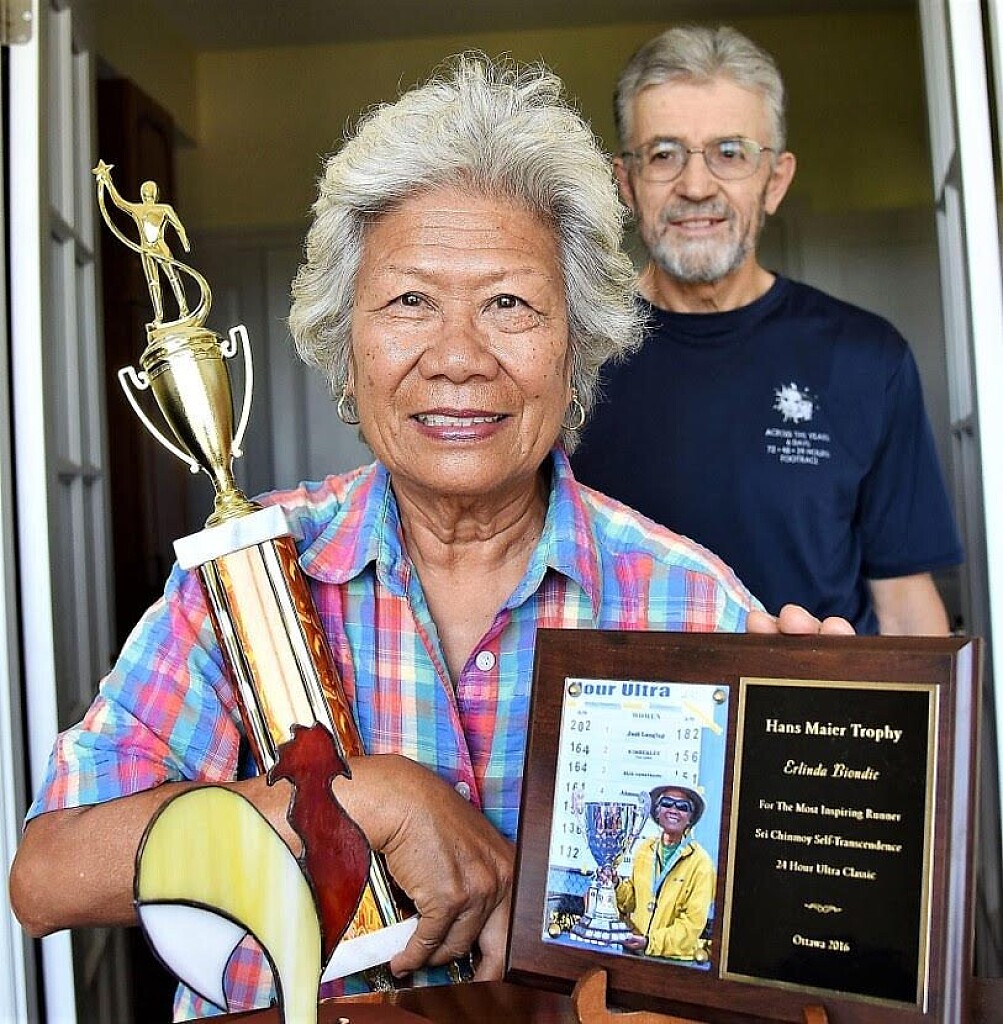
The oldest woman to complete 100 miles continues to set ultra records
82-year-old Erlinda Biondic of Aurora, Ont., spends most of her days’ trekking to Newmarket, Ont. Fairy Lake Park from her Aurora residence. Erlinda and her husband, George, have been ultrarunning for many years, completing popular treks along Ontario’s Bruce Trail, Camino de Santiago in Spain and the U.S. Appalachian Trail. Last month, Erlinda became the oldest woman to complete 50 miles, 100 miles and to break the six-day world record, covering 251 miles (403 km) in 144 hours at the 3 Days at the Fair ultra in Augusta, N.J.
Erlinda was confident and trained heading into the ultra. She was intending to break the world record for 48 hours and 6 days in the 80+ age group. She spent the pandemic training for this event in the hallway of her Aurora apartment. Then when restrictions diminished, she walked at the local golf course and on the trails around it.
“No matter the weather, I try to get outside twice a day,” says Erlinda.
Besides leaving her apartment twice a day, she credits a lot of her fitness and strength to the yoga and boot camp instructors at the Aurora Seniors Centre. “We are constantly working on keeping my balance strong with core-focused exercises,” she says.
Erlinda has a strict diet during training. “I consume a lot of carbohydrates and add a vegetable to every meal,” she says. During the race, Erlinda and George pre-cook tuna, crumpets, eggs and ramen and carry them in ziplock bags while out on the course.
Each lap at the 3 Days at the Fair ultra is a one-mile loop circling the aid station. “The course is flat and great for runners to break records on,” says Erlinda, who has done this race on several occasions.
Days after covering 251 consecutive miles, the new six-day world record holder was back to training. “I luckily had no blisters or swelling during my six-day ultra,” Erlinda says. “George’s foot and quad massages help me recover.”
When she was asked about how she felt to be the oldest person to cover 100 miles, she began to tell me about the next races and records hopes to chase. In Sept., Erlinda and her husband will compete at the Race for the Ages, an age-graded eight-hour handicap race, where the oldest runners get a head start on the rest of the field.
As Erlinda gets older, she continues to push her physical barriers. She and her husband plan to hike the famous rim-to-rim in Grand Canyon National Park this month and participate in Ottawa’s Sri Chinmoy 24-hour ultra on July 23.
(06/08/2022) ⚡AMP
by Marley Dickinson

Instead of braving the elements, take these precautions for a happy and healthy Summer Run Streak
Designed to keep you running through sweaty and busy summer days, the run streak bridges the gap between Memorial Day and July 4. Run at least one mile per day, every day. That’s 36 consecutive days of running.
Find out how a streak can change you, and share your journey with us! Where will you run? How will you make it happen? How will your life change? We want to hear about it! Share your progress and motivate other streakers by “liking” the streak on Facebook. You can also share updates on Twitter and Instagram using the hashtag #RWRunStreak.
Whether you’re starting a new marathon training block or participating in the Runner’s World Run Streak, the summer is a perfect time to get back into running. Longer days, vacation time, and good weather mean more time to get the miles in. But beware—there are simple mistakes that can cause you to burn out (or literally burn yourself to a crisp) before fall marathon season comes around.
Avoid the following mistakes during summer training, including hydration hijinx and shoe snafus. Above all else, keep one thing in mind—your goal is to make it through the Run Streak healthy, happy, and hungry for more.
Mistake #1: Not acclimating to the heat.
In every aspect of training, there’s an adjustment period. Just like you wouldn’t jump from 20 miles per week to 60, or skip from 10 squats to 100 in just a couple of sessions, you shouldn’t dive headfirst into the summer heat.
There are a few different options to build up your heat tolerance. First, you can briefly lower your mileage so you’re not overloading your body and gradually work it back up as you readjust. Or, you can go back and forth between treadmill days and outside running days. Lastly, start your training cycle by running during the coolest part of the day, then each following day, run later and later until you’ve comfortably run during the hottest hours.
Get used to one variable at a time. Don’t try to build your mileage too high when acclimating to the weather. Handle one problem first, then solve the next one. Otherwise, you might end up physically and mentally drained.
Mistake #2: Not checking the weather.
I live in Philadelphia, where the summer temperatures can range from mid-70s to the high 90s. As someone who likes to run after work, that means I need to check the weather, or I might be in for an unpleasant surprise.
But even if you’re a morning runner, it helps to look at a weather report before heading out the door. You might find that the morning dew point is unbearably high for your workout, or that a summer rainstorm will roll through and cool the air down significantly by the afternoon.
In my case, I look ahead of time whether I need to get up a little earlier to squeeze my run in the cool morning instead of slogging through blistering temps—which can potentially be dangerous.
Mistake #3: Not hydrating or refueling.
Katie Kissane, R.D., C.S.S.D. told Runner’s World in a previous article that dehydration heightens the risk of heatstroke and causes muscle cramping when you’re running in hot weather. Therefore, to stay safe in the heat, make sure you’re drinking water throughout the day.
If you’re out for a long run, hydrate during the activity. Stash a bottle somewhere on the route, plan your route around water fountains, or even wear a hydration pack—just make sure to drink up.
However, Kissane explains that just chugging water alone could lead to a separate problem called hyponatremia—low sodium levels in the blood. Hyponatremia leads to dizziness, fatigue, and nausea. Consider bringing a sports drink high in minerals like sodium, calcium, potassium, and magnesium to prevent the symptoms from hampering your run and hurting you in the long term.
Mistake #4: Not wearing sunscreen.
No matter how long your run is, you’re exposing yourself to ultraviolet radiation from the sun. Without precaution, you can suffer from skin aging, eye damage, and even skin cancer, according to the Environmental Protection Agency.
“Americans can reduce risks from sun exposure with continued use of sun protection measures including broad-spectrum sunscreen with SPF values of at least 15,” said acting United States Federal Drug Association (FDA) Commissioner Janet Woodcock, M.D., in a press release from September 2021.
The FDA recommends applying sunscreen 15 minutes before sun exposure and reapplying every two hours, especially when sweating. That means if you’re going for a long run, you might need to stop to reapply. There are sunscreens out there specifically made to be sweat-resistant, so you don’t need to reapply as often, but it’s still good to be safe.
Mistake #5: Not being flexible—and dreading the treadmill.
“On especially hot and humid days, there’s no glory in the Strava post,” says Runner’s World Runner-in-Chief Jeff Dengate. “I’ve had a 15-miler on the schedule that I’ve broken up into three five-mile runs that day, so I still get in the mileage without dying. Don’t be confined by the training plan—sometimes you need to modify it.”
That might even mean running on the treadmill when it’s particularly rough outside. Before you shake your head in disgust, think of it as an opportunity to control all the variables. You can listen to your favorite music or watch a television show, lock into a pace, and enjoy sweet, sweet air conditioning.
Mistake #6: Not wearing summer running gear.
There are a few pieces of gear you should always have around for hot and sunny summer runs.
A good running hat protects your face from the sun. Most are made of moisture-wicking materials to keep your head cool, and some even come with UV protection. Bonus points are that a running hat keeps raindrops out of your eyes on any wet days.
A hat alone won’t keep the sun out of your eyes. You need a pair of sunglasses. While most pairs will work in a pinch, there are great running sunglasses that won’t slip off your sweaty face or bounce up and down from the impact of your stride.
For particularly scalding afternoons, you could purchase a cooling vest—but think of that as more of a luxury than a necessity.
Mistake #7: Ignoring swollen feet.
When you get sized for a new shoe at a local running store, they typically recommend a half-size up because “blood flow increases to deliver oxygen to the muscles,” Paul Langer, DPM, told Runner’s World. “The volume of the muscles temporarily expands.”
When it’s really hot out, Test Editor Morgan Petruny notices that her feet swell even more: “I have to be aware of giving myself more room in my shoes… I often think that I’m a fall, winter, or spring shoe size W9, but a summer size W9.5.”
If you’re not ready to buy another shoe, she recommends loosening your laces, wearing thinner socks, and avoiding the shoes in your repertoire with a tight toe-box.
(06/05/2022) ⚡AMP
by Runner’s World
How can I stay injury free when I’m marathon training?
Sports Injury Fix Director and resident running expert Mike James, has spent over 20 years as a Physio treating and training runners worldwide. He is also a competitive runner who has completed over 100 marathons and 50 ultra-marathons, so when he talks, we tend to listen. We asked him to give Run Mummy Run his top tips for staying injury free while training.
The last twenty years has seen a remarkable increase in people lacing up their shoes and getting bitten by the running bug. The mythical marathon distance of 26.2 miles remains the ultimate challenge for many.
Regardless of age and ability, running related injuries are common, and despite having a generally low level, mid-range dynamic nature, a relatively high incidence is observed.

So, how can we prevent, or reduce the risk of encountering such problems?
Here are my top tips….
Goal Setting
This should be the first thing any Marathoner does. Ask yourself, what do I want to achieve? Some people are entering the race to raise money for charity, others aim to set a PB. Every aspect of the coming 4-8 months will be determined by your goals.
Choose the right training regime
The running world is now saturated with programmes, from off-the-shelf to bespoke 1:1 regimes. If you choose one that pushes too hard based on your current level you may increase injury risk. Yet if you choose a regime that doesn’t push you enough and the finish line may never materialise. If possible, speak to an established coach with a high success rate of marathon finishers and go for the tailored approach.
Prepare for the training regime
I see many runners picking up niggles simply by failing to prepare for a regime. They choose their race and training regime and jump straight into it. Unfortunately, for many, there is a gap between their current ability and the level needed even to commence a 20-24-week regime. Plan backwards, and add weeks as needed to build a sufficient level of fitness in preparation for your actual training regime.
Get Strong!
Research suggests that strength work can potentially reduce injuries by almost 50%. Performing two sessions weekly in the off season, with a once weekly maintenance session in season appears effective. A general approach, largely able to be performed at home should suffice. Runner’s Strength Training Regime
Manage existing aches and pains
Very few runners are lucky enough to avoid the usual niggles associated with such high load and high frequency training. This can be the trigger for exacerbating niggles into larger problems. Seek advice from a therapist, explain your plans and work together to address these issues to allow you the best chance of completing the training ahead.
Time Management
For many runners, finding the balance between work, family, social and training commitments can be the hardest factor. Even with the most supportive loved ones and colleagues, it can be difficult to fit everything in. Try to plan novel ways to maximise training without affecting other aspects of you life. Finding this balance may not directly reduce injury risk, however, those struggling to find a balance, are more likely to cram sessions, over train, deviate from plans and limit recovery, factors which can all lead to injury.
Plan your season and races
I advocate using other races as preparation. I generally feel that these should be used as organised training sessions to practice using new kit, feeding strategies, pacing etc and as break from the monotony of training. Be careful not to become involved in a race with another competitor who undoubtedly has different seasons goals to yourself.
Pick the right team
The endurance world is packed with people who support and encourage each other. Grow a network of therapists, athletes, coaches, friends and loved ones that you can turn to when needed. This includes a race day support team to cheer you on!
Prepare for everything
Use your time to practice training in conditions that reflect the race course if possible. Practice different hydration and feeding strategies and kit and prepare for contingency plans in case things go better or worse than planned on race day.
Be consistent, but flexible
Consistency is the key to endurance sport success. Stick to your plans, commit to the regime. However, life gets in the way sometimes and other commitments can side track you. Don’t chase the missed sessions, don’t cram extra miles into subsequent sessions. If you are training correctly 80% of the time, then you will almost certainly achieve your goals. It is better to line up at the start line, slightly “undercooked” than “overcooked”.
Recover
This is often the single biggest factor that is neglected and ultimately leads to injury. It is the fine balance between stressing the body and allowing it to recover. Eat well, sleep well, hydrate and enjoy down time with friends and family – you will be earning it. Much debate exists regarding the effectiveness of tools such as foam rollers / trigger point devices, tapes, massage, compression clothing, cryotherapy and heat, and yes there will always be a large placebo effect to consider. But as long as you are training and recovering well, then these tools can help.
And remember……… whatever your goal, whatever your level, however many marathons you have completed……enjoy it, it’s fun!
(05/28/2022) ⚡AMPby Run Mummy Run
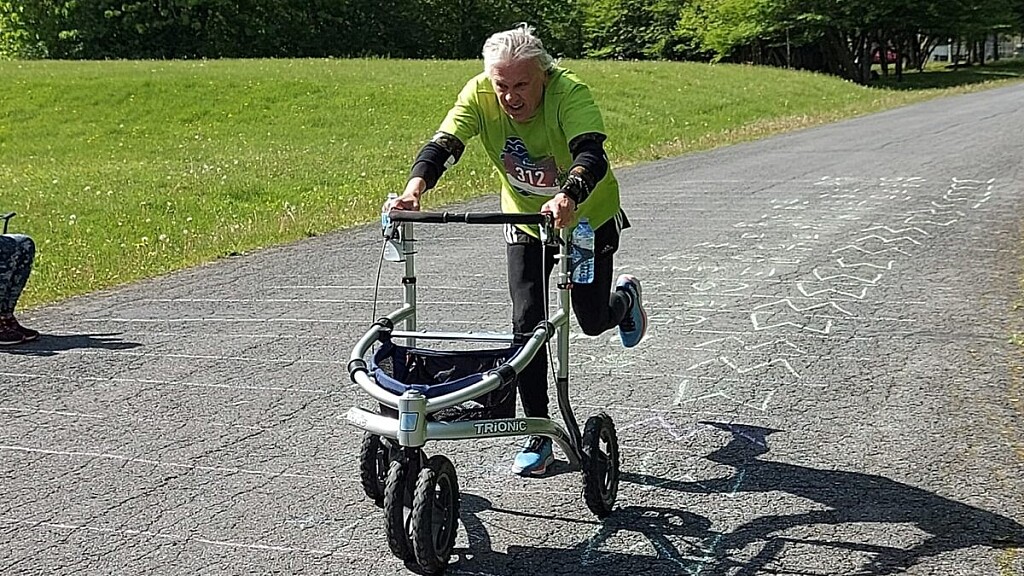
After years of setbacks, Bob Hardy, the walker-runner, returns to Ottawa race weekend to race the 10K
When Bob Hardy of Alexandria, Ont., gave up bike racing due to blood clots in 2012 at age 61, he felt lost. Hardy had to sell his best friend (his bicycle) and move away from the sport he loved. But Hardy is accustomed to treating barriers as challenges, and for him, this was just another challenge to be overcome. It’s what led to him entering running races, using a walker for balance.
In 2001, Hardy won a long battle with leukemia, thanks to a bone marrow transplant. He describes himself as a go-getter, inspired by challenges (adding that his wife says he’s crazy). After losing cycling, he was craving his next challenge. The 2012 surgery for the blood clots left him without balance. As he recovered in 2013, his wife saw a half-price advertisement for the Hugo rolling walker, which he realized would allow him to get around, even though he’d lost his balance. “I reached out immediately,” Hardy says. “I told them: I want to race with the walker.”
Since 2013, Hardy has logged more than 11,000 kilometers with his walker, including 11 half-marathons, six marathons and one 100K ultra. He’s unable to go as fast as the other runners, so he starts at the back of the pack and continues to chip away at his seven- to eight-minute-per-kilometer pace.
Like any new skill, running with a walker took time to learn. “I studied race walking, and had to install aero bars on the walker to make it more sporty,” he says. In 2016, Hardy found himself on the start-line of his first marathon, at Ottawa Race Weekend. He finished, but was disappointed with his time of 6:38. Over the next three years, he managed to get his time down to 5:23, which he ran at the Scotiabank Toronto Waterfront Marathon in 2018.
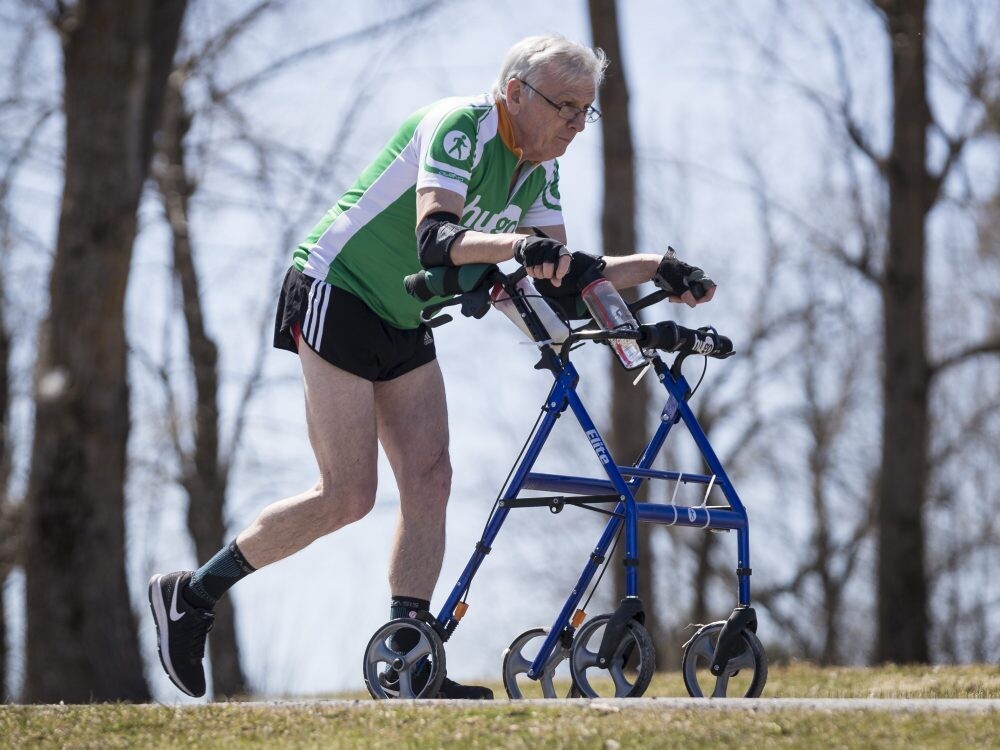
To this day, Hardy still battles with his balance. He also suffers from severe sciatica in his hips. “No matter the obstacle, I know I can’t give up,” Hardy says, adding “I’ve been fighting for more than 20 years now, from my bone marrow transplant for leukemia to a blood clot in my intestine and neck.”
Hardy returns to Ottawa Race Weekend on Saturday evening to run the 10K and get as close as he can to that one-hour mark with his new best friend — his Hugo walker.
(05/27/2022) ⚡AMPby Running Magazine

Ottawa 10K
Ottawa's course is fast, scenic and few elevation changes. Considered to be an excellent course for first timers and should provide an environment conducive to setting a PR. The Ottawa 10K is the only IAAF Gold Label 10K event in Canada and one of only four IAAF Gold Label 10Ks in the world. The Ottawa 10K attracts one of the...
more...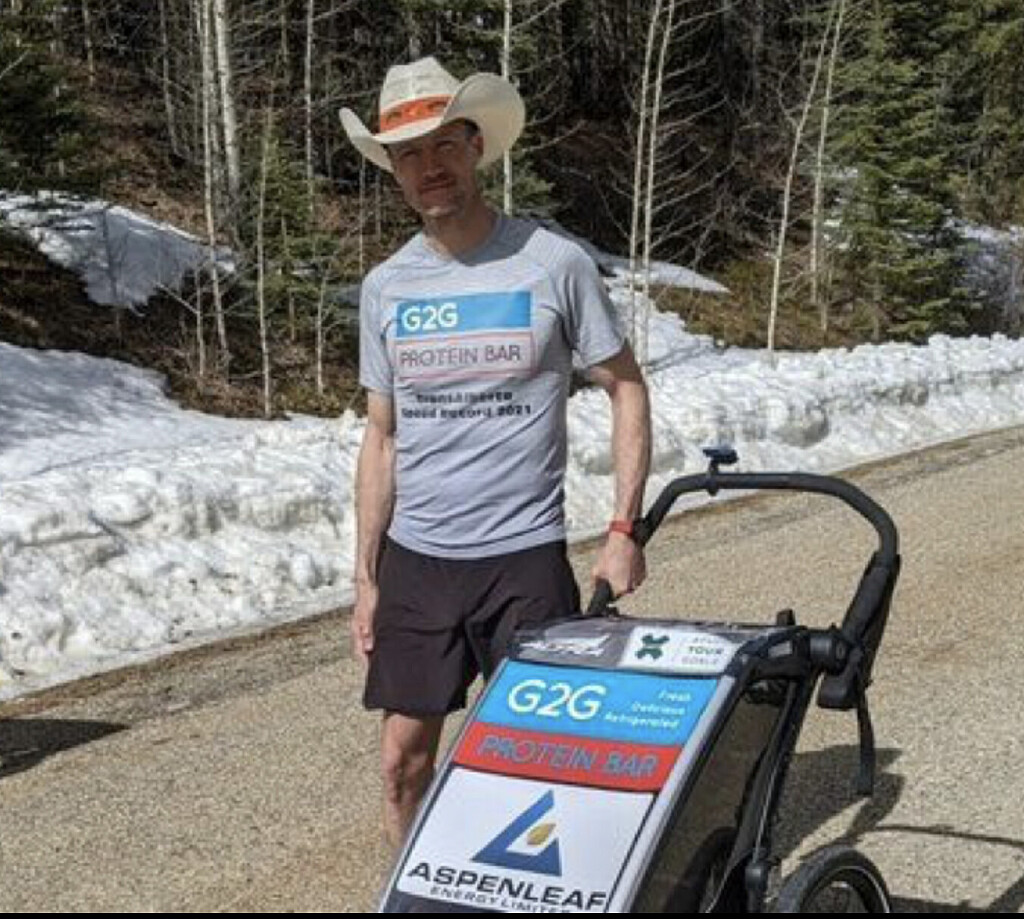
Four different ultrarunners are running across North America
Many runners have felt the silent pull of the long run, but running all day, every day, for months, takes the meaning of “long run” a step further. The passion for these gigantic physical and mental journeys seems only to be growing within the ultrarunning community, and we are aware of at least four ultrarunners (two Americans, one Canadian and one Irish) who are currently (or soon will be) crossing North America on foot–each for different reasons and causes.
Pete Kostelnick of Phoenix, Ariz. is known for breaking the trans-American record in 2016 by crossing the U.S. on foot in a record 42 days, six hours and 30 minutes. He followed that up in 2018 by completing a self-supported 8,614 km run from Kenai, Alaska, to Key West, Fla., including portions of western Canada, in 98 days. In July, he’ll begin an attempt to not only run 50 miles per day in 50 states over 50 days straight, solo, but he will then to head to Australia to become the first human to run the 3,935 km from Perth to Sydney, averaging roughly 128 kilometres per day for 31 days.
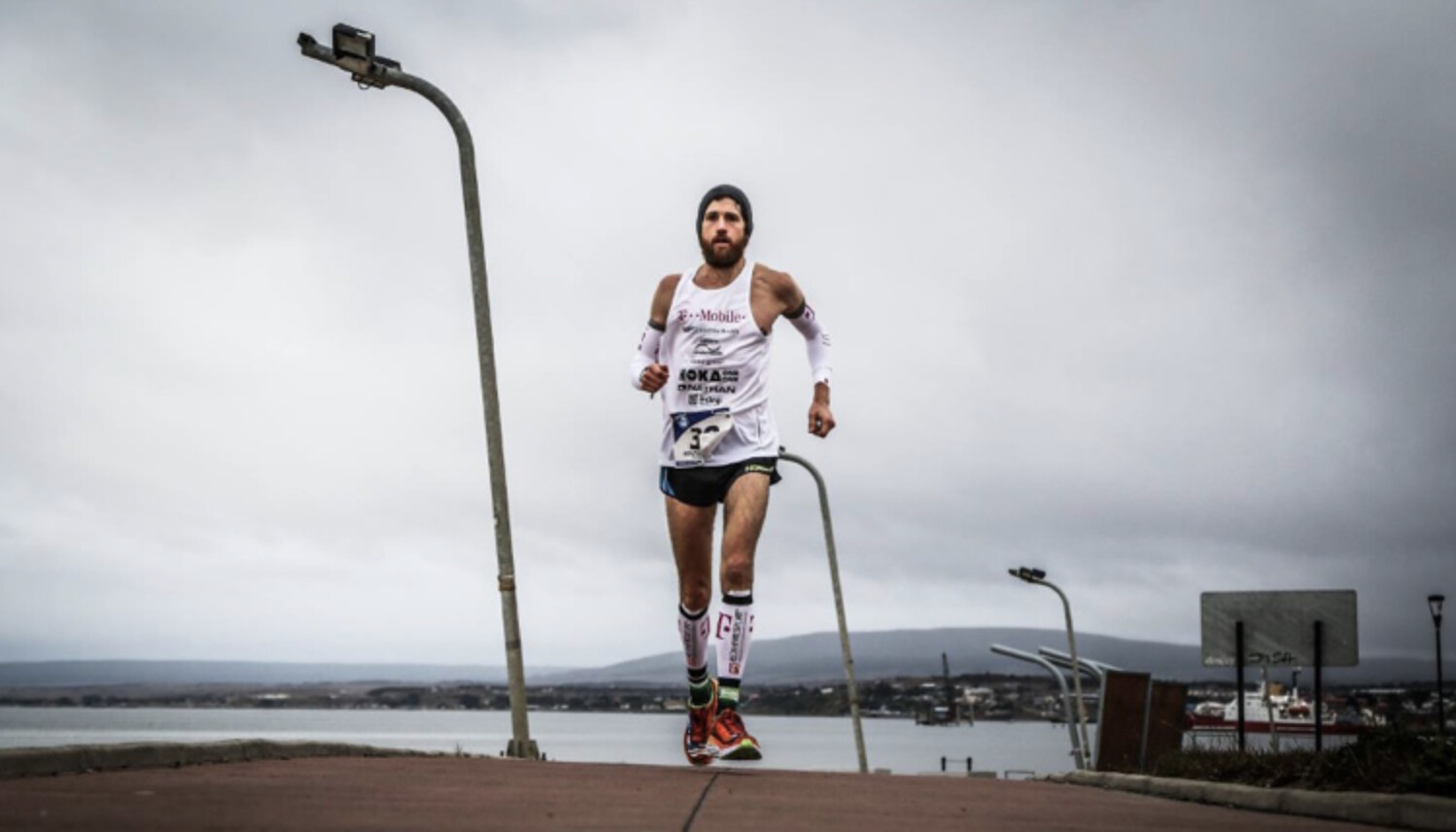
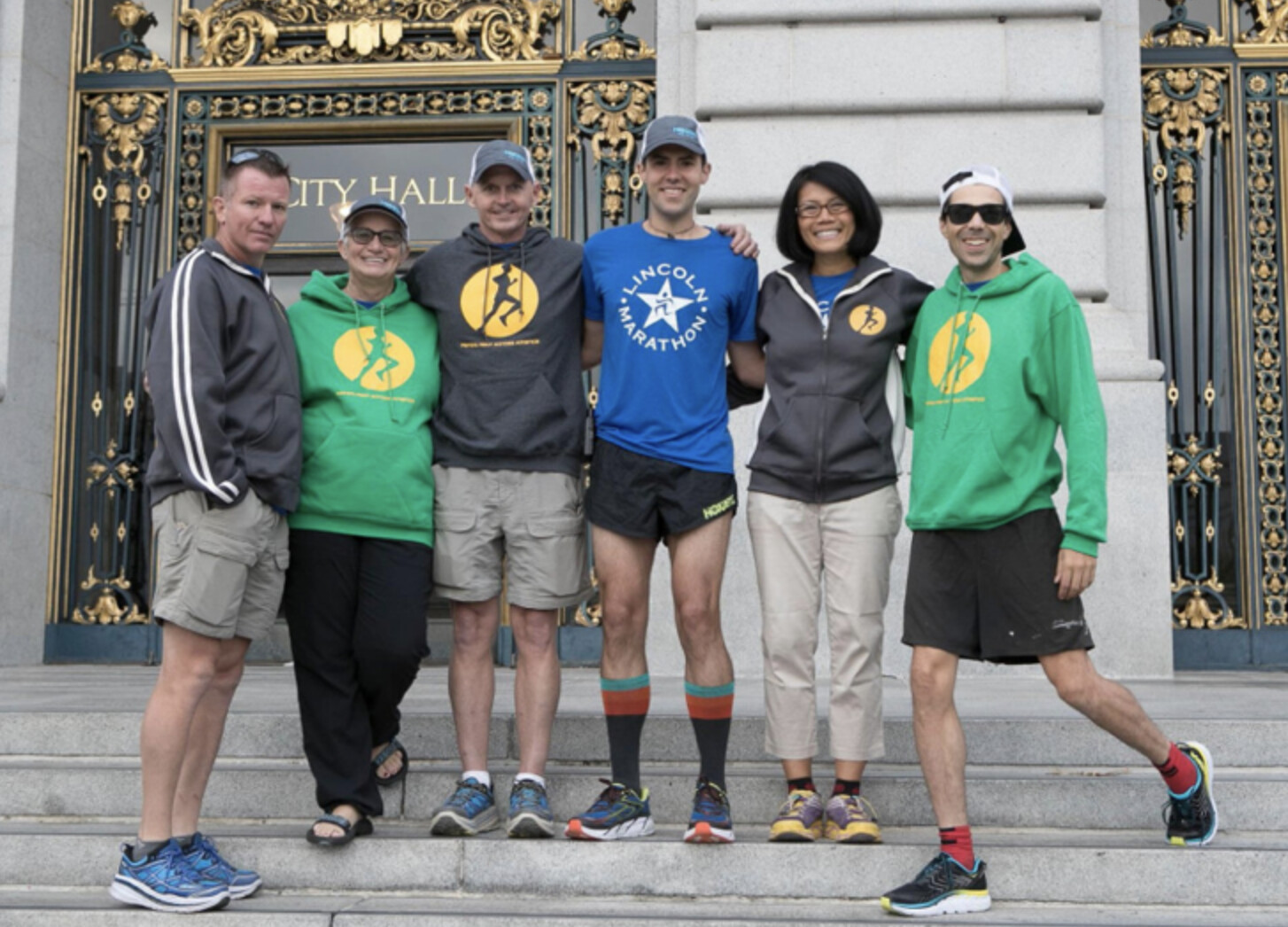
Kostelnick, 35, writes about the Australian adventure: “In running from Perth to Sydney in the bar I’ve set for myself, that will be the most difficult and challenging one I’ll probably ever attempt.” Kostelnick will host a daily podcast throughout his journey, and invites fellow runners to join him throughout his cross-U.S. run, with his expected dates of arrival in various places posted on social media.
Fellow Hoka-sponsored athlete and ultrarunner Mike Wardian of Arlington, Va., has already begun his trek across the U.S., one the athlete says he’s dreamed of for much of his life. Wardian is currently on day 19 of the 5,100 km journey, averaging 80 km per day and supported by his father, Richard Wardian. His daily updates online include what music or book he is listening to (yesterday was Guns and Roses), among other things. Wardian is raising money for World Vision in an attempt to provide greater access to clean drinking water to people across the world, in a project he has dubbed #runninghome.
Canadian Dave Proctor of Okotoks, Alta., is making his second attempt at breaking the cross-Canada record set by Al Howie in 1991. Howie ran from Newfoundland to Victoria in 72 days, 10 hours; following in Howie’s footsteps from east to west, Proctor hopes to complete the trek in 66 days. Proctor’s previous attempt in 2018 ended in injury, and his second attempt has been delayed by the pandemic. Currently on day five, Proctor is averaging 105 km a day and is supported by a varied crew of friends (including Canadian ultrarunners Matt Shepard, Mike Huber and Myron Tetrault, among others) and family, who are flying out separately to various points on his trip and providing aid for six to 16 days each.
Irish ultrarunner Richard Donovan, creator of the World Marathon Challenge (seven marathons on seven continents in seven days), is also running across the U.S., from east to west, in memory of his friend Alvin Matthews. Donovan’s run began the day after the Boston Marathon (which he also ran). He hopes to average about 64 km per day in a scenic and circuitous journey that will take about three months; he made a similar trek in 2015.
All four athletes have demonstrated remarkable prowess at ultra-distance events, and readers and runners alike look forward to both following the athletes online and spotting them on highways on multiple continents over the next few months.
(05/21/2022) ⚡AMPby Running Magazine
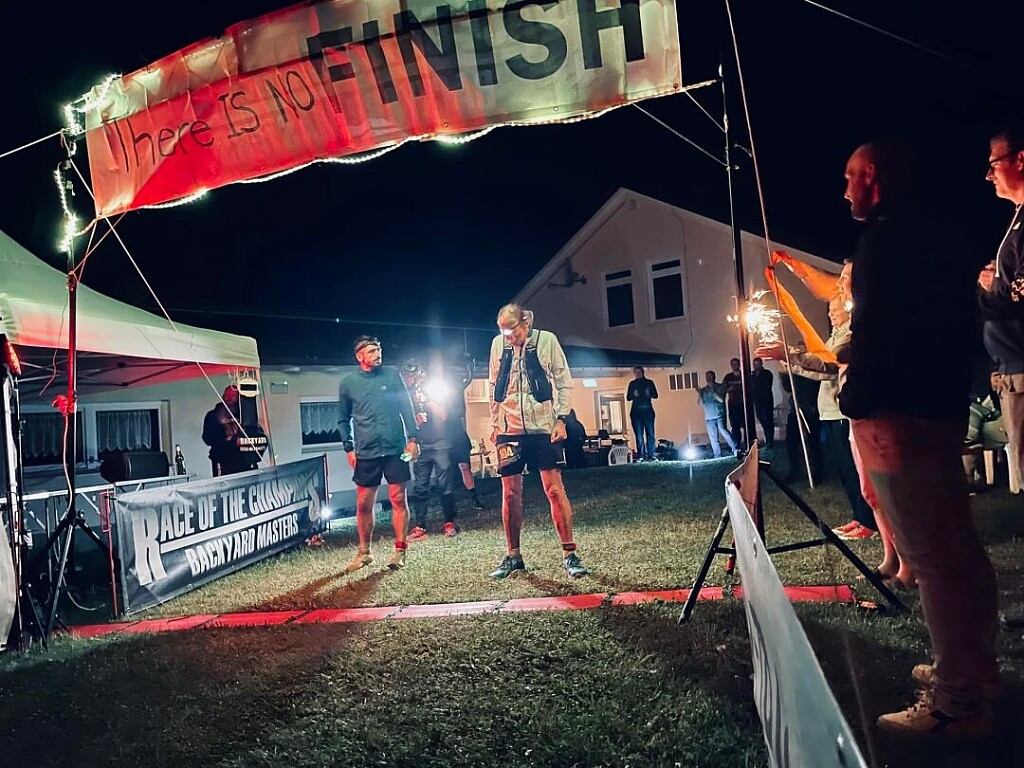
Belgian runner Merijn Geerts sets Backyard Ultra world best with 90 laps (600+ km)
Last weekend in Germany, ultrarunner Merijn Geerts of Wilsele, Belgium, set a new world best in the quirky backyard ultra format of 90 laps during the Backyard Masters, breaking Harvey Lewis’s record of 85 laps set at the 2021 Big Dog’s Backyard Ultra. This is equivalent to a total of over 600 km, running the same 6.7 km loop every hour on the hour round the clock, with the only rest breaks being the few minutes between finishing one loop and starting the next.
Geerts broke the record at The Race of the Champions, an invitational in which participants must have qualified with at least 45 laps (300+ km) at a previous backyard ultra.
In the backyard ultra ultra racing format, only runners who finish the lap within the hour cutoff are allowed to start the next lap. When the second-last participant either quits or fails to finish a lap in time, the final runner must complete one more lap to claim victory.
Twenty four runners started the race, and 20 remained after 24 hours. There were four men still in the race after 62 laps; Norway’s Jon Asphjell was the first to drop, then Japan’s Terumichi Morishata dropped shortly after. Ireland’s Keith Russell and Geerts remained active for another 12 laps, until Russell finally dropped out after 89 laps and Geerts managed to complete his 90th lap, reaching a distance of 603.5 km. Both Russell and Geerts went well over Lewis’s previous record of 85 laps.
Russell started running in 2016 with his daughter Alanna, who had spastic quadriplegia cerebral palsy, and ran the 2017 Dublin marathon, pushing Alanna in a special running chair.
Geerts previously completed 74 laps and 496 km at this event in 2020. He was also the runner-up at the Backyard Ultra World Cup for the Belgian national team where Belgium won, and Karel Sabbe improved the backyard world record to 75 laps.
(05/20/2022) ⚡AMP
by Running Magazine
Hellen Obiri and Eilish McColgan will renew rivalry at the Great Manchester run
Last September Hellen Obiri beat Eilish McColgan by six seconds in the Great North Run and this Sunday (May 22) the duo renew their rivalry over the shorter distance of 10km at the Great Manchester Run.
McColgan has been in brilliant form, with a UK 5km record at the start of this month followed by victory in the Vitality London 10,000 where she missed Paula Radcliffe’s British record of 30:21 by only two seconds.
Obiri’s achievements make her the athlete to beat, though. As well as winning two world 5000m titles on the track, the Kenyan is the reigning Commonwealth 5000m champion and world cross-country gold medalist.
McColgan chose to give last week’s Night of the 10,000m PBs in London a miss in order to focus on training in the French Pyrenees. She will hope to push Obiri close again but the quality fields assembled for Manchester mean this won’t just be a two-horse race.
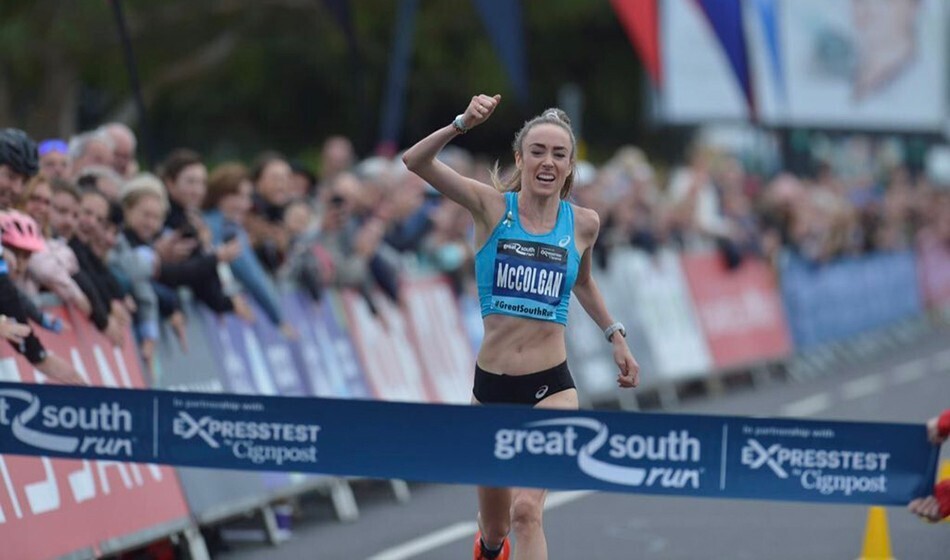
Ruth Chepnegetich defied horrendous heat and humidity to win the world marathon title in Doha in 2019 and the Kenyan has clocked 64:02 for the half-marathon, which was a world record when she ran it 13 months ago but has since been beaten by Letesenbet Gidey.
Sara Hall of the United States will be familiar to British fans after her runner-up performance at the 2020 London Marathon. She also held the US half-marathon record until recently, has a marathon best of 2:20:32 and is looking for a strong run in Manchester on Sunday.
Gerda Steyn, the South African ultra-marathon specialist, is also set to test her speed over 10km.
In addition to McColgan there are of course a number of other Brits in the elite women’s race. They include Jess Piasecki, the Stockport Harriers athlete who went No.2 on the UK all-time marathon rankings earlier this year with 2:22:27.
Steph Twell, the Tokyo Olympic marathon runner, is racing in Manchester ahead of the European Cup 10,000m in France a few days later.
After finishing ninth in the Boston Marathon in 2:25:26 in April, Charlotte Purdue also lines up in Manchester. Look out, too, for Lauren Heyes, Lily Partridge and Calli Thackery, the latter of whom is also racing at the Diamond League in Birmingham 24 hours earlier.
Like Thackery, Stewart McSweyn is also racing in Birmingham the day before the Manchester event as he continues to try to race himself into shape following a bout of Covid. He is joined by fellow Australian Jack Rayner plus New Zealand brothers Jake and Zane Robertson and Spaniard Antonio Abadia in the men’s 10km.
Sadly Mo Farah pulled out of the event following his under-par run at the Vitality London 10,000 earlier this month. But the winner that day, Ellis Cross, is set to race in Manchester and all eyes will be on him to see if he can repeat his form.
Mo Aadan, the Brit who finished third at the Vitality London 10,000, is in Manchester too. Further British contenders, meanwhile, include Ben Connor, Chris Thompson, Adam Craig, Josh Griffiths, Ross Millington, Phil Sesemann and Andrew Heyes.
(05/20/2022) ⚡AMPby Jason Henderson

Great Manchester Run
The Great Manchester Run, established in 2003, is an annual 10 kilometer run through Greater Manchester and is the largest 10K in Europe. Usually held in mid-May, it is the third-largest mass participation running event in the United Kingdom behind the Great North Run and the London Marathon. It is part of the Great Runs series of road races in...
more...
Why you should be aware of RED-S, inadequate fuel intake can lead to relative energy deficiency in sport, and can affect both women and men, elite and recreational runners
In recent years, professional athletes have started to open up about the insidious condition known as relative energy deficiency in sport (RED-S). But the condition doesn’t only affect elites. So how does a recreational runner know if they are displaying symptoms? Recent studies have shown that training with a regular caloric deficit of as little as 300 calories a day can lead to RED-S.
Low energy availability (which may lead to a diagnosis of RED-S) is a mismatch between an athlete’s energy intake, or diet, and the energy expended during exercise, leaving inadequate energy to go toward health and athletic performance.
In short, it means they are not taking in enough nutrition to adequately fuel their training, and over time is likely to cause disruption to metabolic rate, menstrual function (in females), bone health, immunity, muscle growth and repair and cardiovascular health. It is not limited to female athletes, even though certain aspects of the condition (such as disordered eating, where it is a factor) may be associated in the public’s mind with women more than with men.
While RED-S has many similarities to overtraining or overreaching (terms runners may be more familiar with), according to overtraining syndrome expert Alexandra Coates, RED-S builds upon the model those diagnoses also fit into. Coates suggests many other physiological symptoms can occur as a result of RED-S.
The lasting impact of RED-S can be severe and detrimental to many aspects of a runner’s life, so knowing what to be aware of and when to see a physician are important.
For women, loss of their period (amenorrhea) is an immediate signal to see a doctor and have bloodwork done. Coates suggests other symptoms to watch out for are training inconsistencies, extremely low energy, and stress fractures or bone injuries.
One possibly surprising symptom is unexpected weight gain during a training cycle. As Coates explains, when an athlete is continuously living in a caloric deficit, metabolic disruptions can occur and the body shifts into starvation mode. Despite eating less, runners may find themselves gaining weight. Without knowledge of RED-S syndrome and regular checkups, even runners who consider themselves quite average in ability may unknowingly set themselves up for disordered eating–something that many female endurance athletes (including ultrarunners Lucy Bartholomew and Amelia Boone and Olympic marathon bronze medallist Molly Seidel, among others) have shared their experiences with via social media in recent years.
When increasing their training load, athletes should make sure to increase their caloric intake. Instead of operating from the mentality that leaner is better, runners need to remember that getting stronger requires more fuel. Trying to train in a continuous state of low energy availability will invariably lead to disappointment, loss of motivation, and potentially also to physiological and neurological damage.
RED-S, overreaching, and overtraining are all avoidable, and by maintaining a diverse, nutritious and non-restrictive diet (including a healthy amount of carbohydrate) and staying on top of regular physical checkups with a physician, runners can stay in the green, healthy zone.
(05/20/2022) ⚡AMPby Keeley Milne

Why you should aim for a negative split in the marathon
Ideally, when running a marathon, your goal should be to run even splits, i.e. to run the second half of the race in the same time as it took you to run the first half, rather than slowing down. (2018 Boston Marathon champion Des Linden is famous for running perfectly even splits in a lot of her races.) If you’re well trained and everything goes well on race day, you might come close to achieving this; with a few marathons under your belt, you might even try to aim for a negative split, which means running the second half of the race slightly faster than the first.
Negative splitting is a challenging proposition for most runners. By 30 km or so (sometimes much earlier), physical and mental fatigue are starting to accumulate, and you might find yourself walking through water stations. Your rate of perceived exertion (RPE) increases with each passing kilometer, and the pace you started at feels harder and harder.
Why negative split?
But with a little experience, trying to achieve a negative split can bring a new challenge to your marathons, and there are good reasons to try it.
Andrew McKay of Toronto remembers the second time he qualified for Boston, at the Philadelphia Marathon in 2016. “It was a really bad weather day, and my iPod failed a few kilometers in, so I was just focused on clicking off Ks, and didn’t have high race goals,” he says. “So instead, I focused on my mental game, and doing only what I was capable of on the day. Each time it felt hard, I asked myself ‘is that all you have today?’ And when the answer was no, I pushed a tiny bit harder… My splits were 1:40:18 and 1:39:54, and it was a PB by four minutes, 45 seconds.”
U.S. ultrarunner Nick Coury has written about negative splitting ultras, but the same principles apply in the marathon, or even the half-marathon. (Coury, 34, won the Desert Solstice 24-hour race in Arizona in 2020, with 250 km; his Ultrasignup.com results go back to 2005, which means he’s been racing ultras since he was 17, and he has a slew of podium finishes and victories.) For example, you’re much less likely to “blow up” if you go out a little slower than your goal pace and maintain that through the first half. “The longer the race, the more time there is for something to go wrong,” Coury writes. “Blowing up at mile 22 of a marathon means four miles of suffering … Going out slow enough to negative split means the risk of each individual problem goes down.” He claims that negative splitting has often allowed him to avoid the discouragement and loss of motivation that comes with being unable to maintain his pace late in a race.
A major advantage Coury claims is reduced recovery time: “This has been the biggest mind-blower for me,” he writes. “Even when we feel ‘good,’ we’ve put the body through a lot.” He’s referring to ultras, but the same is true for marathoners. That soreness in your quads the day after a marathon represents muscle damage; but if you’ve ever had a really bad race and ended up walking most of it, you may have noticed you’re hardly sore at all. The fact is that even a slightly slower pace results in less damage, and consequently, less soreness and associated recovery time. Which means you’re ready to resume training earlier, with less fear of losing fitness before starting your next build.
Note that “faster race times” is not one of Coury’s stated reasons to negative split, even though your times might well improve once you master the art of negative splitting. The reasons for doing it are qualitative, rather than quantitative. But you’ll likely find yourself performing better against the competition in races.
To achieve a negative split, you need to plan on running the first half of the race a few seconds per kilometer slower than your goal pace, and then picking up the pace in the second half. This sounds easy, but considering that even running your goal pace will feel very slow during the first half, it actually takes a lot of discipline to run even more slowly than that. Once you pass the halfway mark, hopefully you’re feeling relatively comfortable, and you can begin to gradually increase the pace, keeping something in reserve for a final kick to the finish line. “The more I negative split, the more I just feel straight-up good late in a race,” says Coury.
The bottom line? It’s more fun than slogging
“The hidden benefit of negative splitting is just how much fun it is,” Coury writes. “It’s hard to describe catching minutes a mile on the front runners in a race 80 per cent in, and doing so without having to dig deep and suffer. I’ve really become addicted to it, and can’t imagine going back to the days of just hanging on to get to the finish line.”
Achieving a negative split takes some practice and patience; you don’t want to slow down so much in the first half that you end up slower than if you just went about racing in your usual manner. (Coury has found 3 per cent to be about right.) Also, your performance will vary depending not only on how well you train, but on how well you recover while training, how much sleep you get, the quality of your nutrition while training, and myriad other factors. But the potential benefits are certainly worth exploring.
(05/16/2022) ⚡AMPby Anne Francis
Why You Should Be Wearing Sunglasses On Every. Single. Run.
Your eyes, just like your skin, need UV protection. Here’s what to look for in glasses to keep you covered.
Sunglasses are such a staple in my running kit that if I forget a pair, I have no choice but to head back home and grab them, same as if I left headphones behind. I think I look 100 times faster in a really cool pair of shades (and I love that they hide the pain in my face at mile 23 of a marathon), but I also squint less, stress less about getting things in my eyes, and I see better, especially in bright sunlight.
To anyone who asks: “How can you run with sunglasses on?” My answer is how can you not? If you’re wearing the right pair, they won’t slip, they won’t bounce, and they’ll protect your eyes from all kinds of damage that you might not have to worry about in the moment, but certainly should be thinking about in the long run (pun intended!).
Need more convincing? Learn about the damage of not wearing sunglasses, what you need to look for in sunglasses to make sure you’re getting the right UV eye protection, and what brands are doing to keep your vision safe.
Why You Need UV Eye Protection on Every Run
You know how bad sun exposure is for your skin, right? That’s why you slather on sunscreen every time you head outside. Well, too much sun can be equally damaging to your eyes.
The chief role of sunglasses is ultraviolet light protection. “The majority of UV light is absorbed by the cornea, but with significant amounts of exposure, that radiation will eventually get through the cornea and cause damage to the inner structures of the eye,” said James Dello Russo, an optometrist at the New Jersey Eye Care Center in Bergenfield and Passaic, New York.
Runners who don’t wear UV eye protection can eventually develop growths on the clear covering over the white part of the eye called pinguecula and pterygium, says Yuna Rapoport, M.D., an ophthalmologist at Manhattan Eye in New York City. A pinguecula is a yellowish, raised deposit of protein, fat, or calcium; a pterygium is a growth of fleshy tissue that may start as a pinguecula. A pterygium can affect your vision, and may result in surgery.
If you’re running in the snow or near water, you can also develop a form of photokeratitis, a painful, temporary eye condition caused by exposure to UV reflections off of snow, ice, sand, or water. (Translation: Wearing UV eye protection isn’t just a necessity in the bright lights of summer, but straight through winter too.)
“The two biggest concerns, though, are cataracts and age-related macular degeneration,” says Dello Russo. You shouldn’t have to worry about these issues until your 70s, but “people who are out in the elements all the time are at risk of developing these sight-debilitating issues at a younger age, which we would never want,” he explains.
PSA: Don’t brush this off and say, ‘oh, I only run a few miles at a time, I’ll be fine.’ “It’s exactly like cumulative sun exposure to your skin,” says Rapoport. “It all adds up.”
Then there’s the physical protection element. Sunglasses act as a kind of environmental windsheld for your eyes, says Dello Russo: “With enough exposure to UV light, runners will get basal cell carcinomas—non-metastatic tumors on the skin.” One super common spot: The eyelids.
Plus, “the cornea—the clear, protective outer layer of your eye—is really susceptible to even the tiniest particles getting in,” explains Rapoport. When you’re running on dusty trails or the wind is whipping debris across the road, “the slightest piece of dust or dirt, a millimeter or even less, can cause an erosion which can lead to an eye infection,” she says. Dirt, dust, and allergens in the air can also cause dry, itchy eyes—which can take the focus off your run and slow you down.
The Most Important Features in Sunglasses
Not surprisingly, the number one selling point in a pair of sunglasses is their UV protection. “You want to look for lenses that block 100 percent of UV light,” says Dello Russo. “The label should say ‘UV absorption up to 400 nanomenters,’ or UV 400.”
There are two types of UV light to be concerned about: UVA, which is associated with skin aging, and UVB, which is associated with skin burning. UV 400-protected sunglasses block both.
FYI: A darker lens tint doesn’t necessarily offer better protection. “How dark your sunglasses are is a matter of personal preference,” says Dello Russo. Certain tints can actually improve contrast in specific conditions, but the color or shade doesn’t have any effect on UV protection—you can even find clear lenses with UV 400.
However dark you prefer your sunglasses, the lenses should be polarized. Polarization is a coating on top of the lens that blocks the reflection of light off of surfaces. What it does is “block that level of glare you’re going to be receiving from different angles so you’re more comfortable,” says Rapoport.
Finally, embrace the whole “bigger is better” approach. “Runners are really going to want to actually look for shield or wrap-style sunglasses,” says Dello Russo. “Most of them are formed to the face and wrap around to the side, typically with oversized lenses, which are not only going to keep the UV out of the eyes, but keep it off the lids and skin.”
As with any piece of gear, though, comfort is key, said Rapoport. “If they pinch your nose or squeeze the temple area, that can cause headaches,” she says. And sunglasses that slide down can be an annoying distraction. Opt for a pair that comes with adjustable nose pads and you can customize the fit.
The Best Sunglasses for Running
We’ve come a long way since you could get away with running in sunglasses you picked up at a gas station.
Take Oakley’s latest innovation in running sunglasses for example, the RE:SUBZERO, which features the brand’s new PhysioMorphic Geometry. Lenses typically curve around a vertical axis (a.k.a. cylindrical lenses) or both vertically and horizontally (a.k.a. spherical lenses), but these new lenses combine both approaches in what’s called a toric or toroid lens, explains Nick Garfias, the vice president of design at Oakley. “It has more of a football shape, curving in two directions in order to become a shield over both your eyes,” he says. “That makes your optic view through that lens way better.”
The frameless design of the RE:SUBZERO—with an extended wrap and rigidity in key areas that mimic the structural properties of a frame—also enhances your field of vision, says Garfias. (And offers more of that eye and skin protection that Dello Russo mentions.)
This shield style has become ubiquitous in the performance sunglass world, not just in Oakley’s designs (see also: the Oakley Sutro), but in Roka’s Matador Air, Smith’s Flywheel, and Rapha’s Pro Team Frameless Glasses—all of which provide oversized protection so you can run with unobstructed vision. (FYI: Many, bigger cycling glasses can double as running glasses.)
Oakley’s RE:SUBZERO—along with many of the brand’s other performance sunglasses—are outfitted with the brand’s Prizm Lens Technology, which is designed to enhance color and contrast so you can see more detail. District Vision also focuses on lens color, not just to provide clarity on the run, but to reduce strain on the eye caused by physical exertion, says co-founder Tom Daly.
“We know that different color curves and different lens tints relax the mind,” Daly explains. “If you’re looking at something through a blue lens compared to a red lens, it sends different signals to the brain and it affects your central nervous system in different ways.” (For example, people wearing blue-tinted lenses demonstrated better reaction times in a study by ZEISS, a German manufacturer of optical systems; red was determined to have more of an activating effect.)
But the easiest way to reduce strain on the face is to let less light through the lens, Daly adds. “Traditional maximum sun-blocking lenses let in around 13 to 16 percent of light; we take it much lower, down to 10 or 11 percent,” says Daly. “We block more light because, just like you hold tension in your body, you hold strain in your eyes. You need to be able to relax the muscles around your eyes.”
District Vision’s Black Rose lens blocks 15 to 31 percent of light, which changes depending on the amount of light around you, says Daly. Similarly, Dynafit recently released the Ultra Pro sunglasses, which use photochromic lens glass technology so the lenses adapt in seconds to variable light—making them ideal for trail runners going in and out of trees. 100% and Tifosi also offers photochromic lenses that react to UV rays, along with other brands.
Of course, you don’t need to spend hundreds of dollars on an excellent pair of sunglasses. Goodr has become a staple in the running world with their $25 no-slip, no-bounce, polarized, UV 400 lenses. You won’t get quite the same level of protection and light blockage or color contrast as the higher-end lenses, but you’ll get the essentials at a lower price. (Knockaround sunglasses are similarly priced, and also have UV 400 polarized lenses.)
On May 20, Goodr will also release the WRAP G, which offers a wider field of vision—with no obstructions or blind spots—than the brand's standard wayfarer designs, more in line with the shield styles doctors recommend for running. These shades will also come with a removable nose-piece and two sizing options for a snug fit that won’t bounce, and ring up at just $45.
Not every runner needs every single feature in the most expensive lenses, so determine what matters most to you—just make sure any pair you buy has that UV 400 eye protection.
The Bottom Line on Sunglasses and UV Eye Protection While Running
At the end of the day, everyone wants to look good in their sunglasses. And you can do that while protecting your eyes—no matter your budget. The key is just making sure you actually wear your glasses every time you head out for a run, so you can sidestep any vision or other eye issues that can come from too much UV exposure. And remember: When picking out your perfect pair, don’t be afraid to go big.
(05/15/2022) ⚡AMPby Runner’s World
How Jo Schoonbroodt smashed the world 70 plus marathon record
At an age where many of his contemporaries are winding down, the man they call the Grey Kenyan is somehow speeding up. On Sunday Jo Schoonbroodt, a 71-year-old from Maastricht, ran a marathon in a staggering 2hr 54min 19sec to become the fastest septuagenarian in history.
A few days later, when the Guardian catches up with him, his achievement is still sinking in. “I only started jogging at 36 because my doctor told me I had high cholesterol,” he says, chuckling. “But last year I ran 7,242 kilometres [4,450 miles], which is more than double what I did in my car.”
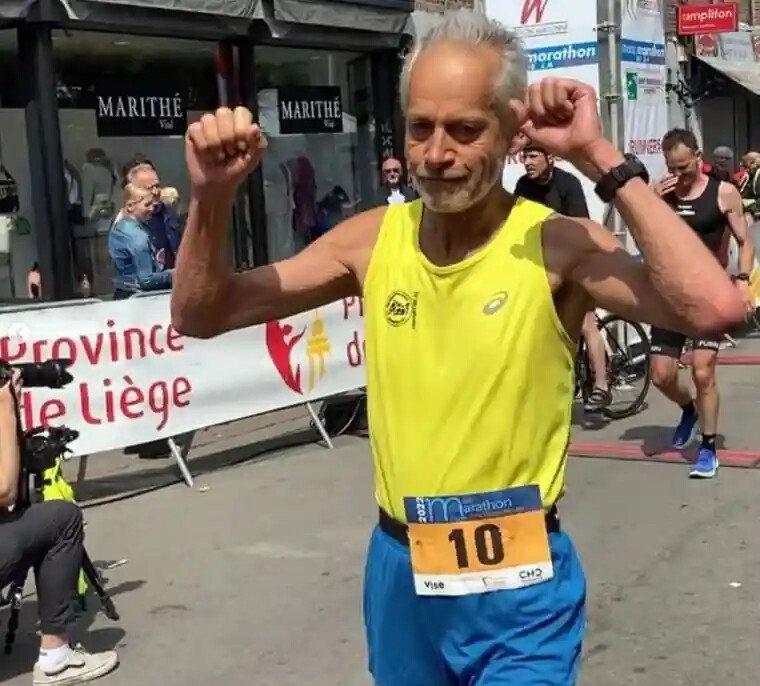
It also turns out that Schoonbroodt’s new 70+ world record, set at the Maasmarathon of Visé in Belgium, was inspired partly by an unlikely source: the Flemish crooner Eddy Wally. With a few miles remaining, he knew he was just ahead of the previous best, set by Gene Dyckes in 2018, because a friend was following him on his bike and barking out his lap times. But his legs were starting to get heavier.
“However, my friend had a special trick to keep me on track,” says Schoonbroodt, who was wearing a yellow and blue kit in support of Ukraine. “He picked up his phone and put Eddy Wally’s song Chérie, Chérie on repeat. I’ve always loved it, I don’t know why. It gave me a boost in morale. I overtook one runner after another and, despite getting cramp in the final 500m, I was able to break the record by four seconds.”
Incredibly it was Schoonbroodt’s 75th sub-three-hour marathon, and it came only four weeks after his 74th at the Rotterdam marathon. For good measure, the flying Dutchman also holds a number of ultra running records. He is clearly no ordinary Jo. But the secrets of his success might surprise you.
“Most runners train too hard. I do a lot of my training with groups who run very slowly. And then I build on these basics with some faster interval training. But I don’t do the same stupid distance 10 or 20 times – I prefer to have a lot of fun with my running.”
Schoonbroodt often runs at nine- or 10-minute mile pace, far slower than the 6:38min miles he ran for 26.2 miles to set his world record, but he says the crucial thing is he listens to his body. “A lot of people follow a training plan or coach and push on even when their body is saying: ‘No, this is not a good day to do it.’ But if you go out the door and just do what you feel, it’s easier to keep running and stay injury-free.”
He also dismisses the idea that runners need to do anything special with their diets. “Diet? No, no,” he scoffs. “No diet! I eat double portions, of course, with all these calories I burn. I love pasta and potatoes. But whatever is on the table, I eat it.”
He has a similarly relaxed attitude when it comes to alcohol. “I prefer the French wine and the Belgian beer. Not too much, and mostly on weekends. Wine is just a grape drink, so it’s made from nature. And Belgian beer is special. And if you do all this with your body,” he adds, referring to the 85 miles he still runs each week, “you need to give it something back. And this is what I give back to the body!”
Schoonbrot is a former IT worker and can tell the exact day he started running – 1 January 1986 – and how many kilometres – 120,000 – he has done since. But he stresses he was no natural. At first people called him Jogger Jo, because he was slow. Nowadays he gets called the Grey Kenyan – a nickname given to him years ago by a race announcer as he blasted past athletes a third of his age.
Being a late bloomer, he believes, has actually helped him because his ego never had to worry about chasing faster times of his youth. “Because I started so late, I missed my best years. But that’s no problem. Everything is still new to me.”
Schoonbroodt also cites the new range of carbon-plated “super shoes”, which have swept the running world over the past five years, as a key factor. On Sunday he ran in the Asics Metapeed Sky, and has been an ambassador for the Japanese company for the past four years, preaching the positive benefits of exercise to sceptics and lapsed practitioners.
But while Schoonbrodt’s achievements are exceptional, he is not the only old master to defy conventional wisdom. Several men older than 70 have run a sub-three-hour marathon – the first of whom, Ed Whitlock, who died in 2017, also ran a 3:15 marathon after turning 80.
So what might explain this phenomenon? John Brewer, a sports scientist at the University of the West of Scotland, points out that while we experience a 10% decline in muscle mass every decade as we age, the decline isn’t as sharp for endurance. “The scientific evidence shows that you can maintain your aerobic capacity – your Vo2 max – very effectively into old age,” he says.
“And if you look at where we are now compared to 40 years ago, the advances in nutrition, sports science, recovery and technology, all mean that it is more feasible for people in their 60s and 70s to produce good performance if they follow the right training.”
Brewer, who was also part of England’s backroom staff for the 1990 World Cup, says Schoonbrodt’s story carries another message – that it is never too late. “People think they can’t turn it around after years of no exercise or poor diets,” he says. “Well, actually you can.”
Schoonbroodt, meanwhile, has no plans to put his feet up. “My next marathon is in two and a half weeks, on an old Roman road built 2,000 years ago,” he says, the excitement obvious. It will be his fifth in 2022. And with that he is off. After all, the quest for a 76th sub-three-hour marathon waits for no man. Not even one who is 71.
(05/12/2022) ⚡AMPby Sean Ingle (The Guardian)

Maas Marathon De La Basse-Meuse
Ever since the initial steps, in 1999, all the organizers, the towns, cities and municipalities involved in this 26.2 mile challenge have constantly been expressing their delight at their investment. Over the years, we have noticed the marathon participants looking for races that are able to offer an extra and original dimension in terms of the circuit and activities. We...
more...
2022 Cocodona 250 Mile Men’s Race
The second annual Cocodona 250 Mile began at 10 a.m. U.S. Mountain Time on Tuesday, May 2, in Prescott, Arizona. Runners endured scenic but brutal terrain over the 254-mile course and climbed more than 30,000 feet to arrive in the northern city of Flagstaff.
This year’s course was heavily modified from its intended route due to wildfires. The official cutoff time for the race is 125 hours, and it ends on Saturday, May 7.
This year’s event, put on by Aravaipa Running, did not disappoint and saw some impressive times set by those earliest to the finish line.
Thru-hiker and ultrarunner Joe McConaughy and young phenom Annie Hughes clinched the men’s and women’s top spots on Wednesday night and Thursday morning, respectively. At the time of publication, runners continue to trickle across the finish line, totally worked but generally beaming.
2022 Cocodona 250 Mile Men’s Race
Joe McConaughy, aka Stringbean (his trail name in the thru-hiking community), ran the entirety of the race in absolutely stellar form and broke the tape in a diminutive 59:28:54. That signified a more than six-hour lead over the rest of the field.
Michael McKnight picked up the pace in the back half of the race to close that gap. At 65:39:16, McKnight crossed the threshold at Heritage Square, claiming second place in the men’s race.
United States Marine veteran Matt Smith gained steady momentum, moving from the middle of the pack to round out the men’s podium late in the race. He finished in 73:01:19.
2022 Cocodona 250 Mile Men’s Results
Joe McConaughy (Brooks) – 59:28:54
Michael McKnight (Salomon) – 65:39:16
Matt Smith – 73:01:19
Kevin Goldberg– 74:24:58
Jason Koop – 75:47:25
(05/07/2022) ⚡AMPby I Run Far
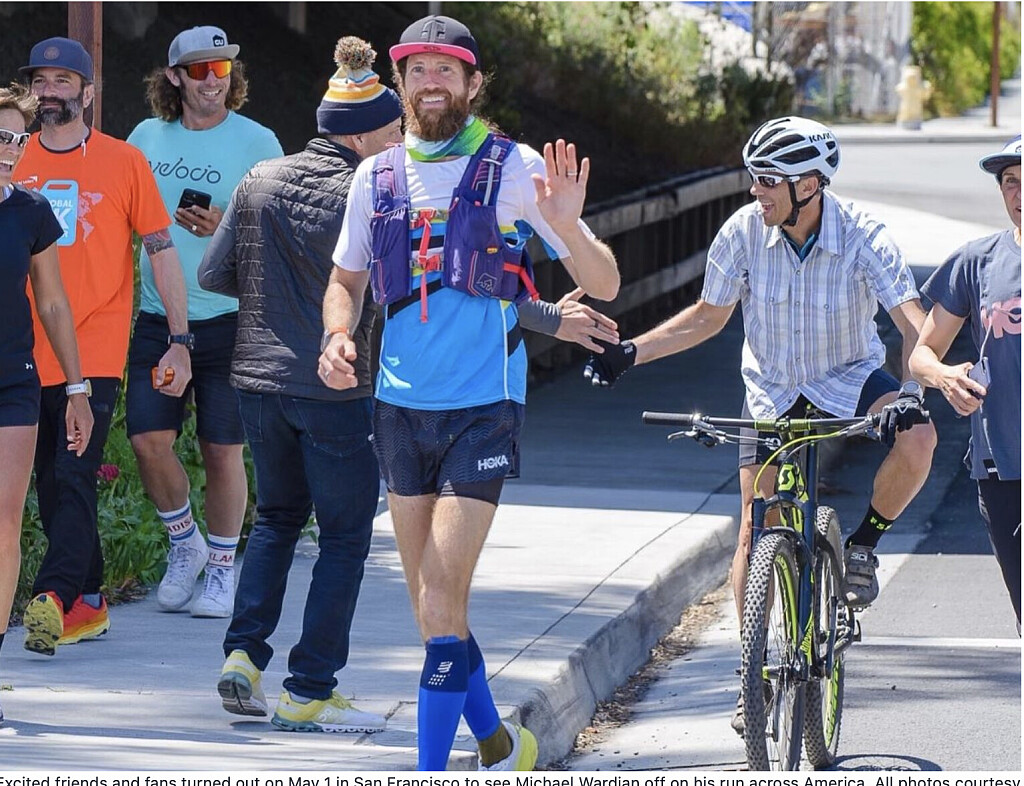
Running Home: Michael Wardian Begins His Run Across America
Michael Wardian is running across America to raise money for World Vision.
On Sunday, May 1, from City Hall in San Francisco, California, runner Michael Wardian set off on his latest adventure — a run the whole way across the United States, ending at Rehoboth Beach, Delaware, to raise money for World Vision’s clean water projects around the world. He will be following Route 50, America’s loneliest highway, through some of the remotest parts of the country, and will travel through 13 states, covering over 3,200 miles.Wardian has a host of wild and wonderful running accomplishments to his name, and this latest challenge seems fitting for the runner, who holds the Guinness World Record for the fastest marathon run in Antarctica — 2:54:54, run on January 23, 2017.
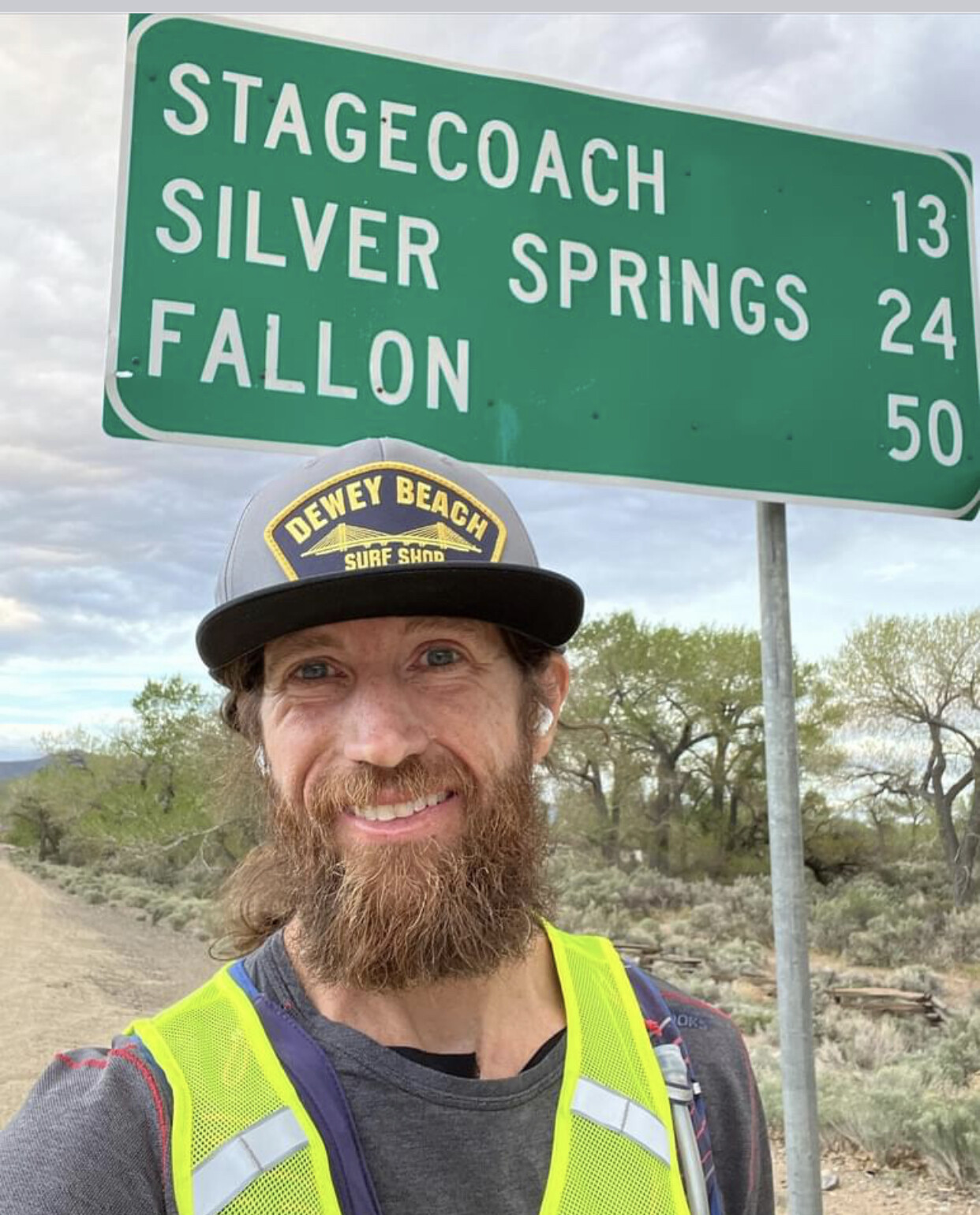
This was the first leg of his World Marathon Challenge, consisting of seven marathons on seven continents in seven days. Wardian holds the fastest cumulative time for the event at 19 hours, 21 minutes, and 36 seconds, averaging 2:45:57 per marathon. His Antarctica run is believed to be the only sub-three-hour marathon run on the ice-covered continent.
Wardian also previously held the record for the fastest marathon pushing a stroller, which he set with the help of his then 10-month-old son Pierce, at the Frederick Marathon in 2007, in a time of 2:42:21.
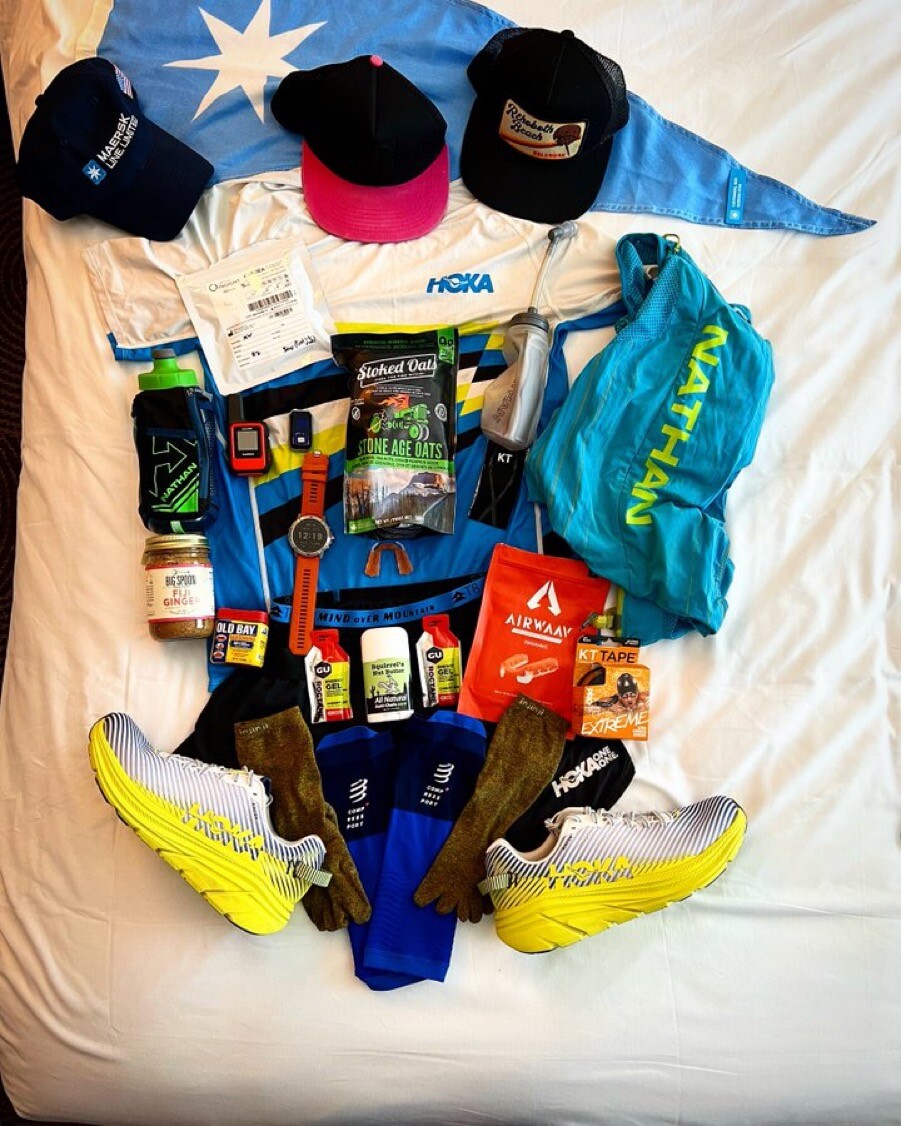
More recently, in 2020, Wardian won the Quarantine Backyard Ultra, completing 262.5 miles, or 63 laps, in a tight circuit around his local neighborhood in Arlington, Virginia, to abide by social distancing requirements during the COVID-19 pandemic.
For the first day of his latest challenge, which is called Running Home because he’s running in the direction of his home, the public was invited to share in Wardian’s send-off and to run a few miles with him.
He told iRunFar he had 20 to 30 people accompany him for the first part of his run from City Hall to Ocean Beach. There he dipped his toes in the Pacific Ocean before heading east on his quest toward the Atlantic, covering 57.97 miles on the first day.
All going well, Wardian’s schedule will see him averaging just over 50 miles per day to finish the traverse, appropriately, on July 4.
When asked about his motivation, he told iRunFar: “I’m trying to raise $100,000 for World Vision for clean water projects. I think right now we’re 14% of the way, so hopefully each day we get a little more and change a lot of lives. I think right now we’ve already impacted [about] 350 lives. It’s so cool, every day I get texts saying that somebody donated five bucks, and imagine if everybody donated just five bucks!”
You can follow Wardian’s run on the live tracker and send him a supportive message, make a donation to his World Vision fund, and help him reach his goal of raising $100,000 for this most worthy cause.
Update: Michael has crossed California and is now in Nevada.
(05/07/2022) ⚡AMPby I Run Far
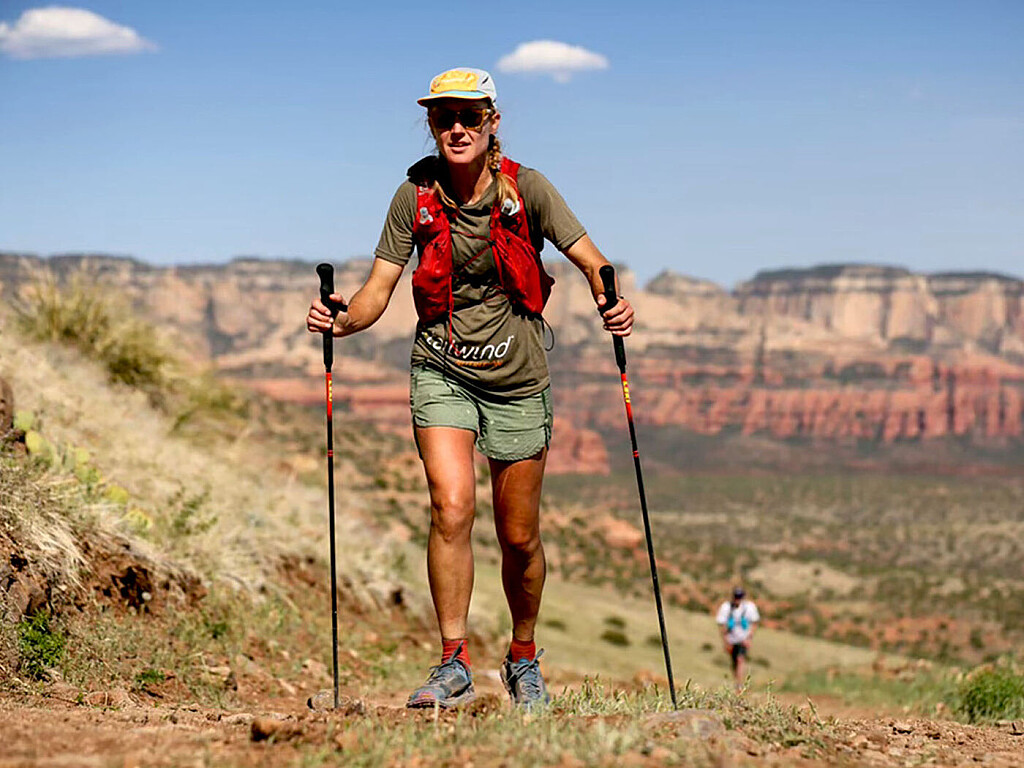
The second-ever Cocodona 250 will kick off on Monday, May 2nd, with an alternate course beginning in Prescott, Arizona, and ending in downtown Flagstaff
Over 200 runners will have roughly five days to cover over two hundred miles of some of the Southwest's most beautiful and challenging terrain.
The race takes place on the current and historic homelands of many Indigenous groups, including the Jumanos, Yagapaiv Apache, Hopitutskwa, Pueblo, Zuni, Hualapai, Hopitutskwa Hualapai, and Hohokam.

Here's what you need to know about the 2022 Cocodona 250, which athletes to watch for, and how to follow along.
Course Changes for 2022
Due to the Crooks Fire, which started on April 18, race officials rerouted nearly a quarter of the course after the Prescott National Forest was placed under an emergency closure through May 3, for ease of firefighting efforts. As of April 26, the Crooks Fire was 16% contained and burning around 6,400 acres south of Prescott in the Bradshaw mountains.
The new course will start in Prescott, Arizona, rather than Black Canyon City.
"[The fire] basically broke out less than a mile from the mile 63 aid station," said Jamil Coury, owner of Aravaipa Running and one of the Cocodona organizers. "We've been able to do a reroute of the first 70 miles of the race courseand we're going to be running about 60 miles and then we'll merge back with the course and we'll make up the rest of the miles later on in the race."
As a relatively new race, Coury says there are still some challenges to work through with an event as long as Cocodona. The last-minute course changes proved particularly challenging, but he hopes the event will continue to settle into a routine over the coming years.
"We're trying to work out the kinks for sure. You know, a lot can happen in this length of race," he says. "Everything else is mostly kind of like last year. We're looking to do a livestream of the event again on our YouTube channel until at least the top female podium comes in and we'll see from there, we might try and do some bonus broadcasts with some of our finishers in the last couple of days. It's more like we're trying to test a couple more ideas for the course. We'll get feedback from those and then maybe settle into a more long term route."
Runners to Watch
In its first-ever running last year, Cocodona featured 176 runners, 108 of whom finished. This year the field is considerably larger, with 234 registered runners. Twenty-one of those are finishers from last year's inaugural event: 17 men and four women.
Those 17 men include 2021 champion Michael Versteeg and three other top-10 finishers (Joshua Locke, Tod Bachman, and Mark Vogel). The women's field includes only two returners from last year's top 10, fifth place finisher Sarah Ostaszewski and ninth place finisher Jodi Semonell.
But alongside those returners comes a strong contingency of newcomers who will look to challenge both the men's and women's course records of 72:50:25 and 85:30:38, respectively.
"For the women, I think the biggest name on the list would be Annie Hughes from Leadville. She won the Moab 240 last year, Leadville 100 last year, and then Coldwater this January," says Coury. "Briana Grigsby from Tucson was fifth at the Black Canyon 100K this year and second at the Javelina 100K last year. And then Sarah Ostaszewski. She finished last year, and she'll be returning."
Hughes, at just 24, will seek to remain undefeated at the 200+ mile distance. She's been training for Cocodona with shorter ultras since winning the Moab 240 in October. She won the Coldwater Rumble 100 in January and the Staunton Rocks Running Up For Air 12-hour event in February. At that race, she racked up 56 miles in just under 11 hours and beat all the other competitors, regardless of gender. She then celebrated her 24th birthday on March 13 by running for 24 hours around her home in Leadville, Colorado, covering nearly 120 miles.
"I feel like with 200s, there's just so much time to go through highs and lows, and you just kind of have to ride the highs when you're feeling good and just go with it," said Hughes. "You can't really plan for these things, so I'm just kind of going into it looking at it as an adventure."
After Cocodona, she will continue a full racing schedule through the summer with three 100s: High Lonesome in July, Run Rabbit Run in September, and Javelina in October, back in Arizona. For Cocodona, she'll focus on carefully scheduling sleep and nutrition, seeing the experience as an opportunity for adventure.
"I think it's really cool that [200s] are becoming more popular and that a brand new race as amazing as this one is now available for runners," said Hughes. "I'm really excited to be a part of this race in one of the first years it's ever been run, because I think it's going to become really big."
On the men's side, Coury will be watching for 200+ veteran Michael McKnight, who DNF-ed last year's race due to heat struggles, and last year's winner Michael Versteeg, as well as backcountry guide, coach, and pro Brooks athlete Joe McConaughy, who will take his first crack at the 200+ mile distance. McConaughy currently holds the fastest known times (FKTs) for the Arizona Trail (supported), Long Trail in Vermont (self-supported), and Appalachian Trail (northbound, self-supported).
"[McConaughy has a] strong thru-hiking, kind of FKT background," says Coury. "Also really fast at short distance and then even at like the 100-mile distance, he's got some really fast times. He has this interesting mix of super long and short and fast."
McConaughy also brings recent experience with running fast in the area where Cocodona takes place.
"I'm stoked. It's an awesome route. [Aravaipa is] an awesome race organization. There's lots of great runners. So it's kind of like everything you want from an effort," says McConaughy. "I did the Arizona Trail last year and I did it right around the same timeSo it's really cool thinking I did the Arizona Trail and now coming back for another big section of trail. And adventuring in Arizona is really exciting. I just love the desert and the vibes and the whole area. It's just a very, very lovely, fun state."
MEN
Michael McKnight (32, Smithfield, UT): two-time champion of the Triple Crown of 200s (which includes the Moab 240, Tahoe 200, and Bigfoot 200), his record on those three combined races is the fastest ever by nearly 45 hours (162:00:51). He has multiple wins at both Bigfoot and Moab.
Michael Versteeg (Prescott, AZ): Last year's winner, also won the 2020 Fuego y Agua 100K and was fourth at the 2019 Run Rabbit Run 100 Mile
Chad Trumbo (39, Columbus, OH): Won the Fuzzy Fandango 50K in November, sixth at the Mohican 100 Miler in 2021.
Joe McConaughy (30, Seattle, WA): Third at Gorge Waterfalls 100K earlier this month, fourth at the 2021 Javelina Jundred, holds numerous thru-hiking FKTs.
Cole Crosby (33, Cranston, RI): Fifth at the USATF 50K championships in 2020, recent wins at the Manchester to Monadnock 55 Miler and MCW Westfield Ultra 9 Hour.
Eric Senseman (33, Flagstaff, AZ): 2017 JFK 50 Mile winner, with top-three finishes at the 2019 and 2021 Black Canyon 100K.
WOMEN
Annie Hughes (24, Leadville, CO): Recent wins at the Leadville 100, Coldwater Rumble 100, and Moab 240.
Rhoda Smoker (35, Elverson, PA): Recent wins at the Conquer the Wall Endurance Challenge 47 hour run, Dogwood Ultras 12 hour, and Green Monster Trail Challenge 50K.
Brianna Grigsby (34, Tucson, AZ): Recent wins at the Sinister Night Runs 54K and McDowell Mountain Frenzy 50K, plus top-five finishes at the Black Canyon 100K and Bandera 100K earlier this year.
Lee Conner (49, Cleveland, OH): Top-five finishes at the Forget the PR Mohican 50K, Run Lovit 100 Miler, Outlaw 100, and Cloudsplitter 100 - all in the last 8 months!
Jodi Semonell (49, Omaha, NE): Second at the 2020 Moab 240, ninth last year at the inaugural Cocodona 250, recent wins at the Dizzy GOAT 12 hour run and Hitchcock Experience Endurance Runs 100 Miler.
Sarah Ostaszewski (30, Beaverton, OR): Fifth at last year's Cocodona, with recent wins at the Bristow 24 hour run, Mogollon Monster 100 Miler, and Across the Years Marathon, plus a top-10 finish at the Javelina Jundred in October.
(05/01/2022) ⚡AMPby Trail Runner Magazine
How Sport Sampling Can Unlock Your Running Potential
Cross-training as we know it might soon become a thing of the past. Not because it's no longer worth your time, but the opposite: switching up your routine could be so advantageous that there's no sense in drawing any line between training on and off your feet.
The term "cross-training" carries its fair share of baggage. Images of injured runners grinding away on a bike or racking up laps in the pool come to mind, ushering in an all-too-familiar sense of dread for the next time you find yourself sidelined.
It implies that we're stuck doing something lesser while we count down the hours until we're running again. Even those that include regular strength training or alternative cardio days in their schedule usually see it as a box to check off for injury prevention.
But the idea that other activities should always take a backseat to running as the main source of fitness isn't doing runners any favors. Expanding our definition of what counts as training for running, not just in the absence of running, gives runners permission to reap a much wider range of benefits from moving their bodies in other ways.
The Norwegian Method
Take a look at one of the most decorated countries in the recent Winter Olympics: Norway.
The nation's "Joy of Sport for All" model prioritizes variety over specificity. Championships don't come into the picture for young athletes before the age of 13. This gives kids the chance to sample a variety of athletic options before even thinking about committing to one. They're not raised to limit their athletic exploration.
Norwegian competitors may achieve such unparalleled success because of a few clear benefits to expanding your athletic horizons: multi-sport exploration wards off injury, burnout, and complacency, no matter what your primary sport.
The Scientific Benefits of Variety in Training
In sports like running, repetitive motion presents a serious risk. Brett Mueller, DPT and Sports Clinical Specialist, explains that "doing the same activity at a high frequency exposes your body to the same stresses."
Think about how many times you pump your legs forward and backward over the course of a short run. Fluctuating trail terrain breaks up the monotony, but the same basic motion still forms the base. "In contrast," Mueller counters, "variety in sports exposes the body to different stresses. The body is able to rest from one while experiencing different stresses from another."
From a mental standpoint, "switching between sports challenges your mind to grow, learn, and adapt to the various mental demands of each sport," according to Dr. Brian Zuleger, Professor of Sports Psychology at Adams State University and a Certified Mental Performance Coach. "In a sport like trail running where the landscape, weather, and extent vary so much, the ability to be adaptable is key. Participating in other sports challenges you to be more resilient to change."
Being able to transfer skills and adjust your mindset across athletic outlets comes in handy when exploring unfamiliar routes, braving inclement weather, or attempting an intimidating distance.
Sarah Strong, ultrarunner and Licensed Clinical Social Worker with Fireweed Counseling in Colorado, offers a therapeutic argument for branching out as well.
"Strong social support is tied to positive mental health outcomes," she says, "so an athlete can enhance their circle of support simply by engaging in a number of activities."
That wider circle of support can then show runners how far their worth extends beyond any one aspect of their identity - which can come back around when injuries or other struggles pull running away from center stage.
More Than a Consolation Prize
After falling from a cliff during a race in 2017 and breaking fourteen bones, ultrarunner Hillary Allen begrudgingly turned to cycling.
"When we're told we can't run, it can feel like a consolation prize to do anything else," Allen reflects. "I wasn't sure if I would be able to return to running again, so when I got on a bike I almost felt disappointed because it wasn't the same. I had this negative connotation: I'm biking, sure, but I'm not running."
Since that injury, Allen has returned to running in full force. But the accident that threatened her life and her career - combined with a second setback after breaking her ankle the following year - set her on a new path that changed the way that she functions as an athlete.
"Because of the injuries I've sustained, I can't train like a lot of ultrarunners do," Allen says. She needed to accept that her body couldn't handle the same volume and intensity on foot that it used to, or that others in the sport may be able to.
That reality has given Allen the chance to find value in other sports as a complement to running instead of just a placeholder. You'll find her on the bike nearly as often as on foot - not only as a way to respect the limitations of her resilient body, but also to maximize her overall training capacity.
"There Is No Such Thing as Cross Training - Only Training!"
Allen believes that she wouldn't be able to reach her running potential without cycling.
"It helps me to feel my best physically while getting in the endurance that I need," she says. "I can still put in big back-to-back days without worrying about the physical impact on my body."
Adam St. Pierre, Allen's coach, believes that "there is no such thing as "cross-training" - there is only training!" That attitude directs their efforts together as they harness the benefits of each type of training.
"The fitness gained from cycling has been huge for Hillary's improvement as an ultrarunner. It has allowed her to train more total volume and do high intensity workouts more regularly than she could if she only ran."
Allen has proven those claims on paper, too. She reached a peak of only 15 miles on her long runs before going on to win the Cortina Trail 48k as her first race back from injury.
"That race holds a lot of value for being the 'aha' moment that made me realize how the bike was making me super fit even while I couldn't run," Allen says.
Partners in Adventure
Allen focuses on gravel cycling to give her the same sensations of solitude and exploration that she finds in trail running, which adds an important emotional component on top of the physical benefits.
Her new partnership with Pinarello as a member of the Scuderia Team has given the passion she's found for cycling a firm foundation to stand on and grow from.
She's part of the "Adventure Tier" of the team, which features crossover athletes who have cultivated an appreciation for cycling alongside their main competitive outlet. Fellow team members Jamie Bestwick, a BMX racer, and skier John Collinson also demonstrate how different sports enrich one another.
Allen's companions and mentors on the Scuderia Team also remind her that the trail community she loves isn't restricted to just running. "The worlds are so parallel . . . The fact that the gravel community feels so much like the trail running community is what first drew me to gravel."
Back to the Beginning
Allen encourages athletes to dip their toes into other sports with the intention to "enjoy the experience for what it is," without comparison to what you already know from running. She's wrestled with the discomfort of giving yourself permission to be a beginner at something again, back when she first dabbled in gravel cycling.
But you're not just a pawn on a chess board. You're the queen of your own game, free to move in any direction. Starting fresh in a different sport doesn't mean starting over - it's more like a step to the side into another plane. Lateral movement adds new depth to the athletic branch of your identity, as proof that we're more than just the sum of our runs.
Incorporating Sport Sampling Into Your Training
Substitute one of your weekly training runs for a spin, swim, or ski. Here's how to find common elements across any discipline:
Rely on RPE. Neither mileage nor heart rate translates seamlessly across different sports, so your Rate of Perceived Effort is the best guide. Easy days should be a 5/10, moderate and tempo days at an 8/10, and hard workouts at a 9 or 10/10. The same applies on the bike, in the pool, or on skis.
Stay Focused. Whether you're in for an easy day, long haul, or hard workout, your efforts in another discipline should reflect similar intentions for the best carry-over.
Ease In. Remember: the same effort level will likely result in lower output in the new activity. Part of being a beginner is giving yourself time to adjust to a different type of movement. Start with an easy or recovery day to keep the pressure low, and build up to higher intensity options as you adapt.
Add Time. Not only will giving yourself extra time during your session in the new activity keep you from feeling rushed or stressed while you're learning, it'll also balance out any dip in intensity with an increase in duration.
Mess up. This is your opportunity to start from scratch, and some of our best lessons come with failure. Mistakes are sometimes our best teachers. Figure out what works best for you by leaving behind what doesn't through an ongoing process of elimination.
(04/30/2022) ⚡AMPby Trail Runner Magazine
Tommy Rivs' Cancer-Free Return to the Boston Marathon Was Beautiful
Alternating bouts of running and walking, Thomas Puzey-widely known as "Tommy Rivs" or simply "Rivs"-made his way along Boylston Street toward the finish line of the Boston Marathon on April 18. Flashing a wide smile and waving to the crowd, the Arizona-based runner celebrated his return to the site of his fastest marathon.
Five years ago, Puzey ran the race of his life here, averaging 5:17 per mile as he covered the hilly course in 2:18:20 to place 16th overall. This year, he utilized a run-walk method throughout and averaged just under 15 minutes per mile, reaching the finish line in 6:31:54. Officially, he was 24,799th out of 24,918 finishers.
Few, however, covered the course with as much joy and gratitude or received so much support and goodwill. The 37-year-old is a far different runner now than he was in 2017, after a near-death battle with a rare and aggressive form of lymphoma.
"I know I am one of the lucky ones, to still be alive," he says.
This time around, Puzey's 26.2-mile journey was a celebratory benchmark of progress on his new athletic quest, where the primary goal is to be fit enough to battle cancer if-or, more likely, when-it returns. His blood and chest scans have been cancer-free for the past 15 months-after he completed six rounds of chemotherapy-but doctors have told him the rare form of cancer still has a high probability of relapsing.
"You hope that never happens, but I'm still in the bunker." he says. "It's not over for me yet. I'll always be looking over my shoulder. It's all hovering just out of sight or circling above me."
In June 2020, Puzey returned home to Flagstaff from a routine training run in the Grand Canyon feeling exceptionally fatigued and disoriented. He initially assumed he was suffering from heat stroke or severe dehydration; later, he thought it might be COVID-19. But when he ultimately checked himself into a hospital two weeks later, doctors diagnosed him with a rare form of cancer and discovered his lungs had been almost completely overtaken by invasive nodules. Suddenly fighting for his life, he was airlifted to the Scottsdale hospital in late July and was eventually sedated into a medically induced coma
Five months and multiple surgeries and treatments later, Puzey was released from the hospital, weighing in at a gaunt 95 pounds and unable to cross a room without the aid of a walker. But he was alive.
Thousands of followers, who had come to know Puzey as much for his soulful posts and coaching wisdom as for his athletic achievements, poured out support as he candidly shared his experiences and emotions on social media during the long, slow recovery process.
Today, Puzey has regained much of the muscular physique that made him stand out in a field of lanky elite runners as much as his bushy reddish-brown beard and array of tattoos. But it's always been his relentless determination that has defined him as an athlete and helped him earn podium finishes in ultramarathon trail races, triathlons, and marathons.
That determination has been evident as he's slowly rebuilt his health. Last November, Puzey had just enough physical and aerobic strength to walk the New York City Marathon in about nine hours. Since then, he's been able to start a running routine again. These days, he says, he runs at a 10-to-12-minute per mile pace for 30 seconds, followed by 30 seconds of easy walking. He had been doing a routine of running 60 seconds, then walking 60 seconds, but that proved too ambitious, leaving him excessively fatigued.
On most days, Puzey, who continues to be sponsored as an elite athlete by Craft Sportswear, says he is out the door by 5 A.M. for four to five miles alternating running and walking. He bikes to school with his three daughters before continuing solo for a two-to-four-hour ride, keeping the pace "slow and methodical." Later in the day, usually after a nap, he'll try to get in another hour-long run-walk session before getting back on his bike to pick up the girls at school. Throughout the day, he'll do dozens of push-ups, pull-ups, sit-ups, and planks to build general strength. Occasionally he'll get in a swim.
"He's still pushing his body more than most people do," says his wife, Steph Catudal. "That's the only way he knows how to exist, just forward movement, being outside and being on his feet."
Still, Puzey's adaptability impresses Catudal. "It's just so beautiful to see him embrace that and not be frustrated and not be angry and bitter that he's not where he was a couple of years ago," she says. "It's so inspiring for me to see that he is happy where he is right now and coming to terms with it all, and that he's accepting that 30 seconds at a time is what it is, and that's OK."
The hardest adjustment, Puzey says, is how long it now takes to build fitness. "The process is exactly the same now-stress, rest, and replenish-it's just a lot more gradual trajectory, and progress comes much more slowly."
No matter how hard he works, Puzey's oxygen capacity will likely never be remotely close to what it was two years ago. His pulmonary and critical care specialist Dr. Seth Assar says his lungs are like Swiss cheese, replete with holes and scar tissue from where the cancerous nodules had been.
His passion for endurance sports, however, had never been about race results but about the pursuit of excellence within the bounds of his potential. That passion holds true now. "Satisfaction and happiness in life don't come from sitting around and doing nothing," he says. "It comes from working really, really hard at something and actually accomplishing it from time to time. That is where happiness is found, in that struggle."
And Puzey recognizes the opportunity he's been given and the responsibility that comes with it. "This has been really rough, but it could have been much worse and much different," he says. "I'm one of the lucky ones, with the gift of having another chance, and because of that, I feel morally obligated that there is a responsibility to test the limits of this new potential. I owe that to my family. I owe that to myself. I owe that to my physicians and my nurses. And I also owe that to the tens of thousands of people who have supported me and my family. If I don't seek out that potential, then it's a mockery to the people that supported me, and it's also a mockery to the people who don't have this opportunity."
While his rare type of leukemia/lymphoma has a very high recurrence rate, Assar says Puzey has exceeded expectations every month since his release from the hospital, and that gives hope for sustained remission. In the event that it does come back, Puzey's renewed strength and fitness will be an asset.
"I don't see Tommy as living with a dark cloud over his head," Assar says. "He's gone on with his normal life. He's pushing himself every day. He's not living under the fear and the burden that this disease is just going to go ahead and sweep him up one day. Tommy is living."
What better way to affirm that you're still living than running Boston? "Running a marathon is a time stamp in which we're able to declare 'I am here.'" Puzey says. "So, I am here. This is where I am right now. It's not where I want to be, it's not where I want to be forever, but it is where I am right now."
(04/30/2022) ⚡AMPby Trail Runner Magazine
Amputee runner Jacky Hunt-Broersma completes 102 marathons in 102 days
As Forrest Gump in the Oscar-winning 1994 film of the same name, lead actor Tom Hanks abruptly trots to a halt after more than three years of nonstop running and tells his followers, "I'm pretty tired. I think I'll go home now."
Jacky Hunt-Broersma can relate. On Thursday, the amputee athlete achieved her goal of running 102 marathons in as many days, setting an unofficial women's world record.
And she can't stop/won't stop, saying she will run two more for good measure and wrap up her challenge Saturday with 104.
"I might as well end April with a marathon," she told The Associated Press.
Britain-based Guinness World Records did not immediately respond to an email requesting comment. Guinness lists the men's record for consecutive daily marathons as 59, set in 2019 by Enzo Caporaso of Italy. It can take up to a year for the organization to ratify a world record.
"I'm just happy that I made it. I can't believe it," Hunt-Broersma said. "The best thing was the incredible support I've received from people around the world who've reached out, telling me how this has inspired them to push themselves."
Hunt-Broersma, 46, began her quest Jan. 17, covering the classic 26.2-mile marathon distance on a loop course laid out near her home in Gilbert, Arizona, or on a treadmill indoors. Since then, it's been "rinse and repeat" every day for the South Africa native, who lost her left leg below the knee to a rare cancer and runs on a carbon-fiber prosthesis.
Her original goal was to run 100 marathons in 100 days so she would beat the record of 95 set in 2020 by Alyssa Amos Clark, a nondisabled runner from Bennington, Vermont, who took it on as a pandemic coping strategy. But earlier this month, after nondisabled British runner Kate Jayden unofficially broke Clark's record with 101 marathons in 101 days, Hunt-Broersma realized she would need to run at least 102.
On foot, day in and day out, she has covered 2,672 miles -- the equivalent of running from her Phoenix suburb to Cape Cod, Massachusetts, or from New York City to Mexico City.
Along the way, Hunt-Broersma gained a huge social media following and raised nearly $27,000 to help fellow amputee blade runners get the expensive prostheses they need. Health insurance typically doesn't cover the cost, which can exceed $10,000.
Hunt-Broersma, who ran her 92nd at this month's Boston Marathon, hopes her quest will inspire people everywhere to push themselves to do hard things.
What's next for the endurance athlete? A 240-mile ultrarace to be staged over mountainous terrain in October in Moab, Utah.
(04/29/2022) ⚡AMP

Boston Marathon's unique running history honored with World Athletics Heritage Plaque
The Boston Athletic Association (B.A.A.), which organizes the B.A.A. Boston Marathon (1897), the world’s oldest annual marathon, officially unveiled the World Athletics Heritage Plaque awarded to the race in 2019.
The World Athletics Heritage Plaque is a location-based recognition, awarded for 'an outstanding contribution to the worldwide history and development of the sport of track and field athletics and of out-of-stadia athletics disciplines such as cross country, mountain, road, trail and ultra-running, and race walking'.
The official presentation of the plaque by World Athletics Heritage, which had been on hold due to the pandemic, took place in the race museum at B.A.A.’s HQ on Dartmouth Street, Boston, Massachusetts, where the plaque will be permanently displayed, and is adjacent to the finish line of the race.
The plaque was unveiled by Thomas S. Grilk, B.A.A. President & Chief Executive Officer, and World Athletics Heritage Director Chris Turner, in the company of Jack Fleming, B.A.A. Chief Operating Officer, and fellow colleagues from the B.A.A. organization.
The tough one
Boston’s notoriously demanding course, with its final incline ‘Heartbreak Hill’ 20 miles into the race that has gone down in marathon folklore, has floored many a world beater.
Amby Burfoot, the 1968 Boston Marathon champion, confirmed on Boston.com that the challenge is also “the downhill from the top of Heartbreak Hill to Cleveland Circle. This is called ‘Cemetery Mile’ for two good reasons: Evergreen Cemetery to the runners’ right, and the way the steep downhill deadens the legs, specifically the quadriceps muscles.”
Notably, despite the stature of the race, only five Olympic champions have ever managed to win in Boston.
Four women, firstly two-time Boston victor Joan Benoit (1979, 1983), who won the 1984 Olympic title in Los Angeles, and two three-time winners in Ethiopia's Fatuma Roba (1997, 1998, 1999), the Atlanta 1996 champion; Portugal's Rosa Mota (1987, 1988, 1990), who took the Olympic title in Seoul in 1988; and Kenya's 2022 Boston winner Peres Jepchirchir, who was the Olympic victor in Tokyo.
The sole male runner so far to accomplish the rare double is Italian Gelindo Bordin (1990), the Seoul 1988 Olympic champion, who took first place in Boston two years later.
The ‘American Marathon’
The racing singlets, running shoes, medals and trophies and hundreds of pieces of historic memorabilia in the B.A.A.'s museum pay tribute to the city’s famous marathon, which was inspired by and founded a year after the running of the inaugural Olympic marathon at the 1896 Games in Athens.
The B.A.A. itself had been established 10 years before. It was one of the association’s members, John Graham, who, as USA team manager at those 1896 Games witnessed the marathon race, proposed creating a similar long distance race in Boston.
The race, originally called the American Marathon, has an annual Monday date which makes it unique among elite international marathons. The Boston Marathon has always been held on the holiday commemorating “Patriots’ Day”, which since 1969 has become officially recognized as the third Monday in April.
The B.A.A., which has a mission to promote a healthy lifestyle, especially through running, has its HQ and museum virtually located at the finish line of the marathon.
Running treasure trove
The plaque, which is mounted on a wall in its own showcase in the museum, has joined a verifiable treasure trove of distance running artefacts associated with the race’s storied history.
The B.A.A.’s collection of memorabilia and its archive is always growing. In fact, they recently received a gift of a rare finisher medallion from the 1903 Boston Marathon. The competition bib number of last week’s Boston winner Jepchirchir is the very latest acquisition.
The perpetual Champions’ Trophy, which the winners receive immediately following the Boston Marathon, and the second place award (mounted plaque) from the first B.A.A. Boston Marathon in 1897 are standout exhibits.
Poignantly, the 2013 champion's medallion won by men’s victor Lelisa Desisa of Ethiopia was gifted back to the City of Boston in the summer of 2013, shortly after the notorious bombings which occurred on marathon day that year.
The collection, which contains hundreds of artefacts and thousands of images, has recently been renamed as the Gloria G. Ratti Collection in posthumous recognition of their long-time archivist and historian. Ratti was a B.A.A. Vice President on the Board of Governors.
(04/27/2022) ⚡AMPby World Athletics

Boston Marathon
Among the nation’s oldest athletic clubs, the B.A.A. was established in 1887, and, in 1896, more than half of the U.S. Olympic Team at the first modern games was composed of B.A.A. club members. The Olympic Games provided the inspiration for the first Boston Marathon, which culminated the B.A.A. Games on April 19, 1897. John J. McDermott emerged from a...
more...
Jordon Trof defens his title at Big Sur Marathon
Six days after running a career-best for a marathon in Boston, 21 days after surviving a 150-mile ultra-marathon in the Sahara Desert, Jordan Tropf treated himself to a trip to the California coast.
A mini-vacation with his wife, though, would not be complete without a little competition – or in this case, returning to defend his Big Sur International Marathon title.
“I’m just happy my schedule allowed me to get back out here and feel the energy of this crowd,” said Tropf, an orthopedic surgeon at the Walter Reed National Military Medical Center just outside Washington DC.
Still, on an adrenaline rush from clocking a career-best last Monday in Boston, Tropf went out and fed off the crowd down the stretch Sunday to comfortably win the 26-mile, 385-yard Big Sur Marathon in two hours, 26 minutes and 51 seconds.
The time was a record for an individual who ran both Boston and Big Sur one week apart. Tropf ran the Boston Marathon in 2:24.42. The overall meet record for Big Sur was set in 1987 by Brad Hawthorne, who ran 2:16:39.

“I’ll take it,” said the 30-year-old Tropf, who lives in Silver Spring, Maryland and is taking his wife to Yosemite Monday for hiking and sightseeing. “That is so cool.”
Anne Flower made her Big Sur debut memorable, jumping out in front early in capturing the women’s division in 2:49.49 – the only woman to break three hours.
Tropf is building a resume worth nothing, defending his title from 2019 – the last time the Big Sur Marathon was held before the pandemic shut it down the past two years.
Tropf has challenged himself over the past year in his training with 3:30 a.m. runs while becoming a surgeon.
Last year he entered the Guinness Book of World Records after running marathons in Baltimore, Chicago and Boston in three straight days, averaging 2:30 per marathon.
“My fitness is off the charts,” Tropf said. “But with all the miles I’ve logged of late, I was able to keep it together over the final 6 miles.”
The Naval Academy graduate Tropf asserted himself from the start, taking the lead early.
“I tried to keep him close,” said five-time winner Adam Roach of Pacific Grove, who took third. “He was going too fast for my pace in the first mile. I hoped I might be able to reel him in.”
Instead, Tropf set a blistering pace that he maintained over the hilly and at times windy course, averaging 5:36 per mile.
“I just went out early and took the lead,” Tropf said. “I felt good. With how my spring is going, all marathons are different.”
This was Tropf’s seventh marathon of the year, along with his 150-mile, six-stage run through the African desert four weeks ago.
(04/25/2022) ⚡AMP

Big Sur Marathon
The Big Sur Marathon follows the most beautiful coastline in the world and, for runners, one of the most challenging. The athletes who participate may draw inspiration from the spectacular views, but it takes major discipline to conquer the hills of Highway One on the way to the finish line. Named "Best Marathon in North America" by The Ultimate Guide...
more...
Aleksandr Sorokin breaks 100K world record, Sorokin ran 6:05:41, averaging an insane pace of 3:39 per kilometer
The 100-mile and 24-hour world record holder, Aleksandr Sorokin of Lithuania, has added another world record to his resume by running 6:05:41 over 100K at the Centurion Running Track 100 in Bedford, U.K. on Saturday. Sorokin broke Japan’s Nao Kazami’s previous 100k world record of 6:09:14 from 2018 by almost five minutes.
The pace of Sorokin’s new 100K world record is three minutes and 39 seconds per kilometer, which is equivalent to running back-to-back marathons in 2:32:33. According to his Strava activity, his goal was to go out at 3:40/km pace, but he found that he felt good 70 kilometers in, picking up the pace to 3:30/km.
Sorokin also hit the 50K mark in 3:01:50 to set a new Lithuanian national record, breaking his previous 50K record of 3:02:39 from July 2021. The world’s fastest ultrarunner already owned three world records before this: 100 miles in 11:14:56, 12 hours (170.3 kilometers) and 24 hours (309.4 kilometres).
Leading up to his 100K world record attempt, Sorokin spent several months training at altitude in Kenya’s Rift Valley, running upwards of 250 to 300 kilometers a week (43 kilometers per day).
According to Ally Beaven on Twitter, Sorokin’s 50-mile split of 4:53:41 was the fourth-fastest ever, only three minutes behind Jim Walmsley‘s world record of 4:50:08.
It may not be too long until we see the Lithuanian ultrarunner go for his fifth world record over the 50-mile distance.
(04/25/2022) ⚡AMPby Marley Dickinson

U.S. ultrarunner outlasts a Tesla Model 3
American ultrarunner Robbie Balenger who’s known for setting the FKT (fastest known time) in New York City’s Central Park in 2021, this week ran longer than the battery of a Tesla Model 3 in Austin, Texas. The Tesla was able to go 242 miles (390 km) on a single full charge over 72 hours. Balenger covered the distance in 77 hours between April 11 and 14.
Balenger started ahead of pace to outrun the Tesla in the time limit, covering nearly 100 miles in the 24 hours. He ran into some trouble with an injury on his second day, which forced him to slow down. The Model 3 and Balenger both started from the same point, 250 or so miles outside of Austin, Texas. The car drove until it ran out of battery, which end up being 242 miles over 72 hours.
His progress throughout his challenge was posted on his and his sponsor’s (Ten Thousand) social media pages.
In 2021, he set out to break The Central Park Loop FKT, which follows a 10K route around the park, involving running as many laps as possible in one day. Balenger covered 98 miles in just over 18 hours. The challenge with the Central Park FKT is the fact that the park is only open from 6 a.m. to 1 a.m. This means runners only have 19 hours to complete their FKT attempt. Balenger also ran 5,000 kilometres across the U.S. in 2019 on a vegan diet.
It has not been confirmed what Balenger will be getting out of completing this challenge, but I think running 390 kilometres for a free Tesla Model 3 would be well worth it.
(04/17/2022) ⚡AMPby Running Magazine
The training characteristics of world-class distance runners
There are thousands of studies available analyzing various aspects of elite distance running training, and we finally have something that brings them all together. A recent review article, published in the journal Sports Medicine – Open, has integrated the scientific literature on training with the plans and logs of elite distance runners to create an in-depth training framework for world-class endurance athletes. If you’ve ever wondered what it takes to be the best of the best, this is it.
The authors of the article point out that while there are several scientific studies during the last two decades that have described the training characteristics of elite runners, many developments in modern long-distance running training have been driven by experienced coaches and athletes, rather than scientists. “Sport scientists have historically found themselves testing hypotheses regarding why elite athletes train as they do rather than driving innovation around the how in the training process,” the authors add.
The goal of this paper, then, was to combine the information we have from sports science studies with anecdotal evidence provided through training logs of elite athletes to outline a framework for understanding how the world’s best distance runners train to be at that level. In total, the researchers analyzed training logs from 59 world-leading athletes and 16 coaches who were either 5K/10K runners on the track or marathoners. Of course, the caveat to this type of information is that it’s not peer-reviewed and could be subject to bias, and when analyzing athletes at the elite level, the possibility that they could be doping can also skew the results.
Despite this, the paper does a fantastic job combining the two types of evidence and providing a very detailed outline of how these athletes train. Of course, the majority of recreational runners won’t (and shouldn’t) be trying to replicate their training, but there are some takeaways for the everyday runner who wants to improve their running performance. Below, we’ll summarize some of the key findings of the article, and if you’re interested in more of the details, we highly recommend checking out the article itself.
Training periodization and competition schedule
The first aspect of elite performance the authors address is the way athletes plan their training over a season or year, and how often they compete. They found that both track and marathon runners begin their training with a base phase that involves gradually building their running volume over the course of several weeks. As this preparation period becomes more specific, the athletes begin doing a higher volume of running at race-pace intensity.
From there, track runners move into a competition phase, which is more or less a continuation of the specific preparation phase, with races and more recovery thrown in. They also maintain a relatively high volume of running during this phase, which highlights the importance of reinforcing the base you’ve already built since it takes years of continuous work to develop your aerobic base. Next is the transition phase, or “off-season,” as some may call it, can last anywhere from one to four weeks, and could be complete rest or involve some low-intensity activity.
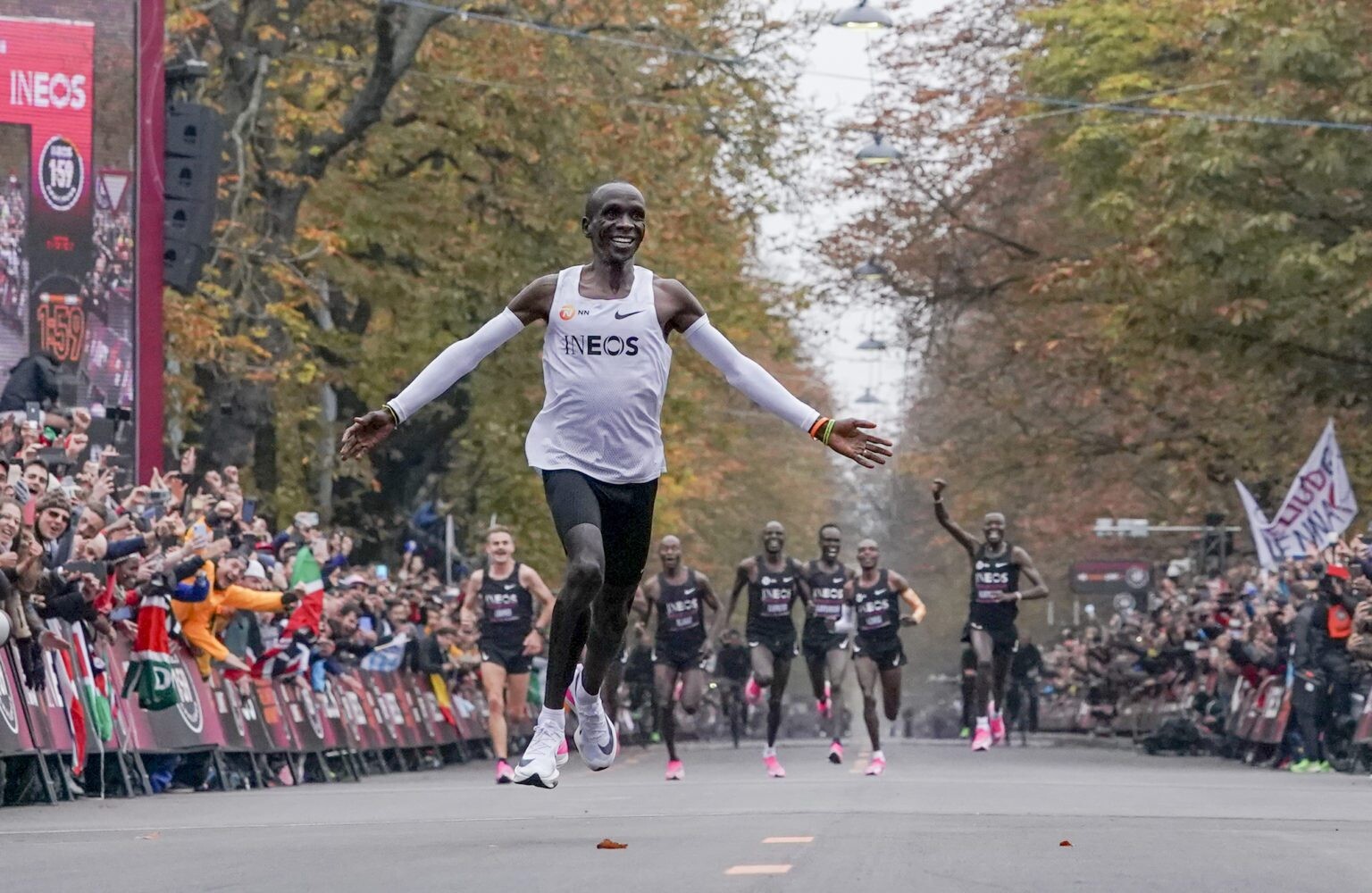
Marathoners are slightly different. They also have a base phase, but their specific preparation phase involves a lot more slower race-paced sessions, and they tend to have their highest-volume weeks right before they begin tapering for their race. If you’re training for a longer race like a marathon, take a page out of the elites’ books and put your highest-volume weeks just ahead of your taper.
Of course, track athletes tend to compete far more frequently than marathoners, usually with no more than six races a year and only two marathons, separated by at least three months. This is another lesson to recreational athletes doing marathons (and ultras, too) to avoid racing too often if you want to perform at your best.
Training
The researchers found that the unifying factor between both track and marathon runners was they all did the majority of their running volume (about 80 per cent) at a low intensity. They determined that most athletes were doing their easy runs at about three to five km/hour slower than their marathon race pace, and their long runs at about one to two kilometres per hour slower than marathon race pace.
So what does that actually look like in training? The authors include the following training principle from coach Bill Bowerman: “2–3 weekly interval sessions, a weekly long run, and fill the rest with as much [easy running] as you can handle.” Of course, for many recreational runners, three speed sessions in a week is likely too much (especially if you’re trying to keep 80 per cent of your running volume at an easy pace), but a good coach can help you find a balance that works for you.
The article also includes a great table that outlines each of the different sessions elite runners include in their training and how to perform those workouts, including fartleks, threshold runs, hill repeats and sprints. Check out the table here to find out exactly what goes into elite distance running training (and to find out if you’re missing anything in your own training).
Volume
This is the section when recreational runners should definitely not attempt to copy the elites. The researchers found that track athletes were doing about 130-190 km/week, and marathoners were hitting even higher numbers at 160-220 km/week.
While recreational runners should not attempt to run that kind of volume, they can learn from how they build up to that volume. When elite athletes are building their mileage during the base phase, they do so first by increasing the frequency of their runs (which often involves doing doubles) before they increase the volume of their runs. This doesn’t mean you should be doubling, but if you’re running three days per week and are trying to increase your mileage, start by adding a fourth (and even eventually a fifth) before increasing the length of your runs.
Intensity zones and distribution
As runners, we talk a lot about the best way to measure intensity. Is it heart rate? Blood lactate? Pace? Perhaps the best conclusion the authors come to throughout the entire article is this: “We would argue that this lack of consensus is consistent with an uncomfortable truth; no single intensity parameter performs satisfactorily in isolation as an intensity guide due to (1) intensity–duration interactions and uncoupling of internal and external workload, (2) individual and day-to-day variation, and (3) strain responses that can carry over from preceding workouts and transiently disrupt these relationships.”
In other words, no one metric perfectly or completely incapsulates running intensity, so it’s possible that the only measure that truly matters is feel. Of course, it’s very hard to accurately measure or quantify feel, and it takes time and practice to listen to and understand the queues your body is sending you. The authors offer an excellent table outlining an intensity scale that may help you understand how hard you should be working for various runs and workouts, and it’s definitely worth checking out.
The other big takeaway from this section is this: the elites spend about one per cent of their training volume doing sprints or strides. That may not sound like much, but considering that one per cent of 150 kilometres is 1.5 kilometres worth of strides, you can see the importance of these short, fast sprints. The lesson? Don’t neglect your strides.
Tapering
Finally, the taper. The research says that runners should take a two to three-week taper, where they reduce their training volume by 40 to 60 per cent, but the elites don’t appear to follow this rule. Most of them don’t begin substantially decreasing their training volume until seven to 10 days out from competition, with their last intense session three to five days before race day.
The takeaway here for recreational athletes is that tapering is important, but you should be careful not to reduce your volume or intensity too drastically. Figuring out what works for you may take some trial and error, but again, a good coach can help you determine what might work well for you.
The bottom line
There’s so much information in this article that it’s difficult to sum it up very succinctly, but if we were to make some generalized recommendations for recreational runners based on the findings, they would look something like this:
Give yourself time for a good base phase to build up your running volume gradually
When you’re increasing mileage, add more runs into your schedule before making your runs longer
If you’re doing long races like marathons or ultras, don’t race too often if you want to perform at your best
Keep your easy days easy, and the majority of your training should be done at an easy pace
Get to know yourself and understand how different workouts and paces should feel to best determine intensity
Don’t neglect your strides
Tapering is important, but be careful not to decrease your training too much ahead of your race
(04/14/2022) ⚡AMP
by Running Magazine
Camille Herron becomes youngest runner to join 100K Lifetime Miles club
The 50 and 100-mile world record holder, Camille Herron, has become the youngest runner to join the 100,000 Lifetime Miles club. At 40, she has had an illustrious running career in marathons and ultras, but on Thursday evening, she knocked off her 100,000th lifetime mile surrounded by her friends and family.While there are no official records for such achievements, 100K Lifetime Miles uses the honour system. Herron began keeping track of her mileage on her wall calendar back in 1995, while she was in high school. She later transitioned her miles into an Excel spreadsheet, which she still uses today.Herron is the 117th runner to join the club.
The distance is equivalent to approximately four trips around Earth. Herron has averaged 3,700 miles (5,950 km) per year since 1995. In her biggest year, 2011, she hit 5,848.48 miles.
As she finished her run, Herron was ecstatic about the achievement but immediately said “Let’s keep going,” in typical ultrarunner fashion.She claimed she will celebrate this accomplishment with a steak dinner and possibly post-run donuts.
In February, Herron broke her 100-mile world record time of 12:42:40 at the Jackpot Ultras in Nevada. She is also the only ultrarunner to win all three of the 50K, 100K, and 24-hour World Championships.
(04/10/2022) ⚡AMPby Running Magazine

Want to Become a Professional Trail Runner? This New Program Might Be Your Chance.
Two weeks ago, The North Face announced the launch of its Athlete Development Program, an initiative to diversify the trail and mountain running community, and outdoor sports more broadly.
The program will provide two-year contracts with The North Face to 15-20 climbers, alpinists, skiers, snowboarders, and trail runners, providing expedition funding, apparel, equipment, education about the roles of a professional athlete (i.e. pitching expedition ideas for funding and engaging with one's community), and one-on-one mentorship with established athletes for the duration of the contract. The program will begin with a three-month onboarding phase, followed by nine months of mentorship with a current North Face athlete, educational sessions, and the potential for additional collaboration opportunities.
"Today's athlete recruitment process relies heavily on referrals, historically favoring those who are already well-connected and enjoy the privileges that allow them the time and resources to accelerate in their sport," one North Face spokesperson said.
Mike Foote, a long-time professional ultrarunning athlete for The North Face, responded directly to the historical challenges of access within the sport.
"I joined the team because I had good results, but also because Mike Wolfe, who was on the team at the time, lobbied hard for me to get picked up," said Foote. "I'm not sure it would have happened without that relationship."Foote has known about plans for the Athletic Development Program for months now and is excited to see it formally launched. "The whole point of it is to democratize the process of getting access," Foote said. "The Athlete Development Program removes the hurdle of social networking and gives folks a direct path to the brand."
The Athlete Development Program strives to remove these social barriers by introducing an online application portal-eliminating the need for existing networks. The North Face says it will prioritize athletes from "historically excluded or marginalized" groups to create a more inclusive outdoor community.
Applicants must be 16 years of age or older and based in the United States to apply. The application period will remain open until May 19, 2022, and the athletes will be selected in September 2022.
(04/03/2022) ⚡AMP
by Trail Runner Magazine
Bladerunner Jacky Hunt-Broersma on her way to completing 100 marathons in 100 days, she is 72 marathons into her 100-day journey
On January 17, Jacky Hunt-Broersma ran a marathon. Since then, she has completed 72 more en route to reaching her goal of running 100 marathons in 100 days, to break the Guinness World Record for running the most consecutive marathons. We caught up with the Arizona-based ultrarunner to find out how she’s managing such a daunting undertaking.
“I’m feeling quite good,” says Hunt-Broersma. “I’ve had some tough days, but overall it’s been going really well.”
Every day, she gets up in the morning, helps her kids get ready for school, then prepares to tackle her next marathon. The physical challenge of a goal like this is enormous (especially considering she is running on a prosthetic), but Hunt-Broersma says it’s the mental challenge that’s been the toughest part. “Just getting up and doing the same thing every day has been tough,” she says.
To change things up, Hunt-Broersma has done her marathons on the roads, trails and the treadmill. More than just a change of scenery, varying the surface has helped her physically, as well. After finding that the road was beating up on her body, she’s moved many of her runs to a dirt trail near her home that’s more forgiving, and alternated that with runs on the treadmill. “The treadmill works my muscles slightly differently than running outside, so it helps a bit with recovery,” she says.
Of course, running with a prosthetic leg comes with its own set of challenges that a runner with two legs would not have to deal with. The volume of running Hunt-Broersma is doing every day frequently causes swelling behind her knee near the bottom of her stump, which pushes the bone out of position. A daily part of recovery for her is icing her stump and massaging it to bring down the swelling so the bone can move back to the correct spot. “I’ve had to stop mid-run a few times to massage my stump so I can get going again,” she says.
The highs and lows
Unsurprisingly, in a journey of this length and magnitude, there have been good days and bad days. “Sometimes, after I have a really difficult run, I wonder how I’m going to get through another one the next day,” says Hunt-Broersma. “But then the next day feels like I didn’t run at all the day before.”
There have also been some particularly difficult days, like on day 35, when she ran a half-marathon race in the morning, then came home and ran another 21.1K to complete her marathon distance for the day. A few people called her out on social media, arguing it didn’t count because she split it into two runs, so to be safe, she ran another full marathon that day. That made for a total of 84.4 kilometers in one day, after 34 consecutive marathons.
Day 72 was also particularly tough. “I had a bit of an emotional breakdown on my run yesterday,” she says. “I was questioning whether or not I could do this, so I cried a bit, then picked myself up and got the job done.”
When asked how she gets through her runs every day, Hunt-Broersma says she tries to focus on taking it one mile at a time. On the really tough days, she gives herself mid-run pep talks to remind herself of her capabilities and her goal (if you live in Arizona, don’t be alarmed if you see a woman running toward you talking to herself).
Finally, she says the support she’s received from her family and friends has been phenomenal, and her daughter has even joined her for a few miles here and there. “My kids are always coming home from school, asking me if I’ve run my marathon yet today,” she says. The support from the online community has also been overwhelming, and Hunt-Broersma has received several messages from fellow runners, who’ve said she’s inspired them to get out the door for their run, even when they didn’t feel like it.
Hunt-Broersma has 27 days left to go on her journey and can use all the support and well wishes she can get. She is also 65 per cent of the way to reaching her fundraising goal of $10,000 for the Amputee Blade Runners organization, which provides running blades for amputees. You can donate to the cause on her GoFundMe page, and follow her progress on Instagram.
(03/31/2022) ⚡AMPby Running Magazine
Positive self-talk: does it really work?, The science behind positive self-talk is mixed, but many runners swear by it to get them to the finish line
The mental side of running takes just as much time to master as the physical side, and for most of us, it’s a continuous work in progress. Many runners like to use positive self-talk to get them through rough patches or to help them deal with pre-race nerves, but does this psychological strategy actually work? The research is mixed, but many runners will still argue yes.
Positive self-talk: mixed reviews
A 2013 study in the journal Medicine and Science in Sports and Exercise found that recreational athletes who took part in a positive self-talk program improved their time-to-exhaustion test results by 114 seconds, while those who didn’t participate in the program actually got worse.
Of course, this suggests that positive self-talk is a highly effective psychological tool, but since this study, many have pointed out its flaws. Time-to-exhaustion tests are much different than time trials, for example, which could skew the results.
Another 2018 study published in the journal The Sport Psychologist performed a similar test, this time with ultramarathoners completing a 60-mile race. In this case, the researchers found no significant difference between the two groups. So does positive self-talk actually work?
The power of your mind
The actual science of positive self-talk might be undecided, but many runners swear by it. There are so many factors that affect an athlete’s performance, making it nearly impossible to isolate how positive self-talk affects the outcome of a time trial or race. No amount of positive self-talk, for example, is going to prevent you from hitting the wall during a marathon if you’ve made fuelling errors during the race.
That doesn’t mean that you shouldn’t use positive self-talk during runs, workouts and races. In fact, using it during training may help you enjoy your training more. It may also help motivate you to get out the door when you don’t feel like it, or to do that last interval when you’re getting tired near the end of a workout, and the cumulative effect of pushing yourself over time likely will improve your performance on race day.
How to use positive self-talk
It can be challenging to silence the negative voices in your head when you’re struggling through a challenging run, so it’s important that you prepare for it before you even start. Just like you set intentions for your workout (today I’m doing intervals to work on my speed, or today’s long run is to improve my endurance for my goal race), you should plan to think positively before you start your run.
What do you want to tell yourself during your run? What are you going to do when negative thoughts creep in? Consider creating a mantra that you can use when the going gets tough, or coming up with some words of affirmation to bolster you when you feel like giving up.
These words and phrases don’t have to be long or complicated, as long as they work for you. Check out our advice for how to make a running mantra for inspiration, and start using positive self-talk to improve your runs and workouts, or at least, make them more bearable.
(03/28/2022) ⚡AMPby Running Magazine

Is Multiple 100-Mile Races In A Single Season Too Much?
Jim Walmsley absolutely destroyed the competition and the course record at the 2018 Western States 100. Rather than kicking back and enjoying the win, however, Walmsley needed to quickly return to training for the Ultra Trail du Mont Blanc (UTMB) just two months later. While he started out strong in UTMB, he eventually took a DNF, his legs drained of all energy.
Now that he's had time to reflect, Walmsley admits that top results at two 100-milers within a couple of months might be a stretch.
"My training went well and I was able to get in more tapering for UTMB than last year," he says. "But the combination might be asking too much."
The experience has left Walmsley reconsidering how he might approach his 2019 season.
Walmsley's two-big-100s-in-a-season approach is something several elites have attempted, with mixed results-Darcy Piceu, Jeff Browning and Karl Meltzer, among them. Fellow elite Tim Tollefson focuses only on UTMB each year. Magda Lewy Boulet passed over Western States in favor of a good go at UTMB as well (both Tollefson and Boulet took hard falls and had to pull out last year).
Which begs some questions: Is more than one 100-miler feasible in a given season? And how does the question differ for elites vs amateurs?
Figuring the Formula
The formula for successful marathoning (if your definition of success is placing well) is somewhat tried and true at no more than two per year, says Mario Fraioli, author of the "Morning Shakeout" and coach to Tollefson.
"For most athletes, even elites, racing two high-level marathons a year, between the buildup, the race itself and recovery afterward, is a big ask of the body and mind," he says. "Two a year is all most people can handle if they're committed to training properly, performing optimally and recovering adequately."
In contrast, runners and coaches are still tinkering with the right mixture of 100-milers. It pays to consider the toll that mileage takes on your body, a toll that varies depending on distance and how hard your effort was.
Recovery First
"The intensity of a 50K or 50-miler is a lot higher than it is during 100," Fraioli says. "On the flipside, 100 miles is a lot longer time to be out on your feet and more things can go wrong. Your body goes through a lot when it's out for that long (as does your mind), the nutritional demands are different, sleep gets affected, and it just beats you up in a different way under the hood."
Ian Sharman, coach and founder of Sharman Ultra Endurance Coaching, says that pulling off multiple 100s in a season is doable, but should be a game of patience.
"Unlike marathons, where being in top shape on race day is necessary for hitting goal pace, ultras are more forgiving," he says. "Someone like Walmsley can go into a 100 out of peak shape and that won't be the biggest factor for how the day goes."
Temperature, nutrition, trail conditions and the way a race unfolds within the field all play a role, as can plain old luck. Consider the falls that took out several top contenders at UTMB last year, as well as the blistering pace laid down by the early leaders-a pace that eventually chewed them up and spit them out.
Still, Sharman says, elites and amateurs alike should take a long time to build up to the challenge of two or more 100s in a year. "Don't get greedy," he cautions. "Make that first race a big deal, and then wait to see how recovery goes."
That means not fixing a set time to recover or having a second 100 lined up. "Listen to what your body and mind are telling you and don't force the issue," Sharman says.
Look for positive recovery signs like a return to normal resting heart rate, the ability to get a good night's sleep, lack of muscle soreness and mental enthusiasm for a return to training. All indicate you may be ready to return to more normalized training and, eventually, racing.
Fraioli says that because Tollefson is still relatively new to the 100-mile distance, as a team they have approached it conservatively. "A big reason is that at his level, there's a physical and psychological toll to the volume and intensity," he says. "The prep is arduous and we need to build in adequate recovery."
The rules for amateurs, however, will take on a different appearance.
What About the Rest of Us?
For amateurs, the edge needn't be as sharp. "Many age groupers are running 100s as an experiential event-it's not their job," Fraioli explains. "But the same principles of recovery should apply."
That means not jumping back into training quickly after the first event. "You have an incredible base built up from that first race and that's probably your best training for your second," says Fraioli. "Detach from a schedule and keep your running loose and unstructured."
Until you've reached a fully recovered state, run when you feel like it, leave the speedwork at home and keep distances and paces on the shorter/easier side.
That was the approach Jason Bahamundi of Dallas, Texas, took in 2016, when his desire to qualify for the Western States lottery forced him into running two 100s, by accident, just two weeks apart. With seven 100s and several other ultras under his belt, the consistently high-placing age-grouper Bahamundi treaded cautiously in order to pull the double off.
"I ran the Coldwater Rumble in January, mistakenly assuming it was a WS qualifier," he says. "It wasn't so I began looking for a second option. Rocky Raccoon was two weeks later, so I went for it."
Knowing that his only focus between the two races was recovery, Bahamundi completed only a handful of runs, all five miles or shorter.
"I focused on eating healthy and getting plenty of sleep," he says. "I needed the swelling to go down so I'd be prepared to race again."
He also approached the second 100 with a conservative mindset. "I was only concerned with finishing and I know I can walk a 15- to 18-minute mile and still finish under 30 hours," says Bahamundi. "I was able to finish out in 20 hours, three hours faster than at Coldwater. Rocky Raccoon is an easier course so you can wear yourself out pretty quickly if you're not careful."
Your Mileage May Vary
Fraioli says that the quest to run multiple 100s in a season will look different for each runner and that there's no real blueprint to follow. That said: "As a general rule, prioritize rest, recovery and cross training between 100-mile efforts," says Fraioli. "For most people, you won't have to rebuild the wheel in between, but you do have to recover and reset so that you're ready to go to the well again."
"There are more ultras and more interest in running 100-milers than ever," he says. "There's just not much data available yet to understand the toll they will take on a body, so everyone has to figure out their own balance
(03/27/2022) ⚡AMPby Trail Runner Magazine
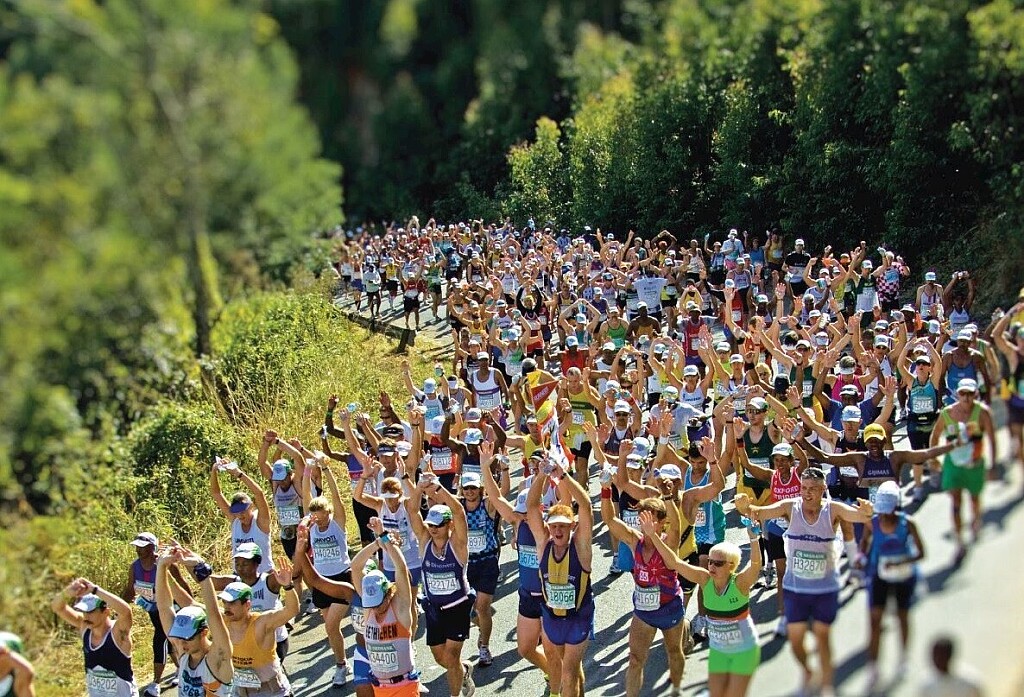
2022 Comrades entry process opens
Entries for the 95th Comrades Marathon to be held in August open today Wednesday, March 23, 2022.
This will be the first entry window period and runs until March 31, 2022. During this window period, only those entrants who had successfully entered the 2020 Comrades Marathon will be able to enter, be they South Africa, Rest of Africa or International.
The entry fee for South African athletes will be discounted from R1200 to R1000 in the first entry window period, as per the CMA’s commitment when the 2020 race was cancelled. Rest of Africa and International entrants in the 2020 Comrades Marathon had their entries deferred to either the 2022 or 2023 race; and will therefore not pay an entry fee.
During the second entry window period, from April 20 to May 16, 2022, all other athletes will be allowed to enter. Entry is free to all runners who have completed the Comrades Marathon 25 times or more.
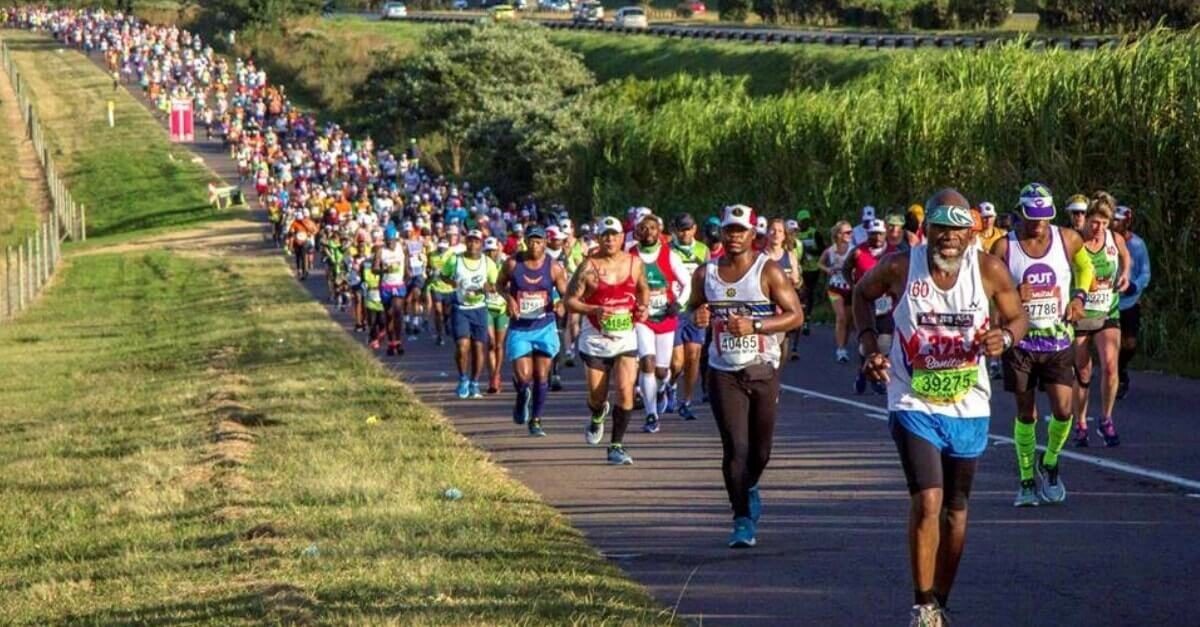
This second entry window period will not apply should the entry cap of 15,000 entries have been reached during the first entry window period.
CMA Race Director, Rowyn James says, “We have exciting plans in place for this year’s Down Run which will finish at the internationally acclaimed Moses Mabhida Stadium for the second time. Qualifying for the 2022 Comrades Marathon is applicable as of September 1, 2021 till July 12, 2022. The qualifying criteria for this year’s Comrades Marathon remains unchanged requiring completion of a standard 42.2km marathon in under 4 hours and 50 minutes, or a 56km ultra-marathon in under 6 hours and 45 minutes.”
The 95th Comrades Marathon will be the 47th Down Run on Sunday, August 28, 2022, starting at the Pietermaritzburg City Hall at 05h30 and ending 12 hours later at the Moses Mabhida Stadium in Durban, covering a 90.2km distance.
(03/23/2022) ⚡AMP
A Wake-Up Call from His Doctor and Mom Got This Runner Active Again—and He Lost 153 Pounds
The pandemic derailed his diet and activity. But then he fell in love with running again.
Name: Robert Valencia Age: 38 Hometown: Miami, Florida Occupation: Journalist and public affairs specialist Start Weight: 330 pounds End Weight: 177.2 pounds Time Running: I started running in 2012, but I stopped after that year. I took up my love for running again in August 2021, when I was back to a weight to run again without compromising my knees.
I began to lose interest in getting fit after my last race in 2012. Even though I tried different diets (paleo diet, for the most part), life as a graduate student and working in a stressful environment for much of my 30s took me back to an unhealthy life. I tried going to the gym for a while, but I gained weight again due to a lack of strategic plan to lose and maintain weight loss.
After I received results following a general checkup in March 2021, my primary doctor told me that I was suffering from Stage 1 hypertension, high cholesterol and triglycerides, not to mention that I was already at Stage 3 obesity, weighing 330 pounds. In addition to an already unhealthy diet full of ultra-processed carbs (cereals, white rice and bread, etc.) and sugary treats (ice cream and sweetened yogurt), confinement at the outset of the COVID 19 pandemic made it even worse, especially for us living in New York City.
You can imagine the toll eating all this food at arm’s reach with no physical activity took on my body for a year. After a family visit in Florida in January 2021, my mother implored me to lose weight as she placed her hand over my belly. She asked me to make that pledge. So in March 2021, a month prior to reaching 37, I decided it was important for me to turn the tide health-wise, otherwise my lifespan would shorten and shorten overtime.
My primary care doctor advised me not to run during my weight loss process because I could likely suffer from knee and joint injuries. However, my fiancée encouraged me to run again as I was reaching my goal of keeping my weight below 200 pounds. I watched her participating in races where people clustered around in a sign of camaraderie, fun, and purpose. I wanted to experience how a network of runners from all backgrounds were encouraging each other. So between July and August 2021, I started taking small steps on the treadmill.
I also made diet changes. I maintain a low-carb diet. My fridge has a lot of leafy greens, including red leaf lettuce, arugula, spinach, peeled cucumber, kale, collard greens, and veggies like asparagus, Brussels sprouts, cabbage, radishes and cherry tomatoes. I also have lean protein (fish, lots of chicken and turkey, occasionally lean pork and beef). I drink 2 gallons of water daily, and take omega-3 fish oil and vitamin D. My go-to snacks are nuts, baby carrots, and half a cup of unsweetened, low-fat Greek yogurt with red berries. Cheese is also my favorite, especially cottage cheese. If I want to have a cheat day, sometimes I eat bread or pastries, and maybe one glass of wine.
My first official race after that huge hiatus in 2012 was August 2021, when I ran my first 10k in Prospect Park, Brooklyn. It was exhilarating. After being inactive for so long, being able to complete that race with a steady pace felt like an accomplishment.
I try to run at least four times per week. I try to run in the mornings regardless of the weather. I’m currently using Runcoach, which offers me weekly plans for running and cross-training days. To keep myself motivated, I try to join weekly races across New York with my fiancée and friends. My goal is to run a full marathon by the age of 40, and I hope the New York City Marathon will be the first of many! My goal is to participate in half and full marathons for months and years to come.
From March 1 to September 1, 2021, I officially lost 152.6 pounds, and have maintained this weight loss ever since.
I have done all sorts of exercise, from Crossfit to boxing to spinning to strength classes. However, running awakens my endorphins like no other routine. When I run long-distance races, I listen to my body while at the same time meditating about my life, my journey, and what I want to achieve. Running also gets me in touch with my surroundings, to truly appreciate the New York skyline and to see other runners from all backgrounds reaching their own goals. Running is life.
These three tips have made my running journey successful:
1. Honor your efforts
It’s easier said than done, as life is unpredictable. But if you have reached your goal, honor it by staying committed to keeping it. You’ve made it this far and that’s an accomplishment you want to cherish forever!
2. Surround yourself by a support network
Your journey will have a ripple effect. A physical change also requires a mental one, and being motivated requires the support of caring friends and family.
3. Be compassionate towards yourself
You fell. Time to dust off and move on. There is no rule that says life will always be rosy. We experience loss, tragedy, shortcomings, or we feel like we’re failing ourselves and others. It is okay to grieve in times of frustration, but this is not the end of it all. Be compassionate towards yourself, first and foremost. Embrace your body, forgive yourself, and know that that every day offers a new opportunity for change. Personal journeys are precisely that, personal. So don’t compare yourself to others when looking for inspiration!
Robert’s Must-Have Gear
→ Theragun Elite: Yes, it is pricey, but it’s worth every penny. We take recovery for granted when training or doing exercise, and this machine right here gives you the relaxation your muscles need. If this is not within your budget, a good foam roller and a yoga mat or even a lacrosse ball can help you release that muscle tension.
→ Saucony Endorphin Speed 2: This shoe, for me, is a godsend. The carbon fiber in the sole helps my posture and my times. It optimizes my strength and speed. This shoe is great for long-distance races.
→ Hoka One One Arahi 5: This shoe is great if you want to train. Having at least two pairs of shoes (one for running, the second for training) is beneficial because it lets your shoes rest! Hoka is a great brand.
(03/13/2022) ⚡AMP
