

Running News Daily
Running News Daily is edited by Bob Anderson and team. Send your news items to bob@mybestruns.com Advertising opportunities available.
Index to Daily Posts · Sign Up For Updates · Run The World Feed
Search Results for Ultra
Today's Running News



How Young Is Too Young to Lace Up for a Marathon?
A new paper looks at the available research and makes recommendations.
The world—running and not—had its eyes on the Flying Pig Marathon this past May after a 6-year-old boy completed the race with his family in 8 hours and 35 minutes.
It wasn’t the finish itself that caused an outcry, but a subsequent social media post by the boy’s mother that references his distress during the later miles of the race.
The photo showed the boy holding a box of Pringles potato chips with the caption, “On the marathon course, Rainier knew they usually hand out Pringles around mile 20. He was struggling physically and wanted to take a break and sit every three minutes. After 7 hours, we finally got to mile 20 and only to find an abandoned table and empty boxes. He was crying and we were moving slow so I told him I’d buy him two sleeves if he kept moving. I had to promise him another sleeve to get him in the family pic at the finish line. Today I paid him off.”
Sports medicine experts and pediatricians got wind of the boy’s marathon finish, and its unique circumstances, and published a paper in JAMA Pediatrics in October, titled “Kids on the Run—Is Marathon Running Safe for Children?”
The answer is: We’re not totally sure.
“Youth running is becoming more popular, particularly at longer distances, and the trend is ahead of the research,” says Emily Kraus, M.D., a clinical assistant professor at Stanford University, a sports medicine physician at Stanford Children’s Hospital, and the director of the the Female Athlete Science and Translational Research Program.
Kraus, a runner, was not an author on the JAMA Pediatrics paper but coauthored the 2021 youth running consensus statement published in the British Journal of Sports Medicine.
“We can’t conclude that there’s no risk or minimal risk, or a greater risk [to young children running long distances],” she tells Runner’s World.
The paper looks back at the running boom of the 1970s when several young children completed marathons; children as young as 8 years old covered the distance in 3 hours and 31 seconds. The authors note that although there were no reports of injuries or adverse events, physicians and race directors started to worry about the potential dangers of youth participation. In 1981 the New York City Marathon, then in its 11th year, instituted a minimum age requirement of 16 years old. Other races followed suit.
A 2010 paper published in the Clinical Journal of Sports Medicine looked at data from the Twin Cities Marathon from 1982 to 2007, which included 310 children aged 7 to 17 years old. The researchers found that the risk of a medical incident was about 50 percent lower in children than adults but not statistically significant. In other words: We can’t say for sure if they’re at lower risk for injury or medical problem.
“Some of the early research shows that the overall risk of competing in races is quite minimal or lower when compared to the adult running population,” Kraus says. “But the question becomes is that because the number [of children finishers] is so much smaller?”
Kraus, who treats primarily middle-school age athletes whose growth plates are still open, expresses concerns that we don’t know if marathoning at a young age will affect long-term growth and development.
“Young kids haven’t even started to initiate [certain developmental] milestones,” she says. “Athletes who are younger than 10 or 11 years old are true children. We don’t know enough to give the okay, in my opinion.”
Kraus advises against the repetitiveness of a single activity over time, like running. Instead, she encourages young athletes to try different physical activities that lend themselves to multidirectional movement, like soccer, tennis, and old-fashioned tag.
When asked to give guidance on a distance for young kids, Kraus says anything up to a 10K is “probably okay.” Ideally, she says, we would measure how far a young kid runs on any given day during free play or team sports to help guide that recommendation.
“[For children], free play at that stage of their development is more valuable in developing motor skills, agility, and hand-eye coordination,” she says.
Plus, although research is clear that healthy behaviors developed during youth sports can promote long-term physical activity and reduce the risks of diseases like diabetes, cardiovascular disease, and cancer, “sport specialization during childhood does not provide competitive advantages and is not a requirement for elite status,” the authors wrote in the JAMA Pediatrics paper.
What’s more is that youth marathon or ultramarathon running may not lead to lifelong participation in running events or long-term health benefits. The authors wrote: “Among children who participated in ultramarathons [longer than a marathon], less than 25 percent continued to do so as adults, and less than 10 percent were still running ultramarathons 30 years later.”
Most youth ultrarunners, the researchers wrote, are between 16 and 18 years old, but there are runners younger than 10 years old who have completed an ultra event.
Experts are unsure if this drop off in participation is because of overuse injury and burnout, or changes in interests. The authors go on to say that potential health benefits and risks of youth marathon running have not been compared similarly to shorter distance running or other sports.
But pediatric specialists like Kraus and the authors point out that the bigger question and concern when it comes to youth marathoning, particularly in children under 10 years old, is the intrinsic motivation of a young runner.
“Why is this child racing? Is it because they have a family of runners and they don’t want to feel left out? Is it something they deeply want to do?” Kraus asks, noting that young children likely don’t fully understand what training for and running a marathon really entails.
“If I were working with a 6-year-old, my conversation would be, ‘Do you know what [a marathon] is? Do you know what it feels like to run one mile? Or other shorter distances?’” Kraus says.
She’d then also work with families to understand why they were having a young child participate in such an extreme distance at this particular time, suggesting, instead, to use a marathon as a goal for years down the road.
Based on the available evidence, the authors developed a list of points families should consider before a young child runs a marathon or ultramarathon, in addition to assessing the physical health of the child, including:
Potential risks and benefits, reiterating there is limited available research
Determine the motivation for marathon running, with an emphasis on voluntary participation
Inform children that they have a right to stop at any point and will not be punished or experience negative consequences if they decide to stop
Discuss ways children can communicate their choice to parents and guardians
Monitor physical, psychological, social, and academic well-being, as well as continued commitment to marathon running during training
“For a 6- or 7-year-old who hasn’t fully captured goal-setting and follow-through, a marathon is a different type of challenge that goes beyond what they’re capable of handling,” Kraus says.
(12/17/2022) ⚡AMPby Runner’s World
Roundabout runner does it again
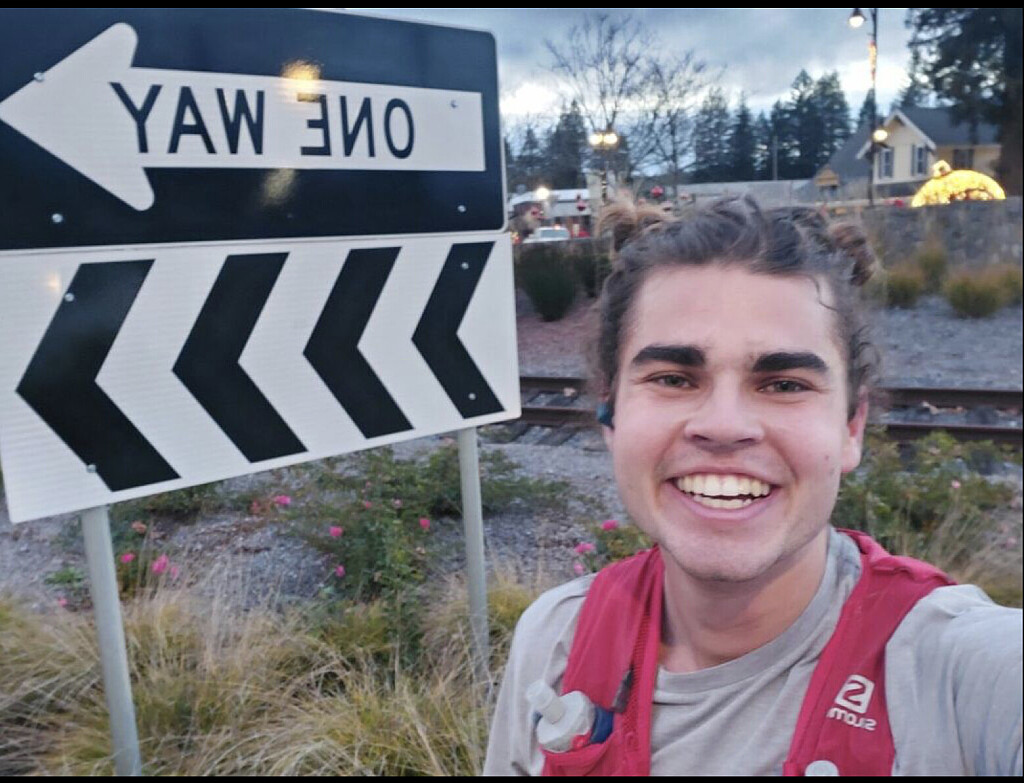
When we spoke with Healdsburg, Calif., runner Tate Dobson two weeks ago, he had no intentions of getting back out and running another roundabout ultramarathon. On Dec. 11, the 21-year-old went out for another six-hour roundabout rip on the same loop, but in the opposite direction.This time around, Dobson repeatedly ran counterclockwise and bettered his time and distance, covering 61 kilometres in his six-hour time limit, with an average pace of 5:53/km. (He ran 58 km when he ran clockwise, 12 days previously.)
Dobson ran around the 140-metre loop 437 times. “I think I don’t get dizzy,” he laughs. After 851 total loops, we hope Dobson has the Local Legend and the segment record on Strava.
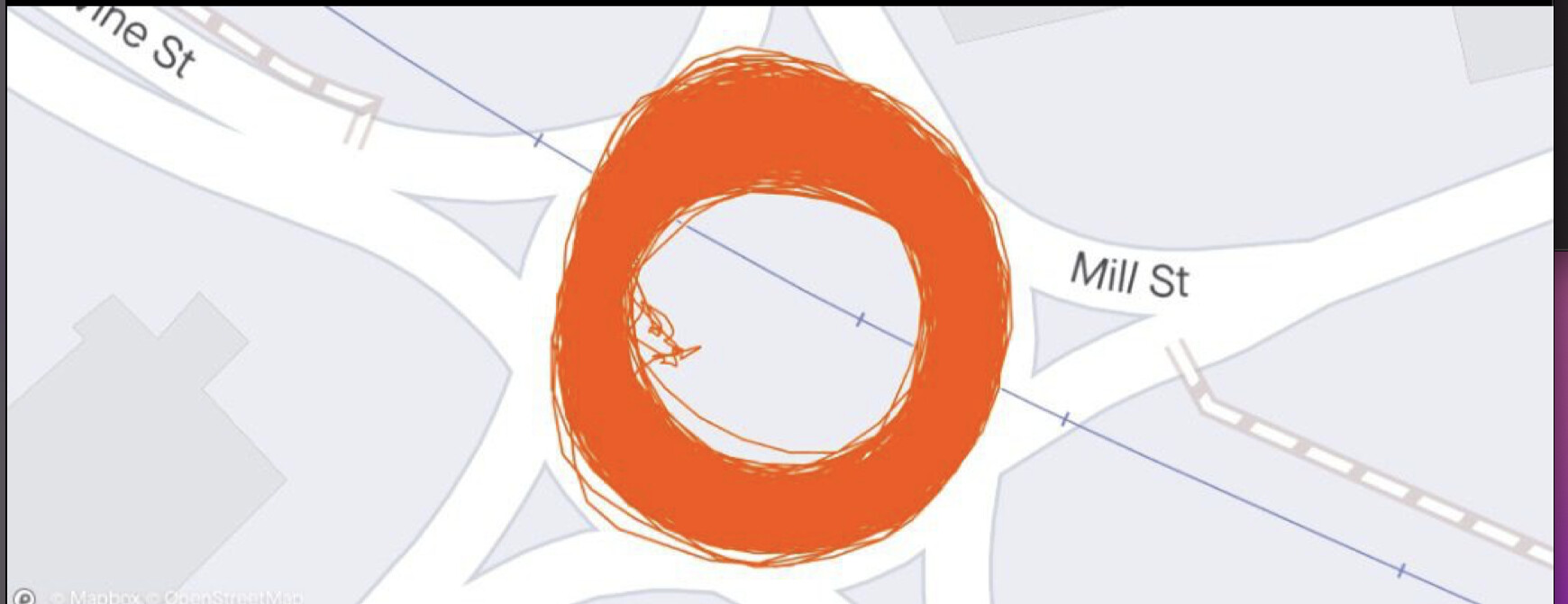
He has gained quite the following on his Strava and Reddit since his inaugural roundabout ultra went quasi-viral. He cleverly named his run on Strava “widdershins,” which means counterclockwise.
He once again was fuelled on only water and Motts-branded fruit gummies. “I set up a gummy’s and water fueling station on the middle of the sidewalk in the roundabout,” he laughs. “I tried to fuel every half hour but did not do a great job.”
This time Dobson did not do the challenge alone, but had a friend who jogged with him for support. He also motivated two other friends to do the same roundabout challenge in Atlanta, Ga.Dobson, 21, lives in Healdsburg with his grandfather and had no interest in running, let alone ultrarunning, until the pandemic. “I saw a few runners on Strava posting high-effort satirical runs (Strava art or vertical challenges), and one day, after a few drinks, I was walking home through the roundabout and wondered how long I could run around it for,” says Dobson. When asked whether he would return to the roundabout for another ultra, he said not for a while.
(12/17/2022) ⚡AMPby Running Magazine
Have to miss a few days of running? Here’s how to deal with it the best way
It’s the busiest time of year for many people, and also the season when everyone seems to come down with a cough or cold. If you’re sidelined because of scheduling, travel, feeling sick, or holiday season overload, it can be easy to doom-spiral into worry about lost fitness. Here’s what really happens when you miss a few running days, and what you should do to make up for it (if you want to).
Don’t panic
Stop worrying–you won’t lose all your fitness. Ultrarunner and renowned coach Jason Koop writes: “Here’s a summary of the research: if you miss up to seven days of training, there are no meaningful fitness implications.” He adds that while there may be incremental losses that can be measured in a lab, “the practical amount of fitness degradation from missing up to a whole week of training isn’t much.”
Allow yourself to enjoy the time off (or at least move through it without beating yourself up or feeling like you’re going to rapidly decondition). If you’re sick, know that your body needs rest so that you can keep your time off to a minimum–if you push yourself to exercise through illness or a particularly stressful period, you may end up having to take far more than a few days off.
Zoom out
You’ve probably heard it many, many times–consistency is key. Long-term consistency outweighs short-term intensity. Sure, you may have big goals this season, or next month. Your goals, however, should also include some long-term plans. You probably want to continue to run for years and to maintain as much fitness and health as possible over your lifetime.
It can be hard to remember that when forced to take an unexpected day off, but zooming out and reminding yourself that a few days within the much larger picture of your running career are not critical. Consistency means month over month, year over year.
Life happens and illness and injury strike unexpectedly: while they may require a short-term shift, if your general focus is on consistency, you’ll be just fine. Coach and author Steve Magness says to “do whatever you can while being healthy over the long haul,” and that means if you need a few days off in order to stay consistent long-term, take them.
Adjust where you can
Koop has some adjustments that he makes for coached athletes to add some amount of missed time back in–but only if you’ve missed more than three days, and only when it comes to important workouts (usually intervals or long runs). He suggests adding 50-75 per cent of missed key workouts (recovery runs, while a great part of your training, do not need to be made up for) over a four to six-week period.
Make small adjustments and tweaks to your running schedule where you can, and don’t get stuck on minor details. Koop writes, “if you miss two different one-hour endurance runs (two hours total) you can replace that volume over four to five different days in 15-minute increments.”
If you aren’t able to add more time into an already packed schedule, don’t worry–research has shown that the body recognizes stress, not mileage, and scaling back workouts or taking extra rest days when life throws a curveball at you may actually help your body rebound in the long run.
(12/16/2022) ⚡AMPby Keeley Milne
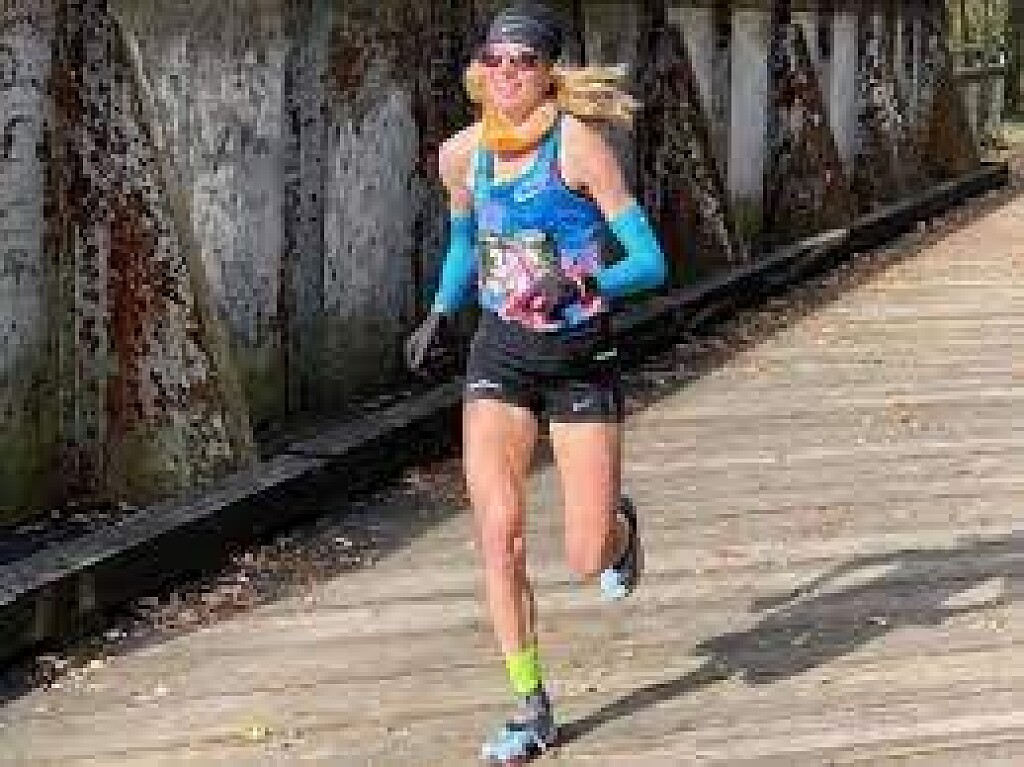
Camille Herron sets new 100-mile record at Desert Solstice Invitational
Ultrarunning champ Camille Herron, 40, set a new American 100-mile track open record in 13:02:16 (pending verification) on Sunday at Desert Solstice Track Invitational in Pheonix, Ariz., bettering her record from last year’s event, when she finished in 13:21:50.
“Desert Solstice was a magical experience once again,” Herron shared on social media post-race. “I aimed to go quicker than 100-mile pace, to achieve my 50 mile and 100K track American records. Then it was a test of ultra grit.”

Herron nailed her goals, improving her American records in the 50 mile (5:57:46) and 100K (7:35:50), along with multiple age group records–for a grand total of eleven records at the event. She tapped out of the 24-hour elite invitational race at the 100-mile mark.
Herron led the race until the 50-mile mark, when she took an 11-minute break to deal with some GI distress. “I persevered through the pain, fatigue, and a few bouts of puking to get my 100-mile track American record–unofficially a track world record and masters WR too, 13:02:16, 7:49 per mile (4:51/km),” the runner shared.

“I feel the best in my life right now at age 40 (turn 41 on Christmas),” added Herron. It’s an exciting time in my career, and we’ll keep the ball rolling into 2023. I’m looking forward to a break to recharge and go to Ireland for Christmas.” 2022 is ending on a high note for the athlete, who has had a challenging year dealing with some controversy around the ratification of her world 100-mile road record set at Jackpot Ultrarunning Festival in February.
California-based repeat champ Marisa Lizak was the overall winner of the 24-hour race with 252.18 kilometres (156.7 miles), bettering her PB for the fixed time by four miles, and qualifying her for the U.S. 24-hour team. Lizak, who was second at Spartathlon earlier this year, now ranks third on the all-time chart behind Herron and Courtney Dauwalter.
New Canadian 12-hour record
Canada’s Amanda Nelson set a new Canadian 12-hour record of 135 kilometers, (previously 134.025 km) and was the 3rd place female finisher in the 100-mile event behind Herron and Lisak. She was the 5th woman finisher in the 24-hour event with 15 hours of running.
Nelson set out to tackle the 24-hour Canadian record, but readjusted her goals after experiencing some severe GI issues.”I hit my B goal in the 100-mile event, with my second fastest time of 14:53:47. On my way to 100 miles I managed to better my existing 12-hour national record,” Nelson says.
Heading into the race, Nelson says she knew track running wasn’t her thing. “I do not enjoy such a tight, flat loop course but I needed to see how I could do in an elite field of runners,” she says, describing it as “a whole other feeling.” Nelson says faster paces felt easier for longer and shared, “it was fun for a while, chasing other like-minded athletes. I did what I could on that day.”
Nelson opted to stop after the 100-mile mark, explaining: “Not every race is going to go as planned and we have to learn to trust ourselves and listen to our bodies. I feel that stopping after 100 miles was the right decision for me this past weekend and still feel incredibly accomplished with what I had achieved.”
Whitby, Ont.’s Viktoria Brown was also competing but shared that she wasn’t feeling her best from the start of the race, mentally and physically, and ended up dropping out after 11 hours. After an extremely successful season that included breaking three national records and competing at IRONMAN Kona, Brown says she had possibly simply reached her limit for the year.
“My 24-hour split at 6 Days in the Dome of 213 kilometers puts me in second place for the Canadian 24-hour team, behind Amanda. I feel that I made the right decision to save myself for a better day.”
(12/14/2022) ⚡AMP
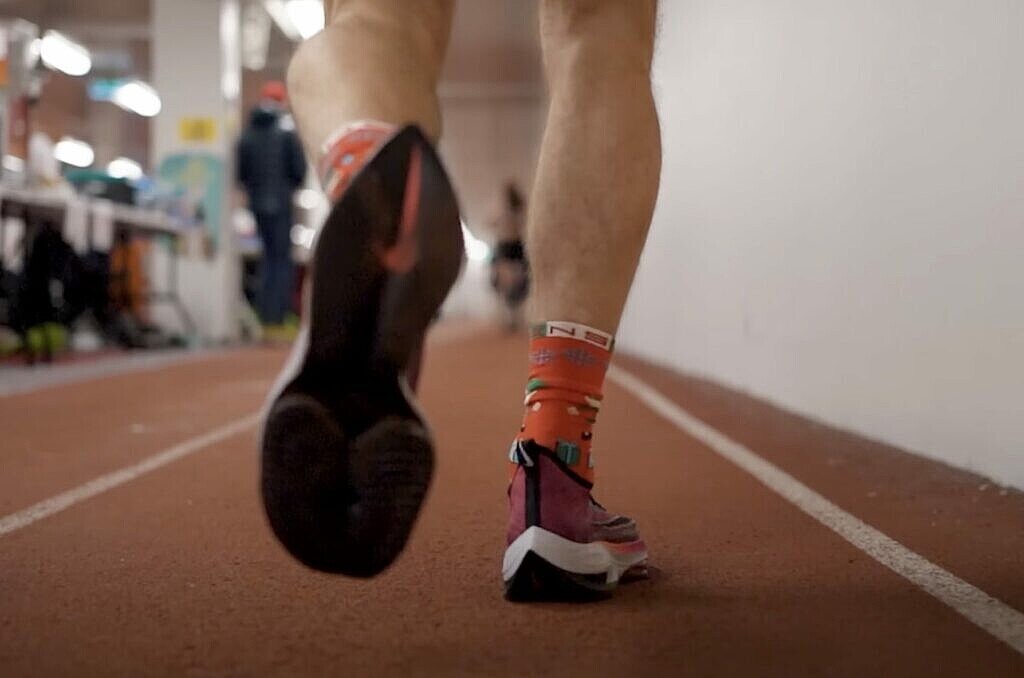
Norwegian athletes spend 24 hours running laps in a basement
If you’ve ever read about a race or endurance event and asked yourself “why?” this short film is for you. “I love running and can truly understand why people want to challenge themselves both mentally and physically,” says endurance athlete and filmmaker Göran Winblad. Despite that, the Bislett 24-hour Indoor Challenge, held in the basement of the Bislett stadium in Oslo, Norway, left Winblad baffled.
Winblad heads to the event to figure out what motivates the athletes “running in circles with nothing but cement walls to look at.” Arriving at the stadium after the 20th hour, Winblad says he doesn’t know what to expect or if anyone will even be functioning well enough to speak to him.
Watch this short film for the remarkable humans Winblad talks to and the insight they share, but also for Winblad’s stunning filmmaking skills–who would have thought a race in a basement could be beautiful? Frank Løke, who completes 217 km by the end of the event, calls it the “toughest thing he does all year.” But, he adds, it helps him train to summit Everest and K2. “How can you train for the toughest mountain in the world? You have to do some crazy sh*t,” Løke says.
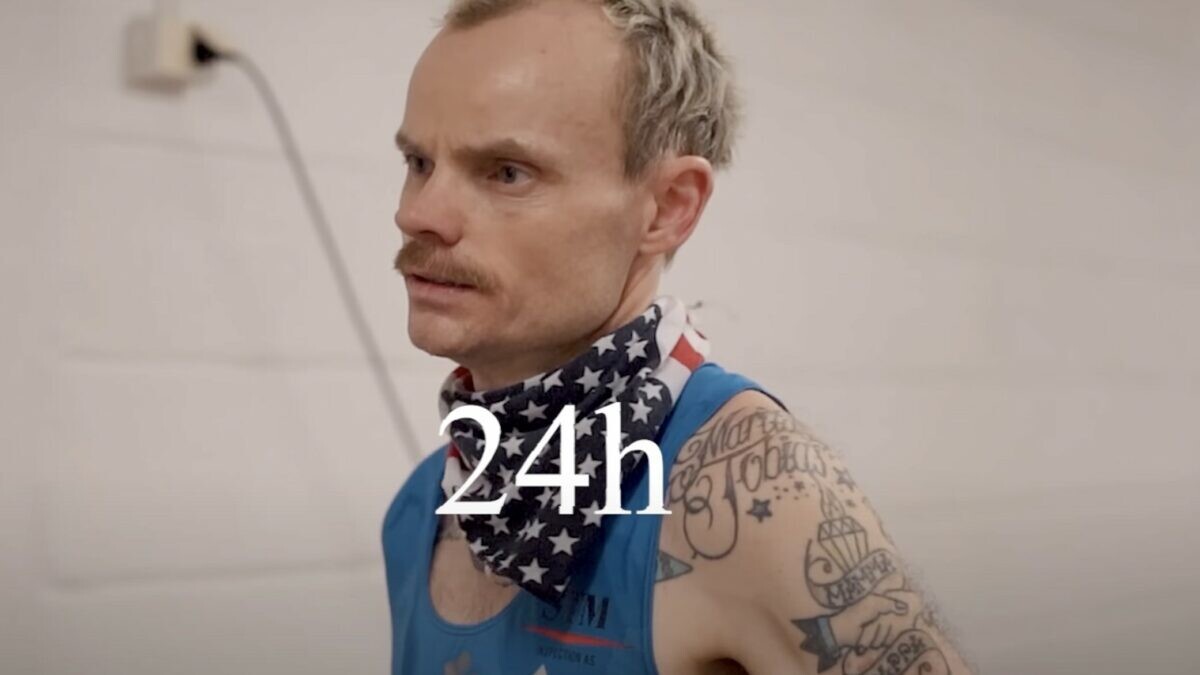
One of Norway’s best ultrarunners, Bjørn Tore Kronen Tarenger (who leads the event with 260 km) calls the monotony and challenge “fun.” (To be fair, he looks like he’s out for a 5K jog in the park.) Winblad asks Tarneger what, exactly, makes the event fun, and Tarenger’s response is what one might expect from someone who enjoys running in circles for 24 hours: “I feel the pain.”
One runner, whose feet are so sore by the time Winblad speaks to her that she’s forced to run “like a penguin,” says she thinks it’s “something you have to do once in a lifetime.” She quickly adds that it’s her second time. Winblad notes that many of the runners say they’ll never do the event again when he speaks to them, yet keep returning year after year–the race sells out in moments.
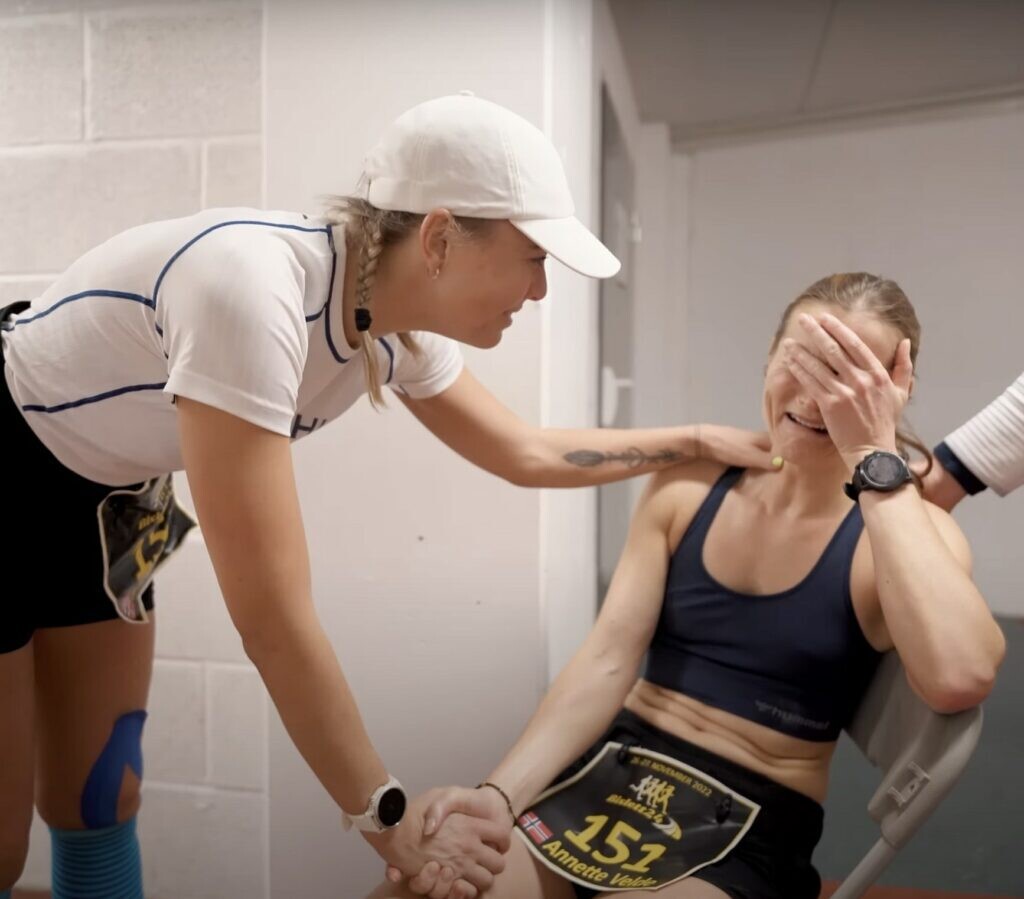
The Bislett Stadium hosts many renowned track and field events, and Karsten Warholm famously set the world 400m hurdles record there, the drive behind which Wimblad can understand: “fame, money, being the best in the world.”
(12/08/2022) ⚡AMPby Keeley Milne
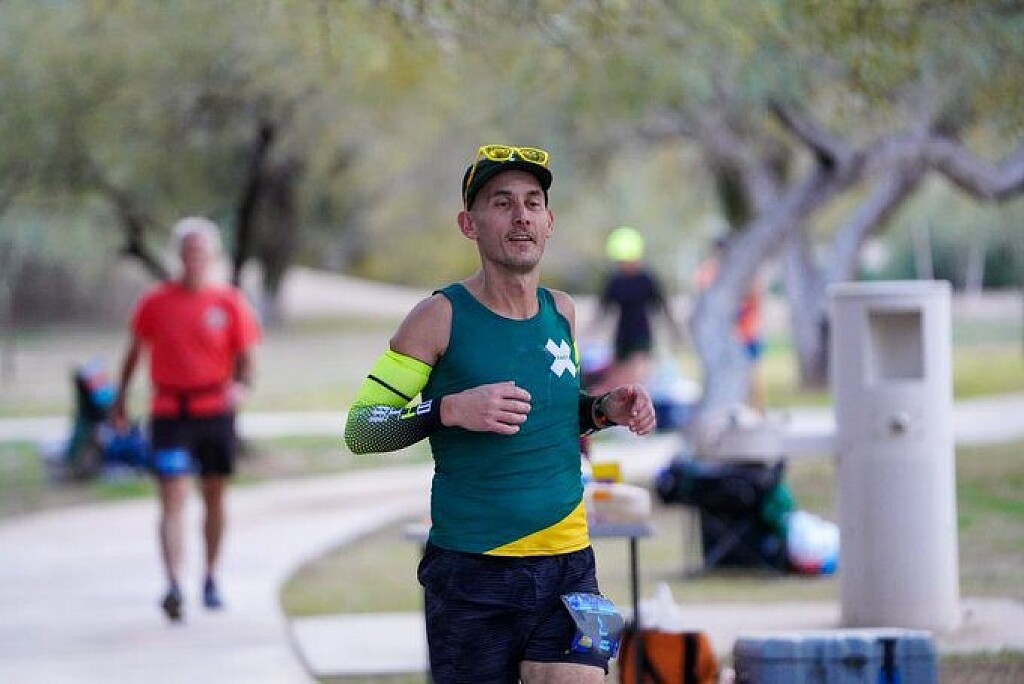
Jerry Hughes smashes Canadian 48-hour record
Victoria, B.C.’s Jerry Hughes set a new Canadian 48-hour record early Sunday morning at the Fat Ox Endurance Run in Arizona, running 368.031 kilometers (228.684 miles). Hughes boasts an extensive ultrarunning resume, but this is his first Canadian record, besting Dave Proctor’s 2018 record of 358.163 km (222 miles). Hughes headed into the event with a goal of qualifying for the Canadian 24hr team, a goal he nailed along the way. Hughes ran 221.01 km (137.33 miles) in 24 hours, more than any Canadian in 2022.
The Fat Ox Endurance Run (hosted by Aravaipa Running, known for endurance events like Javelina Jundred and Across the Years) was “originally founded as a research study on fat oxidation utilization for ultra runners,” ultrarunner and race director Jamil Coury explains. The race was in a new location this year, held on a 1590.3-meter concrete loop on an eight-foot-wide sidewalk winding through Estrella Mountain Regional Park, just outside of Phoenix, Ariz.
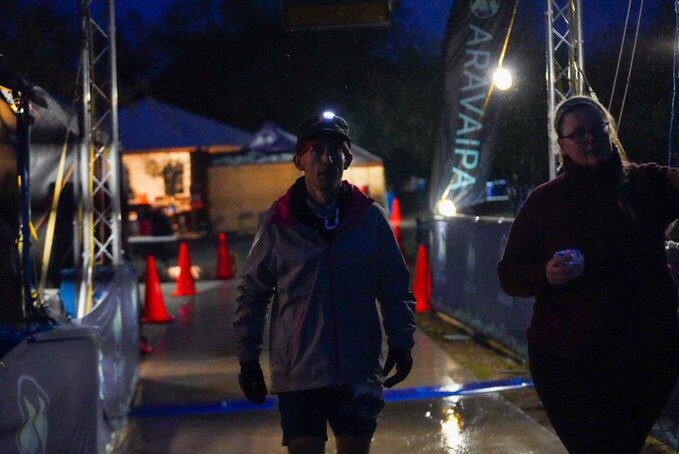
In its third year as a fixed-time race with multiple distances, the 48-hour event began Friday in ideal running conditions–cool and overcast skies. Saturday, however, was another story, with an increasing chance of rain evolving into a significant rainstorm that Coury says “parked itself across much of the state of Arizona and recorded a rainfall record for Sky Harbor airport.”
Despite the conditions, Hughes kept on moving. “Runners persisted throughout, including Jerry Hughes who really dug deep the last night running through off-and-on rain to not only set a new Canadian 48-hour record not only overtaking Dave Proctor but also landing on the top 10 all-time in North America,” says Coury.
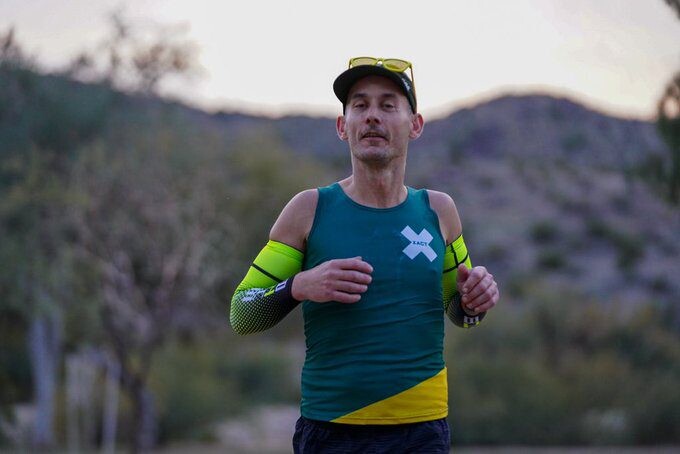
Hughes’s journey of resilience
Hughes started running in 2014 with a 10K race and says he was hooked after that. “A month later, I did my first half-marathon in 1:40,” he says. In 2015, he ran his first marathon in 3:11, and decided to make the leap to ultras, tackling the Squamish 50-miler in 2016. He upped his distance with his first 100-miler in California, where he bested his goal of running under 24 hours by a large margin, finishing in sixth place in a little over 18 hours.
“It was at this point that I realized I had a bit of a gift for this,” Hughes says. Since then, Hughes has been a regular on the ultra scene, racing everything from 100-milers to multi-day events. When COVID-19 shut down events, he reached out to friends Lisa Large and Josh Heath to organize the One Track Mind Ultra, a fundraiser for the Help Fill a Dream Foundation. The charity supported Hughes and his siblings (all of whom live with Gardner’s syndrome, a rare genetic disorder that can lead to colon cancer) when they were younger.
Hughes, a busy father of four young children, is known for being a positive force in the running community in Victoria and beyond, and for taking every opportunity he can find to give back. Fellow Canadian ultrarunner Matt Shepard ran with Hughes at One Track Mind Ultra, and says he was impressed by his resilience. “After hearing his story and the challenges that he has faced, I was blown away,” says Shepard.
“After realizing that he didn’t have to let his challenges define him, he started chasing these big goals to show others that they can also overcome seemingly impossible obstacles. Jerry shares so much love and inspiration,” said Shepard. “I am incredibly proud of him for his efforts and the lessons he is sharing with the world.”
While Hughes described the rainy, middle-of-the-night laps toward the end of his 48-hour run as “pure misery,” he was in great spirits Monday morning as he prepared to head back to Canada, joking that while he felt pretty good, he might need some assistance getting into the plane.
(12/05/2022) ⚡AMP
by Keeley Milne
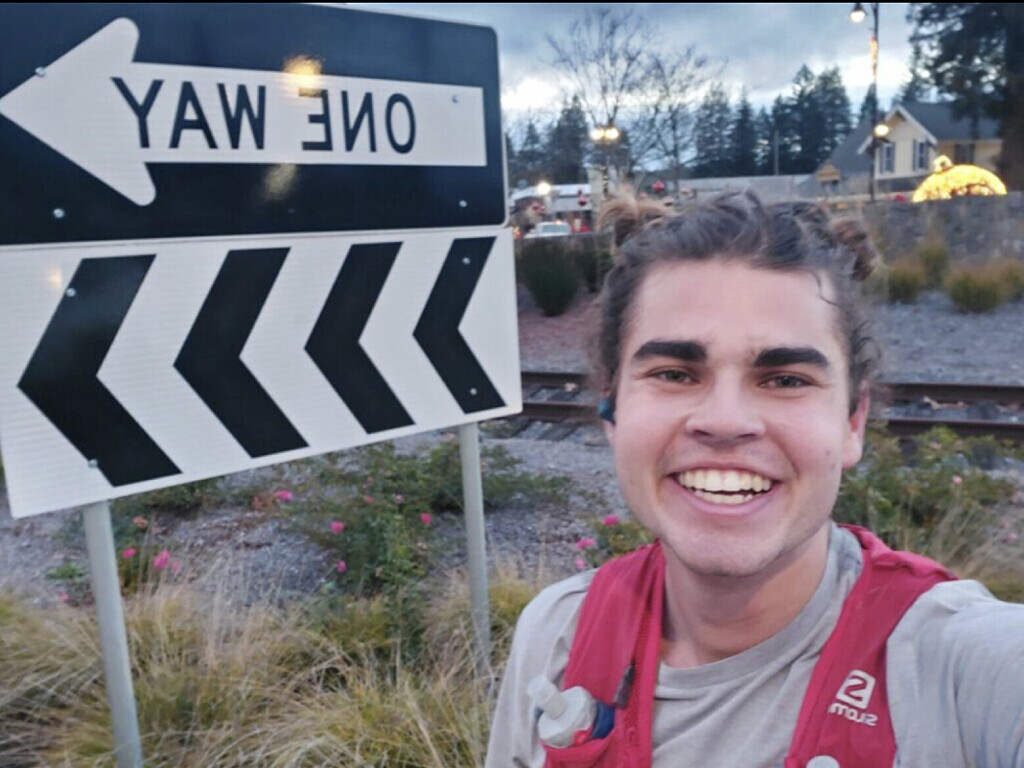
California man runs an ultramarathon in roundabout
An ultrarunner out of Healdsburg, Calif. wanted a bit more of a challenge after he completed the Pacific Crest Trail earlier this summer. On Nov. 30, he went out on a six-hour, 58-kilometre run around the local roundabout, not switching directions once.“I was intending to keep count of the number of laps, but I lost track immediately,” laughs Tate Dobson. “Looking back, it was torturous mentally and physically on my legs.”Upon further investigation and measurement of the roundabout using OpenStreetMap, the loop was 140 metres, and Dobson ran 415 laps. “Luckily, the roundabout was slightly big enough for me not to get dizzy,” he said.
Dobson decided to run clockwise, so he could see oncoming traffic. He started the challenge on Wednesday at 11 a.m. and stopped when it got dark, at 5 p.m.
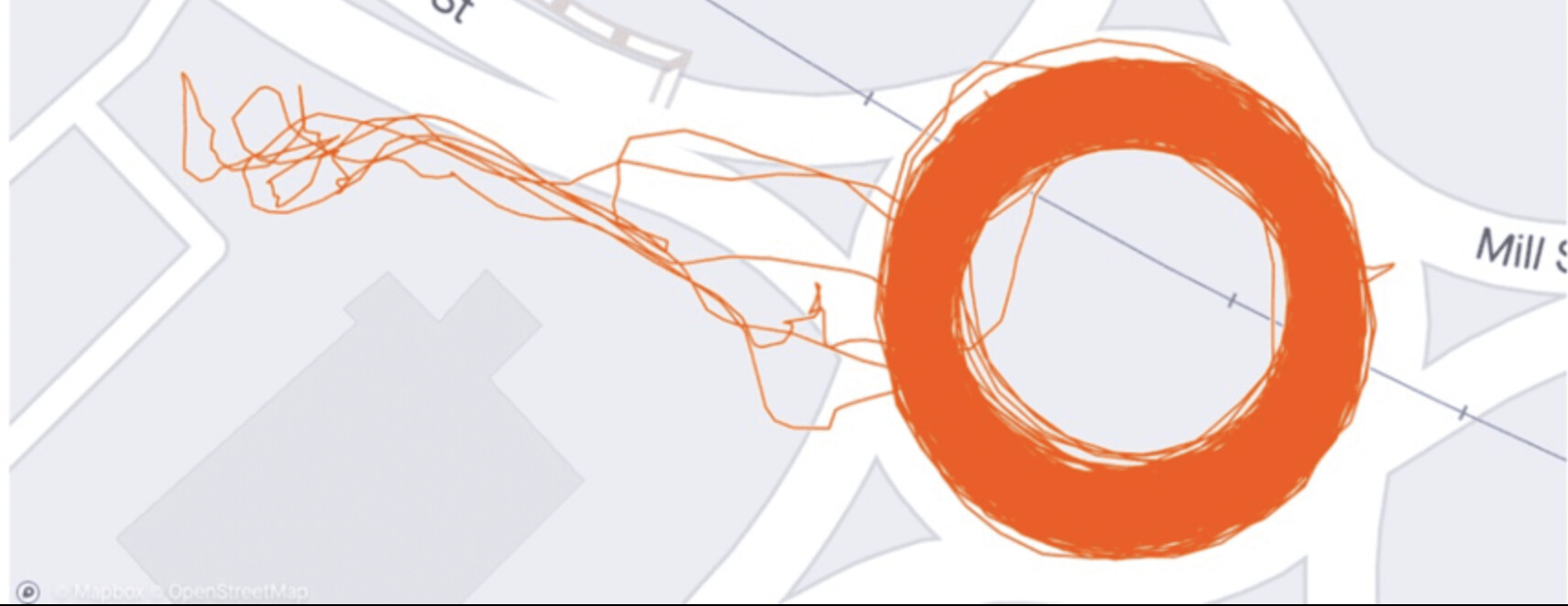
About halfway through the run, he considered changing directions, but both his legs were equally sore. “They say running the same direction on an athletics track is bad, since you are constantly favouring one side… this had to be worse,” says Dobson.Telling your body to constantly turn right over six hours is mentally exhausting, but listening to music and podcasts helped Dobson get into a rhythm.Dobson has previously dabbled in a few ultras, but only been on trails. He was most impressed by the fact that he didn’t have to “make a pit stop” during his entire run. “All I ate before and during was the animal-shaped Mott’s-branded fruit gummies,” he laughs.
(12/03/2022) ⚡AMPby Running Magazine
Western States 100 aims for inclusivity in updated policies for transgender, non-binary, and pregnant athletes
One of the oldest and most respected ultratrail races in the world has taken a further step at making their race more inclusive. On Wednesday morning, the board of Western States Endurance Run (WSER) released policy updates around transgender and non-binary entrants, as well as an updated pregnancy deferral policy.
WSER says that these new rules align with their “goal of ensuring fair and inclusive practices that respect the personal rights and dignity of transgender and nonbinary entrants while preserving the integrity of competition for awards and records.”
In October, Riley Brady became the first ever non-binary athlete to secure a golden ticket to WSER, finishing second at Javelina Jundred 100-mile race. While Ultrasigup allows runners to choose from three gender categories, it was the first time that Javelina Jundred organizers had included a non-binary division. An already urgent and important conversation about the need to expand inclusivity in ultrarunning–and inclusivity in general in the sport–became heightened after Brady’s remarkable performance.
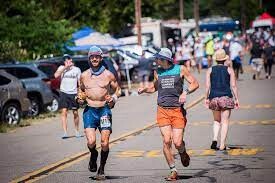
In an article Brady coauthored with coach David Roche in trailrunnermag, Brady explains: “Leading up to Javelina, I had emailed the race directors to inform them that I was seeking a Golden Ticket, which the race organization asks you to do. On my Ultrasignup page, I have indicated my gender as ‘nonbinary’ and my division as ‘female.’
As this was the first year Javelina had a non-binary division, the live results updates defaulted to the gender category. “As I understand it now, that misunderstanding may have contributed to some confusion online after the race, even as I emailed them in advance and followed the rules at every step,” shared Brady.
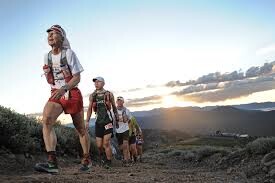
While WSER already had policies in place for transgender athletes, they have now clarified and updated those regulations, as well as added clear rules for non-binary entrants and an updated and more inclusive pregnancy deferral policy.
Updates for transgender athletes
Transgender women can register to compete in the female category, provided they have been undergoing continuous, medically supervised hormone treatment for gender transition for at least one year prior to the race, or in the male category with no restrictions.
Transgender men can register to compete in the male or female category, unless they are undergoing hormone treatment related to gender transition that includes testosterone or any other banned substance in which case they must register in the male category.
Policy for non-binary athletes
During registration all entrants will have the opportunity to select their gender category–male, female, or non-binary. Entrants who select nonbinary will also need to choose a category (male or female) for results and awards.
Non-binary entrants who are male-assigned at birth must select male as their category for results and awards, unless they meet the requirements for transgender women to compete in the female category under this policy.
Non-binary entrants who are female-assigned at birth can choose the female or male category for results and awards, unless they are undergoing hormone treatment related to gender transition that includes testosterone or any other banned substance, in which case they must select the male category.
Pregnancy deferral policy update
In order to defer a race entry due to pregnancy, entrants must submit a pregnancy entry deferral request in writing to the race director no later than one pm on the Friday before the race, as well as provide written confirmation of the pregnancy signed by a physician or medical professional.
The pregnancy deferral policy applies to anyone with a race entry who is pregnant at the time they enter the lottery and gets selected, becomes pregnant after the lottery and prior to race day regardless of how they obtained their race entry (lottery, sponsor etc.), or is an automatic entrant (top ten, golden ticket, etc.) and becomes pregnant or gives birth after obtaining their race entry and prior to race day.
(12/01/2022) ⚡AMPby Keeley Milne

Western States 100
The Western States ® 100-Mile Endurance Run is the world’s oldest and most prestigious 100-mile trail race. Starting in Squaw Valley, California near the site of the 1960 Winter Olympics and ending 100.2 miles later in Auburn, California, Western States, in the decades since its inception in 1974, has come to represent one of the ultimate endurance tests in the...
more...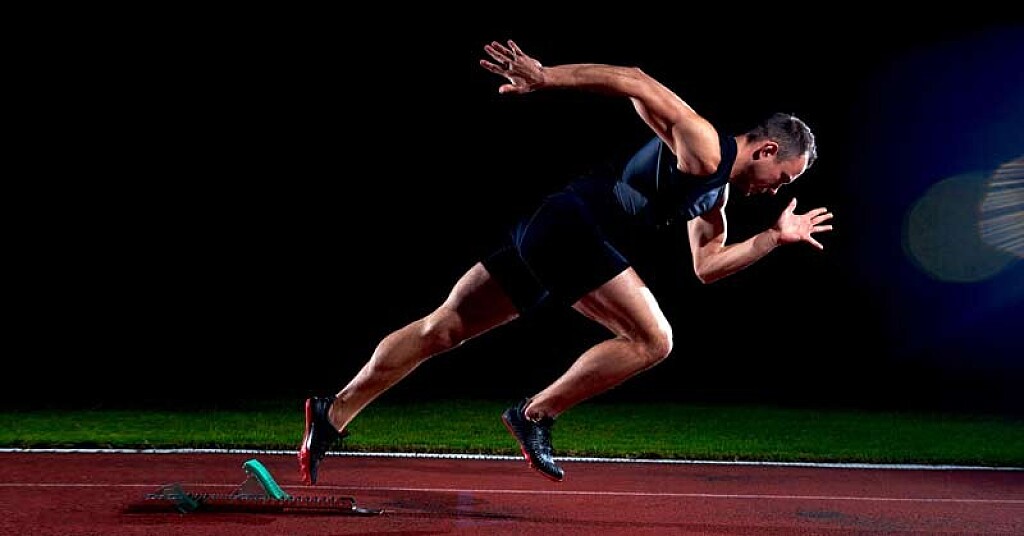
Understanding the basics of speedwork to improve your racing pace
Speedwork is one of those words runners toss about while meaning different things. It encompasses a variety of workouts and has a range of physiological and mental benefits, and there’s an entry point for every runner. Here’s what you need to know about speedwork, and why it should be a regular part of your running repertoire.
Whether you are training for a 5K or a marathon (or even an ultra), speedwork should be a component of your weekly mileage. The benefits of speedwork are well-researched and multifaceted.
What is speedwork?
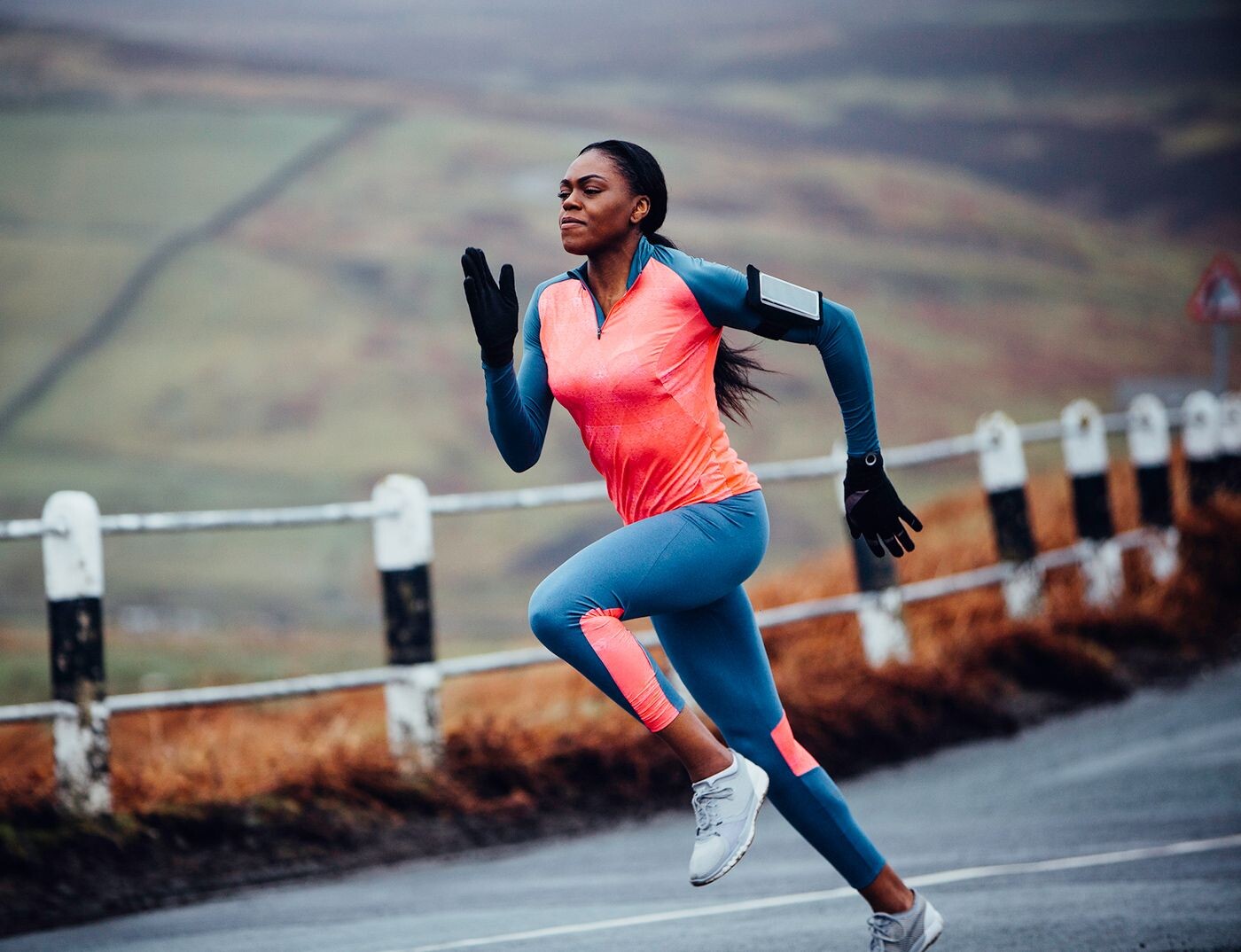
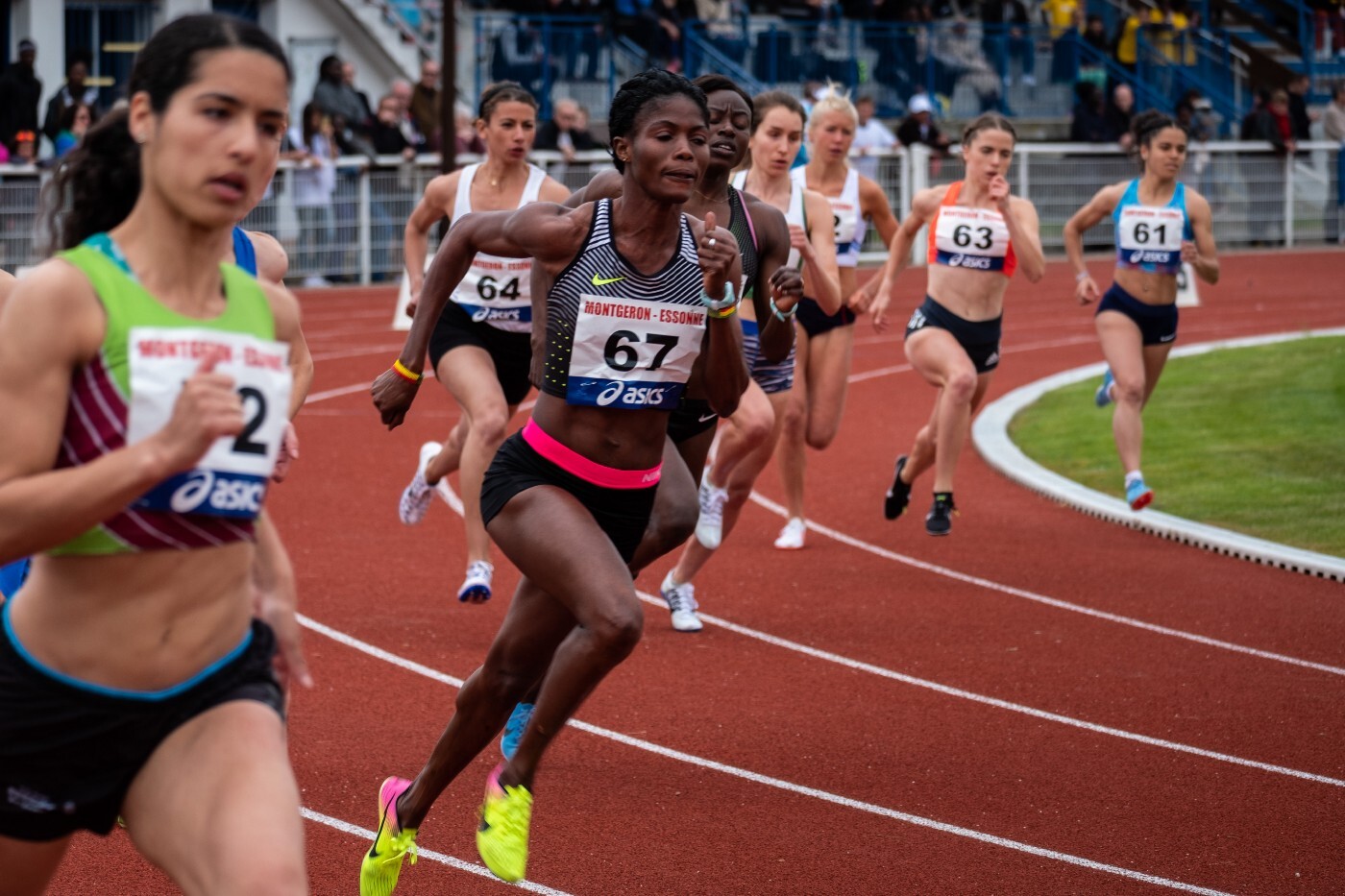
Speed training (when done in interval sessions) involves running multiple bouts of certain distances at high intensities with recovery in between. Intervals (or repeats) can range from 15 seconds to 20 minutes (or even longer), depending on what distance you’re training for. Tempo runs, fartlek workouts and accelerations can all serve as different forms of speedwork.
While the majority of your running should be easy, at least one workout a week should include something more challenging. Legendary coach and author Jack Daniels writes in Daniels’ Running Formula that it’s always important to know the purpose or intention of each workout. Regardless of what it’s called, if the purpose is to improve speed, you’re doing speedwork.
The overload principle
The overload principle is the idea that regular exposure to a specific exercise will enhance certain physiological functions, and in doing so, elicit a training response: your fitness improves. If you run at faster speeds, even for very brief periods, your body will learn and adapt, and you will become stronger and faster. This is the basis of speedwork or any training effect you may be working toward while you run.
What happens during speedwork
During speed sessions, our body is forced to recruit more muscle fibres to provide aerobic energy. The result–running economy, or how efficiently your body is able to use oxygen at a certain pace, improves.
Your body will also increase the production of myoglobin during fast workouts. Myoglobin helps transport oxygen to the muscles and then to the mitochondria. With increased myoglobin, the higher demand for oxygen is met. Speed training can also improve your anaerobic threshold: the highest exercise intensity that you can sustain for a prolonged period without lactate substantially building up in your blood.
During speed sessions, glycogen is providing upwards of 90 per cent of your energy. When you begin doing speedwork, you’ll burn through that glycogen quickly, but over time your muscles will adapt and store more glycogen for future workouts.
Mentally, speedwork teaches your brain to handle more pressure (easy runs should be low-pressure days) and harder work. As you challenge yourself in workouts, you’ll be better prepared to handle the effort on race day.
Get started today
If you’re thinking about adding some faster running into your program and you’re not sure where to start, simply pick one day per week and do four to eight short, 15-20 second repetitions, either on a flat road or a moderate hill. Better yet, alternate each week between hills and flat ground to give your body an extra challenge. Allow for 40-45 seconds of recovery between harder efforts for recovery, and enjoy the feeling of pushing your body a little harder.
(11/30/2022) ⚡AMP
by Running Magazine
Make a strong, healthy comeback to running with these tips
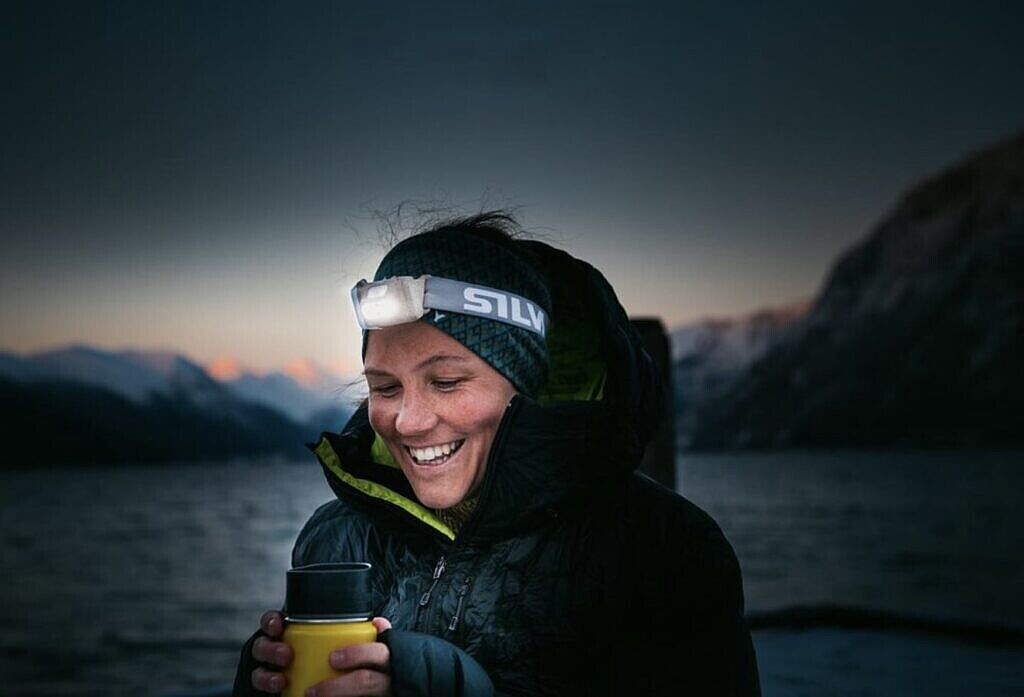
"Hurry slowly," says ultrarunner Emelie Forsberg.
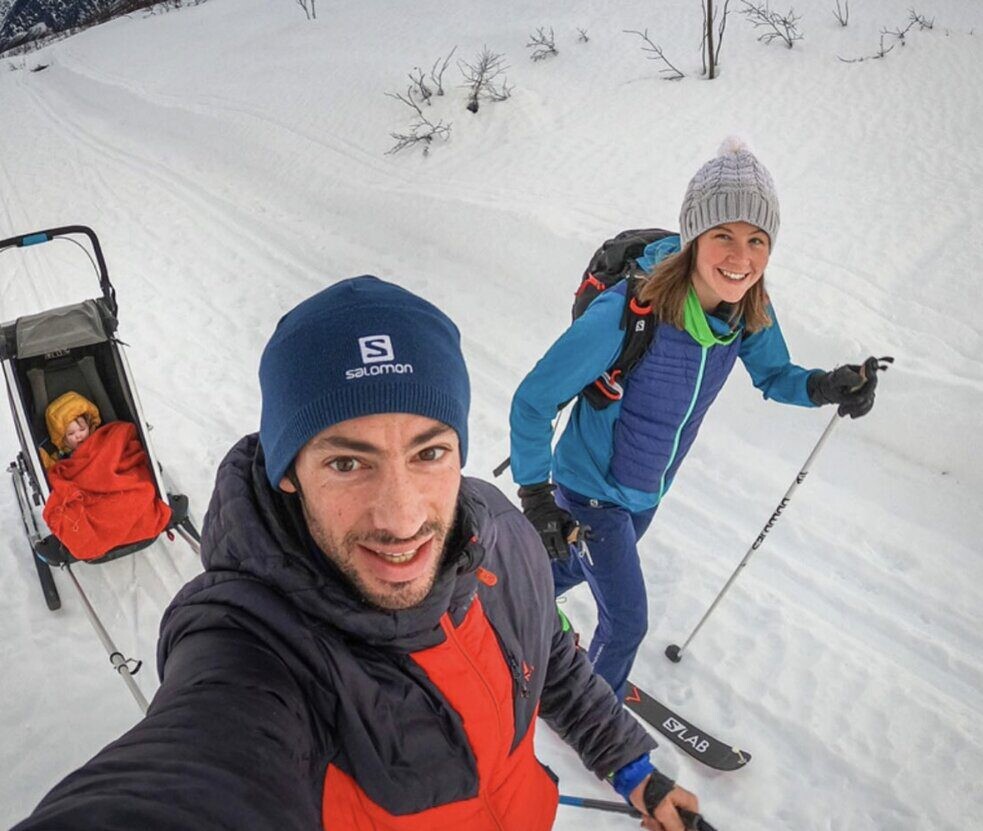
Whether you’re returning from injury or took some time off of running because of low motivation or life stress, we have some tips from pro ski mountaineer and ultrarunner Emelie Forsberg, author of Sky Runner, on making your comeback. Norway-based Forsberg (who is ultrarunning GOAT Kilian Jornet‘s partner) has returned to racing after having two children, navigated knee surgery, and maintained her delight in training the entire time. Follow her lead and make a smooth return to tackling your running goals.
Find your motivation
Forsberg suggests taking a deep mental dive into what you love about running. She notes that your motivation and goals may have changed since you first began, and that’s OK. “Listen to your body and adjust your training according to the new circumstances,” she says.
When I went through a stressful period, I had trouble focusing on anything other than the negative: I was fitting in less mileage and running more slowly than I had ever before. Reminding myself that running and moving my body in general (walking was good, too) helped me stay healthy mentally was a great way to adjust my focus, and I was able to move through that period without being too hard on myself.
Build endurance through adventure
Forsberg says she loves taking a day to run solo between huts in the mountains. While that might be a bit ambitious for most, you can adapt similar practices to incorporate fun adventures into training and keep it fresh. Heading to a new-to-you location to fit in a longer run, or exploring with friends, and pausing for a fun lunch can be great ways to keep your journey back to peak form gentle and enjoyable.
Forsberg also suggests building endurance through double sessions–but rather than doing double runs, she will ski for part of the day, then switch to running. “The body is already tired, but you end up using different muscles,” she explains. “The training is gentle as your body is tired, but not from running, so your running muscles are still fresh.
Alternate your training
Not feeling like getting out for your usual run? Forsberg says to skip it. “Do something else instead: yoga, aerobics, dance, ice skating, cycling, boxing–the list is endless.” Removing some of the pressure you put on yourself to follow your plan and moving your body in other ways will keep you feeling fresh and motivated.
Returning to running after some time off can be challenging, and navigating the challenges with a mindset focused on seeking joy, and accepting and having fun in the process will make the time fly by and bring healthy nuance to the way you view your training.
(11/28/2022) ⚡AMPby Keeley Milne
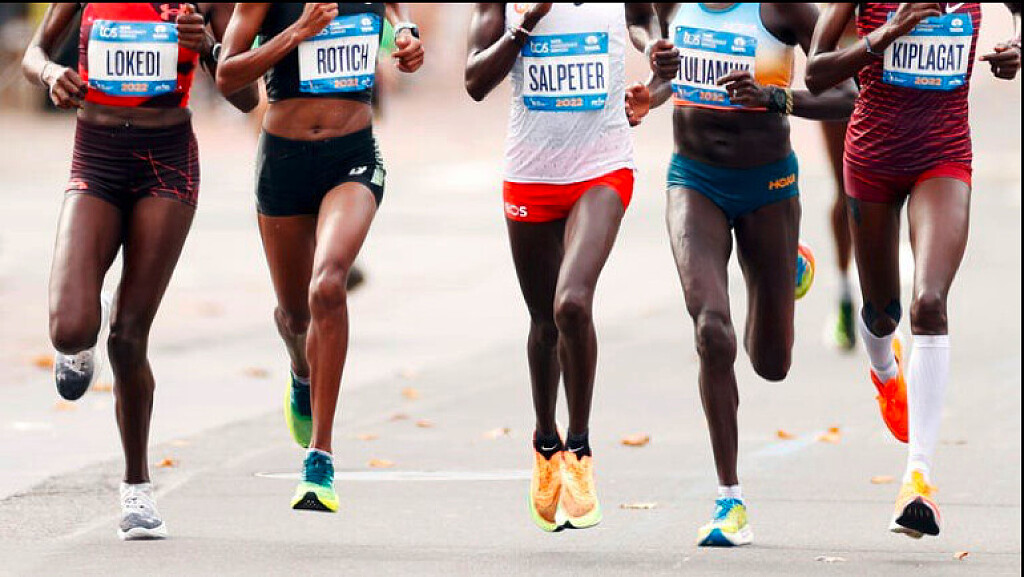
Who Wore Which Shoes at the New York City Marathon?
The running shoe hype train was high in New York City with a few fast yet-to-be-released shoes in the men’s and women’s elite fields.
For a few miles early in the New York City Marathon, Desi Linden surged into the lead of the women’s elite field. The two-time Olympian and 2018 Boston Marathon champion didn’t think she’d run away and win the race that way, but she was just trying to keep the pace honest.
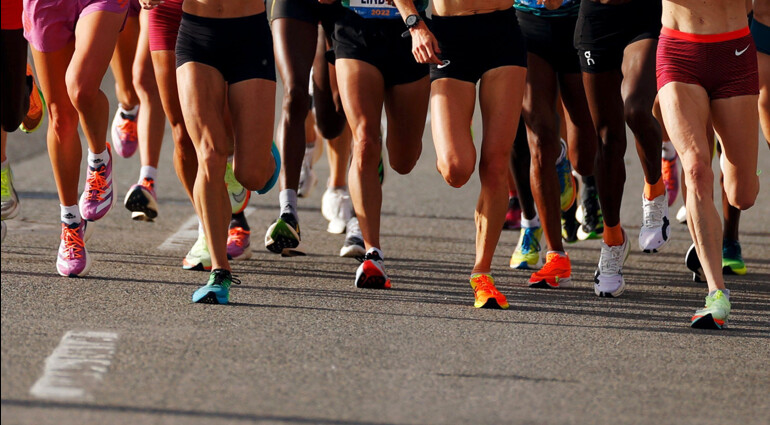
However, hiding in plain sight on her feet as she was off the front of the pack was a yet-to-be-released pair of orange, white and black Brooks prototype racing shoes. A day later, no one is willing to give up any details of the shoe, except that, like all of the other top-tier racing shoes in both the men’s and women’s elite fields, it features a carbon plate embedded in a hyper-responsive foam midsole. And although it’s all in accordance with World Athletics regulations, it won’t be released in Spring 2024 … so we’ll all have to wait a bit to see what that shoe is all about.
Linden’s shoes weren’t the only speedy outliers among the top 25 men’s and women’s finishers. While Nike, Adidas and ASICS shoes were the most prevalent brands among elite runners, there were several shoes that aren’t yet available to the public.
For example, the first runner to cross the finish line of this year’s New York City Marathon, women’s winner Sharon Lokedi, was wearing a pair of Under Armour Velociti Elite shoes. That’s notable for several reasons—because it was Lokedi’s first marathon, because the shoe won’t become available until early 2023 and because it’s the first podium finish at a major international marathon for a runner wearing Under Armour shoes.
There were also three pairs of yet-to-be-released Hoka Rocket X 2 shoes on the feet of three Hoka NAZ Elite runners — two of whom set new personal best times, Aliphine Tuliamuk (7th, 2:26:18) Matthew Baxter (12th, 2:17:15). Those fluorescent yellow shoes with orange, white and blue accents and blue laces were on the feet of Hoka pros at the Boston Marathon in April and Ironman World Championships in Hawaii in October, but they won’t be released to the public until late February or early March.
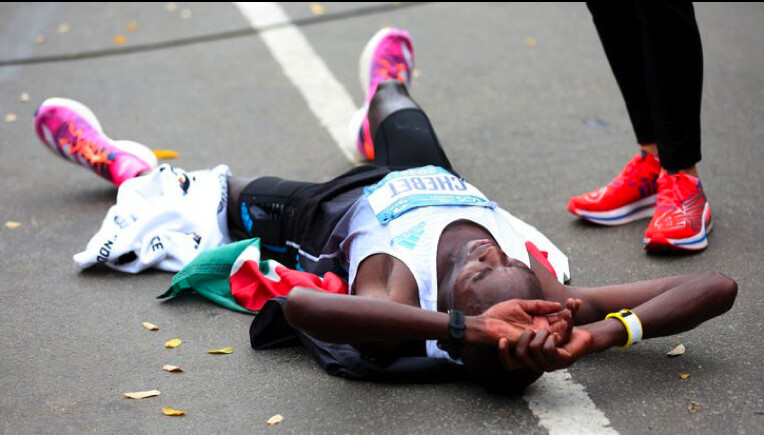
Meanwhile, the winner of the men’s race, Evans Chebet, was wearing a pair of Adidas Adizero Adios Pro 3, a shoe worn by four other runners in the top 25 of the men’s race and six among the women’s top 25, making it the second most prevalent model among the elites. Oddly, that was the same shoe worn by Brazil’s Daniel do Nascimento, who went out at record-setting sub-2:03 pace on his own, only to crumple to the ground at mile 21 after succumbing to fatigue and cramping.
The most common shoe among the top finishers was the Nike ZoomX Vaporfly Next% 2, which was on the feet of 11 of the 50 runners among the women’s and men’s top 25 finishers. There were eight runners wearing either the first or second version of the ASICS MetaSpeed Sky.
Six runners wore Nike Air Zoom Alphafly Flyknit shoes, three wore Nike Air Zoom Alphalfy NEXT% 2. There were two pairs of On Cloudboom Echo 3 in the field, including those worn by Hellen Obiri who finished sixth while running a 2:25:49 in her marathon debut, while three runners wore Puma Fast R Nitro Elite.
And what about actor Ashton Kutcher? He wore a pair of purple Nike Air Zoom Alphafly NEXT% Flyknit shoes and finished in a very respectable 3:54:01.
Matt James, the former lead of the Bachelor, finished in 3:46:45 with Shalane Flanagan as his guide wearing a pair of New Balance FuelCell Comp Trainer shoes. Flanagan wore Nike Air Zoom Alphafly Next% Flyknit shoes, as did Meghan Duggan, an Olympic gold medalist hockey player who ran a solid 3:52:03. Lauren Ridloff, actress from “The Walking Dead,” ran in a pair of Brooks Glycerin 20 and finished in 4:05:48, while Chelsea Clinton, daughter of Bill and Hillary Clinton finished in 4:20:34 wearing a pair of Brooks Ghost 14 and Tommy Rivers Puzey (aka “Tommy Rivs,” a former elite runner who survived a deadly bout of cancer in 2020, wore a pair of Craft CTM Ultra Carbon Race Rebel and finished in 6:13:54.
Here’s a rundown of what was on the feet of the top 25 women’s and men’s finishers in the Big Apple.
1. Sharon Lokedi (Kenya) 2:23:23 — Under Armour Velociti Elite
2. Lonah Salpeter (Israel) 2:23:30 — Nike ZoomX Vaporfly Next% 2
3. Gotytom Gebreslase (Ethiopia) 2:23:39 – Nike ZoomX Vaporfly Next% 2
4. Edna Kiplagat (Kenya) 2:24:16 — Nike ZoomX Vaporfly Next% 2
5. Viola Cheptoo (Kenya) 2:25:34 — Adidas Adizero Adios Pro 3
6. Hellen Obiri (Kenya) 2:25:49 — On Cloudboom Echo 3
7. Aliphine Tuliamuk (USA) 2:26:18 — Hoka Rocket X 2
8. Emma Bates (USA) 2:26:53 — ASICS MetaSpeed Sky+
9. Jessica Stenson (Australia) 2:27:27 – ASICS MetaSpeed Sky
10. Nell Rojas (USA) 2:28:32 — Nike Air Zoom Alphafly Flyknit
11. Lindsay Flanagan (USA) 2:29:28 – ASICS MetaSpeed Sky
12. Gerda Steyn (South Africa) 2:30:22 — Adidas Adizero Adios Pro 3
13. Stephanie Bruce (USA) 2:30:34 — Hoka Rocket X 2
14. Caroline Rotich (Kenya) 2:30:59 — ASICS MetaSpeed Sky+
15. Keira D’Amato (USA) 2:31:31 — Nike Air Zoom Alphafly Flyknit
16. Des Linden (USA) 2:32:37 — Brooks Prototype
17. Mao Uesugi (Japan) 2:32:56 — Adidas Adizero Adios Pro 3
18. Eloise Wellings (Australia) 2:34:50 — Adidas Adizero Adios Pro 3
19. Sarah Pagano (USA) 2:35:03 — Adidas Adizero Adios Pro 3
20. Grace Kahura (Kenya) 2:35:32 — Nike ZoomX Vaporfly Next% 2
21. Annie Frisbie (USA) 2:35:35 — Puma Fast R Nitro Elite
22. Molly Grabill (USA) 2:39:45 — Nike Air Zoom Alphafly NEXT% Flyknit
23. Kayla Lampe (USA) 2:40:42 — ASICS MetaSpeed Sky+
24. Maegan Krifchin (USA) 2:40:52 — Adidas Adizero Adios Pro 3
25. Roberta Groner (USA) 2:43:06 — Nike Air Zoom Alphafly NEXT% 2
1. Evans Chebet (Kenya) 2:08:41 — Adidas Adizero Adios Pro 3
2. Shura Kitata (Ethiopia) 2:08:54 — Nike ZoomX Vaporfly Next% 2
3. Abdi Nageeye (Netherlands) 2:10:31 — Nike ZoomX Vaporfly Next% 2
4. Mohamed El Aaraby (Morocco) 2:11:00 — ASICS MetaSpeed Sky+
5. Suguru Osako (Japan) 2:11:31 — Nike ZoomX Vaporfly Next% 2
6. Tetsuya Yoroizaka (Japan) 2:12:12 — Nike ZoomX Vaporfly Next% 2
7. Albert Korir (Kenya) 2:13:27 — Adidas Adizero Adios Pro 3
8. Daniele Meucci (Italy) 2:13:29 — ASICS MetaSpeed Sky+
9. Scott Fauble (USA) 2:13:35 — Nike Air Zoom Alphafly NEXT% 2
10. Reed Fischer (USA) 2:15:23 — Adidas Adizero Adios Pro 3
11. Jared Ward (USA) 2:17:09 — Saucony Endorphin Pro 3
12. Matthew Baxter (New Zealand) 2:17:15 — Hoka Rocket X 2
13. Leonard Korir (USA) 2:17:29 — Nike ZoomX Vaporfly Next% 2
14. Matthew Llano (USA) 2:20:04 — Under Armour Velociti Elite
15. Olivier Irabaruta (Burundi) 2:20:14 — On Cloudboom Echo 3
16. Hendrik Pfeiffer (Germany) 2:22:31 — Puma Fast R Nitro Elite
17. Jonas Hampton (USA) 2:22:58 — Adidas Adizero Adios Pro 3
18. Alberto Mena (USA) 2:23:10 — Nike ZoomX Vaporfly Next% 2
19. Jacob Shiohira (USA) 2:23:33 — Nike Air Zoom Alphafly Flyknit
20. Edward Mulder (USA) 2:23:42 — Nike Air Zoom Alphafly Flyknit
21. Jordan Daniel (USA) 2:24:27 — Nike ZoomX Vaporfly Next% 2
22. Nathan Martin (USA) 2:25:27 — ASICS MetaSpeed Sky+
23. Jeff Thies (USA) 2:25:45 — Nike Air Zoom Alphafly NEXT% 2
24. Shadrack Kipchirchir (USA) 2:28:15 — Puma Fast R Nitro Elite
25. Abi Joseph (USA) 2:29:16 — Nike Air Zoom Alphafly Flyknit
(11/27/2022) ⚡AMPby Outside
Take a Sneak Peek into 'Born to Run 2'
Thirteen years after the publication of Christopher McDougall's popular book, Born to Run, the author teams up with renowned running coach Eric Orton for Born to Run 2: The Ultimate Training Guide, a fully illustrated, practical guide to running for everyone from amateurs to seasoned runners, about how to eat, race, and train like the world's best. Born to Run 2 will be available on December 6, 2022, but you can read this excerpt from the book.
Chapter 8: Form - The Art of Easy

Eric promised he could teach running form in ten minutes. If I had to estimate, I'd guess he was miscalculating by a factor of at least 7,000 percent, so I subjected his proposition to lab testing and gave it a try myself:
I hit Pause and checked my watch. Then I tried it again. Each time, I found Eric's estimate to be wildly exaggerated. It wasn't even close to ten minutes. More like five.
One song. One wall. Three hundred seconds. If someone had only shared this secret with Karma Park, it could have saved her a world of misery.
Karma was such a disaster, the Navy honestly couldn't tell if she was a terrible runner or a terrific actor. How she even made it into boot camp was a mystery.
The strange thing was, running was her only weakness. Chuck her out of a boat at sea? No problem. Pull-ups, push-ups, crunches? Piece of cake. Karma was a competitive swimmer and varsity wrestler growing up, so two-hour workouts were in her blood. But ask her to run a mile and a half? In under thirteen minutes? Not a chance. Over and over she tried, and every time she ended up walking, grabbing her ribs from stitches and wincing from aches in her legs.
"I'm pretty sure the recruiter fudged the numbers on my Physical Readiness Test so she could get me in," Karma believes. "I finished the run and thought, Oh crap, I'm a minute too slow, and she's like, 'No, no, you're good.' "
When Karma got to basic training, she gritted her teeth and did her best. The Navy was her ticket to a dream life, so there was no way she was giving up. Karma was twenty-five at the time, with a wife in law school and hopes of becoming a surgeon. The surest path toward financing their future was a career in the military. Besides, she had a debt to pay back. Karma came to America from South Korea at age eleven, and while, yeah, maybe Alabama wasn't the most welcoming place for a foreign kid with budding gender issues, Karma was still deeply grateful for the life her family was able to create there.
"I really wanted to serve this country," she says. "But in boot camp I was in and out of sick bay all the time." Karma chanted the drill instructors' mottoes to herself-Pain is only skin deep! Heel to toe! Heel to toe!-but the harder she pushed, the more she broke down. "At first maybe they were checking that I wasn't dogging it," Karma recalls. "I can see how I would be suspected because I feel that other recruits faked it to get out of running, but I was in so much pain, they knew something else was going on."
Finally, Navy doctors diagnosed Karma with chronic hip displacement. She was ordered to report to the long-term sick bay, where she'd be stuck for as long as it took-a month, six months, a year-for her to either heal or quit. Those were her options: get better, get faster or get out.
Karma was crushed, but privately vindicated: ever since she was young and her mom would sign the whole family up for local 5Ks as a way of assimilating into their new home, Karma knew she couldn't run. "My dad and I would walk at the back of the pack, and I thought, This is the most ridiculous thing ever. We have cars and bikes, why are we running? I was really fit in all the other aspects of PE, but with running, I tried and tried and never got any better."
Back in civilian life, Karma struggled. She put her own education on hold and began managing a Subway so her wife could finish law school. She began putting on weight, but when she tried to exercise, her old leg injuries flared up and she finally discovered the real cause of her pain was rheumatoid arthritis. The medication made her lethargic and bloated, and her body ached so badly she needed a cane to walk.
Karma was in a bad spiral that nothing could stop. Except her wife's lover.
"My wife had an affair with a guy who was really fit," Karma says. "When I confronted her, she told me I was fat. That hit me really hard." So hard that after she and her wife separated, Karma decided to punish herself with the thing she detested most. "I decided to drown my emotional pain by subjecting myself to physical pain," she says. "When I left the Navy I swore off running-I hate it hate it hate it, never running again. This time, I decided to run myself ragged into an early grave. I hated myself and hated running, so this is what I'll do."
For once, Karma's injuries came to the rescue. Her legs seized up before her heart, and while she was searching for a new way to beat on herself, she had the enormous good luck to meet Sheridan. With that amazing woman by her side, parts of Karma that she hadn't even realized were hurting began to heal. For the first time, she had the confidence and support to face her gender identity and begin transitioning to the self that had always been buried.
She also resolved, once again, to get back into shape.
If you're keeping score at home, by now Karma has struck out three times as a runner. Over the years, I've heard a lot of stories like this from busted ex-runners-and lived one myself-but this is the first instance where I thought, okay, maybe it's time for the mercy rule to kick in and let it go for good. But against those odds, Karma stepped up again. When Sheridan gave birth to their first son, Karma set her jaw and decided their baby wasn't going to grow up with a parent hobbled with a cane or gone before their time.
"That's how I began my journey into learning how to run properly," she says.
This go-round, Karma attacked the problem from a different angle: What if her brain was the problem and not her body? Karma is a math whiz and comes from a medical family, so she was a little annoyed at herself for not realizing sooner that if your equation keeps giving you the wrong result, adding the same numbers isn't going to help. Rather than running harder, she thought, maybe there was a way she could run smarter.
Her eureka! moment occurred soon after, when she noticed that her legs hurt more on downhills than ups. That's when it hit her: What if she treated the entire planet like a hill? Get up on her forefoot, in other words, instead of heel-toe, heel-toeing it like she'd always been told.
"When I mentioned this to a friend, she immediately said, 'Haven't you read Born to Run? That's what it's all about.'"
Karma picked up a copy, and there, on page 181, she found the role model who would change her life. Not Ann Trason, the courageous science teacher who nearly outran a team of Raramuri runners in the Leadville Trail 100. Not Scott Jurek, the gracious and unbreakable hero who rose from a rough Minnesota childhood to become the greatest ultrarunner of all time. Karma didn't even see herself in Jenn Shelton, that patron saint of human fireballs, or Caballo Blanco, the lovelorn loner who used running to heal a broken heart.
Nope. When Karma looked into the mirror, grinning back at her was Barefoot Ted.
I'm not happy about this now, but when Caballo Blanco and I first met Ted McDonald, we were ready to Rock-Paper-Scissors over who was going to clunk him on the head and chuck him into the canyon. Ted likes to say "My life is a controlled explosion," which only confirmed my conviction that he has no idea what "control" means.
I was slow to see what Jenn and Billy Bonehead and Manuel Luna liked about Ted. It took a few clashes before I finally got it, including a toe-to-toe shouting match in the middle of Death Valley, where I threatened to leave Ted by the side of the road to die while he was yelling in my face, "I don't care how big you are! I'll fight you!"-at the very moment, by the way, when we were supposed to be crewing for Luis Escobar in the Badwater Ultramarathon.
But I couldn't miss the fact that lots of other people really enjoy him. Ted is a lot on a slow day, but he's also a huge-hearted friend and his own kind of genius. When I sent word to Ted that a group of my Amish ultrarunning buddies were traveling through Seattle en route to a Ragnar Relay, he immediately threw open the doors of his Luna Sandal shop and made them at home in an improvised bunkhouse. Nearly every year, Ted travels back down to the Copper Canyons and hands a wad of cash to Manuel Luna, the Raramuri artisan who taught him how to make huaraches. Not because they're partners; because they're friends.
Still, it was gratifying to see that Luis had as much steam shooting out of his ears as I did after we invited Ted to join us in Colton for our photo shoot. For forty-eight hours we couldn't get a yes or no out of the guy, which would have been fine if he'd just stayed silent as well. Instead, Luis and I kept getting cryptic little teaser texts, like digital art smiley faces that dissolved from our phones a few seconds after appearing. It felt less like waiting for a friend to show up (or not) and more like being stalked by the Zodiac Killer.
Then lo and behold, an Amtrak train pulls into San Bernardino station and out pops Barefoot Ted, a big Santa Claus backpack full of sandal-making supplies over his shoulder. He'd spent six hours getting there, and immediately began hand-crafting a gorgeous pair of custom sandals for each of our volunteer models. While his hands were busy, so was his mouth: Ted cut loose with a thirty-minute spoken-word performance that left us all slack-jawed in astonishment as he prattled on, fluently and kind of brilliantly, about everything that had been rattling around inside his skull while he was captive on the train. ("Turning everything you see into food is a superpower. Do you have it?" is the only line I remember.) Soon after finishing a dozen sandals he was gone, grabbing a lift back to Santa Barbara that same night because, unbeknown to us, he'd had a pressing commitment there all along. What a guy.
As a runner, Ted was a true revolutionary. He was so far ahead of the pack when it came to minimalism, the rest of the country took years to catch up. Not that he didn't make a compelling argument from the start. It's just that in typical Ted fashion, the story took a direction only a man who calls himself The Monkey would follow.
If you recall, Ted only began running in the first place because he dreamed of becoming America's Anachronistic Ironman. Which meant, for reasons known only to Ted, he wanted to spend his fortieth birthday completing a full triathlon (2.4-mile ocean swim, 112-mile bike ride and 26.2-mile run) but only using gear from the 1890s. If Ted has one quality greater than his raw athleticism it's his absolutely bulletproof self-confidence, so when he found he could handle the swimming and cycling but not the running, the problem couldn't be his body: it had to be the running.
Close: it was actually the running shoes. The first time Ted ran barefoot, his planetary axis shifted. "I was totally amazed at how enjoyable it was," Ted says. "The shoes would cause so much pain, and as soon as I took them off, it was like my feet were fish jumping back into water after being held captive."
On a barefooter's blog, he found the Three Great Truths:
Change the way you run That was the opposite of everything Ted had ever been told about running, but everything Ted had ever been told about running wasn't working. Besides, it immediately made sense. No decent basketball player just heaves the ball in the air and hopes for the best. No serious tennis player slashes their racket around like a club. Ted had spent a few years as a teacher in Japan, and he knew that sushi chefs and martial artists spend years perfecting the basic steps of their craft. In the world of movement, form and technique reign supreme.
Ted didn't know any barefoot runners in person, only online, so he set off on this quest for reinvention on his own. He found himself in the same predicament as a Czech soldier he'd heard about who, during the Second World War, spent his long nights on guard duty dreaming of Olympic glory. Rather than stand and shiver, the soldier began running in place, lifting his knees high to clear the snow and, to avoid being heard, landing as silently as possible in his heavy boots.
Back home after the war, the soldier replaced slippery snow with wet laundry: he washed his clothes by running on top of them in a bathtub full of soap and water. (Get a load of that, Mr. 100 Up: one sloppy stride in a sudsy tub and you're not starting over, you're heading to the emergency room.)
Those weird home experiments paid off spectacularly. Coached only by his own ingenuity, Emil Zatopek pulled off the most stunning track performance in Olympic history: at the 1952 Games, he won gold in all three distance events, including the first marathon he ever attempted.
Despite how fast he ran, Emil took a ton of crap about how awful he looked. Upstairs, Zatopek was a horror. He'd get this grimace on his face, one sportswriter said, "as if he'd just been stabbed through the heart." Zatopek's head lolled around and his hands clawed his own chest like he was birthing an alien baby through his rib cage. But what sportswriters missed was that below the waist, Zatopek was a machine: rhythmic, precise, impeccable.
Ted never did get around to his Anachronistic Ironman-not yet, at least-but otherwise, he was unstoppable. Once he realized that running was a skill to be mastered and not a punishment to be endured, he became a Monkey on a mission.
Before long, he'd ripped out a marathon quick enough to qualify for Boston, and then ran Boston quick enough to qualify for the next one, and from there it was onward and literally upward, as he shifted from long roads to high-mountain ultramarathons.
But what Karma envied most wasn't Ted's remarkable twenty-five-hour finish at the Leadville Trail 100, or his out-of-left-field world record for skateboarding (242 miles in twenty-four hours). She didn't care if she ever ran as fast as Ted. She just wanted to be as healthy. She wanted to follow his footsteps from Hurt Ted to Happy Ted.
"I made a conscious decision to fully embrace forefoot running," Karma says.
Maybe embrace isn't the right word. Since May 3, 2014, Karma hasn't missed a single day of running. Every evening, no matter what kind of storm is blowing through Birmingham, Alabama, no matter if she's fighting a cold or dealing with craziness at the medical office she manages, Karma pulls on her sandals and heads out the door.
Her eight-year-and-counting streak began in true Barefoot Ted fashion: bizarrely. Less than a year after changing her form, the woman who swore she'd never run again was bringing home her first marathon medal. Gone was the cane, forgotten was the specter of crippling arthritis. By changing the way she moved, Karma discovered she could change the way she felt. She soon ramped up from a marathon to a 50K, and that's when things took off. The day after that first ultramarathon, Karma decided to test her soreness by jogging an easy two miles. She was surprised to find her legs actually felt better after that run, so she went out again the next day and the next and thus a streak was born.
To maintain her daily running streak, Karma logs at least one mile a day, but that's just her baseline. During her first year of streaking she also tackled three ultramarathons, and then began creating streaks within her streak: she ran five miles a day for a full year, seven miles a day for ten months, and three miles a day for 1,300 days. Despite all these clicks on her odometer, Karma still felt she needed to borrow one more hack from Barefoot Ted: as a reminder to remain smooth and light, she always runs in a pair of his Lunas.
Karma had never actually met Ted in person until the day he hopped off the train in San Bernardino and blew into our photo shoot like a grinning bald tornado. Ted is usually quick on his feet, but when he came eye to eye with Karma, it took him a few beats to get his bearings.
The person who'd reached out to Ted years ago had never felt at home in her body and was facing two frightening transformations. The Karma in front of Ted today had made it through to the other end. In the past, Karma had looked to Ted for hope and guidance. Now, she deserved something very different. Ted understood, and delivered.
"If you have any questions, ask Karma," Ted said, as he addressed the circle of very experienced and accomplished ultrarunners hanging on his every word about the art of minimalist running. "She knows as much as I do."
This is an excerpt from Born to Run 2: The Ultimate Training Guide by Christopher McDougall and Eric Orton, available on December 6, 2022 by Alfred A. Knopf, an imprint of The Knopf Doubleday Publishing Group, a division of Penguin Random House LLC. Copyright 2022 by Christopher McDougall and Eric Orton.
(11/27/2022) ⚡AMP
by Trail Runner Magazine

Tips for Your First Ultramarathon
By definition, an ultramarathon is anything longer than 26.2 miles. Maybe you've run a marathon and you want to a new challenge. Maybe you've never run farther than 13.1. Ultramarathons are just like any other running race--any able body person can complete one. Ultras are becoming more popular every year. Whether it's 50K, 50 miles, 100K, 100 miles or more, here are 10 tips for tackling your first ultramarathon.
Don't Carry Too Much Stuff With You
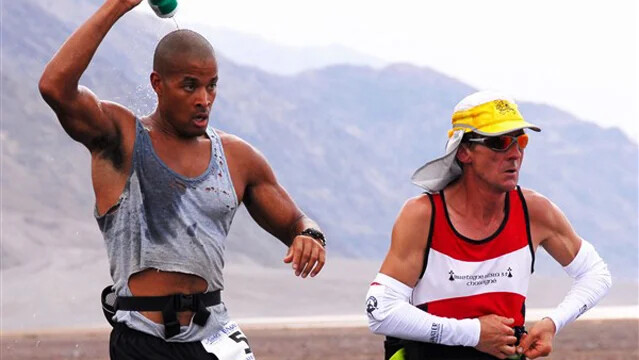
It's tempting to pack everything but the kitchen sink in your hydration vest for those "just in case" moments. But there's no need to carry the extra weight if the aid stations are stocked or you have a crew. Less is best if you can get away with it.
Know the Aid Stations

Knowing how far apart the aid stations are from each other will help you plan if you need to use a hydration vest, a handheld bottle or strictly rely on course aid. Most races also list what will be available for nutrition and hydration at each station. Decide prior to the race if you will be using your own nutrition or hitting up the fuel provided.
Stick With Your Hydration/Nutrition Plan
During your training, practice your hydration/nutrition plan. Finding what works for you prior to race day will help eliminate any surprises. Don't be tempted to change things up when you hear some other runners talking about their nutrition plan. Stick with what works for you. Eat early, eat often and don't stop eating/drinking in the later miles because you think you are almost done. The last thing you need is to bonk a few miles from the finish line. Keep up with your nutrition plan for the duration.
Run by Effort, Not by Pace
There are so many factors that go into your race day pace, like elevation, trail conditions, weather, and terrain that it's best to go by the effort you are putting out rather than what your GPS watch says.
Don't Let Race Day Adrenaline Dictate Your Effort
Just like any race, it's hard not to run fast as soon as it's go time. The adrenaline is pumping, and you are feeling GOOD. That feeling will not last. Sooner or later, those faster miles will catch up with you.
Power Hike the Hills
Want to know a secret? Almost every single person in an ultramarathon walks at some point. Even the winners might do it! Power hiking the hills is a great way to conserve energy. Plus, you most likely will cover the hills quicker by hiking than running.
Run the Mile You Are In
It's easy to let your mind wander to the miles that lie ahead. However, thinking of running 50 miles at one time can seem impossible. Stay present in where you are. Breaking down the race into smaller sections, like aid station to aid station, will make it seem more attainable.
You Will Cycle Through Feeling Good and Not-So-Good Multiple Times
The good thing about the distance in an ultra is that it's long enough to feel good again after feeling bad. Don't feel like the race is over as soon as you start to feel poorly. Assess the situation (usually it's an eating or nutrition issue), and take care of it. You'll probably feel better in a few miles.
Repeat Your Positive Mantras Throughout the Race--Even When You Are Feeling Good
The physical side of running is tough, but the mental side is what's going to get you across the finish line. Having positive mantras on repeat, even when you are feeling good, will keep you mentally in the race. When a negative thought pops up, replace it with a positive one.
Keep Moving Forward
A body in motion, stays in motion, right? Resist the urge to linger at aid stations too long. Grab what you need and keeping moving. The more time you spend sitting or standing still means you are losing the forward momentum to keep going.
(11/26/2022) ⚡AMPby Angela Bakkala
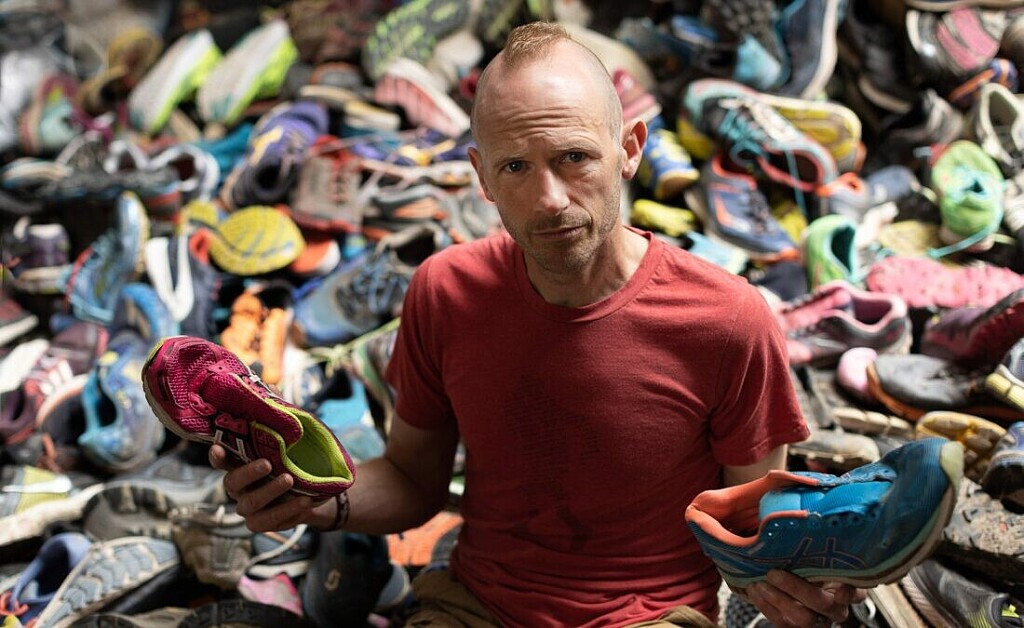
Three things this pro ultrarunner is doing to save the planet
Ultrarunner, coach and activist Damian Hall is taking steps to tackle the climate emergency and has advice for runners who want to do the same. U.K.-based Hall is a record-breaking endurance athlete who holds multiple huge FKTs, including the Cape Wrath Trail, Wainwright’s Coast to Coast and the Pennine Way; he also took fifth at UTMB in 2018.
Hall uses his record attempts to raise awareness about the climate emergency, including taking public transport to races and fuelling without animal products or plastic waste. He collects litter and raises money for Greenpeace on his runs, and has recently written his second book: We Can’t Run Away From This.
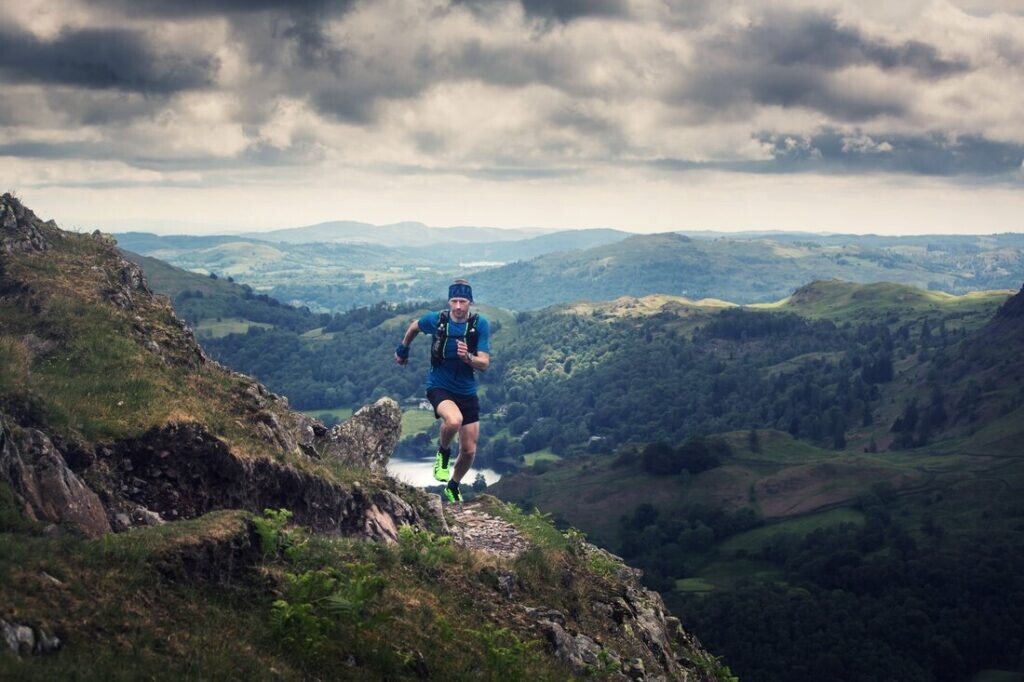
Hall is also co-founder of The Green Runners, a group that strives to inform runners about their impact on the planet (when training, eating and racing) so they can make decisions about how to change their behaviour.
“Though I think individuals should only fuss about their individual CO2e [carbon dioxide equivalent] footprint so much, there are three big areas where we can reduce our impact,” says Hall. Travel, diet and gear (or kit, as Hall calls it) are what Hall calls the big three. Here’s what we can all do.
Limit travel to races
“For most runners and outdoor folk, the largest slice of their individual emissions will be caused by travel, which accounts for one-fifth of global emissions. Flying is the most carbon-intensive thing we can do, Hall recently explained to Adventure Books.
Hall suggests using public transportation as much as possible, but that can be tricky in North America. Public transportation (i.e., trains) is not nearly as accessible in Canada as in Europe, and with many runners living outside of big cities, travel can seem like a necessary evil in order to race.
While carpooling whenever possible helps, I asked Hall for more suggestions around this. “That’s tricky, and I think individuals who already care and are already making sacrifices shouldn’t punish themselves too much further. We should continue to do the things that give us joy, but maybe with a little less harm to the planet where possible,” says Hall.
Hall’s tip: “Nowadays I ask myself: A. Do I really need to do the race? B. If so, what’s the lowest-carbon way I can practically travel there? C. Can I stay longer and/or make more out of the trip? D. Offsetting definitely isn’t the solution, but I do it anyway.”
Eat less meat
“Eating meat is terrible for the planet,” says Hall. “Meat and dairy alone are responsible for 18 per cent of global CO2e, more than travel. Beef is by far the worst offender. This graph turned me vegan,” he adds. “A quarter of our footprint comes from food, and it can be reduced by over 70 per cent simply by cutting out animal flesh and juices.”
What about locally or sustainably-raised meat? Hall says it’s just as bad. “Eating local isn’t usually better environmentally (90 per cent of international food is shipped, which is really efficient). “Food waste is also far more significant than where the food came from and what it’s wrapped in,” he explains.
Buy less gear
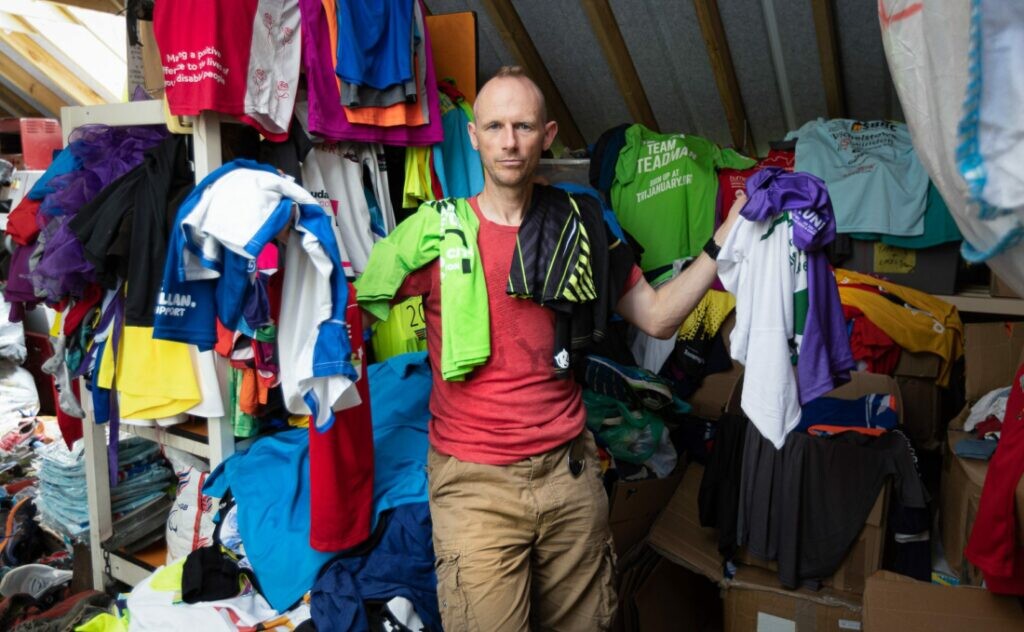
Those shoes you purchased because they were touted as eco-friendly? Hall says they’re part of the problem. ‘The industry excels at “greenwash,” bandying phrases like “eco-friendly” about while pumping out an endless stream of products in what constitutes an overconsumption crisis,” he explains. The running shoe industry is responsible for approximately the same annual emissions as the entire U.K., Hall shares.
“Those shoes are almost all made from plastic (i.e., fossil fuels), almost all are non-recyclable and brands tell us we should bin our daps after 300 miles in case they injure us (which no studies prove),” says Hall. Our running attire is just as bad. “The clothing industry as a whole is responsible for many times more pollution again, possibly as much as 10 per cent of global CO2e,” adds Hall. “And then there’s the large range of environmental and ethical issues around the production process.”
Hall’s tip: “The most sustainable kit is the stuff we’re already wearing. We need to buy less and make it last longer.”
‘To me it’s fairly simple: do your best with the big three: travel, kit and diet. No one is, or can be, perfect. We’re just seeking progress,” says Hall, explaining that we don’t need to entirely give up the things we love. He has one more tip for us–advocate. “Help push for system change. Join protests, vote, email your representatives, push for changes in your local running club or race.”
(11/25/2022) ⚡AMPby Keeley Milne
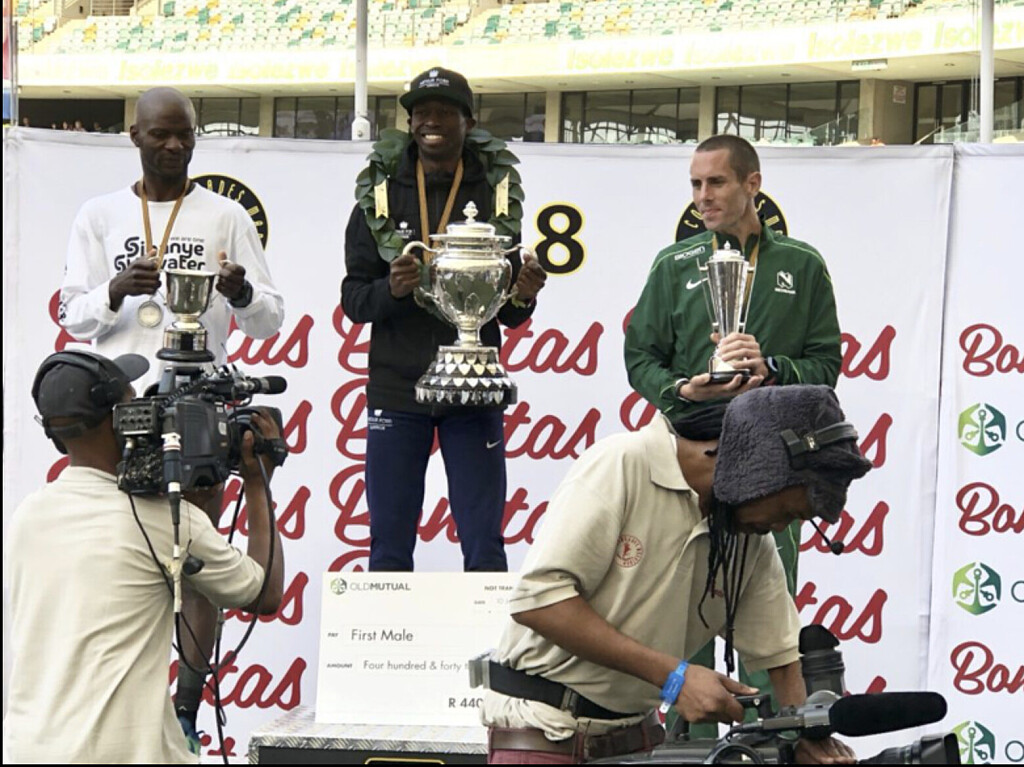
Nine Comrades Marathon runners disqualified for cheating
Nine runners’ results have been disqualified from the 2022 Comrades Marathon following an investigation into alleged cheating during the race.
According to a statement by KwaZulu-Natal Athletics (KZNA), the provincial sport organization, the investigation found that nine athletes did not run the entire point-to-point 90 km course and allowed other athletes to run with their race bibs, while some provided incorrect qualification information.
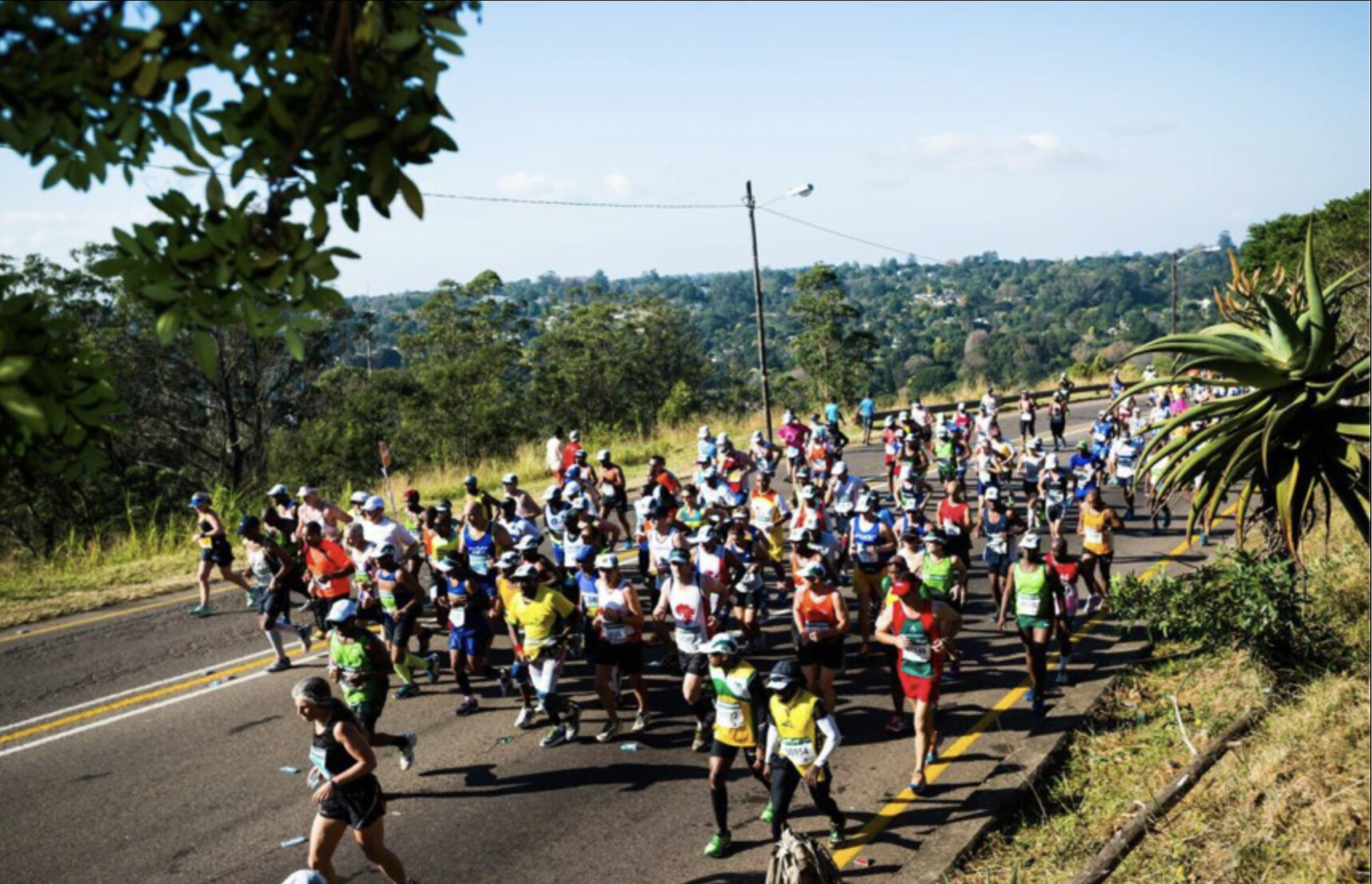
To qualify for the Comrades Marathon, entrants must run a marathon in less than four hours and 50 minutes.
All nine runners are required to return their 2022 Comrades Marathon medal and will be reported to their provincial athletics organization club, which has the right to apply additional disciplinary measures. These runners are prohibited from entering the Comrades Marathon in years to come, according to the Comrades Marathon Association.
According to a statement, this decision is intended to send a clear message to athletes that cheating will not be tolerated: “These investigations are in line with us standing up for the rules of the sport and not condoning cheating in any form,” said KZNA president Steve Mkasi.
Comrades is the largest and oldest ultramarathon in the world, comprising a 90 km route between Pietermaritzburg and Durban, South Africa, and usually alternates directions each year. This year’s race took place on Aug. 28 and was won by a full-time security guard and part-time marathoner, Tete Dijana.
(11/24/2022) ⚡AMPby Running Magazine
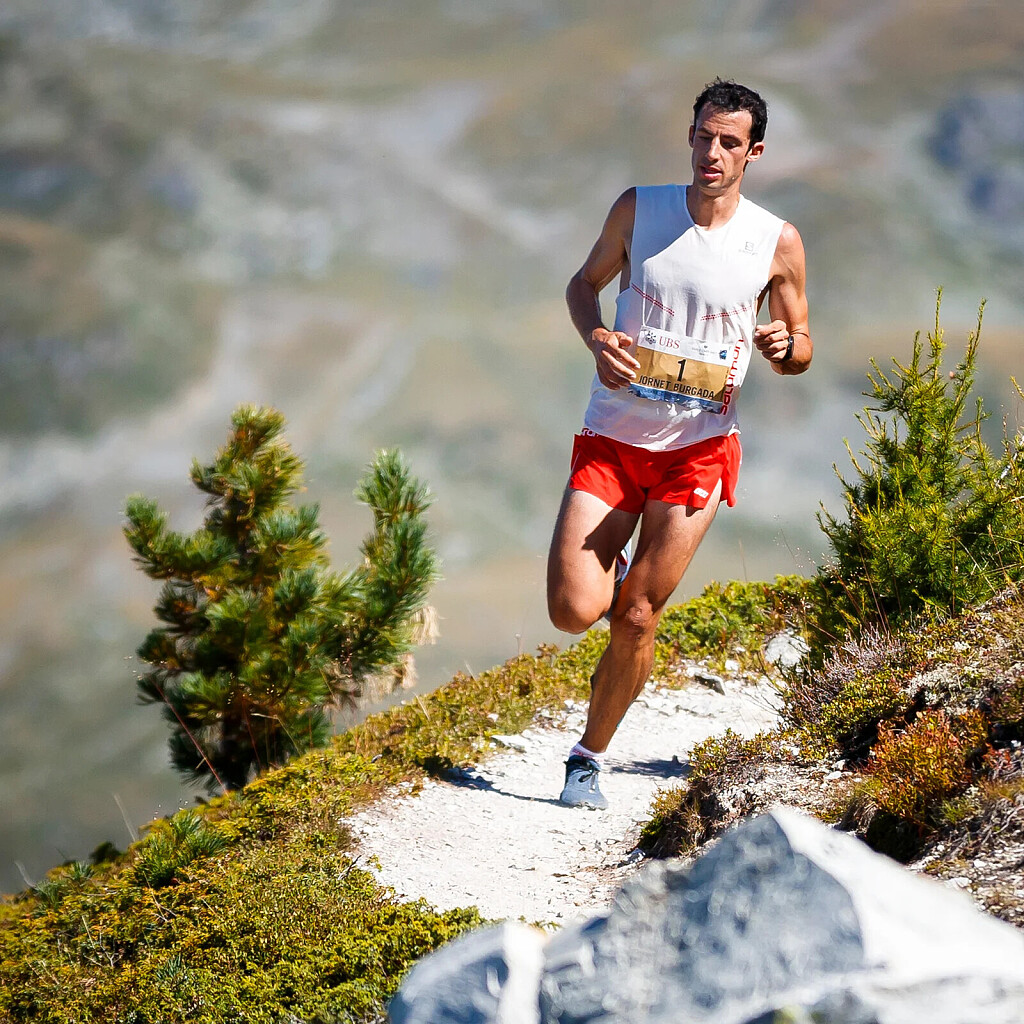
Kilian Jornet’s favorite fuel: you’ll feel like you’re ready to summit Everest
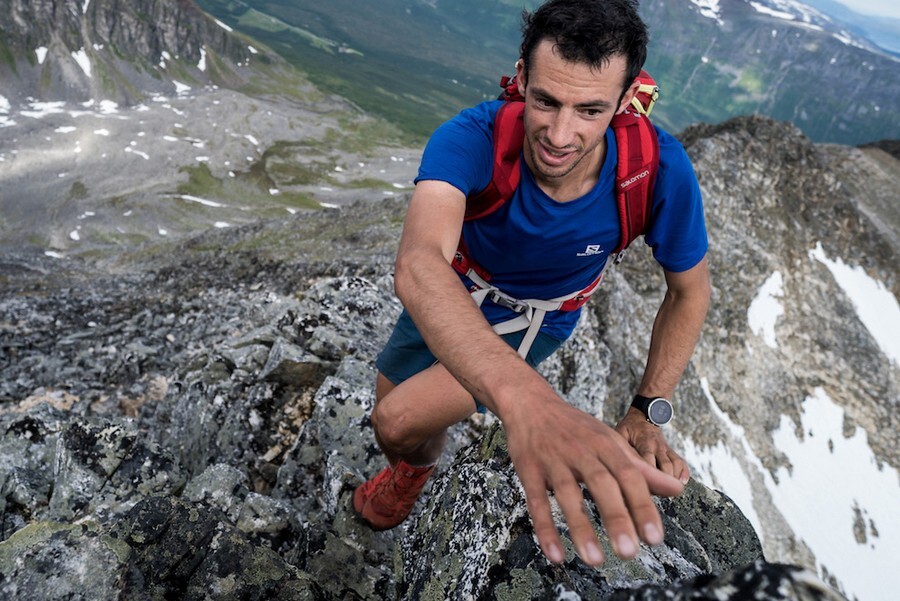
Arguably the GOAT of ultrarunning, 2022 UTMB and Hardrock champ Kilian Jornet lives in Norway with his partner (and fellow pro runner) Emilie Forsberg, where they grow their own vegetables and use them to create nutritious meals. They love these bean and lentil burgers, and you will too–full of protein and adaptable to every season.
Forsberg shares the recipe in her book Skyrunner: the burgers take less than ten minutes to prep, and work as a side or main dish. Forsberg writes: “I can eat these anytime, in summer with a light salad and roasted or grilled root vegetables, or in autumn or winter with tasty mashed potatoes, olive oil and salt.” Forsberg and Jornet eat mostly plant-based meals, and the combo of beans and lentils in these burgers packs a perfect plant-based protein punch.
Emelie’s bean and lentil burgers (makes 12 larger burgers)

Ingredients
1¾ cup cooked black beans
¾ cup cooked green lentils
¾ cup cooked red lentils
1 egg
3 Tbsp cornmeal
½ to 1 finely chopped onion
Salt and pepper
Other spices, like turmeric or chili powder, to taste
Olive oil for frying
Directions
Mix everything in a blender or food processor. Form the batter into burgers; fry in olive oil.
(11/22/2022) ⚡AMPby Running Magazine
How hard should your hard workouts actually be?
Most of us have come across a workout that tells us to ‘run hard’ for a prescribed length of time and wondered what, exactly, a hard effort constitutes. Is it a sprint? 5K pace? A half marathon pace? Should it just feel tough? All of these efforts can seem hard given enough duration. Many runners now follow the general rule of 80/20, but how hard should that 20 per cent actually be?
Like most great running (and life) questions, the answer falls somewhere firmly in the ‘it depends’ realm. Performance coach and author Steve Magness points to philosopher Nassim Taleb’s barbell strategy of economics when he explains that we should spend most of our time on either extreme (where the weight would be on a barbell) and stay away from the middle. In deciding how challenging your workouts should be, the same principle applies.
Eighty per cent of our workouts should be on the low-risk, low-reward side
This area is where consistency comes in (I know, I know, we said we’d talk about hard workouts–bear with me here). Magness has outlined his take on easy vs. hard efforts repeatedly, and his explanation seems to work for most runners, whether you’re training for a 5K PB or an ultra.
You’ll be able to run your hard workouts hard if you keep your easy sessions easy–easy workouts are simple, and you are able to accomplish them regularly without risk of falling apart in the workout. This builds a base, fosters good habits, and the workouts are what Magness calls “safe, consistent, small behavioral changers.”
Avoid the middle area
The middle of the barbell, where you log medium effort and gain medium rewards, should be avoided for the most part. If you’re like most runners, the middle ground is where you’ll naturally try to run, and it takes practice to both run slowly on easy days and put in serious efforts on challenging days.
As a coach, I was taught that the middle ground gives you the least bang for your buck. Running slowly most of the time has a multitude of benefits, allows us to recover quickly and will leave room for us to really push in the hard workouts we do; we follow a hard workout by recovering appropriately (or running easily).
Twenty per cent should be harder; with a few workouts a year extremely hard
Magness explains that the remaining 20 per cent of your workouts, your harder workouts, are tough but doable. For many athletes following a training plan these will make up one to two workouts a week.
Paces and efforts may be described as moderate, medium-hard, or hard, and you should feel like you’re putting in work–for a short interval session, this might mean you’ll feel slightly out of breath.
For a long interval session, this may mean you’re working hard to maintain a slightly faster-than-is-comfortable pace over a 15–20 minute stretch. Getting to know your ‘hard’ efforts takes practice, and it can help to ask yourself (or your coach, if you have one) what the goal or intention behind each specific workout is.
A few times a year, Magness recommends going really hard. “What I’d call a perspective changer, or as my athletes refer to as ‘see god days,'” Magness explains. “During these workouts, we want to go as hard as we can, and if we fail that’s OK. It’s all about seeing where our limits are and pushing our perspective of what is hard.”
By mixing the two extremes, the smaller moderately stressful workouts allow us to cement some of the changes from the perspective-changing workouts. Hard is different for everyone and may be different for you on two separate workout days depending on a multitude of factors (the amount of rest you’ve had, mental stressors, the weather).
You’ll become familiar with how challenging your speedwork should be through practice, and once you’ve experienced a ‘go see God’ workout, you’ll never forget the feeling.
(11/22/2022) ⚡AMPby Keeley Milne
Nervous before your race? Try Christmas music
I know the headline may seem odd, but trust me, it’s like ketchup and pizza–don’t knock it until you try it. Ultrarunner and 24-hour American record holder Nick Coury said on a recent podcast that he always listens to Christmas music before races to help him stay relaxed.
“Not many of you know this but before all my races, I listen to Christmas music,” said Coury. “I find it soothing and that it helps me feel grounded and happy.”
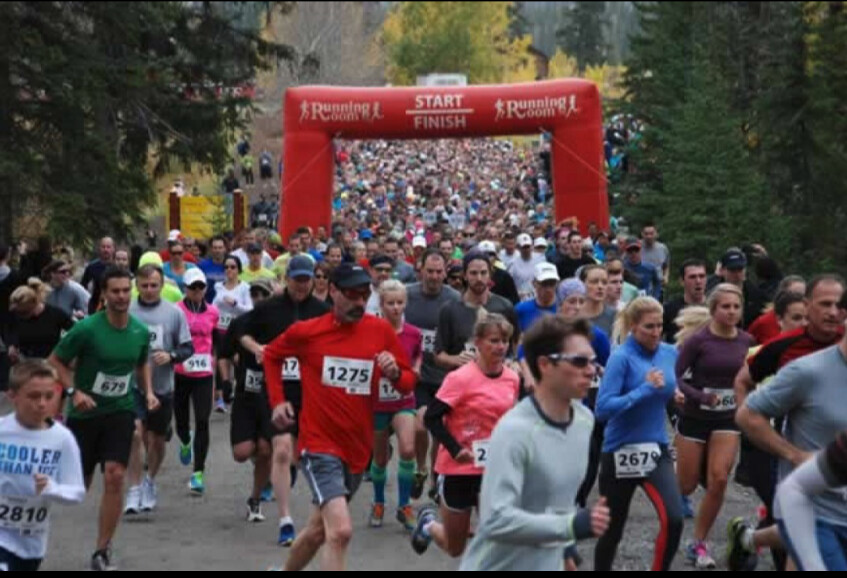
The ultrarunner is something of an authority on some esoteric things, like how to negative-split an ultra, something he attributes his success to being able to do. So we trust him on this.
“It stops my adrenaline from spiking or going out too fast,” said Coury. “It’s put me where I want to be for the first few kilometres of a race.”
At first, like many of you reading this, I thought it was odd. After I gave it a chance on my morning run, I couldn’t agree more. There’s something about Michael Bublé or Bing Crosby’s voice that calms your nerves and helps you feel a little more relaxed.
Research has shown that listening to music can affect the rhythm of your stride and effort level, so it only makes sense that Christmas music would have a relaxing effect due to its slower BPM.
Coury may need to convince me a little more before I start listening to Mariah Carey at my mid-July track meet.
(11/21/2022) ⚡AMPby Running Magazine
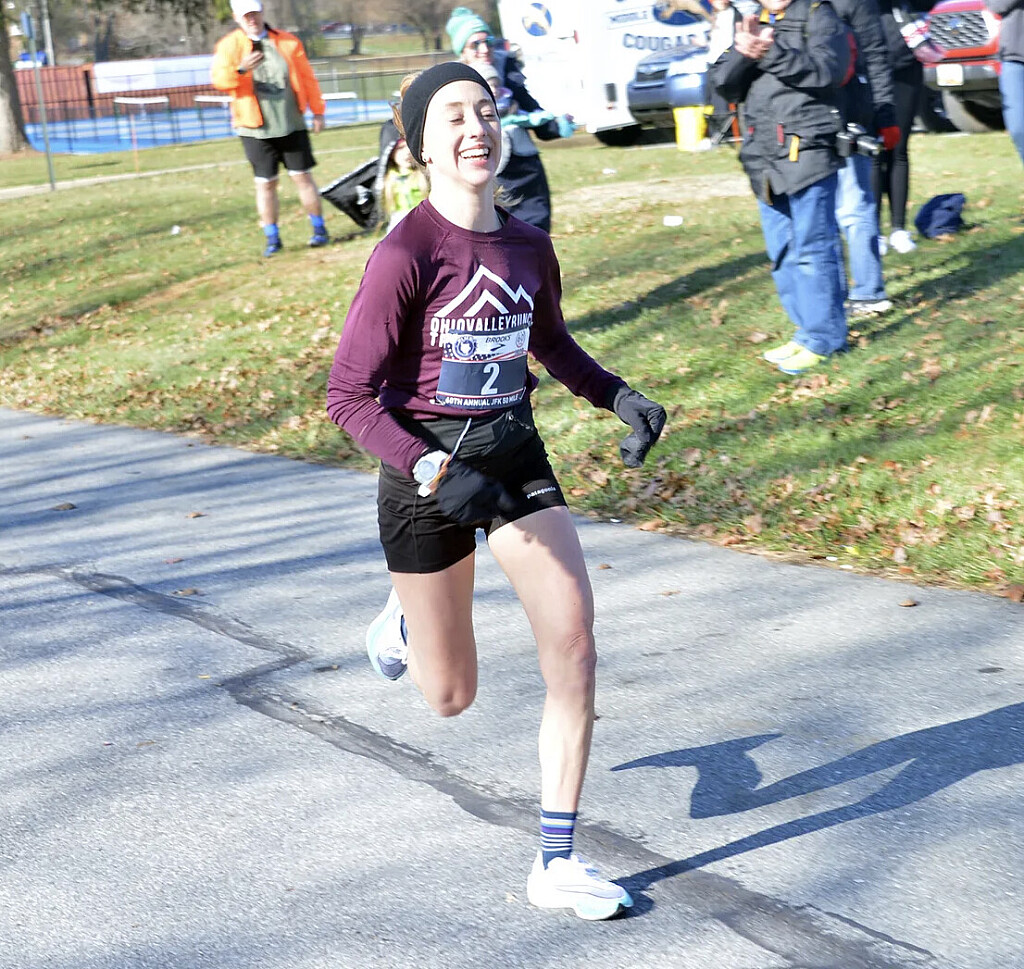
Sarah Biehl delivers historic performance at 60th annual JFK 50
The 60th annual edition of America’s oldest ultramarathon deserved a special performance, and Sarah Biehl (first photo) more than delivered Saturday Nov 19 at the JFK 50 Mile.
Biehl, 28, of Columbus, Ohio, smashed the women’s race, running away with the victory in a course-record time of 6:05:42 while finishing 11th overall. The previous mark of 6:12:00 was set by ultrarunning legend Ellie Greenwood in 2012.
“Oh my gosh, she was a mile ahead of the record Ellie Greenwood set 10 years ago that nobody had come within five minutes of,” JFK 50 Mile director Mike Spinnler said. “You know, and I hate to do this, gender vs. gender, but it may be the greatest performance in JFK history.
“Ellie Greenwood was the world champion, Ellie Greenwood won Comrades, Ellie Greenwood won Western States, and she beat Ellie Greenwood’s record by a mile. And we know how hard Ellie had to run that day to win because she was chased. It’s just remarkable and inspiring. She just missed the top 10 overall, and it was the best men’s field ever. Amazing.”
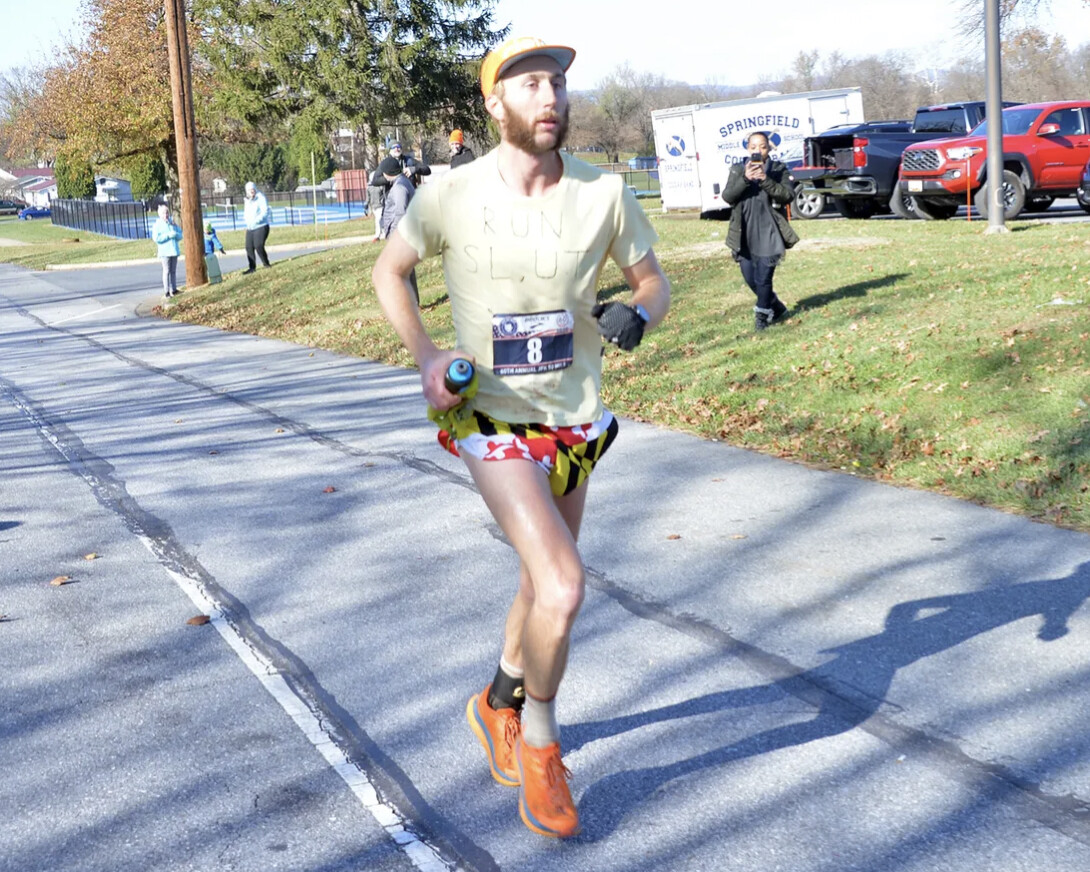
In his JFK debut, Garrett Corcoran, 26, of Salt Lake City, Utah, won the men’s title in 5:29:47 — the No. 5 performance in race history.
Overall, 966 runners reached the finish line within the 13-hour time limit.
For Biehl, this was her third straight JFK. She was the women’s runner-up last year in 6:22:03 after placing fifth in 2020 in 7:22:32 in her ultramarathon debut.
“At the end of the day, I wanted to win,” Biehl said. “Coming here last year and getting second, that was awesome. But after getting second, you have the goal of winning, so that was my main priority. But I also had the course record in mind, too, and the splits and where I needed to be.”
By the time she came off the rocky Appalachian Trail at 15.5 miles, her lead over second place was over 13 minutes. Over the next 26.3 miles on the C&O Canal towpath, the margin increased to more than 19 minutes, and she only continued to add to it over the final 8.4 miles of paved roads to Springfield Middle School.
“I’m ecstatic right now,” Biehl said. “I’m a little in shock, to be honest.”
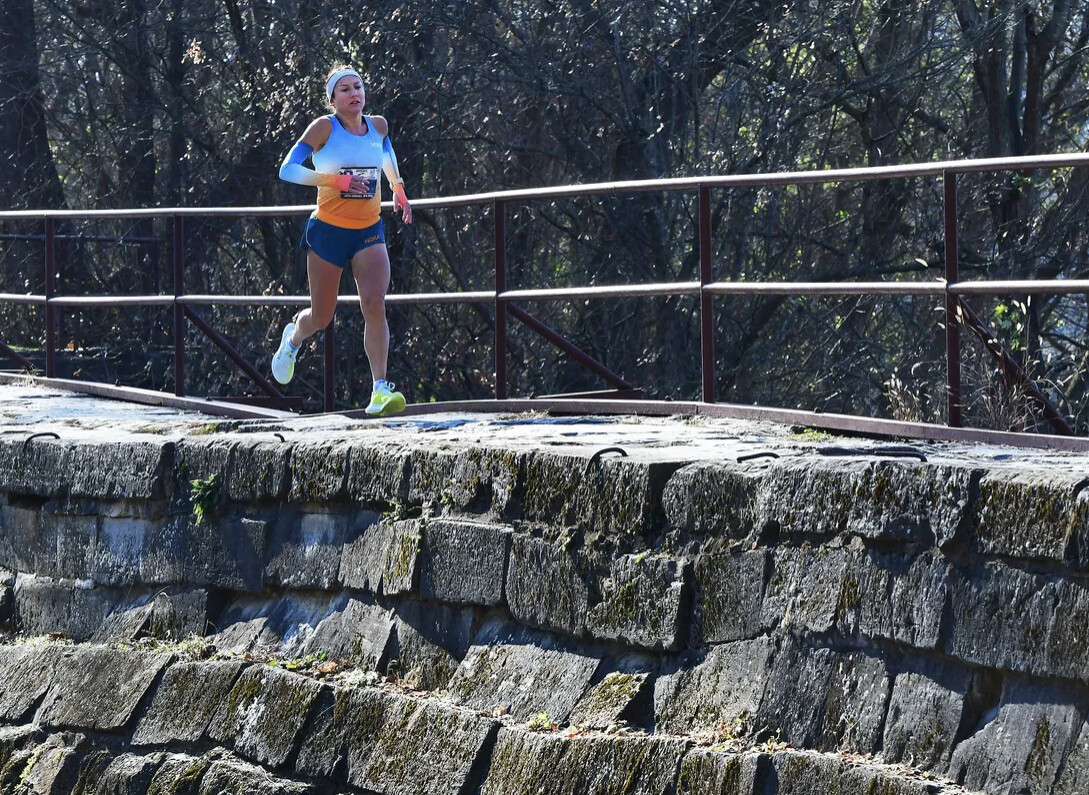
Caitriona Jennings (third photo), 42, of Ireland, finished second in 6:28:53 — the JFK’s No. 8 all-time women’s performance and a masters (40-and-over) record.
Jennings competed in the marathon at the 2012 London Olympics and was fresh off two big-time ultramarathon efforts, placing first in the European 50K championships last month after taking third at the 100K World Championships in August.
She went into her JFK debut Saturday with the same goal as Biehl’s — a course-record victory.
“I struggled from the start, pretty much. It just wasn’t my day,” Jennings said. “But fair play to Sarah, she had an absolute stormer. Wow, so impressive, amazing.
“It’s a lovely course. I was hoping I’d enjoy it more,” she added. “For some reason, I just couldn’t settle. It was a harder race than I expected. I’ve had two tough races in the last (few months), but I’m not making excuses. I was beaten fair and square. Maybe I expected too much of myself today. But you win some, you lose some. That’s what sport is. It just makes the good days all the better.”
Shea Aquilano, 21, of Carmel, Ind., placed third in 6:40:40.
Sub-4:00 miler wins men’s title (second photo).
Corcoran, who used to live in Baltimore, retuned to his former home state with some flair — including running shorts with the Maryland flag design.
“Dude, I’m out here, I’ve got the shorts, I’ve got to rep, right?” he said. “I know where I’m at, and I know I’ll get a lot of love for this.”
Corcoran, who ran a 3:59 mile in college, showed that speed kills at any distance.
“It feels like another life when I ran sub-4:00. I was 19 years old,” he said. “It’s been a fun journey. When I graduated from college, I just about hung up the running shoes, and didn’t really know what I was going to do.
“I moved to Baltimore for work, and kind of realized it was the best way to have a good social life, at least for me, so I joined a running club, the Falls Road Running Club, and I made a lot of good friends. And once the pandemic hit, all the races got canceled, and I started dragging a friend of mine in Baltimore on these really long runs. I had so much fun and really got into the ultra distance.
“The JFK was a good excuse to come back and see some friends.”
Corcoran took the lead on the towpath around Mile 31 and never relinquished it.
“There was an aid station at 30.5, and (Matthew Seidel), who ended up getting fourth, he was just ahead of me,” Corcoran said. “He turned around and saw me not far behind him and walked for a little bit and then started running with me. He was like, ‘Hey, let’s run together, man. Let’s work together.’ And then, like a quarter-mile later, I just kind of floated away from him. I was like, ‘I guess it’s me by myself now. Hope nobody catches me.’”
Makai Clemons, 26, of San Diego, closed hard to take second in 5:32:19, finishing less than 3 minutes behind Corcoran after trailing him by more than 9 minutes at the end of the towpath section at 41.8 miles.
“I’ve been watching his training on Strava, and he’s been throwing down some filthy workouts,” Corcoran said of Clemons. “I was telling him after the race that he was one of the guys that was on my radar.”
Preston Cates, 25, of Flagstaff, Ariz., placed third in 5:33.23. Overall, eight men finished under 6 hours, a JFK record.
“Back in my generation, we always wondered what would happen if a 28-minute 10,000-meter runner or a sub-4-minute miler started doing the trails,” said Spinnler, a two-time JFK champ who lowered the course record to 5:53:05 in 1982.
"And now they’re doing it. The prize money, the national teams, the international competitions, it’s all there — all the incentive that wasn’t there a generation ago is there. All of the sudden, the sub-4-minute milers are coming to the sport. We had two of them in the race today, and we also had two Olymians. It’s so exciting for the future of the sport.”
Canadian Reid Coolsaet, a two-time Olympic marathoner, ran near the front before dropping out on the towpath.
(11/20/2022) ⚡AMPby Andy Mason
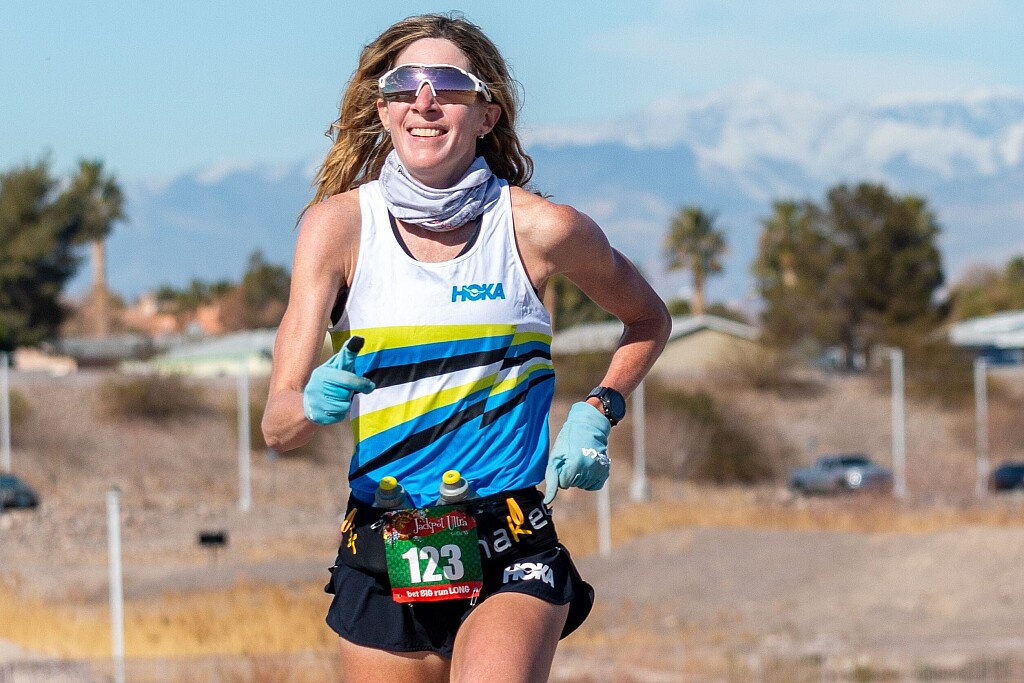
Camille Herron’s 100-mile world record may go unratified
Renowned ultrarunner Camille Herron beat her previous world record 100-mile time at the Jackpot Ultra Running Festival in Henderson, Nev., in February, setting a new record that the USA Track and Field (USATF) committee has decided not to ratify, the Washington Post reported on Wednesday.
Herron, 40, won the race in 12:41:11, beating second-place (and first male) finisher Arlen Glick by more than 30 minutes and surpassing her own 2017 record of 12:42:40 by almost a minute and a half. The race doubled as the USA Track and Field 100-mile road championships, and Herron, who is a champion of clean sport and respected for holding herself and others to high standards in competition, was celebrated globally.
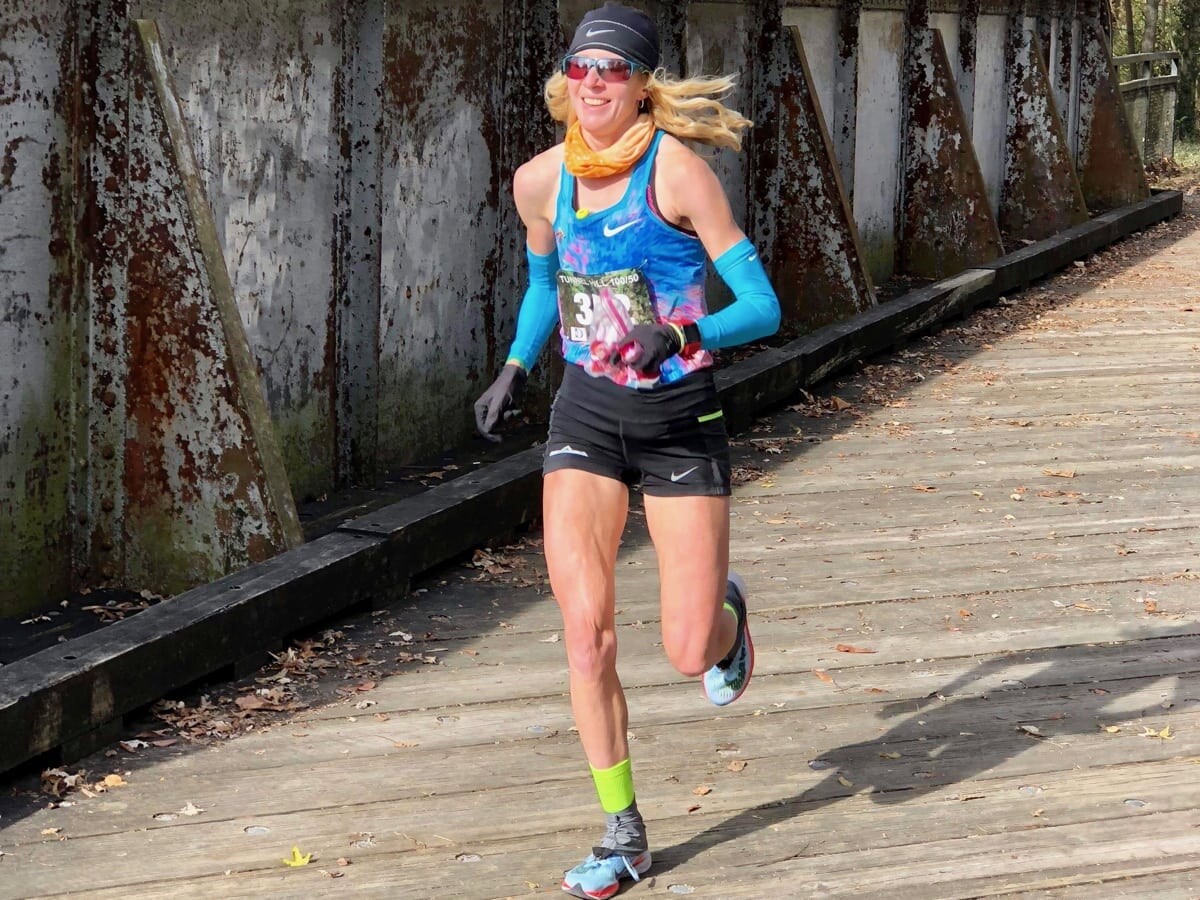
A certified race is always remeasured (course verification) after a record is set–the Jackpot Ultra was measured post-race in February, found to be accurate, and Herron’s record was thought to be clear while not yet official. In October, USATF official Brandon Wilson returned to the Jackpot course and measured once again, determining that the course was short by 716 feet, coming in at 99.864336 miles.
The record ratification process is often lengthy, but there has been no clarification as to why the USATF returned to the course in October, without race director Ken Rubeli (who has since sold the race) present.
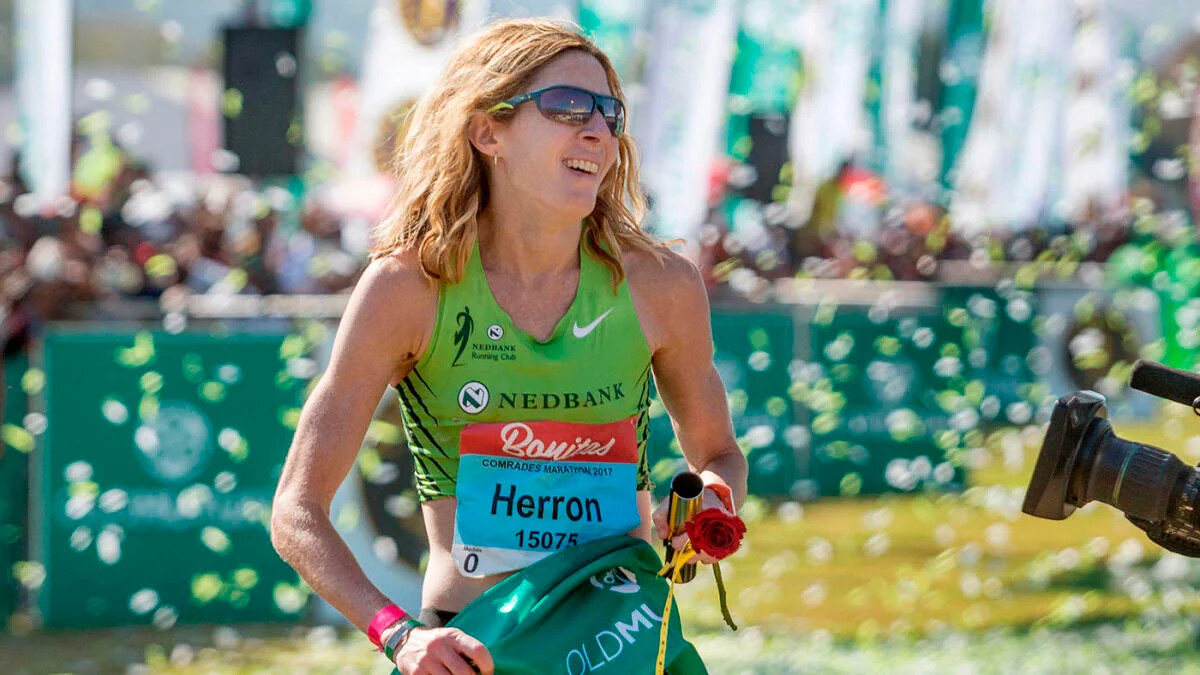
Herron and Conor Holt (her husband and coach) have expressed frustration with the USATF’s process and lack of transparency, along with Rubeli, who sent a letter to USATF questioning the accuracy of measurements made eight months post-race.
“I set a world record in that race, and now they’re telling us that we don’t know whether the course was 100 miles or not,” Herron said to the Post. She shared that the situation has been stressful for her, and has impacted her performance in races since.
“My time is now that I’m in the best shape of my life. And, I mean, these moments can be fleeting. I put my heart and soul into that performance, and it was such a big deal for the sport and the history of the sport that it needs to count,” Herron said.
The Jackpot Ultra is held on a 1.17-mile loop, and the distance was questioned after Wilson (the measurer in February) attended the event, because his wife was running in the 100-mile race, and noticed a discrepancy between the course being run and the certified course map on the USATF website.
Former race director Rubeli explains that he changed one turn on the course for safety reasons, “due to a near collision between a runner and a baby stroller,” adding that he compensated for the change with precise cone placements on the course–something that wasn’t taken into account in Wilson’s February measurement.
Herron, Rubeli, and others are firm on their stance that Herron’s 100-mile record should stand, and the situation is ongoing. “It’s not a done deal yet that it’s unratified,” explains Herron. “USATF wasn’t working with Rubeli the last eight months, so we think the lack of communication created the current situation.”
Herron who describes herself as “propelled by joy and tacos,” has remained positive on social media, noting that she’ll be chasing several of her world records at the upcoming Desert Solstice Invitational, an elite-level event held on a track in Pheonix, Ariz.
(11/18/2022) ⚡AMPby Keeley Milne
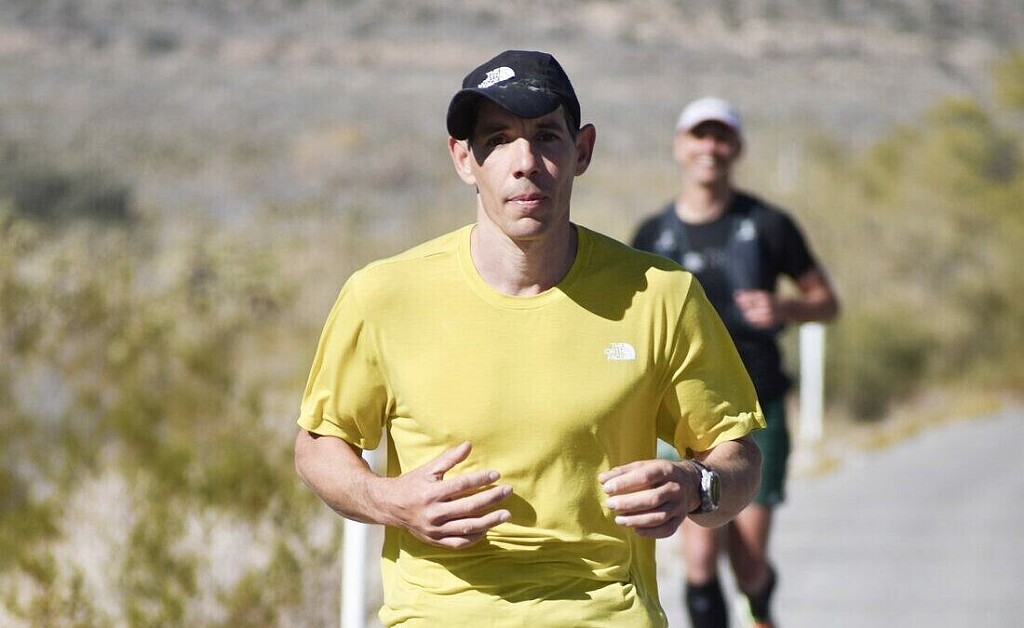
Legendary climber Alex Honnold is also a ninja ultrarunner
On Saturday, world-renowned climber Alex Honnold surprised runners and fans when he hopped into the Red Rock Canyon 50K Ultra, just outside of Las Vegas, running to sixth place in five hours and twenty-three minutes. Honnold, 37, has a home in Nevada with his wife, Sanni McCandless, and their daughter June.
Ultrasignup shows Honnold as having completed one other ultra in 2011, but he’s also flown under the radar with some running accomplishments, including a casual R2R2R (Rim to Rim to Rim) of the Grand Canyon in 2021–an endurance challenge that is on many runners’ bucket lists.
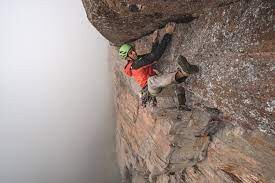
In 2017, Honnold became the first climber to ascend Yosemite’s El Capitan without ropes, documented in the popular film Free Solo, and holds numerous speed-climbing records. He’s also known for long traverses–in October he established a roughly 60-kilometre traverse that included 14 Red Rock multi-pitch routes, hiking and scrambling for well over 7,000 metres of vertical in a 32-hour push. He called the traverse Honnold’s Ultimate Red Rock Traverse or HURT.
While an ultra may seem like a natural extension of those long traverses, Honnold did share some thoughts on trail running back in 2016 with Trailrunner Mag, when he explained that he felt running wasn’t particularly beneficial to climbing.
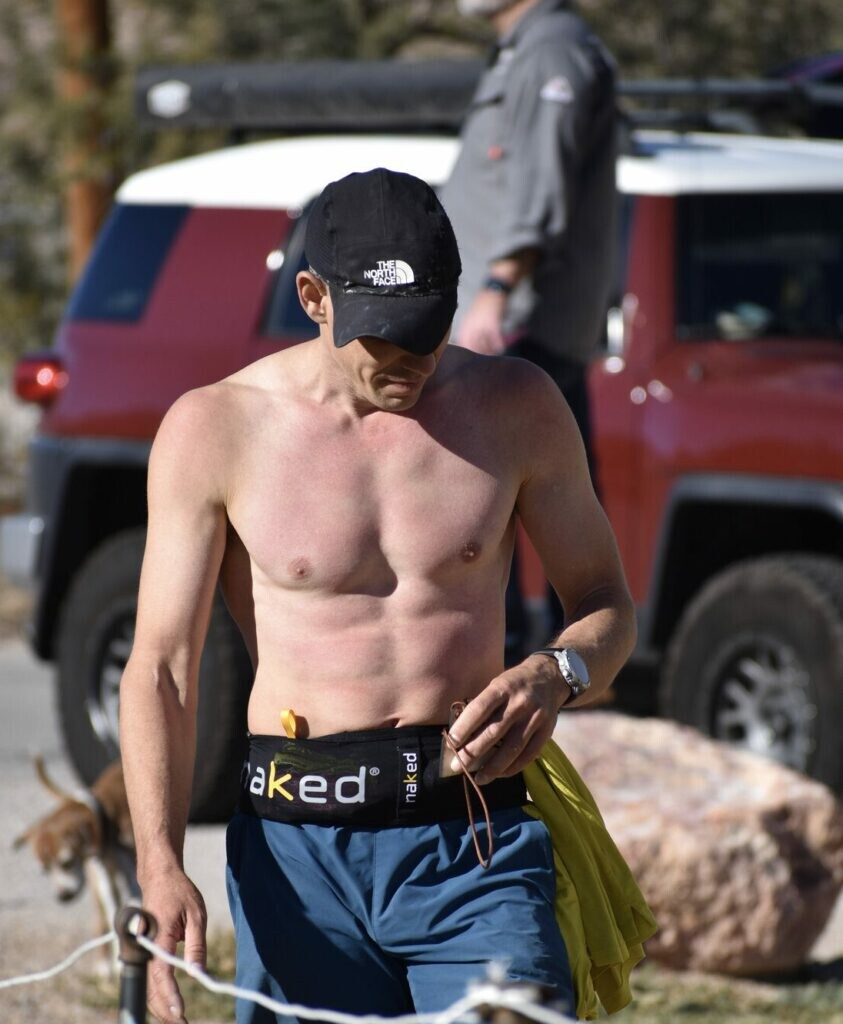
“It uses energy that could better be used doing my actual sport. But at the same time, I like running around and seeing new trails,” Honnold said. “I just enjoy moving quickly through new areas outside. I really like new trails and hills. I like seeing new things.”
“Sometimes it’s just nice to run,” he shared. “Like a kid.”
While most of us can’t comprehend summitting a steep rock face without a rope, the joy of running like a kid is something we can all relate to. It’s unlikely we’ll see Honnold challenging Jim Walmsley to a run-off any time soon, but the accomplished athlete may pop up in an ultra near you, ninja-like. You never know.
(11/17/2022) ⚡AMPby Keeley Milne
Try this eight-minute leg routine to ramp up speed and strength
Coach and ultrarunner David Roche of Boulder, Colo. is well known for his three-minute mountain leg workout, a routine that is suitable for a wide variety of runners, from ultra-endurance athletes to those training for a 5K.
While the mountain-leg routine helps runners get strong, Roche shared in Trailrunner Mag that there was a need for a speed-focused routine for runners looking for help nailing faster paces.
Before doing this routine, note that if you aren’t struggling with speed, the mountain leg workout should be a sufficient boost for you, and you can safely increase reps as you gain strength.
Roche recommends speed legs only for athletes “who have evidence they need it, whether from health issues or imbalances or weakness at higher outputs.”
Make sure you aren’t adding any new exercises to your routine if you’re recovering from an injury, and ease into the routine, starting without weights of any kind. Roche suggests not rushing between exercises and says: “Do not go to failure. We’re looking to do some work, not get worked.”
Eight-minute speed leg routine
Warm up with a brisk walk or slow run, or do this routine following your workout (add these exercises to a hard workout day, so that your easy days stay easy).
10 x alternating rear lunges on each leg
Since rear lunges are easier than the rest of the exercises they’ll help you warm up, and Roche says to avoid going anywhere near failure. Focus on using controlled motion up and down, with your back knee getting close to the ground. Quads, glutes and hamstrings will all be engaged in these lunges, with both eccentric and concentric movements–great for descending and climbing. Alternate legs to avoid getting too tired.
10 x Bulgarian split squats on each leg
With your trailing leg on a bench or platform a few feet high, go up and down, staying in control. Roche says you’ll feel this in the butt and high hamstrings—make sure you start with no weight. Avoid this one if you have any pre-existing injuries or concerns.
10 x single-leg Romanian deadlift on each leg
Roche is firm on this one–start without weights. Firmly plant your foot and bend your knee slightly, raising the other leg parallel to the ground. Push down and pull back with the engaged leg to raise up to center, with controlled up and down motion.
10–20 x goblet squats
With legs shoulder width or a bit wider apart and feet slightly out, do a typical squat. Some people like to go to 90 degrees or beyond, but Roche says he prefers staying a bit higher. After you adapt to these exercises, it’s OK to use slightly heavier weights.
20–50 x single-leg step-ups
Runners familiar with the three-minute mountain legs will recognize the burn of the step-up portion to wrap up the speed leg routine.”Go up and down a bit more rapidly now, with the burn concentrated in your quadriceps,” says Roche. “It should feel almost exactly like climbing up a steep grade.”
Roche suggests going for a walk after the speed leg routine and making sure you have an easy running or recovery day planned to follow.
(11/16/2022) ⚡AMPby Keeley Milne
Ultrarunner Adam Campbell’s tips to master your mid-race mindset
If you’ve ever found yourself nailing your goals in a race, you may have also experienced some panic or fear, and wondered how exactly to continue. Canadian ultrarunner and mountaineer Adam Campbell addressed this on social media recently, sharing: “The first time you move from dreaming about something to actually being in a position to see it through can be scary.
It takes a mind shift to not panic, to keep executing the way you have been, and keep flowing the way you were that got you there in the first place.”
Finding success in a race can be thrilling, but also frightening, and it can derail even the most skilled athlete. We caught up to Squamish-based Campbell to hear his tips on staying on track when you suddenly find yourself performing in a way you’ve only dreamed of.
Think ahead–imagine your emotional state in various outcomes

Campbell notes it’s amazing how quickly we can lose sight of our original race plans, attitude and mind frame when we find ourselves in a position to succeed. He suggests thinking these situations through ahead of time.
“We often visualize a process, i.e., getting nutrition, what our pace should be, or how we want to handle certain sections of a course, but we don’t think about the emotional state we want to be in when we are achieving our desired outcome,” he explains.
Instead of rising to the occasion, when we find ourselves nailing our goal, we’re often flooded with “don’t screw up” thoughts, he says. These are draining–and Campbell suggests the more emotional steadiness we can maintain in a race, the more our energy can be channeled toward moving fast.

“Try to think about how it might feel being on pace or just ahead of it [in a race] while training,” Campbell says.”Think about what happens and what you’re going to tell yourself when you are nailing your game plan, so that when you suddenly find yourself there, it’s not a surprise, and you aren’t as nervous.”
Recognize the stress you’re feeling, and disarm it
Campbell notes that we put a lot of pressure on ourselves when we aim for certain times or positions in a race. While this pressure can be positive, getting us training and propelling effort into pushing our limits, the same pressure can backfire and end up causing a blow-up in a race.
“To some degree, it’s a stress response, a form of self-protection from a perceived threat, in this case, self-imposed pressure,” says Campbell. Recognizing the stress and acknowledging why it is appearing can help disarm it.
“I have even heard of people giving a name to the stress, like ‘John’ and when those ‘don’t mess up’ thoughts show up, you can thank John for appearing and trying to protect you, but also tell him that you don’t need his help right now and politely ask him to leave,” Campbell shares.
If that seems too abstract, Campbell suggests giving yourself specific tasks to focus on, from keeping your form dialed in or focusing on nutrition in long races, to help you stay present and negate some of that potential anxiety.
Practice emotional self-regulation in training
Campbell emphasizes self-talk and practicing emotional regulation as essential components of training.
“I create stories and narratives for myself, visualizing different race scenarios during training sessions,” he adds. “This kinesthetic imagery, or visualization, can be used to help you establish positive responses to negative situations that may arise in races.”
Avoid self-sabotage–look at your patterns
“If you consistently find yourself making decisions mid-race, or even making decisions going into races, that self-sabotage your desired results, do an honest debrief about everything you did going into and during the race,” suggests Campbell.
“Analyze your behavior and recognize your patterns–name them. When you start to find yourself second-guessing what you are doing, have a conversation with the doubter in you and ask them to kindly move on.”
Campbell points out that in a long race, if you find yourself in an extended bad patch or low point, slowing down to eat and reframe your mental state can make a world of difference. “It is amazing how much our emotional state can vary, just because we are underfuled in those long efforts,” he says.
Revisit your goals
Campbell says we often don’t talk about the very important need to revisit our goals: “Are the factors you are focusing on something you can actually control or are they external factors?” He suggests keeping your focus on the process of executing the best race you can on the given day.
(11/15/2022) ⚡AMPby Running Magazine
Apple Fitness+ Aims to Make Yoga More Approachable for Runners
Think you don’t have time to stretch it out? The app routines last just 10 minutes each.If you ever wanted to make yoga a part of your regular routine and then got distracted by the need to chase more miles, cross off to-dos, or maybe spend some much-needed R&R on the couch, you’re certainly not alone. An hour-long yoga class can seem like a big commitment, even if you do want to reap the rewards of the practice, like better recovery and wellbeing.
Research shows that yoga is, indeed, good for runners. It can support heart health, reduce anxiety symptoms, and bolster your bones—not to mention the poses simply feel good for the tight hips and calves many marathoners tend to struggle with thanks to clocking many miles.
With this conundrum in mind—runners wanting to do yoga, but not making the time for long sessions—Apple Fitness+ teamed up with well-known ultrarunner, Scott Jurek, who won the Western States 100-Mile Endurance Run a record seven straight times and once held the fastest known time for completing the Appalachian Trial, and who has also been practicing yoga for about 20 years. They also tapped yoga instructor and Fitness+ trainer, Jessica Skye, and created a six-session series, with classes lasting just 10 minutes each.
Runner’s World sat down with Jurek, Skye, and Jay Blahnik, vice president of fitness technologies at Apple to talk about the yoga program, what it’s all about, and how it aims to open the doors to the mind-body practice for more runners.
What You Can Expect from the Apple Fitness+ Yoga for Runners ProgramBlahnik says that to make the shortened sessions in the program work for runners, they decided to get specific. Each session targets a goal: hip mobility, core strength, glute work, looser legs, stable ankles, and shoulder mobility.
Skye tells Runner’s World that they chose these themes by thinking about what runners need to address—or as Jurek puts it, considering the “problem areas” of runners—starting from the feet and working up through the shoulders. Each pose is meant to address issues runners face in those areas of the body.
During each class, you’ll move from one pose to the next in a sequence, but not in a flow-style (or vinyasa) in which movement is linked to inhales and exhales. Nevertheless, Skye still puts an emphasis on deep breathing throughout each 10-minute sequence.
“This is geared for the person who doesn’t think yoga is for them. And we always have a modifier—in all of our workouts, there’s always someone that’s showing an option that has a smaller range of movement, or they might be using blocks, or something like that, just so wherever you’re at on your yoga journey, even if you’re right at the beginning, you can always do it,” Skye says.
Blahnik adds that the goal of the 10-minute sessions was to make them easy to squeeze in before or after a run or in the morning or evening. This versatility would, therefore, make it more seamless to maintain a regular yoga habit. And it is often true, when you know you only have to commit to 10 minutes, you’re more inclined to press play.
The Mental Side of Yoga for Runners
Jurek says one of the biggest benefits to these sessions, and yoga in general, is allowing you time to tune into your body and recognize the benefits of slowing down. This can pay off on the run when you better notice the way your body is moving ant the beginning of the workouts, Skye encourages you to remember your intention and why you decided to take class or move your body. In a panel at the Apple store after the Runner’s World interview, Jurek talked about this intention-setting practice coming into play on the run—especially during long races in which you’ll likely experience tough mental moments.
“Whether it’s prayer, intention, or having something to look to beyond your own state [of hurt during a marathon]…just having that hope out there and realizing ‘I can get through this, because of A, B, and C,’ I think those are really important things to have,” Jurek says. “Try to cling onto those things that can motivate you and help you get through those dark spots [in a long run], because they happen and they’re normal.”
Why Apple Fitness+ Wants to Make Yoga Less Intimidating
Some runners feel the need to be super bendy in order to take a yoga class. But the truth is, there’s no being “good” at yoga—you don’t have to be flexible at all in order to do it or gain advantages from it. That’s what Apple aims to convey, simply by having Jurek in the frame and not afraid to wobble throughout class.
“I was the person that had all the blocks and all the props and all the extra help that I could because I was the most inflexible person in the room,” Jurek says about his first experiences in the studio. “And I think that can be intimidating to runners, because running isn’t something [in which] you need mega flexibility. But you want to avoid injuries, develop body awareness, and you want to have the strength. So, for runners, it’s about making [yoga] approachable, and having a setting where they feel like ‘okay, I can be stumbling.’”
While taking the yoga sessions, you’ll hear Skye suggest body placement for certain poses and Jurek almost always mentions that it’s okay if you can’t get there—that shortening your stance, or using props, or looking different than Skye in the pose is perfectly acceptable.
The message: Instead of focusing on how good you are at yoga (or running, for that matter), focus on consistency, being in the moment, and enjoying it. “It’s just like running—there is one day where you decide, I’m going to put one foot in front the other,” Jurek says. The same goes for yoga. To make it a part of your routine, you simply need to take it one breath, one pose, one session at a time—even if it’s just 10 minutes.
(11/13/2022) ⚡AMPby Runner’s World
Tommy Rivers Puzey ran the New York City Marathon, reminds us to celebrate life
Endurance athlete, iFit trainer, and Instagram poet Tommy Rivers Puzey joined the masses at the 2022 NYC Marathon on Sunday, once again reminding the world of the power of the spirit. “This one wrecked me, but it’s such a beautiful thing to feel my legs in absolute tatters,” he shared on social media post-race, and fans the world over celebrated.
Puzey, or ‘Rivs’ (as fans and friends call him), has for years been an inspiring force to the endurance world and regular runners alike. Once known for being an elite marathoner, ultrarunner and triathlete, Puzey told Sports Illustrated that this year’s marathon wasn’t about running fast. Rather, it was about celebrating his incredible recovery from a rare type of lung cancer. Puzey finished the marathon in 6:13:54, more than three hours faster than last year’s time–a time fans were astounded to see was possible from a man who had been close to dying.
Heading into Sunday’s race, Puzey shared: “To everyone lining up tomorrow–embrace this moment. Don’t miss it. Don’t defer this joy. It’s all happening right now. There is cause to celebrate. Seize it while you can.” His words remind us all that forward is a pace, that gratitude matters, and that being present is the best part of a marathon.
“This could be as good as it will ever get. And that is good enough,” he added.
In July 2020, the running community was shocked to find out that Puzey had been diagnosed with primary pulmonary NK/T-cell lymphoma, a rare and aggressive cancer. For a time, Puzey’s social media, known for his eloquently worded posts that touched on everything from children to love to athleticism, went silent.
The global running community rallied in an astounding way at a strange and devastating time–COVID-19 was disrupting and impacting lives worldwide–contributing to fundraisers, sharing their #teamrivstuesday runs, and sending messages of encouragement as his family posted updates of Puzey’s progress.
Last year, fans were shocked to see Puzey’s post before the 2021 edition of the NYC Marathon. Less than a year after taking his first steps after treatment, the beloved athlete completed the New York City Marathon in 9:18:57.
The runner, easily recognizable with his beard, signature black skull-and-crossbones hat and ever-present kind smile, slowly made his way through the city’s five boroughs, high-fiving spectators as he went. Once an aspiring U.S. Olympic trials marathoner, he called completing the 2021 marathon “the single most difficult athletic achievement” he’d ever accomplished.
This year’s race was different. Puzey told SI that his focus now is on “building enough mass and endurance and building enough strength and fortitude so that, if and when I do get sick again, I have enough meat on my bones to give the doctors something to work with.” In the last year, followers of Puzey have watched as he gained strength, cheered on friends and teammates, and celebrated life with his family.
His ever-present gratitude is a reminder in almost everything Puzey shares. “It’s rare to find a more distilled, purified version of that beautiful humanity than in a place like NYC on the morning of the marathon. Look for it. You’ll find it. I promise,” he told his legions of followers on Instagram pre-race.
Puzey’s three daughters and wife Steph Catudal often feature in his social media posts, and Catudel accompanied him during last year’s marathon, a slow walk. This year Puzey ran solo–but with legions of fans on the race course spectating and following along.
“I was carried by the incredible humanity on display over every single mile of this brutal course,” Puzey wrote on Instagram. “I’m so grateful that we all get to do life here together at the same time.”
We feel the same way, Rivs.
(11/12/2022) ⚡AMP
Three tips to help you plan your next racing season
Races are fewer and farther between in the winter months, and it’s the perfect time to sit down and plan your next running season. There are so many options and types of races or running adventures to jump into, and it can be tempting to hop into every available race when you’re feeling fit. Here’s how you can set yourself up for a solid season, and maybe even a few PBs.
1.- Reflect and assess

Recognizing where you are at and looking at how your past season went is essential. Whether you felt like you ran the best season of your life or you faced some serious setbacks, accept where you are as the perfect place to begin. Making a list of things that went well for you (be as specific as possible) and things that challenged you.
Give yourself credit for small successes–did you master some technical trails but DNF due to fuelling issues? Both of those are important things to recognize to help you learn where your skills lie and what you need to work on for next season.
2.- Pick 1–2 key races (with a few shorter races as training)
We know, it’s really hard to limit yourself to only a couple of big events. Make sure there’s adequate time in between races for you to fit in a full training block, including recovery, a build, and a taper–and make sure to ask for support and advice from veterans of the sport (or a coach) if you are jumping into new-to-you distance or terrain.
I’ll aim to run a fast (for me) marathon in the spring, and have my peak ultra-distance race toward the end of summer, leaving lots of time for recovery, training, and smaller races.
Shorter races where you plan to jump in and run for fun, rather than race intensely, can be a great way to learn and expand your skill set. Have a healthy awareness of what your intentions are heading into the race and avoid getting caught up in the competition. Short, local events are a great way to participate in your community and can be used as fun training sessions.
3.- Factor in your off-season and build-up
Allow time in your season to rest, both mentally and physically, and then a period of base building. Despite most runners’ inclination to immediately get back to training hard, some time off will help you stay injury-free and motivated. Use the time (ideally two weeks minimum) to rest and recover.
If you feel like you have to stay moving, try something new–head to a local spin class, go skating or learn how to play pickleball. Yes, pickleball. You might find an activity you really enjoy, and when you start running again you’ll feel refreshed and ready to focus on your new goals.
(11/11/2022) ⚡AMPby Running Magazine

Here’s how curiosity will make you a better runner
Listen to enough podcast interviews with elite athletes and you’ll start to notice a commonality–many cite the importance of curiosity. Whether it’s wondering how far or fast they can go, or how deep they can dig, masters of the sport are curious. Bringing an element of curiosity into your own running can help you learn, overcome fear, and have more fun.
“I’ve heard athlete after athlete talk about being driven by a curiosity to see ‘what if?’,” sports psychologist and ultrarunner Addie Bracy shares in her book Mental Training for Ultrarunning.
Bracy adds: “Not only does approaching a hard task with curiosity help to create a healthy relationship with vulnerability (something that is required for doing hard things), the performance-enhancing qualities of this mental skill go even further.”
Open-mindedness
Bracy says that an open mind is one that wants to learn, gain new information, and even challenge currently-held beliefs. Constant growth is crucial for success in any domain, from running trails, dominating the track, or being a CEO at a top-performing business.
Even if you feel like you’re skilled at what you do, choosing to operate from curiosity is an option.”When you do, creativity is expanded and you learn more ways of doing things,” says Bracy.
Stepping past fear
Being curious means overcoming fear and apprehension to take risks. This can be intimidating, but Bracy says that’s normal. “You can override and rewire those reactions,” she explains. “One of the most powerful benefits of an open and curious mind is the freedom to respond to the things you encounter rather than making fear-driven assumptions about the challenges you’ll face,” Bracy adds.
This takes practice, but navigating fear and reframing things with a curious mind is a valuable skill. Instead of assuming you know what will happen, taking a “beginner’s mind” approach and staying open to any possibility is a great jumping-off point.
More joy (who doesn’t want more of that?!)
Children are often perfect examples of curiosity. Eager to learn about the world and with less-rigid worldviews than adults, they ask constant questions and are willing to test boundaries–and have fun doing it. Bracy says that neurological studies suggest curiosity makes learning more pleasurable and rewarding.
While we might not always categorize our running training as learning, in essence, that’s what it is, for both our bodies and minds. Approaching each training or running experience with curiosity can help us enjoy the process while maximizing the knowledge we’re able to take away and apply to our next challenge.
(11/10/2022) ⚡AMPby Keeley Milne
Ultradistance Project: Study Examines the Psychological Profile of Ultrarunners
It is a frequent assumption that there are certain personality traits common to a lot of ultrarunners, but up until now there has not been a significant body of research conducted to explore this area, and to explain what it is that drives us to incredible lengths in pursuit of our goals.
Recently, three sports psychologists identified this gap and launched a survey — the Ultradistance Project— which you are invited to be a part of, into the psychological profile of ultrarunners. This deep dive into our motivation as runners and what makes us tick, as well as character traits and behaviors not obviously linked with our running, was first conducted on athletes participating in the 2022 IAU 100k World Championships in Berlin, Germany.
In the interest of gathering more data to produce a more useful study, the researchers have now opened the survey up to the general ultrarunning population and it can be competed in a choice of three languages at the links below:
English
Spanish
Portuguese
The researchers behind the study are Juan González Fernández (Phd), a sports psychologist at the Department of Personality, Evaluation, and Psychological Treatment at the University of Granada; Abel Nogueira López (Phd), a researcher at the University of León and postdoctoral fellow at the University of Santiago de Compostela and the University of Lausanne; and Pavao Vlahek (MD, Phd), professor at the University of the North in Croatia and a specialist in physical medicine and rehabilitation.
They hope the findings of the study can be used not only to help future runners prepare for endurance events, but that they will also find applications in everyday life when it comes to dealing with stressful situations. Vlahek said, “We believe that it is very important to know the psychological strategies that allow us to deal with these types of extreme situations that occur during competition and training for these events, as this can help us to help prepare anyone who wants to participate in an event with these characteristics, as well as to try to transfer this knowledge to the general population, and thus help them to deal with any serious situation that they may have to face.”
Take a few minutes to have your say, and keep your eyes peeled for the results to come from this fascinating study!
(11/05/2022) ⚡AMPby I Run Far
Your Complete Guide to Running Vocabulary
Starting a running journey can be daunting. As with most things, there are a ton of new experiences and skills to learn, test out, and adjust to. Add in tricky running vocabulary on top of that and how do you even begin?
If you think a 5K means five miles and cadence means…well, what the heck does cadence actually mean?…you’re in good company. There are dozens of words and phrases tossed around the running community that leave us completely confused sometimes. It can be disheartening, especially for beginners.
So, to help you keep up with the best of them…in lingo, at least…we created this guide full of common terms you’ll hear along your running journey. From endurance to hypoxic, consider this your complete manual in running vocabulary.
The Basics
Form: The way you position and hold your body while running. This is essential to avoiding injuries and getting faster. Try keeping your gaze forward, shoulders relaxed, elbows at a 90-degree angle, and torso upright. Many coaches call the latter “running tall.”
Pace: This refers to the amount of time it takes to cover a mile (or kilometer). You’ll also likely hear this term linked with specific types of runs (“5K pace”, “marathon pace”, etc.).

Cadence: The number of steps a runner takes per minute while running. Several things can influence this, such as height, weight, stride, and experience. Frequent runners typically take around 160-170 steps a minute, while elite runners take it up to 180.
Stride: The steps you take forward mid-run. Alternatively, some runners will refer to strides as a series of short sprints.
Foot Strike: How your foot hits the ground. Aim to strike the ground with the middle of your foot, using light steps that fall directly under your hips. More comfort, less injuries.
Prep
Warm-Up: This is literally warming up the body pre-run. Warm-ups help prevent injuries and runners should begin each workout with a good warm-up (try “Pre-Run Vibes”). Popular methods include 10 to 15 minutes of walking, jogging, and stretching.
Cool-Down: Just like warm-ups prep your body for a run, cool-downs aid in taking it back to its original state. Doing a post-run routine prompts a gradual recovery to your pre-run blood pressure and heart rate.
Static Stretching: This popular style of stretching involves holding major muscle groups in their most lengthened position. Hold each for 10 to 30 seconds before switching. The most common form of stretching, it can improve flexibility and act as the perfect cool-down.
Dynamic Stretching: These stretching routines add more movement and power to your typical warm-up while increasing range of motion. Think lunges, butt-kickers, and leg lifts.
Types of Training
Cross-Training: Runners will usually include other types of workouts in their routines to improve overall fitness (and prevent boredom). This is called cross-training. Try yoga, strength training, and cycling.
Strength Training: This literally means training for strength and usually involves dumbbells or body weight exercises. Strength training is insanely helpful for a runner. When done a couple times a week it can help prevent injury and improve performance, without adding bulk. More muscle = more force.
Rest Days: Otherwise known as days off, these days are key to a healthy and consistent workout schedule. Use rest days for active recovery, corrective exercises, stretching, walking, and leisure activities to keep your muscles active and moving.
Overtraining: What happens when you skip out on rest days. There is such a thing as running too much. Better to sit one out and avoid potential injuries and painful muscle strain.
Types of Runners
Streaker: Don’t worry, these runners do wear clothing. A streaker will run consistently every day for a certain amount of time. This type of running is usually only maintained for a certain length of time, such as a week. Think of them as running challenges.
Barefoot Runners: Is it still a run if you’re not lacing up beforehand? Said to improve form, the choice to ditch your sneaks and go barefoot is inspired by our ancestors. The theory is it will help avoid injury and improve performance.
Elite: These runners don’t just talk the talk, they run the run. No matter the distance, they’ll run it—and fast.
Triathlete: Not only do these runners run, they also swim and bike. All in one race.
Ultramarathoner: These extremely skilled runners take on races clocking in at 50 miles, 100 miles, 50K, or even 100K. The most popular ultramarathon ix the 56-mile Comrades Marathon.
Race Lengths
400 Meters: One lap around a track.
5K: 3.1 miles.
10K: 6.2 miles.
Half-Marathon: 13.1 miles.
Marathon: 26.2 (badass) miles.
Types of Runs
Trail Runs: A run done on a trail, rather than a treadmill or track. Particularly enjoyable in fall, these runs boast great weather and even greater scenery. Just remember to layer up if it’s cold where you are.
Road Race: Just as it sounds, these races are held in the road. Don’t worry about too much traffic. The courses are clearly marked on blocked off roads.
Easy Run: If you can’t hold a conversation while doing one of these, you’re going too fast.
Recovery Run: These are shorter and slower runs completed within the 24 hours after a big race. This is meant to get your body used to running in a fatigued state—something you’ll be thankful for towards the end of your next marathon.
Speedwork: Runs all about improving speed. Think hill sprints, intervals, and tempo runs.
Intervals: Alternating between high and low intensity (speeds) throughout a run.
Hill Sprints: Also known as hill repeats, these drills will have you going at a 5K pace up a hill and a recovery pace down a hill. Then up and down again…and again. These workouts improve strength and speed.
Pick-Ups: Segments of increased speed in an existing run. Same course, same deal, just an increase in speed every once in awhile.
Hitting the Wall: Not a type of run per se, but a term for what happens when a runner feels as if they can’t go on during a race. Usually indicates he or she didn’t see it coming.
Kick: The last push a runner gives at the end of a race, increasing their speed to the finish line.
Splits: When a race’s time is divided into smaller parts (typically miles). If a runner runs an entire race at the same pace, they should have an even split. If they have a negative split, they ran the second half faster than the first.
Acronyms
BPM: Beats per minute, or heart rate. This is the number of times your heart beats within a minute. Runners will often have a target BMP for a workout. Quick tip: To find your heart rate, place your pointer and middle finger along your pulse (neck or wrist). Count the amount of beats in six seconds, then multiply by ten.
BQ: Boston Qualifier. If someone is a BQ they’ve achieved a race time that grants them entry to the Boston Marathon, the world’s oldest marathon. Currently, the qualifying standards for men are between 3:05:00 and 4:55:00. For women, the times range from 3:35:00 to 5:25:00 (both depending on age).
CR: Course record, or a runner’s fastest time on a given course.
DNS/DNF: Did not start/did not finish. Either will appear in race results when a runner did not start or finish the race.
DOMS: Delayed Onset Muscle Soreness. Also known as the reason you can’t make your way up the stairs the morning after an intense run. This can set in 24-72 hours post-run and is totally normal—just have your Epsom salts and foam rollers ready.
ITBS: Iliotibial Band Syndrome. This painful injury occurs when your connective tissue rubs against your thighbone. Need relief? Try stretching, massaging, foam rolling, and gentle strength training.
LSD: No, not that one. In this case, the acronym stands for long slow distance. Exactly like it sounds, it’s a long run at a steady pace.
MUT: Mountain/ultra/trail runner.
PB: Personal best (or, in some cases, peanut butter).
PR: Personal record, or one’s fastest time for a given distance.
Equipment
Dreadmill: A nickname for the treadmill, typically used by those forced to run inside due to weather or lack of time. But, there are actually a ton of perks to running on the belt, like less force on your joints and great speedwork training.
Minimalist Shoes: Generally very lightweight, these shoes have very little structure or support. Rather, they’re flexible and have far less cushion than your average sneaker.
Maximalist Shoes: Opposingly, these shoes have much more support and cushion. That doesn’t necessarily mean they’re chunky, though.
Compression Sox: Used post-run, these tight knee-high socks help speed up recovery. Some runners also wear them during races in attempt to get oxygen to their leg muscles faster.
Running Tights: Live in a cold climate? Stock up on these. Runners who experience a dip in temperature and still want to run outdoors will wear these spandex leggings under their pants to keep them warm.
Moisture-Wicking Clothing: Non-cotton clothing that helps keep sweet away from the body and bring it to the fabric’s surface where it evaporates.
Foam Roller: A foam cylinder tool used pre- or post-workout to increase flexibility, speed up recovery, and increase circulation.
Fuelbelt: Sort of like a fanny pack, a fuelbelt can hold a runner’s water, snacks, phone, and wallet.
Physio
Endurance: The body’s ability to endure stress during an aerobic activity, like running. Endurance training takes place when a runner wants to increase their distance and speed.
Anaerobic Threshold: Also known as the lactate inflection point, this is the point in intensity where lactic acid begins to build up in your muscles and bloodstream. When you run at this speed it should be challenging, but not uncomfortable.
VO2 Max: Also known as aerobic capacity, this is the maximum amount of oxygen your body can use during intense exercise. As your aerobic capacity increases you will be able to run faster and further.
Hypoxic: This is when you just want to hit the ground running, but can’t breathe after two minutes of sprinting. Hypoxic is a condition in which you’re deprived of oxygen at the tissue level. In short, your lungs haven’t caught up with the rest of you yet. Scale it back a bit and build up your speed.
Chafing: To put it simply, chafing happens when sweat and fabric rub against the skin, causing painful rashes. Most runners suggest covering yourself in Vaseline or Bodyglide before getting dressed to avoid this.
Shin Splints: Pain on or around your shinbones. Treat with ice and rest ASAP, then consider buying some new running shoes.
Runner’s Knee: This is pain isolated on or around the kneecap. Also called Patellofemoral Pain Syndrome (PFPS), this usually feels like the knee is “giving out.”
Runner’s High: The feeling of euphoria a runner might get during or after a run. Added bonus: There’s usually also a decrease in discomfort, too!
(11/01/2022) ⚡AMP
by McCall Minnor

Podcasts for the long run: time will fly by while you listen to one of our faves
Whether you are looking for something entertaining to pass the time on your weekly long runs, or want some running and wellness-related content to turn on while you’re driving or cooking, we’ve got the line-up for you.
Legacy of Speed

Hosted by Malcolm Gladwell (also of the Revisionist History podcast), this podcast tells the story behind the 1968 Olympic Games, when two Black sprinters raised their fists in protest, shaking the world. More than 50 years later, the ripple effects of their activism are still felt. Legacy of Speed tells the story of a small university track team who unexpectedly took the world’s stage, the runners who took a stand, and the coaches who helped make them both fast enough and courageous enough to rise up. Once you start, you won’t be able to stop listening.
The Shakeout Podcast
Canadian Running‘s own podcast is hosted and produced by the multi-talented Olympian Kate Van Buskirk and celebrates running and its transformative power. Van Buskirk connects with sport leaders, coaches, advocates and visionary athletes to dig deep on important topics. Van Buskirk is joined by fellow Olympian and CR staff writer Maddy Kelly for a weekly recap of events in the running world called The Rundown. Whether you’re a regular runner or simply interested in intelligent and meaningful conversations within sport, The Shakeout is a must-listen.
The Singletrack Podcast
Whether you run in the woods on the daily, or you’re just learning what singletrack is, you’ll love Finn Melanson‘s exploration of the world of trail and ultrarunning. Melanson talks to all the big names in the sport to find out what makes them tick, and does an excellent job of explaining, previewing and recapping trail and ultra and trail races across the world. From obsessive ultratrail fan to newbie, The Singletrack Podcast is the place to go.
The Rich Roll Podcast
Endurance athlete and plant-based nutrition advocate Rich Roll also hosts one of the world’s most popular wellness podcasts. On each episode, Rich dives deep into diverse topics, discussing everything from track and field to the science of longevity; from mental strength to enlightenment. “Rich delves deep into all things wellness with some of the brightest and most forward-thinking, paradigm-busting minds in health, fitness, nutrition, art, entertainment, entrepreneurship & spirituality,” touts the podcast website, and it’s true: the vast range of past guests include Boston Marathon champ Des Linden, boxer Laila Ali, ultrarunner Harvey Lewis and neuroscientist Andrew Huberman.
Running for Real with Tina Muir
Tina Muir is a former pro-marathoner from the UK, now US-based. Her show deals with the darker, less glamorous side of professional sport. Muir is not afraid to bring up tough topics and is a staunch advocate for mental health and women in sport, and her belief that “running has the power to change the world” is evident in every conversation. Muir endeavors to make this clear in her podcast, which opens up with a quote that describes this perfectly: “The podcast for runners who know that for every runner’s high, there are just as many lows.”
Radiolab
While not running-focused, Radiolab has some episodes about running that are fascinating–as is every single other podcast in their history. Hosted by Lulu Miller and Latif Nasser, Radiolab digs into deep questions and uses investigative journalism to get the answers. On any episode, you may find yourself immersed in science, legal history and incredible stories about humans around the world.
Women Run Canada
This podcast, hosted by Kirsten Parker, celebrates Canadian women runners from all walks of life. It tackles a wide variety of topics–and while listening, you’ll feel even more connected to the Canadian running community. Perfect when you’re needing some motivation to get moving, you’ll learn, laugh and be inspired by this pod.
(10/30/2022) ⚡AMPby Running Magazine
Fuel in a jar: the easiest recipe you’ll ever make
Australian ultrarunner Lucy Bartholomew‘s fuel-filled jars are like little works of art, both to look at and in the way they power up your body. Simple to throw together and easy to modify with what you have on hand, I love making these jars for lunch–my family is always impressed with the colours and flavour (while not knowing it took me mere moments to prep).
Bartholomew says these ‘jars of goodness’ translate to: “whatever is in the fridge, pantry or freezer that needs to be used up.” Switch it up with your favourite sauces and spices. I love that I don’t need to worry about exact measurements or specific directions to create these–if you aren’t a plant-based eater, switch up the baked tofu for chicken or a protein of choice.
Lucy Bartholomew’s Jars of Goodness

Rice jar with baked tofu
Ingredientscooked ricesliced cucumbersliced celerygrated carrot

Baked tofu: Marinate tofu pieces in one Tbsp soy sauce or tamari, two minced garlic cloves, one tsp sriracha or hot sauce (optional), a splash of roasted sesame oil and toss to combine. Leave for 15-30 minutes, then bake at 180 C or pan fry until crispy–about 10 minutes.
Potato jar with roasted chickpeas
Ingredientsgrated red cabbagegrated carrotsliced radishesroasted potatoes: lightly toss in olive oil and salt and cook in the oven at 180 C for 30-45 min (make a lot and enjoy the leftovers!)roasted chickpeas: lightly toss in olive oil and salt and cooked in the oven at 180 C for 30-45 min
Toppings: hummus, celery sticks on the side
Tahini Miso Dressing
Bartholomew says she happily puts this dressing on just about anything: “Salty, nutty, spicy and coloured with the anti-inflammatory golden yellow turmeric, when it thickens in the fridge it is a perfect spread for wraps and sandwiches.” Adding a few Tbsp of hot water brings it back to the perfect consistency to top any salad or dish.
Ingredients
3/4 cup tahini1/2 cup hot water3 Tbsp red miso paste1 tsp turmeric powder2 cloves garlic, peeled3 Tbsp apple cider vinegar/lemon juice1/2 tsp cracked black pepper
Directions
Put all ingredients (reserve 1/4 cup water) into a blender and blend on high until smooth. Add remaining water little by little until desired consistency is reached. Pour into a jar and keep in the fridge until ready to use.
(10/27/2022) ⚡AMP
by Running Magazine
Three ways to turn your off-season into a running game changer
While there may be less races close to home during the winter months, for runners, there never truly has to be an off-season–and it can be tempting to find races to jump into year-round to keep your motivation high. Even if you’re feeling great after summer training and racing, taking some time off and recharging in the winter months can lead to big payoffs when the days are warm again. Here’s how to turn your off-season into a running game-changer.
Take real time off from running
Pro ultrarunner Keely Henninger recently wrote about the importance of her off-season. “A solid off-season should be a set amount of time without running, followed by a time of unstructured easy training to work on weaknesses, develop strength, and regain motivation and fitness.

Recreational runners often race upwards of five to ten times a year, whereas professional marathoners may race their premiere distance only twice. There’s a reason they are pros–they’ve learned how to optimize their training and recovery time for maximum gain. Henninger says she takes at least two weeks off, and more if she feels she needs it.
Focus on your weaknesses (embrace the workouts you like the least)

In her book Skyrunner, pro ultrarunner and ski mountaineer Emelie Forsberg (also known for being ultrarunning GOAT Kilian Jornet‘s partner) writes about how she uses contrasts in her training. “Since I have a talent for ultradistances, I put extra effort into shorter training sessions and shorter intervals,” she says. She suggests keeping it simple: running hard 1K repeats if you love going long and slow, or finding a track to run on if you favour the trails.
Your brain (and body) may rebel initially, but tapping into a new-to-you training effect will make you faster and more robust. You may be surprised by how much you learn to enjoy what you used to avoid. Stepping out of your comfort zone is also great mental training for the endless array of issues that can crop up during a race.
Stop worrying that you’ll lose your fitness: incorporate other sports and try new things
Forsberg writes, “even though I love what I do, it’s important to have other things in life, other interests.” As a runner, you may feel like running is such a part of your identity that you cannot imagine your life without it. Taking the time to tackle other physical and mental challenges during the off-season is an excellent way to diversify your physical strength (you’ll tap into muscles regular running doesn’t) and power up your brain, while giving yourself a mental break from the demands of racing goals.
Try cross-country skiing, going for a swim, or dropping into a spin class. If those things aren’t accessible or budget-friendly, diversifying can be as simple as heading out for a walk in a new-to-you area or going tobogganing with friends. Dig out some board games, dive into a new book, or try a crossword puzzle to get your brain firing–science says that learning new things is a great way to expand your brain and skill set at any age.
(10/26/2022) ⚡AMPby Keeley Milne
Run longer and stronger with tips from trail-phenom Priscilla Forgie
Priscilla Forgie wants you to be more flexible. She doesn’t mean you should hit a yoga class, either–Forgie says adding versatility to her running routine has allowed her to master the art of listening to her body, elevating her performance.
If you aren’t familiar with Forgie after this year’s ultratrail season, consider this your update: the Edmonton-based athlete has had a record-breaking year, winning almost every race she has entered and demolishing course records at the Near Death Marathon (where she also was the overall winner) and Squamish 50/50. She’s also fairly new to the ultratrail scene and is open about the setbacks and learning curves she’s experienced so far.
“When I discovered I had a stress fracture in January I realized I hadn’t truly been listening to what my body needed,”she says. Forgie says that key to optimizing her running this year was taking preventative action to care for her body in her day-to-day life, becoming more flexible with training and mileage. Here’s what Forgie suggests you try, so that you, too, can break personal barriers and crush your goals, all while staying healthy.
Have flexibility in your training plan
Forgie says that opening ourselves up to the possibility of not sticking to a regimented training schedule is key. “I can appreciate that a training plan can help hold us accountable and keep us motivated, but no plan can take into account the complexities of our everyday lives and what our bodies are asking for each day,” she says. While Forgie doesn’t follow a strict plan, she acknowledges that it works for some people, and suggests that runners try to remain adaptable.
Forgie suggests making the change from a km/day goal, and instead giving yourself a distance or time range to shoot for each day, adjusting throughout the week as needed. “This allows us the opportunity to rest when needed and free up time if life gets in the way,” she says.
Get comfortable with switching things up
Forgie says this is particularly important for your key workouts. “You want your body to be feeling its best during these sessions, so pushing through speedwork after a lousy sleep will not help you reach your goals,” she explains. If you have a challenging workout planned but are feeling under the weather, far better to head out for an easy run or take a recovery day, and do the speedwork when you’re well-rested.
Another form of switching it up that Forgie loves: hit the trails instead of running hill repeats or road-based speedwork. While trails are where Forgie’s passion lies, they’re a great addition to any runner’s repertoire. “Who doesn’t need more trail time?” she says.
Tap into your inner couch potato
“A huge part of listening to our bodies is recognizing when we need rest,” says Forgie, adding that it’s likely more often than a lot of us allow. She suggests following the 80/20 rule (keeping 80 per cent of your workouts easy, 20 per cent hard). “Letting our bodies recover with good food, sleep, and slow miles will result in our bodies thanking us later,” she says.
With so many athletes reporting stress fractures or being diagnosed with RED-S syndrome, recovery is something every runner should personally focus on.
Try running doubles (but not Ingebrigtsen-style)
Forgie advocates breaking up a long-run session into a double. “Double run days are my favourite,” she says. “Doing this gives your body a bit of a break, frees up some time in your schedule, and definitely helps when you’re really ramping up those kilometres in peak weeks.” Doubling has made headlines recently due to its popularity among elite athletes like Jakob Ingebrigtsen, who will run two hard training sessions in a single day. Forgie’s format is a gentler version, a way to adapt a long workout, or to increase mileage when training for a big race.
Being open to trying new things in your running schedule is a fantastic idea for all of us, and Forgie’s success on the trails demonstrates how well it has been working for her.
(10/24/2022) ⚡AMPby Keeley Milne
Dutchman Lodewijk Adriaan Vriens wins first race in Hong Kong 50 ultra marathon series
Hong Kong 50 ultra marathon got off to a blistering start with Dutchman pipping local favourites in the men’s division, while Cheung dominated the women’s field
The second leg of the four race series takes place on Lantau on December 10, with HK50 West and Sai Kung 50 taking place in early 2023


The Hong Kong 50 ultra marathon series got off to a solid start on Sunday, with Dutchman Lodewijk Adriaan Vriens storming a field of almost 500 runners to claim line honours.
While Vriens battled strong competition from Chan Ka Keung and Wong Kwok Wai – who came in second and third respectively – the Dutchman paced himself early in the race but surged in the second half to extend his lead and finish with a time of 4 hours and 47 minutes.
“Today’s race was really, really cool and a really phenomenal feeling,” Vriens said. “It’s a really tough course, but I had a lot of fun. The organisers did great, really good spirit out there and some really good competition.”
Chan, one of Hong Kong’s top up and coming runners, had a very strong finish, putting the hammer down on the final 1km to squeeze by Wong for second place with just a few hundred meters remaining.
“I was happy with a strong finish catching Wong Kwok Wai who tried very hard also at the end. The race was really exciting and the scenery on the last 20km was beautiful which made the change of scenery from my home training area in Tsuen Wan very different,” Chan said.
“Coming down Jardine’s Lookout I took a fall kicking a step, but brushed it off and kept pushing as was top three at the time.”
Crossing the finish line in 3rd overall in the Men’s 50km was Wong Kwok Wai who ran a fantastic race leading and trading places for almost half. He came within striking distance of the Dutchman and Chan, but did not have the legs in the last few hundred meters to mount a full tilt attack.
Karen Cheung Man-yee dominated the women’s field to win in a comfortable 5 hours 30 minutes 38, almost 30 minutes ahead of her nearest rival Wong Mei Ying, who took second place.
“Overall, the race was great,” Cheung said. “I thought my run was very smooth. The weather was good and I was happy with my performance. I am very happy to be able to run in a physical race like this as I enjoyed it so much being around others in competition.
Third on the women’s 50km podium was South African Deena Schwan who took up ultra running just over a year ago.
The second leg of the four race HK50 series will take place on Lantau on December 10, with HK50 West and Sai Kung 50 taking place in early 2023.
(10/23/2022) ⚡AMP

5 Reasons Why Athletes Can Embrace Aging
My grandfather lived until he was 94. By the time he died in 2009, he was the sole survivor of 13 siblings. His secret? For as long as I can remember he used to say, with a gusto I have yet to match, "You just have to keep moving!" And with every passing birthday he'd also remind me: "Getting older is better than the alternative."
Those two pearls of wisdom have continued to serve me well. But it has also occurred to me that since I became a masters runner (defined as 40 and older), I've focused primarily on the negative aspects of aging-albeit, mostly factors that my grandfather never had to experience. Women face a lot of challenges in mid-life that make it hard to maintain a cheery disposition, even as that simple advice to "keep moving!" holds true.
The decline of estrogen levels has an effect on just about everything, including mood, sleep, body composition, bone density, muscle mass, and more. It's a lot to navigate-especially for those of us who've been athletes for most of our lives. We have to adjust expectations and relearn how to properly train our bodies that have new needs and capabilities.
It's natural to fixate on what we're potentially losing as the years go by. But what if we explored the ways that aging serves us, instead? I'm not trying to pollyanna our way out of perimenopause, but taking a little time to reflect on the happier sides of getting older might entice some of us to relish this phase instead of fear it.
So I called Selene Yeager, host of the podcast Hit Play Not Pause and content manager for Feisty Menopause, a site that covers training, nutrition, and lifestyle advice to help women maximize performance during menopause and beyond. She shared some expertise and insight on how athletes can find hope and enjoyment during the second half of their active lives. Out of that conversation and many others over the years with runners who have experienced longevity in the sport, I came up with five reasons to embrace masters running.Perspective.
It is impossible to acknowledge or appreciate the bigger picture when you're younger. Every botched workout, every missed PR, every off-pace long run seems like a big deal. But then life expands in wild ways. Whether it's a spouse or children or career or aging parents, everybody seemingly needs something from you for quite a while.
The upside? Those important people who need you can also put performance into perspective. Before running the Berlin Marathon in September, Keira D'Amato, 37, who was trying to improve her American record during the race (2:19:12, which has since been broken by Emily Sisson at the Chicago Marathon in 2:18:29), remarked that while her goals are a priority, her results actually don't matter much in the grand scheme.
"At the end of the day, no matter what happens, I'm still going to come home to two kids who will ask me what's for dinner," D'Amato said during a pre-race interview.
Similarly, Yeager remembers when her daughter was younger, she felt a pivot in her outlook, too. "You're not sitting there ruminating about yourself anymore-it's a similar sort of transition phase in a woman's life that can bring that better head space."
The even better news is that eventually a lot of those people become less dependent as we enter midlife, leaving new-found time to focus more on your own endeavors.
"The shedding of those ovarian hormones that have you nurturing everybody but yourself gives you the brain space to look at what you need and want," Yeager says. "And that is a great thing. Not that nurturing is bad, but it's time for you."Liberation.
The older we get, the less we care. In a good way. In the best ways, really. As Yeager puts it, "You can say it however you want, but you get to this point where you don't actually give a f*ck and it's very liberating and empowering."
You don't care what people think when you try something new, like mountain racing. You don't care what your time is and realize that nobody else does either (spoiler alert: nobody ever did care what your personal bests or weekly mileage were). You start to realize that the performances and goals can be broader and more creative than ever before-your effort can go toward something besides qualifying for the Boston Marathon, for example.
Look no further than somebody like Deena Kastor, who won the Olympic marathon bronze medal in 2004. Now 49, she still trains at a high level, but has continually redefined what success means to her, whether it's going after age-group records or racing all the World Marathon Major events, a goal she just completed when she finished the Berlin Marathon a few weeks ago, in 2:45:12.
"There's lots of empowerment that comes with midlife, especially around 50," Yeager says. "It takes some time and it might take hormonal changes-I don't know; they're still doing their research-to really accept and embrace that you are the only one thinking about you as much as you're thinking about you."Community.
Not long ago I spoke with Kathryn Martin, who at 70 years old had just taken a five-year break from competing on the masters track scene. She has two dozen age-group American records and a dozen world records, but was feeling a little burned out from the high-intensity pursuits. During that break, she didn't stop running, but she did cease serious training. What brought her back? Aside from a renewed desire to tackle more records, she missed all the friends she made on the circuit.
"What I really missed was the camaraderie. Masters runners are so unique," Martin told me. "You can be warriors on the track, but prior to and immediately afterward, everybody's hugging. We're just so happy to see each other and be in each other's company."
While you don't have to grow older to appreciate the running community, Martin is right. The masters category hits a little different. Yeager sees it, too-and hears about it from plenty of women she interviews.
"Even if you're really competitive still, there's a genuine appreciation for your peers," Yeager says. "We've seen a lot of shit in our lives at this point and that creates a lot of camaraderie. You're also just more secure in your skin and not having all your self-worth wrapped up in beating another person."Technology and research.
Sara Hall, 39, is the poster woman for longevity. She started having the best races of her career in her mid-30s, now one of the fastest U.S. women at the marathon (2:20:32). Many factors have worked in Hall's favor, but one thing she's continually given credit to is the advancement in shoe technology-not just the way in which they've elevated everybody's performances, but also how they've reduced the pounding on her legs and allowed quicker recovery between big efforts.
The generation entering its 50s now is the first to grow up in a post-Title IX world, with increased access to sports for their entire lives. As Yeager says, we aren't in the "Golden Girls" era anymore. Women remain competitive and active for far longer than they ever have not only thanks to that critical piece of policy, but also because of the technology (think: gear, nutrition, recovery tools, etc.) that keeps us healthier, longer. The research on all phases of the female athlete lifecycle still has plenty of catching up to do, but as it advances and we know better how to care for our maturing bodies, the possibilities will only increase.
"Everything we thought we knew about women after they had babies or when they go through the menopause transition-really about women at any stage-is being rewritten and discovered," Yeager says. "It's a huge thing, when performance and fitness is exponentially different because we've started and built it all from the time we were adolescents, many not stopping during pregnancy, either. Are you kidding? We're just different human beings than the women back in the Golden Girl time."Reinvention.
Ever want to try different distances? Different terrain? Are you triathlon curious? Have you heeded the often repeated advice to start lifting weights (seriously, you need to lift weights)? After all is said and done, if you're still not convinced that growing older as a runner can become an equally enjoyable experience, then reinvent yourself. Try something new and see the comparisons to your former self disappear.
Yeager, for example, didn't start CrossFit until she was 48 years old, when "it was time to start 'lifting heavy sh*t' as they say.'" Desiree Linden, 39, winner of the 2018 Boston Marathon, has said she's looking forward to exploring trails and ultra-distance races after she retires from competitive road racing.
"If you are open to expanding your horizons, it makes all the difference in the world," Yeager says. "You have nowhere to go but up. You're learning new things and experiencing something for the joy of it again. That's enormously positive."
It looks like my grandfather had a point. All you have to do is keep moving
(10/23/2022) ⚡AMPby Trail Runner Magazine
Runners and stress fractures: why you should start taking vitamin D
If you’re a regular runner, you probably know someone who has had to take time out due to a dreaded stress fracture. You may have heard of pro athletes like Molly Seidel and Gabriela DeBues-Stafford taking time out for stress reactions.
Vitamin D has long been known to help the body absorb and retain calcium and phosphorus; both are critical for building bone. Recent studies have shown that vitamin D insufficiency is not only common in athletes but can be a serious factor leading to a stress fracture. Should you be taking a supplement? Here’s what you need to know.
Stress fractures v. stress reactions

Readers may be more familiar with the term “stress fracture,” which is further along the stress injury spectrum. (In other words, a stress reaction may lead to a stress fracture if left untreated.) The cause of the initial reaction (and subsequent possible fracture) is usually overuse, as opposed to more serious traumatic types of fractures from falls or other accidents.
Stress injuries are classified upon diagnosis: early (stress reaction) or late (stress fracture). A stress reaction can be considered similar to a deep bone bruise. A stress fracture is a small hairline crack in the bone.
The study
Researchers reviewed more than 180 scientific studies to determine the impact of vitamin D on musculoskeletal health and athletic performance. They found that stress fractures impact approximately 20 per cent of all athletes, both elite and amateur.
The review explores the importance of vitamin D in athletes’ diets, what type of athletes are most likely to be affected by stress fractures and what precautionary measures athletes can take. While runners of any kind were one of the most common groups sidelined by stress fractures, athletes in a wide range of load-bearing sports are affected by them.
The takeaway
We get vitamin D largely from the sun’s ultraviolet-B (UVB) rays, and many people, particularly those living above the equator, are vitamin D deficient. While only one per cent of the general population is impacted by stress fractures, one in five athletes (20 per cent) will experience one.
Vitamin D plays important role in preventing stress fractures and can be safely taken as a preventative measure. Runners should ask their doctor for regular bloodwork to check vitamin D levels, along with calcium, creatinine and parathyroid hormone. Insufficient levels of vitamin D can be restored by optimizing your diet (while few foods naturally have much vitamin D, some are fortified with it) and taking supplements.
Work with your doctor to find the right amount of vitamin D to take: researchers determined that the prevalence of stress fractures decreased when athletes are supplemented daily with 800 IU vitamin D and 2,000 mg calcium.
(10/21/2022) ⚡AMPby Keeley Milne
Try a steady state workout to build strength and feel powerful
Adding steady-state workouts to your training is a great way to practice running at a moderately challenging pace for longer stretches. Renowned coach and ultrarunner Jason Koop builds steady-state workouts into all his athletes’ training plans, from beginner to advanced. Koop says steady state runs build aerobic strength, the foundation for your best performances from the 5K to the marathon.
Try one of these steady state sessions and head into your next race feeling confident about your ability to run long and strong.
How to determine your steady state pace
Steady state pace is all about the in-between, and it’s a perfect workout to run by feel (perceived exertion) rather than exact numbers. Sometimes called an ‘easy-medium’ pace, it’s not fast but not slow. Not hard, but not easy. These can be tough workouts, not because of the pace, but because of the duration of running, and the concentration it takes to maintain a steady pace over a longer period–perfect practice for race day.
If you’re a long-distance runner, steady state run pace can range between 10 seconds faster and 30 seconds slower than your marathon race pace. That’s a big range, which is why learning to run steady runs by feel is ideal. This takes practice, and it might take you a few sessions to feel like you’ve nailed it.
The workout
Warm up with ten minutes easy running
30 minutes steady state pace
Cool down with ten minutes easy running
Ease into your steady state pace over several kilometres, and let your body fall into the pace naturally. Some days this will feel easy and other days getting to a steady pace may feel challenging.
Advanced options
To dial this up a notch, keep your warmup and cooldown the same, but run two x 25 minutes hard, with four minutes recovery in between. As you get stronger you can add time to the steady state intervals, increasing to 2 x 30 minutes hard, four minutes recovery, up to 2 x 40 minutes hard, four minutes recovery.
While a steady state run shouldn’t leave you feeling beat up, you should still follow it up with an easy running or recovery day to maximize the training benefits.
(10/20/2022) ⚡AMPby Running Magazine
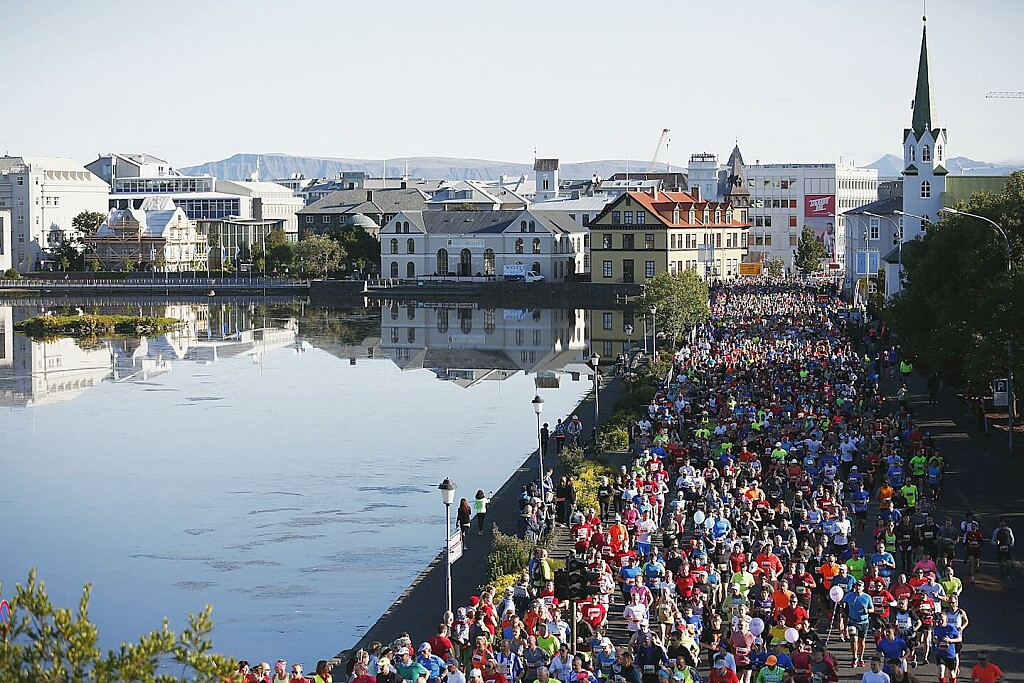
Reykjavik opens registration for non-binary athletes
Participants can now select female, male or non-binary in the entry system for all Reykjavik Sport Association (RSA) running events.
Registration opens in the beginning of November in Islandsbanki Reykjavik Marathon, Laugavegur Ultra Marathon and the Suzuki Midnight Sun Run.
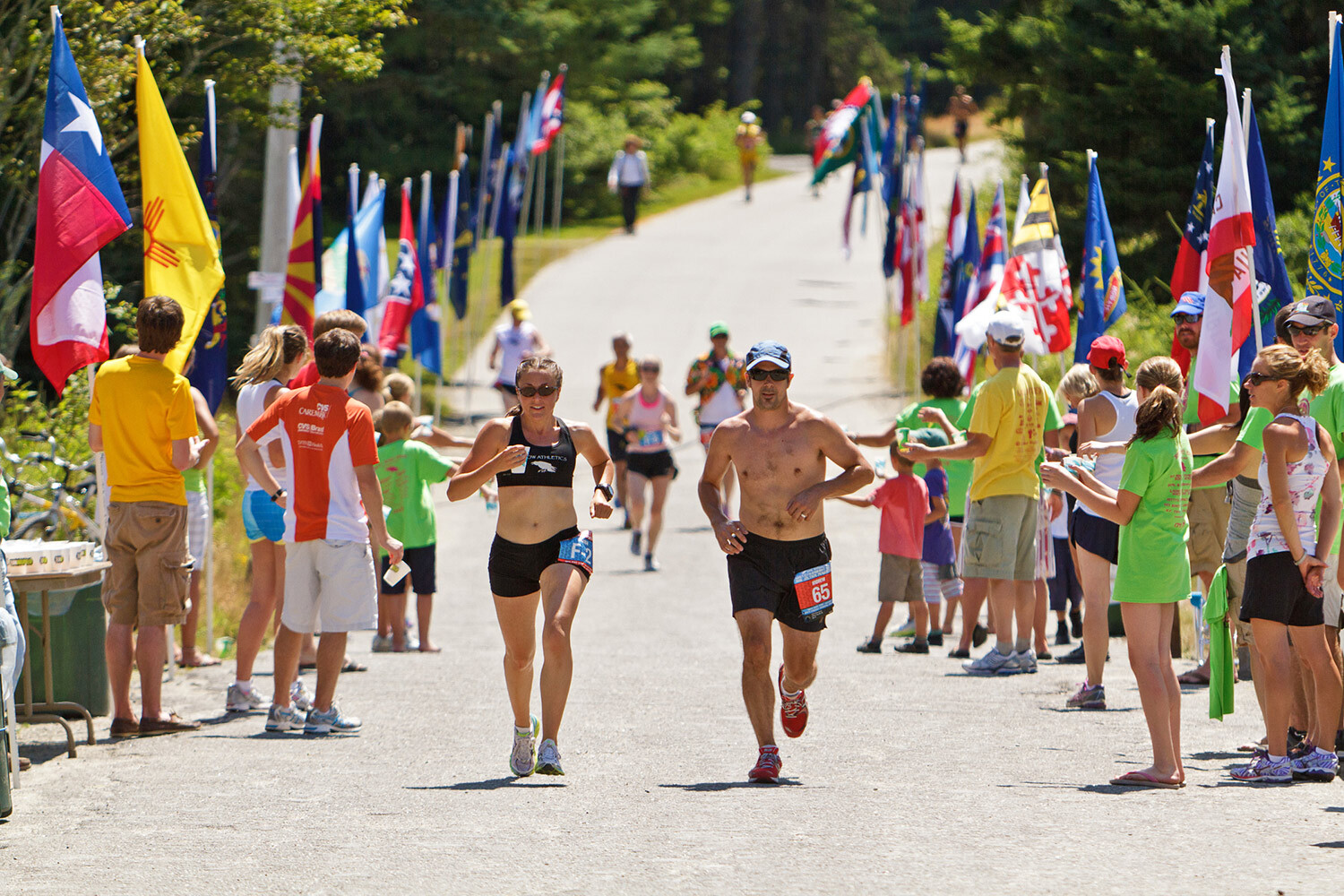
The three gender options (female, male and non-binary) will be offered to all participants registering for the Reykjavik Sport Association events. For the first time awards will be given for three categories in the running events.
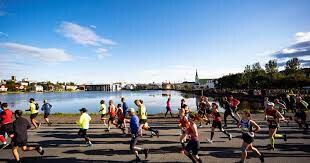
“We are excited to welcome everybody in our events, regardless of gender, gender identity and gender characteristics. We welcome everybody to our running events,” says Hrefna Hlín Sveinbjörnsdóttir event manager.
(10/18/2022) ⚡AMPby AIMS
Islandsbanki Reykjavik Marathon
In 1983 two young entrepreneurs working at a travel agency were looking for an opportunity to interest more tourists in visiting Iceland when they came up with the idea of starting an international road race in Reykjavik. A year later the first run was held with 214 participants. These were natives and runners from seven other nations. Since then the...
more...
10 ways to start running even if you kind of hate it
Runners love to hate their sport. Here’s advice for how to get past the pain and make running more fun.
Are you a runner who hates running?

It turns out, a lot of runners don’t love the actual running part of their sport. Running can conjure up memories of pain and punishment from high school sports. It can feel like a chore. Even avid runners who love the sport have had periods where their motivation wanes. One popular search on Google: “How do you start running when you hate it?”
Brendan Leonard, an outdoor adventure writer who runs ultramarathons, said that when strangers learn he’s a distance runner, they often tell him that they hate running, to which Leonard replies, “I hate running, too, man. It’s not that fun.”
And yet, running is one of the most popular forms of exercise with nearly 8 million people around the world signing up to compete in races each year. Running can be cathartic, and people who do it often feel a sense of accomplishment.
The Washington Post asked readers, “Do you hate running but want to do it anyway?” More than 100 people responded with stories of their love-hate relationship with running. Here’s their advice.
Go slower. You can even walk sometimes.
You don’t have to go fast. You don’t even have to run the whole time.
Cody Townsend, a 39-year-old professional skier, found running boring and painful. His endurance coach, Sam Naney, told him to slow down and alternate jogging for 30 seconds and walking for 30 seconds — a run-walk-run training method popularized by Olympian Jeff Galloway.
Townsend ran-walk-ran for 20 minutes several times a week for about four to six weeks. In the beginning, that meant he was running a 12- to 13-minute mile pace.
“If you can run and have a conversation with someone, then you're at the correct pace,” Townsend said. “And once I learned that, that’s what was the key catalyst to improving and then learning to love running.”
Expect the struggle. Embrace the boredom.
The struggle of running is a shared experience with every other runner, from beginner to elite marathoner.
In his book, “I Hate Running and You Can Too: How to Get Started, Keep Going, and Make Sense of an Irrational Passion,” Leonard recommends giving yourself permission to struggle. Running takes time. It requires practice. You need the proper shoes and gear, which can be found at specialty running stores.
Another common refrain from people who don’t like running is that it’s boring. Leonard, 43, agrees. But to him, “Boredom is fertile. It’s a great place to put yourself to actually think, as opposed to something that’s commanding your attention every few seconds.”
Make a game out of it
Mika McDougall, who is married to Christopher McDougall, the best-selling author of “Born to Run: A Hidden Tribe, Superathletes, and the Greatest Race the World Has Never Seen,” realized that she needed extra motivation to run during the frigid winter days of Lancaster County, Pa.
She noticed that in a nearby neighborhood, residents had set up free libraries in their front yards. She started to organize her runs around them. By the end of her runs, she would have a pile of books to take home. She would also drop books off.
“I wanted to vary it up to entertain myself, because you can kind of get into a routine and get bored,” said McDougall, who has since moved to her home state of Hawaii, where the weather is warmer. “It was a fun way to plan the afternoon and get rid of junk around the house.”
Run with a personal coach in your ear
Listening to a running podcast or guided running app during your run is like having a personal coach by your side. You can search for a variety of apps for runners of all levels.
Jess Mullen, 39, an administrative assistant in Philadelphia, says that running is “always a slog.” Listening to the NHS Couch to 5K podcast has helped. The episodes distract her from pain and offer reminders about form and breathing. The podcast is “a completely judgment free, nurturing way into running,” Mullen said.
Mullen’s cousin, 34-year-old Emily Kane, of Philadelphia, runs with Peloton’s guided workouts. “You kind of feel like you’re not by yourself,” she said.
Run with music or entertainment
Music, audio books and podcasts can also serve as entertainment and distraction on a long run. “At low to moderate intensities of running, the reduction in the rates of perceived exertion is around 10 percent” while listening to music, said Costas Karageorghis, a professor at Brunel University in London and author of the book, “Applying Music in Exercise and Sport.”
“It encourages dissociation, which means that runners are not so aware of the fatigue related symptoms from the organs and from the working muscles,” Karageorghis said.
The sweet spot for music tempo is between 120 beats per minute for a low intensity run and 140 beats per minute for a high intensity run.
Look for headphones with “bone conduction technology” and an open-ear design so you can listen to music but still hear traffic and stay aware of your surroundings.
Head to the trails
Trail running allows a change of scenery and an escape into nature. It also gives you “permission to slow down,” said Mike Crowley, 59, of Conshohocken, Pa., who has competed in multiple 100-mile races, including the Eastern States 100 in Waterville, Pa.
“It’s not as monotonous,” Crowley said. “The environment is more appealing and changes through the season. The community of trail runners is very welcoming and a fun group to be a part of.”
The American Trail Running Association (ATRA) lists dozens of trail-running events in the United States every month.
Keep chasing the runner’s high
Not everyone experiences the runner’s high the same way, but research suggests the feeling has to do with endocannabinoids, which are the natural versions of THC and CBD.
“When we say runner’s high, we mean kind of a euphoric effect that some but not all people experience after a bout a physical activity, and also reductions in pain and anxiety and stress,” said Hilary Marusak, an assistant professor of psychiatry and behavioral neurosciences at the Wayne State University School of Medicine. “An acute bout of exercise, whether it’s running or cycling or swimming — or even yoga — was associated with an increase in levels of circulating endocannabinoids.”
Leonard, the outdoor adventure author, starts feeling the runner’s high after 40 to 50 minutes into a run. “It takes a lot of work to get to a point where running is relaxing,” he said.
Practice breathing
A common question beginners ask is how to breathe. Heather Knight Pech, a running coach for McKirdy Trained, said one of the first thing she tells her clients is to slow down their pace.
One breathing exercise Knight Pech recommends to warm up before running is box breathing — inhaling and pausing for three to five seconds before exhaling through the mouth and pausing for three to five seconds. The 60-year-old competitive marathoner practices it before running and going to bed.
While running, Knight Pech suggests inhaling through the nose and mouth but exhaling deeper out of the mouth. The key is slowing it down and avoiding short and shallow breathing. “You do not want to be breathing short,” she said. “And if you are breathing short, that probably means you’re in some sort of stress.”
Find your running community
A number of runners noted that the running community — during training and at race day events — can make running more fun. The Road Runners Club of America offers a comprehensive list of U.S.-based running groups.
Matt Lindner, a 39-year-old Chicago marketing manager, ran high school cross-country and tried to get back into the sport at various points in his adult life with little success. “For me, there was just no point going out on a run when I could sit at a bar and drink beers,” Lindner said.
On a whim, Lindner signed up to run the 2017 Chicago Marathon for charity. He joined the Chicago Area Runners Association, a nonprofit organization with more than 11,000 members. Lindner credits the group for keeping him accountable and reigniting his passion for running.
Pick a fun, weird or quirky race
Running doesn’t have to be all business. In France, runners can sign up for the Marathon du Médoc, a 26.2-mile race through scenic vineyards with over 20 wine-tasting stops along the way. In San Francisco, the Bay to Breakers 12K race routinely draws tens of thousands of participants, many of whom are in costume. Every January, Walt Disney World in Orlando hosts a marathon weekend that includes a 5K, 10K, half-marathon and marathon.
Instead of signing up for a prestigious, big city race, 35-year-old Alex Quevedo of Irvine, Calif., chose the Star Wars Half Marathon in 2015. He wore a Stormtrooper tank top with white shorts for the race.
“There was a casualness to it,” he said. “There was more community.”
(10/15/2022) ⚡AMP

Ultrarunner Tim Tollefson shares mental health challenges in new film
Tim Tollefson is a celebrated American ultratrail runner with wins at big races like the Javelina Jundred, Lavaredo Ultra Trail 120K and Ultra Trail Australia 100K; in 2017 he was third overall at Ultra Trail du Mont Blanc (UTMB), finishing well under 20 hours.
But then followed a string of failures, including at this year’s UTMB, which went badly from the start, forcing him to drop out about four hours in. (Tollefson went into the race with a positive COVID result.) A new film, What Goes Unsaid, reveals something only those closest to Tollefson knew previously–alongside his many successes and the admiration of his fans, for years Tollefson has been dealing with poor mental health and an eating disorder.
Tollefson, who is sponsored by Coros, had a tough adjustment when his family moved from rural Minnesota to the Auburn, Calif. (the sight of the iconic Western States 100 finish) when he was 10, and he was bullied– for wearing glasses, for his accent and his haircut. He started running in middle school, which helped him feel more accepted.
But it also made him want to be leaner, and more like the other runners’ body types he observed on the team; and since he wasn’t the only one trying to eat less to force his body to conform to an “ideal” body weight, he didn’t realize how insidious and dangerous it could be.
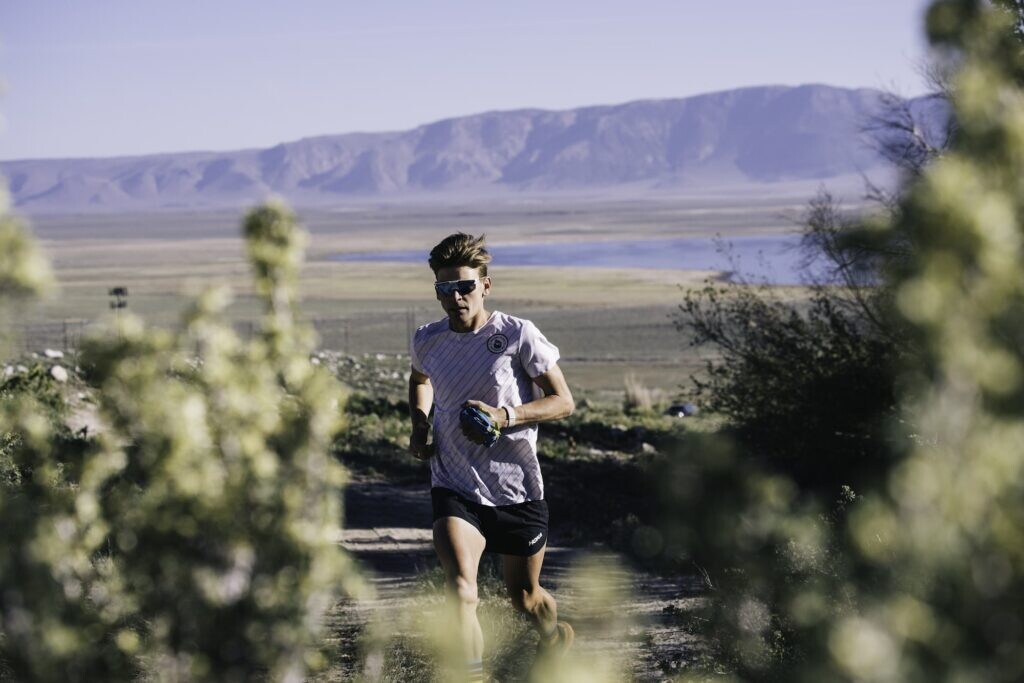
Tollefson qualified for the 2012 Olympic Marathon trials, but struggled in his brief marathon career, ultimately switching to trail running, which he hoped would bring greater success (and therefore self-acceptance). UTMB represented, in his mind, the acme of achievement in the ultratrail world–and he describes his 2017 podium finish, where he broke 20 hours (along with winner François D’Haene and runner-up Kilian Jornet) as the best race of his career. (He finished third in 2016 also.)
But the euphoria was short-lived. In 2018, he returned to UTMB and DNF’d–and again in 2019 and 2021. In the flim, he reveals that, even during the good years, he would almost be paralyzed with anxiety over being seen by others, and by perfectionism, severe body dysmorphia and obsessive-compulsive disorder (OCD).
Interestingly, this is one of the reasons he was attracted to UTMB: it starts in the evening, and much of the first half of the race takes place in darkness. By the time the sun rises, he has run long enough to feel slightly less bad about being seen. “I feel thin again, because I’ve run for 12 hours,” says Tollefson.
Tollefson says it’s not the running, or the altitude, that strikes fear into his heart–it’s being seen by other runners. He says he has been counting calories since 2003, and he only sought therapy recently. He now recognizes that what he sees when he looks in the mirror is distorted and not real.
Having grown up in the area and competed at Placer High (where Western States runners finish), Tollefson avoided it until 2021. He admits he was always critical of the race, whose course is not as technical or as spectacular as UTMB’s. Ultimately, he realized he was holding it to an unfair standard–much as he had always done to himself and his body. And he decided to run it.
He finished fifth last year, and as his fans already know, this year he finished, but not without struggling mightily–against dehydration and a powerful urge to quit. He placed 33rd overall, with a time of 20:41:28. “I decided that I wasn’t going to give up on myself,” Tollefson told filmmaker Billy Yang, who was commentating, after finishing. He also felt he owed it to his crew the volunteers and the runners who didn’t make it off the waitlist, to finish.
He shares his story now in the hope that it will encourage others to do the same. Several female athletes (including Olympic bronze medallist Molly Seidel, trail runner Amelia Boone and steeplchaser Allie Ostrander) have shared their stories, but as Tollefson’s makes clear, eating disorders are not limited to female athletes. (Canadian beer miler Corey Bellemore opened up about his own experience during the pandemic.)
“When other people share things publicly, and I relate or emphathize, it makes me feel less alone,” he says. “I’ve never had the confidence to reach out to those people and say thank you, but I know it has an impact.”
(10/11/2022) ⚡AMPby Anne Francis
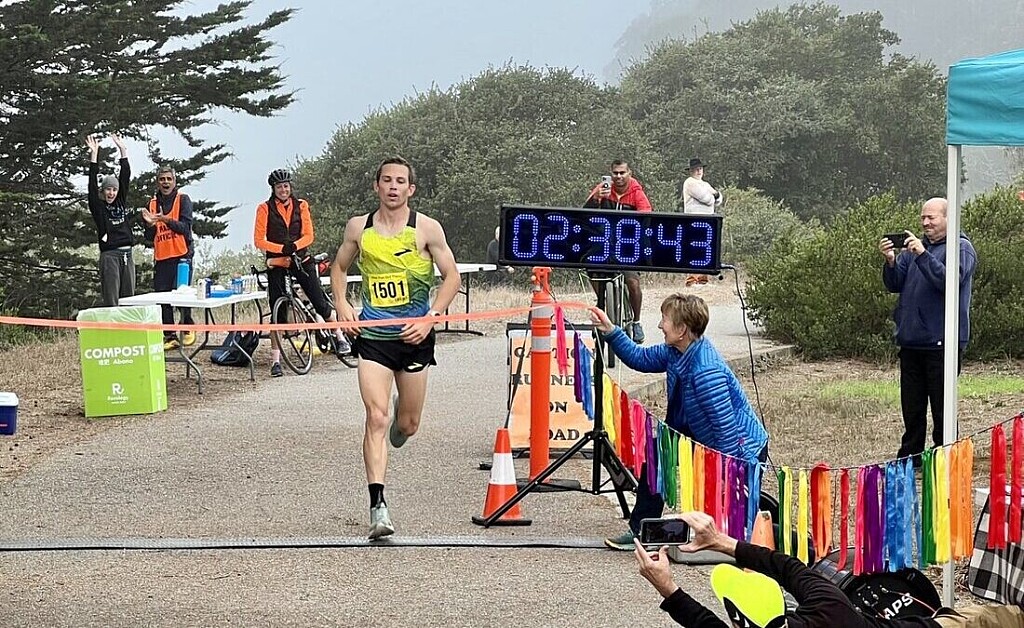
U.S. marathoner CJ Albertson reclaims 50K world record
Fresno, Calif.’s CJ Albertson, 29, set out to reclaim the 50K world record on Saturday at the 35th Annual Ruth Anderson Memorial Run in San Francisco, and he accomplished exactly that in 2:38:44. The Ruth Anderson Memorial Run is held on a certified, 7.24 km (4.5-mile) loop on either an asphalt path or groomed dirt shoulder around a lake. There is approximately 30.5 meters (100 feet) of elevation gain and loss per loop.
A coach and pro-runner for Brooks, Albertson previously held the 50K record in 2020, from a 50,000 meter race held on a Fresno track in 2:42:30. Albertson was the lone runner in the event (although he did have pacers), which was organized by Brooks and billed as an official record attempt.
In most other types of racing, road and track results are kept separate, but that’s not the case with ultra distances due to a 2014 rule introduced by the International Association of Ultrarunners (IAU).
Albertson’s 2020 record had been bested several times since 2020, most recently when South Africa’s Stephen Mokoka ran 2:40:13 at the 2022 Nedbank Runified 50K in Gqeberha, South Africa, breaking compatriot Ketema Negasa’s former world record of 2:42:07, also set at the 2021 Nedback event. Alberson currently also holds the indoor marathon world record of 2:17:59, set in 2019 at The Armory in New York City.
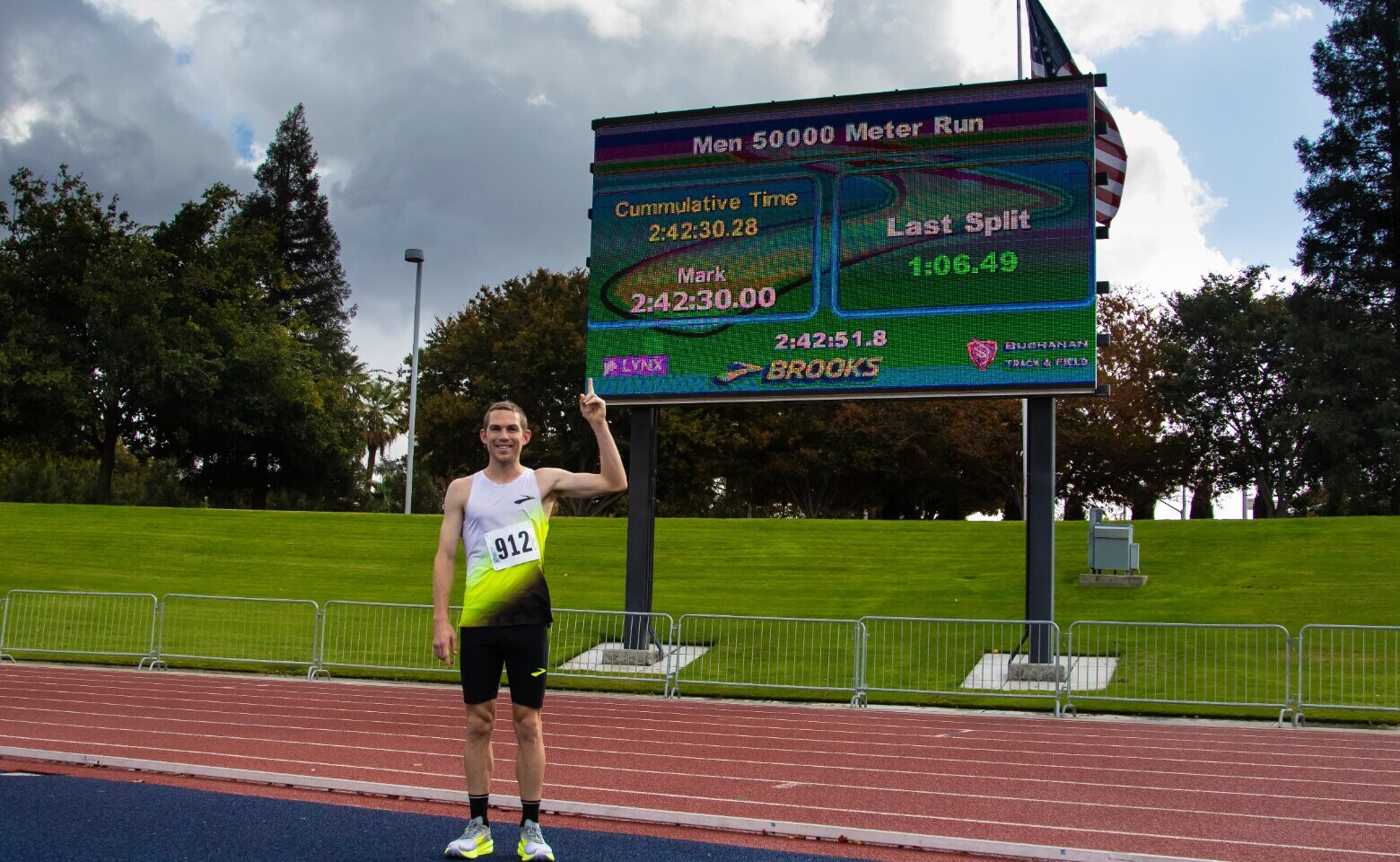
Albertson, whose primary event is the marathon, is also known for his unconventional race strategy: he led for 20 miles of the 2021 Boston Marathon, and ran with the same tactic at the 2022 Boston Marathon; he finished in 10th and 13th place, respectively, setting a PB in the 2022 event in 2:10:23. Albertson says upping the distance to tackle 50K record attempts is natural.
“The 50k distance has never seemed super long or much different from a marathon,” Albertson says. When asked about the role of mental toughness in his racing by iRunFar, he explained: “I don’t think that I endure pain for a long time, because I don’t really think that’s possible. I think that I don’t feel it. I put myself in the position and the mind frame where it’s fun.”
(10/10/2022) ⚡AMPby Keeley Milne
Here's Why You Keep Getting Injured, According to a Physical Therapist.
Today, the hill feels easier to climb. I step and press firmly into the rain-saturated dirt and raise myself one step closer to the horizon line, my heels lifted. The springs at the back of my legs are loaded and ready to release. There is no stretch or strain. I feel powerful. My back is erect and does not ache. No collapsing today as I charge up the hill. I can still hear my cross-country coach say "lean into it."
I've had the privilege of being shaped into an ultrarunner by my home state, Montana. My love for running is nurtured by following trails that connect landscapes. There is a great importance in the existence of these places, as well as sustaining our bodies - the vessels that take us there. As a doctor of physical therapy, my focus is to effectively build resiliency.
The Strength to Run
Our heart and lungs are invaluable aerobic tools that carry us forward, but trail runners cannot overlook our muscles, ligaments, tendons, or bones, either. The message of "be fit to run," instead of "run to be fit," is not new, but a large majority of non-elite runners have a difficult time following through with the former, in hot pursuit of the latter. Running has a simple essence, but the motion broken down is incredibly demanding on the body and deserves specific steps, and a plan, so running can continue.
Strength training can sometimes be a dirty phrase around the running world. Runners sometimes worry that BMI (body mass index) changes will impact performance and compromise their training hours, but there is a wealth of research supporting strength training improves running economy through neuromuscular changes in the body (2). A recent review of nearly 20 studies found body mass was unchanged from baseline with the implementation of strength training, but running performance markers did improve.
Bottom line? Your body - and your running - gains from strength training.
Research shows that resistance training can reduce risk of overuse injury. Based on a large meta analysis, strength training reduces overuse injury risk by half. Strength-to-run is what can help carry us forward when our lungs are sucking wind and our mind is telling us to take a nap in the wildflowers instead.
The Main Reason Trail Runners Keep Coming Into My Clinic
The main reason runners should invest time in strength training is to help stave off injury and to improve running performance. As a physical therapist, we see a broad spectrum of runners.
Now, strength training is a catchy term, and there are a ton of recommendations out there for how best to approach the endeavor of getting stronger. My approach comes via inspiration from a community colleague and friend, Dr. Evelyn Tate, as well as building research (from Richard Willy, Richard Blagrove, Rikke Beyer) around strength, running, and general strength/conditioning principles.
Best Practices: Approaching Resistance Training for Endurance
When starting out, in order to increase strength in a safe and effective way, following a periodization program is smart.
Strength-to-run is what can help carry us forward when our lungs are sucking wind and our mind is telling us to take a nap in the wildflowers instead.
Periodization means starting with higher repetitions (15-20) of an exercise, with a lower weight and, each week or so, decrease reps and increase weight. The goal? To incrementally build muscle strength, in order to keep your tendons and bones as healthy as possible in common overuse injury sites for endurance athletes (i.e. patellar tendon, tibia, achilles). If life happens and you take a week or two off, no problem. Simply start back over with your progression. Once you reach week 8, the goal is to maintain that rep/set pattern through the season.
Here's a Sample 8-Week Progression Plan:
When selecting from the endless bank of exercise variations, choose one large compound lift like back squats, front squats, deadlifts, or RDL (Romanian deadlift) as your first lift, and then 4 or 5 additional exercises focused on quads, glutes, hamstrings and especially the calves. During running, forces through the gastroc complex are up to 6-8x body weight.
Core exercises can be spread throughout your session, too. "Core" goes beyond the abdominal muscles, the sought after 'six pack.' It's also the muscles that hold us up, line our backs, surround our hips, and support the pelvic floor.
Now, even though our legs are what carry the body forward, trail runners cannot neglect the benefit of upper body strength. When the mountain gets steep enough, we lean in, and our arms become an extension of the legs pushing down through the knees, moving toward the sky. There may even be times where you are on all fours pushing and pulling yourself up and over rocks.
Running itself is a plyometric motion (rapid stretch-contract of muscle tissue, i.e. jumping and hopping), so your strength session does not need to be dense with plyo/power exercises, but for specificity of training, the addition of 1 to 2 plyo-power exercises is a good option.
If you find that your strength training sessions are causing the quality of your running to suffer, first decrease your volume of lifts, meaning decrease the number of sets or repetitions, and then second, decrease weight. Too often, the solution is to lower the load we are trying to move. We cannot lower the height of a mountain, but we can be stronger in our approach. If facing body soreness two days after a lift, the session was likely a bit too dense, and you can simply decrease total loading.
With all the guidelines and science to serve as the strong supportive frame, it is important to remember in training that maintaining our body's capacity to move through terrain is a fluid process. As trail runners, we are constantly evaluating terrain, checking in with maps, and pausing (even just for a moment) to look at the beauty. Your training and strength to run deserves the same respect.
(10/08/2022) ⚡AMPby Trail Runner Magazine
Here’s why racing a team event will make you a better runner, racing with a friend or several will revitalize the way you approach competition
Either you love running in groups or you prefer to do most of your runs solo–most runners seem to have a preference. Even if you’re a die-hard solo runner, entering a race as a duo or team of several will be a game-changer.
I enjoy my alone time, and with the exception of heading out to our local parkrun or community events, I lace up and train by myself. Many of the races I enter have team options, but I generally run solo. To wrap up the summer trail racing season this year, my partner and I decided to race The Lone Wolf, a last-man-standing looped-course race on the beautiful trails of Fernie, B.C.
I learned more from running with my partner than from any other race this year. Here’s why you should try a team event, even (or especially) if it means stepping outside your comfort zone.
You’ll be inspired by your teammate(s) and connect to the larger community
I know toeing the line as a solo racer is motivating in itself, and you might be wondering why a team effort would be different. Many people at the event were part of the ultratrail community I run in regularly, so it wasn’t a whole new crowd. It was, however, a new perspective; I had no idea how my husband and I would run as a team.
Running as a team changed my approach to the race and the people within it. I had a whole new set of competitors to get to know, and it was fun to watch them interact and try to guess how many loops both team members could manage. I wasn’t obsessing over pace and timing, so I was able to take the time to connect with different, fascinating people at the race. As always when connecting with new runners, I learned from them–and am already looking forward to crossing paths with them again.
As part of a team, you need to focus on the process rather than the results
Stepping into a team event means giving up a substantial amount of control over the outcome. If you’ve experienced a few races, you’ve probably had one that didn’t go as planned, and after a race like that, many of us go over what went wrong and how we could develop skills to avoid those problems in the future.
On a team, you truly have no idea how the race will pan out for your teammate or group members, so you’re forced to give up that PB mentality and focus on how you can make the race flow more smoothly for all involved.
Instead of worrying about whether my team was going to blow everyone away, I had to stay on top of the few things I could control. The race we entered required one team member to be on the starting line every hour on the hour (backyard ultra style), so I needed to be ready to switch out my partner, along with providing encouragement and trying to imagine what they might need when they finished a loop. My role as a runner shifted to also being that of a fan and crew member, and as a result, I had more fun than I expected.
You’re guaranteed to learn things you can incorporate into your solo racing
The skills you learn through teamwork will be useful when you head back into a race on your own. Remembering the importance of being dialled into the process rather than the result is something most runners should work on. Entering each race you run with a mindset intent on encouraging others can actually help you become a faster, more efficient athlete (and science backs this up).
After a few tough races, trying something different at the end of the season was revitalizing. A team event lessened the pressure I usually place on myself, so I wasn’t as nervous throughout the race, and I was perfectly content with whatever outcome our team had–the goal was to have fun.
Many regular runners have personal goals to beat every time they race, and it can be a relief to jump into something where the only true goals are connecting with others, having a blast, and moving your body. I can’t wait to do it again.
(09/28/2022) ⚡AMPby Keeley Milne
The Apple Watch Ultra - The First Apple Watch That Can Go The Distance
We have reviewed Apple watches before. Often times it's simply as a service to endurance athletes who might think about buying one, so we can just say, "It's a nice watch, but it's not really for what you do." Especially those of us who train every day, sometimes twice per day, and have a particular affinity for data and accuracy and workout organization.
Apple watches have great apps, beautiful screens, and the best touchscreens in the game, but their built-in workout profiles and post-data analysis leave something to be desired. And the battery life-oh the battery life! But with the latest "adventure-focused" Apple Watch Ultra, now-for better or for worse-Apple has its hat in the endurance sport's ring with the big boys.

First, we'll look at what's new on the Apple Watch Ultra, talk about what we liked as we've spent hours using it, what we didn't like, and then dive into the endurance sports specifics before giving our conclusions and some competitive analysis. Let's see how it fares:
Apple Watch Ultra: What's New
Before we get into the specifics that make the Apple Watch Ultra an endurance/outdoor contender, let's quickly take a look at what's new:
Apple Watch Ultra: What We Like
As we noted before, the Apple Watch series was always a bit frustrating for athletes-the super limiting battery life meant you had to charge it pretty much every night, and you couldn't go on super long runs or adventures or race almost any ultras with it. Even if you loved everything else about the Apple Watch, that was always a deal breaker. The good news is that with the increased battery life and low-power options, you're looking at a smartwatch that can effectively handle any workout, event, or outdoor adventure that you could throw at it. Apple also teased a low-power workout mode that would give additional battery life, but with reduced resolution of GPS and heart-rate readings coming soon.
Battery life aside, the more robust build of the Apple Watch Ultra makes it feel less like a piece of fine art and more like a tool for training. And it's not just looks-the raised lip of the case protects the precious screen better than previous models by a ton. It's also safe to say that the "Precision Start" function and "Action" buttons are both things that pretty much every other smartwatch ever made already has, but both were gaps missing in Apple's exhaustive function quiver.
With all of this combined, the Apple Watch Ultra is not only a decent (yes, just decent, more on that below) outdoor adventure watch, but it's actually a good watch for anyone training for endurance sports-regardless of distance. Outside of training, Apple's "lifestyle functions"-things like text messaging, weather, music, third-party apps, contactless payment, and (way way) more-are basically unparalleled.
Yes, Fitbit has some fun stuff and a nice screen, but Apple is still lightyears ahead of any competitor when it comes to smartwatch power and integrations. As an example: The three-mic setup is nothing short of magic when making calls on the watch-no one is even remotely trying to do this stuff, except for Apple.
Also, let's not forget that since the untimely demise of the Forerunner 945 LTE, this is one of the only full-function workout watches with legit battery and LTE connectivity. So if you like to go training (or racing!) untethered to your phone, like so many of us do, this is still one of the ONLY ways to stay in touch via LTE. That's not nothing.
Apple Watch Ultra: What Could Be Better
While I won't speak to the dive functions, I would say that many of the "outdoor" functions like navigation and mapping are still pretty on-grid if the Apple Watch Ultra is supposed to speak to the hardcore adventure set. The lack of offline mapping and navigation seems like nothing more than an oversight (or lack of a mapping partner, maybe), and the compass waypoints and retroactive backtracking-while cool-aren't exactly going to save your life in the backcountry.
The battery is better, for sure, but to consider this a 100 miler or backpacking watch over something more expedition-worthy is reckless at best. If you're with a group of friends backpacking for a week, it's probably not a bad choice, but if you're doing a solo multi-day adventure or tackling and unsupported fastest known time (FKT), I wouldn't count on the Ultra as your only navigational tool-like you could for some upper-end adventure watches (the Coros Vertix 2 or the Garmin Fenix 7/Enduro line, for instance).
In terms of more workout-specific capabilities, the battery life (finally) brings the Apple Watch into the realm of ultra runners, but it still lacks some of the data power they really need. Trail runners should be encouraged that this is a watch they can finally do an ultra with (and all of the related ultra training). The multisport crew might complain about a lack of open-water swimming distance alerts that pretty much all open-water ready smartwatches have right now.
And while native running with power is a total game changer, given that currently only Polar and Coros have that built-in, serious runners might take issue with how inflexible the power metrics are in the workout screens. Yes, having average power and average three-second power is great (and the ability to move those metrics around), but lap power is sometimes just as important, if not more.
On the note of workouts, the Apple Watch Ultra does have some cool built-in workouts that you can select when you're feeling uninspired by your training program, and of course you can create and edit your own workouts on watch-without the need for an app. Apple also says there will be a "track detection" feature coming soon that will actually recognize-via satellite imagery-that you're in proximity to a track (U.S. only), and prompt you if you're going to be running on it. If so, you'll choose a lane, and it'll snap the GPS tracking and distances to that track. While other brands like Garmin and Coros have something similar, no one can automatically detect that you're near a track. For better or for worse, it's a reminder that the Apple Watch Ultra is paying (very close) attention to you.
Finally, there's the Gucci-patterned elephant in the room: The price. Sometimes it feels like Apple gets a bit of a pass on pricepoint because it has SO MANY great lifestyle integrations and really cutting-edge hardware, but because Apple wants to play with the long-distance training/adventure crowd now, they need to stand and be compared to other smartwatches in that world (see our competitive comparison below).
Eight-hundred dollars gets you a lot of smartwatch in the endurance/adventure realm-for instance the Garmin Fenix 7 or Forerunner 955 series or the Coros Vertix 2. All of those watches have some very very robust training modes, loads of customizable sport functions, navigation, and insane battery life. No, none have a beautiful screen, smartphone integrations, or LTE like the Apple Watch Ultra, but in terms of working out/navigating the outdoors, they're still on another level.
Conclusions
There's so much to cover in this watch, a reviewer could write a book, but the easiest thing to do is break the new Apple Watch Ultra down into what an Apple Watch has been before, and what this latest version is hoping to be. In the past, Apple watches have been a great lifestyle smartwatch that integrates incredibly with the Apple ecosystem. They play music send and receive texts, check emails-basically most things a smartphone can do now. They also let you go for casual workouts and track your "fitness" (lowercase) as you went.
The Ultra still has all of that. Now, with the Ultra, Apple wants to be considered an endurance sports/adventure outdoors player up against the watches we used to buy to supplement our Apple Watch purchases-from brands like Coros and Garmin and Polar.
Now, instead of having your Apple Watch for going to the office or going out at night, and your "workout watch" for serious runs, backpacking, and outdoor adventure, Apple wants to be all of these things: Leave your Garmin at home, let it die. Does Apple fully pull this off? Not quite, but they're dangerously close. For $800, you're still not playing in the same sandbox as $800 Garmin or Coros watches, but if this watch was $500 (with LTE), those brands would be sweating big time.
Even so, the issues we have with the Apple Watch Ultra aren't core issues-I can't imagine it'd be a tough lift to get offline mapping, especially given that the storage is already there (32gb by the way). It also doesn't seem incomprehensible that Apple could somehow add an average lap running power data field.
Is this the watch that replaces all of your watches? It very well could be.
(09/24/2022) ⚡AMPby Trail Runner Magazine
Why more men than women are running in ultra and trail races?
A recent study published in the Sport and Society journal set out to determine what barriers prevent women from entering ultra-distance races. It’s certainly not news that far more men sign up and race ultra and trail races than women.
Hardrock 100 recently added changes to their lottery system so that the percentage of women that enter the lottery is equal to the percentage of women racing, and other races are following their lead and promoting inclusivity in ultra and trail racing. In a sport where we are seeing women beat men at longer distances, why are so few women signing up to race?
The study

The research was conducted via online questionnaires sent to participants of all genders in two ultras in the U.K., the Highland Fling 85 km (53-mile) Ultratrail Race, and the Jedburgh Three Peaks Ultra. Jedburgh Three Peaks Ultra is a 61 km (38-mile) race that notably takes a firm stance on promoting inclusivity within their race and the larger Jedburgh Running Festival, offering a non-binary category for all of their races and encouraging transgender athletes to sign up in the category they identify with.
Following the online questionnaires, one-on-one phone interviews were conducted to compare the racing and training experiences between men and women and to determine what differentiated them.
The takeaway
The conclusions researchers arrived at probably aren’t surprising to many women. While time was a factor impeding both men and women from training for longer or terrain-specific (ie. trail) races, it impacted women more. Interestingly, more men than women within the study had dependents, and the study determined that traditional gender roles seem to be the greatest barrier to women signing up for ultras.
Both male and female participants shared that negotiating time for running with family and work commitments required considerable planning and prioritizing and that sometimes this process of negotiation efficacy was a family or team effort.
"Despite gradual shifts towards egalitarian family roles in society, more restrictive traditional gender roles persist, and these may still influence the negotiating-efficacy of female ultrarunners more than males, thereby potentially reducing the availability of female training time,” researchers said.
While this suggests that women are still carrying a greater burden of workload within families, the study concluded with optimism, reporting that more women are signing up for races than ever before. Researchers determined that the current historical influence of traditional gender roles is diminishing, and the ratio of women to men in ultra and trail races should continue to improve.
(09/23/2022) ⚡AMP
Aleksandr Sorokin wants to become the first man to run 200 miles in 24 hours
On Sept. 17, the world’s fastest ultrarunner, Aleksandr Sorokin of Lithuania, demolished his previous 24-hour world record from a year ago, running 319.61 kilometers at the IAU 24-hour European Championships in Verona, Italy. There is no doubt that Sorokin’s record will stand the test of time, but the 40-year-old ultrarunner says he’s not done yet with the 24-hour distance.
After breaking Yiannis Kouros’s long-standing 24-hr record of 303.506 km a year ago, with 309 km, Sorokin has once again redefined human performance, beating his old mark by more than 10 kilometers.
No runner has ever covered 200 miles (321.86 km) in 24 hours, but Sorokin has come the closest, with his most recent record of 319.61 km. “I have unfinished business with the 24-hour distance,” he says. “There’s much more to come.”
Ten kilometers is a significant improvement for Sorokin in a year, but he says he hasn’t changed much in his training. “Nothing has changed, but little by little, my body has become faster,” he says. “We’ve added a little more mileage this time around, too.”
Three to four weeks out from the European championships, Sorokin’s peak training weeks were between 360 and 380 kilometers (an average of 50-plus kilometers per day).
“My training for these ultra races is no secret,” Sorokin says. “My coach and supporters motivate me to achieve my goals and work hard.” Sorokin has a public Strava profile where he uploads all his training in the lead-up to each race.
In a 2021 interview with Sorokin, he spoke about how winning European championship gold for Lithuania was his ultimate goal when he began running in 2013. Sorokin holds seven world records on the track and road: 100,000m (track), 100 miles (road), 100 miles (track), six-hour run, 12-hour run (track), 12-hour run (road), 24-hour run (road).
The Lithuanian distance runner has no races planned for the immediate future but he is excited for what is yet to come. “I think running 200 miles in 24 hours is possible,” says Sorokin. “There are many factors that need to go your way—like good weather and a fast course.”
In January, Sorokin became the first runner to break the 11-hour barrier for 100 miles in 10 hours, 51 minutes and 39 seconds at the Spartanion Race race in Tel Aviv, Israel.
(09/22/2022) ⚡AMPby Running Magazine
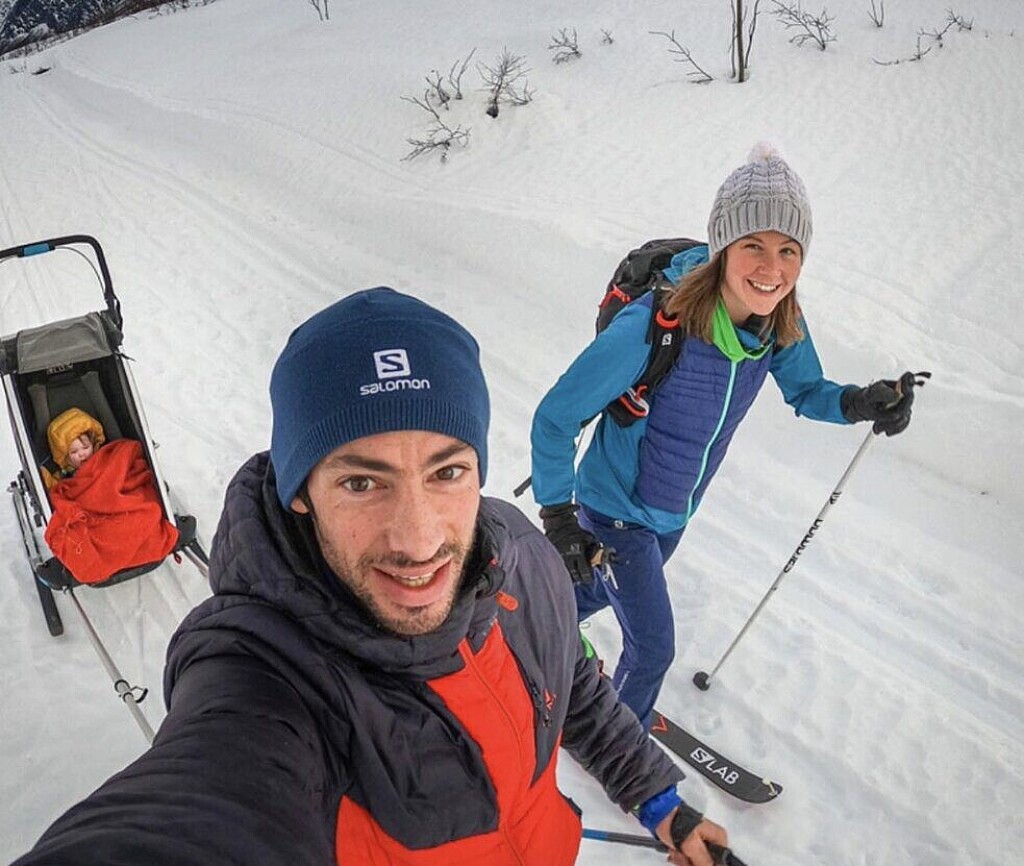
This nutritious pizza is fuel for the fastest, you might not be able to run as quickly as Kilian Jornet and Emelie Forsberg, but you can definitely eat like them
Power-ultrarunning couple Kilian Jornet and Emelie Forsberg have it all–glorious mountain miles to run surrounding their home in Norway, the launch of athletic brand NNormal, and delectable home-cooked meals baked from their small family farm. While Jornet recently won both Hardrock 100 and UTMB, Forsberg is an accomplished athlete herself and details her running journey in her book Skyrunner.
Forsberg is also the co-founder of Moonvalley, a plant-based sports nutrition company, with fellow pro runners Ida Nilsson and Mimmi Kotka. Forsberg has a simple pizza recipe that is so easy and versatile you’ll want to have it on a weekly rotation.
Homemade pizza is a family favourite at my house. Since our kids were little, my husband and I have taken turns whipping up a batch of pizza dough, pulling out whatever vegetables we find in the fridge and letting everyone create their own masterpieces. The best part about pizza is that it’s easy to cater to everyone’s unique tastes–try a double batch of dough or split this recipe into four for individual pies.

Emelie Forsberg’s ‘Fast Food’ Veggie Pizza
Ingredients (makes two pizzas)
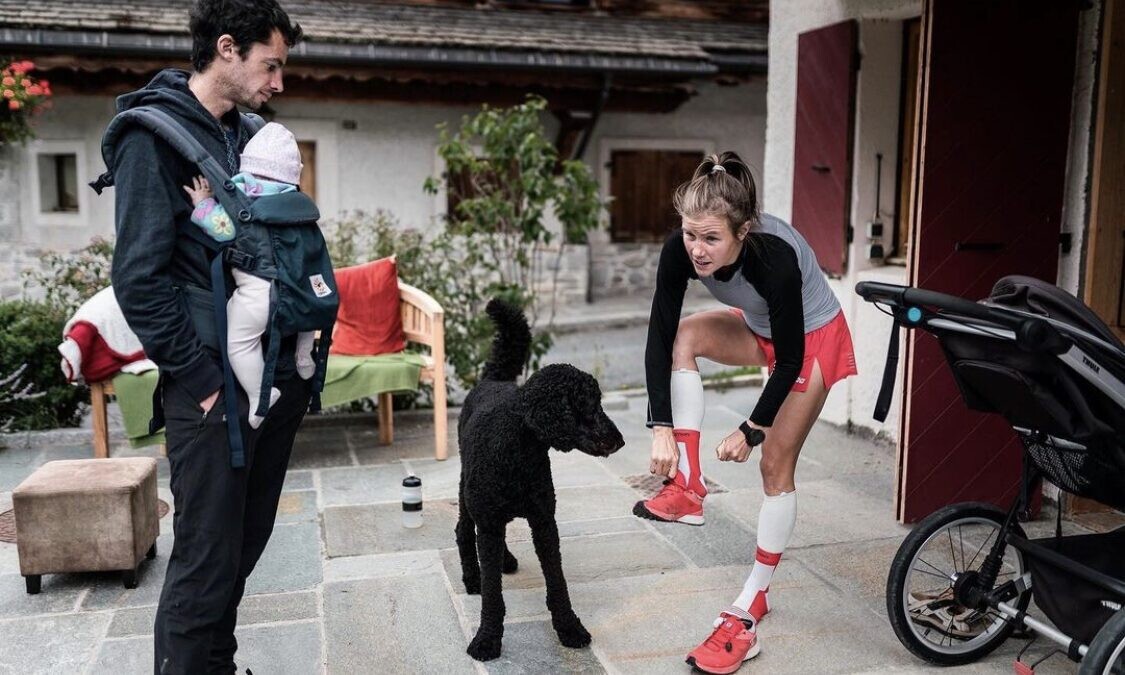
Dough:
2 1/4 cups almond flour (since there is no yeast in this recipe, Forsberg suggests any type of flour without wheat, including corn, coconut, chickpea, or a combo)
3/4 cup water
1/2 tsp salt
1/2 tsp garlic powder
1/2 tsp baking powder
1 Tbsp vegetable oil
Toppings:
assorted veggies of choice (mushrooms, beets, eggplant, tomato)
tomato sauce
cheese (can use vegan)
arugula for topping
Directions
Mix all the dough ingredients together well. Roll out the dough on some parchment paper and pre-bake it for 5 mins at 225 C (440 F).
While the dough is pre-baking, start chopping your veggies. Forsberg says she throws in what she has at home, and if she’s in a hurry will simply use plain store-bought tomato sauce.
Add tomato sauce, veggies, and your choice of cheese, and pop back in the oven at 220 C for approx 10 more minutes. Top with arugula and enjoy.
(09/21/2022) ⚡AMPby Keeley Milne
You’ve Heard of Running for Beer. But What About Running as Beer?
New Zealand ultrarunner Glenn Sutton finished the Dunedin Marathon on September 11 in a huge beer can costume that he crafted himself.
You might find this hard to believe, but only one of the 165 runners that completed the Dunedin Marathon in Dunedin, Otago, New Zealand on September 11 was wearing a human-sized beer can costume.
Glenn Sutton, a 48-year-old ultra runner from Dunedin, and local brewery Emerson’s, the marathon’s sponsor, came up with the idea before the COVID-19 pandemic canceled the 2020 edition of the marathon.
“I thought it would be something quirky to do. I hadn’t seen it done before,” Sutton told Runner’s World. “I’ve seen cans where people’s arms and heads poke out, but not a full-size can.”
After two long years of waiting, the Dunedin Marathon was finally scheduled for fall 2022, so Sutton got to work. A joiner by trade, he put his ornate woodworking skills into constructing a beer can costume that would cover his entire body from his head to just above his feet. His friend Bruce Adams made the signage that covered the wooden frame, which depicted Emerson’s Super Quench, a low-carb Pacific pilsner that launched earlier this year.
While in the can, Sutton couldn’t use his arms much and could only manage a shuffle rather than a full stride. It was hot, “like running in a glass house,” Sutton said. He could only see through a plastic cut-out at eye level, which blurred his already obstructed vision.
On race day, Adams ran about five meters ahead of him to make sure Sutton was on the right path. Sutton, who’s run ultra races like the days-long Badwater 135 before, wasn’t worried about taking his time to finish the race. He typically runs under three hours for marathons, but knew this particular attempt would take longer—especially if there were setbacks along the way.
Unfortunately, a major setback did occur. With 5K left, an unexpected gust caused Sutton to clip his foot on the inside of the can. He tried to catch himself, but fell on the footpath.
At that point, he was “like a turtle on its back,” rolling around while locked into harnesses around his shoulders and waist. Though the can took some damage, Sutton survived the fall unscathed. He unstrapped, got out, re-strapped in, and trudged forward for the final three miles.
As he neared the end, Sutton heard his name over the loudspeakers. A crowd clapped him through the finish line, which he crossed in a time of 6:12:37.
“It was quite cool,” said Sutton. “It drew a bit of attention, and that’s what it was all about.”
Sutton’s next challenge? Big Dog’s Backyard Ultra Satellite Team Championships, where he has to run a 4.167-mile loop at the top of the hour, every hour, for as long as possible. Nations choose their 15 best ultra runners to compete against the rest of the world, and the team that logs the most yards wins. If Sutton outlasts his 14 New Zealand teammates, he individually qualifies for the Backyard Ultra world championships in October 2023.
“I enjoy challenging myself to go these distances,” said Sutton. “I don’t mind grinding it out—and I want a bit of pain.”
(09/18/2022) ⚡AMPby Runner’s World

Wildfire in California causes thousands to evacuate, impacts Western States course
The Mosquito wildfire, which began west of Lake Tahoe amid extreme heat on Sept. 6, is the largest fire currently burning in California. The blaze has already burned through 58,544 acres in El Dorado and Placer counties.
Western States Endurance Run (WSER), one of the most famous ultra trail races in the world, sits right in Mosquito’s path. Runners begin the annual, much-revered 100-mile race in Auburn, and finish on the track at Placer High School.

On Tuesday afternoon the fire flared up, pushing toward the community of Foresthill and arriving at the edge of Foresthill High School, blazing through structures across the street. Firefighters appear to have kept the fires away from the high school, but it’s not clear how many cars and structures were consumed in the flare-up.
We connected with Craig Thornley, race director of WSER, on Tuesday. “Lives and homes are the highest priority right now. The WSER trail and our race is a lower priority,” Thornley said.

“That said, eventually the fire will be contained and the US Forest Service will be able to go in and assess the damage to the WS trail and the bridges. Currently, the fire has affected the trail as far up as Devil’s Thumb [aid station] through El Dorado Canyon and Michigan Bluff, to the turnoff onto the single track from Chicken Hawk. That’s about 10 miles of trail. It still could burn up towards Last Chance and Dusty Corners, but it is unclear what effect the burn scar will have on fire growth,” added Thornley.
The flames have forced more than 11,200 people to flee as they encroach on homes and buildings, burning 64 structures by Wednesday including at least 25 homes, according to Cal Fire. The fire grew more than 8,000 acres overnight and is spreading through the Sierra Nevada mountains.
“It continues to push steadily to the east in heavily forested areas with extremely dry vegetation,” officials said Wednesday morning. There is some optimism, however, as firefighters have the fire now 20 per cent contained.
(09/15/2022) ⚡AMPby Keeley Milne
Athletics Olympic champion on the start line of the TCS Amsterdam Marathon
There is a remarkable name on the starting list of the TCS Amsterdam Marathon: Almaz Ayana. The 30-year-old Ethiopian athlete, who won gold in the 10,000 meters at the 2016 Olympics, will make her marathon debut on Sunday, October 16. Another first is the current world record holder in the 1500 meters: Genzebe Dibaba. Sports organization Le Champion also reports that CyBrian Kotut, Lemi Berhanu and Titus Kipruto are the fastest men on the start line in Amsterdam's Olympic Stadium. They have all won major marathons.
Almaz Ayana is one of the greatest talents of all time in long distance running. In 2016, she was phenomenal: she won Olympic gold in Rio de Janeiro in a new world record in the 10,000 meters (29.17.45) at the time, and bronze in the 5,000 meters. In that year, she was also awarded IAAF Athlete of the Year. The 30-year-old Ethiopian athlete previously won the world championship twice and the Diamond League final ranking twice. After a few years of absence due to the arrival of her son, Ayana is ready to add to her impressive record of achievements.
Genzebe Dibaba is the youngest sister of three-time Olympic champion Tirunesh Dibaba and Olympic silver medallist Ejegayehu Dibaba. The 31-year-old Ethiopian runner holds the world record for the 1500 metres (3:50.07, Monaco 2015). She also is an Olympic silver medal holder (2016, Rio de Janeiro). In 2015, when she became world champion in the 1500 meters, her brilliant performance was rewarded with the title of IAAF Athlete of the Year. She will be challenging for the first time over this classic distance.
These fast women are accompanied by Tsehay Gemechu, among others. Their 23-year-old compatriot has a personal best of 65.01 in the half marathon and finished fourth in the 5,000 meters at the 2019 World Athletics Championships.
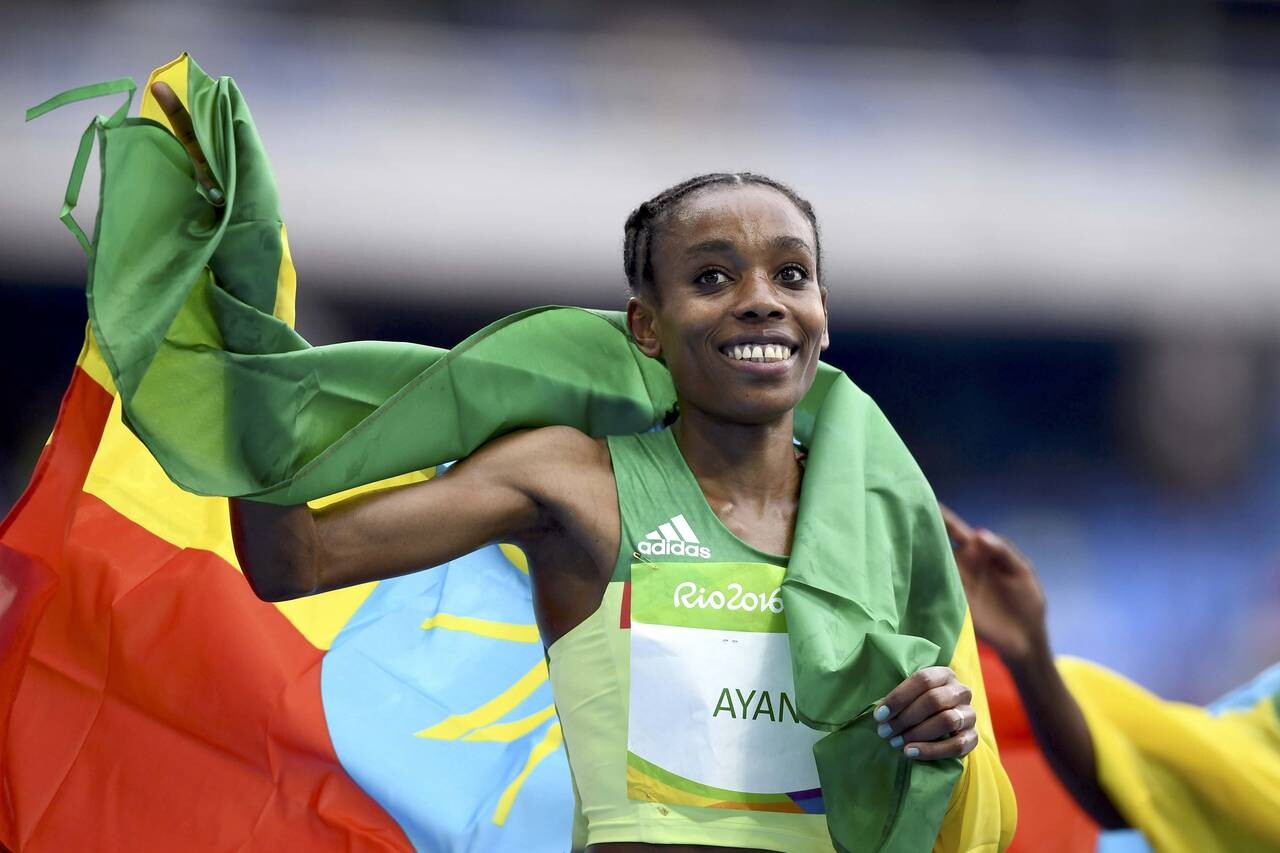
Course record of 2.03.39 in danger?
When the starting gun for the TCS Amsterdam Marathon sounds on Sunday 16 October, the eyes of the men will be on CyBrian Kotut, Lemi Berhanu and Titus Kipruto. On the ultra-fast course, they will be aiming for the course record of 2.03.39 (Tamirat Tola 2021).
CyBrian Kotut has already won a number of marathons: Hamburg, Florence and Paris. This spring, the 30-year-old Kenyan ran a personal best of 2.04.47 to win in Hamburg. Last November he was unbeatable in the 42,195 meters in Florence and in 2016 he triumphed in Paris.
Lemi Berhanu also knows all about winning. He has won the Dubai (2015), Boston (2016) and Xiamen (2017) marathons, among others. With a personal best of 2.04.33, the 27-year-old Ethiopian is in for the win.
Titus Kipruto is a revelation from Kenya. This spring, the 24-year-old marathon runner made a huge impression by winning the Milan marathon. In his second marathon, he finished in 2:05:05. Can he break his personal record again in Amsterdam? >{?Registration for NK marathon still possible
During the TCS Amsterdam Marathon, the Dutch marathon championships also take place, for which competitive athletes can register until September 26. The three main events, the full marathon, half marathon and 8K,
(09/13/2022) ⚡AMPby Runners Web
TCS Amsterdam Marathon
Do you want to enjoy Amsterdam in October and all that the city has to offer you? Want to feel a real athlete and start and finish in the historic Olympic stadium? Or run across the widely discussed passage under the beautiful National Museum? Then come to Amsterdam for the annual TCS Amsterdam Marathon in October! The TCS Amsterdam Marathon...
more...