

Running News Daily
Running News Daily is edited by Bob Anderson and team. Send your news items to bob@mybestruns.com Advertising opportunities available.
Index to Daily Posts · Sign Up For Updates · Run The World Feed
Articles tagged #Bronx
Today's Running News
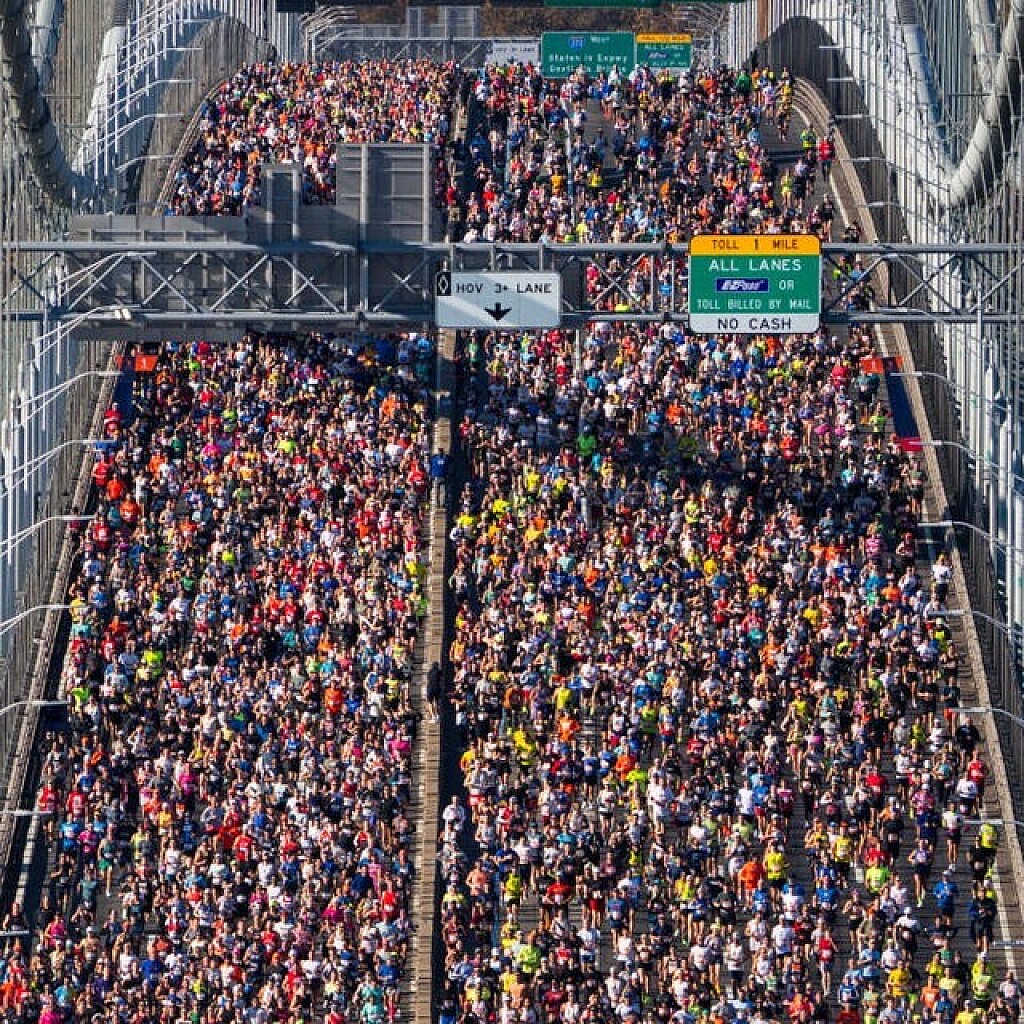


New York City Marathon Makes First Course Change in 15 Years
The TCS New York City Marathon is set for a small but significant change to its iconic 26.2-mile course, with runners facing a revised section in the Bronx between Miles 20 and 21.
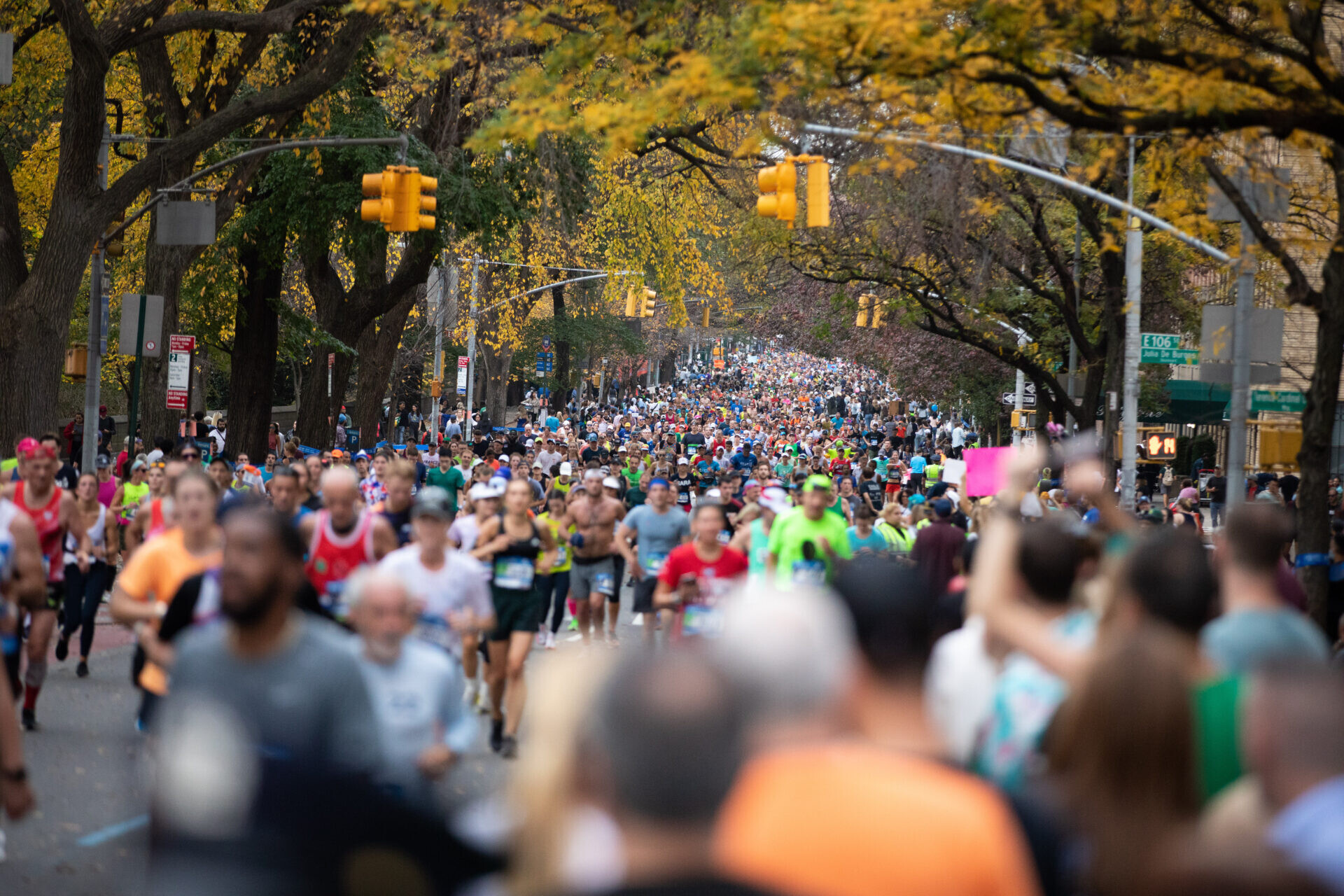
For 15 years, every New York City Marathon runner passed through the exact same stretch of the Bronx around Mile 20, navigating a short loop that surrounded a neighborhood supermarket and a 24-hour laundromat for much of race day. This November, that familiar loop will disappear.
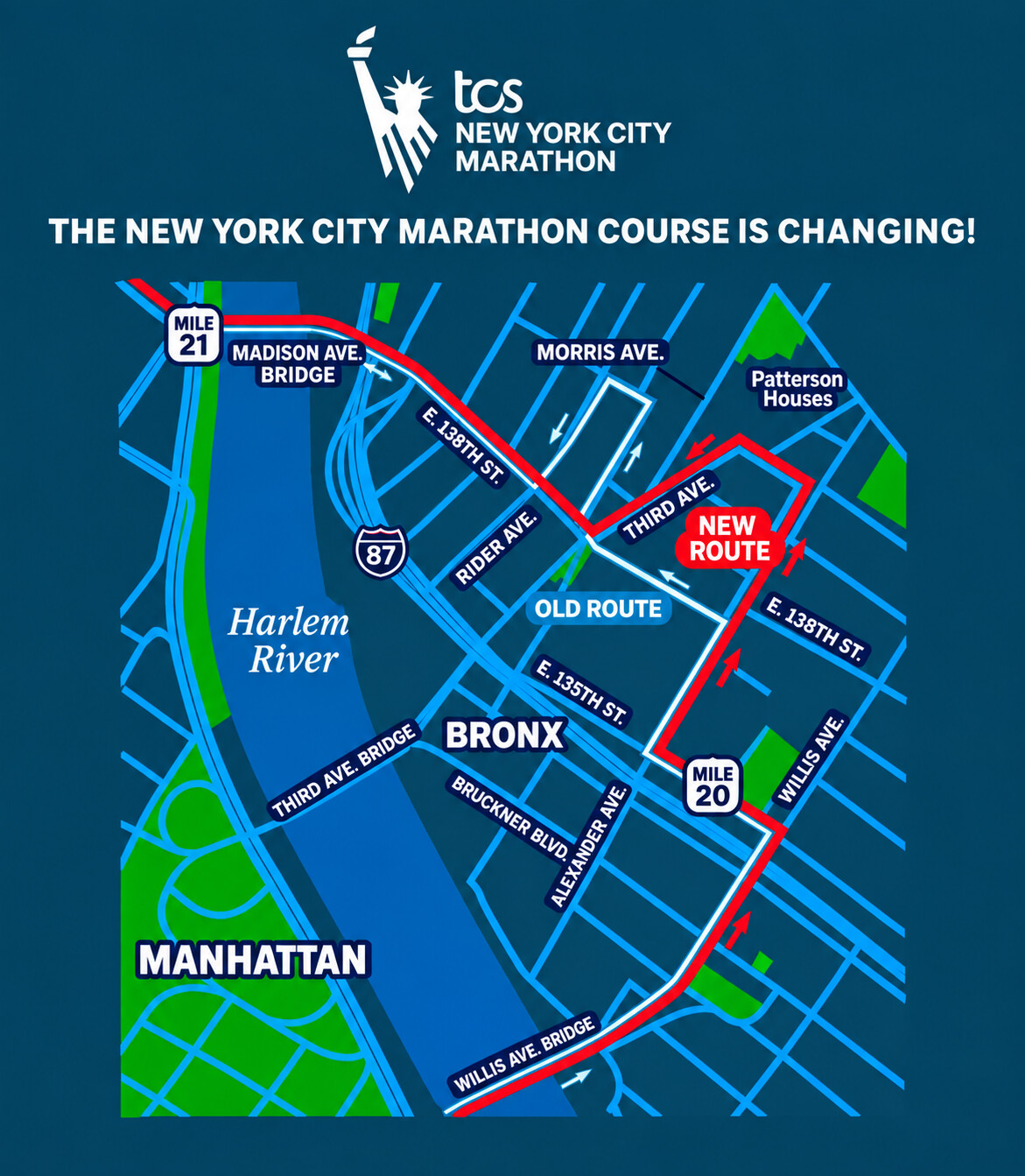
New York Road Runners (NYRR) is making its first course change to the marathon in 15 years. Instead of looping near East 140th Street, runners will head north on Alexander Avenue, turn onto Third Avenue and then cut south on 138th Street toward the Madison Avenue Bridge.
The adjustment removes two turns from the Bronx section, reducing the number from seven to five. While that may sound insignificant for a race covering 26.2 miles, the change comes at a point when runners are already deep into the marathon and every turn, road surface and change in rhythm can become more noticeable.
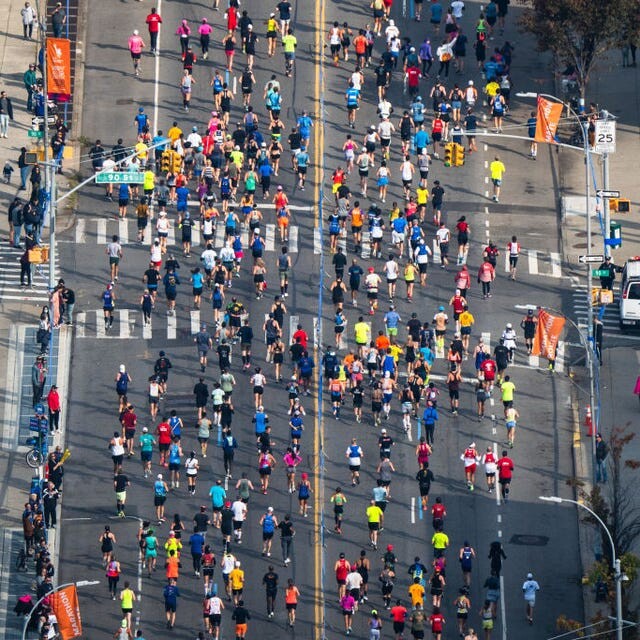
However, the primary reason for the change is not to make the course faster or help runners shave seconds from their finishing times.
Bronx resident Jennifer Alicea told The New York Times that the previous route made it extremely difficult to reach her only nearby grocery store on marathon day. NYRR's Metellus, who grew up in the Bronx, described the affected blocks as food deserts and saw the course's required recertification as an opportunity to address the problem.
The timing also carries added significance. This year marks 50 years since the New York City Marathon expanded beyond Central Park in 1976, becoming the five-borough race that has since grown into one of the world's most famous marathons.
The route will still cover the same 26.2 miles through New York's five boroughs, but the Bronx experience will be slightly different. For elite athletes, two fewer turns could mean a smoother rhythm during the crucial closing stages. For thousands of recreational runners, the bigger difference may be felt by the communities living along the course rather than on the race clock.
The New York City Marathon has long been celebrated not only for its elite competition but also for the connection between the race and the communities it passes through. The latest adjustment reflects that relationship, showing how even an established course can evolve while preserving the character of the event.
So, two fewer turns, the same five boroughs and the same 26.2 miles — but potentially one less headache for residents of the Bronx.
For runners taking on New York this November, the question remains: will you even notice those two fewer turns when you reach Mile 20?
by Erick Cheruiyot for My Best Runs.
Login to leave a comment
TCS New York City Marathon
The first New York City Marathon, organized in 1970 by Fred Lebow and Vince Chiappetta, was held entirely in Central Park. Of 127 entrants, only 55 men finished; the sole female entrant dropped out due to illness. Winners were given inexpensive wristwatches and recycled baseball and bowling trophies. The entry fee was $1 and the total event budget...
more...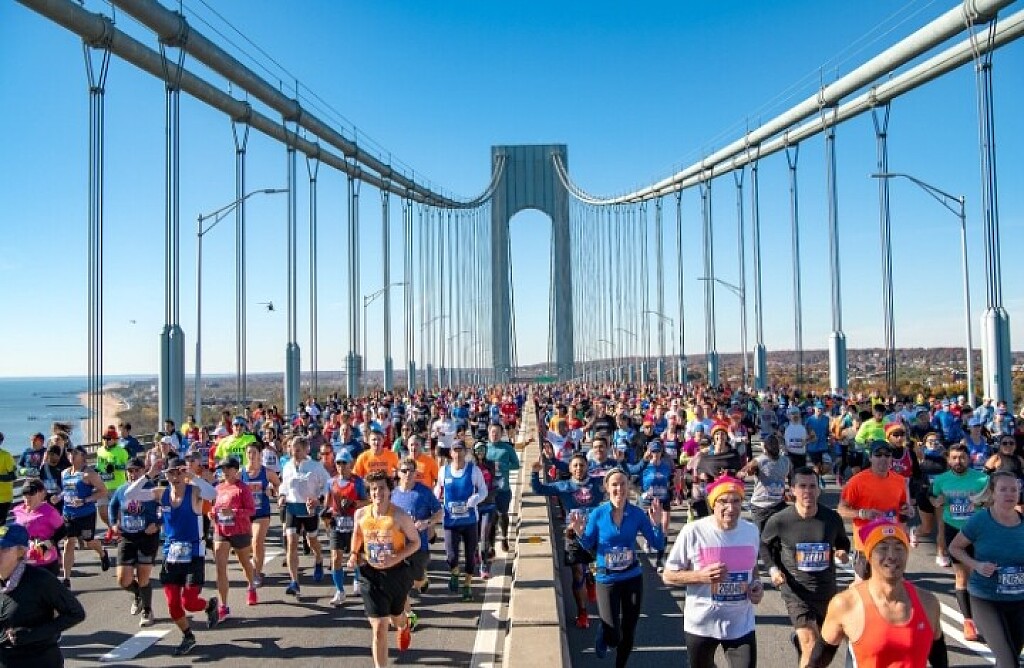
2026 TCS New York City Marathon Draws Record Global Demand as Applications Surge Past 240,000
The road to New York has never been more competitive.
Organizers at New York Road Runners (NYRR) have confirmed that more than 240,000 runners from over 160 countries submitted applications for the 2026 edition of the TCS New York City Marathon. The figure represents nearly a 20 percent increase from 2025, marking the second straight year of record-breaking demand for one of the world’s most celebrated road races.
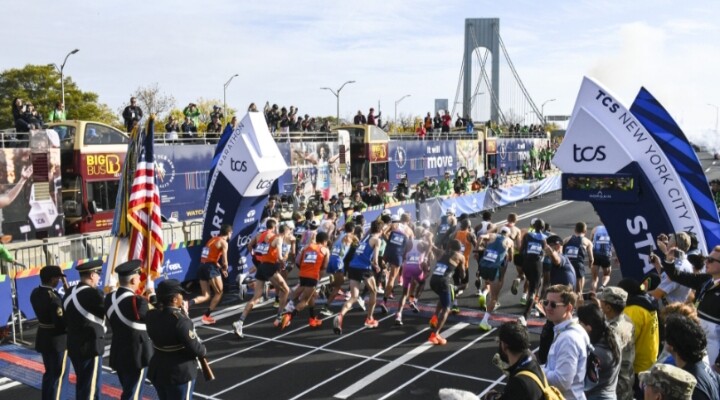
The numbers tell a powerful story: global appetite for the five-borough spectacle continues to accelerate at an unprecedented pace. Yet for the overwhelming majority, the dream will remain just that. With only about one percent of applicants ultimately securing a place through the highly competitive drawing process, earning a bib has become as formidable as completing the 26.2-mile journey itself.
For time qualifiers outside the NYRR program, the bar was set exceptionally high. Athletes were required to run 22 minutes and 52 seconds faster than the published qualifying standards for their respective age and gender categories. Even then, only the top 10 percent of those applicants were accepted — a reflection of both the race’s prestige and the extraordinary depth of performance now seen in global marathoning.
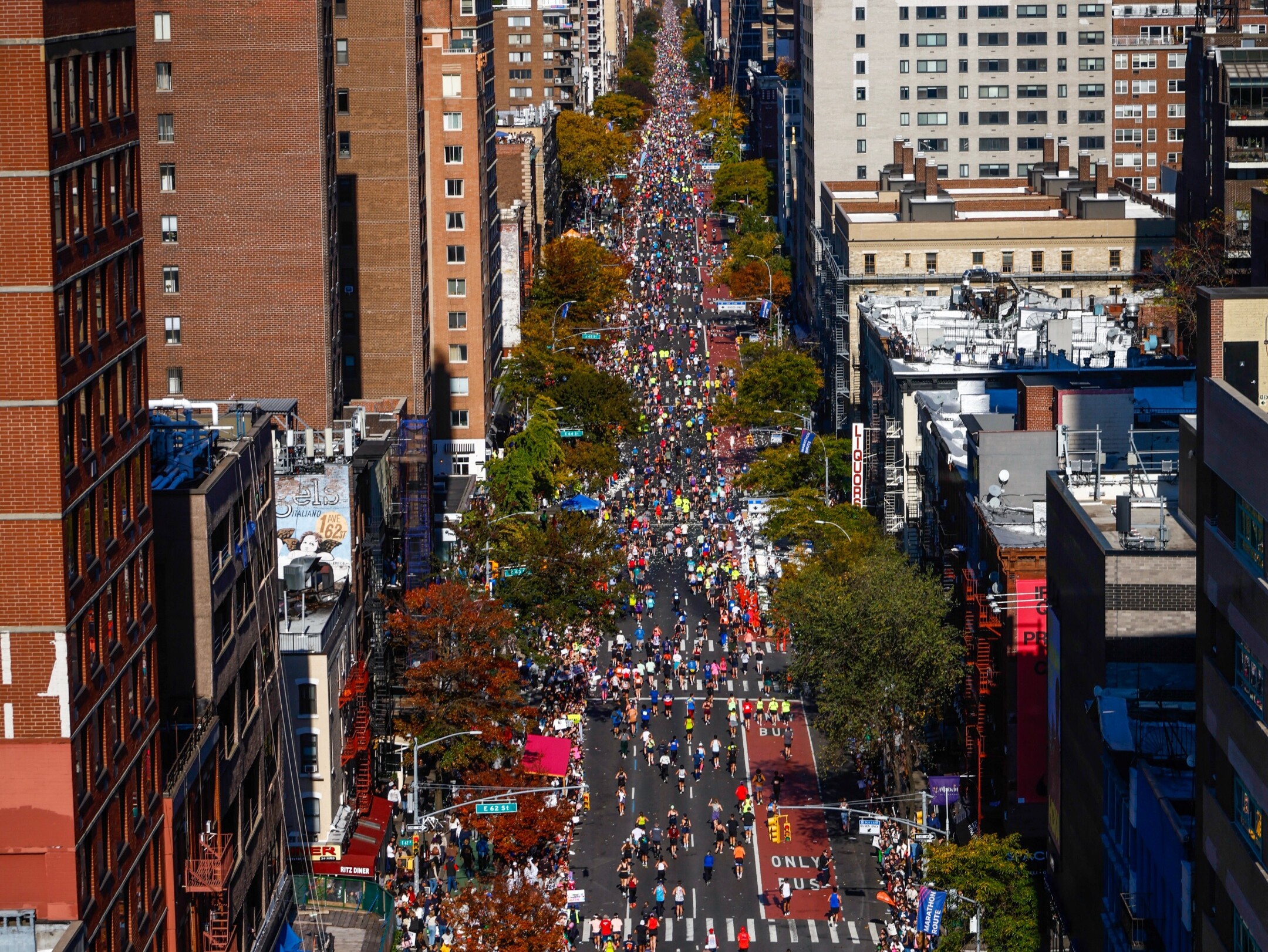
The soaring demand comes on the heels of a historic 2025 race, which established a world record as the largest marathon ever held, with 59,226 finishers crossing the line in Central Park. That landmark achievement further cemented New York’s reputation as the sport’s grandest stage.
The 2026 edition, scheduled for November 1, will carry added emotional weight. It marks the 50th anniversary of the iconic five-borough course — a route that threads through Staten Island, Brooklyn, Queens, the Bronx, and Manhattan before culminating in Central Park. Over five decades, the course has evolved into more than a race route; it is a cultural corridor where elite ambition meets everyday courage.
As the marathon approaches its golden milestone, the extraordinary surge in applications underscores a simple truth: the New York City Marathon is no longer just an event on the global running calendar — it is a coveted experience, a symbol of endurance, and, for hundreds of thousands each year, a dream worth chasing against daunting odds.
by Erick Cheruiyot for My Best Runs.
Login to leave a comment
TCS New York City Marathon
The first New York City Marathon, organized in 1970 by Fred Lebow and Vince Chiappetta, was held entirely in Central Park. Of 127 entrants, only 55 men finished; the sole female entrant dropped out due to illness. Winners were given inexpensive wristwatches and recycled baseball and bowling trophies. The entry fee was $1 and the total event budget...
more...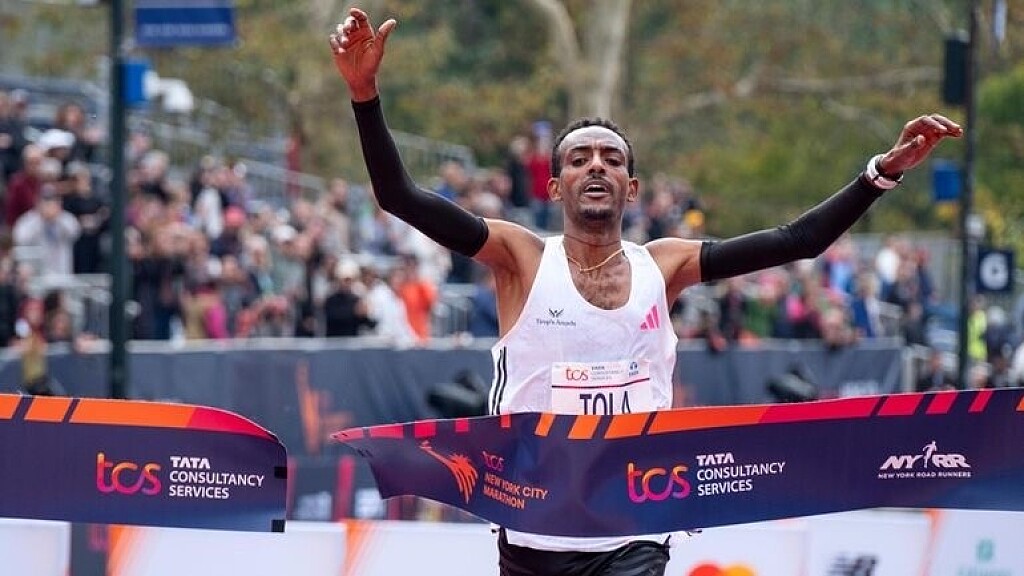
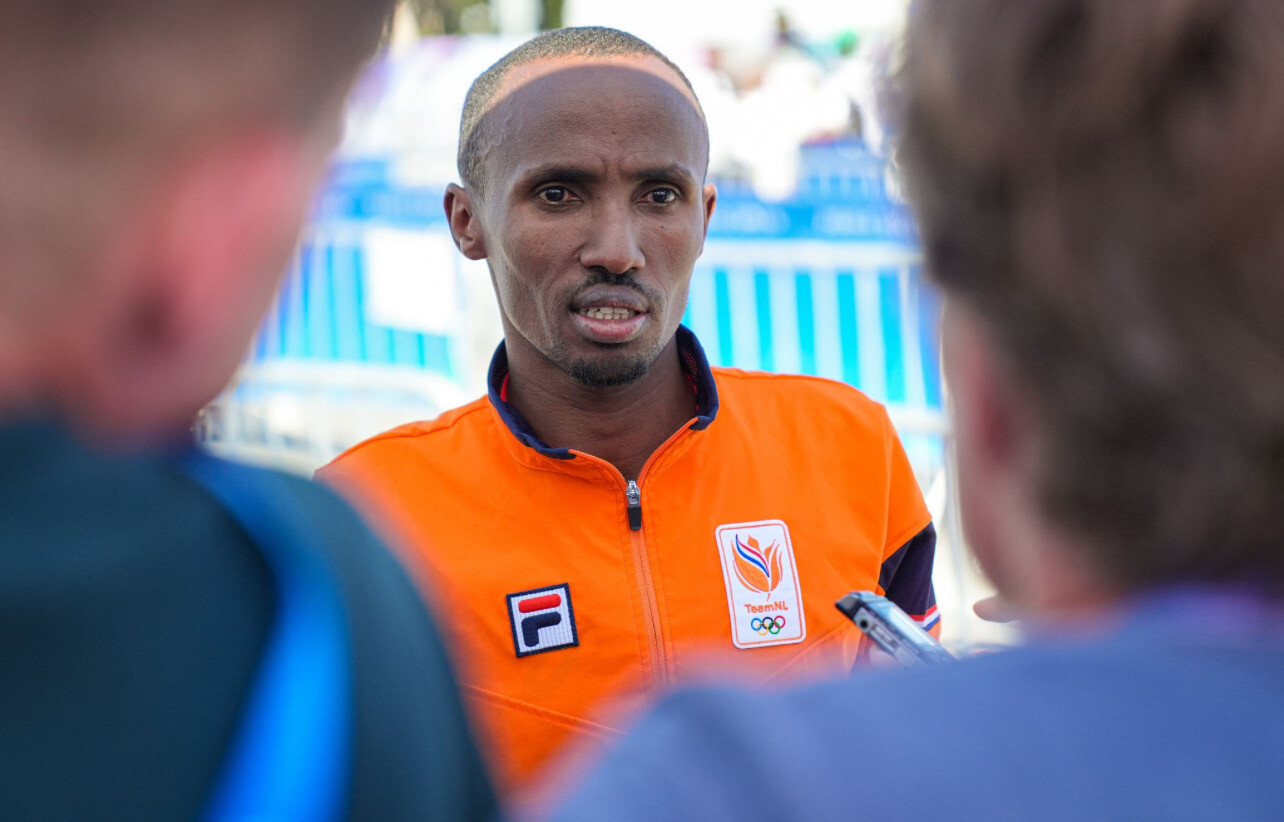
Netherlands runner wins the 2024 New York City marathon
It was a crisp, sunny morning on November 3, 2024, as runners gathered at the start line of the New York City Marathon, their breath visible in the chill air, yet their spirits high. The annual race had drawn over 50,000 participants from across the globe, each ready to challenge themselves across 26.2 miles through the city’s five boroughs. This year’s race was especially notable, with a lineup of world-class athletes and hopeful first-timers mingling together, all united by their love for running and their dedication to crossing that finish line in Central Park.
Among the crowd was Abdi Nageeye of the Netherlands, a seasoned marathoner who had been a runner-up in major events but was still chasing his first New York City Marathon victory. On the women’s side, Kenya’s Sheila Chepkirui stood out as a formidable contender, even though it was her New York debut. Both had trained for months, pushing their limits in preparation for this iconic race. In the wheelchair division, American favorites Daniel Romanchuk and Susannah Scaroni were also in attendance, their sights set on reclaiming titles and setting records.
As the race began, the runners surged forward from the Staten Island start, quickly falling into a rhythm as they tackled the Verrazzano-Narrows Bridge. The marathon’s energy was palpable, with spectators lining the streets, cheering, waving flags, and holding up colorful signs of encouragement. Each borough had its own personality, adding to the unique feel of the race: Brooklyn’s lively bands, Queens’ family-friendly crowds, the Bronx’s upbeat energy, and finally, Manhattan’s skyscrapers looming above as runners approached the finish.
By mile 20, the pack had thinned, and the leaders emerged. Nageeye ran with focus and determination, his stride smooth and steady. He knew the competition was fierce, and every step had to count. Despite fatigue setting in, he drew strength from the cheering crowd and his own desire to win. When he finally approached Central Park, his energy surged with the knowledge that he was within reach of the finish line. He crossed in a remarkable time of 2 hours, 7 minutes, and 39 seconds, marking a career milestone and celebrating his first New York City Marathon victory. Cheers erupted, and he was embraced by his team as they celebrated his achievement.
Meanwhile, Sheila Chepkirui was making her own statement in the women’s division. Running with grace and speed, she navigated the final miles with a steady pace, her eyes fixed on the finish line. Despite being new to the course, she ran like a seasoned pro, crossing the line at 2 hours, 24 minutes, and 35 seconds. Her performance cemented her place as one of the top female marathoners in the world, and she was greeted with overwhelming applause from the crowd.
In the wheelchair division, Daniel Romanchuk and Susannah Scaroni did not disappoint. Romanchuk, finishing in 1 hour, 36 minutes, and 31 seconds, celebrated his third title, while Scaroni’s powerful finish at 1 hour, 48 minutes, and 5 seconds secured her second New York victory. Both athletes were a testament to perseverance and resilience, inspiring runners and spectators alike.
This year’s New York City Marathon was more than just a race; it was a celebration of human spirit, resilience, and unity. From elite athletes to recreational runners, each participant crossed the finish line carrying their own story of triumph and determination, etching another unforgettable chapter into the marathon’s history.
Men’s Elite Division:
1. Abdi Nageeye (Netherlands) – 2:07:39
2. Evans Chebet (Kenya) – 2:07:45
3. Albert Korir (Kenya) – 2:08:01
4. Tamirat Tola (Ethiopia) – 2:08:15
5. Bashir Abdi (Belgium) – 2:08:30
Women’s Elite Division:
1. Sheila Chepkirui (Kenya) – 2:24:35
2. Hellen Obiri (Kenya) – 2:24:50
3. Vivian Cheruiyot (Kenya) – 2:25:10
4. Sharon Lokedi (Kenya) – 2:25:25
5. Edna Kiplagat (Kenya) – 2:25:40
Login to leave a comment
TCS New York City Marathon
The first New York City Marathon, organized in 1970 by Fred Lebow and Vince Chiappetta, was held entirely in Central Park. Of 127 entrants, only 55 men finished; the sole female entrant dropped out due to illness. Winners were given inexpensive wristwatches and recycled baseball and bowling trophies. The entry fee was $1 and the total event budget...
more...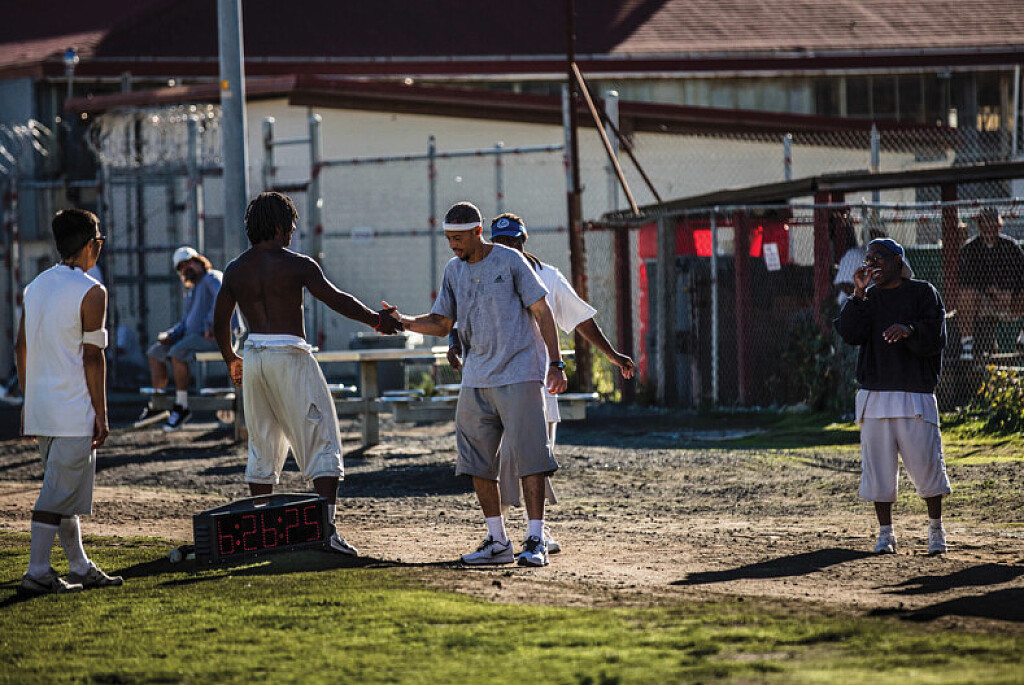
TWENTY-ONE YEARS AGO, HE WAS INCARCERATED FOR LIFE. LAST YEAR, HE RAN THE NYC MARATHON A RADICALLY CHANGED MAN.
RAHSAAN ROUNDED THOMAS A CORNER. Gravel underfoot gave way to pavement, then dirt. Another left turn, and then another. In the distance, beyond the 30-foot wall and barbed wire separating him from the world outside, he could see the 2,500-foot peak of Mount Tamalpais. He completed the 400-meter loop another 11 times for an easy three miles.
Rahsaan wasn’t the only runner circling the Yard that evening in the fall of 2017. Some 30 people had joined San Quentin State Prison’s 1,000 Mile Club by the time Rahsaan arrived at the prison four years prior, and the group had only grown since. Starting in January each year, the club held weekly workouts and monthly races in the Yard, culminating with the San Quentin Marathon—105 laps—in November. The 2017 running would be Rahsaan’s first go at the 26.2 distance.
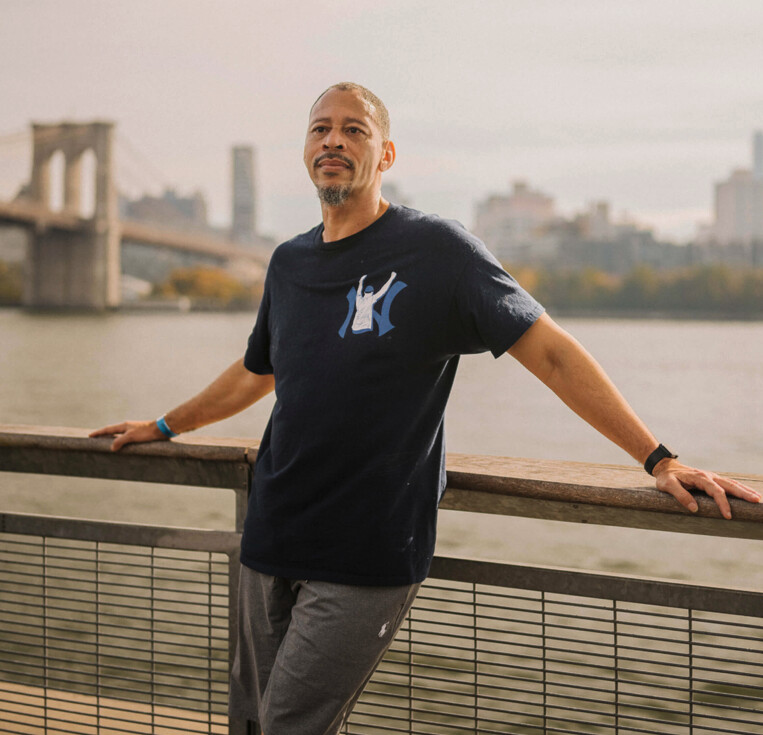
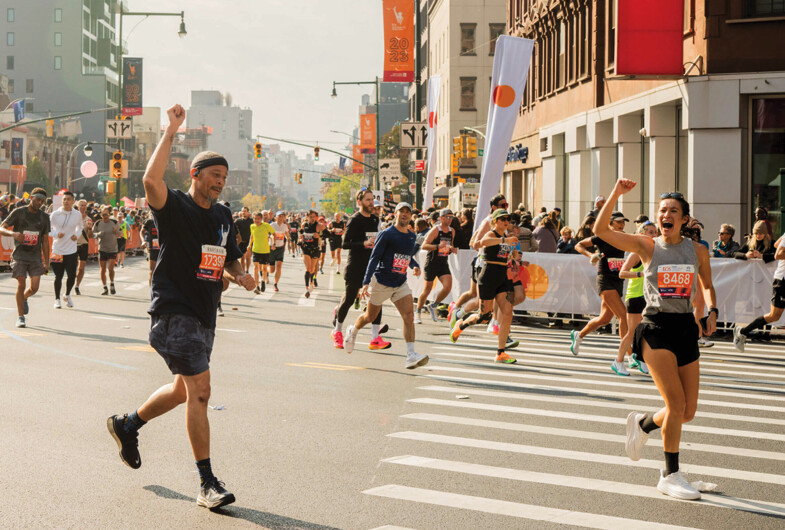
For Rahsaan and the other San Quentin runners, Mount Tam, as it’s known, had become a beacon of hope. It’s the site of the legendary Dipsea, a 7.4-mile technical trail from Mill Valley to Stinson Beach. After the 1,000 Mile Club was founded in 2005, it became tradition for club members who got released to run that trail; their stories soon became lore among the runners still inside. “I’ve been hearing about the Dipsea for the longest,” Rahsaan says.
Given his sentence, he never expected to run it. Rahsaan was serving 55 years to life for second-degree murder. Life outside, let alone running over Mount Tam all the way to the Pacific, felt like a million miles away. But Rahsaan loved to run—it gave him a sense of freedom within the prison walls, and more than that, it connected him to the community of the 1,000 Mile Club. So if the volunteer coaches and other runners wanted to talk about the Dipsea, he was happy to listen.
We’ll get to the details of Rahsaan’s crime later, but it’s useful to lead with some enduring truths: People can grow in even the harshest environments, and running, whether around a lake or a prison yard, has the power to change lives. In fact, Rahsaan made a lot of changes after he went to prison: He became a mentor to at-risk youth, began facing the reality of his violence, and discovered the power of education and his own pen. Along the way, Rahsaan also prayed for clemency. The odds were never in his favor.
To be clear, this is not a story about a wrongful conviction. Rahsaan took the life of another human being, and he’s spent more than two decades reckoning with that fact. He doesn’t expect forgiveness. Rather, it’s a story about a man who you could argue was set up to fail, and for more than 30 years that’s exactly what he did. But it’s also a story of navigating the delta between memory and fact and finding peace in the idea that sometimes the most formative things in our lives may not be exactly as they seem. And mostly, it’s a story of transformation—of learning to do good in a world that too often encourages the opposite.
RAHSAAN “NEW YORK” THOMAS GREW UP IN BROWNSVILLE, A ONE-SQUARE-MILE SECTION OF EASTERN Brooklyn wedged between Crown Heights and East New York. As a kid he’d spend hours on his Commodore 64 computer trying to code his own games. He loved riding his skateboard down the slope of his building’s courtyard. On weekends, he and his friends liked to play roller hockey there, using tree branches for sticks and a crushed soda can for a puck.
Once a working-class Jewish enclave, Brownsville started to change in the 1960s, when many white families relocated to the suburbs, Black families moved in, and city agencies began denying residents basic services like trash pickup and streetlight repairs. John Lindsay, New York’s mayor at the time, once referred to the area as “Bombsville” on account of all the burned-out buildings and rubble-filled empty lots. By 1971, the year after Rahsaan was born, four out of five families in Brownsville were on government assistance. More than 50 years later, Brownsville still has a poverty rate close to 30 percent. The neighborhood’s credo, “Never ran, never will,” is typically interpreted as a vow of resilience in the face of adversity. For some, like Rahsaan, it has always meant something else: Don’t back down.
The first time Rahsaan didn’t run, he was 5 or 6 years old. He had just moved into Atlantic Towers, a pair of 24-story buildings beset with rotting walls and exposed sewer pipes that housed more than 700 families. Three older kids welcomed him with their fists. Even if Rahsaan had tried to run, he wouldn’t have gotten far. At that age, Rahsaan was skinny, slow, and uncoordinated. He got picked on a lot. Worse, he was light-skinned and frequently taunted as “white boy.” The insult didn’t even make sense to Rahsaan, whose mother is Black and whose father was Puerto Rican. “I feel Black,” he says. “I don’t feel [like] anything else. I feel like myself.”
Rahsaan hated being called white. It was the mid-1970s; Roots had just aired on ABC, and Rahsaan associated being white with putting people in chains. Five-Percent Nation, a Black nationalist movement founded in Harlem, had risen to prominence and ascribed godlike status to Black men. Plus, all the best athletes were Black: Muhammad Ali. Reggie Jackson. Kareem Abdul-Jabbar. In Rahsaan’s world, somebody white was considered physically inferior.
Raised by his mother, Jacqueline, Rahsaan never really knew his father, Carlos, who spent much of Rahsaan’s childhood in prison. In 1974, Jacqueline had another son, Aikeem, with a different man, and raised her two boys as a single mom. Carlos also had another son, Carl, whom Rahsaan met only once, when Carl was a baby. Still, Rahsaan believed “the myth,” as he puts it now, that one day Carlos would return and relieve him, his mom, and Aikeem of the life they were living. Jacqueline had a bachelor’s degree in sociology and worked three jobs to keep her sons clothed and fed. She nurtured Rahsaan’s interest in computers and sent him to a parochial school that had a gifted program. Rahsaan describes his family as “upper-class poor.” They had more than a lot of families, but never enough to get out of Brownsville, away from the drugs and the violence.
Some traumas are small but are compounded by frequency and volume; others are isolated occurrences but so significant that they define a person for a lifetime. Rahsaan remembers his grandmother telling him that his father had been found dead in an alley, throat slashed, wallet missing. Rahsaan was 12 at the time, and he understood it to mean his father had been murdered for whatever cash he had on him—maybe $200, not even. Now he would never come home.
Rahsaan felt like something he didn’t even have had been taken from him. “It just made me different, like, angry,” he says. By the time he got to high school, Rahsaan resolved to never let anyone take anything from him or his family again. “I started feeling like, next time somebody tryin’ to rob me, I’m gonna stab him,” he says. He started carrying a knife, a razor, rug cutters—“all kinds of sharp stuff.” Rahsaan never instigated a fight, but he refused to back down when threatened or attacked. It was a matter of survival.
The first time Rahsaan picked up a gun, it was to avenge his brother. Aikeem, who was 14 at the time, had been shot in the leg by a guy in the neighborhood who was trying to rob him and Rahsaan. A few months later, Rahsaan saw the shooter on the street, ran to the apartment of a drug dealer he knew, and demanded a gun. Rahsaan, then 18, went back outside and fired three shots at the guy. Rahsaan was arrested and sent to Rikers Island, then released after three days: The guy he’d shot was wanted for several crimes and refused to testify against Rahsaan.
By day, Rahsaan tried to lead a straight life. He graduated from high school in 1988 and got a job taking reservations for Pan Am Airways. He lost the job after Flight 103 exploded in a terrorist bombing over Scotland that December, and the company downsized. Rahsaan got a new job in the mailroom at Debevoise & Plimpton, a white-shoe law firm in midtown Manhattan. He could type 70 words a minute and hoped to become a paralegal one day.
Rahsaan carried a gun to work because he’d been conditioned to expect the worst when he returned to Brownsville at night. “If you constantly being traumatized, you constantly feeling unsafe, it’s really hard to be in a good mind space and be a good person,” he says. “I mean, you have to be extraordinary.”
After high school, some of Rahsaan’s friends went to Old Westbury, a state university on Long Island with a rolling green campus. He would sometimes visit them, and at a Halloween party one night, he got into a scrape with some other guys and fired his gun. Rahsaan spent the next year awaiting trial in county jail, the following year at Cayuga State Prison in upstate New York, and another 22 months after that on work release, living in a halfway house in Queens. He got a job working the merch table for the Blue Man Group at Astor Place Theater, but the pay wasn’t enough to support the two kids he’d had not long after getting out of Cayuga.
He started selling a little crack around 1994, when he was 24. By 27 he was dealing full-time. He didn’t want to be a drug dealer, though. “I just felt desperate,” he says. Rahsaan had learned to cut hair in Cayuga, and he hoped to save enough money to open a barbershop.
He never got that opportunity. By the summer of 1999, things in New York had gotten too hot for Rahsaan and he fled to California. For the first time in his 28 years, Rahsaan Thomas was on the run.
EVERY RUNNER HAS AN ORIGIN STORY. SOME START IN SCHOOL, OTHERS TAKE UP RUNNING TO IMPROVE their health or beat addiction. Many stories share common themes, if not exact details. And some, like Rahsaan’s, are absolutely singular.
Rahsaan drove west with ambitions to break into the music business. He wanted to be a manager, maybe start his own label. His new girlfriend would join him a week later in La Jolla, where they’d found an apartment, so Rahsaan went first to Big Bear, a small town deep in the San Bernardino Mountains 100 miles east of Los Angeles. It’s where Ryan Hall grew up, and where he discovered running at age 13 by circling Big Bear Lake—15 miles—one afternoon on a whim. Hall has recounted that story so many times that it’s likely even better known than the American records he would go on to set in the half and full marathons.
Rahsaan didn’t know anything about Ryan Hall, who at the time was just about to start his junior year at Big Bear High School and begin a two-year reign as the California state cross-country champion. He didn’t even know there was a lake in Big Bear. Rahsaan went to Big Bear to box with a friend, Shannon Briggs, a two-time World Boxing Organization heavyweight champion.
Briggs and Rahsaan had grown up together in Atlantic Towers. As kids they liked to ride bikes in the courtyard, and later they went to the same high school in Fort Greene. But Briggs’s mom had become addicted to drugs by his sophomore year, and they were evicted from the Towers. Briggs and Rahsaan lost touch. Briggs began spending time at a boxing gym in East New York; often he’d sleep there. He had talent in the ring. People thought he might even be the next Mike Tyson, another native of Brownsville who was himself a world heavyweight champ from 1986 to 1989.
Briggs went pro in 1991, and by the end of that decade he was earning seven figures fighting guys like George Foreman and Lennox Lewis. Rahsaan was at those fights. The two had reconnected in 1996, when Rahsaan was trying to rebuild his life after prison and Briggs’s boxing career was on the rise. In August 1999, Briggs was gearing up to fight Francois Botha, a South African known as the White Buffalo, and had decamped to Big Bear to train. “He was like, ‘Yo, come live with me, bro,’” Rahsaan recalls.
Briggs was running three miles a day to increase his stamina. His route was a simple out-and-back on a wooded trail, and on one of Rahsaan’s first days there, he decided to join him. Rahsaan hadn’t done so much as a push-up since getting out of prison, but he wanted to hang with his friend. Briggs and his training partners set off at their usual clip; within a few minutes they’d disappeared from Rahsaan’s view. By the time they were doubling back, he’d barely made it a half mile.
Rahsaan never liked feeling physically inferior. So back in La Jolla, he started running a few times a week, going to the gym, whatever it took. Before long he was up to five miles. And the next time he ran with Briggs, he could keep up. After that, he says, “Running just became my thing.”
FOR YEARS, RAHSAAN HAD BUCKED AT TAKING RESPONSIBILITY for the murder that sent him to prison. The other guys had guns, too, he insisted. If he hadn’t shot them, they’d have shot him. It was self-defense.
In the moment, he had no reason to think otherwise. It was April 2000. A friend had arranged to sell $50,000 worth of weed, and Rahsaan went along to help. They met in the parking lot of a strip mall in L.A., broad daylight. The buyers brought guns instead of cash, things went sideways, and, in a flash of adrenaline, Rahsaan used the 9mm he’d packed for protection, killing one man and putting the other in critical condition. He was 29 and had been in California eight months.
After awaiting trial for three years in the L.A. County jails, Rahsaan was sentenced to 55 years to life. But for the crushing finality of it, the grim interminability, the prospect of never seeing the outside world again, he was on familiar ground. Even Brownsville had been a kind of prison—one defined, as Rahsaan puts it now, by division and neglect, a world unto itself that societal forces made nearly impossible to escape. He was used to life inside.
Rahsaan spent the next 10 years shuttling between maximum security facilities, the bulk of those years at Calipatria State Prison, 30 miles from the Mexican border. By the time he got to San Quentin, he was 42.
As part of the prison’s restorative justice program, Rahsaan met a mother of two young men who’d been shot, one killed and the other critically injured. Her pain, her dignity, her ability to forgive her sons’ shooters prompted Rahsann to reflect on his own crime. “It made me feel like, damn, I did this to his mother,” he says. “I did this to my mother. You don’t do that to Black mothers. They go through so much.”
ABOUT 2 MILLION PEOPLE ARE INCARCERATED IN THE UNITED States today, roughly eight times as many as in the early 1970s. Nearly half of them are Black, despite Black Americans representing only 13 percent of the U.S. population.
This disparity reflects what the legal scholar and author Michelle Alexander calls “the new Jim Crow,” an invisible system of oppression that has impeded Black men in particular since the days of slavery. In her book of the same title, Alexander unpacks 400 years of policies and social attitudes that have created a society in which one in three Black males will be incarcerated at some point in their lives, and where even those who have been paroled often face a lifetime of discrimination and disenfranchisement, like losing the right to vote. If you hit a wall every time you try to do something, are you really free? More than half of the people released from U.S. jails and prisons return within three years.
After Rahsaan got out of Cayuga back in 1992, with a felony on his permanent record, he’d had trouble doing just about anything legit: renting an apartment, finding a decent job, securing a loan. Though he’d paid for the Mercedes SUV he drove to California, the lease was in his girlfriend’s name. Selling crack had provided financial solvency, and his success in New York made him feel invincible. One weed deal in California seemed easy enough. But he wasn’t naive. Rahsaan packed a gun, and if he felt he had to use it, he would.
Today Rahsaan feels deep remorse for what transpired from there. But back then he saw no other way. “When we have a grievance, we hold court in the street,” he says of growing up in the Brownsville projects. “There’s no court of law, there’s no lawsuits.” Even while incarcerated, Rahsaan continued to meet threats with violence. But he also found that in prison, as in Brownsville, respect was temporary. “If you stab somebody, people leave you alone,” he says. “But you gotta keep doing it.”
Not long after Rahsaan got to Calipatria, around 2003 or 2004, an older man named Samir pulled him aside. “Youngster, there’s nobody that you can beat up that’s gonna get you out of prison,” Rahsaan remembers Samir saying. “In fact, that’s gonna make it worse.” Rahsaan thought about Muhammad Ali, how he would get his opponents angry on purpose so they’d swing until they wore themselves out. He realized that when you’re angry, you’re not thinking clearly or moving effectively. You’re not responding; you’re reacting.
The next time Rahsaan saw Samir was in the yard at Calipatria. They were both doing laps, and the two men started to run together. Rahsaan told Samir about the impact his words had on him, how they helped him see he’d always let “somebody else’s hangup become my hangup, somebody else’s trauma become my trauma.” Each time that happened, he realized, he slid backward.
Rahsaan began exploring various religions. He liked how the men in the Muslim prayer group at Calipatria encouraged him to think about his past, and the way they talked about God’s plan. He thought back to that day in April 2000 and came to believe that God would have gotten him out of that situation without a gun. “If I was meant to die, I was meant to die,” he says. “If I’m not, I’m not.” He started to see confrontations as tests. “I stopped feeding into the negativity and started passing the test, and I’ve been passing it consistently since,” he says.
CLAIRE GELBART PLACED HER BELONGINGS IN A PLASTIC TRAY AND WALKED THROUGH THE METAL detectors at the visitors’ entrance at San Quentin. She crossed the Yard to the prison’s newsroom. It was late fall of 2017, and Gelbart had started volunteering with the San Quentin Journalism Guild, an initiative to teach incarcerated people the fundamentals of newswriting and interviewing techniques.
Historically infamous for housing people like Charles Manson and Sirhan Sirhan, the man convicted of killing Robert Kennedy, and for having the only death row for men in California, San Quentin has in recent years instituted reforms. By the time Rahsaan arrived, the facility was offering dozens of programs, had an onsite college, and granted some of the individuals housed there considerable freedom of movement. Hundreds of volunteers pass through its gates every year.
Rahsaan was in the newsroom working on a story for the San Quentin News, where he was a staff writer. Gelbart and Rahsaan started to chat, and within minutes they were bonding over running. They talked about the San Quentin Marathon—in which Rahsaan was proud to have placed 13th out of 13 finishers in 6 hours, 12 minutes, and 23 seconds—and Gelbart’s plans to run her first half marathon that spring. “It was like I lost all sense of place and time,” Gelbart says, “like I could have been in a coffee shop in San Francisco talking to someone.”
In weekly visits over the next year, Gelbart and Rahsaan talked about their families, their hopes for the future. Gelbart had just graduated from Tufts University with dreams of being a writer. Rahsaan was working toward a college degree, writing for numerous outlets like the Marshall Project and Vice, and learning about podcasting and documentary filmmaking. In 2019, when Gelbart was offered a job in New York, she told Rahsaan she felt torn about leaving—they’d become close friends. They made a pact that if Rahsaan ever got out of prison, they would run the New York City Marathon together. “We couldn’t think of a better thing to celebrate him coming home,” Gelbart says.
When Rahsaan was sentenced, he still had hope for a successful appeal. But when his appeal was denied in 2011, he realized he was never going home. His parole date was set for 2085.
At the time, though, the political appetite for mass incarceration was starting to shift. Gray Davis, who was governor of California from 1999 to 2003, had never granted a single pardon; and his successor, Arnold Schwarzenegger, granted only 15. Then, between 2011 and 2019, Governor Jerry Brown pardoned or commuted the sentences of more than 1,300 people. Studies show that the recidivism rate among those who had been serving life sentences is less than 5 percent in a number of states, including California. And according to the U.S. Bureau of Justice, 98 percent of people convicted of homicide who are released from prison do not commit another murder.
In the fall of 2018, Governor Brown approved Rahsaan for commutation, but it was now up to his successor, Gavin Newsom, to follow through. And until a release date was set, there were no guarantees.
Back at San Quentin, Rahsaan was busier than ever. He was working on his fourth film, Friendly Signs, a documentary funded by the Marshall Project and the Sundance Institute; it was about fellow 1,000 Mile Club member Tommy Lee Wickerd’s efforts to start an ASL program to aid a group of deaf and hard-of-hearing newcomers to the prison. He had recently been named chair of the San Quentin satellite chapter of the Society of Professional Journalists and became a cohost and coproducer of Ear Hustle, a popular podcast about life in San Quentin that in 2020 was a finalist for a Pulitzer Prize. He was also sketching out plans for a nonprofit, Empowerment Ave, to build connections to the outside world for other incarcerated writers and artists and to advocate for fair compensation. And after five years, he was just one history class away from getting his associate’s degree from Mount Tamalpais College.
In January 2020, Rahsaan began his final semester, eager to don his cap and gown that June. MTC always organized a festive graduation ceremony in the prison’s visiting room, inviting families, friends, students, and staff. Then COVID-19 hit. Lockdown. All classes canceled until further notice. The 1,000 Mile Club suspended workouts and races as well, its 70-plus members scattering throughout the prison, not sure when or if they’d ever get together again. Covid would officially kill 28 people at San Quentin and make many more very ill. College graduation, let alone races in the Yard and parole hearings, would have to wait.
For the first time since arriving at San Quentin, Rahsaan felt claustrophobic in his 4-by-10-foot cell. He couldn’t work on his films or go to the newsroom. All he could do was read and write, alone. After George Floyd was murdered that May, Rahsaan fell into a depression. He remembered something Chadwick Boseman had said in a 2018 commencement speech at Howard University: “Remember, the struggles along the way shape you for your purpose.”
Rahsaan decided his purpose was to write. Outside journalists couldn’t enter the prison during the pandemic, but their publications were thirsty for prison Covid stories. Rahsaan saw an opportunity. Between June 2020 and February 2023, he published 42 articles, and thanks to Empowerment Ave, he knew what those articles were worth. As a writer for the San Quentin News, Rahsaan earned $36 a month; those 42 articles for external publications netted him $30,000.
DOZENS OF PEOPLE GATHERED OUTSIDE SAN QUENTIN’S GATES. IT WAS A FRIGID MORNING IN EARLY February 2023; the sun hadn’t yet risen. Among those assembled were two cofounders of Ear Hustle, Earlonne Woods and Nigel Poor, along with executive producer Bruce Wallace, recording equipment in hand. A procession of white vans, each carrying one or two men, arrived one by one. After three or four hours, the air had warmed to a balmy 60 degrees. Another van pulled up, Rahsaan got out, and the crowd erupted. Nearly 23 years after he’d been sentenced to 55 years to life, Rahsaan Thomas had been released.
Rahsaan got into a Hyundai sedan and was soon headed away from San Quentin. Wallace sat in the back, recording Rahsaan seeing water, mountains, and a highway from the front seat of a car for the first time in decades. “I feel like I’m escaping,” he joked. “Is anybody chasing us? This is amazing. This is crazy.”
Rahsaan called his mom, who wasn’t able to make it to California for his release.
“Hey, Ma, it’s really real,” he said, breathless with joy. “I’m free. No more handcuffs.”
Jacqueline’s exuberance can be heard in her laughter, her curiosity about what his first meal would be (steak and French toast), and her motherly rebuke of his plan to buy a Tesla.
“You ain’t been drivin’ in a while and I know you ain’t the best driver in the world,” she teased.
Rahsaan moved into a transitional house in Oakland and wasted no time adjusting to life in the 21st century. He got an iPhone, and a friend gave him a crash course in protecting himself from cyberattacks. He’s almost fallen for a few. “There’s some rough hoods on the internet,” he jokes. Earlonne Woods, who was paroled in 2018, and others taught Rahsaan how to use social media. He opened Instagram and Facebook accounts and worked on his own website, rahsaannewyorkthomas.com, which a friend had built for him while he was in San Quentin to promote his creative projects, Empowerment Ave, and even a line of merch.
Despite all the excitement and chaos, Rahsaan never forgot about the pact he’d made with Claire Gelbart. He found her on Facebook and sent a simple, two-line message: “Start training. We have a marathon to run.”
IN LATE MARCH, SIX WEEKS AFTER HIS RELEASE, RAHSAAN FLEW TO NEW YORK CITY. IT WAS THE FIRST time he’d been home in nearly a quarter century, and he hadn’t flown since before 9/11. The security protocols at SFO reminded him more of prison than of the last time he’d been in an airport. Actually, “it was worse than prison,” he jokes. They confiscated his jar of honey.
The changes to his home borough were no less surprising. He’d come to New York to take work meetings, see family, and catch a Nets game at Barclays Center in downtown Brooklyn. Rahsaan barely recognized Barclays; it had been a U-Haul lot the last time he was there, and skyscrapers now towered over Fulton Mall, where he used to buy Starter jackets at Dr. Jay’s and Big Daddy Kane tapes at the Wiz.
He met up with Gelbart on Flatbush Avenue, where come November they’d be just hitting mile 8 of the New York City Marathon. They hadn’t been allowed to touch at San Quentin and weren’t sure how to greet each other on the outside. “It was weird at first, because I was like, do we hug?” Gelbart recalls. But the awkwardness faded fast, and as they walked, Gelbart saw a different side of Rahsaan. “He seemed so much more relaxed,” she says. “Much happier, much lighter.”
Back in 1985, just a few blocks from where Rahsaan and Gelbart walked now, Rahsaan, his brother Aikeem, and his friend Troy had been on their way home from the Fulton Mall when out of nowhere, about a dozen guys rolled up on them. They started beating on Troy and, for a minute, left Rahsaan and Aikeem alone. Images of his father, throat slashed, flashed through Rahsaan’s mind. He pulled a rug cutter out of his pocket, ran to the smallest guy in the group, and jabbed it into the back of his head. “They looked at me like they were gonna kill me,” Rahsaan says. He threw the blade to the ground, slid his hand inside his coat, and held it there. “Y’all wanna play? We gonna play,” he said. The bluff worked; the guys ran. It was the first time Rahsaan had ever stabbed someone.
Change sometimes occurs gradually, and then all at once. That was a different Brooklyn, a different Rahsaan. He began to confront his own violence when he had met Samir some 20 years before, and continued to do so through his studies, his faith, his work in restorative justice, and his own writing. But the origin of his tendency toward violence, the death of his father, remained firmly rooted in his psyche. Then, in 2017, Rahsaan spoke for the first time with his estranged half-brother, Carl.
Carl had read Rahsaan’s work, and asked why he always said their father had been murdered.
“That’s what grandma told me,” Rahsaan said.
“But he wasn’t murdered,” Carl told him. “He killed himself.”
And it wasn’t in 1982, as Rahsaan remembered, but in 1985—the same year Rahsaan started carrying blades.
Rahsaan didn’t believe it until Carl sent him a copy of the suicide note. Even then he remained in shock. “To think I justified violence, treating robbery like a life-or-death situation, over a lie,” he says. Jacqueline was as surprised as Rahsaan to learn the truth of Carlos’s death. He never seemed troubled or depressed to her when they were together, but, “You can’t really read people,” she says. “You don’t know.”
Rahsaan still can’t account for why his grandmother told him what she did, nor for the discrepancy between his memory and the facts. Regardless, after more than 30 years, Rahsaan was finally able to let go of the one trauma that had calcified into an instinct to kill or be killed. And he has no intention of dredging it back up.
THE FASTEST RUNNER IN THE 1,000 MILE CLUB’S HISTORY IS MARKELLE “THE GAZELLE” TAYLOR, WHO was paroled in 2019 and went on to run 2:52 in the 2022 Boston Marathon. Rahsaan is the slowest. At San Quentin, he was often the last one to finish a race, but that wasn’t the point—he liked being out in the Yard with the guys. It gave him a sense of belonging, and not just to the 1,000 Mile Club, but to the running community beyond.
Like every other 1,000 Miler who gets released from San Quentin, Rahsaan had a rite of passage to conquer. On Sunday morning, May 7, 2023, he met a handful of other runners from the club and a few volunteer coaches in Mill Valley. After a decade of gazing up at Mount Tam from the Yard as he completed one 400-meter loop after another, Rahsaan was finally about to run over the mountain all the way to the Pacific.
The runners did a few final stretches, wished one another luck, and started to run. Almost immediately they had to climb some 700 stairs, many made of stone, and the course only got more treacherous from there. Uneven footing, singletrack paths, and 2,000-plus feet of elevation all conspire to make the Dipsea notoriously difficult. The giant redwoods and Douglas firs along the course were lost on Rahsaan; he never took his eyes off the ground.
One of the coaches, Jim Maloney, stayed with Rahsaan as his guide, and to help him if he slipped or fell. Markelle Taylor came too, but said he’d meet them in Stinson Beach. He knew how dangerous the trail was, Rahsaan says, and had vowed to never run it again. After his own initiation, Rahsaan decided that he, too, would never do it again. “I’ve been shot at,” he says. “I’ve been in physical danger. I don’t want to revisit danger.”
Rahsaan now logs most of his miles on a treadmill because of knee issues, but on occasion he ventures out to do the 3.4-mile loop around Lake Merritt, a lagoon in the heart of Oakland. He decided to use the New York City Marathon to raise money for Empowerment Ave, and to accept donations until he crossed the finish line in Central Park. Gelbart wrote a training plan for him and got him a new pair of shoes. In prison, Rahsaan had run in the same pair of Adidas for three years, and he was excited to learn about the maximalist shoe movement. Gelbart tried to interest him in Hokas, but Rahsaan thought they were ugly. He wanted Nikes.
In June, Gelbart went to the Bay Area to visit family and met Rahsaan for a six-mile run around Lake Merritt. As they looped the lake at a conversational 11:30 pace, they talked about work, relationships, and, of course, the New York City Marathon. Rahsaan was disappointed to learn that he would probably not be the last person to finish. (He still holds the record for the slowest San Quentin Marathon in its 15-year history, and he hopes no one ever beats it.) Besides, the more time he spent on the course in New York, he figured, the longer people would have to donate to Empowerment Ave.
On Sunday, November 5, Gelbart and Rahsaan made their way to Staten Island. Waiting at the base of the Verrazzano Bridge, Gelbart recorded Rahsaan singing along to Frank Sinatra’s “New York, New York” for Instagram, and captioned the video “back where he belongs.” They documented much of their race as they floated through Brooklyn, Queens, Manhattan, and the Bronx: greeting friends along the course, enjoying a lollipop on the Queensboro Bridge, beaming even as their pace slowed from 11:45 per mile for the first 5K to 16:30 for the last. Rahsaan finished in six hours, 26 minutes, and 21 seconds, placing 48,221 out of 51,290 runners. The next day, he sent me a text: “The marathon was pure love.” What’s more, he received more than $15,000 in donations for Empowerment Ave, enough to start a writing program at a women’s prison in Texas.
Every runner has an origin story. Every runner finds a reason to keep going. At Calipatria, Rahsaan liked to joke that he ran because if an earthquake ever came along and brought down the prison’s walls, he needed to be in shape so he could escape and run to Mexico. In San Quentin, he ran for the community. Today he has a new reason. “I heard that running extends your life by 10 years,” he says, “and I gave away 22.” Now that he’s out, his motivation has never been higher. He has so much to do.
Login to leave a comment
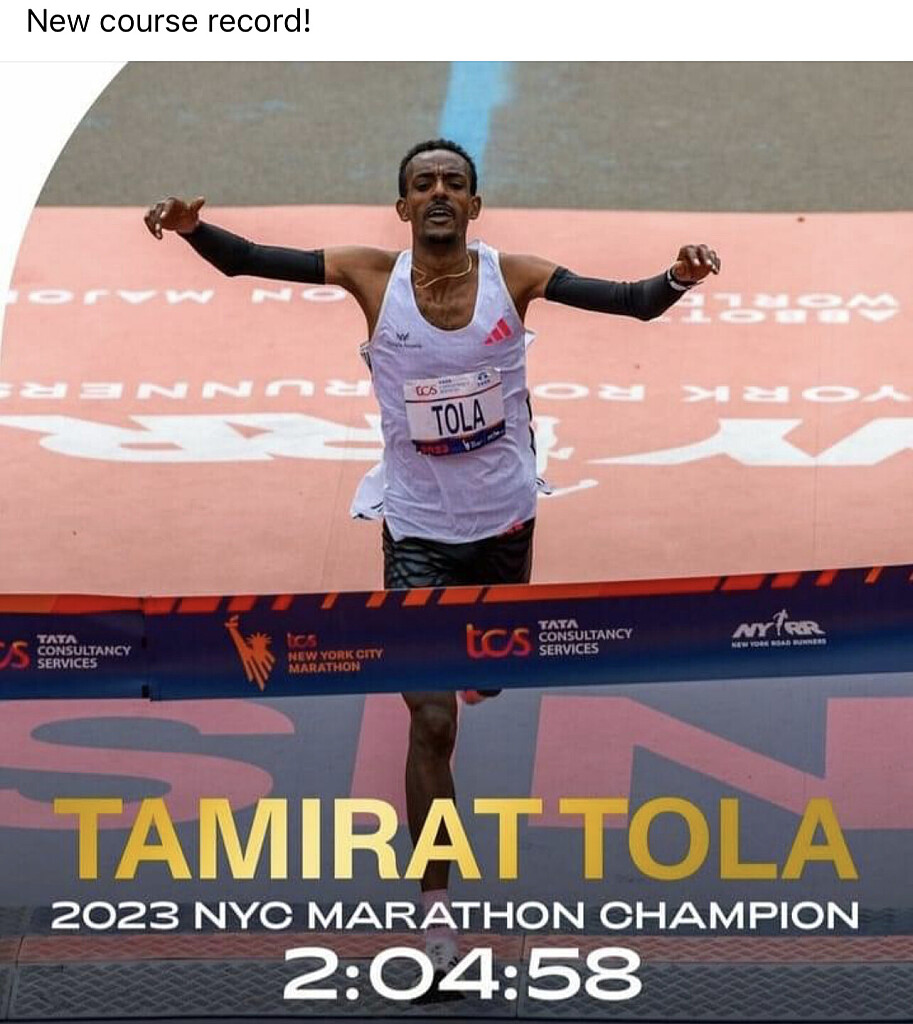
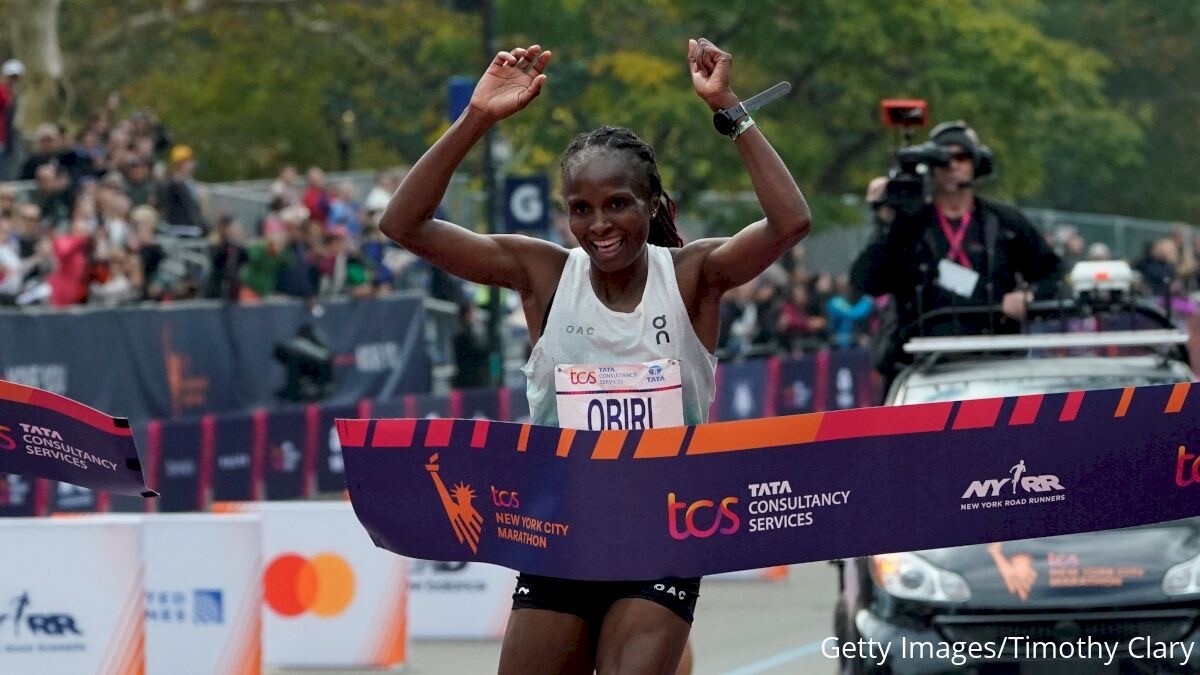
Tamirat Tola sets NYC Marathon record; Hellen Obiri wins women's race
Tamirat Tola of Ethiopia set a course record to win the New York City Marathon men's race on Sunday while Hellen Obiri of Kenya pulled away in the final 400 meters to take the women's title.
Tola finished in 2 hours, 4 minutes, 58 seconds, topping the 2:05.06 set by Geoffrey Mutai in 2011. Tola pulled away from countrymate Jemal Yimer when the pair were heading toward the Bronx at Mile 20. By the time he headed back into Manhattan a mile later, Tola led by 19 seconds and chasing Mutai's mark.
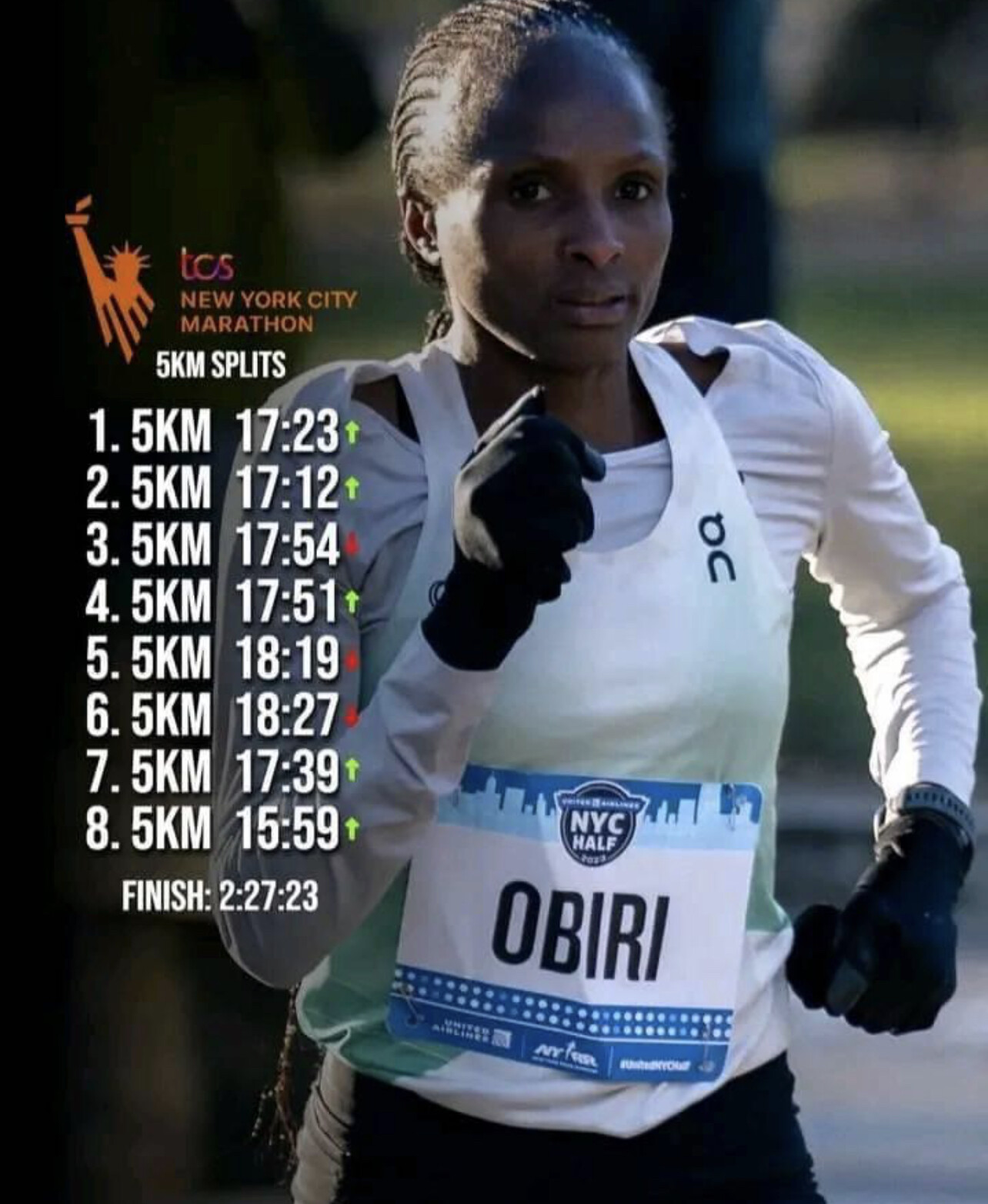
Kenyan Albert Korir finished second in 2:06:57, while Ethiopian Shura Kitata was third in 2:07:11. Yimer fell back to finish in ninth.While the men's race was well decided before the last few miles, the women's race came down to the final stretch. Obiri, Letesenbet Gidey of Ethiopia and defending champion Sharon Lokedi were all running together exchanging the lead. Obiri made a move as the trio headed back into Central Park for the final half-mile and finished in 2:27:23. Gidey finished second, 6 seconds behind. Lokedi finished third in 2:27:33.
Obiri added the New York victory to her win at the Boston Marathon in April.A stellar women's field was thought to potentially take down the course record of 2:22:31 set by Margaret Okayo in 2003. Unlike last year, when the weather was unseasonably warm with temperatures in the 70s, Sunday's race was much cooler in the 50s -- ideal conditions for record-breaking times.
Instead the women had a tactical race with 11 runners, including Americans Kellyn Taylor and Molly Huddle, in the lead pack for the first 20 miles. Taylor and Huddle both led the group at points before falling back and finishing in eighth and ninth.
Once the lead group came back into Manhattan for the final few miles, Obiri, Gidey and Lokedi pushed the pace. As the trio entered Central Park, they further distanced themselves from Kenya's Brigid Kosgei, who finished fourth.
Catherine Debrunner won the women's wheelchair race in 1:39:32, breaking the course record by more than three minutes. Men's wheelchair race winner Marcel Hug narrowly broke his record from last year, finishing in 1:25:29 to miss the mark by 3 seconds.
"It's incredible. I think it takes some time to realize what happened," Hug said after his sixth New York City victory. "I'm so happy as well."
Hug is the most decorated champion in the wheelchair race at the event, breaking a tie with Tatyana McFadden and Kurt Fearnley for most wins in the division in event history.
Login to leave a comment
TCS New York City Marathon
The first New York City Marathon, organized in 1970 by Fred Lebow and Vince Chiappetta, was held entirely in Central Park. Of 127 entrants, only 55 men finished; the sole female entrant dropped out due to illness. Winners were given inexpensive wristwatches and recycled baseball and bowling trophies. The entry fee was $1 and the total event budget...
more...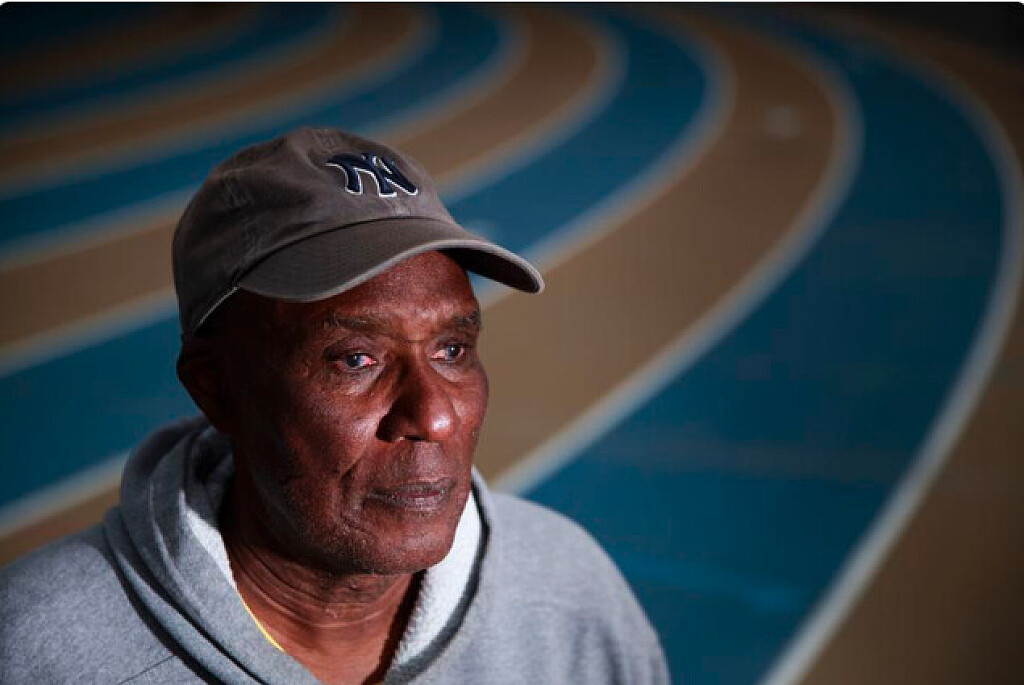
At 69, Bobby Kersee is track's 'mad scientist' and as influential as ever
Four years ago, the man associated with speed more than any track and field coach in the world felt himself slowing down, and he did not know why.
Since he was born in Panama in 1954 to a Panamanian mother and U.S. Navy father, Bobby Kersee has always been restless, a self-described wanderer with energy that matched his athletes. But in 2019, feeling unusually sapped, he called his doctor in St. Louis. Blood tests produced results dangerously far beyond the norm. Pancreatitis kept him stuck in a hospital for four weeks.
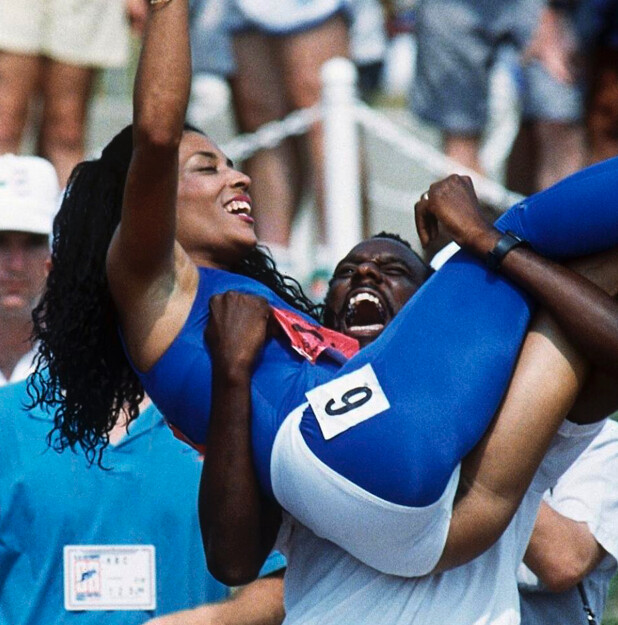
Once discharged, Kersee gave up red meat and alcohol.
What he would not quit was track.
Forty years after coaching his first world champion Kersee, now 69, paced relentlessly for four hours on Thursday while watching his training group at West Los Angeles College.
“Everyone kind of says the same thing: You know, he's different in terms of he's basically a mad scientist,” said Athing Mu, the 20-year-old reigning Olympic and world champion at 800 meters who switched to Kersee’s coaching in September to expand her range. “He knows what he's doing.”
Under cloudy skies at the track high above Culver City, nine athletes in his training group, dubbed Formula Kersee, ran tailored workouts and waited for his every word, from the barked “let’s go!” to commands about mechanics he hollered to athletes mid-run. He lifted hurdles, held court with reporters and stopped only to film block starts with his iPhone.
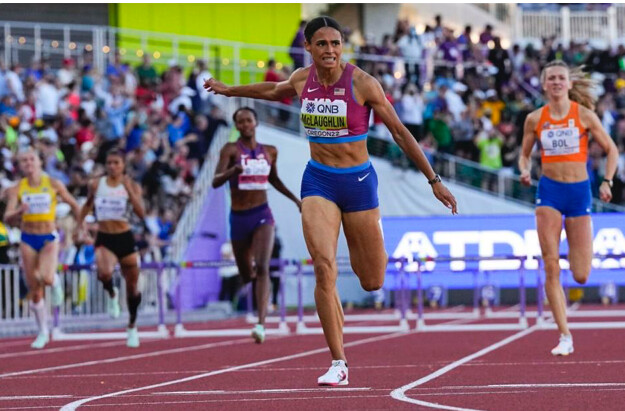
At an age when he might have become anachronistic, Kersee and his methods still represent sprinting’s gold standard, associates and athletes say. Invigorated by a training group that describes itself as a family and could be dominant into the next decade behind headliners Mu and 23-year-old 400-meter hurdles world champion and world record-holder Sydney McLaughlin-Levrone, Kersee said his career has no discernible finish line.
His coaching, primarily of sprinters and hurdlers, has brought his athletes at least one gold medal in 10 consecutive Summer Olympics, a litany of world championships and world records and, for Kersee, veneration, criticism and influence.
As the first professional meet held at UCLA’s Drake Stadium since 1990, and a key early tentpole in USA Track & Field’s attempted plan to grow its U.S. fanbase before the 2028 L.A. Olympics, this weekend’s Los Angeles Grand Prix is both a callback to a time when track’s popularity soared and, its organizers hope, a harbinger such times can return.
Outside of Sebastian Coe, the 1984 Olympic gold medalist in the 1,500 who has since ascended to lead track’s global governing body, World Athletics, few figures have spanned both eras as prominently as Kersee.
Athletes and associates credit his ability to turn seemingly outlandish goals and times into tangible results to an ability to know what they need. Malachi Davis, who has overseen McLaughlin-Levrone’s training since she turned professional, likened Kersee to a conductor, his whistle and yellow stopwatch replacing a baton to direct “a beautiful dance of confidence and knowledge.”
Many coaches can teach how to run fast and build a race plan, McLaughlin-Levrone said, but Kersee understands “how to break it down piece by piece.”
Robert Forster, a Santa Monica-based physical therapist who has worked with Kersee’s athletes since 1983, said Kersee understands the “work-rest ratio” better than any coach, and does not overtrain where other coaches might double down on mileage. Forster has seen Kersee send an athlete home to rest just from the look on their face, and likes to tell a story about the 2016 Olympics, that Kersee later confirmed. Allyson Felix, the Los Angeles native who under Kersee became the most decorated athlete in track’s history, was nursing a severely sprained ankle and the physical therapist told Kersee it needed to be iced 20 minutes every hour. Forster did not expect, however, that Kersee would stay up the entire next night icing the ankle as Felix slept.
Kersee was an early adopter of technology, upgrading his video cameras at a Westwood electronics store years before he could film block starts of sprinters Jenna Prandini and Morolake Akinosun on his iPhone and zip the footage to an iPad on the infield of the West L.A. track.
Yet the Kersee mystique has endured as much because of his grasp on psychology as biomechanics — feeling for when to push and when to pull back.
Brandon Miller, a top 800-meter hopeful who began working with Kersee in September, has heard other athletes describe Kersee as “crazy.” He disputes that characterization, but noted that Kersee knows to stoke his competitiveness entering a workout’s final repetition with four words: “OK, what you got?”
“I've never met any coach like him,” Mu said. “He's not going to make you do anything that's for his sake. You know, it's gonna be all for you and the benefit of you and your career. And so, I come in here, I knew that he was very intentional, and that's something I needed, especially if I want my career to be long.”
Raised by a grandmother as an “A-train baby” bouncing between the Bronx and Queens, Kersee lost his mother, Daphne, when he was 14, before moving to San Pedro for high school.
He put himself through college at Long Beach State by working at a youth correctional facility in Whittier, where Kersee watched wards from midnight until 8 a.m. After graduating, he had two jobs: Track coach at Cal State Northridge, and counselor at another youth facility in Chino. He took over UCLA’s track and field program in 1980 and that provided enough money to be comfortable. Coaching Greg Foster to his first world championship in 1983, and watching his athletes win six golds and four silvers at the Los Angeles Olympics one year later, provided the final confidence he could sustain coaching as a career.
But he did not leave behind the edge required to do his former jobs.
“I used to work in the prisons, so you can’t walk into the prisons being Mother Teresa,” he said. “And then I did find myself carrying a little bit too much of that to the track. I had to calm myself down and say, 'Wait a minute, you’re not working with a warden.'”
Once, an elderly woman approached Kersee in an airport in Indiana and told him she did not like what she had seen from Kersee or the other famed coach with the B.K. initials: Bobby Knight. He did not belittle his athletes, he said, but he also didn’t leave room for interpretation about who ran the workout. The edge created a mystique that “he's crazy,” Miller said. “But he's not. I feel like everybody has preconceptions of everybody but you won't really know unless you're there and you're with them every day.”
Just as when he built his vaunted World Class Athletic Club in the 1980s, he will only train those he can coach hard and have chemistry. His athletes typically train Monday, Tuesday, Thursday and Friday. He treats Monday Zoom calls with the group as though he is re-interviewing for the job. It’s more convenient than years before, he said, when he recalled gathering before dawn in Europe to address their complaints with him.
“I think we have that understanding that I’m going to listen and respect them,” he said. “But my job is to get the job done for them individually and collectively but you hired me. And if you hired me, let me do my job.”
That job, essentially, can be reduced to one thing: Imparting confidence in his plan. And no one does it like Kersee, said Davis, who sprinted professionally before aiding McLaughlin-Levrone.
“He's a competition coach, so the time it counts, you feel confident,” Davis said. “And your head coach is basically your general and then competition is basically war. And yes, you prepare for war but that final voice, that presence, that action, that essence, that’s Bobby. And he earned that by what he’s accomplished throughout his career.”
Kersee allows that age has softened him. As McLaughlin-Levrone recalled last August, Kersee earned her trust when he saw her overwhelmed with emotion at a 2020 practice and handed her a paper showing a wheel of emotions, saying he had trouble expressing himself, too.
Though accustomed to criticism of himself for years — he joked he would be buried in a track, and "probably as much as people hate me, they’ll put me in lane one, because I’ll be stepped on the most" — he worries about how the inundation of social media affects athletes’ mental health. He has traveled to support the singing ambitions of Formula Kersee sprinter Chloe Abbott. This spring, a smiling Kersee was featured on TikTok when his athletes remade the opening credits of the 1990s sitcom “Family Matters.”
Four decades into his career, he has “a whole lot of knowledge and a whole lot of patience,” he said. “But still, don’t let grandpa get out of the chair.”
Ato Boldon was never coached by Kersee during his sprinting career but has known him for 31 years, since they overlapped at UCLA, and has seen a “golden-hearted” side to the coach. He also described Kersee’s coaching equivalent as either Knight or San Antonio’s Gregg Popovich.
“Everybody under him wins,” said Boldon. “But it’s not necessarily a democracy.
“... As time has gone on, people are like, ‘Wow he’s so this or he’s so that, he’s so abrasive.’ Listen, do you want results, or do you not want results?”
No one argues that Kersee gets results. The most common criticism is how rarely his athletes compete en route to smashing records and claiming gold.
Among athletes, meet directors, agents and track officials who see a need for the sport’s biggest stars and strong competition to draw in casual fans, it has become a question of how to unite what is best for the top athletes’ futures with what is best for the sport’s growth. The tensions surrounding the discussion are not dissimilar from the way “load management” in the NBA has sparked concerns whether it will turn off fans from the regular season.
Because many top athletes train under Kersee, he has become a focal point. There is also his history of pulling athletes late before a meet, sometimes because of injury, and sometimes as a power play, as in 1994, when a dispute over pay led him to withdraw Gail Devers from a high-profile Los Angeles indoor meet.
The topic reignited last week when he withdrew Mu and McLaughlin-Levrone from the Grand Prix, a meet for which he serves as co-promoter. It came soon after telling Track & Field News in February that even he would like to see McLaughlin-Levrone run more often, and told The Times in March that there was no reason meets in the U.S. couldn’t draw thousands if the sport’s leaders banded together to promote strong competitions.
Asked about the balance of what is best for his athletes, or the sport, Kersee this week called it a byproduct of limited sponsorship money within the sport, which incentivizes performances at the biggest meets, which often require qualification earlier in the season. Only a handful of stars make big money and can afford to be choosy. He contrasted it with the NFL and NBA, where athletes can still earn a paycheck while resting.
“I think it’s a little tougher on our athletes to try to balance out wanting to run for the public and run for our sport and also knowing if I run too much or make one little mistake it might cost me making a team,” Kersee said. “That if I go out there and run five or six races I’m going to get to the point of, 'OK why is he running me so much and she gets injured over there, did she really need to run?'”
McLaughlin-Levrone released a statement after being pulled from the Grand Prix field that she “regrettably” would not be competing, citing her coach’s choice. It also said she trusted his judgment, which the world record-holder echoed again Thursday.
“He has a plan and he is going to work it out to perfection,” said Boldon, who will call Saturday’s meet as part of NBC’s broadcast team. “It might not benefit USATF, it might not benefit the fans, but you tell me, what moment stood out most from last summer's world championships?”
It was McLaughlin-Levrone’s stunning 50.68 time to win the 400-meter world title and lower her own world record. The run cut through the noise to make SportsCenter. It also left McLaughlin-Levrone sore for days, she said. Seeing her parents in the stands, for the first time after becoming the first woman to run under 51 seconds, she told them “that hurt, so bad.”
“We've been very calculated in when we run and I think it's yielded us great results,” McLaughlin-Levrone said. “Bobby always uses analogies and he's like, 'You don't take the Ferrari out every day for a drive. You take it out when it needs to come out and it does its things and you put it back in the garage.' So, your body can only be pushed to a certain level so much in your career.
“You only have so many races in your legs and I think we're really strategic about which ones we choose to run. Obviously I know the sport wants to see a little bit more and I think we're trying to figure out how to do that in a safe way that we can still accomplish our goals and give them something to look forward to.”
For McLaughlin-Levrone and Mu, the question is not whether they will make this summer’s world championships in Hungary, or next summer’s Paris Olympics, but which events — possibly plural — they will run.
When Kersee evaluates whether to bring an athlete into his coaching, he also looks for their potential range. He thought he lost his job coaching Felix when he told the 200-meter star during his interview that he would have her run the 400.
Mu and McLaughlin-Levrone’s youth and potential range is one of the sport’s most speculative discussions; news about their upcoming races create instant headlines. The duo are “two of maybe the most talented athletes he’s ever had,” Boldon said.
Their world championships last summer gave McLaughlin-Levrone an automatic berth into the upcoming world 400-hurdle field, and Mu an entry into the 800. With that secured, Kersee has focused on running McLaughlin-Levrone in the open 400 meters, where Marita Koch’s world record of 47.60 has been effectively unapproachable for 38 years — only four women have run even faster than 49 seconds in the past 20 years. She once thought 47.60 was “impossible.” Not anymore.
“It's a very daunting number to look at, I'll tell you that,” McLaughlin-Levrone said. “But at the end of the day, I think if we can take the 400 hurdles to 50.6, I think 47.6 isn't too far off.”
In addition to her 800-meter world title, Mu once owned the collegiate 400-meter record and ran on the U.S. 4x400-meter relay team that won Olympic gold in Tokyo.
“I'm still super young and I have not touched the surface of a lot of things yet,” Mu said. “But I do have visions, which is like really big goals of competing in obviously the Olympics again, and then worlds and hopefully, doubling up.”
Would that mean the 800 and 400, or the 800 and 1,500?
“Hopefully both,” she said. “I mean, I would love to have a chance to do 4/8 and then go ahead and do the 8/15 at some point.”
Maybe this explains why Kersee moved so quickly across the track during practice. There was no sign he had once slowed down.
“I’m glad,” he said, “I have that Energizer Bunny still in me.”
This story originally appeared in Los Angeles Times.
Login to leave a comment
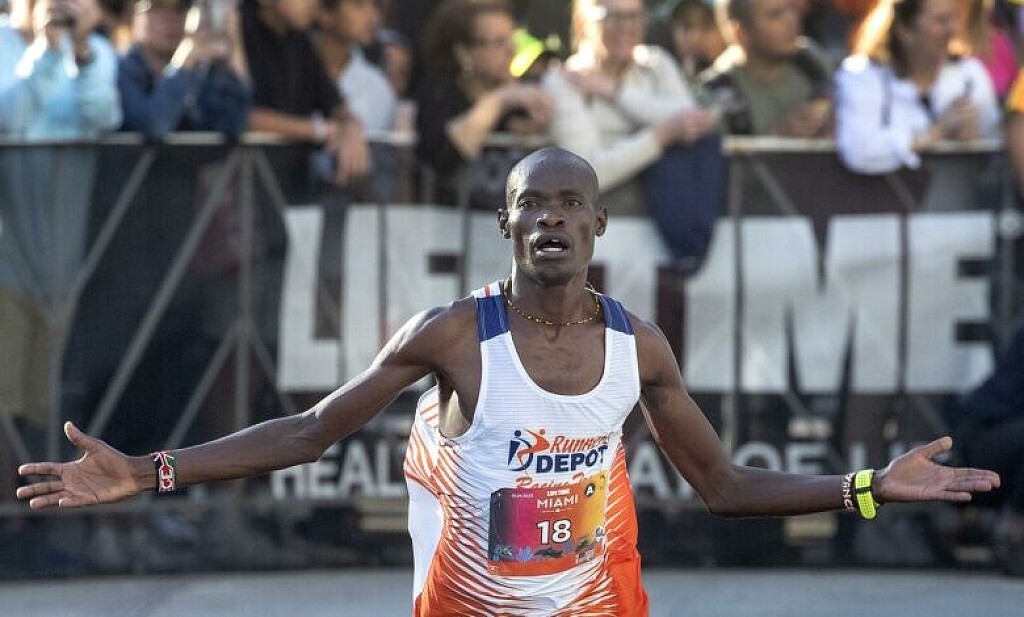
Kenyans take Home Life Time Miami Marathon Titles
They were nearly 8,000 miles from home in the urban center of Kisii, Kenya, but their individual pursuits for Life Time Miami Marathon titles brought them together in South Florida on Sunday. Originating from farming families in southwest Kenya, George Onyancha and Damaris Areba both secured easy victories in their inaugural appearances in Miami's signature running event.
Twenty-nine-year-old Onyancha (2:18:25) finished nearly six minutes ahead of Siraj Amda (2:24:16) of New York in the men's Marathon. Twenty-seven-year-old Areba turned in the second fastest time in Miami Marathon history (2:33:49) bettered only by fellow Kenyan Martha Akeno's course record (2:29:00) last year. Isgah Cheruto (2:36:19) of Minneapolis was second behind Areba.
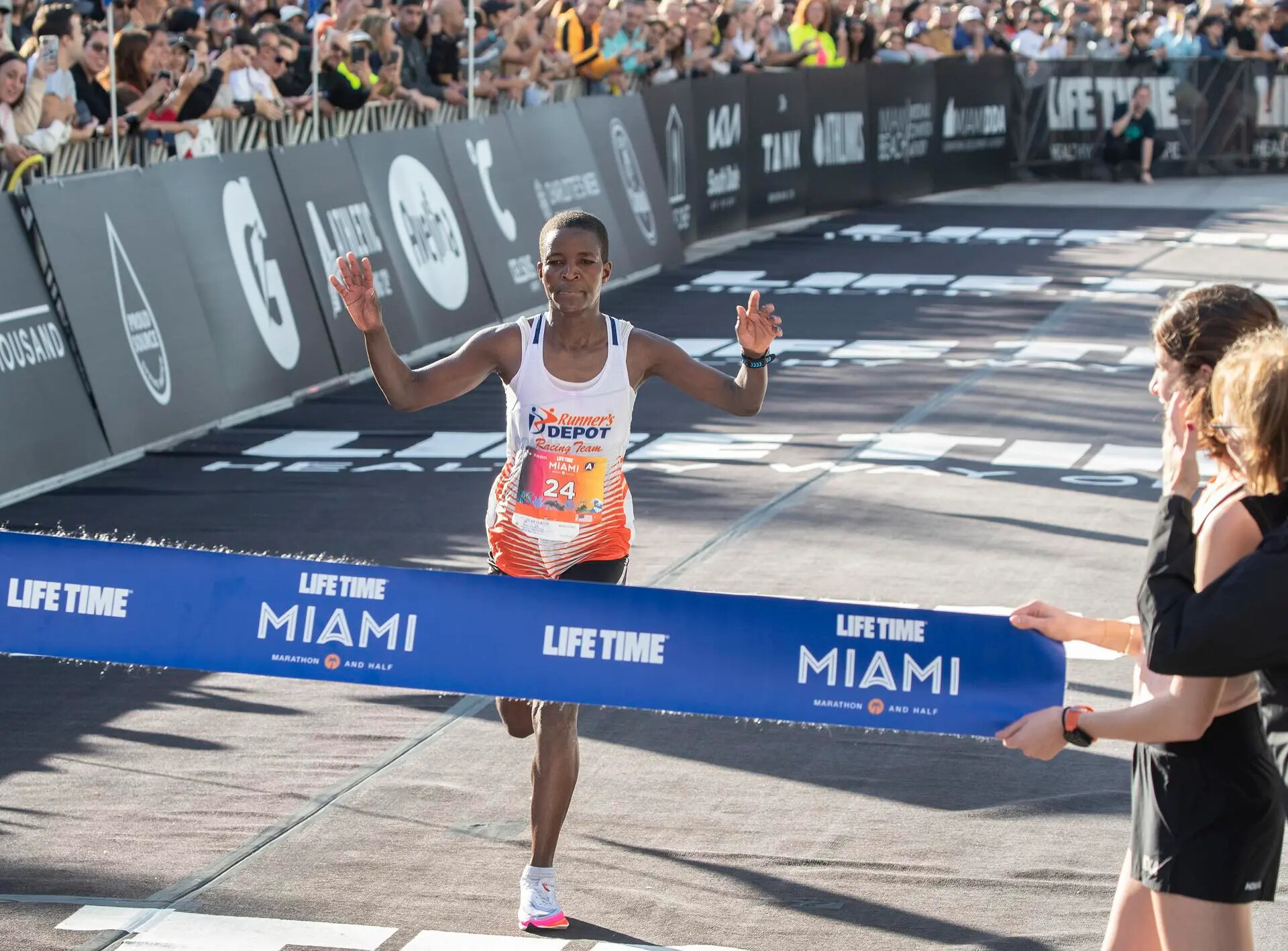
Onyancha and Areba were winners of few words. "I was leading and had another runner behind me until the 25K mark," Onyancha said. "Since I didn't know what his strategy was, I thought: 'Let me take off."
Areba was more focused on the uniqueness of the course route. The U.S.TAF-certified and Boston Marathon-qualifying circuit showcased the best views of Miami's cityscape and waterways during the 26.2-mile and 13.1-mile races. "The lights on the big ships, they're so beautiful," Areba said.
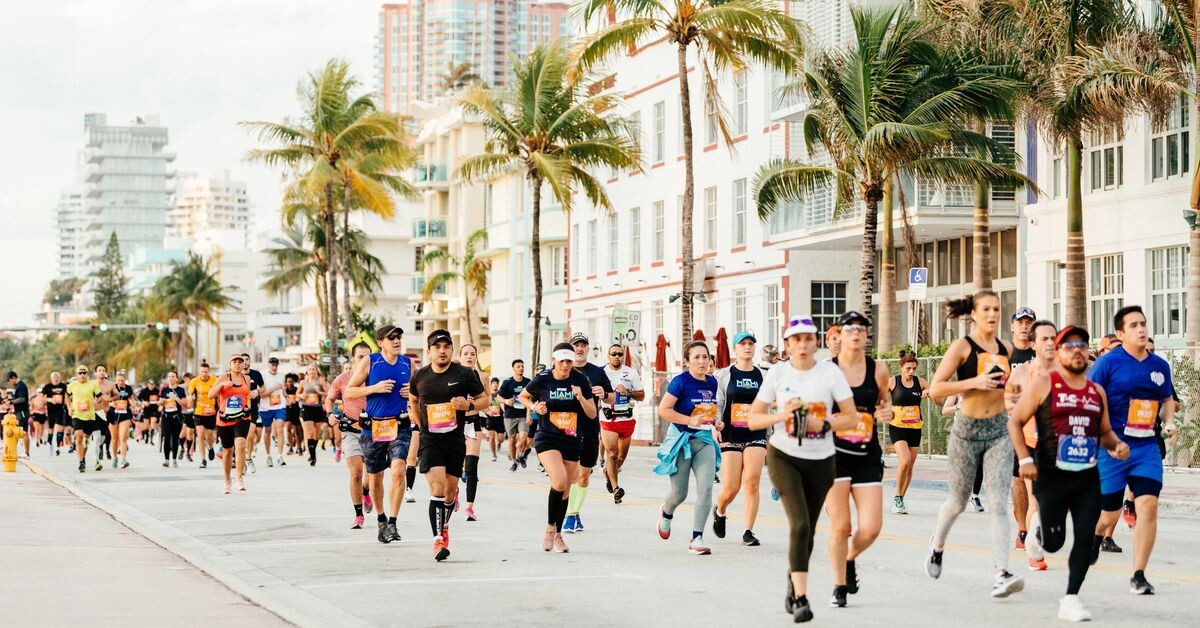
It was the 21st edition of the Life Time Miami Marathon and Half, which wound through downtown Miami, Miami Beach and Coconut Grove. The event's sold-out field of 18,000 runners came from all 50 states and 69 countries – generating upwards of $50 million in economic impact to the Miami community. Colombia (1,300) and Mexico (1,100) led a wave of Latino runners, while nearly 1,000 U.S.-based runners represented the state of New York.
The Marathon began in front of the downtown Miami-Dade Arena before heading to South Beach via the MacArthur Causeway and then back downtown along the Venetian Causeway. Runners then headed south through the lush Coconut Grove community before turning north through the Brickell Avenue financial district and across the finish line at Bayfront Park.
The temperature at race start was 72 degrees and eventually settled into the mid-70s. Runners were able to experience the South Florida sunrise nearly an hour into their run, and the sparkling cruise ships docked at the Port of Miami put an exclamation point on the Event's iconic views.
Onyancha races mostly in Europe and China, and Sunday's marathon was his first in the United States. Areba has been on a tear, winning four marathons in eight months. Prior to her Miami victory Sunday, Areba won titles at the Green Bay Marathon (May), the Quad Cities Marathon (September) and the Des Moines Marathon (October). In November, she was fourth at the Philadelphia Marathon.
When Nacho Hernando-Angulo (1:08:36) arrived first to the finish line of the Half Marathon, he was almost home. The 29-year-old broke the tape just 800 meters from the hi-rise where he lives in downtown Miami. "To be home with the (2023) title is awesome," said Hernando-Angulo. "This title has to stay home, in Miami."
Veteran French triathlete, Brice Daubord (1:10:11), and 24-year-old, Alberto Mena (1:10:21) of Ecuador, were nearly two minutes off Angulo's pace to secure second and third place while event-defending-champion, Cesar Lizano, was sixth (1:14:01). The 40-year-old Costa Rican was fourth in 2012, third in 2014 and fifth in 2015 before winning last year's Miami title.
A native of Madrid, Spain, Hernando-Angulo settled in Miami in 2018 following running careers at New Hampshire Technical Institute and Southern New Hampshire University. He works as a sales director for a European importer. "I moved to Miami for work, definitely not for training," he said. "It's very tough to be an elite runner here. So we do what we can."
Ethiopia's Weynshet Ansa Weldestadisk (1:14:55) won her second career half-marathon Sunday, ahead of Ukraine's Valentyna Veretska (1:18:41) and defending champion, Lisa Brooking (1:18:50) of Canada. "It was a good course, but very windy and hot," said Weldestaisk. "The city is so beautiful. I wish I could live here. Everybody was telling me 'good job.' It gave me power."
The tall and slender Weldestadisk has been based in Washington DC for the last four months while competing in a series of U.S. races. The 26-year-old smashed the course record at the Extra Long Bronx (NY) 10-Mile Race last September and won both the Philadelphia Marathon and the Virginia 10 Miler in November.
Veretska, the women's half-marathon runner-up, continued her good results since fleeing Ukraine last year and winning the Jerusalem Marathon a month later in borrowed shoes and gear. The 32-year-old ran her first race in the U.S. in November, finishing third at the Princeton Marathon.
Onyancha and Areba each received $4,500 for their first-place finishes. Onyancha will use the funds to pay for two of his brothers' tuition payments while Areba will donate a portion to Kenyan youth developmental running programs and use the remainder to buy land to build a house. She and her husband are currently living in a rental unit. "I loved the city and the palm trees," Onyancha said about his first experience in Miami. "They look like umbrellas."
More information about the Life Time Miami Marathon may be found at www.themiamimarathon.com and on social media at Facebook.com/RunMiami, Instagram.com/TheMiamiMarathon, and Twitter.com/RunMiami. The Life Time Miami Marathon And Half operates with the tremendous support of the Miami Beach Visitor and Convention Authority.
The Miami Marathon And Half is owned and produced by Life Time, the premier healthy lifestyle brand. It is among more than 30 premier athletic events owned by the Company, including the Chicago Spring Half Marathon, Garmin UNBOUND Gravel, and Leadville Race Series. For more information about Life Time (NYSE: LTH), visit www.lifetime.life. More information about Life Time athletic events is available at lifetime.life/athletic-events.
Login to leave a comment
The Miami Marathon
Over the past 16 years of the existence of the current Miami Marathon, there was only just over 90 athletes who had run every single event. Before the inception of the Miami Marathon as we know it now (est. 2003), the race was originally known as the Orange Bowl Marathon which began in the late 1970s. One of our very...
more...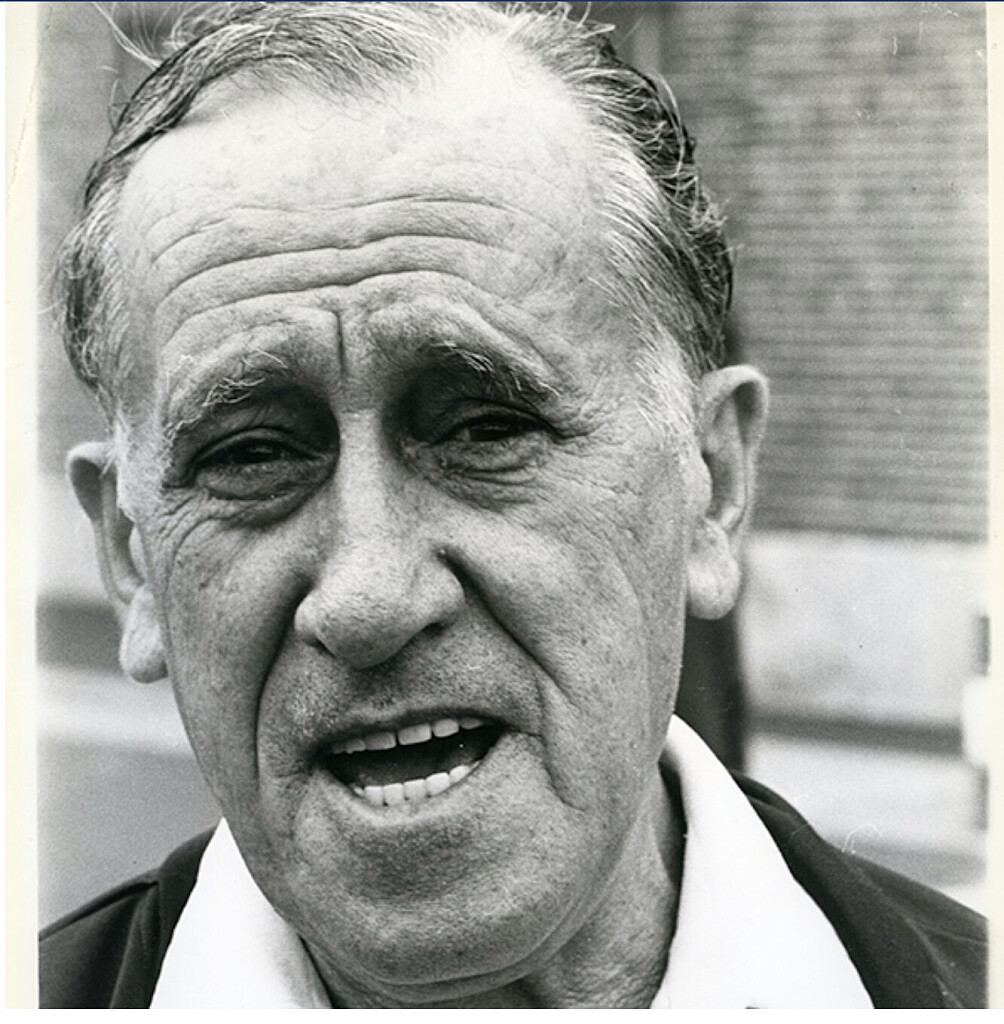
The Many Gifts of Joe Kleinerman
Runner. Soldier. Coach. NYRR founder. Administrator. Advocate. Volunteer.Joe Kleinerman was all these things, and more. He gave so much to running and to NYRR. We run to celebrate and honor him at the annual Joe Kleinerman 10K
An Early Start in Running
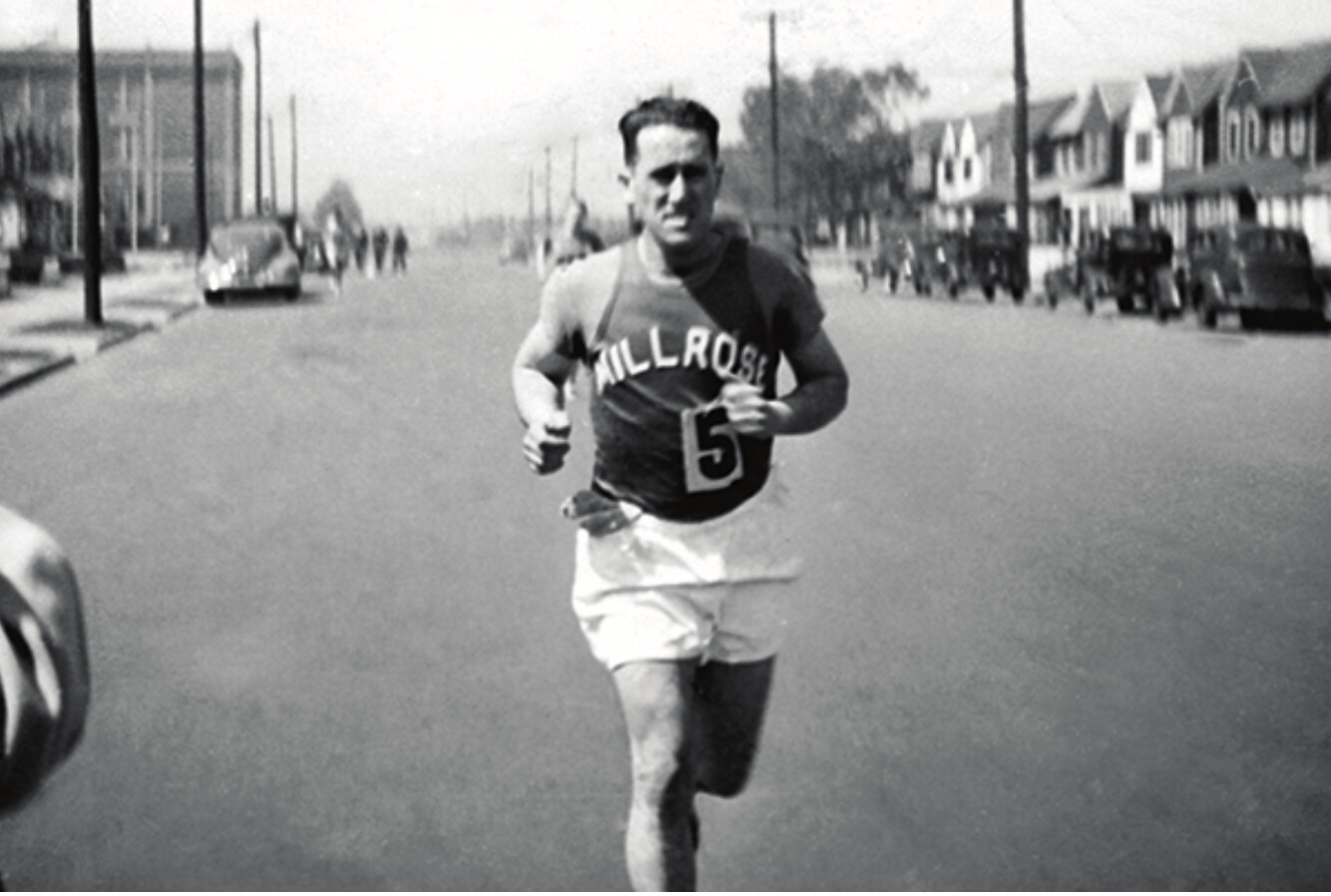
Joe was born in 1912 in Spring Valley, NY, the youngest of four children in a family recently immigrated from Ukraine. He grew up in New York City and started running as a teenager after he and one of his brothers attended the Millrose Games at Madison Square Garden. Joe captained the cross country team at DeWitt Clinton High School, where he also ran track (half-mile and mile). During the summers he trained at Macombs Dam Park in the Bronx.He competed for City College, then won an athletic scholarship to Kansas State University. It was the mid-1930s, the depths of the Great Depression, and when Joe received a job offer with the U.S. Postal Service back in NYC, he could ill afford to turn it down. He returned home to take the job and would remain a Postal Service employee for 32 years. And he continued to run. Joe joined the Millrose Athletic Association and became one of their standout competitors, placing in the top 10 at the Boston Marathon 1941 and 1942 and running a best time of 2 hours and 38 minutes. In an interview years later he noted: “That’s 2:38 with sneakers, on dirt roads, and without any water stops!”
He served as a staff sergeant in the U.S. Army Air Corps during World War II, including 19 months with the 599th Airborne in the South Pacific. He once placed fifth in a 1-mile race in Hawaii on a course laid out by another NYC serviceman also named Joe – last name DiMaggio.
"Joe ran hundreds of races before injuries caused him to stop competing at age 53. He stopped running at age 70 but was able to resume light jogging after knee-replacement surgery in his 80s.
From Competitor to Coach
Joe became the assistant coach of Millrose in 1958 and head coach in 1967. He enthusiastically recruited runners to Millrose, making the team a powerhouse, and was known to many as “Coach” for the rest of his life.At Joe’s memorial service, longtime Millrose runner and 1974 New York City Marathon winner Norb Sander recalled, “Joe was a great coach. He did not intrude. He didn’t criticize you. He was behind the scenes always to make sure that things went smoothly.”
Administrator and NYRR FounderJoe’s interest in working “behind the scenes” led him increasingly toward the administrative side of road racing. In the 1950s all competitive running in the U.S. was governed by the Amateur Athletics Union (AAU), which prohibited women from running distances over a mile, repeatedly failed to take a stand against racial segregation, and discouraged age-group competition. These regressive restrictions and biases frustrated Joe and other runners. In 1958 they formed the Road Runners Club of America (RRCA) to administer road racing.
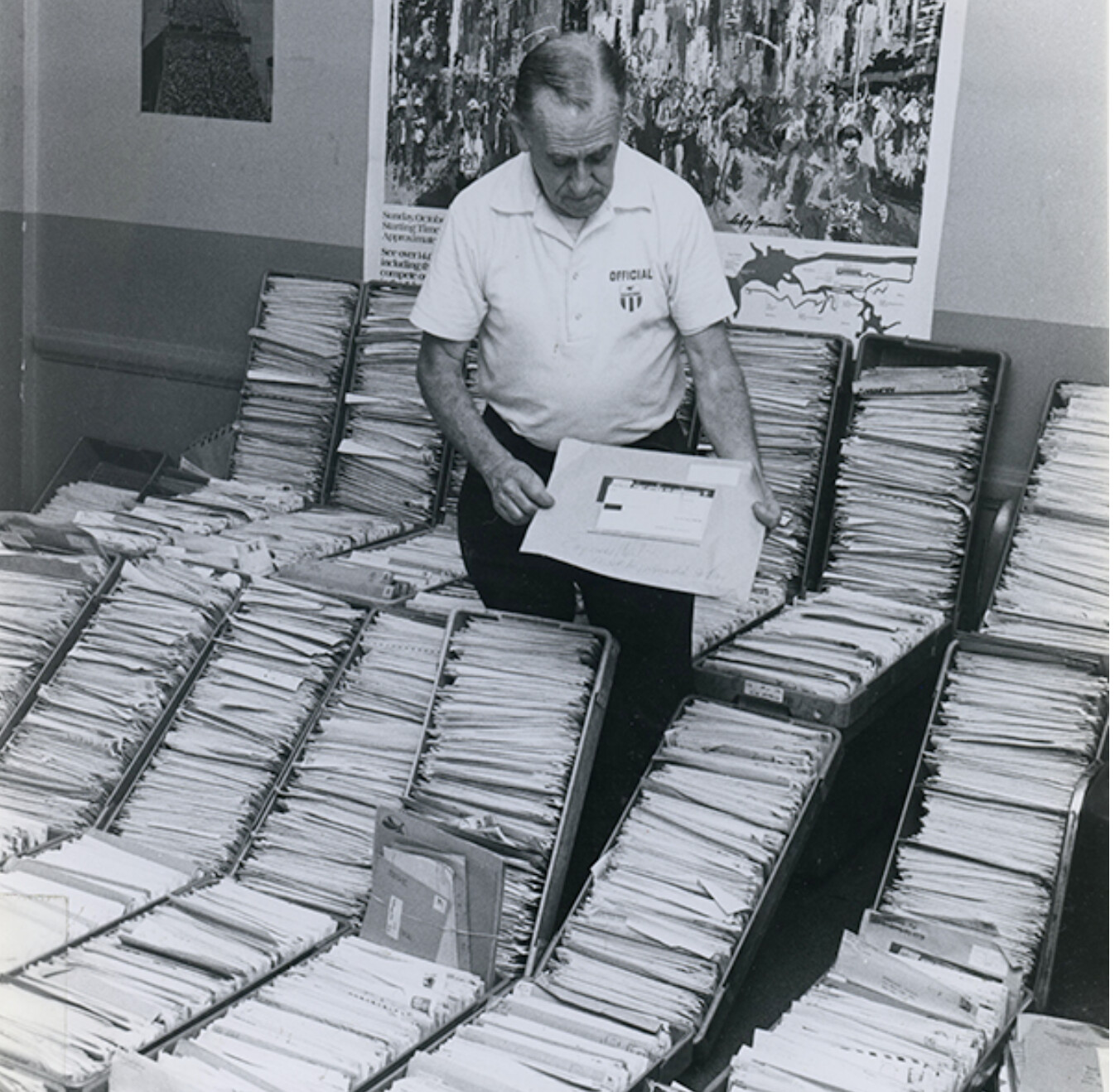
Later that year Joe, Ted Corbitt, Harry Murphy, and about 40 other runners founded NYRR, then known as the Road Runners Club – New York Association. Joe served as NYRR’s vice president and secretary. He's pictured above with Corbitt and New York City Marathon co-founder Vince Chiappetta. He never sought the limelight, preferring to work behind the scenes. Joe directed and scored countless races and meets – a laborious and task in an era when all recordkeeping was done by hand.
Advocate and VolunteerJoe also worked tirelessly to make running more inclusive and equitable. In 1967, along with Nina Kuscsik and New York City Marathon co-founder Vince Chiappetta, he successfully led a movement to allow women to run AAU-sanctioned races longer than a mile. Later he helped put together a U.S. women’s team for the fabled London-to-Brighton 52-mile road race in England – and saw a dream fulfilled when the women won the race.
Together with Ted Corbitt and others he introduced “veterans” races for runners age 35 and older as well as ultramarathon (50K and 50-mile) national championships. As far as it’s known, Joe never received any compensation for his thousands of hours of service to running. In his old age he remained close to the NYC racing scene and to NYRR’s offices on East 89th Street, where the lobby was named after him following his 90th birthday. He loved to tell stories and to marvel at the growth of running and NYRR over the decades."I considered Joe the heart and soul of Road Runners Club – New York Association," said Gary Corbitt, the son of Ted Corbitt. "Many of the innovation the sport enjoys today were started in New York in the 1960s. My father felt that Joe put in more volunteer hours for the betterment of our sport than anyone else worldwide."
Joe died on Veterans Day in 2003 at age 91. At his memorial service, friends shared their memories of a man who lived large, his gruff manner belying a boundlessly generous spirit. “He barked,” recalled Joe’s Millrose teammate John Garlepp. “If you don’t get the bark, there’s something wrong, either he’s not feeling well or he doesn’t like you.”
Joe's niece, Ruth Kleinrock, said at the service, "Having an uncle who was so instrumental in the sport of running, especially women's running, is something of which my sisters and I will always be proud."Joe Kleinerman dedicated his life to running and creating opportunities for all. We’re grateful to him for it.
Login to leave a comment
Joe Kleinerman Classic 10K
Make good on your New Year’s running resolution by taking part in the Joe Kleinerman 10K! Kleinerman, a founding member of NYRR, the longtime coach of the Millrose Athletic Association, and a beloved NYRR employee until his death in 2003 at age 91, was a true competitor. Take on the challenge of this chilly 10K through beautiful Central Park. The...
more...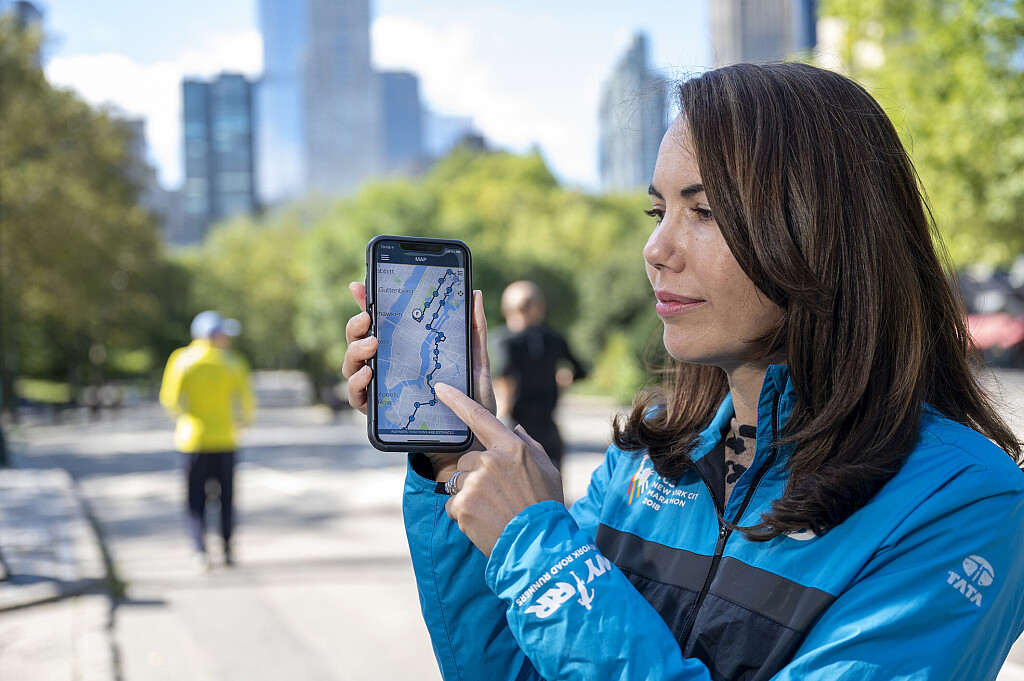
TCS New York City Marathon App to Debut Livestreaming of All Pro Races in Their Entirety
Tata Consultancy Services (TCS) and New York Road Runners (NYRR) launched the official 2022 TCS New York City Marathon App with a groundbreaking Second Screen feature that will transform the marathon experience for runners and fans alike. For the first time in the history of major marathons, the professional men’s and women’s wheelchair and open division races will be livestreamed on the app in their entirety, empowering fans to swipe between feeds and watch the race of their choice.
The Professional Runner Feed, available free on the 2022 TCS New York City Marathon app, will enhance the broadcast coverage through a Second Screen that features uninterrupted coverage of the leaders in all four races. It will complement the race broadcast available domestically on WABC/ESPN and internationally in 182 countries and territories so that spectators from around the world can watch every move as the fastest marathoners in the world battle for victory on the streets of New York City. The 51st running of the TCS New York City Marathon will take place on November 6.
“I’m excited to race the TCS New York City Marathon again as I go for my sixth title, and it’s so incredible that everyone around the world can follow along the professional wheelchair races in full in the TCS Mobile App,” said Tatyana McFadden, a five-time TCS New York City Marathon champion and 20-time Paralympic medalist. “It’s so important to have platforms such as this that reach the masses to showcase our sport and bring parity to the wheelchair division.”
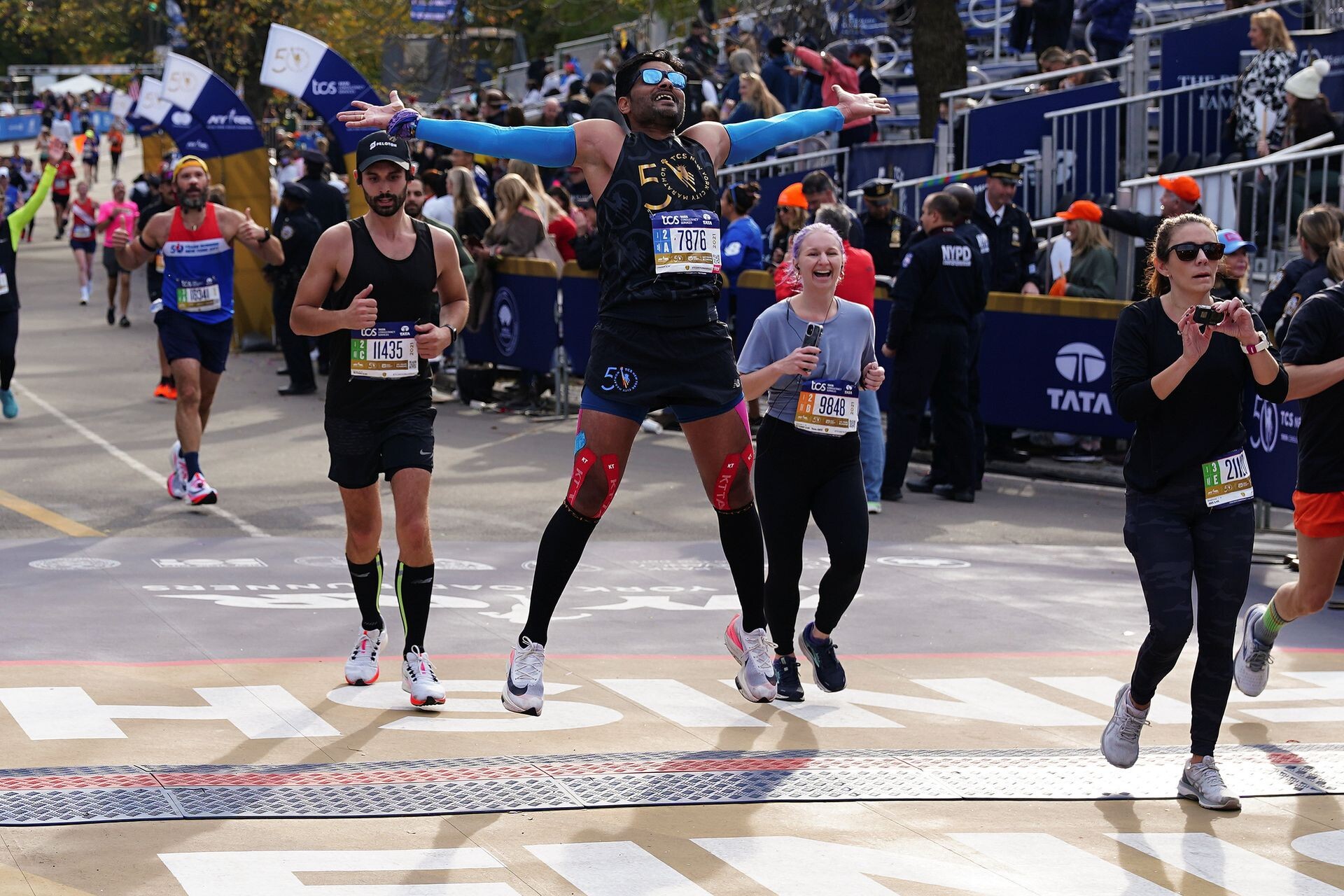
The TCS New York City Marathon has historically broken ground and set the pace for equal opportunities for both women and wheelchair athletes. This year, every step taken by the leaders can be seen on the app – from the big lead pack often seen in Brooklyn to the surges on 1st Avenue that separate the competitors. Fans can watch every race-defining move throughout the marathon.
“Livestreaming the pro races on the TCS New York City Marathon app is a win for fans and a win for athletes,” said Des Linden, a two-time Olympian and 2018 Boston Marathon champion. “Allowing the long form stories to develop over the course of 26.2 miles will give fans the chance to learn about the contenders and appreciate the nuances of racing that they’ve never seen before.”
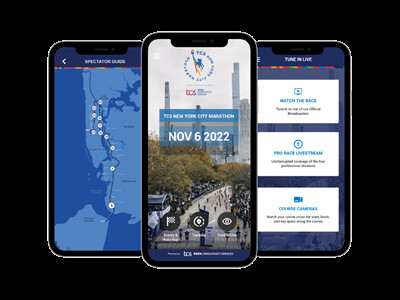
The 2022 TCS New York City Marathon App also sets a new standard for runner tracking. The app allows spectators to track the elapsed time and pace of an unlimited number of runners. The first of its kind Course Camera feature lets fans watch a live feed of their favorite runners at five key points along the course – at the start, mile 8 in Brooklyn, mile 17 in the Upper East Side, mile 20 in the Bronx, and at the finish. This new feature also gives runners the comfort that their family and friends can watch them at key points on the course and cheer for them from anywhere in the world.
“Fans of an iconic global event like the TCS New York City Marathon deserve the most technologically advanced race app,” said Suresh Muthuswami, Chairman of North America, TCS. “We are proud to raise the bar this year by bringing all of the exciting action from the streets of New York City to the world in an inclusive fan experience.”
"Every year, it is exciting to see the TCS New York City Marathon partnership come to life through the mobile app, and this year’s enhancements will elevate the experience to a whole new level for both spectators and viewers,” said Christine Burke, NYRR Senior Vice President of Strategic Partnerships and Runner Products. “Whether it be fans following the every stride of their favorite professional athletes or checking out the Course Camera feed to find their family and friends, the new features in the app are guaranteed to bring in a whole new audience.”
TCS is the first ever premier partner of NYRR, a relationship that began in 2012. From the beginning, TCS and NYRR committed to enhancing the marathon experience for runners, spectators, and fans around the world through technology. The award-winning TCS New York City Marathon app is typically downloaded a half-million times every year.
Other Key Features
Share Tracking: This feature on the Runner Details page allows users to share a link that initiates an automatic app download with a specific runner already selected to be tracked during the race.
Optimized Spectator Guides: The app’s spectator guide helps fans create an itinerary to navigate New York City, so they’re able to see runners on the course. The shareable guide provides a runner’s estimated times of arrival, along with transportation directions and recommended viewing locations along the course.
Cheer Cards: Allows fans to support runners using the app to share messages on social media.
Live Pro Athlete Leader Board and Bios: Closely track the race day leaders in real time, as well as have access to bios, records, and images of professional athletes running the race.
Team Inspire Profiles: For the first time, the app will include stories of Team Inspire, a group of runners with some of the most inspiring stories in this year’s mass runner field.
The mobile app for the 2022 TCS New York City Marathon is available now for iPhone and Android devices on the App Store and Google Play, respectively.
by Running USA
Login to leave a comment
TCS New York City Marathon
The first New York City Marathon, organized in 1970 by Fred Lebow and Vince Chiappetta, was held entirely in Central Park. Of 127 entrants, only 55 men finished; the sole female entrant dropped out due to illness. Winners were given inexpensive wristwatches and recycled baseball and bowling trophies. The entry fee was $1 and the total event budget...
more...
Meet Wrinkle, the Running Duck of the New York City Marathon
This famous fowl surprised and delighted spectators—but how did she get there?
By now, you’ve probably seen videos on your social media timelines of an enthusiastic, semi-aquatic bird galloping down the closed-down streets of the Big Apple, winning the hearts of New York City Marathon spectators.

The white pekin’s name is Wrinkle Five Star, better known as A Wrinkle in Time: The Time Traveling Duck—or just Wrinkle, for short. A recent TikTok featuring her marathon run racked up nearly 8 million views (as of November 12), making her an overnight sensation and arguably one of the biggest highlights at the 50th running of the NYC Marathon.
As one commenter on YouTube said about Wrinkle’s performance: “Such determination, will and strength. Look at those webbers flattening the concrete, he quacks with resilience, what a marvelous duck.”
Here at Runner’s World, we were impressed with the fowl’s dedication to running and her custom-made shoes for her duck feet. We also needed to know... just how far did Wrinkle run?
To find out, we spoke to her adopted parents, Justin Wood and Joyce Kung—who operate the Justin Wood Circus Variety Show—about just who this famous quacker is and how she became the sensation of the New York City Marathon.
It all started in California. Wood and Kung bought six eggs in hopes of hatching some ducks to implement into their circus arts. Neither of them had experience hatching eggs before, but they were up for the challenge—especially if it meant adding a unique piece to their performance.
“I haven’t seen any trained ducks,” Wood said. “So, I figured it might be very difficult. Too difficult, like you couldn’t really do it. But I might as well give it a shot.”
Wrinkle hatched from her egg on September 9, 2020, in Louisville, Kentucky. Wood and Kung immediately began training her. They needed her to imprint on them—that is, to attach to them emotionally and gain its sense of species identity from them.
As a chick, Wrinkle would follow Wood and Kung around, an instinct for baby ducks. They intended to keep that up through adulthood, as they were planning to have her specialize in parading behind them as they juggle or perform other acts.
During training, they noticed something special. “She has very good endurance in walking and running,” Kung said. “And we just figured [out] a good way to display it.”
Wood is also a content creator, sharing numerous videos across YouTube and TikTok. He’d been making videos for years, but when live performances weren’t happening because of COVID-19, he focused on his online presence. TikToks showing him juggling and yoyo-ing saw some success, but he felt those acts didn’t translate as well to the internet as they do in person.
But Wrinkle resonated with viewers. On September 17, 2020, just days after she was hatched, Wrinkle showed off her running skills on TikTok for the first time. The little yellow chick sprinted across a checkered blanket toward the camera as “Let’s Link” by WhoHeem played in the background. That gave Wood and Kung an idea.
“When we meet people on the street, they’re always surprised and they care about the duck,” Kung said. “But on the internet, it’s harder for people to personally care about this animal. So we really wanted to make her a personality, like you recognize her as ‘the running duck’ or ‘the traveling duck.’”
Soon, videos of Wrinkle running back and forth, jogging around New York City, and scurrying through dark corridors were garnering thousands of views and scooping up new fans. She also performed in-person, marching a 1.4-mile long Halloween Parade in the Bronx. After that feat of endurance, Wood and Kung knew she was ready for a bigger challenge—the New York City Marathon.
First, Wood and Kung needed to make sure Wrinkle could safely run on pavement. Many ducks suffer from a condition called bumblefoot—a bacterial infection caused by walking or running on rough surfaces. Their solution? Make her a pair of shoes.
Wood and Kung fashioned booties out of a scuba-gear-like material that’s soft, easy to wash, and waterproof. “Everyone’s asking about the shoes,” Wood said. “So we’re looking into trying to mass produce them and put them out there.”
Fully equipped, Wrinkle took to Lafayette Street in the Bed-Stuy neighborhood of Brooklyn on November 7, ready to take on part in the race. Wood and Kung let her out on less populated parts of course, and she did what she does best: run.
“We weren’t sure if we were allowed to do it,” Kung said. So to be safe and mindful of the runners, Wrinkle would run a block and stop for water, totaling three blocks—about a half mile in total distance. (While she’s all over social media, we couldn’t find Wrinkle’s Strava account to confirm the distance.) Marathon spectators watched with dropped jaws, scrambling to grab their phones to take photos.
Wrinkle wasn’t phased by the crowd reaction; she was used to it at that point from wandering New York with her parents. But on a historic day like the 50th running of the NYC Marathon, Wrinkle was a special addition to an already magical day. “Wrinkle always puts people in a good mood,” Wood said.
Sure, Wrinkle didn’t run the whole marathon. While a half mile might not seem much at all to a distance runner, it’s a long way to run for young running duck.
Unphased, Wood and Kung are completely sure that Wrinkle can go much farther. “She’s only 1 year old,” Kung said. “She’s going to have a lot of potential.”
If you’re hungry for more Wrinkle, she is featured in New York City art show, which will run from November 13 to December 9.
by Runner’s World
Login to leave a comment
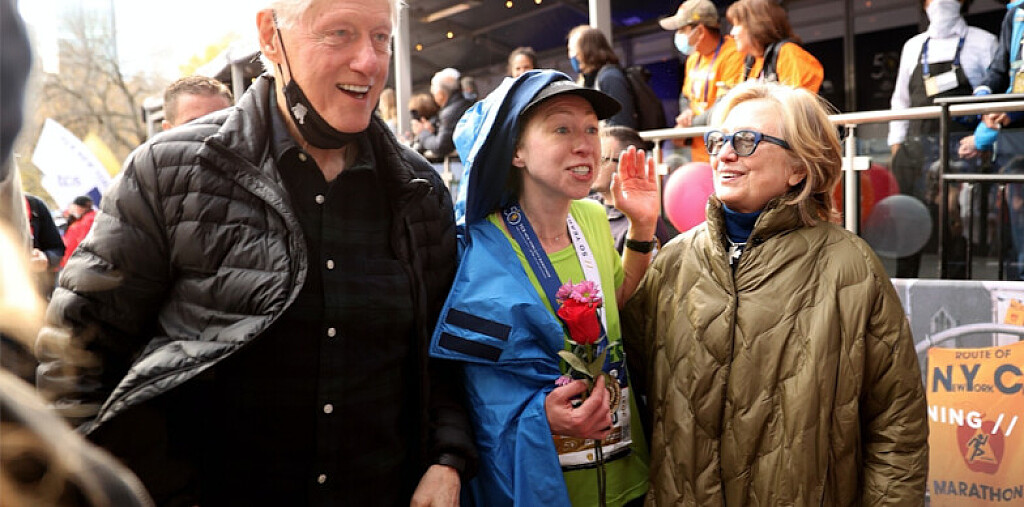
Chelsea Clinton on Her First NYC Marathon: “The Day Was Incredible!”
After 20 years as a dedicated runner, she took on her first marathon through the five boroughs on November 7.
For years, the New York City Marathon has been a popular race for high-profile runners looking to take on the challenge of 26.2 miles. But one such notable athlete kept her presence in the 2021 race under wraps until she crossed the finish line.
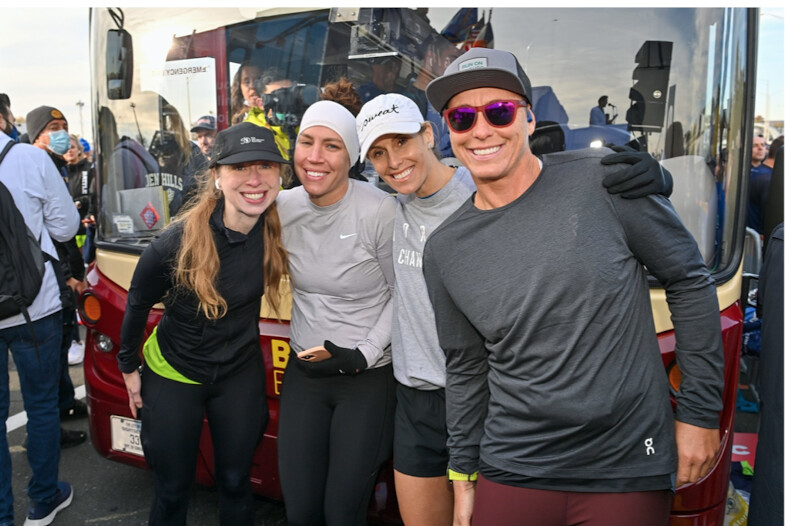
Chelsea Clinton, 41—who is vice chair of the Clinton Foundation, teaches at Columbia University’s Mailman School of Public Health, and has authored several books for young readers—finished in 3:59:09. She averaged 9:08 pace (with half marathon splits of 1:50:27 and 2:08:42) and got in under the 4-hour barrier she had set as a goal for herself.
Her parents, Bill Clinton and Hillary Rodham Clinton, the 42nd president and the secretary of state during the Obama administration, met her at the finish line.
Clinton, still sore from the race, spoke to Runner’s World on November 10 about her experience running through the five boroughs. She discussed her training, an inopportune injury, and the conversations she and her husband, Marc Mezvinsky, had with their three children, ages 7, 5, and 2, about the effort it took to train for and finish the race. This interview had been condensed.
Runner’s World: When did you get the idea that you wanted to try a marathon?
Chelsea Clinton: Last year I turned 40. I had always thought about doing the New York City Marathon. When I turned 40 and thought, “I should do it.” But we didn’t have the marathon last year.
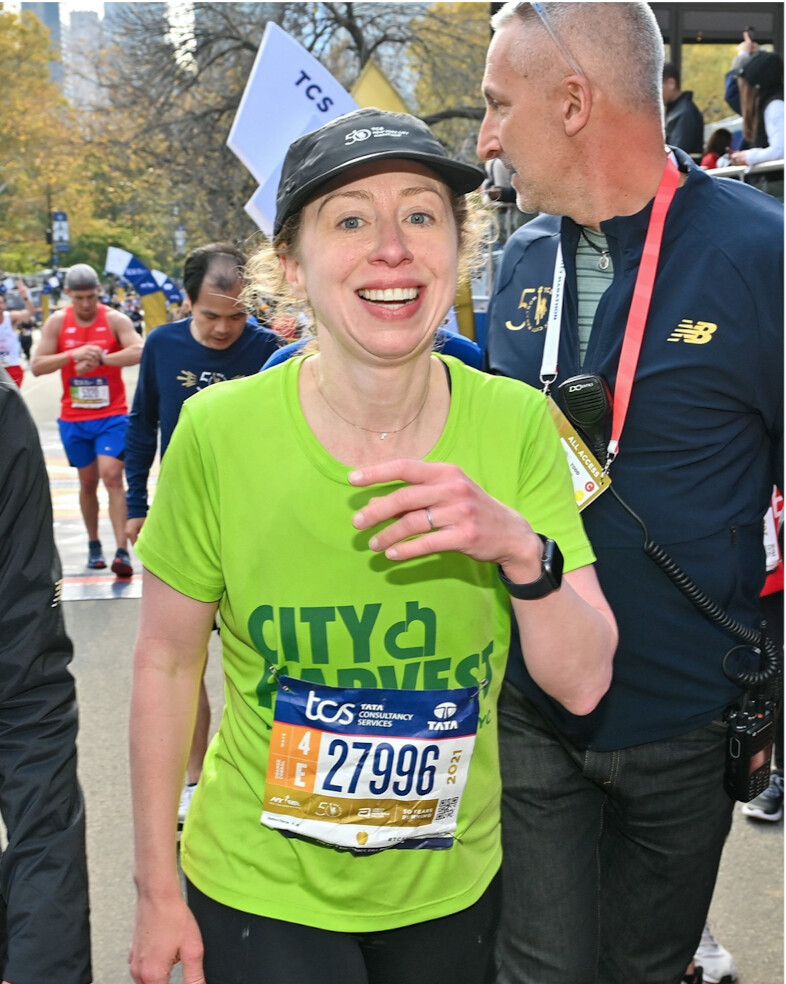
And so I was so thankful to have the chance to run the 50th running of the marathon. I’ve lived in New York City for 18 years, and most of those years I’ve cheered on the runners I don’t know and the runners I do know in the marathon.
How long have you been a runner?
I ran a little bit with my dad when I was in junior high and high school, but I didn’t really start running until I went to Stanford. I think just because it was so beautiful, and I had a lot of friends who had been runners. I’ve run, goodness, the last 20 some odd years.
When did you start training specifically for New York?
I started training four months before. I knew that I needed to train. I’d never run anything close to that distance.
Did you have a coach or a plan?
I did, and I’m not just saying this to you because you’re interviewing me. I looked at lots of different plans and some of them recommended running four days a week. I actually used the Runner’s World Sub-4-Hour Marathon Plan, which was five days a week.
I followed it really diligently until I tripped and fell [during speedwork on the treadmill] six weeks before the marathon. There’s no good story.
I wrenched my left foot and I bruised the bone and strained a tendon and thankfully have a really wonderful doctor and a great physical therapist, and I’ve never iced a body part as much as I’ve iced that left foot for the six weeks before the marathon. It got a lot of TLC of the cold variety.
I had to take three weeks off running totally. I biked and I did other things. I then kind of had to sort of feel out what I thought the best answer would be for the next couple of weeks to get back to hopefully marathon readiness. Thankfully, I was ready by the time Sunday came.
When do you train? Are you a morning runner?
Yes, I love running in the mornings. The long runs I would do on Sundays. I’m so thankful to my husband for keeping our children occupied while I was gone for increasingly longer runs over the months.
I like running all over New York City. I’ve seen so many different aspects of New York City I don’t know if I ever would have been able to see if I weren’t a runner, the different neighborhoods I could make it to. I love watching the city wake up.
There were a couple of days when it was 88, 90 degrees and I did revert to the treadmill. I found running in heat challenging.
Had you planned to run at an even pace to break 4 hours?
At the beginning I was running faster than I had planned—I was like, oh, gosh, I’m falling into the trap that all my friends who have run lots of marathons told me not to fall into, with the adrenaline. But I just have to enjoy this moment. And this is what’s enabling me to enjoy this moment. I just made the calculation, when I was in Brooklyn, that this is what feels right to me now. I want to soak in this experience, and I hope I’ll have enough left in me to still make it in under four hours. I did. With 51 seconds to spare.
I have to be honest, I didn’t quite follow my running plan on the day, but I think all the training and feeling in my body, what a 9-minute mile felt like, enabled me to adjust and still make my goal.
How was the day for you?
The day was incredible. It was even more of an amazing experience than whatever I had hoped or imagined it to be, the enthusiasm and the borough pride. I loved being in Brooklyn. Everyone was like, “We love Brooklyn!” [I’m thinking] I love Brooklyn. We made it to Queens and Queens was like, “We’re the best!” Yes, Queens is the best. You get to the Bronx and it’s like, “You’re not here for very long, but we are memorable.” I think, yes, I love the Bronx.
You get back into Manhattan and you’re like, ohmigod, I still have six miles to go.
Did you see a lot of people you knew along the course? And did your husband and kids see you?
It was just wonderful and I had friends that I saw all throughout the race and that just made it so much fun.
But really the most special moments were when I saw my kids. They made it to two different places and Marc was there at the finish line. They were so proud and so excited. They made me the cutest signs. My daughter yelled so loudly she was hoarse that night.
I am so proud that my kids saw their mom set a goal and beat that goal. We had lots of conversations, because initially they were like, “Mom you’re going to try so hard and you’re going to win.”
And I’m like, “No. I’m going to try so hard and I’m going to finish.”
They said, “But you can win, Mom.”
“I can’t win. If I work really hard, hopefully I can finish in about twice the time that people who are going to win finish in.”
And there were all these wonderful conversations around, we can do hard things at different points in our lives. Sometimes it really is about the effort toward those hard things and enjoying the effort and enjoying the event and it’s often not about winning.
My 2-year-old didn’t really understand what was going on. On Sunday night he was like, “No like wide races. Mama gone too long.”
“Oh yes, I’m sorry, sweetheart. Mama was gone too long today in the wide race.”
Had you planned to run with former pro soccer player Abby Wambach?
We knew that each other was running. I think we were just surprised we saw each other at the start and it was so nice. I adore and respect and love Abby, and it was so nice to share a little bit of that experience with her. But definitely after mile 11, I was like, I cannot keep up with the Olympian. I need to slow down a little bit or I will hit the wall. It was an unexpected gift at the moment.
Did you hit any rough patches?
I think that the bridges were harder than I had thought. The last six miles were challenging. But worth it.
You were running for City Harvest, which works on hunger issues in New York?
I was. I definitely saw people cheering on City Harvest. It was also really nice how often I would see people who were there for Every Mother Counts or Juvenile Diabetes Research Foundation and the other organizations. People were cheering on everyone who was in identifiable nonprofit shirts that ran by. There was so much support for those of us who were running for a cause.
Were you recognized by strangers?
Yes. And everyone was so nice. As I got slower, around 21, 22, 23, 24, I would run by and I would hear shouts behind me, “Go, Chelsea!” and I would turn back and be like, “Thank you!”
Were you doing the calculations at that point to figure out how slow you could go and still break the four-hour mark?
Yes. When I had run more quickly than I had realized for the first half, I was doing the math in my head, how slowly can I run in the moments when I know this is going to be really hard and then what will I need to do toward the end? I kept constantly recalibrating. And then, going up 5th Avenue, I could feel myself slowing more and thought, “Oh no, I hope I didn’t miscalculate.” And then I got into Central Park and the energy really helped carry me through.
Your parents seemed really proud of you.
Ohmigosh, so excited. I was nervous because of my injury, like oh, gosh, I hope I can make it. I actually called my mom at mile 11. I’m sure this is like breaking some sort of marathon protocol. I probably shouldn’t have called her, but I called her like, “I”m going to make it. You have to come.” She was like, “We’ll be there.” I was like, “Okay!” She was like, “Wait, aren’t you running?” ... “I am.”
Did you enjoy the signs people held?
So many funny signs. And so many, “Go random stranger” signs. I was like, “Yes, I’m a random stranger. Thank you!” Lots of signs supporting moms, which was great, like, if you gave birth to a child, you can do this. “Yes, I’ve given birth to three, I can.”
What kind of shoes do you wear?
I run in Brooks [Adrenaline GTS 21]. I’ve tried lots of different shoes. I have been dedicated to those shoes.
Are you hooked on marathons now or are you saying, “Never again?”
Well, I have to say I finished and I thought, “That was amazing. I want to do another one.” And then Sunday night I was like, “Ohmigosh, I’m so sore. How could I ever do this again?” We’re talking now and it’s Wednesday and I’m like, “I could totally do it again.” It’s a little bit like having children. It is something I would love to be able to do again
If I do it again, though, I would want to have a coach or friend. As extraordinary as it was and as much as I loved doing it as a New Yorker in New York City, it would have been nice to share the experience with someone. I said, “Marc, what do you think?” He said, “I love you so much. I’ll cheer harder next year. I’ll try to be in even more places.”
Hopefully I have some friends I can persuade.
by Runner’s World
Login to leave a comment
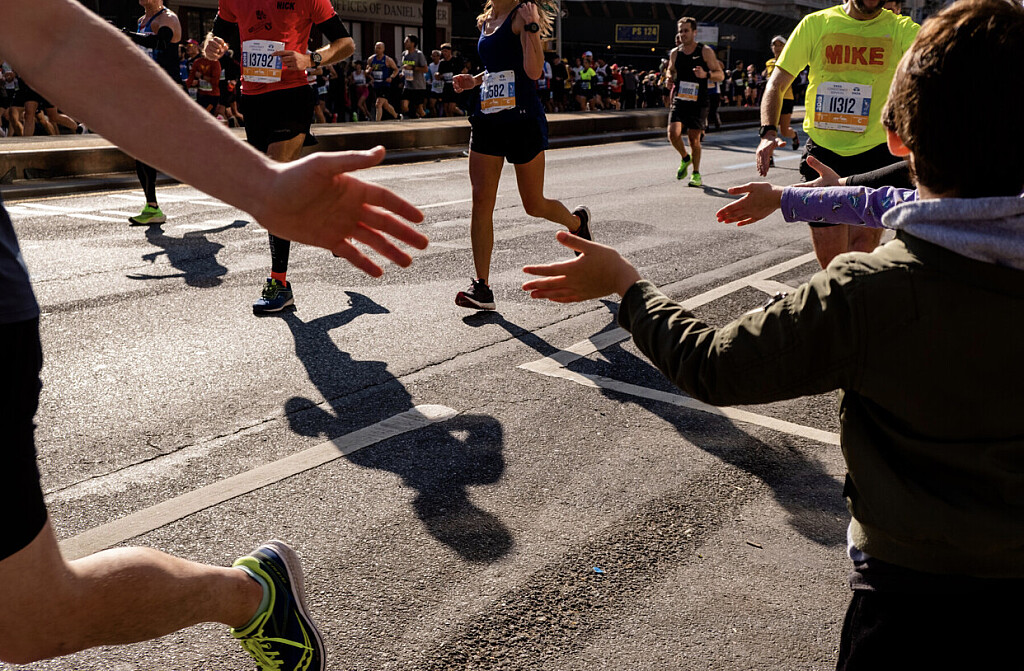
The Best Places to Watch the New York City Marathon
It has become the city’s biggest block party. Here’s where to cheer for the 30,000 runners in every borough.
By Ashley Wong
The New York City Marathon, one of the world’s largest marathons, is back. This year’s race will be smaller, with 30,000 runners instead of the usual 55,000. But it is expected to be a major, and emotional, milestone in New York’s recovery from the coronavirus pandemic.
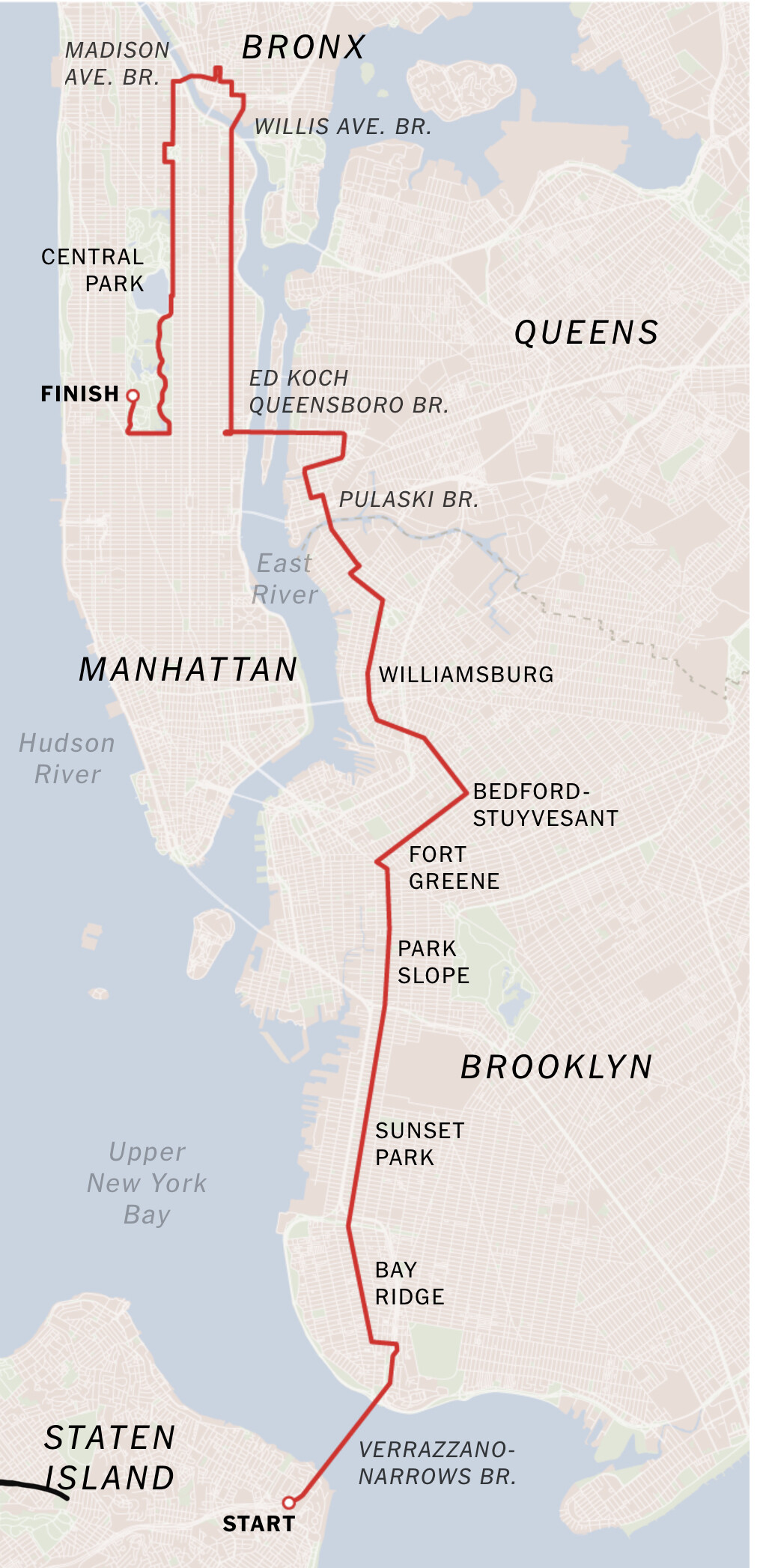
A big part of marathon Sunday is the crowd. Spectators dot the 26.2-mile course and keep tired runners motivated.
People who line the course and pull for the participants power the runners forward, Ted Metellus, the New York City Marathon race director, said.
“The single greatest thing in the world is navigating through this city, and every single person is cheering your name, every single person is excited to see you,” Metellus, a 15-time marathoner, said. “They are part of the participant’s journey and their story.”
Here’s a breakdown of the best places to watch the race in each borough:
Staten Island
It is nearly impossible to cheer in Staten Island, as marathoners spend most of their time there in the Fort Wadsworth start village before the cannon goes off on the Verrazzano-Narrows Bridge. But some New Yorkers put encouraging signs in their yards, just in case a bus shuttling runners passes by.
Brooklyn
One of the best places to spot runners also happens to be the first. Without any spectators at the start or along the Verrazzano-Narrows Bridge, the first two miles of the race are quiet. So participants are eager to see spectators along Fourth Avenue in Brooklyn, right after they exit the bridge. The closest subway stop is Bay Ridge-95th Street on the R line, and you can hop on and off the R train along Fourth Avenue to catch runners through Bay Ridge, Sunset Park and Park Slope.
If you’re looking for an easy transit option from across the city, go to the intersection of Fourth Avenue and Flatbush Avenue, served by the B, D, N, Q, R, 2, 3, 4 and 5 trains. Walk from there to Lafayette Avenue between Fulton Street and Bedford Avenue, where you’ll be treated to one of the best parties along the course. Expect to hear “Gonna Fly Now,” the theme from the movie “Rocky,” on loop.
You can catch runners at multiple points in Williamsburg and Greenpoint, along Bedford Avenue from Flatbush to Nassau Avenue. Take the L train to Bedford Avenue, the M or J train to Marcy Avenue or the G train to Nassau Avenue or Greenpoint Avenue.
Queens
About two miles of the race go through Queens. Catch runners as they exit the Pulaski Bridge on the Queens side, which is right around the race’s halfway mark. This is where some runners realize they are only halfway done, so a little extra energy can go a long way. You can take the 7 train to Hunters Point Avenue, Vernon Boulevard or Jackson Avenue, or the G train to 21st Street.
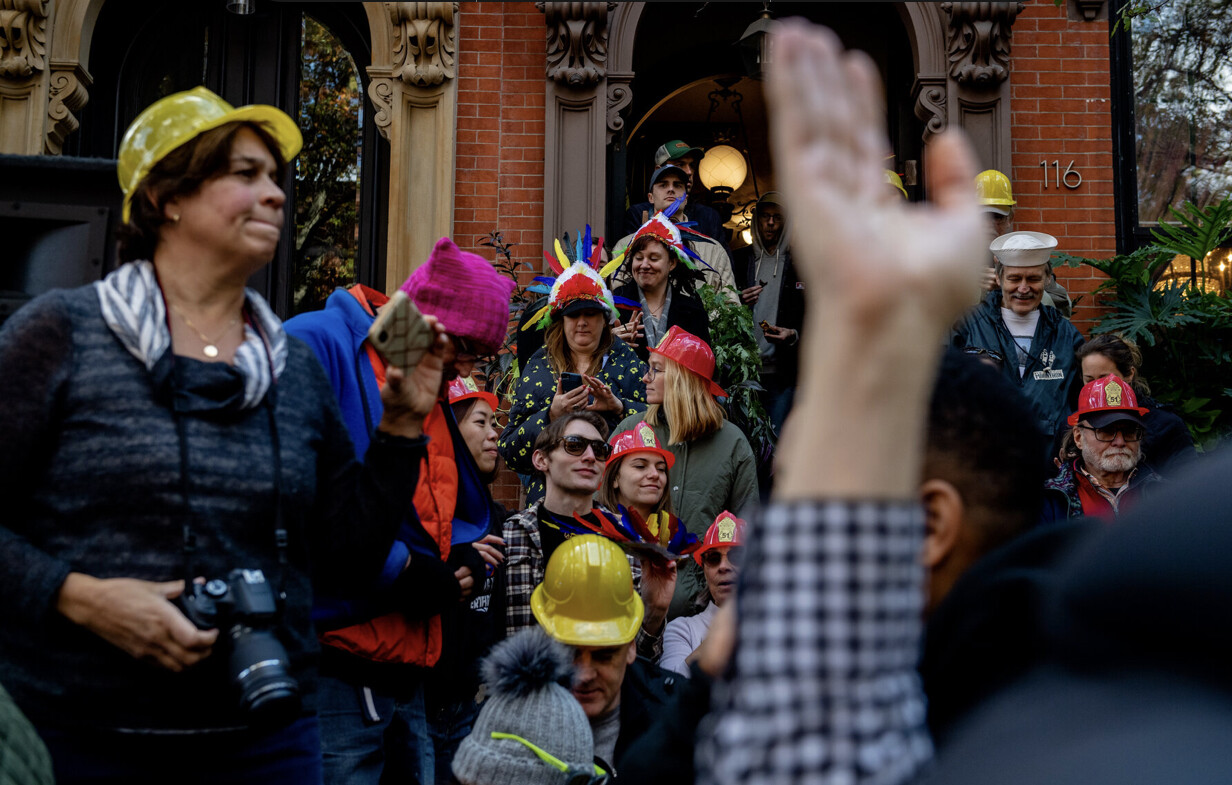
Bronx
Though the Bronx is one of the shortest stretches of the race — from Mile 19.5 to Mile 21 — it is also one of the best places to cheer. The race’s 20-mile mark, around 135th Street and Alexander Avenue, is a notoriously challenging part of the race where runners may hit the proverbial “wall.”
Many local running clubs set up there to ring cowbells and cheer, so it is guaranteed to be a boisterous spot for spectators and runners. Take the 6 line stopping at Brook Avenue or Third Avenue-138th Street, or the 4 and 5 lines to 138th Street-Grand Concourse.
One tip? Do not, under any circumstances, scream, “You’re almost there,” along this stretch. They are not, in fact, almost there.
Manhattan
The race moves through Manhattan twice — first coming out of Queens from East 59th Street to 125th Street (Mile 16 to 19.5), and then again heading out of the Bronx before ending in Central Park (Mile 21 to 26.2).
If you’re the kind of person who likes a crowd to cheer with, First Avenue from 59th Street to 96th Street in Manhattanis always lined with spectators, especially with all the bars and restaurants on this part of the course.
In East Harlem, catch the runners just before they head into their 20th mile anywhere along First Avenue from 110th Street to 125th Street, served at multiple points by the 6 subway line. The further north you go, the less crowded it is and the more needed your encouragement will be for the marathoners.
You can also catch runners just before they finish in Central Park at Fifth Avenue from East 105th to East 90th Street. This is a particularly iconic section of the race, dotted by museums on the east and bordered by Central Park on the west. Many train lines will take you here, including the 4, 5, 6 and Q lines.
And if you want to scream and shout as runners triumphantly cross the finish line, you can purchase tickets for the grandstand event at West 67th Street and West Drive.
by New York Times
Login to leave a comment
TCS New York City Marathon
The first New York City Marathon, organized in 1970 by Fred Lebow and Vince Chiappetta, was held entirely in Central Park. Of 127 entrants, only 55 men finished; the sole female entrant dropped out due to illness. Winners were given inexpensive wristwatches and recycled baseball and bowling trophies. The entry fee was $1 and the total event budget...
more...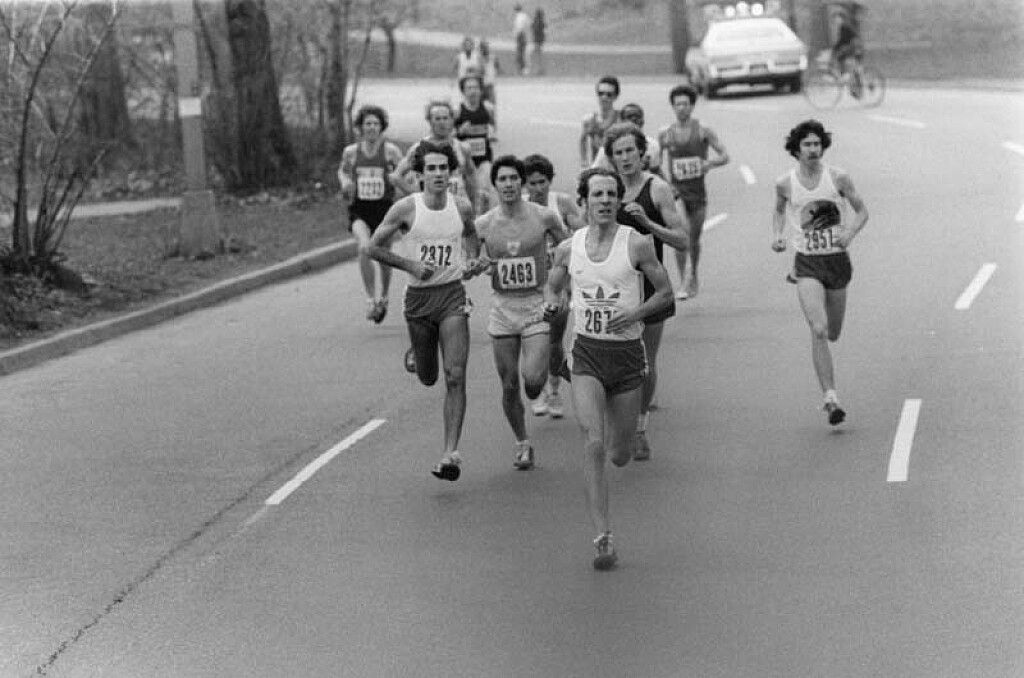
First Finishers from Inaugural 1970 Race will be honored at 50th Running of the TCS New York City Marathon this weekend
To mark the 50th running of the TCS New York City Marathon, several of the First Finishers from the inaugural 1970 race will be honored at the TCS New York City Marathon Opening Ceremony Presented by United Airlines on Friday, November 5, and at the Marathon finish line on Sunday, November 7.
The first New York City Marathon, organized by New York Road Runners, took place on September 13, 1970, in Central Park, with an entry fee of $1 and a budget of $1,000. Of the 127 registered runners, there were 55 finishers. The race ultimately expanded to all five boroughs in 1976. To date, the event has seen more than 1.2 million finishers.
“The TCS New York City Marathon has influenced and inspired so many people around the world for more than five decades, and to think it all started with 127 runners in Central Park is incredible,” said Ted Metellus, Vice President of Events for NYRR and Race Director of the TCS New York City Marathon. “We are honored to bring back some of the First Finishers from the 1970 race to have them with us on marathon day this year, and to honor them for being the first to take part in what has grown to become the world’s premier marathon.”
Former FDNY firefighter Gary Muhrcke was the first New York City Marathon champion, coming off the night shift at work to win the race. He still runs weekly in Central Park to this day, and his wife makes the laurels that the champions wear after their victories.
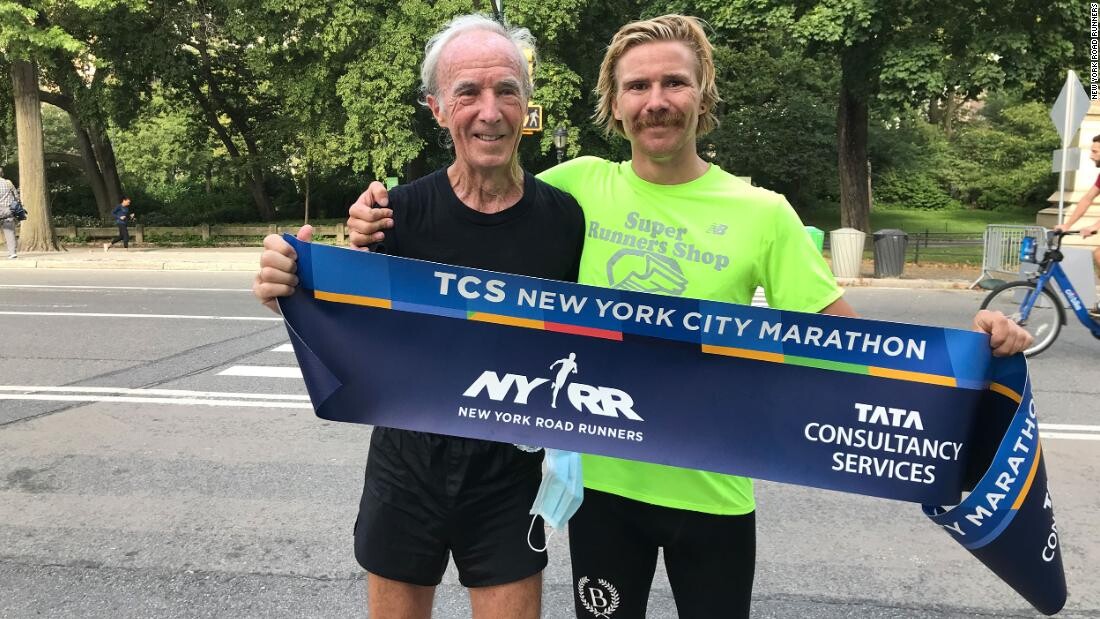
Larry Trachtenberg will be the sole runner from 1970 who will run in the 50th marathon. He was born and raised in Queens, and ran at Long Island City High School and regularly in Van Cortlandt Park, where he trained for the first marathon.
Joining Muhrcke and Trachtenberg in New York will be a number of other First Finishers from 1970, including:
· Arturo Montero – He came to the U.S. from Chile in 1960. He has run more than 100 marathons, 31 of them New York City Marathons (2016 being the last one). The 1970 race was his first marathon.
· Bill Newkirk – Born in the Bronx, he regularly ran around Central Park and met Fred Lebow during his runs. He has now participated in more than 20 marathons, including more than 10 New York City Marathons. He also helped NYRR by measuring courses with his friend, Ted Corbitt.
· Ed Ayres – After growing up in New Jersey, he ran the 1970 race with his brother, Glen; both of them finished in the top 10. He went on to start Running Times magazine.
· Gerald Miller – The oldest living First Finisher at 92 years old is originally from Queens and moved to the Upper West Side of Manhattan after he got married. He heard about the first marathon at the YMCA. He has run more than 20 New York City Marathons and got his whole family into running.
· Jim Isenberg – He grew up in Boston and has run in more than 100 marathons, including the New York City Marathon four times. He ran for Princeton University and is friends with Larry Trachtenberg, who told him about the first marathon. He was a professor of physics and mathematics at the University of Oregon.
· Joe Martino – He took his first trip to New York as a teenager with Rick Sherlund, sleeping on a mattress the evening before the marathon at the local YMCA. He also ran the marathon in 1978 and became friends with two-time winner Tom Fleming.
· Moses Mayfield – He was the fastest African American marathoner in history at the time with a time of 2:24:29; he led the 1970 marathon for 24 miles of the race before being passed by Muhrcke.
· Ralph Garfield – Originally, from England, he came to the U.S. in 1961 and would regularly run in Central Park on the Reservoir. He has run 14 marathons (eight New York City Marathons) and still jogs/walks to this day.
· Rick Sherlund – At 16 years old, one of the youngest runners of the first marathon, he traveled to NYC with his friend, Joe Martino, to participate in the marathon. He ran the first 20 miles and then had a cream soda before cramping and having to walk the last six miles.
· Steve Grotsky – Originally from the Bronx, he was a fixture in the New York running scene; he went on to run for Princeton University and completed 50 marathons.
· Tom Hollander – He ran the marathon after graduating from high school in Connecticut, and ran again in 1977. In 1972, he won the Cherry Tree Marathon.
· Vince Chiappetta – Along with Fred Lebow, he co-directed the first New York City Marathon and is a co-founder of NYRR. He has run in more than 100 marathons.
· Nina Kuscsik – She changed the sport of running by breaking through the “Boys’ Club” barrier and changing the rules so they included women. She opened doors for future generations. While she did not finish the race, she is the only woman among the 127 entrants who ran in the 1970 New York City Marathon.
About New York Road Runners (NYRR)
NYRR’s mission is to help and inspire people through running. Since 1958, New York Road Runners has grown from a local running club to the world’s premier community running organization. NYRR’s commitment to New York City’s five boroughs features races, virtual races, community events, free youth running initiatives and school programs, the NYRR RUNCENTER featuring the New Balance Run Hub, and training resources that provide hundreds of thousands of people each year with the motivation, know-how, and opportunity to Run for Life. NYRR’s premier event is the TCS New York City Marathon. Held annually on the first Sunday in November, the race features a wide population of runners, from the world’s top professional athletes to a vast range of competitive, recreational, and charity runners. To learn more, visit www.nyrr.org.
by Running USA
Login to leave a comment
TCS New York City Marathon
The first New York City Marathon, organized in 1970 by Fred Lebow and Vince Chiappetta, was held entirely in Central Park. Of 127 entrants, only 55 men finished; the sole female entrant dropped out due to illness. Winners were given inexpensive wristwatches and recycled baseball and bowling trophies. The entry fee was $1 and the total event budget...
more...
When Their Training Spot Got Turned Into a Vaccination Site, These National Champions Trained in Their School Hallways
The team from the Bronx normally trains at the Armory, which was converted to a COVID-19 vaccination site.
Less than a mile from Yankee Stadium in the Bronx sits Cardinal Hayes High School, an all-boys Catholic school that can now call itself track and field national champions. Earlier this month, the 4x200-meter relay team, anchored by Travis Williams, 18, won a national championship for the event and set a Hayward Field facility high school record of 1:26:36.
“This was a once-in-a-lifetime experience,” Tavon Williams, 18 (no relation to Travis), told Runner’s World. “I was walking around, looking at people run, knowing that Olympians ran on that track [at the U.S. Olympic Track and Field Trials in June]. My little brother came with me, and it was good to see him watch me medal and run fast.”
The team—coached by Cardinal Hayes alumnus, Craig Joseph—includes Jaavier Jackson, 17, Tavon Williams, 18, Jaden Barrett, 18, Travis Williams, 18, and alternate Kenneth Maxwell, 17.
→ Join Runner’s World+ to get the latest running news, training tips, and exclusive workouts!
The squad was up against the best high school runners in the world, and it wasn’t until the race’s second leg—Tavon—did the team start to smell victory.
“I realized we were going to win when I was seeing how Tavon was able to accelerate, put us into first place, and then maintain that position,” Jackson, who ran the first leg, told Runner’s World. “There were a lot of obstacles, but once I saw my teammates take over and extend, I felt a lot more confident.”
Travis called the moment he crossed the finish line in first place surreal.
“We accomplished a goal at the end of our season, and it was life-changing,” he told Runner’s World. “COVID struck [last year] and we had to make do with what we had. We did our best and came out national champs.”
To say that the COVID-19 pandemic put up roadblocks in every aspect of life would be an understatement. For the Cardinal Hayes track team, the pandemic took away not only the spring 2020 track season but also its winter training facility: the Armory in Washington Heights.
“We normally have access to the Armory twice a week, but this year, it was a vaccination center and it wasn’t available,” Joseph says.
So, the team took to the hallways of the high school.
The workouts varied—30, 60, 200-meter sprints—but were limited by the length of the halls, sharp turns, and slippery surfaces.
“Sometimes we’d get crazy and run 350s [meters],” Travis says. “We’d do anything we could with the little space we’ve got, but it was really hard to run around the curves at our speed.”
Not to mention, the toll running on hallway surfaces can take on the body.
“Being in the hallways four to five days a week was very challenging,” Joseph says. “We had to manage contact time.”
Plus, Maxwell says, sprinting in a hallway doesn’t translate to a track. But there weren’t other options in the northeast winter.
With a national championship under its belt, the Cardinal Hayes track team is already looking ahead to the next season. Three of the five team members—Barrett, Travis, and Maxwell—will attend college this fall. Barrett will play wide receiver at Wagner College on a football scholarship, Travis will run track at the University of Albany, and Maxwell will run track at Fordham University.
That leaves room for up-and-comers to defend the 4x200-meter title.
But Joseph, who’s been coaching at Cardinal Hayes for 17 years, knows nothing is guaranteed.
“Every year I go into the season with my seniors and say, “It’s your turn. The bar was set last year. How high are you going to raise it?’” Joseph told Runner’s World. “Well, this is a pretty high bar. You can’t go any higher. So next year, we’ll come in and set the bar again. The standard has to be to continue to elevate.”
His athletes know this.
“They’re looking at us. Like, we up there now. We’re number one in the nation,” Tavon said. “Hopefully we go back for another one.”
by Runner’s World
Login to leave a comment
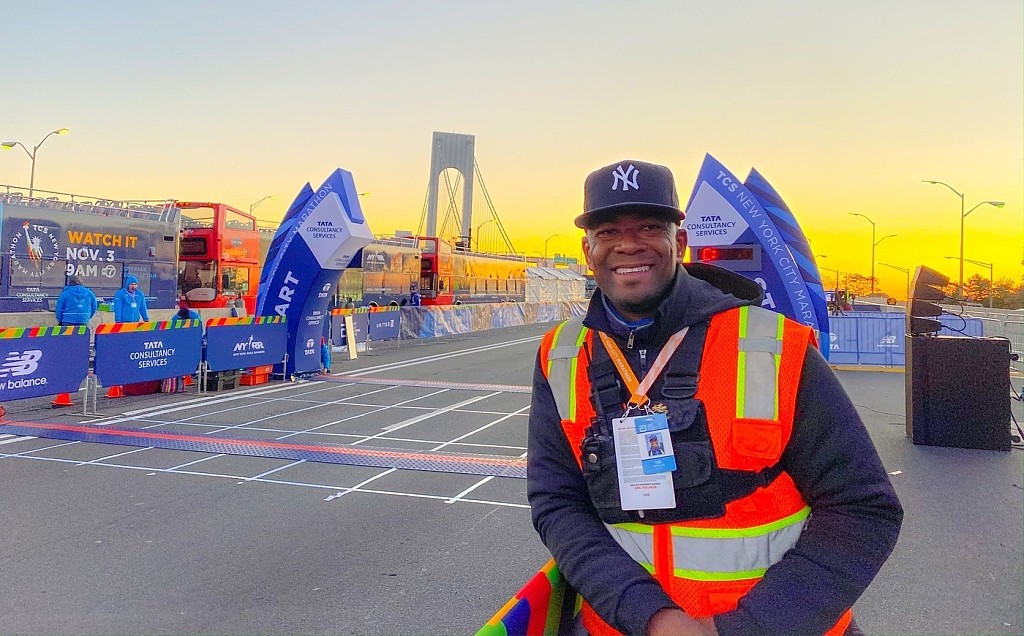
Ted Metellus has been named race director of TCS New York City Marathon
Ted Metellus has been named the race director of the TCS New York City Marathon, making him the first Black race director of any of the Abbott World Marathon Majors races.
The announcement from New York Road Runners comes on the heels of large-scale allegations of sexism and racism by current and former employees, first made in the fall of 2020. Jim Heim, the marathon's race director for the past 13 years, along with others in leadership roles, stepped down in January.
"For me in this position, it will shed a tremendous light on the talent that's out there, the ability that is out there, the chance that you may be opening up the doors for [somebody]," said Metellus.
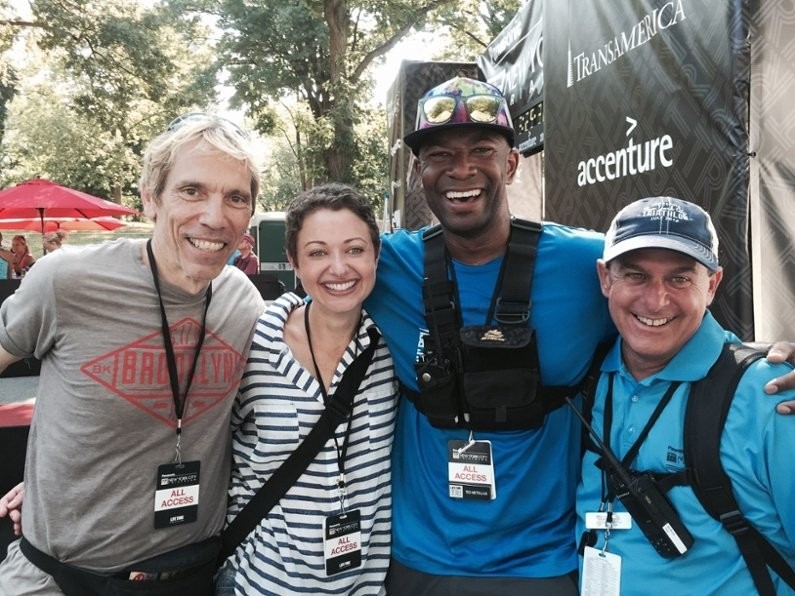
Metellus, 47, is being promoted from vice president of events at NYRR, an organization he has worked with since 2001. He grew up running in New York City.
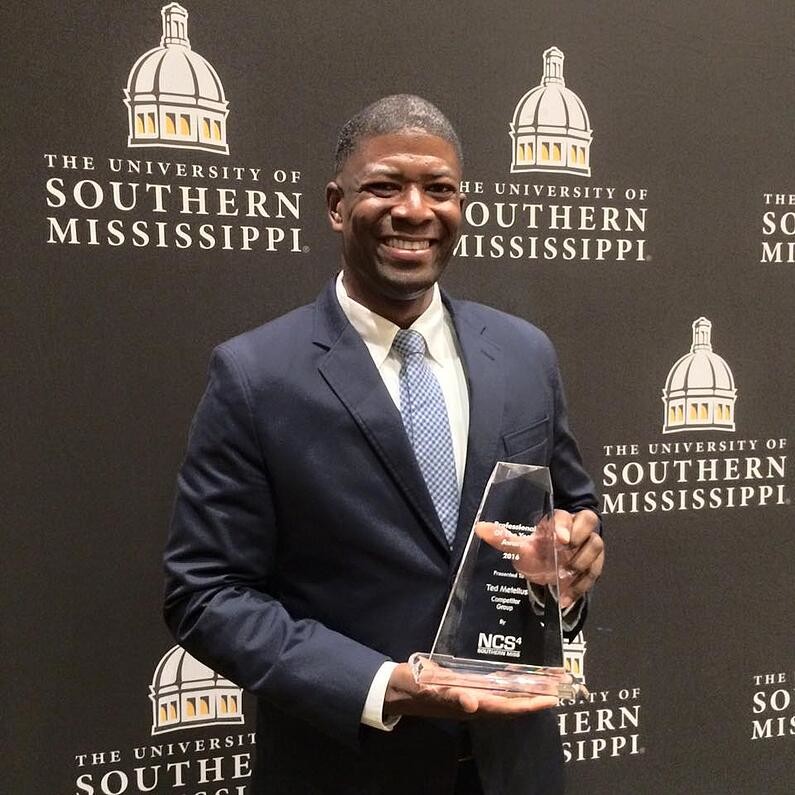
"Being born and raised in the Bronx, my mom was a maid and my dad was a janitor -- blue collar, hard workers," he said. "Organized sports wasn't something that was available to us, but when I was really young, everybody wanted to be the fastest kid on the block."
In high school, he joined the cross country and track teams, and even though he was one of the slowest members ("It was painful," he said), he loved running, and he loved bringing runners together. That led him to work on organizing large-scale events like Ironman, Rock 'n' Roll Marathons and the NYC Marathon.
"When people ask me, 'How do I get people to join and be a part of my team? How do I invite them in?' I say, 'No, no, no, you don't invite them in, you go to them,'" Metellus said.
Metellus is taking over as race director at a time when the coronavirus pandemic has ravaged the running industry, causing cancellations of almost all major races worldwide in 2020. NYRR canceled all in-person races from March until the end of September, and the 2020 NYC Marathon was held virtually. This November, the hope is to have a safe in-person marathon with strict COVID-19 guidelines.
"The legacy I'd like to leave behind is for us to have a safe and enjoyable marathon this November -- because I know that's going to be a moment that people look back at, just like in 2001 when we had a marathon two months after 9/11 ... There will be moments in the history of running and even beyond when people will look back and say, 'What happened when...' and 'Who was the director when ..." and what were some of the takeaways from that and how we can use that moving forward."
Metellus hopes that his role helps create new opportunities for others as well.
"At the end of the day, what I would like is not to be the first and last. Who else am I opening up the doors for? When I look at the industry right now, who's going to be the next person and how do I lay the groundwork for them," he said.
by Aishwarya Kumar
Login to leave a comment
TCS New York City Marathon
The first New York City Marathon, organized in 1970 by Fred Lebow and Vince Chiappetta, was held entirely in Central Park. Of 127 entrants, only 55 men finished; the sole female entrant dropped out due to illness. Winners were given inexpensive wristwatches and recycled baseball and bowling trophies. The entry fee was $1 and the total event budget...
more...
Nike’s Investigation of the Oregon Project is Complete
After Mary Cain alleged emotional abuse as an athlete under Alberto Salazar’s coaching, Nike conducted an internal probe of the professional running group.
Nike said on Monday that it is planning to take multiple actions to better support its female professional athletes, following an internal investigation into the now-defunct professional running group, the Oregon Project.
The company started the probe in November after former Oregon Project athlete Mary Cain went public with a New York Times op-ed piece about her experiences as a young track star under coach Alberto Salazar, who is currently serving a four-year ban from the sport for doping violations. (Salazar denies the charges and is appealing them—Nike said in an email to Women’s Running on Monday that “we support Alberto in his decision to appeal and wish him the full measure of due process that the rules require.”)
Cain joined the Oregon Project as a teen phenom, foregoing NCAA eligibility in 2013 to sign a pro contract with Nike. She moved from Bronxville, New York, to Portland, Oregon, at age 17, as a national high school record holder—the youngest athlete to ever represent the U.S. in a world-championships competition, where she raced the 1500 meters.
In the documentary, titled “I Was the Fastest Girl in America, Until I Joined Nike,” she described the pressure that Salazar and the all-male Oregon Project staff put on her to become thinner in order to perform better. Cain said she was weighed in front of her teammates and publicly shamed by Salazar for not hitting the goals he demanded—allegations that were later corroborated by former members of the group.
Now 23 years old, Cain said while training with the Oregon Project and during a period afterward, she suffered five stress fractures and didn’t menstruate for three years, which are symptoms of RED-S (relative energy deficiency in sport), a syndrome of insufficient caloric intake, with symptoms that can include excessive fatigue, amenorrhea, and decreased bone density. It can have serious long-term health effects like cardiovascular disease, infertility, and osteoporosis. Before she left Oregon to return home in 2015, she said she felt so isolated and trapped that she had suicidal thoughts and cut herself.
After the New York Times piece was published, Salazar denied any abuse or gender discrimination at the Oregon Project and added, “I may have made comments that were callous or insensitive over the course of years of helping my athletes through hard training.”
In the email to Women’s Running on Monday, Nike said the results of the internal investigation will not be made public, but “we are using the findings to identify areas where we can do better in supporting female athletes.” It was not confirmed who was involved in leading the investigation or who participated in it.
The initiatives that Nike identified include:
• Investing in scientific research into the impact of elite athlete training of girls and women
• Increasing the number of women coaches in sports
• Hiring a vice president of global women’s sports marketing in the coming weeks to have “strategic oversight” of Nike’s female athletes
• Creating an athlete think tank to help the company understand the opportunities and challenges faced by female athletes
• Partnering with Crisis Text Line, a free, confidential text messaging service for people to ask for help when in crisis
During a phone interview with Women’s Running on Monday, Cain said she was contacted in the fall by phone and email by a Nike lawyer, but opted not to participate in the probe because some of the people involved were Nike employees whose participation in it made her feel uncomfortable.
“There was no real transparency in the process, so I became very frustrated with the fact that there was no clear-cut person in charge, it was Nike investigating Nike, and seemingly some of the people involved in the process were investigating themselves,” she said.
Upon hearing the actions that Nike—the biggest sponsor of the sport’s governing body, U.S.A. Track & Field (a deal that goes through 2040 with an estimated value of $500 million)—wants to take as a result of the findings, Cain said she supports anything that promotes women’s health and opportunities in sports.
“It’s great to push money and push opportunity into the future—I whole-heartedly support that,” she said. “But the vagueness and no ability to see the report makes me worried that they’re hiding behind gestures that will almost make people forget the issues.”
Runners and other athletes have identified with Cain’s experiences since she shared them, creating a public conversation about the destructive culture underlying sports, where antiquated training philosophies perpetuated by a male-dominated coaching profession often result in eating disorders and worse for athletes.
“I have this renewed love of the sport that I only really found in the last few months because I do have so much hope in what women’s sports can and will become—so anything that’s generating interest and investment and research, I’m all for,” Cain said. “What I hope can happen through some of this work is that Nike can start hearing more voices.”
Still, Cain is hesitant to put too much stock in the proposed initiatives.
“It looks both weak and cowardly that as a corporation they won’t release what they found,” she said. “There’s a certain point where people would have a lot more respect for them as a broader institution and respect what they’re now trying to do if they also admitted what they did wrong. I can’t look at a future brightly if I can’t see them reflecting on their past.”
Since November, Cain has returned to training after about three years away, with the goal of making the U.S. Olympic Track & Field Trials in June. She most recently raced the 3,000 meters on Saturday at the Armory in New York, finishing in 9:24.38.
In December, she told Women’s Running that advocating for women’s sports and healthy coaching practices is her new dream.
“Due to lack of education and inappropriate societal norms, many people have a poor understanding of how to address topics such as women’s cycles, weight, and training appropriately,” Cain said. “My goal is now to create educational programs that coaches and athletes must take on these subjects.”
Login to leave a comment
Mary Cain says that she Was the Fastest Girl in America, Until she Joined Nike
Mary Cain’s male coaches were convinced she had to get “thinner, and thinner, and thinner.” Then her body started breaking down.
At 17, Mary Cain was already a record-breaking phenom: the fastest girl in a generation.
While attending high school in Bronxville, New York, she set the high school freshman 1500-meter record of 4:17.84 in 2011. The teen went on to run 1:59.51 for 800 meters and 4:04.62 for 1500 meters outdoors, as well as 4:24:11 for one mile and 9:38.68 for two miles indoors, and set numerous high school records at the state and national level.
Then in August 2013, at age 17, she became the youngest runner in history to make the 1500-meter final at the IAAF World Championships, which she finished 10th in.
In 2013, she was signed by the best track team in the world, Nike’s Oregon Project, run by its star coach Alberto Salazar.
Then everything collapsed. Her fall was just as spectacular as her rise.
Instead of becoming a symbol of girls’ unlimited potential in sports, Cain became yet another standout young athlete who got beaten down by a win-at-all-costs culture. Girls like Cain become damaged goods and fade away. We rarely hear what happened to them. We move on.
The problem is so common it affected the only other female athlete featured in the last Nike video ad Cain appeared in, the figure skater Gracie Gold. When the ad came out in 2014, like Cain, Gold was a prodigy considered talented enough to win a gold medal at the next Olympics. And, like Cain, Gold got caught in a system where she was compelled to become thinner and thinner. Gold developed disordered eating to the point of imagining taking her life.
Nike has come under fire in recent months for doping charges involving Salazar. He is now banned from the sport for four years, and his elite Nike team has been dismantled. In October, Nike’s chief executive resigned. (In an email, Salazar denied many of Cain’s claims, and said he had supported her health and welfare. Nike did not respond to a request for comment.)
The culture that created Salazar remains.
Kara Goucher, an Olympic distance runner who trained with the same program under Salazar until 2011, said she experienced a similar environment, with teammates weighed in front of one another.
“When you’re training in a program like this, you’re constantly reminded how lucky you are to be there, how anyone would want to be there, and it’s this weird feeling of, ‘Well, then, I can’t leave it. Who am I without it?’” Goucher said. “When someone proposes something you don’t want to do, whether it’s weight loss or drugs, you wonder, ‘Is this what it takes? Maybe it is, and I don’t want to have regrets.’ Your careers are so short. You are desperate. You want to capitalize on your career, but you’re not sure at what cost.”
She said that after being cooked meager meals by an assistant coach, she often had to eat more in the privacy of her condo room, nervous he would hear her open the wrappers of the energy bars she had there.
A big part of this problem is that women and girls are being forced to meet athletic standards that are based on how men and boys develop. If you try to make a girl fit a boy’s development timeline, her body is at risk of breaking down. That is what happened to Cain.
After months of dieting and frustration, Cain found herself choosing between training with the best team in the world, or potentially developing osteoporosis or even infertility. She lost her period for three years and broke five bones. She went from being a once-in-a-generation Olympic hopeful to having suicidal thoughts.
“America loves a good child prodigy story, and business is ready and waiting to exploit that story, especially when it comes to girls,” said Lauren Fleshman, who ran for Nike until 2012.
“When you have these kinds of good girls, girls who are good at following directions to the point of excelling, you’ll find a system that’s happy to take them. And it’s rife with abuse.”
We don’t typically hear from the casualties of these systems — the girls who tried to make their way in this system until their bodies broke down and they left the sport. It’s easier to focus on bright new stars, while forgetting about those who faded away. We fetishize the rising athletes, but we don’t protect them. And if they fail to pull off what we expect them to, we abandon them.
Mary Cain is 23, and her story certainly isn’t over. By speaking out, she’s making sure of that.
by Lindsay Crouse (New York Times)
Login to leave a comment
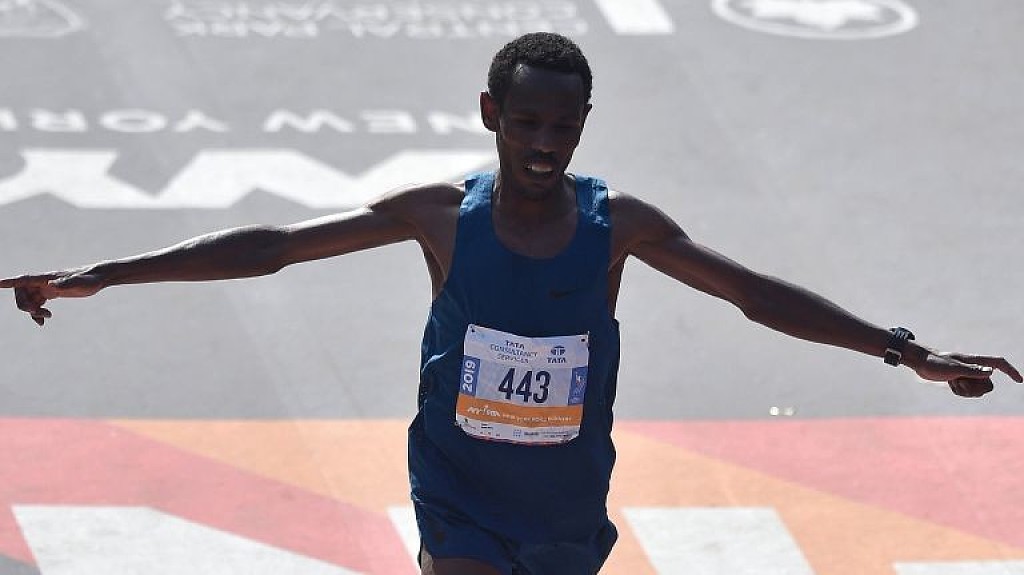
Unknown Ethiopian Girma Bekele Gebre did not start with the elite runners at NYC Marathon on Sunday, but took third place
An unsponsored Ethiopian from the open field took third place. Girma Bekele Gebre did not start with the elite runners, but still placed.
After the race, Gebre looked somewhat bewildered standing there next to two of the most decorated distance runners in the world. He has no agent, flew to New York from Ethiopia a few days before the race and stayed with a friend in the Bronx. He won $40,000.
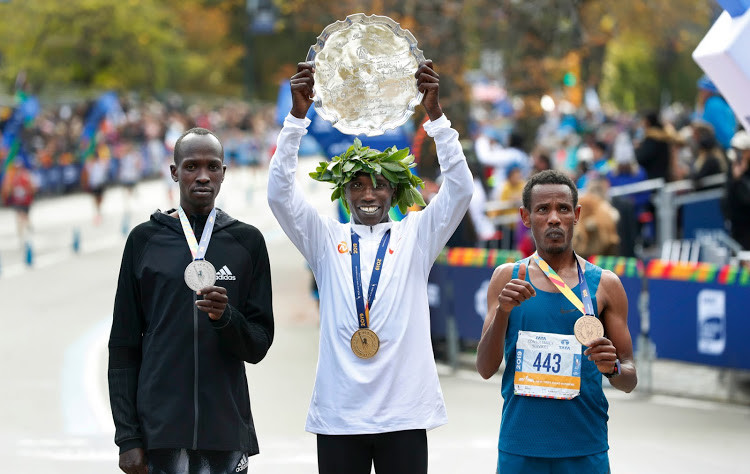
“I started back in the second group, and just ran really fast to catch up,” he said through an interpreter. “I love running in New York. When the crowds were cheering for me, I felt really special joy.”
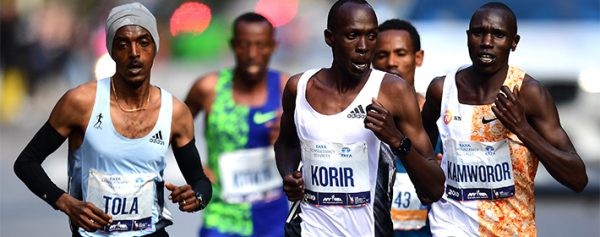
Gebre had been living in New York, but returned to Ethiopia in the spring when one of his brothers died while working on their farm.
Login to leave a comment
TCS New York City Marathon
The first New York City Marathon, organized in 1970 by Fred Lebow and Vince Chiappetta, was held entirely in Central Park. Of 127 entrants, only 55 men finished; the sole female entrant dropped out due to illness. Winners were given inexpensive wristwatches and recycled baseball and bowling trophies. The entry fee was $1 and the total event budget...
more...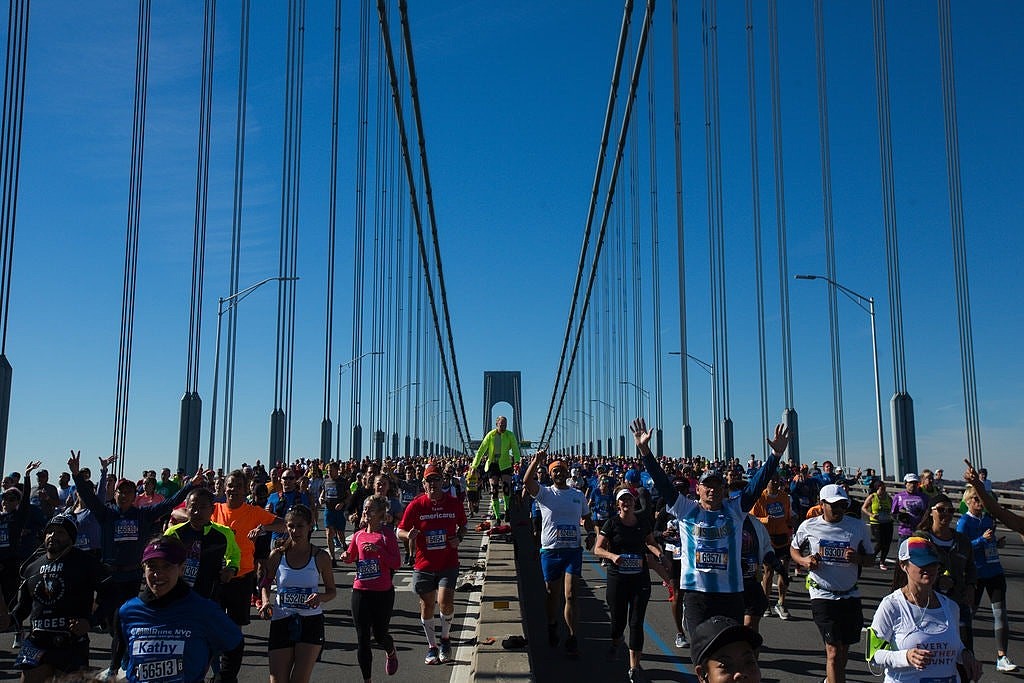
The Best Places to Watch the New York City Marathon
With 26.2 miles stretching across the five boroughs, the marathon route provides no shortage of spots to root on fatigued runners. Here’s a guide to the top places.
The places where runners need you most
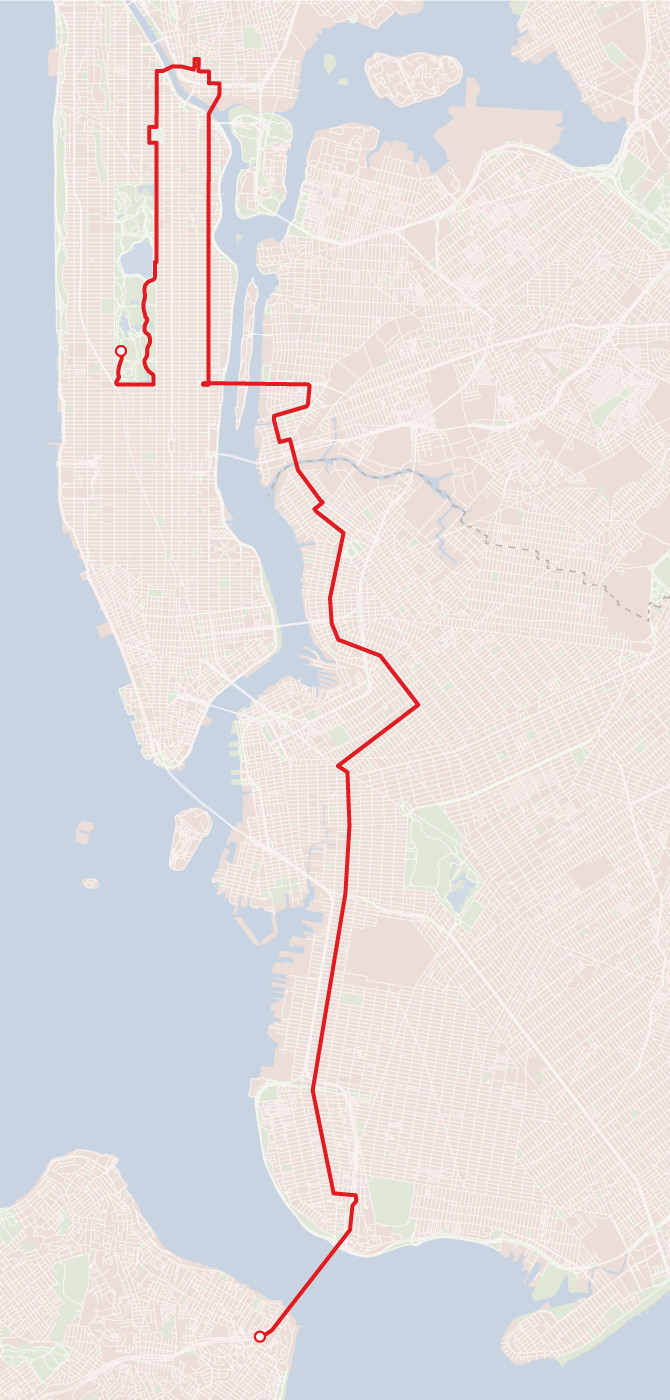
The New York City course is set apart from other marathons in part because of the five bridges that carry runners between boroughs. The bridges are deceivingly tough hills, made trickier by their exposure to the wind and, because they are devoid of spectators, their relative silence.
So, when runners get back on land, it helps to have a boost from a raucous crowd.
“Between the solitude and the challenge that a bridge brings, getting to the other side and seeing people or hearing people cheer is really special,” Mr. Capiraso said.
That support is particularly crucial toward the start of the race, after runners descend from the Verrazzano-Narrows Bridge and head onto Fourth Avenue in Bay Ridge, Brooklyn.
At that point, runners will have completed a two-mile stretch including a steep hill. By cheering there, you’ll keep them buoyant in the face of the daunting miles ahead.
“The Verrazzano bridge is beautiful and iconic, but there aren’t people cheering on it,” Mr. Capiraso said. “So, when you get to Brooklyn, it’s a great cheering zone.”
If you want to be particularly inspiring, travel toward the 20-mile mark, where marathon runners often experience “the wall,” a challenging period when energy wanes.
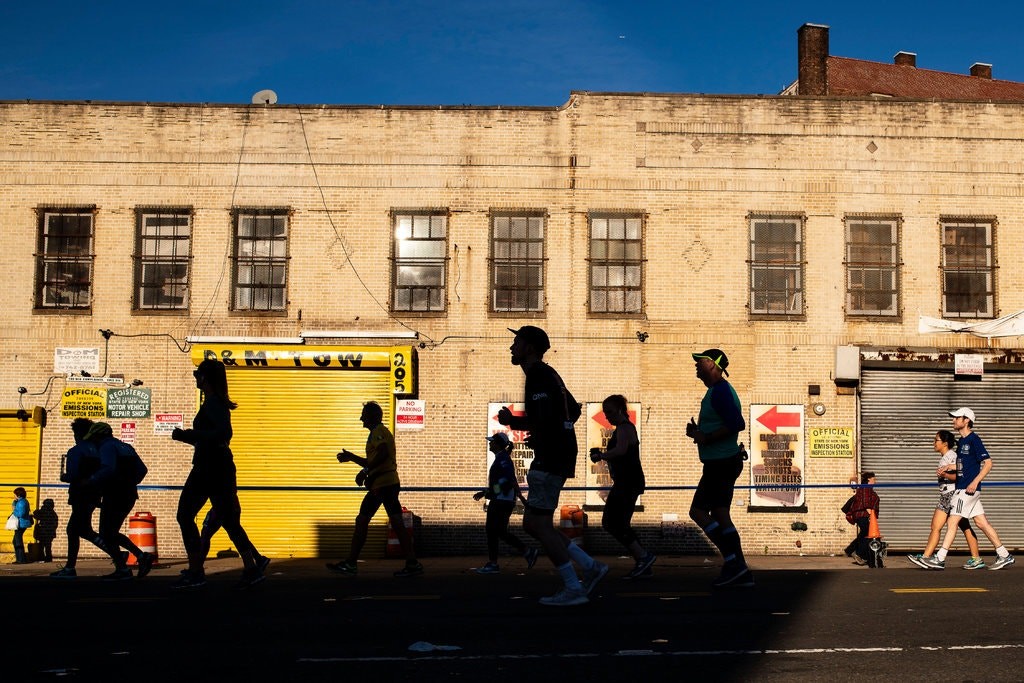
To help racers push through, head toward East 138th Street in the Bronx, a relatively short stretch of the race, or to Marcus Garvey Park in Harlem, which runners divert around before heading down Fifth Avenue toward the finish line.
Both locations also tend to be less crowded than the miles that follow, making it more likely that you’ll see a particular runner you’re pulling for.The places where the party is
The streets of New York are always lively, but the marathon brings a particularly energetic atmosphere. People crowd the sidewalks with signs, ring bells for hours and play music for both the runners and the crowd.
st Church, where congregants spill out of morning services to serenade marathon participants.
In the second half of the course, runners are met with another burst of sound on First Avenue in Manhattan, between 59th and 96th Streets.
Near 59th Street, marathoners who just finished scaling a challenging and quiet hill on the Queensboro Bridge are greeted with a cacophony of people screaming at runners, clanging noisemakers and banging drums.
The sidewalks here are generally clogged (though they thin out as the race heads uptown). But the energy is so high that it can carry runners as some of them start to hit the wall.
The places where you won’t have to log too many miles
For many city residents, the race winds through their neighborhoods. If you’re one of them, consider staying put.
“If the marathon runs through your neighborhood, your local place is always great,” Mr. Capiraso said. “Because you know the area, and you’ll know the people around.”
The course also has a number of subway stations along the route, a boon for those who need to travel to spots on the course. Notably, the R train runs under the course on Fourth Avenue in Brooklyn, which makes for easy spectating in an early stretch where runners are still plenty enthused.
The sidewalks nearest to subway stations, however, tend to be the most crowded. So, if you’re trying to see a specific runner at a specific spot, give yourself extra time to get settled.
You’ll also want to check with runners about their start time. The first athletes cross the start line at 8:30 a.m., but the last wave of runners won’t begin the race until 11 a.m.
Login to leave a comment
TCS New York City Marathon
The first New York City Marathon, organized in 1970 by Fred Lebow and Vince Chiappetta, was held entirely in Central Park. Of 127 entrants, only 55 men finished; the sole female entrant dropped out due to illness. Winners were given inexpensive wristwatches and recycled baseball and bowling trophies. The entry fee was $1 and the total event budget...
more...
Allan Weitzman, 70, will be running his 11th NYC Marathon with his 11 nieces and nephews
This race should be a ‘relative’ breeze.
When 70-year-old Allan Weitzman runs in his 11th New York City marathon this Sunday he’ll have plenty of very familiar faces competing alongside him — nearly a dozen of his nephews and nieces, who agreed to lace up to honor their ailing aunt, The Post has learned.
It was the brave way Weitzman’s wife Regina, 67, has dealt with her lupus over the last 22 years that inspired the couple’s 11 relatives to run the big race.
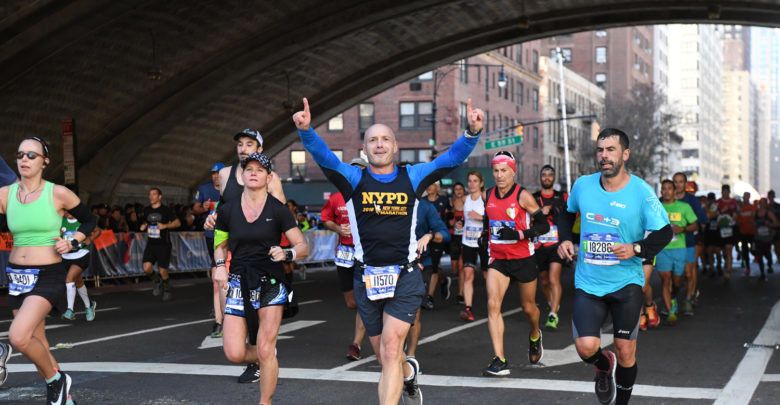
“All our nieces and nephews who’ve spent time with Regina think she’s a hero,” Allan said.
“She’s been a role model as somebody who lives with hope, with a smile on her face all the time and the belief of the miracle that one day there will be life without lupus.”
Regina was diagnosed in 1997 with the inflammatory disease, that causes the immune system to attack its own tissues. Since then, she’s had had to deal with daily fatigue, muscle aches and joint pains, as well as blood clots, seizures and regular trips to doctors and hospitals.
But “she’s never played the victim card, never complained, never says ‘why me?'” Allan said.
When Allan ran his last marathon in 2014, to raise money for lupus research, one of his nephews told him he wanted to be included in the next race and, “we grew from two to three and all of a sudden there were 12 of us.”
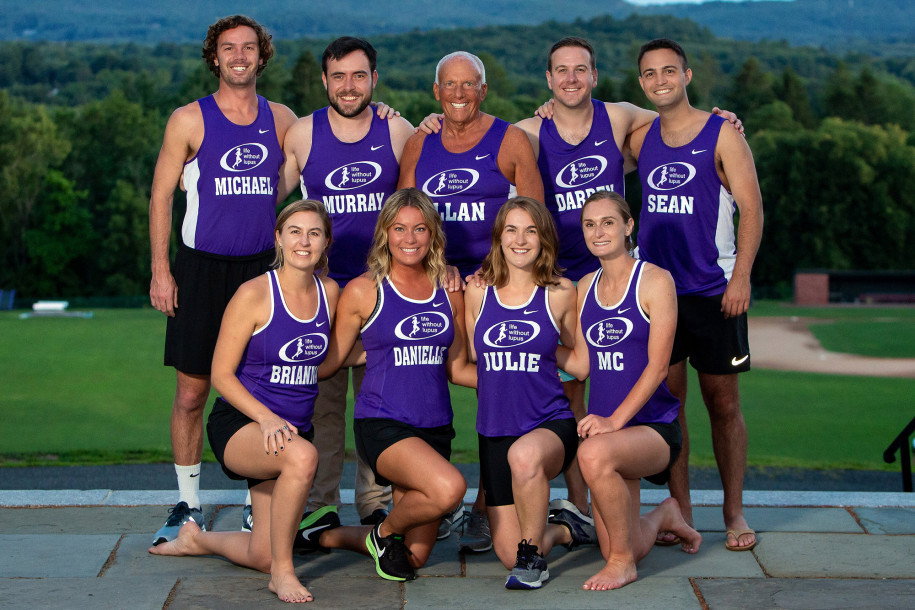
The group — nine nieces and nephews and two of their partners — range in age from late 20s to early 30s. Three live in New York and the rest are coming from as near as Boston and Jacksonville to as far as Finland.
None of them had ever attempted a marathon when they signed up, and some had never seriously run at all.
Over the last year, they’ve all trained virtually on a group chat where they encourage each other with photos and videos, provide updates on their progress, give and receive tips and discuss how to treat aches and pains.
“We’ve all been comparing notes [and] I think they’re ready,” said Allan, by far the most experienced runner in the group.
The retired attorney ran his first eight New York City Marathons in the 1980s and 90s when he and Bronx-born Regina lived on the Upper East Side.
The couple — who met on a blind date at the Waldorf Astoria and wed a year to the day later in 1984 — moved to Boca Raton, Fla., in 1994. Allan, who is originally from Baltimore ran the marathon again in 2013 and 2014.
Every time he’s raced, Regina cheers him on from 69th Street and 1st Ave — and Allan pauses to give her a kiss.
“I’m not worried about time, she deserves a hug and kiss,” Allan said. “Every day I have Regina, I’m a lucky guy.”
by Tamar Lapin
Login to leave a comment
TCS New York City Marathon
The first New York City Marathon, organized in 1970 by Fred Lebow and Vince Chiappetta, was held entirely in Central Park. Of 127 entrants, only 55 men finished; the sole female entrant dropped out due to illness. Winners were given inexpensive wristwatches and recycled baseball and bowling trophies. The entry fee was $1 and the total event budget...
more...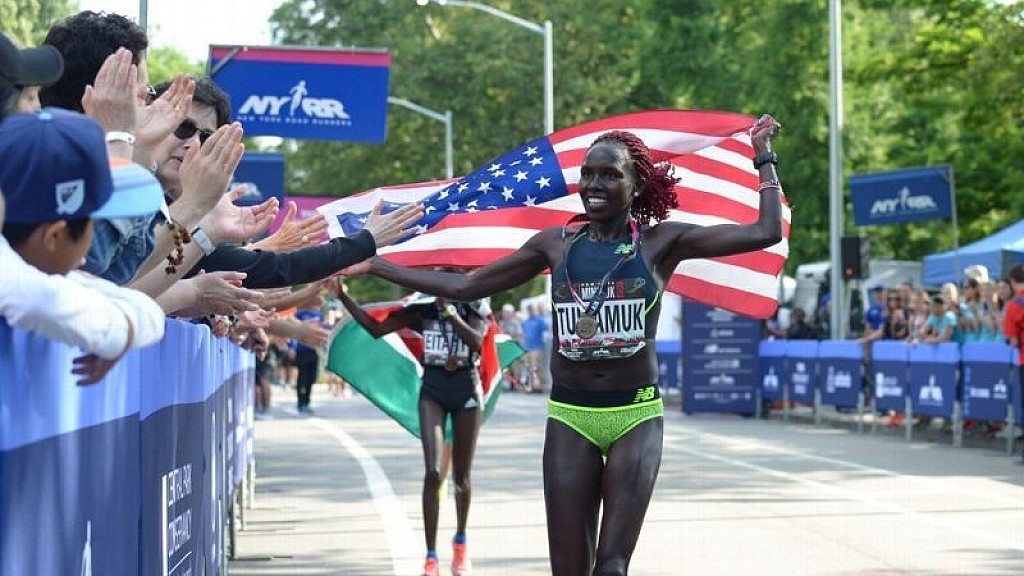
Nine-time U.S. champion Aliphine Tuliamuk has been added to the 2019 TCS New York City Marathon
Aliphine Tuliamuk will race her second TCS New York City Marathon and has had previous success in Central Park with three consecutive podium finishes at the 2016, 2017, and 2018 NYRR New York Mini 10K.
Earlier this year, she finished third at the Rotterdam Marathon in 2:26:48, becoming the first American woman to hit the Olympic qualifying standard for the Tokyo Olympic Games.
Ethiopia’s Worknesh Degefa, winner of the 2019 Boston Marathon, has scratched from the 2019 TCS New York City Marathon after suffering from metatarsalgia in her left foot which caused her to lose too much training time.
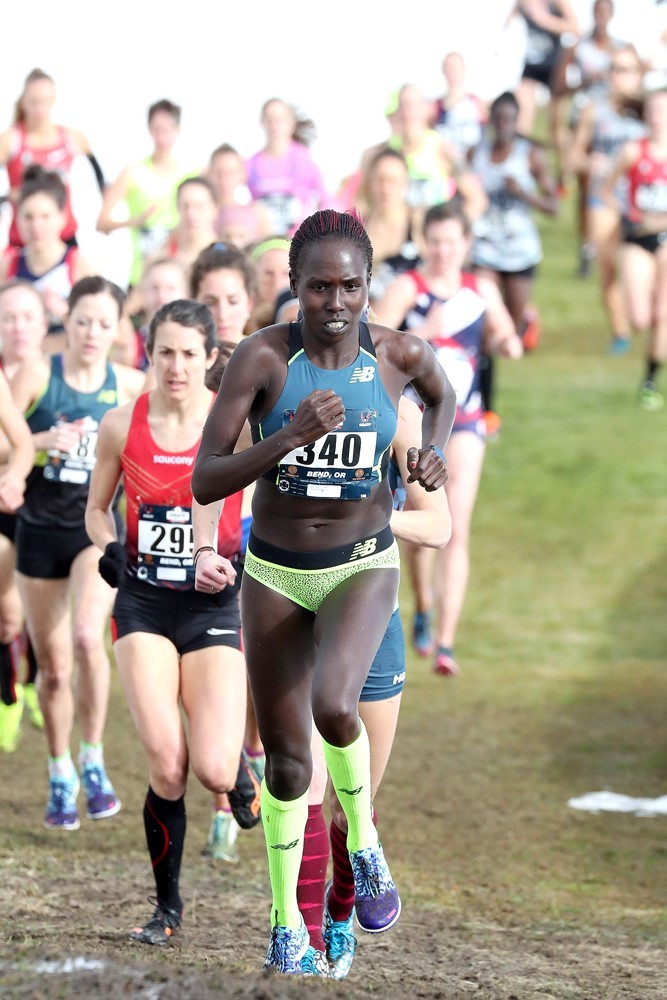
This year’s professional athlete field will include all four previously announced defending champions: Kenya’s Mary Keitany, Ethiopia’s Lelisa Desisa, the United States’ Daniel Romanchuk, and Switzerland’s Manuela Schär. Keitany will go for her fifth career title in New York, Schär will race for her third consecutive crown, and Desisa and Romanchuk will look to post back-to-back victories.
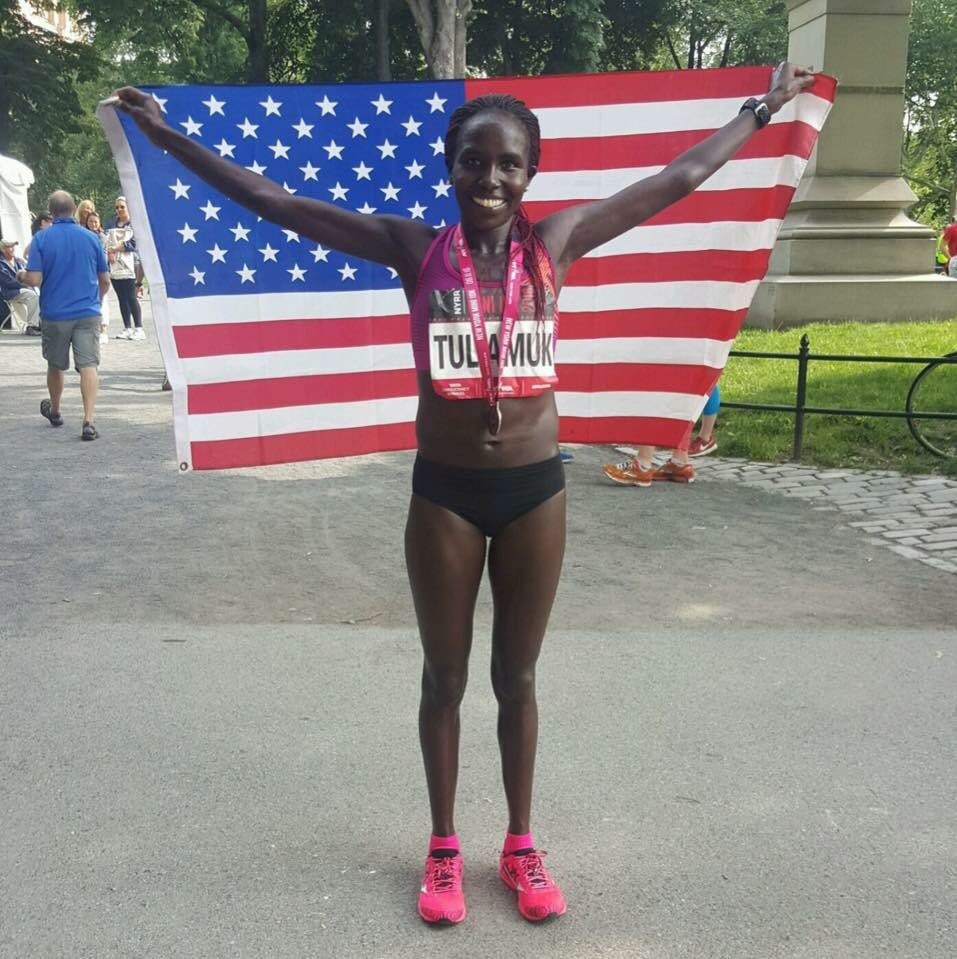
In total, 13 Olympians and 18 Paralympians will toe the line, including Rio 2016 U.S. Olympians Des Linden and Jared Ward and 17-time U.S. Paralympic medalist Tatyana McFadden.
The 2019 TCS New York City Marathon will be televised live on Sunday, November 3, on WABC-TV, Channel 7 in the New York tristate area, throughout the rest of the nation on ESPN2, and around the world through various international broadcasters.
The TCS New York City Marathon is the largest marathon in the world and the signature event of New York Road Runners (NYRR), the world’s premier community running organization.
The race is held annually on the first Sunday of November and includes over 50,000 runners, from the world’s top professional athletes to runners of all ages and abilities, including over 9,000 charity runners. Participants from over 125 countries tour the diverse neighborhoods of New York City’s five boroughs—Staten Island, Brooklyn, Queens, the Bronx, and Manhattan. Race morning also features the Rising New York Road Runners Youth Invitational at the TCS New York City Marathon, a race within Central Park that ends at the marathon finish line.
More than one million spectators and 10,000 volunteers line the city’s streets in support of the runners, while millions more watch the globally televised broadcast. The race is a founding member of the Abbott World Marathon Majors, which features the world’s top marathons—Tokyo, Boston, London, Berlin, Chicago, and New York. Tata Consultancy Services (TCS), a leading global IT services, consulting, and business solutions organization, is the premier partner of NYRR and the title sponsor of the TCS New York City Marathon.
Login to leave a comment
TCS New York City Marathon
The first New York City Marathon, organized in 1970 by Fred Lebow and Vince Chiappetta, was held entirely in Central Park. Of 127 entrants, only 55 men finished; the sole female entrant dropped out due to illness. Winners were given inexpensive wristwatches and recycled baseball and bowling trophies. The entry fee was $1 and the total event budget...
more...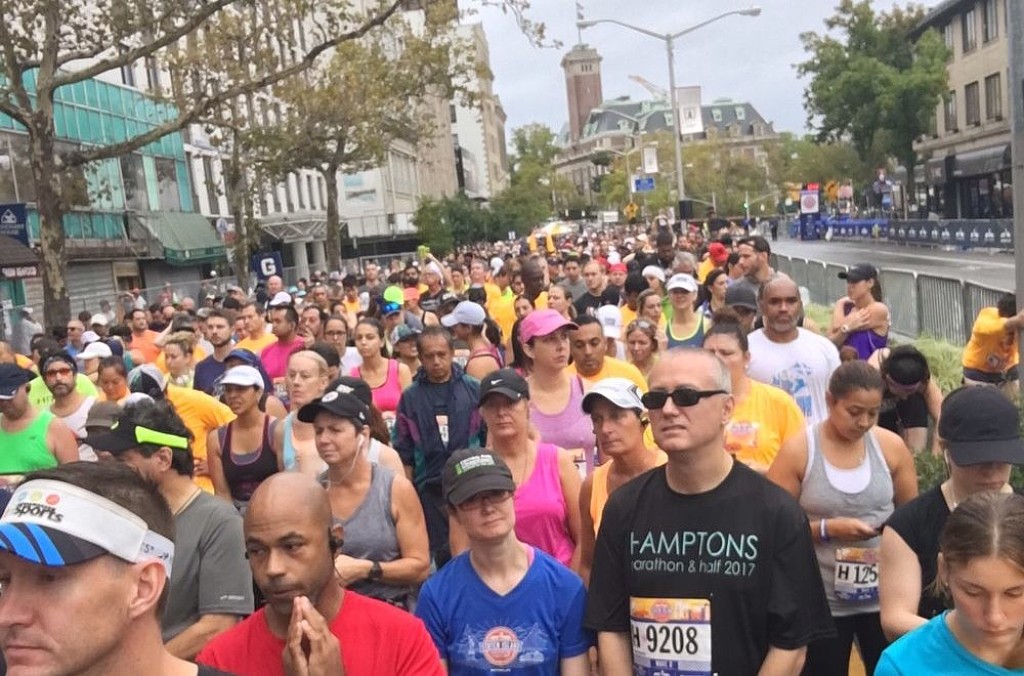
Another look at the New York City Marathon from the pack of 52,812 runners
by John Pages
Login to leave a comment
