

Running News Daily
Running News Daily is edited by Bob Anderson and team. Send your news items to bob@mybestruns.com Advertising opportunities available.
Index to Daily Posts · Sign Up For Updates · Run The World Feed
Articles tagged #Backyard Ultra
Today's Running News
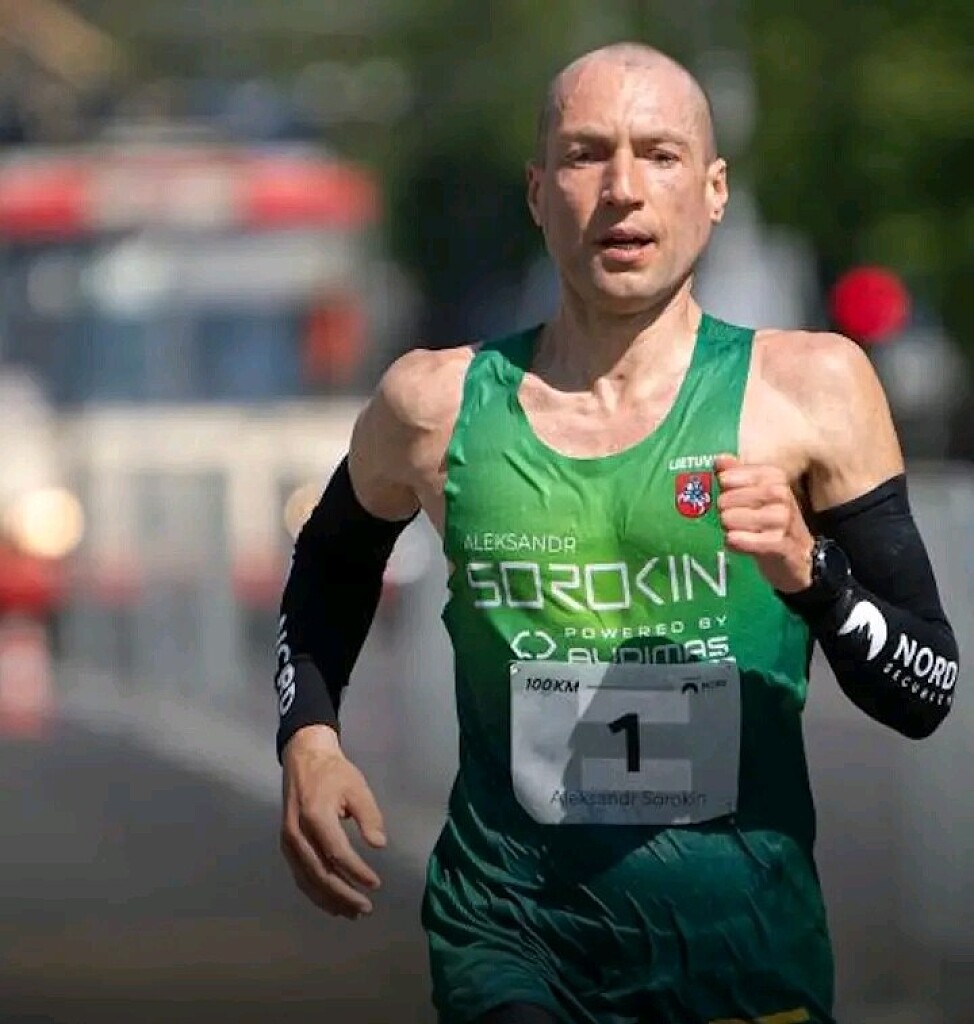


Aleksandr Sorokin’s Five Ultra-Running World Records Show Just How Far Human Endurance Can Be Pushed
Ultra-running is a sport where the finish line keeps moving farther away. While most runners measure their limits in kilometres and hours, the world’s greatest ultrarunners are competing on an entirely different scale—pushing their bodies across distances and durations that are difficult to comprehend.
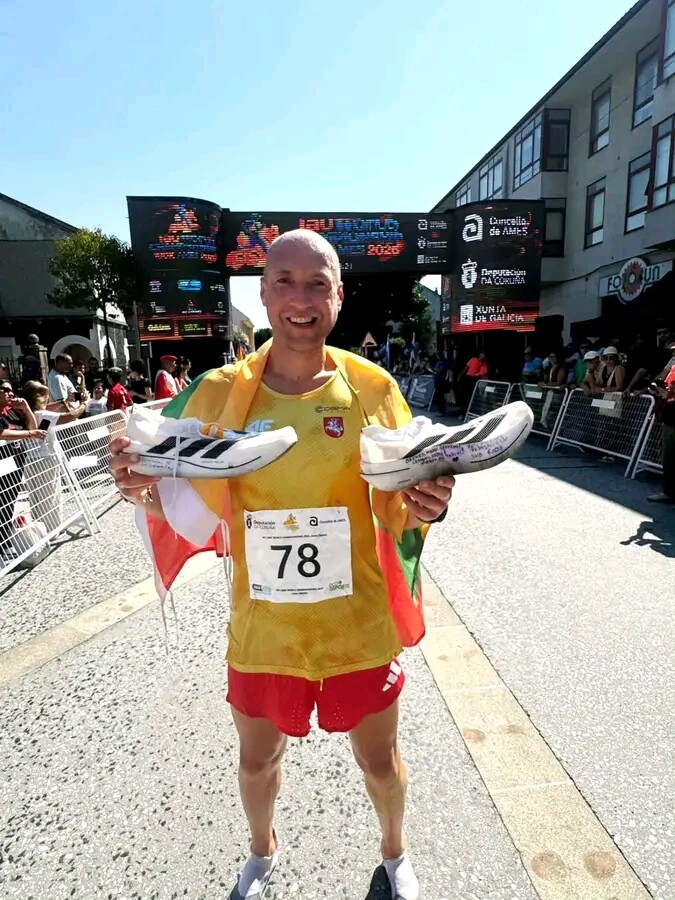
At the centre of that extraordinary world is Lithuania’s Aleksandr Sorokin, who holds five of the records featured in the graphic: the 100km, 100-mile, six-hour, 12-hour and 24-hour world records.
His 100km world record of 6:05:35, set in Vilnius in May 2023, is perhaps the easiest place to appreciate the magnitude of his achievement. Sorokin averaged roughly 3:39 per kilometre for more than six hours, covering the marathon distance in approximately 2:32:30 before maintaining his remarkable rhythm deep into the race. The performance was later ratified as the official world record.
Then comes the 100-mile world record of 10:51:39, making Sorokin the first man to break the 11-hour barrier over the distance. He also holds the six-hour record with 98.496 kilometres and the 12-hour record with 177.410 kilometres.
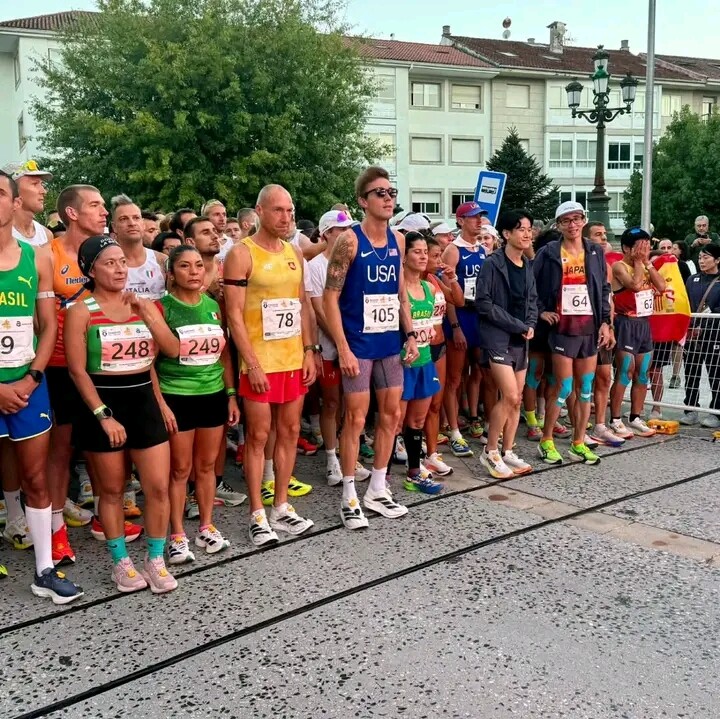
His 24-hour record takes the numbers into another dimension. In Verona, Italy, in 2022, Sorokin covered 319.614 kilometres in 24 hours—an average pace of approximately 4:30 per kilometre. That is equivalent to more than 15 marathons in a single day, a distance that illustrates the extraordinary combination of speed, endurance, nutrition, pacing and resilience required at the highest level of ultrarunning.
But Sorokin is not alone in rewriting the boundaries of endurance. Belgium’s Matthieu Bonne covered 1,045.519 kilometres in six days in Balatonfüred, Hungary, in September 2024. His performance surpassed Yiannis Kouros’ long-standing mark of 1,036.800 kilometres, with Bonne averaging more than 174 kilometres per day across the six-day event.
The challenge becomes even more unusual in the backyard ultra, where runners complete a 6.706-kilometre loop every hour, with a new loop beginning at the start of each hour. Australia’s Phil Gore has pushed that format to an extraordinary level, reaching 119 loops, equivalent to roughly 798 kilometres, at Dead Cow Gully in Queensland in 2025.
These performances reveal a side of running that exists far beyond the traditional marathon. The marathon may represent the ultimate endurance challenge for many athletes, but ultrarunning asks a different question: how long can the human body continue moving when the distance, fatigue and time seem to have no obvious end?
From Sorokin’s six-hour rhythm to Bonne’s six-day battle and Gore’s relentless backyard loops, these athletes continue to redefine the boundaries of distance running—and turn numbers that seem impossible on paper into world records on the road, track and trail.
by Erick Cheruiyot for My Best Runs.
Login to leave a comment
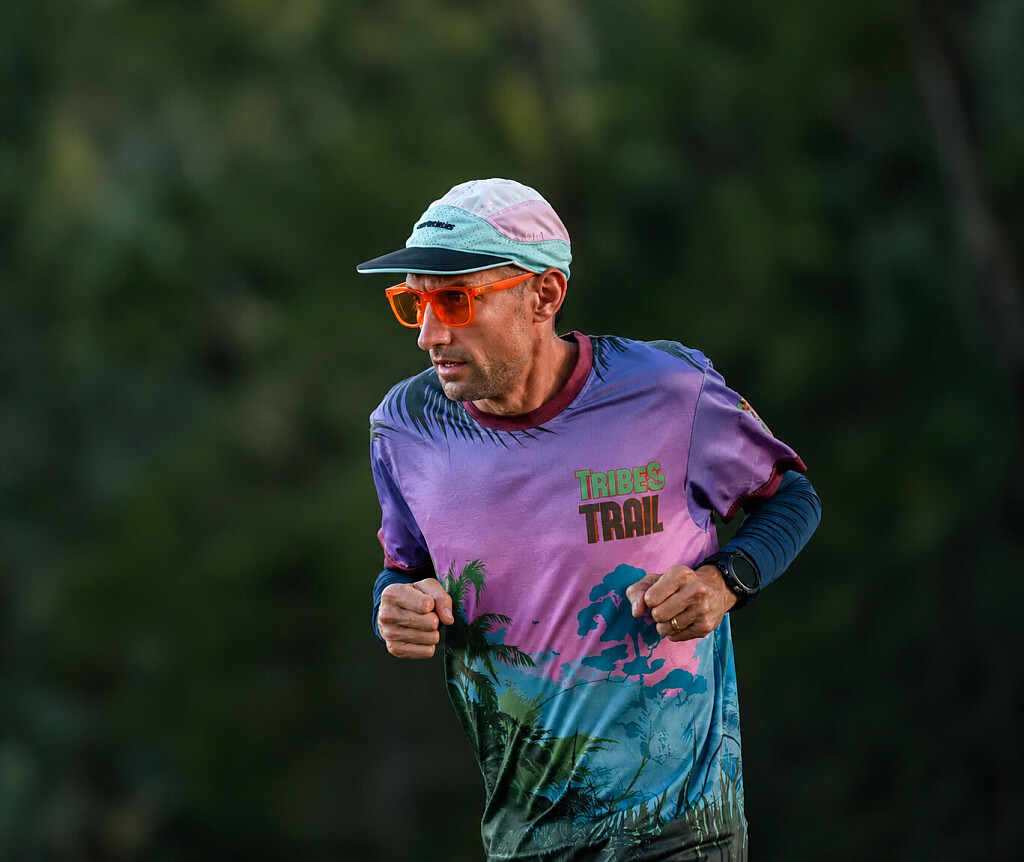
Phil Gore Takes On Project 168: Seven Days, 700 Miles And An Uncharted Endurance Challenge
Phil Gore already knows what it takes to push backyard ultra running beyond conventional limits. Now, later this month, the Australian ultrarunner is preparing to chase a number so extreme that his sport has no official category for it.
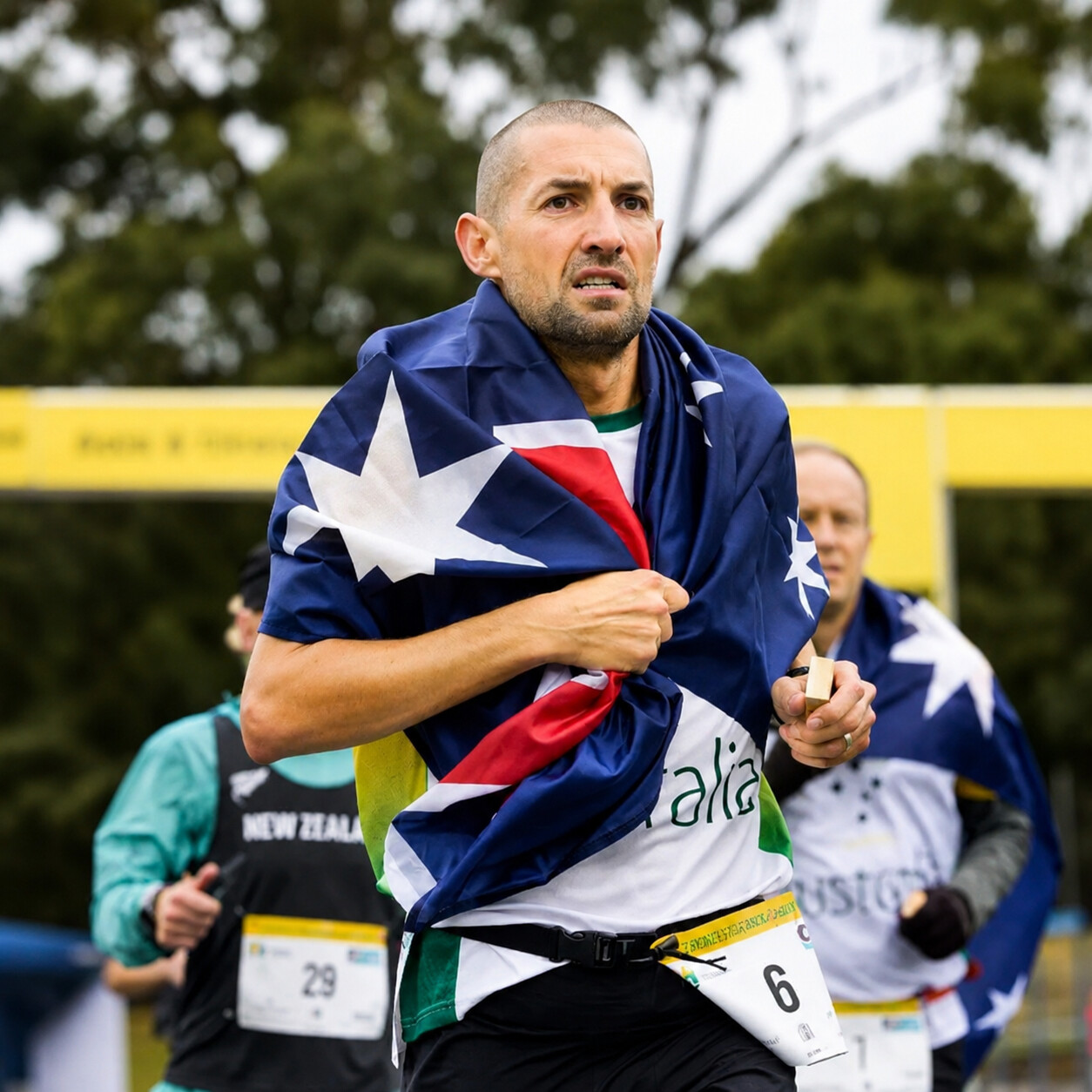
From August 23 to 30, Gore will attempt Project 168 at Alfred Skeet Reserve in Forrestdale, Western Australia, running one 6.71-kilometre loop every hour, on the hour, for seven consecutive days.
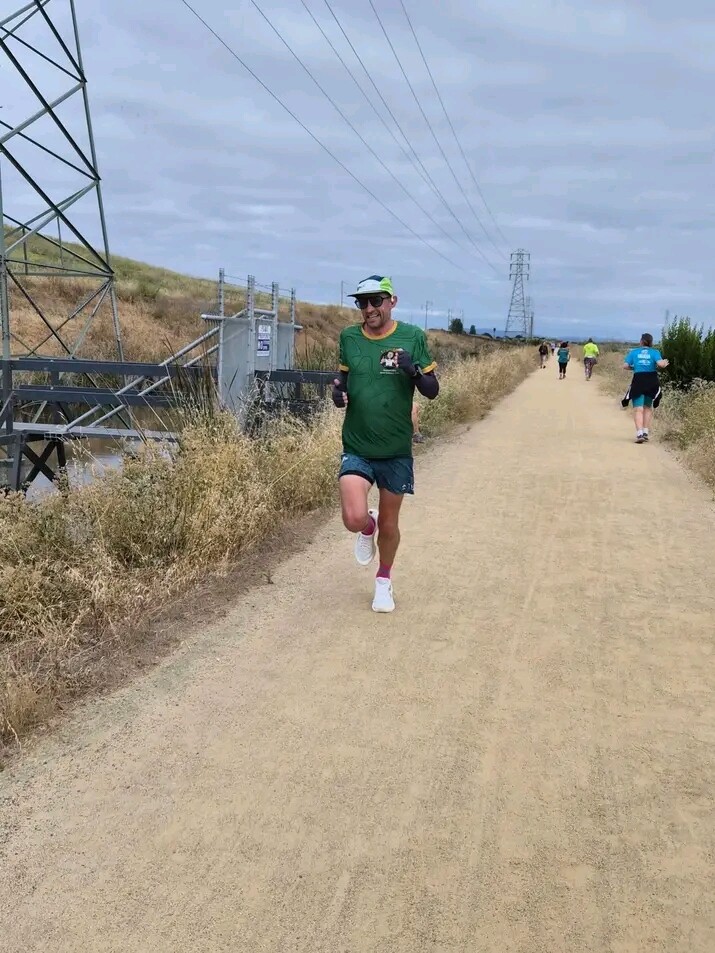
The name says almost everything about the challenge. There are 168 hours in a week, and Gore's plan is simple in concept but extraordinary in execution: complete one loop every hour until the seven days are over.
If he manages to complete all 168 loops, he will have covered approximately 1,127 kilometres, or 700 miles, across a single week.
But the distance is only part of what makes Project 168 so remarkable. This time, Gore will be alone.
Backyard ultras traditionally revolve around competition. Runners must complete a set loop every hour, with the race continuing until only one athlete remains. Gore's previous 119-lap world-record performance was built within that format, with Sam Harvey pushing him through five days of relentless running.
Project 168 removes that element entirely. There will be no rival waiting on the course, no athlete to chase and no opponent forcing the pace. Instead, Gore will face the same loop, the same hourly deadline and the growing physical and mental fatigue that comes with repeating the process for an entire week.
Every hour brings another decision: get back out there and complete another 6.71 kilometres.
Then do it again.
And again.
For 168 hours.
The challenge will test far more than Gore's ability to run long distances. Sleep deprivation, nutrition, hydration, recovery and the psychological pressure of knowing another loop is always approaching will become part of the battle. What might seem like a manageable 6.71-kilometre run at the beginning could become a formidable test after dozens of consecutive hours.
Yet Project 168 is not being undertaken solely as a personal endurance experiment. Every lap will help raise money for Telethon 7, giving the extraordinary challenge a purpose beyond the numbers on the course.
Gore, a firefighter and father of four, is attempting to build a benchmark for a challenge that has never before been pursued in this exact format. There is no official record waiting at the finish line, no rival to beat and no conventional race clock to stop.
There will simply be 168 hours, 168 loops and approximately 1,127 kilometres standing between Phil Gore and a completely new measure of endurance.
On August 23, the first hour begins. From there, the question will remain the same every 60 minutes:
Can he go again?
by Erick Cheruiyot for My Best Runs.
Login to leave a comment
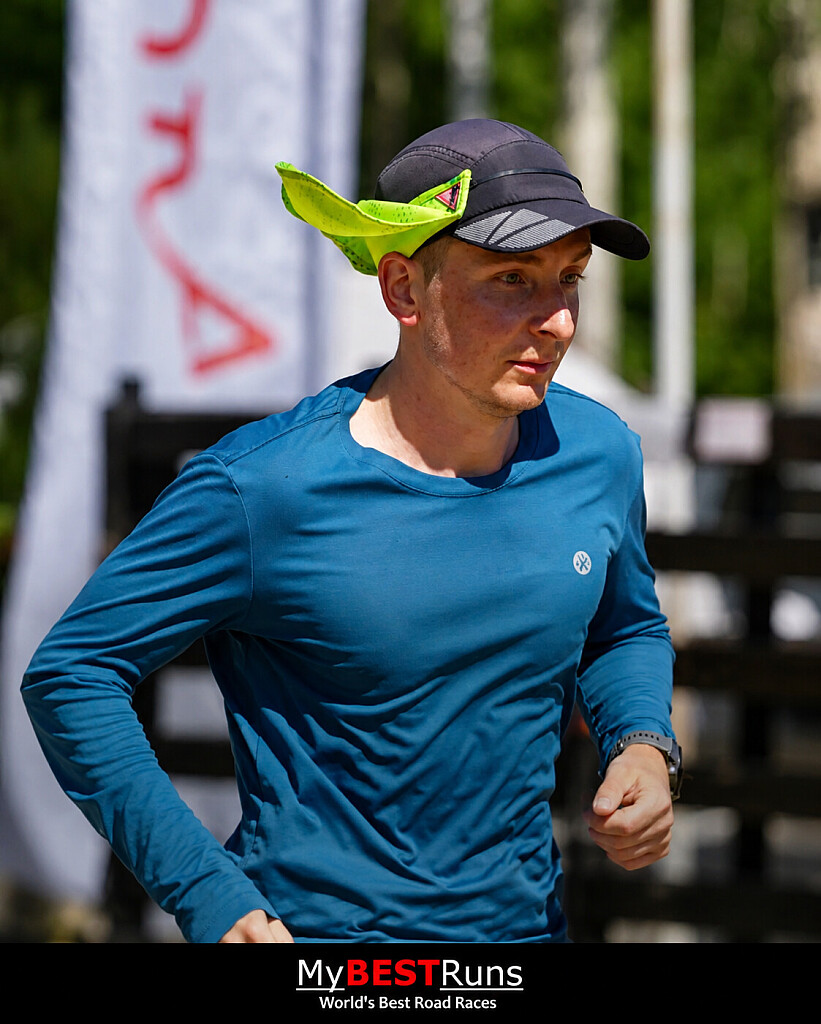
Backyard Ultra World Records Erased: Lazarus Lake Declares Historic Russian Performances Invalid
What appeared to be the greatest Backyard Ultra ever staged has officially been wiped from the record books.
Just weeks after athletes in Russia delivered performances that seemed to redefine the limits of endurance, Backyard Ultra founder Lazarus Lake has ruled that every world-record mark achieved at the event is void and will not be recognized due to violations of the competition's strict rules.
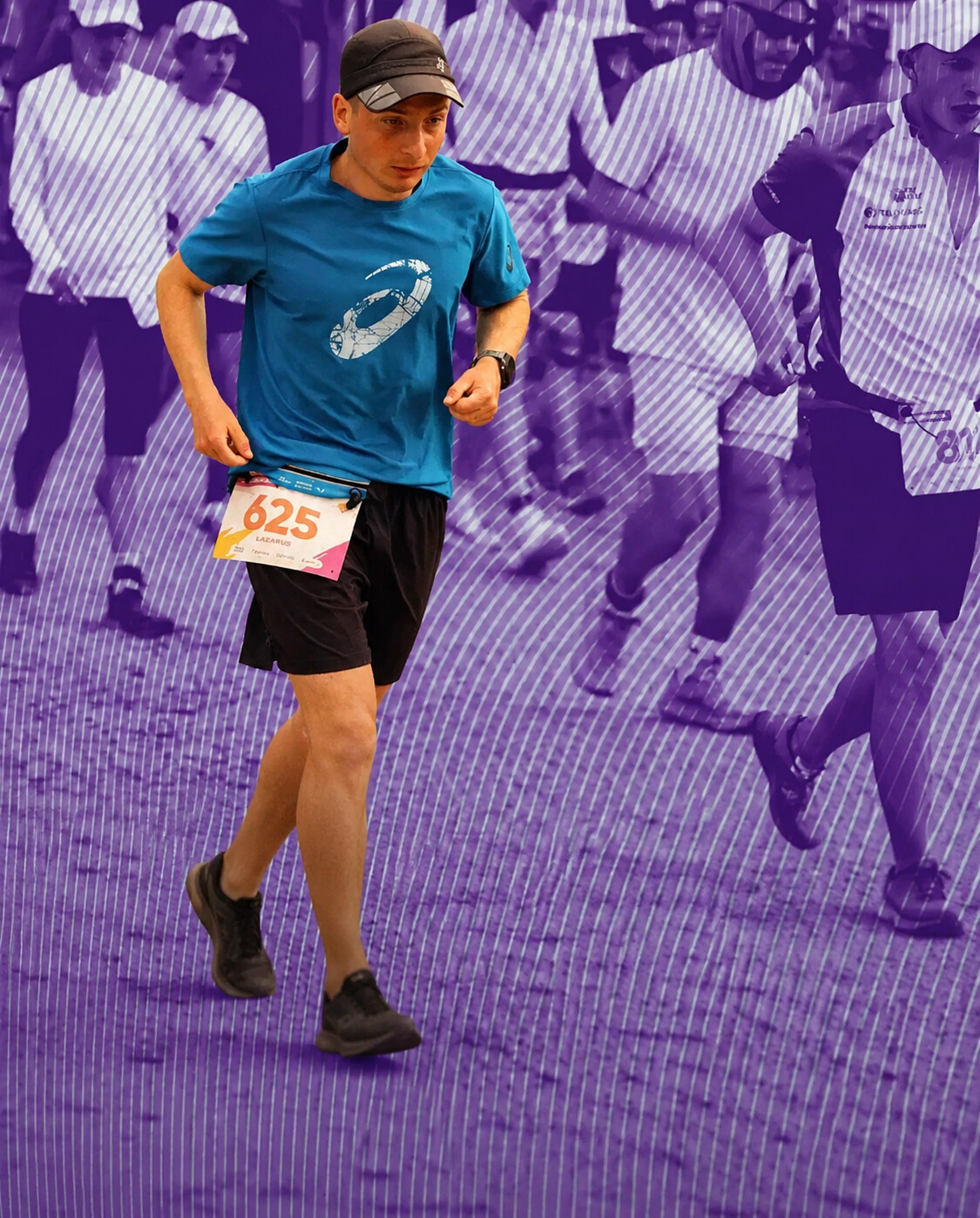
The decision overturns what initially looked like one of the most remarkable chapters in the sport's history.
At the Biotropika Backyard Ultra in Russia's Leningrad Region, Dmitry Klimov stunned the ultra-running world by completing 123 consecutive loops—covering 512.5 miles (824.8 km) over five relentless days. His effort surpassed the existing men's world record, while fellow competitors Dmitry Sheremet and Ivan Zaborsky also ran beyond the previous global mark before eventually dropping out.
In the women's race, Vera Chekalina completed 96 loops, improving the existing women's world record by one loop and seemingly securing her place in Backyard Ultra history.
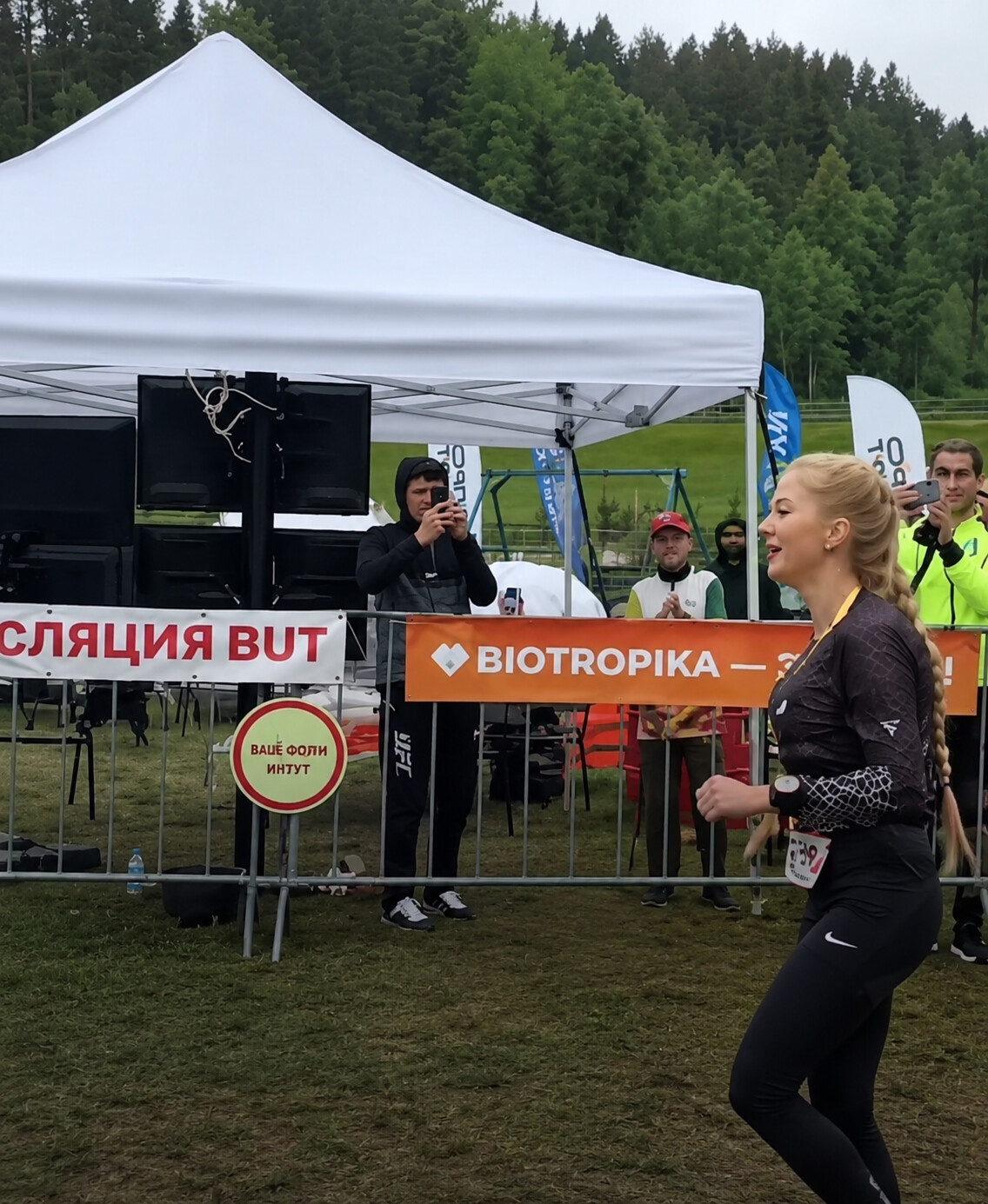
For a brief moment, the event appeared to have rewritten the sport's record books.
Instead, it has become one of its most controversial.
According to Lazarus Lake, the issue was not the athletes' performances but the race's failure to comply with the Backyard Ultra's fundamental regulations. Video evidence reportedly showed non-competitors—including members of the media, race officials, volunteers, organizers, and support personnel—accompanying runners on the course during active loops.
Under Backyard Ultra rules, competitors must complete every loop without anyone else sharing the course. Any presence of non-runners is considered outside assistance, making the performances ineligible for official recognition.
Questions surrounding the event had already surfaced before the ruling. The record-breaking performances were announced only as "subject to ratification," while some participants and observers also debated whether the event's halfway water station violated the competition's strict limitations on personal aid.
Following the review, Lake confirmed that none of the results would be ratified.
As a result, the official world records remain unchanged.
Australian ultrarunner Phil Gore retains the men's Backyard Ultra world record with 119 loops, set at Dead Cow Gully in 2025, while Sarah Perry's 95-loop performance at Big's Backyard Ultra in Tennessee continues to stand as the women's world record.
Although the Russian performances will never appear in the official record books, they remain an extraordinary display of human endurance. Three men covered more distance than anyone had ever managed in a Backyard Ultra, while Chekalina pushed beyond the previous women's benchmark.
Yet the Backyard Ultra has always been defined as much by its rules as by its distance. Every hour begins the same way, every loop follows the same principles, and every runner competes under identical conditions.
This ruling serves as a reminder that in one of endurance sport's most demanding disciplines, exceptional performances alone are not enough. To become part of Backyard Ultra history, athletes must not only outlast every competitor—they must also do so within the uncompromising rules that define the event.
by Erick Cheruiyot for My Best Runs.
Login to leave a comment
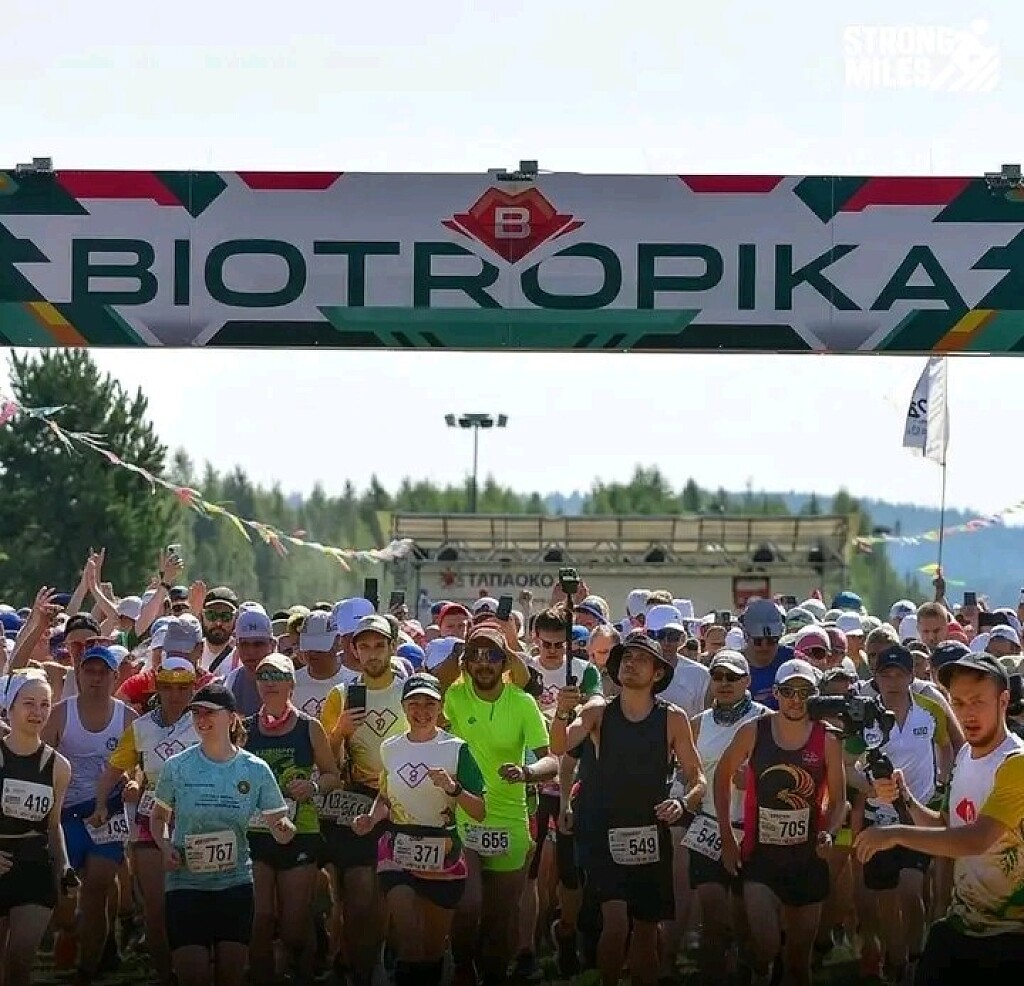
Two World Records Fall as Russian Backyard Ultra Rewrites Endurance History
The world of ultrarunning witnessed an extraordinary chapter this week as both the men's and women's Backyard Ultra world records were shattered at the Biotropika Ultra Trail in Russia's Leningrad Region, in a display of endurance that pushed the limits of human resilience.
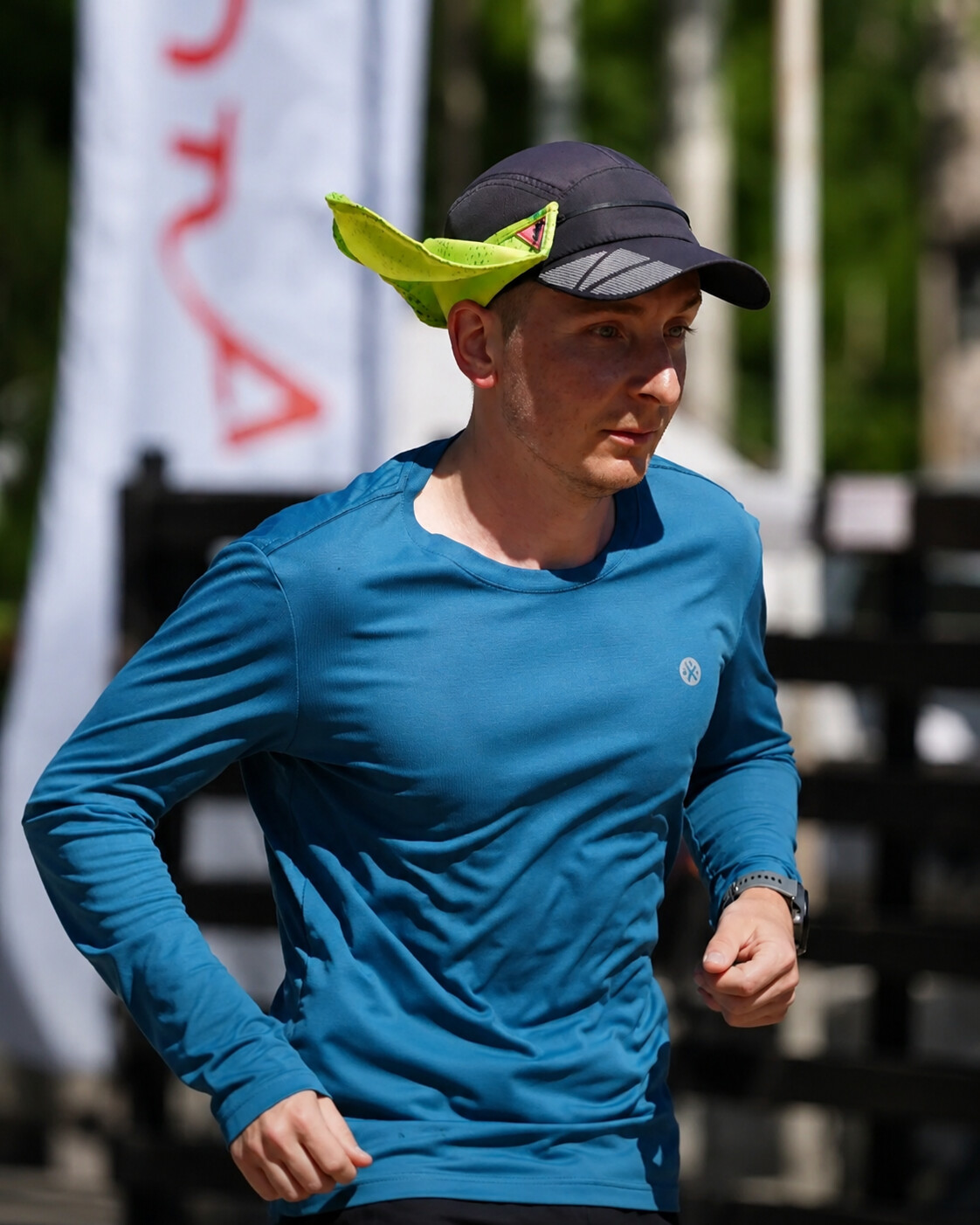
The men's race delivered an unforgettable battle, with Dmitry Klimov emerging as the last runner standing after an astonishing 123 consecutive hourly loops. Covering 824.8 kilometres (512.5 miles) over more than 123 hours, Klimov eclipsed the previous world record of 119 laps, set by Australia's Phil Gore almost exactly one year earlier.
What made the achievement even more remarkable was the incredible depth of the competition. Fellow Russians Ivan Zaborsky and Dmitry Sheremet also surpassed Gore's previous benchmark, completing 121 and 122 laps respectively before bowing out. With his rivals unable to continue, Klimov completed the decisive final lap alone, sealing a historic new world record.
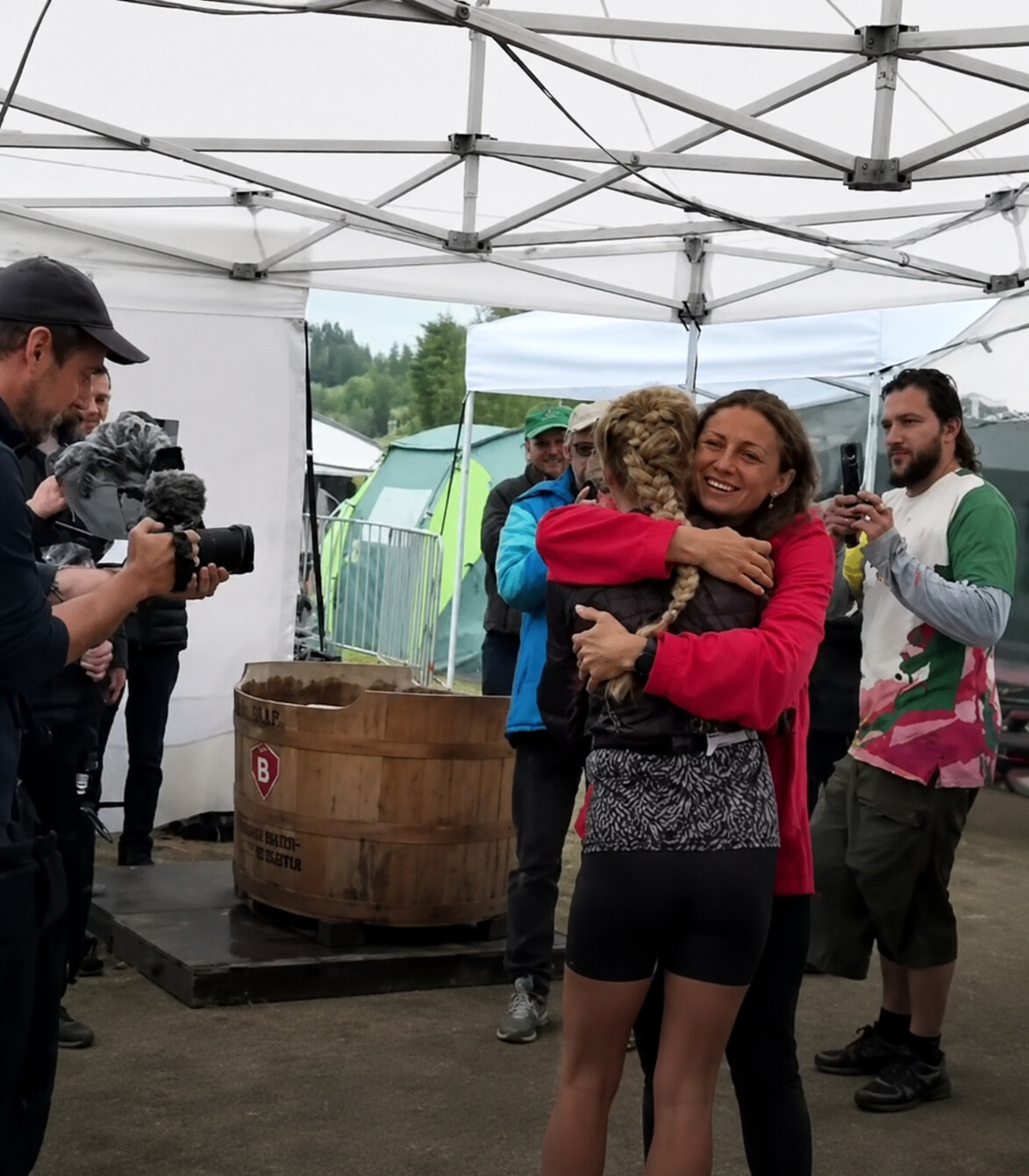
The women's competition was equally inspiring. Vera Chekalina, 49, produced a remarkable performance by completing 96 laps, covering 643.2 kilometres (399.7 miles) to establish a new women's Backyard Ultra world record. Her achievement highlighted not only exceptional physical endurance but also the mental toughness required to excel in one of the sport's most demanding formats.
Unlike traditional ultramarathons, the Backyard Ultra follows a deceptively simple concept. Athletes must complete a 6.706-kilometre (4.167-mile) loop within one hour. At the start of every new hour, every remaining runner must begin another lap. There are no finish lines or predetermined distances—the race continues until only one competitor remains capable of completing another lap.
In this relentless format, raw speed offers little advantage. Success depends on meticulous pacing, effective recovery, disciplined nutrition, careful foot management, and the ability to resist the temptation to push too hard while watching competitors gradually drop out. Klimov, Sheremet, Zaborsky, and Chekalina demonstrated those qualities at the highest level, sustaining their efforts for more than five days.
The Biotropika Ultra Trail will now be remembered as one of the most significant events in Backyard Ultra history, producing two world records and redefining what is possible in one of endurance sport's most unforgiving disciplines. As the global ultrarunning community reflects on these remarkable performances, one thing is clear: the boundaries of human endurance have been pushed further than ever before.
by Erick Cheruiyot for My Best Runs.
Login to leave a comment
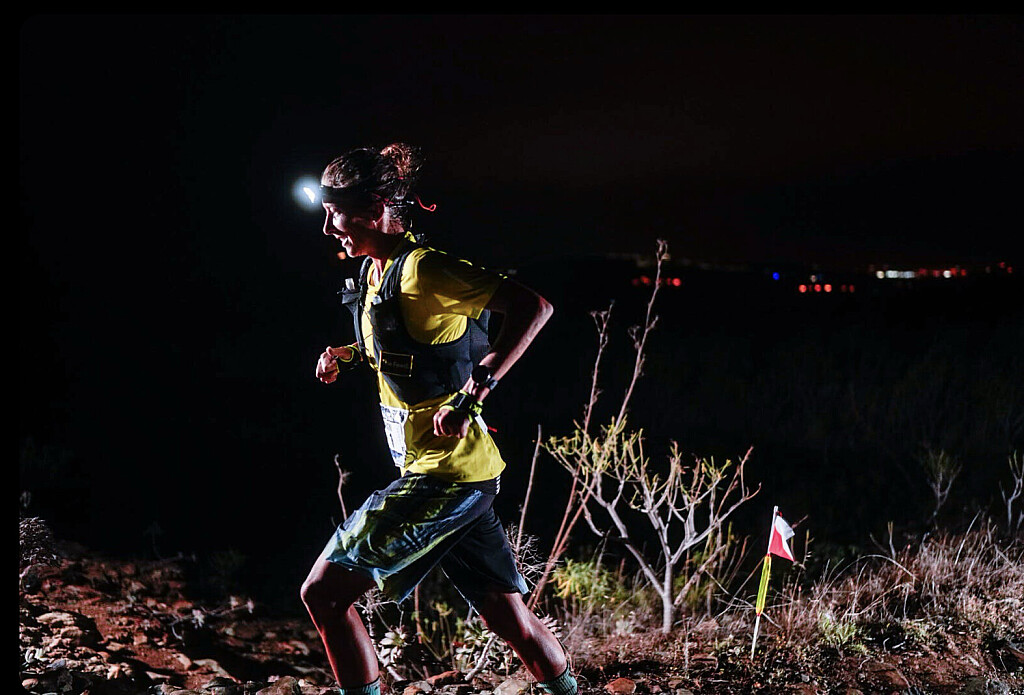
How Did Courtney Dauwalter Get So Damn Good?
If Courtney Dauwalter could travel back in time, this is what she would do: She’d join a wagon train crossing the American continent, Oregon Trail-style, for a week, maybe more, just to see if she could swing it. It would be hard, and also pretty smelly, but Dauwalter wonders what type of person she’d be if she deliberately decided to take that journey. Would she stop in the plains and build a farm? Could she make it to the Rocky Mountains? How much suffering could she take, and how daunted might she be by the terrain ahead of her?
“If you get to Denver and this huge mountain range is coming out of the earth, are you the type of person who stops and thinks, ‘This is good’?” she wonders. “Or are you the person who’s like, ‘What’s on the other side?’ ”
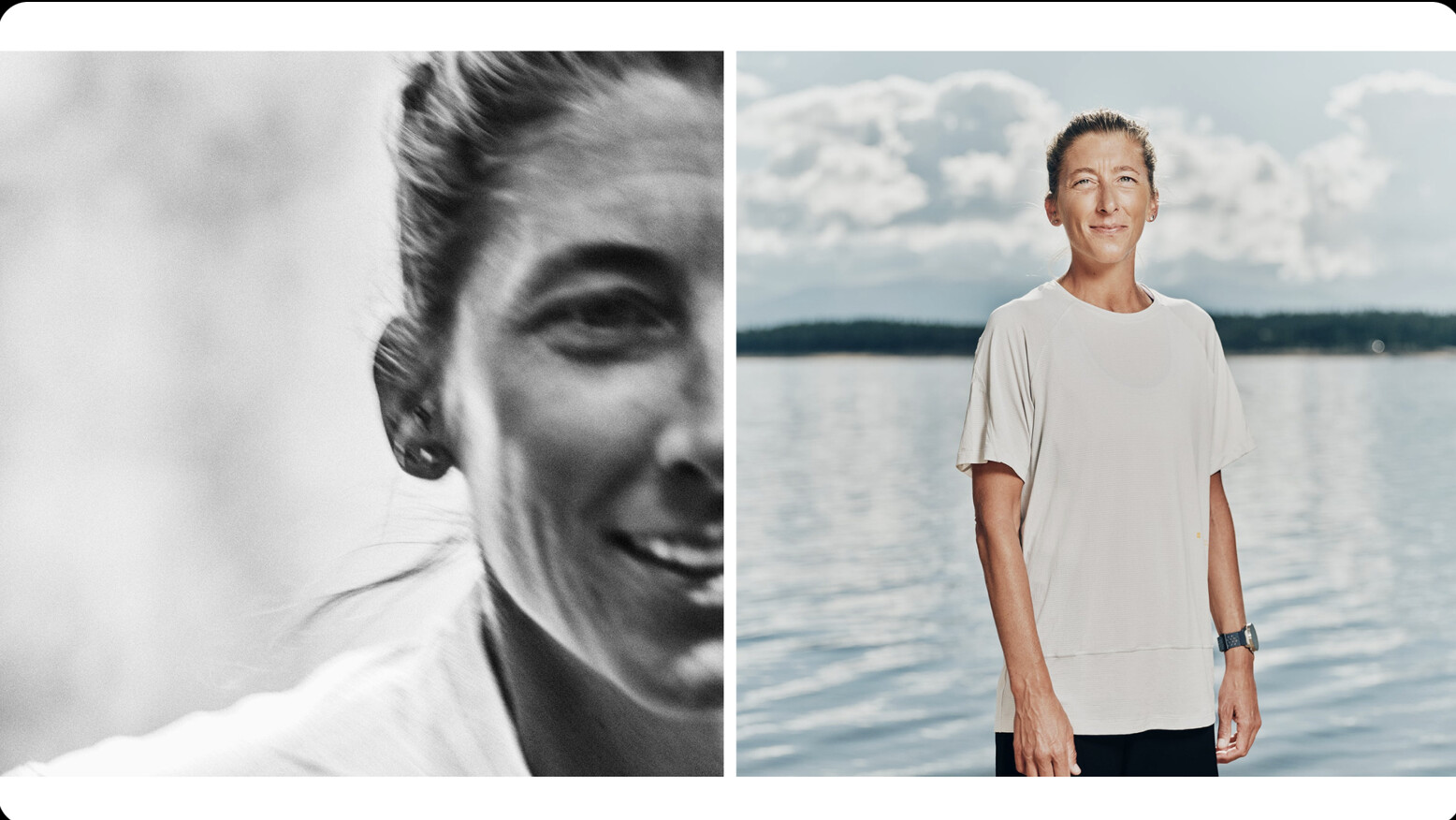
Dauwalter is probably (definitely) the best female trail runner in the world—a once-in-a-generation athlete. She’s hard to miss at the sport’s most famous races, and not just because of the nineties-style basketball shorts she prefers. (Her explanation: she just likes them.) It’s because she’s often running among the leading men in the sport, smiling beneath her mirrored sunglasses. The 39-year-old is five foot seven and lean, with smile lines and hair streaked with highlights from abundant time spent in high-altitude sun.
Dauwalter shared her historical daydream with me while sipping a pink sparkling water at her house in Leadville, Colorado, after a four-hour morning training run. Her cross-country wagon musings get at why she’s the best female ultrarunner ever to live: Dauwalter is curious. She’s curious about pain, about limits, about possibility. This quality is fundamental to what makes her so good.
Over the past eight years, Dauwalter has won almost everything she’s entered. In 2016, she set a course record at the Javelina Jundred—an exposed, looped route through the Sonoran Desert of Arizona. That same year she won the Run Rabbit Run 100-miler in Steamboat Springs, Colorado, by a margin of 75 minutes, despite experiencing temporary blindness for the last 12 miles (she could only see a foggy sliver of her own feet). Because of ultrarunning’s huge distances, it’s not unheard of to beat the competition by so much, but it doesn’t happen with the frequency that Dauwalter manages.
In 2018, she won the extremely competitive Western States 100 in California; it was her first time on the course. A year later, she set a new course record while winning the prestigious Ultra-Trail du Mont-Blanc (UTMB), besting the second-place finisher by just under an hour. In 2022, she set the fastest known time on the 166.9-mile Collegiate Loop Trail in her backyard in Colorado, and she won (and set a new course record at) the Hardrock 100, a grueling high-altitude loop through the state’s San Juan Mountains.
Dauwalter is also one of the few runners of her caliber to seriously dabble in the really long distance races. In 2017, she won the Moab 240—yes, that’s 240 miles—in two days, nine hours, and fifty-five minutes, ten hours ahead of the second-place finisher. She ran even farther at Big’s Backyard Ultra in 2020, a quirky test of wills where athletes complete a 4.167-mile course every hour on the hour until only one runner is left. Dauwalter set a women’s course record of just over 283 miles.
Given everything she’s accomplished, it’s hard to believe that the past two summers have been her most successful yet. In 2023, she returned to Western States, where she smashed the women’s course record by more than an hour and finished sixth overall. When she passed Jeff Colt, who finished ninth, he remembers how calm and collected she looked, running all alone. “My pacer looked back at me and said, ‘Jeff, I can’t even keep up with her right now,’ ” he says. Less than three weeks later, she won Hardrock again, taking fourth place overall and setting a new women’s course record. The race changes direction on the looped course each year, and she now holds both the clockwise and counterclockwise records.
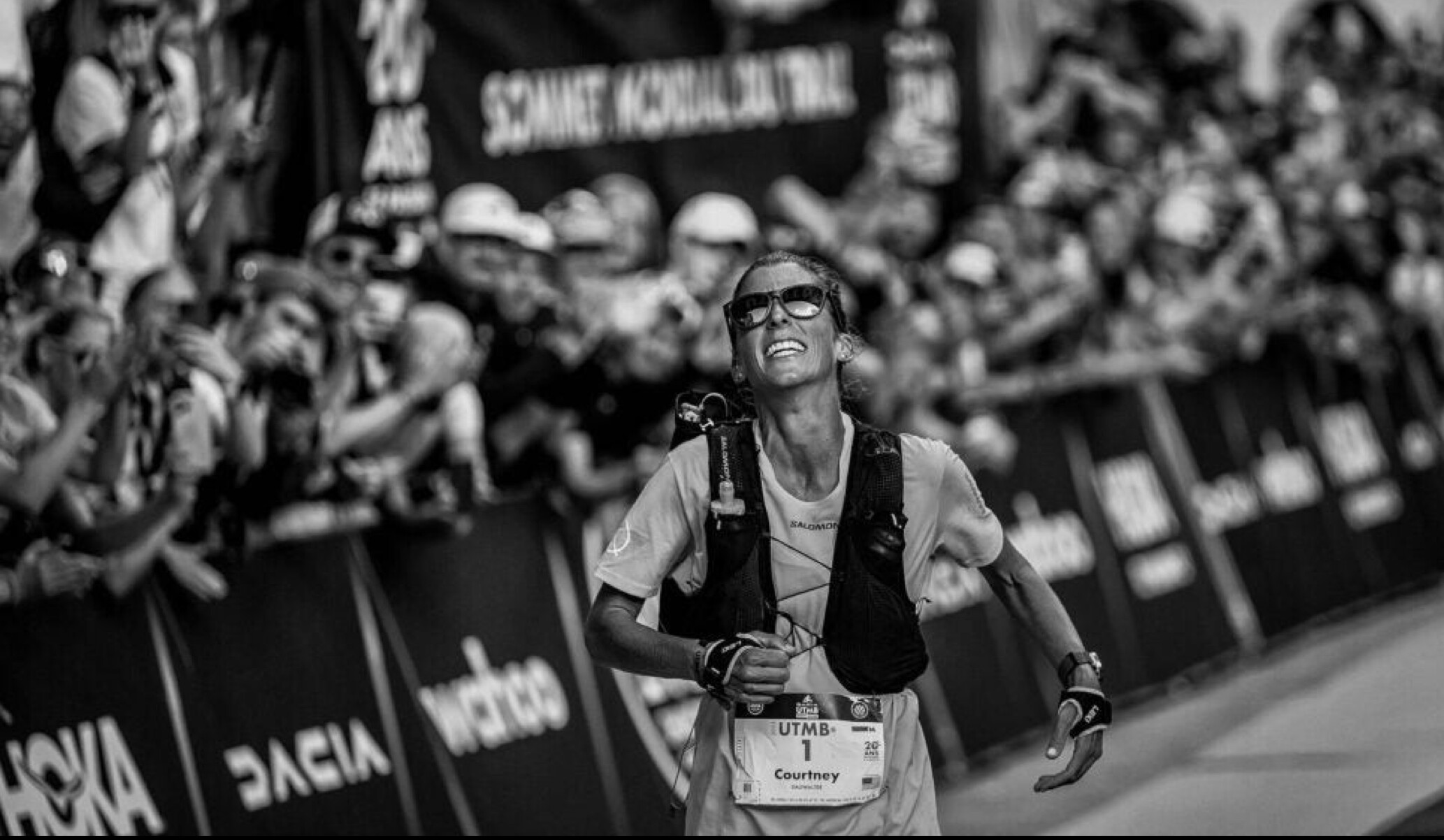
In the interest of testing herself one more time, in late August she traveled to France to run UTMB again. She won that race too, becoming the first person in history to win all three races in a single summer. “She’s one of those humans who defy even the concept of an outlier,” says Clare Gallagher, a former Western States winner who has raced against Dauwalter. “I look at her summer and I have no words. It’s truly hard to conceptualize.”
Dauwalter led UTMB from the start, and she finished more than an hour ahead of the woman in second place. As she descended the final stretch of trail, she was followed by a barrage of cameras and a handful of people who looked like they just wanted a bit of her magic to rub off on them. As crowds roared on either side of the finish line in Chamonix, she looked back at the spectators and clapped in their direction, never raising her hands above her head or pumping her fists in the air. After hugging her parents and her husband, 39-year-old Kevin Schmidt, she jogged back in the direction she’d just come to high-five hundreds of fans.
Dauwalter grew up in the suburbs of Minneapolis, in a tight-knit family that was always active. The kids all played soccer, and when they weren’t at practice they were busy building tree forts or making up games at the local park. In seventh grade, she started running cross-country, and in eighth grade she joined the nordic ski team. She claims to have spent the first years just trying to stay upright, but in high school she went on to be a four-time state nordic ski champion and attended the University of Denver on a cross-country-skiing scholarship. She says that her parents, who now frequently crew and support her at races, led by example. “You work hard, you give everything you’ve got, you don’t forget to have fun,” she says.
Minnesota winters are notoriously cold, and she credits her ability to dig deep within herself to the unforgiving conditions. “Growing up there, you just learn to do stuff, regardless of the weather,” she says. She also points to a cross-country coach who taught her to think differently about pain. “He laid the groundwork for understanding that our bodies are capable of so much,” she says. “We can push past those initial signals saying that’s all I have and turn the knob, and there’s always one more gear.”
After college, Dauwalter taught middle and high school science in Denver, which is where she met Schmidt. “A woman I worked with and a guy he worked with were married, and they just kept putting us in the same places,” she says. “I didn’t know they were meddling!” Schmidt, who works as a software engineer, is also a competitive runner. He and Dauwalter train together—sometimes he’ll join in for her second run of the day—and they trade off supporting each other during races. When I met up with them in Leadville, Dauwalter had just finished crewing for Schmidt at a 100-miler in Switzerland. During her races, he maps her splits, takes care of her aid-station needs, and serves as crew captain. He’s the “spreadsheet brain” to her “tie-dye brain,” as he puts it, and he provides emotional support too.
“Its clear to me when she has taken up residence in the pain cave, so I try my best to fill it with snacks and encouragement,” says Schmidt. One time, while driving to an aid station during a race, Schmidt got a flat tire while carrying everything Dauwalter needed for the night. He wound up sprinting the final three miles to catch her in time.
When Dauwalter started racing more competitively and winning, she and Schmidt had a series of discussions about what they wanted their lives to look like. Ultimately, they decided that she should try to give professional running a shot. In 2017, without a sponsor and with a lot of unknowns still ahead, she left teaching to run full-time. “What we wanted was to look back when we were 90 years old and not wonder what if? about anything,” she says.
Mike Ambrose, the former team manager at Salomon, offered Dauwalter her first sponsorship as a trail runner that same year. She was still new on the scene, but Ambrose could see that she was driven, and the talent was there. “She’s super curious about pushing herself,” he says. “She had this huge engine coming from nordic skiing, and her 24-hour time was really crazy. I thought, well, if she just figures it out and gets more trail experience, she obviously has the mental and physical capacity.”
Despite her nearly superhuman athleticism and mental fortitude, Dauwalter is also very normal. She likes nachos, candy, and beer. She watches sports (the Vikings are her NFL team, even though she’s been in Broncos territory for years), and she wants to spend time with the people she loves, including her parents, and the friends who often crew for her.
Ultrarunning frequently sees short-lived stars, runners who dominate for a couple of years before burning out or slowing down, either from overtraining or simply from the passage of time and the wear on their bodies. Dauwalter, however, seems to have a rare capacity to push against her own limits without tipping over the edge. She’s been running long distances at an elite level for seven years now. Gallagher wonders how she’s managed to avoid injury, given Dauwalter’s volume of physically demanding races.
Login to leave a comment
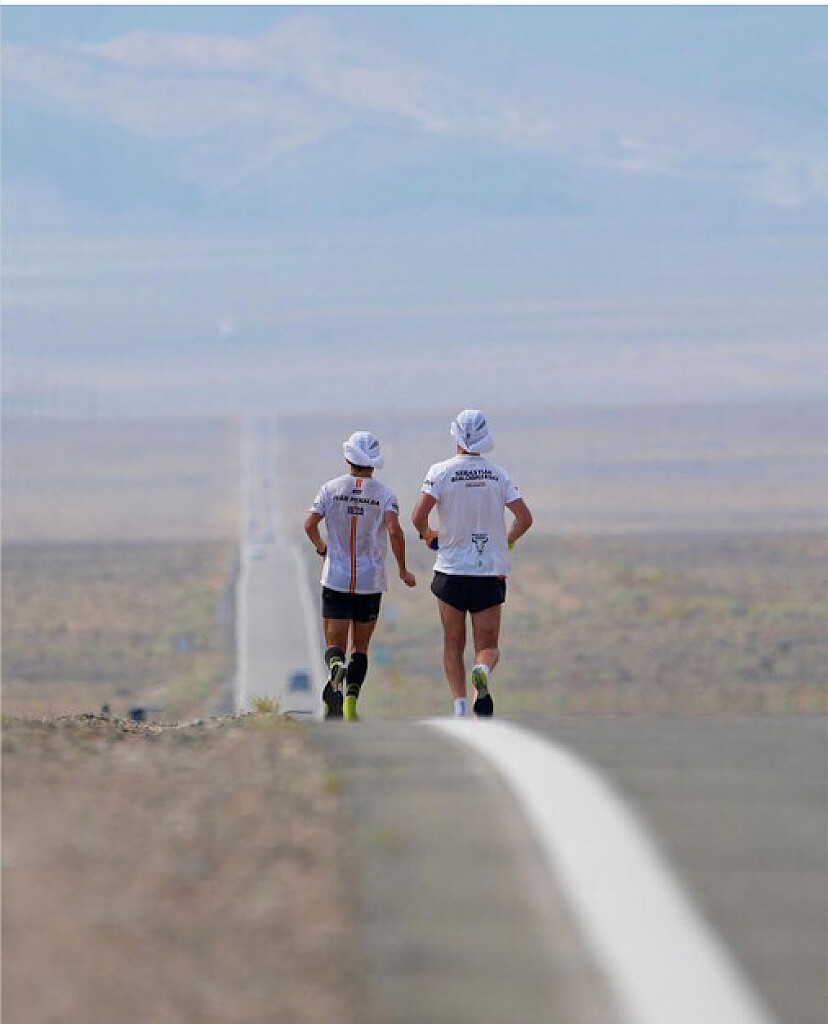
Harvey Lewis races Badwater 135 for the 13th time in a row
This year’s edition of Badwater 135, dubbed the “world’s toughest foot race,” kicked off on Monday, plunging runners into the brutal extremes of California’s Death Valley. This year’s race featured the return of fan favorites, including Backyard Ultra world champion Harvey Lewis, a two-time Badwater winner making his 13th consecutive appearance, and fellow American Pete Kostelnick, also a two-time champion, who made a remarkable comeback after a severe car accident in Leadville. American Shaun Burke claimed the overall victory amidst the scorching heat, while Norwegian Line Caliskaner triumphed in the women’s category, finishing an impressive second overall.
The 135-mile (217km) race kicks off at the Badwater Basin, which, at 85 metres below sea level, is the lowest point in North America. This year’s race saw temperatures hitting a scorching 51 degrees Celsius. Runners who finish under the 48-hour mark earn the prestigious Badwater 135 belt buckle.
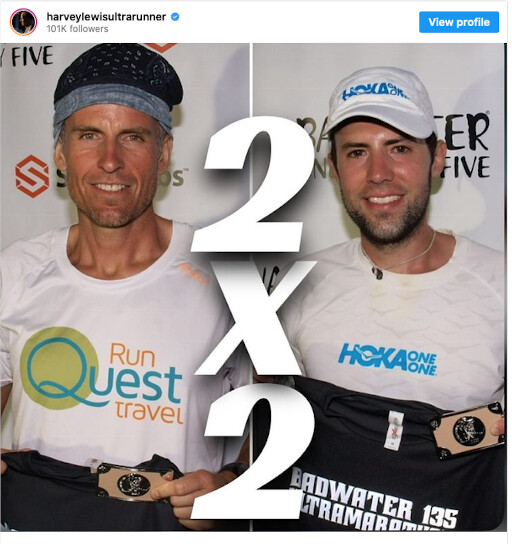
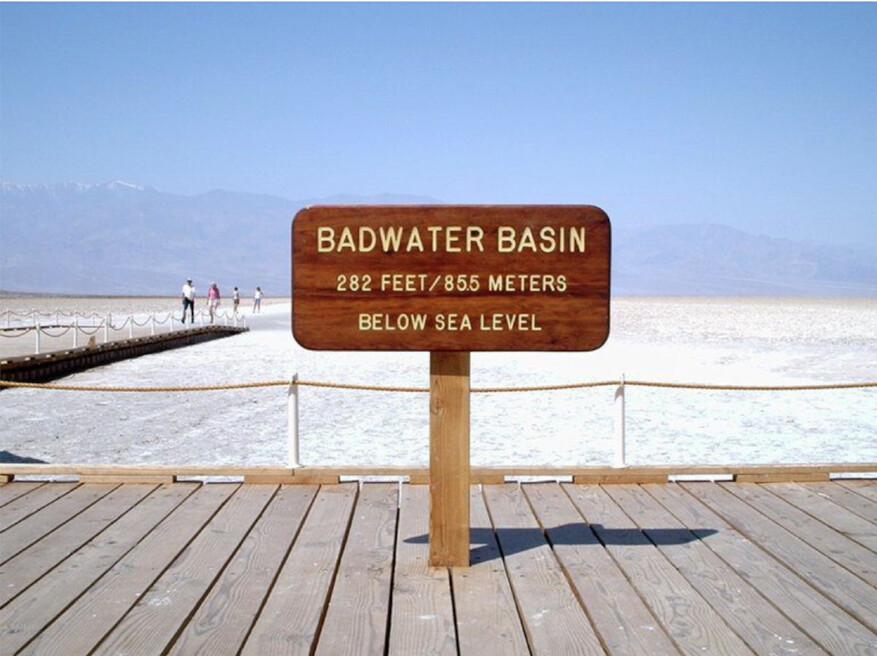
In 2023, Viktoria Brown of Whitby, Ont., was the only Canadian in the field of 100 runners and finished in 30:11:52 securing fourth among the women and claiming 13th place overall. This year’s race saw two Canadians joining the ranks—Frances Picard of Quebec, and Hannah Perry from Canmore, Alta.
Men’s race
Last year’s men’s champion, Simen Holvik of Norway, led for much of the race—in 2023, Holvik was second to U.S. runner Ashley Paulson, who finished first overall and took two hours off her own women’s course record. Burke, who received a late invite to the event in June, steadily closed the gap, eventually overtaking him before the 108-mile timing point. Holvik did not finish the race, leaving Burke unchallenged for the remainder.
Burke completed Badwater for the first time in 2023, when he was sixth overall and fourth among the men. Spanish runner Iván Penalba Lopez claimed the second men’s spot (third overall) in 28:06:34 in his third finish of the race, and Michael Ohler of Germany completed the men’s podium and third man (fourth overall) in 28:24:25. Kostelnick succeeded in finishing his come-back race, crossing the line in 35:28:55; Lewis followed in 36:41:22.
Picard, who was tackling the race for the first time, was still on course at the time of publication.
Top men
Shaun Burke (U.S.) 23:29:00 Iván Penalba Lopez of Alfafar (Spain) 28:06:34 Michael Ohler (Germany) 28:24:25
Women’s race
Caliskaner became the first Norwegian woman to complete the event, finishing second overall. An accomplished ultrarunner, in 2023 52-year-old Calinskaner won both the Berlin Wall Race (100 miles), and the Thames Path 100-miler. She maintained a narrow lead over Micah Morgan of the U.S. early on and added to her lead as the race progressed. Caliskaner finished in 27:36:27, over two hours ahead of Morgan, who finished in 29:11:28, second among the women and fifth overall.
Josephine Weeden of the U.S. rounded out the women’s podium in 33:26:37. Absent from this year’s race was American Ashley Paulson, who won the women’s race for the past two years and took the overall title last year. Alberta’s Perry was still on course at the time of publication but had passed through the 108-mile aid station in 29 hours and 51 minutes.
Top women
Line Caliskaner (Norway) 27:36:27 Micah Morgan (U.S.) 29:11:28 Josephine Weeden (U.S.) 33:26:37
by Running magazine
Login to leave a comment

Buddy the Elf Shatters Guinness Record with Help from Pro Ultramarathoner
Jason Homorody was gunning for the fastest half marathon as a movie character when he ran into Harvey Lewis.A modern-day staple of road running is unexpectedly coming across people running in costume either for a charity or in the hopes of setting a Guinness World Record, but sometimes, these costumed individuals discover the unexpected themselves.
On Sunday, Jason Homorody, 50, was beginning his quest to break the record for the fastest half marathon time while dressed as a movie character—Buddy the Elf from Elf in his case—at the Warm Up Columbus Half Marathon when he received some surprising support from a fellow runner. While attempting to break the previous 1:30:42 record, Homorody, who—obviously—loves Elf and regularly wears the costume around to “cheer people up,” was joined by Harvey Lewis, the current backyard ultramarathon record holder and well-decorated ultrarunner, who has won the likes of the Badwater 135 and USATF 24-Hour National Championships.
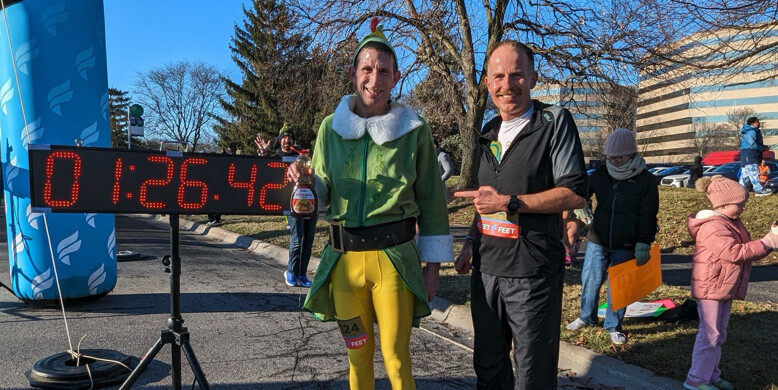
“[He] came up on my shoulder and asked me what pace I was going for,” Homorody told Runner’s World. “Once I answered some questions, he asked if he could run with me. Honestly, at first, I had no idea who he was. But he ran with me the entire race.”Homorody also said Lewis helped him with hydration during the race. “When we would pass the water stop on the course, he was asking if he could get me anything. He kept encouraging me to get water because I think he was concerned about me overheating in my costume,” Homorody said, adding that the two talked about Lewis’ upcoming races during the event.“I was picking his brain about ultramarathoning,” Homorody said. “I knew he recently had a crazy backyard ultra world record, and I was asking if he was almost falling asleep at any point while running, and he said yes.”
So, did the support of an ultramarathoner ultimately push Homorody to his goal? It seems like it, as Buddy the Elf crossed the finish line in 1:25:44, besting the previous record by more than 5 minutes.
“[Lewis] was just a very down-to-earth guy, and he seemed genuinely excited to help pace me to my world record attempt,” Homorody said.
by Runner’s World
Login to leave a comment
Want to Win a Race With No End? Work on Your Poker Face.
Harvey Lewis, who recently ran 450 miles to win Big’s Backyard Ultra, discusses the mental trickery that goes on during ultrarunning’s hardest race
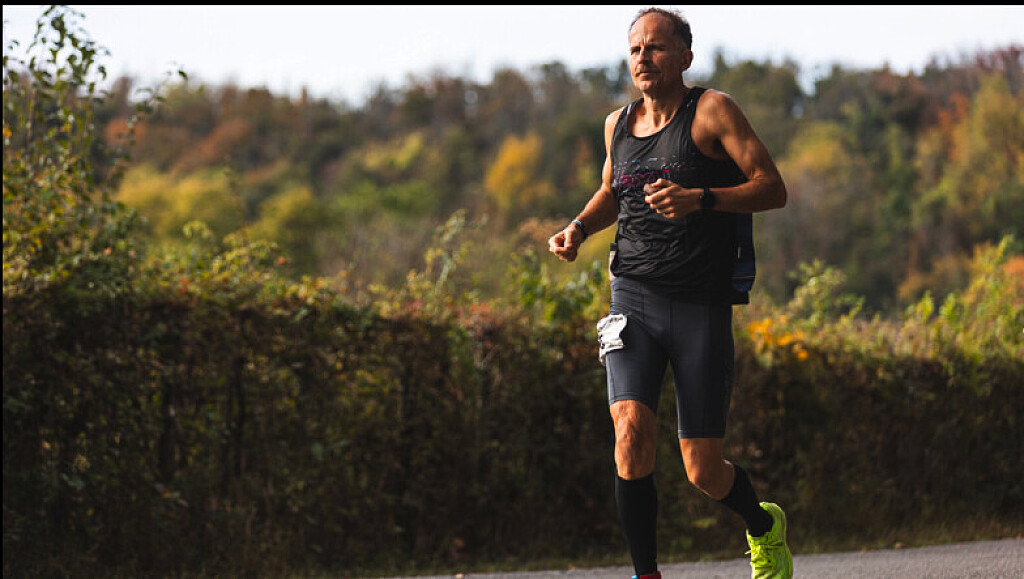
Not many people can run 400 consecutive miles and still stand upright—fewer can complete this athletic feat and continue running. I think there’s just one person alive who could do it and then unleash a sprint that would make Usain Bolt proud. That’s Harvey Lewis, the newly crowned world champion for the niche sport of Backyard Ultrarunning.
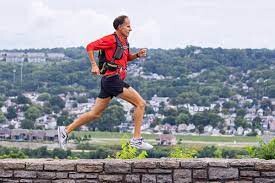
Lewis, 47, won his title at the October 21 Big Dog’s Backyard Ultra in Tennessee—the race known simply as “Big’s” in ultrarunning parlance—by running 450 miles over the course of 108 hours. Lewis is also the star of the hilarious video below (credit to UltraRunning.com) which made the rounds on social media as the race was still going on. Give it a watch.
Some quick context: the clip was captured a the race’s 400-mile mark (yes, 400!), and the eight runners in it have been jogging around a 4.1667-mile loop every hour for four consecutive days. When the starting bell sounds, seven of the eight shuffle onto the course looking like extras from The Walking Dead. And then there’s Lewis, who cracks a grin, kicks up his heels, and Usain Bolts away. He looks like he’s having a blast.
As it turns out, he was. “I’m really fired up in that video,” Lewis recently told me. “There are times during races when I have to hype myself up, but not there. I am already so hyped up, just mentally and physically. That’s what you have to do to keep yourself in the game.”
The game that Lewis is referring to is the strategy—nay, the psychological warfare—that goes on during one of these grueling races. At Big’s and other backyard ultras, participants run around a 4.167-mile loop every hour, hour after hour, for days on end (the distance means they complete 100 miles every day). They start and finish in the same location, and can rest or eat or use the toilet in the time between each lap, which is never long enough for them to sleep for more than a minute or two. As the event goes on, participants drop out due to sleep deprivation or blisters or diarrhea or because their brains simply cannot fathom any more running. The winner is the final person left standing.
This twisted format was dreamed up by Gary Cantrell—known as “Lazarus Lake”—the designer of the infamous Barkley Marathons. Backyard ultras foster some unorthodox head games amongst the handful of elite runners. At some point, they become hardcore body-language analysts, eyeing each for signs of injury or exhaustion. Simultaneously, they mask their own ailments in an attempt to convince their peers that they are feeling just fine and dandy—even thought every one of their muscles throbs with pain.
“There’s a lot of poker faces out there,” Lewis says “If one of the competitors starts to show weakness, it just adds thunder to everyone else. Part of the game is showing that you’re strong.”
There are plenty of telltale signs that a runner is nearing the end: limping, wincing, sitting down. Some athletes, after running hundreds of miles, begin to list to one side like a torpedoed warship. Oftentimes, runners nearing the limit will finish each lap just a few seconds before the next one is to begin—the countdown is marked by three whistles and then a bell.
There are also all manners of tricks for covering up the pain. Lewis said that his toughest competitor at Big’s, Ihor Verys of Ukraine, maintained a stoic and expressionless demeanor—think Ivan Drago from Rocky IV—right until the moment he dropped out at mile 445. Dutch ultrarunner Merijn Geerts, who dropped at mile 417, told the Bad Boy Running podcast that he will purposely start a race looking disheveled so that competitors cannot notice a meaningful change in his appearance as the event goes on. “If someone looks very fresh from the beginning, and suddenly he doesn’t look fresh anymore, you know there is a problem,” Geerts said. “If you don’t look very [fresh] all the time, then your opponent doesn’t know you are suffering.”
Fibbing is another formidable tactic. As Big’s stretched past the two-day mark, Lewis heard some competitors respond truthfully to a familiar question that runners ask one another on the trail: how are you feeling? “I was surprised to hear people saying ‘I was hallucinating’ or ‘I have a blister on my foot,‘” Lewis said. “Loose lips sink ships.” Lewis, who teaches U.S. government at a high school in Cinncinatti, Ohio, told me that he’d never divulge his aches and pains to a competitor.
“I don’t know why anyone would ask me how I feel during a race,” he says. “I could have blood pouring out of my head and I’d still say, ‘I feel amazing!’”
And then there’s the whole sprinting thing. Running fast is absolutely a psychological flex—a way to show the competition that you are supremely confident and also feeling fantastic. Think of it as the backyard ultra version of Steph Curry’s highly-intimidating pregame warmup. Lewis’s mad dashes were an integral weapon in his psychological war chest, he said, and he sprinted out of the gate again and again during Big’s.
“It’s like here we are at mile 400 and I can just go man,” Lewis says.
Here he is starting mile 300.
Here he goes at mile 425, looking considerably less spry.
But the sprinting tactic can also backfire, because a sprint puts more strain on leg muscles than a steady jog. In June, Lewis participated in Australia’s Dead Cow Gulley Backyard Ultra, and after two days of racing he employed the sprinting tactic. But the maneuver began to wear his body down, and he dropped out at mile 375 with two competitors remaining.
“I did it way too much and got carried away feeling invincible and not reigning myself in,” Lewis admits. “Because the counter to it is to just run your own race.”
At Big’s, Lewis only sprinted at the start—he actually didn’t complete the loops fastest, and during many laps he finished several minutes behind Bartosz Fudali of Poland, who exited the race after completing 429 miles. For all of the psychological gamesmanship that goes on in a backyard ultra, Lewis said there’s really no way to overcome a runner who has a steady rhythm, an expert nutrition plan, and the steely attitude to keep going—no matter what. Lewis said his winning tactic was more about mindset than about mind games.
“I don’t care what distance anyone else goes—I’m just going to commit to going further,” he says.
by Outside Online
Login to leave a comment
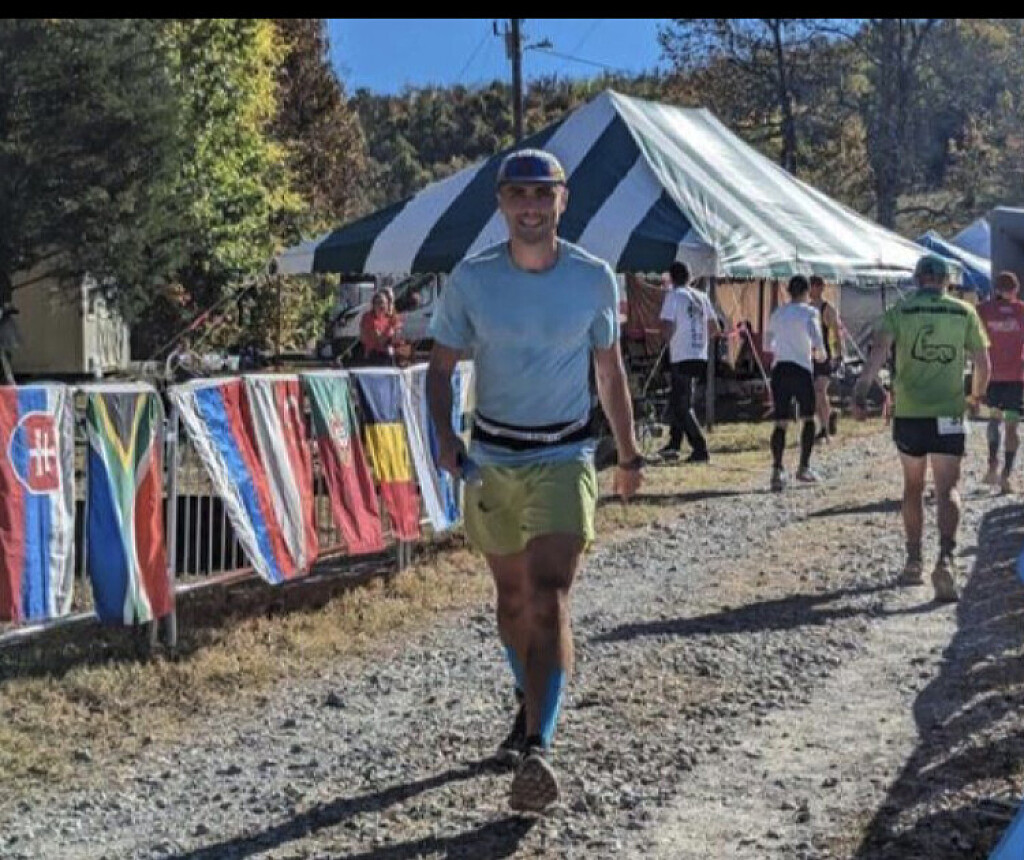
Ihor Verys's surprising secret weapon: nose breathing
Chilliwack, B.C.’s Ihor Verys just ran more than 718 km in 107 continuous hours, claiming the assist to winner Harvey Lewis at Big’s Backyard Ultra in Tennessee on Wednesday evening. Beyond his remarkable fitness and mental stamina, the ultrarunner has a secret weapon: his breath. The athlete swears by nose-breathing, and has perfected his technique while running.
Verys has only been competing for three years, yet has already racked up an incredible list of accomplishments that include wins at B.C.’s gruelling Fat Dog 120 and Alberta’s Canadian Death Race (where he also faced off against Lewis, beating him by more than two hours).
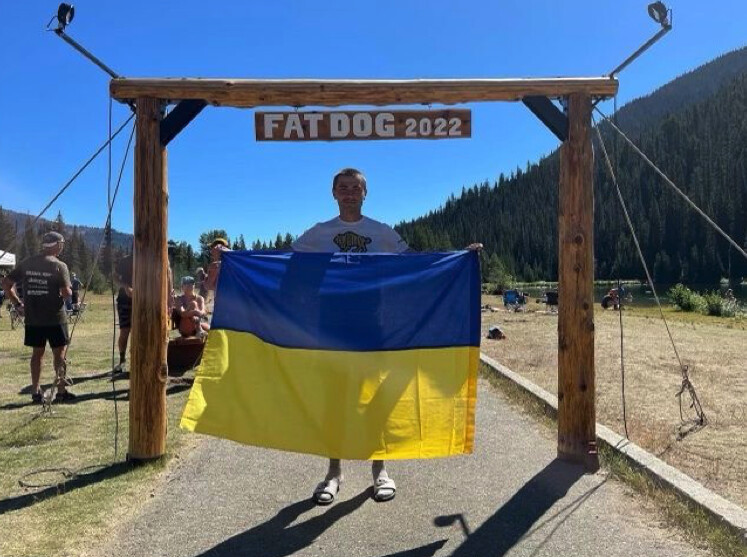
The athlete says that trail running wasn’t always as easy as he makes it appear, and after a 50 km run between two Brandon and Shilo, Man., he discovered his biggest challenge was being out of breath.
The breathing issue had nothing to do with how fast Verys was going. “I was slow like a snail,” he explains. “My chest muscles were incredibly sore. I started looking into it, and came across the book called The Oxygen Advantage by Patrick McKeown.” Verys now calls the book one of his ultrarunning bibles.
In the book, McKeown explains that physiologically, our mouths aren’t created for breathing. “Our mouth serves very different purposes, and our nose is the only organ that should used for breathing,” says Verys. “Interestingly, the entire book was based on the research and lifework of one Ukrainian doctor, who worked and practised in what was then the USSR.” Verys, who moved from Ukraine to Canada in his early 20s, was so fascinated, he read the entire dissertation in its original Russian. “The doctor was able to cure over 500 children from asthma just by getting them to do simple breathing exercises and changing the way they breathe,” he says.
Inspired, Verys set out to change his own breathing technique. “I made sure I was always using my nose to breathe, and I started doing breathing exercises religiously every day,” he says. “I’d take a five to 10-minute break at work to do the exercises, and I’ve been doing them ever since.” Verys was also taping his mouth shut at night to make sure he used his nose to breathe while he slept. “I’ve noticed a huge improvement, and I’ve never had the same issues again. I’ve done a few ultras now and I’ve never had issues with breathing,” he says. “My sleep improved, too. Pretty much all my training runs are done while nose-breathing. I mouth-breathe only very rarely while doing intense speed workouts.”
Verys says the neatest thing about it is that he’s able to pace himself during races using his breathing. “I don’t care about HR or the grade of a climb,” he explains. “If I need to open my mouth to breathe, it means I’m going too fast and I need to slow down.” Unless Verys needs to make a move or attack a hill, he remains at nose-breathing speed. As a result, his lungs and breathing muscles never get overworked, and there is an unanticipated bonus: nose-breathing is stealthy and silent, appearing effortless. “There’s nothing more demoralizing for your competitor when he or she can’t hear you breathe 100+km into the race,” he says.
Curious to try it yourself? Verys says the exercises are fairly basic, and it’s easy to make your own variations. He suggests trying multiple repeats of holding your breath, after exhaling everything in your lungs. According to the research, there’s an anatomical basis for getting your body used to the build-up of CO2 while holding breath, and the result is efficient breathing and the benefits that carries. “The more you do it, the longer you can hold your breath,” Verys says. “At the beginning, I could barely hold my breath for 20 seconds, but now I can comfortably do it for more than 60.”
by Running Magazine
Login to leave a comment
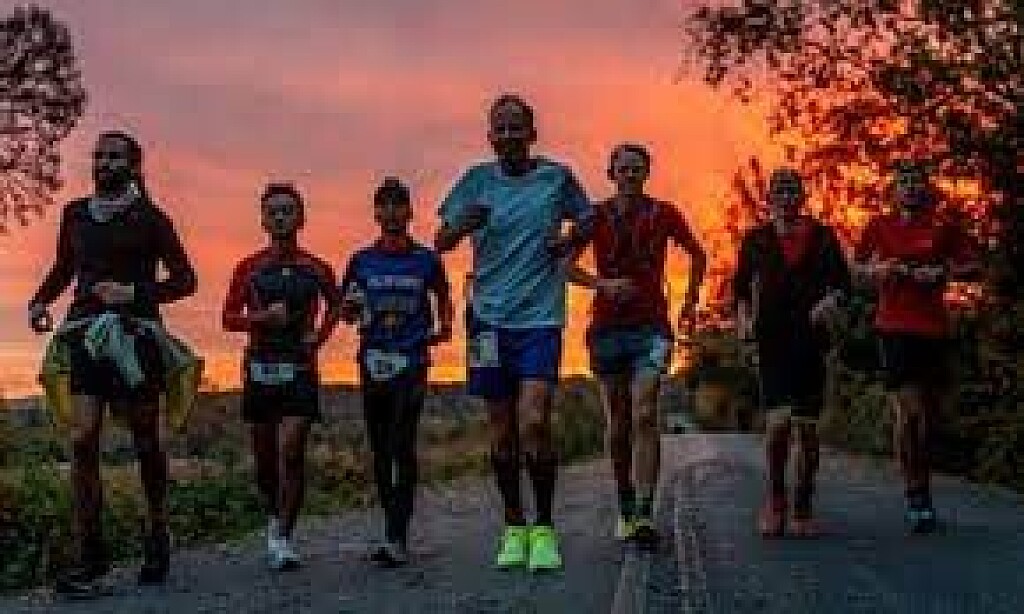
Harvey Lewis Is the Last-Man Standing and World Record Holder at Big Dog’s Backyard Ultra
The 47-year-old completed 450 miles in 108 hours.Two years after breaking the backyard ultra world record at the Big Dog’s Backyard Ultra record—354.169 miles in 85 hours—Harvey Lewis has done it again. Last weekend he broke the world record with an astounding 450 miles in 108 hours.
The backyard ultra requires runners to run a 4.167-mile loop at the top of every hour until one runner has done at least one more loop than the second-to-last runner. In the process of nabbing the victory and the world record, Lewis, 47, a high school history teacher, raised nearly $30,00 of a $100,000 goal for the Brighton Center. The Kentucky-based non-profit helps families with services ranging from homelessness to homeownership.
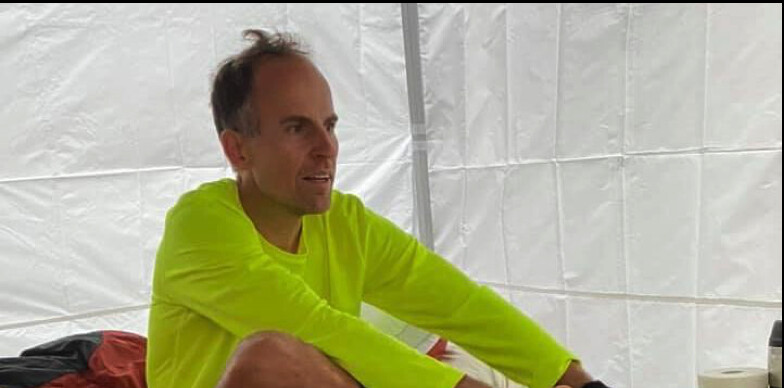
iRunFar reported that on Wednesday, six runners passed 100 hours, calling the feat "remarkable." The runners included Lewis, former joint backyard ultra world record older, Merjin Geerts, and the most recent backyard ultra world record holder, Phil Gore.
Terumichi Morishita and Gore finished the 100th lap but did not start at the next one. Geerts failed to finish in the required hour.
Three runners remained after 101 hours, per iRunFar: Lewis, Ihor Verys, and Bartosz Fudali. And there was just one hour to meet Gore’s 102 hours. Fudali did not start the 104st hour, leaving Lewis and Verys. Although Verys finished about give minutes than Lewis, according to iRunFar, but just a few loops of the course later, Lewis finished ahead. On the next, 108, loop, Verys chose not to start, making Lewis the winner.
“I have to pinch myself,” Lewis told WLTV5 in his hometown of Cincinnati, Ohio, whose show hosts were also incredulous.
One told viewers, “It's a head-scratcher.”
by Runner’s World
Login to leave a comment
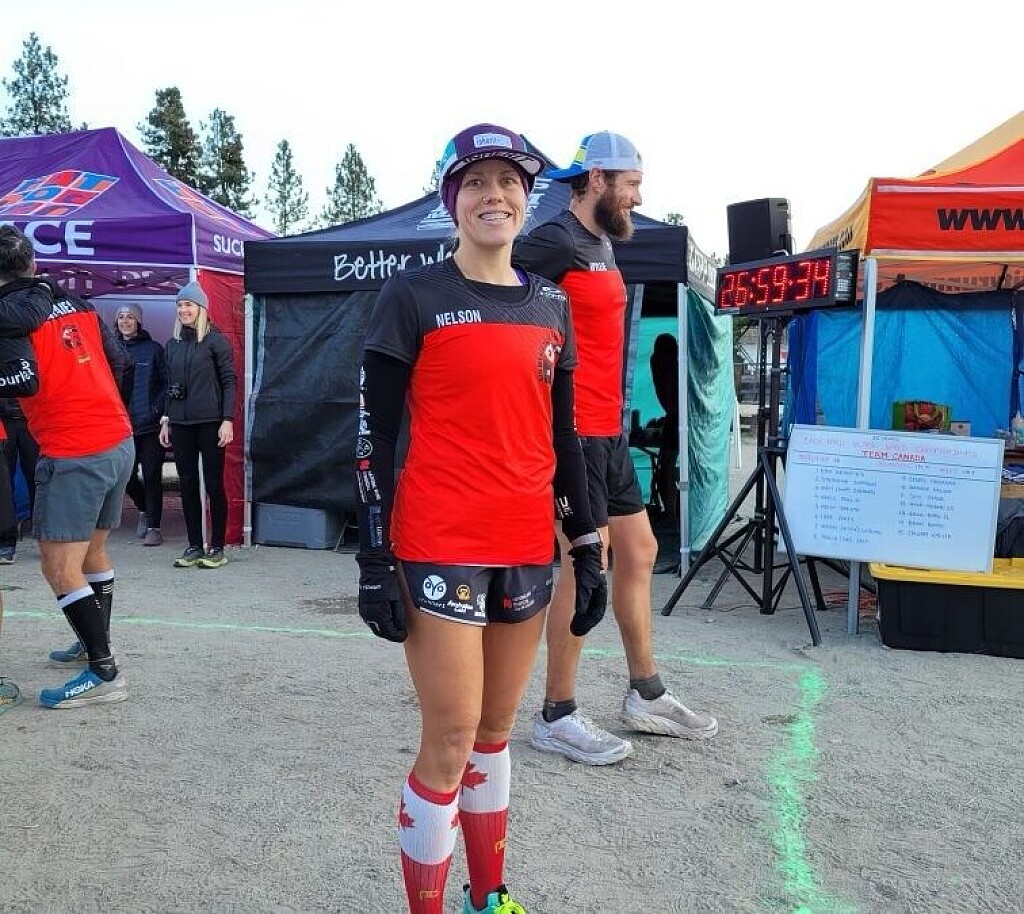
Amanda Nelson breaks Canadian 24-hour record
Ultrarunner Amanda Nelson broke the Canadian women’s 24-hour record at That Dam Hill in London, Ont., over the weekend, running an unofficial distance of 248.8 kilometers and picking up her fourth national ultramarathon record.
Although Nelson, who hails from Woodstock, Ont., told Canadian Running on Monday that the exact distance likely won’t be made official for a couple of weeks, she broke the 238.261-km record held by Bernadette Benson by at least 10 km.
“I had lots of highs and lows—more highs than lows—but there were times where I was like, ‘Why am I doing this?’” she said of her weekend effort, her third attempt at breaking the Canadian 24-hour record.
She said while her path to achieving the 24-hour record hasn’t always been smooth, an uneven surface is exactly what was needed to finally accomplish this feat.
Nelson said her two previous, unsuccessful shots at the record were both attempted on the track. Although running on a flat surface would seem to take less of a toll on the body, the monotony of running laps on a track was too mentally draining.
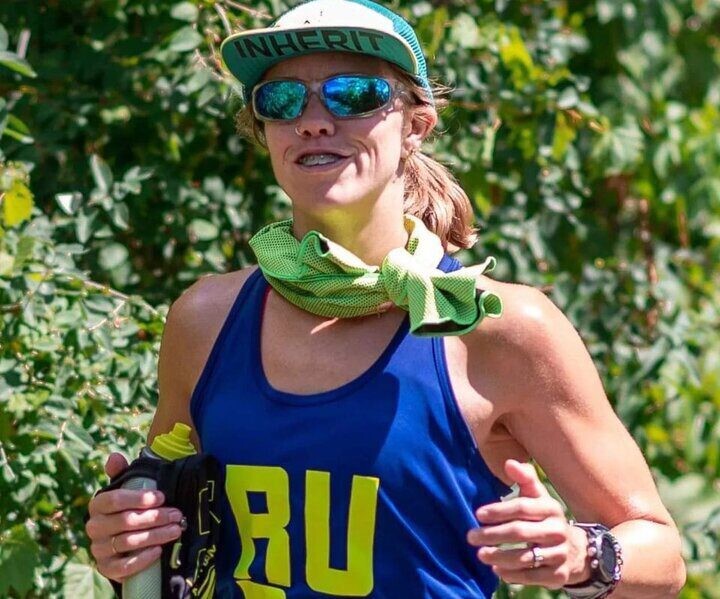
“Mentally, just doing the track, it’s not for me,” said Nelson. “That Dam Hill isn’t a track—it’s a 2.25-km loop on pavement with hills. Although it’s hard running on pavement for that long, there’s more variety to the surroundings at That Dam Hill. I need the hills and the downhills and variety. They help a lot, mentally. I knew I had to do a course that wasn’t on a track if I was going to take another try at breaking the record.”
Nelson said positive self-talk was also key to staying on track during her most recent shot at the record. “When I’m going through a low, I make sure to remind myself that I can keep going, that I am strong enough and this bad feeling is going to pass.”
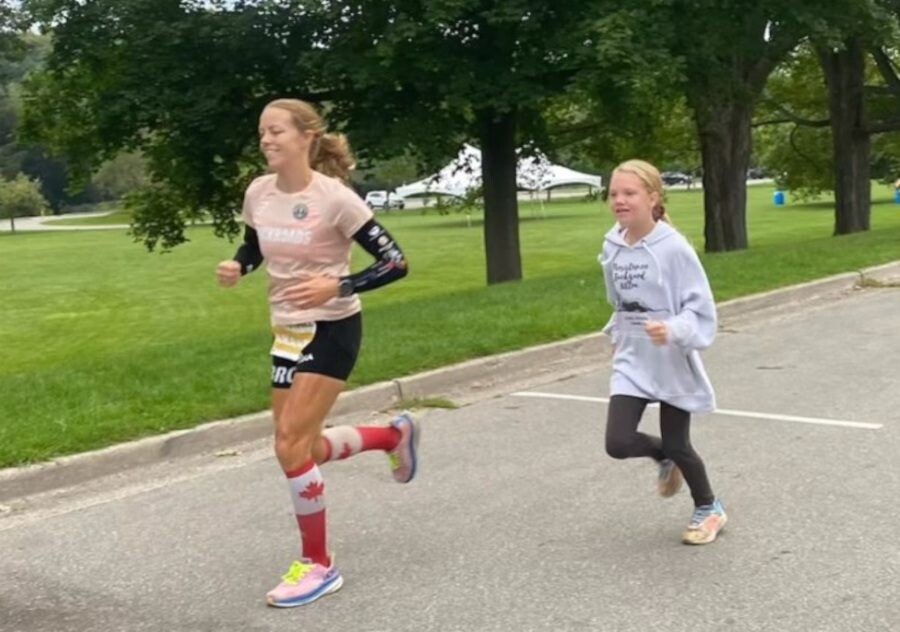
She said she felt “amazing” in the final moments of her run, and that the end of her record-breaking race was made even more special when Hanna Nelson, her 10-year-old daughter, joined her for the last partial loop until the clock hit 24 hours.
“It was great, but it’s crazy how the second you finish, you’re done. Everything just kicks in and you’re like, ‘I couldn’t even run one more step.’”
In addition to her latest record, the 34-year-old holds the women’s 12-hour Canadian record (135.072 km) and the 100-mile Canadian record (14:45:51). In May, she broke her Canadian women’s backyard ultra record by running 375.51 km over 56 hours at the Race of Champions-Backyard Masters in Rettert, Germany.
That performance in Germany helped qualify Nelson for Big Dog’s Backyard Ultra Individual World Championships in Short Creek, Tenn., which begins Oct. 21. She is one of only three Canadians who have qualified for the race (Ihors Verys and Eric Deshaies have also punched their tickets), and one of only four female qualifiers among 75 runners representing 38 countries.
However, there’s a chance the race may be over for her before it begins—the cost of making the return trip to Tennessee could end up being too prohibitive for Nelson.
by Paul Baswick
Login to leave a comment
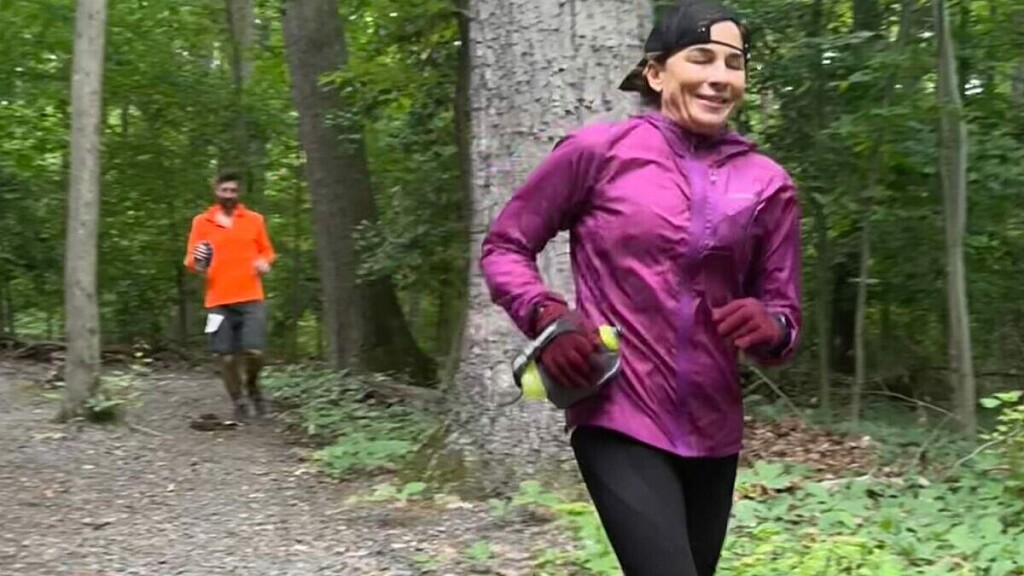
Jennifer Russo Shatters Courtney Dauwalter's Backyard Ultra World Record
The 57-year-old’s new record also makes her the first American female to cover 300 miles in 72 hours.
A mom of three, the 57-year-old from New Richmond, Ohio, completed the multi-day race, which began on Saturday and finished with 74 laps (also called “yards”) of the course, totaling a whopping 311 miles. In the backyard ultra race format, runners must run one 4.167-mile loop, or yard, every hour until one runner is left.
Russo’s new record makes her the first American female to cover 300 miles in 72 hours in any race format, a record that unfortunately won’t be ratified since the course was not USATF-certified. Russo’s performance also ties her for 16th place in the all-time longest distance covered in the backyard ultra format, surpassing the former record of 68 yards set by fellow American ultramarathoner Courtney Dauwalter at Big’s Backyard Ultra, in Bell Buckle, Tennessee, in 2020.
After nearly six hours of competition between Russo and New Jersey’s Scott Snell, Snell emerged as the victor, running 75 yards. Levi Yoder of Dundee, Ohio, finished in third with 63 yards but couldn't complete his 64th.
Elsewhere in the competition, Canada’s Viktoria Brown of Ontario picked up the second-highest number of yards among the six female racers, with 49, finishing the race in the top six. She fell seven laps short of Amanda Nelson’s women’s Canadian backyard ultra record set in Rettert, Germany at the Race of Champions-Backyard Masters.
In addition to (clearly) logging loads of miles, Russo herself is also a race organizer and co-founder of Empower Ultras, which puts on multiple ultra and endurance races throughout the country.
by Runner’s World
Login to leave a comment
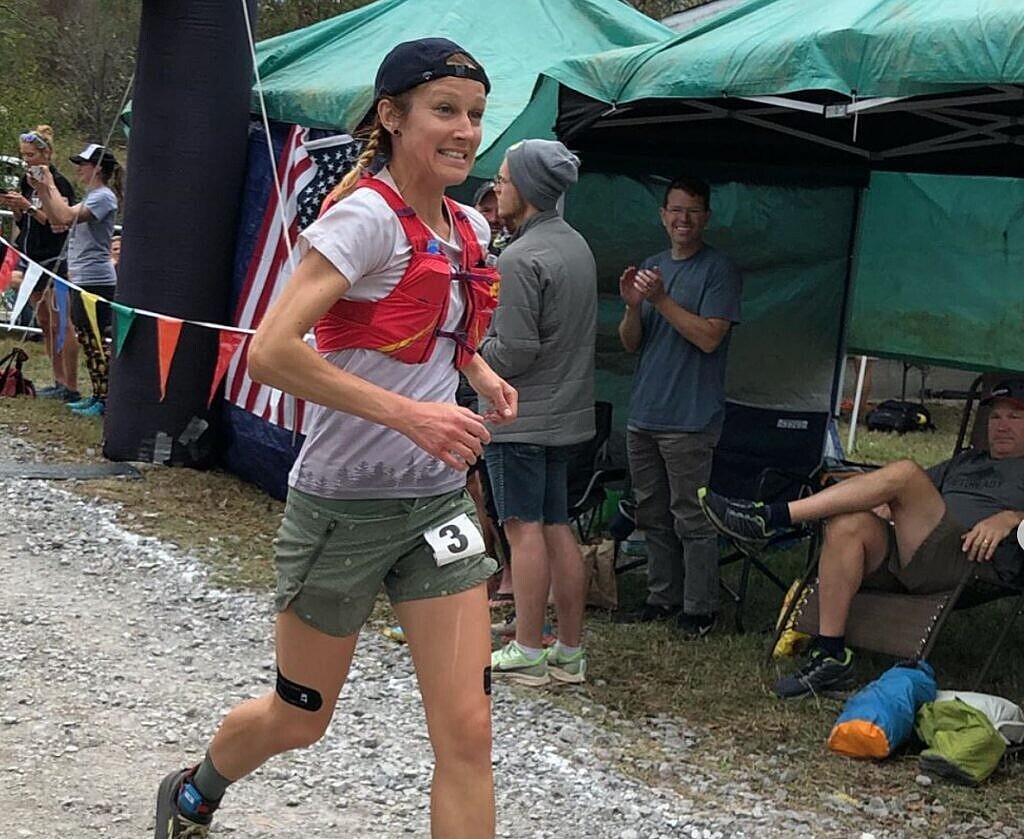
U.S. ultrarunner breaks Courtney Dauwalter’s backyard ultra world record
American ultrarunner Jennifer Russo has set a new women’s backyard ultra world record by completing 496.21 km at the Capital Backyard Ultra in Lorton, Va. The 57-year-old mother of three from New Richmond, Ohio, finished the multi-day race Tuesday after running 74 yards—or 74 laps of the 6.706-km course—in a contest that began Saturday.
The backyard ultra race format requires participants to start one “yard” (loop) every hour on the hour, until only one runner remains. (Backyard racing is designed so that theoretically, runners can complete the 100-mile distance in 24 hours.)
Russo’s latest effort tops the previous women’s world record of 68 yards set by American Courtney Dauwalter at Big’s Backyard Ultra in Bell Buckle, Tenn., in 2020. With this week’s race in Lorton, a suburb of Washington, D.C., Russo also becomes the first American female to reach 300 miles (482.8 kilomtres) within 72 hours in any race format. Her 74 yards also puts her in a four-way tie for 16th for the longest distance ever covered in the backyard ultra format.
These achievements came at the end of a gruelling standoff between Russo and Scott Snell of New Jersey. The pair battled alone on the course for almost half a day after Levi Yoder of Dundee, Ohio, who finished with the third-highest total of yards, couldn’t complete his 64th lap. Snell ultimately outlasted Russo in the showdown, winning the event by running 75 yards, or just under 503 km.
The race also saw an outstanding effort by Canada’s Viktoria Brown. The runner from Whitby, Ont., racked up the second-highest number of yards among the race’s six female competitors, completing 49 yards and finishing the race in the top six. Brown, who in March broke her own 48-hour Canadian and 72-hour world records at the GOMU (Global Organization of Multi-Day Ultramarathoners) six-day world championships in Policoro, Italy, came just seven laps short of the women’s Canadian backyard ultra record set by Amanda Nelson of Woodstock, Ont., earlier this month at the Race of Champions-Backyard Masters in Rettert, Germany.
Fellow Canadian Justin Wright also cracked the top 10 at the Capital Backyard Ultra. The runner from Leamington, Ont., completed 36 yards—241.4km—to finish 10th overall in the field of 31 competitors.
by Paul Baswick
Login to leave a comment
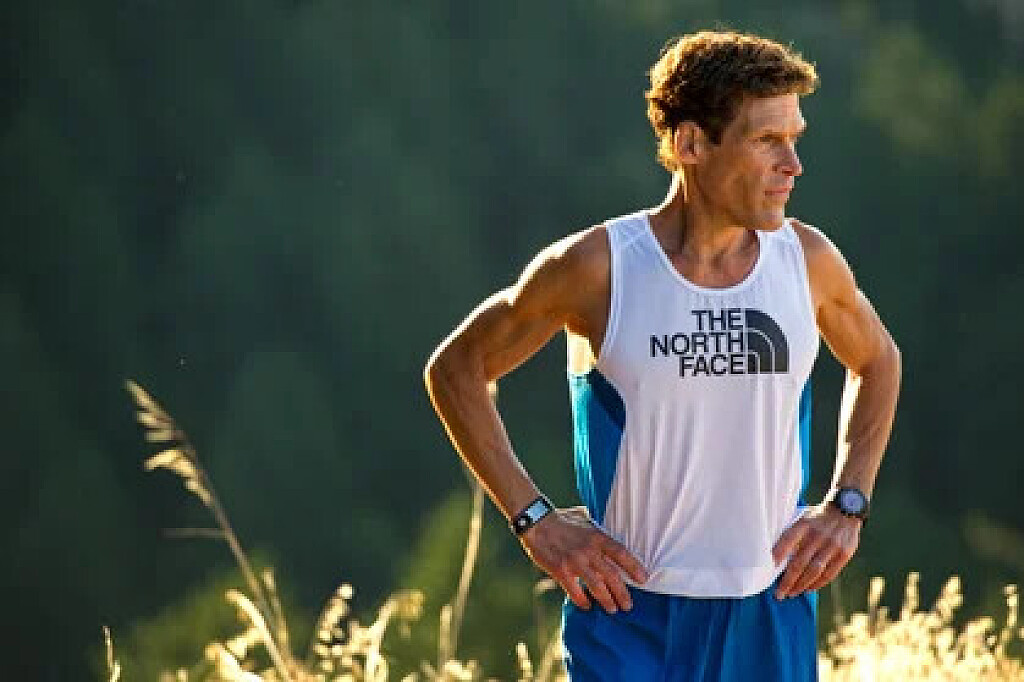
Top six reasons ultra runners are a breed apart, Ultrarunners' brains might be wired differently (how else to explain it?)
Ultra runners are pretty unique athletes. How many people are willing to run 50K, 100K, 100 miles or more? The answer is not a lot, which is why ultra running is so different from other sports. There are things that ultra runners do that no other athletes (not even short-distance runners) understand. Don’t believe us? Take a look at these few differences between ultra running and other sports.
Eating contests
To run an ultra marathon, you have to train well, but when race day arrives, your success will come down to how much you can eat–because after you’ve been running for several hours, your digestive system might be a little out of whack (and what goes in has been known to come back out). If you can keep enough nutrition down to keep your energy levels high for the entire race, you’ll do well.
To do that, ultra runners will eat some pretty random things on the race course (flat Coke and scalloped potatoes, anyone?), besides your classic energy gels and electrolyte drinks. Athletes in other sports are very careful about what they eat or drink before and during competitions, but for ultra runners, it seems like pretty much anything will work as fuel to get them to the finish line.
Weird sleeping habits
A basketball player wouldn’t take a court side nap, just like a hockey player would never go to sleep on the bench or in the penalty box, but that’s not the case with ultra runners. If you’re in a race that will take you more than a day to complete, you’re going to get pretty exhausted on the course, and that might mean you’ll need to take a nap break at some point–even if it means lying down by the side of the trail, or in a ditch, for a few minutes of shut-eye. (It’s called a dirt nap, for the uninitiated.) Ultra runners get pretty good at sleeping anywhere and for however long, so they can re-energize and get back to racing.
No rush
In most sports, you’re encouraged to go as fast as possible, because your speed will be rewarded with a touchdown, goal, basket or some other form of points. In ultra running, athletes aim to complete each race in good time, but there’s no rush. In fact, going too fast will only hurt your result and jeopardize your chances of finishing the race at all. Ultra runners quickly learn how to find a comfortable pace that they can hold for hours upon hours (or even days) of running and power-hiking.
No end
While most ultra marathons have set distances, some events are open-ended and go as long as it takes until only one runner is left standing. These are known as backyard ultras, and they task competitors with running a 6.71-km (4.17-mile) lap every hour for as many hours as they can. One by one, athletes will drop out of the race, either because they can’t go any longer or because they don’t complete a lap before the hour is up. Can you think of any other sport with this last-runner-standing, no-end-in-sight format? Didn’t think so.
No schedule
The Barkley Marathons is one of the most infamous ultra marathons on the planet, but despite its cachet, it is incredibly secretive. The race’s start date isn’t even public knowledge until the athletes are at the start line. This would never fly in other sports. The NHL couldn’t tell players to be on-call and ready for a random start date for a game, but in the world of ultra marathons, this system works (for the Barkley Marathons, at least).
Get emotional
After running 100 miles, you’re going to be beaten down, both physically and mentally. Because of this mental wear, you may burst into tears at any moment. In most sports, crying may be a sign of weakness, but in ultras, it’s pretty normal. No one’s going to judge you, and who knows, if they see you crying they may join you.
by Ben Snider-McGrath
Login to leave a comment
Here’s why racing a team event will make you a better runner, racing with a friend or several will revitalize the way you approach competition
Either you love running in groups or you prefer to do most of your runs solo–most runners seem to have a preference. Even if you’re a die-hard solo runner, entering a race as a duo or team of several will be a game-changer.
I enjoy my alone time, and with the exception of heading out to our local parkrun or community events, I lace up and train by myself. Many of the races I enter have team options, but I generally run solo. To wrap up the summer trail racing season this year, my partner and I decided to race The Lone Wolf, a last-man-standing looped-course race on the beautiful trails of Fernie, B.C.
I learned more from running with my partner than from any other race this year. Here’s why you should try a team event, even (or especially) if it means stepping outside your comfort zone.
You’ll be inspired by your teammate(s) and connect to the larger community
I know toeing the line as a solo racer is motivating in itself, and you might be wondering why a team effort would be different. Many people at the event were part of the ultratrail community I run in regularly, so it wasn’t a whole new crowd. It was, however, a new perspective; I had no idea how my husband and I would run as a team.
Running as a team changed my approach to the race and the people within it. I had a whole new set of competitors to get to know, and it was fun to watch them interact and try to guess how many loops both team members could manage. I wasn’t obsessing over pace and timing, so I was able to take the time to connect with different, fascinating people at the race. As always when connecting with new runners, I learned from them–and am already looking forward to crossing paths with them again.
As part of a team, you need to focus on the process rather than the results
Stepping into a team event means giving up a substantial amount of control over the outcome. If you’ve experienced a few races, you’ve probably had one that didn’t go as planned, and after a race like that, many of us go over what went wrong and how we could develop skills to avoid those problems in the future.
On a team, you truly have no idea how the race will pan out for your teammate or group members, so you’re forced to give up that PB mentality and focus on how you can make the race flow more smoothly for all involved.
Instead of worrying about whether my team was going to blow everyone away, I had to stay on top of the few things I could control. The race we entered required one team member to be on the starting line every hour on the hour (backyard ultra style), so I needed to be ready to switch out my partner, along with providing encouragement and trying to imagine what they might need when they finished a loop. My role as a runner shifted to also being that of a fan and crew member, and as a result, I had more fun than I expected.
You’re guaranteed to learn things you can incorporate into your solo racing
The skills you learn through teamwork will be useful when you head back into a race on your own. Remembering the importance of being dialled into the process rather than the result is something most runners should work on. Entering each race you run with a mindset intent on encouraging others can actually help you become a faster, more efficient athlete (and science backs this up).
After a few tough races, trying something different at the end of the season was revitalizing. A team event lessened the pressure I usually place on myself, so I wasn’t as nervous throughout the race, and I was perfectly content with whatever outcome our team had–the goal was to have fun.
Many regular runners have personal goals to beat every time they race, and it can be a relief to jump into something where the only true goals are connecting with others, having a blast, and moving your body. I can’t wait to do it again.
by Keeley Milne
Login to leave a comment
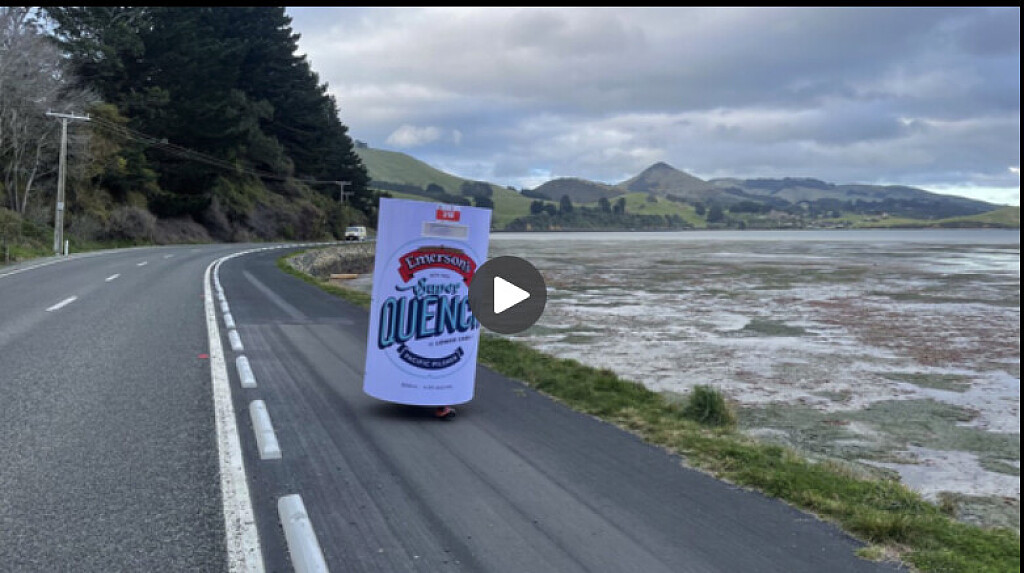
You’ve Heard of Running for Beer. But What About Running as Beer?
New Zealand ultrarunner Glenn Sutton finished the Dunedin Marathon on September 11 in a huge beer can costume that he crafted himself.
You might find this hard to believe, but only one of the 165 runners that completed the Dunedin Marathon in Dunedin, Otago, New Zealand on September 11 was wearing a human-sized beer can costume.
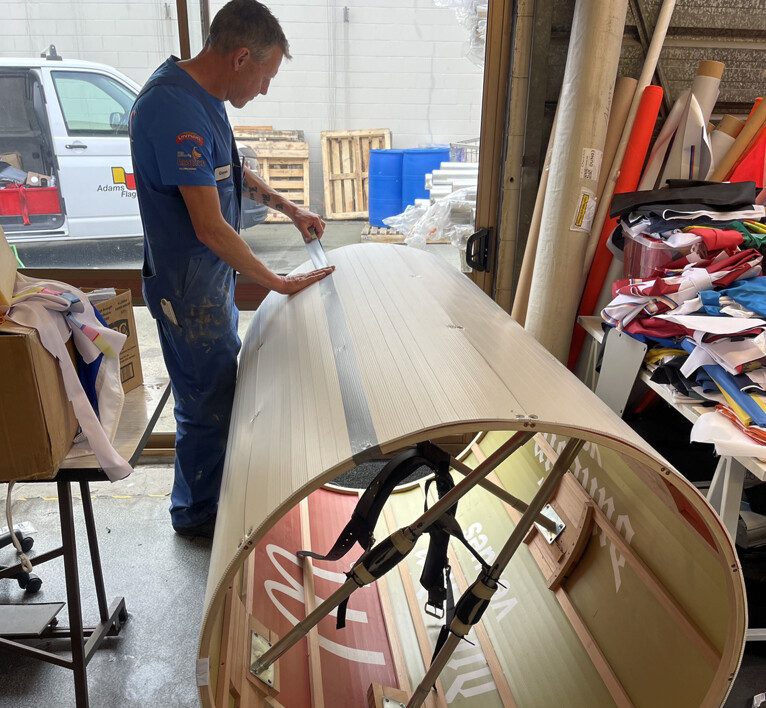
Glenn Sutton, a 48-year-old ultra runner from Dunedin, and local brewery Emerson’s, the marathon’s sponsor, came up with the idea before the COVID-19 pandemic canceled the 2020 edition of the marathon.
“I thought it would be something quirky to do. I hadn’t seen it done before,” Sutton told Runner’s World. “I’ve seen cans where people’s arms and heads poke out, but not a full-size can.”
After two long years of waiting, the Dunedin Marathon was finally scheduled for fall 2022, so Sutton got to work. A joiner by trade, he put his ornate woodworking skills into constructing a beer can costume that would cover his entire body from his head to just above his feet. His friend Bruce Adams made the signage that covered the wooden frame, which depicted Emerson’s Super Quench, a low-carb Pacific pilsner that launched earlier this year.
While in the can, Sutton couldn’t use his arms much and could only manage a shuffle rather than a full stride. It was hot, “like running in a glass house,” Sutton said. He could only see through a plastic cut-out at eye level, which blurred his already obstructed vision.
On race day, Adams ran about five meters ahead of him to make sure Sutton was on the right path. Sutton, who’s run ultra races like the days-long Badwater 135 before, wasn’t worried about taking his time to finish the race. He typically runs under three hours for marathons, but knew this particular attempt would take longer—especially if there were setbacks along the way.
Unfortunately, a major setback did occur. With 5K left, an unexpected gust caused Sutton to clip his foot on the inside of the can. He tried to catch himself, but fell on the footpath.
At that point, he was “like a turtle on its back,” rolling around while locked into harnesses around his shoulders and waist. Though the can took some damage, Sutton survived the fall unscathed. He unstrapped, got out, re-strapped in, and trudged forward for the final three miles.
As he neared the end, Sutton heard his name over the loudspeakers. A crowd clapped him through the finish line, which he crossed in a time of 6:12:37.
“It was quite cool,” said Sutton. “It drew a bit of attention, and that’s what it was all about.”
Sutton’s next challenge? Big Dog’s Backyard Ultra Satellite Team Championships, where he has to run a 4.167-mile loop at the top of the hour, every hour, for as long as possible. Nations choose their 15 best ultra runners to compete against the rest of the world, and the team that logs the most yards wins. If Sutton outlasts his 14 New Zealand teammates, he individually qualifies for the Backyard Ultra world championships in October 2023.
“I enjoy challenging myself to go these distances,” said Sutton. “I don’t mind grinding it out—and I want a bit of pain.”
by Runner’s World
Login to leave a comment
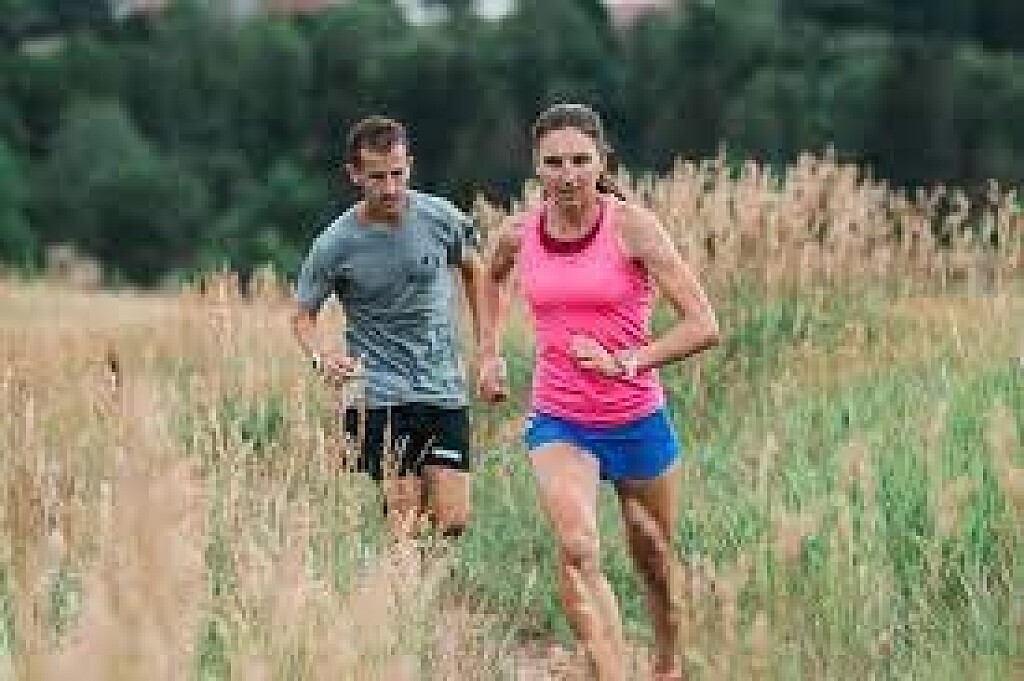
Here’s how kindness will make you a better runner
Renowned ultrarunner, coach and co-author (with his wife, Megan Roche) of The Happy Runner, David Roche has some suggestions about how we can practice kindness and positivity toward others in our running and racing, and he explains why science backs this up.
“Lifting others up can lift you up too,” says Roche. “It’s not just psychological, but in how physiology responds to stress. Uplifting emotions may improve running economy. Affirmations reduce cortisol and stress. Even adaptation processes on the cellular level may be improved by a positive neurophysical context,” he adds.
If that’s not enough for you, know that you’ll also have way more fun; whatever the end result of your race, you’ll look back on the experience with more joy.
Celebrate shared experience
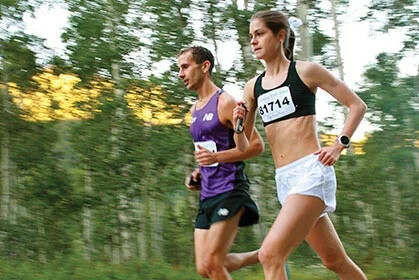
While the running community still has a long way to go in supporting diversity and inclusivity, trails do tend to tear down barriers and bond people. Most of us feel far more comfortable talking to strangers on a trail than we would on a street. If you see someone struggling a little out there, you’ve probably been in that situation yourself, and you have some empathy for them.
That person you stopped to give a salt tablet to mid-race when you noticed them struggling hits the finish-line all smiles and tears, and you’ll feel their success like its you’re own. Roche explains that by building your running community, you will tend to be more process-focused and less results-focused (which was actually, in turn, help you run faster).
Thank every single volunteer and encourage every other runner
If you’ve ever had challenging race, you’ve probably experienced some moments of suffering. Mine, in ultrarunning, often involve struggling to keep enough nutrition in and combat nausea; I find it hard to carry on conversations when I feel that unwell. A much more experienced ultrarunner (who has also combated GI distress) once commented to me that the worse she felt, the more appreciative of the volunteers she tried to be. At first, that seemed unfathomable to me. Be extra thankful when I all I really want to do is cry or throw up?
I set out to test this theory when I ran a backyard ultra earlier in 2022. I dedicated myself to asking questions about others when my brain started to spiral into lowness, and to express my gratitude toward my crew and the race volunteers. That day was a certain kind of magic unlike any other I’ve had, and while I’m sure I can’t chalk it up entirely to practicing being nice, it certainly helped.
Roche sums up the concept of being a beacon of cheer when he says: “Spread the freaking love because life is too short and uncertain and scary to spend it alone, withholding affection.” I can’t argue with that. Even if you’re an introvert like me, up your kindness-game next race. You have absolutely nothing to lose by giving it a try.
You don’t have to be perfect at this–no one is. “The goal isn’t to exude an infallible aura of kindness, but to accept yourself and others as much as you can given the constraints of your background, brain chemistry, and perspective,” says Roche.
by Running Magazine
Login to leave a comment
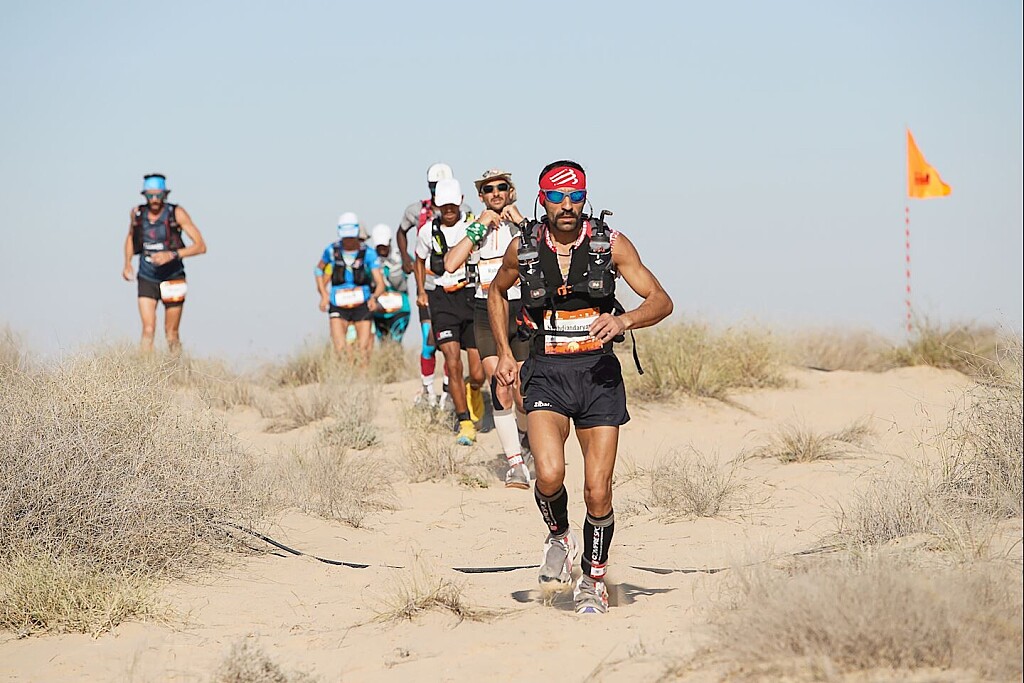
Ultra running is exploding in popularity around the world, but what actually is an ultramarathon?
The term Ultra covers a broad range of races, from mountains to road
Ultra running is fast becoming a mainstream sport. Once, it was the realm of a few crazy runners, and not the pastime of everyone from your boss to your neighbour. But what actually is an ultramarathon?
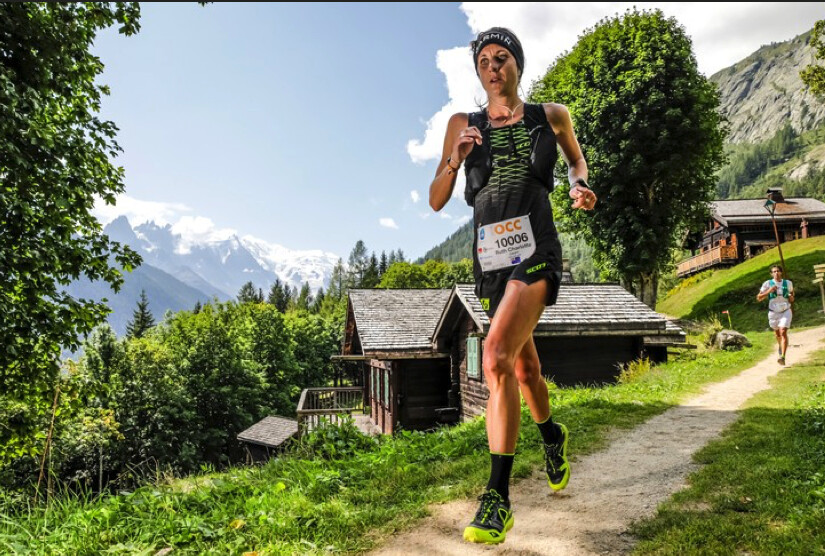
How long is an ultramarathon?
An ultramarathon is anything longer than a marathon, which is 26.2 miles (42.195km). So, you could complete a marathon and run back to your car and you’ve technically run an ultra distance.
Typically, ultramarathons start at 50km and go up from there. Standard distances are 50km, 100km and 161km (100 miles), the latter often being referred to as a “miler”.
While a marathon is never longer than 26.2 miles, ultras tend to vary a bit. For example, the Hong Kong 100 is in fact 103km. And the Ultra Marathon du Mont Blanc, a miler, is in fact 171km. Others are a bit shorter than advertised, too.
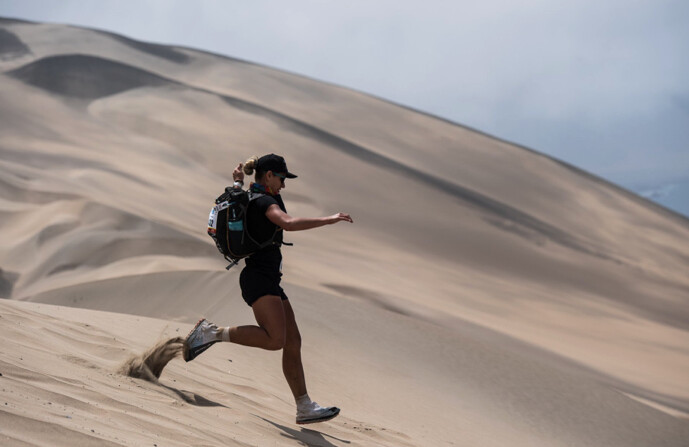
Aside from the above three types, there are ultra races of all sorts of distances and formats. As long as it’s more than a marathon, the distances and formats can be limitless.
An increasingly popular format is 250km split over stages, such as the Marathon Des Sables. Runners complete different distances each day, some less than an ultra, and sleep at night.
As the sport continues to grow, others try to push the boundaries – such as the 298km Hong Kong Four Trails Ultra Challenge, which is non-stop and has no support on the trails. Runners finish the distance in between around 48 and 70 hours.
The formats are becoming increasingly imaginative. A backyard ultra, for example, is around a 6.7km loop. The runners start on the hour every hour until there is just one runner left, so the distance is not set. It keeps going and going. Runners have gone on for more than 80 hours.
Outside organised events, runners often complete ultramarathons just for fun, to set a personal best or a Fastest Known Time (FKT), which is ultra terminology for a specific course record. This can be anything from the 44km Hong Kong Trail, which takes a few hours, to the 4,172km Pacific Crest Trail, which has an FKT of almost two months.
What terrain is an ultramarathon on?
With an infinite range of distances come infinite terrains. An ultramarathon can be road, flat, track, pavement, mountain, trail, snow and more. As long as you can run on it, you can run an ultramarathon on it.
A famous road ultramarathon is the 246km Spartathlon. It follows the legendary route run by Pheidippides, who ran from Athens to Sparta before the Battle of Marathon in Ancient Greece, thus inventing the marathon.
The most high-profile mountain ultra is the Ultra Marathon du Mont Blanc, which has a total of 10,040 metres accumulative elevation gain in the Alps.
Track ultras often take the format of a set time rather than distance. For example, how far you can travel in 24 hours, round and round the same athletics track.
When Zach Bitter set the 100-mile world record, which has since been broken again, he ran it around a 443m track by doing 363 laps.
The distances and terrains are so varied race to race they are essentially different sports. Kilian Jornet is considered one of the best ultra-mountain runners ever, but comparing him with Yiannis Kouros, considered one of the best ultra road runners ever, is like asking who is better at football: Tom Brady or Lionel Messi.
Is an ultra harder than a marathon?
The word ultra refers to the distance, not difficulty. An ultramarathon is inherently hard, but not inherently harder than a marathon or any other distance for that matter.
If you have a specific and demanding finishing time in mind for your marathon, you will have to stick to a specific split, keep your legs spinning and spinning, all the time concentrating on your pace and pushing your body.
Is that easier or harder than a 24-hour 100km over mountains, with variation in terrain and elevation, when you walk some parts and rest at check points?
What about a 5km? If you want to run a fast 5km, you will be at your absolute limit for the entire time and collapse over the finish line.
Non-runners often think an ultramarathon is the “next step” for runners looking for a new challenge. Searching for a faster time is just as challenging as searching for a longer distance.
Either can be harder than the other – it’s down to the runner.
The same is true within ultra running. Ruth Croft, one of the best runners, dominates races around 50km. She was repeatedly asked when she would do a 100 miler once she had “completed” a 50km. Croft resisted the urge to cave to the pressure to run further until she was ready, understanding that fast and far are two often incomparable metrics.
When you consider all of the above, the simple definition of “longer than a marathon” does not quite do justice to the massive range of events encapsulated by the term ultramarathon.
Login to leave a comment
Why you should try a backyard ultra
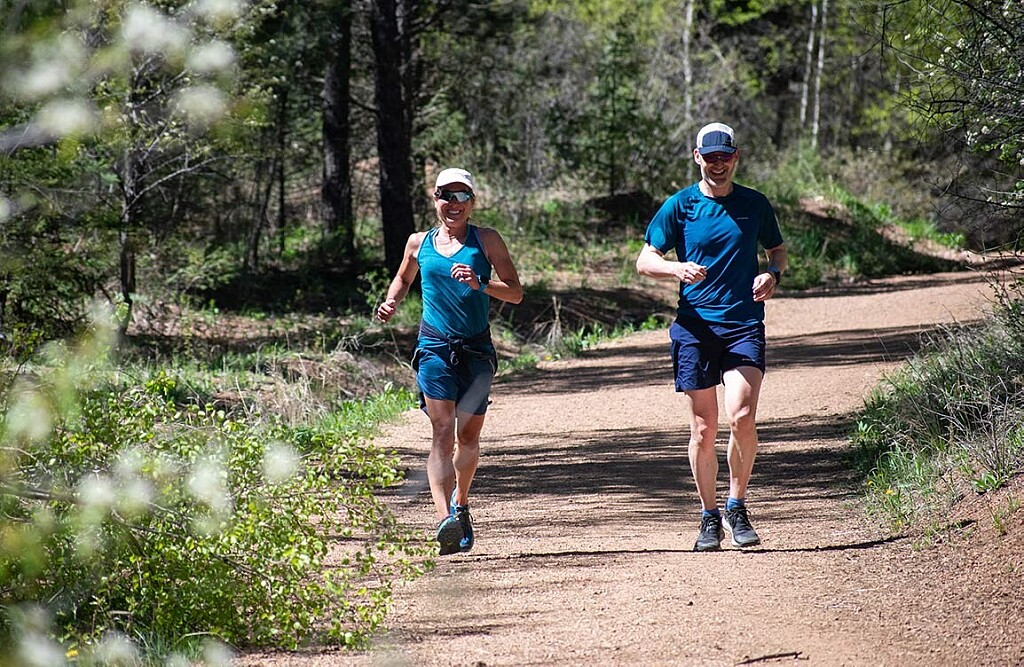
The creator of the backyard ultra, Lazarus Lake, sums his event up perfectly: “We run in the backyard for many different reasons. We run because it is fun. We run to socialize with our friends (old and new). We run to go further than we have ever gone before.” Whether you are an experienced trail runner or completely new to the scene, a backyard ultra is worth experiencing. Lake hosts the most famous backyard ultra, Big’s Backyard, but you don’t need to have your hopes set on Big’s to try out one of the many backyard races hosted each year.
Backyard ultras follow a simple rule: runners start every hour on the hour, and follow a 6.706 km course. Pace doesn’t matter, as long as you finish the loop before the one-hour cutoff and are ready to start the next loop on time. After runners finish each loop (or “yard” as it’s called in a backyard race) they may rest, eat, refuel, cry—the options are endless. Racers must simply be at the starting line ready to run every hour on the hour until only one runner is left. A backyard ultra can go on for many hours or even days, with current record holder Merijn Geerts boasting 90 laps, or 600 km. While that might sound daunting, a backyard ultra can be a unique and valuable experience for any runner, regardless of distance and time goals. Here’s why you should sign up for one this season.
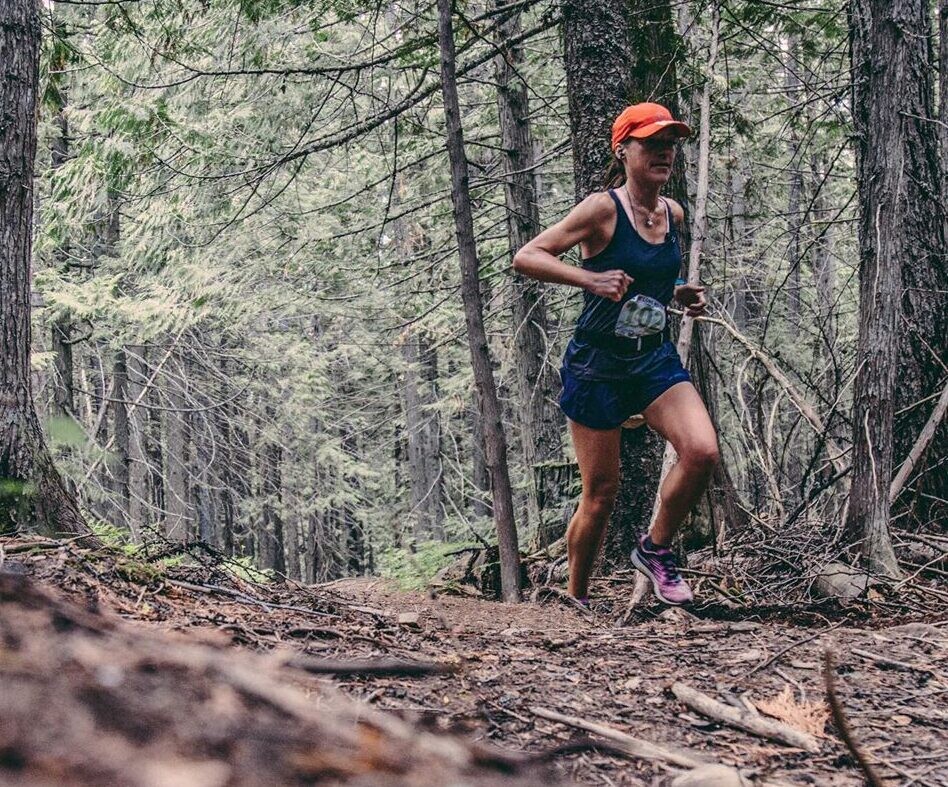
It doesn’t matter how fast or far you run
I ran three loops at my first backyard race–not remotely close to an ultra distance, despite the word being in the race name. Recovering from an injury and just starting to add mileage, I knew I was done just shy of a half-marathon. I had never been to an endurance event of this kind, and I hung around after to soak in the atmosphere. I wasn’t the first person to drop out. At the end of a backyard race, every single person aside from the winner takes a DNF (did not finish). There’s no second place; everyone is equal.
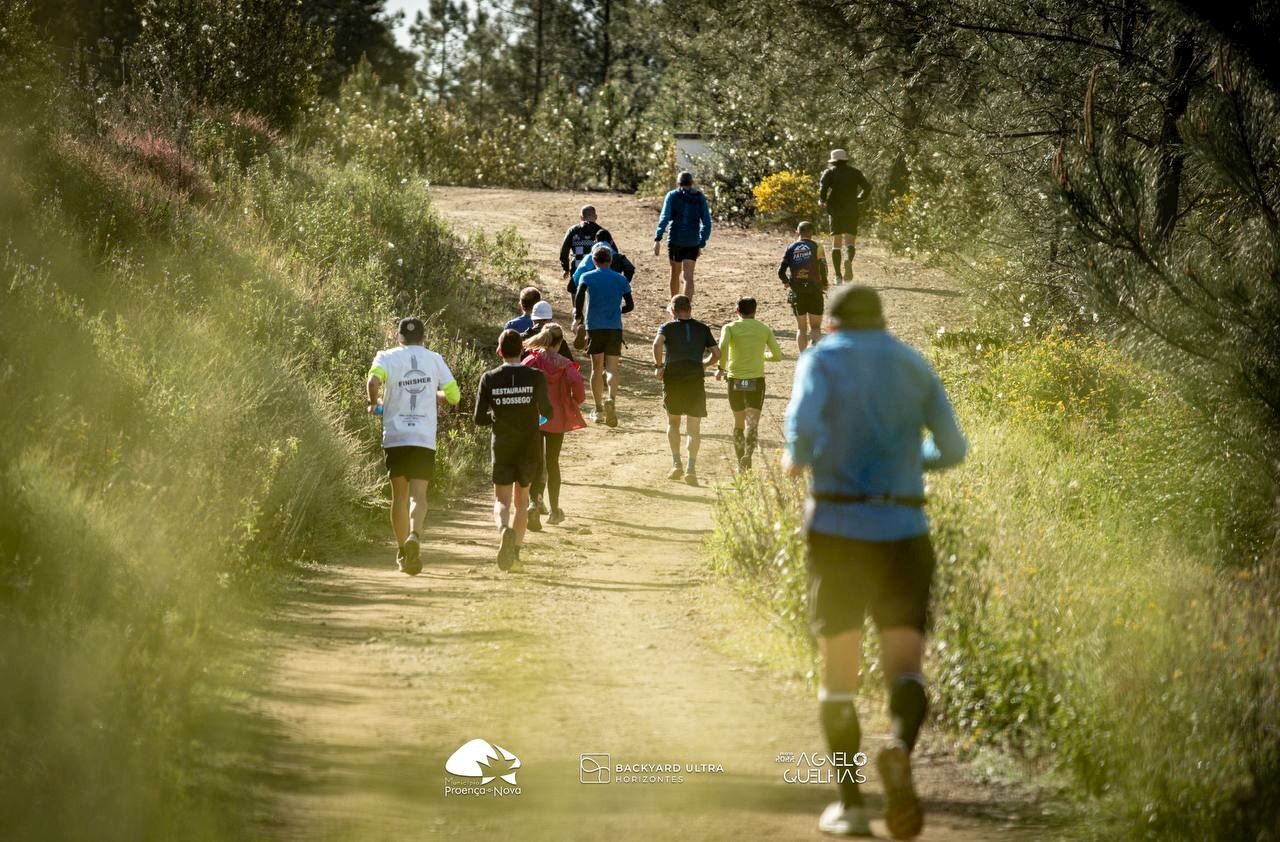
Running fast at a backyard ultra sounds like a positive—lots of time to recover, right? Many of the top backyard athletes actually run very slowly, even taking walk breaks, to minimize the toll on their bodies and extend their ability to run for hours (or days). There are very few perks to running quickly through the course and burning through your energy, fuel, and enthusiasm. If you are usually a back-of-the-packer, you’ll find you’re never alone.
It’s the perfect place to learn and practice troubleshooting
Most runners have experienced a less-than-ideal racing situation. From wardrobe malfunctions to GI distress, if you run long enough, you’ll have to work through an issue of some kind. In a backyard ultra, because you’re with your crew and around aid stations after each loop, you have the perfect opportunity to practise handling situations as they arise. If you’re training for an ultra, this can be essential. Not only are you only a maximum of 6.706 km away from your crew if your shoelace breaks or you start to feel sick; but you also get to experience handling potential setbacks on the fly. Backyard ultras often have both a daytime course, run on trails, and a nighttime course, on road or smooth paths that are safer during the dark hours.
My mom crews me at most of my races, and instead of trying to anticipate what I would need when I came flying into an aid station (as is usually the case), I was able to ask her to have something ready for me when I came back in from my loop. There’s a mental boost to knowing you only have to run 6.706 km and you’ll find fresh clothing prepped for you, or the snack you’ve been craving.
You’ll experience a community like no other
Backyard ultras are unique in that you’re always fairly close to the rest of the group, as well as the crowd and crew. A team atmosphere emerges, since a backyard racer can only go as long as their “assist” or the second-place finisher, runs. Racers need one another in order to keep going, and the larger the crowd, the more fun. If you make it until the nighttime loops, you will find that team atmosphere growing stronger, as runners personally battle their own fatigue and desire to stop running when darkness takes over. In my most recent backyard race, the inaugural Lewiston Backyard Ultra in Salmon Arm, B.C., it was most certainly the camaraderie among the runners that kept me moving through the night. One particularly cheerful (and renowned backyard athlete) Matt Shepard, of Valleyview, Alta., performed a resounding rendition of Macklemore’s Downtown, while running, to rally the group in the wee hours of the morning, and it worked–our spirits were lifted. You’ll experience tiny magical moments like this sprinkled throughout every backyard event.
by Keeley Milne
Login to leave a comment
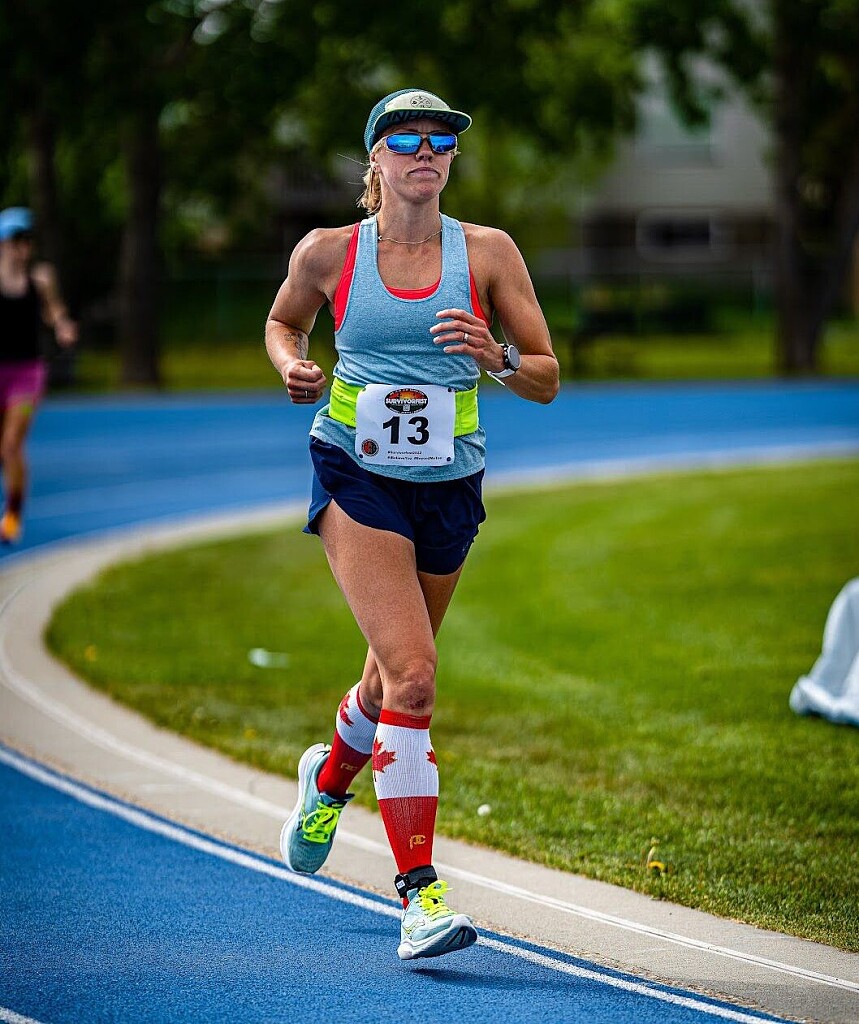
Amanda Nelson has only been running ultras since 2020, but has had incredible results
In her first race outside of Ontario, Woodstock native Amanda Nelson managed to secure new female 100-mile and 12-hour records (pending ACU verification) at Survivorfest in mid-June. Survivorfest is the official six-hour and 24-hour Canadian national championship, held annually in Edmonton, Alta. Nelson also won the entire race and set new course records.
Nelson has a remarkable running resume for someone who has only been participating in the sport since 2020. In September, she secured the Canadian soil 24 hour record from previous owner Viktoria Brown with 227.33K at That Dam Hill Race in London, Ont., setting a course record and winning the race as well.
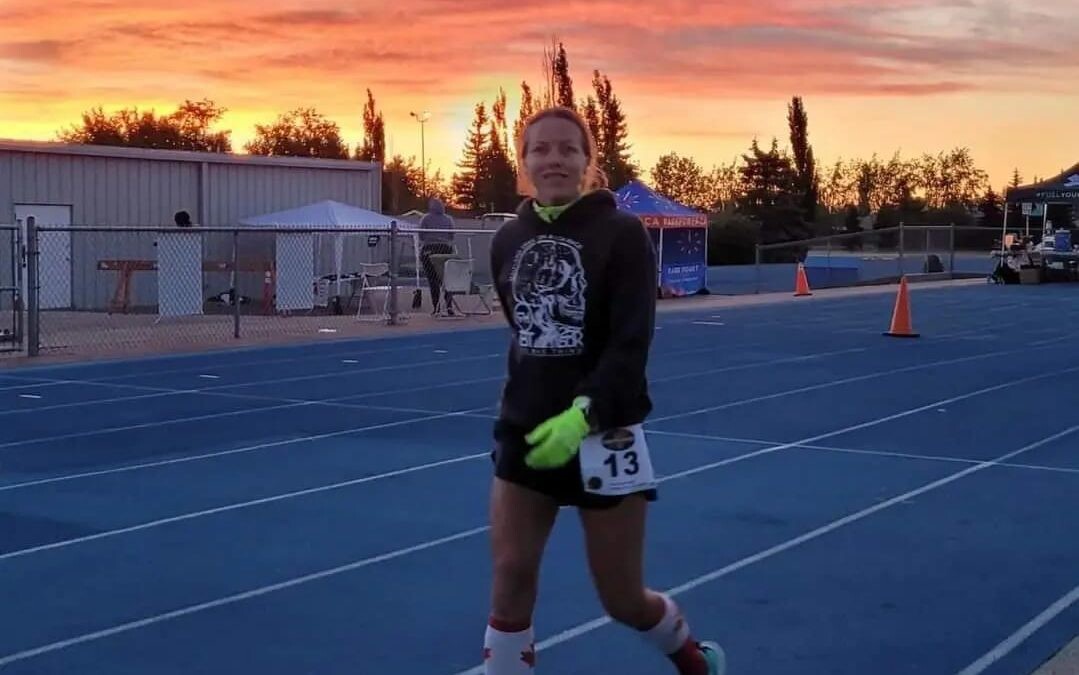
Heading into Survivorfest, Nelson, 33, had hopes of going after the 100-mile and 24-hour national records. Nelson and her crew, including husband Danny Nelson, flew in to Edmonton to prepare a few days in advance.
Three days out from the event, Nelson noticed her legs were very sore. “I noticed that evening that my quads were really hurting. I don’t know if it was from the flight or not but it definitely worried me. I went for a couple small runs in the days leading up to the race, and that made me feel even more worried because they weren’t feeling much better,” Nelson says. After doing some pre-race work on her legs with an ultrasound machine, Nelson started the race feeling slightly better.
“The heat was brutal!” Nelson reported in her post on Instagram. She kept her post-reward treat of seeing the Rocky Mountains for the first time in her life in mind, a dream she had had since childhood.
Nelson is a busy mom and works on a dairy farm. She says she has a lot of support to allow her to flexibly schedule in long runs. Her record-setting 12-hour distance was 134.025 km, with a 100-mile record of 14:45:51.
Brown congratulated Nelson on her new records. She added, “When I went after the 100-mile record last December, I had a strong feeling that it would be a question of “who gets there first” and I was very happy that I did. But I am also fully aware that both Amanda and Stephanie Simpson, who tried to break this record last year, are much faster runners than I am, and, in my opinion, they both can run a faster 100 miler than I can when the stars align–which they did for Amanda this time. Of course, I’m a bit sad that my record is broken, but that’s what records are for–they are meant to be broken.”
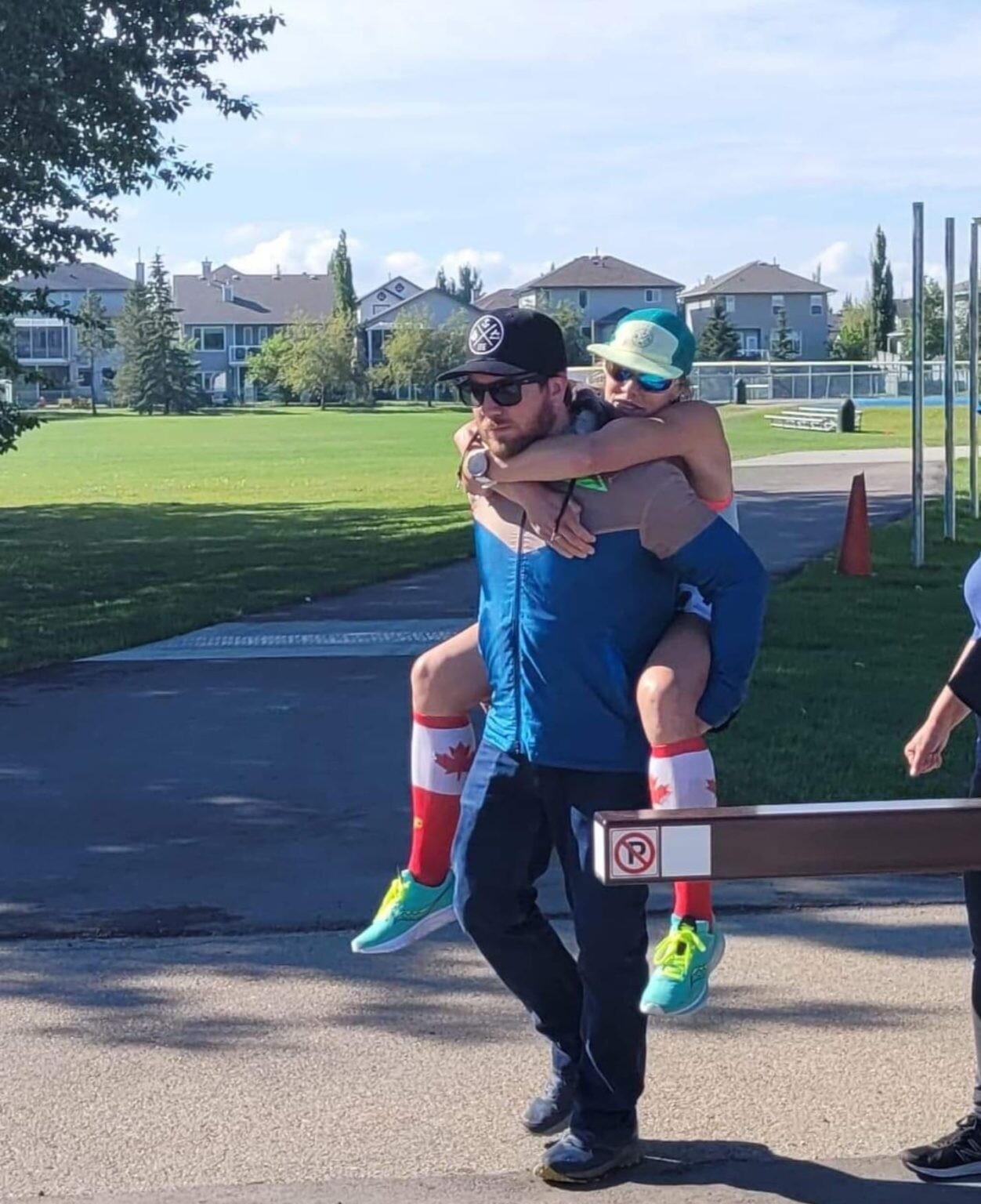
Nelson and Brown will compete with one another at Persistence Backyard Ultra in London, Ont. at the end of July. Brown says she looks forward to it: “I’m just extremely happy that the Canadian women’s ultrarunning field seems to be so strong, and I hope we can inspire and push each other to better and greater performances together. I will specifically need Amanda at the backyard race at the end of July to show a strong performance so we can both go further than ever before!”
With one record-setting performance after another, both Nelson and Brown are athletes to watch on the Canadian ultrarunning scene.
by Running Magazine
Login to leave a comment
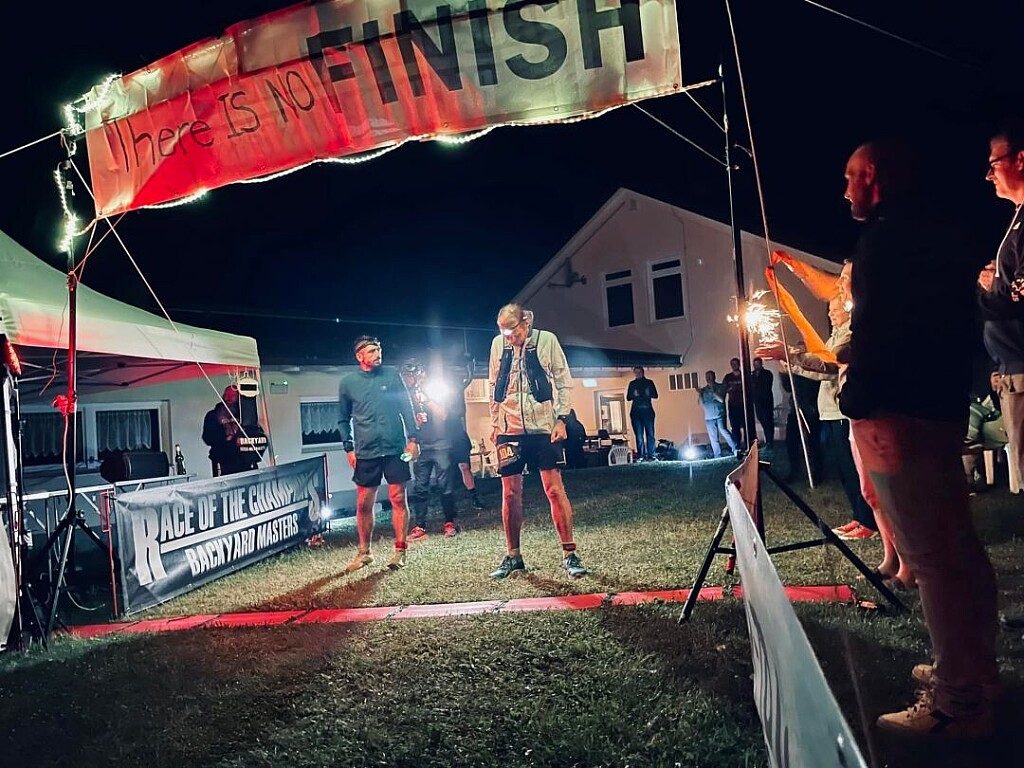
Belgian runner Merijn Geerts sets Backyard Ultra world best with 90 laps (600+ km)
Last weekend in Germany, ultrarunner Merijn Geerts of Wilsele, Belgium, set a new world best in the quirky backyard ultra format of 90 laps during the Backyard Masters, breaking Harvey Lewis’s record of 85 laps set at the 2021 Big Dog’s Backyard Ultra. This is equivalent to a total of over 600 km, running the same 6.7 km loop every hour on the hour round the clock, with the only rest breaks being the few minutes between finishing one loop and starting the next.
Geerts broke the record at The Race of the Champions, an invitational in which participants must have qualified with at least 45 laps (300+ km) at a previous backyard ultra.
In the backyard ultra ultra racing format, only runners who finish the lap within the hour cutoff are allowed to start the next lap. When the second-last participant either quits or fails to finish a lap in time, the final runner must complete one more lap to claim victory.
Twenty four runners started the race, and 20 remained after 24 hours. There were four men still in the race after 62 laps; Norway’s Jon Asphjell was the first to drop, then Japan’s Terumichi Morishata dropped shortly after. Ireland’s Keith Russell and Geerts remained active for another 12 laps, until Russell finally dropped out after 89 laps and Geerts managed to complete his 90th lap, reaching a distance of 603.5 km. Both Russell and Geerts went well over Lewis’s previous record of 85 laps.
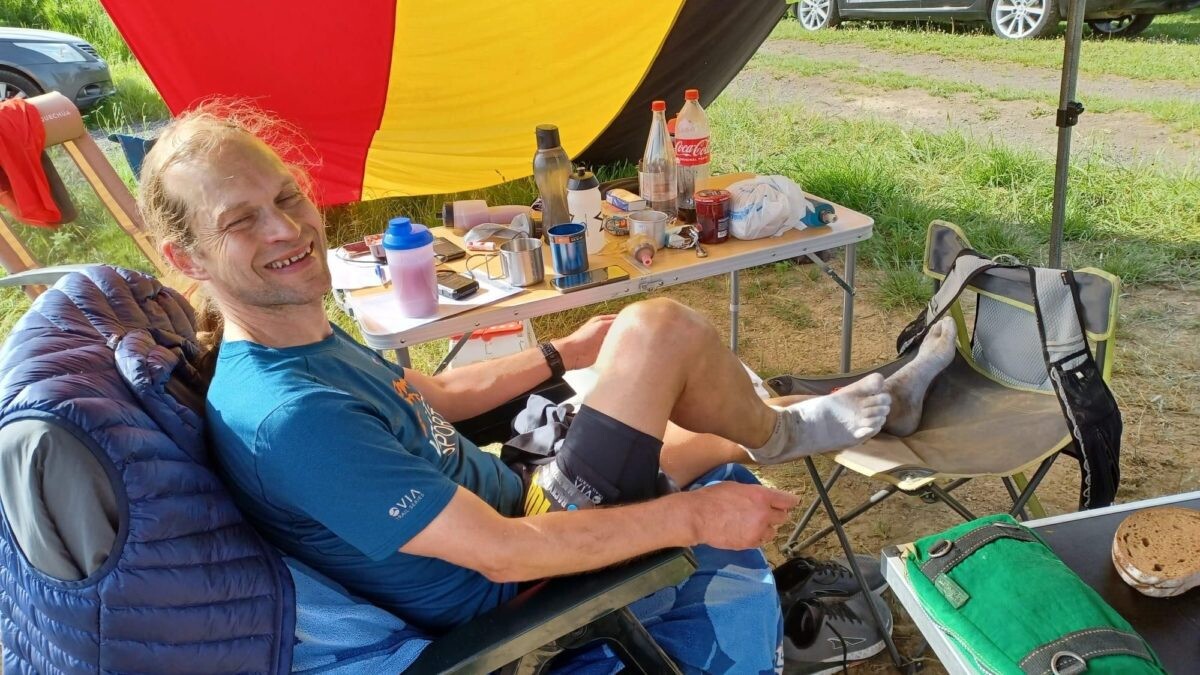
Russell started running in 2016 with his daughter Alanna, who had spastic quadriplegia cerebral palsy, and ran the 2017 Dublin marathon, pushing Alanna in a special running chair.
Geerts previously completed 74 laps and 496 km at this event in 2020. He was also the runner-up at the Backyard Ultra World Cup for the Belgian national team where Belgium won, and Karel Sabbe improved the backyard world record to 75 laps.
by Running Magazine
Login to leave a comment
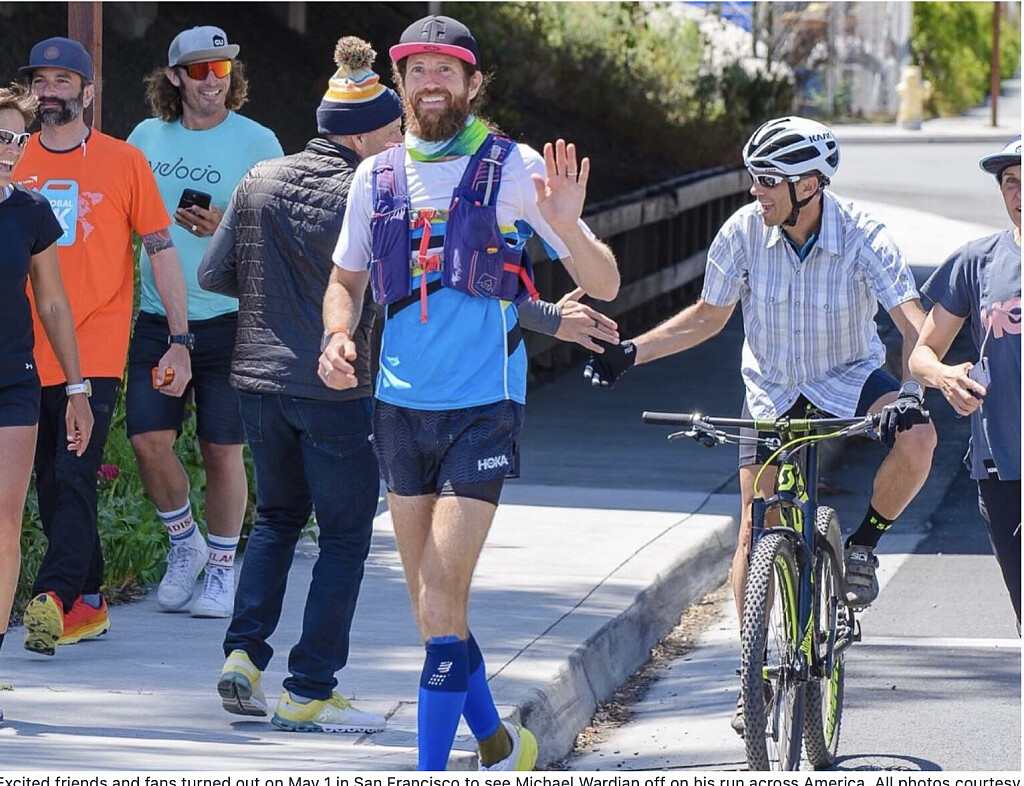
Running Home: Michael Wardian Begins His Run Across America
Michael Wardian is running across America to raise money for World Vision.
On Sunday, May 1, from City Hall in San Francisco, California, runner Michael Wardian set off on his latest adventure — a run the whole way across the United States, ending at Rehoboth Beach, Delaware, to raise money for World Vision’s clean water projects around the world. He will be following Route 50, America’s loneliest highway, through some of the remotest parts of the country, and will travel through 13 states, covering over 3,200 miles.Wardian has a host of wild and wonderful running accomplishments to his name, and this latest challenge seems fitting for the runner, who holds the Guinness World Record for the fastest marathon run in Antarctica — 2:54:54, run on January 23, 2017.
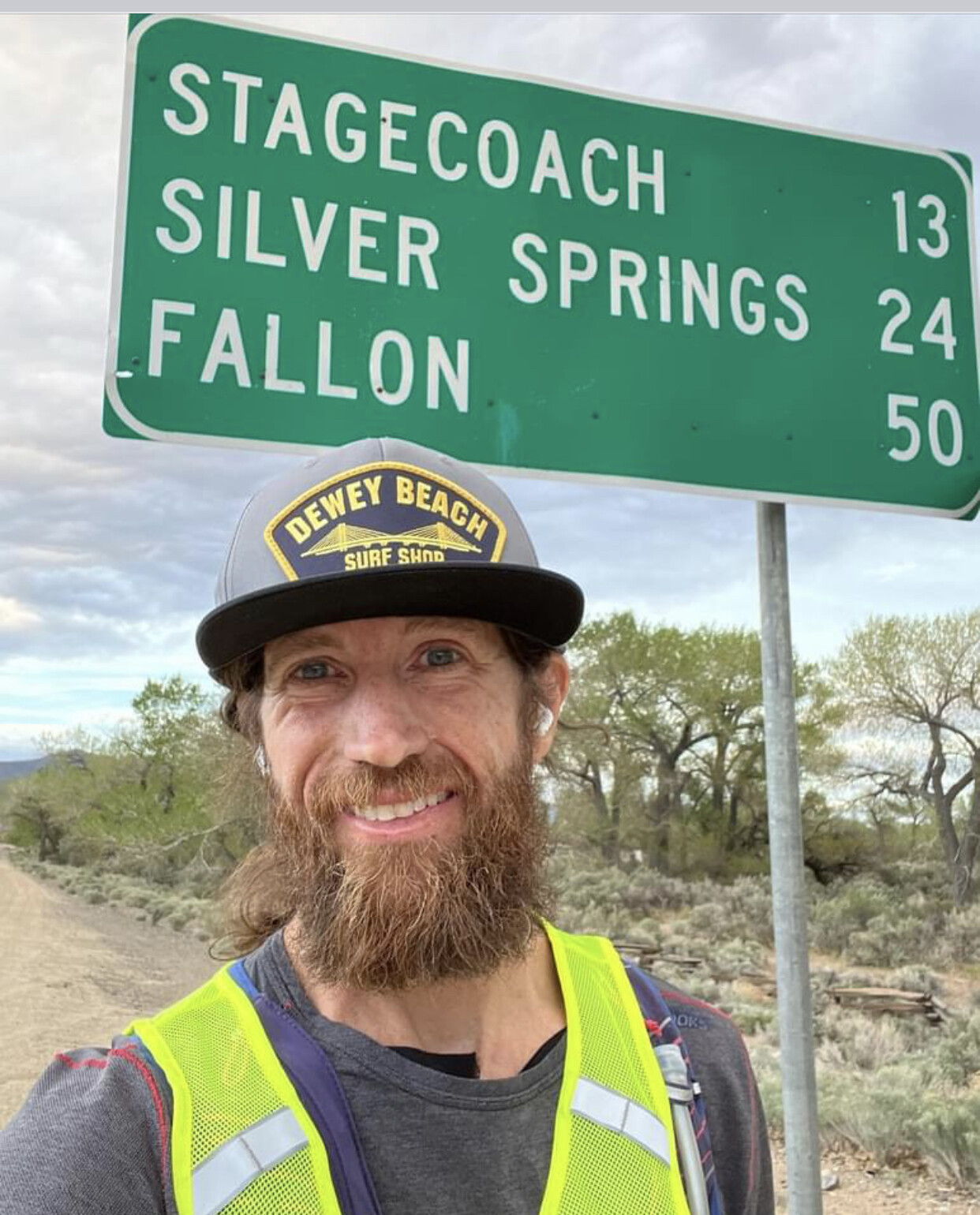
This was the first leg of his World Marathon Challenge, consisting of seven marathons on seven continents in seven days. Wardian holds the fastest cumulative time for the event at 19 hours, 21 minutes, and 36 seconds, averaging 2:45:57 per marathon. His Antarctica run is believed to be the only sub-three-hour marathon run on the ice-covered continent.
Wardian also previously held the record for the fastest marathon pushing a stroller, which he set with the help of his then 10-month-old son Pierce, at the Frederick Marathon in 2007, in a time of 2:42:21.
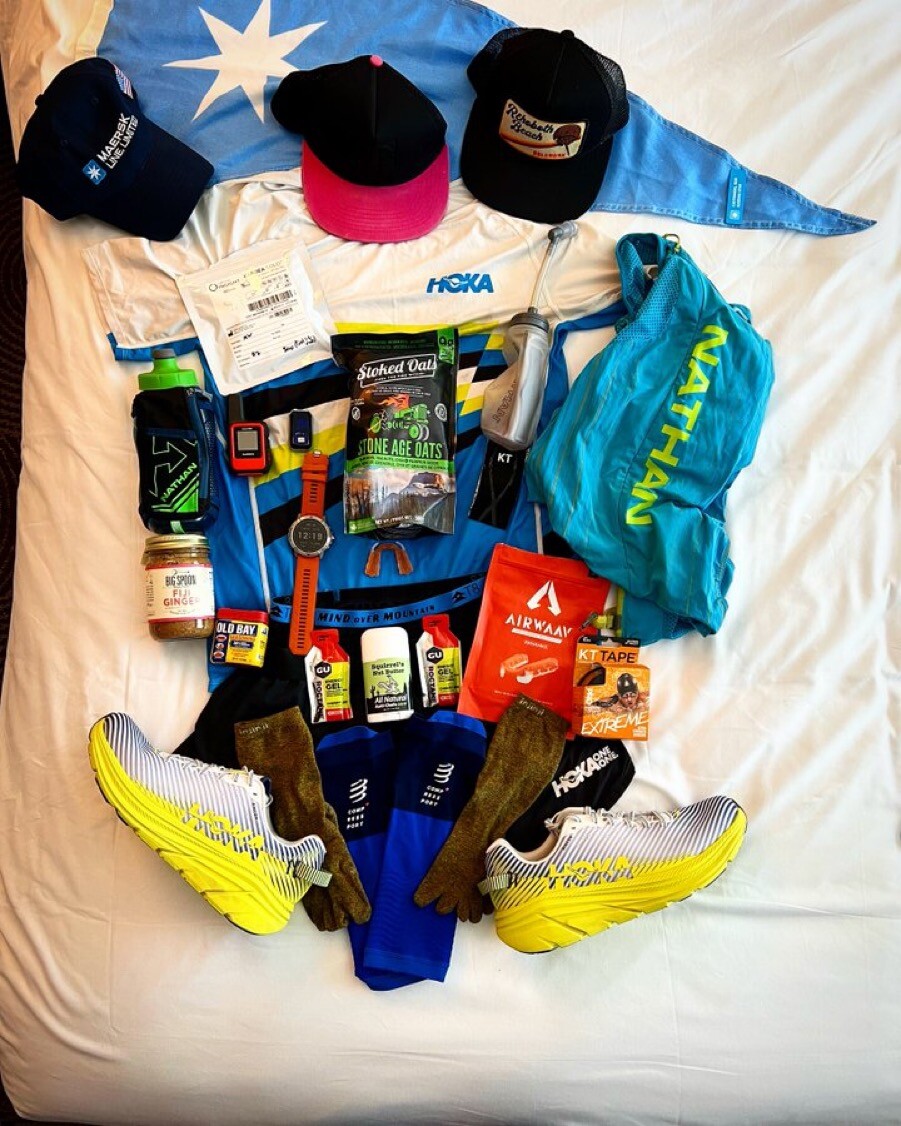
More recently, in 2020, Wardian won the Quarantine Backyard Ultra, completing 262.5 miles, or 63 laps, in a tight circuit around his local neighborhood in Arlington, Virginia, to abide by social distancing requirements during the COVID-19 pandemic.
For the first day of his latest challenge, which is called Running Home because he’s running in the direction of his home, the public was invited to share in Wardian’s send-off and to run a few miles with him.
He told iRunFar he had 20 to 30 people accompany him for the first part of his run from City Hall to Ocean Beach. There he dipped his toes in the Pacific Ocean before heading east on his quest toward the Atlantic, covering 57.97 miles on the first day.
All going well, Wardian’s schedule will see him averaging just over 50 miles per day to finish the traverse, appropriately, on July 4.
When asked about his motivation, he told iRunFar: “I’m trying to raise $100,000 for World Vision for clean water projects. I think right now we’re 14% of the way, so hopefully each day we get a little more and change a lot of lives. I think right now we’ve already impacted [about] 350 lives. It’s so cool, every day I get texts saying that somebody donated five bucks, and imagine if everybody donated just five bucks!”
You can follow Wardian’s run on the live tracker and send him a supportive message, make a donation to his World Vision fund, and help him reach his goal of raising $100,000 for this most worthy cause.
Update: Michael has crossed California and is now in Nevada.
by I Run Far
Login to leave a comment
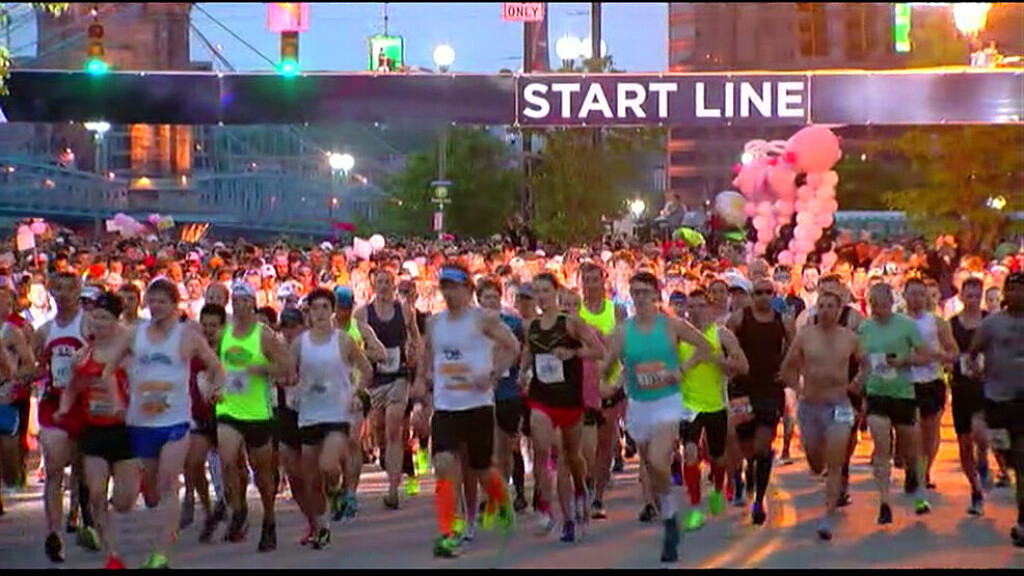
Pacers of Flying Pig Marathon are ready to help participants reach their goals
Thousands of people will be running the Flying Pig Marathon this weekend and will have help available to help them reach their race goals.
“The Pig is my favorite race in the whole world,” explains ultra-marathon runner and Flying Pig pacer Harvey Lewis, “Honestly it is an iconic event. Where else do pigs fly? And you’ve got all these people out cheering people along.”
Lewis is one of the famous Flying Pig Marathon streakers which means he has run every Flying Pig Marathon dating back to the first in 1999.
Lewis is also part of the pace team, coordinated by Chris Cavanaugh.
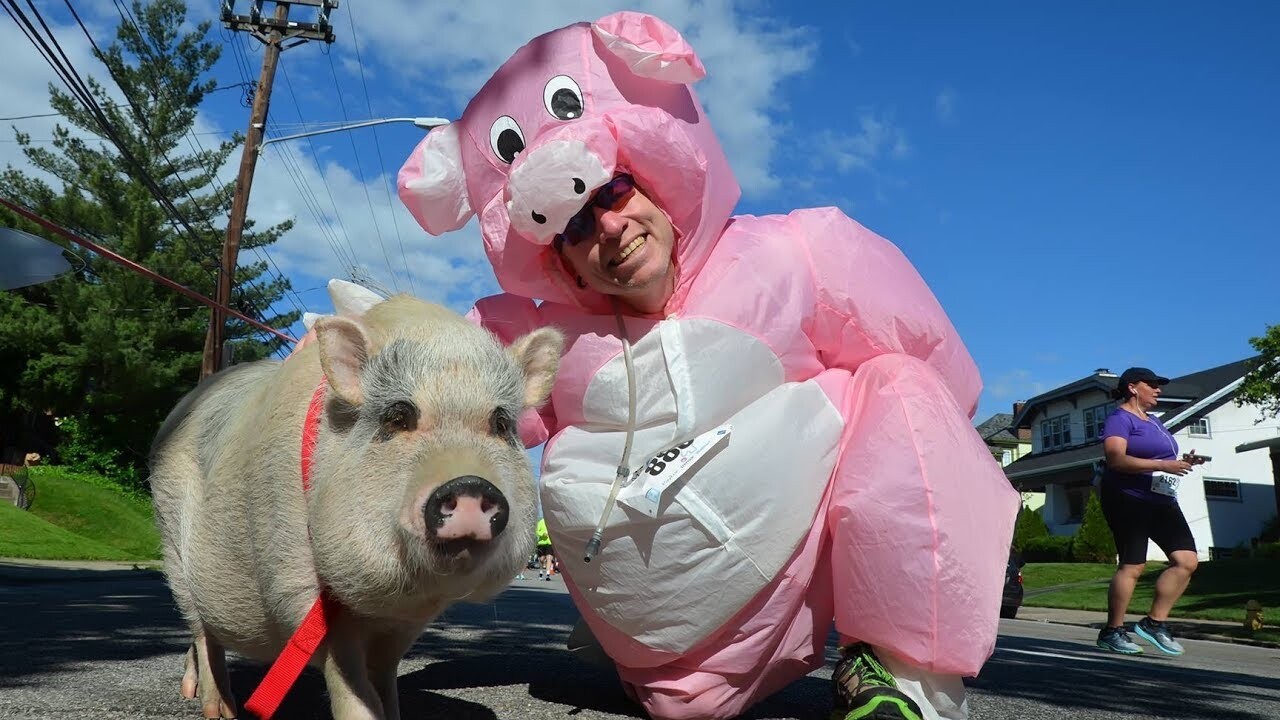
“Our job is to help you execute a smart race,” explains Cavanaugh. “We’ve made all the mistakes already, so if you want to run a smartly executed race, you have a time goal for four hours, three and a half hours, link up with one of our teams and they’ll kind of help take you through it. There’s enough stress in a race already, you put in all the work, and you want to execute, and we can help you do that.”
“I’m psyched about the opportunity,” says Lewis who is leading the 4:45 marathon group, “Having a chance to share that with others. I get so much more from this race, by doing that, than I would by racing at my very fastest.”
Cavanaugh will also run the Flying Pig Marathon just 20 days after he ran the Boston Marathon.
In an unusual year, that is normal.
The Boston Marathon is traditionally the third Monday in April, and the Flying Pig Marathon is the first Sunday in May.
“The Pig is kind of a celebratory run,” explains Cavanaugh, “You’ve done the work so as long as you can recover fairly well, you’ve got a couple of weeks to do that, and you can turn around and do both.”
Lewis, a Cincinnati School for Creative and Performing Arts school teacher, is back from breaking a world record at the Big Dog’s Backyard Ultra Run in Tennessee.
Lewis received many hand-written notes of support from his students at the Cincinnati School for Creative and Performing Arts.
Now, it’s his turn to pay it forward and help the runners on Sunday reach their own goals.
You will have a chance to meet the pacers at the Flying Pig Marathon expo Friday and Saturday.
The hours are 12 p.m. to 7 p.m. on Friday and 10 a.m. to 4 p.m. on Saturday.
On race day, just look for the pink balloons and big signs that say what time the pacers are representing.
by Ashley Smth
Login to leave a comment
Cincinnati Flying Pig Marathon
This beloved race found it's name from Cincinnati's pork history which dates back to the early 1800's. Cincinnati is also known as "Porkopolis."Our weekend line up of events are designed to welcome athletes of all abilities from the Diaper Dash to the full Marathon and everything in-between, we truly have something for everyone. We even added a dog race several...
more...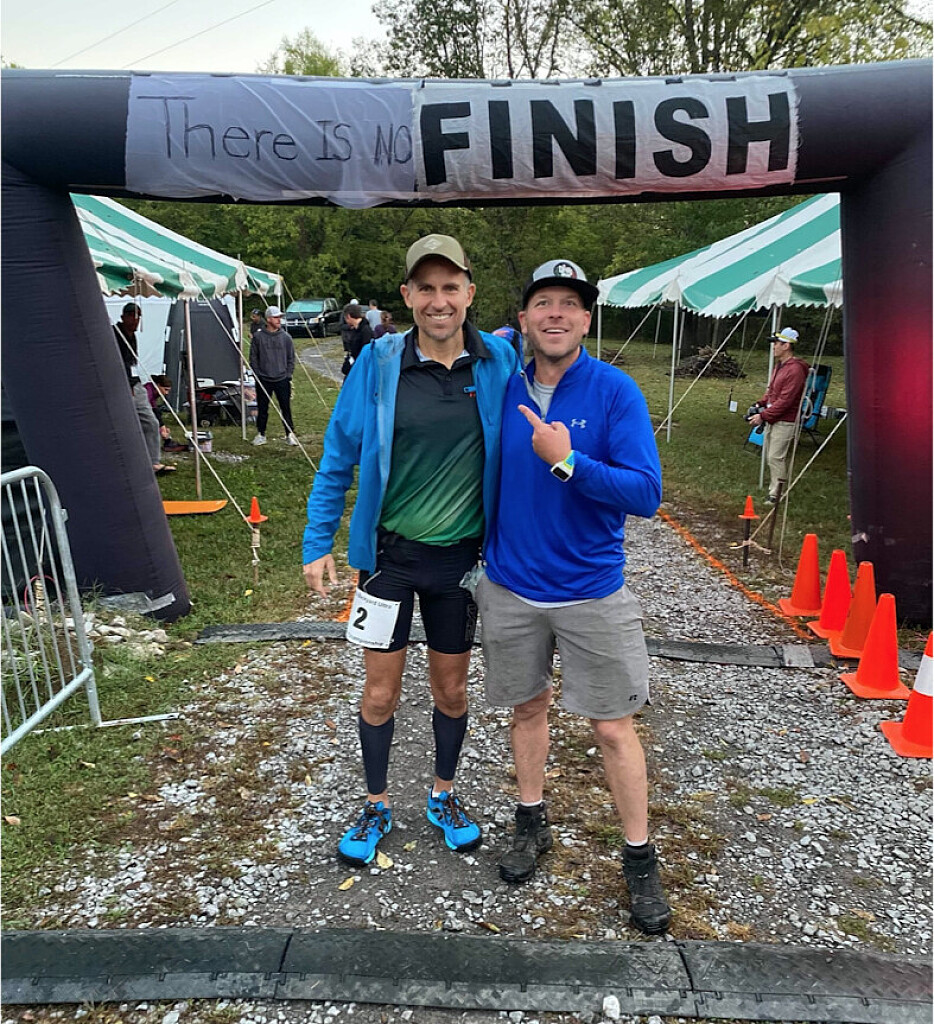
Harvey Lewis Breaks the Big’s Backyard Ultra Record By Running More Than 350 Miles in 85 Hours
He ran a 4.1667-mile loop every hour for 85 hours.
The third time was the charm for Ohio’s Harvey Lewis at the 2021 Big’s Backyard Ultra. After finishing as the assist in 2017 and 2020 (meaning, he is the second-to-last runner left in the race), the 45-year-old was finally the last runner standing in Bell Buckle, Tennessee. In total, Lewis ran 350.0028 miles in 85 hours/laps, making him the undisputed backyard ultra world-record holder.
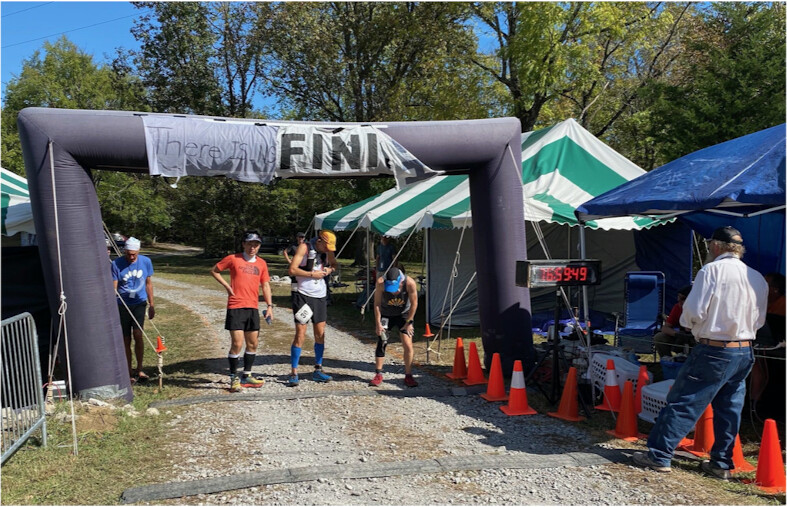
The backyard racing format has grown in popularity recently, with pop-up races happening all over the world. The rules, put simply, are: run a 4.167-mile loop at the top of every hour until one runner has done at least one more lap than the second-to-last runner. If both runners stop at the same time, then no winner is declared. At Big’s, runners complete a trail loop during the day, and a road loop at night.
The 2020 race was a virtual event, with runners in more than 20 countries competing simultaneously in standalone races. As a result, the 2021 race was anticipated to be one of the most stacked fields in race history. While some international runners were still unable to make the trip due to pandemic-related travel restrictions and concerns, several top runners made it to the start line. This included 2019 champion Maggie Guterl, 2020 champion Courtney Dauwalter, Big’s regular Dave Proctor, Michael Wardian, and Steve Slaby.
The race started at 6 a.m. ET on Saturday, October 16, and only three runners of 35 starters total dropped out within the first 24 hours (100 miles). But after that, runners seemed to drop almost every hour. Nine completed 48 hours, a large pack for reaching the third day of the race.
Lewis’s Big’s experience paid off as he and his crew chief Judd Poindexter troubleshooted any issues that arose. He fueled well and got five- to 10-minute naps when he could during the night, a big change from not sleeping at all in 2017.
One the race hit the 72-hour mark, it headed into uncharted territory with just three runners still standing: Lewis, Missouri’s Chris Roberts, and Japan’s Treumuchi “Mori” Morishita. Only two known backyard races in the world have hit the fabled fourth day before. This was the first time it had ever happened at Big’s.
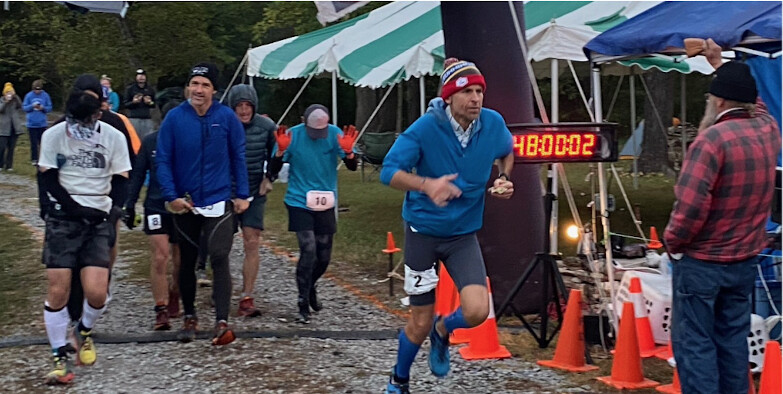
“We all wanted it so bad,” Lewis told Runner’s World. “We had lasted so long out there, which takes incredible willpower. It definitely helped. I wouldn’t have been out there without a reason to keep going, so I really enjoyed the challenge of running with them for so long together.”
The trio battled from lap 63 on, all quietly competing against one another. Each runner had their own style; Lewis and Morishita would sprint out of the corral at the start of some laps, which was a fan favorite.
“At the start and in certain areas, we just started sprinting,” Lewis said. “Morishita would sprint through the woods and yell, and then I would sprint through the woods and yell. It was a good move, so I hope Morishita didn’t mind I was doing it as well.”
Roberts struggled a lot before dawn, fighting off an injury that had him leaning sideways and coming in with few minutes to spare on laps. But as the sun rose, he recovered for a strong day.
Issues arose late in the game for Lewis and Morishita. Both runners fell on lap 81, which caused Morishita to miss the cutoff by 30 seconds, ending his day and leaving just Lewis and Roberts in the race. Lewis fell on the final hill and left him with an unknown (at the time) hand injury. Because his legs were okay, he ignored it and kept moving.
“As we got to the night, I thought for sure we’d be going to 400 [miles], so I mentally prepared myself for that,” Lewis said.
Many anticipated another complete night—that is, until lap 85, when Roberts surprisingly returned to camp soon after starting. Lewis, still on his loop, didn’t know this. Even though he didn’t see Roberts on the way back, he still wasn’t convinced he won until he got back to camp.
There, Lewis was greeted to roaring applause from the crowd that was still there. Lewis was finally a Big’s champion, capping off an incredible year of winning three major races: Badwater 135, Ohio’s Backyard Ultra, and now Big’s. He also earned the undisputed world record for most yards ever completed in a backyard race, taking the title from John Stocker who ran 81 yards with his assist, Matt Blackburn at the Suffolk Backyard Ultra in June 2021.
“It was an incredible experience,” Lewis said. “It has been one of my dreams to win this race, and to have it come to fruition was pretty mind-blowing for sure. I was super psyched.”
Lewis was so overcome with joy and exhaustion that he spent little time enjoying his win, opting to head to his tent shortly after finishing.
“When I finished, whatever armor I developed in my mind that told me I wasn’t going to submit went away,” he said. “I was really tired. I didn’t care where I slept. There was a cot in my tent 40 meters away, and it felt like the Taj Mahal. I fell asleep with half a plate of rice and beans on me.”
The next day, Lewis got a ride back to Cincinnati. When he arrived around 11 p.m., he kept his run streak alive by getting a mile in with minutes to spare. Then, a friend instructed him to go get his hand checked out in the emergency room after midnight. Harvey was diagnosed with a clean break in the fourth metacarpal of his right hand, and he was told should heal in a few weeks with just a splint.
Lewis told Runner’s World that he got a few hours of sleep in the ER before going home briefly and run commuting to work—he’s a social studies teacher at School for Creative and Performing Arts. Lewis wasn’t supposed to work because he had taken the day off. However, because of a shortage of substitute teachers at the moment, he literally ran in teach anyways.
“A couple times a year, I’ll take off to recuperate,” he said. “As long as I’m not hurting myself, I do the commute with human power.”
Big’s is likely the last race of the year for Lewis, though he plans to run the Flying Pig Marathon easy on October 30. His next big adventure will be the Barkley Marathons in 2022, which he now has entry to because of his Big’s win. Cantrell let Lewis know his thoughts on that.
“My biggest memory was turning to [Big’s and Barkley Marathons creator Gary ‘Lazarus Lake’ Cantrell] at the end and saying, ‘The winner gets an entry to Barkleys,’” Lewis said. “He couldn’t say no, so he went along with it. The next day, he told me that I’d be the sacrificial lamb.”
by Runner’s World
Login to leave a comment
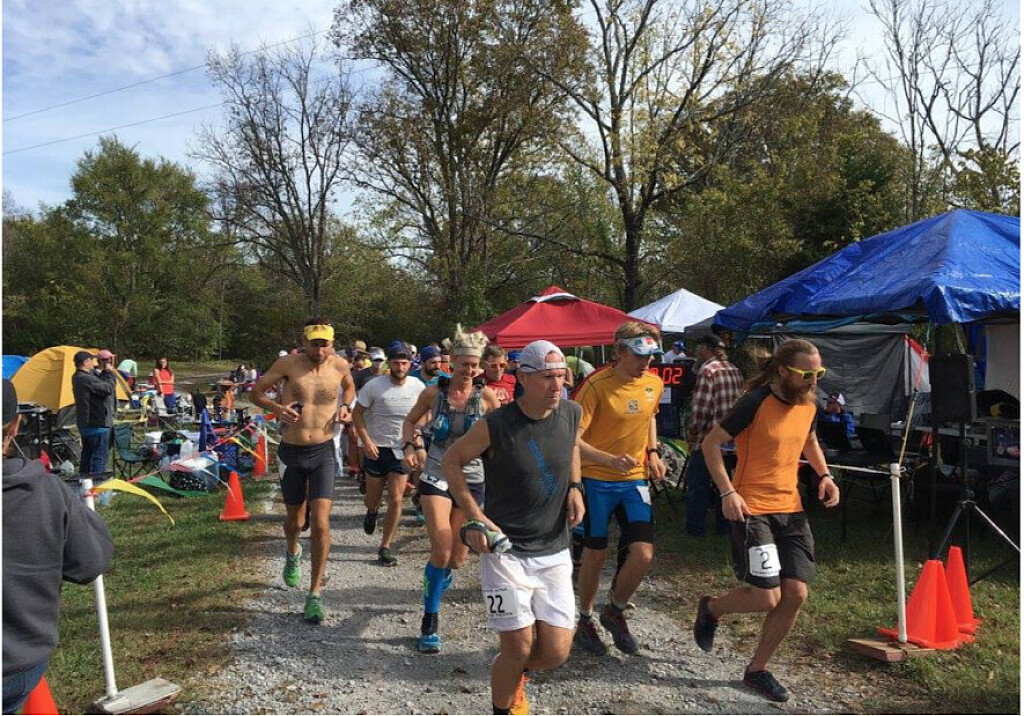
Big's Backyard Ultra World Championship has begun
Big’s Backyard Ultra World Championships, Laz Lake’s infamous last-person-standing ultra, started at 7 a.m. Central this morning in Bell Buckle, Tenn. with 36 runners from 10 countries qualified at backyard races around the world to toe the line today. Watch for Canadians Dave Proctor, Stephanie Simpson, Matt Shepard, Eric Deshaies and Terri Biloski, with the action likely to continue until Monday.
The rules are simple: the course is a 4.1667-mile (6.7 km) trail loop (a.k.a. yard), which switches to a road loop at night. (The rationale for the length of the loop is that using this formula, 100 miles takes exactly 24 hours.) A new yard starts every hour on the hour. Runners must complete each loop under the one-hour cutoff and be ready on the start line for the next yard. A warning whistle is blown at three, two and one minute before the cutoff. If you fail to finish before the hour is up, it’s a DNF. If you fail to start (and make forward progress) at the top of the next hour, that’s a DNF. This continues until only one runner is left.
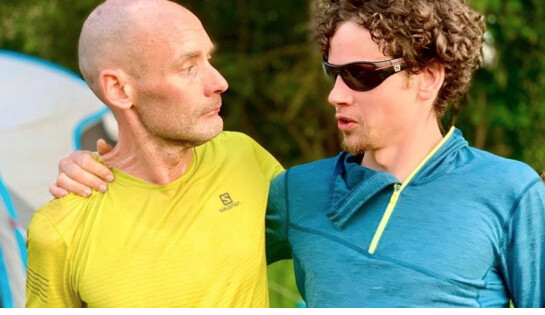
In the early hours of the race, most runners have time to spare after finishing each yard, and they use this time to refuel, use the bathroom, tweak their gear and rest. As the hours wear on and their pace gets slower, they have less and less time before lining up for the next yard.
As the race goes on and fatigue sets in, the dilemma becomes, where is the sweet spot between expending as little energy as possible while maximizing rest time between yards? In other words, the faster you complete the yard, the more rest time you get before the next yard – but you also fatigue more quickly.
This year’s starting list
This year’s competitors include seven women, two of whom are former Big’s champions Courtney Dauwalter and Maggie Guterl. Courtney holds the record for the most yards run at the Big’s course in Tennessee (68). The world record for the backyard format was set by John Stocker of the U.K. in June 2021, with 81 yards, eclipsing Karel Sabbe’s previous WR of 75 yards, set at last year’s Big’s world championships, on his home course in Belgium.
Here are this year’s contenders, with their country, age and qualifying number of yards. (Unfortunately, due to travel restrictions, most runners from Europe were not able to participate this year.)
Courtney Dauwalter, USA, 36 (68 yards – i.e., 455.6 kilometres over 68 hours)
Harvey Lewis, USA, 45 (67 yards)
Gavin Woody, USA, 44 (64 yards)
Michael Wardian, USA, 47 (63 yards)
Maggie Guterl, USA, 41 (60 yards)
Amy Masner, Ireland, 47 (59 yards)
Steve Slaby, USA, 40 (57 yards)
Chris Roberts, USA, 36 (56 yards)
Jennifer Russo, USA, 55 (54 yards)
Yukinori Yushida, Japan, 52 (54 yards)
Terumichi Morishita, Japan, 41 (53 yards)
Dave Proctor, Canada, 40 (52 yards)
Jon Noll, USA, 36 (50 yards)
Jacob Conrad, USA, 36 (49 yards)
Katie Wright, New Zealand, 34 (49 yards)
Gabe Rainwater, USA, 33 (48 yards)
Sarah Moore, USA, 33 (48 yards)
Chris Murphy, Australia, 37 (46 yards)
Stephanie Simpson, Canada, 35 (43 yards)
Ron Wireman, USA, 40 (43 yards)
Fanny Jean, France, 41 (42 yards)
Matthew Shepard, Canada, 34 (42 yards)
Hisayuki Tateno, Japan, 50 (42 yards)
Shawn Webber, USA, 47 (42 yards)
Mathieu Weiner, USA, 54 (42 yards)
Piotr Chadovich, USA, 43 (41 yards)
Morton Klingenberg, Denmark, 36 (39 yards)
Chris Boyle, USA, 42 (38 yards)
Andres Villegran, Ecuador, 37 (38 yards)
Will Rivera, USA, 51 (37 yards) (DNS)
Eric Deshaies, Canada, 48 (35 yards)
Vincent Barrientos, USA, 40 (34 yards)
Haim Malki, Israel, 44 (34 yards)
Terri Biloski, Canada, 45 (33 yards)
Jason Bigonia, USA, 44 (32 yards)
Mark Begg, USA, 47 (26 yards)
by Running Magazine
Login to leave a comment
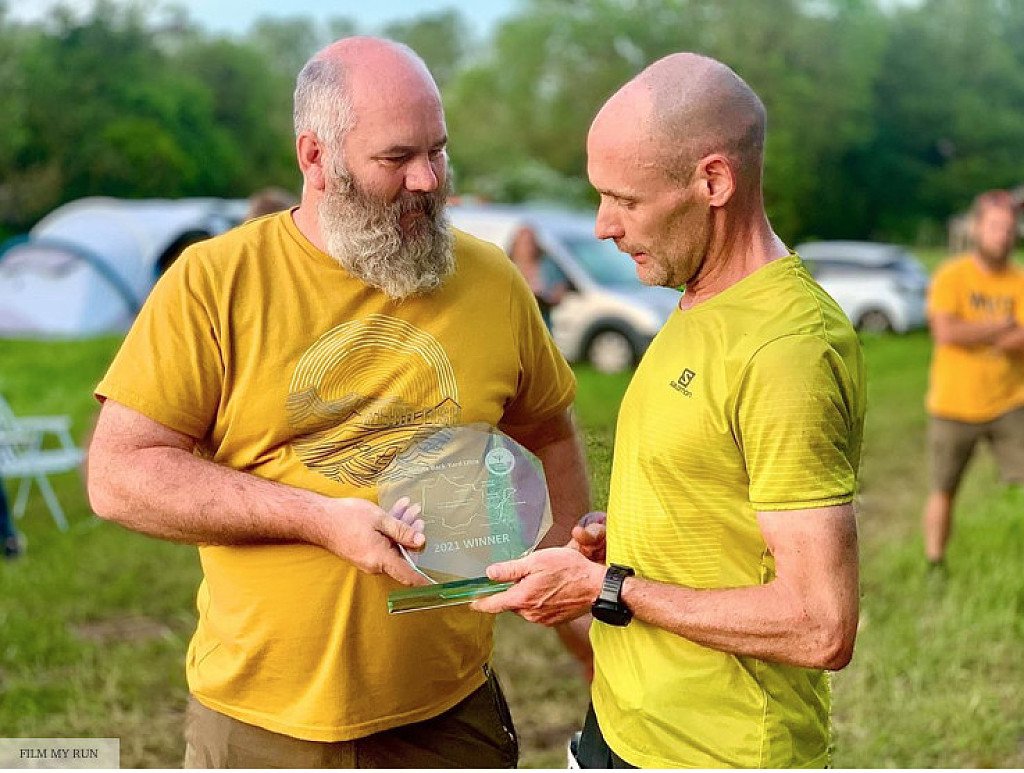
British runner breaks Backyard Ultra world record
John Stocker ran 337 miles in 81 hours at the Suffolk Backyard Ultra event this weekend
A British ultrarunner has broken the Backyard Ultra world record.
John Stocker, from Oxfordshire, ran more than 337 miles in 81 hours at the Suffolk Backyard Ultra beginning on Saturday.
Runners taking part have to complete a 4.167 mile lap of Suffolk’s Knettishall Heath every hour until they can’t carry on any longer. Participants must arrive back to the start in time for the next loop or they are knocked out.
According to race organisers, Stocker and fellow runner Matt Blackburn both beat the previous record of 312.5 miles in 75 hours, set by Belgian Karel Sabbe at Big’s Backyard last October. Sabbe told Runner’s World last year that his secret to resting was to 'give into sleep deprivation', turning his headlamp low and walking with his eyes closed so that he was ready for sleep by the time he returned to base.
Stocker and Blackburn both completed 80 laps, before Blackburn pulled out during the 81st lap. As no winner would be declared if he did not complete the lap, Stocker continued to run, completing the lap in 52 minutes, his slowest time.
That final lap was particularly difficult, Stocker told Runner's World. As he came out of the 'Spooky Woods' area of the course, he tripped and landed hard on his ribs. He thought he had "just lost it all", he said, before his resolve hardened. "I knew I just had to finish no matter what."
He said: "You could say the whole race flashed before my eyes, but with every small step I started walking along the road, then limping and onto running towards the finish and the win."
Race director Lindley Chambers told the BBC: 'What these guys have achieved is pretty incredible.'He added: 'I knew we had the calibre of people taking part and I personally thought we'd do 50 or 60 loops but these guys have gone beyond my expectation and have gone further than anyone else in the world competing in this format.'
Stocker and Blackburn reportedly completed each lap in around 45 to 50 minutes, leaving 10 to 15 minutes after each lap to rest and refuel before heading out for the next lap.
American runner Courtney Dauwalter told the BBC why this race format appealed to her in April: 'It’s a fun mental challenge,' she said, adding that backyard ultras are about 'finding out what’s possible rather than a race that you want to win. If we don’t limit ourselves, it’s pretty cool what can happen.'
by Runner’s World
Login to leave a comment
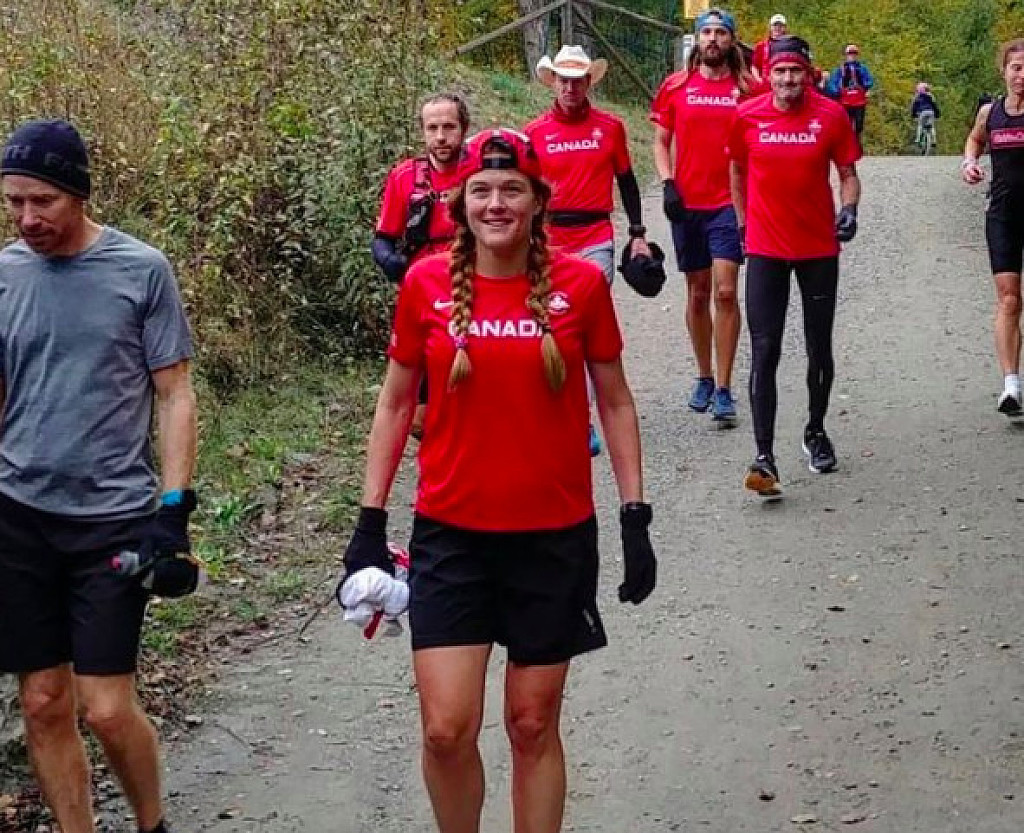
Canadian Stephanie Simpson to attempt Canadian 100-mile record on June 12 at the Montreal 24-hour Endurance Challenge
Canadian ultrarunner Stéphanie Simpson will be attempting to break the Canadian 100-mile (160 km) record this weekend at the Défi 24 heures Endurance (24-hour endurance challenge) in Montreal, Que. The current Canadian record, held by Michelle LeDuc of Russell, Ont., is 15:19:45, and Simpson’s goal is to not only beat that time, but to complete the distance in 14:45.
Simpson began running in 2008 as a way to deal with stress when her mother was sick. She started the way many of us do, running shorter distances like 5K’s and 10K’s, eventually working her way up to half-marathons and marathons. She completed her first 50-kilometer ultramarathon after the birth of her first child in 2015 and never looked back. She was relatively unknown in the world of ultra trail running until last October when she became the Canadian winner at Big’s Backyard Ultra, running for 43 hours to lead Team Canada to a third-place finish.
So what does the training for a record attempt like this look like? For Simpson, it’s been fewer really long runs and more speedwork.
“I haven’t run really long distance since the Backyard,” she says. “Since then, I haven’t done anything above 50, but I’ve still been doing big weeks of 200 kilometers. I’ve been doing more speed lately, because you need some kind of speed to run for that long at that pace.”
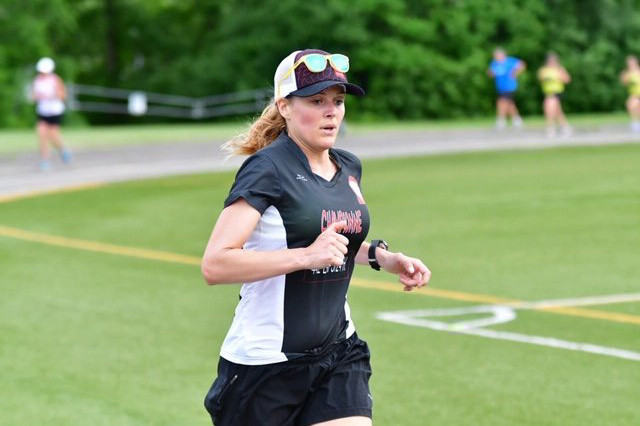
To run her goal time, Simpson will need to maintain a pace of 5:29 per kilometer. Because the event is a 24-hour race, her plan is to get through 100 miles in her goal time, then see what happens with the rest. The Canadian 24-hour record is 238 kilometers, and while that record isn’t her main goal, two records in one race isn’t out of the realm of possibility. Regardless, in order to achieve her goal, Simpson says mindset and confidence are the two main keys to success.
“A hundred-miler at that pace is really mental, so you have to be really really ready,” she says. “I’ve been visualizing everything that could happen, and when you run those kinds of distances, you have to be really confident in your plan — that’s the only way you’re going to get through 100 miles.”
Simpson will be running with seven other local runners around the outdoor track at McGill University. The race is set to begin at 8 am this Saturday, June 12, and if all goes according to plan, she should reach the 160-kilometer mark just before 1 a.m. on Sunday.
by Brittany Hambleton
Login to leave a comment
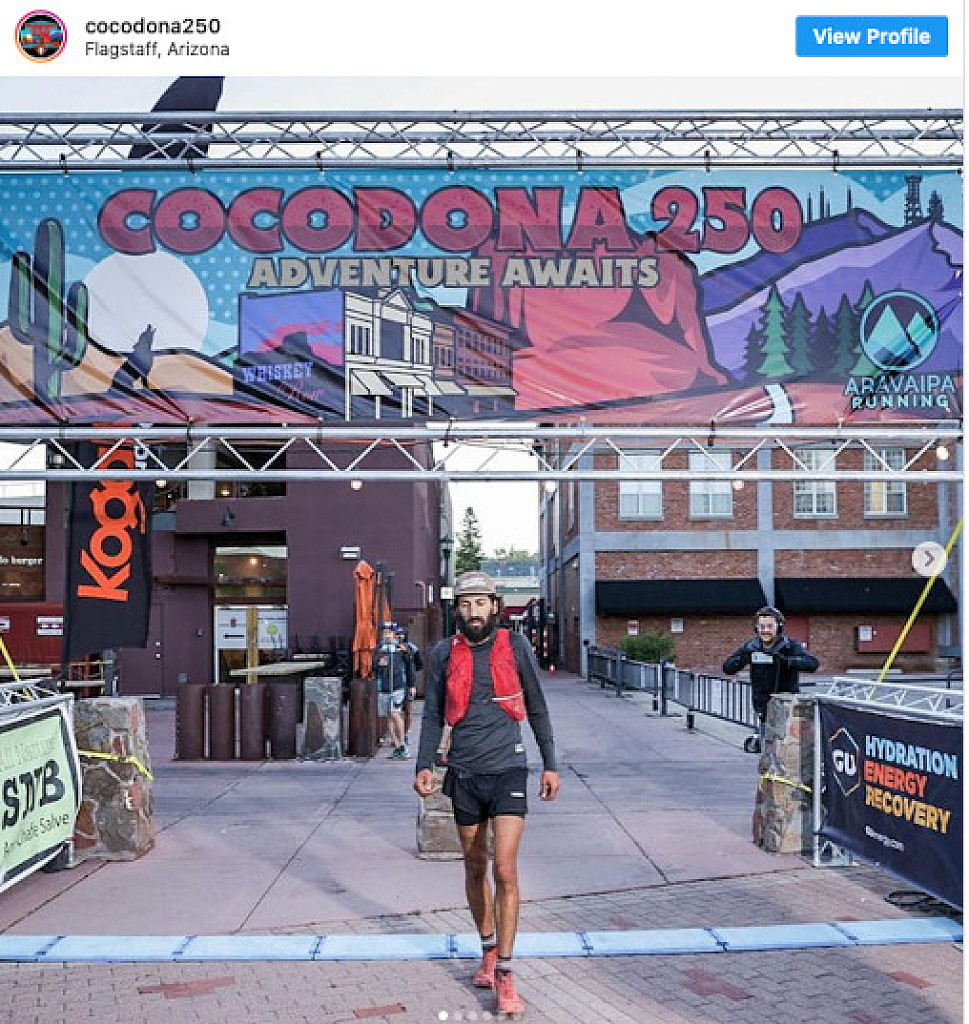
Michael Versteeg wins inaugural Cocodona 250-miler, Maggie Guterl still running in 7th overall
Ultrarunner Michael Versteeg of Prescott, Ariz., won the inaugural Cocodona 250-miler on Thursday morning, crossing the finish line in Flagstaff after 72 hours of racing. Versteeg finished ahead of Flagstaff local Peter Mortimer, who is still in the final miles of his run toward second place. Maggie Guterl is currently the top woman in the race, and at the time of writing, she completed 228 miles (366K) of what event organizers describe as a “250ish-mile footrace,” which works out to a total of about 400K. Guterl sits in seventh overall
Versteeg’s win
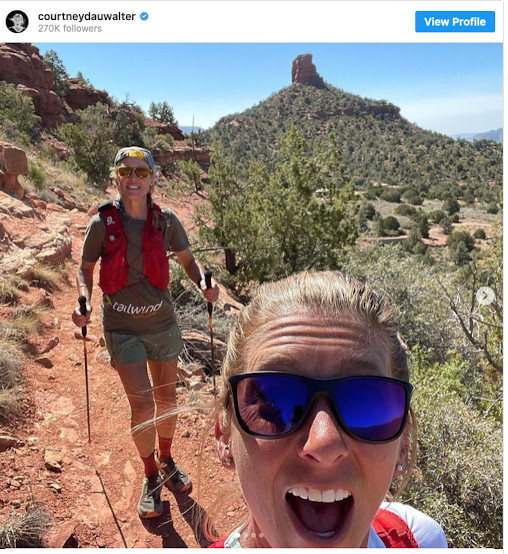
This is the inaugural running of the Cocodona 250, which was organized by the team at Aravaipa Running. The race started in Black Canyon City, about an hour north of Phoenix. From there, runners travelled north, passing through multiple towns (including Versteeg’s hometown of Prescott) before eventually making it to Flagstaff, 1,500m higher above sea level than where the race started. In total, the race features close to 13,000m of elevation gain, which is like running the height of one and a half Mount Everests.
The uphill battle, the heat of the desert and the sheer distance of the race didn’t stop Versteeg, who was at the front of the race throughout the 400K journey. This isn’t Versteeg’s first time stamping his name in the history books, as he won Aravaipa Running’s inaugural Whiskey Man Series in 2016 as well. On top of that, he has recorded many other ultramarathon race wins.
The chasers
Among the chase group (which is the rest of the Cocodona field, as Versteeg is the only finisher so far) is Guterl, who is in seventh place and currently being paced to the finish by fellow American ultrarunning star Courtney Dauwalter. Guterl and Dauwalter know each other well, and earlier this year, they both competed at the Barkley Marathons (although, like everyone else at this year’s race, they registered DNFs).
Like Dauwalter, Guterl is well known in the world of ultrarunning, and she has several big race wins to her name, including Big’s Backyard Ultra in 2019. Now, Guterl is looking to add another win to her resume, and with a 16K lead on the second-place woman Jessi Morton-Langehaug, the Cocodona crown is hers to lose.
Also racing this week was Gene Dykes, a 73-year-old runner from Pennsylvania who owns multiple age group records, including the American 100-mile and 24-hour bests (21:06:07 and 179.98K). Unfortunately, Dykes didn’t make it to the finish line, and he (along with close to 60 other runners, so far) recorded a DNF.
The race is ongoing, and despite the many DNFs, there are still dozens of other runners on the course making their way to the finish. To track live results of the Cocodona 250, click here.
by Running Magazine
Login to leave a comment
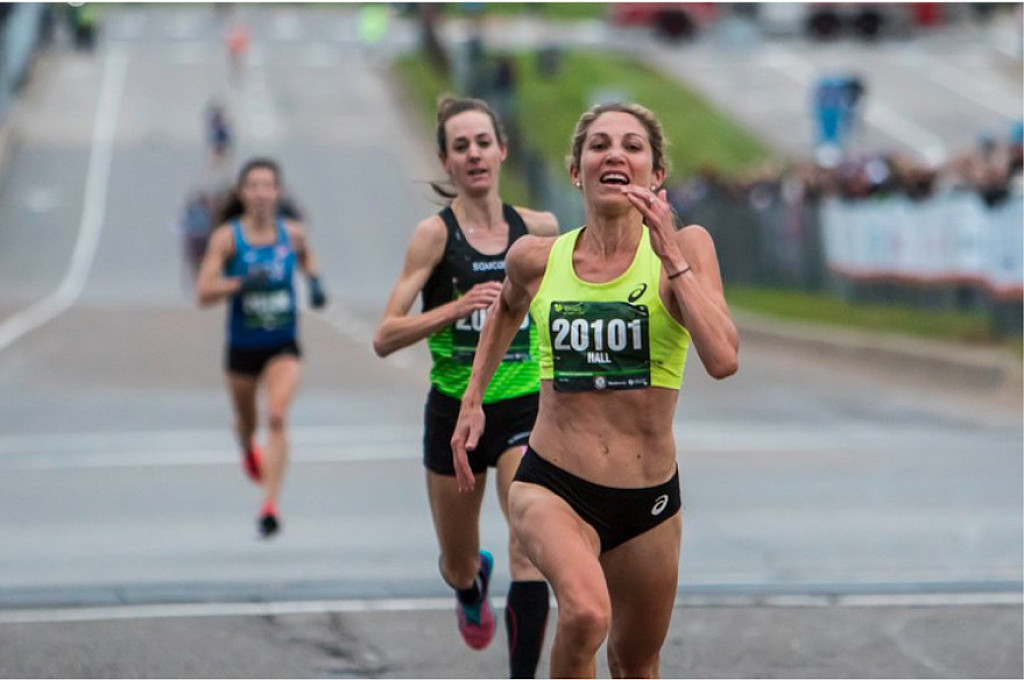
Sara Hall, Eliud Kipchoge among runners chosen for Sports Illustrated's Fittest 50 honours
Sports Illustrated has released its Fittest 50 list, and as usual, multiple runners were included. The Fittest 50 is SI‘s attempt to list the fittest men and women in the world, looking at athletes from any and all sports. This year, nine runners were selected, with six of the 25 women and three of the 25 men coming from the track, trails or road. Here’s a breakdown of where each individual placed and why the SI panel (which included Dr. Michael Joyner of the Mayo Clinic) chose them.
The women

Running was the sport with the most women included in the top 25, and the six athletes chosen was double the three chosen from MMA, which was the sport with the next-most number of selections. American marathoner Sara Hall is #24, and with her performances in the past year, it comes as no surprise to see her on this list. The SI team notes how Hall overcame the disappointment of missing out on the Tokyo Olympics and ended up running two huge marathon PBs, first at the London Marathon (where she finished in second in 2:22:01) and then with her win at The Marathon Project, where her 2:20:32 finish was the second-fastest marathon in U.S. history.
Up next is Dalilah Muhammad at #16. SI refers to Muhammad as the “queen of the 400-metre hurdles,” a title she has owned since her gold medal in the event at the 2016 Olympics. Since then, she has broken the world record on multiple occasions (her current record stands at 52.16 seconds, a time that won her the gold medal at the 2019 world championships), and she is now a heavy favourite to win gold in Tokyo this summer.
American ultrarunner Courtney Dauwalter comes in at #14, and her remarkable result from Big’s Backyard Ultra in 2020 is listed as a big reason for that. Dauwalter won the American title at the event, running 455K. Just ahead of Dauwalter at #13 is American track and field star Tianna Bartoletta. Bartoletta is truly a track and field standout, as she has won Olympic and world medals in both sprints and jumps. In London in 2012, she won Olympic gold as part of the U.S. women’s 4 x 100m relay team. She and the squad defended that title in Rio four years later, and she added an individual gold medal in the long jump.
Emma Coburn is #10 on the list, coming in ahead of tennis star Serena Williams. SI lists Coburn’s multiple steeplechase medals, from her bronze in Rio to her gold and silver at the 2017 and 2019 world championships, and it’s noted that she has the potential to break the American 3K steeplechase record of 9:00.85 later this year. Finally, coming in at #6 on the list is Shaunae Miller-Uibo. The Bahamian sprinter is the defending 400m Olympic gold medallist, and she could also be a threat in the 200m in Tokyo.
The men
Unlike on the women’s list, running didn’t win for the most men selected in the top 25 (American football had four athletes and basketball had three), but three athletes still made the elite list. American ultrarunning sensation Jim Walmsley was included at #24, and he is extremely deserving of this honour. Firstly, as noted in the SI piece, he competed at the U.S. Olympic Marathon Trials in 2020, going out of his comfort zone and running 42.2K instead of his preferred ultra distances of 100K or 100 miles. He finished in 2:15:05, earning him 22nd place in his debut marathon. He then kicked off 2021 with an amazing 100K run in Arizona, where he finished in 6:09:26, breaking the American record and finishing just 12 seconds off the world best.
Next up is Eliud Kipchoge at #20. While Kipchoge had the worst marathon of his career at the London Marathon in October 2020, there’s no denying that he’s still one of the best road runners in the world. He’s the world record holder in the marathon and he is the only human to run under two hours in the event, making him a favourite to win gold in Tokyo this summer.
Finally, breaking into the top 10 is Noah Lyles at #9. Lyles is the reigning 200m world champion, and he owns a PB of 19.50 in the event. He’s a heavy favourite to take gold in Tokyo, and he might even compete in the 100m. Add all this together and he’s a clear choice for SI‘s Fittest 50 list.
by Running Magazine
Login to leave a comment
Viktoria Brown breaks Canadian W45 100-mile record in North Carolina, running 15:24:23 to beat the previous national record by 14 minutes
Canadian ultrarunner Viktoria Brown recently set the Canadian W45 100-mile record, posting a time of 15:24:23 at a 24-hour race in North Carolina. This is the third ultrarunning record for Brown, who lives and trains in Whitby, Ont., and it beat the previous Canadian best by 14 minutes. She stopped after hitting the 100-mile mark, a distance that was good enough for 11th overall in the 24-hour event.
Brown only started running ultras in September 2020, but she already has three records to her name. Her first came in her ultra debut, when she ran to the women’s 24-hour Canadian soil record at That Dam Hill in London, Ont. Despite never having run an ultramarathon before, Brown excelled, running 213.8K in 24 hours and beating the previous record (which had stood for 36 years) of 210K.
After her performance in London, Brown was invited to run in Kelowna, B.C., in October as a member of the Canadian team at Big’s Backyard Ultra. Again, although she was still so new to the sport, she ran extremely well, completing 34 laps and stopping after 228K. Next up was a 48-hour race in Duncan, B.C., in November, and Brown set another record, beating the previous Canadian 48-hour best by more than 6K with her two-day total of 324K.
Given her previous results in ultras, it shouldn’t have come as any surprise when Brown beat yet another record, this time at the Alexander County 24-Hour race in the U.S. After the race, Brown said she stopped short of the 24-hour cutoff because she didn’t want to push her body too far, as she is training for the Six Days in the Dome race, which will be held in Wisconsin in June. Stopping after just 15 hours meant Brown could dedicate less time to recovering after the race and more time to training.
“I learned what I needed to learn from this one,” she said, referring specifically to a recent asthma diagnosis. After learning that she has asthma, Brown realized she needed to figure out how to race without making the problem worse. Seeing as she set a Canadian record, it’s safe to assume she worked things out on the race course.
As Brown noted on Instagram after the race, she was on pace to break the open Canadian women’s 100-mile record (which belongs to Michelle Leduc at 15:19:45) for most of the race, but she slowed too much in the final kilometres and had to settle for the W45 age group best (a time of 15:38:18 that Bernadette Benson ran in 2014) instead.
While she was disappointed with missing the Canadian record, Brown said she isn’t too upset, and her focus is now set on the Six Days in the Dome. If she wants to break the national six-day best at this event, she will have to run farther than Charlotte Vasarhelyi‘s 2014 record of 734.225K. To run the W45 best, Brown will need to better Kimberley Van Delst‘s record of 547.177K, which she ran in 2017.
by Ben Snider-McGrath
Login to leave a comment
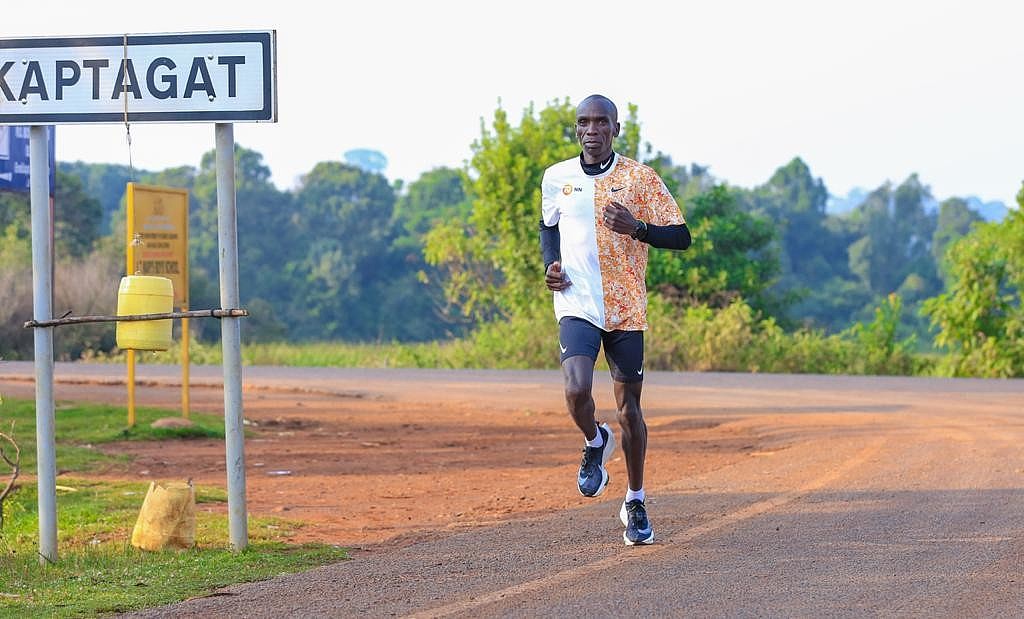
Eliud Kipchoge and Sara Hall, among runners chosen for Sports Illustrated’s Fittest 50 honors
Sports Illustrated has released its Fittest 50 list, and as usual, multiple runners were included. The Fittest 50 is SI‘s attempt to list the fittest men and women in the world, looking at athletes from any and all sports. This year, nine runners were selected, with six of the 25 women and three of the 25 men coming from the track, trails or road. Here’s a breakdown of where each individual placed and why the SI panel (which included Dr. Michael Joyner of the Mayo Clinic) chose them.
Running was the sport with the most women included in the top 25, and the six athletes chosen was double the three chosen from MMA, which was the sport with the next-most number of selections. American marathoner Sara Hall is #24, and with her performances in the past year, it comes as no surprise to see her on this list. The SI team notes how Hall overcame the disappointment of missing out on the Tokyo Olympics and ended up running two huge marathon PBs, first at the London Marathon (where she finished in second in 2:22:01) and then with her win at The Marathon Project, where her 2:20:32 finish was the second-fastest marathon in U.S. history.
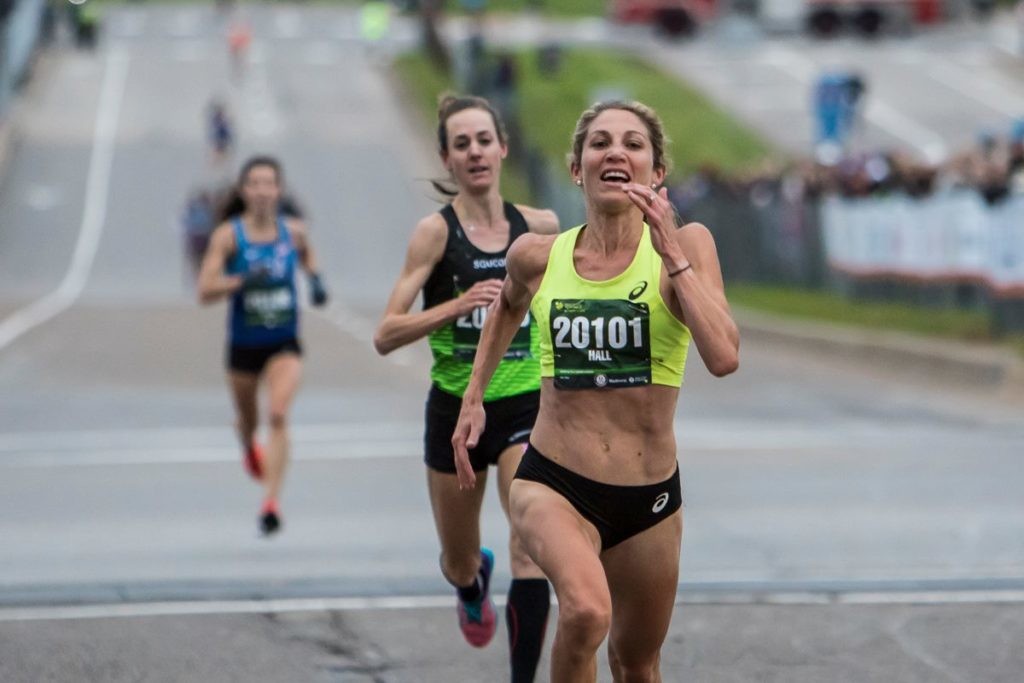
Up next is Dalilah Muhammad at #16. SI refers to Muhammad as the “queen of the 400-meter hurdles,” a title she has owned since her gold medal in the event at the 2016 Olympics. Since then, she has broken the world record on multiple occasions (her current record stands at 52.16 seconds, a time that won her the gold medal at the 2019 world championships), and she is now a heavy favorite to win gold in Tokyo this summer.
American ultrarunner Courtney Dauwalter comes in at #14, and her remarkable result from Big’s Backyard Ultra in 2020 is listed as a big reason for that. Dauwalter won the American title at the event, running 455K. Just ahead of Dauwalter at #13 is American track and field star Tianna Bartoletta. Bartoletta is truly a track and field standout, as she has won Olympic and world medals in both sprints and jumps. In London in 2012, she won Olympic gold as part of the U.S. women’s 4 x 100m relay team. She and the squad defended that title in Rio four years later, and she added an individual gold medal in the long jump.
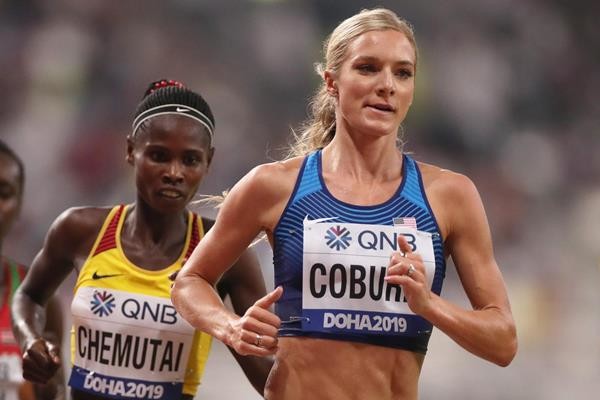
Emma Coburn is #10 on the list, coming in ahead of tennis star Serena Williams.
Unlike on the women’s list, running didn’t win for the most men selected in the top 25 (American football had four athletes and basketball had three), but three athletes still made the elite list. American ultrarunning sensation Jim Walmsley was included at #24, and he is extremely deserving of this honor. Firstly, as noted in the SI piece, he competed at the U.S. Olympic Marathon Trials in 2020, going out of his comfort zone and running 42.2K instead of his preferred ultra distances of 100K or 100 miles. He finished in 2:15:05, earning him 22nd place in his debut marathon. He then kicked off 2021 with an amazing 100K run in Arizona, where he finished in 6:09:26, breaking the American record and finishing just 12 seconds off the world best.
Next up is Eliud Kipchoge at #20. While Kipchoge had the worst marathon of his career at the London Marathon in October 2020, there’s no denying that he’s still one of the best road runners in the world. He’s the world record holder in the marathon and he is the only human to run under two hours in the event, making him a favorite to win gold in Tokyo this summer.
Finally, breaking into the top 10 is Noah Lyles at #9. Lyles is the reigning 200m world champion, and he owns a PB of 19.50 in the event. He’s a heavy favourite to take gold in Tokyo, and he might even compete in the 100m. Add all this together and he’s a clear choice for SI‘s Fittest 50 list.
by Ben Snider-McGrath
Login to leave a comment
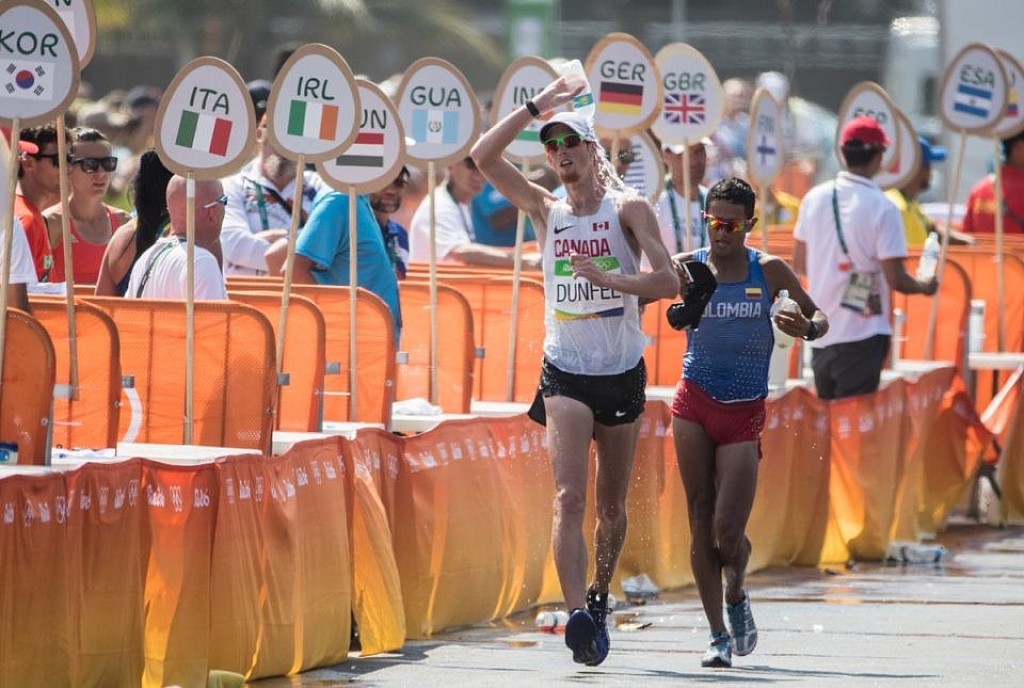
With the 50K race walk dropped from the Paris 2024 program, World Athletics has the opportunity to suggest a new event format to Olympic organizers
The 50K was cut as part of the IOC’s goal of hosting a completely gender-equal event in 2024, with a 50-50 split between male and female athletes, and WA has now been tasked with creating a mixed-gender event. WA officials have said they plan on organizing a mixed-gender race-walk relay, and with so much still up in the air, it’s fun to think up different options for a new Olympic athletics event.
With that in mind, here are a few race formats we’d love to see in future Summer Games (even though they probably won’t ever be included).
Canadian Olympic race walker Evan Dunfee took to Twitter following the news of the 50K being cut to suggest a few alternatives for WA to consider. For one format, he said athletes could be tasked with walking 1K repeats until they can no longer hit a certain pace. For the men, this could be four-minute per-kilometre pace and for women it could be 4:30. The winners of the men’s and women’s 20K race walk events at the Rio Games averaged sub-four-minute and sub-4:30 paces, respectively, en route to their victories, so this event could go on for a while. It would be held on a track, and the last athletes standing would take home the gold.
The elimination mile is so much fun to watch, and we really think it should be raced more often. Athletes line up to start the race as they normally would, but they have to be prepared to sprint at the end of each lap, rather than saving their legs for a kick at the end of the mile-long race. The last-place runner at the end of each lap is eliminated, slowly cutting the field down until the final lap, when it’s a battle to see who can hold on for the win. This makes for entertaining and drama-filled racing, as every 400m, fans get to see athletes sprint to survive.
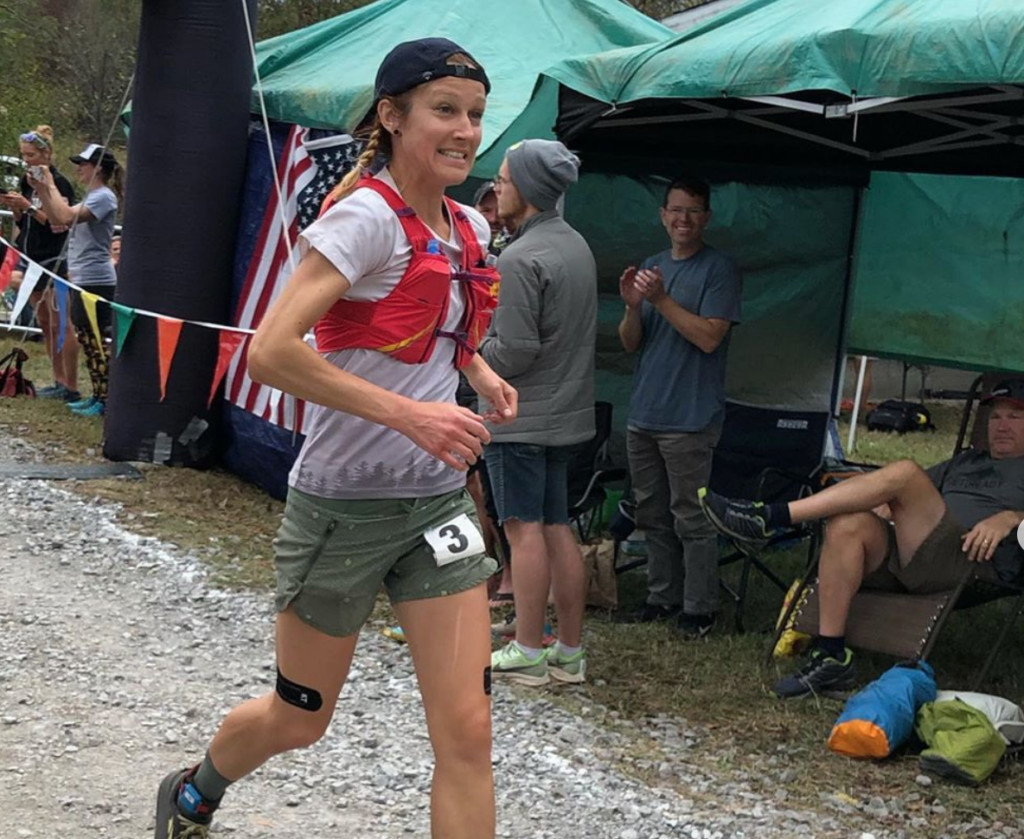
We know it’s highly unlikely that the IOC would OK an ultramarathon, but a last runner standing event would be really cool to see in the Olympics. Just like Big’s Backyard or the Quarantine Backyard Ultra, this race would see athletes run 6.7K every hour until only one runner remained. This is similar to Dunfee’s idea for the race walk, but longer, and the race format sees athletes run until they either drop out or fail to complete a 6.7K lap within the one-hour time limit. This would also work out well in terms of keeping the Games gender-equal, as this ultra format pits men against women.
Don’t get lapped
Another one of Dunfee’s ideas was a race in which an athlete’s only aim is to not get lapped. This could work for race walkers or runners, and it would probably be a lot like the elimination mile. Like Dunfee’s 1K repeat suggestion, this format could go on for a long time, but it would certainly be entertaining to watch the top athletes chase down their competitors.
Beer mile
Again, we understand that the IOC will probably never accept the beer mile as an Olympic event, but we can dream. The beer mile is always a fun race to watch, and seeing it on the Olympic stage would make it all the more exciting. It also helps that a lot of Canadians are good at the beer mile, so this would boost our national medal standings.
by Ben Snider-McGrath
Login to leave a comment

Paris 2024 Olympic Games
For this historic event, the City of Light is thinking big! Visitors will be able to watch events at top sporting venues in Paris and the Paris region, as well as at emblematic monuments in the capital visited by several millions of tourists each year. The promise of exceptional moments to experience in an exceptional setting! A great way to...
more...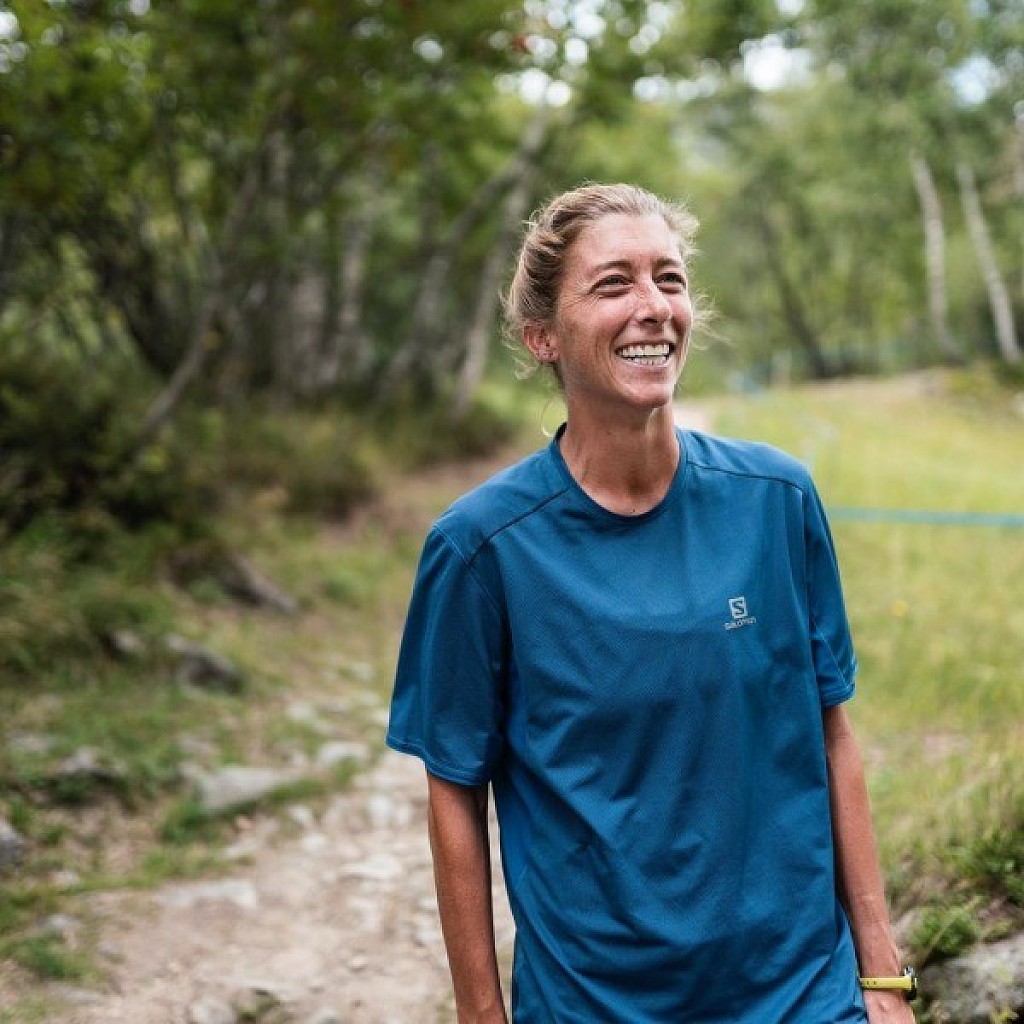
Golden’s Courtney Dauwalter won Big’s Backyard Ultra in Tennessee
Dauwalter and Harvey Lewis pushed each other beyond previous limits at the race, with Dauwalter completing a record 68 laps and accumulating 283.33 miles to win the event in the early morning hours of October 20 after nearly three full days of running with very little sleep.
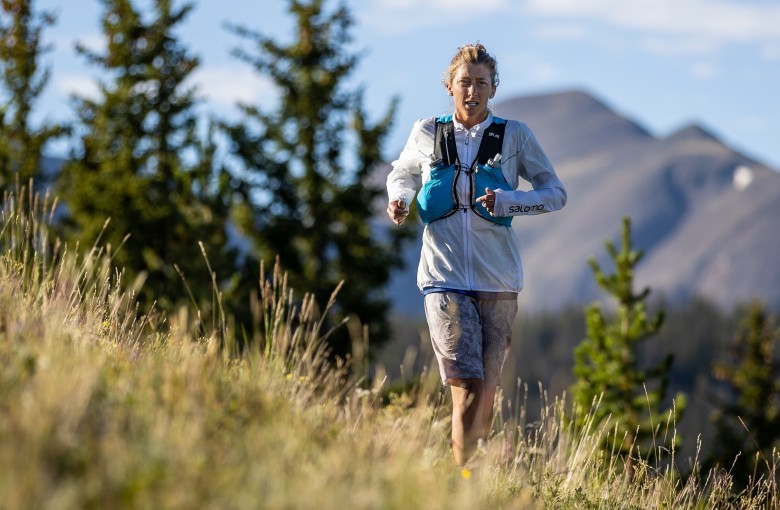
Daulwalter, a Salomon-sponsored runner, broke her own American record of 67 laps, or yards, as they’re called in “backyard-ultra” vernacular, and very briefly held the world record for the unique style of racing that sends runners out for a 4.1667-mile loop at the top of every hour until only one runner remains.
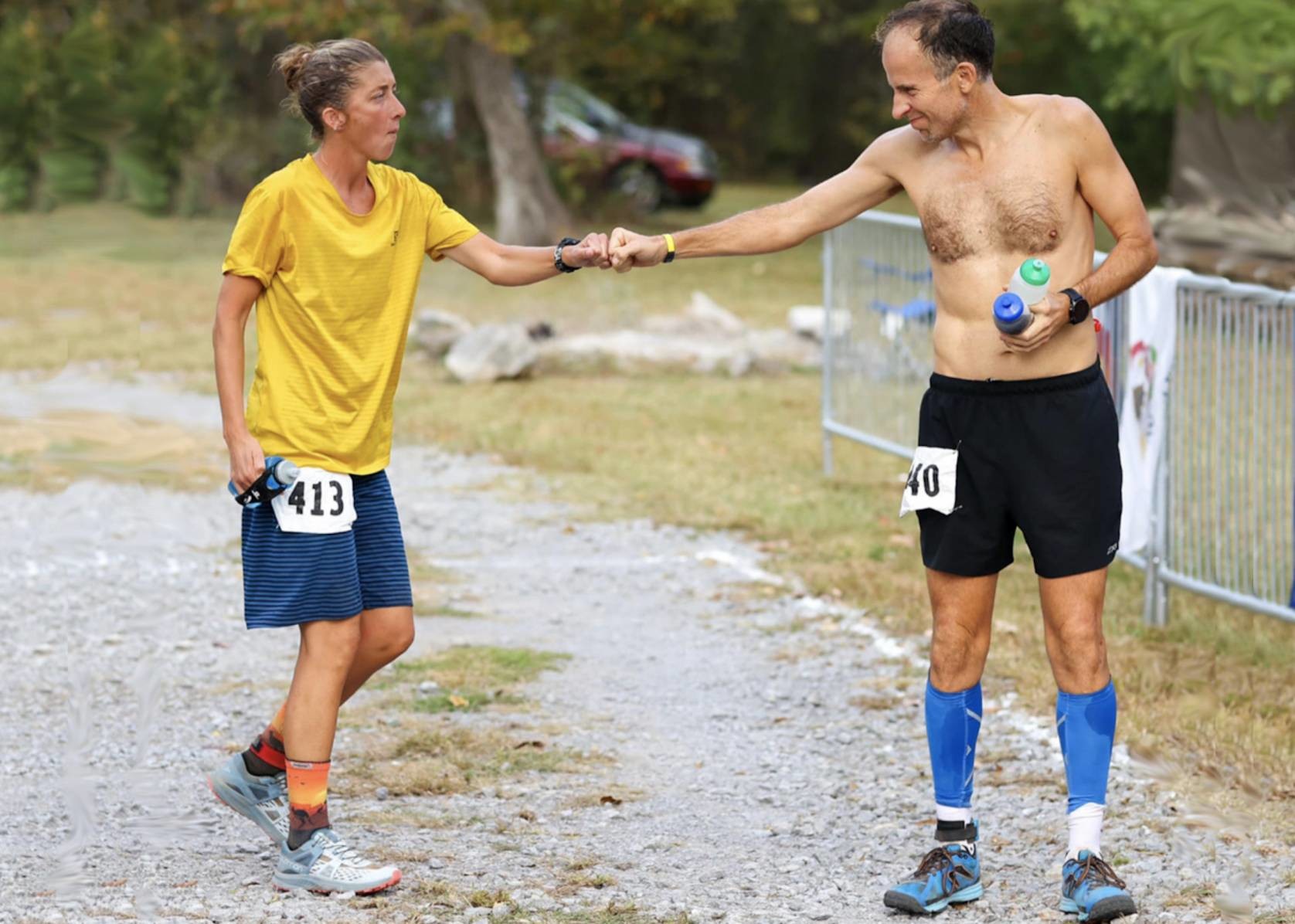
The event concluded when Dauwalter crossed the finish line on her 68th lap and she was declared the last runner standing after Lewis failed to compete the lap and retired from the race. Wearing a yellow Salomon T-shirt and a pair of long, surf-style running shorts she’s become known for, Dauwalter was smiling and energetic after she finished.
“Wow, what that was fun,” said the 35-year-old Daulwalter, while sipping a cold beer shortly after finishing her 68th lap at 2:46 a.m. CT. “I had a good routine and got a lot of rest. And Harvey was amazing.”
by Colorado Runner
Login to leave a comment
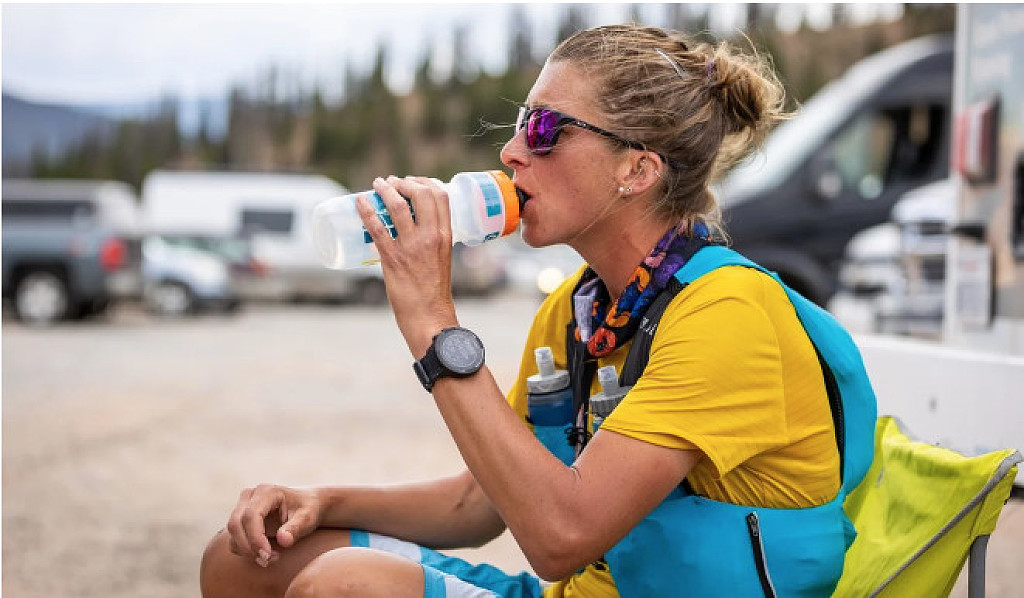
Big Dog’s Backyard Ultra: Courtney Dauwalter wants to lift others up to find their limits so she does not ‘ruin the game’
No women has lasted as long as Courtney Dauwalter in the race with no end and this year she hopes to push her limits even further
Courtney Dauwalter says that two more years of ultra running and the memories of the 2018 Big Dog’s Backyard Ultra will allow her to go further than ever this year – and to lift everyone else as a result.
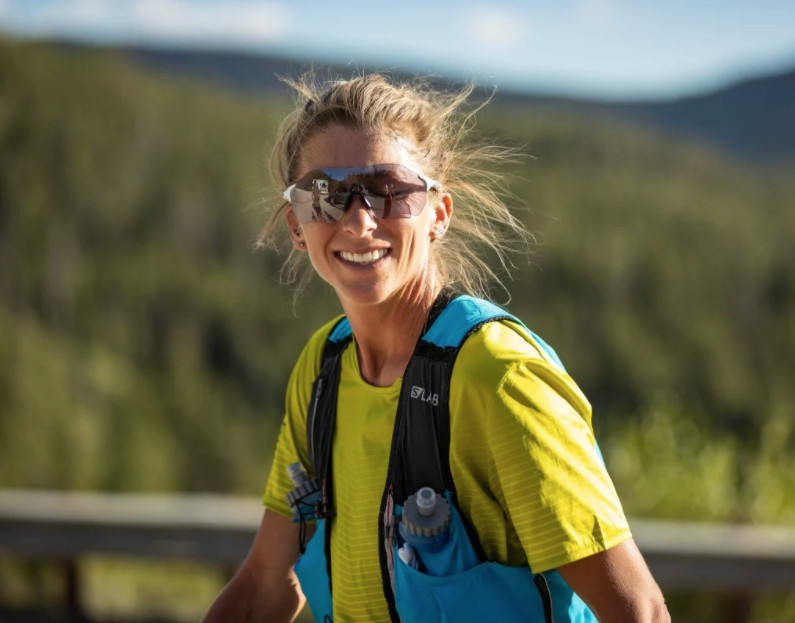
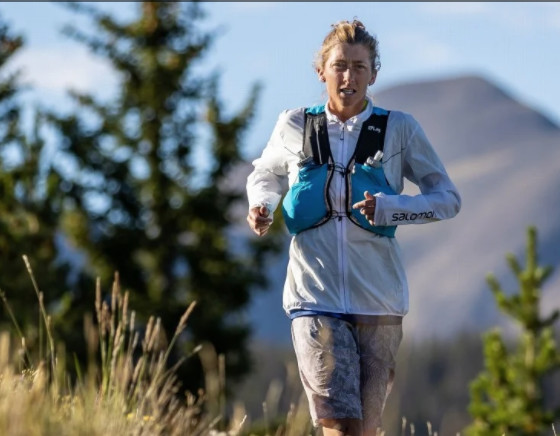
The American runner is entered into one of the most awful and awesome race concepts this weekend.
Big Dog’s is a 6.7km loop in Tennessee and runners have one hour to complete the loop. They can go as fast or as slow as they want, so long as they are lined up on the start line when the next hour begins. The race keeps going until there is just one runner left. The last person standing is allowed to complete one final lap to claim victory.
In 2018, Dauwalter went for 67 hours (431km), the longest any woman has lasted, and finished second to record-setting Johan Steele. She felt completely “empty”, shook Steele’s hand on the start line of the 68th hour and let him go on his victory lap.
“I had no charge left mentally or physically to go on,” the 35-year-old said. “I didn’t even attempt to see if there was any battery charge left. I didn’t think I had any.
“Johan is very talented, inspiring and a great human. He teases me now that I ruined the game for him, as the last person doesn’t get to go on. So, he teases me that I stopped his game early. I’m hoping that that will echo in my mind a little, ‘Don’t be the one to ruin the game for someone’,” Dauwalter, who is sponsored by sports nutrition brand Tailwind, said.
“I think hindsight is a trick. Now I can sit here two years later and say, ‘Why didn’t I even try?’ But in the moment, I felt like I had nothing left and I’d end up as road kill out on the loop because I was so empty.”
“I don’t regret it, because I don’t think that is useful. But I do hope that memory of wondering if I could have just gone out and done one more and seen how I felt, that will keep the fire going on the later laps this time,” she said.
The final few runners typically complete the lap in 45 to 50 minutes. Dauwalter plans to take care of her body earlier in the race by applying anti-chafe cream, changing her socks and shoes, and sleeping.
“I think every experience helps us. For sure, just having a few more years of ultras in general, and training in general, will help. But being able to picture Big’s especially, the set up and what it feels like on day two or three will help,” she said.
Dauwalter has run other races that last for days, such as winning the Moab 240 Mile Endurance Run by more than 10 hours.
“You have a little more choice in those long trail efforts when you can lay down and sleep whenever or wherever you want,” she said. “In this format, you get your 10 minutes per lap and that’s the only time you get to shut your eyes.”
“I think I didn’t do it well the first time and I think it showed up in a lot of ways. That feeling of being empty, not having energy for my brain and body to process from being sleep deprived. I hope we do it better, and if we don’t I hope I’m at least better at being sleep deprived,” she said.
“If you can shut down your brain for even just five minutes it makes a big difference.”
There are only 15 runners at the event this year and each is only allow one crew member due to coronavirus. Usually the field is international, but there will be simultaneous Big Dog’s going on around the world as a result of travel restrictions. Each race will end when there is just one runner left locally. A world champion will be declared as the last person standing in the last race still going.
“The motivation is not be the one to ruin the game and help the ones around me to stay in so we can all keep looking for our limits. It’s such a cool format that we all lift each other up by just stepping up to the start line,” Dauwalter said.
She has no target in mind. Having a target may result in a loss of motivation when it is passed, Dauwalter said. But last year’s champion Maggie Guterl has said she is aiming for 100 hours.
“I love it. It’s the exact thing you need out there. I’m excited to spend time with Maggie, and do those four mile loops. That’s all we have to do.”
“It’s such a cool format, the possibilities are unknown. How far can we go if we keep lining up?”
Login to leave a comment
12-hour treadmill race sees male winner run 150K, top female 120K
Adam Holland and Bridget Dawes put their treadmills to good use on Friday to win the final event of the Personal Peak Summer Race Series
The final event of the Personal Peak Summer Race Series (SRS) was held on August 22, with American Bridget Dawes winning the women’s race and Adam Holland of the U.K. taking the men’s crown. The virtual race was 12 hours long and participants ran on their treadmills, racing at the same time. Dawes ran 121K, smashing her competition and beating the next-best finisher by 18K. The men’s race was a much tighter affair, with Holland eking out a win over American Danny Domres, running 151K to Domres’s 149K. Holland won the four-race series, once again edging Domres out for the top spot. After only competing in three of the four races, Dawes finished in 18th overall (despite winning the three events she entered).
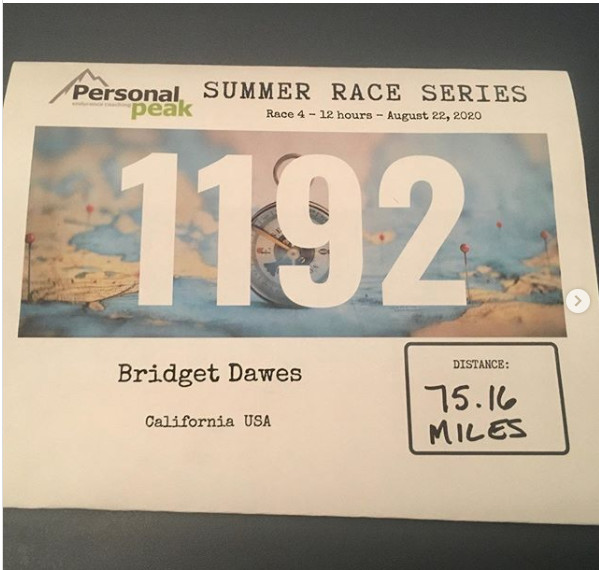
Personal Peak (the same company that helped organize the Quarantine Backyard Ultra) started the SRS on May 30 with a 20-minute race and wrapped the series up on August 22 with the brutal 12-hour event. There were also 45-minute and three-hour races in June and July. Each race was run on the treadmill, and every one was a battle to see who could run the farthest. The male and female winners of each event earned 100 points. Everyone else was awarded points based on how far back they finished from the leaders. Keeley Milne won on the women’s side in Race One, and Domres took the men’s win. Dawes didn’t race the 20-minute event.
Next up was the 45-minute race, which Dawes won. Domres got his second win in a row on the men’s side, boosting his points to a perfect 200. Holland wasn’t too far behind, and he improved his points total to 190.7 after two races. The next race, which lasted three hours, was when Holland ruined Domres’s win streak, and in the women’s race, Dawes won once again. The last event, the 12-hour Race Four, would decide who would win the series for the men. Unfortunately for Dawes, even if she won (which she did), she wouldn’t win the women’s series.
Going into the 12-hour race, Domres had 291.7 points and Holland had 290.7. To win the series, Holland had to win by more than one per cent of Domres’s final distance. While the two men were thousands of kilometres apart, the real-time racing made for an exciting day of running. In the end, Holland ran 151.92K to come from behind in the series and take the crown in a thrilling finish. Domres made it tight (just as it had been the entire series), finishing just behind Holland with 149.51K. Both men were close to the 12-hour treadmill world record of 155.08K, which was set earlier this year. The final series standings saw Holland at the top with 390.7 points and Domres in second with 390.1.
Dawes won the women’s event with 120.96K, which crushed second place’s 102K and also earned her third place overall, only behind Holland and Domres in the final rankings. She went on to finish in 18th overall and as the 12th place woman in the series standings, even though she had a perfect record through the final three races. Had she competed in Race One, she likely would have not only won the women’s series, but probably finished as the top runner overall. Instead, American Michele Sollenberger was the top female finisher in the series, winning with 364.9 points.
by Running Magazine
Login to leave a comment
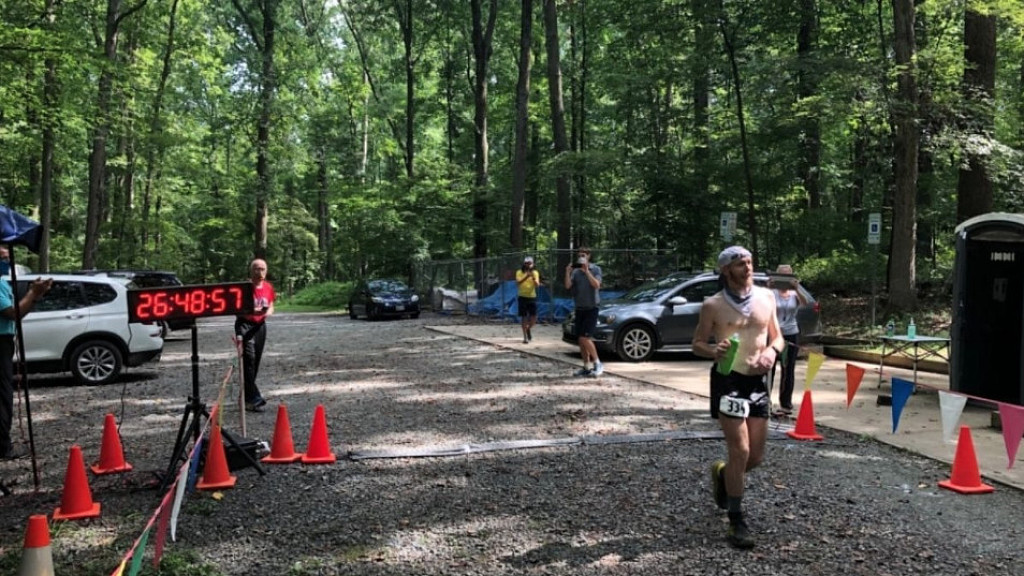
In-person backyard ultra lasts 27 hours, winner runs 181K
Aaron Ellison ran 27 laps to win the Capital Backyard Ultra on Sunday
After months of virtual backyard racing, an in-person backyard ultra event was held in Maryland over the weekend. The event started on Saturday and lasted 27 hours, with American ultrarunner Aaron Ellison taking the win after running 181K. Event organizers took precautions to make the run as safe as possible for all racers and volunteers, and the race field was capped at 30 runners. Ultimately, 22 people raced, and Ellison came out on top, outlasting each of his competitors and earning a Golden Ticket to the Big’s Backyard Ultra, which will be held in Tennessee in October.
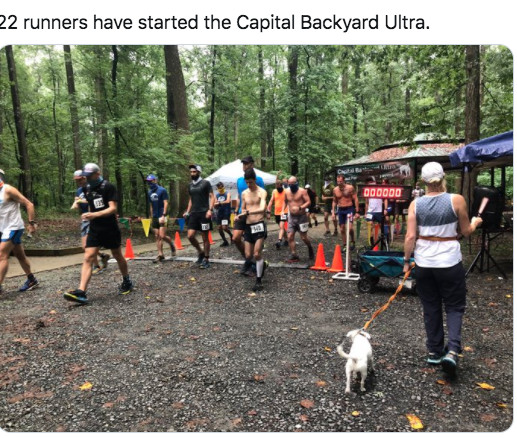
Originally scheduled for May, the Capital Backyard Ultra was postponed due to COVID-19, but the event’s rain date worked out, and 22 runners faced off at the Potomac, Md., course. Participants ran 4.167 miles (6.7K) every hour until one runner was left standing. When runners finished their 6.7K laps, they could sit and rest for the remainder of the hour. Once the hour was complete, any runners not back registered a DNF and the rest were sent back onto the course to see who could complete another lap before their 60 minutes were up.
From the start of the 20th lap, Ellison and two other runners, Shawn McDermott and Trevor Baine, were the only racers left on the course. The trio duked it out for six more hours, but McDermott and Baine couldn’t keep up with Ellison, who never ran a lap slower than 52 minutes. His consistent eight to 12 minutes of rest after each lap gave him a massive advantage, and it was only a matter of time before he won the event.
With his win, Ellison booked his spot in the Big’s Backyard Ultra, which race director Laz Lake declares to be the backyard world championships. Maggie Guterl won the 2019 Big’s Backyard after running 402K. This will be Ellison’s first shot at the world championship event.
by Running Magazine
Login to leave a comment
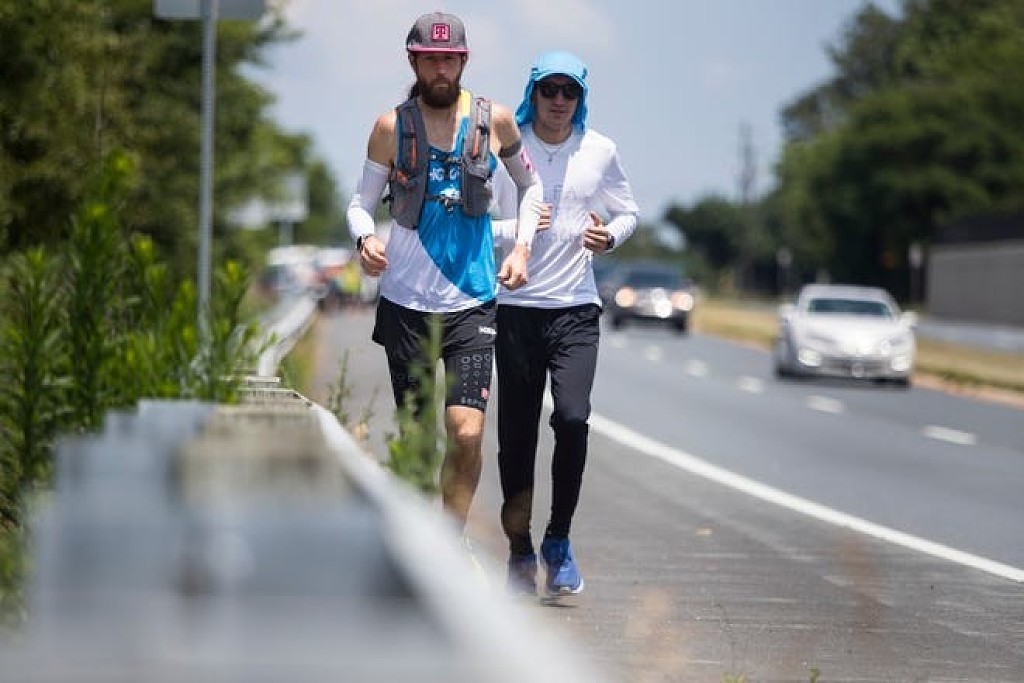
Professional ultramarathoner Michael Wardian is running length of Delaware
With most major races wiped off the calendar, professional ultramarathon runner Michael Wardian was asked to run 96 miles — the length of Delaware — over the course of a month as part of a virtual charity event.
"I was like, 'It's 96 miles, I'll just do it in one day,'" Wardian said.
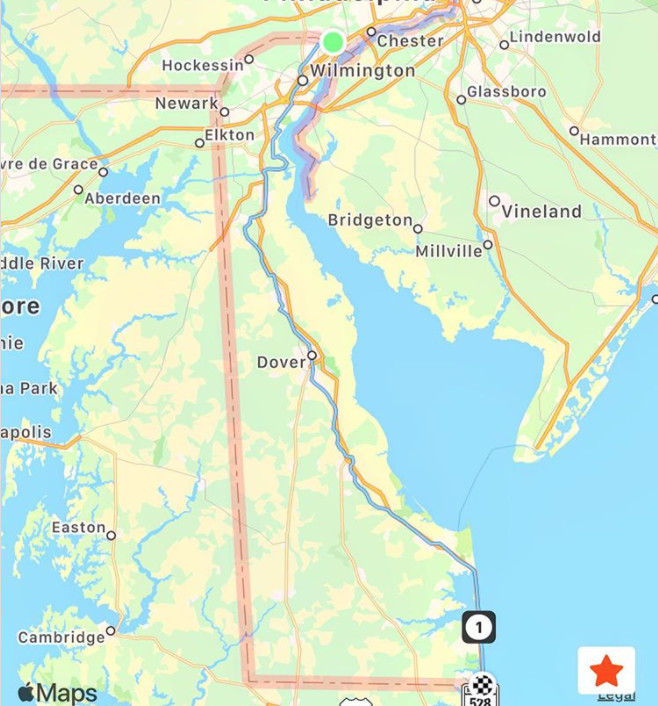
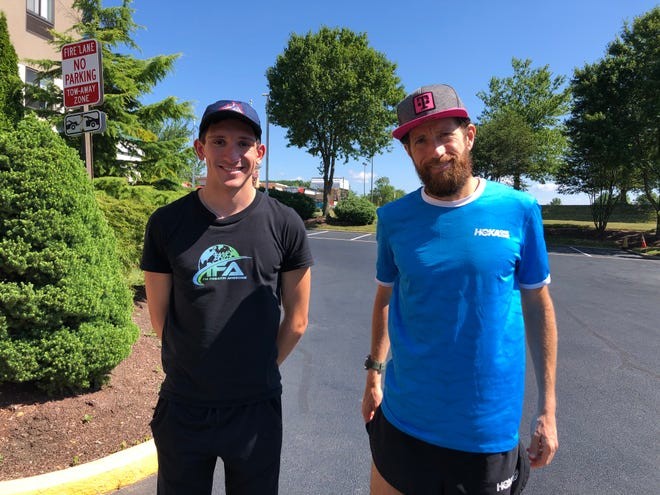
So around 1 p.m. on Thursday, Wardian started a run on Concord Pike at the Delaware and Pennsylvania border that will finish on Fenwick Island. He is being accompanied by Nick Cruz, a Milford resident, who after hearing about the attempt decided to try it himself.
The route they will take is roughly 130 miles, substantially longer than Delaware's end-to-end length of 96 miles. By zig-zagging through the state, Wardian and his crew lead Phil Hargis hope to avoid as many dangerous stretches of highway as possible.
From North Wilmington, they'll cross through the city to get on the Jack Markell trail, eventually passing through Delaware City before running a portion of the Mike Castle trail along the Chesapeake and Delaware Canal. From there, the planned route wraps around Middletown and cuts through the center of Dover before ending with a long stretch on Coastal Highway through the beach towns.
Wardian expects the run to take between 24 and 30 hours.
"I just think it's a cool route," Wardian said. "It's not as straight as you can go because I wanted to finish at the beach, because I just thought it would be cooler than finishing in like Selbyville."
In a typical year, Wardian travels from his Arlington, Virginia, home around the globe, competing for the shoe company Hoka One One in ultramarathons – races beyond 26.2 miles. By day, he is an international ship broker.
With his racing calendar clear because of the coronavirus, Wardian has turned his attention to virtual races and FKT attempts – fastest known times across certain routes.
In April, Wardian ran 262.5 miles over 2.5 days to win a virual event called the Quarantine Backyard Ultra. He's already competed about 30 times this year and has dozens of first place finishes and world records on his career resume.
It's unclear exactly what the standard is for the fastest time across Delaware. When Wardian posted about his Delaware run on Instagram, someone replied that a runner named Scott Newcomer ran the length of the state recently in 34 hours.
Fastestknowntime.com, which is the closest thing to an official record, doesn't yet list an end-to-end Delaware run.
Wardian is a frequent visitor to the Delaware beaches with his wife, Jennifer, and sons, Pierce and Grant, and expects to close on a property in Rehoboth Beach in August. He said the run will be a "very cool introduction" to the state.
"I really love the running community of Delaware too," Wardian said. "It's not often someone is like, 'Yeah, I'm willing to run 130 miles.'"
Login to leave a comment

Quarantine Backyard Ultra will return in July
The virtual ultramarathon that captured the attention of runners around the world is coming back in July for Round Two
The Quarantine Backyard Ultra was quite possibly the biggest race of 2020 so far, not only garnering attention from runners, but breaking into mainstream media coverage with stories in the New York Times, Washington Post and Sports Illustrated, among many other publications. The race directing team, Gather Virtual, has announced that the race is making a return on July 11, and they hope to make it even better than before. Just like the first time around, the race is free to enter, and it will follow the same last-runner-standing format, which inspired the event’s new tagline: “All will DNF but one.”
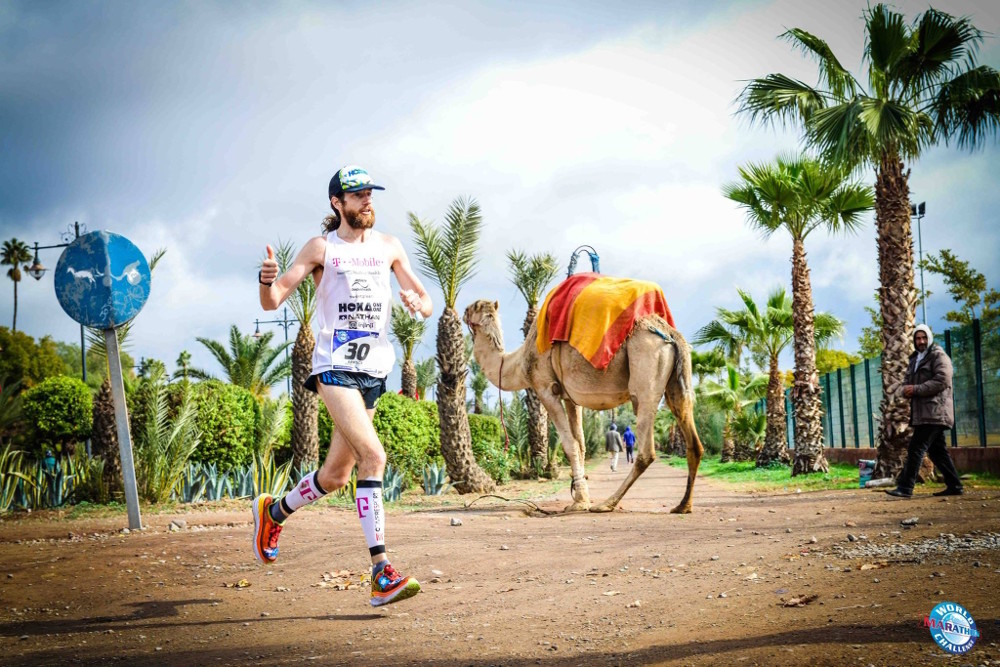
Backyard ultra format
The format for the Quarantine Backyard Ultra is simple. The first bell will ring at 7 a.m. MDT on July 11, starting the first lap of many. Runners have an hour to complete each lap, which will be 6.706K.
As was the case in the first event, which was held in April, runners will have the choice to run either inside on their treadmill or outside near their homes. Some runners competing in the April race couldn’t run outside due to coronavirus restrictions in their countries but also didn’t have treadmills, so they ran around inside their homes to complete each lap. It doesn’t matter where athletes run, as long as they cover 6.706K before each hour is up.
All competitors have to video in on Zoom, and this way, once they finish each lap, they can prove they ran the right distance by showing their treadmill or GPS data to the camera. Once an athlete finishes a lap, he or she can rest, eat, or do whatever they like for the remainder of the hour. They just have to make sure to be ready to run when the bell goes at the top of the next hour. The last runner standing is the winner.
Mike Wardian of the U.S. won the first Quarantine Backyard Ultra in a 63-hour-long battle with Czech runner Radek Brunner. Wardian ran 422K to take the win over Brunner, who missed the start of the 63rd lap and was therefore disqualified.
Round Two
“A second race wasn’t initially in the cards,” says Stephanie Gillis-Paulgaard, one of the members of the Gather Virtual team who helped create and run the Quarantine Backyard Ultra. “Then people started reaching out and lots of people were asking if we’d do it again. They were even asking during the race.”
When they saw that more and more summer races were getting cancelled due to COVID-19, Gillis-Paulgaard says they decided to have another run at the Quarantine Backyard Ultra.
“In a very short time-frame of two weeks, we threw that first race together and kind of crossed our fingers and hoped for the best,” Gillis-Paulgaard says. “We just thought it would be fun and unique.”
Despite the limited time to plan for the first race, they still managed to attract over 2,400 participants from more than 50 countries. Now, they have two months to promote and prepare for the event, and after all the good press the first race received, the Quarantine Backyard Ultra is a name that many people across the world know.
Registration for Part Two of the biggest running sensation of 2020 opens today, and runners can sign up for free here until July 10, 24 hours before the first bell.
by Running Magazine
Login to leave a comment

Sara Hall Among Pros Who Will Take Shot at Treadmill World Records on June 6 in Chaski Challenge
Inspired by the success of last month’s Quarantine Backyard Ultra, a handful of elite runners will attempt to break treadmill world records across five distances next week. Sara Hall, the fastest American female marathoner of 2019, is the headliner, and will be shooting for the women’s treadmill half marathon record of 1:20:43 (Hall’s pb is 1:08:58).
The event, which will be held on Saturday, June 6, and is known as the Chaski Challenge, is the brainchild of Tyler Andrews, a 2:15 marathoner who ran a world best of 2:46:06 for 50,000 meters on the track in 2018 (LRC recorded a podcast with him shortly before that race). Before the coronavirus pandemic hit, Andrews had planned to spend the spring training with Jim Walmsley in Flagstaff as the two men prepared to race the famed Comrades Marathon in South Africa. Instead, Andrews is now based at his parents’ house in Concord, Mass., but is still training hard and wanted to create an opportunity to allow himself and others to demonstrate their fitness.
“A lot of people are really fit out there right now and have nothing to do with it,” Andrews says. “So we wanted to do that. And then just create a really compelling, fun, conversation-provoking event that people can watch on a Saturday night and have fun with.”
Similar to the Quarantine Backyard Ultra, the Chaski Challenge will feature a free live online broadcast and tracking of the record attempts around the country with cameras aimed at each elite runner’s treadmill. 2016 Olympian Marielle Hall and ultrarunner Kris Brown (13th at 2019 Western States 100) will serve as commentators.
“Chaski Endurance Collective, which is my coaching collective, we have a bunch of different athletes from different areas on staff and we were kind of just bouncing around ideas and talking about what could we do that’s kind of building off what Quarantine Backyard Ultra did really well, because that event just absolutely crushed it,” Andrews says.
Andrews also felt the inclusive nature of the Quarantine Backyard Ultra — anyone could sign up and compete — was one of the keys to its success, and to that end, the Chaski Challenge will feature free-to-enter 5k and 50k races, which anyone can sign up for and complete during a 24-hour window beginning on June 5 at 4 p.m. ET (there is an optional donation to Feeding America’s COVID-19 relief efforts).
At 6 p.m. ET on June 6, the broadcast will begin with the men’s 50k, which features Andrews, 2014 world 100k champ Max King, and Quarantine Backyard Ultra champion Mike Wardian (2:54 50k pb). Midway through that race, the men’s half marathon (featuring 61:51 man John Raneri) and the women’s half marathon (featuring Hall and 2:27 marathoner Renee Metivier) will begin. Mario Mendoza will also be attempting to break the 50-mile record; that attempt will begin prior to the broadcast. The current treadmill world records for each event are as follows (the men will also try to break the marathon record en route to 50k):
Women’s half marathon: 1:20:43, Jenna Wrieden, USA, 2014
Men’s half marathon: 1:03:37, Tyler Andrews, USA, 2015
Men’s marathon: 2:20:45, Paul Zwama, Netherlands, 2018
Men’s 50k: 2:56:35, Matthias Kyburz, Switzerland, 2020
Men’s 50-mile: 4:57:45, Jacob Puzey, USA, 2016
Andrews chose those events because he believes each record is ripe for the taking. The 50k record has been broken three times already this year; both Wardian and Mendoza are former holders of the record.
“We are 100% sure that we are going to break these records in this race,” says Andrews. “There’s zero question. The women’s half marathon mark is 1:20. I’m pretty sure that women out there have done that in training before and not recorded it. We’re not just looking to break these; we want to make these legitimate. We want to have actual, really good athletes just totally destroy them and set them way out of reach.”
Andrews feels confident he is just as fit as when he ran 2:46 for 50,000 meters in 2018; on Sunday, he ran a workout of 7 x 5k (16:19, 16:20, 16:20, 16:16, 16:11, 16:07, 15:51) with 1k recovery for a total of 41k on the treadmill in 2:16. He will be making the attempt in a room that doubles as his office and a storage room for his dad’s clothes.
“There’s a TV inside the cabinet [in front of the treadmill],” Andrews says. “I don’t watch television when I’m running, but I actually kind of like it because it’s almost a black mirror, so I can see my upper running form, so I can see if I’m starting to list to one side or slouch a little bit.”
Hall bouncing back from Olympic Trials disappointment
Andrews has run into one issue with the Chaski Challenge: Hall will not be able to run her portion of the event live. Instead, she will record her attempt this week, and it will be played at the same time as the other attempts on the broadcast next week. Still, she is excited to give it a go.
“It’s a tough time for all sports, but especially with ours including the masses, people need things to stay motivated or to get a benchmark of fitness,” Hall says. “I wanted to support that and it will be nice to get a benchmark of fitness for myself in the process and hopefully provide some entertainment to people.”
Hall’s most recent race was the US Olympic Marathon Trials in Atlanta on February 29, where she dropped out after 22 miles. Hall says her recovery has been “a process.”
“I wanted that team more than any other race of my career, so I think I’m still somewhat getting over the disappointment and I think I’ll always look back on it with frustration,” Hall says.
After falling short in the Marathon Trials, Hall’s initial plan was to give the track trials a go in either the 5,000 or 10,000; even once they were postponed, her recent training has focused on those distances. She eventually plans to transition into a buildup for a fall 2020 marathon (if they happen) before returning to the track for the 2021 Olympic Trials.
For a woman who has run 1:08 for a half, 1:20 should be a piece of cake — theoretically. But Hall is not peaking for the Chaski Challenge. And since she rarely runs on treadmills, she doesn’t want to risk injury by giving a full race effort. In addition, she’ll likely be running at almost 7,000 feet in Flagstaff — which Hall says usually knocks 15 seconds per mile off her tempo pace. Still, record pace is just 6:10 per mile, which is very attainable for Hall, even with those caveats.
Hall won’t be able to make her attempt from the comfort of home as her treadmill is currently broken. Her plan is to head to a gym (which are now open in Arizona) and take her shot there. Unlike most half marathon record attempts, however, Hall will be able to have her four daughters cheer her on every step of the way — if they choose to.
“I’ll create a playlist to give me some entertainment and the girls will probably cheer me on, but will likely get bored after a few minutes and wander off,” Hall says.
Login to leave a comment
Sara Hall, will be shooting for the women’s treadmill half marathon record on June 6 in Chaski Challenge
Inspired by the success of last month’s Quarantine Backyard Ultra, a handful of elite runners will attempt to break treadmill world records across five distances next week. Sara Hall, the fastest American female marathoner of 2019, is the headliner, and will be shooting for the women’s treadmill half marathon record of 1:20:43 (Hall’s pb is 1:08:58).
The event, which will be held on Saturday, June 6, and is known as the Chaski Challenge, is the brainchild of Tyler Andrews, a 2:15 marathoner who ran a world best of 2:46:06 for 50,000 meters on the track in 2018 (LRC recorded a podcast with him shortly before that race).
Before the coronavirus pandemic hit, Andrews had planned to spend the spring training with Jim Walmsley in Flagstaff as the two men prepared to race the famed Comrades Marathon in South Africa. Instead, Andrews is now based at his parents’ house in Concord, Mass., but is still training hard and wanted to create an opportunity to allow himself and others to demonstrate their fitness.
“A lot of people are really fit out there right now and have nothing to do with it,” Andrews says. “So we wanted to do that. And then just create a really compelling, fun, conversation-provoking event that people can watch on a Saturday night and have fun with.”
Similar to the Quarantine Backyard Ultra, the Chaski Challenge will feature a free live online broadcast and tracking of the record attempts around the country with cameras aimed at each elite runner’s treadmill. 2016 Olympian Marielle Hall and ultrarunner Kris Brown (13th at 2019 Western States 100) will serve as commentators.
“Chaski Endurance Collective, which is my coaching collective, we have a bunch of different athletes from different areas on staff and we were kind of just bouncing around ideas and talking about what could we do that’s kind of building off what Quarantine Backyard Ultra did really well, because that event just absolutely crushed it,” Andrews says.
Andrews also felt the inclusive nature of the Quarantine Backyard Ultra — anyone could sign up and compete — was one of the keys to its success, and to that end, the Chaski Challenge will feature free-to-enter 5k and 50k races, which anyone can sign up for and complete during a 24-hour window beginning on June 5 at 4 p.m. ET (there is an optional donation to Feeding America’s COVID-19 relief efforts).
At 6 p.m. ET on June 6, the broadcast will begin with the men’s 50k, which features Andrews, 2014 world 100k champ Max King, and Quarantine Backyard Ultra champion Mike Wardian (2:54 50k pb). Midway through that race, the men’s half marathon (featuring 61:51 man John Raneri) and the women’s half marathon (featuring Hall and 2:27 marathoner Renee Metivier) will begin. Mario Mendoza will also be attempting to break the 50-mile record; that attempt will begin prior to the broadcast.
by Jonathan Gault
Login to leave a comment
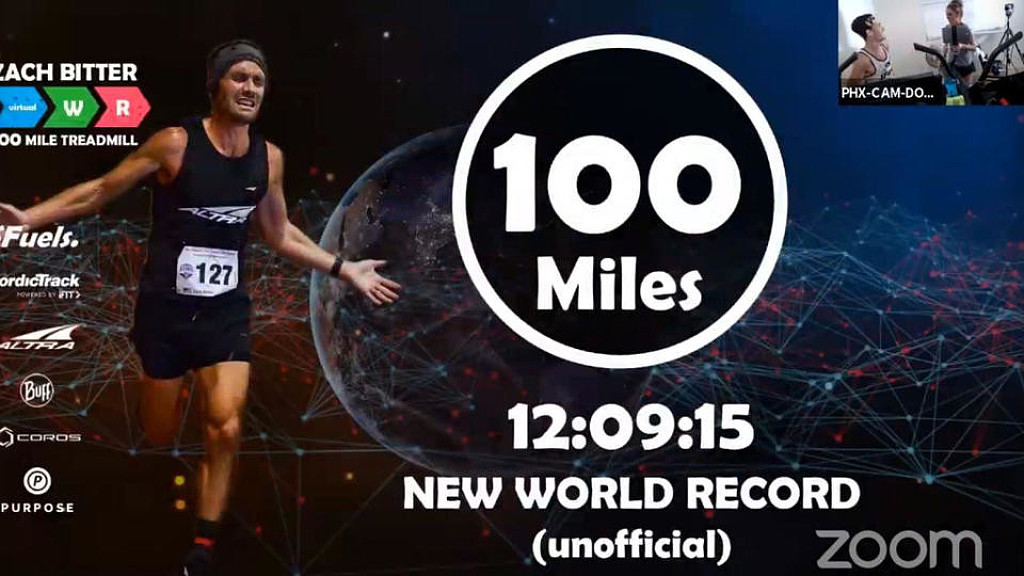
American ultra runner Zach Bitter breaks 100-mile treadmill world record clockin 12:09:15
American ultra runner Zach Bitter spent all day Saturday on the treadmill, starting at 6:30 a.m. PST and running until just after 6:30 p.m.
He ran for 100 miles (160.9K) and set the new treadmill world record for the distance with a time of 12:09:15. He bettered Canadian Dave Proctor‘s previous record (set at last year’s Calgary Marathon expo) of 12:32:26 by over 20 minutes. Bitter averaged an incredible 4:32 per kilometer over 12 hours and 100 miles of running.
Bitter’s average pace of 4:32 per kilometer would have given him a 3:11 marathon, which is a good time on its own, but he ran almost four marathons in a row on Saturday. The run was streamed live on YouTube, and different ultra runners and endurance athletes Zoomed in to chat as Bitter chipped away at his 100-mile trek.
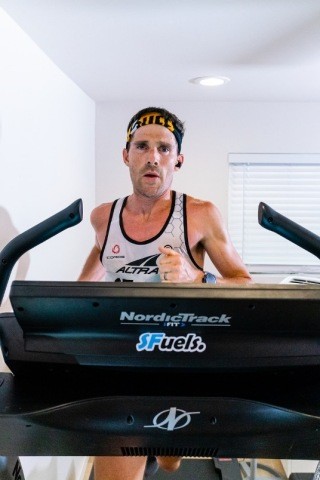
Some of those big names included 2019 Ultra-Trail du Mont-Blanc winner Courtney Dauwalter, Aravaipa Running’s Jamil Coury, Quarantine Backyard Ultra champion Mike Wardian and Proctor himself, who knows exactly what it takes to break the 100-mile treadmill record.
Bitter is already the world record-holder in the 100-mile run, which he set last August at an indoor track in Wisconsin in a time of 11:19:13. He is also the owner of the 100-mile trail record from the 2018 Tunnel Hill trail race in Illinois, where he ran 12:08:36.
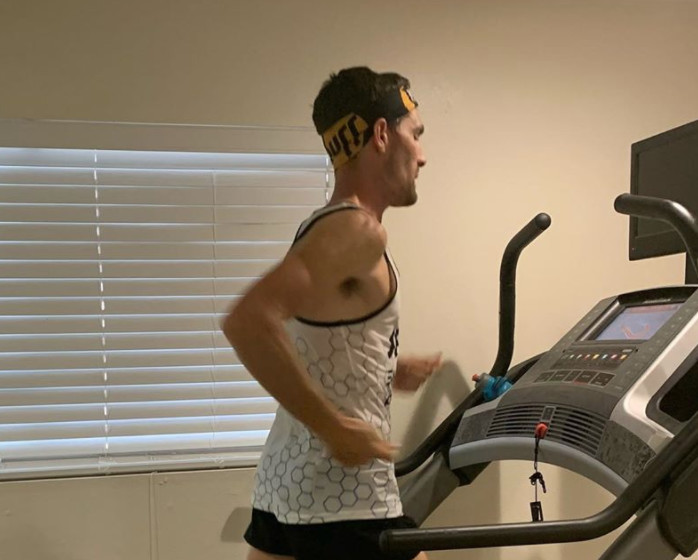
Now, he has officially added the treadmill record to his resume. With these three records to his name, it’s fair to say that Bitter is in the conversation for greatest 100-mile runner of all time, if not the outright winner of that title.
Bitter has been running ultra marathons for a decade now, and he’s got plenty of big race wins and results to his name.
He was 11th at the 2018 Western States 100, he took 32nd place at the 2016 Comrades Marathon and sixth at the International Association of Ultra runners 100K world championships in 2014. In 2019, he won three races, including the San Diego 100-miler in California.
by Ben Snider-McGrath
Login to leave a comment

Quarantine Backyard virtual ultramarathon that captured the attention of runners around the world is coming back in July for Round Two
The Quarantine Backyard Ultra was quite possibly the biggest race of 2020 so far, not only garnering attention from runners, but breaking into mainstream media coverage with stories in the New York Times, Washington Post and Sports Illustrated, among many other publications.
The race directing team, Gather Virtual, has announced that the race is making a return on July 11, and they hope to make it even better than before. Just like the first time around, the race is free to enter, and it will follow the same last-runner-standing format, which inspired the event’s new tagline: “All will DNF but one.”
The format for the Quarantine Backyard Ultra is simple. The first bell will ring at 7 a.m. MDT on July 11, starting the first lap of many. Runners have an hour to complete each lap, which will be 6.706K.
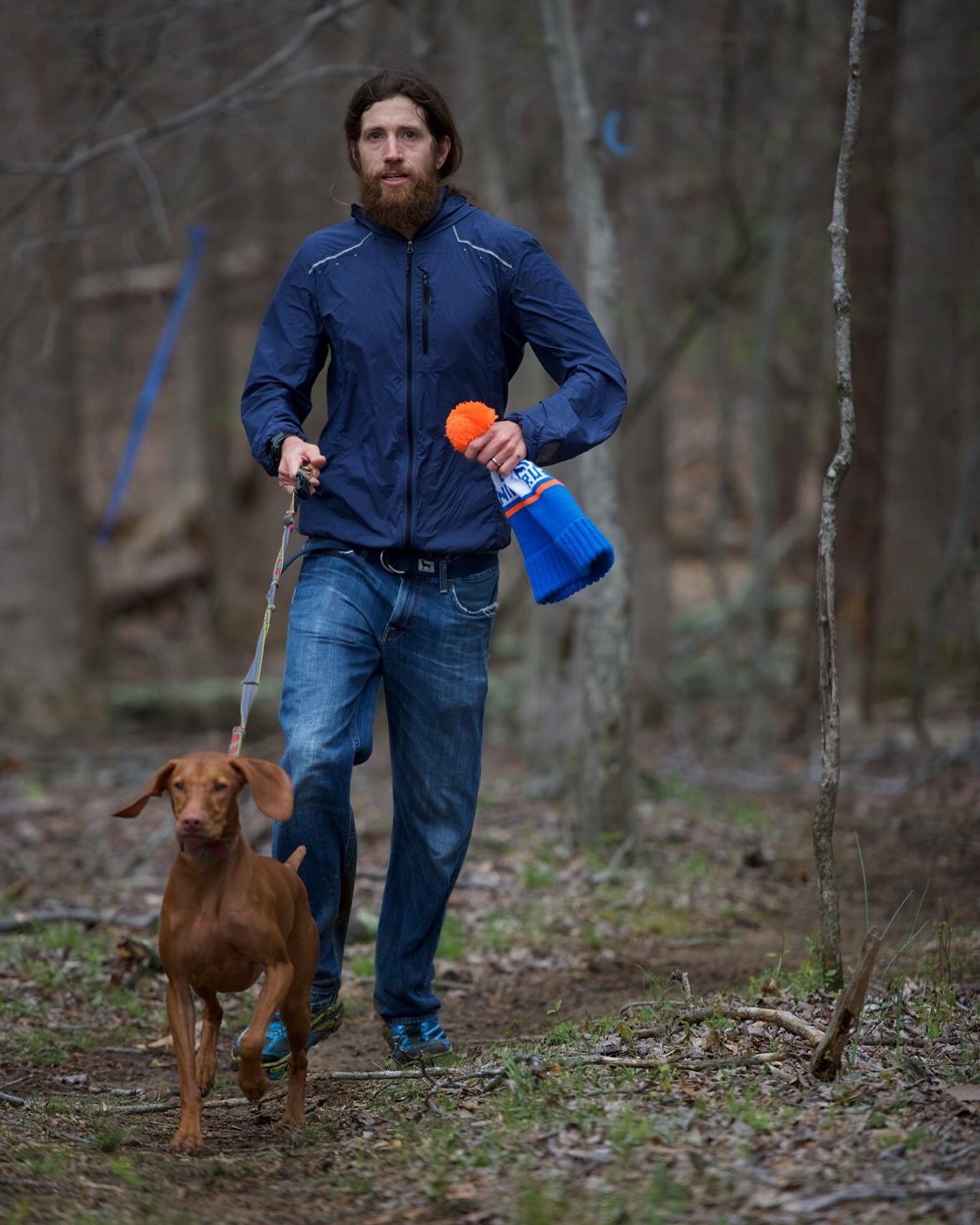
As was the case in the first event, which was held in April, runners will have the choice to run either inside on their treadmill or outside near their homes. Some runners competing in the April race couldn’t run outside due to coronavirus restrictions in their countries but also didn’t have treadmills, so they ran around inside their homes to complete each lap. It doesn’t matter where athletes run, as long as they cover 6.706K before each hour is up.
All competitors have to video in on Zoom, and this way, once they finish each lap, they can prove they ran the right distance by showing their treadmill or GPS data to the camera. Once an athlete finishes a lap, he or she can rest, eat, or do whatever they like for the remainder of the hour. They just have to make sure to be ready to run when the bell goes at the top of the next hour. The last runner standing is the winner.
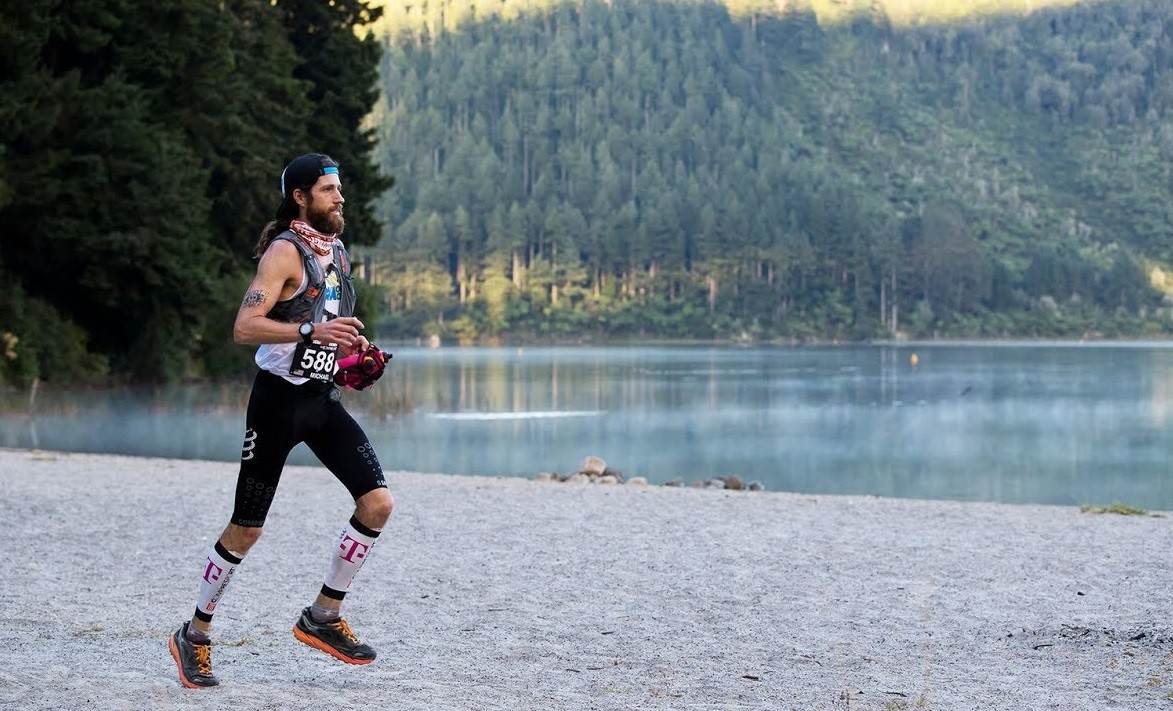
Mike Wardian of the U.S. won the first Quarantine Backyard Ultra in a 63-hour-long battle with Czech runner Radek Brunner. Wardian ran 422K to take the win over Brunner, who missed the start of the 63rd lap and was therefore disqualified.
Round two “A second race wasn’t initially in the cards,” says Stephanie Gillis-Paulgaard, one of the members of the Gather Virtual team who helped create and run the Quarantine Backyard Ultra. “Then people started reaching out and lots of people were asking if we’d do it again. They were even asking during the race.”
When they saw that more and more summer races were getting cancelled due to COVID-19, Gillis-Paulgaard says they decided to have another run at the Quarantine Backyard Ultra.
“In a very short time-frame of two weeks, we threw that first race together and kind of crossed our fingers and hoped for the best,” Gillis-Paulgaard says. “We just thought it would be fun and unique.”
Despite the limited time to plan for the first race, they still managed to attract over 2,400 participants from more than 50 countries. Now, they have two months to promote and prepare for the event, and after all the good press the first race received, the Quarantine Backyard Ultra is a name that many people across the world know.
Registration for Part Two of the biggest running sensation of 2020 opens today, and runners can sign up for free here until July 10, 24 hours before the first bell.
by Ben Snider-McGrath
Login to leave a comment
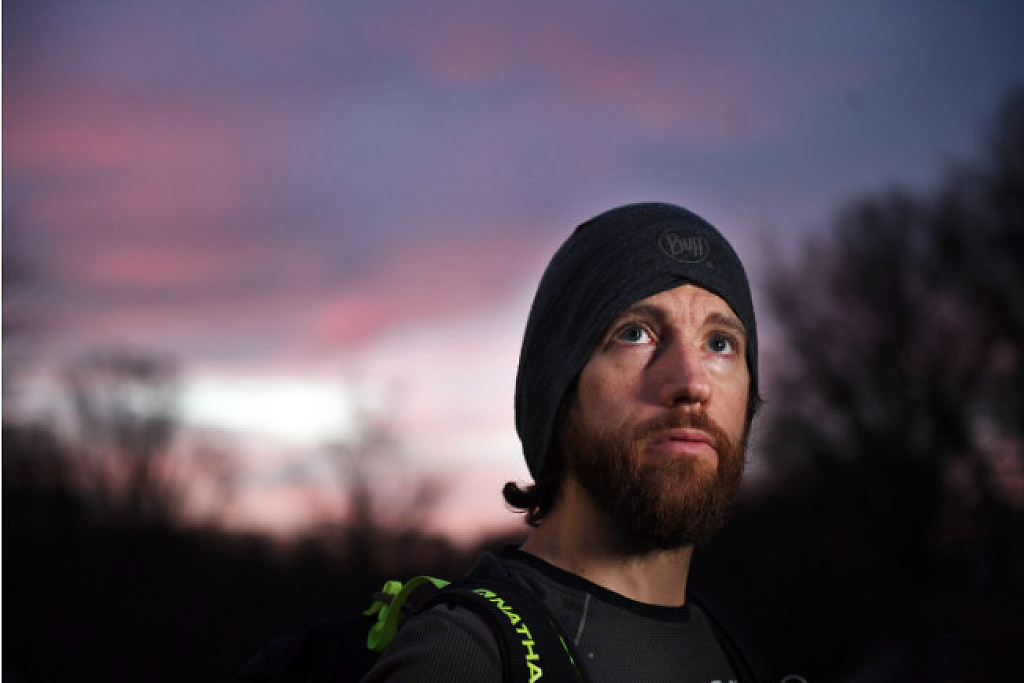
Michael Wardian set out for a virtual ultra marathon. He kept running for 2½ days.
n the early days of the second full month of the global novel coronavirus pandemic that has all but paralyzed the sports world, Michael Wardian went out for a run around the block. He woke up early Saturday morning, laced up his shoes and stepped outside to run around his Northern Virginia neighborhood.
He circled the block and then did it again. And then again and again. Wardian ended up running for more than 2½ days, skipping sleep and piling up miles. When he finally unlaced his shoes late Monday night, he’d run 262½ miles in all, winning a long-distance event called the Quarantine Backyard Ultra, a virtual race inspired by the social distancing recommendations that make a standard road race impossible in the midst of a pandemic.
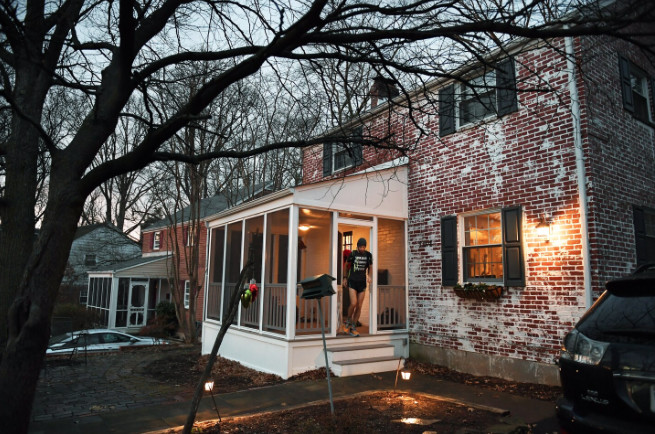
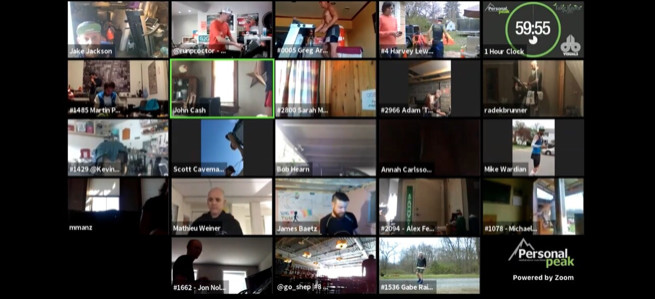
The unique event was intended to fill a void for distance runners who saw their race calendars wiped clean by the spread of the coronavirus. It brought together more than 2,000 runners from nearly 60 countries and turned into a captivating affair with a drama-filled, controversial finish.
“We do not know when this situation is going to end, and this is a fun way to bring a whole bunch of people together to be able to test their fitness, join a community, and do something together when many people cannot leave their homes,” a Calgary-based distance-running outfit called Personal Peak wrote in a March post announcing the race.
The rules were simple enough. The runners had to honor social distancing recommendations and either compete on a treadmill or in some sequestered environment. Some, such as Wardian, circled their neighborhood, while others circled their backyard. One entrant did laps around his living room in Dubai, and another ran circles in a Canadian coffee shop that had been closed because of the virus.
Runners were connected via Zoom and required to run 4.167 miles each hour. After hitting their hourly mark, the runners flashed their watch to the camera and then waited for the next lap to begin at the top of the hour.
For each 4.167-mile lap in the race, Wardian made 10 loops around the block in his Arlington neighborhood. That means that once the race began Saturday morning, he passed the same neighbors, same trees, same parked cars — same everything — more than 620 times.
The race began with more than 2,400 entrants, but they slowly dropped, and Monday was mostly a duel between Wardian and a runner halfway around the world named Radek Brunner, who was pounding out miles on a treadmill in the Czech Republic. Wardian officially won shortly before midnight Monday after more than 62½ hours of running when Brunner was disqualified because of a technicality.
Brunner failed to start running his 63rd lap precisely at the top of the hour, apparently because of some technical difficulty or confusion, and organizers reluctantly said they had no choice but to disqualify him for a rules violation.
In winning the event, Wardian ran the equivalent of 10 marathons in a little more than 2½ days. That’s a bit farther than running straight from Washington to Pittsburgh. Perhaps equally impressive: A sleep-deprived Wardian consistently turned in sub-10-minute miles, but his fastest lap was his final one, when he averaged 7:23 over the event’s final four miles.
Wardian, who turns 46 on Sunday, is well-known on the ultra circuit, his running exploits growing longer each year. He has raced against horses, run around the Capital Beltway, completed marathons on seven continents (twice) and competed in the U.S. Olympic marathon trials and most every other premier distance event. Until this virtual competition, though, he had never run so many hours and so many miles consecutively, he said.
To prepare, Wardian ran a full marathon in his neighborhood the week before, knowing he would be in for a grueling turn in the virtual race. After the first hours of the event ticked by Saturday, the field whittled down quickly. Treadmills broke, hamstrings tweaked, work and real life beckoned, quick power naps turned into full-bore slumber. But mostly the miles and hours just became too much.
By Sunday evening, after 36 hours and 150 miles, the field was down to 14. By that point, Wardian was running in the dark, and his kids were nearing bedtime. Overnight, the runners kept dropping, and at one point, Wardian thought he would be joining them. Around 3 a.m., he briefly stopped running and walked over to his wife, Jennifer.
“I was crumbling in the middle of the night,” he later explained. “She asked if I was all right. I said, ‘No, I just don’t want to be doing this anymore.’ She said that’s not a good enough excuse.”
So he kept going, finding a second wind. He would usually finish his 4.167-mile lap in 40 or so minutes, which gave him a bit of time to catch his breath before lining up again at the top of the hour. This was the reflective period when others typically bowed out.
After 42 hours and 175 miles, Matt Shepard, who had been circling the Tall Timber coffee shop in Canada, Matthieu Weiner of Pennsylvania and Scott Martin from Oregon all dropped. Then Greg Armstrong in Tennessee an hour later. And then, after 46 hours of running, the last female runner, Anna Carlsson, who had been trekking through the outdoors near the northern tip of Sweden, had to stop. She had been running on a frozen lake that had been plowed for the occasion but had to drop when a snowstorm approached.
Finally, as the race hit the 48-hour mark Monday morning, just Wardian and Brunner were left. Both knew it wasn’t the speed or mile-pace that counted. It was a race of attrition, and the last man standing would be the sole winner. Brunner sneaked quick naps at the bottom of each hour, but Wardian hadn’t slept since Friday night.
“Sleep, what? None,” Wardian said at one point. “This is my money race. I don’t need to sleep.”
Because we live in virtual times, the entire event was streamed online, first on YouTube and later on Facebook, and thousands tuned in to watch the runners in Zoom’s now-familiar checkerboard format. The audience was able to engage and ask questions of the runners as they rested between laps.
“Let’s keep doing this!” Wardian said into the camera after he was 216 miles into the race.
And so they kept running into a third day and night. Even with 250 miles behind them — around 9 p.m. Monday — both were turning in a relatively fast pace, and Wardian had his sights set on what organizers say is the virtual backyard ultra record: 69 laps.
But then a whistle sounded for lap No. 63. Wardian took off running in the dark, but more than 4,000 miles away, Brunner stood still on his treadmill, seemingly unaware the lap had started. The online audience watched as Brunner fielded a phone call from race organizers, visibly in disbelief that after 62 hours of running, he was disqualified over what seemed like a minor infraction.
Wardian finished his lap and was slightly confused, too — and also disappointed the race was over and he couldn’t add another record to his lengthy race résumé.
Login to leave a comment
Mike Huber runs for 25 hours in virtual marathon and he was one of 2,400 runners from 64 countries
Mike Huber was supposed to travel to Calgary in June to run an ultra-marathon in support of The Rare Disease Foundation.
Then along came COVID-19. The world was turned upside down and the marathon, like all other events across the globe, was cancelled.
However, the die-hard running community didn’t hang up their bibs. Instead they went the extra mile.
Huber along with 2,400 runners from 64 countries from around the world, took part in the first annual Quarantine Backyard Ultra – the brainchild of Albertan ultra-marathon runner Dave Proctor and a company called Peak Run Performance.
Every runner around the world started the race at the exact same time at their own home – either on a treadmill or on the road.
They had to run a 6.7 kilometer loop every hour, starting again at the beginning of every hour, until they could no longer run anymore.
If an athlete finished the loop early within the hour they got to rest for the remaining time before setting out on the next loop. However, if a participant did not finish the loop within the allotted time, they were eliminated.
“That’s the game,” said Huber.
“It’s how much time do you have to rest versus not rest,” he said.
The strategy depends on the runner. Some people like more rest, explained Huber, and some people like less so they keep moving and their body doesn’t seize up. And then you have to eat.
A two minute warning would alert athletes get on their start line and if a runner failed to start at the exact time then they were disqualified.
Times were logged on an app called Strava through the athlete’s watches.
Runners also used the teleconferencing app called Zoom to allow them to interact with other racers and live feed while running.
“What makes the race really unique, and we joke about it in the running world, there’s only one winner,” said Huber.
Huber started his race at 6 a.m. PST on Saturday, April 4, and finished at 7 a.m. on Sunday.
by Collen Flanagan
Login to leave a comment
After over 50 hours ultrarunner Mike Wardian runs 63 laps for 422K to win the virtual race Quarantine Backyard Ultra
The Quarantine Backyard Ultra started Saturday morning, and over 2,400 runners from more than 50 countries joined the virtual race. Runners ran 6.706K every hour for as long as they could, and over 60 hours later, only two runners remained: American Mike Wardian and Radek Brunner of the Czech Republic. Brunner missed the start of the 63rd lap and was therefore disqualified, making Wardian the winner after 422K.
With every passing lap of the Quarantine Backyard Ultra, more and more of the world’s best ultrarunners dropped out and registered DNFs. Last year at the Big’s Backyard Ultra, Maggie Guterl ran 60 laps for 402K, but a nagging back injury forced her to pull out of the race this weekend after just nine laps.
After 15 laps and 100K, Jamil Coury called it a day. Three laps later, Canadian Cal Neff dropped out. At the 100-mile mark, Courtney Dauwalter threw in the towel, along with 72-year-old Gene Dykes. Later on, after 31 laps, Canadian Dave Proctor (who helped bring the event into fruition), had to end his race due to back pain.
“It was a bit of a tough day for sure,” Coury said. “I was hoping to go as long as I could— 24 or 30 hours—but you never know with these things.” Although he didn’t get as far as he would’ve liked, Coury cut himself some slack, seeing as he’d run a marathon around a 27-metre course just four days earlier. In fact, just making it in time to race at all was an accomplishment for Coury, who slept at his office the night before and woke up only minutes before the event began.
“I was working late on Friday night, and i fell asleep at my office,” he said. “I fortunately had a pair of shoes and socks in my truck. I threw it on, started my livestream and just ran out the door.” Coury ran the first seven hours around his office’s neighbourhood, returning to finish work between laps. He eventually drove home (he made it to his treadmill with three minutes to spare before the start of the next lap) and made it to 100K before bowing out.
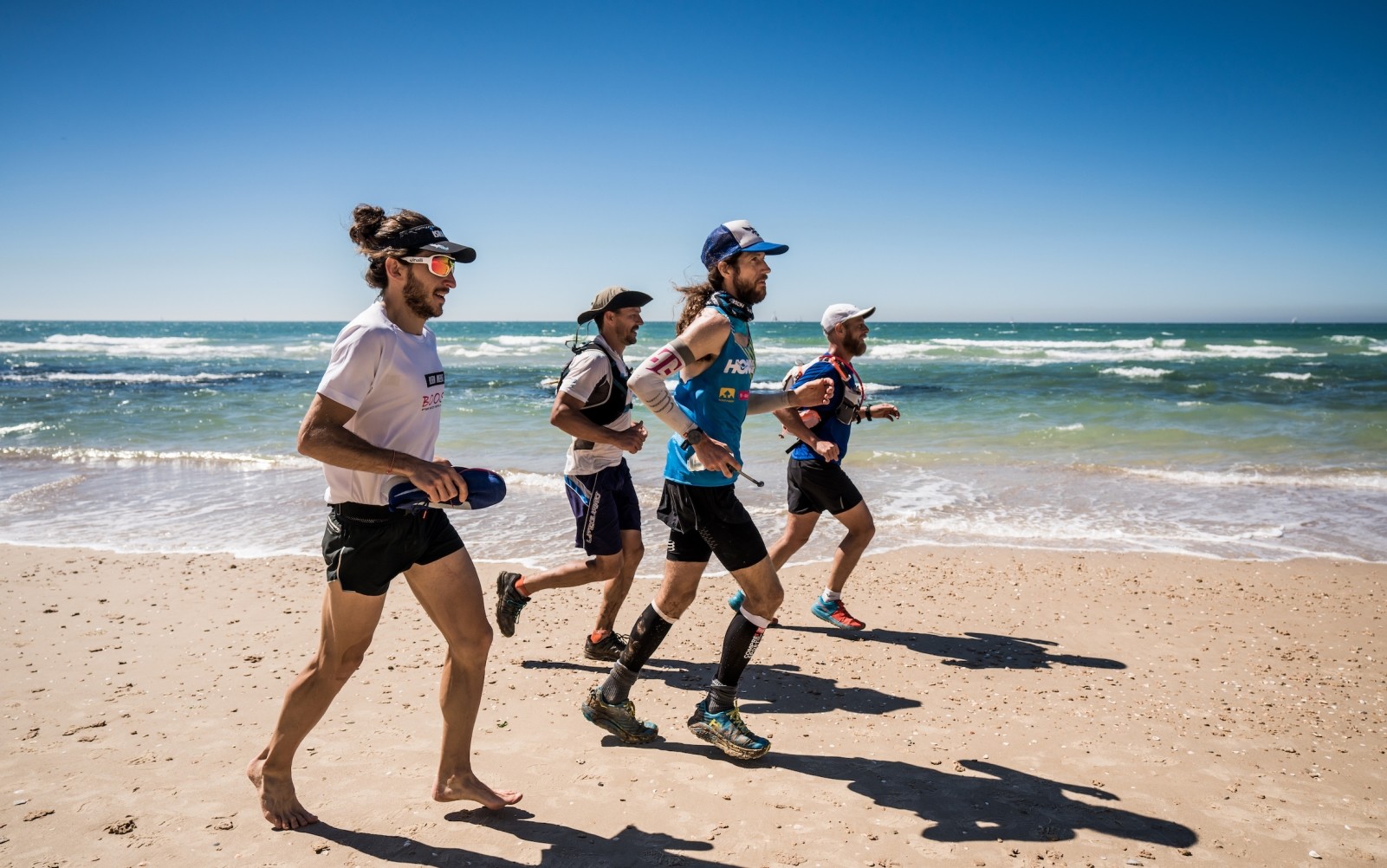
Dauwalter said she got to the 100-mile mark and decided that was “a solid day.”
“When I signed up I didn’t have major plans,” she said. “I wanted to make it at through the night, because that’s always special and fun to see the sunrise.” She did make it through the night, got her sunrise and retired from the race soon after.
“I think this is a really fun format,” she said. “It’s great with the camaraderie. You come back from a lap and go on the Zoom chat with the other runners.” Proctor also noted how fun it was to chat on the Zoom and YouTube feeds.
“It’s so unique,” he said. “When all the runners go off and do their thing, I get extraordinarily busy talking to everybody on YouTube.” He said that he spent around half of his time on the treadmill answering questions viewers had posted on the YouTube live video.
“I found that it was really quite rewarding. It gets your mind off of what you’re doing and it gives you something [else] to do.” While they were both still in the race, Proctor and Coury teamed up and answered questions together, adding some fun banter to the mix as well.
The two finalists had very different setups for the final laps. Brunner ran solo in his house on a treadmill while Wardian took to the streets with a support crew and several cyclists riding alongside him as he ran. The winner of multiple U.S. national titles at ultra distances, Wardian is well known in the running community. He has run the Western States 100 and the Ultra-Trail Du Mont-Blanc multiple times, and he finished 11th at the 2011 Comrades Marathon and third at the 2010 Marathon des Sables.
Brunner is more of an unknown, at least in the North American ultra community, but like Wardian, he has an impressive running resume. He has represented the Czech Republic on multiple occasions, competing at the 24-hour, 100K and trail world championships. At the 2017 24-hour worlds in Ireland, Brunner came 14th. He has also run to the podium four years in a row in the Spartathlon, a 246-kilometre ultramarathon in Greece. Although he didn’t win, after this run, Brunner’s name has become much more well known in the ultrarunning community.
by Ben Snider-McGrath
Login to leave a comment
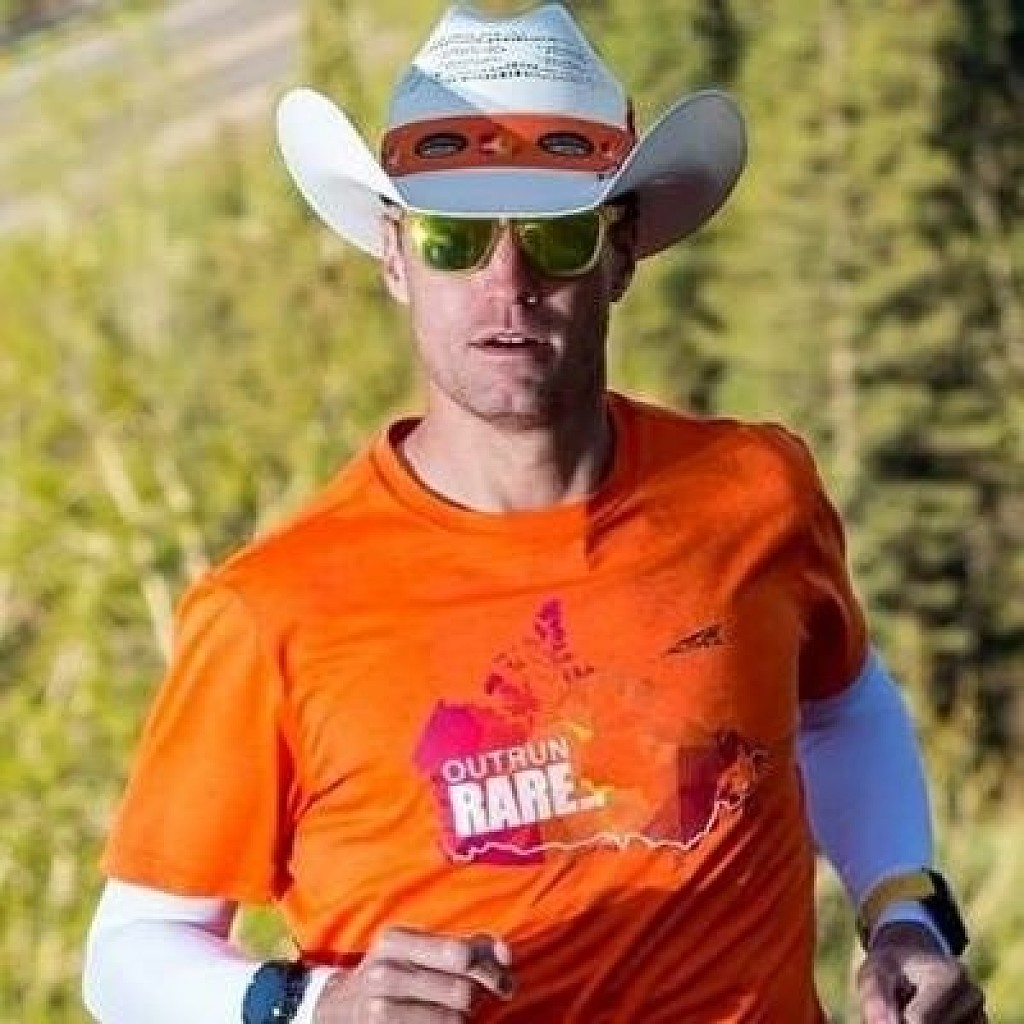
The Quarantine Backyard Ultra is a chance to race virtually for free this spring
If you’re itching to race this spring but don’t know where to turn, maybe just look to your backyard. The Quarantine Backyard Ultra is a free race that anyone can enter, and you can do it from the comfort of your own home or on a route nearby. Canadian ultrarunner and treadmill-running world record-holder Dave Proctor will be running the Backyard Ultra, which will be broadcast on YouTube starting on April 4, and the Barkley Marathons‘ Laz Lake will be the honorary race director.
The race starts at 6 a.m. PT on April 4. All runners will connect via Zoom video call, and this is where their progress will be monitored. Athletes can choose between running on a treadmill or on a route that starts and finishes at their home. Runners who choose the former option must point their camera at their treadmill after they complete each lap to prove they completed the distance (each lap is 6.706K).
Racers who opt to run outside must use a GPS watch or smartphone to record their distance run, and at the end of each lap, they must show proof of the completed lap to the Zoom audience. Once runners complete each lap, they can relax until the next lap begins. The last person running is the winner.
The race will be live streamed on YouTube, which should satisfy many running fans’ needs for live racing. Better yet, the event will have live updates on its Facebook page written by Lake, and, if all goes well with Zoom, Lake will also provide colour commentary over the live feed as well. Last year, Lake travelled to Calgary and acted as the honorary race director for Proctor’s Outrun Backyard Ultra, which was modelled after Lake’s Big’s Backyard Ultra in Tennessee.
The race is being organized by Personal Peak, an endurance coaching company witch which Proctor works. In May, Proctor was set to tackle the TransCanadian speed record attempt, and Personal Peak coaches were going to be his crew for the run. When he had to postpone his attempt, Proctor decided he had to do something to replace it.
“His fitness level wasn’t going to go to waste,” says Stephanie Gillis-Paulgaard, Proctor’s publicist. “Dave’s a competitor, so we said, ‘Let’s see who else we can get on board.'” So, Personal Peak set the race up and they “extended that invitation to all of the best ultrarunners,” Gillis-Paulgaard says. As it stands now, 11 other elite runners have confirmed for the April 4 race, but Gillis-Paulgaard, Proctor and the Personal Peak team hope to attract runners of all levels.
“Hopefully, for those people who have trained over the winter months, this will give them something to race, whether they run one lap or 50,” Gillis-Paulgaard says. The winner of the event will win what is, according to the race website, “soon to be world’s most coveted prize: The Golden Toilet Paper Roll.” In a time where race opportunities are sparse and toilet paper is hard to come by, you can get both in the newest virtual race.
by Ben Snider-McGrath
Login to leave a comment
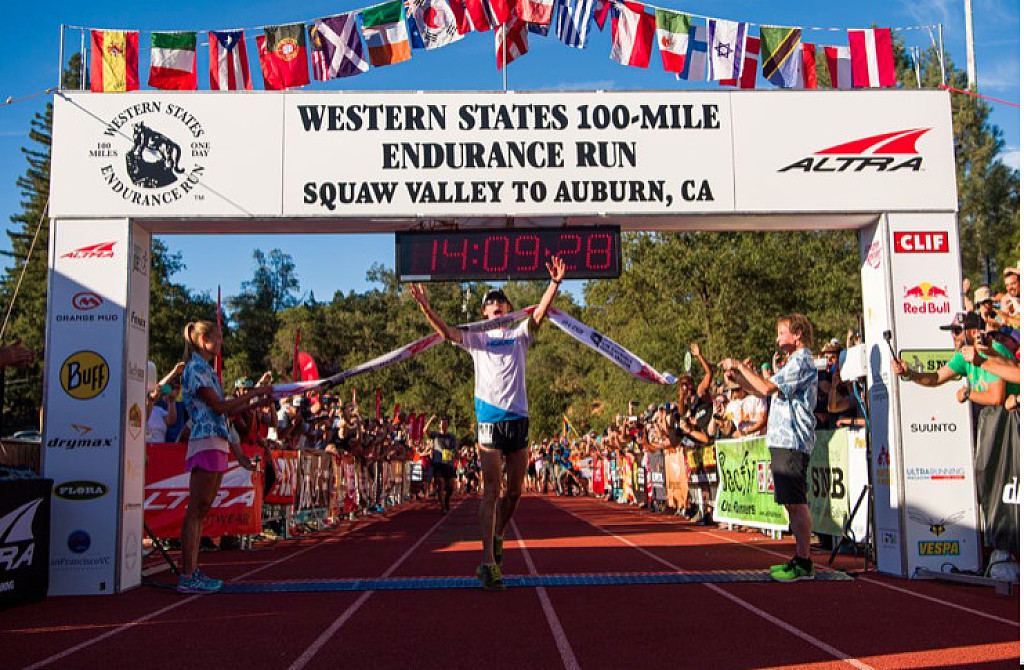
15 Mind-Blowing Race Moments From 2019-From Kipchoge to Kosgei and all of the upsets, records, and victories in between, 2019 was a major year for running.
1-Kosgei Shocks Everyone in Chicago-On October 13, Brigid Kosgei made history when she won the Chicago Marathon in 2:14:04. The Kenyan ran almost perfectly even splits to achieve her goal in the Windy City, passing the halfway mark in 1:06:59 before clocking 1:07:05 for the second half.
2-Eliud Kipchoge Dips Under 2-Hour Marathon Barrier-In his second attempt at breaking the two-hour barrier in the marathon, Eliud Kipchogeof Kenya accomplished the feat with a stunning run of 1:59:40 on the streets of Vienna in October.
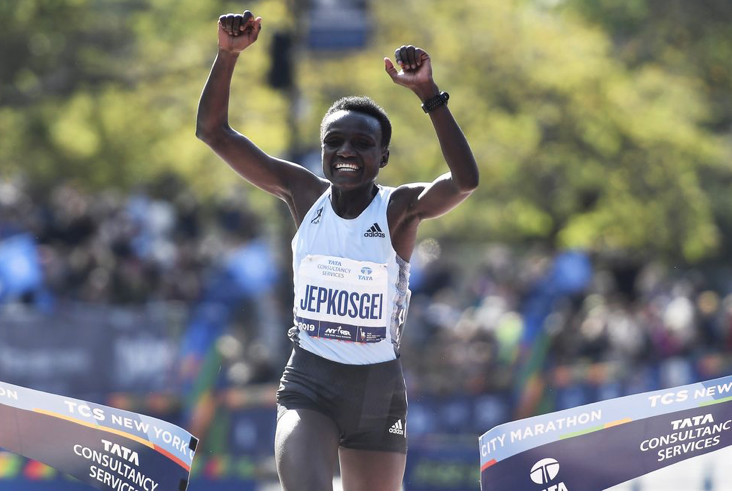
3-Joan Samuelson Crushes Her Goal 40 Years After Boston Victory-In 1979, Joan Benoit Samuelson set a national and course record when she won the Boston Marathon as a 21-year-old college student. Forty years after her historic victory, Samuelson, 61, set out to run within 40 minutes of her winning time at the 2019 Boston Marathon. On April 15, the 1984 Olympic champion wore a similar Bowdoin College singlet to honor her 1979 win and shattered her goal, crossing the finish line in 3:04. “To be here, 40 years later and being able to run, let alone being able to run a marathon, I feel blessed,” she said.
4-Jim Walmsley Obliterates His Own Western States Record-Ultrarunning star Jim Walmsley maintained his Western States winning streak when he obliterated his own course record in June. Navigating 100 miles from Squaw Valley to Auburn, California, Walmsley broke the tape in 14 hours and 9 minutes, which broke his own course record by more than 20 minutes
5-Donavan Brazier Breaks 34-Year-Old American Record-Donavan Brazier had the race of his life when he broke one of the oldest American records on his way to winning gold in the 800 meters at the IAAF World Championshipsin Doha, Qatar. With 250-meters to go, Brazier ran away from the field to secure the first 800-meter world championship gold medal for the United States in a time of 1:42.34.
6-Dalilah Muhammad Sets World Record Twice-Dalilah Muhammad made history twice this season when she broke the 400-meter hurdles world record and lowered it once again on her way to winning the world championships.
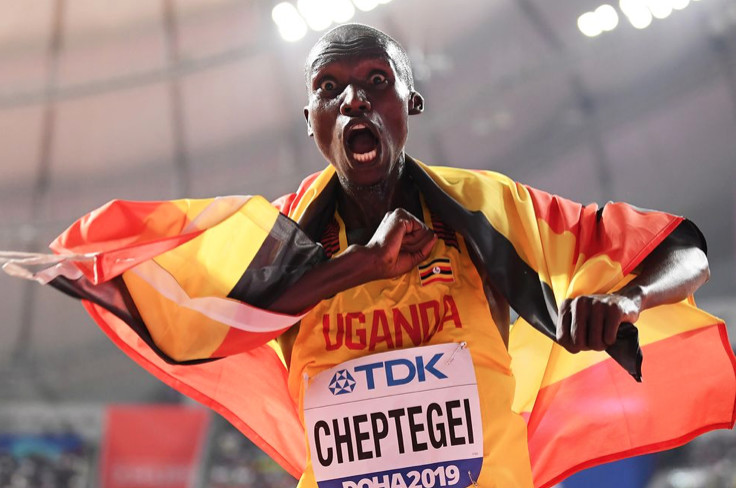
7-Sifan Hassan Wins Unprecedented Double at Worlds-At the IAAF World Championships in Doha, Sifan Hassan won two gold medals that no man or woman has achieved in the history of the world championships or Olympic Games. The Dutch runner, 26, kicked off the competition by winning the 10,000-meter final in a national record time of 30:17:33.
8-Maggie Guterl Becomes First Woman to Win Backyard Ultra-For 60 hours straight, Maggie Guterl ran the same 4.2-mile trail loop to become the last runner standing in the Big’s Backyard Ultra race. The Durango, Colorado, native ran 250 miles on her way to becoming the first woman to win the brutal race that rewards the person who can run for the longest amount of time.
9-Geoffrey Kamworor Breaks Half Marathon World Record-Holding a 4:25-mile pace, Geoffrey Kamworor of Kenya shattered the world record at the Copenhagen Half Marathon in September, running 58:01. The performance, which was 17 seconds faster than the previous record, took place in the same city where the 26-year-old won his first of three half marathon world championship titles in 2014.
10-Joyciline Jepkosgei Debuts in NYC Marathon, Beats Mary Keitany-In her first marathon, Joyciline Jepkosgei of Kenya secured a title in a major upset. The half marathon world record-holder raced like a veteran in the New York City Marathonto beat four-time champion Mary Keitany in a winning time of 2:22:38, only seven seconds shy of the course record.
11-Kenenisa Bekele Wins Berlin Marathon 2 Seconds Shy of World Record-One year after Eliud Kipchoge set a world record that many believed would be untouchable for at least a few years, Kenenisa Bekele nearly surpassed it at the Berlin Marathon. The 37-year-old Ethiopian won the race in 2:01:41, just two seconds shy of Kipchoge’s record.
12-Freshman Sha’Carri Richardson Shatters 100-meter Collegiate Record-In her first ever NCAA Outdoor Championship, Sha’Carri Richardson made history. In the 100-meter final, the LSU freshman sprinted to victory in a collegiate record of 10.75.
13-Drew Hunter, Athing Mu, and Colleen Quigley Win First Pro Titles-The USATF Indoor Championships brought out exciting breakthroughs for three young athletes. In the men’s 2-mile, 21-year-old Drew Hunter won the crown out of the “slower” heat by running a world-best time of 8:25.29. The women’s 600 meters was won by 16-year-old Athing Mu who defeated world silver medalist Raevyn Rogers in an American record time of 1:23.57.
14-BYU Snaps NAU’s Winning Streak at the NCAA Cross Country Championships-The Brigham Young team had a banner day at the NCAA Cross Country Championshipsin November. Battling muddy conditions, the BYU Cougars secured the team victory over three-time defending champions Northern Arizona in the men’s race. With a team total of 109 points, BYU beat NAU by 54 points to win the program’s first NCAA cross-country championship in history.
15-Joshua Cheptegei Sets 10K World Record After Winning Two World Titles-Joshua Cheptegei of Uganda capped off a banner year when he set a world record in the 10K on December 1, running 26:38 to win the 10K Valencia Trinidad Alfonso in Valencia, Spain. Earlier this year, he won the world cross-country championships and the world championship 10,000 meters in Doha, Qatar.
by Runner’s World
Login to leave a comment
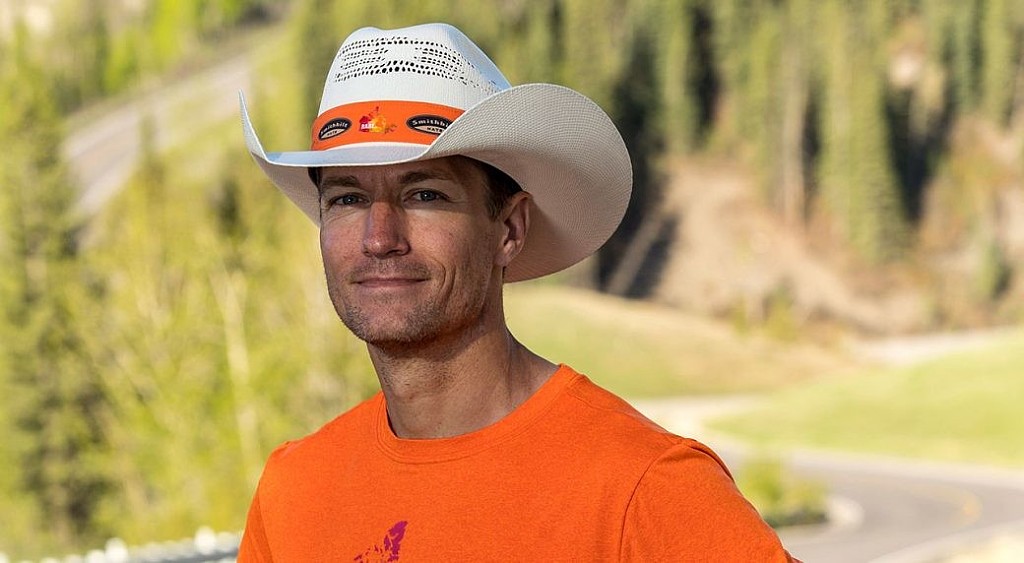
Canadian record-holder Dave Proctor announces a second cross-Canada speed record attempt starting May 18, 2020
Canadian and world record-holding ultrarunner Dave Proctor, whose 2018 cross-Canada speed record attempt was thwarted by injury after 2,415 kilometres, has announced he will try again next year, starting on May 18. This time Proctor will run from east to west, starting in Newfoundland and finishing in Victoria, with the goal of completing the quest in 67 days. The current record, held since 1991 by the late Al Howie of Victoria, is 72 days, 10 hours.
Inspired by his experience as the father of a child with a rare genetic disease (his son Sam, 10, has RECA, which stands for relapsing encephalopathy with cerebellar ataxia), Proctor raised more than $300,000 from his runs for the Rare Disease Foundation last year. His latest accomplishment was two world records in treadmill running, set at the Calgary Marathon expo in May: the 12-hour and the 100-mile, which he set at 153.8K and 12:32:26. Proctor holds the Canadian records for 24 hours and 48 hours on the road.
“I’m ready to take this on and I’ve got so much more in the tank this time,” says Proctor. “My bodyhas recovered, and I am fitter than ever before, with more passion about our cause fueling me and the hundreds of communities supporting the run.”
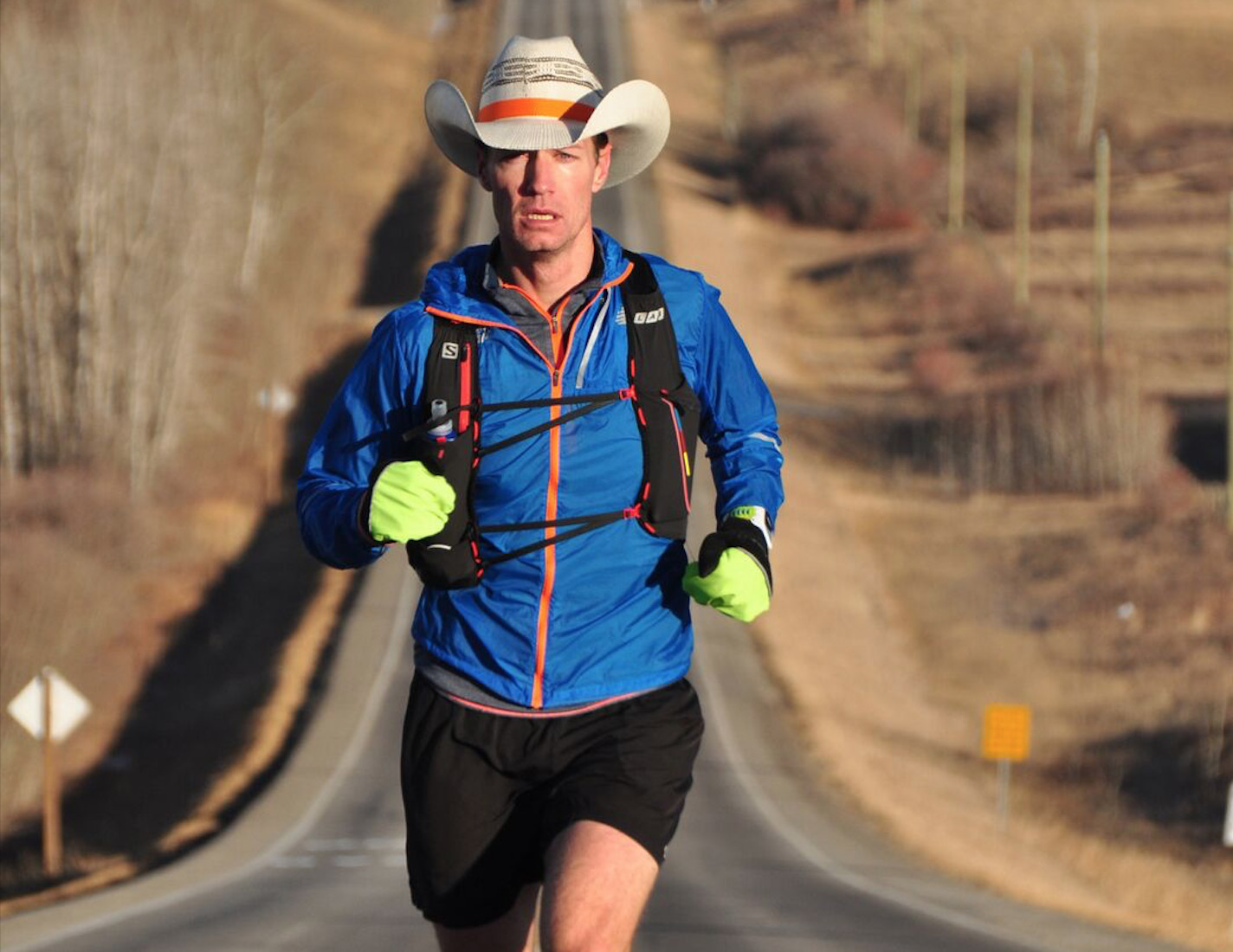
The announcement comes on the heels of the publication of the first biography of Howie, by Jared Beasley, who stumbled upon his story in 2014 after meeting and befriending one of Howie’s competitors from the 1980s. The two men belonged to a small subset of ultrarunners who ran mind-boggling distances in the multi-day races of the 1980s and 90s, which have almost completely disappeared.
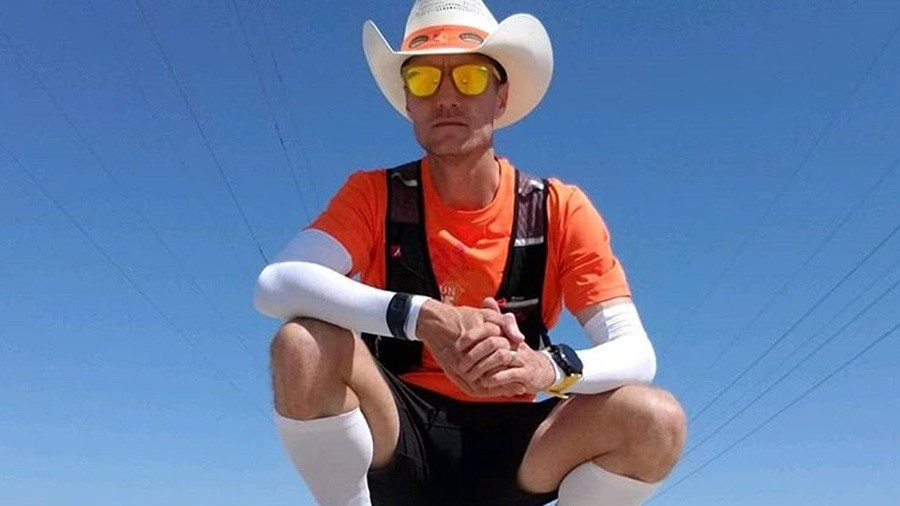
Howie was an eccentric and a loner with a complicated personal history, who mostly lived in poverty.
His habit was to start races at a blistering pace, creating a huge lead for himself before settling into a slower, more sustainable pace that he could maintain for days at a time. He met Terry Fox and Rick Hanson at the run that inspired Fox’s Marathon of Hope (the Prince George to Boston Marathon of 1979, in which Howie finished third). Howie was 46 when he set the cross-Canada speed record, and two weeks after completing the run, he broke his own course record at the Sri Chinmoy 1,300-mile race in New York.
Proctor will have to cover 105 kilometres, or the equivalent of two and a half marathons a day, to achieve his goal, which is to break Howie’s record by five days.
Proctor recently broke his own 48-hour record (unofficially) at the Six Days in the Dome event in Wisconsin, at which American ultrarunner Zach Bitter broke the world 100-mile record. Proctor is now looking ahead to Laz Lake’s Big’s Backyard Ultra, which starts on October 19 in Tennessee.
by Anne Francis
Login to leave a comment
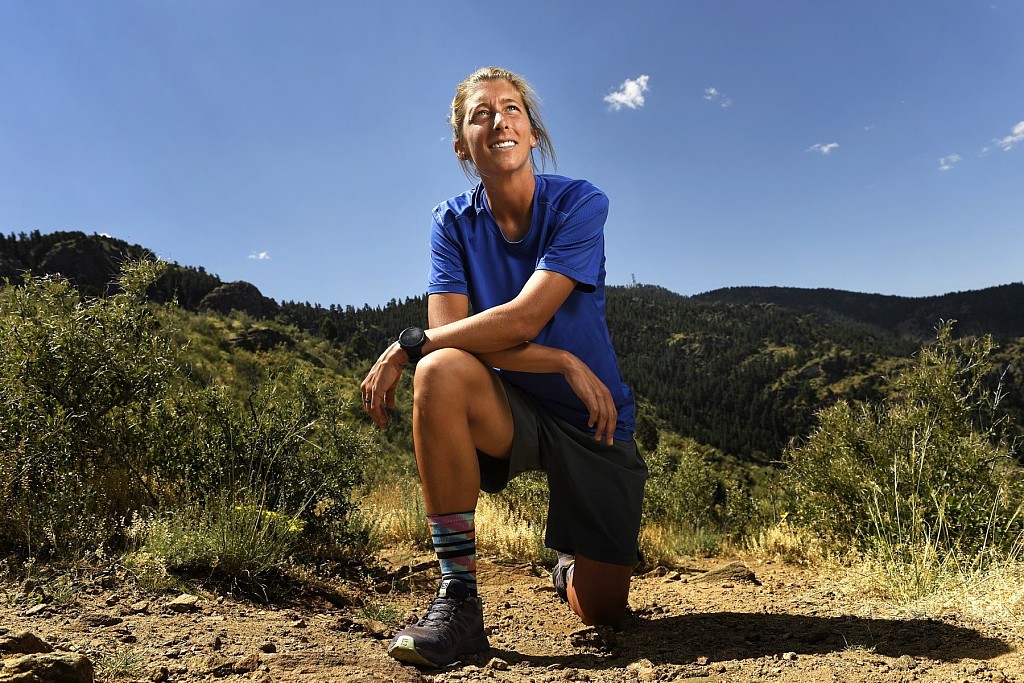
Courtney Dauwalter is one tough Ultra runner and wins many that she enters
Courtney Dauwalter specializes in ultras. But her success in winning them has opened a debate about how men’s innate strength advantages apply to endurance sports.
At 1:40 in the morning, running through the woods near Lake Tahoe, Courtney Dauwalter began hallucinating. She saw live puppets playing on a swing set on the side of the trail. Trees and rocks turned into faces.
She was on her second night without sleep, 165 miles into a 205-mile race through the mountains, pushing her body to levels considered physically impossible not long ago, and seeing very strange things in the night. Dauwalter had been on her feet for almost 40 hours and was leading the field of 215 runners as she set her sights on a course record for September’s Tahoe 200, one in a series ultramarathons.
Their hero is Dauwalter, a 33-year-old with a reputation for outrunning men and shattering course records. She has won 11 ultramarathons and finished second in seven other endurance races.
This weekend, she will try to break the women’s world record for the most miles run in 24 hour track run, at the Desert Solstice competition in Phoenix. She will have to run more than 161.55 miles to do so. She already holds the American women’s record, 159.32 miles.
This fall, she ran 279.2 miles in what’s known as Big’s Backyard Ultra, a grueling race of attrition during which runners have to complete a 4.16667-mile loop each hour. If they want to put their feet up, eat, go to the bathroom or close their eyes for a few minutes, they have to earn the time by running faster.
The last person standing wins. After tracking Dauwalter for two days in Tahoe, Kyle Curtin passed her at Mile 182. Forty-nine hours 54 minutes after starting the Tahoe 200, Dauwalter crossed the finish line in second, twenty-seven minutes behind Curtin.
The two set a new course record by almost 10 hours. “Courtney was definitely the person to beat,” Curtin said.
Login to leave a comment
