

Running News Daily
Running News Daily is edited by Bob Anderson and team. Send your news items to bob@mybestruns.com Advertising opportunities available.
Index to Daily Posts · Sign Up For Updates · Run The World Feed
Articles tagged #2:24:51
Today's Running News
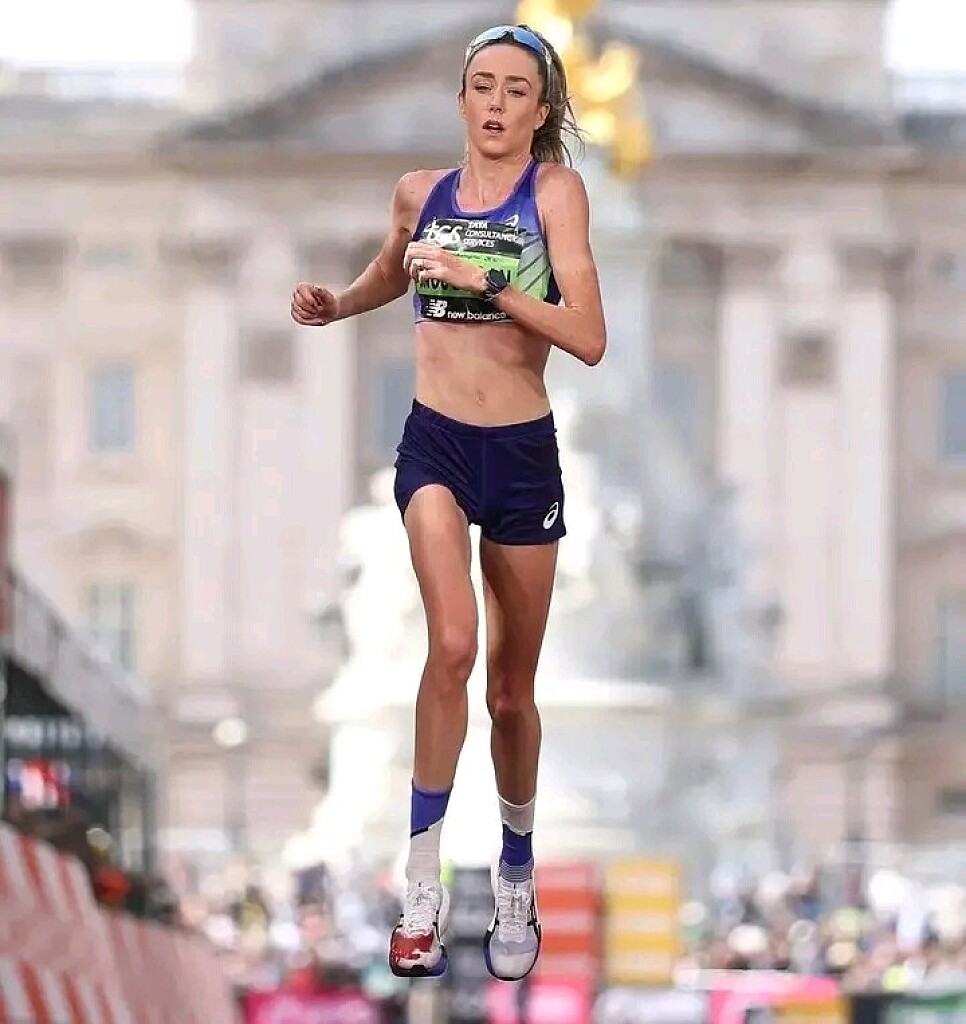


Courage Beyond the Finish Line: Eilish McColgan Reveals Hidden Struggles After London Marathon
Eilish McColgan has opened up on the painful reality behind her brave performance at the London Marathon, revealing that the final weeks leading into race day were filled with setbacks, discomfort, and uncertainty.
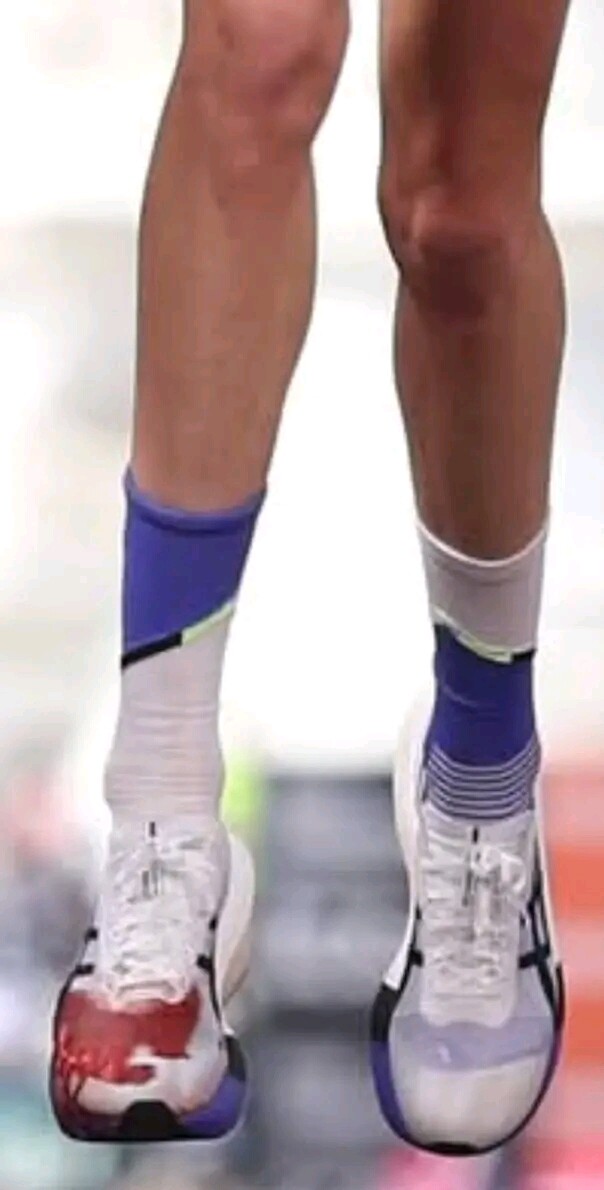
After finishing as the leading British woman in seventh place with a strong time of 2:24:51, McColgan shared that her preparation had been far from smooth. What should have been the final sharpening phase of training instead became a battle simply to reach the start line. She dealt with a troubling foot issue, a glute strain just ten days before the race, and an unexplained purple rash that appeared only days before the marathon.
The Olympic star also moved quickly to dismiss speculation surrounding the cause of her foot injury. She clarified that neither new shoes nor socks were to blame, explaining that she had used the same gear throughout the year in both training and competition without any problems. She also ruled out footwear size concerns, noting that the issue was not related to cramped shoes or damaged toenails.
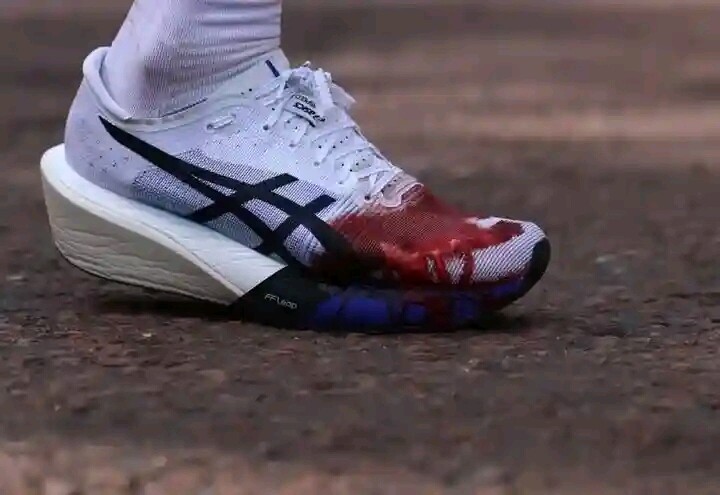
Instead, the cause remains uncertain. McColgan suggested swelling may have played a role, especially as the mysterious rash spread down toward her calves the day before the race and continued to appear and disappear throughout the day. Despite the discomfort and confusion, she still lined up and completed one of the toughest races in the sport.
More than the finishing time, her run became a story of resilience. Through pain, setbacks, and unanswered questions, McColgan still delivered a top-class performance in front of home supporters. She later thanked the crowds whose energy carried her through the closing miles, admitting their support helped drag her to the finish line.
For many athletes, simply arriving healthy at a marathon start can be a challenge. For Eilish McColgan, conquering London under those circumstances made her seventh-place finish all the more remarkable.
by Erick Cheruiyot for My Best Runs.
Login to leave a comment
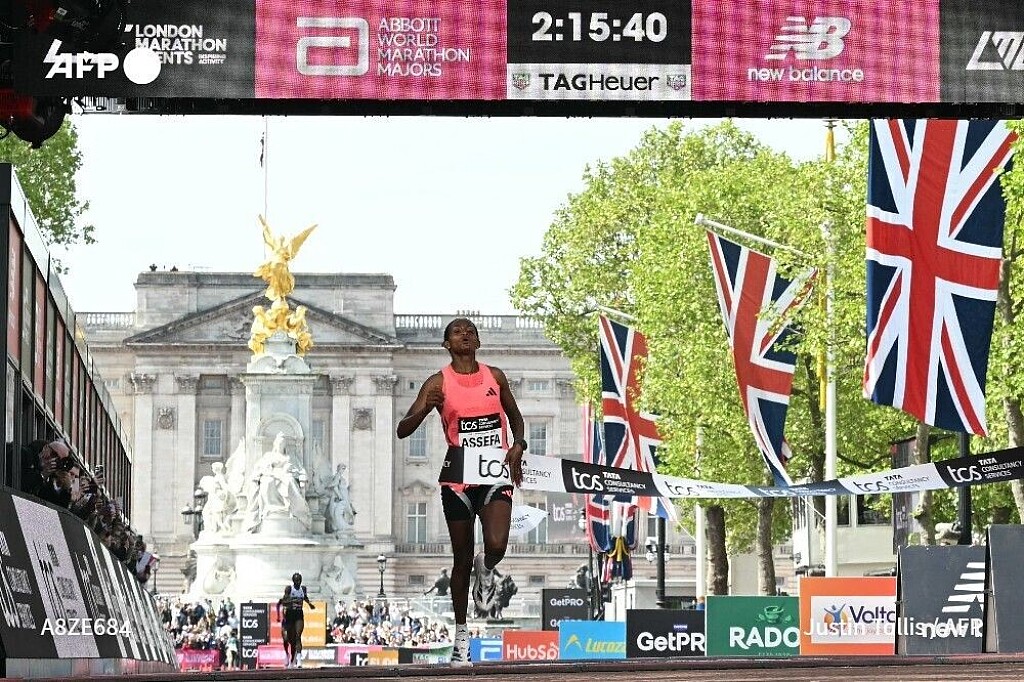
Assefa’s Historic Surge Headlines East African Masterclass in London
The 2026 edition of the London Marathon 2026 delivered a race for the ages, as East Africa once again stamped its authority on one of the sport’s grandest stages. At the center of it all was Ethiopia’s Tigst Assefa, who produced a breathtaking performance to win the women’s race in 2:15:41, breaking her own women-only world record in emphatic fashion.
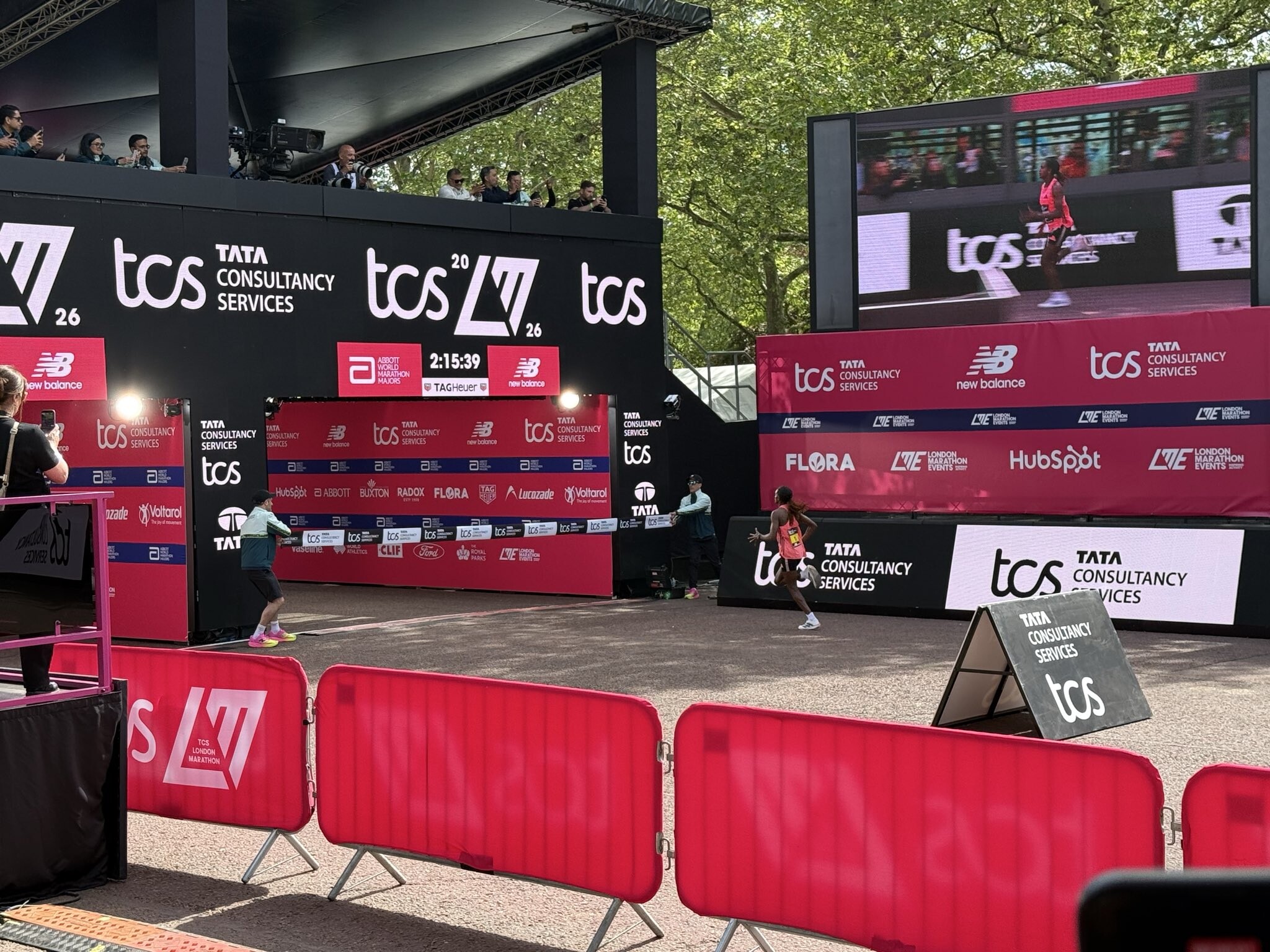
From the gun, the pace was unrelenting. The lead group, dominated by Ethiopian and Kenyan contenders, surged through the early checkpoints with intent, setting the tone for what would become a historically fast contest. Assefa, calm yet decisive, positioned herself perfectly before gradually turning the race into a test of pure strength and precision.
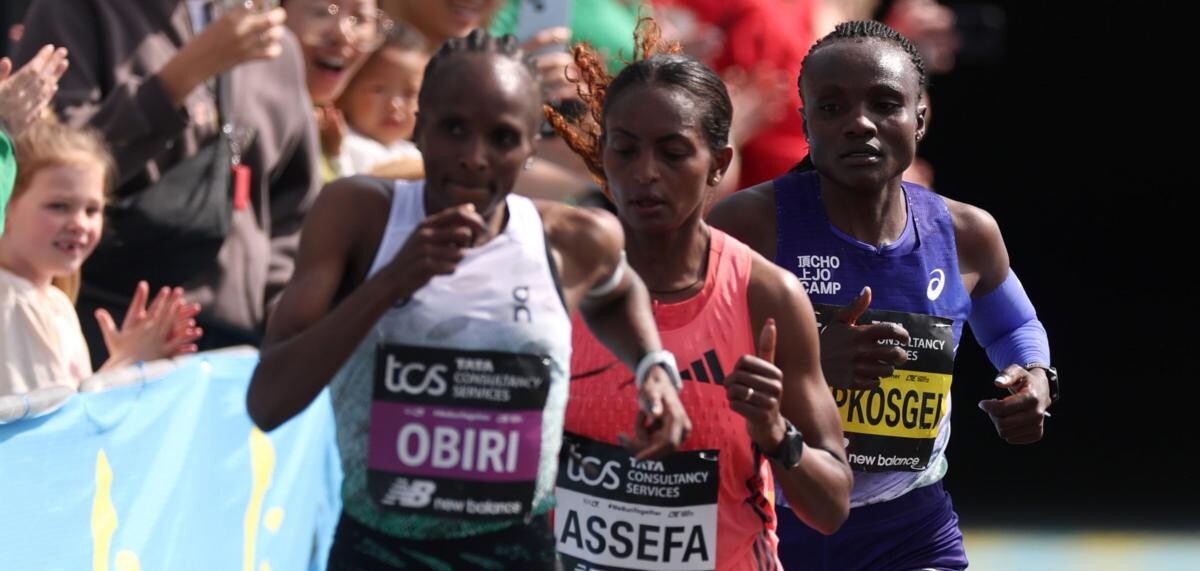
By the latter stages, the Ethiopian star had shifted gears, her stride smooth and efficient as she pulled away under the weight of expectation and the pressure of elite competition. When she crossed the finish line along the iconic streets of London, the clock confirmed what the racing world had begun to suspect—history had been rewritten once more.
Hot on her heels was Kenya’s Hellen Obiri, who clocked an outstanding 2:15:53 to finish second, just 12 seconds adrift in one of the closest high-caliber finishes in recent marathon memory. Fellow Kenyan Joyciline Jepkosgei completed the podium in 2:15:55, only two seconds behind Obiri, underlining the fierce competitiveness at the very top.
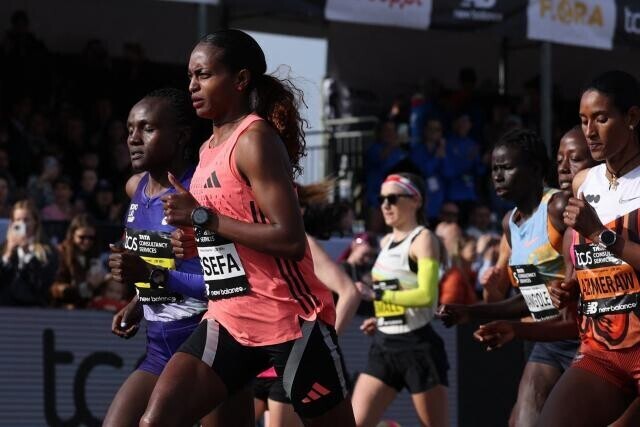
The narrow margins separating the top three told a deeper story—this was not merely a race, but a battle of resilience, tactics, and extraordinary endurance. All three athletes dipped well into elite territory, showcasing a level of depth that continues to define women’s marathon running today.
Top 10 Finishers – Women’s Marathon Final Results
1. Tigst Assefa (ETH) – 2:15:41 WR
2. Hellen Obiri (KEN) – 2:15:53 PB
3. Joyciline Jepkosgei (KEN) – 2:15:55
4. Degitu Azimeraw (ETH) – 2:19:13
5. Catherine Reline Amanang'ole (KEN) – 2:21:20
6. Eunice Chebichii Chumba (BRN) – 2:23:44
7. Eilish McColgan (GBR) – 2:24:51
8. Jucia Paternain (URU) – 2:25:47 NR
9. Rose Harvey (GBR) – 2:26:14
10. Marta Galimany (ESP) – 2:27:38
Beyond the times and records, the race served as a powerful reminder of East Africa’s enduring dominance in long-distance running. With discipline forged at altitude and an unmatched competitive culture, athletes from Ethiopia and Kenya once again transformed London into a theatre of excellence.
As the crowds roared and the finish line drama unfolded, one narrative stood clear: this was a day where greatness met opportunity—and Tigst Assefa seized it to perfection, delivering a performance that will echo through marathon history.
by Erick Cheruiyot for My Best Runs.
Login to leave a comment
TCS London Marathon
Since its inaugural edition on March 29, 1981, the TCS London Marathon has grown into one of the world's most prestigious road races, blending elite competition with an extraordinary charitable legacy. Founded by former Olympic champion and journalist Chris Brasher alongside Welsh athlete John Disley, the event has been staged every year and has been held in the spring annually...
more...
The Road to the Paris Olympics and here is What You Need to Know.
American runners are about to begin training for the U.S. Olympic Trials Marathon
It’s early October, which means it’s the peak marathon season for many runners. But with an Olympic year on the horizon, it also means America’s top marathoners are about to hit the road to Paris.
More specifically, the men’s and women’s 2024 U.S. Olympic Trials Marathon races—scheduled for February 3 in Orlando, Florida—are just four months away. And that means the top U.S. runners hoping to represent their country at next summer’s Olympics are about to begin preparing for the all-or-nothing qualifying race that decides which six runners will represent Team USA next summer on the streets of Paris.
Although several top American runners are racing the Chicago Marathon on October 8, even they have their eyes on a much bigger prize next February.
“There’s nothing in my mind that compares with being an Olympian and being in the Olympic Games,” says 26-year-old Utah-based Nike pro Conner Mantz, who returns to Chicago after finishing seventh last year in 2:08:16 in his debut at the distance. “So putting that first has been the plan for a long time. We’re just putting that first and we’re working backwards through the season with other races.”
Registration will open for the U.S. Olympic Trials Marathon in early November for runners who have surpassed the qualifying times in the marathon (2:18:00 for men, 2:37:00 for women) or half marathon (1:03:00 for men, 1:12:00 for women). The qualifying window extends through December 3—the race date of the last-chance California International Marathon, which for decades has been one of the most popular Olympic Trials qualifying races.
In 2020, a record 708 runners—465 women and 243 men—qualified for the U.S. Olympic Trials Marathon in Atlanta just before the onset of the Covid-19 pandemic. But USA Track & Field lowered the women’s qualifying standard by eight minutes from the more attainable 2:45:00 plateau, which means there will most likely be a much smaller women’s field this year.
But even so, amid the handful of runners who have a legitimate shot at making the Olympic team, there will also be dozens of dreamers, wannabes, and just-happy-to-be-there elite amateurs who have worked hard, put in the miles, and earned the chance to be on the start line of the deepest and most competitive U.S. distance-running races that only happen once every four years.
The men’s and women’s races will run simultaneously with the men beginning at 12:10 P.M. EST. and the women starting 10 minutes later. Runners have complained that a high noon start means they will be forced to race in hot, humid conditions. Over the past decade, the average temperature on February 3 in Orlando has been 69.6 degrees Fahrenheit at noon, rising to 73.3 at 4 PM. But actual temperatures have varied drastically, from 81 degrees Fahrenheit at 2 P.M. last year to 56 at the same time the year before. USATF officials have responded by saying that the start times are to accommodate live coverage on NBC and to match the expected conditions in Paris.
Here’s an update and overview of what’s next, who the top contenders are, the course, and what to expect in the next four months.
The 26.2-mile U.S. Olympic Trials course runs through downtown Orlando and consists of one 2.2-mile loop and three eight-mile loops. The marathon course will run through several neighborhoods, main streets, and business districts in Orlando, including Central Business District, City District, South Eola, Lake Eola Heights Historic District, Lake Cherokee Historic District, Lake Davis Greenwood, Lake Como, North Quarter, Lawsona/Fern Creek, SoDo District, and the Thornton Park neighborhood. It will then head east to and around The Milk District neighborhood and Main Street. (Notably, the course will come close to Disney World, which is about 15 miles to the southwest.)
Unlike the Olympic Marathon course in Paris, which will challenge runners with significant hills in the middle, the Orlando course is mostly flat. Each loop has a few minor variations in pitch, but only 38 feet separate the high and low points on the course. Ultimately, though, it’s a spectator-friendly route with chances for family, friends, and fans of runners to see the action several times.
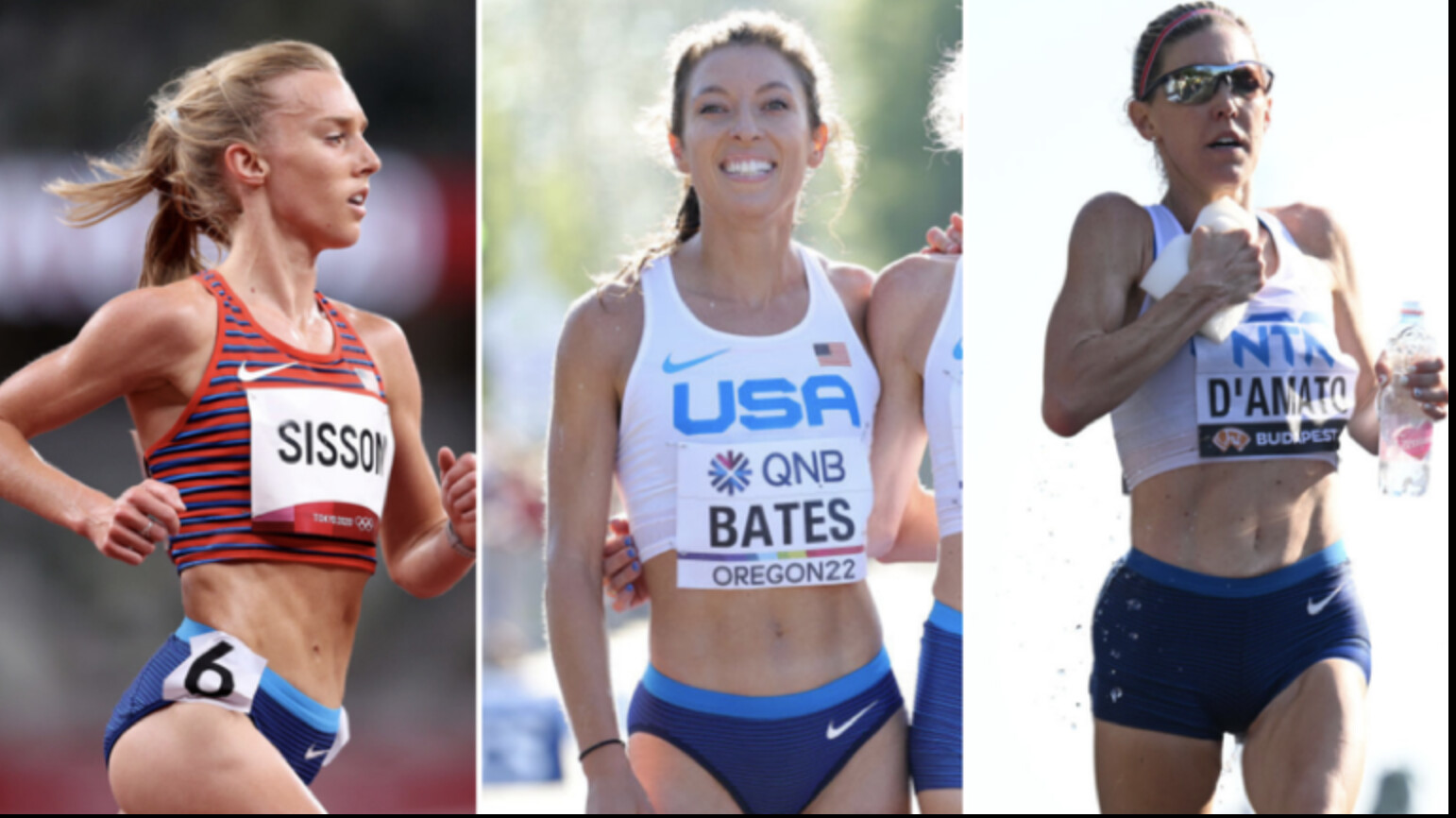
The top women—based on personal best times and recent race results—are Emily Sisson, Emma Bates, Keira D’Amato, Betsy Saina, and Lindsay Flanagan. But the U.S. Olympic Trials races almost always produce surprises with a few great runners having off days and a few good runners having exceptional days, so there is reason to expect the unexpected.
Sisson lowered the American record to 2:18:29 last year when she finished second in the Chicago Marathon. She’s running Chicago again on October 8 along with Bates, who has said she’s hoping to break the American record. In January, Sisson, 31, chopped her own American record in the half marathon in Houston with a 1:06:52 effort, and most recently won the U.S. 20K Championships (1:06:09) on September 4 in New Haven, Connecticut. Bates, also 31, hasn’t raced at all since her sterling fifth-place effort at the Boston Marathon in April, when she slashed her personal best to 2:22:10.
While Chicago will be another good place to test themselves, both have unfinished business after Bates was seventh at the 2020 Trials and Sisson dropped out near the 21-mile mark.
The same goes for Flanagan, 32, who has been one of America’s best and most consistent marathoners for the past five years. She placed 12th at the trials in 2020. She had a breakthrough win (2:24:43) at the Gold Coast Marathon in 2022 followed by a strong, eighth-place finish (2:26:08) at the Tokyo Marathon earlier this year. In August, she ran perhaps the best race of her career, when she finished ninth (2:27:47) at the world championships in Budapest amid hot, humid conditions.
The 38-year-old D’Amato, meanwhile, just capped off another strong season with a 17th-place showing (2:31:35) at the World Athletics Championships in Budapest, a year after finishing eighth in the world championships and setting an American record 2:19:12 at the 2022 Houston Marathon. She was 15th at the Trials in 2020 in 2:34:24, just two years into her competitive return to the sport after having two kids and starting a career in real estate in her early 20s.
“It’s such a huge goal of mine to become an Olympian,” says D’Amato, who lowered Sisson’s U.S. record in the half marathon with a 1:06:39 effort at the Gold Coast Half Marathon on July 1 in Australia. “It’s really hard for me to put words into this because my whole life, wearing a Team USA jersey has been like a huge dream. And when I left the sport (temporarily), I felt like I said goodbye to that dream and I kind of mourned the loss of being able to represent my country. I feel like it’s the greatest honor in our sport to be able to wear our flag and race as hard as possible.”
Saina, a 35-year-old Kenya-born runner who ran collegiately for Iowa State University, became a U.S. citizen in late 2021. She placed fifth in the 10,000-meters at the 2016 Olympics in Rio de Janeiro while competing for Kenya. She’s spent the past several years splitting time between Kenya and Nashville, Tennessee, where she gave birth to a son, Kalya, in December 2021.
She’s returned with a strong fourth-place 1:11:40 result at the Tokyo Half Marathon last October and a fifth-place 2:21:40 showing at the Tokyo Marathon in February. In May, Saina won the U.S. 25K Championships in Michigan. Two weeks ago she broke the tape at the Blackmores Sydney Marathon in Australia in 2:26:47.
Other top contenders include but are not limited to Tokyo Olympics bronze medalist Molly Seidel (who’s personal best is 2:24:42), 2022 U.S. Olympic Trials champion Aliphine Tuliamuk (2:24:37, 11th in Boston this year), Susanna Sullivan (2:24:27 personal best, 10th in London this year), two-time Olympian and 2018 Boston Marathon winner Des Linden (2:22:38), and Sara Hall (2:20:32, fifth at last year’s world championships), plus Kellyn Taylor (2:24:29), Nell Rojas (2:24:51), Sarah Sellers (2:25:43), Lauren Paquette (2:25:56), Dakotah Lindwurm (2:25:01), Annie Frisbie (2:26:18), Sara Vaughn (2:26:23), Tristin Van Ord (2:27:07), and Jacqueline Gaughan (2:27:08).
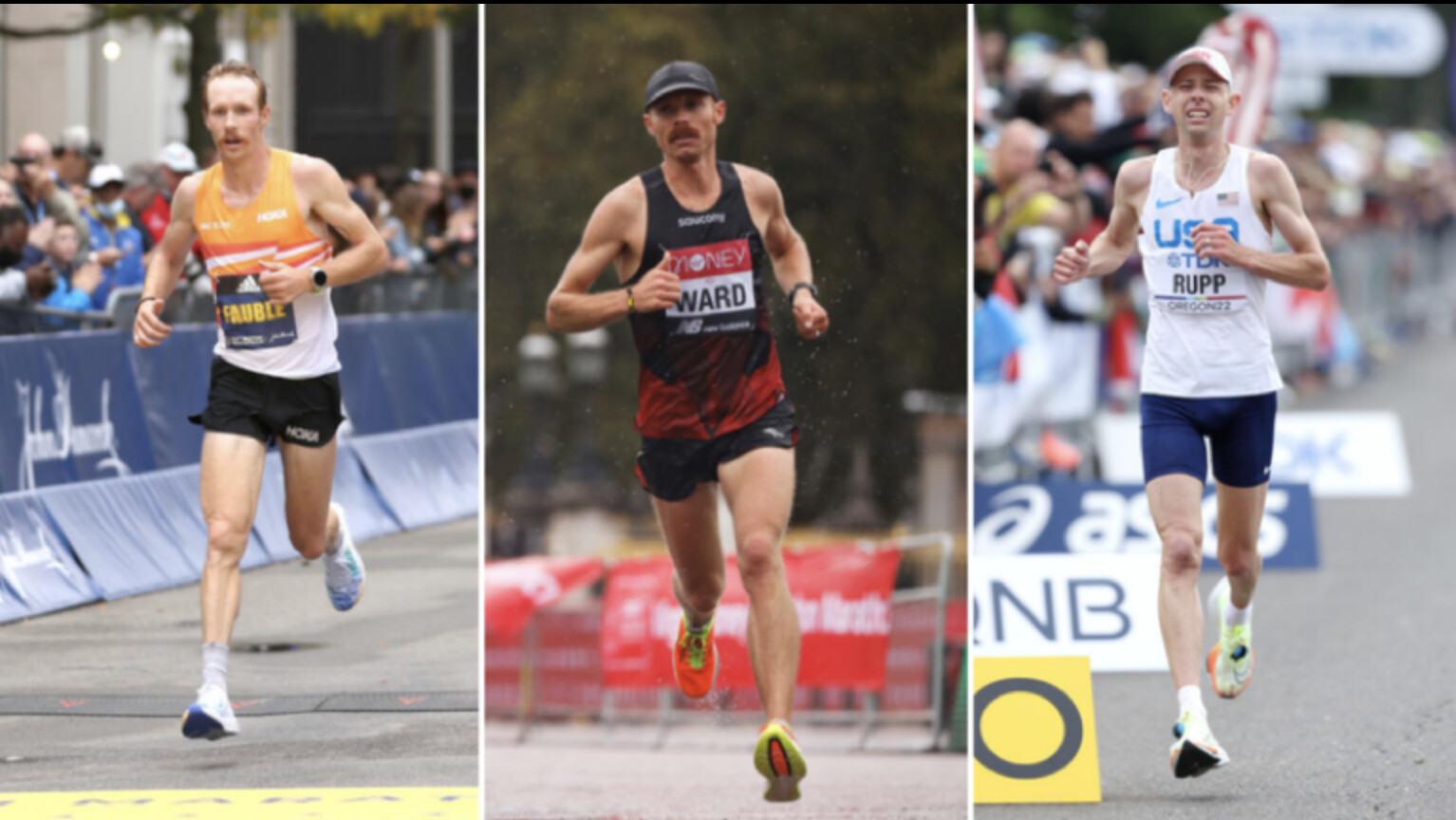
The list of potential men’s top contenders isn’t as clear-cut, partially because there are so many sub-2:11 runners and several fast runners who are relatively new to the marathon. But all that suggests a wide-open men’s race where more than a dozen runners are legitimately in the mix for the three Olympic team spots. That said, the top runners on paper, based on both time and consistent results over the past few years, are Scott Fauble, Jared Ward, Galen Rupp, Conner Mantz, Leonard Korir, Matt McDonald, and C.J. Albertson.
The 31-year-old Fauble, who was 12th in the Olympic Trials in 2020 and owns a 2:08:52 personal best, has finished seventh in the Boston Marathon three times since 2019 and also finished seventh in the New York City Marathon in 2018. Ward is a 2016 U.S. Olympian and has three top-10 finishes at the New York City Marathon and a 2:09:25 personal best from Boston in 2019. He’s 35, but he just ran a 2:11:44 (27th place) at the Berlin Marathon in late September.
Rupp, who won the past two U.S. Olympic Trials Marathons and earned the bronze medal in the marathon at the 2016 Olympics, is nearing the end of his competitive career. He boasts a 2:06:07 personal best and has run under 2:10 more than any American in history, including when he finished 19th at the world championships (2:09:36) last year. He’s a bit of a wild card because he’s 37 and hasn’t raced since his lackluster 17th-place showing at the NYC Half Marathon (1:04:57) in March, but the world will get a glimpse of his fitness in Chicago this weekend.
Mantz followed up his solid debut in Chicago last fall with a good Boston Marathon in April (11th, 2:10:25) and solid racing on the track and roads all year, including his recent runner-up showings at the Beach to Beacon 10K in August and the U.S. 20K Championships in September.
McDonald, 30, who was 10th in the 2020 U.S. Olympic Trials, has quietly become one of the best marathoners in the U.S. while serving as a postdoctoral associate in chemical engineering at M.I.T. His last three races have clocked in at 2:10:35 (Boston 2022), 2:09:49 (Chicago 2022), and 2:10:17 (Boston 2023). The only other runner who rivals that kind of consistency is Albertson, 29, who has run 2:10:23 (Boston 2022), 2:10:52 (Grandma’s Marathon 2022) and 2:10:33 (Boston 2022) in his past three marathons and was seventh in the U.S. Olympic Trials in 2020 (2:11:49).
The men’s race will likely have a mix of veteran runners and newcomers who have run in the 2:09 to 2:10 range since 2022. Among those are 2020 U.S. Olympic Trials runner-up Jake Riley (2:10:02 personal best), who is returning from double Achilles surgery; 2016 U.S. 10,000-meter Olympian Leonard Korir (2:07:56), who ran a 2:09:31 in Paris in April; Zach Panning (2:09:28, plus 13th at the world championships in August); U.S. 25K record-holder Parker Stinson (2:10.53); Futsum Zienasellassie who won the California International Marathon last December in his debut (2:11:01) and then doubled-back with a new personal best (2:09:40) at the Rotterdam Marathon in the spring; Abbabiya Simbassa, who ran a solid debut marathon (2:10:34) in Prague this spring; and Eritrean-born Daniel Mesfun (2:10:06) and Ethiopian-born Teshome Mekonen (2:10:16), who both received U.S. citizenship within the past year; and solid veterans Nico Montanez (2:09:55), Elkanah Kibet (2:10:43) and Nathan Martin (2:10:45).
Additional sub-2:12 runners who will be in the mix are Andrew Colley (2:11:26), Clayton Young (2:11:51), Brendan Gregg (2:11:21), Josh Izewski (2:11:26), Jacob Thompson (2:11:40), and Kevin Salvano (2:11:49).
As noted previously, some top contenders will season their marathon legs one final time at the flat and fast Chicago Marathon on October 8. An even more select few will opt for the New York City Marathon on November 5. After that, nearly every American with eyes set on an Olympic berth will double-down over the holiday season for that one final, critical marathon training cycle. Expect to see a wide range in heat training, from sauna protocols, to warm weather training trips, to simply an adjusted race day strategy.
Of course, with the Olympic Marathon falling under the purview of World Athletics, qualifying for the U.S. Olympic Marathon team is not quite as simple as finishing on the podium in Orlando. Any American looking to have a breakout performance and finish within the top three at the U.S. Olympic Trials Marathon will need to have run under 2:11:30 for men and 2:29:30 for women within the qualification window, which spans from November 1, 2022 to April 30, 2024. Given the possibility of oppressively hot and humid temps on February 3 in Orlando, they’re best bet is to secure that time now.
These qualification standards are in accordance with a new rule from World Athletics, which allows national Olympic committees to circumvent the typical Olympic qualification process of running under 2:08:10 for men and 2:26:50 for women, or being ranked among the top 65 in the world on a filtered list of the top three athletes from each country. The catch, though, is that three other runners from said country must have met one of these two standards. If this sounds complicated, that’s because it is.
For the hundreds of elite amateurs on the cusp of hitting that coveted U.S. Olympic Trials qualifying time, it’s do or die mode. While a few made the cut at the Berlin Marathon on September 24, one of those opportunities was lost when the Twin Cities Marathon was canceled on October 1 because of excessive heat. Temperatures are shaping up for an auspicious day in Chicago this weekend, and many more will give it a final shot at the Columbus Marathon on October 15; Indianapolis Monumental Marathon on October 28; the Philadelphia Marathon on November 18; and the last-call California International Marathon, a point-to-point race ending in Sacramento, California on December 3.
Ultimately, only six American runners will likely continue on along the road to Paris and earn the chance to run in the men’s and women’s Olympic marathons next August 10-11. For a handful of younger runners, the 2024 U.S. Olympic Trials will be a motivation to reinvigorate the Olympic dream or keep a faint hope alive, at least until the 2028 U.S. Olympic Trials that will determine the team for the Los Angeles Olympics. But for many runners, the journey to the U.S. Olympic Trials in Orlando will lead to the end of their competitive road running careers as new jobs, young families, a switch to trail running, and other priorities will take hold.
“I think the Olympic Trials is an important part of American distance running,” says Kurt Roeser, 36, a two-time U.S. Olympic Trials Marathon qualifier who works full-time as a physical therapist in Boulder, Colorado. “I’m glad that they kept it the same event for this cycle and hopefully for future cycles because it gives people like me a reason to keep training. I’m older now and I’m not going to actually have a chance to make an Olympic team, but for somebody that’s fresh out out of college and maybe they just barely squeak in under the qualifying time, maybe that’s the catalyst they need to start training more seriously through the next cycle. And maybe four years from now, they are a serious factor for making the team.”
by Outside Online
Login to leave a comment
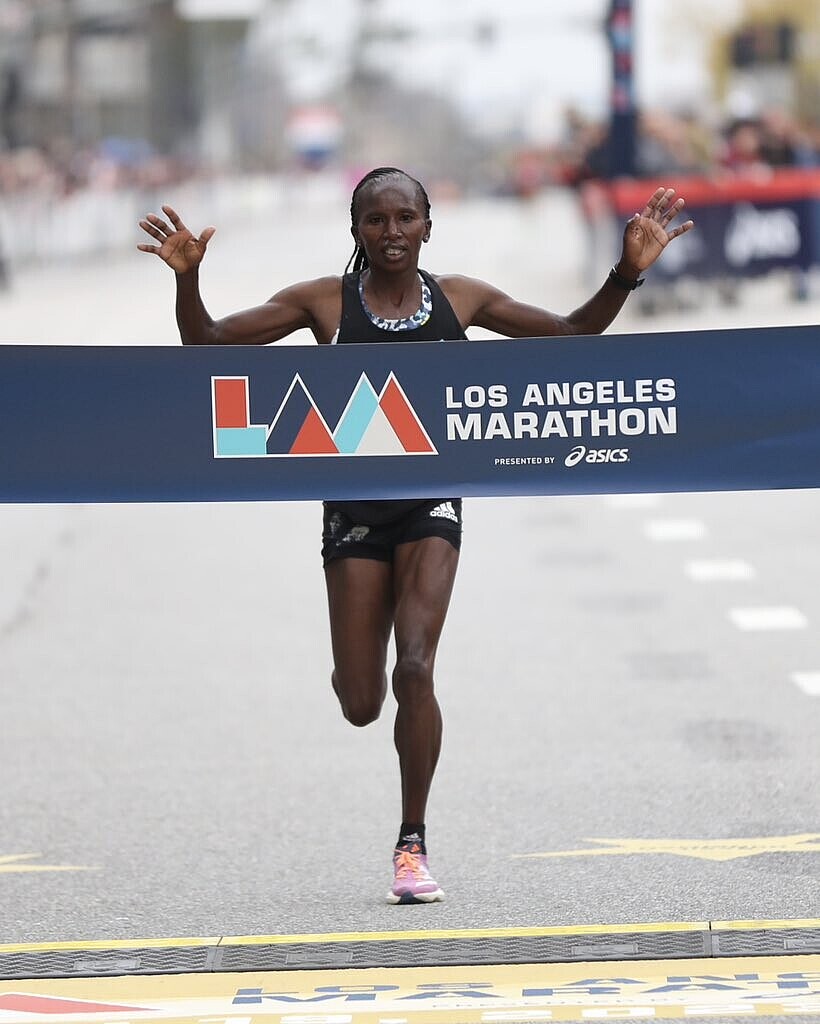
Stacy Ndiwa debuts World Marathon Majors in Chicago
Seven months after winning the Los Angeles Marathon, Stacy Ndiwa will be returning to American soil in search of her first World Marathon Majors title at the Chicago Marathon on October 8.
The former Commonwealth Games 10,000m silver medalist, will be up against top marathon runners across the world led by the defending champion Ruth Chepngetich.
Chepngetich has a personal best of 2:14:18. Another Kenyan Joyciline Jepkosgei (2:17:43) will also be competing.
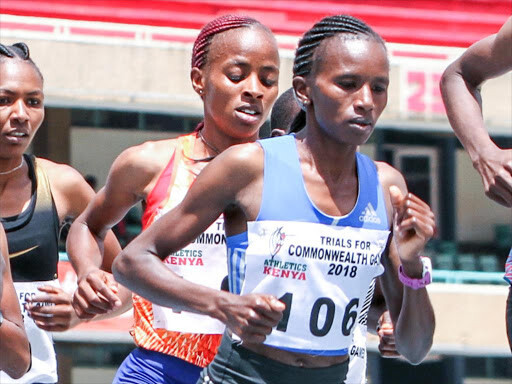
Ndiwa, who is now training in Iten, said her preparations are in top gear and she is hoping to return good results.
“This will be my first time to compete in World Marathon Majors and I am ready for the world,” she said.
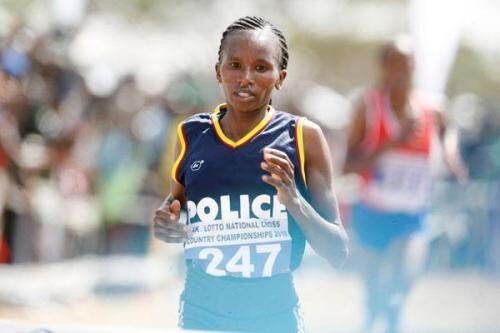
The former Africa 10,000m champion made her debut in the 42km race last year, placing fourth at the Istanbul Marathon in 2:31.53 and went ahead to win the Los Angeles Marathon in 2:31.00 in March last year.
In May, Ndiwa won the second edition of the Iten 15km Road race and went ahead to finish second at the Boston 10km in 31:25 behind champion Hellen Obiri (32:21) with Sheila Chepkirui (31:27) third in an all-podium Kenyan sweep.
“This time, I have had a very busy schedule and I need to crown it all by posting better results in Chicago,” said the athlete who compete for the National Police Service.
“This will be an avenue for me to enter into the big marathon big league. Competing at the World Majors Marathon is not a walk in the park and I really need to work hard,” she said.
Others in the race will be the Ethiopian quartet of Genzebe Dibaba (2:18:05), Tigist Girma (2:18:52), Sutume Kebede (2:18:12) and Ababel Yesheneh (2:20:51).
Emily Sisson (2:18:29) will lead the home team consisting of Des Linden (2:22:38), Emma Bates (2:23:18), Aliphine Tuliamuk (2:24:37), Nell Rojas (2:24:51), Molly Seidel (2:24:42), Dakotah Lindwurm (2:25:01), Sara Vaughn (2:26:23), Gabriella Rooker ( 2:27:38), Diane Nukuri (2:27:50) and Maggie Montoya (2:28:07).
Reigning London Marathon champion Sifan Hassan (2:18:33) from the Netherlands will also be in the contest.
by Emmanuel Sabuni
Login to leave a comment

Bank of America Chicago
Running the Bank of America Chicago Marathon is the pinnacle of achievement for elite athletes and everyday runners alike. On race day, runners from all 50 states and more than 100 countries will set out to accomplish a personal dream by reaching the finish line in Grant Park. The Bank of America Chicago Marathon is known for its flat and...
more...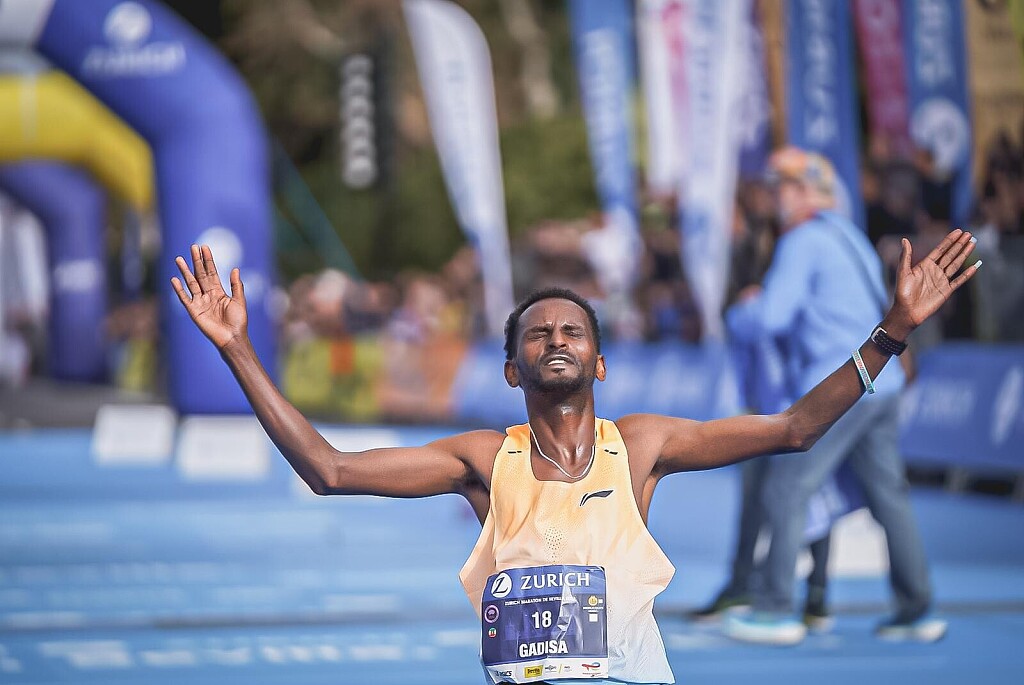
Chelal and Shumie take the spoils in Seville
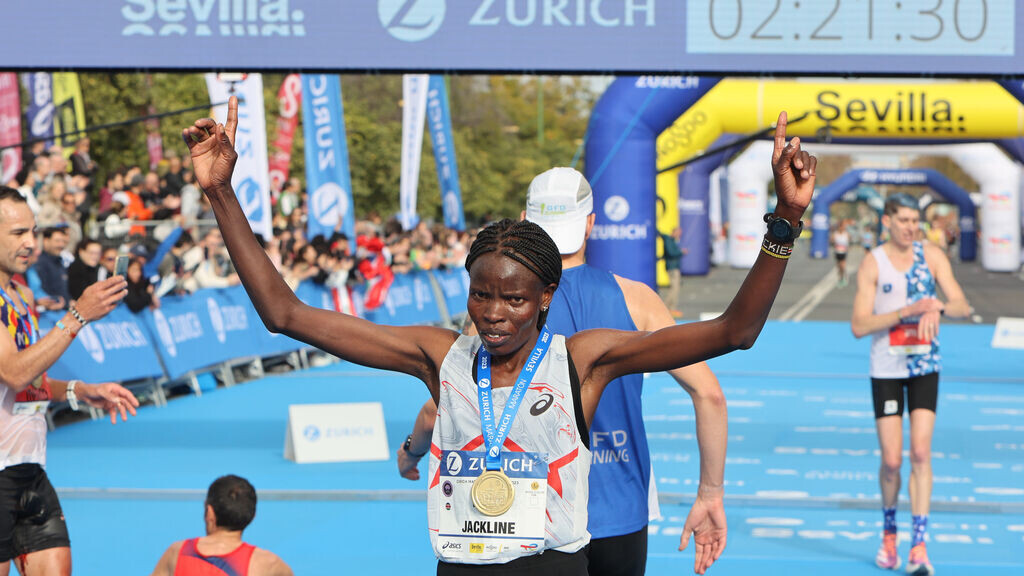
Kenya’s Jackline Chelal and Ethiopia’s Gadisa Shumie claimed victory at the Zurich Maraton de Sevilla, a World Athletics Elite Label road race, held on Sunday (19) over one of the flattest circuits in the world. Clocking 2:20:29 and 2:04:59, respectively, they both ran big PBs and the men’s race featured good depth as six men dipped under 2:06:00.
Right from the start in the women's race, the trio of Chelal and Ethiopia's Ayana Mulisa and Urge Diro broke away from the rest of the field, their rivals unable to maintain the 3:15/km pace. The leaders went through the opening 5km in 16:15 and 10km in 32:39. The halfway point was reached in 1:09:11, well on schedule to duck under the 2:18:51 course record set last year.
At around the 24km mark, Diro, a 2:27:13 performer, began to falter, leaving Chelal (2:29:13) and Mulisa (2:28:02) fighting for the win.
However, the speed slowed significantly over the second half, putting the course record assault in jeopardy. It was around the 33th kilometer when 29-year-old Mulisa dropped her pace dramatically to lose any chance of winning, as Chelal was timed at 1:55:18 by the 30km point, 38 seconds clear of the fading Ethiopian whose runner-up spot was never at risk.
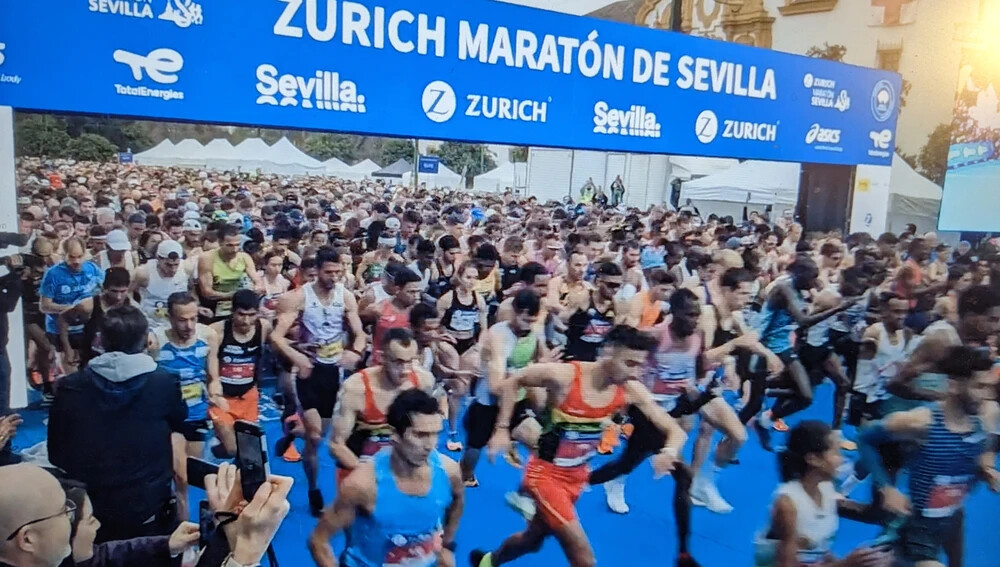
Despite averaging 3:30 for the final seven kilometers, Chelal increased her advantage on Mulisa throughout and crossed the finish line in 2:20:29, head and shoulders clear of Mulisa (2:21:54), while Diro completed the podium in 2:23:05. The top three all improved their career bests, as did Mexico’s Citlali Cristian Moscote who finished fourth thanks to a 2:24:51 clocking.
Like a Swiss clock, Kenyan pacemaker Tarus Kiprono opened the men’s race at a 2:57/km rhythm, a large pack going through the 5km and 10km chekpoints in 14:47 and 29:28, respectively. That group included France’s Nicolas Navarro and Ethiopians Shumie, Kabede Wami and the 2020 victor in 2:04:46 Mekuant Ayenew, plus Israel’s Gashau Ayale and Kenyans Bethwel Kibet and Enock Onchari, among others. The midway mark was reached in 1:02:32, 10 seconds outside schedule for the 2:04:43 record set last year.
The leading group began to lose athletes progressively over the second half and by the time the pacemaker dropped out some 30km into the race only four men remained in the pack: Shumie, Wami, Ayenew and Onchari. Shumie, whose lifetime best was 2:09:25, pushed hard with kilometer splits always in the 2:56-2:58 range and first Ayenew, then Onchari and finally Wami with the clock reading 1:51 just could not follow the brisk speed. They had to settle for fighting for the minor places on the podium.
The unopposed Shumie tried to accelerate over the closing two kilometers to break the course record and while the 30-year-old was unsuccessful, he still managed a performance just under 2:05 to cross the finish line 20 seconds clear of Wami and 25 seconds ahead of Ayenew, who completed a sweep of the podium places for Ethiopia.
Navarro came eighth in a career best of 2:06:45, while Peru’s Christian Pacheco and Bolivia’s Hector Garibay managed to break their own national records thanks to respective times of 2:07:38 and 2:07:44.
by World Athletics
Login to leave a comment

Zurich Marathon Sevilla
This urban, flat, fast and beautiful brand new race course will drive athletes through the most beautiful monuments of the city. Zurich Maraton de Sevilla brings the unique opportunity to brake the Best personal result over the mythical distance to all the athletes, professional or age groupers, in one of the most perfect international marathon circuits. This fast marathon takes...
more...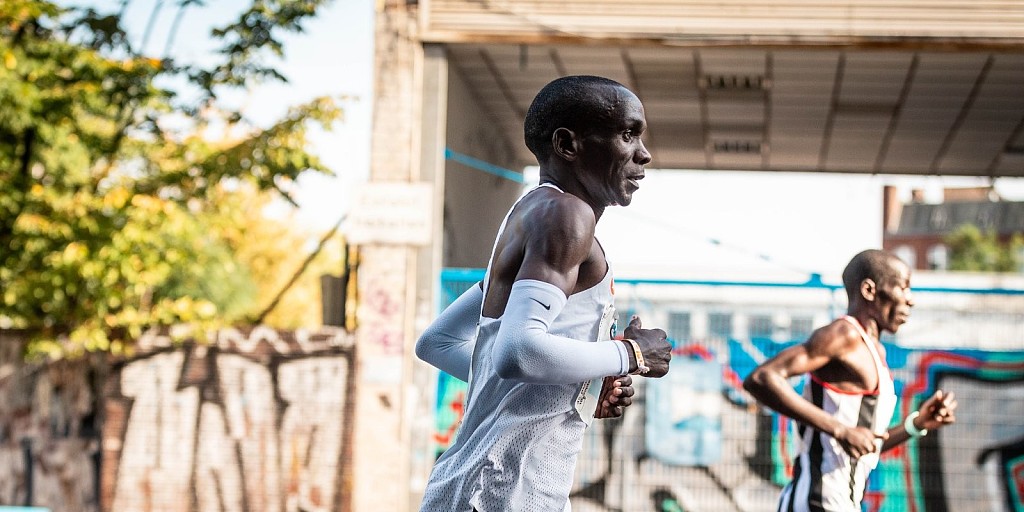
NN Running has announced its elite field for Mission Marathon
Set to run in the Netherlands on April 18, Eliud Kipchoge will headline the race of about 60 athletes.
The fields for the NN Mission Marathon have been released, and the world finally knows who will toe the start line with Eliud Kipchoge. The races are set to be run in Enschede, the Netherlands, on April 18, and fields of 23 women and 35 men will line up to compete. Kipchoge is the clear favourite for the win, but second place in the men’s race and first place in the women’s are both anybody’s to claim, which will make for a couple of exciting and dramatic competitions.
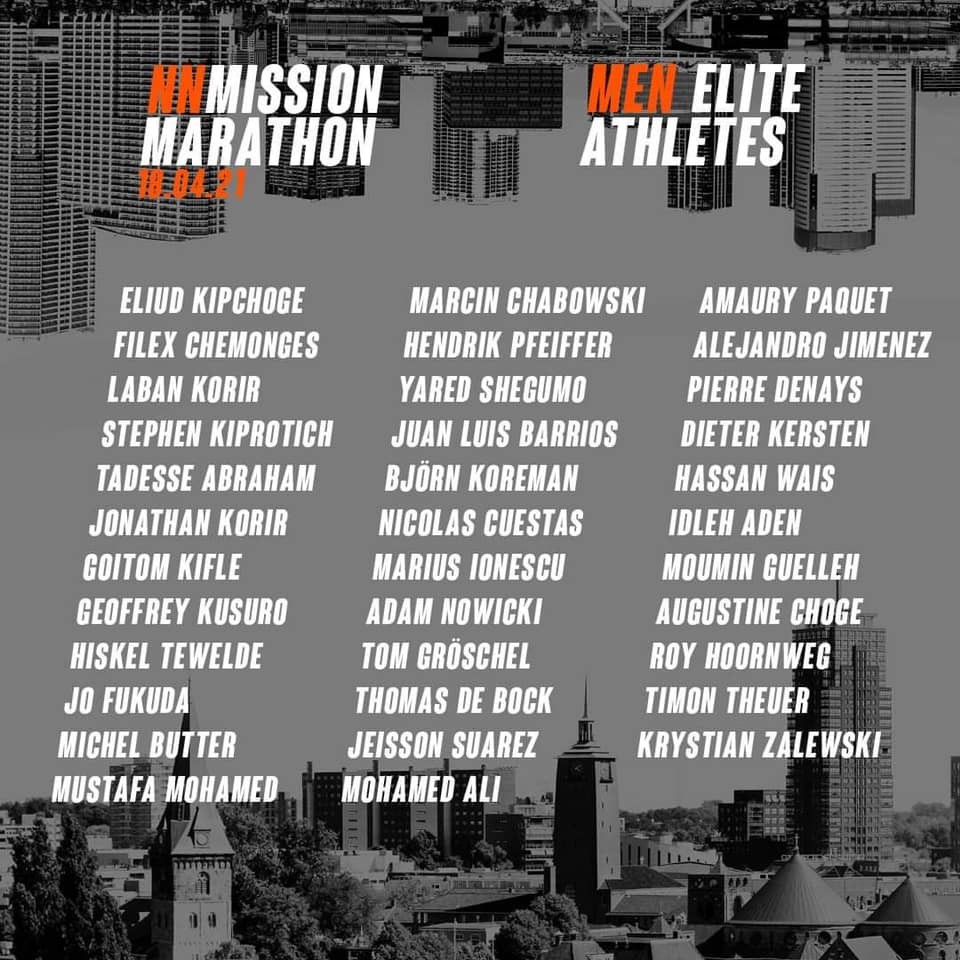
The men’s race
In the men’s race, the pre-race seed times aren’t even close, and there’s really no debate as to who is most likely to win. Kipchoge owns the world record in the marathon with his PB of 2:01:39, and he has also run an unofficial record of 1:59:40. While many of the other runners racing the NN Mission Marathon are looking to qualify for the Tokyo Games or prove that they deserve to be chosen for their national Olympic teams, Kipchoge has a simpler and less stressful reason to run: he needs to bounce back from his poor race at the London Marathon last fall.
He’s still a heavy favourite heading into the Tokyo Games, but his poor 2:06:49 showing in October proved that he is human, and for the first time in years, his competitors might seriously believe they have a chance to beat him. A great race in the Netherlands can boost Kipchoge’s confidence while also knocking down that of his rivals ahead of the Olympics.
The next fastest PB in the men’s field belongs to Felix Chemonges, who owns the Ugandan national marathon record of 2:05:12 (which he ran at the Scotiabank Toronto Waterfront Marathon in 2019). Chemonges hasn’t raced since March 2020, though, and his last result was a sub-par 2:10:08 run at the Lake Biwa Marathon in Japan.
Only one other man in the field, Kenya’s Laban Korir, has run a sub-2:06 marathon in his career, and his 2:05:54 PB puts him at third-best in the men’s race. Out of the 35 men set to race the NN Mission Marathon, 17 have run faster than the Olympic standard of 2:11:30, and 11 runners from that group have broken 2:10.
It’d be safe to bet on Kipchoge for the overall win in the Netherlands, but with so many other runners hovering around the same seed times, the battle for second and third place — plus the mad dash to cross the finish before the clock hits 2:11:30 — will produce must-watch coverage.
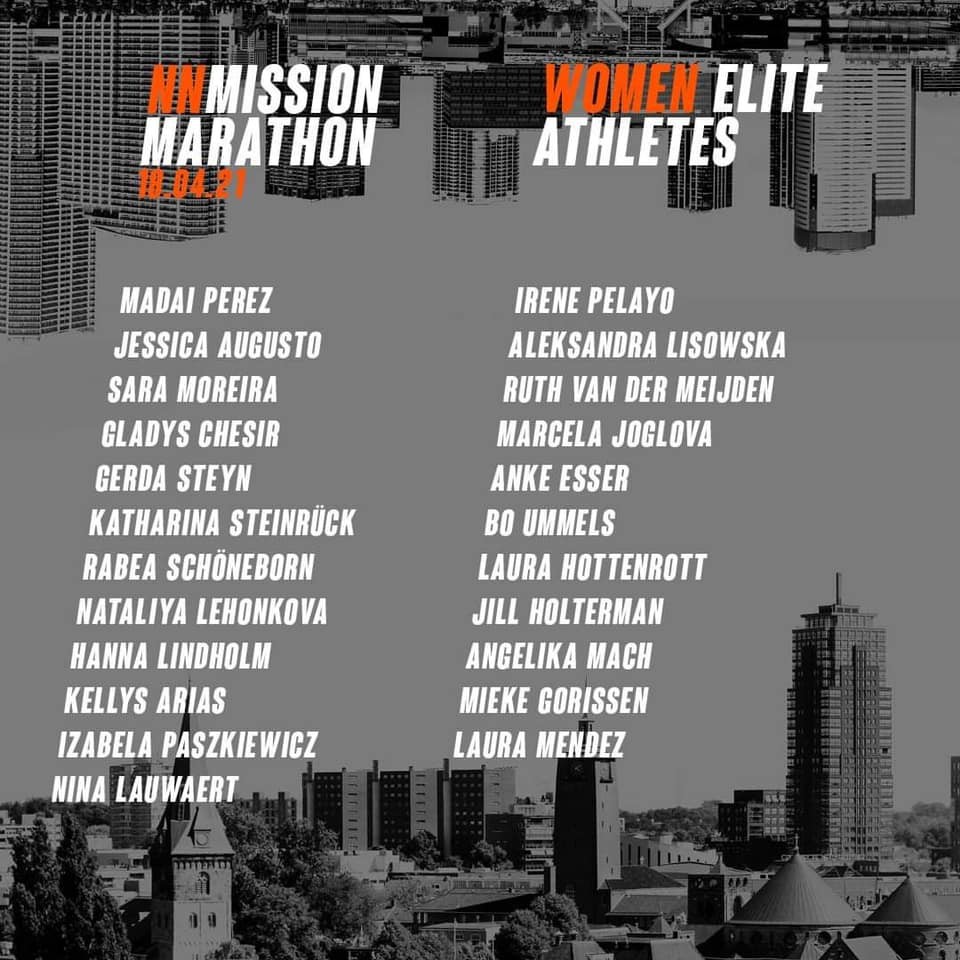
The women’s race has the potential to be much more competitive than the men’s when it comes to the overall win. Mexican marathon record holder Madai Perez has the fastest PB of any of the women in the field. The only thing is that she ran her national record of 2:22:59 all the way back in 2006, and the last time she broke 2:30 came in Chicago in 2017, when she ran 2:24:44. She certainly could take the win in the Netherlands, but her seed time is a bit misleading considering how long ago she ran it.
Next up are Jessica Augusto and Sara Moreira, a couple of Portuguese runners. Augusto owns a PB of 2:24:25, just ahead of Moreira’s career best of 2:24:49. Both of these women have posted tremendous times in the past, but neither has completed a marathon in recent years. Augusto’s last finish came in 2017, and she has one DNF since then.
Moreira has had an even worse few years, and her last finish came in 2015. Since then, she has DNFed three times, including in the marathon at the Rio Olympics. In 2015, though, she placed second at the Prague Marathon and fourth at the New York City Marathon. The next athlete on the start list is Kenya’s Gladys Chesir, who has a PB of 2:24:51, but like her Portuguese competitors, she hasn’t completed a marathon in years, and her last official finish was in 2017.
In total, nine of the 23 women in the field have beaten the Olympic standard of 2:29:30, with several others knocking at the door of sub-2:30 results. Like the men’s race, the women’s run should be an exciting affair, and it’s an event no running fan will want to miss.
by Ben Snider-McGrath
Login to leave a comment

NN Mission Marathon
Eliud Kipchoge will bid to resume winning ways in his last race before the Tokyo games with around 70 runners looking to make the Olympic qualification standard on April 18th in Twente.After suffering a rare marathon defeat in London last October, reigning Olympic champion Eliud Kipchoge makes his return at the NN Mission Marathon in 2021. It is set to...
more...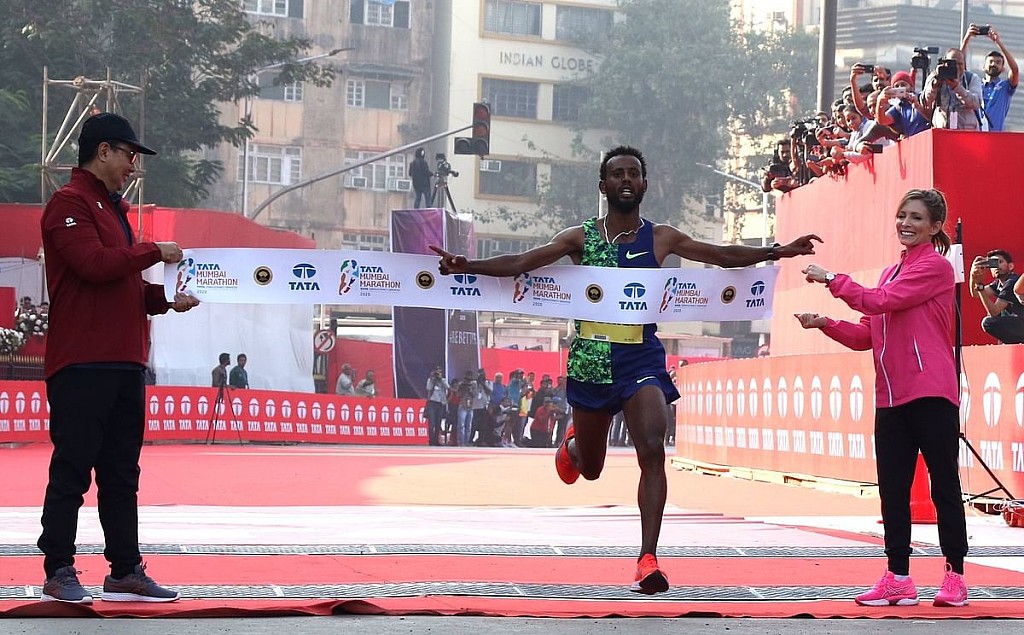
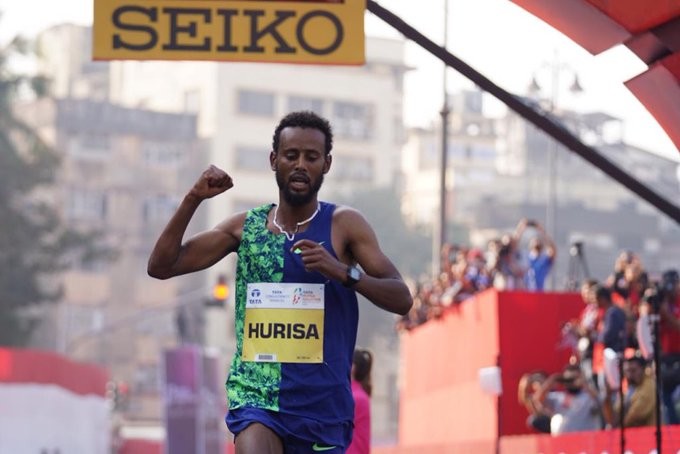
Ethiopian Derara Hurisa breaks the Tata Mumbai Marathon record in borrowed shoes
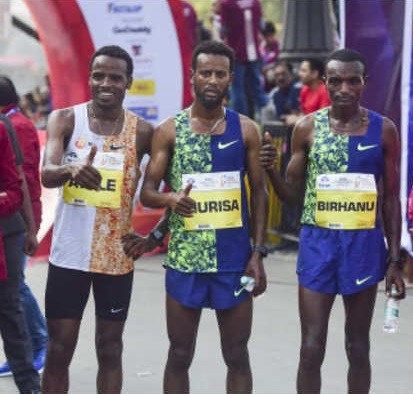
Ethiopians Brihanu Testome, Ayele Abshero and Derara Hurisa chatted among themselves as they strode along the Tata Mumbai Marathon route, before Hurisa took charge to finish in two hours, eight minutes, nine seconds — under the course record 2:08:35 (Gideon Kipketer, 2016).
Hurisa earned $45,000 first prize, plus a $15,000 bonus for the record. He also dragged Ayele (2:08:20) and Testome (2:08:26) under the course mark. The first seven runners in men’s elite category finished under 2:10min in this IAAF Gold Label event, run along a slightly revised course, in cooler January weather and pushed by pacemakers for a major part of the race.
The women’s winner, Ethiopian Amane Beriso (2:24:51s) did not get on top of the conditions and struggled in the last phase. But, with the nearest challenger far behind, she held on to breast the tape first, but missed the course record of 2:24:33s (Valentine Kipkieter, 2014). She will also be richer by $45,000.
Long-limbed pace-setter Sylvester Kipketer loped ahead of Amane from start to finish, even alerted the Ethiopian to forget fatigue and put in a burst to the tape as the course record was within grasp till the end. Rodah Jepkorir finished in 2:27:14 for the silver while Haven Hailu bagged the bronze in 2:28:56.
The men’s race turned into an engrossing tussle, seven remaining in the lead pack after the pace-setters had exited. Defending champion Cosmas Lagat from Kenya also faded away, supposedly due to injury. Ayele remained the name to watch (personal best 2:04:23). “My body felt good at the 30km mark and thoughts in my mind changed from finishing to running in record-breaking time.”
However, running in borrowed shoes, Hurisa stole the show with a stunning burst to leave his fellow countrymen behind. The champion is a cross-country runner with no marathon experience. “I knew Ayele is experienced over this distance and looked to him to show the way. I kept telling him to take charge of the race. Sensing that he was holding back, I decided to finish,” said Hurisa, a World junior athletics participant for Ethiopia in cross country.
His shoes were borrowed from Abraham Girma, a fellow elite runner. “I lost my regular shoes in flight,” said the champion. The TMM is organized by Procam International.
Login to leave a comment

Tata Mumbai Marathon
Distance running epitomizes the power of one’s dreams and the awareness of one’s abilities to realize those dreams. Unlike other competitive sports, it is an intensely personal experience. The Tata Mumbai Marathon is One of the World's Leading Marathons. The event boasts of fundraising platform which is managed by United Way Mumbai, the official philanthropy partner of the event. Over...
more...