

Running News Daily
Running News Daily is edited by Bob Anderson and team. Send your news items to bob@mybestruns.com Advertising opportunities available.
Index to Daily Posts · Sign Up For Updates · Run The World Feed
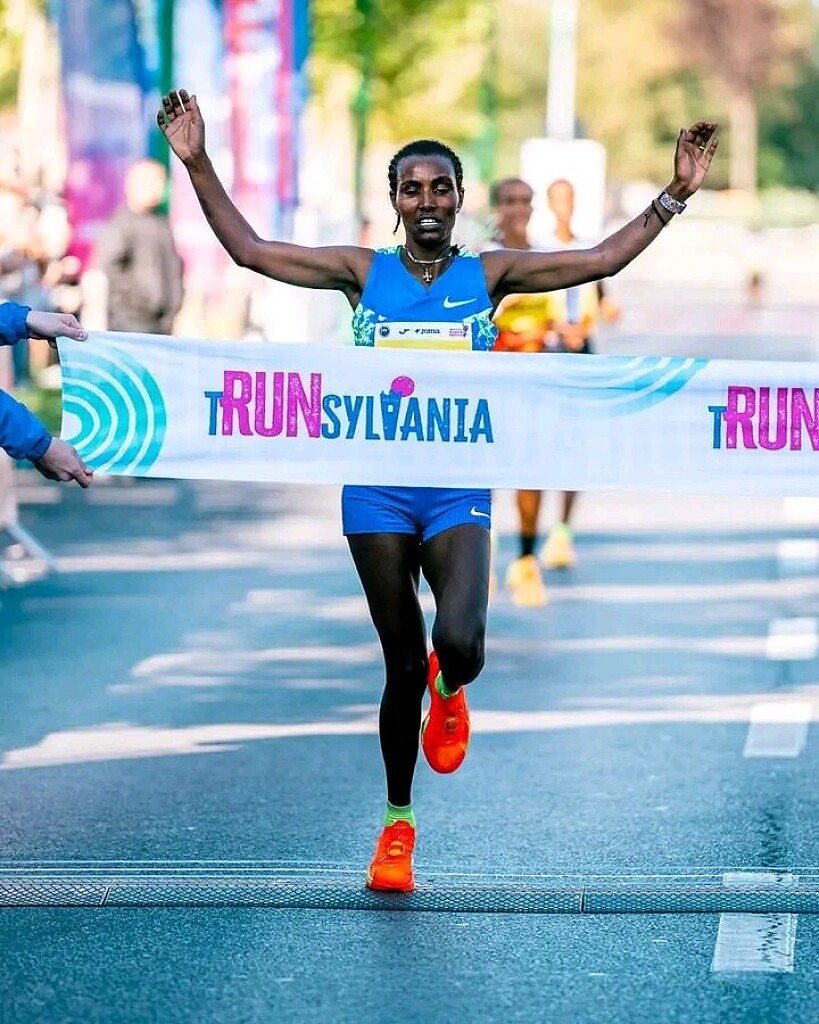


Ethiopian Double As Khairi Bejiga And Asefu Abreha Triumph At Fast-Paced Brasov 10K

Ethiopia dominated the 2026 Brasov Running Festival in Romania, with Khairi Bejiga and Asefu Abreha claiming impressive victories in two fiercely contested elite 10km races.
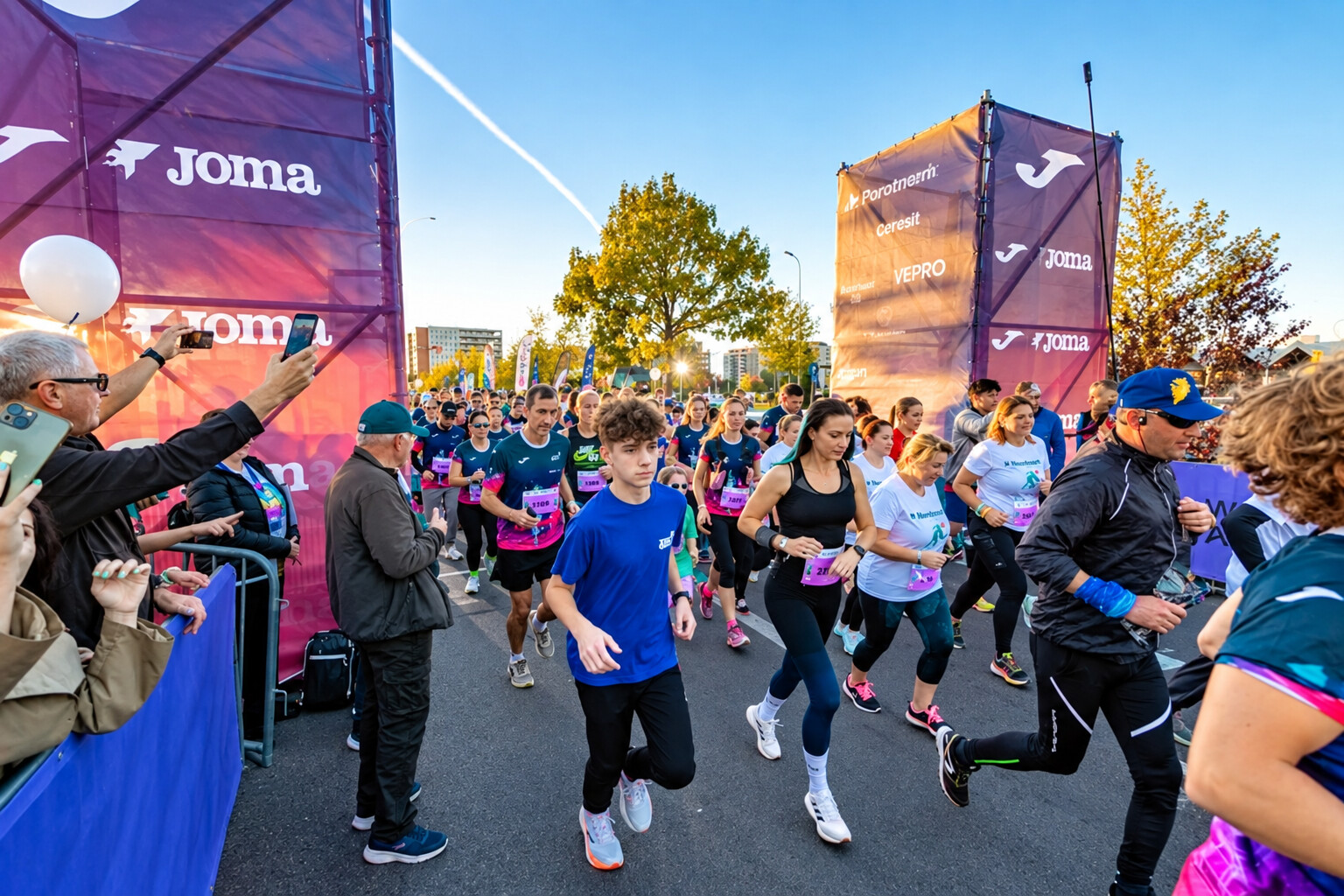
Bejiga, still only 20, successfully defended his title in the men’s race, becoming the first athlete — male or female — to win the Brasov 10K in consecutive editions across the event’s six-year history.
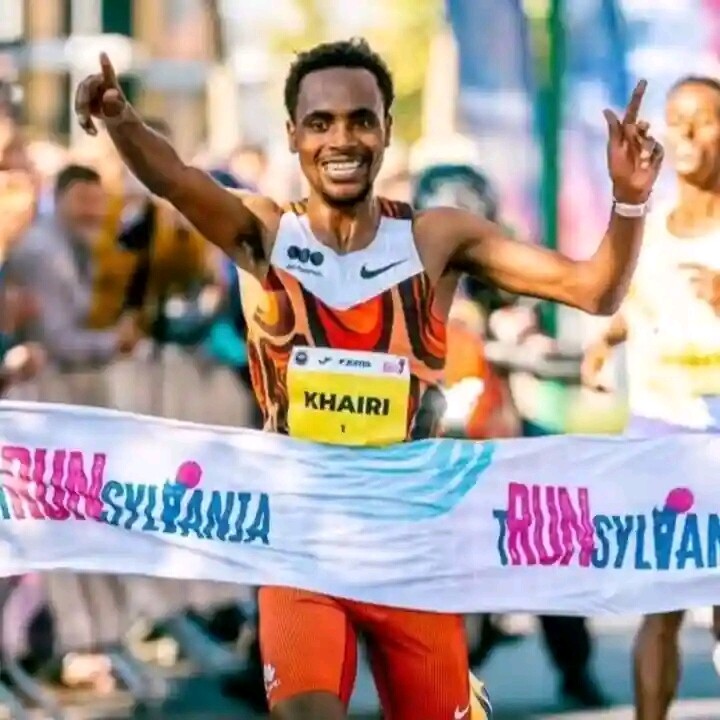
The Ethiopian produced a dramatic finish to retain his crown, edging training partner Nibret Kinde by just one second. Bejiga stopped the clock at 27:01, while Kinde followed in 27:02. Ayele Tadesse completed an Ethiopian sweep of the men’s podium in 27:09.
The depth of the field was underlined by the performances behind the leading trio, with Kenyan Amos Kipkemoi Bett finishing fourth in 27:13, followed by Djibouti’s Hani Idriss Hersi in 27:16.
Kenya also placed three more athletes inside the top 10, with Laban Kosgei sixth in 27:21, Victor Okoth Otieno seventh in 27:22, Kevin Chesang ninth in 27:29 and Silas Senchura 10th in 27:32. Uganda’s Samuel Simba Cherop completed the top eight in 27:25.
Brasov Running Festival 2026 — Men’s Top 10
1. Khairi Bejiga — Ethiopia — 27:01
2. Nibret Kinde — Ethiopia — 27:02
3. Ayele Tadesse — Ethiopia — 27:09
4. Amos Kipkemoi Bett — Kenya — 27:13
5. Hani Idriss Hersi — Djibouti — 27:16
6. Laban Kosgei — Kenya — 27:21
7. Victor Okoth Otieno — Kenya — 27:22
8. Samuel Simba Cherop — Uganda — 27:25
9. Kevin Chesang — Kenya — 27:29
10. Silas Senchura — Kenya — 27:32
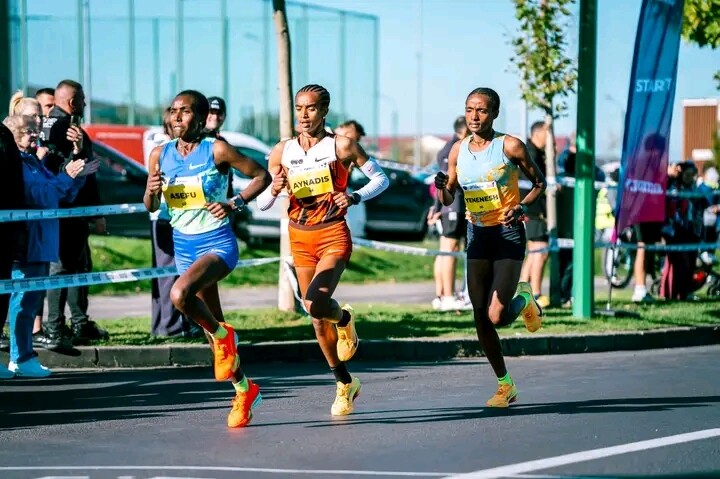
The women’s race delivered another Ethiopian victory as Asefu Abreha produced a major personal best to take the title in 30:16.
Abreha, also 20, surprised a strong field with a breakthrough performance, finishing three seconds ahead of compatriot Aynadis Mebratu, who crossed the line in 30:19.
Ethiopia completed the women’s podium through Yenenesh Shimket Ademas, whose 30:21 was a world under-20 best for the 10km distance, adding another significant achievement to an extraordinary Ethiopian showing in Brasov.
Djibouti’s Samiya Hassan Nour finished fourth in 30:37, while South Africa’s Tayla Kavanagh was fifth in 30:50. Kenya’s Nelvin Jepkemboi placed sixth in 30:57.
The remaining places in the women’s top 10 were filled by Ethiopia’s Mastewal Mehabaw in 30:59, Axumawit Embaye in 31:05 and Tibeb Eneyew in 31:29, with Romania’s Joan Chelimo Melly rounding out the top 10 in 31:46.
Brasov Running Festival 2026 — Women’s Top 10
1. Asefu Abreha — Ethiopia — 30:16
2. Aynadis Mebratu — Ethiopia — 30:19
3. Yenenesh Shimket Ademas — Ethiopia — 30:21
4. Samiya Hassan Nour — Djibouti — 30:37
5. Tayla Kavanagh — South Africa — 30:50
6. Nelvin Jepkemboi — Kenya — 30:57
7. Mastewal Mehabaw — Ethiopia — 30:59
8. Axumawit Embaye — Ethiopia — 31:05
9. Tibeb Eneyew — Ethiopia — 31:29
10. Joan Chelimo Melly — Romania — 31:46
The Brasov Running Festival has established itself as one of the fastest and most competitive 10km road races in Europe, attracting an increasingly deep international field capable of producing world-class performances.
The 2026 edition further strengthened that reputation, with national records for Djibouti and South Africa and a European under-18 best also among the notable achievements of the event.
For Ethiopia, however, the spotlight belonged to Bejiga and Abreha. Their victories gave the nation a memorable double in Brasov, with 27:01 and 30:16 respectively highlighting another spectacular day of elite road racing in Romania.
by Erick Cheruiyot for My Best Runs.
Login to leave a comment

Brasov Running Festival 10K
"Brasov Running Festival” is set to become the iconic running event of Romania, with elite, popular and children races, concerts, conferences and other running related activities. The elite 10K race, Trunsylvania International 10K is expected to enjoy an impressive participation of world class runners on a very fast course. -The only World Athletics Elite Label 10K in South-East Europe -The...
more...Latest Running News
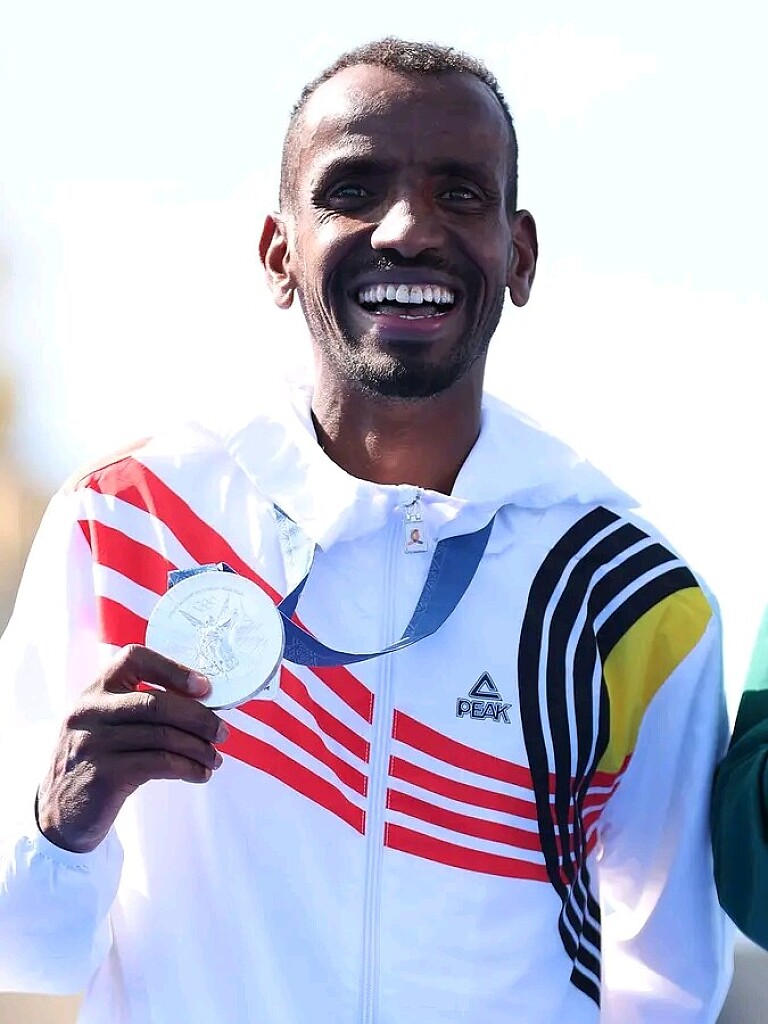
Bashir Abdi Withdraws From Chicago Marathon After Calf Injury
Belgian marathon star Bashir Abdi has been forced to withdraw from the 2026 Chicago Marathon after suffering a calf injury during his final training session in Flagstaff, Arizona.
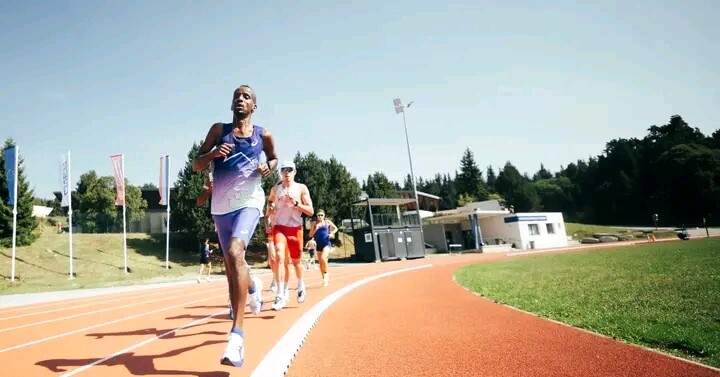
The two-time Olympic marathon medallist confirmed on Monday that a small tear in his calf has ruled him out of Sunday’s race, bringing an untimely end to months of preparation for one of the biggest marathons of the year.
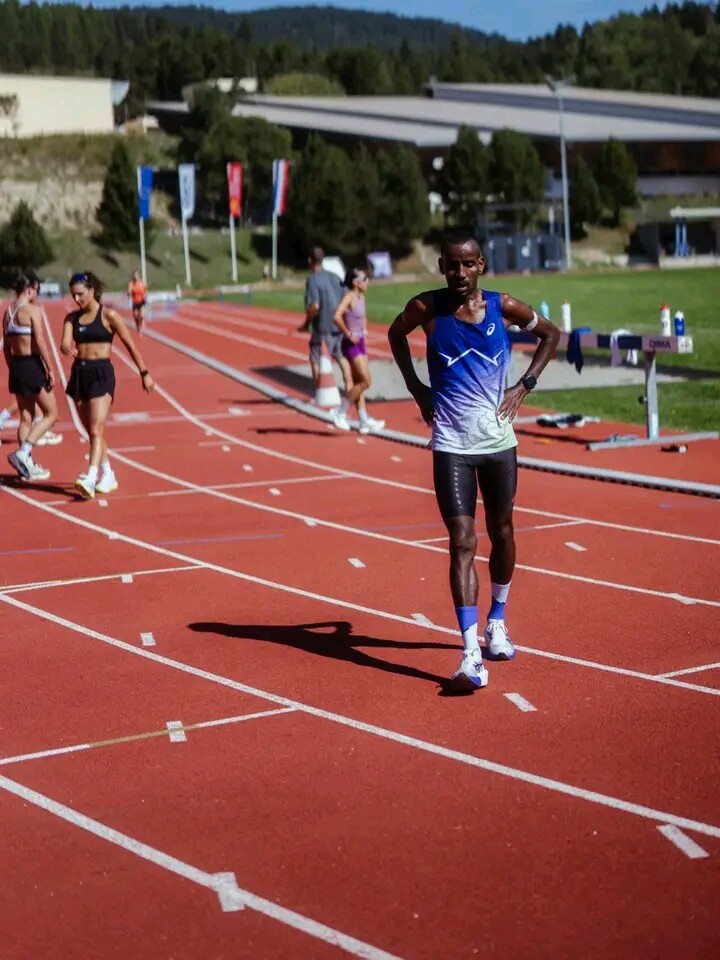
“Unfortunately, I will not be participating in the Chicago Marathon this weekend,” Abdi announced. “During my last training session in Flagstaff, I suffered a small tear in my calf.”
The 37-year-old stressed that the injury is not considered serious, but explained that it is significant enough to prevent him from safely taking his place on the start line. After consulting with his coach and medical team, the decision was made to avoid taking unnecessary risks.
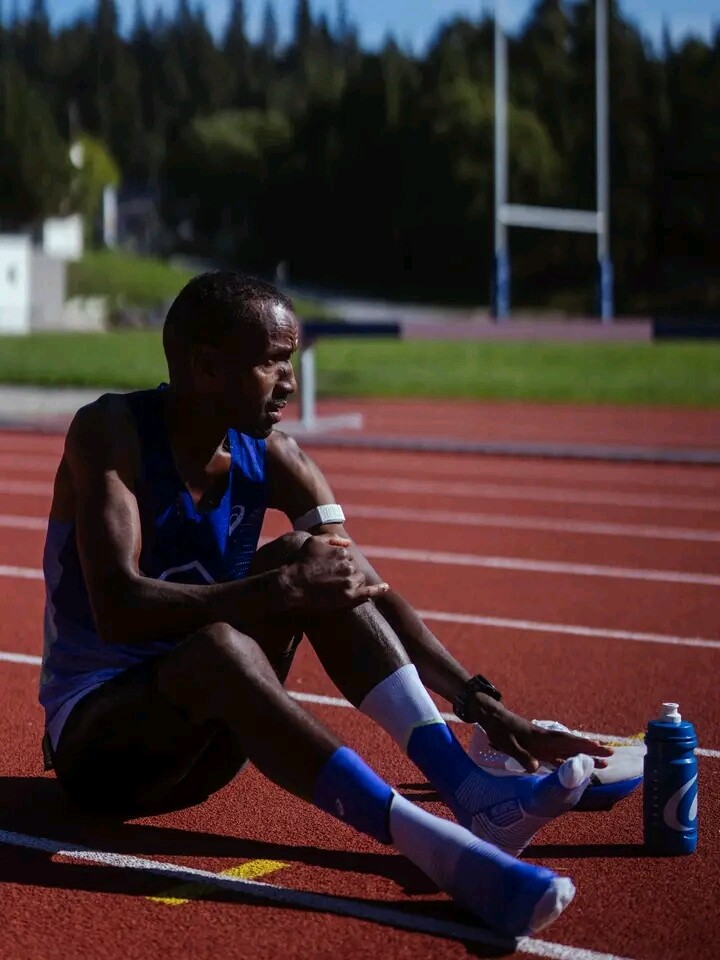
“It’s not a major injury, but enough to keep me from the start line. After consulting with my coach and medical team, we decided not to take any risks,” Abdi said.
The withdrawal is a major disappointment for Abdi, who had been listed among the elite contenders for the 48th edition of the Bank of America Chicago Marathon. The race is scheduled for October 11 and is expected to feature more than 55,000 finishers.
Abdi arrived at the Chicago buildup with an impressive marathon résumé. He won Olympic silver in Paris in 2024 after previously taking bronze at the Tokyo Olympics in 2021, establishing himself as one of the most accomplished marathoners of his generation.
He is also the European marathon record-holder, having clocked 2:03:36 in Rotterdam in 2021 to become the first European athlete to break the 2:04 barrier.
His 2026 season had shown that he remained capable of competing at the highest level. In April, Abdi finished third at the Rotterdam Marathon in 2:04:19, behind Ethiopia’s Guye Adola and Tesfaye Deriba.
For Abdi, the immediate priority is now recovery rather than forcing a return before he is ready. Missing Chicago will undoubtedly be frustrating after months of preparation, but protecting his long-term career is the more important decision.
The Belgian remains determined to move forward, with his focus now shifting toward rehabilitation and preparing for his next opportunity to race.
For one of Europe’s greatest marathoners, Chicago may be off the calendar—but the pursuit of more history continues.
by Erick Cheruiyot for My Best Runs.
Login to leave a comment

From Bolt To Seville: Jamaica’s Sprinting Torch Enters A New Era
For more than a decade, Usain Bolt defined Jamaican sprinting on the world stage. Now, a new generation is beginning to write its own chapter — and at the centre of that transition stands Oblique Seville, a sprinter whose journey is closely connected to the very people who shaped Bolt’s legendary career.
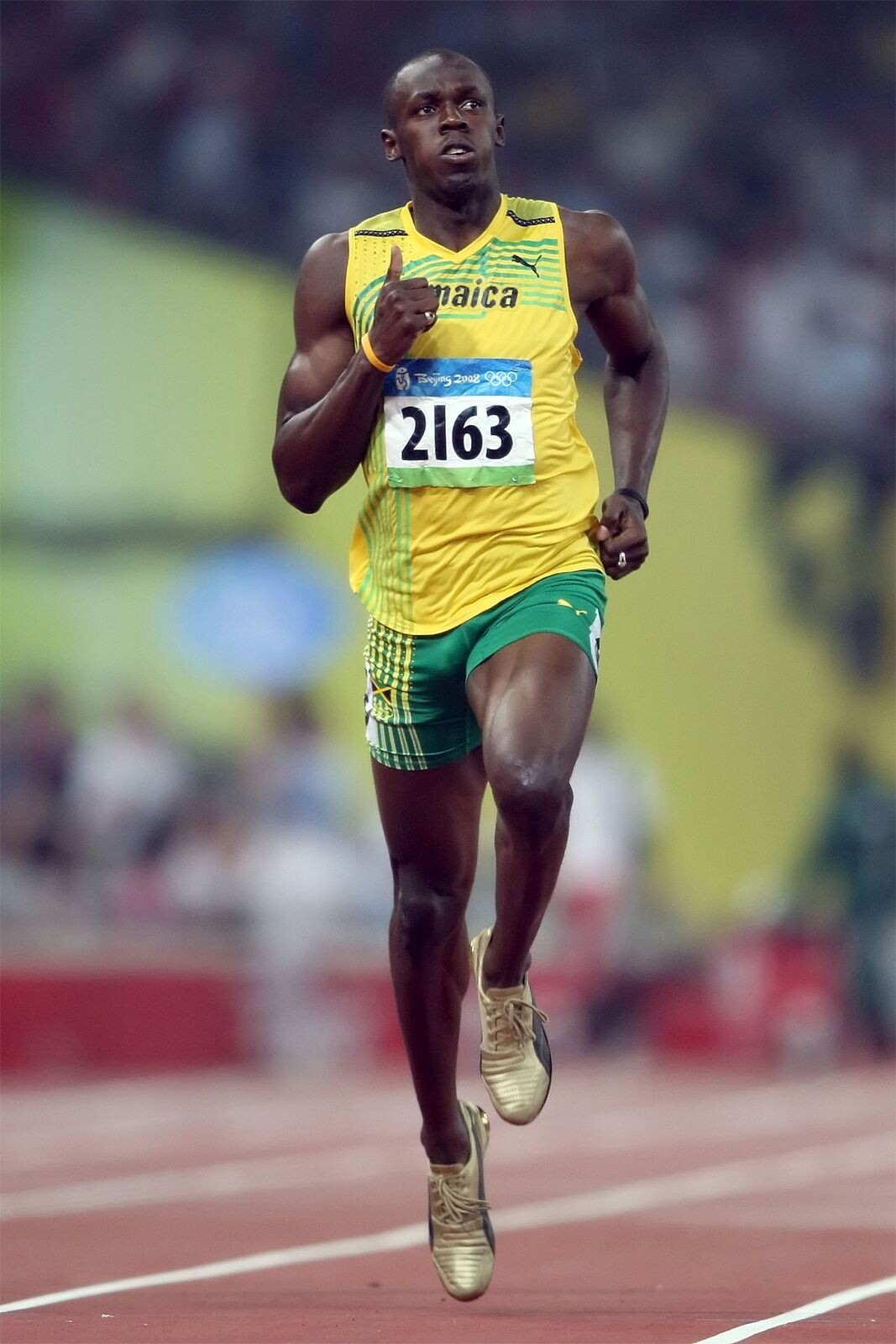
Seville announced himself as Jamaica’s new 100m champion in spectacular fashion at the 2025 World Athletics Championships in Tokyo. Running a lifetime best of 9.77 seconds, he captured the world title ahead of compatriot Kishane Thompson, who clocked 9.82, giving Jamaica a memorable one-two finish.
The significance of the victory was enormous. Seville became the first Jamaican man since Bolt to win the World Athletics Championships 100m title. And watching from the stands was Bolt himself, who celebrated enthusiastically as his compatriot delivered one of the biggest victories of his career.
But the connection between the two generations goes far beyond that unforgettable night in Tokyo.
A Dream That Began At 10
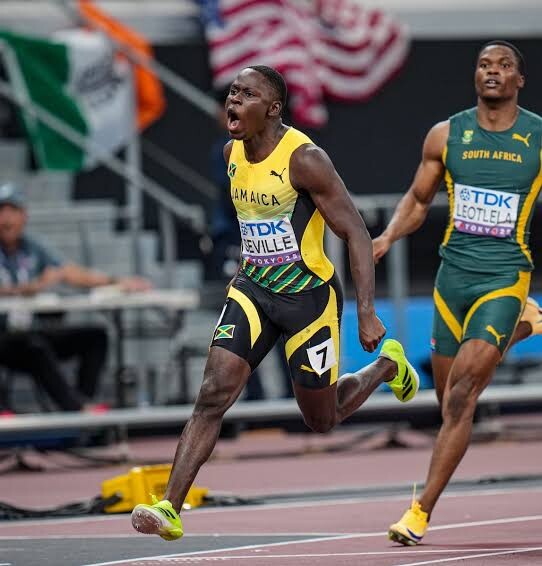
Long before Seville became a world champion, he already knew exactly who he wanted to coach him.
When he was around 10 years old, Seville reportedly told his mother that he wanted to train under Glen Mills — the renowned Jamaican coach who guided Bolt during the most dominant period of his career.
That childhood ambition eventually became reality. Seville joined the Racers Track Club and came under the guidance of Mills, establishing a relationship that has played a major role in his development as an elite sprinter.
Mills had already helped shape one of the greatest sprinters in history. Now, years later, he was helping another Jamaican talent reach the summit of the 100 metres.
Bolt Became More Than An Inspiration
Seville has also spoken about the influence Bolt has had on his life away from the track.
Following the death of his father, Gerald Seville, Bolt became an important source of encouragement and motivation for the young sprinter. Seville has described Bolt as a major motivator, adding another deeply personal dimension to a relationship that began with admiration from afar.
That makes the scene in Tokyo even more powerful: the athlete Seville grew up watching was there as he achieved the breakthrough that could define his own generation.
Bolt's presence was not simply symbolic. Before the final, he had spoken about Seville and Thompson as athletes capable of challenging for the gold medal. Seville ultimately delivered when the pressure was greatest.
From 9.77 To A New Challenge
Seville's Tokyo triumph was not the end of the story.
In 2026, he continued to establish himself among the world's leading sprinters, eventually claiming the men's 100m Diamond League title at the series final in Brussels. He also produced a season-best 9.82 in Kingston and recorded several victories during the Diamond League campaign.
The progression is significant. From an ambitious youngster dreaming of being coached by Glen Mills, to a World Championships gold medallist, and now a Diamond League champion, Seville is steadily building a career that belongs to him.
Yet he remains deeply respectful of the athlete whose footsteps he is following.
Seville has repeatedly acknowledged Bolt's greatness, while also believing that the next generation of Jamaican sprinters can push the event to another level. The ambition is clear: the future may eventually demand performances in the 9.6-second range.
For now, however, Seville's focus is not on becoming another Usain Bolt.
It is on becoming the best version of Oblique Seville.
The Torch Has Been Passed — But The Story Is Still Being Written
Jamaica's sprinting tradition has produced some of the most extraordinary athletes the sport has ever seen. Bolt took that tradition to an unprecedented level. Seville now represents a new generation determined to keep it alive.
The symbolism is difficult to miss.
The coach who helped guide Bolt is now guiding Seville. The champion who once inspired Seville as a young boy was there to watch him become a world champion. And the young Jamaican who once dreamed of joining Glen Mills is now collecting major titles of his own.
Seville has already secured a World Championships 100m title, a 9.77 personal best and a Diamond League crown.
The next chapter of Jamaican sprinting is no longer waiting to begin.
It is already underway.
And with Glen Mills in his corner and Usain Bolt among those who have helped inspire him, Oblique Seville is carrying the Jamaican sprinting tradition forward — while creating a legacy of his own.
by Erick Cheruiyot for My Best Runs.
Login to leave a comment
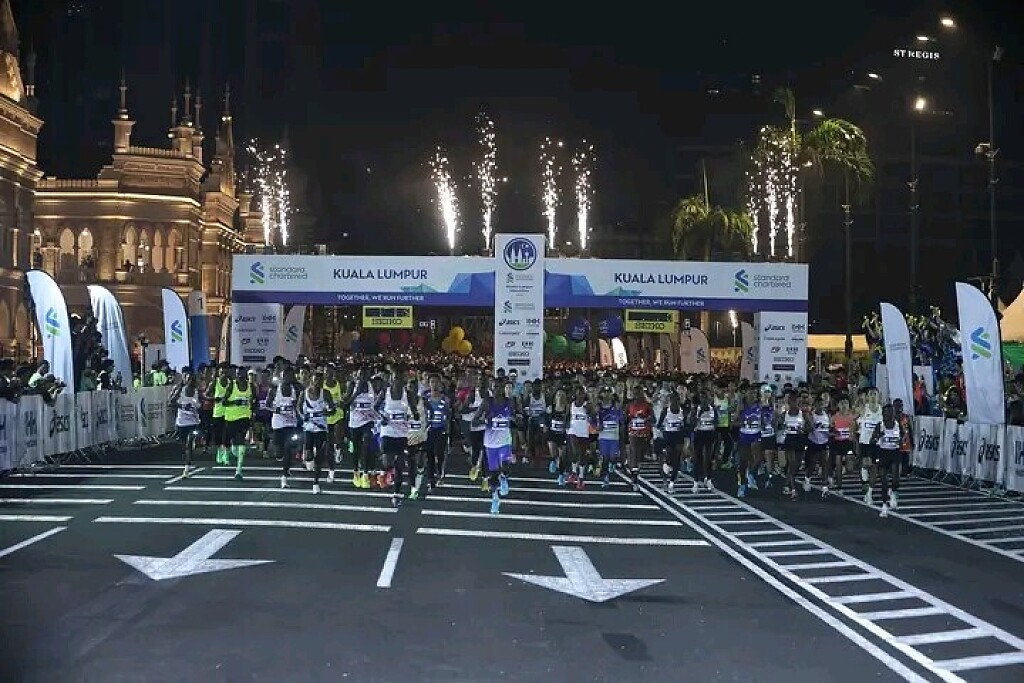
Drunk Motorcyclist Crashes Into Two Runners On Closed Kuala Lumpur Marathon 10K Course
A morning of racing at the 2026 Kuala Lumpur Standard Chartered Marathon turned into a frightening scene on Saturday after a motorcycle entered a section of the course that had been closed to traffic and collided with two runners.
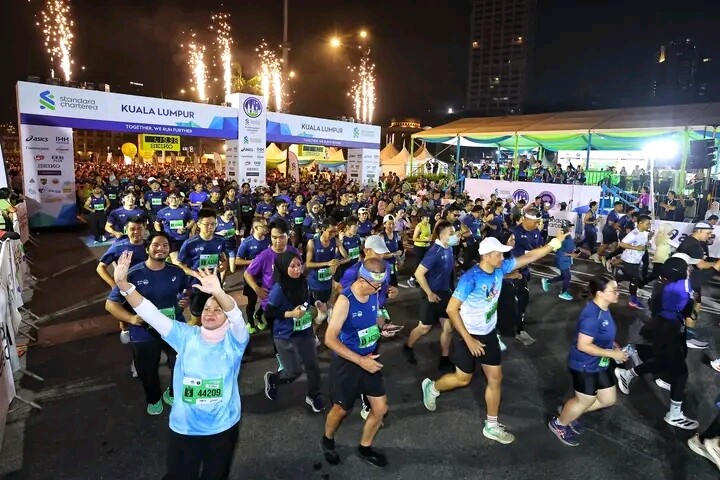
The incident happened at about 6:15 a.m. on October 3 along Jalan Munshi Abdullah, where the 10K race was taking place. Police said the 21-year-old motorcyclist, who was carrying a 19-year-old male pillion passenger, had passed through a section blocked off with traffic cones.
According to police, an officer manning the road closure ordered the rider to stop, but he allegedly continued riding and then travelled against the flow of traffic before crashing into two marathon participants.
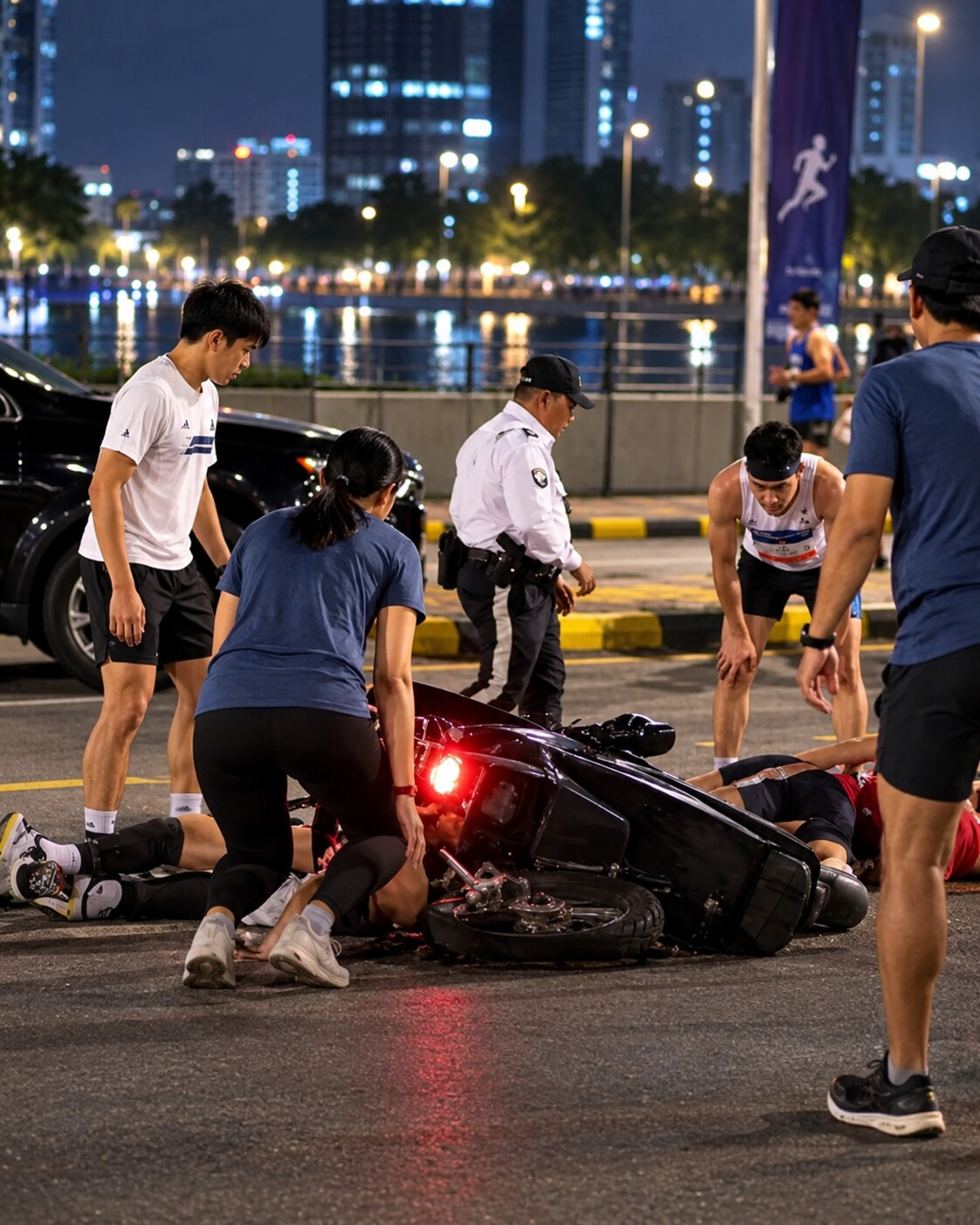
The two injured runners were a 50-year-old woman and a 41-year-old man. The woman suffered neck injuries and was taken to Prince Court, while the man sustained injuries to his right knee and hand. Both received medical attention, with reports indicating that their injuries were not life-threatening.
The incident became even more serious when an initial alcohol screening of the rider returned a positive result. Police said an evidential breath test recorded 164mg of alcohol per 100ml, after which the rider and his passenger were taken to Hospital Kuala Lumpur for blood and urine samples as part of the investigation.
The motorcyclist was subsequently remanded while police investigated the circumstances surrounding the crash. The case was initially investigated under Section 44(1A)(b) of Malaysia's Road Transport Act 1987, as well as Section 186 of the Penal Code.
On Monday, October 5, the 21-year-old was charged in Kuala Lumpur Traffic Court with two counts of driving under the influence. The court granted bail of RM5,000 for each charge, although reports said he was unable to raise the bail and was ordered to be sent to prison pending the next court mention on January 7, 2027.
The crash has highlighted the crucial role of road closures, traffic police and race marshals in protecting runners during major road races. The Kuala Lumpur Marathon's 10K event is a designated race category, with the course reserved for participants during the event.
For the thousands of runners who took part, what should have been a celebration of running instead became a stark reminder that even with extensive race-day safety measures in place, one vehicle entering a closed course can create a potentially devastating situation.
The Kuala Lumpur Standard Chartered Marathon organisers have confirmed the incident and are cooperating with authorities as the police investigation continues.
by Erick Cheruiyot for My Best Runs.
Login to leave a comment
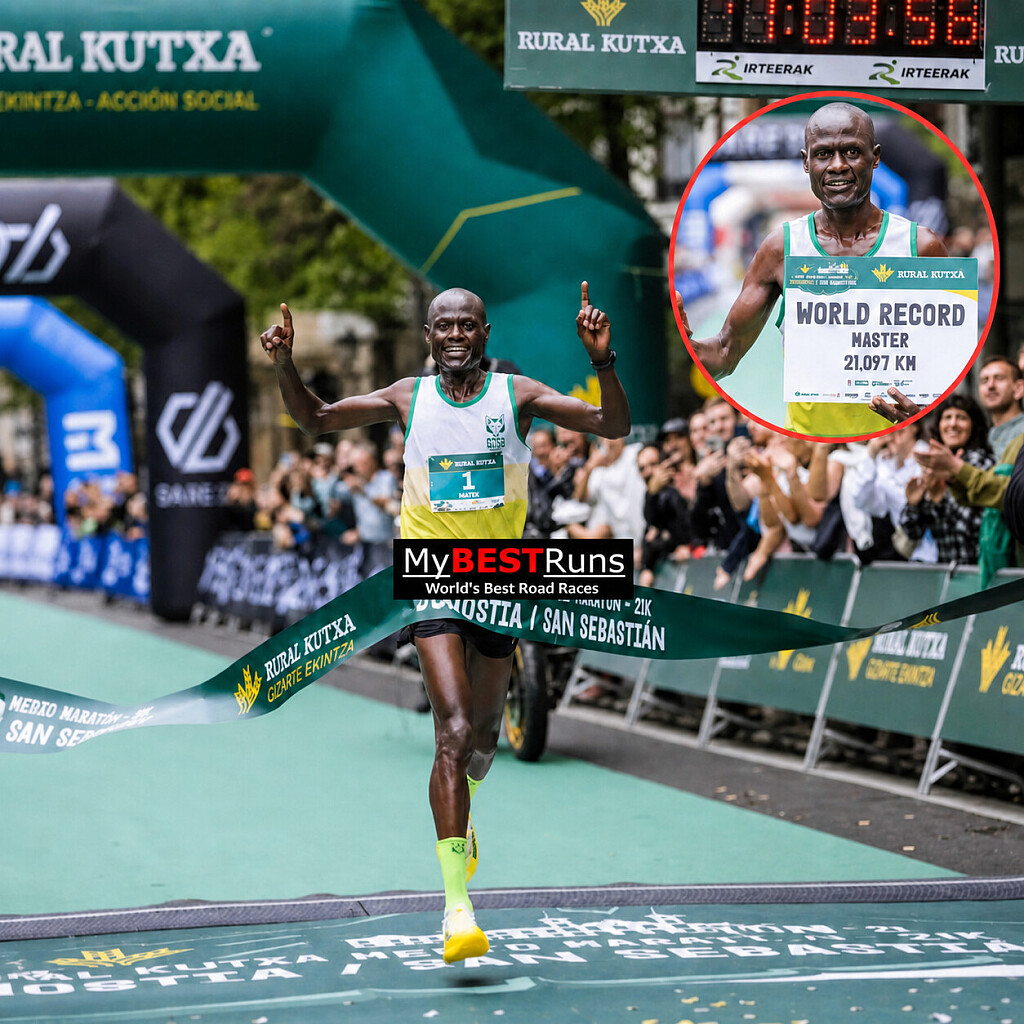
Mark Kiptoo, 50, Shatters M50 World Half-Marathon Record In San Sebastián
Kenyan distance-running veteran Mark Kosgei Kiptoo has added another extraordinary achievement to his remarkable career, setting a new M50 world record in the half marathon at the 2026 San Sebastián Rural Kutxa Half Marathon in Spain.
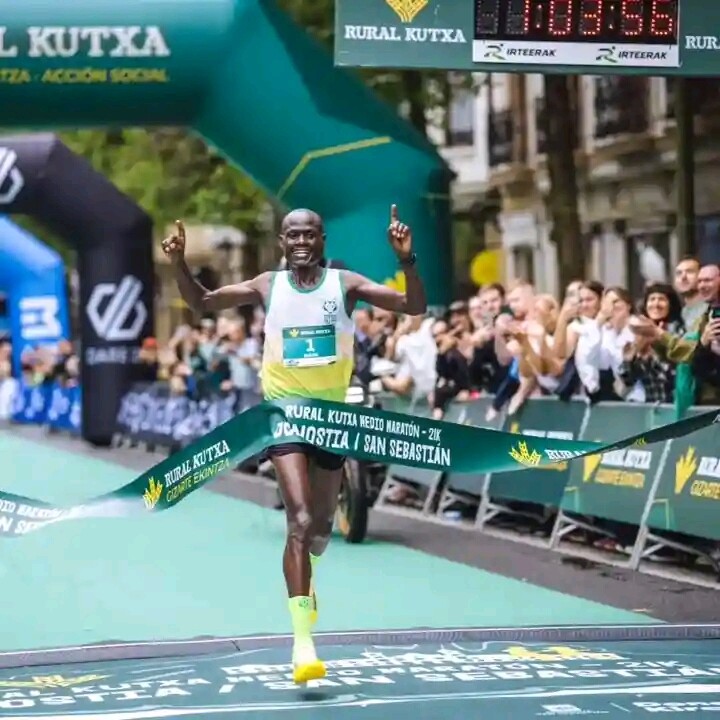
At 50, Kiptoo produced a stunning 1:03:57 over the 21.097-kilometre distance, winning the race outright while rewriting the masters record books.
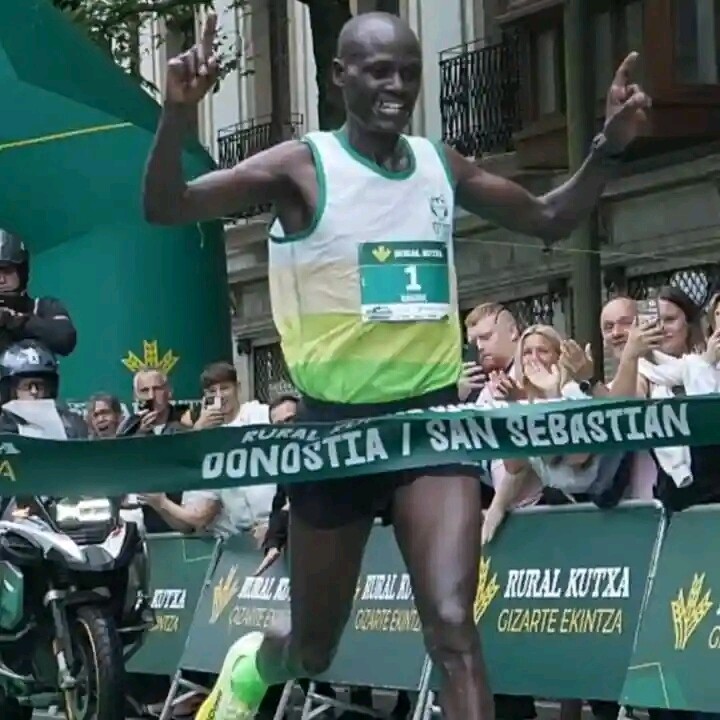
His performance demolished the previous M50 world record of 1:06:23, set by South Africa’s Titus Mamabolo, by 2 minutes and 26 seconds. The scale of the improvement makes Kiptoo’s performance one of the most remarkable masters distance-running achievements of the year.
The Kenyan arrived in San Sebastián in impressive form after already showing that age had done little to diminish his speed. At 49, Kiptoo won the Azkoitia-Azpeitia Half Marathon in March in 1:03:17, a performance that underlined his extraordinary endurance and ability to maintain world-class pace well into his late 40s.
Kiptoo’s latest achievement is another milestone in a career that has already delivered success across track, cross country and road running. Now competing in the masters ranks, the Kenyan continues to demonstrate the exceptional endurance and speed that made him one of the most respected distance runners of his generation.
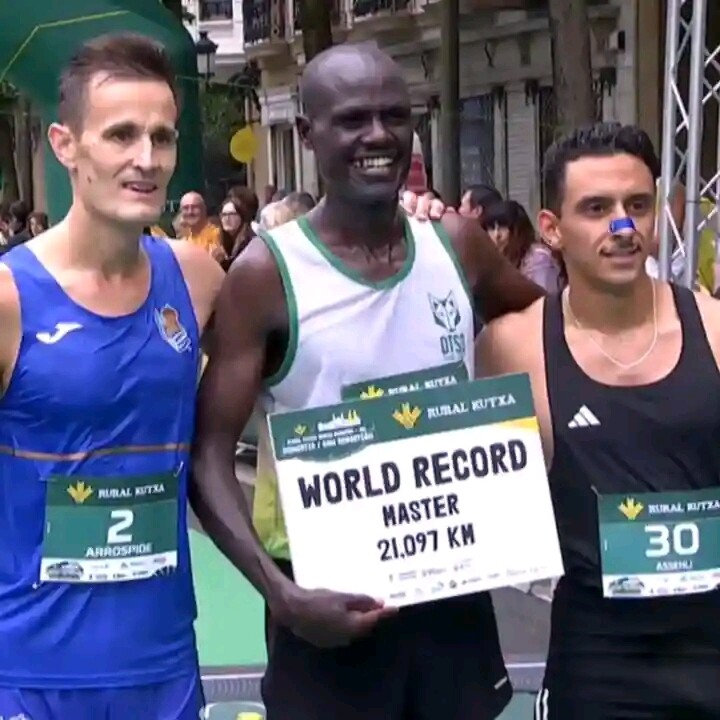
Born on June 21, 1976, Kiptoo has spent decades competing at the highest level of international athletics. His career includes major performances on the track and road, and his transition into the masters category has done little to slow his remarkable competitive drive.
Kiptoo’s transition to marathon running produced another extraordinary achievement. At the 2018 Frankfurt Marathon, he clocked 2:07:50 to establish what was then a world record for the Masters 40-and-over age group, further highlighting his ability to remain competitive well beyond the traditional peak years of an elite distance runner.
That performance offered an early indication of the extraordinary longevity that would later define his masters career. With the M50 half-marathon world record standing at 1:06:23, Kiptoo arrived in San Sebastián with history within reach—and he did far more than simply break the mark.
He obliterated it.
Kiptoo’s 1:03:57 was also fast enough to secure the overall victory, putting the 50-year-old Kenyan ahead of considerably younger competitors. Spain’s Iraitz Arrospide was the leading Spanish finisher, taking second in 1:04:48, while Youness Assehli completed the podium in 1:07:16.
Kiptoo’s record run was also notable for the consistency of his pace throughout the race. He passed 5 kilometres in 15:22 before reaching 10 kilometres in 30:21, with his second 5-kilometre segment covered in a remarkable 14:59. He continued to maintain the demanding tempo, reaching 20 kilometres in 1:00:40 before completing the final 1.097 kilometres to stop the clock at 1:03:57.
Those splits underline just how controlled and aggressive Kiptoo’s performance was. Rather than relying on a late surge, the Kenyan built his record through sustained world-class pace from the opening kilometres to the finish, averaging roughly 3:02 per kilometre across the entire half marathon. The performance not only shattered the longstanding M50 record but also demonstrated that Kiptoo’s extraordinary speed remains intact at an age when most elite athletes have long since stepped away from the highest level of competition.
In San Sebastián, Kiptoo’s experience came together in one extraordinary performance. He not only won the race outright but also lowered the M50 world record from 1:06:23 to 1:03:57, an improvement of 2 minutes and 26 seconds. At 50, he continues to show that world-class determination and years of experience can still translate into astonishing performances over 21.1 kilometres.
Kiptoo’s credentials were established long before his entry into the masters ranks. A former African champion over 5,000 metres and a winner on the Diamond League circuit, he competed successfully against the world’s best during the peak of his track career.
His track personal bests include 12:53.46 for 5,000 metres and 26:54.64 for 10,000 metres, evidence of the elite speed and endurance that have remained the foundation of his longevity in the sport.
The latest record is therefore more than another entry on a masters list. It is a reflection of a career built on consistency, discipline and an extraordinary ability to remain competitive across different generations of distance runners.
At 50 years old, Mark Kiptoo is still running at a level that commands attention.
A 1:03:57 half marathon, an outright race victory and a world record—another remarkable chapter in the career of one of Kenya’s enduring distance-running stars.
by Erick Cheruiyot for My Best Runs.
Login to leave a comment
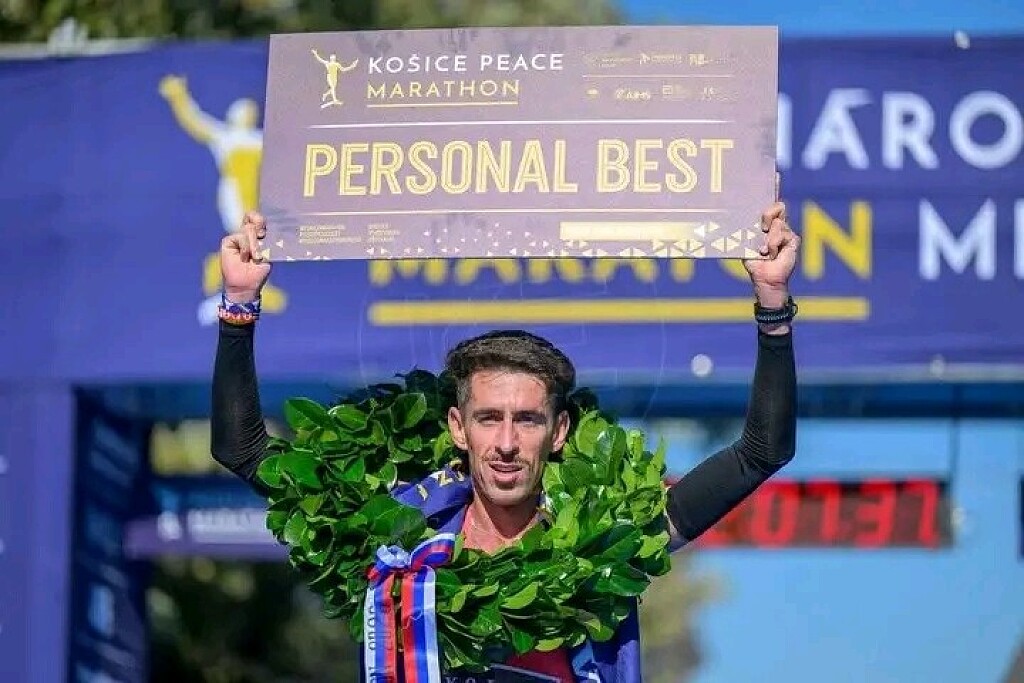
Košice Marathon 2026: Lipschitz and Fayesa Robi Lead a Fast International Day in Slovakia
The 2026 Košice Marathon delivered a strong display of international marathon talent, with South Africa’s Adam Lipschitz and Ethiopia’s Aberash Fayesa Robi claiming victories in contrasting but equally impressive performances on the streets of Košice, Slovakia.
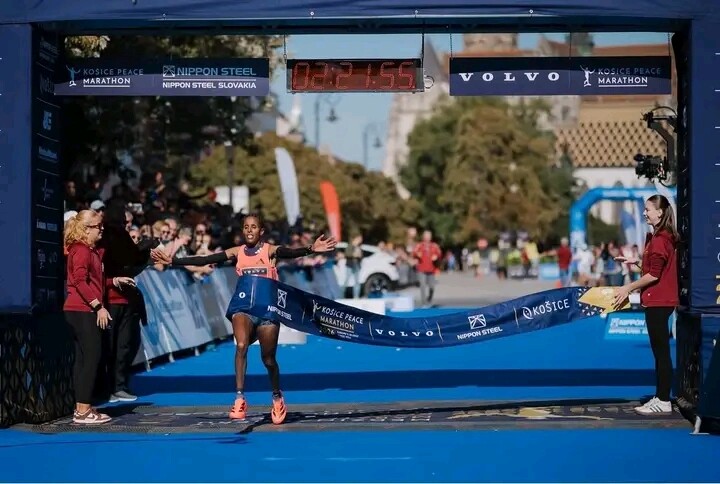
In the women’s race, Fayesa Robi produced the standout performance, crossing the finish line in 2:21:54 to secure a commanding victory and improve her personal best. The Ethiopian maintained a strong rhythm throughout the race before finishing well clear of the rest of the field.
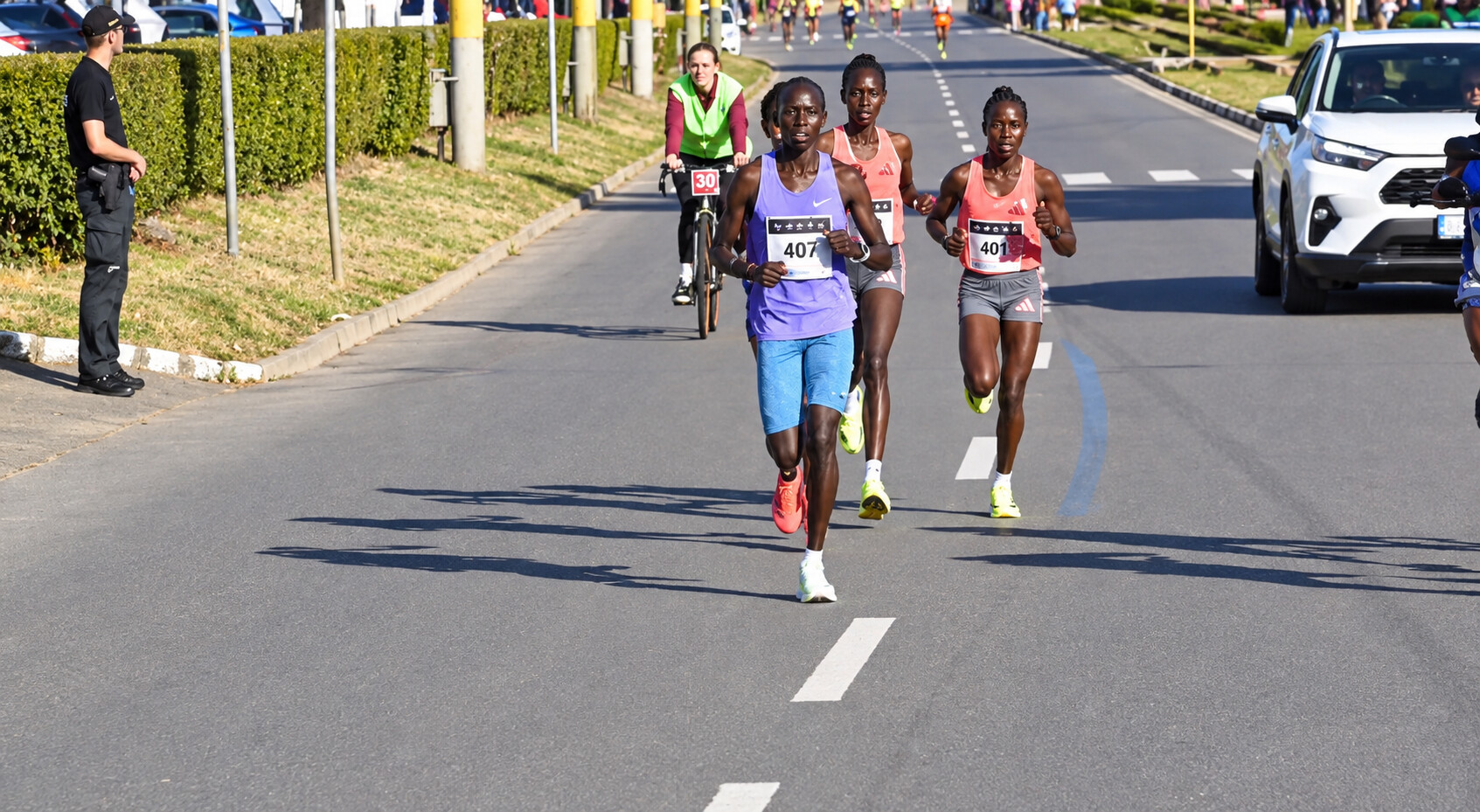
Her compatriot Nurit Ahmed Samiro added another impressive chapter to Ethiopia’s day, placing second in 2:25:03 on her marathon debut. Racing over the full 42.195-kilometre distance for the first time, Samiro delivered a remarkably mature performance to immediately establish herself among the leading names in the field.
Kenya’s Tecla Jelimo Kibet completed the women’s international podium, finishing third in 2:29:56. Her performance secured a place among a highly competitive leading group as the Ethiopian pair dominated the top two positions.
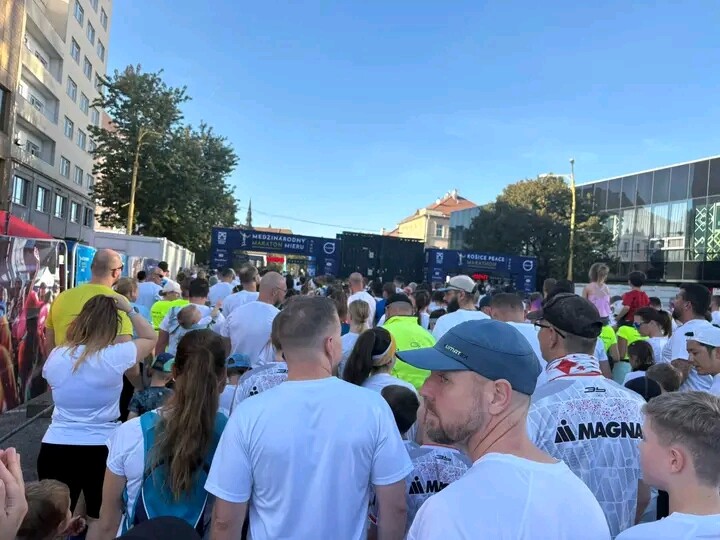
The men’s contest was even tighter at the front, with Adam Lipschitz producing a breakthrough performance to win in 2:07:21. The South African not only claimed the prestigious Košice Marathon title but also lowered his personal best, underlining the quality of his performance on the day.
Kenya’s Abednego Cheruiyot pushed Lipschitz all the way and finished second in 2:07:53, also recording a new personal best. The Kenyan remained firmly in contention deep into the race before crossing the line just 32 seconds behind the winner.
Another Kenyan, Moses Kipngetich Kemei, secured third place in 2:08:04, giving Kenya two athletes inside 2:09 and completing a highly competitive podium.
Turkey’s Kaan Kigen Özbilen followed in fourth with 2:08:22, narrowly missing the podium after remaining within striking distance of the leading trio.
The performances in Košice highlighted the depth of the international field, with the men’s race producing three athletes under 2:09 and the women’s contest featuring a commanding winning performance alongside an impressive marathon debut.
The results once again underlined the historic Košice Marathon’s ability to attract high-level athletes from across the world and provide a competitive stage for both established marathoners and emerging talent.
by Erick Cheruiyot for My Best Runs.
Login to leave a comment

kosice Peace Marathon
The Kosice Peace Marathon is the oldest European marathon.This year for the organizers of Kosice Peace Marathon is also about memories and flashbacks. One of the fastest marathon courses has been created in Košice 20 years ago on that occasion it was the 1997 IAAF World Half Marathon Champioships. Tegla Loroupe and Shem Kororia were awarded from the hands of...
more...