

Running News Daily
Running News Daily is edited by Bob Anderson and team. Send your news items to bob@mybestruns.com Advertising opportunities available.
Index to Daily Posts · Sign Up For Updates · Run The World Feed
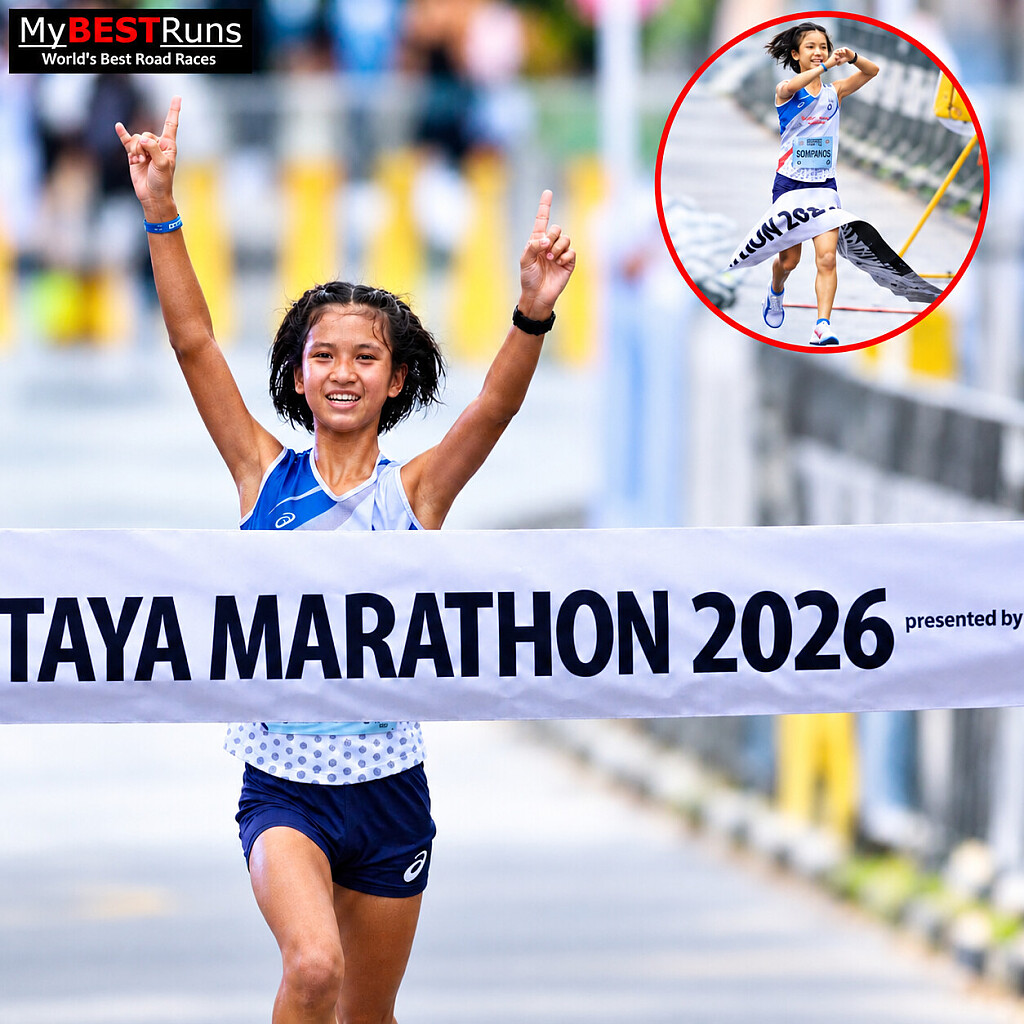


14-Year-Old Nadpaphand Sikhamkun Stuns International Field To Win Pattaya 10K

Thailand’s Nadpaphand Sikhamkun has produced one of the standout performances of the 2026 Amazing Thailand Pattaya Marathon, claiming overall victory in the women’s 10-kilometre race at just 14 years of age.

Sikhamkun delivered a composed and impressive performance to stop the clock at 37:00, emerging ahead of a competitive international field that included experienced Ethiopian runners.
The young Thai athlete maintained her composure throughout the race and crossed the finish line first, securing a memorable victory on home soil and announcing herself as a promising talent on the road-running scene.
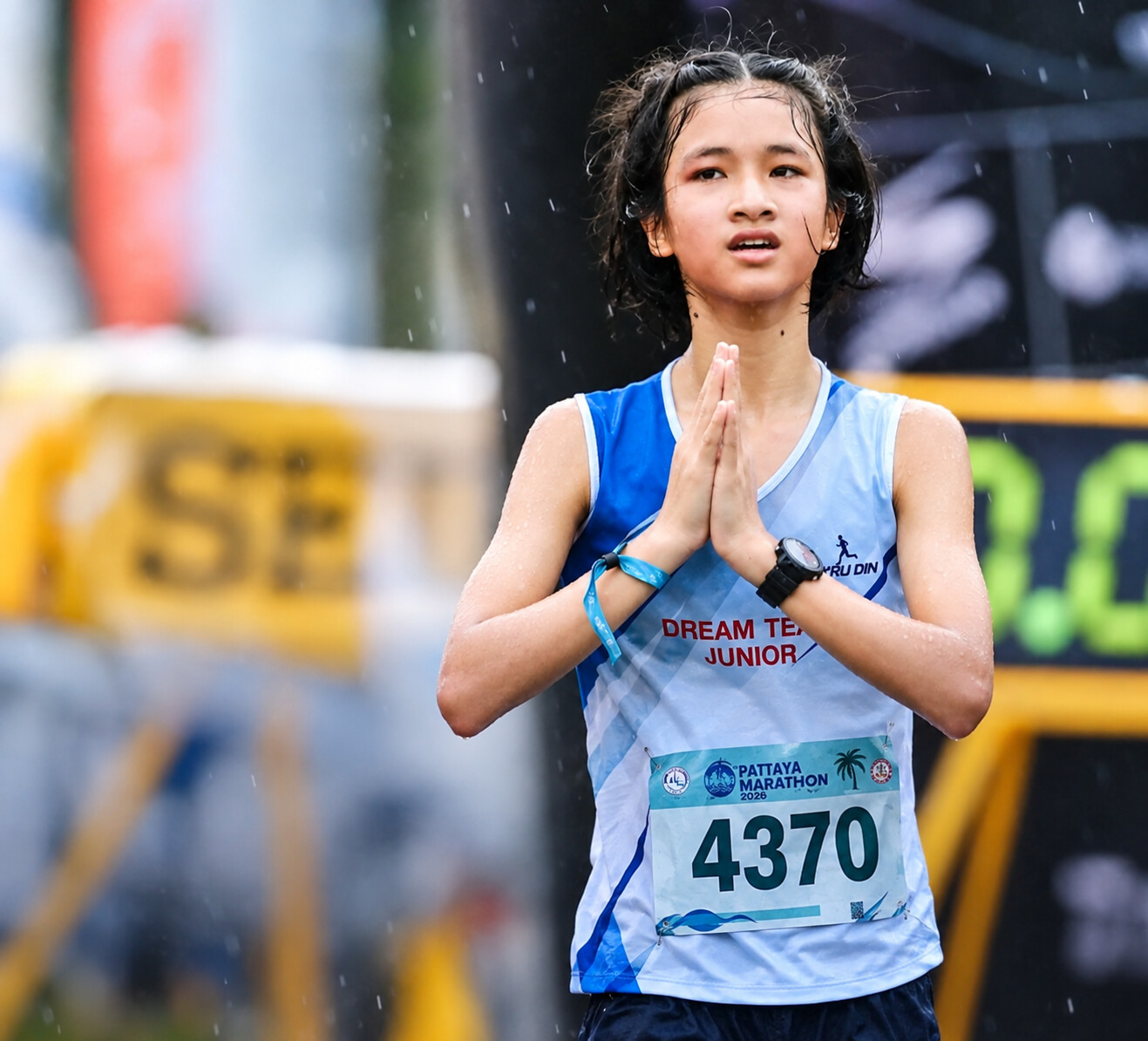
Ethiopia’s Birehan Marta Tinsae followed in second place with 37:22, finishing just 22 seconds behind the teenage winner. Thailand’s Ornanong Wongsorn completed the podium in 39:25, giving the host nation two places among the top three.
Another Thai runner, Arunya Hinsui, finished fourth in 39:43, while Ethiopia’s Rute Bekele Bedane rounded out the top five in 40:05.
Women’s 10K Results
1. Nadpaphand Sikhamkun (Thailand) —37:00
2. Birehan Marta Tinsae (Ethiopia) — 37:22
3. Ornanong Wongsorn (Thailand) — 39:25
4. Arunya Hinsui (Thailand) — 39:43
5. Rute Bekele Bedane (Ethiopia) — 40:05
For a 14-year-old to finish at the front of an international field featuring established distance runners makes Sikhamkun’s performance particularly noteworthy.
Beyond the result itself, Sikhamkun’s performance stands out because of the maturity required to complete a 10K at the front of an international field. Holding off Tinsae by 22 seconds, while finishing more than two minutes ahead of the third-placed runner, underlined just how effectively the young Thai athlete handled the pressure of competing for the overall victory.
Her breakthrough in Pattaya also adds an intriguing chapter to the growing profile of young distance runners emerging from Thailand. At only 14, Sikhamkun has already shown that she can compete successfully over a longer road distance, and her 37:00 winning performance provides an encouraging foundation as she continues to develop her endurance, experience and racing skills.
With plenty of years ahead of her to develop, gain experience and strengthen her racing abilities, Nadpaphand Sikhamkun has already provided a glimpse of what she may be capable of achieving.
For now, the name to remember is Nadpaphand Sikhamkun — Thailand’s teenage road-running sensation who has made a remarkable statement at Pattaya.
by Erick Cheruiyot for My Best Runs.
Login to leave a comment
Latest Running News
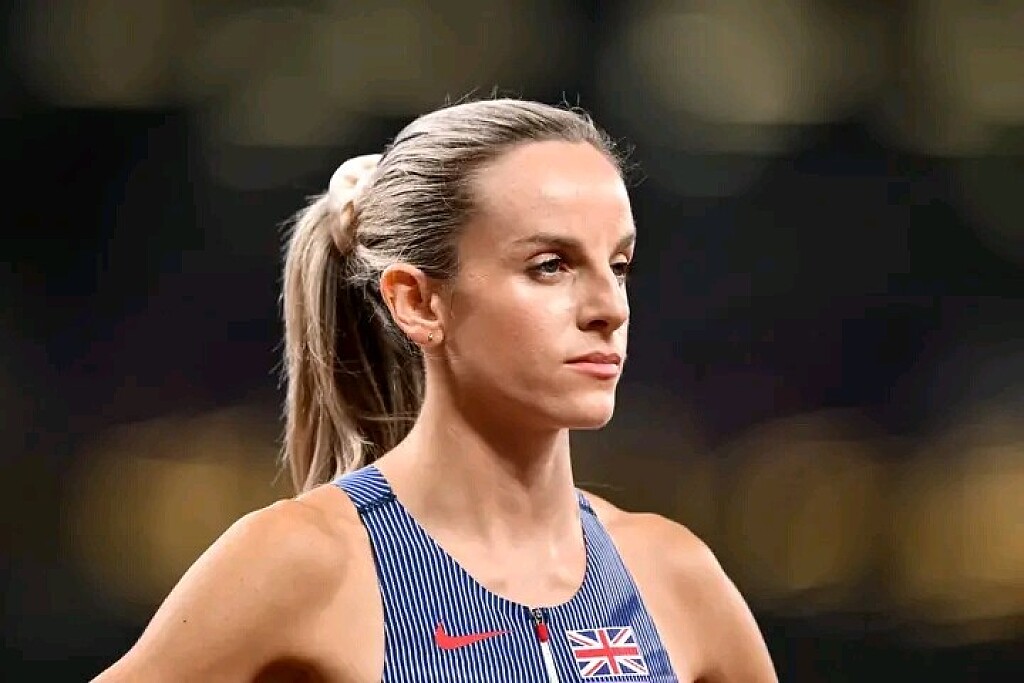
Georgia Hunter Bell: The Dream She Walked Away From Became The Dream She Finally Lived
There was a time when Georgia Hunter Bell believed her athletics journey was over.
The dream that had once consumed her as a young athlete had gradually been replaced by injuries, burnout, disappointment and the realities of adult life. She eventually walked away from track and field, convinced that her competitive career had reached its final chapter.

Years later, however, the dream she had abandoned as a young woman would return — only this time, with a story far more extraordinary than she could ever have imagined.
Hunter Bell was a highly regarded junior athlete before moving to the United States to compete for the University of California, Berkeley. But her collegiate years were disrupted by serious injuries and the mental exhaustion that came with constantly battling to remain healthy and competitive.
In 2017, she made the difficult decision to retire from athletics.
For the next six years, her life looked nothing like that of a professional athlete. Living in London, she built a career in the corporate world, working full-time in cybersecurity and artificial-intelligence technology sales.
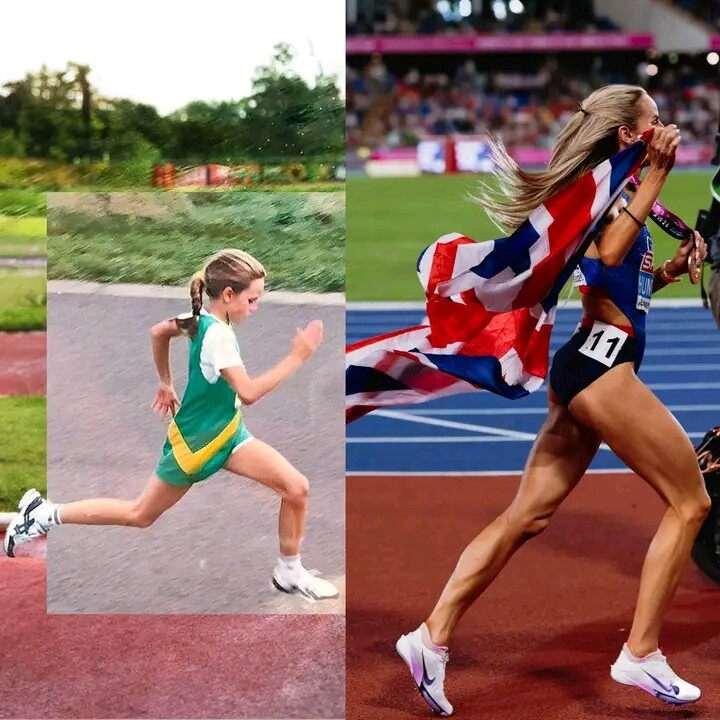
Track and field became a chapter she had seemingly closed.
Then the COVID-19 pandemic changed the rhythm of everyday life.
During the lockdowns, Hunter Bell was not plotting an Olympic comeback or imagining herself standing on a global championship podium. She simply wanted to move again — to improve her physical and mental well-being and rediscover an activity she had once loved.
That journey began with something remarkably ordinary: a local Saturday morning parkrun.
One run became another. Gradually, the feeling she thought she had lost began to return.
The love of running was still there.
She reconnected with her former coach, began entering races again and developed an unconventional training approach that allowed her to build fitness without placing excessive stress on a body that had already endured years of injury. Her programme incorporated substantial cycling alongside relatively low running mileage.
Initially, there was no grand ambition.
She was simply running because she enjoyed it.
But as the performances improved, so did the dreams.
What began as a personal return to exercise eventually became one of the most remarkable comebacks in modern middle-distance running.
Hunter Bell went on to win the British trials and qualify for the Olympic Games in Paris. There, she produced a stunning performance in the women's 1500m, clocking 3:52.61 to claim the Olympic bronze medal and announce herself on the biggest stage in world sport.
And she was not finished.
In 2026, her comeback reached another extraordinary level.
She became a World Indoor Champion, a European Champion and a Commonwealth Games Champion, transforming what had once seemed like a forgotten childhood ambition into a reality far beyond anything she could have predicted.
The athlete who had once walked away from the sport was now collecting major international titles.
But perhaps the most moving part of Hunter Bell's story is not the medals.
It is the journey that came before them.
She has reflected openly on how difficult it can be to hold onto childhood ambitions once adulthood arrives, with careers, financial responsibilities and everyday life often pushing dreams further into the background.
She once believed continuing to pursue athletics after university was unrealistic. Her performances and relationship with the sport had left her questioning whether the dream was still worth chasing.
Yet somewhere along the way, she found her way back.
She returned to the track after work simply because she loved being there. She kept turning up. She contacted her former coach. She entered races.
And slowly, almost without forcing it, the dream began to grow again.
What makes her story so powerful is that her comeback was not built on a perfectly planned route to Olympic success. It started with something much simpler — the decision to run again.
The Saturday morning parkruns, the training sessions after work and the races she entered for the sheer enjoyment of competing eventually led her back to the world's biggest stages.
The little girl who once dreamed of becoming a champion had grown up, stepped away from the sport and built an entirely different life.
But the dream had never truly disappeared.
Sometimes, life does not destroy a dream. It simply takes you somewhere else for a while.
And sometimes, when you find your way back, you discover that the dream waiting for you is even bigger than the one you had as a child.
Georgia Hunter Bell did not simply return to athletics.
She returned to a part of herself she thought she had lost — and turned a childhood dream into a championship reality.
Her journey is a powerful reminder that it is never necessarily too late to return to something you genuinely love.
You never know where the road back might lead.
by Erick Cheruiyot for My Best Runs.
Login to leave a comment
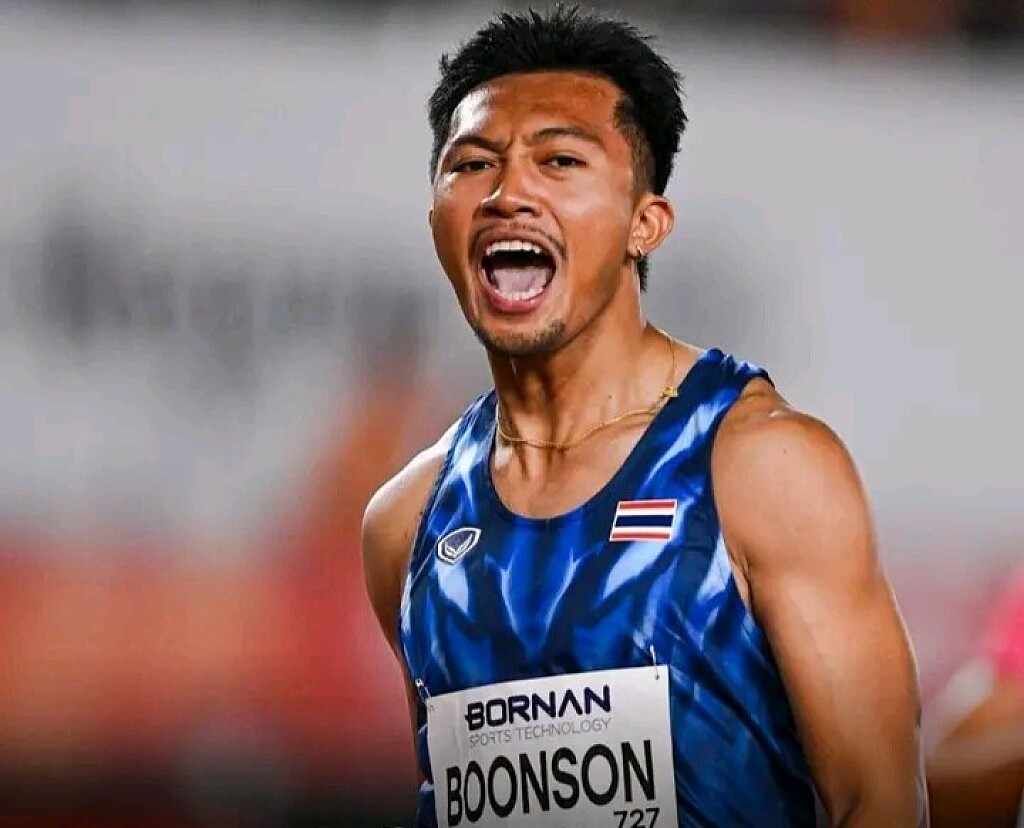
Puripol Boonson Completes Asian Games Sprint Double With Historic 19.88 Asian Record
Thailand’s Puripol Boonson has delivered a spectacular performance at the 2026 Asian Games in Nagoya, completing the men’s 100m and 200m sprint double while etching his name into Asian athletics history.
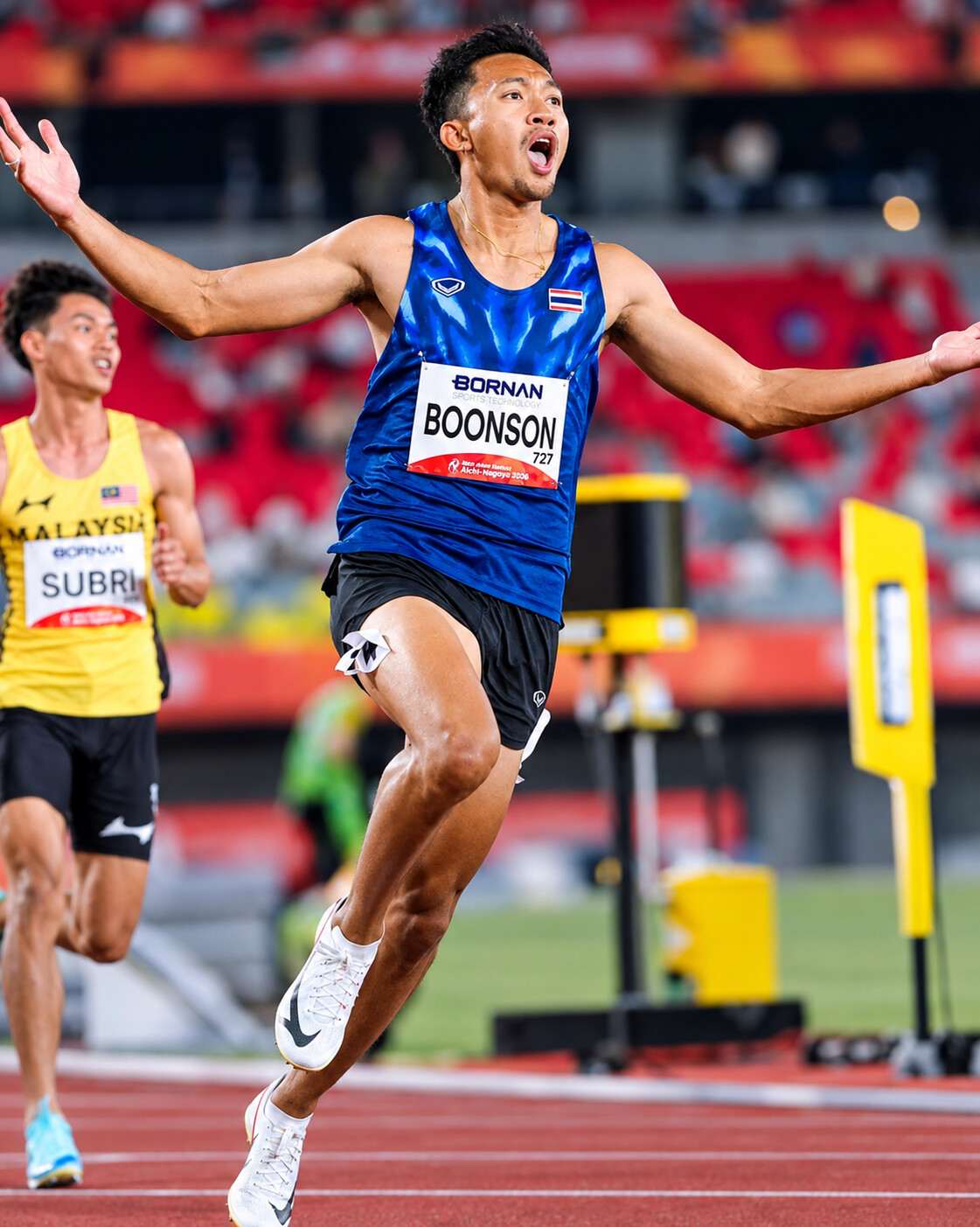
The 20-year-old produced the performance of his young career in the 200m final, powering to 19.88 seconds in drizzling rain to claim gold, set a new Thai national record and match the Asian record.
Boonson’s remarkable run came with a slight headwind of -0.3 m/s, making the performance even more impressive under the wet conditions.
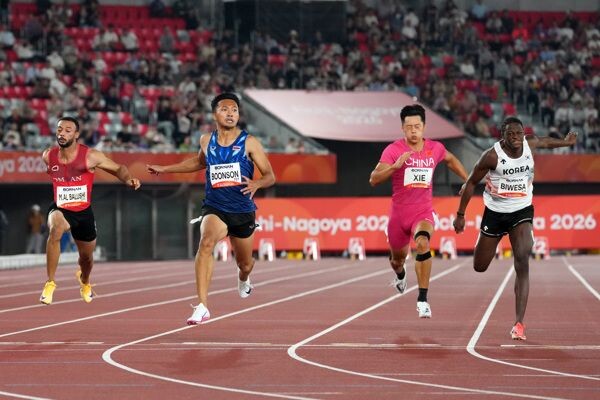
The Thai sprinter had already captured the 100m title earlier in the Games, and he returned to the track with the opportunity to complete the prestigious sprint double. He delivered in emphatic fashion, combining championship composure with world-class speed.
His winning time equalled the Asian record established by China’s Xie Zhenye in 2019, when Xie clocked 19.88 seconds at the London Diamond League. The mark had stood alone for seven years, with no other Asian athlete able to match it.
Until Boonson.
With his 19.88, Boonson also became only the third Asian man in history to break the 20-second barrier in the 200m, joining an exclusive group at the very top of the continent’s sprinting hierarchy.
China’s Youwen Huang produced a strong run for silver in 20.45 seconds, while Japan’s Soshi Mizukubo completed the podium with 20.56 seconds.
Boonson’s achievement carries enormous significance for Thailand as well. His victory makes him the country’s latest sprint sensation and adds another major milestone to a career that has developed rapidly over the past few seasons.
The 200m triumph also completed a remarkable double: 100m gold, 200m gold and a share of the Asian record.
What makes the performance particularly striking is that Boonson achieved the 19.88 in a championship final, where the primary objective is winning rather than chasing the clock. Yet he managed to combine both objectives, securing the gold medal while producing the fastest performance of his career.
At just 20 years old, Boonson now owns a 9.90-second personal best in the 100m and a 19.88-second personal best in the 200m. His latest performance suggests that Asia’s sprinting landscape is entering an exciting new chapter.
For seven years, Xie Zhenye’s 19.88 stood untouched at the top of the Asian rankings.
Now, Boonson stands beside him.
And with the Thai star still so young, the question is no longer whether he can match the Asian record — he already has.
The next challenge is to go one step further and make the record his alone.
Two finals. Two gold medals. A national record. An Asian record. Puripol Boonson has turned the Asian Games into a defining chapter of his young career.
by Erick Cheruiyot for My Best Runs.
Login to leave a comment
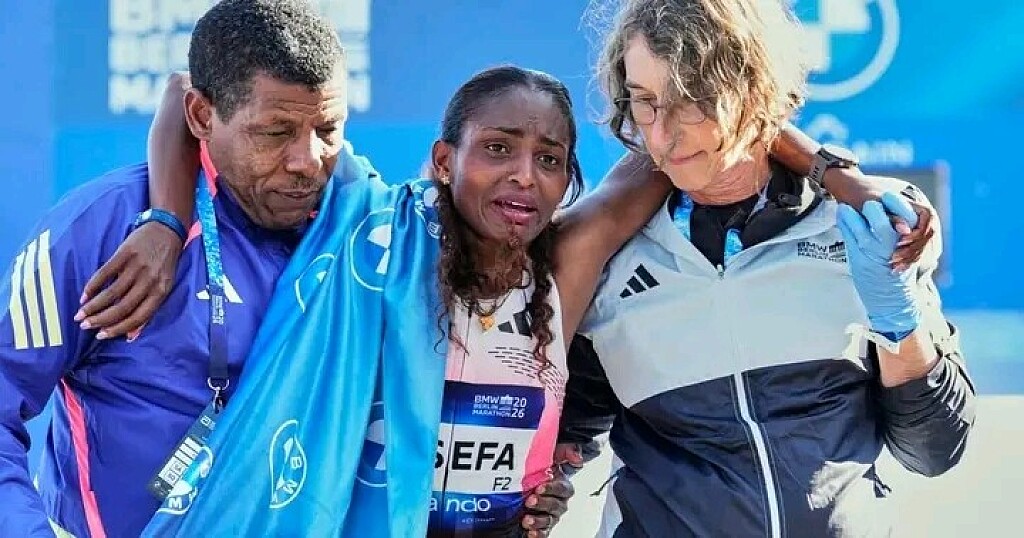
Tigist Assefa Undergoes Emergency Achilles Surgery After Record-Breaking Berlin Marathon Performance
Ethiopian marathon star Tigist Assefa is undergoing emergency surgery in Munich, Germany, after suffering a ruptured right Achilles tendon during the closing stages of the BMW Berlin Marathon, bringing an abrupt end to what had been a remarkable world-record attempt.

The 29-year-old delivered a spectacular performance on Sunday, September 27, 2026, to win the women's race in a stunning 2:11:04, setting a new course record and recording the third-fastest women's marathon time in history.
Assefa had been on course to challenge the women's marathon world record for much of the race before disaster struck in the final two kilometres. Despite the severe injury, the Ethiopian star summoned the strength to push through the pain and cross the finish line in first place, capping a performance that will be remembered for both its extraordinary speed and the circumstances surrounding its conclusion.
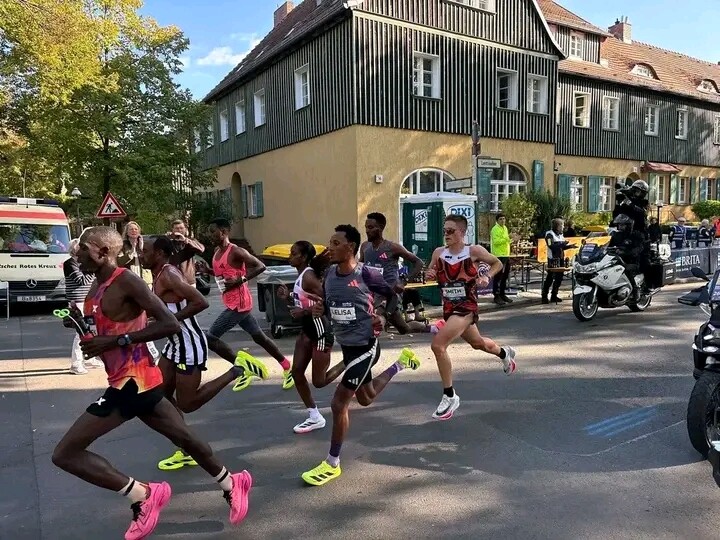
Her manager, Gianni Demadonna, confirmed that Assefa had suffered a rupture of her right Achilles tendon, an injury that requires immediate medical attention and a lengthy recovery period.
The emergency operation is being performed by Dr. Johannes Gabel, Chief Physician of Foot and Ankle Surgery at BG Unfallklinik Murnau in Germany, with support from Adidas.
Assefa is expected to spend at least six months away from competitive running as she undergoes surgery and rehabilitation. The recovery process will be crucial in determining when she can return to training and eventually resume competition.
The injury is a significant setback for the Ethiopian athlete, who has established herself among the leading figures in women's marathon running through a series of outstanding performances on the international stage. Her latest triumph in Berlin further underlined her exceptional ability, even as the circumstances surrounding her finish cast a shadow over the achievement.
Assefa's 2:11:04 performance adds another historic chapter to her career, but attention now shifts from the finish line to her recovery. The coming months will be focused on healing, rehabilitation and gradually rebuilding the strength needed to return to elite competition.
From a remarkable record-breaking victory to an unexpected medical emergency, Assefa's Berlin Marathon has become a story of extraordinary determination and an uncertain road ahead. Her supporters will now be hoping for a successful operation and a full recovery as she begins the long journey back to competitive running.
by Erick Cheruiyot for My Best Runs.
Login to leave a comment
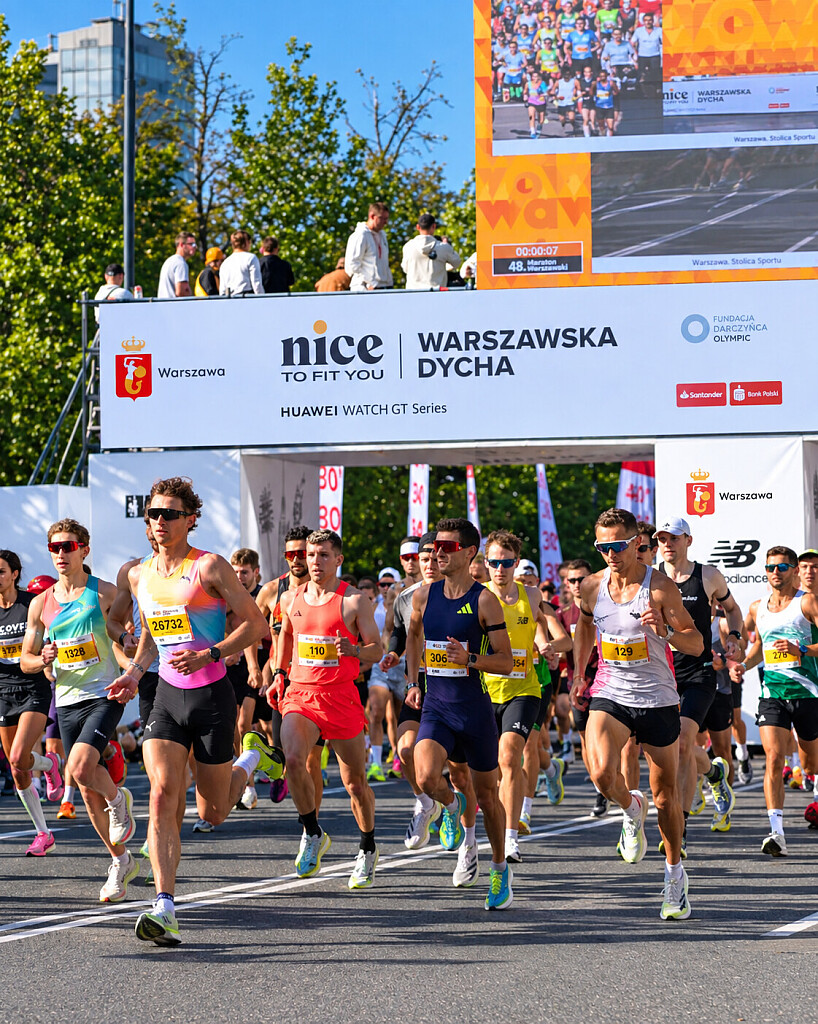
Lili Anna Vindics-Tóth Shatters Hungarian Marathon Record With Historic Warsaw Run
Hungary’s Lili Anna Vindics-Tóth delivered a remarkable performance at the 48th Warsaw Marathon on Sunday, September 27, 2026, smashing the Hungarian marathon record and setting a new women’s course record with a stunning time of 2:24:48.
Vindics-Tóth produced a breakthrough performance on the streets of the Polish capital, improving her previous personal best of 2:27:21 by more than two minutes. Her 2:24:48 also eclipsed the previous Warsaw Marathon women’s course record of 2:28:35 by almost four minutes.
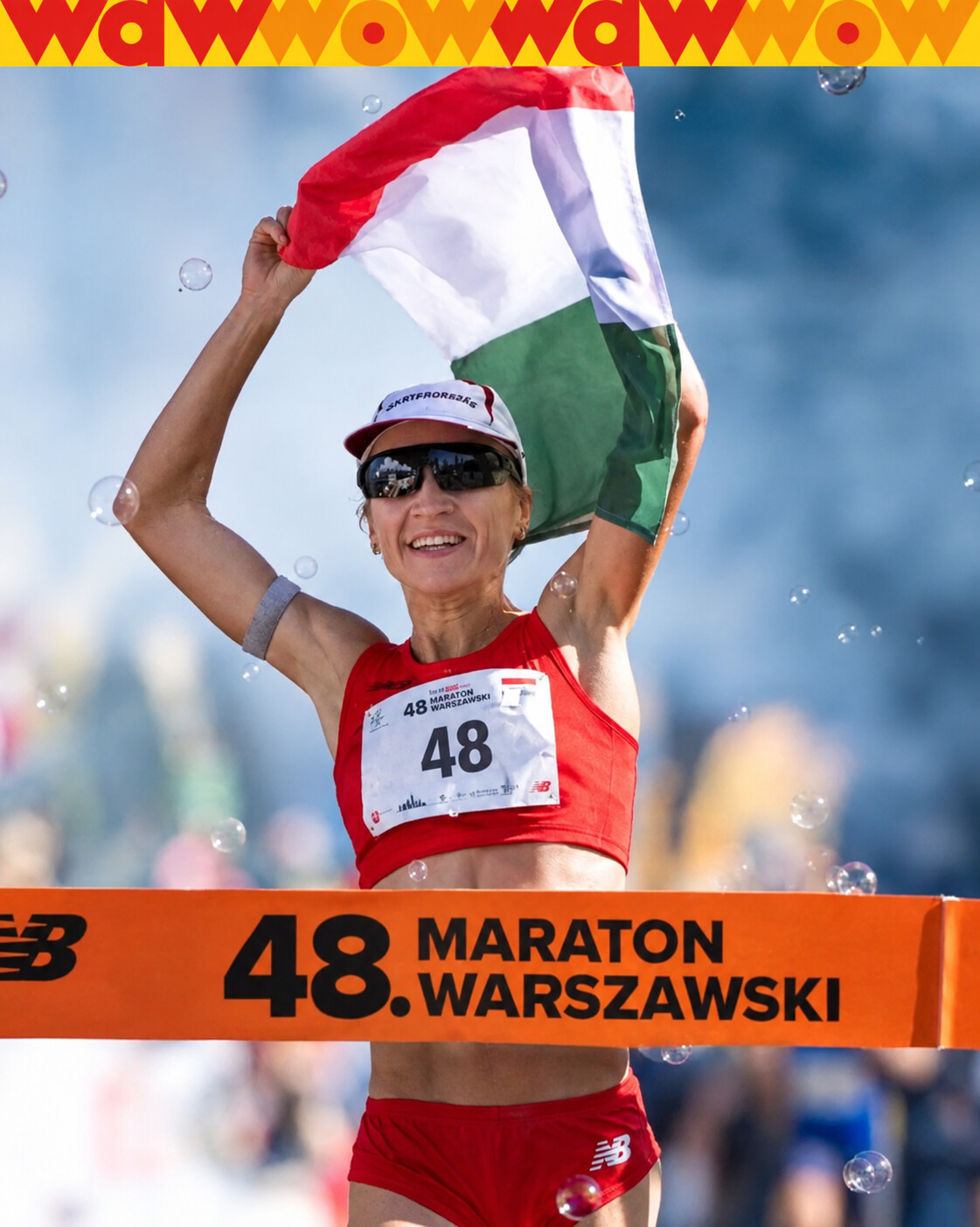
The Hungarian’s performance was particularly significant, as she became the fastest woman ever recorded over the marathon distance in a race held in Poland, according to the race organizers.
Her remarkable run also represented a major improvement on her previous 2026 best of 2:27:28, recorded in Copenhagen in May. The new Hungarian record marks a defining moment in her career and places her among Europe’s leading marathon runners.
Vindics-Tóth Leads Historic Women’s Podium
Vindics-Tóth secured the women’s title in 2:24:48, narrowly holding off Ethiopia’s Gelane Senbete, who finished second in 2:24:57.
Kenya’s Vivian Jerotich Kosgei claimed third place in 2:28:34, while Ethiopia’s Addis Alem Belay completed the top four in 2:30:31.
The women’s race produced a competitive contest at the front, with Vindics-Tóth’s record-breaking performance highlighting the growing depth of international distance running in Europe.
Stephen Kibor Leads Men’s Race
Kenya’s Stephen Kibor claimed overall victory in the men’s marathon, crossing the finish line in 2:09:19 to secure the title in Warsaw.
Kibor led an international podium, with Uganda’s Victor Kwemboi finishing second in 2:12:20, followed by compatriot Ezekiel Mutai, who took third place in 2:12:36.
Sweden’s Emil Millán de la Oliva completed the top four in 2:13:13, rounding off a competitive men’s race featuring athletes from several countries.
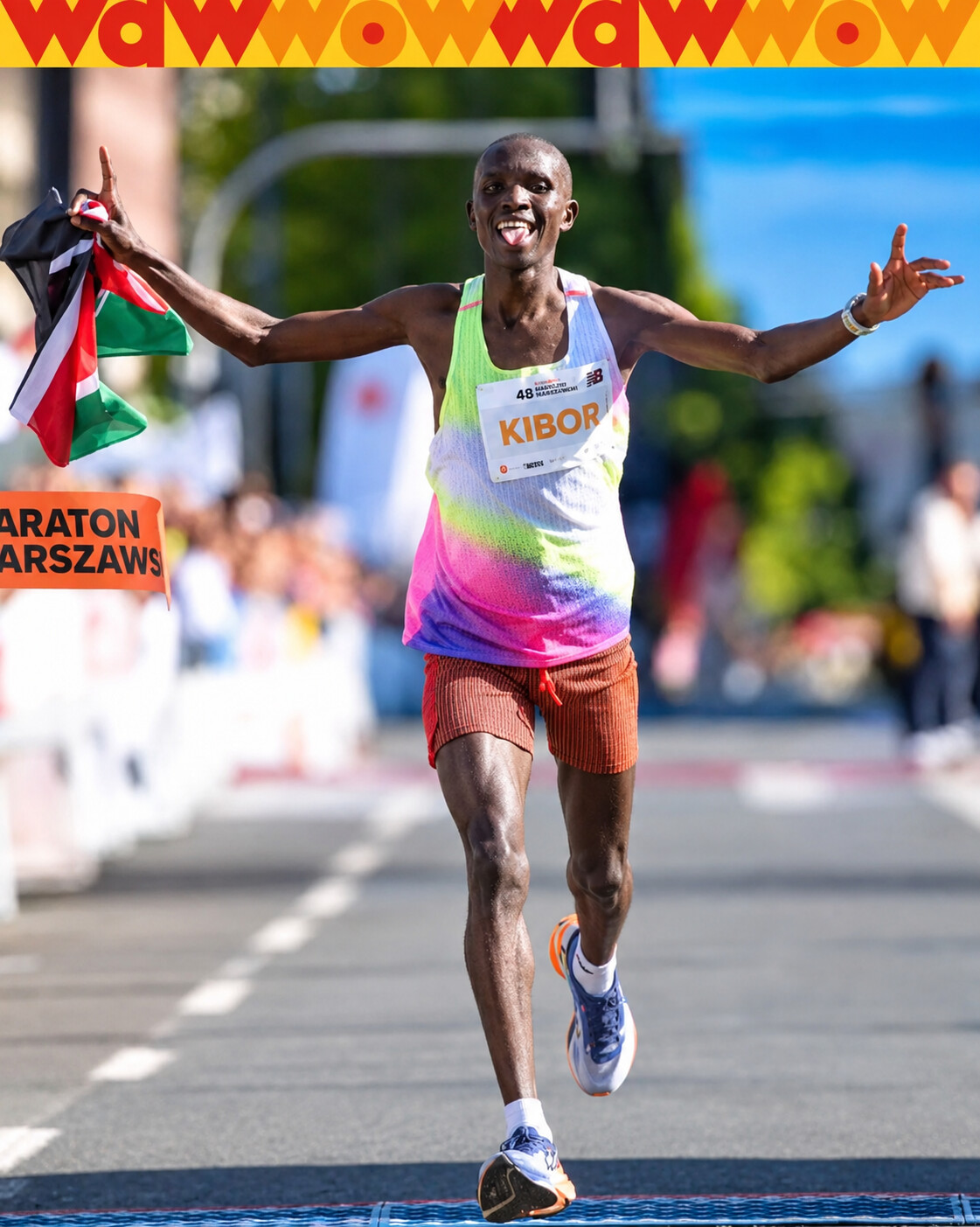
Kibor’s victory added another Kenyan success to the country’s long history of producing elite marathon runners who have excelled on major European road-racing courses.
International Field Takes on Warsaw’s Streets
The 48th Warsaw Marathon began at 9:00 a.m. around Świętokrzyska Street, near the Palace of Culture and Science, with the certified 42.195-kilometre course taking runners through the Polish capital.
This year’s edition attracted an international elite field alongside thousands of mass-participation runners, with spectators lining the streets to support the athletes throughout the race.
The organizers had targeted a significant improvement to the women’s course record, with pacemakers assigned to support a pace corresponding to approximately 2:24–2:26.
Vindics-Tóth ultimately delivered a performance that surpassed expectations, turning the Warsaw Marathon into the biggest race of her career so far and etching her name into the event’s history.
The Warsaw Marathon has remained a major fixture on the European road-running calendar since its first edition in 1979, continuing to attract elite athletes and recreational runners from around the world.
With a Hungarian national record, a new women’s course record and an impressive international podium, the 2026 edition produced a memorable day of marathon racing in the Polish capital.
Lili Anna Vindics-Tóth — 2:24:48. A Hungarian record, a Warsaw course record and a breakthrough performance that will be remembered for years to come.
by Erick Cheruiyot for My Best Runs.
Login to leave a comment

PZU Warsaw Marathon
The course of the PZU Warsaw Marathon, offers great support of the residents of the capital and tourists along it and bands giving positive rhythm in densely spaced cheering points for the over 6,500 participants. You are cordially invited to Warsaw – the capital city of Poland – a city worth seeing. Be our guest here and let yourself get...
more...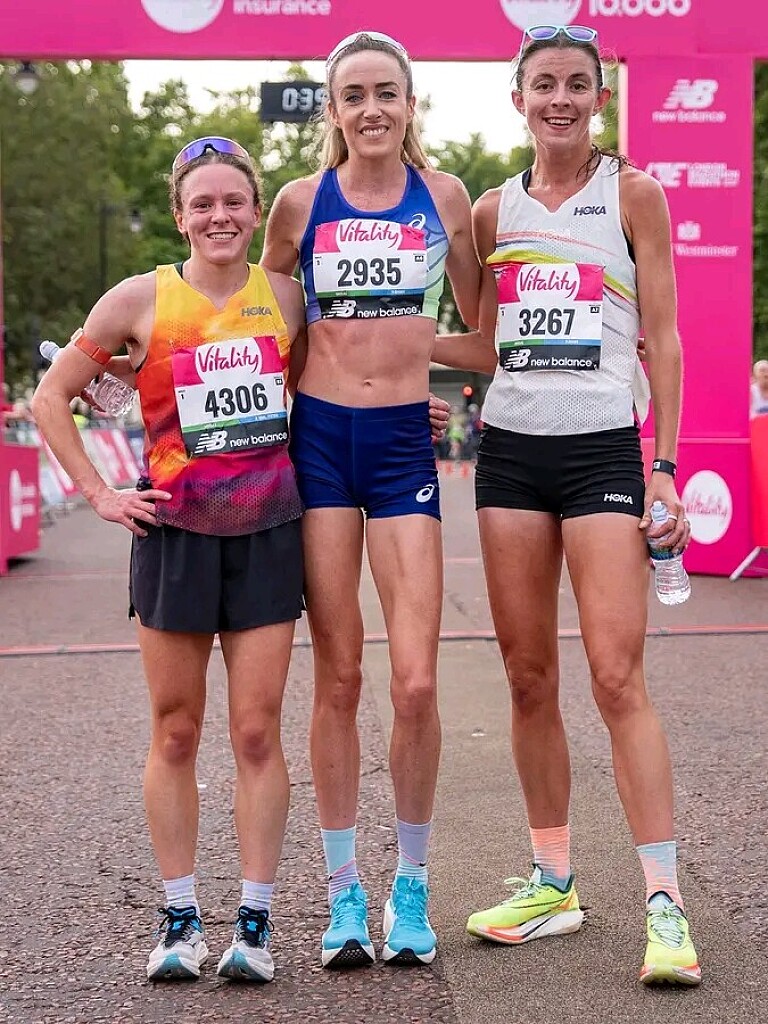
Eilish McColgan Makes History as Kadar Omar Abdullahi Completes London 10,000 Triumph
Kadar Omar Abdullahi and Eilish McColgan took centre stage at the 2026 Vitality London 10,000 on Sunday, with both athletes producing commanding performances on the streets of the British capital.

Abdullahi capped a memorable September by securing the men’s title in 29:20, pulling clear of British distance-running star Phil Sesemann, who crossed the line second in 29:39. Freddy Richardson completed the podium in 29:53.
The victory continued Abdullahi’s impressive run of form after his breakthrough triumph at the Big Half earlier this month. Having already demonstrated his strength over 13.1 miles, the British athlete returned to the roads of London and produced another controlled performance over 10 kilometres, ultimately creating a 19-second winning margin.
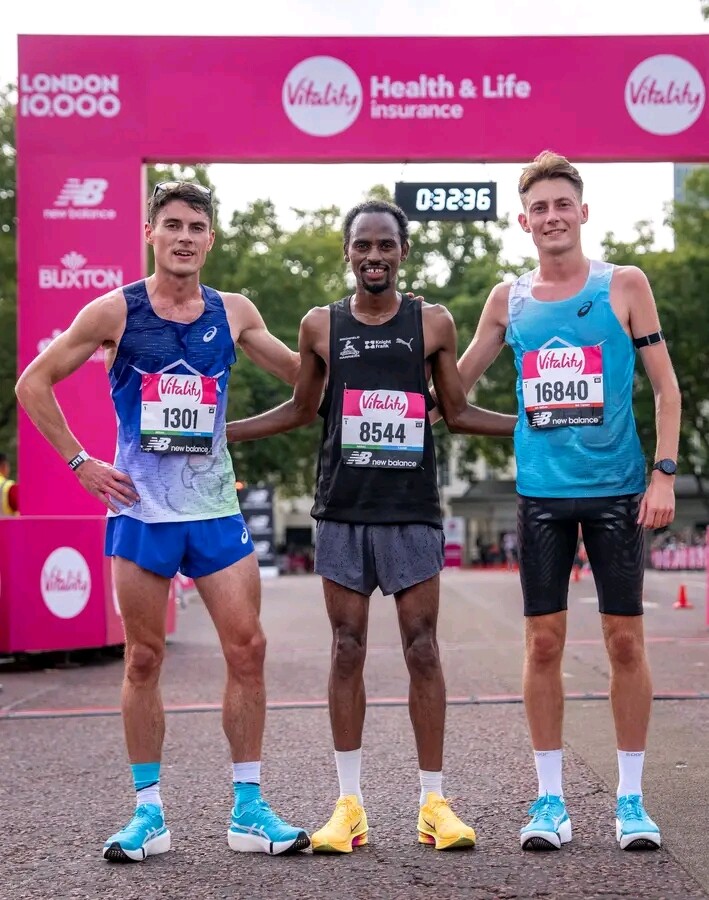
Sesemann remained his closest challenger, but Abdullahi was able to establish the decisive gap and bring the race under control in the closing stages. Richardson followed in third, giving the home crowd a strong British presence across the men’s podium.
For Abdullahi, the victory adds another significant chapter to what has been an outstanding month on the London road-racing scene. His back-to-back victories at the Big Half and Vitality London 10,000 underline both his speed and versatility across the longer road distances.
In the women’s race, Eilish McColgan delivered the headline performance of the day, winning in 31:50 to claim an unprecedented fourth Vitality London 10,000 title.
The Scottish distance star finished comfortably ahead of Jess Warner-Judd, who took second in 33:13, while Kate Estlea-Morris secured third in 33:58.
McColgan’s latest victory moves her clear as the most successful woman in the history of the event. She had previously won the race in 2022, 2024 and 2025, and her latest triumph adds another piece of history to an already remarkable career on the track and road.
The achievement is particularly notable given the twists and turns of McColgan’s 2026 season. After suffering a broken toe during the London Marathon in April and subsequently missing the Commonwealth Games, she returned to racing with a victory at the Big Half before another setback forced her to withdraw from the Great North Run.
Just two weeks later, she was back at the sharp end of competition, producing a composed 31:50 performance to reclaim the London 10,000 crown.
The Vitality London 10,000, one of the capital’s most prominent road races, follows a fast and largely flat route beginning on The Mall and finishing outside Buckingham Palace, providing a spectacular setting for both elite and mass-participation runners.
With Abdullahi extending his remarkable September run and McColgan rewriting the event’s record books, the 2026 edition provided a memorable double triumph for two athletes who arrived in London carrying momentum—and left with another major victory to their names.
by Erick Cheruiyot for My Best Runs.
Login to leave a comment

Vitality London 10,000
The Vitality London 10,000 takes you past many landmark sites, including the London Eye, Buckingham Palace and the Bank of England – so you even get to do a bit of sightseeing along the way! You will run alongside elite runners and have coverage from the BBC, making this 10km one of the highest in profile of its kind....
more...