

Running News Daily
Running News Daily is edited by Bob Anderson and team. Send your news items to bob@mybestruns.com Advertising opportunities available.
Index to Daily Posts · Sign Up For Updates · Run The World Feed
Articles tagged #37:00
Today's Running News
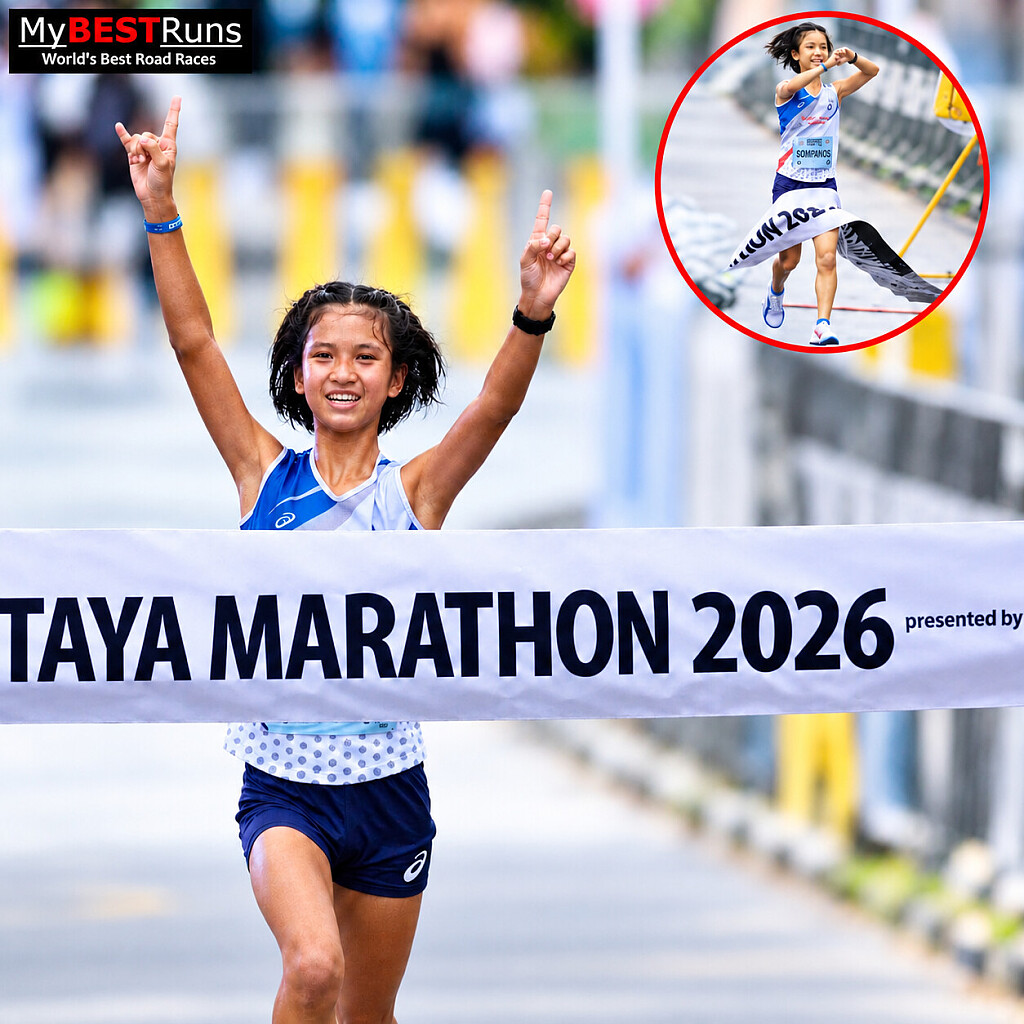


14-Year-Old Nadpaphand Sikhamkun Stuns International Field To Win Pattaya 10K
Thailand’s Nadpaphand Sikhamkun has produced one of the standout performances of the 2026 Amazing Thailand Pattaya Marathon, claiming overall victory in the women’s 10-kilometre race at just 14 years of age.
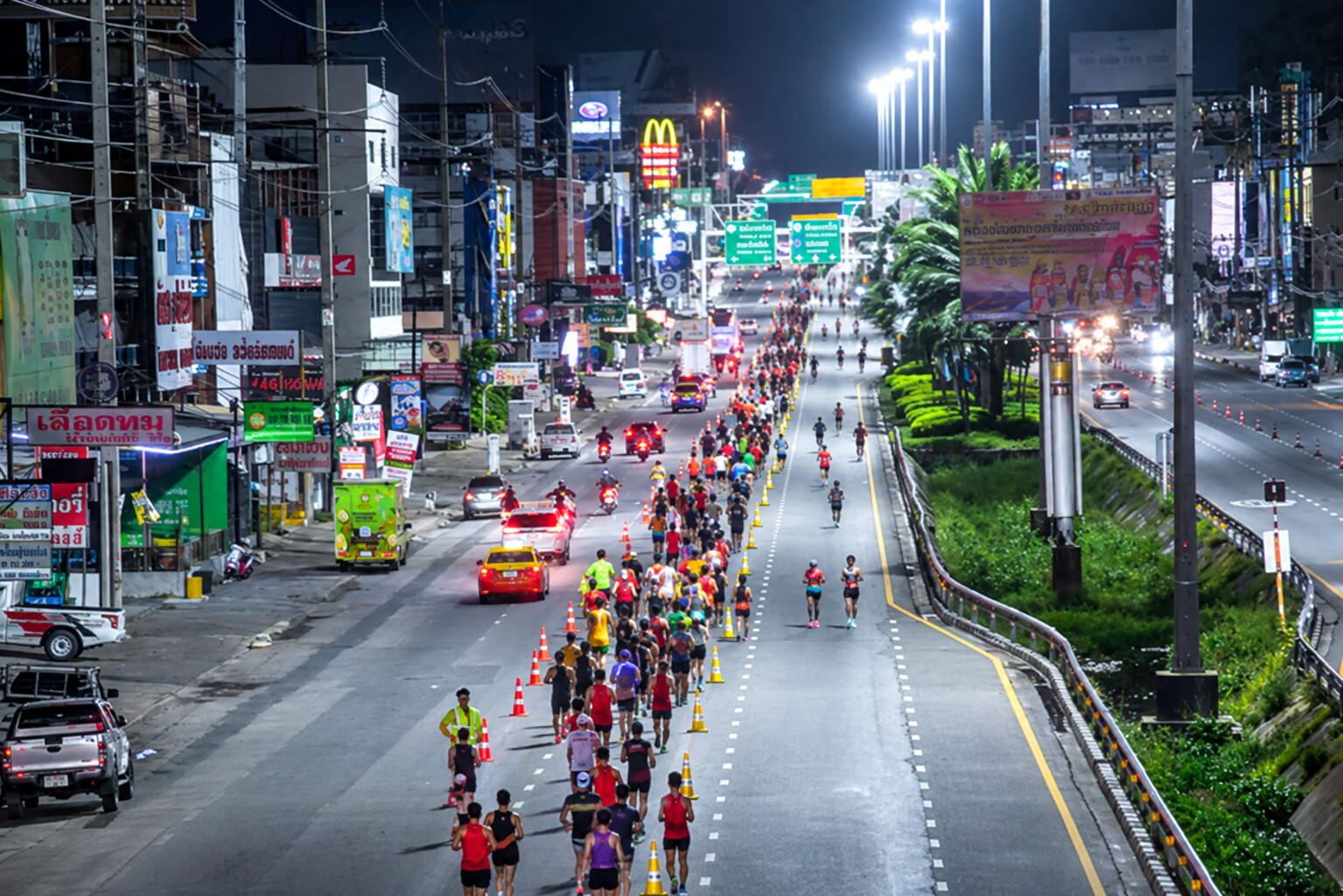
Sikhamkun delivered a composed and impressive performance to stop the clock at 37:00, emerging ahead of a competitive international field that included experienced Ethiopian runners.
The young Thai athlete maintained her composure throughout the race and crossed the finish line first, securing a memorable victory on home soil and announcing herself as a promising talent on the road-running scene.
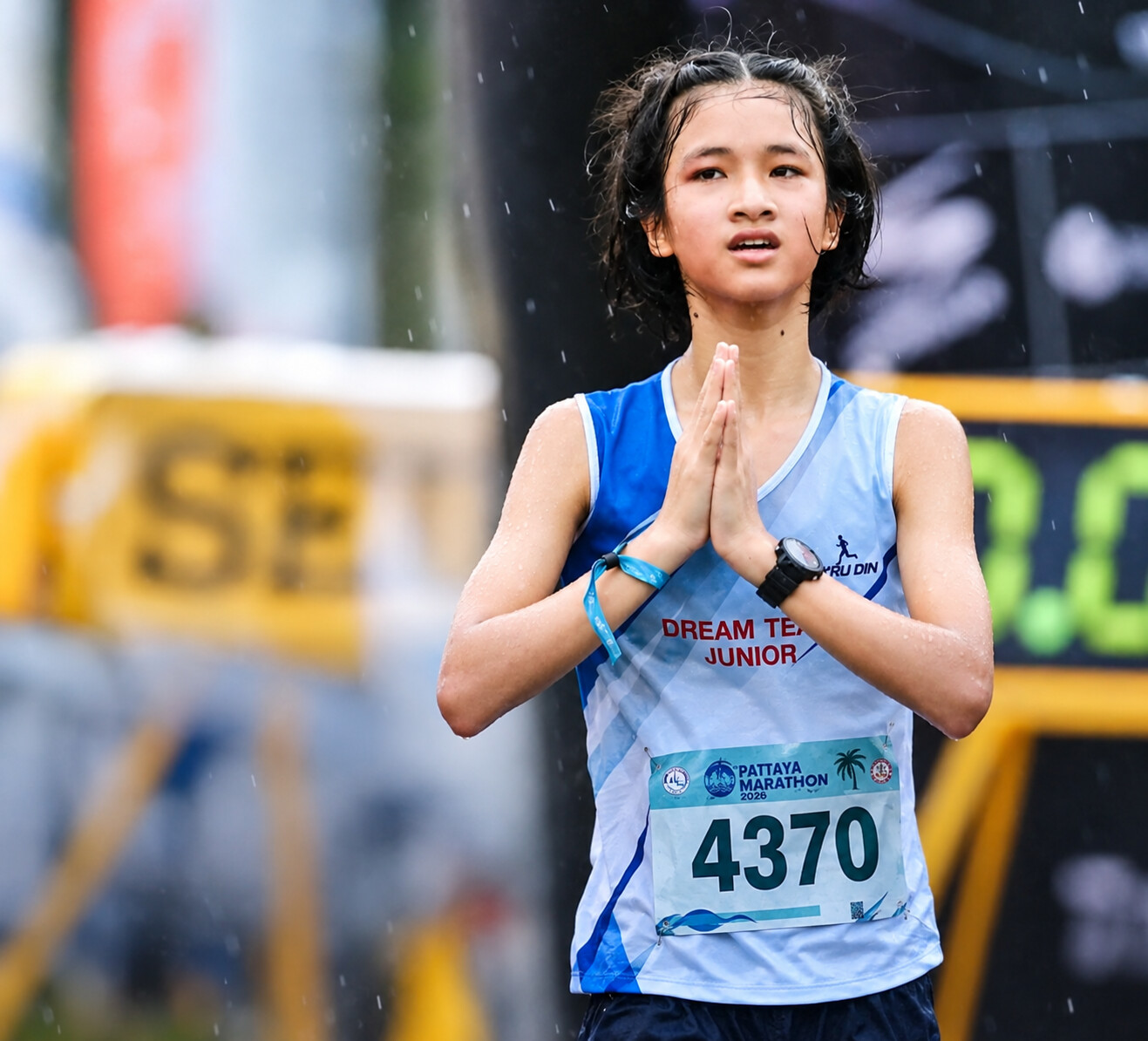
Ethiopia’s Birehan Marta Tinsae followed in second place with 37:22, finishing just 22 seconds behind the teenage winner. Thailand’s Ornanong Wongsorn completed the podium in 39:25, giving the host nation two places among the top three.
Another Thai runner, Arunya Hinsui, finished fourth in 39:43, while Ethiopia’s Rute Bekele Bedane rounded out the top five in 40:05.
Women’s 10K Results
1. Nadpaphand Sikhamkun (Thailand) —37:00
2. Birehan Marta Tinsae (Ethiopia) — 37:22
3. Ornanong Wongsorn (Thailand) — 39:25
4. Arunya Hinsui (Thailand) — 39:43
5. Rute Bekele Bedane (Ethiopia) — 40:05
For a 14-year-old to finish at the front of an international field featuring established distance runners makes Sikhamkun’s performance particularly noteworthy.
Beyond the result itself, Sikhamkun’s performance stands out because of the maturity required to complete a 10K at the front of an international field. Holding off Tinsae by 22 seconds, while finishing more than two minutes ahead of the third-placed runner, underlined just how effectively the young Thai athlete handled the pressure of competing for the overall victory.
Her breakthrough in Pattaya also adds an intriguing chapter to the growing profile of young distance runners emerging from Thailand. At only 14, Sikhamkun has already shown that she can compete successfully over a longer road distance, and her 37:00 winning performance provides an encouraging foundation as she continues to develop her endurance, experience and racing skills.
With plenty of years ahead of her to develop, gain experience and strengthen her racing abilities, Nadpaphand Sikhamkun has already provided a glimpse of what she may be capable of achieving.
For now, the name to remember is Nadpaphand Sikhamkun — Thailand’s teenage road-running sensation who has made a remarkable statement at Pattaya.
by Erick Cheruiyot for My Best Runs.
Login to leave a comment
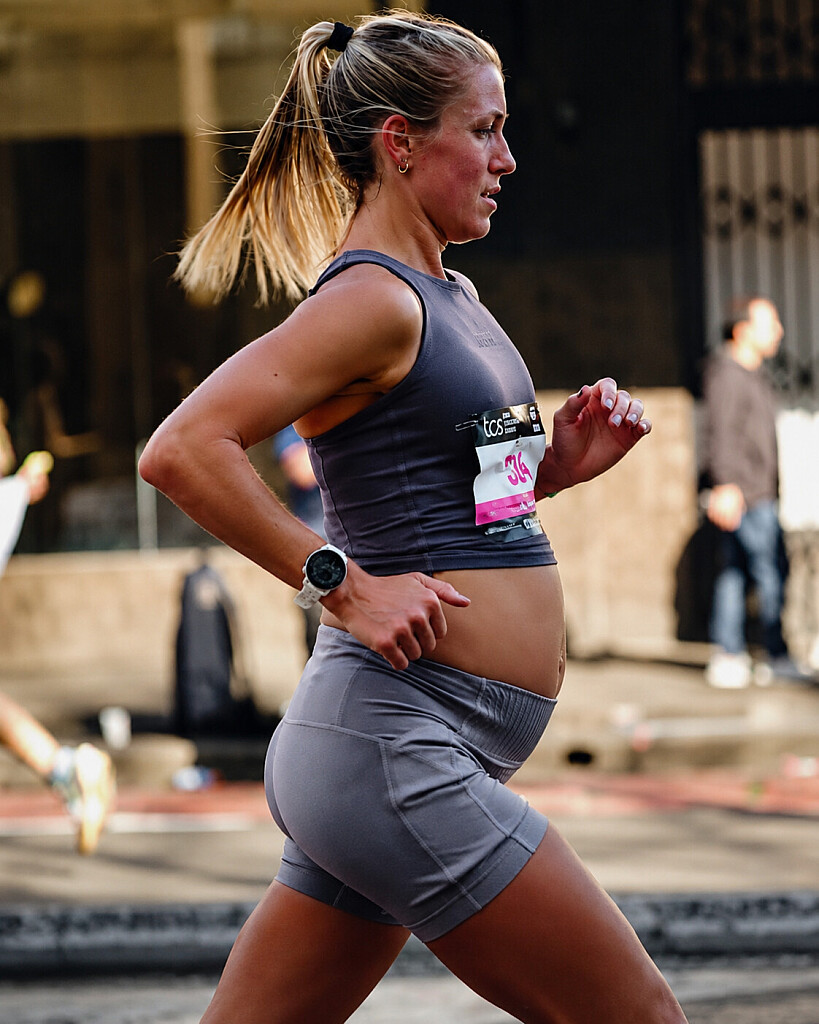
Ali Anderson Defies the Odds to Run Sub-3 Marathon at 32 Weeks Pregnant in Sydney
Ali Anderson produced one of the most remarkable performances of the Sydney Marathon on Sunday, becoming one of the rare women to break three hours for the marathon while 32 weeks into pregnancy.
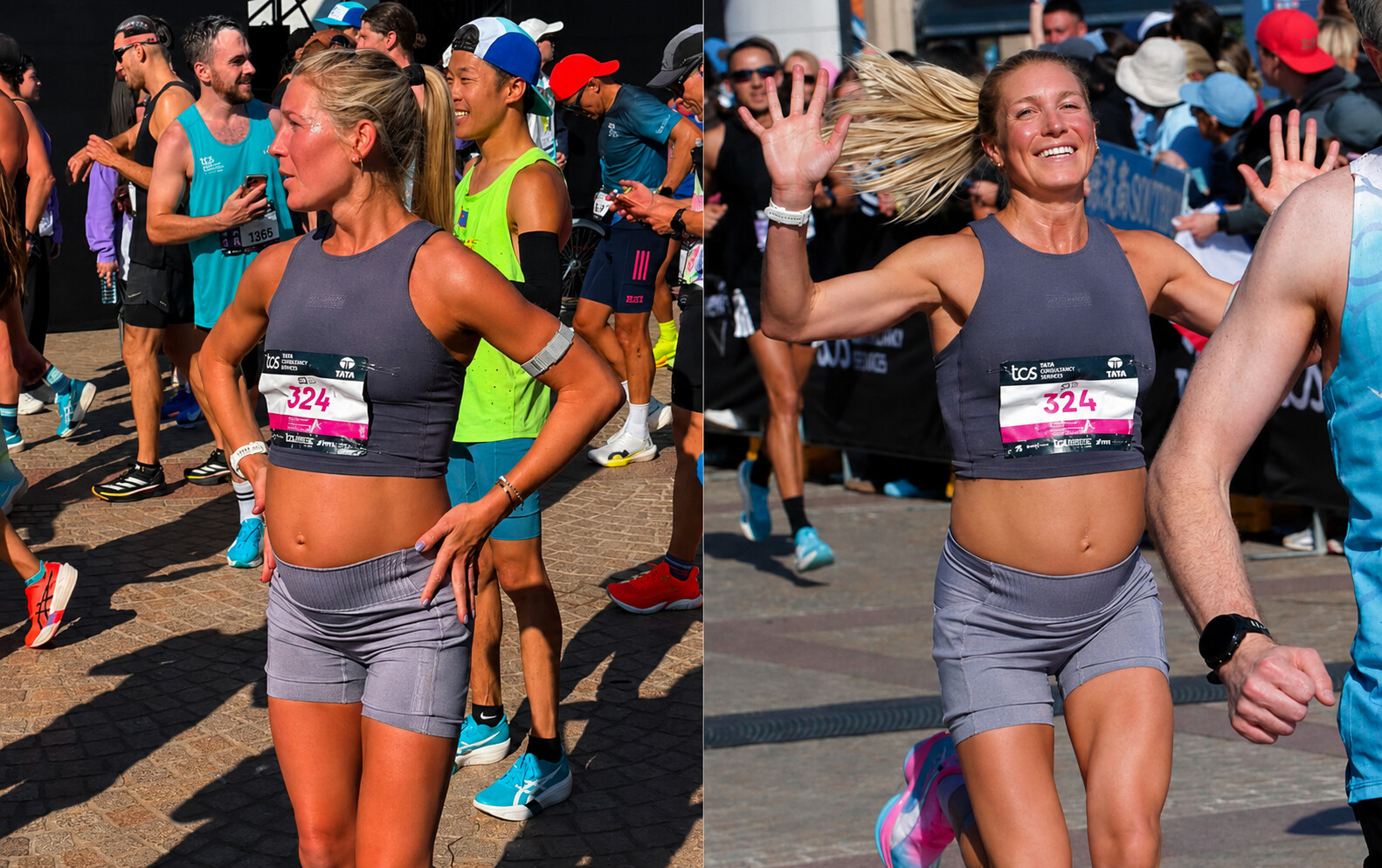
The 29-year-old American from Oklahoma crossed the finish line in 2:59:43, completing the 26.2-mile journey from North Sydney to the Sydney Opera House with just 17 seconds to spare under the three-hour barrier. Her performance came as part of a record field of around 40,000 runners and marked her seventh marathon, as well as her fourth World Marathon Major.
Anderson had entered the Sydney Marathon before discovering she was pregnant. Rather than withdraw, she decided to continue preparing for the race after consulting her doctor, who told her there was no medical reason to stop her normal training, provided she was no longer pursuing a personal-best effort.
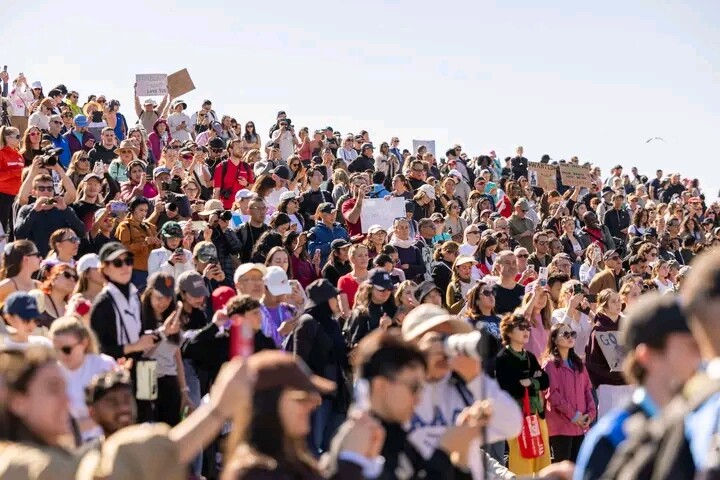
The Sydney performance was particularly striking when compared with her previous marathon earlier in the year. At the Boston Marathon in April, Anderson was just 13 weeks pregnant when she clocked a spectacular 2:41:58, establishing her personal best. Nineteen weeks later in Sydney, the physical demands of late pregnancy were naturally reflected in her pace, but she still managed to produce a sub-three-hour performance.
Her Boston average pace was approximately 6:11 per mile, compared with around 6:52 per mile in Sydney — a difference of roughly 41 seconds per mile. Yet despite the slower pace and the additional demands of carrying a pregnancy into the third trimester, Anderson maintained enough control to finish inside three hours.
Speaking after the race, Anderson acknowledged that the hills felt considerably tougher because of her increased weight, but said she felt good throughout the marathon and was careful not to push herself beyond her limits.
“I'm obviously heavier, so the hills were a little bit more intense. But I felt really good, and I wasn't pushing too hard,” she said.
There was also another challenge that required careful planning: bathroom stops. With pregnancy adding an extra logistical consideration to an already demanding marathon, Anderson had to manage her race differently from a conventional marathon preparation and execution.
Her decision to race came after seeking medical advice. Anderson said her doctor reassured her that she could continue running, while making it clear that the objective should not be chasing another personal best.
Her performance also comes against a growing body of evidence suggesting that exercise during pregnancy can be safe for many women when appropriately managed. Research has generally found reassuring outcomes for continued physical activity during pregnancy, although evidence specifically examining competitive marathon racing in late pregnancy remains much more limited. Individual medical circumstances can vary significantly, making professional medical guidance essential.
Anderson also had the option of postponing her Sydney Marathon entry. The event's rules allowed pregnant runners to defer their places to 2027, 2028 or 2029 with a doctor's letter. She chose not to take that route.
The Sydney Marathon was therefore more than another race on Anderson's résumé. It became a test of how she could adapt her ambitions to an extraordinary stage of her life — maintaining her passion for distance running while putting performance goals into perspective.
Her original plans extended beyond Sydney. She had another marathon scheduled for December and had hoped to pursue the 2:37:00 qualifying standard for the U.S. Olympic Marathon Trials. Her Boston personal best of 2:41:58 currently leaves her 4 minutes and 58 seconds outside that mark.
For now, however, Anderson's achievement in Sydney stands on its own.
A 2:59:43 marathon is impressive under any circumstances. Doing it at 32 weeks pregnant makes Anderson's Sydney Marathon one of the most extraordinary distance-running stories of the year.
by Erick Cheruiyot for My Best Runs.
Login to leave a comment
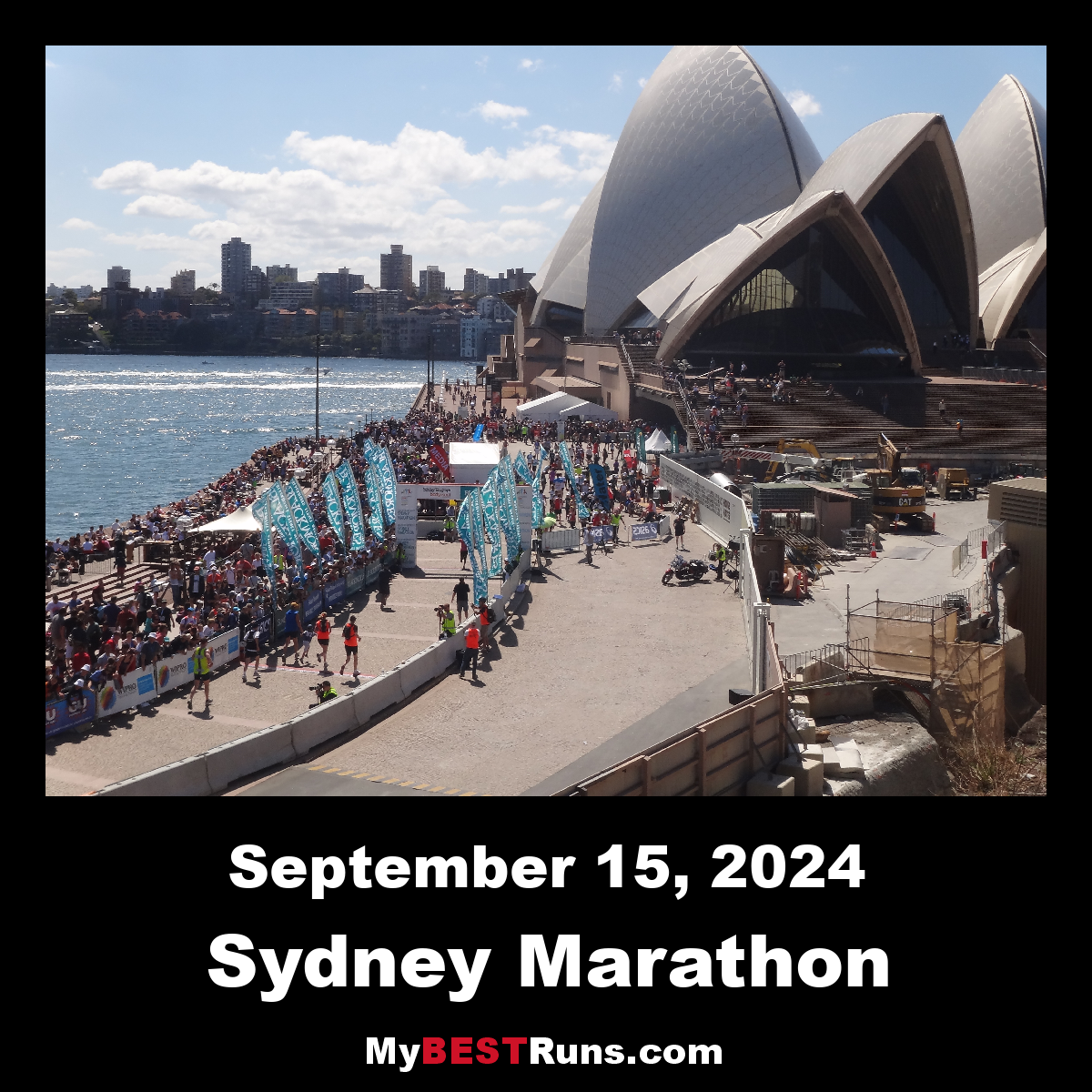
Sydney Marathon
The Sydney Marathon is a marathon held annually in Sydney, Australia. The event was first held in 2001 as a legacy of the 2000 Summer Olympics, which were held in Sydney. In addition to the marathon, a half marathon, 9 kilometres (5.6 mi) "Bridge Run", and a 3.5 kilometres (2.2 mi) "Family Fun Run" are also held under the banner...
more...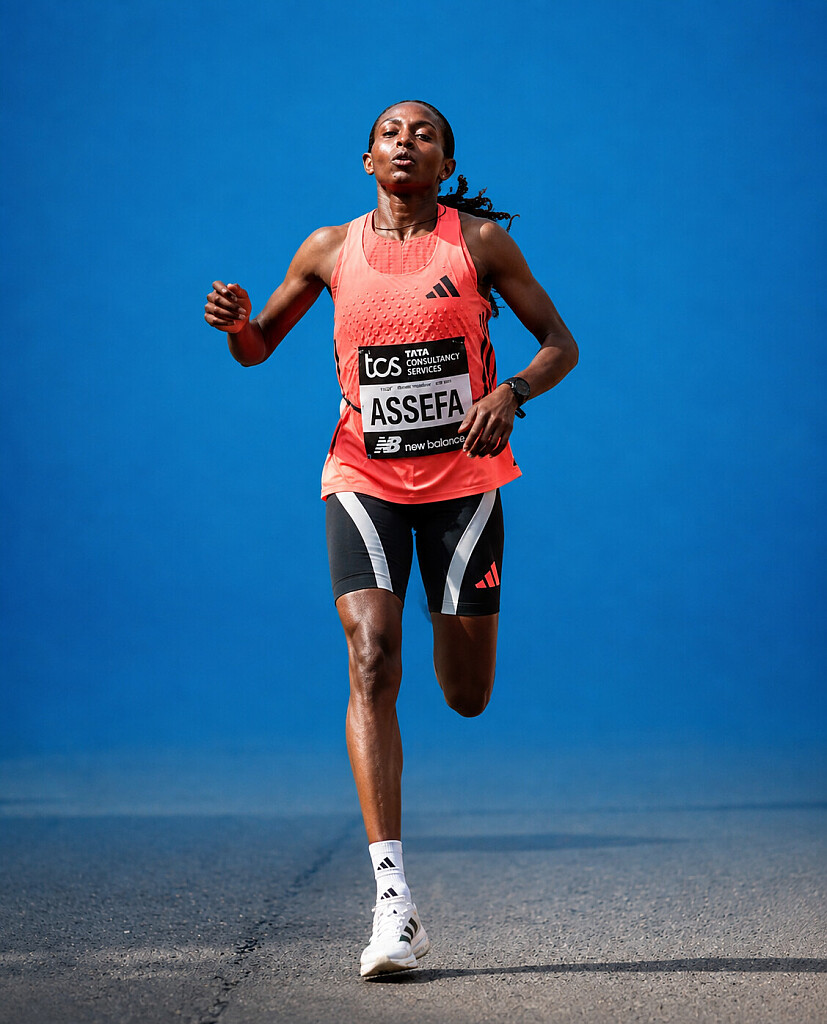
Berlin’s Women’s Marathon Field Brimming With Elite Talent as Star-Studded Line-Up Takes Shape
The women’s field for the 2026 BMW BERLIN-MARATHON is rapidly developing into one of the most intriguing marathon line-ups of the year, bringing together world-class champions, established contenders and an exciting collection of athletes determined to make their mark on one of the sport’s fastest stages.
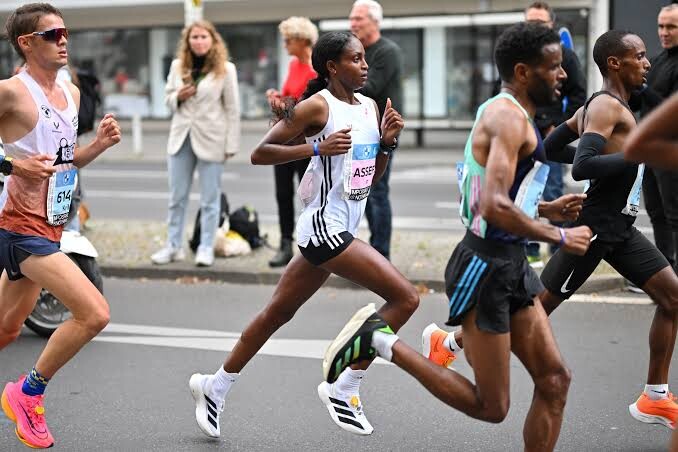
At the forefront is Ethiopia’s Tigst Assefa, whose extraordinary marathon career has already placed her among the all-time greats. Assefa is the current women-only marathon world-record holder, having improved her own mark to 2:15:41 at the 2026 TCS London Marathon, where she successfully defended her title.
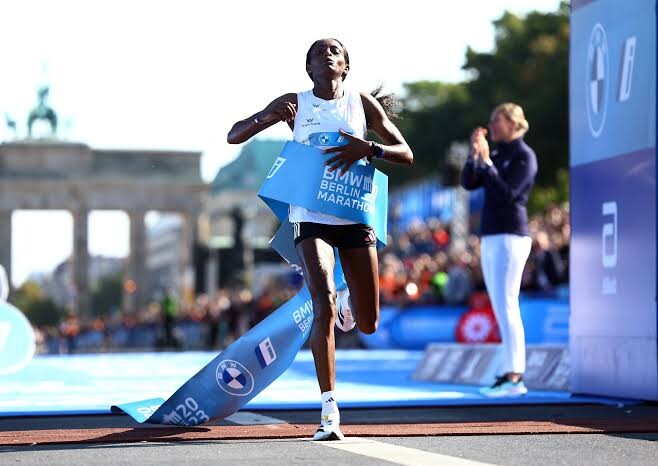
Her place in marathon history was secured even earlier in Berlin. At the 2023 BMW BERLIN-MARATHON, Assefa stormed to 2:11:53, smashing the then women’s world record by more than two minutes. The performance was subsequently ratified by World Athletics and remains among the fastest women’s marathon ever recorded in a mixed-gender race.
Kenya’s Rosemary Wanjiru, with a 2:16:14 personal best, provides another formidable presence at the sharp end of the race, while Ethiopia’s Bedatu Hirpa adds yet another major threat to an already exceptional field.
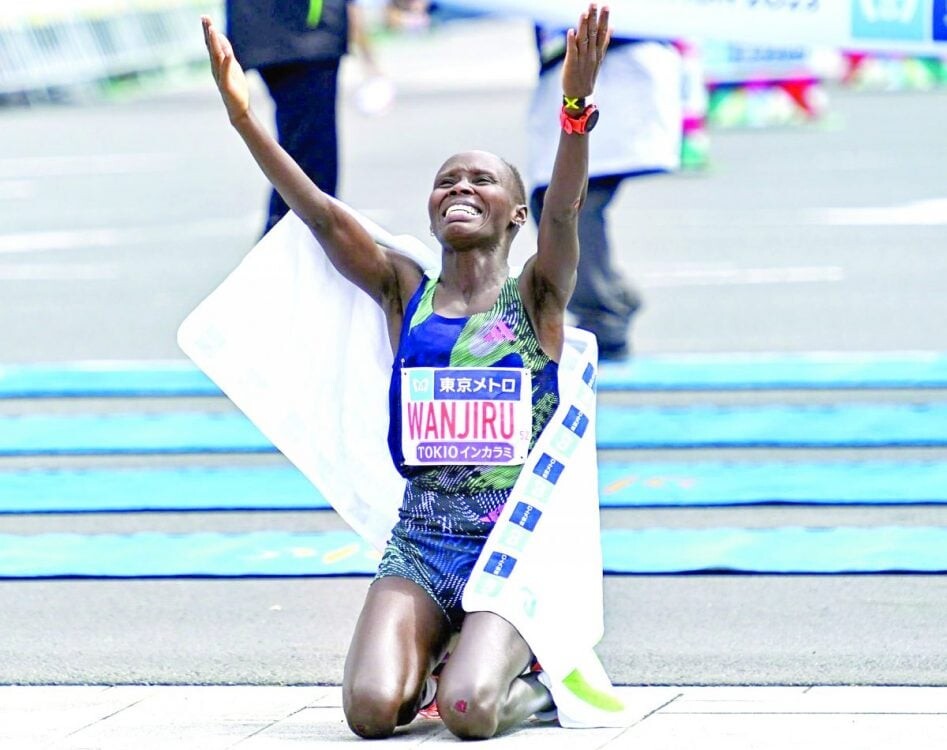
The 27-year-old Hirpa has built an impressive marathon résumé in a remarkably short period. She owns a 2:18:27 personal best, achieved when she won the Dubai Marathon, before continuing her winning momentum with victory at the Paris Marathon just months later. She also underlined her consistency this year with a second-place finish at the Osaka Marathon in 2:19:54. With her combination of speed, confidence and major-marathon experience, Hirpa could be one of the athletes capable of challenging the leading names in Berlin.
The Ethiopian challenge does not end there. Dera Dida (2:18:32), Zeineba Yimer (2:18:47), Bosena Mulatie (2:19:00), Misgane Alemayehu (2:19:08), Bekelech Gudeta (2:19:39), Gadise Mulu (2:20:59), Eebbisee Addunya (2:21:13) and Aminet Ahmed (2:21:24) give Ethiopia extraordinary depth, with every one of them boasting a personal best inside 2:22.
Kenya will also have strong representation through Evaline Chirchir (2:20:33) and Pascaline Jelagat (2:22:44), adding further firepower to a nation renowned for producing world-class marathon talent. China’s Deshun Zhang (2:20:53) also brings a sub-2:21 credential to the starting line.
Japan arrives with a deep group of proven marathoners. Rika Kaseda (2:21:55), Mao Uesugi (2:22:11), Natsuki Omori (2:23:45) and Rino Goshima (2:24:44) all possess impressive personal bests and could play an important role as the race develops. Morocco’s Fatima Gardadi (2:24:06) adds another strong international presence, while France’s Manon Trapp (2:23:38), the United States’ Jacqueline Gaughan (2:24:40) and Kodi Kleven (2:24:48), and Great Britain’s Lucy Reid (2:26:37) further strengthen the international depth.
Germany will have plenty to cheer for on home soil, with a sizeable contingent led by Kristina Hendel (2:27:29), who will be looking to rediscover the form that made her one of the country’s leading marathoners. After injury setbacks interrupted her progress, Hendel returns with the ambition of rebuilding her momentum on one of the biggest stages in the sport.
Anna Langerwisch is another German athlete attracting considerable interest. The 24-year-old has emerged rapidly among the country’s promising marathoners, winning the Hanover Half Marathon in 70:53 before improving her marathon personal best to 2:32:13 in Prague, remarkably in only her second marathon. Her recent 32:17 over 10 kilometres at the adidas Runners City Night in early August has added further intrigue around what she might produce over the full marathon distance.
Germany’s depth extends further, with Thea Heim (2:33:25), Cara Zollenkopf (2:36:05), Esther Pfeiffer (2:37:00), Katja Fischer (2:40:13), Sophia Wunsch (2:40:49) and Jule Vetter (2:42:18) also listed for the race. Their presence gives the home nation a broad representation across the field and adds another layer to an already fascinating international contest.
With Assefa’s extraordinary pedigree, Wanjiru’s proven class, Hirpa’s growing reputation and a supporting cast filled with athletes boasting sub-2:25 credentials, Berlin is shaping up for a women’s race packed with possibilities.
For Assefa, the return to Berlin carries an added historical dimension. It was on these very streets in 2023 that she produced the 2:11:53 performance that changed the landscape of women’s marathon running. Now, after lowering the women-only world record to 2:15:41 in London, she returns with another opportunity to write a new chapter in her remarkable career.
For the established stars, Berlin will be a chance to reaffirm their place among the marathon elite; for the emerging contenders, it could be the moment they announce themselves on one of the sport’s grandest stages.
The BMW BERLIN-MARATHON is renowned for fast racing and ambitious performances, and with such remarkable depth already assembled, the 2026 edition promises to deliver a captivating battle from the opening kilometres to the iconic finish on the Straße des 17. Juni.
by Erick Cheruiyot for My Best Runs.
Login to leave a comment

BMW Berlin Marathon
The story of the BERLIN-MARATHON is a story of the development of road running. When the first BERLIN-MARATHON was started on 13th October 1974 on a minor road next to the stadium of the organisers‘ club SC Charlottenburg Berlin 286 athletes had entered. The first winners were runners from Berlin: Günter Hallas (2:44:53), who still runs the BERLIN-MARATHON today, and...
more...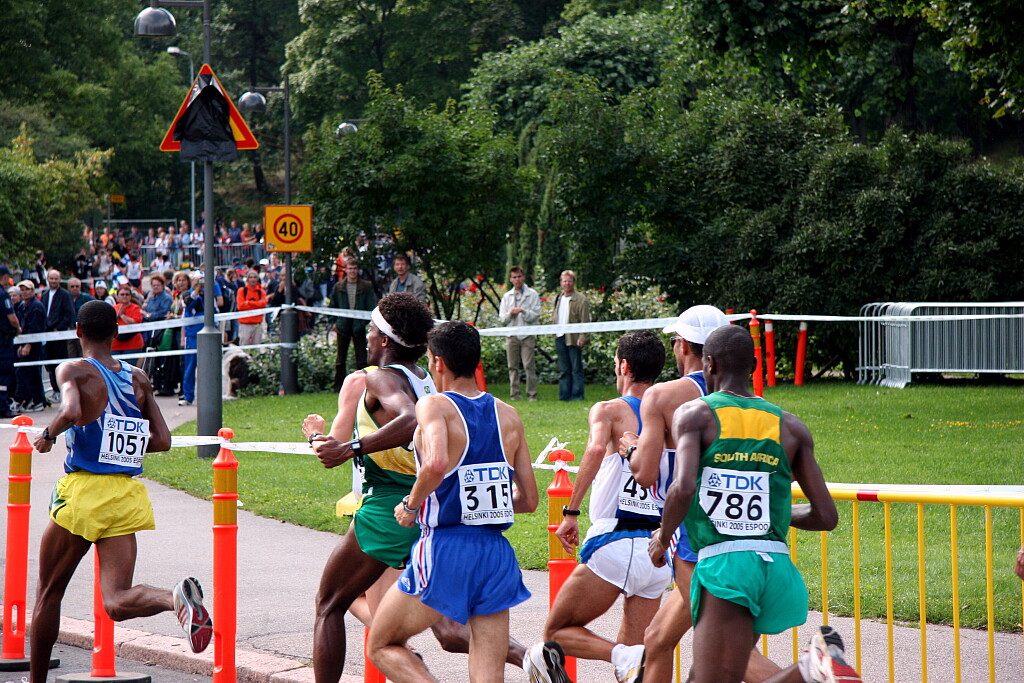
From Helsinki to Beijing: The Incredible Transformation of Marathon Qualification Standards
The road to the World Athletics Championships marathon has never been more unforgiving. What was once an attainable global benchmark for many international runners has now evolved into an exclusive club reserved for only the fastest athletes on the planet. Over the last two decades, the qualification standards for the championships marathon have dropped dramatically, reflecting the explosive evolution of elite distance running across the world.
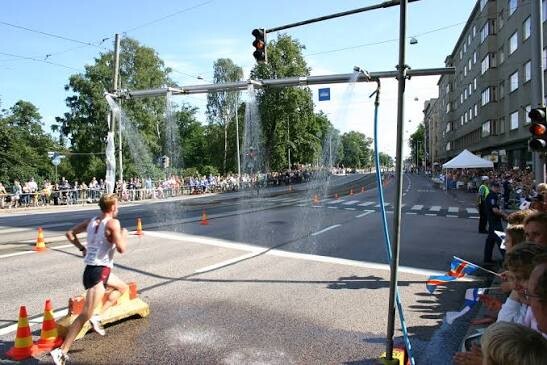
Back in Helsinki 2005, male athletes could secure qualification with a time of 2:18:00, while women needed 2:45:00 to earn a place on the starting line. The standards remained unchanged at the Osaka 2007 Championships, maintaining an era where consistency and endurance were enough to compete on the world stage.
However, the landscape of marathon running slowly began to transform between 2009 and 2017. Qualification times fluctuated between 2:16 and 2:19 for men, while women’s standards ranged from 2:38 to 2:45. Even then, the shift toward faster racing had already begun, driven by deeper international competition and advancements in sports science.
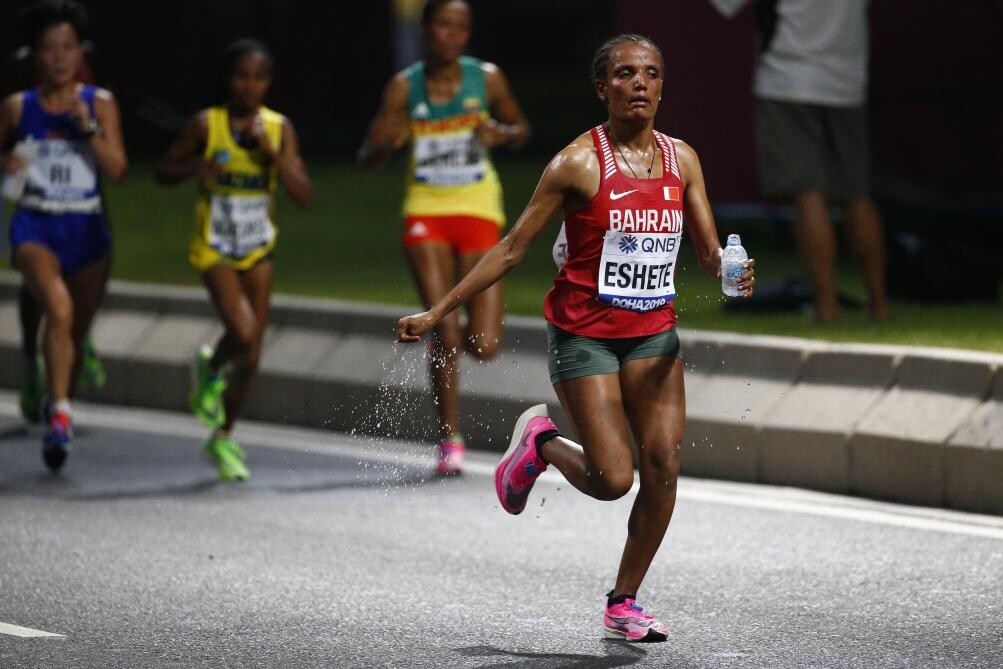
The major turning point arrived in 2019 during the Doha World Championships. World Athletics introduced a new qualification structure, replacing the old “A” and “B” standards with a unified direct-entry system supported by world rankings. At the same time, the standards became significantly tougher, dropping to 2:16:00 for men and 2:37:00 for women.
What followed was an unprecedented acceleration in elite marathon performances.
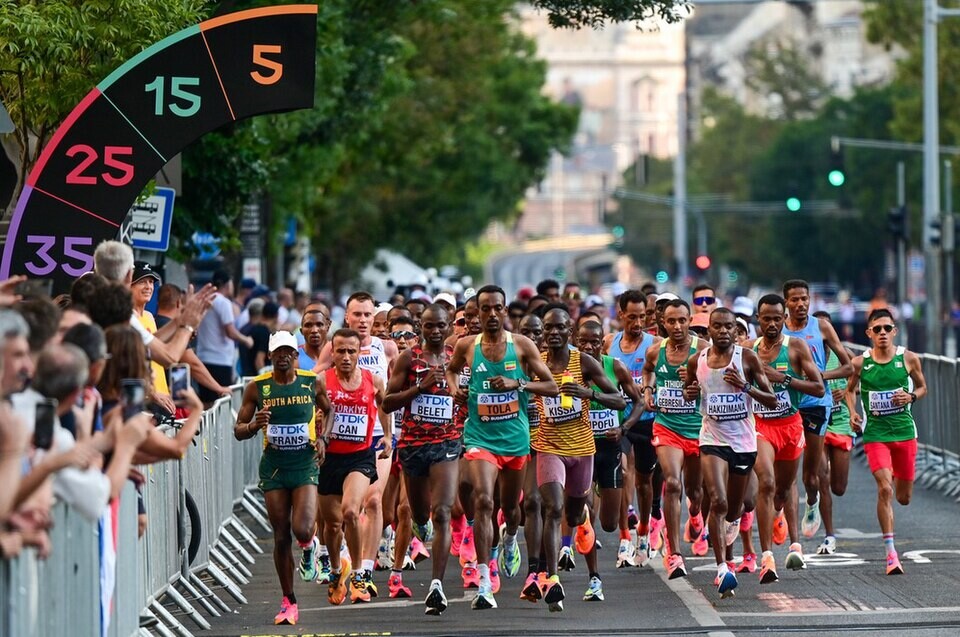
By the time the championships moved to Eugene in 2022 and Budapest in 2023, the entry standards had tightened even further to 2:14:30 for men and 2:33:30 for women. These were no longer simply elite times — they were becoming world-class requirements.
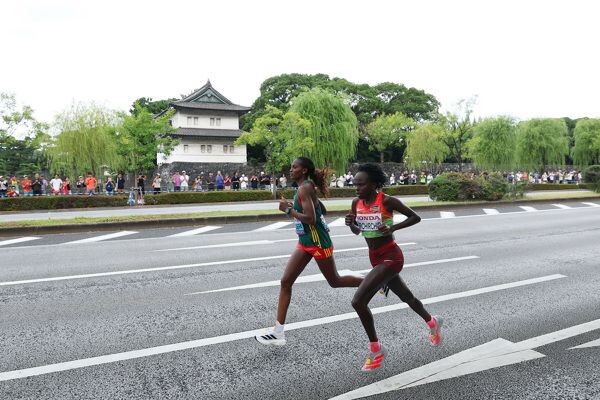
Then came the astonishing leap for Tokyo 2025 and Beijing 2027.
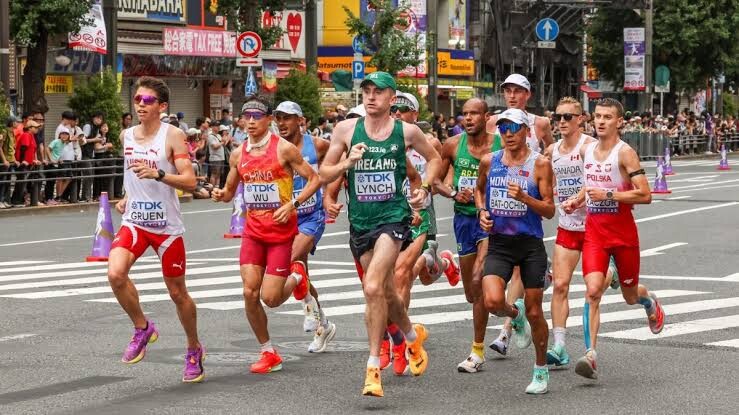
World Athletics pushed the standards to a staggering 2:06:30 for men and 2:23:30 for women — marks that place athletes among the very best marathoners globally. In today’s era, running a national-class performance is no longer enough; athletes must now deliver near-podium level times simply to qualify.
The dramatic drop in standards reflects far more than just faster athletes. Modern marathon running has been reshaped by revolutionary shoe technology, improved pacing systems, advanced nutrition strategies, scientific training methods, altitude preparation, and the growing depth of competition worldwide. The sport has entered a high-speed era where records fall rapidly and expectations continue to rise.
For many athletes, the new standards represent both inspiration and pressure. Qualification now demands extraordinary precision, consistency, and near-perfect execution over 42.195 kilometres. Every second matters more than ever before.
Yet despite the increasing difficulty, the evolution also highlights the remarkable progress of human performance. Marathon running is no longer merely about endurance — it has become a showcase of innovation, tactical intelligence, and extreme athletic excellence.
The World Championships marathon has evolved from a global competition into one of the most selective endurance events in athletics history, and the future suggests the standards may only continue to get faster.
by Erick Cheruiyot for My Best Runs.
Login to leave a comment
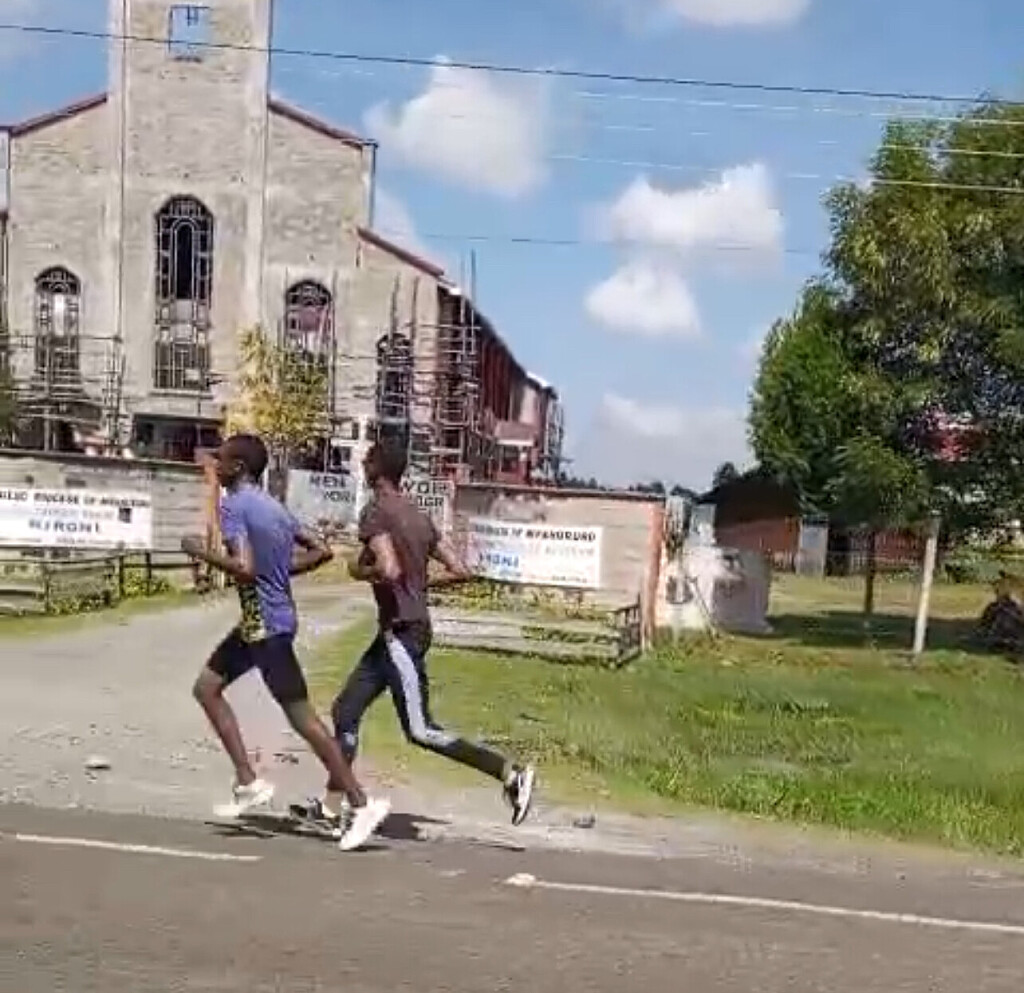
First KATA Time Trial – Camp No. 4 (Nyandarua) – August 13, 2025
Nyandarua’s KATA Running Camp No. 4 marked a milestone on August 13, hosting its first-ever KATA 10km time trial under the guidance of operator and coach Peter Njoroge. The new camp, part of the fast-growing KATA network launched just three months ago, brought together a motivated group of athletes eager to test themselves in a competitive setting.
In an impressive debut performance, Moses Maina took command early and crossed the line first in 32:01, setting the benchmark for future trials. Evans Ndundu followed in 33:07, while James Mungaisecured third with 33:40.
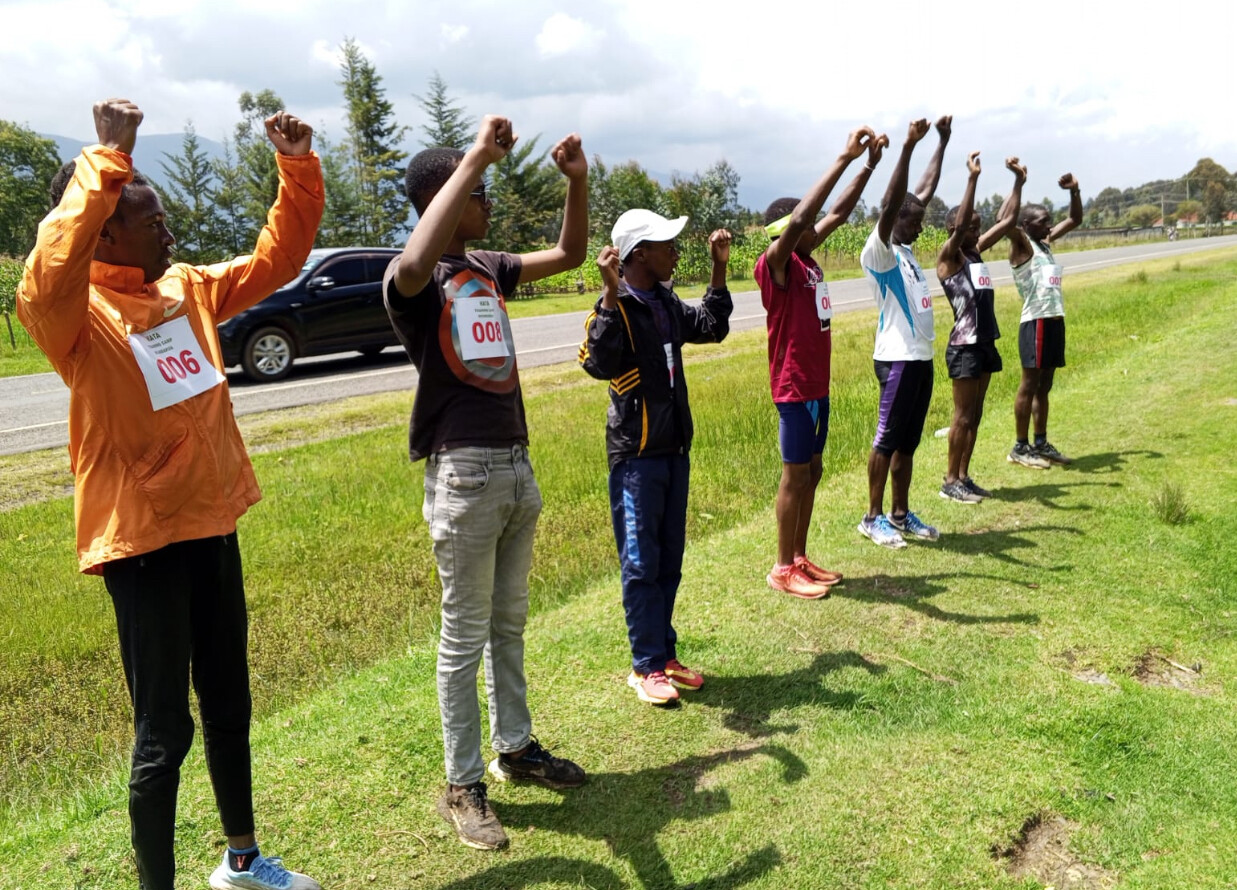
Full Results – 10km
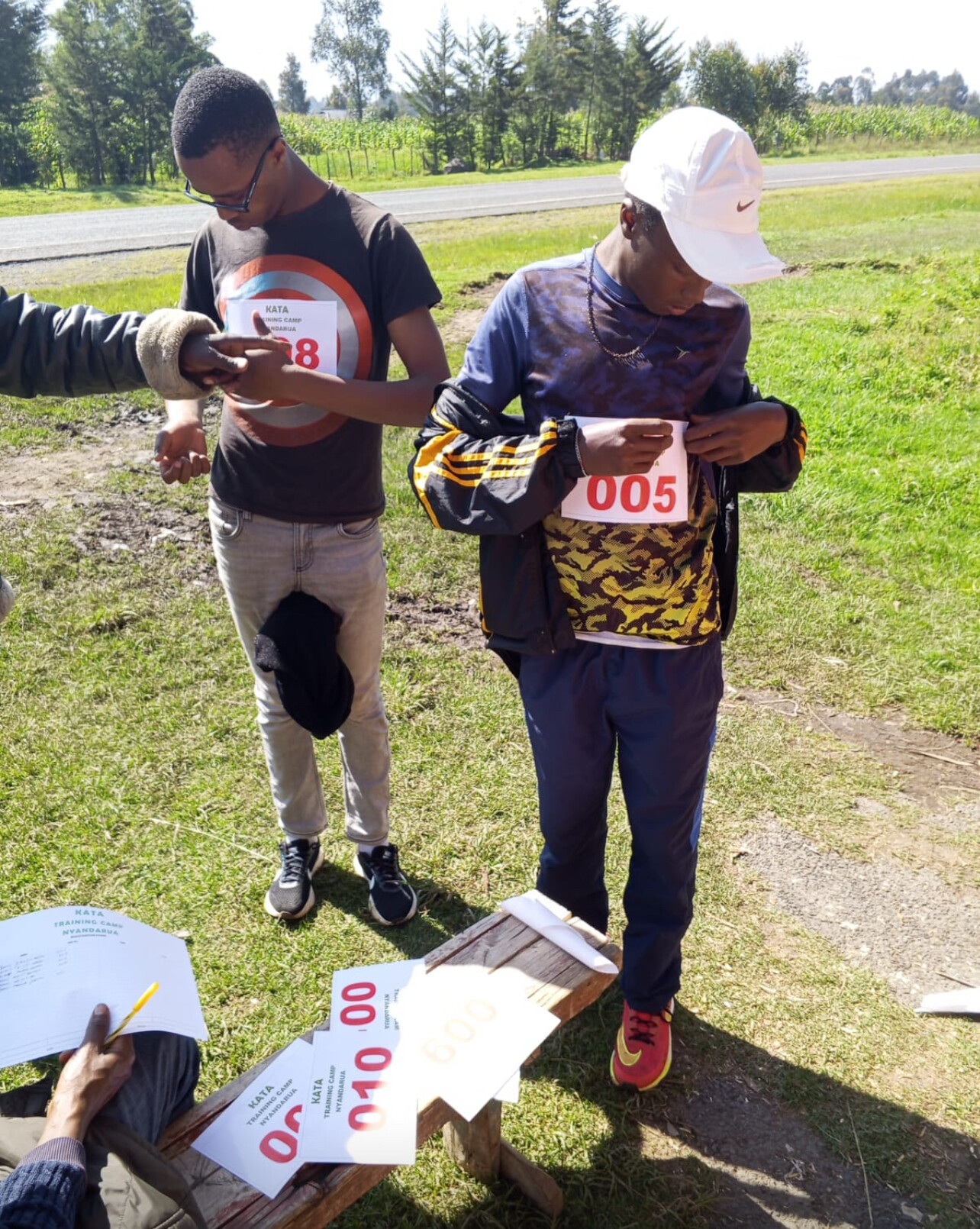
1. Moses Maina – 32:01 (Bib 004)
2. Evans Ndundu – 33:07 (Bib 001)
3. James Mungai – 33:40 (Bib 005)
4. James Githeugu – 35:00 (Bib 006)
5. Antony Katugoi – 36:30 (Bib 007)
6. Mwangi Muchoki – 36:50 (Bib 008)
7. Samuel G. Mungai – 37:00 (Bib 010)
8. Peter Kamani – 39:09 (Bib 002)
9. James Maina – 40:00 (Bib 009)
10. Simon Kamau – 40:30 (Bib 011)
11. Peter Kuria – 40:11 (Bib 015)
Camp No. 4 is one of 30 KATA Running Camps now operating across Kenya, supported by an additional 20 KATA Potato Farms that help sustain the program long-term. Together, these camps provide high-level training for more than 400 athletes, pairing athletic development with sustainable farming initiatives.
With solid performances across the field, Nyandarua’s debut time trial sets a strong foundation for the camp’s journey ahead — and the promise of even faster times in the months to come.
by Boris Baron
Login to leave a comment
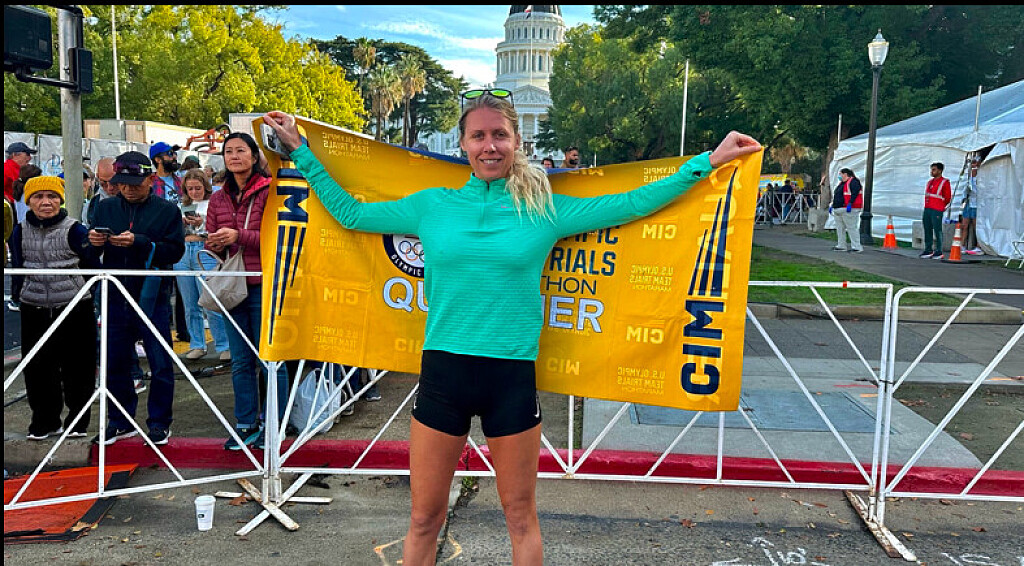
A Marathon Where Victory Isn’t Reserved for the Winners
CJ Albertson and Grace Kahura-Malang won the California International Marathon while dozens more fulfilled lifelong dreams to qualify for the U.S. Olympic Trials in their last chance
If there’s one race where the adage ‘To the victor go the spoils” does not ring entirely true, it’s the California International Marathon (CIM). The commanding wins of CJ Albertson and Grace Kahura-Malang were certainly deserving of celebration. But they shared in the sweet taste of victory with dozens more high-level runners on last Sunday morning.
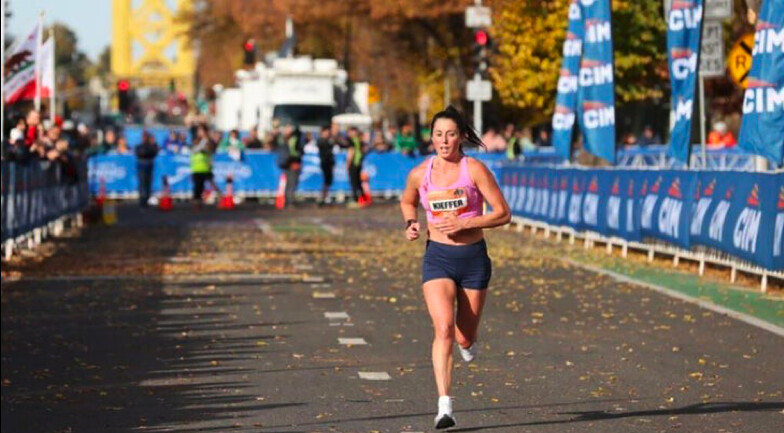
For several minutes after Albertson stormed from behind to take the men’s race in 2:11:09 and Kahura broke the tape in the women’s race with a personal best of 2:29:00, the finish line exhilaration continued to build as numerous runners sprinted their way to the finish line on M Street, adjacent to the California Capitol Mall in downtown Sacramento.
That’s because the winning prizes extended far beyond the $10,000 to something money can’t buy. American runners who could get to the finish line in time earned a qualifying berth for the 2024 U.S. Olympic Trials Marathon on February 3 in Orlando, Florida. That event will determine the six U.S. runners who will compete in next summer’s Paris Olympics, but it’s also a quadrennial benchmark of domestic distance running excellence, and the chance to run in it—especially for those who have no chance at making the Olympic team—is a badge of honor that lasts a lifetime.
Sunday’s CIM was the last opportunity to grab that proverbial brass ring, and as the time ticked down to the cutoffs—2:18 for men and 2:37 for women—41 runners realized dreams that had been several years in the making. That’s a considerably smaller number than the 109 runners who qualified four years ago, but the Olympic Trials are four weeks earlier this time around and many runners opted for earlier races.
To reach the lofty Olympic Trials qualifying (OTQ) standards, many runners had to face their inner demons as they accepted the physical, mental, and emotional challenge of running 26.2 miles faster than they ever have.
“It was very hard-fought,” said Mary Denholm, a Colorado runner who lowered her personal best by more than four and half minutes to finish in 2:36:28 and earned the OTQ time. “During the race, I tried to think as little as possible, but you know those little negative thoughts creep in. I kept saying to myself, Well, you’d be happy with a 2:37 or a 2:38, which is true, but I had to not allow myself to accept that and slow down. Marathoning is so hard. It’s a process. You really have to love the journey.”
Celebrating its 40th year, CIM has developed a reputation as one of the best domestic races for elite and age-group runners seeking personal best efforts, whether that’s chasing an OTQ or Boston Marathon-qualifying time. The race’s point-to-point, net-downhill 26.2-mile course from Folsom to Sacramento amid Northern California’s typically favorably cool, dry early December weather is ideal for running fast for any of the 10,000 participants. But what makes fast times more likely is the communal effort of the large packs of runners at nearly every pace group.
With the Trials-qualifying deadline of December 5 looming, about 200 American runners lined up at CIM to specifically chase the 2024 OTQ marks. While a few have been training with the aid of sponsorships or trying to become professional runners, the majority were amateur runners who work full-time jobs.
For some—like first-time marathoners and twenty-somethings Charlie Sweeney, Christian Allen, Ava Nuttall, and Abbie McNulty—it was the initial opportunity to meet the mark. But it wasn’t the first rodeo for many others who were back after coming up short in previous years, including thirty-somethings Denholm, Noah Droddy, Allie Kiefer, and Chad Beyer. For some who are slowing with age, or on the verge of hanging up their racing shoes for bigger career pursuits, CIM might have been the final shot of their competitive running careers.
In the moments before the race in Folsom, the nervous energy of every elite runner was palpable as they did their final pre-race strides and stretches, each one carrying with them their own long backstory that brought them to the brink of their dreams. After a brief moment of calm on the starting line, the gun went off and the enticing challenge began.
“This was my shot,” said Droddy, a 33-year-old Salomon-sponsored pro from Boulder, Colorado, who had a breakthrough 2:09:09 runner-up performance at The Marathon Project in 2020 but, because of a variety of injuries, hadn’t finished a marathon since. “I qualified on the last day in 2016, and so this was another full-circle moment to try to do it on the last day again.”
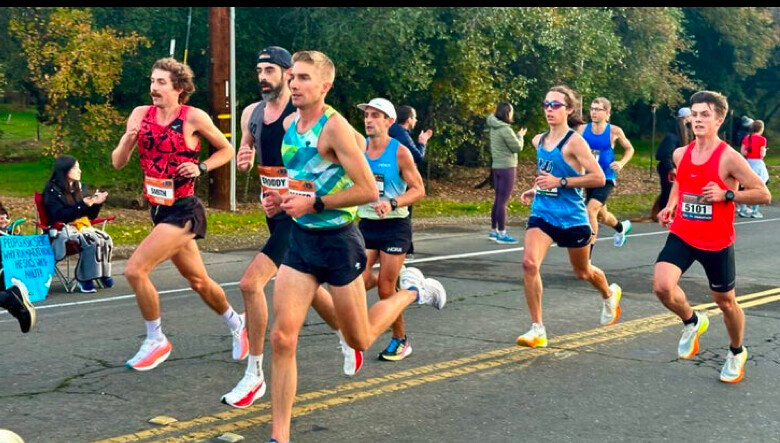
For the next two-plus hours, every runner locked into the silent rhythm of their race pace—each with their own goal in mind—holding onto the cadence of the random runners nearby. This is all the while knowing that consistent effort would gradually transition from being smooth and tolerable to eventually becoming extremely difficult by the later miles of the race.
Allen, a marathon rookie from Salt Lake City eager to make his mark, boldly opted to run off the front from the start with New Zealand’s Matt Baxter and Kenyan Milton Rotich, while Albertson, a Fresno-based runner who has been one of the most consistent elite-level marathoners in the U.S. for the past several years, looked calm and content as he ran just off the lead near the front pack.
While many OTQ-seeking American women grouped together in the quest for a 2:33 to 2:37 finish, Kahura-Malang, a 30-year-old Kenyan runner who lives near Boulder, started quickly and tagged along with a much-faster group of men with hopes of breaking 2:30 for the first time.
“I really didn’t know how far I was from the other women, but I didn’t want to focus on that,” she said. “I just wanted to keep running fast.”
Achieving success in a marathon can be a fickle task—one that relies on equal parts sufficient training, optimal fueling, and mental tenacity. But the magic of an elite-level marathon, especially CIM during a pre-Olympic Trials year, can be tied to finding confidence running amid the collective rhythm of a pack of like-minded runners, at least until things get difficult at the crux of the race somewhere near mile 20.
Maintaining race pace and grinding through the final miles is something every runner experiences, each one to varying success. That’s where inspirational mantras, acknowledging motivational words written on an arm, or a variety of other mental tricks come into play.
“We had a great group for a while, and then about 20 miles, it started to thin out,” said Jacob Shiohira, 27, from Bentonville, Arkansas. He sliced seven minutes off his personal best with his 13th-place, 2:16:34 finish to make the OTQ cut. “The last three miles turned into a grind, but everyone’s in the same boat, and that’s what makes it special.”
The 26-year-old Allen, fresh off finishing an All-American track and cross country collegiate career at Brigham Young University, spent the summer racing shorter distances on roads and trails. He stuck with his gutsy strategy to lead the race until his legs began to tighten up at the 23-mile mark. Albertson had let Allen and Rotich get ahead of him on a few of the later hills in the race but patiently stayed within himself and seized the lead late in the race to open up a two-minute advantage before the finish.
Rotich finished two minutes after Albertson in 2:13:04 for second, followed by Charlie Sweeney, a 24-year-old runner from Boulder, who completed a stunning debut marathon with a third-place, 2:13:41 finish to earn the Olympic Trials-qualifying standard. After that, Baxter, a Kiwi runner who runs for NAZ Elite, put down a new personal best of 2:14:08, followed by Eritrea’s Amanuel Mesel (2:14:11). From there, Robert Miranda (2:14:43), Jerod Broadbooks (2:14:58) and Allen (2:15:01) led a parade of 27 American men who celebrated securing their OTQ times.
Droddy made it too, finishing 17th in 2:16:56, to earn one of the celebratory golden OTQ flags CIM handed out to each of the qualifiers.
“I didn’t care about the time at all, just as long as it was under 2:18,” said Droddy, who also qualified in 2016 and 2020. “I was just happy to get it done. It means a lot because now I know I can join my teammates at the Olympic Trials.”
More than four minutes after Kahura-Malang ran away with the women’s title, Kiefer (2:33:26) led the charge of a long string of American women who cruised in under the OTQ cutoff. Once a top American runner, the 36-year-old from Austin, Texas, hadn’t finished a marathon since she placed seventh in New York in 2018. Like a lot of runners, she’s been through a lot of challenges in recent years, including injuries, races she’s dropped out of (including the 2020 U.S. Olympic Trials in Atlanta), relocating to new cities, changing coaches, and general motivation.
“I’m back to the basics of having fun with it,” Kiefer said. “There’s no pressure right now. I just wanted to have a good experience, and it was a great experience. It feels validating to get back to the Trials. It’s just nice to go out there and do the part you love.”
Nuttall, 22, was perhaps one of the positive surprises of the day. A senior at Miami University in Ohio, where she was the top cross country runner for the Redhawks this fall, she finished her debut marathon in third place in 2:35:09. After that it was Kaylee Flanagan, 28 who earned her first OTQ with a strong 2:35:24 effort to join her older sister and Asics pro Lindsay Flanagan in Orlando. After that it was professional trail runners Rachel Drake (2:35:28) and Peyton Thomas (2:35:42), who finished fifth, and sixth, respectively. (Drake is also the mother to 14-month-old son, Lewis.)
Nine more women earned the OTQ time—14 total—including Denholm, who finished 13th in 2:36:28.
But amid the joy of dreams coming true, there was also the heartbreak of near-misses. Tammy Hsieh sprinted to the finish just in the nick of time, crossing in exactly 2:37:00 to make the women’s cut, but moments later Gina Rouse (2:37:10) and Jennifer Sandoval (2:37:11) narrowly missed it and went home disappointed.
On the men’s side, Duriel Hardy dashed across the line in 2:17:56 to become the final men’s OTQ’er, but then Alexander Helmuth came across the line two seconds too late in 2:18:02.
After a record 511 women qualified for the 2020 U.S. Olympic Trials Marathon in Atlanta—nearly double the number of male qualifiers—the women’s standard was lowered by eight minutes, down from 2:45 to 2:37. The new mark equates to a hefty 18 seconds per mile faster, down from 6:18 minute mile pace to 6 minutes flat. Denholm, who qualified in 2020 with a 2:42:02 effort at the 2019 CIM, was one of hundreds of women who spent the past several years trying to make that big leap.
After running a personal best of 2:40:59 at the 2022 Boston Marathon, Denholm hoped to continue her progression and earn her qualifying time months ago. But the marathon is a fickle event because training never goes perfectly and something—injuries, work, life—always gets in the way. And sometimes everything goes right and it’s just not your day on race day.
After dealing with a torn labrum and then going through a divorce, career changes, and a move from California to Colorado, the 36-year-old running coach targeted last summer’s Grandma’s Marathon in Duluth, Minnesota—another domestic race on par with CIM when it comes to providing a competitive platform for elite and sub-elite runners to excel.
But despite a good training block, Denholm struggled in that race and finished in 2:43:19. After that, she refocused her training with the help of coach and three-time OTQer Neely Gracey and set her sights on the September 24 Berlin Marathon, only to come down with COVID after she arrived in Germany. Not wanting to give up, she retooled her training one more time and registered for CIM as a last-ditch effort.
She was on 2:36 pace the entire way, running near-identical 13.1-mile splits of 1:18:17 and 1:18:11, but needed the encouragement of friend, Sofie Schunk, to get her through the final miles. Schunk, 31, of Albuquerque, finished six seconds ahead of her in 2:36:22.
“I went to a really dark place out there and had to fight through that,” she said. “It was awesome to have other women out there to go for it with and encourage along the way. I split some of my faster miles near the end, and I’ve never been able to do that, so that was a huge victory for me. I hope this can be encouraging to other women because I really think everyone is limitless. I’ve just worked really hard to get where I am and I just want others to feel encouraged.”
by Outside Online
Login to leave a comment
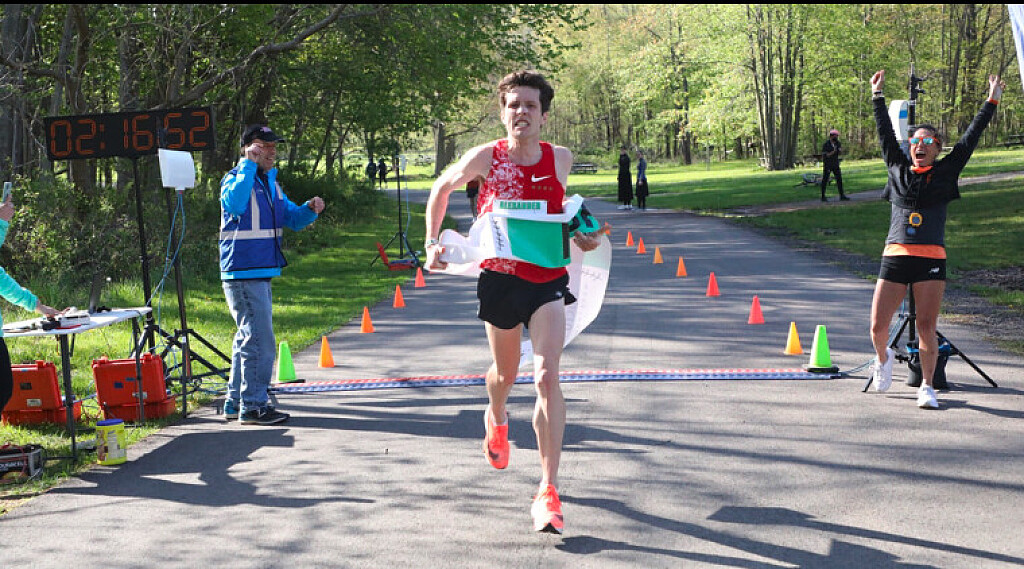
Want to Qualify for the U.S. Olympic Trials? This Race Is Specifically Built for You.
For elite amateur marathoners, qualifying for the Olympic Trials is the ultimate life goal. Bakline’s McKirdy Micro Marathon removes the challenges of running a fast 26.2.
When it comes to trying to run a fast marathon, Zacch Widner knows that bottle service isn’t a luxury but a necessity. No, not tableside bottle service at a nightclub, but the ability for marathon runners to easily identify and grab their own hydration bottles off of a table every 5K or so on course while running at an extremely fast pace.
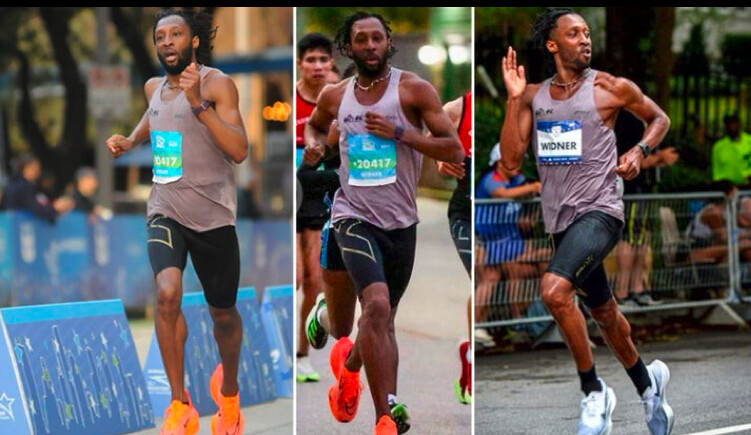
At the Berlin Marathon on September 23, the 32-year-old aspiring elite runner from Lansing, Michigan, was on the verge of running the race of his life. But because his bottles weren’t readily available at each aid station, he wound up grabbing only one of his eight bottles and suffered the consequences.
Although running the race without optimal calorie and hydration intake led to frequent cramping, he still finished in 2:20:02. That’s the second-best time of his career, but still two minutes short of his goal of breaking the U.S. Olympic Trials men’s qualifying standard of 2:18:00.
Widner is one of dozens of American runners—most of whom work nine-to-five jobs—still hoping to earn the standard (or 2:37:00 for women) by the December 5 deadline, in order to qualify for the U.S. Olympic Trials Marathon on February 3 in Orlando.
For Widner, it’s much more than a personal goal. It’s a commitment to a friend and former teammate. “It was a bummer,” says Widner, who works full-time as an IT analyst for the state of Michigan. “I know I’m capable of running faster. I didn’t capitalize on taking fluids, so when it came to running all out, I just couldn’t do it. I think the stress of it is actually what caused the cramps, because every time I missed a bottle, I just stressed out more…just mentally started destroying me.”
Three weeks later, Widner is ready to take another shot at the OTQ standard, this time at Bakline’s McKirdy Micro Marathon on October 14—a unique elite-only race that will be held about 30 miles north of New York City. Set on a nine-loop course at Rockland Lake State Park, the no-frills race will provide bottle service to each of the 180 entrants who met a stout qualifying standard (2:25 for men, 2:45 for women) to register.
“It’s got everything you need,” he says. “You have a lot of tough, fast runners. You have pacers and a flat course with a well-organized system for everyone’s fluids. I’m ready to go.”
In 2020, when running races were shut down because of COVID-19, athlete agent Josh Cox and Ben Rosario, founder and head coach of the Hoka NAZ Elite team, developed an elite-only marathon in Arizona that gave about 100 athletes from around the world the chance to run a highly competitive race on a USATF-certified course amid the still-pervasive coronavirus.
Known as The Marathon Project, the race was held in Chandler, Arizona, on December 20, 2020. Seven U.S. men ran faster than 2:10, while 12 American women finished under 2:30—the first time that’s ever happened. Martin Hehir, a fourth-year medical student who was coming off weeks treating COVID-19 patients, won the race in a personal best 2:08:59, while Sara Hall was the women’s winner in a personal best of 2:20:32, at the time the second-fastest marathon ever run by an American woman.
Several runners who trained under Flagstaff, Arizona coach James McKirdy and his online platform McKirdy Trained were in the race, and they performed well. He was so impressed by the concept that he quickly went about replicating it by hosting small regional marathons around the U.S. for a wider range of runners in early 2021.
At one of the McKirdy Micro Marathon races held at Rockland State Park, Denver-based runner Alex Burks won the race and lowered his personal best from 2:23:47 to 2:16:52. Dozens more earned personal bests and Boston qualifying (BQ) times.
“We really liked that idea and thought we could develop that concept for the masses, and they went off without a hitch,” McKirdy says. “The athletes had a great time and many runners—I think close to 150—earned a BQ from our races. So when the U.S. Olympic Trials qualifying standards were released two years ago, we felt we had the chops and experience to provide a marathon that would provide full on-course support for runners trying to qualify.”
Bakline’s McKirdy Micro Marathon will be held on a nine-lap, 26.2-mile course that will start with one 2.63-mile partial lap, followed by eight successive laps on a 2.945-mile circuit. Runners can have up to eight hydration bottles that will be set up on a series of well-marked, eight-foot tables 20 feet apart.
While the majority of runners will be aiming for the U.S. Olympic Trials qualifying standards, others are shooting for faster times. McKirdy and co-organizer Heather Knight Pech have enlisted pacers to guide runners to three different goal times for men (2:10:00, 2:11:30, and 2:18:00) and two for women (2:29:30 and 2:37:00).
The men’s field is headlined by Tsegay Tumay, an Eritrean runner with a 2:09:07 personal best who trains in Flagstaff under McKirdy. Tiidrek Nurme is an Estonian runner who is coming off a 31st-place, 2:15:42 at the World Athletics Championships on August 27, in Budapest. American runner Ben Blankenship, who finished eighth in the 2016 Olympic 1,500-meter finals in Rio de Janeiro, is making his marathon debut. Another OTQ hopeful is Hosava Kretzmann, a 29-year-old member of the Hopi Tribe from Flagstaff, Arizona, who finished sixth in his debut at the Los Angeles Marathon earlier this year in 2:19:58.
Among the runners who should be at the front of the women’s race is newly signed Nike athlete Calli Thackery, a British runner who just placed seventh in the half marathon at World Athletics Road Running Championships with a 1:08:56 personal best. American Makenna Myler has a 2:40:45 personal best, but is shooting for the U.S. Olympic Trials Marathon qualifying standard just seven months after giving birth to her son in mid-March. (In 2021, she placed 14th in 10,000 meters on the track in the U.S. Olympic Trials seven months after giving birth to her daughter.) She had originally registered and was onsite for the October 1 Twin Cities Marathon in Minneapolis, but that race was canceled because of extreme heat.
Other runners include Monica and Isabel Hebner, identical twins who most recently competed for the University of Texas, who will be making their marathon debuts with hopes of running in the 2:34-2:35 range, and Maura Lemon, a mother of three from Dayton, Ohio, who owns a 2:42:57 personal best but is aiming for the 2:37 OTQ standard.
Many U.S. runners on the cusp of the OTQ times ran the Chicago Marathon on October 8, while others are waiting until the California International (CIM) Marathon on December 5.
What the McKirdy Micro Marathon aims to do is eliminate the challenges that runners face at other races—difficult travel, congested race expos, crowded race courses, and, perhaps most importantly, a lack of bottle support on the course. Plus, it offers a spectator friendly circuit where family, friends, or coaches can cheer for runners on every loop.
“This gives them that chance to run fast,” Knight Pech says. “There’s still a lot of runners out there—a lot of women and a lot of men—who are sitting on the cusp of the qualifying standards. And they should have the opportunity to be able to swing large and take a moonshot. We believe this race gives them a real chance to get it done here in a way that I don’t think other races offer them.”
While the top three men’s and women’s finishers in the U.S. Olympic Trials Marathon will represent the U.S. at the Paris Olympics, just getting to the Olympic Trials is a lifetime goal for many runners. It’s the deepest and most competitive domestic marathon in the U.S., but it only happens every four years. While a tiny portion of the qualifiers are sponsored professional athletes, most of the runners have already moved on to full-time jobs.
For Widner, there is more at stake than just running a fast time. He’s forever running to honor Jeremiah Hargett, a former teammate at Oakland Community College in suburban Detroit who dealt with ongoing mental challenges. One day back in 2011, Hargett called Widner and told him how much he believed in him as a runner and as a friend, and how they’d both eventually make it to the U.S. Olympic Trials. Sadly, Hargett took his own life the very next day. Widner has more or less dedicated every race to Hargett since then.
Although his best time in the 1,500-meter run (3:53.90) fell well short of the Olympic Trials qualifying standard on the track, Widner hasn’t given up his pursuit for Hargett. Amid the rigors of working full-time for the past eight years, he’s continued to improve as a long-distance runner.
Despite what he calls a disastrous marathon debut at the CIM in 2018—where he went out way too fast and wound up struggling to finish in 2:45:39—he’s still chasing that goal. In 2022, he had a breakthrough race at Grandma’s Marathon in Duluth, Minnesota, lowering his personal best to 2:19:54. In January, he lowered his best time in the half marathon to 1:05:52 in January, but that was still nearly three minutes off the half-marathon OTQ of 1:03:00.
He’s continued to add mileage—he’s averaged about 94 miles per week this year—executed better workouts, and improved his fueling strategy, especially since McKirdy started coaching him in March. Now he’s on the cusp of reaching that magical qualifying mark once again.
But it’s as much for Hargett as it is for him.
“That’s the reason I keep running,” Widner says. “It’s the closest thing to my heart. Every time I run, I think about him and his family. When that happened, mentally, it changed me. After that, I bounced up and started running much better.”
“Running taught me how to be patient, and it is teaching me that life is the exact same way,” Widner adds. “It’s all about being patient, and when things go wrong or things seem to not go the way you were expecting, to just stay relaxed and understand that it could change for the better. I’ve been able to use that for everything in life—all my connections, and then have that thought in my mind to make the Olympic Trials, just like he agreed that we would do together.”
by Outside Online
Login to leave a comment
The Road to the Paris Olympics and here is What You Need to Know.
American runners are about to begin training for the U.S. Olympic Trials Marathon
It’s early October, which means it’s the peak marathon season for many runners. But with an Olympic year on the horizon, it also means America’s top marathoners are about to hit the road to Paris.
More specifically, the men’s and women’s 2024 U.S. Olympic Trials Marathon races—scheduled for February 3 in Orlando, Florida—are just four months away. And that means the top U.S. runners hoping to represent their country at next summer’s Olympics are about to begin preparing for the all-or-nothing qualifying race that decides which six runners will represent Team USA next summer on the streets of Paris.
Although several top American runners are racing the Chicago Marathon on October 8, even they have their eyes on a much bigger prize next February.
“There’s nothing in my mind that compares with being an Olympian and being in the Olympic Games,” says 26-year-old Utah-based Nike pro Conner Mantz, who returns to Chicago after finishing seventh last year in 2:08:16 in his debut at the distance. “So putting that first has been the plan for a long time. We’re just putting that first and we’re working backwards through the season with other races.”
Registration will open for the U.S. Olympic Trials Marathon in early November for runners who have surpassed the qualifying times in the marathon (2:18:00 for men, 2:37:00 for women) or half marathon (1:03:00 for men, 1:12:00 for women). The qualifying window extends through December 3—the race date of the last-chance California International Marathon, which for decades has been one of the most popular Olympic Trials qualifying races.
In 2020, a record 708 runners—465 women and 243 men—qualified for the U.S. Olympic Trials Marathon in Atlanta just before the onset of the Covid-19 pandemic. But USA Track & Field lowered the women’s qualifying standard by eight minutes from the more attainable 2:45:00 plateau, which means there will most likely be a much smaller women’s field this year.
But even so, amid the handful of runners who have a legitimate shot at making the Olympic team, there will also be dozens of dreamers, wannabes, and just-happy-to-be-there elite amateurs who have worked hard, put in the miles, and earned the chance to be on the start line of the deepest and most competitive U.S. distance-running races that only happen once every four years.
The men’s and women’s races will run simultaneously with the men beginning at 12:10 P.M. EST. and the women starting 10 minutes later. Runners have complained that a high noon start means they will be forced to race in hot, humid conditions. Over the past decade, the average temperature on February 3 in Orlando has been 69.6 degrees Fahrenheit at noon, rising to 73.3 at 4 PM. But actual temperatures have varied drastically, from 81 degrees Fahrenheit at 2 P.M. last year to 56 at the same time the year before. USATF officials have responded by saying that the start times are to accommodate live coverage on NBC and to match the expected conditions in Paris.
Here’s an update and overview of what’s next, who the top contenders are, the course, and what to expect in the next four months.
The 26.2-mile U.S. Olympic Trials course runs through downtown Orlando and consists of one 2.2-mile loop and three eight-mile loops. The marathon course will run through several neighborhoods, main streets, and business districts in Orlando, including Central Business District, City District, South Eola, Lake Eola Heights Historic District, Lake Cherokee Historic District, Lake Davis Greenwood, Lake Como, North Quarter, Lawsona/Fern Creek, SoDo District, and the Thornton Park neighborhood. It will then head east to and around The Milk District neighborhood and Main Street. (Notably, the course will come close to Disney World, which is about 15 miles to the southwest.)
Unlike the Olympic Marathon course in Paris, which will challenge runners with significant hills in the middle, the Orlando course is mostly flat. Each loop has a few minor variations in pitch, but only 38 feet separate the high and low points on the course. Ultimately, though, it’s a spectator-friendly route with chances for family, friends, and fans of runners to see the action several times.
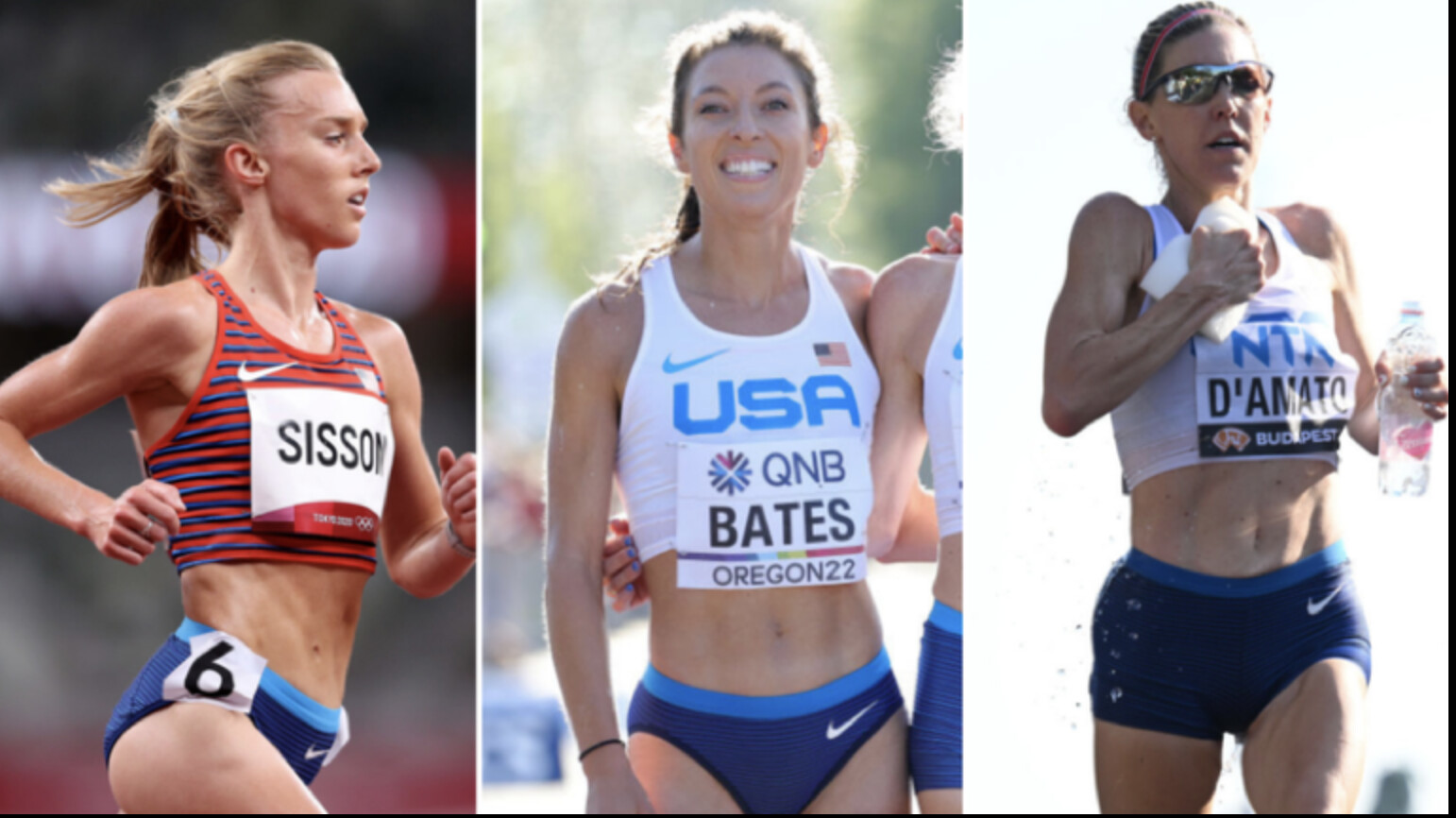
The top women—based on personal best times and recent race results—are Emily Sisson, Emma Bates, Keira D’Amato, Betsy Saina, and Lindsay Flanagan. But the U.S. Olympic Trials races almost always produce surprises with a few great runners having off days and a few good runners having exceptional days, so there is reason to expect the unexpected.
Sisson lowered the American record to 2:18:29 last year when she finished second in the Chicago Marathon. She’s running Chicago again on October 8 along with Bates, who has said she’s hoping to break the American record. In January, Sisson, 31, chopped her own American record in the half marathon in Houston with a 1:06:52 effort, and most recently won the U.S. 20K Championships (1:06:09) on September 4 in New Haven, Connecticut. Bates, also 31, hasn’t raced at all since her sterling fifth-place effort at the Boston Marathon in April, when she slashed her personal best to 2:22:10.
While Chicago will be another good place to test themselves, both have unfinished business after Bates was seventh at the 2020 Trials and Sisson dropped out near the 21-mile mark.
The same goes for Flanagan, 32, who has been one of America’s best and most consistent marathoners for the past five years. She placed 12th at the trials in 2020. She had a breakthrough win (2:24:43) at the Gold Coast Marathon in 2022 followed by a strong, eighth-place finish (2:26:08) at the Tokyo Marathon earlier this year. In August, she ran perhaps the best race of her career, when she finished ninth (2:27:47) at the world championships in Budapest amid hot, humid conditions.
The 38-year-old D’Amato, meanwhile, just capped off another strong season with a 17th-place showing (2:31:35) at the World Athletics Championships in Budapest, a year after finishing eighth in the world championships and setting an American record 2:19:12 at the 2022 Houston Marathon. She was 15th at the Trials in 2020 in 2:34:24, just two years into her competitive return to the sport after having two kids and starting a career in real estate in her early 20s.
“It’s such a huge goal of mine to become an Olympian,” says D’Amato, who lowered Sisson’s U.S. record in the half marathon with a 1:06:39 effort at the Gold Coast Half Marathon on July 1 in Australia. “It’s really hard for me to put words into this because my whole life, wearing a Team USA jersey has been like a huge dream. And when I left the sport (temporarily), I felt like I said goodbye to that dream and I kind of mourned the loss of being able to represent my country. I feel like it’s the greatest honor in our sport to be able to wear our flag and race as hard as possible.”
Saina, a 35-year-old Kenya-born runner who ran collegiately for Iowa State University, became a U.S. citizen in late 2021. She placed fifth in the 10,000-meters at the 2016 Olympics in Rio de Janeiro while competing for Kenya. She’s spent the past several years splitting time between Kenya and Nashville, Tennessee, where she gave birth to a son, Kalya, in December 2021.
She’s returned with a strong fourth-place 1:11:40 result at the Tokyo Half Marathon last October and a fifth-place 2:21:40 showing at the Tokyo Marathon in February. In May, Saina won the U.S. 25K Championships in Michigan. Two weeks ago she broke the tape at the Blackmores Sydney Marathon in Australia in 2:26:47.
Other top contenders include but are not limited to Tokyo Olympics bronze medalist Molly Seidel (who’s personal best is 2:24:42), 2022 U.S. Olympic Trials champion Aliphine Tuliamuk (2:24:37, 11th in Boston this year), Susanna Sullivan (2:24:27 personal best, 10th in London this year), two-time Olympian and 2018 Boston Marathon winner Des Linden (2:22:38), and Sara Hall (2:20:32, fifth at last year’s world championships), plus Kellyn Taylor (2:24:29), Nell Rojas (2:24:51), Sarah Sellers (2:25:43), Lauren Paquette (2:25:56), Dakotah Lindwurm (2:25:01), Annie Frisbie (2:26:18), Sara Vaughn (2:26:23), Tristin Van Ord (2:27:07), and Jacqueline Gaughan (2:27:08).
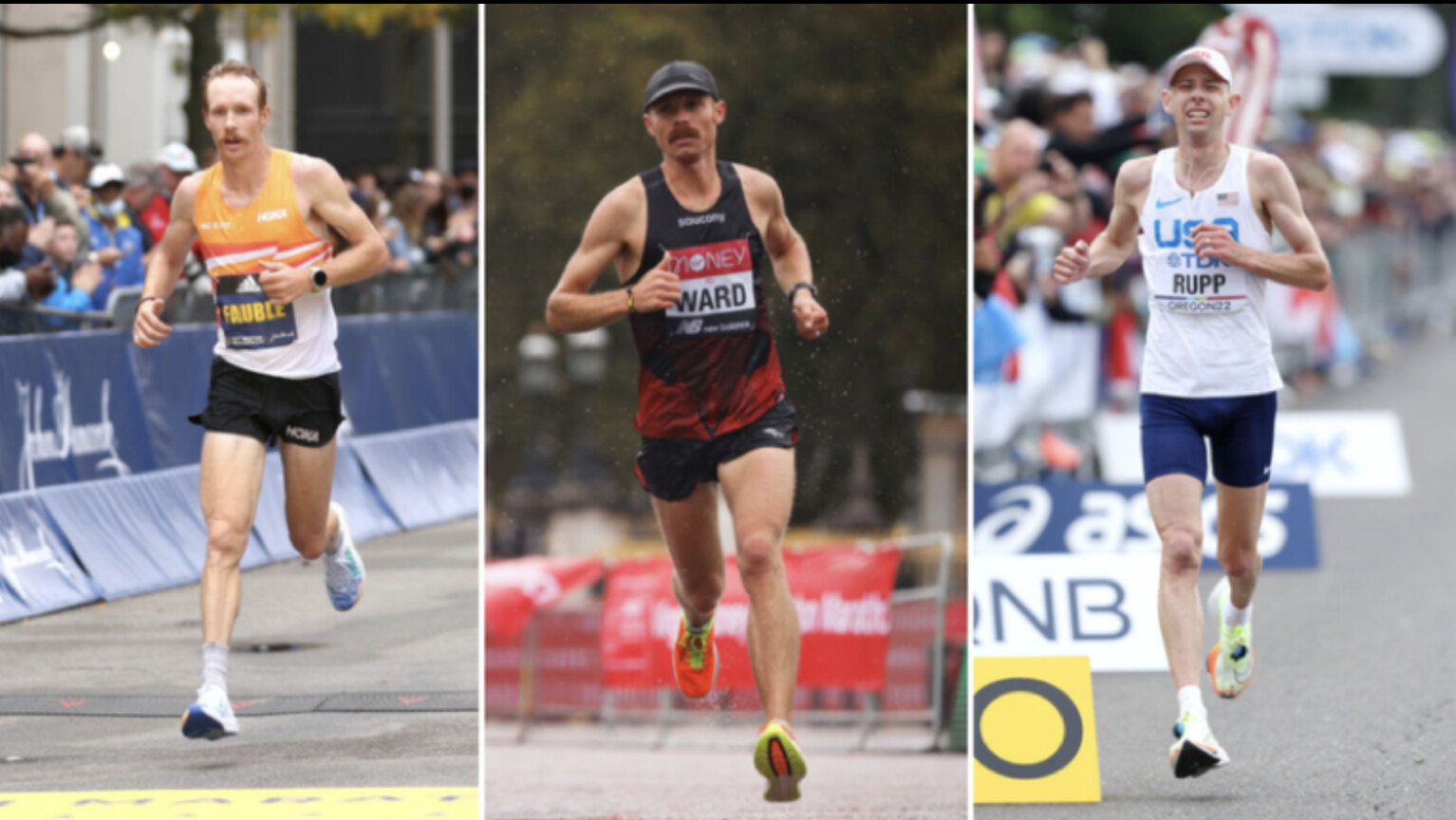
The list of potential men’s top contenders isn’t as clear-cut, partially because there are so many sub-2:11 runners and several fast runners who are relatively new to the marathon. But all that suggests a wide-open men’s race where more than a dozen runners are legitimately in the mix for the three Olympic team spots. That said, the top runners on paper, based on both time and consistent results over the past few years, are Scott Fauble, Jared Ward, Galen Rupp, Conner Mantz, Leonard Korir, Matt McDonald, and C.J. Albertson.
The 31-year-old Fauble, who was 12th in the Olympic Trials in 2020 and owns a 2:08:52 personal best, has finished seventh in the Boston Marathon three times since 2019 and also finished seventh in the New York City Marathon in 2018. Ward is a 2016 U.S. Olympian and has three top-10 finishes at the New York City Marathon and a 2:09:25 personal best from Boston in 2019. He’s 35, but he just ran a 2:11:44 (27th place) at the Berlin Marathon in late September.
Rupp, who won the past two U.S. Olympic Trials Marathons and earned the bronze medal in the marathon at the 2016 Olympics, is nearing the end of his competitive career. He boasts a 2:06:07 personal best and has run under 2:10 more than any American in history, including when he finished 19th at the world championships (2:09:36) last year. He’s a bit of a wild card because he’s 37 and hasn’t raced since his lackluster 17th-place showing at the NYC Half Marathon (1:04:57) in March, but the world will get a glimpse of his fitness in Chicago this weekend.
Mantz followed up his solid debut in Chicago last fall with a good Boston Marathon in April (11th, 2:10:25) and solid racing on the track and roads all year, including his recent runner-up showings at the Beach to Beacon 10K in August and the U.S. 20K Championships in September.
McDonald, 30, who was 10th in the 2020 U.S. Olympic Trials, has quietly become one of the best marathoners in the U.S. while serving as a postdoctoral associate in chemical engineering at M.I.T. His last three races have clocked in at 2:10:35 (Boston 2022), 2:09:49 (Chicago 2022), and 2:10:17 (Boston 2023). The only other runner who rivals that kind of consistency is Albertson, 29, who has run 2:10:23 (Boston 2022), 2:10:52 (Grandma’s Marathon 2022) and 2:10:33 (Boston 2022) in his past three marathons and was seventh in the U.S. Olympic Trials in 2020 (2:11:49).
The men’s race will likely have a mix of veteran runners and newcomers who have run in the 2:09 to 2:10 range since 2022. Among those are 2020 U.S. Olympic Trials runner-up Jake Riley (2:10:02 personal best), who is returning from double Achilles surgery; 2016 U.S. 10,000-meter Olympian Leonard Korir (2:07:56), who ran a 2:09:31 in Paris in April; Zach Panning (2:09:28, plus 13th at the world championships in August); U.S. 25K record-holder Parker Stinson (2:10.53); Futsum Zienasellassie who won the California International Marathon last December in his debut (2:11:01) and then doubled-back with a new personal best (2:09:40) at the Rotterdam Marathon in the spring; Abbabiya Simbassa, who ran a solid debut marathon (2:10:34) in Prague this spring; and Eritrean-born Daniel Mesfun (2:10:06) and Ethiopian-born Teshome Mekonen (2:10:16), who both received U.S. citizenship within the past year; and solid veterans Nico Montanez (2:09:55), Elkanah Kibet (2:10:43) and Nathan Martin (2:10:45).
Additional sub-2:12 runners who will be in the mix are Andrew Colley (2:11:26), Clayton Young (2:11:51), Brendan Gregg (2:11:21), Josh Izewski (2:11:26), Jacob Thompson (2:11:40), and Kevin Salvano (2:11:49).
As noted previously, some top contenders will season their marathon legs one final time at the flat and fast Chicago Marathon on October 8. An even more select few will opt for the New York City Marathon on November 5. After that, nearly every American with eyes set on an Olympic berth will double-down over the holiday season for that one final, critical marathon training cycle. Expect to see a wide range in heat training, from sauna protocols, to warm weather training trips, to simply an adjusted race day strategy.
Of course, with the Olympic Marathon falling under the purview of World Athletics, qualifying for the U.S. Olympic Marathon team is not quite as simple as finishing on the podium in Orlando. Any American looking to have a breakout performance and finish within the top three at the U.S. Olympic Trials Marathon will need to have run under 2:11:30 for men and 2:29:30 for women within the qualification window, which spans from November 1, 2022 to April 30, 2024. Given the possibility of oppressively hot and humid temps on February 3 in Orlando, they’re best bet is to secure that time now.
These qualification standards are in accordance with a new rule from World Athletics, which allows national Olympic committees to circumvent the typical Olympic qualification process of running under 2:08:10 for men and 2:26:50 for women, or being ranked among the top 65 in the world on a filtered list of the top three athletes from each country. The catch, though, is that three other runners from said country must have met one of these two standards. If this sounds complicated, that’s because it is.
For the hundreds of elite amateurs on the cusp of hitting that coveted U.S. Olympic Trials qualifying time, it’s do or die mode. While a few made the cut at the Berlin Marathon on September 24, one of those opportunities was lost when the Twin Cities Marathon was canceled on October 1 because of excessive heat. Temperatures are shaping up for an auspicious day in Chicago this weekend, and many more will give it a final shot at the Columbus Marathon on October 15; Indianapolis Monumental Marathon on October 28; the Philadelphia Marathon on November 18; and the last-call California International Marathon, a point-to-point race ending in Sacramento, California on December 3.
Ultimately, only six American runners will likely continue on along the road to Paris and earn the chance to run in the men’s and women’s Olympic marathons next August 10-11. For a handful of younger runners, the 2024 U.S. Olympic Trials will be a motivation to reinvigorate the Olympic dream or keep a faint hope alive, at least until the 2028 U.S. Olympic Trials that will determine the team for the Los Angeles Olympics. But for many runners, the journey to the U.S. Olympic Trials in Orlando will lead to the end of their competitive road running careers as new jobs, young families, a switch to trail running, and other priorities will take hold.
“I think the Olympic Trials is an important part of American distance running,” says Kurt Roeser, 36, a two-time U.S. Olympic Trials Marathon qualifier who works full-time as a physical therapist in Boulder, Colorado. “I’m glad that they kept it the same event for this cycle and hopefully for future cycles because it gives people like me a reason to keep training. I’m older now and I’m not going to actually have a chance to make an Olympic team, but for somebody that’s fresh out out of college and maybe they just barely squeak in under the qualifying time, maybe that’s the catalyst they need to start training more seriously through the next cycle. And maybe four years from now, they are a serious factor for making the team.”
by Outside Online
Login to leave a comment
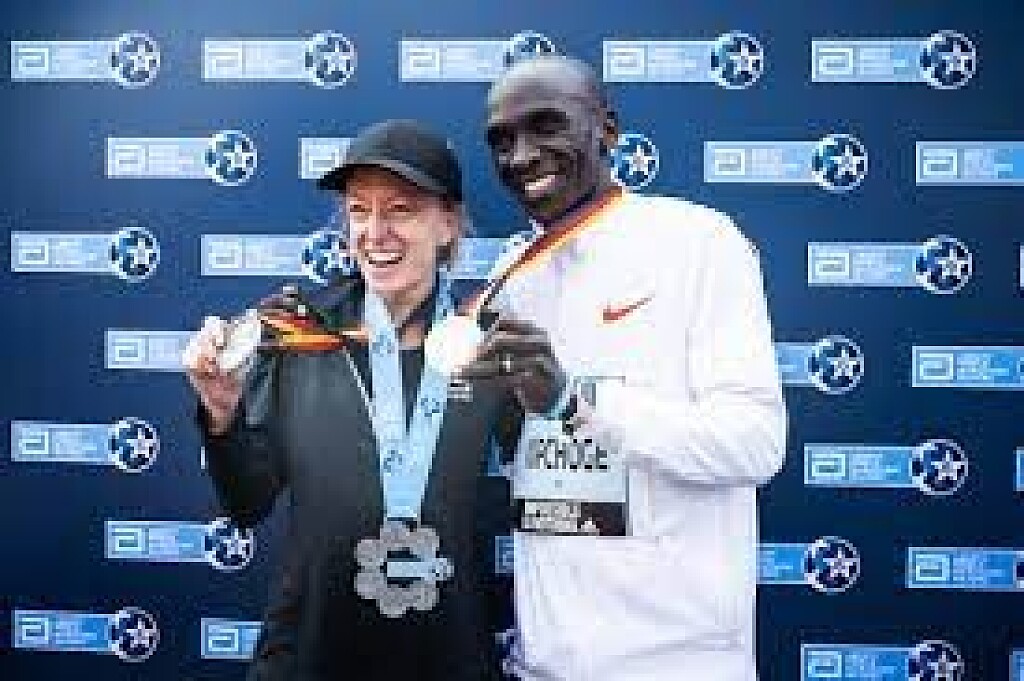
Deena Kastor completed all sixth World Major Marathons
On Sunday, former American women’s marathon record holder, Denna Kastor, 49, finished the 2022 Berlin Marathon in 2:45:12 to place 48th overall in the women’s field. Kastor earned her sixth star with her results in Berlin, for having finished all six World Major Marathons. She is only the fourth woman to achieve all six world majors, in addition to the Olympic and World Athletics Championships marathons.
Kastor had hopes of hitting the U.S. Olympic Trials standard of 2:37:00in Berlin, but came up short. She finished second in the women’s 45-49 age group.
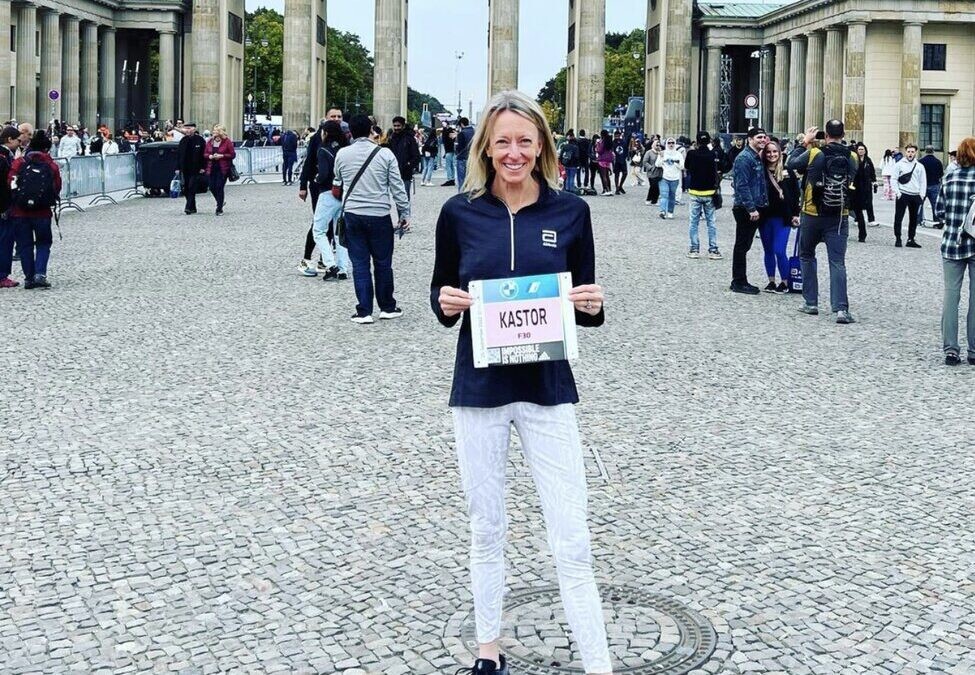
Kastor has raced the other five majors (Boston, London, Tokyo, Chicago and New York City), and although she was set to race Berlin in 2019, an ankle injury dashed those plans. Kastor is one of the top marathoners in American history, and up until this year, she held the national record at 2:19:36, set at the 2006 London Marathon, which she won. (She won the Chicago Marathon in 2005.)
Keira D’Amato broke Kastor’s record at the Houston Marathon in January 2022, when she ran 2:19:12; some predicted she would run even faster in Berlin on Sunday, but a mere nine weeks after her eighth-place finish at the World Athletics Championships, she was two minutes off the record in Berlin, with a sixth-place finish in 2:21:28.
Kastor also held the American half-marathon record of 1:07:34 until 2018, when Molly Huddle ran 1:07:25. She also won a bronze medal in the marathon at the 2004 Athens Olympics. She ran the Tokyo Marathon in 2019.
Kastor’s goal of completing all six World Majors is a goal held by many marathoners (both amateur and pro) around the world, including the great Eliud Kipchoge, who bested his world record time in the Berlin marathon with a time of 2:01:09.
by Keeley Milne
Login to leave a comment
BMW Berlin Marathon
The story of the BERLIN-MARATHON is a story of the development of road running. When the first BERLIN-MARATHON was started on 13th October 1974 on a minor road next to the stadium of the organisers‘ club SC Charlottenburg Berlin 286 athletes had entered. The first winners were runners from Berlin: Günter Hallas (2:44:53), who still runs the BERLIN-MARATHON today, and...
more...
Yoshihiko Ishikawa wins Badwater 135 for the 2nd time
The male course record holder celebrated his second victory, while American Ashley Paulson's new female course record raised a few eyebrows
The 45th anniversary of the Badwater 135 race wrapped up Wednesday, with no shortage of both heat and excitement. Yoshihiko Ishikawa of Japan took his second victory at the race, running negative splits to finish in 23:08:20. Ishikawa previously set the course record at Badwater 135 in 2019, in 21:33:01. He famously followed his win by proposing to his then-girlfriend, and the couple has since married.
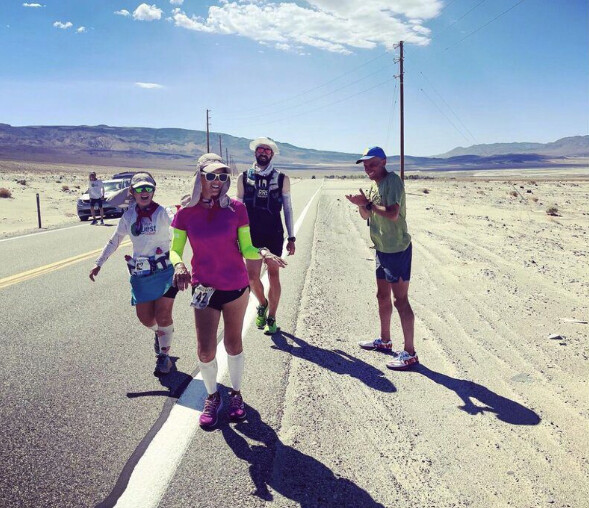
The famously gruelling Badwater 135 starts at Badwater in California’s Death Valley at 85 metres below sea level (the lowest elevation in North America), taking runners 135 miles (216 km) through Death Valley and up Mount Whitney, reaching 2,548m of altitude at its highest point. Temperatures have been known to soar well above 100 F (37 C). The cutoff time is 48 hours, and the average finishing time is 40 hours. As at the Western States Endurance Run, finishers receive a much-coveted belt buckle. There is no prize money for winners. The race is invitational, and 94 athletes started the event this year, with 77 finishing.
Fan favourite and last year’s winner Harvey Lewis, of Cincinnati, finished his 11th Badwater in fourth place with 27:16:05, while his partner, Kelly O’Dell, completed her first Badwater with just over an hour to spare, in 46:57:33.Ultrarunner and race director Bob Becker, 77, of Fort Lauderdale, attempted to become the race’s oldest finisher. In a heroic effort, Becker made it across the line just over the 48-hour cutoff. The athlete made an attempt at the same title last year, but had to drop at mile 50. His dedication won the hearts of fellow athletes and supporters as he struggled to complete the last few steps of the race.
Two Canadians competed in Badwater 135 this year. Norma Roberts, 63, of Calgary, finished in 37:00:13 and was the 11th female, while Rich Peers, 51, of Kitchener, Ont. finished in 44:13:01.
Login to leave a comment

Badwater 135
Recognized globally as "the world’s toughest foot race," this legendary event pits up to 90 of the world’s toughest athletes runners, triathletes, adventure racers, and mountaineers against one another and the elements. Badwater 135 is the most demanding and extreme running race offered anywhere on the planet. Covering 135 miles (217km) non-stop from Death Valley to Mt. Whitney, CA, the...
more...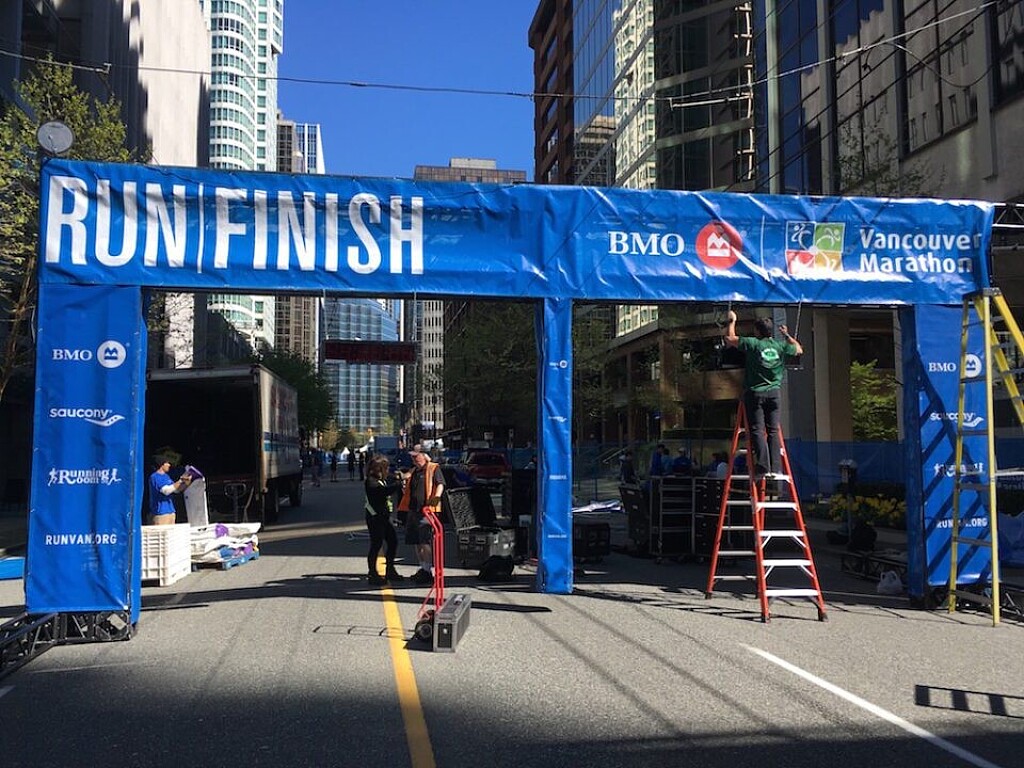
BMO Vancouver Marathon delayed by ‘suspicious device’ on course
Vancouver’s 50th BMO Marathon got off to a rocky start Sunday morning when the event was delayed due to a suspicious device found along the course near Science World. CTV News reports that Vancouver police feel “the device was ‘strategically placed’ to disrupt the BMO Vancouver Marathon Sunday morning, but has been ‘rendered inert.'” Due to the incident, the race started an hour behind schedule.
Police think the device, which was spotted just after 5 a.m. by a volunteer, was planted to cause panic and disrupt the event.

Thankfully, it was a false alarm and the 18,500 runners were able to race safely.
In elite results, Chris Balestrini took the win for the men in 2:23:56. On the women’s side, 2020 Olympian Dayna Pidhoresky won in a new course record of 2:34:30, surpassing Kim Doerksen’s 2:37:00 from 2014. Also under the former record was 2016 Olympian Lanni Marchant, who was second in 2:36:42. Post-race, Pidhoresky said, “It was a bit of a rollercoaster, mentally. Lanni and I were together for most of the first half of the race. She’s a tough competitor, so in no way did I ever think that I had it in the bag. I was working hard the whole time.”
Of his win, Balestrini mentioned the incredible views: “It’s so scenic and so fun. Going along the seawall is just amazing.”
In the half-marathon, Justin Kent and Olympian Ben Preisner crossed the finish line together in 1:04:54. Preisner, who was the top Canadian performer in the men’s marathon in Tokyo, has run consistently well since his first Games.
Post-race, Kent said he’s thrilled to see the running community back together: “It’s always a top-notch event. I heard that there are 3,000 volunteers–it’s amazing–we are super appreciative just to be here.”
In the women’s race, 2:28 marathoner Leslie Sexton continued her winning streak, taking the title in 1:14:56. Sexton, who has currently run the fastest marathon time within the qualifying period, has her eye on the World Championships marathon this summer. Olympian Natasha Wodak was also entered in the half on Sunday, but this time in the role of pacer. She helped her friend Julie Pelly to a personal best of 1:30.
Login to leave a comment

BMO Vancouver Marathon
The BMO Vancouver Marathon is one of Vancouver’s most iconic marathon events. The event features a full marathon, marathon relay, half marathon, 8k run, and streets lined with thousands of spectators. Runners can expect to experience a little bit of everything that Vancouver has to offer as they run a straight course that starts at Queen Elizabeth Park, and finishes...
more...
Eugene Marathon was gone but not forgotten as record number of runners will mark race's return
It’s been three years since the Eugene Marathon and Half Marathon held a live race.
It’s been even longer since the finish line was inside Hayward Field.
Both are back this weekend as the longtime local road race returns Sunday morning to the streets of Eugene and Springfield.
The traditional finish line had to be moved to Autzen Stadium in 2019 due to the construction of the new Hayward Field. The race was canceled in 2020 due to COVID-19, then went virtual in 2021 as the pandemic continued.
“On some days I can’t believe it’s been four years,” race director Ian Dobson said. “And on some days it feels like it’s been forever, like it’s hard to remember it almost.”
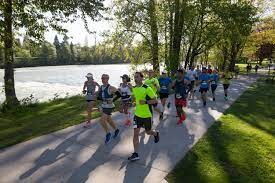
Hard to remember, maybe, but hardly forgotten.
Registration for the 15th Eugene Marathon and Half Marathon and Saturday morning’s Eugene 5K and Kid’s 1K Duck Dash — which both start outside Hayward Field and end on the track and the finish line — has reached record-setting numbers.
According to Dobson, approximately 9,700 have signed up for one of the four races. Broken down, they expect 4,000 for the half marathon, 3,200 for the marathon, 1,500 for the 5K and 1,000 for the Duck Dash.
The race has essentially reached capacity.
"Actually, we don’t even know what it is because we’ve never had to explore that," Dobson said with a laugh. “We’re limiting registration because we want to make sure we can do a great job for the people that are registered, not because we can’t fit more people on the roads.”
The marathon’s previous best year was 2013 when it had 8,561 registered participants.
“We’re really, really excited about that,” Dobson said. “I think some of it is genuine enthusiasm for the event, and a lot of it is also people who are, ‘It’s time to get back to doing stuff.’ ”
The 26.2-mile marathon and 13.1-mile half marathon courses will closely resemble what they were in 2018 with only a few minor changes.
The most obvious is where the marathon and half-marathon participants split off from each other. That point is now on the south side of the Willamette River's Knickerbocker Bridge instead of the north side.
That change eventually redirects marathon runners through downtown Springfield and keeps them off Centennial Boulevard.
“Which I think is a gift to everyone,” Dobson said. “Traffic control, law enforcement, runners, everybody.”
The Eugene Marathon and Half Marathon has always been largely a community event, though professionals and other runners with larger goals have also participated in the race. This year is no different.
There are 80 “elite” runners entered in both races, a designation given to men who have recorded marathon times of 2 hours, 25 minutes or 1:08:00 for the half marathon, and women who have times of at least 2:53:00 or 1:20:00, respectively, since May 1, 2019.
The 2024 U.S. Olympic Marathon Trials qualifying window opened in January and hitting the standard of 2:18:00 for the men and 2:37:00 for the women is certainly on the agenda for many.
For the rest of the runners, the race weekend marks the long-awaited return to road racing. Dobson said at least one-quarter of the registrations have been rolled over from people who initially signed up in 2020 or 2021.
“I think there’s a real excitement to be back to something familiar," Dobson said. “It just feels good.”
Eugene Marathon and Half Marathon
Start: 7 a.m. Sunday at 17th Avenue and Agate Street
Finish: Inside Hayward Field
by Chris Hansen
Login to leave a comment

Eugene Marathon
Consistently ranked in the top 15 races most likely to qualify for Boston by Marathon Guide, the Eugene Marathon is a beautiful, fast, USATF certified race with amazing amenities and an unrivaled finishinside Historic Hayward Field. The Eugene Half Marathon starts alongside full marathon participants in front of historic Hayward Field home of five Olympic trials, ten NCAA championships and...
more...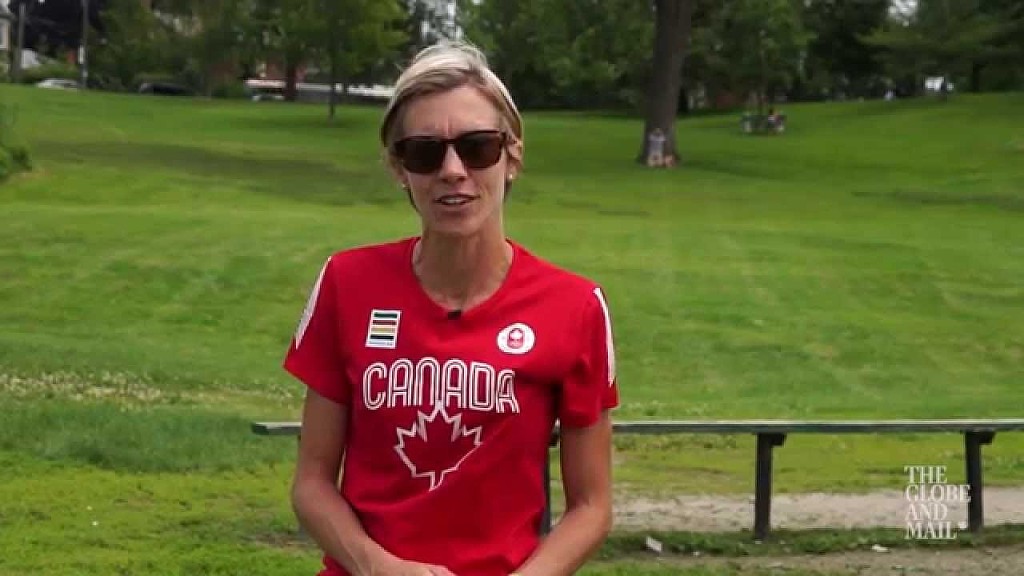
Canadian Sasha Gollish is set to race the TCS New York City Marathon this fall
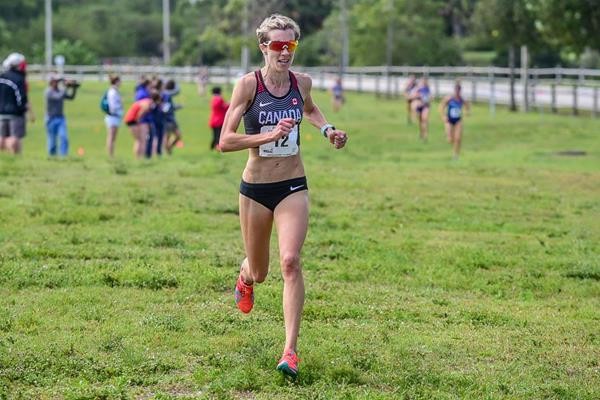
Sasha Gollish will join defending champion Mary Keitany, 2018 Boston Marathon champion Des Linden, 2019 Boston champion Worknesh Degefa, and half-marathon world record-holder Joyciline Jepkosgei on the start line on Staten Island in November.
Sinead Diver of Australia, 2019 Comrades Marathon champion Gerda Steyn of South Africa and Americans Sara Hall, Allie Kieffer, Lindsey Scherf and Kellyn Taylor round out the exceptionally deep field of women athletes racing New York this year.
On the men’s side, notable names include defending champion Lelisa Desisa, 2017 champion Geoffrey Kamworor, Somali-American Abdi Abdirahman, Ethiopians Shura Kitata and Tamirat Tola and American Jared Ward, who finished eighth at this year’s Boston Marathon.
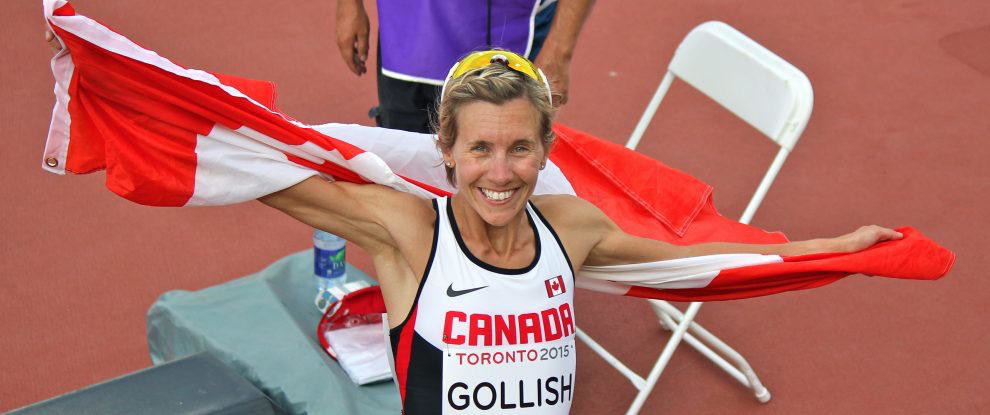
Gollish had a long and successful career in track and cross-country, winning bronze in the 1,500m at the 2015 Pan Am Games before attempting her debut marathon attempt at Berlin last year.
She was forced to drop out just after the 30K mark with severe cramping, but had a very successful comeback at Houston in January, finishing in 2:32 just behind fellow Canadian Malindi Elmore, who was also taking her first stab at the marathon distance.
Gollish, it should be pointed out, has the world championship standard in the marathon (2:37:00), and so far only Lyndsay Tessier has been named to Team Canada. Athletics Canada will announce the full team on August 26.
by Anne Francis
Login to leave a comment
TCS New York City Marathon
The first New York City Marathon, organized in 1970 by Fred Lebow and Vince Chiappetta, was held entirely in Central Park. Of 127 entrants, only 55 men finished; the sole female entrant dropped out due to illness. Winners were given inexpensive wristwatches and recycled baseball and bowling trophies. The entry fee was $1 and the total event budget...
more...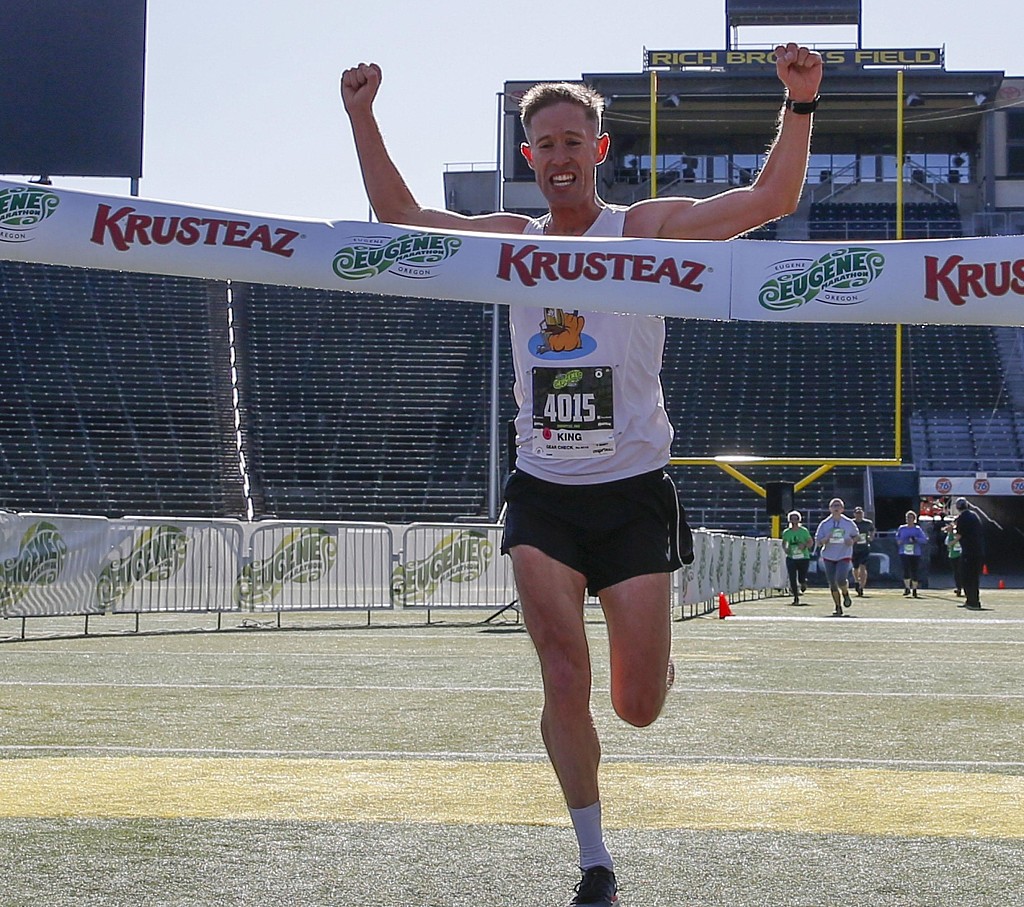
Kyle King a 29-year-old marine won the men’s race at the Eugene Marathon clocking 2:18:04
The Eugene Marathon had to alter its course to accommodate a start and finish at Autzen Stadium this year.Organizers might want to make the change permanent.
Between the men’s and women’s Eugene Marathon and Half Marathon on Sunday, there were 18 new names added to the event’s all-time top-10 lists. And on a cool, sunny morning when it seemed so many were running fast, Kyle King and Jennifer Bigham proved to be the fastest.
King, a 29-year-old marine competing in just his second marathon and first since 2014, won the men’s race in 2 hours, 18 minutes, 4 seconds. It was a 45-second victory and the third fastest time in the 13-year history of the Eugene Marathon.
It was also well below the Olympic Trials ‘B’ standard of 2:19.00 (the ‘A’ standard is 2:15:00).Bigham, a 37-year-old mother of three children under the age of 10, got her first win after running “15-20” marathons since her first in 2004. She also reached the finish line inside unchallenged in 2:41:37 — the fifth fastest finish all-time in Eugene, and also easily met the Olympic Trials ‘B’ standard of 2:45:00 (the ‘A’ standard is 2:37:00).“I’ve been trying for the Trials standard for eight years,” Bigham said.
“This is a dream come true.”It was also the only pre-race goal she set for herself. So imagine her surprise when the Pittsburgh resident found herself in the lead once the half marathoners went off in another direction.
“When they cut off, people started saying ‘You’re the first woman,’ and I was kind of shocked,” said Bigham, a steeplechaser and cross country runner during her collegiate career at Ohio State. “It gave me some confidence but it also made me say ‘Keep it cool, chill out.”
Seattle’s Claire DeVoe was second in 2:42:46 (sixth all-time), Perry Shoemaker of Vienna, VA. was third in 2:43:33 (eighth all-time) and Meaghan Nelson of Boise was fourth in 2:44:36.King, an artillery officer based at Buckley Air Force Base outside of Denver who ran distance at Eastern Washington at Oklahoma, said he didn’t know what to expect in his race after only recently beginning to train for the 26.2-mile race.
“Honestly, it went way better than expected,” King said. “I hadn’t been seriously training for like six years. I really had no idea what type of shape I was in so I guess I was in better shape than I thought.”So much so that he struggled at times to stick to his desired pace.
“I really wasn’t too experienced with the marathon so right around miles 10-13 I was chomping at the bit to start going, but I kept telling myself ‘Wait, wait, it’s too early,’” King said. “Then at mile 15 my legs just wanted to go so I opened it up a little bit.
”Second-place finisher Anthony Tomsich of Vancouver, British Columbia finished in 2:18:49 (fifth all-time), and Patrick Richie of Portland was third in 2:19:16 (seventh all-time).
by Chris Hansen
Login to leave a comment
Eugene Marathon
Consistently ranked in the top 15 races most likely to qualify for Boston by Marathon Guide, the Eugene Marathon is a beautiful, fast, USATF certified race with amazing amenities and an unrivaled finishinside Historic Hayward Field. The Eugene Half Marathon starts alongside full marathon participants in front of historic Hayward Field home of five Olympic trials, ten NCAA championships and...
more...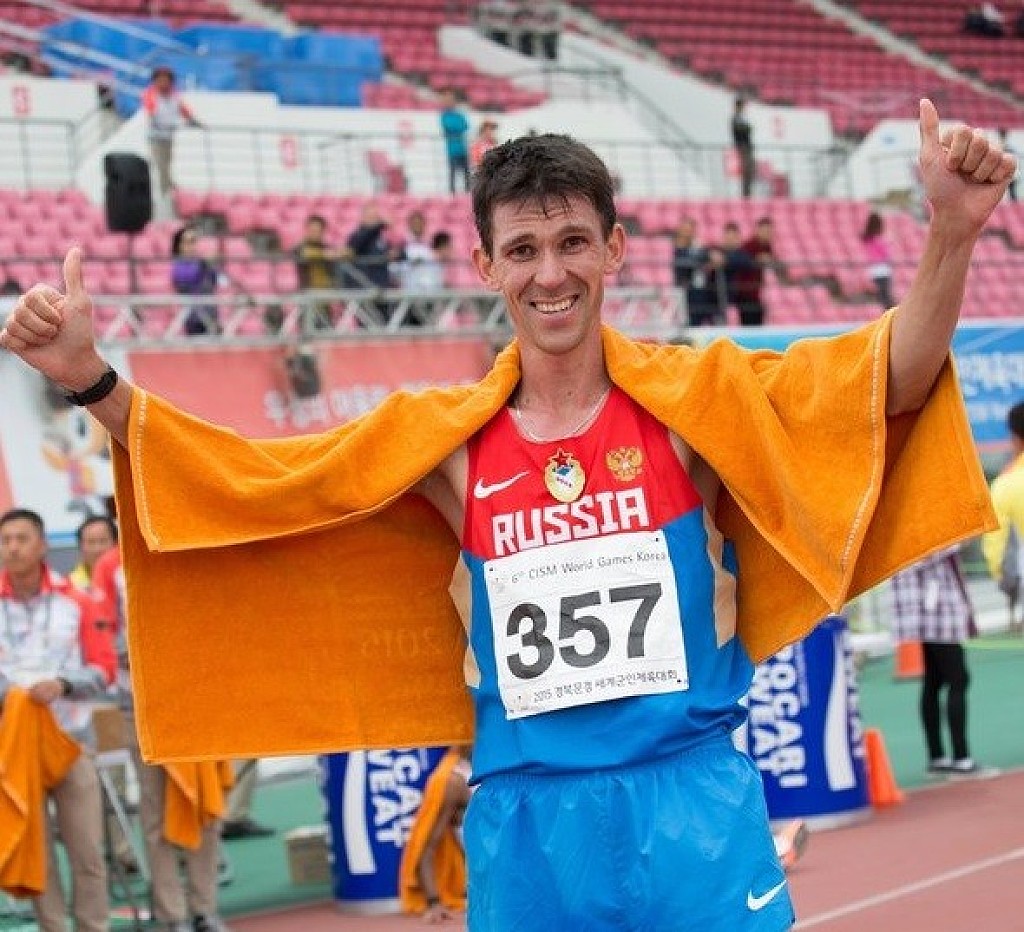
Russian Fedor Shutov and German Tom Gröschel are the favorites for the Metro Düsseldorf Marathon
Fedor Shutov is the favorite for the Metro Marathon Düsseldorf on Sunday. The Russian, who is competing as an Authorised Neutral Athlete (ANA), holds the fastest personal best in the elite field with a time of 2:11:26.
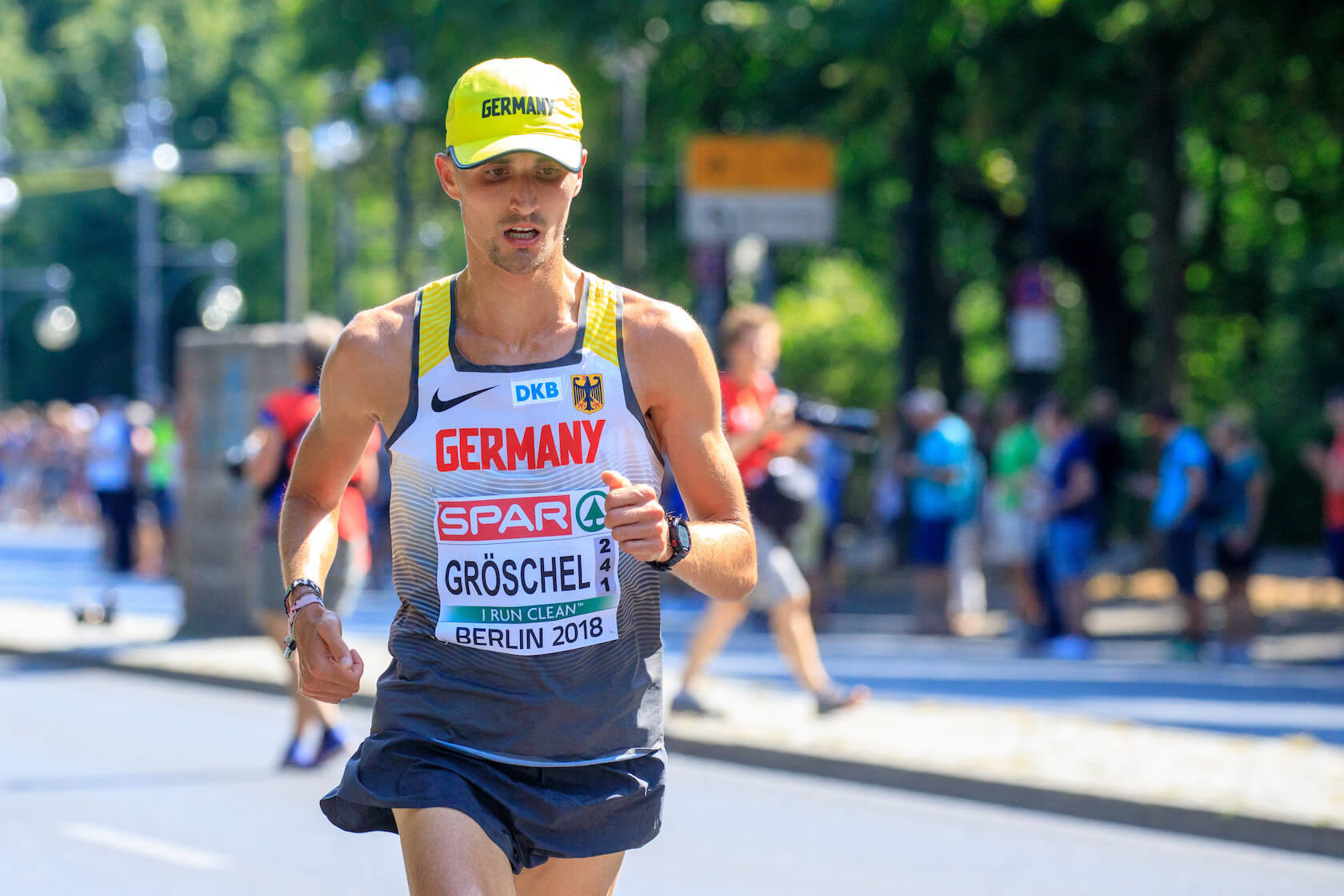
While Tom Gröschel is in the national focus, fellow German Anna Hahner returns to marathon racing on Sunday after a long injury break. Both are the favorites for the national championships, which are included in this race.
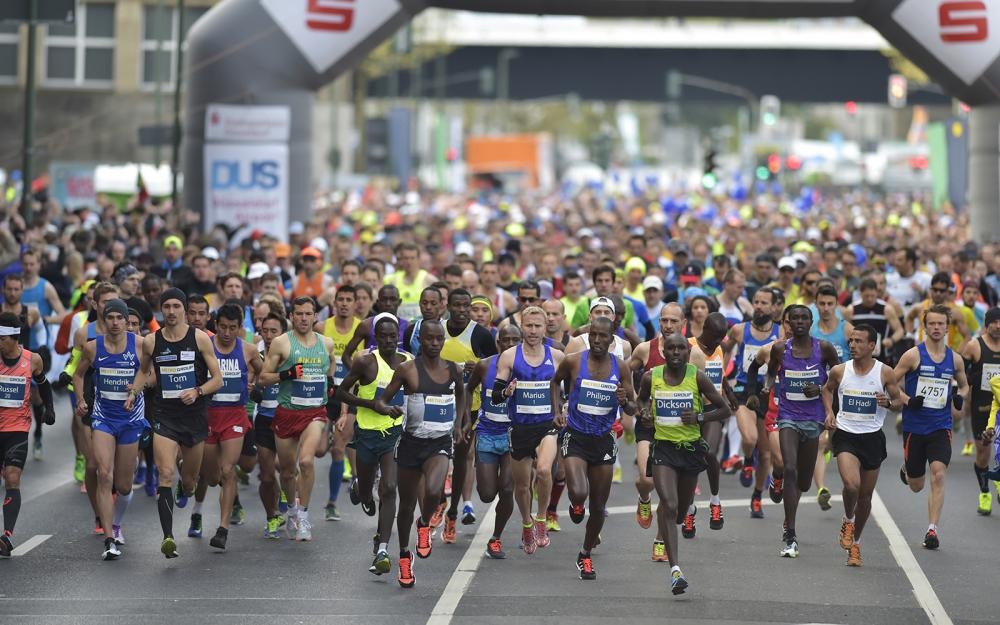
The international qualifying times set by the IAAF for the World Championships in Doha in late September will be a target for a number of athletes in Düsseldorf, among them a group of South Americans. For the men this time stands at 2:16:00 while the women’s mark is 2:37:00.
Including races at shorter distances a record total of around 20,000 runners have entered the 17th edition of the METRO Marathon Düsseldorf. Around 3,500 will compete in the marathon.
Login to leave a comment

Uniper Marathon
The Uniper Dusseldorf Marathon is an annual marathon race in Dusseldorf, Germany in early April normally. Organized by Jan-Henning Winschermann, the race was first held in 2003. The course runs through parts of the city and alongside the banks of the Rhine. It is a double-looped format and the route is generally a flat one. Some 14,000 runners took part...
more...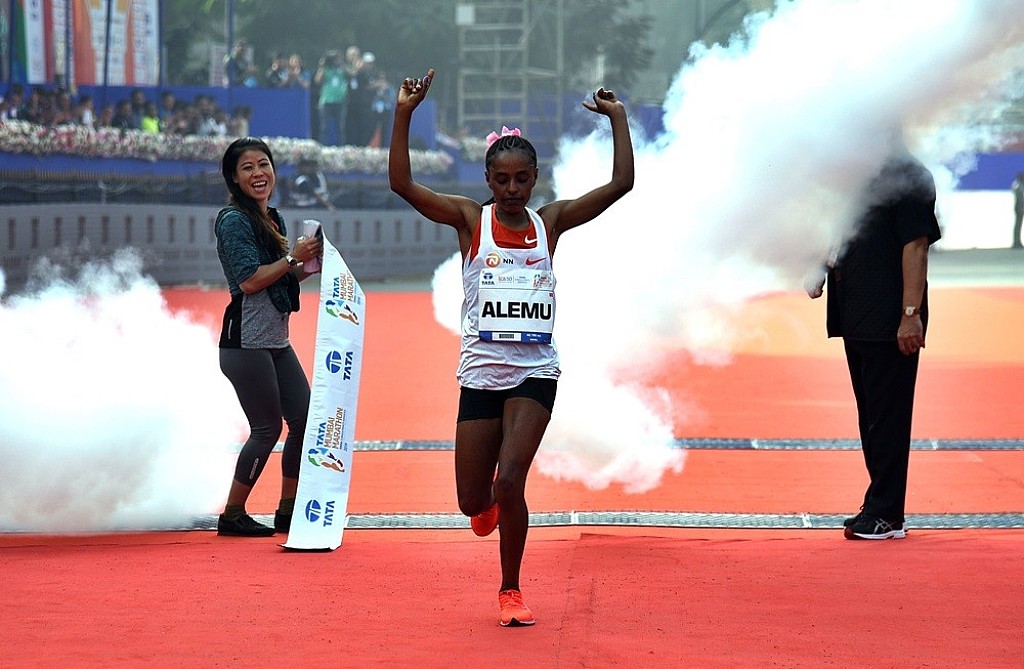
Kenyan´s Cosmas Lagat and Ethiopian´s Worknesh Alemu win the Tata Mumbai Marathon
Cosmas Lagat of Kenya and Worknesh Alemu of Ethiopia surprised pre-race favorites to win the men’s and women’s crowns respectively in the Tata Mumbai Marathon Sunday (Jan 20). They shared in the $405,000US of prize money.
Lagat, winner of the Sevilla Marathon in 2016, made the marathon in this coastal city his own over the last 10k to storm home in 2:09:15, the second-best time in the 16-year history of the race.
The course record of 2:08:35, made in 2016, just barely survived as the long-legged Lagat’s onslaught after he left behind all his rivals.
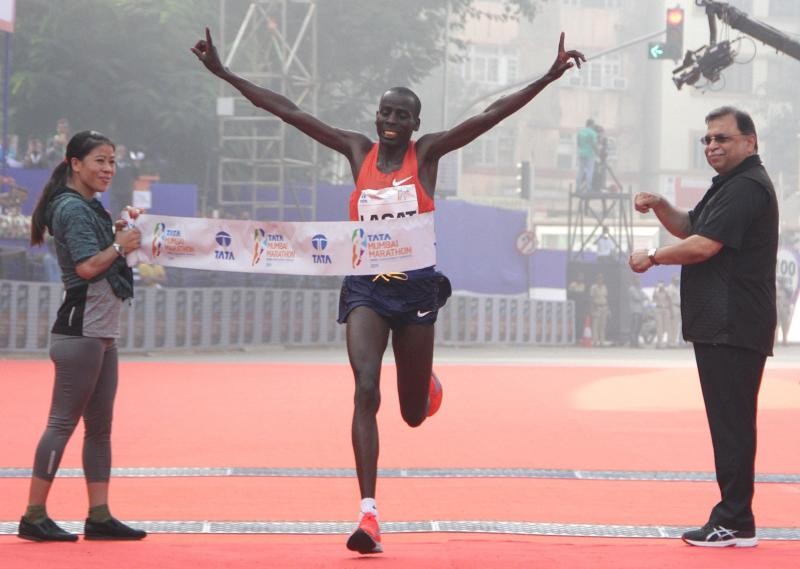
In second place was Aychew Bantie of Ethiopia in 2:10:05 and Akalnew Shumet, also from Ethiopia, took the third spot in 2:10:14. The man with the best time going into the race, Kuma, finished seventh in 2:13:10 after he was with the lead bunch of 10 runners, including some pacers, on the sea link after 19k before the bunch split up.
The women’s race Ethiopian Alemu took charge with 12k left in the race.
She came home all alone well in front of the others, including pre-race favorite, compatriot and defending champion Amane Gobena, in 2:25:45, which was outside the course record.
Gobena came in second in 2:26:09 while another Ethiopian woman, Birke Debele, was third in 2:26:39 to mark a clean sweep for the African nation.
Significantly, India’s Sudha Singh finished on top among the Indian runners while setting at a personal best of 2:34:56, but also dipped well under the qualifying mark of 2:37:00 set by IAAF for the September-October Doha World Championships.
Singh, a 3,000 m steeplechase specialist and winner of gold and silver medals in two Asian Games, finished 8th overall, ahead of former champion Dinkesh Mekash of Ethiopia who finished in 9th spot in 2:36:31. Her earlier personal best in the marathon was 2:35:35 that she clocked while finishing 19th in the 2015 Beijing World Championships.
Login to leave a comment

Tata Mumbai Marathon
Distance running epitomizes the power of one’s dreams and the awareness of one’s abilities to realize those dreams. Unlike other competitive sports, it is an intensely personal experience. The Tata Mumbai Marathon is One of the World's Leading Marathons. The event boasts of fundraising platform which is managed by United Way Mumbai, the official philanthropy partner of the event. Over...
more...
Kenyan Emmanuel Saina set a new South American all-comers record of 2:05:21 at the 34th edition of the Buenos Aires International Marathon
Login to leave a comment
