

Running News Daily
Running News Daily is edited by Bob Anderson and team. Send your news items to bob@mybestruns.com Advertising opportunities available.
Index to Daily Posts · Sign Up For Updates · Run The World Feed
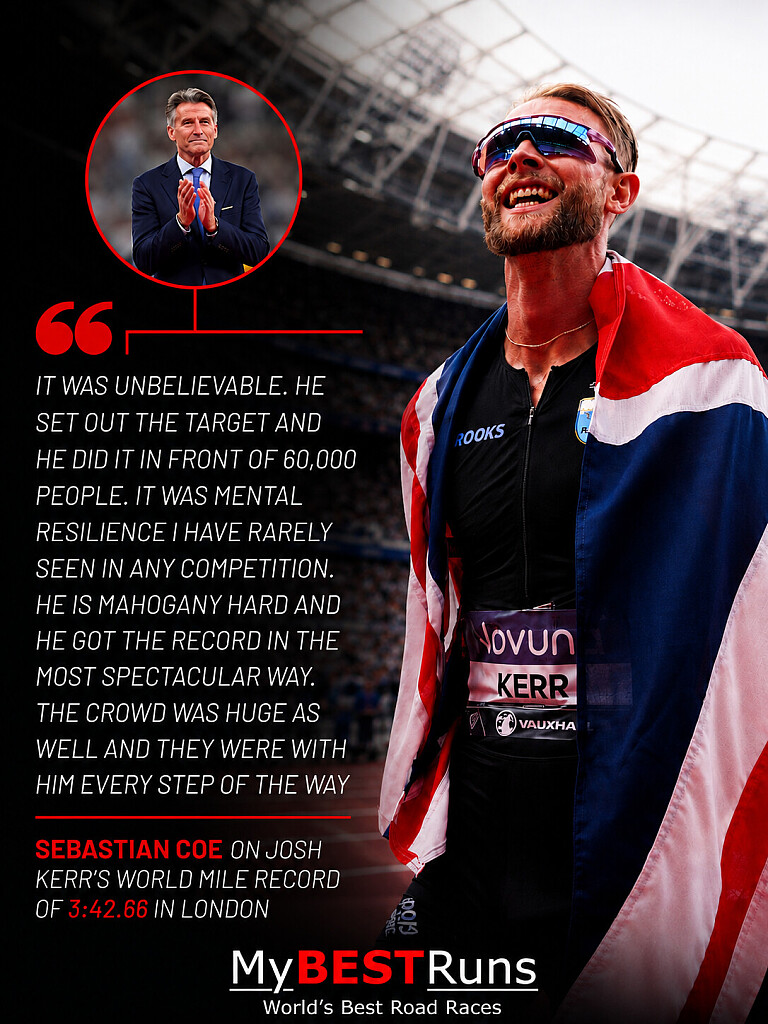


Sebastian Coe Hails Josh Kerr's World Mile Masterpiece: "A Performance Of Rare Mental Resilience

When one of the greatest milers in history stands to applaud a new world record holder, the moment carries extraordinary significance. Sebastian Coe, a three-time world mile record holder and one of Britain's most iconic middle-distance runners, reserved the highest praise for Josh Kerr after his breathtaking 3:42.66 mile world record at the London Diamond League.
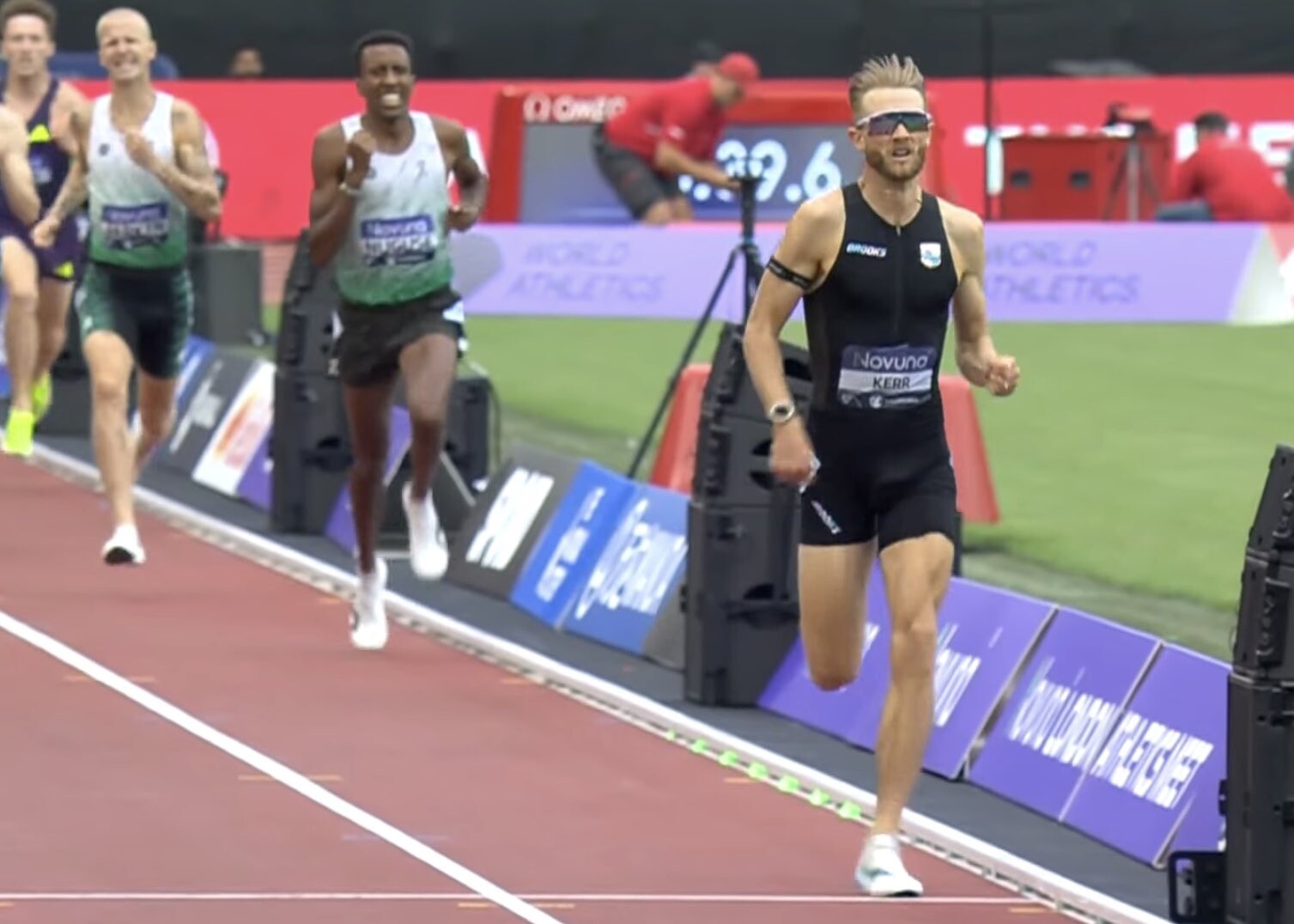
For Coe, this was far more than another record falling. It was a performance that showcased courage, composure, and an unwavering belief under immense pressure.
"It was unbelievable," Coe said. "He set out the target and he did it in front of 60,000 people. It was mental resilience I have rarely seen in any competition. He is mahogany hard and he got the record in the most spectacular way. The crowd was huge as well and they were with him every step of the way."
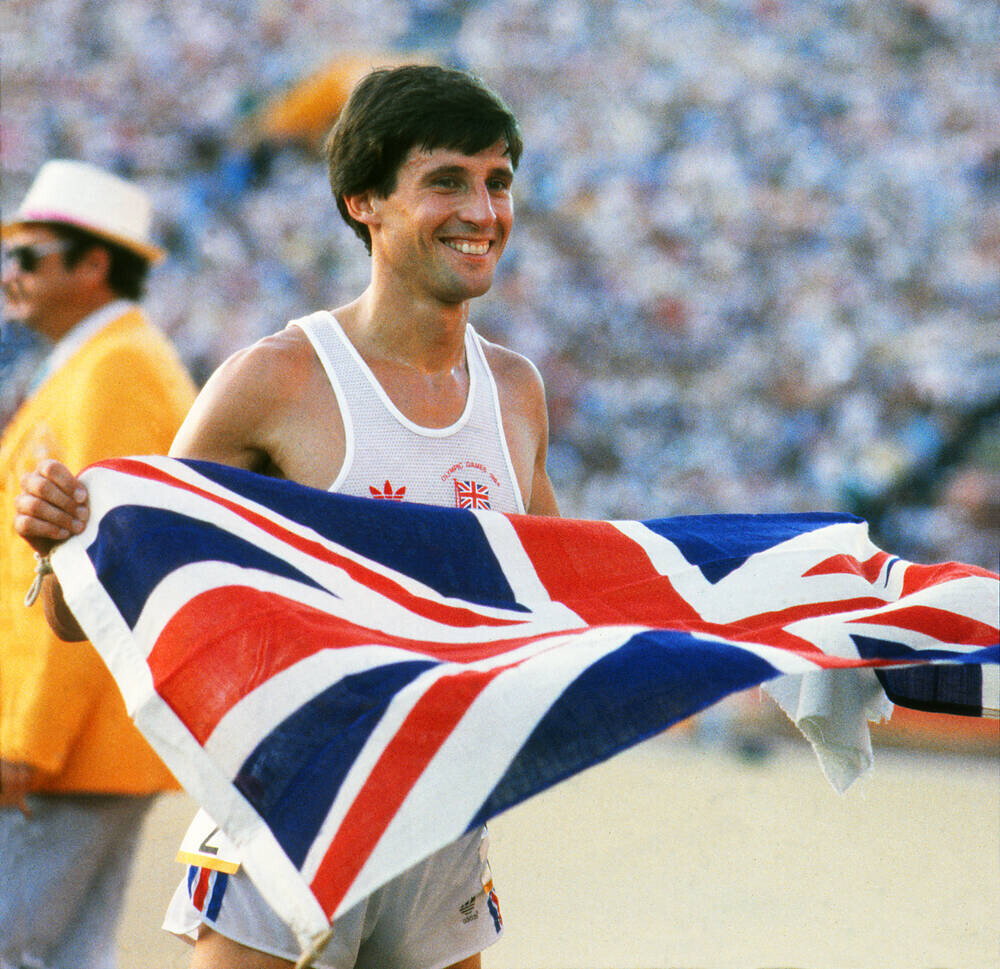
Those words carry exceptional weight coming from a man who understands the demands of rewriting history. Coe himself redefined the mile three times during his legendary career, first clocking 3:48.95 in Oslo in 1979 before improving the mark to 3:48.53 in Zurich and then 3:47.33 in Brussels in 1981. His brilliance inspired generations of British middle-distance runners, and now he has witnessed another chapter being written.
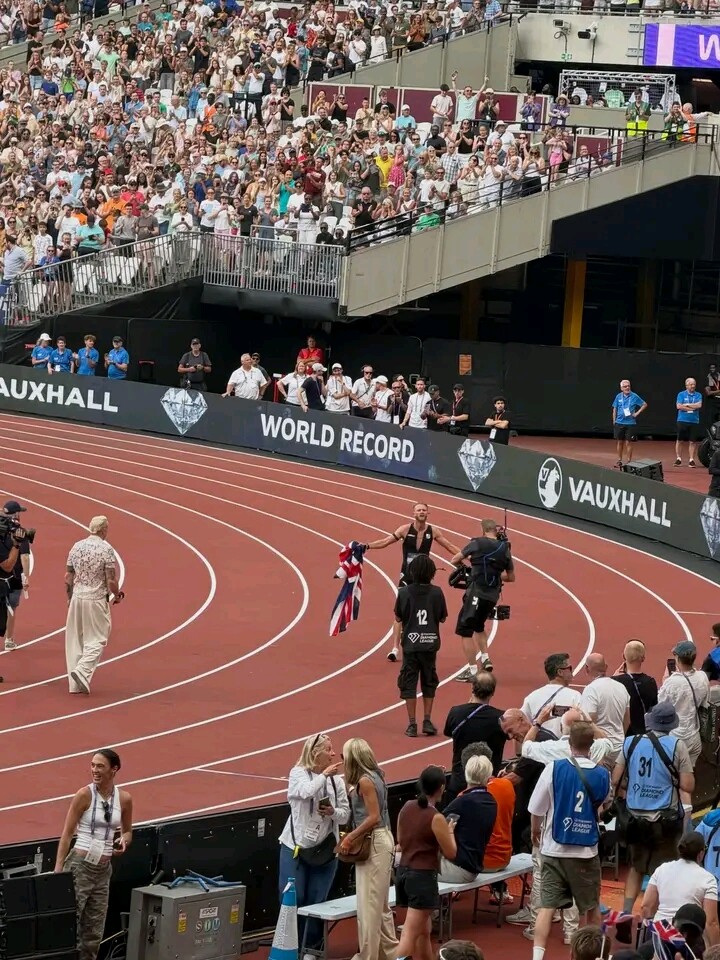
Kerr's achievement was not built on surprise. It was the culmination of meticulous planning, relentless training, and the confidence to publicly declare his ambition before delivering it on the biggest stage. With more than 60,000 fans filling the London Stadium, the Olympic champion embraced the pressure rather than shrinking from it.
Every lap reflected precision. Every stride demonstrated conviction. And when Kerr crossed the finish line in 3:42.66, he not only erased Hicham El Guerrouj's 27-year-old world record but also returned the outdoor mile world record to Great Britain for the first time in nearly three decades.
In doing so, Kerr became the seventh British man in history to hold the outdoor world mile record, adding his name to one of the sport's most prestigious lineages.
What made the performance even more remarkable was its emotional backdrop. Competing in front of a home crowd that roared him through every metre, Kerr transformed the stadium into a theatre of history. The deafening support fueled an unforgettable evening that will be remembered as one of the greatest moments in British athletics.
Coe's tribute perfectly captured what statistics alone cannot explain. World records demand exceptional physical ability, but truly historic performances are forged through resilience, belief, and the willingness to embrace pressure when the world is watching.
Josh Kerr did exactly that. He didn't simply break a record—he produced a performance that united a nation, inspired the next generation, and earned the admiration of one of the greatest milers the sport has ever known.
by Erick Cheruiyot for My Best Runs.
Login to leave a comment
Latest Running News
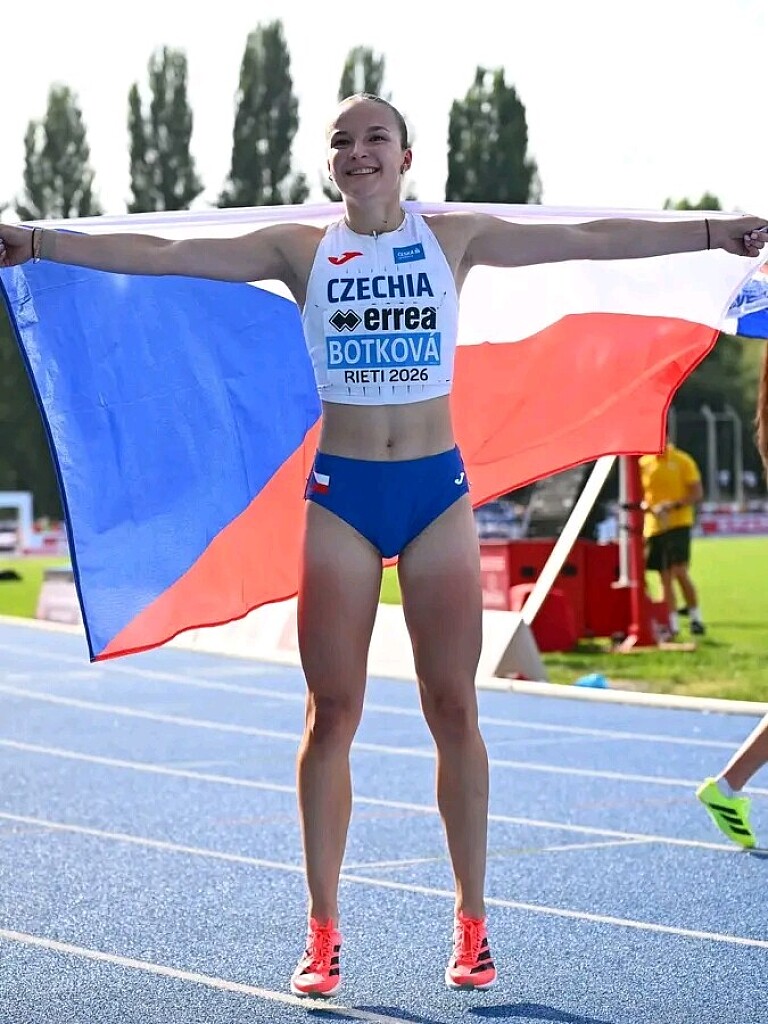
Linda Botková Rewrites History: The 16-Year-Old Who Produced One Of The Greatest Junior Hurdle Performances Ever
Track and field has witnessed the emergence of another extraordinary teenage phenomenon.
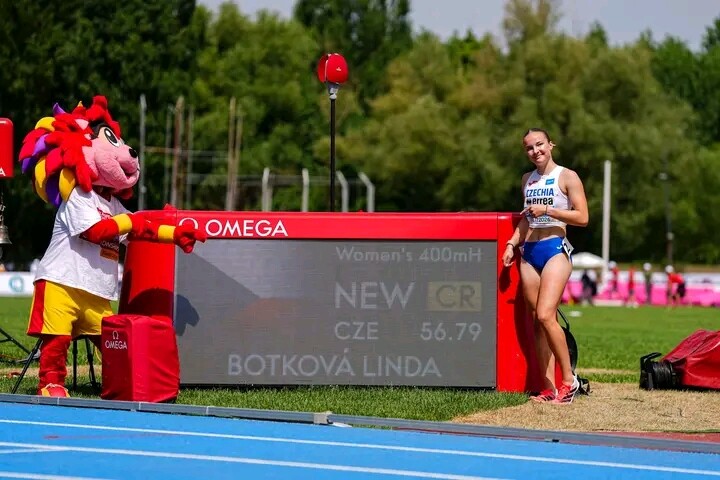
At just 16 years old, Czech sensation Linda Botková produced one of the greatest under-18 performances in the history of the women's 400m hurdles, storming to the European Athletics U18 Championship title in Rieti, Italy, with a breathtaking 55.19 seconds. It was far more than a gold-medal-winning run—it was a performance that rewrote the record books and firmly established her as one of the brightest young stars in global athletics.
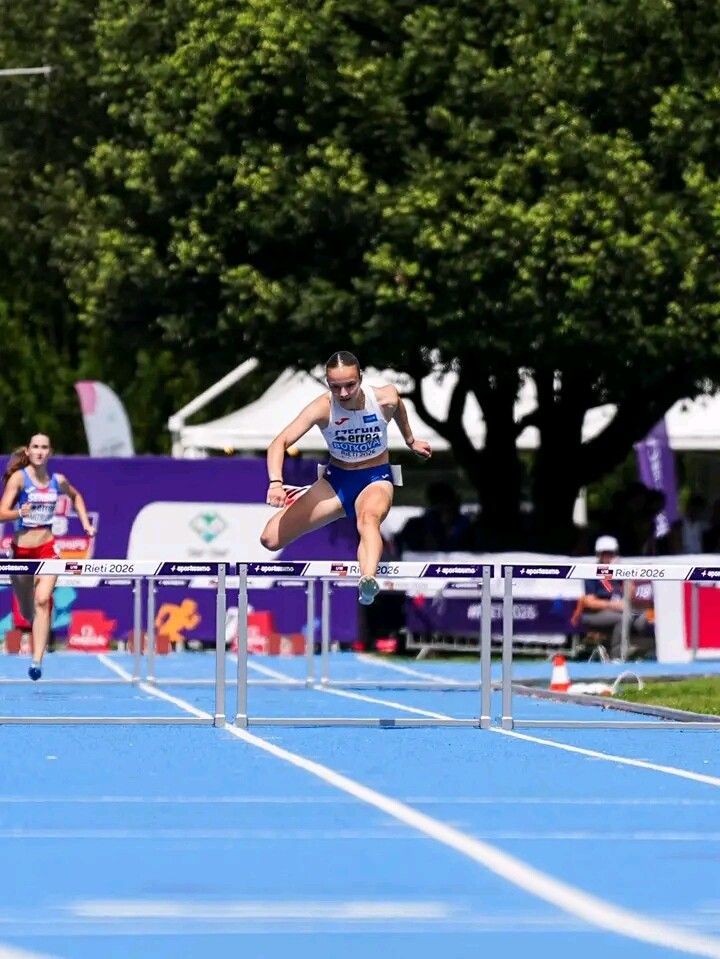
From the gun, Botková displayed remarkable maturity, attacking each hurdle with confidence, precision, and outstanding rhythm. She controlled the race from start to finish before unleashing a powerful sprint over the closing metres to cross the line in a stunning new personal best.
The significance of her performance extends well beyond the championship. Her sensational 55.19 not only earned her the European U18 crown but also produced an astonishing collection of milestones. She shattered the European Under-20 record, set a new European Under-18 best, established a new championship record, and remarkably lowered that championship record in all three rounds of the competition. The time also became the world Under-18 leading performance of the season, a new Czech Under-18 national record, and the second-fastest performance ever recorded by an Under-18 athlete.
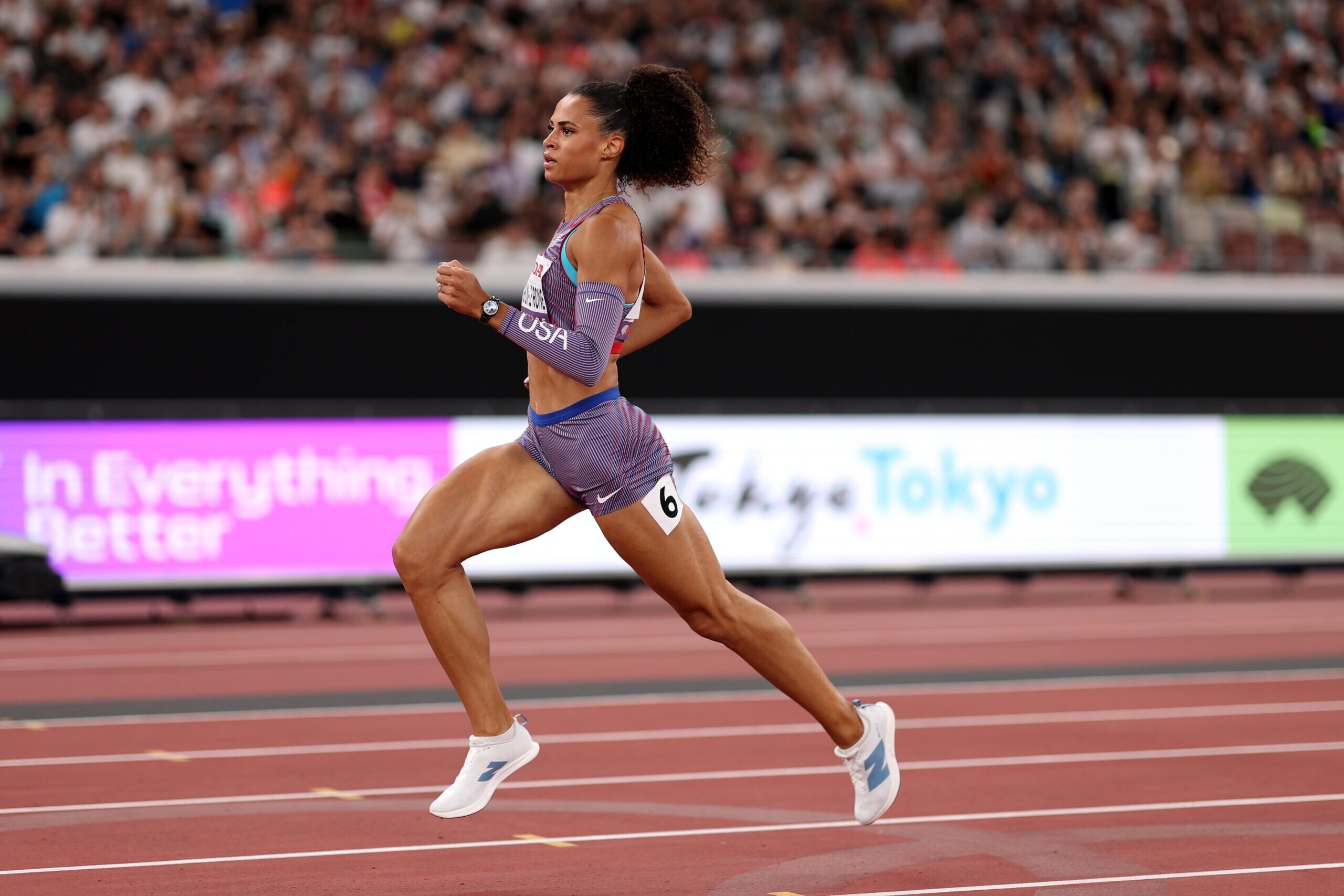
Only world record holder and Olympic champion Sydney McLaughlin-Levrone has ever run faster at the same age—a remarkable statistic that underscores just how exceptional Botková's achievement truly is.
Producing such a performance at only 16 years old, while still developing physically and technically, speaks volumes about her immense talent, discipline, and competitive maturity. It is a race that has instantly elevated her from a promising prospect to one of the most exciting young athletes in world track and field.
For Czech athletics, Botková's triumph represents the arrival of a potential global superstar. For the rest of the athletics world, it is a powerful reminder that a new generation is already pushing the boundaries of what seemed possible.
Winning European Under-18 gold was a remarkable achievement. Doing so in 55.19 seconds, while rewriting multiple records and becoming the second-fastest Under-18 400m hurdler in history, transformed the race into one of the greatest junior performances the event has ever witnessed.
by Erick Cheruiyot for My Best Runs.
Login to leave a comment
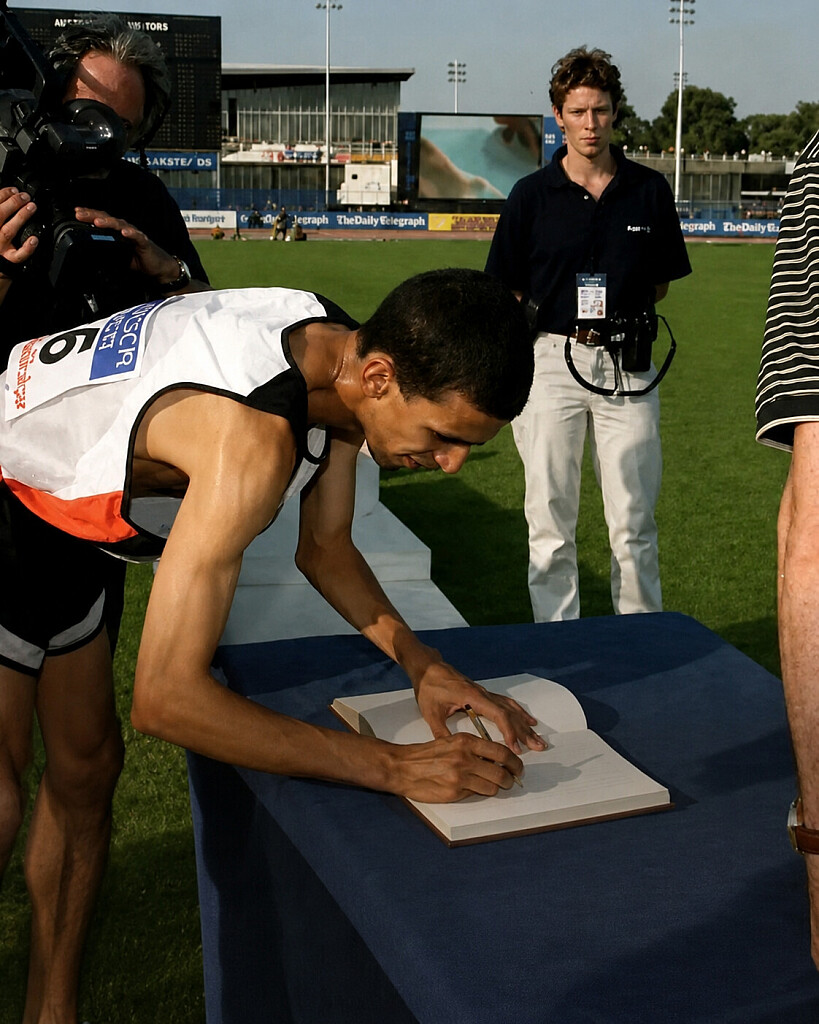
The Red Book Of Legends: How One Signature Became The Mile's Greatest Tradition
Long before digital records, social media posts, and instant celebrations, the Emsley Carr Mile created a tradition that has quietly preserved the history of one of athletics' most prestigious races. It is a tradition built not on medals or trophies, but on ink, leather, and the signatures of greatness.
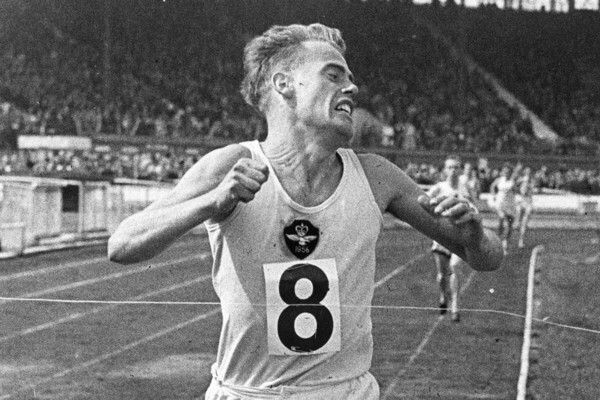
Since the inaugural Emsley Carr Mile in 1953, every champion has been invited to sign the same red leather book—a remarkable archive that has become one of the sport's most treasured historical artifacts.
Bound in luxurious Moroccan leather, the book is far more than a register of winners. It is a living timeline of middle-distance excellence, carrying the names of the athletes who redefined what humanity believed was possible over the mile.
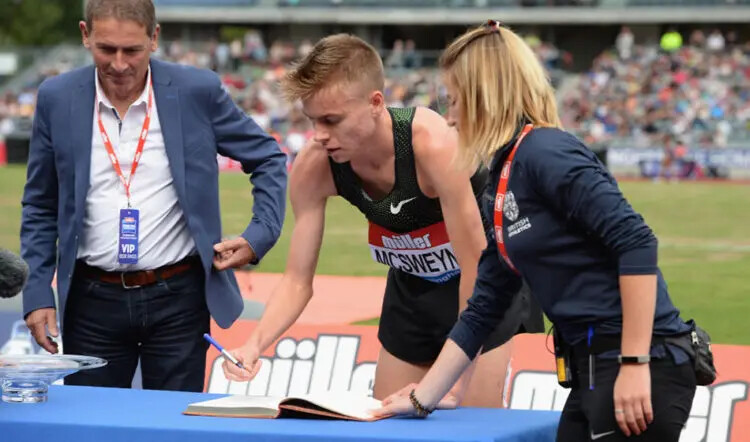
As the pages of the original volume filled, a second volume was introduced in 1980. Yet the tradition never changed. Each year's champion adds another signature, another chapter, another piece of history to a legacy spanning more than seven decades.
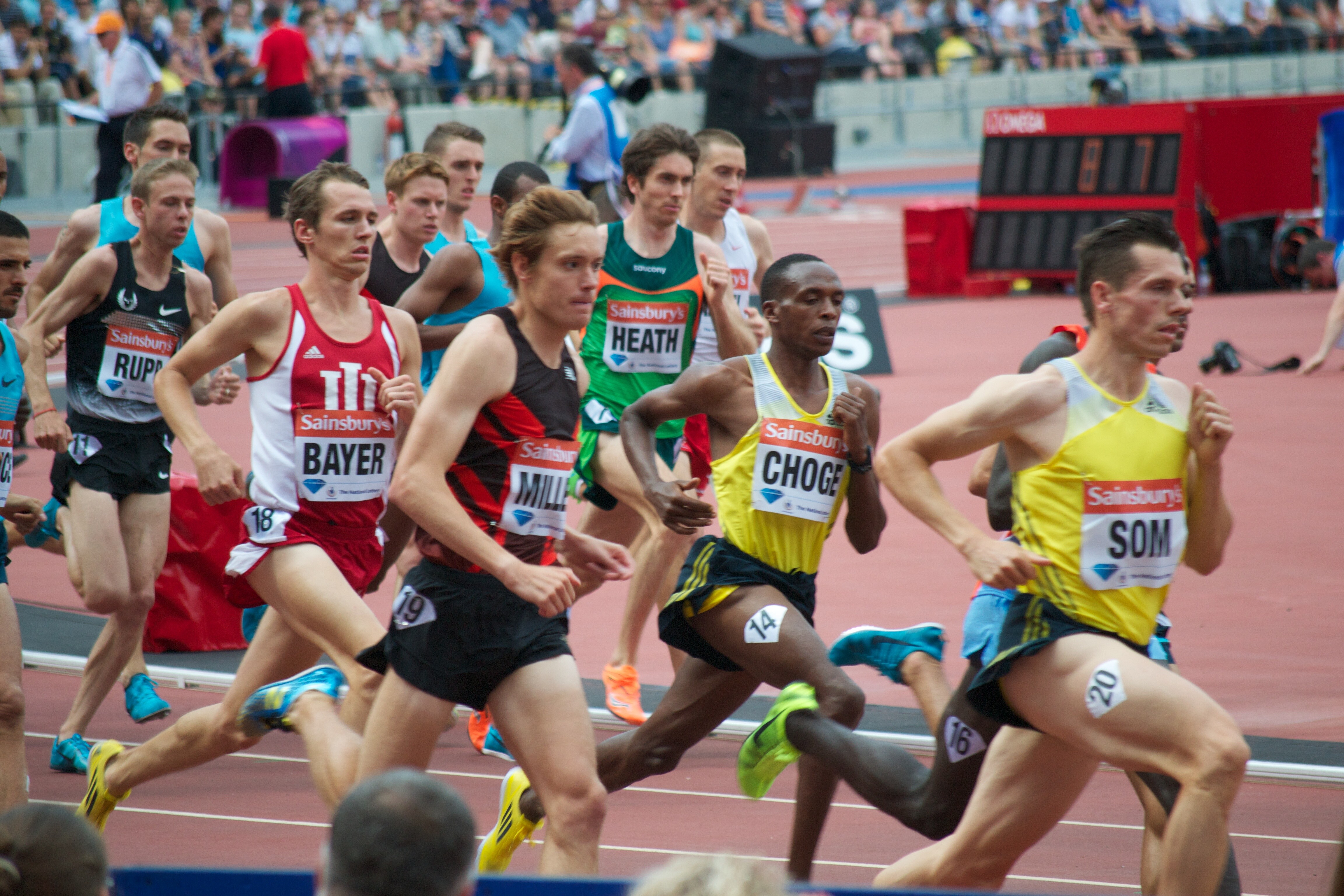
Within its pages are some of the greatest names athletics has ever known. Kenyan icon Kip Keino signed it. Steve Ovett left his mark. So did Sebastian Coe, Haile Gebrselassie, and the incomparable Hicham El Guerrouj. Altogether, the book bears the signatures of eleven Olympic champions and seven men who have held the world mile record—a remarkable concentration of sporting greatness.
Yet one name is conspicuously absent.
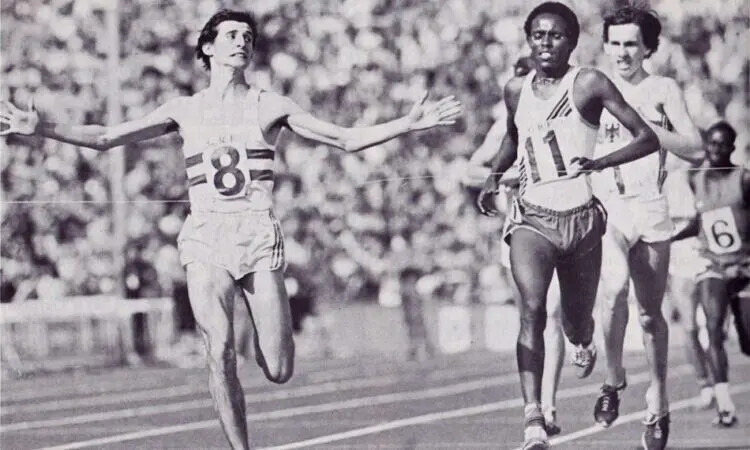
Roger Bannister, the first man to break the four-minute mile, never signed the famous book.
Ironically, the Emsley Carr Mile had originally been established to encourage athletes in their pursuit of the once-impossible four-minute barrier. But by the time the race was held for only the second time, Bannister had already etched his own name into sporting immortality with his historic run at Oxford's Iffley Road in May 1954. His career soon moved in a different direction, and the opportunity to sign the book never came. Decades later, the empty space where his signature might have appeared remains one of the sport's most fascinating "what if" stories.
While legends came and went, one man quietly built a record that still stands unmatched.
British runner Ken Wood remains the most successful athlete in Emsley Carr Mile history, winning the race four times between 1954 and 1961. Consequently, his signature appears more frequently than any other in the historic volume—a lasting reminder of an athlete whose achievements deserve far greater recognition.
The race itself has journeyed across some of Britain's most iconic athletics venues, moving from White City to Crystal Palace, then Alexander Stadium, and today the London Stadium. Through every relocation, one constant has remained: the red leather book has travelled alongside it, faithfully collecting the signatures of every new champion.
With each passing year, the book grows heavier—not because of its pages, but because of the extraordinary history they contain.
Now, another chapter has been written.
Fresh from producing one of the greatest mile performances ever witnessed, Josh Kerr has added his name to the same legendary book signed by generations of champions before him. His signature now sits alongside the sport's greatest icons, but with one remarkable distinction: the time attached to his victory is faster than any recorded above it.
The names have changed. The venues have changed. The records have fallen.
But the tradition has endured.
For more than seventy years, one red leather book has silently chronicled the evolution of the mile, reminding every new champion that while records may eventually be broken, true sporting legacy is written one signature at a time.
by Erick Cheruiyot for My Best Runs.
Login to leave a comment

He Thought He Was Running A 5K—He Finished As The 10K Champion: The Astonishing Story Of 9-Year-Old Kade Lovell
Sport has a remarkable way of producing moments that no scriptwriter could ever imagine. On September 21, 2019, one simple mistake transformed an ordinary children's road race into one of the most unforgettable stories in distance running.
Nine-year-old Kade Lovell of St. Cloud, Minnesota, arrived at the St. Francis Franny Flyer in Sartell expecting to compete in the 5-kilometre race. Like any young athlete, his goal was straightforward—cover the 3.1-mile course, cross the finish line, and celebrate another successful outing.
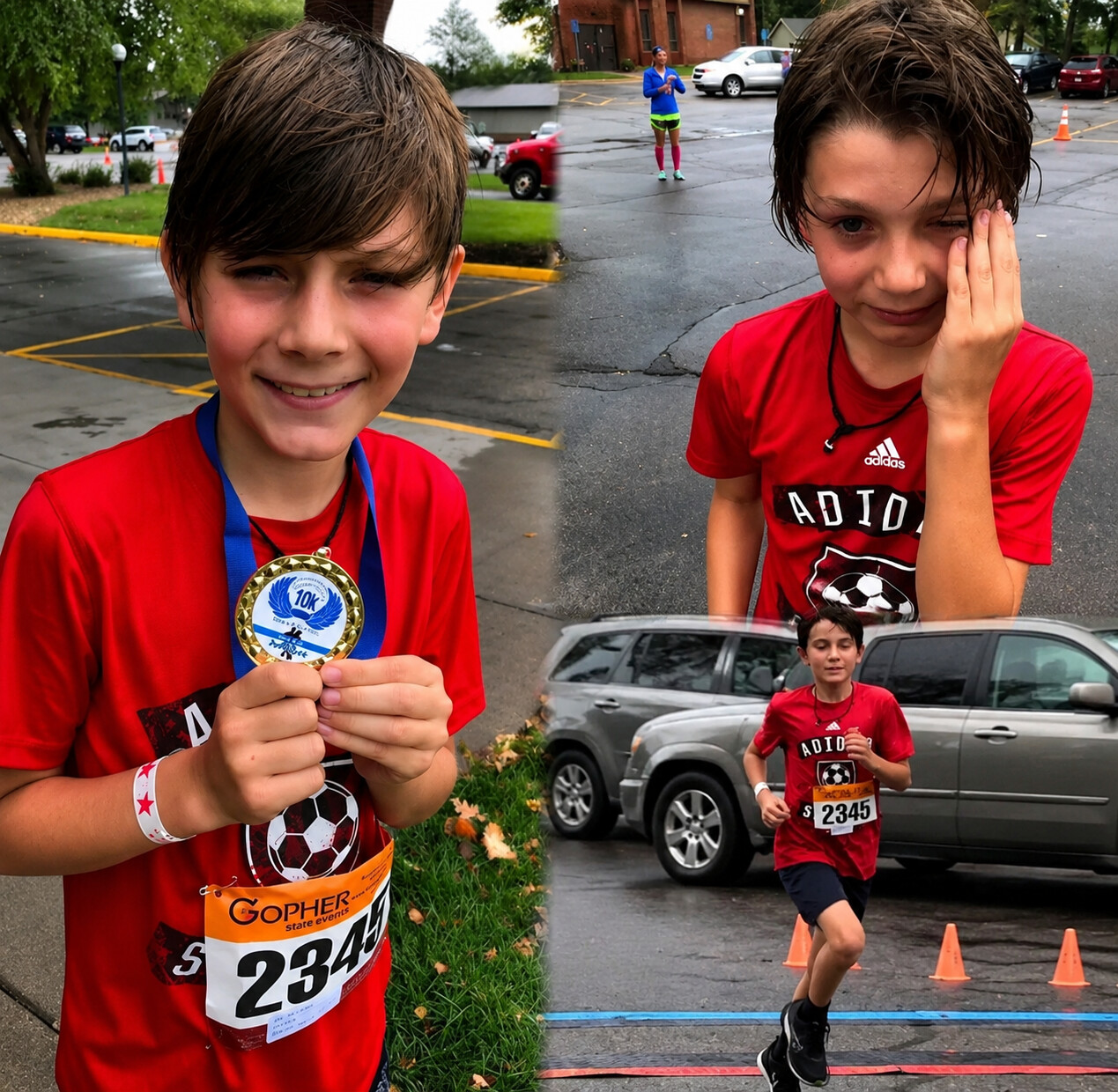
Instead, fate had something far more extraordinary in store.
Partway through the race, a volunteer accidentally directed Kade onto the 10K course rather than the 5K route. Trusting the instruction, the young runner continued without hesitation, unaware that he had just doubled the distance he was supposed to run.
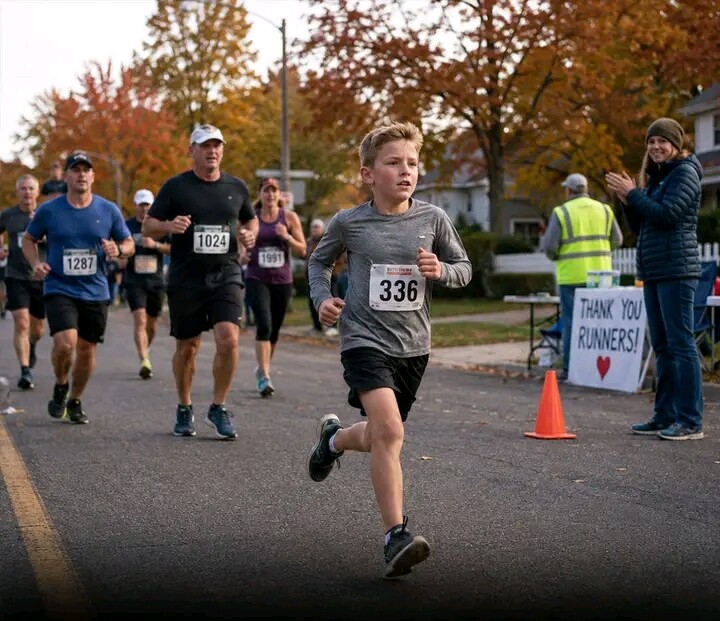
At the finish area, his mother, Heather Lovell, waited anxiously for her son to appear. As the minutes ticked by, concern quickly turned into panic. When Kade failed to reach the 5K finish, she feared he had become lost or, worse, suffered an injury. Race officials were alerted, and a search began as everyone tried to locate the missing youngster.
Then came the astonishing news.
Officials informed Heather that Kade wasn't missing at all.
He was leading the 10K race.
Running well beyond the distance he had planned to cover, Kade displayed remarkable composure and endurance as he powered through the longer course. Near the turnaround point, he realized something wasn't right, but by then he had already committed to the route and simply kept running.
What followed stunned everyone watching.
Kade crossed the finish line in 48:17.4, not merely completing his first-ever 10-kilometre race but winning it outright. He finished approximately one minute ahead of the second-place finisher, a 40-year-old woman, claiming the overall title against a field of much older and more experienced runners.
The young champion later summed up the incredible achievement with the innocence only a child could deliver.
"I accidentally won it."
Those four words perfectly captured one of road running's most remarkable stories.
Although Heather's first reaction was frustration and relief after believing her son had disappeared, those emotions quickly gave way to immense pride once she learned what had actually happened.
The result was no mere stroke of luck. Kade had been running competitively from a very young age and trained consistently, giving him the fitness and confidence to handle a challenge far greater than anyone expected that day.
What began as a routine 5K became an unforgettable display of courage, resilience, and youthful determination. A wrong turn unexpectedly led Kade Lovell into the 10K race, but his talent carried him all the way to the top of the podium.
Sometimes, the greatest victories aren't the ones we plan—they're the ones we discover by refusing to stop when the road suddenly becomes longer than expected.
by Erick Cheruiyot for My Best Runs.
Login to leave a comment
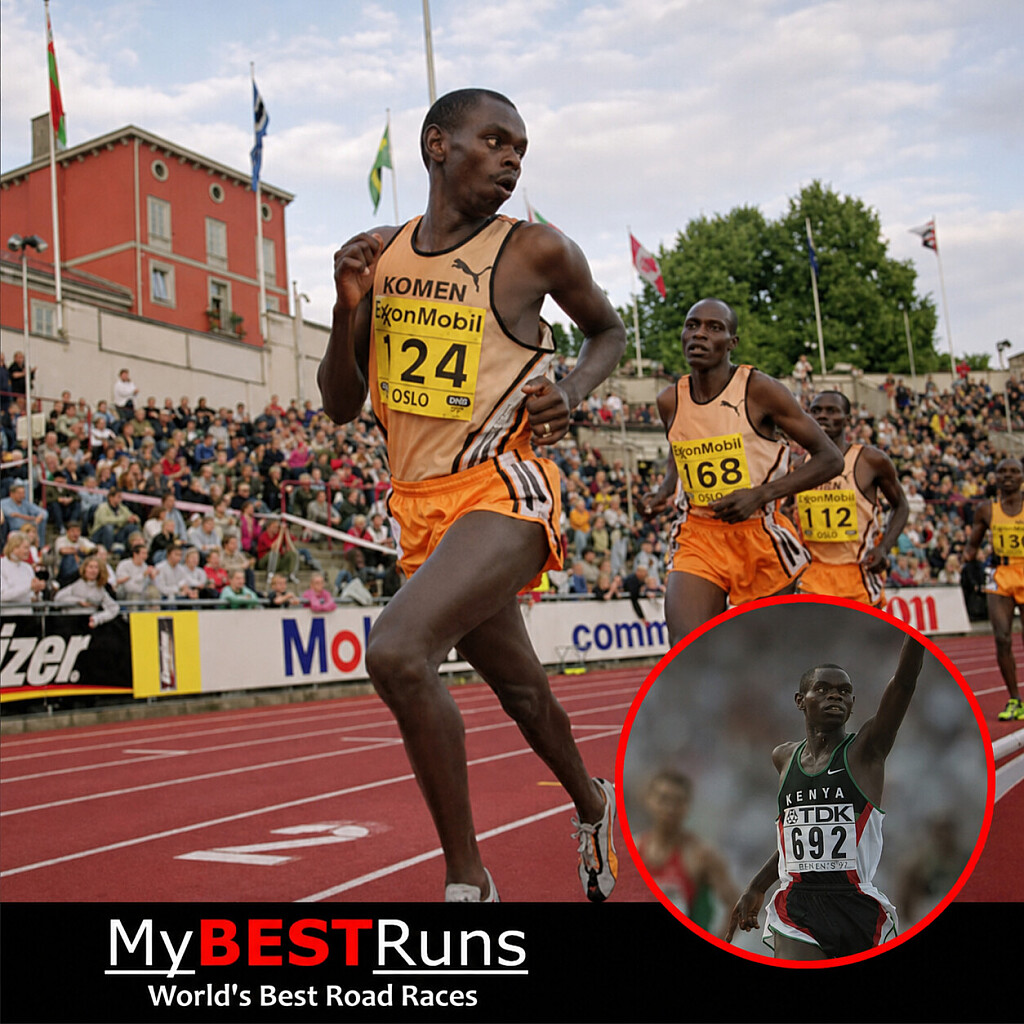
Daniel Komen's Timeless Masterpiece: The Night A Kenyan Legend Redefined Human Endurance
Exactly 29 years ago today, athletics witnessed a performance so extraordinary that it continues to stand among the greatest distance-running feats ever produced.
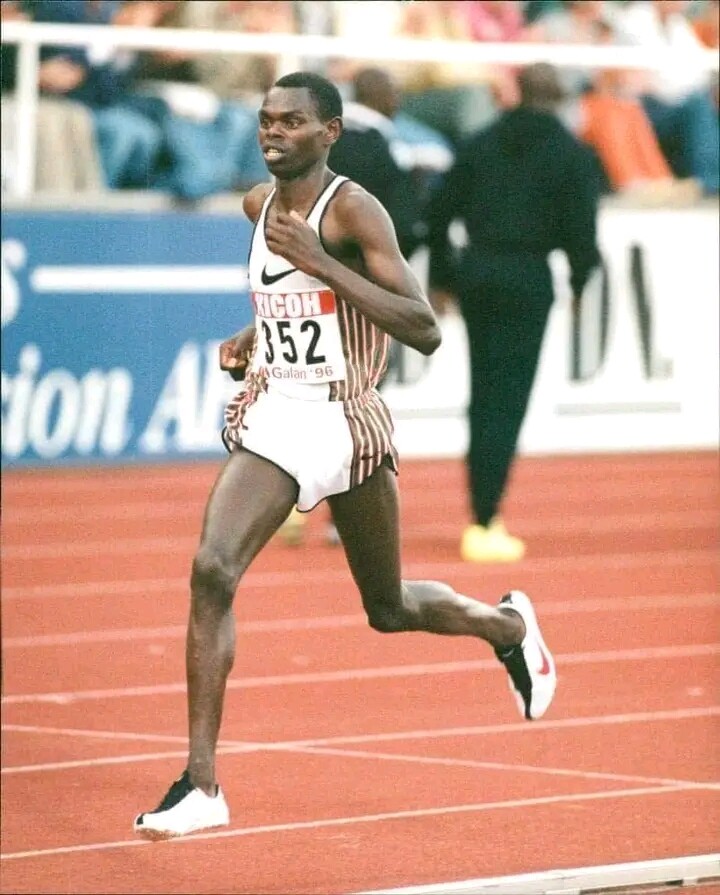
On July 19, 1997, under the lights of the KBC Night of Athletics in Hechtel, Belgium, Kenya's Daniel Komen delivered a race that seemed to defy the limits of human endurance. In an era long before carbon-plated shoes and today's advanced sports science, Komen ran a staggering 7:58.61 for two miles, becoming the first athlete in history to break eight minutes for the distance.
What made the performance even more astonishing was the way it unfolded. Komen effectively ran two consecutive sub-four-minute miles, covering each mile in approximately 3:59.3—an achievement that had never been accomplished within a single race. It was a display of relentless speed, flawless rhythm, and remarkable resilience that left the athletics world in awe.
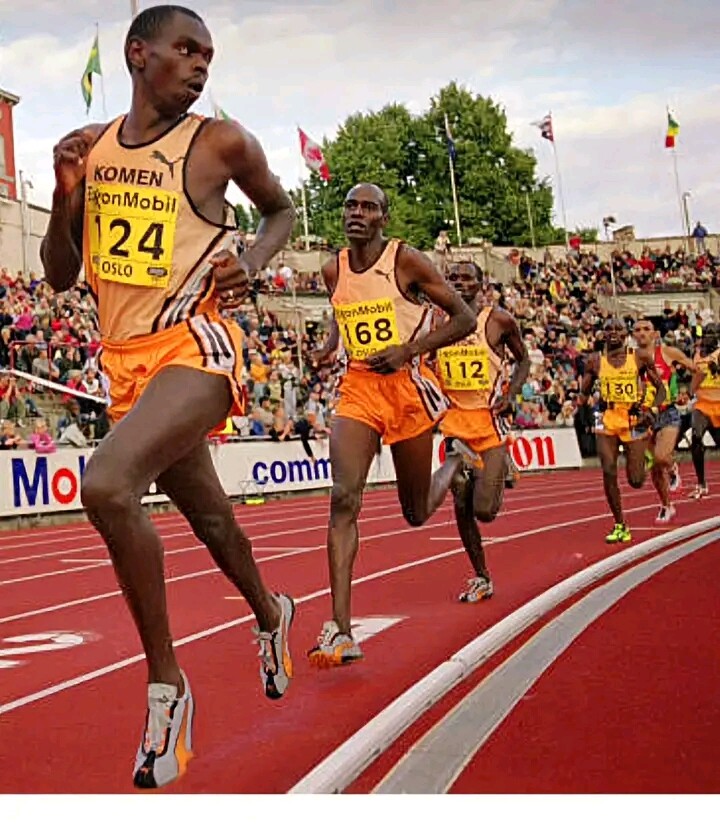
For the next 26 years, Komen's world record stood untouched despite generations of world-class middle- and long-distance runners attempting to rewrite history. It was only in 2023 that Norway's Jakob Ingebrigtsen finally lowered the mark to 7:54.10, bringing an end to one of the longest-standing records in elite distance running.
Yet even with the record no longer in his possession, Komen's legacy remains unmatched in one extraordinary respect. He is still the only athlete in history to have broken the eight-minute barrier for two miles more than once—a testament to a level of consistency and excellence that has never been replicated.
Komen's Hechtel masterpiece was more than a world record. It was a statement that greatness is measured not only by the clock but by the courage to venture into territory where no one has gone before. His breathtaking run raised the standard for distance running and inspired generations of athletes to believe that seemingly impossible barriers exist only until someone is bold enough to break them.
Nearly three decades later, Daniel Komen's unforgettable night in Belgium remains one of Kenya's finest moments on the global athletics stage—a performance that continues to command admiration, celebrate Kenyan excellence, and remind the world why some achievements transcend time.
by Erick Cheruiyot for My Best Runs.
Login to leave a comment
When Greatness Recognises Greatness: Sebastian Coe Bows to Keely Hodgkinson and Calls Her His Hero
There are victories that earn medals, and then there are victories that earn the admiration of legends.
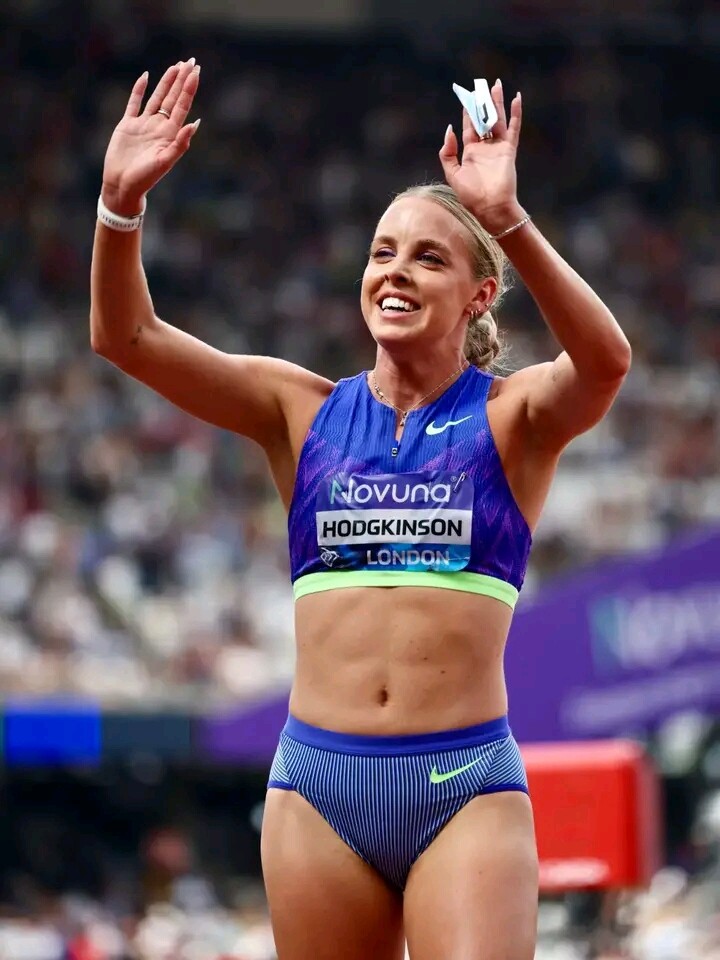
On a memorable evening at the London Diamond League, Olympic 800m champion Keely Hodgkinson produced another masterclass on home soil, but it was what happened after the finish line that left an even deeper impression.
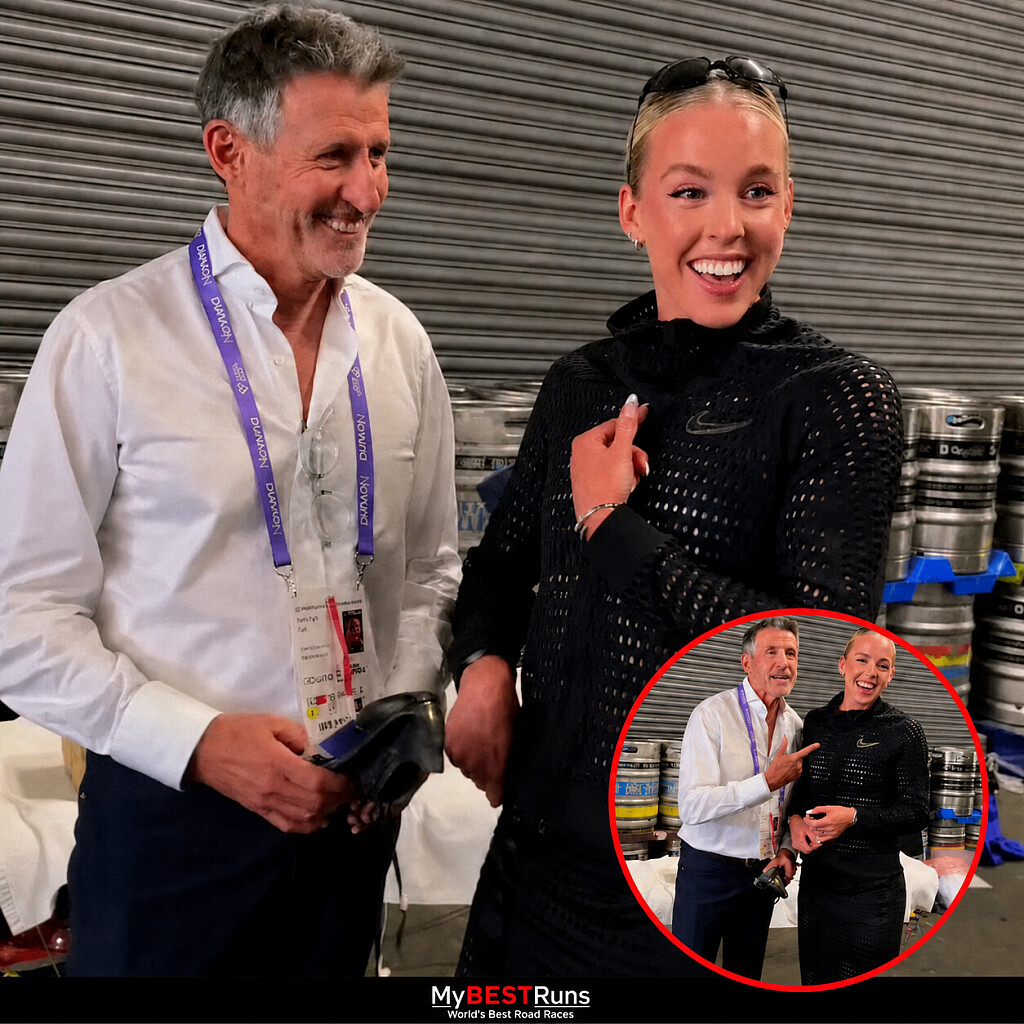
As the celebrations unfolded, World Athletics President Sebastian Coe delivered one of the most heartfelt tributes an athlete could ever receive. The two-time Olympic 1500m champion bowed before Hodgkinson and declared, "This is my hero."
It was a remarkable gesture from one of Britain's greatest middle-distance runners, a man whose own career inspired generations. Yet, in that moment, Coe made it clear that Hodgkinson's character and achievements had earned his highest respect.
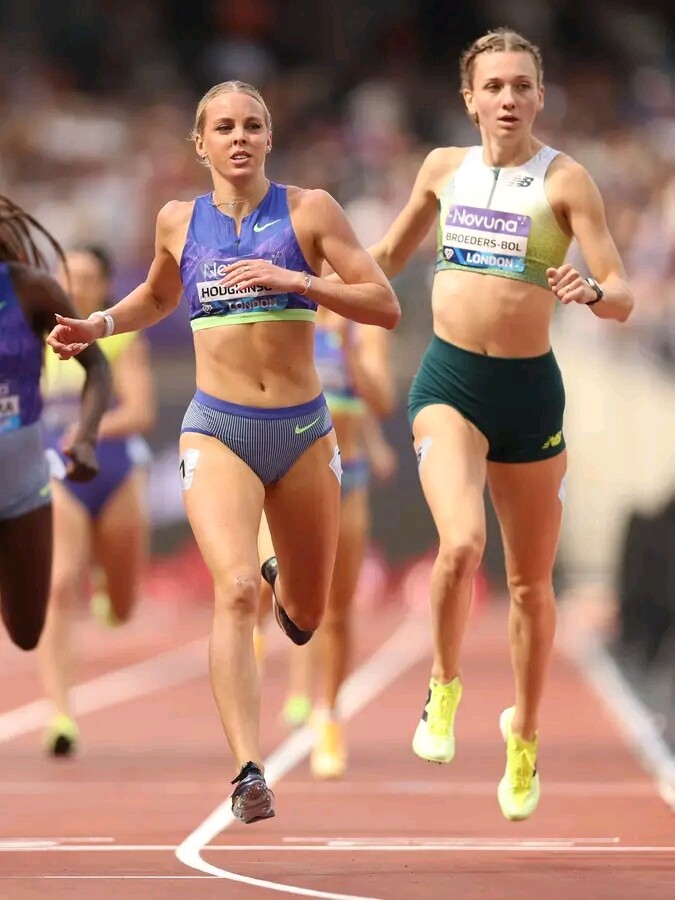
The 24-year-old thrilled the packed London Stadium by winning the women's 800m in a commanding 1:56.21. Despite relentless pressure from Dutch star Femke Bol in the closing stages, Hodgkinson remained composed, powering through the finish to secure a statement victory in front of an ecstatic home crowd.
The performance carried even greater significance because it came after an outdoor season that had been disrupted by injury. Questions surrounded her return, but Hodgkinson answered them in the most convincing way possible—by defeating one of the world's strongest fields with authority and reminding everyone why she remains one of the premier middle-distance runners of her generation.
For Coe, the performance was about far more than the stopwatch.
He has repeatedly praised Hodgkinson's humility, determination and authenticity, previously describing her on the UNTAPPED podcast as one of the most genuine and dedicated athletes in the sport. His emotional honor in London reflected not only admiration for an Olympic champion, but also respect for the resilience, professionalism and character she continues to display on and off the track.
Moments like these transcend medals and records. They remind the sporting world that greatness is measured not only by victories but by the example an athlete sets.
Hodgkinson left London with another Diamond League triumph. More importantly, she left with something few athletes ever receive—the public admiration of a sporting icon who simply bowed his head and acknowledged excellence.
Sometimes, the loudest applause comes without a single word. Sebastian Coe's bow said everything.
by Erick Cheruiyot for My Best Runs.
Login to leave a comment
