

Running News Daily
Running News Daily is edited by Bob Anderson and team. Send your news items to bob@mybestruns.com Advertising opportunities available.
Index to Daily Posts · Sign Up For Updates · Run The World Feed
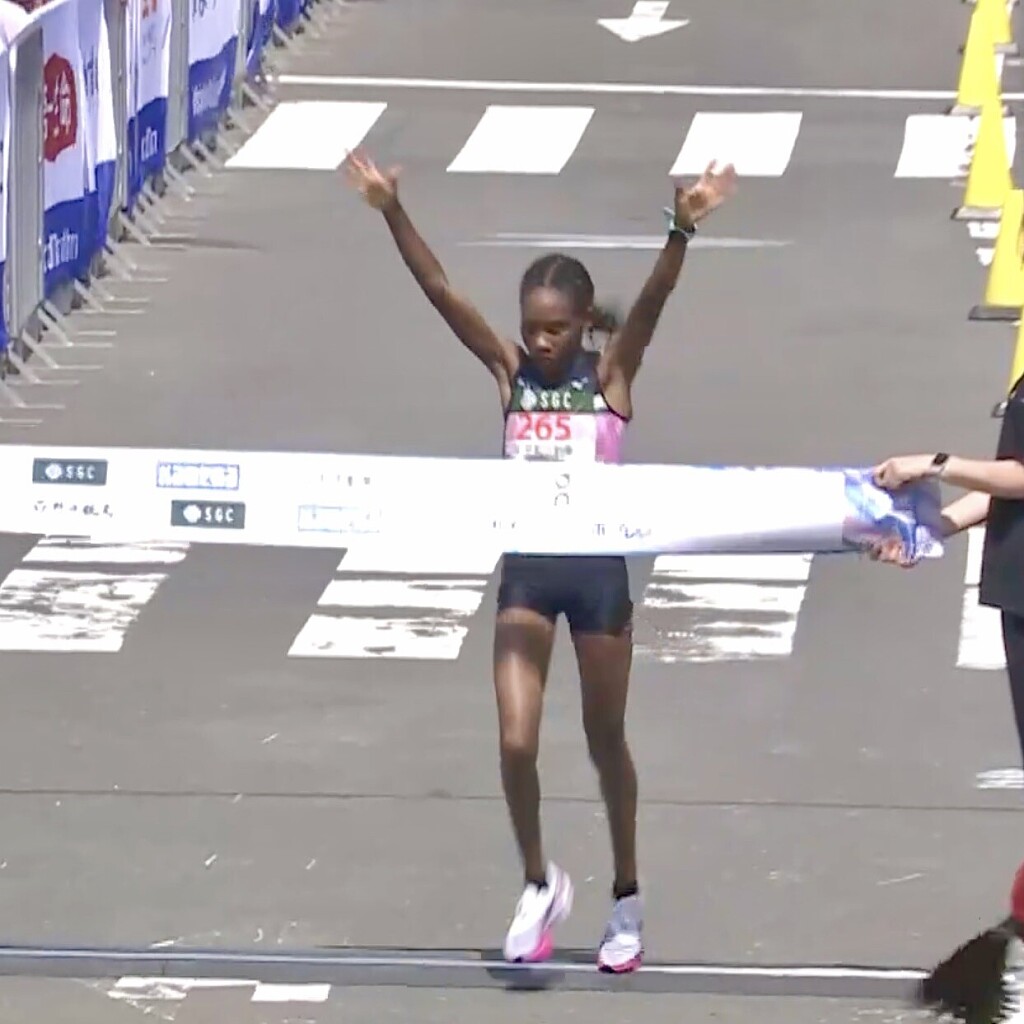


World half bronze medalist Kamulu and Tokyo olympic marathon trials winner Nakamura take humid Hokkaido Marathon

2018 World Half Marathon Championships bronze medalist Pauline Kamulu Kaveke and Tokyo Olympics marathon trials winner Shogo Nakamura survived tough conditions, 22˚C at the start with 82% humidity, sunny skies and almost no wind, to take the 2024 Hokkaido Marathon Sunday in Sapporo.
Both running their debuts, Kamulu and Shiho Tachizako ran steadily around 2:28-flat pace surrounded by a group of amateur men, staying together until just before 30 km when Tachizako started to fade. Kamulu struggled with the hot conditions late in the race and could only watch the clock as sub-2:30 slipped away, looking very tired as she crossed the finish line in 2:31:04.

Tachizako faded to 2:33:47 for 2nd, but even that was good enough to easily beat the rest of the field, with last year's 2nd-placer Ayano Ikeuchi 3rd in 2:35:26 in her third marathon so far this year.
Nakamura had said pre-race that he didn't care about time and was only focused on getting in the win, and that was exactly how he ran, ignoring the early action and staying near the front of the main pack until he made his initial move at 30 km.
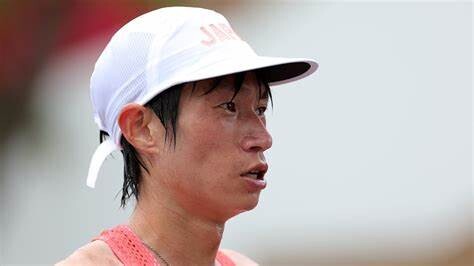
That got rid of the pretenders, with only 2:08~2:10 men Takeshi Soma, Atsumi Ashiwa and Masaru Aoki, and 2:18 amateur Ryuichi Yoshioka getting back on board. Soma countered with an attack after 34 km, but Nakamura quickly reeled him back in and made his real move with 5 km to go.
Yoshioka was the only one to try to follow, but it was all Nakamura the rest of the way, scoring his first win since his Olympic trials victory in 2019 with a 2:15:36 for 1st. Yoshioka was elated in the home stretch with a 2:16:28 for 2nd, a 2-minute PB and the only runner male or female in the top 10 to PB. Nakamura's toughest competition still standing when he dropped his big move, Ashiwa out kicked Soma and Aoki for 3rd in 2:16:40.
Osaka Marathon winner Kiyoto Hirabayashi ran Hokkaido as a training run, jogging in to a 70th-place finish in 2:41:19. The next-fastest man on paper after Hirabayashi with a 2:07:58 win in Beppu-Oita in February, Japan-based Ethiopian Derese Workneh was a DNF near 30 km.
by Brett Larner
Login to leave a comment

Hokkaido Marathon
The Hokkaido Marathon, inaugurated in 1987 with just 439 participants, has evolved into one of Japan's premier marathons, attracting nearly 20,000 runners annually. Held every August in Sapporo, Hokkaido, it stands as the nation's only full-scale summer marathon. The race commences and concludes in Sapporo's Odori Park, offering a scenic course that weaves through the city's landmarks, including the vibrant...
more...Latest Running News
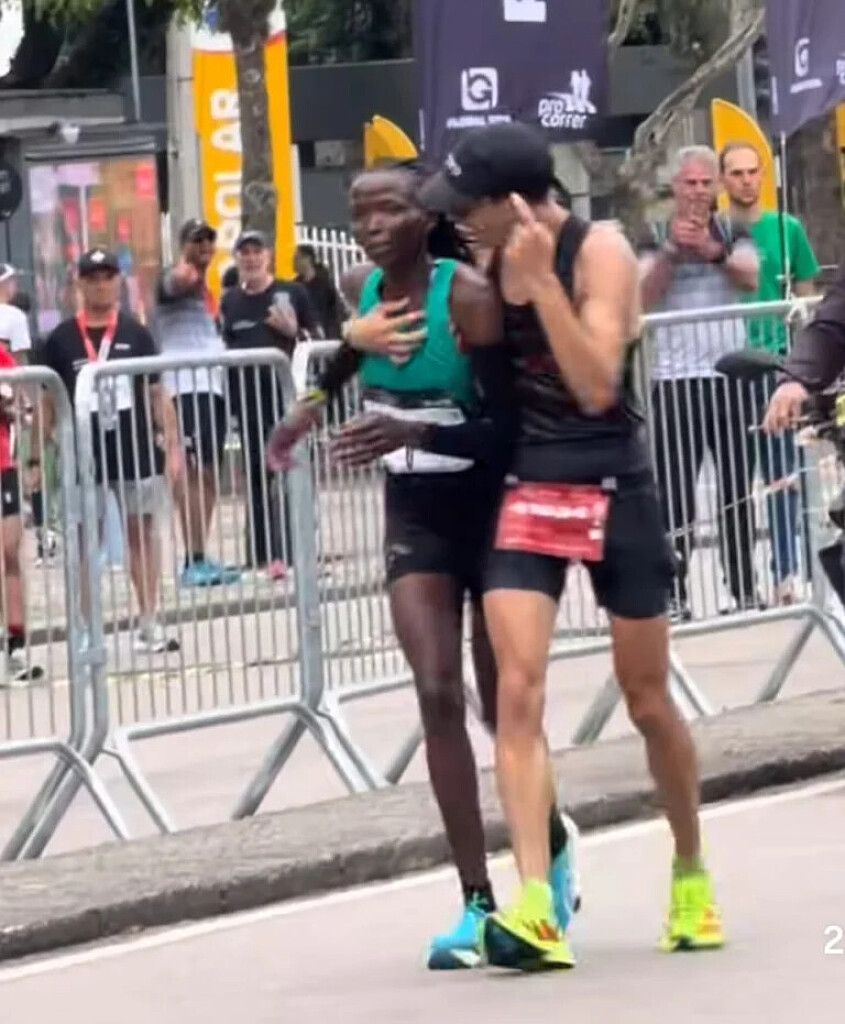
400 Metres From The Finish, Humanity Took Over! Brazilian Runner’s Selfless Act Leaves Athletics Fans Emotional.
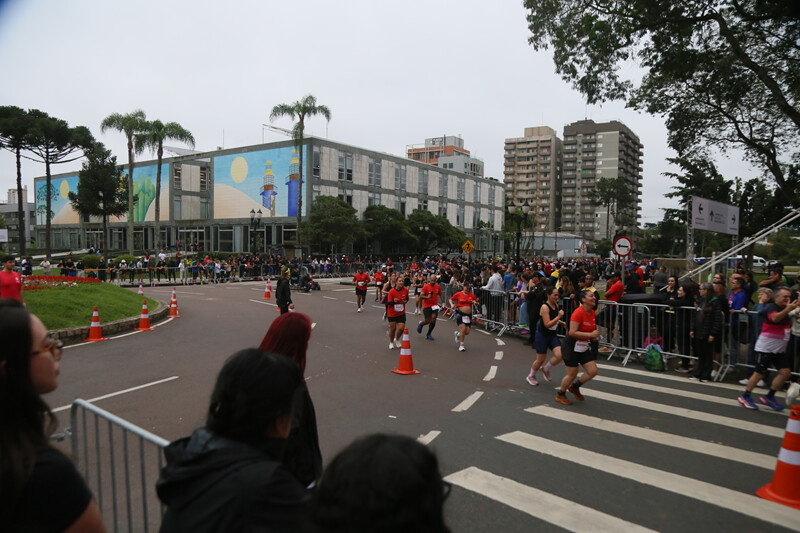
In a remarkable demonstration of compassion and sportsmanship, Brazilian marathoner Marcos Braz has captured the admiration of athletics fans after sacrificing his own race to help Kenyan runner Naum Jepchirchir, who collapsed just 400 metres from the finish line at the 2026 Santander Curitiba Marathon in Brazil.
The emotional incident happened on Sunday, November 15, as Jepchirchir, the defending champion, approached the closing stages of the 42.195km race while fighting to secure another victory.
Having led much of the women's competition, the Kenyan suddenly fell during the final stretch, leaving her struggling to get back on her feet with the finish line almost within reach.

It was a heartbreaking moment for the Kenyan, who had already endured more than 42 kilometres of racing and was just moments away from completing another marathon.
However, what happened next turned the unfortunate incident into one of the most memorable moments of the competition.
Marcos Braz, who was also competing in the marathon, noticed Jepchirchir on the ground and immediately stopped running. Rather than continuing towards the finish line and concentrating on his own performance, the Brazilian went back to help the struggling Kenyan.
He assisted her in getting back onto her feet and remained alongside her as she battled through the remaining metres to complete the race.
His decision to put another athlete's welfare ahead of his own finishing performance drew applause from spectators and quickly attracted attention across social media.
Jepchirchir eventually crossed the finish line, securing second place despite the dramatic setback, while Brazilian athlete Ana Catarina Amancio de Oliveira claimed the women's title in 2:45:34.
Jepchirchir had arrived in Curitiba hoping to defend the title she won in 2025, when she clocked 2:39:14. Although her attempt to retain the crown ended in disappointment, her determination to finish after collapsing provided another remarkable chapter in her marathon career.
Braz's intervention also raises an important question about the rules governing competitive athletics. Under World Athletics Technical Rule 6.3.6, physical assistance from another athlete that helps a competitor make forward progress during a race is prohibited, except when the assistance involves helping a fallen athlete recover to a standing position. Any decision concerning the incident would therefore depend on the applicable competition rules and the race officials' assessment.
Nevertheless, beyond the competitive implications, the Brazilian's gesture has offered a powerful reminder of the values that make athletics special.
Marathon running is often associated with personal ambition, national pride, podium finishes, record-breaking performances and financial rewards. Yet, every once in a while, an incident reminds us that the sport is about much more than individual achievements.
Braz may have sacrificed valuable time in his own race, but his willingness to stop and help a fellow competitor demonstrated a level of sportsmanship that deserves recognition.
After running almost the entire marathon, Jepchirchir found herself facing the final 400 metres in one of the most difficult circumstances imaginable. Fortunately, she did not have to face that moment alone.
There are victories measured in seconds, medals and prize money, but there are also moments that leave a lasting impression without requiring a place on the podium.
Marcos Braz may not have been chasing the women's title, but his actions delivered a powerful lesson to the athletics community: winning is not always about being the first to cross the finish line. Sometimes, the greatest victory is helping someone else get there.
Marcos Braz for reminding the world that humanity should always come before competition. In a sport where every second counts and every athlete fights for personal glory, he chose to stop when someone needed him most. Naum Jepchirchir may have struggled to reach the finish line, but she found something far more meaningful along the way — the kindness of a fellow runner. Long after the race results are forgotten, this beautiful act of sportsmanship will remain a reminder that the greatest victories are not always won with medals, but through compassion, selflessness and the willingness to lift one another when life gets difficult.
by Erick Cheruiyot for My Best Runs.
Login to leave a comment

Sha’Carri Richardson Set for Historic First Visit to India as Pune Marathon Ambassador
American sprint superstar Sha’Carri Richardson is preparing to take her global influence beyond the athletics track, with India set to welcome the Olympic gold medallist for her first-ever visit to the country on December 13, 2026.
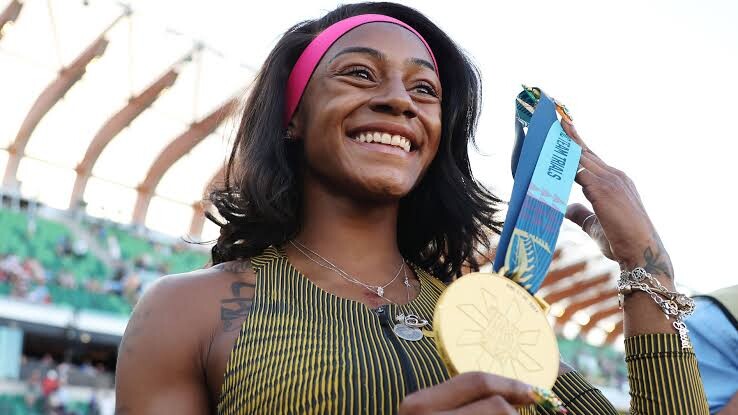
Richardson will headline the 7th edition of the Bajaj Pune Marathon as its international race ambassador, bringing international recognition and star power to one of India's prominent road-running events. The competition will take place in Pune, Maharashtra, where thousands of runners are expected to participate across different race categories.
The American sprint sensation announced her upcoming visit through a video message released on Friday, November 13, expressing her excitement about travelling to India and experiencing the country's rich cultural heritage and traditions.
Richardson will share ambassadorial duties with two prominent Indian distance-running athletes, Vithya Ramraj and Sawan Barwal, creating an international and local combination that reflects the event's growing profile.

The 2026 edition will feature four race categories, catering to participants of different abilities and ambitions: the full marathon (42.2km), half marathon (21.1km), 10km race and 5km run.
Beyond the excitement of competition, Richardson's involvement also highlights the marathon's commitment to encouraging greater female participation in fitness and recreational running. She particularly acknowledged the event's efforts to create more opportunities for women in athletics, with female runners accounting for 31 per cent of participants in the 2025 edition.
Her presence is expected to provide additional inspiration to aspiring athletes, particularly young women looking to embrace running and pursue their sporting ambitions.
Best known for her explosive speed, distinctive personality and achievements on the global sprinting stage, Richardson has established herself as one of the most recognisable figures in modern athletics. Her appearance in Pune will offer Indian running enthusiasts a rare opportunity to connect with one of the biggest personalities in international track and field.
Although her reputation was built on the sprint track, her visit represents something much bigger than a celebrity appearance. It brings together different sides of the running community, from elite competitors to recreational participants, while reinforcing the importance of making athletics more inclusive and accessible.
With Richardson preparing to make her Indian debut, the 7th Bajaj Pune Marathon is gaining an exciting international dimension, and all eyes will be on Pune as the city prepares to welcome one of America's most celebrated sprint stars.
by Erick Cheruiyot for My Best Runs.
Login to leave a comment

Faith Kipyegon and Georgia Hunter Bell: Two Different Journeys, One Extraordinary Era in Women’s Middle-Distance Running
Women's middle-distance running has witnessed some remarkable stories, but few comparisons are as fascinating as those of Kenya's Faith Kipyegon and Great Britain's Georgia Hunter Bell. They are two athletes who have taken remarkably different routes to the top, yet have become central figures in one of the most exciting eras in the sport.
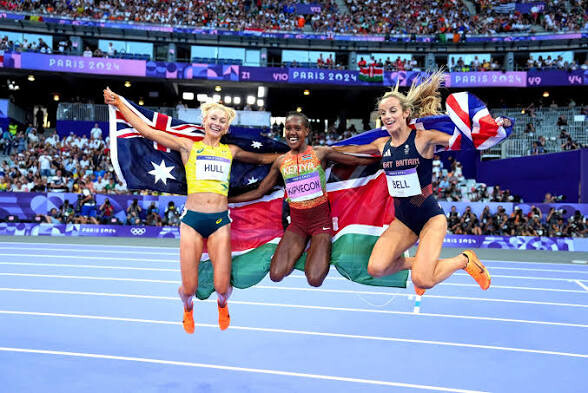
One is a generational talent whose dominance has transformed the women's 1500m into her personal stage. The other is an inspiring example of resilience, having stepped away from full-time competitive athletics to pursue a career in the corporate world before returning to the track and establishing herself among the world's elite.
Their stories are different, their backgrounds are contrasting, and their achievements have come through entirely different circumstances. Yet both have demonstrated that there is no single formula for reaching the highest level of athletics.
Faith Kipyegon, born on January 10, 1994, has built a legacy that places her among the greatest middle-distance runners in history. The Kenyan superstar has achieved what once seemed almost impossible, collecting three consecutive Olympic 1500m gold medals in Rio 2016, Tokyo 2020 and Paris 2024.
Her championship record is equally extraordinary. She has won four World Athletics Championships 1500m titles, triumphing in London in 2017, Eugene in 2022, Budapest in 2023 and Tokyo in 2025. She also became the first woman to win both the 1500m and 5000m at the same World Championships in Budapest in 2023.
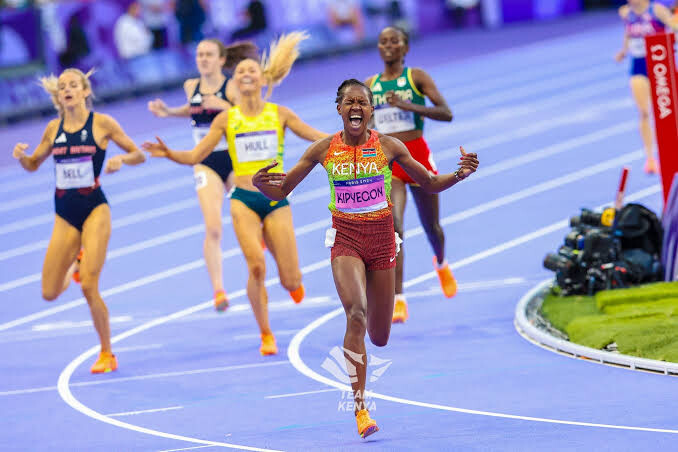
Beyond the medals, Kipyegon's ability to challenge the limits of human performance continues to separate her from the rest. On July 5, 2025, she delivered another historic performance at the Prefontaine Classic in Eugene, running 3:48.68 to improve her own 1500m world record and become the first woman to break the 3:49 barrier.
She also holds the women's mile world record of 4:07.64, established in Monaco in July 2023.
What makes Kipyegon's achievements particularly impressive is her consistency. Season after season, championship after championship, she continues to find ways to raise the standard, even when the expectations surrounding her are already enormous.
For many athletes, reaching the top is the ultimate dream. For Kipyegon, remaining there while continually rewriting the record books has become part of her extraordinary sporting identity.
Georgia Hunter Bell's journey, however, offers a completely different perspective on what it takes to achieve greatness.
Born on October 17, 1993, the British middle-distance runner did not follow the conventional pathway of an athlete who spends every year of their adult life competing at the highest professional level.
After studying geography at the University of Birmingham and completing further studies at the University of California, Berkeley, she entered the corporate world, working in cybersecurity technology sales for seven years. She even spent time living and working in San Francisco.
Although she remained connected to running, her professional life took a different direction from the traditional full-time athletics pathway.
Eventually, she made the decision to return to elite competition, rebuilding her career and gradually working her way towards the international stage.
That decision would change everything.
Her breakthrough on the biggest stage arrived at the Paris 2024 Olympic Games, where she produced a memorable performance in the women's 1500m final. Running 3:52.61, she claimed the bronze medal behind Kenya's Faith Kipyegon and Australia's Jessica Hull, setting a British record in the process.
It was a remarkable achievement for an athlete whose career had taken such an unconventional route.
Rather than allowing that Olympic success to become the highlight of her career, Hunter Bell continued to improve. At the 2025 World Athletics Championships in Tokyo, she secured silver in the women's 800m, running 1:54.90 to establish a personal best in the event.
She also collected bronze in the 1500m at the 2025 World Indoor Championships, further demonstrating her ability to compete across different distances.
And then came an outstanding 2026 campaign.
Hunter Bell captured the women's 1500m gold medal at the World Athletics Indoor Championships in Toruń, Poland, running 3:58.53. She followed that success by winning the 800m title at the Commonwealth Games in Glasgow, where she clocked 1:59.51.
Her remarkable season continued on home soil in Birmingham, where she became European 1500m champion, producing a decisive final lap of 58.44 seconds to secure another major international title.
She later added a silver medal in the 1500m at the inaugural World Athletics Ultimate Championship in Budapest, completing an exceptional year on the international circuit.
Her personal bests now stand at 3:52.61 for 1500m and 1:54.90 for 800m, underlining her versatility and remarkable development.
There is something particularly inspiring about Hunter Bell's story. Her success is not simply about the medals she has collected but also about the courage to take a different professional path, return to a demanding sport and discover just how far her ability could take her.
Interestingly, the relationship between these two athletes also provides one of the most memorable illustrations of the supportive side of elite athletics.
In June 2025, Hunter Bell was among the athletes who assisted Kipyegon during Nike's Breaking4 project in Paris. The ambitious challenge aimed to make Kipyegon the first woman to run a mile in under four minutes.
Although the Kenyan did not officially break that historic barrier, her 4:06.91 performance demonstrated just how close she was pushing the boundaries of women's middle-distance running.
Hunter Bell's involvement highlighted an important dimension of athletics that sometimes gets lost in the excitement of competition.
On race day, athletes represent different countries, chase individual ambitions and fight for the same medals. Away from the immediate pressure of competition, however, they can also play important roles in helping one another achieve extraordinary things.
Their encounters at the Paris Olympics and subsequent competitions have added another interesting dimension to their respective careers.
Kipyegon represents sustained excellence, extraordinary consistency and a legacy built through years of historic performances. Her achievements have established a standard that future generations of 1500m runners will inevitably be measured against.
Hunter Bell, meanwhile, represents determination, reinvention and the remarkable possibilities that can emerge when someone refuses to abandon a dream. Her journey proves that taking a different road does not necessarily mean giving up on sporting greatness.
One has spent years establishing herself as the queen of the 1500m. The other has transformed an unconventional career journey into an extraordinary collection of international honours.
And perhaps that is what makes their stories so compelling.
Athletics does not always reward those who follow the same route. Sometimes greatness is built through years of dominance, while on other occasions it emerges from setbacks, unexpected decisions and the courage to begin again.
Faith Kipyegon and Georgia Hunter Bell are living examples of both possibilities.
Two women. Two remarkable journeys. Two different definitions of greatness.
And one sport made even more exciting by the extraordinary stories they continue to write.
by Erick Cheruiyot for My Best Runs.
Login to leave a comment
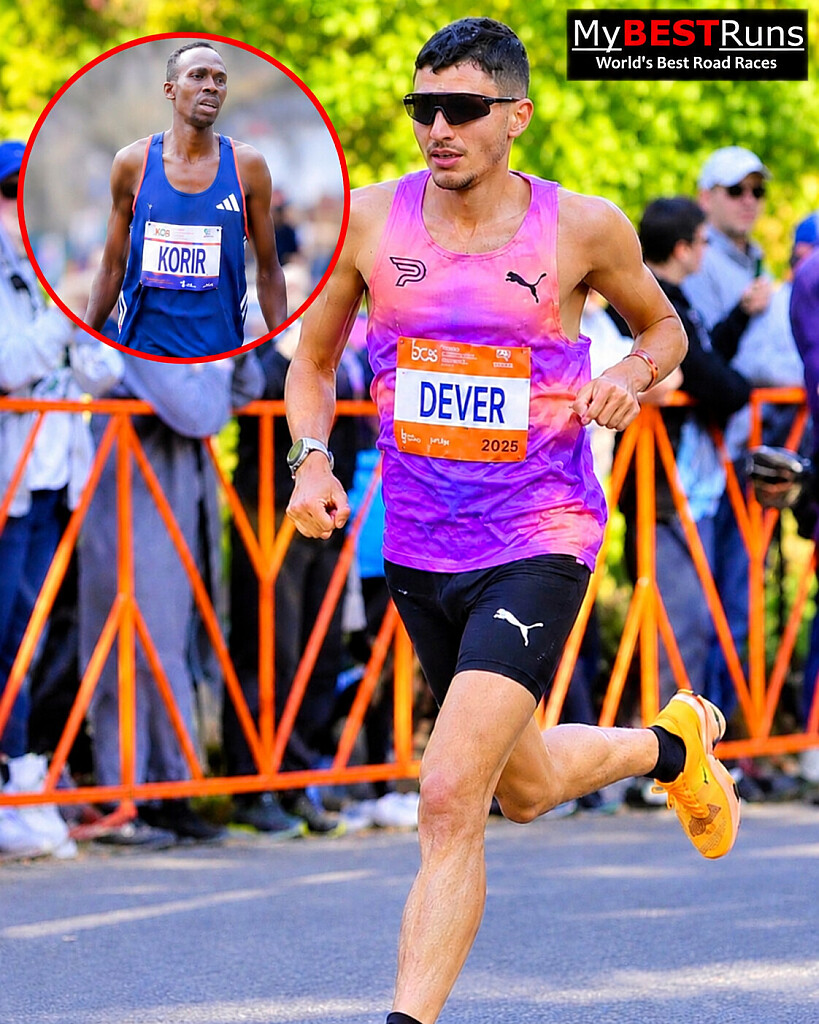
Patrick Dever finally receives New York City Marathon podium reward after Albert Korir’s doping ban
British distance runner Patrick Dever has finally received the recognition and financial reward he deserved after finishing on the podium at the 2025 New York City Marathon, nearly a year after crossing the finish line.
Dever, who made an impressive marathon debut in New York last November, has officially been promoted to third place following the disqualification of Kenyan athlete Albert Korir. The British runner received his podium trophy just three days before the 2026 edition of the prestigious race, bringing a lengthy wait for recognition to an end.
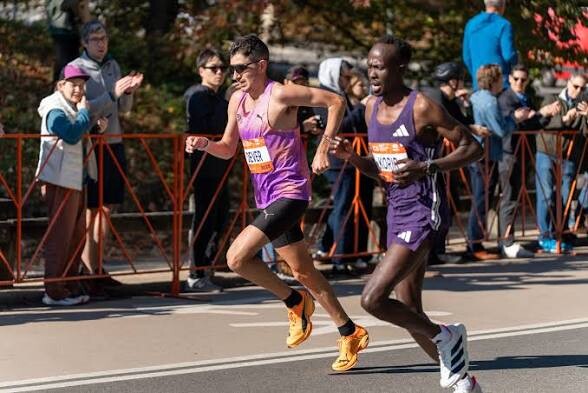
At the 2025 race, Dever initially finished fourth in 2:08:58, narrowly missing the podium by just one second behind Korir. However, the standings were subsequently revised after the Kenyan athlete received a five-year suspension for anti-doping violations involving CERA, a prohibited blood-boosting substance related to EPO.
The Athletics Integrity Unit announced the sanction in March 2026 after three samples collected in October 2025 tested positive for the prohibited substance. Korir's results were disqualified from October 3, 2025, onwards, meaning his third-place finish in New York was also annulled.
The revised standings brought Dever a significant financial reward. Under the New York City Marathon's prize structure, third place carries $40,000, while fourth place receives $25,000. Following the disqualification, New York Road Runners, the race organisers, paid Dever the additional $15,000 difference.
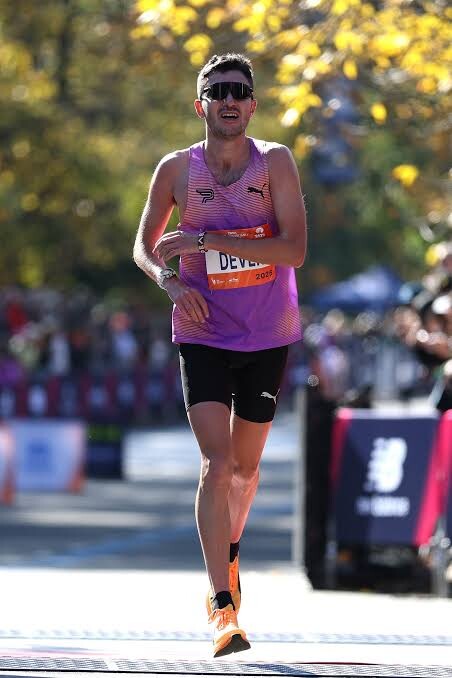
His sponsor, Puma, also honoured his newly acquired podium position by paying him the third-place bonus stipulated in his contract. The development represented an important financial and professional reward for the British athlete, whose performance had initially gone without the recognition associated with a top-three finish.
However, Dever's experience also highlights a wider problem in professional athletics: athletes promoted after doping disqualifications do not always receive the prize money attached to their revised positions.
Under World Athletics regulations, forfeited prize money is redistributed to athletes who would have earned it had the disqualified competitor not participated. However, the money must first be recovered from the sanctioned athlete, unless the race organisers decide to make the payment themselves. Consequently, clean athletes can sometimes wait years for financial rewards they earned through their performances.
Ethiopian distance runner Buzunesh Deba experienced a similar situation following the 2014 Boston Marathon. Originally finishing second, Deba was later elevated to the women's champion after Kenya's Rita Jeptoo was disqualified following an anti-doping violation involving EPO.
Deba's achievement was officially recognised, but receiving the financial rewards associated with the victory became a lengthy process. In 2024, the Boston Athletic Association introduced a payment programme for athletes affected by historical doping disqualifications. Deba was awarded a total of $103,000, covering her first-place prize, course-record bonus and additional compensation from another revised result.
Her case demonstrated how athletes who compete cleanly can suffer financially even after being officially recognised as champions.
Attention has now shifted to the 2026 Sydney Marathon, where another potential change to the women's standings has emerged following the provisional suspension of Kenyan marathon star Peres Jepchirchir.
Jepchirchir claimed the women's title in Sydney on August 30, delivering an impressive performance to secure victory in 2:18:31. However, on October 23, she was provisionally suspended by the Athletics Integrity Unit following an adverse analytical finding for EPO in a sample collected in Kenya before the competition.
The development has raised questions about the eventual outcome of the women's race, particularly for compatriot Irine Cheptai, who finished second in 2:22:11. Should Jepchirchir ultimately receive a ban and have her Sydney result annulled, Cheptai would stand to be promoted to the women's champion.
Nevertheless, a provisional suspension is not a final doping ban. Jepchirchir remains entitled to due process and an opportunity to challenge the allegation. Her Sydney victory therefore remains subject to the outcome of the anti-doping proceedings.
If the result is eventually overturned, the question of prize money will become another important issue. Whether Cheptai receives the financial reward attached to the championship, and how quickly she receives it, will depend on how the Sydney Marathon organisers handle the situation.
Dever's delayed recognition and Deba's long wait for compensation underline the importance of protecting clean athletes beyond simply correcting race results. When doping violations are discovered, the consequences should not end with disqualifying the offending athlete. Those who competed fairly should also receive the recognition and financial rewards they rightfully earned.
Ultimately, Patrick Dever's story is about much more than an additional $15,000. It is a reminder that doping can take away opportunities, podium celebrations and financial rewards from innocent competitors.
Clean athletes deserve more than a revised finishing position. They deserve the recognition and rewards that should have been theirs from the beginning.
by Erick Cheruiyot for My Best Runs.
Login to leave a comment
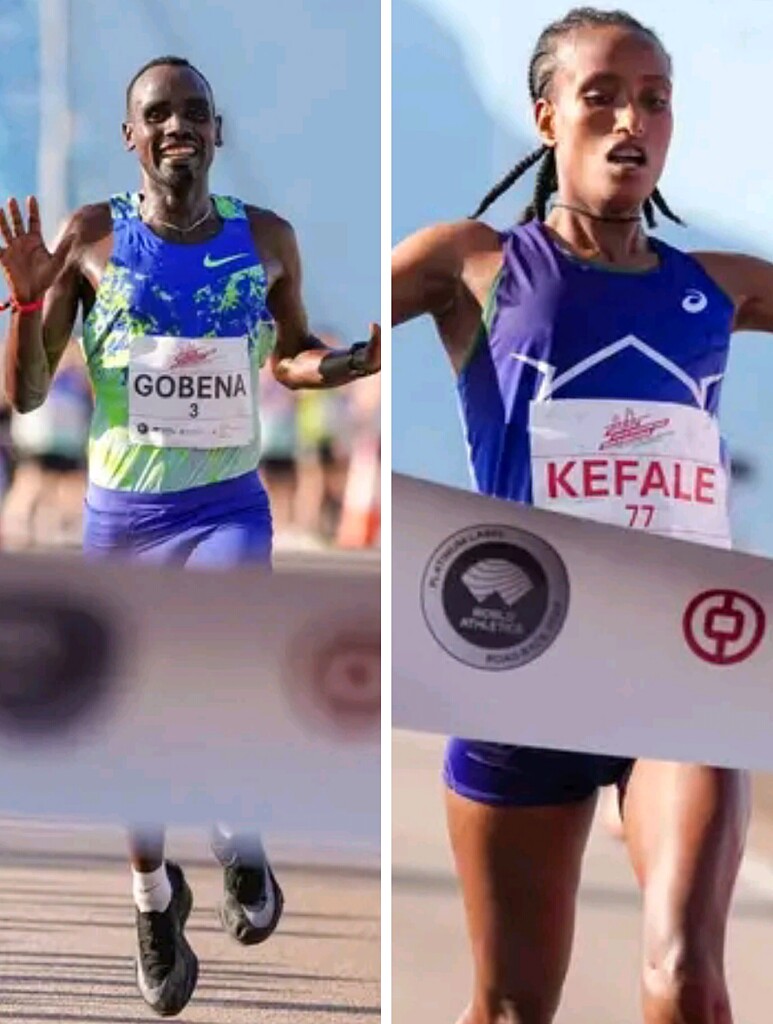
Ethiopian Stars Wede Kefale and Addisu Gobena Lead a Day of Dominance at the 2026 Hong Kong-Zhuhai-Macao Bridge Half Marathon
Ethiopia delivered a remarkable double victory at the 2026 Bank of China Hong Kong-Zhuhai-Macao Bridge Half Marathon on Sunday, November 15, with Wede Kefale and Addisu Gobena emerging victorious in the women's and men's races respectively.

Staged along the spectacular Hong Kong-Zhuhai-Macao Bridge, the event brought together some of the finest distance runners from Ethiopia, Kenya, South Africa and other nations for a fiercely contested 21.097-kilometre challenge across one of the world's most recognisable sea-crossing structures.
The competition produced impressive performances, with Ethiopia showcasing its depth in distance running while Kenyan athletes also secured several places among the leading finishers.
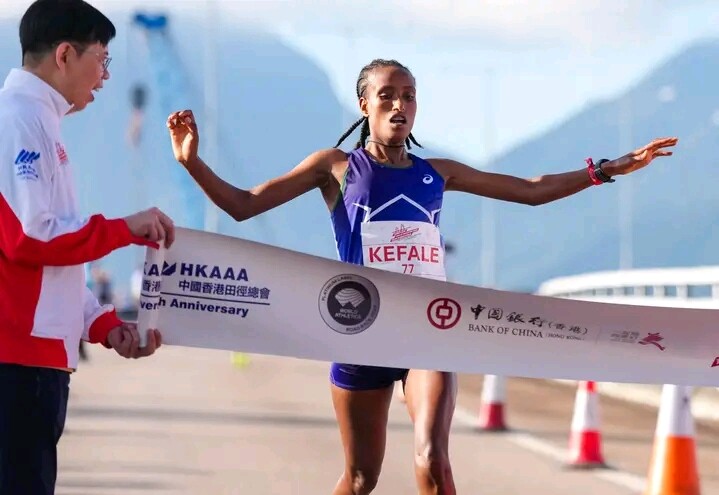
In the women's contest, Kefale produced a composed and determined performance to secure the biggest prize of the day. She crossed the finish line in 1:09:01, holding off a strong challenge from South Africa's Glenrose Xaba, who finished second in 1:09:09. Ethiopia's Fantu Worku completed the podium in 1:09:14, making it an exceptionally close battle among the leading three women, who were separated by just 13 seconds.
The Ethiopian victory was particularly impressive given the quality of the field. Xaba, one of South Africa's leading distance runners, pushed hard throughout the contest but ultimately had to settle for second, while Worku demonstrated Ethiopia's remarkable strength by securing another podium position.
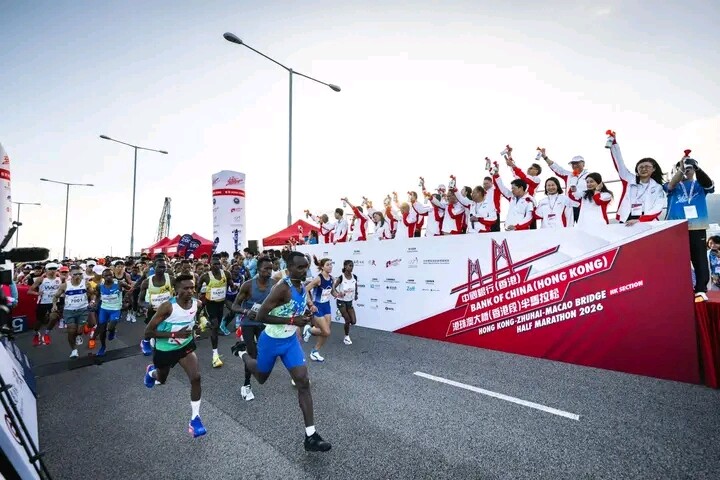
Kefale's victory was supported by an impressive Ethiopian presence throughout the top 10. Baraky Redae finished fourth in 1:09:51, followed by compatriot Asmarech Anley in fifth with 1:10:21. Kenya's Miriam Chebet was sixth in 1:11:05, ahead of Morocco's Fatima Ezzahra Birdaha, who clocked 1:11:23. Kazakhstan's Daisy Jepkemei placed eighth in 1:11:42, while Ethiopia's Zewudie Wudu finished ninth in 1:12:08. Kenya's Priscah Jepleting Cherono completed the top 10 in 1:12:29.
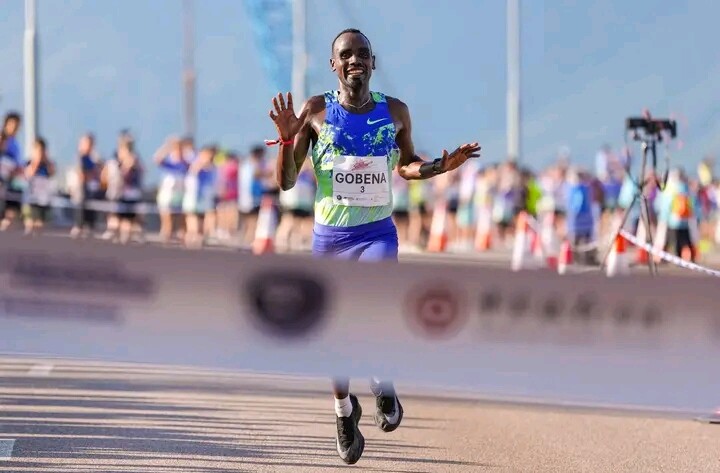
The men's race provided another memorable moment for Ethiopia as 22-year-old Addisu Gobena claimed the overall victory, He clocked 1:01:33 to finish ahead of compatriot Aliyi Kasim, who secured second place in 1:02:29.
Kenya's Alex Lenalepisho delivered a strong performance to take third in 1:02:47, preventing a complete Ethiopian sweep of the men's podium. Morocco's Othmane El Goumri finished fourth in 1:03:07, while Kenya's Abel Kiplimo followed in fifth with 1:03:33
Kenyan representation remained particularly strong throughout the men's top 10. Ezra Kipketer Tanui finished sixth in 1:05:32, followed by Ethiopia's Tafere Adisu in seventh with 1:05:35. Kenya's Meshack Kipchirchir placed eighth in 1:06:01, Benard Kipkorir was ninth in 1:06:15, and compatriot Sena Ledama completed the top 10 in 1:06:21.
Gobena's triumph adds another impressive achievement to Ethiopia's growing presence on the international road-running circuit, while the performances of Kasim and Lenalepisho underlined the competitive depth of the men's field.
The 2026 edition was also significant for the event itself, having earned World Athletics Platinum Label status, placing it among the highest-rated road-running competitions internationally. The bridge provided a spectacular setting for the contest, bringing together elite athletes from different countries for a memorable day of long-distance racing.
Beyond the podium, the results highlighted the international character of the competition, with athletes from Ethiopia, Kenya, South Africa, Morocco and Kazakhstan featuring prominently in the leading positions.
Ethiopia therefore left Hong Kong with both overall titles, while Kenya had plenty of reasons to take encouragement from its strong representation across both races.
For the organisers, the successful staging of this Platinum Label competition represents another important milestone in the development of road running in Hong Kong. For the athletes, it was an opportunity to test themselves against international opposition on a distinctive course that offered a memorable backdrop to the racing.
by Erick Cheruiyot for My Best Runs.
Login to leave a comment

Zhuhai Macao Bridge Half Marathon
The Bank of China (Hong Kong) Hong Kong-Zhuhai-Macao Bridge (Hong Kong Section) Half Marathon 2024/25 uses the world’s longest bridge-and-tunnel sea crossing “Hong Kong-Zhuhai-Macao Bridge” Hong Kong Section as the track. The Hong Kong, China Association of Athletics Affiliates (HKAAA) hopes to host runners every year in this iconic major sporting event. This year’s event will be held on January...
more...