

Running News Daily
Running News Daily is edited by Bob Anderson and team. Send your news items to bob@mybestruns.com Advertising opportunities available.
Index to Daily Posts · Sign Up For Updates · Run The World Feed
That article was not found.


Three-Year Ban After Runner Ties Nine-Year-Old Boy To His Waist During Zhengzhou Marathon
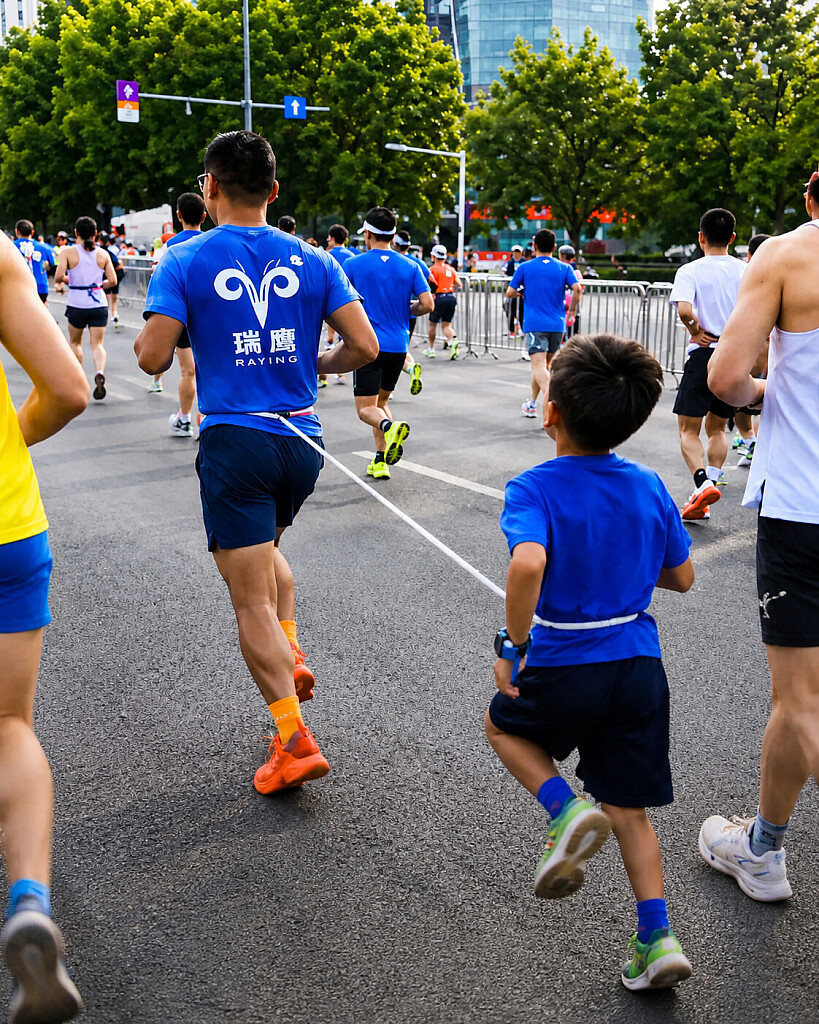
A bizarre and deeply concerning scene at the Zhengzhou Marathon in China has sparked widespread debate over athlete safety and race regulations after a runner was filmed completing the event while a nine-year-old boy was attached to him by a rope.
The incident occurred during Sunday’s marathon in Henan province, where videos shared across Chinese social media appeared to show the adult runner moving along the course with the child secured around his waist. In several clips, the pair could be seen running together for extended periods, apparently maintaining the same pace as they made their way through the race.
The unusual arrangement quickly attracted attention from spectators and fellow participants, with concerns raised over the child’s safety and whether the runner had breached the competition’s entry regulations.
Under the rules governing marathon participation in China, children below the minimum age are not permitted to compete in a full marathon. Such restrictions are designed to protect young participants from the extreme physical demands of long-distance racing and the potential medical risks associated with running 42.195 kilometres.
Organizers subsequently took disciplinary action. The runner’s result was removed from the official classification, and he was handed a three-year ban from competitions covered by the relevant sanctioning authority. The decision was based on the age violation as well as concerns over the physical risks created by having the child attached to him throughout the race.
Later footage reportedly showed the boy appearing fatigued, adding further concern to an incident that had already generated strong reactions among runners and spectators. No injury to the child was reported.
The case has nevertheless raised important questions about how mass-participation races can better monitor participants once they enter the course. While age checks and bib verification can prevent an underage participant from officially registering, unusual situations during the race can present a different challenge for organizers and medical teams.
China’s marathon scene has expanded rapidly in recent years, with major road races attracting huge numbers of recreational runners. With that growth has come an increasing emphasis on safety, proper race conduct and strict adherence to participation rules.
What happened in Zhengzhou has therefore become more than an unusual moment captured on camera. It is a reminder that marathon regulations are ultimately designed not simply to protect the integrity of race results, but also to protect the people taking part.
For the banned runner, the three-year suspension now serves as a serious consequence. For the wider running community, the incident has renewed the conversation about responsibility, supervision and safety whenever children are involved in endurance events.
by Erick Cheruiyot for My Best Runs.
Login to leave a comment
The Lane Eight Legend: Wayde Van Niekerk’s Night Of History
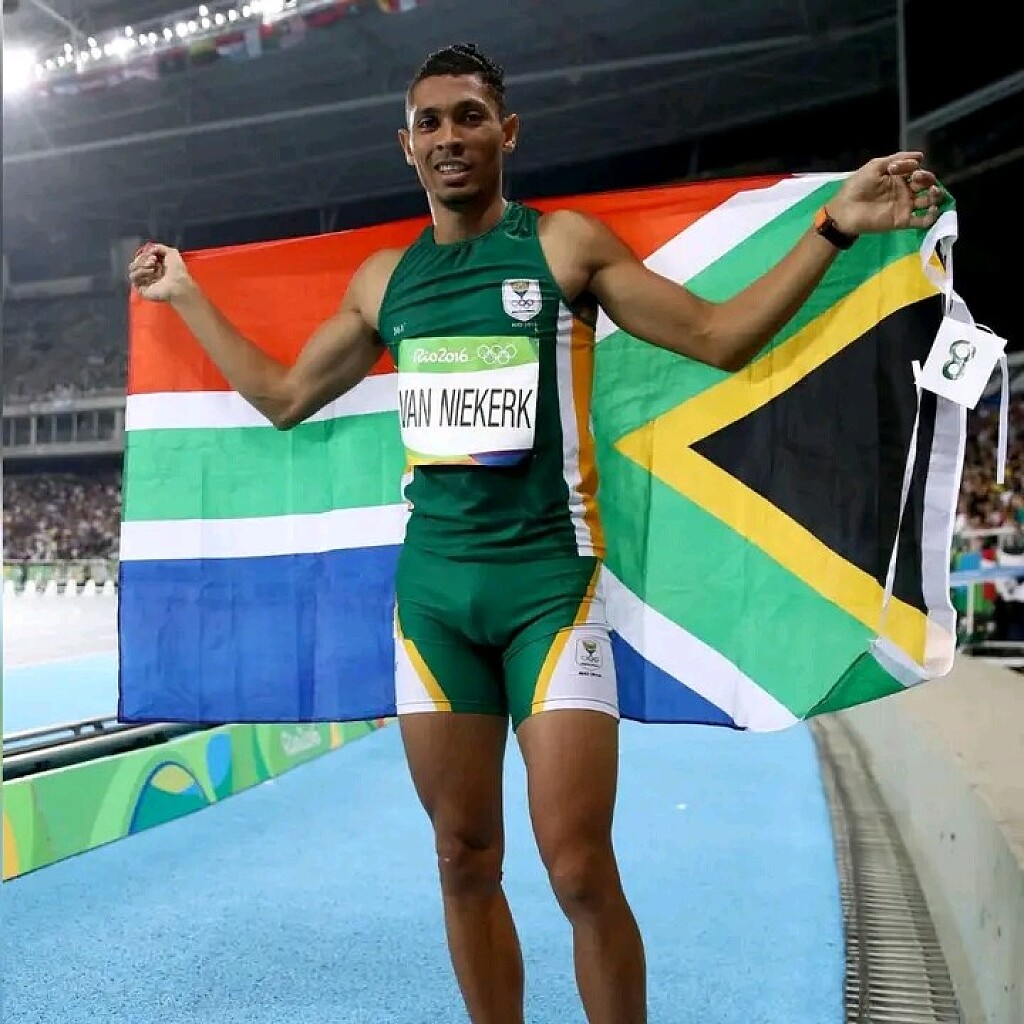
On a night when the world expected the spotlight to fall on the established stars, Wayde van Niekerk stepped into the shadows of lane eight and produced one of the greatest 400m performances athletics has ever witnessed.
The stage was the 2016 Rio Olympic final. The field was stacked with proven champions, including Grenada’s Kirani James, the reigning Olympic champion, and American LaShawn Merritt, the 2008 Olympic champion. Van Niekerk had already announced himself as a serious contender, but few could have predicted what was about to unfold.
From the outside lane, the South African exploded from the blocks and attacked the race with extraordinary speed. Running virtually alone around the final bend, he maintained his relentless pace into the home straight while the rest of the field fought desperately to close the gap.
They never caught him.
Van Niekerk crossed the finish line in 43.03 seconds, winning Olympic gold and rewriting the history of the 400m. In one breathtaking performance, he lowered Michael Johnson’s legendary 43.18-second world record, set in 1999, by 0.15 seconds.
Johnson’s mark had survived for 17 years. Then, in less than 44 seconds, Van Niekerk erased it.
His victory also carried another remarkable distinction: he became the first athlete to win the Olympic men’s 400m title from lane eight, turning what many considered an unfavourable position into the setting for an unforgettable piece of sporting history.
What made the performance even more extraordinary was the manner in which it happened. Van Niekerk was not surrounded by the visual advantage of the middle lanes. He could not easily see his closest rivals. Instead, he had to trust his preparation, his rhythm and his own belief from the first step to the last.
That is perhaps what makes the Rio performance resonate so strongly even years later. It was more than a world record and an Olympic title. It was a reminder that greatness does not always announce itself from the obvious position. Sometimes, the athlete furthest from the spotlight is the one who ends up changing the sport forever.
Van Niekerk’s 43.03 seconds remains one of the most iconic marks in athletics history, a performance born from speed, courage and extraordinary execution.
And now, years after that unforgettable night in Rio, one question continues to fascinate the athletics world:
Is Van Niekerk’s legendary 43.03 finally vulnerable?
With a new generation of 400m stars pushing the boundaries of human speed, the chase for that historic mark remains one of the most intriguing storylines in the sport.
Who do you believe has what it takes to finally break Wayde van Niekerk’s 43.03-second masterpiece?
by Erick Cheruiyot for My Best Runs.
Login to leave a comment
Hellen Obiri vs Sheila Chepkirui: A New York Rivalry Reignited
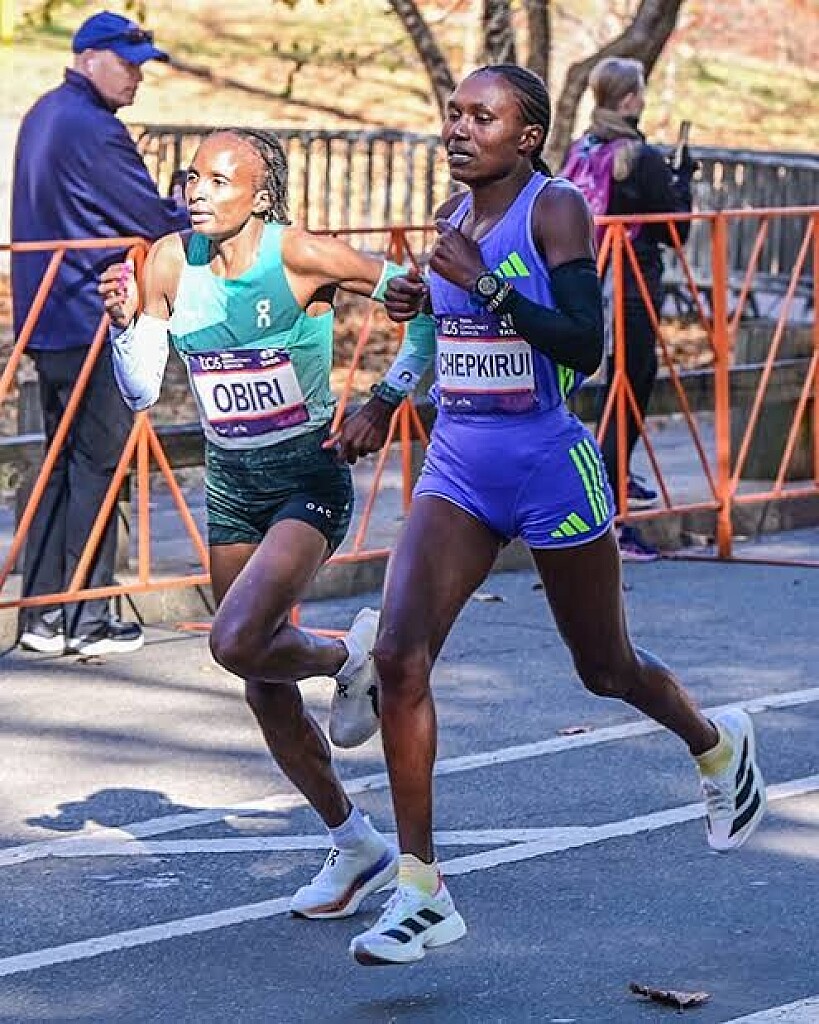
Hellen Obiri vs Sheila Chepkirui in New York City — round three.
The streets of New York are preparing for another fascinating chapter in a growing Kenyan marathon rivalry, as two of the last three winners of the TCS New York City Marathon return to the Big Apple for another showdown on Sunday.
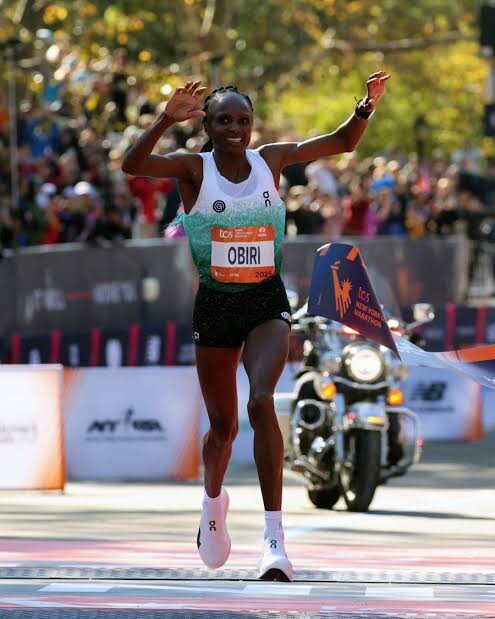
Obiri arrives as the defending champion and one of the biggest names in the elite women’s field, while Chepkirui returns determined to reclaim the title she won in 2024. Their recent history in New York has already produced two dramatically different outcomes, setting the stage for another potentially unforgettable battle.
Chepkirui announced herself on the New York stage in 2024 by producing a breakthrough performance to win her first TCS New York City Marathon title in 2:24:35. Obiri, who had won the race the previous year in 2:27:23, finished runner-up in 2:24:49 — just 14 seconds behind her fellow Kenyan.
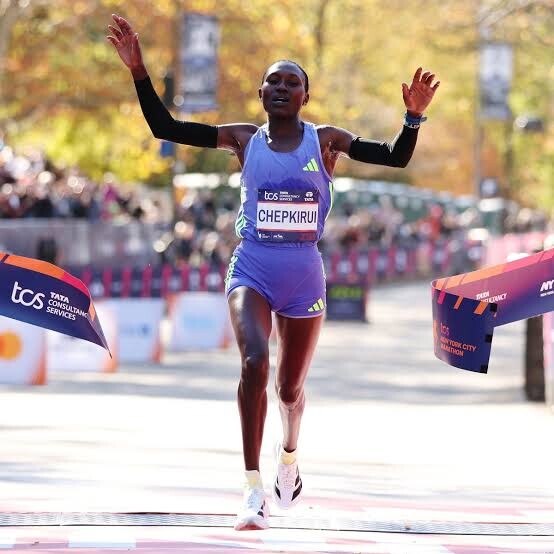
But Obiri responded in emphatic fashion twelve months later. In the 2025 edition, she produced a sensational performance to win in 2:19:51, smashing the previous course record and becoming a two-time New York champion. Sharon Lokedi finished second in 2:20:07, while Chepkirui placed third in 2:20:24.
Now they meet again, with the balance of power once more up for debate.
Obiri has plenty of momentum behind her. Earlier this year, she lowered her marathon personal best to 2:15:53 when she finished second at the 2026 London Marathon, establishing herself as the fastest woman entered in this year’s New York field.
Chepkirui, however, is far from an outsider. Her 2:17:29 personal best makes her one of the strongest challengers in the field, and her victory over Obiri in New York two years ago is proof that she has the strength, patience and tactical ability to thrive on one of marathon running’s most demanding courses.
For Obiri, the motivation goes beyond simply defending her crown. A third New York victory would elevate her into the exclusive company of three-time champions, alongside the legendary Paula Radcliffe. After winning in 2023 and again in 2025, Obiri now has another opportunity to add her name to one of the race’s most prestigious lists.
Yet Chepkirui knows exactly what it takes to defeat her. She has already stood on top of the podium in New York, and after finishing third behind Obiri last year, she will have every reason to believe she can reverse the order once again.
The race itself could make their battle even more intriguing. New York’s five-borough course, bridges, hills and notoriously unpredictable tactics rarely allow the marathon to unfold like a straightforward time trial. Every surge and every decision could become decisive as the runners make their way toward the final miles and the iconic finish in Central Park.
Two Kenyan champions. Two recent New York winners. One course that has already witnessed them trade victories.
Obiri wants history. Chepkirui wants revenge.
And when the battle reaches the streets of Manhattan and the final stretch into Central Park, the question will be simple:
Who will rule New York this time — Hellen Obiri or Sheila Chepkirui?
by Erick Cheruiyot for My Best Runs.
Login to leave a comment

TCS New York City Marathon
The first New York City Marathon, organized in 1970 by Fred Lebow and Vince Chiappetta, was held entirely in Central Park. Of 127 entrants, only 55 men finished; the sole female entrant dropped out due to illness. Winners were given inexpensive wristwatches and recycled baseball and bowling trophies. The entry fee was $1 and the total event budget...
more...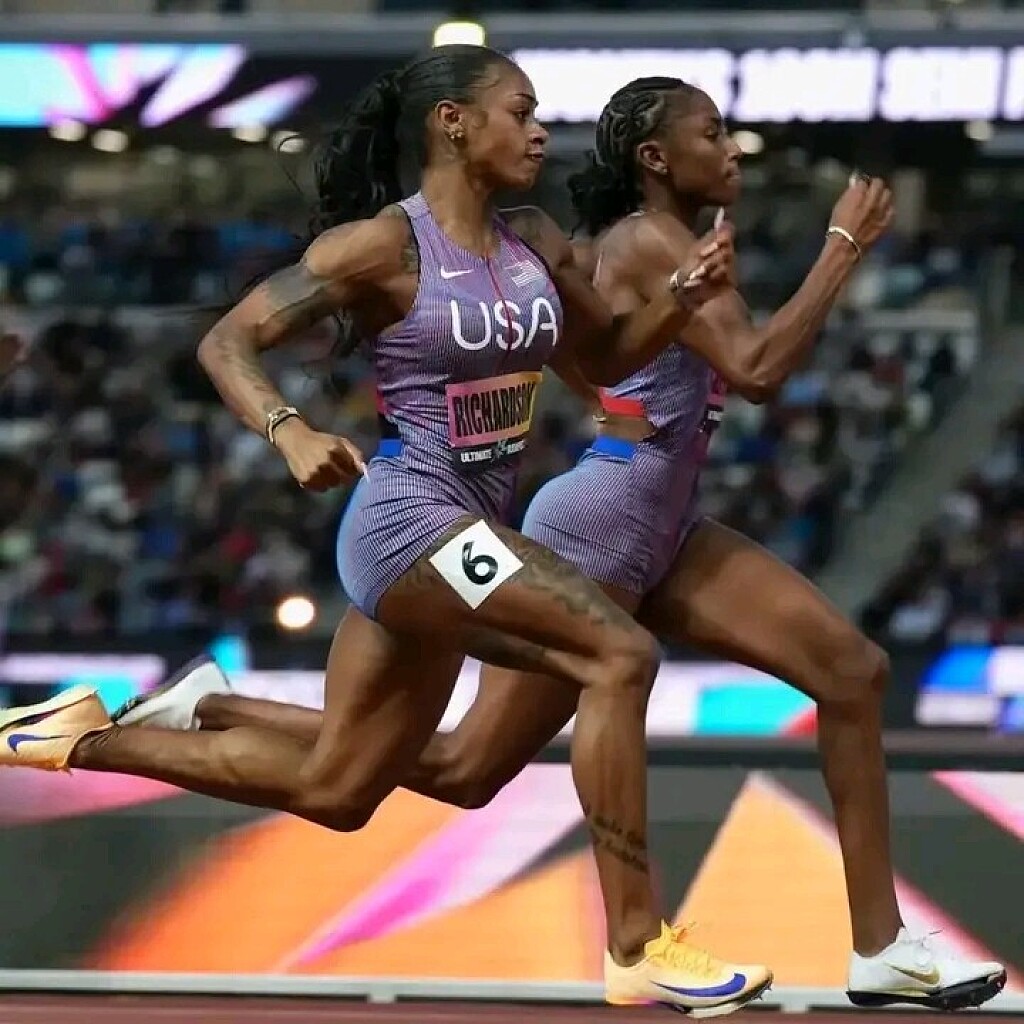
Melissa Jefferson-Wooden And Sha’Carri Richardson: Rivals For Glory, Teammates For Gold
Few rivalries in women’s sprinting are as intriguing as the growing battle between American stars Melissa Jefferson-Wooden and Sha’Carri Richardson. They train in the same environment, line up against each other for individual glory, and then put their rivalry aside when the stars and stripes are on the line.
At the highest level, the difference between them can be measured in hundredths of a second.
Their story began to capture global attention at the Paris 2024 Olympics, where both played a crucial role in Team USA’s victorious 4×100m relay. In the individual 100m, Richardson took silver in 10.87, while Jefferson-Wooden claimed bronze in 10.92 behind Olympic champion Julien Alfred of Saint Lucia.
Since then, their rivalry has continued to develop into one of the most compelling storylines in American sprinting.
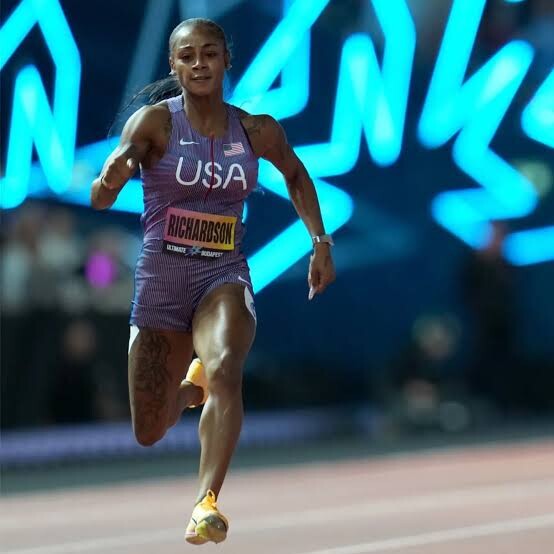
At the 2026 Prefontaine Classic, Jefferson-Wooden produced another narrow victory over Richardson, crossing the line in 10.78—just 0.01 seconds ahead of her American rival. The result underlined just how little separates the two when they meet at full speed.
Richardson responded at the USATF Championships, winning the national 100m title in 10.77, while Jefferson-Wooden captured the 200m crown, setting the stage for another season of battles between two athletes with ambitions of dominating the sprinting landscape.
When they met again at the Silesia Diamond League, Jefferson-Wooden once more had the edge. She stormed to victory in 10.78, with Julien Alfred second in 10.83 and Richardson third in 10.96.
But perhaps the most fascinating part of their relationship is what happens when they are no longer competing against each other.
In April, Jefferson-Wooden and Richardson joined forces for Team USA at the Tom Jones Memorial Invitational, helping the American quartet run a world-leading 41.70 in the 4×100m relay. Jefferson-Wooden led off before Anavia Battle and Kayla White carried the baton, with Richardson anchoring the team to victory.
That ability to transform from fierce competitors into trusted relay teammates adds another dimension to their rivalry. Individually, there can be no friendship with the clock—every hundredth matters. But in the relay, their speed becomes a shared weapon for the United States.
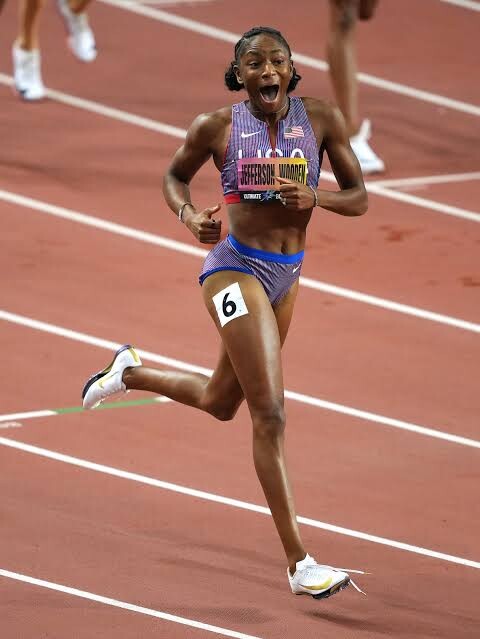
Their rivalry reached another major chapter at the inaugural World Athletics Ultimate Championship in Budapest. Jefferson-Wooden delivered one of the defining sprint performances of the season, blazing to the 100m title in 10.62 seconds. The performance was just one hundredth outside her personal best and equalled the seventh-fastest time ever recorded by a woman. Richardson followed in third with 10.76, behind Jefferson-Wooden and Julien Alfred.
The Budapest victory further established Jefferson-Wooden as one of the dominant forces of the modern sprint era. She went on to complete the 100m–200m double at the Ultimate Championship, winning the 200m in 21.47.
Yet Richardson remains a formidable threat, and their battles are far from over.
What makes this rivalry particularly compelling is the contrast between the competitive tension of race day and the shared environment in which both athletes prepare. They train together, push each other daily and understand exactly what the other is capable of producing when the gun fires.
That closeness makes every meeting even more intriguing. When they step into neighboring lanes, they know each other’s strengths, weaknesses and racing patterns. There is no room for hesitation, because a single mistake—or a single explosive final phase—can decide everything.
From Olympic relay champions to national rivals, from training partners to opponents separated by fractions of a second, Jefferson-Wooden and Richardson represent two sides of the same American sprinting powerhouse.
One thing is certain: whenever these two stand on the same starting line, sprint fans have every reason to watch until the very last hundredth.
The rivalry is alive, the competition is fierce, and the next chapter is still waiting to be written.
So, who do you back in this battle for sprinting supremacy—Melissa Jefferson-Wooden or Sha’Carri Richardson?
by Erick Cheruiyot for My Best Runs.
Login to leave a comment
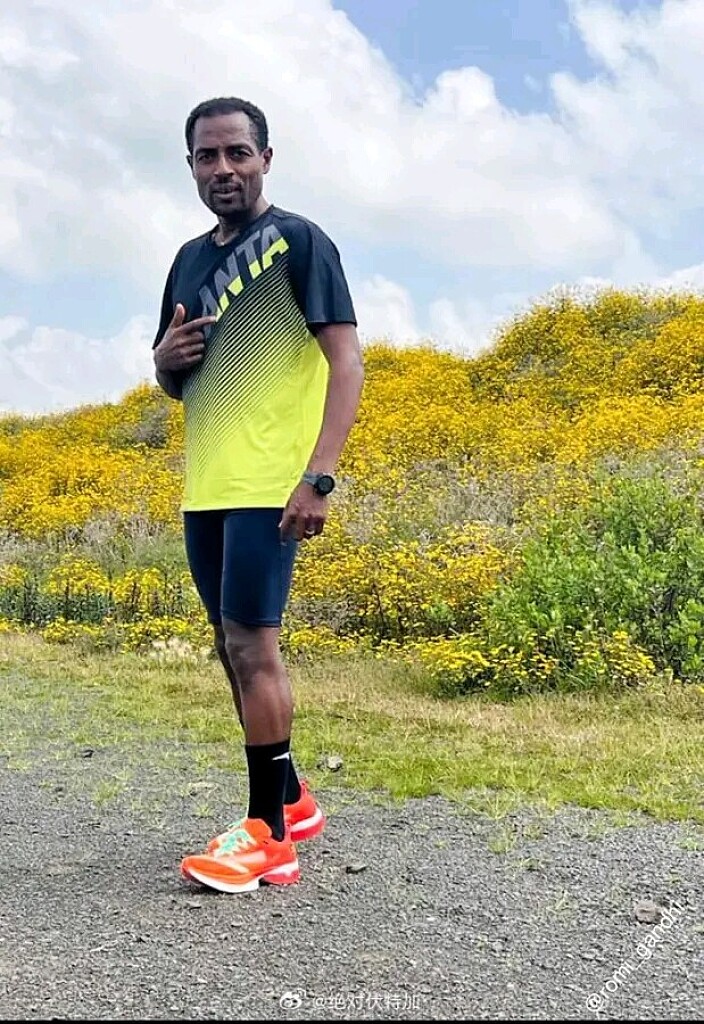
At 44, Kenenisa Bekele Refuses To Let Time Have The Final Word
At an age when most elite distance runners have long stepped away from the highest level of competition, Kenenisa Bekele continues to challenge the limits of longevity. At 44, the Ethiopian distance-running icon remains willing to line up against a new generation of younger athletes, even as injuries and difficult races have made the latest chapter of his remarkable career increasingly demanding.
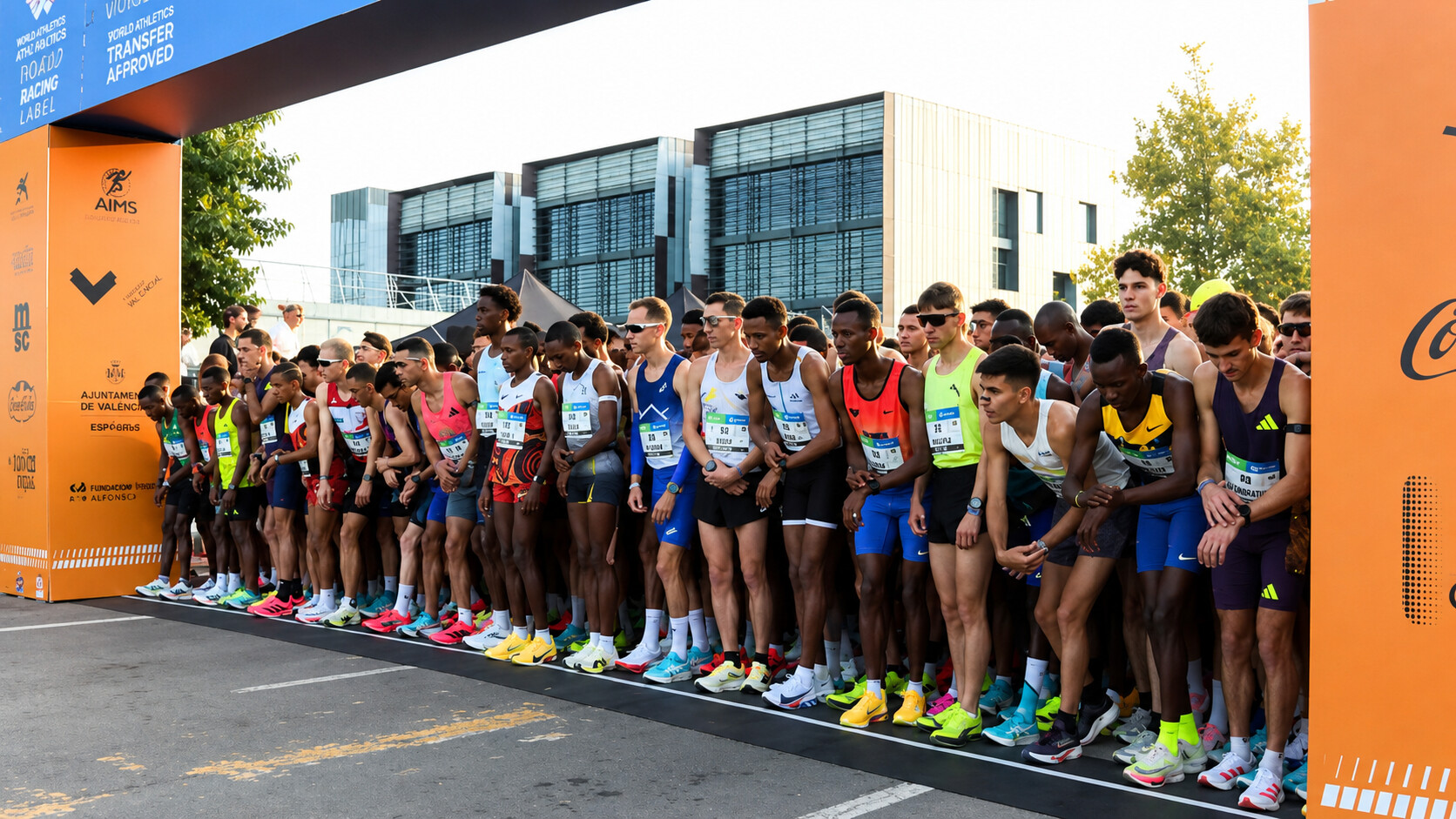
Bekele’s recent journey has been a mixture of extraordinary resilience and frustrating setbacks. His 2024 campaign demonstrated both sides of that story. At the London Marathon in April, he produced one of the greatest performances ever recorded by a masters athlete, running 2:04:15 for second place behind Alexander Mutiso Munyao. The performance established a world record for the M40 age category and showed that, even beyond his 40th birthday, Bekele could still operate at a breathtaking level.
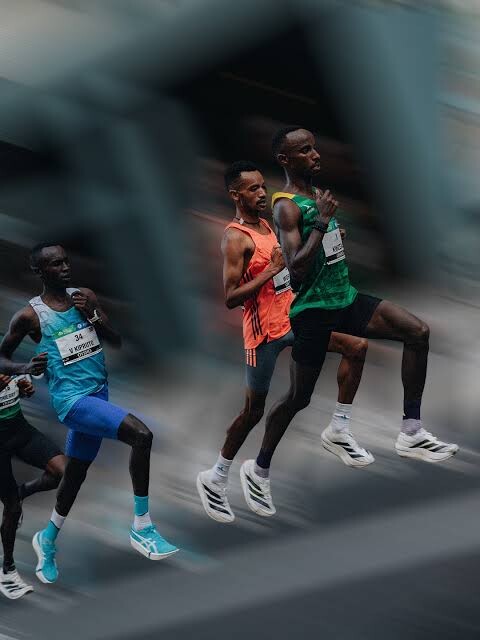
A few months later, however, the Olympic marathon in Paris offered a very different challenge. Bekele finished 39th in 2:12:24 after struggling with a hamstring problem during the race. He later explained that he felt the hamstring stretch around 15 kilometres, yet he continued to the finish rather than joining the growing list of athletes who abandoned the brutal Olympic course.
The setbacks continued into 2025, when Bekele recorded a DNF at the TCS New York City Marathon. Then came another obstacle in 2026. His highly anticipated return to the Berlin Marathon was halted after he suffered a left Achilles tendon injury in training only days before the race, forcing him to withdraw.
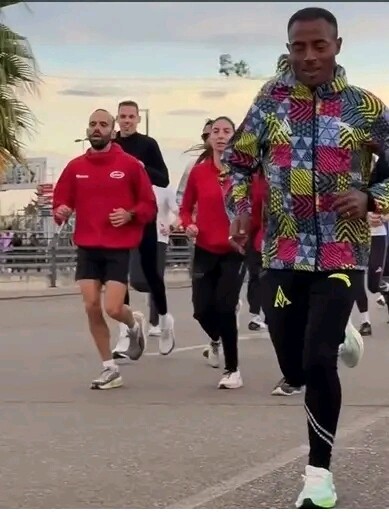
Rather than allowing another setback to end the conversation, Bekele returned to competition at the Valencia Half Marathon on October 25, 2026. The target was ambitious: breaking the 60-minute barrier for the first time in his career while pursuing the M40 world record of 59:53.
But the clock proved unforgiving. Bekele recorded 14:38 through the opening 5 kilometres before eventually dropping out of the race.
For an athlete whose career has been defined by extraordinary victories, records and comebacks, another DNF may look like a painful statistic. But judging Bekele solely by his most recent results would overlook the extraordinary body of work that has made him one of the greatest distance runners in history.
In December 2023, at 41, he ran 2:04:19 to finish fourth at the Valencia Marathon, setting a world masters record at the time. Four months later, he went even faster in London, producing the remarkable 2:04:15 that remains his M40 world record.
And his legacy extends far beyond the marathon. Bekele is a three-time Olympic champion, winning the 10,000 metres at Athens 2004 before completing the 5,000m and 10,000m double at Beijing 2008. He also collected five World Championship gold medals and 11 World Cross Country Championship titles.
His 2:01:41 victory at the 2019 Berlin Marathon remains one of the most extraordinary marathon performances ever produced. Although it is no longer the second-fastest marathon in history—as faster performances have since been recorded—it remains among the all-time great marks and currently sits seventh on the World Athletics all-time list.
That is what makes Bekele’s current journey so compelling. The 44-year-old is no longer competing simply to add another ordinary result to his résumé. Every appearance represents another test of how far experience, determination and an extraordinary athletic foundation can carry an athlete against the relentless passage of time.
Valencia did not deliver the sub-60 performance he was chasing. The Achilles injury disrupted his Berlin comeback. New York ended without a finish. Yet none of those moments can erase what Bekele has already achieved—or the remarkable fact that he continues to stand on start lines against athletes who are sometimes more than a decade younger.
Perhaps that is the most enduring part of Kenenisa Bekele’s story. Records eventually fall, races eventually become difficult, and the body eventually demands a price. But the competitive spirit that carried him from Olympic glory to world records has never disappeared.
At 44, Bekele may no longer be chasing the same version of himself who dominated the track and conquered Berlin. Instead, he is fighting a different battle—the battle to discover just how much of that greatness still remains.
And as long as Kenenisa Bekele keeps answering the starting gun, the running world will keep watching.
by Erick Cheruiyot for My Best Runs.
Login to leave a comment
