

Running News Daily
Running News Daily is edited by Bob Anderson and team. Send your news items to bob@mybestruns.com Advertising opportunities available.
Index to Daily Posts · Sign Up For Updates · Run The World Feed
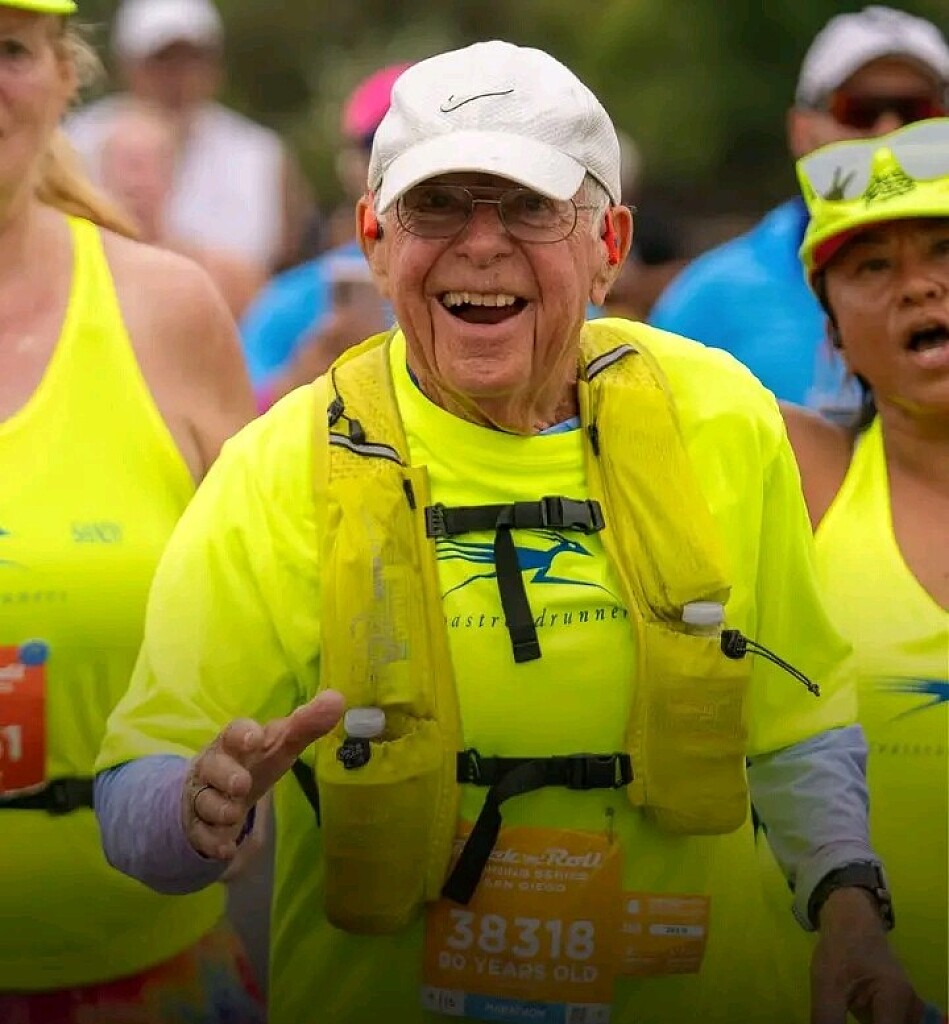


90-Year-Old Bill Schwarz Runs His First Marathon, Turning a Lifetime of Running Into an Extraordinary Achievement

Bill Schwarz has been running since high school, but it took until the age of 90 for the retired engineer from Mesa, Arizona, to take on the ultimate endurance challenge of his running journey: a full marathon.
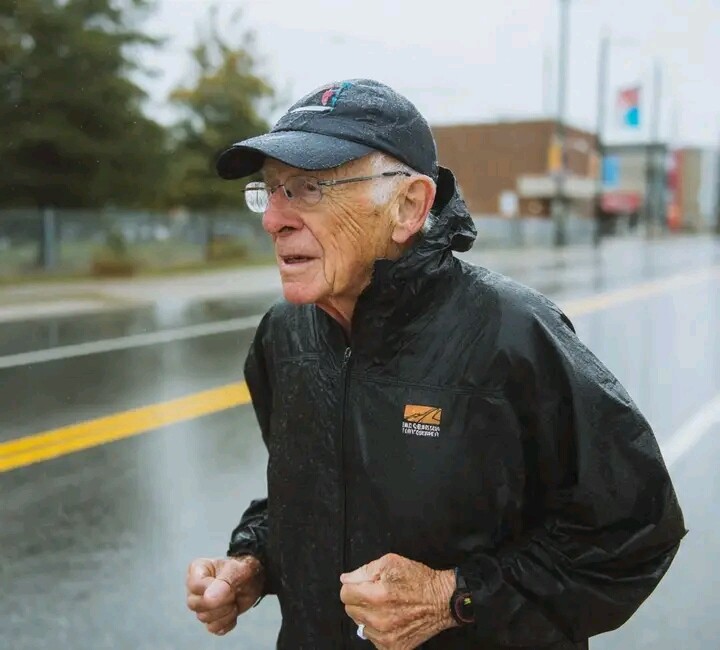
Schwarz made his marathon debut at the Rock ’n’ Roll San Diego Marathon in California, completing the demanding 26.2-mile (42.195-kilometre) distance in just over nine hours. His achievement has captured attention as a powerful example of determination, resilience and the willingness to pursue new goals, even in the later stages of life.
For Schwarz, the marathon was never about chasing a fast finishing time or competing against younger runners. His objective was much simpler: to cover the entire distance and reach the finish line.
“The objective is to finish the race. Time is not important,” he said before the start.
And that is precisely what he did. Even after the official race clock had stopped, Schwarz continued until his sports watch confirmed that he had covered the full marathon distance, remaining committed to completing what he had set out to achieve.
His decision to attempt the marathon emerged from an unexpected source of inspiration. At 89, Schwarz completed a 60-mile hike along Spain’s famous Camino de Santiago pilgrimage route. The demanding adventure left him feeling stronger than he had anticipated, prompting him to reconsider what he might still accomplish physically.
Rather than treating the experience as the culmination of his endurance adventures, he saw it as an opportunity to set himself a new challenge. The marathon, a distance he had never previously attempted, became his next major goal.
Schwarz’s professional background also makes his story particularly fascinating. A retired engineer who once worked on components for the Apollo rocket programme, he approached the challenge with the practical mindset of someone accustomed to solving complex problems. His preparation combined physical conditioning, careful planning and the use of modern technology to help him manage the demands of a long-distance race.
In the 12 months leading up to his marathon debut, Schwarz completed five half marathons while incorporating strength training, Pilates and mobility exercises into his routine. These activities helped him prepare for the physical demands of running 26.2 miles, a distance that requires not only endurance but also patience, discipline and a well-managed race strategy.
He also turned to artificial intelligence for assistance with one of the most important aspects of marathon preparation: nutrition and hydration. Using ChatGPT, Schwarz developed a fueling plan based on taking approximately 16 ounces of fluid and one energy gel per hour. Information from his fitness watch helped inform his approach, illustrating how technology can support athletes as they prepare for demanding endurance challenges.
However, his journey to the starting line was shaped by more than physical ambition. After the death of his wife, Janice, Schwarz faced a deeply personal period of grief. Running became part of his effort to navigate that loss and find renewed purpose in life.
Over time, he channelled that experience into pursuing meaningful challenges rather than withdrawing from them. His journey also included a new chapter in his personal life, as he found love again with his now-wife, Tammy. Together with his renewed commitment to running and adventure, these experiences helped shape the outlook that ultimately led him to attempt his first marathon.
The road to San Diego was therefore about far more than completing a particular distance. It represented a personal journey of rediscovery, demonstrating how a difficult chapter in life can become the starting point for new ambitions and experiences.
Completing a marathon is a significant achievement at any age. The 42.195-kilometre distance tests the limits of physical endurance and mental resilience, demanding careful preparation and the determination to keep moving when fatigue sets in. For a 90-year-old first-time marathoner, simply reaching the starting line after months of preparation was already a noteworthy milestone.
Schwarz went further, completing the distance and inspiring spectators and fellow participants along the route. His performance was a reminder that the meaning of a marathon extends well beyond finishing times, elite rankings and personal records. For many runners, the greatest victory is accomplishing something they once thought might remain beyond their reach.
His story also offers an important perspective on ageing. While physical abilities and training requirements change over time, Schwarz’s experience demonstrates the value of staying active, setting realistic goals and approaching new challenges with determination. His journey is not a guarantee that everyone can safely undertake the same feat, but it is a compelling example of what sustained preparation and personal motivation can make possible.
After crossing the finish line, Schwarz had fulfilled the promise he made before the race: to finish, regardless of the time. And, having committed himself to the challenge, he had every reason to enjoy a well-earned rest afterwards.
At 90, Bill Schwarz has completed a milestone that eluded him throughout decades of running. His first marathon was not about proving that age does not matter, but about showing that a person's ambitions need not end simply because another birthday arrives.
From running in high school to completing 26.2 miles for the first time nine decades into his life, Schwarz has written an extraordinary new chapter in his personal running story.
His achievement sends a message to runners and non-runners alike: sometimes, the most meaningful finish line is the one you never imagined you would reach. And sometimes, the perfect time to attempt your first marathon is 90 years old.
by Erick Cheruiyot for My Best Runs.
Login to leave a comment
Latest Running News
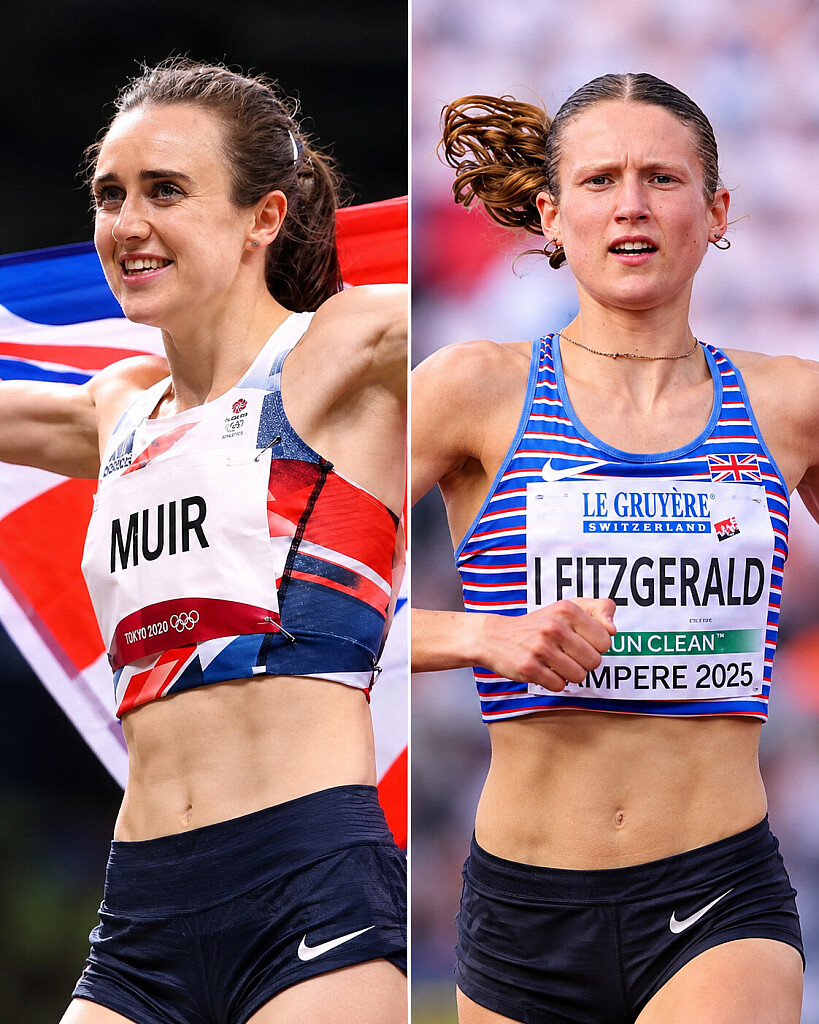
Laura Muir And Innes Fitzgerald Set For Generational Showdown At Cardiff Cross Challenge!
A fascinating clash between experience and youthful ambition is set to headline Sunday's Cardiff Cross Challenge, as British distance-running star Laura Muir prepares to face one of the country's brightest emerging talents, Innes FitzGerald, over the demanding cross-country course at Llandaff Fields.
Separated by 13 years, the two athletes represent different generations of British distance running, but both arrive in Cardiff with impressive credentials and plenty of motivation to make their mark in the senior women's race.
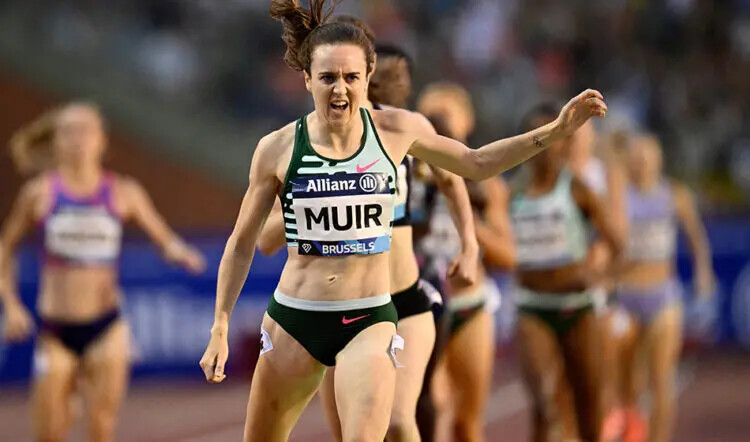
At 33, Muir brings a wealth of international experience to the competition. The two-time European 1500m champion is returning to competitive action after her last appearance at the European Championships in Birmingham in August. Her participation also marks a rare cross-country outing outside Scotland, with her previous appearance outside the country dating back to the 2015 European Cross Country Championships in Hyères, France, where she finished fourth in the under-23 women's race.
However, Muir is certainly no stranger to cross-country competition. Earlier this year, she demonstrated that her competitive instincts remain sharp by winning the Scottish National Cross Country Championships over 10km in Falkirk in February, securing her first appearance at the event in 14 years.

Standing across the starting line will be 20-year-old Innes FitzGerald, a remarkable young talent who has already established herself as one of Britain's most exciting distance-running prospects.
FitzGerald boasts an outstanding junior record, having claimed three European under-20 cross-country titles alongside European under-20 championship gold medals over 3000m and 5000m. She also knows the Cardiff course exceptionally well, having won there on four previous occasions in age-group competitions. This time, however, she steps up to the senior category, where she will face a significantly more experienced opponent.
The encounter offers an intriguing opportunity to see two outstanding British athletes from different stages of their careers competing on the same stage. For Muir, it is another chance to demonstrate her enduring quality, while FitzGerald will be eager to test herself against one of Britain's most accomplished middle- and long-distance runners.
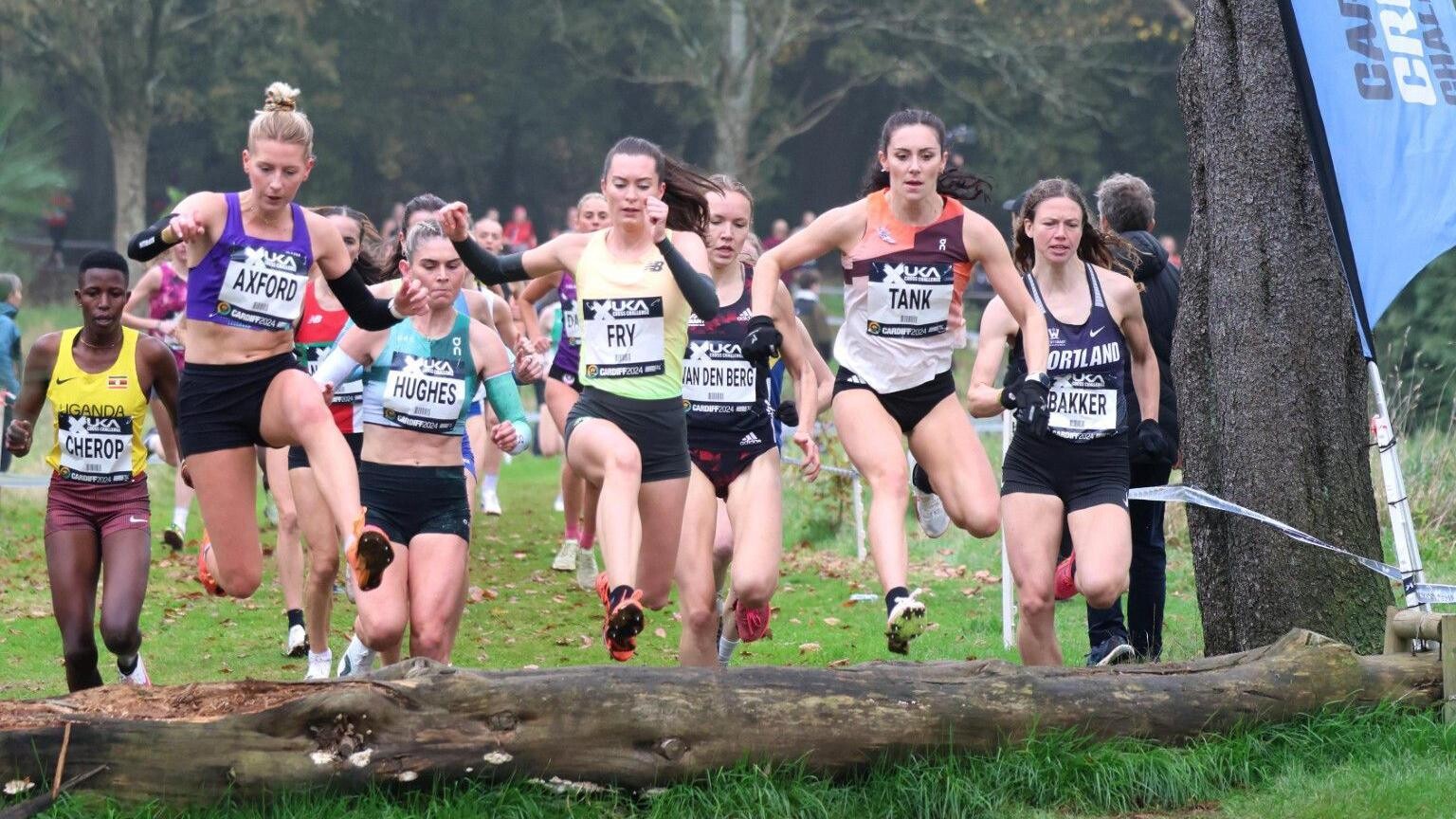
The women's race will cover 6.4km, with the challenging conditions and muddy terrain at Llandaff Fields expected to provide a genuine cross-country test.
The Cardiff Cross Challenge holds particular significance on the international calendar as the UK's only World Athletics Cross Country Tour meeting, carrying Silver Label status this year. Beyond the elite competition, the event will also celebrate the wider running community, with a Gwent League fixture taking place alongside it, bringing together club athletes, masters competitors and international stars.
With Muir's experience and FitzGerald's youthful determination, Sunday's contest promises an exciting encounter that could provide one of the standout moments of the Cardiff Cross Challenge.
Thirteen years separate them. One demanding course awaits. Experience meets ambition on the Cardiff mud!
by Erick Cheruiyot for My Best Runs.
Login to leave a comment
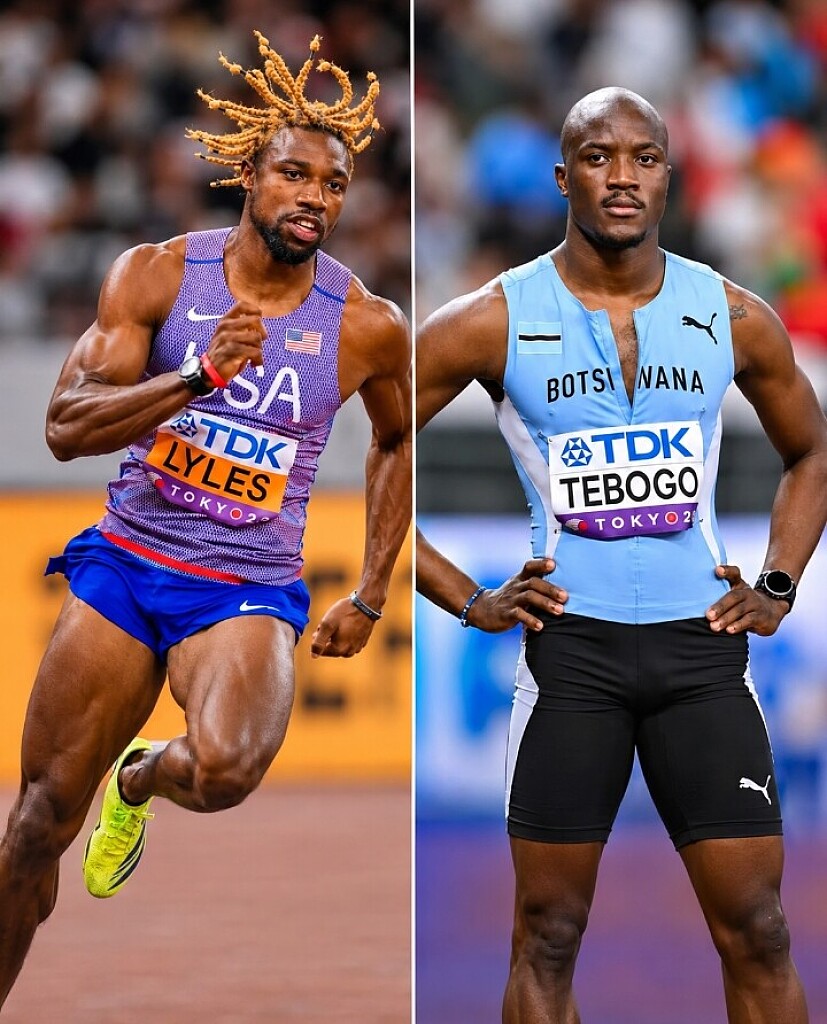
The 2027 Sprint Rivalry Is Already Heating Up! Tebogo Fires Warning At Lyles And Bednarek As American Star Hits Back!
The 2027 athletics season has not even begun, but the mind games among the world's biggest sprinting stars are already underway!
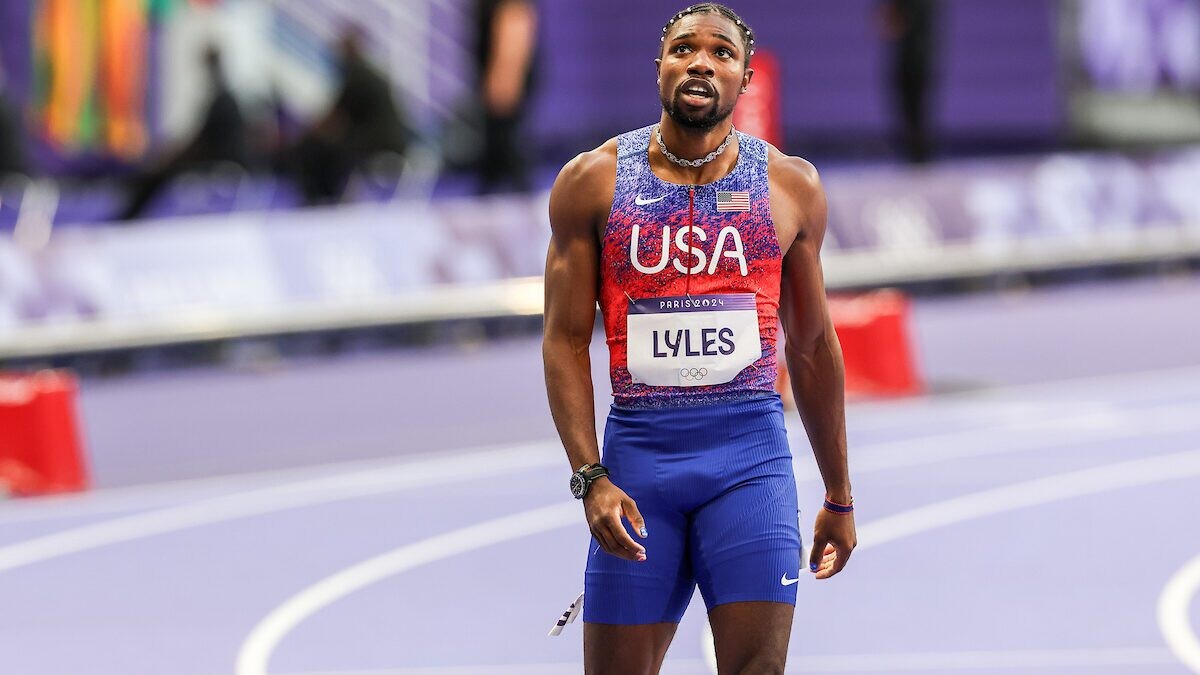
Botswana's Olympic 200m champion Letsile Tebogo has reignited his rivalry with American sprint sensations Noah Lyles and Kenny Bednarek after sending a bold warning to his two biggest competitors, only for Lyles to respond with a cheeky but pointed remark that has added another chapter to their growing rivalry.
Taking to social media platform X on Thursday, November 5, Tebogo addressed both American stars, beginning with a show of respect before making it clear that he intends to be the man they will have to catch when the 2027 season gets underway.
"The 2027 season is coming, and the battle is already on. Always respect to @kenny_bednarek, @LylesNoah, but you better be ready to chase."
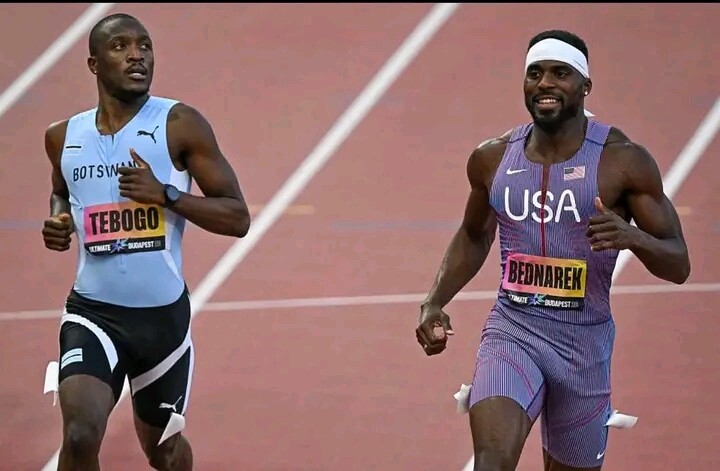
Lyles wasted little time responding, delivering a playful but direct message aimed at the Botswana star.
"Oh, did you decide you want to stop playing opossum and actually run through the line…. That would be nice."
The comment was a pointed reference to Tebogo's occasional tendency to ease off before reaching the finish line, particularly when he believes he has lost the opportunity to win or secured his position in a race.
One notable example came at the Diamond League Final in Brussels, where Bednarek produced a stunning performance to win the 200m in a then world-leading 19.62 seconds. Tebogo, who had been fighting for a podium position, appeared to ease off towards the finish and eventually dropped to fourth in 20.01 seconds.
Lyles' response has therefore brought an interesting competitive dimension to the exchange, suggesting that the American wants to see Tebogo maintain his intensity all the way to the finish whenever they meet again.
The upcoming rivalry becomes even more intriguing when the performances of the three athletes during the 2026 campaign are considered. Bednarek enjoyed an outstanding season, establishing himself as one of the leading figures in world sprinting. The American was arguably the standout performer of the year, collecting double gold at the World Athletics Ultimate Championship in Budapest and further strengthening his reputation as a formidable 200m competitor.
Lyles also demonstrated his exceptional speed, recording the fastest men's 100m performance of the year with 9.79 seconds at the USATF Championships. However, his campaign was disrupted after he pulled up during the 200m final, forcing him to miss the remainder of the season.
For Tebogo, the 2026 campaign was comparatively quieter by his exceptionally high standards. The Botswana star managed two Diamond League victories, although neither came in a direct contest against Lyles or Bednarek. Another interesting detail is that Tebogo only returned to training on October 16, meaning his preparations for the upcoming campaign are already underway as he looks to regain his strongest competitive form.
Despite their different journeys throughout 2026, all three athletes have something important to prove when the new season arrives. Tebogo wants to reinforce his status as the Olympic 200m champion and demonstrate that he remains the man to beat. Lyles will be determined to reassert his authority over the distance and remind his rivals of his championship pedigree, while Bednarek will be looking to build on his remarkable achievements and establish himself as the dominant force in the men's 200m.
With Olympic glory, world titles, personal ambitions and bragging rights all part of the equation, the rivalry between these three exceptional sprinters promises to deliver plenty of excitement.
The first major showdown between them in 2027 is still months away, but the psychological battle has already begun. Tebogo has fired the opening warning, Lyles has responded, and Bednarek has every reason to feel confident after his impressive season.
The question now is simple: Who will rule the men's 200m in 2027 — Letsile Tebogo, Noah Lyles or Kenny Bednarek?
by Erick Cheruiyot for My Best Runs.
Login to leave a comment
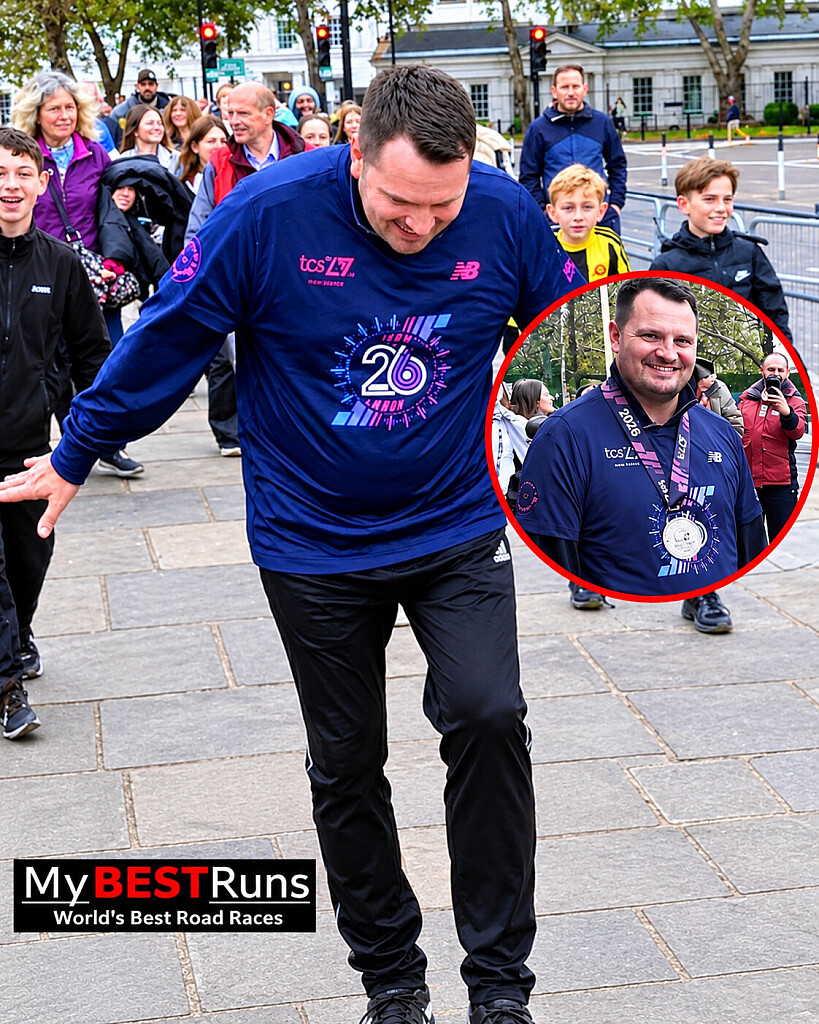
Six Months After Suffering Cardiac Arrest At Mile 25, Gareth Hopkins Finally Completes The London Marathon In An Emotional Return!
Few marathon stories capture the true meaning of courage, resilience and determination quite like that of Gareth Hopkins, a 43-year-old paramedic from Hoddesdon, England, who has finally crossed the London Marathon finish line after surviving a life-threatening medical emergency during his debut attempt six months earlier.
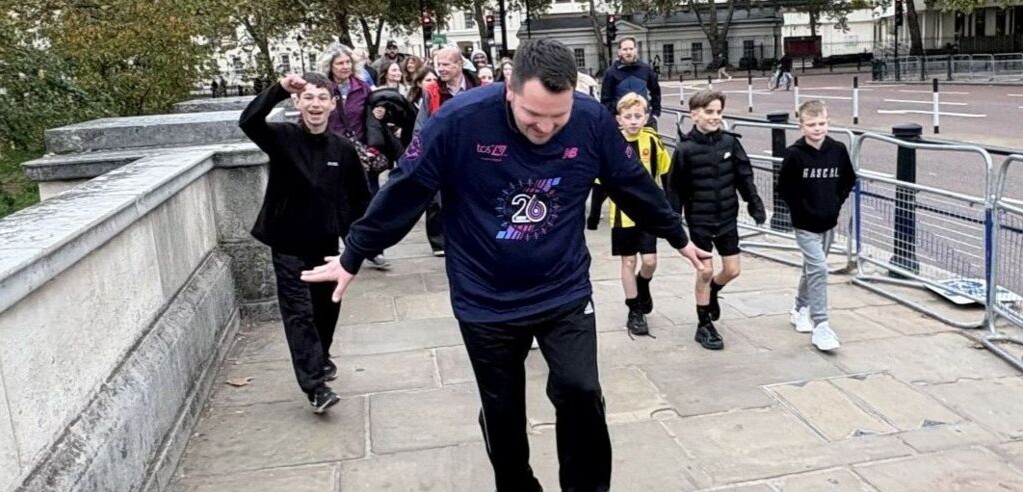
In April, Hopkins lined up for his first-ever marathon alongside his brother, Chris, with the brothers running to raise funds for Age UK in memory of their beloved grandmother. However, what was supposed to be a memorable sporting achievement turned into a terrifying fight for survival just over a mile from the finish.
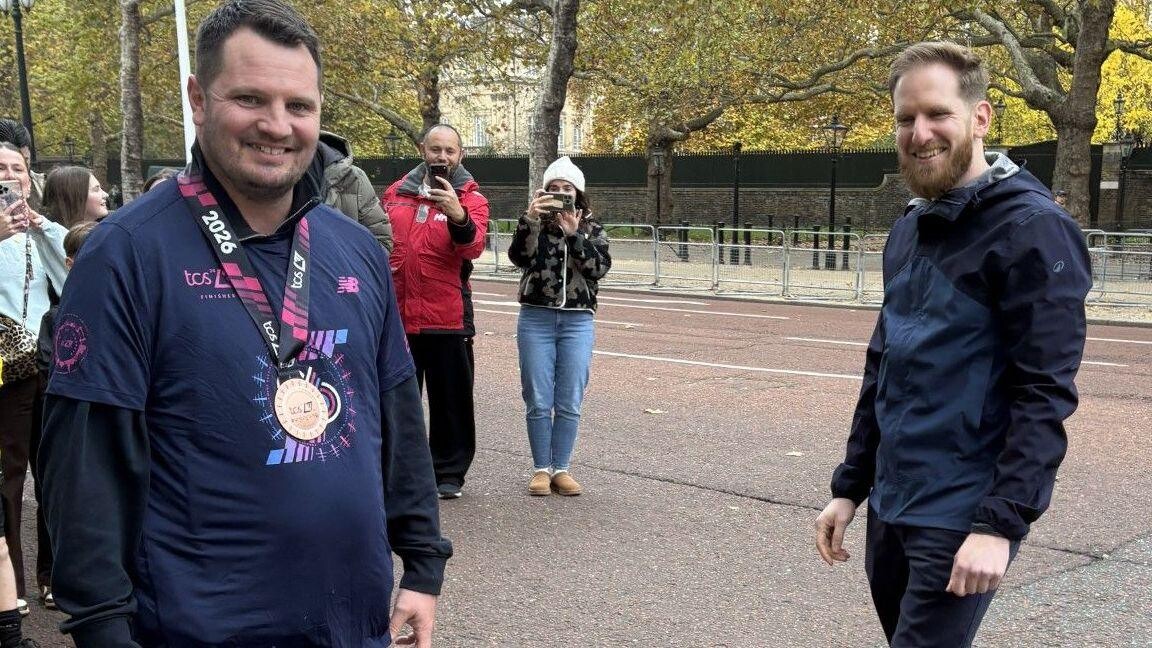
Having reached approximately mile 25, Hopkins suddenly collapsed after suffering a cardiac arrest. The medical emergency was caused by severe rhabdomyolysis, a serious condition involving the breakdown of muscle tissue, which in his case was brought on by overheating.
His brother Chris had already completed the race when the family, who had been tracking Gareth's progress, realised that his movement had stopped. They immediately went searching for him, only to discover that emergency responders from St John Ambulance were already working desperately to save his life.
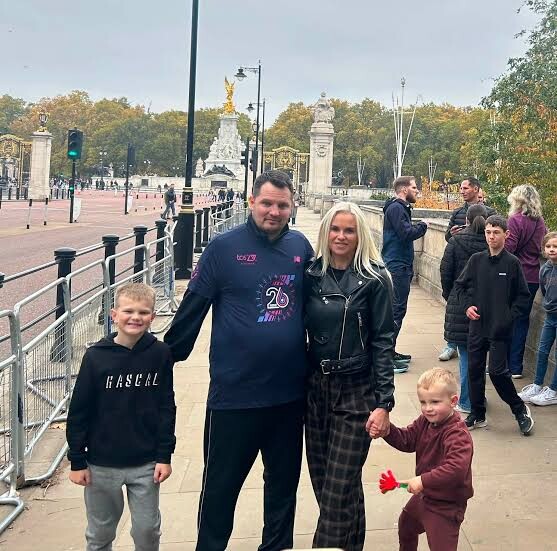
Hopkins was subsequently rushed to St Thomas' Hospital, where he received intensive medical care. His recovery journey was long and extremely challenging, requiring him to relearn some of the most basic everyday activities, including walking, talking and eating.
After months of rehabilitation and determination, he was finally discharged and returned home in September, marking another significant milestone in his remarkable recovery.
Now, six months after the frightening incident, Hopkins has returned to the London Marathon route to accomplish what he was unable to finish in April.
This time, however, there was no competitive pressure, no timing chip and no race clock to chase. Instead, approximately 200 family members, friends and supporters joined him for an emotional walk through central London, passing Buckingham Palace before making their way down The Mall towards the iconic marathon finish line.
In an extraordinary gesture of kindness, an anonymous donor also ensured that Hopkins received an official London Marathon finisher's medal, making his long-awaited moment even more special.
Reflecting on the experience, he described it simply: "It was the longest marathon ever."
Despite completing this deeply personal journey, Hopkins says he has been advised not to run again and has accepted that he will not attempt another marathon.
For most marathon runners, reaching The Mall represents the final few minutes of an exhausting 26.2-mile challenge. For Gareth Hopkins, it took six months of recovery, extraordinary determination and the unwavering support of the people closest to him.
His journey is a powerful reminder that success in sport is not always measured by finishing times, personal bests or podium positions. Sometimes, the greatest victory is simply being given another opportunity to reach the finish line.
Gareth Hopkins may have taken six months to complete his London Marathon journey, but his achievement is one that will remain far beyond the finish line.
A truly remarkable story of survival, courage, gratitude and the strength of the human spirit.
by Erick Cheruiyot for My Best Runs.
Login to leave a comment
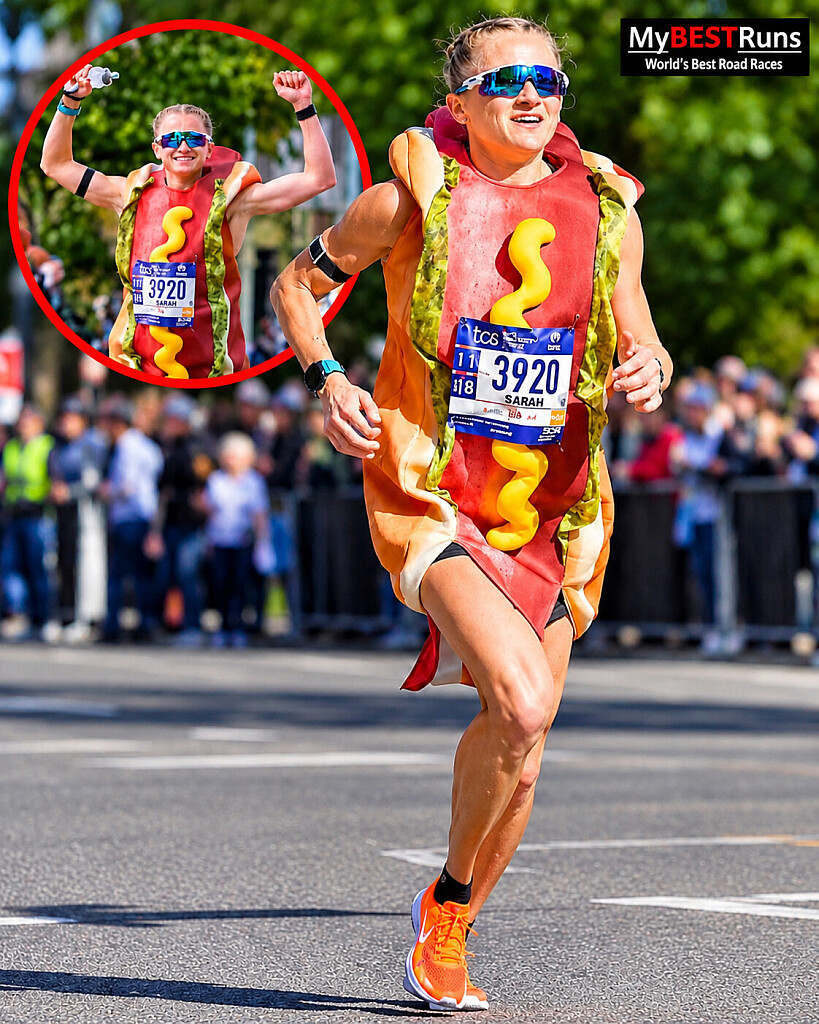
Sarah Pezzino Runs New York City Marathon In An Incredible 2:49:15 While Dressed As A Hot Dog, With Guinness World Record In Sight!
Running a marathon in under 2:50 is an impressive achievement for any athlete. Doing it while dressed as a giant hot dog takes the accomplishment to an entirely different level.
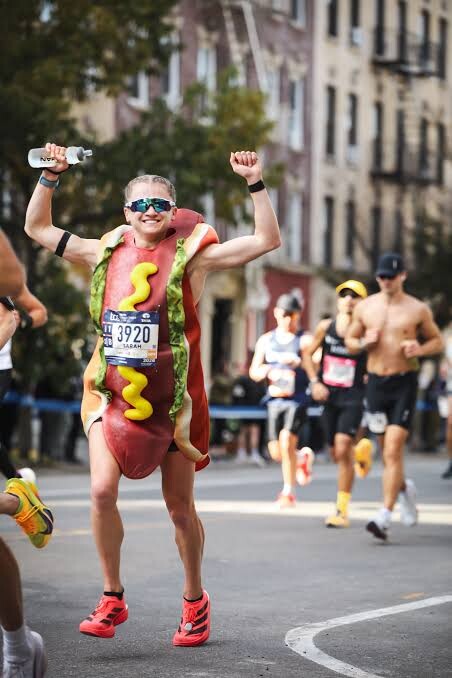
Sarah Pezzino captured attention at the 2026 TCS New York City Marathon after completing the demanding 26.2-mile course in an outstanding 2:49:15, all while wearing a full hot dog costume.
Complete with a bun, sausage and a distinctive line of ketchup, Pezzino carried her unusual outfit through all five boroughs of New York City without allowing the costume to stand in the way of an exceptional performance.
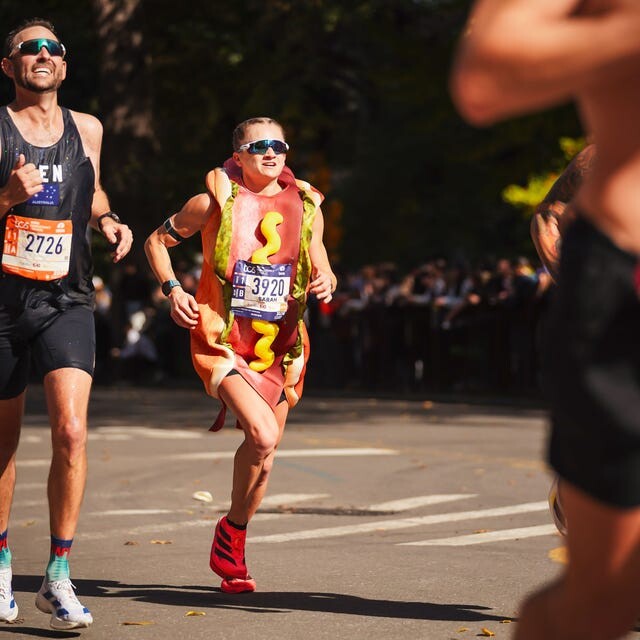
Her finishing time translates to an average pace of approximately 6 minutes and 27 seconds per mile (4:00 per kilometre), placing her 59th among more than 28,000 female finishers and fourth in her age group.
What initially began as a joke among friends eventually developed into a serious record-breaking ambition. After discovering the Guinness World Records benchmark for completing a marathon in a food-themed costume, Pezzino decided to see just how fast she could go.
The existing mark stood at 3:11:34, meaning her remarkable 2:49:15 performance was more than 22 minutes faster. However, Guinness World Records must still review and officially verify her performance before she can be recognised as the record holder.
Interestingly, the hot dog costume already has a place in marathon record history.
Back in 2015, Runner's World editor Meghan Kita approached Guinness World Records about establishing a marathon record specifically for runners dressed as hot dogs. The organisation considered the category too narrow and instead introduced a broader fast-food costume category.
Kita subsequently completed the Marine Corps Marathon in 3:57:49, stopping at every mile marker to collect photographic evidence of her costume throughout the race.
More than a decade later, Pezzino has taken the challenge to another level, producing a performance that would be impressive even without the added difficulty of running in a full-body costume.
Her achievement is a wonderful reminder of the creativity, humour and extraordinary determination that make marathon running such a special sport.
While thousands of runners take on New York chasing personal bests, qualifying standards and competitive positions, Pezzino managed to combine entertainment with genuine athletic excellence.
She did not simply bring a smile to the streets of New York. She delivered a sub-2:50 marathon performance that could also earn her a place in the Guinness World Records.
A hot dog costume, 26.2 miles and a remarkable 2:49:15. Sarah Pezzino certainly proved that you can have fun and run fast at the same time!
by Erick Cheruiyot for My Best Runs.
Login to leave a comment
SHINee Star Choi Min-ho Voluntarily Surrenders Marathon Result Following Physical Assistance Controversy!
South Korean singer and SHINee member Choi Min-ho has made headlines beyond the entertainment world after voluntarily relinquishing his finishing result from the 2026 JTBC Seoul Marathon, following controversy surrounding footage that appeared to show him receiving physical assistance during the race.

The 34-year-old K-pop star took on his first-ever full marathon on November 1, 2026, completing the gruelling 42.195-kilometre distance in an impressive 3:00:18. His performance attracted considerable attention, particularly because he narrowly missed the highly coveted sub-three-hour milestone by just 18 seconds.

However, what initially appeared to be a remarkable debut soon became the centre of a heated debate within running communities and on social media.
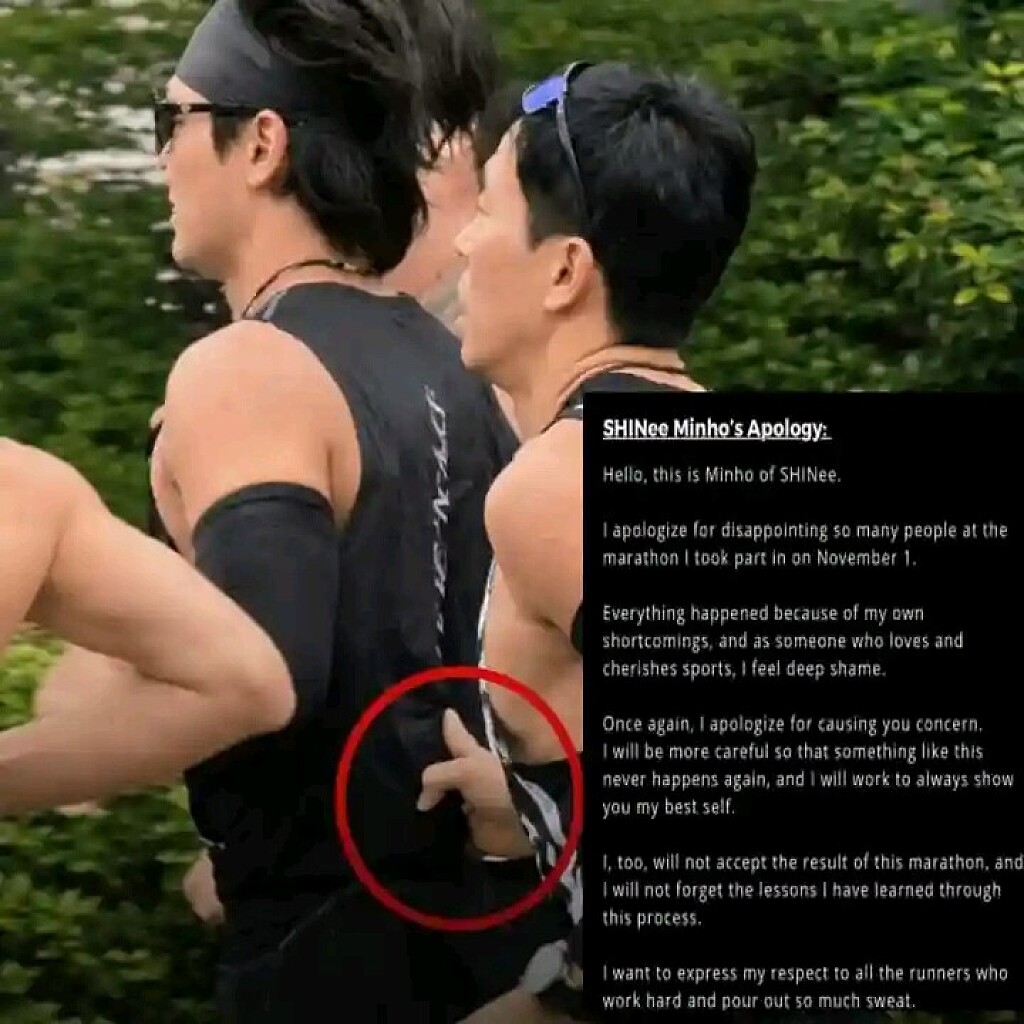
Footage circulating online showed another runner, believed to be his pacemaker, running close behind Min-ho and appearing to place a hand against his lower back and waist, seemingly pushing him forward. The images sparked questions about whether the physical contact constituted unauthorised assistance and whether it compromised the fairness of his performance.

The controversy quickly gained momentum, with athletics enthusiasts questioning the circumstances surrounding the assistance and calling for greater respect for the principles governing fair competition.
Faced with the growing criticism, Min-ho addressed the situation on November 3 through a heartfelt public apology. He expressed deep regret for disappointing people who had followed his marathon journey, acknowledging that the incident had occurred because of his own shortcomings.
He also emphasised his love and respect for sport, admitting that he felt deeply ashamed of the situation. In a further demonstration of accountability, he announced that he would not accept his finishing result, adding that he would carry the lessons from the experience into the future.
His decision was subsequently accepted by Runable, the organisers of the 2026 JTBC Seoul Marathon. On November 4, they confirmed that his request to relinquish the result had been accepted and that his finishing time would not be issued as an official race record.
Importantly, the withdrawal should not be confused with an official disqualification for a confirmed rules violation. The organisers did not establish a definitive finding that Min-ho had breached competition regulations, leaving the incident to be viewed primarily through his voluntary decision to surrender the result.
Beyond the controversy, the incident has reignited an important conversation about integrity, fairness and accountability in distance running. Whether competing at elite level or participating in mass-participation events, every runner shares responsibility for respecting the principles that make athletics a fair and credible sport.
For Min-ho, a performance that initially promised to be a memorable milestone in his sporting journey has instead become a valuable lesson about the responsibilities that accompany competition.
His 3:00:18 performance may no longer appear as an official result, but the wider discussion it has generated serves as a reminder that sporting achievements are measured by more than finishing times.
In marathon running, every second matters, but so do honesty, fairness and respect for every athlete who earns their place at the finish line.
by Erick Cheruiyot for My Best Runs.
Login to leave a comment

JTBC Seoul Marathon
Experience a thrilling footrace from the vibrant city of Seoul, South Korea! The Seoul Marathon, established to commemorate the 1988 Seoul Olympics, runs a loop across the city. The course is generally flat and results in fast finishing times, making it the perfect course for international competitors. With a men's marathon elite race and 10km and marathon races for non-professionals,...
more...