

Running News Daily
Running News Daily is edited by Bob Anderson and team. Send your news items to bob@mybestruns.com Advertising opportunities available.
Index to Daily Posts · Sign Up For Updates · Run The World Feed



From Bolt To Seville: Jamaica’s Sprinting Torch Enters A New Era

For more than a decade, Usain Bolt defined Jamaican sprinting on the world stage. Now, a new generation is beginning to write its own chapter — and at the centre of that transition stands Oblique Seville, a sprinter whose journey is closely connected to the very people who shaped Bolt’s legendary career.
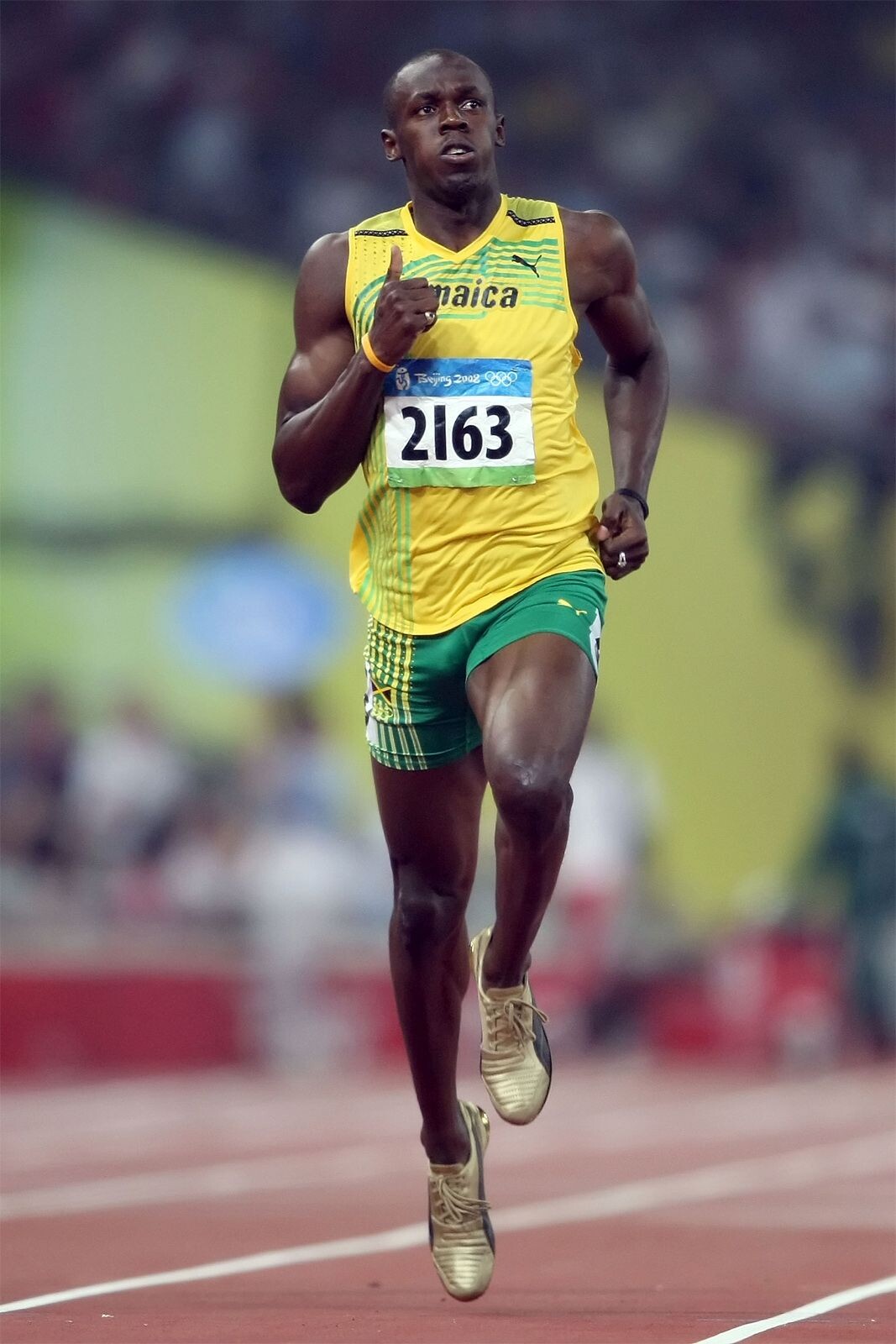
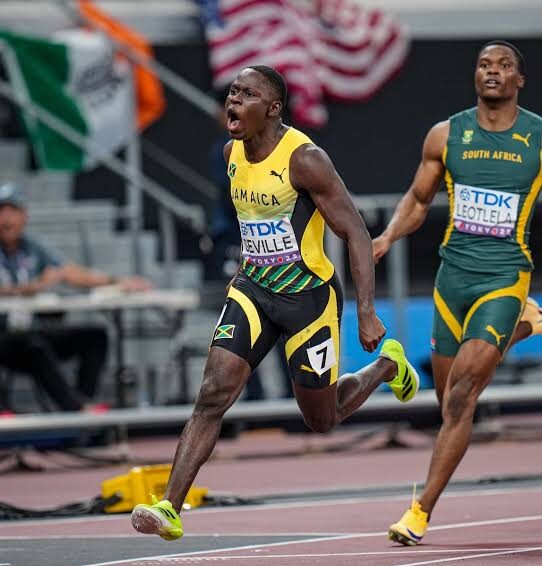
Seville announced himself as Jamaica’s new 100m champion in spectacular fashion at the 2025 World Athletics Championships in Tokyo. Running a lifetime best of 9.77 seconds, he captured the world title ahead of compatriot Kishane Thompson, who clocked 9.82, giving Jamaica a memorable one-two finish.
The significance of the victory was enormous. Seville became the first Jamaican man since Bolt to win the World Athletics Championships 100m title. And watching from the stands was Bolt himself, who celebrated enthusiastically as his compatriot delivered one of the biggest victories of his career.
But the connection between the two generations goes far beyond that unforgettable night in Tokyo.
A Dream That Began At 10
Long before Seville became a world champion, he already knew exactly who he wanted to coach him.
When he was around 10 years old, Seville reportedly told his mother that he wanted to train under Glen Mills — the renowned Jamaican coach who guided Bolt during the most dominant period of his career.
That childhood ambition eventually became reality. Seville joined the Racers Track Club and came under the guidance of Mills, establishing a relationship that has played a major role in his development as an elite sprinter.
Mills had already helped shape one of the greatest sprinters in history. Now, years later, he was helping another Jamaican talent reach the summit of the 100 metres.
Bolt Became More Than An Inspiration
Seville has also spoken about the influence Bolt has had on his life away from the track.
Following the death of his father, Gerald Seville, Bolt became an important source of encouragement and motivation for the young sprinter. Seville has described Bolt as a major motivator, adding another deeply personal dimension to a relationship that began with admiration from afar.
That makes the scene in Tokyo even more powerful: the athlete Seville grew up watching was there as he achieved the breakthrough that could define his own generation.
Bolt's presence was not simply symbolic. Before the final, he had spoken about Seville and Thompson as athletes capable of challenging for the gold medal. Seville ultimately delivered when the pressure was greatest.
From 9.77 To A New Challenge
Seville's Tokyo triumph was not the end of the story.
In 2026, he continued to establish himself among the world's leading sprinters, eventually claiming the men's 100m Diamond League title at the series final in Brussels. He also produced a season-best 9.82 in Kingston and recorded several victories during the Diamond League campaign.
The progression is significant. From an ambitious youngster dreaming of being coached by Glen Mills, to a World Championships gold medallist, and now a Diamond League champion, Seville is steadily building a career that belongs to him.
Yet he remains deeply respectful of the athlete whose footsteps he is following.
Seville has repeatedly acknowledged Bolt's greatness, while also believing that the next generation of Jamaican sprinters can push the event to another level. The ambition is clear: the future may eventually demand performances in the 9.6-second range.
For now, however, Seville's focus is not on becoming another Usain Bolt.
It is on becoming the best version of Oblique Seville.
The Torch Has Been Passed — But The Story Is Still Being Written
Jamaica's sprinting tradition has produced some of the most extraordinary athletes the sport has ever seen. Bolt took that tradition to an unprecedented level. Seville now represents a new generation determined to keep it alive.
The symbolism is difficult to miss.
The coach who helped guide Bolt is now guiding Seville. The champion who once inspired Seville as a young boy was there to watch him become a world champion. And the young Jamaican who once dreamed of joining Glen Mills is now collecting major titles of his own.
Seville has already secured a World Championships 100m title, a 9.77 personal best and a Diamond League crown.
The next chapter of Jamaican sprinting is no longer waiting to begin.
It is already underway.
And with Glen Mills in his corner and Usain Bolt among those who have helped inspire him, Oblique Seville is carrying the Jamaican sprinting tradition forward — while creating a legacy of his own.
by Erick Cheruiyot for My Best Runs.
Login to leave a comment
Latest Running News
Rodrigue Kwizera Makes History With Third Itálica Title As Likina Amebaw Leads Ethiopia To Women's Victory In Spain!
The 44th edition of the prestigious Cross Internacional de Itálica delivered a spectacular celebration of international cross-country running on Sunday, November 8, 2026, as Rodrigue Kwizera and Likina Amebaw emerged victorious in the men's and women's elite races in Santiponce, near Seville, Spain.

The World Athletics Cross Country Tour Gold meeting attracted a formidable international field, with some of the world's finest distance runners battling across the challenging 9.55km course through the historic archaeological surroundings of Itálica.
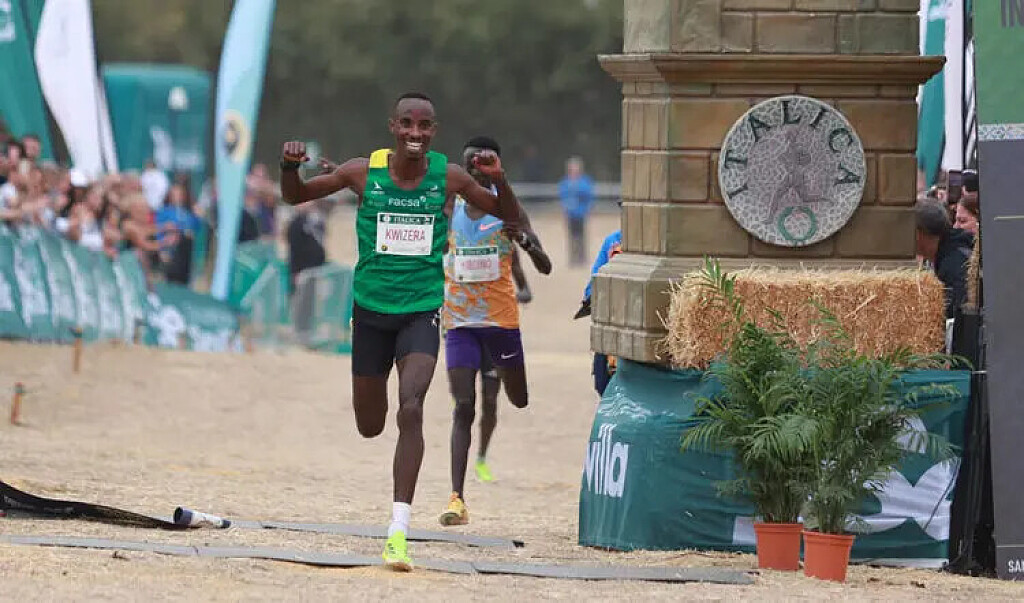
Burundi-born distance star Rodrigue Kwizera produced another outstanding performance to claim his third men's title at Itálica, matching the remarkable achievement of Ethiopian distance-running legend Kenenisa Bekele.
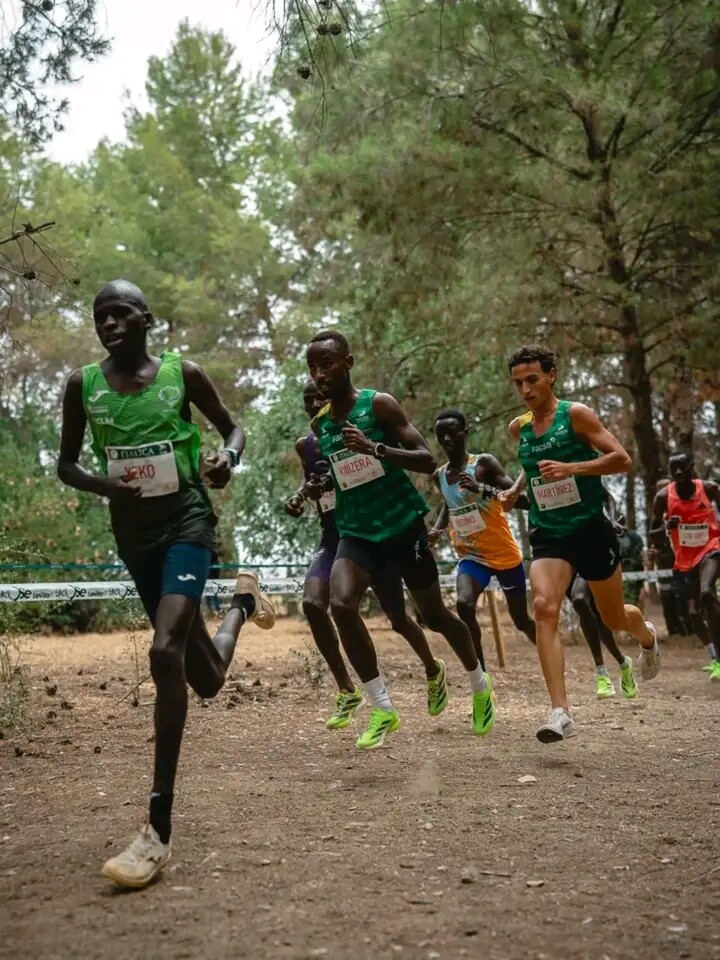
Kwizera crossed the finish line in 27:37 after an intensely contested race that went down to the final metres. Kenya's Charles Kiboino Kiprono delivered a tremendous challenge, finishing just one second behind in 27:38, while his compatriot Frankline Kibet secured third place in 27:39 to complete an impressive Kenyan presence on the podium.
The victory added another significant chapter to Kwizera's relationship with the Spanish cross-country classic. Having previously won the competition in 2021 and 2025, his latest triumph makes him a three-time champion, equalling Bekele's record of three victories achieved between 2003 and 2007.
Kwizera's achievement was particularly significant given his connection with Spain, where he has established himself as one of the country's leading distance-running talents. His success further underlined his remarkable consistency at the highest level of international cross-country competition.
Kenya also enjoyed an excellent outing, with Kiboino and Kibet demonstrating the country's continuing strength in distance running. Denis Kipkoech Kemboi Kipkemoi finished fourth in 27:52, while Spain's Thierry Ndikumwenayo completed the top five in 27:59.
MEN'S TOP 10 RESULTS – 9.55KM
1. Rodrigue Kwizera – 27:37
2. Charles Kiboino Kiprono – 27:38
3. Frankline Kibet – 27:39
4. Denis Kipkoech Kemboi Kipkemoi – 27:52
5. Thierry Ndikumwenayo – 27:59
6. Miguel Ángel Martínez Chazarra – 28:00
7. Andrew Kiptoo Alamisi – 28:17
8. Dismas Yeko – 28:24
9. Berihu Aregawi – 28:24
10. Samuel Simba Cherop – 28:42
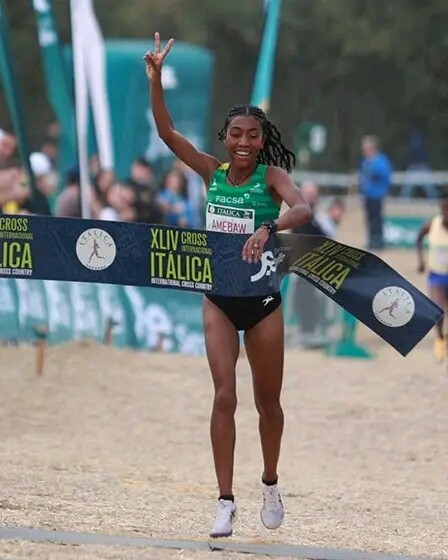
In the women's competition, Ethiopia's Likina Amebaw produced a magnificent performance to secure victory at the Cross Internacional de Itálica, delivering an impressive display of endurance, confidence and tactical intelligence.

Amebaw, who finished third at last year's edition, demonstrated impressive patience before delivering a decisive acceleration during the final lap.
The Ethiopian crossed the finish line in 30:41, establishing an eight-second advantage over Uganda's rising distance-running talent Charity Cherop, who secured second place in 30:49.

Kenya's Cynthia Chepkurui completed the international podium, finishing third in 30:57 after another determined performance against a highly competitive field.
The women's race had initially been controlled by Cherop, who dictated much of the early pace. However, Amebaw remained close to the Ugandan before launching her decisive move in the closing stages, gradually opening a gap that her challengers could not overcome.
The victory represented another important achievement for Amebaw, who continues to establish herself among the leading names in international distance running. Her ability to combine endurance, patience and a powerful finishing kick proved decisive on the historic Spanish course.
Ethiopia's Yenenesh Shimket finished fourth in 31:24, while Kenya's Maurine Jepkoech Chebor placed fifth in 32:02. Burundi's Francine Niyomukunzi finished sixth in 32:06, followed by the Netherlands' Amina Maatoug in seventh in 32:18. Spain's Carolina Robles completed the top eight in 32:51.
WOMEN'S TOP 10 RESULTS – 9.55KM
1. Likina Amebaw – 30:41
2. Charity Cherop – 30:49
3. Cynthia Chepkurui – 30:57
4. Yenenesh Shimket – 31:24
5. Maurine Jepkoech Chebor – 32:02
6. Francine Niyomukunzi – 32:06
7. Amina Maatoug – 32:18
8. Carolina Robles – 32:51
9. María Forero – 33:16
10. Elena Burkard – 33:21
The 2026 Cross Internacional de Itálica once again demonstrated why the competition remains one of the most respected fixtures on the international cross-country calendar.
Kwizera's historic third triumph, which brought him alongside Bekele in the competition's record books, and Amebaw's outstanding victory provided two major highlights of an exciting afternoon of racing.
With Kenya, Ethiopia, Uganda, Burundi and Spain all represented prominently among the leading finishers, the 44th edition delivered another reminder of the extraordinary depth of international distance-running talent.
by Erick Cheruiyot for My Best Runs.
Login to leave a comment

Cross internacional de Italica
The Cross Internacional de Itálica is an annual cross country running competition it will be held on 21st of November in Santiponce, near Seville, Spain. Inaugurated in 1982, the race course is set in the ruins of the ancient Roman city of Italica. As one of only two Spanish competitions to hold IAAF permit meeting status, it is one of...
more...
Superhalfs Expands Its Global Half Marathon Challenge With Six New European Races And A Second Super Medal From 2027!
The European half marathon scene is set for an exciting new chapter as SuperHalfs prepares to expand its popular international running series with the introduction of a second six-race challenge, giving runners even more opportunities to explore Europe while pursuing an extraordinary endurance achievement.
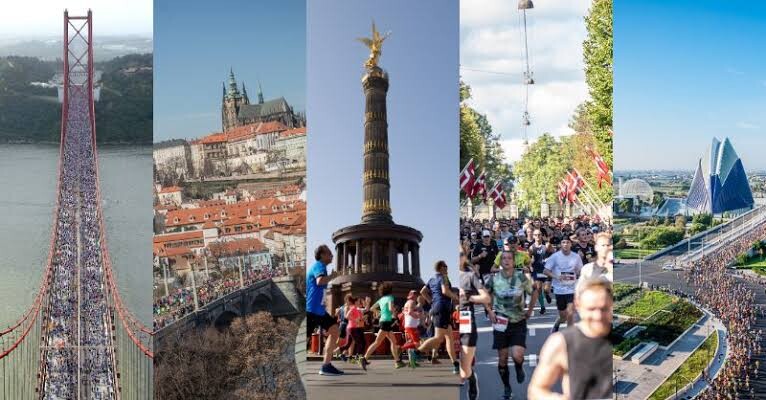
Starting in 2027, the newly introduced SuperHalfs EUROPA will feature six prestigious half marathons across six different European countries: Naples (Italy), Warsaw (Poland), Belgrade (Serbia), Vienna (Austria), Riga (Latvia) and Stockholm (Sweden).
The expansion represents a significant development for the SuperHalfs movement, which has established itself as one of Europe's most attractive half marathon challenges, combining competitive road racing, international travel and the opportunity for runners to achieve a unique personal milestone.
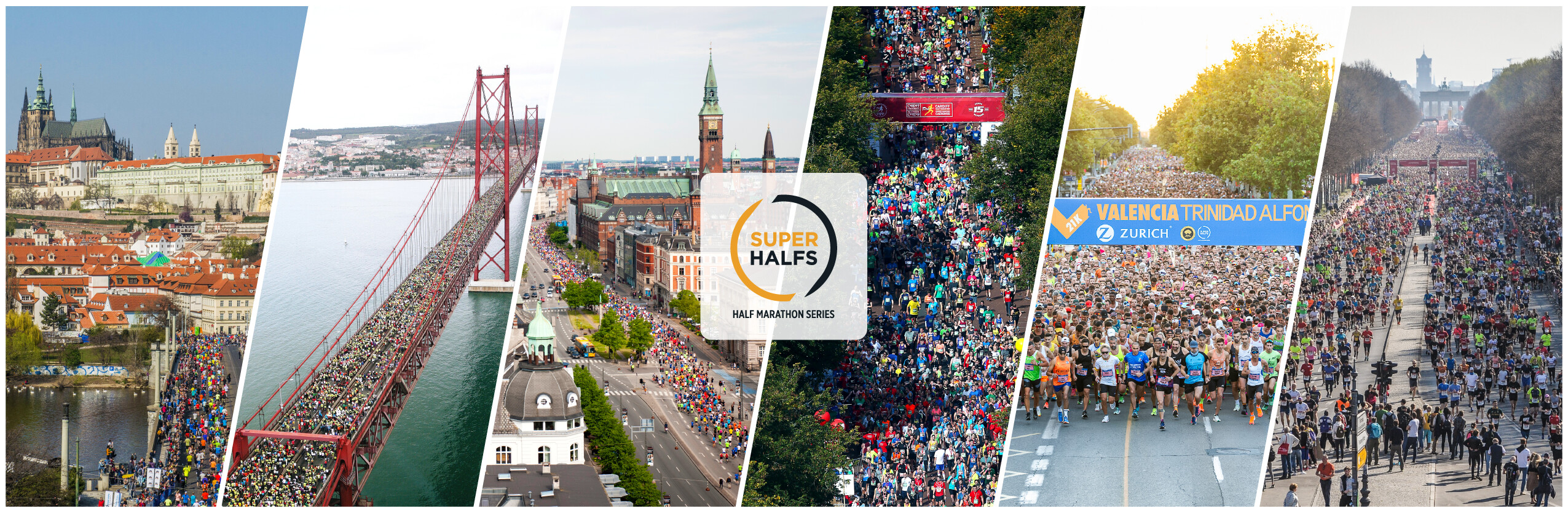
The new EUROPA series will operate alongside the existing six-race challenge, which will officially be known as SuperHalfs ORIGINALS. The original lineup comprises Lisbon (Portugal), Prague (Czech Republic), Berlin (Germany), Copenhagen (Denmark), Cardiff (Wales) and Valencia (Spain).
Rather than replacing the established series, the new initiative creates two independent challenges, each with its own dedicated SuperPassport and exclusive SuperMedal. Runners will therefore have the opportunity to complete either series or take on both challenges in pursuit of two separate medals.
One of the most appealing aspects of the expanded format is its flexibility. Participants can complete the six races in whichever order they prefer, without being restricted by a finishing deadline. This means runners can spread their challenges over several years, combining their passion for athletics with travel and exploration across the continent.
THE SUPERHALFS EUROPA 2027 RACE CALENDAR
The inaugural EUROPA campaign will begin in Naples on February 21 before moving through five more European destinations.
The confirmed calendar is as follows:
1. February 21, 2027 – Naples, Italy
2. March 14, 2027 – Warsaw, Poland
3. April 17, 2027 – Belgrade, Serbia
4. April 18, 2027 – Vienna, Austria
5. May 16, 2027 – Riga, Latvia
6. August 21, 2027 – Stockholm, Sweden
An interesting feature of the calendar is the scheduling of Belgrade and Vienna on consecutive days, April 17 and 18. This creates an unusual opportunity for ambitious runners to attempt two half marathons in two consecutive days, although the physical demands of such a challenge will require careful preparation and recovery.
The selected races also bring considerable running communities to the new series. Warsaw recorded 14,720 starters in its 2025 half marathon, establishing a national participation milestone. Vienna welcomed 13,181 finishers in its half marathon this spring, while Riga's wider race weekend attracted more than 45,000 participants across its various distances.
These figures underline the scale and popularity of the events joining the new challenge, providing runners with the opportunity to experience some of Europe's established road-running destinations.
The expansion is supported by global insurance company Generali and was officially unveiled during the European Athletics Convention, marking another important step in the development of the series.
However, runners planning to participate should take note of one important condition: previous race performances will not count towards the new EUROPA challenge. Every participant will begin their journey from zero when the series officially starts in 2027.
With six new destinations, six countries and another exclusive medal waiting at the finish line, SuperHalfs EUROPA promises to offer runners a fresh reason to travel, compete and challenge themselves.
For half marathon enthusiasts, the opportunity is now even bigger: six races to complete in the ORIGINALS series, another six in EUROPA, and potentially two SuperMedals to earn along the way.
by Erick Cheruiyot for My Best Runs.
Login to leave a comment

Josh Kerr Gets His Dream Murrayfield Moment As Mile World Record Holder Delivers Match Ball In Historic Scotland Shirt!
Olympic medallist and mile world record holder Josh Kerr enjoyed a memorable homecoming at Murrayfield on Saturday, fulfilling a childhood ambition by stepping onto the famous rugby stadium pitch in a Scotland shirt — although this time, he was not there to play.

The Scottish middle-distance star had the honour of presenting the match ball ahead of Scotland's highly anticipated international clash against New Zealand, walking out in front of a packed crowd of 67,130 spectators. His special navy-blue jersey carried his surname, KERR, alongside the number 222, a powerful tribute to one of the greatest achievements of his athletics career.
The number 222 represents Project 222, the ambitious challenge Kerr announced in March to break the long-standing mile world record. In July, he delivered an extraordinary performance at the London Athletics Meet, clocking 3:42.66 to erase the previous world record of 3:43.13, set by Morocco's Hicham El Guerrouj in 1999. The remarkable achievement ended a 27-year wait for a new men's mile world record.
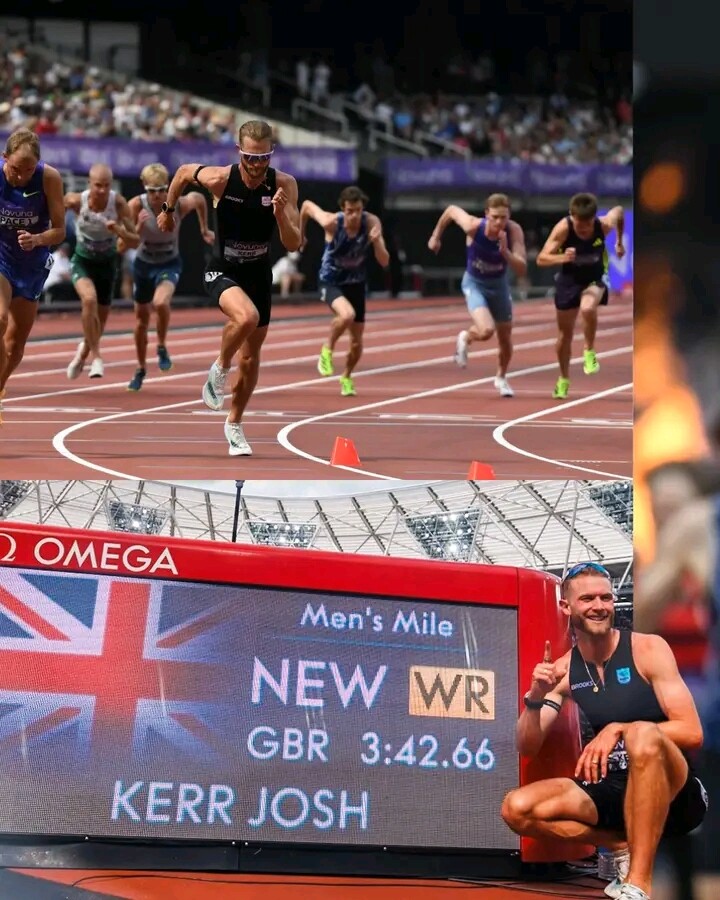
However, Kerr's connection to rugby stretches far beyond his appearance at Murrayfield. He comes from a family with strong Scottish rugby traditions. His father, John Kerr, represented Scotland A on the wing, while his brother Jake progressed to the senior national team, earning his first full international cap in 2019 as a hooker.
Josh himself was once deeply involved in the sport, playing as a full-back during his school years at George Watson's College in Edinburgh. Growing up, representing Scotland at Murrayfield was a dream he hoped to achieve, but his exceptional athletic ability eventually directed him towards middle-distance running.
That decision would take him on an extraordinary journey, from Scotland to the University of New Mexico in Albuquerque, and ultimately onto the biggest stages in international athletics. He became a world 1500m champion in 2023 and claimed Olympic silver at the Paris 2024 Games, establishing himself among the leading middle-distance runners of his generation.
Saturday's appearance therefore represented something special: a chance to reconnect with his sporting roots and experience the atmosphere of Murrayfield in a Scotland jersey, even if his career took a different path from the one he once imagined.
Unfortunately, the occasion did not produce the result Scottish supporters had hoped for. New Zealand proved too strong, securing a convincing 43-21 victory and extending Scotland's winless record against the All Blacks to 34 matches.
Despite the defeat, Kerr left Murrayfield with a moment he will undoubtedly treasure. Reflecting on the experience in a social media post afterwards, the world record holder captured his emotions in just four words: "Murrayfield you are special."
For a man who has conquered the mile and rewritten athletics history, stepping onto Murrayfield in the colours of Scotland was another special milestone — a childhood rugby dream finally realised through an extraordinary journey in athletics.
by Erick Cheruiyot for My Best Runs.
Login to leave a comment

Seven World Marathon Majors In One Year! Deirdre Keane Completes Extraordinary 2026 Challenge At 34 Weeks Pregnant!
What began as an ambitious challenge to conquer all seven Abbott World Marathon Majors in a single calendar year turned into one of the most remarkable and emotional marathon journeys of 2026 for Deirdre Keane.

Keane set out with a clear objective: complete the seven prestigious marathon races across the world, from Tokyo to Boston, London, Sydney, Berlin, Chicago and New York. However, an unexpected discovery after her third marathon transformed the challenge into something far more extraordinary. She was pregnant!
Even more surprising, she had already completed two of the seven marathons while unknowingly carrying her baby. Her pregnancy was discovered after the third race, meaning that what initially appeared to be a straightforward year of marathon racing had suddenly become a very different personal journey.
Rather than simply walking away from the challenge, Keane adapted her approach, adjusting her training and running pace as her pregnancy progressed. Each subsequent marathon presented a new experience, requiring careful consideration of her changing circumstances.

Her journey began at the Tokyo Marathon in Japan, where she clocked an impressive 3:16 before becoming pregnant. She returned to the start line at the Boston Marathon, also recording 3:16 at five weeks pregnant, although she was not yet aware of her condition. At the London Marathon, she crossed the finish line in 3:38 at six weeks pregnant, still unaware that she was expecting.
After discovering the pregnancy, the remaining four races became an entirely different chapter of her adventure. She completed the Sydney Marathon in 4:05 at 25 weeks, followed by Berlin in 4:01 at 29 weeks. Chicago came next, where she recorded 3:58 at 31 weeks pregnant.
The final destination was the legendary New York City Marathon, where Keane achieved the remarkable milestone of completing all seven World Marathon Majors in the same year. At 34 weeks pregnant, she crossed the finish line in 4:06, bringing an unforgettable global marathon adventure to a close.
Her achievement was not measured by finishing times alone. Behind every race was a deeply personal story, particularly her connection to her late father, who introduced her to running and became one of the most important influences in her life.
There was an especially emotional dimension to her New York appearance. She completed the final marathon on what would have been her father's 75th birthday. Remarkably, her father had also run his final New York City Marathon 25 years earlier, creating a touching connection between two generations of runners.
Reflecting on a year that unfolded very differently from her original plans, Keane captured her feelings in a heartfelt message: "Not quite the year I had planned, but I wouldn't change a thing."
From Tokyo to New York, her seven-race journey became a story of unexpected discoveries, personal memories and a challenge that took on an entirely new meaning along the way.
Seven World Marathon Majors. Seven finish lines. One extraordinary year. And with a new addition to her family on the way, Deirdre Keane may have an even more special finish-line celebration ahead.
The remarkable achievement has added another unforgettable chapter to the 2026 marathon season, with Deirdre Keane completing all seven Abbott World Marathon Majors despite an unexpected pregnancy. Her journey has captured attention for its extraordinary circumstances, personal significance and emotional connection to her late father. As she prepares to welcome her baby, her story stands out as one of the most memorable marathon journeys of the year.
by Erick Cheruiyot for My Best Runs.
Login to leave a comment
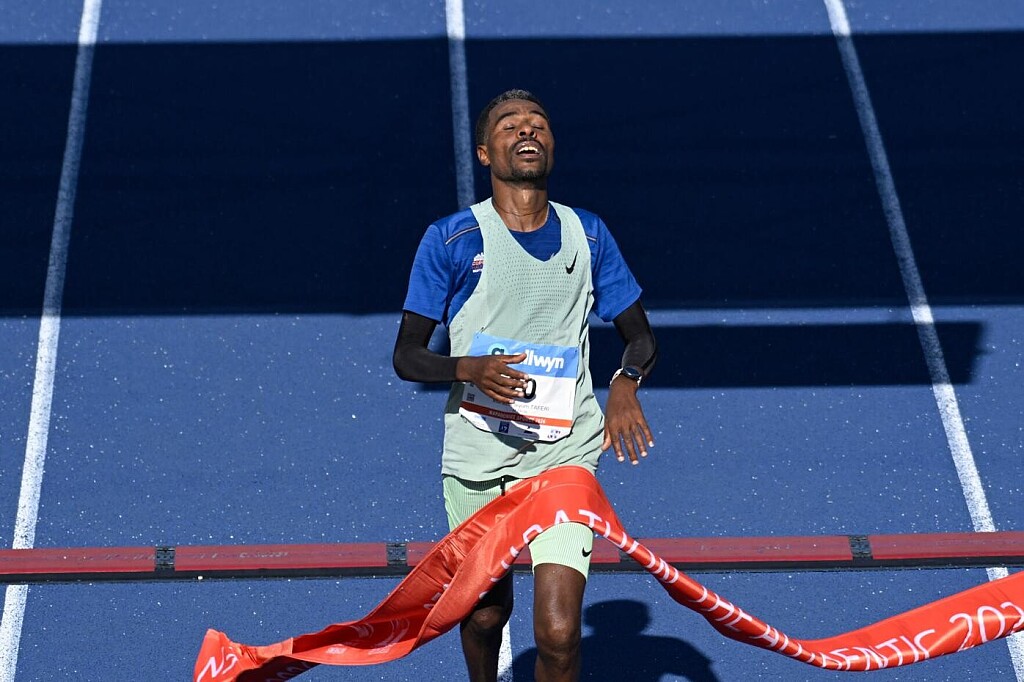
Ethiopia Dominates Athens Marathon With Double Record-Breaking Victories As Taferi And Dusha Make History!
Ethiopia produced a remarkable double triumph at the 43rd edition of the Athens Marathon – The Authentic, with Manazot Siyum Taferi and Yatane Kormoshe Dusha delivering outstanding performances to win the men's and women's races respectively, both setting new event records on Sunday, November 8, 2026.

The historic marathon, run over the traditional 42.195-kilometre route from the town of Marathon to the iconic Panathenaic Stadium in Athens, witnessed exceptional performances from the Ethiopian athletes, who dominated both elite competitions.
In the men's race, Manazot Siyum Taferi delivered a sensational performance, crossing the finish line in 2:10:03 to establish a new course record. The Ethiopian took 31 seconds off the previous mark of 2:10:34, set by Kenya's Edwin Kiptoo in 2023.
Taferi's victory was particularly impressive given the demanding nature of the historic route, which features challenging uphill sections before the spectacular finish inside the legendary Olympic stadium. His performance secured a memorable victory and placed him among the standout names in the event's history.
Fellow Ethiopian Asefa Tefera Mengisa completed an impressive one-two finish for his country, taking second place in 2:10:18, just 15 seconds behind the winner. Kenya's Patrick Ketter Kiplagat secured third position in 2:11:22 after another strong performance on the international stage.
Kenya's Vincent Kipsang Rono finished fourth in 2:12:06, while Eritrea's Nguse Amlosom Tesfaldet completed the top five in 2:12:20. Kenya also had Victor Kipkoech Biwott finishing sixth in 2:14:10, demonstrating the country's strong representation in the men's competition.
MEN'S TOP 10 – ATHENS MARATHON 2026
1. Manazot Siyum Taferi (Ethiopia) – 2:10:03
2. Asefa Tefera Mengisa (Ethiopia) – 2:10:18
3. Patrick Ketter Kiplagat (Kenya) – 2:11:22
4. Vincent Kipsang Rono (Kenya) – 2:12:06
5. Nguse Amlosom Tesfaldet (Eritrea) – 2:12:20
6. Victor Kipkoech Biwott (Kenya) – 2:14:10
7. Adane Nega (Ethiopia) – 2:17:30
8. Konstantinos Stamoulis (Greece) – 2:17:37
9. Charalampos Pitsolis (Greece) – 2:18:58
10. Nikolaos Stamoulis (Greece) – 2:19:05
The women's race delivered another spectacular Ethiopian success, with Yatane Kormoshe Dusha producing a historic performance to capture the title in 2:30:04.
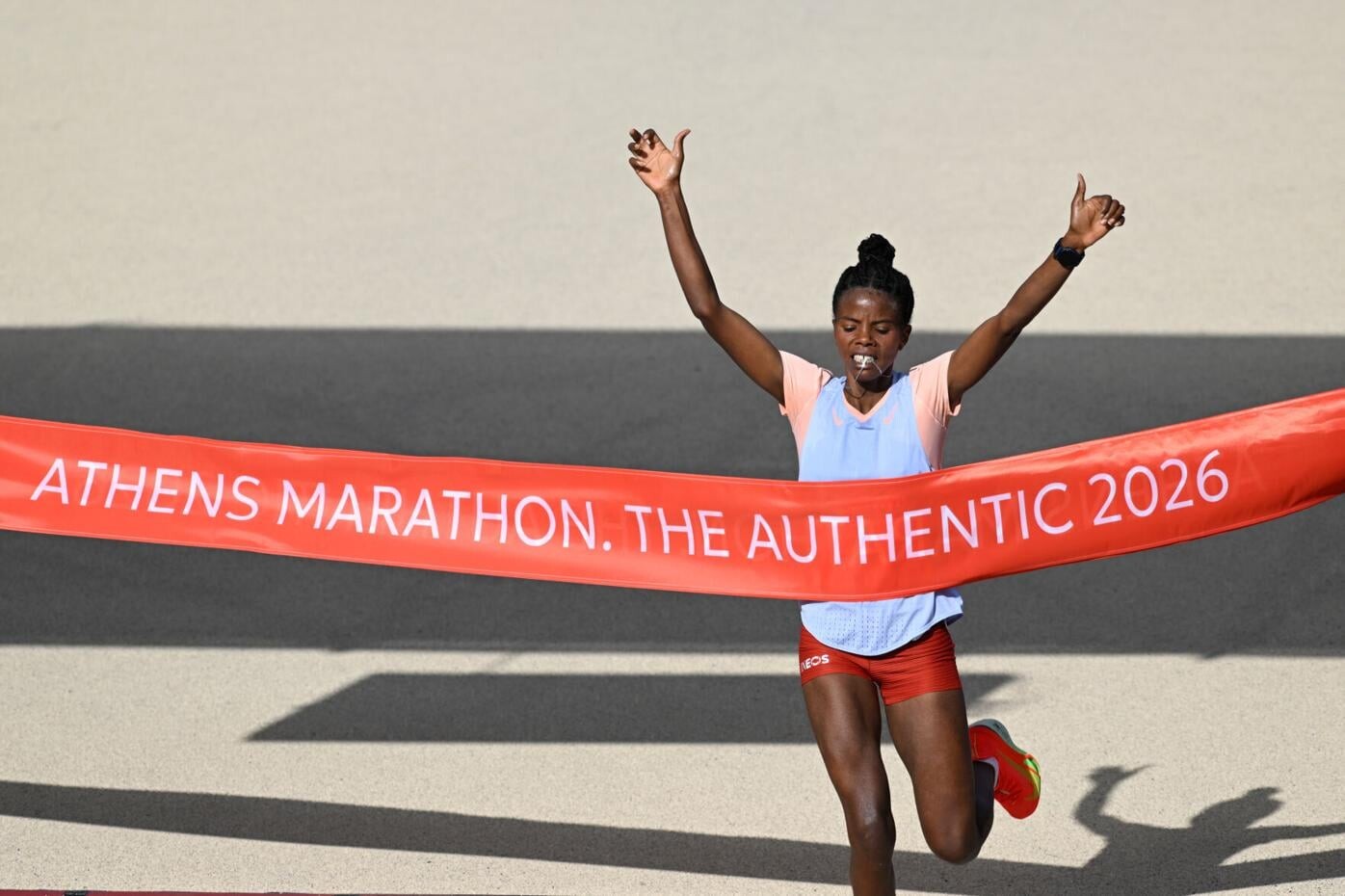
Dusha not only claimed victory but also established a new event record, improving the previous mark of 2:31:06 set by Lithuania's Rasa Drazdauskaitė in 2010. The old record had stood for 16 years, making the Ethiopian's achievement particularly significant.
Her compatriot Tsiyon Abebe Temesgen ensured another Ethiopian one-two finish, crossing the line in 2:30:29, just 25 seconds behind Dusha. The two Ethiopians demonstrated their class over the demanding course, securing the top two positions in a highly competitive women's field.
One of the outstanding performances came from American athlete Jane Jepkemboi Bareikis, who claimed third place in an impressive 2:32:59. Her podium finish prevented a complete Ethiopian sweep of the women's top three and added an international dimension to the competition.
Ethiopia's Atsede Baysa Tesema finished fourth in 2:33:10, while Kenya's Millicent Jemutai Kibet delivered a strong performance to secure fifth place in 2:35:10.
Host nation Greece also had reason to celebrate through Stamatia Noula, who finished sixth in 2:35:13. Her performance was particularly significant as she recorded the fastest time by a Greek woman on the historic Athens Marathon course, surpassing the previous national mark.
Athanasia Kokkorou finished seventh in 2:36:28, followed by Dafni-Eftychia Lavasa in 2:45:06, Georgia Kanouta in 2:45:40 and Xeni Katsimantou Filipopo in 2:46:02, completing the women's top 10.
WOMEN'S TOP 10 – ATHENS MARATHON 2026
1. Yatane Kormoshe Dusha (Ethiopia) – 2:30:04
2. Tsiyon Abebe Temesgen (Ethiopia) – 2:30:29
3. Jane Jepkemboi Bareikis (United States) – 2:32:59
4. Atsede Baysa Tesema (Ethiopia) – 2:33:10
5. Millicent Jemutai Kibet (Kenya) – 2:35:10
6. Stamatia Noula (Greece) – 2:35:13
7. Athanasia Kokkorou (Greece) – 2:36:28
8. Dafni-Eftychia Lavasa (Greece) – 2:45:06
9. Georgia Kanouta (Greece) – 2:45:40
10. Xeni Katsimantou Filipopo (Greece) – 2:46:02
The 43rd edition once again demonstrated why the Athens Marathon remains one of the most historically significant events in international distance running. Its route retraces the legendary journey associated with the origins of the modern marathon, culminating at the magnificent Panathenaic Stadium, where athletes experience a finish unlike any other in the sport.
For Ethiopia, the 2026 edition will be remembered as a remarkable day of distance-running excellence. Taferi and Dusha not only captured the men's and women's crowns but also rewrote the event's record books, leading an impressive national double victory in Athens.
Kenya, meanwhile, secured strong podium representation in the men's competition and a top-five finish in the women's race, ensuring its presence among the leading international contenders.
by Erick Cheruiyot for My Best Runs.
Login to leave a comment

Athens Marathon
The Athens Classic (authentic) Marathon is an annual marathon road race held in Athens, Greece, normally in early November. The race attracted 43.000 competitors in 2015 of which 16.000 were for the 42.195 km course, both numbers being an all-time record for the event. The rest of the runners competed in the concurrent 5 and 10 kilometers road races and...
more...