

Running News Daily
Running News Daily is edited by Bob Anderson and team. Send your news items to bob@mybestruns.com Advertising opportunities available.
Index to Daily Posts · Sign Up For Updates · Run The World Feed
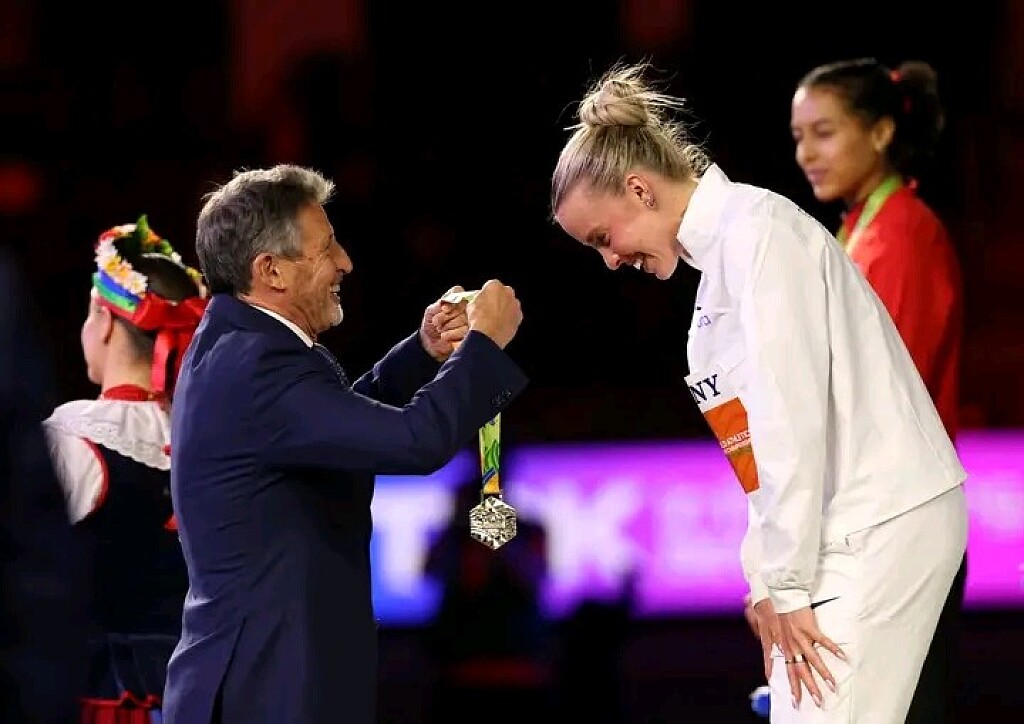


Sebastian Coe At 70: From Yorkshire Prodigy To Olympic Great And World Athletics President

Sebastian Coe turns 70 today, marking seven remarkable decades for a man whose name has become inseparable from some of the greatest moments in middle-distance running.
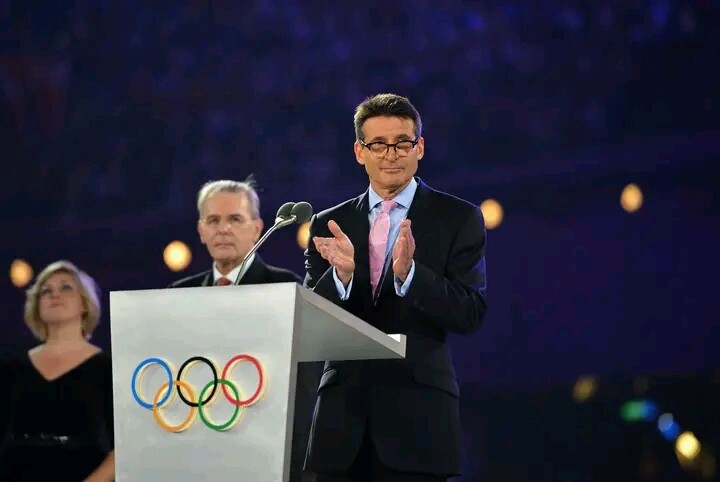
Born on September 29, 1956, Coe grew from a talented youngster in Yorkshire into one of the most influential figures athletics has ever produced — first as an extraordinary competitor on the track and later as a leader at the highest level of the sport.
His journey began long before the Olympic medals and world records. As a teenager, Coe was already attracting attention, and his early appearances in Athletics Weekly offered a glimpse of the remarkable career that was beginning to unfold.
By the late 1970s, he had established himself as one of Britain's brightest middle-distance prospects. His rivalry with Steve Ovett became one of the defining storylines of the era, while Coe's extraordinary combination of speed, tactical intelligence and finishing power allowed him to compete successfully across the 800m, 1500m and mile.
In 1979, Coe announced himself to the world in spectacular fashion. In Oslo, he smashed the 800m world record with 1:42.33, becoming the first man to break 1:43. Just weeks later, he added a world record in the mile with 3:48.53 before ending the season as one of the sport's dominant figures.
The following years produced even more extraordinary performances.
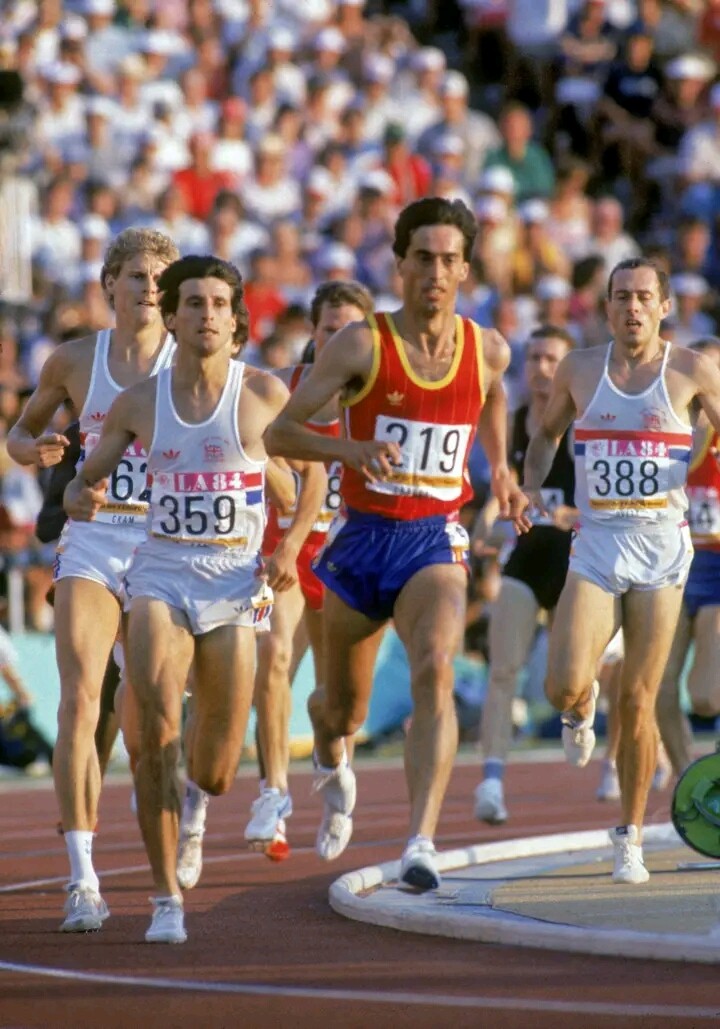
On June 10, 1981, in Florence, Coe lowered his own 800m world record to 1:41.73. The performance was historic. The mark remained untouched for 16 years before Wilson Kipketer equalled it in 1997. It remains one of the most iconic performances in 800m history.
Coe's Olympic career was equally remarkable.
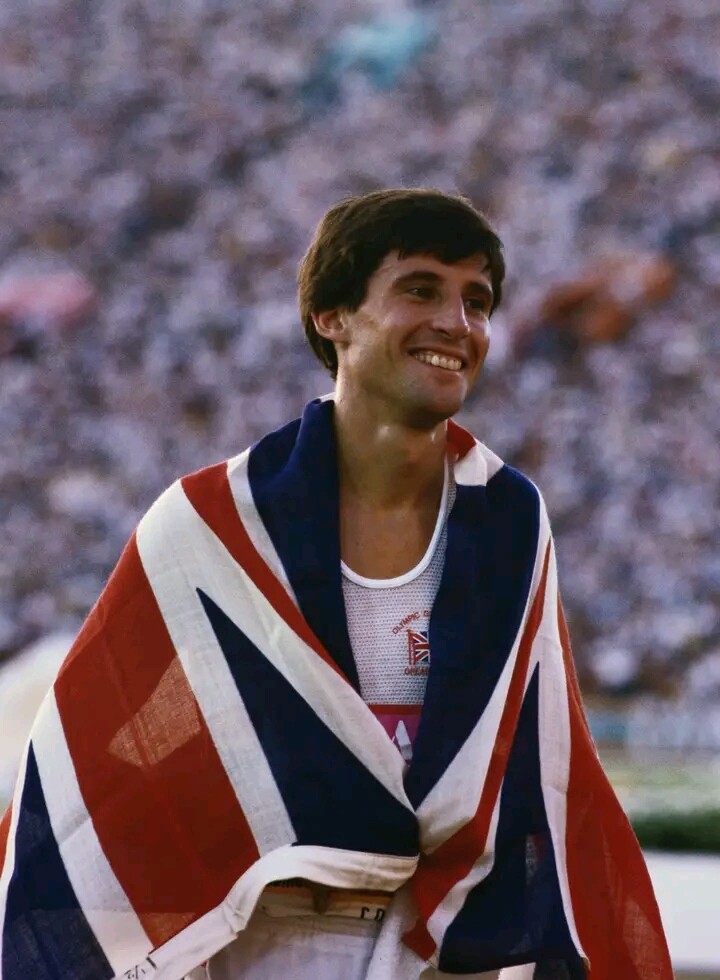
At the 1980 Moscow Olympics, he won gold in the 1500m and silver in the 800m. Four years later in Los Angeles, he repeated that extraordinary combination, again taking 1500m gold and 800m silver.
His second Olympic 1500m victory in 1984 cemented his place among the greats of the event. His personal best of 3:29.77, set in 1986, remains one of the fastest marks of his era. World Athletics lists Coe as a two-time Olympic champion and two-time Olympic silver medallist, with 12 world records accumulated during his career.
His record-breaking career extended beyond the 800m and 1500m. Coe set world records over 800m, 1000m, 1500m and the mile, demonstrating an extraordinary range that was rare even among elite middle-distance specialists.
He also collected major European honours, including the European 800m title in 1986 and the European Indoor 800m crown earlier in his career.
Yet Coe's story did not end when he left competitive athletics.
After retiring from the track in 1990, he moved into public life and sports administration. His leadership role in London's successful bid for the 2012 Olympic and Paralympic Games became one of the most significant chapters of his post-athletics career. He later served as chairman of the London 2012 Organising Committee, helping oversee the preparation and delivery of the Games.
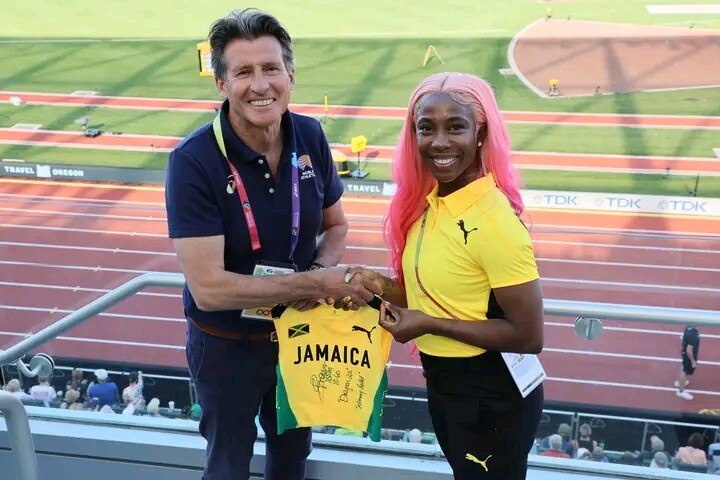
In August 2015, Coe took on perhaps his most influential role yet when he became president of World Athletics. He has since remained at the centre of global athletics, helping guide the sport through changes in competition, governance, commercialisation and athlete-focused initiatives. World Athletics currently lists him as president of the organisation.
Even at 70, Coe's connection with competition remains clear. His comments surrounding the inaugural World Athletics Ultimate Championship in Budapest in 2026 showed the same fascination with head-to-head racing that defined him as an athlete decades earlier.
From a young Yorkshire runner to an Olympic champion, world-record setter, London 2012 leader and now president of World Athletics, Coe's career has crossed almost every level of the sport.
His 1:41.73 may no longer be the world record, but the performance remains a permanent part of 800m history. His Olympic double-double remains extraordinary. And his transition from athlete to administrator has ensured that his influence extends far beyond the races he once dominated.
Seventy years on, Sebastian Coe's legacy is therefore not confined to medals, records or statistics. It is the story of a middle-distance pioneer whose impact has continued long after his final competitive race — and whose name remains firmly woven into the history of athletics.
by Erick Cheruiyot for My Best Runs.
Login to leave a comment
Latest Running News
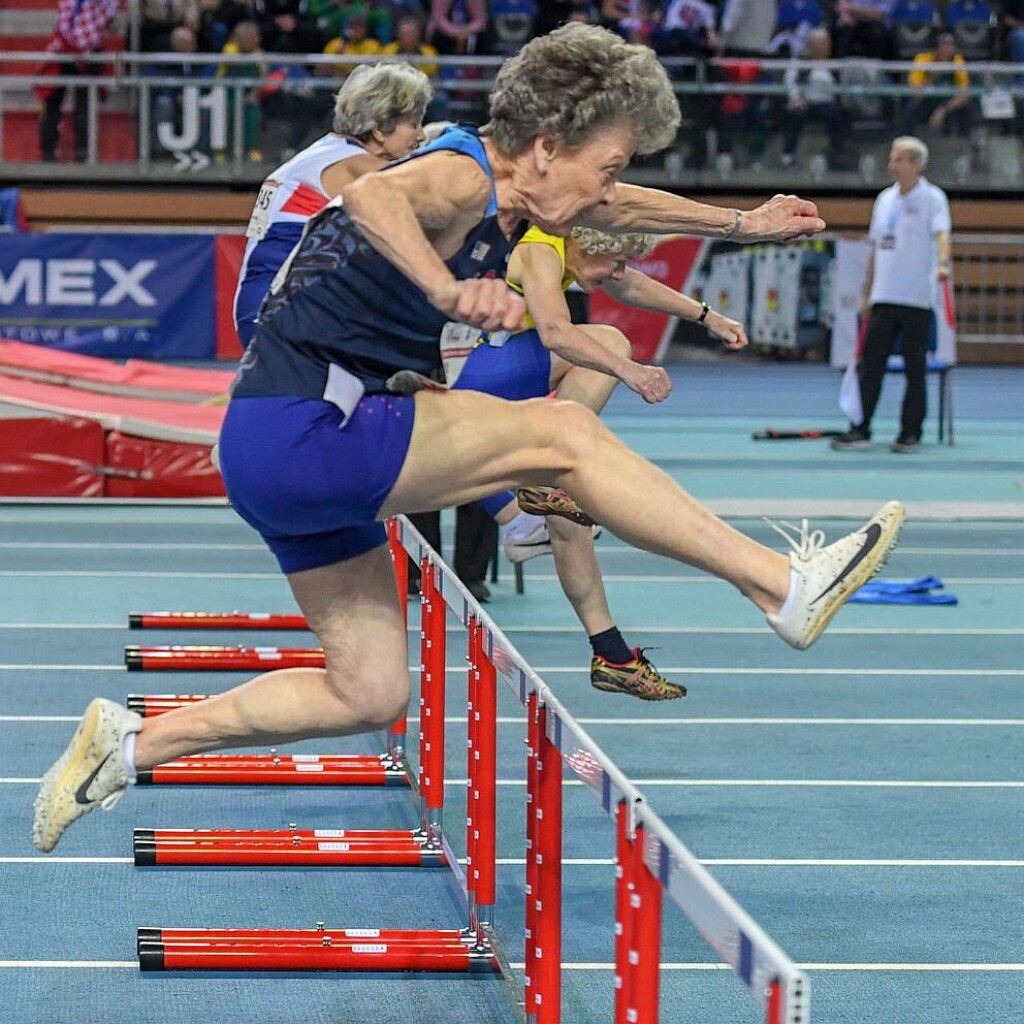
Age Is Just A Number! 91-Year-Old Flo Meiler Continues To Shatter World Records After Starting Athletics At 60!
At an age when many people have long stepped away from competitive sport, 91-year-old American athletics sensation Florence “Flo” Meiler is continuing to rewrite the limits of what is possible in masters athletics, proving that determination, discipline and a passion for competition do not have an expiry date.
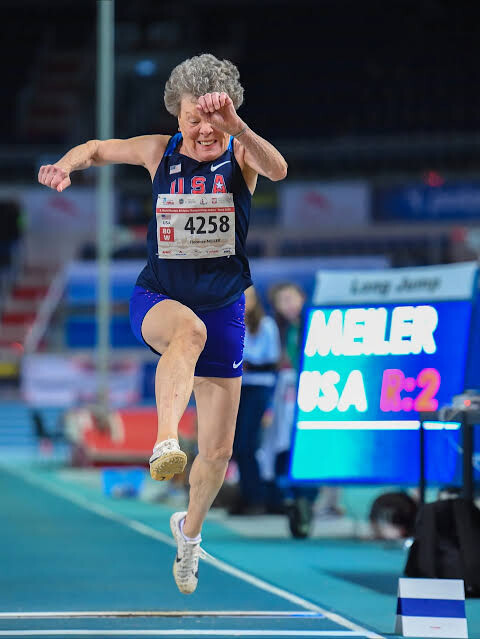
The remarkable athlete from Shelburne, Vermont, United States, has become an extraordinary figure in the masters athletics community, holding six World Masters Athletics records in the women's 90–94 age category. Her achievements span an impressive range of disciplines, including the 2,000m steeplechase, 80m hurdles, pole vault, high jump, triple jump and pentathlon.
What makes her story particularly remarkable is that Meiler did not begin competing in track and field until she was 60 years old. More than three decades later, she is still competing, setting records and inspiring athletes across generations.
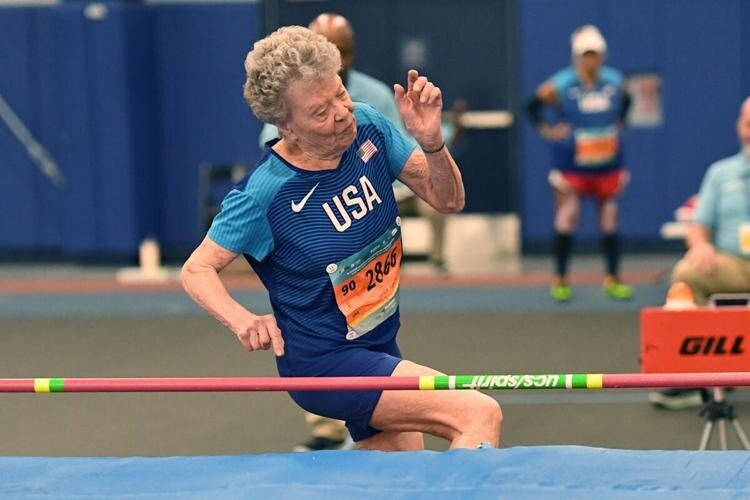
Her introduction to athletics came through her close friend Barbara Jordan, who encouraged her to try the long jump at the Vermont Senior Games. What began as an opportunity to experience something new soon developed into a lifelong sporting passion.
The two friends went on to train and compete together for approximately 20 years, challenging one another and achieving remarkable success. Their partnership was more than a sporting relationship; it was built on friendship, encouragement and a shared determination to keep improving.
However, their journey together eventually came to an end after Jordan was diagnosed with cancer. She stopped participating in sport and passed away in 2020 at the age of 85. Meiler has openly spoken about missing her longtime friend, remembering the special bond they shared on and off the track.
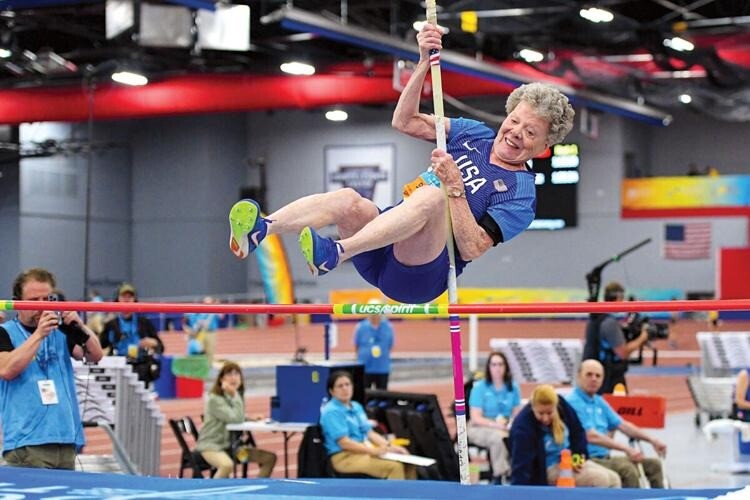
Despite the emotional loss, Meiler has continued pursuing the passion they built together. Training without her longtime companion has not always been easy, but she has maintained her competitive determination and continues to honour those memories through her performances.
According to World Masters Athletics, her six world records in the 90–94 age category demonstrate extraordinary versatility, particularly in technically demanding events such as pole vault, hurdles and the multi-event pentathlon.
Her achievements are also a reminder that masters athletics offers opportunities for people to remain competitive, discover new sporting interests and pursue ambitious goals well beyond the conventional years of elite competition.
Beyond the records and medals, Meiler takes great satisfaction in knowing that her journey has encouraged other people to remain active and challenge themselves. She has spoken about the special feeling she gets when fellow athletes approach her to explain how much her achievements have inspired them.
Her philosophy is beautifully captured in three simple words she previously shared with the Olympic Channel: “Never too late.”
At 91, Flo Meiler is not simply collecting records; she is challenging perceptions about ageing and demonstrating that the desire to compete, improve and achieve something extraordinary can remain alive throughout life.
Her story is a powerful reminder that sporting dreams do not necessarily have to begin in childhood, and that some of the most remarkable journeys can start when others might assume the opportunity has already passed.
With every training session and competition, Meiler continues to make her mark on masters athletics, offering an inspiring example of resilience, friendship and lifelong dedication to sport.
by Erick Cheruiyot for My Best Runs.
Login to leave a comment

Road To LA28: World Athletics Unveils Olympic Marathon Qualification Rules As Sub-2:05:00 Men And Sub-2:22:20 Women Target Los Angeles 2028!
The race for places at the Los Angeles 2028 Olympic Games has officially taken another significant step forward, with World Athletics publishing the qualification system for the athletics programme, outlining the standards, qualification windows and selection procedures that will determine which athletes earn the opportunity to compete on the biggest sporting stage.
However, it is the marathon qualification pathway that is already attracting considerable attention, with the governing body setting demanding entry standards of 2:05:00 for men and 2:22:20 for women as the world's leading distance runners begin preparing for the journey to Los Angeles.
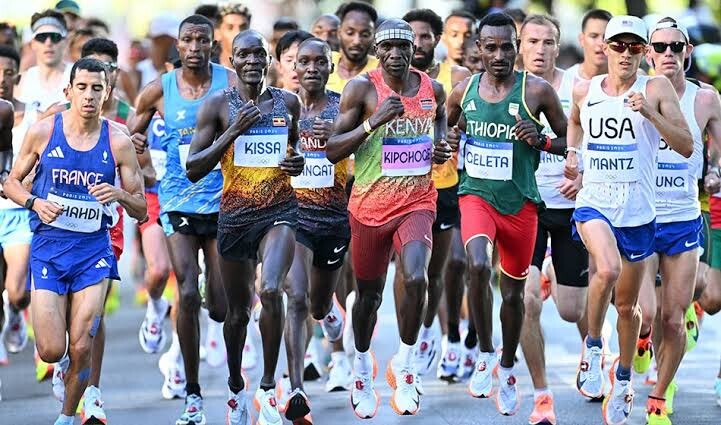
The marathon qualification period will run from 1 November 2026 through to 30 April 2028, giving athletes an extended opportunity to secure their Olympic places through outstanding performances at recognised competitions and the World Athletics rankings.
Unlike previous qualification systems that relied on a more balanced distribution between entry standards and rankings, LA28 will adopt a dual-pathway approach in which approximately 40 per cent of athletes are expected to qualify through the automatic entry standards, while the remaining 60 per cent will earn their places through world rankings.
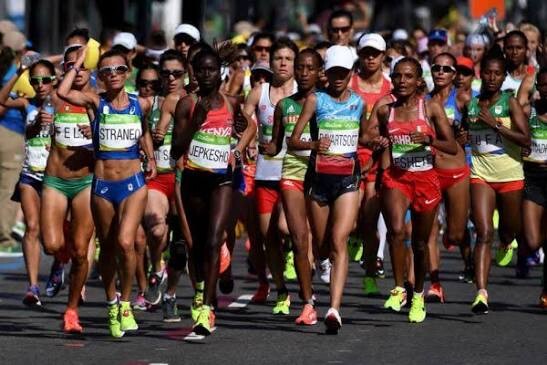
Importantly, achieving the qualifying standard will not automatically guarantee an Olympic place if the number of athletes meeting the mark exceeds the available quota. In such circumstances, priority will be given to the athletes with the strongest performances during the qualification period, within the established allocation limits.
For the men's and women's marathon, the qualification process will also introduce a significant ranking-based mechanism designed to provide greater clarity well before the final selection deadline.
According to the published regulations, any athlete ranked within the top 56 on the filtered 'Road to LA' marathon qualification list as of 19 March 2028 will be considered qualified, with the rankings calculated using a maximum of three athletes per National Olympic Committee.
The remaining 15 places will subsequently be allocated through the established dual qualification system, without displacing athletes who have already secured their positions by the March deadline.
Another important feature of the marathon qualification pathway concerns performances at Platinum Label marathons. The first five finishers at these designated races throughout the entire qualification period will automatically be considered to have achieved the Olympic entry standard and will receive priority placement on World Athletics' official 'Road to LA' qualification list.
National Olympic Committees will also retain limited flexibility when finalising their Olympic teams. They may reallocate a marathon quota place to an athlete who has not otherwise qualified, provided the selected runner has recorded at least 2:11:00 for men or 2:29:00 for women during the qualification window.
The new standards reflect the increasingly competitive nature of international marathon running, with World Athletics explaining that its calculations were informed by performances from the previous four major global championships: the 2022 and 2023 World Athletics Championships, the 2025 World Championships and the Paris 2024 Olympic Games.
The governing body also considered the continuing improvement in marathon performance levels, particularly the trend towards faster winning and qualifying times during Olympic years, when performances have historically been approximately 30 to 60 seconds quicker than ordinary projections.
With the marathon qualification window opening in November 2026, elite runners now have a clearly defined target as they begin planning their campaigns towards Los Angeles. The coming months and seasons will be crucial for athletes seeking to establish themselves among the world's leading marathoners and secure a place in the Olympic conversation.
The Los Angeles 2028 Olympic athletics programme will feature 23 events for men and 23 for women, alongside two mixed relay events. The Games are scheduled to take place from 15 to 30 July 2028, with athletics once again expected to provide some of the most compelling moments of the Olympic competition.
World Athletics is expected to launch its official 'Road to LA' qualification monitoring platform during the latter part of 2027, allowing athletes, national federations and athletics fans to follow the developing Olympic qualification race.
With the qualifying standards now officially published, the countdown to the Los Angeles Olympic marathon has entered a new phase, setting the stage for an intense international battle as the world's finest distance runners chase their Olympic dreams.
by Erick Cheruiyot for My Best Runs.
Login to leave a comment
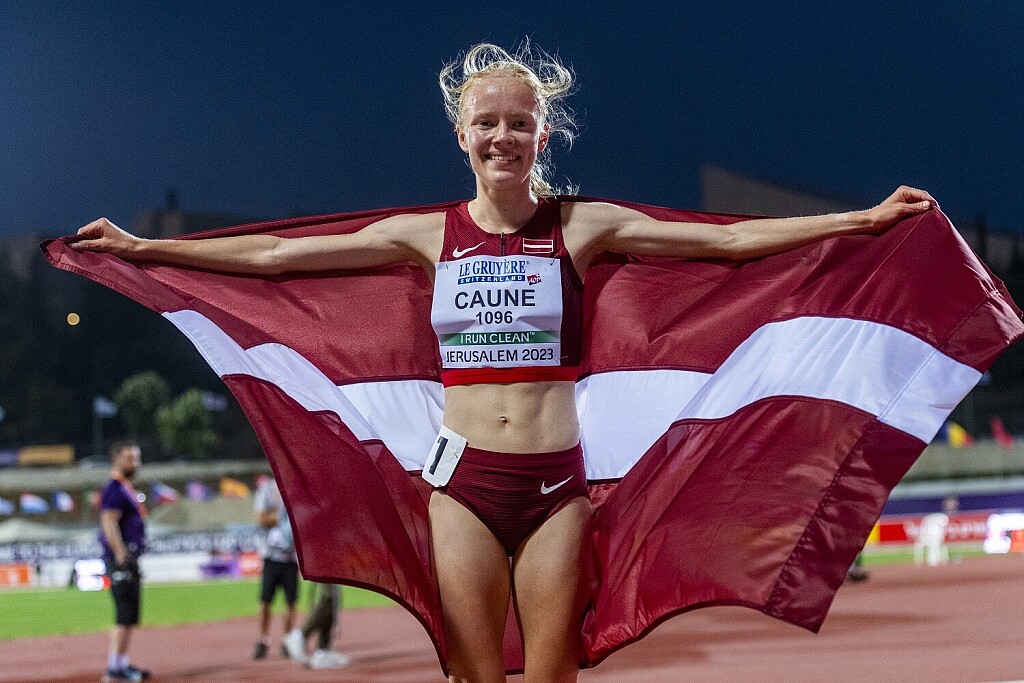
Heartbreaking Career Decision: Latvian Olympian Agate Caune Announces Retirement From Professional Athletics At Just 22 After Remarkable Rise!
Latvian distance-running sensation Agate Caune has announced her retirement from professional athletics at just 22 years old, bringing an unexpected end to a promising career that saw her rise from a highly decorated junior athlete to an Olympian and one of Europe's most exciting young distance-running talents.
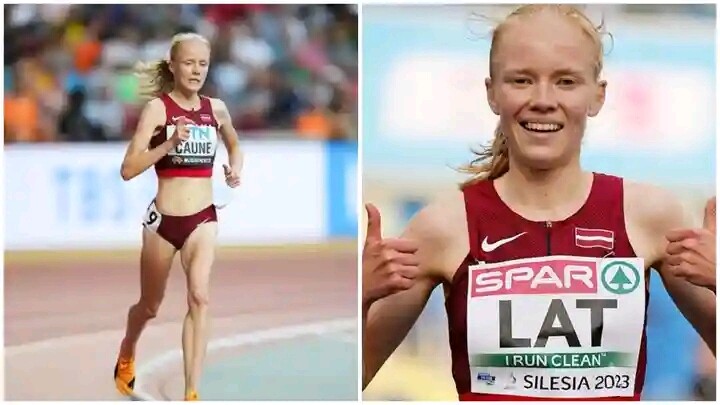
Caune made the announcement on Monday, November 9, opening up about the difficult experiences behind her decision to walk away from competitive athletics at an age when many distance runners are only beginning to reach their full potential.
In reflecting on her journey, the young Latvian revealed that her career was not always as straightforward as it appeared from the outside. She spoke candidly about periods when she questioned whether her body could continue coping with the physical demands of professional running and whether she would ever achieve the performances she had worked so hard to reach.
She also disclosed that certain hurtful words and experiences affected her more deeply than those around her may have realised, offering a glimpse into the personal challenges she faced away from the competition arena.
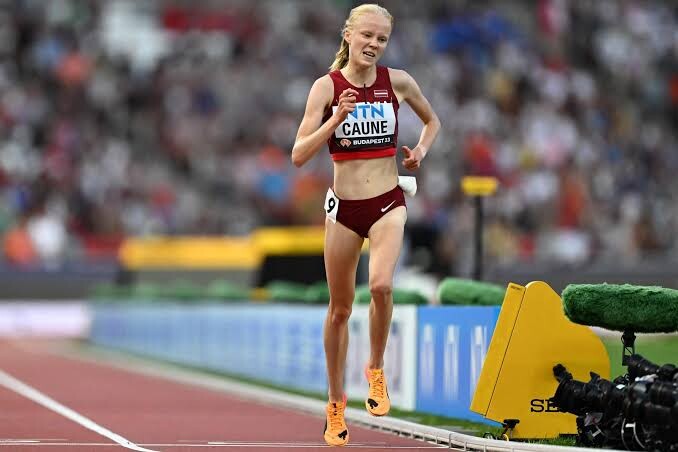
Despite the difficult moments, Caune looked back on her athletics journey with gratitude, emphasising that the experiences and achievements she collected along the way had given her more than she could have imagined.
"Some may say my athletic career was short, but I would say it was long enough to experience and achieve a lot," she reflected.
She also expressed appreciation to the people who supported her throughout her career, extending her gratitude to her coaches, physiotherapists, doctors, family members, supporters and everyone who played a part in her development and stood beside her during both the successful and challenging periods.
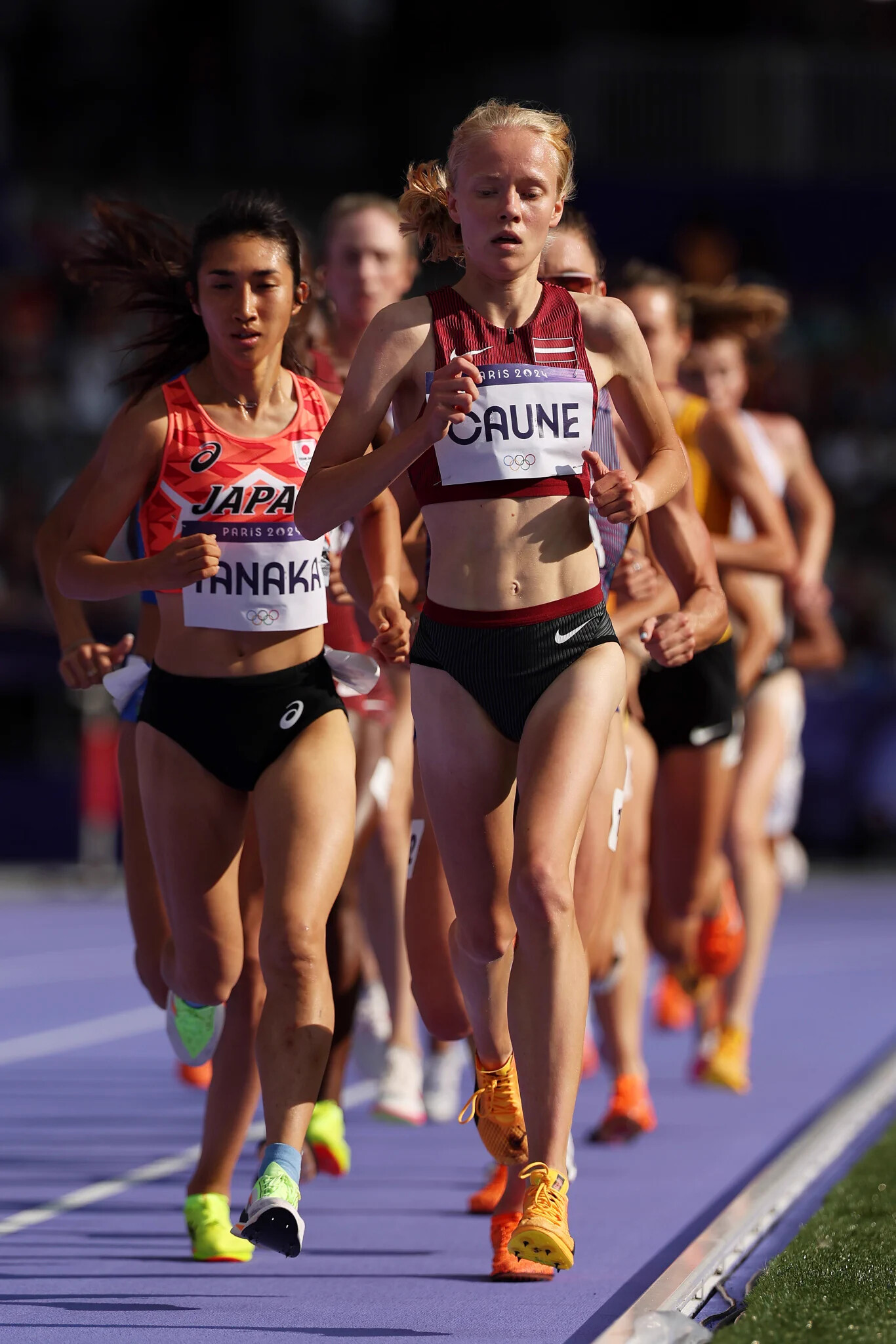
Although she is stepping away from professional competition, Caune has made it clear that running itself is not leaving her life. She intends to continue running for fitness, personal enjoyment and occasionally alongside friends, while turning her attention towards new ambitions, opportunities and challenges beyond professional sport.
Her departure marks the conclusion of a career that delivered several outstanding achievements, particularly during her remarkable junior years. Caune first attracted international attention at the 2022 World Athletics U20 Championships in Cali, Colombia, where she secured silver in the women's 5000m, establishing herself among the most promising young distance runners in Europe.
She continued her impressive progression in 2023, producing a memorable double victory at the European Athletics U20 Championships in Jerusalem, Israel, where she captured gold medals in both the 3000m and 5000m. The performances confirmed her status as one of the continent's leading emerging talents.
That same year, she added another significant achievement by winning the women's 5000m title at the European Games in Poland, further strengthening her growing reputation on the international stage. She also established several Latvian age-group records during her development, underlining the scale of her potential.
One of the defining moments of her career came at the 2023 World Athletics Championships in Budapest, Hungary, where she demonstrated remarkable courage against some of the biggest names in women's distance running.
Competing in the 5000m heats, Caune took an aggressive approach, surging into a commanding lead ahead of established stars including Ethiopia's Gudaf Tsegay and Kenya's Beatrice Chebet. Although the experienced contenders eventually caught and passed her in the closing stages, her fearless performance earned her a place in the final and attracted widespread attention.
In 2024, she reached another major milestone when she represented Latvia in the women's 5000m at the Paris Olympic Games, taking her place among the world's finest distance runners on the biggest sporting stage.
Her competitive journey also extended beyond the track, with Caune exploring road racing as part of her development. During the 2026 season, she competed in the women's half marathon at the World Athletics Road Running Championships, finishing 72nd in 1:14:27.
For an athlete who had achieved so much in such a relatively short period, the decision to leave professional athletics at 22 represents a particularly unexpected turning point. Her journey, however, is a reminder that the life of an elite athlete involves challenges that are not always visible through medals, records and championship appearances.
From junior championship podiums and European titles to the World Championships and Olympic Games, Caune leaves professional competition having represented Latvia on some of the sport's biggest stages.
While her professional racing career has come to an end, her connection with running remains. The Latvian now looks forward to a different chapter, one in which she can enjoy the sport without the pressures and demands of elite competition, while pursuing new goals beyond the athletics track.
by Erick Cheruiyot for My Best Runs.
Login to leave a comment
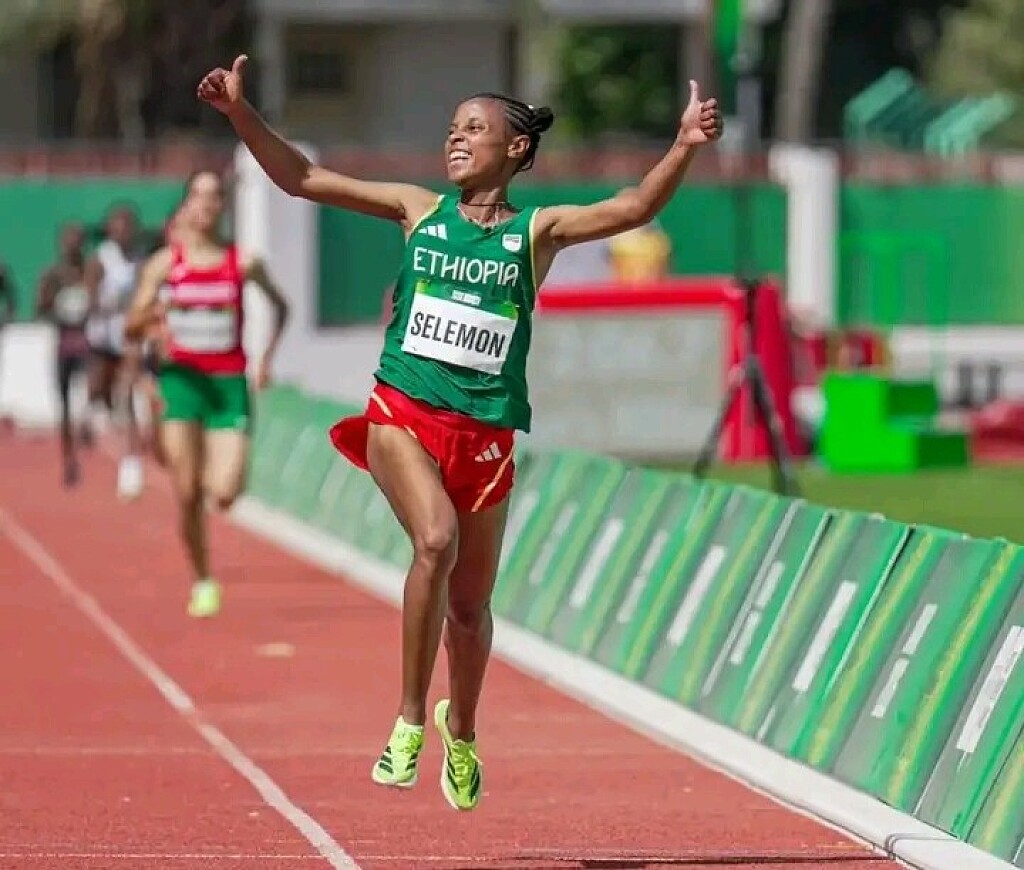
Ethiopia’s Netsanet Selemon Claims Youth Olympic 800m Gold As The Philippines’ Naomi Cesar Makes History With Silver In Dakar!
Ethiopia’s Netsanet Selemon delivered a commanding performance to capture the women’s 800m title at the 2026 Summer Youth Olympic Games in Dakar, Senegal, while the Philippines celebrated a historic breakthrough as Naomi Marjorie Cesar secured the silver medal.
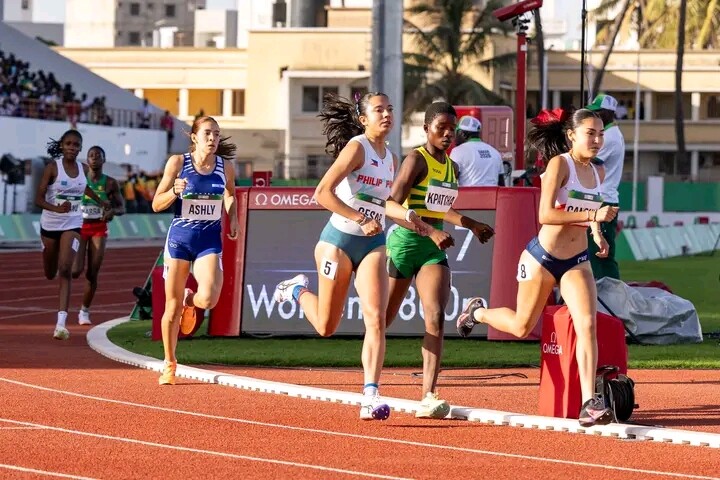
Selemon produced an impressive performance in Monday’s final on November 9, crossing the finish line in 2:04.43 to take the gold medal and establish a new personal best. The Ethiopian showcased her strength and composure over the two laps, securing another major achievement for Ethiopia’s celebrated middle-distance running tradition.
The biggest talking point of the race, however, was Cesar’s outstanding second-place finish. Representing the Philippines, she clocked 2:09.34 to claim the silver medal, delivering a landmark result for her country on the international athletics stage. Her podium appearance marked a significant milestone for Philippine athletics and placed her among the standout young performers of the competition.
In a particularly memorable achievement, Cesar became the first Philippine athletics athlete to win a medal in Youth Olympic Games history. Her silver also gave the Philippines its first medal at the 2026 edition of the Games in Dakar, making her performance an important moment for the country's sporting history and a source of inspiration for the next generation of Filipina athletes.
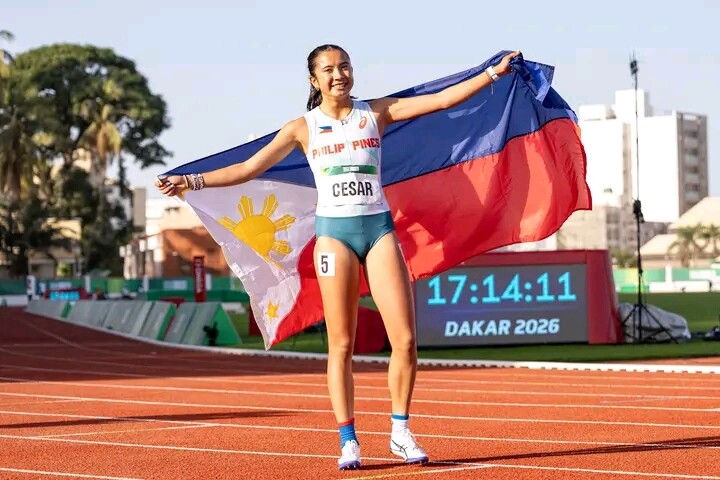
Cesar's achievement was even more remarkable considering the competitive nature of the final. The young Filipina demonstrated determination and confidence against an international field, securing her place on the podium and bringing considerable attention to the development of middle-distance running in the Philippines. Her breakthrough represents a significant step forward for Philippine athletics on the global stage.
Morocco’s Khadija Elmostaqim completed the podium, taking bronze in 2:10.05 after a strong performance, while Slovenia’s Masa Weber finished fourth in 2:10.58.
Togo’s Yvette Kpatcha placed fifth in 2:15.80, followed by Chile’s Valentina Cancino in sixth with 2:18.59. Spain’s Benítez Ashly finished seventh in 2:21.07, Botswana’s Mpho Maano was eighth in 2:26.58, and Mali’s Awa Diarra completed the top nine in 2:31.29.
The final brought together emerging middle-distance talents from different continents, highlighting the growing international depth of women’s 800m running and providing a glimpse of athletes who could make their mark at senior level in the years ahead.
For Ethiopia, Selemon’s victory added another gold-medal moment to the country’s rich athletics legacy. For the Philippines, Cesar’s silver-medal achievement provided one of the most significant stories of the competition, underlining the growing reach of athletics beyond its traditional powerhouses.
The women’s 800m final in Dakar will be remembered for Selemon’s gold-medal performance and Cesar’s historic breakthrough, as two young athletes from different continents made their mark on the Youth Olympic stage.
by Erick Cheruiyot for My Best Runs.
Login to leave a comment
Barefoot Warrior At 75! Idomeneas Avramakis Completes Athens Marathon In Ancient Greek Armour To A Thunderous Ovation!
At an age when many people have long stepped away from competitive sport, 75-year-old Idomeneas Avramakis continues to demonstrate that determination, resilience and an extraordinary love for running can overcome challenges that would force many others to give up.
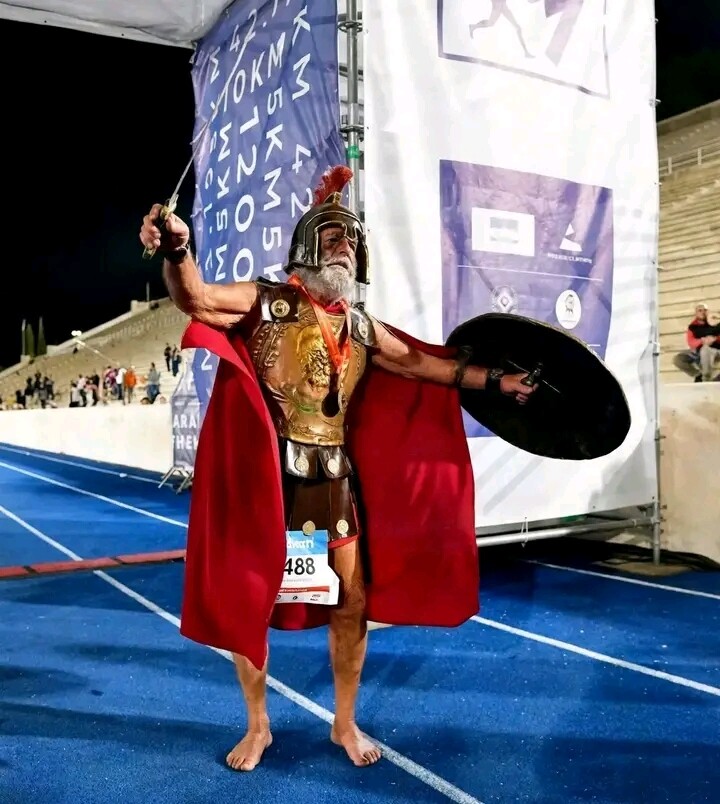
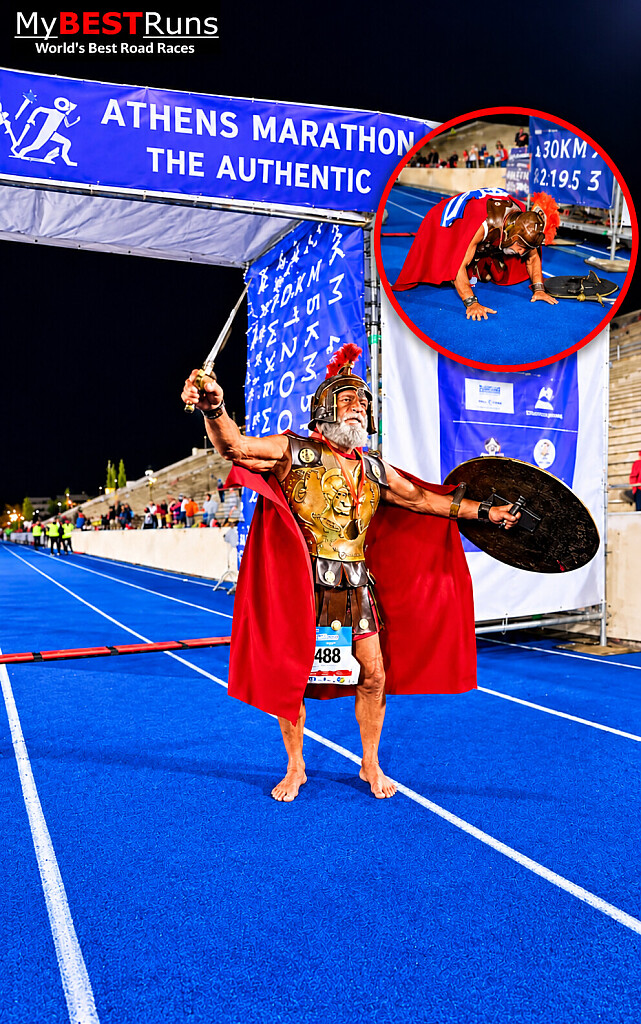
The Greek veteran became one of the most memorable figures at the 43rd Athens Authentic Marathon on Sunday, November 8, 2026, after completing the historic race barefoot while dressed as an ancient Greek hoplite warrior. Wearing a traditional-style bronze helmet, a red cloak and carrying a shield and sword, Avramakis brought the event to a remarkable conclusion, receiving a warm ovation as he entered the iconic Panathenaic Stadium.
Representing Heraklion, Crete, the retired employee of the Region of Crete took on the demanding 42.195-kilometre course in an outfit inspired by the ancient Greek soldiers associated with the Battle of Marathon. His arrival at approximately 6:15 p.m., more than nine hours after the race began, marked the closing chapter of an extraordinary day of marathon running.
However, behind the unusual appearance lies a deeply personal story of survival, recovery and an unwavering commitment to life.
Avramakis' journey into barefoot running and ancient Greek warrior attire began approximately 18 years ago, following a serious health crisis that left him fighting for his life. He spent about a month in intensive care and reportedly remained in a coma during that period. Following his recovery, he made a remarkable return to physical activity, abandoning running shoes and choosing to compete barefoot.
Since then, running without shoes has become an essential part of his identity, while the hoplite costume has symbolised what he considers a second opportunity at life. His participation in the Athens Authentic Marathon carries additional meaning because the event celebrates the legendary journey of Pheidippides, the ancient Greek messenger associated with the historic run from Marathon to Athens.
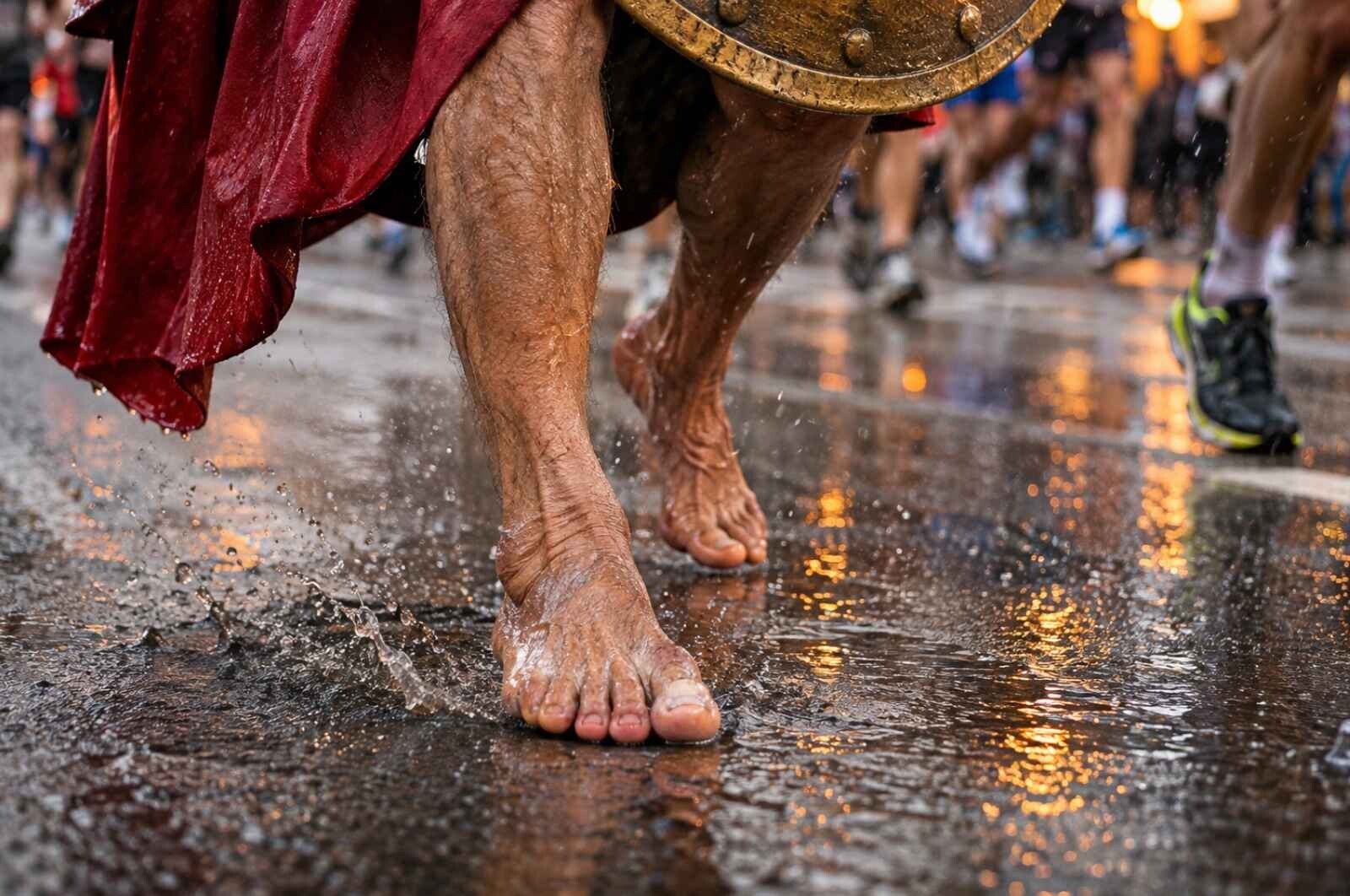
His determination was tested once again in 2022 when he suffered serious injuries in a road accident. The incident required surgery, during which doctors inserted a metal rod into his leg. Despite the lasting difficulties associated with the injury, Avramakis refused to abandon his passion for distance running.
Instead, he gradually returned to training and competition, demonstrating remarkable perseverance. In 2024, at the age of 73, he completed the Athens Authentic Marathon in 8 hours and 47 minutes, despite challenging weather conditions.
His latest appearance at 75 further underlined his extraordinary consistency. According to reports, he has completed more than 54 marathons throughout his running journey, although he has admitted that he has lost count of the exact number.
Avramakis also maintains an active lifestyle away from competition. His training reportedly includes barefoot running sessions lasting between two and a half and three and a half hours every other day, alongside swimming in the sea throughout the year and hiking in the mountains. He believes that the human body can gradually adapt to running without footwear, although his approach remains a personal choice rather than a recommendation for other runners.
The Athens course itself presents a considerable challenge, with a demanding uphill section extending through much of the middle kilometres before the route descends towards the city centre. Completing that distance barefoot, while carrying a shield and sword and wearing a warrior's costume, makes his achievement even more remarkable.
The historic significance of the occasion was also reflected in the atmosphere at the finish line. Sofia Sakorafa, president of the Hellenic Athletics Federation (SEGAS), was present to welcome Avramakis and personally award him his finisher's medal. After crossing the line, the 75-year-old knelt down, bringing an emotional end to his extraordinary marathon journey.
His philosophy is captured in a Greek expression he frequently repeats: "Run so that they don't run you." The saying reflects his belief in remaining active, embracing life and continuing to move forward while the opportunity exists.
He has also made it clear that unfavourable weather conditions are no reason to abandon his passion. In a previous interview with the Cretan newspaper Patris, he expressed his love for running even in heavy rain, revealing the mindset that has kept him committed to the sport for nearly two decades.
Barefoot marathon running has a remarkable history, most famously associated with Ethiopia's Abebe Bikila, who captured Olympic marathon gold at the 1960 Rome Games without shoes. Although Avramakis' story is different, his appearance in Athens once again highlights the many ways people connect with the sport and its history.
The 2026 Athens Authentic Marathon attracted a record 85,000 participants from 124 countries across its various race categories, making it a landmark edition of the historic event. Ethiopia's Manazot Siyum Taferi won the men's marathon in a course-record time of 2:10:03, but as the evening approached, the spotlight shifted to a 75-year-old barefoot runner whose determination had captured the imagination of spectators.
For Avramakis, however, the greatest victory was never about finishing ahead of another competitor. It was about returning to the starting line despite surviving a life-threatening illness, overcoming a serious accident and continuing to pursue his passion well into his seventies.
He may have been the final athlete to complete the 2026 Athens Authentic Marathon, but his arrival became one of the day's most unforgettable moments, proving that sometimes the most inspiring marathon stories are not written by those who reach the finish line first, but by those who refuse to stop moving.
by Erick Cheruiyot for My Best Runs.
Login to leave a comment
