

Running News Daily
Running News Daily is edited by Bob Anderson and team. Send your news items to bob@mybestruns.com Advertising opportunities available.
Index to Daily Posts · Sign Up For Updates · Run The World Feed
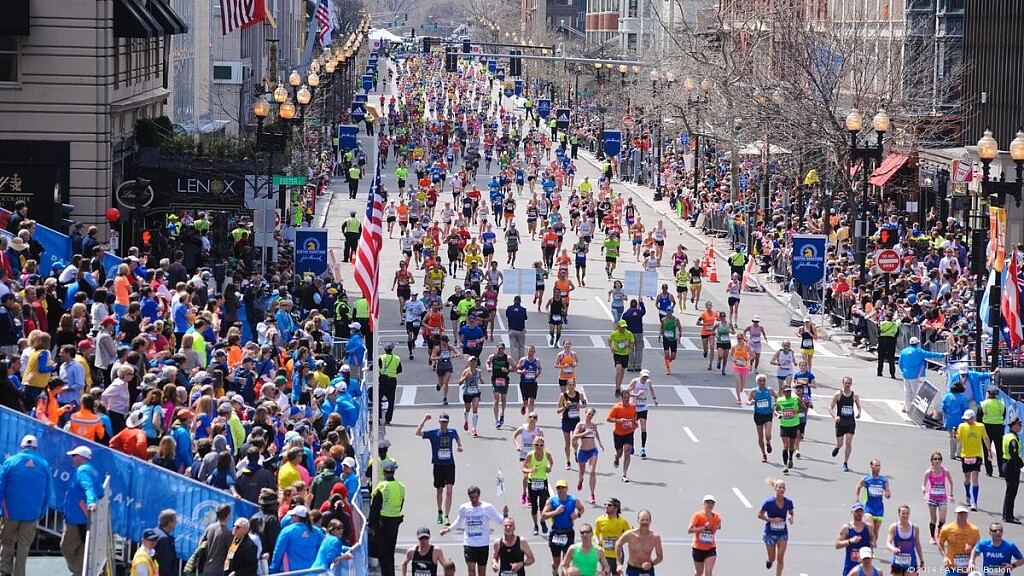


The Boston Marathon Trap: Why A “BQ” May Still Not Be Enough

For thousands of marathon runners around the world, qualifying for the Boston Marathon is more than a race goal — it is a badge of honour, a symbol that months and sometimes years of disciplined training have finally paid off.
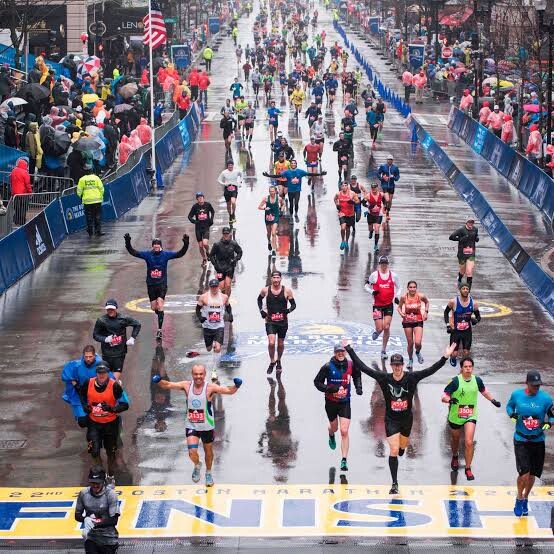
But there is an important distinction every aspiring Boston runner needs to understand: running under the official Boston qualifying standard does not automatically guarantee a place on the starting line.
That reality has caught out countless runners who believed that crossing the finish line a few seconds inside their qualifying mark meant their Boston dream was secured.
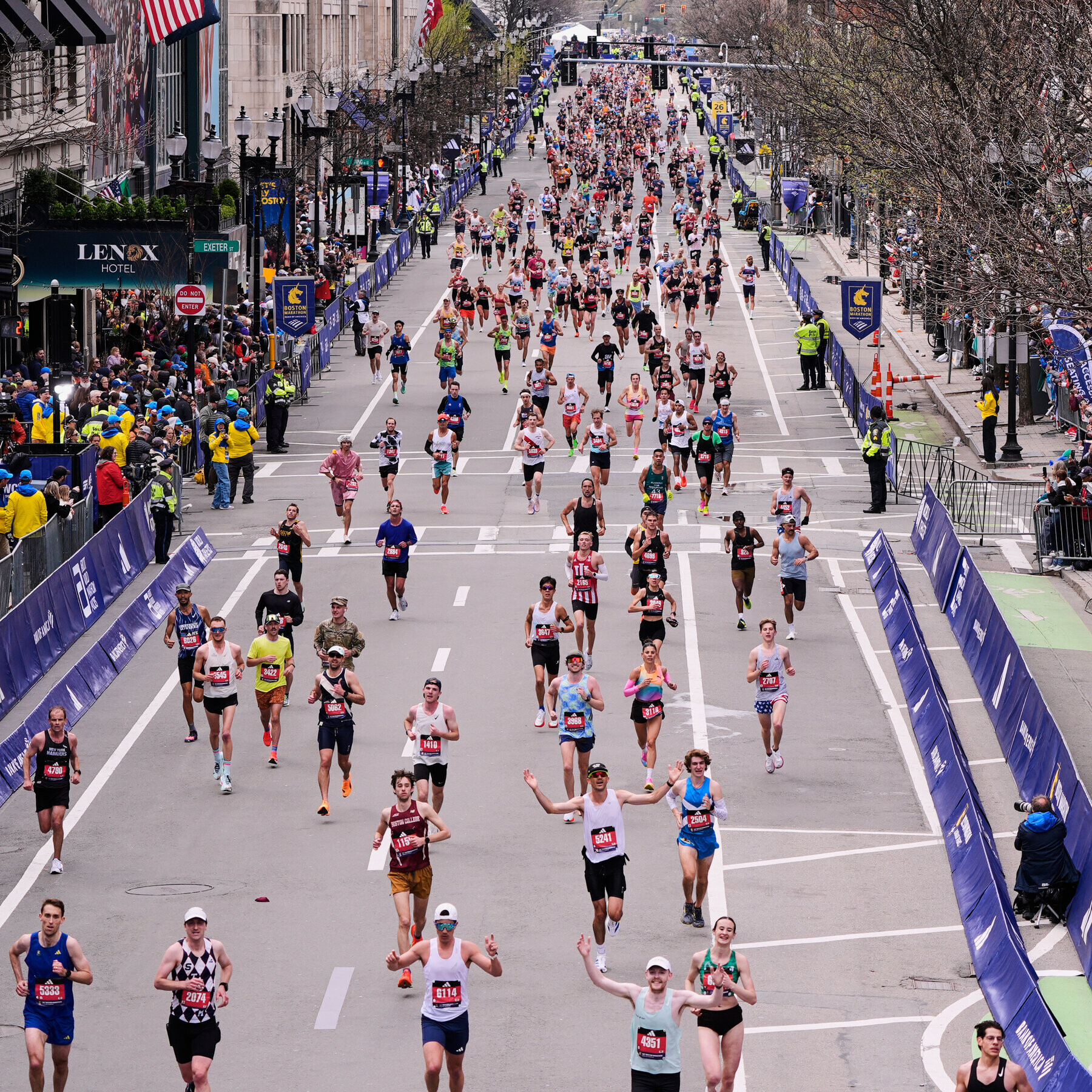
It does not.
The Boston Athletic Association (B.A.A.) sets qualifying standards according to age and gender, but the race also has a limit on the number of participants. When the number of qualified applicants exceeds the available places, the fastest runners within the qualifying pool are given priority. In other words, simply achieving the published standard gives you the opportunity to apply — it does not guarantee acceptance.
The Cutoff Is The Number That Really Matters
This is where the famous Boston “cutoff” comes into play.
The cutoff represents how much faster than the official qualifying standard a runner needed to be in order to gain entry that particular year. And it can change significantly depending on how many runners apply and how fast the qualifying field is.
The numbers tell the story.
For the 2024 Boston Marathon, the cutoff was 5:29. For 2025, it climbed sharply to 6:51. For the 2026 race, the cutoff settled at 4:34, meaning accepted qualifiers needed to be at least four minutes and 34 seconds faster than their applicable age- and gender-based standard.
That means a runner who finishes a marathon just 30 seconds under the published qualifying standard can technically be a Boston qualifier — yet still miss out on an actual place.
And that is where the heartbreak begins.
Imagine spending months building mileage, sacrificing weekends, surviving brutal workouts and finally producing the race of your life. You cross the line, look at your watch and discover that you have beaten the Boston standard.
For a moment, you believe you are going to Boston.
Then registration closes.
And you discover that the field was faster than expected.
Don't Train For The Bare Minimum
For runners serious about making the journey to Hopkinton, Massachusetts, the lesson is straightforward: don't make the official qualifying standard your ultimate target.
Make it your starting point.
If your age-group standard is 3:00:00, for example, training specifically to run 2:59:59 may leave almost no margin for the realities of Boston qualification. A stronger strategy is to set a substantially faster personal target, giving yourself a buffer against an unpredictable cutoff.
A five-minute cushion is often discussed among Boston hopefuls as a sensible ambition, but runners should understand that there is no guaranteed “safe” buffer. The cutoff is determined after registration based on the qualifying pool, and even a five-minute margin cannot promise entry in every year.
The smartest approach is therefore to aim as far under your standard as your training and ability realistically allow.
Boston Is Getting Faster
The growing difficulty of earning a place reflects the popularity and competitiveness of the marathon.
The B.A.A. has acknowledged that demand for Boston has increased while marathoners have continued to get faster. For the 2026 race, the organisation tightened qualifying standards by five minutes for runners aged 18–59, yet the race still received far more qualifying applications than available places.
For the 2026 Boston Marathon, the B.A.A. received 33,249 qualifier applications. Of those, 8,887 applicants were ultimately not accepted, despite having achieved the official qualifying standard.
Those numbers provide a powerful reminder: Boston qualification is no longer simply about beating a published time. It is about beating it by enough.
And There Is Another Detail Runners Must Watch
For the 2027 Boston Marathon, the B.A.A. has also introduced time-index adjustments for qualifying performances on courses with more than 1,500 feet of net elevation drop.
Depending on the amount of net downhill, a qualifying performance can receive a five- or ten-minute adjustment during the registration review process. That makes course selection an increasingly important part of the Boston qualification strategy.
So runners chasing Boston should not only ask, “Can I run the qualifying time?”
They should also ask:
“Can I run significantly faster than it — on a course that meets Boston's qualification rules?”
The Dream Is Boston. The Goal Should Be Faster Than Boston.
Qualifying for Boston remains one of the most prestigious achievements in recreational marathon running. But the difference between qualifying and getting accepted is now more important than ever.
The official standard gets you into the conversation.
Your margin gets you closer to the starting line.
So if Boston is the dream, don't build your entire training cycle around scraping under the qualifying mark by a few seconds. Give yourself room. Chase a faster marathon. Choose your qualifying race carefully. Prepare for the possibility that the cutoff may move.
Because the ultimate goal isn't simply to say:
“I qualified for Boston.”
It is to wake up on Patriots' Day, make your way to Hopkinton, and finally hear the words every Boston hopeful has dreamed about:
“You're going to Boston.”
by Erick Cheruiyot for My Best Runs.
Login to leave a comment

Boston Marathon
Among the nation’s oldest athletic clubs, the B.A.A. was established in 1887, and, in 1896, more than half of the U.S. Olympic Team at the first modern games was composed of B.A.A. club members. The Olympic Games provided the inspiration for the first Boston Marathon, which culminated the B.A.A. Games on April 19, 1897. John J. McDermott emerged from a...
more...Latest Running News

Melissa Jefferson-Wooden’s Rise to Sprinting Greatness: Five World Titles and a Place Among the Fastest Women Ever
American sprint sensation Melissa Jefferson-Wooden has established herself as one of the most exciting names in women’s athletics, combining explosive speed with the ability to deliver on the sport’s biggest stages. Her remarkable championship performances have strengthened her reputation as a formidable force in the 100m and 200m, while placing her among the leading figures of a new generation of American sprinters.

Her achievements reflect a combination of consistency, technical excellence and the ability to produce exceptional performances when the pressure is at its highest. From sprinting supremacy over 100 metres to challenging the limits of the 200m, Jefferson-Wooden’s rise has captured the attention of athletics fans around the world.
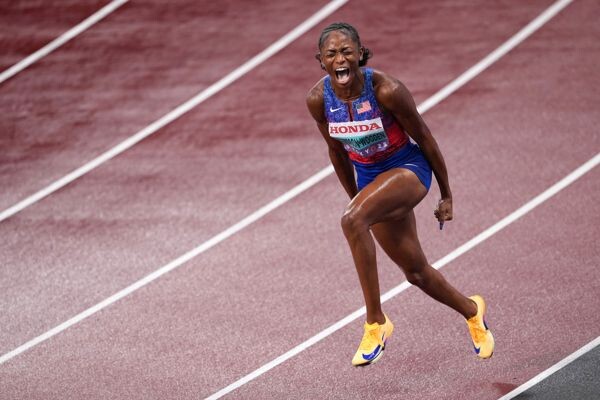
At the 2025 World Athletics Championships in Tokyo, she delivered an extraordinary series of performances, winning three gold medals in the women’s 100m, 200m and 4x100m relay. The treble represented a major milestone in her career and demonstrated her ability to excel across individual sprint events and team competition.
Jefferson-Wooden won the 100m in 10.61 seconds, setting a championship record and improving her personal best. The performance underlined her acceleration and top-end speed, securing her place among the fastest women in the history of the event.
She continued her winning run in the 200m, taking gold in 21.68 seconds. Her performance demonstrated that her abilities extended well beyond the shorter sprint, as she combined speed with the strength and composure required to maintain her pace around the bend and through the home straight.
The American then helped complete the golden sweep in the 4x100m relay, anchoring the United States team to victory in 41.75 seconds. Three gold medals at one championships represented a defining achievement, placing her in the company of the sport’s most versatile female sprinters.
Rather than allowing that success to become the high point of her career, Jefferson-Wooden continued to pursue excellence, with her performances in the 100m and 200m further highlighting her potential to leave a lasting mark on the sport.
by Erick Cheruiyot for My Best Runs.
Login to leave a comment

Kenyan Stars Lead Strong Elite Fields for the 2026 Lisbon Marathon
The 2026 Lisbon Marathon is set to feature a competitive international field, with Kenyan distance runners leading the men's elite entries and a strong Ethiopian contingent adding depth to the women's race.

Scheduled for October 10 in Lisbon, Portugal, the race will bring together athletes with impressive personal bests, setting the stage for an exciting contest over the classic 42.195-kilometer distance.
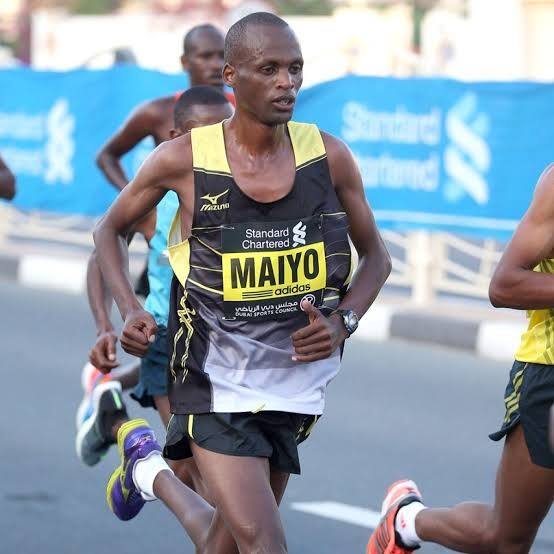
Kenya's Jonathan Kiplimo Maiyo headlines the selected men's elite field with a personal best of 2:04:56, placing him among the leading names to watch. He will be joined by compatriot Timothy Kibet Misoi, who has a best of 2:06:07, as Kenya looks to make a strong impression on the Portuguese course.
John Langat and Zablon Chumba complete the selected Kenyan men's lineup, both carrying personal bests of 2:07:11. Their presence adds further strength to a team with considerable experience and proven marathon ability.
The women's race also promises an intriguing battle, with Kenya and Ethiopia represented by four athletes each in the selected elite field.
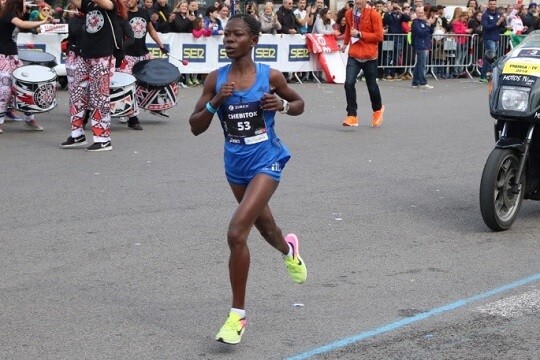
Kenya's Ruth Chebitok leads the women's entries with a personal best of 2:21:03. She faces a strong Ethiopian challenge led by Sintayehu Tilahun Getahun, whose best stands at 2:22:19.
Ethiopia's Abebech Afework Bekele, with a personal best of 2:23:33, and Worknesh Alemu, who has run 2:24:42, complete the selected women's field. Their presence sets up a potentially compelling contest between two of East Africa's leading distance-running nations.
With established marathon performers on both sides, the Lisbon Marathon offers an opportunity for the elite athletes to test themselves against high-level opposition and pursue strong performances on race day.
While personal bests provide a useful indication of each runner's credentials, the final outcome will depend on race-day conditions, pacing and execution over the demanding marathon distance.
With the selected elite fields featuring a strong Kenyan presence and determined Ethiopian challengers, attention will turn to Lisbon on October 10 as the athletes prepare for one of Portugal's major road-running events.
by Erick Cheruiyot for My Best Runs.
Login to leave a comment

EDP Lisbon Marathon
The EDP Lisbon Marathon is already considered as one of the most beautiful races in the world and acclaimed by international media such as the Forbes Magazine, the Huffington Post and American Express. Starting in Cascais and finishing at Praça do Comércio, the EDP Marathon course is 100% sea and river side, providing to the runners an unique view along...
more...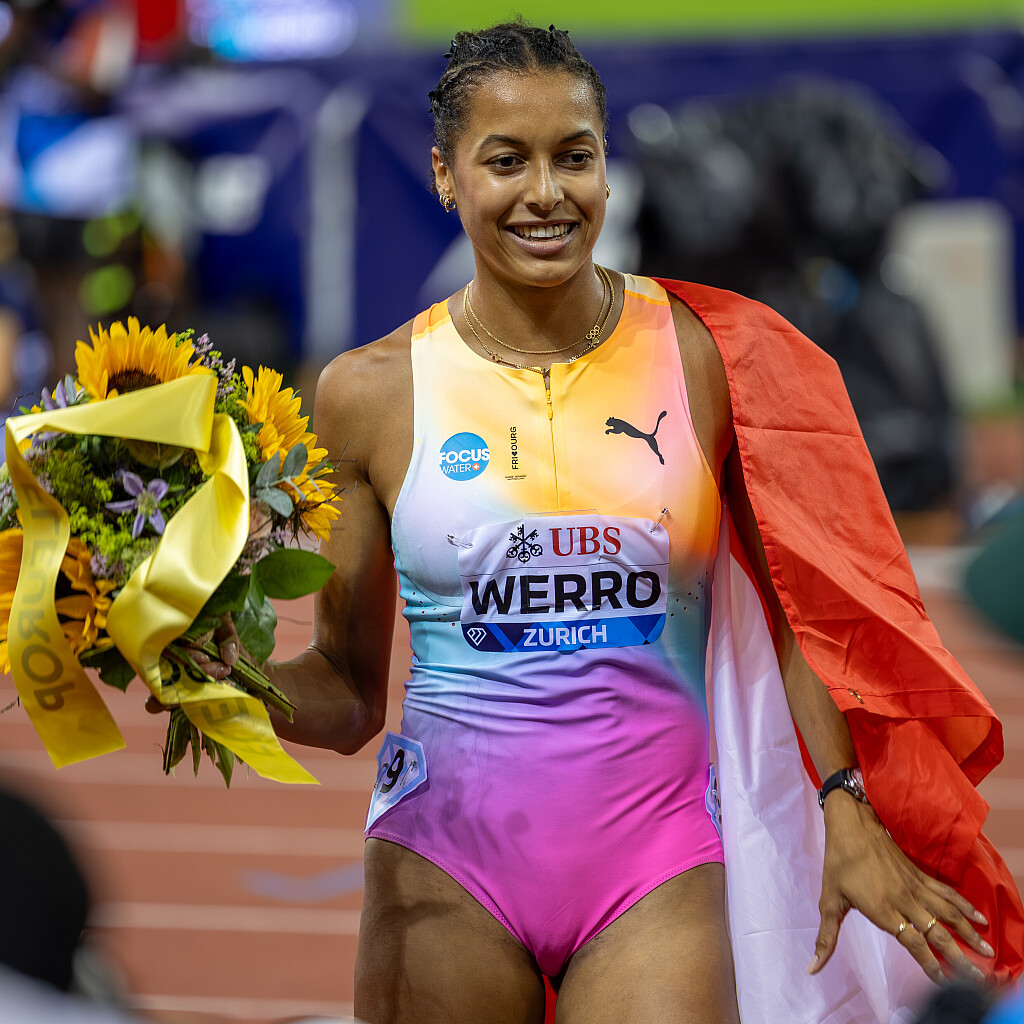
Audrey Werro Earns Double Athlete of the Year Nominations After Record-Breaking 2026 Season
Swiss middle-distance star Audrey Werro has strengthened her reputation as one of the world’s leading 800m runners after earning nominations for both the World Athletics Athlete of the Year and European Athletics Athlete of the Year awards following an outstanding 2026 campaign.

The 22-year-old has enjoyed a remarkable season, combining major championship victories with exceptional performances that have elevated her standing among the sport’s elite. Her achievements have made her a strong contender for international recognition as she continues to establish herself on the global stage.
Werro’s 2026 campaign has been defined by three major victories: the European Athletics Championships 800m title, the Diamond League Final crown and the inaugural World Athletics Ultimate Championship 800m title. Winning across these prestigious competitions has underlined her ability to deliver when the stakes are highest.

Her performances have been particularly impressive over two laps, where she has demonstrated a powerful combination of speed, endurance and tactical maturity. Against some of the strongest competitors in the world, the Swiss star has repeatedly shown that she belongs among the leading figures in women’s middle-distance running.
One of the defining moments of her season came in Zürich, where Werro thrilled the home crowd with an extraordinary 1:53.70 performance in the 800m. The time was reported as the fastest women’s 800m performance in 43 years and the third-fastest in the event’s history, placing her among a select group of athletes to have reached such an exceptional level.
Werro’s season has also been notable for her sustained assault on the record books. She reportedly broke the Diamond League record three times during the campaign and produced three of the five fastest women’s 800m performances ever recorded, highlighting the remarkable consistency behind her breakthrough year.
Rather than relying on a single standout result, Werro has built her case for the sport’s highest individual honours through a series of performances at the highest level. Her success across European and international competitions has demonstrated both her competitive versatility and her capacity to thrive under pressure.
The dual nominations now offer recognition of a season in which Werro has moved beyond emerging-talent status to become one of the most compelling names in women’s athletics. A victory in either award would represent another major milestone in a career that continues to gather momentum.
With three major titles, a historic performance on home soil and a series of record-breaking displays, Werro has given herself a compelling case for year-end honours. Whether she ultimately claims the title of the world’s best female athlete remains to be seen, but her 2026 season has already established her as one of the outstanding performers of the year.
by Erick Cheruiyot for My Best Runs.
Login to leave a comment
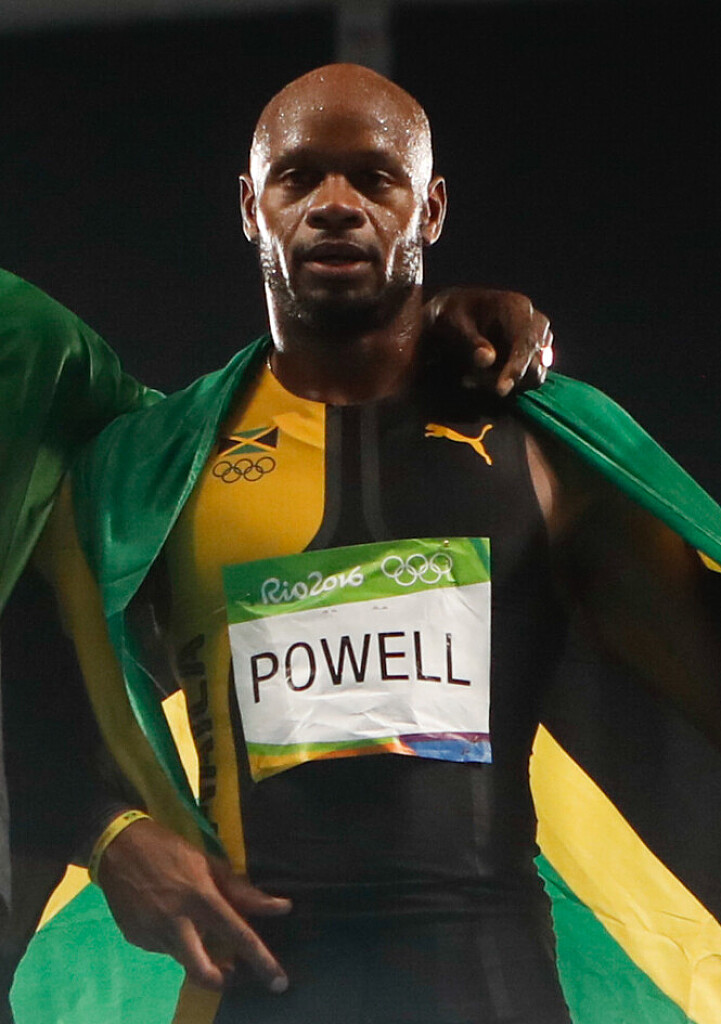
Asafa Powell Begins a New Chapter, Bringing World-Class Sprinting Experience to the Next Generation
Former 100-metre world record holder Asafa Powell is preparing to channel his experience from the highest level of international athletics into coaching and high-performance consultancy, with the aim of helping the next generation of sprinters reach their full potential.

The Jamaican sprint legend, who spent more than two decades competing against the world's fastest athletes, is now looking to share the knowledge, discipline and technical understanding he developed throughout his distinguished career. His move into mentorship offers an opportunity to pass on lessons learned through years of competing on the biggest stages in track and field.
Powell's reputation was built on extraordinary speed and consistency. He set the men's 100m world record of 9.77 seconds in Athens in June 2005 before lowering it to 9.74 seconds in Rieti, Italy, in September 2007. He subsequently recorded a personal best of 9.72 seconds at the Lausanne Athletissima meeting in 2008, establishing himself among the fastest men in athletics history.
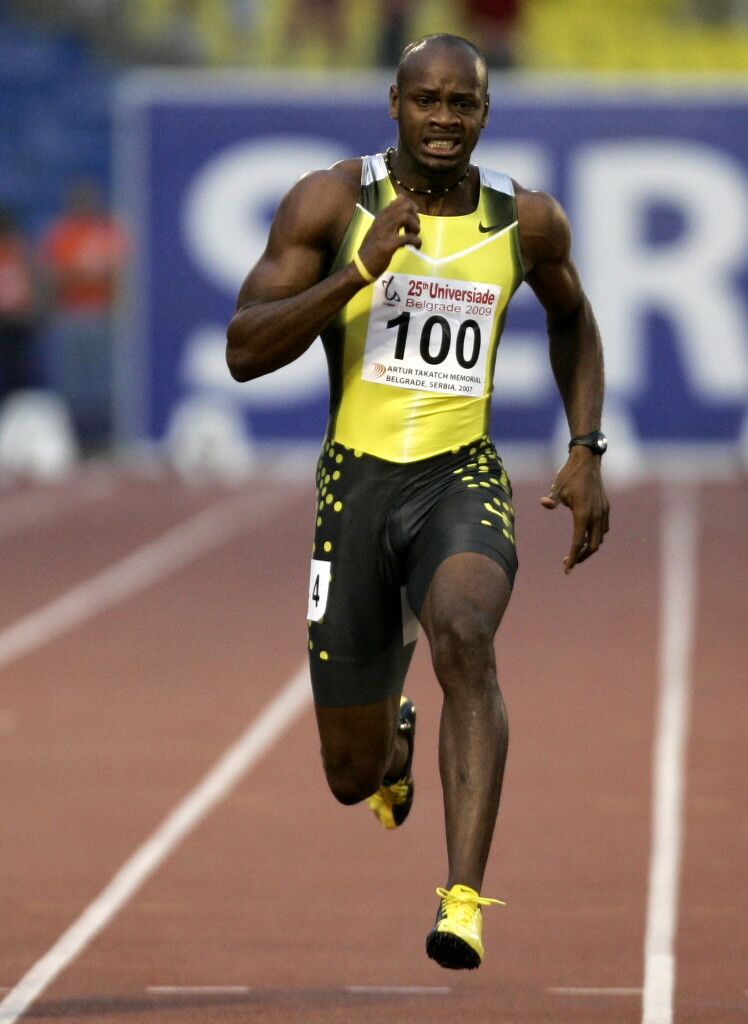
Beyond his personal best, Powell became renowned for his remarkable ability to run under 10 seconds. He recorded more than 90 sub-10-second performances during his career, a testament to his consistency and longevity in an event where the smallest technical details can determine the outcome.
Although Powell never won an Olympic individual 100m medal, he achieved significant success on the international stage, including winning gold with Jamaica's 4x100m relay team at the 2008 Beijing Olympics and the 2016 Rio Olympics. His experience also spans multiple World Championships and years of competing against sprinting greats, giving him valuable insight into the demands of elite performance.
Transitioning into coaching and high-performance consultancy provides Powell with a new platform to influence the sport beyond his own competitive achievements. His experience could help emerging sprinters understand the importance of starting technique, acceleration, maximum-velocity mechanics, race preparation, recovery and the mental demands of performing under pressure.
For young athletes hoping to establish themselves internationally, learning from someone who has experienced the challenges of elite sprinting firsthand could prove invaluable. Powell's journey demonstrates that success at the highest level requires more than natural speed; it also demands consistency, patience and the ability to perform when the stakes are highest.
As Jamaican sprinting continues to inspire athletes across the globe, Powell's next chapter could see his influence extend from the track to the training ground, where he can help shape future competitors.
The man who once held the world record is now looking toward a different kind of legacy: helping others discover how fast they can run.
by Erick Cheruiyot for My Best Runs.
Login to leave a comment

Getting Into a World Marathon Major May Be Harder Than Running One
For many marathoners, crossing the finish line of a World Marathon Major is the ultimate dream. But before you can worry about surviving 42.195 kilometres, there is another challenge: actually getting onto the starting line.

The six Abbott World Marathon Majors — Boston, London, Berlin, Chicago, New York and Tokyo — do not use the same entry system, and some are considerably more difficult to access than others.
Boston is arguably the clearest example of how running fast does not always guarantee a place. Unlike the other majors, the Boston Marathon is built around qualifying standards. However, meeting the published standard only gives a runner the opportunity to apply. Because demand is so high, the fastest qualifiers are accepted first. This means a runner can achieve the official qualifying time and still miss out when the cut-off moves faster than expected.

London presents a completely different challenge. Its famous ballot is a random draw, making luck a major part of the process. However, runners have other avenues, including Good for Age, charity places and international tour operators. Even the Good for Age route can be highly competitive, with places allocated according to performance when demand exceeds the number of available spots.
New York City is another race where demand is enormous. The TCS New York City Marathon offers a general drawing alongside several guaranteed-entry routes, including qualifying times, charity places, international tour operators and other eligibility programmes. For serious runners, achieving the appropriate qualifying standard can be one of the most dependable ways to secure a place.
Chicago gives runners several ways to avoid relying entirely on the lottery. The Bank of America Chicago Marathon has a non-guaranteed drawing, but runners can also gain guaranteed entry through qualifying times, charity, tour operators and other eligible routes. For fast runners, meeting the published standard can provide a much more certain path to the start line.
Berlin is also heavily sought after. The BMW Berlin Marathon uses a lottery for the majority of runners, while qualifying performances can provide another route into the race. With its fast course and reputation for producing world-class times, demand remains enormous every year.
Tokyo adds another layer of difficulty, particularly for international runners. The race has a lottery as well as several other entry routes, including charity and performance-based options. International runners can also use official tour operators, although these packages generally cost more because they are tied to travel arrangements.
For runners chasing the Six Star Medal, the biggest lesson is simple: do not depend on the lottery alone.
Look closely at every possible route. Good-for-age standards, qualifying performances, charity programmes and official tour operators can all provide alternatives when the ballot does not go your way.
And then there is the reality every marathoner eventually discovers: sometimes getting rejected from a major marathon hurts almost as much as the race itself.
When that rejection email arrives, remember that parkrun is still free, happens every Saturday and does not require a lottery.
So, which World Marathon Major have you already completed — and which one is still at the top of your bucket list?
by Erick Cheruiyot for My Best Runs.
Login to leave a comment
