

Running News Daily
Running News Daily is edited by Bob Anderson and team. Send your news items to bob@mybestruns.com Advertising opportunities available.
Index to Daily Posts · Sign Up For Updates · Run The World Feed



More Than One Million Shillings, Repeated Promises — and Not One Shilling Repaid. - Why I Finally Stopped Sending Money to Kenyan Coach Charles Ngeno

By Bob Anderson, Founder of KATA
I wanted Charles Ngeno to succeed.
That is important to say at the beginning because this didn’t start as a fight. It started with trust.
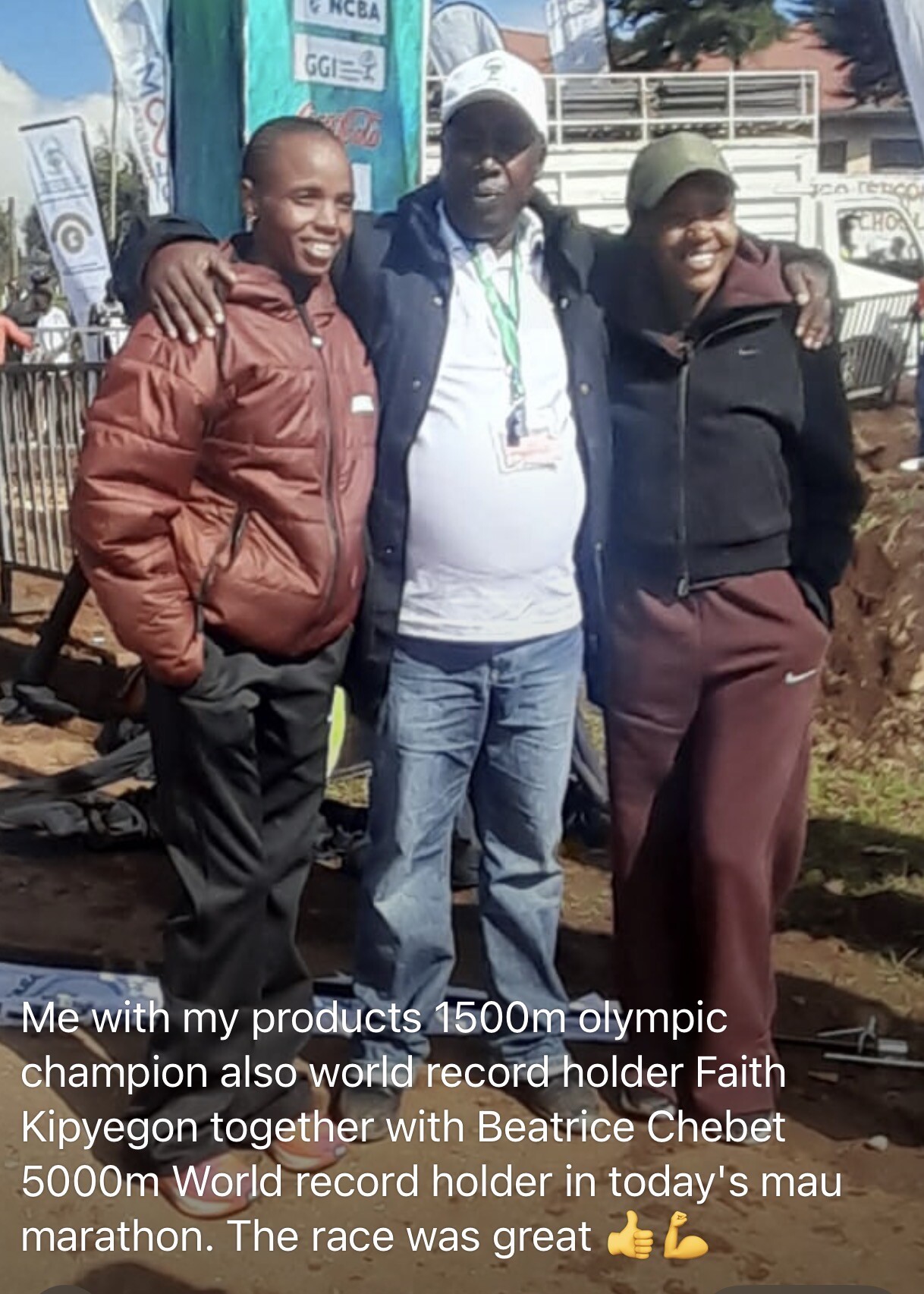
In June 2025, Kenyan coach Charles Ngeno joined our KATA program. I agreed to loan him money to establish two KATA Running Camps and grow six acres of potatoes in Kenya.
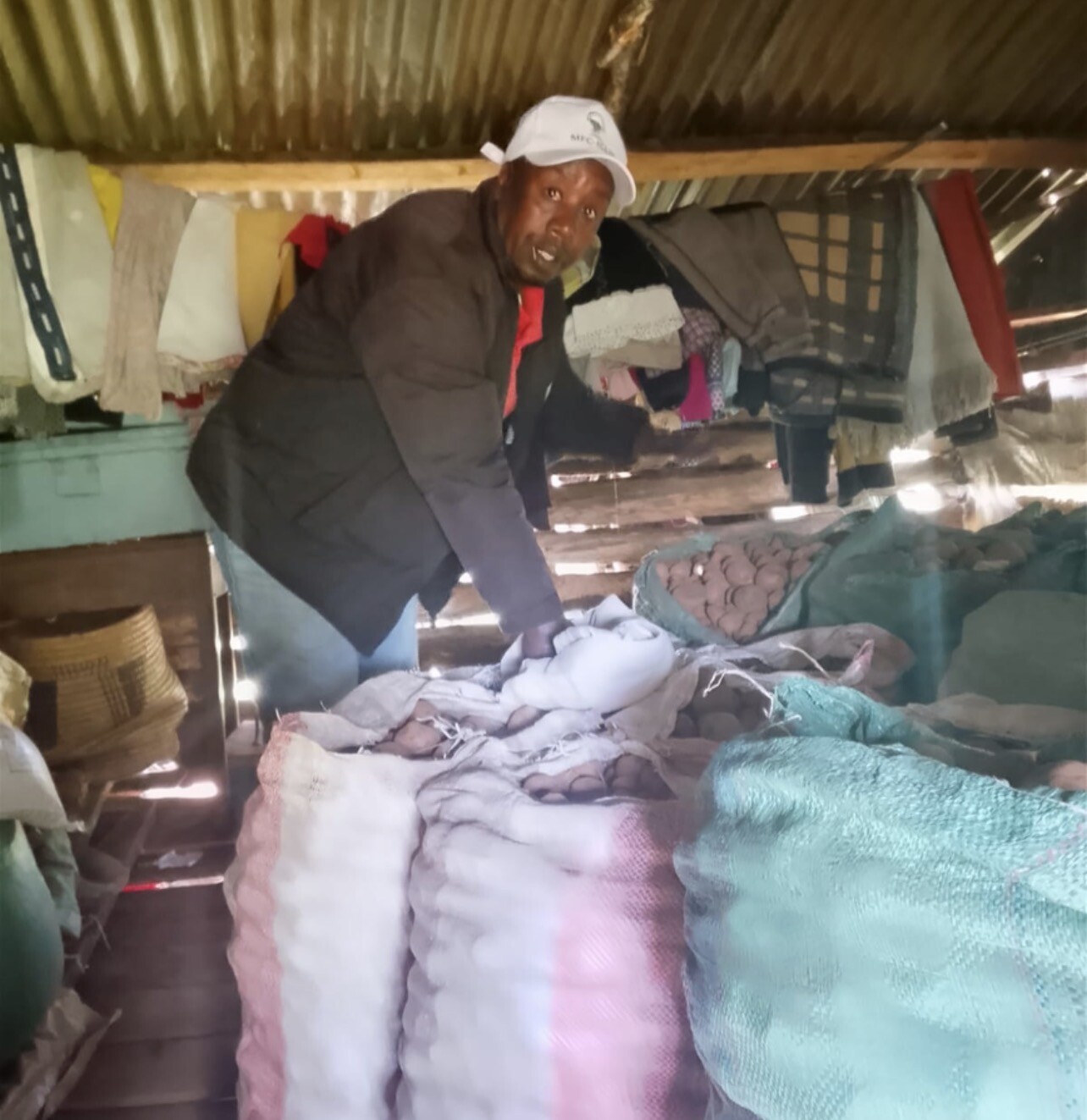
The idea was straightforward. KATA would provide the startup capital. Charles would operate the camps and potato farms. The potatoes would generate revenue, our loan would be repaid, profits would be shared according to our agreement, and the operation could become increasingly self-supporting.
Instead, Catherine and I ultimately advanced Charles 1,077,500 Kenyan shillings.
As of August 12, 2026, according to our records, Charles has repaid:
Zero.

Not one shilling.
And when I asked him again on August 12 when he was going to start paying back the loan, his response included:
“Let’s meet in centuries.”
He subsequently wrote:
“The time will come”
After more than a year of promises, those words told me a lot.
I Was Warned About Charles
Shortly after entering into our agreement, people in Kenya began warning me about Charles.
I listened, but I also listened to Charles.
He called me regularly. We talked at length. He assured me that the things people said about him weren’t true. He presented himself as someone dedicated to helping young Kenyan athletes.
I chose to give him a chance.
Looking back, I believe Charles took advantage of that trust.
The important thing now is not what Charles says about me or what I say about him. It is what the written record shows.
And we have a substantial written record.
Charles Himself Called It a Loan
There should be no confusion now about whether this money was a gift.
It wasn’t.
My WhatsApp correspondence repeatedly describes these payments as loans, and Charles himself used exactly that word.
By September 29, 2025, I wrote to Charles:
“I have sent you 959,000 against your loan of 650k for your two camps and 600k for your six acres.”
Charles did not respond that the money wasn’t a loan.
Quite the opposite.
On October 7, while asking me for another 21,000 KES, Charles wrote:
“Then I will be knowing that my total loan is 1000000ksh.”
Two days later he made it even clearer:
“With this support, my total loan will now stand at Ksh 1,000,000.”
Those are Charles Ngeno’s words, not mine.
The Requests for Money Just Kept Coming
The pattern became remarkably consistent.
Charles would describe progress.
Then he would ask for more money.
On September 15 he told me he had planted the remaining quarter acre and said the 20,000 KES I had just sent had helped him.
Then came:
“Please send me 25k. Now.”
On October 3 he said his Nakuru camp rent was urgent and warned:
“Its very embarrassing to have my KATA camp closed.”
He urged Catherine and me to continue funding him, saying we had completed “90% journey” and shouldn’t stop with only 10 percent remaining.
On October 7 he predicted a very substantial potato harvest:
“Bob for my first harvest I’m expecting to have more than 150 bags of 50kg.”
He added:
“i promise good return.”
On October 21, as harvest approached, there was another request:
“Bob. Please send me 15k for olenguruone camp.”
On October 26, Charles said he needed another 28,000 KES to pay cooks at both camps and top up the Nakuru operation.
I sent it.
Two days later, after telling Charles that KATA existed to train, house and feed athletes and that potato revenue was supposed to support the operation, Charles wrote:
“Bob i do respect you. You really uplift me. I will assure you that all will be well.”
Four minutes later he asked me for another 5,000 KES.
This went on and on.
Eventually I stopped the bleed.
Where Were the Returns?
By October, potatoes were supposedly approaching harvest.
Charles gave me specific projected harvest dates.
He told me his first harvest would produce more than 150 bags of 50 kilograms.
I repeatedly explained how the money was supposed to work.
Potatoes would be harvested and sold. Sale proceeds would first go into the KATA account. The appropriate portion of the original farming loan would be recovered. The remaining profit would then be divided according to our agreement.
I wasn’t trying to take Charles’s livelihood away from him.
The opposite was true.
I wanted the operation to succeed so Charles could make money, KATA could recover its capital, athletes could be supported and the money could be recycled into additional farming.
But when harvest time arrived, getting money back became increasingly difficult.
In November, when I asked when funds would be transferred to our Equity Bank account in Kenya, Charles answered:
“When the potatoes market will show fairness in price.for now all has to wait.”
He later wrote:
“as soon as I sell potatoes, I will ask for bank account.”
But there was another revealing sentence:
“Untill I see there is return, I will sell. Else for now not yet.”
The person who had enthusiastically accepted our money was now deciding on his own when the crop financed by that money would be sold.
I Kept Giving Him the Benefit of the Doubt
This is perhaps the part that bothers me most.
Every time something didn’t add up, I wanted to believe there was an explanation.
When others questioned Charles, he frequently suggested that they were enemies trying to damage him.
At one point, after I asked for basic proof of his camps and potato operation, Charles told me:
“I know who is behind all this.”
He said the person was a “pure enemy” and told me:
“I only expect communication from you directly.”
That should have been another warning sign.
Instead of welcoming independent verification of an operation financed with our money, Charles repeatedly tried to turn questions about documentation into questions about the motives of the people asking them.
I nevertheless continued working with him.
There Was Another History I Should Have Examined More Closely
I also later learned much more about a serious controversy involving Charles a decade earlier.
In 2015, Kenyan media reported allegations by Athletics Kenya officials concerning Charles and young female athletes at the Keringet training camp.
The allegations were extremely serious.
Charles denied them.
Contemporary reporting said Athletics Kenya announced a lifetime ban and ordered the camp closed amid allegations involving manipulation and improper relationships with female athletes.
Charles publicly disputed the accusations and said they were rumors intended to tarnish his name.

Those allegations should not be presented as proven facts simply because they were published.

But they were serious enough that I wish I had investigated the entire episode much more carefully before trusting Charles with our money.
Charles has also had genuine accomplishments as a coach, and athletes associated with Keringet have achieved considerable success. That is part of his history too.
None of that, however, answers the question before us today:
What happened to KATA’s 1,077,500 KES, and when will it be repaid?
From Promises to “Let’s Meet in Centuries”
For months I received assurances.
Charles told me:
“I’m promising you will see the Impact.”
He promised a “good return.”
He told me:
“I will assure you that all will be well.”
He acknowledged in writing that the money was a loan.
He told me how much that loan totaled.
He gave us projected harvest dates.
He predicted more than 150 bags from his first harvest.
And at one point he assured me that he would repay 400,000 KES.
That payment never arrived.
Eventually the total amount Catherine and I advanced reached 1,077,500 KES.
According to our records:
Money advanced: 1,077,500 KES
Money repaid: 0 KES
Outstanding: 1,077,500 KES
Then, on August 12, 2026, after I again asked when he was going to start paying back the loan, I got:
“Let’s meet in centuries.”
For me, that was the end of the excuses.
Charles Ngeno Has the Opportunity to Answer
I am publishing this because other people considering financial dealings with Charles deserve to know what happened to us.
But Charles deserves the opportunity to respond as well.
So I am asking him publicly:
Did you receive 1,077,500 KES from us?
Do you acknowledge that this money was advanced under our KATA loan arrangement?
How much money did the six acres of potatoes actually produce?
Where did the proceeds go?
What happened to the two KATA camps we financed?
Why have you not repaid a single shilling?
What happened to the 400,000 KES you said you would repay?
And finally:
When are you going to repay the 1,077,500 KES?
Charles doesn’t need to answer with another promise.
He doesn’t need to tell me that “the time will come.”
And he certainly doesn’t need to tell me:
“Let’s meet in centuries.”
He can answer with something much simpler
A payment.
Until that happens, I believe people dealing financially with Charles Ngeno deserve to see the record and make up their own minds.
We trusted him.
We funded him.
We waited.
Now we are making the record public.
Login to leave a comment
Latest Running News

Valencia Marathon Offers €1 million World Record Jackpot As Kejelcha And Korir Lead Star-Studded Field
The road to marathon history will lead to Valencia on December 6, where the 2026 Valencia Marathon has put a staggering €1 million — approximately KSh 148.7 million — on the line for any athlete who breaks the official marathon world record on its fast Spanish streets.

According to the race's official 2026 regulations, the million-euro bonus is available separately for both the men's and women's world records. The target for men is 1:59:30, while the women's target is 2:09:56. Athletes must be officially entered in the race, and the performances must pass the required recognition and anti-doping procedures.
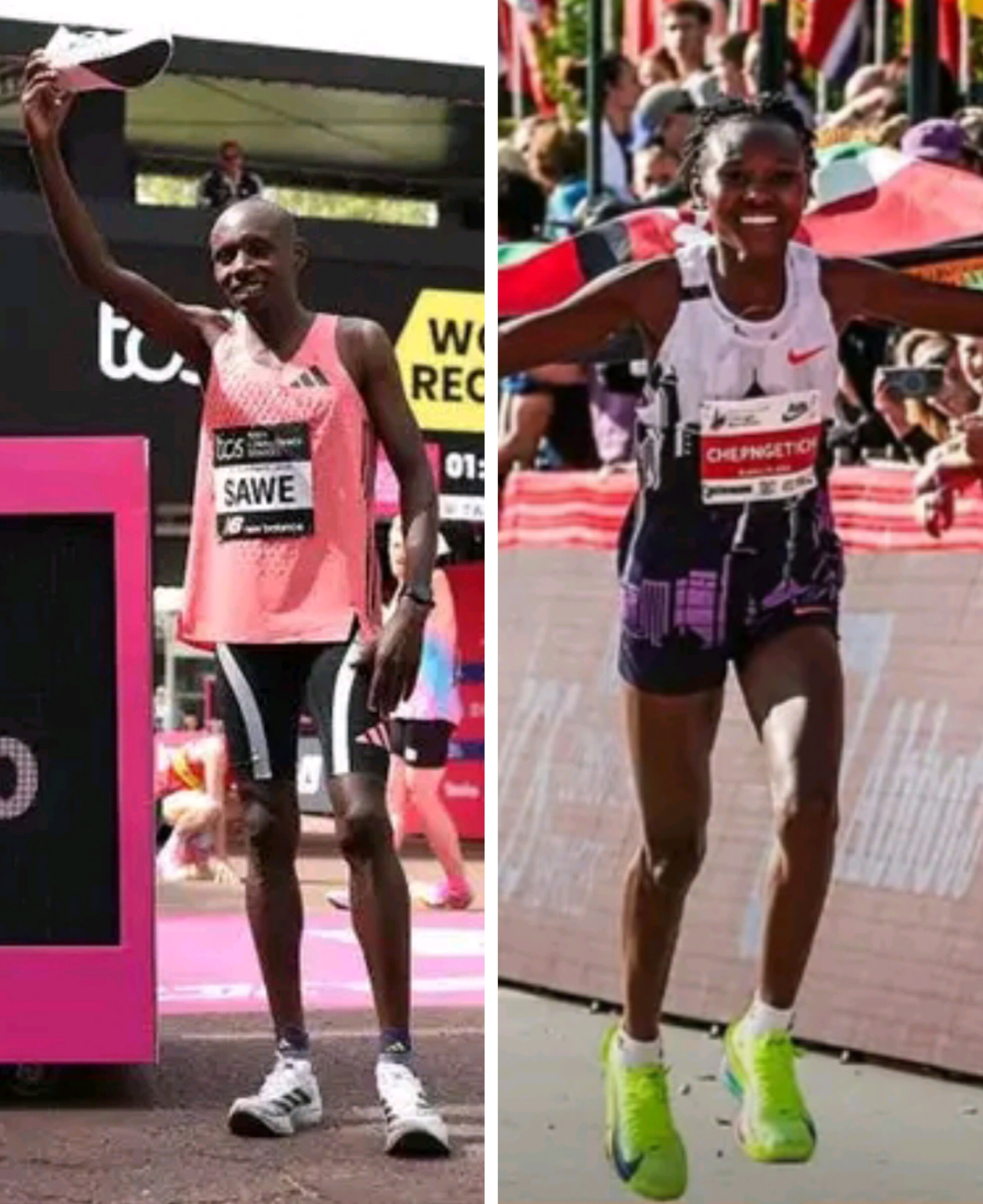
The men's benchmark was established by Kenya's Sabastian Sawe when he became the first man to officially break the two-hour barrier, running 1:59:30 at the 2026 London Marathon. Ethiopia's Yomif Kejelcha finished second that day in 1:59:41, becoming the second-fastest marathoner in history at the time and producing the fastest marathon debut ever.
On the women's side, the mark to beat remains Kenya's Ruth Chepngetich's 2:09:56, set at the 2024 Chicago Marathon. That performance made her the first woman to officially run under 2:10 for the marathon.
The enormous incentive is closely connected to the ambition of Valencia's running movement and the backing of businessman and philanthropist Juan Roig, whose Trinidad Alfonso Foundation has played a major role in supporting the marathon and the wider development of athletics in Valencia. Roig has previously spoken about the ambition of bringing the marathon world record to the city.
And the timing could hardly be more intriguing.
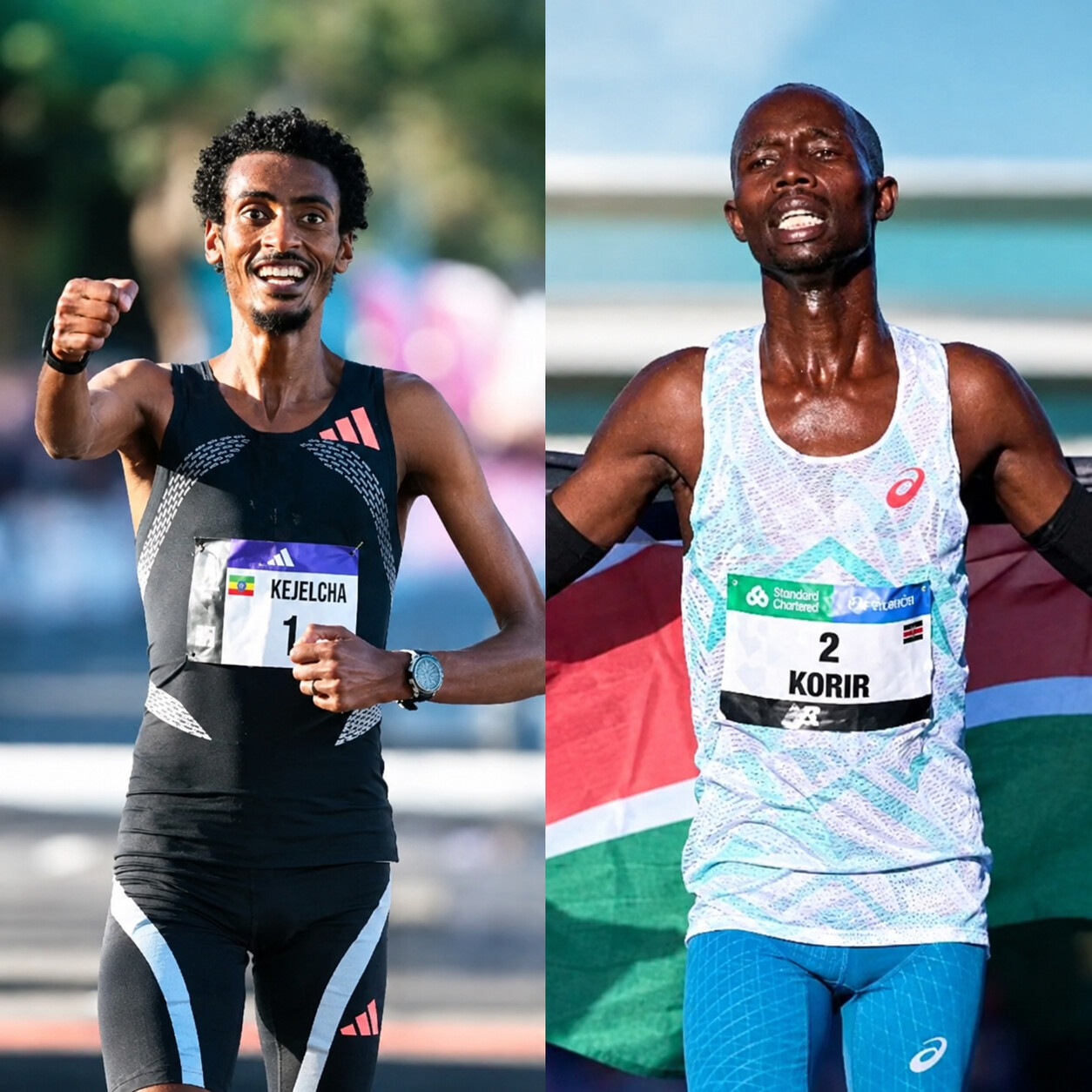
Kejelcha will return to Valencia for his second marathon, while defending champion John Korir of Kenya will be back after winning the 2025 edition in 2:02:24. The official elite announcement also includes Alexander Mutiso, Dawit Wolde and Nibret Melak, creating an exceptionally deep men's field.
Kejelcha arrives with a remarkable 1:59:41 from London, meaning he has already demonstrated the ability to sustain the extraordinary pace required to challenge the two-hour barrier. Korir, meanwhile, knows the Valencia course intimately and will be seeking to defend his title while chasing an even faster performance.
Valencia has earned its reputation as one of the world's fastest marathon destinations. Its course record currently stands at 2:01:48, set by Ethiopia's Sisay Lemma in 2023, while the 2025 edition saw Joyciline Jepkosgei run 2:14:00, the fastest women's marathon of that year.
With KSh 148 million-plus waiting for a successful world-record assault, a defending champion hungry for another victory and Kejelcha returning after coming within 11 seconds of the men's world record in London, Valencia is shaping up to be one of the most closely watched marathons of 2026.
On December 6, the question will be simple: will Valencia finally witness another marathon world record — and send one athlete home with a seven-figure euro cheque?
by Erick Cheruiyot for My Best Runs.
Login to leave a comment

VALENCIA TRINIDAD ALFONSO
The Trinidad Alfonso EDP Valencia Marathon is held annually in the historic city of Valencia which, with its entirely flat circuit and perfect November temperature, averaging between 12-17 degrees, represents the ideal setting for hosting such a long-distance sporting challenge. This, coupled with the most incomparable of settings, makes the Valencia Marathon, Valencia, one of the most important events in...
more...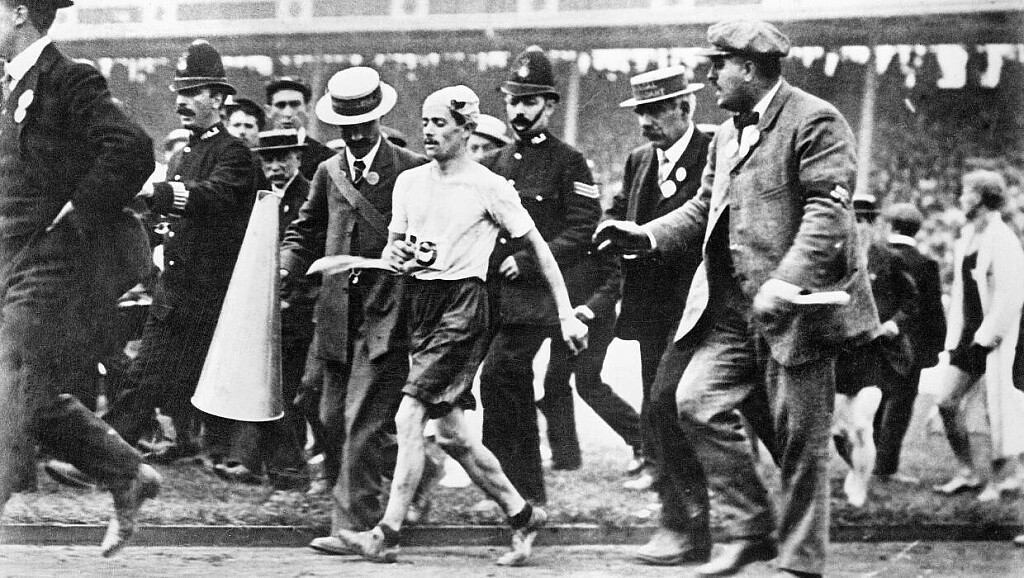
The Strangest Olympic Marathon Ever: Cars, Rotten Apples, Wild Dogs And Strychnine
Few Olympic races have produced a story as bizarre, chaotic and brutal as the marathon at the 1904 Games in St. Louis.
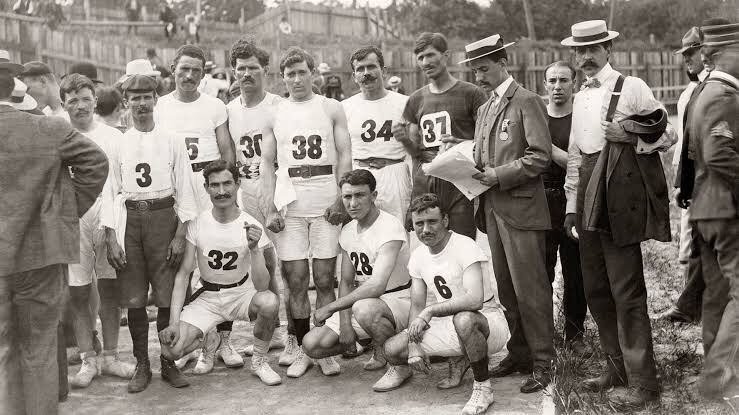
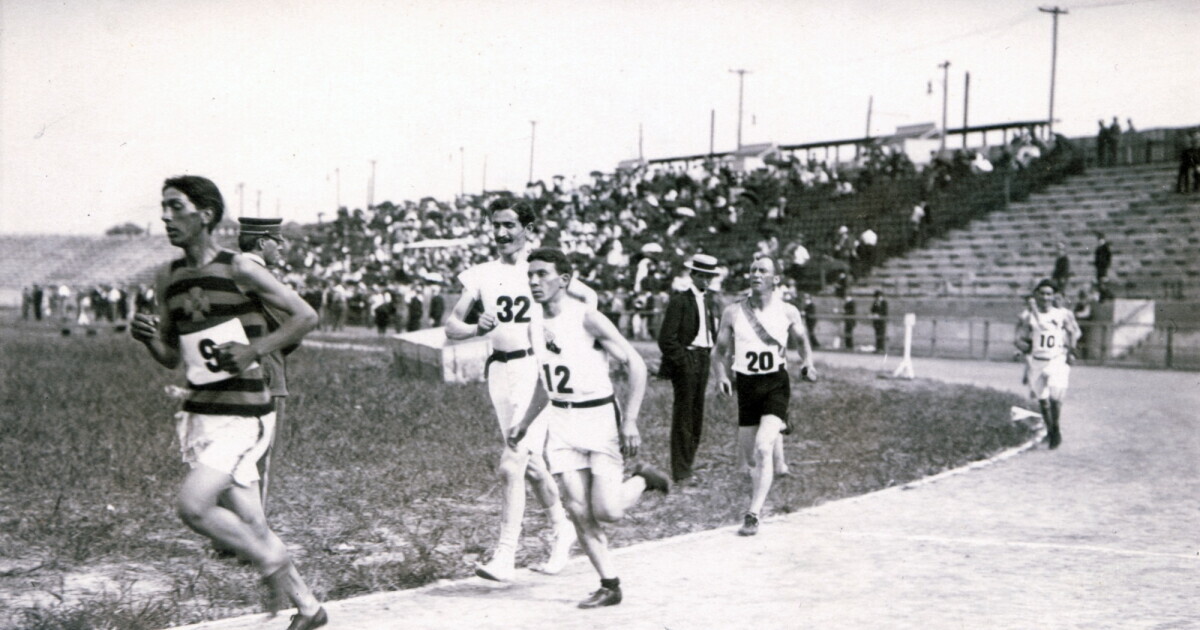
Held on August 30, 1904, the race took place over roughly 40 kilometres in oppressive heat, on dusty country roads where passing automobiles stirred clouds of dust into the air. Water was extremely limited, and the combination of heat, hills, dehydration and poor race organization turned the event into an extraordinary test of survival.
Thirty-two runners started the marathon, but only 14 reached the finish. What happened along the way would eventually make the St. Louis marathon one of the most infamous races in Olympic history.
Among the strangest episodes was the story of American runner Frederick Lorz.
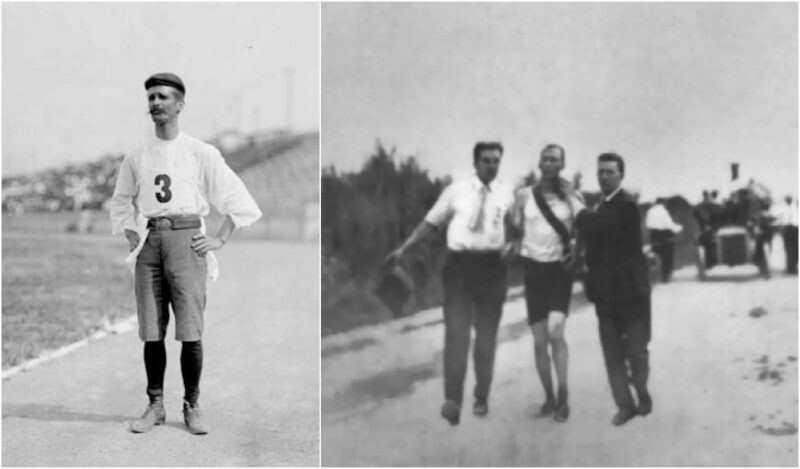
Lorz was initially celebrated as the winner after reaching the stadium first in 3:13:00. But the apparent victory quickly collapsed when officials discovered that he had been transported by automobile for a substantial portion of the course after suffering severe cramps. Accounts place the car ride at roughly 11 miles.
When the automobile eventually broke down, Lorz returned to the road and continued running. He crossed the finish line first, but his deception was uncovered almost immediately and he was disqualified. Lorz later described the incident as a joke rather than an attempt to claim the Olympic title.
That left Thomas Hicks as the official Olympic champion, but his journey to the gold medal was almost as extraordinary.
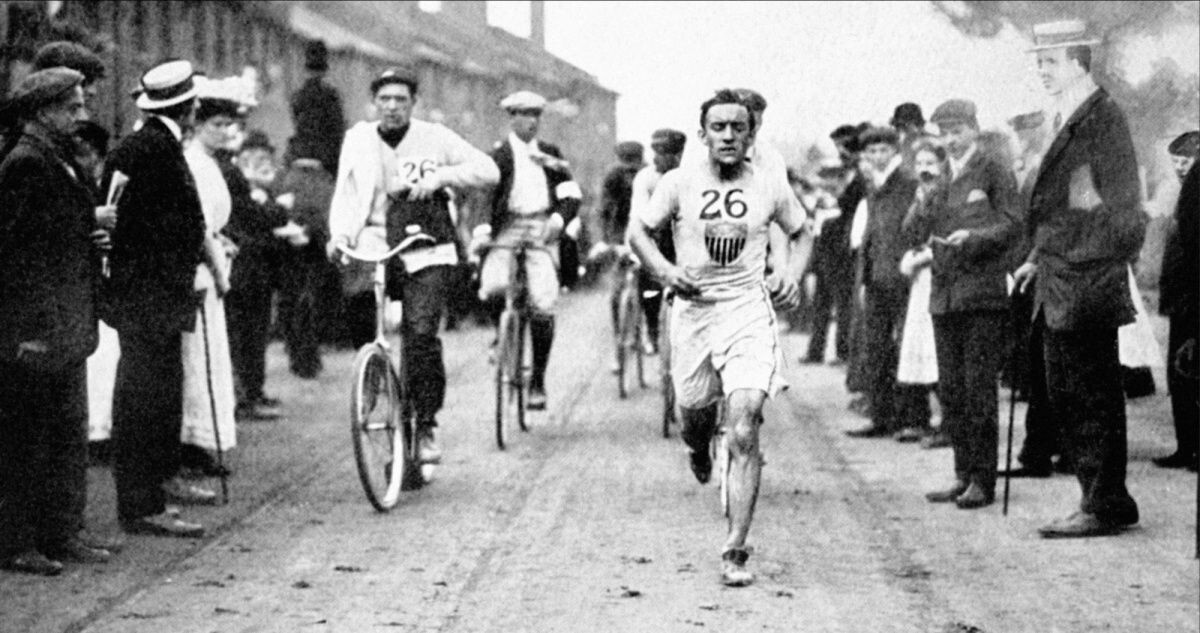
Hicks completed the marathon in 3:28:53, a time that remains the slowest winning performance in Olympic marathon history. Yet the number on the clock tells only part of the story.
As Hicks began to fade badly during the latter stages, his support team gave him a mixture containing strychnine and egg white, followed later by brandy. Strychnine was regarded at the time as a stimulant in very small quantities, although today it is recognized as a highly poisonous substance. There were no modern anti-doping rules at the 1904 Games to prohibit such treatment.
Hicks became increasingly exhausted and reportedly hallucinated during the closing stages. His condition deteriorated so badly that his trainers eventually helped carry him across the finish line while his legs continued moving beneath him.
Afterward, he needed medical attention before he was well enough to leave the stadium. The Olympic Museum records that four doctors were required to attend to him following the race.
Then there was Andarín Carvajal, the Cuban postman whose Olympic debut sounded more like an adventure than a marathon.
Carvajal arrived in St. Louis shortly before the race and had little of the equipment expected of a serious marathon runner. He competed in long trousers and a long-sleeved shirt, with the legs of his trousers cut down to make them more suitable for running.
Despite his unconventional preparation, Carvajal ran remarkably well and stayed among the leading competitors.
But hunger became a problem. Having gone for a long period without proper food, he stopped along the course and ate apples he found. Unfortunately, the fruit was rotten, leaving him with severe stomach cramps. At one point, he lay down beside the road and fell asleep.
Remarkably, he recovered, got back on his feet and continued running. Carvajal eventually finished fourth, an extraordinary result considering the conditions and the obstacles he encountered.
The race also marked an important moment in Olympic history for Africa.
Len Taunyane and Jan Mashiani, two South Africans of Tswana background, became the first Black Africans to compete at the Olympic Games. They were in St. Louis as part of a South African exhibition connected to the World's Fair and entered the marathon almost unexpectedly.
Historical accounts have long described the pair as running barefoot, although surviving photographs indicate that the footwear situation was more complicated, with at least one of them appearing to have shoes. Their names were also recorded inconsistently in contemporary reports.
Taunyane became part of one of the race's most extraordinary stories when he was reportedly chased off the course for about a mile by a wild dog. Despite the incident, he recovered and continued the race.
Taunyane finished ninth, while Mashiani placed 12th, making their appearances significant not only because of the bizarre circumstances but also because they represented an important milestone in Olympic history.
There were other dangers too. The roads were so dusty that the automobiles accompanying the runners created clouds of dust that made an already punishing race even more difficult. One American runner, William Garcia, reportedly collapsed after dust severely affected his throat and stomach, illustrating just how dangerous the conditions had become.
The 1904 St. Louis marathon was therefore unlike almost anything seen in modern distance running.
There were no sophisticated hydration stations, no carefully measured modern course, no sports science teams and no anti-doping regulations. Instead, runners faced extreme heat, dusty roads, limited water and primitive medical practices.
One athlete rode in a car. Another stopped to eat rotten fruit and fell asleep. Two pioneering African competitors endured an extraordinary race, with one reportedly being chased by a dog. And the eventual champion was administered a dangerous stimulant mixture before being helped across the finish line.
More than a century later, the St. Louis marathon remains a remarkable reminder of just how different Olympic distance running once was.
It was a marathon where survival sometimes seemed as important as speed—and where almost every mile produced another unbelievable chapter.
by Erick Cheruiyot for My Best Runs.
Login to leave a comment

Allyson Felix Launches ‘Project Six’ With Eyes On Historic LA28 Comeback
Allyson Felix is preparing to write another extraordinary chapter in her remarkable career, with the American sprint legend targeting a return to competition and an unprecedented sixth Olympic appearance at the Los Angeles 2028 Games.

Felix, now 40, retired from elite competition after the 2022 season, bringing an illustrious career to a close after six Olympic Games and 11 Olympic medals. She is now embarking on what she has called “Project Six” — an ambitious attempt to return to the track and put herself in contention for the United States mixed 4x400m relay pool for LA28.
The comeback is expected to begin with a return to structured training under her longtime coach Bobby Kersee, with Felix targeting a return to racing in 2027. Rather than simply revisiting the past, the project represents a completely new challenge for an athlete who has already achieved almost everything possible in the sport.

Felix has described the journey as a “live experiment in human potential,” framing the comeback not only around medals or records but around the experience of pursuing something difficult and uncertain. With her two children watching, she sees the project as an opportunity to demonstrate what it means to commit to a dream even when the outcome is far from guaranteed.
Her proposed route back to the Olympic stage is particularly intriguing. Instead of attempting to rebuild a full individual programme, Felix is targeting the United States mixed 4x400m relay, an event in which her experience over one lap could become central to her hopes of making the Olympic team.
If she succeeds, Felix would compete at the Olympics at the age of 42, potentially becoming the first American track and field athlete to appear at six Olympic Games. That would add another remarkable milestone to a career that already includes 11 Olympic medals and a place among the most decorated athletes in the history of the sport.
The location makes the potential comeback even more significant. Los Angeles is Felix’s hometown, while the LA28 athletics programme will be staged at the historic Los Angeles Memorial Coliseum, creating the possibility of an extraordinary homecoming on the Olympic stage.
For Felix, the prospect of returning to that setting would bring her career full circle — from an 18-year-old Olympic debutant in Athens in 2004 to a veteran mother attempting one final journey toward an Olympic team more than two decades later.
Nothing about the road to LA28 will be guaranteed. Felix will first have to rebuild her competitive form, navigate the demands of elite training at 40 and beyond, and ultimately earn her place against a new generation of American 400m runners.
But that uncertainty is precisely what makes Project Six so compelling. After a career defined by longevity, resilience and repeated reinvention, Allyson Felix is once again testing the boundaries of what is possible.
And this time, the finish line could be waiting in Los Angeles.
by Erick Cheruiyot for My Best Runs.
Login to leave a comment

Agnes Ngetich Rewrites Peres Jepchirchir’s Record: Two Historic Half Marathons, One Second Apart
Kenya’s Agnes Jebet Ngetich has added another remarkable chapter to the country’s extraordinary half-marathon history, breaking the women-only world half-marathon record in Copenhagen on Sunday, September 20, 2026.
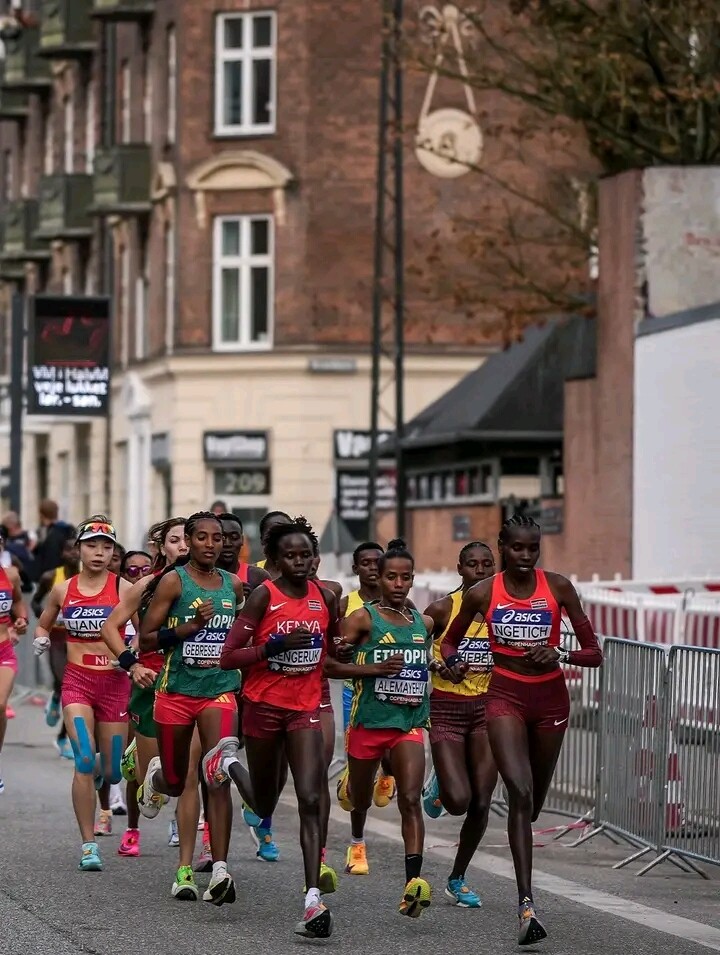
Ngetich clocked 1:05:15 to win the women’s half marathon at the World Athletics Road Running Championships, lowering the previous women-only world record of 1:05:16 set by fellow Kenyan Peres Jepchirchir in Gdynia, Poland, in 2020.
Jepchirchir originally established the record on October 17, 2020, when she won the World Athletics Half Marathon Championships in Gdynia in 1:05:16. That performance came just weeks after she had first broken the women-only record in Prague with 1:05:34 on September 5, 2020.
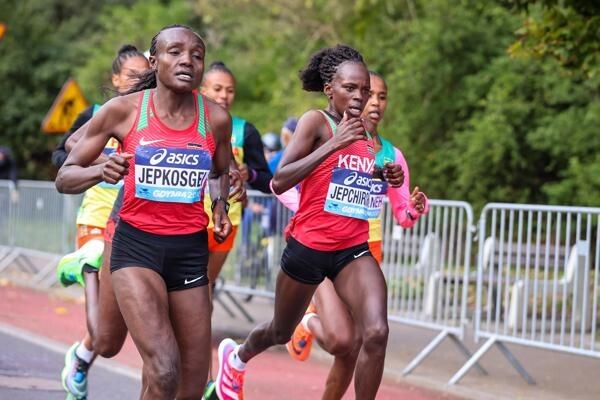
Five years later, Ngetich finally moved the mark forward—but by the narrowest possible margin.
The Copenhagen race also provides an intriguing statistical contrast between the two record-breaking performances. Their final times are separated by only one second, yet their races unfolded in noticeably different ways.
Ngetich attacked from the beginning, passing the opening 5km in 15:12. She then maintained remarkable consistency, reaching the next 5km in 15:27, followed by 15:38 and 15:39 for the subsequent 5km segments. With the final section covered in 3:19, she stopped the clock at 1:05:15.
Jepchirchir’s 2020 record followed a different rhythm. She passed the corresponding stages in 15:20, 15:27, 15:37 and 15:40, before producing a dramatically faster final section of 2:36 to complete her historic run in 1:05:16.
The split comparison highlights the contrasting ways in which the two Kenyans reached almost identical finishing times. Ngetich established her advantage early and maintained it through the middle kilometres, while Jepchirchir gradually built her race and delivered a particularly powerful closing section.
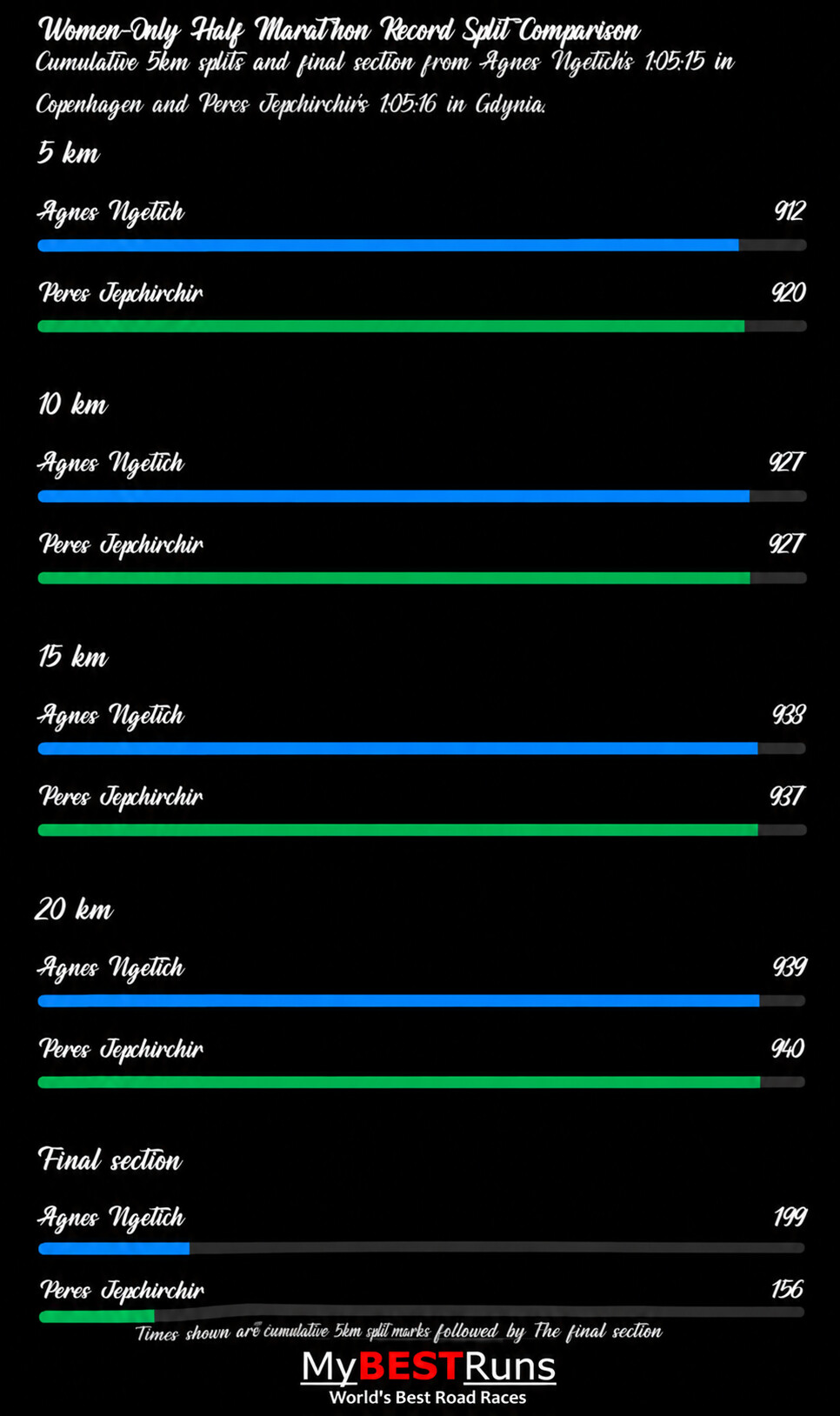
That is what makes the comparison so fascinating. Ngetich’s 1:05:15 and Jepchirchir’s 1:05:16 were produced five years apart, in different races and under different circumstances, yet the two performances sit almost perfectly together in the record books.
The split comparison is not a direct race between the two athletes, but rather a look back at how two Kenyan champions produced historic performances through contrasting pacing strategies. Ngetich’s performance was built on an exceptionally fast opening and sustained consistency, while Jepchirchir’s record was characterized by a stronger acceleration toward the finish.
For Jepchirchir, the 1:05:16 in Gdynia represented a defining moment in 2020. For Ngetich, the 1:05:15 in Copenhagen marked the moment she finally moved that record forward.
One second separates them. Five years separate the performances. Together, the two times provide a striking statistical snapshot of two historic Kenyan half-marathons.
by Erick Cheruiyot for My Best Runs.
Login to leave a comment
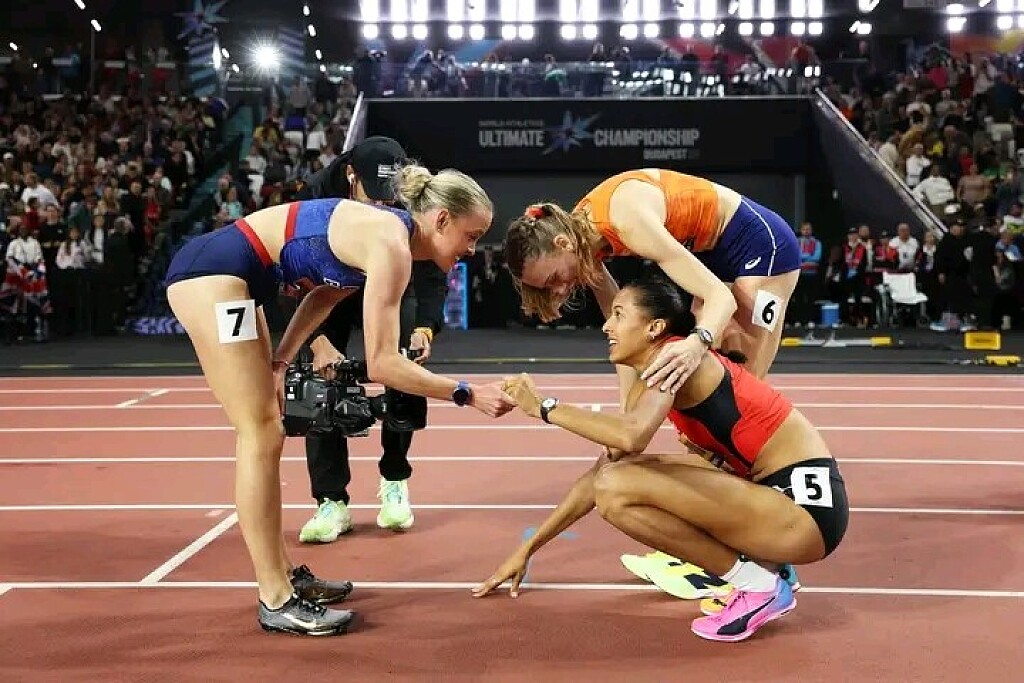
Women’s 800m Delivers A Season For The Ages In 2026
The women’s 800 metres has produced one of the most compelling storylines of the 2026 athletics season, with extraordinary times, fierce rivalries and a remarkable emergence that has transformed the event into one of the most closely followed races on the track.
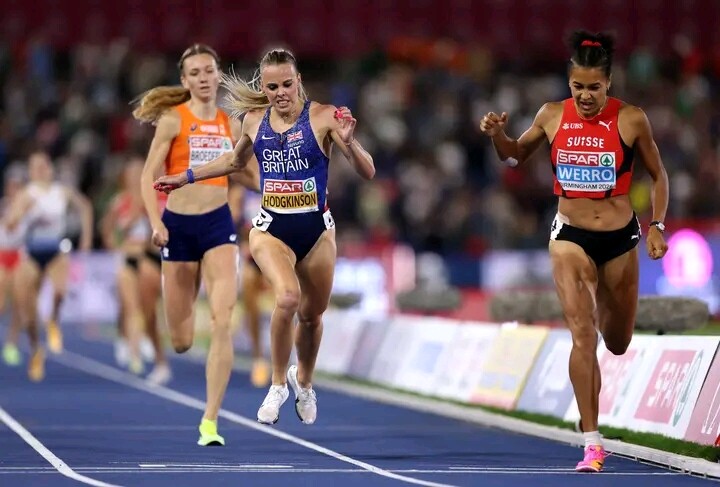
At the centre of it all has been Switzerland’s Audrey Werro, who turned an already competitive event into a breathtaking display of speed and consistency. Werro finished the outdoor season unbeaten and established herself as one of the leading forces over two laps.
Her breakthrough reached another level in Stockholm in June, when she ran 1:53.98 to become only the third woman in history to break 1:54. She later improved to 1:53.80 in Paris before producing an astonishing 1:53.70 in Zurich in August. That performance moved her to third on the all-time list, behind only Jarmila Kratochvilova and Nadezhda Olizarenko.
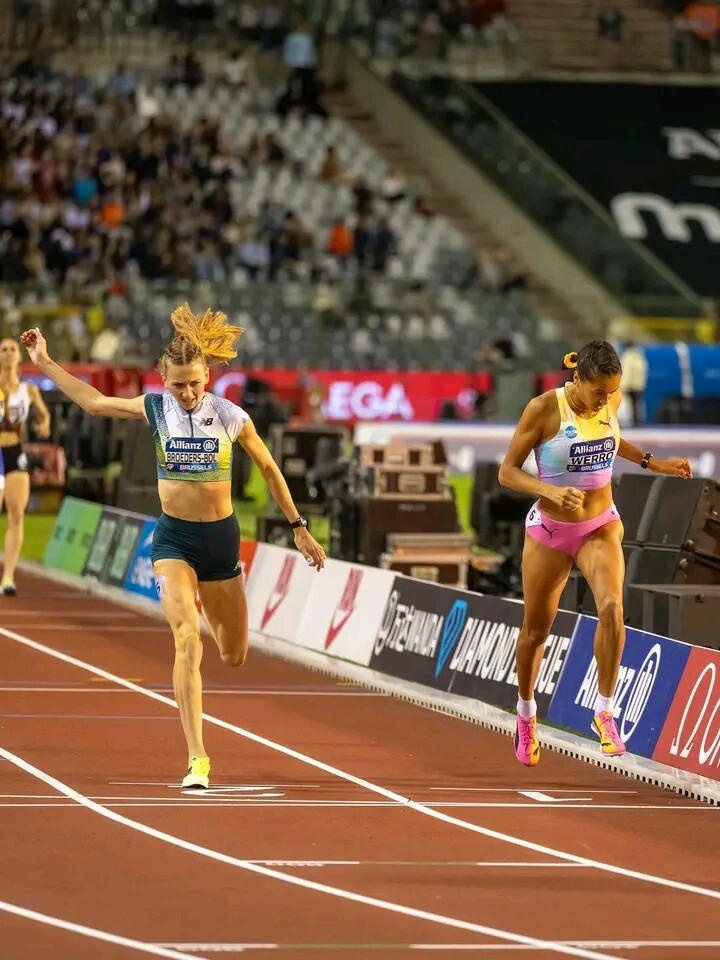
Yet Werro was not the only athlete rewriting the story of the event.
Britain’s Keely Hodgkinson began the year in spectacular fashion by breaking the world indoor 800m record with 1:54.87 in Liévin. She followed that with victory at the World Indoor Championships, winning the title in a championship record of 1:55.30.

Hodgkinson also produced one of the season’s most memorable outdoor races when she ran 1:54.33 in Stockholm, finishing behind Werro but setting a British record and recording one of the fastest 800m performances ever run by a non-winner. The two athletes pushed each other deep into territory rarely seen in the event.
Then came one of the most unexpected developments of the season: Femke Broeders-Bol’s transformation.
The Dutch star, already a two-time world champion in the 400m hurdles, made the switch to the 800m in 2026 and rapidly established herself among the world’s best. What initially looked like an ambitious experiment quickly became a genuine championship challenge.
Broeders-Bol ran 1:55.54 to take bronze behind Werro and Hodgkinson at the European Championships in Birmingham, matching the Dutch record. She later improved to 1:54.71 in Zurich, becoming one of the fastest women in history at the distance.
The European final provided another glimpse of just how deep the event had become. Werro won in a championship-record 1:54.81, Hodgkinson followed in 1:55.01, while Broeders-Bol took third in 1:55.54.
Their rivalry continued into the inaugural World Athletics Ultimate Championship in Budapest, where the three again shared the spotlight. Werro produced another controlled performance to win the final in 1:55.88, ahead of Hodgkinson in 1:56.26 and Broeders-Bol in 1:56.74.
What made the 2026 women’s 800m particularly remarkable was not simply the number of fast times, but the different storylines unfolding at the same time. Werro’s explosive rise, Hodgkinson’s record-breaking indoor campaign and championship pedigree, and Broeders-Bol’s extraordinary transition from the 400m hurdles created a three-way battle that repeatedly produced world-class racing.
And behind them was an increasingly deep field, making the event far more than a contest between three athletes. With multiple runners capable of breaking two minutes and pushing the leaders, every major championship race carried the possibility of another breakthrough.
For Werro, 2026 became the year she moved from emerging talent to a dominant outdoor force. For Hodgkinson, it was another season of record-breaking performances and championship experience. And for Broeders-Bol, it was the beginning of an entirely new chapter.
Together, they made the women’s 800m one of the defining events of the 2026 season — a year in which records fell, rivalries intensified and the two-lap race produced drama almost every time the gun went off.
by Erick Cheruiyot for My Best Runs.
Login to leave a comment
