

Running News Daily
Running News Daily is edited by Bob Anderson and team. Send your news items to bob@mybestruns.com Advertising opportunities available.
Index to Daily Posts · Sign Up For Updates · Run The World Feed



Jakob Ingebrigtsen Ends the Wait: Norwegian Superstar Confirms Long-Awaited Return at European Championships

The wait is finally over. After months of uncertainty, speculation, and relentless questions surrounding his fitness, Norwegian distance-running sensation Jakob Ingebrigtsen has officially confirmed when he will make his highly anticipated return to competition.
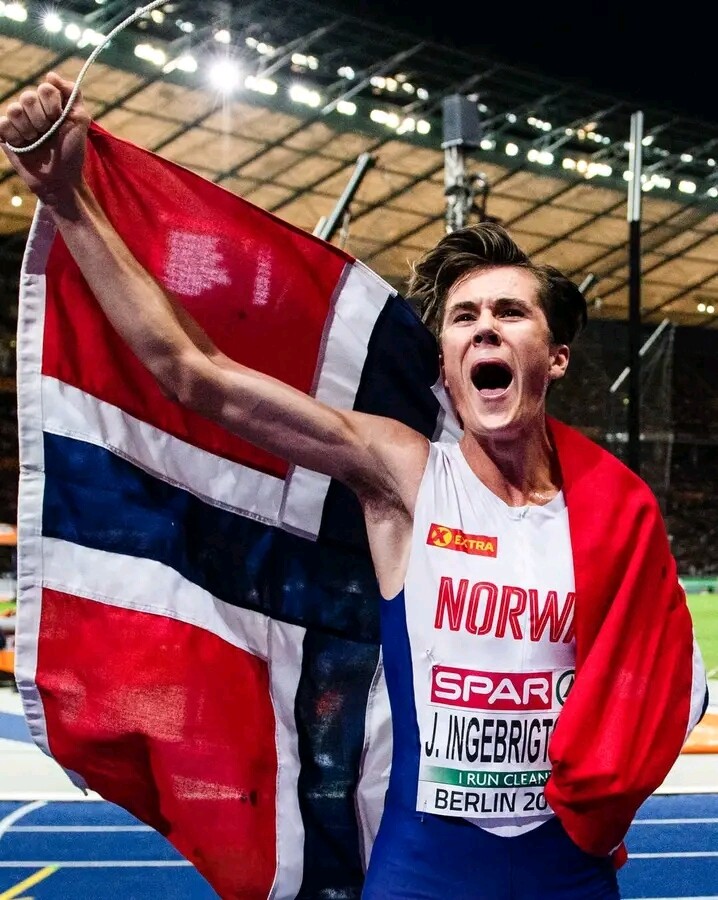
The two-time Olympic champion revealed that he will open his 2026 season at the European Athletics Championships in Birmingham, marking his first race since undergoing Achilles tendon surgery in February. His announcement instantly became one of the biggest stories in athletics, bringing an end to months of debate over when one of the sport's brightest stars would race again.
Jakob chose to deliver the news in his own unmistakable style, sharing a short video montage on Instagram accompanied by the playful caption, "I've heard Birmingham is nice this time of year…". The brief message was enough to ignite excitement across the athletics community, with fans eagerly anticipating the return of one of the world's most dominant distance runners.
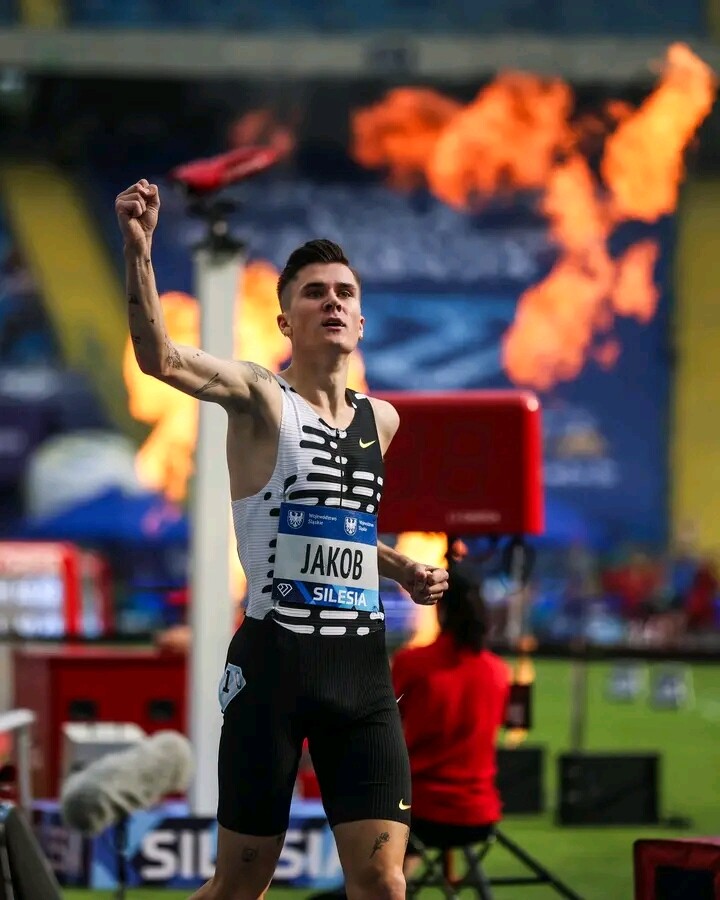
The confirmation comes only days after the Norwegian star urged supporters to disregard the growing wave of speculation about his comeback. Addressing the countless rumours circulating online, he reminded fans that social media can quickly become a source of misinformation and stressed that the only trustworthy updates regarding his recovery and racing schedule would come directly from him.
His message was simple but powerful: "Don't believe the rumours—listen to me." With that statement, Jakob made it clear that he wanted to control the narrative surrounding his rehabilitation, choosing transparency over speculation as he worked his way back to full fitness.
Now, that journey reaches its next chapter. Birmingham will provide the stage for one of the most eagerly awaited comebacks of the season as Jakob returns to championship racing after several months away from competition. Expectations will naturally be high, but his presence alone adds enormous prestige to the European Championships and promises to be one of the defining moments of the event.
For athletics fans around the world, the countdown has officially begun. All eyes will now turn to Birmingham, where the Norwegian superstar will take his first competitive steps back onto the track, hoping to remind the world why he remains one of the greatest talents of his generation.
by Erick Cheruiyot for My Best Runs.
Login to leave a comment
Latest Running News
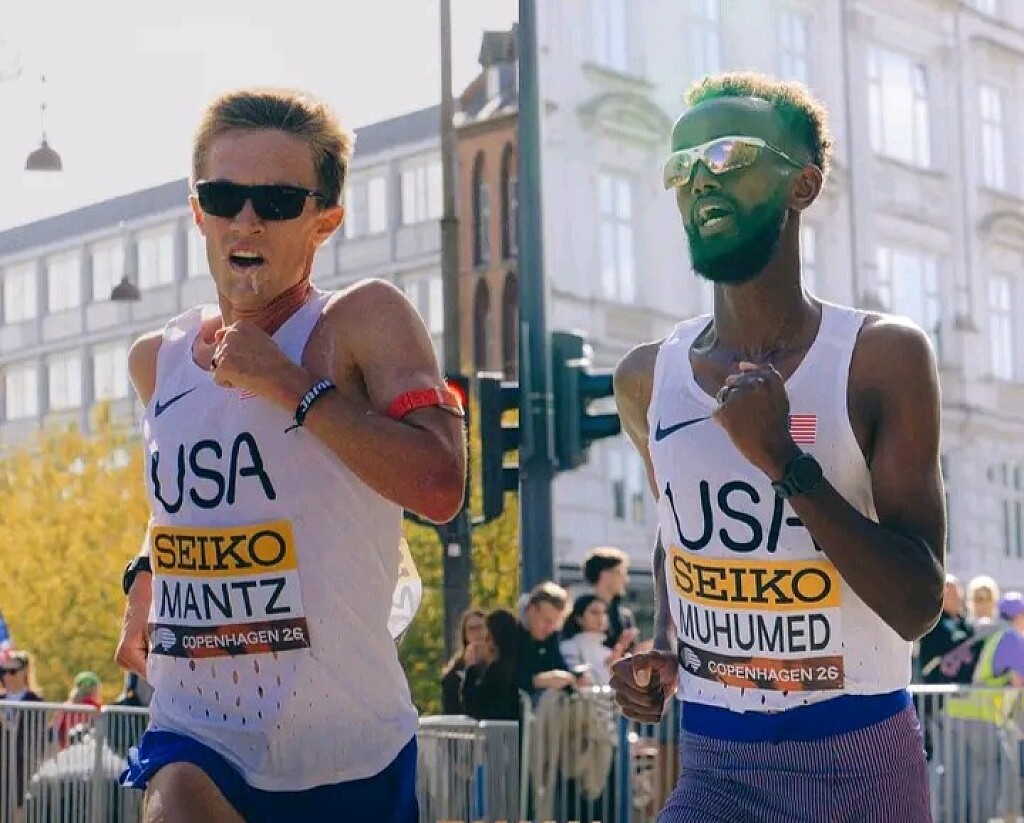
Team USA Makes History With Double Half Marathon Team Medals In Copenhagen
The United States enjoyed a remarkable day at the 2026 World Athletics Road Running Championships in Copenhagen, Denmark, securing team medals in both the men’s and women’s half marathon competitions.
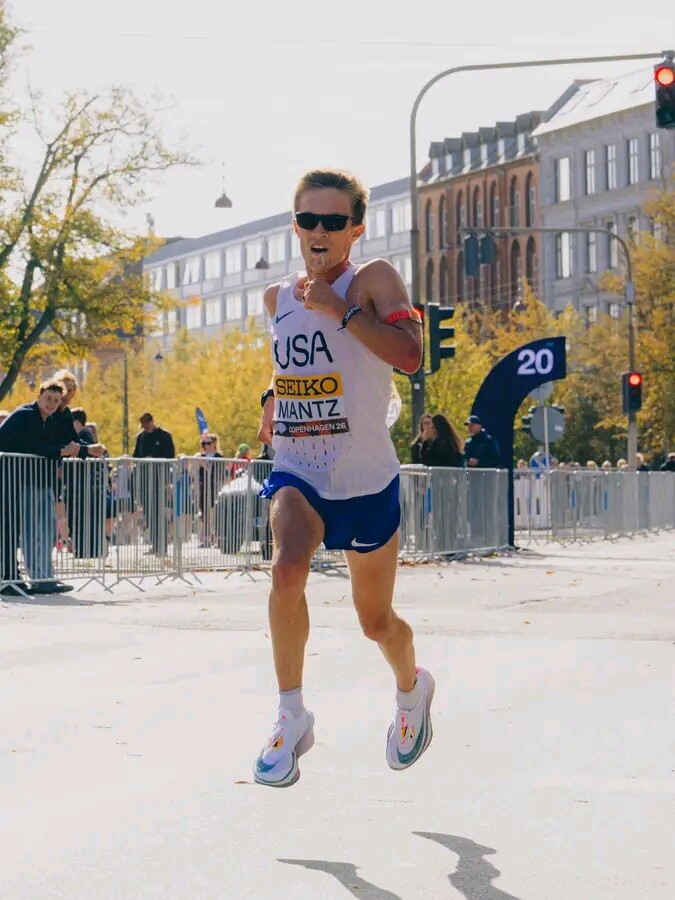
The American men claimed bronze in the team standings, while the women produced a historic performance to win silver and secure Team USA’s first-ever women’s team medal at the World Road Running Championships.
Leading the way for the American men was Conner Mantz, who finished 12th individually in 1:00:08, clocking a season’s best to spearhead the American challenge over the 21.1-kilometre distance.
For Mantz, the performance carried added significance as he continues his comeback from injury. His 1:00:08 season’s best provided a strong return to championship-level competition and an important tune-up as he prepares to take on the New York City Marathon in November.
Mantz’s performance also proved crucial to Team USA’s team medal effort, with his 12th-place finish providing the foundation for the Americans to secure bronze in the men’s standings.
Ahmed Muhumed followed closely in 13th place, crossing the finish line in 1:00:15. The performance marked a significant breakthrough for Muhumed, who lowered his previous best by 48 seconds in a major championship setting.
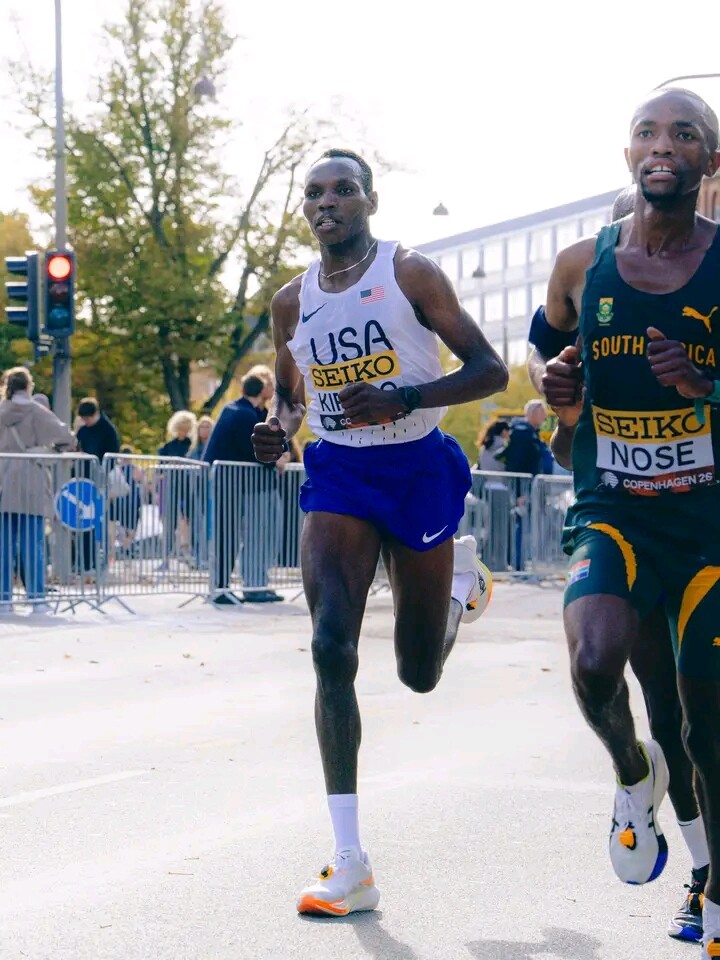
Wesley Kiptoo completed the American scoring trio, placing 23rd in 1:01:11. Kiptoo also produced a season’s best, contributing another important performance to the United States’ team effort.
The combined performances of Mantz, Muhumed and Kiptoo were enough to place the United States third in the men’s team standings, securing a hard-earned bronze medal in Copenhagen.
For Muhumed, the race was one of the biggest breakthroughs of the day, with his 1:00:15 representing a 48-second improvement on his previous best. Kiptoo’s season-best 1:01:11 further strengthened the American challenge and helped convert three individual performances into a place on the global podium.
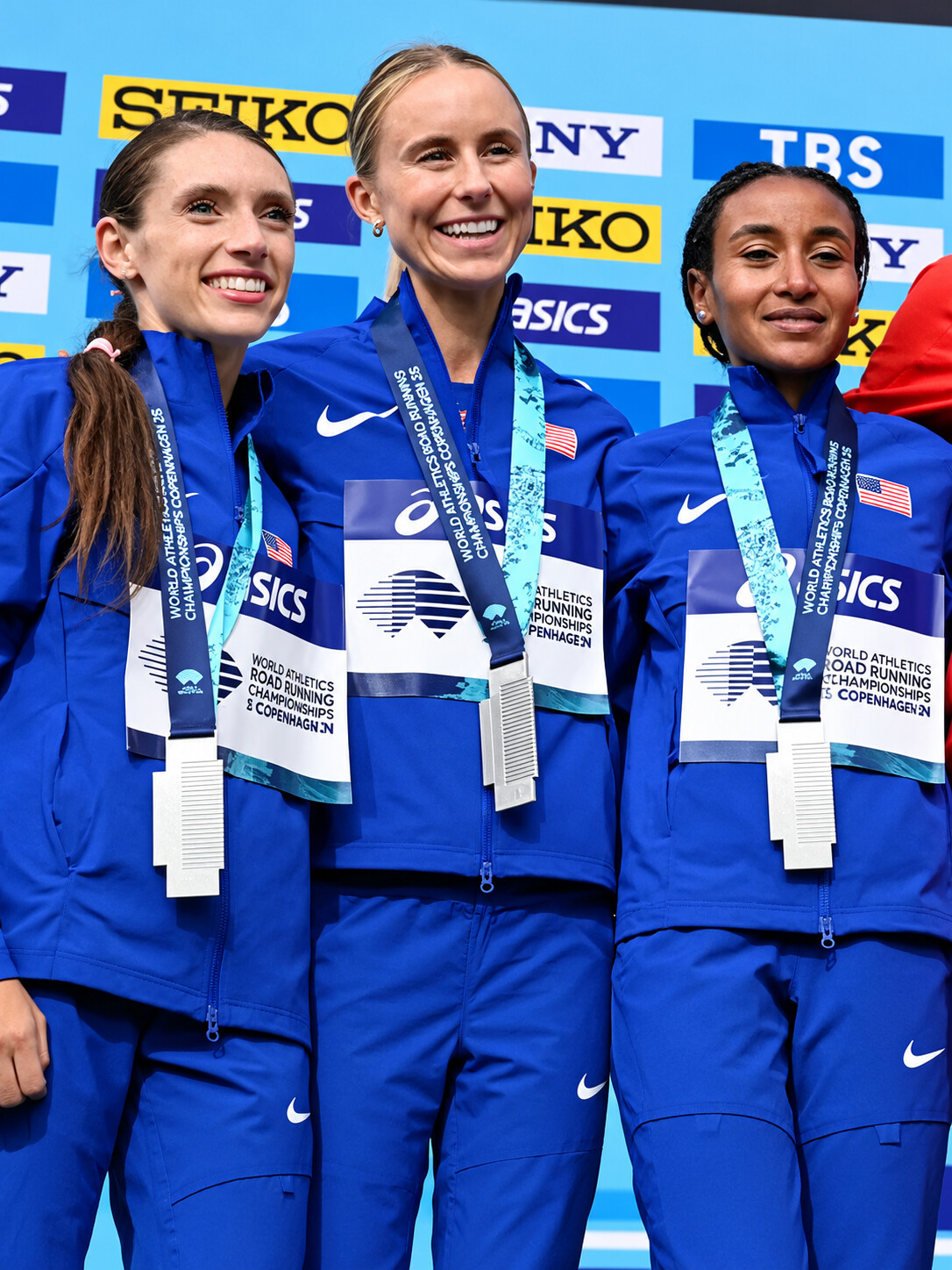
On the women’s side, Team USA made history by placing three athletes inside the top seven, earning its first-ever women’s team medal at the World Road Running Championships.
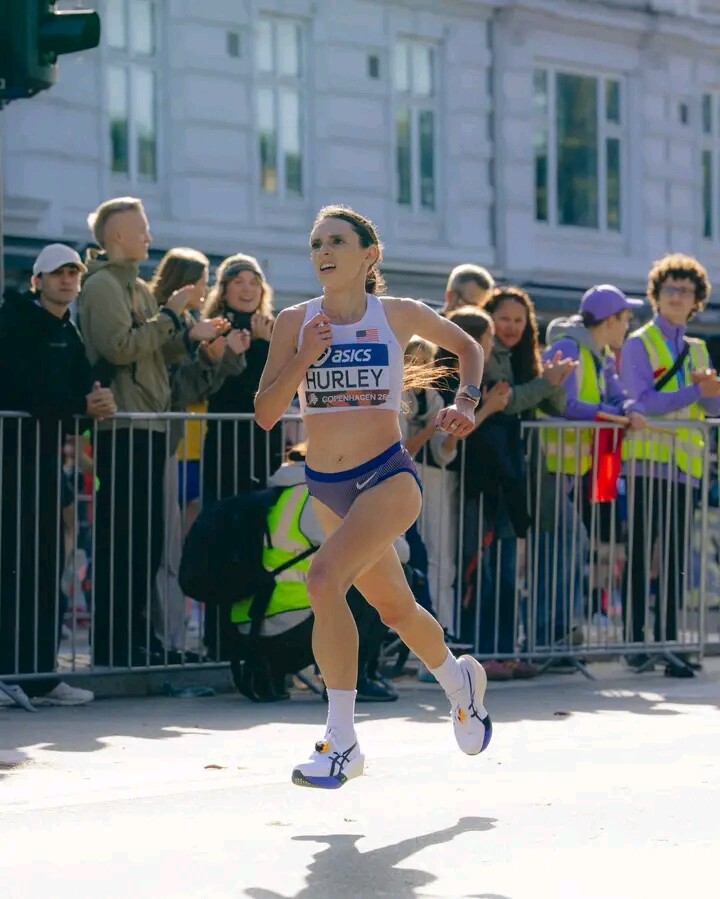
Emma Grace Hurley led the American women with a sensational fifth-place finish in 1:06:23. The performance was a huge personal best, taking more than a minute off her previous best of 1:07:35 and moving her to No. 3 on the U.S. all-time half marathon list.
Hurley also finished as the first American across the line, delivering one of the standout performances of the championship for the United States.
Weini Kelati Frezghi followed in sixth place, clocking 1:06:35 and ensuring that Team USA had two athletes inside the top six. Jessica McClain completed the scoring trio in seventh, stopping the clock at 1:06:53.
McClain’s performance represented another major breakthrough. She entered Copenhagen with a half marathon personal best of 1:08:37 but improved that mark by nearly two minutes, producing a remarkable 1:06:53 and moving to No. 6 on the U.S. all-time list.
With Hurley, Kelati Frezghi and McClain all finishing inside the top seven, the American women combined their individual performances to secure a historic team silver medal.
The achievement gave Team USA a remarkable double podium finish in the half marathon team competitions, with the men taking bronze and the women claiming silver.
Beyond the medals, Copenhagen provided a showcase of individual breakthroughs for the American distance runners. Hurley moved into the top three on the U.S. all-time list, while McClain made an equally significant leap into sixth, as Mantz added another season’s best during his return from injury.
For Mantz, the Copenhagen race now serves as an important stepping stone toward the New York City Marathon in November, giving him a competitive test and a confidence-building performance as he continues his return to top-level racing.
It was a memorable championship outing for Team USA, with strong individual performances translating into two team medals and a landmark first for the American women at the World Road Running Championships.
by Erick Cheruiyot for My Best Runs.
Login to leave a comment
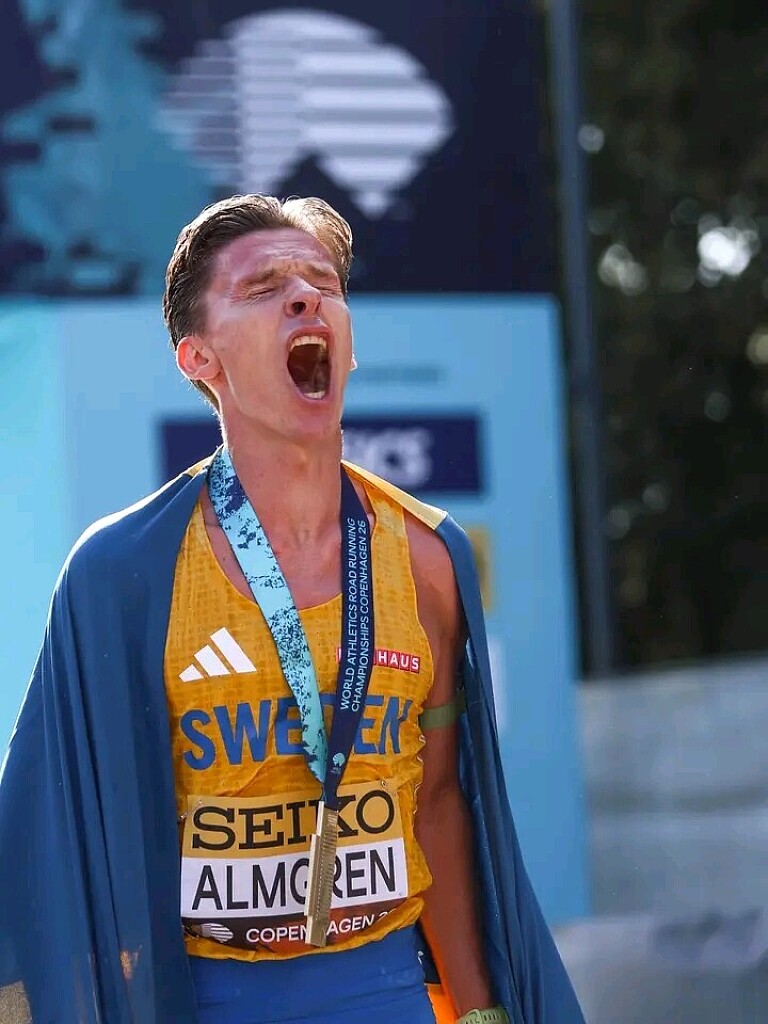
Andreas Almgren Times His Move To Perfection For World Half Marathon Gold In Copenhagen
Sweden’s Andreas Almgren produced a breathtaking finish on the streets of Copenhagen, unleashing a perfectly timed late surge to win the men’s half marathon title at the 2026 World Athletics Road Running Championships in 58:06.
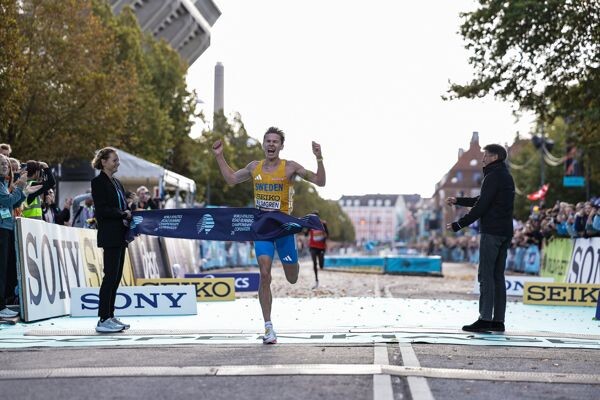
The Swedish star waited patiently through the decisive stages of the race before making his move with roughly 200 metres remaining, accelerating away from the field and producing a devastating sprint down the final straight.
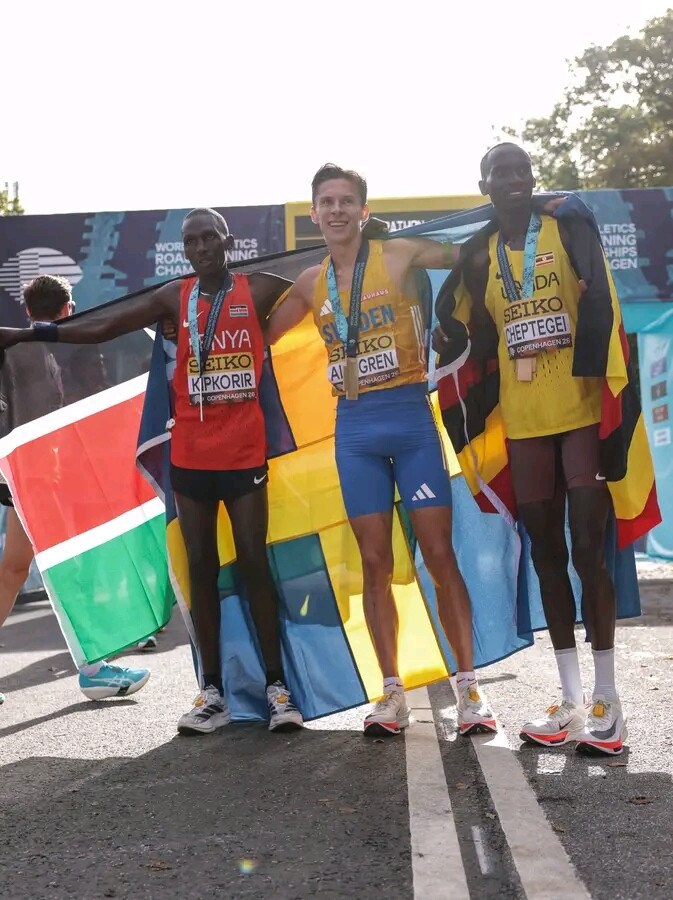
Nicholas Kipkorir had controlled much of the race, dictating the pace and keeping the leading contenders under pressure. Almgren, however, remained close throughout, carefully conserving enough energy for the moment that would ultimately decide the world title.
When the race entered its final stretch, Almgren made his move. The Swede surged hard over the final 200 metres and then outsprinted Kipkorir over the last 100 metres, powering clear to cross the line first in 58:06.
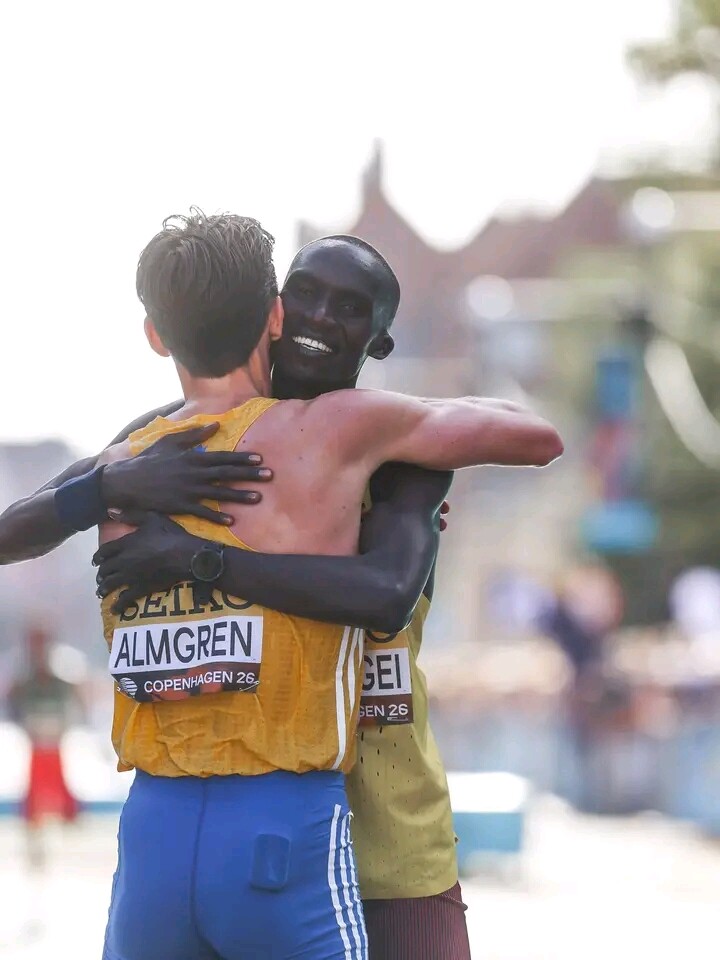
The performance was not only enough to secure the gold medal but also delivered an Area Record, adding another extraordinary achievement to Almgren’s rapidly growing list of accomplishments.
His winning time makes the victory even more significant in the history of the championships. Almgren becomes the first non-African world half marathon champion since Italy’s Stefano Baldini in 1996, ending a remarkable 30-year period in which athletes from Africa had dominated the global title.
For much of the race, Kipkorir appeared to have control, but Almgren refused to be separated from the Kenyan. His patience proved decisive as the race entered its final kilometres, allowing him to remain within striking distance before producing the acceleration that ultimately settled the contest.
Behind the leading pair, Uganda’s Joshua Cheptegei endured a gruelling battle to hold on to third position. The Olympic and world champion was pushed relentlessly in the closing stages and had to dig extremely deep to preserve his place on the podium. Despite the intense pressure from the athletes behind him, Cheptegei held firm to secure the bronze medal in a personal best of 58:26.
Ethiopia’s Tadese Worku also produced a personal best of 58:35 to finish fourth, while Kenya’s Gideon Kipkertich Rono followed in fifth in 58:57. The depth of the field was reflected by the fact that six athletes broke the 59-minute barrier, underlining the exceptional quality of the championship race.
Top 10 Men’s Half Marathon Results
1. Andreas Almgren (Sweden) — 58:06 — AR
2. Nicholas Kipkorir (Kenya) — 58:11
3. Joshua Cheptegei (Uganda) — 58:26 — PB
4. Tadese Worku (Ethiopia) — 58:35 — PB
5. Gideon Kipkertich Rono (Kenya) — 58:57
6. Hani Idriss Hersi (Djibouti) — 59:09 — NR
7. Yemaneberhan Crippa (Italy) — 59:18
8. Alex Nzioka Matata (Kenya) — 59:22
9. Daniel Simtu Ebenyo (Kenya) — 59:42 — SB
10. Othmane El Goumri (Morocco) — 59:53 — PB
The victory further strengthens Almgren’s remarkable 2026 campaign. The 58:06 performance gave the Swede an Area Record as he added the World Athletics Road Running Championships half marathon crown to his résumé, following his 10,000m triumph at the European Athletics Championships. His ability to combine sustained endurance with a devastating finishing kick once again proved decisive on the biggest stage.
For Almgren, the Copenhagen triumph also provides an intriguing glimpse ahead to his next challenge. With his New York City Marathon debut now on the horizon, the world half marathon title represents an important statement as he prepares to make the transition to the marathon. After demonstrating that he can handle the demands of championship racing over 21.1 kilometres while still possessing the speed to produce a decisive late surge, Almgren now turns his attention toward an entirely new distance.
The victory marks Almgren’s first global title, completing a remarkable transformation from European record-holder and leading continental distance runner into a world champion.
It also adds another spectacular chapter to an already outstanding 2026 season. Almgren has consistently demonstrated an exceptional combination of endurance, speed and tactical intelligence, and Copenhagen provided the perfect stage for all three qualities to come together.
With the clock showing 58:06, Almgren not only conquered the world championship field but also rewrote the European record books. His perfectly timed attack in the final 200 metres delivered Sweden a historic world road-running title and created one of the most dramatic finishes of the Copenhagen championships.
by Erick Cheruiyot for My Best Runs.
Login to leave a comment
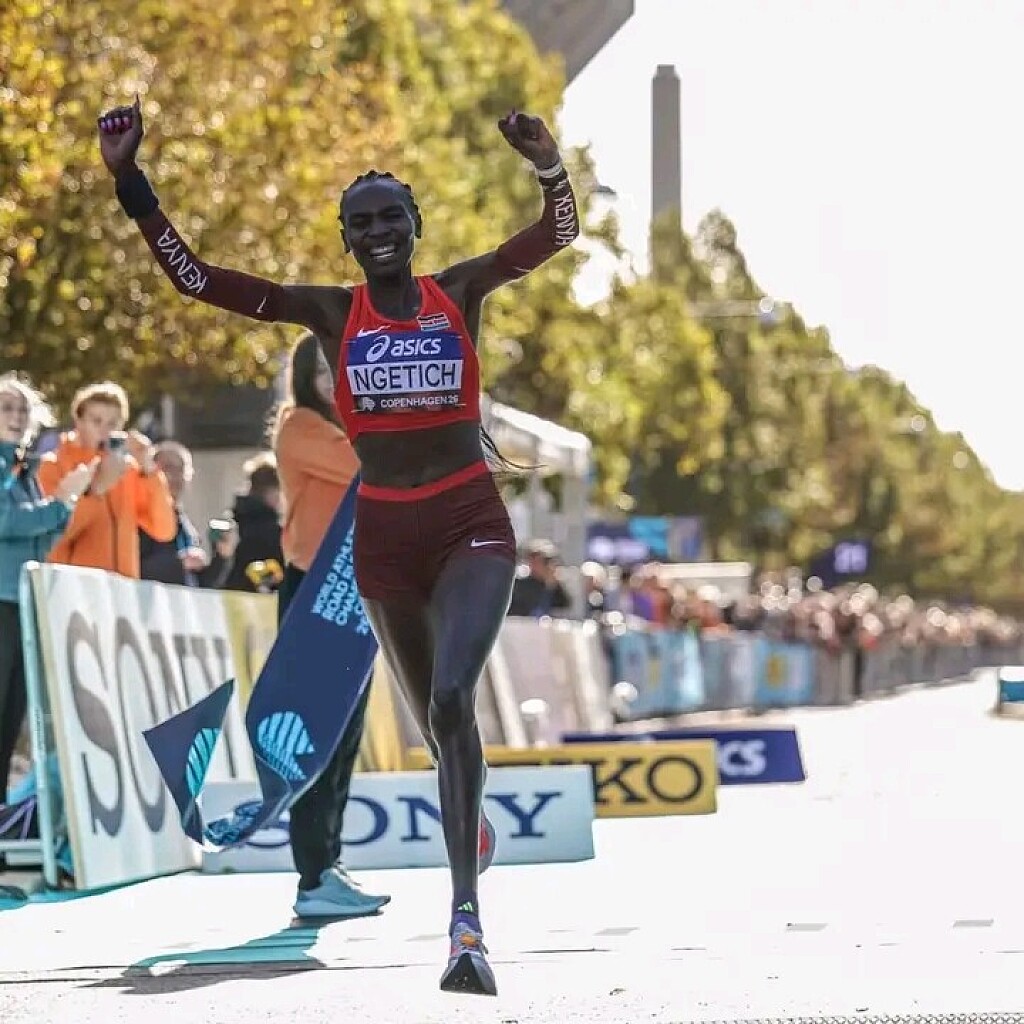
Agnes Ngetich Makes History In Copenhagen With World Half Women-Only Marathon Record
Kenya’s Agnes Jebet Ngetich produced a stunning performance in Copenhagen on Sunday, September 20, 2026, powering to women’s half marathon gold at the World Athletics Road Running Championships in a sensational 1:05:15.
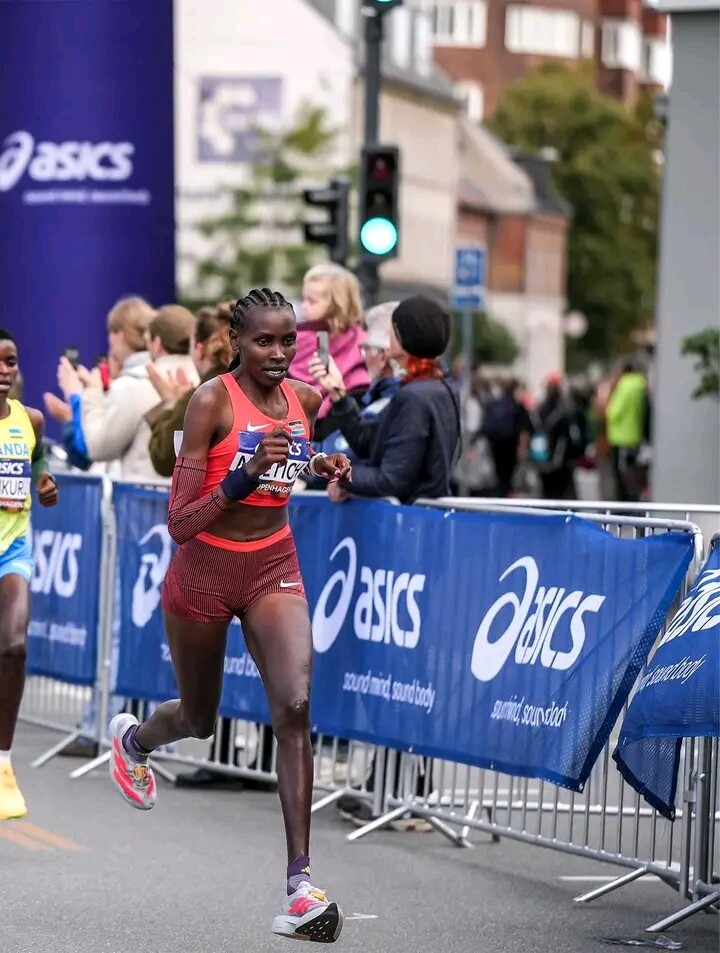
Ngetich’s victory delivered far more than a global title. Her 1:05:15 surpassed the previous women-only half marathon world record of 1:05:16, putting her at the top of the record books with a performance that further underlined her growing status as one of the most formidable road runners in the world. The record remains subject to the usual ratification procedures.
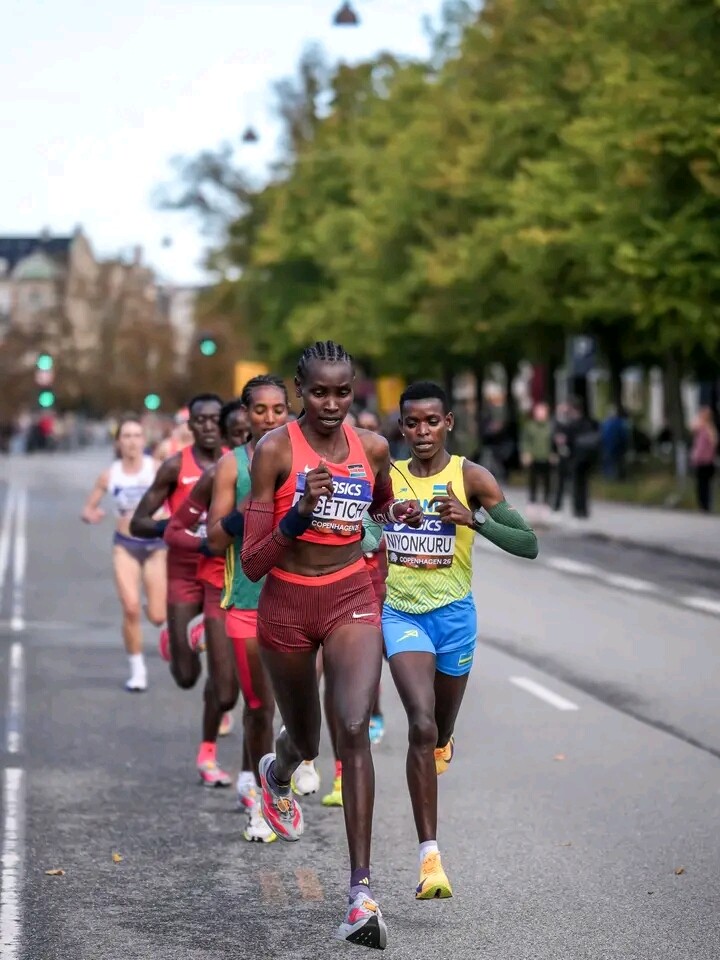
What made the performance even more remarkable was the manner in which Ngetich controlled the race. The Kenyan dictated the pace across all 21.1 kilometres, taking command from the outset and never surrendering her grip on the contest as she raced relentlessly towards the finish.
From the opening stages, Ngetich imposed a relentless rhythm, using the aggressive front-running style that has become one of the defining features of her racing. Rather than waiting for the decisive moments, the Kenyan took control early and forced her rivals to respond to her pace.
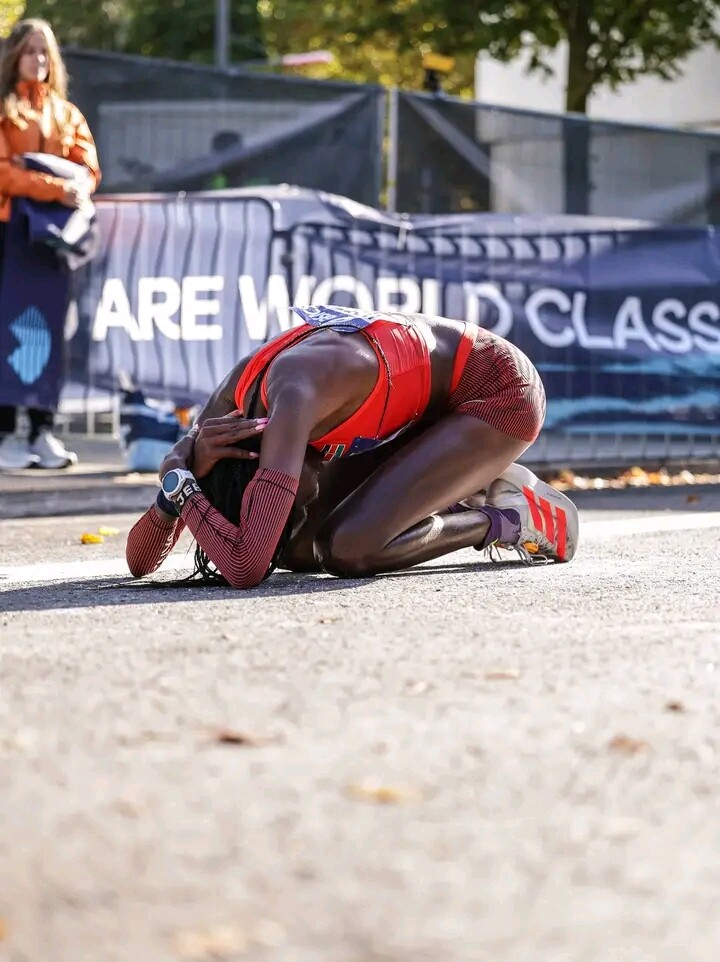
The performance marked another extraordinary chapter in a remarkable 2026 campaign. Ngetich had already established herself as a global champion earlier in the year, adding another major international title to a season that has continued to demonstrate her exceptional consistency and versatility.
Her strength extends well beyond the half marathon. Ngetich is already the world record-holder over 10km, having produced a breathtaking 28:46, a mark that established her as one of the fastest women ever recorded over the distance and further cemented her reputation as a dominant force on the roads.
Copenhagen therefore became another defining stage in Ngetich’s rapid rise. With her ability to sustain an extraordinary pace while racing aggressively from the front, she has developed a style that leaves little room for her competitors to settle into their own rhythm.
The Kenyan’s latest triumph also adds another prestigious global honour to her collection and strengthens her position among the leading figures of the current generation of distance running. Her performances throughout 2026 have shown remarkable range, from shorter road distances to the half marathon, while maintaining an unmistakable hunger for major titles.
By the time she crossed the finish line in Copenhagen, Ngetich had transformed another championship race into a piece of history. A world title, a women-only world record and complete control over 21.1km now stand alongside her name as she continues to build one of the most remarkable distance-running seasons of 2026.
The championship also produced a strong international top 10, with Kenya taking three of the first four places. Veronica Loleo followed Ngetich in second in 1:06:05, while Rwanda’s Florence Niyonkuru finished third in a national record of 1:06:08. Daisilah Jerono completed the Kenyan presence in the top four in 1:06:13, while the United States placed three athletes inside the top seven.
Top 10 Women’s Half Marathon Results — Copenhagen 2026
1. Agnes Jebet Ngetich (Kenya) — 1:05:15 — World Record
2. Veronica Loleo (Kenya) — 1:06:05
3. Florence Niyonkuru (Rwanda) — 1:06:08 — National Record
4. Daisilah Jerono (Kenya) — 1:06:13
5. Emma Grace Hurley (USA) — 1:06:23 — Personal Best
6. Weini Kelati Frezghi (USA) — 1:06:35
7. Jessica McClain (USA) — 1:06:53 — Personal Best
8. Ftaw Zeray (Ethiopia) — 1:07:07
9. Fatima Ezzahra Birdaha (Morocco) — 1:07:33 — National Record
10. Esther Chebet (Uganda) — 1:07:38
As Copenhagen witnessed another unforgettable chapter in women’s distance running, Ngetich emerged as the central figure of the championship. Her world-record run, backed by fearless front-running and remarkable endurance, has further elevated her place on the global stage. With the 2026 season continuing to produce historic performances, Ngetich’s latest achievement stands as another powerful reminder of Kenya’s enduring excellence in distance running.
by Erick Cheruiyot for My Best Runs.
Login to leave a comment
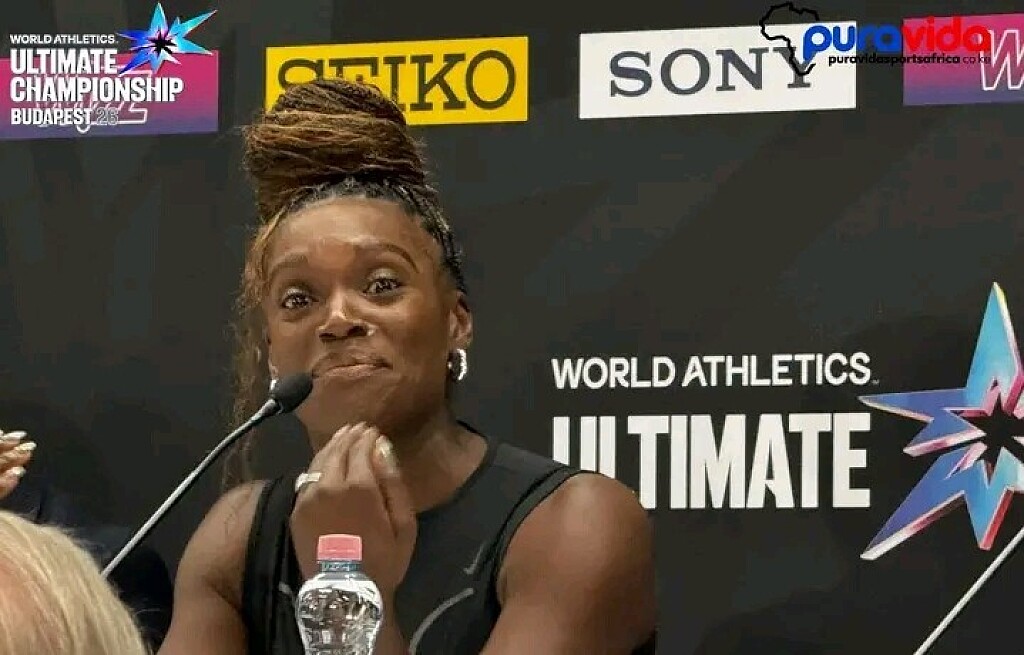
From Olympic Glory To The Microphone: Dawn Harper-Nelson’s Remarkable Second Act In Athletics
Dawn Harper-Nelson has already experienced the highest level of success an athlete can reach. Now, years after establishing herself as one of the finest hurdlers of her generation, the American Olympic champion is carving out an equally compelling identity behind the microphone.
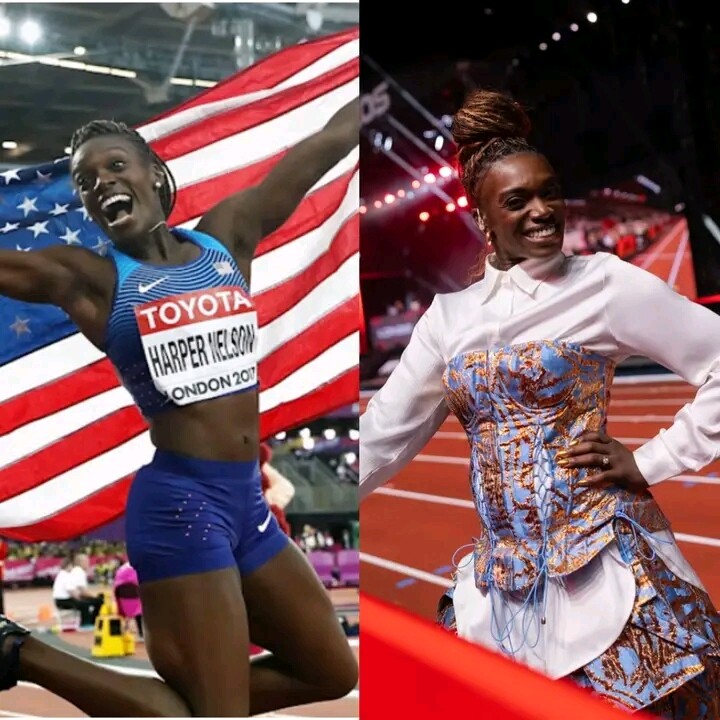
Harper-Nelson won the 100m hurdles gold medal at the 2008 Beijing Olympic Games before returning four years later to claim silver at London 2012. Her career also produced two World Championship medals — bronze in 2011 and silver in 2017 — while her personal best of 12.37 seconds, set in London in 2012, remains a defining mark of her distinguished career.
But her influence on athletics did not end when she stepped away from competitive sport.
In recent years, Harper-Nelson has successfully moved into broadcasting, presenting and athlete-focused media work, bringing with her something that cannot simply be learned in a studio: first-hand experience of competing under immense pressure on the world's biggest stages.

Her transition into media gained further momentum after she worked as an analyst during NBCUniversal's coverage of the Paris 2024 Olympic Games, becoming part of an Emmy-winning broadcast team. She has also worked with USA Track & Field in roles including press moderator, emcee and broadcaster, extending her connection with the sport beyond the competition arena.
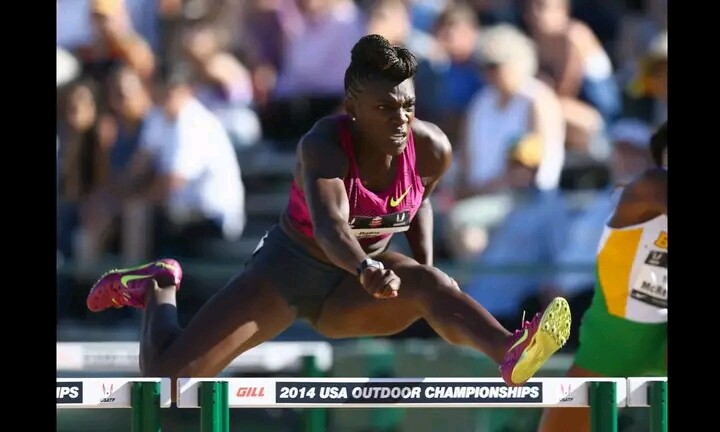
That experience has become particularly visible at some of athletics' newest and most ambitious events.
At the inaugural World Athletics Ultimate Championship in Budapest, Harper-Nelson served as an infield host throughout the three-day competition. World Athletics introduced the event with an emphasis on modern presentation, athlete storytelling and a television-focused experience, making the role of hosts and broadcasters increasingly important in connecting athletes with audiences.
Harper-Nelson was also involved in the championship's innovative pre-event programme, The Day Before, where athletes took part in interviews, content creation and other media opportunities ahead of the competition. Her presence alongside figures such as World Athletics President Sebastian Coe and Olympic sprint legend Usain Bolt underlined the experience she now brings to major athletics productions.
Her connection with ATHLOS has provided another prominent platform. The women's track and field series has developed a presentation style that combines elite competition with entertainment and athlete-focused storytelling, and Harper-Nelson has become one of the recognizable voices helping bring that experience to audiences. She previously hosted ATHLOS's long-jump competition in New York and has continued her association with the event as it expanded internationally to London in 2026.
What makes Harper-Nelson's media career particularly interesting is the perspective she carries from her own competitive journey. She knows the nerves before a major final, the pressure of championship competition, the disappointment of falling short and the discipline required to return stronger.
That background allows her to approach athlete conversations from a position of genuine understanding. Rather than simply describing what happens on the track, she can draw on her own experiences to explore the emotions, preparation and personal stories behind the performances.
Her evolution also reflects a wider change in modern athletics, where former champions are increasingly becoming storytellers, analysts, presenters and ambassadors for the sport. The ability to communicate an athlete's personality and explain the significance of a performance has become an important part of how major competitions reach new audiences.
For Harper-Nelson, the journey from the starting line to the broadcast platform has therefore been more than a career change. It has been a continuation of her relationship with athletics — only this time, she is helping tell the stories rather than creating them through her own performances.
From Olympic champion to accomplished broadcaster and event host, Dawn Harper-Nelson is showing that an athlete's influence does not have to end when the competitive career does. Her second chapter is giving her a new way to remain at the heart of the sport she once dominated on the track.
by Erick Cheruiyot for My Best Runs.
Login to leave a comment
Dawit Seare Stuns Ingebrigtsen In Thrilling Finish To Win World 5km Title In Copenhagen
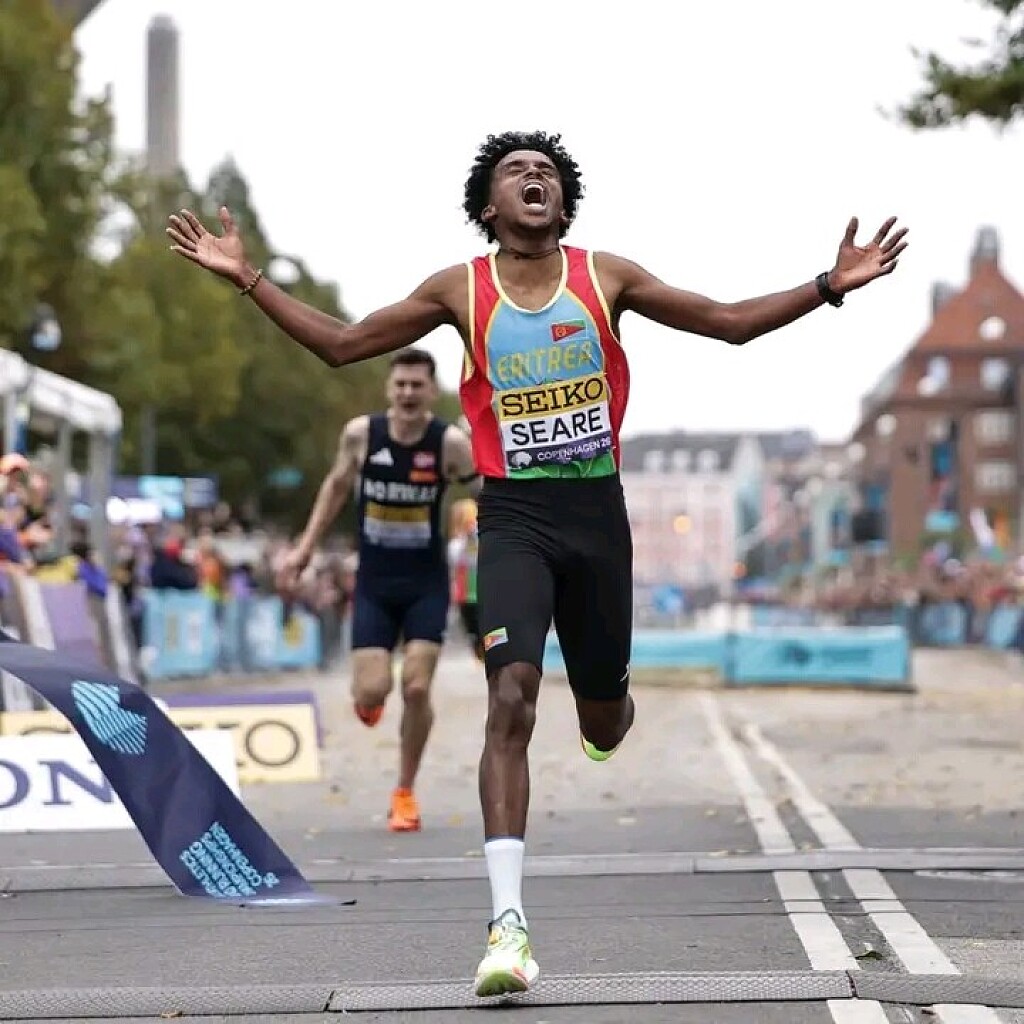
Eritrea’s Dawit Seare produced a sensational performance on Saturday, September 19, 2026, to claim the men’s 5km world title at the World Athletics Road Running Championships in Copenhagen, defeating Norway’s Olympic champion Jakob Ingebrigtsen in a dramatic battle that went down to the final metres.
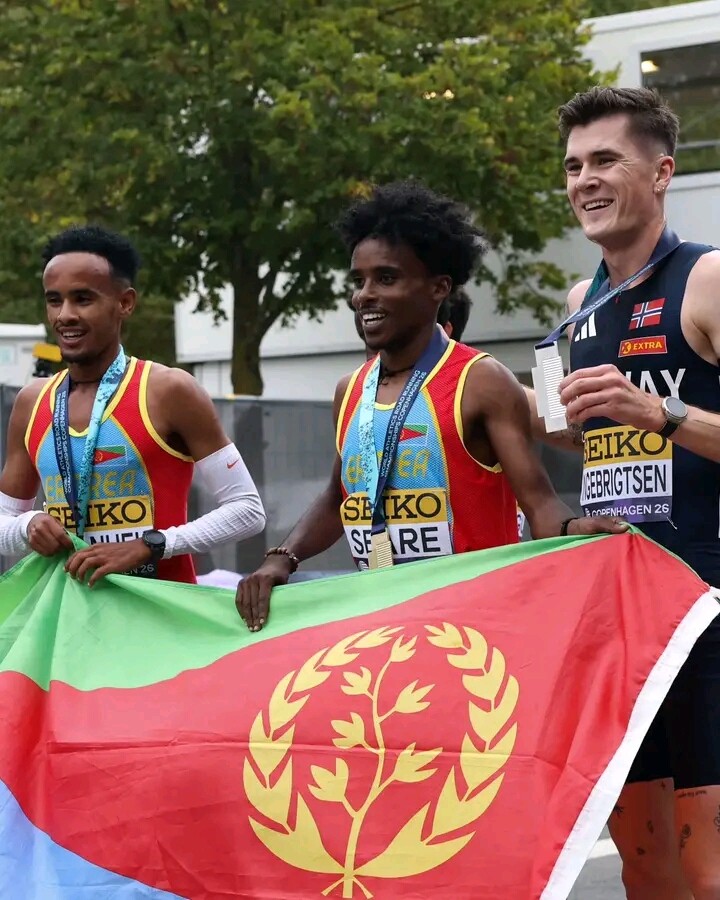
Seare crossed the finish line in a national record of 12:56, with Ingebrigtsen taking silver in a Norwegian record of 12:59. Eritrea completed a remarkable double podium as Saymon Amanuel secured bronze in a personal best of 13:00.
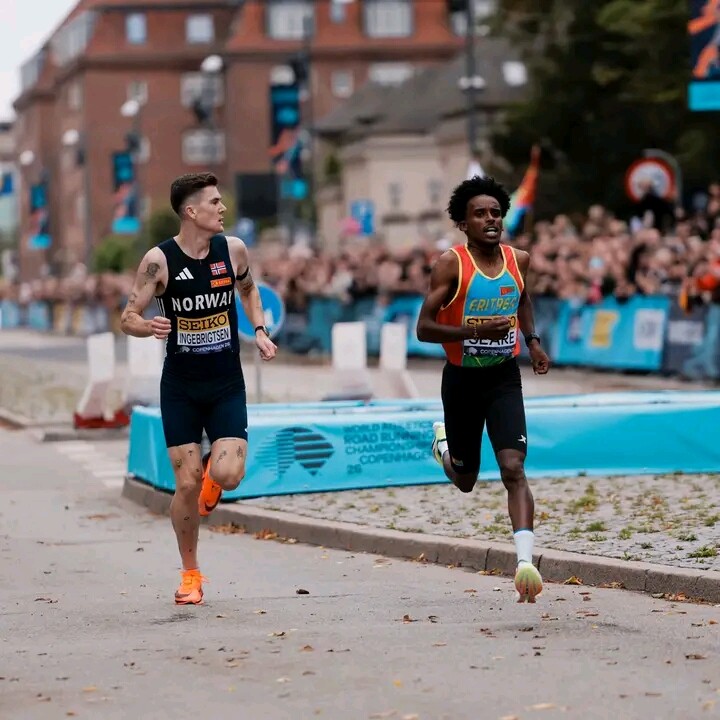
The closing stages produced an extraordinary finish as Seare and Ingebrigtsen engaged in a fierce battle for the world title. With just 150 metres remaining, the lead changed hands three times, underlining the intensity of the contest. Ingebrigtsen briefly surged ahead and appeared to have taken control, but Seare responded with another gear, powering past the Norwegian before the finish line.
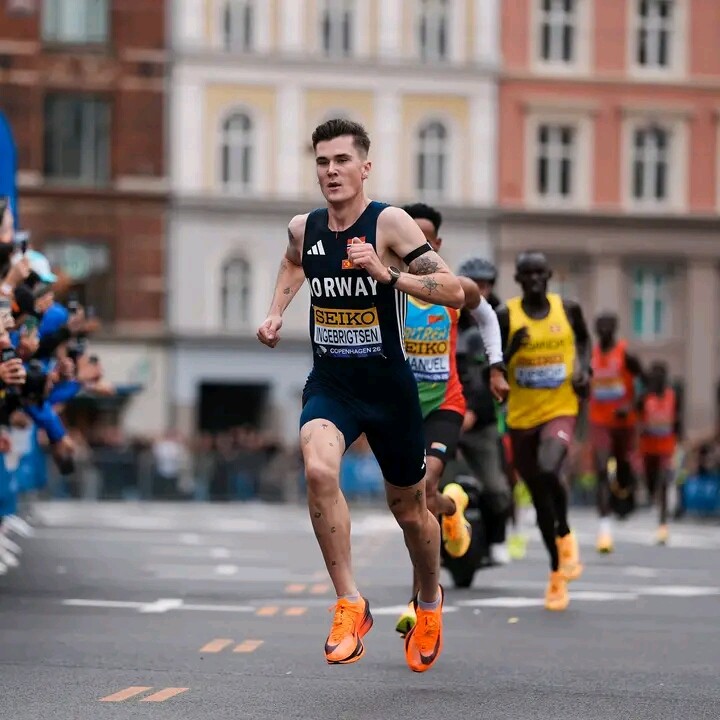
The Eritrean’s decisive acceleration carried him to victory by three seconds, turning what had been a tightly contested race into a remarkable championship triumph. Seare held his composure under immense pressure and produced the strongest finish when it mattered most.
The race had featured a large leading group through much of the early stages before the pace intensified approaching the final kilometres. As the runners entered the decisive phase, Seare remained firmly in contention, positioning himself perfectly for the battle that would ultimately determine the world champion.
For Seare, the victory adds another major achievement to an impressive 2026 season. Having already established himself as the African 5,000m champion, he has now transferred that success to the roads by securing a world title in Copenhagen.
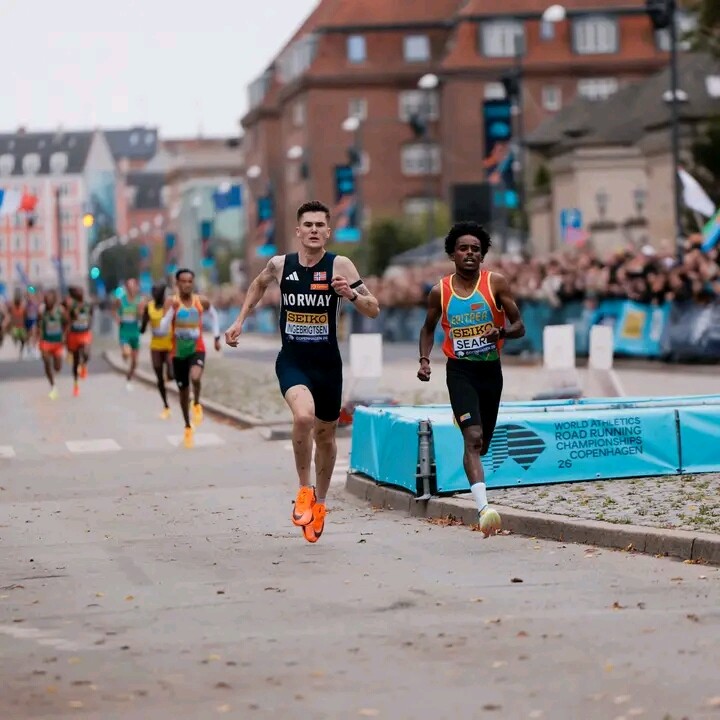
Ingebrigtsen was forced to settle for silver despite producing a national record of his own. The Norwegian’s late surge demonstrated his determination to control the race, but Seare’s response in the final metres proved decisive in one of the closest and most dramatic finishes of the championships.
Eritrea’s success was made even more remarkable by Amanuel’s bronze medal. His 13:00 personal best ensured that two Eritrean athletes stood on the podium, giving the country both gold and bronze in a memorable men’s 5km championship race.
Australia’s Ky Robinson also delivered an outstanding performance, finishing fourth in 13:04 to set an Oceanian record. Uganda’s Keneth Kiprop matched the time in fifth, while Ethiopia placed two athletes inside the top seven through Addisu Yihune and Mezgebu Sime.
Kenya’s Mathew Kipchumba Kipsang finished eighth in 13:11, followed by Burundi’s Egide Ntakarutimana in ninth and South Africa’s Maxime Chaumeton in 10th.
Men’s 5km Top 10 Results
1. Dawit Seare — Eritrea — 12:56 NR
2. Jakob Ingebrigtsen — Norway — 12:59 NR
3. Saymon Amanuel — Eritrea — 13:00 PB
4. Ky Robinson — Australia — 13:04 AR
5. Keneth Kiprop — Uganda — 13:04 PB
6. Addisu Yihune — Ethiopia — 13:07
7. Mezgebu Sime — Ethiopia — 13:08 SB
8. Mathew Kipchumba Kipsang — Kenya — 13:11 SB
9. Egide Ntakarutimana — Burundi — 13:12 PB
10. Maxime Chaumeton — South Africa — 13:13
Seare’s victory capped an unforgettable finish in Copenhagen, where three changes of the lead in the final 150 metres set up a dramatic showdown. In the end, the Eritrean produced the crucial final surge to deny Ingebrigtsen and claim a historic world 5km title in a national-record 12:56.
by Erick Cheruiyot for My Best Runs.
Login to leave a comment
