

Running News Daily
Top Ten Stories of the Week
7/6/2019
These are the top ten stories based on views over the last week.
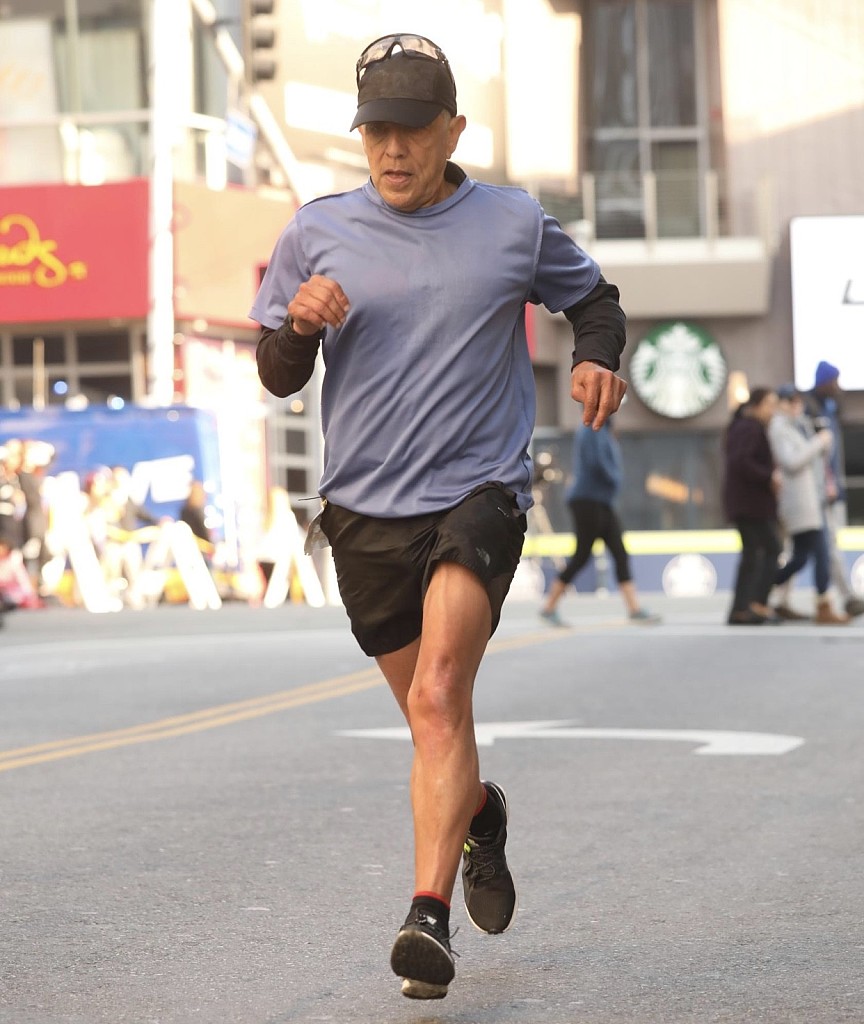


70-year-old Frank Meza who was disqualified after clocking 2:53:10 at the Los Angeles marathon has been found dead
Firefighters found a body this morning in the L.A. River bed after they responded to a report of a possible jumper, said the L.A. Fire Department. The incident was reported shortly before 10 am.
The county coroner said the body was that of Frank Meza, 70, of South Pasadena. The cause of death has not been determined. ABC 7 says that Meza was the retired doctor and marathon runner who was recently disqualified by the L.A. Marathon.
The Los Angeles Times had reported earlier that “it wasn’t until Frank Meza checked the internet that he realized so many people were talking about him. Hundreds of strangers from across the country had posted on message boards, branding Meza a liar and a cheat.
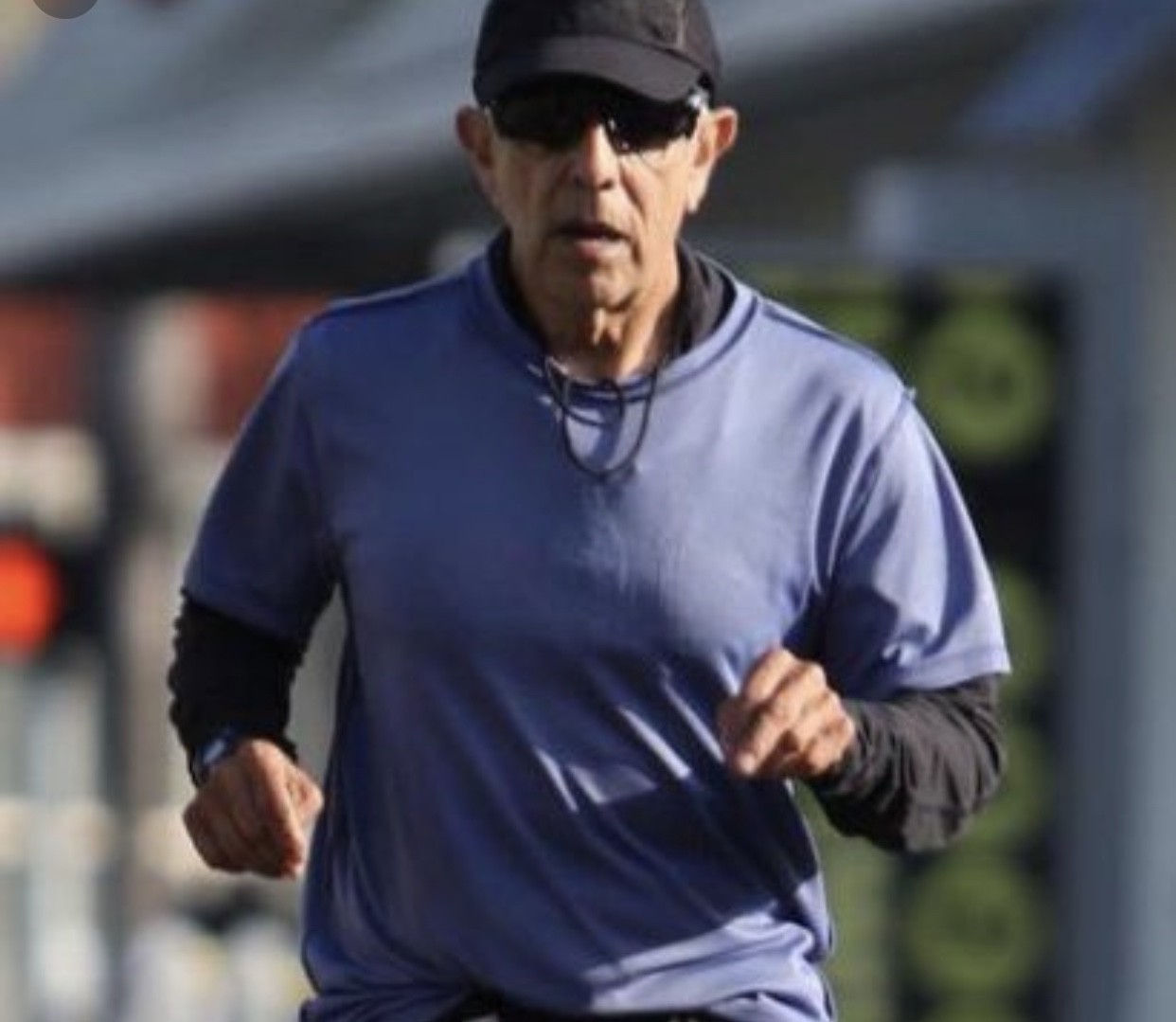
“All kinds of allegations were being thrown at me,” he said. “It was pretty traumatic.”
To that point, the retired physician had forged a different sort of reputation. Soft-spoken and gray-haired, he had mentored Latino students while working to provide healthcare for low-income patients throughout Southern California.
Meza was also a devout runner who, late in life, began entering marathons. The problems began there.
Though he ran mainly around California, eschewing bigger races across the country, his unusually fast times for a 70-year-old caught the attention of the long-distance community.
Runners grew skeptical when he was twice disqualified for irregular splits, the times recorded at various points along the course. An impressive finish at the recent Los Angeles Marathon prompted officials to look closer as doubts erupted into online vitriol and a series of articles on a website called MarathonInvestigation.com.

Derek Murphy, an amateur sleuth who operates the site from Ohio, looked back at numerous races, compiling an array of data, photographs and video that he considered incriminating.
“At this point,” Murphy says, “I have no doubt.”
My Best Runs did not post his time because his splits did not add up. “For sure Frank did cheat and did not run a 2:53:10 marathon at age 70,” says MBR Director Bob Anderson. “We are sad how this story has played out before he could prove to the world he could run that fast.”
(07/04/19) Views: 362
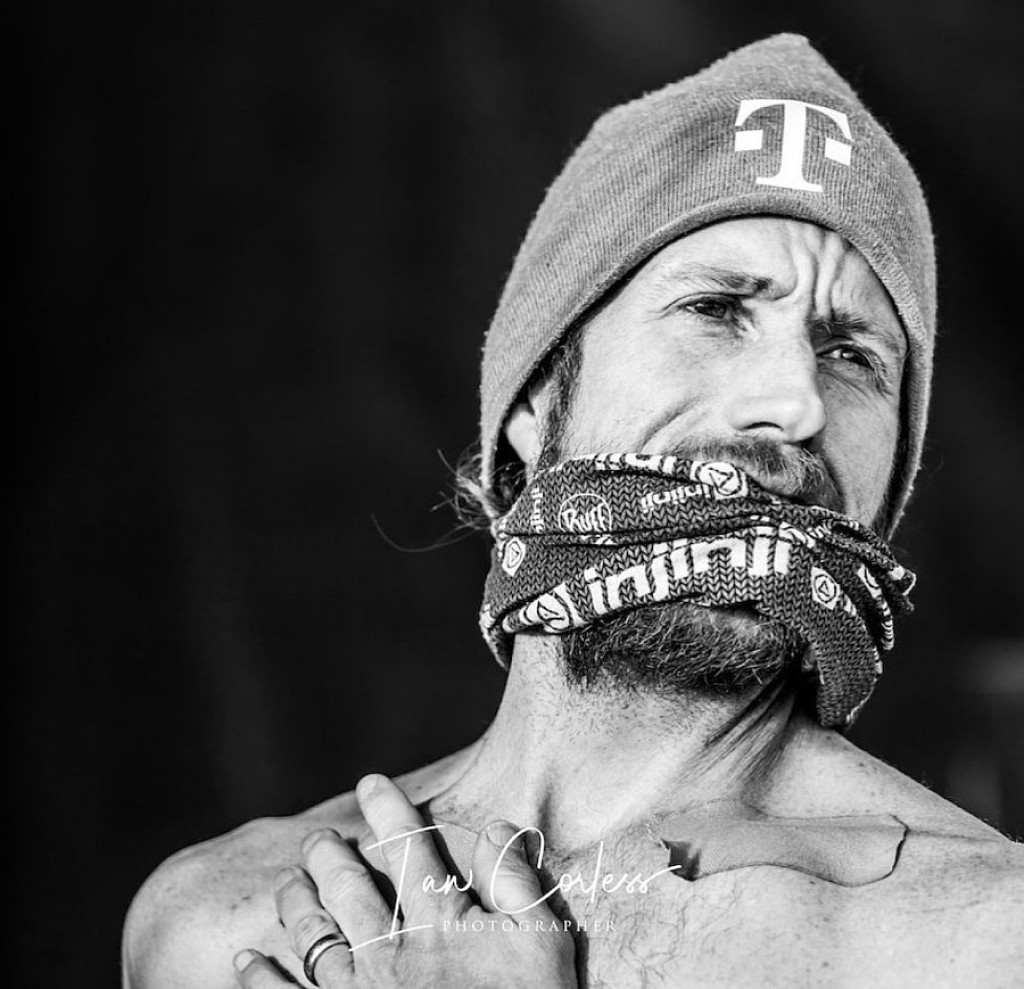
The Run The World Global 52-week Challenge has finished. The team logged 122,123 miles or 335.5 daily. Michael Wardian was first American and Kenyan's Eliud Esinyen ran the most miles averaging 15.7 miles daily logging 5,738
Run The World Global Challenge is a world-wide celebration of running. The program was started by Bob Anderson one year ago, July 4, 2018. Since that time 281 runners around the world ran or walked and then logged 122,123 miles. This equals 335.5 miles daily or 2,348 miles weekly for 52 weeks which equals 4.9 times around the world.
"One of the key reasons we started this program," says creator Bob Anderson, My Best Runs and Runner's World magazine founder, "was to motivate people, bring together runners from all over and to run miles all over the world."
That all happen. Runners from 20 countries participated, miles were run in 75 countries and it certainly motivated many runners to run more miles than they were running before.
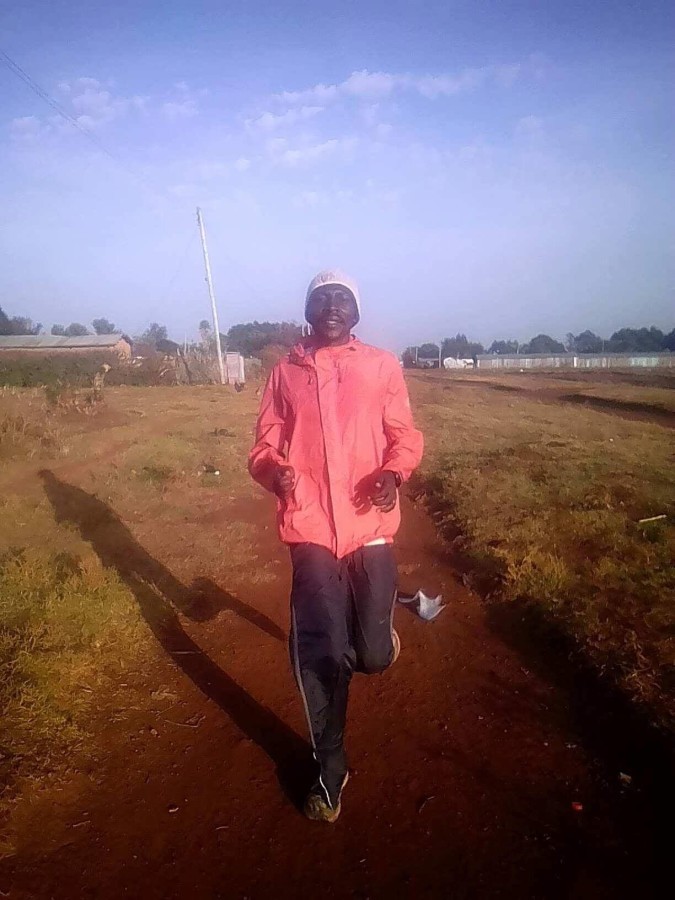
53-year-old James Kalani had not run much over the last few years and then he entered the RTW Challenge. After getting in good shape over several months, he started pushing it for Challenge #5 which started March 31. Over the last 94 days he ran and logged 1536 miles. That's 114 miles weekly. It was not just covering miles, many were quality. On June 16 he ran 30.6 miles at an average pace of 6:41 per mile.
Before the RTW Challenge creator Bob Anderson was running on average 20 miles weekly. "I got so motivated by this challenge," says Bob. "I looked forward to running not just one time daily but often I would run two or three times. I took a photo everyday and posted it in our Runner's Feed. I also read every post and commented on each for the whole year. I have been running since 1962 and have run nearly 1,000 races. I am an addicted runner but I needed something new and this was it."
In the end Bob averaged 5 miles daily or 35 miles weekly for a total of 1830 miles for the year. With the added miles he also improved his racing performance. He ran 7:54 pace for 10k and placed third 70 plus at the London 10,000 in May. A race with nearly 20,000 runners.
The RTW Challenge team did some amazing things during the year. 69-year-old Brent Weigner lives in Cheyenne Wyoming but many of his 2036 miles were run outside of the United States. In fact Brent ran miles in 30 different countries.
The most miles were run and logged in the United States. The top five countries were: United States (64,899 miles), Kenya (24,066 miles), Palau (8,242 miles), India (7,423 miles) and South Africa (6,765). The amazing story here is that the little country of Palau has less that 22,000 inhabitants and placed third. Their team leader Aaron Salvador logged 1,584 miles himself and encouraged his team to run and log.
The team leader for South Africa, Liz Dumon, is the key reason why her country placed fourth. She herself ran and logged 1000 miles. Liz encouraged people to sign up. In fact our youngest members were twins she recruited along with mom and grandma. The 7-year-old twins Jonathan (logged 118 miles) and his sister Michelle (logged 100 miles) had loads of fun and posted regularly in the Runners Feed. Their dogs joined in on the fun too. (Third photo of twins with Grandma)
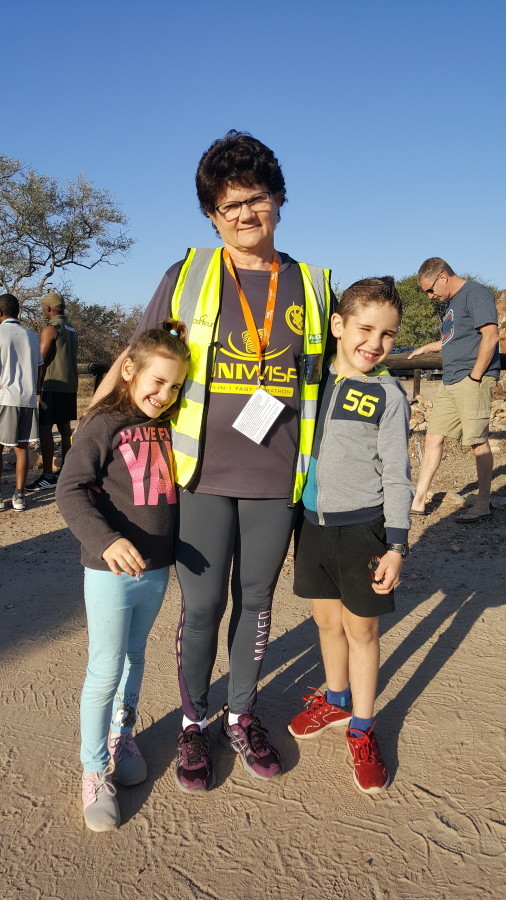
Their 56-year-old grandma (Johanna Fourie) logged 672 miles and placed 10th for females. Right behind her was mom (Erika Fourie) with 625 miles.
Who said age is just a number? The top three overall females were 65 plus. Placing first was 68-year-old Kat Powell (USA). She logged 1271 miles. Not far back was 69-year-old Linda Robinson (USA) with 1145 miles followed by 65-year-old Carmella DiPippa (PW) with 1040 miles. Sixth female was 71-year-old Karen Galati (USA) who logged 835 miles.
On the men's side there were so many stars. 35-year-old Kenyan Eliud Esinyen averaged 15.7 miles daily or 110 miles weekly (second photo). Many times he ran three times daily. On April 21 he ran a marathon on a tough course at high altitude clocking 2:22:46 which is 5:27/mile pace. On January 27 he ran a 10k clocking 31:05. Eliud ran and logged the most with 5,738 miles.
Kenya's team leader Willie Korir (27) placed second overall with 5195 miles. He also posted images regularly in the Runners Feed along with comments. He also wrote several stories for My Best Runs Running News Daily column including finding inside information about the king of the marathon, Eluid Kipchoge.
The first American and third overall was 45-year-old Michael Wardian with 3618 miles (frist photo). This ultra star pulled off many amazing feats during the year. Most recently on June 29 he ran 89.9 miles around Washington DC. On May 4th he ran 62.14 miles at 7:14/mile average pace in Sacramento. He ran the Big Sur Marathon in 2:35:18 making the podium. He had run the Boston Marathon earlier a little faster clocking 2:33:23.
In March he travelled to Israel and posted the fastest known time on the 631-mile Natoinal Israel Trail. He covered this distance in 10 days, 16 hours and 36 minutes. Earlier he not only ran seven marathons on seven continents in seven days (winning them all) he tacked on three more marathons when he got home. That's ten marathons in ten days. He is the complete runner with a wide range. On Feb 10th he ran a 5k in 17:01.
"Michael is one amazing versatile runner and we were happy when he decided to join our team," says Bob Anderson.
Second American and fifth overall was 75-year-old Frank Bozanich who logged 3523 miles. Frank has run many ultra races over the years and have won many. Lots of these miles were not real fast compared to what he has done before. But on July 30th last year he ran 20 miles in Reno in two hours and 43 minutes. That is an 8:09/mile pace.
Finishing in seventh place was 72-year-old Paul Shimon who logged 2835. Like so many of our team, Paul had to deal with a lot of bad weather in Kansas during the winter. But he layered up and got in the miles.
Michael T Anderson (61) placed eighth overall logging 2,798 with lots of fast times along the way. He has run over 130,000 miles in his lifetime so far. On June 8th he ran 19:13 for 5k in Atlanta where he lives. On April 28 he clocked 39:25 for 10k.
"The fastest runner on our team was Joel Maina Mwangi," says Bob Anderson. This 34-year-old Kenyan placed 13th overall with 1,953 miles logged. On March 10 he ran a 30:14 10k in Torino Italy. He ran six half marathons under 1:05. His fastest was run in Aosta, Italy where he clocked 1:02:50 on September 30.
"There are as many amazing stories," says Bob Anderson. "I am glad our event is helping motivate runners all over the world. I am looking forward for year two."
What's next? Run The World Global Challenge #6 will be a 10-week program. There is no entry fee. You just need to have a free My Best Runs (the sponsor of this program) account and sign up for Run The World.
(07/03/19) Views: 221

A Strong Elite women´s Field is set to attempt to lower the course record of 30:32, set by Lornah Kiplagat in 2002 at AJC Peachtree Road
Leading the way is Brigid Kosgei, 25, whose 29:54 on a downhill course in Madrid on New Year’s Eve ranks #2 all-time. Kosgei, winner of both the 2018 Bank of America Chicago Marathon and 2019 Virgin Money London Marathon, hasn’t lost a race since last September.
She will have her work cut out for her, however, with Kenyan compatriots Fancy Chemutai and Caroline Chepkoech Kipkirui, a late addition, in the field.
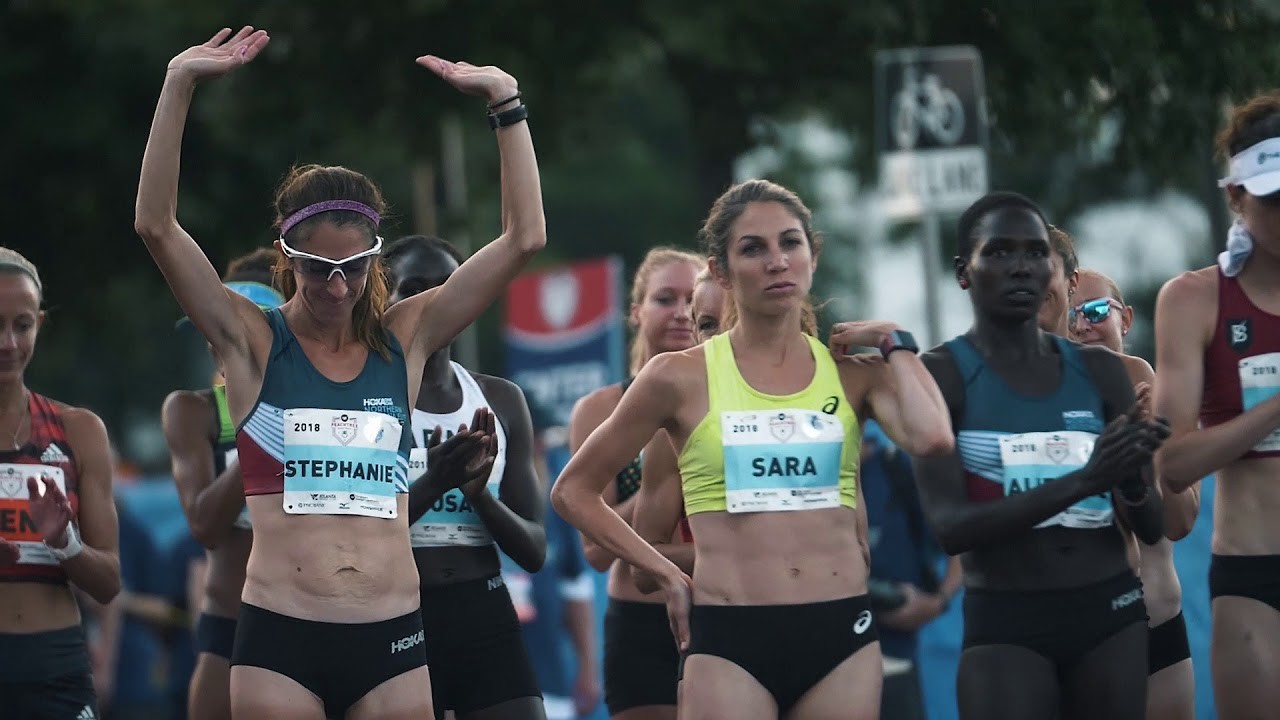
Chemutai, 24, owns the fourth-fastest 10K in history (30:06) and the second-fastest half marathon (1:04:52), just one second off the world record. On June 23, she broke the course record at the B.A.A. 10K, running 30:36. Kosgei, however, won in their most recent matchup, the Aramco Houston Half Marathon in January, by 22 seconds. The 25-year-old Kipkirui, meanwhile, has a 10K personal best of 30:19, the sixth fastest in history.
Edna Kiplagat, the two-time IAAF World Champion at the marathon and 2016 Peachtree Champion, and late addition Ruti Aga of Ethiopia, the 2019 Tokyo Marathon Champion who finished third behind Kosgei and Chemutai in the Houston half, could also contend, along with Kenya’s Agnes Tirop (30:50)

The top American in the field is Emily Sisson (Scottsdale, AZ), who will be racing for the first time since running 2:23:08 in London, the second-fastest American debut at the distance. Sisson, 27, is the 2016 USATF 10 km Champion and in January ran just five seconds off the American record for the half marathon.
The footrace fields will be aided by pacemakers for the first three miles down Peachtree, as the men's field will look to set out at 4:17 per mile pace and the women's field will attempt to average 4:55 per mile in an attempt to eclipse the event records.
(07/01/19) Views: 88

Georgia Tech coach Geoff Collins has a fondness for the AJC Peachtree Road Race
His connection to the world’s largest 10K race, which celebrates its 50th running Thursday, goes deep.
Not only has Collins himself run it, but his father, Billy, ran in the first Peachtree in 1970. Billy Collins, who died in 2015 at the age of 64, loved the Peachtree, Geoff Collins said.Beyond that, Collins grew up in a family of runners for whom the Peachtree was an annual event.
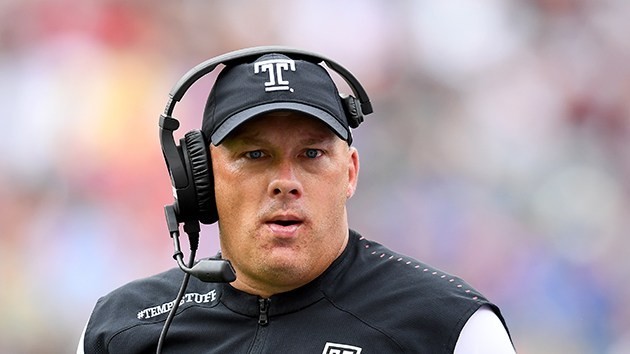
Collins, himself a runner growing up who has one marathon to his credit, has memories that may sound familiar to many Atlantans. Members of the Collins family ran the 6.2-mile race in the morning, “and then we would have a huge family barbecue in the Briarcliff area,” he said.
“That was a great tradition for our entire family for a long, long time, centered around the Peachtree Road Race.” Billy Collins was no mere casual jogger, an identity that hardly existed in 1970 before the running boom took hold in the U.S. To be a competitive runner at that time required a different outlook and mindset, according to Jeff Galloway, the winner of that first Peachtree. Galloway went on to compete in the 10,000 meters in the 1972 Olympics and become an esteemed elder in the Atlanta running community.

“Even though the highly competitive, focused runners are still looked on as a little obsessive – or a lot obsessive –the bottom line today is that there are a lot of people who are running and understand the benefits of running,” Galloway said.Back then, there was no such consensus, at least among non-runners. It makes Billy Collins, then 19, stand out all the more.
Collins, in fact, blazed through the first Peachtree, finishing in 40 minutes, seven seconds, good for 19th among the 110 finishers, a group that has earned prized status as pioneers in a cherished event.
(07/02/19) Views: 82Ken Sugiura

America’s Biggest Road Race Is Atlanta’s Fourth of July Tradition
Thursday will be the 50th running of the Peachtree Road Race, a 10K that has become an Atlanta Fourth of July tradition. The idea for the race came in 1969 when Tim Singleton, then Georgia State University’s cross-country coach, and a few friends were driving back to Atlanta after running a Fourth of July race in Fort Benning, Ga. They thought, why not create one ourselves?
“July 4, 1970, was that first Peachtree with 110 finishers. We call those our original 110,” said Rich Kenah, executive director of the Atlanta Track Club, and Peachtree’s race director. (Singleton died in 2013.)
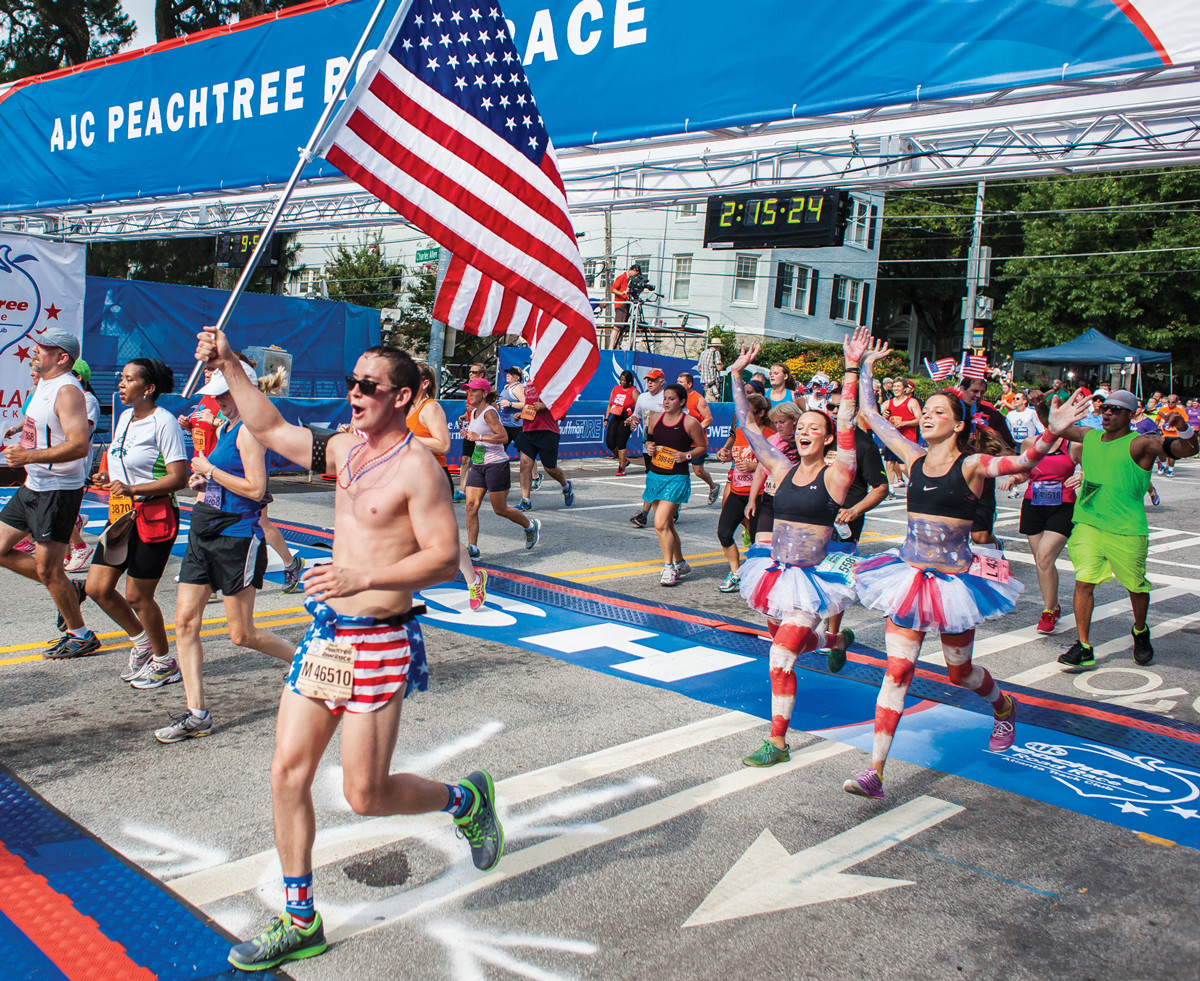
Now the event is the largest race in the country, with 54,570 finishers in 2018, and Kenah expects the number to be closer to 60,000 this year. (For comparison, the New York City Marathon had 52,813 finishers last year.) It’s a draw for pros, too, with $200,000 in bonus prize money up for grabs. The race has also doubled as the U.S. 10K women’s championships three times, and the men’s 10K championships four times. It even has its own shoe.
But what about the heat?, I asked Kenah.
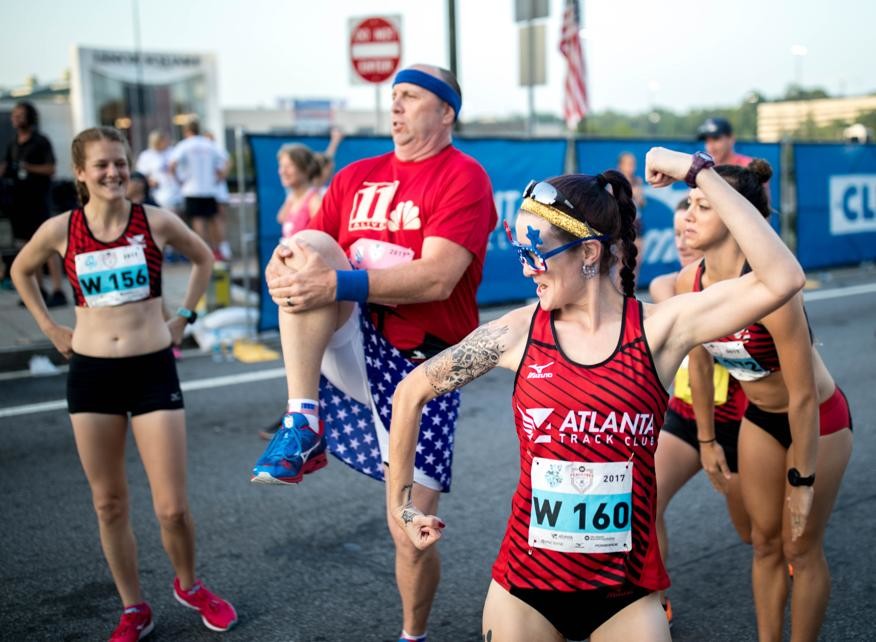
“If you live in the southeast, you’re accustomed to hot, humid conditions through the summer,” he said. “It is what in part keeps Peachtree special.”
If you’re thinking of hopping in this year — too late. The race is sold out. You either need to be a member of the Atlanta Track Club, or gain entry through a lottery to make it in for 2020.
(06/30/19) Views: 71
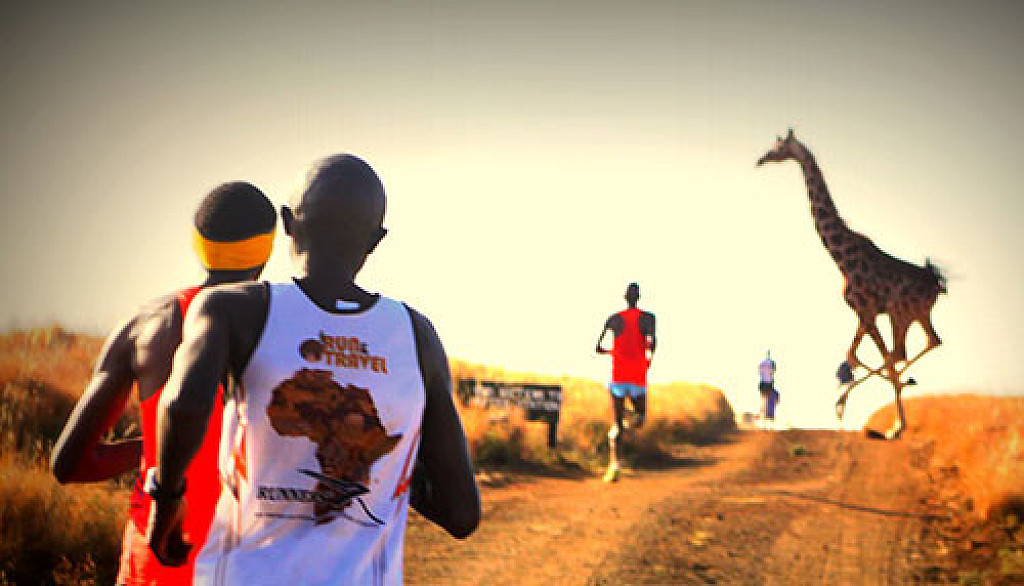
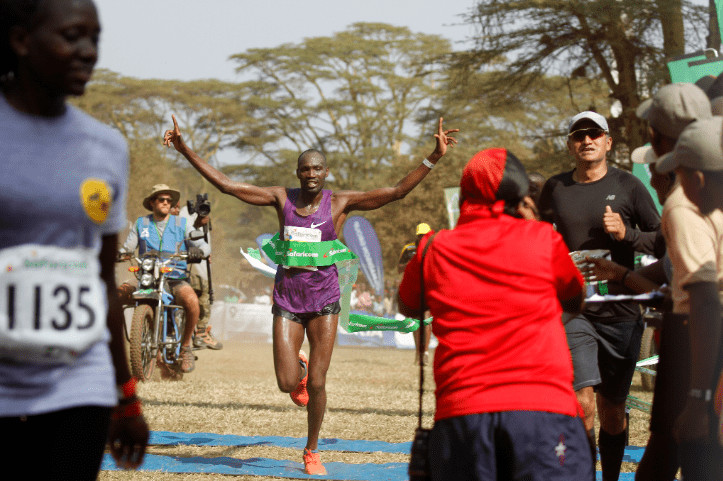
Kenyan Maiyo Kipkurui and Emma kiruki won the 2019 Safaricom Lewa Marathon
Kipkurui, the two time Brighton Marathon champion clocked 2:20.04, three minutes ahead of Samson Lemaiyan (2:22.52) who took the second position while Edward Nderitu finished third in 2:24.31.
“I have been in training for the past two months preparing for this particular race, it felt like I was running in London, the support was massive.” Kipkurui told Citizen Digital.
“I did not even now that I was leading because I was with the 21km runners but they dropped one after the other until I was left alone,” he added.
In the women’s category, the 2008, champion Emma Muthuni Kiruki returned to her winning ways 11 years Later, clocking 2:50.31, 13 minutes ahead of Daisy Kipsugut (3:03.03) and Mary Wairimu 3:18.50.
The 36-year-old finished third in 21km in 2017 after a nine-year sabbatical from the competition.
“The heat was too much and the track very difficult, following the half marathon runners helped me a lot in increasing my pace.
“I had prepared very well but the race got difficult towards the end now am going back to the drawing board to prepare for the next race,” Kiruki said.
In the 21km race Morris Munene easily defended his title in a time of 1:06.06 ahead of John Elimlim (1:06.29) and Mike Boit (1:06.53)
“The competition was stiff but I had prepared well, I wanted to use the race to prepare for the year’s Berlin marathon.” Munene told citizen digital
In the women’s category, fresh from pacing assignment in China Miriam Nakitare won the 21km women’s race in a time of 1:15.11.
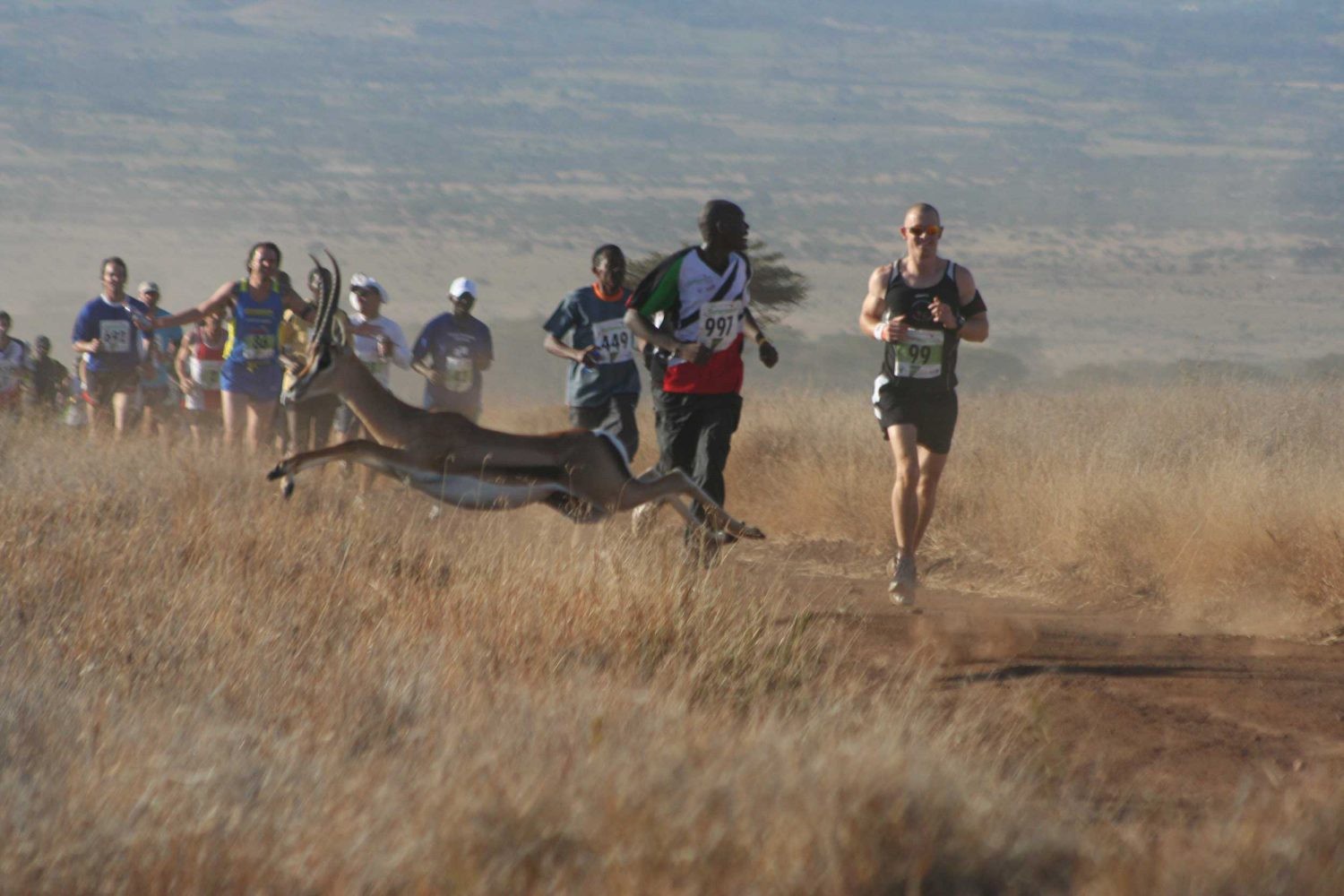
“I had prepared well for the race although when I started it was a little difficult but after 10km I saw the weakness in other competitors who could not take the hills easily and that is where I won the race.” Said Nakitare
Paulin Wangui (1:16.14) was second while Coroline nyaguthii (1:17.30) was third.
With the first lady Margaret Kenyatta being the chief Guest she joined over 1400 participants who took part in the event celebrating 20 years since inception on 2000. She took part in the 5km race.
(06/29/19) Views: 65Philip Muchiri

Sifan Hassan runs 8:18.49 for the win at the Women’s 3000 Prefontaine Classic
Fans at Stanford didn’t get to see the fastest women’s 3000m ever, but they may have seen the greatest clean women’s 3000m race ever as Sifan Hassan of Netherlands ran 8:18.49 for the win, Konstanze Klosterhalfen of Germany ran 8:20.07 for second, and Letesenbet Gidey of Ethiopia 8:20.27 for third, the three fastest non-Chinese outdoor times ever.
Shannon Osika rabbitted the field the first 1000 (2:45.75) and then Mary Kuria took over through 2000 (5:36.15). Kuria picked up the pace as she went down the backstretch to hit 2000, and once she stepped off the track Gidey kept the pace going.
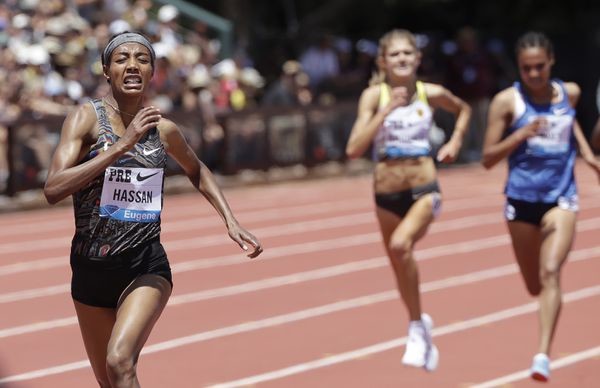
Gidey went from running 67- and 68-second laps to 65.03 with two laps to go as only Genzebe Dibaba was within a second of her. A 65.88 penultimate lap gave Gidey a 1.14-second lead at the bell over Hassan, who had passed Dibaba just before the bell as Dibaba was fading.
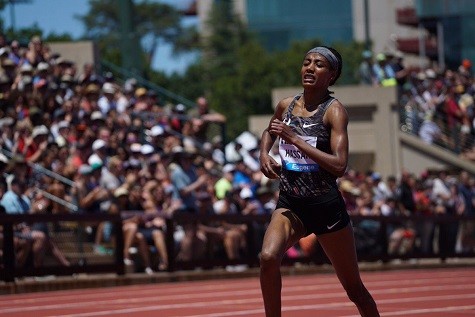
However, Gidey was slowing too. She stumbled around the first turn and took a step on the inside of the rail before regaining her balance.
Hassan would pass her on the backstretch and continue on to the dominant victory. Klosterhalfen would pass Dibaba on the final turn and Gidey right before the finish for 2nd as Klostehalfen’s last lap was 64.40 to 66.31 for Gidey.
(07/01/19) Views: 64
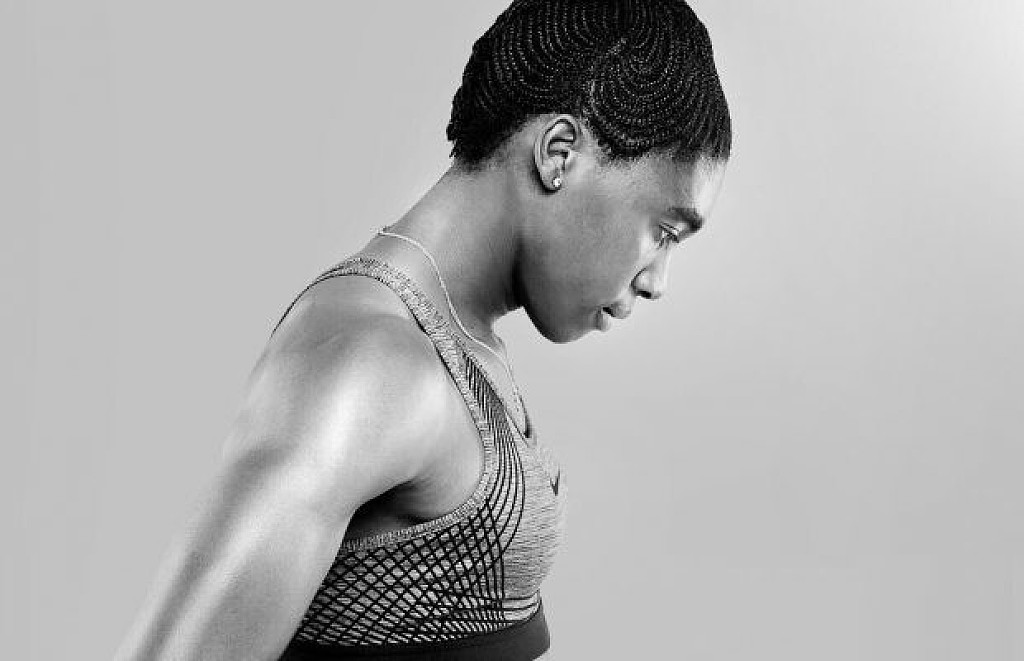
Nike has launched a video starring Caster Semenya that calls for acceptance and echoes its recent films featuring Raheem Sterling, Colin Kaepernick and Serena Williams
The Olympic 800m champion recently won a legal battle with the athletics governing body, the International Association of Athletics Federations, after it had banned the middle-distance runner unless she took hormone-suppressant medicine to control her testosterone levels.
Semenya has naturally elevated testosterone levels as a result of a condition known as hyperandrogenism and had lost a landmark legal case against the IAAF, something that she successfully appealed in the Swiss supreme court.
Nike's film promotes Athlete in Progress – a women's apparel collection by Off-White designer Virgil Abloh that debuted in September 2018 in Paris.
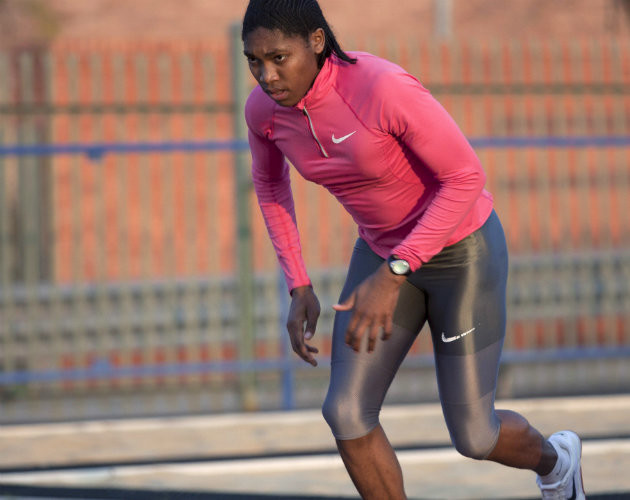
It follows Semenya running through the streets of Johannesburg in her native South Africa, talking about inspiring progress on and off the track. The theme centres on respect, love and acceptance.
Semenya closes with the powerful words: "I have learned to appreciate people for who they are, but first it comes with me appreciating myself and loving myself."
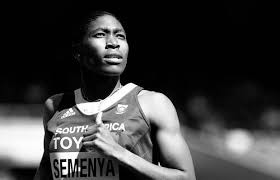
She has accused the IAAF of using her body "as a human guinea pig experiment" and has received support from the South African government and several global sports bodies, including the International Working Group on Women & Sport, WomenSport International and International Association of Physical Education for Girls and Women.
However, not everyone has stuck in her corner. British distance-running legend Paula Radcliffe has been a vocal supporter of the IAAF's position, while noting it was unfair on Semenya.
(07/03/19) Views: 61Arvind Hickman
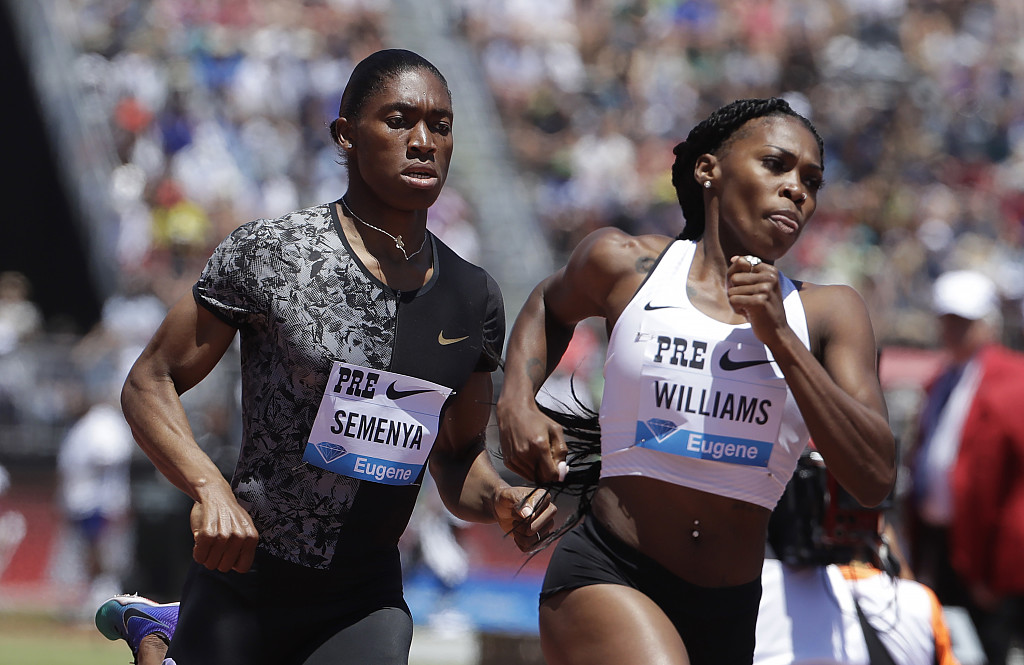
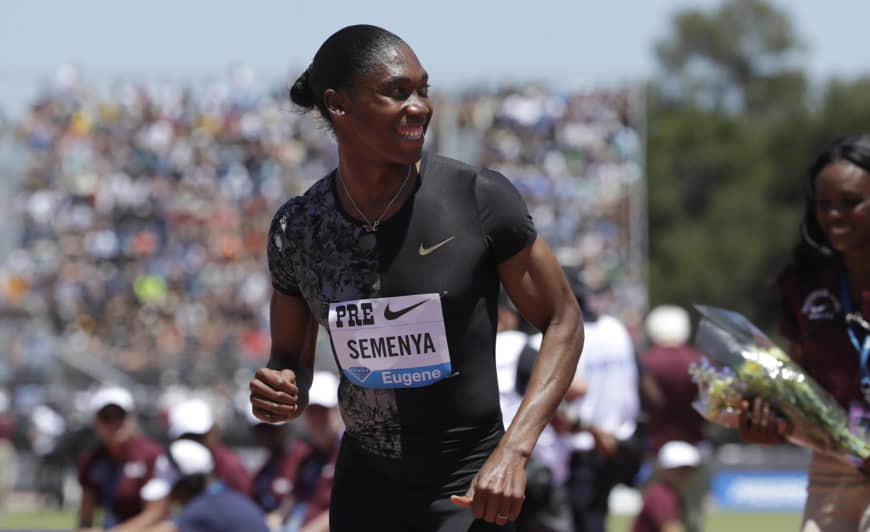
South African Caster Semenya ran the fastest 800m ever run on American soil at the Prefontaine Classic at Stanford clocking 1:55.7
Caster Semenya was almost four seconds ahead of Americans Ajee Wilson and Raevyn Rogers, who crossed the line in season’s best times of 1:58.36 and 1:58.65. This was Caster’s 31st straight victory over this distance clocking 1:55.7 and the fastest time ever on US soil.
Semenya continues to race well despite the controversy surrounding the IAAF’s efforts to prevent her from racing without taking medication to lower her naturally-high testosterone, something she has consistently said she will not do.

The Swiss Federal Tribunal ruled that she must be allowed to race while it is considering her appeal of the IAAF’s testosterone rule, upheld in a May 1 ruling by the Court of Arbitration for Sport (CAS).
In other results, Sifan Hassan of the Netherlands won the women’s 3,000m in a new European record of 8:18.49, in a race that also featured Konstanze Klosterhalfen (who finished second with a new PB of 8:20.07), Genzebe Dibaba (fourth, with a new PB of 8:21.29) and World Cross Country champion Hellen Obiri(who finished sixth).
Also on Sunday, Canada’s Mo Ahmed set a new personal best of 8:15.76 in the 2-mile event, good enough for fourth place. Justyn Knight finished ninth, in 8:19.75. The race was won by World Cross Country champion Joshua Cheptegei of Uganda in a world-leading time of 8:07.54. Ahmed broke his own Canadian 5,000m record at the Oslo Diamond League last month.
(07/02/19) Views: 53Anne Francis

Strong, talented and deepest field at Western States Endurance Run at this year race
More than 350 of the world’s best endurance athletes will emerge from the cold and dark Saturday morning to stand at the start line at Squaw Valley, eager to begin the Western States 100-Mile Endurance Run from the resort to Auburn.
This year’s field of runners is one of the deepest in the history of the race, featuring the return of both the men and women’s champions along with several top-10 finishers from last year.
After coming up short in two previous bids to set the course record at Western States, Jim Walmsley, of Flagstaff, Arizona, broke through last year, finishing with a record time of 14 hours, 30 minutes, 4 seconds. Walmsley, 29, is set to defend his title this year against a deep field in the men’s division, which features eight of last year’s top-10 finishers.
Walmsley will make his fourth appearance in the race on Saturday. His attempt to break the course record in 2017 ended due to exhaustion at around mile 78. He rebounded the following year by setting the course record, and said breaking that mark could be in play on Saturday.
Walmsley said he’s also been told the early stages of the course are in better shape than they were in 2017, which had a similarly large snowpack. During 2017’s race he was also several minutes ahead of the record-breaking time he set in 2018.
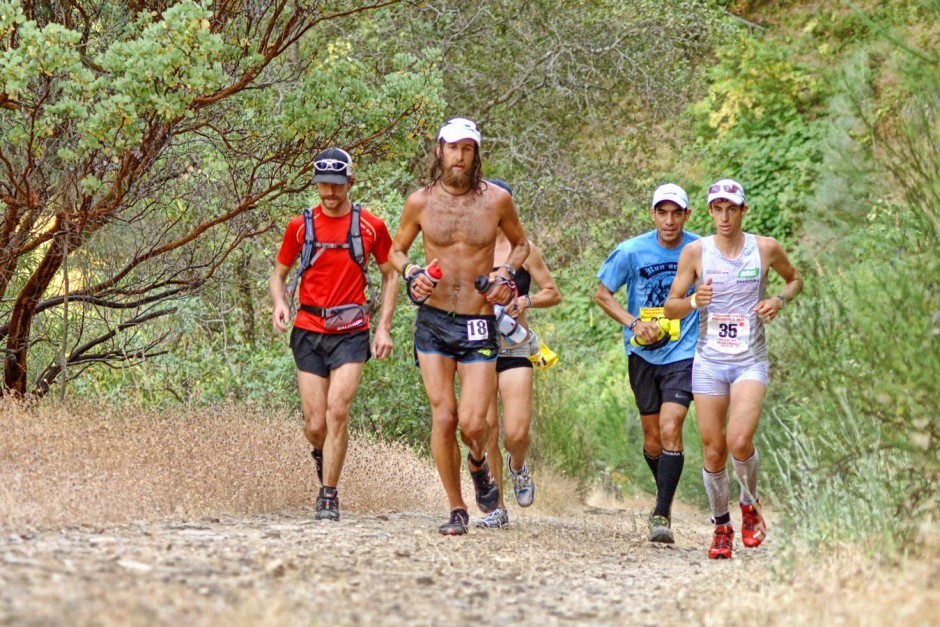
“Ultimately, it’s about listening to my own pace and just putting everything out there regardless,” he said. “As long as I end up giving my best effort and going to the well to get there, I’m always happy with it. Whether it’s the DNF in 2017 or the course record last year. I’m pretty proud of both days and the fact that I know I gave everything at both races. You can always live with that.”
Among those who could challenge Walmsley will be 2017 Western States winner Ryan Sandes. The 37-year-old South African broke through in his third attempt to win at Western States, and then ran as a pacer during last year’s event.
“I feel like it was a big thing for me to win Western States and a big achievement, so I feel pretty relaxed going into Western States from that point of view, but Western States is still one of the biggest 100 milers in the world, if not the biggest,” said Sandes. “I’ve still got that drive and hunger and I think that’s why I came back here. That’s a big motivating factor and I’m definitely hungry.”
Other top competitors on the men’s side include: Mark Hammond, Ian Sharman, Jeff Browning, Charlie Ware, Kyle Pietari, Paul Giblin and Kris Brown.

On the women’s side, defending champion Courtney Dauwalter, of Golden, Colorado, returns after winning in her first time out.
Dauwalter, 34, finished with the second fastest time ever for a woman last year, reaching Auburn with a time of 17:27:00.
Second-place finisher Katlyn Gerbin, 30, of Issaquah, Washington will also be in the field. Lucy Bartholomew, 23, of Melbourne, Australia, finished third last year and will be in this year’s field as well. Bartholomew has spent the past few weeks training in the area, and running with Truckee-Tahoe athletes at local races.
Kaci Lickteig, 32, of Omaha, Nebraska, who won in 2016, will race as well.
Other returning top-10 finishers from a year ago include: Amanda Basham, Cecilia Flori, Camelia Mayfield, Aliza Lapierre and Corrine Malcolm.
(06/28/19) Views: 52
