

Running News Daily
Top Ten Stories of the Week
9/20/2025
These are the top ten stories based on views over the last week.
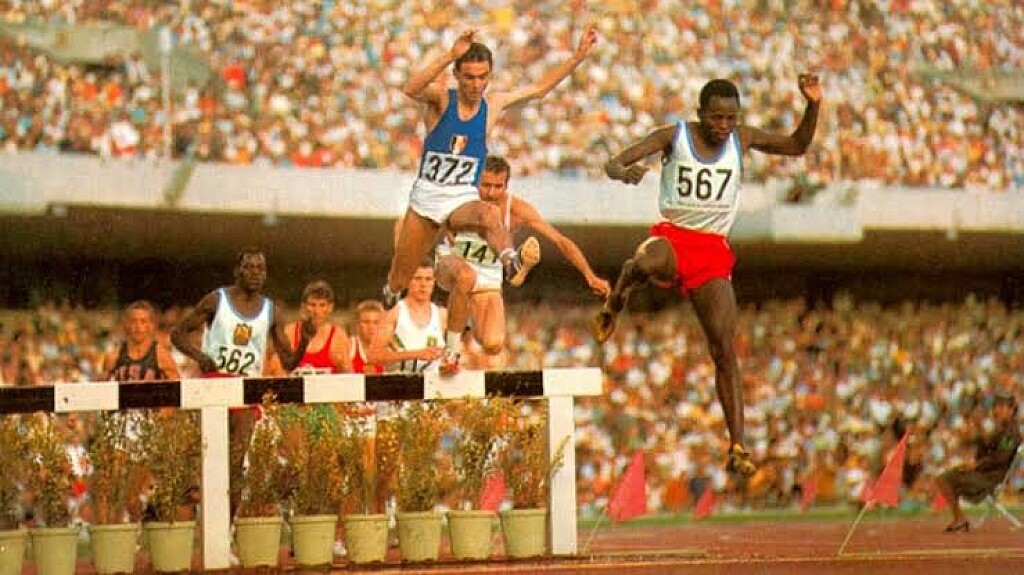


Kenya’s Steeplechase Dynasty Under Siege: Edmund Serem Keeps Hope Alive with Tokyo Bronze
For decades, the men’s 3000m steeplechase was as Kenyan as tea fields in Kericho or herds grazing the Rift Valley floor. Since Amos Biwott (first photo) struck Olympic gold in 1968, generations of Kenyan athletes turned the event into a national pig treasure, piling up Olympic and World titles with almost mechanical consistency. But the 2025 World Championships in Tokyo told a different story—one of fading dominance, foreign breakthroughs, and a teenager fighting to keep the flame alive.
A Race That Shook Tradition
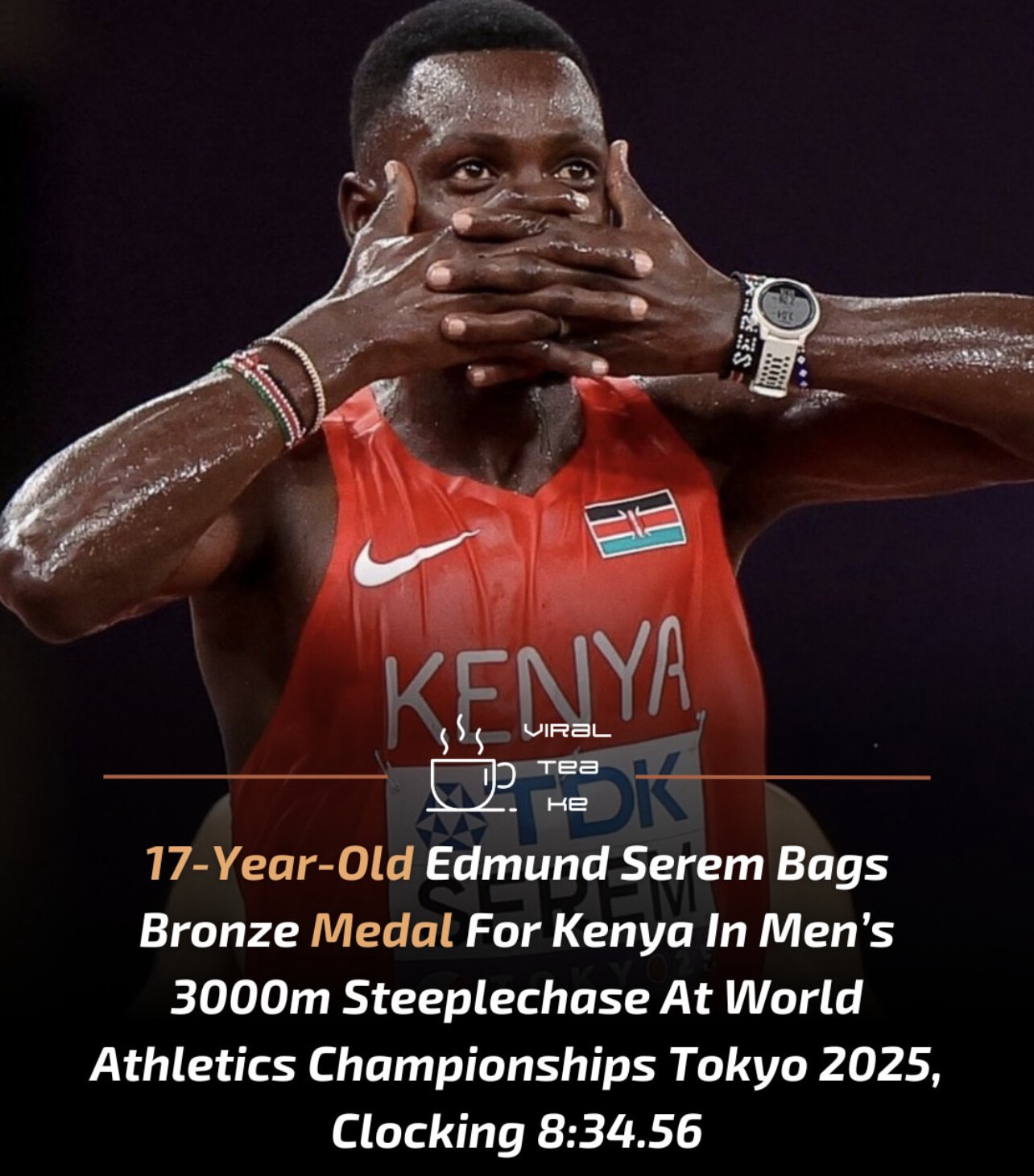
On a humid evening inside Tokyo’s National Stadium, 17-year-old Edmund Serem—younger brother of 2021 World U20 champion Amos Serem—lined up against the world’s best: Olympic champion Soufiane El Bakkali, Ethiopia’s Lamecha Girma, New Zealand’s rising star Geordie Beamish, and a host of challengers from Europe, North America, and Asia.
For Serem, the mission was clear: keep Kenya’s flag on a podium that has become increasingly elusive.
From the gun, he ran bravely, shadowing Germany’s Karl Ruppert in the early laps, exchanging leads and refusing to yield. Ethiopia’s Samuel Firewu, Canada’s Jean-Simon Desgagnés, Poland’s Krzysztof Michalski, and Japan’s Ryuji Miura all joined the fight, turning the race into a tactical chess match.
With five laps to go, Serem was still in contention. But as the tempo shifted, the global pack pressed harder. Girma and El Bakkali moved menacingly forward, Desgagnés surged, and Michalski stunned the field by briefly taking the lead.
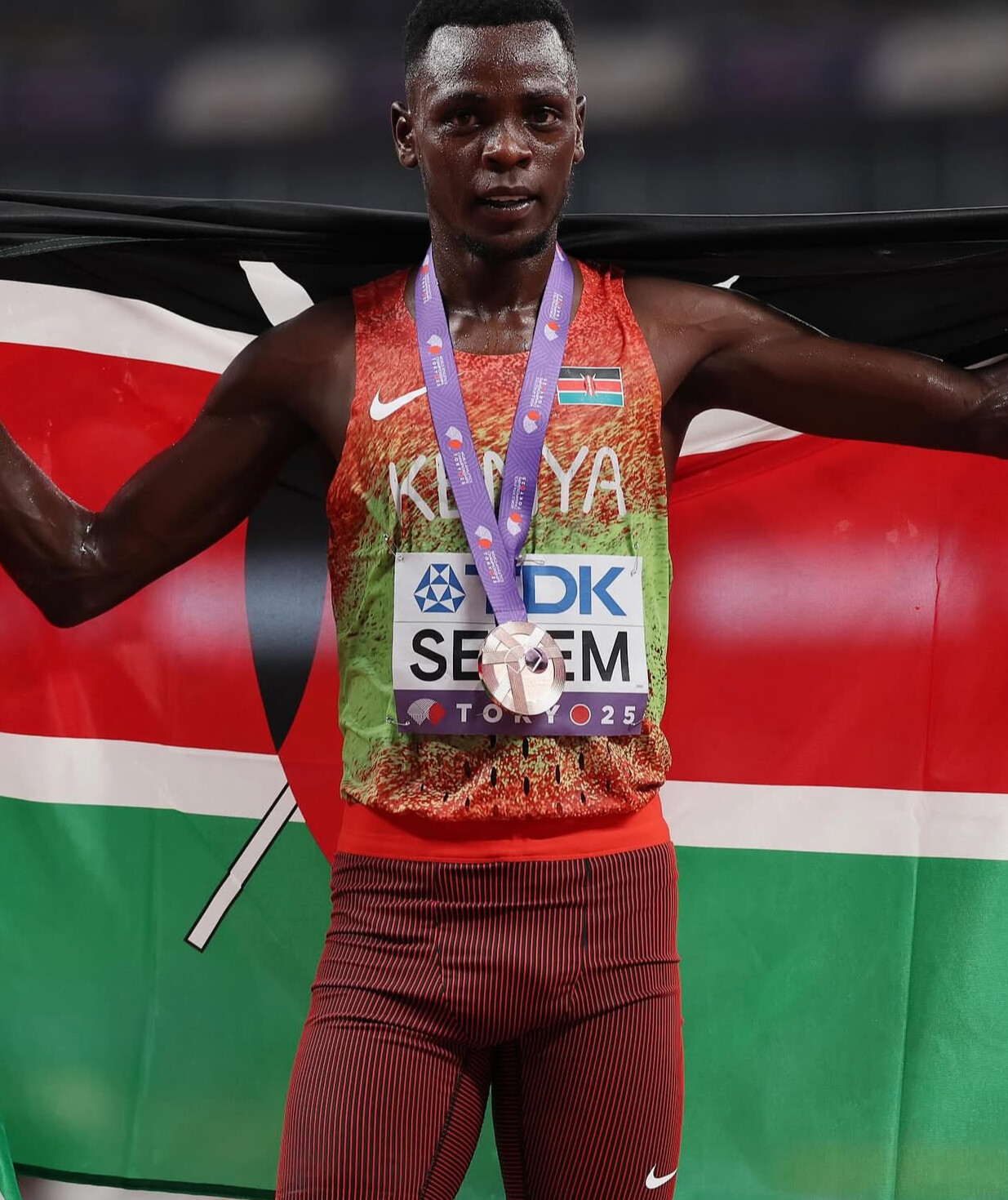
Then came the bell lap. In a race once synonymous with Kenyan processions, the battle had become a global dogfight. Beamish timed his kick to perfection, flying past Girma and fending off El Bakkali to seize a historic gold in 8:33.88. El Bakkali took silver in 8:33.95, while Serem, showing maturity beyond his years, held his ground to claim bronze in 8:34.56.
A Bittersweet Podium
For Kenya, the bronze carried mixed emotions. Serem’s medal, won by a teenager not yet old enough to vote, proved the country’s future is bright. Yet it also underscored a sobering reality: the days of near-total dominance are gone.
Speaking after the race, Serem was humble but defiant:
“It was tough out there, but I told myself Kenya must be on that podium. I am only 17, and I know this is just the beginning. One day, I will bring the gold back home.”
The Crumbling Fortress
The numbers tell the story. Since Conseslus Kipruto’s World title in 2019, Kenya has not won a global steeplechase gold. Instead, El Bakkali, Girma, and now Beamish have rewritten the script, dismantling the aura of invincibility once carried by legends like Ezekiel Kemboi, Brimin Kipruto, and Stephen Cherono.
Even with Abraham Kibiwot also in Tokyo, Kenya could not tilt the balance back. What was once fortress Kenya is now open territory.
Lessons and a Call to Action
Beamish’s victory offered a warning. New Zealand has no steeplechase tradition, yet through structured NCAA development and consistent Diamond League racing, Beamish matured into a world champion. Kenya, by contrast, must adapt: better coaching, tactical planning, and holistic athlete support are now non-negotiable.
Serem’s bronze provides a flicker of hope. His resilience against seasoned opponents shows promise, but it also highlights the urgent need for reinvestment. Athletics Kenya’s famed pipeline of school and military talent remains deep, but without evolution, history and reputation alone will not win medals.
The Future
As Edmund Serem stood on the Tokyo podium, the Kenyan flag draped over his shoulders, pride and resolve mixed in his eyes. Behind the applause lay a challenge: reclaim what has been lost.
If the steeplechase is to remain the beating heart of Kenya’s athletics heritage, Tokyo 2025 must not mark the continuation of decline, but the beginning of a fightback. And perhaps—just perhaps—it will be Serem, the teenager who dared to dream, who leads the revival.
(09/15/25) Views: 1,182Robert Kibet
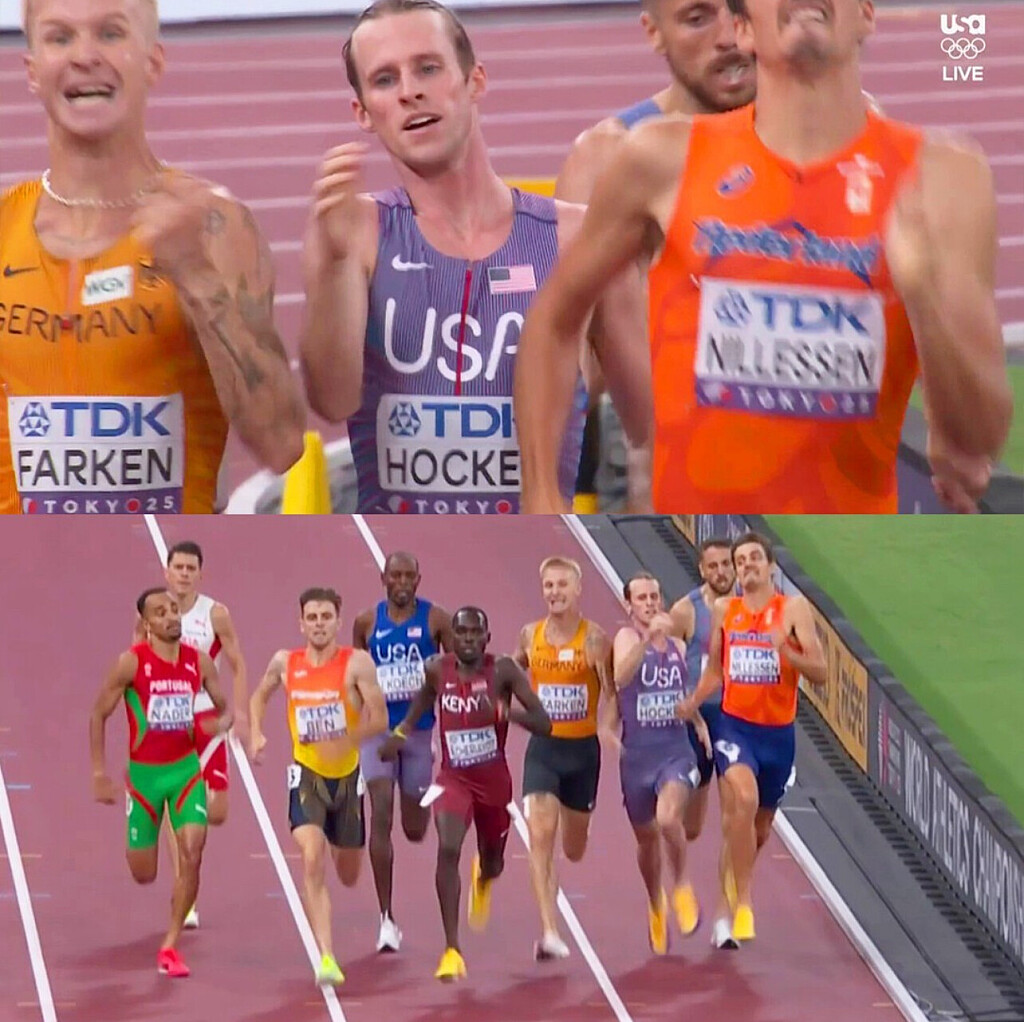
Cole Hocker’s World Championship Dream Ends in Disqualification
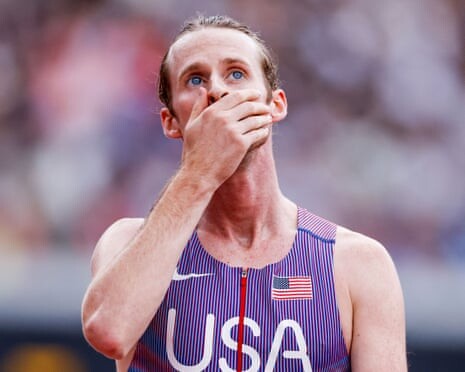
Tokyo, September 15, 2025 — Olympic 1500m champion Cole Hocker saw his World Championship hopes vanish in dramatic fashion after being disqualified in the men’s 1500m semi-final.
The American star, widely considered a contender for gold in Tokyo, found himself boxed in on the rail as the field entered the final straight. Spotting only the slightest opening, Hocker surged forward, leaning hard into the gap between two rivals in a desperate bid to qualify.
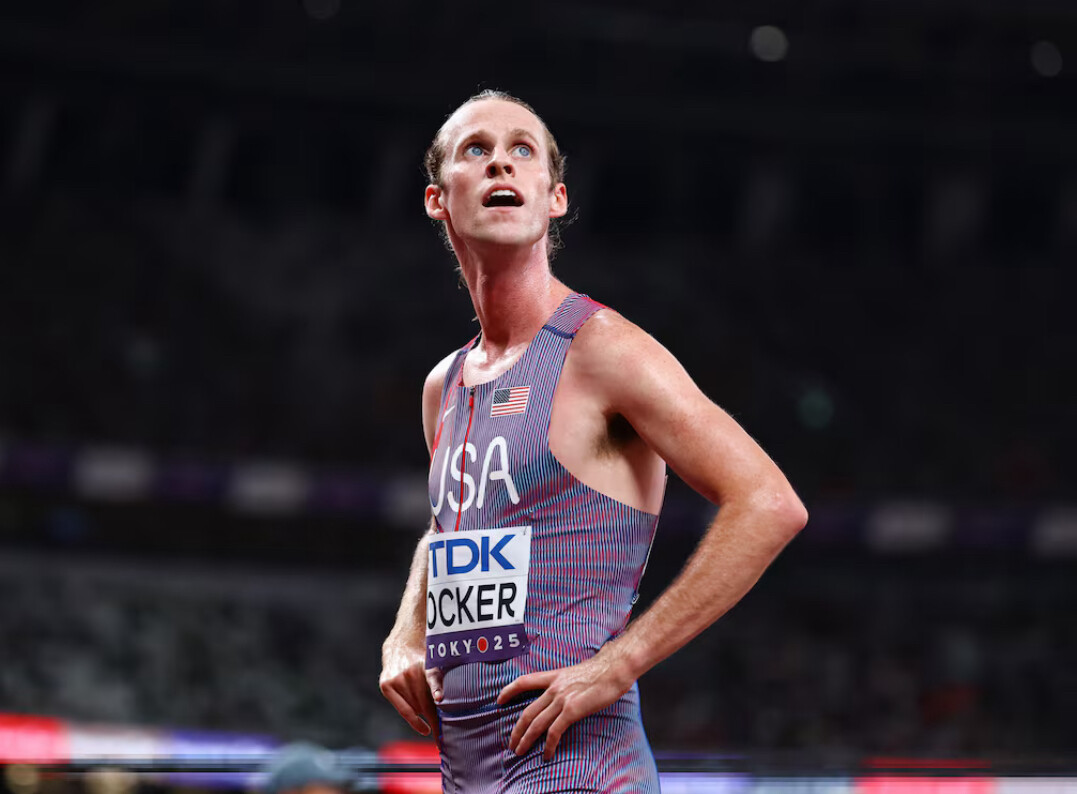
Officials, however, judged his move to be illegal under World Athletics’ jostling rule (TR17.1.2[J]). The ruling meant that Hocker, who crossed the line appearing to have secured advancement, was disqualified from the event. The U.S. team filed an immediate appeal, but it was denied.
A Fine Line in Championship Racing
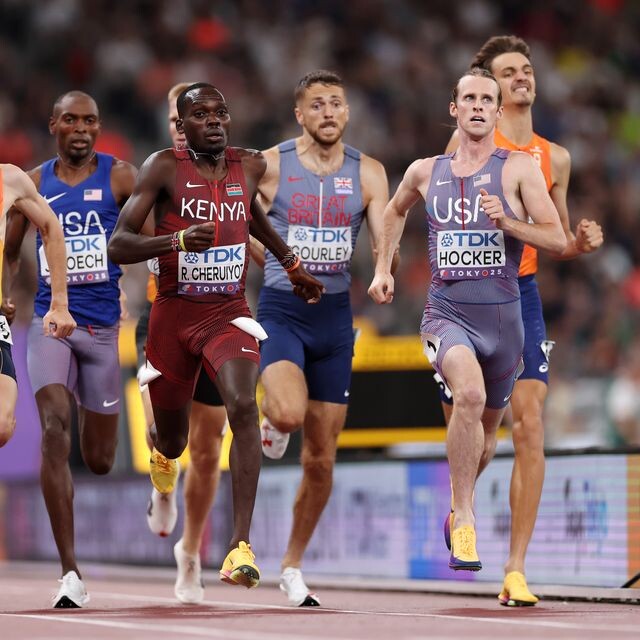
Championship 1500m races often hinge on positioning and split-second decisions. Hocker’s aggressive attempt to escape a tactical trap was the kind of risk seasoned racers often take. This time, it cost him dearly.
For the 24-year-old, who stunned the world by winning Olympic gold in Paris just a year ago, the result was a crushing reminder of how unforgiving middle-distance racing can be.
What's next
Hocker departs Tokyo without the chance to contest the 1500m final, but his career credentials remain undeniable:
• Olympic champion (2024)
• Personal best of 3:27.65, making him one of the fastest Americans in history
• Multiple U.S. titles and international medals
Despite the disappointment, Hocker’s trajectory still points skyward. With the Los Angeles 2028 Olympics on the horizon, this setback may only sharpen his focus for future championships.
(09/15/25) Views: 1,010Boris Baron

World Championships Men’s Marathon Preview: Familiar Faces Return to Tokyo
Tokyo, September 13, 2025 – The men’s marathon at the 2025 World Athletics Championships, set for Monday, September 15, has all the makings of a showdown that feels like déjà vu for fans of road racing in the Japanese capital.
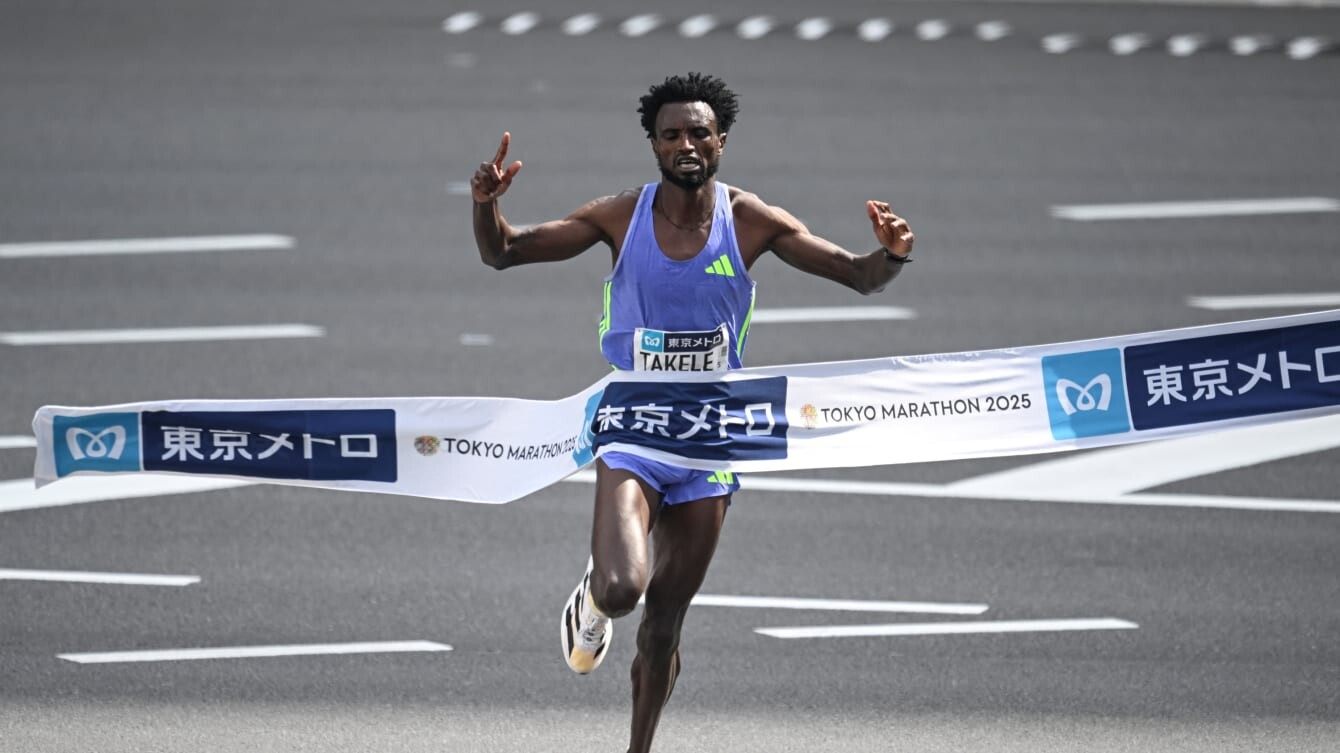
Much of the World Championships route mirrors the Tokyo Marathon course, and so too does the field. The top three finishers from March’s Tokyo Marathon — Tadese Takele and Deresa Geleta of Ethiopia, along with Kenya’s Vincent Kipkemoi Ngetich — headline the lineup. They also hold the three fastest times in the world this year among those entered, giving the race a sharp competitive edge.
Adding to the depth, Emile Cairess of Great Britain, who placed fourth at the Paris 2024 Olympic Games, is set to challenge again in Tokyo. Defending world champion Victor Kiplangat of Uganda and 2023 Budapest silver medallist Maru Teferi of Israel add to a field packed with medal contenders.
The United States will also be represented with a strong trio: Clayton Young, CJ Albertson, and Reed Fischer. While Americans are not among the pre-race medal favorites, each brings international experience and competitive credentials. Young in particular has emerged as one of the fastest U.S. marathoners in recent years, and Albertson is known for aggressive pacing that could shake up the race dynamics. Fischer adds depth and consistency, giving Team USA multiple chances for a top-10 finish.
With multiple men entered who have run under 2:05, the pace promises to be ambitious. Whether it leads to a record will depend heavily on conditions. Tokyo has been under a heatwave alert, and organizers have moved the start time up by 30 minutes to help offset the temperatures. Still, if the weather cooperates, Tamirat Tola’s World Championships record of 2:05:36, set in Oregon in 2022, could be under serious threat.
All signs point to a thrilling clash — a familiar course, a world-class field, the Americans ready to test themselves against the best, and the possibility of history being rewritten in Tokyo.

Boris Baron
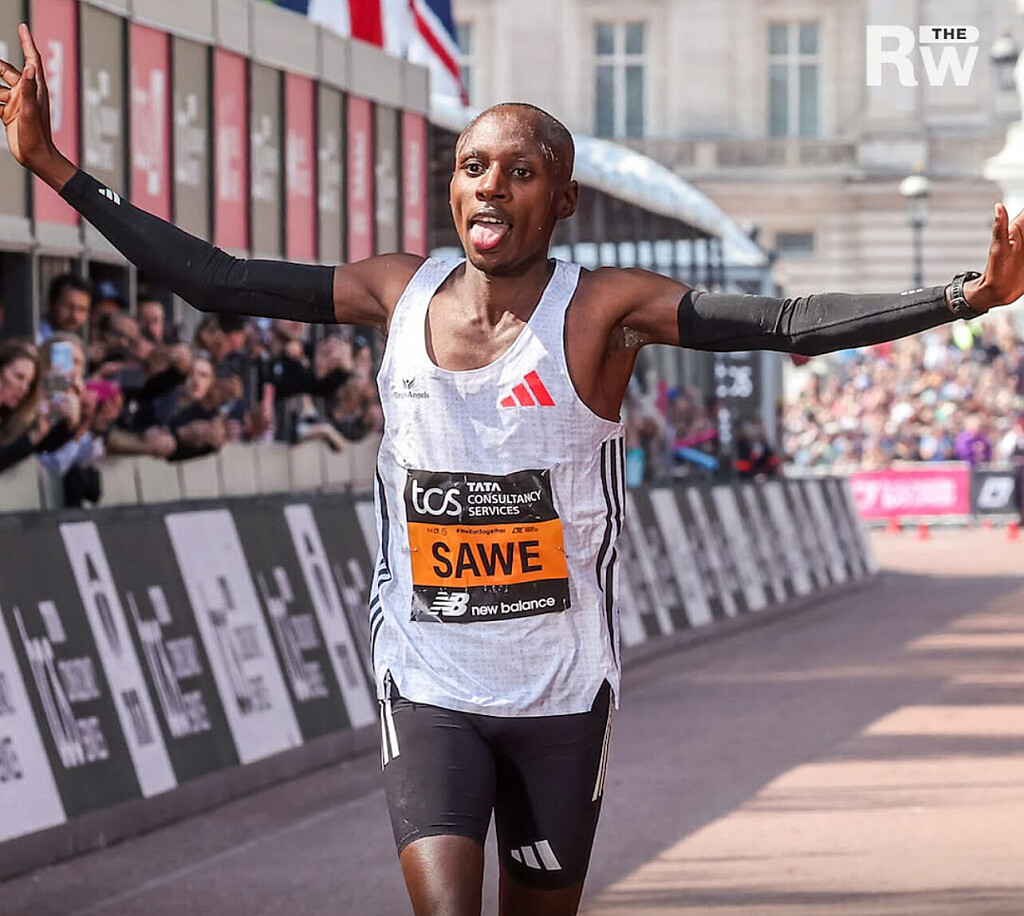
Sebastian Sawe Leads the Way With Bold Anti-Doping Initiative Ahead of Berlin Marathon
Sebastian Sawe, the 2025 London Marathon champion and currently the fastest marathoner in the world, is preparing for his third career marathon on September 21 in Berlin. Determined to ensure his performances are beyond question, Sawe has taken an unprecedented step: partnering with the Athletics Integrity Unit (AIU) to undergo one of the strictest anti-doping programs ever seen in the sport.
In collaboration with his management team and adidas, Sawe’s program includes:
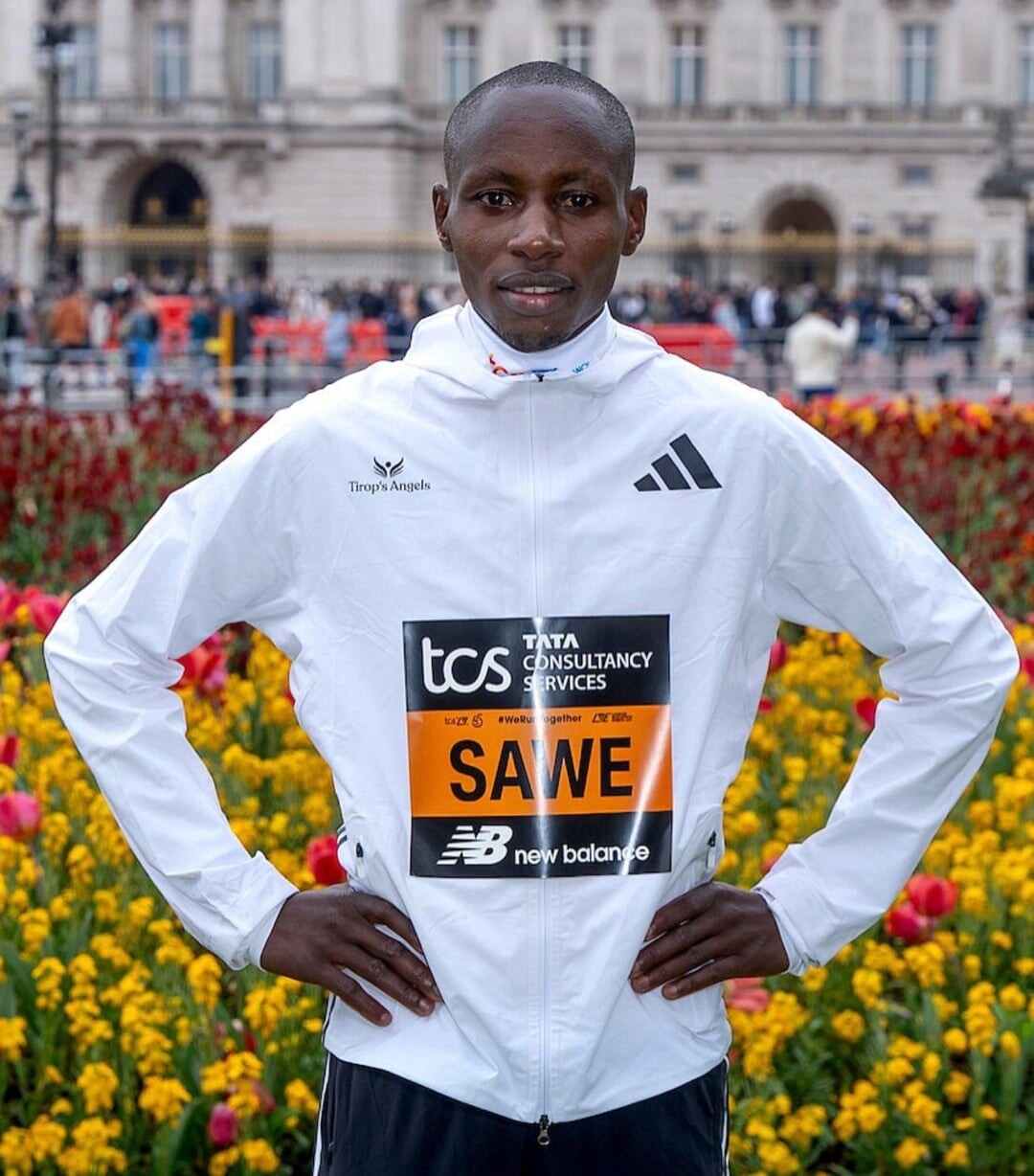
• A minimum of 25 anti-doping tests in the two months leading up to Berlin.
• Surprise, out-of-competition testing under the most advanced laboratory protocols.
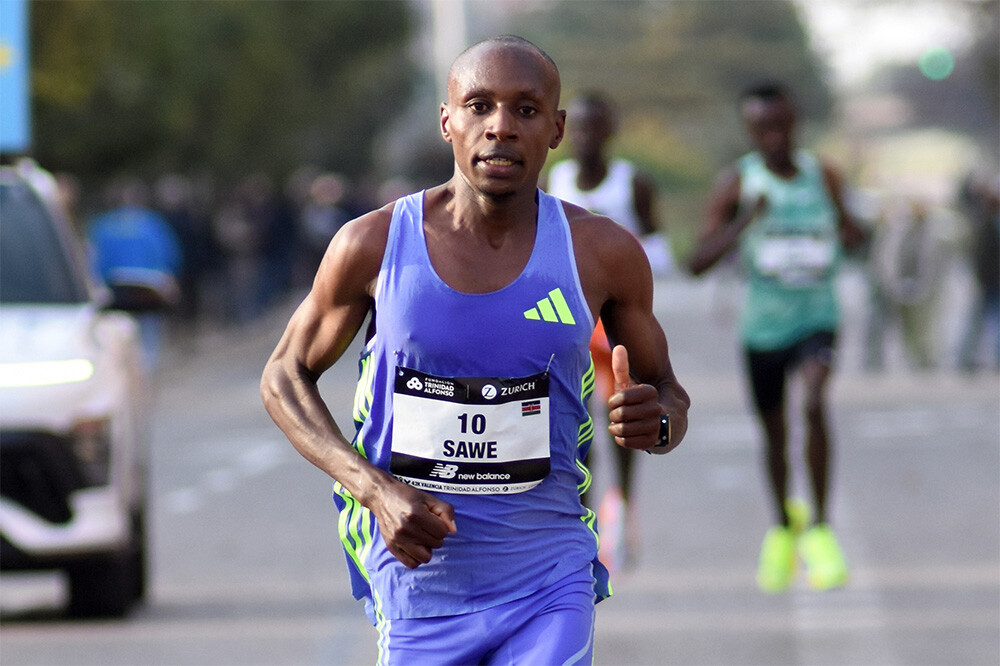
• Complete independence in testing, with no prior notice given to Sawe or his team.
• Full financial support from adidas, his primary sponsor.
Explaining his decision, Sawe said:
“I am tired of reading constant doubts and accusations whenever a Kenyan athlete performs well. I acknowledge that doping is a real issue in our country, and ignoring it would be a mistake. We must face it, work with organizations like AIU and World Athletics, and fight this problem that feels like a cancer for Kenyan athletes. My hope is to set an example, encourage others to act, and show that clean performances are possible. Above all, I want people to know that when I line up in Berlin, I am clean, and my results should not be questioned just because I am Kenyan.”
The testing officially began on July 25.
Sawe’s initiative comes at a crucial moment, as Kenya’s Anti-Doping Agency was recently declared non-compliant with WADA’s code. While the agency has 21 days to contest the ruling and implement corrective measures, Sawe’s leadership highlights a proactive and athlete-driven path forward.
As he builds toward Berlin, Sawe is not only racing for victory but also for the integrity of Kenyan athletics, proving that world-class performances can and must be achieved clean.
(09/12/25) Views: 959Boris Baron
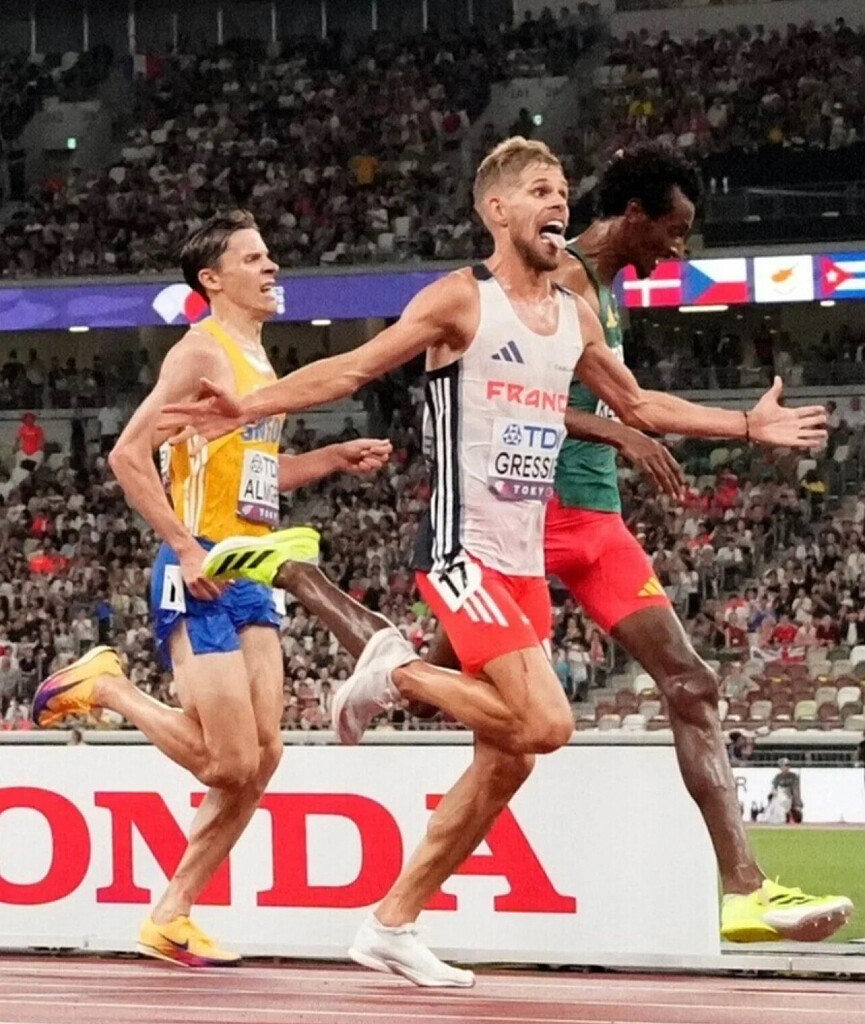
Jimmy Gressier shocks the world with stunning 10000m victory in Tokyo
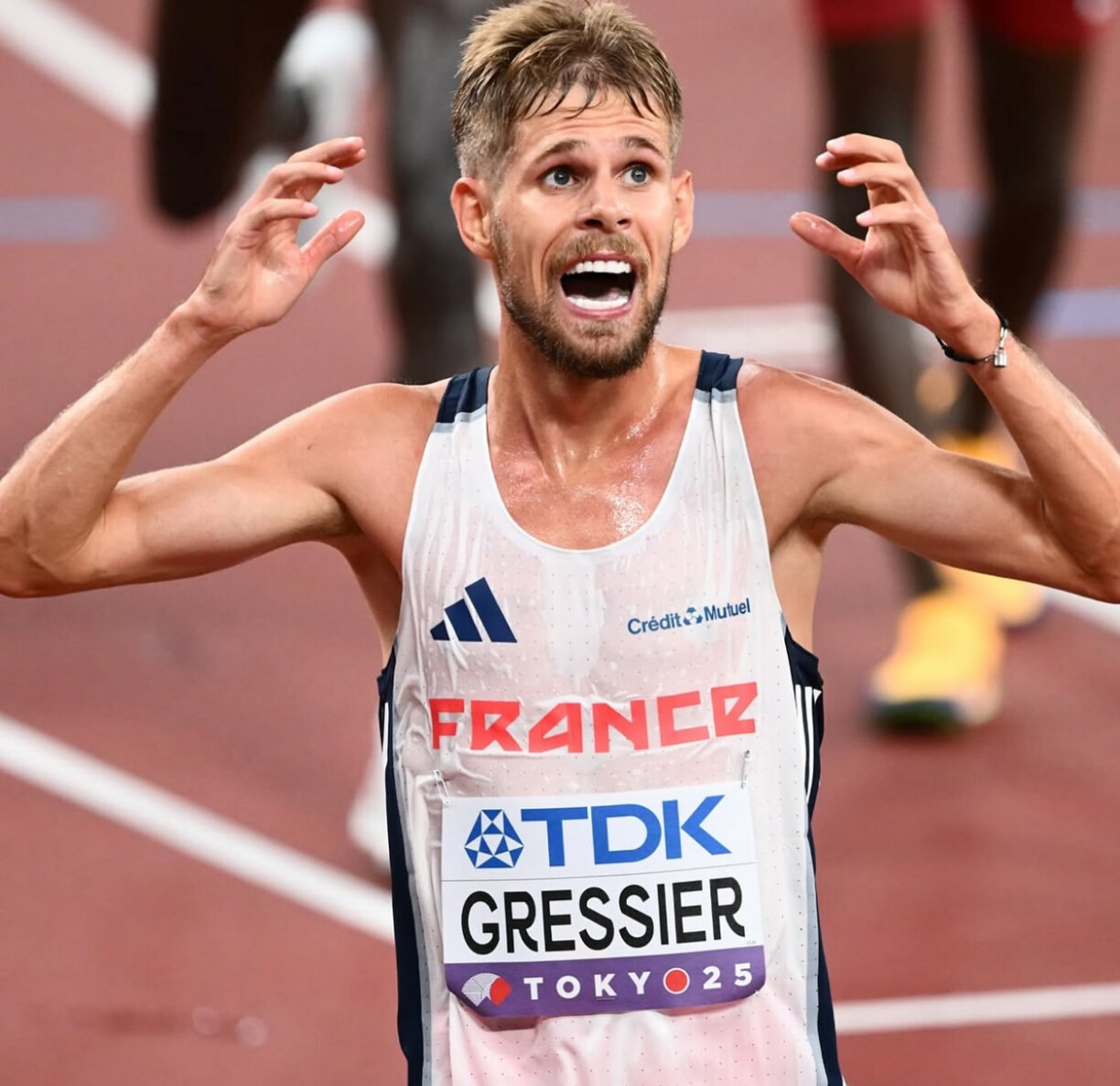
France’s Jimmy Gressier stunned the athletics world in Tokyo Sept 14, sprinting past Ethiopia’s Yomif Kejelcha in the final strides to claim the men’s 10,000m world title. His winning time of 28:55.77wasn’t about records — it was about patience, tactics, and a devastating final kick. With that surge, Gressier became the first non–East African-born world champion in the event since 1983.
But for those who have followed his career, this moment wasn’t magic out of thin air. It was years in the making.

Building Blocks: Cross-Country and U23 Glory
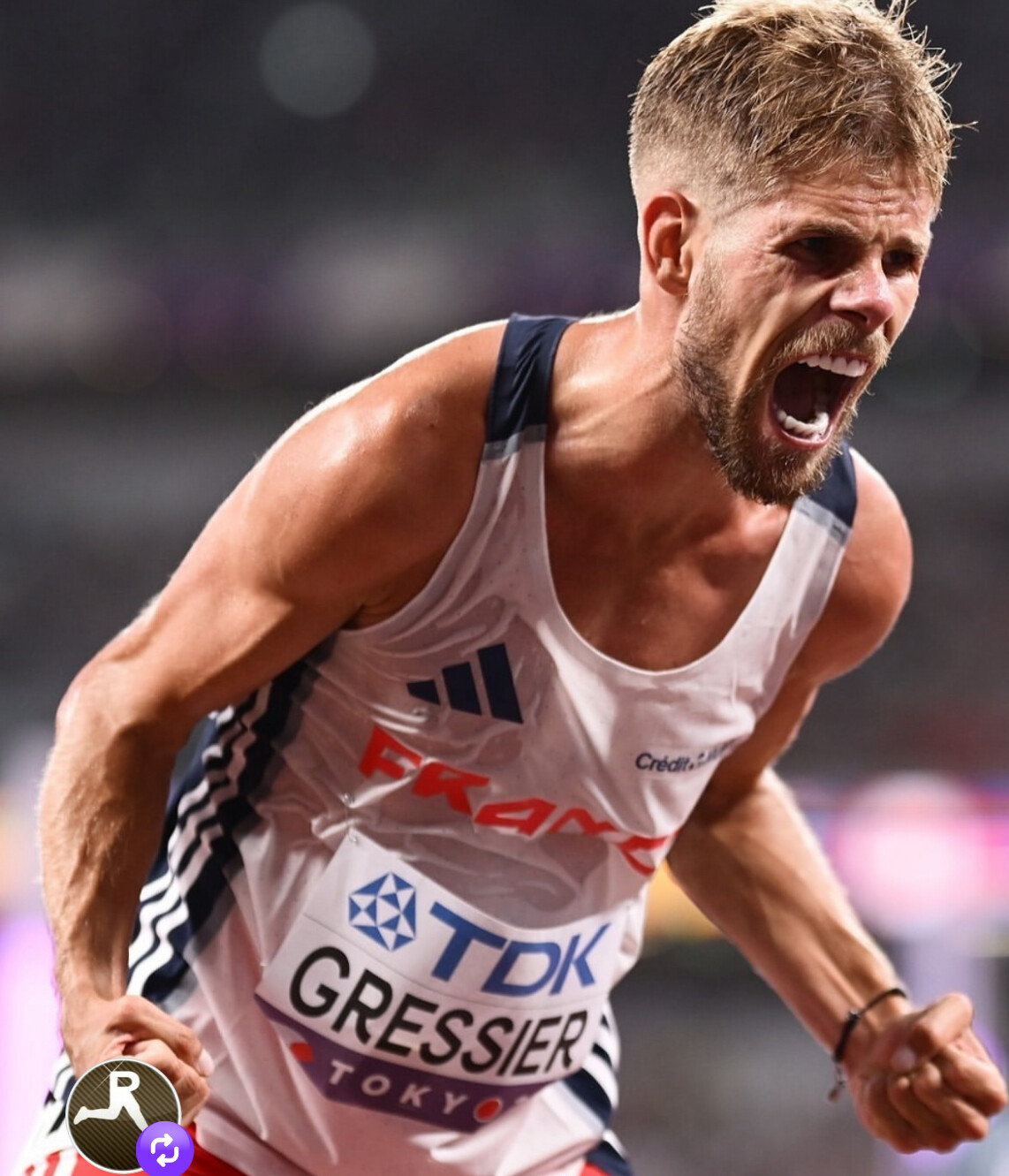
Born May 4, 1997, in Boulogne-sur-Mer, France, Gressier’s rise began on the fields of European cross-country. Between 2017 and 2019, he won three consecutive U23 European Cross-Country Championships, showcasing his toughness in cold, muddy races far from the track’s bright lights.
At the 2019 European U23 Championships, he doubled up to win gold in both the 5,000m and 10,000m, proving his versatility and hinting at bigger things to come.
Records on Track and Road
Gressier has rewritten France’s distance running records, and in some cases Europe’s.
• European 5K road record: In 2025, he became the first European to break the 13-minute barrier on the roads, clocking 12:57.
• French national records: He has owned the national bests in both the 5,000m and 10,000m on the track.
• Range: From 3,000m indoors to road races, Gressier has consistently proven his speed and endurance.
These performances made him one of Europe’s most promising distance runners, but until Tokyo he hadn’t converted that talent into senior global hardware.
Close Calls and Lessons Learned
The near misses added to his hunger.
• At the 2021 Tokyo Olympics, he finished 13th in the 5,000m.
• At the 2022 World Championships in Eugene, he placed 11th in the 10,000m.

• At the 2022 European Championships in Munich, he narrowly missed the podium, finishing 4th in the 10,000m.
Each result showed progress, but also left him on the outside looking in when medals were awarded.
The Breakthrough in Tokyo
That changed on a humid night at the 2025 World Championships. The men’s 10,000m was run cautiously, the pack conserving energy for the inevitable burn-up over the final lap. When the bell rang, Gressier positioned himself perfectly. His closing burst in the home straight carried him past Kejelcha by just 0.06 seconds, with Sweden’s Andreas Almgren snatching bronze behind them.
It was a win not just for Gressier, but for European distance running — a reminder that the East African dominance of the 10,000m can be challenged.
Jimmy Gressier celebrates on the biggest stage
Until a few weeks ago, Jimmy Gressier was best known internationally for his celebrations, in particular at the European U23 cross country championshiops. Then he won the Diamond League final at 3000m with a big kick over Grant Fisher. Now he is world champion at 10,000m. He said, “It was a dream, and today I can say it: I am world champion.”
Gressier had shown flashes internationally (5th at the World Road Running Champs in the half marathon), but nothing on the track. He was 13th at last year’s Olympics (one spot behind Nico Young) and only 5th in a tactical European 10,000. He had never medalled at Europeans on the track and had a best finish of just ninth in four previous global finals across the 5,000 and 10,000. But he has run pbs this year in the 1500 (3:32), 3000 (7:30), and 5,000 (12:51), and after his big finish got him the Diamond League win, Gressier said he started to believe anything was possible at Worlds.
He explained: “I surprised myself in Zurich, but not today… I knew I could repeat the same plan, and that’s exactly what happened.” Gressier waited until the final 100m to attack and zig-zagged down the home straight to the title.
What Comes Next
At only 28, Gressier’s career is still entering its peak. With records behind him and now a world title to his name, the Frenchman has options: chasing more global medals on the track, doubling up in the 5,000m, or testing himself further on the roads.
For now, his Tokyo triumph stands as a moment of validation. Years of persistence, hard lessons, and belief came together in a single sprint — and Jimmy Gressier crossed into history.
(09/14/25) Views: 873Boris Baron
Thrilling Finishes Define 10,000m Races at World Championships in Tokyo
Tokyo, Sept. 14, 2025 — The 10,000m finals at the World Athletics Championships in Tokyo delivered everything fans hope for: tactical battles, dramatic last-lap fireworks, and history-making performances.
Chebet Claims Her First World Title

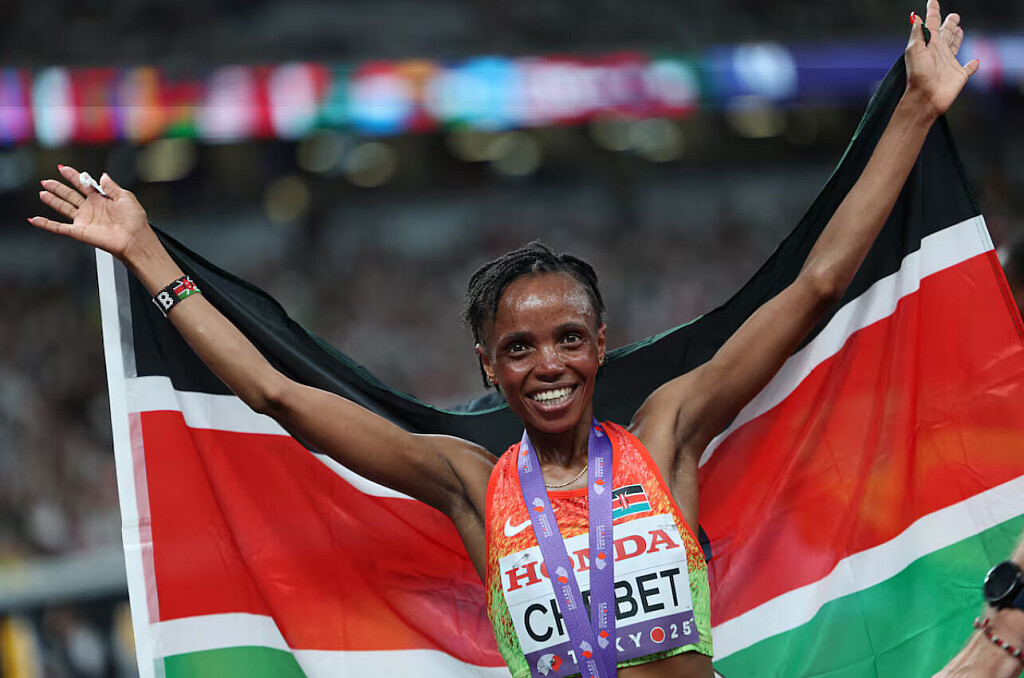
Kenya’s Beatrice Chebet finally added the missing piece to her resume, storming to her first World Championship gold in the women’s 10,000m. Already an Olympic champion and record-breaker on the roads, Chebet powered home in 30:37.61, unleashing a decisive final lap that left no doubt.
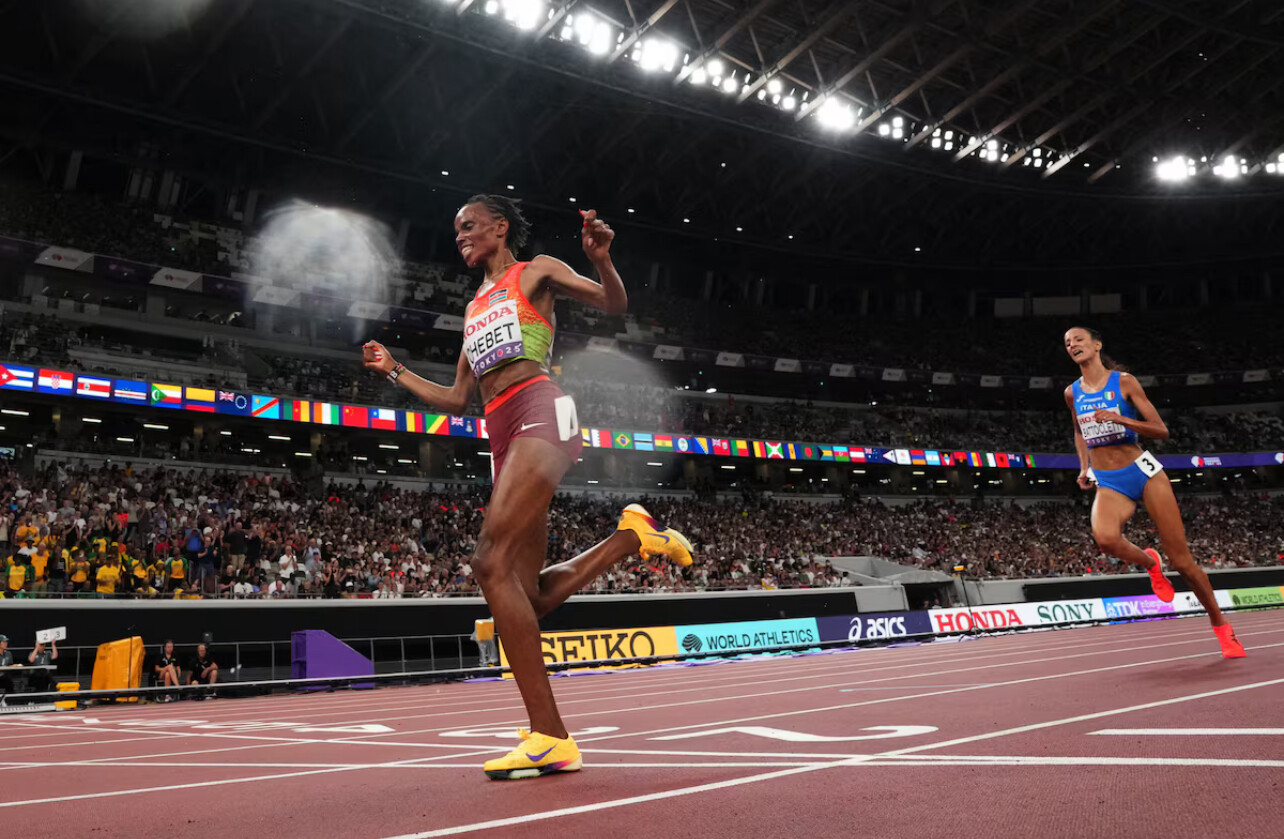
Italy’s Nadia Battocletti pushed hard to the line, setting a new national record for silver, while Ethiopia’s Gudaf Tsegay held on for bronze in the hot and humid conditions.
The race itself was cagey and tactical, with much of the field conserving energy before the closing laps. Chebet’s patience and well-timed surge sealed a long-awaited world crown. She now has her sights on a possible 5,000m–10,000m double in Tokyo.
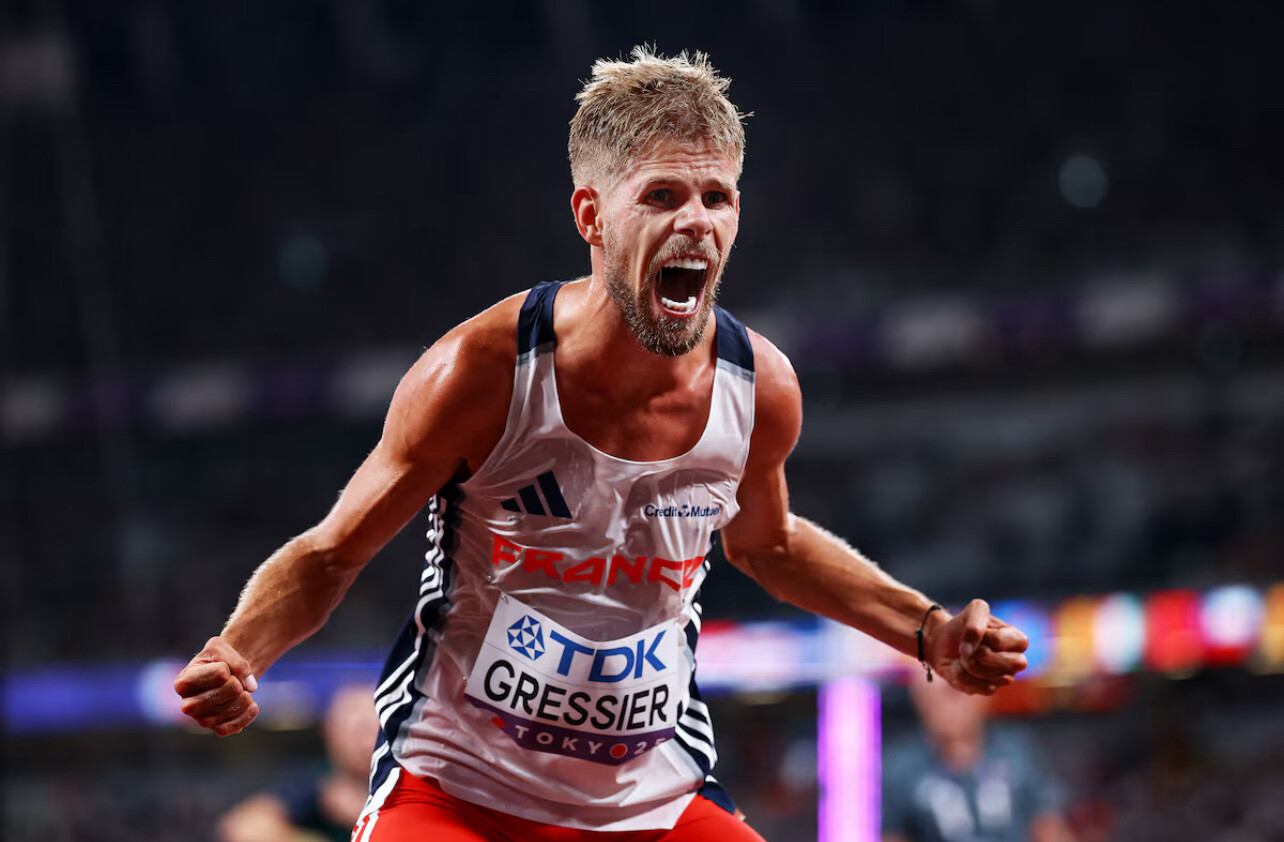
Gressier Shocks the Field in Men’s Race
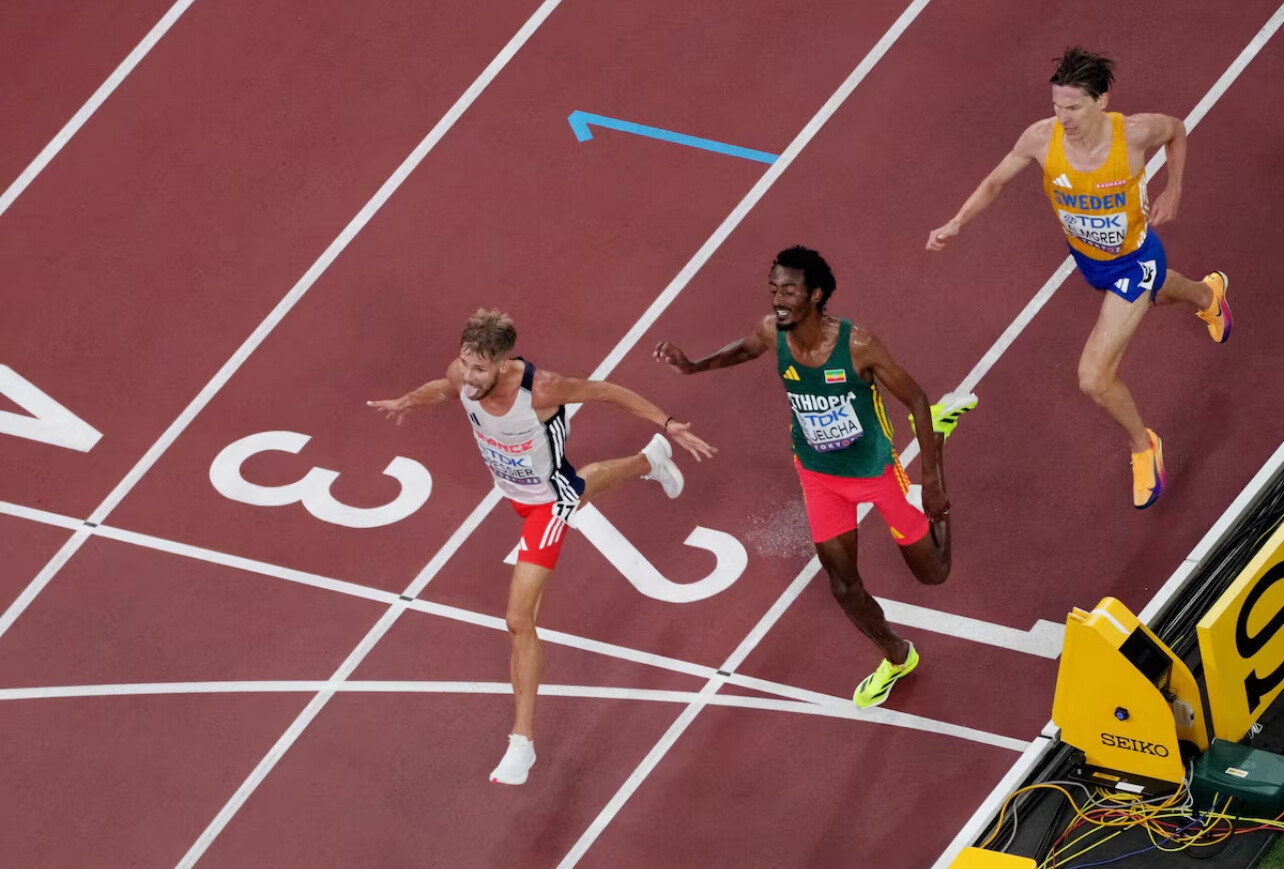
The men’s 10,000m unfolded in similar fashion, with the field bunched tightly until the bell lap. In one of the biggest upsets of the championships so far, Jimmy Gressier of France kicked past Ethiopia’s Yomif Kejelcha in the final strides, capturing gold in 28:55.77 by a margin of just 0.06 seconds.
Sweden’s Andreas Almgren took bronze, as the podium was decided by a frantic sprint down the home straight.
For Gressier, the victory was historic — he became the first non-East African-born athlete in decades to win a men’s 10,000m world title. His triumph underscored how smart tactics and raw finishing speed can still overturn tradition at the highest level.
Lessons from Tokyo
Both 10,000m finals highlighted how championship racing favors tactics over fast times. In the humid Tokyo evening, runners chose patience, waiting for the decisive final laps rather than chasing records. That set the stage for thrilling finishes that tested nerves, positioning, and sprinting strength.
• Chebet’s breakthrough confirmed her as the most complete distance runner in the world today.
• Gressier’s upset win proved that the East African stranglehold on the event is not unshakable.
• Fans were treated to dramatic championship racing at its best — where strategy matters as much as raw talent.
The 2025 World Championships in Tokyo are only just beginning, but the 10,000m finals will be remembered as races where patience, positioning, and perfect timing made all the difference.
(09/14/25) Views: 684Boris Baron
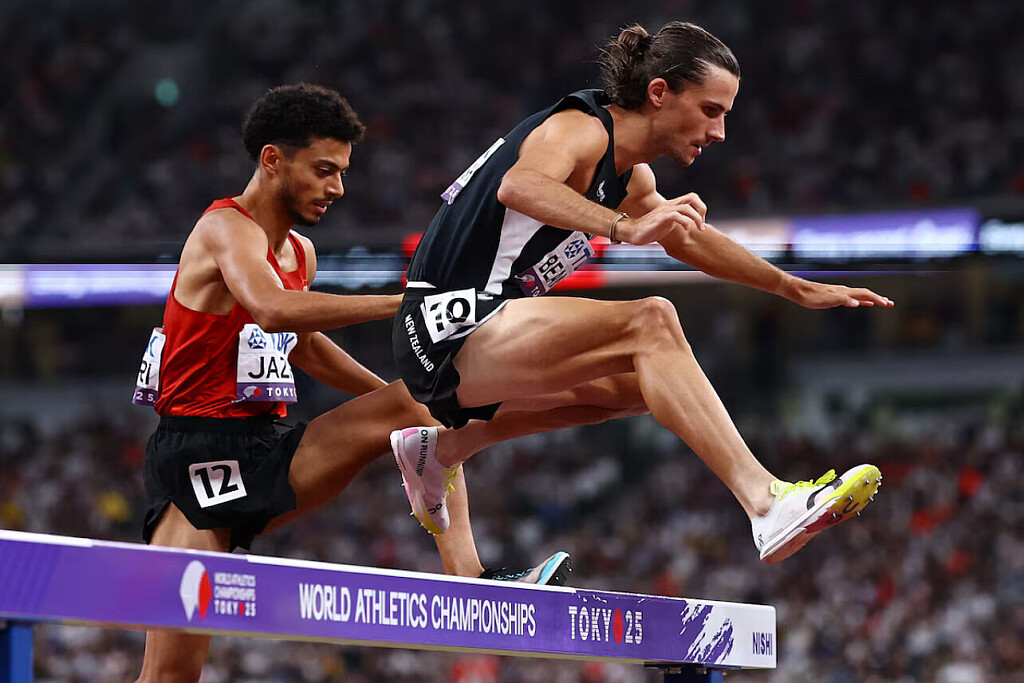
Geordie Beamish Rises from a Fall to World Champion Glory in Tokyo
Tokyo, September 15, 2025 — New Zealand’s Geordie Beamish produced one of the most dramatic victories of the World Athletics Championships, storming to gold in the men’s 3000m steeplechase. His winning time of 8:33.88 edged Morocco’s reigning champion Soufiane El Bakkali by just 0.07 seconds, with 17-year-old Kenyan Edmund Serem taking bronze in 8:34.56 .
This is a breakthrough moment for New Zealand athletics: the nation’s first-ever outdoor World Championships track gold .
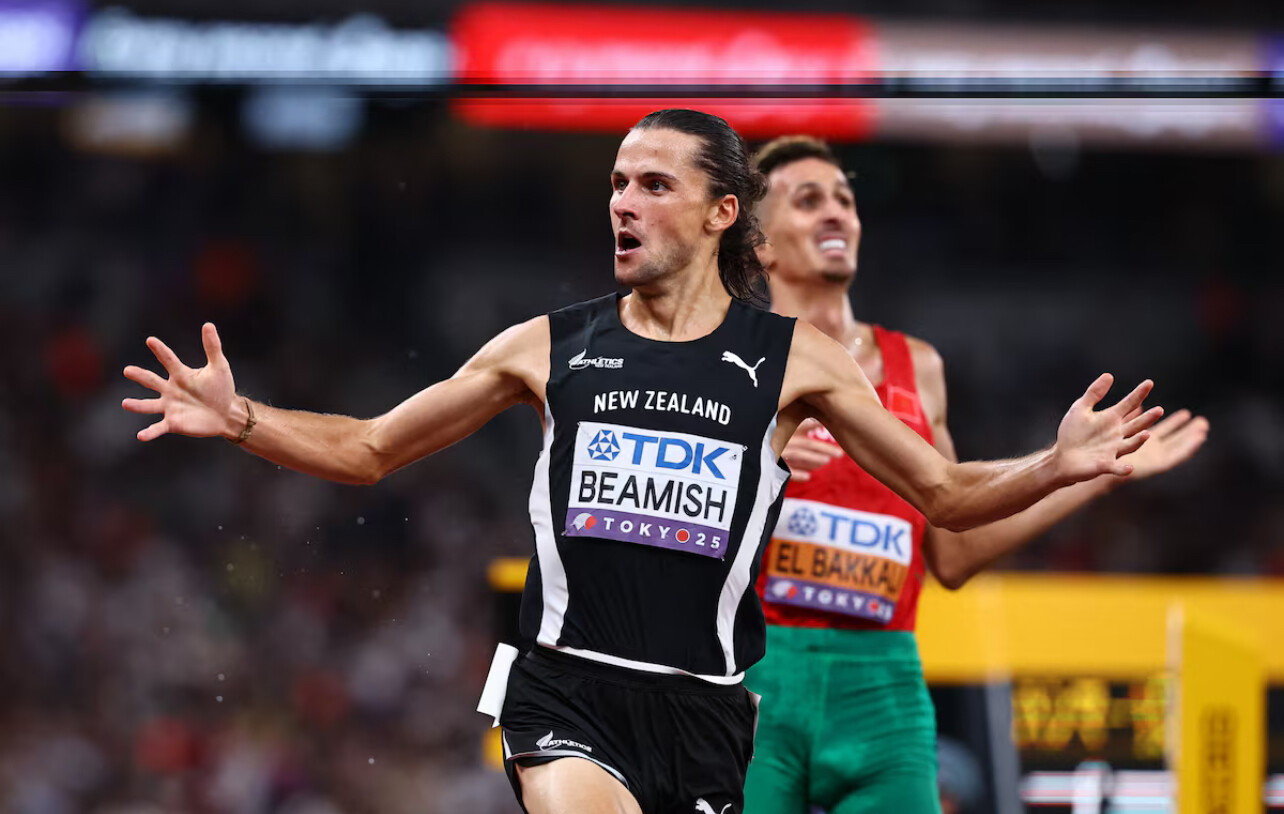
A Tactical Race Decided at the Line
The steeplechase final unfolded at a controlled pace, leaving the medals to be decided in the closing laps. El Bakkali, a two-time Olympic and world champion, looked ready to add another title. But Beamish, renowned for his devastating kick, stayed composed.
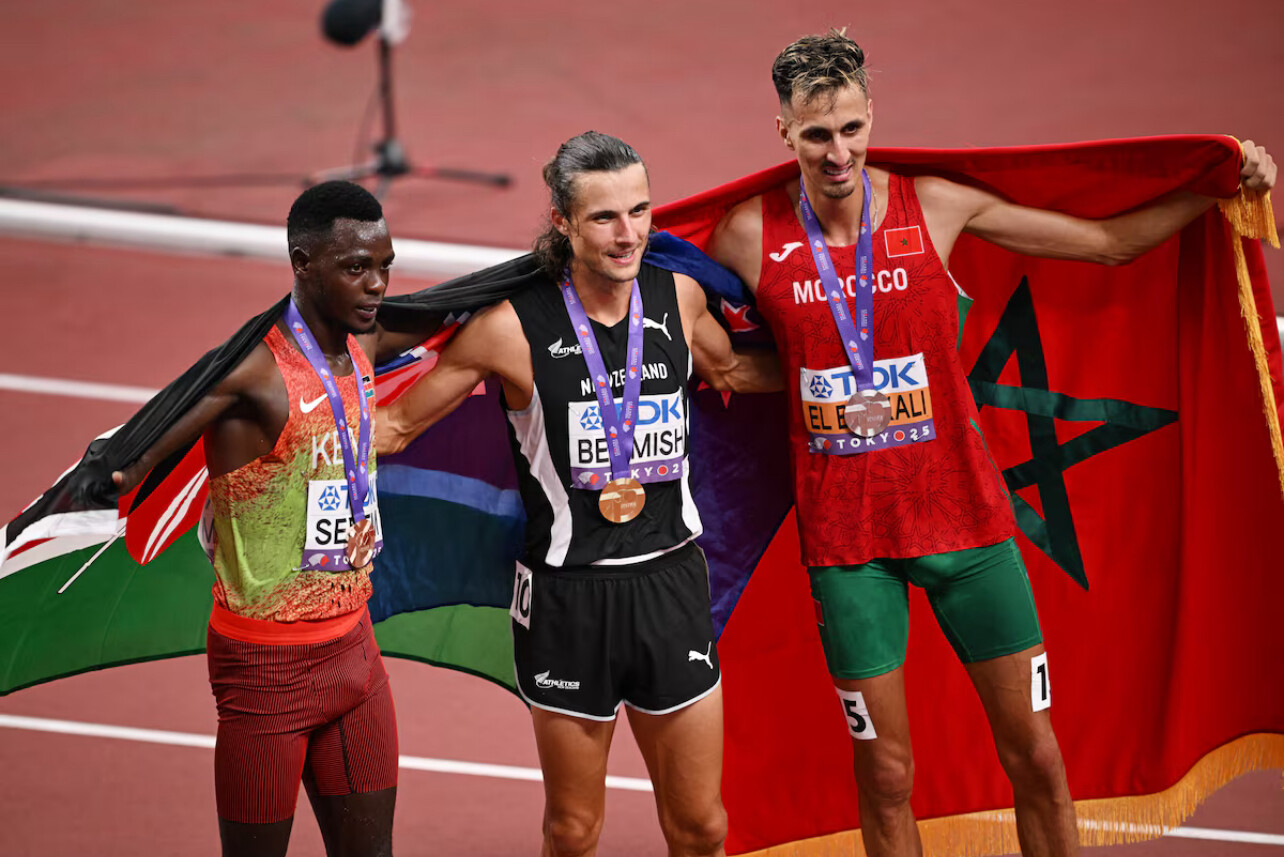
On the last lap, he surged through the field, matching El Bakkali stride for stride. Off the final water jump, Beamish unleashed one last burst of speed. In a thrilling lean at the line, he dethroned one of the event’s greats.
A fall and a spike in the heats
Beamish’s victory was even more remarkable considering his rough path to the final. In his qualifying heat, he fell heavily and was stepped on in the face, yet managed to get up and finish second to advance .
That resilience set the tone for his gold-medal run.
Who Is Geordie Beamish?
• Born: October 24, 1996, in Hastings, New Zealand
• Club: On Athletics Club (based in Boulder, Colorado)
• Coach: Dathan Ritzenhein
• Specialties: 1500m through 5000m, and now the steeplechase
• Career highlights:
• 2024 World Indoor Champion in the 1500m (Glasgow)
• Oceania record holder in the 3000m steeplechase (8:09.64, Paris, 2024)
• Fifth in the 2023 World Championships steeplechase final
Beamish’s late move to the steeplechase has transformed his career, turning him from a versatile miler into a global champion.
This was a big upset
Beamish’s Tokyo win not only toppled El Bakkali’s reign but also put New Zealand back on the map of world middle-distance running. For a nation that once celebrated icons like Peter Snell and John Walker, this is a new chapter in the sport’s history.
With the 2028 Los Angeles Olympics on the horizon , Beamish has proven he has the strength, resilience, and tactical brilliance to contend for more global medals.
(09/15/25) Views: 674Boris Baron
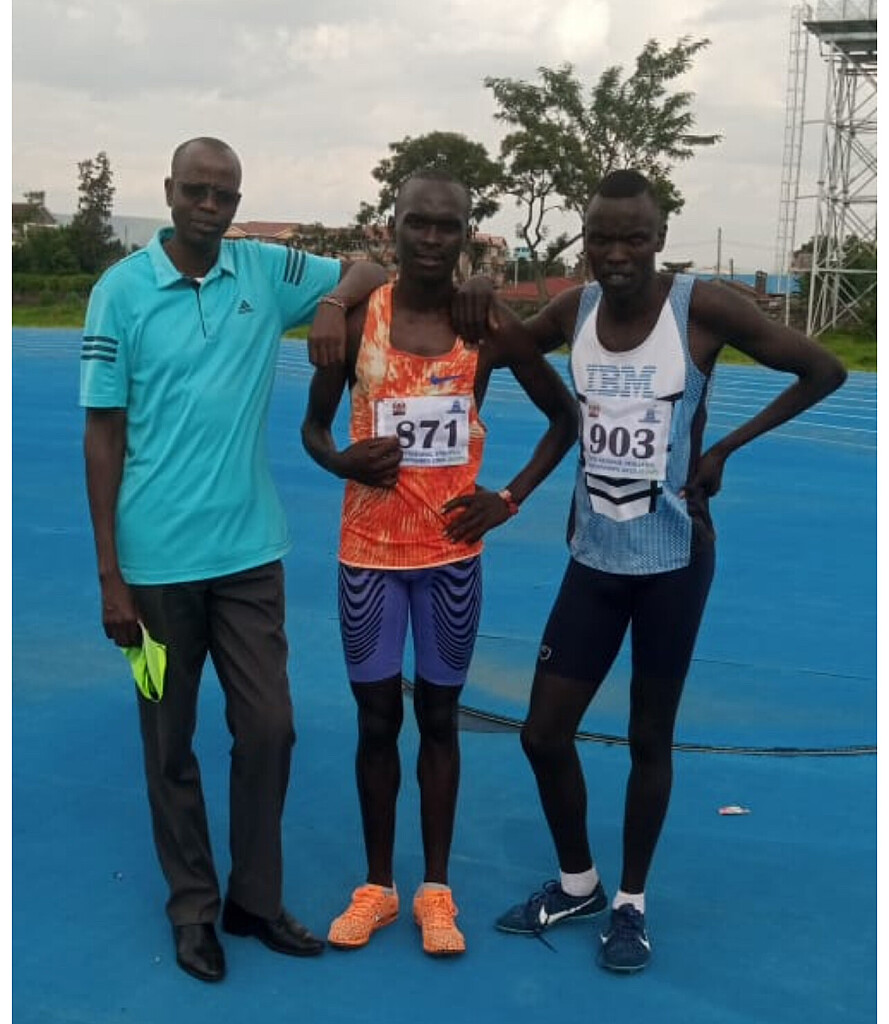
Running Beyond Limits: How KATA Kapkatet Camp Is Shaping the Future of Kenyan Athletics
In the heart of Kericho County, where rolling tea estates stretch endlessly toward the horizon, the rhythmic sound of pounding feet cuts through the crisp morning air. At 5:30 a.m., long before the first rays of sunlight pierce the mist, a group of young athletes from the KATA Kapkatet Camp gathers for prayer before setting off on their daily run.
The roads they follow—sometimes smooth tarmac, other times rugged murram winding through the tea fields—have become their open-air classroom. Step by step, they are learning resilience, nurturing hope, and chasing dreams that stretch beyond the Rift Valley.

Stories of Rising Talent
Among them is Andrew Oronyi, a 20-year-old sprinter who once dreamed of being a football star. Discovered by a teacher who recognized his speed, Oronyi shifted to athletics, experimenting with the 100m and 200m before finding his stride in the 400m. He now proudly holds a personal best of 47.57 seconds and has set his sights on breaking the 44-second barrier to secure a place on Kenya’s global championship team.

“Training under KATA has given me hope for a brighter future,” Oronyi says. “Here, I can focus on running while also contributing through manual work in the camp. This programme is helping athletes shine beyond the usual struggles.”

For Victor Kiprotich, just 16 and fresh out of high school in Kuresoi North, the KATA initiative has been transformative. Encouraged by his coach, Christopher Rono, he joined the camp in 2024 after completing Form Four. Specializing in the 1500m, Victor made headlines at the Bomet County Cross Country Championships, finishing second in the junior men’s 8km in 11:26.

“When I ran that race, I realized that with the right support, I can make it in this career,” he reflects. His gratitude is clear: “I thank Bob Anderson for this initiative. It will help camps become stable and sustainable. We usually begin our morning runs at 5:30 a.m. with prayers—it gives us strength and unity.”
Then there is Festus Kemboi, 18, from Chepalal village in Konoin. Introduced to athletics in Class 7, he began with the 5000m and steeplechase before focusing on the 3000m steeplechase and cross country in high school. Recently, he ran his first senior men’s 10km at Bomet, finishing eighth in 31 minutes. “I know I can bring that down to 30 minutes if I stay consistent,” he says. For him, KATA has been more than training: “This programme is a game changer. Many athletes struggle with rent, food, and daily survival. KATA gives us the structure and support to focus purely on running.”
Leadership and Vision
At the center of it all is Coach Christopher Rono, who operates the KATA Kapkatet Camp and sees immense promise in his athletes.
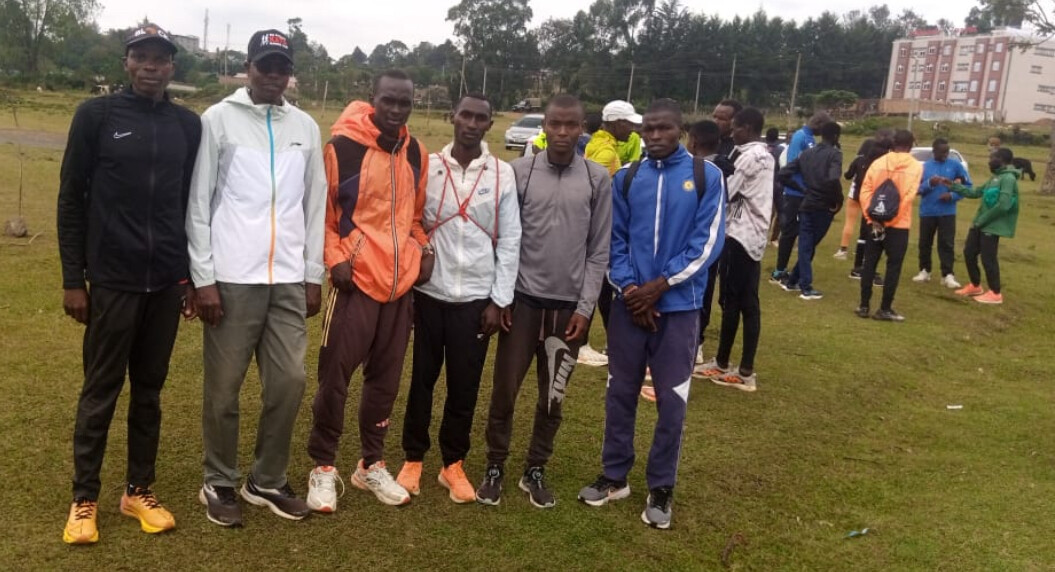
“Kemboi has shown real potential in cross country, while Kiprotich is a young talent with the ability to excel in the 1500m. Oronyi, though a sprinter, could even transition to the 800m in the future. Their determination excites me,” Rono says.
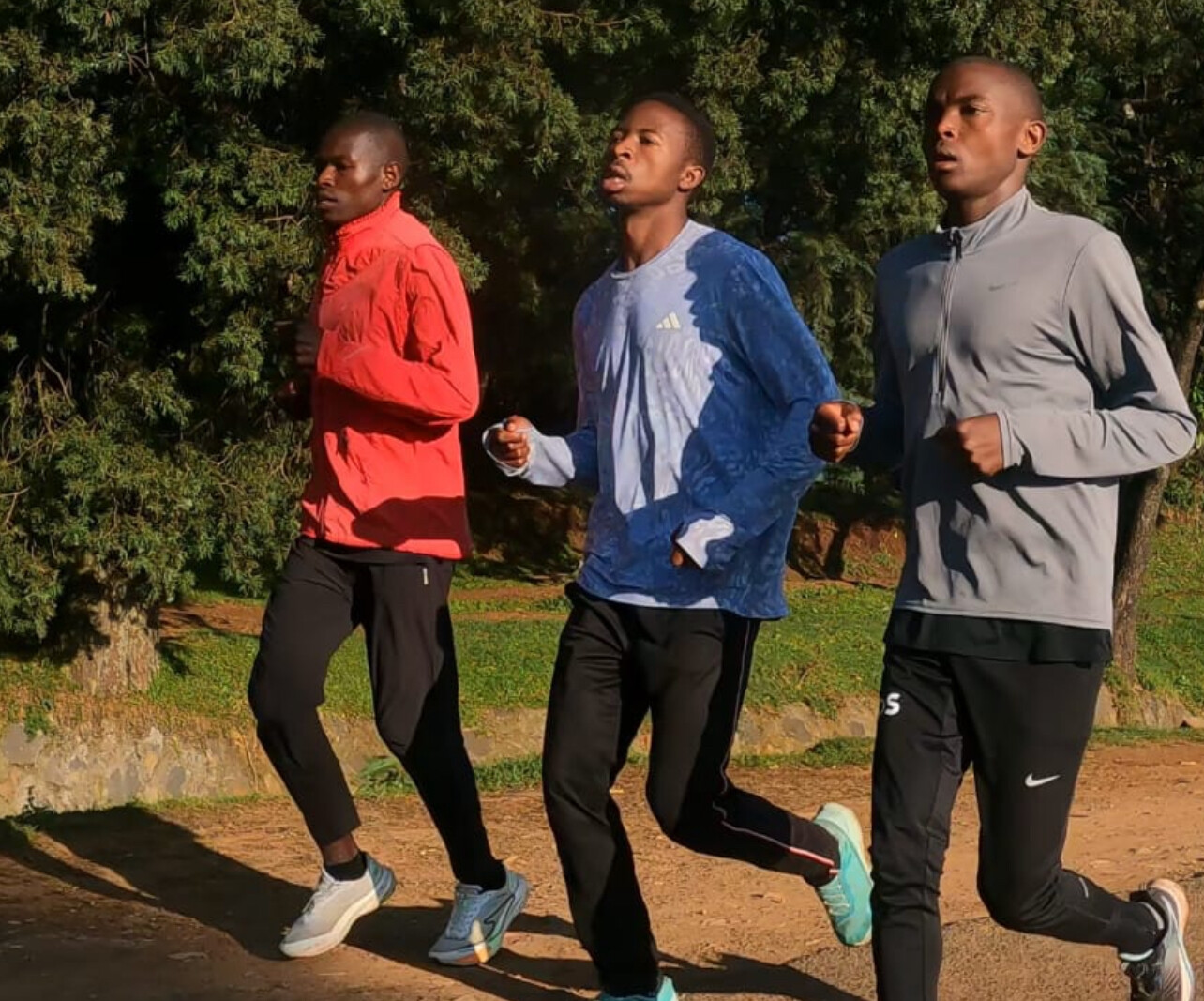
He also highlights Bob Anderson’s vision: “The potato farming project and the Double Road Race are not just creative but sustainable ideas. Athletics Kenya itself has recognized the KATA programme, encouraging camp leaders and support staff to align with it.”
Building More Than Champions
KATA’s message is spreading widely across the Rift Valley. Interest is surging, and several athletes have even begun renting houses near Kapkatet to be part of the training environment. With more than 30 KATA camps now running across Kenya, Bob Anderson’s vision is reshaping athletics management by ensuring athletes are supported both on and off the track.

As Coach Rono looks ahead to this year’s Double Road Race, he is confident: “We are ready to deliver, and this edition will be bigger and better.”
But beyond medals and times, the true story is told in Kapkatet’s misty mornings—young athletes running shoulder to shoulder through tea plantations, beginning each day with whispered prayers. This is where Kenya’s next champions are being molded. Here, sport and sustainability walk hand in hand, and hope runs free.
(09/15/25) Views: 614Robert Kibet
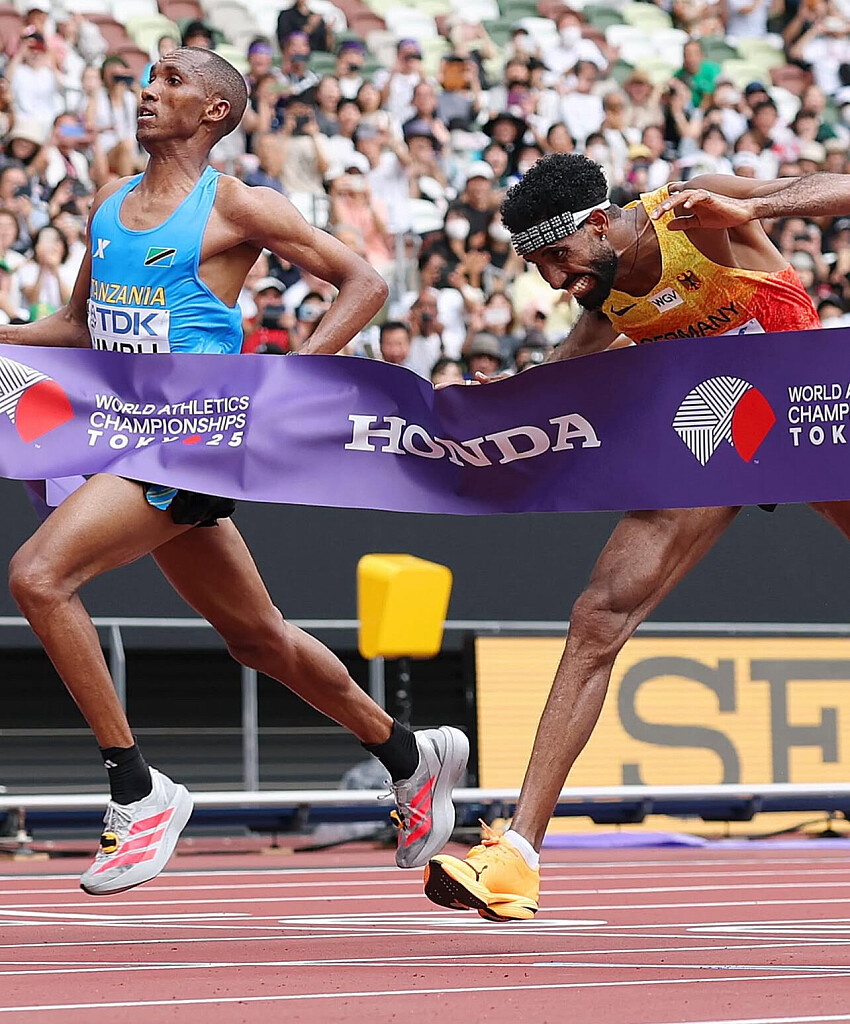
Simbu Wins Men’s Marathon World Title in Dramatic Photo Finish
The men’s marathon at the 2025 World Athletics Championships delivered an unforgettable finish that will be remembered for years to come. After 26.2 miles, the battle for gold came down to a fraction of a second.
With 100 meters to go, Germany’s Amanal Petros surged into the lead, spurred on by the roar of the crowd. But in the final 10 meters, Tanzania’s Alphonce Felix Simbu found one last burst of speed. Both men crossed the line together in 2:09:48, with Simbu declared the winner by the narrowest of margins after a photo review.
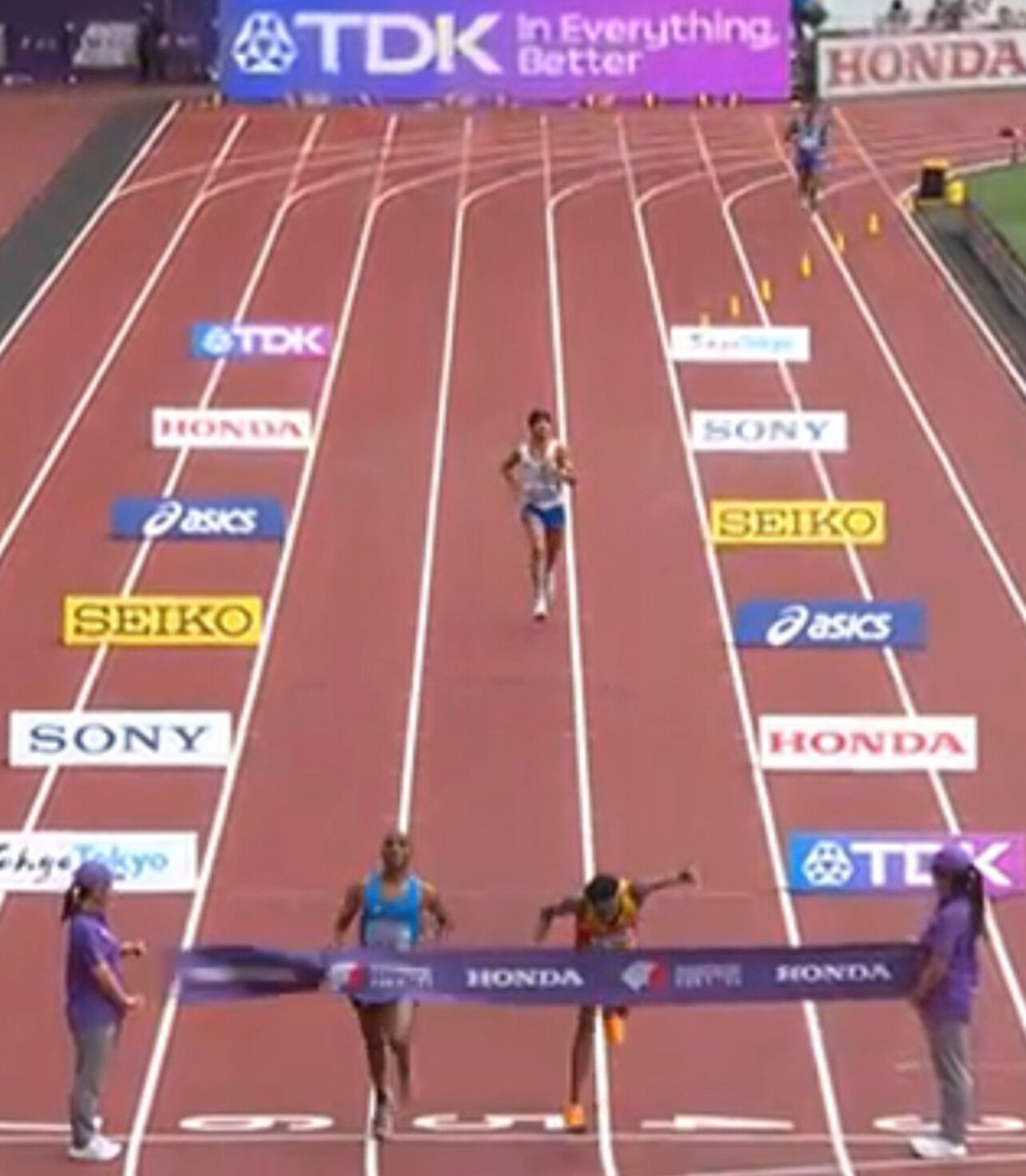
Italy’s Iliass Aouani claimed bronze with 2:09:53, while Israel’s Haimro Alame finished fourth in 2:10:03.
Why Were the Winning Times So Slow?
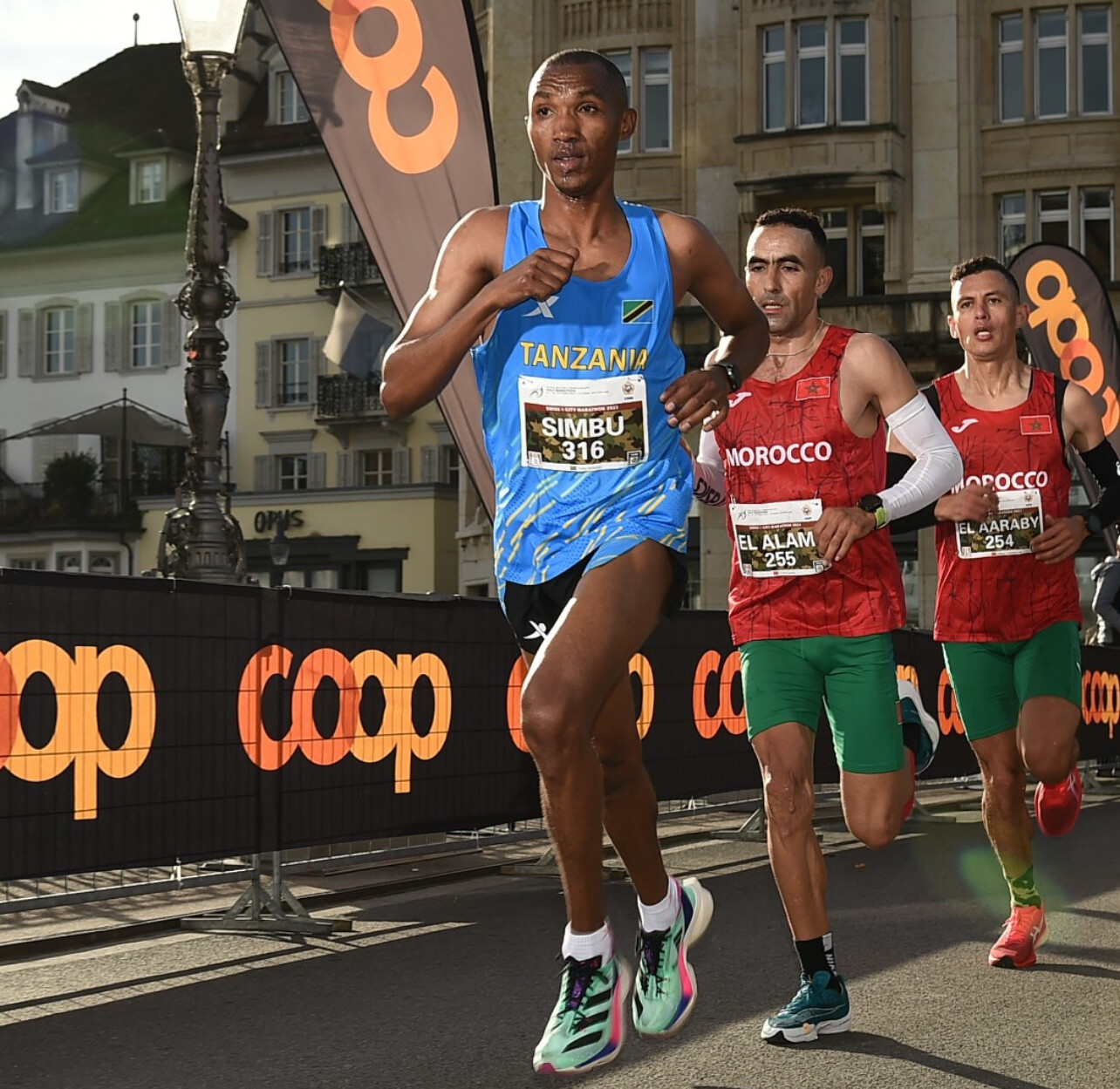
In an era where sub-2:05 performances are increasingly common on flat, fast city courses, a 2:09 winning time might appear modest. But championship marathons are rarely about speed—they’re about tactics, conditions, and survival.
On this humid Tokyo morning, the combination of rising temperatures, tactical surges, and the lack of pacemakers slowed the field considerably. Unlike commercial marathons designed for record attempts, World Championship races unfold as battles of attrition. The priority is medals, not fast times.

That context made the finish all the more gripping. Despite the relatively slow clocking, the drama of two men collapsing at the line after a two-hour duel showcased the true essence of championship racing: it’s not about how fast you run, but whether you cross the line first.
For Simbu, the victory is another milestone in a long and decorated career. For Petros, the silver marked both heartbreak and validation—a confirmation that he belongs among the world’s elite.
The 2025 World Championships men’s marathon may not go down for record times, but it will long be remembered for its thrilling conclusion.
(09/15/25) Views: 504Boris Baron
Kenya’s World Championship Marathon Champion Peres Jepchirchir Returns to Hero’s Welcome in Nairobi
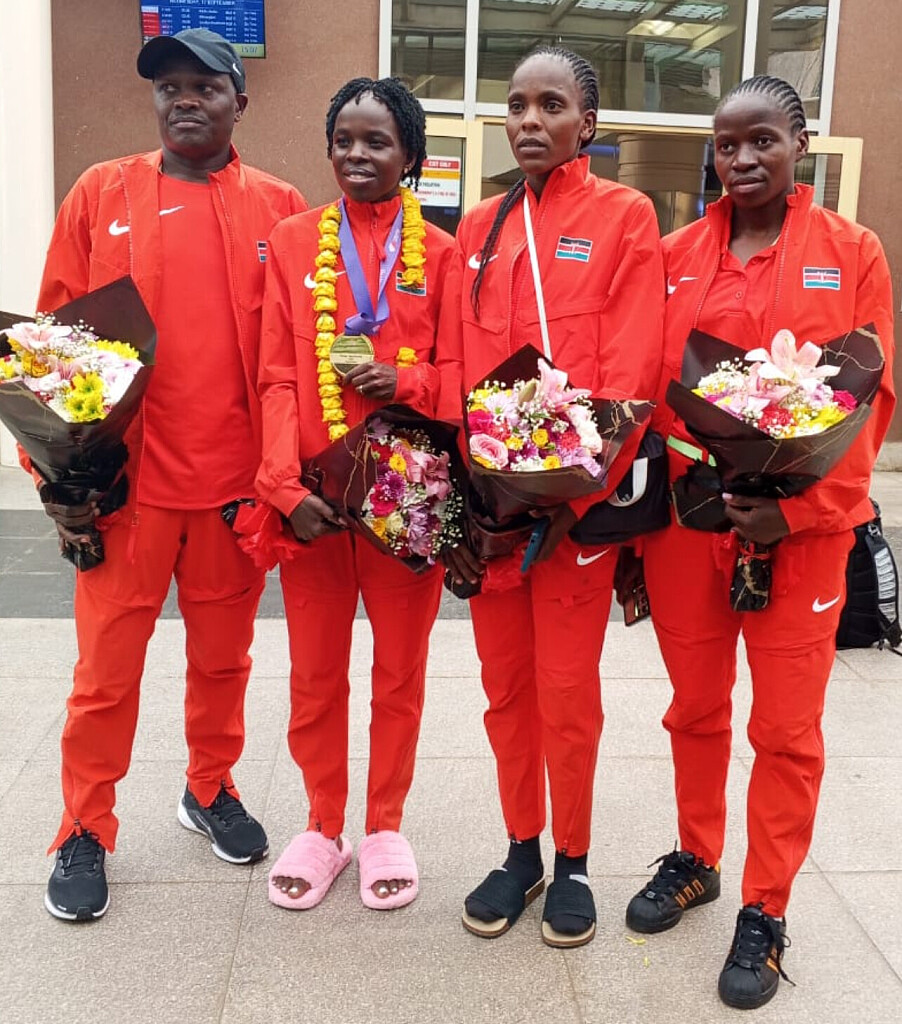
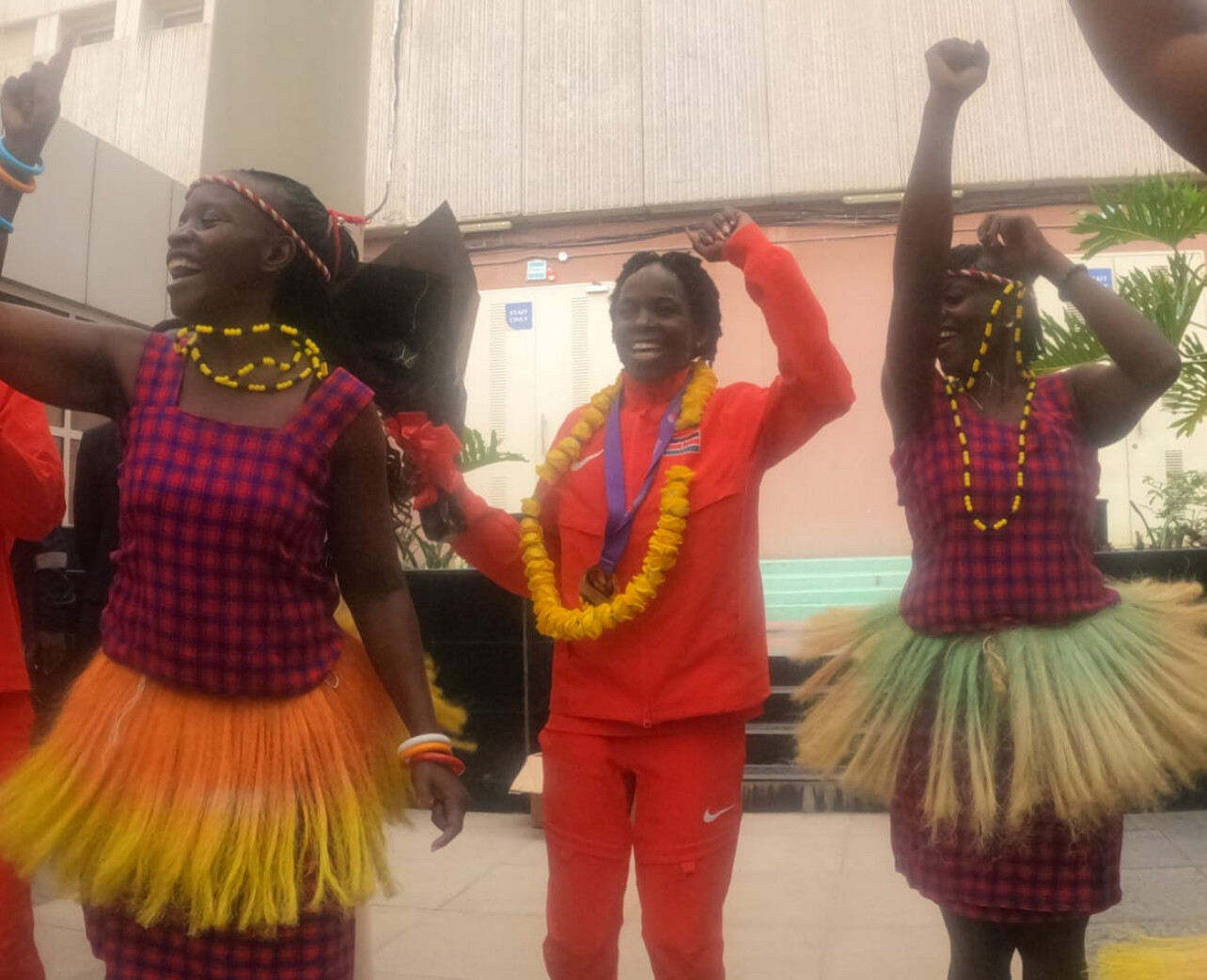
NAIROBI, September 16 – Kenya’s world championship marathon champion, Peres Jepchirchir, arrived home to a hero’s welcome following her golden run at the 2025 World Athletics Championships in Tokyo.
The 31-year-old touched down at Jomo Kenyatta International Airport (JKIA) on Tuesday morning, where she was greeted by traditional dancers, cheering fans, and a delegation of government and athletics officials. She was joined by teammates Jackline Cherono, Magdalene Masai, and Janeth Ng’etich, forming the first group of Team Kenya athletes to return from Tokyo. The reception was both a celebration of her individual triumph and a testament to Kenya’s enduring dominance in distance running.
A Marathon Masterclass in Tokyo
Jepchirchir’s victory was marked by patience, grit, and precision. Competing in soaring temperatures against a formidable Ethiopian contingent, she conserved her energy in the lead pack before making a decisive late surge to secure gold.
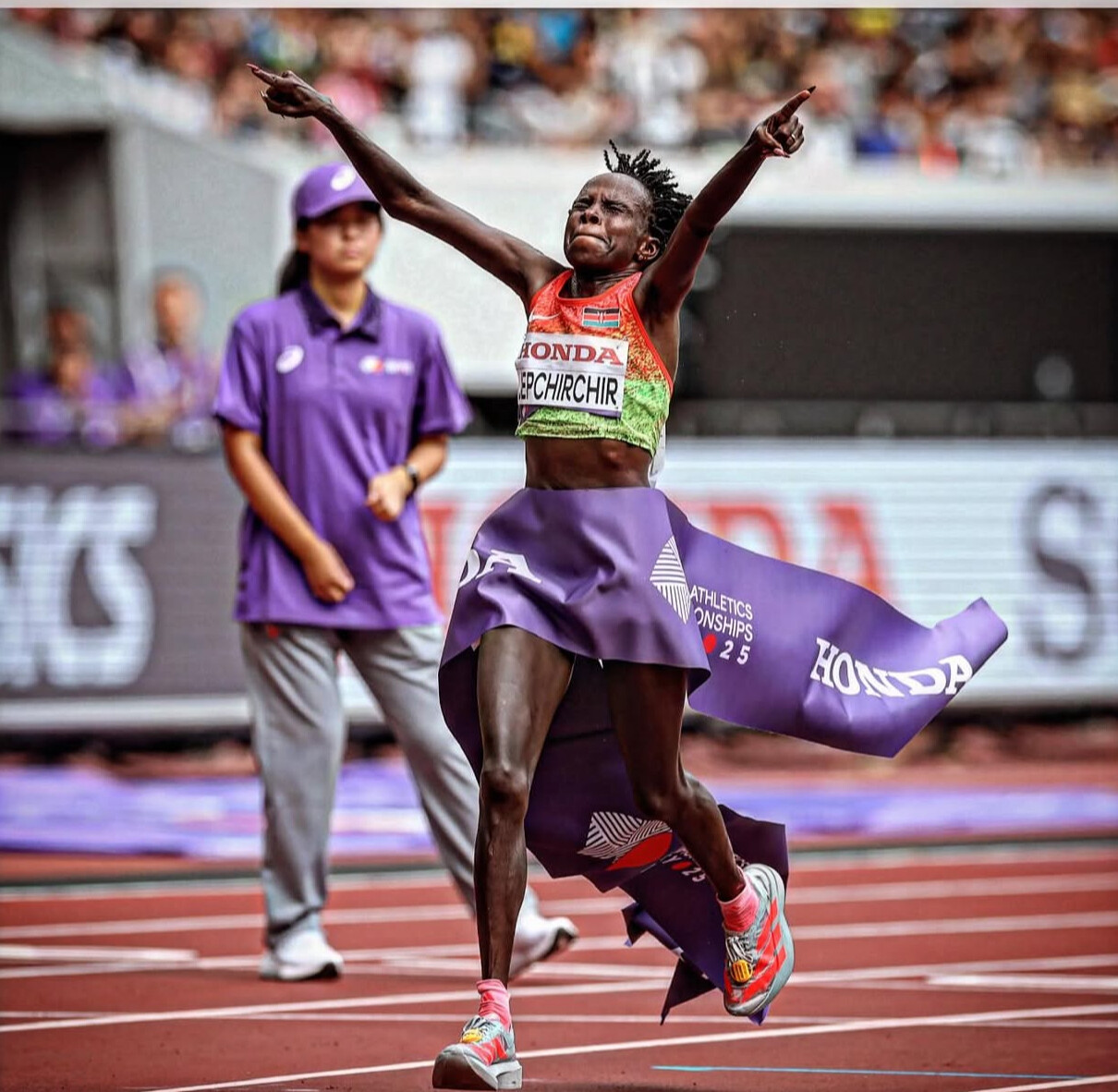
“From the beginning to the end, Peres believed in herself,” said long-distance coach Joseph Kahugu, who followed the race from the Tokyo course. “It was tough, especially against Ethiopia, but she showed her strength, fought hard, and delivered. We are proud of her.”
Her win reaffirmed her place among the greats: an Olympic champion, a two-time New York City Marathon winner, and now a world championship marathon gold medalist.

Government and Athletics Kenya Celebrate
Representing the Ministry of Sports, Jonah Towett assured the athletes of ongoing government backing.
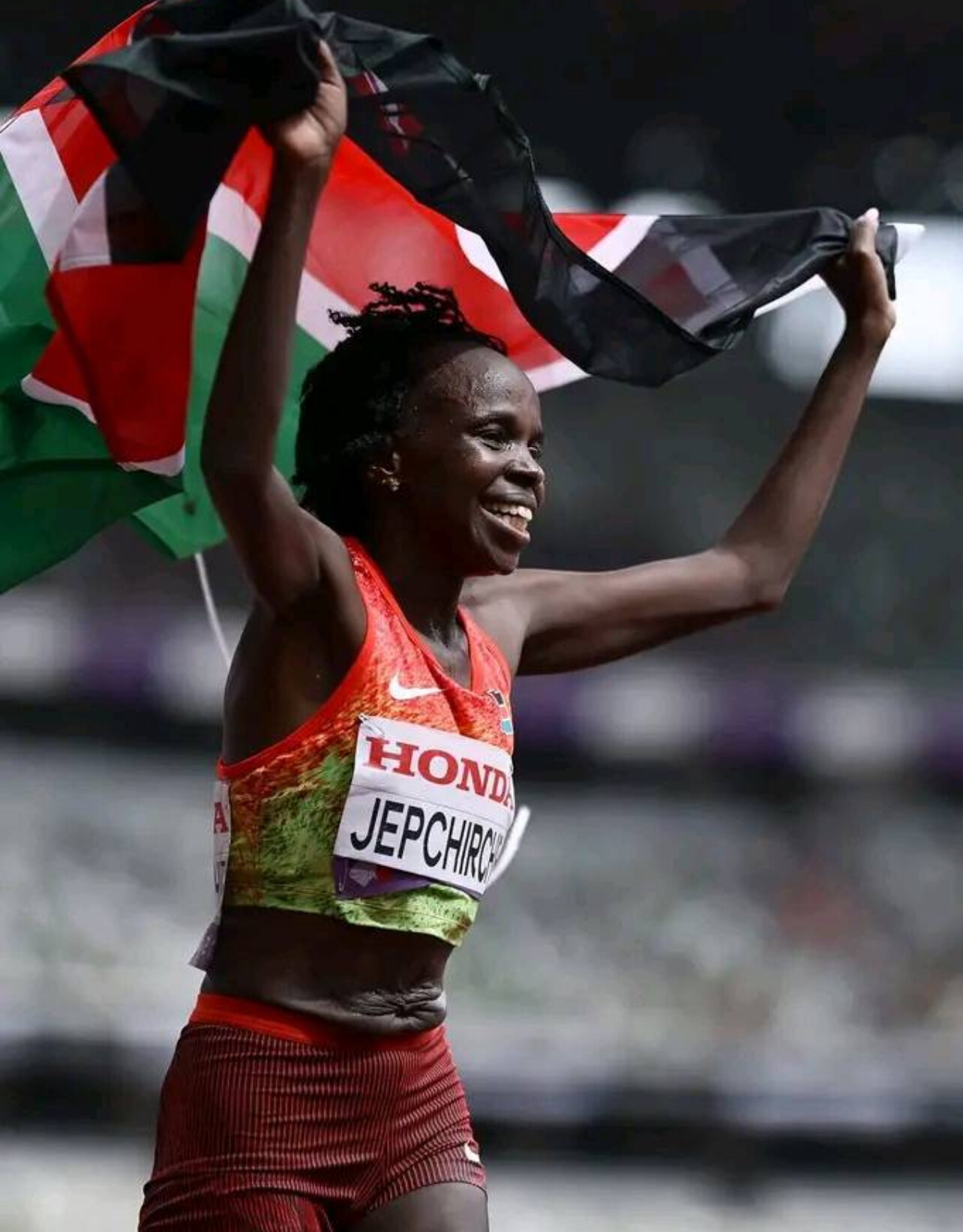
“This is a big day,” Towett said. “We are delighted to welcome our team back home. We congratulate them, especially our gold medalists, and assure them of our full support."
Athletics Kenya (AK) was equally visible at the welcome event, with officials led by Elizabeth Keitany. Keitany, praised Jepchirchir’s achievement and expressed optimism about the rest of Team Kenya still competing in Tokyo.
“We congratulate Peres for making Kenya proud,” Mary Keitany said. “Her victory is an inspiration, and we are confident more medals will come from Tokyo.”

Preparing for the Heat
Coach Kahugu explained that Tokyo’s humidity posed a challenge, but adjustments paid off. “In Kenya, we didn’t train in such hot conditions. Once in Tokyo, we shifted to midday sessions to adapt. That preparation made all the difference,” he said.
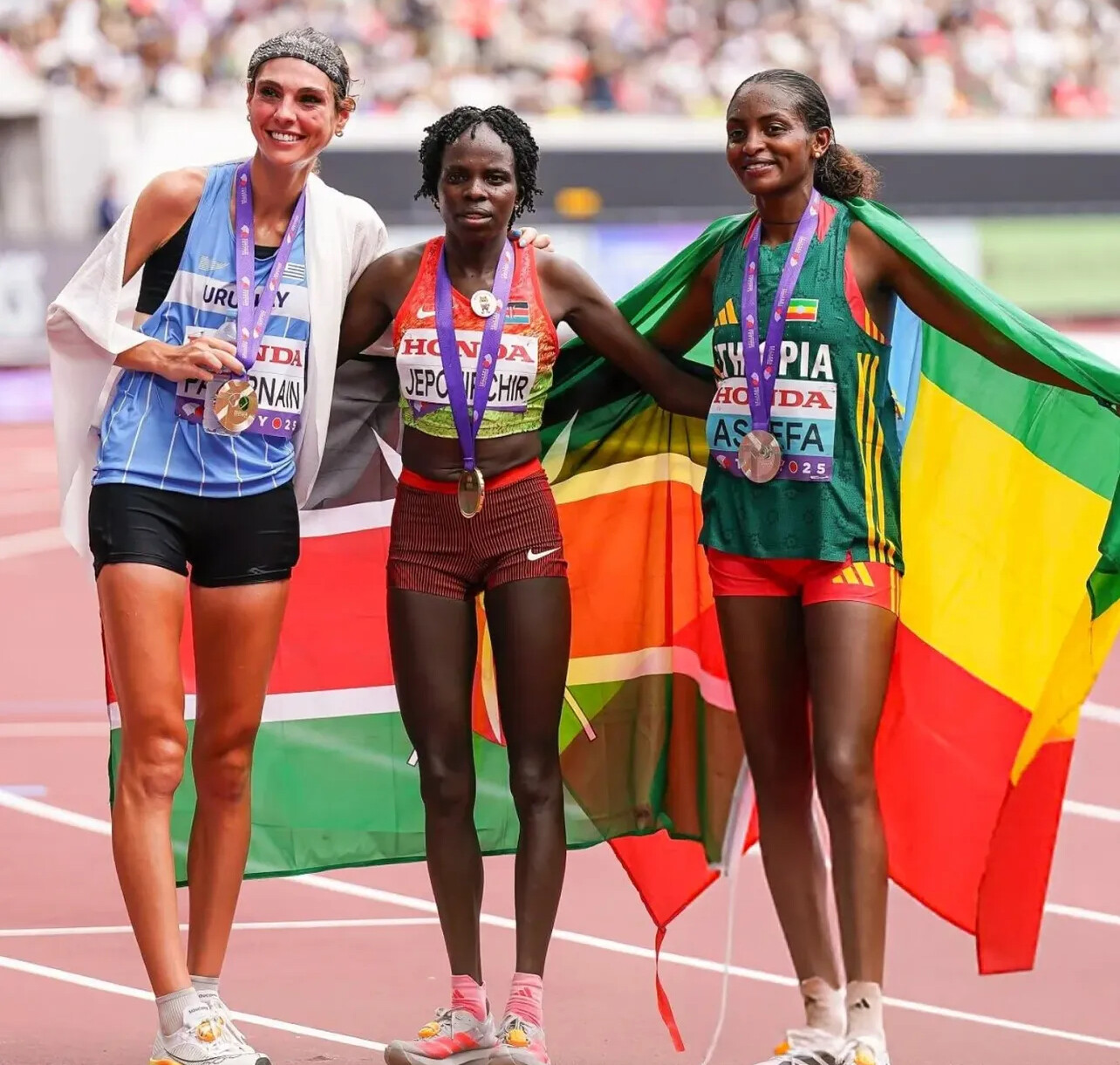
The strategy worked: Jepchirchir’s gold was supported by strong efforts from her compatriots, underlining Kenya’s strength in depth.
Global Spotlight on Kenya’s Legacy
Jepchirchir’s return has once again placed Kenya firmly at the center of the marathon conversation. Her triumph continues a proud tradition carried by icons like Catherine Ndereba, Tegla Loroupe, and Mary Keitany, while inspiring a new generation of runners.
“Kenya’s marathon culture is unmatched,” said one jubilant fan at JKIA. “Every victory like this strengthens our identity as the home of champions.”
Looking Ahead
While Nairobi celebrated, attention remains on Tokyo, where Kenyan athletes continue their medal hunt in the 1500m, 5000m, and steeplechase. Jepchirchir’s victory has set the tone, fueling hopes of more success.
A Champion Beyond the Finish Line
For Jepchirchir, the gold is more than just another medal. Having battled injuries and personal setbacks, her resurgence on the world’s biggest stage cements her as one of Kenya’s all-time greats.
From her beginnings in Kapsabet to victories in New York, the Olympics, and now Tokyo, Jepchirchir’s journey is one of resilience, faith, and belief. Her story continues to inspire athletes and fans worldwide — and her return home is a celebration not just of a single victory, but of a legacy still being written.
(09/16/25) Views: 504Robert Kibet
