

Running News Daily
Top Ten Stories of the Week
9/10/2022
These are the top ten stories based on views over the last week.
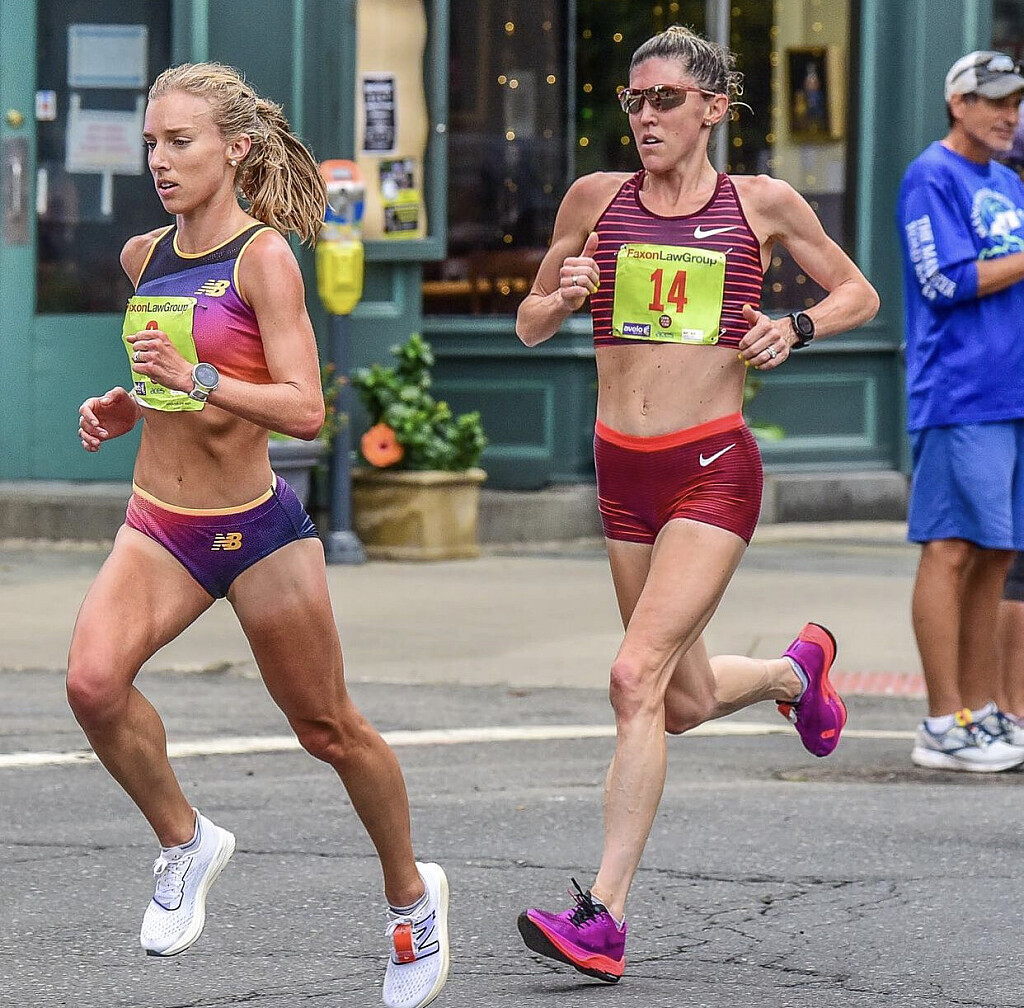


Kiera D’amato wins the women’s 20k in a record time in her new haven debut
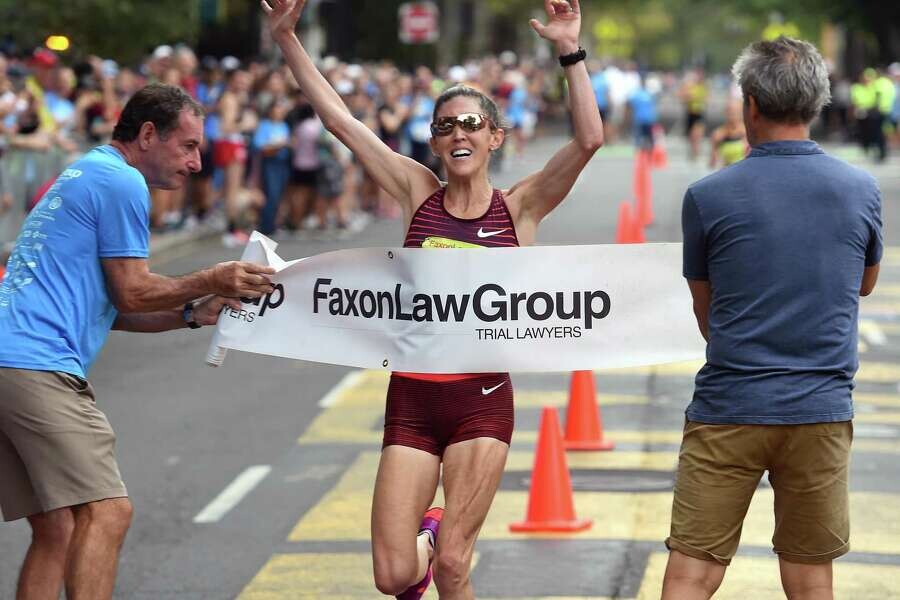
Keira D’Amato sprinted across the finish line. She threw up her arms in celebration as her body ripped through the banner at the line.
The crowd cheered as the announcer declared her time of one hour, four minutes and 59 seconds a course record for the 20k race.
D’Amato looked left and found her mom, Liane, on the sideline holding a poster designed by D’Amato’s 6-year-old daughter, Quin. She ran over to her mom and embraced her in a hug.
The 37-year-old walked away from running once before, yet she returned to the sport for moments like these.
“I kinda felt like running broke my heart and it wasn’t healed yet. But it was something in getting married and marrying into the D’Amato family, they’re a whole bunch of runners, that I learned how to love running again,” D’Amato said. “It’s with that love that I’m able to do things like this and I feel just so grateful to come out here and be with all these runners today.”
D’Amato won the USATF 20k National Championship Monday morning at the 45th annual Faxon Law New Haven Road Race by beating the course record from 1998 (Colleen De Reuck, 1:07:53). Emily Sisson, who finished behind D’Amato, also beat the former record, finishing Monday in 1:04:35. Monday was D’Amato’s debut in New Haven.
This year’s New Haven Road Race was limited to 4,500 runners across five different events, including the men’s and women’s 20k championship, a half marathon and a 5k.
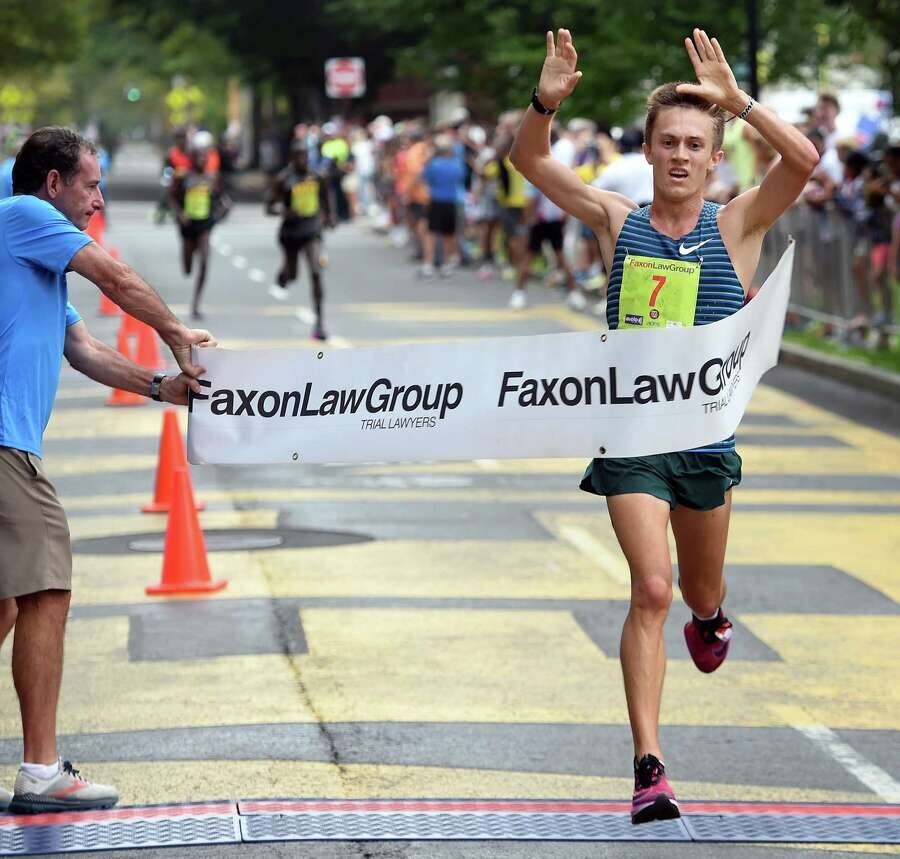
Also having a standout debut in the 20k Championship was men’s winner Conner Mantz, who finished in 59:08. Mantz was followed by longtime Faxon Law competitor Leonard Korir in 59:13.
“It was a challenging race today,” said Korir, who’s raced in every Faxon Law New Haven Road Race since 2016. “Of course, I wanted to win, nobody wants to be second, but you know what, getting second is also good so I’m happy with that.”
D’Amato, from Midlothian, Va., and Sisson wasted no time separating themselves from the pack to start the women’s 20k. The two stayed together and crossed the Mile 3 mark at 15:31. Three miles later, there was a 300-meter-plus difference between them and the next women’s runner.
Sisson said the two traded off leading each mile until D’Amato began to pull away at Mile 8.
“I was like I’d rather win it than lose so I put a move in, and I could feel her hesitate a little bit so that gave me a lot of energy thinking like if I could just put in a couple more moves, like a quick, hard move, maybe I can take this,” D’Amato said. “It’s exciting, but it’s also terrifying to be in the front, like especially with somebody like Emily right behind you.
“Because I was like if I slow down at all, she’s gonna overtake me so it really kept me honest and kept me fighting through and I found more today than I even knew I had because of her, so I’m appreciative for sure.”
(09/05/22) Views: 110
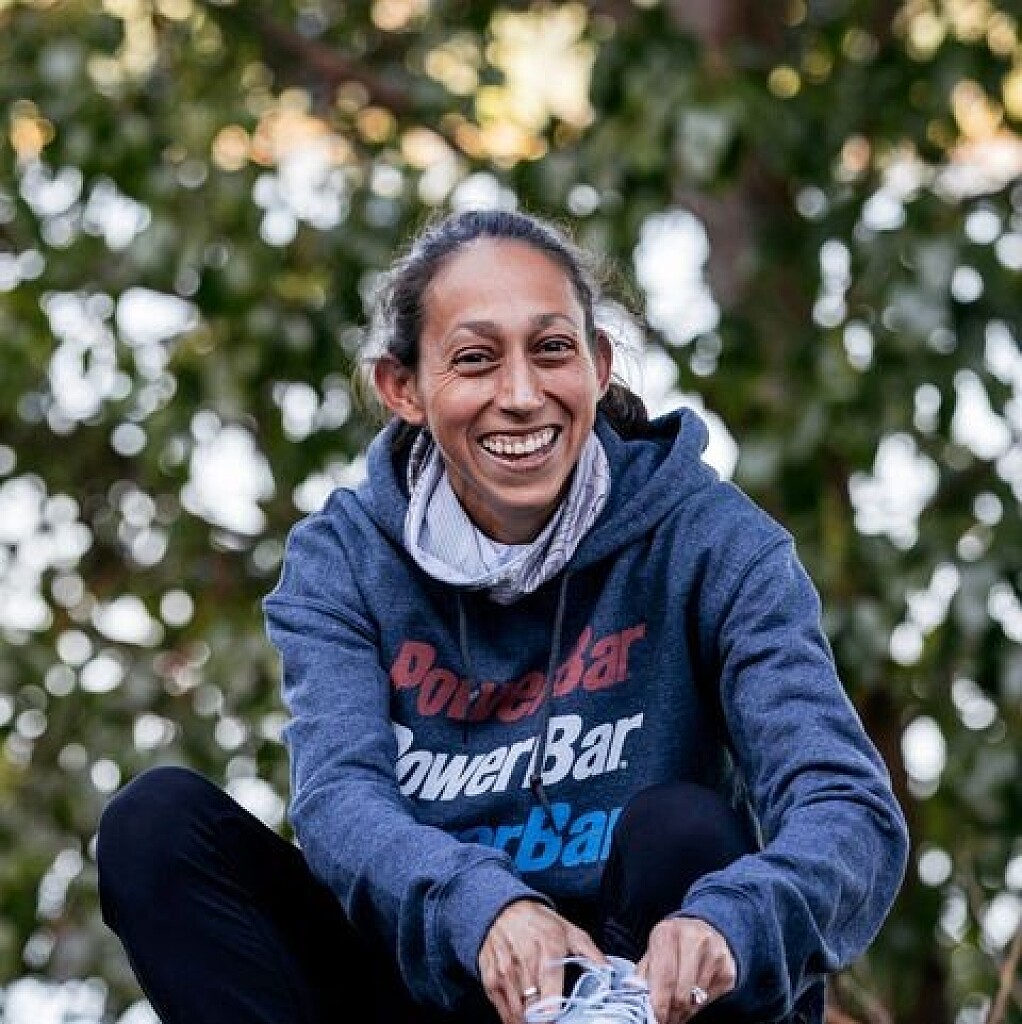
Tips for Running a Marathon and Half-Marathon from World Record holder Des Linden
Running a marathon is not easy. First, you must train your body and your training. It takes months to prepare your body physically, mentally, and nutritionally. And you must train your training with planning, preparation, and consistency. If you can follow these principles, you will be successful. You don’t want to be undertrained or underprepared; that is how strains, pains, and injuries happen.
But don’t take it from me. Des Linden is the expert. Marathoner, Des Linden, was an American woman to break the 33-year dry spell for an American to win the Boston Marathon, finishing it in 2:39:55. Also, last year, she was the first woman to run a 50K under three hours in 2:59:54.
Here are Des Linden’s insider tips to help you improve your marathon. Of course, you don’t have to follow her process entirely, but you can incorporate some or all the things she does that create success for her.
Pace Your Training
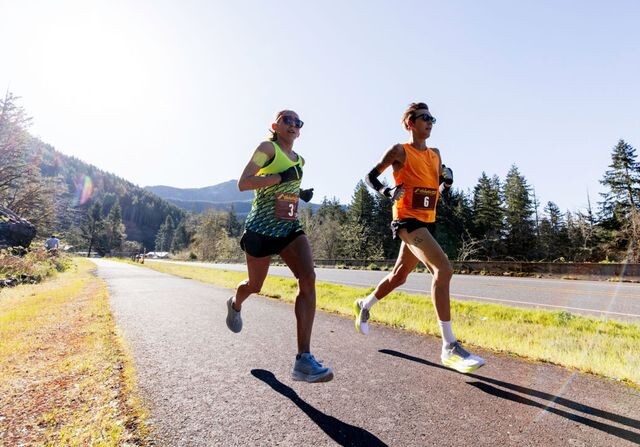
When it comes to running and training for a marathon, there is no quick way. You train, rest, recover, and then your body adapts. Forcing in extra miles is overtraining and not going to make up for missed training days. The body does not work like that. Des says you must be consistent with your training. Training too hard or too much can be disastrous, especially in the middle of your training phase. Consistency is the key. So, don’t up the mileage for your next run if you miss a day.
Be Patient with Running
Distance running is different from running just a few miles or sprinting. First, des says you must love running and the training that comes with it. If you don’t love it, you will force your body to do it. That is bad for you mentally. Physically, the body needs consistent training and time to adapt and improve. She also says there are no quick ways to get better, “You just have to show up.”

You Need Calories
Des says runners are famous for not eating enough to fuel their run. You must eat the right foods for energy. She says good nutrition will keep you strong and healthy and prevent setbacks. It is terrible for your body when you are out on a run, and your body struggles with energy. Not enough calories mean the training will force your body. But she also stresses eating poor nutritional food is better than an empty tank.
Nevertheless, try to eat natural, wholesome foods like vegetables, nuts, and fruits. Des says simplicity works best. Just make sure you get fueled up.
Learn How to Re-Fuel
Post nutrition for your run is essential and the basis of how your energy will replenish. Des says eating 15 to 20 minutes after your workout is critical. Eating a meal right after training is hard, so you must prepare. The most important thing to consume is a protein shake to start repairing muscles immediately. Along with protein, eat carbohydrates that absorb quickly to boost your energy levels. So, drinking a protein shake and eating carbs like bananas are simple and easy ways to refuel and recover.
Des says her stomach is still not ready to digest a full meal after her run. So, she says she will increase her protein when her stomach has recovered, which can take longer than an hour. Then, she plans her bigger sit-down meal of about 15 to 25 grams of protein. But, to refuel properly, you must understand digestion.
Experiment with Your Nutrition
There are so many different foods to eat and supplements to use. But not all foods are created equal and have the same effect for each person. Des says you must test different foods before running and know which ones work best for you. Experimenting and trial and error are your best ways. She says she has tested many foods to develop her nutritional plan over the years. For example, she says she can eat anything during easy runs. But before long training runs or races, she chooses simple foods to avoid the risk of longer digestion, which has the possibility of upsetting her stomach. An upset stomach equals slower runs.
The Key to Speed is Relaxation
Des says you must find the balance between pushing and forcing yourself. If you push yourself, you can stay more relaxed. And, if your force yourself, you create tension that will work against you running faster and longer. Also, the more relaxed you are, the more energy you conserve. If you are tense, it will eat up your energy. And you need that energy when mile 20 arrives to pick up the speed a bit.
For Aspiring Runners
Des says just be patient because running a marathon is a process. On day one, you will think and feel how hard it was to run. And that difficulty will continue for ten days. She mentions that you will want to and feel like quitting, but you must get over that hump. Over the hump is when your routine begins. Des states that getting in shape is hard, but it is awesome once you are in shape. Don’t throw yourself into it; ease into it so you will stick with it. Too much too hard, and you will quit.
Once Des crosses the finish line, her recovery begins. After every marathon, she does not train for two weeks to recover. After that, however, she will get into the pool to do passive recovery. Des says taking two weeks off is essential to heal her body and get excited to train for the next race.
“Sometimes you chase results, and you lose sight of the bigger picture. You need to step back and get back to enjoying the process of running versus chasing down a win.” – Des Linden
(09/03/22) Views: 107Jason Kelly

Kidnapped runner Eliza Fletcher’s body found in Tennessee
Memphis police released a statement via Twitter on Tuesday morning reporting that they had found the body of Eliza Fletcher, the 34-year-old woman who was abducted while running near the University of Memphis campus on Sept. 2. Her body was found in the rear of a vacant duplex apartment building 10 km from where she was abducted, but the cause and location of her death have not been determined.
According to a police affidavit, Fletcher went jogging at around 4 a.m. on Friday. At 7 a.m., when she had not returned home, her husband reported her missing. A male civilian walking by found her cellphone and a pair of Champion-brand sandals on the street in the area. He turned the items over to Fletcher’s family, who gave them to police.

Fletcher was seen last on local surveillance footage on Friday morning. Surveillance footage also showed a black GMC passing and then waiting for the victim to run by, according to the affidavit. A man exited the car and aggressively ran toward the victim, forcing her into the passenger’s side of the vehicle. The car then sat in a parking lot for around four minutes before driving away.
Cleotha Abston, a 38-year-old previously convicted kidnapper, who was released from prison in 2020 after serving 19 years, was arrested on Saturday and charged with aggravated kidnapping and tampering with evidence, according to Memphis police.

The DNA found on the Champion sandals left at the crime scene was a match for Abston, and surveillance footage also showed him wearing the same sandals the day before the abduction.
After the body was identified as Fletcher’s, Abston was charged with first-degree murder and first-degree murder in perpetration of kidnapping.
Fletcher was a mother of two and a preschool teacher in the Memphis area.
(09/06/22) Views: 86Marley Dickinson

How much protein do runners need?, If you aren't already monitoring your protein intake, it's a good idea to start
Protein is a big discussion in gym and weightlifting culture, but it’s a less-prevalent conversation among runners. This is something that needs to change, though, as runners should focus on their protein intake just as much as any other athlete. You may not require as much protein as a strength- or power-focused athlete, but the need for protein is still paramount for your health and success as a runner.
The idea of tracking your protein consumption may seem daunting or tedious for some, but don’t worry, we’re here to tell you just how much you need in your daily diet.
How much protein do you need?

Ashley Ludlow is a dietitian and runner, and she says runners need to consume way more protein than average, non-active adults. It is often recommended that adults consume 0.36 grams of protein per pound of body weight, but studies have shown that this is too low for many people. There’s no set number offered by Ludlow, but she says runners should aim to hit between 0.5 and 0.9 grams of protein per pound of body weight every day.
But how do you determine if you’re on the lower or higher end of this spectrum? Ludlow says it really depends on how much and how far you run. If you’re only training a few hours a week, you can stick to the lower end. However, if you’re putting in high mileage and lots of hours every week, you’re going to want to get close to eating your body weight in grams of protein. This means that if you weigh 145 pounds, you should aim to hit around 130 grams of protein ever day.

“The more energy you burn off in exercise, the more protein you need to ensure that your body doesn’t break down your muscles to fuel your workouts,” says Ludlow. Of course, every runner is different, and this practice may not work for you. If you try it out and things feel off, it could be a good idea to visit a dietitian to figure out what will work for you and help you thrive as an athlete.
Easy ways to get enough protein
Upping your protein intake doesn’t have to mean you’re eating steak every night or forcing down a glass of raw eggs like in Rocky. There are so many easy (and tasty) ways to get the protein you need. Try adding a protein shake to your diet in the morning or after runs and other workouts. These are good with just water, but if you’re looking to get more out of the shake, you can add nut butter, milk, yogurt and anything else you like. Those few added ingredients are great sources of protein themselves, meaning that your already protein-dense smoothie will be even more filling.
If you want something you can snack on throughout the day, grab some nuts or a box of protein bars. One ounce of almonds (around 20 nuts) is six grams of protein, so if you graze them (or any other nut) throughout the day, you’ll get a great boost in your protein intake. As for protein bars, there are so many different brands and flavours out there. Shop around, test a few and find the one (or ones) you like best. The amount of protein varies by the brand and bar, but you can get a great shot of it from any type you buy. Plus, it makes for a quick and easy snack when you’re running out the door for work or to meet your friends for a workout.
Of course, if you’re looking to increase your protein consumption, shakes can only go so far. Adding high-protein items to your lunches and dinners will certainly help you reach your recommended daily intake.
For runners who eat meat, a large pork chop (36 grams of protein in a 230-gram chop), a slice of fish (22 grams of protein in a 110-gram piece) or a steak (62 grams of protein in a standard 250-gram steak) are all great ways to up your protein. For plant-based athletes, lentils (18 grams of protein per cooked cup), beans (15 grams per cup) and quinoa (9 grams per cup) are all great options to fill out your meals.
(09/03/22) Views: 83Ben Snider-McGrath

Shelly-Ann Fraser-Pryce challenges pole-vaulter Mondo Duplantis to 100m race
At the Brussels Diamond League press conference on Thursday afternoon, one of the great female sprinters of all time, Jamaica’s Shelly-Ann Fraser-Pryce, had a question for the pole vault world record holder, Mondo Duplantis: “Say, Mondo, how fast are you at the 100 meters … against me?”
At first, Duplantis was stunned by the question, and after some thought and hesitation, he said: “I would beat you!”
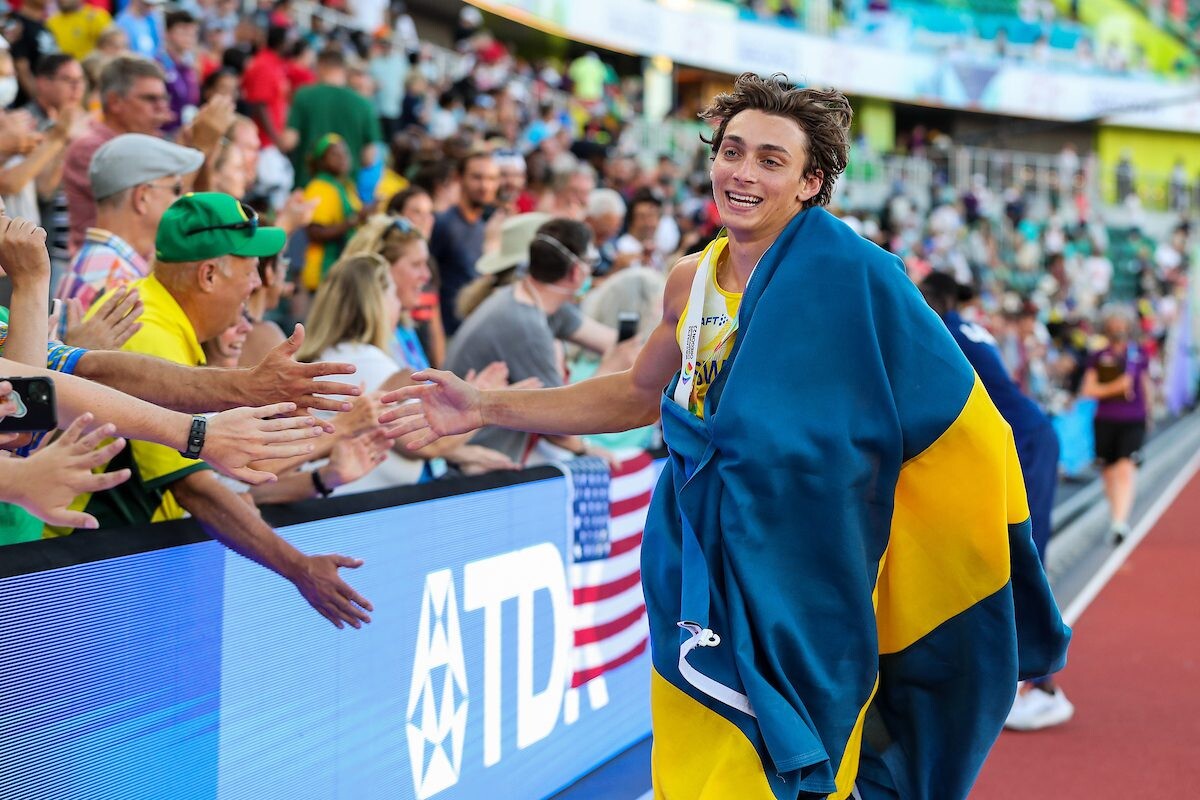
But Fraser-Pryce was skeptical. “How many metres do you have to run in the pole vault? 20 metres?” Duplantis replied that his run-up is 40 metres, and that he used to race the 100m in high school.
“But wasn’t that five or six years ago,” Fraser-Pryce replied.

“But I’m much faster now than I was five years ago,” Duplantis responded.
According to the World Athletics database, Duplantis ran faster than Fraser-Pryce in college (at Louisana State University). He clocked a wind-aided time of 10.57 seconds (+2.1 m/s); Fraser-Pryce holds the faster ‘legal’ personal best of 10.60s.
Fraser-Pryce expressed disbelief, and made a bet with the pole vaulter that she would handily beat him over 100m. Duplantis accepted the challenge, which was followed by an official handshake.
The director of the Diamond League Brussels meet, Kim Gevaert, immediately responded to the challenge. “If you want, we can organize the 100m showdown for you next year at this meet?”
“Yes, next year in Brussels, Fraser-Pryce and I will race 100m. It has been arranged!” laughed Duplantis.
(09/02/22) Views: 82Running Magazine
Grant Fisher sets new America 5000m record
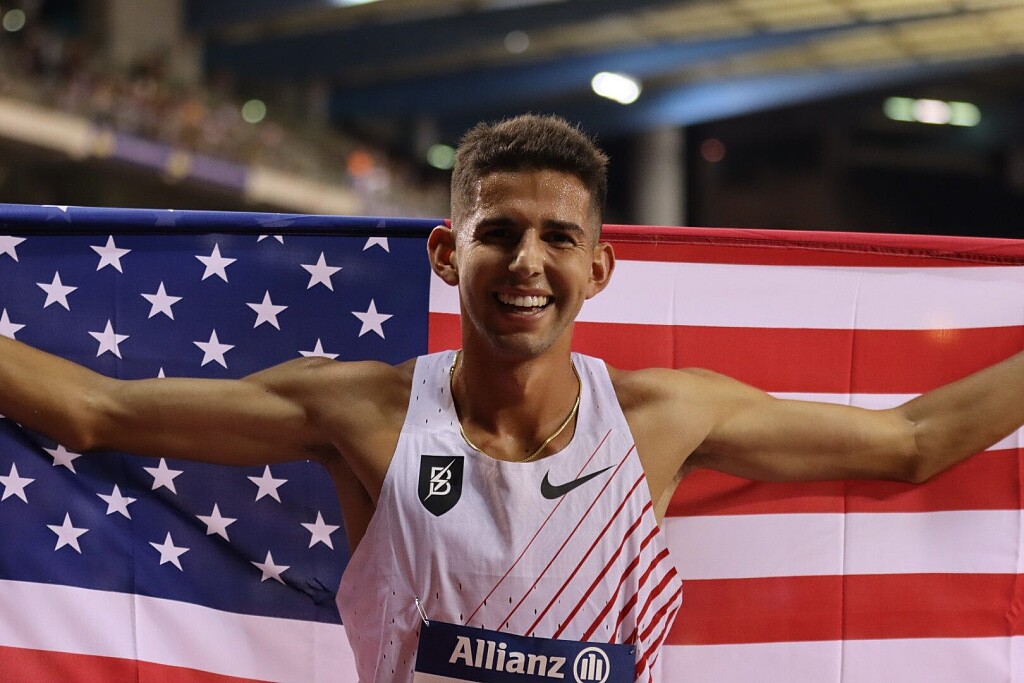
In the latest installment in one of the greatest seasons ever by an American distance runner, Grant Fisher ran 12:46.96 at the Memorial Van Damme Diamond League meet in Brussels on Friday to smash Bernard Lagat’s 11-year-old American 5,000-meter record of 12:53.60. Fisher was also in contention for his first Diamond League victory with 150 meters to go but had to settle for second as Kenya’s Jacob Krop, the Worlds silver medallist, pulled away to win in a world leading 12:45.71 (#6 all-time).
Fisher had near-perfect conditions to break the record. The temperature (low-70s) and wind (6 mph) were fine and wavelight technology was in play, but the most important ingredient was a trio of opponents committed to pushing the pace once the pacemakers dropped: Ethiopia’s Yomif Kejelcha and Kenyans Krop and Daniel Ebenyo.
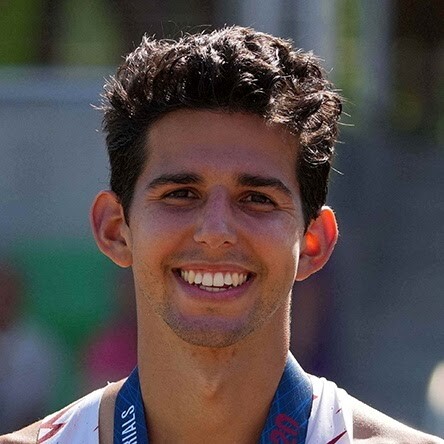
Kejelcha hit 3k in the lead at 7:41.74 (12:49 pace), by which point the four leaders had begun to separate. The gap between those four and the rest of the pack would only continue to grow as Krop took the lead with 1700 meters to go and kept his foot on the gas. Fisher, seeing Krop’s eagerness, was content to sit at the back of the group of four and get towed along to a fast time.
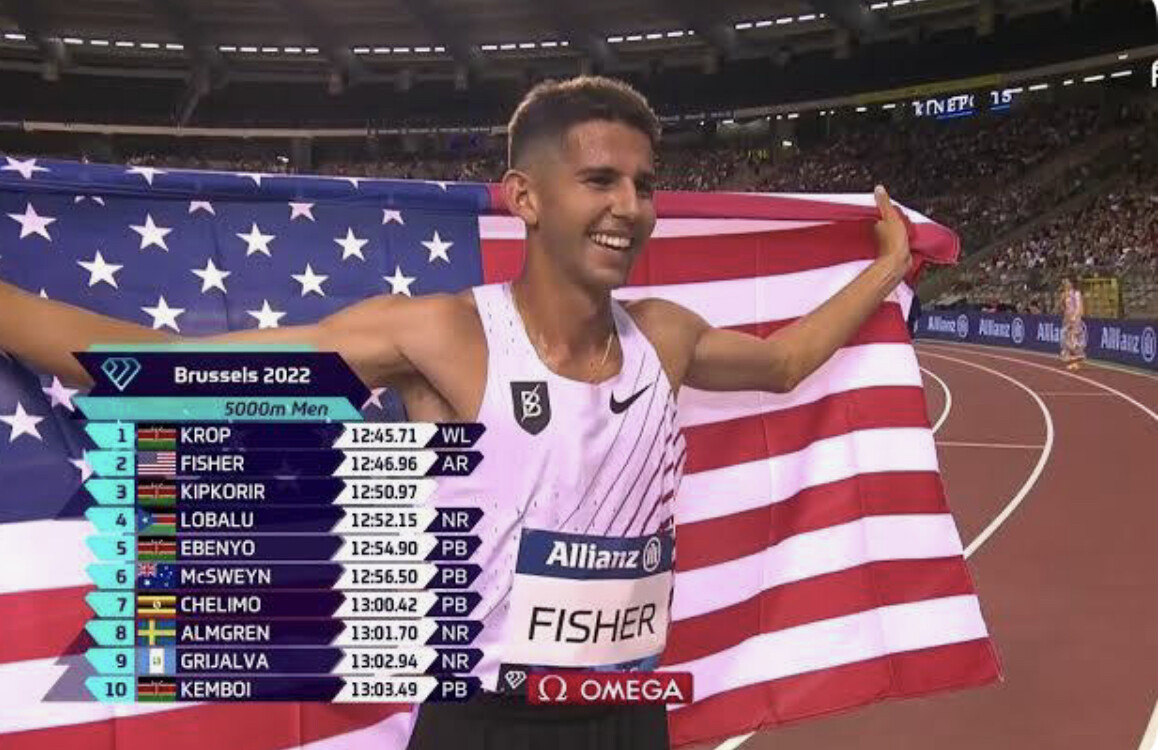
Just before three laps to go, Fisher went past a fading Kejelcha (who would end up dropping out) and moved into third. With a little bit more than 500 to go, a gap started to open up between Krop and Ebenyo and Fisher showed he had more in him as he went past Ebenyo and latched on to Krop. It was now a two-man affair.
Krop was keeping the pace scorching hot as the 4th to last lap was 61.43, the 3rd to last was 61.52 and the penultimate lap was 61.37. At the bell (11:47.9), it was clear Lagat’s American record was history. How fast could they go and who was going to emerge as the winner?
Fisher was ready to put up a fight but he was looking like a car with its engine maxxed out while Krop still looked incredibly smooth. Ultimately Krop broke Fisher with 100m to go to cap a 57.75 final lap (unofficially we had it 29.68, 28.06).
Fisher sprinted it in to finish just behind and break Bowerman Track Club Moh Ahmed’s 12:47.20 North American record in addition to obliterating Lagat’s AR. After running 12:53.73 for 5,000 indoors in February, 26:33.84 for 10,000 in March, and 7:28.48 for 3,000 in August, Fisher’s 12:46.96 tonight gives him four American records in a 2022 season that will go down as a year for the ages in the annals of American distance running.
(09/02/22) Views: 82Let’s Run

Snapchat teases new augmented-reality running glasses
These glasses will allow you to see and train with virtual training partners, plus experience light-based pacing technology.
Snapchat has released a video teasing a few new updates on their augmented-reality (AR) glasses called “Spectacles,” with images and a video of users wearing the glasses on the track and while running.
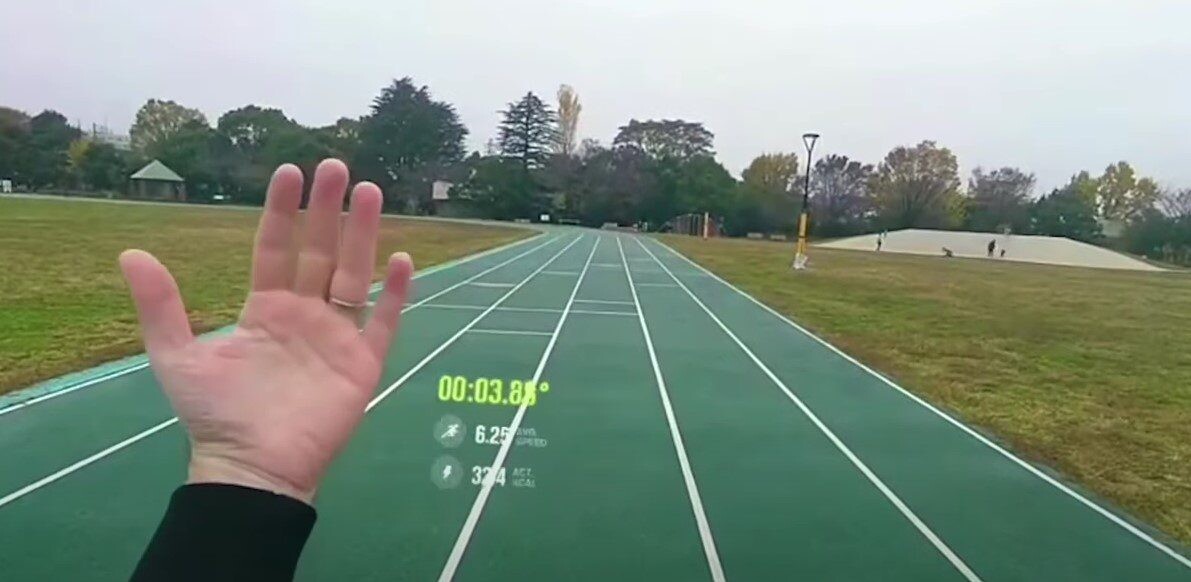
According to tech website UploadVR, these glasses will allow you to see and train with virtual training partners and experience light-based pacing technologies. The lights will help runners control and follow the speed that they are running. The glasses are also equipped with the standard pace, speed and distance information.
In case you are unfamiliar with augmented reality, it is a technology that superimposes computer-generated images into a user’s view of the real world. Snapchat is known for its AR lenses on phones, which overlay art on users’ selfies.

Currently, the glasses are only available for beta testers and creators. The multi-billion dollar social media company has not announced when these glasses will hit the open market, but UploadVR predicts within five to 10 years.
The Spectacles are a bit heavier than the usual pair of running glasses, coming in at 134 grams, approximately half the weight of a running shoe. While wearing these glasses, you can easily share your experiences with all your friends using the Snapchat app.
There is no doubt that these glasses will be a practical training tool for those looking to run with a virtual friend or hit the right pace in their next race.
We can’t wait for the debates about whether these performance-enhancing glasses will be allowed in your local 5K.
(09/06/22) Views: 82Running Magazine
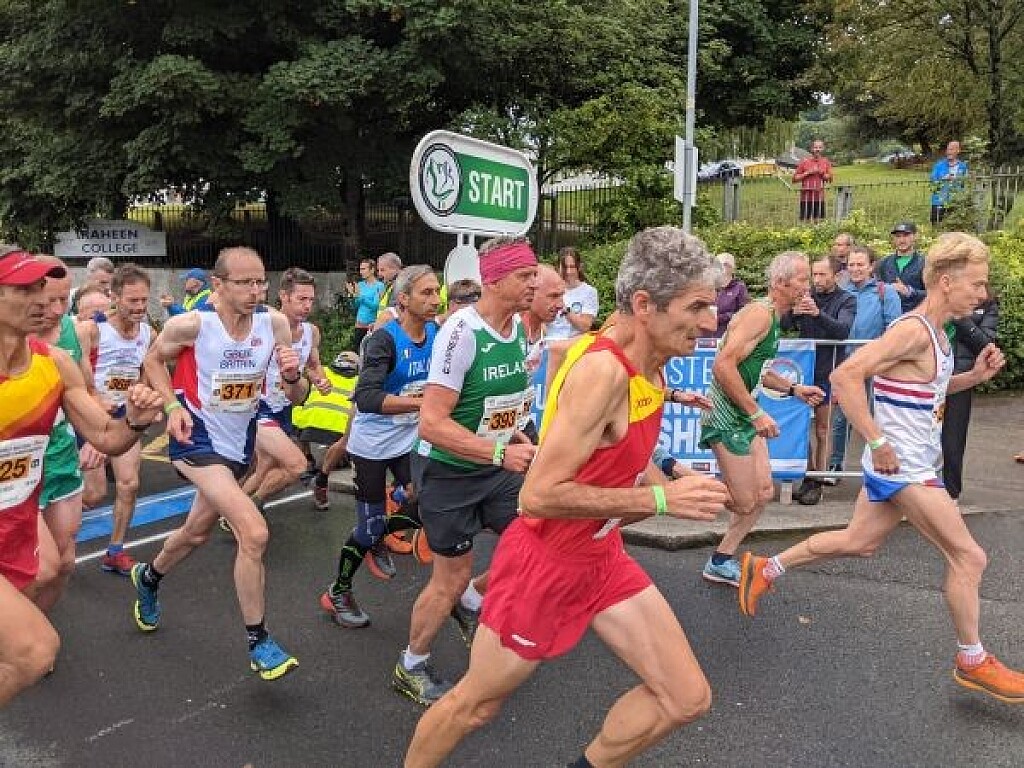
IRELAND SHINES AT WORLD MASTERS MOUNTAIN RUNNING CHAMPIONSHIPS
Saturday's (Sept 3) weather may have been overcast in Clonmel but Irish athletes blazed the Comeragh Mountain trails to take an impressive haul of medals at the 21st World Masters Mountain Running Championships.
With a population of just 5.1 million, Ireland produces more than its fair share of strong mountain runners versus much larger countries who sent teams to this world championship for athletes ages 35 to 79. Irish mountain runners took home eight of eighteen available team gold medals and four individual gold medals.
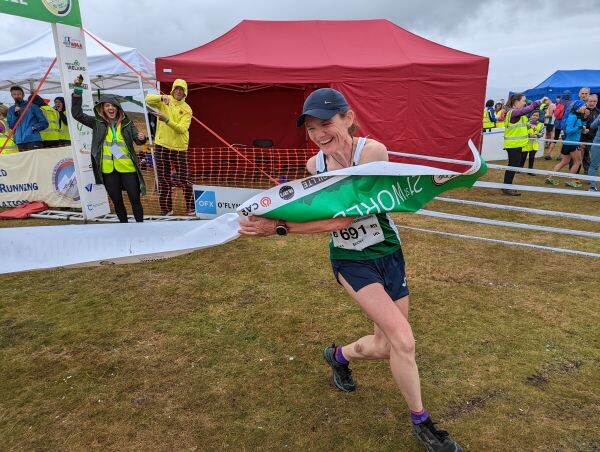
The fastest times of the day were recorded by Thomas Roach (GBR - M40) in 42:00 and Victoria Wilkinson (GBR - W40) in 53:17 on the 10.6km long course with 602 meters of climbing. On the 8.4km short course with 500 meters of climbing it was Franco Torresani (ITA - M60) in 42:09 and Nicoletta Fearari (ITA - W55) in 50:50 who ran the fastest times.
Another performance of note was that of co-race director and course designer Tom Blackburn (IRL) who won a bronze medal in the male 55-59 age group running 44:37, just 20 seconds behind the winner in his age group.Races kicked off in age group waves starting at 10:00 AM under perfect weather conditions for runners; overcast, light breeze and temperatures in the high 50s (F) slowly rising into the low 60s (F).
Only a brief period of light drizzle would interrupt this pattern until the final wave at 1:45 PM.Running on the short course, the W75 race was won by Barbara Prymakowska (POL) in 1:16:40. The W70 gold medal went to Margret Gottnauer (GER) in 1:00:56. The first Irish gold went to Pauline Moran (IRL) who won the W65 age group in 55:50.
Ana Mori Aguado (ESP) won the W60 class in 52:18. Representing a strong Italian contingent, Nicoletta Ferrari (ITA) won gold in the W55 class in 50:50; the fastest women's short course time.Also running the short course, James Patterson (GBR) took gold in the M75 age group in 58:12. Adolfo Accaliai (ITA) led an Italian podium sweep of the M70 age group in 48:49.
The first Irish men's gold medal of the day went to Martin McDonald (IRL) in the M65 class in 48:27. Franco Torresani (ITA) won the M60 class in 42:09. Over 60 runners finished the M55 men's race but it was Tom Tipping (GBR) who bested them all in 44:17.
(09/04/22) Views: 79Richard Bolt
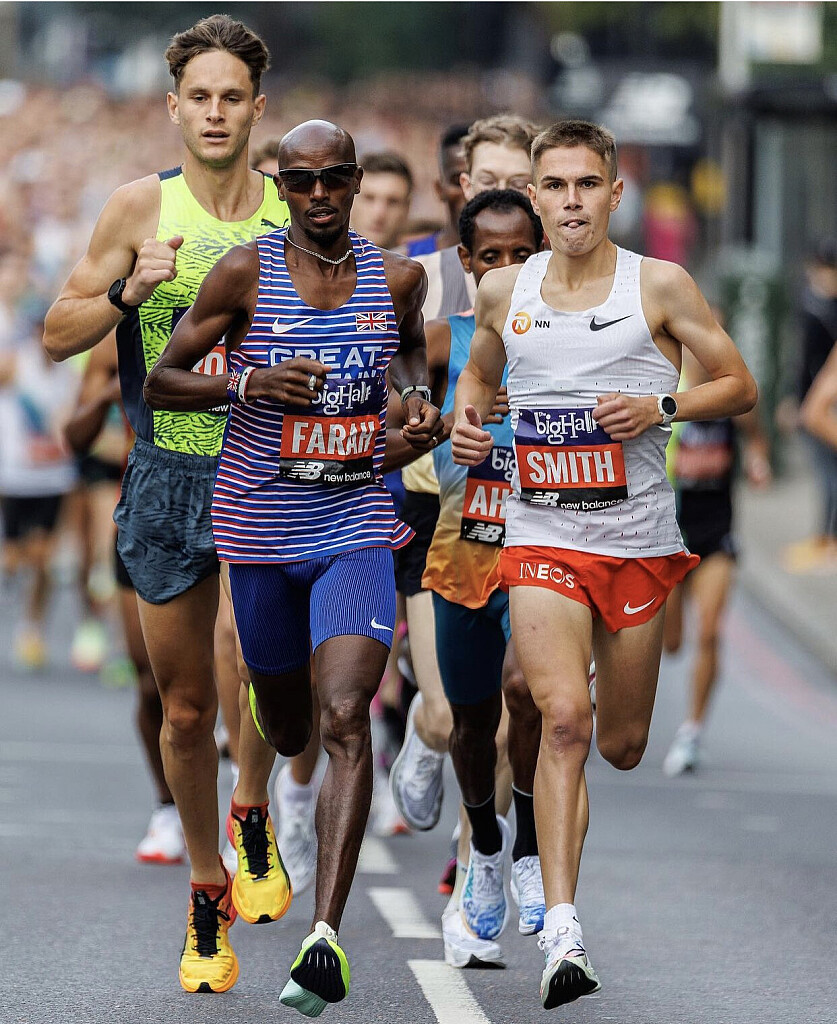
Mo Farah warms up for London Marathon with his third victory in the Big Half
Sir Mo Farah enjoyed a timely return to form ahead of next month’s London Marathon with a third victory in the Big Half.
The four-time Olympic champion suffered a shock loss to club runner Ellis Cross at the Vitality 10k in London in May to spark further talk of retirement.
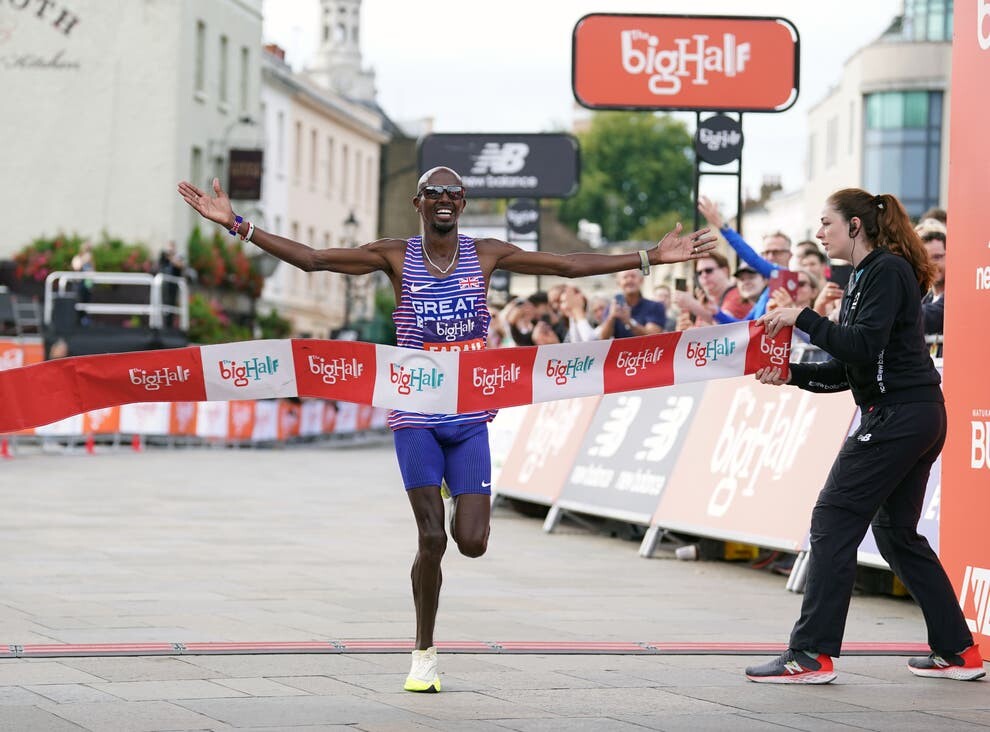
Farah helped silence some of the external noise with an impressive run on this occasion in the capital and crossed the finish line in Greenwich with a time of 61 minutes and 49 seconds after storming clear of his nearest rivals during the last three miles of the 13.1-mile course.
It was only the 39-year-old’s third-fastest run in the Big Half but still enough to edge out Jack Rowe and defending champion Jake Smith, who finished second and third respectively.
Eilish McColgan won the women’s elite race in record time.
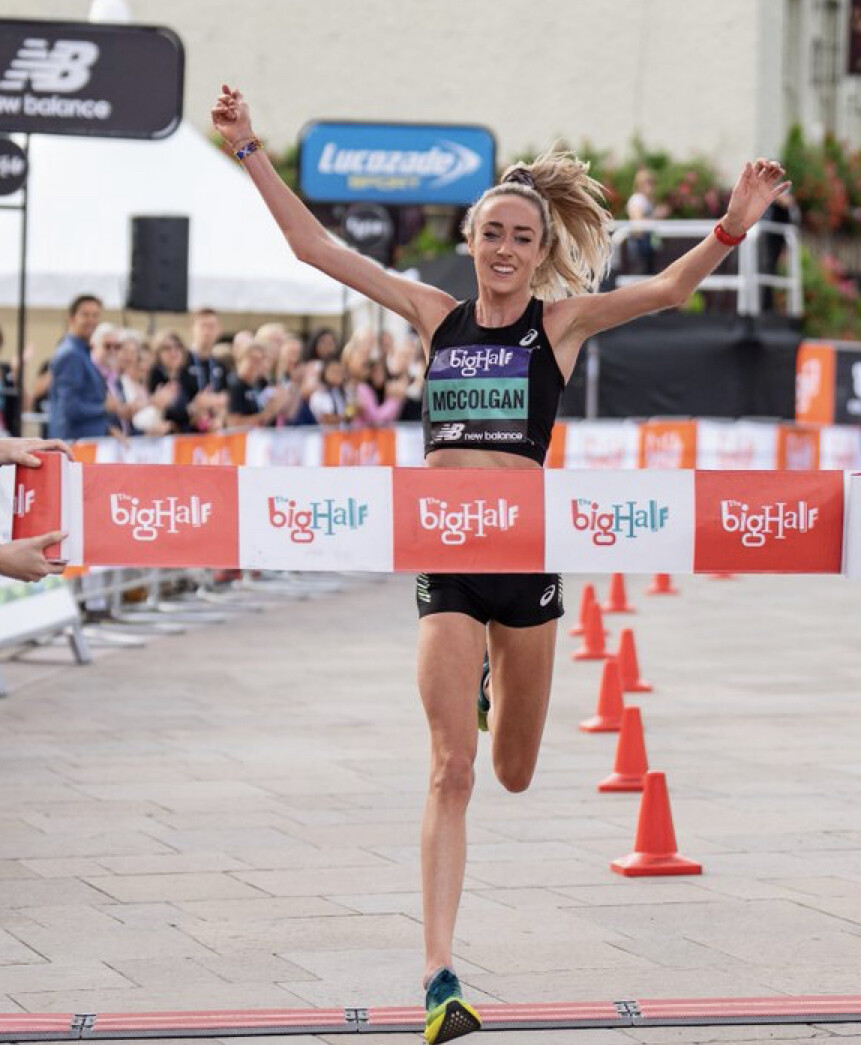
Scotland’s Commonwealth Games gold medallist Eilish McColgan claimed victory in the elite women’s race with a record time of 67.34 minutes but unlike Farah she will not be competing in the London Marathon after it was announced on Friday.
Eilish posted, "67:34. Course Record
"An atmosphere running the streets of London! Happy to take the win and knock over 2mins off the course record.
"Tough running solo over the last half of the race but it was more of a challenge not to smile with everyone cheering us along."
Farah told BBC sport, “Today wasn’t easy but most important is the win and it is nice to be back."
“It is really nice to see my family here and so many people come out. It is family-friendly but most importantly for me, it is the streets of London and just the support and atmosphere, it is brilliant and makes you want to come back every year again and again.
“The key thing for me today was to try and win, no matter what happened.
“It was to play around with things, pick up my drink and all practice ahead of the London Marathon.
“I’m excited, I’m looking forward to it. The last seven weeks it has been good, I’ve got consistent training going, so I’m happy with where I am. The next step is this afternoon I’ll fly out and get ready for the next four weeks, get my head down and see what I can do.
Farah was competing for just the second time in 2022 and eager to bounce back from his disappointment in May.
After being part of a five-man group for the first half of the London event, the multiple gold-medal winner used his experience to pull away after refuelling at the 11-mile mark.
His winning margin was slower than his 2018 and 2019 victories but provided the British athlete with a confidence booster ahead of taking on next month’s London Marathon.
Fellow Olympian McColgan will not be competing in October’s 26.2-mile race having been hit by a reaction to taking on fuel during long practice runs.
The issue has been identified as rebound hypoglycemia, a common occurrence among endurance athletes which leads to reduced blood sugar levels and means there is not enough glucose in the blood to meet the body’s demands.
But McColgan stuck to water on Sunday and bettered Charlotte Purdue’s time of 69.51 minutes last year to show she will be a force to be reckoned with if she can compete as planned in the 2023 London Marathon.
(09/04/22) Views: 76

Scotland's Eilish McColgan withdraws from London Marathon debut
Scotland's Commonwealth Games 10,000m champion Eilish McColgan has withdrawn from next month's London Marathon because of a medical issue.
The 31-year-old has been having reactions to taking on fuel during long practice runs.
The issue has been identified as rebound hypoglycemia, which affects endurance athletes and leads to reduced blood sugar levels.

McColgan is now hoping to make her debut in next year's London Marathon.
McColgan's mother Liz won the London Marathon in 1996. This year's race takes place on Sunday, 2 October.

"When I do race my first marathon I want to be in the very best condition," said McColgan, who is racing in The Big Half in London on Sunday.
"When we started preparing for London earlier this year, it was clear something wasn't right on my long runs.
"Refuelling in a marathon is such an important part of the race to get right, so I have been practising this during my long runs and very quickly I've been experiencing spells of dizziness that have really affected me.
"I was relieved to learn it is not uncommon in athletes. I'm grateful to have a really supportive team around me who are working to find a fuelling solution for this issue and I'm confident that we will have done so in time for me to prepare properly for the 2023 London Marathon."
(09/02/22) Views: 73Athletics
