

Running News Daily
Top Ten Stories of the Week
3/12/2022
These are the top ten stories based on views over the last week.
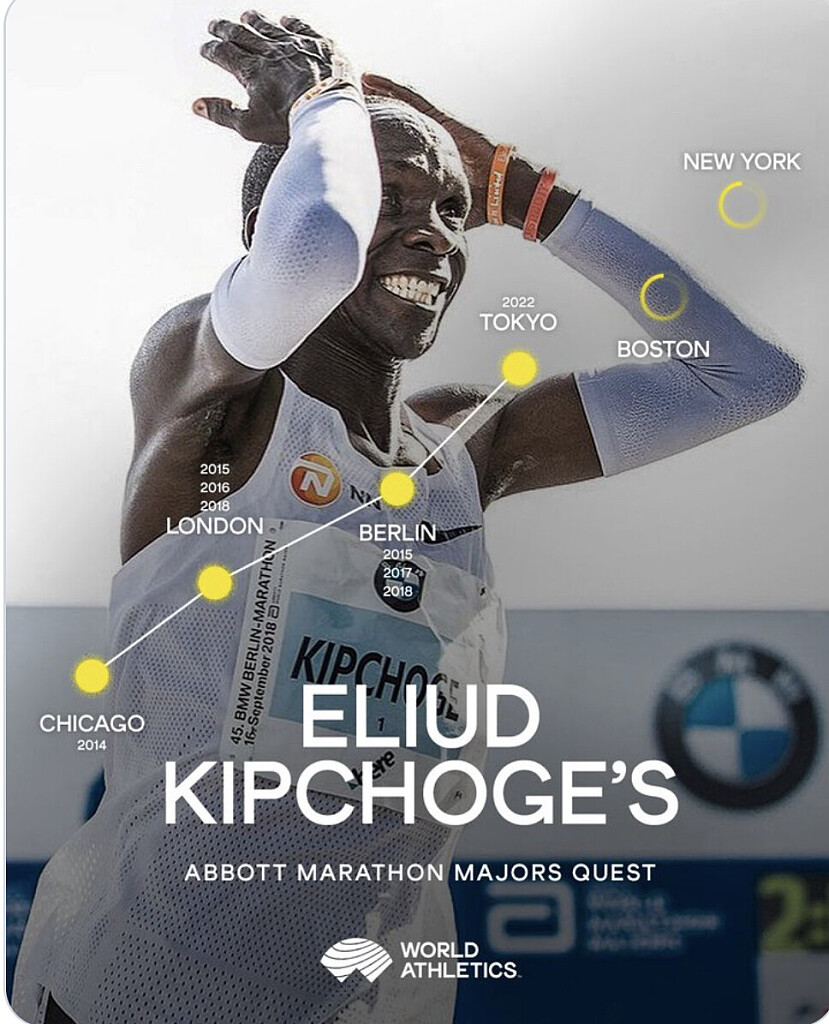


Kipchoge and Kosgei race to Japanese all-comers' records in Tokyo
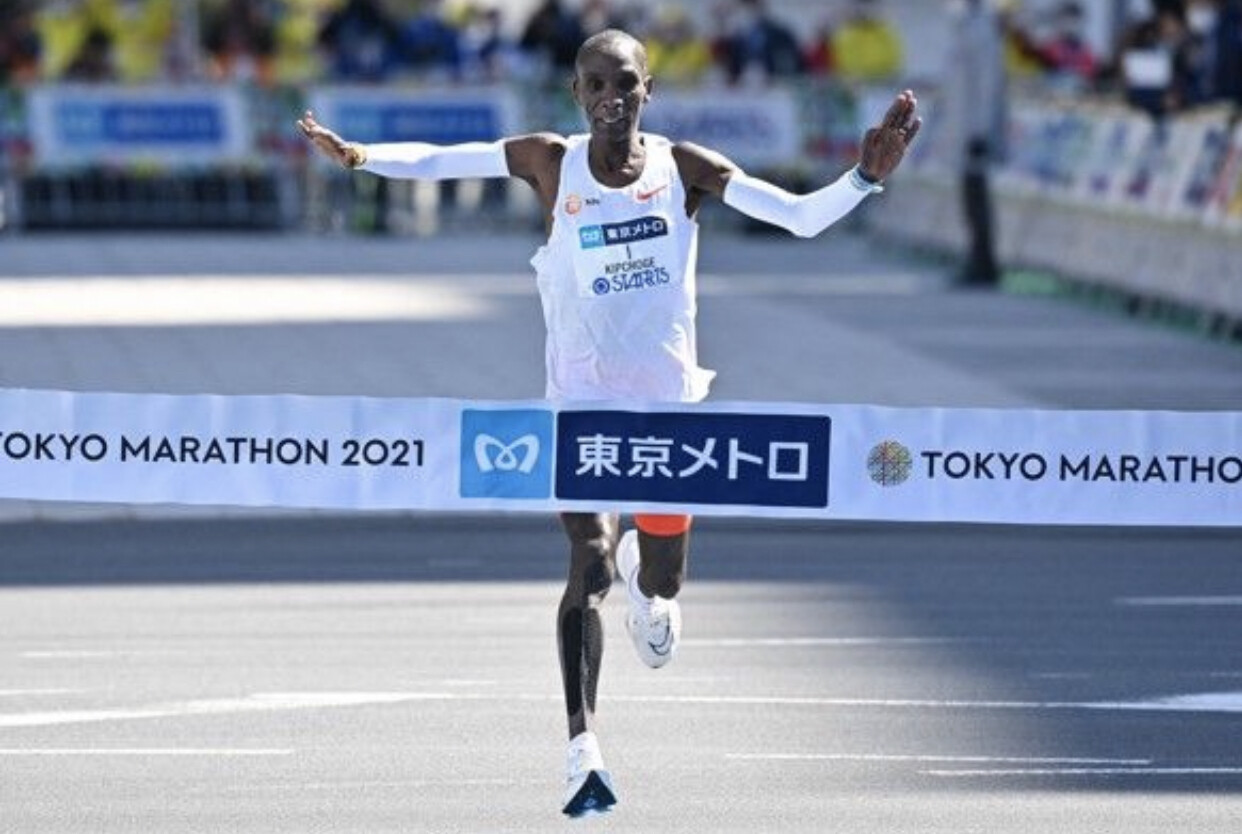
World record-holders Eliud Kipchoge and Brigid Kosgei recorded another two of the fastest marathons of all time in Tokyo on Sunday (6), running 2:02:40 and 2:16:02 respectively on their return to Japan.
Back in the country where they claimed their respective Olympic gold and silver medals seven months ago, they both used their great experience to leave their rivals behind in the closing kilometres and break the Japanese all-comers' records in the Tokyo Marathon, the first World Athletics Elite Platinum Label road race of the 2022 calendar.
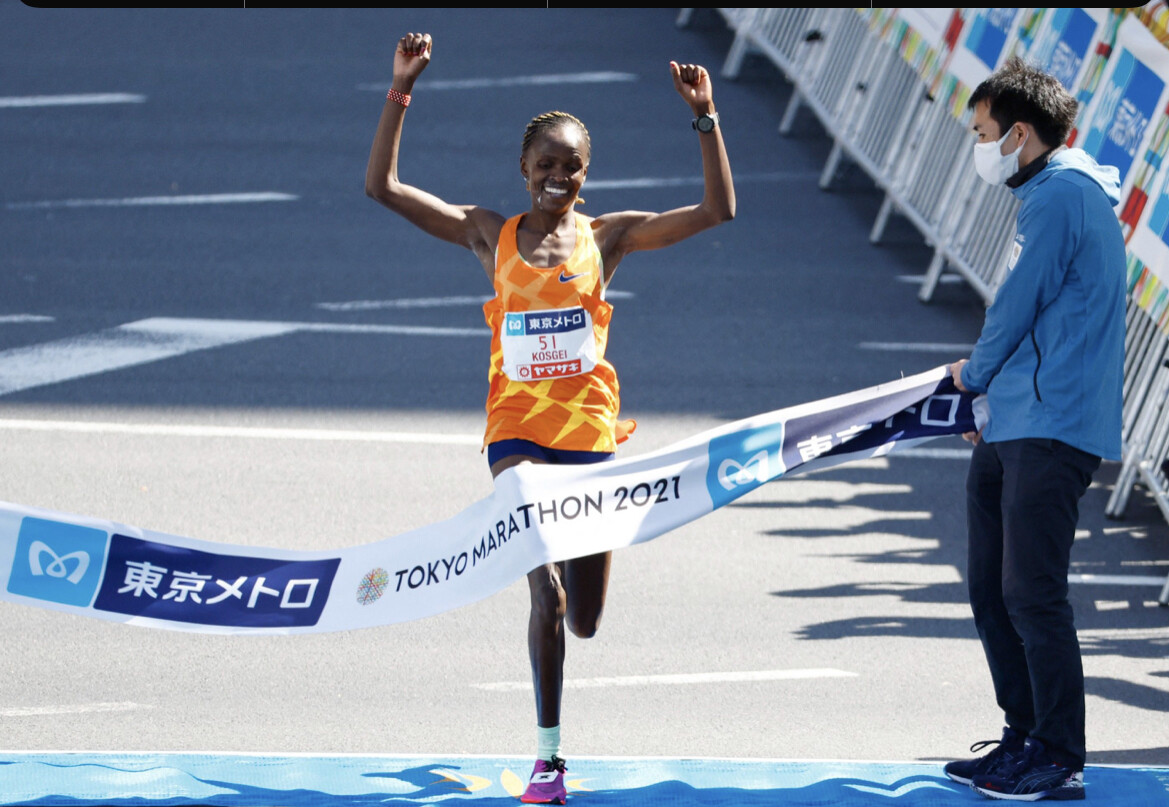
Kipchoge’s performance is the fourth-best ever behind his own world record of 2:01:39 set in Berlin in 2018, while Kosgei’s is a time that only she with her world record of 2:14:04 from Chicago in 2019 and Paula Radcliffe with her 2:15:25 from London in 2003 have ever beaten.
Kenya’s world bronze medallist Amos Kipruto had remained with Kipchoge until 36km and continued running solo to a PB of 2:03:13 in second, while Ethiopia’s Olympic and world medallist Tamirat Tola was third in the men's race in 2:04:14.
In the women’s race, Ethiopia’s 2019 Berlin Marathon winner Ashete Bekere was runner-up this time in a PB of 2:17:58, while another winner in Berlin – 2021 champion Gotytom Gebreslase – was third, 20 seconds behind her compatriot, in a PB of 2:18:18.
Although missing his targeted own Japanese record, Kengo Suzuki had another strong performance, running 2:05:28 to finish fourth as 22 athletes went sub-2:09. A total of 50 runners, including 43 Japanese athletes, dipped under 2:15, while in the women’s race the top five went sub-2:20, 13 went under 2:30 and Mao Ichiyama with 2:21:02 in sixth led the list of 13 Japanese athletes to go sub-2:40 on a sunny and cool morning.
Despite all he has achieved in the sport so far, marathon great Kipchoge has set himself another aim of winning each of the six Abbott World Marathon Majors. After four London wins, three Berlin victories and one Chicago triumph, he added Tokyo to the list on Sunday and will now aim for Boston and New York City at some point in the future to compete the set.
With his winning time in Tokyo, Kipchoge also extended his list of all-comers’ records, having now run the fastest ever marathons on German, British and Japanese soil with some of those majors wins. Only he with his world record and 2:02:37 run in London in 2019, plus Ethiopia’s Kenenisa Bekele with 2:01:41 in Berlin in 2019, have ever gone faster than the Kenyan’s winning time in Japan’s capital.
The race had been fast from the start and the leaders – with Kipchoge in control at the front of the pack behind the pacemakers – were well under world record pace as they passed 5km in 14:17. That pointed to a predicted 2:00:13 finishing time, but one based on a first 5km featuring a substantial downhill. At 10km the clock showed 28:37, with Ethiopia’s Shura Kitata dropped by that point, the 2020 London Marathon winner having struggled to keep in touch from 8km. A course mishap that saw runners go slightly off track just after 10km gave Kitata the chance to close the gap but he was soon dropped again from a lead group that featured Kipchoge, Kipruto and Tola, together with Ethiopia’s world silver medallist Mosinet Geremew and Kenya’s Jonathan Korir.
That five-strong pack remained together through 15km in 43:16, 20km in 57:53 and half way in 1:01:03, with the world record looking less of a target.
Geremew had been right on Kipchoge’s shoulder up to that point but he dropped back slightly at around 23km and one kilometre later the world silver medallist – who sits fourth on the world marathon all-time list with the 2:02:55 he ran in London in 2019 – pulled up and started to walk, with his hands on his head.
When the final pacemaker stopped at 27km, Kipchoge continued to push ahead and the race was down to three: Kipchoge, Kipruto and Tola, who started to lose touch 2km later. Kipchoge led through 30km in 2:02:09 and at this point a determined Suzuki had caught Kitata and was a couple of minutes behind the leaders.
Kipchoge and Kipruto were side-by-side through 35km in 1:41:30 and then Kipchoge began to make his move. He was a stride ahead at 36km and that increased to around five seconds over the next kilometre as the athletes made a turn and began running into a headwind. But he hung on to record the fastest marathon ever run in Japan by over a minute and claim a 33-second victory.
“I am really happy,” said two-time Olympic marathon winner Kipchoge. “I am excited to be here in Japan, especially after winning the Olympic Games in Sapporo. I really appreciated the crowd.”
Before the race Kipchoge had written 'ST:RO:NG' instead of numbers on his finish time prediction card and the 37-year-old felt he had achieved his aim.
“I said I wanted to run strong in Japan and I did, I ran a course record,” he said. “I am really happy I won another major marathon.”
Kosgei, too, has multiple major marathon wins to her name, having triumphed twice in London and twice in Chicago. After securing silver at the Olympics behind her compatriot Peres Jepchirchir, she finished fourth in London just two months later but was back on top in Tokyo.
The women's race record had been held by Lonah Chemtai Salpeter with the 2:17:45 she set on a slightly different course in 2020 and that time always looked under threat. The leaders were on 2:15:44 pace for the first downhill 5km and then passed 10km in 32:14.
By that point, Kosgei was running as part of a larger mixed group along with fellow women’s race leaders Gebreslase and Bekere, plus Kenya’s Angela Tanui and Ethiopia’s Hiwot Gebrekidan. A chase group featuring Ichiyama and her compatriot Hitomi Niiya, who won the first Tokyo Marathon in 2007, plus Ethiopia’s Helen Bekele and the USA’s 2020 London Marathon runner-up Sara Hall was 30 seconds back.
The same group of five led through 15km in 48:21 and reached half way in 1:08:06. At 25km, passed by the leaders in 1:20:48, chase group athletes Ichiyama and Hall remained on national record pace but those aims began to move out of reach a short while later.
Kosgei was still in control with Gebreslase tracking her, and the pair had broken away by 35km, with 1:53:08 on the clock. Kosgei missed her drink at that point but she didn’t seem to mind as she forged ahead while Gebreslase dropped off the pace. Kosgei had broken away by 37km and went on unchallenged to record another magnificent mark.
Bekere – who ran 2:18:18 when finishing third at last year’s London Marathon – came through to claim the runner’s up spot and improve her PB by 20 seconds while Gebreslase also had the run of her life to match her compatriot’s former PB of 2:18:18, building on her 2:20:09 debut performance in Berlin.
Tanui was fourth in 2:18:42 and Gebrekidan fifth in 2:19:10, while Ichiyama secured sixth in 2:21:02, Niiya seventh in 2:21:17 and Hall eighth in 2:22:56.
With their respective 2:05:28 and 2:21:02 performances, Suzuki and Ichiyama achieved a combined time of 4:26:30 – the fastest recorded combined result for a married couple running in the same race.
Before the race, Kosgei had said her target time was “a secret” and although she went on to record the third-fastest ever women's marathon, she later explained how she felt the wind in the latter stages of the race had prevented her from again attacking 2:14.
(03/05/22) Views: 110World Athletics
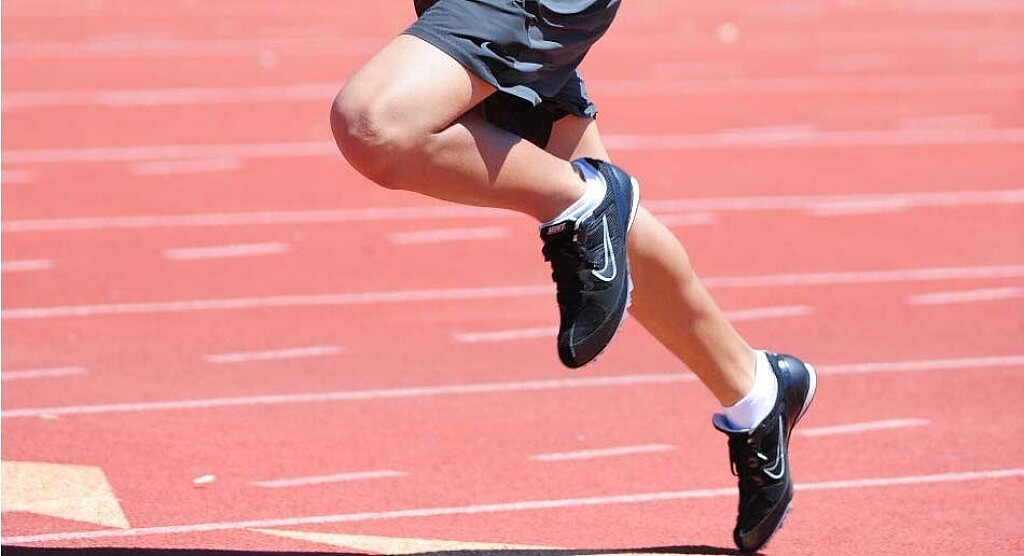
Track workouts for marathon runners, use these sessions later in your marathon training to build efficiency and economy
While track workouts aren’t the main focus of a marathon training program, they are still beneficial for marathon runners. The following three workouts are taxing, both physically and mentally, so make sure you’re well-recovered and feeling sharp before you begin.
Track workout for speed and efficiency
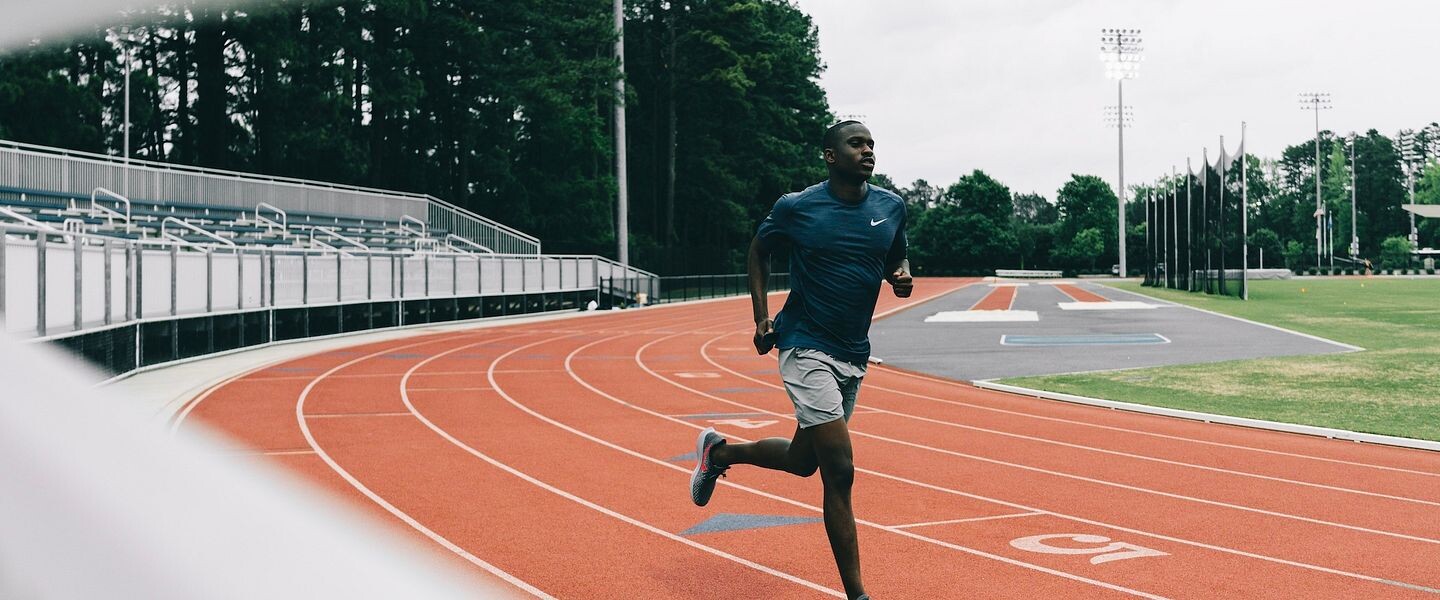
Marathon runners don’t need to focus on increasing their lactate threshold the way 1,500m runners do, but that doesn’t mean they can’t still benefit from having a higher lactate tolerance. Having a higher lactate threshold means you can run more efficiently at your marathon pace, and you’ll be able to maintain a faster pace for the entire marathon.
As we mentioned, these workouts are long and challenging, so they shouldn’t be introduced into your training until later in your marathon build, when you’re physically and mentally capable of tackling them. Pacing is also crucially important in these workouts, and runners should choose their starting speed wisely to ensure they can make it to the end.
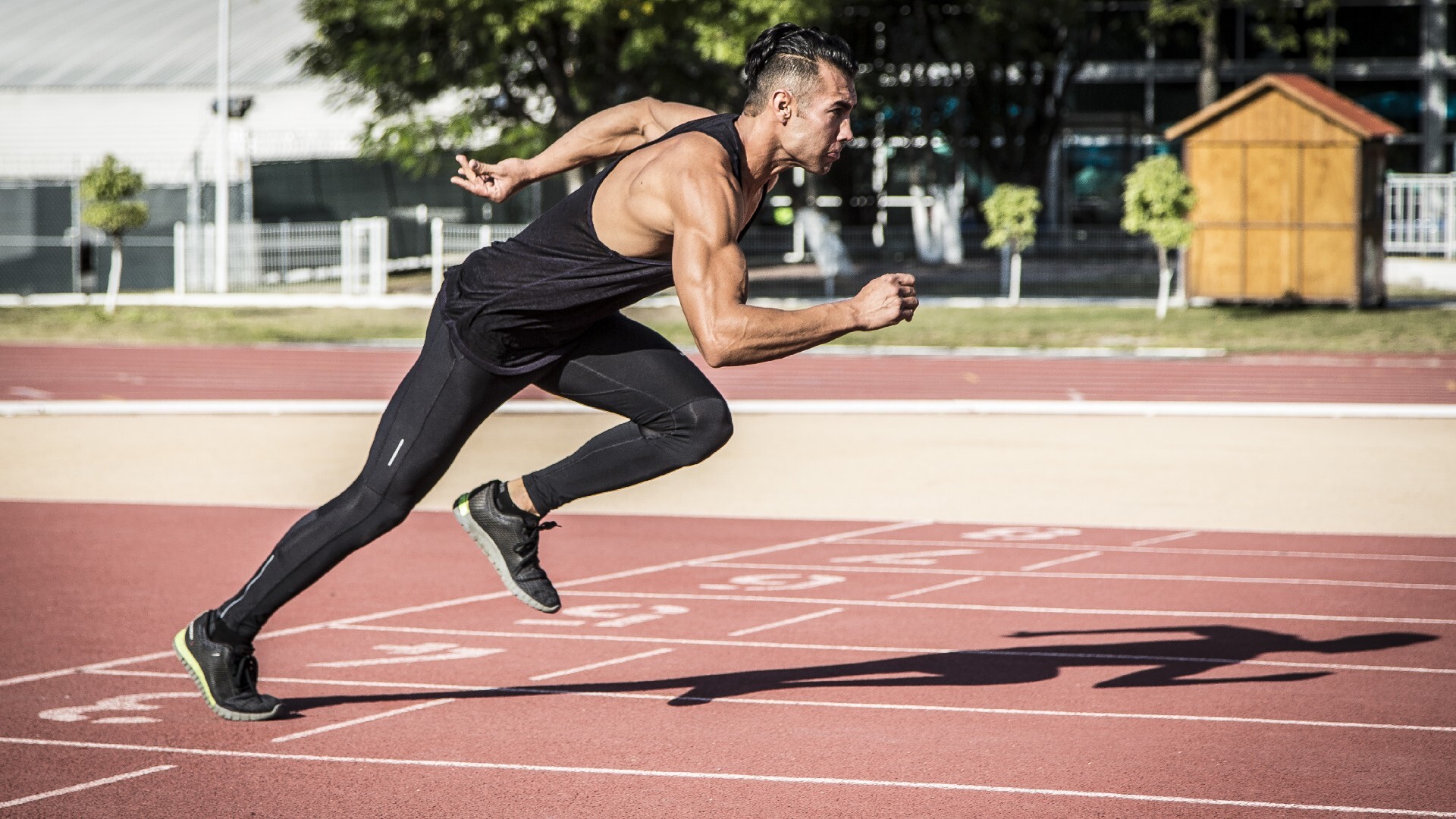
Additionally, it’s important to run these workouts with good form, so make sure you do form drills before beginning to start on the right foot.
The workouts
The three workouts are 16-20 x 400m, 12-16 x 600m and 8 x 800m. This is a lot of volume, and runners should aim to complete them at approximately half-marathon pace. If you can, try to speed up in the final intervals of the workout, but your pace should still be controlled.
Make sure you do a 10-20 minute warm-up and cool-down on either side of the workout, and rest between the intervals should be one or two minutes.
(03/07/22) Views: 109Brittany Hambleton
Tips on easing the pain in muscles and bones all runners should follow
Often, the pain we experience in our muscles and bones is simply a part of the running process. However, there are steps we can take to help ease this pain, making running more comfortable and less likely to cause long-term issues. Here are six tips all runners should follow to help ease the pain in their muscles and bones.
1. Ice And Heat Therapy
Applying ice or heat can help reduce the inflammation in your muscles and bones. Ice therapy is best used in the early stages of an injury, while heat therapy is more beneficial after the initial inflammation has subsided. To ice, wrap an ice pack in a towel and apply it to the area for fifteen minutes. Repeat this process every few hours as needed.
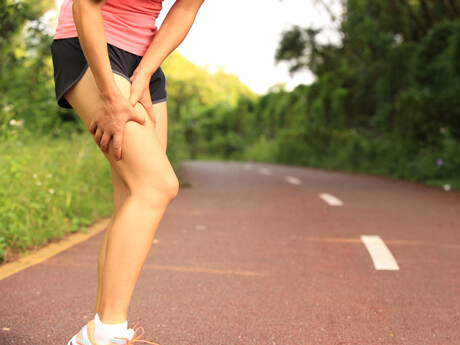
2. Stretching And Foam Rolling
Stretching and foam rolling are both excellent ways to loosen up tight muscles and prevent injuries. Foam rolling can also help to improve your range of motion. To foam roll, place the roller on the ground and use your body weight to press down on it, rolling it over the target area. Hold each position for thirty seconds. For stretching, hold each stretch for fifteen seconds and repeat three times.
3. Massage Therapy
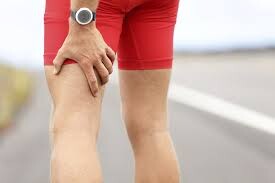
Massage therapy can help to improve blood circulation and reduce inflammation. It can also help to break up scar tissue. You can ask a trained chiropractor or physiotherapist to give you a massage, or you can also do it yourself by using a foam roller or tennis ball. The best time to massage your muscles is right after a run when they are still warm. It’s also a good idea to massage any recurring painful regions.
4. Eating A Balanced Diet
A balanced diet is essential for keeping your muscles and bones healthy. Make sure to include plenty of protein, calcium, and vitamin D in your diet. You can also supplement your diet with fish oils and glucosamine to help improve joint health. It is also important to drink plenty of water to keep your muscles hydrated.
5. Taking Breaks
It is important to take breaks during long runs and races to allow your muscles and bones to rest. This will help prevent pain and fatigue. Take a break every thirty minutes and walk for five to ten minutes. After a long run, make sure to take a few days off to allow your body to recover.
6. Listening To Your Body
Above all, it is important to listen to your body and respond accordingly. If you are feeling pain in any muscles or bones, take a break and allow them to rest. Don’t push yourself too hard, especially if you are experiencing an injury. Follow these tips to help ease the pain in your muscles and bones, and you’ll be able to run more comfortably and injury-free.
These are six tips all runners should follow to help ease the pain in their muscles and bones. Ice therapy, stretching and foam rolling, massage therapy, a balanced diet, taking breaks, and listening to your body are all important ways to keep your muscles and bones healthy and pain-free. If you still experience pain after following these tips, be sure to consult a trained professional.
(03/04/22) Views: 92Colorado Runner
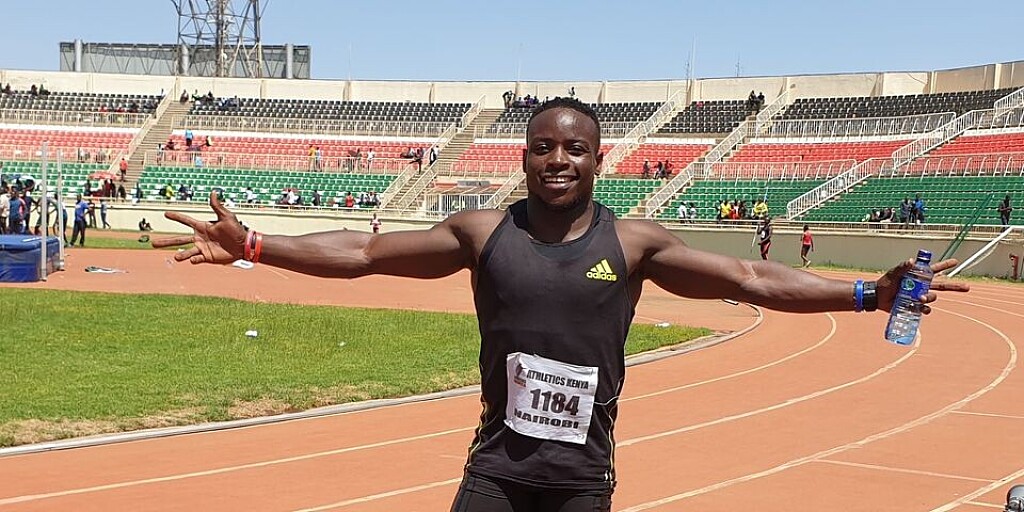
Africa’s 100m record holder Ferdinand Omanyala will lead Kenya's team of 10 athletes and six officials to the World Indoor Championships
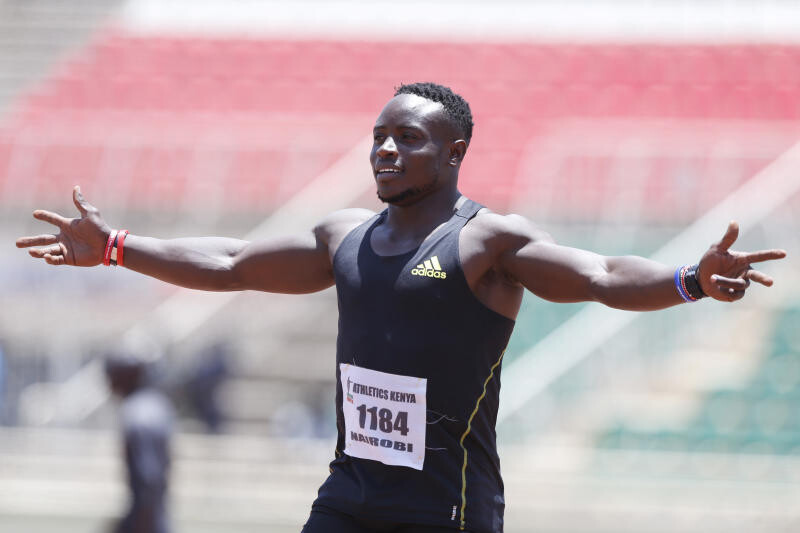
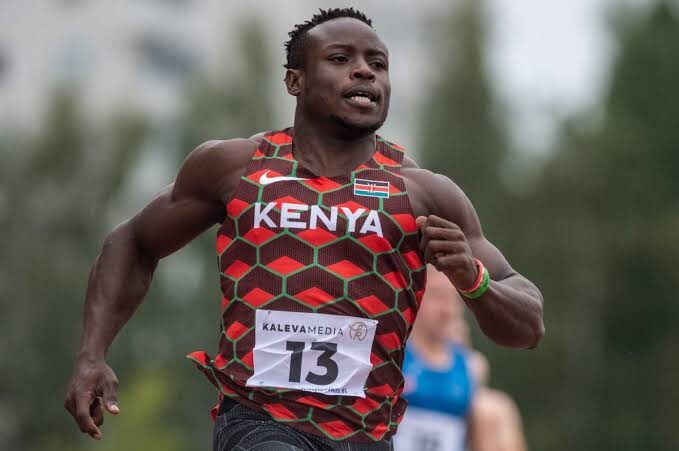
Ferdinand Omanyala will lead Kenya's team of 10 athletes and six officials to the World Indoor Championships set for March 18-20 this year in Belgrade, Serbia.
The team, coached by 2017 World 800m champion Janeth Jepkosgei, will leave the country on March 16.
Athletics Kenya Director for Youth and Development, Barnaba Korir disclosed that Omanyala will take the blocks in the 60m event, while 2018 World Under-20 5,000m champion Beatrice Chebet will compete in the women’s 3,000m.
Chebet will team up with fast-rising Edinah Jebitok, who will also double up in the 1,500m.
World Relay 2x2x400m silver medalist Naomi Korir makes the women’s 800m team alongside Eglay Nalianya.
Abel Kipsang, who represented Kenya at the 2020 Tokyo Olympics, is the lone ranger in the men’s 1,500m, while Collins Kipruto, who has won several races at the World Indoor Tour, will fly the country’s flag in the men’s 800m, alongside World Under-20 800m bronze medallist Noah Kibet.
Jacob Kiprop and Daniel Simiu will battle it out in the men's 3,000m.
After a series of breathtaking performances at the World Indoor Tour where he broke the national record in 60m thrice, Omanyala will be hoping to reach the final.
Omanyala, who holds the Africa Record in 100m outdoor of 9.77sec, broke the national record in 60m indoor for the first time on February 4 this year when he won at Meeting Elite de Miramas in France.
He glided to 6.63 to shatter the previous National Record of 6.70 set by Paulvince Obuon in 2005.
Omanyala had won his semi-final heat in Lievin 6.63 before losing to Olympic 100m champion Jacobs Marcell from Italy, who won in 6.50.
He then bettered the National Record for the second time when winning in 6.60m at Meeting Metz Monselle Athlelor in France on February 12, before lowering it further to 6.57 when he finished fourth at the Meeting Hauts-de- France Pas-de-Calais on February 17 in Lievin, France.
Kipruto competed in five races at the World Indoor Tour where he won two of them.
Kipruto’s best showing was when he won the men's 800m race at Müller Indoor Grand Prix in a personal best of 1:45.39 at Utilita Arena Birmingham on February 19.
Kipruto had held off 17-year-old Kibet and Morocco’s Mostafa Smaili to claim victory in the men's 800m at the Meeting de l’Eure in Val-de-Reuil in a meeting record time of 1:47.05 on February 14 in France.
Nalianya has three wins from her indoor outing in European, but her best show came from Meeting Hauts-de- France Pas-de-Calais on February 17 in Lievin, where she finished third in a personal best of 2:00.26.
Her compatriot Korir has taken part in five races this season and managed a second place in three, which includes a personal best of 2:00.66 from Míting Internacional de Catalunya in Spain on February 8.
Team
Men:
Ferdinand Omanyala (60m), Collins Kipruto (800m), Noah Kibet (800), Abel kIpsang (1,500m), Jacob Krop (3,000m), Daniel Simiu (3,000m).
Women
Naomi Korir (800), Egpay Naliaka (800), Edinah Jebitok (1,500m, 3,000m), Beatrice Chebet (3,000m).
Officials
Barnaba Kitilit (team leader), Hassan Ahmed( technical leader), Janeth Jepkosgei (team coach), Francis Philomena (Doctor), Lydia Muraya (official), Irene Wamui (official).
(03/07/22) Views: 89Ayumba Ayodi
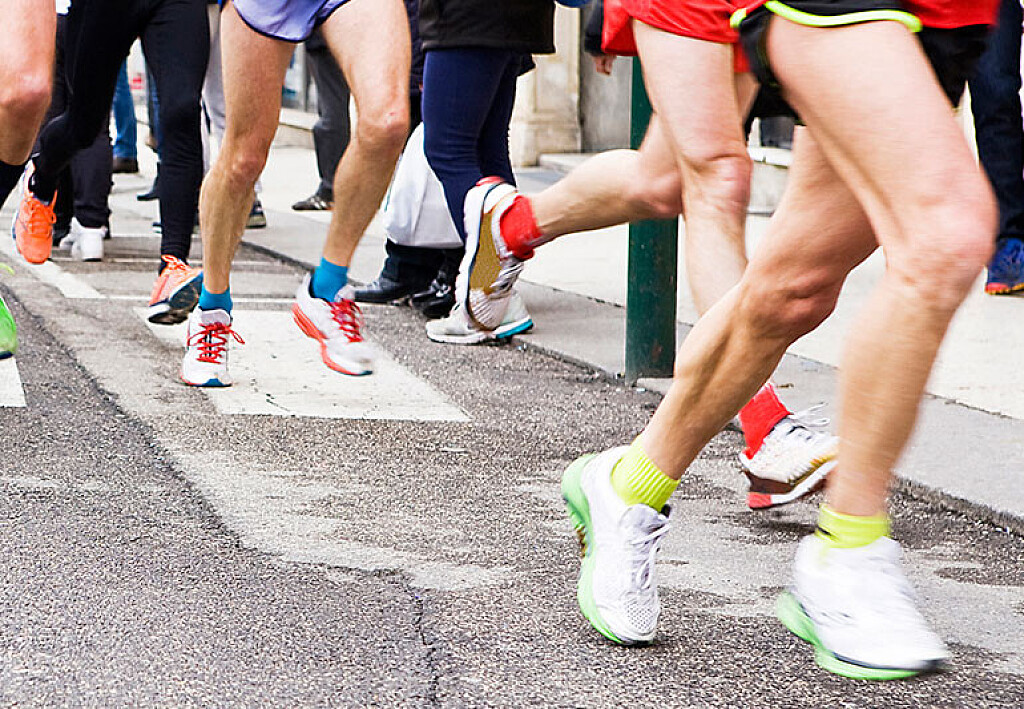
Try this race-specific workout in your final phase of marathon training, this workout will get you ready to toe the line of your next marathon in your best shape yet
The spring marathon season is just around the corner, which means many Canadians are in the final four to six weeks of training for their goal races. This last phase of training should focus on race-specific workouts, and this session perfectly fits that description. If you’ve got a marathon on the horizon, add this workout into your schedule to get yourself into PB shape.
What is race-specific training?
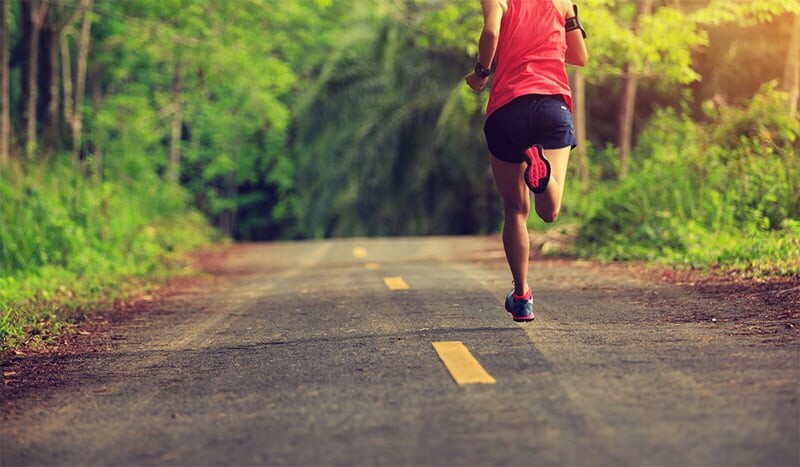
Throughout your marathon build, you go through different phases of training. You start with base training (when you’re building up your mileage), then begin adding in harder workouts to improve your fitness ahead of race day. The final four to six weeks, however, is when you need to start preparing your body for the specific demands of your race.
What does that mean, exactly? This usually means running at or close to your race pace with short rest so your body is ready to handle your goal race pace. Ideally, you want to mimic the conditions of your chosen race as closely as possible. Of course, you can’t (and shouldn’t) replicate the demands of a marathon in a single training session, but workouts like the one below will help you practice running at your threshold, which will teach your body to burn fat efficiently for fuel and to run your goal pace, even when you’re tired.
The workout
This workout is meant to be run slightly faster than your goal marathon pace (about 10 seconds per kilometer faster, to be precise). It’s important to pace this correctly because running too hard will actually prevent you from getting the desired training effect.
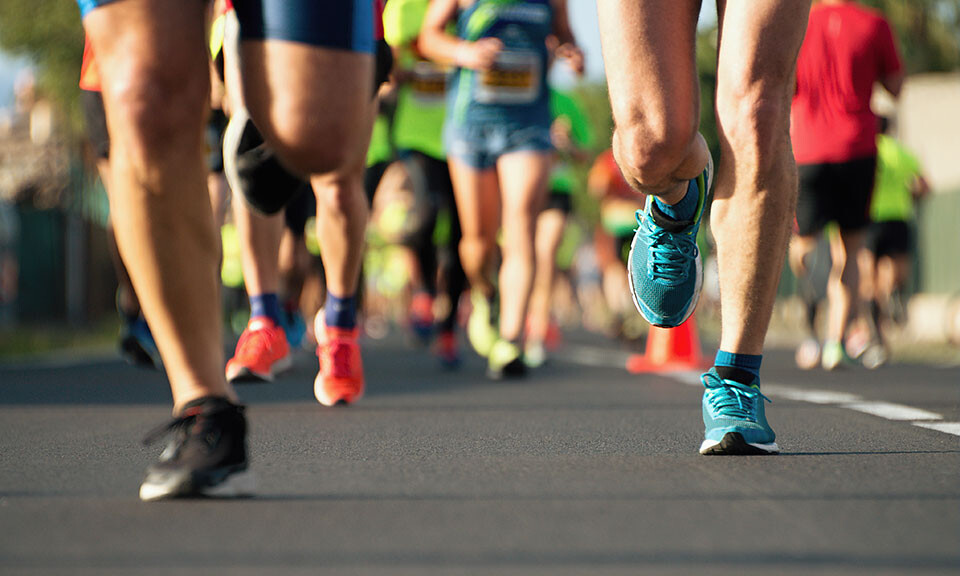
Warmup: 1-2 kilometers easy running
Workout: 2 x 9-10K, with 10 minutes rest between each 10K section
Cooldown: 1-2 kilometers easy running
(03/09/22) Views: 89Brittany Hambleton
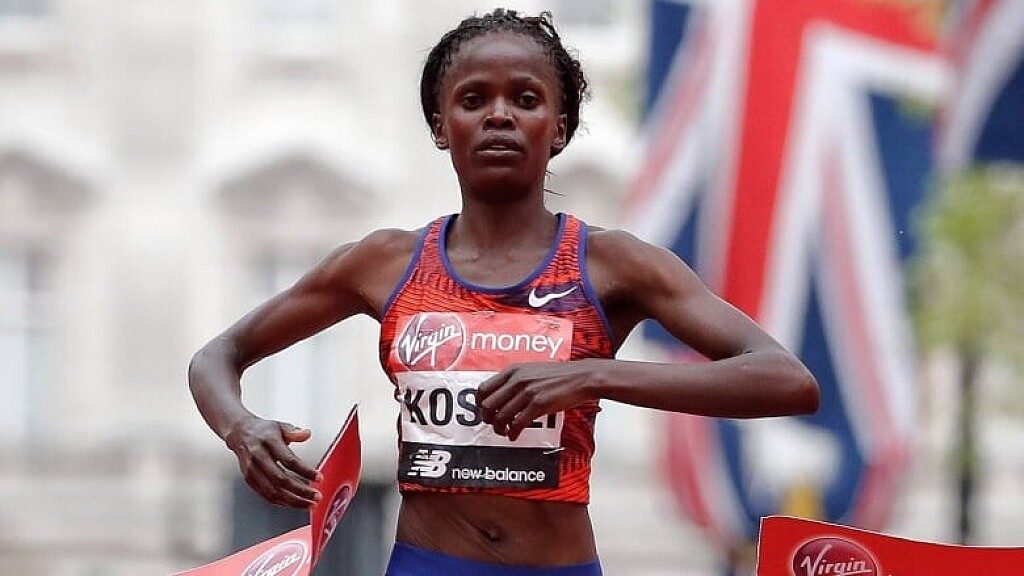
2022 Tokyo Marathon Women's Preview
The women’s race at the 2022 Tokyo Marathon has a little something for everyone. There’s Brigid Kosgei, the Kenyan world record holder attempting to reassert herself as the world’s best marathoner after Peres Jepchirchir claimed that title in 2021.
There’s Angela Tanui, the breakout star who won three marathons last year, capped by a 2:17:57 course record in Amsterdam. And for American fans, there’s Sara Hall, fresh off setting a US half marathon record in Houston in January and ready to mix it up with the best in the world on a flat, fast course.
Women Elite Entries:
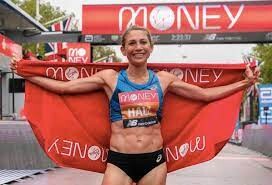
Brigid Kosgei (Kenya) – 2:14:04 (Chicago 2019)
Angela Tanui (Kenya) – 2:17:57 (Amsterdam 2021)
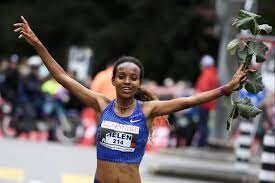
Ashete Bekere (Ethiopia) – 2:18:18 (London 2021)
Hiwot Gebrekidan (Ethiopia) – 2:19:35 (Milan 2021)
Gotytom Gebreslase (Ethiopia) – 2:20:09 (Berlin 2021)
Mao Ichiyama (Wacoal) – 2:20:29 (Nagoya 2020)
Sara Hall (U.S.A.) – 2:20:32 (Marathon Project 2020)
Helen Bekele (Ethiopia) – 2:21:01 (Tokyo 2019)
Natsuki Omori (Daihatsu) – 2:28:38 (Nagoya 2021)
Shiho Kaneshige (GRlab Kanto) – 2:28:51 (Osaka Int’l 2020)
Hitomi Niiya (Sekisui Kagaku) – 2:30:58 (Nagoya 2009)
Miharu Shimokado (SID Group) – 2:32:48 (Osaka Int’l 2020)
Yui Okada (Otsuka Seiyaku) – 2:32:00 (Nagoya 2020)
Hitomi Mizuguchi (Uniqlo) – 2:32:33 (Osaka Int’l 2020)
Mai Fujisawa (Hokkaido Excel AC) – 2:35:52 (Kanazawa 2021)
Tomomi Sawahata (Sawahatters) – 2:36:45 (Osaka Int’l 2022)
Debut / Do-Over
Kaori Morita (Panasonic) – 1:10:28 (Nat’l Corp. Half 2021)
Rika Kaseda (Daihatsu) – 31:39.86 (Nat’l Championships 2020).
Can Brigid Kosgei Return to the Top?
From the fall of 2018 through the fall of 2020 — four marathon cycles — Brigid Kosgei was the best marathoner in the world. By the end of that stretch, the gap between Kosgei and everyone else was not close. Her 2:14:04 in Chicago in 2019 was 81 seconds faster than Paula Radcliffe‘s previous world record and almost three minutes faster than any active marathoner had ever run. In her next race, 2020 London, she ran 2:18:58 in miserable conditions on a day when none of the rest of the world’s best marathoners could crack 2:22. She was in her own marathon galaxy.
Last year, however, Kosgei came back to Earth. That’s usually what happens when someone becomes World #1 in the fickle event that is the marathon (well, unless your name is Eliud Kipchoge). Kosgei was far from ordinary in 2021 — she still claimed second at the Olympics and fourth in London (in 2:18:40) just eight weeks later — but she was not the all-conquering giant of the previous three years. By the end of last year, the discussion about the world’s greatest female marathoner featured two women, and Kosgei wasn’t among them (right now it’s Olympic/NYC champ Peres Jepchirchir or London champ Joyciline Jepkosgei, who will race each other next month in Boston).
A win in Tokyo would nudge Kosgei back into that conversation, and she will start as the favorite on Sunday. Remember, after that dominant stretch from 2018-20, talk was starting to heat up that Kosgei could be the best marathoner the world has ever seen. That’s the trajectory she was on, and she only just turned 28 years old. If she can return to that sort of form, she’ll be your champion in Tokyo.
The Other Women Who Could Win
The top challenger to Kosgei in Tokyo is Angel Tanui, who emerged from relative obscurity to become one of the world’s top marathoners in 2021. Tanui, now 29, began last year as a serviceable road runner with pbs of 31:51/67:16/2:25:18 but wound up winning marathons in Dhaka (Bangladesh), Tuscany, and Amsterdam and finish as LetsRun’s third-ranked marathoner in the world. Tanui was only in Amsterdam because visa issues had prevented her from running Boston the previous week, but it certainly didn’t affect her race as she ran 2:17:57 to smash the course record. 2:17 doesn’t mean what it used to — these days, it’s barely fast enough to rank in the top 10 all-time — but it’s still plenty quick and signals Tanui as a major player.
Another woman to watch on Sunday is Ethiopia’s Ashete Bekere. She was only 7th in her last visit to Tokyo in 2016, but since then she’s won big-time races in Valencia (2018), Rotterdam (2019), and Berlin (2019). In her last marathon, she ran a pb of 2:18:18 to finish third in London, defeating Kosgei in the process (though Kosgei was just eight weeks removed from the Olympics). Clearly, Bekere has what it takes to win a major.
The other two notables in the field outside of Sara Hall — we’ll get to her in a minute — are the women who went 1-2 in Berlin last fall. Berlin was one of the weaker majors in 2021, but it was hard not to be impressed by Ethiopia’s Gotytom Gebreslase, who won the race convincingly in her debut in 2:20:09. Gebreslase is coached by the famed Haji Adilo, and he told Women’s Running he’s been impressed by what he’s seen recently:
“[Gebreslase] has even made big advancements in her training since Berlin,” Adilo says. “She set a personal best in the half marathon in December [1:05:36 in Bahrain], and if the weather and conditions are good in Tokyo, she could do something very special there.”
The runner-up behind Gebreslase in Berlin, Hiwot Gebrekidan, also had a good year in 2021 as she ran a pb of 2:19:35 to win Milan in May. But against this Tokyo field, 2:19 may not be good enough to challenge for the win.
Sara Hall Chases a Fast Time
Sara Hall running Tokyo is something we don’t get often: one of America’s top marathoners racing against the best in the world in a fast international marathon. Last month, Molly Seidel told Track & Field News that American pros “are gonna get our asses handed to us nine times outta ten, if the course is fast.”
(03/04/22) Views: 79Jonathan Gault
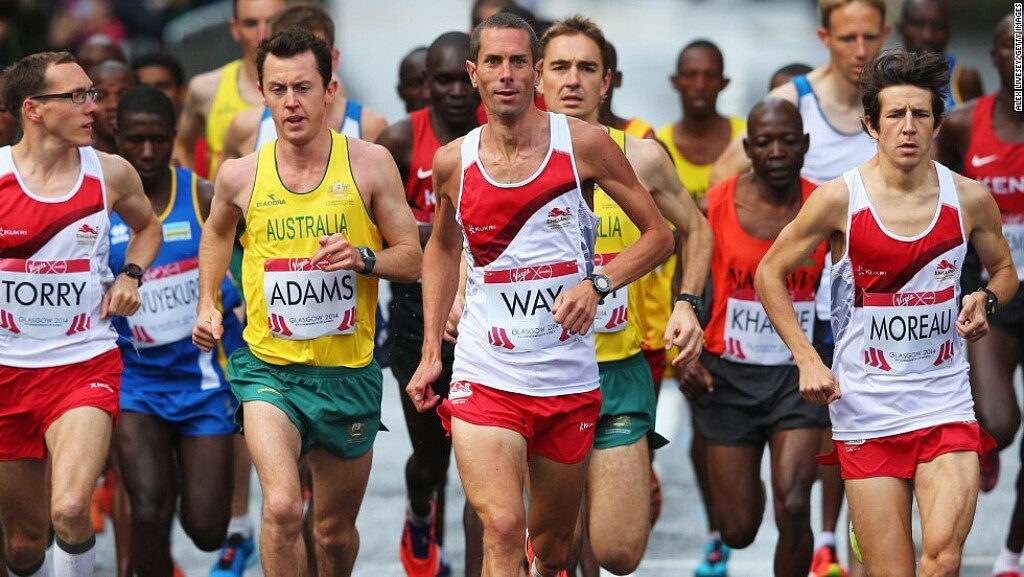
Commonwealth Games auto-qualifying standards are ludicrously difficult
The 2022 Commonwealth Games standards released by Athletics Canada have been causing a stir on social media due to the fact that to secure automatic qualification in most events, you would need to run a Canadian record.
The standards were set by Athletics Canada based on the average performances of the top three Commonwealth athletes during the past three track and field seasons; in most events, these “standard” times would have earned Canadian athletes medals in Tokyo.
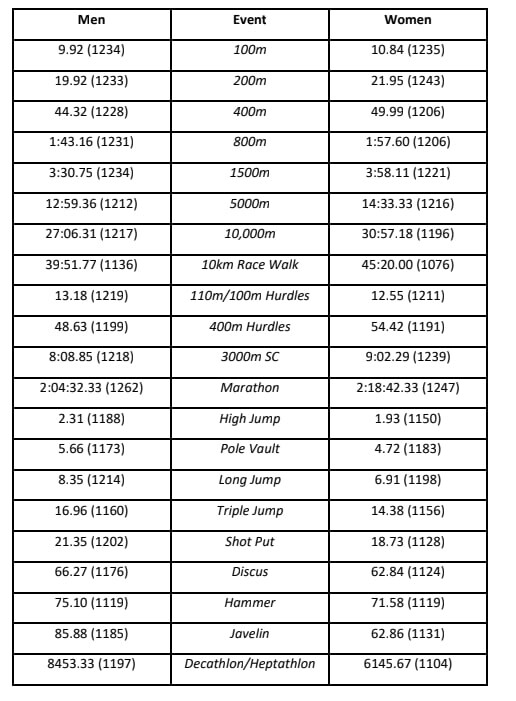
Note that Athletics Canada has been given a maximum team quota: it can send 31 athletes to the Games. Athletes will be eligible to make the team based on their season’s best performances–a similar approach to the Tokyo Olympic team selection this past summer.
According to the document released Wednesday, eligible athletes be ranked based on their proximity to the standard. The top athletes with the highest ranking will be selected.
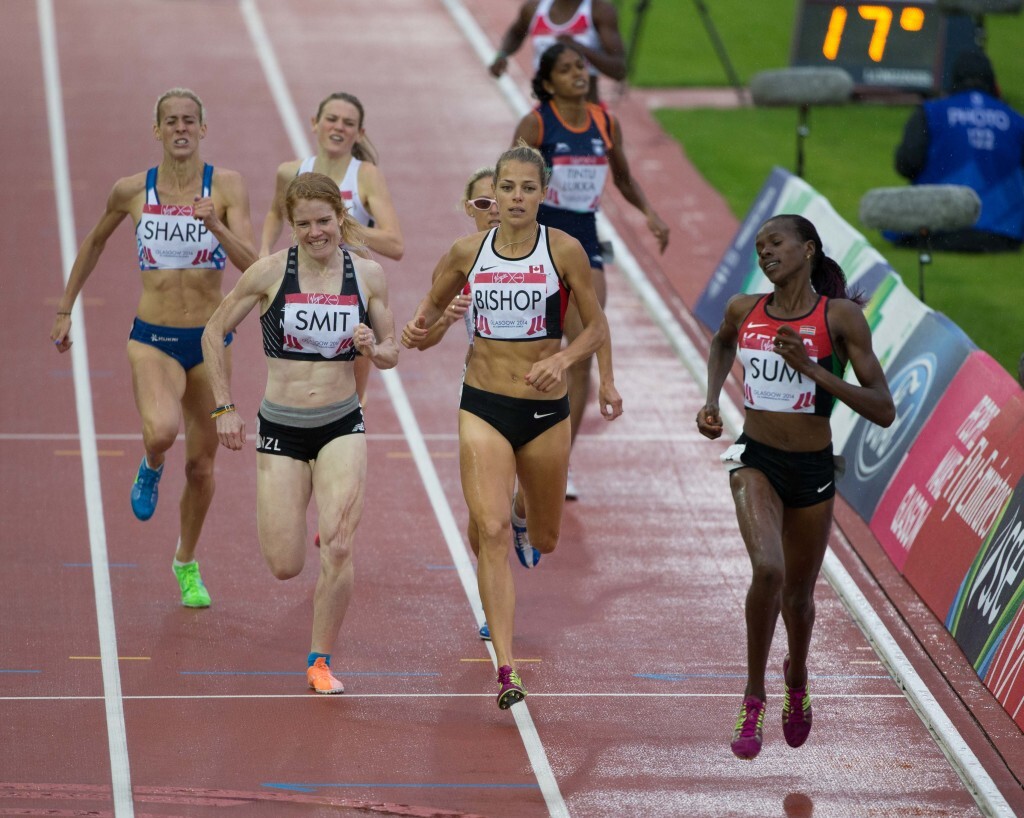
Athletes who were ranked in the World Athletics top 50 but missed the Olympic standard last year, still made the Tokyo Olympic team. Although the standards for the 2022 Commonwealth Games are higher, the same selection regulations apply. Canada’s top-performing athletes will still be selected for these Games, regardless of the standards.
The 2022 Commonwealth Games start following the 2022 World Championships from July 28 to Aug. 8.
(03/10/22) Views: 77Marley Dickinson
Athletics Canada names 18 athletes to World Indoor Championships team
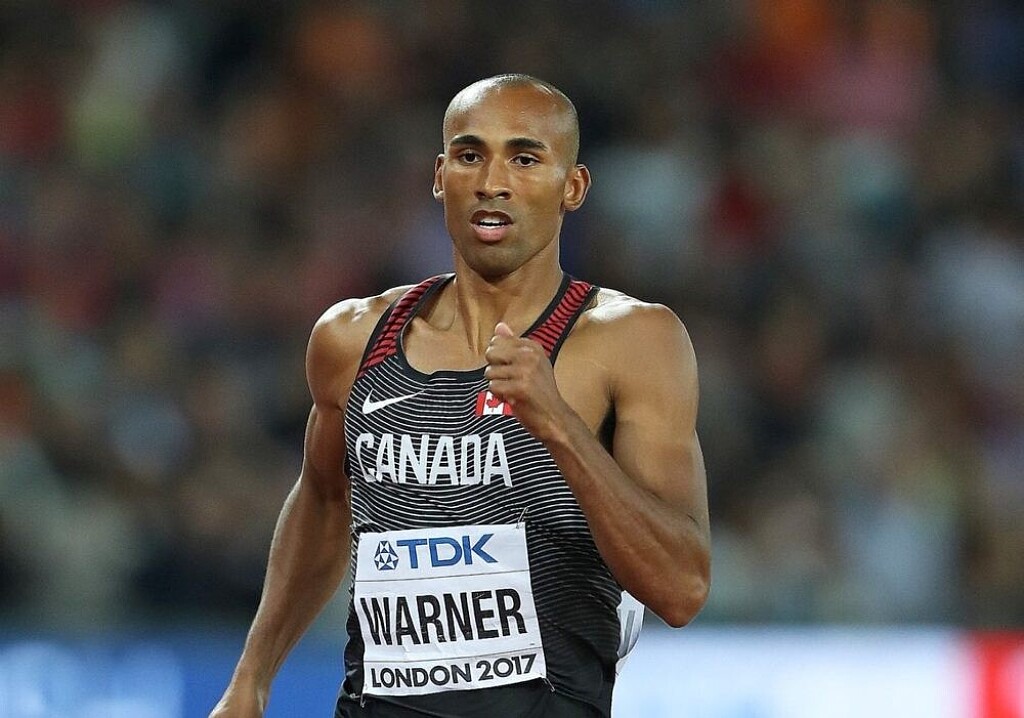
On March 3, Athletics Canada announced the 18-member team that will represent Canada at the World Athletics Indoor Championships in Belgrade, Serbia from March 18-20. This team is made up of six men and 12 women who have successfully achieved the World Athletics Indoor standard in their event. Athletics Canada has chosen to send an experienced team, with 16 out of the 18 athletes selected having represented Canada on the world stage previously.
Toronto native and Bowerman Track Club member Gabriela DeBues-Stafford headlines the team, sitting at fifth in the World Athletics rankings over the 3,000m and first in the 5,000m. DeBues-Stafford has had a remarkable indoor season, breaking the Canadian indoor 3,000m and 5,000m records in back-to-back weekends. In Serbia, DeBues-Stafford will be among those contending for a medal in the women’s 3,000m.
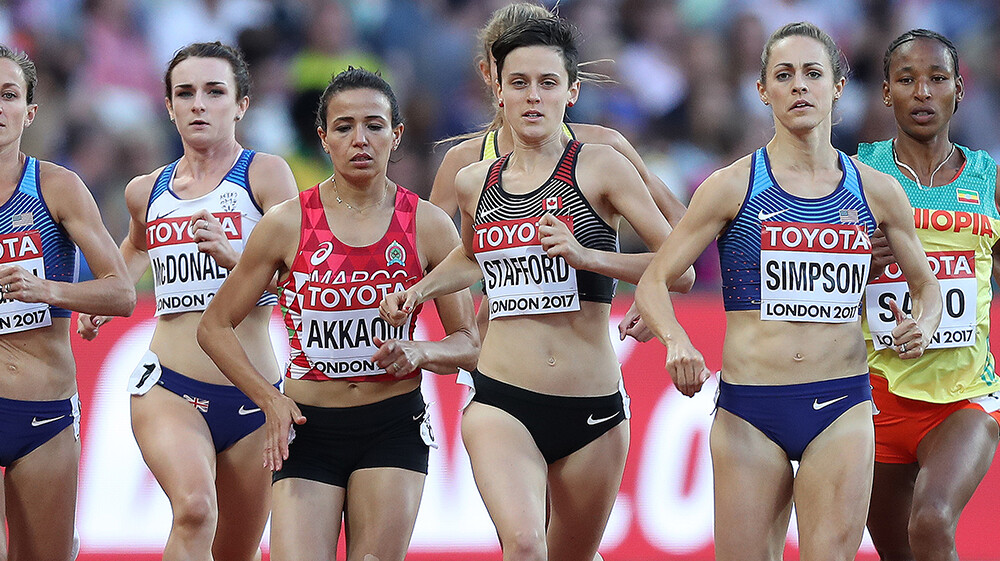
Canada’s 2021 Lou Marsh Award winner, Damian Warner, who won gold in the decathlon at the Tokyo Olympics, was also named to Team Canada, competing in the indoor heptathlon. Warner won silver at the 2018 World Indoor Championships in this event and he’ll be looking to upgrade that to gold in Serbia.
That was the only medal a Canadian brought home from in 2018. Team Canada’s head coach Glenroy Gilbert expects this year’s team to contend for high placings across all disciplines in Birmingham.
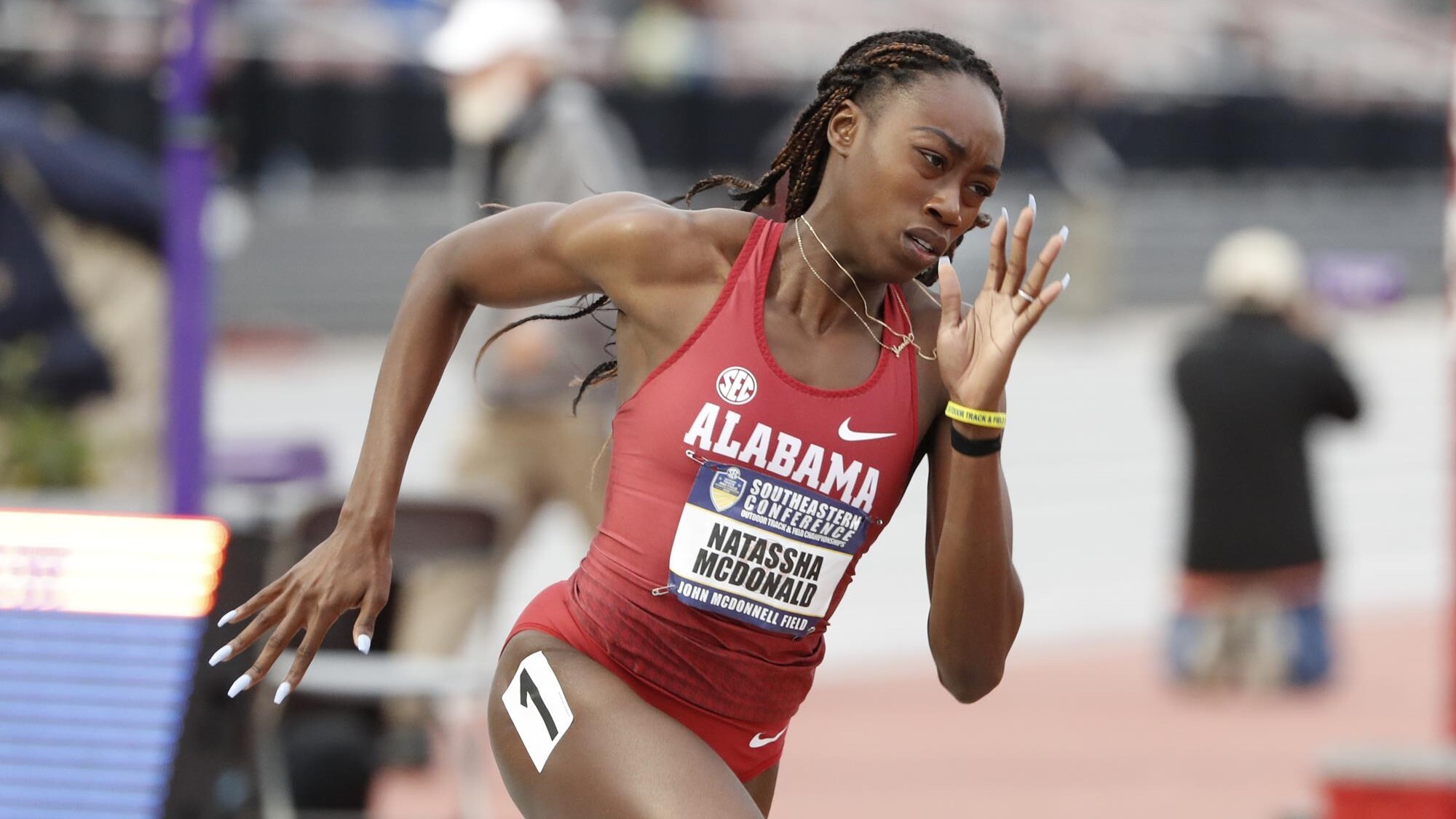
There are high expectations on what could be Canada’s best 4x400m women’s team ever, comprised of Natassha MacDonald, Lauren Gale, Kyra Constantine, Micha Powell and Sage Watson. The women’s 4x400m team finished fourth at the Tokyo Olympics and will be looking for redemption this time around in Serbia.
Indoor Worlds Team (information via Athletics Canada)
Athletes
Bolade Ajomale (Richmond Hill, Ont.) – Men’s 60 metres
Cameron Proceviat (Burnaby, B.C.) – Men’s 400 metres
Damian Warner (London, Ont.) – Men’s Heptathlon
Ehab El-Sandali (Toronto, Ont.) – Men’s 3,000 metres
Gabriela DeBues-Stafford (Toronto, Ont.) – Women’s 3,000 metres
John Gay (Kelowna, B.C.) – Men’s 3,000 metres
Julie-Anne Staehli (Lucknow, Ont.) – Women’s 3,000 metres
Kyra Constantine (Brampton, Ont.) – Women’s 4×400 metres
Lauren Gale (Ottawa, Ont.) – Women’s 4×400 metres
Lindsey Butterworth (North Vancouver, B.C.) – Women’s 800 metres
Lucia Stafford (Toronto, Ont.) – Women’s 1,500 metres
Madeleine Kelly (Pembroke, Ont.) – Women’s 800 metres
Marco Arop (Edmonton, Alta.) – Men’s 800 metres
Micha Powell (Toronto, Ont.) – Women’s 4×400 metres
Michelle Harrison (Saskatoon, Sask.) – 60 metres hurdles
Sage Watson (Medicine Hat, Alta.) – Women’s 4×400 metres
Sarah Mitton (North York, Ont.) – Shot put
According to Athletics Canada:
a second list of athletes who met the Athletics Canada indoor qualification standard in their respective events will be added to the team if they appear as “Qualified by Entry Standard” or “In World Rankings quota” on the March 9 World Athletics rankings list and the quota places remain open in their event.
The 2022 World Indoor Championships will kick off on March 18 and run until March 20.
(03/05/22) Views: 75Marley Dickinson
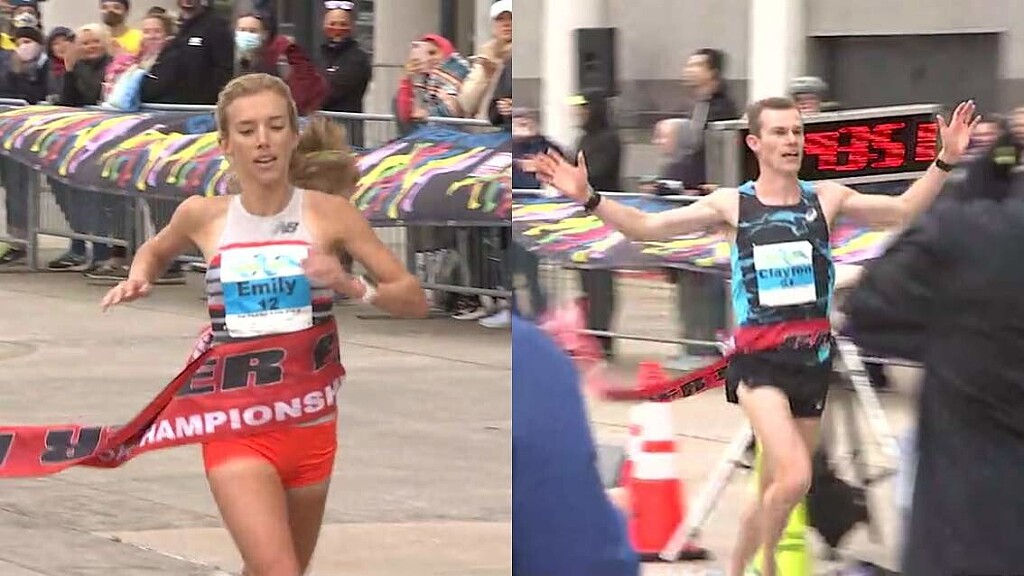
Emily Sisson, Nico Montanez Take 2022 USATF 15-K Titles in Jacksonville
Emily Sisson and Nico Montanez scored convincing wins today at the 45th Gate River Run in Jacksonville, Fla., the traditional home of the USATF 15-K Championships. Sisson, who represents New Balance, successfully defended her 2021 title in 47:28, collecting her fifth national title across all distances and surfaces. Montanez, who trains with the Mammoth Track Club and represents Asics, clocked 43:10 to collect his first national title in any discipline.
While both athletes earned $10,000 in prize money, Sisson won an additional $5,000 for winning the race’s gender challenge. The women were given a six-minute head start and Sisson crossed the finish line one minute and 42 seconds ahead of Montanez.
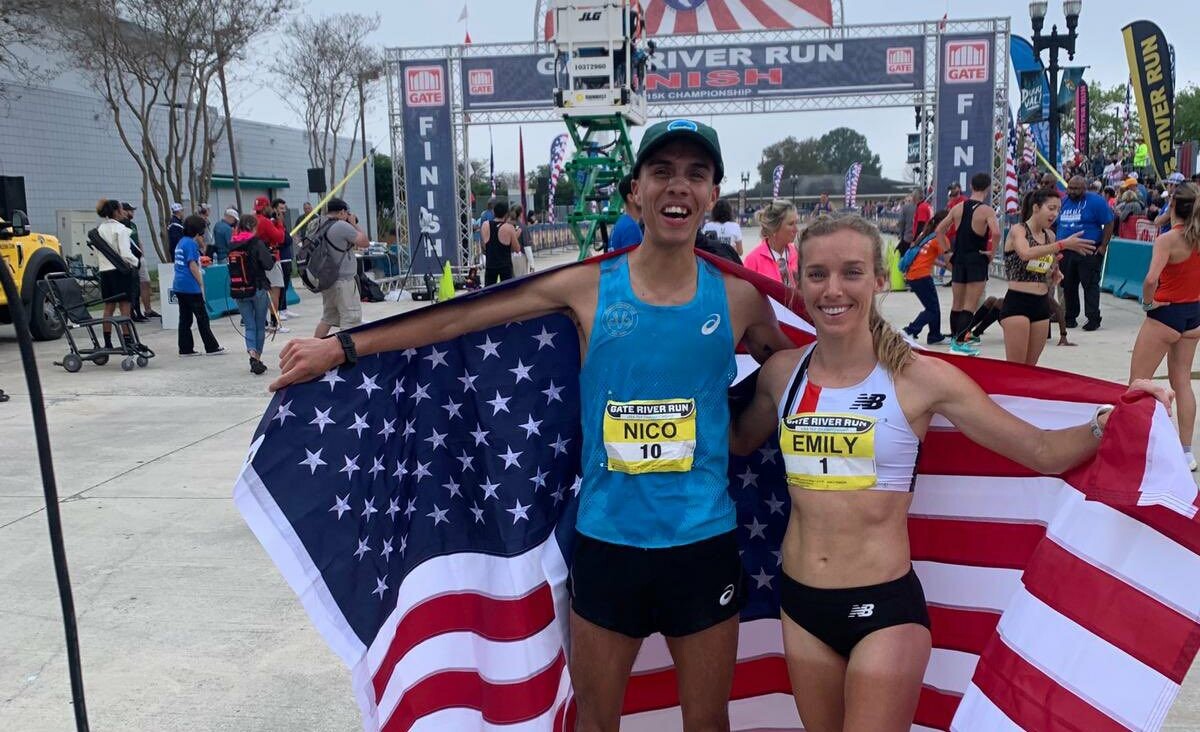
In typically humid Florida conditions, Sisson led the elite women’s race right from the gun. In the early kilometers she had company from both Emily Infeld (Nike) and Emily Durgin (adidas), but by the 5-kilometer mark (15:38) she already had a six-second lead. Running her first race since placing tenth in the 10,000m at the Tokyo Olympics last August, Sisson found herself in the same position as last year: running alone and against the clock.
“It’s my first race back from Tokyo, so it’s just good to push my body that hard,” Sisson told Chris Nickinson of USATF.tv in her post-race broadcast interview. “I haven’t done that in so long now.”
Sisson, 30, who lives in the Phoenix area but has been training recently at high altitude in Flagstaff, Ariz., checked her watch a few times as she clicked off her kilometers in the 3:10 range. Her splits were showing that she had a chance at Shalane Flanagan’s American record of 47:00 set at the same race in 2014. But ascending the 141 foot (43m) high Hart Bridge which begins at about 13 km, Sisson lost too much time and had to settle for the #4 USA performance ever, behind only Flanagan and Olympic bronze medalist Deena Kastor who ran 47:15 in 2003 and 47:20 in 2007.
“It felt good to get out there and hoping this is a good springboard for the rest of the year,” Sisson added.
Emily Durgin was a clear second in 49:17 and Emily Infeld got third in 49:46.
Nico Monatanez Gets 1st National Title
Montanez, 28, who is coached by Andrew and Deena Kastor, stayed tucked-in to the men’s lead pack for nearly the entire race. Two-time Olympic medalist Galen Rupp (Nike) led for more than two thirds of the race, splitting 5-K in 14:27 and 10-K in 28:52 with steeplechaser Hilary Bor (Hoke One One) on his heels. Montanez waited for the incline on Hart Bridge before attacking the field. He quickly opened a big lead. Montanez said that his move wasn’t spontaneous.
“It wasn’t a moment like that where I’m like, oh, I had the lead and time to go,” Montanez said in his post-race broadcast interview. “This thing was planned, it was maneuvered, it was thought out, it was prayed for. This is something that has been on my mind. This is Andrew and Deena Kastor, both of my coaches. This is their recipe.”
Montanez crested the bridge with none of the other men still within striking distance and was able to enjoy the final kilometer to the finish. Behind him, Leonard Korir, a 2016 Olympian, out-sprinted Bor for second place, although both men were given the same time: 43:14. Rupp, who is also running the United Airlines NYC Half on March 20, faded in the last two kilometers and finished seventh in 43:31.
Todd Williams’s championships, race and national record of 42:22, which was set in 1995, stood up yet another year.
The Gate River Run was never cancelled due to the pandemic. It was held on March 7, 2020, just before the initial pandemic shutdown, and race director Doug Alred was able to stage the race in 2021 early in the USA mass-vaccination process by cutting the field size in half to about 6700 finishers and employing social distancing. The event has hosted the USATF Championships since 1994.
The Gate River Run is part of the USATF Running Circuit. The next event is the USATF 1 Mile Road Championships to be held in Des Moines, Iowa, on April 26
(03/06/22) Views: 72
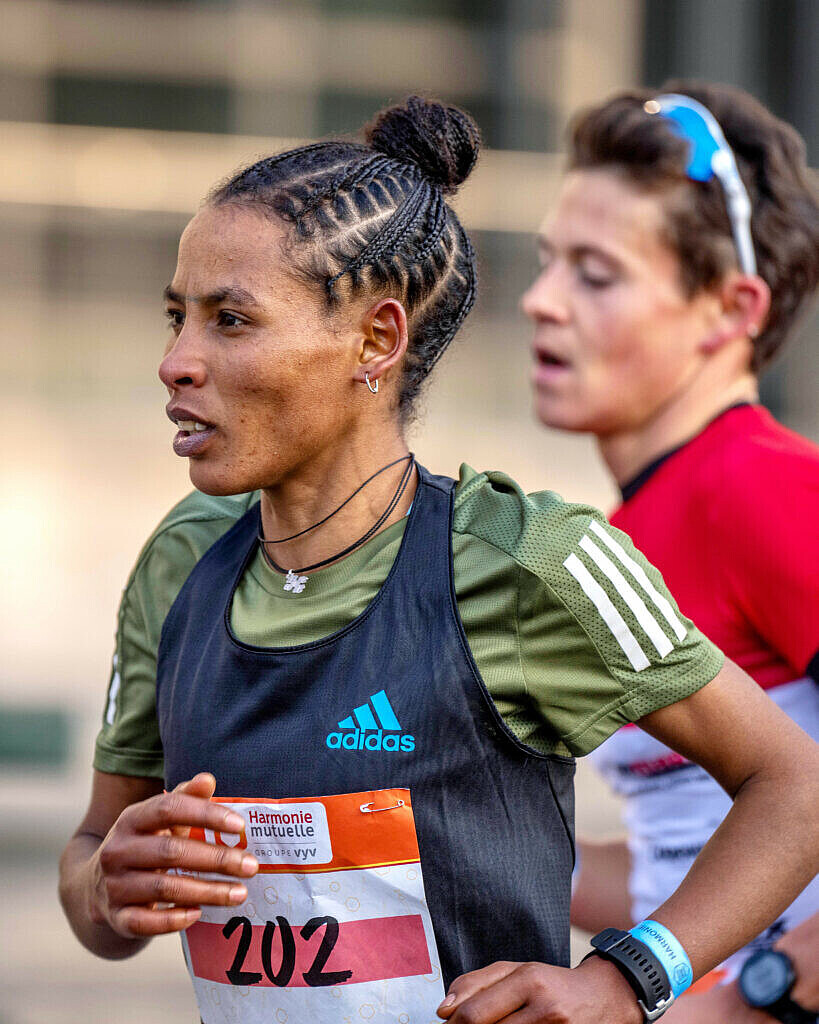
HARMONIE MUTUELLE SEMI DE PARIS: BONIFACE KIBIWOTT AND NIGSTI HAFTU WIN THE 30TH EDITION
The first runners started the 30th edition of the Harmonie Mutuelle Semi de Paris from the Pont de Sully (Île Saint Louis) at 8 o'clock this morning. The first major event of the 2022 running season brought athletes together for a shared experience and a 21.1 km challenge. Kenyan Boniface Kibiwott claimed the men's race, while Ethiopian Nigsti Haftu emerged victorious from the women's one.
The 30thHarmonie Mutuelle Semi de Paris kicked off the 2022 running season.
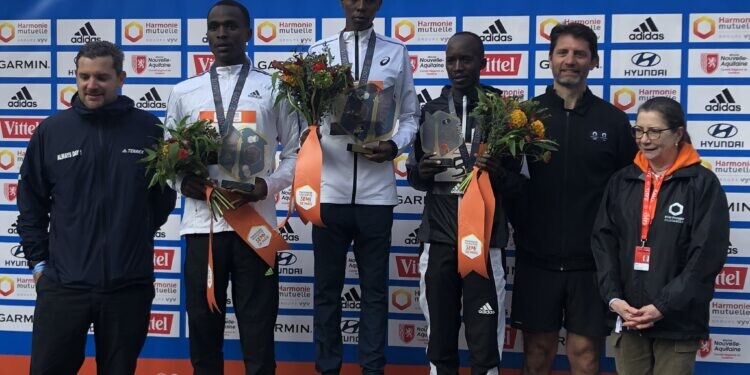
Boniface Kibiwott (KEN) took the men's race in 1:00:52.
Nigsti Haftu (ETH) won the women's race in 1:07:37.
Damien Appere and Mangeiarasi Murugan were crowned French disabled sports champions.
Margaux Sieracki (sixth) and Benjamin Choquert (seventh) flew the flag for France in the top 10.
A mixed urban and natural course with a spectacular finish on Place de la Bastille.
WINNERS OF THE DAY
The men ran a tactical race as the favourites stuck together in the first part of the race. 8 kilometres into the course, Kenyan Boniface Kibiwott upped the pace before going solo in the final 5 kilometres and crossing the finish line in first place with a time of 1:00:52. Vincent Yegon, second in 1:01:18, and Benard Kimelli, third in 1:01:23, locked up the podium for Kenya. Benjamin Choquert, seventh with 1:03:38, was the top-ranked French runner.
In contrast, the women's race came down to a sprint. Ethiopian Nigsti Haftu took the spoils in 1:07:37, beating Kenyan Joyce Tele, in the same time. Another Kenyan, Brillian Kipkoech, posted a time of 1:09:18 to claim the bottom step of the podium.
Frenchwoman Margaux Sieracki came in sixth in 1:11:01 in her half marathon debut.
Thanks to Harmonie Mutuelle, the last runners were feted just like the winners of the race, with a special celebration, for the first time in the history of the Semi de Paris.
(03/06/22) Views: 71
