

Running News Daily
Top Ten Stories of the Week
10/2/2021
These are the top ten stories based on views over the last week.



Last-minute marathon tips that can make a huge difference on race day
Running a marathon is one of the most satisfying accomplishments. To get a taste of that sweet satisfaction of crossing the finish line, you’ll have to put in some hard work, though. That means consistent training to get the long runs right and tapering during the last weeks leading up to the event. You’ll also want to find the best ways to give you that final push right before and during your marathon. And let’s not forget, there is life after the marathon and for your own sake, kick-off “the afterlife” with investing in recovery.
Let’s start with a couple of basic marathon concepts to set the scene and then move on to last-minute marathon tips that can make a huge difference on race day.

HITTING THE WALL
Hitting the wall, also known as ‘bonking’, is the term used to describe running out of energy.
The human body can store a limited amount of energy which will run out if carbohydrates aren’t consumed during prolonged exercise. In long-endurance efforts, like the marathon, this can manifest as sudden fatigue, lack of energy, heavy legs, and/or a sudden drop in pace.

What can you do to avoid it? ‘Hitting the wall’ is not a prerequisite of finishing a marathon! Carbohydrate loading and taking on carbohydrates during the marathon will help to make sure you don’t run out of energy.
CARBOHYDRATE-LOADING
You may have heard or read about carbohydrate loading. What does it mean? Does it work? Is it relevant and should I be doing it?
Yes, it works, it is relevant for marathon runners and you should employ this strategy.
Our understanding of how to implement this has changed quite a lot since the initial research on the subject was carried out on the military back in the 60s. Essentially you’re looking to increase the amount of carbohydrate you consume in the few days leading up to the marathon to ensure your fuel levels are topped up.
Whether you’re an elite or amateur, carbohydrate is the predominant fuel source you use during running. As our our bodies can store only a limited amount of carbohydrates, topping up those fuel storages before the race will help you avoid the onset of fatigue.
With all this in mind, here are some last-minute marathon tips for the 24 hours before, during, and after your race. These will go a long way to ensure you have an awesome marathon.
To start, the golden rule is: Don’t try anything new on race day! Stick to meals you like and are used to, use the same clothing, socks, shoes and music playlist you’ve used in training. Don’t worry about what anyone else is doing, be confident in your own preparation, knowing what works well for you and stick to that.
1. EAT WELL THE NIGHT BEFORE
The night before your race eat a meal you enjoy and are used to. Aim for a meal that is rich in carbohydrates, this could include foods like pasta, rice, bread, potatoes.
A good evening meal will ensure you have enough carbohydrates stored in your muscles and liver before race day. Carbohydrates are basically the petrol for your engine on the big day so filling up that tank will reduce the risk of fatigue during the race.
2. AVOID EATING TOO CLOSE TO BEDTIME
Aim to have dinner earlier in the evening before the race. Make sure you plan ahead to avoid rushing this meal – giving your body time to digest the meal and relax should hopefully mean you get a good night’s sleep which is, obviously, crucial.
3. CARBOHYDRATES ARE KING AT BREAKFAST
Similar to the night before, priming the body with carbohydrates at breakfast is a way to ensure your performance doesn’t suffer during the race. Stick to a breakfast and foods you’re used to and have practiced in training. Porridge, toast, cereal, bagels, and fruit juice are all great choices.
4. REDUCE FAT AND FIBER
Keep fiber and fat to a minimum when having your race day breakfast as we know this can cause upset stomachs during the race. This simple tip will ensure you’re in top condition for the challenge ahead and hopefully, reduce the chance of any unnecessary toilet stops.
(09/27/21) Views: 120Colorado Runner

Extensive COVID-19 countermeasures to be in place at New York City Marathon
The New York City Marathon is set to have extensive COVID-19 countermeasures in place, with organisers eager for the race to run on November 7 after the 2020 edition was cancelled because of the pandemic.
Runners will need to provide proof of at least one vaccination or a negative COVID-19 test from within 48 hours of race day to compete.

Efforts have also been made to reduce crowding throughout the event.
The three-day Expo prior to the race has been closed to the general public and the number of attendees at any one time has been restricted.
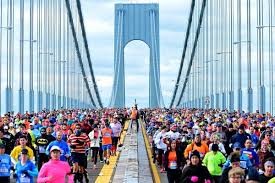
The start of the race will be staggered across multiple waves in an attempt to maintain social distancing.
On the course, runners will be permitted to wear hydration belts in order to reduce crowding at drinks stations dotted along the track.
Family members will also be banned from the finish area to reduce the risk of overcrowding.
Face coverings are set be required at the Expo, on public transportation during race day, at the race start, and at the post-finish area.
Kenya's Peres Jepchirchir is set to compete in the elite women's race after winning the women's marathon gold medal at the Tokyo 2020 Olympics.
The event is the last of the six World Marathon Majors, preceded by Tokyo, Boston, London, Berlin and Chicago.
The Tokyo race has been rescheduled to March 6 2022.
The Berlin Marathon is set to take place tomorrow in what will be its first edition since the start of the coronavirus pandemic, while the other four all take place over the space of seven weeks.
Kenenisa Bekele of Ethiopia is due to be competing in Germany as the three-time Olympic gold medallist - all over shorter distances than the marathon - looks to retain his Berlin title.
In the 2019 edition, Bekele finished two seconds shy of the world record set by Kenya's Eliud Kipchoge, and has vowed to attack the mark at tomorrow's race.
(09/25/21) Views: 113Owen Lloyd
Kenya’s six-pronged attack will headline on the streets of London
This years’ edition of the London Marathon has attracted a smaller field, but the race is nevertheless expected to be competitive when the athletes line up in the English capital on October 3.
This year’s race is taking place at a time the world is still battling the coronavirus pandemic which has forced organizers to shift the race from the traditional month of April to October.
Compared to last year, only six athletes from Kenya will compete in the race.
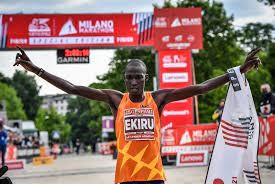
Vincent Kipchumba, Titus Ekiru and Valencia Marathon champion Evans Chebet will line up in the men’s category.
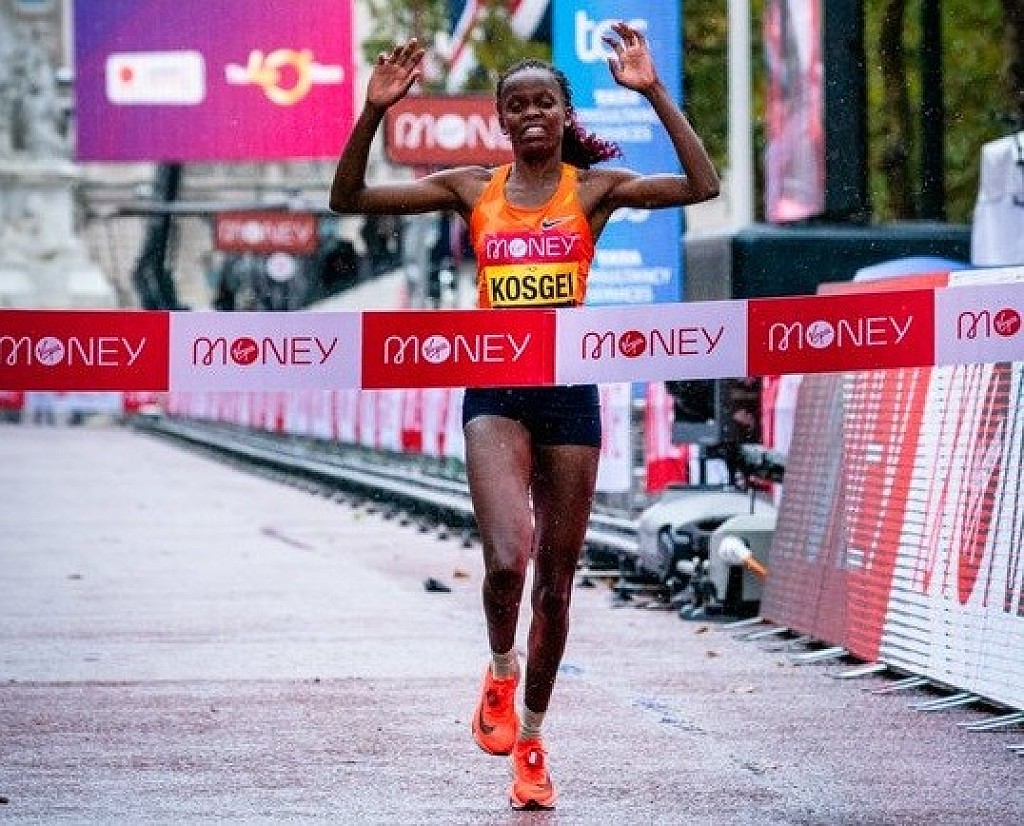
In the women’s category, defending champion Brigid Kosgei who is also the Olympics silver medalist will team up with reigning New York Marathon champion Joyciline Jepkosgei and Frankfurt Marathon champion Valary Jemeli.
Last year, the race was held in a bio-secure bubble at the St James Park in London. As a precautionary measure against the possible spread of Covid-19, no fans were allowed to cheer the athletes along the route during the race.
Ethiopia’s log distance running legend Kenenisa Bekele pulled out of the men’s race at the last minute due to a calf injury he had picked in training.
More disappointments were to follow as pre-race favorite Eliud Kipchoge of Kenya who is also the world marathon record holder finished in eighth position, clocking 2 hours, 06 minutes and 49 seconds.
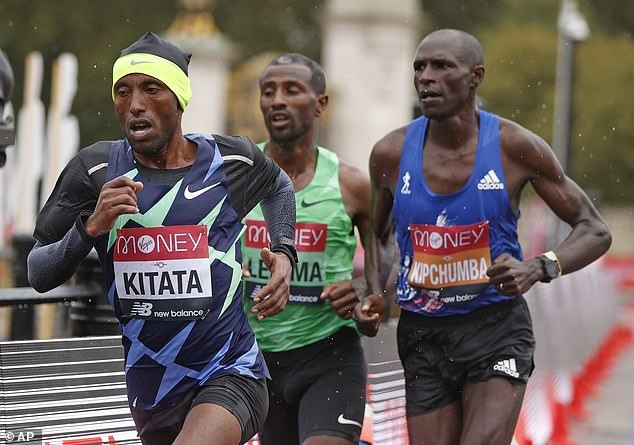
Ethiopia’s Shura Kitata (2:05:41) claimed victory in a sprint finish with Kenya’s Vincent Kipchumba (2:05:42) who, nevertheless, had to contend with second place. Ethiopian runner Sisay Lemma clocked 2:05:45 to finish third.
In the women’s category, Kosgei retained her title after winning in 2:18:58 ahead of United States of America’s Sara Hall who timed 2:22:01.
Reigning world marathon champion Ruth Chepng’etich was third in 2:22:05.
To minimize the chance of contracting Covid-19, Kenyan athletes who were to participate in the race jetted out of the country in the same flight.
Athletes and members of their technical teams also boarded the same flight. The aeroplane carrying athletes was scheduled to pick more athletes in Addis Ababa, before heading to Athens for a scheduled stop over. The team would then head straight to London’s Stanstead Airport.
Pacemakers and elite athletes with their technical support teams were ferried in a 56-seater plane which landed at the Eldoret International Airport a day before the scheduled date of travel.
The crew who were six in number, spent the night at The Boma Inn Hotel in Eldoret.
Speaking exclusively to Nation Sport in Eldoret at the time, captain Julian Mogg who isin charge of the flight, said that he was delighted to fly athletics champions to London whom he has been seeing on television.
“We are delighted to fly the athletes who will compete in the London Marathon. I’m happy because I will be able to see them during the flight,” Mogg said at the time.
The London Marathon route is iconic and runs from Black heath in the south east of London to the finish line at The Mall.
Athletes will be able to go through Greenwich before passing over the Thames as they cross the Tower Bridge before going through central London. They will pass the Canary Wharf and famous landmarks such as the London Eye and Big Ben.
The athletes will then turn to Buckingham Palace, and follow a stretch of The Mall to reach the finish line.
(09/24/21) Views: 112Bernard Rotich

Best Tips To Get Back In Shape
Spent your entire pandemic lockdown binge-watching Netflix and eating cheese pizzas on your couch? There is no surprise that you are no more able to get into your old pair of jeans. However, not all has gone south. Here are some quick tips for you that will help you get back in shape.
Set Achievable Targets
One of the biggest hindrances that you can put in achieving your fitness journey is setting unrealistic goals. No, there is no way you can shed 50 pounds in one month. This is because you did not gain them in a month either. It took weeks and months of unhealthy lifestyle choices for your body to reach where it is today. If you are truly worried about how to lose 50 pounds, know that it is possible but it will take a bit of time, patience, hard work and consistency. Even if you somehow find a way to achieve the goal in a very short time, it is going to be plain unhealthy. Besides, if you are unable to achieve the set target, which is highly likely for unrealistic body goals, you will find yourself wanting to quit the journey.
Set realistic goals such as shedding a few pounds and inches every few weeks and then keep track of your progress. This way you will feel more motivated and your journey will be much easier.

Rule Out Medical Reasons
Often people weight gain despite not indulging in very unhealthy practices. This is usually due to medical reasons such as thyroid issues or polycystic ovaries etc. This is particularly more common amongst women. Whatever the reasons it may be, it is important that you rule out any underlying medical conditions before you embark on your fitness journey. In case of a medical condition, your physician will guide you about your body needs and weight goals and might as well prescribe your the necessary treatment.
Know Your Body Requirements
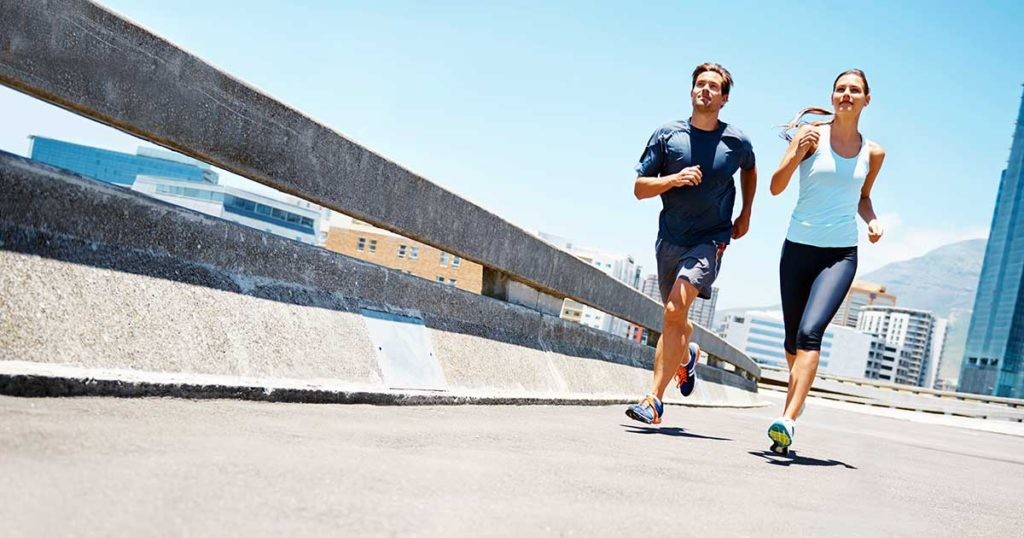
A lot of people today go gaga over popular celebrity fitness plans. The problem is that you cannot evaluate and treat everybody type with the same yardstick. Even though your body goals might be similar, every body type has a different set of requirements. Your fitness plan depends on a lot of factors such as age, gender, lifestyle, BMI, BMR, height, and medical profile. Once you have identified these variables, consult a fitness coach to guide you with the ideal calorie requirement and fitness regime that you need to follow.
Plan Your Meals
Once you have identified your daily body requirements, ideally plan your weekly meals in advance. Avoid any crash diet programs and stay away from any ridiculous diet plans such as Keto. All you need is a consistent plan of clean eating and portion control. A well planned daily intake that is divided into 5 to 6 meals with a combination of cereals, grains, proteins, vitamins and good fats is all that you need. Say goodbye to carbs for some time and do not go near those sodas.
Design a Fitness Regime
The need of work out does not need to be emphasized when it comes to weight loss. However, if you are someone who is not used to physical activity, do not jump into high-intensity workouts since day one. Choose a well-rounded fitness program that offers strength training alongside cardio. Build your stamina gradually and give time to your muscles to heal.
(09/28/21) Views: 111Colorado Runner
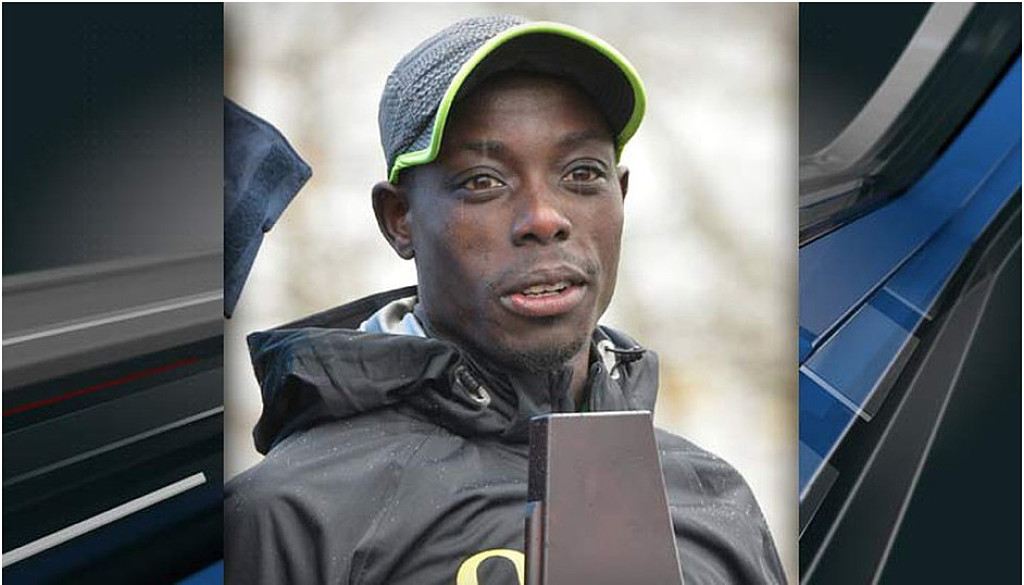
Cheserek, Rojas win ‘emotional’, long-delayed Cooper River Bridge Run
A 27-year-old Kenyan man was the first to finish the 44th Annual Cooper River Bridge Run.
Edward Cheserek completed the race with a time of 28:25, a pace of 4:34 per mile. Cheserek, who now lives in the United States, is a 17-time NCAA champion at the University of Oregon.

He was a runner-up at the 2021 Great North Run and his all-time personal best in a 10K is 27:23.
The leaderboard listed the top Female Elite runner as Nell Rojas from Boulder, Colorado with a time of 31:52, and a pace of 5.07 per mile.
The Bridge Run began at 8 a.m. Saturday with a smaller-than-normal crowd of runners. The 15th annual Wheelchair Division race began just before 7:30 a.m. with nine participants.
The Arthur Ravenel Bridge closed at 7 a.m. Saturday, an hour before the official start of the race.
The bridge, along with the rest of the race route shut down at 7 a.m. The route and support streets will remain closed until the final participant clears the area. Many downtown roads that shut down earlier Saturday morning are expected to reopen by 2 p.m.
The Ravenel Bridge will reopen after police and media are cleared off the bridge and any debris from the race is removed.
This year’s event is the first in-person Bridge Run held since April 6, 2019. The event planned for 2020 was changed to a virtual run because of the COVID-19 pandemic.
Organizers imposed a lower-than-usual cap on the total number of runners and walkers for this year’s 10K event, limiting the total to 25,000 from its usual 40,000. That means more than a third fewer people will “Get Over It” in this year’s event, a reference to the iconic 2.5 mile Arthur Ravenel Bridge that serves as part of the course.
All of the individual registrations for the 25,000 in-person spots sold out.
People who take part in the event were told they would be required to show proof of full vaccination against COVID-19 or to provide proof of a negative test conducted within 72 hours of the time they picked up their race packet.
But Bridge Run organizers say there will be food, entertainment, vendors, and souvenirs at the post-event festival at Marion Square.
The event will run until 12 p.m. on race day.
44 years of the Bridge Run
The Cooper River Bridge Run is the third-largest 10K race in the United States. It is normally held on the first Saturday in April unless that Saturday falls on Easter weekend.
Dr. Marcus Newberry founded the Cooper River Bridge Run in 1978. The 10K’s course takes runners down Coleman Boulevard through Mount Pleasant, over the Arthur Ravenel Bridge and into downtown Charleston.
Participants include world-class athletes as well as running enthusiasts, walkers and their friends and family members. The run has an annual grant program to promote health and wellness, supporting a dozen charities through fundraising and promotion.
In the race’s very first running on April 2, 1978, 766 finishers crossed the former Silas Pearman Bridge. It was one of the hottest temperatures on record at 82 degrees at the 10 a.m. start time. That was the only year the Bridge Run was held on a Sunday.
By 1980, the course had shifted to the former Grace Memorial Bridge where it would remain until 1995 when it returned to the Pearman Bridge.
Only once in the race’s history did it end in a tie. That happened on March 29, 1980, and the record time is 31:26.
Both of those bridges were replaced in 2006 by the Ravenel Bridge. The all-time record number of registrations occurred that same year when 45,663 signed up. Of those, 33,742 finished the race that year.
The event received the Governor’s Cup Award in 2019 for its impact on Tourism and Travel. It has a direct economic impact of $30 million.
The average age of participants in the annual event is 32.9, but people of all ages have taken part over more than four decades.
A virtual run replaced the traditional race in 2020 because of the pandemic. The 2021 event, which was originally planned for its late March or early April timeframe, was postponed to September, also because of the pandemic.
James Koskei of Kenya holds the current record for the all-time top performance in the men’s open category with a finish time of 27:40 in 2000. Elana Mayer, from South Africa, holds the women’s open category best time at 31:19, set in 1997.
For wheelchair finishers, the records are 24:30, set by Tyler Byers in 2007 and 37:10, set by Ilana Dupont in 2013.
Silas Kipruto and Monicah Ngige were the winners of 2019′s event, with finish times through the 6.2-mile course of 27:58 and 31:37 respectively.
Kipruto, then 34, has been in the top five finishes numerous times in some of the world’s most competitive races. Kipruto finished with a time of 27:58, securing the $10,000 top prize.
Monicah Nigige, then 25, was the top female Elite finisher, winning her third Cooper River Bridge Run in the past four years.
(09/26/21) Views: 108
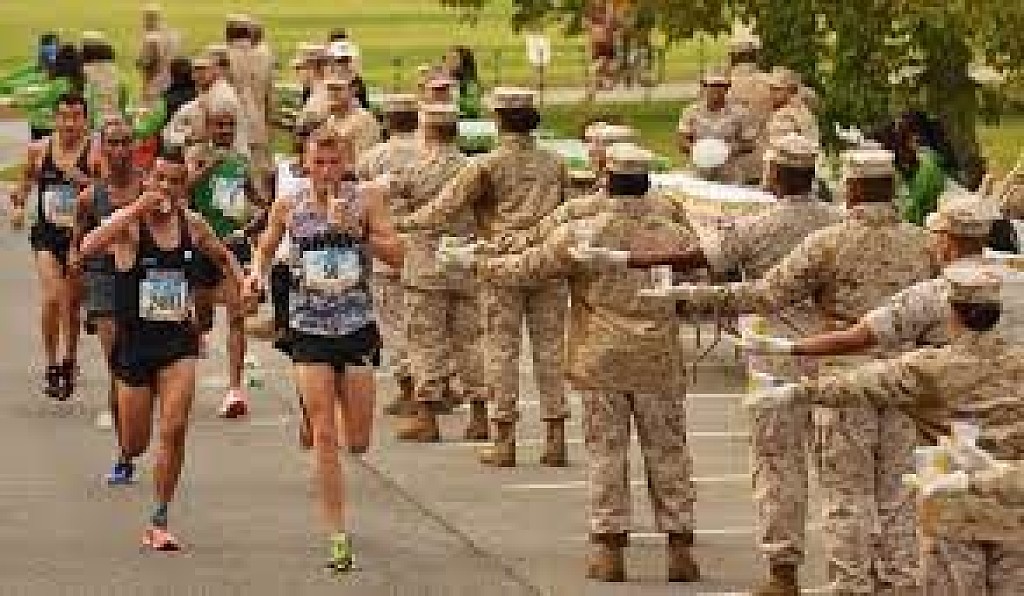
2021 Marine Corps Marathon Weekend cancelled again
The 2021 Marine Corps Marathon (MCM) Weekend events scheduled for Friday, October 29 through Sunday, October 31 in Arlington, Virginia and the US capital, have been cancelled due to security and safety precautions currently in place.
“After exhausting all possibilities, the opportunity to safely operate and execute a live event is just not feasible at this time,” said Rick Nealis, director of Marine Corps Marathon Organization (MCMO). “Though we had high hopes to welcome home our running community this October, we are excited to still be able to celebrate the 46th running of ‘The People’s Marathon’ virtually. We are anxiously looking forward to next year when we can #RunWithTheMarines in person once again.”
“The 46th Marine Corps Marathon is now a virtual event! We are excited and look forward to seeing the results of your hard work and dedication over the past year,” said Colonel Brooks, commanding officer of Marine Corps Installations National Capital Region – Marine Corps Base Quantico. “Although we were not able to conduct a live event for 2021, we trust that each of you understand that safety for you and our great support team took priority. As Marines, we are trained to adapt and overcome, and this is a great test of your ability to adapt and overcome all things this year has presented. I ask that you run hard and with purpose, and finish strong! Be safe everyone! Semper Fi!”

Runners currently in the live MCM, MCM10K and MCM50K categories have the option to:
Receive a virtual entry to the distance of the same race.
Receive a full registration refund.
Defer entry to 2022 at no additional fee.
Further instructions and a link to the registration change form will be sent to the e-mail address provided by participants during registration.
The virtual MCM Weekend events including the MCM, MCM50K and MCM10K must be completed between October 1 and November 10 — the Marine Corps Birthday. All participants will receive via mail the corresponding participant shirt, commemorative patch, bib and finisher medal. Runners will also have access to an online event program, personalized finisher certificate and several digital engagement platforms.
The 47th MCM Weekend is scheduled for October 28–30, 2022.
(09/25/21) Views: 88

Bekele back in Berlin and targeting third triumph
Ethiopian long distance superstar Kenenisa Bekele will defend his BMW Berlin Marathon title on Sunday (26) in what will be his fourth appearance at the World Athletics Elite Platinum Label road race.
Two years ago he ran through the Brandenburg Gate on his way to an Ethiopian record of 2:01:41, a mere two seconds outside Eliud Kipchoge’s world record set on the same course just one year prior. Thanks to that performance, Bekele remains the second fastest marathon runner of all time and heads Berlin’s elite field for this Sunday.
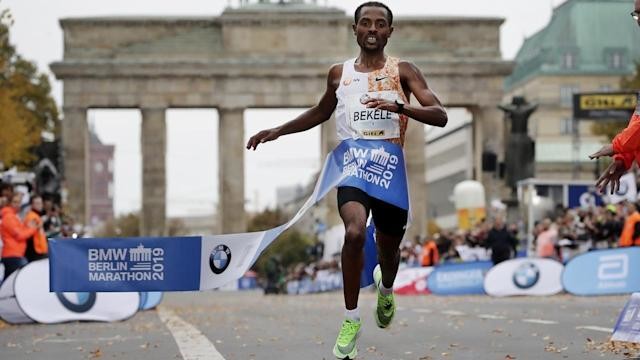
Although the 39-year-old made no concrete mention of a world record attempt at Friday’s press conference, there were signs that he had the target on his mind.
Eleven marathon world records have been set in Berlin so far, more than at any other race. Could Bekele make it a round dozen on Sunday?
“I have prepared well, but the pandemic hasn’t made it easy in the last two years,” said Bekele. Asked about the difference with his 2019 race in Berlin where he went so close to the world record, the three-time Olympic gold medallist said: “At the time it wasn’t clear whether I could run that fast. This time I have more confidence and will do my best.
“Sunday may not be my last chance of the world record, I want to run a couple of years more,” added the 39-year-old, who won the 2016 Berlin title in 2:03:03, only six seconds outside the then world record. The next year he had to drop out.
This Sunday offers Bekele arguably his best chance of breaking the world record, which is a view shared by his Dutch manager Jos Hermens. “Kenenisa has energy and the ability to be right up front at over 40,” said Hermens. “But Sunday’s race will be his best chance of a world record.”
The race is about more than one man, though, as the field includes 10 men with sub-2:10 PBs. “We have connected almost seamlessly with where we had our last race in 2019,” said race director Mark Milde. “Naturally we are delighted that we have been able to recruit a very strong field with Kenenisa Bekele at the top.”
Bekele’s compatriots Guye Adola and Olika Adugna could also produce impressive results. Adola famously stuck with Kipchoge until the very last stages of the 2017 Berlin Marathon, eventually finishing second in 2:03:46 – a time which, at that point, was the fastest marathon debut in history.
“I want to be among the leading group on Sunday,” said Adola, the 2014 world half marathon bronze medallist.
Adugna, meanwhile, also produced a notable performance on his marathon debut, clocking 2:06:15 in Dubai last year. The 22-year-old hasn’t raced since then, so will be raring to go on Sunday.
(09/25/21) Views: 87World Athletics
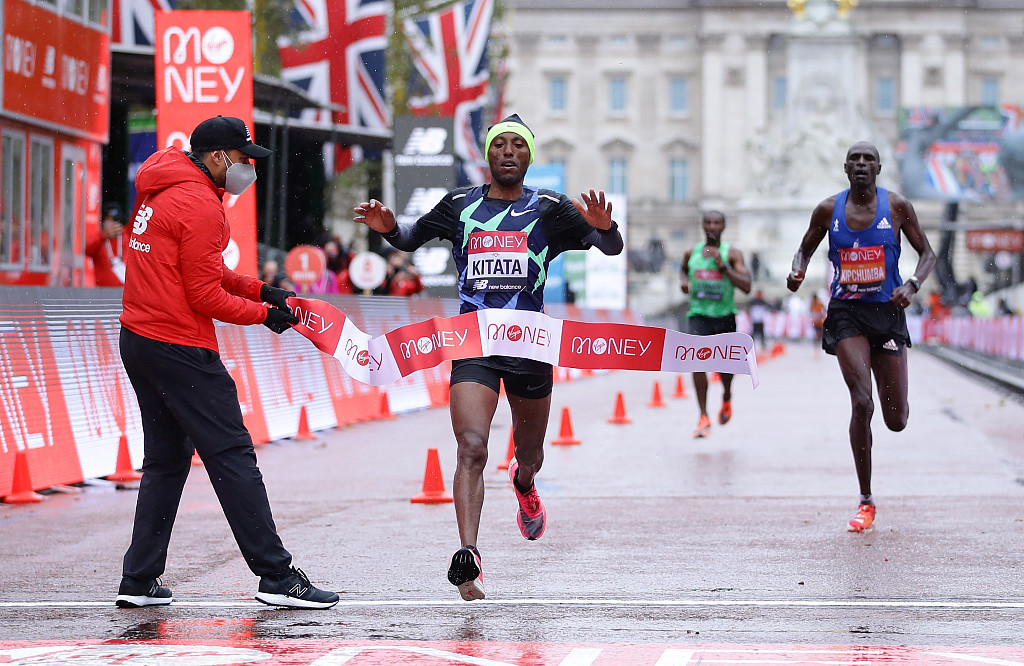
Ethiopian Shura Kitata ready to defend his London Marathon title despite injury
Shura Kitata has been suffering from hamstring problems; the Ethiopian won a sprint finish last year to de-throne Eliud Kipchoge, who finished eighth; he pulled out of the Tokyo Olympic marathon due to the conditions; Kipchoge will not be running London.
Kitata could not follow up a maiden London Marathon title with success at the Olympics this summer and pulled out in hot and humid conditions in Sapporo.
"I have some slight problems but still I am preparing to win and looking forward to it," the 25-year-old said via a translator during Wednesday's press conference.
"I was prepared very well before the Olympics and just two weeks before I had a hamstring injury, that was a big pressure for me. Otherwise I have prepared well and I am feeling confident to run on Sunday in London.

"The hamstring and the pain is not really easy and when it is a very fast speed, there might be some problem but I am looking forward to doing what I did before."
Another sprint finish this year would raise doubts over the Ethiopian's ability to clinch the event for a second time but he reflected on the life-changing experience of triumphing over Kipchoge, who bounced back to defend his Olympic title in August.
"I was very happy with the win last year and it had great meaning because Eliud is a very famous runner and a very strong runner so winning meant a lot," Kitata added.
While Kipchoge will not be in London to try and regain his crown as he recovers following his exploits in Japan, the 36-year-old will no doubt be watching on from afar and backing countryman Evans Chebet.
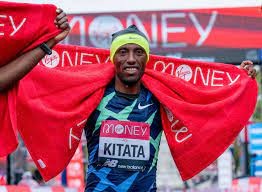
The Kenyan will run the 26.2-mile course for the first time and hope to play his part in a long-standing rivalry with the Ethiopian runners, with only athletes from the two countries winning the event since 2002.
Chebet admitted: "The rivalry is there and I know the Ethiopians are used to staying behind a bit and kicking on for the last 200 or 300 metres. It will be a challenging race and I know I will need a lot of strength at the end to win.
"If Eliud is watching on Sunday, it will give me more to run faster but I have my times already and the goal is just to go for a personal best.
"For 2:02 or 2:03 maybe depending on condition but I am looking forward to the race. Eliud gives morale but I have my own interest and motivation to win."
Kipchoge's last win in London in 2019 saw the Kenyan break the course record to post a time of 2:02:37.
Birhanu Legese will be the fastest man in the field following his winning run of 2:02:48 at the 2019 Berlin Marathon and he hopes the return of a crowd this year will help him make history.
"It depends on the weather on the day. If the weather is good, I plan to break the record and that is my target now. This is what I am preparing for," the Ethiopian and third fastest man in the world warned.
"We are pleased now everything is returning back to normal and we look forward to see the cheering of the crowd on the straight end. It will make us very happy."
(09/29/21) Views: 86

The women’s race at the BMW Berlin Marathon on Sunday is looking increasingly like an attack on the course record
The best time to date was set three years ago when the Kenyan Gladys Cherono ran 2:18:11. Half-a-dozen women will be on the start line who have run under 2:25 and among them is the Ethiopian Hiwot Gebrekidan, the fastest women in the world this year thanks to her personal best of 2:19:35 in winning the Milan title in April.
In the light of the continung Corona pandemic the number of starters for this year has been considerably reduced. Around 25,000 runners are expected to compete on Sunday. The BMW Berlin Marathon will take place under strict hygiene rules.
Any participant on the start line must have been vaccinated, or recovered from the virus or be able to produce a negative PCR test. Over 90% of runners entered have been vaccinated. Spectators on the course will also be requested to maintain social distance and wear a mask covering nose and mouth.
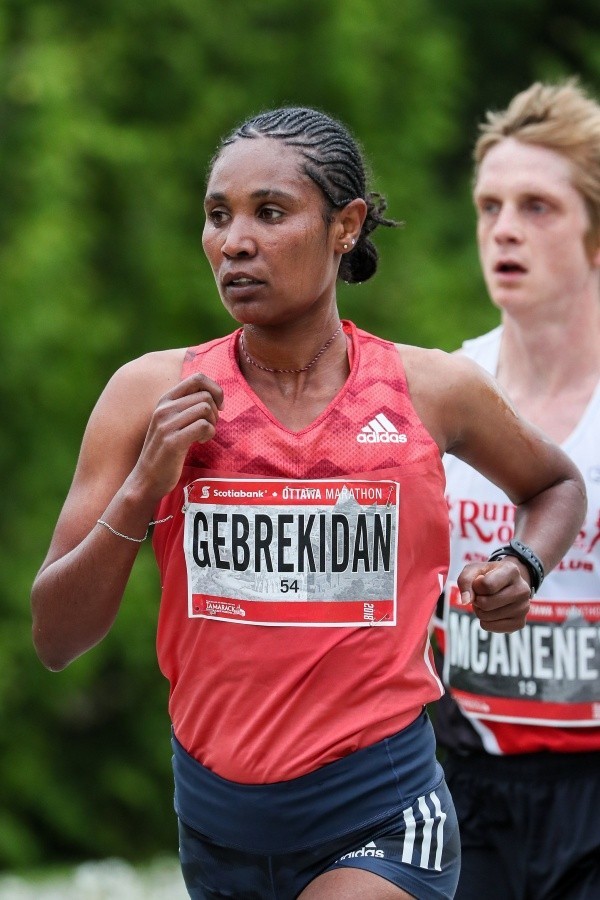
“I’ve been preparing for the BMW Berlin Marathon for a long time and want to run my personal best on Sunday,” said Hiwot Gebrekidan at Thursday’s press conference in Berlin. When pressed as to what pace she would like, the 26-year-old answered: “I’d actually like to hold back in the first half. But I nevertheless plan to go through halfway in just under 69 minutes.” Such a split at halfway would put Hiwot Gebrekidan not only in contention for the course record but also the Ethiopian national record, currently held by Worknesh Degefa with her time of 2:17:41 in Dubai in 2019.
Her fellow Ethiopian Shure Demise also has a personal best in her sights. She is a highly experienced marathon runner, having run a dozen of them. “I’ve spoken with other women runners and know what a fast course is Berlin. I have high expectations for myself and want to break my personal record,” said Shure Demise, whose best currently stands at 2:20:59 and could well go under 2:20 for the first time.

“2:20 remains a breakthrough target for women in the marathon,” said the race director Mark Milde, adding in response to Hiwot Gebrekidan’s announcement of going for a super-fast time at halfway: “We’ll have to wait and see what times are actually run. But a pace like that would certainly suit us. And a course record would be great.”
A woman who has been a late addition to the elite field in Berlin but is capable of a surprise is Fancy Chemutai. The Kenyan has a best of 2:24:27 and will be running only her second marathon. If she were able to convert her enormous potential to good effect in the classic distance she may well be in contention for the win. Her half marathon best of 64:52 makes her the seventh fastest woman at the distance of all time. No other woman on the Berlin start list has such a fast half marathon performance.
Rabea Schöneborn from the local club LG Nord Berlin will be running a marathon for the first time in her home town. The 27-year-old improved her best to 2:27:03 in April in her second race at the distance, missing selection for the Olympics by just nine seconds. This inadvertently created the opportunity of turning that preparation to potentially good effect at the BMW Berlin Marathon. “Berlin is definitely a highlight, I’m really looking forward to Sunday. Up to now I’ve only had the experience of elite marathons but now I can see and feel what’s it like to be part of a big city marathon. Having spectators will definitely give me a lift,” said Rabea Schöneborn.
The Berlin athlete hopes to take advantage of the fast course and what looks likely to be excellent weather conditions to improve her best time. “I always try to hold back a little so I can run the second half faster. That’s also the plan on Sunday,” explained Rabea Schöneborn. Nevertheless, she is still looking at a fast halfway split: “Something between 73:10 and 73:20 is the plan.”
(09/24/21) Views: 83AIMS
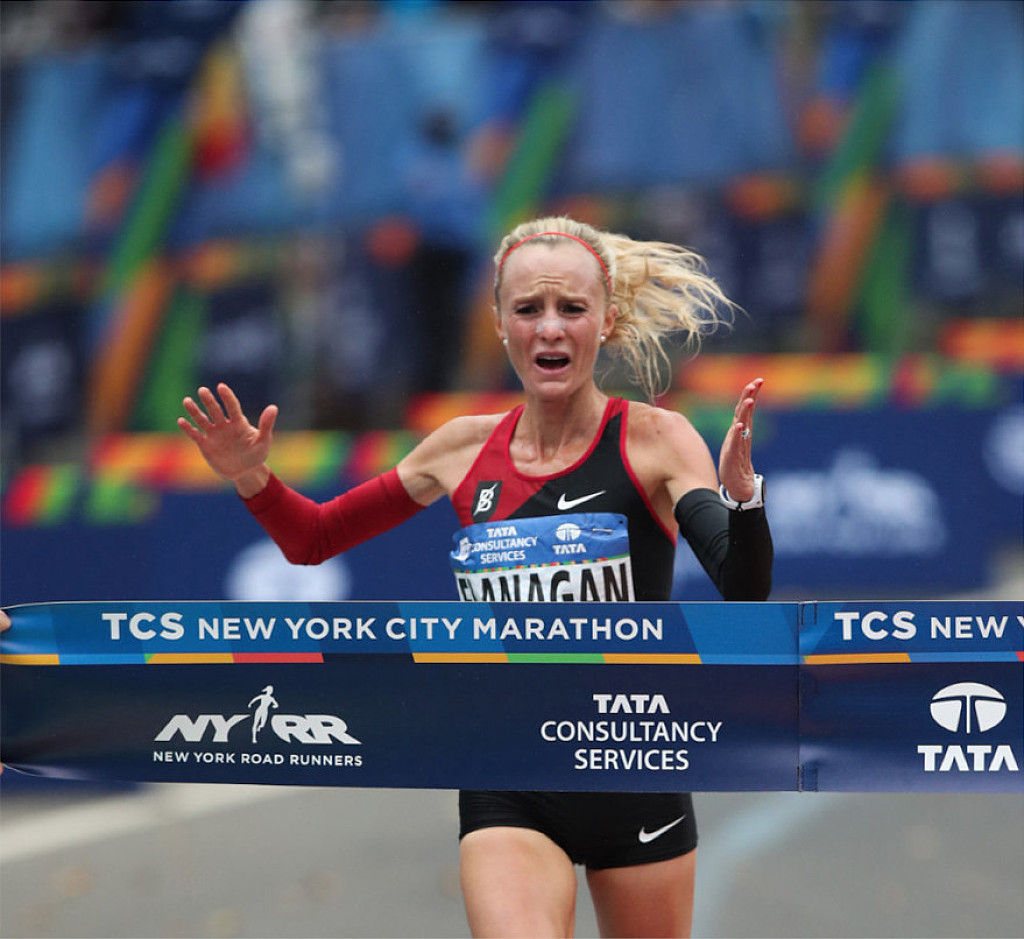
Shalane Flanagan to run 6 marathons in 42 days
Nearly three years after Shalane Flanagan officially retired from elite racing, she’s toeing the line of her marquee event again — not once, but six times in 42 days. With five of the six World Major marathons coming up in the next few weeks, the 16-time national champion will be aiming to run each of them in less than three hours, and then to run a sixth to make up for the postponed Tokyo Marathon.
Because of delays caused by COVID-19, five of the six World Majors are being crammed into a tightly packed fall schedule. Flanagan’s marathon of marathons will start in Berlin on September 26, the same course where she ran her personal best of 2:21:14 in 2014 and became the fourth-fastest American marathon runner of all time. She’ll have one week of recovery before heading to the U.K. to compete in the London Marathon, and from there she’ll return to North America where she’ll run the Chicago Marathon on October 10 and turn around the very next day to run the Boston Marathon on October 11.

The Tokyo Marathon was to be her next race on October 17, but organizers postponed the race again until March 2022. In its place, Flanagan will travel to Portland, Oregon to run her fifth marathon in four weeks. She’ll then have three weeks of recovery before completing her challenge at the New York City Marathon on November 7. New York will be a special place to end her gruelling series, since it was there that she became the first American woman to win the race in 40 years in 2017.
Flanagan retired from professional running in 2019, and since then has had two reconstructive knee surgeries, become a coach with the Bowerman Track Club and adopted a baby boy. In an interview with Self, she explained that she’s taken on this challenge as a way to “reunite” with running after retirement and knee surgery.
“I felt the need to set some goals again,” she said. “Realizing this was a once in a lifetime opportunity presenting itself, with six major world marathons in 42 days, I feel like I’m doing it for myself, for my son, and for young women to showcase the connection between mental and physical health and how important of a role athletics can play in your life.”
(09/25/21) Views: 80
