

Running News Daily
Top Ten Stories of the Week
8/14/2021
These are the top ten stories based on views over the last week.
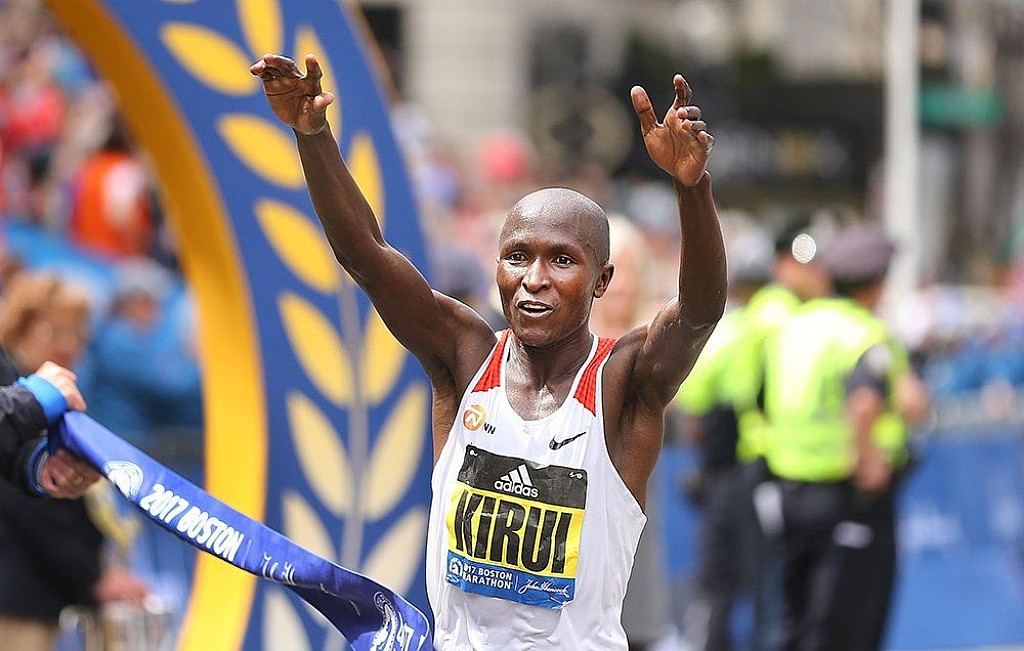


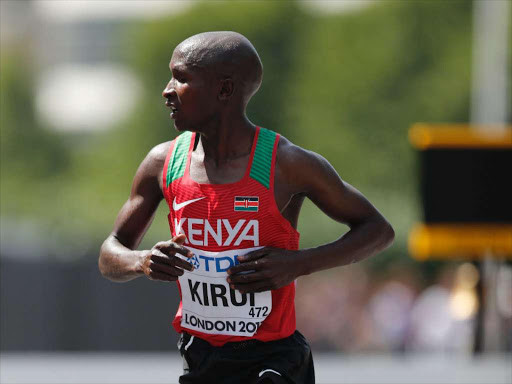
Former world marathon champion Geoffrey Kirui will lead stellar field for October's Boston Marathon
Geoffrey Kirui will be the man to beat at this year's Boston Marathon slated for October 11.
Kirui, who won the event four years ago, will be seeking to capture a second title on the famous street in Boston.

“Last year was a tough one for everyone. Boston is, for me, the exact right motivation and light at the end of the tunnel, as it will be for all returning champions and participants. This is the marathon where I feel at home, and I have big dreams for October,” Kirui said.
Others to look for out are Lemi Berhanu from Ethiopia, best known for skipping across the Boylston Street finish en-route to winning in 2016.
Yuki Kawauchi, winner of more than 30 international marathons and the Japanese record holder in the 50K, looks to become the first man from Japan since Toshihiko Seiko in 1987 to earn two Boston Marathon titles.
(08/11/21) Views: 229William Njuguna
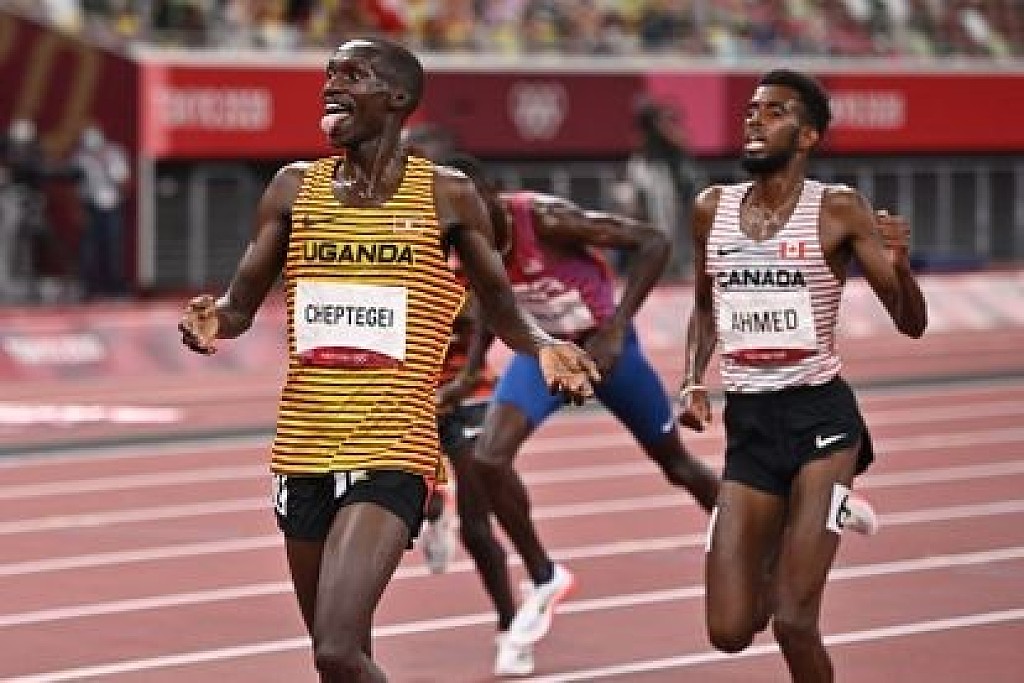
World record holder Joshua Cheptegei wins 5000m gold for Uganda
Joshua Cheptegei added the Olympic 5000m title to his world record in a race which was just short of achieving a Games best time.
The Ugandan was forced to settle for silver in the 10,000m, but made amends by winning the shorter distance in 12:58.15, less than half a second slower than the Olympic record set by Kenenisa Bekele in 2008.
Cheptegei finished ahead of Canada's Mohammad Ahmed and American Paul Chelimo to succeed Mo Farah as champion.
Britain's Andy Butchart fell off the leading pack with around 1000m to go, finishing 11th.
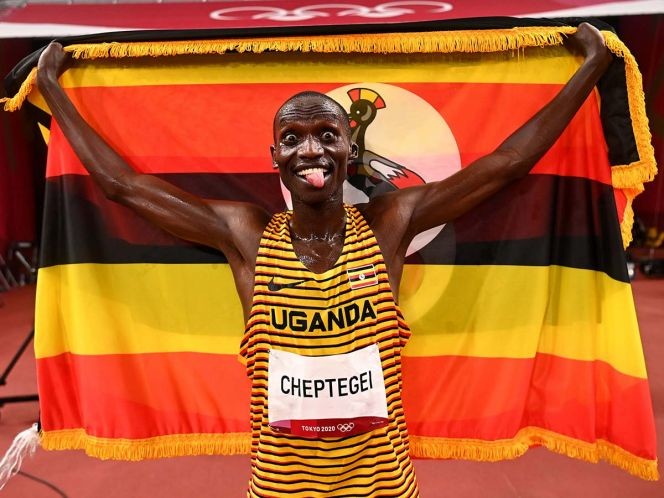
Cheptegei, who revealed he had been struggling with a heel injury heading into the Games, made sure he was near the front of the field right from the start.
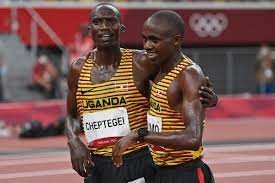
But he will be thankful to his team-mate Jacob Kiplimo, who did much of the heavy lifting early on, setting a pace which always looked like it would dip below 13 minutes.
It was easily the quickest 5000m Olympic final since Bekele’s victory in Beijing 13 years ago, and Cheptegei looked to ease to victory when he took full control on the final lap. Ahmed finished well, but never appeared likely to overhaul his rival.
The victory makes the Ugandan, whose world record stands at 12:35.36, an Olympic and world champion, adding to his 10,000m win at Doha 2019
(08/06/21) Views: 173Richard Newman
Brigid Kosgei seeks Kenyan Olympic marathon redemption
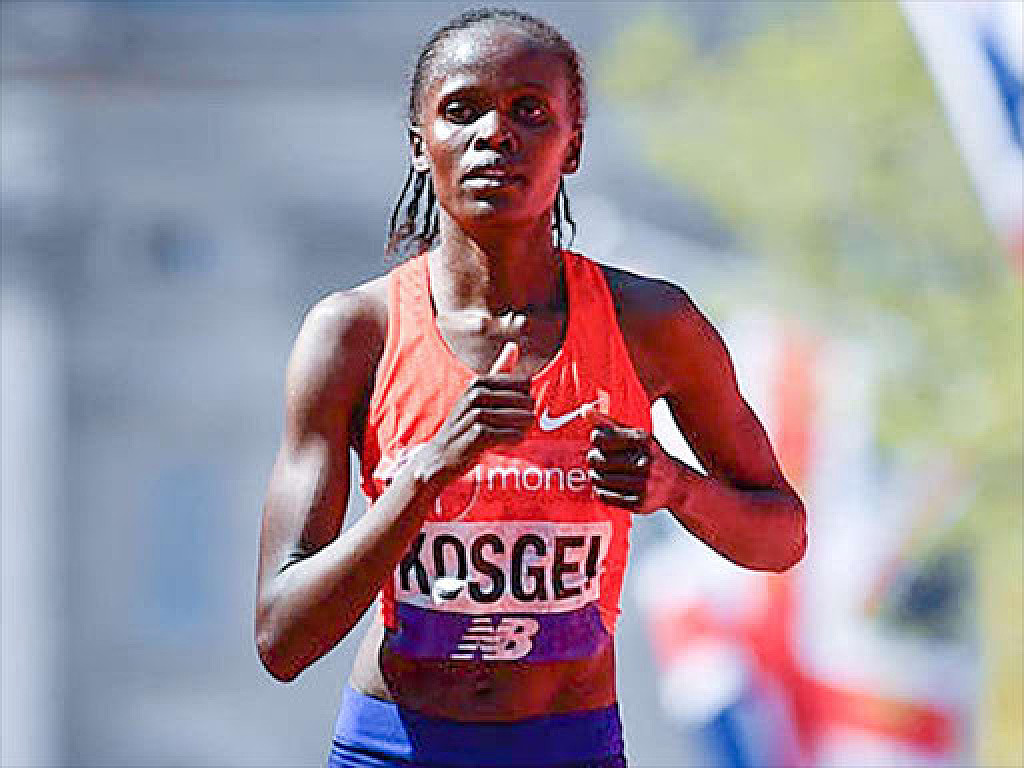
World record holder Brigid Kosgei has the unenviable task at the Tokyo Olympics of restoring Kenya's image in the marathon, which suffered a huge dent after the 2016 Rio Games.
Compatriot Jemima Sumgong became the first Kenyan woman to win an Olympic marathon gold in Brazil, but she subsequently tested positive for the endurance booster EPO and was banned for eight years.
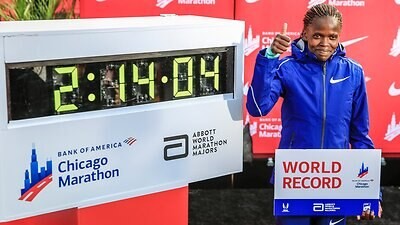
Kosgei, who ran the fastest women's marathon of all time, clocking 2hr 14min 04sec in Chicago in October 2019, is eyeing a medal on Saturday in Sapporo to spare Kenyan blushes.
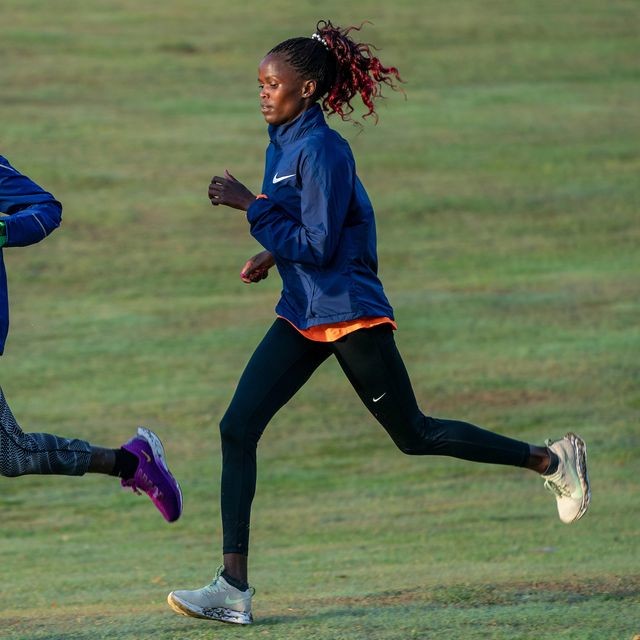
Organizers moved the marathons from the capital to avoid Tokyo's punishing summer heat but temperatures in Sapporo are currently in the 30s, which will make the race a tough challenge for the entire field.
"I know it wouldn't be easy winning the gold medal... but I will go out there and take my chances since this is my first Olympics," Kosgei told AFP.
Like so many athletes, Kosgei traveled to the Olympics after 18 disrupted months due to the coronavirus crisis.
"It is unfortunate that we didn't have many competitions to help us prepare us for the Games since the Covid pandemic led to many race cancellations," she said.
A late starter in the sport, Kosgei -- a mother of eight-year-old twins -- had a difficult time growing up in a large family of seven children to a single peasant mother in Elgeyo Marakwet in Kenya's Rift Valley.
Like many of the girls in her village, Kosgei saw athletics as a vehicle to help her escape a life of destitution.
Her first marathon was in Porto, Portugal, in 2015 when the 27-year-old made a dream debut, winning the event in 2:47.59.
- 'Sharing the limelight' -
Kosgei credits her coach Erick Kimaiyo, a former winner of the Honolulu marathon and a runner-up in the 1997 Berlin marathon, for believing in her and helping to nurture her raw talent at his Kapsait training camp situated outside Nairobi at over 9,600 feet (2,900 meters) above sea level.
"I had grown up listening about the great marathon achievements of Catherine Ndereba and Tegla Loroupe, but I didn't expect that I could one day be sharing the same limelight with them," Kosgei said.
"But it was Kimaiyo’s belief in me that helped to propel me and see myself succeeding as a champion marathon runner."
The mentorship resulted in two contrasting victories at the 2016 and 2017 Honolulu marathons, with the difference in winning times between the two events -- 2:31:10 and then 2:22:15 -- further illustrating the power of the forged partnership.
She has won the London marathon twice and set a half-marathon course record of 64min 28sec at the Great North Run in northeast England in September 2019.
However, having missed the 2019 Doha world championships, Kosgei is hoping the Covid-affected Olympics will provide the big stage for her -- and redemption for Kenya.
(08/06/21) Views: 168

Running After 40: Time to Get Smart
As you get older, setting goals—and reaching them—will look a little different
Your forties: the decade when it all goes to hell. You get injured more. Your 5K time doubles. Recovery takes forever. At least that’s what everyone tells you will happen when you turn 40. And they’re (kind of) right. After 30, people can lose up to 5 percent of their muscle mass per decade, and VO2 max also tends to drop by 10 percent per decade. The result? Runners tend to get slower.

“You can expect to see a 1 percent decline in speed per year after you hit 40,” says Scott Murr, founder of the Furman Institute of Running and Scientific Training at Furman University. “And that assumes you’re training properly. If you’re not, you can expect bigger declines.”
But plenty of runners have been successful well into their forties, particularly endurance runners. “I was probably the most successful in my forties,” says Karl “Speedgoat” Meltzer, a professional ultrarunner best known for winning the most 100-mile trail races of any runner in history (38). But he wasn’t winning because he was becoming a faster runner as he aged. Instead he did it by running smarter. We’re not saying that by adhering to the following tips you’ll magically start winning 100s, but they will keep you running strong straight through your mid-life crisis years.
Welcome to the No Mistakes Zone
“Aging athletes have to adjust their expectations, otherwise they’ll get frustrated and potentially hurt,” Murr says. “I’m 57 years old. I can’t do what I could when I was 37 or 47. I can’t even run as fast as I could when I was 55.”
There are certain physiological truths that can’t be denied, but Pete Magill, a masters runner, coach and author of a series of books about running (including Build Your Running Body), says that training right can go a long way to improving performance as you age. “You can still do amazing things in your forties, but you have to do everything right,” Magill says. Loss of muscle mass, increasingly brittle connective tissue, and decreasingly dense bones are a recipe for injury. “When you enter your 40s, you’re in a no mistakes zone. You can’t go out the first day and run 30 minutes as fast as you can like you did when you were 20.”
Recover, Recover, and Recover Some More
The main reason masters runners get injured, according to Magill, is that they underestimate their need for downtime. “Our recovery requirements expand as we get older, and it’s hard for us to adjust,” Magill says. “We feel good and think we’re ready to run hard again, but feeling good is not a green light to push it.”
When you train hard too soon after a big day, you’re not giving your body the chance to finish rebuilding muscle, which is what makes you stronger and faster. “It takes more time than we think it does,” Magill says. “If you feel good two days after a hard run, wait a third day before doing a difficult workout again, otherwise eventually your body will break down.”
Meltzer didn’t start running ultras until he was 29 and he didn’t learn the importance of recovery until he was in his forties. “It took me a while, but I learned to run less and rest more,” Meltzer says.
But that doesn’t mean you should just sit on the couch. Magill says that runners need to adopt active rest—Meltzer, for example, gardens and hikes on down days. It also means incorporating mellower workouts into your training plan. “The trouble is that most runners turn every day into a medium day,” Magill says. “If you have difficult days, you have to have easy days. Most runners run their distance days faster than they need, which sabotages their hard workouts.”
Get Swole
Strength training will help combat that natural loss in muscle mass and bone density. Murr says there’s no one-size-fits-all formula for strength training, as long as you’re working all the major muscle groups.
Magill recommends a basic regiment that includes squats, deadlifts, and Nordic curls. It’s a program designed to strengthen your muscles in the way they’ll be used when you run to help prevent injury.
“The best way to get fit is to train without interruption, without taking breaks for injuries,” Magill says. “Injuries sideline your ability to improve. If you can go a few years without an injury break, something magical happens; your body begins to function in a way you never thought possible. Everything reaches a peak.”
Chill the F—k Out
Meltzer is proof that runners can stay successful in their forties and beyond, and he says he didn’t personally change his goals as he aged. He still wanted to run long distances and for a long time he wanted to win races. He coaches a lot of masters runners who come to him with lofty goals, which he says is fine as long as they keep their aging bodies in mind while training for those goals.
“You can only get so much out of your body, but if you treat it properly you’ll get the most out of it,” Meltzer says, adding that treating your body properly often means runners need to learn how to relax. “I developed a better attitude about running as I got older. I realized that I’m a better runner when I’m doing what I enjoy. I like to be in the mountains and run up 3,000 vertical feet, so that’s how I train.”
According to Meltzer, if masters runners need to change anything as they age, it’s in their mindset. Don’t be so hard on yourself. “Take it as it is. Enjoy it. Don’t get stressed about losing your speed in your forties,” he says. “Just enjoy what the decade brings you.”
(08/08/21) Views: 96Outside Online
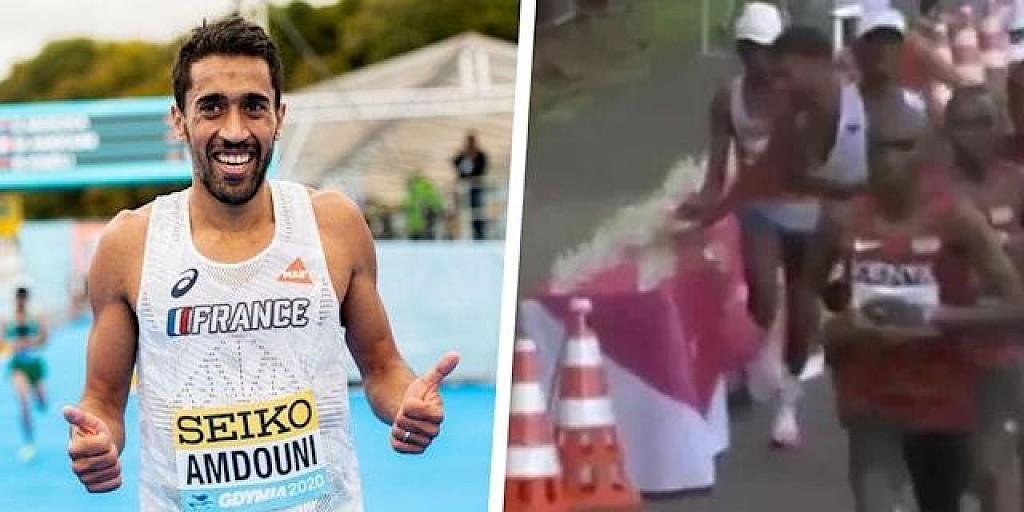
French runner Morhad Amdouni defends himself after water bottle knocking over controversy in men´s marathon
There was a hugely controversial moment during the men's marathon at the Tokyo 2020 Olympic Games as France's Morhad Amdouni knocked over a row of water bottles and then picked up the last one. Amdouni was criticised on social media for his actions, but he has released a statement to defend himself.
French marathon runner Morhad Amdouni has defended himself after knocking over a row of water bottles at a rehydration station during the men’s marathon at the Tokyo 2020 Olympic Games, saying they were too “slippery” for him to pick up.
Amdouni sparked controversy when he appeared to deliberately knock over every bottle at the station before grabbing the last one for himself.

Amdouni, who finished 17th in the race, six minutes behind winner Eliud Kipchoge, was criticized on social media for unsportsmanlike behavior.
But he has released a statement defending his actions, along with a close-up video of him knocking over the bottles.
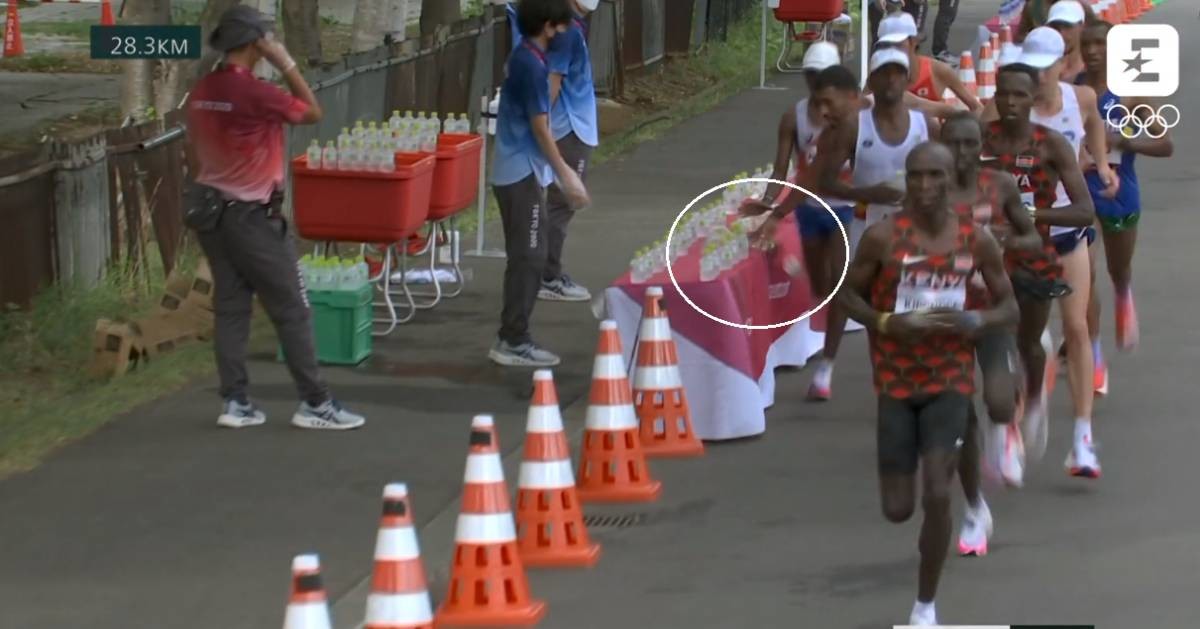
“To put an end to all the controversy from the video, I show this video to actually understand what happened.
“To guarantee freshness to the bottles, they are soaked in water, which makes them slippery. However, it is clear that I am trying to get one from the beginning of the row but they slip as soon as we touch them.”
The marathon was run in temperatures of 27 degrees and 30 athletes dropped out over the course of the race.
Kipchoge defended his marathon gold medal with an imperious display.
The 36-year-old Kenyan pulled clear with 10 kilometres to go to finish a full 80 seconds ahead of the Netherlands’ Abdi Nageeye, crossing the line in 2:08:38.
Kipchoge is just the third man in history to win consecutive Olympic marathon titles, adding yet another record to a glittering career.
(08/09/21) Views: 96James Walker-Roberts
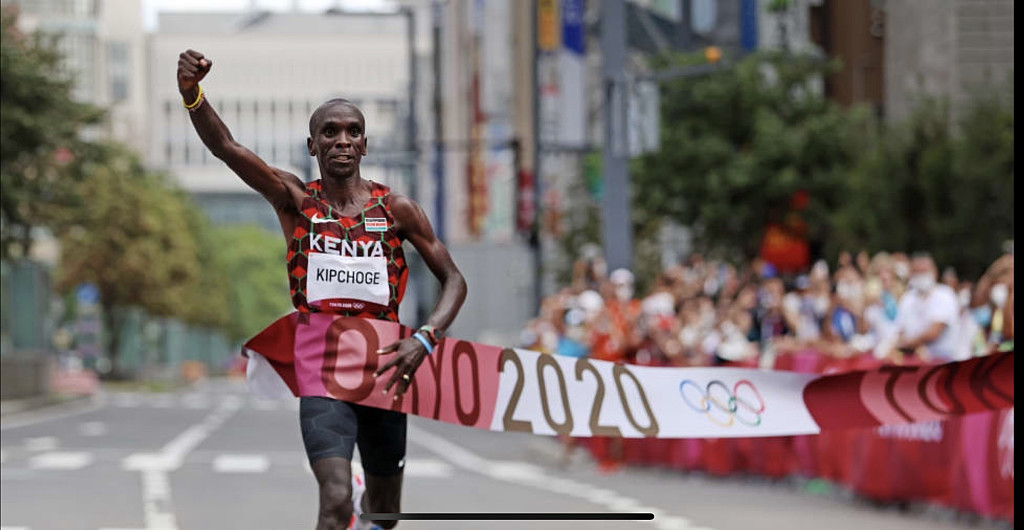
Eliud Kipchoge Wins Olympic Marathon Again, This Time In Tokyo
Eliud Kipchoge delivered a dominating performance in the Tokyo Olympics men’s marathon, pulling away from his competition after the halfway point and finishing 1 minute, 20 seconds ahead of second-place finisher Abdi Nageeye of the Netherlands on a steamy day in Sapporo, Japan.
Kipchoge of Kenya, the world record holder in the marathon, is the first men’s repeat Olympic winner since Waldemar Cierpinski of the former East Germany in 1976 and 1980. Kipchoge finished in 2 hours, eight minutes, 38 seconds.
Nageeye clocked in at 2:09:58, and Bashir Abdi of Belgium finished third, in 2:10:00.
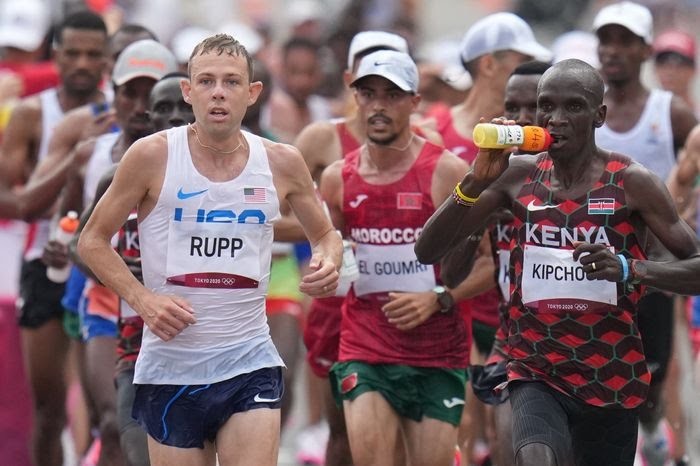
American Galen Rupp, who won bronze in the marathon at the Rio 2016 Games, finished eighth, more than three minutes back in 2:11:41.
Galen Rupp of the U.S. finished eighth in the Olympic marathon.
After the 15-mile mark, Kipchoge, in front of the lead pack, turned and looked over his shoulder at Rupp and said something to him. Shortly after that, Kipchoge took off and began building his insurmountable lead.
NBC commentators said that Kipchoge seemed irritated with Rupp in the encounter.
“We saw Kipchoge get annoyed, which is so, so rare,” NBC commentator Kara Goucher said.
Rupp won the U.S. Olympic marathon trials in February 2020 and had targeted gold in Sunday’s race. He won silver in the 10,000 meters in London 2012 and bronze in the Rio 2016 marathon.
American Jacob Riley finished 29th, in 2:16:26, and American Abdi Abdirahman 41st in 2:18:27. Abdirahman, 44 years old and competing in his fifth Games, is the oldest U.S. runner to ever make the U.S. Olympic team.
The 36-year-old Kipchoge, competing in his fourth Olympics, entered the race with three medals: a bronze in the 5,000 meters in Athens 2004, silver in the 5,000 in Beijing 2008 and gold in the marathon in Rio 2016. He failed to qualify for Kenya’s team for London 2012.
Kipchoge famously broke the two-hour marathon barrier on a closed-course race in Vienna in October 2019, part of a years-long effort by Nike that included a new type of shoes. The thick-soled shoes with superlight cushioning and a carbon-fiber plate have spawned copycats, lowered finishing times and taken over the sport.
Kipchoge was so in command of the race that more than 10 miles in, he appeared to fist-bump with Brazil’s Daniel Do Nascimento.
Do Nascimento, in fourth place at the half-marathon mark, soon dropped out then crumpled onto the road.
It was over 80 degrees with humidity over 70%. Runners shoved bags of ice down the backs of their singlets or tucked cooling packs under hats. More than two dozen runners didn’t finish the race.
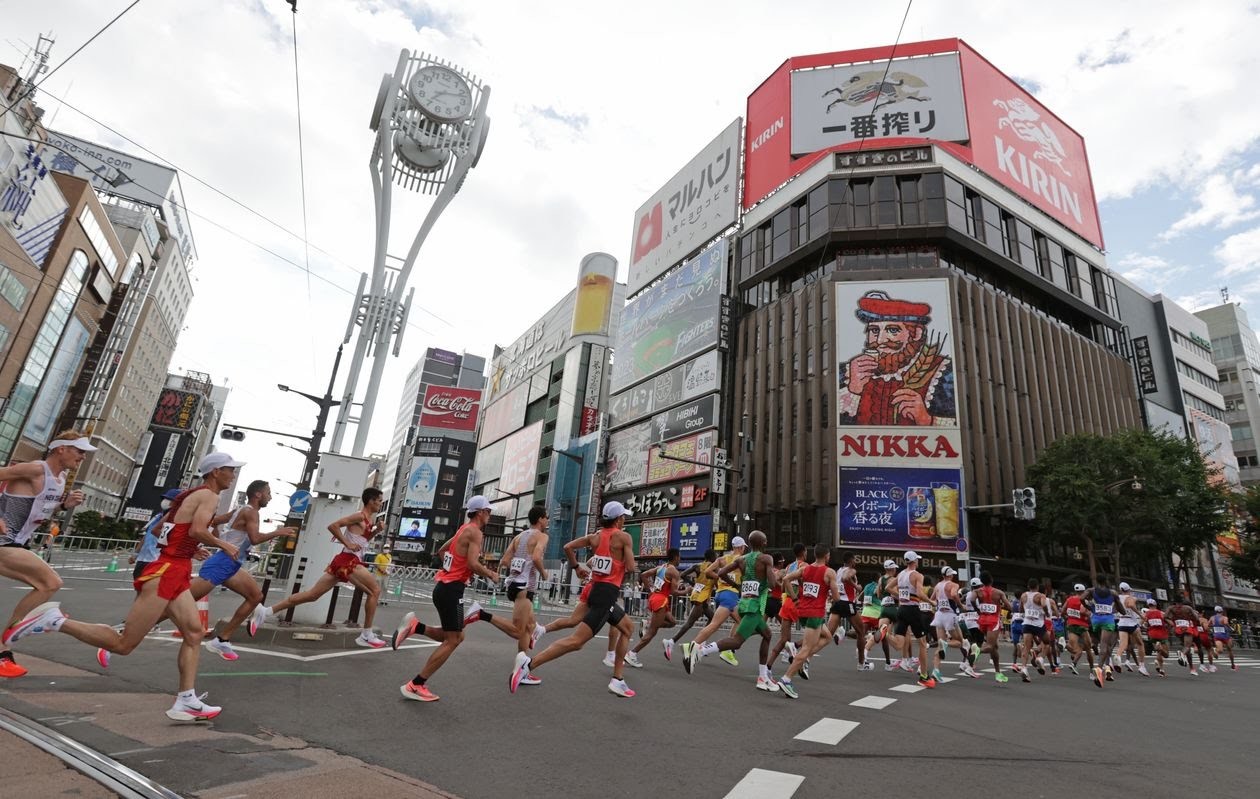
Runners move past the Susukino district while competing in the men’s marathon.
Frank Shorter was the last American man to win the Olympic marathon, in 1972.
Since then, the gold has been won twice by the East German, three times by Kenyans (including twice by Kipchoge), twice by Italians, and once by an Ethiopian, a South African, a Korean, a Portugese and a Ugandan.
U.S. runner Molly Seidel was a surprise medalist in the women’s Olympic marathon Saturday, finishing in third to take the bronze.
(08/08/21) Views: 93Wall Street Journal
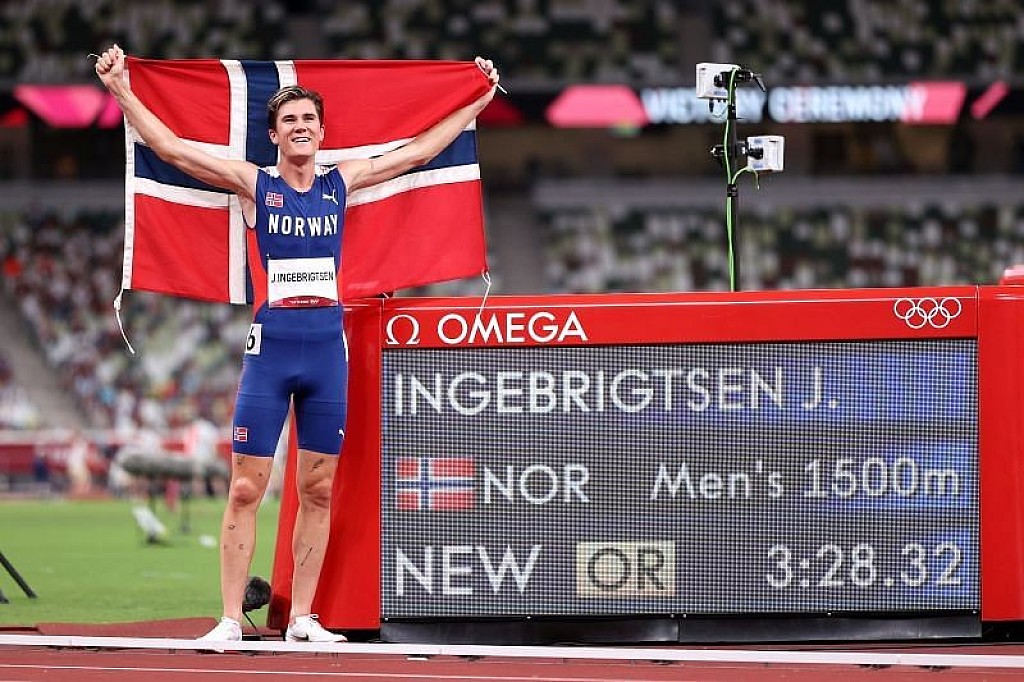
Norwegian Jakob Ingebrigtsen takes 1,500m gold in Olympic record
In the last individual final on the track at Olympic stadium, the young Norwegian, Jakob Ingebrigtsen, has taken the gold medal, outkicking his Kenyan rival, world champion Timothy Cheruiyot in a furious race over the final 200m. Ingebrigtsen crossed the line in 3:28.33, an Olympic record surpassing the one set just a few days ago by Abel Kipsang, who finished fourth.
Cheruiyot took silver in 3:29.01. Great Britain’s Josh Kerr unleashed a monster kick to take the bronze medal, only 0.04 seconds behind Cheruiyot.

The field looked on race favorite and world champion to take the race out swiftly, and he did. The Australian, Stewart McSweyn, looked strong in third place in the first few laps, with Ollie Hoare and Team GB’s Jake Wightman following closely behind but they fell off as they reached the bell. With one lap to go, Cheruiyot took off, with Ingebrigtsen right on his heel, but ultimately he didn’t have enough left in the tank to secure the race.
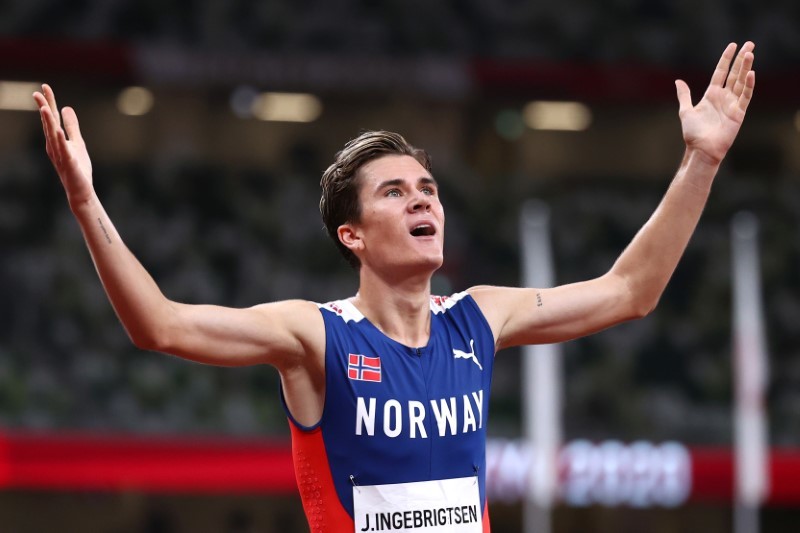
This is Ingebrigtsen’s first Olympic medal in his Games debut. The Norwegian, who is only 20, has a prolific resume over the European circuit, finishing fourth in this event at the world championships in Doha in 2019.
This is the final day of the Tokyo 2020 Olympics. The final events are the men’s 4x400m final and the men’s marathon.
(08/07/21) Views: 91Marley Dickinson
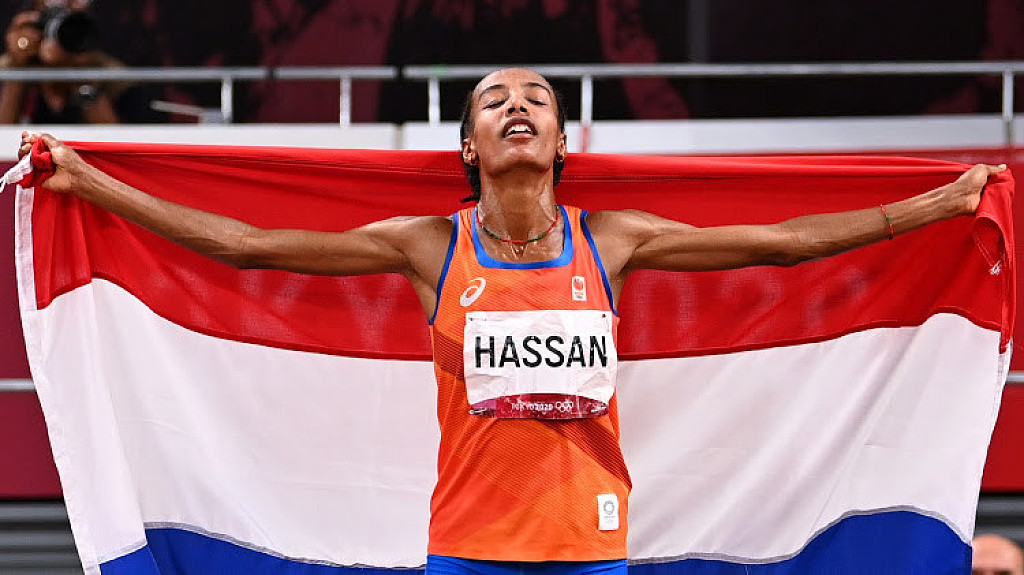
Netherlands' Sifan Hassan won the 10,000m to seal her second gold and third medal of the Tokyo Olympics.
The 28-year-old, who had been seeking an unprecedented golden treble, had missed out on that feat when she took bronze in the 1500m but still takes home a hat-trick of medals after adding Saturday's gold to her 5,000m title.
Despite running three races in Tokyo's heat in the last few days, Hassan found an extra gear in the last lap.
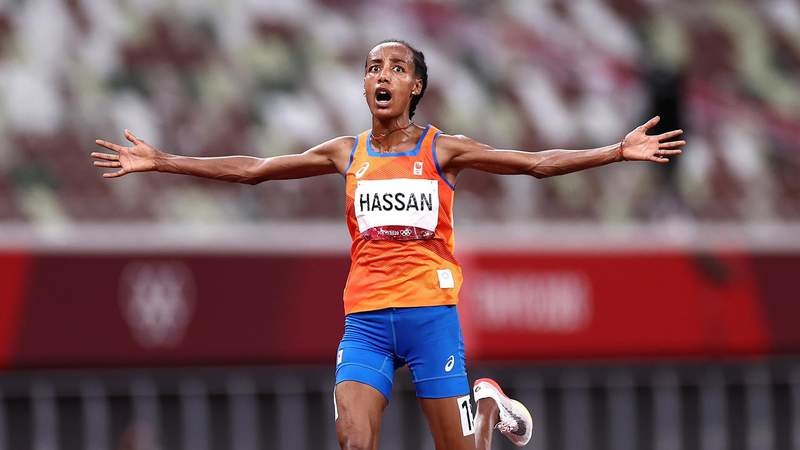
She won in 29 minutes 55.32 seconds.
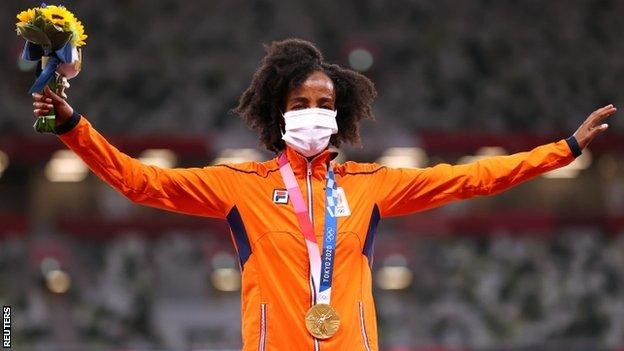
It had been a highly anticipated race with world champion Hassan pitted against Ethiopia's Letesenbet Gidey, who broke the Dutchwoman's world record in June, and it did not disappoint.
Hassan tucked in just behind the leaders and with about 3,000 metres remaining, she increased her pace to sit second behind Gidey.
On the final turn Hassan surged past the Ethiopian, who then faded further to take bronze after Bahrain's Kalkidan Gezahegne passed her to get the silver.
(08/07/21) Views: 88BBC Sports
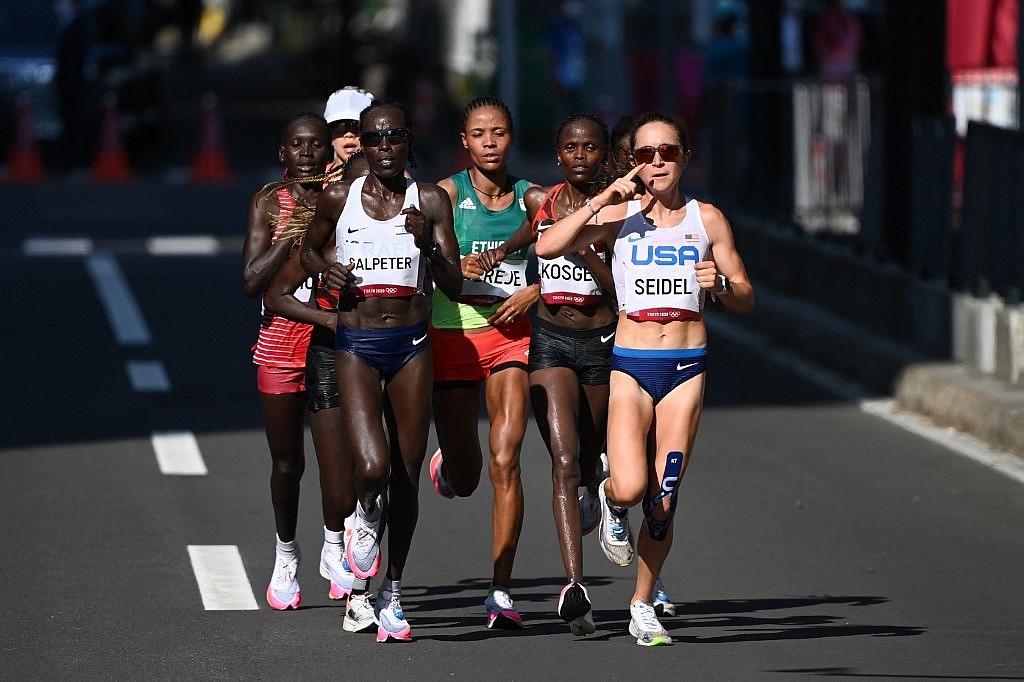
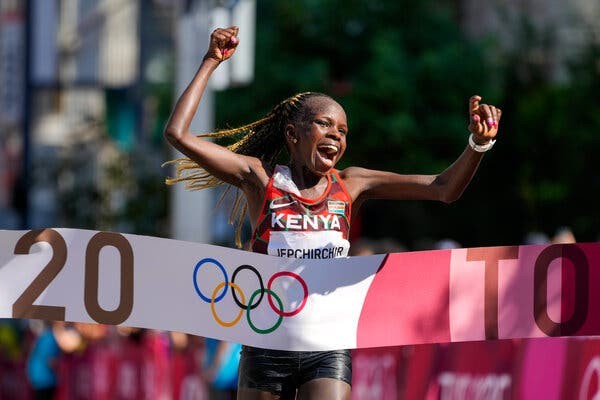
Molly Seidel Shocks the World With Bronze Medal, as Kenya’s Peres Jepchirchir and Brigid Kogei Go 1-2 in 2020 Olympic Marathon
In one of the most remarkable and unlikely runs ever by an American distance runner, Wisconsin native Molly Seidel earned a bronze medal in the 2020 Tokyo Olympic marathon, running 2:27:46 in the heat of Sapporo on Saturday morning. Seidel established herself near the front of the race early, and remained there throughout. Late in the race, Seidel was in a battle for bronze with Israel’s Lonah Chemtai Salpeter, but with three miles to go, Salpeter stopped running, leaving Seidel in bronze-medal position, which she protected to the finish line.
Kenya’s Peres Jepchirchir, the world record holder in the women’s-only half marathon, pulled away from teammate Brigid Kosgei, the marathon world record holder, in the final two kilometers to take the gold in 2:27:20. Kosgei settled for the silver in 2:27:36, her first loss in her her last five marathons.
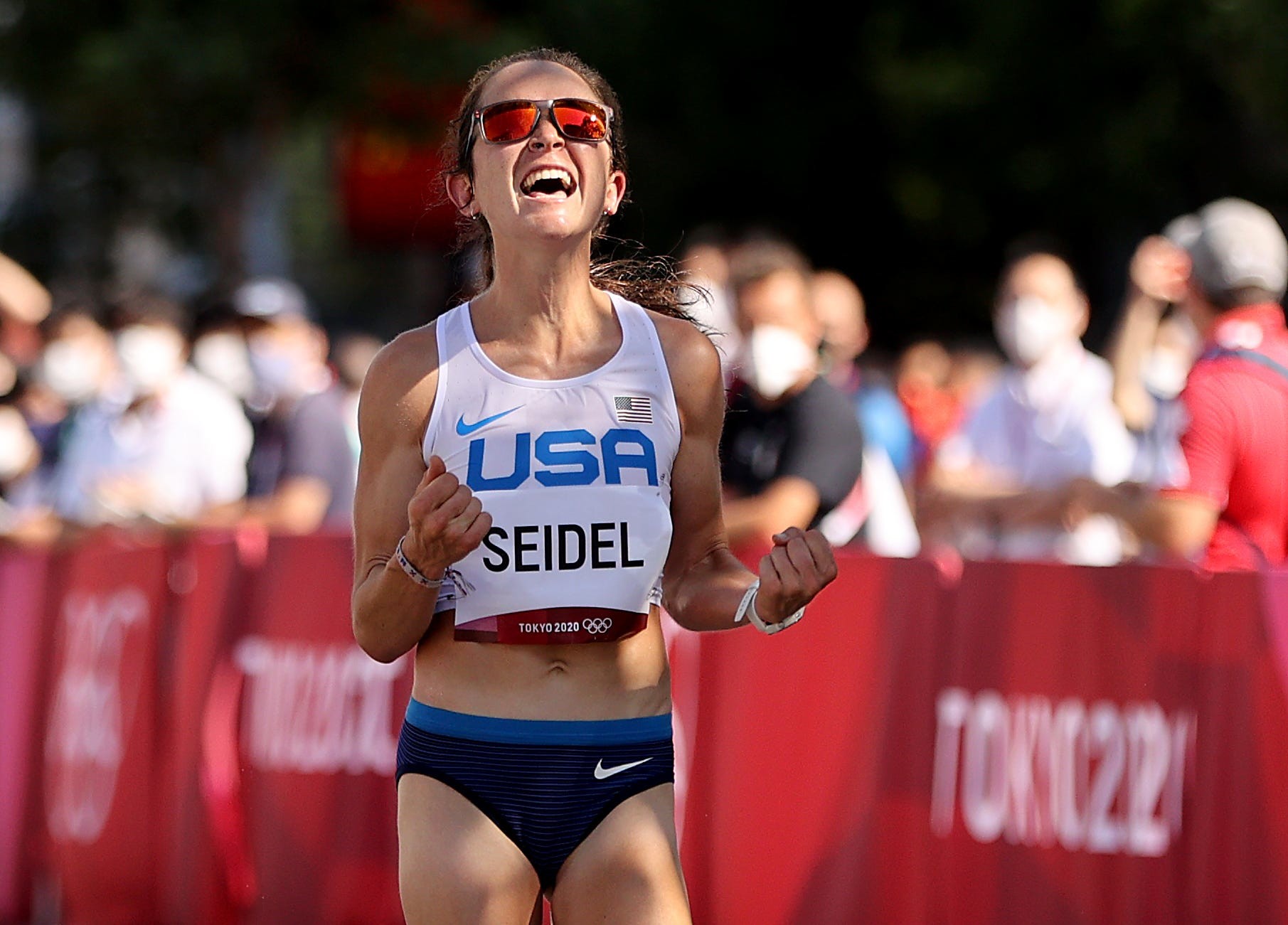
The story for American distance running fans was Seidel, running in only her third marathon of her life (her first was the Olympic Trials marathon in 2020 to get here). Seidel beat five sub-2:20 women. She entered the race with a 2:25:13 personal best and yet was in the conversation for the gold until the final 2k. She joined American running legends Joan Benoit Samuelson (gold in 1984) and Deena Kastor (silver in 2004), as the only American women to medal in the Olympic marathon.
The race
At race time, it was sunny and 76 degrees with 87% humidity, despite the race being moved up an hour because of the heat to start at 6 a.m. local.
As a result, the race went out slow, with 5K and 10K splits of 18:02 and 36:16 for the leaders (2:32:50 marathon pace at 10K). The lead pack remained about 40 or 50 women strong at the 10-kilometer split, but the effect of the heat was unmistakable, with women applying ice bags on themselves and running wide to get into the shade. By this point, US champion Aliphine Tuliamuk had fallen off the pace (she would eventually drop out).
From there, as the race advanced north on a slight downhill, it picked up. Honami Maeda of Japan took a few turns at the front, as did Americans Seidel and Sally Kipyego, but it was mostly shared. The next two 5K splits (17:31 and 17:41) were quicker and reduced the lead pack to less than 20 women by 20K. Zeineba Yimer, a 2:19 woman from Ethiopia, dropped out at the 17K mark.
The lead group went through halfway in 1:15:14, and the lead group was whittled down to 11 with Ethiopian contender Birhane Dibaba falling off the back.
Americans Seidel and Kipyego remained in the lead pack of 12 at 25K (Volha Mazuronak of Belarus rejoined the lead pack between halfway and 25k), which the women went through in 1:28:51 (2:29:47 pace). Ethiopian Roza Dereje Bekele (2:18:30 pb) and Salpeter (2:17:45 pb), along with the three Kenyans, were pushing the tempo slightly.
After that split, as the women continued to weave through the north Sapporo suburbs and Hokkaido University, racers started dropping off the lead pack like flies: first Kipyego, then Mazuronak and then a big casualty — Ruth Chepngetich of Kenya, the reigning world champ, falling back around the 29K mark.
Meanwhile at the front, Seidel led the entire 18th mile in around 5:26. The lead group of nine went through 30K in 1:46:03 (17:12 previous 5K, quickest of the race). The Japanese spectators pulled for their countrywoman Mao Ichiyama, who was still there.
The 30-35K split was the quickest of the race (16:54) and those five kilometers caused the biggest carnage: four women, including Ichiyama and Dereje, the final Ethiopian, dropped off the lead pack.
Now with the group down to five and less than five miles remaining, and Seidel continuing to run with confidence and share the lead with the two remaining Kenyans, the curiosity surrounding Seidel turned into a real possibility…could she snag a medal?
Bahrain’s Eunice Chumba dropped off just after the 35K mark, making it a four-woman race for three medals: Kosgei, Jepchirchir, Salpeter, and Seidel. Women with personal bests of 2:14, 2:17, 2:17, and 2:25. But in the summer Japan heat, the strongest women would win, not the fastest.
In the 24th mile, the Kenyans finally struck, Jepchirchir throwing in a surge and Kosgei covering it. They opened up a small gap on Salpeter and Seidel immediately, and Salpeter had a few meters on Seidel.Before one even had time to process whether Seidel’s fairytale quest for a medal was coming to an end, her fortunes changed drastically. At the 38-kilometer mark, Seidel caught Salpeter, who was still less than five seconds behind the leaders, but slowing slightly. Salpeter, however, was broken. Within a span of seconds she slowed to a walk and Seidel was into the bronze position, with the leaders still in her sights, Jepchirchir in front and Kosgei sitting on her.
At 40k, Jepchirchir and Kosgei were still together with Seidel only six seconds back, 31 seconds ahead of fourth place, comfortably in bronze position, barring a blowup. Seidel appeared to be closing on the leaders. Could she even get the silver or the gold?
Not quite. Jepchirchir had one final gold-medal move, dropping Kosgei just after the 40K split and quickly opening a 10-second gap. She would extend her winning margin to 16 seconds by running the final 2.195 kilometers at 5:23 pace.
Kosgei was fading slightly but so was Seidel. Both held their positions through the line, as Seidel could not quite summon the finish to get back to Kosgei and finished 10 seconds behind her in the bronze medal position.
Seidel yelled in delight as she crossed the finish line, while Kosgei looked slightly disappointed with the silver. The third American, Sally Kipyego, finished 17th in 2:32:53.
The temperature at the finish was 84 degrees with 67% humidity.
(08/07/21) Views: 85
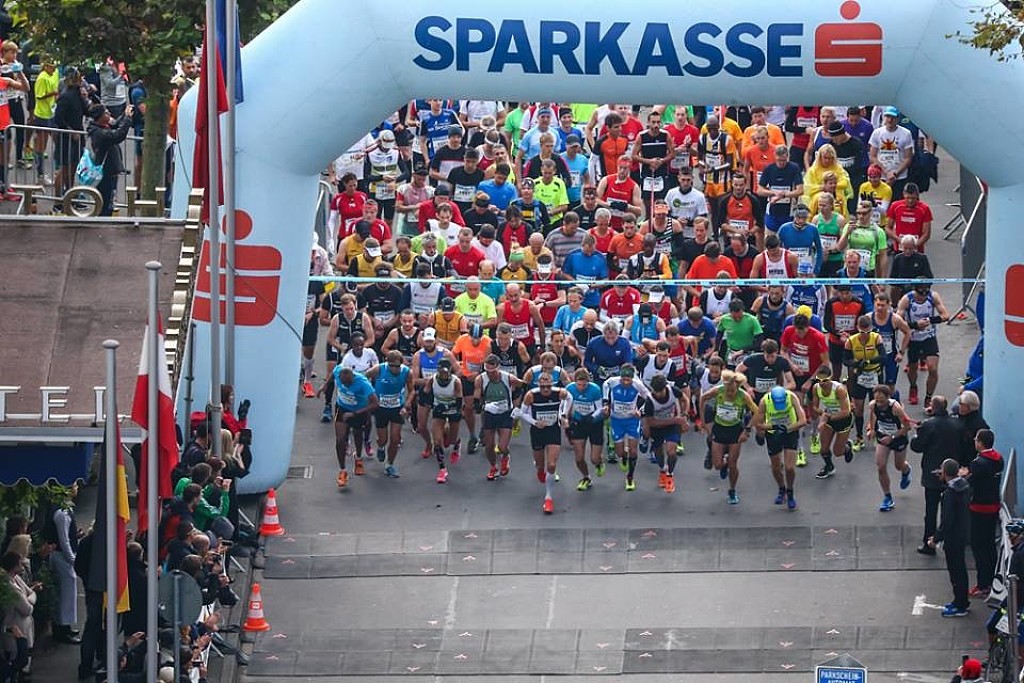
3-Country Marathon is on, in person say organizers
Organizers of the 3-Country Marathon have committed to going ahead with their race next month.
In a statement, they said: “For many, it will indeed be like their first time after this long, non-competitive break from the marathon. We want to support you in this premiere with a clear statement:
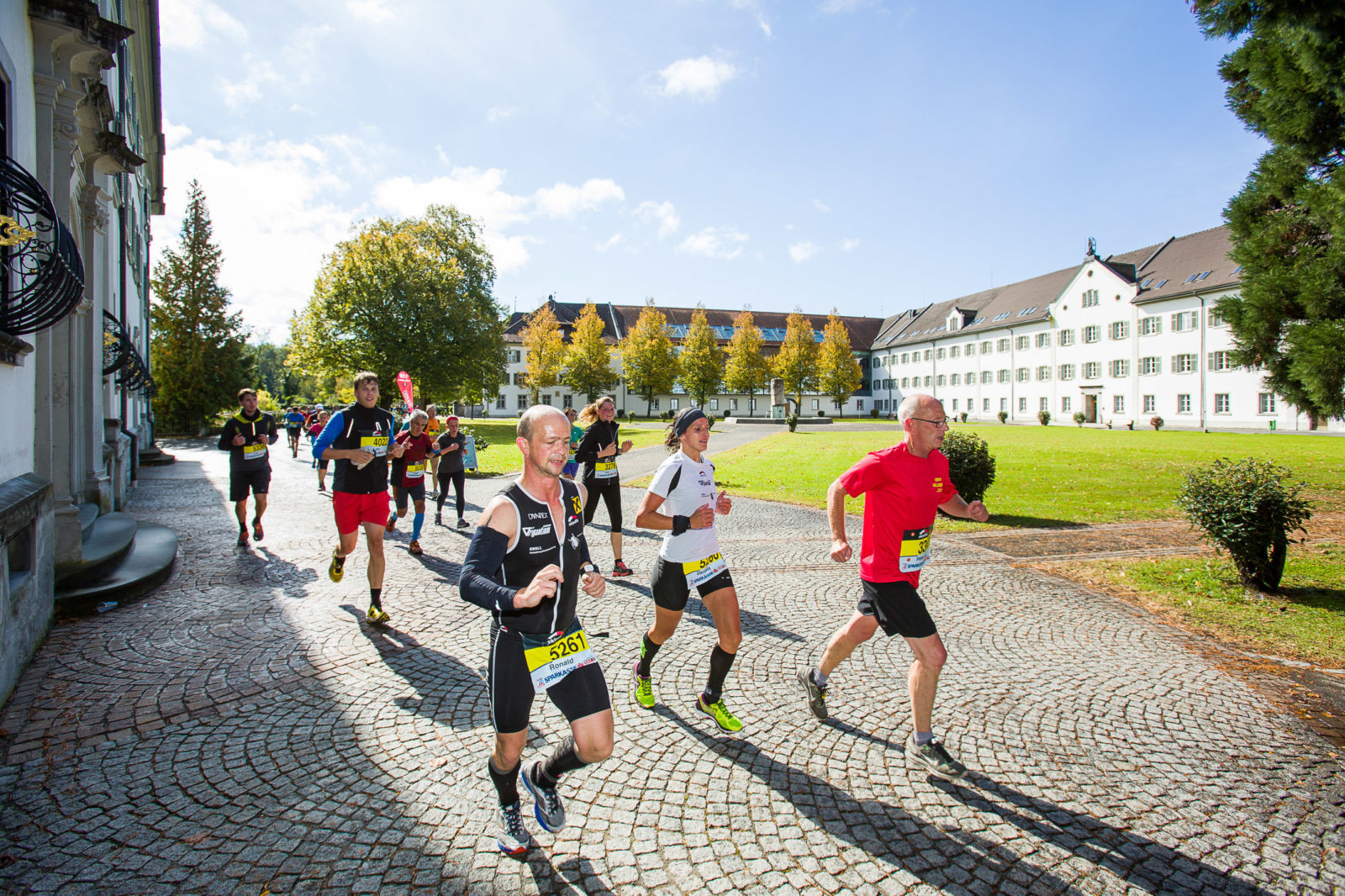
The Sparkasse 3-Country Marathon will take place on October 10, 2021. In reality. Not virtual. And all of this with the full range of services in a highly professional environment.”
Register and prepare! www.sparkasse-3-laender-marathon.at
(08/09/21) Views: 82AIMS
