

Running News Daily
Top Ten Stories of the Week
8/7/2021
These are the top ten stories based on views over the last week.



The Truth About Alcohol And Endurance Sports
Just like Sunday brunch with friends and happy hour with coworkers, the post-run drink has become a uniting ritual for runners. An Instagram search for hashtags #willrunforbeer and #runforwine reveals thousands of photos of smiling, sweaty runners-many of them women-downing frosty pints of beer or clutching super-sized glasses of wine. Promotion for everything from casual neighborhood brewery runs and Rose 5Ks to large-scale destination races like the Napa-to-Sonoma Wine Country Half Marathon only amplify the message: alcohol is a justifiable reward for hard-run miles, and alcohol and exercise go hand-in-hand for many.
Many of the races, like the Zooma series and Disney Princess Half Marathon Weekend, explicitly bill themselves as girls' weekend getaways, complete with luxury accommodations, elaborate swag bags, and post-event parties with free flowing wine, beer, and other libations. In addition, much of the running merchandise targeted to women is branded with catchy, alcohol-related slogans like "Run All the Miles, Drink all the Wine" and "Will Run for Beer." Not to mention all the other ways alcohol and exercise are becoming entwined: think beer yoga and wine hikes; FitVine's collab with Barry's Bootcamp; Sunday sip and spins with mimosa bars post-spin class.
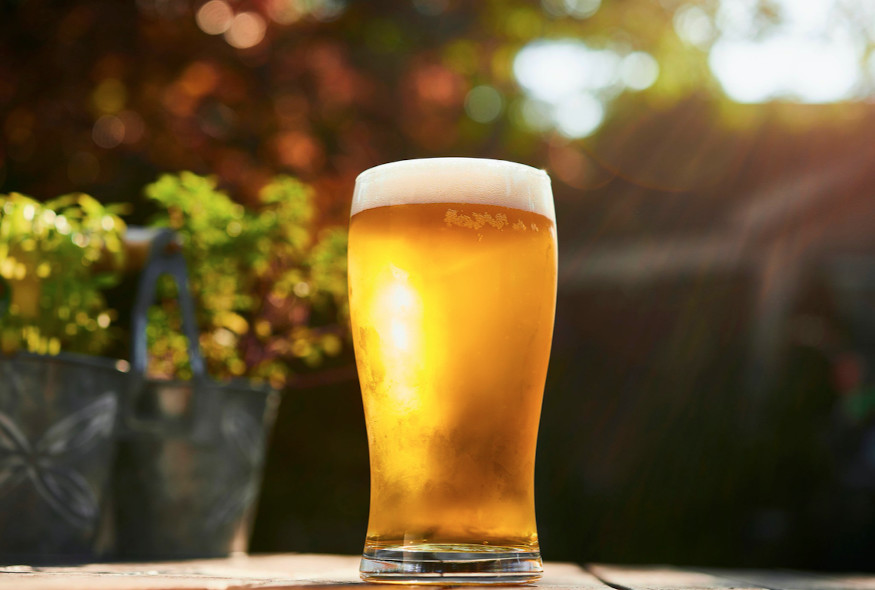
But just as women are closing the gender gap in road race participation, comprising just over 60% of all race finishers in 2019, recent studies also show that women are closing the gender gap when it comes to alcohol consumption-and not in a good way. According to a 2019 study, women in their late teens and early 20s now report drinking and getting drunk at higher rates than their male peers, and pandemic-related anxiety, depression and stress have only exacerbated unhealthy drinking patterns for many.
And while for most people, a celebratory drink with friends after a group run or at the finish line is no more harmful than a sugar doughnut or indulgent brunch, how did alcohol-a mood-altering drug-become such an integral part of a sport that promotes health and wellness?
Racing as an experience
Just as running's second wave in the late 1990s and early 2000s dramatically increased women's participation in the sport, it also increased demand for destination and experiential races. From the launch of the pioneering Rock 'n' Roll series in the late 1990s to the women-centric Zooma and Disney Princess events that followed in the early 2000s, races became bigger and bolder, with on-course live music, branded merchandise, elaborate medals, and themed post-race parties serving everything from hot chocolate and cheese to bacon, pancakes, and of course, alcohol.
These unique race experiences appeal to seasoned runners like Cara Turano of Portland.
"I used to be really happy with a cool medal or t-shirt, but you can only have so many medals and shirts," she explains. "Perks like finishing in a beer garden or bringing home wine glasses is a much more memorable experience."
Turano ran the Bordeaux Marathon a few years ago to celebrate her 35th birthday and honor her mom's passing.
"The race included 24 wine stops over 26.2 miles, and it was the most amazing, festive, and supportive experience with 10,000 runners from around the world, all in costume, running pretty slowly through rolling vineyards in the gorgeous South of France," she recalls, adding that destination races are "a great way to combine a passion for running with one for travel."
Similarly, Nina Santus, a board member of Athens Road Runners in Georgia, frequently travels to races, choosing an experience based on personal interests or connections to a specific cause.
"I ran the Marine Corps Marathon because my brother was in the Marine Corps," she explains. "I'm also a big wine person, so if I can find a race where I can run and see the vineyards and enjoy food and drink afterward, I will do it." Santus plans to run the Marathon du Medoc next fall and has run alcohol-centric races like the Dirty Spokes Chateau Elan Muscadine Run and the Ales for Trails Terrapin Beer 5K, closer to home.
"I don't participate in beer miles where you have to chug things or get sick or be drunk, but I do support the idea of food and beverage to help bring more folks out for camaraderie and the sport of running," she continues.
For race director Tes Sobomehin Marshall, founder of Run Social Atlanta, that camaraderie is baked into her company's mission. With runs and races that launch or end near local businesses ranging from breweries and restaurants to physical therapy studios, athletic-wear stores, and entertainment-focused venues like Top Golf, the company markets itself to "both the competitive runner and the 'I just want a shirt and a beer' person," explains Marshall.
When she first started organizing races in 2012, Marshall realized "people were coming and spending 30 minutes running the race, and then another two to three hours socializing after." She finds her laid-back, social, and neighborhood-centric approach to racing "more accessible to people who wouldn't otherwise run and more fun for people who've been running for a while."
Atlantan Audrey Ward, who started running earlier this year, appreciates low-key, social races.
"As a newer runner, just getting my shoes on and out the door can be intimidating," she says. "Having a good time with people who just like to run (and maybe to cheers with afterward) takes the pressure off what can be a super-competitive sport."
According to Santus, the 300-400 member Athens Road Runners keeps its events approachable to make runners like Ward feel included.
In addition to Saturday morning training runs and Wednesday morning track workouts, the group regularly runs to local breweries or restaurants with events branded as "Taco Tuesday" and also gathers informally for popsicles, beer, or fizzy waters.
The social activities are designed to make "everyone feel welcome, no matter their pace," and to "break down the illusion that all runners are snobby and fast," she explains.
Terri Huggins, a New Jersey-based writer and fitness instructor, understands that alcohol can be a powerful incentive to attract newcomers who may be intimidated by an unfamiliar sport or activity.
Whether a gym class or a road race, "including alcohol really helps with engagement, and one could argue that someone drinking after an event is far better than someone not working out at all," she says
But as road races ramp up again at the same time women report drinking more alcohol to cope with pandemic-related stressors like balancing work with child-rearing, caring for sick relatives, and a massive exodus from the workforce, should organizers moderate drink-related messaging?
Tracy Green, a sub three-hour marathoner from Louisville who took an extended break from drinking alcohol last year, says yes.
"We know thinking of exercise as punishment or as a response to negative body image can be mentally unhealthy, and we know that alcohol can make issues like depression and anxiety worse-so coupling those two things together at a race is probably not the best thing we could be doing for mental health," she explains.
And while Huggins imbibes on occasion, she says that "in a time when so many people are unaware of what it means to drink in moderation, people in the fitness industry have an obligation to educate their participants on how alcohol can affect recovery, sleep, and metabolism."
The experts agree.
According to Dr. George F. Koob, director of the National Institute on Alcohol Abuse and Alcoholism, for "people who are exhausted from running, mildly dehydrated, and have empty stomachs, one serving of alcohol could be much riskier than it seems"-especially if driving home after an event.
Even if booze is an integral part of your racing group or event, Koob suggests being mindful that many people "turn to exercise as part of recovery from an alcohol use disorder," and that "these folks might be uncomfortable or left out if other runners celebrate the finish of a race with alcohol."
Keeping alcohol in a separate area of an expo or finish line celebration is one way to offer libations without explicitly excluding those who don't drink, says Back on My Feet CEO Katy Sherratt. And since alcohol is hyper-present at road races, it can provide a "real-world scenario" for those with addictions to maintain sobriety, as long as they have a strong support network.
And even those who do drink alcohol on occasion may opt to skip the post-race beer in favor of healthier beverages, like recovery shakes and smoothies, kombucha, and sparkling water.
"Give me a fancy, fizzy mineral water after a hot race instead of a beer any day," says Green.
Professional runner and Olympian Molly Seidel enjoys non-alcoholic beers from Connecticut-based Athletic Brewing Company after a hard training session.
"I love that it's hoppy and actually tastes like an IPA, plus I get some good carbs out of it without alcohol impacting my training," she says.
The rapid growth in the non-alcoholic beer and spirits market, combined with growing interest in booze-free social movements like Dry January and Sober Curious, could be a unique opportunity for the racing industry to temper its alcohol-centric messaging.
And yes, a beer at the finish line is great, but as Dr. Koob puts it, "shouldn't completing the race be reward enough?"
(08/02/21) Views: 281Trail Runner Magazine
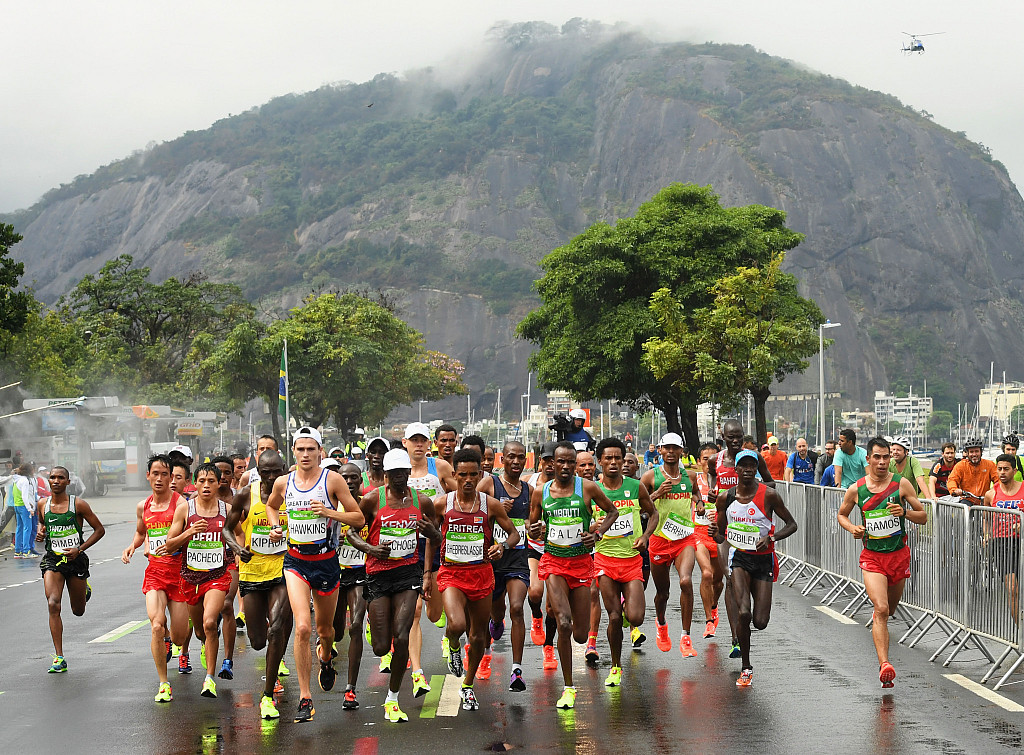
Here's everything you need to know about the Tokyo Olympics marathon
The men's Olympics marathon is traditionally held on the very last day of competition, with the women's race staged a day earlier.
Both events will be starting early in the morning to avoid the heat, with the women running on Saturday, August 7 and the men racing on Sunday, August 8.
Here's everything you need to know about the Tokyo Olympics marathon.
WHEN IS THE TOKYO OLYMPICS MARATHON?
The women's race will be held on Saturday, August 7.
The men's race will be run on Sunday, August 8.
WHO IS RUNNING THE OLYMPIC MARATHON?
There are a number of high-profile runners who won't feature in Tokyo, with Ethiopian legend Kenenisa Bekele topping that list.
It is still a packed field though, with defending Olympic champion and current world record holder Eliud Kipchoge set to run.
Kipchoge will be joined on a formidable Kenyan team by Lawrence Cherono and Amos Kipruto.
Ethiopia will be represented by Lelisa Desisa, Shura Kitata and Sisay Lemma, while Rio 2016 bronze medalist Galen Rupp is back representing America.
In the women's race, it's hard to go past world record-holder Brigid Kosgei of Kenya.
Kosgei will be joined by 2019 marathon world champion Ruth Chepngetich and two-time world half-marathon champion Peres Jepchirchir in Kenyan colours.
The Ethiopian trio of Birhane Dibaba, Roza Dereje and Zeineba Yimer will also be in the mix and are all capable of comfortably running under 2:20.
RIO 2016 OLYMPICS MARATHON WINNER
Eliud Kipchoge stormed to a memorable victory in the rain in Rio, finishing ahead of Ethiopia's Feyisa Lelisa and American Galen Rupp.
In the women's race, Kenyan Jemima Sumgong won gold in front of Eunice Kirwa and Mare Dibaba.
(08/02/21) Views: 279Brendand Brandford
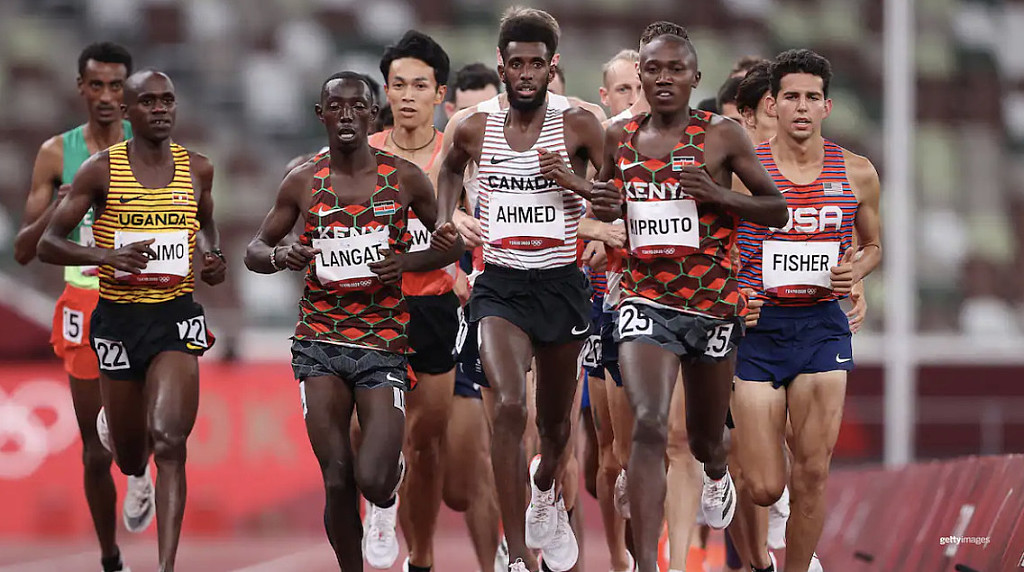
Less than three seconds was the difference between America’s Grant Fisher winning an Olympic medal in the 10000m in Tokyo
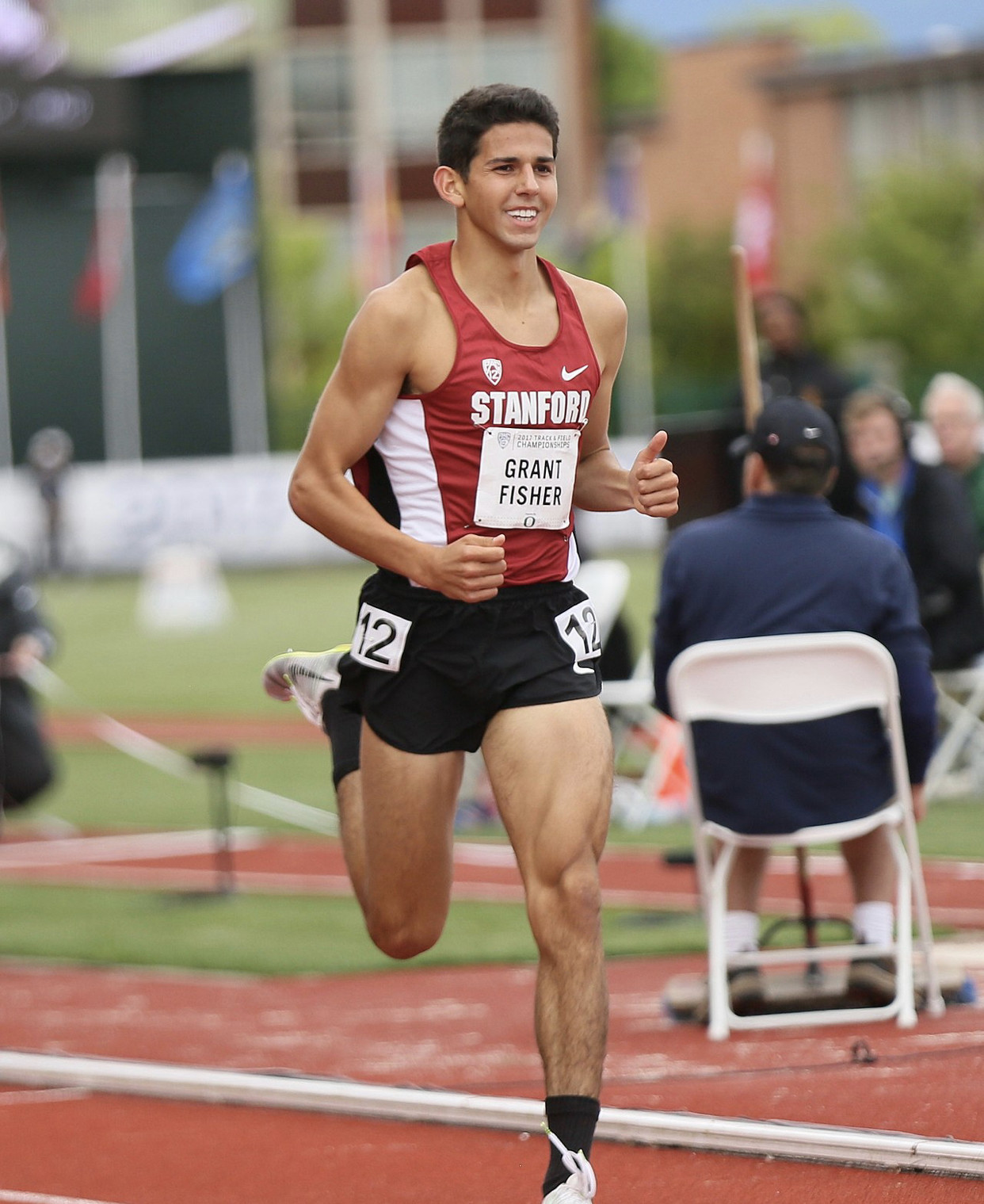
USA's Grant Fisher finished fifth in the 10,000 meters Friday with a time of 27:46.39. Jacob Kiplimo of Uganda won the bronze medal in 27:43.88.
Selemon Barega of Ethiopa won the gold medal with a time of 27:43.22, running the final lap in 53.94 seconds to nip Joshua Cheptegei of Uganda, who clocked 27:43.63.
"We did what we could to prepare,” Fisher, a former NCAA champion at Stanford, said, “but nothing prepares you like being out there. It’s physical, it’s choppy, guys are making moves.”
It was also hot, not to mention humid.
Fisher, competing in just his third official 10K, was able to stay within striking distance of the top runners going into the last lap, then unleashed a strong finishing kick to move up to fifth in 27:46.39. Cheptegei (27:43.63) and Kiplimo (27:43.88) took the silver and bronze medals, while Kincaid was 15th in 28:11.01, followed one spot later by Klecker in 28:14.18.
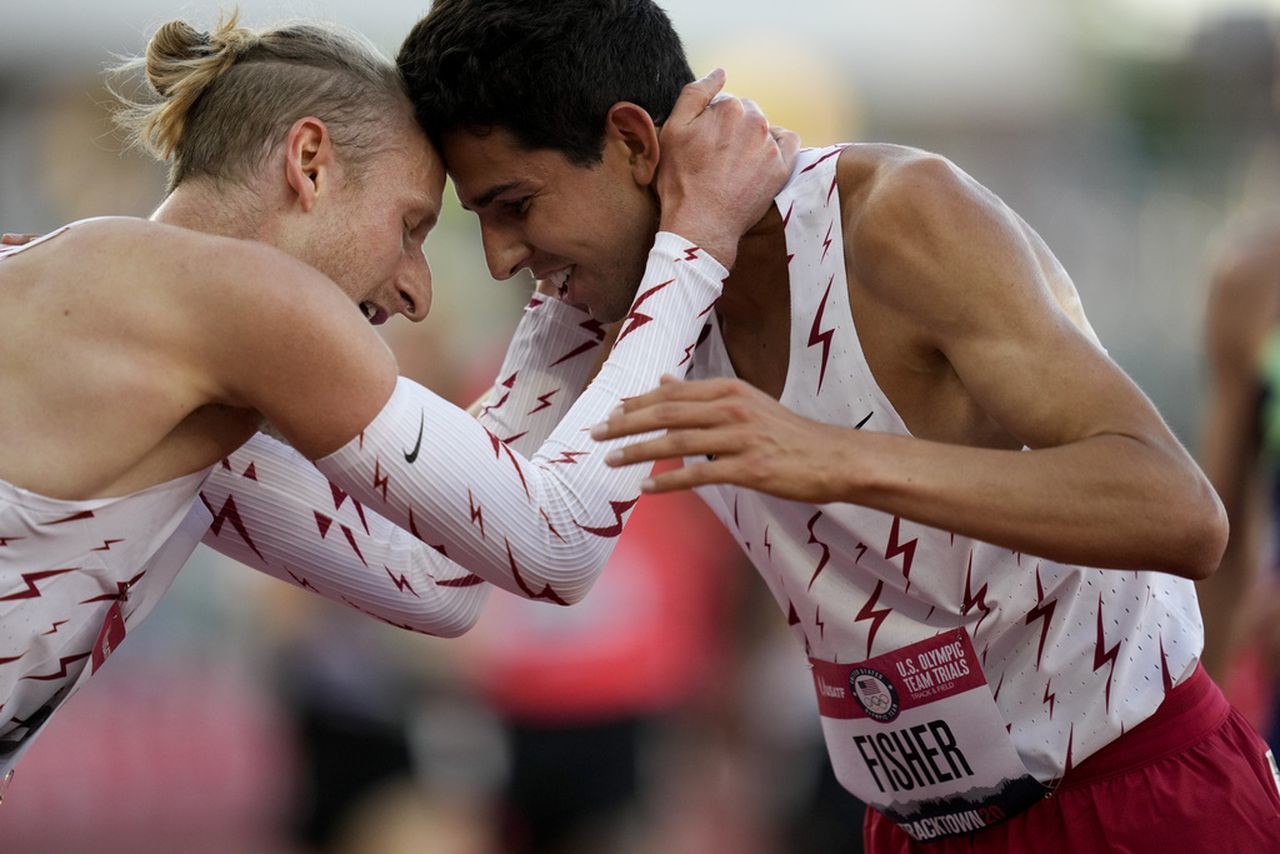
"I was just trying to race without fear, put myself in there and give myself a shot at the end,” Fisher, 24, said. “I was really happy with it. That whole thing, it never felt good. I bet even the guys that were 1-2-3 didn’t feel good in that race. I hope, because I felt that way.”
Despite the fifth-place finish, Fisher’s medal hopes are not over.
He’ll be competing in the 5,000 meters – his signature event – next week in Tokyo. The preliminaries are Tuesday, Aug. 3 and the final is Friday, Aug. 6.
Fisher, 24, is a 2015 graduate of Grand Blanc High School, where he was a two-time state and national cross country champion. In track and field, he became the seventh high school runner to break the four-minute barrier in the mile when he recorded a time of 3:59.38 in his final mile race as a senior.
At Stanford, he was a 2017 NCAA outdoor champion in the 5,000 meters. He was a 12-time college All-American.
(07/30/21) Views: 236
Siffan Hassan has won at the 5,000 meters and now looks to the 1,500 and 10,000
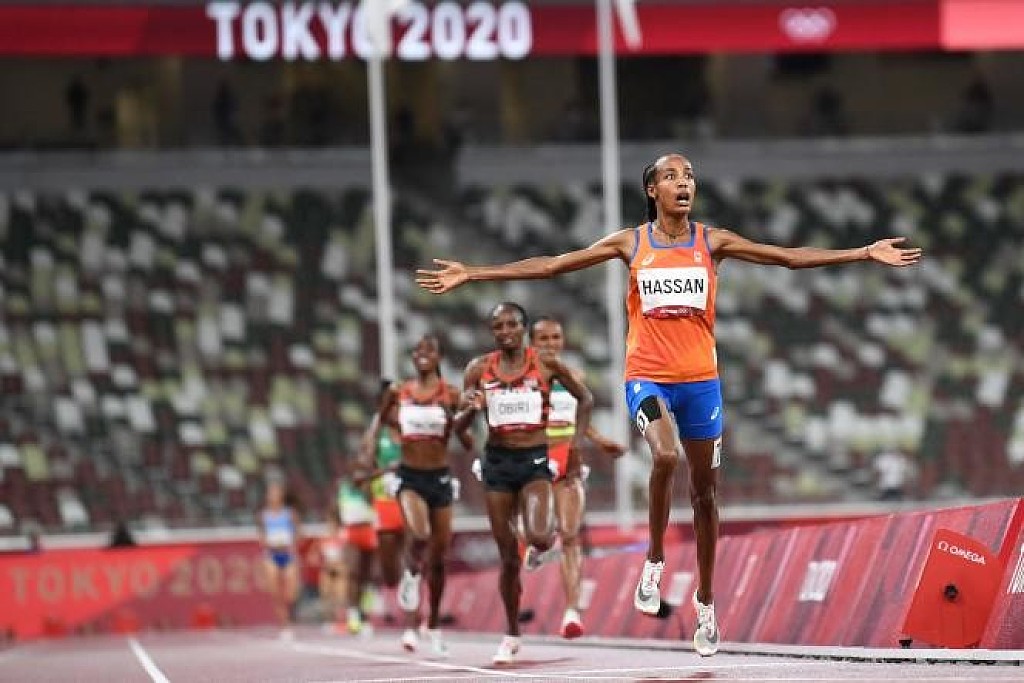
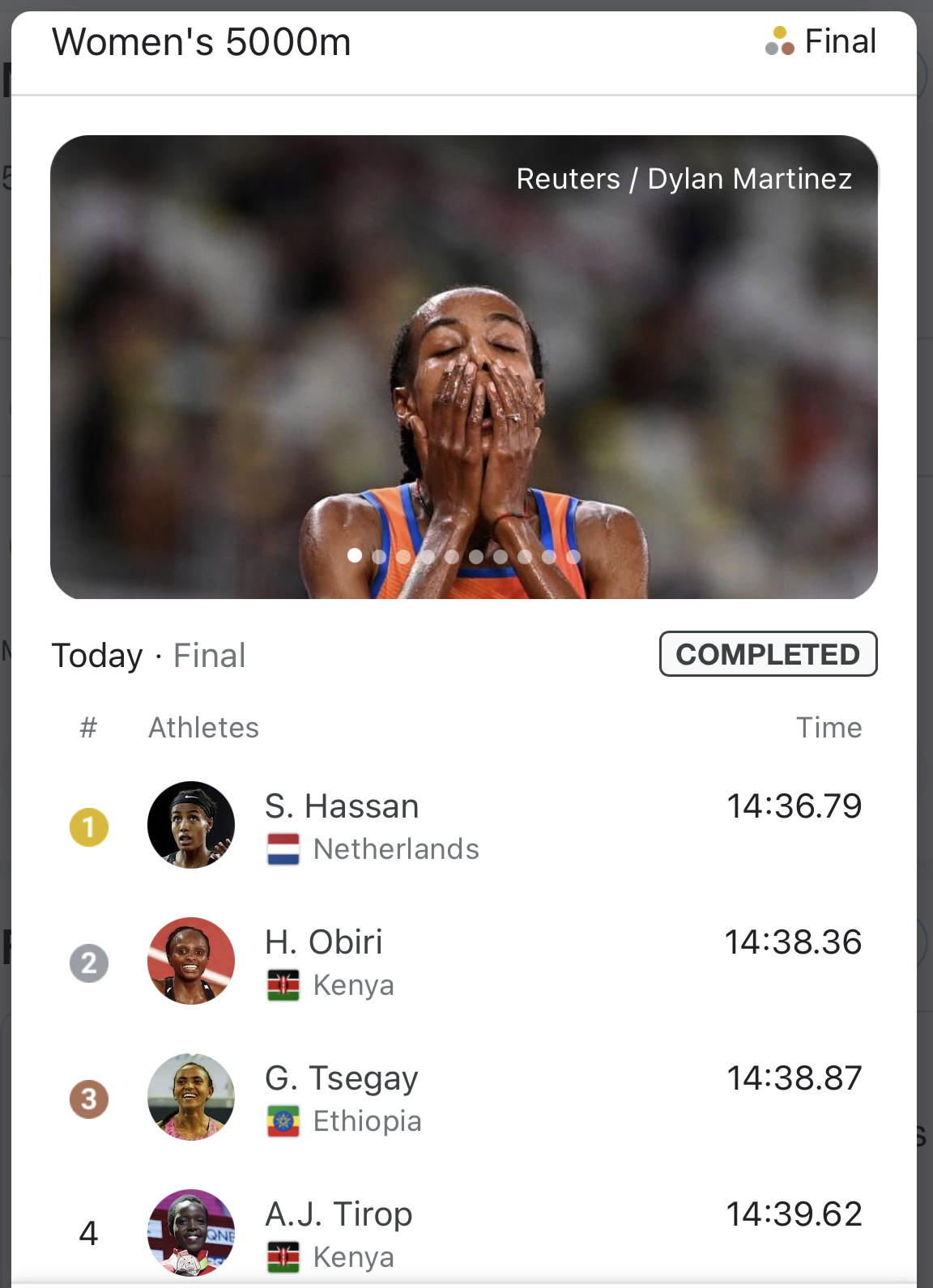
Six races in eight days on the Tokyo track? No problem, says Sifan Hassan, who overcame a Monday morning fall in the 1500m heats to win 5000m gold in the evening.
How about 24,500 meters of Olympic racing in the matter of eight days?
The Netherlands’ Sifan Hassan has said she’ll try it, competing in each of the 1500m, 5000m, and 10,000m races at Tokyo 2020, a line-up rarely seen – especially in the hot conditions athletics runners are facing at these Games.
“For me it is crucial to follow my heart,” said Hassan in a press release. “Doing that is far more important than gold medals. That keeps me motivated and it keeps me enjoying this beautiful sport.”
Having already run on Friday (July 30) to qualify for the 5000m final, Hassan fell with a lap to go in Monday morning's 1500m first round, but picked herself up to win the heat!
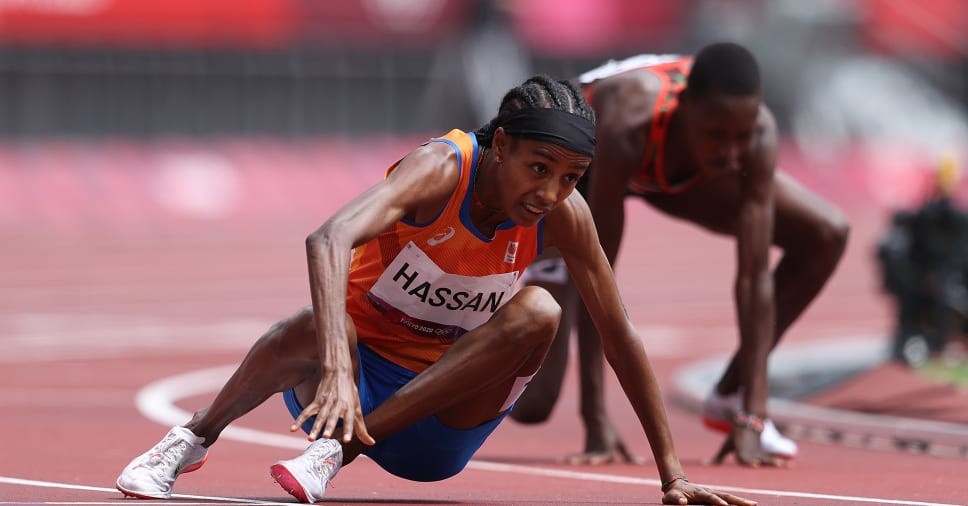
Just 12 hours later, Hassan produced her famed finishing kick to take her first global title over 5000m and her first Olympic medal.
That may have been the hardest of three with the mile world record holder completing a 1500m-10,000m double at the 2019 World Championships.
See her full schedule below – and find out what other similar feats have been attempted in athletics in Games past, as you get to know the distance running star.
Born in Ethiopia in 1993, Hassan arrived in the Netherlands as a 15-year-old refugee in 2008. She split her time between running and studying to become a nurse.
She became a Dutch citizen in late 2013, which allowed her to represent the Netherlands in competition.
As early as 2011, Hassan began making her mark on the international stage, winning the Eindhoven Half Marathon that year. In 2013, she won the 3000m at the Ostrava Golden Spike meeting in June.
At the 2014 European Championships in Zurich, Hassan took gold in the 1500m and a year later, she won bronze in the 1500m at the World Championships in Beijing, joining Dafne Schippers as the only Dutch athletes to win medals at the Worlds.
She had clearly established herself as one to watch ahead of Rio 2016, though injuries hampered her build-up to those Games, where she went out in the heats in the 800m but reached the final of the 1500m, where she finished fifth behind Kenya’s gold medalist Faith Kipyegon.
Has anyone tried such an Olympic programme before? Let’s compare it with two great long-distance feats at Olympic Games.
According to The Guardian, Paavo Nurmi went for four at Paris 1924: Nurmi won the men's 1500m, 5000m, and 3000m team event – as well as two cross-country events – but “Finnish officials feared for his health and refused to let him race the 10,000m.”
The 1500, 3000 and 5000 happened over a span of just five days.
At Helsinki 1952, Czechoslovakia’s Emil Zatopek won the 5000m, 10,000m, and marathon (42km) – all in Olympic records. Those four races (a semi and a final for the 5000), took place over eight days.
After Rio, Hassan joined Alberto Salazar’s training group in Oregon, keeping her focus largely on the 1500m. She was fifth again (behind Kipyegon) in the 1500m at the 2017 World Championships in London and took bronze in the 5000m with another Kenyan, Hellen Obiri, winning gold.
In 2019, after a quiet season to start, she set a new mile world record at the Monaco Diamond League in 4:12.33.
At the World Championships in Doha, she entered the 10,000m having only ran the race competitively just once before. But Hassan closed down Letesenbet Gidey before sprinting clear on the last lap to take her first global title.
A week later, she showed her versatility by winning the 1500m to complete a unique double at Worlds.
After worlds, it was announced that her coach, Salazar, would be suspended from athletics due to doping allegations. Hassan denied any knowledge of wrongdoing.
She continued to perform at the top level after his suspension: She set the aforementioned mile world record in 2019, then ran the fourth fastest 10,000m ever before setting a new world record at that distance in June of 2021. (That record was broken two days later, by Gidey.)
Hassan will almost certainly fight it out with Gidey for gold in the 10,000, but the Dutch runner’s famed finishing kick gives her a great chance of adding the Olympic title to her world title.
Here’s a breakdown of Hassan’s potential schedule, having already advance through into the final of the 5000m on Monday night (Aug 2).
Fri 30 July 19:00 JST - 5000m semi-finals – Finished 1st, to reach final.
Mon 2 August 09:47 JST - 1500m round 1 - Finished 1st in heat despite falling, to reach semi-finals.
Mon 2 August 21:40 JST - 5000m final
Wed 4 August around 17:00 JST - 1500m semi-finals.
Fri 6 August 21:50 JST - 1500m final (if she qualifies)
Sat 7 August 19:45 JST - 10,000m final.
(08/02/21) Views: 197
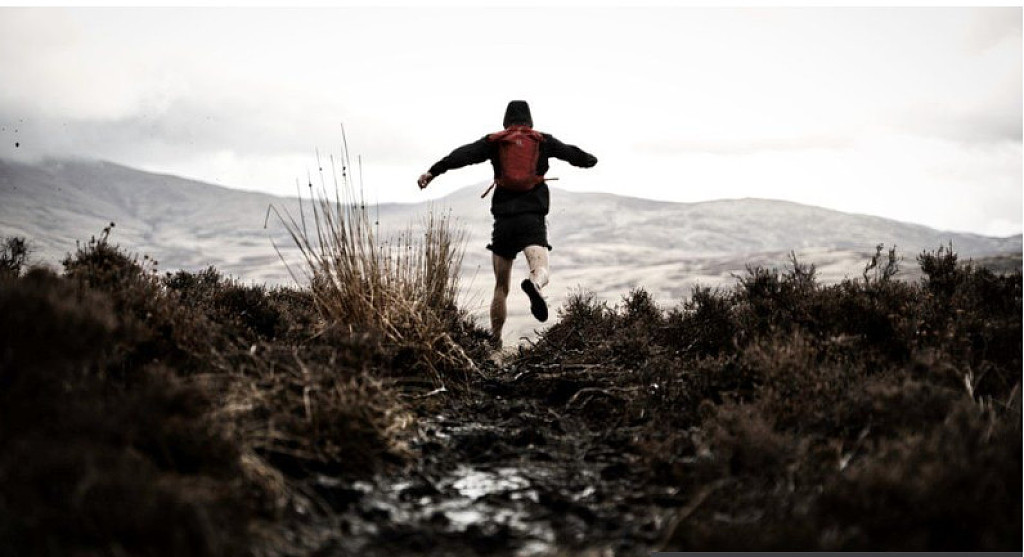
Luxury' race will be among most expensive on earth
Ultramarathon competitors are used to "roughing it" in races, sometimes sleeping in bivvy bags at the side of muddy trails or even running through several nights.
They set themselves incredible long-distance challenges, often running through remote and difficult terrain.
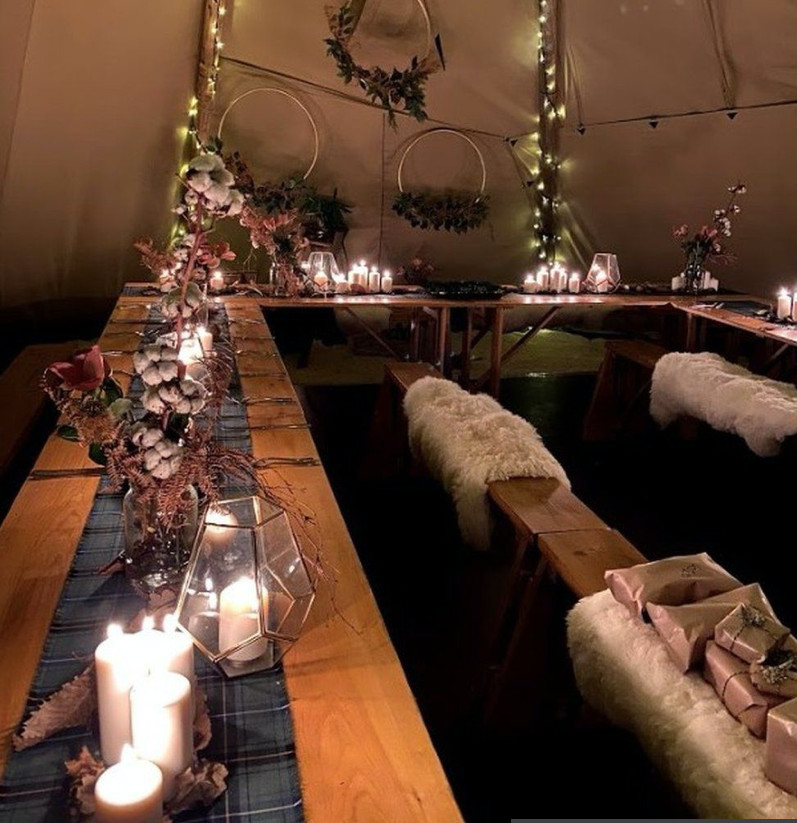
But now a new ultramarathon race is being launched which gives them luxury few could afford - including butlers, hydrotherapy pools, speed boats and Michelin-star chefs.
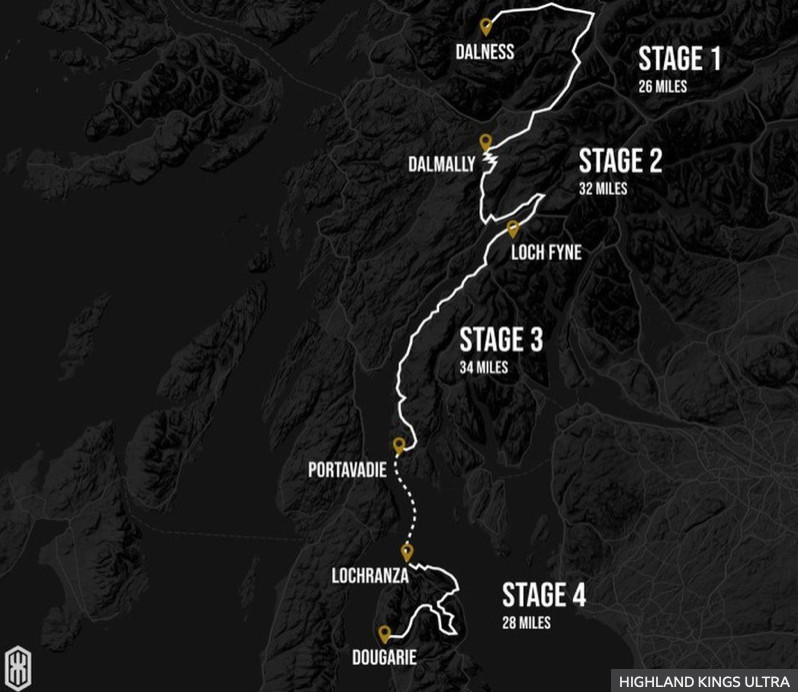
Highland Kings Ultra, a four-day camping race covering 120 miles on the west coast of Scotland, costs £15,499 per person to enter.
In contrast, the 95-mile West Highland Way Race costs just £120.
The organisers of the Highland Kings Ultra are calling it "the most exclusive, luxury ultra-run experience on the planet".
Race director Rebecca Silva told BBC Scotland the idea was for the runners to "race like a warrior but recover like a king".
She said: "The luxury element makes it very different to other races.
"It's aimed at professionals, who can afford it, who want a sense of adventure but want an element of luxury off the beaten track, in the wild and not in the typical places people explore."
The organisers of the Highland Kings Ultra are calling it "the most exclusive, luxury ultra-run experience on the planet".
Race director Rebecca Silva told BBC Scotland the idea was for the runners to "race like a warrior but recover like a king".
She said: "The luxury element makes it very different to other races.
"It's aimed at professionals, who can afford it, who want a sense of adventure but want an element of luxury off the beaten track, in the wild and not in the typical places people explore."
The race starts in Dalness in Glencoe, with a mountainous marathon to Dalmally in Argyll and Bute, two miles east of the tip of Loch Awe.
This is followed by 32 miles through hilly forest terrain to Loch Fyne, then 34 miles to Portavadie on the west coast of the Cowal peninsula, and finishing with 28 miles on the Isle of Arran.
Competitors then spend a night in a luxury campsite, followed by a gala dinner with explorer Sir Ranulph Fiennes.
The event is being run by outdoor adventure business Primal Adventures, led by an ex-forces Ayrshire man, Matt Smith, and managing director Rebecca Silva.
Ms Silva said: "We were asked by a group of French clients to organise a luxury running trip from the Isle of Aran to Inverness in 2018 and that planted the seed because the event was so successful.
"We have been arranging primal bush craft and adventure courses for years, so this has been an extension of that."
Ian Beattie, chairman of Scottish Athletics and race director of the 95-mile West Highland Way ultramarathon race, said he had never heard of a more expensive race.
"It will be interesting to see if there is demand for this event," he said.
"There is an element of criticism for commercial races, but people will decide what they want."
He said ultramarathon races organised by running groups and/or experienced runners were much cheaper because of the number of volunteers involved.
He added: "My advice would be to join a local running club as there are always qualified coaches there and people with a wealth of experience and knowledge."
(07/31/21) Views: 152
BBC
The wild and crazy men’s1500m at Tokyo Olympics
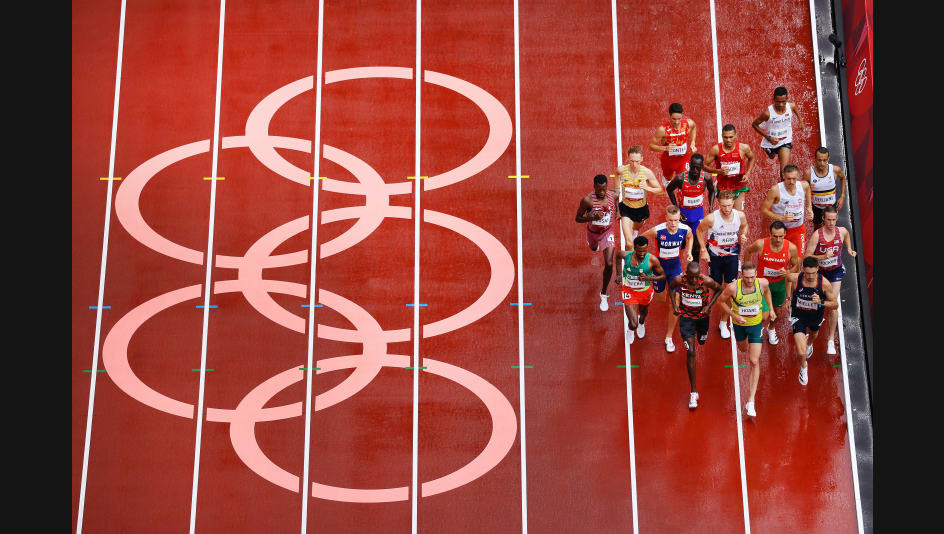
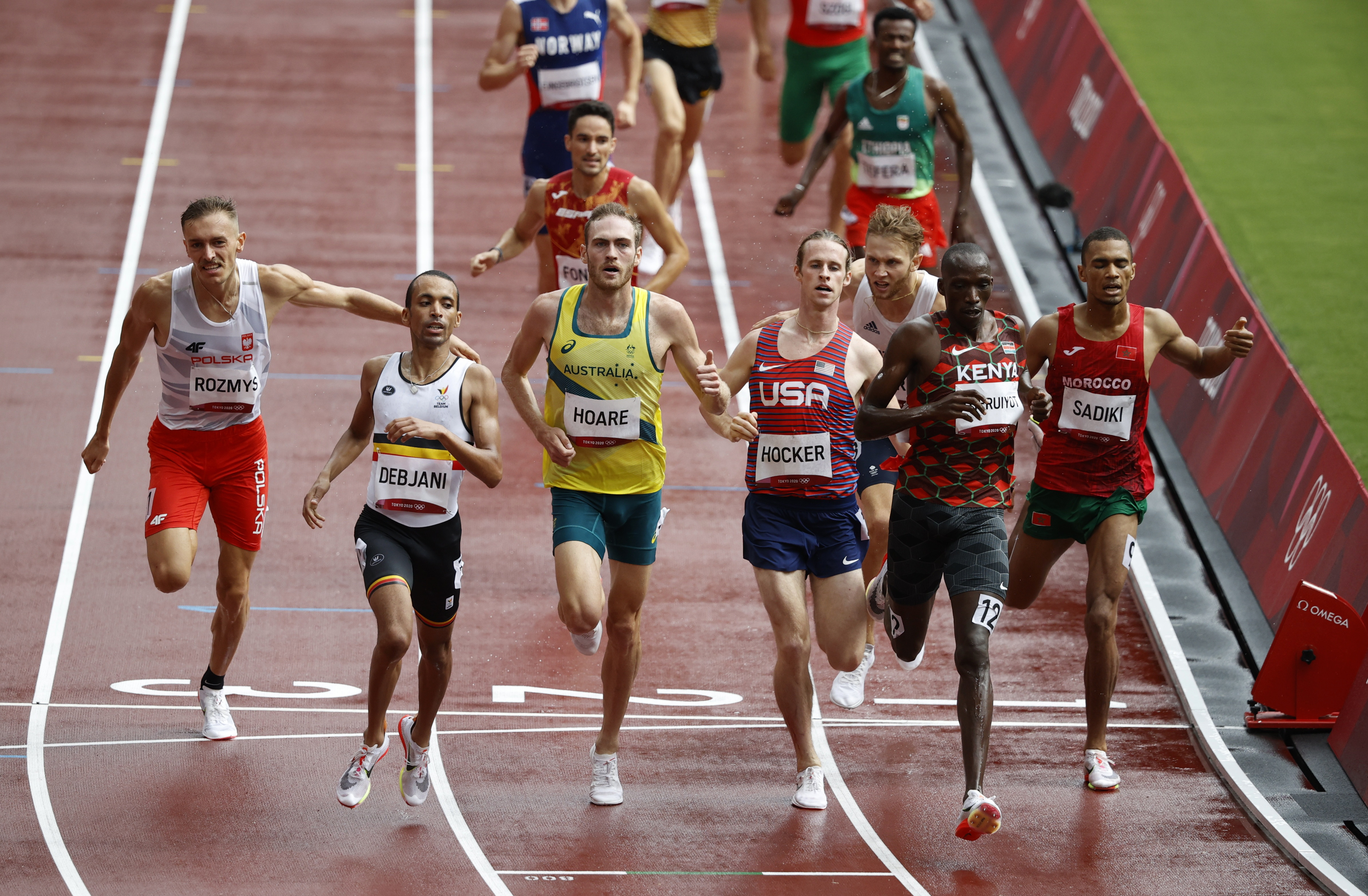
In heat one Belgium’s Ismael Debjani won to be fastest overall in 3:36.00 with a 53.4 last lap, just ahead of world champion Timothy Cheruiyot (3:36.01), Oliver Hoare (3:36.09), US trials winner Cole Hocker (3:36.16), Abdelatif Sadiki (3:36.23) and Michal Rozmys (3:36.28) who qualified automatically.
Rozmys had been six tenths of a second behind Kerr as he hit the straight but ran a 12.9 last 100m to the Scot’s 13.5 to catch him on the line, meaning the British champion missed out on automatic qualification by one hundredth of a second as he struggled in the closing stages.
Kerr said: “I was really frustrated with my positioning and there was some shoving and I made a hard move at 500m to go. Then, at 200m to go, I felt I was going to pay for this in the home stretch. I was just trying to stay focused and push all the way, but it just wasn’t a good run for me. I am fit and ready and I have had no problems. There are just no excuses for that. I just raced it badly.”
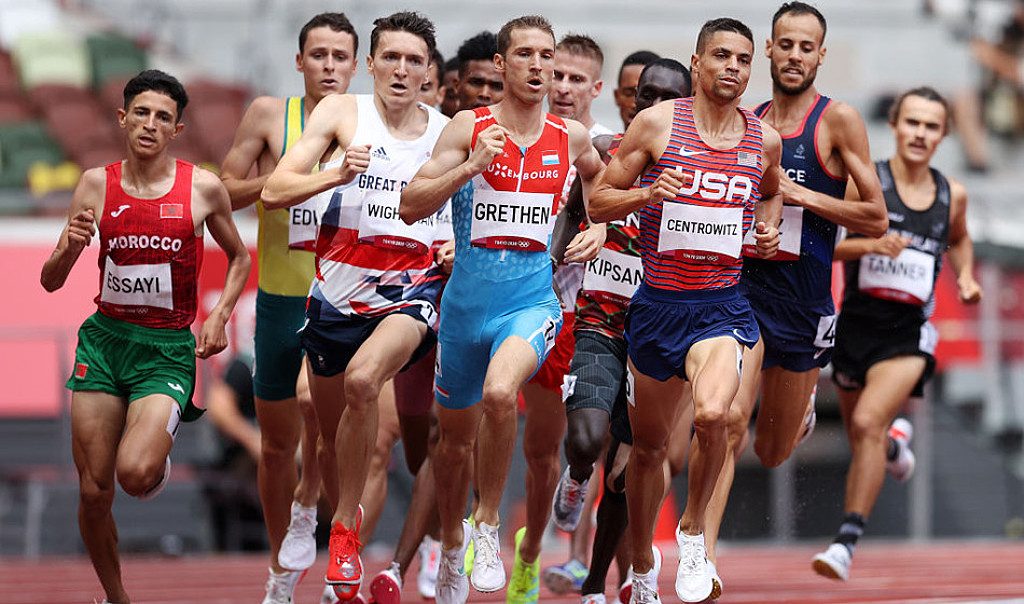
Kerr must have been relieved as heat two was run at nowhere near the same pace. The field ambled through 400m in 62.4 and 800m in 2:02.9, only really coming to life on the last lap as Kenyan Abel Kipsang covered it in 52.8 to win in 3:40.68.
Second was defending champion Matt Centrowitz (3:41.12), just ahead of Wightman (3:41.18) who ran his last 400m in 53.2 and 200m in 26.3. Also qualifying easily were Azeddine Habz (3:41.24), Samuel Zeleke (3:41.63) and Charles Grethen (3:41.92).
Marcin Lewandowski fell on the last lap and he jogged home but was added to the qualifiers by the judges after the event.
Wightman said: “It’s the most nerve-racking round, isn’t it? You’re worried you’re going to be embarrassed. I’m glad I managed to stay on my feet and get through. I had a smooth enough ride. I think I got a spike wound, had a few pushes but there was the fall which I’m glad I didn’t even notice until the end.
“The heats are the worst, because you’ve come all this way and no-one wants to get knocked out in the heat or expects to get knocked out in the heat, so you just want to get past and know how you are running to get through to the semi-final.”
The third heat was faster but, with six fastest loser spots, it did mean there would have to be 12 quicker than 3:36.29 for Kerr to exit and, in the end, there were only two.
The first lap was a slow 61.7 before Stewart McSweyn kicked on. The Australian completed the second lap in a lively 56.9 and the third in a top class 55.1, with only Heyward still in contact as the pair went through 1200m in 2:53.7 and 2:53.9, holding a big gap over the pack led by Robert Farken in 2:55.1.
Heyward passed McSweyn in the straight and won clearly in 3:36.14, having eased around his last lap in 55.9 and covered his last 1200m inside 2:50. Ethiopia’s Tedesse Lemi, who had been 12th at the bell, ran a 53.9 last lap to finish second in 3:36.26 and he had covered his last 1200m in 2:48.9.
McSweyn (3:36.39), Jakob Ingebrigtsen (an anonymous 3:36.49), Farken (3:36.71) and Adel Mechaal (3:36.74) completed the automatic qualifiers.
Double Olympic medallist Nick Willis (3:36.88), Andrew Coscoran (3:37.11), Ayanleh Souleiman (3:37.25) and Kenyan trials winner Charles Simotwo (3:37.26) qualified by time as they joined Kerr and Ignacio Fontes (3:36.95) as fastest losers.
Soufiane El Bakkali, who won the 3000m steeplechase title the previous day, was in contention until 200m to go but pulled out.
Heyward said: “I don’t think it could have gone much better. Safely through, that’s the main thing. You have to have a few scenarios, you have to be versatile. It could be fast, could be slow, so you’ve got to be ready for that. I think I always give my best performances in championships and I hope that showed a glimpse of what I can do.
“You can’t take anything for granted at the Olympics, you’ve got to be prepared for anything, and I was prepared to run super hard today, so that was my mindset going in. Luckily because I didn’t have to run that hard it felt quite comfortable, so it was good.”
(08/03/21) Views: 101Athletics Weekly
Jacobs stuns with Olympic 100m win as no one saw this coming
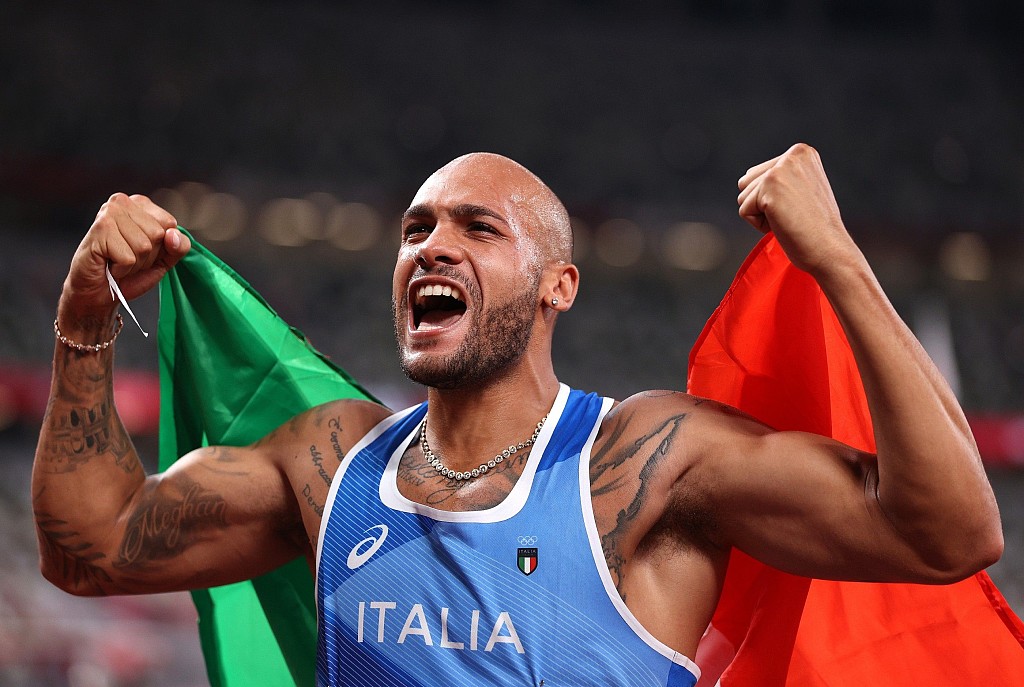
Italy’s Lamont Marcell Jacobs, a former long jumper appearing in his first Olympics, stunned the field on Sunday (1) to claim the first men’s 100m gold medal of the post-Usain Bolt era.
Overlooked as a serious medal contender, the 26-year-old Jacobs clocked a European record of 9.80 to win Italy’s first ever Olympic 100m gold and claim the unofficial title of the world’s fastest man.
The Italian pulled in front after 60 meters and glanced to his right as he crossed the line in front of the USA's Fred Kerley, who took silver in a personal best 9.84, and Canada’s Andre De Grasse, who earned his second consecutive bronze in a PB of 9.89.
Three other runners also ran sub-10 seconds in the final: South Africa’s Akani Simbine finished fourth in 9.93, the USA's Ronnie Baker was fifth in 9.95 and China’s Su Bingtian was sixth in 9.98.
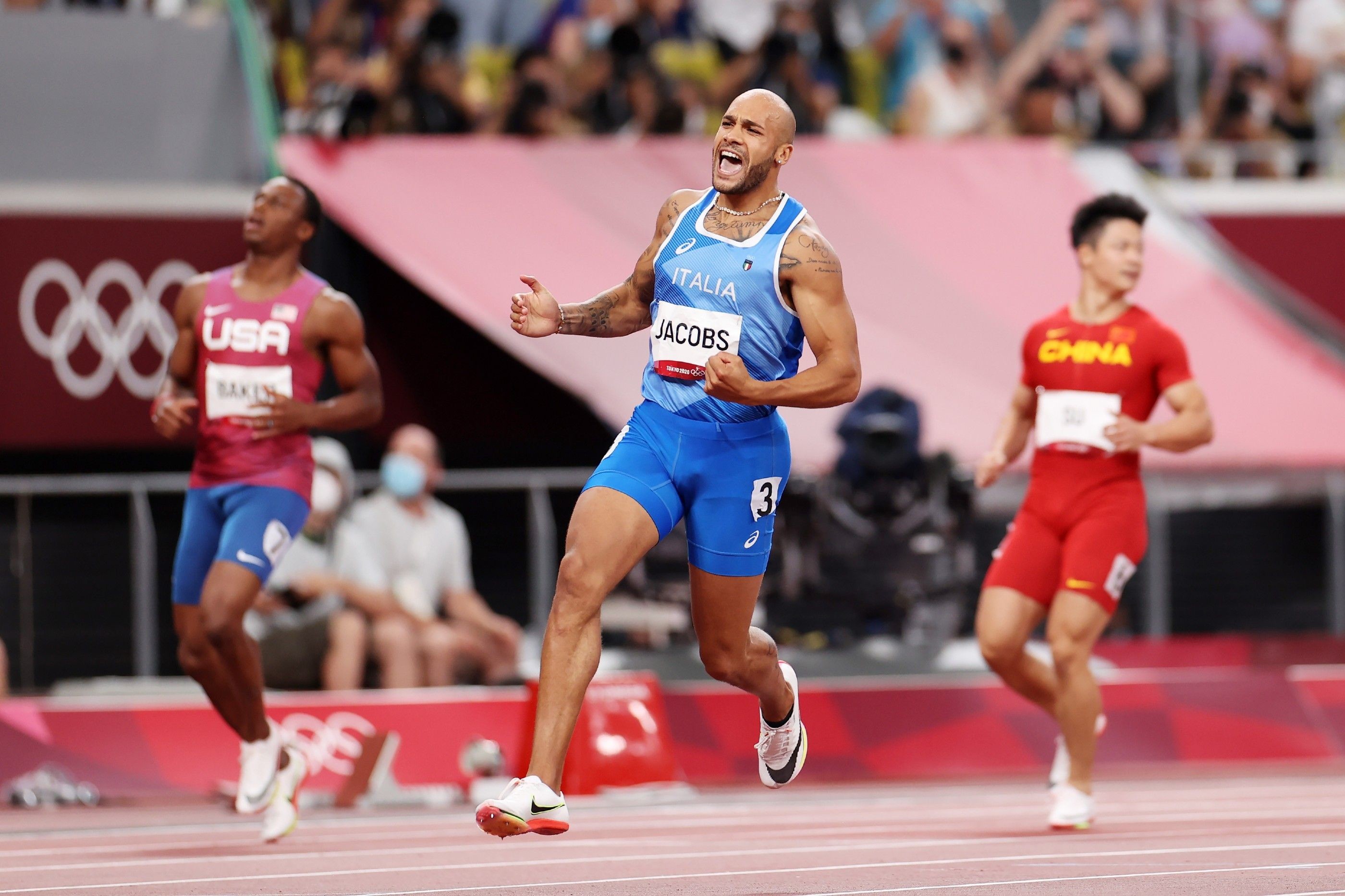
The pre-Olympic favorite, US champion and world-leader Trayvon Bromell, failed to qualify for the final.
In a race with no obvious favourites, Jacobs was still a major surprise.
The bald-headed, barrel-chested Italian did not come completely out of nowhere. He is the European indoor 60m champion and broke the Italian 100m record in May with a time of 9.95. But he chose the right time and place to announce himself on the world’s biggest stage.
“It’s a dream, it’s fantastic,” Jacobs said. “Maybe tomorrow I can imagine what people are saying, but today it is incredible.”
It was the first time since 2004 that gold in the marque event was won by someone other than Bolt, the Jamaican great who swept three consecutive 100m titles in Beijing, London and Rio de Janeiro, as well as three straight 200m crowns.
Few would have predicted that the man to succeed Bolt on the top podium would be Jacobs, who became the first European to win the 100m at the Olympics since Britain’s Linford Christie in Barcelona in 1992.
Even his race rivals didn’t see Jacobs as much of a threat.
“I really didn’t know anything about him,” Kerley said.
De Grasse added: “I didn't expect that. I thought my main competition would have been the Americans, but definitely he came to play. He executed. He did his thing so congrats to him."
Jacobs is the first Italian to win a sprint event since Pietro Mennea took gold in the men’s 200m in 1980. And his time? The fastest in the men’s 100m by an athlete not from the US or Jamaica.
Jacobs’ victory capped a golden night for Italy, coming minutes after another Italian, Gianmarco Tamberi, shared gold in the men’s high jump with Qatar’s Mutaz Essa Barshim. The two Italians embraced and celebrated together on the track.
“Being here together is something spectacular," Jacobs said. “I believe in him and I believed in myself.”
Jacobs’ story may not be known by the general public: He was born in El Paso, Texas, to an American father and Italian mother. He moved to Italy with his mother when he was one-year-old. Jacobs started out as a long jumper but, after a series of injuries, he changed to the sprints.
Signs that something special was about to happen in the final came earlier during the semifinals, which produced some stunning results, including a record-breaking heat in which three men ran under 9.85.
Su blazed to victory in the third heat in an Asian record 9.83 to become the first Chinese sprinter to reach an Olympic 100m final. Baker finished second with a personal best 9.83 and Jacobs was third in a European record 9.84. For good measure, Simbine clocked 9.90 to finish fourth in that heat.
Only twice previously had three men gone inside 9.85 in the same 100m race – the Olympic final in 2012 and the 2009 World Championships final in 2009.
Kerley (9.96) and Britain’s Zharnel Hughes (9.98) won the other two semifinals. Hughes was disqualified from the final after a false start.
Bromell missed out after finishing third in his heat in 10 seconds flat. He got off to a quick start and took the early lead but never found a second gear and was passed in the final metres by Nigeria’s Enoch Adegoke and Hughes.
There were signs that Bromell was not in medal-winning form a day earlier when he finished only fourth in his first-round heat in 10.05.
It was a stunning fall for Bromell, who had made a remarkable comeback to the top of the sport after tearing his achilles during the 4x100m relay at the 2016 Rio Games and being carried off the track in a wheelchair.
After two years out of the sport, Bromell worked his way back and established himself as the world’s top 100m sprinter. He clocked a world-leading 9.77 in June, the seventh-fastest time in history, then sealed his spot in Tokyo by winning the 100m at the US Olympic Trials in 9.80.
But since then he has not been his dominant self. Bromell’s 14-race winning streak was snapped when he finished fifth in Monaco in June in 10.01, his first race in Europe since 2016. He bounced back four days later with a victory in Gateshead, England, in 9.98 but still looked far from his best.
“I want to say thank you to everyone who's been with me on this journey,” Bromell said on Twitter on Sunday after failing to reach the Olympic final. “Lord knows how much I wanted to be in that final. BUT I walk away with a smile because I know I showed many that after four years out, you can still fight and make dreams come true.”
The day also marked the end of the Olympic career of Jamaica’s 31-year-old Yohan Blake, the 2011 world 100m champion who won silver at the 2012 Olympics and is a two-time Olympic relay gold medallist. Blake finished sixth in his semi-final in 10.14.
“Definitely my last Olympics,” Blake said. “You know track is not easy. I won't be ungrateful. I've gained a lot. I'm still the second fastest man in history, no one can take that away from me.”
(08/01/21) Views: 95World Athletics
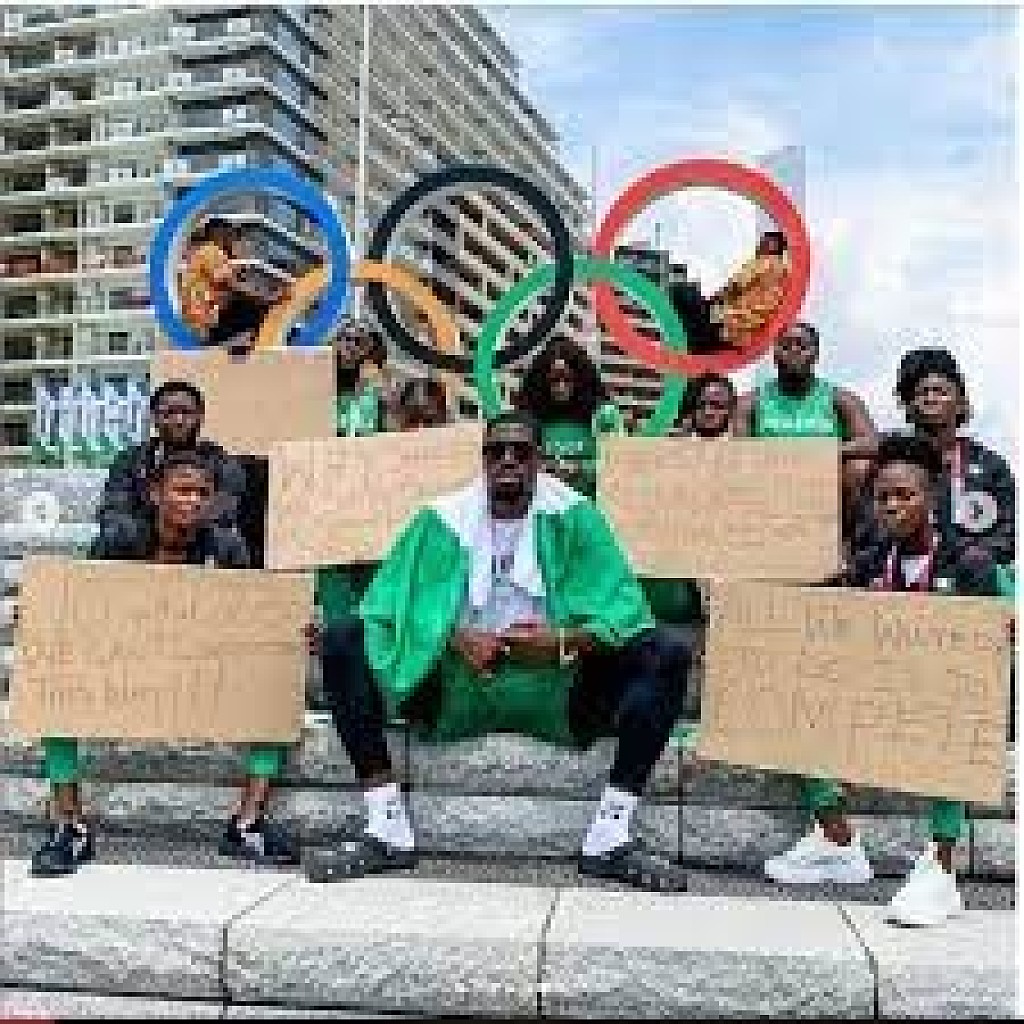
Ten track and field nigerians banned from Olympics for missed doping tests protest in Tokyo
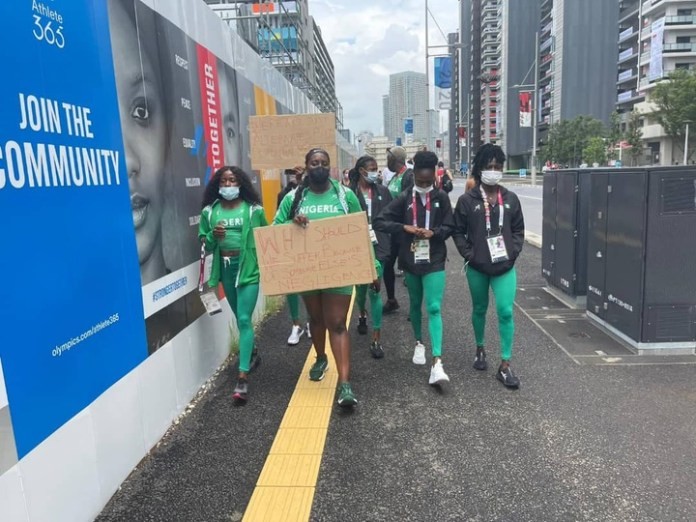
Nigerian athletes protested in Tokyo on Friday after they were disqualified from the Olympics for failing to meet anti-doping testing requirements, reports said.
Ten would-be Olympians were banned from competing in the track and field competition after Nigerian sports officials allegedly failed to properly register them for three mandatory out-of-competition tests, Nigeria’s Premium Times reported.
The Ministry of Sports and the Athletics Federation of Nigeria said the athletes’ tests did not meet collection and analysis standards and the Athletics Integrity Unit, which handles the anti-doping program for the sport, said the athletes didn’t meet the testing requirements, the outlet reported.
“The AFN bears responsibility for any lapses that may have occurred during the process and reassures Nigerians that our performances will not be negatively impacted,” the AFN said in response.
“All our athletes resident in Nigeria and who qualified for the Olympic Games completed the three mandatory tests. Most of our top athletes resident in the USA also completed their tests. However, a few athletes in the American collegiate system were tested but those tests were deemed not to have complied with… sample collection and analysis standards.”
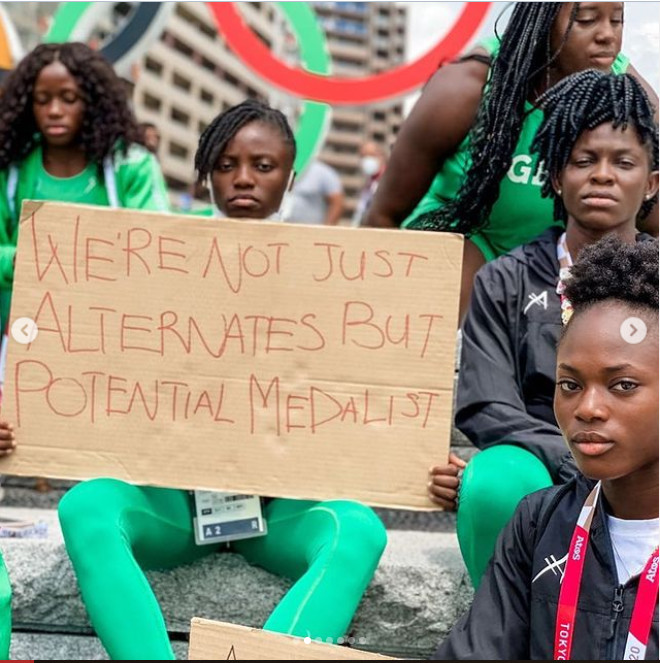
But the star runners claim the snafu wasn’t their fault and held signs with messages like “Why should we suffer for someone else’s negligence” and “We are not just alternates but potential medalists.”
The 2020 Olympics is the first time since 2012 that Nigerians have two athletes competing in the semifinals of the 100m women’s race after runners Blessing Okagbare and Nzubechi Grace Nwokocha made the cut in pre-qualifying events.
The AFN noted no Nigerian athlete tested positive for prohibited substances.
(07/30/21) Views: 86Gabrielle Fonrouge
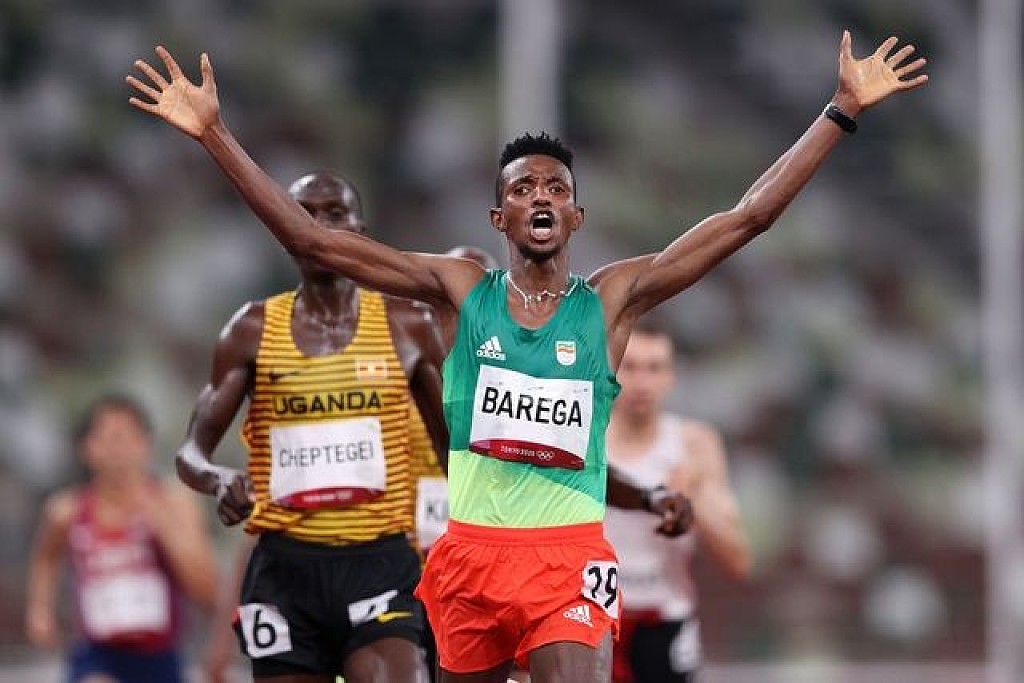
Ethiopia’s Selemon Barega wins gold at 10,000m in Tokyo
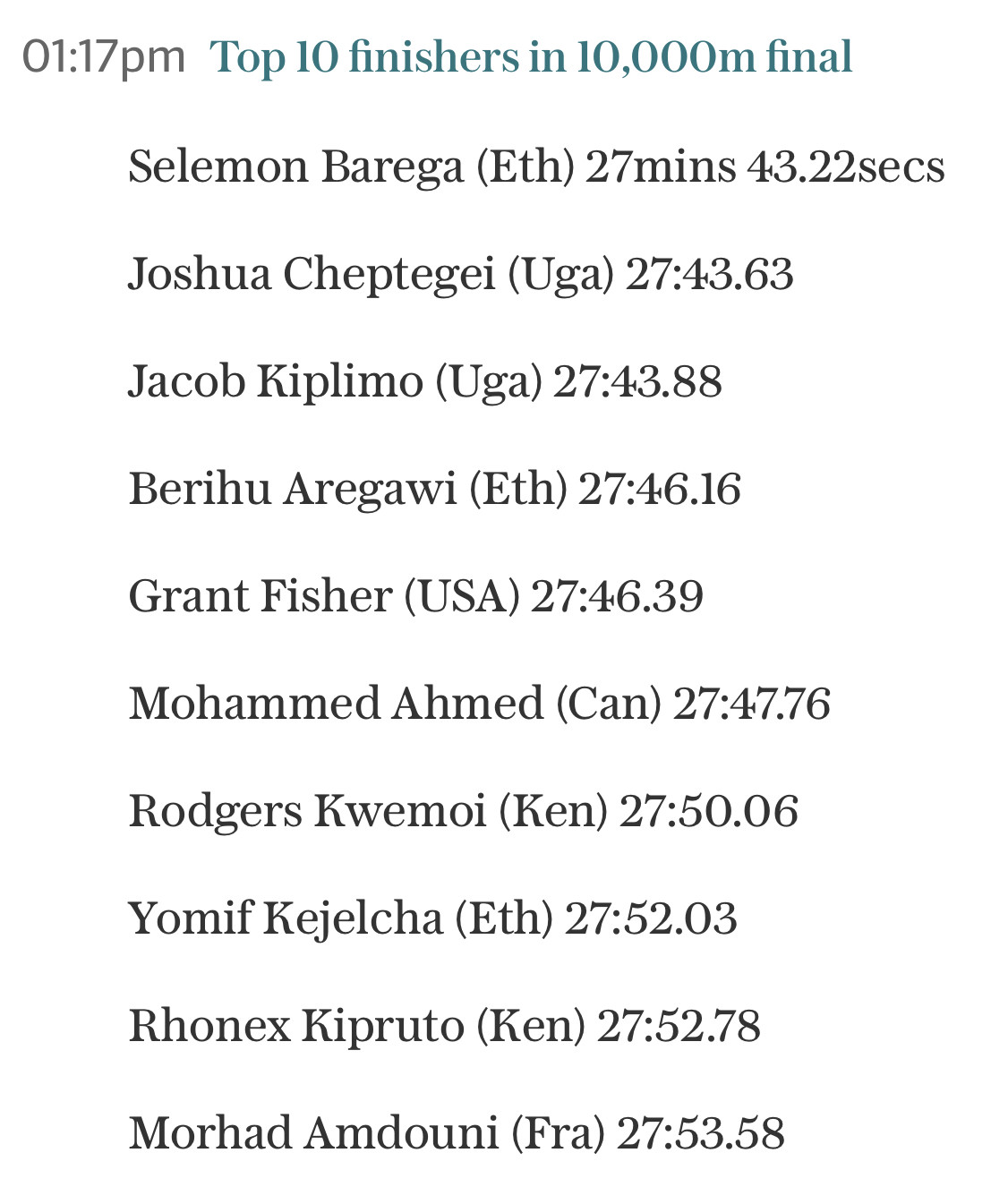
Selemon Barega captured gold in an exciting men’s 10,000m final today in Tokyo in 27.43.22, followed by race favourite Joshua Cheptegei and Jacob Kiplimo, both of Uganda, for silver and bronze – the first medals ever won by Ugandans in this event. Canadian record holder Mohammed Ahmed threw in a surge near the end, briefly leading the tightly bunched pack, but ended up finishing sixth in the 25-lap spectacle, with a season’s best time of 27:47.76.
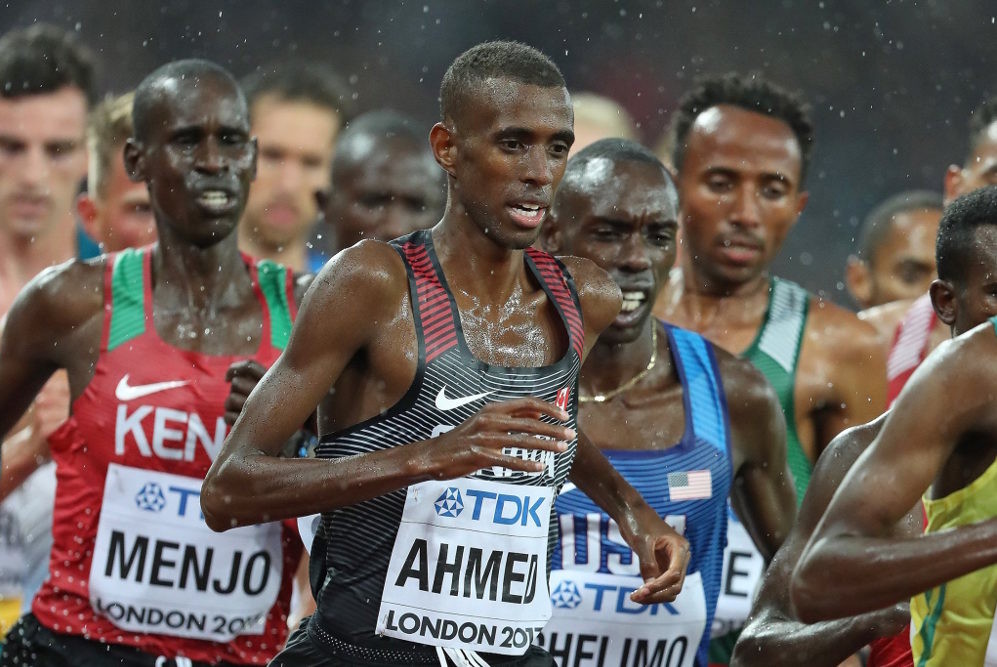
Ahmed managed to stay in contention and out of trouble early on in the race, going with Cheptegei, who took over the lead with four laps to go. With two laps to go, Ahmed took the lead, but in the end was out-kicked.
Ahmed also finished sixth in the 10,000m at the 2019 World Championships in Doha. Despite finishing off the podium, this is an incredible achievement for Canadian distance running. Ahmed grew up in St. Catharines, Ont., and ran at the University of Wisconsin. Since then, he has been training with the Bowerman Track Club in Portland, Ore., and his teammate, Woody Kincaid, finished 15th.
The 2018 Commonwealth Games silver medallist in 5,000m and 10,000m will be on the track again looking to reach the podium in the 5,000m heats on Tuesday, Aug. 3 at 7 a.m ET.
Marley Dickinson
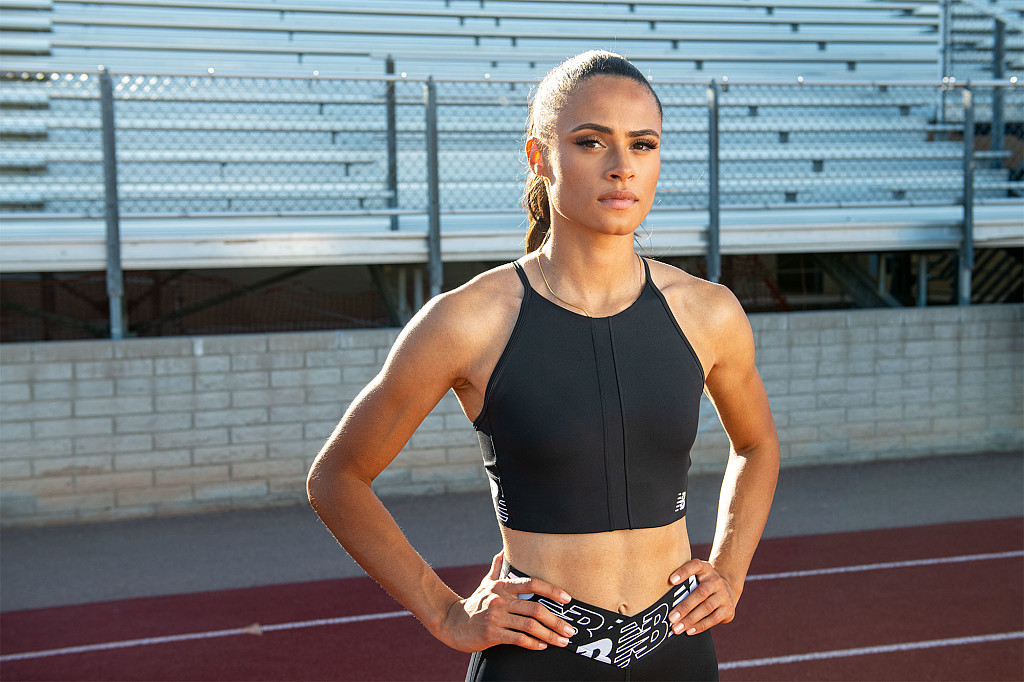
Sydney McLaughlin wants gold at Olympics
Given its unique demands on technique, endurance, and speed, many consider the 400m hurdles one of the most challenging track and field events. After exploding out of the starting blocks, athletes must sprint 400m while propelling themselves up and over 10 hurdles positioned evenly around the track.
At 21 years old, Sydney McLaughlin is already the fastest woman in the history of the event as she begins her Olympic campaign on Saturday morning in Tokyo.
McLaughlin earned the world record at the US Olympic trials in Eugene, Oregon in June. Blazing hot temperatures (topping off at nearly 110 degrees Fahrenheit) resulted in a five-hour delay to one of the most anticipated races of the meet, where McLaughlin faced 2016 Olympic champion Dalilah Muhammad, the previous record-holder. But the wait was worth it for McLaughlin. She crossed the finish line in 51.90 seconds, bettering Muhammad’s record (set at the 2019 World Championships) by 0.26 seconds. Realizing her momentous accomplishment, McLaughlin’s mouth gaped as she crouched on her knees.
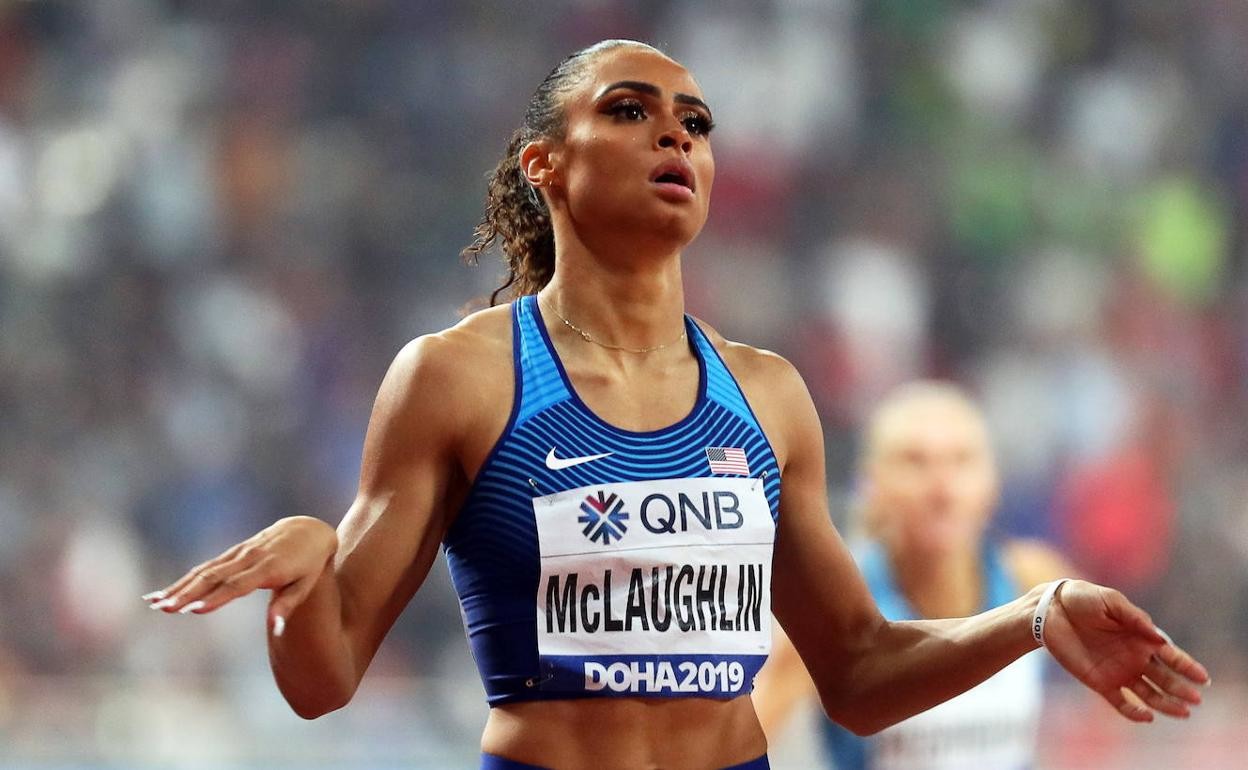
“I felt immediate excitement and overall gratefulness,” she said. “I owe it all to God, my family and my team. I’m still in disbelief, but it’s truly just faith, trusting the process, and seeing my hard work along with the gift of God being put into action.”
McLaughlin, who also holds numerous age group world records and was a two-time recipient of the Gatorade’s National Female Athlete of the Year award, will now attempt to secure another title: Olympic gold medalist. She will have the opportunity to do so in a rematch with Muhammad scheduled for 4 August. It’s a race both athletes are eagerly awaiting.
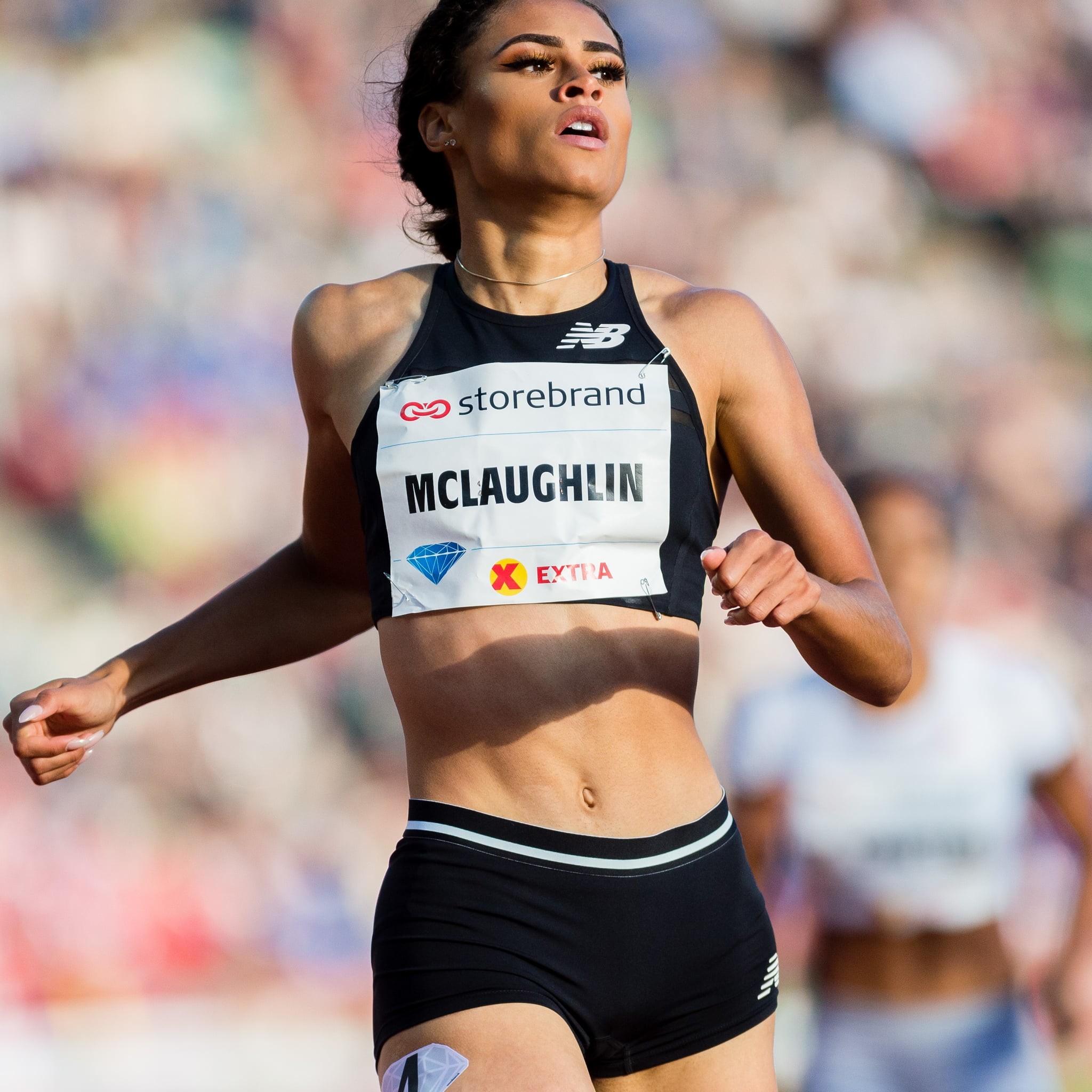
After congratulating McLaughlin on her record-breaking win, Muhammad said: “It’s going to be a battle in Tokyo for sure.”
The Tokyo Games mark McLaughlin’s second Olympic appearance. In 2016, at 16 years old, she became the youngest athlete to make the US Track and Field Olympic team since 1972.
“It’s an honor in and of itself to be able to go to the Olympics for a second time. I am so excited and grateful, and I’m definitely going to continue to focus on training and being the best I can be,” said McLaughlin, who comes from an athletic family. Her mother ran in high school, her father was a semi-finalist at the 1984 Olympic trials in the 400m, and her brother, Taylor, finished second at the 2016 Under-20 World Championships in the 400m hurdles.
In Rio de Janeiro, McLaughlin’s Olympic journey stopped in the semi-finals, where she placed fifth. This year, she is five years older, stronger and wiser, and the pandemic helped her gain a renewed focus.
“Those first couple of months being stuck in the house, I was like, ‘Who am I doing this for?’” she said.
Her outlook shifted, however, as she became more involved in her faith.
“My goals are different now,” she said. “A lot of my life was trying to prove something, which is an endless cycle that will never fulfill you. My gifts are not to glorify myself. When I stand on the podium, I give the glory to God.”
Even with this newfound meaning, training in Los Angeles during the pandemic presented its own challenges. When the city shut down, McLaughlin was forced to get creative with her workouts, which meant sneaking onto tracks and running on highway medians. She also traveled with her team to Arizona to get a month’s worth of consistent training. Despite this unconventional approach, the delayed Olympic games worked in her favor.
“The extra time for me was a blessing,” McLaughlin said.
The additional year enabled McLaughlin to make key changes, including switching to coach Bobby Kersee, the husband and former coach of Olympic gold medalist Jackie Joyner-Kersee. Kersee also trained McLaughlin’s previous coach, Olympic gold medalist Joanna Hayes, and Florence Griffith Joyner, who holds world records in the 200m and 100m races and is touted as the fastest woman of all time.
(07/30/21) Views: 78Stephanie Hoppe
