

Running News Daily
Top Ten Stories of the Week
12/14/2019
These are the top ten stories based on views over the last week.
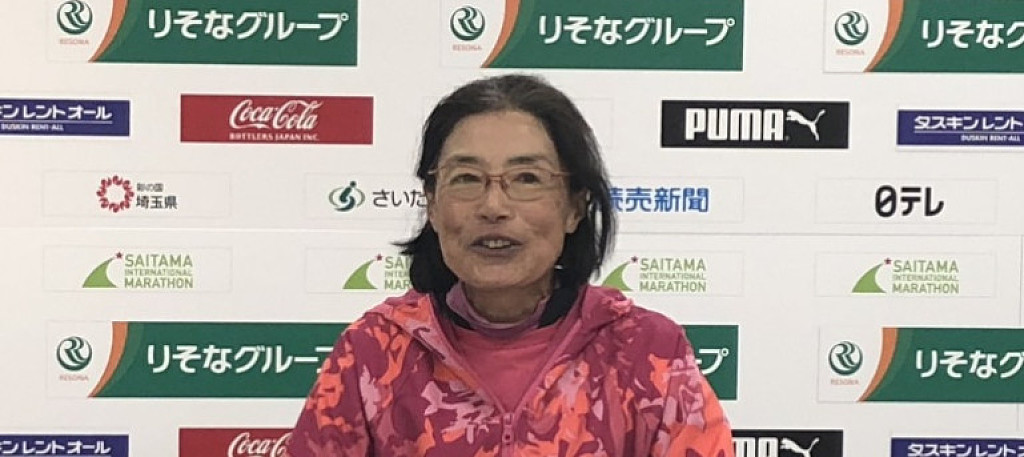


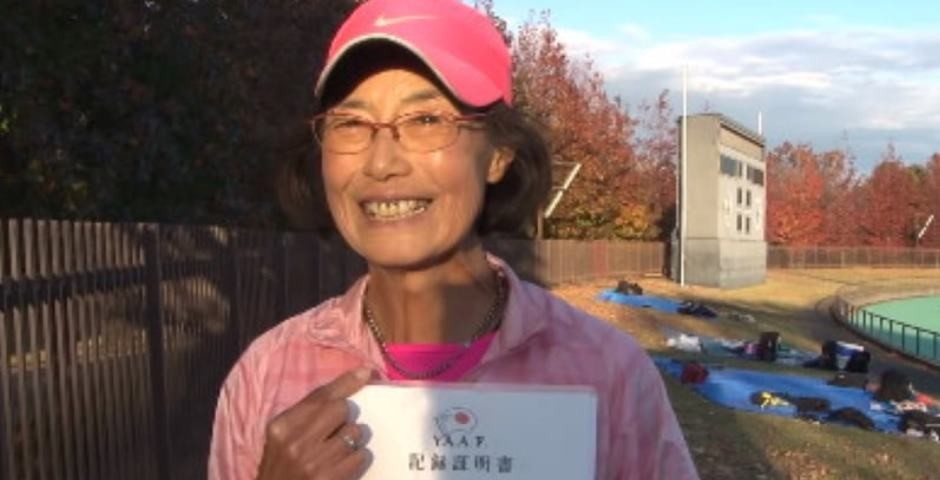
Mariko Yugeta runs 2:56:54 at the Saitama marathon taking off over two minutes from her previous 60 plus world record
The Japanese 61-year-old runner Mariko Yugeta was the first woman in the world over 60 years to run a marathon in less than 3 hours. On November 3 at the Shimonoseki Kaikyo marathon she clocked 2:59:15. This was three minutes and 35 seconds faster than the previous record set by the French woman Claudine Marchadier in 2007.
Just a month later, Mariko Yugeta improved on her record at the Saitama marathon. Today December 8 she clocked 2:56:54 which means she averaged 4:12 per kilometer.

She has run 100 marathons and her PR before today was 2:58:15 set in 2017. But those who knew her, already pointed out that Mariko Yugeta was capable to run 2:57 thanks to her good habits of life and training on the track of Kawagoe.
The Saitama International Marathon is a women's marathon held in Saitama, Japan, and has the IAAF Silver Seal. This race replaced the women's marathon that was held from 2009 to 2014 in Yokohama and which in turn was the successor to the international women's marathon held in Tokyo between 1979 and 2008.
Saitama's first international marathon, held on November 15, 2015, also served as a selection for female marathon representatives from Japan for the Rio 2016 Olympic Games.
(12/08/19) Views: 1,283
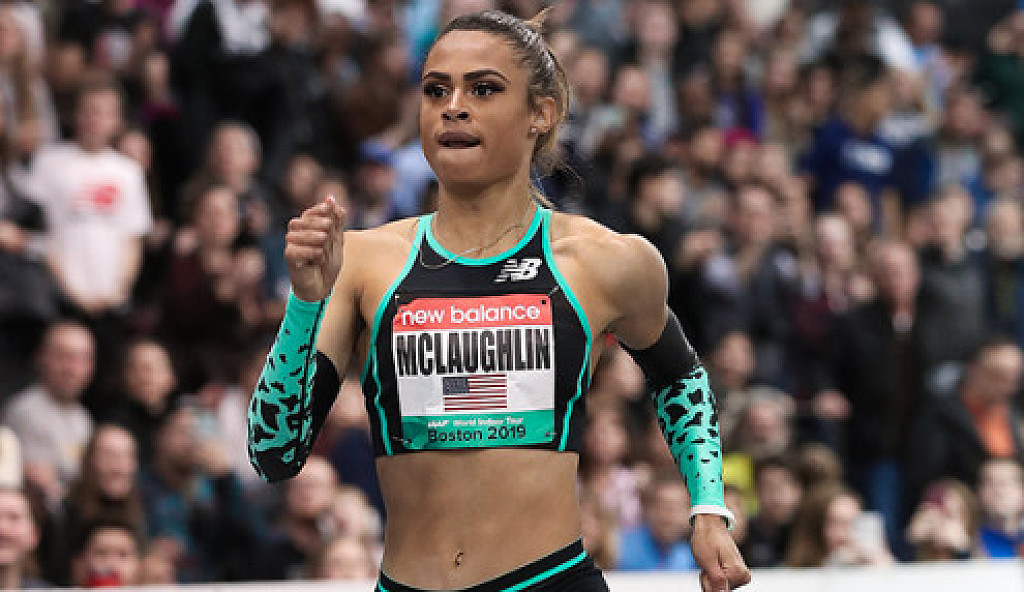
McLaughlin and Coburn confirm their return to the New Balance Indoor Grand Prix in Boston
Sydney McLaughlin and Emma Coburn will return to the New Balance Indoor Grand Prix, the opening leg of the 2020 World Athletics Indoor Tour, in Boston on 25 January.
McLauglin, who'll be returning to the meeting for the third time, is coming off a stellar first season in the professional ranks that saw her win the silver medal over 400m hurdles and gold in the 4x400m relay at the World Athletics Championships Doha 2019. McLaughlin also won the Diamond League title and ended the season with a lifetime best of 52.22 for the 400m hurdles, making her the second-fastest woman in history. In Boston, McLaughlin will compete in the 500m.
Also returning to Boston with a medal from the World Athletics Championships is Emma Coburn, who will be making her sixth appearance. Coburn, won silver in the 3000m steeplechase in Doha, will line up in the two mile.
Great Britain’s top ranked men’s 1500m specialist, Jake Wightman, is also set to come back to the meeting. Wightman won bronze medals over 1500m at both the Commonwealth Games and European Championships in 2018, and finished fifth in the 1500m at the World Championships in a time of 3:31.87, a lifetime best and a new Scottish record. He will race in the 1000m in Boston.
Now in its 25th year, the New Balance Indoor Grand Prix has played host to nine world records and 13 US records.
(12/08/19) Views: 495World Athletics
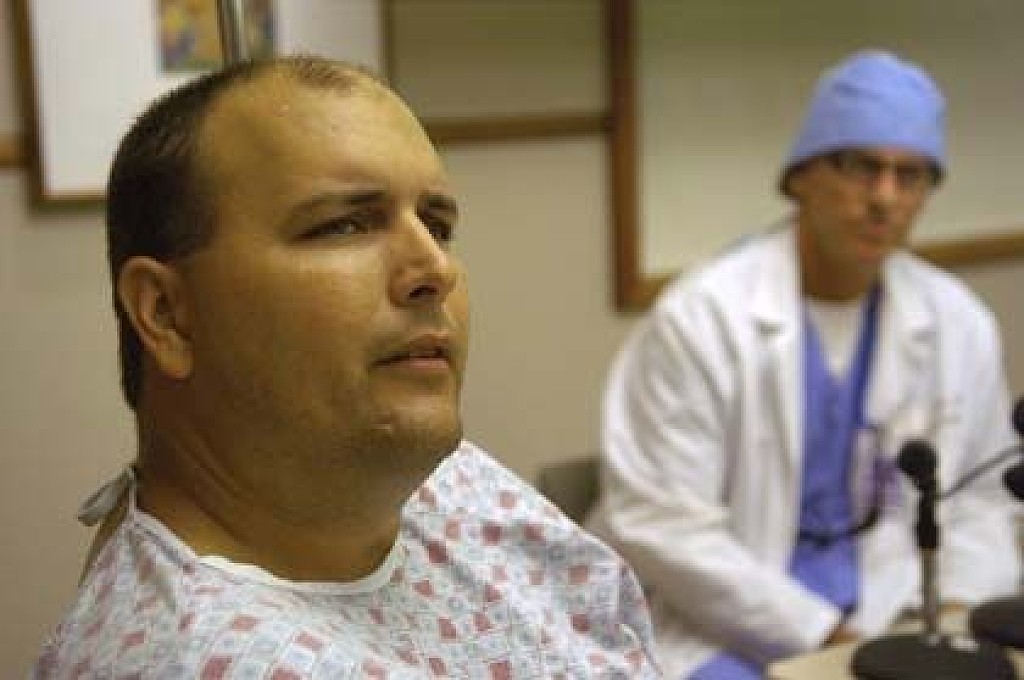
Heart attack and previous shark attack won't stop Harvey Miller from running the Honolulu Marathon
The Honolulu Marathon is this Sunday, and for one runner, the race is something he thought he couldn't do following a recent health scare.
Harvey Miller suffered a heart attack while on a training run. A few months have passed, and he's been given the "OK" from doctors to run again.
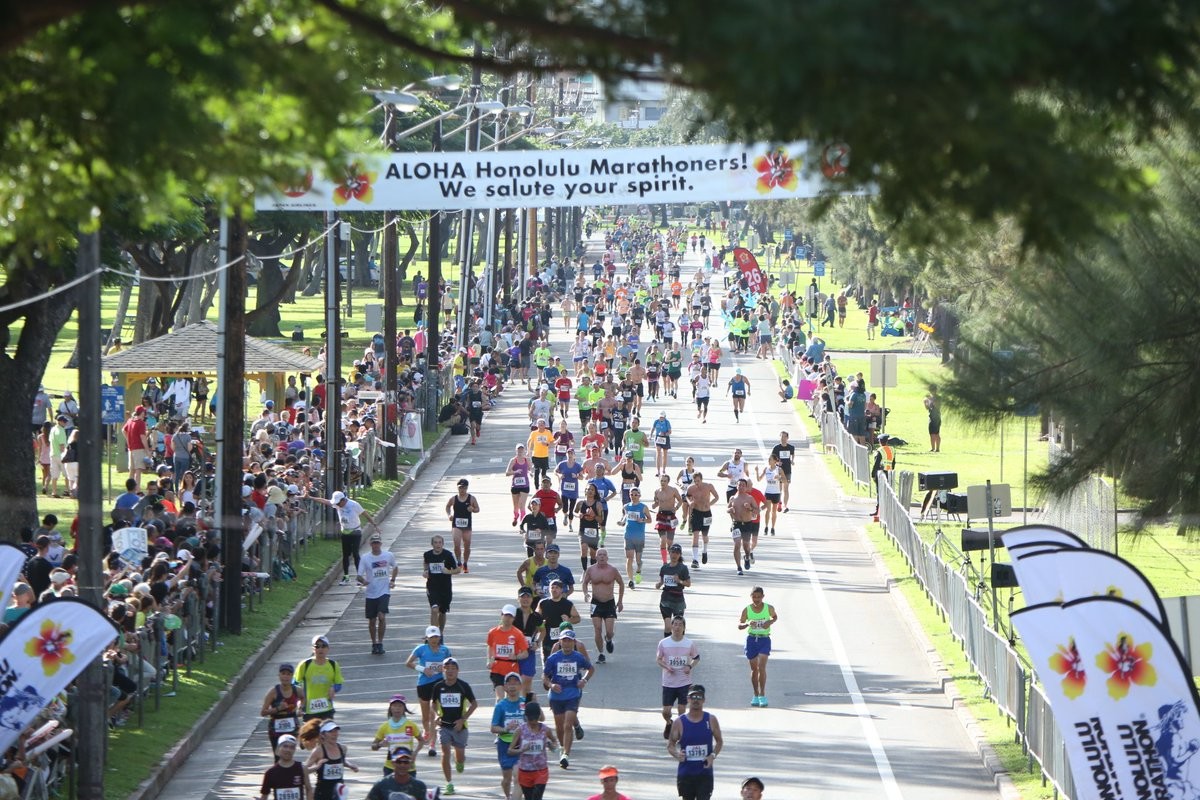
He told KITV4 he'll pay close attention to the signals his body is giving him, because his goal is to cross the finish line on December 8.
"I'm learning a lot, you know, about listening. And you still want to push because we're athletic right? But its also important to stay alive," said Miller.
It’s not the first time Harvey has been determined to defy the odds against him. He nearly lost his leg following a shark attack in 2007.
After recovering from that -- he's run two other marathons.
(12/06/19) Views: 186
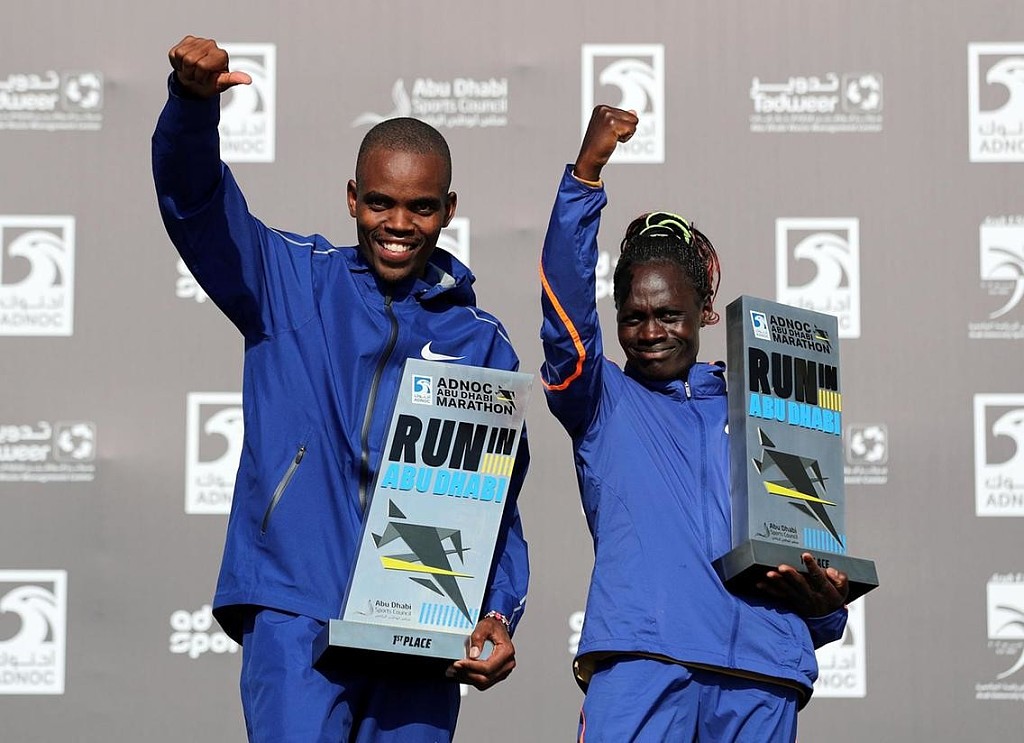
Kenyans Vivian Kiplagat and Reuban Kipyego claim victory at Adnoc Abu Dhabi Marathon
Kenya completed the double at the 2019 Adnoc Abu Dhabi Marathon on Friday morning when Reuban Kipyego won the men's title and Vivian Kiplagat claimed her third victory of the year.
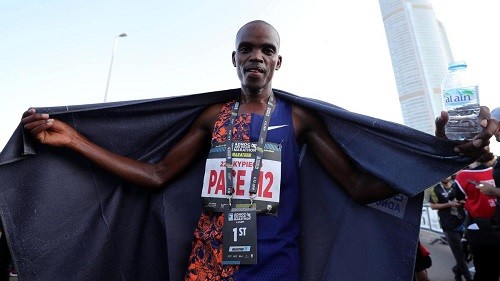
Kipyego, 23, set the pace and led all the way to take home the $100,000 (Dh367,000) first prize in a time of 2hrs 04min and 40sec, just outside the time of last year’s inaugural winner of the race Marius Kipserem (2:04:04).
Another Kenyan Joel Kimurer (2:06:21) took second spot ahead of Ethiopian Fikadu Girma Teferi (2:09:16).
Defending champion Kipserem became an early casualty, with the Kenyan pulling out before the halfway mark of the race.
“I’m surprised with the result,” Kipyego said on his first major marathon career success. “My job today was to set the pace but I felt good throughout the entire race and just kept going the distance.”
Kipyego arrived on the back of a runner-up spot and a personal best time of 2:05:02 in the IAAF Bronze Label Buenos Aires Marathon on September 22.
“This was a tough race to win like any other major marathon,” he said. “I am very happy with my own performance and the result.”
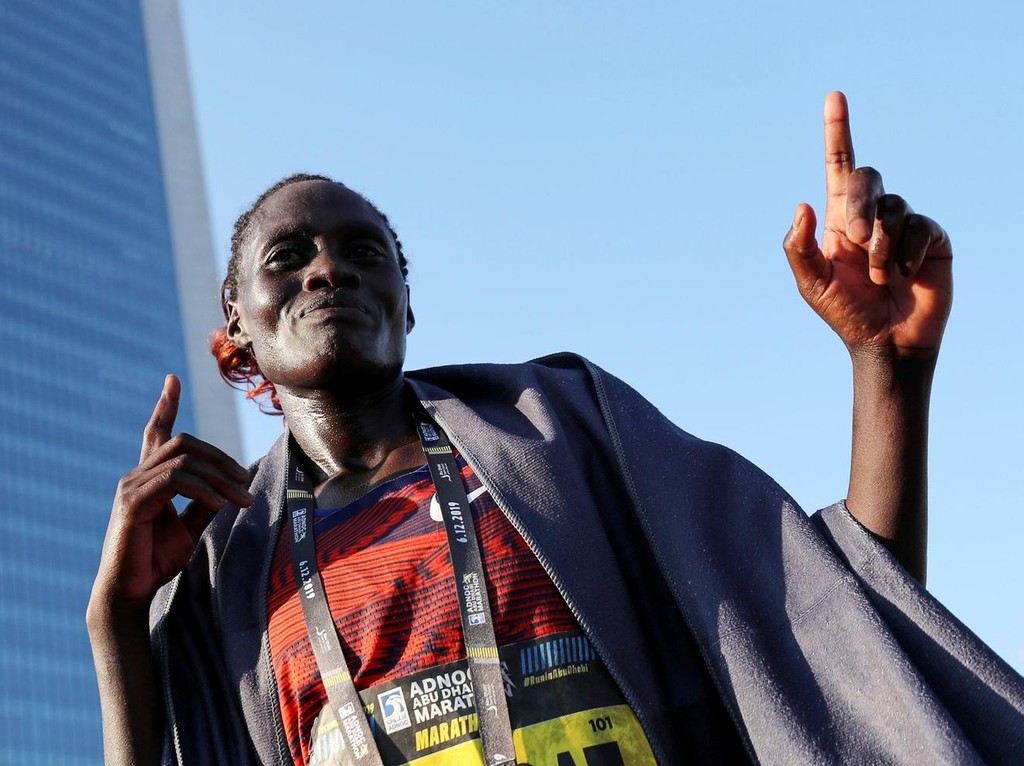
Kiplagat, 28, lived up to her top billing by taking the women’s race in a personal best time of 2:21:11 and with it the $100,000 prize that was on offer.
She broke away from the group straightaway and then maintained her position in the front all the way to the end.
“My objective was to run 2:20 but it was still a personal best time and I’m glad of the day’s work,” Kiplagat, who bettered her previous PB 2:22:25 at the Milan Marathon in April, said.
Joining Kiplagat on the podium were Ethiopians Wude Atalew (2:24:03) and Yeshi Kalayu (2:24:28).
Eunice Chumba, the Kenyan running under the Bahrain flag who was runner up last year, was fourth in 2:26:43, well outside her 2018 time of 2:20:54.
(12/06/19) Views: 70Amith Passela

Nike employees protested at the Beaverton, Ore. headquarters on Monday following the reopening of the building named after Alberto Salazar
On Monday, the day that the sportswear giant Nike reopened the Beaverton, Ore. headquarters building named after disgraced coach Alberto Salazar, Nike employees staged a protest regarding its mistreatment of women, and were threatened with termination if they spoke to the media.
The Wall Street Journal reports that, “A flier circulating among employees read, “Join us for a campus walk to celebrate what women bring to sport and to raise awareness of how Nike can support our female athletes and employees.”
There was another flier circulating ahead of the protest–this one was also distributed by Nike employees but had a different tone. It read, “No employee is permitted to speak to news media on any NIKE-related matter either on- or off-the-record, without prior approval from Nike Global Communications.” The policy continues, “Failure to comply with NIKE’s media policy could result in termination of employment.”

Nike spokesperson Greg Rossiter said to The Willamette Weekly that this cautionary flyer was not officially distributed by the company. “We respect and welcome employees’ feedback on matters that are important to them. The flier prepared by some employees was not officially distributed by Nike.”

The US Anti-Doping Agency banned Salazar in September for four years following a years-long investigation and secret arbitration case. The details appear in a BBC report and a statement by USADA outlining the specific charges, which include trafficking in testosterone (a banned substance), illegal methods and evidence-tampering at the Nike Oregon Project’s Beaverton, Oregon headquarters. Salazar is former coach to Mo Farah and Kara Goucher and current coach of marathoner Galen Rupp and the newly-crowned 10,000m champion Sifan Hassan, among others.
Nike shut down the NOP training group 11 days later. Salazar’s athletes have since found new coaches and training groups.
Following the dissolution of the NOP, American prodigy Mary Cain came forward and told her story about her experience with the group. According to Cain, the NOP’s “win at all costs” mentality involved Salazar and his assistant coaches (who are not named) pushing her to take birth control pills and diuretics to lose weight, weighing her and verbally abusing her in front of her teammates. Cain’s success on the track came at a huge price: she didn’t have her period for three years, which weakened her bone health so much that she endured five stress fractures. Her success dwindled, and when she left the program, nobody really knew why.
On Monday, protesters signs read, “We believe Mary.”
(12/10/19) Views: 66Madeleine Kelly
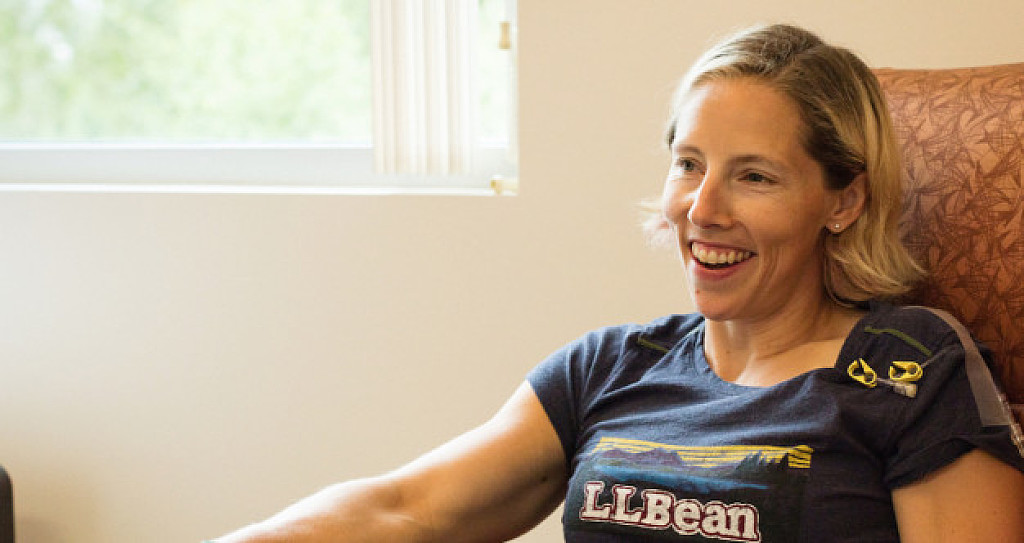
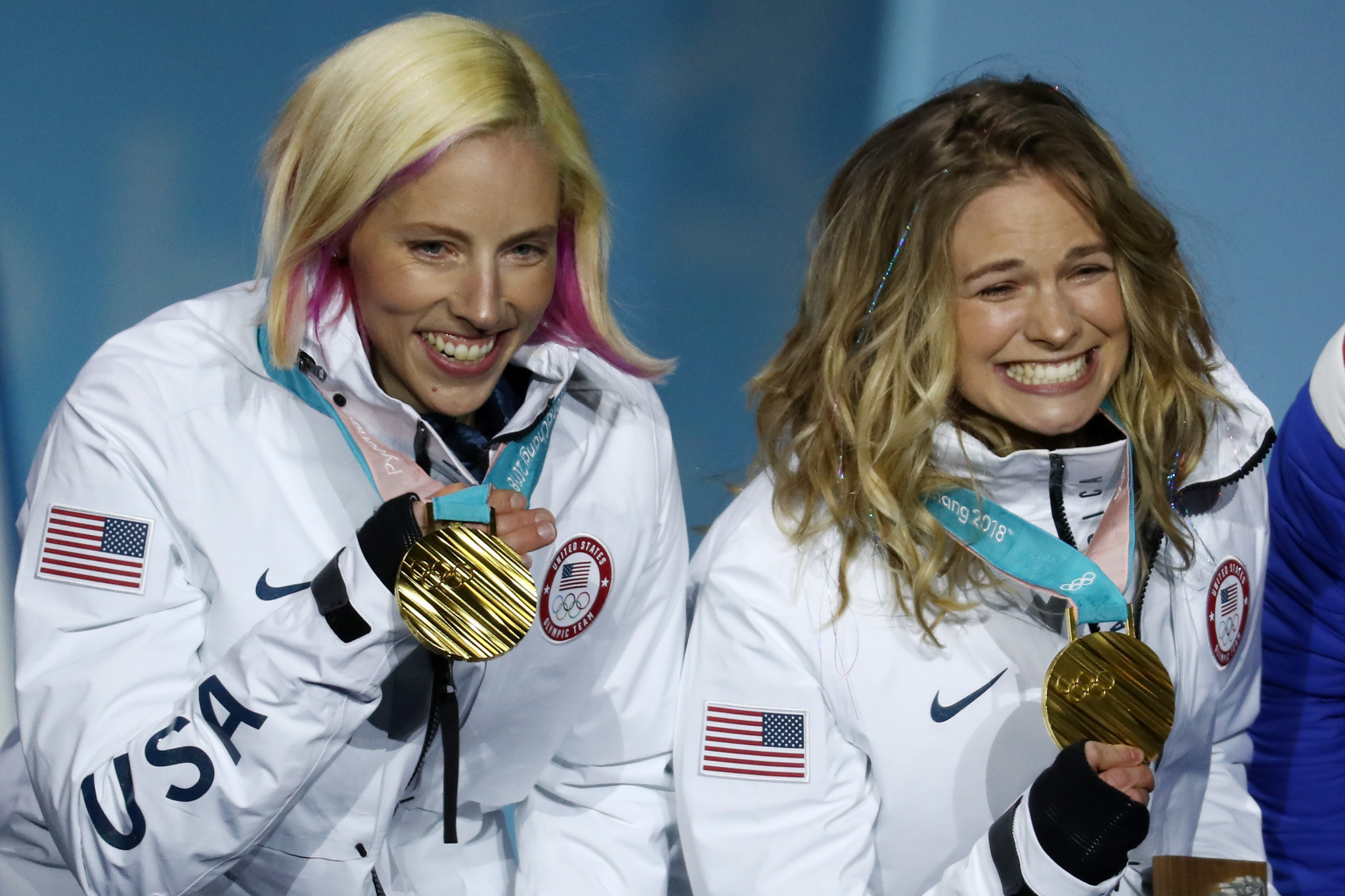
Veteran Olympian and cancer survivor Kikkan Randall, Shares 3 Tips for athletes facing setbacks and Fitness Comeback
As a veteran Olympian, cancer survivor and marathoner-in-the-making, Kikkan Randall has learned a lot along the way about how to thrive on life’s toughest days.
In a series of interviews with Women’s Running, Randall shared her key messages for athletes facing setbacks, be it cancer or injuries, and life after the disease.
1.-Keep moving. Continue to set goals.
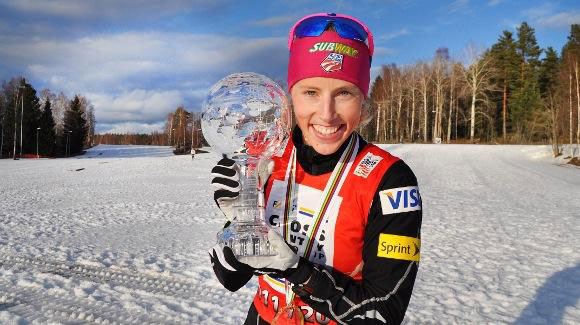
Fresh off her Olympic experience and years as an elite athlete, Randall was in great shape when she was diagnosed with breast cancer in June 2018. Even though she faced a rough road ahead, which included surgery, radiation and chemotherapy, Randall was determined to maintain some fitness.
“I made the commitment to stay as physically as active as I could through my treatment, and that was super important,” she says, noting that she did cardio and strength training. “Knowing I could do a workout every day, even at lower level, it felt like a little victory.”
Not only did easy exercise help with fluid retention caused by cancer-fighting drugs, it lifted her mood and gave her a sense of control.
“Be open-minded about what you can do,” Randall says. “Always be willing to try. I had a ten-minute rule for myself. I would go out and try to do something for ten minutes, if it went well I would keep going, and if it was too awful, I would go home and rest.”
2.- Surround yourself with people who give you hope.
Just as Randall needed a powerful support system to get her to five Olympic Games, she leaned on a strong team to get her through cancer treatment.
Her husband, Jeff, kept her focused on her good prognosis, while her toddler son, Breck, provided a much-needed distraction from her worries. Her parents took care of her while she received treatment in Alaska and the list goes on.
Liz Stephen, Randall’s ski buddy, was with her when she received her diagnosis and visited Randall on days when she felt especially terrible.
“Everybody around me was just really proactive and positive, and that encouraged that side of my personality,” Randall says.
She also drew inspiration from Gabe Grunewald, who died in June after a ten-year battle with adenoid cystic carcinoma. Last fall, Randall met Grunewald at an AKTIV Against Cancer event.
“I just finished chemo a week earlier, and she was just congratulating me and was so positive,” Randall says.
In May, Randall ran the Brave Like Gabe 5K as a virtual participant to show support for Grunewald, who was in the hospital at the time, battling complications from cancer. Randall recalls struggling through the solo run.
“I thought, ‘I’m out doing this for Gabe, so I’m not going to quit.’ I came back at the end of that run, and I felt recharged and I sent her a picture,’” she says.
Since Grunewald’s death, Randall says she’s as motivated as ever to run and honor her role model’s memory.
3.-Be patient with your fitness comeback. Celebrate your progress.
Randall says her body bounced back well after the rigors of cancer treatment, but women shouldn’t expect to immediately regain their fitness.
“As soon as you finish treatment, you are so motivated you’re like, ‘I just want to get back to the way I was.’ It takes time,” she says, “And there are some lingering (treatment) effects that take a while to iron out.”
As you gradually build your fitness, remind yourself how far you have come already.
“Celebrate what you can do is my biggest thing,” she says.
Even for Randall, an Olympic champion, marathon training has been a grind, starting with the intense pounding on her legs she didn’t experience in skiing. In addition, she had to adjust to the fact that, unlike in skiing, she can’t use downhills to recover.
“I’m celebrating the fact that my treatment’s been effective, and we have a good, optimistic look forward on being cancer free,” she says. “I’m just really grateful for that.”
(12/10/19) Views: 61Theresa Juva-Brown
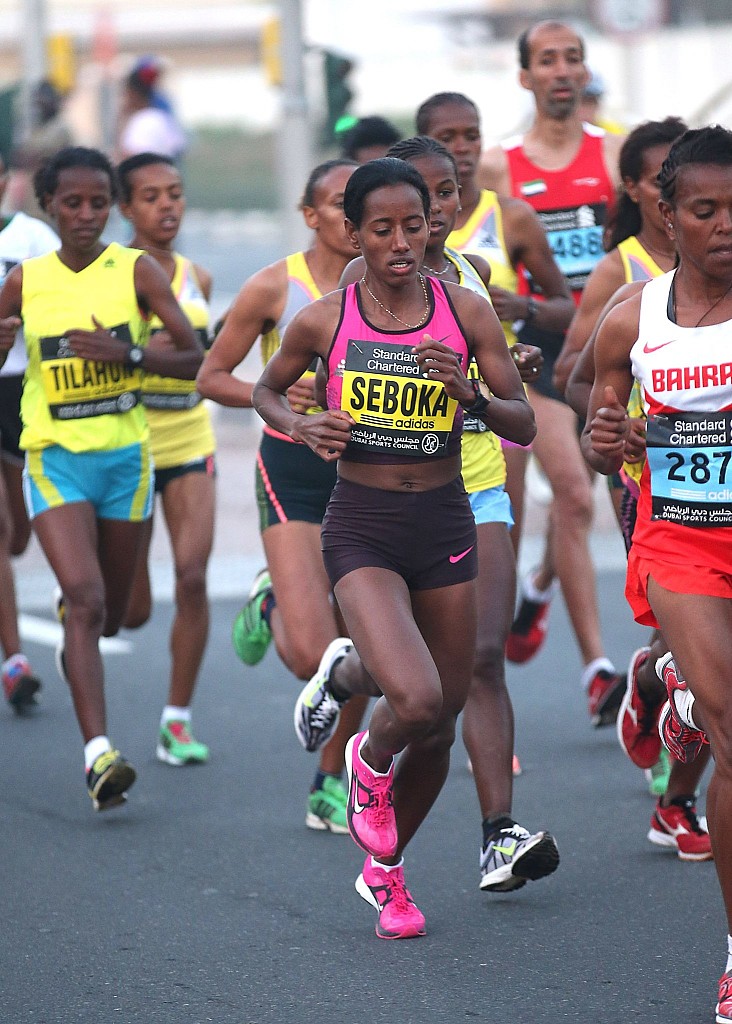
Ethiopia’s Mulu Seboka will take on the in-form Celestine Chepchirchir of Kenya at the Guangzhou Marathon, a World Athletics Gold Label road race, on Sunday
The Prolific Ethiopian racer, who will compete in her fifth marathon of the year, owns the fastest personal best in the field at 2:21:56 set in Dubai four years ago. The 35-year-old competed in the southern Chinese city in 2016 and finished second in 2:32:26.
Seboka, a past Dubai Marathon, has a season’s best of 2:27:19 from her four marathons. She will obviously not be running with fresh legs in Guangzhou as her last race was just one week ago in Kunming, where she scored a 2:32:54 victory.
The rising Chepchirchir, 23, is the second fastest but the highest ranked (43) woman toeing the line. She knocked more than two minutes off her PB to finish third in Seoul in 2:24:48 nine months ago and went on to set a course record of 2:26:44 at the Cape Town Marathon in September.
Guangzhou will be her third race of the year and first time competing on Chinese soil.
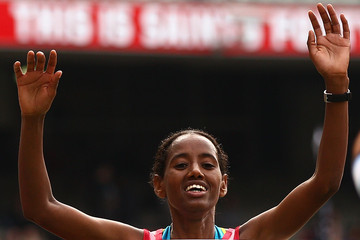
Lilia Fisikovici of Moldova also improved lifetime best this April to 2:27:26 and has been pursuing her second international marathon title following her win in Krakow last April.
Other sub-2:30 runners in the field include two-time Daegu Marathon winner Pamela Rotich of Kenya who has a PB of 2:27:48, Ethiopia’s Hiwot Gebrekidan, who set a winning mark of 2:25:45 in See Genezareth two years ago, as well as Chinese duo Ding Changqin and He Yinli.
The men’s field is led by Kenya’s Eliud Kiptanui. The 30-year-old clocked a PB of 2:05:21 to finish second at the Berlin Marathon four years ago and has managed to run inside 2:10 every year since 2014. But the past winner in Ottawa and Prague has yet to break that barrier in 2019 as he only clocked a mediocre 2:14:15 to finish seventh in Xiamen in January and failed to finish in Taiyuan three months ago.
Kiptanui’s countryman Mike Kiptum took more than three minutes off his career best to finish third at Seoul Marathon in 2:06:22 in March, suggesting that the 27-year-old would be another serious candidate not only to win the title but also to rewrite the 2:10:01 course record set by Morocco’s Abdellah Tagharrafet in 2015.
The powerful Kenyan contingent also includes Felix Kirwa, whose PB of 2:06:13 was set in Eindhoven two years ago, and 31-year-old Josphat Letting, winner of the Tallinn Marathon in September.
Ethiopia’s Gebretsadik Abraha could be the biggest threat to the Kenyans. Although the 27-year-old achieved his 2:06:23 PB back in 2012, the consistent Abraha has maintained a high level of competitiveness, earning four podium finishes in his six races since 2017.
(12/06/19) Views: 55World Athletics
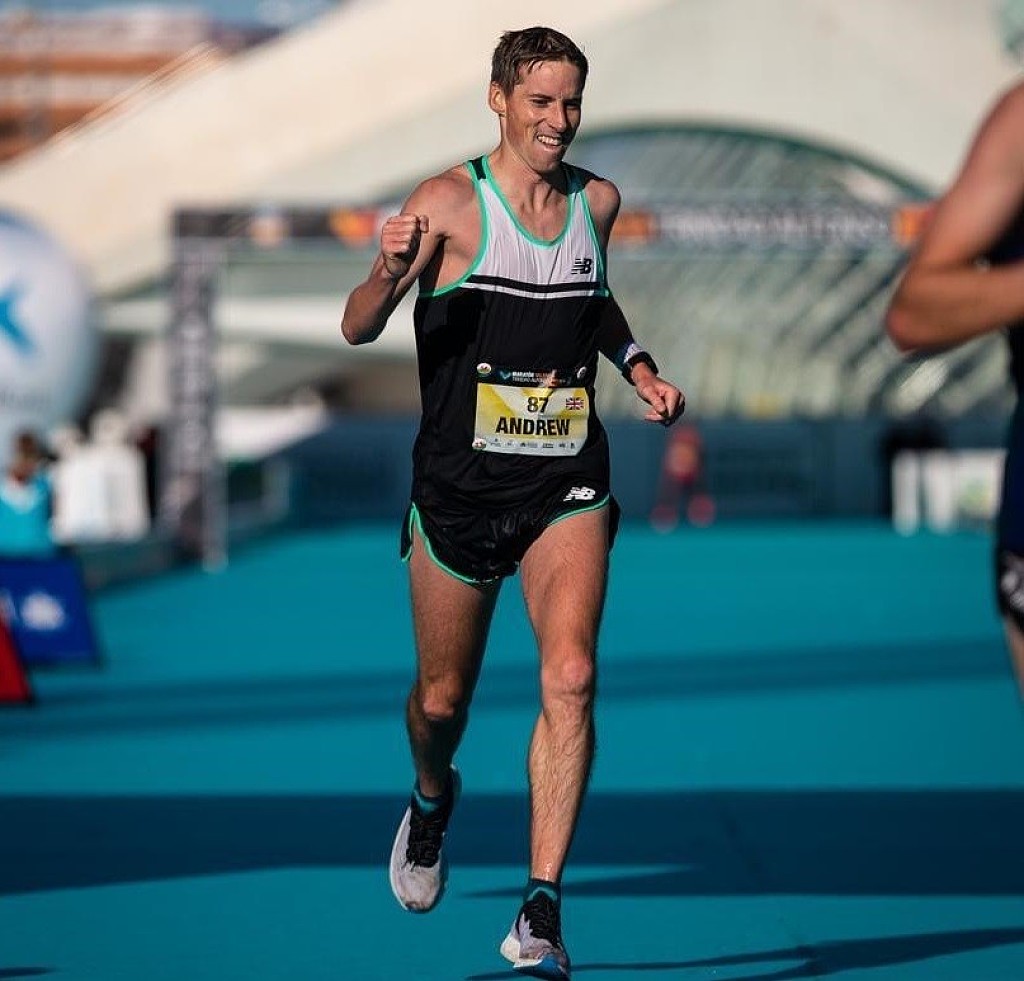
Andrew Davis set the British 40+ Record in Valencia clocking 2:14:36 for his age group breaking the previous 2:15:16 masters mark
After breaking the British M40 marathon record in Valencia this month, Andrew Davies plans to spend next year enjoying off-road races before returning to the roads to try to qualify for the Commonwealth Games in Birmingham in 2022.
The Welshman, who turned 40 on October 30, clocked 2:14:36 in Valencia on December 1 to break Steve Way’s national masters mark of 2:15:16 which was set in Glasgow in 2014. Before that, Ron Hill held the veterans’ record from 1979 for 34 years.
“We’ve planned it for quite a few years ago now and Valencia seemed potentially to be the first good one to do shortly after I turned 40,” says Davies, who also knocked more than half a minute off his PB. “I heard good feedback about it from other runners who said it was a fantastic marathon so I’ve been eyeing it up for quite a while.”
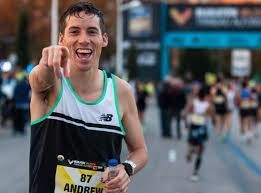
He added: “It was a pretty tough ask. I was at the Commonwealth Games when Steve Way broke the record so it’s quite nice that I know him quite well.
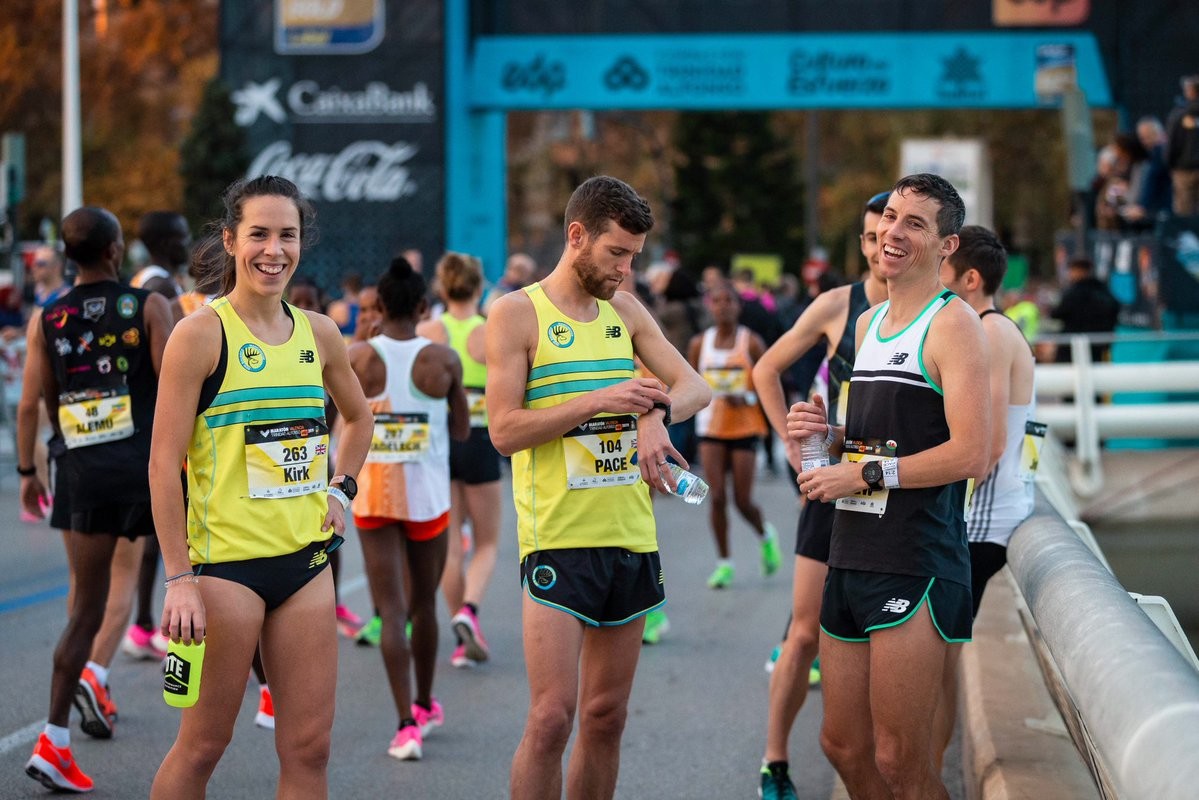
“I knew I was in quite good shape because I’d equaled my 5km PB in August (14:33) and also got a half-marathon PB in September (64:46), but it was still a case of nailing it on the day.”
Davies was paced by Jonny Mellor in Valencia and was also able to chase fellow Welshman Charlie Hulson, who clocked 2:14:22 on his marathon debut.
So what are Davies’ secrets of running so well aged 40? “I think I’m quite lucky in terms of injuries,” he explains. “I don’t do anything stupid in terms of mileage. If I have a cold or illness then we’re sensible and take it easy. I eat healthy and sleep a lot and have regular massage – all the usual stuff really. I think it’s all just come together, and it’s been a case of ticking over and doing the right things.”
Davies is based in mid-Wales and puts in some of his training miles with his dog as he does his long runs around Lake Vyrnwy on the edge of Snowdonia. He works four days a week as a college lecturer but has enjoyed Monday off as an easy day and also Thursday afternoons, in order to do a hard marathon session in recent months.
As for plans for 2020, Davies, who is coached by Steve Vernon, says: “Doing a marathon build-up twice a year is quite draining. I’m hoping to do a bit more trail running, especially during the early part of next year and will get back into the mountains where I belong.”
He adds: “I’d like to get the vet 40 record for a few other distances too – although some of the records are quite outstanding. I’d like to do Armagh (5km) in February for example, to try to get into the top few masters for that distance. When it comes to masters records, the marathon has been the ultimate one to get, though.”
(12/12/19) Views: 52Jason Henderson
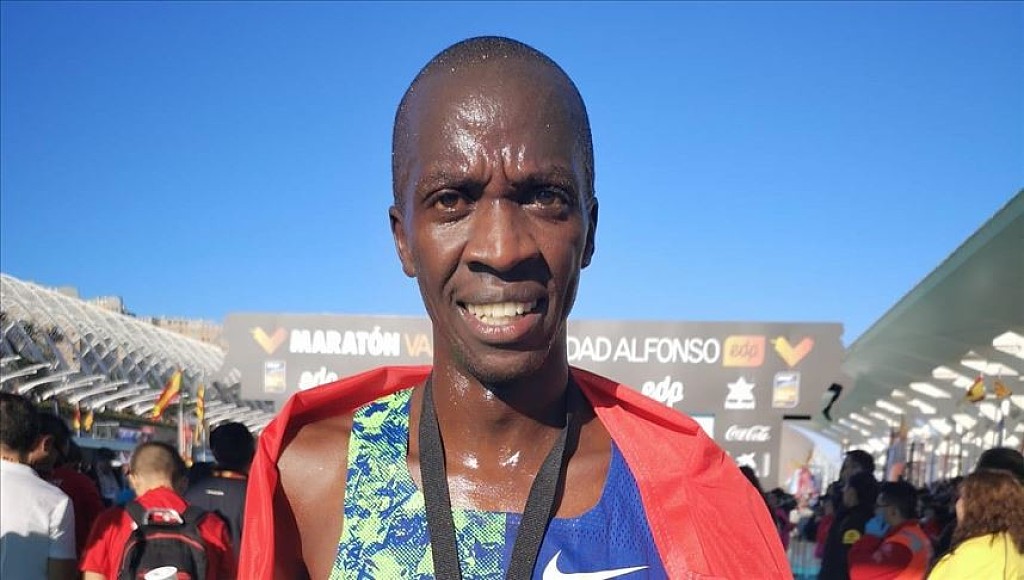
European record-breaking Turkish athlete Kaan Kigen Ozbilen thinks he can run a marathon under 2:04:00 and win a medal in Tokyo
Ozbilen broke Mo Farah’s European record in the Valencia Marathon on Dec. 1, finishing at 2:04:16 mark, nearly a minute better than Farah's 2:05:11.
Ozbilen finished the race at second place, trailing only to Ethiopian debutant Kinde Atanew, who won in a course record of 2:03:51.
"My training partner is the world record-holder Eliud Kipchoge and all my training level was showing under 2:04:00. So, it was an expected result which had to come earlier. But before the world championship in June, l broke a toe and lost six weeks of training and possibly a world medal," Ozbilen told Anadolu Agency on Monday.
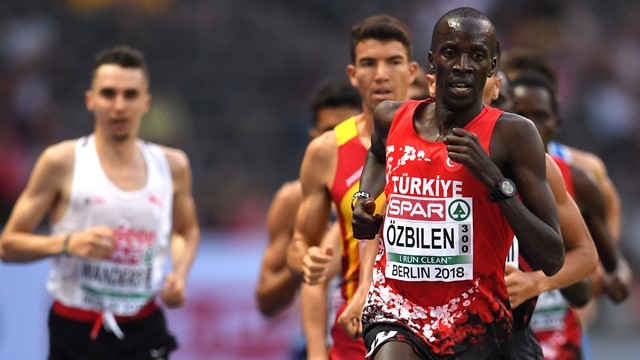
"I am very happy to be a part of European athletic history," Ozbilen said. "My next goal and dream is the Tokyo Olympics medal."
The 33-year-old runner also added that he is planning to run until he is 40.
The athletes have professional family lives and 33 is a mature age, he said, adding that he is also planning to race in the 2024 Olympics.

Responding to a question on the secrets of his success, he noted: "The majority of this comes from genetics. It is about choosing the correct discipline, and my results show l chose marathon as the correct discipline for myself."
"What I see in Turkey is a problem in talent selection and very few clubs are supporting athletes at very low incomes.
"You can not expect a young athlete to grow for European record only with 2,000-3,000 Turkish lira ($345-$517) monthly support," Ozbilen stressed.
Noting that a-2:04:16 marathon result is not a one-day result, but it is "a 10 years [long] journey," he said, adding that it starts at young ages with successful middle distance results, such as 3:35-3:37 maximum for 1,500 meters (4,921 feet).
"After the athlete moves to 5,000 m and 10,000 m, you must reach 13-13:10 in 5,000 m and you must run around or under 28 minutes in 10,000 m," he added.
The federation and clubs must give Turkish athletes long term sufficient and individual support to have successful results, he added.
Indicating that breaking the world record would not be easy, he said: "Definitely, I will do my best and develop. I put my goals step by step and now my next step is to run under 2:04 and to get a medal in the Tokyo Olympics."
In response to a question on the reason for running for the Turkish flag as a Kenyan-origin athlete, "I love to run for the Turkish flag. Firstly to clarify, l did not get any money or any promise to be Turkish," he stressed.
"My brother Onder Ozbilen was in Kenya and he was known as a big brother in my region for selecting young talents. It took me a year to convince him that l still have big targets.
"We started to run after our dream. To be the best of Europe in front of Mo Farah's record was a dream that only we believed in and now we will go to our new dream of Olympic or World medal."
(12/11/19) Views: 50Fatih Erel
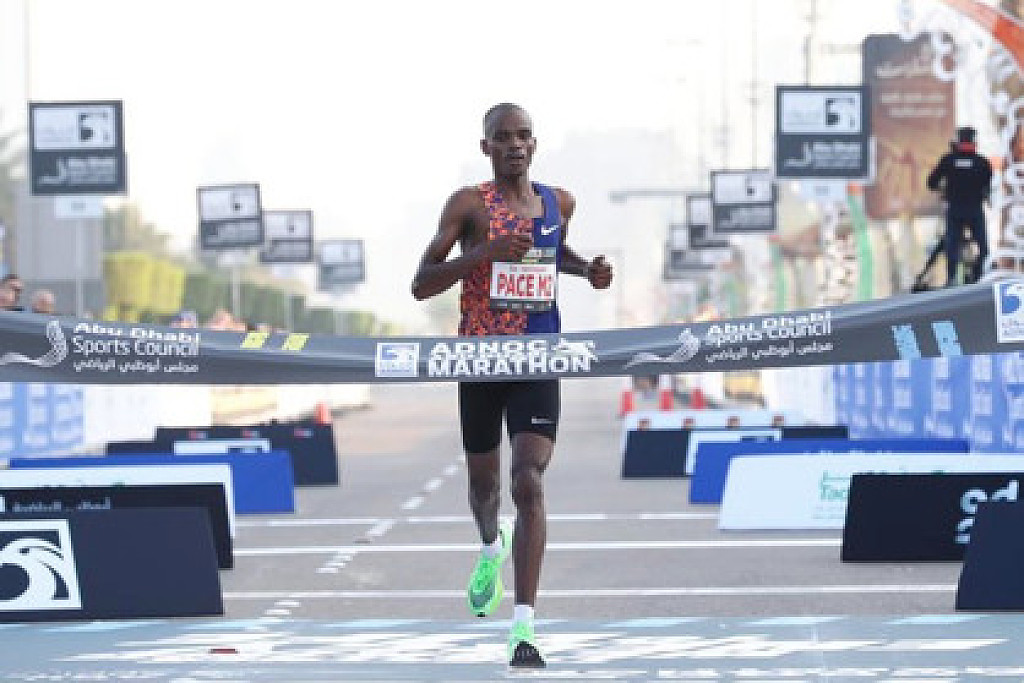
Pacer Wins Abu Dhabi Marathon by 2 Minutes, Takes Home $100,000
Though he was supposed to drop out at 30K, Reuban Kipyego went on to break the tape in 2:04:40.
Reuban Kipyego took his pacing duties an unexpected step further when he won the Abu Dhabi Marathon on Friday, December 6.
As the designated runner who was tasked with pacing the elite field through a specific point in the race, the 23-year-old Kenyan was expected to drop out around 30K. But Kipyego kept running all the way through the finish line, breaking the tape in a time of 2:04:40.
The pacemaker turned champion beat runner-up Joel Kimurer by a minute and 41 seconds. As the marathon champion, Kipyego earned $100,000 in prize money.
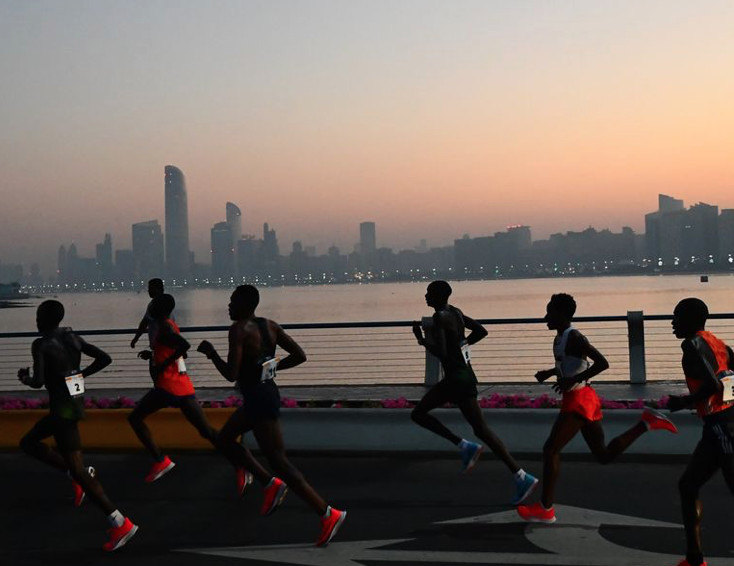
“I was setting the pace for the first 30K feeling very good, and when I turned back to see that the pack was not close behind, I decided that I was going to push to the finish line,” Kipyego told race organizers after his victory.
Kipyego ran faster for the second half of the race after leading the field through 13.1 miles in 1:02:54. The performance improves on his previous personal best of 2:05:18 from a runner-up finish in his debut at the Buenos Aires Marathon on September 22.
Though his action was rare, Kipyego was not the first pacemaker to keep running all the way through the finish line.
In 1994, Paul Pilkington was hired as the rabbit to lead the elite field through 15.5 miles of the Los Angeles Marathon, but he continued on for the entire 26.2, winning the race in 2:12:13. Simon Biwott was supposed to lead the runners through 28K of the 2000 Berlin Marathon, but he ended up leading right through the line, winning in 2:07:42.
In his second pro race, Geoffrey Ronoh upset then-world record-holder Wilson Kipsang at the 2014 Olomouc Half Marathon. Instead of stopping at 10K, the pacemaker won in a course record 1:00:17.
For runners who are on the bubble of winning podium prize money, signing on to be a pacemaker in a large race is an easy way to earn guaranteed payment. While they are expected to drop out before the race ends—and most do—they are allowed to finish the race if they choose to.
“For me, the conditions were ideal and the course was beautiful,” Kipyego told the race organizers. “I’m already looking forward to returning to Abu Dhabi to defend my title.”
(12/07/19) Views: 44
