

Running News Daily
Running News Daily is edited by Bob Anderson and team. Send your news items to bob@mybestruns.com Advertising opportunities available.
Index to Daily Posts · Sign Up For Updates · Run The World Feed
Search Results for Ultra
Today's Running News
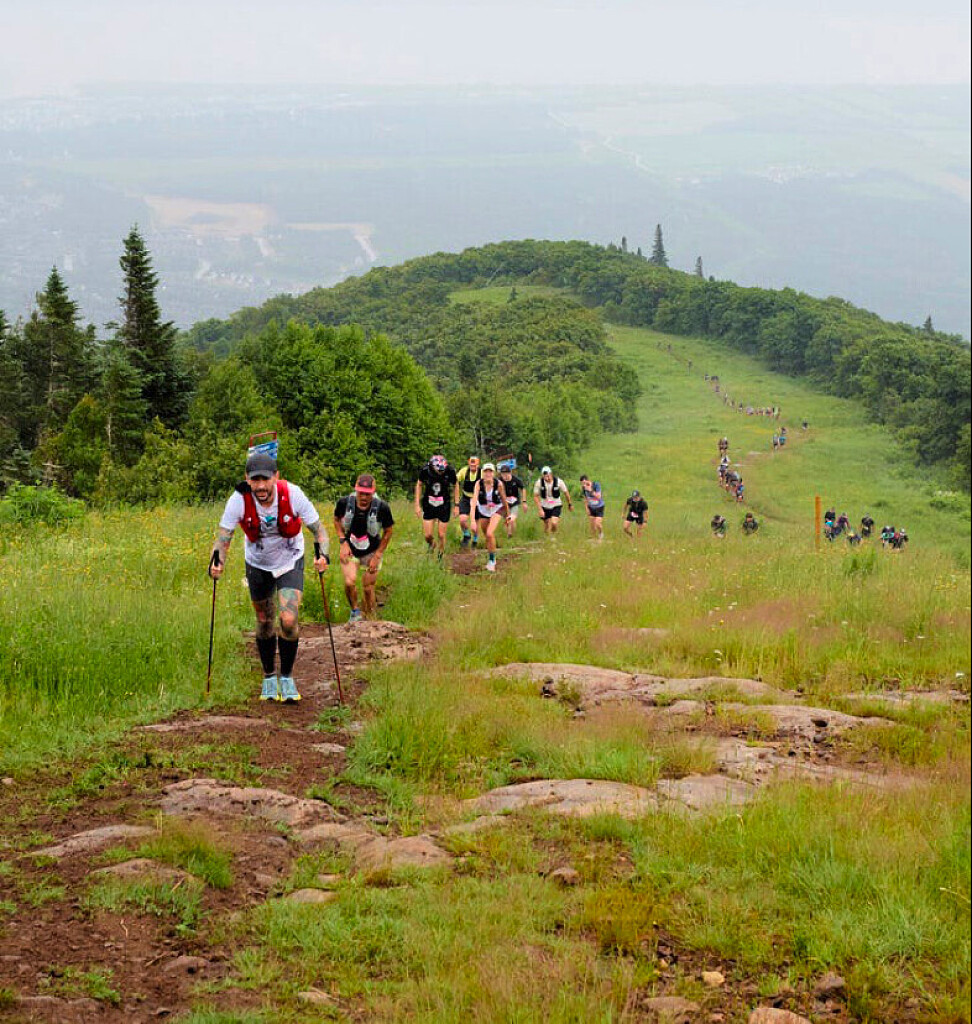


One of the World’s Best Ultra Trail Runs Gets Better
With new distances and the chance to compete in the Canadian Trail Running Championships, Québec Mega Trail gives runners more ways than ever to experience the Québec outdoors in 2025What makes a world-class trail running event? Amazing scenery, a challenging course, a supportive community, and opportunities for runners of all levels. Québec Mega Trail checks all the boxes.
You have the intensely green landscape near the St. Lawrence River, the epic singletrack through the Laurentian Mountains, and the beautiful region of Charlevoix. You have the cheers and smiles of spectators at the base of Mont-Sainte-Anne. And you have a wide variety of distances at the QMT race series, making it possible for runners of all levels to be pushed by the terrain and supported by the local community, culminating in an unforgettable experience. Here’s what’s new for 2025.First, the iconic Québec Mega Trail 100-miler—historically the longest event offered at QMT—will be replaced by a 135-kilometer race, which is approximately 84 miles. The new course will have a higher distance-to-elevation ratio, with 6,000 meters of cumulative altitude gain. The additional climbing will take runners from the starting point in the quaint town of Baie-Saint-Paul, on the northern shore of the St. Lawrence River, to Mont-Sainte-Anne, a ski mountain situated within the Laurentian Mountains.
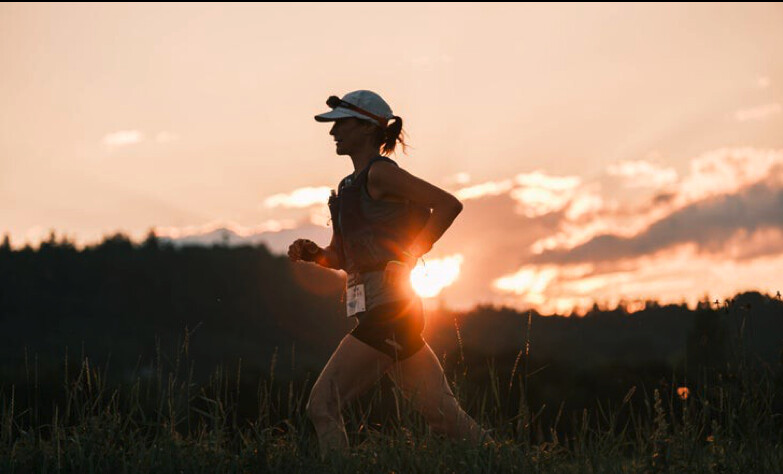

“The idea is to get the most out of our trails,” says Jean Fortier, general director and founder of Québec Mega Trail. “Taking into account the opinions of athletes and after consulting our large community, we decided to shorten the legendary 100-miler to make it even more competitive. Ultimately, it is the runners who will tell us if we made the right choice.” This change will help increase participation, as the 135K distance is attainable for a larger group of skilled runners.Since its debut in 2012, QMT has attracted accomplished trail runners from around the world. It is recognized as one of the most beautiful—and most difficult—trail races in Canada, crossing through the Charlevoix and Côte-de-Beaupré regions of Québec to Mont-Sainte-Anne. The terrain is extremely technical, with many exposed mountain passages and singletrack winding through dense forests.
In addition to the new 135K race, the 2025 QMT will host 50K and 80K events of the Canadian Trail Running Championships, which include classic up-and-down races and trail ultramarathons, providing opportunities for runners to measure themselves against trail running’s best athletes. Additional distances ranging from a 1K kids’ run to a 110K will continue to be offered.In 2024, Québec Mega Trail joined the World Trail Majors (WTM), a ten-race global running series. Despite joining an international stage, Fortier says the weekend of trail running continues to be rooted in the richness of Québec’s mountains, forests, and community.
“With our presence within the WTM, we are of course noticing more and more international athletes interested in QMT,” Fortier says. “We will have a very good elite lineup on our trails in 2025, and there will certainly be fierce battles to watch closely.”In the final QMT 100-mile race, Anne Champagne broke the women’s course record with her finish in 24:28:27, and Jean-François Cauchon took the men’s course record by 25 minutes, crossing the finish line in 19:01:28.
Québec Mega Trail’s 2025 races are set for June 3–6. Early-bird pricing is offered in limited quantities with rates discounted up to 25 percent. Learn more, sign up to volunteer, and register here.
QMT is a legendary ultra trail race, renowned as one of the most beautiful and one of the hardest in Canada. More than 3,500 racers meet there every year. Founded in 2012, Québec Mega Trail actively promotes trail running while being a reference in terms of safety, sustainable development, and constant innovations.
(08/03/2024) ⚡AMP
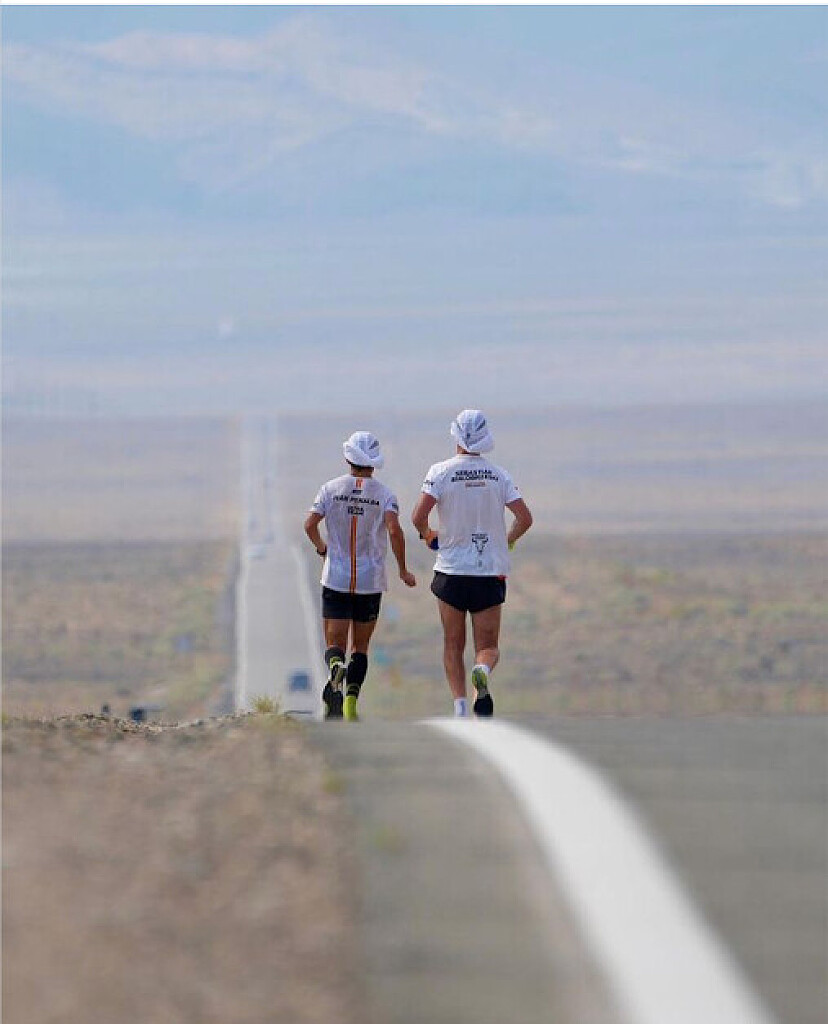
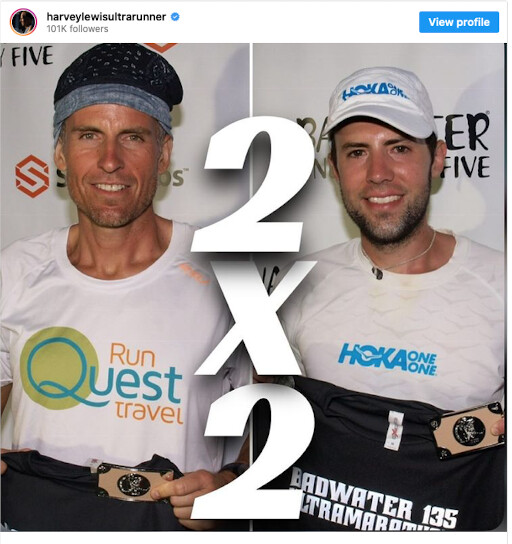
Harvey Lewis races Badwater 135 for the 13th time in a row
This year’s edition of Badwater 135, dubbed the “world’s toughest foot race,” kicked off on Monday, plunging runners into the brutal extremes of California’s Death Valley. This year’s race featured the return of fan favorites, including Backyard Ultra world champion Harvey Lewis, a two-time Badwater winner making his 13th consecutive appearance, and fellow American Pete Kostelnick, also a two-time champion, who made a remarkable comeback after a severe car accident in Leadville. American Shaun Burke claimed the overall victory amidst the scorching heat, while Norwegian Line Caliskaner triumphed in the women’s category, finishing an impressive second overall.
The 135-mile (217km) race kicks off at the Badwater Basin, which, at 85 metres below sea level, is the lowest point in North America. This year’s race saw temperatures hitting a scorching 51 degrees Celsius. Runners who finish under the 48-hour mark earn the prestigious Badwater 135 belt buckle.
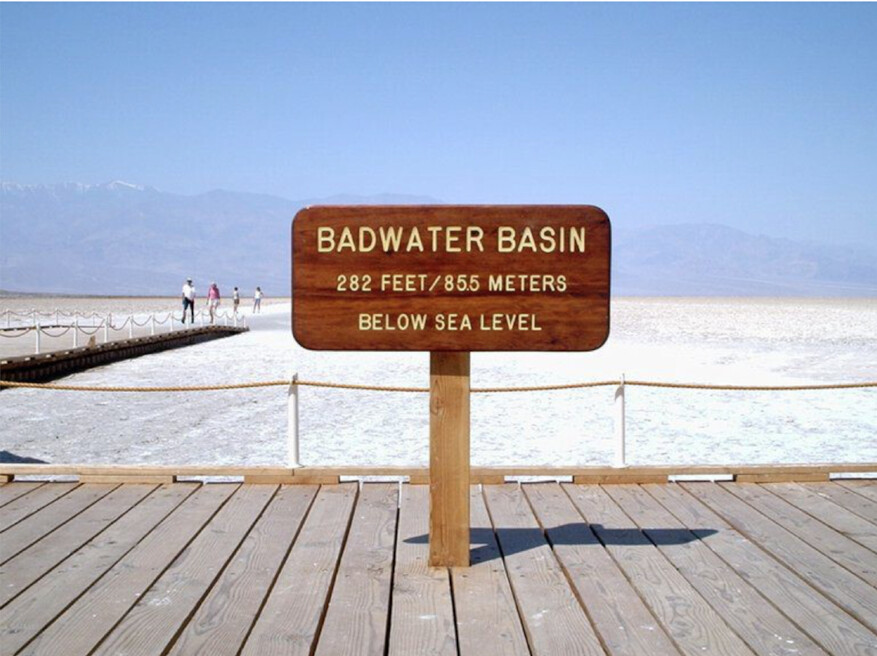
In 2023, Viktoria Brown of Whitby, Ont., was the only Canadian in the field of 100 runners and finished in 30:11:52 securing fourth among the women and claiming 13th place overall. This year’s race saw two Canadians joining the ranks—Frances Picard of Quebec, and Hannah Perry from Canmore, Alta.
Men’s race
Last year’s men’s champion, Simen Holvik of Norway, led for much of the race—in 2023, Holvik was second to U.S. runner Ashley Paulson, who finished first overall and took two hours off her own women’s course record. Burke, who received a late invite to the event in June, steadily closed the gap, eventually overtaking him before the 108-mile timing point. Holvik did not finish the race, leaving Burke unchallenged for the remainder.
Burke completed Badwater for the first time in 2023, when he was sixth overall and fourth among the men. Spanish runner Iván Penalba Lopez claimed the second men’s spot (third overall) in 28:06:34 in his third finish of the race, and Michael Ohler of Germany completed the men’s podium and third man (fourth overall) in 28:24:25. Kostelnick succeeded in finishing his come-back race, crossing the line in 35:28:55; Lewis followed in 36:41:22.
Picard, who was tackling the race for the first time, was still on course at the time of publication.
Top men
Shaun Burke (U.S.) 23:29:00 Iván Penalba Lopez of Alfafar (Spain) 28:06:34 Michael Ohler (Germany) 28:24:25
Women’s race
Caliskaner became the first Norwegian woman to complete the event, finishing second overall. An accomplished ultrarunner, in 2023 52-year-old Calinskaner won both the Berlin Wall Race (100 miles), and the Thames Path 100-miler. She maintained a narrow lead over Micah Morgan of the U.S. early on and added to her lead as the race progressed. Caliskaner finished in 27:36:27, over two hours ahead of Morgan, who finished in 29:11:28, second among the women and fifth overall.
Josephine Weeden of the U.S. rounded out the women’s podium in 33:26:37. Absent from this year’s race was American Ashley Paulson, who won the women’s race for the past two years and took the overall title last year. Alberta’s Perry was still on course at the time of publication but had passed through the 108-mile aid station in 29 hours and 51 minutes.
Top women
Line Caliskaner (Norway) 27:36:27 Micah Morgan (U.S.) 29:11:28 Josephine Weeden (U.S.) 33:26:37
(07/28/2024) ⚡AMPby Running magazine
Are You Drinking Water Wrong? According to Researchers, You Probably Are
Here’s how to hydrate for better performance.Here’s how to hydrate for better performance.Staying hydrated seems simple enough—drink water when you’re thirsty and stop when you feel like you’re done, right? Well, it’s a bit more complicated than that, especially for runners.
That’s because not understanding the complicated equation of race distance and intensity combined with water and electrolyte intake can ruin a long run or race, not to mention have serious health repercussions. Drink too little and your ability to power through your workout suffers; drink too much and you can get sidelined by nausea and frequent pee breaks.
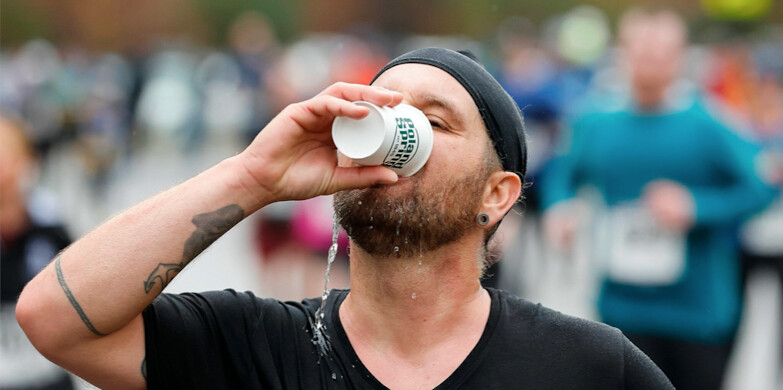
And even though you might first worry about dehydration for those summer runs, researchers found that the newer you are to running and the slower you run, the more likely it is that you will drink too much water while racing. (We’ll talk more about this later.)
To that end, much of the research demonstrates that mastering the art of hydration when you run isn’t as simple as it seems. Keep reading to find out if you drink water the wrong way—and how to drink water right.
6 Ways You Drink Water Wrong and 6 Ways to Drink Water Right
❌ Wrong Way: Gulping water during a race
✅ Right Way: Sip as you run
It’s okay to slow a little to make sure you’re getting in your fluids during a race, but gulping water at each aid station can ultimately slow you down and also lead to an upset stomach.
That’s because drinking too much water too quickly overloads the stomach, causing it to rapidly stretch. This can lead to discomfort and potential nausea, Justin Mullner, M.D., a board-certified primary care sports physician with the Orlando Health Jewett Orthopedic Institute in Florida tells Runner’s World.
Take small sips of water (or electrolyte drink) every 15 to 20 minutes, depending on the temperature and intensity of the run.
Combining a run with too much water is even more likely to cause nausea. That’s because intense exercise directs blood flow away from the stomach and toward the muscles, causing digestion to slow down. “So you put a bunch of water in there and the stomach really can’t handle it effectively and efficiently,” Mullner says.
A better strategy is to take small sips of water (or electrolyte drink) every 15 to 20 minutes, depending on the temperature and intensity of the run. “This approach helps maintain a steady level of hydration and prevents the stomach from becoming overly full,” Meghan Kennihan, a RRCA- and USATF-certified running coach, tells Runner’s World.
❌ Wrong Way: Drinking from a dirty water bottle✅ Right Way: Regularly clean your bottle
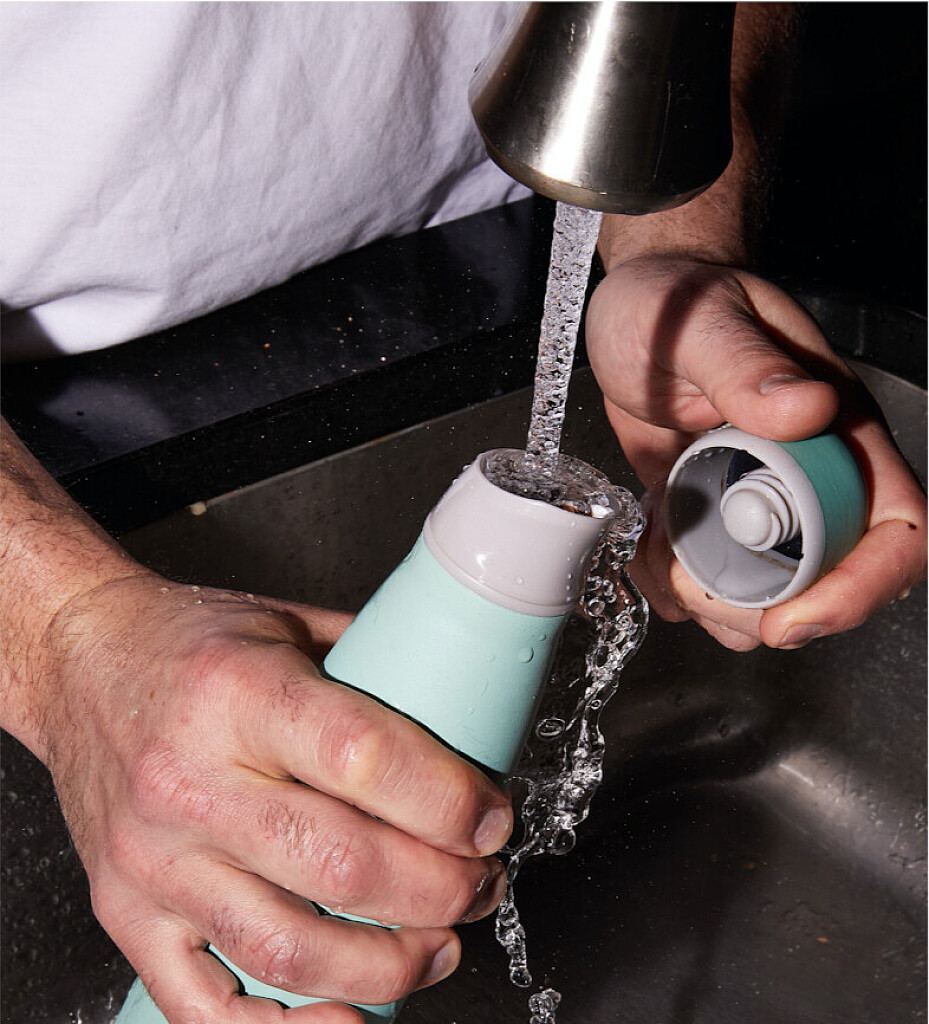
Your trusty water bottle is always there when you need it. Sadly, constant use means you’re probably getting more than water. Unless you regularly clean your water bottle—which means daily according to Mullner—you could be getting a dose of bacteria or even mold.
Every time you put your mouth to the water bottle and use your hands to open and close it, you transfer bacteria that can make its way inside. The moist environment inside your water bottle provides an optimal breeding ground for bacteria and mold, especially if you live in hot, humid areas. If left unchecked, the bacteria and mold can continue growing, potentially causing you to experience symptoms similar to food poisoning (such as stomach pain or cramps, diarrhea, and vomiting), per the Centers for Disease Control and Prevention. People with mold sensitivities can have a flare-up of allergy symptoms.Ideally, you’d wash out your reusable bottle—whether plastic, stainless steel, or glass—with soap and warm water each time, Mullner says. “It’s even more important if you’re using the bottle every single day or drinking beverages other than water,” he says. Mixing electrolyte powders or adding a sports drink to your bottle, for example, means more material for bacteria.Signs your bottle could use a good scrubbing include visible residue, a funny or foul odor, or changes in how things taste, Mullner says.
❌ Wrong Way: Waiting too long to hydrate before a run or race✅ Right Way: Start early
When preparing for a long run or race, many runners forget to hydrate until they’re practically toeing the starting line, “which is a bad idea because it doesn’t give the body enough time to absorb and utilize the fluids,” Kennihan says.
Staying well-hydrated in the days leading up to your long run or race can help you perform well, avoid feeling overly full, and reduce restroom stops. Be especially diligent about drinking water starting the day before a long run or race, and check your urine color to be sure you’re getting enough. “Really dark yellow is a sign that you’re not well-hydrated,” Mullner says. “Ideally, it has a slight tinge of yellow.”
Drink 16 to 20 ounces of water about 2 to 3 hours beforehand and then another 8 to 10 ounces 20 to 30 minutes before running.
Individual fluid needs vary. However, a general guideline for the day of the event is to drink 16 to 20 ounces of water about 2 to 3 hours beforehand and then another 8 to 10 ounces 20 to 30 minutes before running, Kennihan says. You may need to adjust your intake according to your body size, run distance, and outside temperature.
❌ Wrong Way: Drinking too much water on long runs✅ Right Way: Balance electrolyte intake with water
It’s critical to drink enough water during long training runs and races. However, drinking lots of water, and only water, can lead to overhydration, meaning you have too much water in your body.
Hyponatremia is an extreme version of overhydration, and occurs when sodium levels in the blood are lower than recommended, leading to muscle cramps, headaches, nausea and vomiting, low energy, and confusion, per the Cleveland Clinic. Normally, your body keeps your electrolytes in balance by taking the minerals from the foods you eat and filtering the excess through your urine. However, intense exercise causes electrolytes (particularly sodium) to be quickly lost through sweat, and hot, humid temperatures only accelerate this loss, per the American College of Sports Medicine.
It's not just new runners who tend to overhydrate. At the other end of the spectrum, 41 out of 63 finishers at an ultramarathon also finished with mild or severe hyponatremia, according to a 2019 Frontiers in Nutrition study.
Take in electrolytes in addition to water if you’re running for longer than 60 minutes or in hot, humid temperatures. Drinking water without replacing electrolytes dilutes the remaining electrolytes (again, sodium in particular) in your blood. “You can potentially get yourself into trouble with hyponatremia,” Mullner says.
To prevent an electrolyte imbalance, take in electrolytes in addition to water if you’re running for longer than 60 minutes or in hot, humid temperatures. Bring an electrolyte drink, some gels, or another electrolyte supplement.
❌ Wrong Way: Drinking a pure sports drink✅ Right Way: Water it down
Sports drinks offer a convenient delivery system for carbs and electrolytes while running. Still, many runners prefer to water things down.
“Many sports drinks are too concentrated, leading to stomach cramps and nausea. Diluting them can still provide the necessary electrolytes and carbohydrates without overwhelming the stomach,” Kennihan notes.
The optimal ratio of sports drink to water depends on your preferences and the makeup of your drink. Mullner suggests diluting your sports drink to the point where it’s most palatable for you.
Diluting sports drinks can still provide the necessary electrolytes and carbohydrates without overwhelming the stomach.
The exception: Don’t dilute a sports drink that contains carbohydrates if you’re using it for energy purposes. “Some sports drinks have carbs in there to help extend the amount of time you can perform, and if you’re trying to absorb carbs better, you would have it with some electrolytes,” Mullner says. Adding water can cut down on how many carbs you get per sip, limiting performance benefits.❌ Wrong Way: You don‘t know about your med’s side effects
✅ Right Way: You read labels and talk to your pharmacist
Some over-the-counter and prescription medications can affect an athlete’s hydration, says Kennihan. NSAIDs, such as ibuprofen and aspirin, can reduce blood flow to the kidneys, which can impair their ability to conserve water and electrolytes, potentially leading to dehydration, especially during prolonged physical activity like running.
Similarly, diuretics, which are prescribed for conditions such as hypertension and edema, increase urine production and promote the excretion of water and electrolytes from the body. Increased urine output can lead to a significant loss of fluids and electrolytes, making it easier for runners to become dehydrated, particularly in hot and humid conditions or during long-distance runs.
Likewise, antihistamines can reduce saliva production and increase the risk of dry mouth and dehydration, while laxatives can cause increased bowel movements and fluid loss.Lastly, stimulant medications, such as those used for attention deficit hyperactivity disorder (ADHD), can increase sweating and fluid loss, potentially leading to dehydration if fluid intake is not adequately maintained.
Bottom line: As a runner, remember that hydration is as much a part of your performance as actual time on your feet.
The authors of a 2019 article published in the International Journal of Sport Nutrition and Exercise Metabolism recommended that runners develop a “personalized and practiced race plan” to optimize their fluid and carbohydrate intake based not only on their distance and intensity, but also taking into account their body composition, as well as the weather and other race conditions, such as refueling stations, at each event.
(07/28/2024) ⚡AMP
Why Ultrarunning GOAT Courtney Dauwalter Says Loops—Not Out-and-Backs—Are the Superior Route
We polled Dauwalter on some of running’s most polarizing questions. Take the quiz to see how you stack up.
In 2023, Courtney Dauwalter had one of the most legendary years in trail-running history, becoming the first person to win the Triple Crown of the 100-mile races—Western States, Hardrock, and UTMB—in a single season. This year, she’s showed no signs of slowing down, repeating as Hardrock champion and improving on her course record by over two minutes.
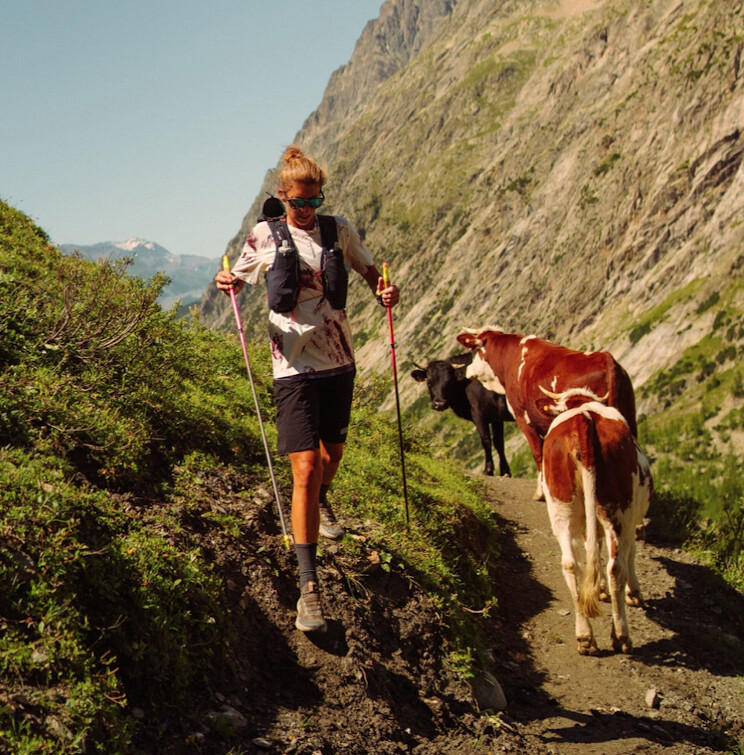

Courtney has a lot to say: “Comfort is key! I prefer [shorts with] long inseams because I am most comfortable in them. We should all wear the clothes that make us feel our best when we're out trying hard things.”
On the type of course: "I love any type of route, really, but loops definitely feel like big adventures. Not knowing what’s around each corner or what view you might be rewarded with is exciting.”
Race plan; “Early mornings feel so simple and peaceful. I love to drink my coffee and watch the sun rise while I plan out my day.
Courtney Explains: “Staying in the moment, focusing on taking the next step, and repeating a positive mantra are things I try to do during the toughest moments of any run.”
(07/27/2024) ⚡AMPby Runner’World

Here’s a new way to keep warm-weather GI distress at bay
You may be able to toss your antacids and emergency Imodium stash—scientists are excited about a new study highlighting the gut-protecting powers of blackcurrant extract, and it could be the latest go-to remedy for the summer GI distress some runners experience. Relief for the dreaded condition, sometimes dubbed “runner’s trots,” might now be as simple as popping a berry supplement, as reported by British media outlet Wales Online.
Berry good news
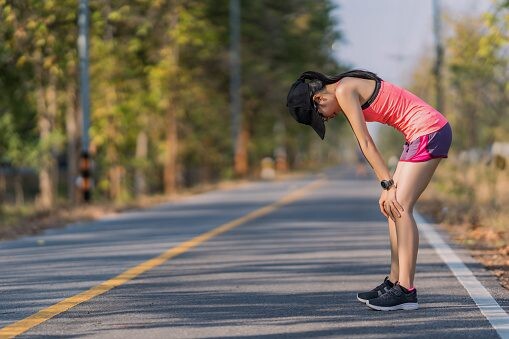
Researchers found that more than two-thirds of recreational runners, unaccustomed to running in hot weather, experienced reduced symptoms after taking blackcurrant extract. Mark Willems, a professor in exercise physiology at the University of Chichester who has published more than 40 New Zealand blackcurrant extract studies, noted the study’s significance: “It is impressive that the 92 per cent of participants who displayed total GI symptoms were reduced to 25 per cent with blackcurrant. This is really meaningful.”
What exactly are runner’s trots?

For the uninitiated, runner’s trots refers to the gastrointestinal distress runners face in high temperatures, leading to nausea, diarrhea and other uncomfortable symptoms. Exercising in the heat redirects blood flow away from the digestive system to help keep your body cool, which can create havoc in your gastrointestinal tract. Current prevention methods, such as complex heat acclimation training, are often impractical for casual runners.
The research
For this study, runners took 600 mg of blackcurrant extract (the brand CurraNZ was used in this study) daily for seven days before hitting the treadmill in sweltering 34 C conditions. The polyphenol-rich blackcurrant supplement was shown to reduce heat-induced cell damage and “leaky gut” by up to 40 per cent. Not only did the extract alleviate gut distress, but it also proved safe, with no adverse effects, on core temperature or thermoregulation.
Matthew Kuennen, an associate professor at High Point University, N.C., praised its efficacy: “I am impressed with blackcurrant’s ability to reduce markers of gut leak and gastrointestinal barrier function during prolonged endurance exercise under hot/dry conditions,” he said. Kuennen recommends blackcurrant supplementation as a potentially meaningful alternative when heat training is not an option.
The takeaway
Blackcurrant extract may be a game-changer for runners battling heat-induced GI issues. With its ability to provide quick relief and enhance performance, it may be worth considering adding this supplement to your pre-race routine. Stephanie Flippin, a pro ultrarunner, coach and physician who works with athletes and uses blackcurrant extract in her own training, says she is excited about the findings: “There isn’t a runner who hasn’t experienced GI distress,” she explains. “With current strategies limited to heat training itself, any mitigation and protective measure is highly beneficial, and New Zealand blackcurrant extract offers an exciting new supplement for runners.”
“The take-away message is that if you are customarily experiencing mild GI symptoms from running in the heat, they are likely to be resolved by supplementing with New Zealand blackcurrant extract,” Willems said.
(07/25/2024) ⚡AMPby Keeley Milne

Hardrock 100 Denies Zach Miller’s Attempt to Race After Appendectomy
After recovering quickly from the emergency surgery on July 5, Miller was hopeful to start the 100-mile race through Colorado's San Juan MountainsZach Miller had been looking forward to running the Hardrock Hundred Mile Endurance Run in southwestern Colorado for years.
The 35-year-old runner sponsored by The North Face received entry into the 2024 event via one of race director Dale Garland’s six personal picks, and with a solid regimen of training under his belt, Miller appeared to be one of the favorites for this year’s event on July 12-13. But on July 5, he woke up in Silverton, Colorado, with considerable abdominal pain. Doctors in Durango, Colorado, initially thought he might have been suffering from kidney stones—the pain was consistent to a 25-hour episode he said he suffered in mid-June—but a few hours later, he had an emergency appendectomy via a laparoscopic surgical procedure.
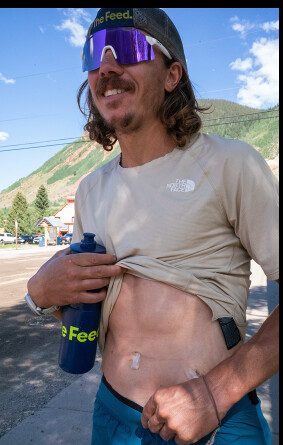
Miller’s appendix didn’t burst, but doctors removed it because they believed it was imminent. But soon after the procedure, he said he started thinking about the chance to be on the Hardrock starting line. He said he was walking around the hospital later in the evening after the procedure, and the next day, after he was released from the hospital, he walked about 3 miles in Durango. The following day, he rode his gravel bike in Silverton without any pain, and the the day after that—three days after the surgery—he was back running the trails around Silverton with mild post-surgical discomfort.
By Wednesday of this week, after running 8 miles and 6 miles on back-to-back days, Miller said he had hoped to start the 100.5-mile event and received verbal consent from his doctor. By Thursday morning, that consent came in written form, which he then submitted to Hardrock officials.
Miller said he had consulted with his doctor, his girlfriend, Jess, and several other people close to him and decided he wanted to continue with his intent to run. He said he didn’t feel any pain running this week, only some slight discomfort from the suture closures at the three point-of-entry holes in his abdomen that provided access for the laparoscopic procedure.
However, the Hardrock board of directors met with its medical advisors on Thursday and decided Miller would be ineligible to start the event. (Hardrock officials did not respond to RUN’s request for an interview or statement about the situation.)
“The recovery’s been really smooth, every day’s been better,” Miller said Thursday afternoon. “I ran the past four days and biked the other, and I felt surprisingly good. Honestly, I felt like I could go out there and give it a good hard go. Would I have? I don’t know, but I felt like there was a shot.”Miller said he understands the liability and safety concerns—both for his health and for the heightened potential of on-course evacuation if a problem did arise—and respects Hardrock’s decision.
“I think if they gave me the green light, it was pretty much decided I was going to go for it,” said Miller, who finished second at the Ultra-Trail du Mont-Blanc in Chamonix, France, last summer. “But we didn’t get it, and that’s just the way it is, so I’ll just move on from here. There’s definitely some disappointment, but it was a difficult and unexpected situation, and nobody wanted to be in that situation and making those decisions. As much as it hurts, it’s understandable, and it’s the responsible thing to do.”
In the months leading up to Hardrock, Miller had been running 140-150 miles per week between 40,000 and 56,000 vertical feet of gain training in Bend, Oregon, Manitou Springs, Colorado, and eventually Silverton. He said he hopes to maintain his fitness and then pivot to another event or a potential fastest known time attempt in the near future, but said on Thursday he hadn’t yet thought about that in detail.
On Thursday evening, after learning he wasn’t going to be able to run, he went on a two-hour run near Silverton that covered 12 miles with 1,200 feet of vertical gain.
“There are still some good races left for the year and there’s always plenty of projects and FKTs to consider so the fitness I’ve enjoyed from the training doesn’t have to be wasted,” he says. “It’s still there and I can hopefully go use it somewhere else.”
(07/20/2024) ⚡AMP
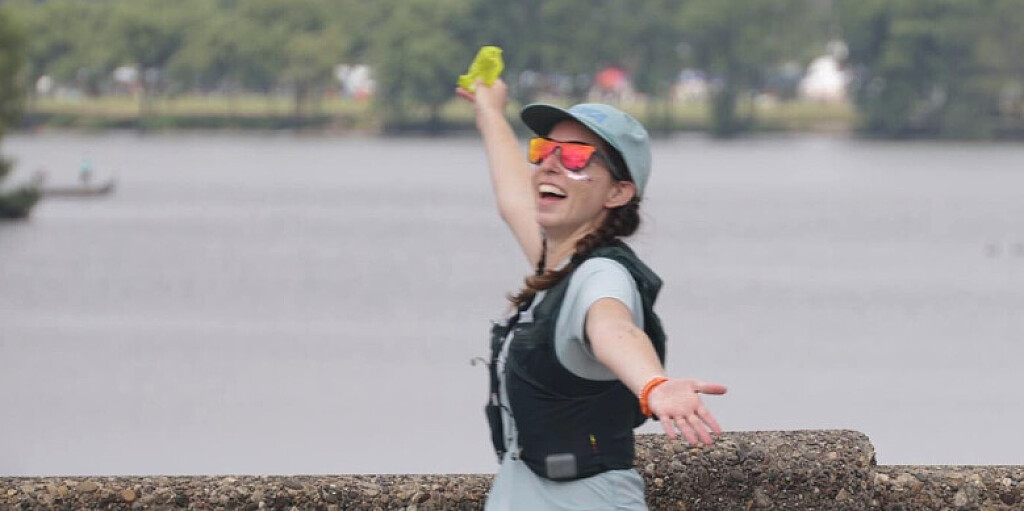
This Ultramarathoner Runs 100s of Miles to Build Inner Strength and Confidence
“Through ultrarunning, I’ve learned how tenacious and resilient I am.”
Name: Rachel Bambrick Age: 31 Hometown: Philadelphia Occupation: Occupational therapist, ultrarunning coach, founder of Women in Ultrarunning Time Running: 9 years Reason for Running: Running, and ultrarunning in particular, teaches me something new about myself every time I’m out on the trail.

When I moved to Philadelphia in 2016, I wanted to find an active community to meet new people and continue to challenge myself. I laced up my shoes, and started running with run clubs in the city.
In 2018, I watched a friend take part in the Run Across Haiti, a 200-mile run in eight days, organized as a fundraiser for WORK, a nonprofit which financially empowers families through employment.
I knew it would be difficult to push myself through the distance. I had never run an ultramarathon before, but I was determined to see how far I could go. I decided to take the leap and give ultrarunning a try through a worthwhile cause in Haiti.
Inspired by my friend, I completed Run Across Haiti in 2019, raising money for WORK. The adventure made me reflect on what drew me to ultra distances. While fighting sore muscles, scorching heat, and self doubt, I surprised myself that I still continued and succeeded. This journey of self-discovery empowered me to explore my limits.
I kept running ultramarathons following Run Across Haiti, and eventually set my sights on something longer: the epic Cocodona 250-mile race, which leads from Black Canyon City to Flagstaff, Arizona through the rugged and exposed trails of the backcountry.
In May 2023, I set off from Black Canyon City. For more than 119 hours, I wondered if I was strong enough to finish, and if I would make the cut-off time. When I could actually sleep, it was just for an hour or two at aid stations, or curled up in the dirt on the side of the trail.
But I kept moving, and telling myself “I am exactly where I need to be” and “It will get better.” I cried and smiled when I saw the finish line in Flagstaff. I was proud of how far I had come and of my inner strength in those many challenging moments.
I’ve been lucky to reach many starting lines these past few years and meet amazing people. But I felt like something was missing. I wanted to create a space for women to share experiences, knowledge, and support in ultrarunning.
So, I founded Women in Ultrarunning in January 2024 as a four-part program providing women in the Philadelphia area with a space to learn about ultrarunning. The group is a mix of seasoned ultramarathon runners and newer ultra runners who are looking to sign up to their first ultra race.
The first events began at local trailheads with an introduction to ultra running, mental strategy, nutrition, and how to navigate technical trails.
After discussions, we set off through the trails for a 90-minute run, maintaining an average 13-minute-per-mile pace to stay together. Our goal is to foster community and connection, not break speed records. We’re out there to enjoy the company, stay together, and learn from one another. A time-based group run allows us to be pace inclusive and welcome those who may be out on their first trail run.
Women in Ultrarunning is now a community across the United States, and an online community on Heylo to celebrate each other’s successes, help find training partners for runners, and chat about all things ultrarunning, like gear, nutrition, and strength and conditioning. It has been surreal to see an idea that lived in my head grow into fruition and take shape.
Through ultrarunning, I’ve learned how tenacious and resilient I am. I’ve also found a supportive community that I’m proud to be a part of. Because of the Women in Ultrarunning community, I’ve experienced a connection to ultrarunning in a way I never thought was possible.
I hope to be here for years to come with glitter on my cheeks and a smile on my face to continue to cheer on women as they achieve their toughest goals.
These three tips have made my running journey a success:
1. Be consistent and patient with nutrition on the run
Just like training your legs for races, you need to train your stomach for races. Don’t be disheartened if you have a string of discouraging runs. The process can be very rocky, and you may need to try a few brands before you find what works for you! It took me years to be comfortable with fueling on long runs.
2. Remember that trail pace is different than road pace
Getting used to running on rocky terrain, sand, or dirt takes time and practice. While it’s easy to get swept up in paces on the roads, try to run on trails based on effort. Some miles will be slow going! What matters is you are still moving forward.
3. Give yourself grace
Remember in running you’ll have low moments, but what is important is how you pull yourself out of the negativity. Feel the struggle and remind yourself it’s okay to feel down, then put yourself back into a mindset that allows you to continue positively. If you fall or fail, give yourself grace to get back up and continue on.
Rachel’s Must Have Gear:
→ WildSense Run Glitter: My approach to running and ultras is all about adding softness and sparkle wherever I can. Wild Sense’s glitter is all natural and biodegradable so I can feel good about the sparkly little trail I may leave behind.
→ HOKA Challengers: Living in the city of Philadelphia, being a trail/ultrarunner can be tough sometimes! Often my runs have one objective: How can I get to the trails? The Challengers are perfect because they’re designed as all-terrain shoes so I can easily take them from city streets to the trails of the Wissahickon.
→ Zensah Seamless Run Bra: As an ultrarunner, chafing can be a huge issue. Especially with sports bras. This bra from Zensah has been my go-to for all my long efforts and races for years. I used these bras for the entirety of the Cocodona 250 in 2023 and walked away without any bra hotspots.
(07/14/2024) ⚡AMPby Runner’s World
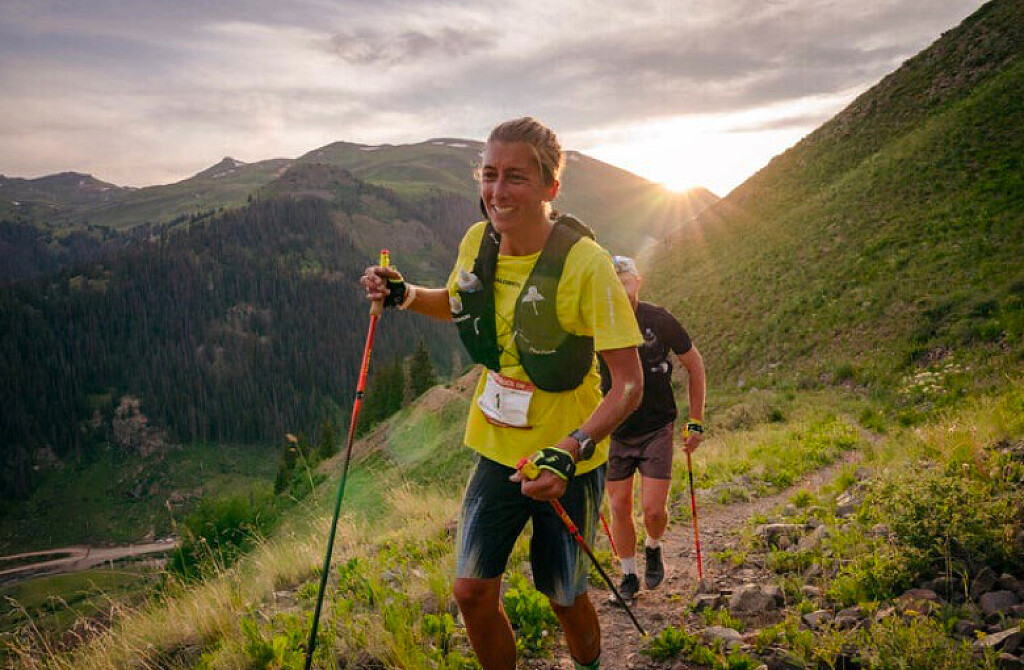
Ludovic Pommeret Wins Hardrock 100 in Course-Record Time Courtney Dauwalter is on course-record pace, trying to win the race for a third consecutive year
This is an ongoing story that will continue to be updated as more runners reach the finish line in Silverton, Colorado.]
Maybe you forgot that Ludovic Pommeret was the 2016 Ultra-Trail du Mont-Blanc champion. Or that he was the fifth-place finisher in Chamonix, France, just last year. Or maybe you thought the 49-year-old Frenchman was past his prime. Either way, he reminded us all he’s at the top of not only his game, but the game at the 2024 Hardrock 100.
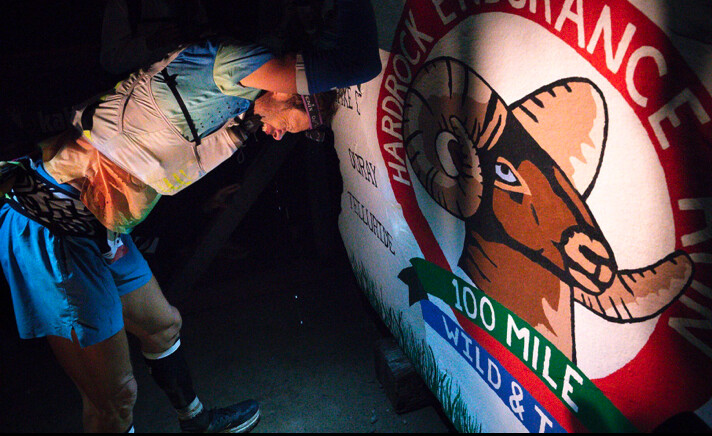
The Hoka-sponsored runner from Prevessin, France, took the lead less than a third of the way into the rugged 100.5-mile clockwise-edition of the course after separating from countryman François D’Haene, the 2021 Hardrock champion and 2022 runner-up, and never looked back. Pommeret progressively chipped away at the course record splits—a course record, mind you, set by none other than Kilian Jornet in 2022—to win this year’s event in 21:33:12, the fastest time in the race’s 33-year history. Jornet set the previous overall course record of 21:36:24, also in this clockwise direction in 2022.
(Pommeret kissed the rock in to complete the course in 21:33:07 at 4:33 A.M. local time, but race officials credited him with the slightly slower official time.)
“It was my dream (to win it),” Pommert told a small collection of fans and media after winning the race at 3:33 A.M. local time. “I was just asking ‘when will there be a nightmare?’ But finally, there was no nightmare. Thanks to my crew. They were amazing. And thanks to all of you. This race is, uh, no word, just so cool and wild and tough.”
On Friday, July 12, 146 lucky runners embarked on the 2024 Hardrock 100. Run in the clockwise direction this year, it was the “easy” way for the course with a staggering 33,000 feet of climbing and an average elevation over 11,000 feet thanks to the steep climbs and more tempered, runnable descents.
Combined with relatively cooperative weather (hot during the day on Friday, but no storms) and a star-studded front of the pack headlined by Courtney Dauwalter and D’Haene, the tight-knit Hardrock 100 community was on course record watch.
And the event delivered—along with a whole lot more.
On the men’s side, the front of the race took a blow before the gun even went off when Zach Miller, last year’s Ultra-Trail du Mont Blanc runner-up, was denied entry after undergoing an emergency appendectomy the weekend before.
Despite the heartbreak of being forced to wait another year to participate in this hallowed event, Miller was very much a presence in the race, most notably for slinging fastnachts (Amish donuts) from his van in Ouray for race supporters and fans.
Such is the spirit of this event, deemed equally as much a run as a race.
The men’s race was further upended when D’Haene, in tears surrounded by his wife, three children, and friends, dropped from the race at the remote Animas Forks aid station (mile 58). An illness from two weeks before proved insurmountable for the challenge ahead. That blew the door wide open for the hard-charging leaders ahead.
Pommeret had built a 45-minute lead over Jason Schlarb, an American runner who lives locally in Durango, and Swiss runner Diego Pazosby, the time he had left the 43.9-mile Ouray aid station amid 85-degree temperatures. His split climbing up and over 12,800-foot Engineer Pass (mile 51.8) extended his lead to more than an hour over Schlarb and nearly 90-minutes at the Animas Forks aid station.
“I thought it was great. To run off the front like he did, and then just hold that all day and get the overall course record is pretty awesome,” Miller said. “When Killian did it, two years ago, it was a, it was a track race between him, Dakota, and François, after they got some separation from Dakota, it was Kilian and and François, all the way to Cunningham Gulch (the mile 91 aid station) and then Kilian just torched it on the way in. So yeah, it was super, super impressive for Ludo to do that. That’s a very impressive effort.”
The sleepy historic mining town of Silverton, Colorado was unusually hectic at 6 A.M. on Friday. In the blue hour before the sun poked over the San Juan Mountains looming above, 146 runners toed the start line of the Hardrock 100, marked by flags from the countries represented by competitors on either side of the dirt road.
With the sound of the gun, runners jogged off the start line—their caution a tacit sign of respect for the monumental challenge of what was to come. As the runners passed through town to the singletrack wending its way up to Miner’s Shrine, group of men headlined by D’Haene, Ludovic Pommeret, Diego Pazos, and Jason Schlarb quickly took command of the front, the bright yellow t-shirt of Courtney Dauwalter was easy to spot just behind, along with Katharina Hartmuth and Camille Bruyas.
If they weren’t awake already, runners certainly were after crossing the ice-cold Mineral Creek two miles into their journey before starting the grunt up to Putnam Basin. At the top of a sunny, grassy Putnam Ridge (mile 7) 1:34 into the race, the lead pack of men remained, while Dauwalter had made a statement solo just three minutes back from the men and four minutes up on Hartmuth.
Dauwalter was smiling and chatty when she reached the KT aid station at mile 11.5, in 2:24 elapsed. By Chapman (mile 18.4), four hours in and 10 minutes under her own course record pace, she was pouring water on her head under the blazing sun. Things were heating up—in more ways than one.
When Pommeret galloped into Telluride (mile 27.7) after 5:37 of elapsed time in the lead, he was right on Jornet’s course record pace. One minute, some fluids and restocking later, and he was gone.
But wait, it was still a close race! D’Haene charged into Telluride just two minutes later and hardly stopped before continuing on through downtown before busting out the poles and starting the steep, steep 5,000-foot climb up Virginius Pass to the iconic Kroger’s Canteen aid station nestled into a notch of rock at the top at 13,000 feet.
Not to be outdone, the women’s race proved equally thrilling coming into Telluride. Bruyas bridged the gap up to Dauwalter, and the two ran into town together in 6:25 elapsed. Both took three minutes in the aid station, although that must have been enough social time for Dauwalter, as she pulled ahead marching up the climb, poles out and head down. A bouncy Bruyas alternated between hiking and jogging just behind.
But time again again, Dauwalter’s long, powerful stride simply proved unparalleled. By Kroger’s (mile 32.7) Dauwalter had reestablished her lead by five minutes over Bruyas and 17 ahead of Hartmuth in third. She’d built that gap to 10 minutes in Ouray at mile 43.9, but she left that aid station in less than two minutes with a stern, serious look on her face. But as she crested Engineer Pass at the golden hour, wildflowers blanketing the vibrant green hillsides basking in the setting sun, she enjoyed a 30-minute lead in the women’s race and was knocking at the door of the men’s podium.
While Dauwalter forged ahead with her unforgiving campaign for a third straight win, the men’s race started to rumble. Like Dauwalter, Pommeret continued to blaze the lead looking strong as he trotted down Engineer to the Animas Forks aid station at mile 57.9 in 11:39 elapsed. He hardly stopped before continuing on to Handies Peak, which at 14,058 feet marks the high point of the race. He had blown the race wide open.
An hour and 15 minutes later, Schlarb, looking a bit more beleaguered, ran into Animas Forks with his pacer, where he sat down and changed his shirt while receiving a pep talk from his partner and son. But he made quick work of the time off feet nonetheless, and three minutes later he was back at it, seven minutes before Pazos appeared.
While D’Haene arrived just 10 minutes later, he did so in tears, holding the hand of his youngest son. After a considerable amount of time sitting in the aid station, surrounded by his family and crew, he called it quits. The lingering effects of an illness from just 10 days before proved too much to overcome as the hardest miles of the race loomed ahead.
While D’Haene pondered his fate, Dauwalter blitzed into Animas Forks in 13:26 with that same look of determination, 16 minutes ahead of course-record pace. She briefly stopped to prepare for the impending night, picking up her good friend and pacer Mike Ambrose to leave the aid station in fourth overall. Bruyas maintained her second place position 30 minutes back, with Hartmuth in third about 20 minutes behind her.
Pommeret continued charging ahead solo, increasing over Schlarb and Pazzos by more than two hours late in the race. When Pommeret passed through the 80.8-mile Pole Creek aid station at 10:44 P.M., it shocked the small group of race officials, media and fans watching the online tracker from the race headquarters in Silverton. Based on that split, it was originally calculated that Pommert could arrive as early as 2:34 A.M.—which would have been a finishing time of 20:34—but he didn’t run the final 20 miles quite as fast as Jornet did in 2022.
Behind him Pazos caught Schlarb to take over second place before Pole Creek and increased the gap to four minutes by the Cunningham aid station (mile 91.2).
Pommeret, who develops training software for air traffic controls in Geneva, Switzerland, didn’t break into ultra-trail running until 2009 when he was 34 years old. He was third in UTMB that year—behind a 20-year-old Jornet, who won for the second straight year—the first of seven top-five finishes in the marquee race in Chamonix. (He was third in 2017 and 2019 and fourth in 2021 and 2023.) He also won the 90-mile TDS race during UTMB week in 2022, and the 170-kilometer Diagonale des Fous race (Grand Raid La Reunion) on Réunion Island in the Indian Ocean in 2021 and placed sixth in his first attempt at the Western States 100 in California in 2022.
Last year, Pommeret placed 13th overall in the Western States 100 and nine weeks later finished fifth at UTMB behind Jim Walmsley, Miller, Germain Grangier, and Mathieu Blanchard.
“We know Ludo is a beast, but to be a beast for so long, for so long is so impressive,” Miller said. “He’s 49, which by all means is a capable age in this endurance world. But I think anytime someone 49 does something like that, it’s gonna turn some heads because that would’ve been a really good performance for anyone. To have the track record he’s had—winning Diagonale des Fous, UTMB and Hardrock, that’s pretty impressive.”
Courtney’s Final
By the time Dauwalter was pushing her way up Handies Peak, she had a smile on her face and engaged in playful conversation with media and spectators on the course. She had good reason to smile: she was feeling good and she had increased her 10-minute lead at Ouray to more than 60 minutes. Dauwalter went through the Burrows aid station (mile 67.9) in less than a minute, while Bruyas came in an hour later and spent four minutes refueling before heading out again.
Three hours after Pommeret had passed through the Pole Creek aid station (mile 80.8), Dauwalter arrived at 1:54 A.M., still in fourth place overall about 50 minutes behind Pazos and Schlarb. She took a little more time there, but was back on her feet in four minutes and running strong again and still on record pace. Bruyas walked in to Pole Creek at 3:08 A.M. in sixth overall, but the gap behind Dauwalter continued to widen.
Dauwalter was in and out of the Maggie aid station (mile 85.1) in two minutes and blazed through the Cunningham aid station (mile 91.2) even faster. The race seemed to be in hand at that point with Bruyas more than 90 minutes behind (in fact, someone updated Wikipedia and declared her the winner not long after Pommeret finished), it was just a matter of how fast she could finish.
(07/14/2024) ⚡AMP
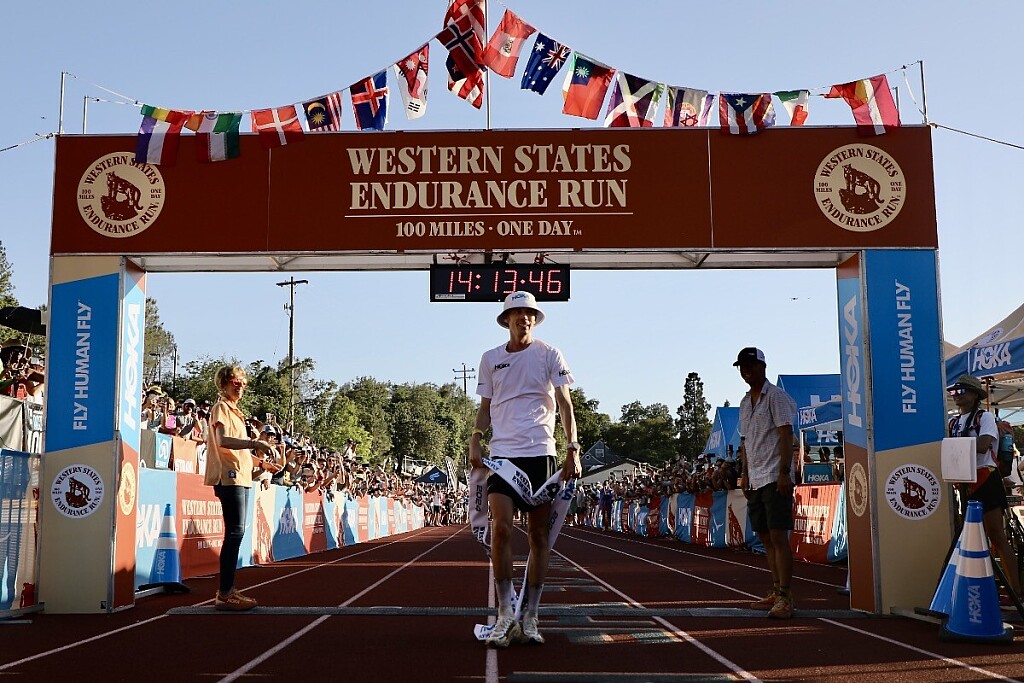
Western States 100: Walmsley Wins a Fourth Time While Schide Rocks the Women’s Field
For hours, Katie Schide (pre-race and post-race interviews) chased ghosts. For hours, Jim Walmsley (pre-race and post-race interviews) and Rod Farvard (post-race interview) chased each other. And in the end, after 100 courageous, gutsy miles at one of the world’s most iconic ultramarathons, it was Schide and Walmsley who won a fast, dramatic 2024 Western States 100.
Schide, an American who lives in France, was on pace to break the course record until late in the race, while Americans Walmsley and Farvard battled throughout most of the second half of the race, alternating the lead as late as mile 85.
Schide’s winning time was 15:46:57, just over 17 minutes behind Courtney Dauwalter’s 2023 course record, almost an hour faster than her own time last year, and the second fastest women’s time ever. Walmsley, meanwhile, won his fourth Western States in 14:13:45, the second fastest time ever — only behind his own record of 14:09:28 that he set in 2019.
Second and third in the men’s race came down to an epic sprint finish on the track between Farvard and Hayden Hawks (pre-race and post-race interviews), who finished in 14:24:15 and 14:24:31, respectively.
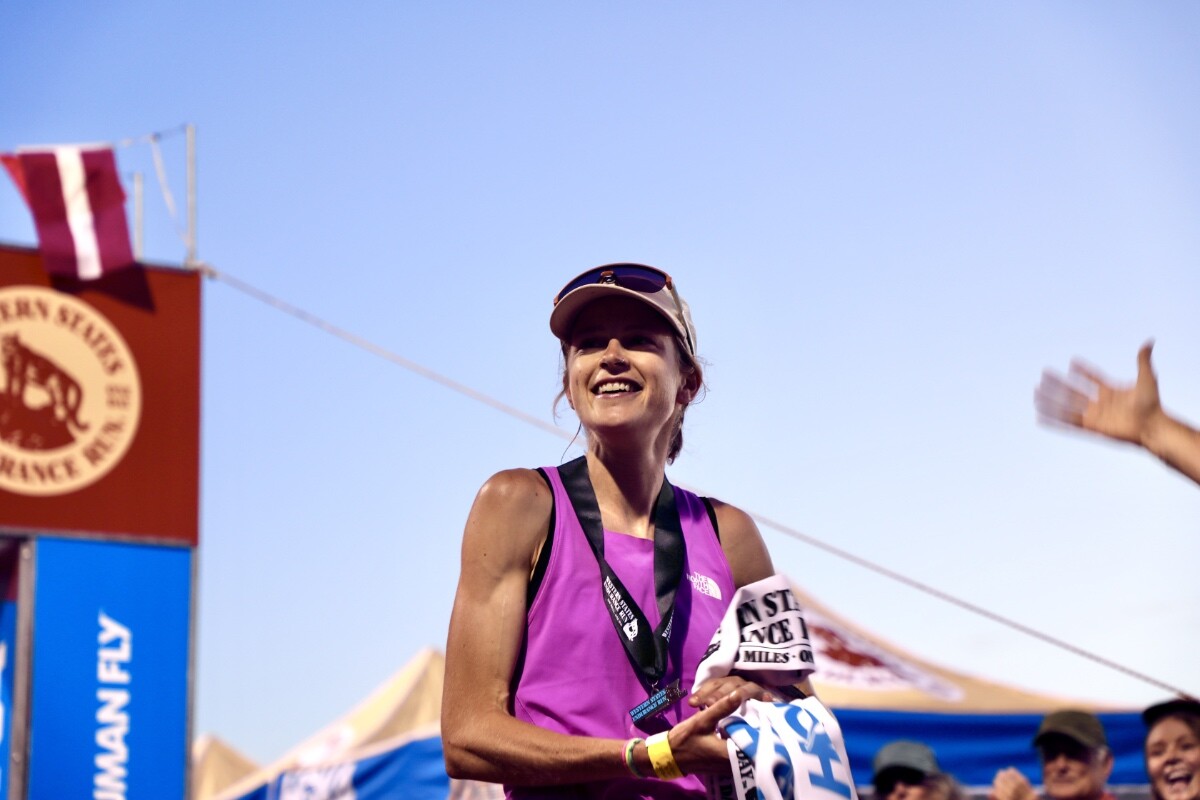
In the women’s race for the podium, Fu-Zhao Xiang (pre-race and post-race interviews) finished second in 16:20:03, and Eszter Csillag (pre-race and post-race interviews) took third for the second time in a row, in 16:42:17.
Both races featured one of the deepest and most competitive fields in race history, with the men’s top five all coming in faster than last year’s winning time, and the women’s top 10 finishing just under 40 minutes faster than last year’s incredibly competitive top 10.
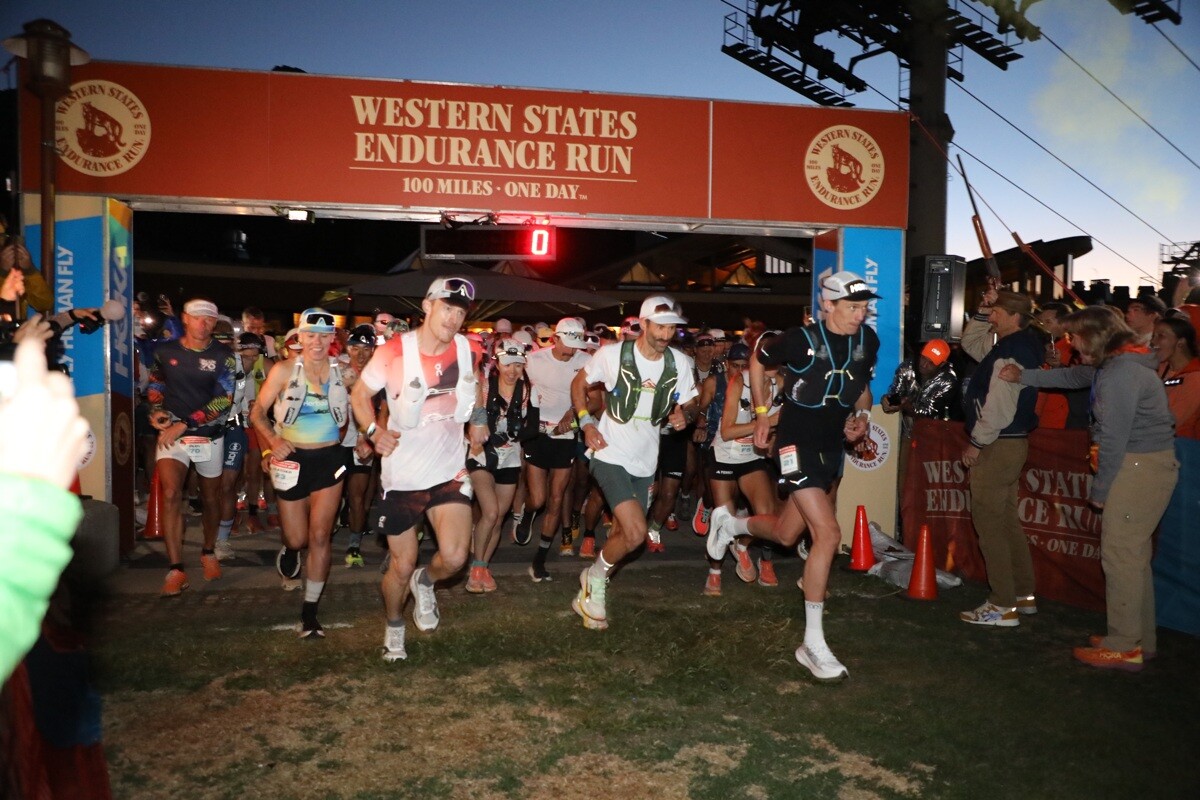
At 5 a.m. on Saturday, June 29, they were all among the 375 runners who began the historic route from Olympic Valley to Auburn, California, traversing 100.2 miles of trail with 18,000 feet of elevation gain and 22,000 feet of loss. After last year’s cool temperatures, the weather at this year’s race was a bit warmer, albeit with a notable lack of snow in the high country. The high temperature in Auburn was in the low 90s Fahrenheit.
A special thanks to HOKA for making our coverage of the Western States 100 possible!
2024 Western States 100 Men’s Race
In his return to the race that propelled him to the heights of global trail running and his first ultra on American soil in three years, Jim Walmsley (pre-race interview) demonstrated why he is, once again, the king of Western States. Before the race, Walmsley exuded a calmness that perhaps eluded him during his first attempts, when he attacked it with an obsessive intensity that led him to famously take a wrong turn and then dropping out in back-to-back years.
“We’ll just roll with what plays out and just kind of see what happens in the race,” he said in his pre-race interview. There’s a marked difference when compared to his remarks from his interview before the 2016 race.
What happened in the race was this: In his fourth Western States, Rod Farvard (post-race interview) had the race of his life to push Walmsley like he’d never been pushed before in his long history with the event.
Farvard — a 28-year-old from Mammoth Lakes, California, who has improved his finish each year at the race, from a DNF in 2021 to 41st place in 2022 to 11th place last year — put himself in a strong position from the start, leading a large pack of runners that included Walmsley at the top of the Escarpment, the 2,500-foot climb in the first four miles of the race. For the next 45-plus miles, Farvard remained in the top 10, part of a chase pack of American Hayden Hawks (pre-race and post-race interviews), Kiwi Dan Jones (pre-race interview), and Chinese runner Guo-Min Deng, among others.
At the Robinson Flat aid station at mile 30 — the symbolic end of the runners’ time in the high country, which features an average elevation of around 7,000 feet — Walmsley, who started the race conspicuously wearing all black, came through in 4:24 looking fast and smooth, now wearing an ice-soaked white shirt. Jones, the 2024 Tarawera 102k champion and fifth-place finisher in his Western States debut last year, and Hawks, who set the course record at February’s Black Canyons 100k after dropping out of last year’s Western States, followed about 90 seconds later. The two runners, frequent training partners, ran together frequently throughout the day, with Hawks often foregoing ice at aid stations.
After the trio of Walmsley, Hawks, and Jones went through Last Chance at mile 43 together, Walmsley put nearly two minutes on them up the climb to Devil’s Thumb. “I was with everybody at the bottom,” he said, according to the race’s official livestream.
About halfway through, at mile 49.5, the order remained the same: Walmsley in the lead with an elapsed time of 6:58, followed by Jones one minute back, Hawks two minutes back, and Farvard just over two and a half minutes back. The rest of the top 10 were last year’s 17th-place finisher Dakota Jones; 2024 Transvulcania Ultramarathon champion Jon Albon (pre-race interview), who is from the U.K. but lives in Norway; 2023 fourth-place finisher Jia-Sheng Shen (China) (pre-race interview); 2023 Canyons 100k champion Cole Watson; Western States specialist Tyler Green (pre-race interview); and Jupiter Carera (Mexico).
Then began a thrilling, chaotic second half of the race — featuring a gripping back-and-forth between Walmsley and Farvard, a wildfire near the course, a two-man river crossing, and a sprint finish on the track.
It all started when Walmsley entered Michigan Bluff at mile 55, again looking calm and in control, changing shirts and getting doused with ice. Farvard came in just behind him and left the aid station first, leading the race for the first time since the first climb up the Escarpment. The same routine took place seven miles later at Foresthill: Walmsley entering first, Farvard leaving first.
For the next 18 miles, the two runners alternated in the lead. By mile 78, they were so close that they were crossing the American River at the same time. Their battle underscored the overall depth of the field at this year’s race: At mile 80, the top five men were within 16 minutes of one another.
Around then, the 15-acre Creek Fire, which started not long before, was visible from the final quarter of the course and crews were temporarily not permitted to travel to the Green Gate aid station at mile 80 because the route to it passed close to the fire. Eventually, a reroute was established for crews to get to Green Gate and, later, after the wildfire was controlled, the regular route was reopened.
At Green Gate, Farvard came through in the lead, with Walmsley four minutes back and looking like he was hurting. It was then, perhaps, that the thought entered people’s minds: Could Farvard really take down the champ?
But Jim Walmsley is Jim Walmsley for a reason, and he again proved why he is among the world’s best. Against the ropes, facing one of his first real challenges in the race that shaped him, he delivered, entering the next aid station, Auburn Lake Trails at mile 85, more than a minute earlier than Farvard. He had made up five minutes in five miles.
Walmsley never trailed again, increasing his lead to 11 minutes by the Pointed Rocks aid station at mile 94 and then picking up his crew, including his wife, Jess Brazeau, at Robie Point to run the final mile with him. He entered the track at Placer High School to loud cheers, his loping stride still looking smooth, stopping a few steps short of the tape to wave to the crowd and raise his arms in triumph. He had done it again.
Behind him, Farvard was fading but determined to cap an extraordinary race with a second-place finish. Hawks, who had made up five minutes on Farvard in the couple miles between Pointed Rocks and Robie Point, was on the hunt, and by the time he stepped on the track, Farvard was within sight.
It was then that fans were treated to one of the most unique sights in all of ultrarunning: After 100 miles of racing, two men were sprinting against each other on a track. In the end, Farvard’s lead held, and he finished 16 seconds ahead of Hawks. He collapsed at the finish line — a fitting end to an epic performance.
Dan Jones ended a strong race with a fourth-place finish in 14:32:29, with Caleb Olson capping an impressive second half of the race — from 11th at mile 53 to fifth in 14:40:12 at the finish. All five men ran a time that would have won the race last year.
Behind Olson came Jon Albon, running 14:57:01 in his 100-mile running-race debut, followed by the surgical Tyler Green, who finished in seventh for his fourth straight top 10 finish at the race. Green’s time of 15:05:39 also marked a new men’s masters course record, breaking the 2013 Mike Morton record of 15:45:21.
Rounding out the top 10 were Jia-Sheng Shen in eighth with a time of 15:09:49, Jonathan Rea in ninth who methodically moved his way up during the last 60 miles to finish in 15:13:10; and Chris Myers in 10th in 15:18:25.
2024 Western States 100 Women’s Race
Through the high country, into and out of the canyons, and along the river of the world’s oldest 100-mile trail race, Katie Schide (pre-race and post-race interviews) raced only the ghosts of the clock and history. Smiling throughout, she seemed unaffected by the solitude and the enormity of the possibility that lay before her: to attempt to break the course record of one of the world’s most iconic trail races.
Schide, an American who lives in France, came into the race as the clear favorite, and for good reason: She finished second last year, breaking Ellie Greenwood’s previously untouchable 2012 course record by more than three minutes and losing to only Courtney Dauwalter, who broke Greenwood’s record by an astounding 78 minutes on her way to a historic Western States-Hardrock 100-UTMB triple win. Schide, winner of the 2022 UTMB and 2023 Diagonale des Fous 100 Mile, spent the last two-and-a-half months in Flagstaff, Arizona, training for Western States, winning this year’s Canyons 100k in an impressive tune-up and putting in a monster training block.
In her pre-race interview, Schide said that she had thought about ways to improve her race from last year, which perhaps should have been the first warning to her competition. The second, then, was her immediate separation from the women’s chase pack: She summited the Escarpment, a 2,500-foot climb during the first four miles, in first place and never looked back. By the first aid station — Lyon Ridge at 10 miles — she was already 12 minutes under course record pace, and by Robinson Flat at mile 30, she was 21 minutes ahead of second-place Emily Hawgood (pre-race interview), from Zimbabwe but living in the U.S.
The lead only ballooned from there. By Dusty Corners at mile 38, Schide was an incredible 26 minutes under course record pace, and though she lost a few minutes from that pace by the time she climbed up to Michigan Bluff at mile 55, her smile had not waned even slightly. She smoothly entered the iconic aid station, doused herself with ice, changed shirts, and was soon on her way. She never sat down.
Twenty-seven minutes behind her was Hawgood, looking to build on back-to-back fifth-place finishes. Eszter Csillag (pre-race and post-race interviews), a Hungarian who lives in Hong Kong, followed soon after, in the same third spot she finished in last year.
After them ran a dense pack of women: Only 16 minutes separated Hawgood in second from Lotti Brinks in 11th.
At the halfway point, the top 10 were Schide, 33 minutes up in an elapsed time of 7:26; Csillag; Hawgood; Chinese runner Fu-Zhao Xiang (pre-race and post-race interviews), the fourth-place finisher at last year’s UTMB; Lin Chen (China); American Heather Jackson, a versatile former triathlete who recently finished fifth at a competitive 200-mile gravel bike race; ultrarunning veteran Ida Nilsson (pre-race interview), a Swede living in Norway; Becca Windell, second in this year’s Black Canyon 100k; 2023 CCC winner Yngvild Kaspersen (Norway); and Rachel Drake, running her 100-mile debut.
Schide, easily identifiable in her pink shirt, maintained her large lead throughout the second half of the race, remaining calm, controlled, and upbeat throughout the tough canyon miles. By Foresthill at mile 62, she was 19 minutes ahead of course record pace and 48 minutes ahead of the second-place Xiang. Schide’s stride still looked smooth as she waved to fans and even high-fived a cameraman.
Schide’s aggressive pace eventually slowed — by Green Gate at mile 80, her lead on the course record had dissipated — but her spirits did not. After a quick sponge bath at Auburn Lake Trails aid station at mile 85, she fell behind course-record pace for the first time all day, only 15 miles remained until the finish.
Schide entered the track a couple of hours later, running with her crew and no headlamp. She would finish before dark. She stopped for a hug on the final straightaway and lifted the tape with, of course, a smile.
Xiang had methodically pulled away from Hawgood and Csillag during an incredibly strong second half to win the battle for second. Fu-Zhao Xiang finished in 16:20:03 for the third fastest time in race history. Chen, who dropped out at mile 78, was one of the few elite runners who had a DNF on this day, which was categorized by a lack of attrition in both the women’s and men’s elite races.
Eszter Csillag came in about 22 minutes behind Xiang in 16:42:17 for her second consecutive third-place finish, a 30-minute improvement from last year — a statistic that perhaps exemplifies the speed of this year’s race better than any other.
The battle for fourth and fifth was nearly as close as Farvard and Hawks’s race for second in the men’s race a couple of hours earlier.
At Pointed Rocks at mile 94, Hawgood led by barely two minutes, running hard and straight through the aid station. Kaspersen, meanwhile, was drinking Coke and made up almost a minute by Robie Point.
Emily Hawgood’s lead ultimately held, and she finished fourth in 16:48:43 to improve her finish from prior years by one spot. Yngvild Kaspersen was less than two minutes back in 16:50:39. Ida Nilsson capped a strong day to finish sixth in 16:56:52 and break Ragna Debats’s masters course record by almost 45 minutes. That means the top six women all finished in under 17 hours in a race that had only ever had three women finish under that mark — and two of them, Dauwalter and Schide, were last year.
The rest of the top 10 were Heather Jackson in seventh in 17:16:43, and, in close succession, Rachel Drake in 17:28:35, Priscilla Forgie (Canada) in 17:30:24, and Leah Yingling in 17:33:54.
The top 10 women were all faster than the 12th-fastest time in race history going into the day.
(07/12/2024) ⚡AMPby Robbie Harms

Hardrock 100
100-mile run with 33,050 feet of climb and 33,050 feet of descent for a total elevation change of 66,100 feet with an average elevation of 11,186 feet - low point 7,680 feet (Ouray) and high point 14,048 feet (Handies Peak). The run starts and ends in Silverton, Colorado and travels through the towns of Telluride, Ouray, and the ghost town...
more...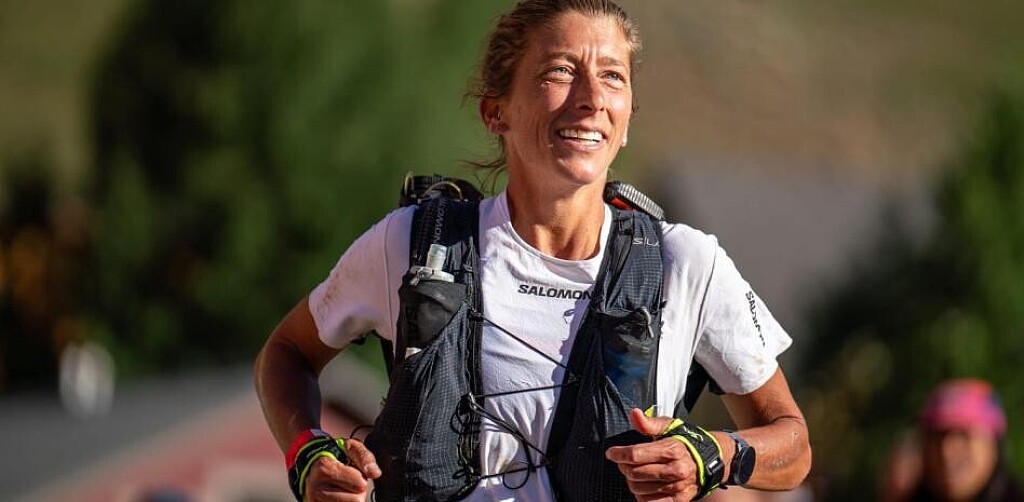
The queen of ultradistance Courtney Dauwalter is set to defend her Hardrock 100 crown
Courtney Dauwalter , the queen of ultra-distance running, will once again put on trail running shoes this Friday to compete in the Hardrock 100 , the prestigious 165-kilometer mountain race with 10,000 meters of positive elevation gain that takes place in the San Juan Mountains in Colorado, United States.
The American runner will try to defend the title she won in 2023, when she won the race with a record time of 26h14:08 , although this year, unlike last year, the race will be run clockwise.
"It's a great race, very tough and difficult. I'm coming back because all my participations here have had very tough moments, and I hope to be able to soften those moments a bit and finish the race without so many difficulties," said Dauwalter in an interview with iRunFar.
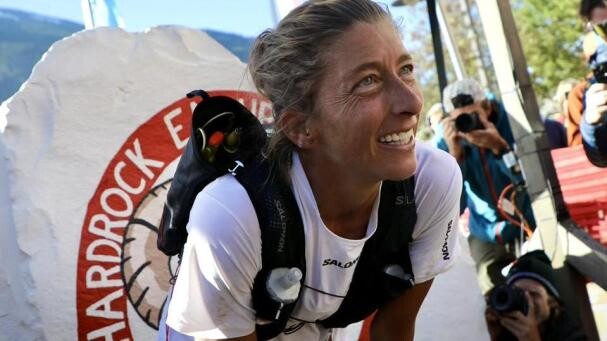
The reigning Transgrancanaria and Mt. Fuji 100 champion will face her main opponents in Germany's Katharina Hartmuth and France's Camille Bruyas , second in the UTMB Mont-Blanc in 2023 and 2021, respectively.
On the men's side, the main figure will be the French runner François D'Haene , who wants to repeat his victory from 2021 and, why not, beat the circuit record belonging to the Spaniard Kilian Jornet (21h36:24).

American Zach Miller is on the roster, although he is likely to miss the event due to recent appendix surgery.
The Hardrock 100 begins and ends in the town of Silverton and passes through some of the most spectacular mountain scenery in the United States, home to elk, bears and cougars. The highest point is Handies Peak, at 4,200 meters.
The race will start on Friday 12th July at 6am (2pm in Spain) and can be followed live on YouTube .
(07/11/2024) ⚡AMPby Matias Camenforte
Hardrock 100
100-mile run with 33,050 feet of climb and 33,050 feet of descent for a total elevation change of 66,100 feet with an average elevation of 11,186 feet - low point 7,680 feet (Ouray) and high point 14,048 feet (Handies Peak). The run starts and ends in Silverton, Colorado and travels through the towns of Telluride, Ouray, and the ghost town...
more...
The Western States 100 and Hardrock 100: A Metaphorical Comparison
With the Western States 100 taking place last weekend and Hardrock 100 taking place next weekend, this is the time of year when all ultrarunners look to California and Colorado.
I’ve been privileged to run both of these iconic events, and in recent years, I have traveled to Auburn, California, and Silverton, Colorado, each year to spectate and volunteer. I’ve had the opportunity to observe and experience what makes these events so different from each other and yet, on some level, very much the same.
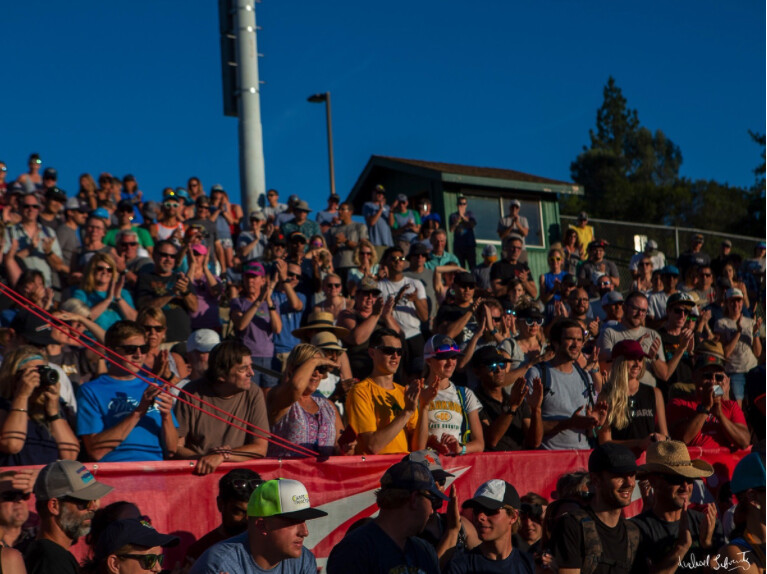
Vibes
I like to compare the vibes of Hardrock and Western States to rock concerts.
Hardrock is that concert that takes place in a modest venue with a few thousand seats, think the Beacon Theatre in New York City. Think of the last concert you attended that brought you close to the artist and allowed you to interact socially with other concertgoers. That’s Hardrock.
Western States, on the other hand, is the massive stadium show, think Kenny Chesney at Gillette Stadium in Massachusetts. These concerts take on a festival atmosphere and bring thousands of people out long before the concert is scheduled to start. Loud, chaotic, and celebratory, Western States shares the vibe with these large stadium shows.
Track Versus Cross Country
In my previous professional life as a high school principal I attended more than my fair share of track and cross-country meets. Over the years I made some observations that remind me of the difference between Western States and Hardrock.
Track meets are slick and fancy. Track athletes wear crisp kits and sleek shoes. Western States is track.
Cross-country meets are loose and in the woods. Cross-country runners are a ragtag group with unkempt hair and oversized kits. They know how to run they just do it a little differently. Hardrock is cross country.
Pace
Hardrock weekend moves at a pace akin to a small town. Sure, the runners up front need to move fast, and those at the back may feel the pressure of meeting the cutoffs, but by and large, the race moves at a laid-back pace. Runners spend time regrouping at aid stations, volunteers linger to chat and share stories, and race officials and veterans of the event make everyone feel welcome and embraced by the community.
The pace at Western States is more like New York City during rush hour. Intensely competitive at the front of the pack and challenging with tight cutoffs at the back, there is little time for dilly-dallying for anyone. It’s an intense, fast-moving pace, the rewards of which are a shiny belt buckle and big city memories to last a lifetime.
Community
Both events celebrate and embrace community. In fact, they both endeavor to nurture a sense of community in the many activities surrounding their events. Additionally, the phrases “Western States family” and “Hardrock family” are part of the language around each race.
As you might expect, Hardrock is a close-knit family — the kind where many still live in the same area, get together often, and share many common characteristics. The Western States family is a massive extended family that is spread around the world, getting together only occasionally and with disparate goals, attitudes, and temperaments. Both families share common connections but do so in very different ways.
Regardless of their differences in vibes, type of race, pace, and community, both Western States and Hardrock have earned their places on the top step of North American ultrarunning culture. In spite of, or perhaps because of, their unique characteristics, these two events have been able to stand the test of time, doing so in their own unique ways and on their own independent terms. As a result, they continue to be the two of the most sought-after events in American trail running and ultrarunning.
(07/07/2024) ⚡AMP
by I Run Far
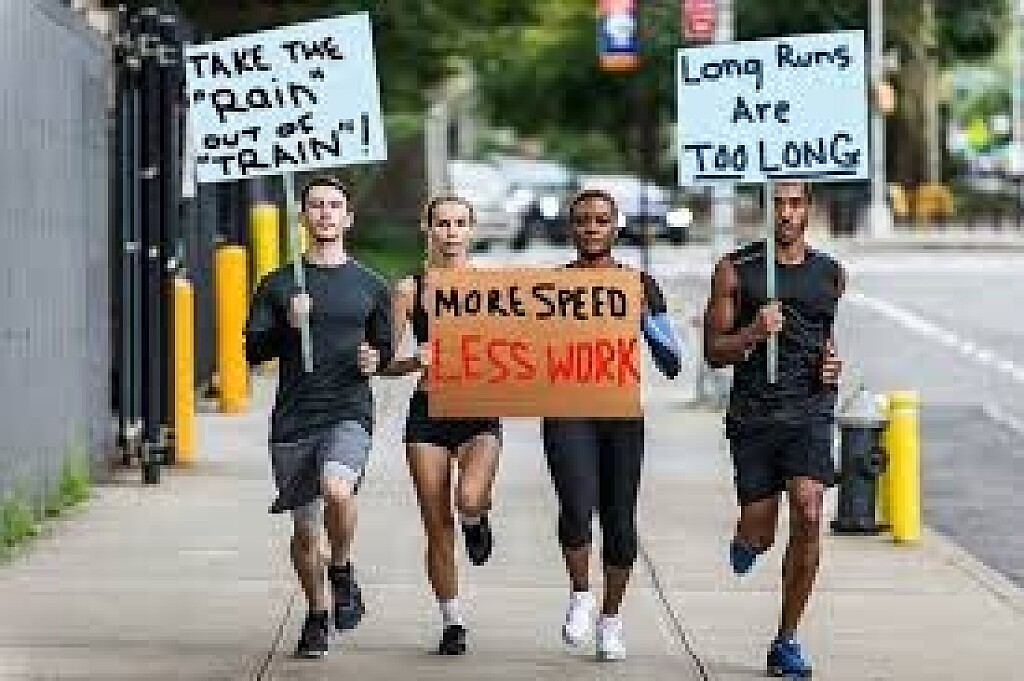
Why You Should Train Less, According to a Coach
Many athletes believe that the more time they spend in the gym, the fitter and more competitive they’ll be, but that's usually not the case.
“Practice makes perfect” is a dangerous narrative underlying the culture of endurance training. Many athletes believe that the more time they spend in the gym, the fitter and more competitive they’ll be.

It’s an idea that works until it doesn’t.
Skylar Allen, a 28-year-old from Minneapolis, Minnesota, began running in college, after years as a figure skater pushed her toward body dysmorphia and an eating disorder. “I struggled with restriction, which was eventually diagnosed as anorexia, for about eight years.”
Eventually, anorexia morphed into bulimia. But when she started running in 2014, Allen says she wasn’t ready to face those issues yet. Instead, running became another way for her to justify behaviors she knew might not be healthy. “When I was having a terrible day, I’d go to the gym the way an alcoholic goes to the bottle,” she says.
By 2020, in the midst of a graduate program in mathematics, Allen recognized the imbalance in her life and started seeking treatment.
Allen and I met on her path to recovery. As a coach at Treeline Endurance, which I founded in 2018, I help athletes tap into their fitness potential with a heavy focus on long-term sustainability. In that time, I’ve seen athletes like Allen harmed in their quest for success by an implicit message shared by coaches and influencers: if you want to perform better, you need to train more than you are right now.
On one hand, research shows that more time spent practicing our sport is crucial to performing our best. On the other, obsessing over physiology can cause athletes to neglect the things in their lives that keep them grounded, from time with friends to taking care of their mental health.
“I’ve fallen into this trap of ‘more training is always better,’” says another one of my clients, Aidan McCarthy, a 28-year-old trail runner based in Salt Lake City, Utah. “Before I was coached, I would go for way too long without taking a rest week, and I often wouldn’t take one at all until I came down with a cold or my body was so tired it forced me to.”
As a running coach, time and again, I’ve seen the story play out in athletes who ramp up their training time as far as their schedules allow. Once they begin to max out that time, they start repurposing time they used to put elsewhere. First goes strength training. Next, some of their leisure, recovery, or family time. I’ve even seen some pull back from their local running group just to save 30 minutes of commute time to add back into their run.
But more isn’t always better. When athletes cut into the time previously spent on activities that enhance mental and social health, they compromise the quality of their training reduce their ability to adapt to their training, and ultimately make training less fun. Studies have shown that one of the most common outcomes of overtraining is a loss of enjoyment for not just the sport, but life in general.
McCarthy considers the nuance of it. He believes that, generally speaking, volume pays off. “I get better results training for twelve hours a week than for five, but is fifteen better than twelve?” asks McCarthy. “Major signs for me that I am starting to overreach are unexplained irritability and low motivation to train.”
McCarthy completed his hardest event to date last August at the 40-mile Telluride Mountain Run. The notorious mountain race features more than 14,000 feet of vertical ascent and descent. And yet, in a major departure from his running-only training approach of the past, almost a third of his preparation came on the bike in the canyons of the Wasatch Range.
As athletes, we need to reject more-is-better culture. In doing so, we’ll become happier, healthier, and maybe even better at our sport. By choosing to go for a bike ride rather than force another lap on our normal running route—or take on a hard strength session, knowing it’ll take a couple of days to feel ready for another big-volume endurance day—we allow the body to recover in one way, and be pushed in another. We introduce variety mentally and keep our training exciting, rather than allowing it to become just another job.
Today, Allen’s eating disorder is in recovery, and she’s learning to add an element of balance to her training. In addition to her continued growth as an ultrarunner, she’s now an enthusiastic member of her local CrossFit community. “I used to ask myself what I could cut out of my life to give myself a little more time to focus on training,” she says. “At some point, I asked myself what it would be like if I did the opposite. Can I use the same discipline to keep a healthy balance?”
If you are struggling with eating and body image in any way, you do not have to suffer alone. Consider reaching out to the National Eating Disorders Association’s Helpline, which is available via text, phone, or chat.
(07/06/2024) ⚡AMPby Outside On Line
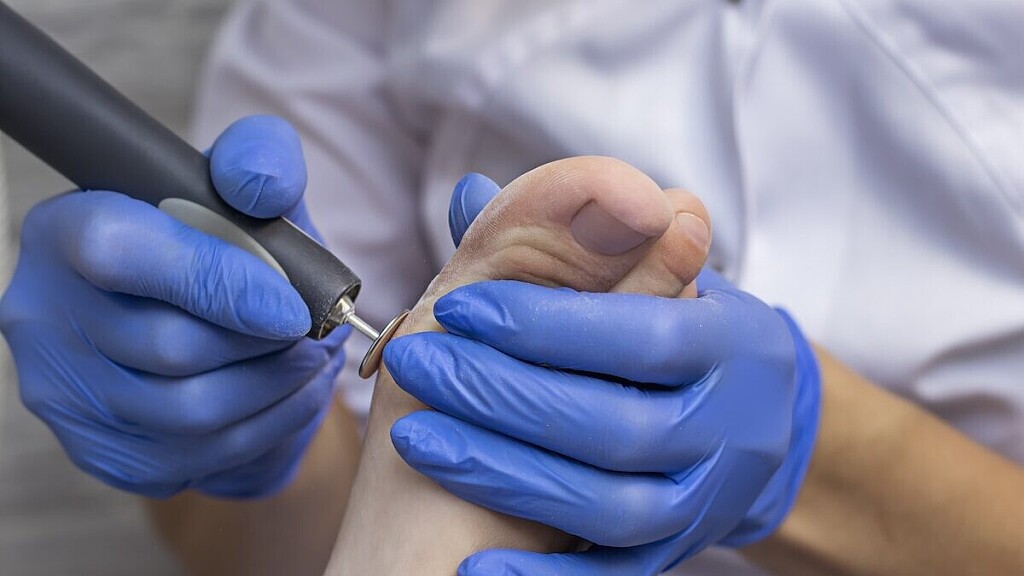
Why you should splurge on a medical pedicure
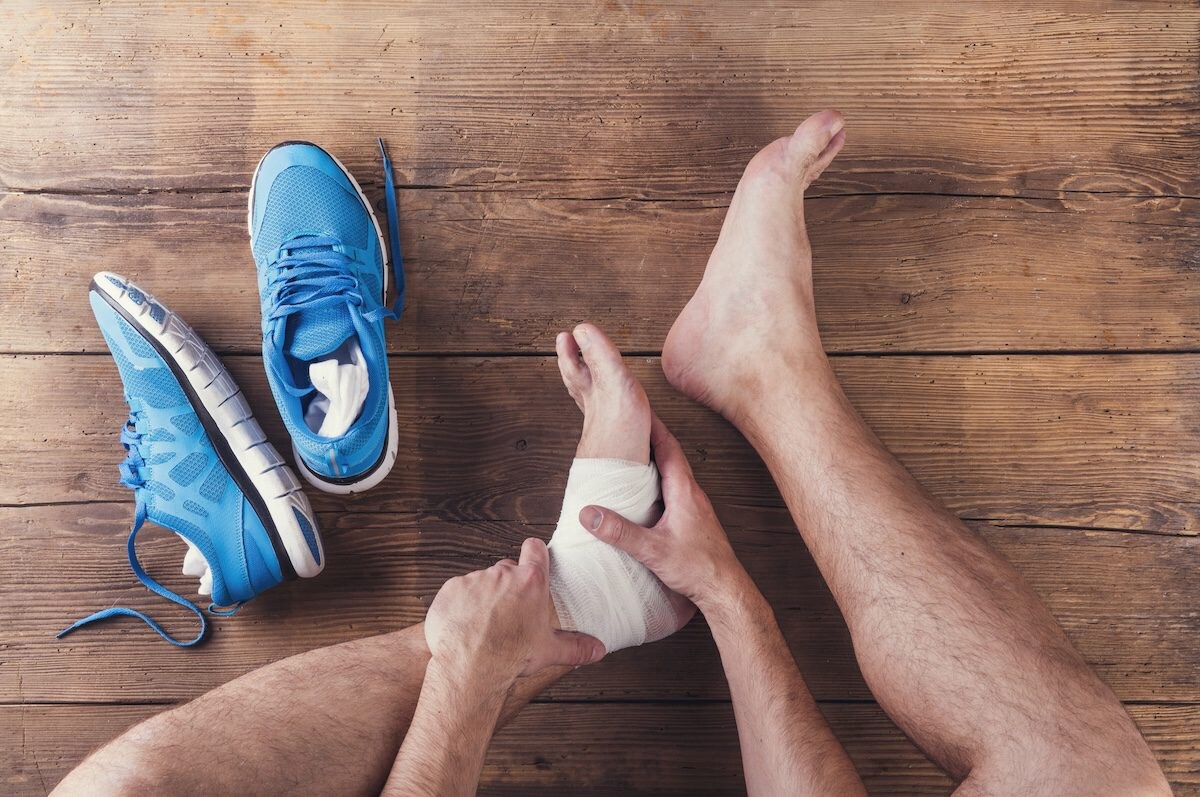
Runners’ feet take quit a beating in training and competition. Calluses, bunions, black toenails or no toenails at all are things most runners deal with, but even mild foot pain can cause you to unconsciously alter the way you walk and run, which leads to compensation and compromises your muscles and joints in other ways. If it gets to the point where your foot or feet are painful, it’s time for a trip to your local salon for a pedicure–while skipping the nail polish.
A medical pedicure, or “medi-pedi,” is a footcare practice more closely resembling a medical procedure than your typical nail appointment. The specialized treatment targets the overall health of your feet, rather than just their appearance.
Typically, the longer your race distance, the more foot issues you will deal with. Ultramarathoners are definitely familiar with the pain that even the smallest blister can cause, and need to take extra steps to care for their feet. Especially at these distances, when no amount of moisturizer or blister bandages can provide you with relief, you’ll be prompted to take more serious interventions.
Your technician, a trained chiropodist, will assess your foot for underlying health conditions such as warts, ingrown toenails, athlete’s foot or fungal infections and will address the discomfort you may be experiencing. The procedural steps include sanitizing, trimming and filing your toenails, softening and buffing thick calluses and intensive moisturizing. Believe it or not, the calluses you’ve developed over time to toughen up your feet can become too thick and eventually cause your skin to crack.
The treatment will not only leave your feet feeling smooth and soft, but will also set you up to avoid painful blisters, worsening infections, black toenails or ingrown toenails. The technician also provides advice for properly caring for your feet to treat and/or prevent future issues.
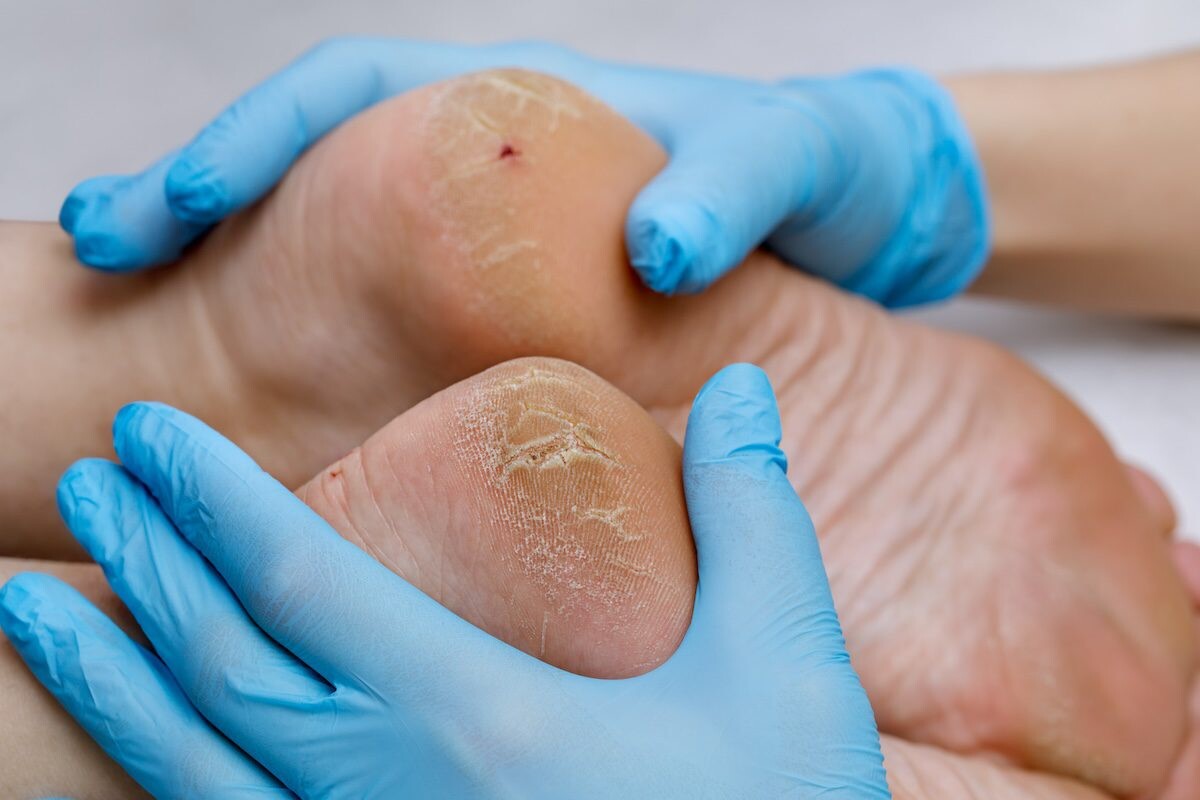
Follow-ups for your medi pedi should be done every three to six months, but you can go more often until your discomfort is properly addressed. There are two drawbacks to the procedure: being in a doctor’s office makes it a little less relaxing than your typical spa day, and the price tag accompanying the service could be $200 or more. On the bright side, it is much more sterile than a salon, and may be covered by your private health insurance. Running pain-free does sound like a pretty good return on your investment!
(07/05/2024) ⚡AMPby Cameron Ormond

2024 Western States 100 Results: Walmsley Wins a Fourth Time While Schide Rocks the Women’s Field
For hours, Katie Schide chased ghosts. For hours, Jim Walmsley and Rod Farvard chased each other. And in the end, after 100 courageous, gutsy miles at one of the world’s most iconic ultramarathons, it was Schide and Walmsley who won a fast, dramatic 2024 Western States 100.
Schide, an American who lives in France, was on pace to break the course record until late in the race, while Americans Walmsley and Farvard battled throughout most of the second half of the race, alternating the lead as late as mile 85.
Schide’s winning time was 15:46:57, just over 17 minutes behind Courtney Dauwalter’s 2023 course record, almost an hour faster than her own time last year, and the second fastest women’s time ever. Walmsley, meanwhile, won his fourth Western States in 14:13:45, the second fastest time ever — only behind his own record of 14:09:28 that he set in 2019.
Second and third in the men’s race came down to an epic sprint finish on the track between Farvard and Hayden Hawks , who finished in 14:24:15 and 14:24:31, respectively.
In the women’s race for the podium, Fu-Zhao Xiang (pre-race interview) finished second in 16:20:03, and Eszter Csillag took third for the second time in a row, in 16:42:17.
Both races featured one of the deepest and most competitive fields in race history, with the men’s top five all coming in faster than last year’s winning time, and the women’s top 10 finishing just under 40 minutes faster than last year’s incredibly competitive top 10.
At 5 a.m. on Saturday, June 29, they were all among the 375 runners who began the historic route from Olympic Valley to Auburn, California, traversing 100.2 miles of trail with 18,000 feet of elevation gain and 22,000 feet of loss. After last year’s cool temperatures, the weather at this year’s race was a bit warmer, albeit with a notable lack of snow in the high country. The high temperature in Auburn was in the low 90s Fahrenheit.
A special thanks to HOKA for making our coverage of the Western States 100 possible!
(06/30/2024) ⚡AMP
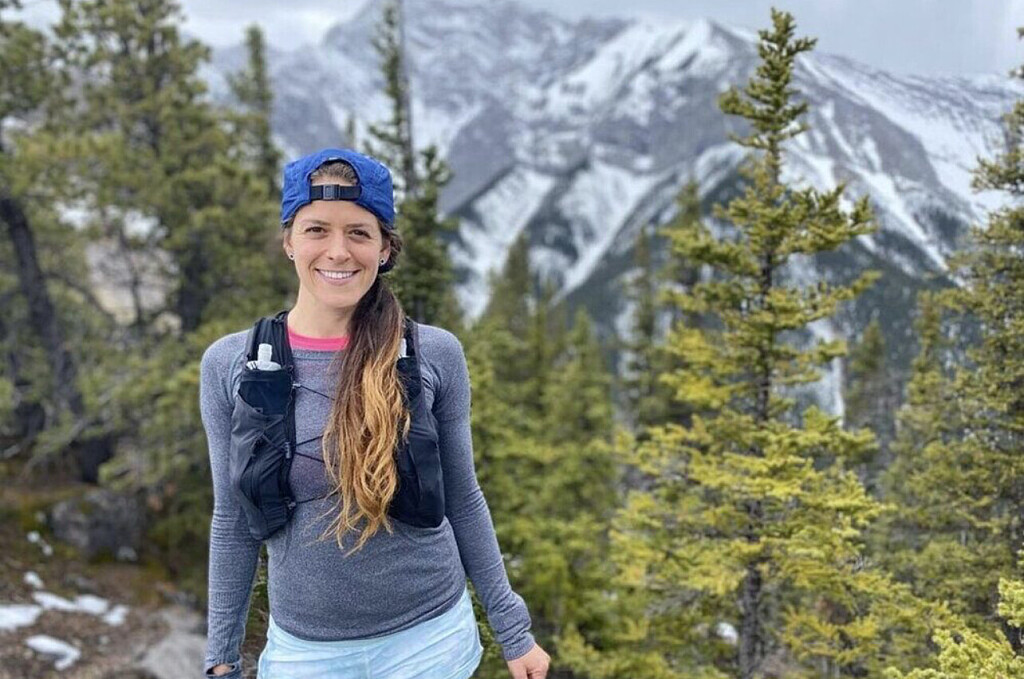
Canadian ultra-star Priscilla Forgie is ready to crush Western States 100
Edmonton’s Priscilla Forgie is blazing a trail in Canadian ultrarunning, and she’s primed for one of the biggest races of the year—Western States 100-miler, set for June 29th. Having finished as the top Canadian in last year’s race (eighth place overall), Forgie is back, even more prepared and ready to tackle the course in Auburn, California. Her secret? Three specific strategies that can benefit any runner aiming to elevate their performance.
Forgie has dominated numerous races in recent years, with victories at the Squamish 50-mile and 50/50, a second-place finish at the Canyons Endurance Run, and an overall win (with a course record) at the Near Death Marathon. Here’s how she’s preparing for Western States 100 and how you can apply her methods to your own training.
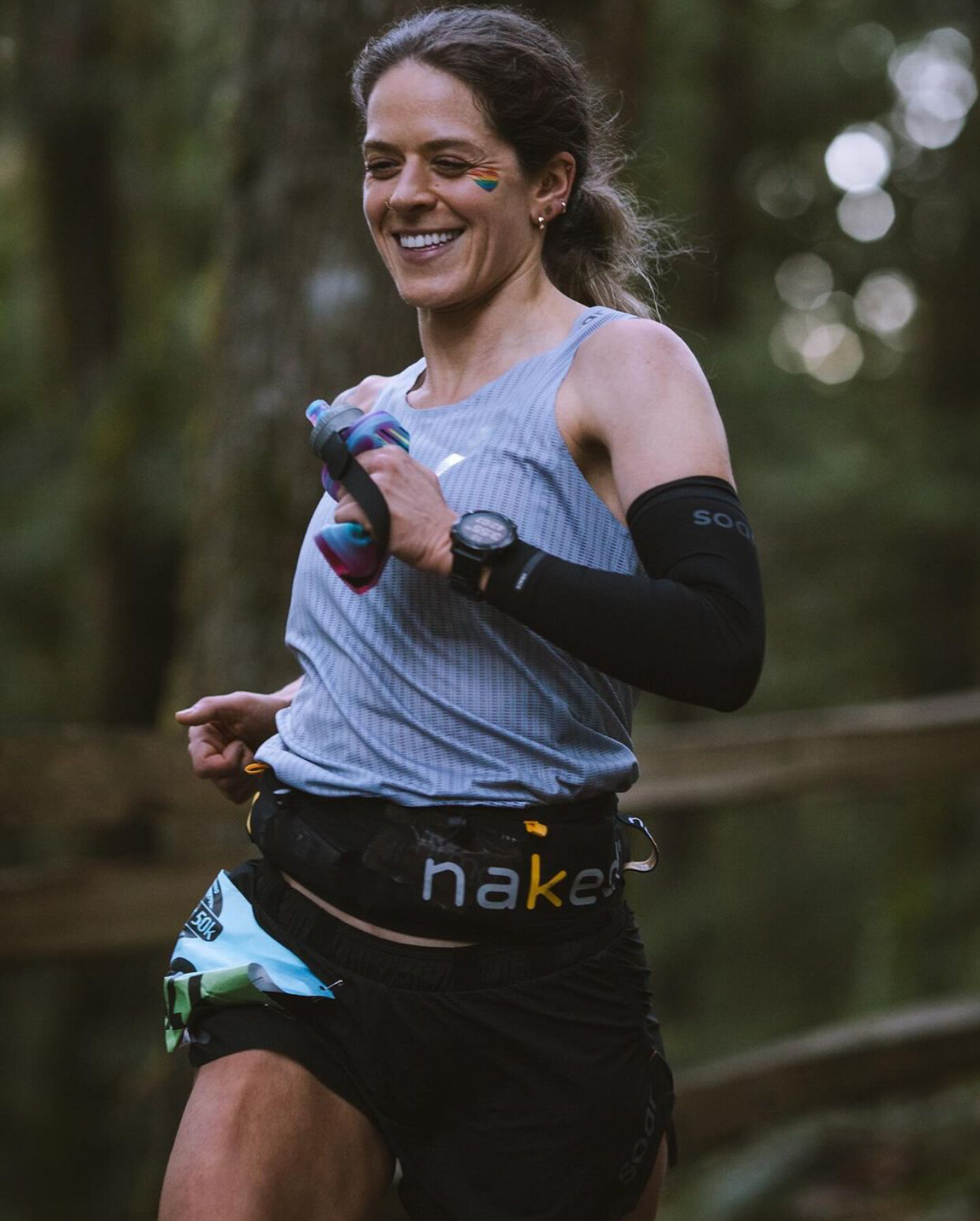
“Last year, I was told I looked better at the 100K mark than at 50K! The elevation in the high country kicked my butt, so I arrived a bit earlier this time around to adjust,” Forgie shares.
Altitude can be a game-changer in endurance races. If your race is at a higher elevation than you’re used to, plan to arrive several days or even weeks early if at all possible, to give your body time to acclimate. If you’re unable to spend extra days at altitude, make sure to incorporate lots of elevation gain into your training runs and consider practising breathing techniques to help reduce respiratory fatigue.
(06/24/2024) ⚡AMPby Running Magazine

How Many Carbs Are in Spring Energy, Really?
This fruit-based energy gel, once touted for its high-carb intake and low volume, contains about a third of calories than advertised, multiple independent nutritional analyses suggest
For the past 10 years, Spring Energy has provided endurance athletes with energy gels, and more recently drink mixes, made from “real” foods. Athletes looking for wholesome alternatives to more traditional sugar-based gels made in a lab have flocked to Spring’s smoothie-like gels made with fruit and basmati rice.
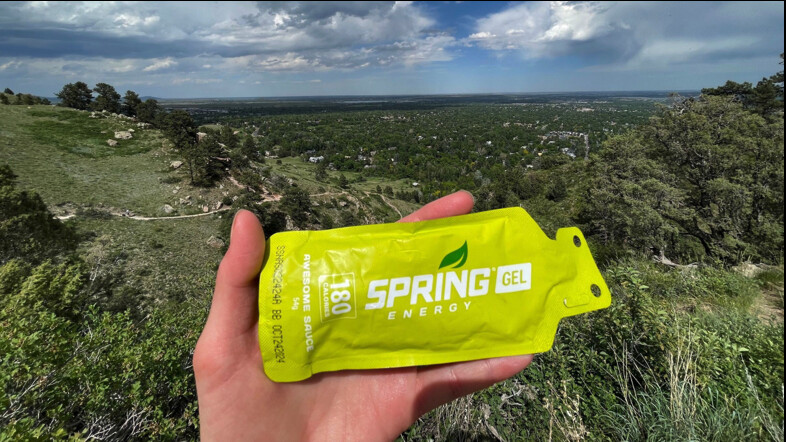
While Spring products are more expensive than many gels, many athletes have found the tradeoff for high-quality, real food fuel that goes down easily on the run to be worth it. Until now.
After skepticism about the actual contents of Spring’s gels began brewing late last year, it turned into a full-blown controversy this week.
In January 2021, Spring Energy released a game-changing gel, Awesome Sauce. In collaboration with coaches and runners Megan and David Roche (who taste-tested and named the flavor), the applesauce, basmati rice, and sweet potato-based gel was designed to provide endurance athletes with a whopping 180 calories per 54 gram packet.
This high-carb alternative became especially enticing when a study was published in April 2022 reporting that ultrarunners should consume 240 to 360 calories (60-90 grams of carbohydrates) per hour. It’s no surprise that Awesome Sauce (sold at $5 a gel), with its small but surprisingly mighty nutritional content, initially flew off the shelves. It seemed too good to be true.
After several third-party lab tests, that appears to be the case.
In late 2023, runners took to Reddit to discuss their doubts in Awesome Sauce’s nutritional facts, which were printed on the packaging and stated on Spring Energy’s website. Though it’s unclear who first performed a concrete test on the gel, two months ago, Liza Ershova, a Reddit user who uses the username “sriirachamayo”, posted in a thread called “False nutritional info on Spring Energy gels.” Ershova allegedly performed a test “in an environmental chemistry lab” and found that the dry weight of Awesome Sauce is 16g instead of the stated 45. She hypothesized that, “If all of those grams are carbs, that corresponds to about 60 calories, not 180.”
On May 17, German endurance sport speciality shop Sports Hunger released a video stating that they, too, had Awesome Sauce gels tested by a third party, and allegedly found that each packet contains 16g of carbs instead of the 45g that Spring Energy claimed.
“The maker of Spring Energy assures us that they will rework their manufacturing process to ensure that they will again reliably achieve their high numbers that they declare to have,” a Sports Hunger representative says in the video. “We hope that this is really going to happen because we believe that natural food for many of our customers is a great alternative to the regular gels.”
On May 28, ultrarunning coach Jason Koop, who coaches elite athletes sponsored by Spring Energy, posted an Instagram Reel saying that he’d paid for Spring Energy Awesome Sauce to be tested by a third party, RL Food Laboratory Testing in Ferndale, Washington. The results showed that the gels tested contained 76 calories and 18g of carbs. The lab results can be found on Koop’s website. Koop declined to be interviewed for this article.
Other runners have also come forward after attempting to replicate the gels with varying degrees of Awesome Sauce’s ingredients: organic basmati rice, organic apple sauce, apple juice, yams, maple syrup, lemon juice, vanilla, sea salt, and cinnamon—and could not achieve the gel’s original volume of 54g. Their experiments suggest that it’s impossible to fit all of those ingredients into the small Awesome Sauce package while achieving the stated nutritional content.
On May 22, the Ershova shared Spring Energy’s response to their experiment on Reddit: “Our analysis supports the accuracy of our product labeling. However, we will reevaluate to make sure our data is accurate. Although we hoped your experience with our products would have been wholly satisfactory, we recognize that individual needs can vary. Given the wide variety of options available across different brands, we are confident you will find the right product that suits your specific requirements.”
Four days later, on the Sunday of Memorial Day weekend, Spring Energy sent out an email to newsletter subscribers stating:
“In early May we submitted Awesome Sauce for third-party caloric and biomolecular analysis. Although the results indicated that on average our products deliver the designed nutrition value, we have recognized weaknesses in our processes and ingredients which can introduce unwanted variations in some batches.To mitigate those variations in our small batch production, we decided to modify some of the formulations, revise and innovate processes, and re-evaluate ingredient sources. These changes will bring higher quality and more consistency to our products. Enhancements of our products aimed to stabilize their nutrition values are on the horizon, and within the next few weeks, you’ll see the results of our efforts. A new and improved version of Awesome Sauce will soon be available.”
The internet outrage ballooned swiftly.
“‘On average’ – if someone has a beat on where I can grab packets of Awesome Sauce at 75g of carb per pack to allow for the average of their product to be 45g overall, hit my inbox,” @aidstationfireball posted on X. “Excited to taste the new, re-formulated, $7 gels they’ll replace these with.”
David and Megan Roche, the Boulder, Colorado-based running coach couple who collaborated with Spring Energy on Awesome Sauce, discussed the backlash on their podcast. They weren’t involved in the chemical composition and makeup of the gel, they claimed. Rather, they simply proposed the concept of a high-carb gel to their friend Rafal Nazarewicz, the founder and CEO of Spring Energy. They stated they understand the public’s outrage, and Megan added that they “didn’t really use it” during their runs because she didn’t feel that her body was responding to the energy it was supposed to provide.
In addition, the Roches stated on their podcast that they have quietly harbored concerns about Awesome Sauce for years, and while they did not explicitly tell their athletes not to use it, they made a point of promoting other gels instead. (The Roches currently have a financial partnership with The Feed, the online warehouse that sells a wide variety of sports fuel, including Spring Energy.)
David elaborated in a lengthy Instagram post on May 29: “It’s sad and infuriating that the nutrition was wrong, and we are thankful to the really smart people who figured it out on Reddit (including an athlete we coach who started the initial thread). When we described concerns to Spring, we were assured that the nutrition was correct and they followed all FDA regulations. We left the Spring sponsorship years ago, and we never received compensation for proposing the name/doing taste testing (outside of the $200 per month that we both received during the sponsorship). Since then, we have publicly directed athletes to other options for high-carb fueling, while hoping to be a source of love and support in the community. Our podcast covered our concerns as soon as the German lab testing indicated that we wouldn’t be risking making defamatory statements about a business without substantial evidence.”
While concerns around Awesome Sauce instigated this investigation, it’s not the only flavor under scrutiny. Koop sent additional Spring Energy gels, Canaberry (named after professional ultrarunner Sage Canaday) and Hill Aid, to the lab for testing. The results indicated that both of these flavors also contain fewer calories than stated on their nutrition labels.
The lab results showed that the batch of Canaberry that was tested contains 10g of carbs (versus the stated 17g), and the Hill Aid sample contains 10g of carbs (versus the stated 20g).
Koop also paid for Gu Chocolate Outrage to be tested. The results were consistent with the nutrition facts. All three of these reports can also be found on Koop’s website.
These vast discrepancies between Spring Energy’s reported nutrition facts and the lab results raise the question: which gels can be trusted?
According to the U.S. Food and Drug Association (FDA), most running gels fall under the category of “dietary supplements”, which don’t have to be approved before being sold. However, the FDA requires that all dietary supplements have nutrition information clearly marked on a product’s packaging (including serving size, number of servings, and ingredients) and periodically inspects manufacturing facilities to confirm that products meet the labeling requirements. The FDA also reviews product labels for accuracy.
“Dietary supplements are regulated by the FDA, but much of our role begins after products enter the marketplace. In fact, in many cases, companies can produce and sell dietary supplements without even notifying the FDA,” the FDA states on their website.
The FDA allows nutrition labels to have an inaccuracy margin of up to 20 percent—for reference, based on multiple lab results, Awesome Sauce’s caloric content is about 57 percent less than what the label says.
Sports psychologist and ultrarunning coach Krista Austin works with some of the top endurance athletes in the world, and is best known for training Meb Keflezighi to his 2009 New York City Marathon win. She recommends several products out on the market to her ultrarunner athletes, as well as suggestions that might work with a person’s individual plan. Typically, she suggests that athletes rotate gel flavors to avoid flavor fatigue, which can impact an athlete mentally and derail performance. So if a certain brand is proven to work well for an athlete, she says, use a variety of flavors.
“I usually use high molecular weight carbohydrates, but the thing is, they’re not as sweet as other sports nutrition products out there,” says Austin, who owns a consulting business providing sport performance services to Olympic and professional athletes as well as military and industry personnel. “So what we’ll do is we might throw in another gel like the Awesome Sauce to help give them that sweet component. It’s just in their arsenal.”
She says, in general, her athletes who have consumed Awesome Sauce have had positive experiences, but that because these gels were just one part of the fuel plan, that muddies the waters a bit. In addition, the potential lower calorie count of this gel may make it easier to digest. However, Austin recalls that one of her clients was taking in one Spring Energy gel (multiple flavors) every hour in her ultra, but found herself so hungry that she needed to eat a lot of the food provided at aid stations on the course, too.
“She was a smaller ultrarunner, and I thought it was interesting that she was taking in all these calories,” Austin says. “She was using Spring Energy gels, and I now I’m thinking, ‘Maybe this is why she needed all the additional food on the course, too, because she wasn’t getting what we thought she was.’”
Ultramarathon dietician Julie Shobe is surprised and disappointed in the news about Awesome Sauce. “My clients and myself bank on the efficiency of the gel being easy and light to carry,” she says. “Underfueling within a long run can create acute symptoms like low energy, nausea, or brain fog. Ultrarunners find themselves in dangerous situations on long runs and races, and are often in remote areas, so unintentionally underfueling could have negative consequences.”
Austin says runners can still rely on information they’re receiving about endurance fuel, but that it’s always possible there are, as Spring Energy suggests, bad batches. She’s leaning toward this being the reason for the nutritional inaccuracies (keeping an open mind that more information can come out) because she’s had experiences with bad batches of gels in the past, where the product tasted off and she brought it to the attention of the brand, who confirmed it was an error on their part.
By May 30, Spring Energy had removed Awesome Sauce from its website, although it can still be purchased in the All Inclusive and Vegan Spring sampler packs. There, Awesome Sauce is described as, “our best-seller, has been created for all carb lovers who want to fuel in a healthy way, with wholesome products free of added sugars!”
Nashville Running Company owner Lee Wilson has made the decision to take Awesome Sauce, Canaberry, and Hill Aid off store shelves. “It came down to the integrity of it,” Wilson says. “After the other flavors came out with the test results, we decided we can’t sell it.”
Nashville Running Company crew member Eric May added that this whole ordeal is disappointing, especially because the gel was so popular in the community.
“We used to have people come in when we got shipments and walk out with boxes of them,” May says. “It’s a bummer.”
He adds that a few customers have remarked that they still really enjoy Awesome Sauce and will keep using it.
“How a company reacts to the issue tells you a lot about them, and the fact that they’ve taken down their product, it means they’re probably doing their homework to see what’s going on,” Austin says. “I would say, give them a chance to rectify the situation.”
Sabrina Stanley, a pro ultrarunner from Silverton, Colorado, has used Awesome Sauce frequently in the past, but says she stopped eating it when she felt she was taking in three times what she should be consuming to keep hunger at bay. She adds that though it’s a huge disappointment that athletes thought they were buying a gel under the impression it was a different product, the company is the only party at fault.
“Professional athletes aren’t responsible for making sure the nutrition label is correct,” Stanley says. “They are often sub-contracted to give opinions and help promote a product in hopes of making a few extra dollar to continue doing what they love. They aren’t in the lab developing the product and writing the nutrition label, like the consumers, they are trusting the hired them to do their due diligence.”
On May 29, Spring Energy released an official statement on its Instagram, with Nazarewicz saying they’ve identified weaknesses in the manufacturing process, and that only some batches were accidentally made with varying nutritional values. Nazarewicz apologized and stated Spring Energy is introducing changes to its process and hopes to continue its mission toward making real food performance products.
“Spring Energy has admitted to inconsistencies in their product and also said in a recent IG post this was not intentional or malicious,” Shobe says. “However, to be this far off from your stated nutrition label deserves some major inspection. The whole thing made me question not only the integrity of their products but the nutritional labels of other products. Why, as a dietician, didn’t I become more suspicious of Awesome Sauce in the first place?”
(06/22/2024) ⚡AMPby Outside Online
There might have been cheaters at the Comrades Marathon
An investigation into allegations of cheating at the recent Comrades Marathon is underway, the race organisers have announced.
The Comrades Marathon Association (CMA) had underlined in the build-up to the 2024 event which took place on 9 June, that there would be a zero-tolerance approach towards cheating.

Before the event, over 50 runners were prevented from taking part due to fraudulent entry submissions, some of which involved getting others to achieve the required qualifying time.
The 86km ultramarathon alternates from an ‘up’ route from Durban to Pietermaritzburg – as it was this year – to a ‘down’ version in reverse.
Known as the ‘Ultimate Human Race’, it is hugely popular, with hundreds of thousands of spectators lining the route, national TV coverage, high prestige and big prizemoney.

This year there were 18,884 starters – and 17,313 finishers.
Looking for ‘anomalies or inconsistencies’
But in a statement released on Thursday the CMA said: “The Office has received a number of tip-offs from concerned participants and spectators who have reported several instances of suspected cheating within the duration of the race.
“In addition, the CMA has continued to receive information from athletes and clubs regarding the submission of fraudulent qualifying information.
Ann Ashworth, the CMA Race & Operations Manager, stated that while she is aware of various social media posts allegedly exposing several athletes of cheating at the event, the CMA has yet to communicate the full and final results of its investigations to KwaZulu-Natal Athletics and has not yet publicly identified those athletes whom it suspects of cheating.
The statement continued: “We are currently working through the full set of electronic results provided to us by FinishTime with a view to identifying any anomalies or inconsistencies within the results.
“Our Office is also working through data which suggests that several athletes missed the non-disclosed (or secret) timing points along the route, the purpose of which was to identify runners who engaged in course cutting. All inconsistencies will then be compared to any photographic evidence available.”
Issue with first timing point
Ashworth has also indicated that the CMA is aware of a problem which occurred at the first timing point (at approximately 5km) and assures athletes that the absence of a timing reading at this particular point is not necessarily indicative of course cutting.
The statement concluded: “The CMA hopes to conclude its investigations over the next few days after which the names of all race day cheats will be provided to KwaZulu-Natal Athletics for disciplinary action.”
(06/20/2024) ⚡AMP

Comrades Marathon
Arguably the greatest ultra marathon in the world where athletes come from all over the world to combine muscle and mental strength to conquer the approx 90kilometers between the cities of Pietermaritzburg and Durban, the event owes its beginnings to the vision of one man, World War I veteran Vic Clapham. A soldier, a dreamer, who had campaigned in East...
more...
How to Find Your “Sweet Spot” Race Distance
Expert advice for focusing on your best event to maximize your running potential.Ever notice that some runs and races are more satisfying than others? These workouts aren’t necessarily the easiest runs or even the ones that are the most fun. Instead, they’re fulfilling because the distance feels challenging, but doable. You collect your medal and walk away thinking, “I bet I can do even better next time,” rather than, “thank goodness that’s over.”
If you have already clicked with a specific distance, you may have already found your running “sweet spot,” or the race length that fires up your inner athlete and gets you training for your next PR. But if you’re new to running or haven’t yet hit your racing stride, some experimentation and a little self-reflection will help you determine where to focus your time and effort when registering and training for events. To help you land on your sweet spot (and figure out what to do when you get there), we chatted with a few run coaches who have worked with athletes of all levels of experience and race preferences. Here’s what you need to know.
What factors determine your sweet spot race distance?
Before you declare yourself a 10K devotee or commit to running a marathon in every state, give yourself adequate time to build a personal relationship with running and experience different races.
“I don’t know if there’s really a set amount of time required to figure this out,” Matt Forsman, USATF/RRCA-certified running coach and race organizer at Sasquatch Racing, tells Runner’s World. “Some people run for years before determining what distance is their sweet spot. For others, a certain distance immediately speaks to them. If you’re new to running, I’d say give yourself at least six to nine months to build some running fitness, try a few distances, and go from there.”
As you rack up the miles and try different races on for size, it can be helpful to keep these factors in mind:
Fitness and Experience
“Your current level of running fitness should be an important part of the calculus in determining what race distance is best for you,” Forsman says, noting that shorter distances like 5K and 10K, while they present their own unique challenges, are generally more beginner-friendly than half marathons and marathons.
You may find that, even as a newbie, these shorter distances enable you to make noticeable progress that’s reflected in your race times. These wins are valuable, as they can keep you engaged and motivated.
Schedule and Lifestyle
Anyone who’s trained for a marathon or ultramarathon will tell you how all-consuming it can be. Some people have the necessary bandwidth or a flexible schedule. Others have the support and resources to fit training between competing priorities, like work, family obligations, and social events. But if you simply don’t have the time and energy to train for a specific distance, it’s probably not your sweet spot.“You should fit running in and around your life and not life in and around your running,” Todd Buckingham, Ph.D. exercise physiologist at PTSportsPRO in Grand Rapids, Michigan tells Runner’s World. “We do this because it’s fun. We do this because we want to push ourselves. But hopefully not to the extent of alienating friends and family. You need to find a distance that will work with your life.”
Location
If you train outdoors, you will always contend with temperature, climate, and terrain. Therefore, where you live will likely play a role in determining your sweet spot, Will Baldwin, USATF and VDOT-certified running coach in Flagstaff, Arizona tells Runner’s World
“If summer temperatures soar, focusing on local 5Ks instead of marathon training will be much more manageable,” Baldwin says. Of course, you can beat the heat by logging miles before or after sunrise, running on a treadmill, but workarounds often require extra planning and schedule adjustments. The same goes for training in frigid, icy temps.
In some cases, your zip code may present an advantage, as year-long temperate weather and extended daylight hours open up more opportunities for longer outdoor training runs.
“And if there’s a fantastic trail system nearby with plenty of races, it’s the perfect chance to test those trail-running skills and have some fun with it,” Baldwin adds.
Past Performance
Your race history is a clue to where your natural talents lie, which can help inform your sweet spot. “Genetics do play a role,” Buckingham says. “Some people have the diesel engine where they can just go all day long, but they can’t go any faster…other people are really good at short distances but struggle at long distances.” Buckingham and Baldwin recommend checking out online tools like the VDOT Running Calculator, which uses one race distance time to determine your estimated time for other distances. Runner’s World also has an easy-to-use race time predictor. Say, for example, your half-marathon PR is 2:10. The calculator uses this information to suggest an exhaustive list of predicted race times, including a 58:40 10K. However, if your 10K PR is actually 56:10, you may be better suited to the 10K.
“Athletes can use this tool to see which of their PRs is the most distinguished for each distance, helping them determine their ideal race distance,” Baldwin says.
You can also garner a lot of information by participating in local races and looking at race results. “See where you finish in relation to other people your age and sex because that will probably tell you just as well,” Buckingham says.
Injuries
“I think it's important to consider any aggravations and injuries you’ve incurred,” Forsman says. “Running is a high-impact sport that generates about three to seven times your bodyweight in impact force per foot strike. If you have [had] a number of injuries in your recent or distant past, shorter distances like the 5K or 10K may make the most sense. Conversely, if you’ve never had any running-related injuries and your running fitness level is high, a longer distance might work great for you.”
Your Happiness and Enjoyment
Do you notice that some races are simply more fun than others? Pay attention to those gut-level feelings, even if they contradict all of the other data you’ve collected, Baldwin says.
“When figuring out an athlete’s ideal race distance or their sweet spot, I love to start with what excites them the most,” he says. “Even if someone shines in a 10K or half marathon, their heart might be set on the full marathon. Passion is often the fuel source of consistent training, so tapping into that excitement is really important.”How do you level up in your sweet spot race distance?
Once you find your sweet spot, you may need to make some adjustments to your running routine because a training program should be tailored to your upcoming event, if you plan to race.
“If you’re currently running a few easy miles a few times a week but really want to run a fast 5K, you’re going to need to inject some ‘quality,’ like tempo, intervals, and hills, to develop strength and speed,” Forsman says. “If you want to simply tackle a longer distance like a half or full marathon, you’re going to need to gradually add some more miles into your training to build stamina and endurance.”
Focusing on one distance also allows you to fine-tune your fueling and hydration strategy, especially if you opt for longer distances. “If the event we’re training for is going to take us over 90 minutes to complete, we have to start talking about and practicing fueling. We’ll need to incorporate either some liquid fuel or energy gels to help us finish the race and utilize all of our fitness,” Baldwin says. “It’s an added expense to have fuel for all of the important long runs and races, so it’s also something to consider when choosing your ideal race distance,” he adds.
Are there downsides to sticking with one race distance?
It can be rewarding to climb the ranks in sweet spot events, but the experts caution against getting too “stuck” in your sweet spot.
“You should definitely be mixing up the types of races you do,” Baldwin says. “It’s common for a marathon runner to come to me who has been stuck at a certain level for years. When I go back through their training history, they almost always have been doing only marathons for several years in a row. They’ve neglected the shorter races, speed work, and their leg turnover.” Baldwin explains that training at different paces engages different energy systems, and temporarily focusing on shorter, faster distances can improve your speed and efficiency, even on slower endurance runs.
The same concept applies to runners with a shorter sweet spot. “If shorter distances like the 5K or 10K are your thing, there’s still utility in tackling longer distances. Training for a longer distance can help you better manage fatigue in the latter stages of your 5K or 10K,” Forsman says.
Plus, you could miss out on what got you hooked on running in the first place. “Professional athletes have to specialize and really just focus on one event because that’s how they earn their livelihood. But the average runner should have fun with it,” Buckingham says. “If you have fun doing one race distance, that’s fine. But don’t be afraid to jump in the local 5K if your friends ask you to join them.”
(06/18/2024) ⚡AMPby Runner’s World
Father’s Day gift ideas for your favorite running dad
Looking for the perfect gift for your run-loving Dad or partner this Father's Day? If the men in your life are notoriously tricky to buy for and you need some gift inspiration for the big day, you've come to the right place!
From the coolest running socks for speedy dads, to heartfelt race day mementoes for your formerly formidable marathoner old man, keep scrolling for the best Father's Day gift ideas for the runner in your life.
Gift ideas for running dads

In a hurry? Here are the top picks. Keep scrolling for the full list.
When is Father's Day in 2024?
This year Father's Day is on Sunday 16th June 2024. But why wait for an excuse to treat the runners in your life? We've rounded up the best gift ideas for any and every type of runner. Keep scrolling for more tips and inspiration for him though.
The best Father's Day gifts for dads who run
From the best running shoes and socks, to keepsakes to make your run-loving dad smile all day long, we've rounded up the best gift ideas who dads who run. Nothing here for you? Check out our runner’s gift guide for more inspiration.
Personalised Metal Shoe Tag
Super proud of the running dad in your life but rarely have time to make the finish line/cheer squad? Now he can keep a little reminder with him during all of his runs, with this heartfelt personalised shoe tag. It can be moved from shoe to shoe, and will keep his spirits up and let him know you're thinking of him during every race and training run.
Danish Endurance Quarter-Length Running Socks - 3 Pack
Irrespective of your Dad/partner's running prowess, nothing says 'Happy Father's Day' like a new pair of box fresh socks! This set of three, quarter-length socks from Danish Endurance have arch compression and cushioning for comfortable, soft, blister-free runs. And if you can prevent his feet from stinking up the house, then it's win-win all round.
Whoop Whoop Strap 4.0
For dads who love to hone in on their health and fitness metrics, you can't really do better than buying them a Whoop Strap 4.0. This wearable sensors tracks everything from your sleep to your heart rate variability, recovery and daily effort to provide a holistic overview of your current health status, and the accompanying app provides insights and advice on how ready you are to train. Sound like something Dad would love? Buy him an annual Whoop membership for £229 and the band is included as part of the membership. Plus, from 10th to 24th June, that also gets you £45 off any Whoop accessory.
Brewgooder Mixed Pack (4 x 330ml)
A great tasting beer (especially post-run) with some eco-credentials (it's brewed using fonio, a grain that can grow anywhere without fertilizer), this session IPA from Brooklyn Brewery and Brewgooder is worth considering if the dad you're buying for likes beer (and some beer is proven to aid recovery).
Personalised 'Running Star' Mug
You can never have too many mugs! But this one is extra special, because it can be personalised with the heartfelt message of your choice. Use up to 20 characters on the front and 40 on the back to let your Dad/partner know he's a running superstar, record his best running times so he can bask in the glory of his marathon PB every morning, or better yet, remind him to wash his stinky socks!
Exhale Organic Ground Coffee
Old man partial to a morning brew? Exhale dubs itself ‘the ridiculously healthy organic coffee that’s backed by serious science’. While poor processing and over roasting can often knock out coffee's natural, fruity goodness, Exhale’s unique process locks in more of its healthiest compounds while keeping out the bad stuff. Don’t believe us? The product goes through nine different independent lab tests to confirm the beans are free from nasties, and as high in antioxidants and vitamins as possible (read more here). Everything is ethically sourced, too, down to the compostable packaging. We’d recommend the Dark(ish) blend — it’s rich, deliciously smooth and there’s absolutely no bitterness.
Running Events Entry
If your Dad/partner is an avid runner and you've already bought him enough socks to clothe an army, now is the time to give him the ultimate gift: race entry to the event of his dreams! Has he been babbling on about finally entering his first ultra, or that local 10K that clashes with lunch at the in-laws? Guarantee smiles all-round this Father's Day with a day pass to run his heart out.
'Runners Kit' Letterbox Gift
If you've exhausted all of the obvious gifting ideas and you just want to let your running Dad know you're thinking of him, this cute and heartfelt runner's kit will be just the ticket, and you can send it direct to his house. The pack includes stretching ideas, peanut butter and snacks, and epsom bath salts for a relaxing soak post run. Happy days!
On Performance Tank
In our opinion, you can never have enough running vests, and this one from On is a solid option. It’s noticeably light (On says it weighs 63.5g) and made from very fine, almost silk-like fabric. It’s very comfortable, featuring completely flat, taped seams, rather than stitched. The scoop of the neck is fairly wide and the upper back is covered rather than racer cut. If you know someone with plenty of races on the horizon, this would make a good race day option for them.
Inov-8 Train Lite 9" Short
Whether he's an avid trail runner or a weekend rambler, your dad will be grateful for a pair of these versatile trail shorts from off-road specialists Inov-8. They are lightweight and moisture-wicking and feature a handy stabiliser smartphone pocket – ideal for summer adventures.
Personalised Oak Photo Frame And Medal Hanger
Another super-cool race day memento idea, this one can be personalised with your dad/partner's details on the frame alongside his race day pics and map route, plus it comes with hooks to hang his medals!
(06/14/2024) ⚡AMPby Rhalou Allerhand and Jenny Bozon

Hardrock 100 extends pregnancy deferral for up to five years
While some runners complained the policy is long overdue, most greeted the news with cheers.
The ultra-trail world is applauding Hardrock 100’s progressive, new pregnancy/parental deferral policy, which the race announced on Instagram on Monday. The new policy encompasses both pregnancy and situations involving adoption and surrogacy.
The new policy allows any woman who has been selected to race (or who gets in off the waitlist) who was pregnant on lottery day (Dec. 2, 2023, for the 2024 race), or who becomes pregnant between lottery day and race day (July 12), or who has given birth anytime during the six-month period leading up to lottery day, to defer their entry for five years. It may also be claimed by the partner of women who give birth during the six months leading to race day, or up to two months after race day.
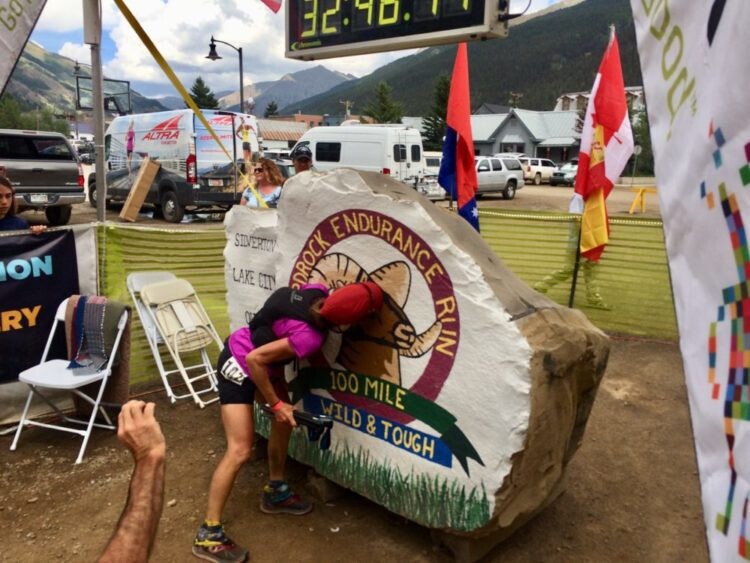
Further, the policy allows surrogate parents whose due date falls within the six-month period leading up to race day to claim a one-year deferral. This policy also applies to parents who adopt a child during the same six-month period (provided the child is under five years old).
“At Hardrock, we firmly believe that runners of all types shouldn’t have to choose between chasing their dreams on the trails and pursuing the option of becoming parents,” the race posted on Instagram. “That is why we have updated our Pregnancy Entry Deferral policy to provide a more generous deferral period for pregnant women and new mothers, and expanded coverage to include other types of new parents, such as in situations of surrogacy and adoption.”
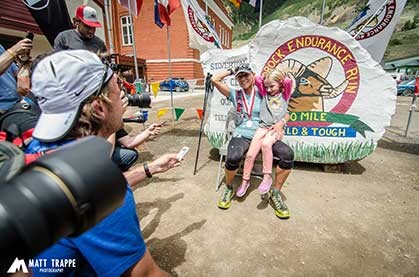
News of the new policy was greeted with mostly positive comments, though some decried the length of time it has taken for the race to finally acknowledge the realities of life for parents and those who are trying to have children. Canadian ultrarunner Stephanie Case (@theultrarunnergirl), who finished second in 2022, is a Hardrock board member and spoke to Canadian Running about her own fertility journey in a feature in the 2024 Trail Special Issue, commented “Proud to be on this board!”
The policy is somewhat less generous than that of the Western States Endurance Run (as an example of a comparable race), in that the eligibility period begins when a runner enters the lottery, and deferral may be for an indefinite period; however WSER’s policy applies only to pregnant women. The policy at Ultra-Trail du Mont Blanc (UTMB), like Hardrock’s, applies to surrogate and adoptive parents and partners of pregnant women, for up to five years (with certain restrictions).
(06/12/2024) ⚡AMPby Anne Francis
Hardrock 100
100-mile run with 33,050 feet of climb and 33,050 feet of descent for a total elevation change of 66,100 feet with an average elevation of 11,186 feet - low point 7,680 feet (Ouray) and high point 14,048 feet (Handies Peak). The run starts and ends in Silverton, Colorado and travels through the towns of Telluride, Ouray, and the ghost town...
more...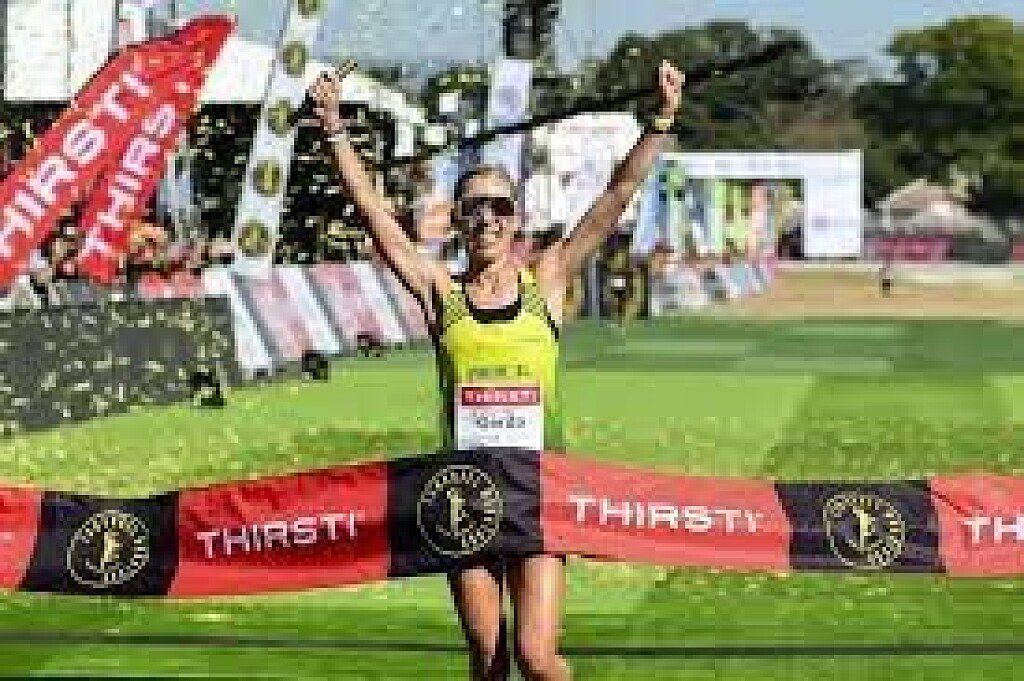
Comrades Marathon: Gerda Steyn Sets Course Record; Piet Wiersma Wins Men’s Race
At the 2024 Comrades Marathon, South African Gerda Steyn sets a course record in her third win while Dutchman Piet Wiersma gets his first victory.
At 5:30 a.m. on Sunday, June 9, in the raucous darkness of Durban, South Africa, more than 20,000 runners, powered by nerves, adrenaline, and the “Chariots of Fire” theme song, crossed the start line of the 2024 Comrades Marathon to take part in the oldest and largest ultramarathon in the world: nearly 86 kilometers of road running throughout the hills of South Africa’s KwaZulu-Natal province. It was the 97th running of the event, which has only missed four editions since World War I veteran Vic Clapham started it in 1921 to commemorate the lives of South African soldiers.
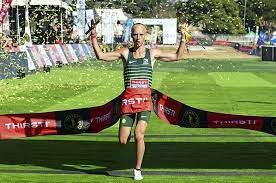
Two of the runners — Gerda Steyn, of South Africa but who lives in the United Arab Emirates, on the women’s side and Piet Wiersma of The Netherlands on the men’s — cemented their names in race lore by taking home wins, and sizable paydays, in their respective races. The race has a massive prize purse, with a total 4,092,000 Rand ($217,000) on the line.
Steyn, the defending champion, broke her own course record for the Up run direction by more than nine minutes for her third win at Comrades. She also holds the women’s course record for the Down run when the race is held in the opposite direction, which she set in 2023.

Wiersma, meanwhile, backed up his impressive Comrades debut last year — where he finished second only three seconds behind the winner — with his first win at the race.
The Comrades Marathon famously alternates the direction each year, and this year’s race, which was run in relatively ideal conditions with temperatures ranging from the mid-50s to low-70s Fahrenheit, was the 49th Up race, meaning runners began in the lower-altitude Durban and ended in the higher-altitude Pietermaritzburg. The race featured around 1,750 meters of elevation gain, with most of it during the first half of the race, when the course runs through three of its “Big Five” hills. The Up run, therefore, demands a smart, measured racing strategy.
For the race’s first half, Piet Wiersma (The Netherlands) seemed content to stay conservative and save his energy for the back half. A two-man pack of Jobo Khatoane (Lesotho), looking for his first Comrades finish, and Aleksei Beresnev (Russia), back for a second time after debuting inside the top 10 last year, were within a minute of each other at Drummond, around the halfway mark, with the next runner more than five minutes back and Wiersma sitting in 10th, almost nine-and-a-half minutes off the lead.
But then Wiersma dropped the hammer, increasing his pace to 3:37 per kilometer from 3:58 per kilometer to jump into the top five by the Cato Ridge checkpoint at 56.6 kilometers into the race. That seemingly set the tone for big moves for the race’s second half, where Beresnev was still holding the lead and followed by Degefa Yohannese Lafebo (Ethiopia). With this race, Lafebo was moving up in distance following two top-10 finishes at the Two Oceans Marathon, a 50k race.
South Africans Tete Dijana, the two-time defending champion, and Dan Moselakwe, a prior Comrades podium finisher, sat in third and fourth, respectively.
Wiersma continued to run strong and moved into the lead by Umlaas Road, 67.5k, passing Lafebo, and by Mkondeni at 79.1k, he had increased to nearly a minute. Behind him, Beresnev dropped off the pace, while Dijana couldn’t hang on, either. The pair would finish, but outside the top 10 this year.
Moselakwe took advantage of fading runners to move himself into second. Joseph Manyedi (South Africa), meanwhile, methodically moved his way up to finish in fourth, his eighth and best Comrades finish, while Andrew Davies (U.K.) jumped from 12th to fifth over the course of the second half of the race. This was Davies’ first Comrades finish.
At the finish line, Wiersma would stay clear of Moselakwe by 45 seconds and third-place finisher Lafebo by nearly three minutes.
(06/10/2024) ⚡AMPby Robbie Harms
Comrades Marathon
Arguably the greatest ultra marathon in the world where athletes come from all over the world to combine muscle and mental strength to conquer the approx 90kilometers between the cities of Pietermaritzburg and Durban, the event owes its beginnings to the vision of one man, World War I veteran Vic Clapham. A soldier, a dreamer, who had campaigned in East...
more...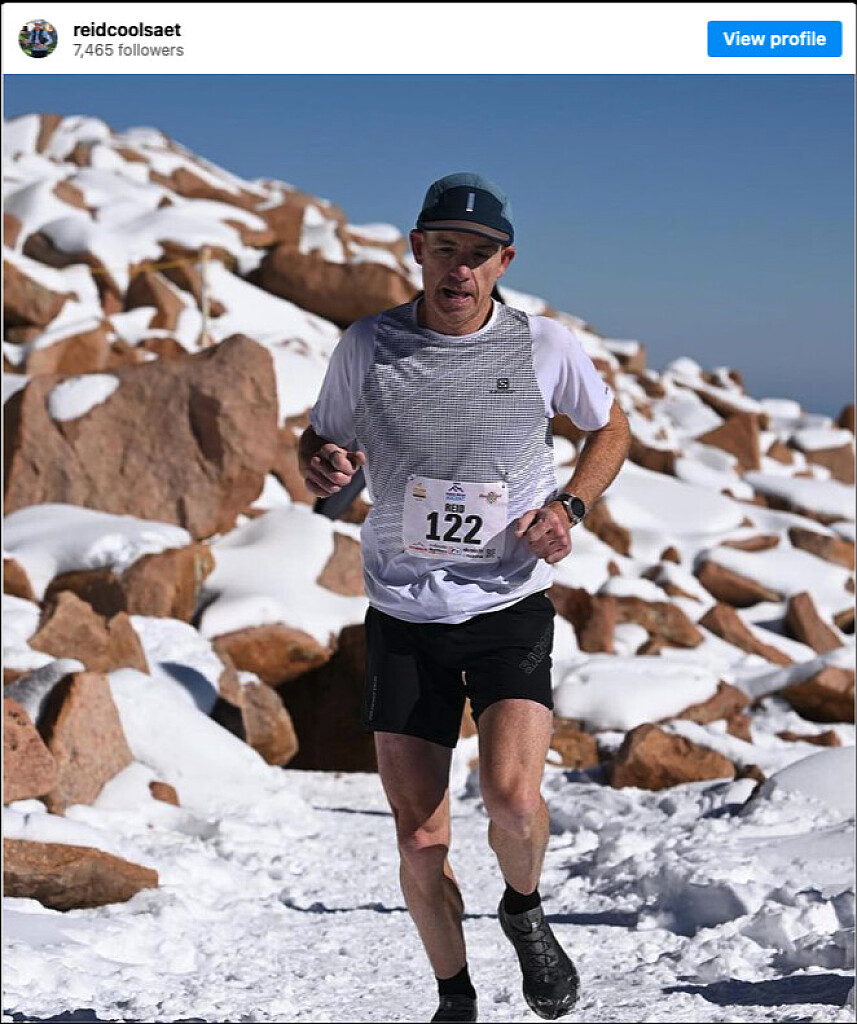
Canadian ultrarunner Reid Coolsaet weighs in on Awesome Sauce controversy
Carbs, calories and conflicting labels have been the focus of ultra-trail talk on social media over the last few weeks, all circling around Spring Energy’s Awesome Sauce gel. In an Instagram post, Olympic marathoner and ultra-trail runner Reid Coolsaet weighed in on his less-than-ideal experience with the race fuel during the 2023 edition of Pike’s Peak Ascent 21K, in Manitou Springs, Colo.–his last competitive race.
“If I had been consuming Awesome Sauce in the peak of my career or in a race I was gunning for the podium, I’d be super pissed,” he said.
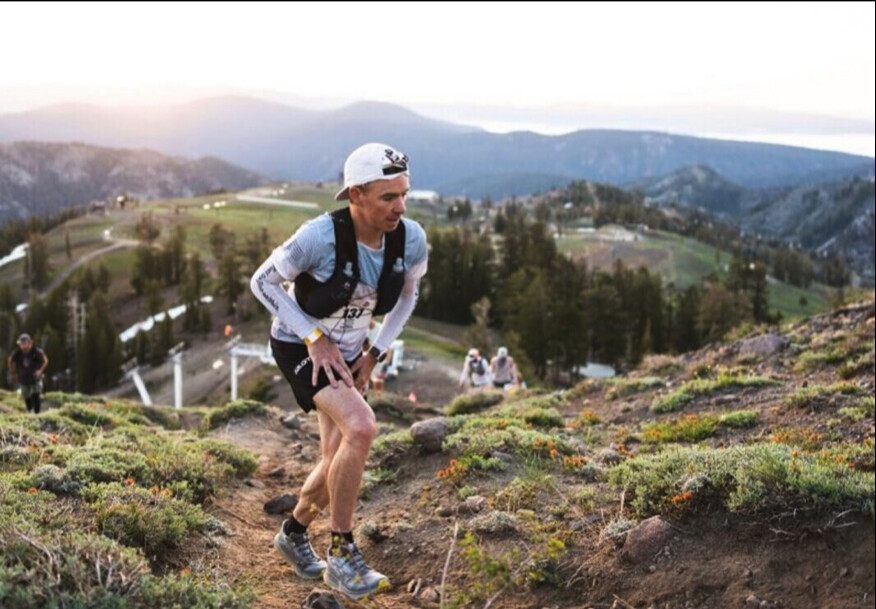
Coolsaet’s post comes on the tail of a controversy about Awesome Sauce that has been steadily gaining steam. In April, an ultrarunner on Reddit shared their doubts about Awesome Sauce’s energy content. The original poster, who stated that they worked as an environmental chemist, noticed that they experienced a “hollowed-out stomach” feeling after consuming an Awesome Sauce gel, which claims to pack 180 calories and 45 grams of carbohydrate. They performed an at-home experiment with a dehydrator and a kitchen scale, concluding that an Awesome Sauce gel provides a runner with only around 60 calories and 17 grams of carbohydrate.
While various elites, amateurs and Internet trolls weighed in on their beliefs around the content of Awesome Sauce, coach and pro ultrarunner Jason Koop purchased some gels and sent them to an independent lab for testing, then shared the results on his website and Instagram. The verdict? Koop reports that an Awesome Sauce gel contains 75 calories (not 180, as labelled), and 18 grams of carbohydrate (as opposed to the 45 grams claimed on the label).
Coolsaet explains the challenges that committing poor fuelling choices (unknowingly) caused him. While he struggled during the final third of Pike’s Peak, he assumed it was due to altitude (the race finishes at over 4,000m). “I didn’t think fueling had anything to do with falling apart because I thought I was consuming about 65 grams of carbs per hour,” said Coolsaet, who was drinking Tailwind and eating Awesome Sauce gels during the race. “Now it sounds like instead of 45 grams of carbs in each Awesome Sauce there are only 18 grams (check out @jasonkoop’s post). So I was really only getting 35 grams of carbs an hour, which isn’t going to cut it when racing for 2-3 hours.”
At the end of April, Spring Energy responded to the Reddit poster, stating that they value constructive criticism and input. “Our analysis supports the accuracy of our product labeling. However, we will reevaluate to make sure our data is accurate,” they wrote.
(06/08/2024) ⚡AMPby Running Magazine

He’s Running 900 Miles to Every Premier League Soccer Stadium for Suicide Prevention
When Matthew Smith was a child, he lost his brother to suicide. Now he’s running throughout England to raise money for mental health services in a region that has the highest rates of suicide in the entire country.
Matthew Smith was only 10 years old when he lost his brother, Daniel O’Hare, to suicide. Daniel was 19 and had no history of mental health problems, nor had he shown any outward signs of his intention to end his life. His family was devastated by the sudden and unexpected loss, and they are still struggling to understand his choice.

Now 29, Smith is an advocate for mental health, and he’s on a mission to run 900 miles to every Premier League stadium in England to raise money for the region’s services. The northeast region, where Smith lives, has the highest rate of suicides in the country, and he and his supporters are determined to change that. He plans to take on this ultrarunning challenge in his brother’s honor in August, and he has the goal of raising £135,000 ($171,882) and spreading awareness of suicide prevention. He told Chronicle Live that along the way, he’ll be delivering the message that “it’s okay to not be okay,” and that there is “always a way.”
After losing Daniel in 2005, Smith and his younger brother and cousin started a nonprofit in his memory called If U Care Share, because they wanted to do something positive and prevent other families from going through the same kind of loss. They sold wristbands at soccer clubs that said “if u care share,” and raised over £50,000 ($63,655) for mental health charities.
In 2011, the charity was officially registered with three main objectives: prevention, intervention, and support for survivors of suicide loss. For more than a decade, If U Care Share has offered support to people who have lost loved ones to suicide and provided advice and assistance to people who are at risk of killing themselves.
Two years ago, Smith ran 250 miles from the charity’s headquarters in northern England to Downing Street in London to hand deliver a letter asking the U.K. government to include suicide prevention in the Levelling Up White Paper, a moral, social, and economic program.
This latest initiative came about because of Smith and his If U Care Share colleagues’ love of soccer and longstanding partnerships with the Premier League, the League Football Education, and the Women’s Super League.
“It’s no secret that suicide prevention and mental health services have struggled recently due to significant funding restrictions, so I can’t thank everyone enough for believing in the charity, our mission, and myself,” Smith told Chronicle Live. “The money raised at the launch event will not only enable the challenge to go ahead, it will also save lives, support communities, and prevent suicide in a region that needs our help more than ever.”
(06/01/2024) ⚡AMPby Runner’s World
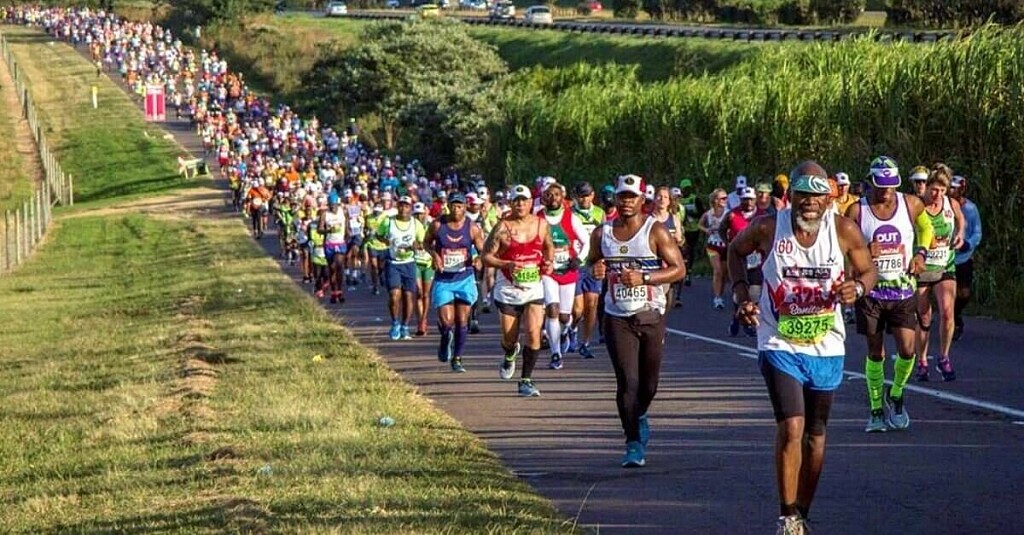
Relief for Comrades Marathon runners
The 97th Comrades Marathon — an up run — will be held over 85,91 km between Durban and Pietermaritzburg on June 9.
Runners will feel some relief after receiving a bit of respite from Comrades Marathon organizers, with another adjustment being made to the cut-off times for next week’s ultra-marathon in KwaZulu-Natal.
With cut-off times having caused some controversy after runners were alleged to have been taken off the course earlier than necessary at last year’s race, this latest move announced yesterday would give participants another 10 minutes to reach the last cut-off before the finish.
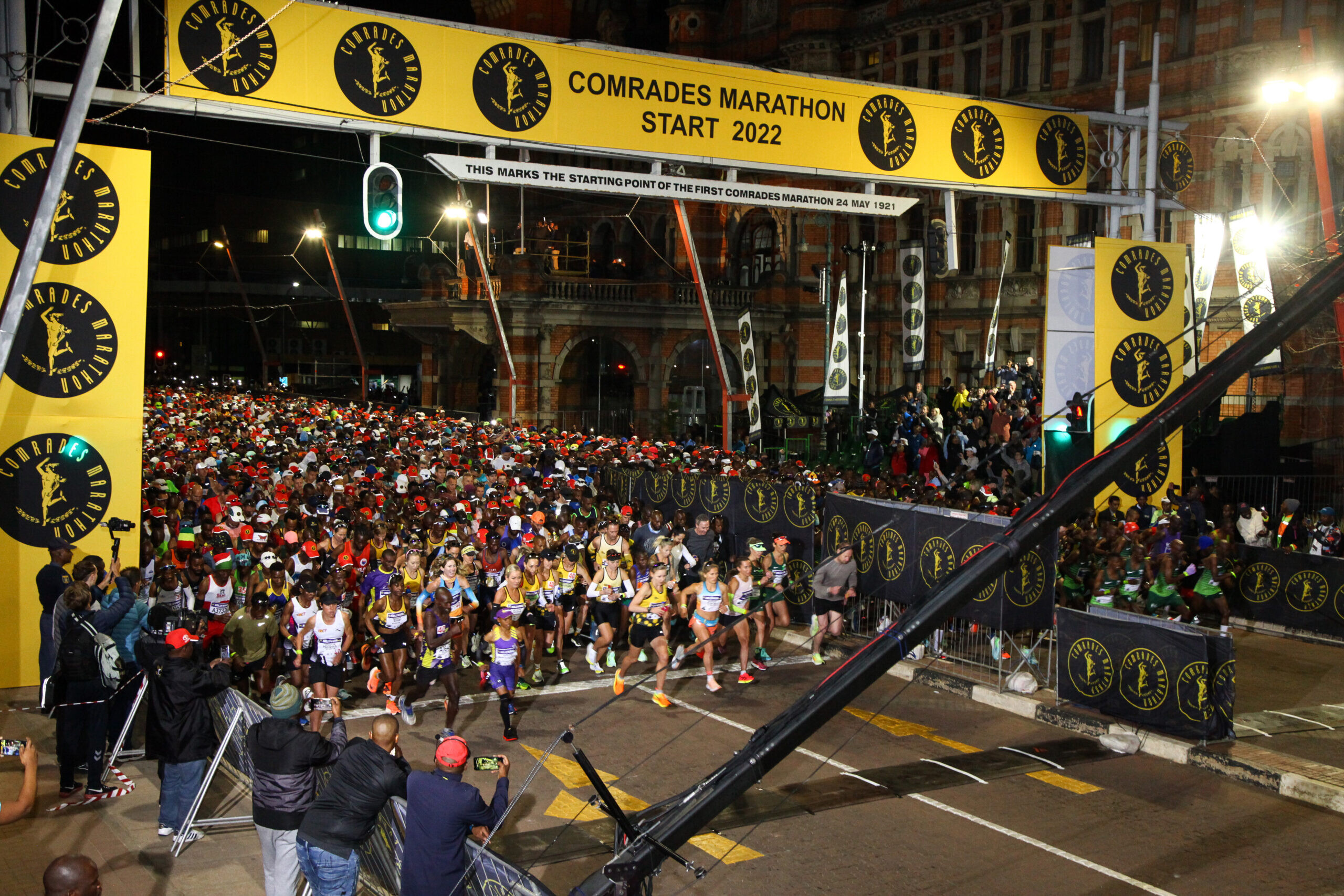
The cut-off at the 79,1-km mark, at the top of the notorious Polly Shortts climb, had been shifted from 11 hours 10 minutes (11:10:00) to 11:20:00, the Comrades Marathon Association (CMA) confirmed.
According to organizers, this was “in response to runner requests and ongoing efforts to ensure that participants have the best possible chance of finishing this year’s race”.
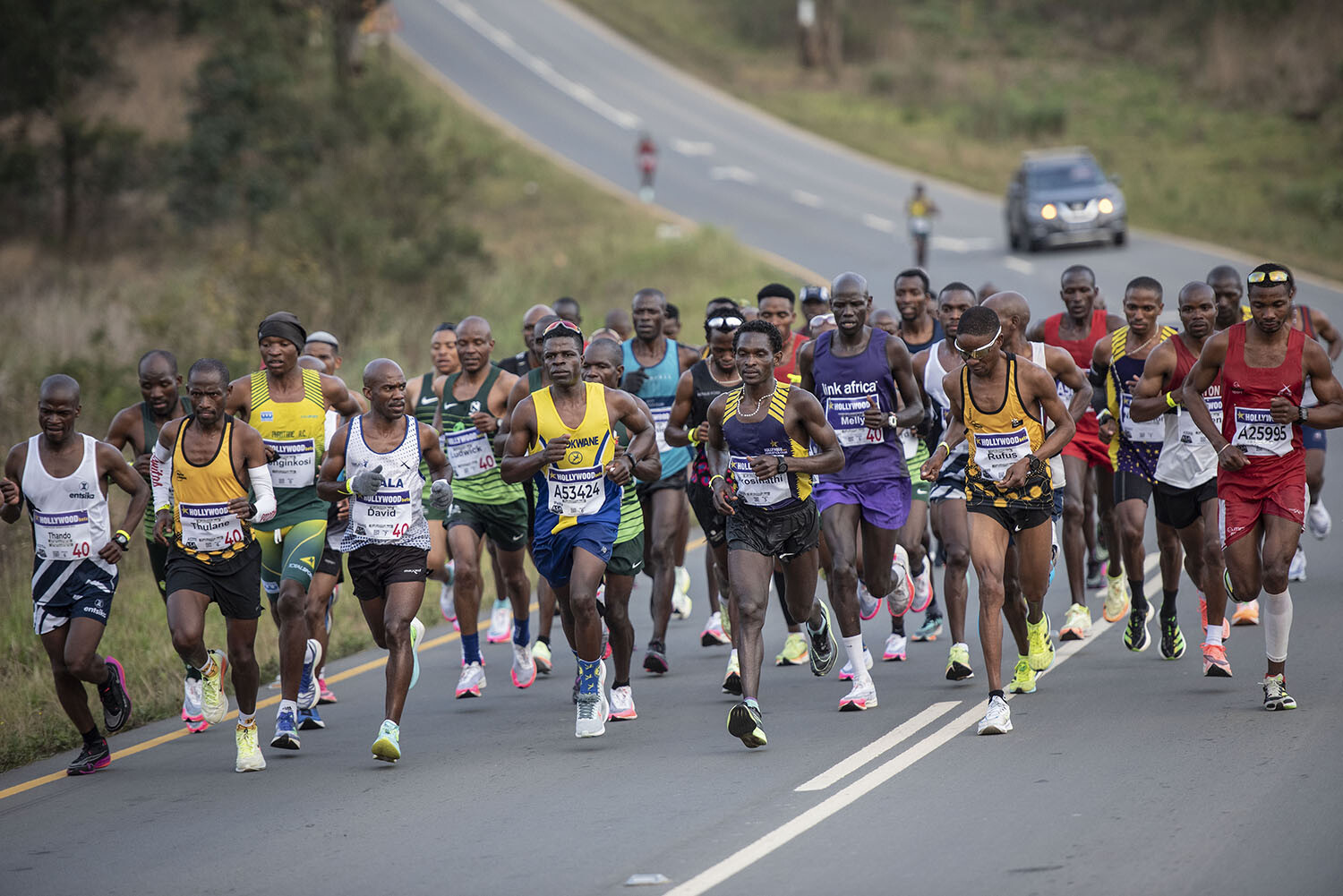
This latest announcement followed a decision by the CMA earlier this month to scrap the first cut-off point, at St Johns Avenue in Pinetown, reducing the total cut-off points to five, excluding the finish. Cut-off times were also revised for Winston Park and the halfway point at Drummond.
The 97th Comrades Marathon — an up run — will be held over 85,91 km between Durban and Pietermaritzburg on June 9.
Meanwhile, since 2015, the CMA has been awarding “Winners Jackets” to male and female winners of the race.
The year 2016 saw the retrospective awarding of Winners Jackets to three previous winners at the official Comrades race day prizegiving ceremony; with this becoming a celebratory facet to race week festivities until all surviving former Comrades Marathon winners have been honored with their very own Winners Jackets.
Two remarkable individuals will receive the grand acknowledgement at this year’s Comrades Champions Prizegiving Breakfast on Monday, June 10.
They are Rae Bischoff and Sipho Ngomane, both of whom in their own right have made their mark on The Ultimate Human Race.
In 1998 Bischoff made South Africa proud when she took the women’s title, a long break since 1993, when fellow South African Tilda Tearle was crowned the women’s champion.
Bischoff, a veteran contender during that up run, had Valentina Liakhova close on her heels, with a mere 19 seconds between them. But Bischoff managed to cross the finish line in 6:38:57, taking first position.
Ngomane ran his first Comrades Marathon in 2003. In 2005 — a down run — he surprised the world when he won in 5:27:11, with Oleg Kharitonov close behind.
What made the victory even sweeter is that Ngomane had to run in borrowed shoes after his had been stolen. He was only 23 at the time when he claimed the victory.
Comrades Marathon cut-off times:
Winston Park (Caltex Garage) – 29,6 km in, clock time 4:45:00
Drummond (Halfway) – 42,6 km in, clock time 6:20:00
Cato Ridge (N3 Subway) – 56,6 km in, clock time 8:10:00
Umlaas Road – 67,5 km in, clock time 9:40:00
Mkondeni (Top of Polly Shortts) – 79,1 km in, clock time 11:20:00
Finish line – 85,91 km in, clock time 12:00:00.
(05/30/2024) ⚡AMPby The Witness
Comrades Marathon
Arguably the greatest ultra marathon in the world where athletes come from all over the world to combine muscle and mental strength to conquer the approx 90kilometers between the cities of Pietermaritzburg and Durban, the event owes its beginnings to the vision of one man, World War I veteran Vic Clapham. A soldier, a dreamer, who had campaigned in East...
more...
Why women-only run clubs are dominating the scene
Amid 2024’s run-mania, with races frequently selling out across Canada, female-exclusive run clubs are gaining momentum. In honour of Sexual Assault Awareness Month, we’re discussing how the sport has evolved, with women’s run clubs paving the way for female runners to feel seen, safe and empowered.
Run clubs are in
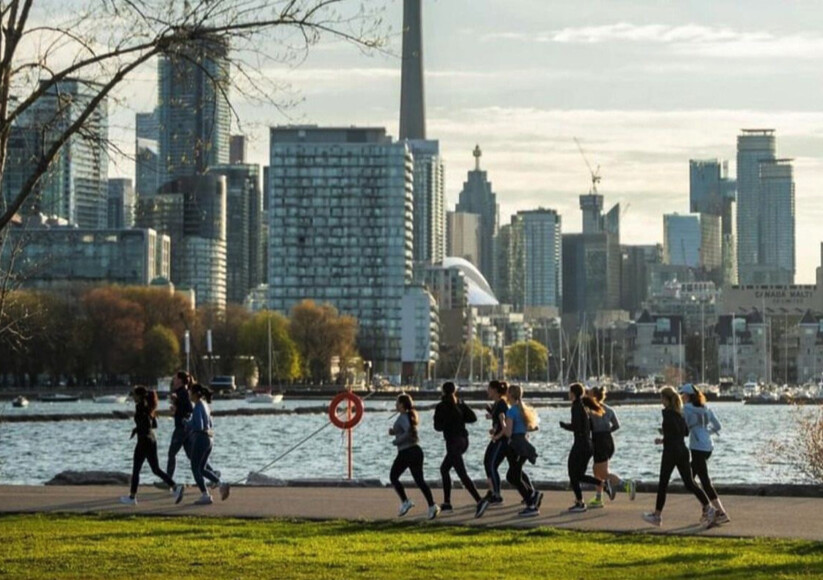
Women’s running has been on the rise since the ’70s, when recreational jogging first became popular. However, the recent surge in gender-exclusive running clubs is a significant development. According to Reddit, this is not just a passing trend. Women’s run clubs have become especially attractive to women who’ve experienced gender-based discrimination or sexual harassment in mixed-gender clubs.“As a woman that has participated in many mixed-company athletic pursuits, [I feel that] men often react poorly to women being skilled or successful in a sport, in addition to the usual perils of being harassed or bothered,” said one Reddit user. Another pointed out that “this obnoxious masculinity is woven into the history of run clubs.”
Confronting patriarchy
Running, like many other sports, was designed by men for men. Women in France began challenging this norm in 1903 with a race in Paris known as “The Race of the Midinettes” (a 12-km walking race for seamstresses or assistants in the Paris fashion industry). While the French press called these midinettes derogatory names like “streetwalkers” (sex workers), feminist scholars such as Florys Castan-Vicenet (in her 2023 report in Front Sports Act Living) strongly argue otherwise, considering them pioneers. Amsterdam’s 1928 Olympic Games marked a revolutionary moment in women’s running. For the first time, female runners were invited to participate in the 800m. This feat was short-lived however, as the event was immediately banned, and would remain so until 1960. In 1967, Kathrine Switzer became the first woman to run the Boston Marathon with an official bib (though she was physically assaulted by the race manager for doing so).
“Female runners were spearheading a revolution, changing common beliefs about the limits of women’s physical endurance,” shared Louise Wood in her story “Into the Boys’ Club”. By the turn of the 21st century, feminist movements were changing the landscape of women’s running.
Women supporting women
During this time, feminist thinkers like Sara Ahmed confronted topics like gender inequity and female objectification that commonly deterred women from joining the sport. “What I hate is, for example when someone comments on your run,” wrote Ahmed in her 2000 novel Strange Encounters. “They mean it as a compliment, but for me, it just emphasizes, ‘I don’t expect this from someone who looks like you.'” As female runners and feminists continued to reshape the narrative, gender-exclusive run clubs emerged, reflecting a significant rise in women’s participation in running. A report by International Journal of Environmental Research and Public Health says between 1953 and 2017, sex differences decreased dramatically in 100-mile ultras worldwide. By 2020, according to RunRpeat, 57 per cent of Canadian runners and 23 per cent of ultramarathon participants identified as female, marking a significant increase.
Strength in numbers
Today, women are choosing to forgo late nights on the town for a good night’s sleep and morning run club with the girls. These clubs are not just about running; they are about women sprinting together through life’s challenges, forming strong bonds and a sense of community that extends beyond the club. Women-only run clubs across Canada, such as Switzer’s 261 Fearless (which has chapters in 14 countries; the Canadian chapter is in Toronto), and runs celebrating women, like Lululemon’s Further 6-day ultra (based in Vancouver), are surging in popularity. Still, in a 2023 study by Adidas, it was reported that 38 per cent of women have experienced physical or verbal harassment while running, with more than half receiving unwanted attention (56 per cent), sexist comments or unwanted sexual attention (55 per cent). According to a 2024 study by Asics, a startling number of Canadian women have cited “lack of safe spaces” as a barrier to running.
Chix Run (located in Toronto and Calgary) has been dedicated to offering women this safe space. Since founding the club four years ago, Amanda Richardson, 42, has observed a significant improvement in the sport’s female representation. “Toronto run clubs used to be focused just on performance, but now it’s all about community, where women are out there connecting on topics like motherhood, marriage or their love of coffee—a post-run highlight.”
The club strives to take the emphasis off competing and winning to make running more about having fun, being active with other women and creating friendships. “Many people have noticed running is advertised as a place to date,” Richardson laughs. “Turning up to a running club where you know it’s all women there, free to say what you want to say, be who you want to be, they don’t have to worry about how they look; there is no hidden agenda.”
Girlhood and good vibes
According to Strava, women under 25 are the fastest-growing community using the app today, promising a more balanced and inclusive future for running. The Girls run the 6ix run club has quickly become a regular hotspot for young female runners in Toronto. The club was founded in December by Jill Amirault, 26, and Claire Milburn, 23, and already has 5,000 Instagram followers.“I think for someone new to running, it can be really intimidating to go to a gender-diverse run club, because men are typically competitive,” says Amirault. “Some women need that safe space, similar to a gym with a ‘women only’ section.” The club embarks once a week on a 6-km route through the city, in which its members can be found swapping stories about dating misadventures and connecting about girlhood. For a long time, there was a lack of female-exclusive run clubs in Toronto, says Amirault.
“Now, with more female run clubs and influencers, people are certainly beginning to notice that this is an environment where women can succeed,” says Amirault. “Pace doesn’t matter; what’s important is that we motivate, connect and celebrate our womanhood.”
(05/26/2024) ⚡AMPby Running Magazine
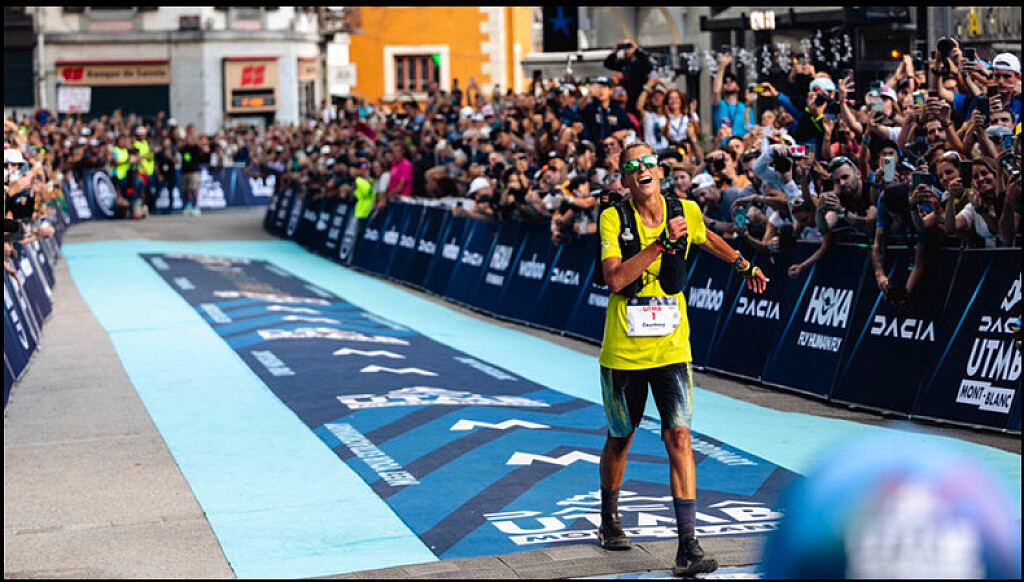
The Keys to Courtney Dauwalter’s Continued Dominance
During a recent press conference, Dauwalter dished oUltrarunner extraordinaire Courtney Dauwalter has picked up in 2024 right where she left off last year. After famously winning three of ultrarunning’s most epic races during the span of about nine weeks last summer—Western States 100, Hardrock 100, and Ultra-Trail du Mont-Blanc—the 39-year-old athlete from Leadville, Colorado, defended her Transgrancanaria 126K title in a decisive wire-to-wire win in late February and won the Mount Fuji 100-miler for the second time on April 27, placing third overall.
She’s now gearing up to go for a third straight win at the Hardrock 100 on July 12-13 in Silverton, Colorado. After Hardrock, she’ll be crewing and pacing her husband, Kevin Schmidt, at the Leadville 100 on August 17-18, and then tackling a yet-unannounced trail running project in September.We caught up with Dauwalter to talk about her fueling and training in a virtual press conference, where she announced the May 20 release of her signature flavor of Tailwind Nutrition Endurance Fuel—Dauwaltermelon with Lime—as a permanent part of the brand’s lineup. Since she’s emerged as one of the world’s top trail ultrarunners, she’s been known for having a sound approach to nutrition and fueling, never shying away from eating whatever she wants, admitting her soft spot for candy and pastries, or having a beer every now and then if she feels like it.


COURTNEY DAUWALTER: I am still eating all of my favorite things whenever they sound good in quantities that sound good, and I am not intending to change that part of my life, because it just gives me a lot of joy to live that way. I guess it’s got to be partly my upbringing, and also with Kevin and I, our idea of how we want to live our lives is to enjoy it to its fullest while it’s here. We just want to enjoy food, enjoy meals out, enjoy the cravings that we have, and not worry about it. But I would say in the past couple of years I do more consistently do a recovery drink after a long run or after putting in big efforts, and that’s something that I was a little more lax with originally, so I feel like that’s a step in the right direction.
When I first got into ultrarunning, I had no nutrition plan. I didn’t know what I was doing. My first race was a 50K, and I remember not knowing that these aid stations would be buffets. My mind was blown when I got to them—all the options were overwhelming. I just started filling my pockets with jelly beans. In those first years, I did a lot of mimicking of what the people around me were doing. So if I came to an aid station and someone was grabbing pickles and drinking Mountain Dew, then that’s what I would do. If they were grabbing pretzels and cheese cubes, that’s what I would go for. It was just kind of roulette for me on what I would end up eating—if it would work, or if it wouldn’t work.
Initially, I never had a fueling plan at all. But then in 2017, I went to the Run Rabbit Run 100 in Steamboat Springs, Colorado, and Tailwind was available on course at all of the aid stations. I had a buddy who had started using it that year, and I remember just loving it and suddenly not having all the stomach issues and energy dips that I often had. I was like, ‘Oh, maybe this is what it’s like to have something reliable.
'At this point we’ve gotten pretty dialed on the race nutrition plan for those 10-to 24-hour efforts or the events of 100 miles or below. I’m not a person who has my watch beeping at me ever to remind me to eat. I don’t get those kinds of reminders, and I don’t want to eat every 15 minutes or 30 minutes during a race. I’m going to just slow drip the calories I have as often as possible—basically it’s an eating contest on the move. Now I know my body functions pretty well with about 200 calories per hour during those efforts. So, depending on the distance between aid stations, I can rely solely on a bottle of Tailwind and then supplement with some chews or waffles or gels, because usually I get actually hungry feeling and having something solid helps with that. But mostly, I’m relying on Tailwind as my backbone to the whole plan and generally aiming for that 200-calorie-per-hour benchmark.The past couple years (working with a nutritionist friend), we’ve been better at creating A, B, C and D plans—because sometimes the perfect nutrition plan that you have relied on isn’t going to work. Our approach is that’s fine, and here are some things you can start subbing in during a race that can cover your needs. I view race nutrition like a puzzle piece, and sometimes it fits into the puzzle right where we want it to, and sometimes we have to kind shift things around a little bit. I think one of the reasons a lot of us love ultrarunning is because, when things just aren’t going to plan, we have to problem-solve it.
That’s one thing I’m hoping to focus on a little bit more on in this buildup and this prep for Hardrock, because in the past couple times I’ve run it, I’ve struggled a little bit with taking stuff in. I would love to just try to intentionally train my stomach to be better at taking in those calories while pushing hard at 12,500 feet or 13,000 feet just to see if we can make some strides forward. So stay tuned on if that works or not.
Not specific things. I think I want to just keep finding the challenges that intrigue me and fire me up to keep putting in the work, the training, the time, the effort to go after them. And so whatever that is, there’s not a list of things I want to check off necessarily, but, I’m continuing to pour myself into this sport and see what’s possible while every one of my systems [muscular, digestive, endocrine, cognitive, emotional, etc.] is allowing that to happen. The Leadville 100 is on my short list of races I would love to do as soon as I can, but as far as a bucket list in general or what intrigues me, I’m still very interested in exploring the longer stuff and how our brains and our bodies can work together to take us over 100 miles. What does that look like to move efficiently for 200 miles or 500 miles? So that’s where I am putting a lot of my attention into—just finding ways to test myself on stuff that’s really long.I am interested in trying a road marathon again at some point because that was what led me to ultrarunning.. I didn’t think I could make that distance, but I finished without dying and then wondered, ‘What else is out there that sounds too hard that I could try?’ And then I stumbled into the ultrarunning world. In those first marathons, I was a casual runner.
I ran every day before work because it made me feel better to start the day, but I wasn’t doing huge miles or running quickly. So circling back to run a road marathon would be kind of fun.I definitely didn’t invent it, and I don’t know who did originally, but I know that for me that phrase just became this imagery that I really grabbed onto—as opposed to the struggle bus or the hurt locker or the many other terms. That one for me was visually something I could see, and it was something that I could work with to be productive. Back in high school, I had a cross country skiing coach who was big on the mental side of the sport and would always remind us and believe in our capacity to push past that moment when it feels like you have nothing left. He was huge on just the idea that there’s always one more gear. So I just crank the knob and believe that it can be cranked a little bit more. Having someone who believed in me so wholeheartedly that I could trust to keep pushing was important because it’s hard to do that when you’re any age, but for sure it’s hard to do when you’re a teenager.
The idea that you feel like you’re about to die and yet you’re telling me there’s more to push past that? That’s hard to learn. So I feel really lucky that I had that coach and to learn about that mental side of sports and digging deeper than you think.
That was so special, a highlight of my life for sure. We ran together through the desert in Arizona, side by side the whole time through all the highs and lows, and made it to that finish line. I’ll remember that forever, and that gift that she gave me of doing this thing with me and the sport I love and spending so much time preparing for it. She was training hard back home in Minnesota, trying to learn how to run trails, trying to power hike hills, and learning how to use all of the gear because she had never really run trails before. I think the domino effect is that you can start anything at any age. She was 66 when we ran this race together and 64 when she started this journey into trail running. I had told her my dream was to run an ultra with my mom, and now that she has completed a 100K, she has found a lot of joy in the trails. Even though we don’t have a race on the calendar together yet, she is still just finding that peace that the trails bring her, and it’s something she incorporates into her weekly life. I think that’s really cool, and it’s why I hope more people can find out about trail running—not necessarily even ultrarunning—but just getting out on the trails and exploring a little bit because that feeling of moving with your feet surrounded by nature and feeling so small in a big landscape is really, really cool.
My hope is that people hearing about the stuff that I’m doing or that the ultrarunning community is doing helps them believe they could go after something that sounds too hard or something that sounds crazy. Whether that’s running 100 miles or 200 miles or not. We can all find that thing in our lives that we can go after with a little more gusto and raise the bar for ourselves on what we’re actually aiming for. I also hope I can be a small example that you can work really, really, really hard at something and have a lot of fun doing it. Those things can happen at the same time and there’s no reason to separate them. I never predicted this chapter in my life, but I feel grateful every day for it. I’m just trying to squeeze as much living out of this period of life as I can.
n her approach to nutrition and fueling, early-career bonks, and more.
(05/25/2024) ⚡AMPby Outside Online
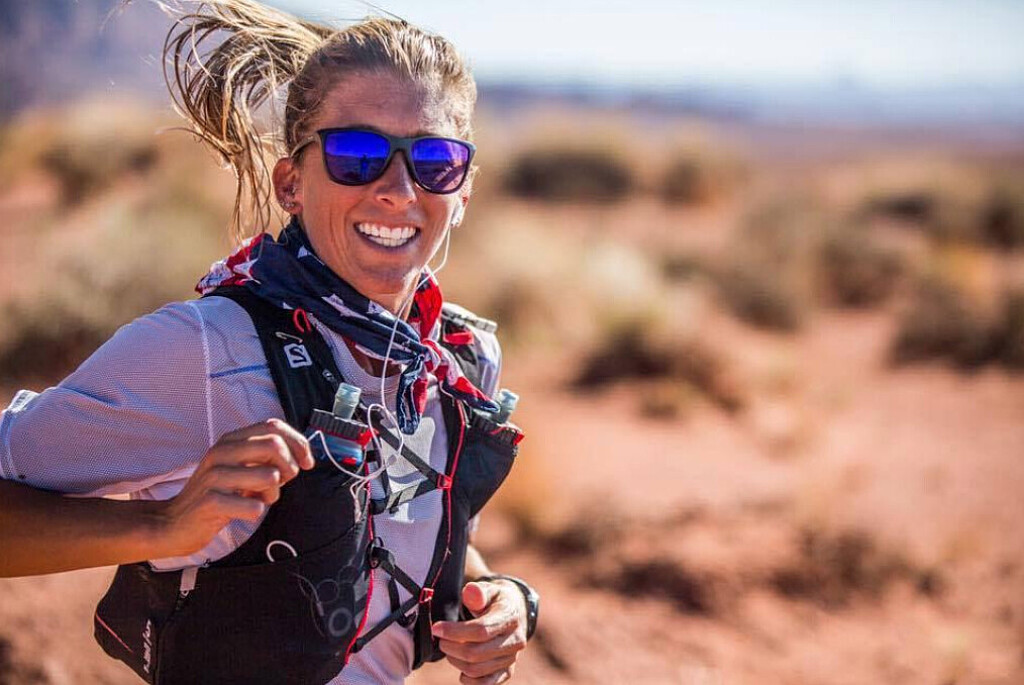
The Keys to Courtney Dauwalter’s Continued Dominance
Ultrarunner extraordinaire Courtney Dauwalter has picked up in 2024 right where she left off last year. After famously winning three of ultrarunning’s most epic races during the span of about nine weeks last summer—Western States 100, Hardrock 100, and Ultra-Trail du Mont-Blanc—the 39-year-old athlete from Leadville, Colorado, defended her Transgrancanaria 126K title in a decisive wire-to-wire win in late February and won the Mount Fuji 100-miler for the second time on April 27, placing third overall. She’s now gearing up to go for a third straight win at the Hardrock 100 on July 12-13 in Silverton, Colorado. After Hardrock, she’ll be crewing and pacing her husband, Kevin Schmidt, at the Leadville 100 on August 17-18, and then tackling a yet-unannounced trail running project in September.
We caught up with Dauwalter to talk about her fueling and training in a virtual press conference, where she announced the May 20 release of her signature flavor of Tailwind Nutrition Endurance Fuel—Dauwaltermelon with Lime—as a permanent part of the brand’s lineup. Since she’s emerged as one of the world’s top trail ultrarunners, she’s been known for having a sound approach to nutrition and fueling, never shying away from eating whatever she wants, admitting her soft spot for candy and pastries, or having a beer every now and then if she feels like it.
RUN: How did you develop such a sensible approach to nutrition and fueling, and what, if anything, have you changed?
Courtney Dauwalter: “I am still eating all of my favorite things whenever they sound good in quantities that sound good, and I am not intending to change that part of my life, because it just gives me a lot of joy to live that way. I guess it’s got to be partly my upbringing, and also with Kevin and I, our idea of how we want to live our lives is to enjoy it to its fullest while it’s here. We just want to enjoy food, enjoy meals out, enjoy the cravings that we have, and not worry about it. But I would say in the past couple of years I do more consistently do a recovery drink after a long run or after putting in big efforts, and that’s something that I was a little more lax with originally, so I feel like that’s a step in the right direction.”
RUN: What was your fueling strategy when you first got into ultrarunning in 2011?
CD: “When I first got into ultrarunning, I had no nutrition plan. I didn’t know what I was doing. My first race was a 50K, and I remember not knowing that these aid stations would be buffets. My mind was blown when I got to them—all the options were overwhelming. I just started filling my pockets with jelly beans. In those first years, I did a lot of mimicking of what the people around me were doing. So if I came to an aid station and someone was grabbing pickles and drinking Mountain Dew, then that’s what I would do. If they were grabbing pretzels and cheese cubes, that’s what I would go for. It was just kind of roulette for me on what I would end up eating—if it would work, or if it wouldn’t work.”
RUN: You have told stories about a few famous bonks early in your career. When did you start to dial-in your fueling strategy?
CD: “Initially, I never had a fueling plan at all. But then in 2017, I went to the Run Rabbit Run 100 in Steamboat Springs, Colorado, and Tailwind was available on course at all of the aid stations. I had a buddy who had started using it that year, and I remember just loving it and suddenly not having all the stomach issues and energy dips that I often had. I was like, ‘Oh, maybe this is what it’s like to have something reliable.'”
RUN: What is your current approach to race-day nutrition?
CD: “At this point we’ve gotten pretty dialed on the race nutrition plan for those 10-to 24-hour efforts or the events of 100 miles or below. I’m not a person who has my watch beeping at me ever to remind me to eat. I don’t get those kinds of reminders, and I don’t want to eat every 15 minutes or 30 minutes during a race. I’m going to just slow drip the calories I have as often as possible—basically it’s an eating contest on the move. Now I know my body functions pretty well with about 200 calories per hour during those efforts. So, depending on the distance between aid stations, I can rely solely on a bottle of Tailwind and then supplement with some chews or waffles or gels, because usually I get actually hungry feeling and having something solid helps with that. But mostly, I’m relying on Tailwind as my backbone to the whole plan and generally aiming for that 200-calorie-per-hour benchmark”
RUN: You had to overcome some stomach challenges in UTMB in 2022 and then at last year’s UTMB you seemed as physically challenged as you have ever been. How have you adjusted your fueling in those situations?
CD: “The past couple years (working with a nutritionist friend), we’ve been better at creating A, B, C and D plans—because sometimes the perfect nutrition plan that you have relied on isn’t going to work. Our approach is that’s fine, and here are some things you can start subbing in during a race that can cover your needs. I view race nutrition like a puzzle piece, and sometimes it fits into the puzzle right where we want it to, and sometimes we have to kind shift things around a little bit. I think one of the reasons a lot of us love ultrarunning is because, when things just aren’t going to plan, we have to problem-solve it.”
RUN: You’ll be doing a lot of your pre-Hardrock training in and around Leadville between 11,000 and 14,000 feet above sea level once the spring snow subsides. How are you able to fuel at such high altitudes?
CD: “That’s one thing I’m hoping to focus on a little bit more on in this buildup and this prep for Hardrock, because in the past couple times I’ve run it, I’ve struggled a little bit with taking stuff in. I would love to just try to intentionally train my stomach to be better at taking in those calories while pushing hard at 12,500 feet or 13,000 feet just to see if we can make some strides forward. So stay tuned on if that works or not.”
RUN: Do you have any bucket list events you want to tackle in the coming years?
CD: “Not specific things. I think I want to just keep finding the challenges that intrigue me and fire me up to keep putting in the work, the training, the time, the effort to go after them. And so whatever that is, there’s not a list of things I want to check off necessarily, but, I’m continuing to pour myself into this sport and see what’s possible while every one of my systems [muscular, digestive, endocrine, cognitive, emotional, etc.] is allowing that to happen. The Leadville 100 is on my short list of races I would love to do as soon as I can, but as far as a bucket list in general or what intrigues me, I’m still very interested in exploring the longer stuff and how our brains and our bodies can work together to take us over 100 miles. What does that look like to move efficiently for 200 miles or 500 miles? So that’s where I am putting a lot of my attention into—just finding ways to test myself on stuff that’s really long.”
(05/22/2024) ⚡AMPby Brian Metzler
Hardrock 100
100-mile run with 33,050 feet of climb and 33,050 feet of descent for a total elevation change of 66,100 feet with an average elevation of 11,186 feet - low point 7,680 feet (Ouray) and high point 14,048 feet (Handies Peak). The run starts and ends in Silverton, Colorado and travels through the towns of Telluride, Ouray, and the ghost town...
more...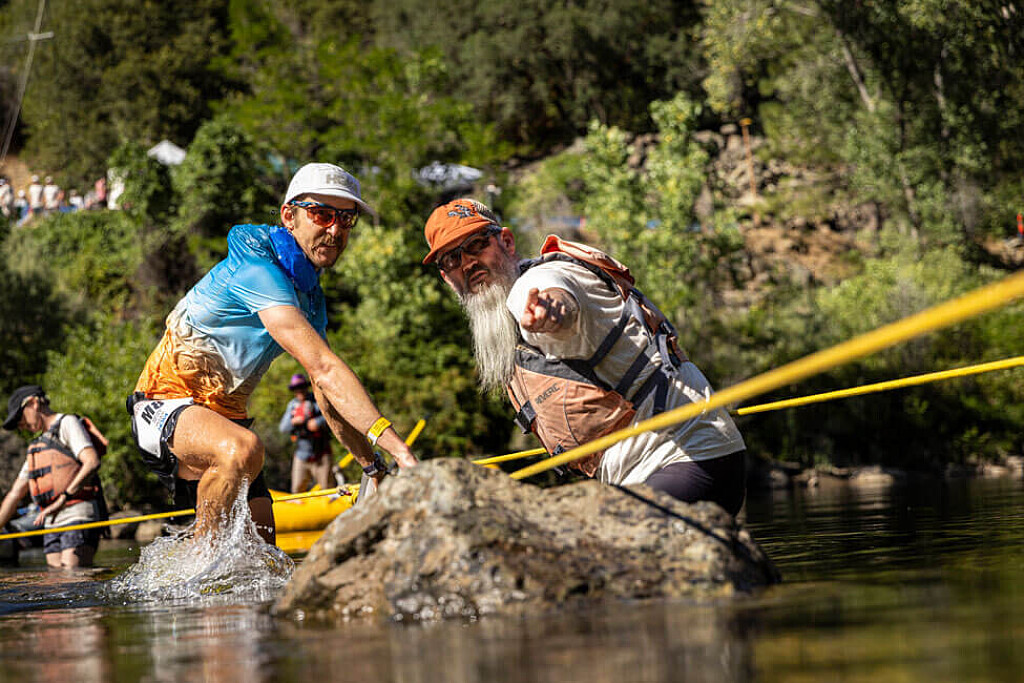
How to Prepare for Western States 100 Trail Race
The Western States 100, the world’s oldest 100-mile footrace, stands as a monumental test of human endurance. Traversing California’s Sierra Nevada Mountains, this race demands competitors climb over 5,000 meters, challenging even the most seasoned athletes. It has become synonymous with the legends of ultrarunning, including Jim Walmsley, Scott Jurek, and Ann Trason.
The Western States 100 began as a horse riding event in 1955. It wasn’t until 1972 that a group of infantry soldiers attempted the trail on foot, with seven successfully completing the 100-mile distance in under 48 hours. Inspired by this feat, Gordy Ainsleigh ran the course alongside horses in 1974, finishing in 24 hours and 42 minutes. This marked the birth of the official footrace in 1977.
Ann Trason holds the record for the most victories at Western States, securing 14 wins from 1989 to 2003. Scott Jurek dominated the men’s competition with seven consecutive victories from 1999 to 2005. In 2021, Beth Pascall of the UK won the women’s race, recording the second-fastest time in the history of women’s 100-mile races with a finish of 17:10:42.
The Course: A Test of Will and Stamina
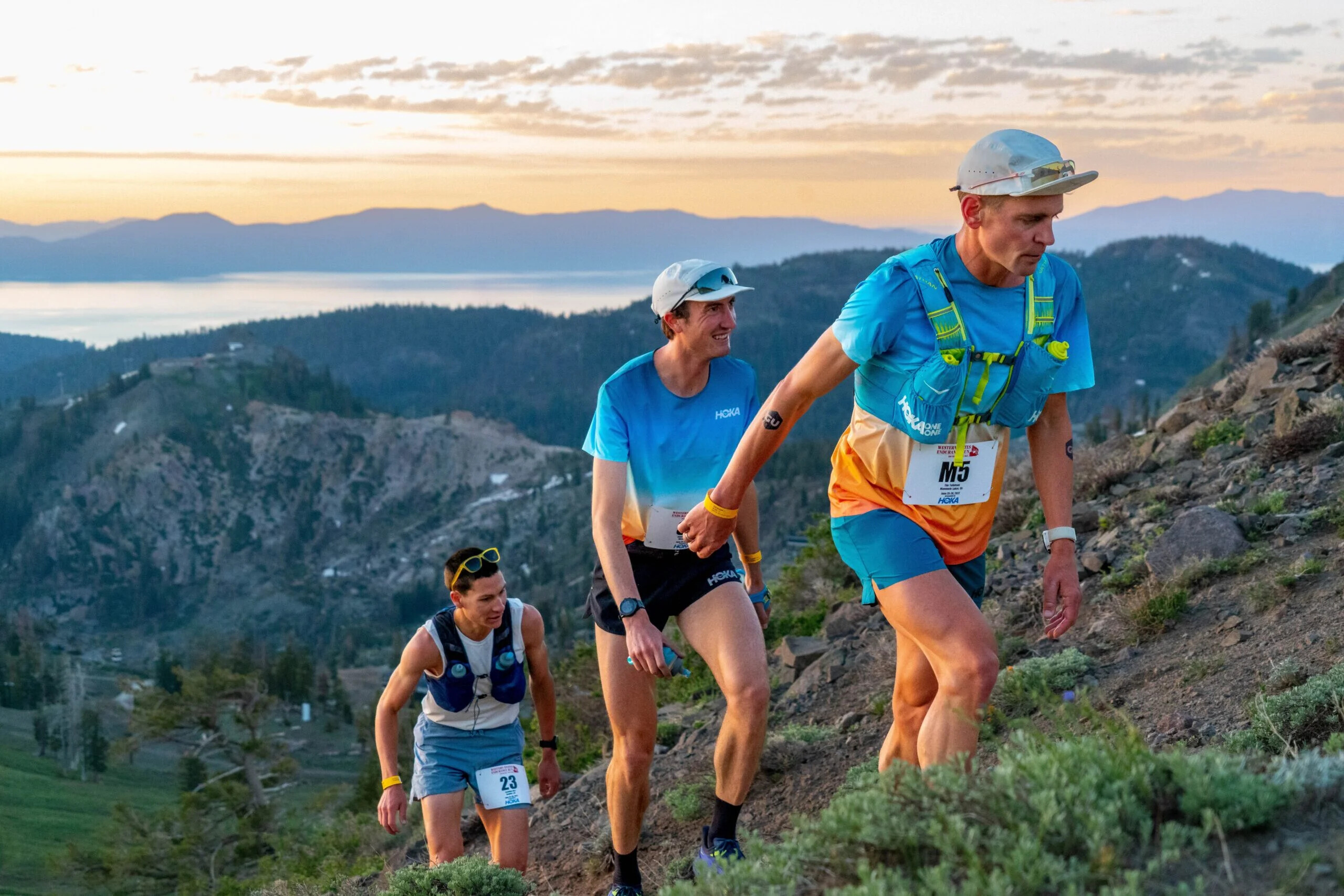
The Western States Trail stretches from Olympic Valley to Auburn, California. Runners start at 5 a.m. on Saturday and must reach the finish line by 10:59:59 a.m. on Sunday to be eligible for an award. The race begins with a steep 777-meter ascent to Emigrant Pass in the first 4.5 miles, then follows historic gold and silver mining trails, climbing an additional 4,700 meters and descending 7,000 meters to Auburn.
The trail cuts through rugged, remote terrain, accessible only by foot, horse, or helicopter. With temperatures reaching up to 35°C, the race tests runners’ resilience in extreme conditions. Despite the challenges, support is robust, with a volunteer-to-runner ratio of 4:1 and 20 aid stations, including 10 medical checkpoints.
The Coveted Buckle
Finishers of the Western States 100 are awarded a buckle, a nod to the race’s roots in endurance horse racing. A silver buckle is given to those who finish under 24 hours, and a bronze buckle to those finishing within 30 hours.
Securing a spot in the Western States 100 is highly competitive, with only 369 entries available each year. Runners must qualify through designated races and enter a ballot. Automatic entries are granted to the top 10 finishers from the previous year and top performers in Golden Ticket Races such as the Black Canyon 100K. Additionally, the race offers a pregnancy deferral policy, allowing expectant participants to defer their entry without a time limit.
Preparing for the Race
Runners typically arrive in Olympic Valley early in the week, with pre-race activities including a shakeout run on Thursday and a mandatory briefing on Friday. The nearest airports are in Reno, Sacramento, and San Francisco. Accommodations are available in Olympic Valley, home to the Palisades Tahoe ski resort, and in nearby Truckee and Tahoe City. Although the start and finish locations differ, transportation options are plentiful, with rideshares and shuttles available.
The Western States 100 is more than just a race; it is a journey of perseverance and grit. Finishing the 100-mile course within the 30-hour limit is a badge of honor, joining the ranks of those who have conquered one of the toughest ultramarathons in the world.
(05/22/2024) ⚡AMPby Runner´s Tribe

Western States 100
The Western States ® 100-Mile Endurance Run is the world’s oldest and most prestigious 100-mile trail race. Starting in Squaw Valley, California near the site of the 1960 Winter Olympics and ending 100.2 miles later in Auburn, California, Western States, in the decades since its inception in 1974, has come to represent one of the ultimate endurance tests in the...
more...
THE TRUTH ABOUT RUNNING AND WEIGHT LOSS
When approached realistically, running can be an excellent tool for weight loss and weight management, but don’t be fooled by the numerous myths surrounding them
People often start running to drop a few pounds. Hopefully, they fall in love with it, move beyond the number on the scale and continue running for its many other benefits; but for many people, it’s impossible to decouple running from the weight-loss goal. When done correctly, running can help people struggling with excess weight to shed pounds—and continuing to run can be effective way to keep them off. But the subject of running and weight loss is fraught with mythology. We delve into some of the problems with the weight-loss approach to running, including what actually works, what definitely doesn’t and how to keep running as part of your life, regardless of whether you lose weight.
Myth

You can run a marathon PB while dropping 10 pounds
You can do anything, but you can’t do everything. As a rule, you won’t boost performance at the same time that you’re purposely losing weight. Often, the opposite is true, says Kylee Van Horn, RD, owner of Flynutrition in Boulder, Colo. When you’re restricting your food intake, you’re unlikely to make performance gains, but unfortunately, we often equate being faster with being thinner.
“The first thing I tell a client with a weight-loss goal is that losing weight will not necessarily make you a faster runner,” adds Carla Rodriguez Dimitrescu, PhD, an Edmonton-based expert in nutrition and metabolism who works primarily as a running coach. It’s fine if weight loss is your goal—but don’t confuse it with performance, because the way that you’ll get faster isn’t necessarily the way that you’ll drop a pound a week (which should be the maximum weight you’re losing per week, unless advised otherwise by your doctor).
Myth
There is one “runner’s body”
Let’s be clear: there is no single body type that signifies “runner.” Often, people with weight-loss goals who run have a vision in their minds of the long, lanky phenotype often associated with marathoners. But runners come in all shapes and sizes—and if you run, you have a runner’s body, period.
Even in the professional sphere, there are different body types that excel at different types of running. “You would never tell a professional runner that he doesn’t look like an astrophysicist,” says Dimitrescu. “But for some reason, that astrophysicist is upset that he doesn’t look like a runner.” She adds that people have different somatotypes, which means that genetics and environment will both play a role in how running (or dieting, or strength training) changes your body. And if you really want to see how every body is a runner’s body, sign up for a local 5K race and look around you at the start.
Still, the “runner’s body” myth runs deep, and it can be hard to break free of the desire to be ultra-thin. That’s why Stevie Lyn Smith, RD, a board-certified sports dietitian based in Buffalo, N.Y., tries to focus her clients on health outcomes as well as esthetic goals. “We try to look at other goals, like running your personal best in a race,” she says. “Maybe you won’t achieve whatever physique is jammed in your mind as the ‘ideal,’ but you’re able to appreciate these non-body-focused victories.”
Myth
Lighter is healthier/faster
Here’s an oversimplified example: say you’ve had the stomach flu for a week. You’ve lost seven pounds during that time, thanks to days spent in agony. You head out for your first run since you got sick. How does it go? That’s right—dropping weight doesn’t always lead to speedy running, and while that’s an extreme example, it’s not much different from how you’d perform after a week of crash dieting.
“Slimmer is not necessarily better,” says Dimitrescu. “And too much weight loss or restriction can lead to issues like stress fractures, increased rates of illness and injury and chronic fatigue. That’s not going to make you healthier or faster.”
And unfortunately, Don Henley was right when he sang, ‘You can’t go back, you can never go back.’ If, at 46, you’re mourning your running prowess or body composition from when you were 17, you may need to come to terms with the fact that your body isn’t the same, and no amount of training or restricting will get you there. You need to find your new healthy, speedy body, says Van Horn.
Myth
Runners can lose weight faster by eliminating carbs
Skip any diet that eliminates entire macronutrient groups, says Dimitrescu. These fad diets come and go, and for someone who wants to be a healthy, optimized runner, they’re just not worth it. “I don’t like any restrictive diet that advocates for super low calories or eliminates a macronutrient,” she says.
“My priority is always that clients get plenty of protein—at least one gram per kilogram of body weight—and adequate carbohydrates. People have a fear of carbohydrates, but if you don’t eat enough carbs, you’re going to use the protein as your source of energy instead of using it to help build and repair muscle. You’re not doing any favours to your body if you don’t provide it with the energy it needs to do the work that you’re asking it to do.”
Myth
Running earns you calories
A common saying about running is that you run to eat. But really, you should be eating to run. “Don’t create a reward/punishment mentality around running and food,” says registered dietitian and runner Lindsey Elizabeth Cortes of San Antonio, Texas. “Try to focus on how you fuel and how you train as lifestyle choices and not things that need to be rewarded or punished.”
For example: it’s not, “I had a great run, so now I get to reward myself with nachos,” nor is it “I had a bad run, so now I can only eat a salad.” Instead, reframe to: “I ran, and now I’m craving nachos! Maybe I’ll have nachos with a salad.” Or, “I didn’t run, and I’m craving nachos. Maybe I’ll have nachos with a salad.”
Myth
Fasted running and intermittent fasting will speed up weight loss
Yes, fasted runs and intermittent fasting may potentially have some longevity and fitness-based benefits, but when it comes to weight loss, they’re not going to move the needle. In fact, they might be sabotaging your efforts. “For most people, things like fasted runs and intermittent fasting just equate to saving up their calories until the end of the day and then overdoing it in the evening, or using these so-called ‘healthy’ concepts to put a healthy spin on unhealthy, restrictive eating patterns,” says Van Horn. “But if you look into the research, there’s no benefit for doing fasted training for weight loss. In fact, we know that fasted running can raise cortisol levels, which can make weight loss harder.”
Intermittent fasting that takes place around your running window means that your runs aren’t being fuelled—which can both decrease your running performance and make it harder to lose weight, since you’re more likely to over-indulge later in the day. “At minimum, fuel around your workouts and during your training, so that you have enough calories on board to develop some adaptations and buffer the stress of the workout,” says Van Horn. She adds that if weight loss is the goal, you can reduce calories at meals that aren’t near your workout window. Calories should come out of meals that aren’t right before or after your runs. Lowering your portion of rice with dinner or cutting out dessert if you trained in the morning will give you greater results than skipping your post-run snack. (But keep your caloric deficit at a maximum of 500 calories per day.)
Things like fasting and fat adaptation (training your body to optimize fat over glycogen for fuel) may sound like they’re about weight loss, but the reality is that neither is likely to help you lose weight. Some research has found that when done under the right conditions, they might increase certain health markers or improve longevity, but they’re not the weight-shedding tools you may think they are.
Myth
The more you run, the more weight you lose
The natural inclination of someone who wants to lose weight by running is to run longer. Usually, the idea of training for a marathon or half-marathon gets floated around. But running shorter routes, with some harder efforts thrown in, will lead to better weight loss outcomes, because you’re able to get the benefits of the run cardio without as much stress on the body. And because the more you run, the more you need to fuel, chasing higher mileage is actually a bit of a fool’s errand, where weight loss is concerned.
“Endurance sport is not a weight management tool,” says Smith. “Volume-wise, if you’re running more than 10 hours a week while also working a normal job, spending time with family, dealing with all of those normal responsibilities, the long-term stress of that is not going to be conducive to weight loss. With a more appropriate training load for your current lifestyle, it’s easier for you to manage stress, and you’ll see better results.”
Myth
The number on the scale is the only number that matters
Rather than focusing on your weight in pounds, look at different metrics. “I like a combination of measurements with a soft tape measure, how a certain item of clothing fits, and scale weight done once a month,” says Van Horn. While body composition-measuring tools like a DEXA scan are often considered the gold standard, they are expensive and often difficult to access, so rather than spending time and money on that, focus instead on simple measurements that are replicable.
Daily weigh-ins are also a mistake, says Van Horn. Our bodies fluctuate from day to day, so scale weight on a daily basis can be disheartening. Instead, shift to weekly or monthly and look for a general trend rather than placing any importance on half a pound.
Finally, it’s not all about your body weight or size. Dimitrescu recommends looking at fitness and health markers, such as your resting heart rate, blood glucose levels, and HDL and LDL cholesterol. Often, these markers will improve quickly once you adopt a running habit and focus on healthy eating, and can help you see that even if the number on the scale isn’t changing, your body is.
In fact, research has shown that a focus on getting into the habit of running regularly actually is more effective for long term weight loss than focusing on the number on the scale—so it may be worth shifting your focus to the number of times per week you’re physically active, or minutes spent moving.
(05/19/2024) ⚡AMP
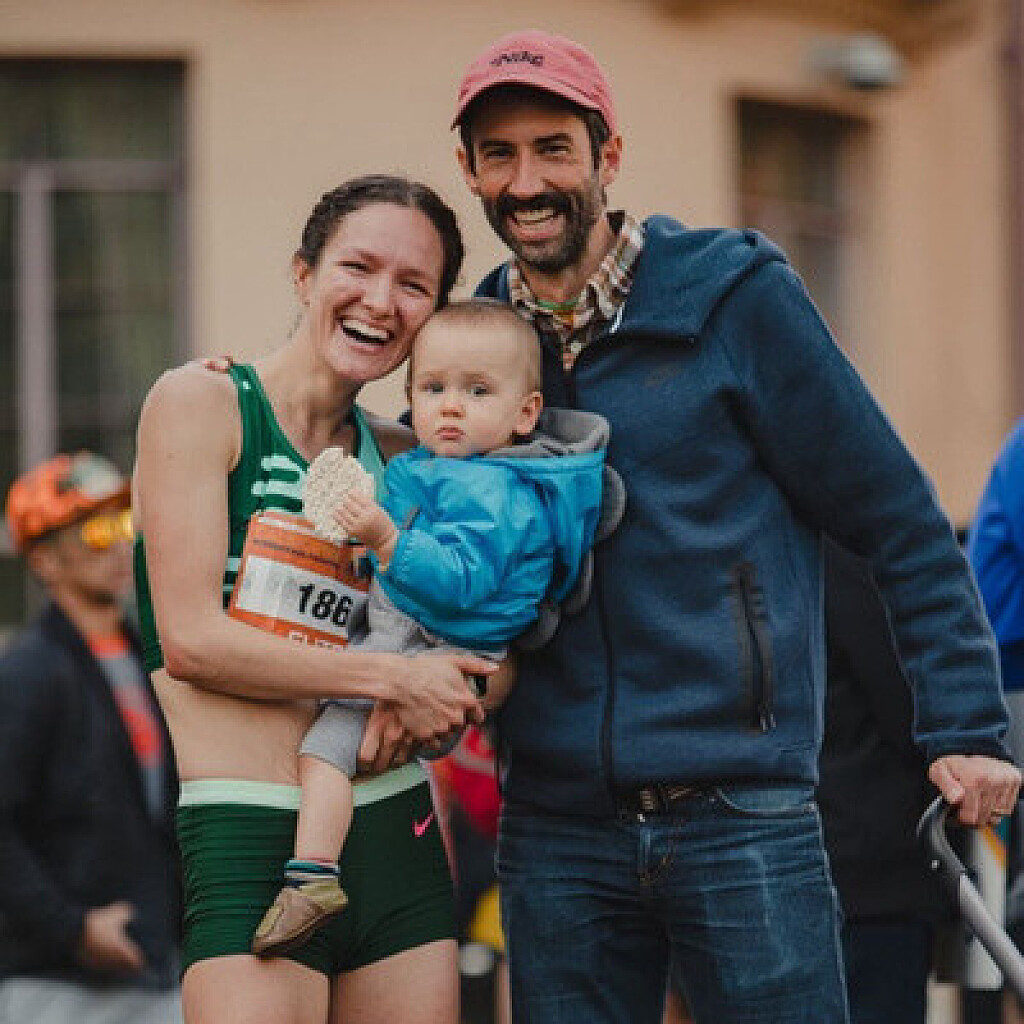
Meet the ultimate ultrarunning power couple
The running accomplishments of Rachel Drake and Tyler Green are astonishing on their own—but there’s far more to this pair of high-achievers than paces and race results. Drake recently earned her entry to the 2024 edition of the legendary Western States 100 with a strong win at Black Canyon Ultras 100K in Arizona, and Green finished second at the 2023 edition of Western States (and capped off his season with a sixth-place finish in the men’s race at UTMB 171K); the couple juggles demanding careers, school (Drake), coaching (Green) and family time with their one-and-a-half-year-old son, Lewis. We connected with the couple to find out how they make it work.
Drake, now 32, grew up in White Bear Lake, Minn., and the family currently lives in Green’s hometown of Portland, Ore. They will soon be moving to Salt Lake City, Utah, so Drake can begin her anesthesiology residency in the summer. The dynamic trail-running duo met at the McKenzie River 50K, and now combine their strengths in raising a family while balancing high-level running performance. Green, 40, works as a trail running coach and a high school cross country and track coach.
From Western States to World Trail Majors
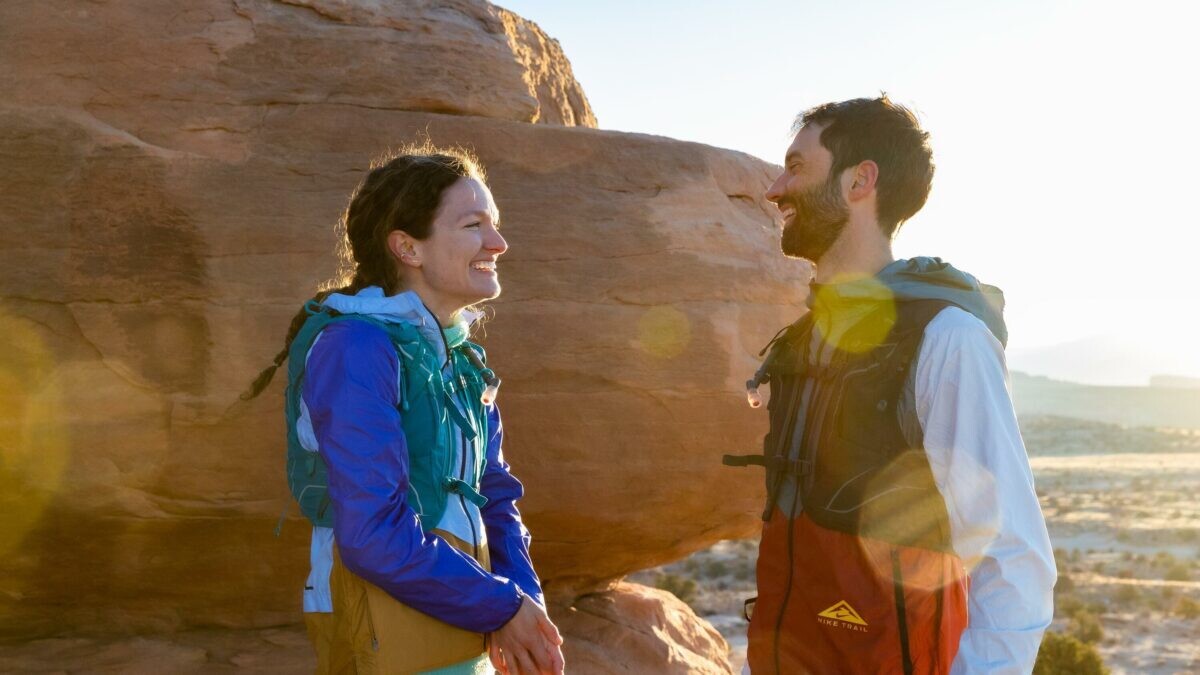
The couple has similar goals for the 2024 season—they are both racing Western States on June 29, and both hope to capture another top performance at one of the World Trail Majors races, with the current plan being to run Ultra Trail Cape Town in November. The couple exemplifies flexibility in running and life—when a recent trip to run Ultra Trail Madeira was entirely derailed due to travel difficulties, they rallied, enjoying time at home instead. And when Black Canyon Ultra 100K in February was delayed several hours due to bad weather, Drake rose to the occasion.
“I’m really proud of how I handled the multiple changes in plans, I never felt stressed or perturbed,” Drake posted on Instagram after Black Canyon 100K was delayed several hours. “And I guess my ability to fall back asleep showed that my catecholamines were indeed not yet surging through my bloodstream. I think having been through medical school, graduate school and the birth of a child has really put things in perspective.”

An element of surprise
Both Green and Drake love being a part of the trail running community, and while being parents adds an element of challenge, they are finding joy in bringing Lewis to events. “Just a few weeks ago we were at the Gorge Waterfalls trail races, and it’s so fun to bring Lewis into the fold,” Drake told Canadian Running. “He was making friends and wandering around at the finish line, and it was just the best.”
While Drake is quick to express gratitude for their lives, she also acknowledges that they have their hands full. “It’s challenging to balance everything. Lewis is a super easygoing kid, but having a toddler definitely adds an element of surprise to every well-laid plan,” she says. “When we travel, the logistics are a lot more complicated, but it’s always worth it.”
Combining strengths
Drake says that, as athletes, her strengths and Green’s are quite different. “Tyler is much more of a 100-mile specialist, and I am more of a 50K specialist,but moving up in distance this year,” she says. “I think I am also more of a speed-oriented runner and Tyler is probably more of a strength runner.”
As well as being partners through life, Drake and Green share a specific dynamic in the running world—that of coach and runner. “Tyler actually coaches me, so he gives me a lot of advice,” Drake explains. “I’ll weigh in on race strategy and planning our competitive calendars, but I don’t get involved with his training, since he has a great coach.”
Drake and Green share a mutual sponsor in the backpack brand Osprey. “Rachel has partnered with Osprey for five years now, and I followed suit three years ago as I saw how positive the partnership was,” Green explains. “Our connection with Osprey runs deep; they have supported us as people first, whether that’s celebrating a great race result, jumping for joy when we shared we were expecting a baby, or caring for us through injury. We feel like our stories are interwoven.”
The brand’s commitment to sustainability and longevity in its products pairs well with the couple’s values. “I have an Osprey backpack I’ve had for 20 years, it’s still my favorite pack, and I think that tells a lot about how our values align with the company,” says Green. “The gear Osprey makes truly performs and lasts. We’re ultrarunners who work incredibly hard to keep going and going and going, and an Osprey pack on our backs reflects that process.”
Running as a new mom
Drake and Green are now parenting a toddler, and while Drake’s top-notch performance may seem remarkable so quickly after having a child, she says she wouldn’t call it a fast return. “I had a sacral stress fracture at four months postpartum and had to take time to recover from that and then build back fitness,” she says, emphasizing that the culture that celebrates “bouncing back” from postpartum rarely includes any discussion about the challenges of returning to running after giving birth.
“I nursed Lewis for a year after he was born,” she adds. “I loved nursing and it felt important to me to prioritize that. While I was nursing, I felt much more limited with my training, so I had to accept that, even though I was preparing for races that I really cared about.”
Drake’s social media captures enviable images of family, travel, running and mountains, almost always with Lewis in tow. The key to the couple’s success: “Lots of communication with each other, planning our days out and capitalizing on getting stuff done during Lewis’s nap time,” Drake says. One could safely predict fans will follow Drake’s and Green’s performances on trails and off, long after the results of this year’s Western States.
(05/16/2024) ⚡AMPby Keeley Milne
Western States 100
The Western States ® 100-Mile Endurance Run is the world’s oldest and most prestigious 100-mile trail race. Starting in Squaw Valley, California near the site of the 1960 Winter Olympics and ending 100.2 miles later in Auburn, California, Western States, in the decades since its inception in 1974, has come to represent one of the ultimate endurance tests in the...
more...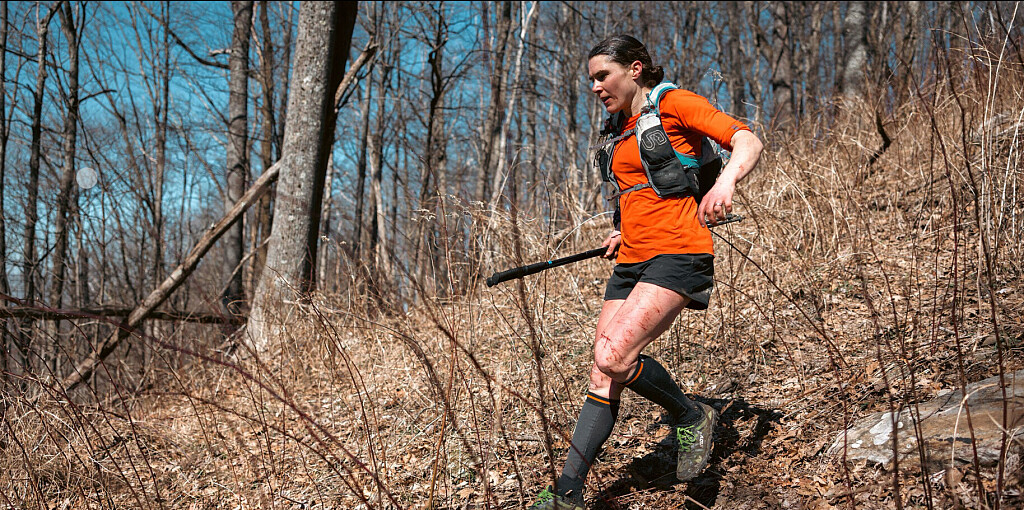
She’s the First Woman to Finish the Barkley Marathons—Ever. Here’s How She Did It.
Jasmin Paris did the “impossible” with the same pair of shoes she wore in her first two attempts. The Barkley Marathons is not a race in the traditional sense. It’s a war of attrition where participants, at times, work together more than they want to beat each other to the finish line. Completing five 20-ish mile laps under the 60-hour time limit is the goal—the order of the finishers is secondary.
The 2024 edition of the race, which started at 5:17 a.m. on March 20 and concluded 2.5 days later on March 22, was historic. Five runners completed the arduous race—the most in one year ever—including the first woman to finish, Jasmin Paris, a 40-year-old British mother of two.
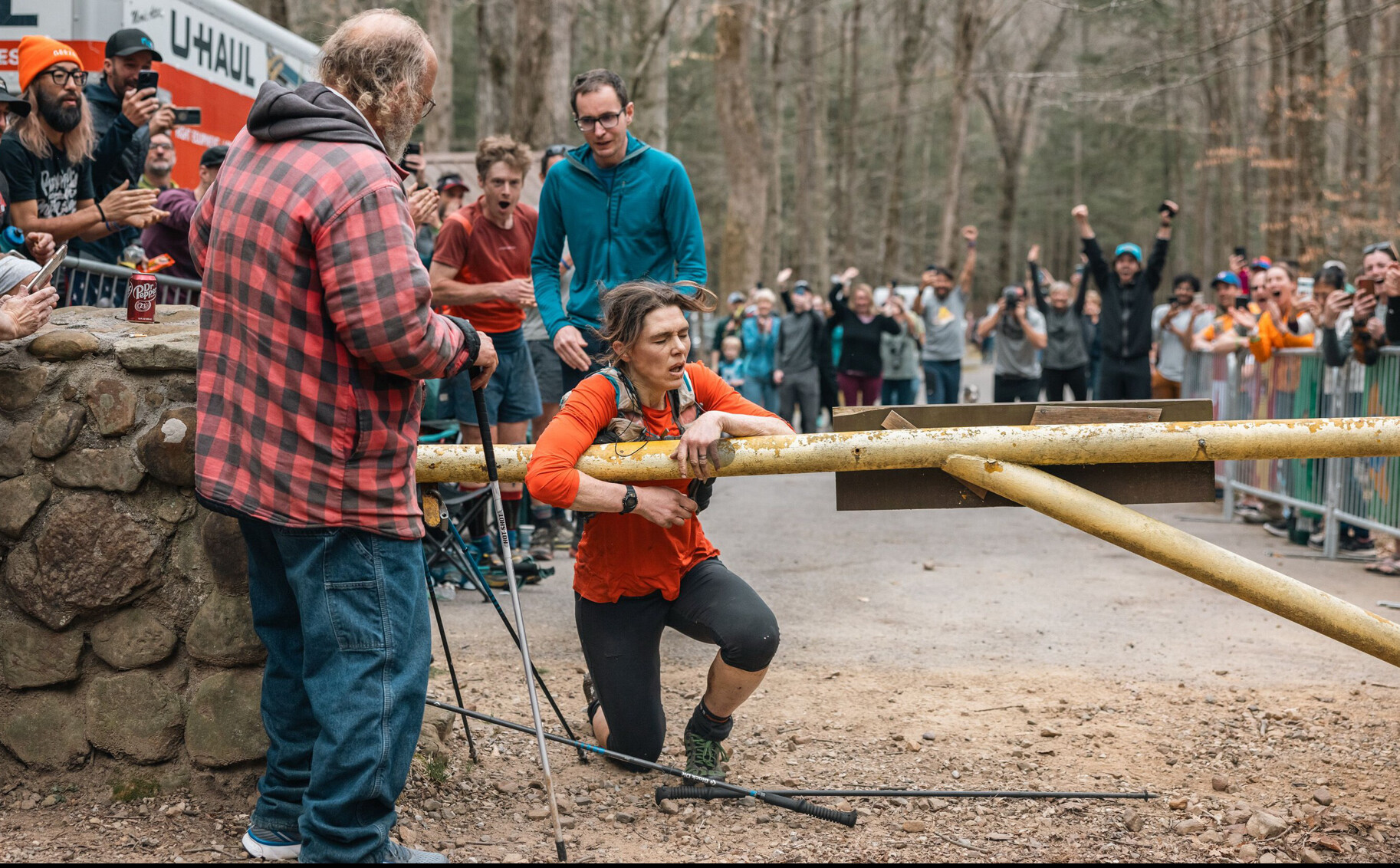
Skeptics, including the race’s controversial organizer, Lazarus Lake, have stated in years past that it was impossible for a woman to complete Barkley. But Paris broke the glass ceiling, finishing with less than 2 minutes to spare, in 59:58:21. (At this year’s race, only four of the 40 participants were women.)
“I’ve always enjoyed proving people wrong, especially if it’s something to do with being told that a woman can’t do it,” Paris said after the race. “It gives me great satisfaction.”
Runner’s World caught up with Paris, fresh off a well-deserved vacation with her family, to talk about how she prepared for the unpredictable ultramarathon.
Hills pay the bills
Barkley is a race where experience matters. It’s uncommon for someone in their first year to finish. But after becoming the first woman to complete three loops in 2022 and again in 2023, Paris was hungry to come back.
“The first time, I was intrigued by this idea of something that was on the very cusp of what was possible,” she said. “And clearly, the likelihood is that you would fail. But there’s still this glimmer of a chance that you might not fail.”
Barkley is difficult to plan for because of secrecy. It’s invitation-only, and participants are quietly told that they can race an undisclosed amount of time before the event. The starting date changes year-to-year, but it’s generally sometime in March or early April.
Paris had an inkling that she’d be given a chance to become the first woman to finish, so she planned her winter training on the assumption that she’d line up. Metatarsal pain in November and December forced her to cross-train on the elliptical or bike for six weeks, but by Christmas, she was back running.
Paris then hunkered down on hill work. At Barkley, a race with an estimated 65,000 feet of elevation gain, it’s essential to practice climbing—something that Paris doesn’t shy away from anyway. For years, she honed her skills at fell races—a niche sport where runners race off-road over hilly terrain—and this Barkley cycle, she added even more elevation than in years past.
As a cornerstone of her training, Paris added circuits of hills into her long runs around the foothills near her home in southern Scotland. She would also supplement her running (and hiking) with sessions on the stair climber, where she’d knock out 3,200 feet of climbing in 40-minute intervals.
About a month out from Barkley, Paris completed her toughest week of training yet: 90 miles of running with an extra 20 miles of hiking. She estimates she traversed around 36,000 to 39,000 feet of elevation that week. (Mt. Everest is 29,000 feet tall, for comparison.)
Her most Barkley-like training run was a 22-miler over the winter. Usually, Paris will run before she drops her kids off at the pool on Saturday mornings, but she planned a long workout, so she went to bed at 8 p.m. the night before and started her run at 1 a.m. The session, in driving rain that turned to snow, simulated the testy conditions she might experience at Barkley on a bad day. Since a large portion of Barkley isn’t on marked trails, Paris logged much of the eight hours of hills off-trail, totaling over 15,400 feet of net gain.
"That was really good training for Barkley,” she said. Strength training is key
The biggest change that Paris made in recent years was adding more strength training into her routine.
As a girl growing up in northern England, Paris was an avid horseback rider, competing in competitions as well as riding for fun at the local stables. But when she was 17, she partially tore the ACL in her left knee after falling off her horse and landing on a fence—then fully tore it chasing after a train. Paris never got reconstructive surgery, so to this day, the ligament is not connected in her knee.
Trail running can test your balance, especially on technical courses with hairpin turns, so Paris has focused on strength training in recent years to stabilize her knee. Now, the joint is as strong as ever, she said, and weights have become a fixture in her training routine.
Paris takes a 30-minute online strength class three times a week, where a virtual coach monitors her form and prescribes movements like lunges, single-leg squats, bridges, and sit-ups. But Paris said that advancing past bodyweight exercises to weights has especially leveled-up her strength.
“I definitely felt stronger going into this year,” she said. “Not just my legs, but my core and my upper body as well.”
Don’t stress over the little things
Part of what makes Barkley so tough to complete is its unpredictability. The spring weather in Tennessee can be bitterly cold or sweltering hot, but participants don’t know what to expect until days before, since the start time is kept a secret.
Paris, in turn, took a laissez-faire attitude toward her race preparation.
The 60-hour time limit at Barkley leaves little room for sleep—Paris told The Guardian she slept about 3 minutes during the race—but she doesn’t believe in simulating tiredness before the event. In fact, quite the opposite.
In the lead-up to Barkley, Paris focused on starting the race feeling refreshed. And although she knew exhaustion was inevitable, she said that coming over from the U.K. was actually an advantage. Because her hometown is five hours ahead of the time zone in eastern Tennessee, Paris said the middle of the night—when sleepiness would naturally kick in for U.S.-based athletes—felt like the morning to her since she was still used to U.K. time.
Nutrition is also difficult to dial in, or anticipate, Paris said, because she usually doesn’t have trouble eating until the 10 or 12-hour mark of an ultramarathon. And that’s if she’s moving fast. She rarely trains that long, if at all, so it’s difficult to simulate hunger.
“It’s hard to repeat in training that sort of dry feeling [where you] can’t swallow,” Paris said. At Barkley, she turned to moist foods, like frittatas, pizza (without the crust), and hot cross buns with raisins.
Paris packed for the race intently, although she admits she forgot some things, like electrolytes. An ardent environmentalist and co-founder of the The Green Runners, Paris prefers to use existing gear, or borrow from others, rather than buy new products—even if hers is worn.
Days before Barkley, Paris’s mother helped sew up the holes in her pants. Paris even wore the same pair of shoes that she used during her previous two attempts at Barkley, Inov-8 Mudclaw G 260s, after repairing some holes in the uppers.
“You don’t really need the newest stuff; that’s not really what makes you able to run well or what keeps you going,” Paris said. “It’s more about what’s in your head and what training you’ve done.”
(05/12/2024) ⚡AMP
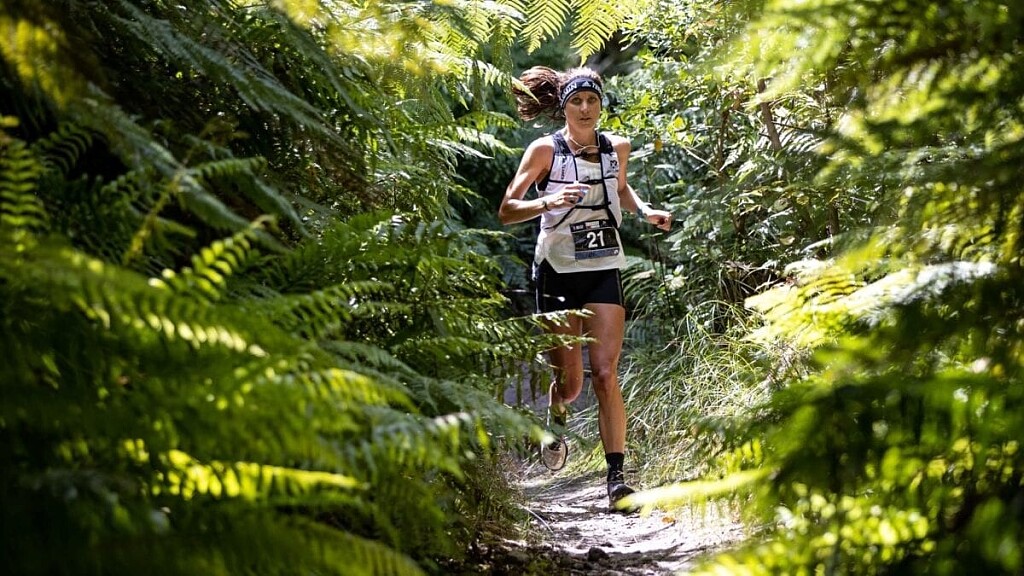
Your first trail ultra: three things to consider
So you’ve decided to run an ultramarathon–congratulations. Whether you’re coming from a pure road running background or you’ve dabbled in some shorter trail races, when you take on a distance of 50 kilometers or more by foot, you’re in for an entirely new experience.
Trail runners often describe ultramarathons as “life-changing,” and for good reason: covering such long distances, runners often find themselves running alone, in nature, up against conditions that road running simply doesn’t provide. Regardless of your running background, there are several things that every runner should consider before choosing their first ultramarathon.
1.- Your current training environment

Stepping up in distance is a challenge, so limiting new variables like terrain and altitude can help ensure success in your first ultra. Where you train should factor into the first race you choose. Unless you have access to challenging terrain, choosing a technical course for your first race is risky. Same goes for altitude; if currently live and run at sea-level, you’d be wise to choose a race in the same region for your first attempt. Fortunately, there are a number of popular races across Canada that serve as great options for a road runner making the move to ultrarunning for the first time.
2.- Start small

As ultramarathons range from 50K to multi-day events comprising hundreds of kilometers, first-time runners should be realistic about what they can successfully complete in their first race. As your pace will already be slowed on trails, consider how long you may be on your feet for any given distance. For most runners, 50K will be a big enough step up in single-day running, making it a great place to start. Once you have more ultrarunning under your belt, distances like the 100K and 100-miler will be more manageable.
3.- Your support system
Many ultramarathons allow racers support from unregistered runners accompanying them on various parts of the course. For long races, it can be crucial to have a crew to help you to the finish line, as navigating trails in harsh conditions when you’re already tired is much easier when you have someone with you. Consider who from your running network you can lean on to support you in your first race–having someone on course with you could be the key to a successful finish.
Outside of race-day support, first-time ultramarathoners should also consider the support they have in the lead-up to a race. To train for an ultramarathon, you’ll need to be out running for long periods of time, week after week. For the everyday runner with a job and family, this will take planning ahead and making sure your loved ones are on-board to support you when you need it.
(05/10/2024) ⚡AMPby Claire Haines
NHL legend Zdeno Chara crushes 50K ultra-trail race
Three weeks after finishing the Boston Marathon, the former 6'9" foot defencemen took on a 50K ultra-trail race, finishing eighth overall
Former NHL defenceman Zdeno Chara may have found his new hobby: ultrarunning. On May 13, the 46-year-old completed his first ultra-trail race at the Watuppa Trail 50K in Fall River, Mass., and performed admirably.

“I tried a new distance today,” Chara wrote on his Instagram. “I can’t thank my team enough for their incredible help and support for my first ultra trail race.”
Despite lacking ultra experience, the former 6’9 foot defencemen finished the 50K in eighth overall, in 5:07:29, and even took second place in his 40-54 age category.
Since retiring from the NHL in 2022, Chara has found an interest in distance running. He completed the 2023 Boston Marathon in a very respectable time of 3:38:23; he also raised USD $33,333 for The Hoyt Foundation during his campaign.
Chara holds the all-time NHL record for most games played by a defenceman, with 1,680. He played for four teams over his 20+ year career, starting with the New York Islanders, Ottawa Senators, Boston Bruins and Washington Capitals.Chara entered the race with his friend and training partner Becca Pizzi,who won the 50K outright in 3:59:11. Pizzi also helped pace Chara for his first marathon last month.We think it’s only a matter of time until we see the big man take on a 100-miler.
(05/05/2024) ⚡AMPby Running Magazine

5 Tips for Leveling Up Your Trail Running
Five ways to measure your progress trail running across surfaces, distances, and routes
Many of us get into trail running because of its non-linear, anti-cookie cutter method of training. Sometimes it’s less about miles and times and more about focusing on where your feet—or hands if you’re scrabbling—are going.. However, that can also be the most frustrating aspect to accept, especially as we strive to improve. Unlike road running, where distances and times are easily measurable, trail running often lacks the same level of precision. But don’t worry, you can still assess and benchmark your progress. Here, we’ll explore various methods of how to track trail running progress that don’t require pinning on a race bib.


One of the simplest ways to measure progress, both in trail and road running, is by repeating looped routes regularly. Choose a trail that offers a mix of terrains, elevations, and technical challenges. By running the same loop consistently, you can monitor improvements in your pacing, endurance, and overall comfort level with the terrain. Take note of how you navigate tricky sections more confidently and efficiently over time.
Dana Katz, coach at UltraU Fitness, often prescribes what she calls a “money loop.”
“My athletes get to choose this for themselves,” Katz says. “This could be a Strava segment or local favorite and typically takes them one hour roughly, or five to eight miles. We revisit this every few weeks. It’s a great way for us to assess progress over time.”
Crafting a loop or two that you can use to benchmark your progress on a moderate-to-hard effort day can be a handy way to see how you’ve progressed over time. While Katz says you don’t need to be all-out to track results, her athletes get excited to see their heart rate and perceived effort level decline with training..
Similarly, one of my local favorite challenges is called “Golden Hell Week,” organized by local running group, Golden Mountain Runners, where runners test themselves on five routes over the course of a single week. While I don’t suggest doing back-to-back attempts at a fastest time, approaching these routes at different times throughout the year has been a great way to challenge myself in lieu of a tempo effort, and a sound method to see how I’m faring (if you ever find yourself in Golden, Colorado, I challenge you to the main loop around North Table Mountain).
Hills are a significant aspect of trail running, demanding strength and stamina. Designate specific hills or ascents on your favorite trail and incorporate them into your training routine. By regularly tackling these inclines, you can measure progress through increased speed, improved form, and enhanced cardiovascular endurance. Improving on hills is a clear indicator that your trail running skills are advancing. You can find a host of hill repeat training sessions from Coach David Roche’s 8 Favorite Hill Workouts.
Hills can be just as uncomplicated as running 400-meter intervals on the track. Simply put, select a hill near your house or on a favorite trail and run it several times fast. Rest, jog, and repeat. Note your time for each one, or run hard for a designated amount of time and note how far you made it up the hill. Hill repeats, money loops, and Strava segments (if you use that platform), can be useful strategies to assess progress within a shorter duration effort.
When switching from roads to trails, one of the hardest aspects to wrap our brains around is the concept of effort versus pace. To help gauge ourselves for the shift, Dee Stasullli, coach at Zeal Endurance Coaching, recommends incorporating practicing effort-based workouts and runs in your training. Craft “purposeful race plan, which involves switching from pace-based exercise prescription to effort-based,” Stasullli says. “I use a lot of the same prescriptors,like 10K effort or percentage of Lactate Threshold. It should feel hard but controlled and can translate to other variable conditions.”
You might start with a Lactate Threshold (LT) assessment, or a 5K to 10K race (or self-marked course) to find that sweet spot. From there, you’ll have a better gauge on what effort level corresponds to each pace and distance.“The more you can tune into how it feels at each effort level in your training, that can help you tune into the effort level needed for your race,” Stasullli says. While there are many factors that can influence our pace on the trails, effort is a gauge we can tap into regardless of the terrain, vertical gain, or other factors involved in the adventure.
Trail running is not just about speed; endurance plays a crucial role. As you progress, focus on increasing your “time on feet.” Gradually extend the duration of your trail runs, emphasizing steady pacing and consistent energy levels. This approach helps build endurance, allowing you to cover longer distances comfortably. Similarly, if you’re transitioning from running a certain number of miles a week on the roads to training on trails, consider how long you’re training per week by time, not just mileage. Road miles and trail miles are not created equally. Although you may not cover as much ground on the trails within the same timeframe, consider the amount of vertical feet you’re gaining and your overall effort level. Your body doesn’t know how far you run, it just knows how much stress it’s been under.
Heather Hart, coach at Hart Strength & Endurance Coaching, advises that athletes focus on training by time versus mileage “When I meet an athlete going from road to trail, we’re going to throw out pace suggestions and heart rate training,” she says. “Ask yourself: Are you getting a little further in an hour run this month versus last month? Overall, gauging how comfortable you feel on the trail and perceived exertion is a great start.”
While this training mindset isn’t easy to reframe, it can be empowering to ditch the watch or pace gauge to which you’re accustomed. If you’re unsure how long a loop on the trails might take you, start with out-and-backs or going up and down a hill, enjoying the negative split as you run down.
If you’ve been on trails throughout different regions,or even areas of town, you might realize how different paths can be depending on their location. Benchmark your progress by exploring trails over diverse surfaces. Transition between soft dirt, rocky paths, and hillier routes to challenge different muscle groups and improve overall adaptability. As you become more adept at handling various surfaces, you’ll notice enhanced stability and control during your runs.
For instance, if you want to improve your technical downhill running over loose scree, but you’re completely new to running over rocks, start with a handful of pebbles or crushed gravel. Focus on one segment of a pebble-filled trail you run often, practicing your technique and getting comfortable with the setup before introducing a new trail with obstacles you haven’t yet encountered, such as those big, burly rocks or loose scree found on big mountains. You might consider starting with a lesser-grade before moving onto steeper inclines and descents, especially when considering extra elements.
With unpredictable terrain and scenic routes, trails don’t always offer the straightforward metrics of road running, especially without races to gauge our improvement. However, by strategically incorporating looped routes, hill repeats, Strava segments, technical trail proficiency, time on feet, and variety in trail surfaces into your training regimen, you can effectively benchmark your progress.
These non-racing methods not only offer tangible ways to assess improvement but also contribute to the holistic and fulfilling experience of trail running. Because, afterall, metaphorically losing yourself on the trail is probably a big reason why you got into the sport in the first place. So, lace up your trail shoes, embrace the adventure, and, if you’re so inclined, check in with your progress every once in a while.
(04/28/2024) ⚡AMPby Outside Online

Try this workout anytime, anywhere
Adjust this bread-and-butter workout to suit whatever time and terrain you have available.
Even the most organized and well-prepared runner occasionally finds themselves scrambling to fit training into an overly busy schedule, or trying to slot it around unexpected life events. It’s helpful to have a few simple workouts that can flex with whatever time and terrain you have available. This session can fit seamlessly into your regimen, with customizable intervals to match your aim and ability.
No matter what your end goals are, you’re probably doing some combination of easy runs and speedwork, hill intervals and longer runs; most training plans also include tempo runs. Tempo sessions involve intervals that are run at a “comfortably hard” pace—this boosts your anaerobic threshold, so your body adapts to performing comfortably at a higher intensity.

The workout
Warm up with 10-15 minutes of easy running.

Run 5-10 x 3 minutes at 10K effort with 1 minute of easy recovery, aiming to stay consistent throughout all intervals.
Cool down with 10-15 minutes of easy running.
How to modify
If you’re training for a longer race like a marathon or ultra, extend your intervals and ease up on your pace. You should still be running at an effort that takes focus to maintain, but opt for a half-marathon pace (or slightly slower).
Short on time but still want maximum impact? Tighten up your intervals, ramp up your speed or cut your recovery time in half: try running 10 x 2 minutes with 30 seconds between intervals, at 5K pace. Feel free to shorten the length of your warmup and cooldown times, but make sure your legs feel fully prepared to work hard. Alternatively, if you have a few extra minutes when you have completed your cooldown and really want to finish your legs off, tack on a quick series of strength exercises, like these.
This session works on the road, trails or treadmill, and if you’re training for a hilly race, simply take those intervals uphill. Make sure to follow a harder training session with an easy recovery or rest day.
(04/25/2024) ⚡AMPby Keeley Milne

Should trail running be an Olympic sport?
Did you know that off-road running was part of three historic summer Olympic Games, including the 1924 Olympics in Paris? One hundred years on, runners from four different clubs in Britain have come together to launch a campaign to bring trail running (as we now call it) back to the Olympics. The next Games to include new sports is Brisbane 2032, and the group of passionate trail runners feel strongly that trail running deserves a spot.
“At Paris 2024, four new sports are being added that include breakdancing, surfing, skateboarding and sport climbing,” runner Jimi Harrison said in an interview with British media outlet The Star. “We feel that new Olympic sports should reflect the trends and popularity of the current day and believe the time has come for trail running to be adopted at future Olympics.”
To raise awareness for the cause, Harrison and the group ran a relay of more than 455 km, from London to Paris. Their feat ended on Sunday in the French capital.
Backed by running shoe brand Merrell, the group are calling on Olympic decision-makers. They have written an open letter to representatives of the International Olympic Committee (IOC) and International Trail Running Association (ITRA) to support their cause. (Merrell recently signed Olympian Alexi Pappas to its athlete roster. Pappas, who raced the 10,000m at Rio in 2016, setting a national record for Greece, ran two big trail ultras in 2023: the Black Canyon 100K and the Leadville 100.)
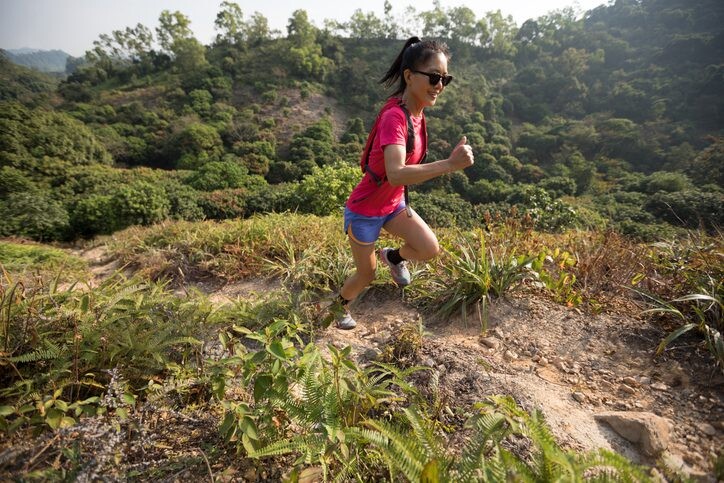
Some would argue that cross-country running is a more obvious fit for inclusion in the Olympics. With shorter, looped, spectator-friendly courses, cross-country could be more attractive to broadcasters, thus generating more interest. And cross-country usually features track runners. There is less crossover between track and trail running, though it’s not unheard of for track runners to transition to trails, as we have seen.
This is not the first attempt to bring trail running to the Olympics. In 2021, a trail running company from Spain launched its own campaign to bring it to the 2028 Olympics in Los Angeles. (They were not successful.)
Trail running has increased significantly in popularity in recent years, thanks partly to events like the Barkley Marathons, UTMB (Ultra-Trail du Mont-Blanc) and the Golden Trail Series, which make international news headlines.
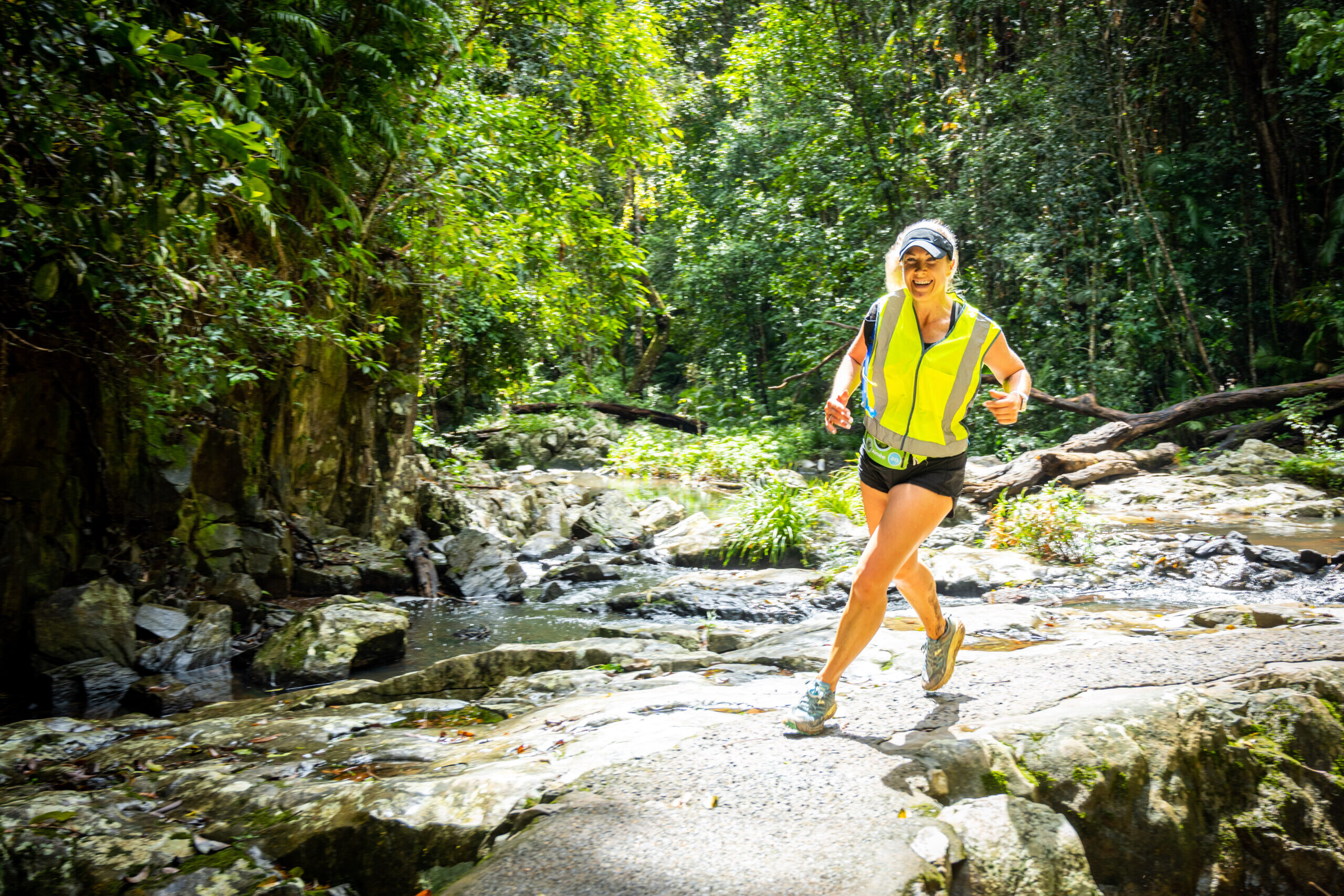
by Claire Haines

Time on feet training–is it right for you?
Time on feet training is becoming increasingly popular, but who is it best for?
Time on Feet (ToF) training is an approach that prioritizes the duration of a run rather than specific distances. Emphasizing the time spent running, rather than the pace or distance covered, this training method can offer unique benefits for certain types of runners. Canadian Running spoke with Jason Fitzgerald, a coach, 2:39 marathoner and host of the Strength Running Podcast, to learn what ToF training entails and who should consider incorporating it into their program.
The basics
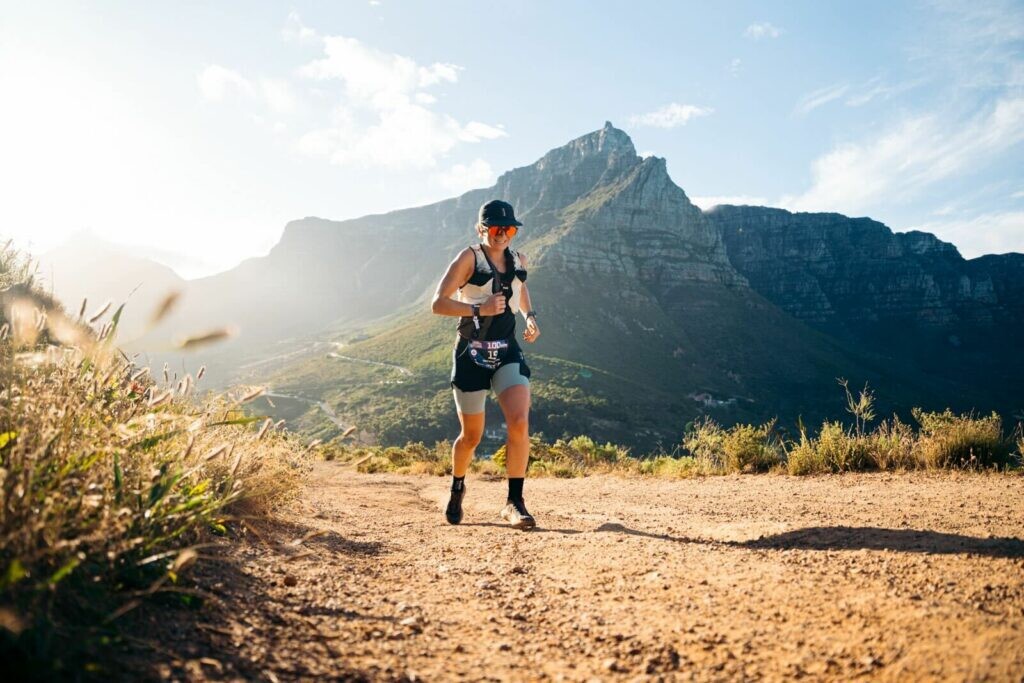
In ToF training, runners aim to meet a prescribed duration for their training runs instead of focusing on a specific distance. For instance, a training plan may specify a two-hour long run, rather than a set mileage. This approach allows them to maintain a consistent effort without the pressure of reaching mileage targets.
Benefits for competitive runners
Fitzgerald says ToF training can be particularly valuable for competitive runners who want to avoid the pressure of running at a specific pace. By prioritizing time, athletes can focus on maintaining a comfortable effort level without the constraints imposed by set distances. This approach allows for better pacing control and helps prevent overexertion during training.
Fitzgerald notes that race-specific workouts and training for specific distances should not be neglected entirely. While ToF training provides flexibility, distance-focused training is crucial to prepare for races that follow set distances. “Races are rarely run by time (i.e., the most you can run in one hour) so it’s helpful to focus on distance when you want to run race-specific workouts or ensure that you can finish a long race, like a marathon,” he says.
The benefits for new runners
For novice runners, ToF training offers a valuable approach to building endurance and capacity gradually. Rather than focusing solely on hitting specific distances, new runners can concentrate on running for longer durations. This approach allows their bodies to adapt and gradually increase their running capabilities, reducing the risk of injury associated with pushing distances too soon.
Considerations for track athletes
Track athletes primarily focus on shorter distances and require precise training to improve their speed and performance. “Their workouts will likely be on the track, which is a venue that helps you run particular distances more precisely,” says Fitzgerald. “But even track runners can use this methodology for some of their runs when distance isn’t important, like an easy “base” run for an hour.”
Utility for ultrarunners
Fitzgerald says ultrarunners, in particular, can greatly benefit from ToF training. This method prepares them to endure prolonged periods on their feet, including walking and rest stops during races. By practising running for extended periods, ultrarunners can develop the stamina and mental fortitude necessary to tackle gruelling events.
“Many ultramarathoners will venture onto the trails for a two- to four-hour long run. Their goal is time on feet, not distance or pace, which prepares them to stay on their feet for a very long time on race day,” he says.
How to add ToF training to your schedule
The good news is that implementing ToF training into your program is simple. “Just convert distances to time, and run those instead,” says Fitzgerald. “So if your training plan asks you to run four miles, you can instead run a certain amount of time that generally corresponds to that distance.”
The bottom line
Time on feet is a great training option when you’re trying to control your pace during runs, prepare for a long race like an ultra or avoid increasing your mileage too quickly when you’re new to running or returning from an injury. It’s easy to implement, and can take some of the pressure off your runs, so you can get more enjoyment out of your training.
(04/17/2024) ⚡AMPby Brittany Hambleton
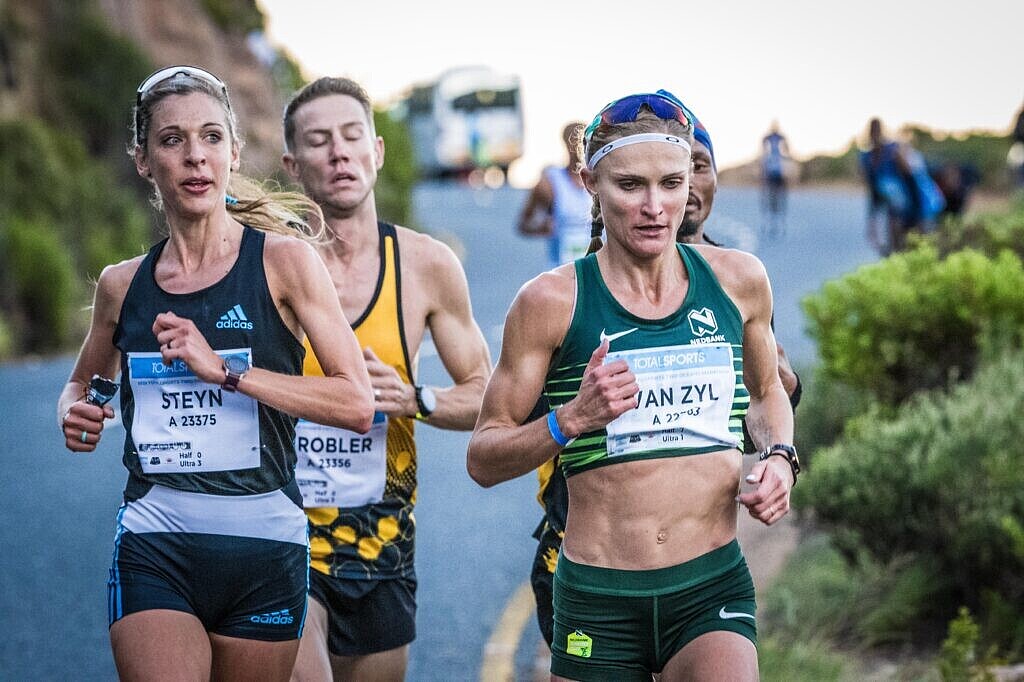
Ultra marathon queen Steyn wins fifth-successive Two Oceans, Khonkhobe reigns supreme for men
Gerda Steyn proved once again that she indeed is the queen of ultra marathon on the continent after she claimed her fifth-successive victory at the TotalSports Two Oceans Marathon in Cape Town on Saturday morning.
The 34-year-old from Bothaville in the Free State cruised to victory with a record time of 3:26:54, beating her 2023 time of 3: 29:05.
Relaxed as ever throughout the marathon, Steyn cemented her status as the country's best female ultra marathoner of all time.
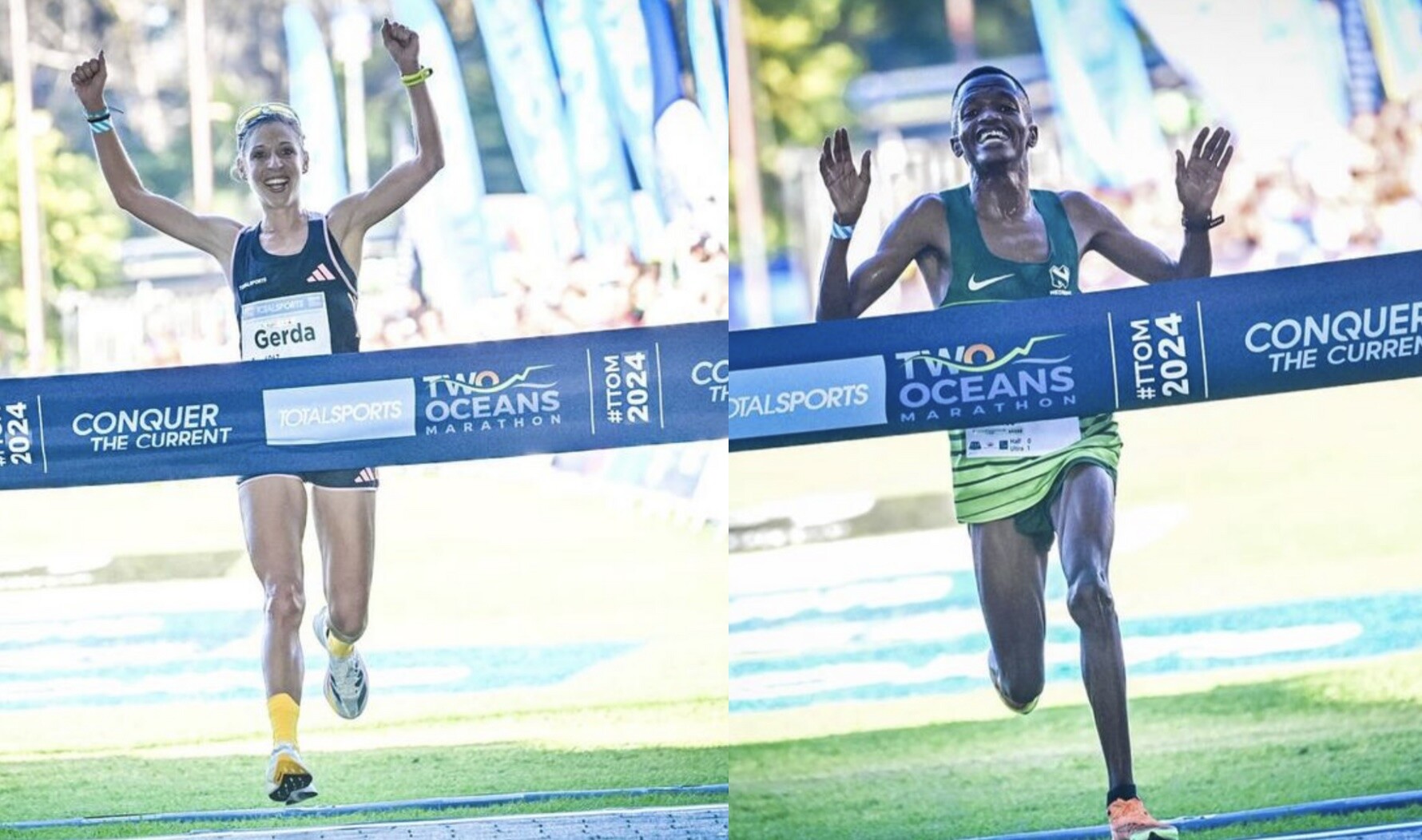
Representing her running club Phantane AC regalia, Steyn surpassed South Africa's Monica Drogemoeller (1988, 1990, 1991 and 1992) and Russian twin Elena Nurggalieva's (2004, 05, 09 and 12) records to be the most decorated ultra marathoner in competition.
Coming to the race, Steyn said she expected a hard-fought battle.
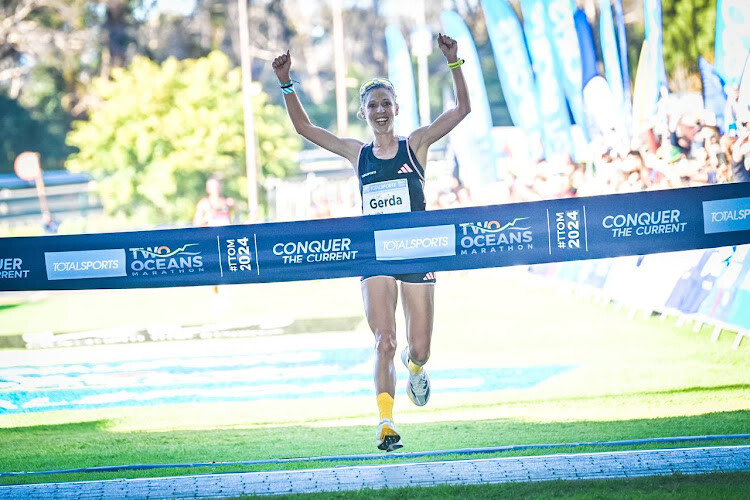
In windy conditions, it was clear from the start of the race that she meant business as she sped into the lead.
At 14km defending Champion Steyn, Irvette van Zyl, and Zimbabwean Loveness Madziva all formed a tight bunch of three, all running an average of 3:35 a kilometre.
At 28km, it became a two-horse race between Steyn and Van Zyl as they climbed small Chappie's neck on neck.
The race between the two titans, a classic rematch of two years ago, there was little separating the two as they descended Chapman's Peak.
At the marathon mark (42.2km), Steyn showed her supremacy and pulled ahead of van Zyl.
Nicknamed the “Smiling Assassin”, she looked unbeatable climbing Constantia Nek and the writing was on the wall for Van Zyl at the 50km mark.
As Steyn passed the finish line, she received a kiss on the cheek from her husband Duncan and cheers from the UCT upper campus sports ground mound.
Van Zyl finished second with a time of 03:29:30 while Madziva clocked 3:38:00 at the end.
In the men’s race, Klerksdorp's Onalenna Khonkhobe became the first South African since 2019 to win the race.
“I’m announcing my arrival; tomorrow you will acknowledge me.” Those were the words of Khonkhobe before the marathon.
He did exactly that with as triumphed in a time of 3:09:30 for top podium finish.
It was his second Two Oceans after making his debut last year, finishing in sixth place.
His Nedbank AC teammate, Lloyd Bosman finished second in 3:09:58 while defending champion Givemore Mudzinganyama could not repeat his 2023 feat, as he took third position in 3:11:13.
(04/16/2024) ⚡AMPby Anathi Wulushe
Two Oceans Marathon
Cape Town’s most prestigious race, the 56km Old Mutual Two Oceans Ultra Marathon, takes athletes on a spectacular course around the Cape Peninsula. It is often voted the most breathtaking course in the world. The event is run under the auspices of the IAAF, Athletics South Africa (ASA) and Western Province Athletics (WPA). ...
more...
Should You Use Cold or Heat for Recovery?
They both have benefits. Here’s how to use them to feel and perform better.
No matter what kind of athlete you are—from casual dabbler to elite competitor—you’ve likely experienced the soreness that follows a strenuous workout. In medicalese, it’s called delayed onset muscle soreness (DOMS), and it usually peaks 48 hours after exercise. It’s a normal consequence of pushing yourself to get stronger or tackling a big goal like riding a century, but that doesn’t make it any more pleasant. It can be especially frustrating when you’re just starting out and push too hard before you build up your fitness.

Despite the near-universal experience of DOMS—runners, cyclists, hikers, climbers, and paddlers all feel it—the underlying cause is poorly understood. The theory is that after strenuous exercise, some combination of muscle spasms, lactic acid buildup, tissue damage, and inflammation lead to pain and soreness. Fortunately, the science around treating DOMS using cold and heat therapy—and the tools available—has made great progress in recent years. Also good news: cold and heat are great for treating other common aches and pains, including injuries, joint soreness, and muscle strains.
Cold and heat are both known to provide relief, but they work in different ways, so it’s important to know when and how to use them. As a simple rule of thumb, cold has anti-inflammatory and pain-reducing qualities, making it a great option for post-workout recovery and treating injuries. Heat increases blood flow and loosens muscles and is good for pre-training warm-up.
Cold therapy has long been known to reduce DOMS symptoms, as it causes vasoconstriction, which reduces inflammation. “It’s like clamping down on a water hose, so fluid gets pushed out, which reduces swelling,” says Dr. Erin Hassler, a sports medicine expert who has worked with USA Track and Field and is a member of KT Tape’s Medical Advisory Board. “Cold also dampens pain by redirecting the brain away from the affected area.” Indeed, cold reduces pain better than heat, according to this study in the Journal of Strength and Conditioning Research. The authors also concluded that cold is best for aiding strength recovery in the first 24 hours after exercise.
And it’s not just ice packs that’ll do the trick. Menthol, an organic compound derived from peppermint oil, causes a cooling sensation when applied to skin. Essentially, it signals your cold receptors that you’re experiencing a drop in temperature and in turn tricks your brain into numbing the pain. Menthol doesn’t aid healing, as it’s not actually making your body cold, but it mimics the chemical process that would occur if you experienced cold, providing similar pain relief. Magic.
But don’t put all your eggs in the cold basket. Heat is just as good for some benefits and has others that cold doesn’t. That same Journal of Strength and Conditioning Research study concluded that compared to using nothing at all, both cold and heat were “significantly better to prevent elastic tissue damage,” and both reduced the loss of muscle strength. (The control group lost 24% of strength just after exercise; subjects using cold or heat just after exercise lost only 4%.) Unlike cold, heat is great for promoting blood flow and warming muscles for exercise.
So how do you work cold, menthol, and heat into your own recovery routine? With tools that use research-backed technologies for effectiveness and are easy to use, so you put them into practice. KT Tape, the company that pioneered high-performance kinesiology tape that can reduce DOMS by 50%, designed a tool kit of products to help you perform and feel your best. Here are four ways to work cold and heat therapy into your regular workout program.
This new product combines the long-lasting pain alleviation of kinesiology tape and the immediate cooling relief of menthol. The stretchy, ultra-breathable tape has the same elasticity as your skin, so it flexes as you move, releasing and recoiling like a rubber band. And it’s easy to apply the tape for various needs in places like knees, shoulders, hamstrings, and more. Just follow this online guide with video tutorials for treating specific body parts. Once applied, the tape lifts the skin, temporarily increasing blood flow to the area, helping to reduce pain and soreness. Add the cooling sensation of menthol, which enhances pain relief, and you have the ideal dual-action tape that you can leave on for up to seven days for ongoing pain relief and support. And unlike a menthol cream that can sweat off, says Dr. Hassler, “It goes where you want it to go and stays on.”
(04/14/2024) ⚡AMPby Outside Online
Should you use a hydration vest during your marathon?
Hydration vests are becoming increasingly popular for road marathoners. Should you get one?
Do you need a hydration vest for racing a marathon? What about a half-marathon? Traditionally associated with trail running and ultrarunning, hydration vests are becoming more and more popular on the roads. But why do people wear them? And how useful are they for a marathon or half-marathon?
The case for the vest
The main reason people wear hydration vests is to ensure they have easy access to water during their runs. Hydration is important during long runs or races, particularly in hot weather, and carrying water bottles can be cumbersome and inefficient. A hydration vest provides a convenient and hands-free way to carry enough water or sports drinks to stay hydrated for a few hours. (Most come with either two 500 ml soft bottles that fit into pockets on the front of the vest, which you can drink from without removing them, or a larger hydration reservoir or “bladder” that fits in the back of the vest and from which you drink via a hose with a bite valve–or both. Popular brands like Salomon, Osprey, The North Face, and Nathan offer both.)
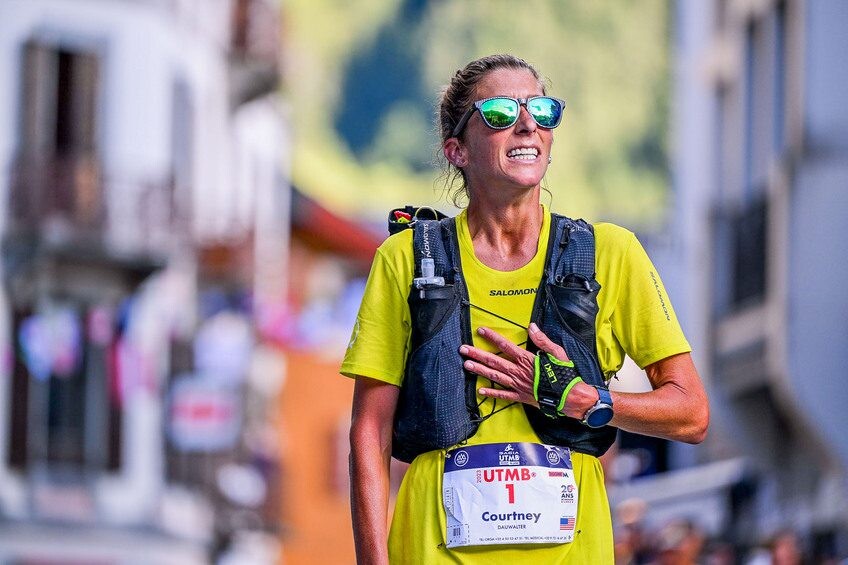
Many runners opt to fill one bottle with water and the other with electrolytes.
While most races provide water stations, they can be crowded, and they may not appear as frequently as you would like, so you may have trouble getting as much hydration as you need.
Generally speaking, unless it is extremely hot and you’re racing on trails, you’re unlikely to need the volume of hydration provided by a vest for a half-marathon.
The case against the vest
Some runners love hydration vests for the convenience and peace of mind they provide, but some find them uncomfortable. They may also make you even hotter on an already hot day, since they basically constitute an extra layer of clothing. The advantage is, they can usually hold significantly more fluids than a water belt (not to mention your other essentials, extra clothing, etc.); however, water is heavy, so you may prefer to opt for some combination of carrying your own water and relying on what’s provided on course.
During long training runs, you can plan your route based on the location of water fountains. Some runners even drive or bike their route ahead of time to stash water bottles along the way. Another option is to plan your route so you start from your doorstep and run the same smaller loop multiple times, allowing you to stop and hydrate at home after each lap.
It’s also important to make sure you’re adequately hydrated before a hot run or race.
As with any other piece of gear, if you do decide to invest in a vest for your marathon, be sure to try it out on your long runs a few times before your big day.
(04/13/2024) ⚡AMPby Brittany Hambleton
Gerda Steyn eyes historic fifth victory at Two Oceans Marathon
In the world of ultra-marathon running, few names resonate as powerfully as Gerda Steyn’s. The South African athlete, whose journey from a relatively unknown quantity surveyor to a world-renowned ultra-marathoner is nothing short of inspirational, is on the cusp of attempting her fifth consecutive title at the prestigious Two Oceans Marathon.
Steyn’s initial foray into the marathon scene was modest, with a debut at the Comrades Marathon that, while impressive, flew under the radar. However, her entry into the Two Oceans Marathon in 2016 hinted at the potential that lay within. Despite finishing 30 minutes behind the winner, Steyn’s time was a harbinger of the greatness that was to unfold in the years to come.
By 2018, Steyn had shattered any notions of being an underdog by clinching her first Two Oceans victory with a stunning performance that etched her name into the annals of the marathon’s history. Her subsequent victory in 2019, where she narrowly missed breaking a 30-year-old record, solidified her status as a force to be reckoned with.
The pandemic may have delayed her pursuits, but Steyn returned with a vengeance in 2022, breaking the coveted 3:30 barrier and setting a new record, a feat she outdid the following year with an even more impressive time. These victories were not just personal triumphs but moments of national pride, bringing her family and supporters immense joy.
As Steyn gears up for her fifth title attempt, her focus remains as unwavering as ever. Her recent victories at the Vaal Marathon and the Om Die Dam 50km, both in record time, indicate she is in prime form. Yet, Steyn’s humility shines through, as she prefers to highlight the role of her club, Phantane, and its founder, Mdu Khumalo, in her journey. Her influence on the club and its athletes, especially the women, underscores the impact of her success beyond her personal achievements.
The Two Oceans Marathon is not just a race for Steyn; it’s a testament to her dedication, resilience, and the support network that has been instrumental in her rise. As she stands on the precipice of making history once again, the marathon world watches in anticipation, knowing that Steyn’s legacy is one of not just breaking records, but of inspiring a generation of runners to dream big and aim higher.
(04/10/2024) ⚡AMP
Two Oceans Marathon
Cape Town’s most prestigious race, the 56km Old Mutual Two Oceans Ultra Marathon, takes athletes on a spectacular course around the Cape Peninsula. It is often voted the most breathtaking course in the world. The event is run under the auspices of the IAAF, Athletics South Africa (ASA) and Western Province Athletics (WPA). ...
more...
Russ Cook (aka the Hardest Geezer) has just become the first person to run the entire length of Africa
Russell Cook, the man nicknamed "Hardest Geezer", has successfully run the full length of Africa, crossing the finish line in Tunisia after 352 days.
Before he set off on the mammoth challenge to run the entire length of Africa, he said he hoped to look back at his life and have no regrets.
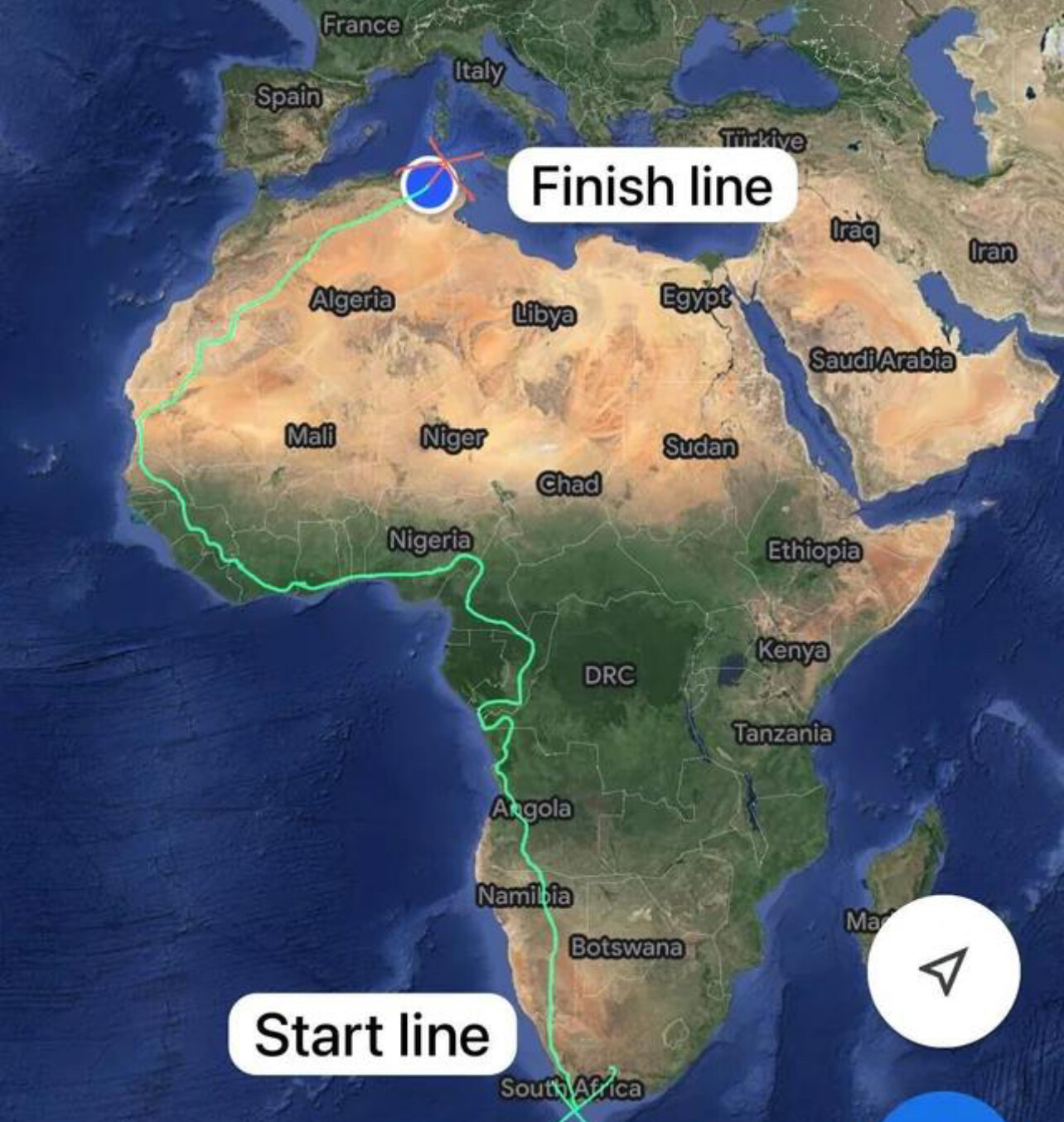
The 27-year-old from Worthing, West Sussex, said he had struggled with his mental health, gambling and drinking, and wanted to "make a difference".
After running through 16 countries, he has raised in excess of £700,000 for charity and has completed his final run.
As he crossed the finish line at about 16:40 BST in Ras Angela, Tunisia, Mr Cook was greeted by a shouting crowd, with many chanting "geezer".
"I'm pretty tired," he told reporters and in a post on X, formerly known as Twitter.
Mr Cook told those who had been following his journey to the finish line: "Mission completed."
Mr Cook initially planned to run 360 marathons in 240 days, with no rest days
A lot has changed since Mr Cook set off from home in February 2023.
His initial plan to run from Tunisia to South Africa, completing 360 marathons in 240 days with no rest days, was soon halted by a lack of an Algerian visa - a hindrance that would later resurface.
But after a last-minute switch, he set off on foot from South Africa's most southerly point on 22 April - a journey that would take him through cities, rainforests, mountains and the Sahara Desert.
Mr Cook and his team had cameras, phones, cash and passports stolen in Angola
After ticking off South Africa and Namibia in 50 days, Mr Cook encountered his first major setback - an armed robbery.
He and his support team had cameras, phones, cash, passports and visas stolen in Angola on 24 June.
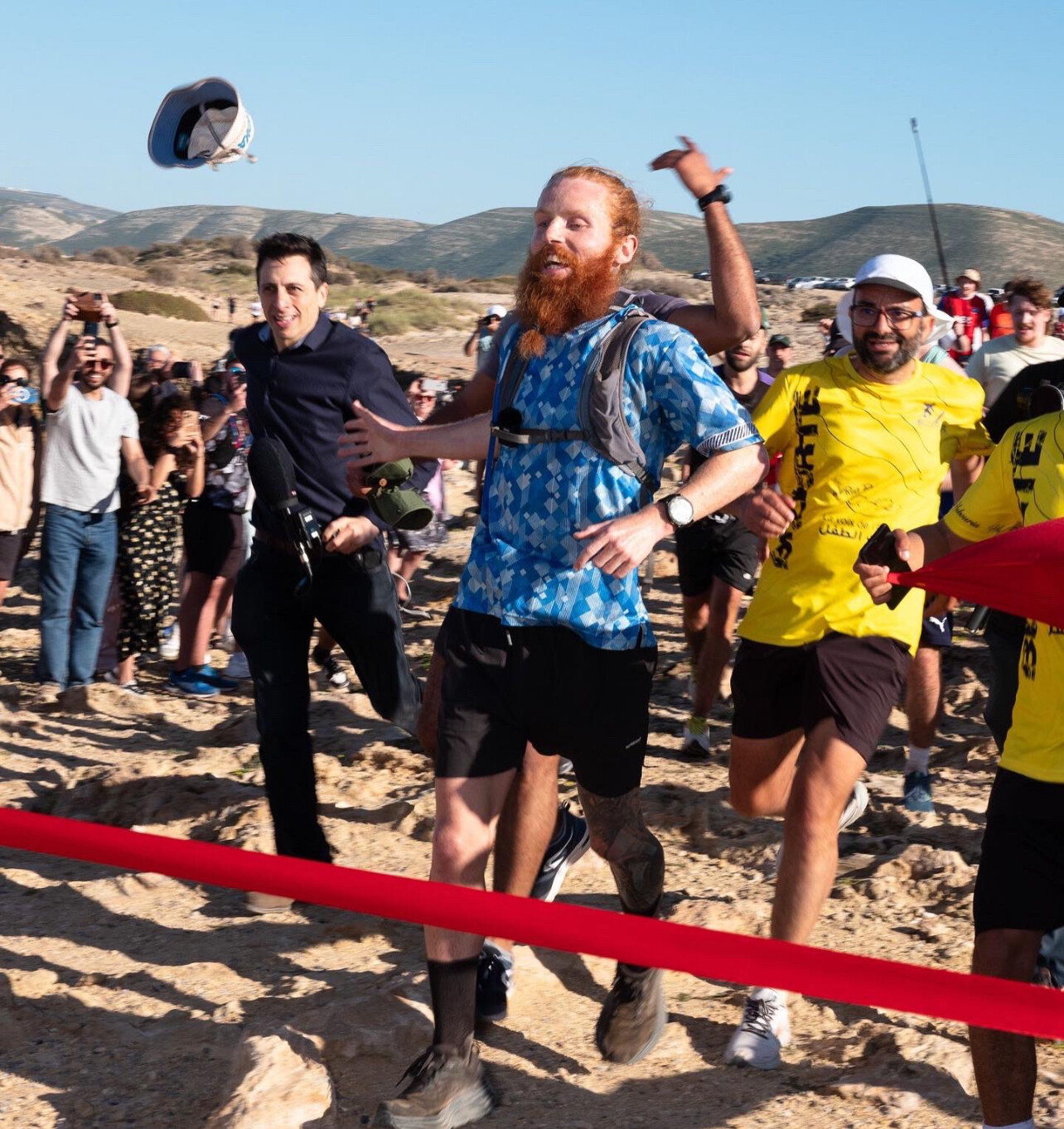
However, as with many stumbling blocks he would face throughout the challenge, the ultrarunner vowed to soldier on.
Health scares
Consistently running more than a marathon a day began to take its toll.
After some minor tummy troubles in the early weeks, he was forced to take his first rest day after doctors found blood and protein in his urine on day 45.
But it was recurring back pain that caused the most concern.
On day 200, Mr Cook was forced to reduce his mileage and intensity at the request of a doctor in Nigeria - even missing consecutive days on day 205 and 206.
But in true Hardest Geezer style, he was not to be stopped.
He said: "I took a couple of days to get some scans. No bone damage so figured the only option left was to stop mincing about like a little weasel, get the strongest painkillers available and zombie stomp road again."
Visa issues
After overcoming everything in his path, it was a single piece of paper - an Algerian visa - that cast doubt over the entire challenge on day 278.
Mr Cook was forced to halt while he waited to find out his fate as to whether he could secure permission to cross the border into Algeria from Mauritania.
"If we don't get the visas, then it is game over," he said at the time.
His public appeal video on X, formerly Twitter, was seen by 11 million people - even catching the attention of the site's owner Elon Musk, as well as MPs Tim Loughton and Alexander Stafford and the Home Office.
The increased attention on the challenge eventually paid off as the UK's Algerian embassy announced he would receive a courtesy visa on the spot.
The final stretch
After the setbacks, all that separated Mr Cook and the finish line was the small task of the Sahara Desert.
The tarmac roads ran out, as did the signal and any signs of civilisation. But an end date was set: 7 April, 2024.
Ramping up his mileage to make up for lost time, Mr Cook made the decision to run through the night due to the intense daytime heat and sandstorms.
Party time
Mr Cook finished running the length of Africa on 7 April
Months turned into weeks, and weeks turned into days.
Finally, on Sunday afternoon April 7, 2024, Mr Cook laced his trainers one last time - at least for now - as he set off for Tunisia's most northerly point.
Joined by supporters from across the world for the final marathon, Mr Cook completed the challenge.
The celebrations will go long into the night - helped by a finishing party performance by British punk band Soft Play, formerly Slaves, at a hotel in Bizerte.
And the Hardest Geezer will finally get his hands on the one thing he has been craving since day one - a strawberry daiquiri.
(04/07/2024) ⚡AMPby Christian Fuller BBC News, South East
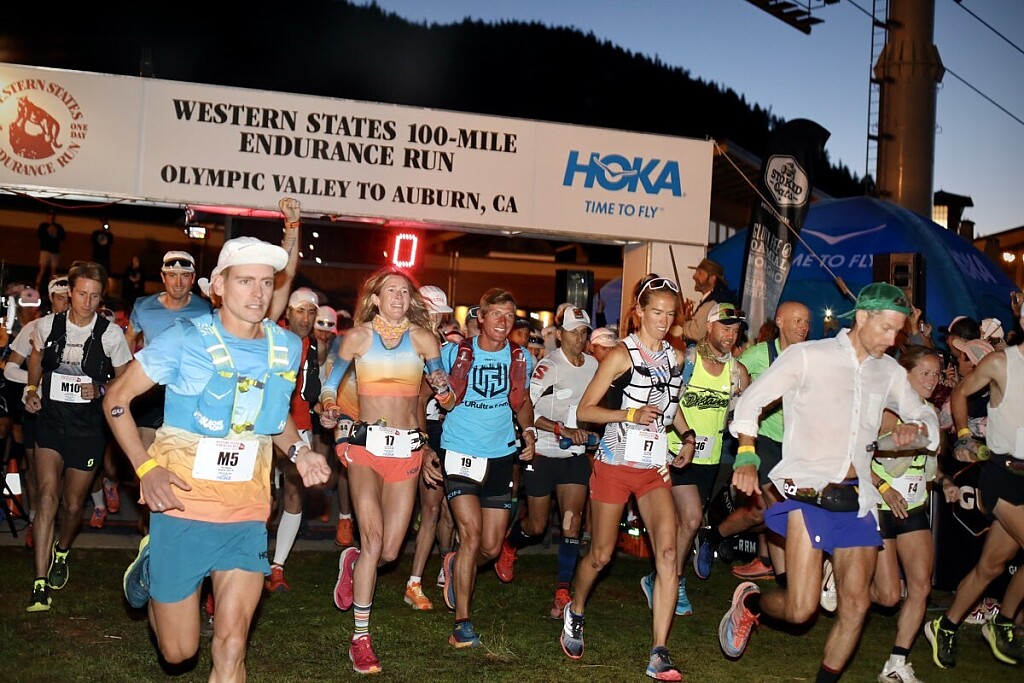
Western States unveils new anti-doping policy
The legendary 100-mile race has partnered with the U.S. Anti-Doping Agency as part of an "ongoing commitment to clean sport".
On Tuesday, Western States Endurance Run (WSER) revealed a new partnership with the U.S. Anti-Doping Agency (USADA), unrolling new regulations around anti-doping and reaffirming the race’s “continuing commitment to clean sport,” as their website explains. Here’s what you need to know.
While WSER has for years had drug testing in place, the previous policies were not as stringent (and were not governed by USADA). For some runners eager to toe the line in Auburn, Calif., on June 29, the rules and expectations around testing are now more clearly laid out; others have more questions and are requesting further clarification.
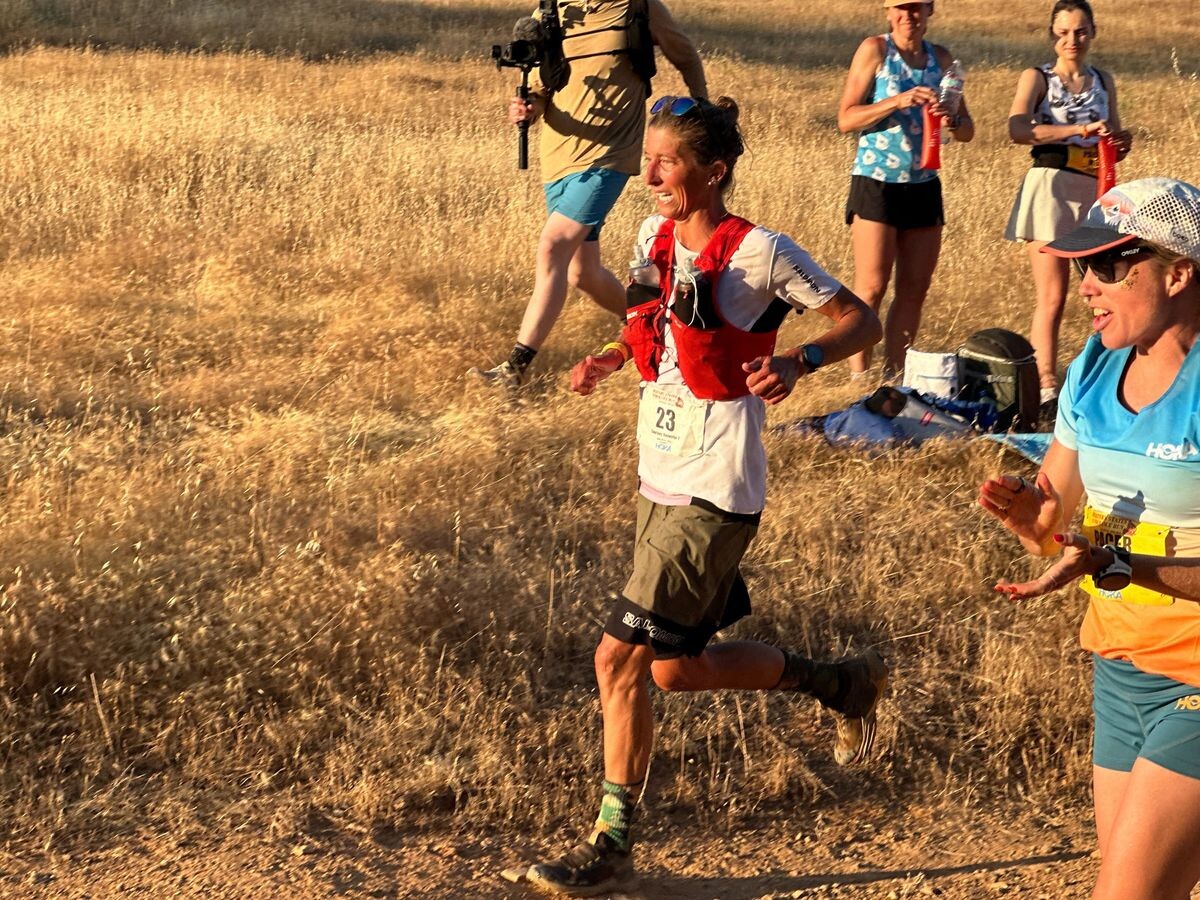
Entry rules
WSER’s entry rules explain that athletes found guilty of doping offenses by governing bodies like WADA or USADA are barred from participating in WSER during their period of ineligibility. Additionally, any athlete subjected to a ban of three months or more is ineligible unless otherwise approved by WSER. Previously, athletes who had any infractions against the WADA code were banned for life from participating in WSER—but, as ultrarunning world champ Camille Herron explains on X, the new policy allows for “more leniency of entry for those who were given a warning/1-2 month ban.”
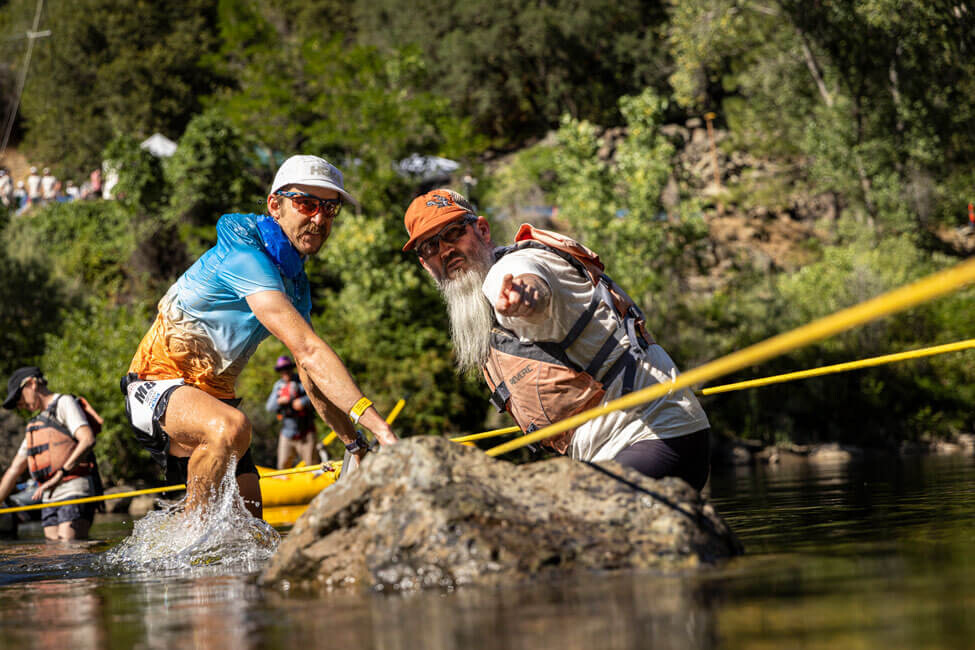
Levelling the playing field
WSER will be taking testing seriously and targeting elite athletes and top age-group competitors for post-race urine and/or blood testing. Sample collection and analysis will be handled by USADA, ensuring a thorough and transparent process. USADA will also be responsible for results management, including communicating with athletes regarding test results, investigating violations and imposing sanctions as necessary. WSER also reserves the right to impose its own sanctions.
Prohibited substances
WSER strictly adheres to the WADA (World Anti Doping Agency) Code, prohibiting the use of substances on the WADA Prohibited List. Athletes are responsible for knowing and complying with these rules. The WSER website provides resources to help athletes check their medications and suggests that runners be extremely cautious when using supplements.
Athlete response
The updated drug policies have garnered some positive responses on social media, while some athletes, such as Canadian pro mountaineer and ultrarunner Adam Campbell, are asking for further explanation.
WSER has a partnership with trail running giant UTMB, and while NSAIDs (nonsteroidal anti-inflammatory drugs, including aspirin and ibuprofen) are, notably, banned at all UTMB races, runners at WSER would not be tested for them under these new guidelines.
“The issue is the terms are not clearly defined,” Campbell posted on X. “Strong stances usually demand greater clarity. If UTMB sanctioned someone for a doping violation how would WSER handle it? Their possible violations do not necessarily sync with WADA—seems like a reasonable question to clarify.” At the time of publication, the race had not yet responded.
The 2024 edition of WSER will take place on June 29-30.
(04/04/2024) ⚡AMPby Keeley Milne
Western States 100
The Western States ® 100-Mile Endurance Run is the world’s oldest and most prestigious 100-mile trail race. Starting in Squaw Valley, California near the site of the 1960 Winter Olympics and ending 100.2 miles later in Auburn, California, Western States, in the decades since its inception in 1974, has come to represent one of the ultimate endurance tests in the...
more...
Early Morning Race Start? Here’s How to Reset Your Sleep Schedule
Training plans include time and distance on your feet, but rarely do they block out time in bed—maybe it’s time they do.
At first glance, the start times of most marathons—around 9 a.m. or 10 a.m.—seem easy enough. But when you factor in travel and wait time, runners often have to leave their home or hotel rooms before dawn to get to the start. That leaves typical sleep schedules in the dust.

“I had four races last year and all of them required getting up as early as 3:30 a.m.,” Joe English, elite-level master’s multi-sport athlete and former national coach for the Leukemia and Lymphoma Society’s Team-In-Training program, tells Runner’s World. Especially for the bigger races, where there are a lot of logistics involved, it’s necessary to get up and race super early.
So if you need to reset your sleep schedule before a race to accommodate those pre-dawn times, how do you do it and how long will it take?
Why You Should Reset Your Sleep Schedule
“Sleep used to take a back seat to exercise and nutrition, but in the past decade, we’re starting to realize that it’s really a tripod when it comes to athletic success,” James Maas, Ph.D., author of Sleep to Win: Secrets to Unlocking Your Athletic Excellence in Every Sport tells Runner’s World. “I have personally seen runners who adjusted their sleep and nothing else and have greatly improved their running as a result.”
Extensive research confirms this observation. A systematic review published in Sports Medicine in 2023 about sleep and athletic performance, found that while elite athletes feel rested with eight hours of sleep every night, they often sleep less than seven. Long travel and resting in unfamiliar environments often disrupted their sleep, as did the same things that keep many of us awake: social demands, work and family commitments, and lifestyle choices like diet.
The researchers also found, though, that extending sleep by about 45 minutes to two hours, rather than napping, improved both sleep quality and performance, as shown by metrics like strength and power.
To gain the same benefits, here’s how long it takes to reset your sleep schedule in order to wake up early for a race and how to make it happen so you’re ready for a solid performance.
How to Reset Your Sleep Schedule
If there is a race in your schedule that involves travel crossing time zones, both experts say it takes up to four weeks to adjust your sleep schedule, so start planning for that new wake-up time well in advance.
Here’s what you should do to adjust:
1. Set an Alarm—for Bedtime
You may have the best intentions to go to bed at a reasonable hour, but then OME (One More Episode) Syndrome sets in. Set an alarm to tell you it’s time to wind down.
Consider taking 30 minutes to an hour to move from your couch to your bed, giving yourself enough time to take care of that process. “I have an alarm that goes off at 9:15 every night and that’s when I know to start my wind-down time no matter what,” Ryan Hurley, a sleep performance coach and former ultramarathoner and Ironman racer tells Runner’s World.
2. Create a Consistent Routine
Part of good sleep hygiene—creating the ideal environment for getting a good night’s rest—is consistency. “If your focus is on having a regular sleep cycle all the time, an early race is going to have less of an impact, because you’ll be better rested [overall] and therefore more capable of dealing with that bump in the road,” says English. To help keep him consistent, English sets his lights to automatically dim at the same time in the evening to cue his bedtime.
3. Write Tomorrow’s To-Do List
Writing down your to-do list for the next day before you go to bed can help keep nighttime ruminating at bay. “By writing it down, you’re making space for it but you’re not bringing it into the bedroom with you to worry about,” says Hurley.
4. Act as Your Own Sleep Detective
Tracking your sleep can change your rest game in ways you don’t even yet realize, says Hurley. “I always thought that I was getting enough sleep because I was getting seven hours, and the common recommendation is seven to nine hours,” he says. “But it wasn’t until I started tracking my sleep that I realized I wasn’t getting enough REM sleep.”
“I’ve found that people aren’t very good at judging how much sleep they got,” Maas adds.
To assess your rest, ask yourself these questions: Do you tend to feel tired when you’re in a warm room, a dull meeting, have a heavy meal, or after a couple drinks? Do you typically fall asleep within five minutes of hitting your pillow? Do you sleep extra hours on the weekend? Do you need an alarm to wake up? If yes to any of these, you probably need more rest, he says.
5. Get Grateful
Having an “attitude of gratitude” sounds like a nice catch-all phrase we hear a lot these days, but it can actually help turn your mood around. “Every night, I review the good things that happened to me that day, and it helps puts me into a good mindset to fall asleep,” says Hurley.
6. Replicate Start Times
Replicating race conditions—which includes time of day—can help your body adjust by the time you hit the start. “You should do at least some portion of your training at the time of day of your race,” says English. “It helps acclimate you to running under the conditions in which you’ll be racing.”
How to Schedule Your Sleep the Night Before a Race
If adjusting your sleep schedule for four weeks before a race is unrealistic, English emphasizes that it’s likely, with the help of adrenaline, you’ll be able to push through a race on less sleep than usual. It’s more important to be well-rested the two weeks leading up to the race. Then, if you can, squeeze in a nap if you know you won’t get a full night’s rest before the race.
If you don’t sleep well the night before, don’t let it derail you. Instead focus on the training you’ve done to remind you that you’re ready for the race, English suggests.
To make sure you get the best sleep possible in the days leading up to the start to support your performance, here’s what to do:
Stay Awake Until Bedtime
If you have a 3 a.m. wake-up call, simple math would deduce that you should go to bed much earlier that night. Not so, says English. “The number one thing runners would tell me the night before the big race is ‘I’m going to go to bed at 4 p.m.,’ and I tell them that is a recipe for a disaster, because you’re going to confuse your body into thinking you’re taking a nap, and will wake up after two to three hours,” he says. “My advice instead is to go to bed at a reasonable hour, but not more than an hour or two earlier than normal.”
Go With the Flow
Whether it’s a 24-hour relay, a time zone change, or simply a super-early start time that you couldn’t prepare for, there will be some races that basically happen in your middle of the night. “I remember once I was at the Disney World Marathon which has a really early start, and I was on the bus at 3 a.m., which was midnight my time, and here I was just about to start running,” recalls English. Times like that, there’s only so much you can do, he says. “Just do what you can, and know that your training will carry you through.”
Make Time for a Well-Timed Nap
When you can’t get a full night’s rest, count on the power of a short-and-sweet nap. “Napping can increase your alertness, reaction time, and coordination,” says Maas, who coined the term “power nap.” The sweet spot for nap timing is less than 30 minutes or more than 90 minutes, according to Maas. “Otherwise, you’ll be groggy,” he says
Don’t Sweat the Alarm
The “will I wake up for the race?” panic is so ubiquitous that Jerry Seinfeld was put in charge of waking up a New York City Marathon runner who famously slept through his Olympic race. But let’s separate fact from fiction: According to English, this scenario likely won’t happen. “I’ve probably helped 5,000 runners reach the starting line of a race and I don’t recall anyone oversleeping,” he says. “If anything, it’s the opposite—they’re up at 2 a.m. because of the adrenaline.”
(03/30/2024) ⚡AMP
by Runner’s World
Why Jasmin Paris is about to become a household name
British ultrarunner Jasmin Paris made history on Thursday when she became the first woman runner to finish the Barkley Marathons, charging to the finish with only 99 seconds to spare before the 60-hour cutoff. But this is not the first time Paris, who runs free of sponsorships and is an environmental advocate, has achieved something remarkable in the trail running world. Here’s what we know about the 40-year-old ultra-trail champion.
Paris is a veterinarian and research scientist from Midlothian, Scotland. In 2019, she jumped to world attention on the ultra scene when she smashed the overall (men’s) course record–by 12 hours–at Britain’s 268-mile Montane Spine Race, finishing in 83 hours, 12 minutes, 23 seconds–while also pumping breastmilk for her infant daughter.
“When it was really difficult I made myself think about my daughter and imagined the different things she does—that kind of kept me distracted and entertained,” she told British Vogue after her Spine Race success.“Some of the time you don’t really think about anything. It’s mindful, you’re just putting one foot in front of the other.”
The Barkley Marathons is five loops of a 20+ mile course in Frozen Head State Park, near Wartburg, Tenn. (distances vary; the race is thought to be well over 100 miles) featuring thousands of metres of elevation gain, with a time limit of 60 hours. It was first run in 1986, and was inspired by the prison escape of James Earl Ray, who was serving time at Brushy Mountain penitentiary for the murder of Martin Luther King, Jr. (He was captured soon after.) Gary Cantrell (a.k.a. Lazarus Lake, or “Laz” to his friends) dreamed up a 100-miler in the vicinity of the prison, which is now abandoned and is a feature of the course. GPS watches are not allowed; each runner is issued a cheap watch set to “Barkley time,” i.e., the 60-hour limit. Runners must collect pages corresponding to their bib number from 13 books hidden on the course (they receive a new bib for each loop); missing pages mean disqualification. There is water available on the course, but no aid stations. Runners may only receive aid from their crew between loops, in camp, where they are on the clock.
Paris was always passionate about the outdoors, but only took up running in university. She began winning local and national fell-running and ultrarunning events, including the Scottish Hill Running Championships, British Fell Running Championships and then the 2016 Extreme Skyrunner World Series. Paris ran a hill race 10 days before giving birth to her daughter.
While Paris says it has been challenging to juggle training as a parent to a young child, she adds that it’s important to maintain a balanced life.”It doesn’t make you a worse parent if you have something else that is just yours; in fact I think that it’s probably inspirational to your child, she told British Vogue.”I hope my daughter will be inspired when she grows up to believe that she can do anything.”
Barkley creator Laz Lake asked Paris to run the race after her victory at the Spine Race—he thought Paris might be the only woman who could possibly finish. In 2o22, she completed three loops (which is dubbed a “fun run”); in 2023, she was eliminated after four loops, falling short of the 48-hour cutoff time to begin the fifth loop. Paris was only the second woman ever to attempt a fourth loop; the first was Sue Johnston of Vermont, in 2001.
Fellow British runner and two-time Barkley Marathons competitor, Damian Hall, made it to loop five for the second year in a row, but was unable to complete the race. He commented on Paris’s remarkable finish to his sponsor, Inov8: “It was still an amazing experience, and incredible to see Jasmin finish and make history. That wiped away most of my personal disappointment. It was the greatest sporting achievement I’ve seen in the flesh.”
“The final minutes were so intense, after all that effort it came down to a sprint uphill, with every fiber of my body screaming at me to stop,” Paris told The New York Times post-race.“I didn’t even know if I’d made it when I touched the gate. I just gave it everything to get there and then collapsed, gasping for air.”
Renowned photographer Howie Stern is a regular at the Barkley Marathons, and captured Jasmin throughout the race.”Thank you Jasmin for putting your heart and soul into the dark world that takes place in a little park in Tennessee, which has captivated and inspired women and men the world over,” he said on Instagram.
(03/30/2024) ⚡AMPby Running Magazine
Three workouts for endless endurance
If you’re gearing up for a half-marathon distance or longer, you’re likely hoping to build your endurance tank to keep your race pace steady and strong through the hard final miles of your race. Pro ultrarunner Krissy Mohl, author of Running Your First Ultra, whose accomplishments include taking fourth place at both Western States 100 and Hardrock 100 (2012), schedules regular endurance-based workouts for the athletes that she coaches that are appropriate for runners targeting any longer distance race.
Before you tackle any of these workouts, make sure you have a strong training base, and schedule an easy running or recovery day to follow. Use these as your bread-and-butter workouts in your pursuit of crushing a consistent race-day pace.
1.- Pace repeats
Mohl has runners use this workout throughout their entire training build, beginning with 5 or 6 repeats and building from there.”It is key to find the pace you can manage the entire workout,” she says. Aim to be consistent and steady, with your final repeat at the same pace as your first.

Warm up with 15 minutes of easy running.
Run 7-8 x 5 minutes steady, with 1 minute recovery between each repeat.
Cool down with 15 minutes of easy running.
Adapt this workout for your ability and goals by adding repeats (or doing less), focusing on consistency.
2.- Endurance pyramid
These pyramid intervals are shorter than most endurance sessions, but they add up to a strong, leg-tiring session. Mohl suggests less technical terrain for this workout to work on turnover: “Make these intervals a little quicker than normal, especially the 1-and 2-minute ones.”
Warm up with 15-20 minutes of easy running.
Pyramid: Run 1,2,3,4,3,2,1 with equal recovery between each segment.
Cool down with 15 minutes of easy running.
3.- Steady hills
Whether your race is a flat road one, or an ultra that involves powerhiking, hill training will build confidence and strength. Mohl says that a consistent, runnable hill is best for this workout.
Warm up with 15-20 minutes of easy running.
Run 5 x 5 minutes hill running with one minute of recovery after each repeat.
Cool down with 15 minutes of easy running.
Make sure you are fuelling appropriately for long, tough training, and prioritizing quality recovery time that includes rest days (at least one per week).
(03/27/2024) ⚡AMPby Keeley Milne

How Little Strength Training Can You Get Away With?
To be a maximalist, you must first be a minimalist. That's an aphorism I first heard from Michael Joyner, the Mayo Clinic physiologist and human performance expert, and it resonates. To truly reach your potential in one or a few areas, you have to be disciplined about all the other ways in which you could fritter away your valuable time and energy. Excellence requires tough choices.
All this is to say that when it comes to strength training, I'm not ashamed to admit that my number one question is, "How little can I get away with?" I'm convinced that strength training has important benefits for health and performance, and I recognize that lifting heavy things can be a source of meaning and self-mastery. But I've got miles to run before I sleep and, metaphorically, a bunch of errands to run before my kids get home, so a recent review in Sports Medicine caught my eye. An international group of researchers, led by David Behm of Memorial University of Newfoundland and Andreas Konrad of Graz University in Austria, sum up the existing research on minimalist resistance training: how low can you go and still get meaningful gains in strength and fitness?

For starters, let's acknowledge that making meaningful gains is not the same as optimizing or maximizing your gains. There's a general pattern in the dose-response functions of various types of exercise: doing a little bit gives you the biggest bang for your buck, but adding more training leads to steadily diminishing returns (and eventually, for reasons that aren't as obvious as you might think, a plateau). Those diminishing returns are worth chasing if you're trying to maximize your performance. But if your goal is health, more is not necessarily better, as we'll see below.
In a perfect world, you'd like to see a systematic meta-analysis of all the literature on minimalist strength training, meaning that you'd pool the results of all the different studies into one big dataset and extract the magic training formula. Unfortunately, the resistance training literature is all over the map: different types of strength training, study subjects with different characteristics and levels of experience, different ways of measuring the outcome. That makes it impossible to meaningfully combine them in one dataset. Instead, Behm and Kramer settled for a narrative review, which basically means reading everything you can find and trying to sum it up.
Their key conclusion is that "resistance training-hesitant individuals" can get significant gains from one workout a week consisting of just one set of 6 to 15 reps, with a weight somewhere between 30 and 80 percent of one-rep max, preferably with multi-joint movements like squats, deadlifts, and bench press. That's strikingly similar to a minimalist program I wrote about a couple of years ago: that one involved a single weekly set of 4 to 6 reps, but the lifting motions were ultra-slow, which heightens the stimulus. You don't even necessarily have to lift to failure, though you probably need to get within a couple of reps of it.
The data that Behm and Kramer looked at came from studies that typically lasted 8 to 12 weeks. One of the unanswered questions is whether such a minimalist program would keep producing gains on a longer timeframe. You'd clearly need to continue increasing the weight you lift to ensure that you're still pushing your body to adapt. But do you reach a point where further progress requires you to increase the number of sets, or the number of workouts per week? Maybe-but it's worth recalling that we're not trying to maximize gains here, we're just trying to achieve some hazily defined minimum stimulus. For those purposes, the evidence suggests running through a rigorous full-body workout once a week is enough to maintain a minimum level of muscular fitness.
There's another, less obvious angle to minimalist strength training that researchers continue to grapple with. Duck-Chul Lee of Iowa State and I-Min Lee of Harvard, both prominent epidemiologists, published a recent review in Current Cardiology Reports called "Optimum Dose of Resistance Exercise for Cardiovascular Health and Longevity: Is More Better?"
The question echoes a debate that flared up a decade or so ago about whether too much running is bad for you, in which Duck-Chul Lee played a key role. Back in 2018, he also published a study of 12,500 patients from the Cooper Clinic in Dallas which found that those who did resistance training were healthier-but that the benefits maxed out at two workouts a week, and were reversed beyond about four workouts a week. At the time, I assumed the result was a fluke. But the new article collects a larger body of evidence to bolster the case. The newer data suggests that about an hour of strength training a week maximizes the benefits, and beyond two hours a week reverses them. Lee and Lee hypothesize that too much strength training might lead to stiffer arteries, or perhaps to chronic inflammation.
Now, when Duck-Chul Lee and others produced data suggesting that running more than 20 miles a week is bad for your health, I was brimming with skepticism and went over the data with a fine-tooth comb. I'm similarly cautious about these new results, and have trouble believing that there's anything unhealthy about doing three weekly strength workouts. But they do put the idea of minimalist strength training in a different light. Maybe you're not maximizing strength or muscle gains, but it's possible that you're optimizing long-term health-especially if the reason you only hit the gym once or twice a week is that you're too busy hitting the trails.
(03/24/2024) ⚡AMPby trail runner magazine
Olympian Army major gets ready for 250km ultramarathon
Two-time Olympic rowing champion and Army major Heather Stanning is ready for her next challenge.
Alongside a famous face, she is set to take on the Marathon des Sables, an extraordinary race and adventure that's been taking place in the southern Moroccan Sahara since 1986.
Forces News caught up with her in Cyprus during training.
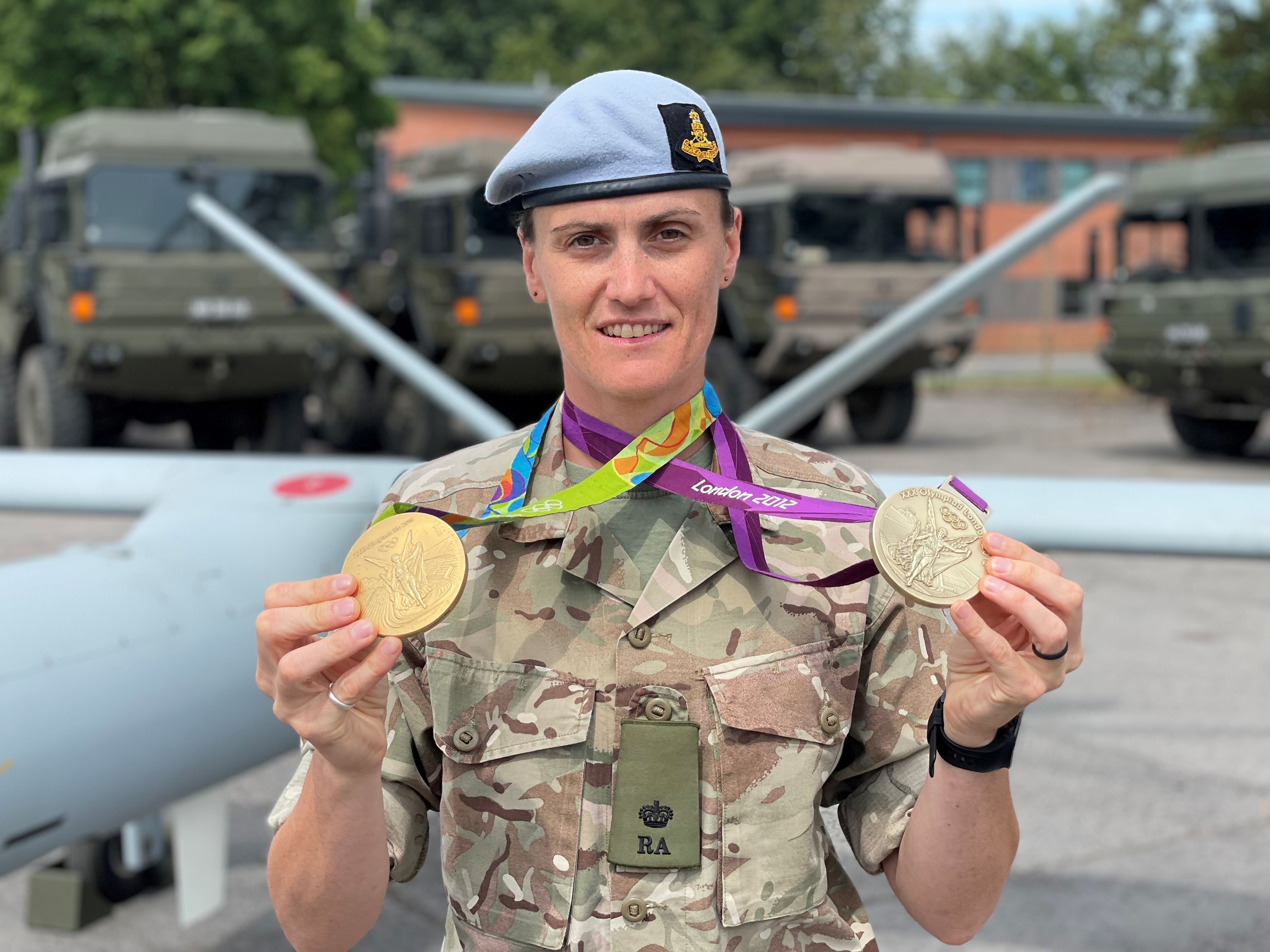
This event is the ultimate ultra race and certainly not for the faint-hearted – which is probably why Maj Stanning said 'yes' when asked if she would take part.
The Marathon des Sables sees competitors race 250km over six days, self-sufficient and in the Sahara desert.

Maj Stanning's team is made up of three other British Army personnel and TV personality Judge Robert Rinder.
Maj Stanning said: "Why am I doing it?
"The Army Benevolent Fund approached me and said 'It's our 80th year, we want to do a big challenge, raise awareness and raise some money, will you do this challenge for us?'.
"I was like 'Oh absolutely' and then they told me, I was like 'Oh wow, that is a challenge'."
"I've been training since before Christmas, just gradually building up," Maj Stanning explained.
"For me, the biggest thing is staying in one piece and not getting injured.
"I may not be doing loads and loads of miles every week, but it's just gradually building up.
"It's time on my feet. Quite honestly, I will probably walk the majority of it. And that's probably where us in the military will do quite well.
"Let's not think we are all going to be ultra runners and break some records. It's about getting to the finish line."
(03/21/2024) ⚡AMPby Sofie Cacoyannis

Marathon Des Sables
The Marathon des Sables is ranked by the Discovery Channel as the toughest footrace on earth. Seven days 250k Known simply as the MdS, the race is a gruelling multi-stage adventure through a formidable landscape in one of the world’s most inhospitable climates - the Sahara desert. The rules require you to be self-sufficient, to carry with you on your...
more...
Irvette van Zyl to bring tough competition in Two Oceans Marathon
Irvette van Zyl is one of those athletes who wear their heart on their sleeve. With her, what you see is what you get. And what you hear her say, she always means.
This week when she spoke about her excitement at being able to run the Total Sports Two Oceans Marathon, the Hollywood Running Club athlete resembled a kid in a sweet shop. And with good reason too, for Van Zyl endured the pain of watching last year’s race on the sidelines due to injury.
She hated not being part of the race. Understandably so, for the year before she had smashed the 56km Mother City ultra as she dipped below Frith van der Merwe’s record from 1989 that had previously been thought of as unbreakable. Incredibly, despite her fantastic -3:30:31, Van Zyl was not the winner in 2022, that honour belonging to that South African road-running machine called Gerda Steyn -3:29:45.
As she looked ahead to next month’s (April 13) race during the announcement of Hollywood’s team for the World’s Most Beautiful Marathon, Van Zyl revealed just how tough it was for her not being able to race last year.
“Being on the other side seeing them race, it was really hard. When the finish tape was broken my heart broke into so many pieces. It was so hard that day, but I am glad to be back in the race and I am looking forward to doing well. If I win Two Oceans I am gonna start drinking again,” she laughed.
“But it should not be an obsession. Hopefully I can give someone tough competition. And you all know who that someone is.”
She did give Steyn competition back in 2022 when the two of them ran under Van Der Merwe’s record from 1989.
“I knew going into 2022 that I had done a 50k, and I had a plan to run a 3:30. I knew it was possible and it went good on the day, but it was just not good enough. Gerda levelled that record and I was a part of it. It was an interesting race but unfortunately just three kilometres longer for me,” she said before letting out that piercing laugh of hers.
While she will be out for glory, Van Zyl is just glad to be back running, having felt the pain of being out due to injury.
“I value my running now more than I did before after it was taken away from me for so many months. It felt like the injury would not heal and I was never coming back. Hopefully
I still have a few years in me to run. If injury comes, you never know if it will be the end. So I am going to enjoy it race for race, as if it was my last because you never know if it will be the last.”
And she considers herself very blessed to be running for a supportive club.
“I am a happier athlete now, and I am very pleased with the support I got from Hollywood during my long-term injury. They were good and helped me come back because they are interested in the human being. They just want us to be the best that we can be. They know I am not a running machine and now I can enjoy my running game again.”
She will enjoy it even more if she wins Two Oceans next month.
(03/20/2024) ⚡AMPby Matshelane Mamabolo
Two Oceans Marathon
Cape Town’s most prestigious race, the 56km Old Mutual Two Oceans Ultra Marathon, takes athletes on a spectacular course around the Cape Peninsula. It is often voted the most breathtaking course in the world. The event is run under the auspices of the IAAF, Athletics South Africa (ASA) and Western Province Athletics (WPA). ...
more...
Plant-based perfection: super snacks for runners
These nutritious and easy-to-make snacks are perfect grab-and-go fuel for busy days.
Whether you already enjoy a plant-based diet, are curious about trying more plant-based nutrition or are simply looking for some fast, healthy snacks for pre or post-run, we’ve got you covered. Runners can successfully fuel with a variety of different styles of eating, but plant-based nutrition is becoming more popular among elite athletes and regular runners—the shift in eating is credited with lowering inflammation levels, improving cardiovascular health and preventing diseases like Type 2 diabetes. Here are a few delicious recipes to fuel your next run.
Sweet Potato and Oat Muffins

Enjoy these delicious sweet potato and oat muffins as a nutritious snack before or after (or during) your run. Store any leftovers in an airtight container at room temperature for up to three days, or store in the freezer.
Ingredients

1 cup mashed sweet potato (about 2 medium sweet potatoes, cooked and mashed)1/4 cup unsweetened applesauce1/4 cup maple syrup or agave nectar1/4 cup almond milk (or any plant-based milk)1 tsp vanilla extract1 cup whole wheat flour1 cup rolled oats1 tsp baking powder1/2 tsp baking soda1 tsp ground cinnamon1/4 tsp ground nutmeg1/4 tsp saltOptional: 1/4 cup chopped nuts or seeds for added texture
Directions
Preheat your oven to 375 F (190 C) and grease a muffin tin or line with paper liners. In a large mixing bowl, combine mashed sweet potato, applesauce, maple syrup, almond milk and vanilla extract. Mix until smooth.
In a separate bowl, whisk together whole wheat flour, rolled oats, baking powder, baking soda, cinnamon, nutmeg and salt.
Gradually add the dry ingredients to the wet ingredients, stirring until just combined. Be careful not to overmix. If using, fold in chopped nuts or seeds. Spoon the batter into the prepared muffin tin, filling each cup about 3/4 full.
Bake for 20-25 minutes or until a toothpick inserted into the centre comes out clean. Allow the muffins to cool in the tin for a few minutes, then transfer to a wire rack to cool completely.
Scott Jurek’s Rice Balls (Onigiri)
These are a favourite of ultrarunning legend Scott Jurek, from his book Eat & Run.
Ingredients
2 cups sushi rice4 cups water2 teaspoons miso3–4 sheets nori seaweed
Directions
Cook the rice in the water on the stovetop or using a rice cooker. Set aside to cool.
Fill a small bowl with water, and wet both hands so the rice does not stick. Using your hands, form ¼ cup rice into a triangle. Spread ¼ teaspoon miso evenly on one side of the triangle. Cover with another ¼ cup rice.
Shape into one triangle, making sure the miso is covered with rice. Fold the nori sheets in half and then tear them apart. Using half of one sheet, wrap the rice triangle in nori, making sure to completely cover the rice.
Repeat using the remaining rice, miso and nori.
Chickpea flour mini quiches
Enjoy these tasty protein-packed mini quiches warm, or wrap them up and eat them on the go.
Ingredients
1 cup chickpea flour1 cup unsweetened almond milk1/2 cup diced vegetables (spinach, bell peppers, onions, mushrooms, etc.)1/4 cup nutritional yeast1 tsp baking powderSalt and pepper to taste
Directions
Preheat your oven to 375 F (190 C) and grease a mini muffin tin. In a bowl, whisk together the chickpea flour, almond milk, nutritional yeast, baking powder, salt and pepper until smooth.
Stir in diced vegetables, and pour the batter into the prepared muffin tin, filling each cup about 3/4 full.
Bake for 15-20 minutes or until the edges are golden brown and the tops are set. Let cool slightly before removing from the tin. Enjoy warm or at room temperature for a protein-packed snack on the go.
(03/20/2024) ⚡AMPby Keeley Milne
