

Running News Daily
Running News Daily is edited by Bob Anderson and team. Send your news items to bob@mybestruns.com Advertising opportunities available.
Index to Daily Posts · Sign Up For Updates · Run The World Feed
Search Results for Ultra
Today's Running News
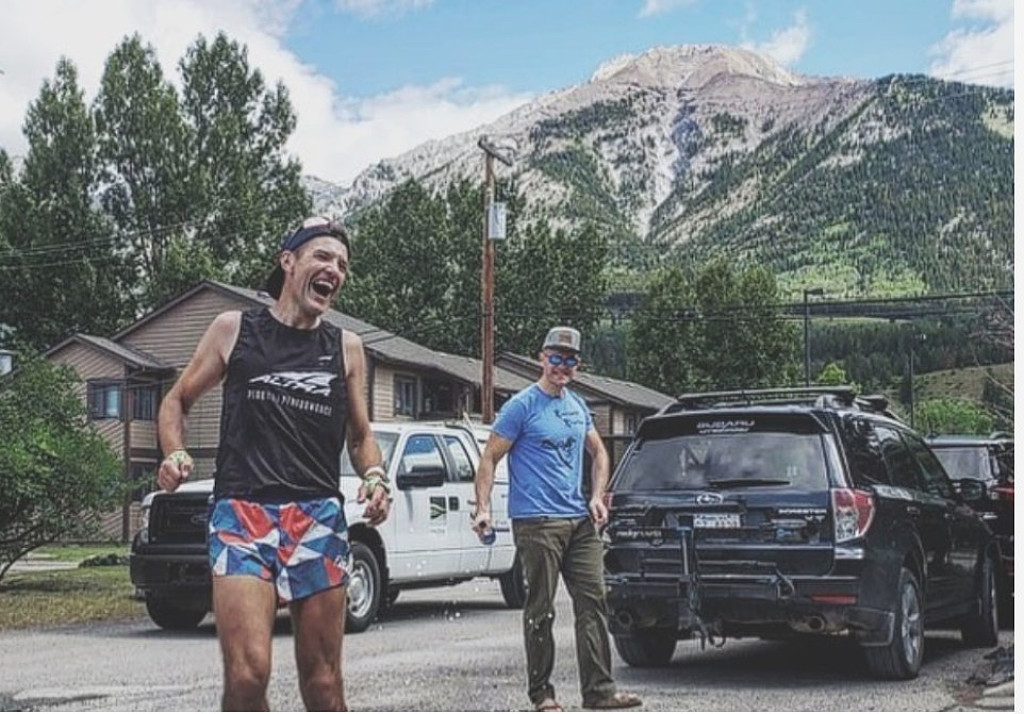


Ultrarunner runs 106K, climbs 10,000m in Double Canmore Quad Challenge
Andy Reed ran the challenge in the Canadian Rockies twice in one go to set the FKT for the route in 26 hours, 33 minutes and 24 seconds
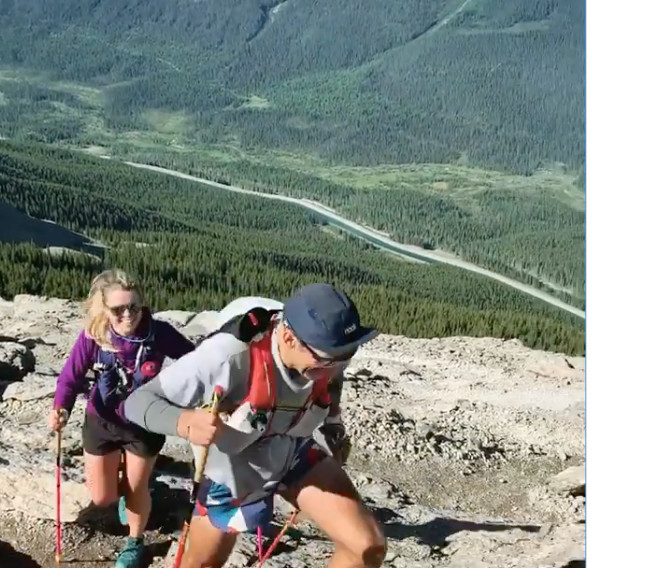
Canmore, Alta., runner Andy Reed set the fastest known time (FKT) for the Double Canmore Quad Challenge in late July, covering the route in 26 hours, 33 minutes and 24 seconds. The single lap of the Canmore Quad features four peaks which runners must run up and down: the Mount Lady MacDonald, Grotto Mountain, the East End of Rundle (EEOR) and Ha Ling Peak. Reed decided to double up for the challenge, running each mountain twice and covering 106K with 10,000m of elevation gain in the process.
Rules of the Canmore Quad
With no set route or starting point, the rules of the Canmore Quad are pretty simple: summit each of the four peaks and return to where you began as quickly as possible. Runners can start their attempts wherever they want, and the freedom to design one’s own route adds a level of creativity and strategy to the run that other FKTs and endurance challenges lack. This is a similar format to many fell running records in the U.K., such as the 214 Wainwright Peaks and Lake District 24-Hour runs. For Reed’s challenge, he stuck to the same rules as a single Canmore Quad and just doubled up on the mileage.
Reed’s Double Quad run
According to Reed’s blog, he had completed the Canmore Quad on multiple occasions before his latest run, but he had never tried two circuits. In an Instagram post that he published after he had completed the challenge, Reed wrote that the run “wasn’t all fun and games.” He explained in another post that the weather was not on his side during the attempt. “We were hit by snow, hail, thunder and lightning, rain and sun,” he wrote, “but all in all an incredible day and a bit!” Despite the struggles he faced on the route, Reed finished the Quad twice over and earned the FKT for the challenge.
(08/08/2020) ⚡AMPby Running Magazine
Courtney Dauwalter sets off on 788K Colorado Trail FKT attempt
The American ultrarunner is busy tackling one of her biggest challenges yet
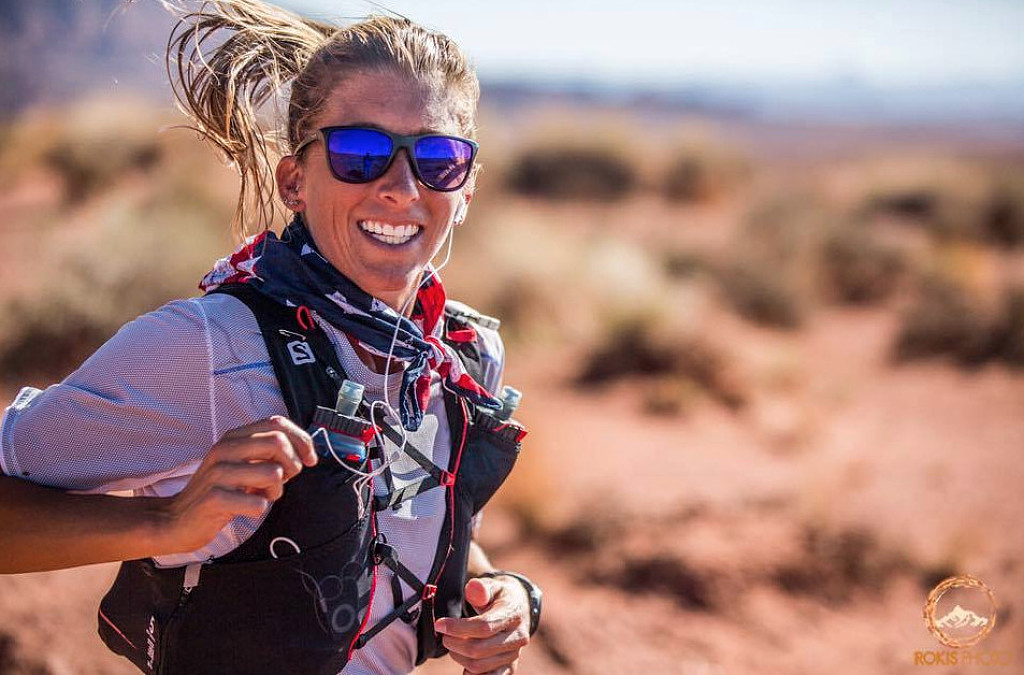
American ultrarunning phenom Courtney Dauwalter started a week-long fastest known time (FKT) attempt on the Colorado Trail on Wednesday. The 788K route, which features more than 27,000m of elevation gain, starts in Durango and goes all the way to Denver. Dauwalter is hoping to beat the current record of eight days and 30 minutes set by Bryan Williams in 2017. She posted on Instagram to announce the FKT attempt, noting that this will be her first shot at a 500-mile run. “What does it feel like to run that far?” she wrote. “I’m excited to find out!”
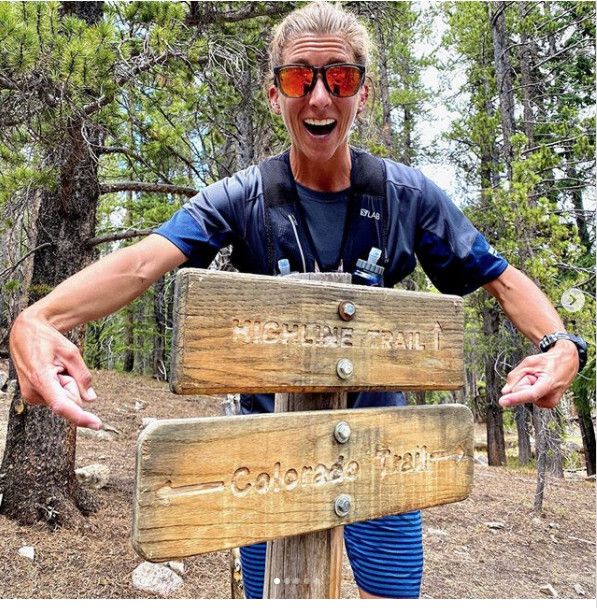
Dauwalter started her run on August 5 at about 4 p.m., according to her tracking feed. To beat Williams’s FKT, she’ll have to arrive just outside of Denver at the trail’s end by the late afternoon on August 13. Running almost 800K in eight days is a tall order, but if anyone can accomplish it, it’s Dauwalter. She is one of the best ultrarunners in the world, and the longer the race, the better for her. This may be her first time running a 500-mile route, but as she proved at last year’s Ultra-Trail du Mont-Blanc (her first time racing the famed ultramarathon), just because she’s new to something doesn’t mean she won’t crush it immediately.
Dauwalter finished 21st overall at the UTMB and won the women’s race, beating second place by an hour. She covered the 171K route in 24 hours, 34 minutes and 26 seconds and crossed the line as the second American, male or female. Other big results on her resume include a win at the Western States 100, the overall crown at the Moab 240 Endurance Run and many other wins and podium finishes. A week-long trek through Colorado’s mountains is a big undertaking, but as Dauwalter has proven time and time again, she is up for the grind. To follow her run, check out her Garmin tracker.
(08/08/2020) ⚡AMPby Running Magazine
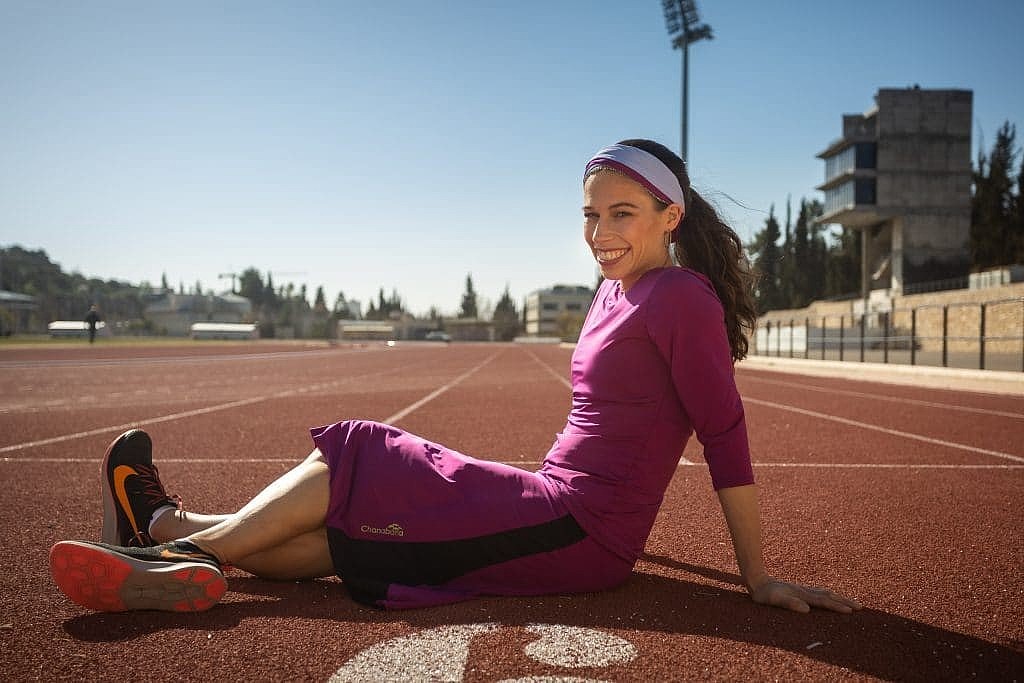
Orthodox Jewish runner ‘Beatie’ Deutsch will miss Games unless marathon race is moved from Shabbat, a day of rest for Jewish people
“When I set myself the goal of representing Israel in the Olympics, the marathon was on a Sunday,” she explains. “They then moved all the outdoor distance events to Sapporo and condensed them into four days. The women’s marathon is on Shabbat.”
Shabbat, from sundown on Friday to sundown on Saturday, is a day of rest for Jewish people. For Deutsch this means no technology, no distractions and absolutely no running. “There’s no exceptions and I’m 100 per cent committed to it. It’s amazing, we totally disconnect for family time – super powerful, restorative, recharging.”
So far, Deutsch’s attempts to overturn the International Olympic Association’s decision have fallen flat, despite hoping there might be room for negotiation now the Games have been postponed until 2021.

“I wrote to them to see if there was a possibility of switching the marathon with the race walk [on Friday]. So far, they’ve not been very receptive.”
What surprised her was the apparent lack of consideration. “I don’t think the world needs to bend over backwards for me because I have my religious values, but the Olympics is meant to be a unifying event for people from all types of backgrounds – it’s about diversity. In a time when everyone is trying to be more accepting and accommodating of gender, race – everything – I feel like they should be more tolerant.”
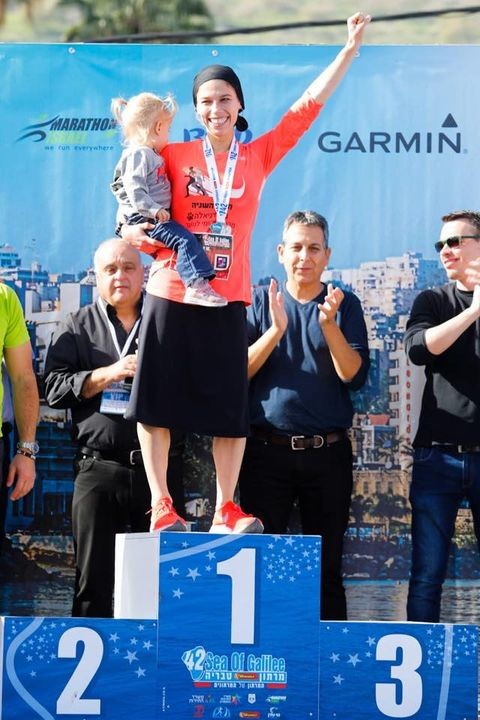
Deutsch is not the first of her faith to encounter these hurdles. Estee Ackerman missed the 2016 US Olympic team table tennis trials for the same reason, whilst Tamir Goodman – once dubbed the “Jewish Jordan” by Sports Illustrated magazine – declined a basketball scholarship to top-ranked University of Maryland and subsequently missed winning the NCAA title, to attend somewhere that would accommodate his religious practice.
Deutsch was born in New Jersey to “very encouraging and open-minded” ultra-Orthodox parents, and recalls being active as a child. “I loved exercise and moving my body but the community I grew up in, there weren’t team sports for girls – the opportunities didn’t exist. I did gymnastics but stopped when I was 12 as there was no modest option to continue. That was a normal thing.”
Deutsch has long conformed to her faith’s strict standards of modesty; substantial body coverage and nothing skin-tight. With few sport alternatives available, structured exercise was put on the back burner.
Emigrating to Israel aged 19, she met and married her husband. But it was both a will to regain a level of fitness and a family tragedy that prompted her to start running. In 2017, her husband’s cousin, 14-year-old Daniella Pardes, took her own life after struggling with anorexia. Determined to help others from suffering, Deutsch began using running to raise funds for a project in her name: Beit Daniella, is now a rehabilitation facility for adolescents with eating disorders and other psychiatric illnesses. “Every race I run, I have Beit Daniella on my shirt,” she says.
From the off, Deutsch showed natural ability at the distance. From running 3 hr 27 min at her very first attempt in Tel Aviv, to completing a marathon the following year despite being seven months pregnant with her fifth child. Her breakthrough on the international scene came in January this year, winning the Tiberias Marathon in 2 hr 32 min 25 sec – 10 minutes faster than her previous best and ranking her 76th globally. In February she won the Miami Half Marathon, her first victory in the US. Her achievements quickly caught the attention of Jewish media around the world.
“Being a professional athlete is just not something our people do,” she laughs. “We’re only just realising how beneficial exercise can be – we’re 10 years behind.
Not all of her community are supportive of her endeavours, but she is reluctant to dwell on the barriers.
Unless, the IOC change their stance, Deutsch will not be able to compete next summer. An IOC spokesperson said: “While we put athlete considerations first in all decisions, particularly health and welfare, we are unfortunately not able to adjust the schedule to the particular situation of each individual athlete.”
Olympics aside, Deutsch’s story is already taking the running world by storm – shattering stereotypes and breaking new ground for women.
(07/27/2020) ⚡AMPby Emma Cluley

Tokyo 2020 Olympic Games
Fifty-six years after having organized the Olympic Games, the Japanese capital will be hosting a Summer edition for the second time, originally scheduled from July 24 to August 9, 2020, the games were postponed due to coronavirus outbreak, the postponed Tokyo Olympics will be held from July 23 to August 8 in 2021, according to the International Olympic Committee decision. ...
more...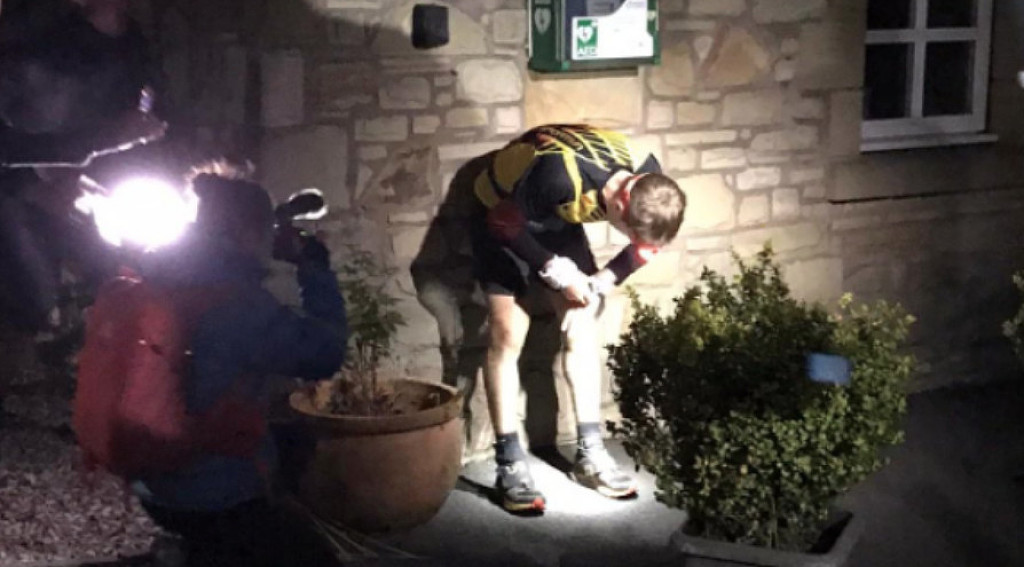
John Kelly smashes 31-year-old Pennine Way FKT
Kelly set a new best mark on the legendary Pennine Way FKT by 40 minutes
American ultrarunner and 2017 Barkley Marathons finisher John Kelly ran the FKT on the U.K.’s legendary Pennine Way early Thursday morning. The Pennie Way FKT was held for 31 years by Mike Hartley, a storied British ultrarunner, until today. Kelly surpassed Hartley’s time by 40 minutes to finish in two days, 16 hours and 40 minutes (the previous record stood at two days, 17 hours and 20 minutes).
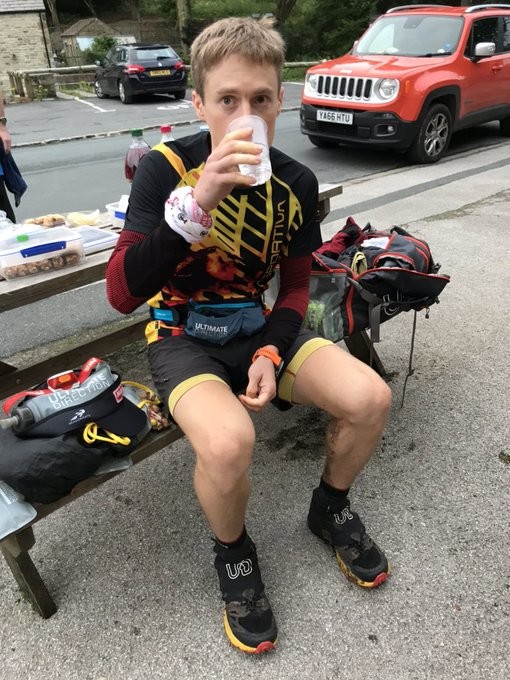
The Pennine Way, which is travelled during the Spine Race (which Kelly won earlier this year, before the pandemic), is a 268 mile (431k) trail up the middle of England from Edale to Kirk Yetholm. Over the course of that 431K, the path gains just shy of 12,000m of elevation on extremely rough terrain. For a little context, the elevation is nearly twice the height of Mount Everest and the distance is like running from Toronto to Sudbury. It’s a lot of running and climbing.
This FKT attempt wasn’t Kelly’s first time traversing this course. He has run it over the course of the Spine Race, but this week’s effort was different. He was assisted and running through the summer (as opposed to January, when the Spine Race takes place) and working with nearly 20 hours of daylight as opposed to the eight he would’ve seen last time. On top of the daylight, this was a supported effort, so he didn’t need to carry any extra supplies.
Kelly was supported primarily by his partner Nicki Lygo who documented most of the effort on Twitter. Kelly dealt with some poor weather and significant stomach issues, but he still managed to pull it off. Initially, he was flying through aid stations in under 60 seconds, but slowed to 30 to 40 minutes toward the end when he would sleep for a bit and try to soothe his stomach.
While Kelly’s effort on Pennine Way is astonishing, he’s not done yet. He took on what he’s calling the Hartley Slam. Pennine Way was Part One and the Grand Round is Part Two. The Grand Round route involves nearly 300K of running, thousands of feet of elevation gain and over 600K of biking between its sections. Kelly attempted the Grand Round in 2019, but was unable to complete it, so he’s heading back for a second try two weeks after today’s finish.
Kelly is doing this challenge for two reasons: to have something to do since his 2020 race calendar was cleared and to raise money for the Stephen Lawrence Charitable Trust, a U.K. charity that helps disadvantaged youth. If fans are looking to donate, they can do so here. Tune back in two weeks time to follow Kelly on his journey to conquer the Grand Round.
(07/27/2020) ⚡AMPby Running Magazine
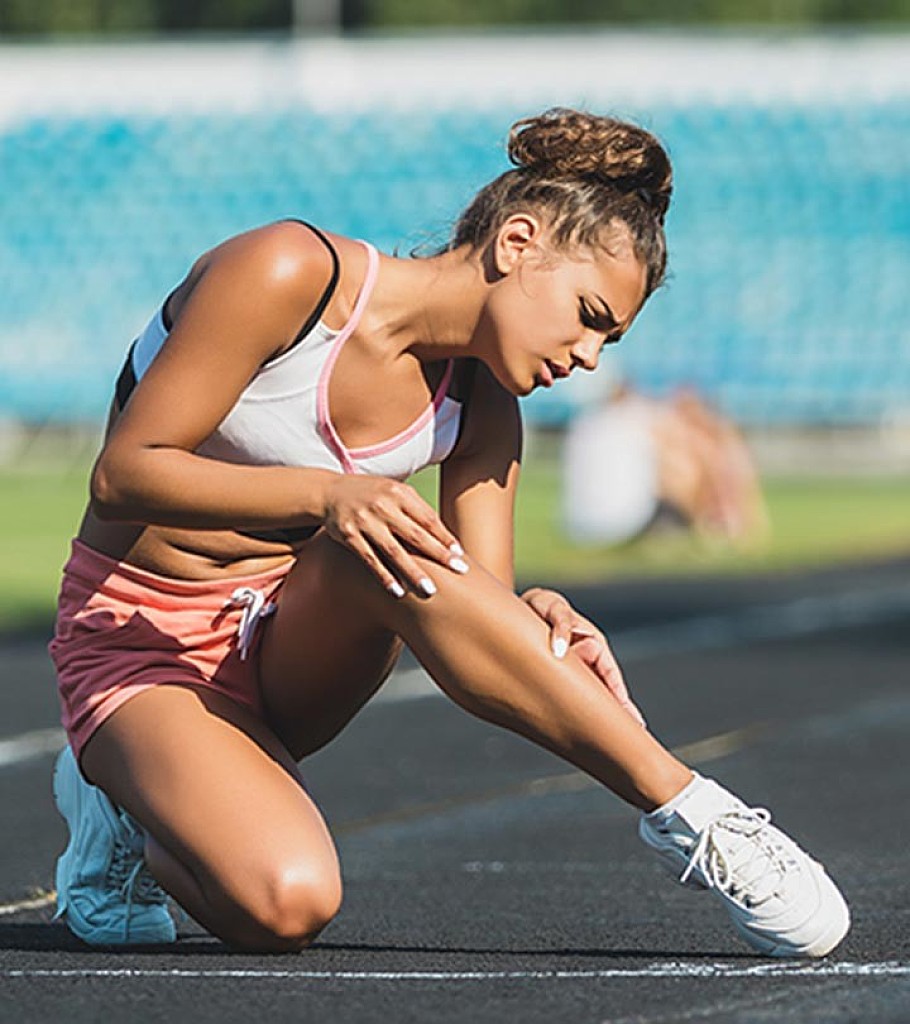
Why Do My Legs Itch When I Run?-Consider it growing pains for pounding the pavement.
When I first started running, an unexpected question popped to mind at the end of my first few workouts: Why do my legs itch when I run?
I knew I’d feel breathless, sweat profusely, and check my watch every 30 seconds in the hopes that five minutes had gone by since I last checked. What I didn’t expect was that I’d end my runs with actual red scratch marks down my thighs, thanks to the harder-than-I-meant-to scratching to ease the itch that kicked in just as I began to wrap things up.
Within a couple of weeks, the annoying itching that accompanied my runs stopped, and I forgot all about it. Then recently, I heard others anecdotally mention it, which made me think maybe it was not just a weird quirk with my body—maybe there’s actually something about starting running that really makes your legs itch.
Turns out, there’s a pretty reasonable physiological adaptation that could easily explain the itching. And in most cases—like mine—it’ll stop soon after your body gets used to the new exercise. But in some cases, there might be something more going on.
With many people starting running (or getting back into running) as a way to get in some exercise—or simply get a change of scenery—with gyms still closed due to the coronavirus, it’s a problem that lots of people may begin to experience. And if you’re one of them, you don’t need to freak out. Here’s everything you need to know about why your legs itch while you run.
Why do my legs itch when I run?
First, it helps to understand what happens to your body when you start a new aerobic activity. When you exercise hard enough to increase your heart rate for a sustained period of time, your muscles require more oxygen to help you get the job done. And you need greater blood flow to help deliver it.
“One of your body’s initial responses to running if you’ve never done it before is called vasodilation, where your blood vessels open up or expand to let more [blood] come through,” Geoff Burns, Ph.D., a researcher at the Michigan Performance Research Laboratory at the University of Michigan and competitive ultrarunner, tells SELF.
When you first start running, though, your body isn’t used to the increased demand on your blood vessels.
“If you think of the blood vessels in your muscles like city roads, when you start to run, you’re going to have more traffic on the road—it’s going to get congested,” he says. “These vessels aren’t mechanically used to expanding like that, and that might put pressure on some of the nerve tissue in the muscles or other mechanoreceptors there. That can give you that itchy sensation.”
That itchy feeling tends to be centered primarily in your legs, since your lower-body muscles are doing the most work when you run—meaning they’re going to require the most oxygen and thus greatest blood flow, he says. And it’s possible that you feel it more when you end your workout, because when you stop running, your blood pools briefly.
Can itchy legs while running be something else?
If your legs itching while running is caused by that physiological adaptation, it should only last a few weeks, says Burns—which was pretty much the case for me. After that time, your body should get used to that increased pressure in your blood vessels. Plus, your body helps the process along with other adaptations, like with the remodeling of existing blood vessels and the formation of new capillaries, which helps relieve some of that congestion.
(07/19/2020) ⚡AMP
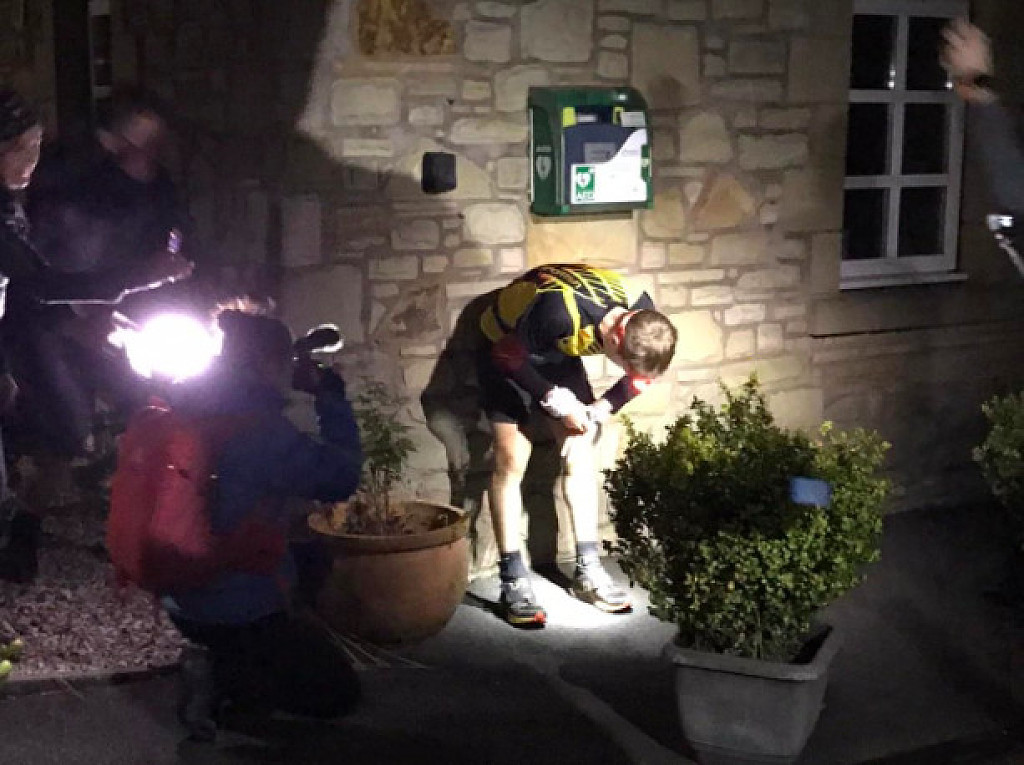
American ultrarunner John Kelly set a new best time on the legendary Pennine Way FKT by 40 minutes
Ultrarunner and 2017 Barkley Marathons finisher John Kelly ran the FKT on the U.K.’s legendary Pennine Way early Thursday morning. The Pennie Way FKT was held for 31 years by Mike Hartley, a storied British ultrarunner, until today.
Kelly surpassed Hartley’s time by 40 minutes to finish in two days, 16 hours and 40 minutes (the previous record stood at two days, 17 hours and 20 minutes).
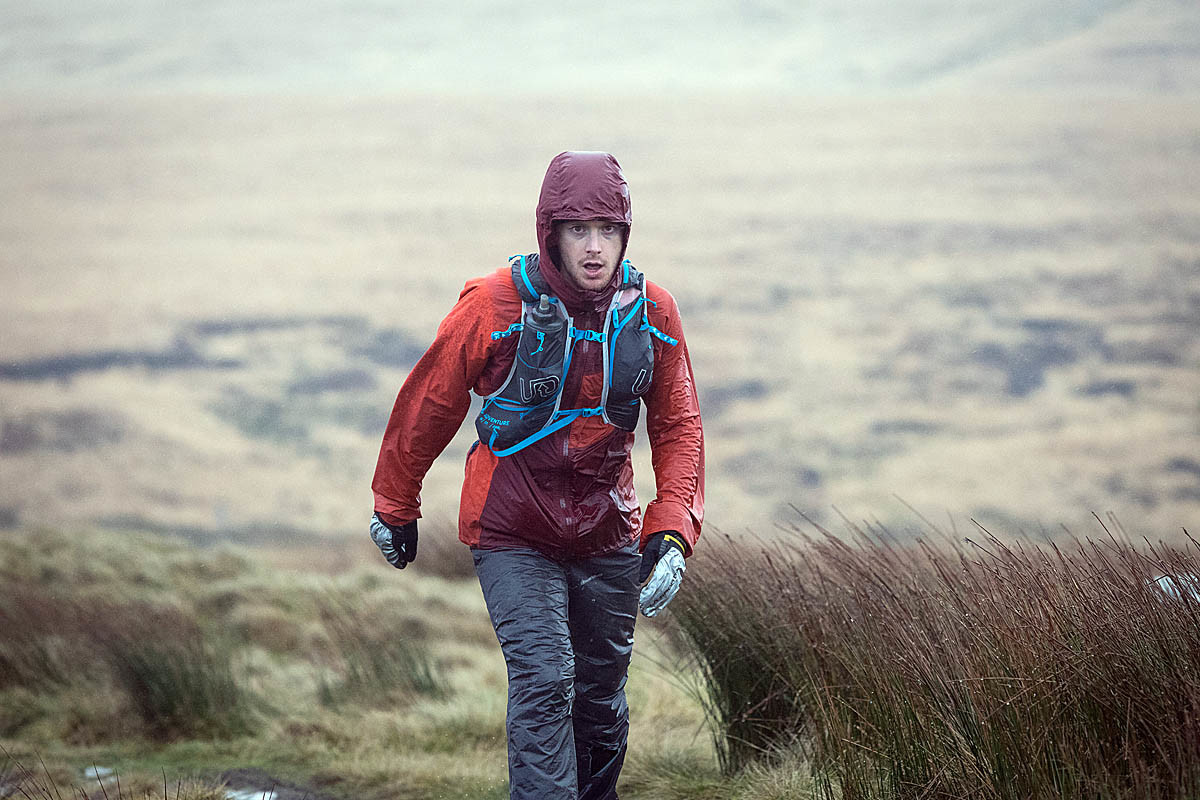
The Pennine Way, which is travelled during the Spine Race, is a 268 mile (431k) trail up the middle of England from Edale to Kirk Yetholm. Over the course of that 431K, the path gains just shy of 12,000m of elevation on extremely rough terrain. For a little context, the elevation is nearly twice the height of Mount Everest and the distance is like running from Toronto to Sudbury. It’s a lot of running and climbing.
This FKT attempt wasn’t Kelly’s first time traversing this course. He has run it over the course of the Spine Race, but this week’s effort was different. He was assisted and running through the summer (as opposed to January, when the Spine Race takes place) and working with nearly 20 hours of daylight as opposed to the eight he would’ve seen last time. On top of the daylight, this was a supported effort, so he didn’t need to carry any extra supplies.
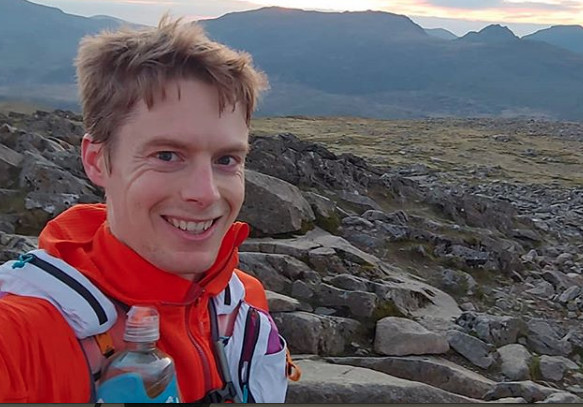
Kelly was supported primarily by his partner Nicki Lygo who documented most of the effort on Twitter. Kelly dealt with some poor weather and significant stomach issues, but he still managed to pull it off. Initially, he was flying through aid stations in under 60 seconds, but slowed to 30 to 40 minutes toward the end when he would sleep for a bit and try to soothe his stomach.
While Kelly’s effort on Pennine Way is astonishing, he’s not done yet. He took on what he’s calling the Hartley Slam. Pennine Way was Part One and the Grand Round is Part Two. The Grand Round route involves nearly 300K of running, thousands of feet of elevation gain and over 600K of biking between its sections. Kelly attempted the Grand Round in 2019, but was unable to complete it, so he’s heading back for a second try two weeks after today’s finish.
Kelly is doing this challenge for two reasons: to have something to do since his 2020 race calendar was cleared and to raise money for the Stephen Lawrence Charitable Trust, a U.K. charity that helps disadvantaged youth. If fans are looking to donate, they can do so here. Tune back in two weeks time to follow Kelly on his journey to conquer the Grand Round.
(07/16/2020) ⚡AMP
by Madeleine Kelly
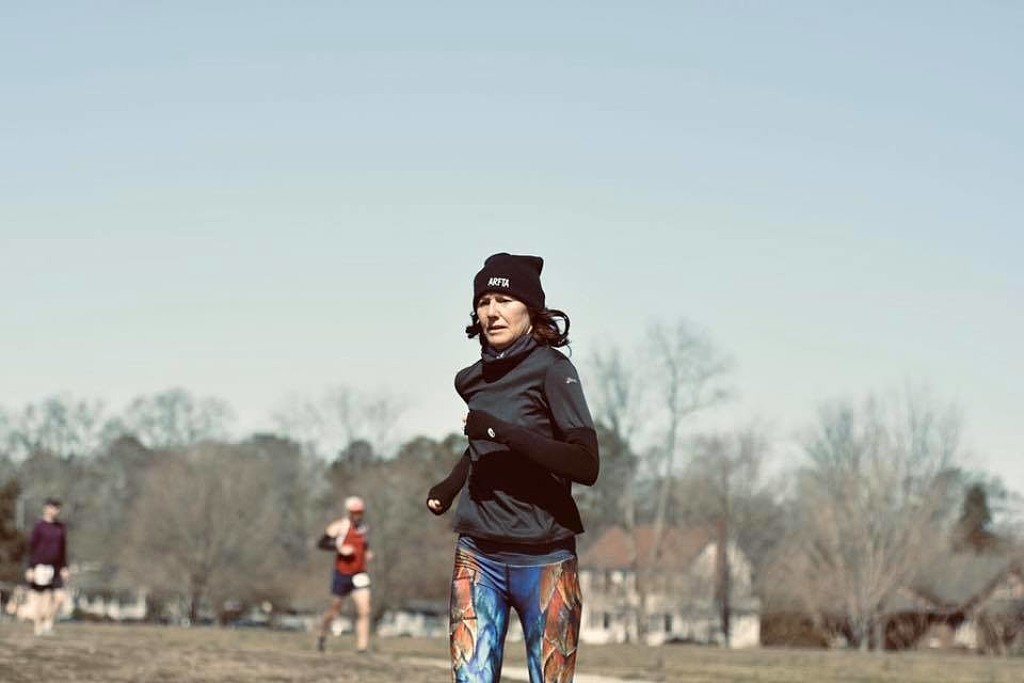
Francesca Muccini, the 2017 Vol State champion, is back on top after winning the run across Tennessee Vol State 500K crown in 82 hours
The Last Annual Vol State 500K ultramarathon across Tennessee began on July 9, and only three days later, the race saw its first two finishers cross the finish line in Castle Rock, Ga. First place went to Francesca Muccini, the 2017 Vol State champion, who finished the race in three days, 10 hours, 49 minutes and 40 seconds.
This is a women’s course record and the third-fastest time ever run at the event, regardless of gender. Second place went to Bob Hearn, who wasn’t far behind Muccini, finishing in three days and 12 hours.
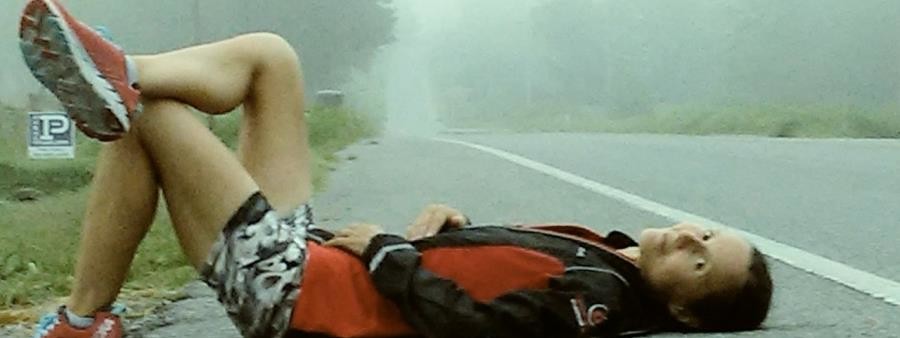
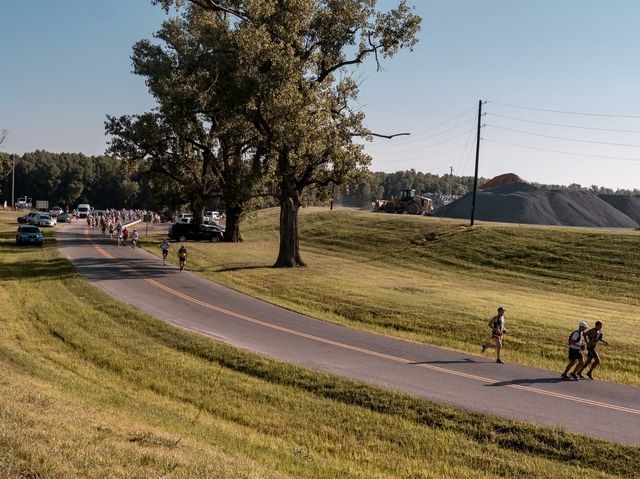
The Vol State is a Laz Lake event. Lake organizes many ultra races, including the Barkley Marathons, and they’re all mind-blowing. They’re long, they’re hard and they would make non-runners (and runners who prefer to stick to races that don’t go past 42.2K) shake their heads and ask, “How long did you say it was?” The Vol State fits that bill perfectly, and it’s exactly what ultrarunners around the world have come to expect from Lake. Its 500K course starts in Missouri, takes runners into Kentucky and then crosses over into Tennessee, where participants stay for the bulk of the race. In the final stretch, runners head into Alabama and then Georgia, where the race ends.
Runners have 10 days to finish the race, meaning they have to cover at least 50K per day if they want to make it to Georgia in time. There are no aid stations or volunteers along the course, but runners have the option of racing with a support crew (although some racers choose to run unsupported).
The fact that runners are given 10 days to finish this event and Muccini and Hearn did it in just over three is ridiculous. That means they averaged more than 140K per day as they worked across Tennessee. When Muccini won the race in 2017, she finished with a time of four days and four hours. She also raced the event in 2016, placing eighth overall and crossing the line as the top woman in a little more than five days.
This was Hearn’s first crack at the Vol State, but he’s no stranger to big results either. Earlier this year, he won a 100-mile race in South Carolina, and in 2019, he finished in second place at the Six Days in the Dome event in Wisconsin, where he ran 530 miles in less than a week.
The runners still working away at the Vol State course have more than five days to make it across Tennessee, into Alabama and then into Georgia to finish the race.
(07/13/2020) ⚡AMPby Ben Snider-McGrath
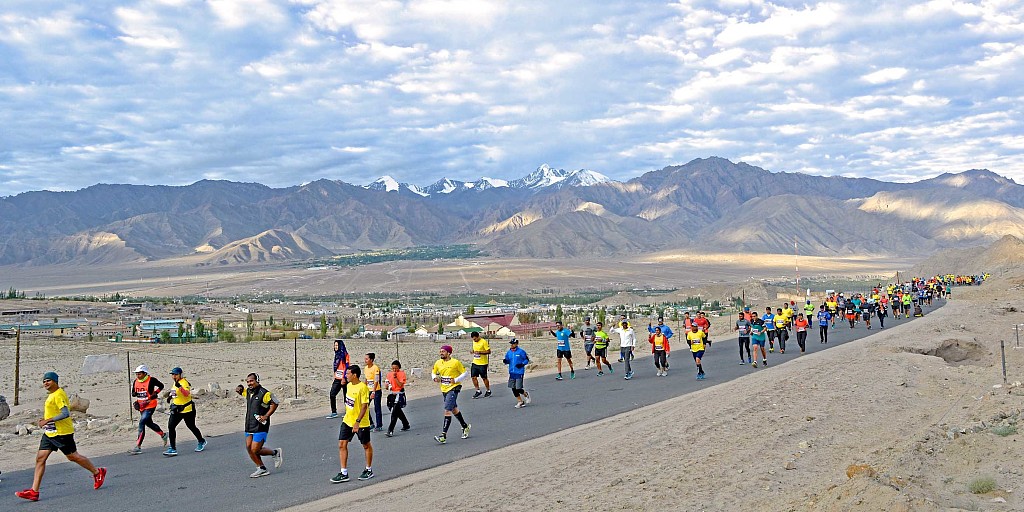
2020 Ladakh Marathon cancelled due to the coronavirus pandemic
Due to COVID-19 Pandemic, the world famous sporting event in India, the Ladakh Marathon has been cancelled for this year. Ladakh Marathon Founder and Race Director Chewang Motup said that the 9th edition of the event scheduled for September 13, this year stands cancelled.
AIR correspondent reports, the 9th Edition of Ladakh Marathon is even more special as it had become a qualifying event of Abbott World Marathon Majors Wanda Age Group from this year.
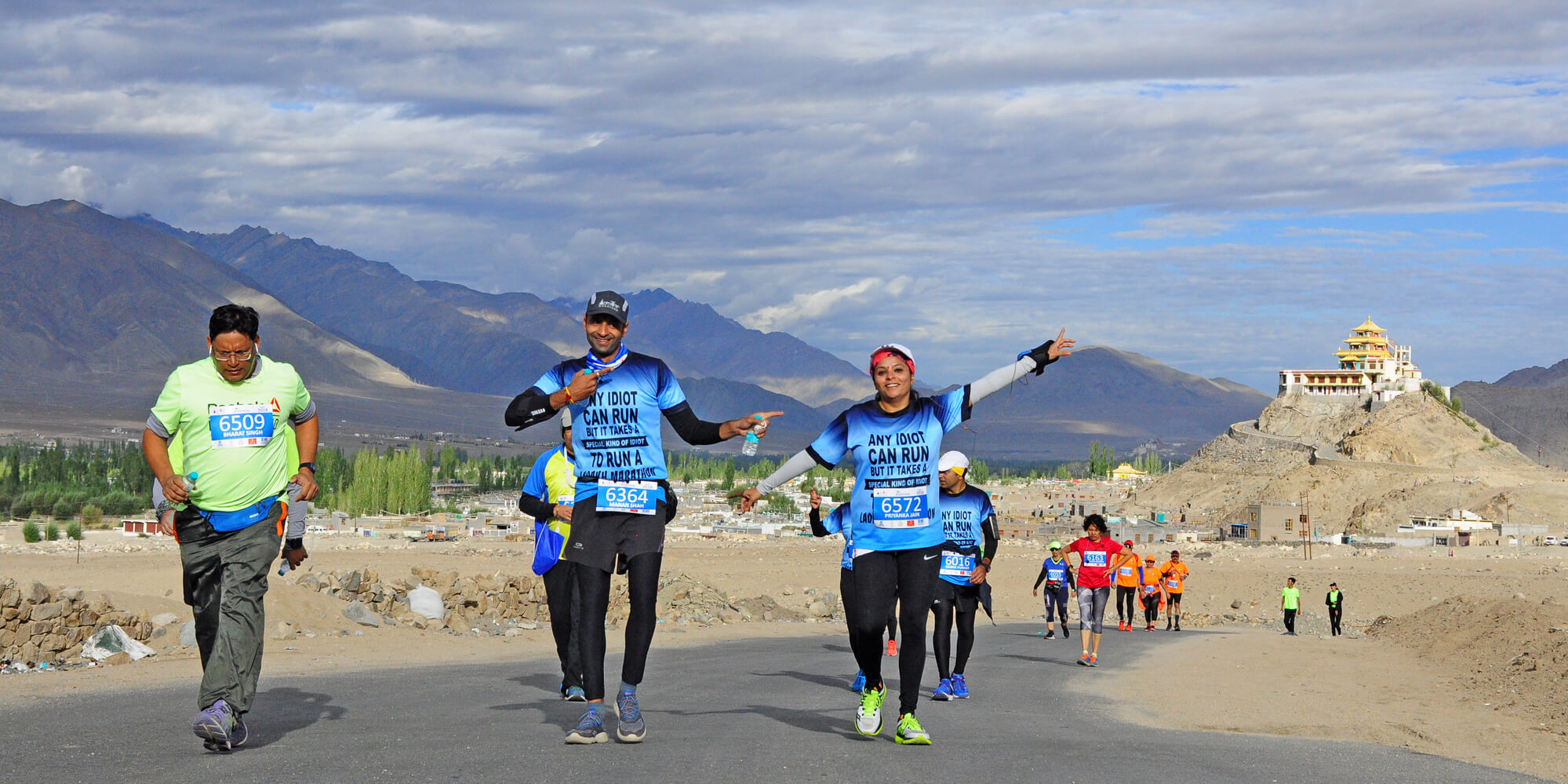
At an altitude of 11000 ft and above, Ladakh Marathon has emerged as one of the most prestigious high altitude races on the Marathon Calendar of the world. Mr Chewang Motup said, a great uncertainty prevailing in the region due to Covid-19 and border issues.
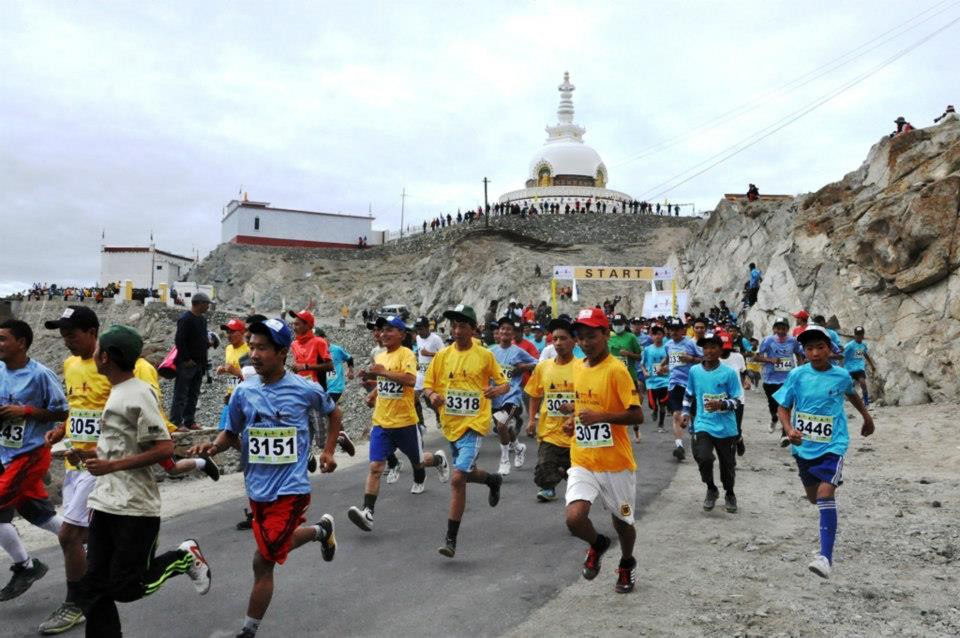
After the risk assessment exercise as per the World Health Organization (WHO) guidelines for holding events involving mass participation, the organizers took a collective decision to cancel the four races of the Ladakh Marathon.
Mr Chewang Motup said, all registrations for full Marathon, Half Marathon, 10 km and 5 km in 9th edition have been automatically transferred to 2021-2022.
However, the status of the two elite races that's the 72 km Khardungla Challenge (17,618ft) and the 122 km Silk Route Ultra are under review with a restricted number of participation of 200. Mr Chewang Motup appealed all the registered runners of these two races NOT to reserve any flights till the final decision by July 30.
(07/04/2020) ⚡AMP

Ladakh Marathon
Ladakh Marathon is a unique opportunity for runners from around India and the world to run with local Ladakhis through an ancient Buddhist kingdom grappling with the rapid changes of today. The historic capital of Leh, the stunning vistas as you cross the Indus River and the dramatic climb up to the Khardung La from Nubra will leave you with...
more...
Professional ultramarathoner Michael Wardian is running length of Delaware
With most major races wiped off the calendar, professional ultramarathon runner Michael Wardian was asked to run 96 miles — the length of Delaware — over the course of a month as part of a virtual charity event.
"I was like, 'It's 96 miles, I'll just do it in one day,'" Wardian said.
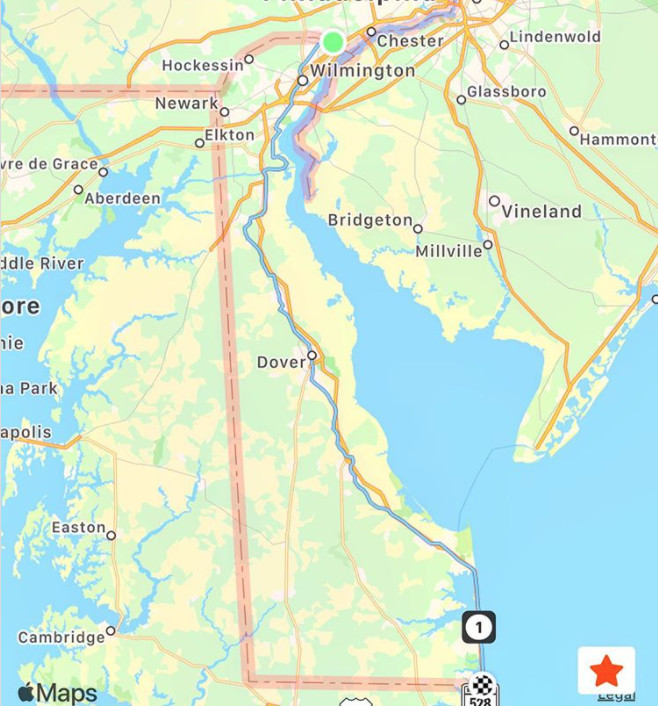
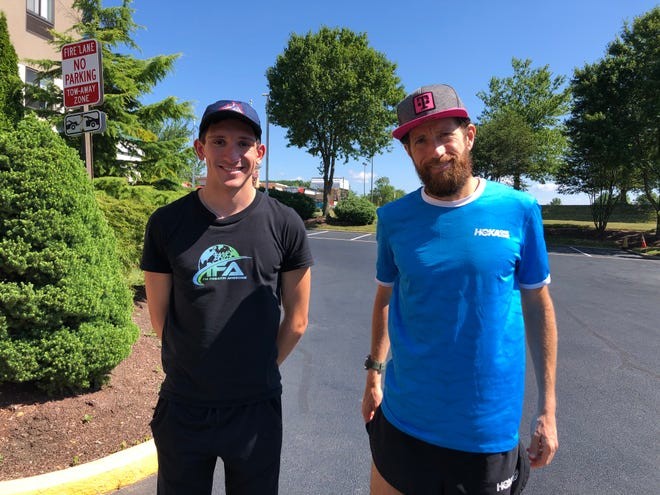
So around 1 p.m. on Thursday, Wardian started a run on Concord Pike at the Delaware and Pennsylvania border that will finish on Fenwick Island. He is being accompanied by Nick Cruz, a Milford resident, who after hearing about the attempt decided to try it himself.
The route they will take is roughly 130 miles, substantially longer than Delaware's end-to-end length of 96 miles. By zig-zagging through the state, Wardian and his crew lead Phil Hargis hope to avoid as many dangerous stretches of highway as possible.
From North Wilmington, they'll cross through the city to get on the Jack Markell trail, eventually passing through Delaware City before running a portion of the Mike Castle trail along the Chesapeake and Delaware Canal. From there, the planned route wraps around Middletown and cuts through the center of Dover before ending with a long stretch on Coastal Highway through the beach towns.
Wardian expects the run to take between 24 and 30 hours.
"I just think it's a cool route," Wardian said. "It's not as straight as you can go because I wanted to finish at the beach, because I just thought it would be cooler than finishing in like Selbyville."
In a typical year, Wardian travels from his Arlington, Virginia, home around the globe, competing for the shoe company Hoka One One in ultramarathons – races beyond 26.2 miles. By day, he is an international ship broker.
With his racing calendar clear because of the coronavirus, Wardian has turned his attention to virtual races and FKT attempts – fastest known times across certain routes.
In April, Wardian ran 262.5 miles over 2.5 days to win a virual event called the Quarantine Backyard Ultra. He's already competed about 30 times this year and has dozens of first place finishes and world records on his career resume.
It's unclear exactly what the standard is for the fastest time across Delaware. When Wardian posted about his Delaware run on Instagram, someone replied that a runner named Scott Newcomer ran the length of the state recently in 34 hours.
Fastestknowntime.com, which is the closest thing to an official record, doesn't yet list an end-to-end Delaware run.
Wardian is a frequent visitor to the Delaware beaches with his wife, Jennifer, and sons, Pierce and Grant, and expects to close on a property in Rehoboth Beach in August. He said the run will be a "very cool introduction" to the state.
"I really love the running community of Delaware too," Wardian said. "It's not often someone is like, 'Yeah, I'm willing to run 130 miles.'"
(07/04/2020) ⚡AMP
Running: ibuprofen use is common – but many athletes are unaware of the risks
Whether you’re an ultra-marathoner or have just started, injuries and muscle soreness from running are inevitable. But instead of taking a break, many runners reach for ibuprofen or other non-steroidal anti-inflammatory drugs (NSAIDs) to get through injuries or pain. Not only can doing this make recovery more difficult, but frequent use of anti-inflammatories can be dangerous. Our recent research shows that NSAID use is widespread among amateur runners – but most are unaware of the potential risks.
While more casual programmes like Couch to 5K or Parkrun UK remain popular, endurance events like marathons and ultra-marathons have seen participation grow over the past 20 years. Amateur endurance athletes’ training routines can be rigorous, resulting in stresses and pains, so many use painkillers to keep training. Research shows significant use of NSAIDs among endurance runners, with one study finding that 46% of London Marathon runners planned to take an NSAID during the race.

Yet this is not without risk. Using NSAIDs is associated with known harms, including gastrointestinal ulcers, acute kidney injury and a risk of cardiovascular events, depending on how much of the drugs are taken and for how long. These negative consequences of NSAIDs are thought to be responsible for 30% of all adverse drug reaction admissions to hospital.
Under the extreme physiological strain of a long-distance endurance event, these risks may be increased and new ones may arise related to the physical stress. Reduced blood flow and motility in the gastrointestinal system make stomach problems common, even without NSAID use. Muscle damage from races can also increase protein in the blood, which can lead to acute kidney damage. This could be worsened by NSAID use.
Hyponatraemia, a potentially fatal reduction in sodium levels caused by water overload, is another problem in endurance athletes. Although fatalities are rare, asymptomatic hyponatraemia occurs in one in ten marathon runners and can also be heightened by NSAID use.
Running through pain
Though much is known about NSAID use by endurance runners, less is known about its use in recreational runners. We surveyed 806 participants in Parkrun UK – which represents a broad range of the running community – to find out about usage in a diverse group of runners. Nearly 90% of the runners surveyed used NSAIDs, usually in the form of over-the-counter ibuprofen. About one in eight runners had a pre-existing reason to avoid NSAIDs, such as asthma. A third of the runners ran at marathon length distances or higher.
Over half of runners took NSAIDs before a run or race. One in ten took them during a run, and two-thirds afterwards. The longer the run, the more likely they were to take NSAIDs before or during. Half-marathoners and marathoners used NSAIDs more commonly. But more concerning were the 33% of ultra-runners (compared to just 17.5% of marathon runners) who took NSAIDs during runs. This is because these races already put stress on the gastrointestinal and renal systems.
Low-mileage runners used ibuprofen to keep exercising with pre-existing pain, ongoing medical issues, or current injuries. However, longer distance runners were more interested in reducing inflammation, soreness, pain and for suspected performance improvements. All types of use should only be done when aware of the potential risk of frequent use.
A third of the runners in our study had experienced suspected side effects from NSAIDs, mainly heartburn and, in a few cases, gastrointestinal bleeding. Over 40% of runners were unaware of the cardiovascular, kidney or gastrointestinal side effects.
Nearly half of the runners used NSAIDs without advice from a healthcare professional. Almost all of those surveyed said they would read advice if provided to them. Even if this response was only the result of completing the survey, it’s clear there needs to be better information available about the risks of using NSAIDs, especially while running.
This lack of awareness combined with long-term use of NSAIDs (especially when taken every run) can potentially lead to health problems. For marathon and ultra-marathon runners, there are even greater specific risks. These long endurance events already put runners’ body under extreme stress, so long-term NSAID use increases risks of life-threatening hypononatraemia, gastrointestinal bleeding, and kidney failure.
Exercise caution
Like all drugs, NSAIDs have benefits and harms. However, given that studies show NSAIDs may be counterproductive to healing and training, their use should be carefully considered by amateur athletes. Someone who uses an occasional ibuprofen tablet before or after their weekly run is likely at lower risk. However, risk rises alongside longer and more frequent runs, especially if they’re only enabled by chronic NSAID use.
But using NSAIDs to run through injury and pain to achieve training targets is counterproductive to the long-term health benefits of running. High usage in a subset of endurance runners during demanding training, and while in sustained physiological stress during events, should definitely be avoided.
To change this culture, more messaging about NSAID safety and running are needed. However, the London Marathon now advises runners to avoid NSAIDs within 48 hours of the race because of the potential dangers. Their decision might also spur other organisations to follow suit.
(07/04/2020) ⚡AMP
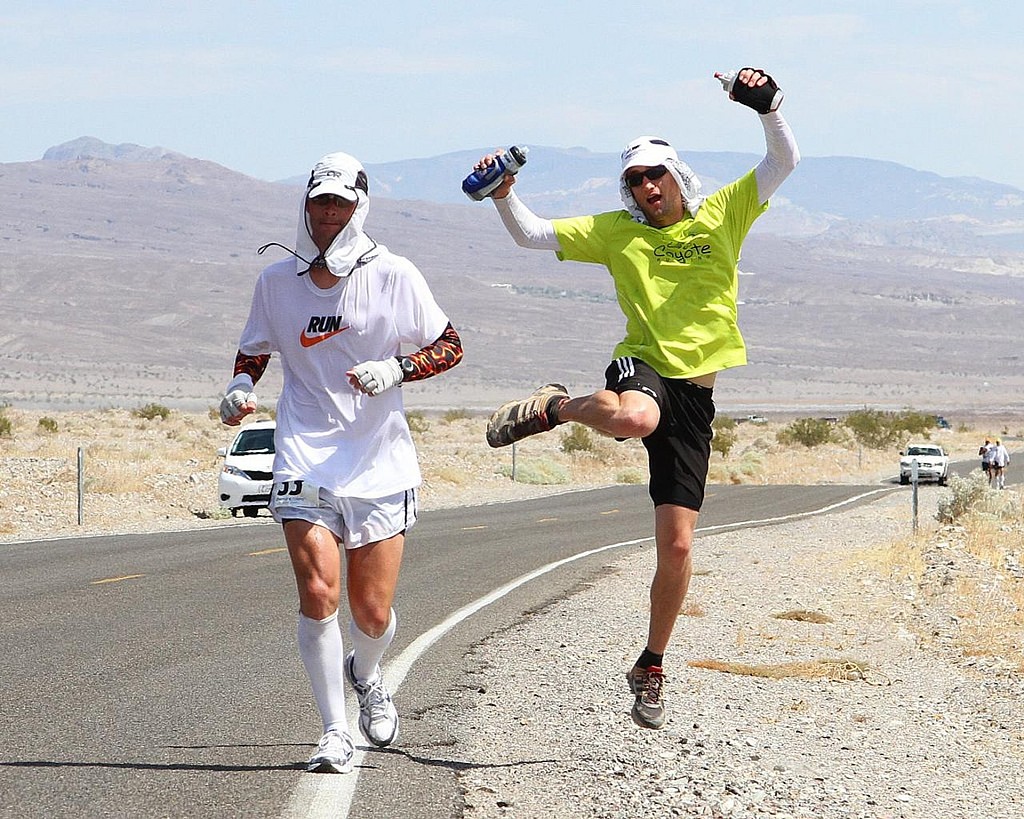
The World’s Toughest Foot Race is on and going to be the first race covered by MBR since March 8. The 43rd annual event is set for July 6-8
The last race MBR posted results for was the LA Marathon March 8. Since then every race we cover, and we only cover the best, most unique and interesting races in world have either been cancelled or postponed. We are talking about races like the Boston Marathon, Big Sur and the Berlin Marathon only to name three.
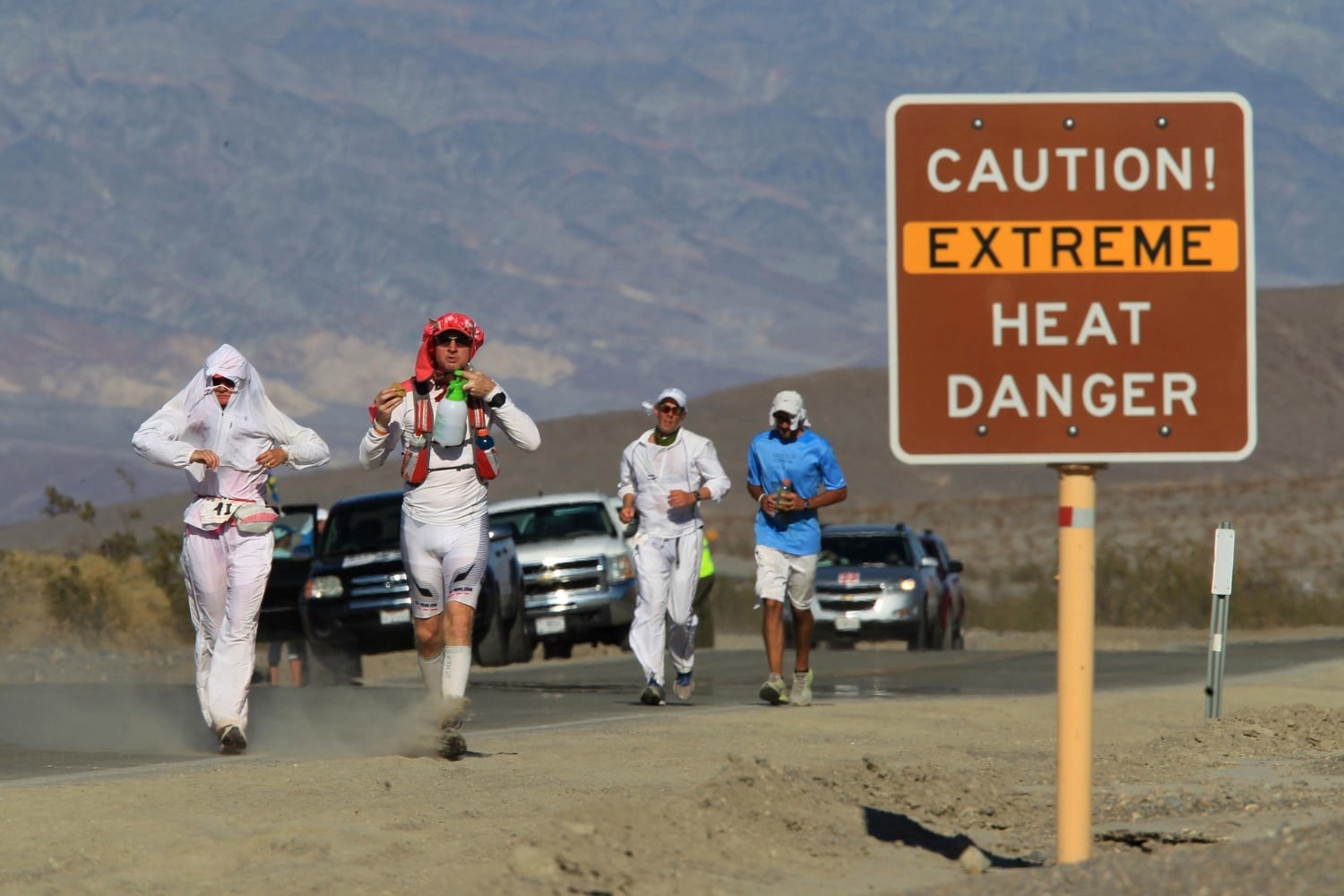
The big question has been, what race is going to be the first? it appears it is going to be an ultra race. A race celebrating 43 years. The Badwater 135. No races for four months.
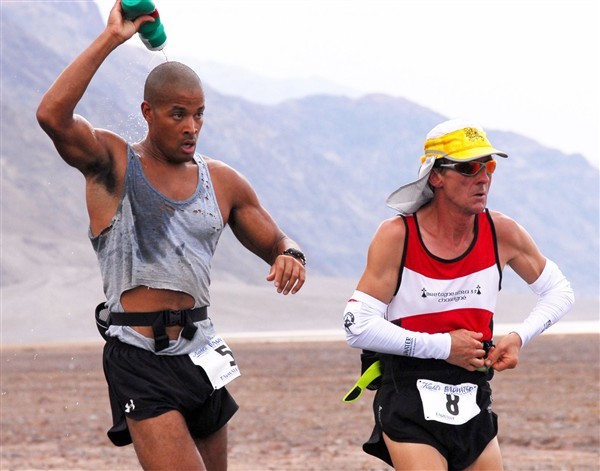
Covering 135 miles (217km) non-stop from Death Valley to Mt. Whitney, CA, the Badwater® 135 is the most demanding and extreme running race offered anywhere on the planet.
The start line is at Badwater Basin, Death Valley, which marks the lowest elevation in North America at 280’ (85m) below sea level. The race finishes at Whitney Portal at 8,300’ (2530m), which is the trailhead to the Mt. Whitney summit, the highest point in the contiguous United States. The Badwater 135 course covers three mountain ranges for a total of 14,600’ (4450m) of cumulative vertical ascent and 6,100’ (1859m) of cumulative descent.
Competitors travel through places or landmarks with names like Mushroom Rock, Furnace Creek, Salt Creek, Devil’s Cornfield, Devil’s Golf Course, Stovepipe Wells, Panamint Springs, Darwin, Keeler, Lone Pine, Alabama Hills, and the Sierra Nevada.
The 43rd edition will take place Monday-Wednesday, July 6-8, 2020.
(06/18/2020) ⚡AMPby Bob Anderson

Badwater 135
Recognized globally as "the world’s toughest foot race," this legendary event pits up to 90 of the world’s toughest athletes runners, triathletes, adventure racers, and mountaineers against one another and the elements. Badwater 135 is the most demanding and extreme running race offered anywhere on the planet. Covering 135 miles (217km) non-stop from Death Valley to Mt. Whitney, CA, the...
more...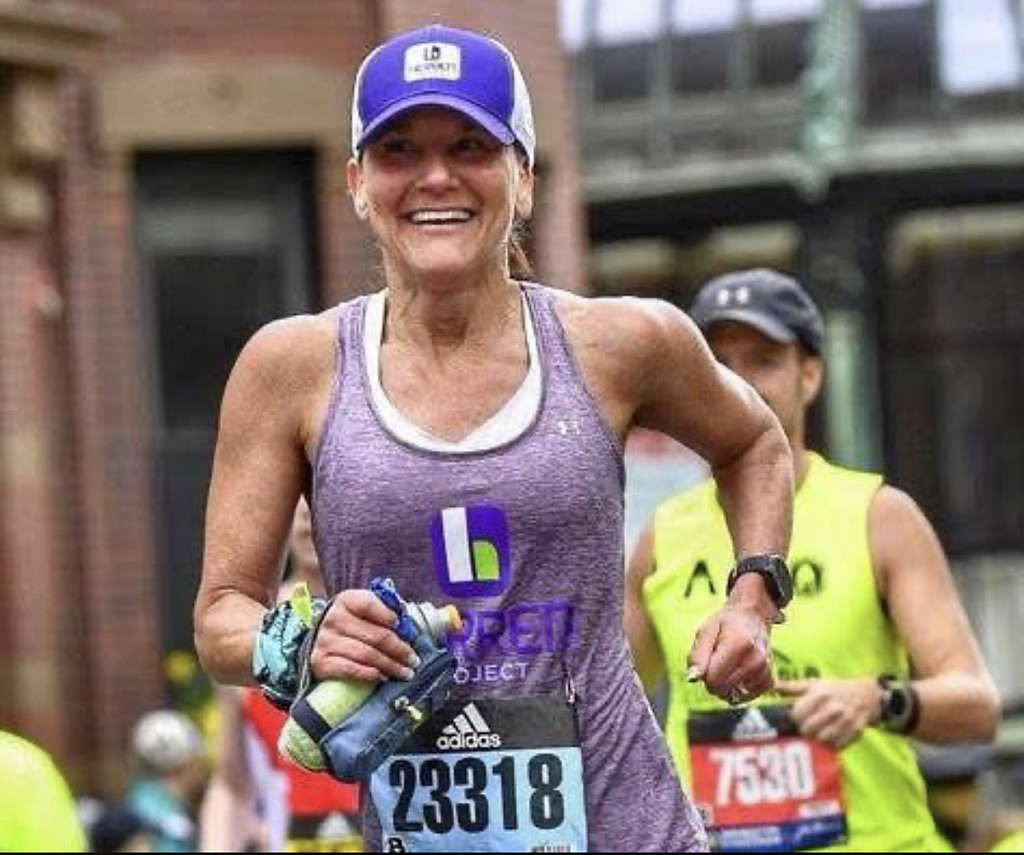
Pam Rickard has been running since the 1980’s and running sober since 2006
Pam Rickard is all smiles while running the 2019 Boston Marathon. (First photo)
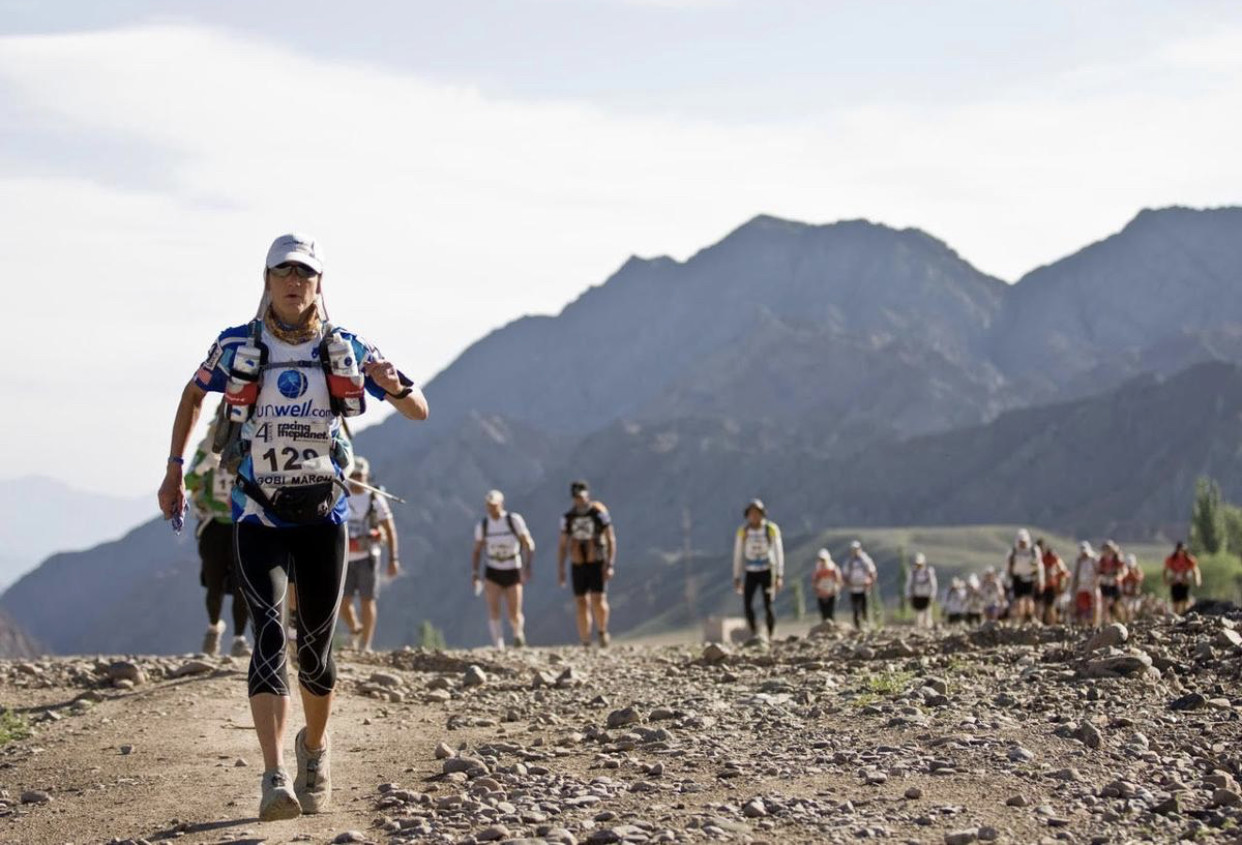
Pam Rickard participated in a seven-day running adventure across China’s Gobi Desert in June 2012 in which she won her age group. (Second photo)
While some people would say Pam Rickard is addicted to running, she would disagree. Rickard, who runs about 2,000 miles a year, has been running since the 1980s and running sober since 2006.
“If I’m living in healthy recovery, I don’t use running in an unbalanced, unhealthy way. I appreciate it as a gift and a tool of healthy living,” Rickard said.
Rickard is director of Active Engagement for Herren Project, heading up Team Herren Project, engaging people to run, walk and participate in healthy activities, helping each other, and others, live stronger, healthier lives. She said she is grateful to be able to use her running, through her job, to raise awareness and funding for Herren Project’s mission, which includes providing prevention and addiction recovery resources and support for all affected by the disease.
In the 1980s and 1990s she graduated from Ohio University, started running, moved to Roanoke, Virginia to work for The Roanoke Times, married Tom Rickard and moved to Franklin County. As a runner, she has won races, earned best times in different age groups and completed seven marathons. Although drinking a lot during those years, she was high functioning and never drank while pregnant, nursing her children or seriously training.
After her third daughter was born in 2003, Rickard’s drinking escalated. In 2005-06, within 18 months, she received three DUIs.
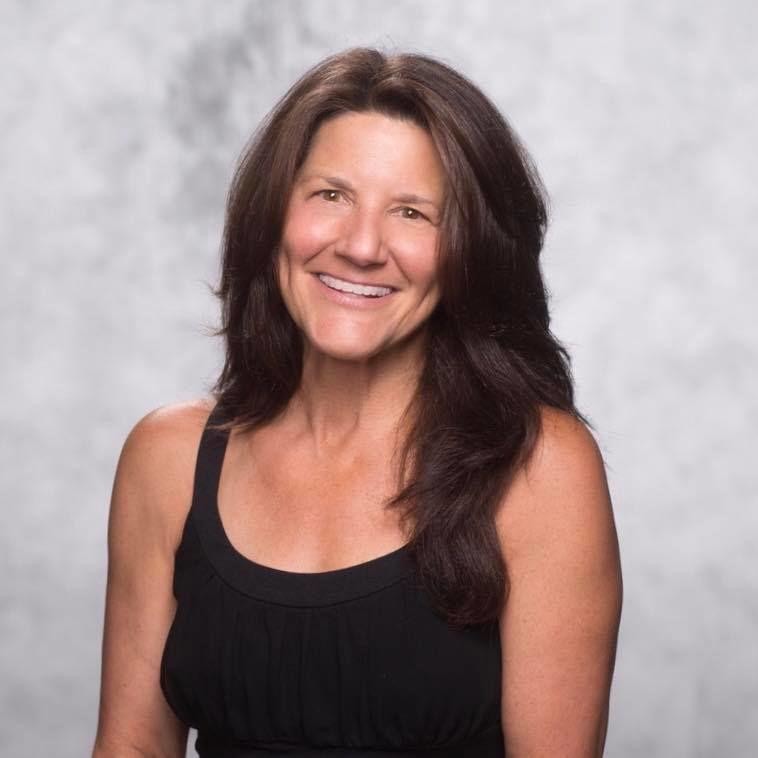
“I know now that I was an alcoholic from the first drink at the age of 14,” said Rickard, who is now 58. “But as often the case with addiction, it’s progressive, but on its own timeline. In the ‘80s, ‘90s and early 2000s, I appeared to have it all together; did well in school, married the love of my life who I met in college, was an accomplished member of the local running community, a successful professional and eventually, a devoted mom.”
She added, “In truth, I was anxious and fearful much of the time, self-medicating with alcohol, trying desperately to keep my struggles hidden. Over a very long period of time, I began spiraling out of control. I tried to ‘fix’ my problems myself, declined even the notion of asking for help, and ended up in a ‘perfect storm’ of arrogance and fear. I finally surrendered to my God and my disease when I entered addiction treatment on April 17, 2006 – and took my first steps into sobriety.”
She described her treatment at The Farley Center in Williamsburg in April and May of that year as scary and hard, but after only a few days, she said she felt better and hopeful. She had to listen and follow directions and was relieved to not have to “run the show” anymore. She quickly realized what she got out of treatment was what she put into it.
After pleading guilty to her third DUI, Rickard served three months in the Roanoke City Jail from Sept. 28 to Dec. 31, 2006. Rickard was five months sober when she went to jail. As hard as things got, she hung onto the fact that God and her sobriety could not be taken from her.
“My only plan was to survive. God had other plans though, and while I ended up having some very ugly experiences, I also connected with many women who were broken … not bad, just in an extremely unhealthy cycle that went back generations,” she said. “When I walked out of that jail, the seeds had been planted that would ultimately grow into my desire to help those fighting battles similar to mine.”
Rickard didn’t drive for three years after her conviction. She said she hated inconveniencing her family, but she learned invaluable lessons. As part of her treatment after care, she committed to attending 90 recovery meetings in 90 days.
“It was ridiculously challenging with no license and living in the country, but I did that, and more,” she said.
Running is what connected Rickard to Herren Project. Over a 35-plus year running career, she has completed numerous races, including more than 80 marathons and ultramarathons. Her races have included a seven-day adventure across China’s Gobi Desert and a 100k (62 miles) trek through the Alps from Italy to France. She was a member of the 2016, six-person Icebreaker Run team, running across the U.S. to bring awareness to mental health issues. She has run the New York City Marathon 10 times and the Boston Marathon 10 times, including the 2013 race in which she finished 20 minutes before the bombs went off.
Of all the races she’s done, the one that stands out the most is her 2007 New York City Marathon.
“That was my first sober marathon,” she said. “Then it was my 50th sober marathon in 2018. Without that desire to run one more marathon as a sober person, I wouldn’t be where I am today. I believe I would be right where I should be, but that experience opened up so many opportunities. It began to teach me the priceless truth that I don’t run to stay sober, I get to run because I am.”
For those who struggle or have struggled with substance use disorder, Rickard said, “I encourage myself, and others, to ask for help when you need it, offer help when you can, follow direction of those who have what you want and trust the process.”
Rickard added, “The fact that I can run at all now, let alone do it while building a community and helping others through the work of Herren Project, is a priceless gift.
“Whether it’s a 3-mile training run, or a major event, my mantra is, ‘I don’t have to run, I get to.’”
(06/18/2020) ⚡AMP
by Leigh Prom

Ultrarunner sets world record, completes 64 marathons in 64 days and counting
Alyssa Amos Clark is an ultrarunner originally from Bennington, Vt., who ran 64 marathons in 64 days as of Tuesday. She has moved around a lot, and she recently returned to the U.S. from just outside of Naples, Italy, where she and her husband had been living for the past two years. As an ultrarunner under a strict Italian quarantine, Clark came up with the idea of running a marathon on her treadmill everyday until she could run outside again. She enjoyed the ride so much that she has stuck with it well beyond the isolation period.
“In Italy we were under a very strict lockdown. We couldn’t run or walk outside without our papers with us.” She came up with the idea on March 29 and started running March 31. Until the beginning of May, every run was done on a treadmill.
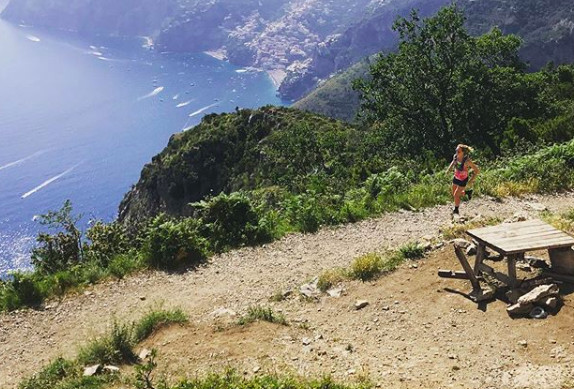
Currently residing in Panama City Beach, Florida, Clark is hoping to complete 75 marathons in 75 days, well beyond the women’s world record which was previously set at 60 marathons in 60 days (the men’s record is unofficially 607, but Clark isn’t ready to commit to overtaking that mark). While Clark may continue beyond 75, she says the cumulative fatigue is building up.
“This started out being really fun, and it’s getting less fun now,” she jokes.
After she finishes her marathon streak, she’ll start training for the Moab 240, which is set to take place this October in Utah.
“I’m really looking forward to that right now,” she says. “I want to make sure I’m healthy and fit so I can have a good build.”
She’s averaging around four hours per marathon right now, but sometimes it’s a little quicker if she feels good and a little longer if the weather isn’t great. While this isn’t exactly trail running, Clark says she feels like the mental fortitude she’s gained from this experience will be invaluable when she can race on the trails again.
“The mental toughness component is huge,” she says. “This will be a great jumping off point for me fitness-wise, but I’m really excited to get back on the trails again. I’m looking forward to resuming running in the mountains.”
(06/15/2020) ⚡AMPby Running Magazine

Quarantine Backyard Ultra will return in July
The virtual ultramarathon that captured the attention of runners around the world is coming back in July for Round Two
The Quarantine Backyard Ultra was quite possibly the biggest race of 2020 so far, not only garnering attention from runners, but breaking into mainstream media coverage with stories in the New York Times, Washington Post and Sports Illustrated, among many other publications. The race directing team, Gather Virtual, has announced that the race is making a return on July 11, and they hope to make it even better than before. Just like the first time around, the race is free to enter, and it will follow the same last-runner-standing format, which inspired the event’s new tagline: “All will DNF but one.”
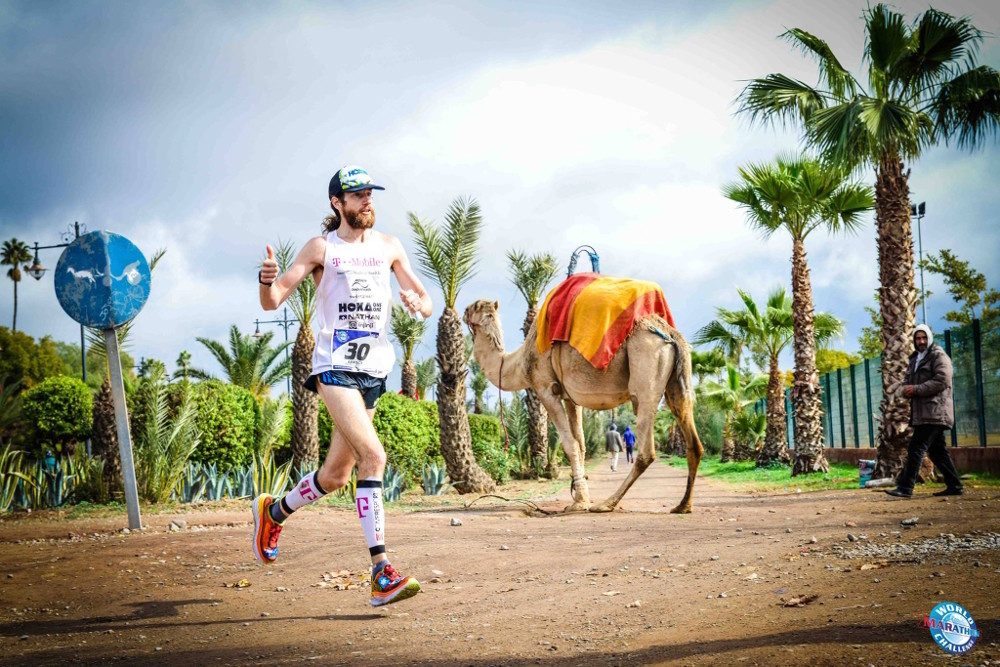
Backyard ultra format
The format for the Quarantine Backyard Ultra is simple. The first bell will ring at 7 a.m. MDT on July 11, starting the first lap of many. Runners have an hour to complete each lap, which will be 6.706K.
As was the case in the first event, which was held in April, runners will have the choice to run either inside on their treadmill or outside near their homes. Some runners competing in the April race couldn’t run outside due to coronavirus restrictions in their countries but also didn’t have treadmills, so they ran around inside their homes to complete each lap. It doesn’t matter where athletes run, as long as they cover 6.706K before each hour is up.
All competitors have to video in on Zoom, and this way, once they finish each lap, they can prove they ran the right distance by showing their treadmill or GPS data to the camera. Once an athlete finishes a lap, he or she can rest, eat, or do whatever they like for the remainder of the hour. They just have to make sure to be ready to run when the bell goes at the top of the next hour. The last runner standing is the winner.
Mike Wardian of the U.S. won the first Quarantine Backyard Ultra in a 63-hour-long battle with Czech runner Radek Brunner. Wardian ran 422K to take the win over Brunner, who missed the start of the 63rd lap and was therefore disqualified.
Round Two
“A second race wasn’t initially in the cards,” says Stephanie Gillis-Paulgaard, one of the members of the Gather Virtual team who helped create and run the Quarantine Backyard Ultra. “Then people started reaching out and lots of people were asking if we’d do it again. They were even asking during the race.”
When they saw that more and more summer races were getting cancelled due to COVID-19, Gillis-Paulgaard says they decided to have another run at the Quarantine Backyard Ultra.
“In a very short time-frame of two weeks, we threw that first race together and kind of crossed our fingers and hoped for the best,” Gillis-Paulgaard says. “We just thought it would be fun and unique.”
Despite the limited time to plan for the first race, they still managed to attract over 2,400 participants from more than 50 countries. Now, they have two months to promote and prepare for the event, and after all the good press the first race received, the Quarantine Backyard Ultra is a name that many people across the world know.
Registration for Part Two of the biggest running sensation of 2020 opens today, and runners can sign up for free here until July 10, 24 hours before the first bell.
(06/14/2020) ⚡AMPby Running Magazine

Eliud Kipchoge said that he was incredibly happy to see the world running as one at the Run as One virtual team marathon
Imagine running on the same team as Olympic icons Eliud Kipchoge, Kenenisa Bekele, Geoffrey Kamworor...
Well that's exactly what happened this weekend as normal people across the world ran with Olympic champions in the 'Run as One' worldwide virtual relay marathon.
Teams of four completed a marathon by running 10.5k each, and just by entering you were in with a chance to run alongside some of the biggest names in sport.
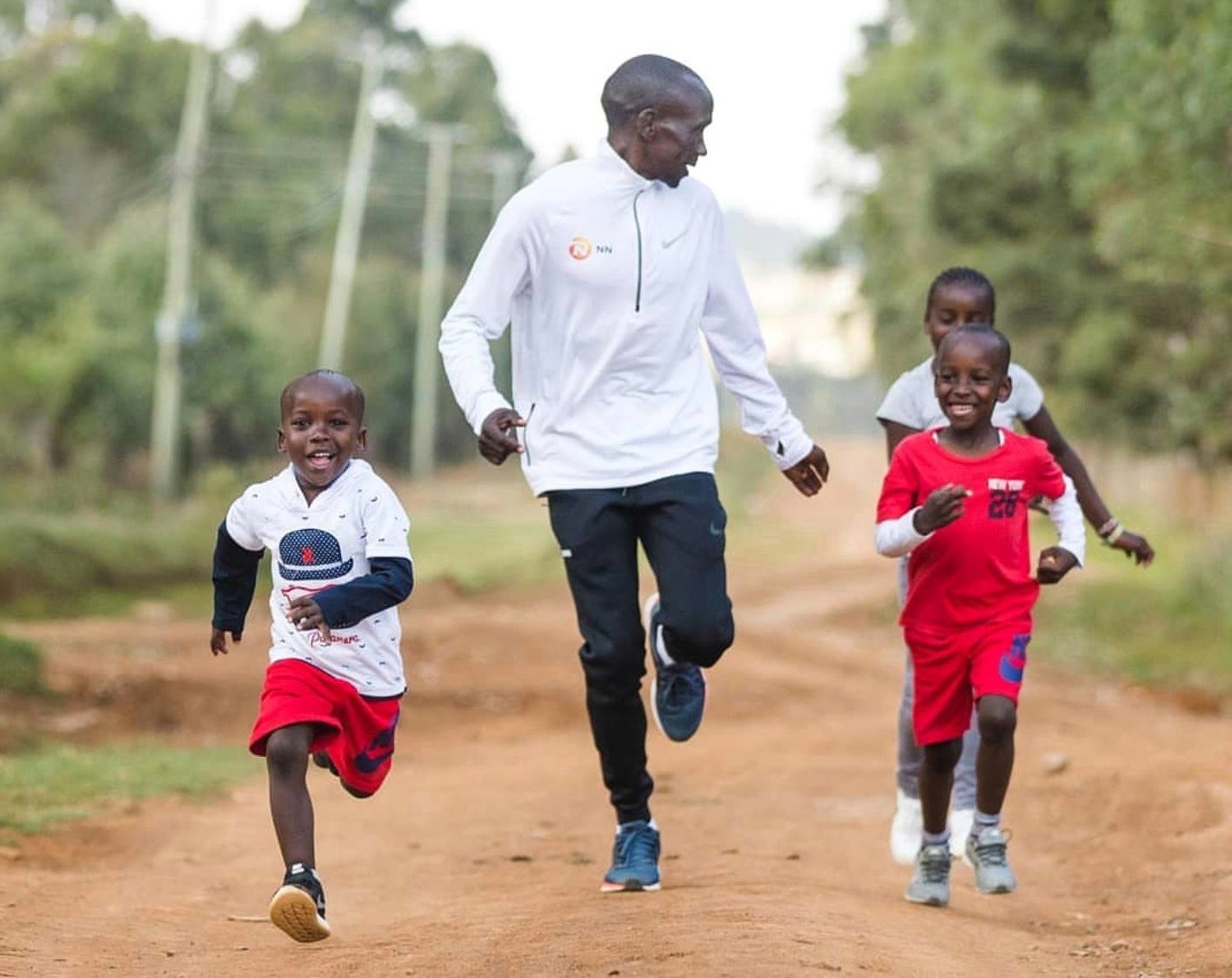
But it wasn't just running superstars who stepped up, Tottenham Hotspur football club, Olympic triathlon gold medallist from Germany Jan Frodeno and Spanish sky runner/ultramarathon/daredevil Kilian Jornet also got involved.
The event was organised by NN Running Team, an international team of elite long-distance runners managed by a company in the Netherlands.
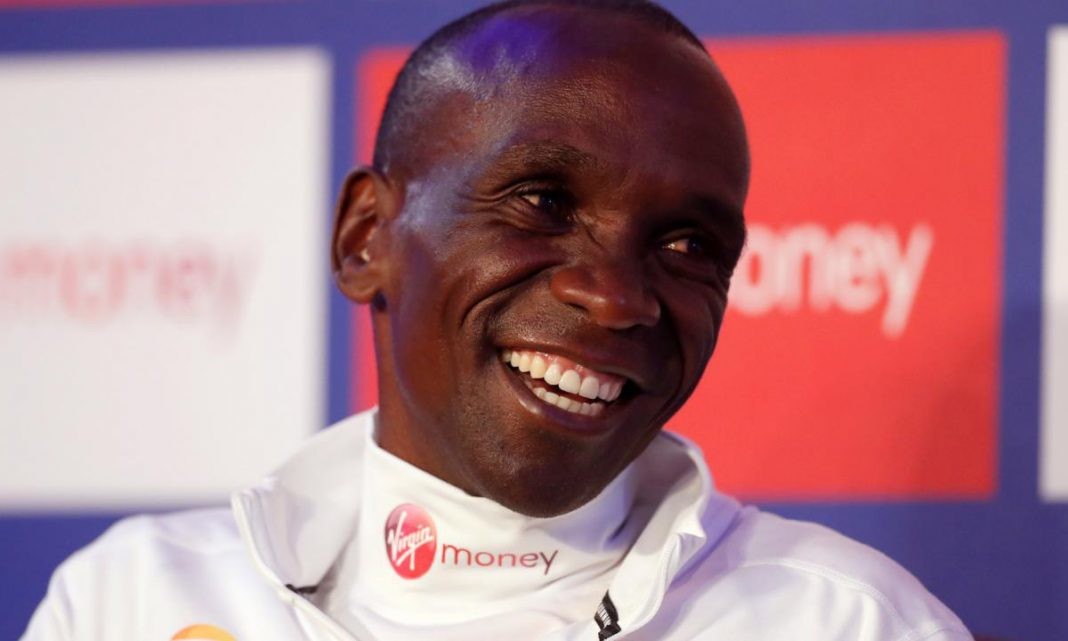
Kipchoge, whose historic sub-two hour run in Vienna last October broke new ground, teamed up with amateur runners from Brazil.
The Kenyan ran 10.5k in 31:28 seconds, not the fastest time on the leaderboard, but this event was about much more than running fastest or coming first.
"It makes me incredibly happy to see the world running as one this weekend," said Kipchoge the day before his run.
"Today I ran for my Brazilian team," he posted on Instagram after his 10.5km run, "but together we have all run as one. Runners from all over the world have joined us and showed how ours is a running world."
"Good luck everybody who is taking part today," said Kipchoge as he signed off on Sunday with many more runners still to come.
Another world-record holder and three-time Olympic champion Kenenisa Bekele ran with Joris, Stephen, Andy and Tharkun from the Netherlands.
The Ethiopian ran his 10.5km in 32:57 on his own track that he built in Sululta, 25 minutes outside the Ethiopian capital Addis Ababa.
The 5000m and 10,000m World record-holder built a six-lane all-weather track which is home to many athletes training and dreaming of Olympic glory.
They call it Bekele's ‘field of dreams’.
"It was a great pleasure to run my 10.5k as part of the MA RA TH ON challenge on my own track in Sululta," he posted.
It was hardly any surprise that half-marathon world record holder Geoffrey Kamworor put in the fastest time, going 10.6 km in 30:08s.
This time Eliud Kipchoge wasn't there to greet him at the finish line like he did at the 2019 New York marathon, but Kamworor was pleased with the run.
The Kenyan ran with a team from the USA.
Kilian Jornet does many things - like ultramarathons and literally running up and down mountains.
He is said to hold the fastest known time for the ascent and descent of Mount Everest for example.
For most of us, running 10.5km is a struggle, but when Jornet's Strava App told him that he had only run 10.49km making his entry invalid, he said ok:
I'll start again.
"It’s been actually pretty fun this MA RA TH ON!" Jornet posted, despite having to do it twice.
"Today I did my relay to join my teammates @davidnilssons@mustafamohamed79 and @fra_puppinho to finish this challenge among more than 100.000 runners worldwide. Thanks guys!"
(06/08/2020) ⚡AMPby Ken Browne

Tryavna Ultra 2020 has been cancelled and moved to July 16-18 2021.
After long discussions with our team with the various state institutions (RZI, municipal administrations, local authorities representatives, etc.) it became clear that the situation was too dynamic without any prospects of anything to clear in the foreseeable future. There is no telling if mass competitions will be allowed, and summer is already on our doorstep.
The organization of an event of Tryavna Ultra's rank requires almost year-round preparation and maintenance and is linked to a lot of effort and finances. Waiting until the last moment in the hope of things to get better means risking not only the quality of our organised event, but also the preparation of all participants - this is against our principles. We believe that displacement of the race for a later stage of the year would be unfair to other competitions in the calendar, which make no less effort than we do and this would lead to divide the runaway the runner community in Bulgaria.
So we made the really difficult one and hope a fair decision 2020 will be zero for Tryavna Ultra.
We know that each of you have been looking forward to the race and the news is somewhat unpleasant. It is also unpleasant for us as organizers. However, we believe it is for the best and we look forward.
To all those who have already signed up for participation in Tryavna Ultra we will offer the following three options regarding their registrations:
• Option 1: Transfer of registration for July 16-18, 2021, OR for 2022 (of your choice) and you get a voucher of 25 % off next year's fee i.e. if you choose 2022 you will have a 25 % voucher for 2021 or you choose 2021 and you have 25 % discount for 2022. Reserve your right to receive a t-shirt, medal and any additional gifts to next year's competition.
• Option 2: Transfer the amount to another competition (s) organized by iRun. bg - Koja Kaya, Brutus Run, Black Sea Marathon with reimbursement of fees (deducting bank and card transactions).
• Option 3: Reimbursement of 90 % of the amount paid due to a portion of the costs already incurred for each of the participants. This version does not receive a voucher.
Thank you to our general sponsor Biofresh, the longtime sponsor Aurubis and all the partners who trusted us and stood by us, as well as those who stated readiness and only waited for race day to join.
See you again next year on July 16-18, 2021! The Balkanʺt is there and will bring us together again.
(06/06/2020) ⚡AMP


Sara Hall Among Pros Who Will Take Shot at Treadmill World Records on June 6 in Chaski Challenge
Inspired by the success of last month’s Quarantine Backyard Ultra, a handful of elite runners will attempt to break treadmill world records across five distances next week. Sara Hall, the fastest American female marathoner of 2019, is the headliner, and will be shooting for the women’s treadmill half marathon record of 1:20:43 (Hall’s pb is 1:08:58).
The event, which will be held on Saturday, June 6, and is known as the Chaski Challenge, is the brainchild of Tyler Andrews, a 2:15 marathoner who ran a world best of 2:46:06 for 50,000 meters on the track in 2018 (LRC recorded a podcast with him shortly before that race). Before the coronavirus pandemic hit, Andrews had planned to spend the spring training with Jim Walmsley in Flagstaff as the two men prepared to race the famed Comrades Marathon in South Africa. Instead, Andrews is now based at his parents’ house in Concord, Mass., but is still training hard and wanted to create an opportunity to allow himself and others to demonstrate their fitness.
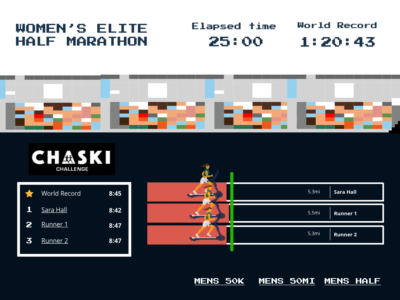

“A lot of people are really fit out there right now and have nothing to do with it,” Andrews says. “So we wanted to do that. And then just create a really compelling, fun, conversation-provoking event that people can watch on a Saturday night and have fun with.”
Similar to the Quarantine Backyard Ultra, the Chaski Challenge will feature a free live online broadcast and tracking of the record attempts around the country with cameras aimed at each elite runner’s treadmill. 2016 Olympian Marielle Hall and ultrarunner Kris Brown (13th at 2019 Western States 100) will serve as commentators.
“Chaski Endurance Collective, which is my coaching collective, we have a bunch of different athletes from different areas on staff and we were kind of just bouncing around ideas and talking about what could we do that’s kind of building off what Quarantine Backyard Ultra did really well, because that event just absolutely crushed it,” Andrews says.
Andrews also felt the inclusive nature of the Quarantine Backyard Ultra — anyone could sign up and compete — was one of the keys to its success, and to that end, the Chaski Challenge will feature free-to-enter 5k and 50k races, which anyone can sign up for and complete during a 24-hour window beginning on June 5 at 4 p.m. ET (there is an optional donation to Feeding America’s COVID-19 relief efforts).
At 6 p.m. ET on June 6, the broadcast will begin with the men’s 50k, which features Andrews, 2014 world 100k champ Max King, and Quarantine Backyard Ultra champion Mike Wardian (2:54 50k pb). Midway through that race, the men’s half marathon (featuring 61:51 man John Raneri) and the women’s half marathon (featuring Hall and 2:27 marathoner Renee Metivier) will begin. Mario Mendoza will also be attempting to break the 50-mile record; that attempt will begin prior to the broadcast. The current treadmill world records for each event are as follows (the men will also try to break the marathon record en route to 50k):
Women’s half marathon: 1:20:43, Jenna Wrieden, USA, 2014
Men’s half marathon: 1:03:37, Tyler Andrews, USA, 2015
Men’s marathon: 2:20:45, Paul Zwama, Netherlands, 2018
Men’s 50k: 2:56:35, Matthias Kyburz, Switzerland, 2020
Men’s 50-mile: 4:57:45, Jacob Puzey, USA, 2016
Andrews chose those events because he believes each record is ripe for the taking. The 50k record has been broken three times already this year; both Wardian and Mendoza are former holders of the record.
“We are 100% sure that we are going to break these records in this race,” says Andrews. “There’s zero question. The women’s half marathon mark is 1:20. I’m pretty sure that women out there have done that in training before and not recorded it. We’re not just looking to break these; we want to make these legitimate. We want to have actual, really good athletes just totally destroy them and set them way out of reach.”
Andrews feels confident he is just as fit as when he ran 2:46 for 50,000 meters in 2018; on Sunday, he ran a workout of 7 x 5k (16:19, 16:20, 16:20, 16:16, 16:11, 16:07, 15:51) with 1k recovery for a total of 41k on the treadmill in 2:16. He will be making the attempt in a room that doubles as his office and a storage room for his dad’s clothes.
“There’s a TV inside the cabinet [in front of the treadmill],” Andrews says. “I don’t watch television when I’m running, but I actually kind of like it because it’s almost a black mirror, so I can see my upper running form, so I can see if I’m starting to list to one side or slouch a little bit.”
Hall bouncing back from Olympic Trials disappointment
Andrews has run into one issue with the Chaski Challenge: Hall will not be able to run her portion of the event live. Instead, she will record her attempt this week, and it will be played at the same time as the other attempts on the broadcast next week. Still, she is excited to give it a go.
“It’s a tough time for all sports, but especially with ours including the masses, people need things to stay motivated or to get a benchmark of fitness,” Hall says. “I wanted to support that and it will be nice to get a benchmark of fitness for myself in the process and hopefully provide some entertainment to people.”
Hall’s most recent race was the US Olympic Marathon Trials in Atlanta on February 29, where she dropped out after 22 miles. Hall says her recovery has been “a process.”
“I wanted that team more than any other race of my career, so I think I’m still somewhat getting over the disappointment and I think I’ll always look back on it with frustration,” Hall says.
After falling short in the Marathon Trials, Hall’s initial plan was to give the track trials a go in either the 5,000 or 10,000; even once they were postponed, her recent training has focused on those distances. She eventually plans to transition into a buildup for a fall 2020 marathon (if they happen) before returning to the track for the 2021 Olympic Trials.
For a woman who has run 1:08 for a half, 1:20 should be a piece of cake — theoretically. But Hall is not peaking for the Chaski Challenge. And since she rarely runs on treadmills, she doesn’t want to risk injury by giving a full race effort. In addition, she’ll likely be running at almost 7,000 feet in Flagstaff — which Hall says usually knocks 15 seconds per mile off her tempo pace. Still, record pace is just 6:10 per mile, which is very attainable for Hall, even with those caveats.
Hall won’t be able to make her attempt from the comfort of home as her treadmill is currently broken. Her plan is to head to a gym (which are now open in Arizona) and take her shot there. Unlike most half marathon record attempts, however, Hall will be able to have her four daughters cheer her on every step of the way — if they choose to.
“I’ll create a playlist to give me some entertainment and the girls will probably cheer me on, but will likely get bored after a few minutes and wander off,” Hall says.
(06/06/2020) ⚡AMP

After cancelling the South African ultra, Comrades Marathon virtual event signups surpass 13,000 runners
One of the world’s most famous and coveted ultramarathons, the Comrades Marathon in South Africa, was cancelled due to COVID-19 in May. The race was set for June 14, and although no one will be physically running the course between the South African cities of Pietermaritzburg and Durban on that day, organizers have scheduled a virtual event called Race the Comrades Legends for the same date.
The event is open to anyone worldwide, and with just over a week to go before race day, over 13,000 people have registered to run.

In a normal year, the Comrades Marathon is 87K or 90K (the course changes directions each year, hence the two distances). Runners looking to participate in the virtual event will have the option to complete a 90K run in classic Comrades style, but there are also 5K, 10K, 21K and 45K options for anyone who isn’t looking to tackle an ultramarathon.
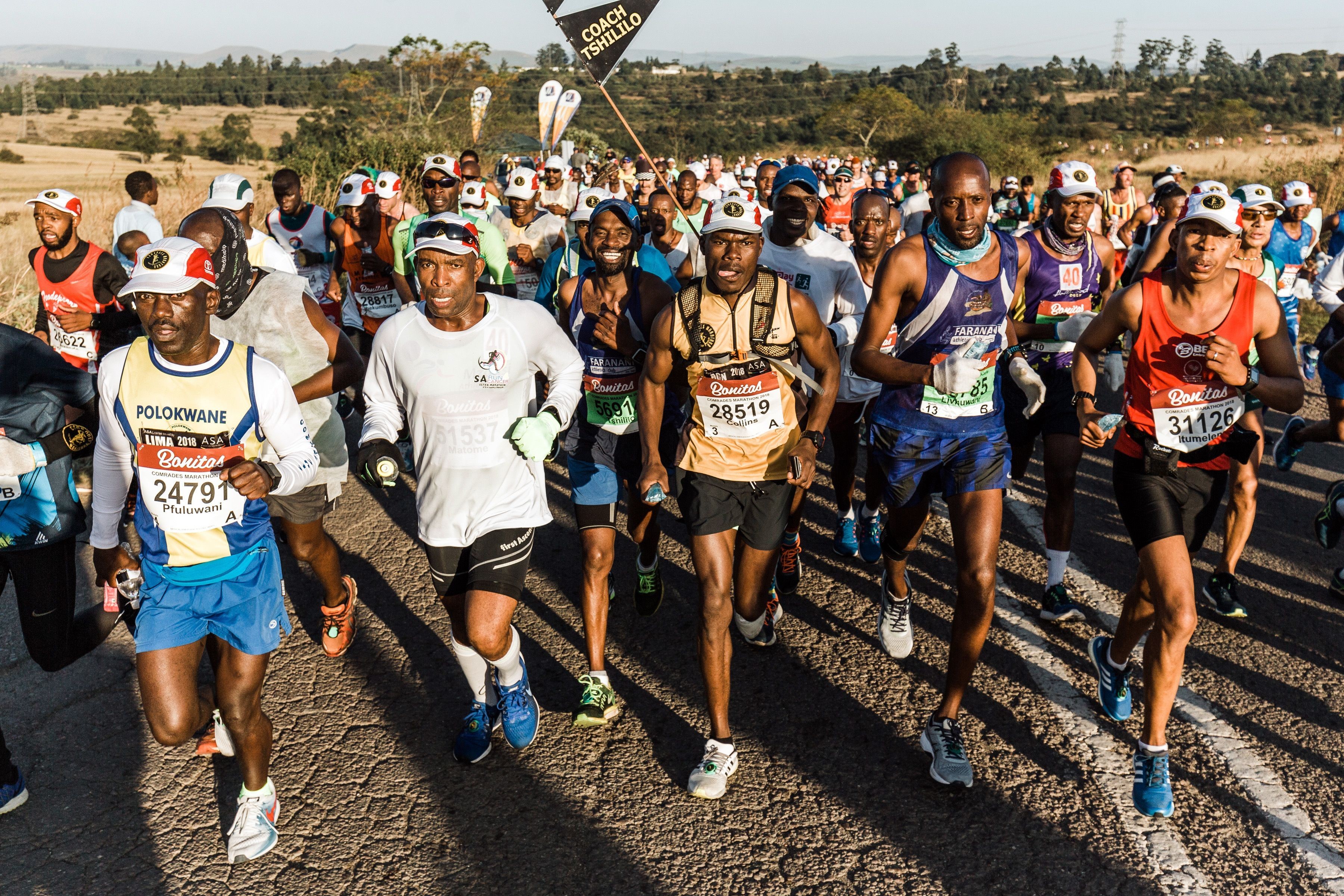
The event is free to anyone who was already registered for the 2020 Comrades Marathon, and it’s just $25 for everyone else. In addition to the race fee, runners have the option of donating to six local South African charities.
All participants will have to record their runs and upload them to the Comrades site, where results will be compiled and ranked. Runners can upload their runs using whatever tracking apps or GPS programs they prefer.
After all the results are in, runners will be able to see where they sit among the rest of the participants, and according to the virtual race press release, they will also be able to see how they rank against Comrades Marathon legends from past events.
All finishers will receive a virtual medal and finishing certificate immediately after completing their race, and in the weeks after the event, they will receive a physical medal as well.
(06/05/2020) ⚡AMPby Ben Snider-McGrath

Comrades Marathon
Arguably the greatest ultra marathon in the world where athletes come from all over the world to combine muscle and mental strength to conquer the approx 90kilometers between the cities of Pietermaritzburg and Durban, the event owes its beginnings to the vision of one man, World War I veteran Vic Clapham. A soldier, a dreamer, who had campaigned in East...
more...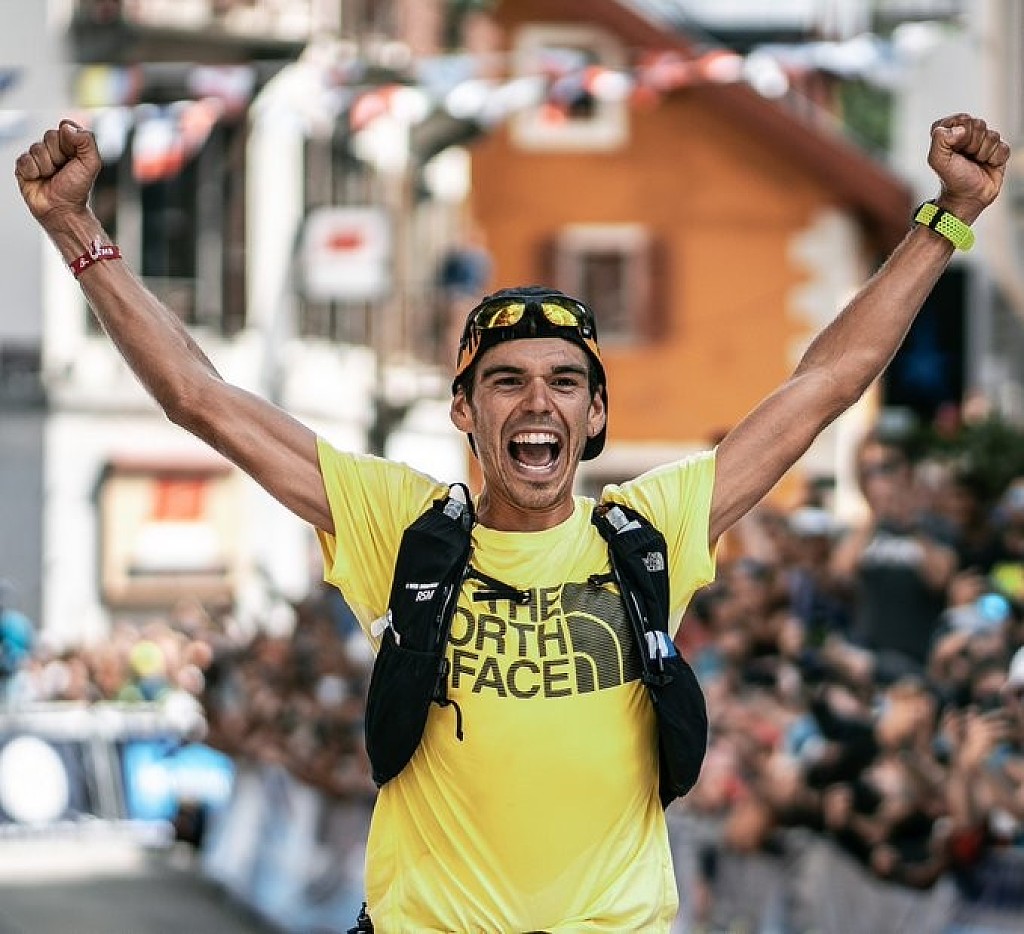
2019 champion is running UTMB anyway
Spanish ultrarunner Pau Capell says he plans on running the 171K UTMB Mont-Blanc route even though the race is cancelled
On May 20, race organizers for the Ultra-Trail du Mont-Blanc announced that the 2020 edition was officially cancelled. The UTMB features seven events (all of which start in Chamonix every August), the most famous being the gruelling 171K ultra that takes runners through the Alps in France, Italy and Switzerland. Runners around the world were of course disappointed when the race was called off, no matter how inevitable that cancellation seemed to be. The men’s champion from 2019, Pau Capell of Spain, isn’t accepting the cancellation, and he has announced that he will be running the route on his own in late August.
Capell made this announcement soon after the UTMB was officially cancelled (just two days later), posting on Twitter and Instagram to say, “I will run UTMB! Alone, without a bib and with my support team.” He also posted that he plans to start the run at 6 p.m. on August 28, four days after the event was set to officially start.
There are many issues that could arise and ruin Capell’s plan, including potential travel restrictions and further lockdowns in his home country of Spain or in France. Both countries were under strict lockdowns for the past two months, and restrictions have only recently been loosened in each country. Many public health officials around the world have forecast a second wave of the coronavirus, so by August, Spain, France and the rest of the world could be back in lockdown, which would stop Capell from going.
There’s also the moral question of whether it’s OK to go and do this race when it’s been cancelled. UTMB organizers called the race off because it was the best way to keep everyone safe, and although Capell running on his own with a small support crew is much different than thousands of runners coming to race the UTMB events, it’s still a questionable decision.
Capell is an experienced ultrarunner, and he will undoubtedly come well prepared with enough supplies and a good crew, but there’s the possibility that people will follow in his footsteps and take on the UTMB solo as well. If this happens, it’s very possible that other runners won’t be as well prepared as Capell, and that could create issues for themselves and other runners around them.
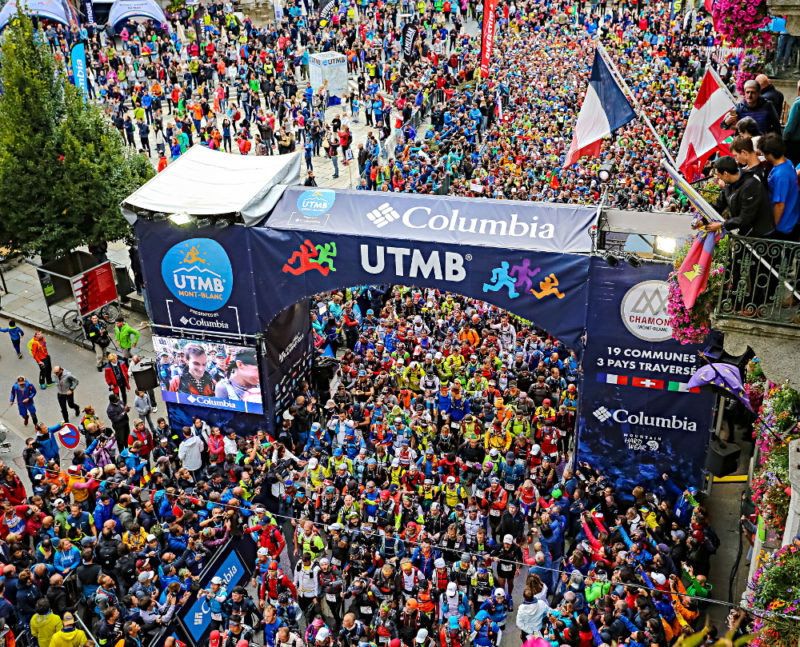
If Capell is able to go through with his solo run, it will be interesting to see how it goes. When he won the race in 2019, he covered the 171K course in 20:19:07. It’s hard to imagine that he could beat that time without the adrenaline shot delivered from a real race with cheering spectators and other competitors, but we’ll just have to wait and see what type of run he can produce if the time comes.
(05/31/2020) ⚡AMPby Running Magazine
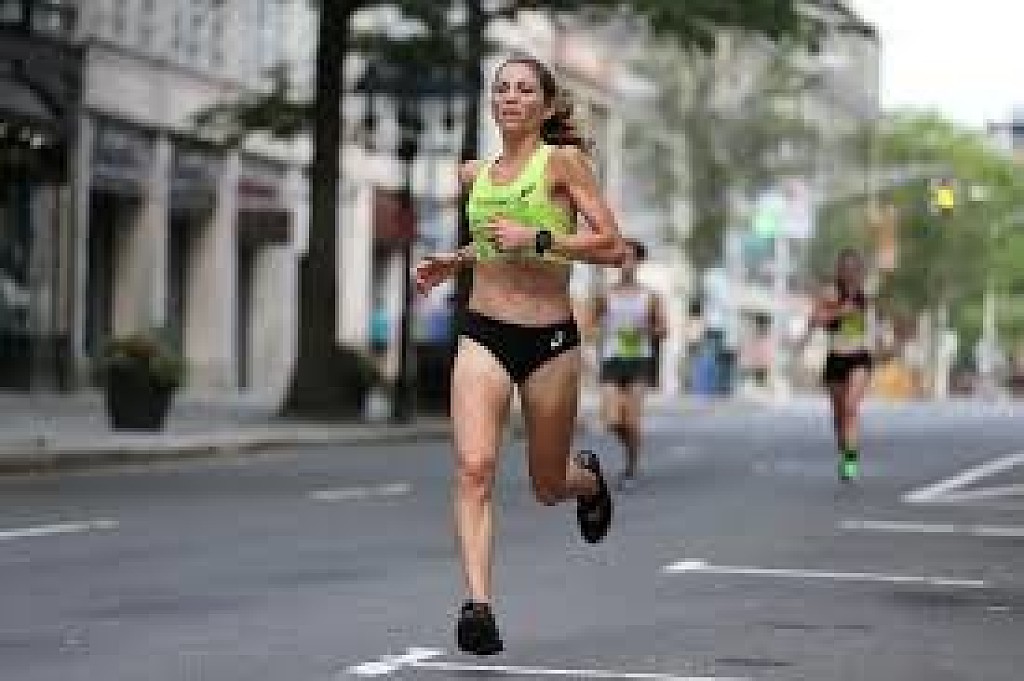
Sara Hall, will be shooting for the women’s treadmill half marathon record on June 6 in Chaski Challenge
Inspired by the success of last month’s Quarantine Backyard Ultra, a handful of elite runners will attempt to break treadmill world records across five distances next week. Sara Hall, the fastest American female marathoner of 2019, is the headliner, and will be shooting for the women’s treadmill half marathon record of 1:20:43 (Hall’s pb is 1:08:58).
The event, which will be held on Saturday, June 6, and is known as the Chaski Challenge, is the brainchild of Tyler Andrews, a 2:15 marathoner who ran a world best of 2:46:06 for 50,000 meters on the track in 2018 (LRC recorded a podcast with him shortly before that race).
Before the coronavirus pandemic hit, Andrews had planned to spend the spring training with Jim Walmsley in Flagstaff as the two men prepared to race the famed Comrades Marathon in South Africa. Instead, Andrews is now based at his parents’ house in Concord, Mass., but is still training hard and wanted to create an opportunity to allow himself and others to demonstrate their fitness.
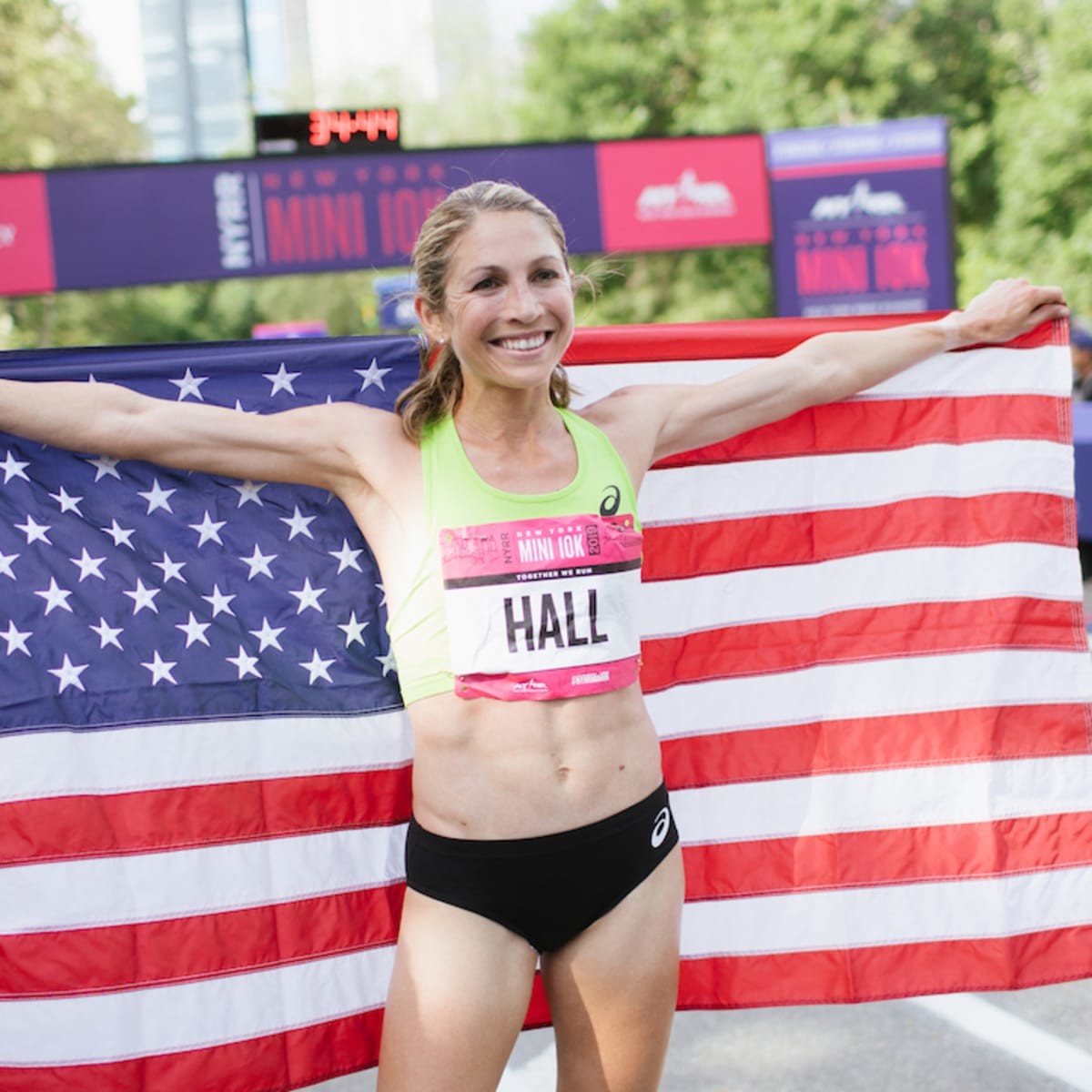
“A lot of people are really fit out there right now and have nothing to do with it,” Andrews says. “So we wanted to do that. And then just create a really compelling, fun, conversation-provoking event that people can watch on a Saturday night and have fun with.”
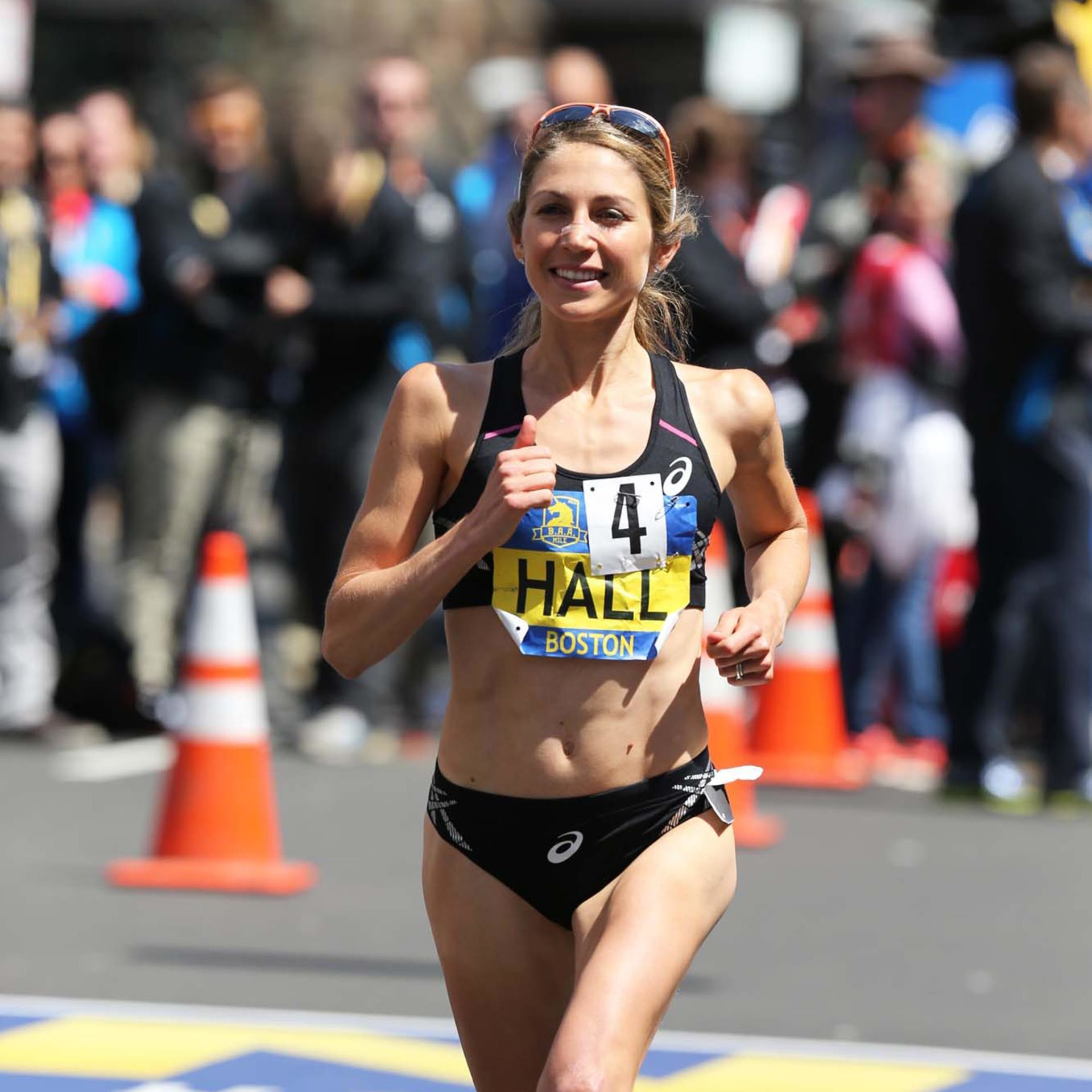
Similar to the Quarantine Backyard Ultra, the Chaski Challenge will feature a free live online broadcast and tracking of the record attempts around the country with cameras aimed at each elite runner’s treadmill. 2016 Olympian Marielle Hall and ultrarunner Kris Brown (13th at 2019 Western States 100) will serve as commentators.
“Chaski Endurance Collective, which is my coaching collective, we have a bunch of different athletes from different areas on staff and we were kind of just bouncing around ideas and talking about what could we do that’s kind of building off what Quarantine Backyard Ultra did really well, because that event just absolutely crushed it,” Andrews says.
Andrews also felt the inclusive nature of the Quarantine Backyard Ultra — anyone could sign up and compete — was one of the keys to its success, and to that end, the Chaski Challenge will feature free-to-enter 5k and 50k races, which anyone can sign up for and complete during a 24-hour window beginning on June 5 at 4 p.m. ET (there is an optional donation to Feeding America’s COVID-19 relief efforts).
At 6 p.m. ET on June 6, the broadcast will begin with the men’s 50k, which features Andrews, 2014 world 100k champ Max King, and Quarantine Backyard Ultra champion Mike Wardian (2:54 50k pb). Midway through that race, the men’s half marathon (featuring 61:51 man John Raneri) and the women’s half marathon (featuring Hall and 2:27 marathoner Renee Metivier) will begin. Mario Mendoza will also be attempting to break the 50-mile record; that attempt will begin prior to the broadcast.
(05/29/2020) ⚡AMPby Jonathan Gault
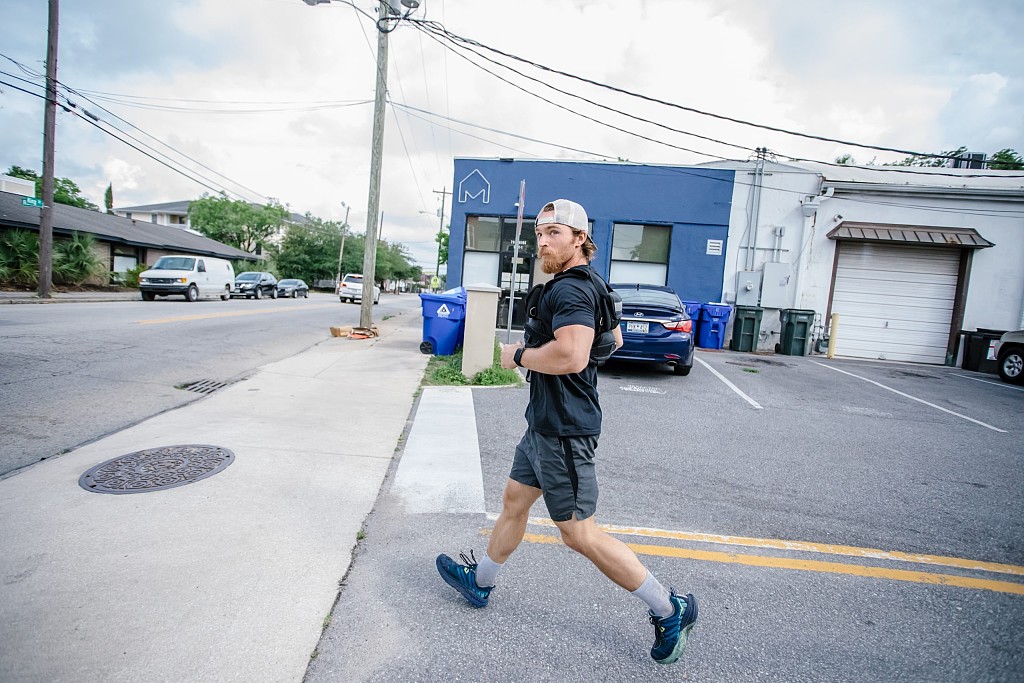
CrossFiter Lee Davis set a new record with 16 Murph workouts in 24 hours
This Memorial Day, local Citadel alumni and Rhapsody CrossFit athlete Lee Davis set a new record for consecutive "Murph" workouts completed within 24 hours.
The Murph is a commemorative workout done by athletes around the world on Memorial Day in honor of the late Lieutenant Michael P. Murphy, a Navy SEAL killed in action in Afghanistan in 2005.
Davis completed 16 rounds of the intense workout in 22 hours and 3 minutes. The Murph consists of: 1 mile run, 100 pull-ups, 200 push-ups, 300 squats, 1 mile run. The prescribed standard is to do the workout in a 20-pound weighted vest, to mimic body armor.
In a press release, Rhapsody head coach Alan Shaw said: "Murph is, hands down, one of the most challenging workouts in CrossFit, but it’s about so much more than being a tough benchmark.
It’s what we as a community do to thank and pay tribute to those who gave their all for us."Davis is no stranger to tough physical challenges. In March he ran a 100-mile ultramarathon, and he hopes to run the length of South Carolina later this summer.
His Murph application to the Guinness Book of World records is under review.
(05/29/2020) ⚡AMPby Connelly Hardaway
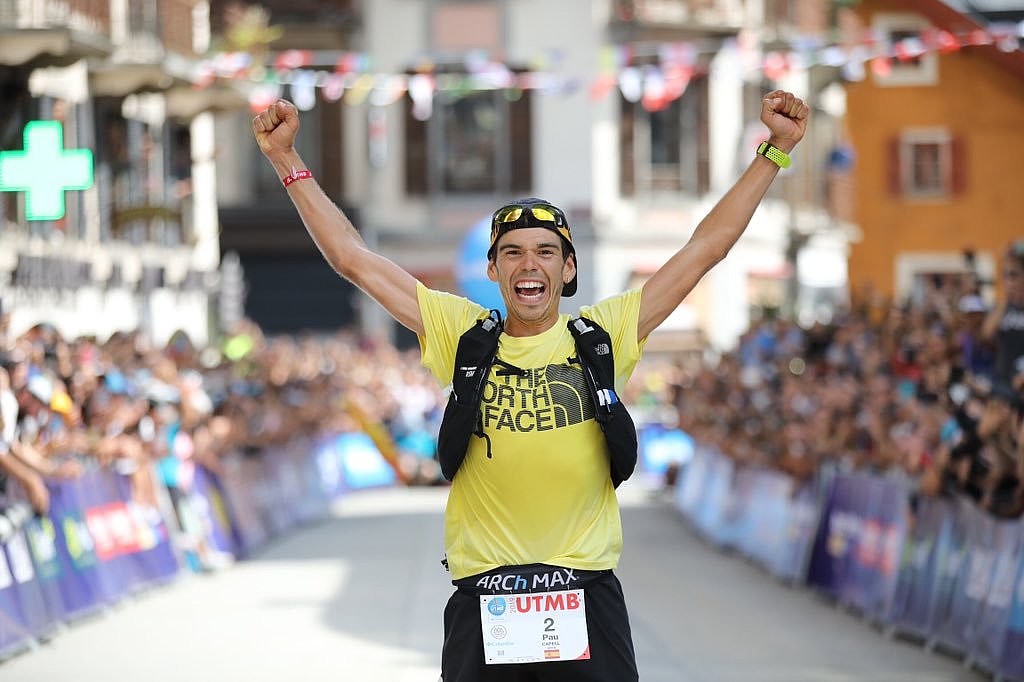
Spanish ultrarunner Pau Capell says he plans on running the 171K UTMB Mont-Blanc route even though the race is cancelled
On May 20, race organizers for the Ultra-Trail du Mont-Blanc announced that the 2020 edition was officially cancelled. The UTMB features seven events (all of which start in Chamonix every August), the most famous being the gruelling 171K ultra that takes runners through the Alps in France, Italy and Switzerland.
Runners around the world were of course disappointed when the race was called off, no matter how inevitable that cancellation seemed to be. The men’s champion from 2019, Pau Capell of Spain, isn’t accepting the cancellation, and he has announced that he will be running the route on his own in late August.
Capell made this announcement soon after the UTMB was officially cancelled (just two days later), posting on Twitter and Instagram to say, “I will run UTMB! Alone, without a bib and with my support team.” He also posted that he plans to start the run at 6 p.m. on August 28, four days after the event was set to officially start.
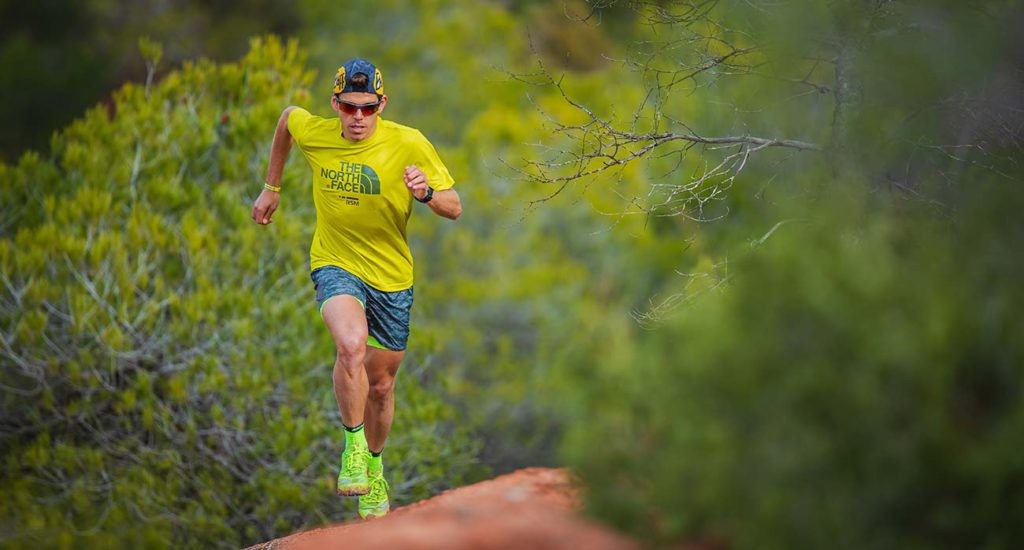
There are many issues that could arise and ruin Capell’s plan, including potential travel restrictions and further lockdowns in his home country of Spain or in France. Both countries were under strict lockdowns for the past two months, and restrictions have only recently been loosened in each country.
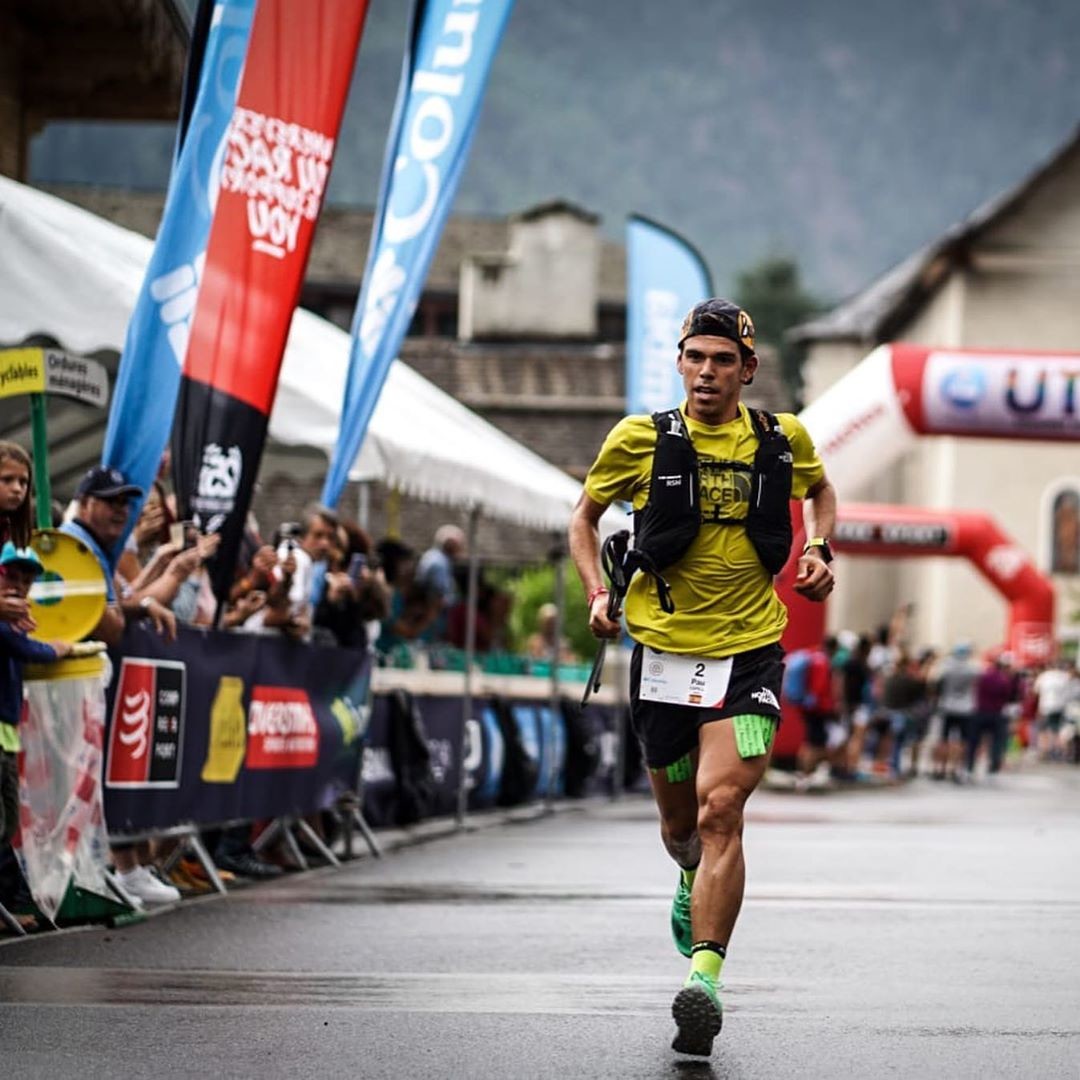
Many public health officials around the world have forecast a second wave of the coronavirus, so by August, Spain, France and the rest of the world could be back in lockdown, which would stop Capell from going.
There’s also the moral question of whether it’s OK to go and do this race when it’s been cancelled. UTMB organizers called the race off because it was the best way to keep everyone safe, and although Capell running on his own with a small support crew is much different than thousands of runners coming to race the UTMB events, it’s still a questionable decision.
Capell is an experienced ultrarunner, and he will undoubtedly come well prepared with enough supplies and a good crew, but there’s the possibility that people will follow in his footsteps and take on the UTMB solo as well. If this happens, it’s very possible that other runners won’t be as well prepared as Capell, and that could create issues for themselves and other runners around them.
If Capell is able to go through with his solo run, it will be interesting to see how it goes. When he won the race in 2019, he covered the 171K course in 20:19:07. It’s hard to imagine that he could beat that time without the adrenaline shot delivered from a real race with cheering spectators and other competitors, but we’ll just have to wait and see what type of run he can produce if the time comes.
(05/26/2020) ⚡AMPby Ben Snider-McGrath

North Face Ultra Trail du Tour du Mont-Blanc
Mountain race, with numerous passages in high altitude (>2500m), in difficult weather conditions (night, wind, cold, rain or snow), that needs a very good training, adapted equipment and a real capacity of personal autonomy. It is 6:00pm and we are more or less 2300 people sharing the same dream carefully prepared over many months. Despite the incredible difficulty, we feel...
more...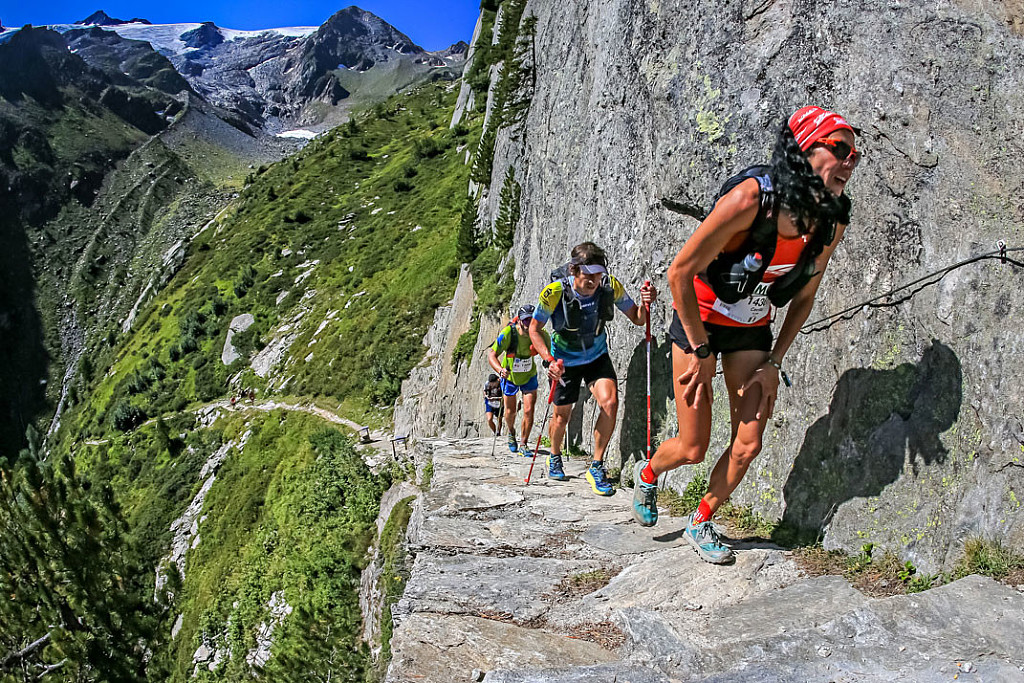
The 2020 edition of the UTMB might be cancelled, but now you can look back and enjoy the 2019 race coverage for free
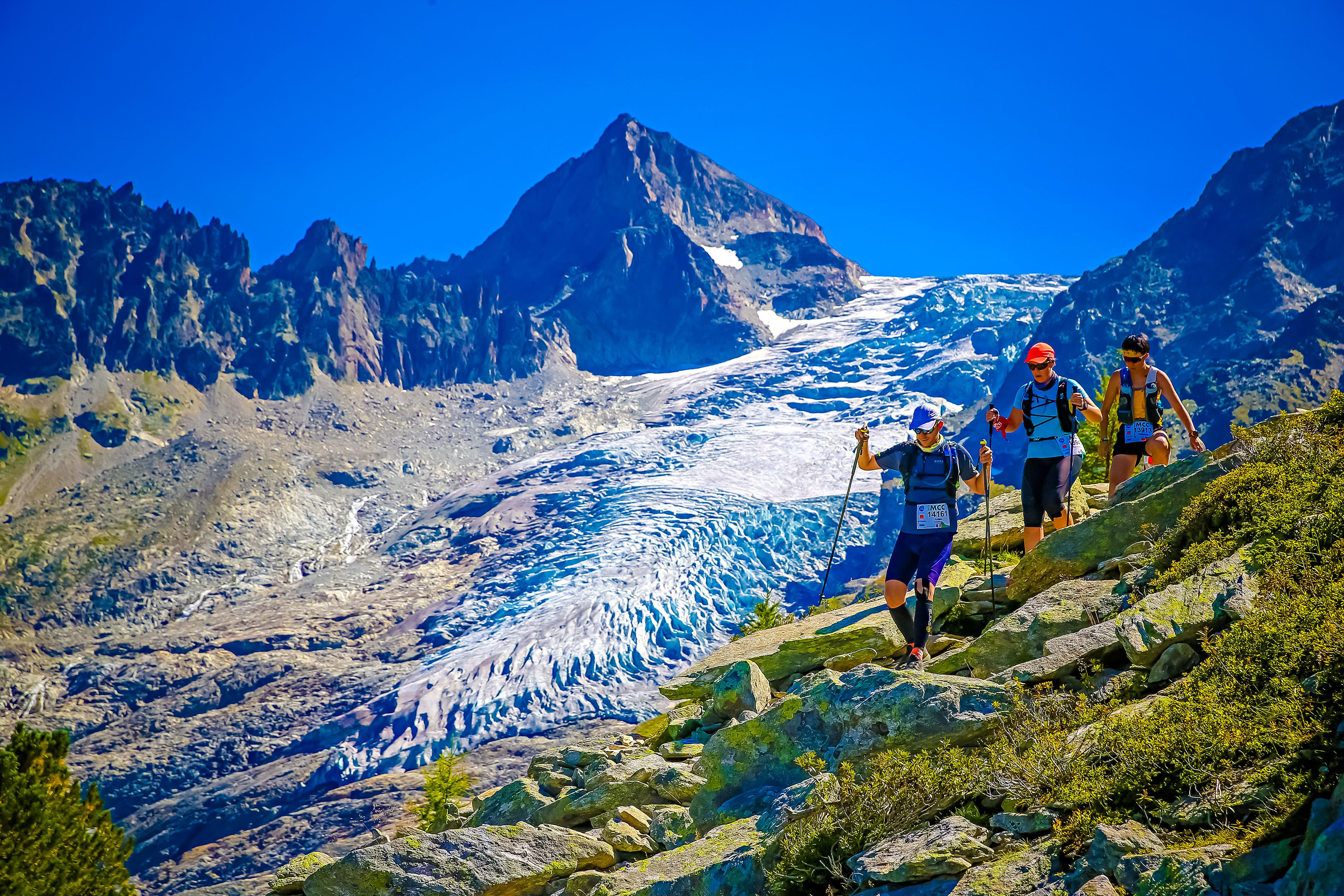
This week, the Ultra Trail du Mont-Blanc was officially cancelled for 2020, and as a result, race organizers are releasing the 2019 event footage to runners and fans for free. This would have been the eighteenth edition of the trail race, but athletes will have to wait until 2021 to race through France, Italy and Switzerland again.
Luckily, fans of the event can rewatch last year’s run, and although it’s not as good as the 2020 race going ahead as planned, it’s still some good news in these hard times. The race footage can be viewed at the Endurance Sports TV website.
The UTMB is an event with seven different races, all of which take place in Chamonix, France, each August. The biggest of these events is the 171K UTMB Mont-Blanc race, which takes runners through the the Alps in France, Italy and Switzerland. Runners also have to climb more than 10,000m over the 100-mile event, which is higher than Mount Everest.

It is an epic race and challenge, and each year thousands of runners travel to France to see how they fare in one of the seven races (although a third of the UTMB Mont-Blanc runners don’t make it to the finish line). If you’ve never watched this event, you’ll definitely want to check it out.
“The UTMB is a huge event to be cancelled this year, yet we don’t want fans to miss out, and have therefore opened up all of last year’s content for free,” said co-founder of Endurance Sports TV Paul Shanley. “We hope that this will give runners the next best thing to look back on all of the action from 2019.”
The 2019 edition of the UTMB saw thrilling results, including American Courtney Dauwalter‘s win in 24 hours, 34 minutes and 26 seconds. This was Dauwalter’s first try at the UTMB, and she nailed it, beating the second-place female, Kristin Berglund of Sweden, by almost exactly an hour. Dauwalter finished in 21st place overall, and she was the second American finisher, crossing the line just seven minutes after fellow American Jason Schlarb.
Rewatching this event, or watching it for the first time, is a great way to get motivated for your own training. It can be tough to find inspiration to train right now during COVID-19 with no races to work toward, but watching UTMB 2019 will certainly give you the boost you need to get back into action.
(05/25/2020) ⚡AMPby Madeleine Kelly
North Face Ultra Trail du Tour du Mont-Blanc
Mountain race, with numerous passages in high altitude (>2500m), in difficult weather conditions (night, wind, cold, rain or snow), that needs a very good training, adapted equipment and a real capacity of personal autonomy. It is 6:00pm and we are more or less 2300 people sharing the same dream carefully prepared over many months. Despite the incredible difficulty, we feel...
more...
Exercise and the Immune System
There seem to be two groups of people, those who “never get sick” and those who are chronically under the weather. Over the years, I have been a member of both camps. While I have previously suffered from overtraining syndrome and had what felt like chronic upper respiratory infections–which I wrote about in this RunFar article–I have more recently (and despite teaching high-school kids) avoided colds, flus, and other bugs. I’m sure writing that sentence will cause me to soon fall ill, though!
Why do we seem to get sick more often sometimes, and less sick in others? How does our immune system work to protect us from illness? And in what ways does exercise impact our immune system’s function? These are important questions for a community that enjoys pushing our bodies, sometimes in fairly extreme ways.

The Basics of the Immune System
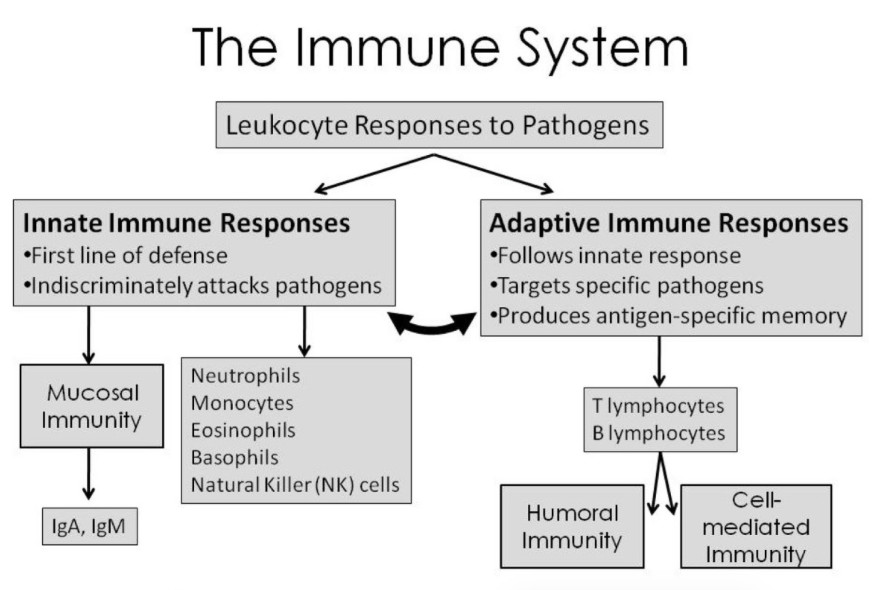
I’ve mentioned this before and I think it’s worth mentioning again now: the human body is an incredibly clever system that works surprisingly well most of the time! One particularly clever element is our immune system. The immune system’s job is to protect you from outside intruders such as antigens (any toxin or foreign substance), including pathogens (bacterium, virus, or microorganism that can cause disease). Your immune system is broken into two main responses: innate immunity which is often referred to as non-specific immunity and adaptive immunity which is known as specific immunity
graphic showing how the immune system is broken down into two major response types, innate and adaptive immunity, and what those responses involve. Image: Hackney, A. C. (2013). Clinical management of immuno-suppression in athletes associated with exercise training: Sports medicine considerations. Acta Medica Iranica, 51(11), 751–756.
The innate immune system is referred to as non-specific because it mounts the same response each time no matter the type of intruder. The innate immune response includes what are known as your first and second lines of defense. The first line of defense includes not only physical barriers like your skin, but also chemical defenses like sweat, stomach acid, tears, mucus linings, and saliva. The second line of defense can be considered a chemical defense, in this case involving a variety of white blood cells. The white blood cells primarily responsible in the innate system are called neutrophils and macrophages. Both of these cell types are phagocytes, which means their job is to protect us via the process of phagocytosis (engulfing and digesting things that do not belong).ow a macrophage (the biggest of the phagocytes) identifies an intruder, engulfs it, and then uses enzymes in its lysosome to “digest” the invader. The macrophage then releases “signals” (in the form of cytokines) to sound the alarm to other cells. Image: Letstalkscience.ca/educational-resources/stem-in-context/immune-response
The adaptive immune response, called the specific response and the third line of defense, is a more complex chemical response because of how it learns to identify different antigens and is acquired over our lifetime starting from the moment we make our entrance into this world. Like the innate immune response, the adaptive response utilizes white blood cells to identify and destroy intruders, this time relying on a type of white blood cell called a lymphocyte. Lymphocytes are special in the sense that they develop memory when exposed to antigens, so that when you are exposed to them again your body is better prepared to fight them off. We develop our adaptive immunity from both natural exposures to antigens over the course of our lifetime and via other exposures like vaccines.
Moderate Aerobic Exercise is Good for the Immune System
Despite the field of exercise immunology being a relatively new area of scientific study with 90% of papers published after 1990, original studies date back over a century (4). Early research focused specifically on exercise-induced changes in cell counts (how many white blood cells were present before and after exercise of different intensities). From this vast body of scientific literature, we know that daily moderate exercise (up to 60 minutes of easy aerobic exercise) provides an overall “boost” to our immune system’s function, increasing our resistance to mild infections like the common cold (8). This is due to the enhanced recirculation of immunoglobulins (proteins that help recognize specific antigens), anti-inflammatory cytokines (molecules that help regulate inflammatory response), neutrophils (part of our innate immune response), and lymphocytes (part of our adaptive immune response) (4).
Can Exercise Be Bad for the Immune System?
If 60 minutes of aerobic exercise is good for our immune system, then is more better? It’s quite possible that you’ve become sick shortly after a big effort or goal race, and that’s exactly what researchers have found in widely published studies in the 1980s continuing through the present. These studies illustrate that infectious episodes (reported upper respiratory infection [URI] symptoms) increased after taking part in large endurance events. This includes a study from the 1982 Two Oceans Marathon–actually a 56-kilometer ultramarathon–where one third of the participants self-reported URI symptoms within two weeks of the race (4, 5). This and many other studies (generally conducted on major road marathon participants) helped to form the idea behind an exercise immunology theory known as the open window theory (5, 6).
The open window theory is the idea that after an intensive exercise session (either a long or hard effort) there is a period of time, generally three to 72 hours, where you have an increased susceptibility to illness. This was supported by what appeared to be a dramatic falloff of circulating lymphocytes (in particular natural killer cells, a subset of lymphocytes called T cells) post-exercise (1, 2). These values were shown to be as much as 40% below baseline cell counts (2). This was concerning because the initial studies reporting this rapid lymphocyte reduction also reported large rates of cell death (2).
That sounds bad. Well, those initial cell-death values were never substantiated–phew!–but where are the lymphocytes going if they are not dying? It turns out that lymphocytes are believed to shift to more peripheral locations in the body where they are more likely to encounter an antigen, such as in the lungs or gut (2). Think of this as white blood cell redeployment in which there is enhanced immune surveillance following strenuous exercise.
What Should Athletes Do to Decrease Illness Risk?
If we know that multiple factors influence our immune systems, what can each of us do to make sure our immune system functions properly? Address those factors!
Monitor your exercise workload. Adequate stress plus adequate rest equals optimal physiological improvement. But when this is thrown out of alignment and physical stress accumulates without appropriate rest, impairments in your immune system function may occur and result in an increased risk of getting sick (8). Regular exercise is good for your immune system, but a training load that is too high for too long can take its toll. Be sure to read our article on overtraining syndrome to learn more about the stress-rest balance.
Consider fueling strategies during exercise and avoid overall nutritional deficiency and caloric restriction. The scientific literature suggests that ingesting carbohydrates during prolonged or intense activity is associated with reduced stress hormones and reductions in inflammation. Additionally, maintaining a balanced and diverse diet that meets your needs and energy demands to match your training, including proper hydration, is important (2).
Practice good hygiene. Avoid close contact with individuals who are or have been sick recently, frequently wash your hands throughout the day, and avoid touching your face (nose, mouth, and eyes).
Practice stress management. Although short-term stress (like exercise) might have a positive effect on your immune system, chronic stress does not. Chronic stress can suppress your immune responses by decreasing the numbers and functionality of lymphocytes, and dysregulating your innate and adaptive immune responses (7).
Get adequate sleep. Sleep disturbances can depress your immune system, increase inflammation, and promote other poor health outcomes. Aim for seven to nine hours of sleep a night. Learn more about how sleep and your immune system interact in our in-depth sleep article.
Evaluate your touchpoints with others. Be considerate of how you interact with the world around you, including at running events and races. Consider fist bumps over high fives, be considerate of how you interact with race volunteers, and minimize what you touch at aid stations. (I have a habit of touching everything.) Be cognizant of not only your own health, but also the health of others. Practicing good hygiene isn’t limited to only when it’s convenient.
(05/24/2020) ⚡AMPby I Run Far
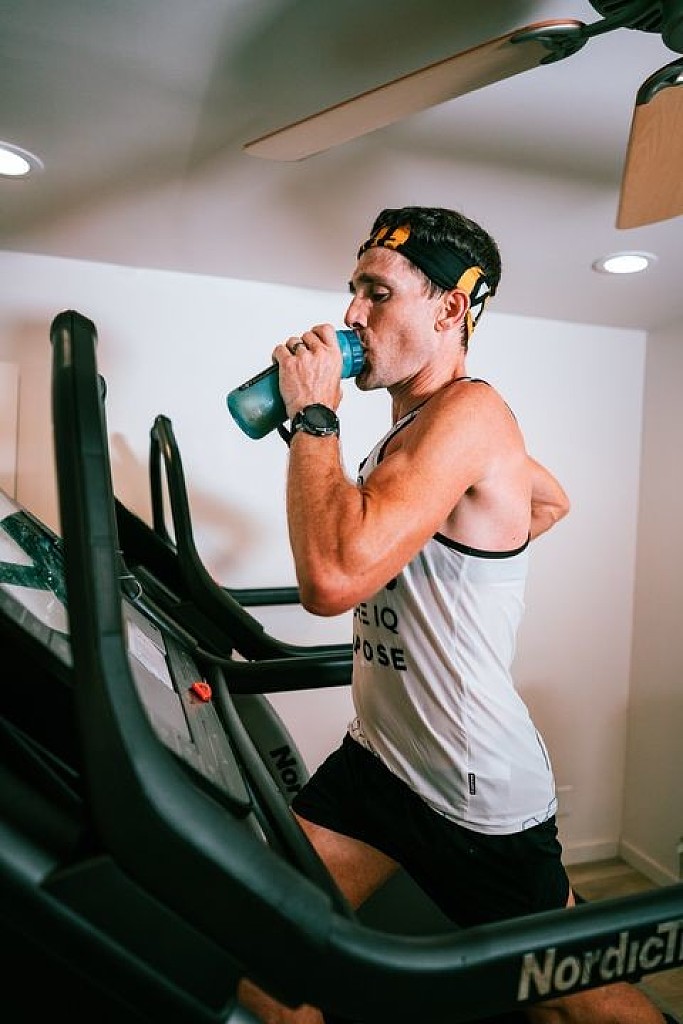
Inside Zach Bitter’s 100-Mile Treadmill World Record
For many runners, running for even 10 minutes on a treadmill feels like torture. But on Saturday, May 16, Zach Bitter spent 12 hours, nine minutes, and 15 seconds on a treadmill. That’s how long the 33-year-old ultrarunner needed to break the 100-mile treadmill world record, averaging a 7:18 per mile pace.
Bitter is no stranger to the distance or that speed. Back in August, he captured the 100-mile world record on an indoor track in Wisconsin, finishing in 11:19:13—nearly an hour faster than he did on Saturday—with an average pace of 6:48.
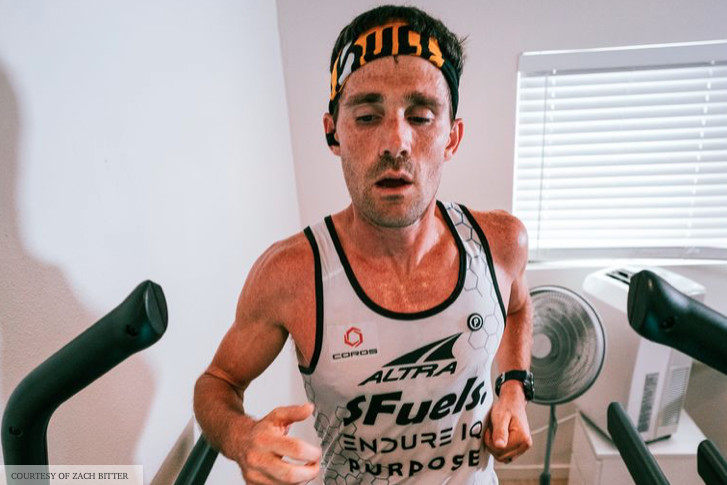
However, though the distances were the same, the approach and execution were completely different this time around.
“The biggest thing was that I needed mental refreshers,” Bitter told Runner’s World. “On the track, I felt anxious if I stopped, like I was wasting time. On the treadmill, it was almost necessary to break, even if I was just switching treadmills.”
Bitter, who had two NordicTrack X22i Incline Trainers treadmills set up in his home for the event, didn’t do many test runs ahead of the event. He did know that the machines would time out after a few hours, so he switched between the two. Also, that gave him a safety net in case one malfunctioned.
He and his wife Nicole, who served as a one-woman crew for him, only ran into two issues. Because they were running the two treadmills, two camera setups, a fan, and an air conditioner in the room, they underestimated how much power was needed.
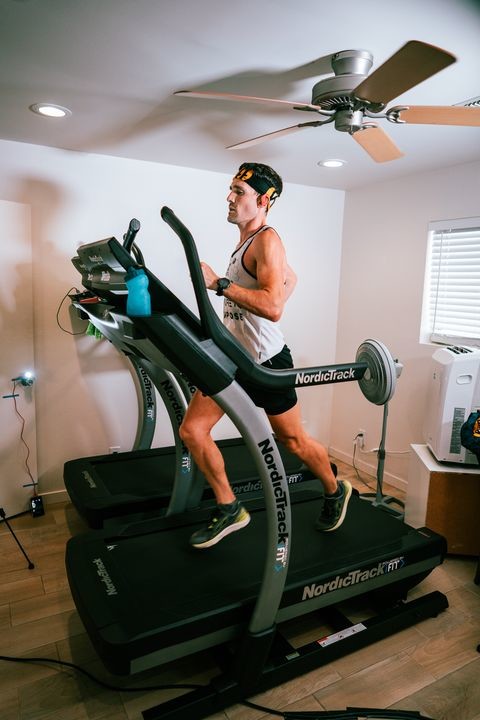
As a result, one of the treadmill’s screens went dark while Bitter was running. The treadmill was still running and counting, but they had to run an extension chord through the house to ease up the power output in the room. Another time, the treadmill briefly stopped counting. Luckily, they noticed and solved the problem.
“We had about four weeks to plan,” he said. “There was plenty of potential for things to go wrong, but luckily, nothing major really happened.”
Overcoming that mental hurdle added an unexpected challenge early on, but a major concern came in the form of under-fueling.
Bitter planned a fueling strategy similar to his strategy during his 100-mile track run last August. But he ran into some problems—the temperature at the indoor track was 60 degrees, a comfortable atmosphere for any run. Despite numerous attempts to mimic that in Bitter’s home with fans and air conditioning, his Phoenix home was more like 70 to 75 degrees throughout the run.
To his surprise, the additional heat wasn’t likely from outside.
“I was talking to Geoff Burns [an ultrarunner and doctoral student in biomechanics] afterward, and he said the one thing I didn’t consider was heat coming from the treadmills,” Bitter said. “Also, since I’m stationary, I’m just swallowing all of my own body heat, because instead of moving like on a track, I’m a little warmer in just a bubble. It was amazing how cool it was even five feet away from it.”
The additional heat meant Bitter was feeling dehydrated in the first couple of hours. Bitter tries to consume only liquid calories when he runs, relying almost entirely on S-Fuel Race+ hydration mix. He was forced to spend the next few hours playing catch-up, consuming electrolyte tabs and boosting his fluid intake to as much as 60 ounces in an hour.
A few hours later, his stomach felt like it was operating normally again.
The early issues were draining, but Bitter still had hours to go on the treadmill. To entertain himself, he would play around with the treadmill paces, typically shooting just above or just below seven-minute pace.
“I just try to keep my mind off the treadmill and the distance,” he said. “If you think too much, you can bite off too much of a chunk at once. It helped to go into a mile at one pace and then switch to another so I could worry about getting through that mile. As the day got longer, I shifted to three or four difference paces within a single mile. Those benchmarks helped me inch closer.”
He also filled his time listening to podcasts, music, and tuning into the live stream to listen to guests like Dean Karnazes, Jamil Coury, and Tim Tollefson talk about his attempt and running in general.
One surprise for fans was the appearance of comedian Bert Kreischer, who Bitter met a few years ago when he appeared on the Joe Rogan podcast for the first time. Kreischer ended up staying on the stream for a couple hours after a seven-mile treadmill run of his own. He spent a lot of time chatting with Courtney Dauwalter, Maggie Guterl, and Sally McRae. All four, along with Bitter’s wife, Nicole, even talked about potentially training Kreischer for a 100-miler himself. It’s still unknown if this will happen, but the trio of female ultrarunners did agree to train him if he did.
“Bert has said he wants to do an ultra,” Bitter said. “He thought about 50 miles in 24 hours on a treadmill. He’s definitely intrigued. I think he’ll do a 50K or 50-miler before he jumps to 100.”
Even with the distractions, the time on the treadmill wore on Bitter. At mile 87, he disappeared into the bathroom for two minutes to eat a lunch-box size bag of Boulder Canyon olive oil and sea salt potato chips.
“I just needed a break from being moved by the machine,” he said. “That was the only solid food I ate during it. In the end, I went through 12 packets of S-Fuel, the potato chips, and eight ounces of soda.”
After earning his second 100-mile world record in nine months, Biller, who stayed ahead of the world-record pace the entire day, he did a couple interviews. When that was finally done, he enjoyed two pounds of ground beef topped with melted cheese and sea salt, and a bag of pork grinds before calling it a day.
“Anything salty and savory,” he said.
A few days after, Bitter is feeling a little better. He isn’t planning to do a long run on the treadmill anytime soon, but due to the Phoenix heat, he will likely be back on it soon for some tempo runs.
(05/24/2020) ⚡AMPby Runner’s World
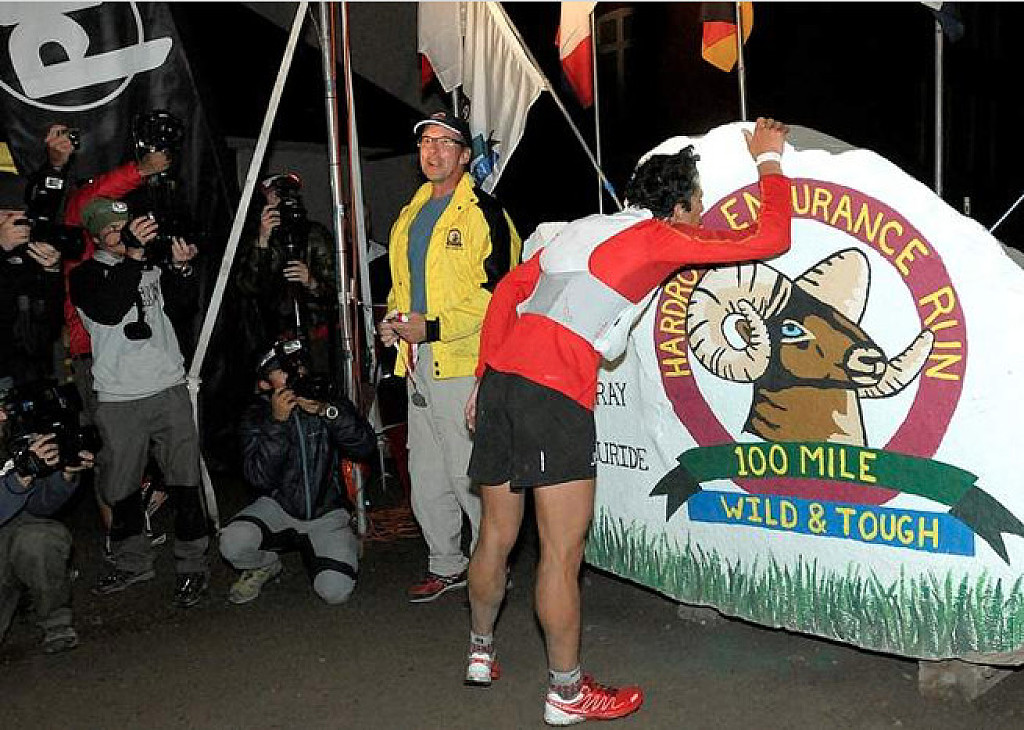
Hardrock 100 canceled for second time in as many years
Avalanche debris in 2019, COVID-19 in 2020 wipe out famed ultra-marathon
The Hardrock Hundred Endurance Run can’t catch a break.
After unveiling a loaded field of U.S. and international runners selected through the lottery in December 2018, the Hardrock 100 ultra-marathon that starts and finishes in Silverton was canceled in 2019 after a winter of heavy snow left avalanche debris and dangerous high water along its 100.5-mile loop through the heart of the southern San Juan Mountains.
A year later with the same field of registered runners as 2019 set to compete, the Hardrock 100 board of directors once again had to cancel one of the world’s most iconic mountain ultra-marathons. This time, it is because of the global COVID-19 pandemic with public health orders in place prohibiting large gatherings such as the Hardrock, which has a field of 145 runners. Though it is a small field of athletes, hundreds more are involved in the form of pacers, crew members, media and run volunteers.
The Hardrock 100 continued to delay its decision until Saturday while similar events in the U.S., such as the Western States Endurance Run in California, canceled much earlier. Western States 100 made its decision March 27.
“This is a tough decision,” said Hardrock 100 director and co-founder Dale Garland in a phone interview with The Durango Herald. “I hated making it. It is not one where just sat down one day and decided to pull the plug. We realize we have an impact on the sport and the economics of the area, and it’s something done with a lot of consideration. I’m really sad, and I have heartache about it.”
The latest Hardrock 100 cancellation is another blow to Silverton, which suffered economically from the affects of less tourism because of the 416 Fire near Durango in 2018. Already in 2020, Silverton has seen the Iron Horse Bicycle Classic, which brings more than 3,000 people to Silverton on Memorial Day weekend, canceled because of COVID-19. Many businesses in Silverton remain closed with only essential visitors allowed into the small mountain town of fewer than 700 residents. In 2019, DeAnna Gallegos, the director of the Silverton Area Chamber of Commerce, said the Hardrock 100 helped deliver $1 million to the local economy.
Past experience pays off
The cancellation is the fourth in Hardrock 100 history dating back to 1992. The previous cancellations were all because of natural causes. Along with the dense avalanche debris scattered across the course in 2019, the event was called off in 1995 because of too much snow and in 2002 because of extreme fire danger in the San Juan National Forest.
It was because of that first cancellation in 1995 that Hardrock is able to financially survive a cancellation, even with two in a row. After 1995, the board of directors established a reserve bank account to set aside funds in the case of another lost year.
“We just needed to make a decision by June 1, if we could,” Garland said. “Part of that is to honor people’s flight plans, vacation rentals and all those things. Also, we felt if we made a decision by June 1 we could still buy everything we needed. We hadn’t spent a whole lot of money with equipment, merchandise, awards or anything like that. So, we’re in pretty good shape and didn’t have to hit the reserve account very hard.”
A loaded field awaits fate
The run, which traverses across the rugged San Juan Mountains with 66,050 feet of elevation change at an average elevation of more than 11,000 feet, including the 14,048-foot summit of Handies Peak outside Lake City and seven mountain passes at higher than 13,000 feet, has become a legend among the world’s best ultra runners. Athletes must complete previous qualifying 100-mile races to even enter the lottery, which had a record 2,487 applicants for the 2019 race.
While U.S. stars such as Courtney Dauwalter, Dylan Bowman, Jeff Browning, Jason Schlarb, Sabrina Stanley, Darcy Piceu and Darla Askew were among those expected to run in 2019 and then in 2020, French stars Francois D’Haene and Xavier Thévenard were also highly-anticipated competitors who had gained a lottery spot.
It was expected to be the most talented field in the history of the event, and it has now been put on hold twice.
No announcement was immediately made regarding registration for the 2021 race and if it would once again carry over from the 2019 lottery or if there would be a new lottery.
“It’s up in the air,” Garland said. “That is a board decision, and it’s split. That’s why it hasn’t been decided yet. It’s been two years, so do we keep rolling people over or give 145 new people a shot at it? They’ve been waiting two years for a new lottery, as well. It’s a philosophical difference not resolved yet. We will keep people updated as soon as those decisions are made.”
Garland said making the event larger to accommodate the addition of new runners to the existing pool of 145 already selected would require discussions with the Bureau of Land Management and forest service, as that would exceed what the event’s permit is allowed. He did not indicate that there was a plan to try to increase the size of the event.
Alternative formats didn’t fit Hardrock’s image
Garland and the run committee considered alternative plans to the traditional Hardrock 100 this year. Some suggested it be conducted virtually. There was discussion of holding the event as usual but with staggered starts and without gatherings such as Camp Hardrock, the pre-race briefing and the awards banquet which would have brought all the runners together at the same time.
“I don’t think you can replicate the Hardrock experience virtually,” Garland said. “We entertained the idea, but no, we couldn’t do that. Then we looked to see if we could do it without all the experiences that make Hardrock what it is and build our community. At some point it was like, ‘What are we trying to create?’ Especially for a first time runner, we didn’t want that to be their experience.
“We also thought about doing a regional Hardrock and limiting it to the Four Corners states. But we couldn’t come to a philosophical agreement that we wanted to do something like that, either.”
While Garland said canceling the event stings, he is confident it can move forward and remain a special event. In a year in which the Ultra Trail du Mont Blanc in France and other U.S. events such as Western States and the Leadville 100 have been canceled, he believes the running community will understand.
“What does it say when we can’t do it two years in a row?” Garland said. “That’s why we wanted to wait and see as it got really close if things were going to change or not or if we could make it work. We kept trying to move forward, but we couldn’t do it.”
(05/24/2020) ⚡AMP

Hardrock 100
100-mile run with 33,050 feet of climb and 33,050 feet of descent for a total elevation change of 66,100 feet with an average elevation of 11,186 feet - low point 7,680 feet (Ouray) and high point 14,048 feet (Handies Peak). The run starts and ends in Silverton, Colorado and travels through the towns of Telluride, Ouray, and the ghost town...
more...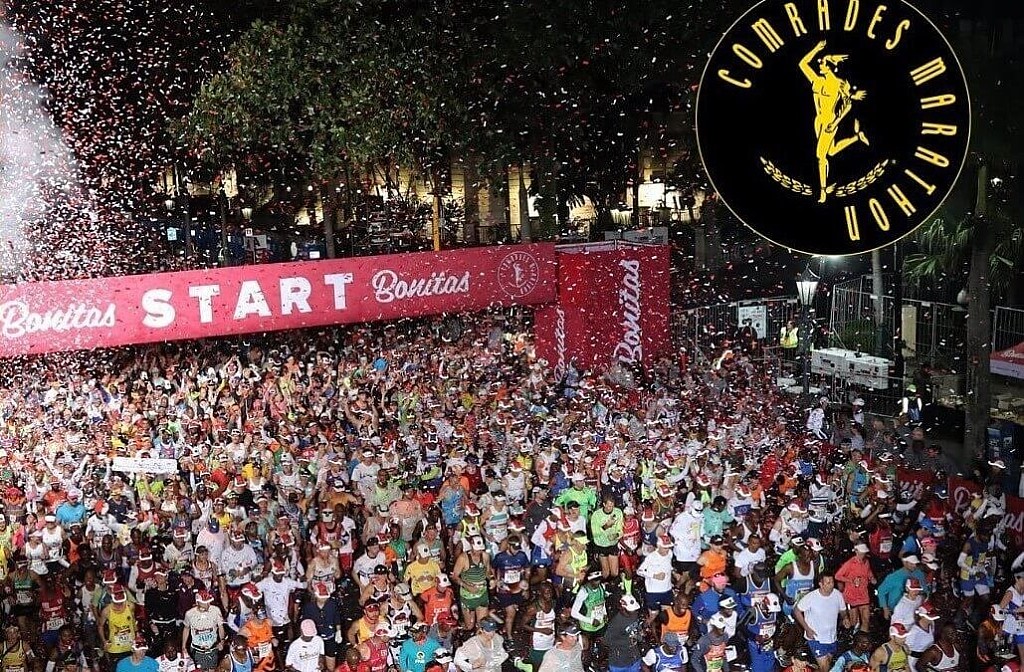
The Comrades Marathon will be offering a virtual alternative
All is not lost for disappointed long distance runners who qualified for the recent cancelled Comrades Marathon.
The Comrades Marathon Association has announced the launch of a virtual event, ‘Race the Comrades Legends’, which will see all finishers receiving a medal.
The world’s greatest ultra marathon will now also stage the world’s biggest virtual event, with athletes from around the globe invited to participate on Sunday, 14 June.
Entry will be free for South African runners who have already entered the 2020 Comrades.
The website will include an virtual online functionality through which runners can compete, ‘run with’ and compare outcomes against Comrades greats such as Bruce Fordyce, Frith van der Merwe, Samuel Tshabalala and many others.
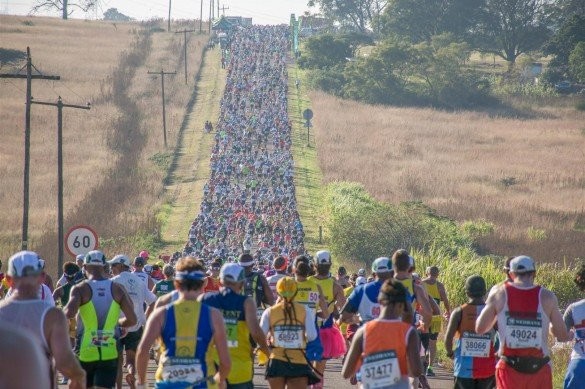
All that runners need to do is to visit the Comrades website, register for ‘Race The Comrades Legends’ and select their distance (5km, 10km, 21km, 45km or 90km).
The cost is R150 for South African runners and $25 for foreign athletes who have not already paid for and qualified for the 2020 Comrades.
Once registration is complete, runners will receive all the necessary race information and rules prior to the race date.
Athletes will then run their respective races, capture their times using a normal timing device and upload it. Their results will be calculated and updated automatically.
They will thereafter receive personalised race feedback by email.
The programme will include full integration of all popular fitness apps, including Strava and Endomondo for direct upload, as well as Garmin, Polar and Suunto.
Runners who do not have any of these devices or apps can upload a GPX, TCX or FIT file format from other devices and apps, or they can manually enter their time based on any watch.
Every entrant will receive a digital race number prior to the race, a virtual medal and certificate immediately after the race and personalised results comparisons.
All finishers will receive a real medal, which will be distributed as soon as possible, as opposed to the majority of virtual races which generally only award virtual medals.
It works pretty much the same way as any other type of running, the difference being that the runner can run at any location, especially in the comfort of your own home, on a treadmill, outside in the garden, or neighbourhood and all at one’s own pace.
(05/21/2020) ⚡AMPby Richard Springorum
Comrades Marathon
Arguably the greatest ultra marathon in the world where athletes come from all over the world to combine muscle and mental strength to conquer the approx 90kilometers between the cities of Pietermaritzburg and Durban, the event owes its beginnings to the vision of one man, World War I veteran Vic Clapham. A soldier, a dreamer, who had campaigned in East...
more...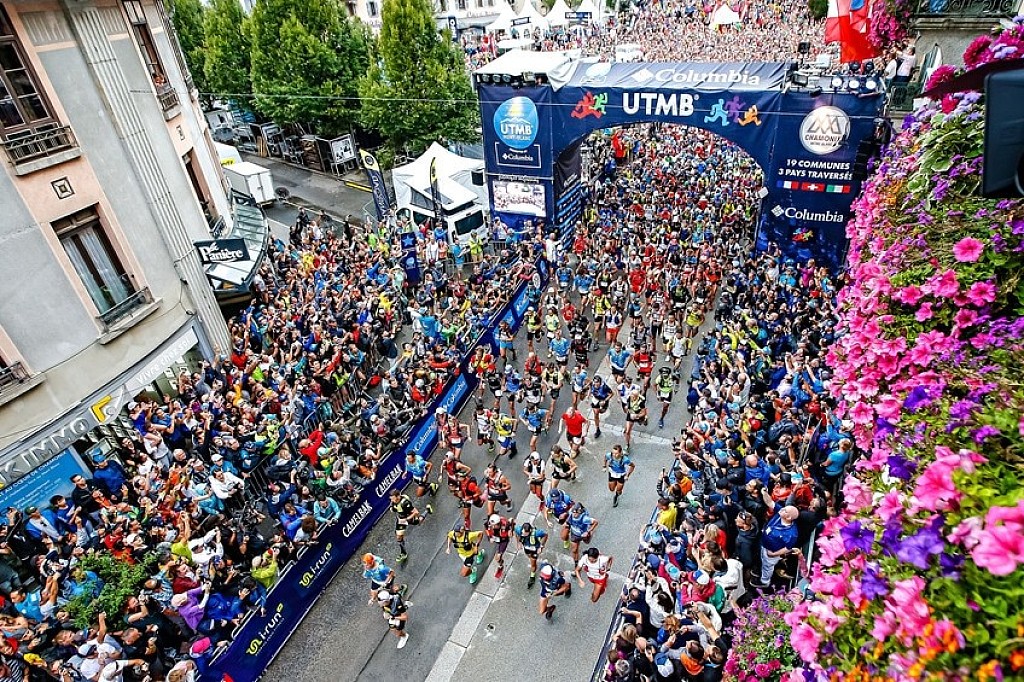
One of the world’s biggest ultramarathons UTMB officially cancelled after a month of uncertainty
For almost a month, a lot of uncertainty has surrounded the Ultra-Trail du Mont Blanc (UTMB). With the race scheduled for August 24 to 30 in Chamonix, the French government announced in late April that major sporting events were cancelled until at least September.
But UTMB organizers gave athletes and the running community hope, saying the race would likely still be run, just with a few alterations so it could fit the government’s guidelines. Satisfying these guidelines proved to be unsuccessful, and this morning, it was announced that the 2020 edition of UTMB has been officially cancelled.
The UTMB route—which is 171K long—starts and finishes in Chamonix, located in the French Alps, and takes runners through Italy and Switzerland before they return to France. The event has been run since 2003, and this year would have been its 18th edition. Although poor weather has forced organizers to shorten the event in years past (2010, 2012 and 2017), 2020 will be the first year they’ve been forced to cancel the race outright.

In the cancellation notice, event organizers listed their reasons for calling the event off, the biggest of which was the health and safety of participants. There were 10,000 runners registered for the 2020 event, and the UTMB site says these athletes came from more than 100 different countries.
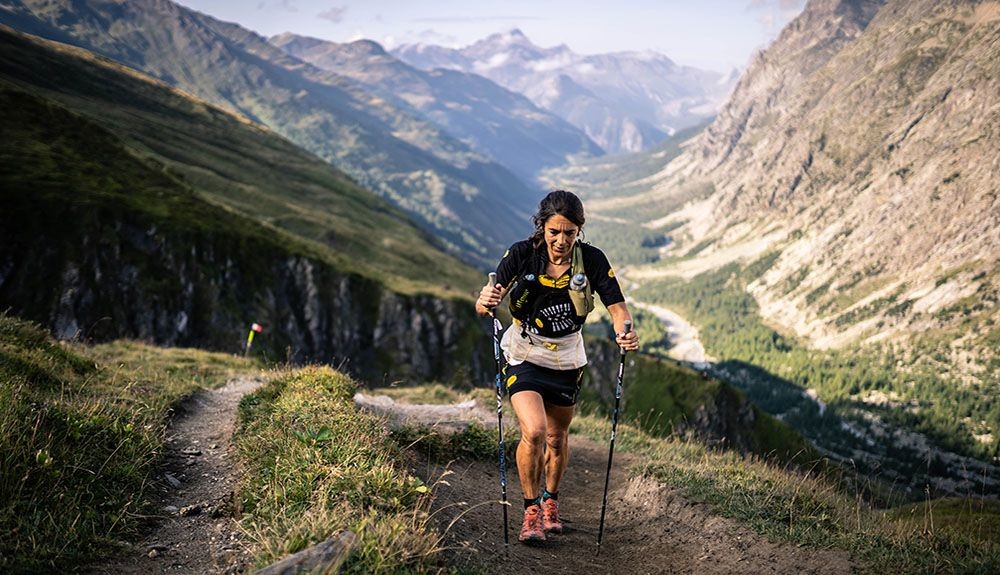
In April, UTMB co-founder Catherine Poletti proposed the possibility of cutting that number to 5,000 competitors, but that still couldn’t feasibly work with the French public health rules. Organizers ultimately decided that cancelling was “the most responsible decision to preserve the health and safety of all participants, which include runners, inhabitants of the Mont-Blanc region, visitors, suppliers, partners and volunteers.”
Runners registered for the 2020 event will receive a refund of 55 per cent of their original entry fee. UTMB officials have also given participants the option to turn down this refund and donate it to charity, which can be done through the event’s website.
UTMB is not a race you just sign up for—runners undergo a long qualifying process for this event. With this in mind, organizers will give 2020 runners the opportunity to reserve their spots in the 2021, 2022 or 2023 events.
(05/21/2020) ⚡AMPby Ben Snider-McGrath
North Face Ultra Trail du Tour du Mont-Blanc
Mountain race, with numerous passages in high altitude (>2500m), in difficult weather conditions (night, wind, cold, rain or snow), that needs a very good training, adapted equipment and a real capacity of personal autonomy. It is 6:00pm and we are more or less 2300 people sharing the same dream carefully prepared over many months. Despite the incredible difficulty, we feel...
more...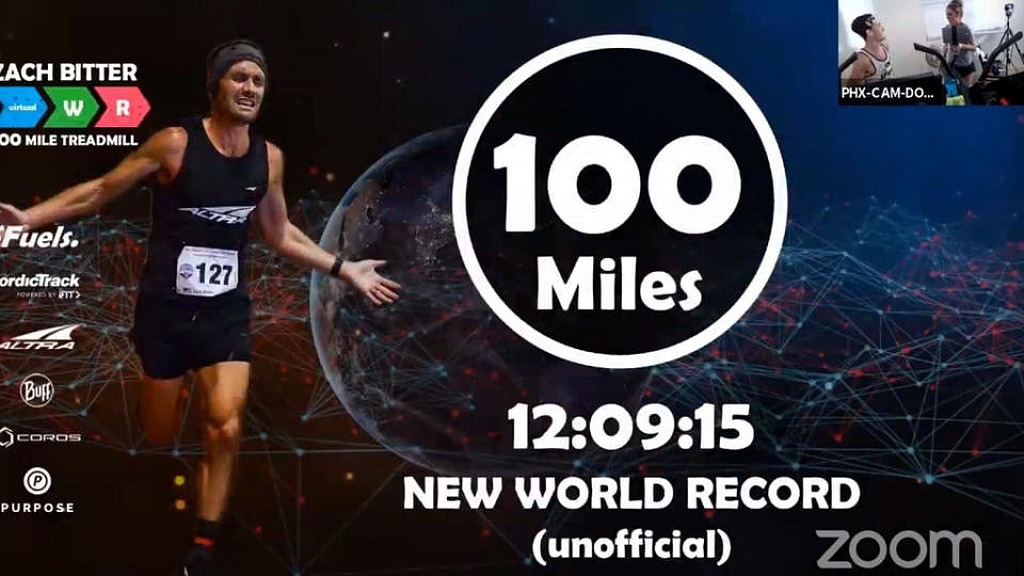
American ultra runner Zach Bitter breaks 100-mile treadmill world record clockin 12:09:15
American ultra runner Zach Bitter spent all day Saturday on the treadmill, starting at 6:30 a.m. PST and running until just after 6:30 p.m.
He ran for 100 miles (160.9K) and set the new treadmill world record for the distance with a time of 12:09:15. He bettered Canadian Dave Proctor‘s previous record (set at last year’s Calgary Marathon expo) of 12:32:26 by over 20 minutes. Bitter averaged an incredible 4:32 per kilometer over 12 hours and 100 miles of running.
Bitter’s average pace of 4:32 per kilometer would have given him a 3:11 marathon, which is a good time on its own, but he ran almost four marathons in a row on Saturday. The run was streamed live on YouTube, and different ultra runners and endurance athletes Zoomed in to chat as Bitter chipped away at his 100-mile trek.
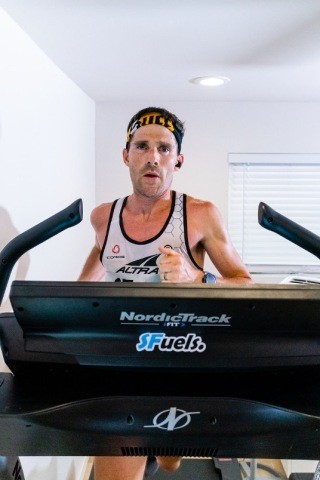
Some of those big names included 2019 Ultra-Trail du Mont-Blanc winner Courtney Dauwalter, Aravaipa Running’s Jamil Coury, Quarantine Backyard Ultra champion Mike Wardian and Proctor himself, who knows exactly what it takes to break the 100-mile treadmill record.
Bitter is already the world record-holder in the 100-mile run, which he set last August at an indoor track in Wisconsin in a time of 11:19:13. He is also the owner of the 100-mile trail record from the 2018 Tunnel Hill trail race in Illinois, where he ran 12:08:36.
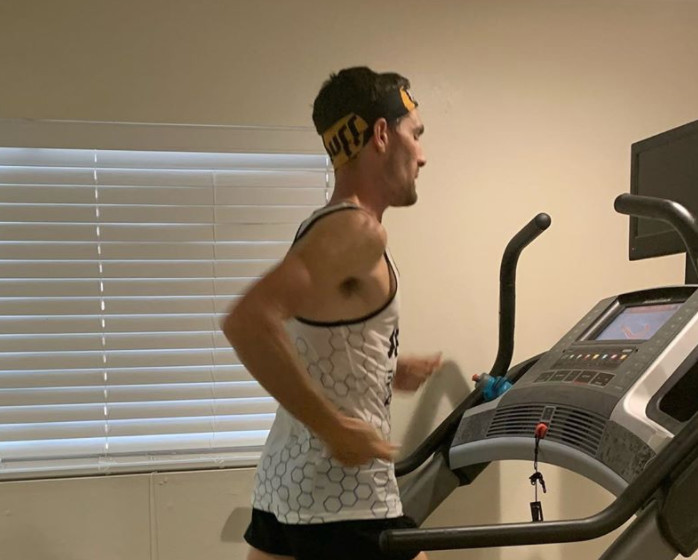
Now, he has officially added the treadmill record to his resume. With these three records to his name, it’s fair to say that Bitter is in the conversation for greatest 100-mile runner of all time, if not the outright winner of that title.
Bitter has been running ultra marathons for a decade now, and he’s got plenty of big race wins and results to his name.
He was 11th at the 2018 Western States 100, he took 32nd place at the 2016 Comrades Marathon and sixth at the International Association of Ultra runners 100K world championships in 2014. In 2019, he won three races, including the San Diego 100-miler in California.
(05/18/2020) ⚡AMPby Ben Snider-McGrath
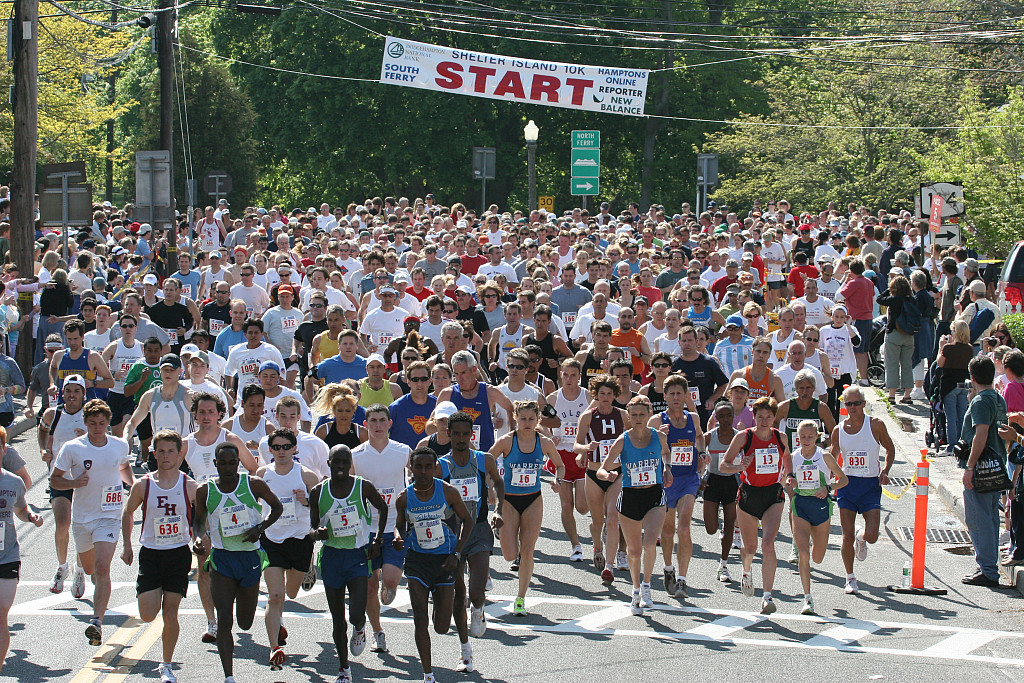
What is going to happen to road racing as we know it? Bob Anderson thoughts on the situation. Could it be the end of big races?
The COVID-19 virus is deadly. Already (as of May 17) at least 317,000 people worldwide have died from the virus. This number is still growing by thousands each day. By the end of this week most likely over 100,000 people in the US will have died from the Coronvirus (COVID-19).
Some people think this number has been inflated. Others think it is low. It is hard to really know the true facts. In any case thousands of people have died from this new virus. That's a fact.
Some still feel this virus is no worse than the common flu. Many of these ill informed people might be some of the ones who are continuing to spread the Cornavirus. Many of these people don't wear face masks while in public nor practice social distancing. These types of people could easily be those that end up infecting others. And kill racing too. More on this later.
Doctors are saying this virus is much more contagious than the common flu and the death rate particularly for people aged 60 plus is high. Much higher than the common flu.
This information is talked about daily in the news and there is no need to further exam that here. The focus here is road racing and what impact this crisis is going to have on the sport.
The My Best Runs (MBR) website only features and follow the best, most interesting and unique races in the world. The site is currently following 837 races from all over the world.
One thing the website does is list the leaderboard results from the races featured. The top four men and women and then age-group winners in ten year age-groups starting at age 40 are posted. Stats are complied and compared among the races. Nearly 90,000 unique people visited the site in February to look for races, follow races or read Running News Daily. The traffic had doubled in a year. That's over one million annually. The growth of the site illustrates how road racing around the world was growing.
Everything was set for a banner year. The Boston Marathon had lined up another amazing field for their annual races that has been held every year since 1896 on Patriots Day. The London marathon had confirmed that the world's top two marathoners would battle it out on the streets of London. Maybe the first sub two hour marathon in a real race was going to happen? However both races were postponed and they hope to have races this fall. Some feel that is not going to happen.
It was in early February when people began talking about the Cornavirus. A virus started in China. But mostly people did not seem overly concerned.
The month before (January 26) the Ujena Fit Club (UFC) Training Camp in Thika Kenya was opened. The camp was not totally finished but the core group of runners had been selected, a time trial was staged and a traditional goat feed blessed the opening. A couple hundred people showed up for the affair.
A third floor of the club would be added in the following months to house guests interested in training with elite Kenyan runners. The official grand opening was set for the end of May with a Double Road Race 15k race planned the same weekend. Sponsored were being lined up for a world record attempt.
The top runner in the club and part owner is Joel Maina Mwangi. For the last couple of years prior he would travel to Italy in the spring and bring back enough prize money to take care of him and his family for the rest of the year.
2020 was going to be his best year yet. Joel was in top form being trained at his UFC Training Camp by coach Dennis. His teammates pushed Joel in three-a-day workouts to higher limits.
Joel left for Italy in early February right after the UFC Training Camp US partners Bob and Catherine Anderson had left after attending the opening.
Joel's first race was in Verona, Italy Feb 16. He won that race and clocked 1:00:40 for the half marathon, a personal best. His plan was to race each weekend after that and then run the Rome Half Marathon set for March 8. This point to point course is fast. Galen Rupp had won there a couple of years back breaking an hour in the process. Joel's plan was to win, break an hour for the first time and bring home the big prize purse.
This didn't happen as Italy started closing down their country to battle COVID-19. It was going out of control. Joel luckily left Italy March 7th for his home in Thika, Kenya while he could still travel. But not with the over $20k(US) he was planning on bringing back home with him.
The world was shutting down. Whole countries were locking down. The last race featured by MBR to take place was the LA Marathon March 8 along with several others held that same weekend. There has not been a significant race held any place in the world since March 8. California ordered everyone to Shelter in Place starting March 17. Other states and countries followed.
Every race scheduled for April or May and featured on the MBR website were either canceled or postponed. Most races also in June and July have been canceled or postponed as well. The Tokyo Olympics were postponed for a year. The Berlin marathon in September was canceled (but they are trying to workout a new date), Western States 100, the Camrades Marathon, the Dipsea, and so many other well established races were cancelled.
Pippa Stevens a CNBC writer posted, "As running has grown in popularity, local clubs have popped up around the country, and there are now roughly 35,000 races each year in the U.S. alone, data from industry trade group Running USA shows.
"More than 44 million people in the U.S. identify as a runner, and 17.6 million people crossed the finish line in U.S. races in 2019.
"With all races cancelled for the time being, billions of dollars are at stake. The biggest marathons – from Boston to Chicago to London to Tokyo – inject hundreds of millions of dollars into local economies. The most recent analysis of the TCS New York City Marathon, for example, found that the race’s economic impact topped $400 million."
A lot is at stake. But race directors need to know that even if cities allow them to hold their races, not everyone will automatically be there on the starting line.
Dan Anderson wrote, "I am having a major motivational problem with my running! For the first time in my running career (almost 55 years) I have no races to train for. I really miss them. But I will not run in a race until a vaccine is available. Being 68 years old with several preexisting risk factors it is too dangerous! Hopefully within a year a vaccine will be available. Until then I will push myself to get out and run."
Racing is addictive and so many people around the world love it. Once things are figured out and it is safe again many will be there on the starting line.
Sam Tada who lives in Japan wrote, "Racing helped me so many times in my life and I miss it.
"Racing gives us opportunity of challenge, growth, and communication. It makes us happy and healthy mentally and physically. I love racing and miss it.
"We are facing difficult time right now but once this health concern is gone I think we will be able to enjoy racing more since we understand how racing is important for us.
"I am looking forward to racing again and I am trying to do my best effort to stop the spread of this virus."
There are a lot of things that will need to be addressed. Here are some ideas I have. Maybe at least for awhile or forever all runners will need to show up wearing a Face Mask.
Then they walk into a screening booth and have their temperature checked. If they pass, they walk into another booth were they are sprayed with a solution (totally safe) that would kill any viruses they may have on their clothing, shoes or body. At this point they are still wearing their face mask. And they continue to wear their face mask until about a quarter mile out or until there is spacing between them and others. Once they finish they put back on their Face Mask until they are back in their car.
Of course everyone would have to sign a Waiver saying that if they contract COVID-19 at the race and if they die later their family could not sue the race or city. No idea how porta potties, water stops or handing out medals at the end could work out other than eliminating them.
I see two problems with these ideas. Remember those people that are already not following the rules? Do you think they would show up at a race wearing a Face Mask? And we also know that signing a waiver does not restrict a family from sueing everyone if a member of their family dies from COVID-19 which they determined they got at a race. Even before this crisis a husband ran a half marathon in San Francisco and died at the finish line. He had signed a waiver but his wife sued everyone and won lots of money. The race Director got out of the business (sadly) yet he did nothing wrong from the inside information I know.
There is not a clear answer about the future of road racing. No matter how careful race directors, cities and charities (because they are big losers too) work together it would only take a few jerks to ruin it all.
So what race is going to be the first one back? Any day now the Old Dominion 100 Miler set for June 8th will be making a decision. They posted on their website, "The Old Dominion Run is still working all options in an attempt to have the run this year.
"We are working with numerous authorities in our area to assist in providing a good and safe race day experience for everyone involved. The governor of Virginia has gone to phase one in our area and our authorities are reviewing our plan vs the restrictions.
"Currently, part of our proposal has had to include a limit on our field to 50% for any hopes for us to proceed. We currently have 55 entrants and will not immediately be taking more from the wait list.
"Responses from the authorities will be a major part of our decision on 17 May. If the race proceeds, entries will not be more than 55. The waitlist will remain active," posted by Ray, Wynne and Race Management.
On June 20th the Shelter Island 10k (first photo) is scheduled to take place in Shelter Island New York. It is a big race and there are always fast winning times. We have contacted the race director and have not gotten a comment from them. There is no mention on their website about COVID-19. We are assuming they are trying to make it happen but what is their plan?
A couple of other races in late June are also trying to figure something out. Like the Halifax Marathon (second photo) has not torn in the towel just yet but are closely monitoring the situation as noted on their website.
Another one of the 837 races being followed by MBR wrote, "Our race was cancelled for this year, fingered crossed we will be back in 2021, april 17th.
"Our race of 2500 might look a bit different in 2021, 10 wave starts of 250 each? Each 10, 15 to 20 minutes apart? Lots of questions like what will aid stations look like and function? Maybe results may go to chip times, or no awards at all? Things will be different.
"The big question now is how we will all deal with the city, county and state mandates and permits. In the past, permits were a pretty easy process, no mass gatherings limitations.
"Locally I believe we will have some small events, mostly if not all on our trail system which limits events to 200 participants. A couple are still moving forward with fall dates, hopefully they will happen. Currently we have a limit for runs set by our city, set at 250 runners with wave starts, with really no other details. In the past road events have had much bigger fields. Going forward if the social distancing stays part of the rules it will be very hard to stage a very large running event.
"Events may look like some ultrarunning events, with very little or no finish line parties, just finish, quick drink and maybe food and head home.
"Runners and organizations will adapt to the rules and events will happen," wrote Brian at Race to Robie Creek.
Hopefully the game changer is going to be that a vaccine is created and COVID-19 is wiped off the face of the earth. Just as long as everyone gets vaccinated and don't continue to think that COVID-19 is no worse than the common flu. This could solve most everything as long as cities who issue permits think it is enough.
It sure would be nice to get back to things as they were. Or at least close to it. But many of us will continue to wash our hands more often, wear a face masks at times and not go out if they are not feeling well. Road racing is just too important to so many people.
(05/17/2020) ⚡AMPby Bob Anderson

Old Dominion 100 Mile
The Old Dominion 100 Mile Endurance Run is more than just a race. It is more than just four marathons run back to back. It is more than an event in the yearly schedule. It is the Old Dominion. What does that mean? The Old Dominion stands for tradition - the tradition of each individual against a difficult course, hot...
more...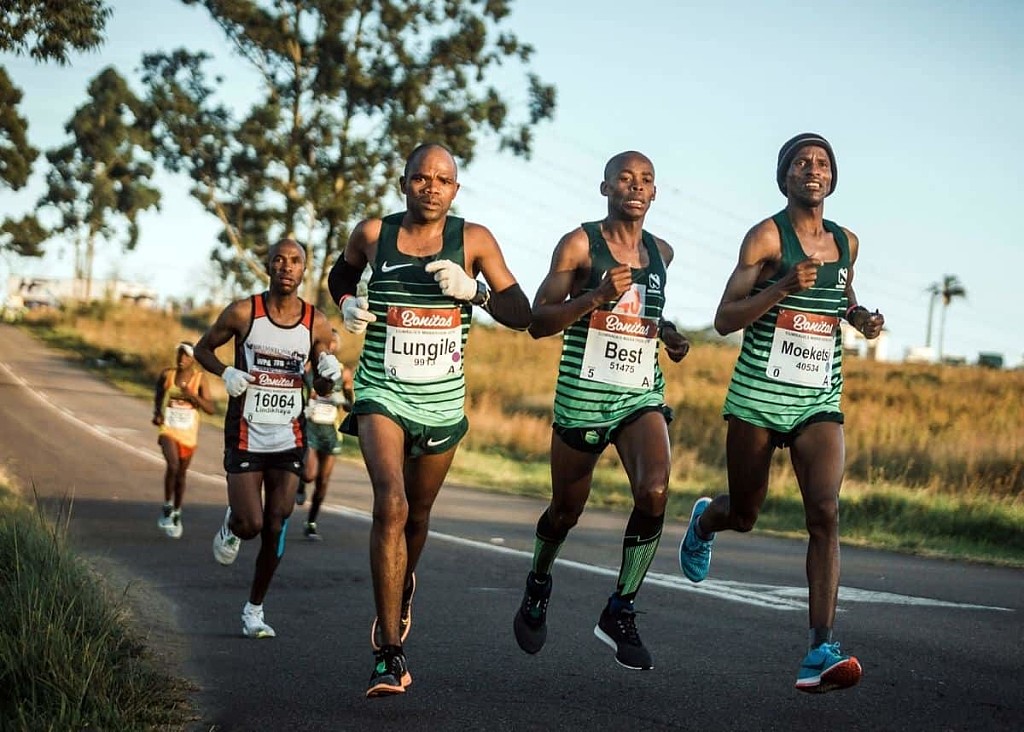
After announcing the event would be postponed last month, organizers have now cancelled the Comrades Marathon altogether
Last month, Comrades Marathon race organizers announced that the event would be postponed, although no new dates were ever set. This morning, the Comrades Marathon Association and Athletics South Africa officially cancelled the event, once again extending the list of COVID-19 race casualties.
The 2020 event would have been the 95th running of the ultramarathon, but that milestone will have to wait until at least 2021.
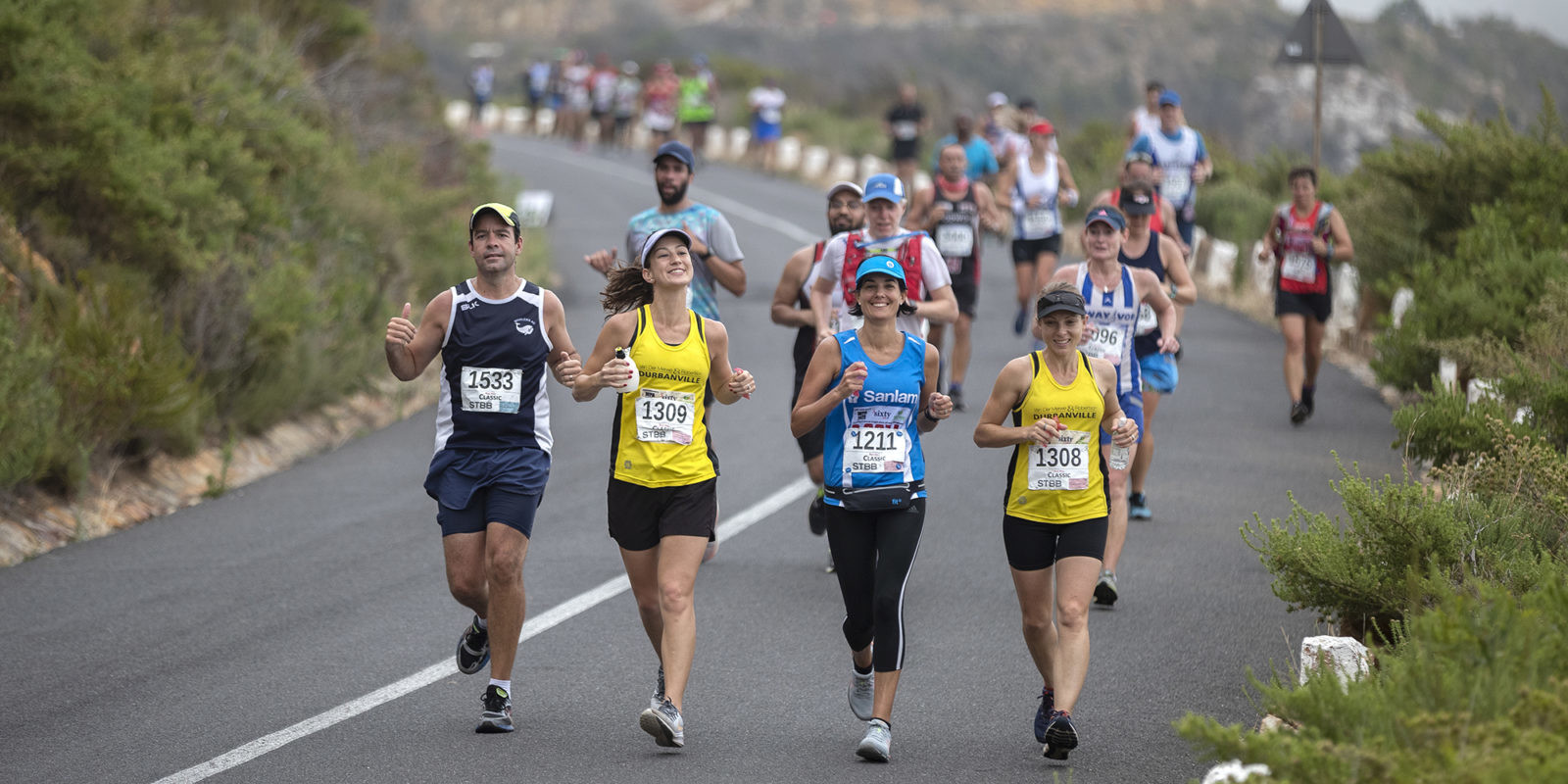
The Comrades Marathon route switches direction every year, but it’s always run between the two same cities of Pietermaritzburg and Durban. There are “up” years (Durban to Pietermaritzburg), which are 87K with about 2,000 metres of elevation gain, and “down” years (Pietermaritzburg to Durban), which are 90K. This year would have been a down year, but runners will have to wait to make the trek until next June.
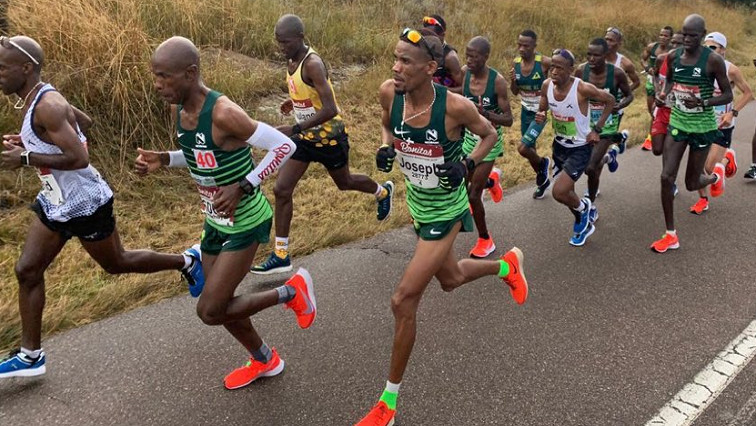
Comrades is the biggest race in South Africa, and in 2020 they had a cap of 27,500 racers. The race is a big source of pride for South Africans, and it’s been won by South African runners on many occasions, including the last eight-straight years.
This year’s race would have been the 95th running of the Comrades Marathon, but 2021 will actually be the 100th anniversary of the event (it wasn’t run for five years during World War II). It’s a shame that the event had to be cancelled this year, but it will make next year’s run more meaningful with the race celebrating 100 years of existence and its 95th running.
The race was first run in 1921 by Vic Clapham, who fought in World War I. Upon returning home to South Africa, he ran between Pietermaritzburg and Durban as a tribute for his fellow soldiers (or comrades) who didn’t make it home, officially starting the Comrades Marathon.
(05/15/2020) ⚡AMPby Ben Snider-McGrath
Comrades Marathon
Arguably the greatest ultra marathon in the world where athletes come from all over the world to combine muscle and mental strength to conquer the approx 90kilometers between the cities of Pietermaritzburg and Durban, the event owes its beginnings to the vision of one man, World War I veteran Vic Clapham. A soldier, a dreamer, who had campaigned in East...
more...
Quarantine Backyard virtual ultramarathon that captured the attention of runners around the world is coming back in July for Round Two
The Quarantine Backyard Ultra was quite possibly the biggest race of 2020 so far, not only garnering attention from runners, but breaking into mainstream media coverage with stories in the New York Times, Washington Post and Sports Illustrated, among many other publications.
The race directing team, Gather Virtual, has announced that the race is making a return on July 11, and they hope to make it even better than before. Just like the first time around, the race is free to enter, and it will follow the same last-runner-standing format, which inspired the event’s new tagline: “All will DNF but one.”
The format for the Quarantine Backyard Ultra is simple. The first bell will ring at 7 a.m. MDT on July 11, starting the first lap of many. Runners have an hour to complete each lap, which will be 6.706K.
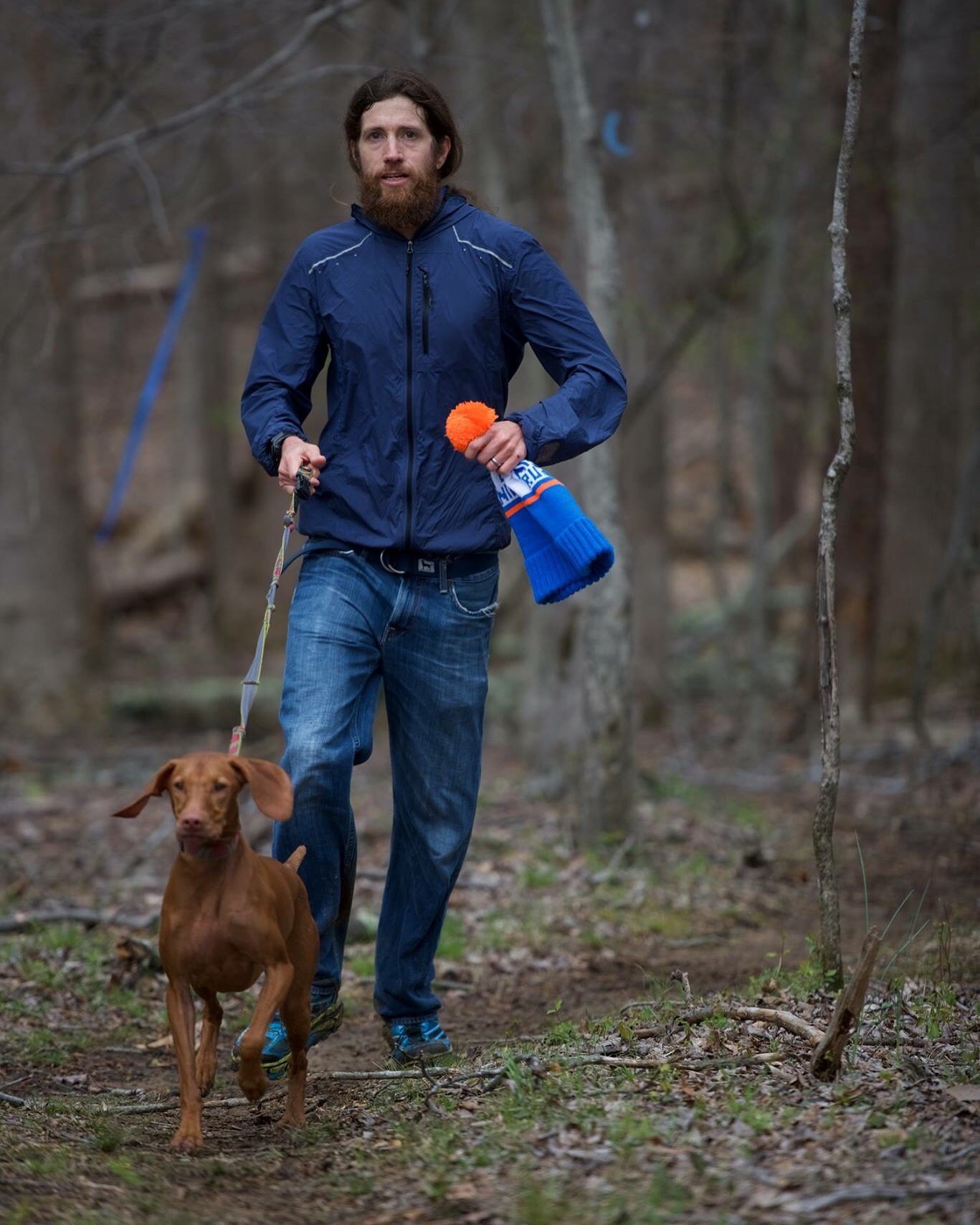
As was the case in the first event, which was held in April, runners will have the choice to run either inside on their treadmill or outside near their homes. Some runners competing in the April race couldn’t run outside due to coronavirus restrictions in their countries but also didn’t have treadmills, so they ran around inside their homes to complete each lap. It doesn’t matter where athletes run, as long as they cover 6.706K before each hour is up.
All competitors have to video in on Zoom, and this way, once they finish each lap, they can prove they ran the right distance by showing their treadmill or GPS data to the camera. Once an athlete finishes a lap, he or she can rest, eat, or do whatever they like for the remainder of the hour. They just have to make sure to be ready to run when the bell goes at the top of the next hour. The last runner standing is the winner.
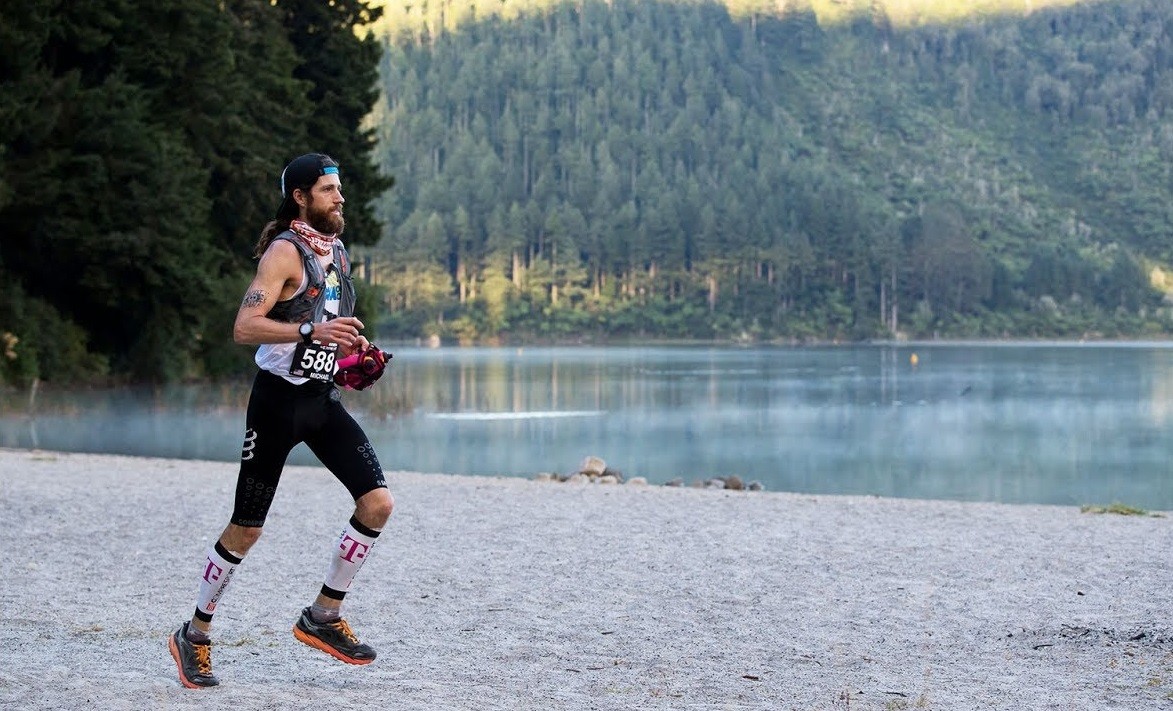
Mike Wardian of the U.S. won the first Quarantine Backyard Ultra in a 63-hour-long battle with Czech runner Radek Brunner. Wardian ran 422K to take the win over Brunner, who missed the start of the 63rd lap and was therefore disqualified.
Round two “A second race wasn’t initially in the cards,” says Stephanie Gillis-Paulgaard, one of the members of the Gather Virtual team who helped create and run the Quarantine Backyard Ultra. “Then people started reaching out and lots of people were asking if we’d do it again. They were even asking during the race.”
When they saw that more and more summer races were getting cancelled due to COVID-19, Gillis-Paulgaard says they decided to have another run at the Quarantine Backyard Ultra.
“In a very short time-frame of two weeks, we threw that first race together and kind of crossed our fingers and hoped for the best,” Gillis-Paulgaard says. “We just thought it would be fun and unique.”
Despite the limited time to plan for the first race, they still managed to attract over 2,400 participants from more than 50 countries. Now, they have two months to promote and prepare for the event, and after all the good press the first race received, the Quarantine Backyard Ultra is a name that many people across the world know.
Registration for Part Two of the biggest running sensation of 2020 opens today, and runners can sign up for free here until July 10, 24 hours before the first bell.
(05/14/2020) ⚡AMPby Ben Snider-McGrath
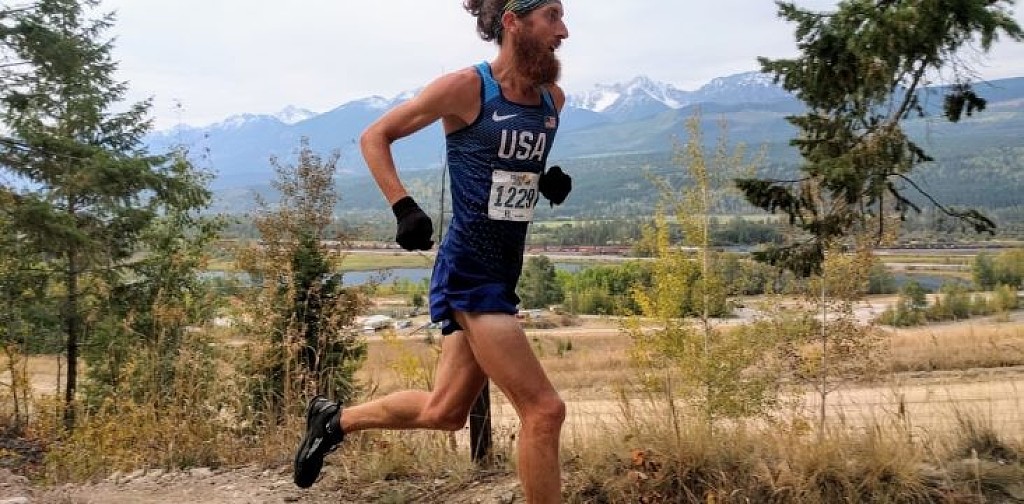
2020 Mountain Running Championship in Golden BC Canada have been canceled
The 2020 NACAC Mountain Running Championship in Golden, BC, Canada has been cancelled due to the coronavirus pandemic. Limits on the number of participants in events to no more than 50 imposed by the British Columbia government means the host Golden Ultra will have to be cancelled.
The 17th annual North American, Central American & Caribbean (NACAC) Mountain Running Championships was to be held in conjunction with the Golden Ultra in Kicking Horse Resort in Golden, British Columbia, Canada on Friday, September 18, 2020. The uphill course was 10.3 kilometers with a total of 1205 meters of ascent and 135 meters of descent.
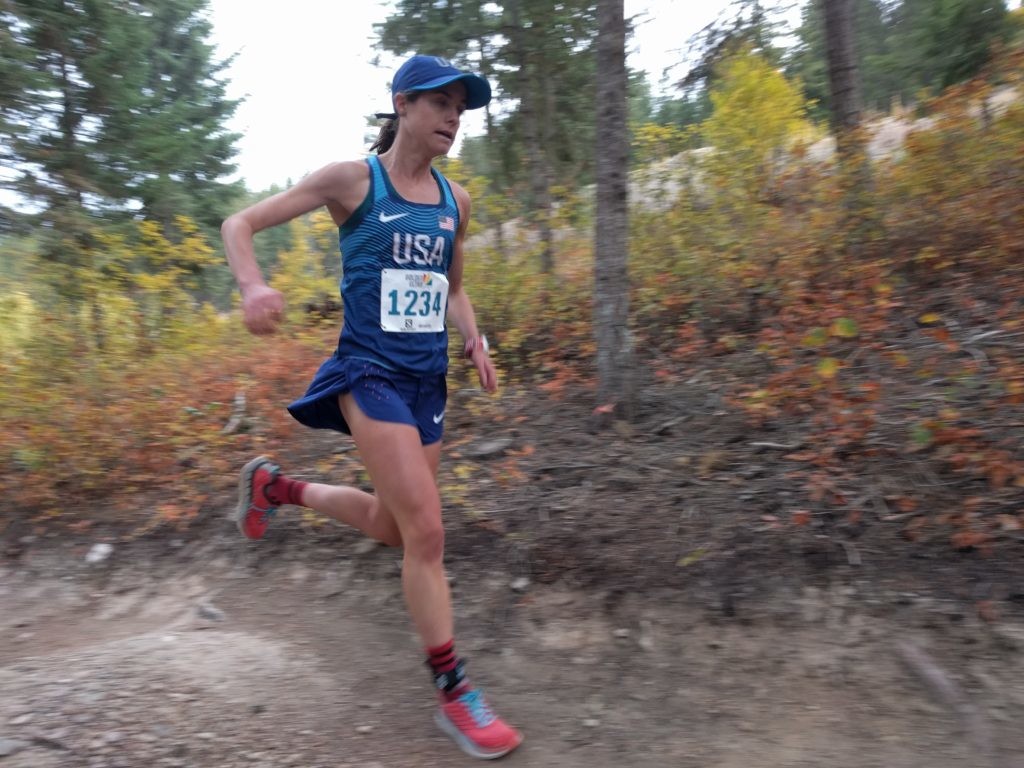
Meghan Roche (second photo) at the 2017 NACAC Mountain Running Championships in Golden, Canada.
This race would also have served as the 2020 Canadian Mountain Running Championships and their selection race for the 2020 World Mountain Running Championships.
Team leaders from the participating NACAC countries (U.S., Canada, Mexico and El Salvador) deemed it impractical to find a new host race and date by which a safe championship could be held in 2020.
The participating countries are planning to organize a 2021 NACAC Mountain Running Championship to be held in Canada with the host event and date TBD. Selection criteria for the 2021 U.S. team will be announced later in 2020.
(05/13/2020) ⚡AMP
Laz Lake’s virtual ultra has higher participation than UTMB
Laz Lake’s The Great Virtual Road Race Across Tennessee, which began May 1st and runs through August 31, has amassed an astonishing 10,000+ participants. The event, which will see runners travel virtually on foot across the state of Tennessee (roughly 1,000K), has 10,174 registered runners and is still open for entry.
Runners have four months to tackle this behemoth of a race, and if they finish with enough time to spare, they can go for the out-and-back route and complete an additional 1,000K (this would require averaging 16K a day for four months)
(05/03/2020) ⚡AMP

With his race event cancelled, 72-year-old Eric Spector inspires other seniors to remain active
The key is to commit to staying fit, whether during a pandemic or not, says Eric Spector.
If these were normal times, Eric Spector would be in the final phase of training for the race of his dreams — the annual Western States Endurance Run, a 100-mile trail run from Squaw Valley to Auburn. It's an event he calls the Superbowl of ultramarathons.
But with the June event canceled, along with most other activities, due to the coronavirus crisis, the 72-year-old fitness enthusiast has been forced to adapt his fitness routine.
Rather than rigorously training in the hills above Palo Alto, Spector has turned to power walking. And rather than swimming and exercising at the Oshman Family Jewish Community Center, he has set up a gym in his garage where he can lift weights, ride a stationary bicycle and generally keep moving.
"The key is working up a sweat and getting the benefit of a cardiovascular workout," said the Palo Alto resident, who has participated in more than 20 marathons in the United States and abroad and was the oldest person to complete the 2018 Rio del Lago 100-Mile Endurance Run in the Sierra Nevada foothills.
Though a committed runner, Spector, who turns 73 on May 5, is no exercise snob. In fact, he's a promoter of exercise for anybody and everybody through his Twitter page, [ @fitatallages.
"It doesn't really matter what activity somebody chooses — the benefits of being fit are extraordinarily clear," he said."It prevents so many diseases and, if you get sick, your recovery time is usually much shorter because of your fitness.
"Whether you speed walk, bicycle, play racquetball, hike — the most important thing is that you do it regularly and that you sweat. With those two ingredients, it provides a longer, healthier, more vigorous life."
On his Twitter feed, Spector often shares links to inspirational stories of older athletes as well as small exercise tips like:"Well, you don't want to run? Then dance."
During the stay-at-home order, he has been sharing the many ways athletes, from Olympians to coaches, have adapted their fitness routines. One marathoner who qualified for this year's Olympics in Tokyo, shared this philosophy with the New York Times: The only thing athletes can control at this point, since competitions and events are canceled, is their training routines. Another story that Spector shared from Sports Illustrated features a running coach who provided some creative inspiration to those looking to compete or exercise: He organized a virtual ultramarathon where participants mapped out their own running loop in their backyards, neighborhoods or treadmills and livestreamed their runs on Zoom.
Spector said the key is to commit to staying fit, whether during a pandemic or not. He recommends picking an exercise and following through with a routine. This can be anything from walking around the block once a week to walking around the backyard everyday. Tracking when, where and for how long you do a particular activity will help you maintain a routine and stay motivated.
Exercise wasn't always a priority for Spector.
As a young man he was overweight and working long hours at a New York City startup.
"I wasn't at all plugged in to athletics of any kind — I'd really done nothing more than work and eat and put on some weight," he said.
But he became intrigued when some of his business school classmates flew in from California to run the 1978 New York City Marathon.
"I thought, 'If these guys can do it, I should be able to do it,' so I bought some sneakers, went out for a run to the west side of the Hudson River and barely made it," he said.
Spector kept at it, and a little more than a year later, he entered the 1979 New York City Marathon.
"It was my first running event ever but I did quite well and loved it," he said."I really loved the fitness, the clarity of mind, the stream of consciousness as you're running."
He grew to love the "runner's high," which he describes as"a kind of a euphoria, where you're not even conscious of the effort. It's just the rhythm and the joy of physical activity.
"For me, that kind of activity has been a mainstay of mental health and sanity, with the benefit of staying fit," he said.
(05/01/2020) ⚡AMPby Chris Kenrick

Western States 100
The Western States ® 100-Mile Endurance Run is the world’s oldest and most prestigious 100-mile trail race. Starting in Squaw Valley, California near the site of the 1960 Winter Olympics and ending 100.2 miles later in Auburn, California, Western States, in the decades since its inception in 1974, has come to represent one of the ultimate endurance tests in the...
more...
Ultrarunner Gary Robbins ran 100 miles on treadmill in virtual race to raise money for the B.C. Search and Rescue Association
This past weekend, Gary Robbins went for a run on his treadmill, and he didn’t stop for almost 26 hours. He ran in the Aravaipa Strong virtual race, competing in the 100-mile event, and his run doubled as a fundraiser for the B.C. Search and Rescue Association. Running for 26 hours is hard enough, but Robbins made it even tougher on himself and climbed around 17,500 feet in addition to running 100 miles.
His challenge has raised over $15,000 for the B.C. Search and Rescue Association, and donations can still be made to support the cause.
The British Columbia Search and Rescue Association is a non-profit society that represents 79 search and rescue groups across B.C. Across the province, 2,500 volunteers are available in over 80 communities 24/7, collectively putting in 100,000 hours of work each year.
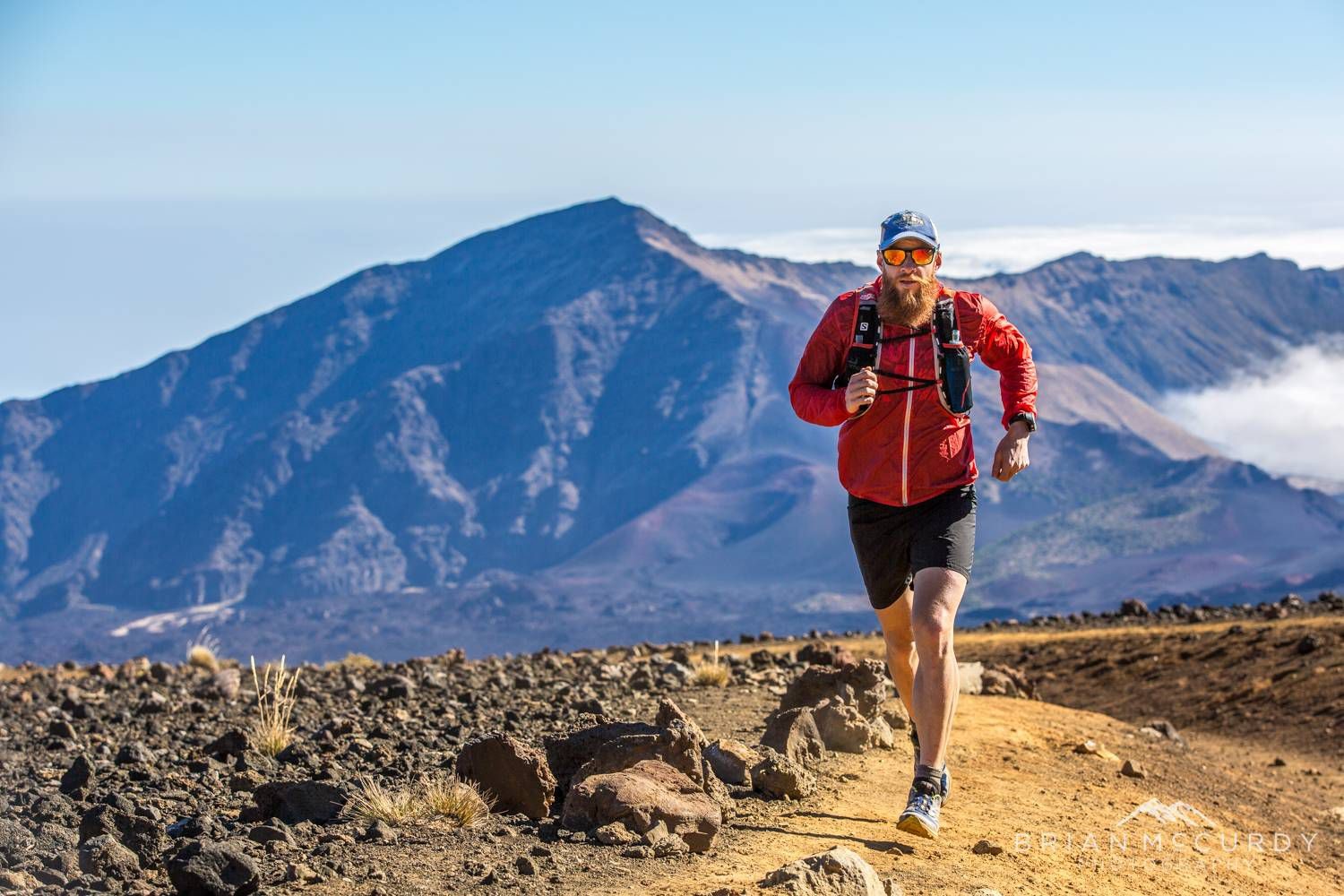
These groups have an incredible rate of success, with 95 per cent of subjects found or rescued within the first 24 hours of a call. The Search and Rescue Association gets some support from the provincial government, but it relies on donations to stay active.
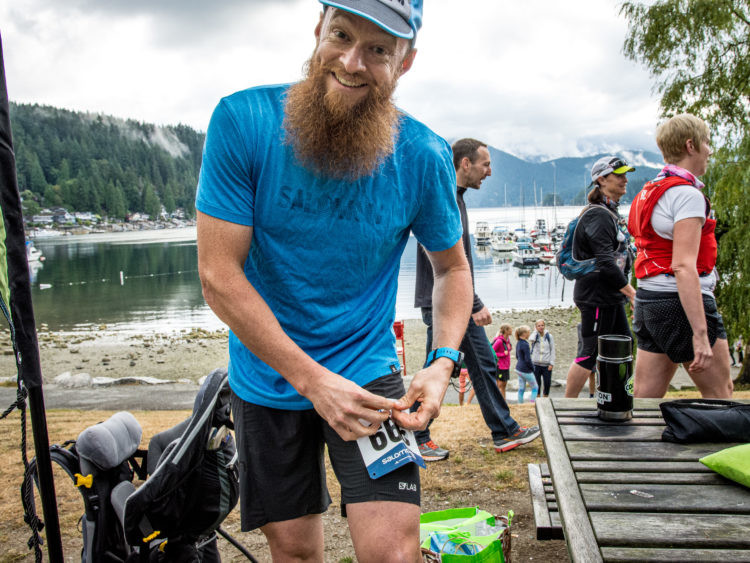
Robbins hoped to raise $5,000 for the non-profit, but he has tripled that goal and the total now sits above $15,000.
Robbins’ official time for the 100-mile run was 25:53:42. Although this is almost 10 hours slower than the winner of the 100-mile Aravaipa Strong event (American Sarah Emoto won the virtual race in 16:15:46), Robbins likely had a much harder run than any of the other competitors as it included 17,500 feet of elevation.
Robbins is no stranger to ultramarathons, and before the coronavirus outbreak he was gearing up for another shot at the Barkley Marathons this year. Even with a history of ultrarunning, Robbins struggled with the treadmill run.
“Happy to have gotten through this so that I never have to think about anything like this again,” he tweeted. “It was challenging in all the ways I thought it’d be and lots more ways I hadn’t envisioned. My body is completely wrecked.” His wife, Linda Barton-Robbins, also tweeted post-race, saying that her husband couldn’t even make it up their stairs at home.
The Aravaipa Strong virtual race took place from April 17 to 26, and runners could choose from seven distances, starting with 5K up to 100 miles. The races featured over 2,000 runners worldwide from 29 different countries. Ten per cent of the proceeds from the race were donated to the COVID-19 Solidarity Response Fund.
(04/28/2020) ⚡AMPby Ben Snider-McGrath

Mike Raffan completes home ultra-marathon in his garden just seven weeks after heart surgery
A north-east man completed a 106-mile ultra-marathon in his garden- just seven weeks after undergoing major heart surgery.
Mike Raffan ran the extraordinary distance in just 27 and a half hours.
He lives near Collieston and started the effort at 6 am last Friday before finishing just after 9am on Saturday with short 10-minute breaks every so often.
To succeed with this, he mapped out a 100m route (16 laps per mile) in his garden.
He had only recently recovered from a serious heart operation.
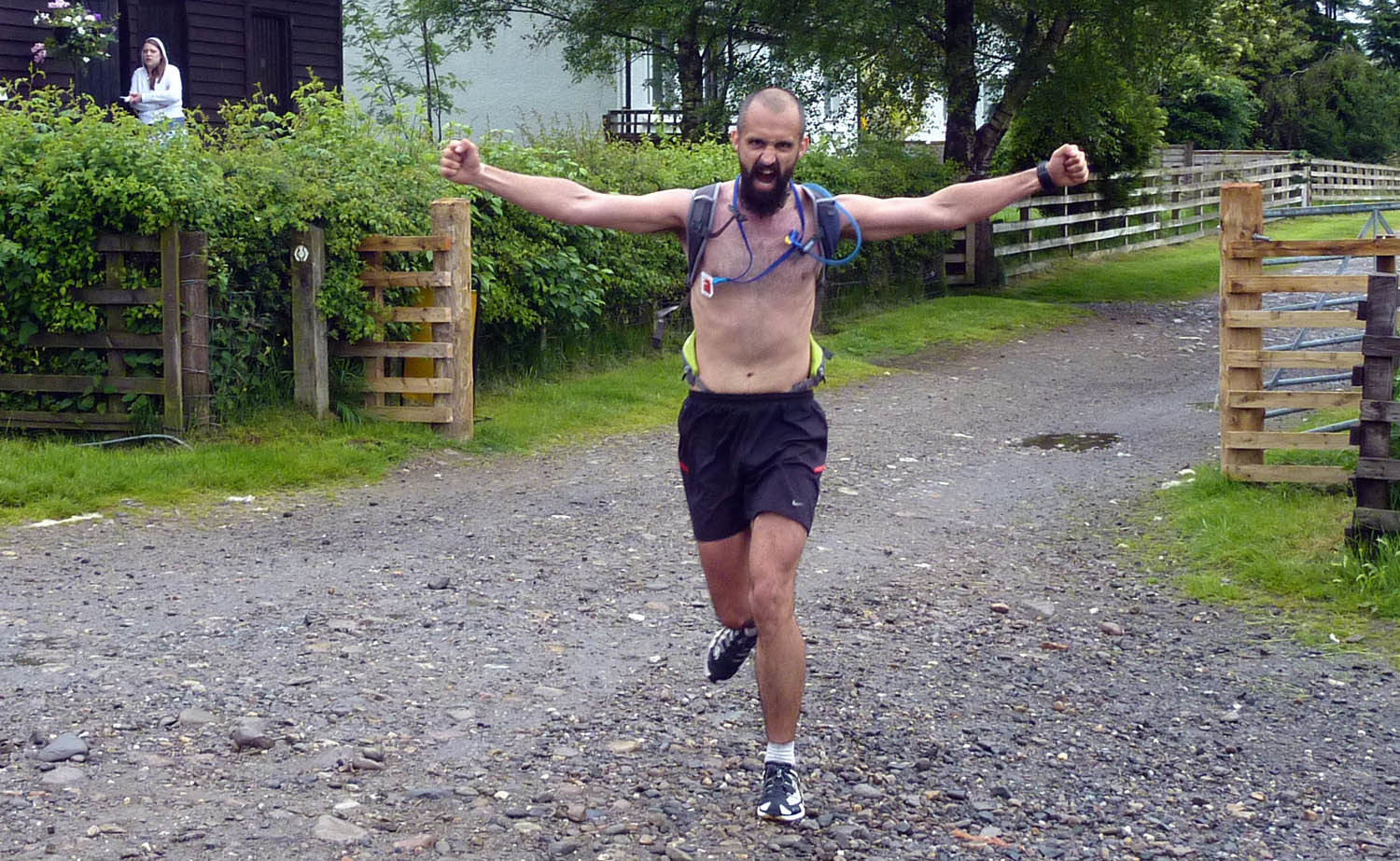
Last year Mike noticed that he was finding it hard to breathe while running uphill, as though there was a weight on his chest. Over time, it got harder and harder and he sought medical advice.
He said: “Tests revealed that I have an anomalous right coronary artery from the opposite sinus with an intermural circuit, which basically means I was born with my right artery growing out of the wrong place.
“The surgery I needed was too specialist to be done in Aberdeen, so I had to go to Glasgow Golden Jubilee Hospital. I had the operation on February 25 and was out of hospital after just three days.
“The nurses on the ward were not sure about discharging me so early as they had never let anyone out in less than four days – the preference is seven. However, I passed all their fitness tests and the surgeon said it was OK for me to go.”
Mike has so far raised more than £1,300 for the Glasgow Golden Jubilee Hospital, as a thank you to the medical team who looked after him during his surgery.
After just 10 days of being home, Mike went for a slow two-mile run with his wife Annette keeping an eye on him.
“Every time I went out, I felt I had to hold my chest. The rehab physiotherapist told me this was due to the impact and that my chest bones had not fused together properly, so I started doing a lot of cycling instead to get to get my fitness back.
“It’s only been in the last two weeks I have started running properly again. I relied on muscle memory and stubbornness to get me through the challenge. The run was slow. Stopping every 50m to turn around was like doing a bleep test for 27 hours.”
(04/24/2020) ⚡AMPby David Walker

Mike Reid, will be running in his back garden a 100km ultra marathon
A man is running a 100km "ultra marathon" in his back garden to raise money for a baby hospice.
Mike Reid, from Hinckley in Leicestershire, has calculated he will need to complete about 4,000 laps to cover the distance.
The run is due to start on Saturday night and finish on Sunday afternoon.
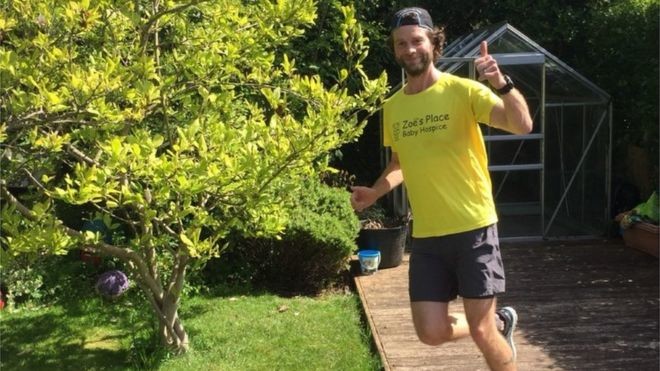
The 37-year-old, who is raising money for Zoe's Place Baby Hospice in Coventry, said the ultra marathon "could prove quite challenging".
Mr Reid has completed a handful of ultra marathons in the past - including two for the same charity.
He said: "I have run long distances before and for long periods of time but never in such a confined space, so I think the limited area and frequent changes in direction could prove quite challenging.
"I also strained my calf on a run at the start of this week so I might have to potentially back off the pace a little."
He is running the "ultra marathon" in his garden due the restrictions in place to stop the spread of coronavirus.
He will be cheered on by his wife and two sons as he navigates his way around swings, toys, sheds and greenhouse in his 20m by 9m garden.
More than £500 has already been pledged by supporters for the hospice which is currently closed due to Covid-19.
He said: "I'm blown away by the generosity of people in such a small amount of time.
"This money is going to directly change the lives of children and families when they need it most."
(04/22/2020) ⚡AMP

Two Oceans pain for champ Mthembu
Two Oceans Marathon defending down-run champion, Bongmusa Mthembu, was keen to entrench his dominance in this year’s edition of the competition but the coronavirus stifled his advancement.
The Bulwer-born athlete was left dejected by the cancellation of the Two Oceans Marathon.
The marathon was set to take place last week where scores of local and international runners from were to come together with their sights set on supremacy in the Cape Town annual road running extravaganza but it wasn’t to be. Mthembu reigned supreme last year and was looking forward to dazzling once again.
“I was looking forward to the Two Oceans Marathon. I was disappointed when I heard that it had been cancelled. I worked very hard for that competition,” said the elite member of the Arthur Ford Running Club.
“I knew that many athletes were coming for me and I needed to do something special to step up. I even took a break from social media to focus on preparations for defending my crown. If I had my way, the race would have been postponed instead of cancelled. I know I speak for many runners who felt that the race should have been scheduled for another time this year.”
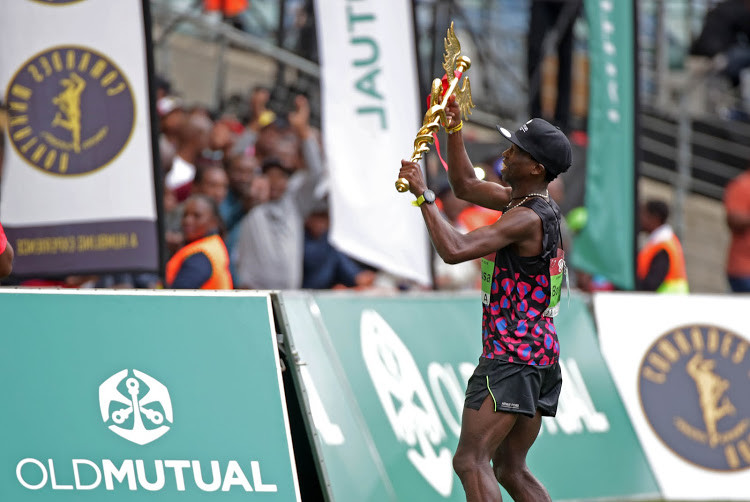
Mthembu is also the current holder of the Comrades Marathon down-run title after winning the ultra-marathon between Pietermaritzburg and Durban in 2018. He came close to winning the Comrades up-run last year but was pipped by Edward Mothibi. The Covid-19 outbreak has forced the organizers of this year’s Comrades to postpone the race.
“We respect the decision taken by South African government (placing the country on lockdown and suspending community gatherings). This is a natural disaster. The rest of the world is suffering from the same virus. Our preparations (for Comrades Marathon) have been distracted, we can’t hide that but we need to accept it. If we have to start afresh, let it be. The lives of South Africans are more important than the sport. This will pass and we will come back and compete again,” he added.
The decision about this year’s Comrades Marathon is yet to be taken. The SA biggest marathon was scheduled to take place on June 14. Mthembu will be eyeing his fourth title this year if the 2020 race happens. He has made the down-run his own but feels strongly that a race like the Two Oceans is a great precursor to the dash between Pietermaritzburg and Durban.
“The focus was purely on the Two Oceans and then thereafter I was going switch my mind towards the Comrades Marathon. I’m also a defending champion for the down-run. We will wait and see what the future holds. But as I said, the most important for now is to comply with the rules and regulations of the country. We can’t be worried about Comrades while the rest of the world is trying to fight this virus. Let us fight the virus first and then we can focus on running races,” Mthembu explained.
The 36-year-old distance specialist was the winner of the world famous race in 2014, 2017 and 2018. He made his Comrades debut back in 2006.
“I always want to be consistent, my brother. That’s what always pushes me to do well.
(04/22/2020) ⚡AMP
Two Oceans Marathon
Cape Town’s most prestigious race, the 56km Old Mutual Two Oceans Ultra Marathon, takes athletes on a spectacular course around the Cape Peninsula. It is often voted the most breathtaking course in the world. The event is run under the auspices of the IAAF, Athletics South Africa (ASA) and Western Province Athletics (WPA). ...
more...
Kevin Webber runs his version of Marathon des Sables at home
AFC Wimbledon fan Kevin Webber was diagnosed with terminal prostate cancer five years ago and given only two years to live, he tells Sky Sports News reporter Jeremy Langdon.
That diagnosis changed Kevin's perspective on life and, when it came to making up a bucket list, the Marathon des Sables (MdS) was top.
The brutal Saharan ultra-marathon is notorious. Normally around 250 kilometers long, it means six days of suffering in desert heat with a pack on your back.
Kevin warmed up with two conventional marathons - against medical advice - while undergoing chemotherapy before running the MdS in 2016, 2017, 2018 and 2019.
This year would have been the fifth - and also would have made him the only person to run the event that many times with stage 4 cancer - but coronavirus forced the race in Morocco to be postponed early this month.
So Kevin decided to run it instead in his back garden and round his house in Epsom, Surrey.
He said: "I thought I'm not going to allow cancer to stop me doing things so equally I'm not going to allow coronavirus stopping me doing things either".
Kevin ran the 2019 race distance of 232km - around 140 miles - and fittingly made it a truly home event with the United Kingdom placed in lockdown.
"It would have been very easy for me to have gone out on the road and run a marathon in a day but that wouldn't have proved the point. About the solitude. About getting on when you're on your own. I wanted to prove to people in lockdown that even if you self-isolate you can do things," he added.
It meant an astonishing 2,700 laps round his house with each lap consisting of only 80 meters. It was not the easiest circuit either. Thirty metres through the garden. Ten metres down the side of the house - twice - together with another 20 meters at the front of the house round his two cars.
(04/21/2020) ⚡AMPby Jeremy Langdon

Marathon Des Sables
The Marathon des Sables is ranked by the Discovery Channel as the toughest footrace on earth. Seven days 250k Known simply as the MdS, the race is a gruelling multi-stage adventure through a formidable landscape in one of the world’s most inhospitable climates - the Sahara desert. The rules require you to be self-sufficient, to carry with you on your...
more...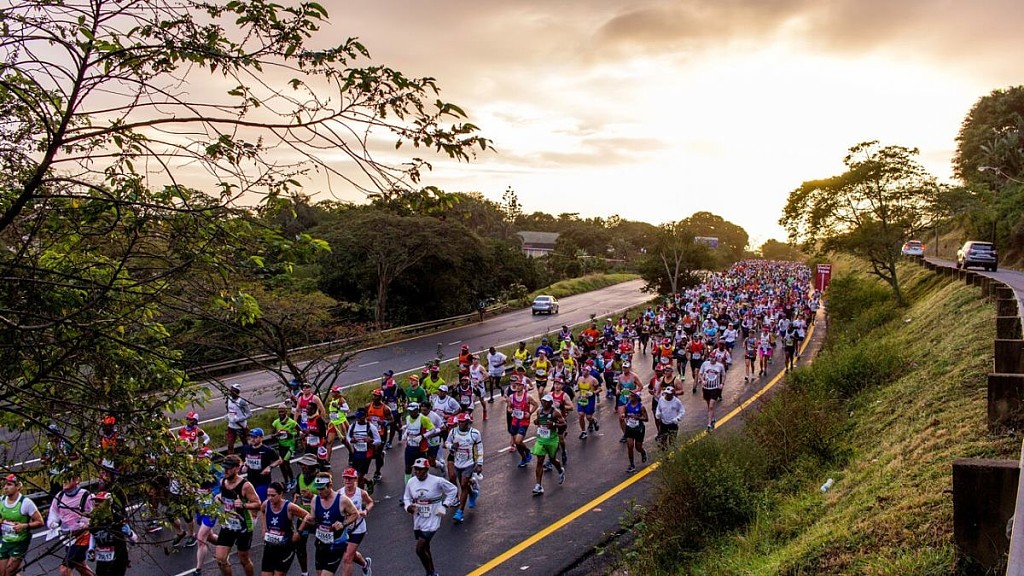
The Comrades Marathon 2020 has been officially postponed
The 2020 Comrades Marathon has been postponed indefinitely. The postponement of the most famous and historic ultramarathon in South Africa was announced on Friday morning by Athletics South Africa.
The Comrades Marathon route travels between two cities, Pietermaritzburg and Durban. The direction changes, however, between “up” and “down” years. “Up” years see racers run 87K with about 2,000 meters of elevation gain. “Down” years are a bit further, hitting 90K, but the run is a net downhill.
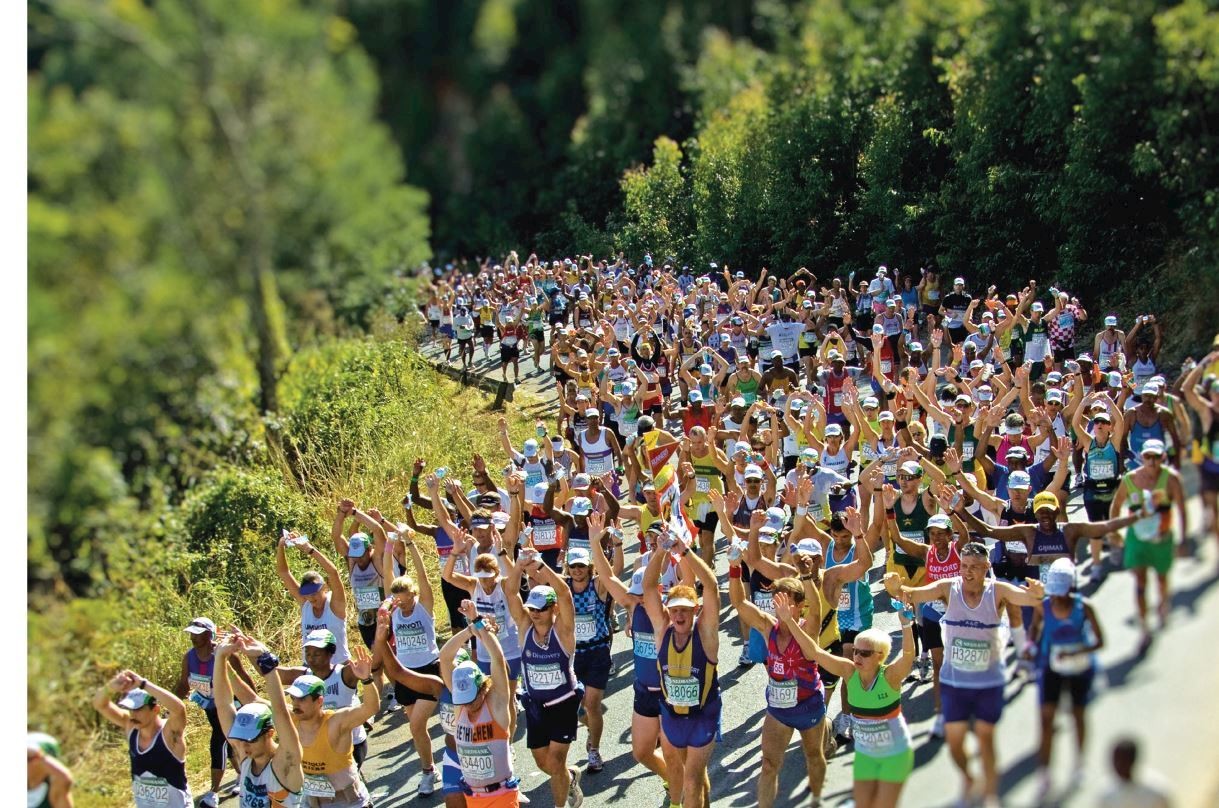
It was set to be a down year in 2020, so the race was scheduled to start in Pietermaritzburg and head to Durban, on South Africa’s east coast. The cut-off for the Comrades Marathon is 12 hours.
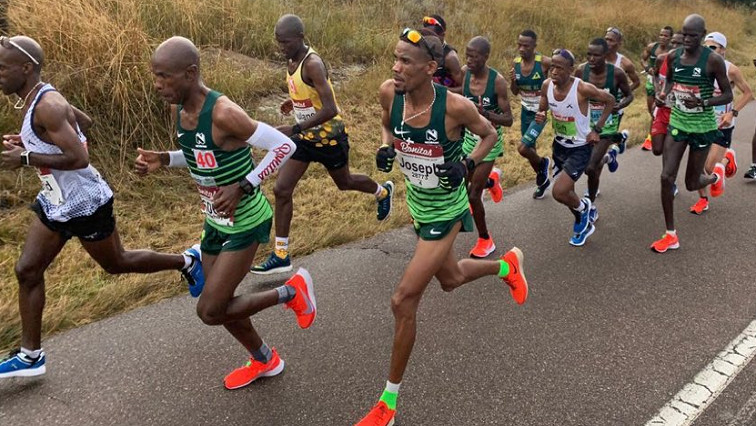
Both Jim Walmsley and Camille Herron, American ultra running legends, were set to compete at the 2020 event was originally scheduled for Sunday June 14.
The news follows the April 9 announcement that South Africa would be extending its lockdown by another 14 days, before re-evaluating the country’s public health needs.
Aleck Skhosana, president of Athletics South Africa, told Sport24, “The Comrades Marathon is therefore postponed from 14 June to a suitable date that will be determined between ASA, KZN Athletics and the Comrades Marathon Association as soon as conditions around the management of the virus allow us to under the guidance of the Government.”
(04/17/2020) ⚡AMPby Madeleine Kelly
Comrades Marathon
Arguably the greatest ultra marathon in the world where athletes come from all over the world to combine muscle and mental strength to conquer the approx 90kilometers between the cities of Pietermaritzburg and Durban, the event owes its beginnings to the vision of one man, World War I veteran Vic Clapham. A soldier, a dreamer, who had campaigned in East...
more...
Two-time defending women's Two Oceans Marathon ultra-marathon champion, Gerda Steyn, confirms bid for Two Oceans hat-trick in 2021
Two-time defending women's Two Oceans Marathon ultra-marathon champion, Gerda Steyn, has confirmed her return to the race in 2021.
According to the official Two Oceans Marathon website, this will be no ordinary return as the current Two Oceans Marathon queen has left it in no doubt that her intention is to "defend her title".
In other words, one of the finest - male or female - long-distance athletes South Africa has produced is setting her sights on a hat-trick of Two Oceans Marathon wins come Easter Saturday, 3 April, 2021.
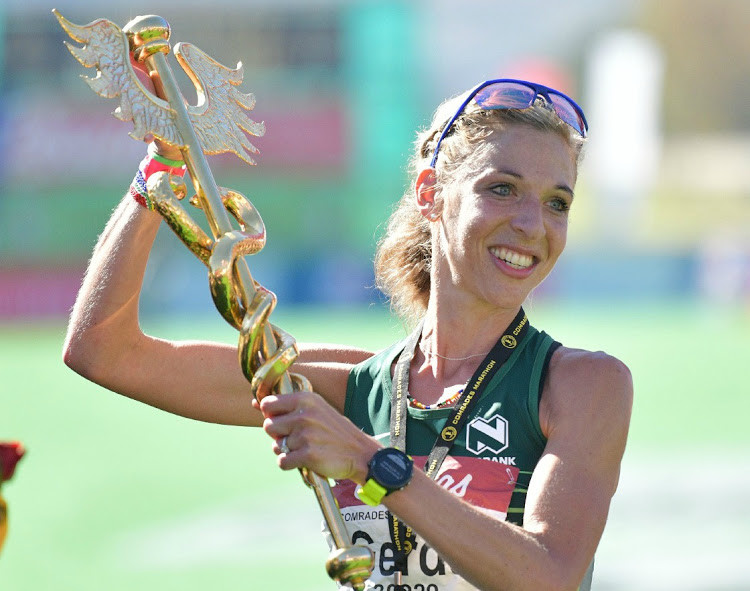
Steyn was of course gunning for a Two Oceans Marathon treble at what would have been the 51st edition of the race on 11 April, 2020.
Like so many sporting events scheduled to take place, the 2020 edition of the race had to be cancelled due to the ongoing coronavirus pandemic sweeping the globe.
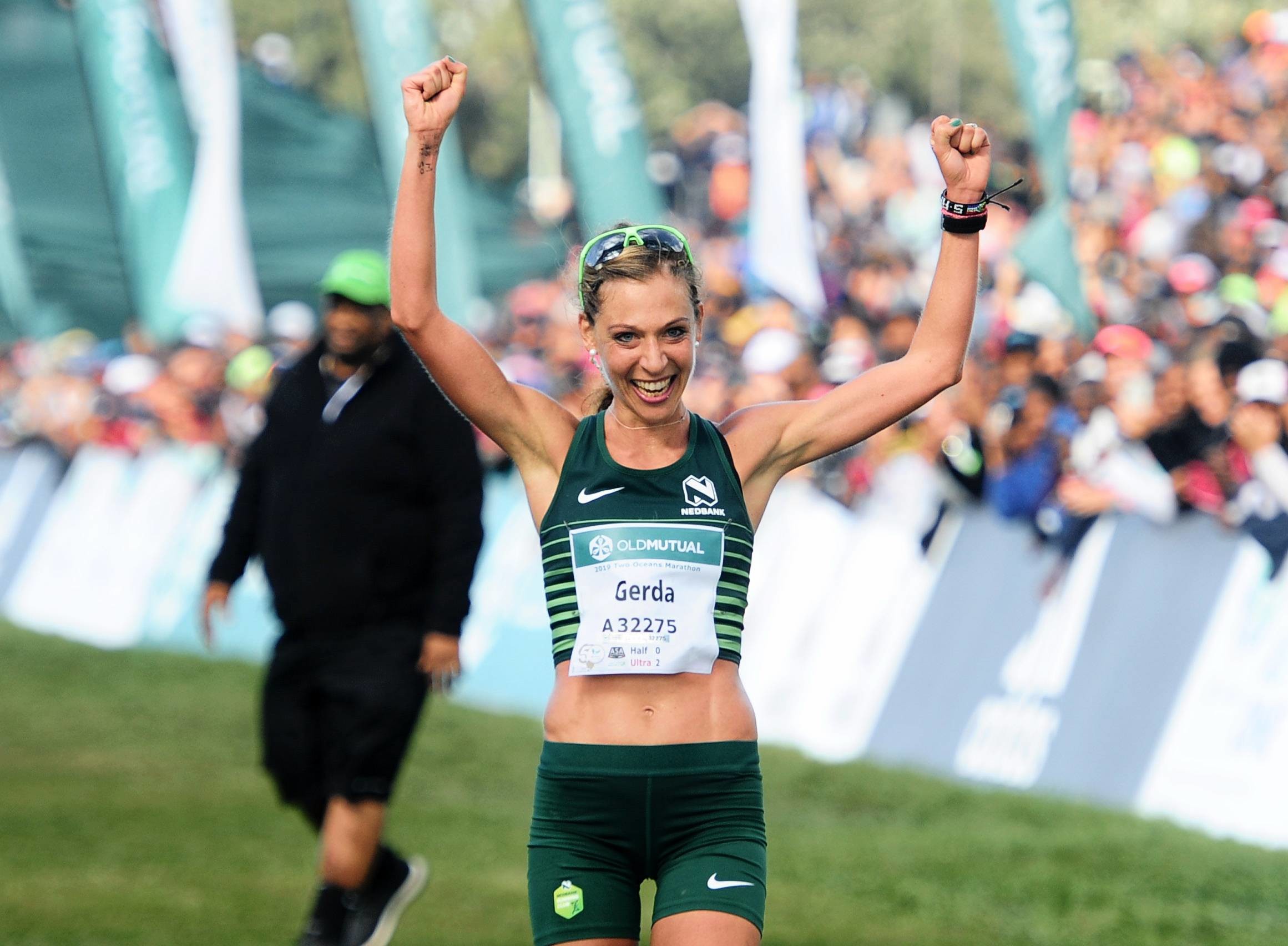
Steyn potentially joins a super-elite list of runners.
Should Steyn be victorious once again in 2021, she’ll become the first athlete to win three titles in a row since Lesotho's Angelina Sephooa did so between 1997-1999.
Steyn would also join a small group who have won the Two Oceans Marathon three times or more.
First to win three titles was Beverley Malan in 1982, 1983 and 1985
Monica Drogemuller claimed the title in 1990, 1991 and 1992
Angelina Sephooa won in 1997, 1998 and 1999
The Nurgalieva twins, Olesya and Elena, claimed victory in 2008, 2010, and 2011; and 2004, 2005, 2009 and 2012, respectively
“I simply love this race,” said Steyn.
“I have to come back and try and make it number three in a row.”
Steyn almost causes women's Two Oceans Marathon ultra record to tumble in 2019.
Steyn won her first Two Oceans title in 2018 when she defeated Dominika Stelmach by just over two-and-a-half minutes.
Twelve months ago Steyn clinched victory by an astounding 10 minutes ahead of runner-up, Irvette van Zyl.
Her victory in 2019 was decidedly more emphatic.
(04/16/2020) ⚡AMPby Manfred Seidler
Two Oceans Marathon
Cape Town’s most prestigious race, the 56km Old Mutual Two Oceans Ultra Marathon, takes athletes on a spectacular course around the Cape Peninsula. It is often voted the most breathtaking course in the world. The event is run under the auspices of the IAAF, Athletics South Africa (ASA) and Western Province Athletics (WPA). ...
more...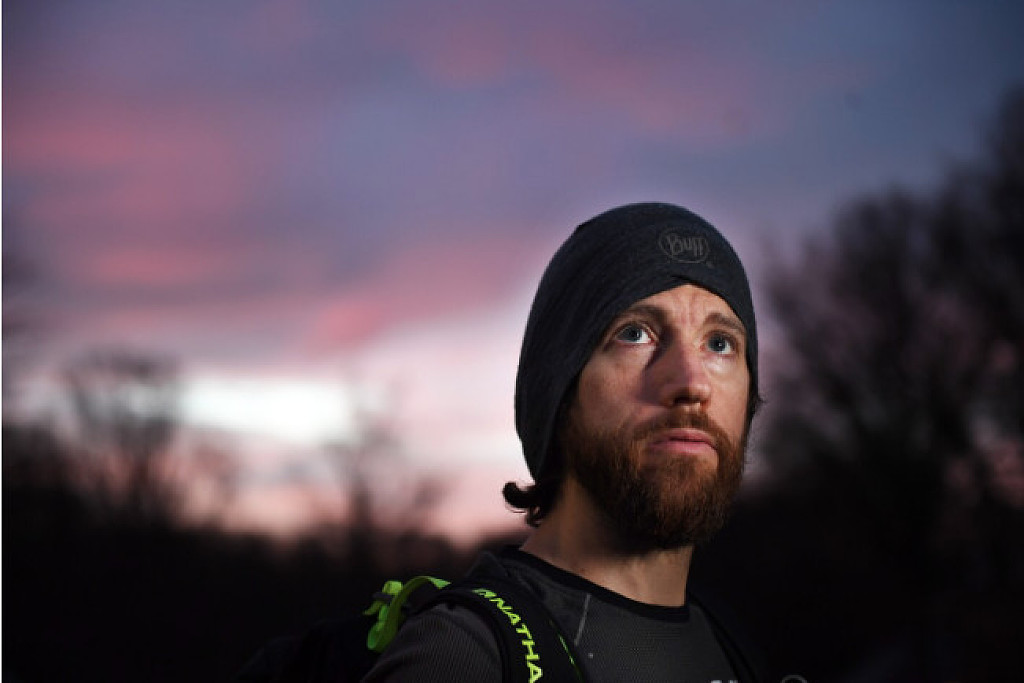
Michael Wardian set out for a virtual ultra marathon. He kept running for 2½ days.
n the early days of the second full month of the global novel coronavirus pandemic that has all but paralyzed the sports world, Michael Wardian went out for a run around the block. He woke up early Saturday morning, laced up his shoes and stepped outside to run around his Northern Virginia neighborhood.
He circled the block and then did it again. And then again and again. Wardian ended up running for more than 2½ days, skipping sleep and piling up miles. When he finally unlaced his shoes late Monday night, he’d run 262½ miles in all, winning a long-distance event called the Quarantine Backyard Ultra, a virtual race inspired by the social distancing recommendations that make a standard road race impossible in the midst of a pandemic.
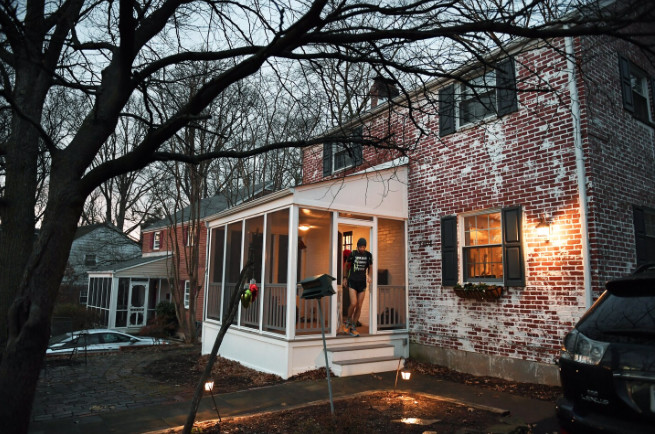
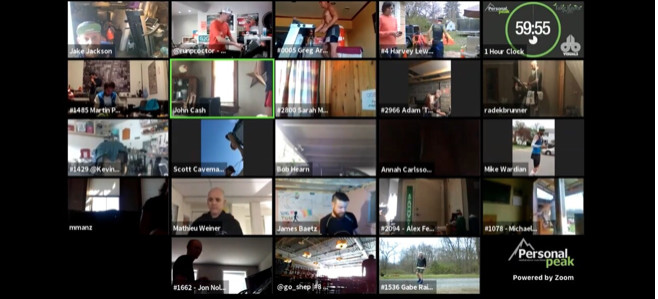
The unique event was intended to fill a void for distance runners who saw their race calendars wiped clean by the spread of the coronavirus. It brought together more than 2,000 runners from nearly 60 countries and turned into a captivating affair with a drama-filled, controversial finish.
“We do not know when this situation is going to end, and this is a fun way to bring a whole bunch of people together to be able to test their fitness, join a community, and do something together when many people cannot leave their homes,” a Calgary-based distance-running outfit called Personal Peak wrote in a March post announcing the race.
The rules were simple enough. The runners had to honor social distancing recommendations and either compete on a treadmill or in some sequestered environment. Some, such as Wardian, circled their neighborhood, while others circled their backyard. One entrant did laps around his living room in Dubai, and another ran circles in a Canadian coffee shop that had been closed because of the virus.
Runners were connected via Zoom and required to run 4.167 miles each hour. After hitting their hourly mark, the runners flashed their watch to the camera and then waited for the next lap to begin at the top of the hour.
For each 4.167-mile lap in the race, Wardian made 10 loops around the block in his Arlington neighborhood. That means that once the race began Saturday morning, he passed the same neighbors, same trees, same parked cars — same everything — more than 620 times.
The race began with more than 2,400 entrants, but they slowly dropped, and Monday was mostly a duel between Wardian and a runner halfway around the world named Radek Brunner, who was pounding out miles on a treadmill in the Czech Republic. Wardian officially won shortly before midnight Monday after more than 62½ hours of running when Brunner was disqualified because of a technicality.
Brunner failed to start running his 63rd lap precisely at the top of the hour, apparently because of some technical difficulty or confusion, and organizers reluctantly said they had no choice but to disqualify him for a rules violation.
In winning the event, Wardian ran the equivalent of 10 marathons in a little more than 2½ days. That’s a bit farther than running straight from Washington to Pittsburgh. Perhaps equally impressive: A sleep-deprived Wardian consistently turned in sub-10-minute miles, but his fastest lap was his final one, when he averaged 7:23 over the event’s final four miles.
Wardian, who turns 46 on Sunday, is well-known on the ultra circuit, his running exploits growing longer each year. He has raced against horses, run around the Capital Beltway, completed marathons on seven continents (twice) and competed in the U.S. Olympic marathon trials and most every other premier distance event. Until this virtual competition, though, he had never run so many hours and so many miles consecutively, he said.
To prepare, Wardian ran a full marathon in his neighborhood the week before, knowing he would be in for a grueling turn in the virtual race. After the first hours of the event ticked by Saturday, the field whittled down quickly. Treadmills broke, hamstrings tweaked, work and real life beckoned, quick power naps turned into full-bore slumber. But mostly the miles and hours just became too much.
By Sunday evening, after 36 hours and 150 miles, the field was down to 14. By that point, Wardian was running in the dark, and his kids were nearing bedtime. Overnight, the runners kept dropping, and at one point, Wardian thought he would be joining them. Around 3 a.m., he briefly stopped running and walked over to his wife, Jennifer.
“I was crumbling in the middle of the night,” he later explained. “She asked if I was all right. I said, ‘No, I just don’t want to be doing this anymore.’ She said that’s not a good enough excuse.”
So he kept going, finding a second wind. He would usually finish his 4.167-mile lap in 40 or so minutes, which gave him a bit of time to catch his breath before lining up again at the top of the hour. This was the reflective period when others typically bowed out.
After 42 hours and 175 miles, Matt Shepard, who had been circling the Tall Timber coffee shop in Canada, Matthieu Weiner of Pennsylvania and Scott Martin from Oregon all dropped. Then Greg Armstrong in Tennessee an hour later. And then, after 46 hours of running, the last female runner, Anna Carlsson, who had been trekking through the outdoors near the northern tip of Sweden, had to stop. She had been running on a frozen lake that had been plowed for the occasion but had to drop when a snowstorm approached.
Finally, as the race hit the 48-hour mark Monday morning, just Wardian and Brunner were left. Both knew it wasn’t the speed or mile-pace that counted. It was a race of attrition, and the last man standing would be the sole winner. Brunner sneaked quick naps at the bottom of each hour, but Wardian hadn’t slept since Friday night.
“Sleep, what? None,” Wardian said at one point. “This is my money race. I don’t need to sleep.”
Because we live in virtual times, the entire event was streamed online, first on YouTube and later on Facebook, and thousands tuned in to watch the runners in Zoom’s now-familiar checkerboard format. The audience was able to engage and ask questions of the runners as they rested between laps.
“Let’s keep doing this!” Wardian said into the camera after he was 216 miles into the race.
And so they kept running into a third day and night. Even with 250 miles behind them — around 9 p.m. Monday — both were turning in a relatively fast pace, and Wardian had his sights set on what organizers say is the virtual backyard ultra record: 69 laps.
But then a whistle sounded for lap No. 63. Wardian took off running in the dark, but more than 4,000 miles away, Brunner stood still on his treadmill, seemingly unaware the lap had started. The online audience watched as Brunner fielded a phone call from race organizers, visibly in disbelief that after 62 hours of running, he was disqualified over what seemed like a minor infraction.
Wardian finished his lap and was slightly confused, too — and also disappointed the race was over and he couldn’t add another record to his lengthy race résumé.
(04/12/2020) ⚡AMP
Mike Huber runs for 25 hours in virtual marathon and he was one of 2,400 runners from 64 countries
Mike Huber was supposed to travel to Calgary in June to run an ultra-marathon in support of The Rare Disease Foundation.
Then along came COVID-19. The world was turned upside down and the marathon, like all other events across the globe, was cancelled.
However, the die-hard running community didn’t hang up their bibs. Instead they went the extra mile.
Huber along with 2,400 runners from 64 countries from around the world, took part in the first annual Quarantine Backyard Ultra – the brainchild of Albertan ultra-marathon runner Dave Proctor and a company called Peak Run Performance.
Every runner around the world started the race at the exact same time at their own home – either on a treadmill or on the road.
They had to run a 6.7 kilometer loop every hour, starting again at the beginning of every hour, until they could no longer run anymore.
If an athlete finished the loop early within the hour they got to rest for the remaining time before setting out on the next loop. However, if a participant did not finish the loop within the allotted time, they were eliminated.
“That’s the game,” said Huber.
“It’s how much time do you have to rest versus not rest,” he said.
The strategy depends on the runner. Some people like more rest, explained Huber, and some people like less so they keep moving and their body doesn’t seize up. And then you have to eat.
A two minute warning would alert athletes get on their start line and if a runner failed to start at the exact time then they were disqualified.
Times were logged on an app called Strava through the athlete’s watches.
Runners also used the teleconferencing app called Zoom to allow them to interact with other racers and live feed while running.
“What makes the race really unique, and we joke about it in the running world, there’s only one winner,” said Huber.
Huber started his race at 6 a.m. PST on Saturday, April 4, and finished at 7 a.m. on Sunday.
(04/10/2020) ⚡AMPby Collen Flanagan
Guy Hudson runs 50k ultra marathon in back garden for Horsham foodbank funds
A determined Henfield dad took on a 50k ultra marathon in his own back garden after the race he was meant to be running had to be postponed due to the coronavirus outbreak.
Guy Hudson decided to do 1,000 laps of his 50m garden course instead.
He exceeded his intended distance as well as his fundraising target, which saw him raise more than £1,000 to support the Horsham District Foobank which is experiencing an unprecedented level of demand for help at this time.
Guy said: “Originally I was going to do this just for a personal challenge but it occurred to me that I may be missing a trick if I didn’t also try and raise much needed funds for a local cause.
“It was amazing how many messages of support and kindness I received during the event and as donations were coming in, my daughter was shouting out the total and reading the messages.
“As of April 6, we’ve raised £1,101.80, an amazing amount from 55 people, some of which I don’t even know!
“I am so pleased that the Horsham Community Food Bank will be able to immediately begin using these funds to share support and kindness within the community that I live.”
Guy set off at 8.30am and hit the half way mark in 2hrs38 and the marathon in 4hrs42.
As he went passed his £500 fundraising target before the end of the marathon, he decided to continue until he reached 1,000 laps, and finished the whole fundraiser in 5hrs31.
Guy’s wife, Jo, and son, Sonny, both ran 200 laps (10k) each, while daughter Kitty looked after the food, drink and high-five station.
Guy said: “To even out the wear and tear on my ankles, hips and glutes, I’d decided to change direction every 20 laps which worked out well but became a little confusing remembering in the later hours of the challenge, so I decided just to stick to running clockwise.
“At first it took a while to get into the rhythm of just plodding round and round but as time went on, so did the headphones and sun cream and i just switched off.
“One of the weirdest things was how it seemed to get easier the longer I was going and the second half was definitely somehow ‘easier’ than the first.”
The money that Guy has raised will directly support the Horsham District Foodbank during the coronavirus crisis, for which Horsham Matters has adapted their service in light of Government advice and now provides a doorstep, contact-free delivery of three days’ emergency food for those experiencing financial poverty or for complex households needing support.
(04/08/2020) ⚡AMPby Jasmin Martin
After over 50 hours ultrarunner Mike Wardian runs 63 laps for 422K to win the virtual race Quarantine Backyard Ultra
The Quarantine Backyard Ultra started Saturday morning, and over 2,400 runners from more than 50 countries joined the virtual race. Runners ran 6.706K every hour for as long as they could, and over 60 hours later, only two runners remained: American Mike Wardian and Radek Brunner of the Czech Republic. Brunner missed the start of the 63rd lap and was therefore disqualified, making Wardian the winner after 422K.
With every passing lap of the Quarantine Backyard Ultra, more and more of the world’s best ultrarunners dropped out and registered DNFs. Last year at the Big’s Backyard Ultra, Maggie Guterl ran 60 laps for 402K, but a nagging back injury forced her to pull out of the race this weekend after just nine laps.
After 15 laps and 100K, Jamil Coury called it a day. Three laps later, Canadian Cal Neff dropped out. At the 100-mile mark, Courtney Dauwalter threw in the towel, along with 72-year-old Gene Dykes. Later on, after 31 laps, Canadian Dave Proctor (who helped bring the event into fruition), had to end his race due to back pain.
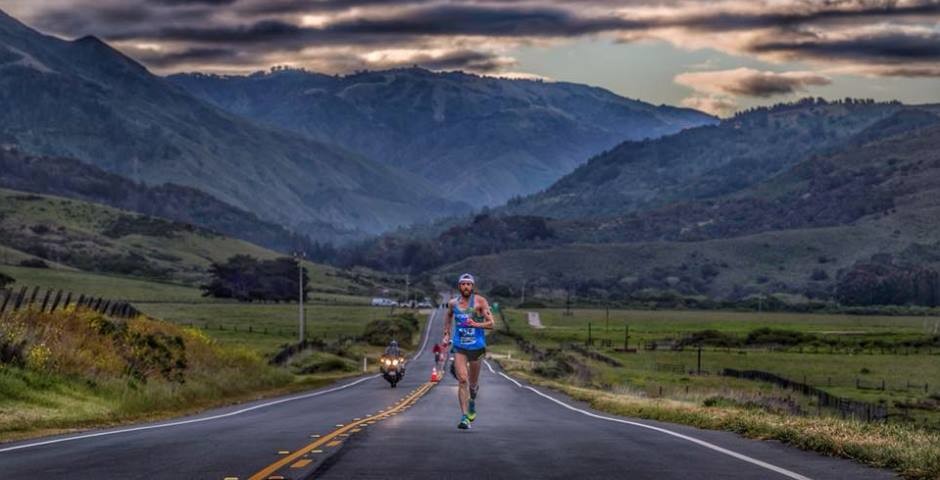
“It was a bit of a tough day for sure,” Coury said. “I was hoping to go as long as I could— 24 or 30 hours—but you never know with these things.” Although he didn’t get as far as he would’ve liked, Coury cut himself some slack, seeing as he’d run a marathon around a 27-metre course just four days earlier. In fact, just making it in time to race at all was an accomplishment for Coury, who slept at his office the night before and woke up only minutes before the event began.
“I was working late on Friday night, and i fell asleep at my office,” he said. “I fortunately had a pair of shoes and socks in my truck. I threw it on, started my livestream and just ran out the door.” Coury ran the first seven hours around his office’s neighbourhood, returning to finish work between laps. He eventually drove home (he made it to his treadmill with three minutes to spare before the start of the next lap) and made it to 100K before bowing out.
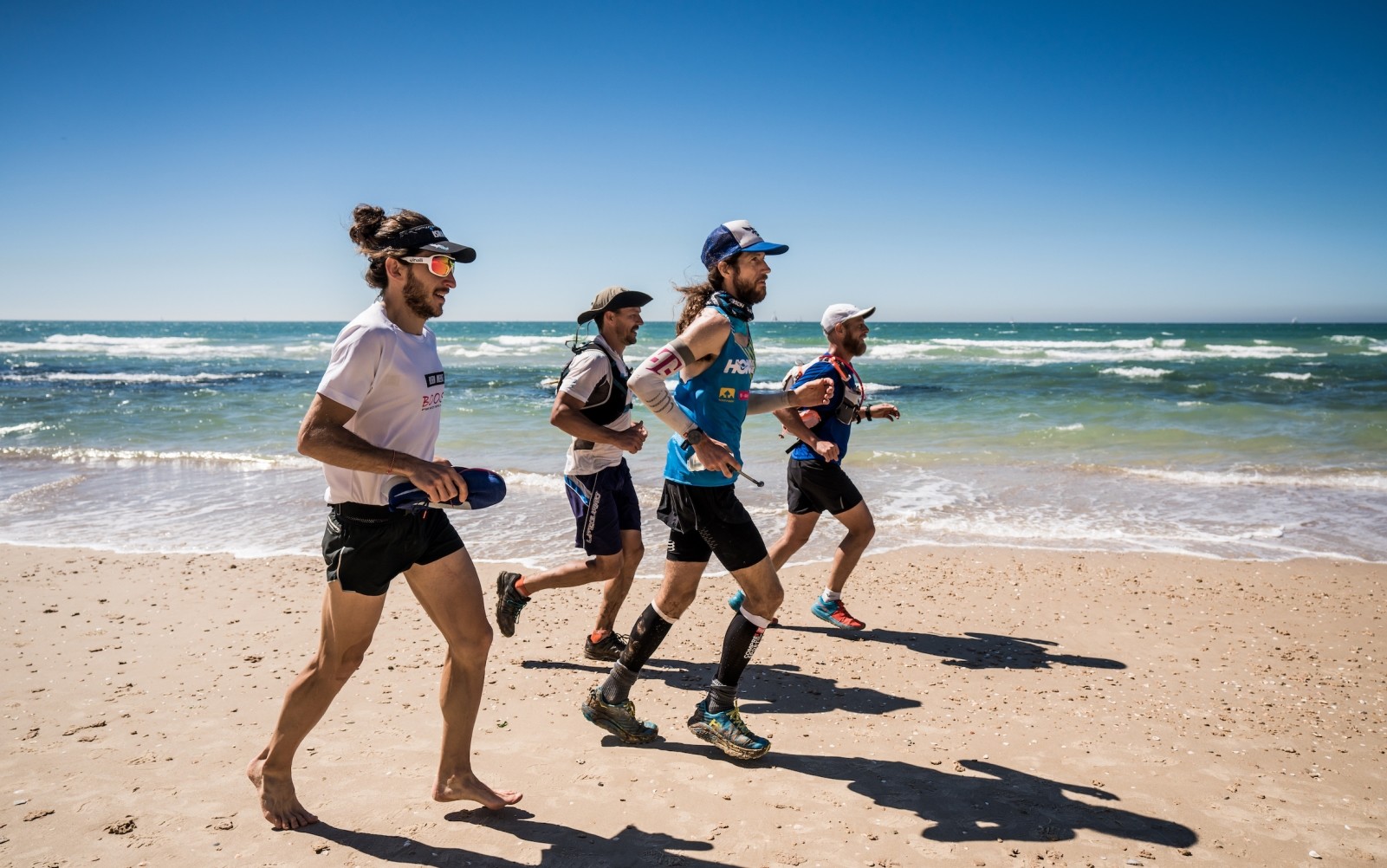
Dauwalter said she got to the 100-mile mark and decided that was “a solid day.”
“When I signed up I didn’t have major plans,” she said. “I wanted to make it at through the night, because that’s always special and fun to see the sunrise.” She did make it through the night, got her sunrise and retired from the race soon after.
“I think this is a really fun format,” she said. “It’s great with the camaraderie. You come back from a lap and go on the Zoom chat with the other runners.” Proctor also noted how fun it was to chat on the Zoom and YouTube feeds.
“It’s so unique,” he said. “When all the runners go off and do their thing, I get extraordinarily busy talking to everybody on YouTube.” He said that he spent around half of his time on the treadmill answering questions viewers had posted on the YouTube live video.
“I found that it was really quite rewarding. It gets your mind off of what you’re doing and it gives you something [else] to do.” While they were both still in the race, Proctor and Coury teamed up and answered questions together, adding some fun banter to the mix as well.
The two finalists had very different setups for the final laps. Brunner ran solo in his house on a treadmill while Wardian took to the streets with a support crew and several cyclists riding alongside him as he ran. The winner of multiple U.S. national titles at ultra distances, Wardian is well known in the running community. He has run the Western States 100 and the Ultra-Trail Du Mont-Blanc multiple times, and he finished 11th at the 2011 Comrades Marathon and third at the 2010 Marathon des Sables.
Brunner is more of an unknown, at least in the North American ultra community, but like Wardian, he has an impressive running resume. He has represented the Czech Republic on multiple occasions, competing at the 24-hour, 100K and trail world championships. At the 2017 24-hour worlds in Ireland, Brunner came 14th. He has also run to the podium four years in a row in the Spartathlon, a 246-kilometre ultramarathon in Greece. Although he didn’t win, after this run, Brunner’s name has become much more well known in the ultrarunning community.
(04/07/2020) ⚡AMPby Ben Snider-McGrath
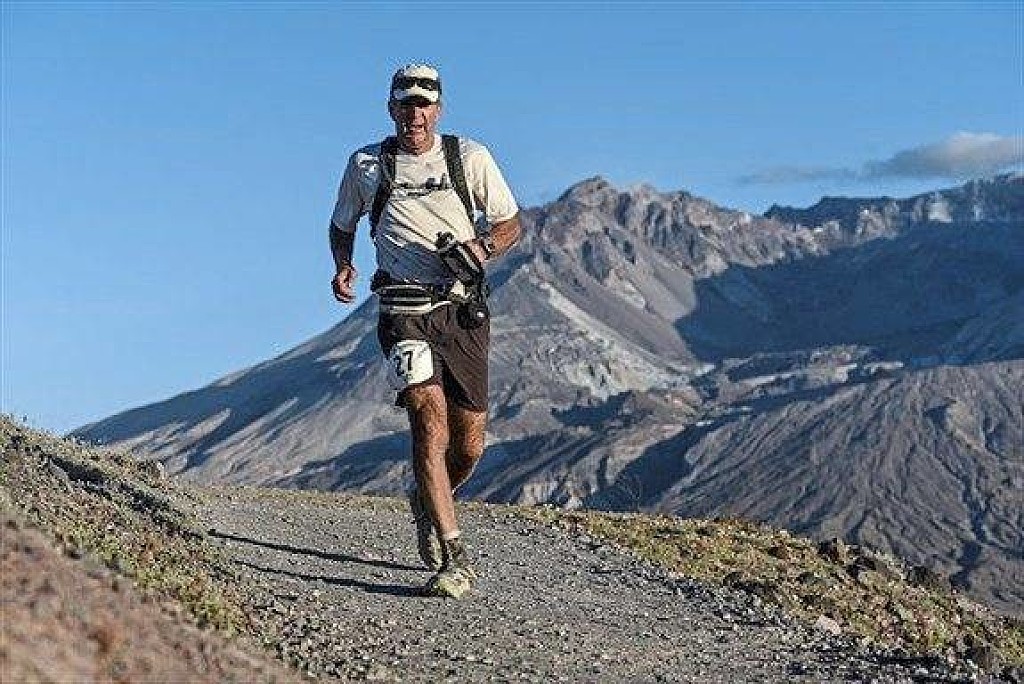
The Pittsburgh Marathon is Cancelled but Jeff Gleason and a small group of his buddies will be running their own marathon
COVID-19 might have put a stop to the Pittsburgh Marathon, but it didn't stop a group of Pittsburgh runners from planning their own. During the wee hours of the morning Friday, March 27, elite athlete Jeff Gleason and his running buddies will go the distance – running while the rest of Pittsburgh sleeps.
His small team is nothing short of extraordinary: "Wayne Kurtz is our de facto race director -- he actually ran 30 full Ironmen over 30 straight days," says Gleason. I'll serve as co-pilot and Bill Thompson, ultra-runner extraordinaire, will be my wingman. He ran across the entire state of Tennessee for no particular reason."
When the alarm rings, they will lace up their running shoes and strap on head lamps. Starting somewhere between 1 and 2 a.m., they will track their miles by Garmin and finish long before the city wakes. And afterwards, they are planning to go to work.
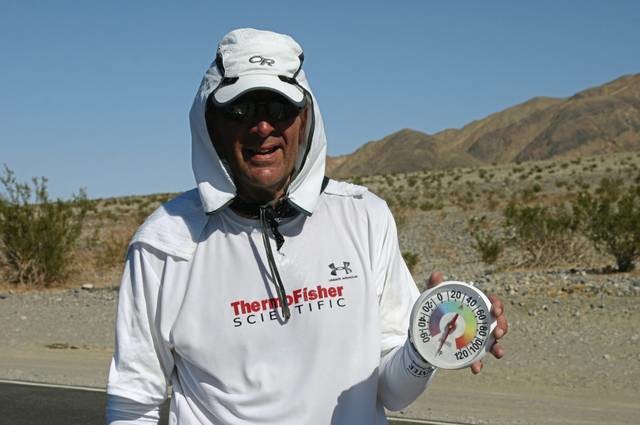
Gleason is not a quitter. In addition to medaling in marathons, he has completed over 70 ultramarathons. His "never say die" attitude got him through four 135-mile crossings of the Mojave Desert in unbearable heat and Big Foot, an excruciating 200-mile race through mixed terrain across the Cascade Mountains in Washington State.
That perseverance also came into play a few years ago, when debilitating knee pain knocked Gleason off course. Several physicians told him knee replacement was necessary, and he would never run again. After searching high and low, he found Richard Berger, M.D., an orthopedic surgeon at Rush UniversityMedical Center, Chicago, who performs joint replacement without cutting muscles, ligaments or tendons. Because of this, the recovery is faster with less scar tissue build up. That means within months, athletes like Jeff can return to their sport. In fact, three months post-surgery, Jeff completed the Pittsburgh Half Marathon. In hindsight, he says, "I could have done the whole [26.2], but my wife would have killed me."
In addition to the Pittsburgh Marathon, Jeff was planning to complete his 30th 100-miler ultra in New Jersey—which was also cancelled. But even with no foreseeable races in his future, he found a silver lining. "Fortunately (or maybe not so fortunately)," says Gleason, "I have some friends who are crazy enough to run over 26 miles in the middle of the night."
Above all, Jeff is just happy to be running again—pain free. "There is a running God," he admits, "and his name is Dr. Berger."
(03/26/2020) ⚡AMPby Jeff Gleason

Dick's Sporting Good Pittsburgh Marathon
This race is your game - however you decide to play it. As a competitor. A fund raiser. An enthusiast. A veteran. A team player. It's whatever you want it to be. It's whatever you make it. It's YOUR game..... Run it. Play it. Own it. Love it. Runners will race on the North Shore of Pittsburgh, cross each of...
more...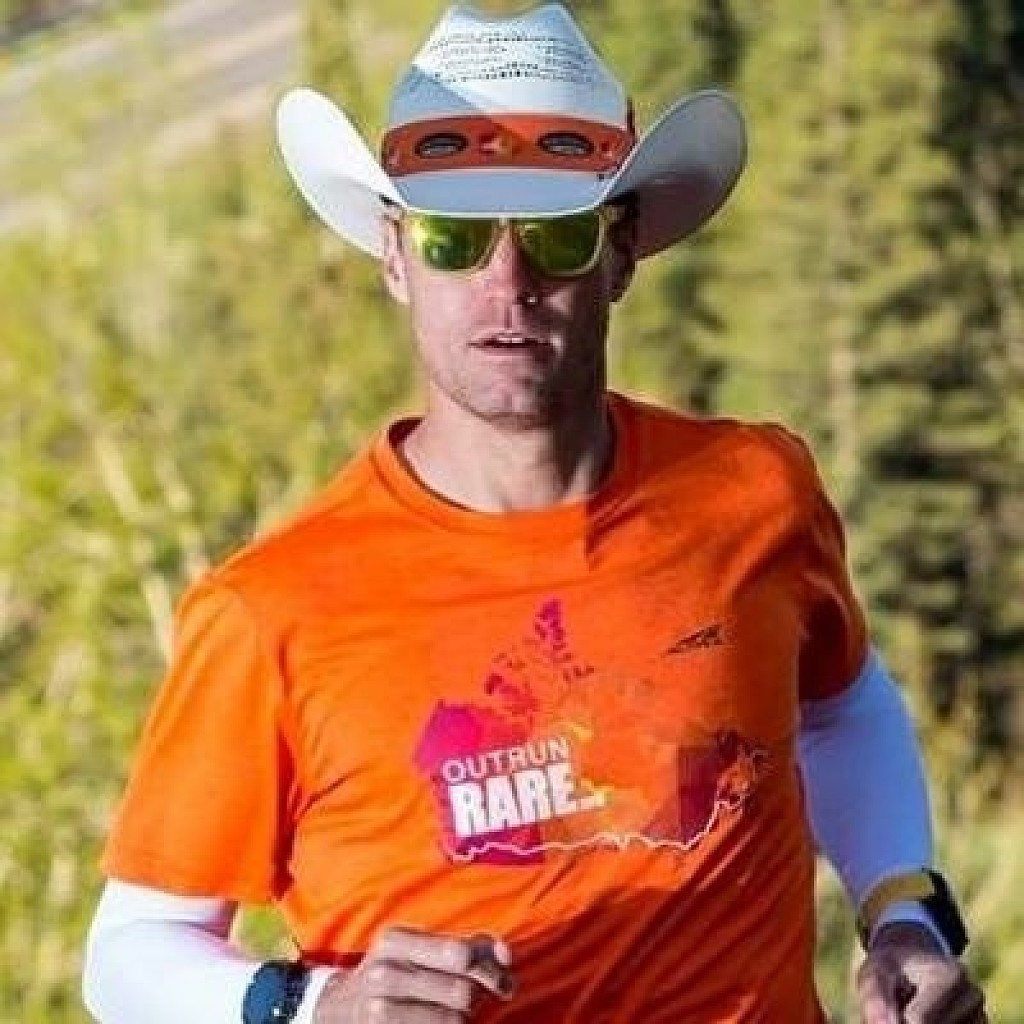
The Quarantine Backyard Ultra is a chance to race virtually for free this spring
If you’re itching to race this spring but don’t know where to turn, maybe just look to your backyard. The Quarantine Backyard Ultra is a free race that anyone can enter, and you can do it from the comfort of your own home or on a route nearby. Canadian ultrarunner and treadmill-running world record-holder Dave Proctor will be running the Backyard Ultra, which will be broadcast on YouTube starting on April 4, and the Barkley Marathons‘ Laz Lake will be the honorary race director.
The race starts at 6 a.m. PT on April 4. All runners will connect via Zoom video call, and this is where their progress will be monitored. Athletes can choose between running on a treadmill or on a route that starts and finishes at their home. Runners who choose the former option must point their camera at their treadmill after they complete each lap to prove they completed the distance (each lap is 6.706K).
Racers who opt to run outside must use a GPS watch or smartphone to record their distance run, and at the end of each lap, they must show proof of the completed lap to the Zoom audience. Once runners complete each lap, they can relax until the next lap begins. The last person running is the winner.
The race will be live streamed on YouTube, which should satisfy many running fans’ needs for live racing. Better yet, the event will have live updates on its Facebook page written by Lake, and, if all goes well with Zoom, Lake will also provide colour commentary over the live feed as well. Last year, Lake travelled to Calgary and acted as the honorary race director for Proctor’s Outrun Backyard Ultra, which was modelled after Lake’s Big’s Backyard Ultra in Tennessee.
The race is being organized by Personal Peak, an endurance coaching company witch which Proctor works. In May, Proctor was set to tackle the TransCanadian speed record attempt, and Personal Peak coaches were going to be his crew for the run. When he had to postpone his attempt, Proctor decided he had to do something to replace it.
“His fitness level wasn’t going to go to waste,” says Stephanie Gillis-Paulgaard, Proctor’s publicist. “Dave’s a competitor, so we said, ‘Let’s see who else we can get on board.'” So, Personal Peak set the race up and they “extended that invitation to all of the best ultrarunners,” Gillis-Paulgaard says. As it stands now, 11 other elite runners have confirmed for the April 4 race, but Gillis-Paulgaard, Proctor and the Personal Peak team hope to attract runners of all levels.
“Hopefully, for those people who have trained over the winter months, this will give them something to race, whether they run one lap or 50,” Gillis-Paulgaard says. The winner of the event will win what is, according to the race website, “soon to be world’s most coveted prize: The Golden Toilet Paper Roll.” In a time where race opportunities are sparse and toilet paper is hard to come by, you can get both in the newest virtual race.
(03/24/2020) ⚡AMPby Ben Snider-McGrath
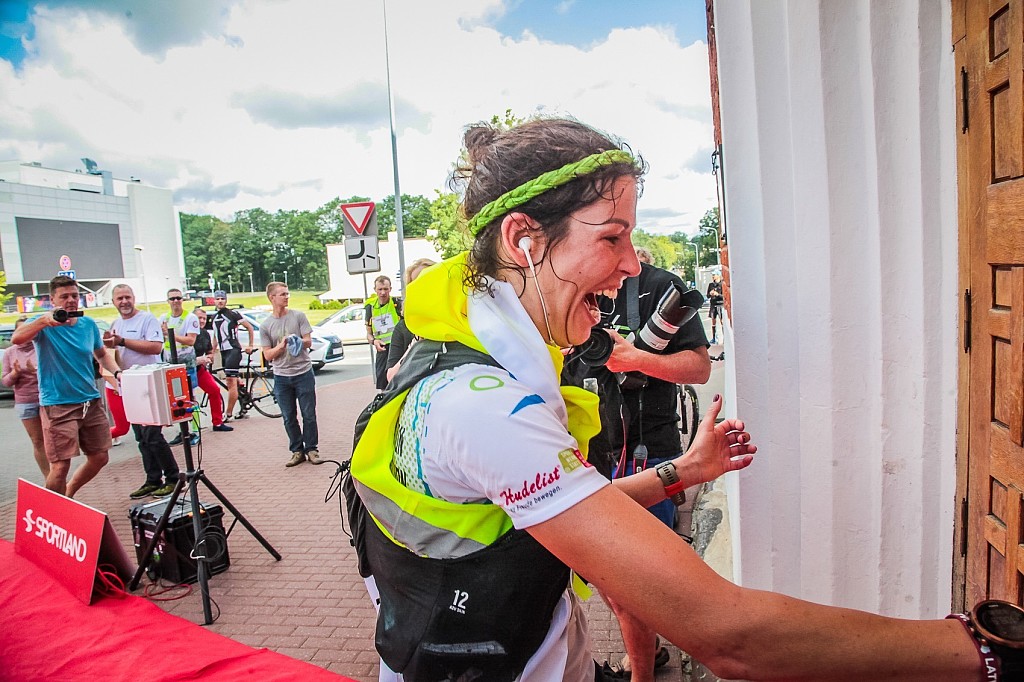
Ultramarathon competitor Diana Dzaviza runs 37 kilometers without leaving the confines of her apartment
A Latvian woman living in Vienna has reportedly managed to combine the twin virtues of exercise and social distancing by running 37 kilometers without leaving the confines of her apartment.
Ultramarathon competitor DiÄna Džaviza spent six hours performing the feat along a 22-meter route that encompassed landmarks including kitchen, bathroom and bedroom.
She completed 1,687 laps and is also donating 172 euros to a charity for seriously ill children using the money she was going to pay to enter a long distance race in Austria that was cancelled due to the coronavirus crisis.
According to data from the "Strava" app, the distance was even more impressive at some 46.36 km.
The 107-kilometer Riga-Valmiera track record holder and current Latvian champion in the 100-kilometer distance had decided on March 21 to take part in the annual six-hour charity run in Austria , where the proceeds would be donated to families with seriously ill patients, but did not let the cancellation of the event prevent her from stretching her legs.
Refreshments were provided along the way in the form not of high-energy drinks but home-cooked pancakes supplied by her daughter.
(03/23/2020) ⚡AMP
No finisher at the Barkley Marathons again this year (also, no race)
Even the legendary Barkley Marathons couldn't make it through a pandemic. The Tennessee ultramarathon was called yesterday and remains without a finisher to the race since John Kelly in 2017.
The ultra trail race was set to take place later this month or early April in Frozen Head State Park. The 100-mile course is limited to 60 hours. It's considered one of the toughest races on the planet in part because it is both physically and mentally exhausting.
There is always a great deal of interest in the race, and this year was no different as Canadian ultra trail runner Gary Robbins was set to make his return to the race after a long recovery from injury.
Robbins hinted that the race would likely be cancelled with a social media post on March 14, but also said that he was ready and was nearing peak fitness in his training.
"I feel like this might be the fittest I’ve ever been heading into the race. Certainly, it’s the best my legs have ever felt at this point in time. Having missed almost two years due to injury, but continuing to train over 500 hours on the bike in 2019, seems to have done nothing but strengthened my body overall," he wrote.
Race founder Gary "Lazarus Lake" Cantrell was working hard to try to make the race happen, even after the U.S. travel ban resulted in a number of European runners having to cancel.
Without a doubt, "Laz" will be back soon enough to enact his unique brand of punishment on unsuspecting runners who might think a run in the Tennessee woods sounds like fun.
(03/21/2020) ⚡AMP
