

Running News Daily
Running News Daily is edited by Bob Anderson and team. Send your news items to bob@mybestruns.com Advertising opportunities available.
Index to Daily Posts · Sign Up For Updates · Run The World Feed
Articles tagged #Trail running
Today's Running News
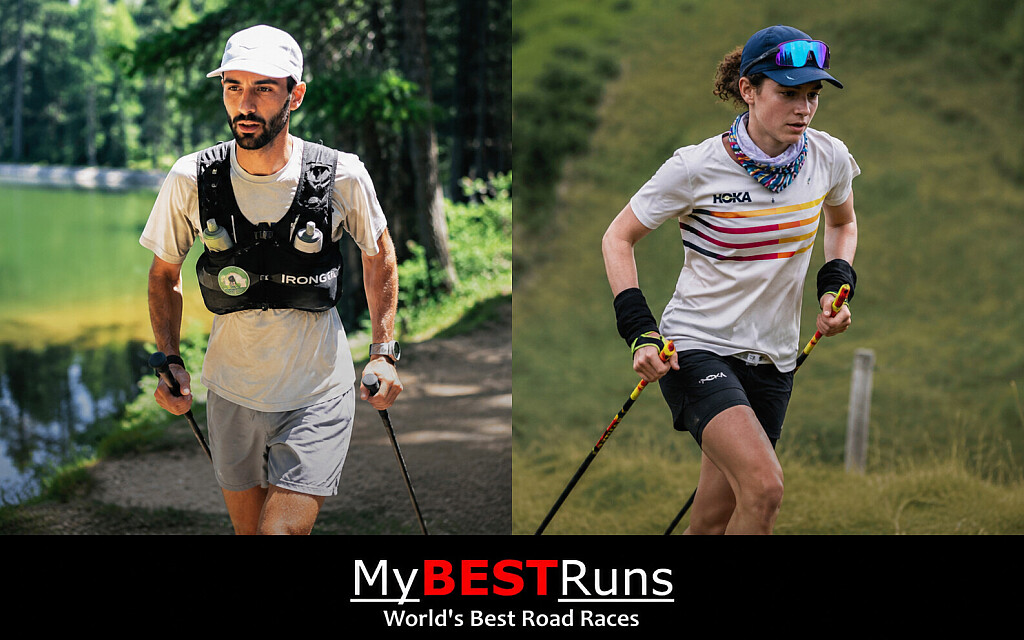


Two Continents, Two Extraordinary Endurance Feats: Hartmuth and Sanchez Rewrite Trail Running History in a Single Day
July 25, 2026, will be remembered as one of the most remarkable days in the history of endurance running. Thousands of kilometers apart, on two vastly different landscapes, two athletes delivered performances that redefined what many believed possible. Germany's Katharina Hartmuth and France's Aurélien Sanchez each erased long-standing benchmarks, proving that the limits of human endurance continue to be pushed further than ever before.
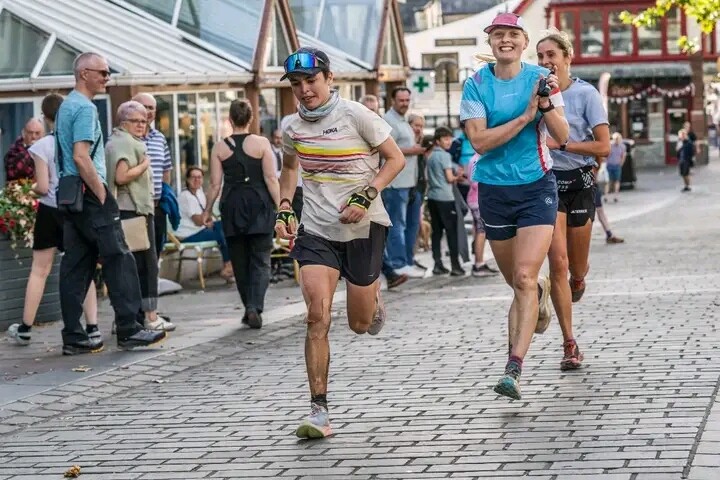
In the rugged mountains of England's Lake District, Hartmuth produced a breathtaking performance on the legendary Bob Graham Round, one of the world's most demanding mountain-running challenges. Covering the iconic circuit of 42 fells with approximately 8,200 metres of relentless climbing, she completed the route in an astonishing 14 hours, 11 minutes and 58 seconds, slicing an incredible 22 minutes from the women's record established by Beth Pascall in 2020.
The Bob Graham Round is far more than a race against the clock. It is a brutal examination of endurance, mountain skills, navigation, and mental resilience. Participants must conquer steep ascents, technical descents, unpredictable terrain, and the notoriously unforgiving weather of the Lake District. The challenge is only officially completed if runners return to the historic George Fisher shop in Keswick within 24 hours, making every second count until the very end.
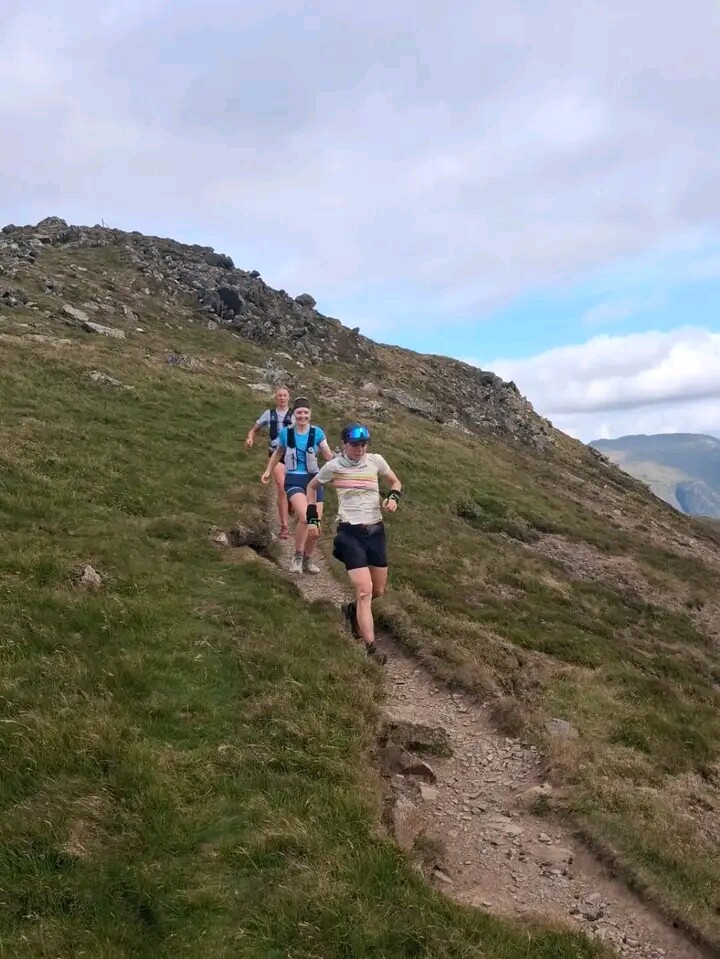
After crossing the finish, Hartmuth described the achievement as "the coolest day of my running life," a fitting reflection on a performance that instantly secured her place among the greatest mountain runners ever to tackle the historic route.
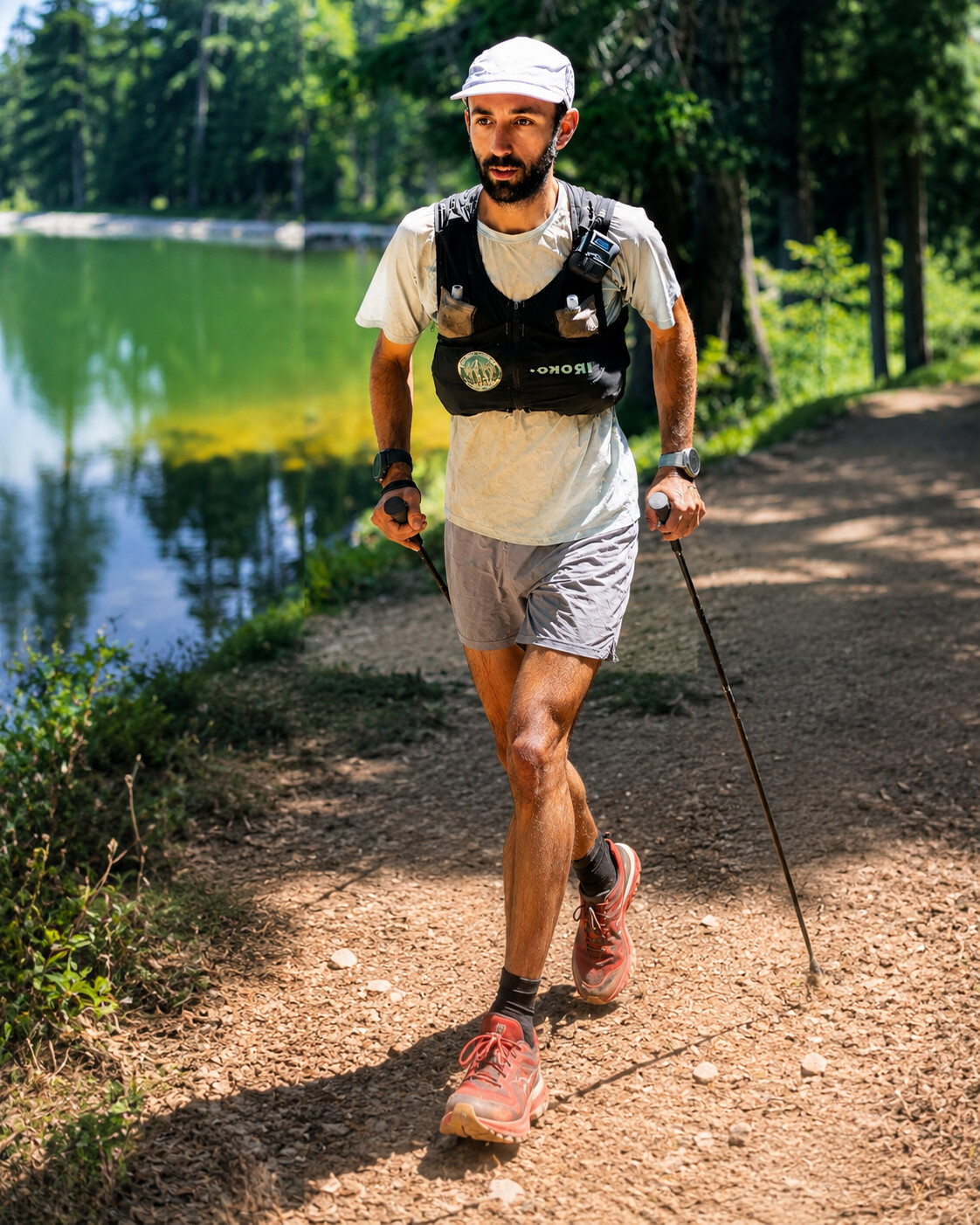
While Hartmuth was celebrating in northern England, another historic effort was unfolding on the opposite side of the globe.
French ultrarunner Aurélien Sanchez completed one of the most demanding point-to-point adventures in trail running by setting a new fastest known time (FKT) on the iconic Pacific Crest Trail. Beginning at the Mexican border on June 8, Sanchez covered the trail's staggering 4,270-kilometre length before reaching the Canadian border in 45 days, 20 hours and 15 minutes.
His remarkable journey eclipsed the previous record, set by Belgium's Karel Sabbe in 2023, by 16 hours. The achievement was anything but straightforward. Sanchez reached the halfway point trailing Sabbe's pace, but an extraordinary surge over the second half saw him average nearly 95 kilometres every day, allowing him to overturn the deficit and finish with a new record.
The Pacific Crest Trail presents one of the toughest endurance challenges on Earth, stretching through scorching deserts, the rugged Sierra Nevada, and the volcanic peaks of the Cascade Range. Covering such diverse and unforgiving terrain demands not only exceptional physical strength but also unwavering determination, meticulous planning, and the ability to endure weeks of relentless fatigue.
Although Sanchez's FKT is still awaiting official verification, Hartmuth's Bob Graham Round record has already been ratified, cementing her place in mountain-running history.
The two achievements could hardly have been more different. One unfolded over a single day across steep British fells, while the other spanned nearly seven weeks across an entire continent. Yet both performances shared the same defining qualities—extraordinary courage, relentless perseverance, and an unwavering belief that records exist to be broken.
On one unforgettable Friday, two athletes, separated by oceans but united by ambition, reminded the running world that endurance has no boundaries and history can be rewritten in more than one place at the same time.
by Erick Cheruiyot for My Best Runs.
Login to leave a comment
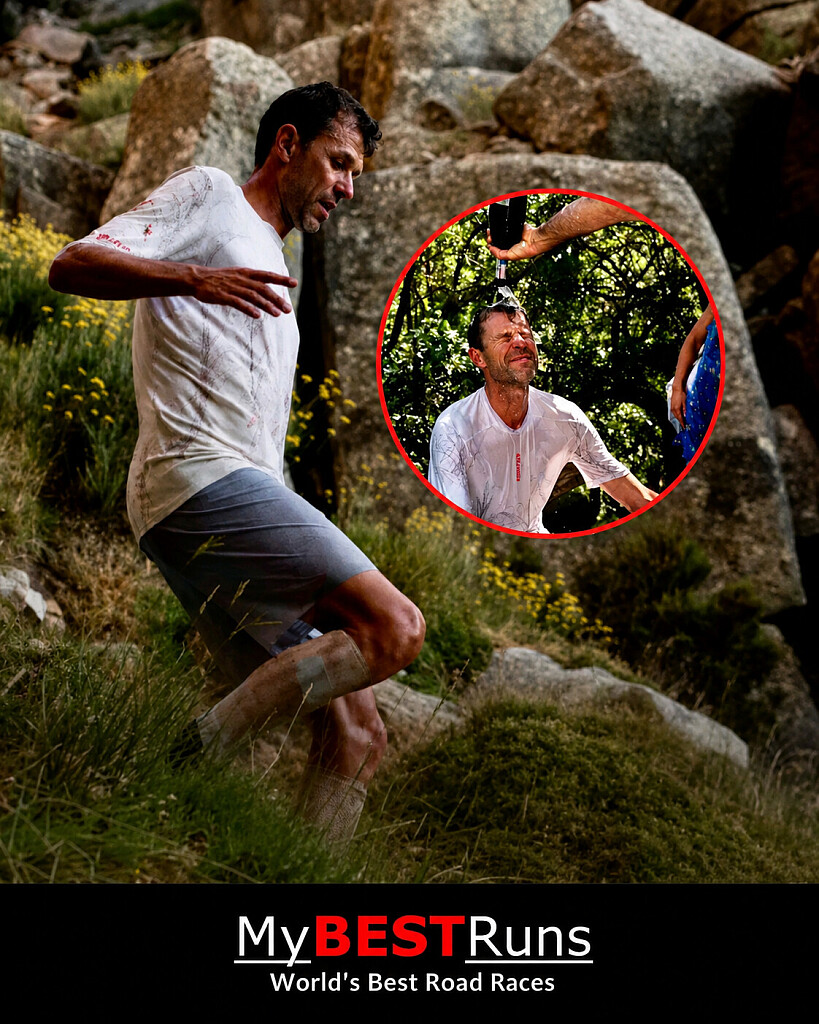
At 40, François D'Haene Reclaims the GR20 Crown with a Historic Sub-30-Hour Run
Age is often seen as the greatest opponent in endurance sports. Yet for François D'Haene, it has become another challenge to conquer.
The legendary French trail runner has once again etched his name into the history books after setting a new supported Fastest Known Time (FKT) on the iconic GR20 in Corsica. Covering approximately 160 kilometers across one of Europe's most demanding mountain trails, D'Haene completed the route in an astonishing 29 hours, 46 minutes and 20 seconds, becoming the first athlete ever to break the elusive 30-hour barrier.
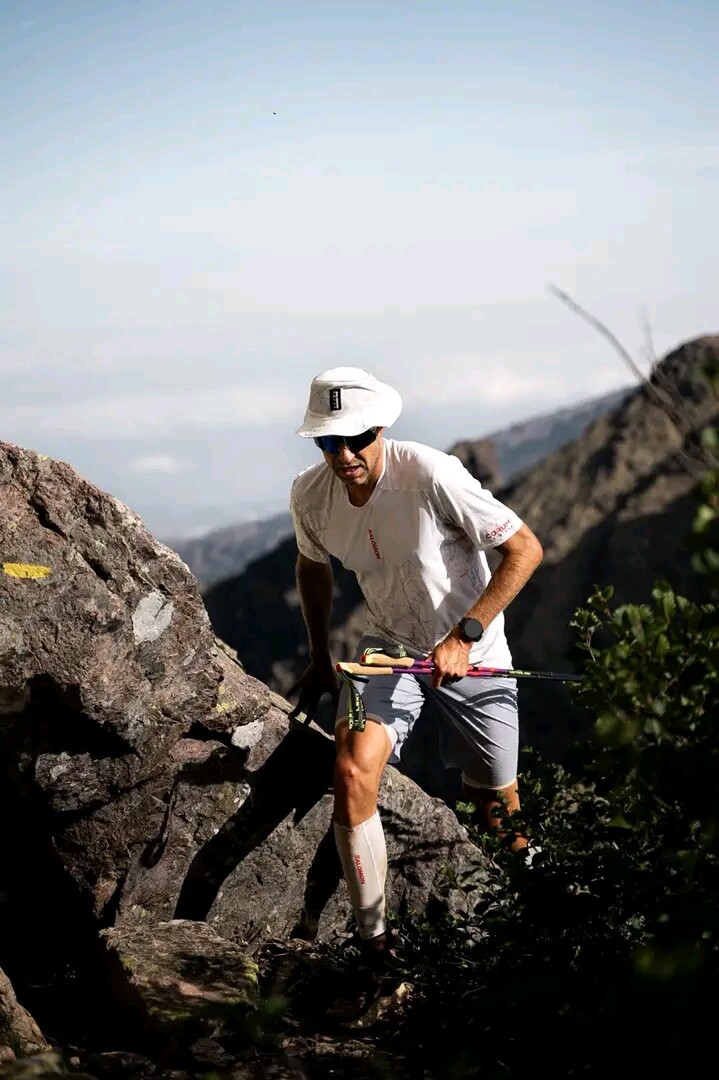
The GR20 stretches diagonally across the Mediterranean island of Corsica from Calenzana in the north to Conca in the south. Renowned for its unforgiving terrain, the route features around 12,000 meters of cumulative elevation gain, with steep ascents, rocky ridges and highly technical descents that have earned it a reputation as Europe's toughest long-distance hiking and trail-running route.
D'Haene began his remarkable journey at 4:30 a.m. on Wednesday, July 8, and reached Conca at 10:16 a.m. the following morning, maintaining an extraordinary pace across nearly 30 hours of relentless climbing and descending. Throughout the effort, a rotating team of pacers accompanied him in accordance with supported FKT guidelines, helping him maintain his rhythm across the brutal mountain course.
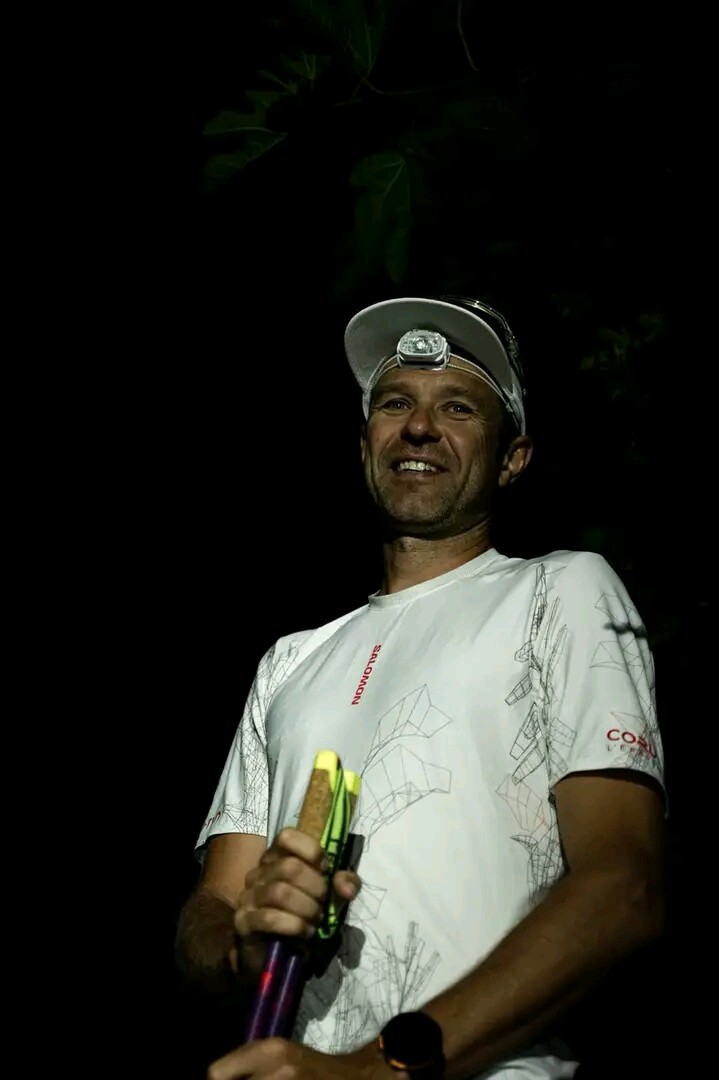
His performance erased the previous supported record of 30 hours, 25 minutes, set by Corsican trail specialist Lambert Santelli in 2021. In doing so, D'Haene shaved nearly 40 minutes off a mark many believed would stand for years.
What makes the achievement even more extraordinary is the story behind it. D'Haene first claimed the GR20 record in 2016, running 31 hours and 6 minutes. Several years later, Santelli eclipsed that performance on home soil. Rather than leaving the record behind, D'Haene returned a decade later—not simply to reclaim it, but to redefine what was thought possible.
At 40 years old, he proved that experience, resilience and meticulous preparation can be just as powerful as youthful speed. While many elite endurance athletes begin to slow with age, D'Haene continues to raise the standard, delivering one of the most impressive performances of his already legendary career.
His latest triumph adds another remarkable chapter to a résumé that already includes four Ultra-Trail du Mont-Blanc (UTMB) victories, four Diagonale des Fous titles, and the Hardrock 100 counterclockwise course record. Those accomplishments alone secured his place among trail running's all-time greats. This historic return to the GR20 only strengthens that legacy.
Breaking the 30-hour barrier on one of the world's most unforgiving mountain routes is more than just another record—it is a powerful reminder that greatness is measured not only by talent, but by the willingness to return, evolve and achieve what once seemed impossible.
François D'Haene did exactly that, turning back the clock and once again proving that true champions never stop rewriting history.
by Erick Cheruiyot for My Best Runs.
Login to leave a comment
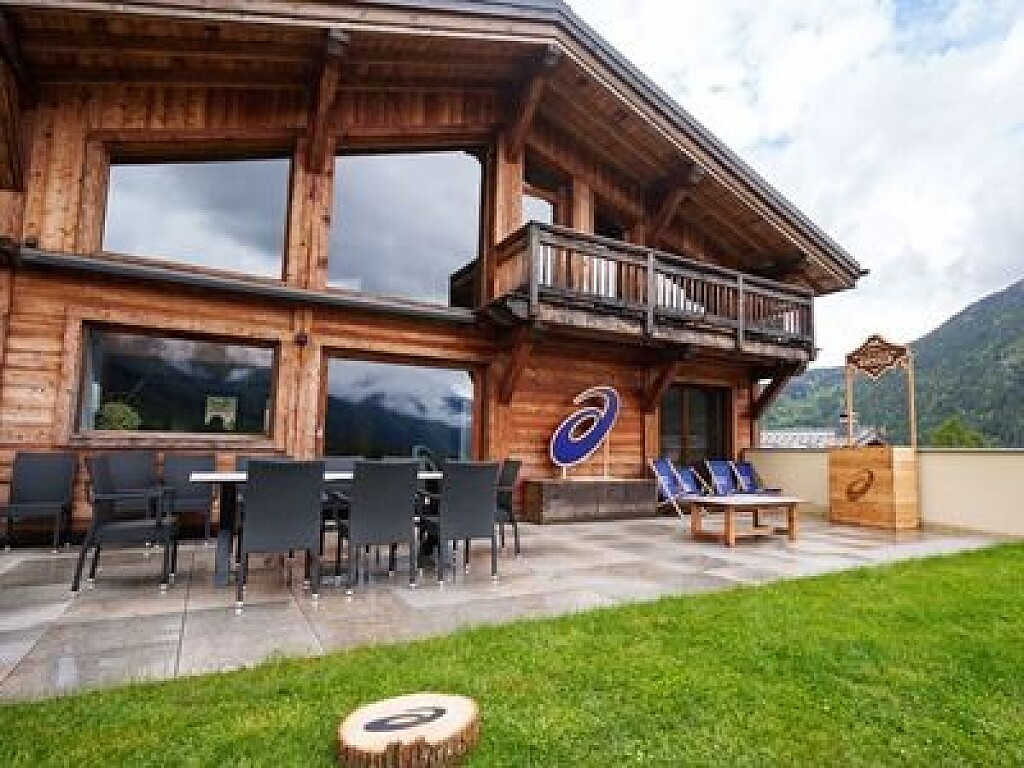
ASICS Trail Opens Its First Alpine High-Performance Basecamp for Elite Athletes
In a major statement of intent for the future of trail running, ASICS has officially unveiled its first-ever Alpine training basecamp — a purpose-built performance hub designed to help elite athletes train, recover, and compete at the highest possible level.
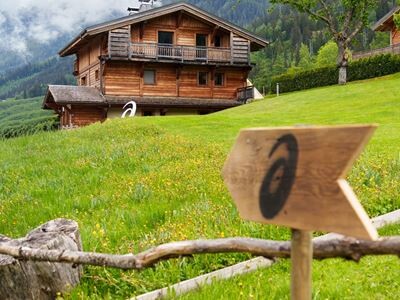
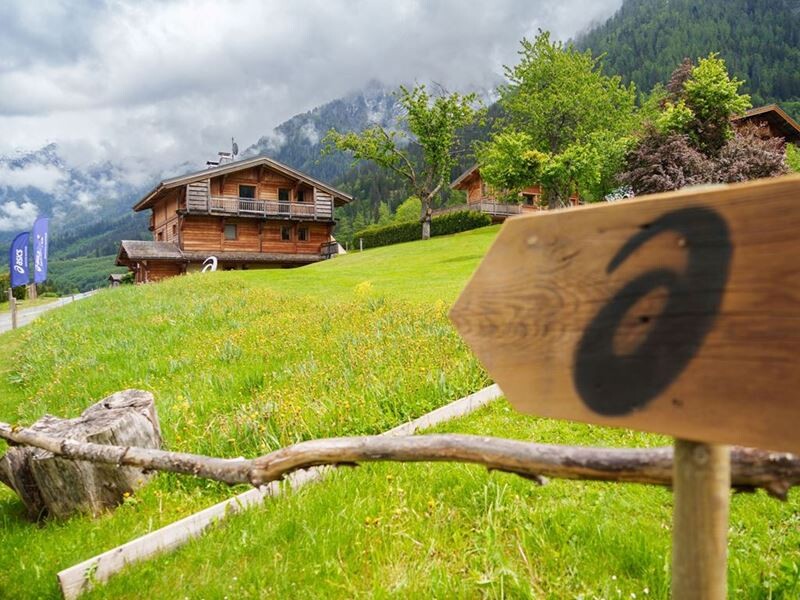
Nestled in the mountain town of Les Houches, at the foot of the iconic Mont Blanc range, the newly launched ASICS Basecamp represents a bold investment into the rapidly growing world of trail and mountain running. The facility has been specifically created to provide athletes with direct access to some of Europe’s most demanding alpine terrain while surrounding them with world-class performance support.
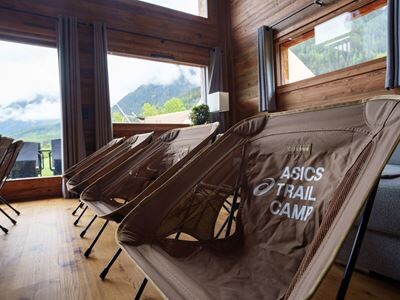
Designed as a dedicated mountain chalet, the basecamp can host up to ten athletes at a time, creating an environment where both established stars and rising talents can fully immerse themselves in high-level preparation. The location itself offers endless opportunities for altitude training, technical climbs, steep descents, and endurance sessions across some of the sport’s most challenging landscapes.
But the project goes far beyond simply providing accommodation in the mountains.
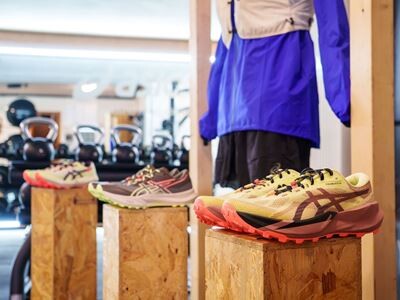
Inside the facility, athletes are supported by a complete high-performance system that includes a fully equipped gym, physiotherapy services, medical staff, recovery resources, and even a dedicated data scientist tasked with analyzing training metrics and optimizing performance. Every aspect of the environment has been carefully designed to help athletes maximize adaptation while minimizing the physical stress that often comes with elite-level trail racing.
What makes the initiative particularly significant is its long-term vision. Rather than focusing only on established champions, ASICS is positioning the basecamp as a platform for athlete development — helping remove many of the financial and logistical barriers that can prevent talented runners from accessing high-altitude training environments and professional support systems.
The launch also reflects the brand’s growing ambition within trail running, a discipline that continues to expand globally in both competitiveness and popularity. By investing directly into athlete infrastructure, ASICS is signaling that it intends to play a much larger role in shaping the future of the sport.
As trail running enters a new era of professionalism and scientific performance preparation, the ASICS Alpine Basecamp could quickly become one of the sport’s most influential training destinations — a place where elite ambitions are built deep in the mountains.
by Erick Cheruiyot for My Best Runs.
Login to leave a comment
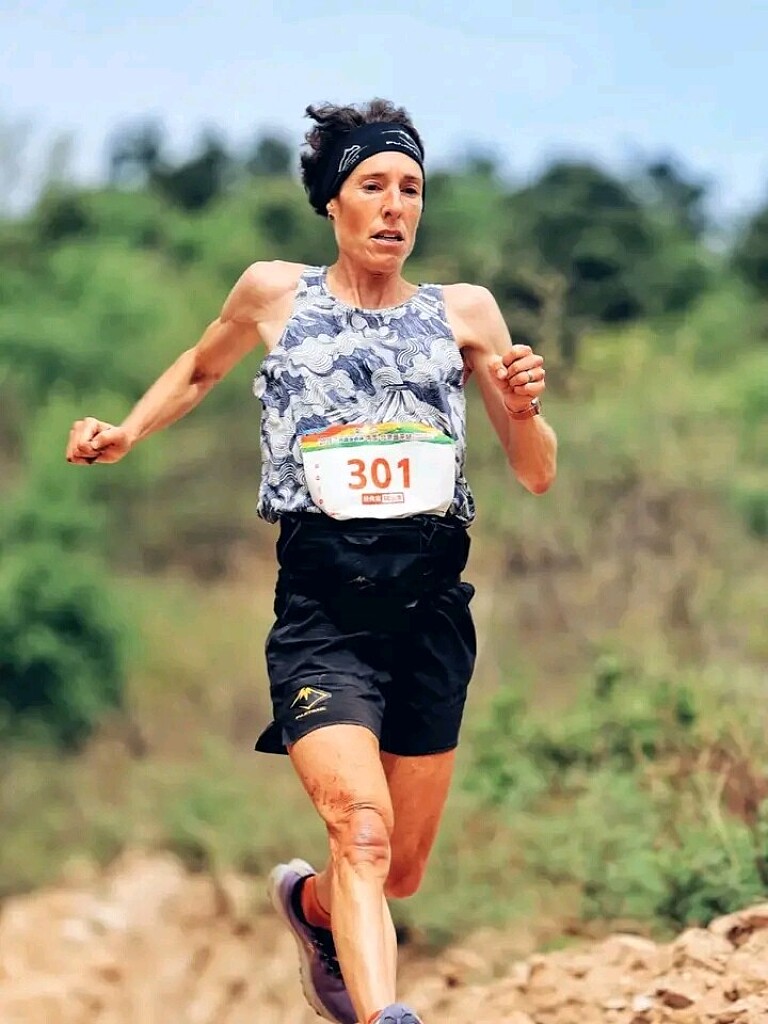
Maude Mathys Set for Another European Trail Running Showdown in Slovenia
Swiss trail-running icon Maude Mathys is preparing for another major championship appearance as she targets glory at the upcoming European Athletics Off-Road Running Championships in Kamnik, Slovenia, from June 5–7.
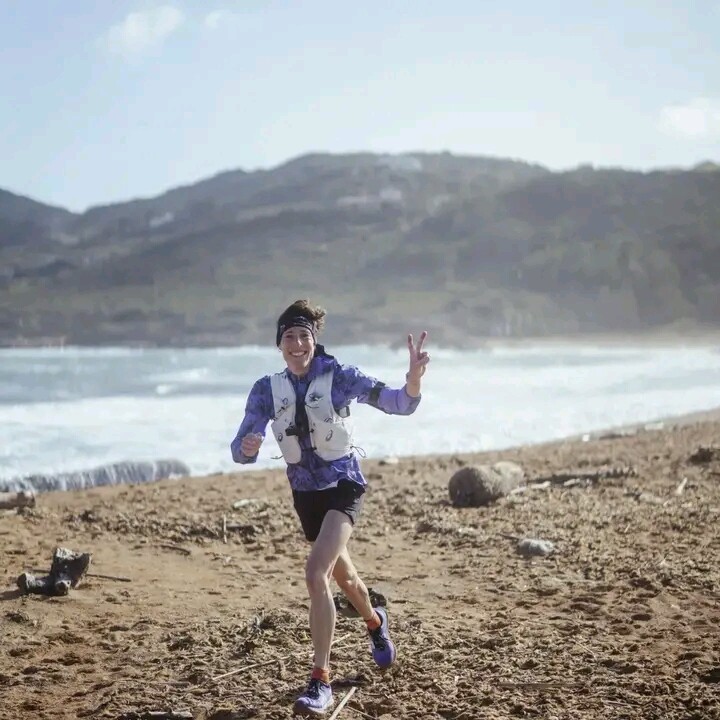
Widely regarded as one of Switzerland’s greatest mountain and trail runners, Mathys arrives at the championships with an already remarkable legacy behind her. The decorated Swiss athlete has claimed multiple world medals and three European titles, cementing her place among the finest off-road runners of her generation.
Her return to the continental stage immediately adds intrigue to the senior trail race, where Europe’s best endurance athletes will battle across the demanding Slovenian terrain.
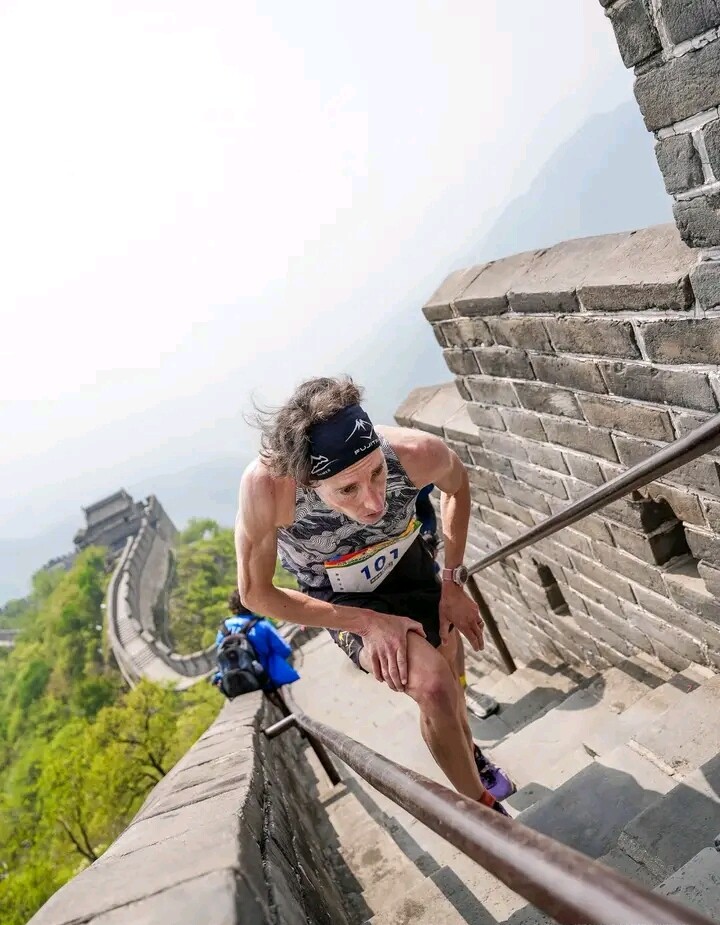
Known for her climbing strength, race intelligence, and consistency on technical courses, Mathys has repeatedly delivered under pressure throughout her career. Even among a new generation of emerging talent, the Swiss veteran remains one of the most respected and dangerous competitors in the field.
The championships in Kamnik are expected to provide a stern test, with rugged climbs, unpredictable terrain, and high-level competition likely to push every athlete to their limits.
But if history is any indication, Mathys rarely enters a championship simply to participate. She arrives with experience, pedigree, and the ability to perform when the stakes are highest.
With another European title potentially within reach, all eyes will once again be on the Swiss star as she returns to the mountains where she has built her reputation.
by Erick Cheruiyot for My Best Runs.
Login to leave a comment
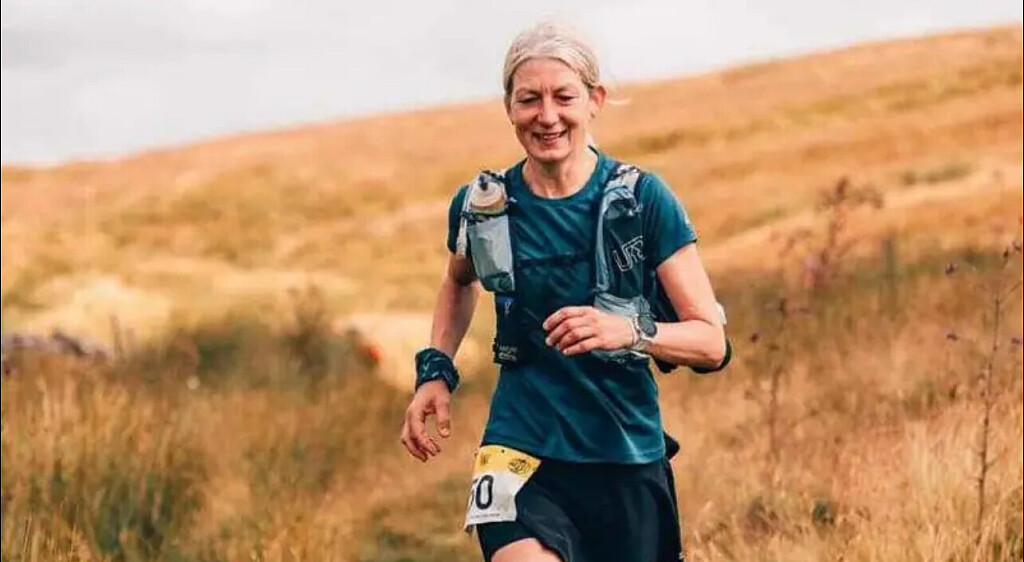
Finding Freedom on the Trails: How Running Helps a Yorkshire Mum Reclaim Her Identity
For 52-year-old Jude Harrison of York, North Yorkshire, England, running is far more than a fitness routine—it’s a lifeline. Between caring for her 17-year-old stepdaughter Emily, who was born with a rare chromosome translocation, and raising her 11-year-old daughter Tilly, life can feel like a constant balancing act. Yet through trail running, Jude has discovered a renewed sense of freedom and self.
“Sometimes it feels like Steve and I are two single parents living together,” Jude admits. “We’re always dividing our time because the girls have such different needs.”
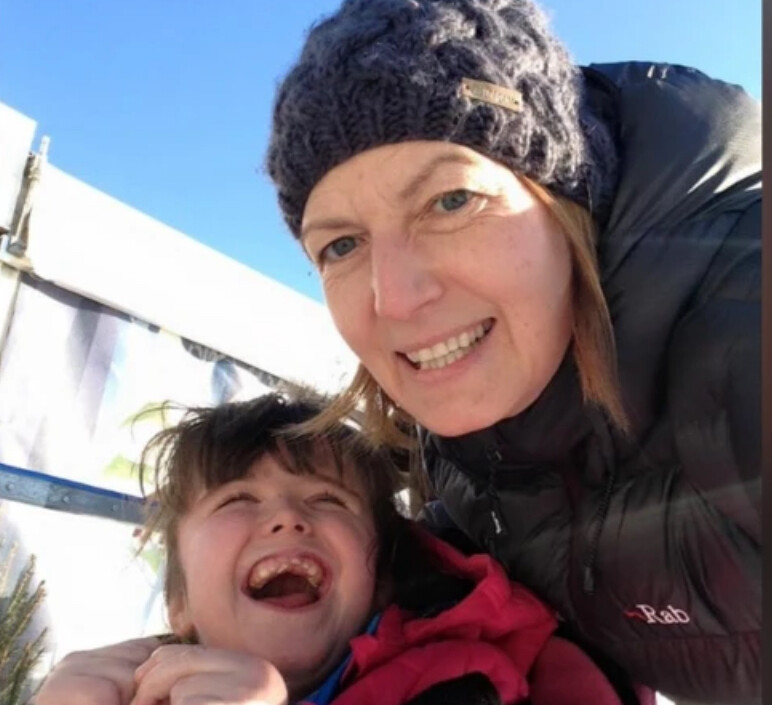
Emily is non-verbal, non-mobile, and lives with developmental delays that require full-time care. She attends a special needs school and receives monthly respite support, but most of the time, Jude and her husband Steve share her day-to-day care.
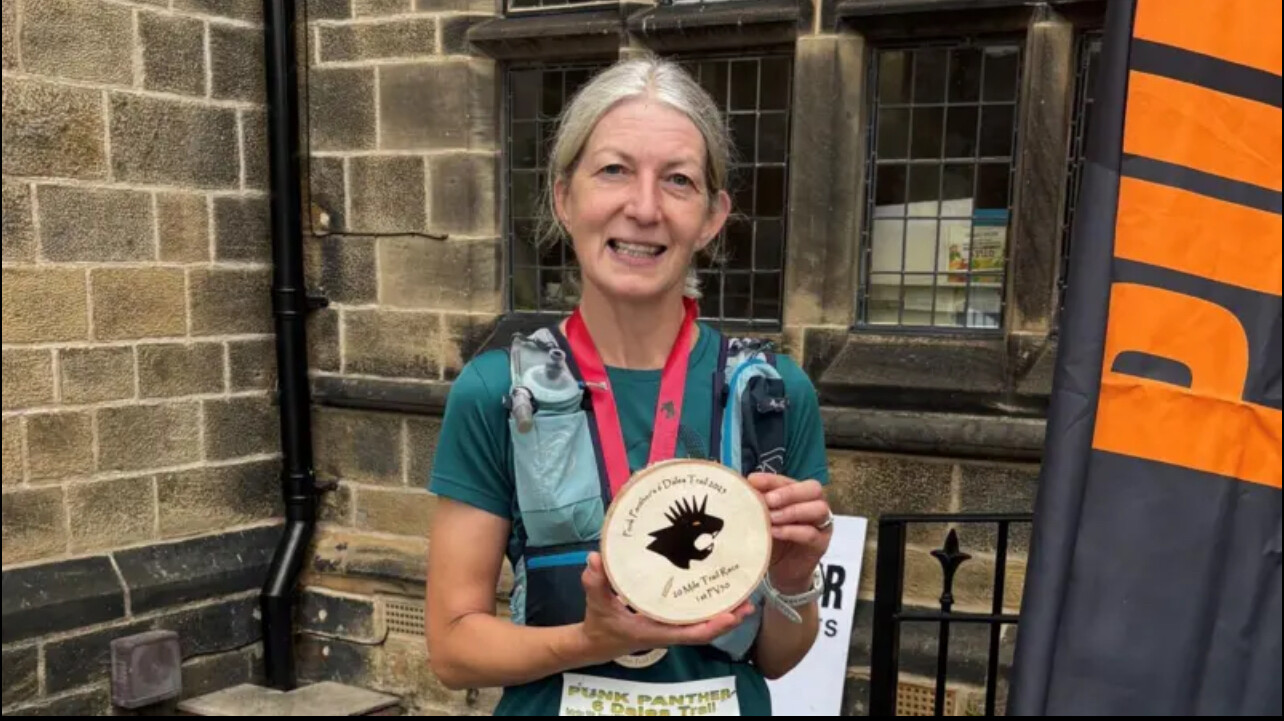
“When you become a parent, it’s easy to lose your sense of identity,” Jude says. “With a child who has complex needs, that feeling can be even stronger. Running is the time I carve out just for me. It’s my thing—it’s who I am. Out on the trails, I’m not just Emily’s mum or Tilly’s mum—I’m Jude.”
Trail running has become her sanctuary, helping her manage stress and stay mentally strong. Jude says the variety of the terrain, the scenery, and the camaraderie make it more rewarding than road running.
“People think trail running is harder, but I disagree,” she says. “There’s an unspoken rule that you walk the hills, run the flats, and enjoy the downhills. It’s about fun and community as much as fitness.”
Last month, Jude took on the 2 Valleys 22K Trail Race in the Lake District, England. With her husband staying home to care for Emily, she joined a team of 25 athletes and adventurers sponsored by Coventry Building Society, part of its campaign to support over-50s achieving their goals.
“Crossing the finish line in Keswick felt incredible,” she recalls. “Everyone was shouting my name. For once, it was just about me. It reminded me that I’m still capable of chasing my own goals.”
Now, Jude has her sights set on next year’s 5 Valleys Challenge, which doubles the distance of her most recent race.
“I sometimes have to remind myself that I’m 52 and still out here doing this,” she says. “It’s not about trophies—it’s about being present, keeping fit, and showing my daughters that age and circumstance don’t define you. I’ve still got plenty of running left in me.”
by Boris Baron
Login to leave a comment
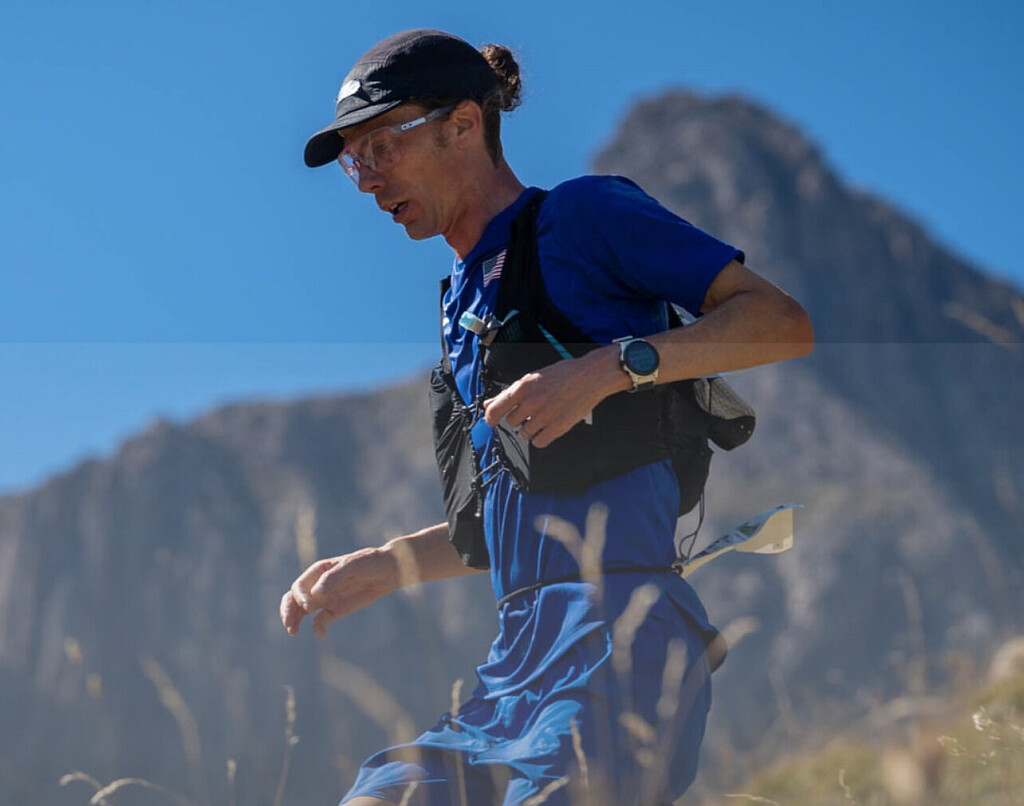
Americans Jim Walmsley and Katie Schide Win Trail Running World Championship Titles
Canfranc, Spain — September 27, 2025. It was a historic day for U.S. trail running in the Pyrenees as Jim Walmsley and Katie Schide stormed to victory in the Long Trail race at the 2025 World Mountain and Trail Running Championships. Both dominated the grueling 50.9-mile course that packed in nearly 17,750 feet of elevation gain and loss across technical, mountainous terrain.
Walmsley’s Men’s Triumph
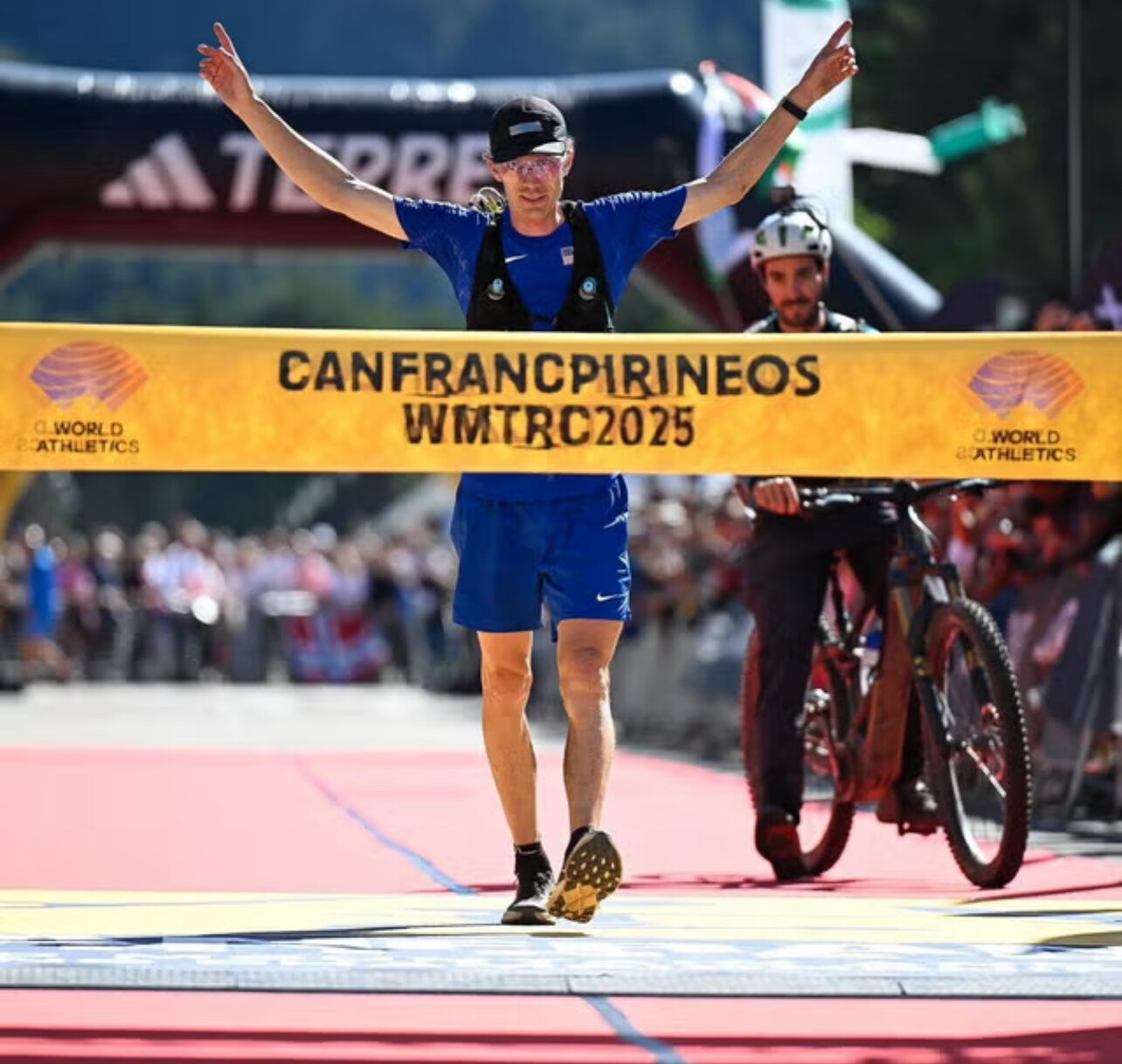
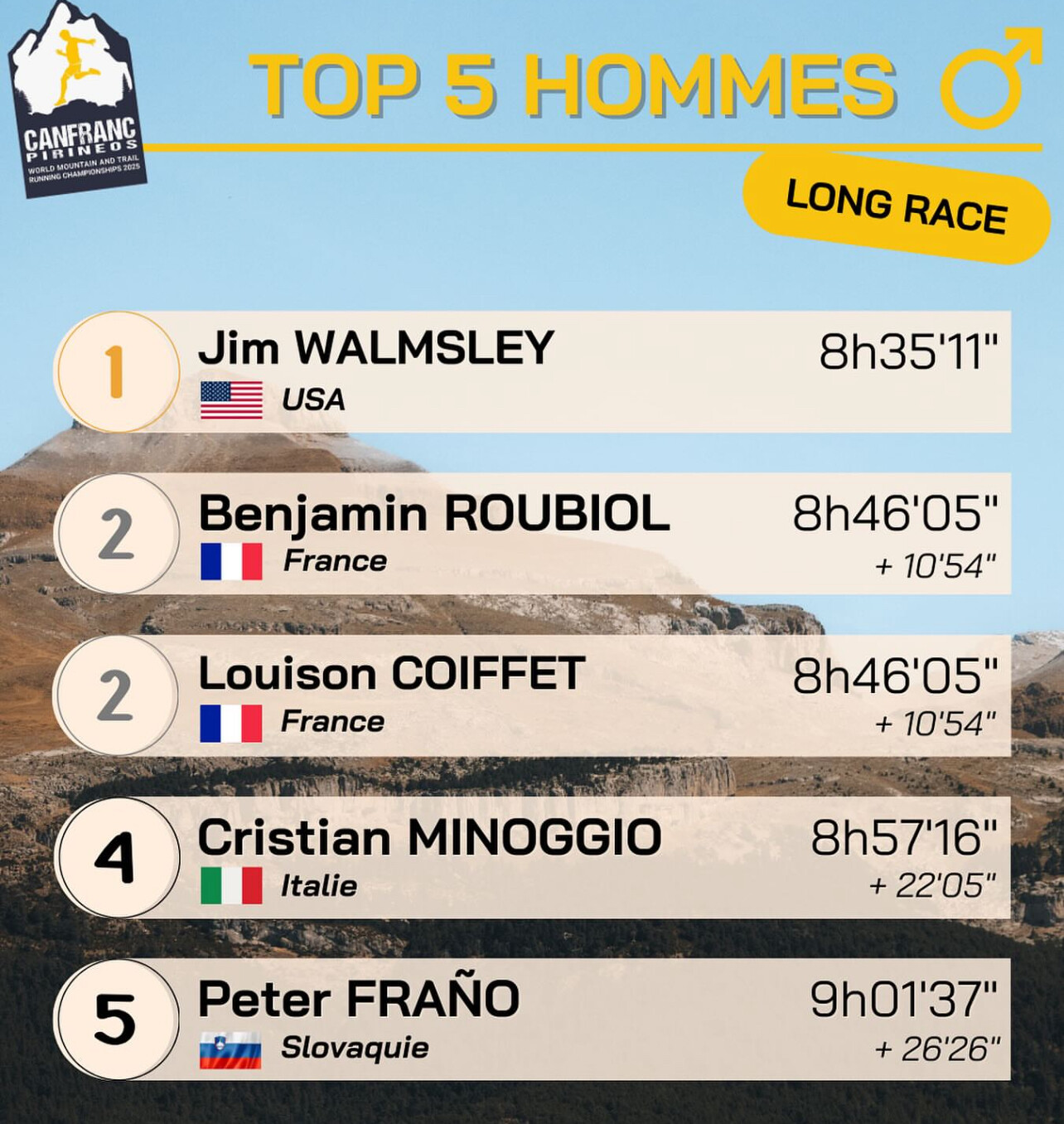
Walmsley, already celebrated as one of the best ultra runners of his generation, played his cards perfectly. After running with France’s Benjamin Roubiol and Louison Coiffet through the opening stages, he surged clear just past 47 km. By the 70 km mark he had carved out a commanding lead and never looked back.
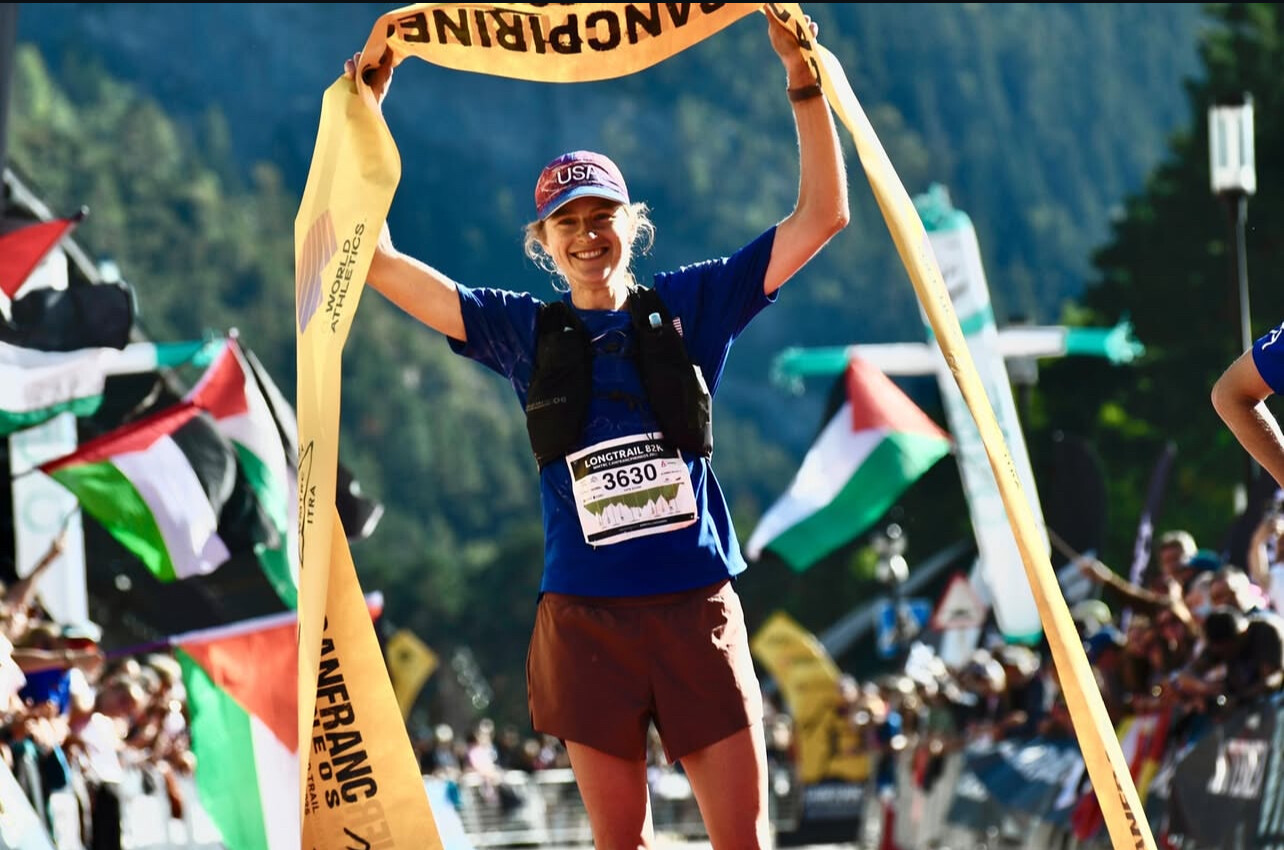
He broke the tape in 8:35:11, more than ten minutes ahead of Roubiol and Coiffet, who shared silver in 8:46:05. For Walmsley, who became the first American man to win UTMB in 2023, this victory further cements his legacy as the standard-bearer for U.S. trail and ultra running.
Schide’s Commanding Performance
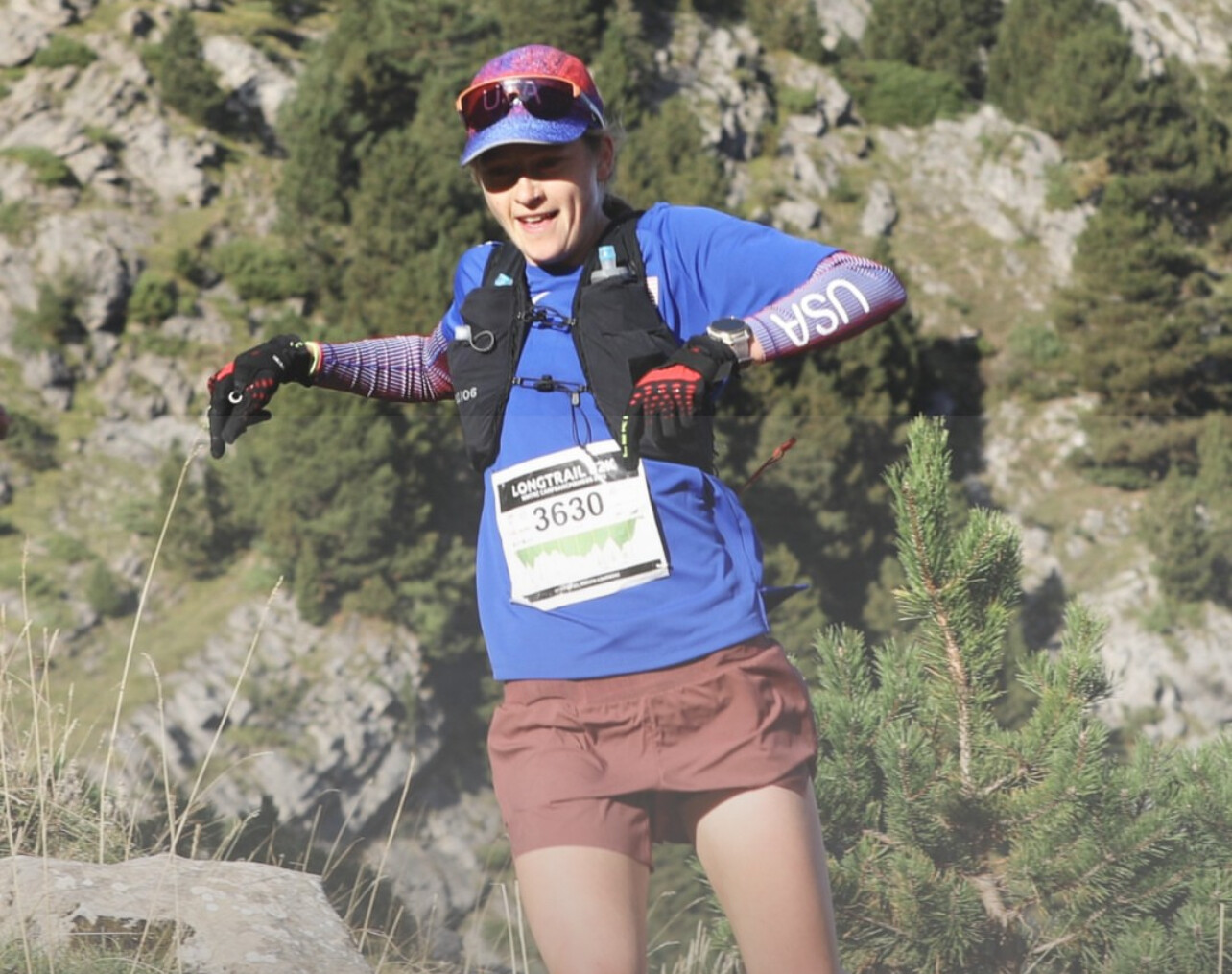
On the women’s side, Katie Schide delivered a masterclass in front-running. She built a gap of 38 seconds within the first 4 km, stretched it to five minutes by 25 km, and by the halfway point was nearly 20 minutes ahead of her nearest rival.
Schide crossed the finish in 9:57:59, winning by more than 25 minutes. Already a champion of UTMB, Hardrock, and Western States, her latest triumph adds a world title to a résumé that ranks among the most impressive in the sport.
A Landmark for U.S. Trail Running
Together, Walmsley and Schide showcased American dominance on one of the world’s toughest stages. Their wins highlight not only physical endurance and technical skill but also tactical brilliance and unwavering mental strength.
For fans and fellow athletes alike, their victories in the Pyrenees are a reminder of what’s possible when preparation meets opportunity on the world stage.
by Boris Baron
Login to leave a comment
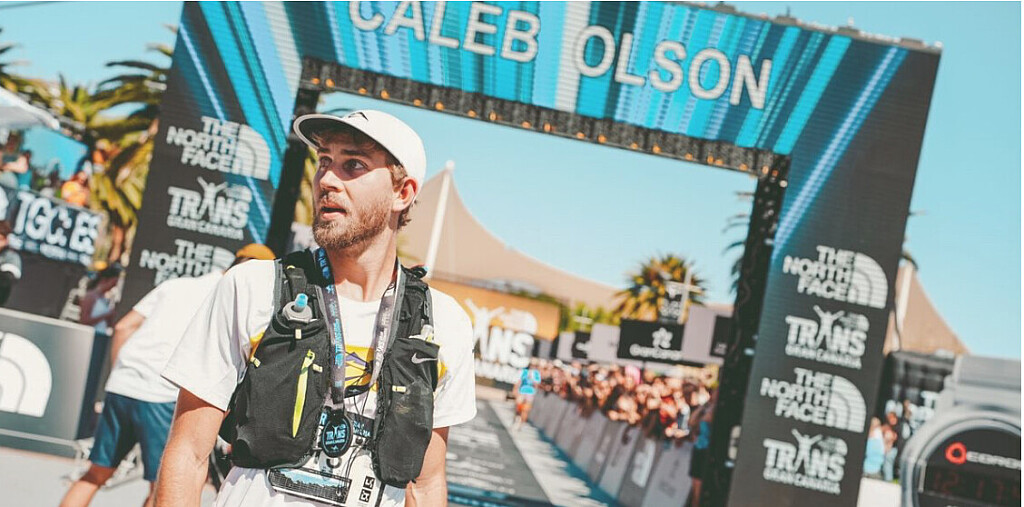
Caleb Olson Stuns the Field with Breakthrough Win at the 2025 Western States 100
American ultra-trail runner Caleb Olson delivered a career-defining performance at the 2025 Western States Endurance Run, emerging as the surprise champion in what was billed as one of the most competitive editions in the race’s 52-year history.
The 29-year-old from Salt Lake City conquered the infamous 100-mile (161-kilometer) course through Northern California’s rugged Sierra Nevada mountains, finishing in 14 hours, 11 minutes, and 25 seconds—just two minutes shy of Jim Walmsley’s legendary course record set in 2019 (14:09:28). Olson’s time is now the second-fastest ever recorded at Western States.
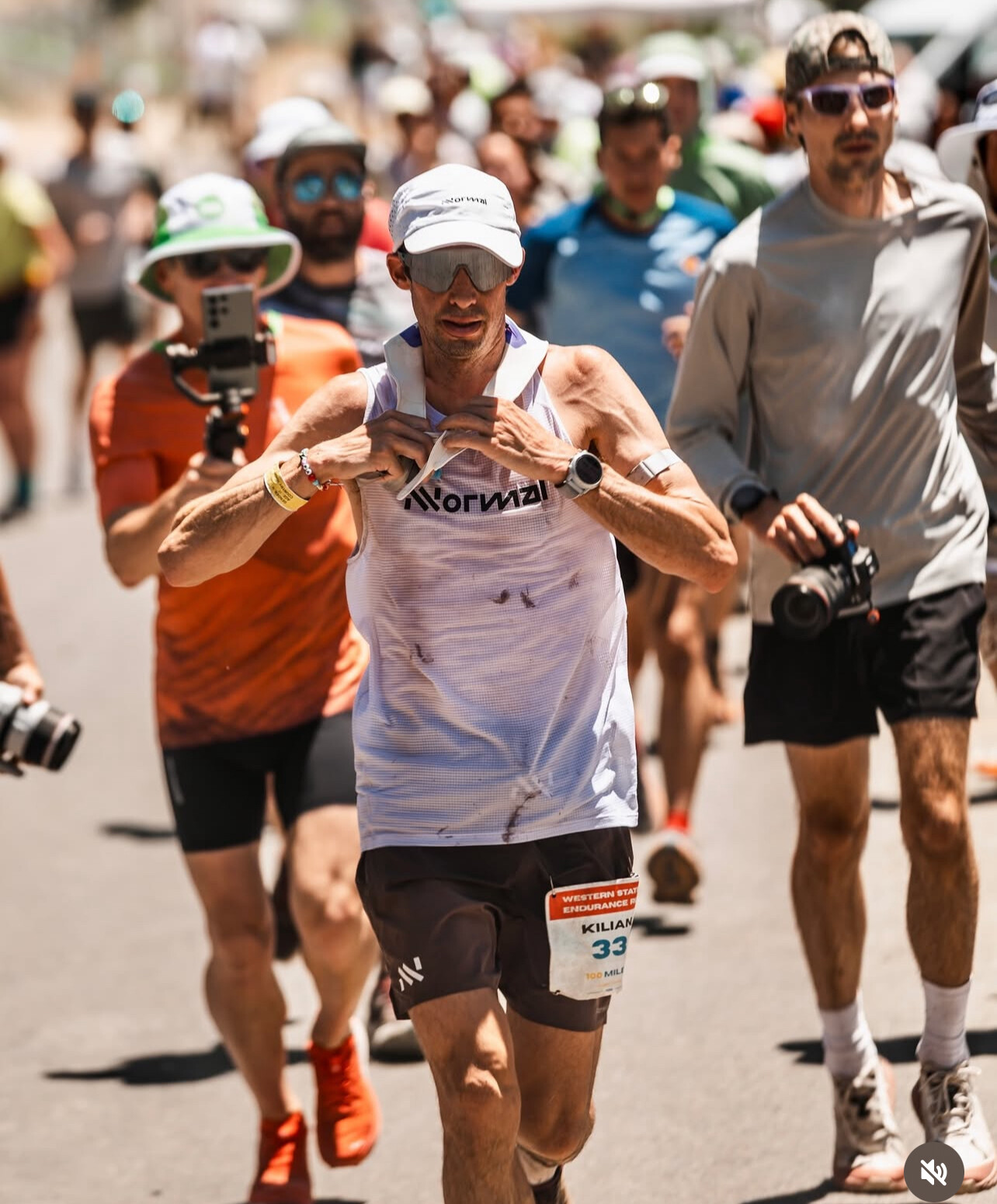
His win comes just a year after a strong fifth-place finish in 2024 and cements his place among the top ranks of global ultrarunning.
A Battle of Heat, Elevation, and Grit
The race began at 5:00 a.m. in Olympic Valley, with runners quickly climbing to the course’s highest point—2,600 meters (8,600 feet)—before descending into the heat-scorched canyons. Snowfields in the early miles gave way to punishing heat, as temperatures soared to 104°F (40°C) in exposed sections of the trail.
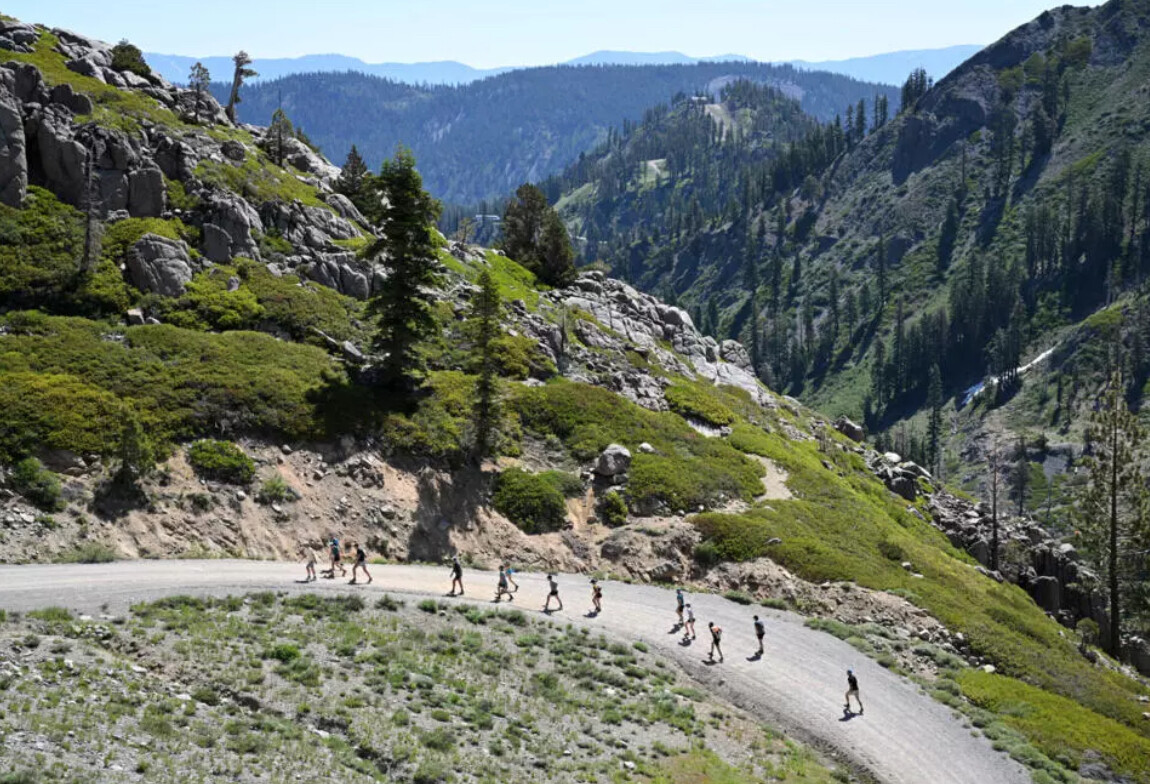
Despite the brutal conditions, approximately 15 elite athletes crested the high point together, setting the stage for a tactical and attritional race. Olson surged to the front midway, clocking an average pace near 12 kilometers per hour and never relinquished his lead.
Elite Field Delivers Drama
Close behind Olson was Chris Myers, who battled stride-for-stride with the eventual winner for much of the race before taking second in 14:17:39. It was a breakthrough performance for Myers, who has been steadily climbing the ultra ranks.
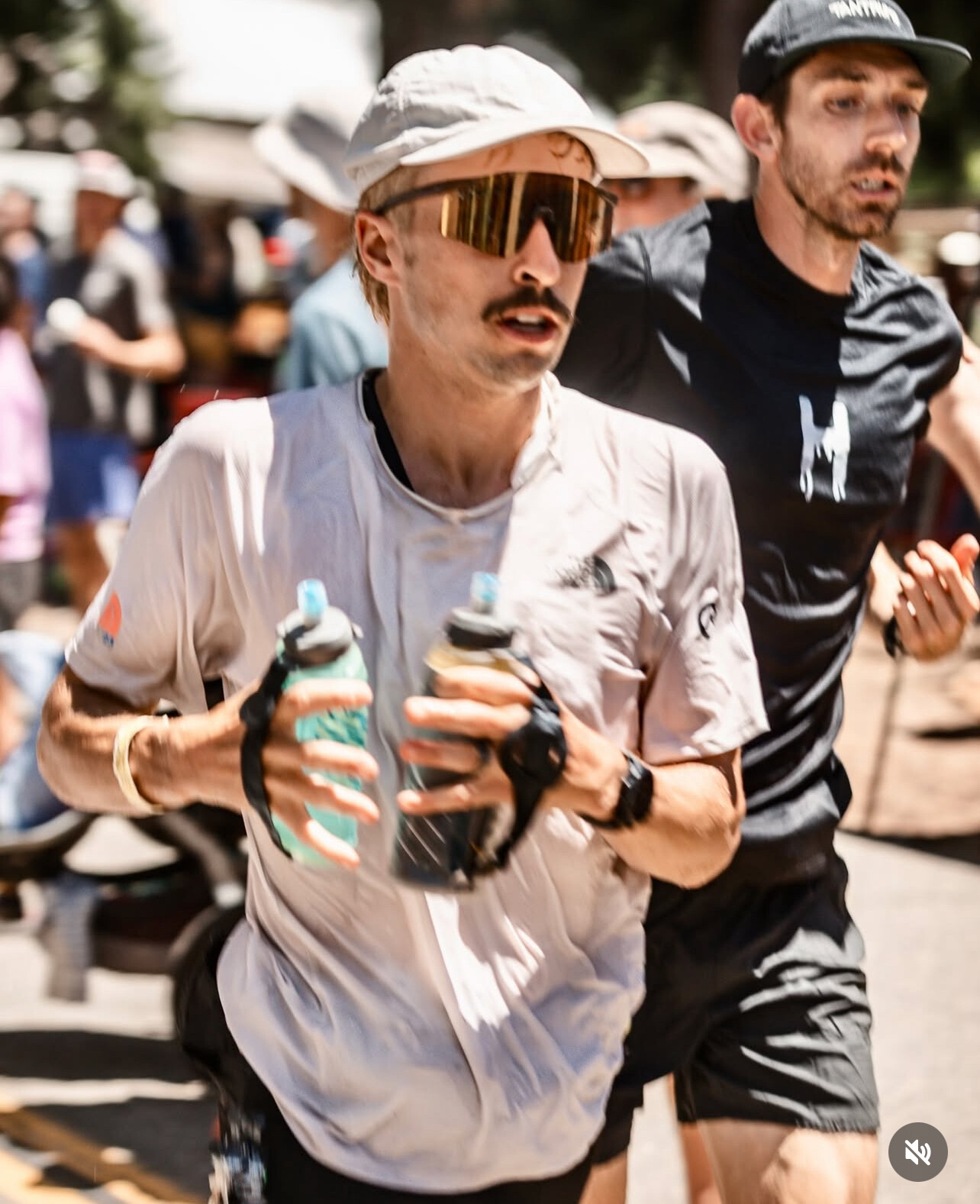
Spanish trail running legend Kilian Jornet, 37, finished third, matching his 2010 result. Returning to Western States for the first time since his win 14 years ago, Jornet hoped to test himself against a new generation on the sport’s fastest trails. Though renowned for his resilience in mountainous terrain, he struggled to match the frontrunners during the course’s hottest sections.
“Western States always finds your limit,” Jornet said post-race. “Today, that limit came earlier than I’d hoped.”
Rising Stars and Withdrawals
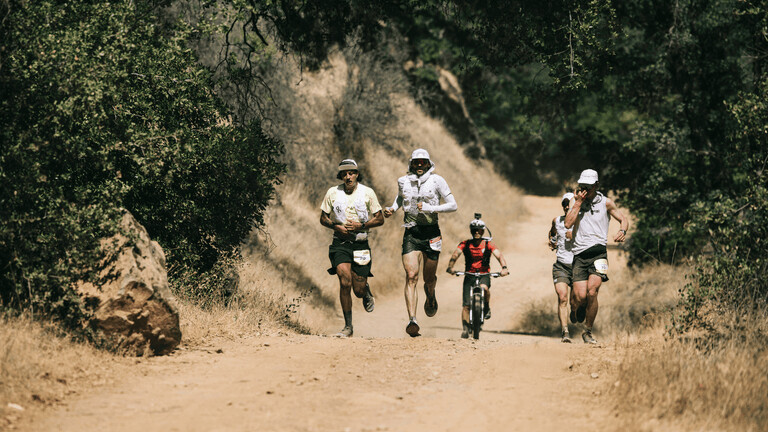
Among the elite field was David Roche, one of America’s most promising young ultrarunners, who was forced to withdraw after visibly struggling at the Foresthill aid station (mile 62). Roche had entered the race unbeaten in 100-mile events.
“I’ve never seen him in that kind of state,” said his father, Michael Roche, who was on hand to support him. “This race just takes everything out of you.”
Roche’s exit was a reminder that, even with perfect preparation, the Western States 100 is as much about survival as speed.
The Lottery of Dreams
Held annually since 1974, the Western States Endurance Run is more than a race—it’s a pilgrimage. With only 369 slots available, most runners enter via a lottery system with odds of just 0.04% for first-timers. Elite athletes can bypass the lottery by earning one of the coveted 30 Golden Ticketsawarded at select qualifying races each year.
For many, getting to the start line takes years of qualifying and persistence—making finishing the race an achievement in itself.
Olson’s Star Ascends
Before this landmark win, Caleb Olson was already on the radar of the ultra community. He had logged top-20 finishes at the “CCC”—a 100-kilometer race associated with the Ultra-Trail du Mont-Blanc series—and had demonstrated consistency in major trail events.
Saturday’s victory vaults him into the upper echelon of global ultrarunners and marks a generational shift in the sport.
“I’ve dreamed of this moment,” Olson said at the finish. “Today, everything came together—the training, the heat management, and the belief. This is why we run.”
2025 Western States results
Men
Saturday June 28, 2025 – 100.2 miles
Caleb Olson (USA) – 14:11:25
Chris Myers (USA) – 14:17:39
Kilian Jornet (SPA) – 14:19:22
Jeff Mogavero (USA) – 14:30:11
Dan Jones (NZL) – 14:36:17
by Boris Baron
Login to leave a comment

Western States 100
The Western States ® 100-Mile Endurance Run is the world’s oldest and most prestigious 100-mile trail race. Starting in Squaw Valley, California near the site of the 1960 Winter Olympics and ending 100.2 miles later in Auburn, California, Western States, in the decades since its inception in 1974, has come to represent one of the ultimate endurance tests in the...
more...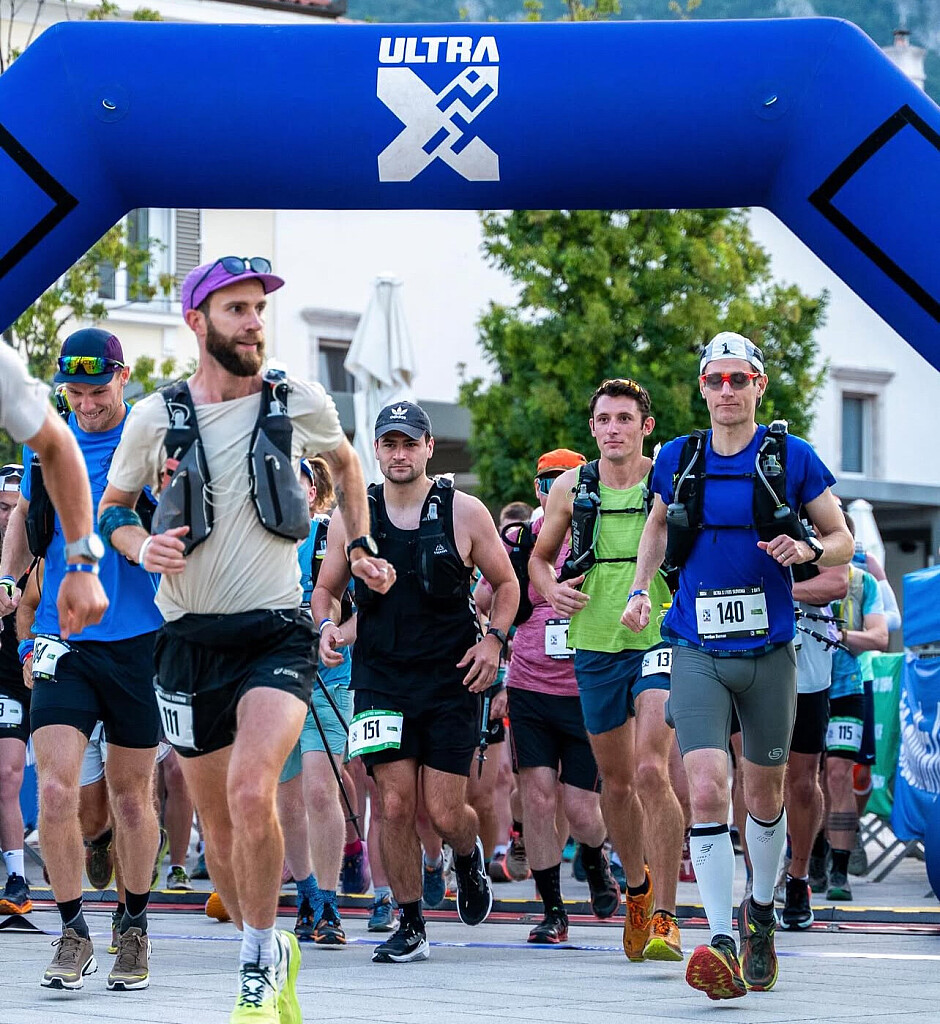
Runners From Around the World to Converge on Loch Ness for Ultra X Scotland 2026
The Scottish Highlands will once again welcome hundreds of endurance runners as Ultra X Scotland returns May 2–3, 2026. Now recognized as the nation’s largest ultra-marathon and recently listed among the world’s top ultra races by TimeOutdoors, this rugged event draws competitors from across the globe to challenge themselves on some of the UK’s most dramatic terrain.
Ultra X Scotland isn’t a single race but a weekend-long festival of trail running, offering something for every level of ultrarunner. Participants can choose from six distances:
• Ultra X Scotland 110km – A full ultra that can be run in one stage or split into two.
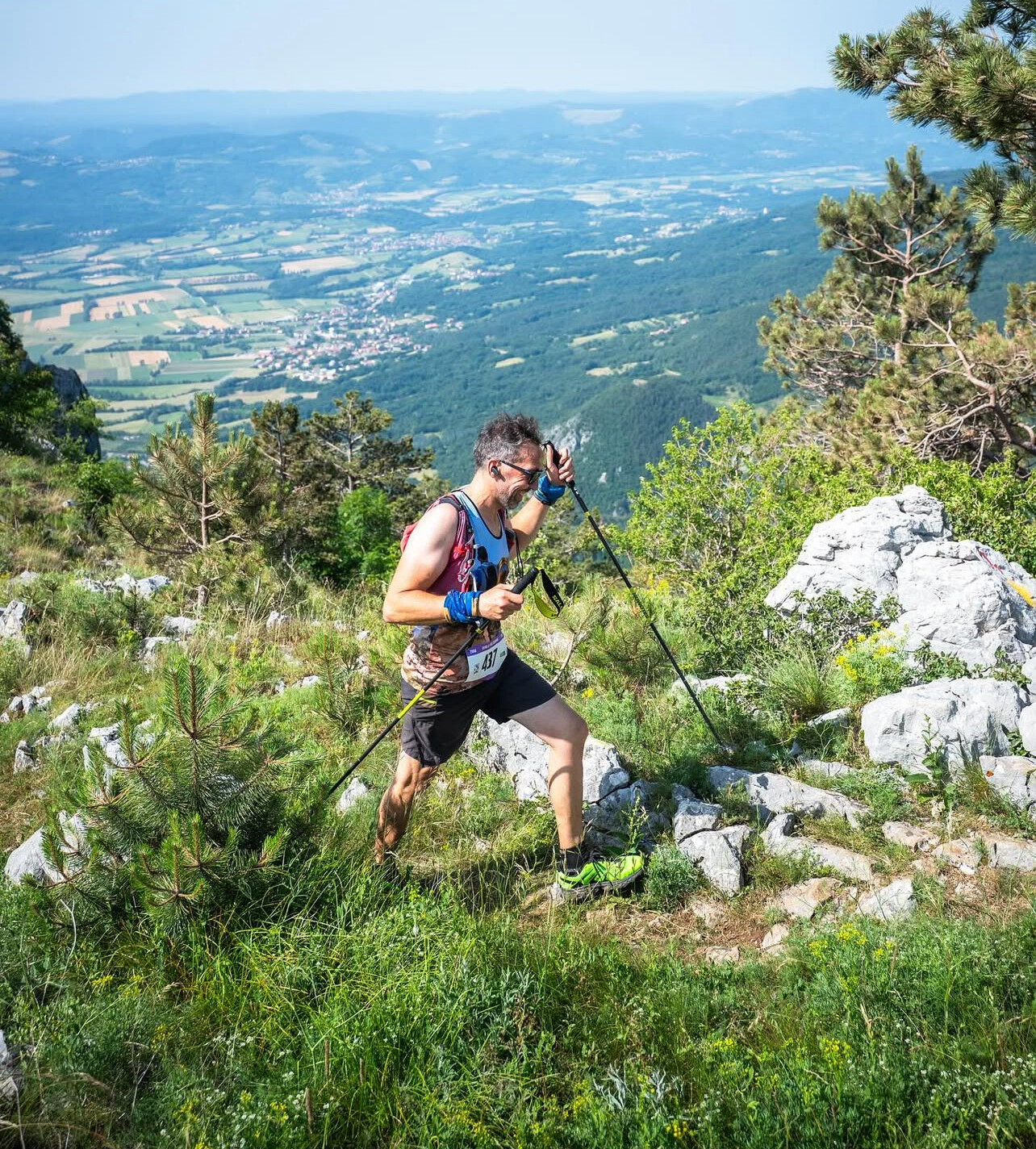
• Ultra X Scotland 60km – Following the Great Glen Way and the North side of Loch Ness.
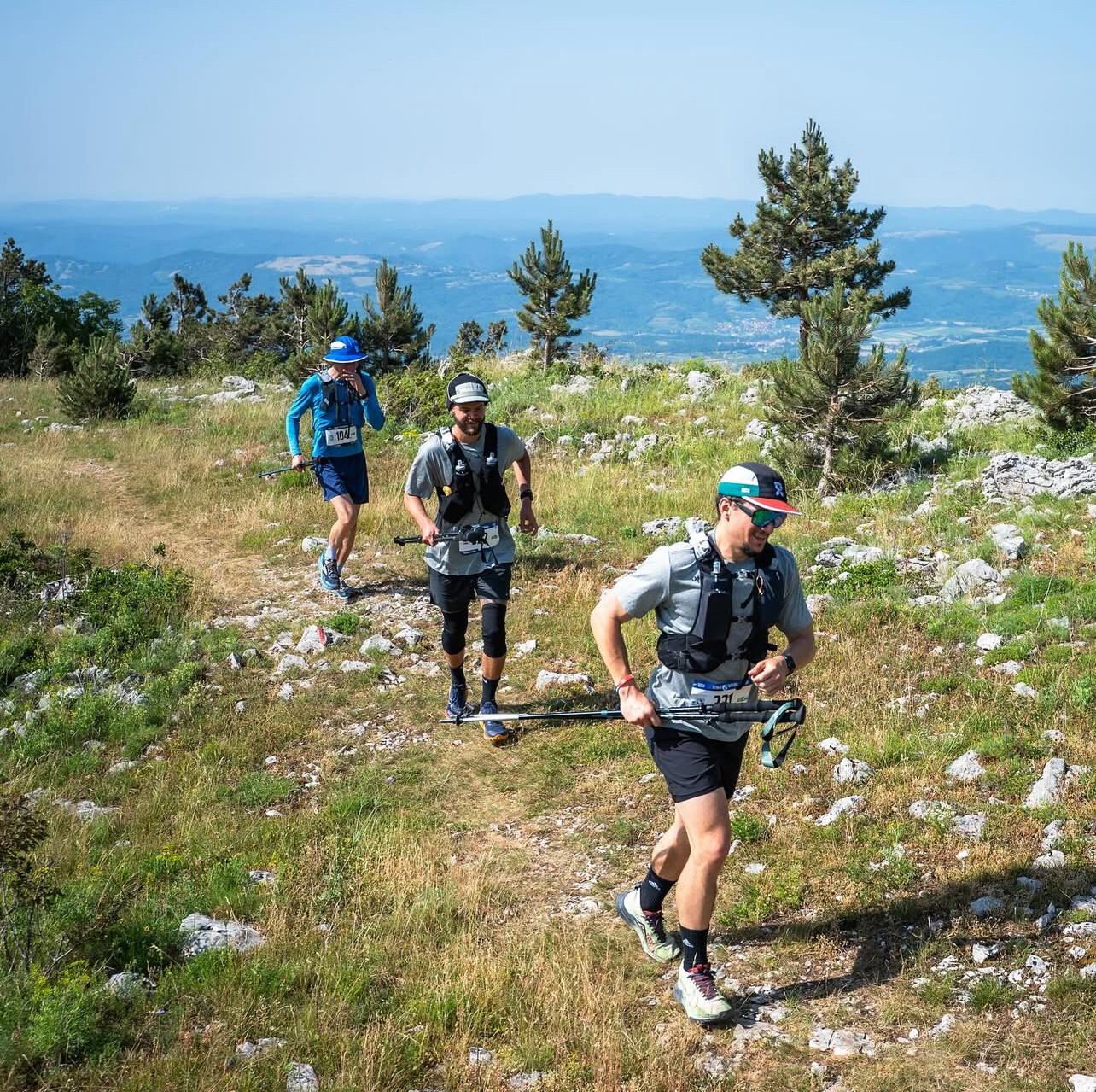
• Ultra X Scotland 50km – Tracing the South Loch Ness Trail.
• Ultra X Scotland 25km – A shorter but still challenging point-to-point route finishing in Dores.
• Ultra X Scotland 12km – An entry-level trail option also finishing in Dores.
All races wind through the hills, forests, and lochside paths of the Highlands, immersing runners in the region’s rugged natural beauty. The 110km event is a UTMB® World Series Qualifier in the 100K category, while the 60km, 50km, and 25km routes serve as qualifiers in their respective UTMB® distances. This connection to the global UTMB® series adds a level of prestige and stakes for many competitors.
In 2025, the event drew over 800 runners from more than 38 countries, bringing a direct economic impact of more than £200,000 to the Inverness area. Emma Harrison, Destination Development Manager at Visit Loch Ness, praised the race’s role in promoting active tourism:
“Ultra X events have become an important active offering for Inverness and Loch Ness. The organisers bring the area to life over the weekend, offering runners the chance to experience our unique landscape. We fully support these races, knowing the team involves the community and supports local businesses.”
Indeed, the event collaborates with a broad coalition of regional partners, including Loch Ness Highland Resort, the Great Glen Way, Forestry and Land Scotland, and a range of local food and drink vendors from Dog Falls Brewing to Red Shank Catering.
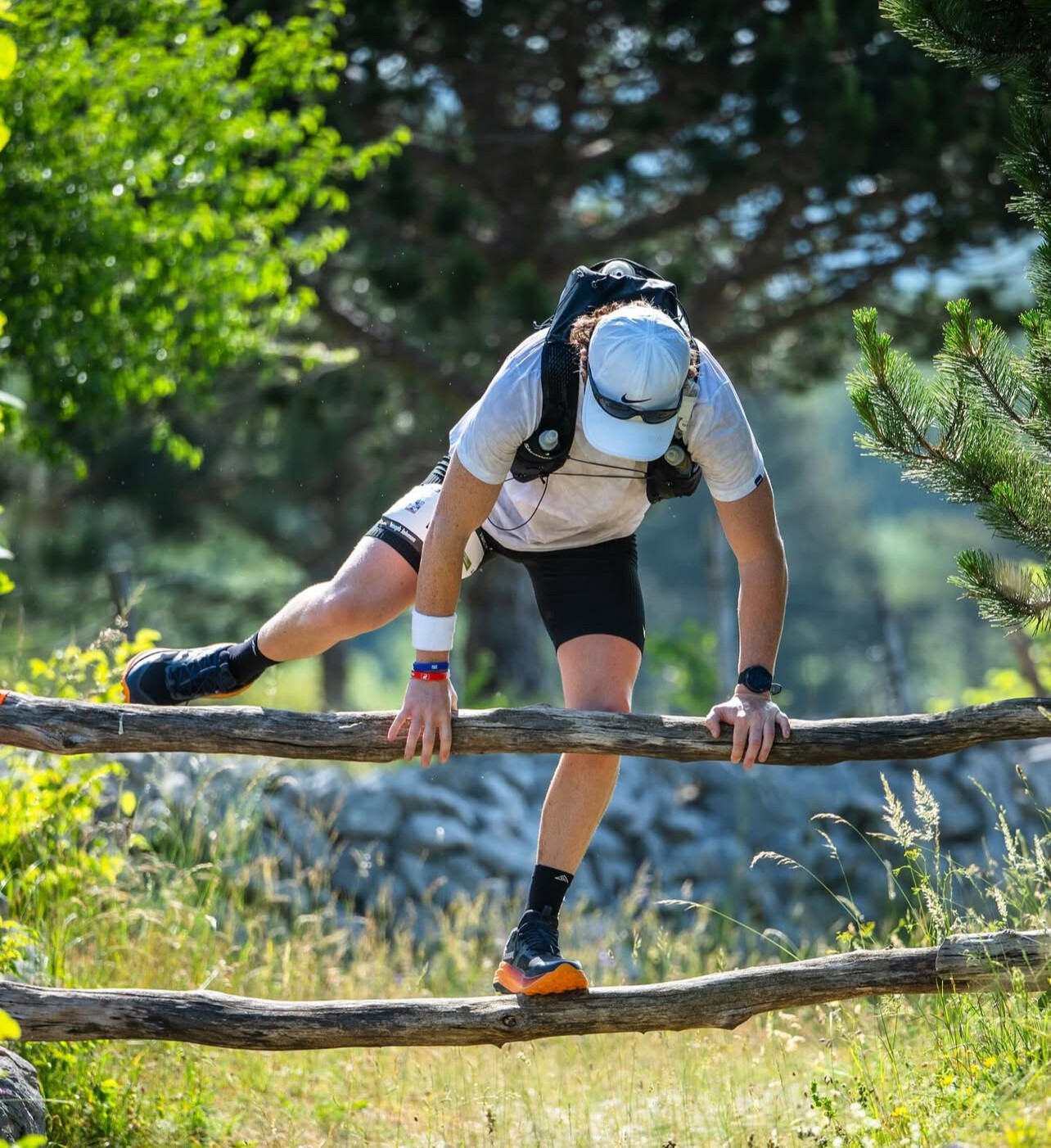
While the scenery may be postcard-worthy, the course itself is anything but tame. Participants will face the wild and varied terrain of the Highlands—climbing through pine forests, tracing the shores of Loch Ness, and crossing remote glens that seem untouched by time.
For many, it’s more than a race. It’s a test of endurance in one of the most storied landscapes in Europe.
Registration for Ultra X Scotland 2026 opens June 23, 2025. If past years are any indication, early spots won’t last long.
by Boris. Baron
Login to leave a comment
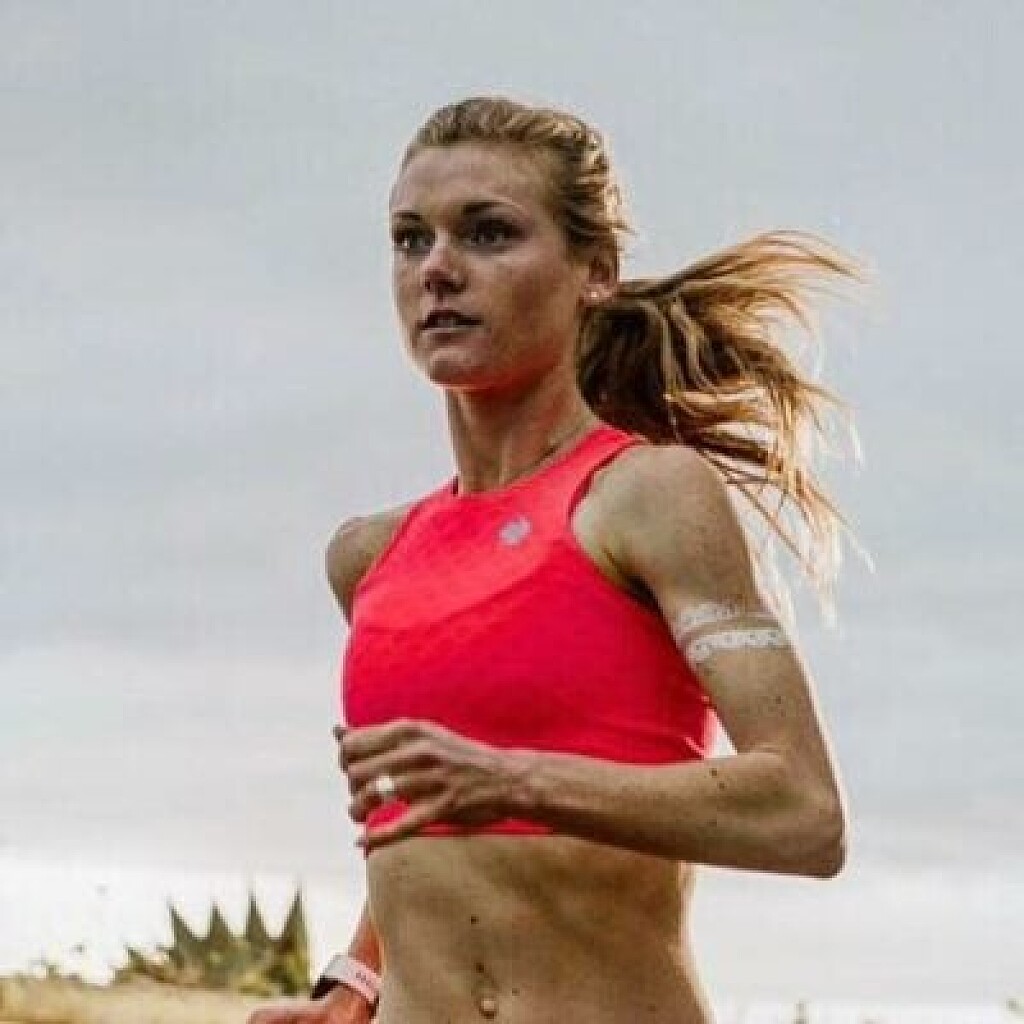
Addi Zerrenner’s Second Wind: From Track Star to Trail Warrior
For years, Addi Zerrenner chased speed on the track and roads. As an NCAA standout at Arizona and one of the top U.S. prospects in distance running, she seemed destined for marathon greatness. But after years of pushing, something shifted. The joy dimmed. The pressure mounted. And like many elite athletes, Addi hit a wall — not physically, but mentally.
What came next wasn’t a retreat — it was a reinvention.
Trading Pavement for Peaks
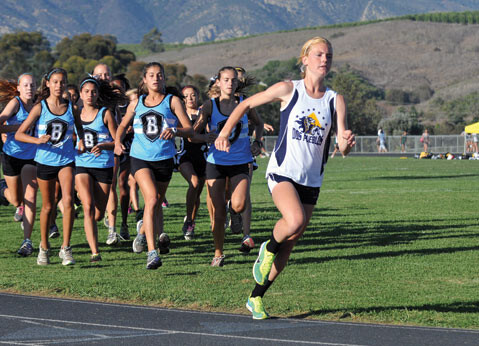
Addi left the regimented world of splits and lap counts behind and found herself drawn to the mountains. There, she discovered something that had been missing: joy.
“It was like breathing again,” she said in a recent interview. “Out there, it wasn’t about pace. It was about movement, freedom, and reconnecting with why I loved running in the first place.”
That shift wasn’t just emotional. Addi began to thrive. She posted strong performances at mountain and trail races across the West, including podium finishes at high-profile events like the Broken Arrow Skyrace and strong showings on technical terrain that would leave most road runners gasping.
From Burnout to Breakthrough
Her story resonates far beyond elite circles. In a sport that too often burns out its best too early, Addi Zerrenner shows what’s possible when an athlete listens to their body — and more importantly, their heart.
Trail running, with its slower pace and wilder spirit, gave her the space to heal and rediscover competition on her own terms. It’s a reminder that success in running isn’t a straight line — and sometimes, leaving the track is the only way to find your lane.
What’s Next for Addi?
With momentum behind her and a growing presence in the trail and ultra world, Addi’s future could include anything from the UTMB series to U.S. Mountain Running Team bids. And with her platform, she’s also becoming a voice for runners navigating transitions — from injury, burnout, or even just life’s next phase.
“I still run hard. I still want to be great. But I’m doing it for me now,” she said. “And that’s more powerful than any PR.”
by Boris Baron
Login to leave a comment
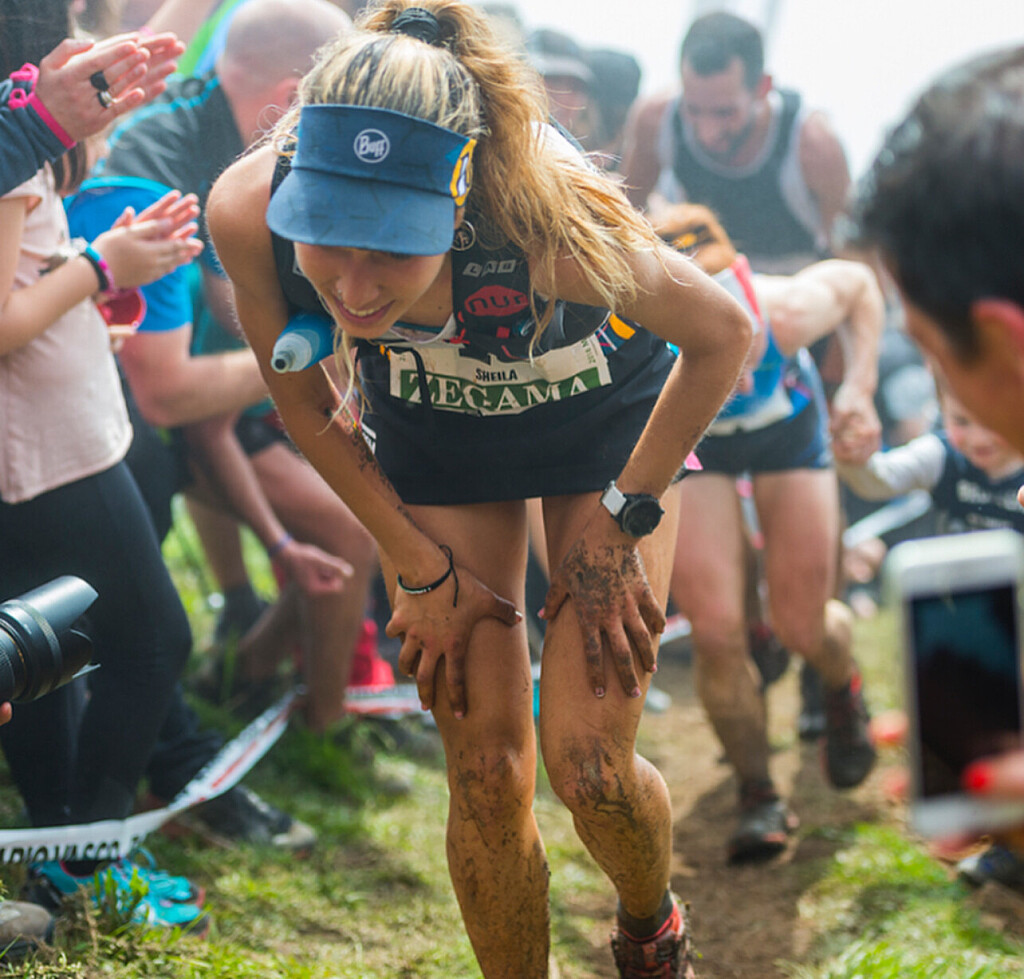
Why Zegama Remains the Most Revered Mountain Marathon
Zegama-Aizkorri 2025: The Mountain Marathon That Defines Grit and Glory
ZEGAMA, SPAIN — On Sunday, May 25, 2025, the world’s most electrifying trail marathon returns to the rugged peaks of the Basque Country. The Zegama-Aizkorri Mountain Marathon, now in its 24th edition, is more than a race—it’s a rite of passage for mountain runners.
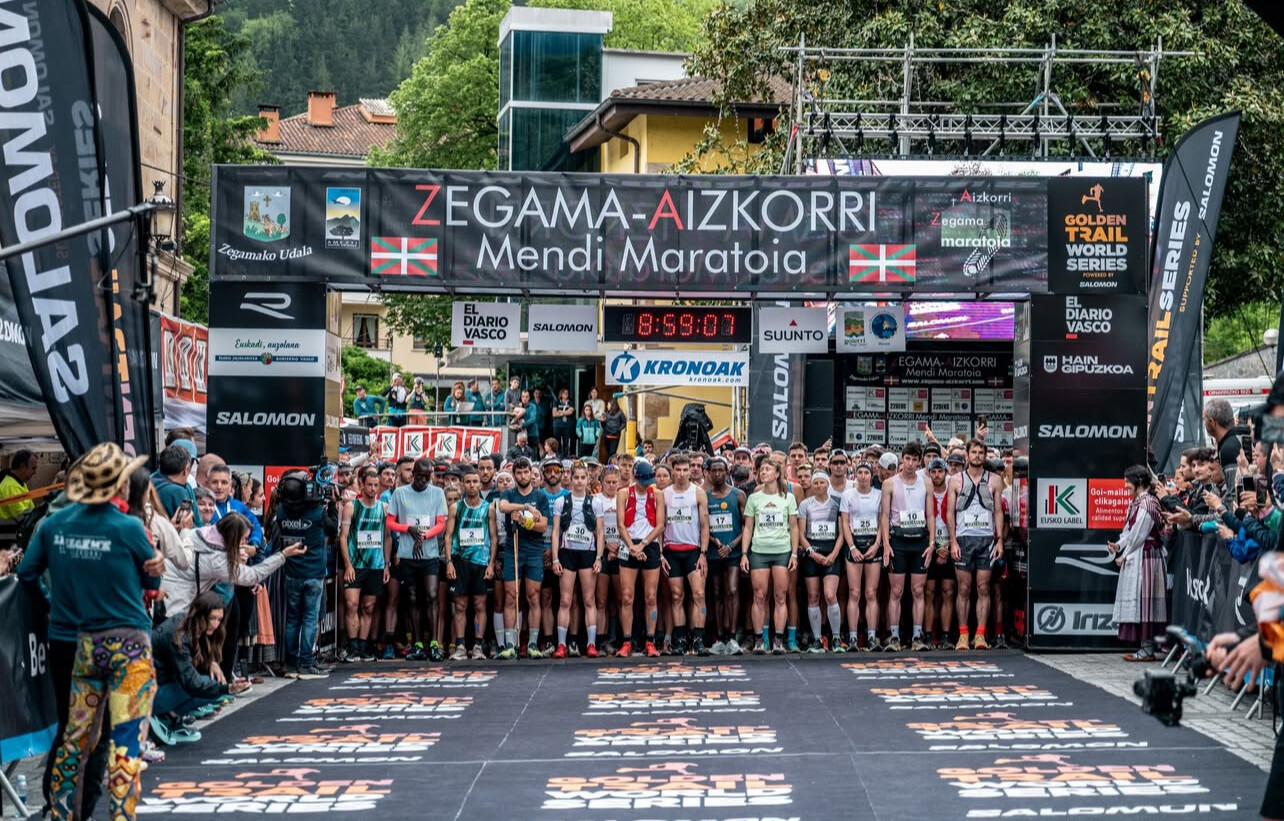
Each year, hundreds of elite and amateur athletes are drawn to the small village of Zegama to test themselves on a course that is as breathtaking as it is brutal. With 42.195 kilometers (26.2 miles) of steep, technical terrain and 2,736 meters (8,976 feet) of vertical gain, the challenge is legendary.
A Look Back at 2024: Jornet and Nordskar Shine
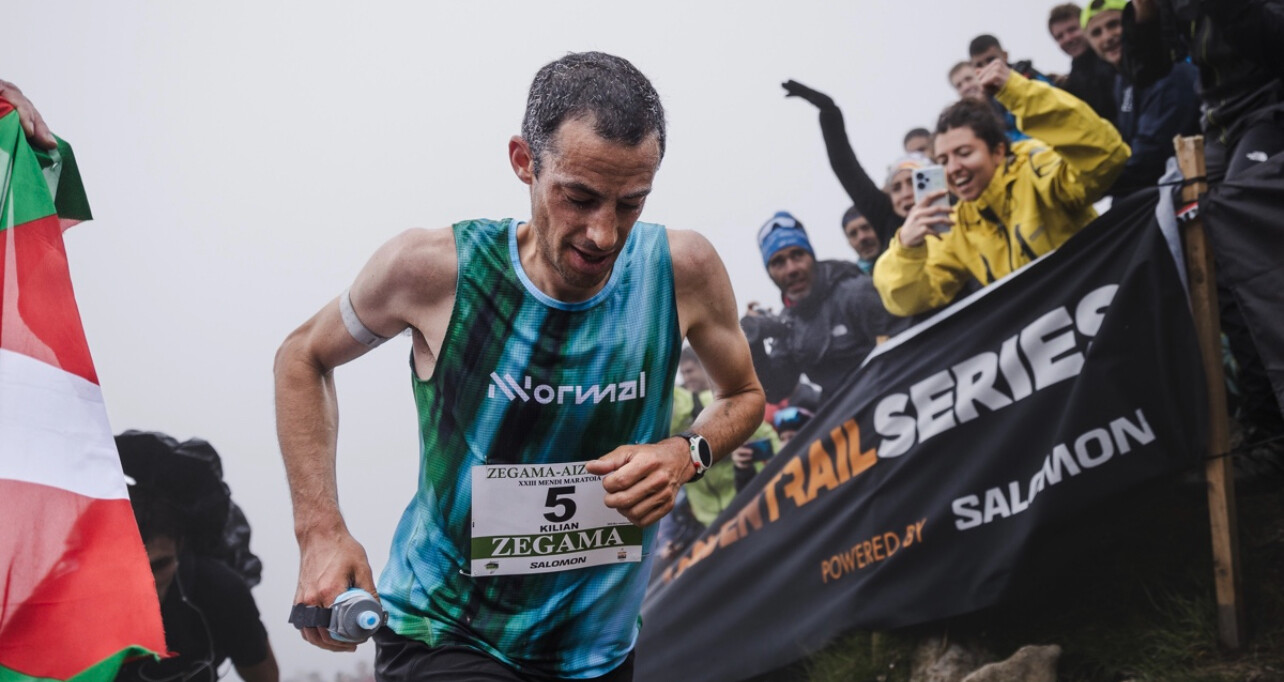
In 2024, trail running legend Kilian Jornet claimed his 11th Zegama title, completing the course in 3:38:07, the second-fastest time in the race’s history. The Spaniard’s unmatched mastery of this terrain—where weather, altitude, and technicality collide—continues to amaze.
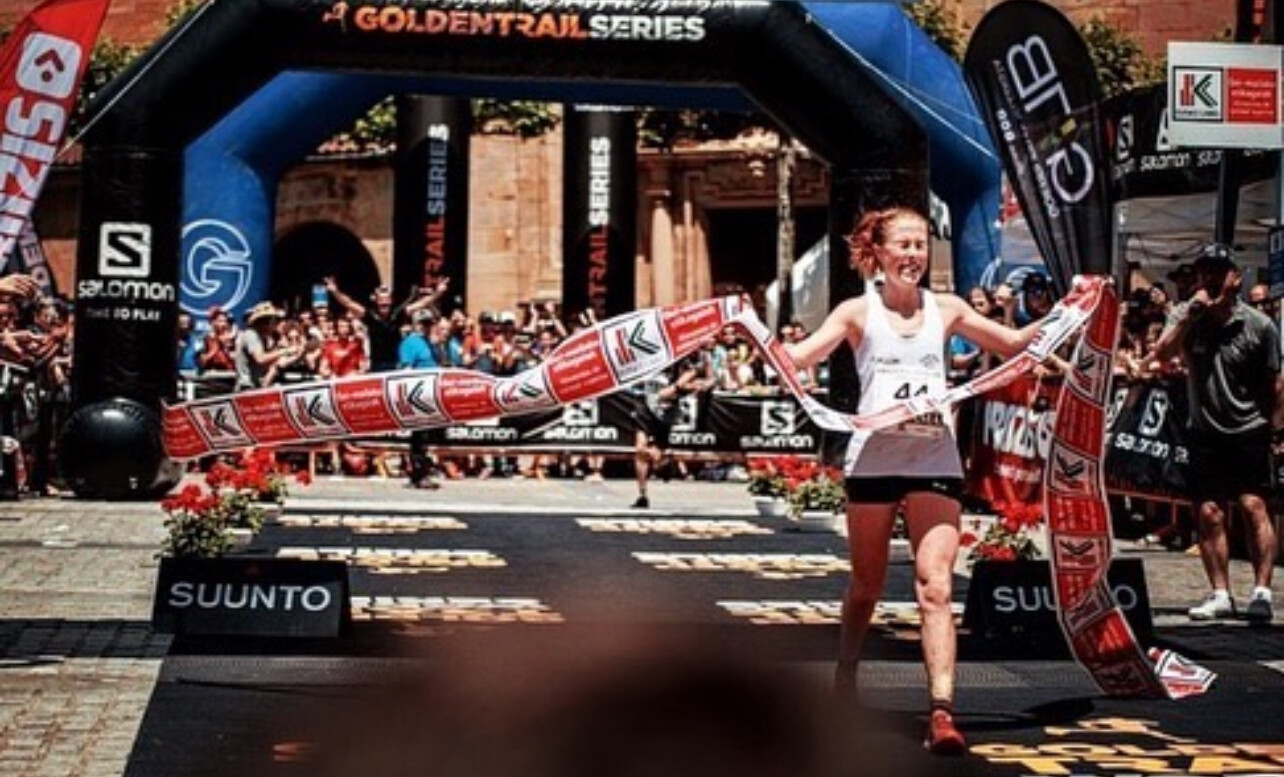
On the women’s side, Norway’s Sylvia Nordskar delivered a breakthrough performance, winning in 4:29:12. Her victory came after years of chasing a podium finish, cementing her place among the world’s best mountain runners.
What Makes Zegama So Unique?
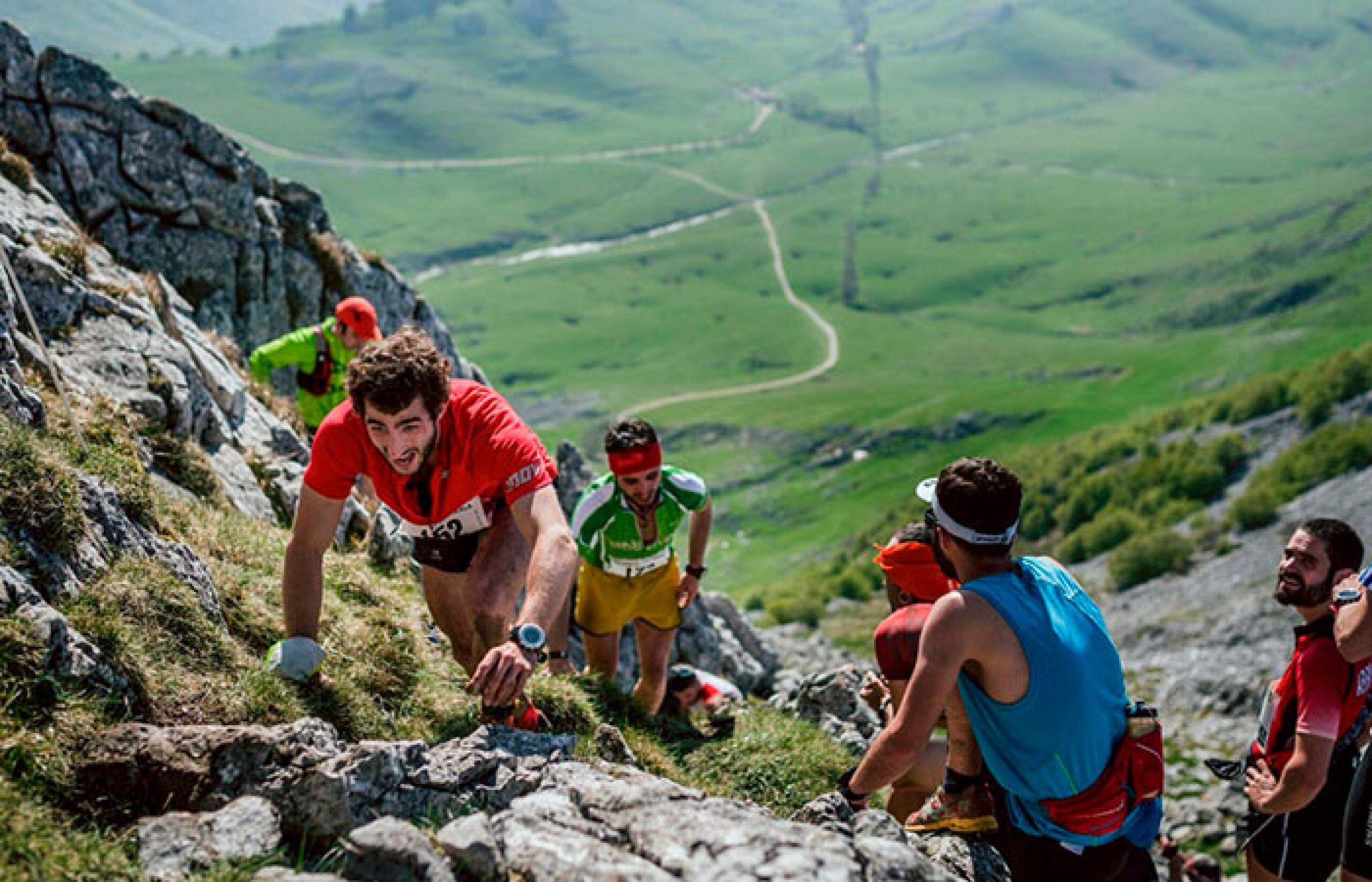
Zegama's course runs through the Aizkorri-Aratz Natural Park, an untouched alpine landscape of jagged ridges, mossy forests, and sweeping vistas. But it’s not just the scenery that defines Zegama—it’s the intensity of the terrain:
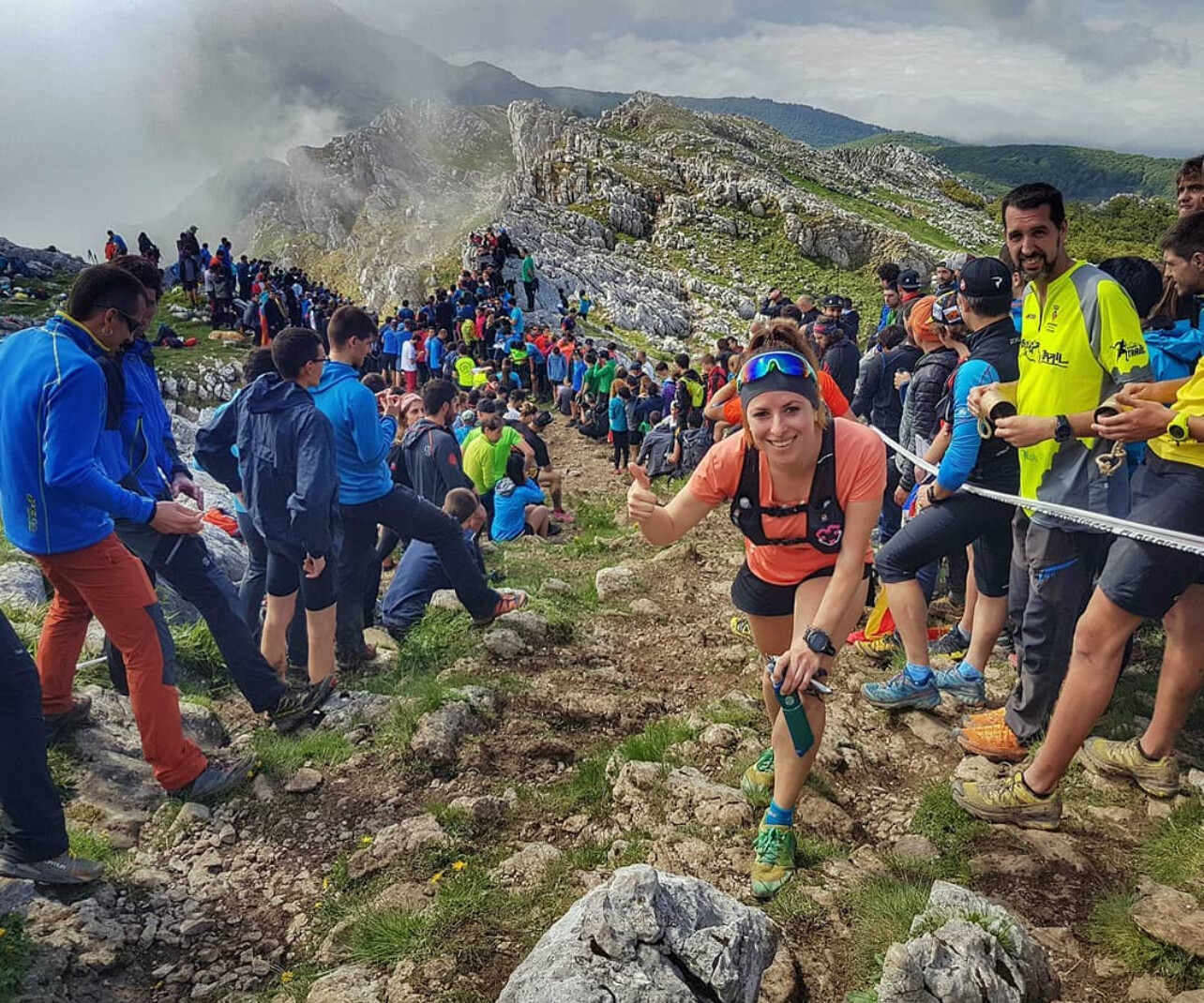
• Brutal Climbs: Runners face punishing ascents like Sancti Spiritu, where fans line both sides of the narrow path, turning the mountain into a human tunnel of noise and encouragement.
• Technical Descents: Slippery rock faces and steep downhills test a runner’s balance and nerve, often under unpredictable weather that can shift from fog to freezing rain in minutes.
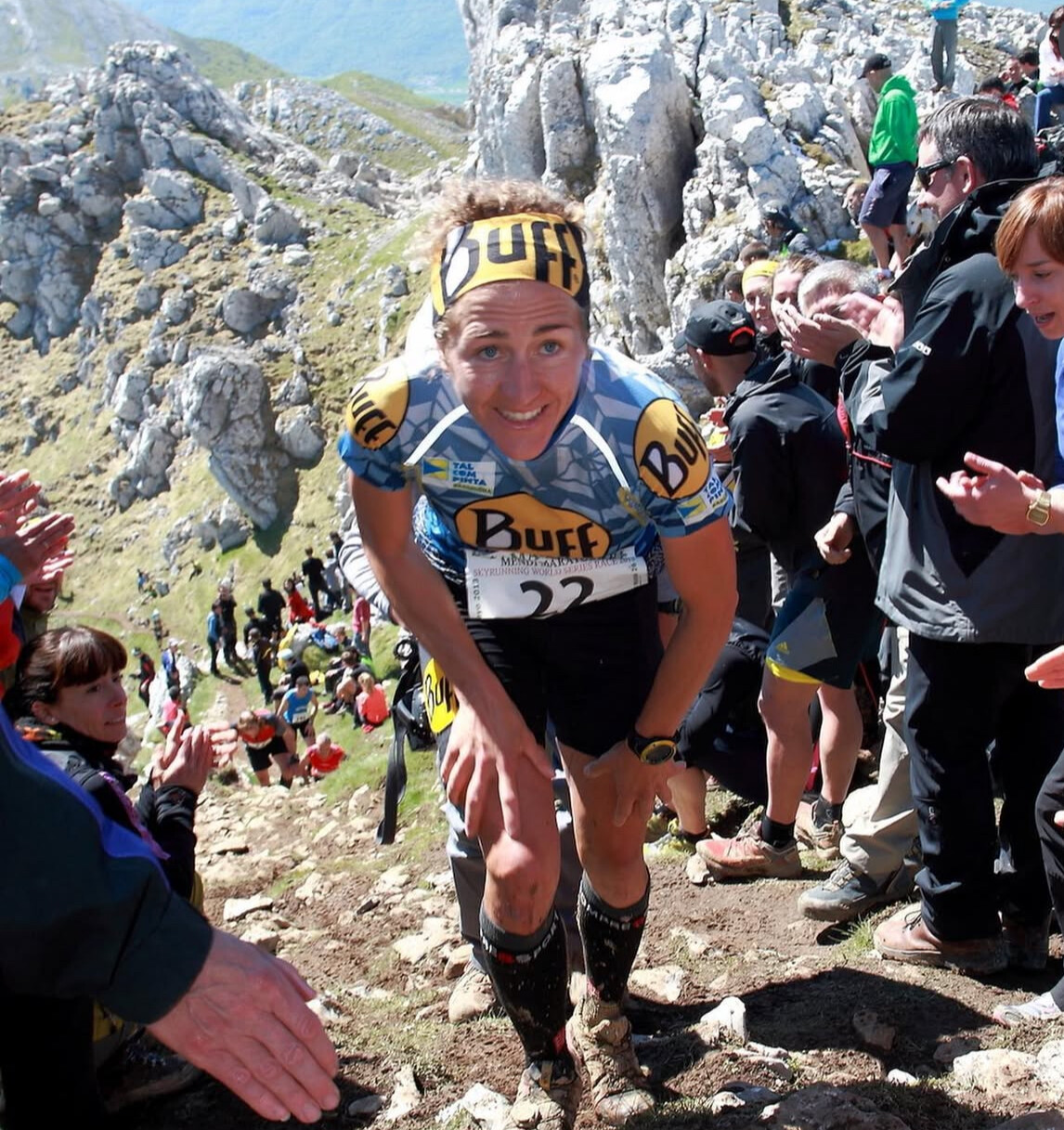
• Unmatched Atmosphere: Thousands of passionate Basque fans hike deep into the mountains to cheer with cowbells, flags, and chants. It’s been compared to the Tour de France on foot.
In Zegama, you’re not just running against the clock—you’re running with the crowd, through weather, over stone, and into history.
2025 Expectations
With another stacked field expected for 2025, the stage is set for drama. Can Jornet make it 12 wins? Will Nordskar defend her title? Or will a new name rise through the mist?
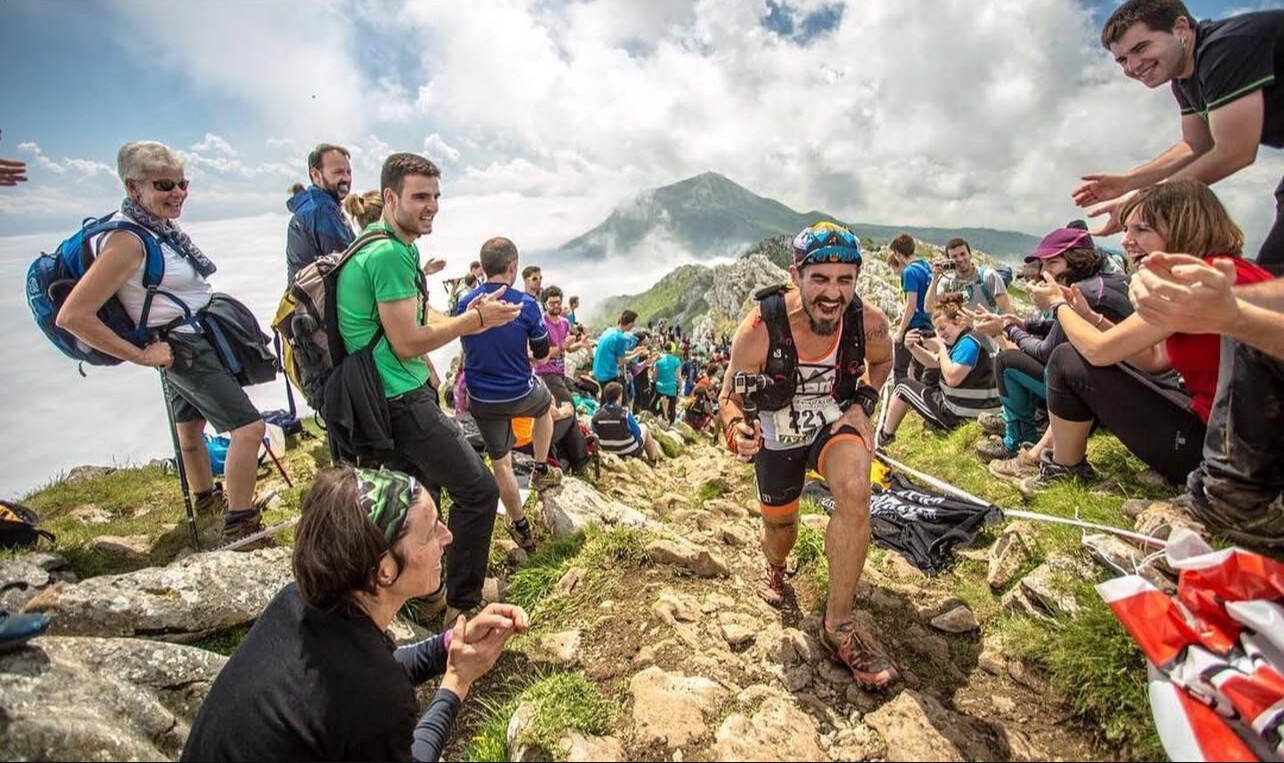
One thing is certain: Zegama es Zegama. No other race captures the raw essence of mountain running like this one.
by Boris Baron
Login to leave a comment
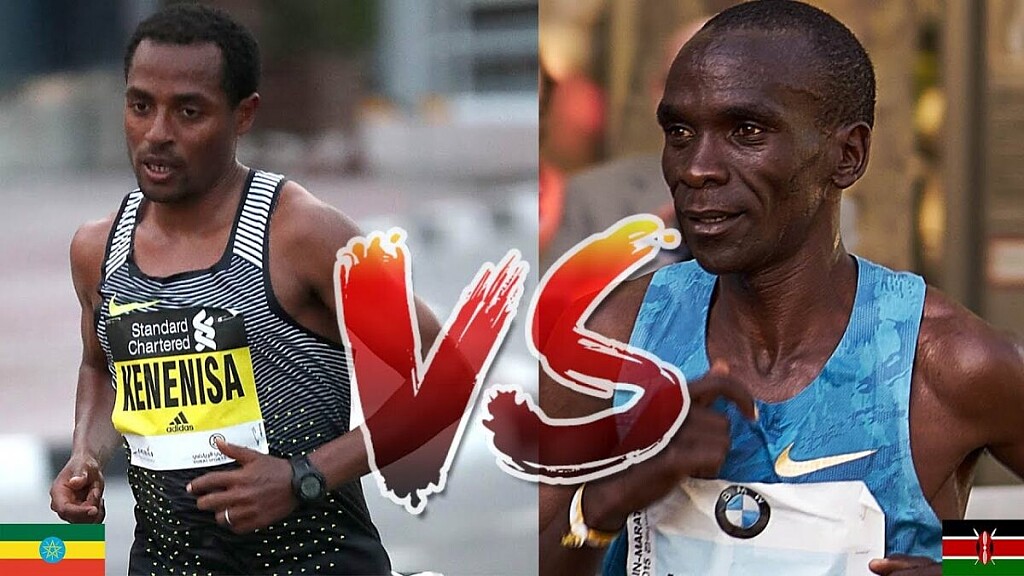
Kenya vs Ethiopia What Sets Their Runners Apart
When it comes to distance running, no two countries are more dominant—or more frequently compared—than Kenya and Ethiopia. From 5Ks to marathons, athletes from these East African nations consistently top podiums and rewrite record books. But while the results may look similar, the paths to victory are often quite different.
Altitude Advantage, Different Terrains
Both Kenya and Ethiopia benefit from high-altitude environments that naturally boost endurance. Kenya’s top training hubs, like Iten and Eldoret, sit between 7,000 and 8,000 feet. Ethiopia’s Bekoji and Sululta offer similar elevations. But terrain matters too: Kenya’s roads are often red clay or uneven gravel, ideal for building strength and resilience. Ethiopia’s runners more frequently train on hills and mountain trails, with steeper and more demanding climbs integrated into daily runs.
Training Philosophies Diverge
Kenyan training is rooted in simplicity and rhythm. Athletes often meet for large group sessions, with a strong focus on tempo runs, long-distance efforts, and unstructured fartleks. The vibe is community-oriented and competitive—if someone surges, the group follows.
In contrast, Ethiopia’s elite training tends to be more individualized and coach-driven. Athletes follow structured schedules with clearly defined paces, recovery sessions, and high-intensity track workouts. The approach is more scientific, and recovery days are strictly observed.
Daily Life and Recovery
Kenyan runners typically live together in camps, waking early to train, followed by long periods of rest. A second run often comes in the late afternoon, and the lifestyle emphasizes minimal distractions.
Ethiopian runners may train in smaller groups and return home between sessions. There’s more variety in how the day is structured, though the focus on discipline remains.
(Photos) Kenyan Training in Iten and Eldoret
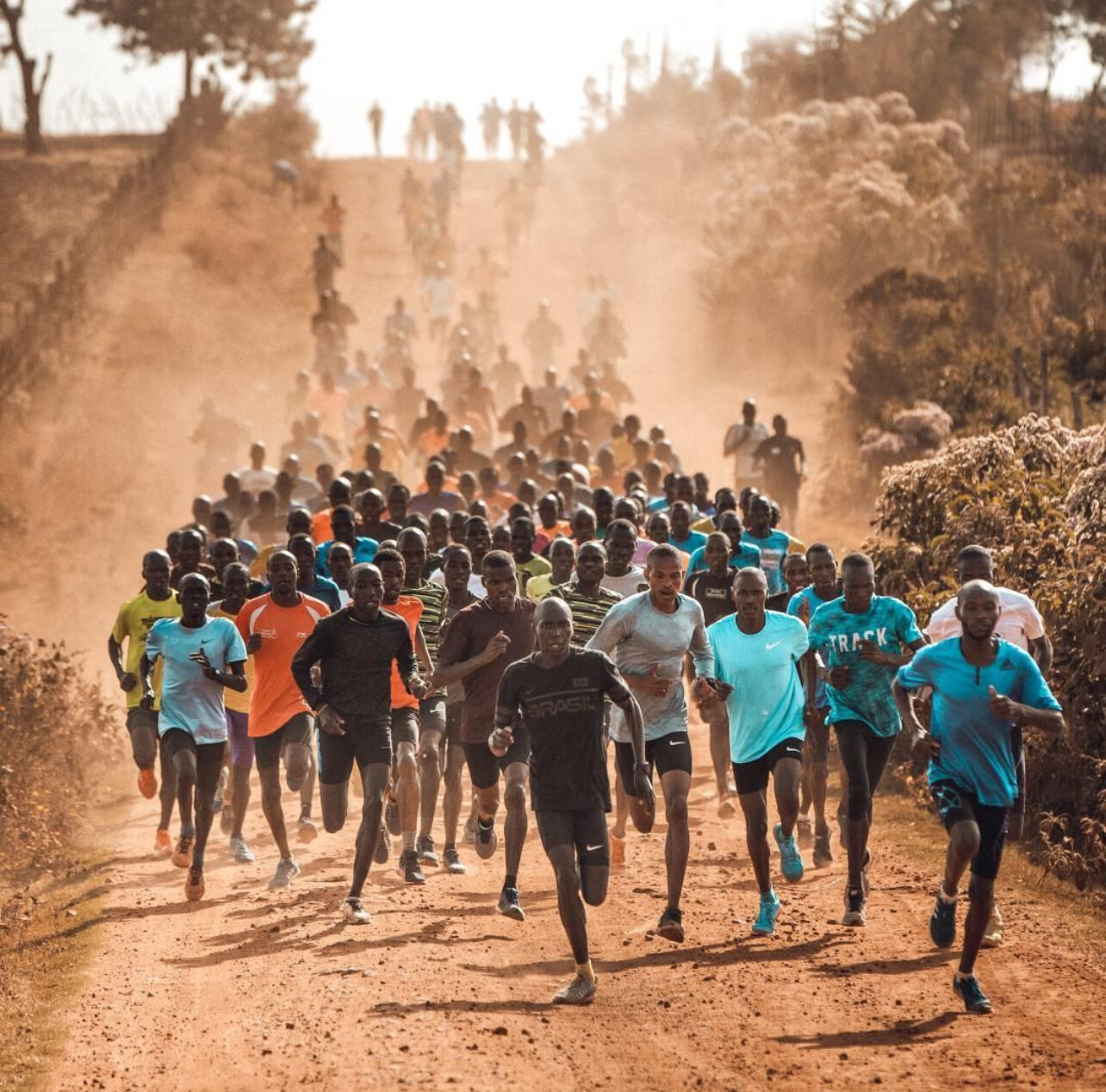
1. Mass Training Run in Iten
A striking image capturing a large group of Kenyan runners during a typical morning session on the red dirt roads of Iten, known as the “Home of Champions.”
2. Track Workouts in Eldoret
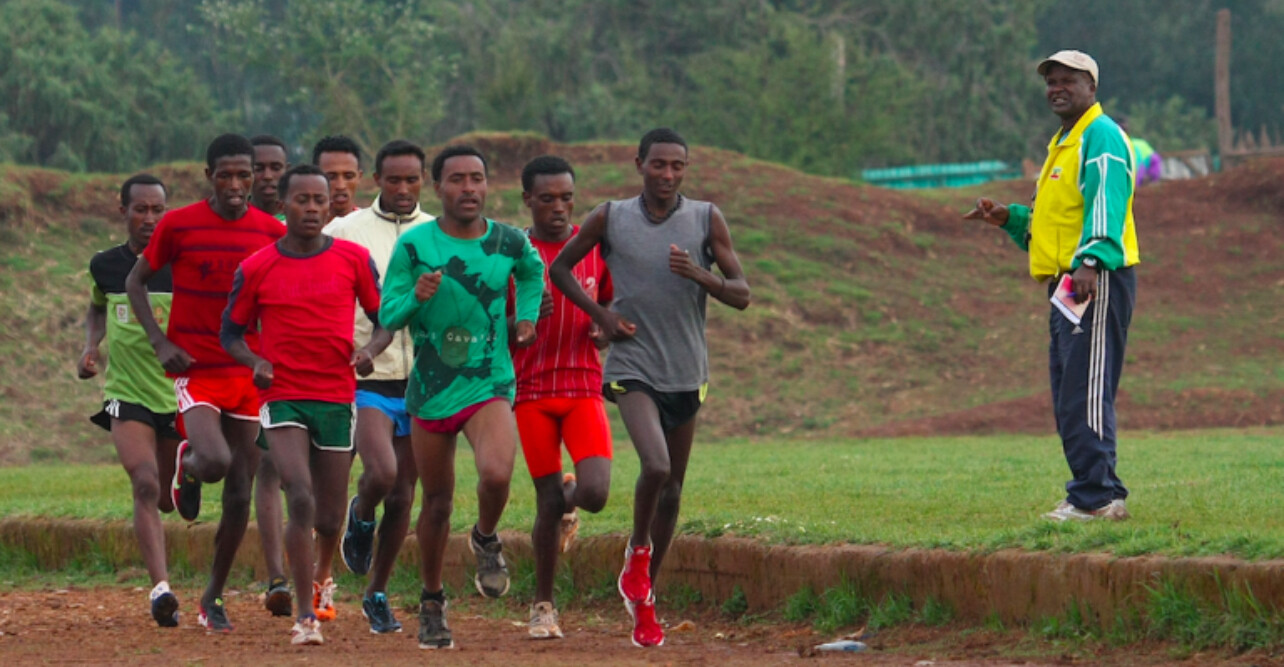
Kenyan marathon runners engaging in interval training at the athletics track in Eldoret, highlighting their emphasis on group cohesion and endurance.
(Photos) Ethiopian Training in Bekoji and Sululta
3. Group Training in Bekoji
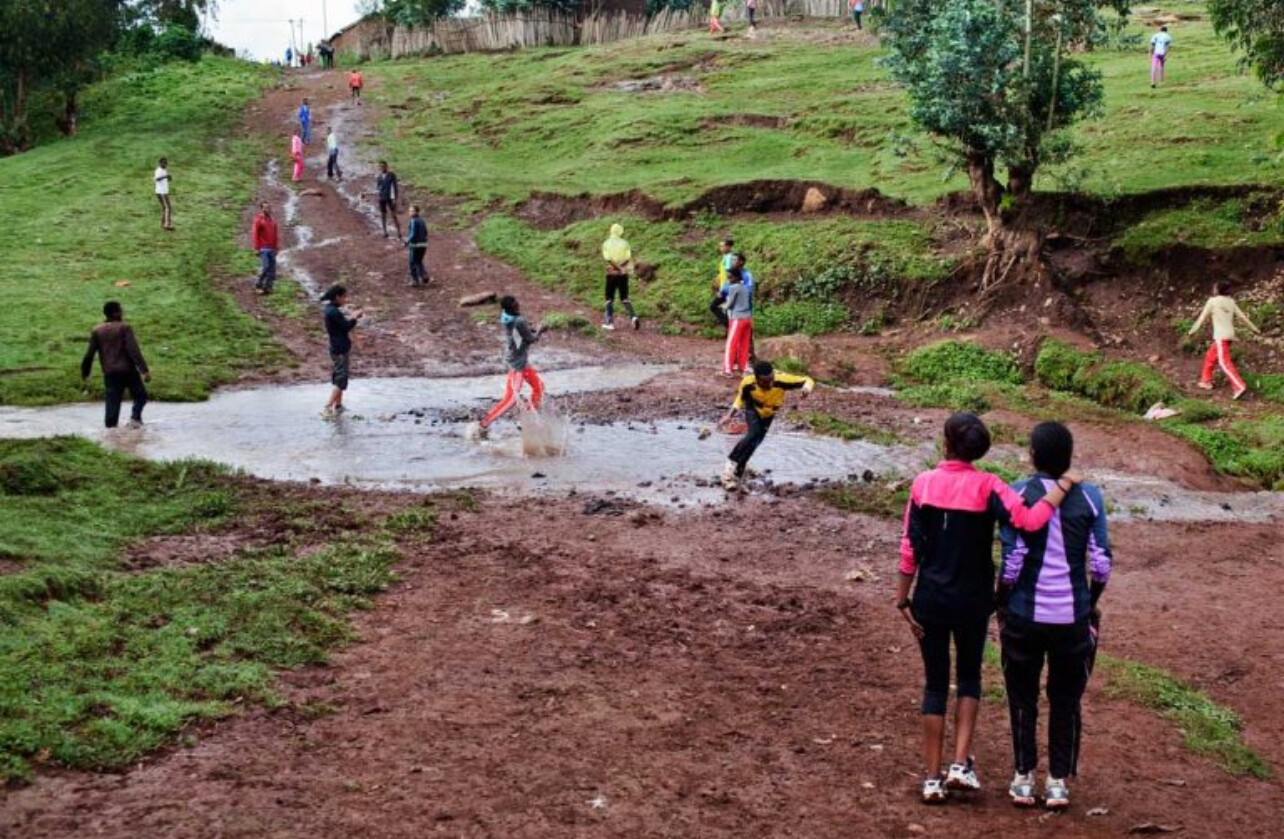
A glimpse into a training session in Bekoji, Ethiopia, showcasing runners on a dirt track, emphasizing their structured and coach-led routines.
4. Trail Running in Sululta
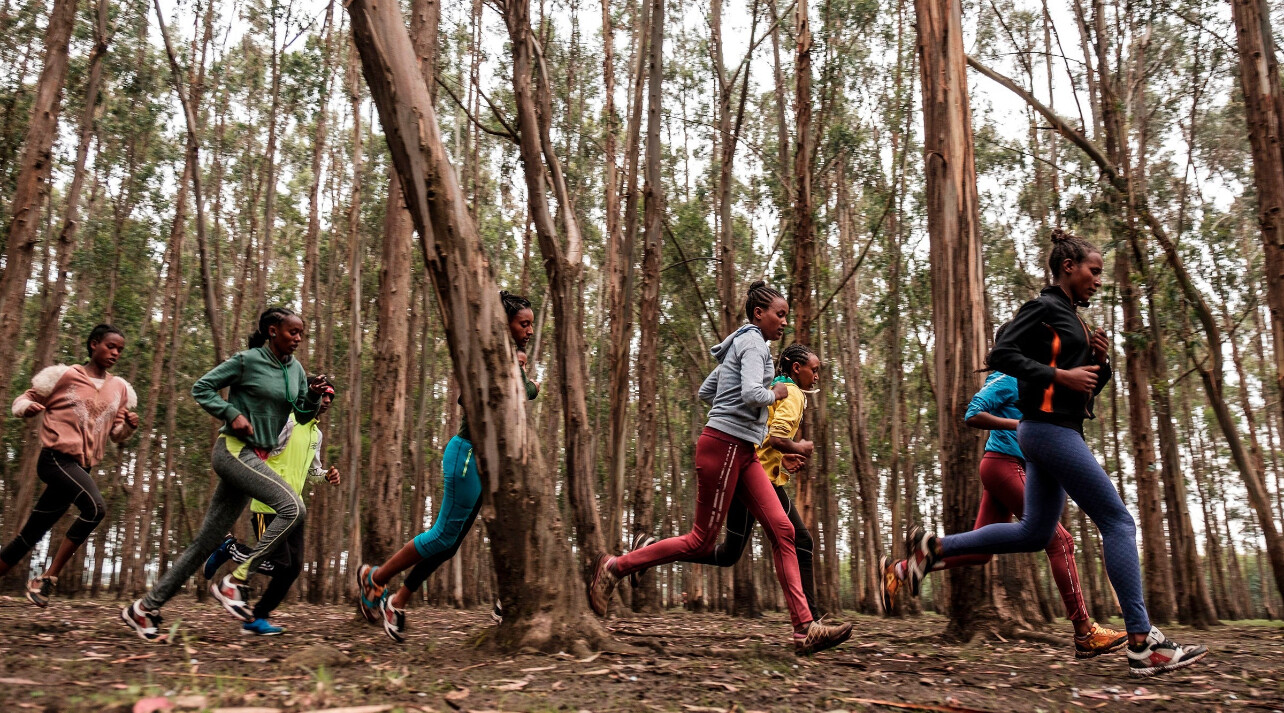
Ethiopian athletes navigating through forested trails in Sululta, reflecting their focus on varied terrains and natural environments.
Fueling for Success
Diet is another point of contrast. Kenyan athletes often eat ugali, a maize-based dish, with sukuma wiki (collard greens) and beans. Meals are consistent, simple, and heavy on carbohydrates. Hydration includes local teas and water, with little emphasis on supplements.
In Ethiopia, injera (a sour flatbread made from teff) is the foundation, served with protein-rich stews like shiro or doro wat. Teff is rich in iron and slow-digesting carbs—making it a valuable fuel for endurance.
Cultural and Coaching Influence
In Kenya, many athletes are inspired by runners from their own village or region—legends like Eliud Kipchoge or David Rudisha have inspired thousands. Training is often passed down through generations informally.
In Ethiopia, there’s a more centralized coaching system and support from the national federation. Greats like Haile Gebrselassie and Kenenisa Bekele have helped shape a more formal pathway from local clubs to the world stage.
Different Roads, Same Finish Line
Despite the differences, the results speak for themselves: both countries continue to dominate. Kenya may have the edge in the marathon, while Ethiopia consistently excels in 10K and track events. Together, they’ve redefined what’s possible in distance running.
by Boris Baron
Login to leave a comment
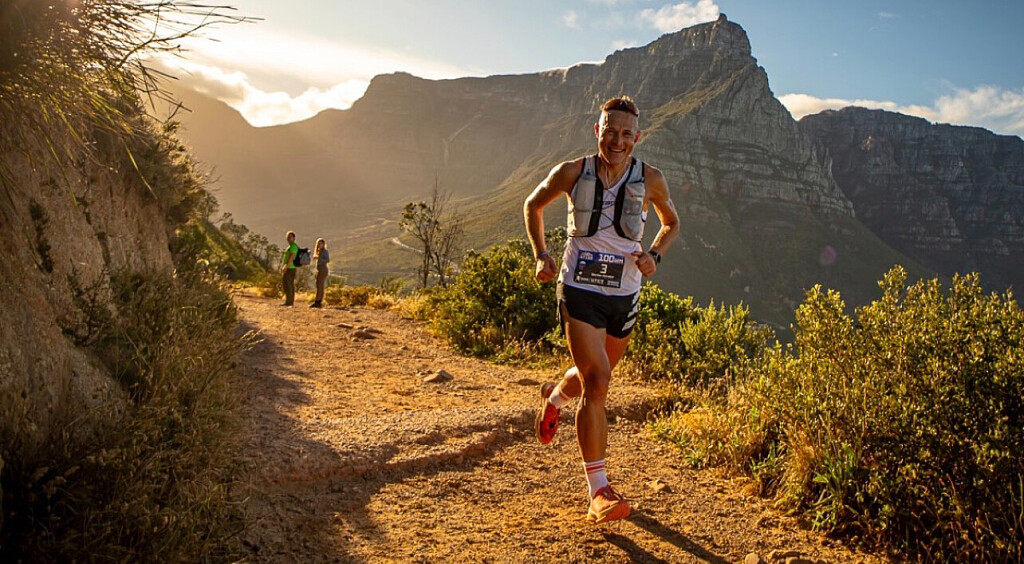
How Trail Races Are Redefining the Running Boom
In recent years, the global running community has seen a dramatic shift in where and how people race. While traditional road marathons still draw massive crowds, trail races—once considered a niche segment—are experiencing a surge in popularity. From rugged mountain paths to dense forests and desert crossings, more runners are lacing up to compete off-road, seeking challenge, solitude, and a deeper connection to nature.
The Rise of Trail Runnimg
Trail running has grown rapidly in the past decade, but its momentum accelerated after the COVID-19 pandemic, when road races were canceled and people turned to nature for both fitness and sanity. What started as necessity turned into passion for many, and race organizers took note. Events that once attracted a few hundred now sell out in minutes.
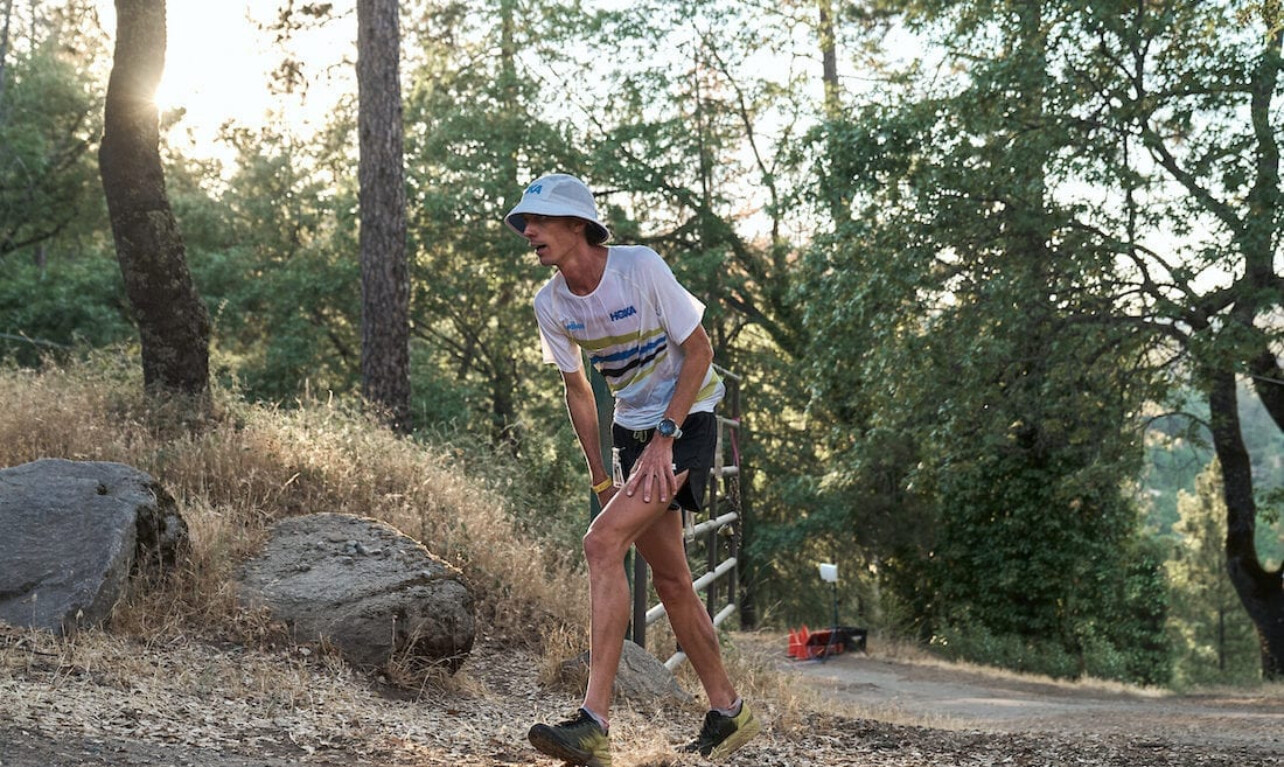
Today, races like the UTMB (Ultra-Trail du Mont-Blanc) in France, the Western States 100 in California, and the Ultra-Trail Cape Town in South Africa are globally recognized—drawing elites and amateur runners alike. These races offer not just distance and competition, but elevation, terrain variety, and breathtaking backdrops.
More Than a Race—A Journey
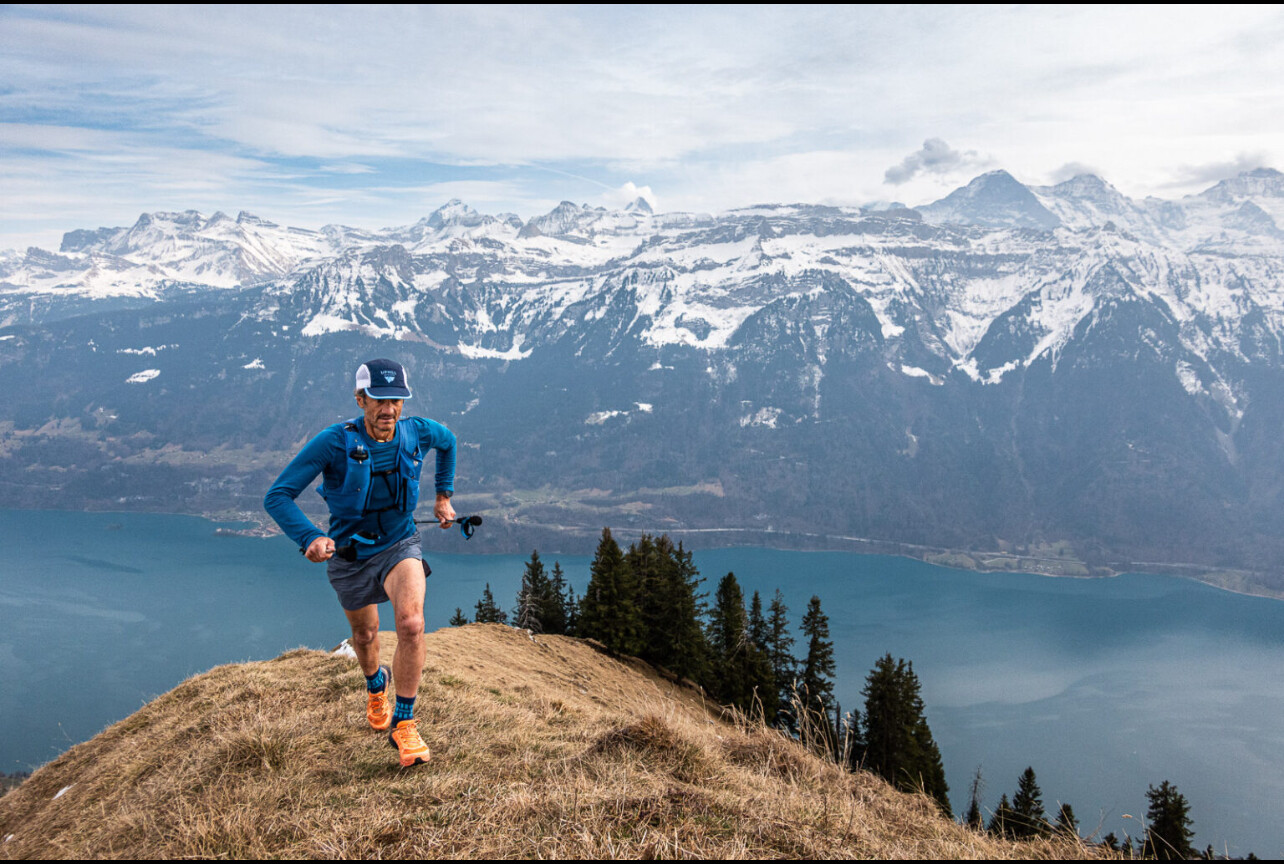
Unlike a typical 10K or marathon, trail races often require navigation, climbing, and mental fortitude. Weather and terrain can change quickly. Aid stations may be miles apart. But it’s exactly these demands that attract runners hungry for something deeper than just speed or medals.
“There’s something primal about running in the wilderness,” says 2023 UTMB finisher Sara Delgado. “It’s not just about pace—it’s about presence.”
Elite Trail Runners on the Rise
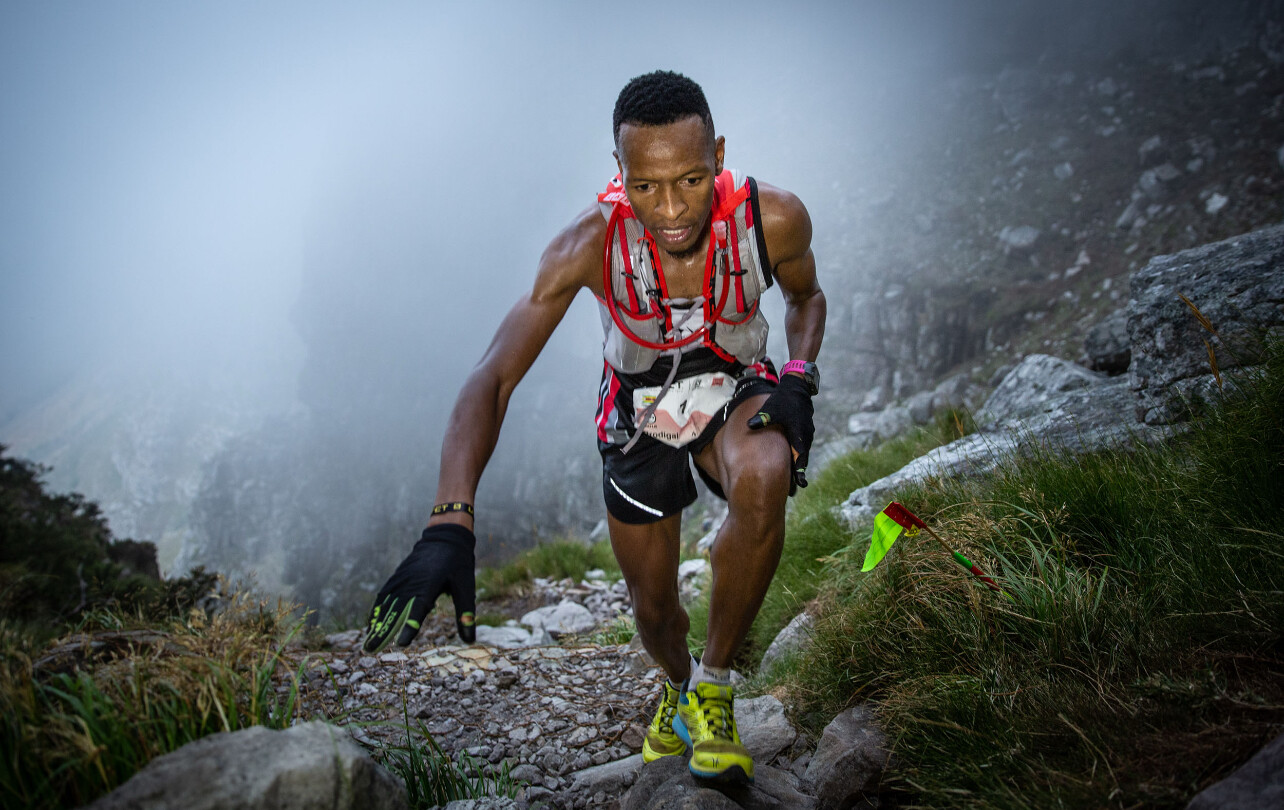
Top road racers are taking notice too. Marathoners like Jim Walmsley and Kilian Jornet have made trail dominance a core part of their legacy. Meanwhile, athletes like Courtney Dauwalter are redefining what endurance looks like, regularly winning 100-mile races overall—not just in the women’s field.
Sponsors have followed the talent. Major brands are investing in trail running gear, shoes, and media coverage, making the sport more visible and viable for elite athletes and growing its appeal for weekend warriors.
Global Appeal
From Portugal’s Douro Valley to the jungles of Costa Rica and the peaks of Japan’s Alps, trail races are being launched in every corner of the world. Many combine local culture with intense landscapes, turning these events into destination experiences.
Travel-based trail running adventures—3-day stage races, run-and-yoga retreats, and culinary trail tours—are also gaining traction. It’s no longer just a race, but a way to see the world, one footstep at a time.
What This Means for the Future
Trail running is redefining the running boom by offering what many road races cannot: quiet, challenge, authenticity, and unfiltered connection to the earth. As the sport continues to grow, it’s likely we’ll see more hybrid athletes, crossover races, and increased visibility across the media.
The road will always have its place, but for a growing number of runners, the real race begins where the pavement ends.
by Boris Baron
Login to leave a comment
What It Takes to Go Beyond 26.2 - Taking on the Ultra
For many runners, crossing the marathon finish line is the pinnacle of endurance racing. But for an increasing number of athletes, 26.2 miles is just the beginning. The ultramarathon—defined as any race longer than a marathon—has surged in popularity, drawing runners eager to test their limits over 50K (31 miles), 100K (62 miles), 50 miles, 100 miles, and beyond.
But how do you make the leap from marathoner to ultramarathoner? What does it take to conquer these longer distances? Let’s break it down
The Key Differences Between a Marathon and an Ultra
While both require strong endurance, an ultramarathon is a completely different beast from a road marathon. Here’s what sets them apart:
• Pacing Is Crucial – In a marathon, you can push your pace hard and still hold on. In an ultra, going out too fast can be a disaster. Starting conservatively is essential.
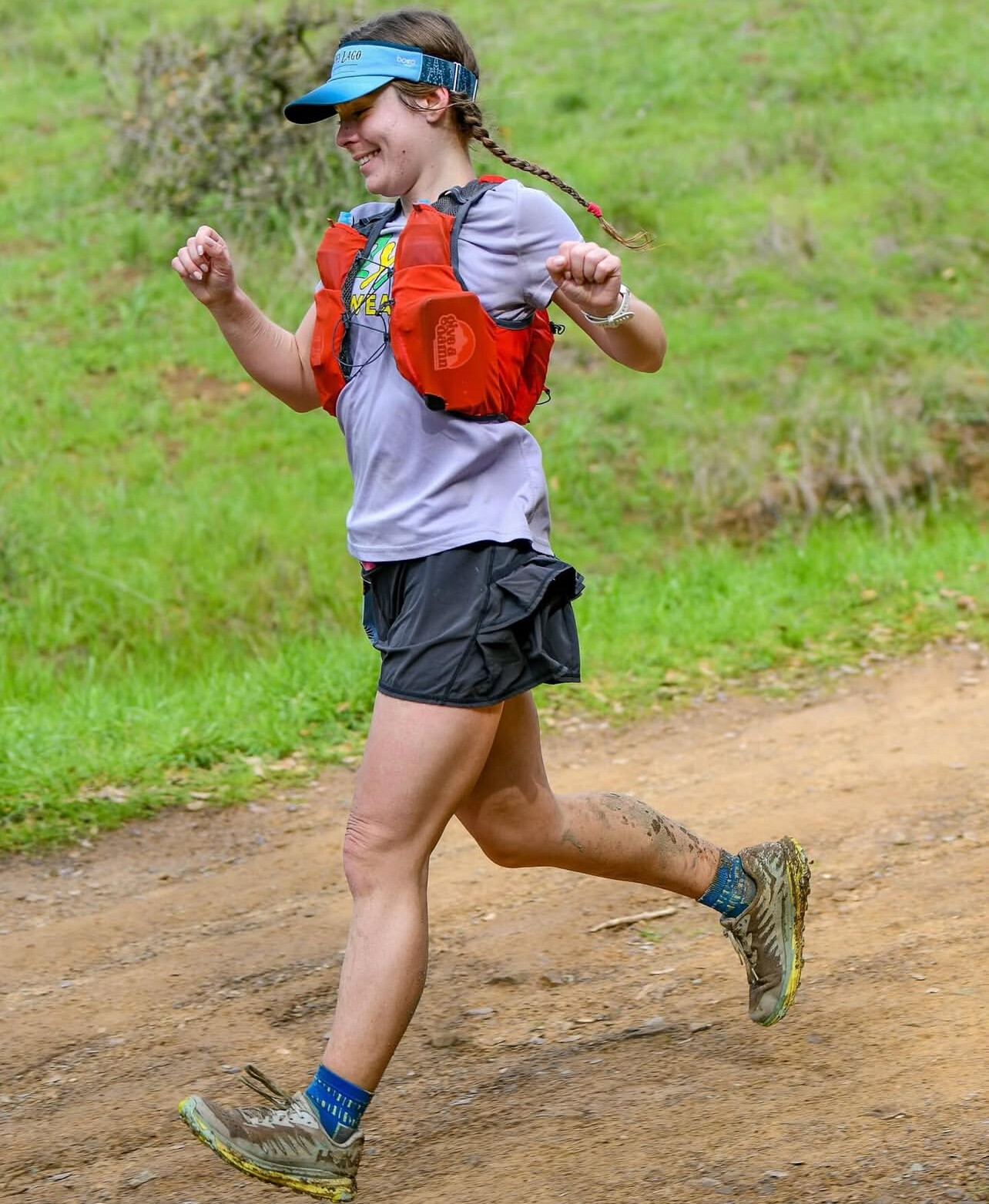
• Nutrition Matters More – Running beyond 26.2 miles means your body will need real food, not just energy gels. Successful ultrarunners eat a mix of carbohydrates, protein, and fatto sustain energy levels.
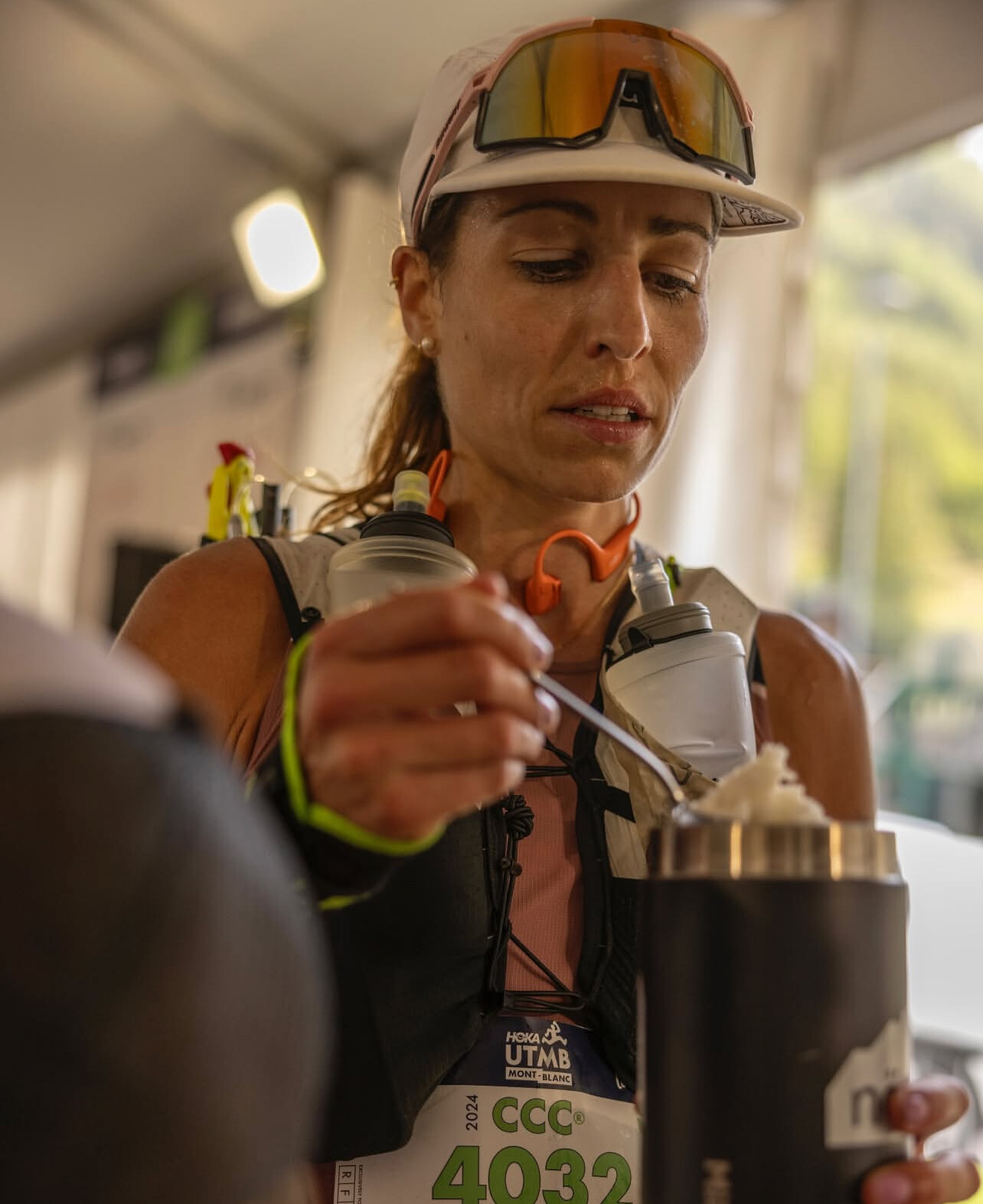
• Trail Running Dominates – Many ultras take place on rugged trails, requiring technical footwork, elevation gains, and varying terrain.
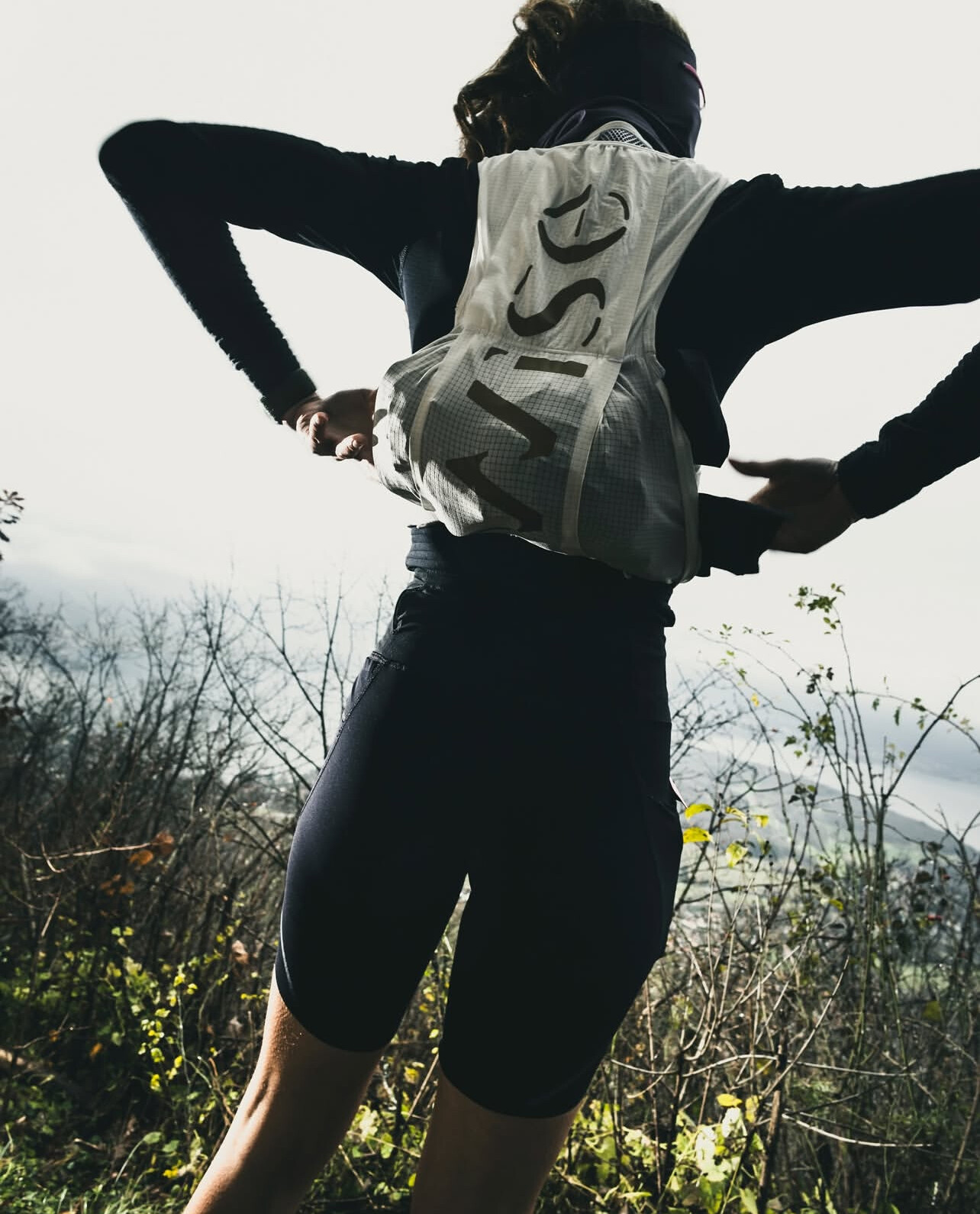
• Mental Fortitude is Everything – Ultramarathons test your mental resilience as much as your physical endurance. Learning to embrace discomfort and keep moving forward is key.
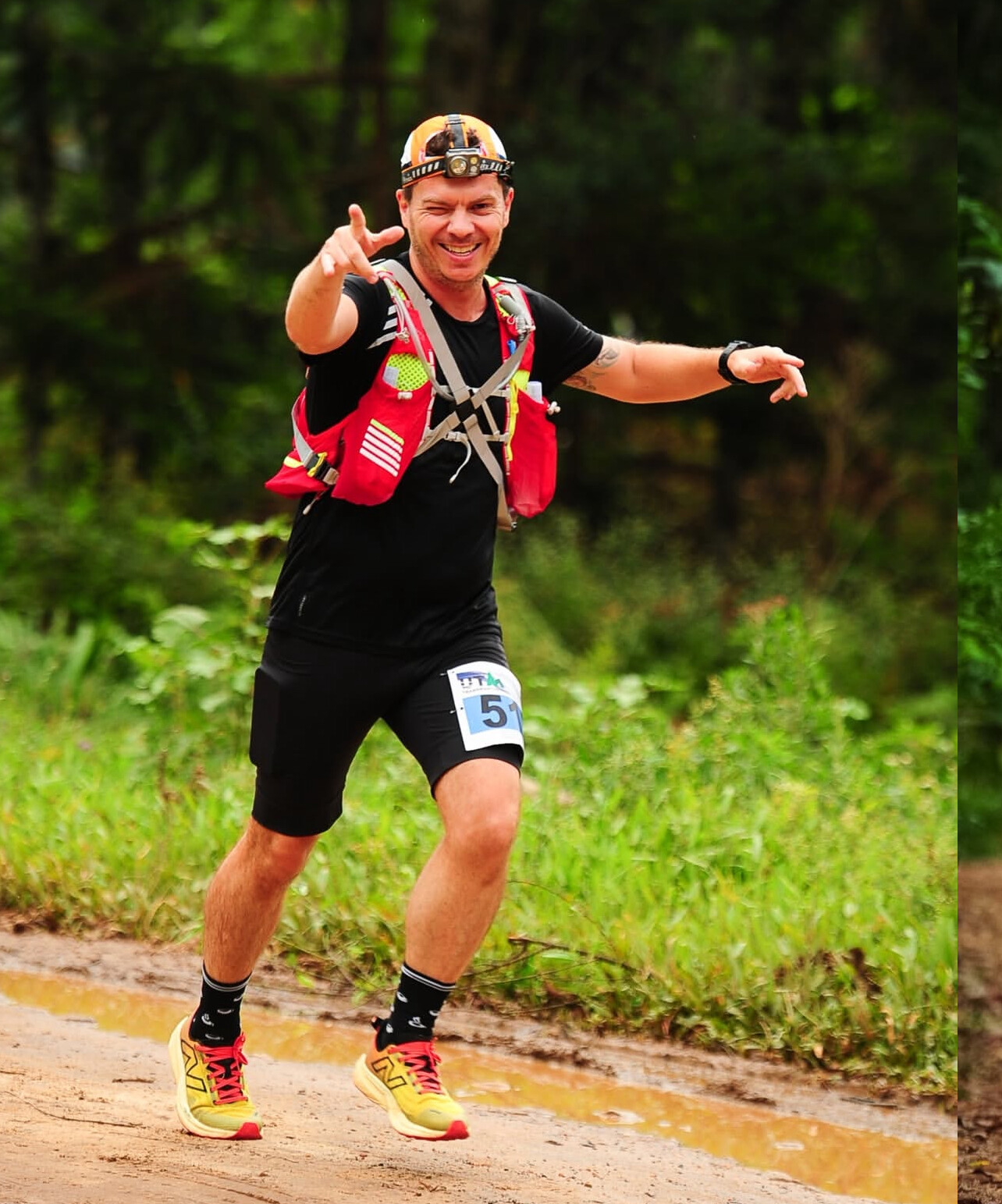
How to Train for an Ultramarathon
1. Build Your Base (Time on Feet > Speedwork)
Training for an ultra isn’t just about miles—it’s about spending long hours on your feet. Instead of focusing on speed, ultra training prioritizes slow, steady endurance.
• Increase Weekly Mileage Gradually – Aim for at least 50-70 miles per week for a 50K and 70-100 miles per week for a 100K or 100-miler.
• Back-to-Back Long Runs – Instead of one long run, many ultra plans include two long runs on consecutive days to simulate running on tired legs.
• Practice Hiking – Even elite ultrarunners hike the steep sections. Practicing power hiking helps conserve energy on climbs.
2. Strength Training & Mobility Work
Ultras put serious strain on your body. Strength training improves durability, while mobility work helps prevent injuries.
• Core Work – A strong core stabilizes you on technical trails.
• Leg Strength – Squats, lunges, and step-ups strengthen the quads, hamstrings, and calves.
• Ankle & Foot Mobility – Essential for navigating uneven terrain.
3. Master Race-Day Nutrition
Unlike marathons, where fueling is simpler, ultramarathon nutrition requires strategy.
• Eat Real Food – Ultras often include PB&J sandwiches, bananas, pretzels, and broth. Find what works for you in training.
• Stay Hydrated & Balance Electrolytes – Dehydration or electrolyte imbalances can end your race early.
• Fuel Frequently – Many ultrarunners eat every 30-45 minutes to avoid bonking.
4. Train for the Terrain
If your ultra is on technical trails, hills, or mountains, training in similar conditions is critical.
• Hill Repeats – Strengthen quads for long descents.
• Technical Trail Running – Practice on rocky or root-filled trails to improve footing.
• Night Running – Many ultras involve running in the dark, so get used to using a headlamp.
Mental Strategies for an Ultramarathon
Running an ultra is as much mental as physical. Even the fittest runners struggle if they aren’t mentally prepared.
• Break the Race Into Sections – Instead of focusing on the total distance, mentally divide the race into aid station segments.
• Have a Mantra – Simple phrases like “Relentless forward motion” or “One step at a time”can help during tough moments.
• Expect Lows—And Know They Pass – Every ultrarunner experiences physical and mental lows, but pushing through leads to new highs.
Choosing Your First Ultra
Not sure where to start? Here are three great entry points into ultramarathoning:
1. 50K Trail Race – A great intro, only 5 miles longer than a marathon but often on trails with varying terrain.
2. 50-Mile Race – A serious jump, requiring race-day nutrition and pacing mastery.
3. Timed Ultras (6-Hour or 12-Hour Races) – Rather than a set distance, these races challenge runners to cover as much distance as possible in a fixed time.
Should You Run an Ultra?
If you love endurance challenges, embrace the grind, and enjoy long hours on the trail, ultramarathoning might be your next big adventure. The transition from marathon to ultra isn’t just about running farther—it’s about running smarter, stronger, and with a mindset prepared for anything.
by Boris Baron
Login to leave a comment
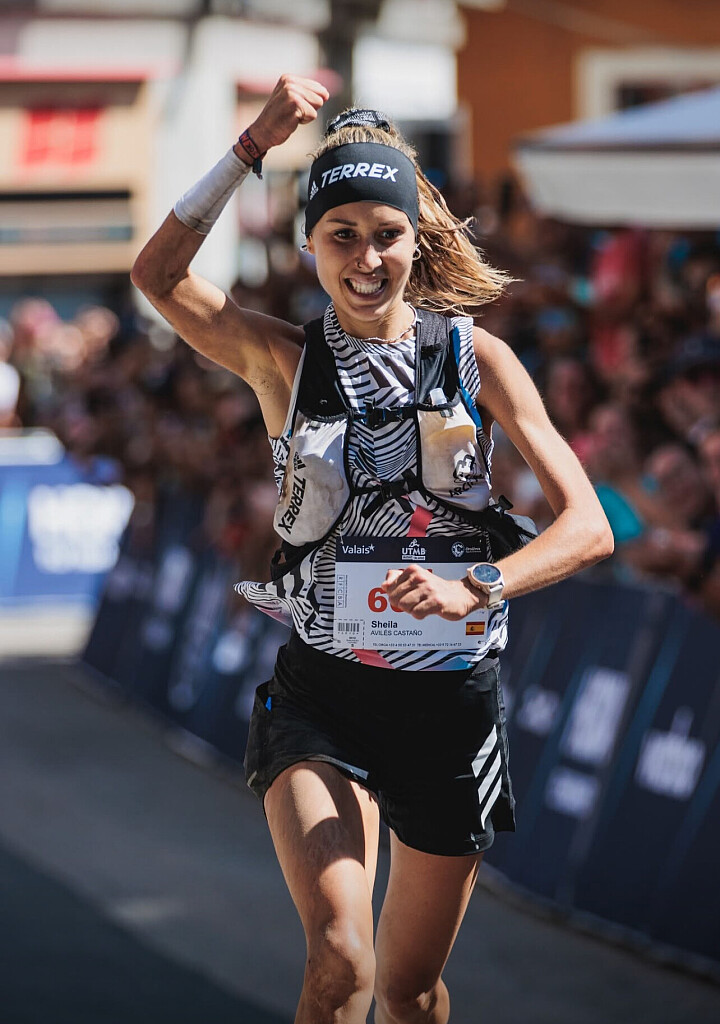
Sheila Avilés Castaño Lives for Peaks and Nature
Sheila Avilés Castaño, born on July 7, 1993, in Santa Margarida de Montbui, Spain, is a trail and skyrunning athlete whose passion for nature and sport has propelled her to remarkable achievements on the global stage. From a young age, Sheila found joy in the outdoors, combining her athletic talent with her love for the mountains. Trail running became her sanctuary, offering the perfect balance between physical challenge and the beauty of nature.
Over the years, Sheila has built an impressive career, winning major titles and captivating fans around the world. In 2017, she claimed the Sky Classic category of the Skyrunning World Cup and earned a bronze medal at the European Skyrunning Championships. Two years later, she added another Skyrunning World Cup title to her name, proving her consistency and determination at the highest level of competition. Her crowning achievement came in 2022 when she triumphed at the OCC race of the UTMB Mont-Blanc, a victory that cemented her status as one of the top athletes in her discipline.
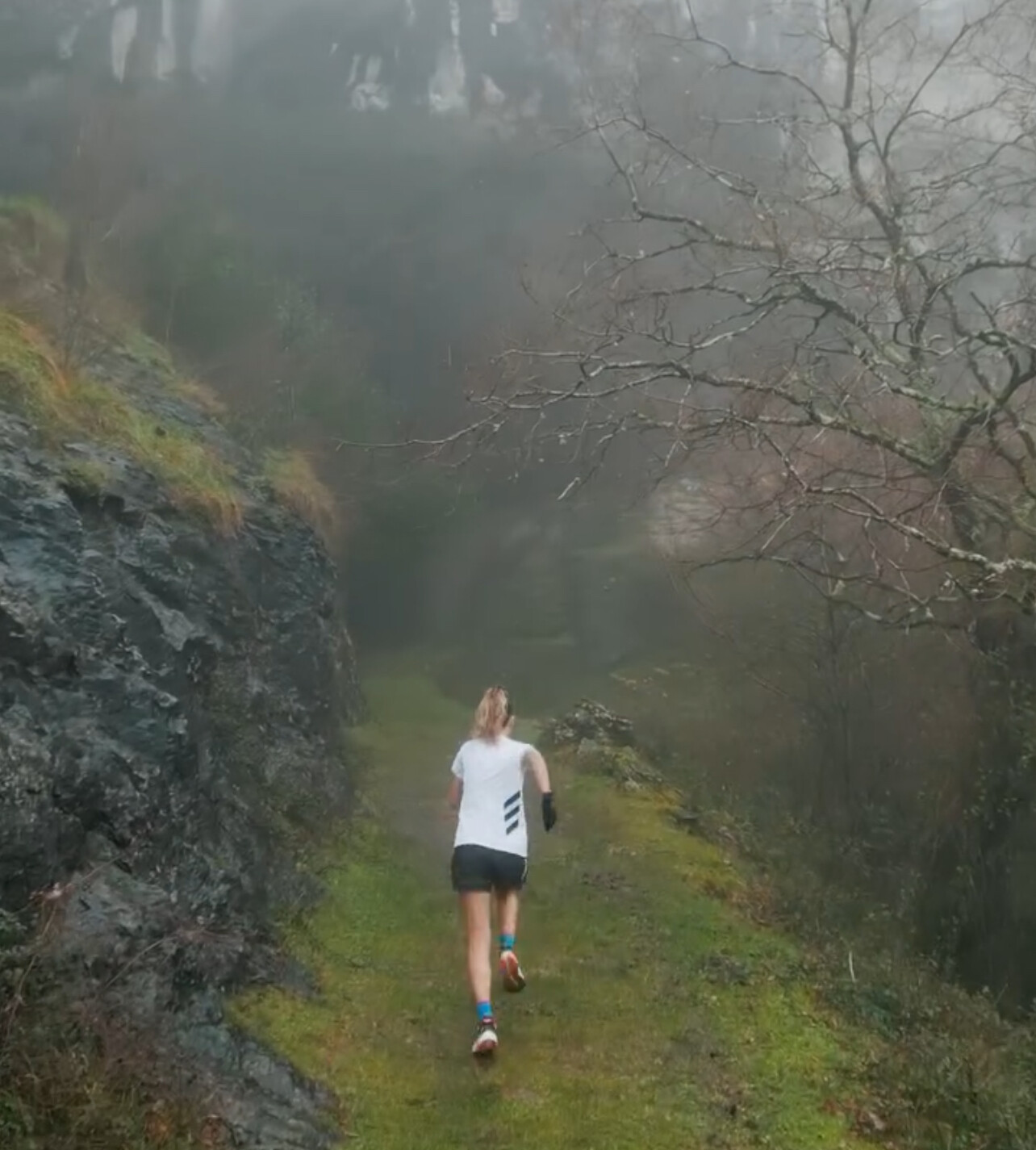
In 2024, Shella continued to showcase her extraordinary talent and resilience. At the HOKA Val d'Aran by UTMB®, she completed the 18 km course with 465 meters of elevation gain in 1:32:07, placing 3rd among women. Later in the year, she dominated the adidas TERREX INFINITE TRAILS 30K Individual race, finishing in 3:25:08 and securing 1st place in the women's category.
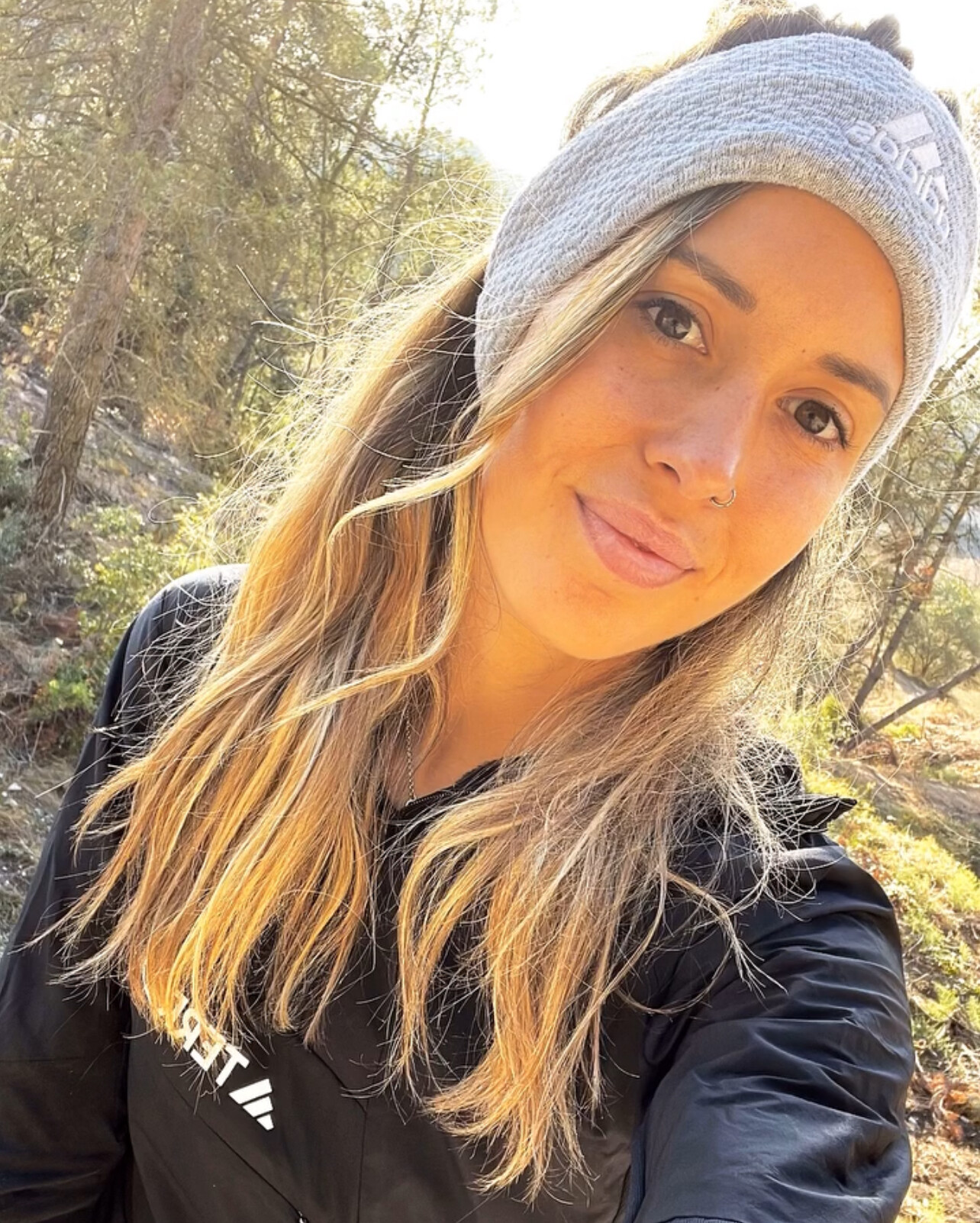
She also put in a strong performance at the Salomon Ultra Pirineu's Mitja Pirineu 21k, covering the challenging 21 km course with 1,200 meters of elevation gain in 1:50:05, finishing 6th among women. Her consistency across diverse events reflects her adaptability and unwavering commitment to the sport.
Beyond her racing accomplishments, Sheila is an ambassador for the beauty of trail running and the deep connection it fosters with nature. Through her social media and public appearances, she inspires runners and outdoor enthusiasts worldwide to embrace the mountains and push their limits.
For Sheila, running is more than a sport-it's a way of life, a celebration of the human spirit, and a testament to what can be achieved with passion and dedication.
Sheila Avilés Castaño continues to conquer peaks and inspire others, reminding the world that no summit is too high when approached with determination and love for the journey.
Login to leave a comment
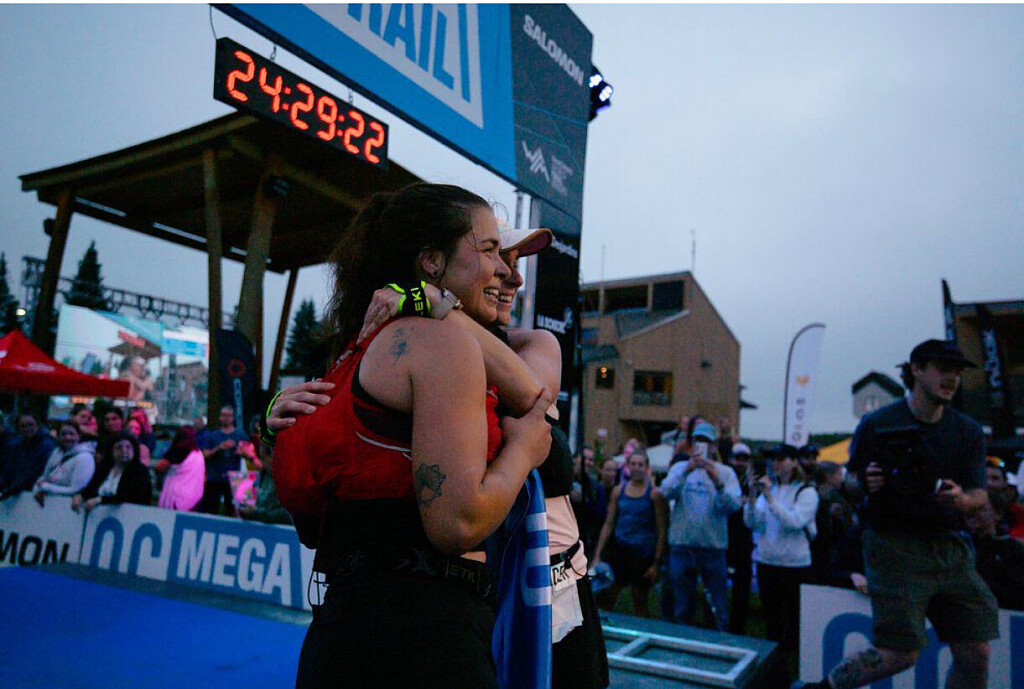
Trail Adventures for All: The Short Series Brings Big Excitement to Shorter Distances
Not every trail runner dreams of tackling 100K or more, and the Short Series is here to celebrate that, offering a meaningful and exciting alternative for those who prefer shorter distances or are new to the sport. With its carefully designed races, the series ensures that runners experience all the thrill and challenge of trail running, without the ultra-distance commitment.
According to the WTM website, these races boast “logical and interesting routes that give each race the character and DNA of the location, of the organisation, of its sporting culture.” Each event highlights the unique landscapes, culture, and community spirit of its setting, making the Short Series as much about the journey as the finish line.
Though these races don’t hit ultra-distance benchmarks, they are far from easy. Participants need effort, preparation, and determination to conquer the terrain. For many, the Short Series offers the perfect introduction to the world of trail running—an approachable challenge for newcomers and a rewarding experience for seasoned runners who prefer shorter distances.
Whether you’re looking to build confidence, test your limits, or simply enjoy the camaraderie and beauty of trail racing, the Short Series provides a stepping stone to adventure. It’s an ideal option for runners eager to embrace the outdoors without committing to the grueling demands of ultra-distance training. For those ready to dive into the trail running scene, the Short Series proves that every distance has its own rewards.
by Boris Baron
Login to leave a comment
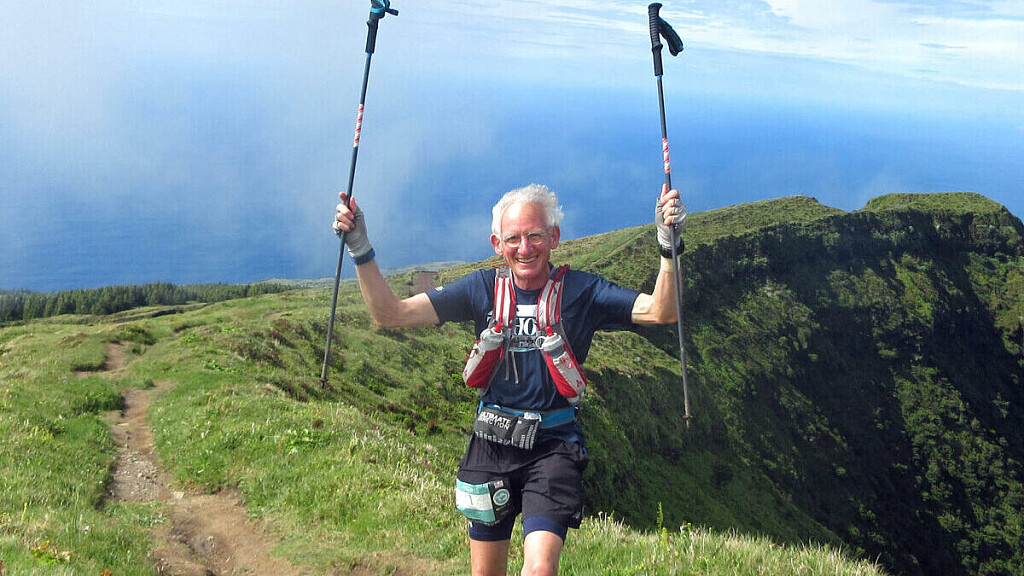
Is this Pennsylvania senior the most prolific runner of 2024?
Gene Dykes, 76, racked up an astounding 43 races in 2024, including eight marathons and nine ultras.
At 76 years young, Pennsylvania’s Gene Dykes has made 2024 a year of milestones that most runners of any age would envy. Here’s a closer look at why this runner might just be the most prolific of the year—from breaking records to embracing DNFs (Did Not Finish) with humour, Dykes continues to prove that age is not a barrier.
Races around the globe (and in his backyard)
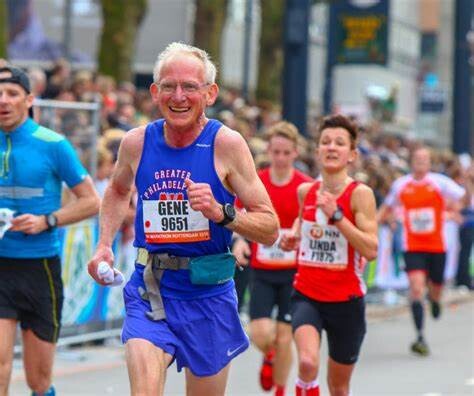
With 43 races completed in 2024, Dykes’s calendar reads like a globetrotter’s dream. He raced in three countries and racked up 19 starts in Pennsylvania alone. From marathons and ultras to shorter races like 5Ks, he tackled every distance imaginable. Dykes says a highlight was completing three stunning trail races in Australia. Dykes’s philosophy of “just run”—no stretching, no weights and no cross-training—clearly works for him.
But it wasn’t all wins. Six DNFs(did not finish), including one at mile 160 of a 200-mile race, remind us that even the most determined, experienced runners face challenges. His attitude? Brush it off and keep running.
Breaking records and smashing goals
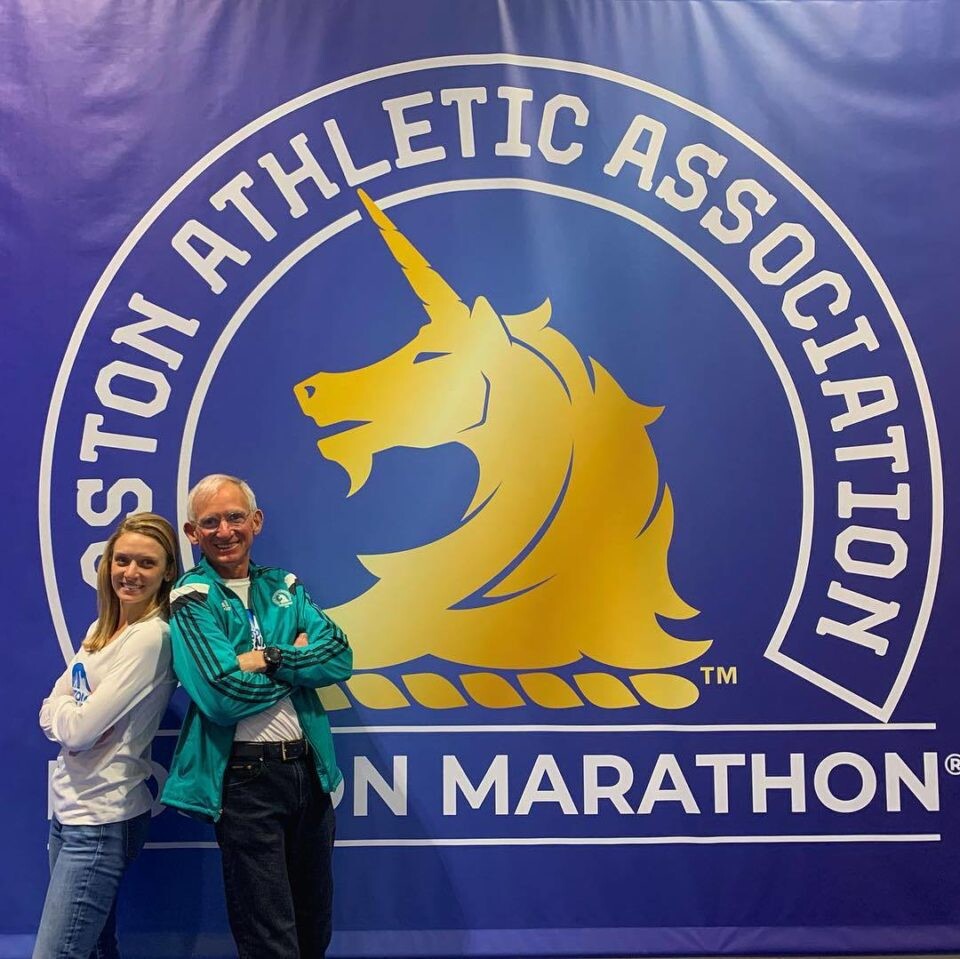
“This past year was all about running as many races as I could,” says Dykes. He compares his 2024 running season to 2018, when he ran 40 races and trained hard in between. “Every race and every training session made me faster,” he explains. “How did it go this year? I ran 43 races and every race and every training session just made me more and more tired. But I had a lot of fun!” Dykes captured five national championship races and three Pan American championship races throughout the year, but he was most pleased with setting the M75 course record at the Boston Marathon.
A family affair and adventure-driven philosophy
Running isn’t just a solo adventure for Dykes, and he says his marathon and ultra finishes with his daughters stand out as one of the highlights of his year. Adventure also motivated some of his races; he undertook a six-day trail running adventure in Newfoundland, covering 87 miles of rugged, breathtaking terrain.
What’s next for this marathon machine?
With 184 marathons and ultras to his name since 2006, including a 2:54:23 marathon PR at age 70, 2024 adds another incredible chapter for Dykes. Next year’s schedule is already packed, from the Tokyo Marathon (where he aims to complete his Marathon Majors clean sweep) to a 300-mile trail race in Arizona. After May, Dykes plans to take a well-deserved sabbatical, gearing up for a future in the M80 age group.
by Keeley Milne
Login to leave a comment
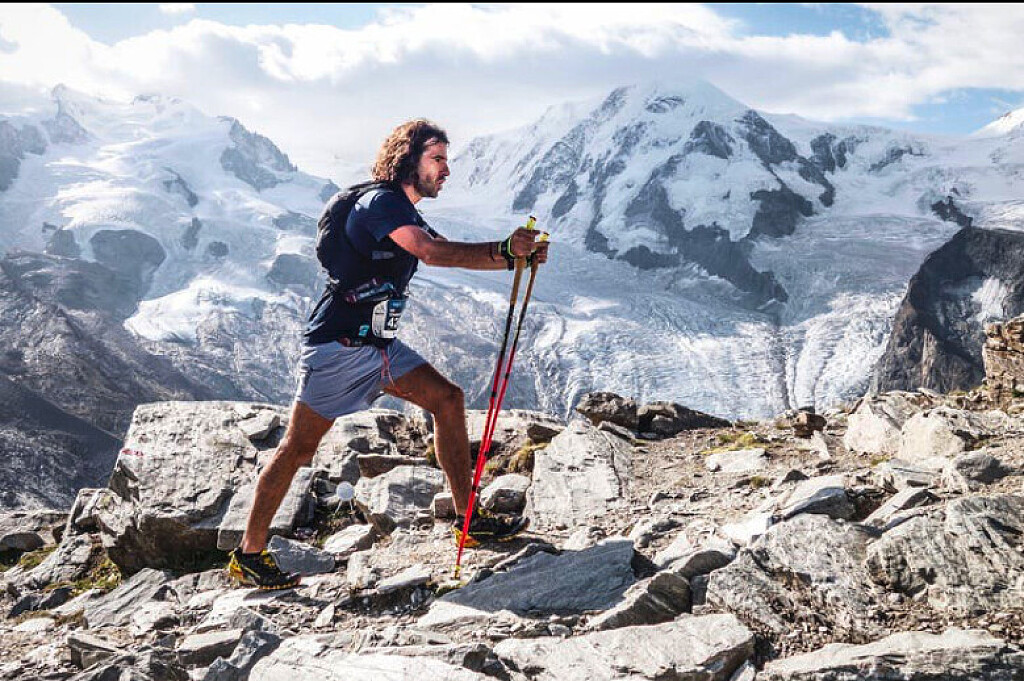
Singer Charles Costa Needed a Reset, So He Ran the Entire Pacific Crest Trail
Charles Costa spent three months running along the Pacific Crest Trail this summer and fall as an act of holistic rejuvenation.
The 39-year-old from London, England, set out with a bold goal of averaging 90 marathons in 90 days as a means to help reset his life-both to revive his stalled music career and to find a more balanced state of mind-but the multi-genre electronic British folk artist with 1 million streams and more than 120,000 monthly Spotify listeners says it turned out to be so much more than that.
Because of lingering physical and psychological challenges from a brain injury suffered in a catastrophic skiing accident in Austria in 2010, Costa found himself in a delicate position that forced him at times to pause his music career while managing his mental health. Until he found trail running, he routinely battled a variety of mental, emotional and logistical ailments, ranging from uncontrollable anxiety to comprehensive darkness.
After averaging close to 30 challenging miles of running on the PCT per day starting on July 20, Costa admitted he was ready to finish the route, get off the trail, and get back to living a more stabilized
Recovering a Sense of Charles Costa
After the ski accident, Costa had been through numerous types of therapy and was taking what he characterized as "mind-monitoring, mind-maintaining drugs" that wound up consuming his life. In his long rehabilitative process, he eventually discovered that running-and specifically ultra-distance trail running-offered more of a physical, mental, and emotional panacea from lingering pain and mental discontinuity than anything else, and it also gave him a space to process what was going on in his life. It allowed him to get away from it all while being more connected to himself.
Costa said the more he immersed himself in running, the more he wanted to do something special to reinvigorate his life, relaunch his music career while also giving back. He's run numerous trail races in Europe in recent years, including the Montreux Trail Festival 70K last summer and the Swiss Canyon Trail 81K in Switzerland in June. (He placed 54th out of 225 runners in 11 hours, 23 minutes and 7 seconds.) He's also run the 813-mile length of Great Britain from the northern tip of Scotland down to the southwestern tip of England.
Seeking to challenge himself on a long and very difficult task that he hoped would be a transformative life experience, he settled on running the length of the PCT- a three-month, 2,650-mile trail running journey with 489,000 feet of elevation change. But he hasn't been doing it just for himself. Along the way, he's been raising money (about $170,000 so far) and stirring up attention for The Jed Foundation, a nonprofit that protects emotional health and prevents suicide for our nation's teens and young adults, and James' Place, a UK-based charity that provides free therapy and is dedicated to suicide prevention for men.
At the completion of the route, which has taken him from the U.S.-Canadian border and through parts of Washington, Oregon, and California, the British singer-songwriter officially released his first new song in several years and the first under his own name. (He originally performed and recorded under the moniker of "King Charles," a false front of a stage persona that he never really liked and that also contributed to his inability to fully express himself the way he wanted.)
The song is called "Nothing at the Most" and will be included on
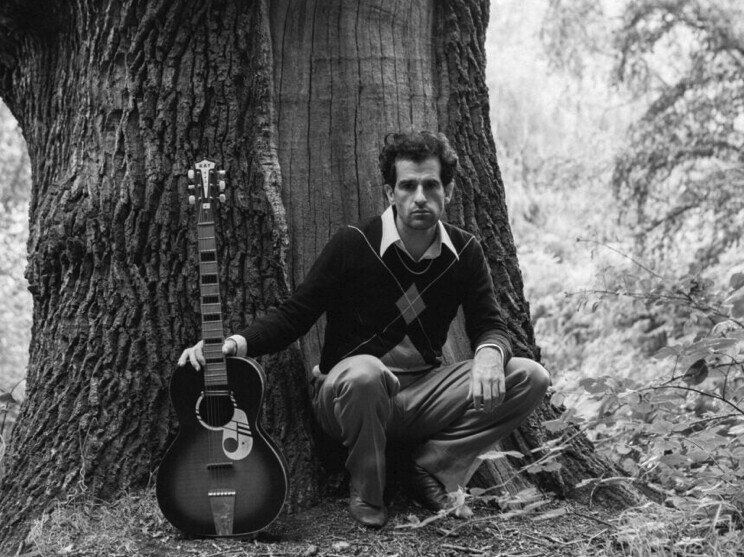
Costa, who plays piano, guitar, and cello, has found his run to be a curing activity that has helped untangle his heart and mind and put him back in position to work as a professional musician.
"One thing I love about running is the rhythm of it," he said. "It's the effect that rhythm has on your mind. Days like I'm doing at the moment, it's dawn to dusk. It's up to 12 hours of just pounding the ground. And there are so many different rhythms that you get into. And I think once you're in a rhythm, your mind gets into a different place. You start thinking less. You let more in, especially when you're in beautiful places. You let more in in terms of inspiration. So, I find running very inspiring, especially in the wilderness and in some of these incredibly beautiful places."
The song "Nothing at the Most" is part of a collection of songs filled with the sounds and lyrics he says are meant to represent his journey between longing and lament. It's an intimate, cello-infused chamber-pop ballad with his soulful voice. Costa recorded several songs in the spring with producer Jesse Quin at
Enduring the Trail
As he was nearing the end of the route last week, Costa said his body was tired and a bit broken down but his soul felt re-energized. While he's remained injury-free, he's battled fatigue, blisters, muscle strains, all sorts of weather conditions, and insomnia-all common maladies to multi-day running adventures. He's worn through several pairs of On and La Sportiva trail running shoes and has relied heavily on his lightweight trekking poles, as well as his small but diligent crew that's managed his meals, gear, logistics and more.
Costa says he's listened to a lot of music out on the trail and has occasionally sang out loud to help the miles go by, but he's also made it a point to soak in the peaceful aura of the wilderness. He says it's been a devilishly hard endeavor and is amazed how "there isn't a single flat section" in the entire route.
"I'm holding it together. My muscles and limbs are all still working as they should, but I guess what starts falling apart is the mind," Costa said. "Even though I've been looking forward to the last 20 days and the last 10
Login to leave a comment
When It’s Time to Replace Your Running Shoes
When this assignment hit my inbox, my first thought was: I am 100 percent going to find out that I need to buy new running shoes. I jog a few times a week and haven’t replaced my Hoka Clifton 9’s since 2023. The chunky, cushioned sole that Hokas are known for has been flattened by months of trail running, and the bright neon yellow exterior has dimmed to a dull mustard.
But they do the job, and I’m a bit frugal, so I’ve stuck with them. But after speaking with a few sneaker experts, I learned I’m not doing myself any favors by holding onto beat-up gear. The more I use them, the greater my risk of an injury.

Here’s why it’s worth replacing your go-to kicks—and how to figure out when to do it.
What Is the Average Lifespan of Running Shoes?
The average running shoe is thought to last about 300 to 500 miles or five to eight months of regular use, but determining your shoe’s true lifespan is more complicated, says Daniel Shull, Run Research Manager at Brooks Running.
Many factors shorten or extend the longevity of your sneakers, including how often you wear them, the kind of terrain and weather you run in, and your stride and strike habits, says Shull.
“Every runner is different, and every shoe is different,” says Arianna L. Gianakos, a Yale Medicine orthopedic surgeon specializing in sports-related foot and ankle injuries.
Trekking through mud, gravel, and puddles can erode your footwear, as can working out in hot or frigid temperatures, says Susan L. Sokolowski, a professor of sports product design at the University of Oregon. She explains if you’re a heavy runner, meaning you land on your foot hard, the foam in the middle of your shoe will break down faster. And if your foot rolls inward or outward, you can wear out a part of your shoe that isn’t built for regular impact, such as the edges or outsole, speeding up your need for
For example, I don’t merely wear my Hokas when I jog. I also wear them when I recreationally hike, bike, and walk my dog all over town. So, while I’d love to think my running shoes last a year, they probably give out much sooner.
Why It’s Important to Replace Running Shoes
When your foot slams onto the ground, your shoe acts as a buffer and absorbs some of the force hitting your foot and ankle, Gianakos says. According to a 2023 review published in Exercise Science and Sports Reviews, shoes influence how your foot interacts with the ground, impacting your performance, speed, comfort levels, and risk of sustaining an injury.
If your sneaker no longer provides the support and cushioning your feet need, you can hurt the joints, tendons, and ligaments in your feet, ankles, and even upper leg, says Gianakos. You can run (pun intended) into a whole host of injuries like plantar fasciitis, tendonitis, stress fractures, and shin splints, she adds.
You may get pain in the ball of your foot (or metatarsalgia), patellofemoral pain syndrome, which causes pain around the kneecap, or iliotibial (IT) band syndrome, a condition that causes pain near the outside of your
So, do a body scan next time you’re out on the trail. Do you notice any foot or ankle aches and knee pains? What about burning sensations on the sole of your foot? How about blisters or calluses? Any of these symptoms may indicate your shoes are shot, says Gianakos.
How to Extend the Life of Your Favorite Pair of Sneaks
First, be mindful of how you store your shoes. You want to keep them in a clean, dry location to prevent mold from growing, says Sokolowski. And don’t store them in a hot, sunny car—UV exposure and heat can cause them to dry out and crack, she adds.
Gianakos recommends having (at least) two pairs of sneakers. That way, you can occasionally switch them out to slow the wear and tear. Another tip: have different sneakers for running in different environments—like “a trail shoe, a road shoe, and even a race day shoe,” says Sokolowski.
And save your running shoes for running only. “The time and amount of steps put on your shoes by walking, standing, and running errands all count towards how long they’ll last,” says Shull.
For all your other day-to-day activities and
Login to leave a comment
You Failed Your Workout—Now What?
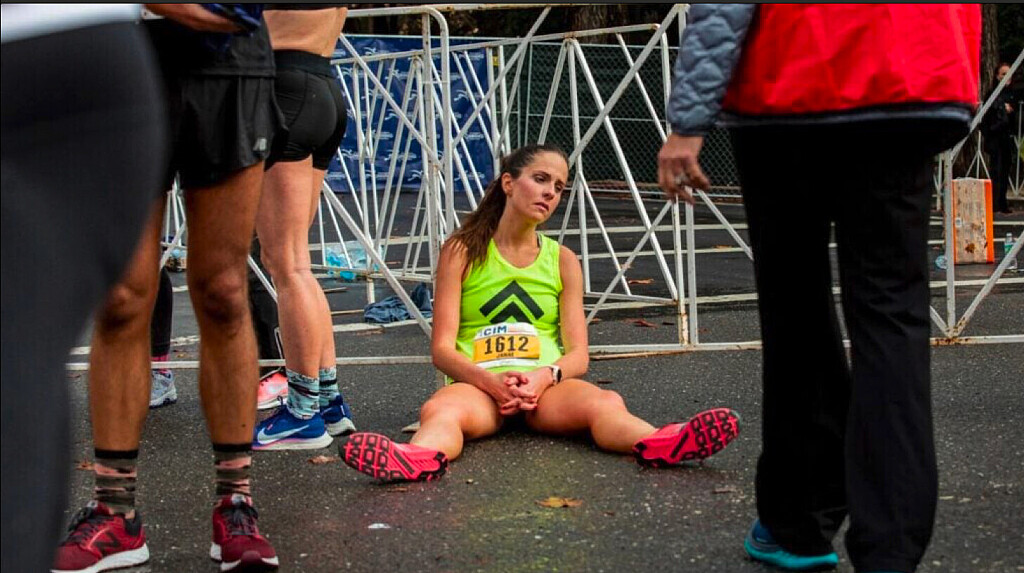
It’s Tuesday. No, it’s not only Tuesday. It’s critical velocity day. My coach has assigned me two warm-up miles and six by 800 meters in 3:13-3:21, with a 90 second jog between each one. I head out to smash the workout. I’m confident. I’m excited. Then, I start.
It’s blistering hot. Sweat is dragging all my face sunscreen down my forehead into my eyes. Water sloshes in my stomach. I’m so thirsty, but I can’t drink anymore or I’ll puke. I start to slow. Miss my paces. What is happening? My head spins and I get this horrible gut-wrenching feeling as I pull through the last interval. My coach is going to be disappointed. My Strava is going to be humiliating. Because I absolutely, undoubtedly failed this run.
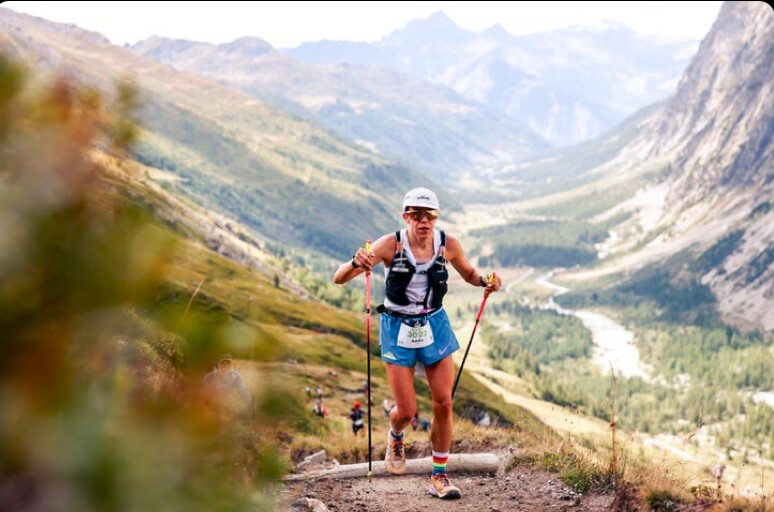
Thinking of yourself or your run as a failure can be debilitating and keep you down for days. For a while, I thought I needed to stifle this feeling. But as it turns out, I should be making nice with failure rather than fighting it.
The ‘F’ Word: Failing a Workout
So what exactly does it mean to “fail” a run? It looks different for everyone, but to many runners it means missing the splits of your prescribed workout. You can fail in training and fail in a race—both can be disheartening. However, running coach and founder of Run Your Personal Best, Cory Smith, says this doesn’t always mean you’re running too slow.
“A lot of people think the faster you run, the better,” he says. “But if you’re trying to hit a certain zone or train a certain adaptation and you run too fast, then you’re training something different than your coach wanted you to train, that can be a failure, too.”
In fact, Smith doesn’t believe going slower than your prescribed paces should be defined as the typical, negative definition of failure.
“Failure is data collection,” he says. “It’s learning information. If I fail a workout, it doesn’t make me a failure as a person or an athlete, it’s just an opportunity to look at the data and figure out how to grow from it.”
Oftentimes you’ll hear runners call it the “F word” or scold others for talking about failure, but
“We have an opportunity, with our language, to normalize failure,” she says. “If we can redefine it, we change our relationship with it.”
What both Foerster and Smith stress the most is that one bad workout doesn’t make or break you. Smith compares it to basing your retirement fund on one day when the market went down, even though we know it goes up and down all the time.
“The most powerful thought around failure is that one workout never makes or breaks a race or athlete,” Foerester says. “We’re in a constant state of learning, if we open ourselves up to be.”
Beating yourself up over a workout can often bleed into your next run, creating a sort of downward spiral effect.
“It puts you into a negative mindset, and then the next workout you’re going to put more pressure on yourself to do well, to convince yourself that last workout was just a fluke,” Smith says. “This leads to anxiety, which can hurt your workout performance.”
One study reports that a negative emotional state can hinder athletic performance. Speed, specifically, was proven to be affected by emotional state. This study examined the correlation between sadness and depression and reduced running speeds, head movements, and arm swinging.
In other words, failure can be heavy, if you let it.
An Upsetting UTMB: Failing a Race
Like we said, failure looks different for everyone. So far, we’ve been talking about failing during training sessions—which can be referred to as process failure. An outcome failure, however, is not meeting an end-result or goal for which you trained. Like a race.
For Addie Bracy, it looks like an uncharacteristic 116th place in the 2023 CCC 100K last September. Bracy is an elite trail runner, winning the 2021 Run Rabbit Run 100 and placing third at the 2023 Speedgoat 50K. She has a consistent track record across the board and even has her masters in Sport and Performance Psychology.
“I had a pretty poor performance,” she says, reflecting on CCC. “Objectively, one of the worst I’ve ever had in trail running, and certainly not the race I trained for.”
Bracy says she can’t pinpoint a rhyme or reason why, but that it just wasn’t clicking that day. At a certain point, she realized the race wasn’t going the way she thought and reframed her mindset. Failure, in her definition, is only when you give up—and she chose not to.
“I think that’s the beauty of ultras—they’re so long that you’re going through the mental process then and there,” she says. “I had thoughts of stopping, but I went through the mentality of ‘That’s not why you do this,’ and gave my best effort to focus on just finishing instead of making a certain time.”
This is what Smith identifies as performance standards versus outcome goals.
“Outcome goals are the splits you or your coach sets or the final finishing time,” he says. “The performance standards aren’t outcomes, but how much effort you put into whatever that task is.”
Meaning, Bracy started with an outcome goal of a particular time, and mid-race, reframed her goals to do
Foerster goes a step further and says that failure is not only okay, it’s actually beneficial.
“Anytime we can meet emotional discomfort where we have to deal with heavy emotions like disappointment, we teach ourselves how to navigate that more effectively,” Foerster says. “So that when we meet another uncomfortable moment in a race, we know we can meet it and process through it.”
In a study conducted by Ayelet Fishbach, Behavioral Science professor at University of Chicago, and Kaitlin Woolley, associate professor at the SC Johnson Cornell College of Business, it was proven that discomfort could lead to personal growth. By applying cognitive reappraisal, study participants assigned a new meaning to discomfort before they experienced it so it served as motivation rather than a reason to stop their goals. And, in the case of this study, participants who were forced into discomfort while doing a task reported a greater sense of achievement.
Much like running itself can be uncomfortable, forcing yourself to address the emotions that come with failure can be an unfamiliar, disagreeable experience. But doing so allows you to feel, process, and recognize that you can change your relationship with failure every time you meet it.
“Discomfort is the currency to our dreams,” Foerster says. “If we’re willing to meet it, all our potential is on the other side.”
So miss those splits. Fail, and fail hard. Address the feeling head-on and don’t let it define you. It’s just one out of many more runs to come.
Login to leave a comment
He Fell 200 Feet During a Trail Running Race—And Lived to Tell the Tale
Not all trail races are created equally: 22-year-old collegiate trail running champion Stuart Terrill learned the very hard way at the U.S. Mountain Running Championships last summer
Stuart Terrill’s life forever changed in a blink of an eye during a competitive mountain running race this past summer.
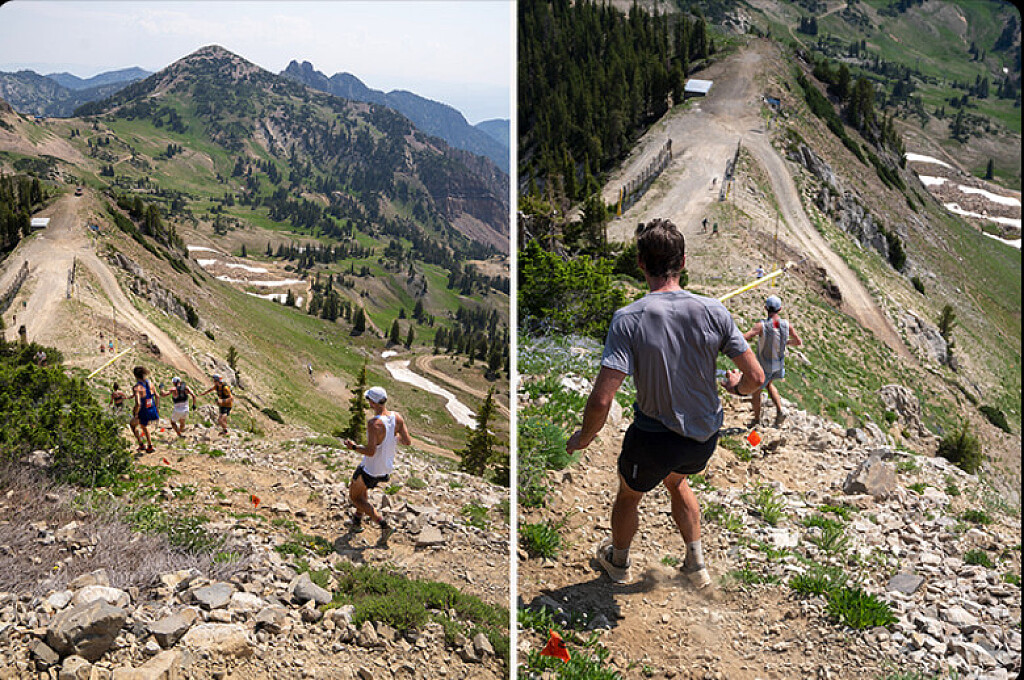
On July 13, the 22-year-old from Crozet, Virginia, summited 11,000-foot Hidden Peak at Snowbird ski resort above Salt Lake City. He was an hour into the 8.7-mile Cirque Series race serving double duty as the 2024 USA Track and Field Mountain Running Championships.
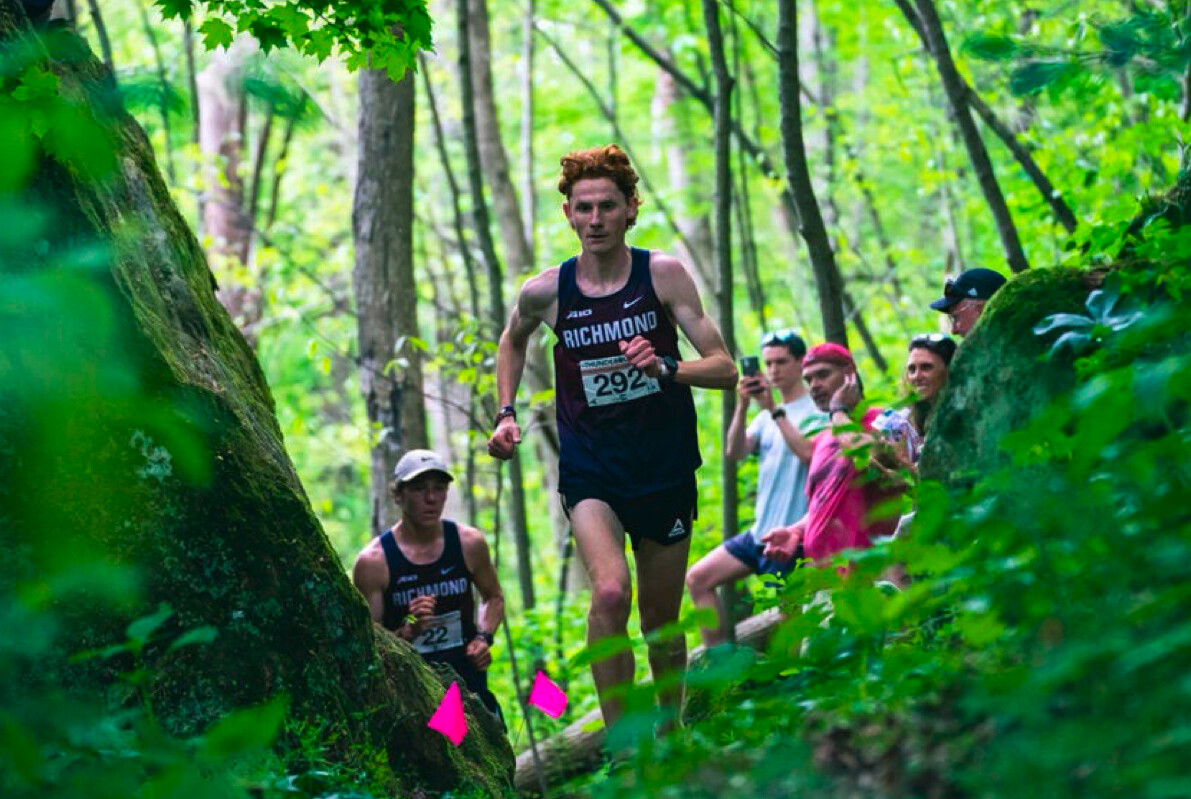
Terrill had just graduated from the University of Richmond, where he ran cross country and track and double-majored in leadership and communication. But he was no stranger to the trails. He won the Collegiate Trail Running Championship in Fairfax, Virginia, in May, besting the competition by nearly a minute over the 10K course to earn his second straight collegiate trail running championship title.
As he crested Hidden Peak and started bombing down the other side, Terrill passed a competitor and lost control, sending him careening towards a cliff. Photographer Matt Johnson watched in horror, pivoting to try to catch Terrill before he fell. But he was too late. Terrill toppled over the edge and tumbled more than 200 feet down the jagged unforgiving terrain below.
“He swung wide to pass a runner. His momentum sent him barreling down towards me and I dropped my camera to try and grab him,” Johnson recalled in the resort’s incident report. “I heard his terrified screams as he went out of sight down the rocky gully. At this point I screamed for a medic and life flight because I wasn’t sure if he was going to even survive. It was rough. It was one of the most horrifying things I’ve ever witnessed.”
Terrill suffered numerous broken bones—eight vertebrae, four ribs, his right collarbone, left wrist, right kneecap, and several bones in each of his feet—and was lucky to be alive. As his mangled body was taken away in a medical helicopter, all those on the scene could do was wonder: how did such a perilous
Mountain Running: A Contact Sport?
While many may be initially attracted to running (on the track and roads) precisely because of its relatively low-risk profile—no contact that could lead to a concussion, no explosive movements that could result in an acute injury—trail running, and in particular mountain running, is another matter. In fact, mountain running, a fast, explosive trail running discipline that usually involves running over rocky, uneven terrain and climbing and descending peaks, comes with considerable risk.
Many mountain running races take competitors along high cliffs and ridgelines with exposure, and down steep, off-trail descents through technical terrain. Minor falls are common, and sprained ankles, broken collarbones, and skin-devouring trail rash are among the most typical injuries.
Injuries are common enough that some races, including the Pikes Peak Marathon in Manitou Springs, Colorado, give out an award for the bloodiest runner. Mount Marathon, a short mountain race in Seward Alaska, reports several minor injuries in a typical year. In 2012, it suffered its first presumed death when 66-year-old Michael LeMaitre, fell on a steep section of the course and, inexplicably, was never found.
Although it wasn’t a super-fast shorter-distance mountain running race, American runner Hillary Allen survived one of the worst known trail running accidents in 2017 at the 57K Hamperokken Skyrace in the mountains outside of Tromso, Norway, after she tripped and ragdolled 150 feet down a ridge and broke both arms, two vertebrae, several ribs, and numerous bones in her feet. Like Terrill, she was lucky to have survived.
“We acknowledge the inherent dangers of producing races in the high alpine, injuries are rare, but do happen unfortunately,” Julian Carr, the race director of the Cirque Series event at Snowbird, wrote in an email. “This is, by far, the most serious injury at a Cirque race since we started our races in 2015.”
“We come from a much more dangerous world of ski mountaineering and climbing, so trail running might seem pretty vanilla compared to that, but you have to be organized and prepared,” Madigan says. “You’ve got to make sure you’re protecting everyone and have a consistent level of safety.”
Not All Trails Are Created Equally
Terrill isn’t new to trail running. In fact, he ran his first trail race in middle school—a mile and a half course with 100 feet of elevation gain in central Virginia. While running cross country and track at the University of Richmond, he also went on to win the Collegiate Trail Running National Championships in both 2023 and 2024.
As a junior in 2023, he took the national title at the Thunderbunny 11K trail race in Athens, Ohio, in 41:27, setting the course record by a minute and a half. That’s when he knew he had a thing for off-road running. Then this past May he repeated as national champ by winning the Fountainhead 10K++ Trail Run in Virginia, obliterating the course record by six and a half minutes in 44:55.
“I’ve always trained in hilly locations, and my stride worked well
Login to leave a comment
Etienne Daguinos sets European 10km record in Lille
The distance runner clocks 27:04 and takes three seconds off Jimmy Gressier’s mark with super run in French city
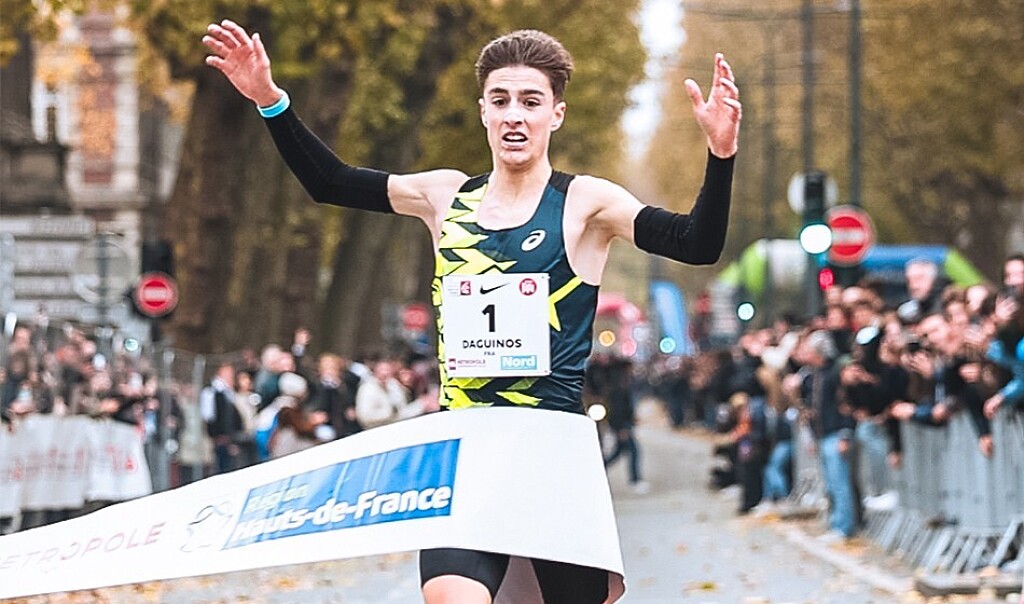
Etienne Daguinos set a European 10km record with a sensational performance at Urban Trail de Lille (November 16).
Daguinos, who was part of the French under-23 team that claimed silver at the 2022 European Cross Country Championships, went into the 10km off the back of a personal half-marathon best of 59:46, which put him joint-10th on the European all-time list over 13.1 miles.
“I cannot believe it,” Daguinos said. “Some people might have predicted it [10km record] but I didn’t believe it. I knew that I was in good shape after my half-marathon in Valencia. I wanted to run faster than 27:30 and I am still in shock.”
Not only did Daguinos defeat a strong and deep field in Lille but he did so by running identical 5km splits of 13:32.
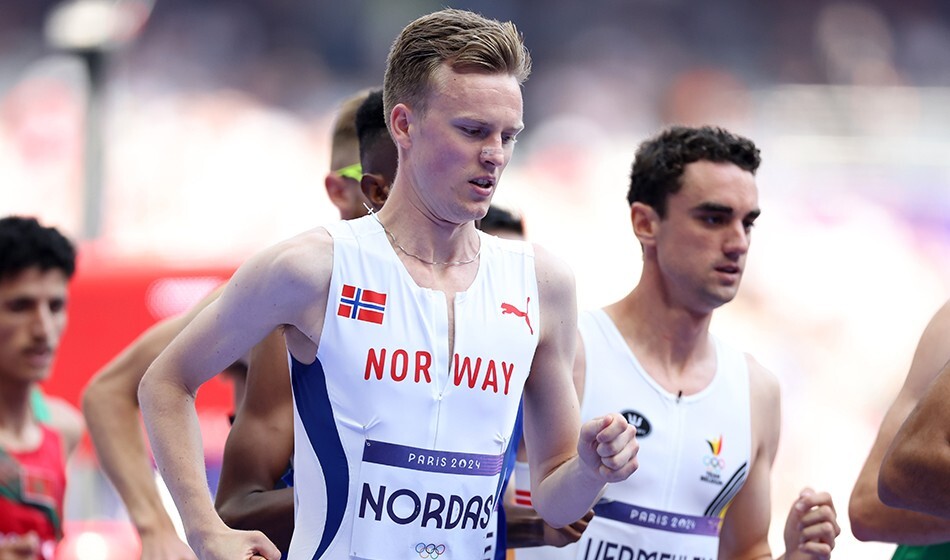
World 1500m bronze medallist Narve Gilje Nordas broke the Norwegian 10km record with 27:31, while Mohamed Abdilaahi clocked 27:40, the fastest time by a German in history.
That put the pair seventh and joint-10th on the European 10km all-time list respectively.
It means that Mo Farah, who ran 27:44 in 2010 and held the European 10km record until Julien Wanders recorded 27:32 in 2018, is now 13th on the rankings.
With six out of the eight fastest 10km times by European male athlete occurring this season, expect the record books to tumble once again next year.
Daguinos, who occasionally trains in Font Romeu and also has a background in trail running, is now in prime position to be the first European athlete to break the 27-minute barrier in the 10km.
Only 29 athletes have ever achieved the feat and they are all from Africa.
by Athletics Weekly
Login to leave a comment

Jenny Simpson is Retiring after the New York City Marathon and Starting a New Adventure
After concluding a stellar, 20-year career, the Olympic bronze medalist will embark on a 50-state running-infused van-life tour of the U.S. with her husband, Jason, in 2025
Jenny Simpson will go down in the annals of American running as one of the greatest of all time. No question about it.
So as she approaches what is likely the last elite-level race of her long and storied career at the November 3 New York City Marathon, she has nothing to prove, no one to impress, and no specific performance goal that she needs to attain to secure her legacy.
As a four-time global championship medalist in the 1500 meters—including a victory in the 2011 World Championships in Daegu, South Korea, Diamond League title in 2014, and bronze medal at the 2016 Rio Olympics—Simpson has long been destined to go down as one of the best runners in U.S. history.

Add to that three Olympic appearances, 11 U.S. titles, three NCAA championships, eight top-10 finishes in international championships, eight Fifth Avenue Mile victories, six NCAA records (in six different events), and two American records (in the 3,000-meter steeplechase), and Simpson will rank among American legends for decades to come.
The fact that she’s been earnestly training to finish her career with a strong marathon performance in New York City epitomizes much of what the 38-year-old runner from Boulder, Colorado, has been about during her 20-year career. She’s not necessarily going out on top—that, she says, would have entailed making the U.S. Olympic team in the marathon for the Paris Olympic Games. But she is going out on her terms: focused, tenacious, and relentless to the end. It’s an opportunity afforded to few athletes, and even fewer distance runners.
“When I say I’m feeling good, it’s that I’m really excited for New York and I feel like I have a really, really good sense about my ability to run well,” she says. “I’m not going into it saying I’m gonna set the world on fire and be the top American or run 2:25 on that course. But I just know as good as I feel and as good as the training has gone, I know I’m capable of having a good day, and, most importantly, I have peace about it all.”
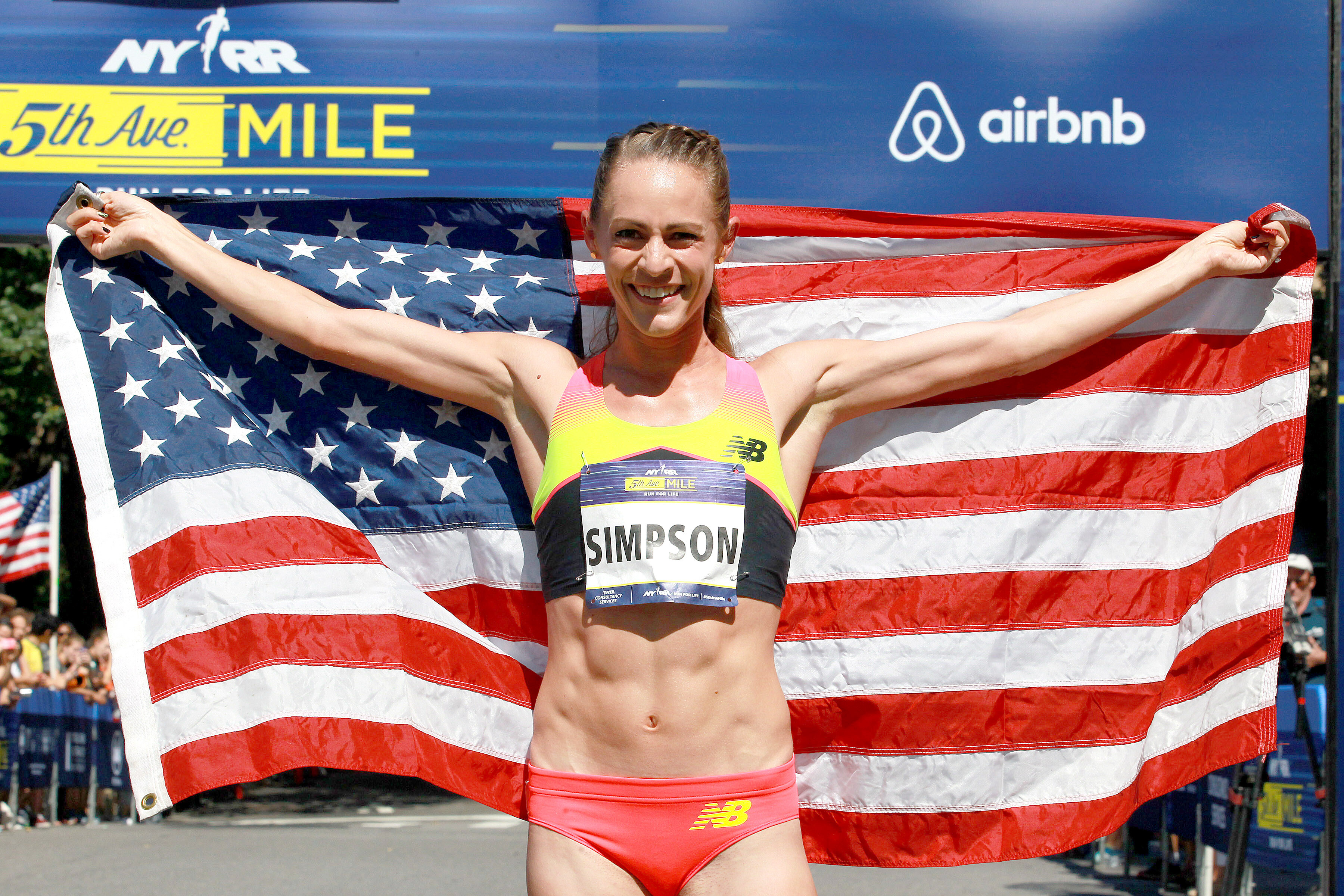
But as this chapter of life closes for Simpson, another very exciting one is about to begin, and that one will include quite a bit of running, too. She and her husband, Jason, are planning to embark on a year-long tour of the U.S. in 2025 that will take them—and their two Jack Russell Terriers, Truman and Barkley—to all 50 states while living out a van-life adventure focused on immersing in America’s thriving running culture.
From participating in races and visiting national parks to running iconic routes like Rim to Rim across the Grand Canyon and discovering hidden trails, Jenny and Jason have said their goal is to capture the heartwarming and inspiring essence of the country through the eyes of runners.
“We want to experience the beauty of this country firsthand, meet the incredible people who call it home, and celebrate everything that makes the U.S. so special,” says Jenny Simpson, who has represented the U.S. on the world stage for nearly two decades. “Through this journey, we hope to show that America’s beauty is not just in its landmarks, but in its people and the unique places they live, run, and explore.”
Out of the Ashes
In December of 2021, a devastating wildfire ripped through the south end of Boulder County—including the communities of Marshall, Louisville, and Superior, where it burned more than 1,084 homes and killed two residents and more than 900 pets. Miraculously, it didn’t burn the Simpson’s house—a restored circa-1900 schoolhouse they bought several years ago that was less than a half mile from the fire’s origin—but the house did incur significant smoke damage that needed mitigating.
The Simpsons were displaced and spent several months living in an apartment with little furniture, which forced them to live a rather spartan lifestyle. While Jason was still able to work as a creative director for a design firm, Jenny’s contract hadn’t been renewed by New Balance, and she wasn’t sure what the future held.
During that time, she had been doing a weekly call with her sister, Emily, and Jason’s sister, Annie, to discuss the book Designing Your Life: How to Build a Well-Lived, Joyful Life, a guide aimed at helping people to reimagine their professional and personal lives. It was through those discussions that Jenny came up with an idea of buying a Winnebago so she and Jason could drive around the country with Truman, who they rescued in 2020 just before the Covid lockdown. (They got Barkley about three years later.)
“My idea was that we can just drive around America and see the place that I’ve had stamped across my chest on my Team USA gear all these years,” she says. “I have been on Team USA, but I really want to know what that means. I’ve raced in some amazing places all around the world, but I really haven’t seen much of our own country. I want to go see the places and the people that I haven’t seen. And then I had this idea of doing a 50 states, 50 weeks tour.”
Jenny told Jason about the idea and he was interested from the start, but it was initially just a fun distraction while Jenny was battling injuries. Jason was so intrigued, though, that he started searching for information about vans online and indulging in YouTube content from a variety of van-life influencers. Eventually, Jenny was healthy and racing on the roads for Puma, ultimately with a quest to qualify for the 2024 U.S. Olympic Trials Marathon.
A year later, they were still casually talking about the enticing “what if” possibilities of owning a van.
“So by 2023, we were like, ‘What do these vans look like? What do they cost? What kind of different layouts are best?” says Jason, 40, a 20-time marathoner with a 2:18:44 personal best. “And then I got really into the travel influencer YouTube videos and at some point told Jenny, ‘Hey, let’s just go look at them.’ And that led to looking at the timelines of: if we were to do this in 2024 or 2025, what would it take? It takes like a long time to build out the vans, and we are definitely not build-it-yourself van people.”
On Her Own Terms
Perhaps the most impressive aspect of Simpson’s career has been her consistency. She qualified for every U.S. national team on the track between 2007 and 2019. Not only did she put in the work and remain virtually injury-free during that time, but she also raced fiercely and rose to the occasion every single time without a single hiccup in any of her preliminary races. (She also made it to the 1500-meter final of the Covid-delayed U.S. Olympic Trials in 2021 at age 35 after what she admitted was a rough gap in competition during the pandemic.)
For most of that time, she was coached by her University of Colorado coaches Mark Wetmore and Heather Burroughs. They continued coaching her as she transitioned to road running over the past three years and ultimately to the build-up to the 2024 U.S. Olympic Trials Marathon in Orlando, Florida. Although she had brief moments of success on the roads—finishing second in the U.S. 10-mile championship in 2021 and turning in a solid ninth-place, 1:10:35 effort in the Houston Half Marathon in 2023—the first injuries of her career disrupted her training and delayed her debut at 26.2 miles until the Olympic Trials.
Over the past three years, continuing to adhere to the rigid lifestyle needed to keep racing competitively was increasingly met at an internal crossroads of wondering when it would feel OK to retire and move on in life and what that would look like.
“Running the Olympics Trials and then running Boston, I would say those were not successful outings,” Simpson says. “I did the best that I could and I got as prepared as I could, but they weren’t what I had hoped for, neither of them were what I’m capable of. I’m really proud of how I ran in Boston because I ran entirely alone after mile 3, but that’s not how I wanted to end my career.”
After Boston, Jenny still wasn’t ready to retire. But she’d heard the chatter that suggested she could give up the ghost and not try to remain competitive on the roads, knowing her legacy was already secure. After she took some time off to recover and reflect, she knew she wanted to get back into training and target one more race on the biggest stage and settled on the New York City Marathon.
She parted ways with Wetmore and Burroughs in the spring and decided to train on her own, although she’s continually received subtle guidance from Jason, who qualified for and raced in the 2020 U.S. Olympic Trials in Atlanta. Although he has imparted bits of knowledge to help keep her balanced, Simpson has been following a training plan in her marathon buildup that she designed.
From Best in the U.S. to Across the U.S.
Casual interest in buying a van led to more in-depth investigation and, after what was an otherwise random training run on the dirt roads north of Denver last year, they passed an RV sales lot and decided to take a look. One thing led to another and they put down a small, refundable deposit that would hold a fully appointed 23-foot Winnebago Ekko during what was expected to be nearly a year-long wait until it was built and delivered.
Fast forward to 2024 and Jenny made her marathon debut on February 3 in Orlando, but it didn’t go at all as she had hoped. She had been running among the top 20 early in the race but eventually dropped out at mile 18. She returned 10 weeks later to run a respectable Boston Marathon in mid-April (she placed 18th overall in 2:31:39 and was the fourth American finisher), and although her effort was commensurate with her inner drive—and some degree of success felt good—she still wasn’t ready to call it a career.
Finally, in April, several days before they were going to travel to Boston, the RV dealership called and told them the van had arrived and they had a week to consider buying it. At that point, Jenny was eager to run Boston to make amends for her Olympic Trials experience, but she was also physically and emotionally fried.
“And I was like, we’re doing it,” she says. “It was the perfect time in the perfect year. Because I was like, ‘I’ve got to get out of here. I’ve got to be done.’ It was killing me. I actually might perish in the middle of the Boston Marathon. I just was so burnt out, and so it was the perfect time for them to call and essentially say, ‘Do you want to drive away into the sunset?’ And I was like, ‘Yes, I do. I really do.’”
Two days after the Boston Marathon, they paid the remainder of the balance on the van and picked it up, immediately sending them into daydreaming mode about where they wanted to go.
Although their plans are still being formulated, they intend to rent their house and hit the road with the charming dogs in January, officially starting their “Jenny and Jason Run USA” tour in Florida. Along the way, they plan to see numerous sights, host or join at least one fun run in every state, promote dog adoptions by publicizing local humane societies, and create a wide range of engaging social media content on their Instagram, Facebook, and YouTube accounts along the way. Given that their longest stint in the van so far was the six-day trip they took to the Grand Tetons and Yellowstone National Park in Wyoming early last summer, they know they’re going to have to learn on the fly and continually adapt. But that’s what an adventure is all about.
“I’ve been nothing but focused on running New York, but I am excited about what’s next,” Jenny said this week. “As I have been tiptoeing toward the idea of being retired from professional running, I don’t know that I’m going to be really great at it or that it’s going to come easily for me. That’s why it’s so wonderful to have a partner in life like Jason because I think he sees that, too. So our goal is to create a lot of time and space to figure that out. I think the year will be kind of interesting and fun and wild and I really don’t know how it’ll end up, and I think that’s really good.”
Approaching the End … and a Beginning
Simpson admits her post-Boston malaise contributed to her having an inconsistent summer of training, in part because she was listening to voices that suggested she should relax and not be so rigid in her approach. When she showed up to run the Beach to Beacon 10K in Cape Elizabeth, Maine, on August 3, she admits she wasn’t very fit, and, as a result, finished a distant 12th in 34:30.
“My Beach to Beacon race was just so bad that it was like validation to me that caring less and trying less doesn’t work for me ever in anything,” she said. “I’m just not that person. It works for some people, but that’s not who I am. I used to joke that when you show up to the track and someone asks, ‘How do you feel?’ I always thought to myself it doesn’t matter how I feel. It’s about doing the work. I always feel like it’s execution over emotion for me all the time and that I have a job to do. I know who I am and I know how I operate, and how I operate is great.”
Simpson got back to work immediately after that race, ramping up her weekly mileage to the 100-mile range in the high altitude environs of Colorado. She says she’s done more than half of her long runs between 8,500 and 10,500 feet, including runs on Magnolia Road above Boulder, Golden Gate Canyon State Park near Golden, and even a loop around the paved Mineral Belt Trail in Leadville.
Her return to rigidity and improved fitness helped bring mental clarity that not only convinced her that she’d be ready to run a strong marathon in New York City, but also brought the revelation that she was ready to admit it was her last race knowing it would allow her to retire on her own terms.
Two months after feeling flat in the 10K, she won the Wineglass Half Marathon on October 5 in Corning, New York, running a near-PR of 1:10:50 (5:24 per-mile pace) as she ran stride-for-stride to the finish line with Jason. (She broke the women’s finisher’s tape for the win, while he ran slightly to the side as the 12th-place men’s finisher and 13th overall.) Now she’s likely in sub-2:30 marathon shape, even though the hilly New York City Marathon course is as equally challenging as Boston in its own way. Jason, meanwhile, will race in the Abbott Dash to the Finish Line 5K the day before the marathon, not only so he can track Jenny on Sunday and meet her at the finish line, but also because he’s running the California International Marathon on December 8.
2025 and Beyond
Simpson arrived in New York City on October 30 healthy, happy, and ready to run hard—definitely not the feeling of holding on for dear life that she felt going into the Olympic Trials and the Boston Marathon. She says she couldn’t be more excited to run through the city’s five boroughs to the finish line in Central Park that she hopes will come with a satisfying result, as well as the beginning of closure to her star-spangled career.
Who knows what’s next after that—Coaching? Law school? A corporate career with a shoe brand? The world seems to be her oyster, but for the time being the cross-country tour might be just what she needs most. She’s excited to detach a bit from the rigid schedule and identity she’s clung to for the past 20 years and enjoy the freedom of the open road. She knows it will be a complete departure from the essence of what she’s all about, and to that point, she’ll likely dig into planning and scheduling early next week even before she recovers from the marathon.
Although she admits she was intrigued while watching some of the top runners finish the Leadville Trail 100 this summer, she says she’s decidedly not interested in running ultras. (However, Jason might be, and Jenny says she’s been keen to pace and crew him.) She might get more into trail running, something she did a little bit early in her University of Colorado career. Or she might even return to road running, but she’s not thinking that far ahead. For now, she’s focused on racing in New York and then continuing to run in 2025—on the magical mystery tour that awaits—and beyond.
“I feel a lot of peace about it, but it’s not like I’m over running. I want to retire so I can do more running and to explore the beautiful country I raced for,” she says. “I wanted to be world class at the marathon, and I’m not. I gave it a good try, and now it’s time to try something else, and I just feel really good about it.”
by Brian Metzler
Login to leave a comment

TCS New York City Marathon
The first New York City Marathon, organized in 1970 by Fred Lebow and Vince Chiappetta, was held entirely in Central Park. Of 127 entrants, only 55 men finished; the sole female entrant dropped out due to illness. Winners were given inexpensive wristwatches and recycled baseball and bowling trophies. The entry fee was $1 and the total event budget...
more...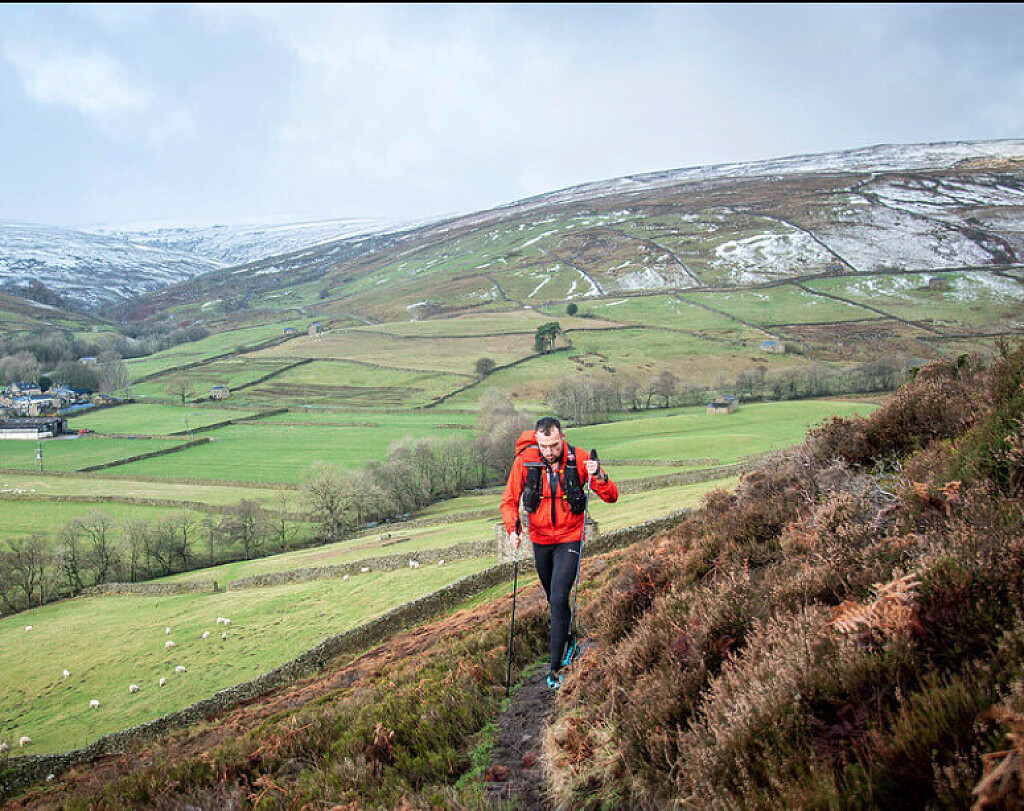
Runners have gone wild in the current boom, increasingly hitting the trails and embracing ultra distances
that immerse us in nature, where mile splits matter far less than the experience of respondents to a 2024 Runner’s World survey have run an ultramarathon.
65%
of those ran their first ultra in the past five years.
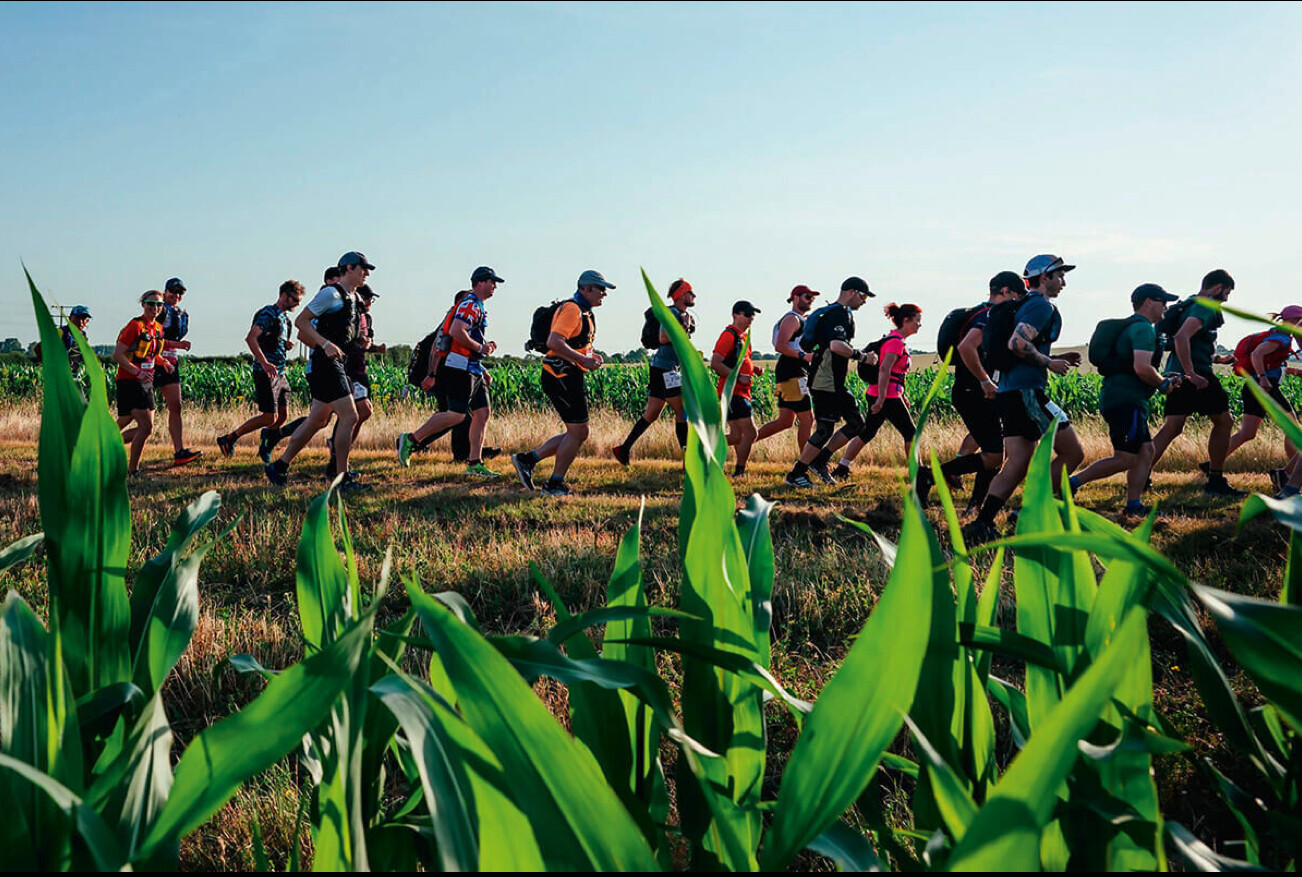
33%
said that they’re planning to run or considering running an ultra in the next two years.
‘It definitely feels more people are running trail and ultra, certainly post-Covid. The scene is really exciting with more races (and more accessible races), more brands, more sport-specific media, more younger, faster runners and more women – but they’re still a minority. Black Trail Runners and others are doing great work to make the scene more diverse. It’d be great to see more diversity, more accessibility and gender equality.’
Damian Hall, author and record-breaking ultrarunner236%
The year-on-year increase in internet searches for the Barkley Marathons from August 2023.
61%
of those surveyed by RW are interested or may be interested in following the big ultra races, such as the Barkley Marathons, Spine and Ultra-Trail du Mont-Blanc. 34%
This year’s increase in registrations for the Ultra-Trail du Mont-Blanc World Series Finals, compared with 2023. Demand is two to three times higher than max capacity.
43
Events in UTMB World Series in 2024, in Asia, Oceania, Europe, Africa and the Americas.
$7.3 billion
The value of the global trail running shoes market in 2022, according to a report by Allied Market Research. Up from $1.38bn in 2016, according to data from Grand View Research.
$12.4 billion
Predicted value of the global trail running shoes market in 2032, according to Allied Market Research.
30%
Year-on-year increase in numbers for the Montane Spine races. ‘The Montane Spine has expanded with more races within the events and more locations. We’ve had to organise other races to keep up with demand because the Montane Spine races continue to consistently sell out. We’re seeing people looking for ultramarathons to help with their mental health.’
Phil Hayday-Brown, founder of the Montane Spine Race
63%
The year-on-year increase in participants at Black To The Trails, with a waiting list operating for 2024’s sold-out event. 58% of runners were people of colour, with 14 of the 19 UK ethnic categories represented; 70% of participants were women.‘The Black Trail Runners community continues to grow daily with thousands of followers in the UK and globally, we’re a registered community and campaigning charity with the mission to increase the inclusion, participation and representation of people of Black ethnicity in trail running. If you want to see a more ethnically diverse sector, you can join us to help us do that – you don’t need to be of Black ethnicity to support the work that we do.’
Sabrina Pace-Humphreys, ultrarunner and co-founder of Black Trail Runners
5,252%
Growth in trail races with 500 or more participants in the 10 years leading up to 2022, according to RunRepeat. 11%
The year-on-year increase in runners on Strava completing at least one ultra, according to 2024 Strava data, growing at the same rate for men and women.
10% year-on-year increase in 50Ks.16% year-on-year increase in 50-milers. 14% year-on-year increase in 100Ks.
1,676% increase in ultra participation between 1996 and 2018, according to a recent report from RunRepeat, with numbers rising from just 34,401 to 611,098.
5,590 races
on the International Trail Runners Association calendar between January and August 2024: a 458% increase from the 1,002 races planned a decade ago.
49%
of respondents to the RW survey who run on trails started trail running within the past five years.
231%
Growth in trail running worldwide in the decade leading up to 2022, according to RunRepeat research. ‘All our events have been sell-outs the last couple of years. The Tolkien Trail Race sells out 500 entries in under an hour, and we’re noticing races fill up quicker and quicker each year. Trail racing has the least barriers to compete, with less emphasis on times than road racing, which can be intimidating. There’s an element of adventure, a test of endurance and the release of being in nature that’s evidently being enjoyed across ages and genders.’
Chris Holdsworth, race director for Pennine Trailsitting the trails and embracing ultra distances that immerse us in nature, where mile splits matter far less than the experience
Login to leave a comment
The Strange Saga of Ultrarunner Camille Herron and Wikipedia
The husband of runner Camille Herron admitted to having altered the Wikipedia biographies of prominent ultrarunners. The revelation came after a Canadian journalist launched an investigation.
On September 24, Conor Holt, the husband and coach of American ultrarunner Camille Herron, admitted to altering the biographies of Herron, Courtney Dauwalter, Kilian Jornet, and other prominent runners on the website Wikipedia. Holt’s edits boosted his wife’s accolades but also downgraded those of the other prominent ultrarunners.
“Camille had nothing to do with this,” Holt wrote in an email sent to Outside and several running media websites. “I’m 100 percent responsible and apologize [to] any athletes affected by this and the wrong I did.”

The confession brought some clarity to an Internet mystery that embroiled the running community for several days and sparked a flurry of chatter on social media and running forums. Herron, 42, is one of the most visible ultrarunners in the sport, and over the years she has won South Africa’s Comrades Marathon and also held world records in several different events, including the 48-hour and six-day durations. But the Wikipedia controversy led to swift consequences for Herron—her major sponsor, Lululemon, parted ways with her on Thursday morning.
The entire ordeal sprung from an investigation led by a Canadian journalist who spent more than a week following digital breadcrumbs on dark corners of
Marley Dickinson, a reporter for the website Canadian Running, began looking into the Wikipedia controversy in mid-September after receiving a tip from someone in the running community. The tipster told Dickinson, 29, that someone was attempting to delete important data from the Wikipedia entry for “Ultramarathon.”
The person had erased the accomplishments of a Danish runner named Stine Rex, who in 2024 broke two long-distance running records—the six-day and 48-hour marks—which were previously held by Herron. At the time, the sport’s governing body, the International Association of Ultrarunners, was deciding whether or not to honor Rex’s six-day record of 567 miles.
“The person making the edits said the IAU had made a decision on the record, even though they hadn’t yet,” Dickinson told me. “Whoever was doing it really wanted to get Rex’s run off of Wikipedia.”
Wikipedia allows anonymous users to edit entries, but it logs these changes in a public forum and shows which user accounts made them. After an edit is made, a team of volunteer moderators, known as Wikipedians, examines the changes and then decides whether or not to publish them. The site requires content to be verifiable through published and reliable sources, and it asks that information be presented in a neutral manner, without opinion or bias. The site can warn or even suspend a user for making edits that do not adhere to these standards.
Dickinson, who worked in database marketing at Thomson Reuters before joining Canadian Running, was intrigued by the bizarre edits. “I’ve always been into looking at the backend of websites,” he told me. “There’s usually a way you can tie an account back to a person.”
The editor in question used the name “Rundbowie,” and Dickinson saw that the account had also made numerous changes to Herron’s biography. Most of these edits were to insert glowing comments into the text. “I thought whoever this person is, they are a big fan of Camille Herron,” Dickinson said.
Rundbowie was prolific on Wikipedia, and made frequent tweaks and updates to other biographies. The account had removed language from the pages of Jornet and Dauwalter—specifically deleting the text “widely regarded as one of the greatest ultramarathon runners of all time.” Rundbowie had then attempted to add this exact language to Herron’s page. Both attempts were eventually denied by Wikipedians.
After examining the edits, Dickinson began to suspect that Rundbowie was operated by either Herron or Holt. Further digital sleuthing bolstered this opinion. He saw that the Rundbowie account, which made almost daily edits between February and April, abruptly went silent between March 6-12. Those dates corresponded with Herron’s world-record run in a six-day race put on by Lululemon in California.
But Dickinson wasn’t done with his detective work. He saw that in March, Wikipedia had warned Rundbowie on its public Incident Report page. The reason
A final Internet deep dive convinced Dickinson that he was on the right track. The IP address—a string of characters associated with a given computer—placed Temporun73 in Oklahoma, which is where Herron and Holt live. Then, on a forum page for Oregon State University, which is where Herron attended graduate school, Dickinson found an old Yahoo email address used by Herron. The email name: Temporun73.
“To me, this was a clear sign that it was either Conor or Camille” Dickinson said.
Dickinson published his story to Canadian Running on Monday, September 23. The piece included screenshots of Wikipedia edits as well as Dickinson’s trail to Herron and Holt. It started off a flurry of online reactions.
A thread on the running forum LetsRun generated 360 comments, and several hundred more appeared on the Reddit communities for trail running and ultrarunning. Film My Run, a British YouTube site, uploaded an immediate reaction video the following day. Within 12 hours, more than a hundred people shared their thoughts in the comments section.
It’s understandable why. Lauded for her accolades in ultra-distance races, Herron is also one of the most visible ultrarunners on the planet. She gives frequent interviews, and has been an outspoken advocate for the anti-doping movement, for smart and responsible training habits, and for the advancement of women runners.
“I think we’re going to continue to see barriers being broken and bars raised. I want to see how close I can get to the men’s world records, or even exceed a men’s world record,” she told Outside Run in 2023.
Herron has also spoken and written about her own mental health. Earlier this year, she began writing and giving interviews about her recent diagnosis with Autism and ADHD.
“Although I knew little about autism before seeking out a diagnosis, my husband, who observed my daily quirks and often reminded me to eat, drink, and go to bed, would jokingly speculate that I might be autistic,” she told writer Sandra Rose Salathe on the website FloSpace in July.
Dickinson told me he had a very positive image of Herron from his short time at Canadian Running. He joined the website in 2021.
“She’s always been super nice and welcoming,” Dickinson said.
Dickinson says he reached out to Herron and Holt via email and social media, but did not receive a reply. On Monday afternoon, a user on the social media platform X asked Herron about the story. “It’s made up,” Herron’s account replied. “Someone has an ax to grind and is bullying and harassing me.”
Herron’s social media accounts were deactivated shortly afterward—Holt later said he took them down.
Some online commenters questioned if the story was legitimate—something I did too, initially. Following Dickinson’s arcane trail through Wikipedia’s backend required a careful read, and a strong knowledge of the encyclopedia’s rules and regulations.
After speaking to Dickinson, I sent my notes to a Wikipedia expert named Rhiannon Ruff, who operates a digital consulting firm called Lumino that helps clients navigate the online encyclopedia. Ruff examined the story as well as the Wikipedia histories of Rundbowie and Temporun 73, and said that the evidence strongly suggested that both accounts were operated by the same person. But, since Wikipedia allows for anonymity, you cannot make the connection with 100 percent certainty.
Ruff pointed out that Wikipedia’s internal editors strongly believed the two accounts had a biased with Herron, because the accounts had attempted to write in the same sentence. “Both tried to add details about her crediting the influence of her father and grandfather, and how she runs with a smile,” Ruff said.
Ruff also pointed me to the prolific editing history of Temporun73. Started in 2016, the account had made approximately 250 edits to
“I never got a chance to say anything to the Canadian Running website before they published it,” Holt wrote.
Holt admitted that he was the operator of the Temporun73 and Rundbowie accounts. But he said his Wikipedia editing was aimed at combating online bullies who had removed biographical details from Herron’s Wikipedia page in the past.
“I kept adding back in the details, and then they blocked my account in early February of this year,” Holt wrote. “Nothing was out of line with what other athletes have on their pages. Wikipedia allows the creation of another account, so I created a new account Rundbowie. I was going off what other athletes had on their pages using the username Rundbowie and copying/pasting this info.”
“I was only trying to protect Camille from the constant bullying, harassment and accusations she has endured in her running career, which has severely impacted her mental health,” he added. “So much to the point that she has sought professional mental health help.”
Outside asked Holt via email to provide further details, but we did not receive a response. In an email to Canadian Running, Holt said he was focused on Herron’s upcoming race, and would not be conducting interviews.
But the fallout from the admission came quickly. On Thursday morning Dickinson broke more news: apparel brand Lululemon, which has backed Herron since 2023, had ended its partnership. In a statement provided to several outlets, the brand said it was dedicated “to equitable competition in sport for all,” and that it sought
by Outside Online
Login to leave a comment
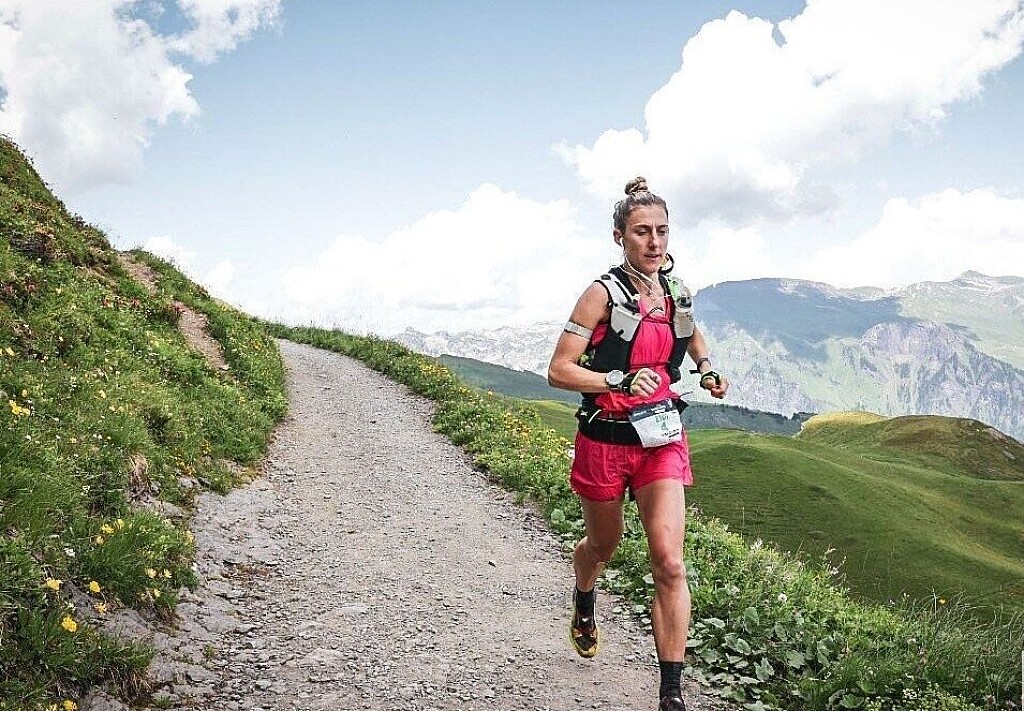
Get trail-strong with these tips from a pro
Pro trail runner and coach Hannah Allgood shares four exercises that target common weaknesses in runners.
If you want to be a strong trail runner, you’ll need more than just miles on your legs—you need to build strength that can take on the rugged terrain. Hannah Allgood, a Colorado-based pro trail runner for Dynafit, is here to help, sharing her four favourite exercises for athletes.
Allgood not only excels in the mountains (in July, she won the Eiger Ultra-Trail by UTMB 100K), but also helps athletes build strength through her coaching with Freetrail, an online trail community and media outlet. With a background in exercise science and years of competitive experience across multiple sports, she has perfected the art of staying strong, fast and injury-free on the trails. “Strength training has always been an integral part of my career as an athlete,” Allgood explains. She knows firsthand how crucial lifting is to boost performance and prevent injuries, especially for trail runners tackling challenging mountain races.If you want to be a strong trail runner, you’ll need more than just miles on your legs—you need to build strength that can take on the rugged terrain. Hannah Allgood, a Colorado-based pro trail runner for Dynafit, is here to help, sharing her four favourite exercises for athletes.
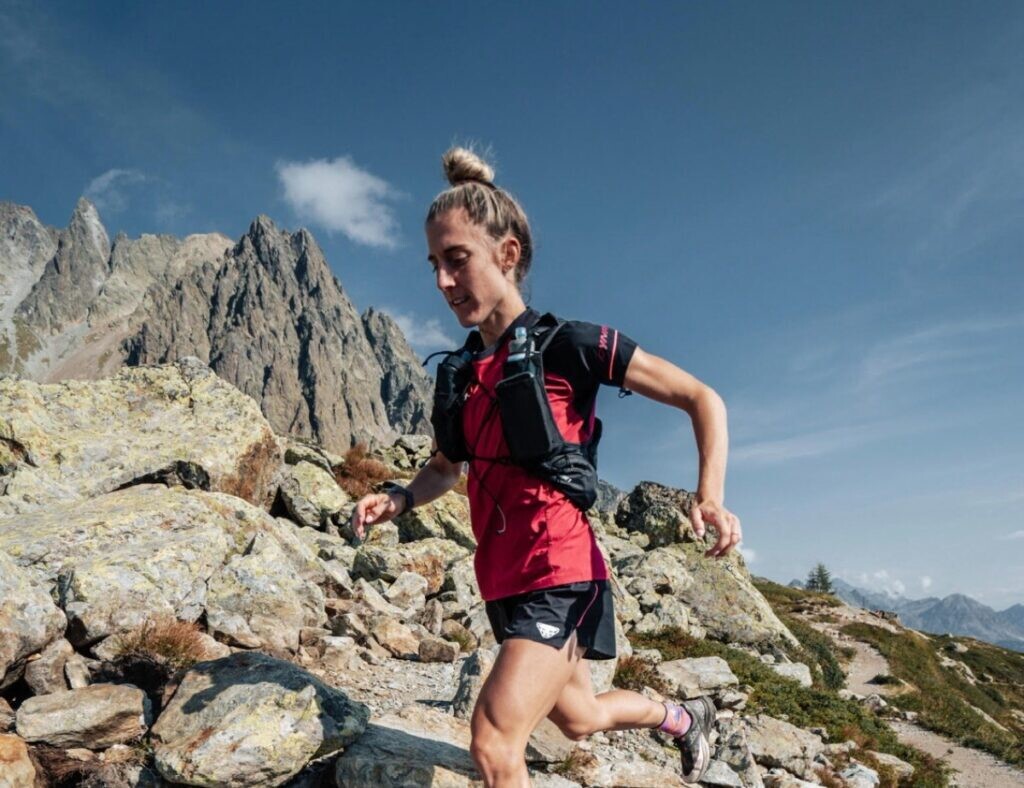
Allgood not only excels in the mountains (in July, she won the Eiger Ultra-Trail by UTMB 100K), but also helps athletes build strength through her coaching with Freetrail, an online trail community and media outlet. With a background in exercise science and years of competitive experience across multiple sports, she has perfected the art of staying strong, fast and injury-free on the trails.
“Strength training has always been an integral part of my career as an athlete,” Allgood explains. She knows firsthand how crucial lifting is to boost performance and prevent injuries, especially for trail runners tackling challenging mountain races.
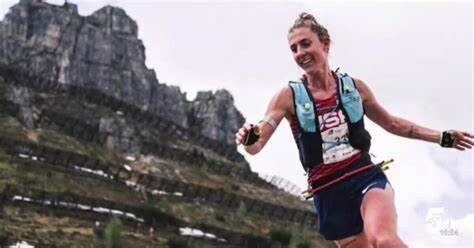
If you want to be a strong trail runner, you’ll need more than just miles on your legs—you need to build strength that can take on the rugged terrain. Hannah Allgood, a Colorado-based pro trail runner for Dynafit, is here to help, sharing her four favourite exercises for athletes.
Allgood not only excels in the mountains (in July, she won the Eiger Ultra-Trail by UTMB 100K), but also helps athletes build strength through her coaching with Freetrail, an online trail community and media outlet. With a background in exercise science and years of competitive experience across multiple sports, she has perfected the art of staying strong, fast and injury-free on the trails. “Strength training has always been an integral part of my career as an athlete,” Allgood explains. She knows firsthand how crucial lifting is to boost performance and prevent injuries, especially for trail runners tackling challenging mountain races.
Step-ups
Allgood suggests varying the height of your step to 12-18 inches, based on your height and current strength. “Step-ups are a great exercise because they allow for versatility to match the athlete’s needs (weight or no weight, increase or decrease height, increase speed or decrease speed),” Allgood explains. “They help with not only strength on trails but functional day-to-day strength.”
Single-leg Romanian deadlift (with a cable or band, OR with weight)
“This exercise targets many different systems,” says Allgood. “The RDL changes your centre of mass, therefore working on your balance and coordination, which are highly beneficial for trail running. The row helps with rotational core stability, which is also vital for running, as it helps with balance and control across various terrains and helps with efficient force transfers from upper to lower body.”
Bulgarian Split Squat
Allgood explains that the Bulgarian split squat is another unilateral exercise that helps improve balance and core stability by using weights. “This move is also very helpful for improving leg power, which translates to improved force production, meaning you can get up the mountains faster.” She suggests adding in a soleus raise for an extra challenge.
Modified side plank with clamshells or hip abduction
“This is one of my favourite go-to glute exercises that also incorporates core stability,” Allgood says. “Adding a band around your knees will increase the challenge!”
If you’re adding strength training during your racing season, Allgood suggests focusing on 12-15 reps per set, aiming for two to three sets. “This will help build strength, but also not leave you too sore for running or other fun activities,” she says. “Strength training two to three times a week can be huge for your overall health and with preventing injuries.”
by Keeley Milne
Login to leave a comment
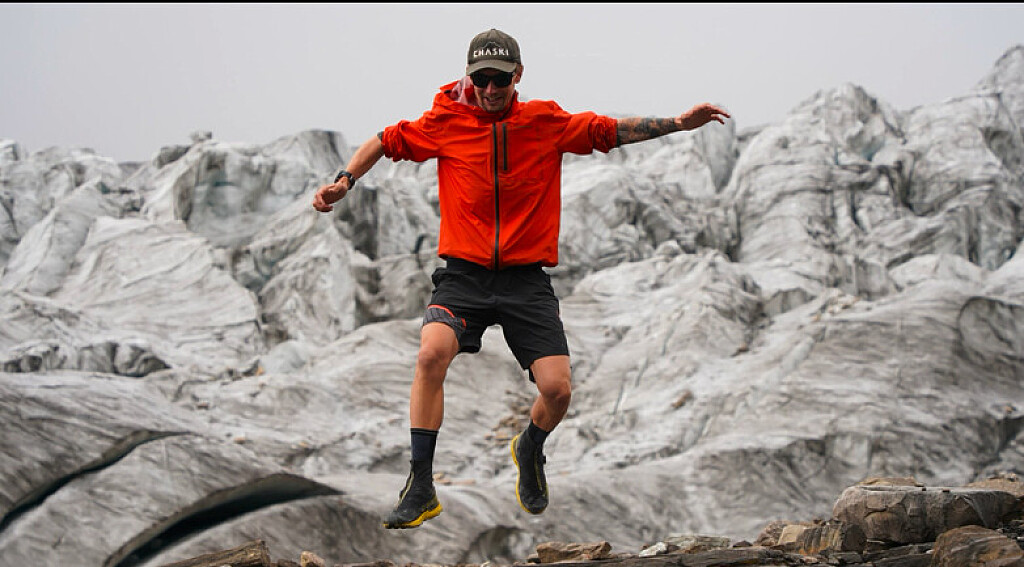
Is FKT Fever Coming to the Himalayas?
American runner Tyler Andrews just set the speed record on Manaslu, running from base camp to the summit while using an ultralight setup. Will more runners flock to the world’s highest peaks to prove themselves?
On September 19, 34-year-old American mountain runner Tyler Andrews ascended Nepal’s 26,781-foot Manaslu in a mind-bending 9 hours and 52 minutes. The time shaved more than two hours off the previous speed record on the peak, set in 2023 by Nepalese climber Pembe Gelji Sherpa. Before that, Francois Cazzanelli, an alpinist and guide from Italy, summited in 13 hours, in 2019.

Manaslu is one of the world’s 14 peaks above 8,000 meters. These mountains have traditionally been the realm of mountaineers and professional high-alpine guides, not trail runners.
But Andrews believes that’s about to change. “I think we’re going to start seeing more mountain runners going this way,” Andrews told Outside from Manaslu base camp.
His belief stems in part from his own experience on the peak, and from changing dynamics he’s seeing in the world of ultrarunning and the pursuit of fastest known times. Andrews is part of a new generation of mountain runners seeking out increasingly bigger, more challenging, and more daunting speed records. “If you start with the Colorado fourteeners, then go to the Alps, then the Andes, the natural progression is to the Himalayas and the 8000ers,” he told Outside.
Instead, ascents on Nepal’s highest mountains, including those resulting in speed records, have historically been tracked by the Himalayan Database. But that’s changing, and Andrews is one reason behind the shift. He actually works part-time for Fastest Know Time as Regional Editor for Latin America and the Himalayas. Part of his job is to create routes and then help FKT track records on them.
“I think in the past, the team didn’t want to be trying to verify routes that required rock climbing because you can’t just use a GPS watch to track something that’s vertical,” Andrews says. “But Manaslu is not like that, so tracking it is really no different than other mountains on there, like Cotopaxi or Denali.”
When Andrews returns from Manaslu base camp—he’s currently supporting a friend attempting a ski descent—he will submit his GPX data to Fastest Known Time for approval. He also plans to submit his data to the Himalayan Database.
Manaslu and 26,864-foot Cho Oyu in Tibet are considered the easiest of the 14 8,000-meter peaks. On Manaslu, the nine-mile route from base camp to the summit requires less technical climbing than harder peaks, like K2 or Nanga Parbat. Still, Manaslu isn’t easy. The trail gains nearly 11,000 feet of elevation, requires the use of fixed ropes in many sections, and travels over steep sections of snow and ice. Climbers must also survive in what mountaineers call the “Death Zone”—elevations above 26,000—because there’s not enough oxygen for human beings to survive more than a day or two.
Andrews ran up Manaslu without using supplemental oxygen, and he did so with an extremely lightweight setup. He wore a pair of waterproof trail running shoes designed to shed snow, a puffy jacket, lightweight pants, and a windbreaker. He carried a 30-liter backpack containing bare essentials: harness, helmet, goggles, ice axe, water, snacks, and energy gels.
In 2013 he ran straight up 15,780-foot Mont Blanc, typically a two-day mountaineering ascent, in less than 5 hours while wearing shorts and a t-shirt. In 2017 he ascended Mount Everest twice in the same week.
Jornet’s ascents prompted some trail runners to take on similar challenges, setting off a flurry of mountain-top FKTs, and inspiring a new generation of endurance athletes.
Similarly, Andrews thinks the time is right for athletes to “push back on some of the conventional wisdom” for ascending 8,000-meter peaks. Instead of ascending Manaslu overnight, as is typical (“so you don’t get roasted by the sun”), Andrews did it mostly during daylight, which allowed him to use more conventional footwear, due to the warm temperatures.
Andrews also brought a stationary bike to base camp, which he said was “absurd.” But the device enabled him to get his heart rate higher than he would have while running.
But Andrews cautions that Himalayan ascents aren’t for untested trail runners. “I didn’t just step off the track and onto an 8,000-meter mountain,” he says. Andrews has been mountaineering for 15 years, and much more seriously in the last five. In recent years he’s ascended 22,841-foot Aconcagua in Argentina, 19,347-foot Cotopaxi in Ecuador, and 22,349-foot Ama Dablam in Nepal, among other peaks.
He lives and trains at high altitude, splitting time between Flagstaff, Arizona and Quito, Ecuador. And Andrews has extensive experience running at higher altitudes in the Andes.
Prior to Manaslu, Andrews ran dozens of trails above 16,000 feet in the Himalayas. His FKT on Manaslu was his second attempt on the mountain in two years. He didn’t summit the first time. “I got my ass kicked,” Andrews says. “But I learned a lot.” Both times, he hired expert local outfitter Dawa Steven Sherpa of Asian Trekking to manage logistics.
For 2025 and beyond, Andrews hopes to add more Nepali trails to the Fastest Known Times database. “There’s an absolute smorgasbord of mountain trail running here,” he says. “Really epic beautiful routes that most people do in a few days to a few weeks that
by Outside Online
Login to leave a comment
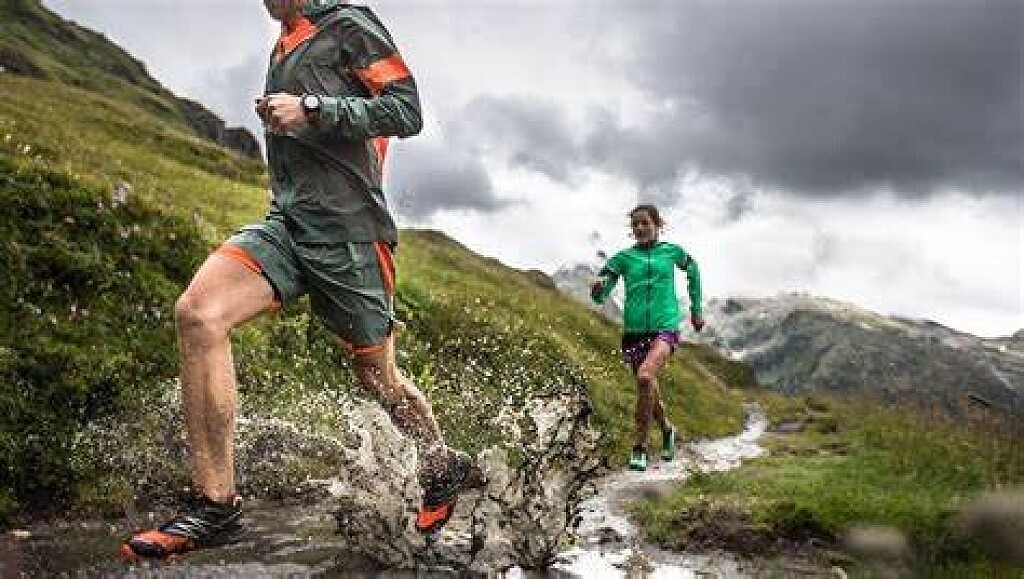
Five mistakes new trail runners can avoid
New to trail running? Welcome to the wild side. But before you lace up and charge into the woods, let’s save you from a few rookie moves that could make your first trail race a comedy of errors.
Sure, you’ve got rugged shoes and maybe even a hydration vest, but the terrain demands more than just gear. Here are five unexpected (and often hilarious) mistakes new trail runners make—and how to avoid them.
1.- Don’t be the trail DJ
Picture this: you’re cruising through a peaceful forest, birds chirping, wind rustling the leaves… and suddenly, you hear someone blasting their playlist on speaker. (Which instantly kills that trail-joy vibe.) Sure, running to music can be motivating, but this isn’t a marathon on city streets (and even then, most people aren’t going to appreciate you sharing your tunes). Part of trail running is connecting with nature—and–fun fact–most people don’t want to hear your music wafting through the wilderness. If you need tunes, grab some earphones (safely) and keep the forest soundtrack serene.
2.- The jostle-sprint: you’re not at a track meet
We’ve all seen them—the over-excited newbie who approaches passing another runner as if they’re sprinting for Olympic gold. Here’s the thing: you’re not Josh Kerr chasing Jakob Ingebrigtsen in the 1,500m final. It’s a trail, not a track meet—trail runners tend to be a laid-back crew, and aggressively shoving past someone while you breathe down their neck like a rhino is just poor form. Slow your roll, politely announce yourself, say excuse me and ease by. You’ll pass them soon enough without making anyone feel like prey.
3.- Downplaying the downhill
Everyone dreads the uphill grind, but let’s be honest, the downhill is where the real fun (and chaos) begins. For new trail runners, it’s either full-speed-ahead with no brakes, or they lock up tight, like every step could be their last. The sweet spot is somewhere in between—and mastering that balance can be the difference between feeling like a trail wizard and wiping out on a banana peel, cartoon-style. Yes, caution is key (no one wants a surprise somersault mid-run), but being overly timid? That’ll do your pace no favours. Loosen up, spread your arms for balance and embrace the momentum, while keeping things controlled.
4.- The classic snack underestimation
Trail running requires a little more fuel than a short jaunt on the road. Think you’re fine with just water? You’re about to face a (potentially dangerous) reckoning. That 10K trail loop can take much longer than expected, especially with some rooty, rocky climbs. Proper fuelling is as essential for trail training as it is for trail races. Bring snacks—and opt for real sustenance over gels to keep your tastebuds happy (although gels are a great option if you prefer your snacks simple and squeezable). Halfway through, that peanut butter sandwich (or whatever your chosen delight) will feel like a Michelin-star meal. Make sure you overestimate your fuelling needs when you’re hitting the singletrack, and start taking in calories early and often.
5.- Thinking you’re better than the dirt
Here’s a heads-up: you’re going to get dirty. Mud, dust and puddles are part of the package. Newbies often cling to the fantasy that they’ll stay spotless. Spoiler: they won’t. At some point, you either embrace the mess or spend your run doing awkward hopscotch like you’re dodging landmines. Own it. By the end, those mud splatters will feel like badges of honour. And look at the pros—they’re not crossing the finish line looking ready for a laundry commercial, either.
Trail running isn’t just road running with more rocks. It’s its own world, with unspoken rules and quirks that make it uniquely fun. Embrace it, laugh at your own mistakes (we’ve all been there), and for the love of all that’s sacred in the woods, leave the speaker at home.
by Keeley Milne
Login to leave a comment
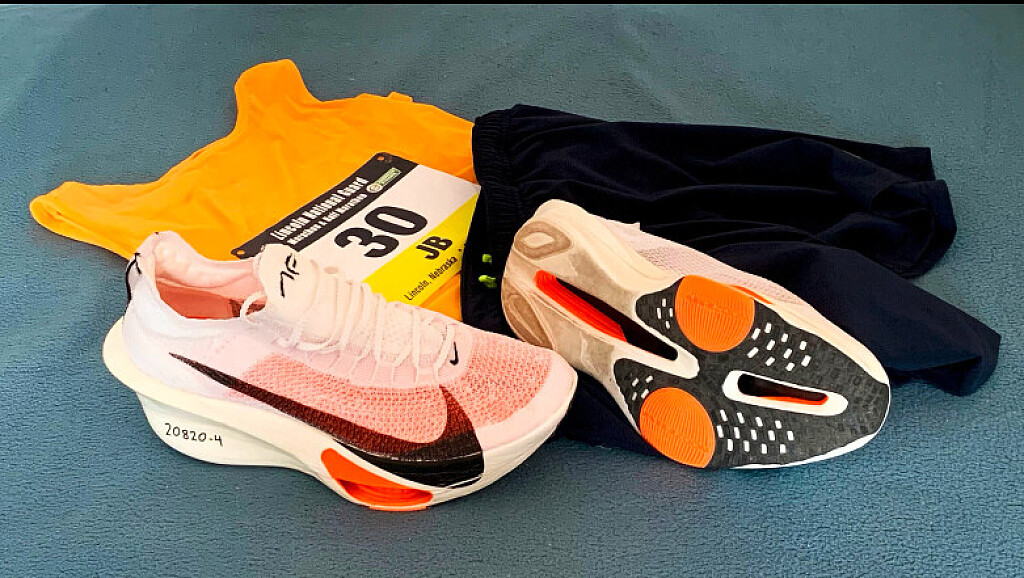
The Best Marathon Racing Shoes (2024)
After a year of testing, we've identified 12 marathon shoes that will boost your performance and make the race more enjoyable
While training undeniably has the biggest impact on your marathon performance, there’s one more thing you can do to ensure you’re ready to give your best on race day: invest in a pair of marathon racing shoes.
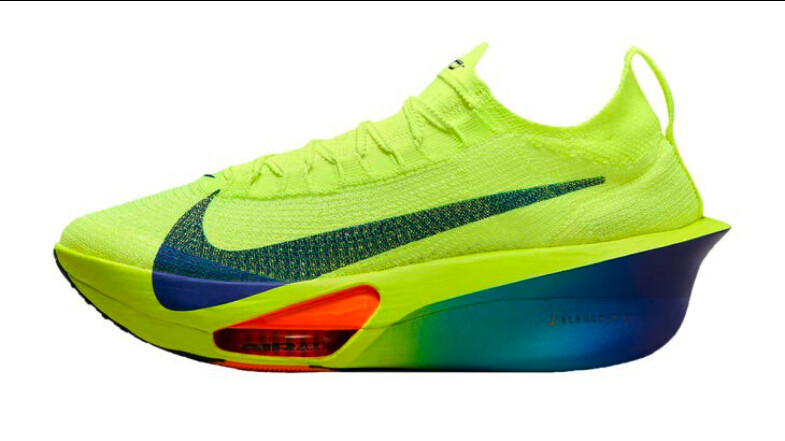
An effective marathon racing shoe can help reduce the repeated impact that miles after miles put on your legs while allowing you to get more energy out of each footstrike. Even more importantly, the right marathon racing shoe will provide you with a platform that is stable and cushioned enough to carry you through 26.2 miles in security and comfort. We’ve spent the last year rigorously testing every option on the market to help you easily pick the perfect pair for you.
Seven years after the debut of the first super shoe, the thick-stacked, carbon-plated racers are ubiquitous at the front of every marathon and increasingly common among runners in the pack looking to optimize their performance. These shoes have been lab-proven to improve running economy by a few percentage points, making it easier to maintain a faster pace. Runners also report that, when running in a super shoe that complements their stride, they experience less muscular fatigue as well.
These are some of the super shoes that our testers found most comfortable and effective at marathon pace, but your experience may vary (as we found when we had three testers compare 16 super shoes. Every super shoe boasts some sort of ultralight, hyper-responsive foam with an embedded, curved carbon-fiber plate—but each delivers a surprisingly unique ride. You’ll have to experiment to find one that gives you wings.
See our “How to Choose Marathon Shoes” section at the bottom of this article for more guidance on whether you should consider a super shoe and how to select a pair that works for your stride.
Designed specifically for marathons, the Alphafly set a new standard as the fastest marathon shoe ever when Eliud Kipchoge wore them while breaking the 2-hour barrier in a staged marathon, clocking 1:59:40.2 in October 2019.
Now, in its third iteration, the Alphafly 3 continues to dominate as the ultimate marathon racing shoe. Designed with Nike’s Air Zoom Units in the forefoot and a PEBA-based midsole, our more competitive, efficient testers praised the Alphafly 3 for its bouncy, energy-efficient ride.
Subtle adjustments to the shoe’s geometry, including a wider footprint and carbon fiber plate, paired with repositioned Air Zoom Units and strategically sculpted midsole, give the Alphafly 3 a distinctly different feel from its predecessor. These changes effectively address some of the issues found in the Alphafly 2, which many felt was heavy and clunky compared to the original.
The new Alphafly 3 is surprisingly nimble, weighing in as the lightest Alphafly to date. Even running as fast as 5k pace, I found the Alphafly responded quickly, encouraging a fast turnover. That said, it may be too sharp of a tool for some runners, as those who require a stable stance may find it a bit wobbly, especially in the heel.
The redesigned Atomkit 3.0 upper is about as race-y as you can get—extremely light and airy. Though a bit tough to put on because of its tightly woven mesh (like previous models), the new upper is highly breathable and secure, with sawtooth laces that stay tied tight throughout the marathon. You can read our full Alphafly 3 review and how it compared to other racers in our .
A stark contrast to On’s previous carbon fiber racing shoe, the firm-feeling Cloudboom Echo, the Cloudboom Strike is soft, bouncy, and fun to run in. Runners who can maintain their balance on what is a fairly unstable platform are rewarded with a lively, highly cushioned ride that’s comfortable and responsive, making it ideal for long-distance efforts.
The secret to the Strike’s sweet ride lies with the insole. On swapped out the traditional Strobel (a thin layer connecting the upper to the sole) and sockliner for a thick, removable layer of high-energy PEBA foam, thus increasing the amount of performance-enhancing foam underfoot. The result is a legal racer with cushioning that feels like it exceeds the World Athletics’ maximum stack height.
The smooth, ultra-cushioned ride is surprisingly quick for such a thick shoe, responding nimbly even when exceeding 5k pace. The shoe accommodated both long-striding testers and those who prefer to turn over faster.
The Cloudboom Strike fit runs long enough that you might consider sizing down by half a size. However, the one-piece mesh upper, which breathes well and effectively repels moisture, easily cinches down for a secure foot hold. You can read our full Cloudboom Strike review.
The Asics Metaspeed Sky Paris gives runners the best of both worlds—a highly energetic, cushioned feel and a stable ride. Super shoes’s tall, thick midsoles often create a wobbly sensation, forcing your stabilizing muscles to work harder to maintain balance.
The key to the Metaspeed Sky Paris’s stability is its wide base under the forefoot, coupled with an updated, wider carbon fiber plate. This makes the Metaspeed Sky Paris an excellent choice for beginner, intermediate, or unstable runners who want to enjoy the benefits of super shoe technology while still having a supportive, predictable platform. One back-of-the-pack tester noted that the broad base provided a “smooth ride, and the running dynamics worked extremely well with my foot and my own personal gait.”
The shoe’s stability, however, doesn’t compromise its stride-lengthening performance for experienced, efficient marathoners. Testers found that the Metaspeed Sky had the ability to work well for a wide range of runners and paces.
The shoe also has a new, more pliable and comfortable mesh upper and midsole foam that’s approximately 8 percent lighter and, Asics says, has an 8.2 percent better energy return over the previous model. The best part: The shoe got nearly an ounce lighter, making it one of the lightest marathon-racing options. You can read more about the Asics Metaspeed Sky Paris in our .
The groundbreaking adidas Adizero Adios Pro Evo 1 shatters the mold as the lightest super shoe ever made, weighing nearly 2 ounces less than the next lightest super shoe. Yet from the outset, I was amazed that a shoe this light could have this much cushioning.
The Pro Evo 1’s rocker is long and aggressive, curving up to a high toe spring (elevation of the toe box). Initially, at well-below marathon speeds, it felt forced and unnatural. However, once I picked it up to around marathon pace and my toes engaged with the steep curve, I sensed a smooth rolling action that energetically pushed me forward. I believe marathoners averaging seven-minute miles or faster will see the most benefit from these.
Besides being the lightest super shoe on the market, the Evo 1 also claims the title of the most expensive. That, coupled with initial talk of the shoe only working for a single marathon, makes the Evo 1 a big investment. Our test pair, however, lasted nearly 200 miles before the midsole showed signs of wear. While not every runner can expect similar durability, those with an efficient stride should enjoy everything the Evo 1 has to offer much longer than a single marathon. You can read our full review and durability test.
The challenge with super-soft, highly responsive cushioning in super shoes is that they often lack stability, demanding an efficient stride to maintain control as they first squish, then bounce back strongly, magnifying forces—whether propulsive or unbalanced. For runners seeking a more stable carbon fiber shoe without losing the performance benefits, the Brooks Hyperion Elite 4 offers a firmer underfoot feel than most.
Instead of the heavily cushioned sink and trampoline-like bounce of many of today’s super shoes, the nitrogen-infused DNA Flash V2 midsole is extremely responsive, pushing back against the foot immediately and ready to pounce on the pace when needed. That lively firmness, combined with a curved carbon fiber plate embedded in the rockered midsole, gives the Brooks Hyperion Elite 4 a smooth, stable, and forward-propelling ride.
In terms of fit and feel, Brooks nailed the basics. The thin, breathable mesh upper perfectly embodies a racing shoe’s ideal—minimalistic, with a secure midfoot lockdown that makes you feel firmly in control.
These are not for you if you prefer a highly cushioned, springy running experience. However, if you feel bounced around by most super shoes and want a firmer-feeling shoe that offers a good mix of stability and fast-rolling performance, the Brooks Hyperion Elite 4 is the shoe you’re looking for. You can read more about the Brooks Hyperion Elite 4.
With a ride that feels like bouncing on a pogo stick, the Hoka Cielo X1 delivers unmatched spring with every stride. Designed with two layers of über-responsive PEBA foam separated by a winged carbon fiber plate and a severe, heel-to-toe rocker profile, testers marveled at how much fun these shoes were. One tester described running in them as “feeling effortless,” adding, “It almost feels like you’re cheating when you’re wearing these shoes.”
However, a few testers had mixed reactions to the shoe’s prescriptive geometry. The stiff platform and aggressive rocker design seemed most effective for a midfoot strike and within a narrow pace range, specifically around six to eight minutes per mile for our testers.
Another knock concerned the shoe’s stiff, ribbon-like shoe laces. Nearly every tester commented on how difficult it was to get a tight, dialed-in knot. Still, if you can get past the less-than-ideal lacing—or choose to swap them out entirely—and are comfortable in the pace range sweet spot, the ride is worth it and could deliver a fun, fast marathon.
Cielo X1 clocks in at a hefty 9.3 ounces for mens size 9 and for womens size 10, making it the heaviest super shoe on the market. Thanks to the high-energy foam, however, we still found it held its own in the super shoe pack when it came to performance. You can read more about the Hoka Cielo X1.
Unfortunately, there are not a ton of options when it comes to highly cushioned zero drop racing shoes. Fortunately, the only option is a really good one. Now in its second iteration, the Altra Vanish Carbon 2 features three more millimeters of softer, more flexible underfoot cushioning heel to toe. Embedded in the soft, nitrogen-infused, TPE-based midsole is a full-length carbon fiber plate that adds a bit of stabilizing and propulsive stiffness without feeling controlling.
The Vanish Carbon 2’s midsole doesn’t have as dramatic a trampoline sensation as some other marathon racing shoes, but it delivers a smooth, cushioned ride that’s hard to beat. Even as someone who typically struggles with zero-drop shoes, I found the Vanish Carbon 2 enjoyable and surprisingly easy to run in, thanks to the high stack and rockered profile. Testers said the low heel helped increase their cadence and kept them more on their toes.
Despite not having a ton of structure, the lightweight, breathable mesh upper does a surprisingly good job of securing your midfoot while your toes have room to splay in Altra’s signature wide toe box. You can read more about the Altra Vanish Carbon 2.
When it comes to replicating the performance benefits of road super shoes for the trail, shoemakers have struggled to achieve the same level of success. The adidas Terrex Speed Ultra is a standout exception. Designed with one of the most aggressive rockered profiles on a trail running shoe, the Terrex Speed Ultra feels awkward initially, almost like you’re walking downhill.
However, once you get accustomed to the unique profile that wants to push you forward, you’re rewarded with a propulsive ride unlike any other trail running shoe. Inside, the high-performance TPEE (Thermoplastic Polyester Elastomer) midsole incorporates a four-pronged, slightly flexible PEBA-based rod system, providing extra stiffness to the soft foam without creating instability on technical terrain. While it manages well on groomed or rocky sections, like most highly cushioned trail shoes, it’s not designed for prolonged precise technical maneuvering.
Staying true to its race-ready design, the upper is razor-thin and slightly padded to keep weight at a minimum. The quick-drying synthetic material, combined with a gusseted tongue and sawtooth lacing that bites like a threatened rattlesnake, provides excellent midfoot lockdown. The only drawback is the unstructured heel counter, which can cause some heel lift if the laces aren’t pulled extra tight. You can read our full review of the Adidas Agravic Terrex Speed Ultra.
Not everyone wants or needs a super shoe when covering 26.2 miles. Here are some top options without a rigid carbon-fiber plate, sorted with consideration for specific needs and preferences.
Supershoes’ tall, highly cushioned soles create an unstable and wobbly platform, especially for beginner runners who spend more time in contact with the ground than their faster counterparts. Plus their rigid, curved plates dictate how the foot rolls, and are tuned to be optimal for fast, efficient runners.
Puma’s Deviate Nitro 3 combats these issues by combining two foams, a softer one closer to the foot with a firmer one closer to the ground, separated by a semi-flexible carbon-fiber composite plate. This design offers most of the cushioning and propulsive benefits of a super shoe, without the instability or the prescriptive stride control.
What sets the Deviate Nitro 3 apart most, however, is its remarkable ability to deliver a smooth ride at any pace. There’s nothing restrictive about the shoe—it adapts to your running speed and performs effortlessly, making it double as a great everyday trainer as well as a racing shoe.
Keeping comfort in mind, the upper features an engineered knit mesh with moderately padded heel collar. Testers felt the fit was true to size with a small amount of stretch throughout the upper to accommodate foot swelling or irregularities, such as bunions. The stretchy laces received mixed reviews, as one found he needed to keep tightening them to feel secure during the run. You can read our full review of the Puma Deviate Nitro 3.
When the Saucony Tempus first came out, we were blown away by its ability to control the soft, unstable nature of a PEBA midsole without taking away its high-energy, performance-enhancing benefits. Keeping everything the same underfoot, but adding a better fitting, more breathable mesh upper, the Tempus 2 continued to wow us with its supportive, yet lively ride.
The combination of soft, bouncy PEBA foam and a firmer EVA frame that uniquely wraps over and under the high-performance core helps guide the foot into a more stable position, making it perfect for beginners, or any runner, who may struggle with foot alignment, particularly during a long and exhausting marathon. The moderate stack height of 33mm in the heel and 25mm in the forefoot strikes a perfect balance—not so thick and cushioned that you can’t push off effectively, yet not so thin that it compromises comfort. The dual foam midsole, without a plate, provides ample underfoot protection while still allowing for a good sense of ground feel and accommodates any stride pattern.
The main drawback is that it’s relatively heavy for a racing shoe (while light for a trainer). Weighing 9.4 ounces for men and 8.2 ounces for women, it’s the heaviest shoe on our list. However, if you prioritize stability and want to tap into the performance benefits of PEBA in a supportive but not prescriptive shoe, this is still the top choice on the market.
Known for its wide toe box designs, Topo has mastered the balance of offering plenty of space for your toes while ensuring a secure midfoot lockdown. One of only four shoes in this roundup without a plate in the midsole, the Topo Specter 2 delivers a more natural and flexible experience than your stiff-plated super shoe or super trainer. A generous layer of Pebax foam underfoot is tuned firmer than usual, but still delivers its signature bouncy ride. One tester described the midsole as “firm and springy with a lot of response,” adding, “the shoe feels airy and fast with the perfect balance of stiffness versus flex.”
Testers found the Specter 2 incredibly versatile. It delivers the same ease and comfort on easy run days as it does on uptempo runs or races, thanks to its highly cushioned, responsive, and adaptable sole, and low overall weight.
Where the shoe truly stands out, however, is in its fit. One tester said about Topo shoes, “They’ve gone from being one of my least favorite brands to offering some of the best-fitting shoes I’ve tested.” The wide toe box isn’t just for runners with wide feet. Even our runners with regular-width feet appreciated the extra space, once they got used to their toes having room for their natural positioning and splay.
As foams have evolved to be increasingly lighter, marathon racing shoes are getting thicker and more cushioned. Rather than allowing your foot to react to the ground and move naturally, these thick-soled shoes blunt the underfoot feel and dictate how your foot moves through the gait cycle to various degrees. While this works well for some runners, others prefer a more minimalist ride.
If you’re the kind of runner who finds today’s cushioned shoes cumbersome and as restrictive as a stiff suit of armor, look no further. The Topo Cyclone 2 is a free and flexible lightweight racer that lets your foot control the shoe, not the other way around. Testers described the ride as “nimble” and “flexible” with a “slipper-like” feel.
The Cyclone 2’s Pebax midsole delivers the soft feel and springy response of a super shoe, but the comparatively thin stack height (28mm/23mm) keeps the squish and bounce moderate, and lets you feel the ground under the cushioning. You won’t find a plate embedded in the flexible midsole; instead there’s a slight rocker profile to help smooth the transition from stance to toe-off.
We’ve always found Topo Athletic makes some of the best-fitting shoes on the market, and the Cyclone certainly follows suit. A tailored midsection with excellent lockdown gives way to a roomy anatomical toe box. You can read our full review of the Topo Cyclone 2
There are a few factors beginner runners should consider before choosing a carbon fiber shoe. First, most carbon fiber running shoes are designed with fast, efficient runners in mind. Studies have shown that slower runners get less improvement in their running economy from the shoes, and the shoes actually make running harder for a significant number.
If you have developed solid mechanics, you may benefit from a carbon fiber shoe. However, if your form is still a work in progress, the stiffness of the carbon plate and the hyper-responsiveness of the foam could actually magnify poor mechanics, reduce your performance, and increase the risk of injury.
Additionally, every carbon fiber shoe is built differently—the placement and shape of the carbon plate, geometry of the midsole and properties of the foam all are different, model to model. This means no two carbon plated shoes will run exactly the same. It’s important to match your individual gait to a carbon fiber shoe by testing several options for the one that feels the best. In general, beginners should be cautious and make sure they’re fully comfortable in carbon fiber shoes before racing in them.
Our exhaustive testing process involves evaluating every marathon racing shoe on the market, sometimes as long as over a year, with input from more than 20 experienced wear-testers. They each fill out a detailed testing questionnaire evaluating key points such as fit, comfort, cushioning, and speed. The completed questionnaires are compiled and combined with testing feedback from lead tester Cory Smith, who brings over a decade of experience testing running shoes for Outside. Shoes that excel in specific areas are then ranked and categorized in relation to their strengths.
Cory Smith, a former Division One runner at Villanova University, has been running since the mid-1990s. With over a decade of experience testing and reviewing running apparel and shoes for publications like Outside and Runner’s World, he continues to compete as a masters athlete, boasting a masters personal best of 4:31 in the mile at the age of 44. He consistently logs 30 to 40 miles per week on roads, trails, and the track.
.Those looking for a low-profile, flexible ride with some support might consider the Brooks Hyperion 2 GTS, which has a moderate stack height (31.5–23.5mm), responsive cushioning, and gently guides the gait with firmer, raised sidewalls alongside the rearfoot.
After dedicating countless hours to marathon training, it’s just as crucial to invest time and effort into choosing the right running shoe for race day. Unlike your everyday trainer, a marathon racing shoe must strike a balance between providing enough stability to maintain your form over 26.2 miles and offering sufficient cushioning to protect your legs from the constant impact, while not weighing you down or holding you back. Here’s what you must consider when buying the ideal marathon racing shoes.
As running shoes become thicker and softer, they can start to feel unstable and wobbly. This instability forces the stabilizing muscles in your feet and legs to work harder, which can lead to premature fatigue and even injury. To prevent this, it’s crucial to choose a marathon racing shoe that provides a stable enough platform for your stride, ensuring consistent support throughout the race, even when you grow tired and your stride becomes less efficient. Stability is built into a marathon racing shoe by using embedded plates, firmer midsoles, a widened base, and a more structured heel counter and rearfoot hold.
Cushioning refers to the perceived underfoot firmness of a running shoe. While cushioning levels are a matter of personal preference, wearing softer running shoes during the marathon can be beneficial. One 2022 study with 32 recreational runners found that wearing highly cushioned running shoes improved performance by 5.7 percent and reduced oxygen consumption by 3.2 percent during incremental treadmill tests. However, runners must balance cushioning benefits with stability and propulsion needs.
Given the length of the marathon it’s crucial to make sure your marathon racing shoes fit well. Since over the course of the 26.2 miles your feet may swell, you should make sure you have enough room in the toe box to accommodate this swelling. A good general rule of thumb is to make sure you have at least a thumb’s width of space between your longest toe and the front of the shoe. You should be able to wiggle your toes without them bumping up against the front of the shoe. While you want space for your toes to splay, the upper should hold your foot securely around the heel and instep.
While this is a highly debated topic, the current thinking is to limit the amount of time spent training in carbon fiber plated shoes. These shoes are built with a thick, highly cushioned, and unstable platform, and a rigid rocker profile. Unlike more flexible running shoes that allow your foot to move naturally, carbon fiber shoes dictate the way your feet strike the ground and roll forward, potentially altering your natural gait, which can lead to injury. In addition, the powerful bounce magnifies any instability, causing more stress on your muscles, tendons, and joints. Ideally, limit your carbon-plated shoes to race day and a few speed sessions. Super trainers—with the same high-end foams but more flexible plates—can be a great alternative for weekly speed sessions or fast-finish long runs.
The length of marathon racing shoes varies on a runner’s weight, stride efficiency, and model of shoe. Typically, lighter runners who have an efficient stride will realize longer shoe lifespans, while heavier runners who spend more time on the ground will see less. Generally speaking, you should get somewhere around 100 to 200 miles from your marathon racing shoes before the midsole begins to decompress. Visual cues, such as worn down outsole, uneven midsole compression, or holes in the upper, can be your best indicator of it being time to replace your marathon shoes. Outside of that, I’ve found if you start to question whether it’s time to replace your shoes, it’s usually time.
by Outside Online
Login to leave a comment
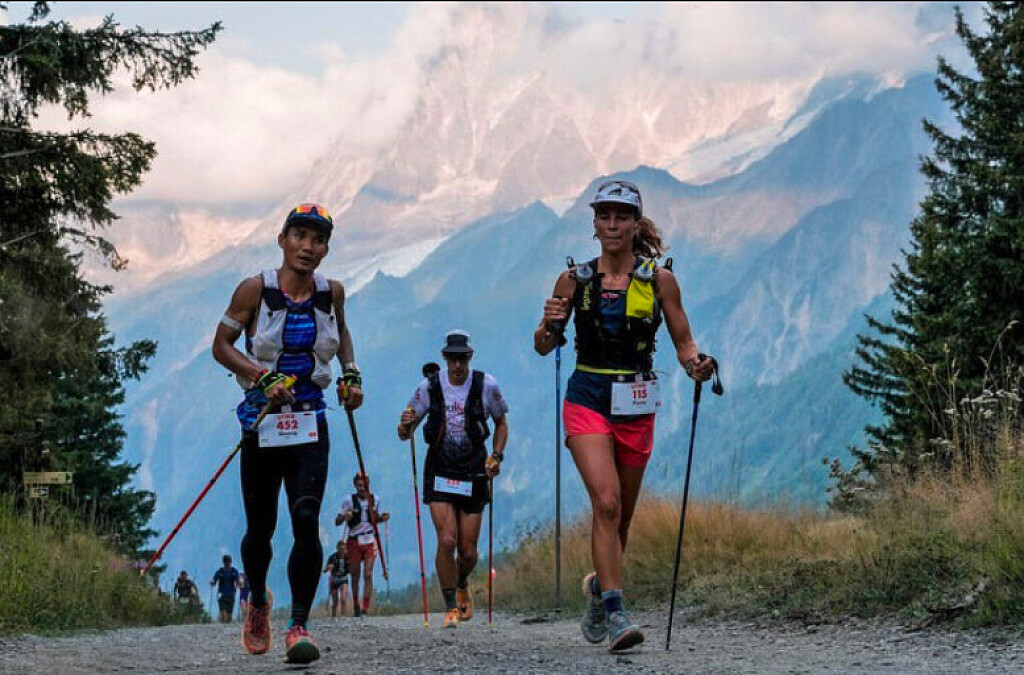
How Recreational Runners Get Through UTMB: 'It's All About Digging Deep into Yourself'
Wearing purple shorts, a blue and white tie-dyed T-shirt, a bright pink hat, a light blue Salomon hydration pack, fluorescent yellow-rimmed Oakley sunglasses, and a pair of Hoka Speedgoat 5 shoes, Chaiwen Chou was a vibe as she crossed the finish line of Ultra-Trail du Mont-Blanc (UTMB) on Sunday afternoon in Chamonix, France.
Chou, who had also freshened up the pink and purple tint of her hair before the race, stood out among the numerous other dusty and weary runners clad in more traditionally colored trail garb as they took their final strides in the epic 106-mile race around the Mont Blanc massif.
But what was most remarkable about the 41-year-old software developer from New York City was the huge smile on her face and expression of pure joy that emanated from her. When she arrived at the finish line after 45 hours and 15 minutes of running-about 75 minutes before the cutoff-she was beaming ear to ear and greeted with big hugs from her mom, brother, partner, and a good friend who helped crew her on her journey.
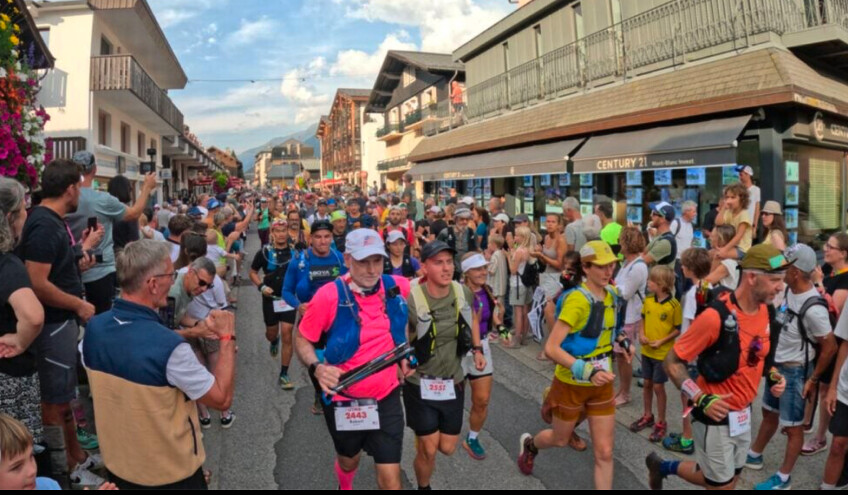
While her interest in running started on a bit of a whim a decade ago, her continued passion and progression have led her to run more than 30 trail running races, including the biggest and most celebrated one in the world. On Sunday, she was one of 95 American runners to complete the grueling UTMB course.
"So when I turned 30, I had this typical New Year's resolution, like, I want to get fit, I want to learn how to run," said Chou, who grew up in Massachusetts. "And then I met a friend who ran, and I started running with him and doing group runs. And then we started running trails, and we specifically entered The North Face Endurance Challenge, and that's where I ran my first marathon, and fell in love with trail running and then learned about ultrarunning and this whole world that I never even knew existed."For many recreational ultrarunners from around the world like Chou, UTMB sits at the top of their lifelong bucket list. It means starting at the same time as the elite professional runners on Friday evening in Chamonix, and maneuvering through the same rugged and aesthetic 106-mile loop with a daunting 32,000-feet plus of climbing and descending. It's historic, and the crowds and the energy around it are unparalleled.
It's also a monumental challenge to complete.
Trail Running's Infectious Buzz
Ultra-trail running is having a moment right now-especially since the end of the Covid pandemic-but it probably started a decade ago as the urge to run beyond the marathon gained mainstream traction and destination races around the world started to become desirable goal races for recreational runners.The North Face Endurance Challenge began as a singular 50-mile championship-style trail race near San Francisco in 2006 with a $30,000 prize purse, but it evolved into a multi-distance race weekend (from 10K to 50 miles) aimed at encouraging runners of all abilities to immerse themselves in the sport. After a few successful years of the event in Mill Valley, California, it expanded to several locations across the U.S.-upstate New York, Madison, Wisconsin, and Washington D.C., among others-and around the world.
Although The North Face pulled the plug on the series in late 2019 with a suggestion that it was going to reimagine the event format, nothing ever materialized after the Covid-19 pandemic temporarily disrupted the world-and specifically running events-in 2020. But those events played a big role in introducing runners and non-runners alike to the unique aspects of trail running, and many of those who caught the bug-like Chou-have continued to chase their passion in global events like the UTMB World Series.
Chou and her friends returned to The North Face Endurance Challenge four years in a row and she upped the ante each time, going from the marathon to the 50K and finally to consecutive finishes in the 50-miler. She competed in the 50-mile race in San Francisco in 2017 and 2019 and then started traveling to other races around the U.S. and eventually around the world. By 2020, she had completed the Madeira Island 115K race in Portugal and the Tarawera Ultramarathon 100-miler in New Zealand.
Once Covid subsided, Chou set her sights on trying to get into UTMB, which she did by collecting running stones and finishing seventh at the Grindstone 100 amid torrential rain storms last September in northwest Virginia. Her training for UTMB was interrupted in February when, just a week after she found out she secured an entry into UTMB through the lottery, she broke her ankle. Then once she got to Chamonix a week before the race, she smashed her left knee on a shakeout run and it swelled up pretty badly.
As such, her UTMB experience was rougher than she had hoped-the 80-degree heat and the 32,000 feet of vertical gain and descent pushed her to her limits-as she had challenges fueling consistently and also got sick several times. But she persevered and reached her primary goal of finishing.
Officially, she was the 1,542nd finisher out of 1,760 runners who completed the full loop. (A total of 1,001 runners started but did not finish.) She did whatever it took and she crossed the finish line.
"So this is the first time I've been in the Alps, and I'm just blown away by how beautiful it is," she said. "Even though I was in pain pretty much the whole race because the climbing and the elevation gain here are insane compared to the East Coast! But it was just so beautiful everywhere. It's pretty crazy. But you get to be out there all day though, so that's fun."Every Runner Has a Story
Becky Convery only started running four years ago in the middle of the Covid lockdown. What started as short, occasional runs turned into a passion for trail running that was fueled, in part, by doing group runs with the Virginia Happy Trails Running Club.
Like Chou, Convery also qualified for UTMB through the Grindstone 100. The 58-year-old Washington D.C. attorney almost quit that race, but she dug deep to finish. During UTMB, Convery dealt with GI issues from early on in the race and couldn't keep any food down. It was so bad, she almost dropped out at the 51.5-mile aid station in Courmayeur, Italy. But then she thought of Wayne Chang, a running buddy from Virginia, who did just that last year and immediately regretted it. With her friend's experience top of mind as she struggled, Convery persevered and finished in 45:27 with an hour to spare."I wanted to quit at Grindtone last fall. I was miserable and just wanted to go to bed, but he wouldn't let me quit," Convery said. "He's like, 'Look, I quit UTMB and I woke up a couple hours later, and I was like, 'Oh my God, what have I done?' So when it got hard out there (during UTMB), I thought of Wayne, and even though I couldn't keep food down, I said to myself, 'What would Wayne do?' He'll kill me if I quit, so I knew I couldn't quit. So I just kept going."
As much as UTMB gets considerable international notoriety for the livestream and media coverage around the elites-and understandably so, it draws many of the world's best runners-at the heart, UTMB is a personal journey of courage, commitment, and hope for most of the 2,800 runners who toe the starting line.
And really, that's what the entire sport of ultra-trail running is all about and what differentiates it from road racing. For many, it's not about racing at all-competing against other runners or even the clock-it's about challenging yourself and the natural terrain in pursuit of a dream that might seem like it's on the realistic edge of your abilities.
"It's all about digging deep into yourself," Convery said. "With this race, it's so international and there are so many nations represented, it's just an amazing time up there. Even though most people don't speak each other's language, everybody gets it. Everyone is pulling for each other. It's a great environment out there. I'm glad I made it."
Going the Distance
That's always been the case for 67-year-old Mike Smith, a retired resident of Santa Fe, New Mexico, who reached the finish line 15 minutes after Convery. It was Smith's second year in a row finishing UTMB, and because he won his age group at the Canyons 100K in April, he'll likely be back next year.
"The best part about it is always the people," Smith says. "But, oh gosh, chasing the time cutoff at that last aid station, that hike up to the La Flegere ski area, that's always a challenge."Smith relishes in those kinds of ultra-trail challenges. By reaching the finish line in Chamonix, he recorded the 224th 100-mile trail race finish of his career dating back to the mid-1990s. According to an ultrarunning history site, he ranks No. 2 in the world in all-time 100-mile finishes and first among 100-mile trail races. (Last year's UTMB was his 205th finish, which means he completed 18 100-mile ultra-trail races in the interim.
"This is always a spectacular finish," said his wife, Sandra, who wrote a book about what it's like to crew her husband at races. "This is one of the most exciting finish lines there is. The finish lines at smaller races are exciting because there's such a close community of people, but here, there are so many people from around the world, and that's just wonderful."
In all, 2,761 runners started this year's UTMB and 1,760 finished, including 95 U.S. runners who reached the finish line (out of 152 American starters) under the cutoff. Frenchman Vincent Bouillard was the overall winner in 19:54:23 on Saturday afternoon, but 20 hours later there were still about 1,000 runners moving toward the finish line and trying to beat the 46.5-hour cutoff on Sunday afternoon. Among the 95 U.S. finishers, 41 completed the course after the 40-hour mark.
Lamont King, 51, a runner from Roseville, California, has watched and been inspired by runners finishing in the golden hour of the Western States 100 as a fan and as a board member of the race for years. So finishing UTMB on his first try in 45:59-about 30 minutes before the cutoff-was a special moment for him.
"The race was very, very tough. We just don't have that kind of vertical in California where I'm from," said King, who has been trail running for 20 years. "But it's just amazing to be in this scenery in the mountains. It's just fantastic, and it makes up for a little bit of pain. I did have to push a little bit more than I probably would've liked, but I got it done. Coming in with all those people cheering for you in that final finish is almost overwhelming. It's just beautiful."
by Trail Runner Magazine
Login to leave a comment
How to Prepare For Your First Running Event
Are you signed up for your first running race this year? If so, you might be wondering what to do next. Many of us register for a 10k or half marathon in the hopes that doing so will simply motivate (or pressure) us to get to the finish line, and sometimes, it does. But let’s face it, Forrest Gump was just a movie. In real life, without proper preparation, you could wind up injured, unable to finish, or not even make it to the starting blocks, all of which would be really disappointing, to say the least.
Preparing for your first race requires careful planning, from training and getting the right kit to goal-setting and pre-race fuelling. Proper preparation ensures you’re physically ready for the race, have the energy to keep going and can overcome race day nerves, all of which will mean you have a more enjoyable race, and are likely to make it the first of many.
1. Set a goal
Once you’ve chosen a race and signed up, it can be smart to set an achievable goal. This can give you something to focus on during both your training and your race, and that can help you stay motivated, while achieving your goal can also give you a greater sense of satisfaction (for this reason, it’s a good idea to set a secondary goal in case you don’t make your primary goal.
Your goal could be something ambitious, like running a sub three-hour marathon, but it can easily be as simple as just finishing the race. When I did my first triathlon in 2012, I simply wanted to finish and I wanted to do so without walking during any of the running section. I didn’t finish anywhere near the podium, but I managed to achieve my goals and I was really happy with myself.

2. Make a training plan
For injury prevention, it’s obviously vital to make a smart training plan, and to leave yourself enough time before race day to actually execute it. There is no one way to train, and your plan will depend on where you’re starting and where you want to get to, but just as a rough idea, in our first marathon training plan we recommend 12 weeks for seasoned runners, but a full year for novices.
The most important aspect of training to remember is to build up gradually to give your body time to adapt to each increase in load, make ample room for rest and recovery and if possible, work with a coach and train in conditions similar to those you’ll be racing in.
3. Gear up
As you get closer to the big day, you’ll need to start to consider your gear. You’ll need to choose trail running shoes or road running shoes and have trained in them for a while to be sure they’re right for you. If you’ve already put in a ton of miles of them, you may need to replace them with an identical pair a few weeks before the race, and break them in. Once you’ve found the perfect pair of running socks, have a new or nearly new pair set aside for race day.
Use your training months to figure out what clothing you’re most comfortable in, taking into account the expected climate and conditions. Are you happiest in a pair of running shorts or do you prefer running tights? You’ll need a well-fitting running top that’s breathable and doesn’t chafe, and consider whether you want to run with a headband or running hat if you're expecting sunny conditions.
Remember, the general rule for running is light, breathable clothing that wicks moisture, but everyone is different. Reigning UTMB champ Courtney Dauwalter is well-known for running in baggy men’s running shorts and shorts, which isn’t common, but it definitely works for her.
4. Rest up
You’ll spend months slowly ramping up your mileage in order to reach your race distance, but once you get there, you’ll want to start to reduce both your distance and intensity in the final couple of weeks before your race, a practice known as tapering. During this time, you’ll focus on easy runs.
In the final two days before your race, get complete rest and lots of sleep. If you’re not a great sleeper, read our article getting better sleep for some tips on improving your sleep hygiene and routine.
5. Recce your route
Ultra runner Renee McGregor has ranked highly in some pretty rugged races, from Snowdonia to the Himalayas, and when I heard her talk about her accomplishments, she described making the podium in a gnarly race where the majority of participants took a wrong turn. Her advantage? She wasn’t necessarily the fastest runner, but she had checked out the race course ahead of time and knew where to go.
Understanding your route before you take off, if possible, can help you plan for when you’re going to want to slow down, or walk, where you can gain back some time, when and if you’ll need running poles and any tricky sections in a trail race where there’s the possibility of getting off-route.
6. Get in the right headspace
In addition to your physical training, it’s advisable to give your mental state some attention. Running a race can be exhilarating and empowering but it can also be nerve wracking and daunting. In the months leading up to your race, it can be worthwhile practicing mindfulness or meditation, which a 2020 study published in the journal Neural Plasticity found improved coordination, endurance and cognitive function. This could help you in the lead up to the race and in combating race-day nerves.
Know yourself and understand what you’ll need the day before your race and morning of to ensure you’re in the best head space possible. It might be good to minimize social contact and give yourself some quiet time to focus and get in the right headspace.
7. Fuel up
Just like filling up the tank of your car before you set off on a long drive, you’re going to want to make sure your body has plenty of energy stored before a race. For a race that’s not likely to take much more than an hour, you can simply make sure you eat well in the couple of preceding days, but fueling for endurance races can take careful fine-tuning. Following his second-place win at the 2023 UTMB, Zach Miller revealed that for him, managing his sodium levels with salt tablets was the secret to success.
For longer distances, you might want to consider increasing your carbohydrate intake – a practice known as carb loading – to increase your body’s glycogen stores. The best nutritional advice is to focus on well-balanced meals with protein and carbohydrates and not going overboard on refined carbs or fiber, which might wreak havoc on your gut. Learn more in our article on carb loading.
Though you should definitely eat well in the days leading up to your race, if you’re going to be able to eat during the race and are loading your hydration vest up with running gels, then you don’t necessarily need to carb load, but you will want to make sure your stomach can handle gels and take them with plenty of water to avoid the dreaded “runners' trots.”
Ultimately, for longer endurance races, working with a dietician will give you an advantage, since every athlete and every race is different. This will help you avoid the pitfalls of low energy availability and might help you figure out your unique nutritional needs faster.
8. Pre-hydrate
As we explain in our article on hydration tips for runners, hydration for a race doesn’t begin with filling up your hydration pack. Your behavior in the days before a long run can really affect your hydration levels on the big day, so avoid dehydrating foods like caffeine and alcohol.
According to Susan Kitchen, registered dietitian and USA Triathlon Level II and IRONMAN certified endurance coach, if you’re training for a big race, you want to avoid being in the heat unnecessarily in the days leading up to it, unless you're just doing a training run, but sitting outside on the beach sweating, or in a sauna, is not a good idea. Sip plenty of water in the days before your race, too.
9. Make a recovery plan
Chances are, all of your energy and efforts will be focused on that finish line, but the longer the race, the more you’ll want to make a recovery plan, otherwise it’s all too easy to end up having too many celebratory beers, which after a long run can be a bad idea.
Try to plan for at least a couple of days off work following your race to recuperate, hydrate and nourish your body, schedule a massage and engage in some of your favorite recovery activities to reward your body for all its hard work.
10. Set your alarm
The night before race day, make sure you set your alarm nice and early so you have plenty of time to prepare. Chiefly, you’ll want to have time to sip water, eat and give yourself enough digestion time before the starting gun goes.
In our article on what to eat before a half marathon, we explain that nutrition experts recommend runners eat a familiar breakfast around three to four hours before the race start, or a large snack 90 minutes to two hours beforehand. When deciding what time to get up, factor in that meal as well as how much time you need to get to the race plus any other pre-race rituals you want to observe.
by Julia Clarke
Login to leave a comment
Why older runners are rocking the trails
Recent performances by Jeff Browning and Ludo Pommeret suggest that trail runners age like fine wine.
A fascinating trend has emerged in trail and ultrarunning: athletes in their 40s and 50s are not just competing—they’re thriving. Recent performances by American ultrarunner Jeff Browning (53) and France’s Ludovic Pommeret (49) are putting to rest the common belief that athletic performance declines with age. Instead, these trail runners are proving that experience, mental resilience and a well-honed training regimen can defy the clock. Why are trail runners getting better with age, and how are they doing it?
The power of experience
One of the key reasons trail runners are excelling later in life is the accumulation of experience and mental resilience built over time. Running on technical trails requires quick decision-making and the ability to stay calm under pressure, qualities that often improve with age. Pommeret won the UTMB 176K race at age 41 and placed fourth at this year’s edition, at the age of 49, after winning Hardrock 100 only six weeks earlier. Some of his success can be attributed to years of experience, which has taught him to manage his energy efficiently, pace himself wisely and navigate challenging terrain with confidence.
Research supports this idea, suggesting that older athletes possess greater mental resilience, allowing them to maintain focus and composure during long, grueling races. This psychological edge often compensates for any slight physical declines, enabling veteran runners to stay competitive.
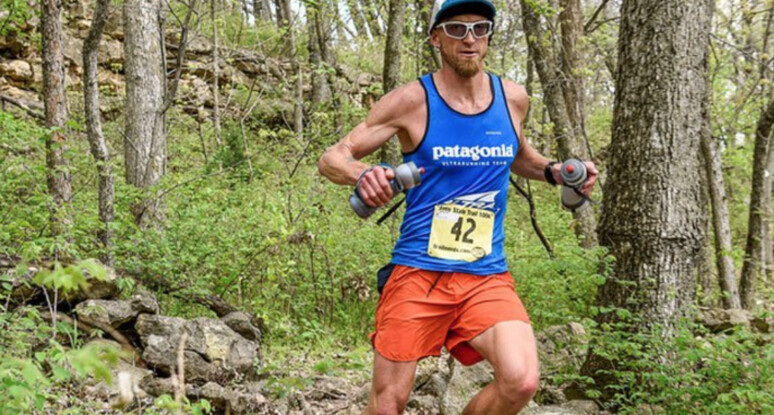
Adapted training and smarter recovery
Older trail runners are also better able to adapt their training to suit their aging bodies. Browning has consistently performed at the top level through his 40s and early 50s, most recently setting a supported FKT on the Colorado Trail at age 52 and placing second at this year’s Cocodona 250 (402 km) in Arizona. Browning emphasizes the importance of strength training, flexibility and strategic recovery. Instead of pushing through pain or ignoring signs of overtraining, experienced runners like Browning adjust their routines to prevent injury and enhance their longevity in the sport.
Research shows that strength training becomes increasingly important as we age, helping to maintain muscle mass, bone density and joint stability. Older athletes are also often more attuned to the need for adequate recovery, which is vital for avoiding burnout and ensuring sustainable performance.
Wisdom of pacing and nutrition
As trail runners age, they also tend to develop a keen sense of pacing and nutrition, partially due to familiarity with their own body. Unlike younger runners, who might go out too fast and burn out, more experienced runners understand the importance of conserving energy for the later stages of a race. They also become more meticulous about nutrition, recognizing that fueling their bodies properly can make the difference between finishing strong and hitting the wall.
Pommeret’s victory at the 2016 UTMB is a perfect example. After falling behind early in the race, Pommeret strategically paced himself, gradually working his way up the field to take the lead in the final miles. This kind of tactical acumen is often honed over years of racing experience.
Trail running is increasingly proving that age is just a number. with athletes like Pommeret and Browning demonstrating that with the right mix of experience, training adaptations, mental resilience and smart pacing, older runners can continue to compete—and win—at the highest levels.
by Keeley Milne
Login to leave a comment
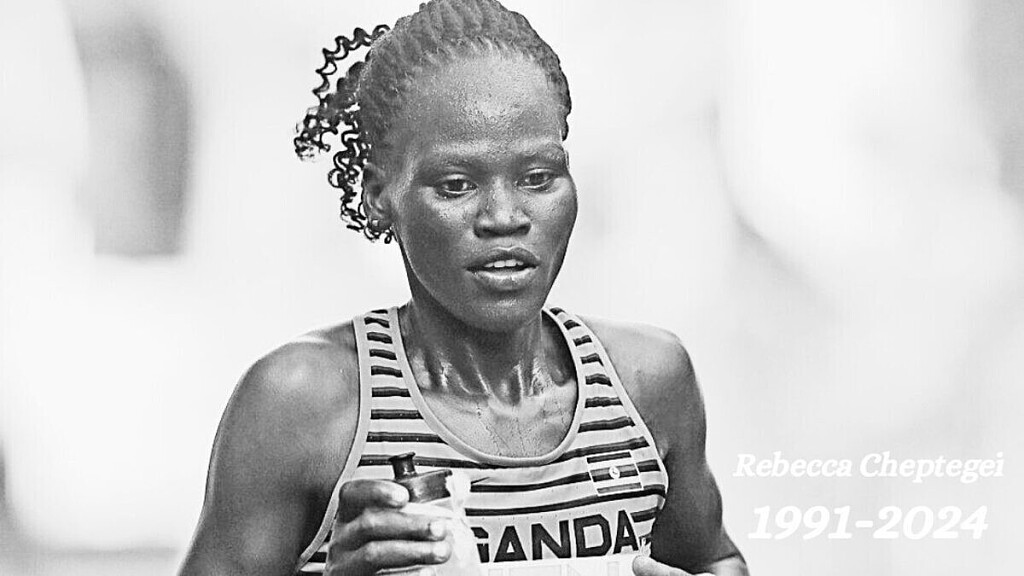
Rebecca Cheptegei, died from full organ failure
Rebecca Cheptegei, died from full organ failure following a horrific attack by a former boyfriend on Sunday, which left her with burns covering 75 per cent of her body.
Rebecca Cheptegei, an Olympic marathoner for Uganda who competed in the 2024 Paris Olympics, tragically passed away on Thursday morning after reportedly being set on fire by her former boyfriend in Kenya. She was 33.
According to the Kenyan newspaper Nation, Owen Menach, the Director of Clinical Services and Surgery at Moi Teaching and Referral Hospital (MTRH) in Eldoret, confirmed that Cheptegei died around 5 a.m. local time due to “full organ failure.” This followed a horrific attack by her boyfriend at her home in Kenya on Sunday, which left her with burns covering 75 per cent of her body. She was admitted to the hospital in critical condition.
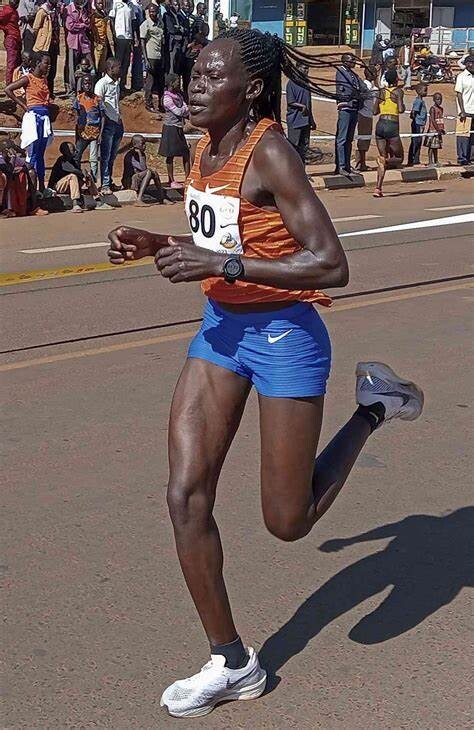
The alleged attacker, Dickson Ndiema Marangach, was also injured by the flames and is currently hospitalized. Neighbors reportedly overheard the couple arguing outside the house shortly before the attack. Both Cheptegei and Marangach were rescued from the fire by neighbors.
The Uganda Athletics Federation led tributes to Cheptegei on X (formerly Twitter), posting: “We are deeply saddened to announce the passing of our athlete, Rebecca Cheptegei, who tragically fell victim to domestic violence early this morning. As a federation, we condemn such acts and call for justice. May her soul rest in peace.”
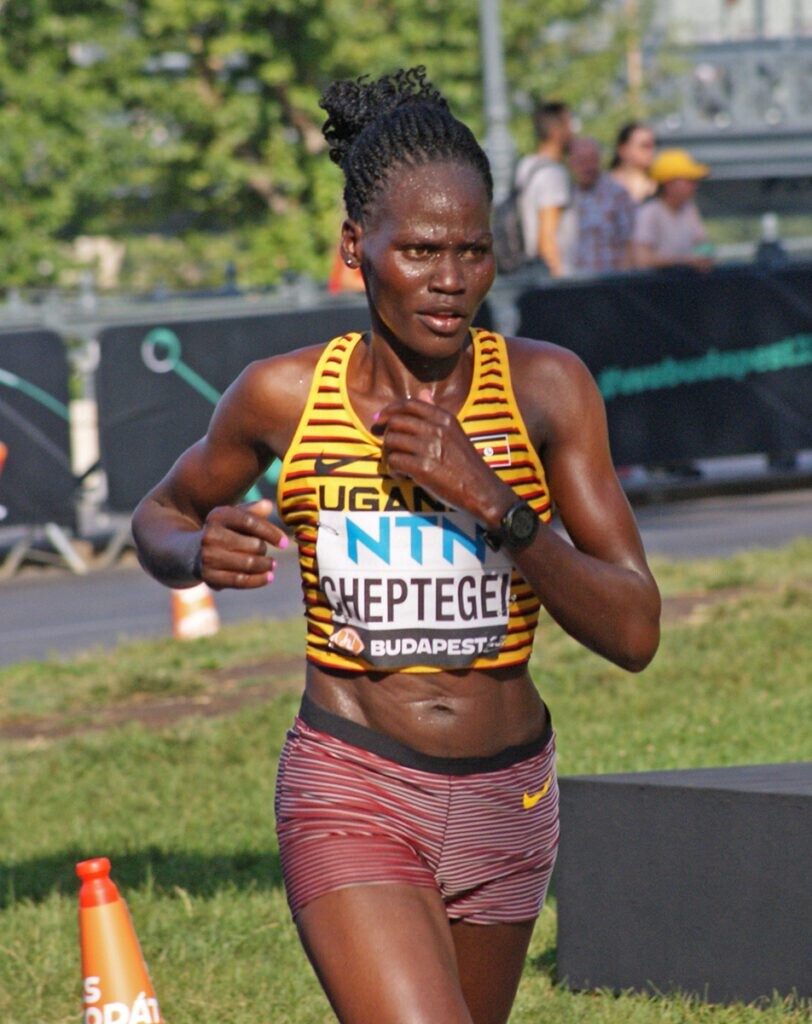
Cheptegei finished 44th in the marathon at the 2024 Paris Olympics in August and previously won gold at the World Mountain and Trail Running Championships in Chiang Mai, Thailand, in 2022. She had a marathon best of 2:22:47.
Tragically, this is not the first instance of domestic violence involving elite female athletes in East Africa. In 2021, Kenya’s two-time 10,000m world championship bronze medalist, Agnes Tirop, was found stabbed to death by her husband at their home in Iten, Kenya. Tirop’s husband, Emmanuel Ibrahim Kipleting, was arrested after fleeing Iten and found hundreds of kilometers away. She was 25 at the time of her death.
by Marley Dickinson
Login to leave a comment
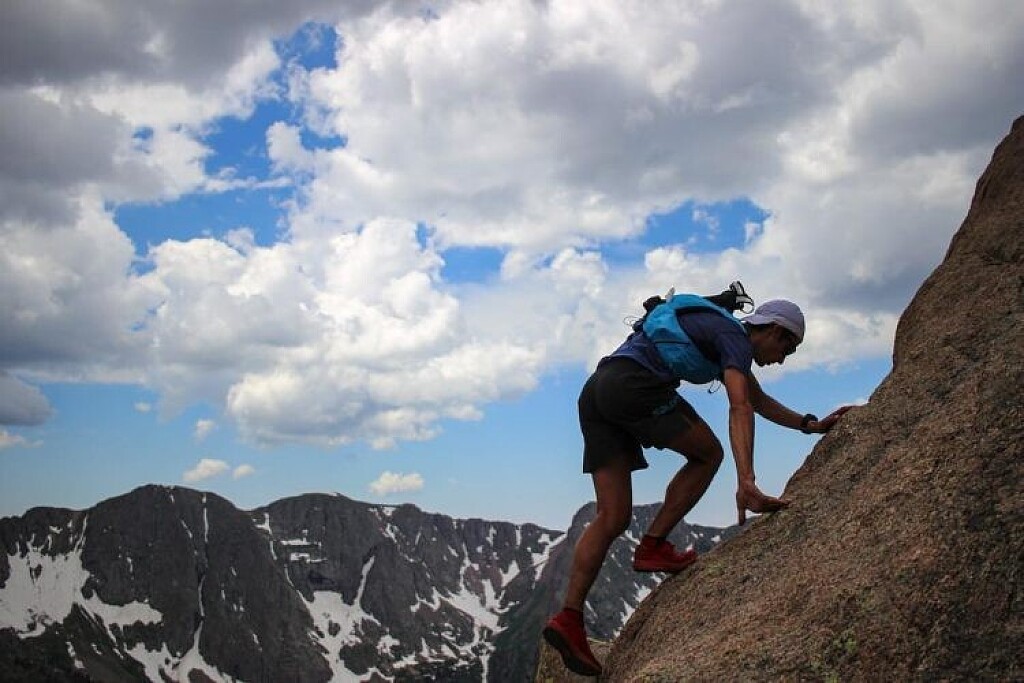
Kilian Jornet summits 82 Alpine peaks in 19 days
On Monday, Spain’s Kilian Jornet, four-time UTMB champion and a legend in ski mountaineering and climbing, completed his monumental mountain challenge to summit all 82 Alpine peaks over 4,000m high in only 19 days. Jornet shattered the previous Fastest Known Time (FKT) of 62 days, set in 2015 by Swiss alpinist Ueli Steck, who used a combination of cycling and paragliding.
Following his remarkable 10th victory at the Sierre-Zinal race (where he beat his own course record by a single second), Jornet embarked on a quest, dubbed “Alpine Connections,” to ascend as many of the 4,000-metre peaks in the Alps as possible, using only human-powered methods to travel between them. This endeavour seamlessly combined trail running, mountaineering, climbing and cycling.
In 2023, Jornet took on his toughest challenges yet, summiting all 177 peaks over 3,000 metres in the Pyrenees in just eight days. Reflecting on the feat at the time, he called it “one of the most difficult things I’ve ever done.” With the “Alpine Connections” project, Jornet pushed his limits even further as he continued to use only running or cycling between mountains, being careful to leave no trace that he was there.
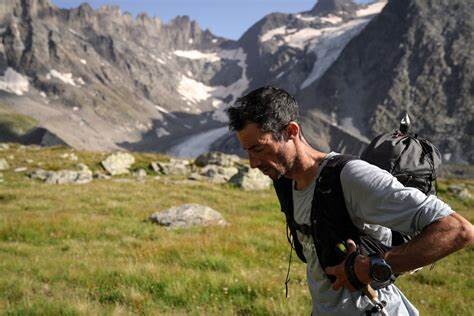
Jornet started his journey in the Bernina range of eastern Switzerland. In just a few days, he conquered 10 peaks, covering 423 km with a staggering 19,831m of elevation gain. The early stages of the challenge tested both his physical and mental endurance, and Jornet worked closely with scientists to track the physical and mental demands of his trek. He also provided daily recaps, stats and tracking on the Nnormal blog, Strava and @nnormal_official.
Jornet faced other, more humourous challenges during his journey: at one point, police threatened to tow his vehicle when work needed to be done on the parking lot he had left it in—2,500km away, and 4,000 metres below him.
Upon reaching the summits of Dôme and Barre des Écrins (the westernmost peaks in the series) on Instagram, Jornet shared his thoughts on Instagram. “This was, without any doubt, the most challenging thing I’ve ever done in my life, mentally, physically, and technically, but also maybe the most beautiful.”
“It’s difficult to process all my emotions just now, but this is a journey that I will never forget. It’s time for a bit of rest now.”
by Keeley Milne
Login to leave a comment
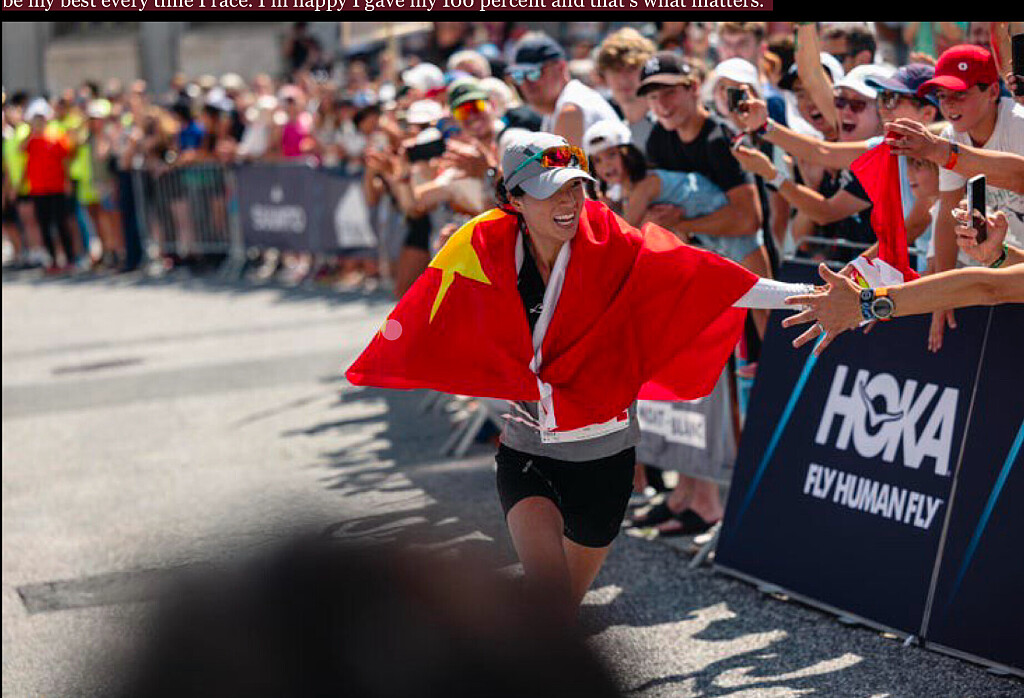
USA’s Eli Hemming and China’s Miao Yao Make History at 2024 OCC
It’s the first time an American or Chinese runner has won the prestigious 57K trail race that serves as a de facto global trail running championship. All year, Eli Hemming said his primary focus was charging up and over the La Flégère ski resort on the last climb of the Orsières-Champex-Lac-Chamonix (OCC) race at the UTMB World Series Finals to then break the finish line tape in Chamonix, France, as the champion.
That’s almost exactly how it played out on Thursday afternoon. The 29-year-old runner from Kremmling, Colorado, fended off the world closing in around him as he overheated under a humid, sunny 80 degree day, as well as a hard-charging Francesco Puppi, to win the 57K (36-mile) race in 5 hours, 11 minutes in 48 seconds. In doing so, he not only claimed a UTMB-Mont Blanc Finals title and the 13,000 euro (about $14,400) prize, he became the first American ever to win the prestigious race that serves as the de facto global championship at the shorter ultra distances.
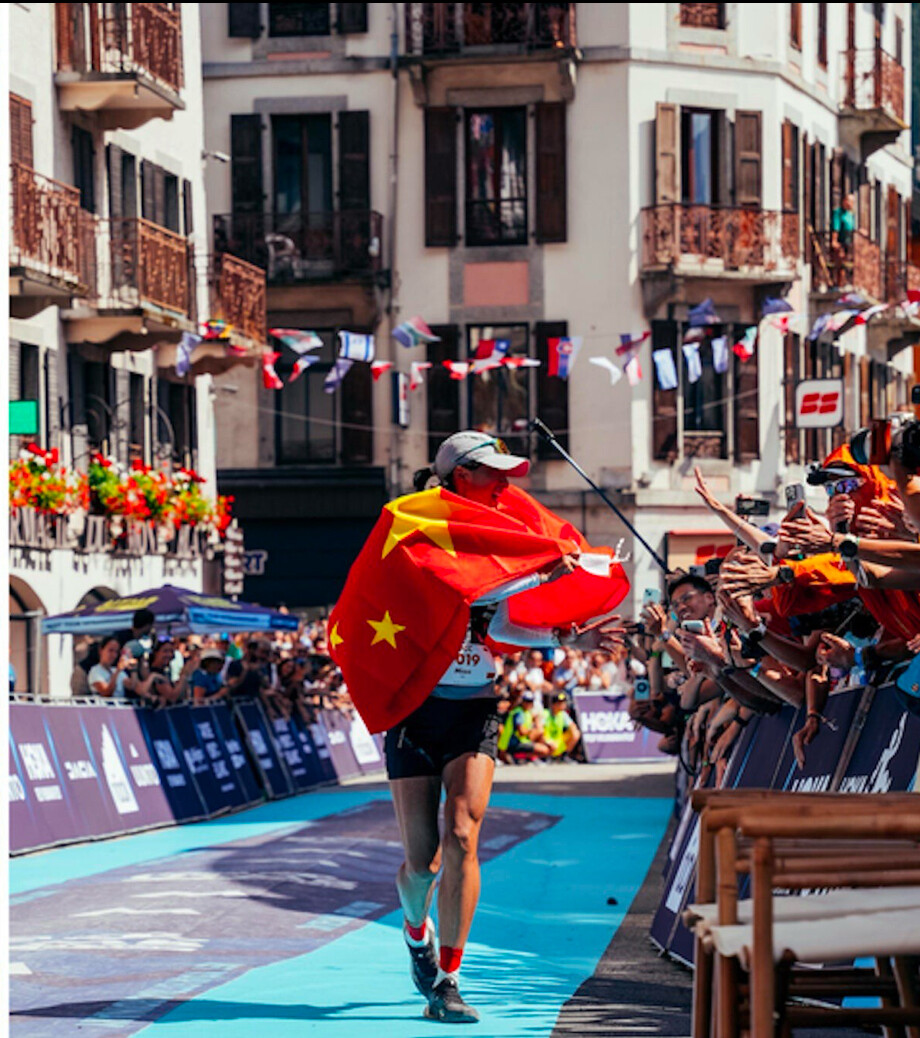
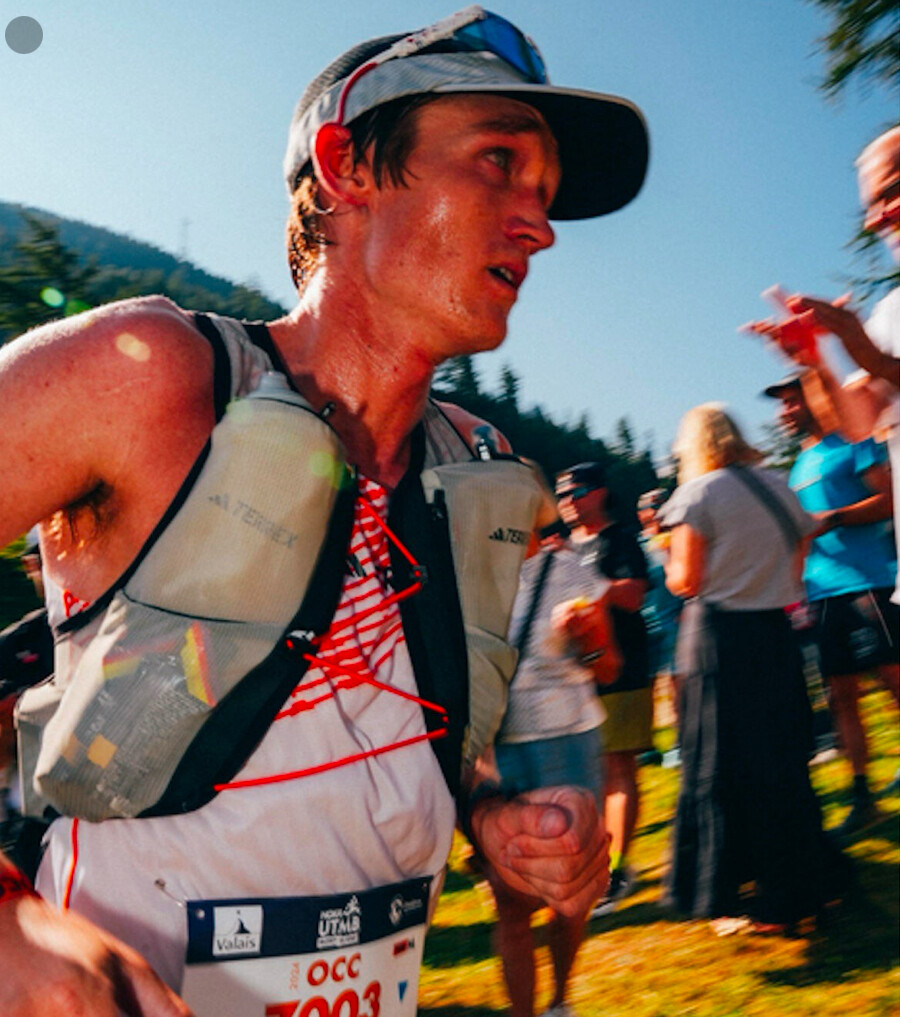
But the race was a dastardly tilt, and Hemming had to turn himself inside out to get the win. It figured to be a grueling battle, both because of the 11,500 feet of elevation gain and descent but also because of the strong field of international runners and hot, humid weather with sunny skies soaring into the 80s under the early afternoon sun. Hemming went out hard early in the race, but he didn’t feel compelled to challenge for the lead up the first two climbs over the first 9 miles. That’s because fellow American Christian Allen was absolutely flying off the front, as the 26-year-old runner from Orem, Utah, surged to the lead from the gun and led by more than 2 minutes through the 15-mile mark as he passed through Swiss the village of Trient. But that’s where the runners faced the toughest test of the race, a spikey 4-mile, 2,300-foot technical climb to the Chalet des Grands before continuing upward on slightly less steep terrain to the Col de Balme mountain pass. In all, it’s a 3,000-foot ascent over about 6 miles to the 7,200-foot high point on the course.
That was the first crux of the race, and that’s where Hemming took charge. As Allen faded, Hemming surged up the big climb as several other speedy runners gave chase, including Swiss runner Remi Bonnet who is known for his uphill running abilities. But Hemming had been waiting for this all year and specifically trained on long mountain ascents near Breckenridge, Colorado. He continued to surge across the Swiss-French border and up to the pass, building a nearly 7-minute lead over Spanish runner Antonio Martinez Perez.
From there, Hemming extended his lead to 10 minutes on the 7-mile, 3,000-foot descent to the French village of Argentière. But with one more big climb—a 3.5-mile, 2,000-foot technical grind to 6,200 feet atop the ski resort—he was anything but home free. Early in the climb, he slowed from a run to a walk, and even stopped at one point midway through the climb, bent over and rested his hands on his knees. He looked in distress, but eventually gathered himself and started running slowly up the hill again.
Perez had been charging up the mountain behind him and there was a brief moment where it looked like Hemming’s lead might be in jeopardy. But he managed to reach the final checkpoint at the 50K La Flégère aid station in first, and immediately looked better as he began the 4-mile descent down to Chamonix. Although he had gained ground, Perez felt the impact of the climb, too, and was caught by Italian runner Francesco Puppi before reaching the ski resort aid station. After a cordial acknowledgement as he passed, Puppi suddenly had a new spring in his step. He surged up the final 200 meters to reach the checkpoint about 4 minutes after Hemming then began bombing down the rocky, rooty dirt trail in pursuit of the leader.
Up front, Hemming had recovered slightly, running smoothly albeit without the intensity of a couple hours earlier. Puppi was clearly running faster. What had been a 10-minute lead at the 28.2-mile mark had greatly diminished with less than 3 miles to go. But with every stride, Hemming was one step closer to his year-long goal of winning OCC and he wasn’t going to let it slip away.
When he reached the edge of the Chamonix pedestrian village, he was quickly re-energized by the throngs of cheering spectators and increased his pace briefly as he dashed through the winding 200-meter section before slowly slightly on the final blue-carpeted approach to the finish line.
“I was trying to pace it as well as I could, and I knew if I made it over Col de Balme with a good gap, unless I blow up—which I did a little bit—I knew I could hold up pretty well to the end,” Hemming said. “It ended up being a bit of a grind. I knew I had about a 10-minute lead at Argentière, but I was very much overheated and the walls started closing in a bit. I tried to take a little time to cool down, but I knew I had to keep moving and just make it to the top.”
Still running hard, Puppi dashed through the village three minutes later to finish second in 5:14:46, followed by Perez in third at 5:17:56, China’s Juwei Zi in fourth (5:22:17), and Aritz Egea Caceres in 5th (5:27:07). Nick Handel, a 32-year-old runner from San Francisco, was the second American runner in the men’s race, finishing 13th in 5:41:08. The victory is the first big international win for Hemming, who transitioned into trail running in 2021 after several years as a professional triathlete. Hemming has won several domestic 50K races in the US, including the Canyons Endurance Runs 50K on April 26 in Auburn, California. Last year, he placed second to Bonnet in the Mont-Blanc Marathon and also finished fifth in the Golden Trail World Series Final 20K championship in Noli, Italy. For a while, it looked like Hemming, and his 27–year-old wife, Tabor, might be on the verge of one of the best trail running stories of the year. They decided to part ways with sponsor Salomon, in the offseason, and sign with the Adidas-Terrex team at the start of the year. While they both raced well early in the season—Tabor took third at the Canyons 50K in April and third at the Broken Arrow Skyrace 25K in June—they opted not to race as much this year as they’ve been known to. They also decided not to join their new teammates at an extended Chamonix training camp in late July and instead stay home and train at high-altitude in central Colorado.
Knowing what they’d be facing on the course, they sought out long climbs near Breckenridge and Frisco that topped out between 12,000 and 13,000 feet—including Wheeler Pass between Copper Mountain ski resort and the community of Blue River. “The course is fast and steep, but it’s also very runnable,” Tabor said. “We knew we could get quality training at home, so we used those climbs to train, so we were happy to stay at home and run the places we know best.”
Tabor looked great early in the race, running with a strong pack of lead women that included Judith Wyder of Switzerland, Clementine Geoffray of France, and Miao Yao of China, plus Spain’s Sara Alonso, New Zealand’s Caitlin Fielder, and fellow Americans Dani Moreno and Allie McLaughlin.
Wyder was the early leader and figured to be tough to beat—despite a recent bout of COVID. She had earned the silver medal in the 50K race at last year’s World Mountain and Trail Running Championships in Austria, and more recently took second in the 20K mountain running race at the European Championships and first at the Mont-Blanc Marathon in early July. Wyder led Geoffray, Moreno, McLaughlin, and Yao through the initial 4.5-mile climb to Champex, then expanded her lead to the top of the second climb at the 6,200-foot summit of La Giete as Yao and Alonso maneuvered into the second and third spots. But following a similar strategy as her husband, Tabor took the lead on the long downhill into Trient and began to surge on the technical climb up to Chalet des Grands with Yao, Wyder, Alonso and McLaughlin in tow. Hemming ran in the lead for part of the climb, but she paid for the aggressive move. Wyder and Yao overtook her and those two separated from the rest of the field. They dueled back and forth but Yao took the lead over Col de Balme and would never relinquish it. She seemed to get stronger as the race went on and she extended the gap on Wyder to 4 minutes at La Flégère ski resort.
From there, Yao cruised into Chamonix to secure the first win by a Chinese athlete at OCC in 5:54:03. With a 2018 CCC win already under her belt, she also enters the rarified air of having two UTMB World Series Finals championship titles to her name. Wyder was second in 6:00:05, followed by Geoffray in third at 6:02:10, Alonso in fourth (6:05:15), and Fielder in fifth (6:05:46). Moreno, who was third in the OCC in 2022 and dropped out last year, ran a strong second half to finish sixth as the top American in 6:06:59. Tabor Hemming continued up and over Col de Balme but slowed significantly and eventually dropped out at Argentière.
“I’m really happy about my race. It was really fun out there to compete with such strong ladies,” Wyder said, “Miao Yao was flying in the end. I’m so proud of myself to be back and to be able to be racing healthy. I didn’t think about [having COVID recently]. Today I was really happy with my performance and with my legs today.”
Login to leave a comment
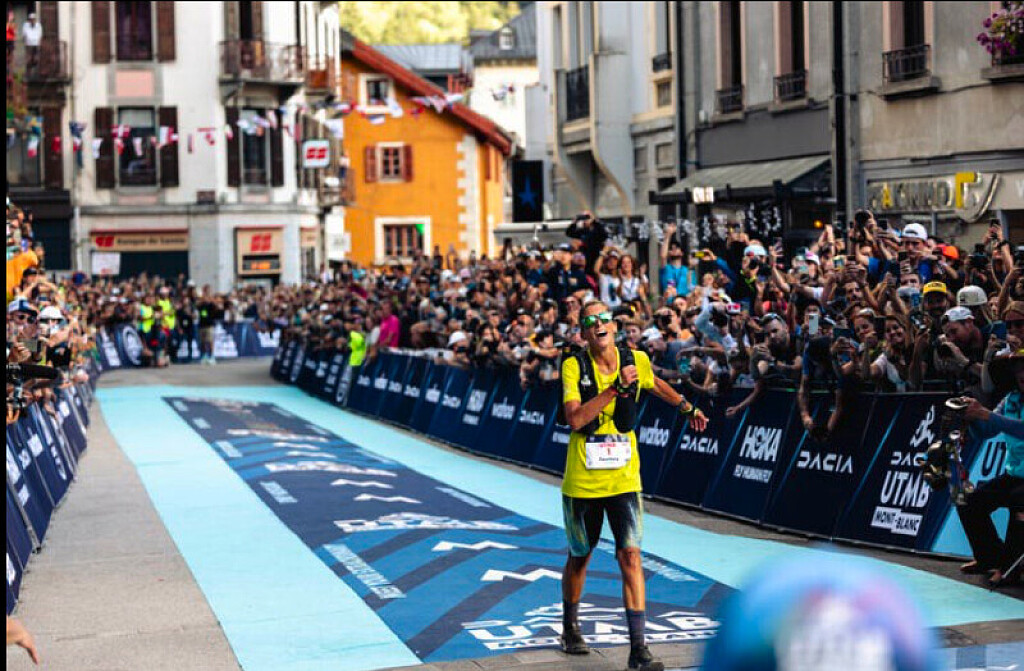
UTMB Is Having a Golden Moment. But It’s Delicate.
After a year that included a maelstrom of controversy, the world’s most prominent ultra-trail running event has righted its path
“It felt like a golden era of trail running.”
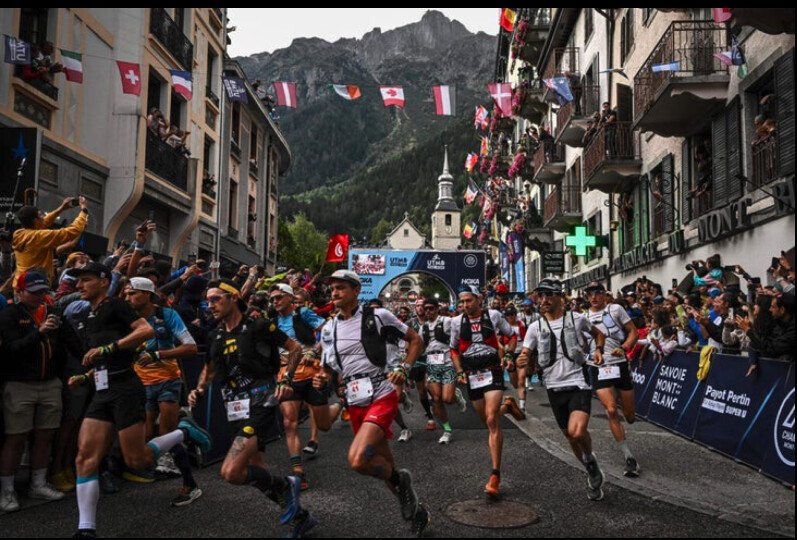
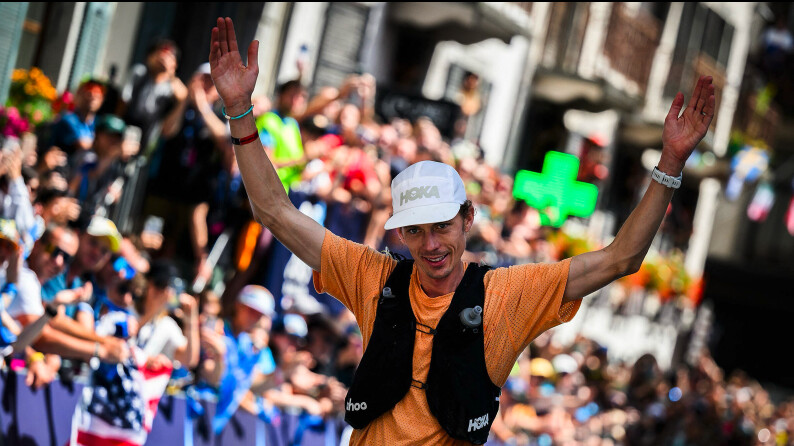
That quote came from Keith Byrne, a senior manager at The North Face and a UTMB live stream commentator for nearly a decade, who was talking about last summer’s UTMB World Series Finals in Chamonix, France.
The UTMB races during the last week of August last summer were, I thought, the most alluring in the event’s 20-year history.
After years of being frustrated by the course, American Jim Walmsley finally put it all together for a victorious lap around Mont Blanc. In doing so he became the first U.S. man to win the race, setting a course record of 19:37:43. He and his wife, Jess, had moved from Arizona to live full-time in France to make it happen. And then there was Colorado’s Courtney Dauwalter, who won the race handily in 23:29:14 to notch her third victory and continue the strong legacy of American women on the course. The win felt extra historic because it made her the first person to win Western States, Hardrock, and UTMB in the same year—arguably the three most legendary and competitive 100-mile events in the world, and she dominated each one.
The events came off without a hitch and included record crowds in Chamonix, plus a record 52 million more tuning into the livestream.
Throughout the fall and winter, harmony and happiness seemed to give way to chaos and discontent. But a year later, as the UTMB Mont Blanc weeklong festival of trail running kicks off on August 26, everything seems back to normal in Chamonix. What happened along the way is a tale of drama, perhaps both necessary and unnecessary, all of it culminating in course corrections by the multinational race series.
In short, what a year it has been for UTMB.
And now, hordes of nervous and excited runners from all corners of the globe are descending on Chamonix for this year’s UTMB Mont-Blanc races. Registration for UTMB World Series events is reportedly up about 35 percent year over year with even greater growth in interest for OCC, CCC and UTMB race lottery applications. There is more media coverage, more pre-race hype, and more excitement than ever before. More running brands are using the UTMB Mont Blanc week to showcase their new running gear with media events, brand activations, and fun runs. Even The Speed Project—although entirely unrelated to UTMB—chose Chamonix as the starting point of its latest so-called underground point-to-point relay race to try to catch some of the considerable buzz UTMB is generating.
So what happened? Did the UTMB organization do its due diligence and make amends with several significant changes in the spring? Was the angst and stirring of emotions just not as widely felt as the fervent bouts of Instagram activism claimed it to be? Have the participants and fans of the ultra-trail running world suffered amnesia or become ambivalent? Or is it all a sign of the race—and the entire sport of trail running—going through growing pains as it adjusts to the massive global participation surge, increased professionalism, and heightened sponsorship opportunities?
On the eve of another 106-mile lap around the Mont Blanc massif, I wanted to take a look at what happened and the current state of UTMB’s global race series that culminates here in Chamonix this week.
We caught a glimpse of what was to come shortly before UTMB last year, when the race organization announced the European car company Dacia as its new title sponsor. A fossil-fuel powered conglomerate didn’t sit well with some fans of the event, coming amid an era of widespread climate doom (even though the brand would be highlighting its new Spring EV at the UTMB race expo.) The Green Runners, an environmental running community co-founded by British trail running stars Damian Hall and Jasmin Paris, called it an act of “sportswashing” and released a petition calling on UTMB to denounce the partnership. (Hall even traveled all the way to Chamonix to deliver the petition in person.)
These grumblings of discontent and others that followed exploded into a social media firestorm shortly after UTMB. In October, it became public that UTMB had moved to launch a race in British Columbia, Canada, just as a similar event in the same location was struggling with permitting. A he-said, she-said back-and–forth left onlookers with whiplash. Then on December 1, UTMB livestream commentator Corrine Malcolm announced on Instagram that she had been fired and in late January, a leaked email from elite runners Kilian Jornet and Zach Miller to fellow athletes called for a boycott of the race series. All of it, jet fuel for social media algorithms.
“We’re at a turning point in trail running, but we can keep the core values if the community stands up,” the Pro Trail Runners Association secretary, Albert Jorquera, told me at the time.
In the midst of these dramas, I interviewed race founders Catherine and Michel Poletti over lunch at a Chamonix cafe. For nearly a decade now, I have met with the couple for candid conversations that helped frame online articles and magazine stories, and most recently for the book, The Race that Changed Running: The Inside Story of UTMB.
I plunged headlong into two articles with hopes of explaining it all. There was so much heat swirling around the UTMB stories, and so little light.
“The very thing that made ultrarunning so bonding was being torn apart by the community itself through social media,” said Topher Gaylord. A former elite runner who tied for second in the inaugural UTMB in 2003, Gaylord engineered UTMB’s first title sponsorship with The North Face and has been a close supporter of the Polletis for 20 years. “Some players are using social media to divide the community. That’s super disappointing.”
To me, it felt like the aggressive online activists were winning the day. Trail running suddenly seemed polarized, infected with the intertwined social media viruses of false indignation and close-mindedness. Twice, I deep-sixed my article drafts. Friends and editors convinced me they wouldn’t be read dispassionately. Who wants to be handed a fire extinguisher, when your goal is to torch the house?
Well, what a difference eight months can make. We now have some perspective and, with it, some answers.
Since its earliest days, UTMB’s volunteer founding committee believed in the values of the sport. The very first brochure produced for the race—a mere sheet of paper—featured a paragraph on values. In later years that statement became much more comprehensive, expanding to cover a wide range of topics and the race’s mission to support and protect them.
But maintaining those values in an organization that has gone from a singular race with a literal garden-shed office to a 43 global event series with a staff of more than 70 full-time employees is tricky at best. In an interview once, Michel Poletti paused, asking if I had seen a photo of a mutual friend that was making the rounds. He was climbing one of Chamonix’s famed needle-sharp aiguilles, one foot on each side of a razor sharp ridge—a perilous balancing act, big air on each side. It was his metaphor for trying to move ever up, while balancing business growth and heartfelt values.
Over the course of dozens of hours of interviews with the Polettis, I came to learn one thing: UTMB always moves forward up the ridge. In the process, UTMB corrects its course. It starts with a careful analysis after each edition, evaluating pain points in areas such as logistics, security, media, traffic, and others, discussing how they can be addressed. Historically, those course corrections haven’t been at the pace others might want—especially since the social unrest that developed during the Covid pandemic—but the organization has a reliable pattern of steadily addressing concerns.
And so, not too many weeks after that lunch meeting, UTMB set to work. First came a heartfelt effort they kept under the radar—traveling around the U.S. to listen and learn. They spent two weeks in the U.S. in February, visiting with American athletes, race directors, journalists, consultants, and their Ironman partners. “We need to learn from our mistakes and from this crisis,” Michel said.
Methodically over the ensuing months, UTMB rolled out a series of changes. Some were aimed at directly addressing the controversies, others were overdue for what is, by any metric, the world’s premier ultra-trail running event.
“My hope is that the trail running community understands that we are human,” Catherine had told me over the winter.
Four months ago, at the end of April, the race organization announced that Hoka would become the new title sponsor of UTMB Mont-Blanc and the entire UTMB World Series through 2028. It was a huge move because Hoka, one of the biggest running brands in the world, essentially doubled-down on its support of UTMB and trail running in general. The five-year deal brought benefits other than cash, too. Hoka has a strong history of inclusivity and growing representation among marginalized communities, an area UTMB has announced it intends to focus more on beginning this year. The deal also moved Dacia out of the title sponsor limelight, instead bringing a brand with a strong reputation in trail running to the fore.
Dacia was shifted to the role of a premier partner in Europe, and now plays an integral part in a new eco-focused mobility plan UTMB updated in July. Fifty of their cars can be signed out for use by over 70 staff and 2,500 volunteers, encouraging them to arrive in Chamonix using public transportation instead. The move is estimated to eliminate 200 vehicles driving into the valley. (The organization’s new mobility plan will transport an estimated 15,000 runners and supporters, eliminating the need for approximately 6,000 cars during the UTMB Mont-Blanc week. On average, a bus will run every 15 minutes between Chamonix and Courmayeur, Italy, and Chamonix and Orsières, Switzerland.)
In May, UTMB announced a new anti-doping policy it had developed with input from PTRA. The organization committed to spending at least $110,000 per year, money that will be allocated to test all podium finishers and a randomized selection of the 687 elite athletes in attendance. The new policies will be implemented by the International Testing Association, an independent nonprofit that has also conducted two free informational webinars for the 1,400 UTMB Mont Blanc elite runners.
Not long after the announcement, Catherine Poletti suggested this was just a start. Speaking at TrailCon, a new conference held in Olympic Valley, California, on June 26, she said, “It’s a first big step for us. And we’ll continue to develop this policy.” (The most important anti-doping protocol may still be beyond UTMB, however. “The elephant in the room is that we need a coordinated approach to establish out-of-competition testing,” Tim Tollefson, an elite U.S. runner and director of the Mammoth TrailFest in California, who spearheaded independent testing at his event in 2023. “Individually, we’re just lighting our money on fire.”)
In mid-June, UTMB addressed a longtime issue with top runners—prize money. A chunk of the funding from the ratcheted-up Hoka sponsorship was directed to supporting the bigger prizes for the OCC, CCC and UTMB races in Chamonix—about $300,000 this year, nearly double of 2023—as well as more prize money for the three UTMB World Series Majors. (The sequence was intentional. The organization wanted a new doping policy in place before increasing prize purses, since large cash awards are often thought to lead to a growth in doping.)
It’s a move that was long overdue—the most celebrated marquee event in any sport should reward its top athletes more than any other event—but not possible without Hoka’s increased involvement. The proposal was shared with PTRA in advance of the announcement, and the group provided feedback that was incorporated into the final divvying up of the purse. The total amount spent on prize money across all UTMB races is now more than $370,000.
“We increased the prizes quite dramatically,” said UTMB Group CEO Frédéric Lenart. “It’s very important for us to support athletes in their living.”
Finally, just last week, UTMB announced a new department within the company called “Sport and Sustainability.” The group is headed by longtime UTMB staffer Fabrice Perrin. He was a driving force behind the creation of UTMB’s live coverage back in 2012. Heading up relations with the pro athletes will be longtime elite trail runner Julien Chorier. Nicolas LeGrange, UTMB’s Director of Operations, will be in charge of sustainability and DEI, Diversity, Equity Inclusion.
On the DEI front, UTMB is calling its strategy “leave no one behind,” and they promise new initiatives coming this fall so that, according to Perrin, “every athlete feels a sense of belonging within our community,” he says. “I am committed to ensuring that we perfect symbiosis with the entire community of trail running.”
UTMB has already begun to embrace adaptive athletes, something it was criticized for lacking as recently as last year. This year’s UTMB Mont Blanc races will feature a team of 12 adaptive athletes who will be participating in the MCC, OCC and UTMB races. Under the direction of adaptive athlete and team manager Boris Ghirardi, who lost his left foot and part of his left leg after a motorcycle accident in 2019, the race organization recruited the athletes from around the world to showcase how adaptability and resilience are key elements of the UTMB values.
“I proposed this program to make a concrete action around adaptive athletes and the inclusion policy, and to prove that it was possible,” he said this weekend. “If you really get everyone working on this, you can change the game.”
And with that, UTMB Mont-Blanc 2024 is underway, resuming the golden era status that Byrne raved about last August. Starting this past weekend, banners have been unfurled over Place du Triangle de l’Amitié in the heart of Chamonix, kicking off the carefully choreographed trail running Super Bowl that is UTMB. The excitement begins on August 26 and culminates as the race for UTMB individual crowns reach a tipping point on August 31. (The golden hour of the final finishers on September 1 will be something to behold, too.)
“It’s like wrapping the Tour de France, Burning Man, and the biggest industry trade show into one giant, week-long festival,” Gaylord says. “It’s an amazing week for our sport, one of the biggest showcases we have.”
The aura of Chamonix and the opportunity to run a race there is drawing as much or more interest than ever before. It is perhaps the essence of what will keep the UTMB World Series afloat into the distant future. Runners will continue to chase Running Stones at qualifying events around the world, knowing the carrot of running one of the races around the Mont Blanc massif is second to none.
Trail running is booming on a global scale, and it’s not just UTMB shouldering the burden or reaping the benefits. The Golden Trail World Series, Spartan Trail Running, Xterra Trail Running—and even the World Trail Majors, Western States 100, and dozens of other more prominent trail races—are all trying to get a bigger piece of the pie, either by way of money or relevance.
UTMB Mont Blanc, as trail running’s most important race, is at the very beating heart of it all. And trail running is a soul sport, so when change and growth happen, it can feel threatening to all of us whose lives have been changed for the better by time spent with dirt underfoot and blue sky above. UTMB is big enough now that it’s urgently important that it make changes judiciously and preemptively.
As the world’s most significant trail race, the consequences of UTMB’s choices will ripple throughout the ecosystem. UTMB understands this. “Do we owe something to trail running? Yes, of course we do,” Michel Poletti once told me. That’s truer than ever now.
At TrailCon in June, Catherine Poletti summed up UTMB’s challenge. “Trail running is changing around the world. We’ve seen that evolution over 20 years. We need to adapt, to find a good balance, to accept different models and ways of organizing.”
Back in August 2021, I wrote an article here called, “UTMB, Don’t Break Our Hearts.” It came the summer after the organization announced its investment from the Ironman Group. Change– big change– was everywhere. Could the race around Mont Blanc maintain its soul and passion amid talk of multinational sports marketing, we all wondered? Michel Poletti closed the interview by saying, “Nous prenons un rendez-vous dans trois ans.” Simply translated: “We’ll schedule an interview in three years.”
Three years is now, and both UTMB and trail running’s landscape have changed dramatically, if not literally then certainly figuratively. We’ve seen UTMB adjust its rudder this past year, responding to concerns. Perhaps not at the pace any individual or specific group would like, and not to the extent some would wish. But it’s happening, and for that we should all breathe a cautious sigh of relief. Because if you love trail running, you have to care about what happens at the world’s biggest trail race.
As I write this in Chamonix very early on the morning of August 26, overcast skies are parting and blue skies are in the offing. The forecast for the week ahead is for bright sun with a few clouds. It’s a workable enough metaphor for trail running’s future. But one thing has to happen for it to come true. The race that changed running needs to continue to listen to its stakeholders around the world, and engage with them as it grows and develops in the days ahead. If that happens, Byrne’s vision of the golden age of our sport just might linger on. I can hope.
by Outside Online
Login to leave a comment
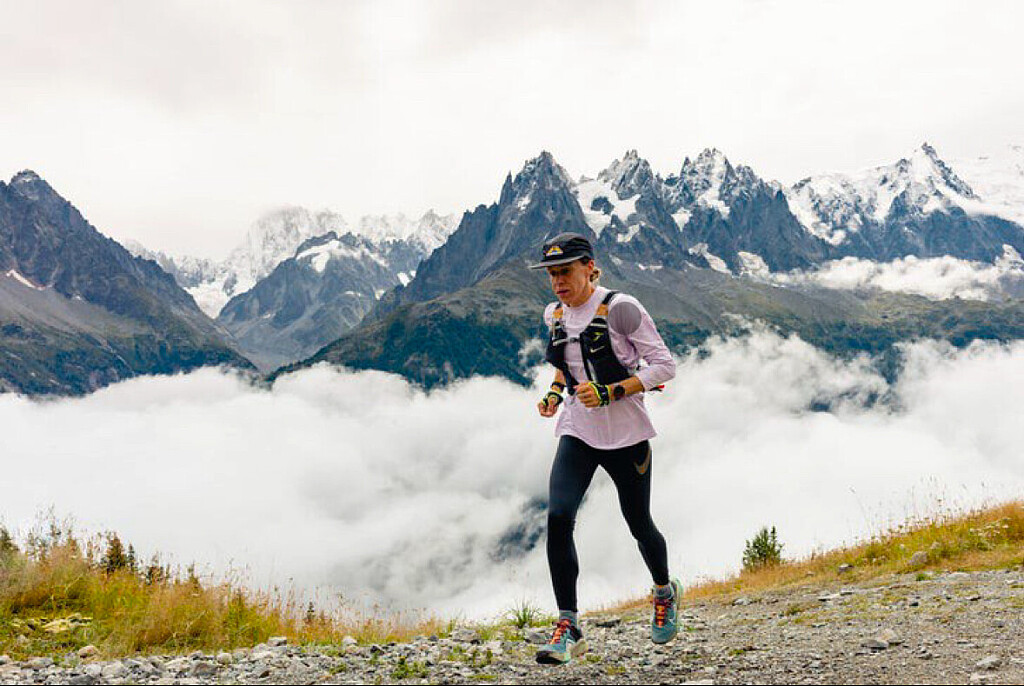
How To Watch the 2024 Ultra Trail du Mont-Blanc Races
The most-anticipated annual event of the trail running universe takes place from August 26 to September 1
This year’s Ultra-Trail du Mont-Blanc is right around the corner—which means some of the best athletes in the trail-running universe will be meeting up in Chamonix, France, to test their mettle on one of the sport’s biggest stages.
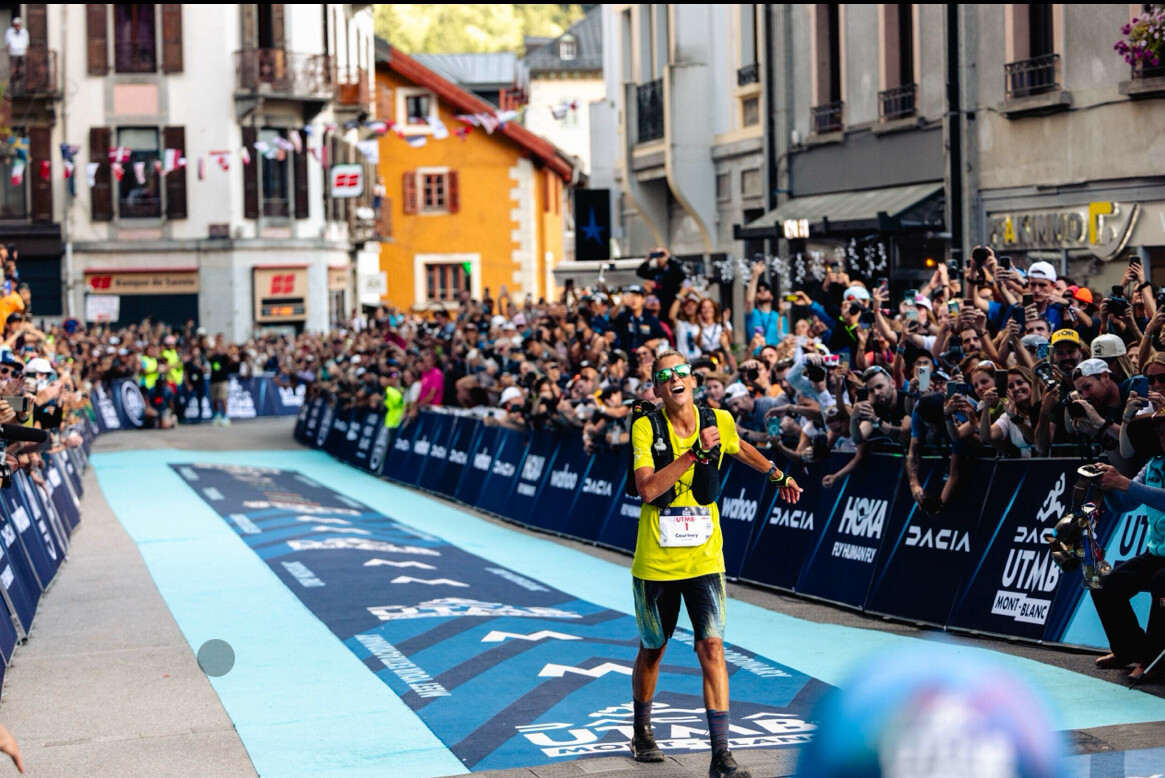
With double the prize money on the line this year, athletes will have more to fight for than ever. And you can get a front seat to the action without leaving home. Here’s how to watch the 2024 UTMB World Series Finals, including the 50K championship, OCC, the 100K championship, CCC, and the grand finale 100-mile championship, the 106-mile Ultra-Trail du Mont-Blanc (UTMB), from August 29-September 1.
What started as a stand-alone race has transformed into a weeklong festival of alphabet soup acronyms. There are eight total races during the week from August 26-September 1, but the three races that make up the official UTMB World Series Final—the OCC, CCC, and UTMB—will all be brought to you via drones, bike and runner follow cams, and non-stop commentary.
Last year, Outside and UTMB World Series teamed up to make it easier to stream the UTMB’s top trail-running events. This year, the partnership continues—which means you can watch 10 of the series’s best events live on Outside TV.
The championships racing action starts on Thursday, August 29 with the OCC as runners start from Orsières, Switzerland (and race the final third of the loop to Chamonix). The action continues straight into Friday morning with the start of CCC in Courmayeur, Italy (which sends runners along two thirds of the loop to Chamonix), and culminates with the crème de la crème, the full-loop UTMB, which kicks off in downtown Chamonix that evening at 6 P.M. local time. The 106-mile race with roughly 32,800 feet of climbing and descending is a time-honored test piece for lifelong ultrarunners, up-and-coming rookies, and elite-level pros alike. For many, it’s the most anticipated trail race of the year.
All three races, OCC, CCC, and UTMB, will be available to watch for free on Outside TV. If you’re sleeping and miss the action live, no sweat. Outside+ members will also be able to watch on demand after the finish anytime, on any device.
Login to leave a comment
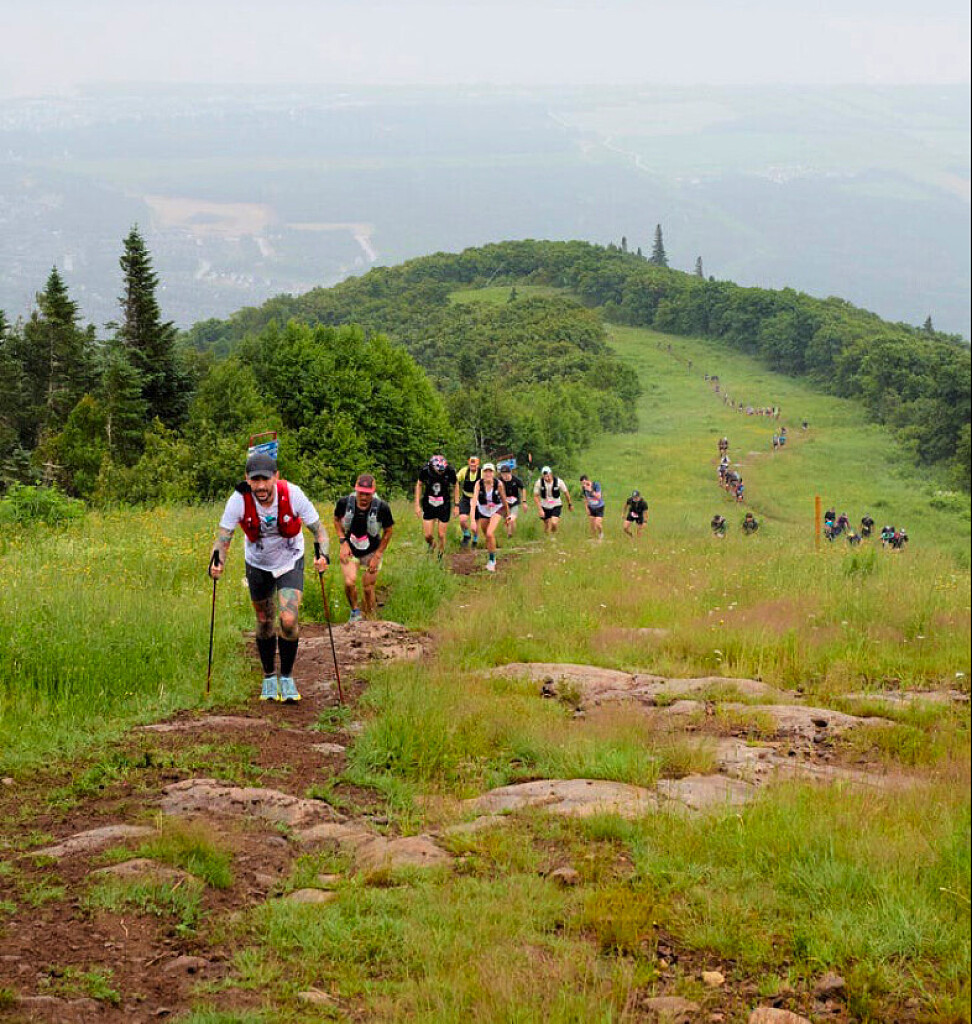
One of the World’s Best Ultra Trail Runs Gets Better
With new distances and the chance to compete in the Canadian Trail Running Championships, Québec Mega Trail gives runners more ways than ever to experience the Québec outdoors in 2025What makes a world-class trail running event? Amazing scenery, a challenging course, a supportive community, and opportunities for runners of all levels. Québec Mega Trail checks all the boxes.
You have the intensely green landscape near the St. Lawrence River, the epic singletrack through the Laurentian Mountains, and the beautiful region of Charlevoix. You have the cheers and smiles of spectators at the base of Mont-Sainte-Anne. And you have a wide variety of distances at the QMT race series, making it possible for runners of all levels to be pushed by the terrain and supported by the local community, culminating in an unforgettable experience. Here’s what’s new for 2025.First, the iconic Québec Mega Trail 100-miler—historically the longest event offered at QMT—will be replaced by a 135-kilometer race, which is approximately 84 miles. The new course will have a higher distance-to-elevation ratio, with 6,000 meters of cumulative altitude gain. The additional climbing will take runners from the starting point in the quaint town of Baie-Saint-Paul, on the northern shore of the St. Lawrence River, to Mont-Sainte-Anne, a ski mountain situated within the Laurentian Mountains.
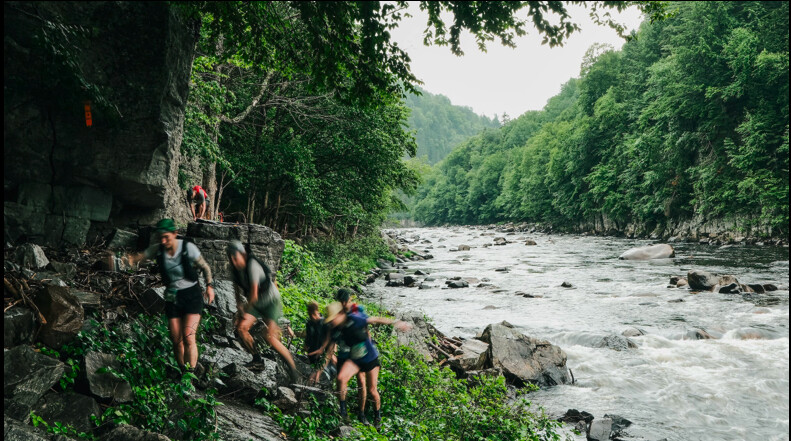
“The idea is to get the most out of our trails,” says Jean Fortier, general director and founder of Québec Mega Trail. “Taking into account the opinions of athletes and after consulting our large community, we decided to shorten the legendary 100-miler to make it even more competitive. Ultimately, it is the runners who will tell us if we made the right choice.” This change will help increase participation, as the 135K distance is attainable for a larger group of skilled runners.Since its debut in 2012, QMT has attracted accomplished trail runners from around the world. It is recognized as one of the most beautiful—and most difficult—trail races in Canada, crossing through the Charlevoix and Côte-de-Beaupré regions of Québec to Mont-Sainte-Anne. The terrain is extremely technical, with many exposed mountain passages and singletrack winding through dense forests.
In addition to the new 135K race, the 2025 QMT will host 50K and 80K events of the Canadian Trail Running Championships, which include classic up-and-down races and trail ultramarathons, providing opportunities for runners to measure themselves against trail running’s best athletes. Additional distances ranging from a 1K kids’ run to a 110K will continue to be offered.In 2024, Québec Mega Trail joined the World Trail Majors (WTM), a ten-race global running series. Despite joining an international stage, Fortier says the weekend of trail running continues to be rooted in the richness of Québec’s mountains, forests, and community.
“With our presence within the WTM, we are of course noticing more and more international athletes interested in QMT,” Fortier says. “We will have a very good elite lineup on our trails in 2025, and there will certainly be fierce battles to watch closely.”In the final QMT 100-mile race, Anne Champagne broke the women’s course record with her finish in 24:28:27, and Jean-François Cauchon took the men’s course record by 25 minutes, crossing the finish line in 19:01:28.
Québec Mega Trail’s 2025 races are set for June 3–6. Early-bird pricing is offered in limited quantities with rates discounted up to 25 percent. Learn more, sign up to volunteer, and register here.
QMT is a legendary ultra trail race, renowned as one of the most beautiful and one of the hardest in Canada. More than 3,500 racers meet there every year. Founded in 2012, Québec Mega Trail actively promotes trail running while being a reference in terms of safety, sustainable development, and constant innovations.
Login to leave a comment
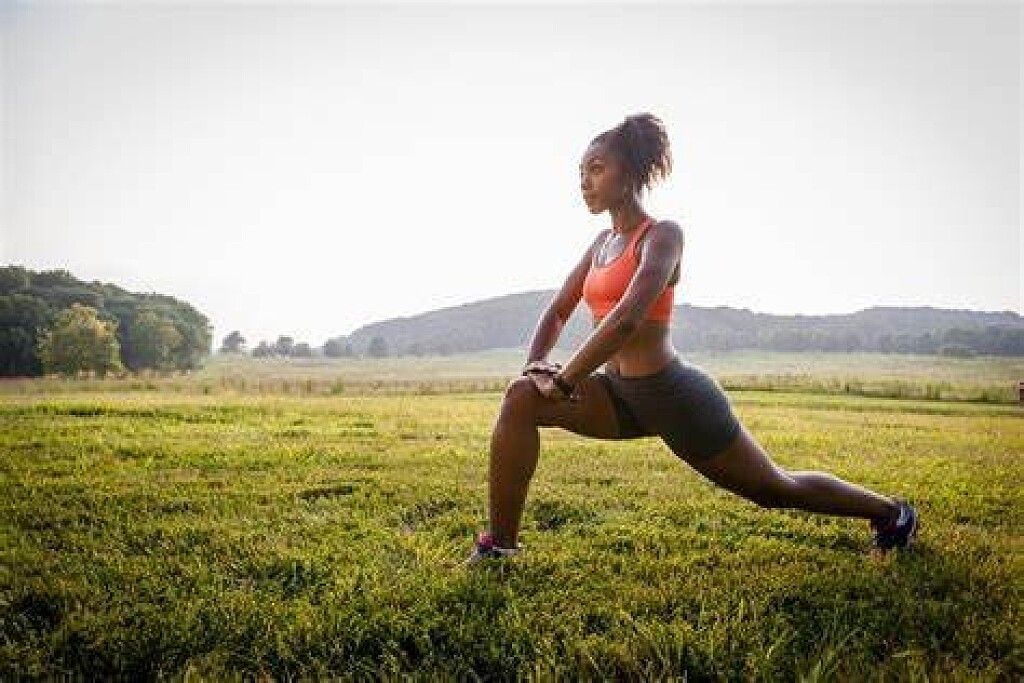
Four single-leg exercises all runners should try
Single-leg exercises will help you become a faster runner, while keeping injuries away.
Looking to spice up your strength-training routine, or hoping to become an injury-free speedster in just a few extra minutes a week? Cue single-leg strength training! We’ve got the perfect exercises to kickstart your single-leg journey to running stardom.
Focusing on one leg at a time, these exercises boost balance, stability and muscular coordination—crucial for efficient running mechanics. By mimicking the natural gait cycle, these exercises build strength in the exact movement patterns used during runs. Adding single-leg strength training to your routine can lead to more powerful strides, better endurance and fewer overuse injuries, making it a game-changer for runners of all levels.
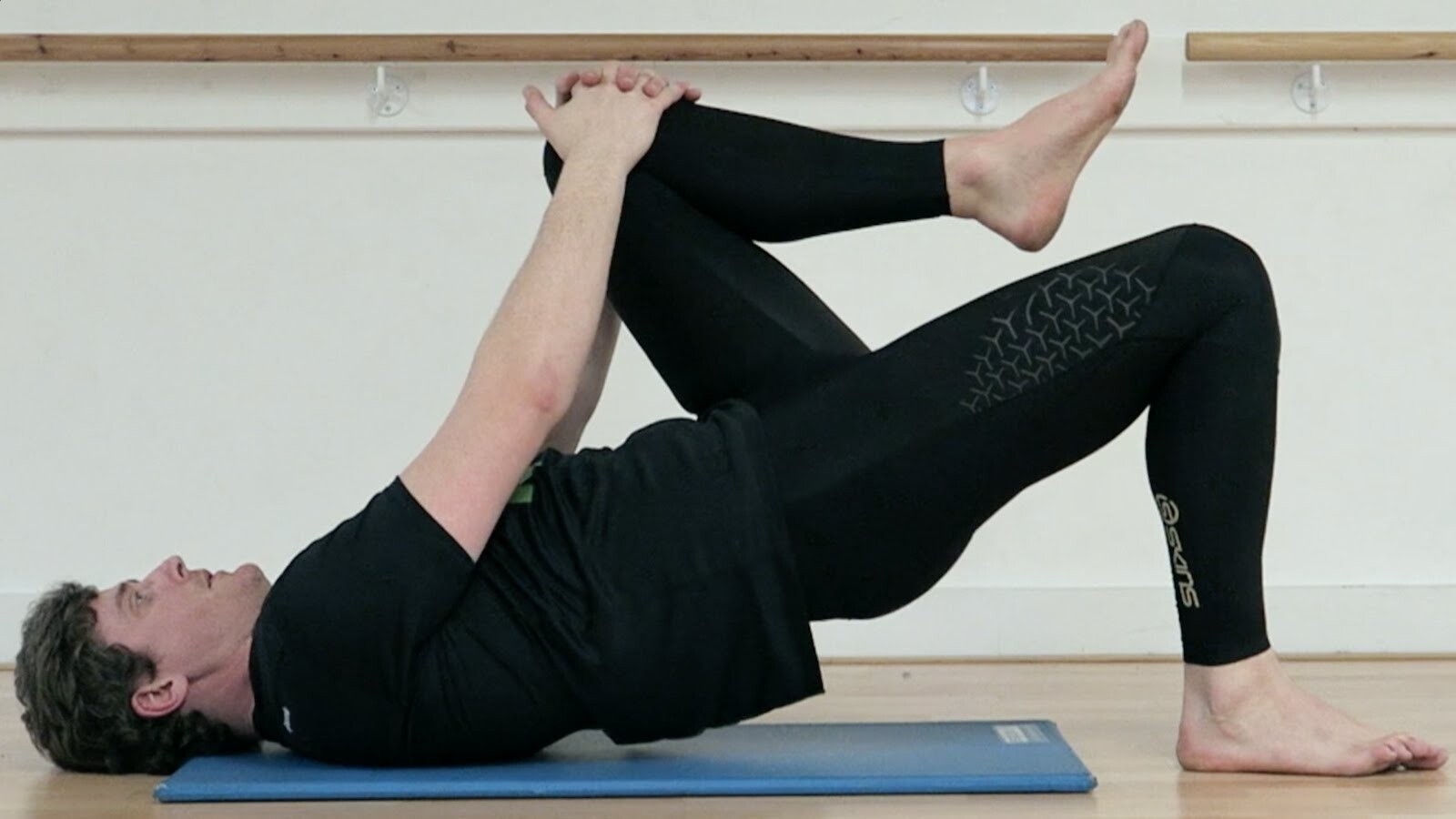
1.-Step-up
What it does: Step-ups target the quads, glutes and calves, building strength and power in the legs. They mimic the climbing motion in trail running, improving uphill running performance.

Stand several inches in front of an elevated platform. Place your right foot on the platform, ensuring your whole foot is on it.
Push through the heel of the elevated foot to lift your body onto the platform. Step down with the left foot, returning to the starting position.
2.- Single-leg glute bridge
What it does: Activates and strengthens glutes and core.
Lie on your back with your knees bent and feet flat on the floor. Lift your right leg, extending it straight out.
Press through your left heel to lift your hips toward the ceiling.
Lower your hips back down, and repeat on the left leg (alternatively, do 10 repeats with the right leg before switching to the left leg; repeat 3 sets).
3.- Hip hike
What it does: Strengthens the muscles around the hips and pelvis, helping to prevent injuries such as iliotibial (IT) band syndrome, runner’s knee and hip pain, which often result from weak or imbalanced hip muscles.
Stand on your right foot, keeping your pelvis in a neutral position.
Drop your left hip so it is several inches below the right side of your pelvic bone. Activate your right hip muscle to lift your left side back to a neutral position. Try imagining that your pelvis is a bowl and you’re tilting one side of the bowl down.
Aim for 20-30 repetitions per leg.
4.- Single-leg deadlifts
What it does: Single-leg deadlifts strengthen the hamstrings, glutes and lower back muscles. They improve balance and proprioception, essential for maintaining stability on uneven terrain.
Stand on one leg with a slight bend in the knee. Hinge at the hips, lowering your torso while extending the other leg behind you.
Keep your back straight and core engaged throughout the movement.
Return to the starting position by engaging your glutes and hamstrings.
Repeat 10 times, then switch legs.
For any of these exercises, moving with control and good form is more important than the number of reps you perform. Do fewer repeats if these exercises are particularly challenging or new to you; add sets once you build strength.
by Keeley Milne
Login to leave a comment
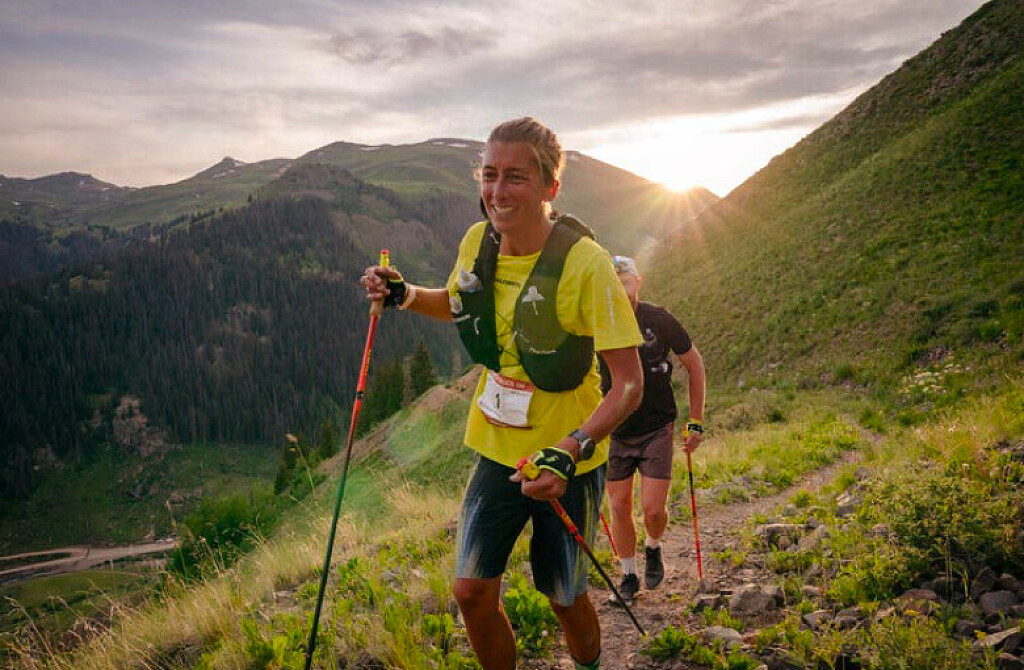
Ludovic Pommeret Wins Hardrock 100 in Course-Record Time Courtney Dauwalter is on course-record pace, trying to win the race for a third consecutive year
This is an ongoing story that will continue to be updated as more runners reach the finish line in Silverton, Colorado.]
Maybe you forgot that Ludovic Pommeret was the 2016 Ultra-Trail du Mont-Blanc champion. Or that he was the fifth-place finisher in Chamonix, France, just last year. Or maybe you thought the 49-year-old Frenchman was past his prime. Either way, he reminded us all he’s at the top of not only his game, but the game at the 2024 Hardrock 100.
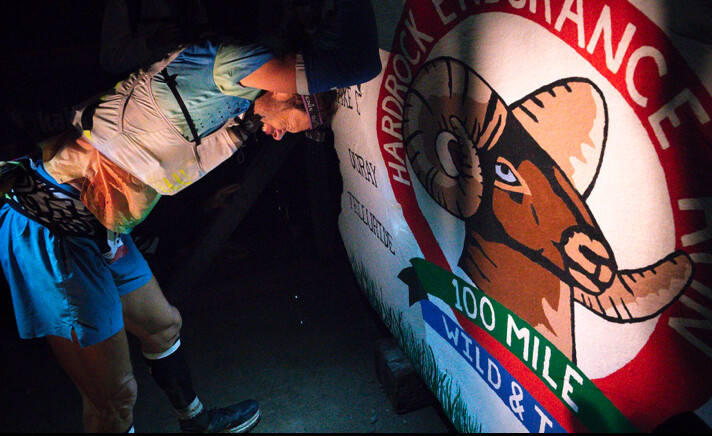
The Hoka-sponsored runner from Prevessin, France, took the lead less than a third of the way into the rugged 100.5-mile clockwise-edition of the course after separating from countryman François D’Haene, the 2021 Hardrock champion and 2022 runner-up, and never looked back. Pommeret progressively chipped away at the course record splits—a course record, mind you, set by none other than Kilian Jornet in 2022—to win this year’s event in 21:33:12, the fastest time in the race’s 33-year history. Jornet set the previous overall course record of 21:36:24, also in this clockwise direction in 2022.
(Pommeret kissed the rock in to complete the course in 21:33:07 at 4:33 A.M. local time, but race officials credited him with the slightly slower official time.)
“It was my dream (to win it),” Pommert told a small collection of fans and media after winning the race at 3:33 A.M. local time. “I was just asking ‘when will there be a nightmare?’ But finally, there was no nightmare. Thanks to my crew. They were amazing. And thanks to all of you. This race is, uh, no word, just so cool and wild and tough.”
On Friday, July 12, 146 lucky runners embarked on the 2024 Hardrock 100. Run in the clockwise direction this year, it was the “easy” way for the course with a staggering 33,000 feet of climbing and an average elevation over 11,000 feet thanks to the steep climbs and more tempered, runnable descents.
Combined with relatively cooperative weather (hot during the day on Friday, but no storms) and a star-studded front of the pack headlined by Courtney Dauwalter and D’Haene, the tight-knit Hardrock 100 community was on course record watch.
And the event delivered—along with a whole lot more.
On the men’s side, the front of the race took a blow before the gun even went off when Zach Miller, last year’s Ultra-Trail du Mont Blanc runner-up, was denied entry after undergoing an emergency appendectomy the weekend before.
Despite the heartbreak of being forced to wait another year to participate in this hallowed event, Miller was very much a presence in the race, most notably for slinging fastnachts (Amish donuts) from his van in Ouray for race supporters and fans.
Such is the spirit of this event, deemed equally as much a run as a race.
The men’s race was further upended when D’Haene, in tears surrounded by his wife, three children, and friends, dropped from the race at the remote Animas Forks aid station (mile 58). An illness from two weeks before proved insurmountable for the challenge ahead. That blew the door wide open for the hard-charging leaders ahead.
Pommeret had built a 45-minute lead over Jason Schlarb, an American runner who lives locally in Durango, and Swiss runner Diego Pazosby, the time he had left the 43.9-mile Ouray aid station amid 85-degree temperatures. His split climbing up and over 12,800-foot Engineer Pass (mile 51.8) extended his lead to more than an hour over Schlarb and nearly 90-minutes at the Animas Forks aid station.
“I thought it was great. To run off the front like he did, and then just hold that all day and get the overall course record is pretty awesome,” Miller said. “When Killian did it, two years ago, it was a, it was a track race between him, Dakota, and François, after they got some separation from Dakota, it was Kilian and and François, all the way to Cunningham Gulch (the mile 91 aid station) and then Kilian just torched it on the way in. So yeah, it was super, super impressive for Ludo to do that. That’s a very impressive effort.”
The sleepy historic mining town of Silverton, Colorado was unusually hectic at 6 A.M. on Friday. In the blue hour before the sun poked over the San Juan Mountains looming above, 146 runners toed the start line of the Hardrock 100, marked by flags from the countries represented by competitors on either side of the dirt road.
With the sound of the gun, runners jogged off the start line—their caution a tacit sign of respect for the monumental challenge of what was to come. As the runners passed through town to the singletrack wending its way up to Miner’s Shrine, group of men headlined by D’Haene, Ludovic Pommeret, Diego Pazos, and Jason Schlarb quickly took command of the front, the bright yellow t-shirt of Courtney Dauwalter was easy to spot just behind, along with Katharina Hartmuth and Camille Bruyas.
If they weren’t awake already, runners certainly were after crossing the ice-cold Mineral Creek two miles into their journey before starting the grunt up to Putnam Basin. At the top of a sunny, grassy Putnam Ridge (mile 7) 1:34 into the race, the lead pack of men remained, while Dauwalter had made a statement solo just three minutes back from the men and four minutes up on Hartmuth.
Dauwalter was smiling and chatty when she reached the KT aid station at mile 11.5, in 2:24 elapsed. By Chapman (mile 18.4), four hours in and 10 minutes under her own course record pace, she was pouring water on her head under the blazing sun. Things were heating up—in more ways than one.
When Pommeret galloped into Telluride (mile 27.7) after 5:37 of elapsed time in the lead, he was right on Jornet’s course record pace. One minute, some fluids and restocking later, and he was gone.
But wait, it was still a close race! D’Haene charged into Telluride just two minutes later and hardly stopped before continuing on through downtown before busting out the poles and starting the steep, steep 5,000-foot climb up Virginius Pass to the iconic Kroger’s Canteen aid station nestled into a notch of rock at the top at 13,000 feet.
Not to be outdone, the women’s race proved equally thrilling coming into Telluride. Bruyas bridged the gap up to Dauwalter, and the two ran into town together in 6:25 elapsed. Both took three minutes in the aid station, although that must have been enough social time for Dauwalter, as she pulled ahead marching up the climb, poles out and head down. A bouncy Bruyas alternated between hiking and jogging just behind.
But time again again, Dauwalter’s long, powerful stride simply proved unparalleled. By Kroger’s (mile 32.7) Dauwalter had reestablished her lead by five minutes over Bruyas and 17 ahead of Hartmuth in third. She’d built that gap to 10 minutes in Ouray at mile 43.9, but she left that aid station in less than two minutes with a stern, serious look on her face. But as she crested Engineer Pass at the golden hour, wildflowers blanketing the vibrant green hillsides basking in the setting sun, she enjoyed a 30-minute lead in the women’s race and was knocking at the door of the men’s podium.
While Dauwalter forged ahead with her unforgiving campaign for a third straight win, the men’s race started to rumble. Like Dauwalter, Pommeret continued to blaze the lead looking strong as he trotted down Engineer to the Animas Forks aid station at mile 57.9 in 11:39 elapsed. He hardly stopped before continuing on to Handies Peak, which at 14,058 feet marks the high point of the race. He had blown the race wide open.
An hour and 15 minutes later, Schlarb, looking a bit more beleaguered, ran into Animas Forks with his pacer, where he sat down and changed his shirt while receiving a pep talk from his partner and son. But he made quick work of the time off feet nonetheless, and three minutes later he was back at it, seven minutes before Pazos appeared.
While D’Haene arrived just 10 minutes later, he did so in tears, holding the hand of his youngest son. After a considerable amount of time sitting in the aid station, surrounded by his family and crew, he called it quits. The lingering effects of an illness from just 10 days before proved too much to overcome as the hardest miles of the race loomed ahead.
While D’Haene pondered his fate, Dauwalter blitzed into Animas Forks in 13:26 with that same look of determination, 16 minutes ahead of course-record pace. She briefly stopped to prepare for the impending night, picking up her good friend and pacer Mike Ambrose to leave the aid station in fourth overall. Bruyas maintained her second place position 30 minutes back, with Hartmuth in third about 20 minutes behind her.
Pommeret continued charging ahead solo, increasing over Schlarb and Pazzos by more than two hours late in the race. When Pommeret passed through the 80.8-mile Pole Creek aid station at 10:44 P.M., it shocked the small group of race officials, media and fans watching the online tracker from the race headquarters in Silverton. Based on that split, it was originally calculated that Pommert could arrive as early as 2:34 A.M.—which would have been a finishing time of 20:34—but he didn’t run the final 20 miles quite as fast as Jornet did in 2022.
Behind him Pazos caught Schlarb to take over second place before Pole Creek and increased the gap to four minutes by the Cunningham aid station (mile 91.2).
Pommeret, who develops training software for air traffic controls in Geneva, Switzerland, didn’t break into ultra-trail running until 2009 when he was 34 years old. He was third in UTMB that year—behind a 20-year-old Jornet, who won for the second straight year—the first of seven top-five finishes in the marquee race in Chamonix. (He was third in 2017 and 2019 and fourth in 2021 and 2023.) He also won the 90-mile TDS race during UTMB week in 2022, and the 170-kilometer Diagonale des Fous race (Grand Raid La Reunion) on Réunion Island in the Indian Ocean in 2021 and placed sixth in his first attempt at the Western States 100 in California in 2022.
Last year, Pommeret placed 13th overall in the Western States 100 and nine weeks later finished fifth at UTMB behind Jim Walmsley, Miller, Germain Grangier, and Mathieu Blanchard.
“We know Ludo is a beast, but to be a beast for so long, for so long is so impressive,” Miller said. “He’s 49, which by all means is a capable age in this endurance world. But I think anytime someone 49 does something like that, it’s gonna turn some heads because that would’ve been a really good performance for anyone. To have the track record he’s had—winning Diagonale des Fous, UTMB and Hardrock, that’s pretty impressive.”
Courtney’s Final
By the time Dauwalter was pushing her way up Handies Peak, she had a smile on her face and engaged in playful conversation with media and spectators on the course. She had good reason to smile: she was feeling good and she had increased her 10-minute lead at Ouray to more than 60 minutes. Dauwalter went through the Burrows aid station (mile 67.9) in less than a minute, while Bruyas came in an hour later and spent four minutes refueling before heading out again.
Three hours after Pommeret had passed through the Pole Creek aid station (mile 80.8), Dauwalter arrived at 1:54 A.M., still in fourth place overall about 50 minutes behind Pazos and Schlarb. She took a little more time there, but was back on her feet in four minutes and running strong again and still on record pace. Bruyas walked in to Pole Creek at 3:08 A.M. in sixth overall, but the gap behind Dauwalter continued to widen.
Dauwalter was in and out of the Maggie aid station (mile 85.1) in two minutes and blazed through the Cunningham aid station (mile 91.2) even faster. The race seemed to be in hand at that point with Bruyas more than 90 minutes behind (in fact, someone updated Wikipedia and declared her the winner not long after Pommeret finished), it was just a matter of how fast she could finish.
Login to leave a comment

How to Keep Tick Bites from Ruining Your Summer
More people in the U.S. are being diagnosed with tick-related diseases every year, but we don't have to let that stop us from getting outdoors.
At home in Brooklyn, New York, my wife and I have discovered ticks on our dog, a pit-boxer mix who lacks the wherewithal to notify us of such an intruder. A few weeks ago, I found a tick—luckily, before it bit—on my arm while visiting Oakland, California. Outside editors have been coming across the disgusting creatures in northern New Mexico, northern Virginia, and coastal Massachusetts.

A decade ago, my little sister contracted Lyme disease in high school, so I have always been paranoid about tick bites. And with growing tick populations, ever more tick-related diseases, and a flurry of headlines about both, I’m sure I’m not alone.

There are hundreds of species of ticks, but the one to be most concerned about in the United States is Ixodes scapularis. The hard-body tick, also known as the blacklegged tick or deer tick, is a vector for a handful of diseases, including Lyme. “It causes far and away the most trouble in terms of health,” says Dr. Peter Krause, a senior research scientist with a specialty in epidemiology and infectious diseases at Yale Medicine.
Ticks are experiencing a largely unwanted glow-up in our current times. The largest vector-borne disease today is still Lyme, says Alison Hinckley, epidemiologist with the Centers for Disease Control and Prevention’s (CDC) Division of Vector-Borne Diseases in Fort Collins, Colorado. She cites a 2021 estimate based on insurance records that shows 476,000 Americans are diagnosed and treated for Lyme disease each year, which can cause headaches, muscle aches, joint swelling, severe fatigue, and even neurological symptoms. (As a point of comparison, only about 2,000 cases of Rocky Mountain spotted fever are reported each year in the U.S.) The reasons for the rise in Lyme range from deer populations to climate change. It’s enough to make me consider trading my hiking boots for gym trainers.
But if we stay inside, the bugs win. So we spoke to some experts to learn why ticks are prospering, what we can do about it, and how to continue to exercise outside safely. The good news? You can take precautions no matter your outdoor sport of choice, and finding a tick doesn’t have to be a five-alarm emergency.
According to the CDC, there are ticks in every state, though different species (carrying different diseases) proliferate in different environments. For instance, the lone star tick, named for a white spot on its back, is often found in Texas, and the brown dog tick thrives in Arizona. Lyme hails from Krause’s home state of Connecticut—it was named for the town of Old Lyme, in the state—but he might also encounter wood ticks and brown dog ticks, which can both transmit Rocky Mountain spotted fever. It’s not very common, he says, but the disease can cause fever, nausea, muscle pain, and a host of other scary symptoms. Despite its name, the lone star tick can also be found in Connecticut (it’s prevalent elsewhere on the East Coast, too, and in the southeastern and south-central United States), and can transmit an infection that leads to Alpha-gal Syndrome, which sometimes causes a permanent allergy to red meat. And that’s just one state. Another tick-borne disease, Babeosis, used to be called “Nantucket fever,” because one of the first cases in America was found on the nearby Massachusetts island in 1969. The Gulf Coast, American dog, and winter ticks transmit different pathogens around the country. You can see what ticks live in your state on the CDC website.
Still, the majority of tick-borne illnesses in the United States are Lyme disease. Ticks have a three-stage life cycle, Krause explains. As larvae, ticks feed on small mammals like mice. If these mammals are carrying Lyme-causing Borrelia bacteria, the tick is now infected and can transmit the disease. The “bloodmeal” (yum!) allows the larvae to molt into its next stage, when it is known as a nymph. At this point, if a nymph feeds on a human, the human will become infected.
Climate change is a major factor in the rise in tick diseases. Ticks need temperate, moist climates—they’ll die if it’s too hot, cold, or dry. Global warming, Krause says, is increasing tick habitat, with more areas becoming warm and humid. Given the southern states are experiencing hot, dry weather, they might have a temporary decrease in tick populations, but that hasn’t yet been shown, he says.
As a point of proof, Krause points to our northern neighbor. Canada was not historically home to Lyme-carrying tick populations, but now sees many cases of Lyme each year, due to both climate change and tick migration. Deer ticks, predictably, travel on the backs of deer and other furry creatures, but they can also attach to birds, Krause says, allowing them to establish a new colony hundreds of miles away.
The second factor that might be fueling today’s tickflation is deer distribution. Adult ticks use deer as all-you-can-eat mating hotels, and a single deer can host hundreds of ticks, Krause explains. “Wherever deer are, there are a lot more ticks than there would be without deer,” he says.
There is some agreement from across the pond. Dr. Lucy Gilbert is a Senior Research Fellow at the University of Glasgow with a focus on ecology, environmental change, and infectious disease ecology, along with evolution and diversity. Her research strongly suggests that the boom in deer distribution and abundance is a greater factor in the proliferation of ticks (though not necessarily Lyme disease) than climate change.
Lyme disease cases surged by 69 percent in 2022, according to the CDC. But even as data collections gets more efficient, there are still likely many cases missed. As STAT News reports, “There are a lot more cases of Lyme disease in the country than are ever reported to the CDC.”
The increase in disease incidence, Gilbert says, may be related to deer and climate change. Additional factors could be better awareness from the public and doctors identifying tick-related diseases, paired with an increase in outdoor recreation.
The simple answer is that activities that put you in tick habitat—long grass or forests with dense shrubs—will be higher risk than sports that don’t. Hiking and running in the woods increase the likelihood that you’ll encounter a tick. Even short grass, like you’d find on a baseball field or soccer pitch, can carry ticks, Krause says. Something on a hard court, like basketball, would be very low-risk.
The CDC recommends staying away from thick vegetation, high grass, and leaf litter and to “walk in the center of trails when hiking,” to avoid brushing up against grass or other plants where ticks might be hanging out.
Riding a bike on a trail might be lower-risk than running it, says Krause, because ticks will have greater difficulty reaching you from the grass, and cyclists are more likely to stay in the center of the trail. Walking may also be safer than trail running, as you’re more likely to avoid brushing any grasses in places with sharp turns, Krause says.
Dr. Kevin DuPrey, a sports medicine specialist, wrote a 2015 article about Lyme disease in athletes for Current Sports Medicine Reports, and he also has firsthand experience. When running cross-country at University of Delaware, Duprey contracted Lyme disease. Before he was diagnosed and treated, he’d experienced mid-race fatigue—to the point of wanting to lie down and nap during the middle of a competition.
Today, as a precaution, DuPrey tries to avoid overgrown trails especially from mid-May through August, when the transmission rate is highest for Lyme and other tick-borne diseases. He’ll check himself for ticks after running, or even mid-run if he’s in an overgrown area.
He recommended bug spray with DEET to repel ticks, but also offered a clothing tip: light-colored threads can make it easier to spot ticks on your body.
The CDC also recommends using EPA-registered insect repellents (like OFF! Active Insect Repellent I), wearing loose-fitting clothing, and treating your gear with permethrin, an insecticide that should not be applied directly to your skin. The organization even has chat bots to help you find effective repellents (they recommend something with DEET, picaridin, IR3535, oil of lemon eucalyptus, para-menthane-diol, or 2-undecanone) and assessing tick bites.
“In general, DEET, if used as prescribed, is safe,” Krause says. You wouldn’t want to apply it to a small child if they’re going to lick their skin, he says, but considers it safe overall when used as directed. If ingested, it can cause serious side-effects including seizures, according to the National Pesticide Information Center. But aside from a chance of skin irritation, it’s safe to apply topically. Permethrin, which is only suitable for application to gear and clothing, has more safety concerns, says Krause.
When you head back inside, Hinckley recommends you check your clothing and gear for ticks. Then, using a mirror, check your entire body, particularly under your arms, in and around ears, inside your belly button, the backs of your knees, your hair, between your legs, and around your waist. Then, take a shower as soon as possible.
Hinckley also encourages good tick hygiene for pets. Preventative products like topicals, chews, and collars can help, and she advises manual pet-downs for ticks after time outside. This isn’t just for your pets sake—ticks can take a pitstop on your four-legged roommate before making their way to you.
It’s understandable that you might freak out if you find a tick, especially if it’s attached. But if you find it early—within 36 to 48 hours—DuPrey say, the chance of Lyme disease transmission is actually very low.
If you’re uncertain how long it’s been since you were bitten, he advises seeking professional medical advice, especially if you were bit during the summer months, find a circular rash, or experience flu-like symptoms. If caught early, both Krause and Duprey says, Lyme and other tick-borne diseases can be treated with antibiotics.
As an expert who’s closely studied ticks and tick-borne diseases, Gilbert praises the media’s coverage in highlighting tick awareness and Lyme disease. But she says there is sometimes “too much scare-mongering and exaggerating the outcomes of Lyme disease.” While noting that some people progress to chronic Lyme disease, which can be debilitating, the vast majority of people who contract Lyme do not develop a long-term illness.
Gilbert has heard about certain tick-removal techniques like applying Vaseline, olive oil, or burning them off your skin, but her advice is simple: “This is not a good idea!” Instead, she recommends gently plucking the tick off of your skin by its mouth, using fine tweezers or tick tools (available at veterinary clinics, pharmacies, and online) which won’t squash the tick. If you do find a tick, take a picture before you dispose of it, so you can show it to a doctor in the event you need to visit one.
For disposal, the CDC recommends putting the bug in alcohol, a sealed bag, tape, or a soon-to-be-flushed toilet. The CDC also has resources that can help you decide what to do after a tick bite.
People with immunocompromising conditions are at greater risk for tick-borne infection, Krause says, and should exercise additional caution. As a historical example, he notes when Babesia (the parasite that causes Babesiosis) took over Nantucket, an editorial in the New England Journal of Medicine advised people who didn’t have a spleen avoid buying land on Nantucket. (The spleen, which helps fight infection, is crucial in warding off Babesiosis.)
The best path forward might be to channel an anti-Robert Frost mentality. If you’re going to choose a path to hike, run, or a bike, choose a well-worn one, and stay in the center of it. And I’m not sure if Frost wrote a poem about this, but check your body, take a shower, and throw all your clothes in the dryer when you get back inside.
by Outside Online
Login to leave a comment
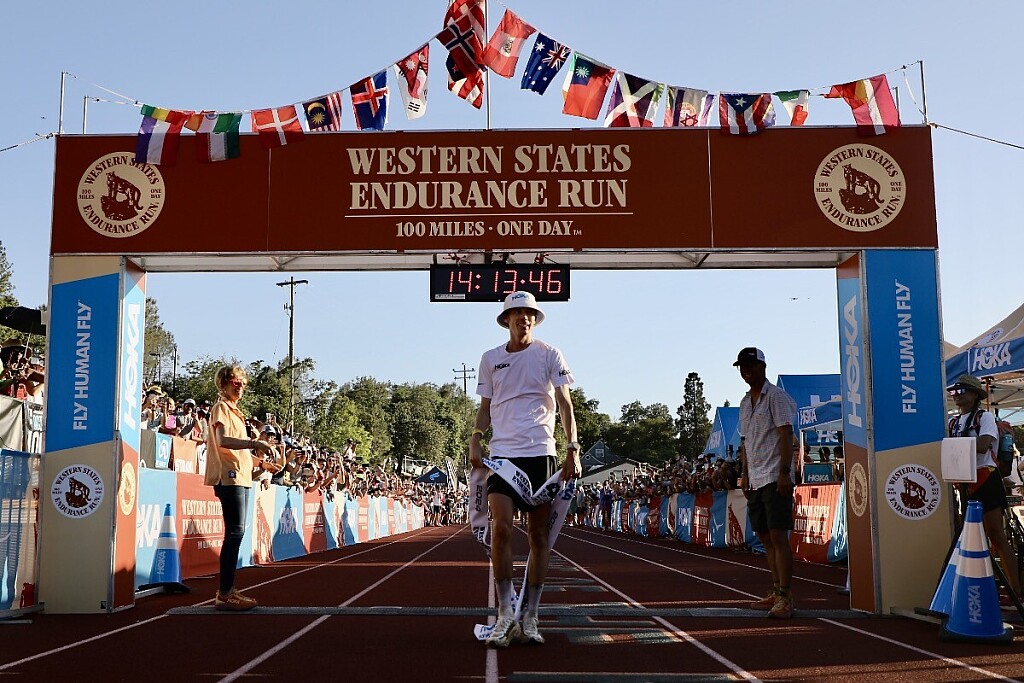
Western States 100: Walmsley Wins a Fourth Time While Schide Rocks the Women’s Field
For hours, Katie Schide (pre-race and post-race interviews) chased ghosts. For hours, Jim Walmsley (pre-race and post-race interviews) and Rod Farvard (post-race interview) chased each other. And in the end, after 100 courageous, gutsy miles at one of the world’s most iconic ultramarathons, it was Schide and Walmsley who won a fast, dramatic 2024 Western States 100.
Schide, an American who lives in France, was on pace to break the course record until late in the race, while Americans Walmsley and Farvard battled throughout most of the second half of the race, alternating the lead as late as mile 85.
Schide’s winning time was 15:46:57, just over 17 minutes behind Courtney Dauwalter’s 2023 course record, almost an hour faster than her own time last year, and the second fastest women’s time ever. Walmsley, meanwhile, won his fourth Western States in 14:13:45, the second fastest time ever — only behind his own record of 14:09:28 that he set in 2019.
Second and third in the men’s race came down to an epic sprint finish on the track between Farvard and Hayden Hawks (pre-race and post-race interviews), who finished in 14:24:15 and 14:24:31, respectively.
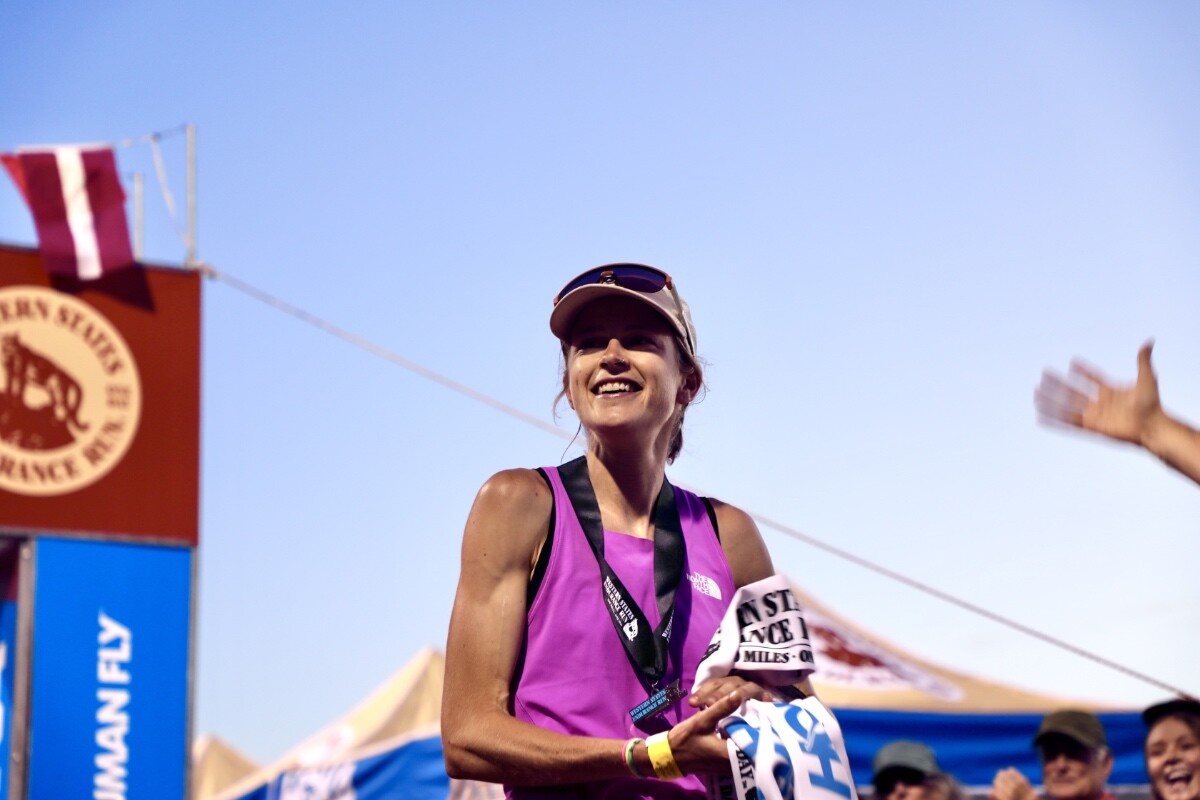
In the women’s race for the podium, Fu-Zhao Xiang (pre-race and post-race interviews) finished second in 16:20:03, and Eszter Csillag (pre-race and post-race interviews) took third for the second time in a row, in 16:42:17.
Both races featured one of the deepest and most competitive fields in race history, with the men’s top five all coming in faster than last year’s winning time, and the women’s top 10 finishing just under 40 minutes faster than last year’s incredibly competitive top 10.
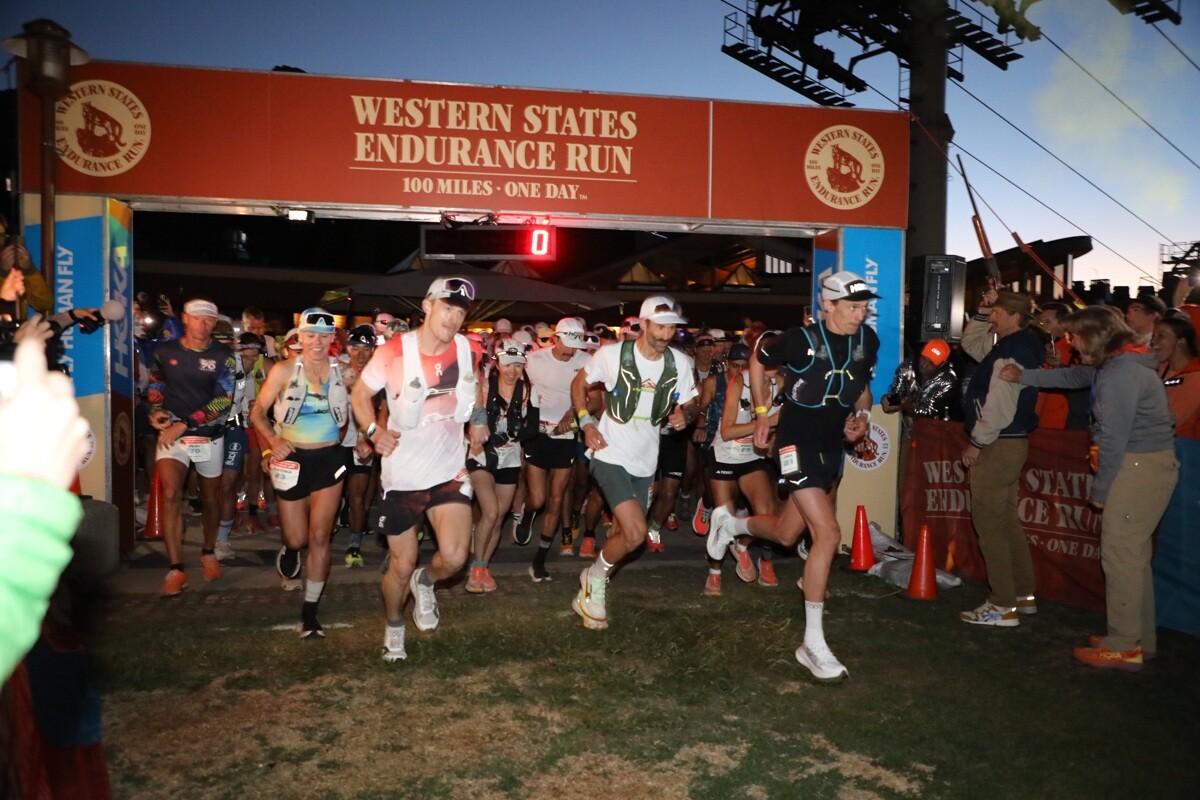
At 5 a.m. on Saturday, June 29, they were all among the 375 runners who began the historic route from Olympic Valley to Auburn, California, traversing 100.2 miles of trail with 18,000 feet of elevation gain and 22,000 feet of loss. After last year’s cool temperatures, the weather at this year’s race was a bit warmer, albeit with a notable lack of snow in the high country. The high temperature in Auburn was in the low 90s Fahrenheit.
A special thanks to HOKA for making our coverage of the Western States 100 possible!
2024 Western States 100 Men’s Race
In his return to the race that propelled him to the heights of global trail running and his first ultra on American soil in three years, Jim Walmsley (pre-race interview) demonstrated why he is, once again, the king of Western States. Before the race, Walmsley exuded a calmness that perhaps eluded him during his first attempts, when he attacked it with an obsessive intensity that led him to famously take a wrong turn and then dropping out in back-to-back years.
“We’ll just roll with what plays out and just kind of see what happens in the race,” he said in his pre-race interview. There’s a marked difference when compared to his remarks from his interview before the 2016 race.
What happened in the race was this: In his fourth Western States, Rod Farvard (post-race interview) had the race of his life to push Walmsley like he’d never been pushed before in his long history with the event.
Farvard — a 28-year-old from Mammoth Lakes, California, who has improved his finish each year at the race, from a DNF in 2021 to 41st place in 2022 to 11th place last year — put himself in a strong position from the start, leading a large pack of runners that included Walmsley at the top of the Escarpment, the 2,500-foot climb in the first four miles of the race. For the next 45-plus miles, Farvard remained in the top 10, part of a chase pack of American Hayden Hawks (pre-race and post-race interviews), Kiwi Dan Jones (pre-race interview), and Chinese runner Guo-Min Deng, among others.
At the Robinson Flat aid station at mile 30 — the symbolic end of the runners’ time in the high country, which features an average elevation of around 7,000 feet — Walmsley, who started the race conspicuously wearing all black, came through in 4:24 looking fast and smooth, now wearing an ice-soaked white shirt. Jones, the 2024 Tarawera 102k champion and fifth-place finisher in his Western States debut last year, and Hawks, who set the course record at February’s Black Canyons 100k after dropping out of last year’s Western States, followed about 90 seconds later. The two runners, frequent training partners, ran together frequently throughout the day, with Hawks often foregoing ice at aid stations.
After the trio of Walmsley, Hawks, and Jones went through Last Chance at mile 43 together, Walmsley put nearly two minutes on them up the climb to Devil’s Thumb. “I was with everybody at the bottom,” he said, according to the race’s official livestream.
About halfway through, at mile 49.5, the order remained the same: Walmsley in the lead with an elapsed time of 6:58, followed by Jones one minute back, Hawks two minutes back, and Farvard just over two and a half minutes back. The rest of the top 10 were last year’s 17th-place finisher Dakota Jones; 2024 Transvulcania Ultramarathon champion Jon Albon (pre-race interview), who is from the U.K. but lives in Norway; 2023 fourth-place finisher Jia-Sheng Shen (China) (pre-race interview); 2023 Canyons 100k champion Cole Watson; Western States specialist Tyler Green (pre-race interview); and Jupiter Carera (Mexico).
Then began a thrilling, chaotic second half of the race — featuring a gripping back-and-forth between Walmsley and Farvard, a wildfire near the course, a two-man river crossing, and a sprint finish on the track.
It all started when Walmsley entered Michigan Bluff at mile 55, again looking calm and in control, changing shirts and getting doused with ice. Farvard came in just behind him and left the aid station first, leading the race for the first time since the first climb up the Escarpment. The same routine took place seven miles later at Foresthill: Walmsley entering first, Farvard leaving first.
For the next 18 miles, the two runners alternated in the lead. By mile 78, they were so close that they were crossing the American River at the same time. Their battle underscored the overall depth of the field at this year’s race: At mile 80, the top five men were within 16 minutes of one another.
Around then, the 15-acre Creek Fire, which started not long before, was visible from the final quarter of the course and crews were temporarily not permitted to travel to the Green Gate aid station at mile 80 because the route to it passed close to the fire. Eventually, a reroute was established for crews to get to Green Gate and, later, after the wildfire was controlled, the regular route was reopened.
At Green Gate, Farvard came through in the lead, with Walmsley four minutes back and looking like he was hurting. It was then, perhaps, that the thought entered people’s minds: Could Farvard really take down the champ?
But Jim Walmsley is Jim Walmsley for a reason, and he again proved why he is among the world’s best. Against the ropes, facing one of his first real challenges in the race that shaped him, he delivered, entering the next aid station, Auburn Lake Trails at mile 85, more than a minute earlier than Farvard. He had made up five minutes in five miles.
Walmsley never trailed again, increasing his lead to 11 minutes by the Pointed Rocks aid station at mile 94 and then picking up his crew, including his wife, Jess Brazeau, at Robie Point to run the final mile with him. He entered the track at Placer High School to loud cheers, his loping stride still looking smooth, stopping a few steps short of the tape to wave to the crowd and raise his arms in triumph. He had done it again.
Behind him, Farvard was fading but determined to cap an extraordinary race with a second-place finish. Hawks, who had made up five minutes on Farvard in the couple miles between Pointed Rocks and Robie Point, was on the hunt, and by the time he stepped on the track, Farvard was within sight.
It was then that fans were treated to one of the most unique sights in all of ultrarunning: After 100 miles of racing, two men were sprinting against each other on a track. In the end, Farvard’s lead held, and he finished 16 seconds ahead of Hawks. He collapsed at the finish line — a fitting end to an epic performance.
Dan Jones ended a strong race with a fourth-place finish in 14:32:29, with Caleb Olson capping an impressive second half of the race — from 11th at mile 53 to fifth in 14:40:12 at the finish. All five men ran a time that would have won the race last year.
Behind Olson came Jon Albon, running 14:57:01 in his 100-mile running-race debut, followed by the surgical Tyler Green, who finished in seventh for his fourth straight top 10 finish at the race. Green’s time of 15:05:39 also marked a new men’s masters course record, breaking the 2013 Mike Morton record of 15:45:21.
Rounding out the top 10 were Jia-Sheng Shen in eighth with a time of 15:09:49, Jonathan Rea in ninth who methodically moved his way up during the last 60 miles to finish in 15:13:10; and Chris Myers in 10th in 15:18:25.
2024 Western States 100 Women’s Race
Through the high country, into and out of the canyons, and along the river of the world’s oldest 100-mile trail race, Katie Schide (pre-race and post-race interviews) raced only the ghosts of the clock and history. Smiling throughout, she seemed unaffected by the solitude and the enormity of the possibility that lay before her: to attempt to break the course record of one of the world’s most iconic trail races.
Schide, an American who lives in France, came into the race as the clear favorite, and for good reason: She finished second last year, breaking Ellie Greenwood’s previously untouchable 2012 course record by more than three minutes and losing to only Courtney Dauwalter, who broke Greenwood’s record by an astounding 78 minutes on her way to a historic Western States-Hardrock 100-UTMB triple win. Schide, winner of the 2022 UTMB and 2023 Diagonale des Fous 100 Mile, spent the last two-and-a-half months in Flagstaff, Arizona, training for Western States, winning this year’s Canyons 100k in an impressive tune-up and putting in a monster training block.
In her pre-race interview, Schide said that she had thought about ways to improve her race from last year, which perhaps should have been the first warning to her competition. The second, then, was her immediate separation from the women’s chase pack: She summited the Escarpment, a 2,500-foot climb during the first four miles, in first place and never looked back. By the first aid station — Lyon Ridge at 10 miles — she was already 12 minutes under course record pace, and by Robinson Flat at mile 30, she was 21 minutes ahead of second-place Emily Hawgood (pre-race interview), from Zimbabwe but living in the U.S.
The lead only ballooned from there. By Dusty Corners at mile 38, Schide was an incredible 26 minutes under course record pace, and though she lost a few minutes from that pace by the time she climbed up to Michigan Bluff at mile 55, her smile had not waned even slightly. She smoothly entered the iconic aid station, doused herself with ice, changed shirts, and was soon on her way. She never sat down.
Twenty-seven minutes behind her was Hawgood, looking to build on back-to-back fifth-place finishes. Eszter Csillag (pre-race and post-race interviews), a Hungarian who lives in Hong Kong, followed soon after, in the same third spot she finished in last year.
After them ran a dense pack of women: Only 16 minutes separated Hawgood in second from Lotti Brinks in 11th.
At the halfway point, the top 10 were Schide, 33 minutes up in an elapsed time of 7:26; Csillag; Hawgood; Chinese runner Fu-Zhao Xiang (pre-race and post-race interviews), the fourth-place finisher at last year’s UTMB; Lin Chen (China); American Heather Jackson, a versatile former triathlete who recently finished fifth at a competitive 200-mile gravel bike race; ultrarunning veteran Ida Nilsson (pre-race interview), a Swede living in Norway; Becca Windell, second in this year’s Black Canyon 100k; 2023 CCC winner Yngvild Kaspersen (Norway); and Rachel Drake, running her 100-mile debut.
Schide, easily identifiable in her pink shirt, maintained her large lead throughout the second half of the race, remaining calm, controlled, and upbeat throughout the tough canyon miles. By Foresthill at mile 62, she was 19 minutes ahead of course record pace and 48 minutes ahead of the second-place Xiang. Schide’s stride still looked smooth as she waved to fans and even high-fived a cameraman.
Schide’s aggressive pace eventually slowed — by Green Gate at mile 80, her lead on the course record had dissipated — but her spirits did not. After a quick sponge bath at Auburn Lake Trails aid station at mile 85, she fell behind course-record pace for the first time all day, only 15 miles remained until the finish.
Schide entered the track a couple of hours later, running with her crew and no headlamp. She would finish before dark. She stopped for a hug on the final straightaway and lifted the tape with, of course, a smile.
Xiang had methodically pulled away from Hawgood and Csillag during an incredibly strong second half to win the battle for second. Fu-Zhao Xiang finished in 16:20:03 for the third fastest time in race history. Chen, who dropped out at mile 78, was one of the few elite runners who had a DNF on this day, which was categorized by a lack of attrition in both the women’s and men’s elite races.
Eszter Csillag came in about 22 minutes behind Xiang in 16:42:17 for her second consecutive third-place finish, a 30-minute improvement from last year — a statistic that perhaps exemplifies the speed of this year’s race better than any other.
The battle for fourth and fifth was nearly as close as Farvard and Hawks’s race for second in the men’s race a couple of hours earlier.
At Pointed Rocks at mile 94, Hawgood led by barely two minutes, running hard and straight through the aid station. Kaspersen, meanwhile, was drinking Coke and made up almost a minute by Robie Point.
Emily Hawgood’s lead ultimately held, and she finished fourth in 16:48:43 to improve her finish from prior years by one spot. Yngvild Kaspersen was less than two minutes back in 16:50:39. Ida Nilsson capped a strong day to finish sixth in 16:56:52 and break Ragna Debats’s masters course record by almost 45 minutes. That means the top six women all finished in under 17 hours in a race that had only ever had three women finish under that mark — and two of them, Dauwalter and Schide, were last year.
The rest of the top 10 were Heather Jackson in seventh in 17:16:43, and, in close succession, Rachel Drake in 17:28:35, Priscilla Forgie (Canada) in 17:30:24, and Leah Yingling in 17:33:54.
The top 10 women were all faster than the 12th-fastest time in race history going into the day.
by Robbie Harms
Login to leave a comment

Hardrock 100
100-mile run with 33,050 feet of climb and 33,050 feet of descent for a total elevation change of 66,100 feet with an average elevation of 11,186 feet - low point 7,680 feet (Ouray) and high point 14,048 feet (Handies Peak). The run starts and ends in Silverton, Colorado and travels through the towns of Telluride, Ouray, and the ghost town...
more...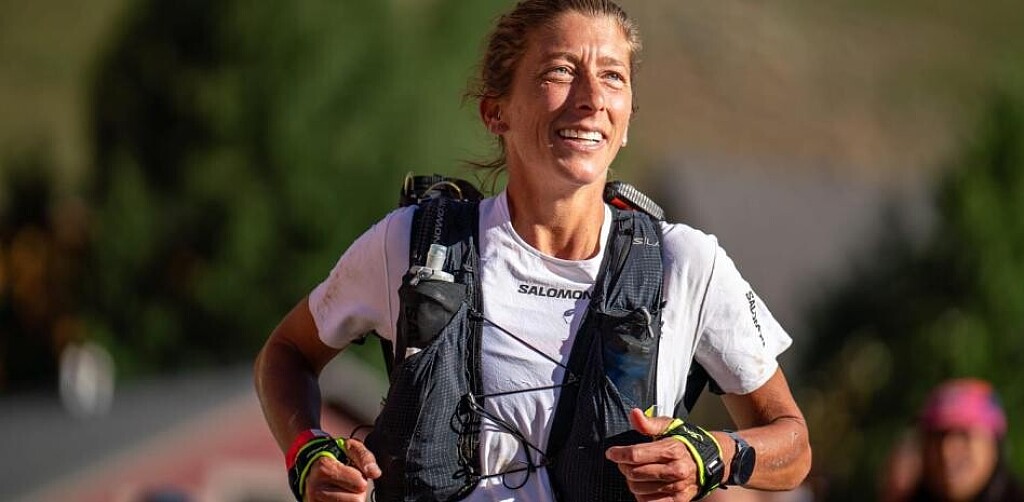
The queen of ultradistance Courtney Dauwalter is set to defend her Hardrock 100 crown
Courtney Dauwalter , the queen of ultra-distance running, will once again put on trail running shoes this Friday to compete in the Hardrock 100 , the prestigious 165-kilometer mountain race with 10,000 meters of positive elevation gain that takes place in the San Juan Mountains in Colorado, United States.
The American runner will try to defend the title she won in 2023, when she won the race with a record time of 26h14:08 , although this year, unlike last year, the race will be run clockwise.
"It's a great race, very tough and difficult. I'm coming back because all my participations here have had very tough moments, and I hope to be able to soften those moments a bit and finish the race without so many difficulties," said Dauwalter in an interview with iRunFar.
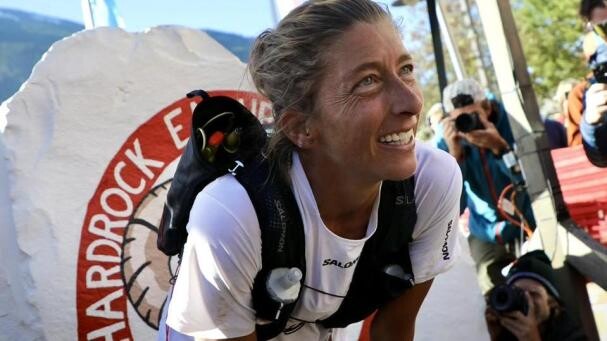
The reigning Transgrancanaria and Mt. Fuji 100 champion will face her main opponents in Germany's Katharina Hartmuth and France's Camille Bruyas , second in the UTMB Mont-Blanc in 2023 and 2021, respectively.
On the men's side, the main figure will be the French runner François D'Haene , who wants to repeat his victory from 2021 and, why not, beat the circuit record belonging to the Spaniard Kilian Jornet (21h36:24).
American Zach Miller is on the roster, although he is likely to miss the event due to recent appendix surgery.
The Hardrock 100 begins and ends in the town of Silverton and passes through some of the most spectacular mountain scenery in the United States, home to elk, bears and cougars. The highest point is Handies Peak, at 4,200 meters.
The race will start on Friday 12th July at 6am (2pm in Spain) and can be followed live on YouTube .
by Matias Camenforte
Login to leave a comment
Hardrock 100
100-mile run with 33,050 feet of climb and 33,050 feet of descent for a total elevation change of 66,100 feet with an average elevation of 11,186 feet - low point 7,680 feet (Ouray) and high point 14,048 feet (Handies Peak). The run starts and ends in Silverton, Colorado and travels through the towns of Telluride, Ouray, and the ghost town...
more...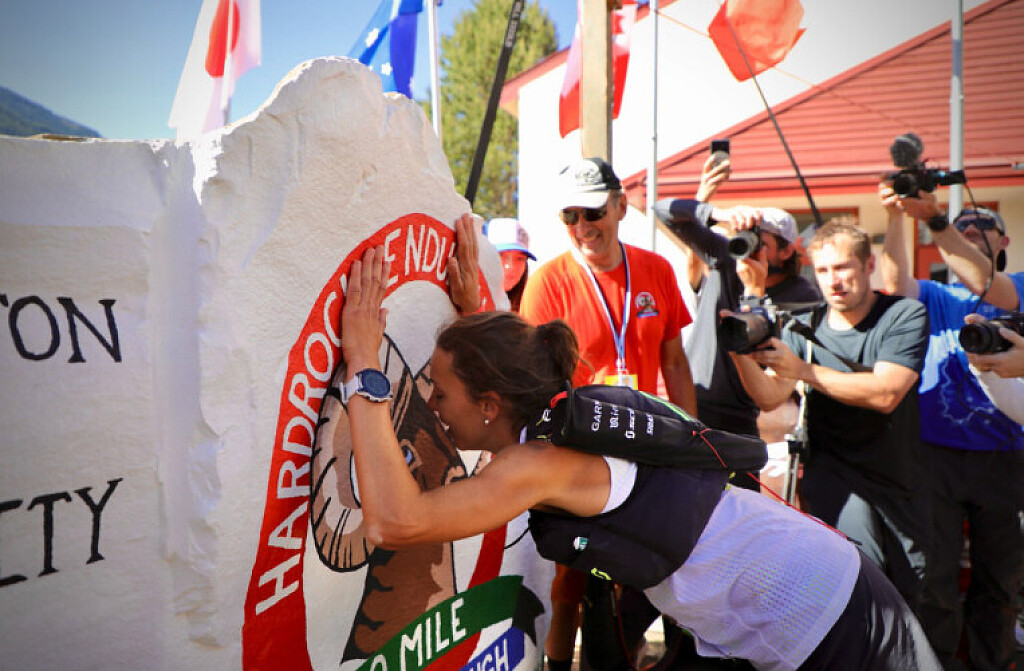
The Western States 100 and Hardrock 100: A Metaphorical Comparison
With the Western States 100 taking place last weekend and Hardrock 100 taking place next weekend, this is the time of year when all ultrarunners look to California and Colorado.
I’ve been privileged to run both of these iconic events, and in recent years, I have traveled to Auburn, California, and Silverton, Colorado, each year to spectate and volunteer. I’ve had the opportunity to observe and experience what makes these events so different from each other and yet, on some level, very much the same.
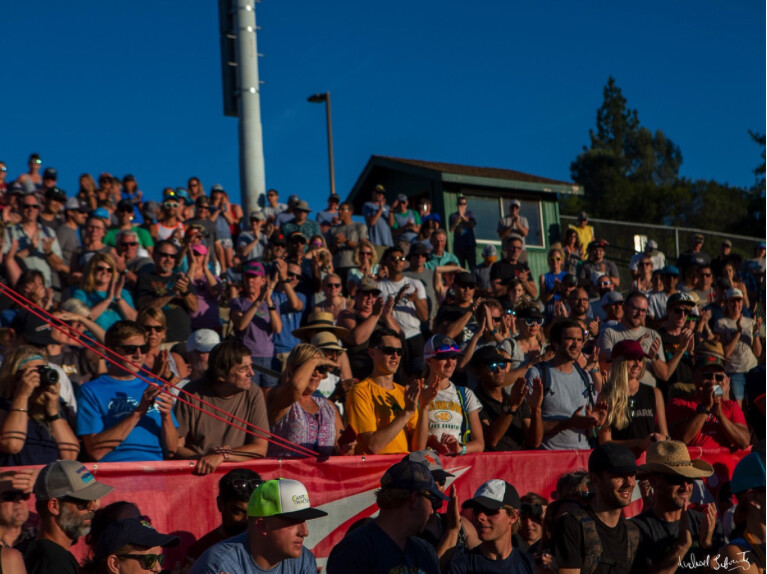
Vibes
I like to compare the vibes of Hardrock and Western States to rock concerts.
Hardrock is that concert that takes place in a modest venue with a few thousand seats, think the Beacon Theatre in New York City. Think of the last concert you attended that brought you close to the artist and allowed you to interact socially with other concertgoers. That’s Hardrock.
Western States, on the other hand, is the massive stadium show, think Kenny Chesney at Gillette Stadium in Massachusetts. These concerts take on a festival atmosphere and bring thousands of people out long before the concert is scheduled to start. Loud, chaotic, and celebratory, Western States shares the vibe with these large stadium shows.
Track Versus Cross Country
In my previous professional life as a high school principal I attended more than my fair share of track and cross-country meets. Over the years I made some observations that remind me of the difference between Western States and Hardrock.
Track meets are slick and fancy. Track athletes wear crisp kits and sleek shoes. Western States is track.
Cross-country meets are loose and in the woods. Cross-country runners are a ragtag group with unkempt hair and oversized kits. They know how to run they just do it a little differently. Hardrock is cross country.
Pace
Hardrock weekend moves at a pace akin to a small town. Sure, the runners up front need to move fast, and those at the back may feel the pressure of meeting the cutoffs, but by and large, the race moves at a laid-back pace. Runners spend time regrouping at aid stations, volunteers linger to chat and share stories, and race officials and veterans of the event make everyone feel welcome and embraced by the community.
The pace at Western States is more like New York City during rush hour. Intensely competitive at the front of the pack and challenging with tight cutoffs at the back, there is little time for dilly-dallying for anyone. It’s an intense, fast-moving pace, the rewards of which are a shiny belt buckle and big city memories to last a lifetime.
Community
Both events celebrate and embrace community. In fact, they both endeavor to nurture a sense of community in the many activities surrounding their events. Additionally, the phrases “Western States family” and “Hardrock family” are part of the language around each race.
As you might expect, Hardrock is a close-knit family — the kind where many still live in the same area, get together often, and share many common characteristics. The Western States family is a massive extended family that is spread around the world, getting together only occasionally and with disparate goals, attitudes, and temperaments. Both families share common connections but do so in very different ways.
Regardless of their differences in vibes, type of race, pace, and community, both Western States and Hardrock have earned their places on the top step of North American ultrarunning culture. In spite of, or perhaps because of, their unique characteristics, these two events have been able to stand the test of time, doing so in their own unique ways and on their own independent terms. As a result, they continue to be the two of the most sought-after events in American trail running and ultrarunning.
by I Run Far
Login to leave a comment
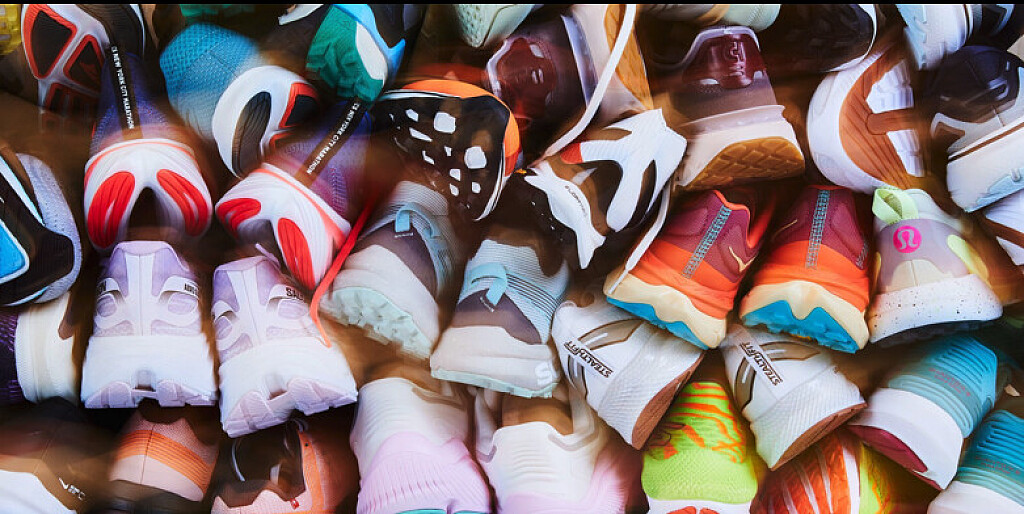
Research Confirms Rotating Running Shoes Could Save You From Injuries—Here’s How Your Body Benefits
Having a shoe collection is not a frivolous obsession. Here’s how you could possibly benefit from having more than one pair of running shoes.
Once you’ve found yourself the perfect pair—you know the ones you want to spend every run in—it’s kind of hard to give them up. However, doing so could actually work to your advantage by keeping you healthy and strong for each run.
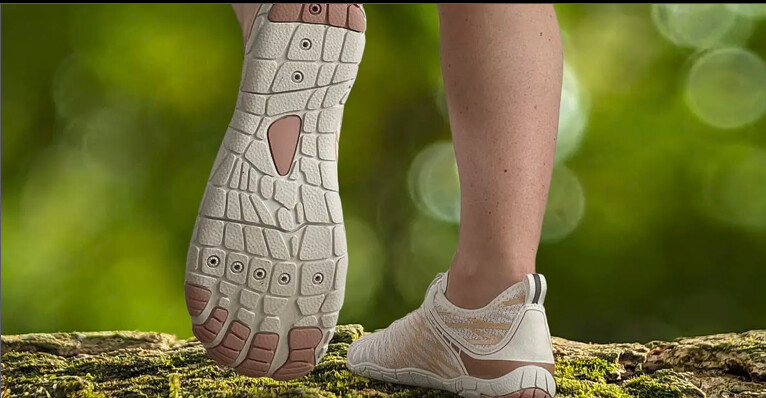
“These days, a lot of people use one shoe for everything, and that puts you at risk for injury,” says Priya Parthasarathy, D.P.M., spokesperson for the American Podiatric Medical Association and partner at USFAS in Silver Springs, Maryland. Running, walking, and weightlifting all require different demands of your feet, so you’ll want to wear different shoes for these activities, she says. Plus, wearing one shoe for all of your workouts can increase the wear on the shoe, so they won’t last as long as you want.
That’s where having a running shoe rotation becomes very helpful. Research and experts back up this idea, and it’s especially helpful to have a shoe rotation if you’re training for a long distance race like a marathon. Here’s what you need to know in order to build a running shoe rotation that meets all of your needs.
Why do you need a running shoe rotation?
Naturally, running places stress on multiple parts of the body, including muscles, bones, and tendons, which can be good for you provided the stress is not too large or frequent that you can’t recover fast enough, says Andrea Myers, D.P.T., who owns a sports performance practice located in Westport and Ridgefield, Connecticut.
”We know from many research studies that different running shoe properties expose the body to different stressors,” Myers says. “We know that minimalist shoes—those with a low or zero drop, flexible sole, and minimal to no stability features—increase the demands on the ankle, foot, and calf muscles, as compared to shoes with a higher drop, which increase the demands at the knee but reduces the demands at the foot and ankle.”
A carefully crafted shoe rotation can possibly offset some of these demands.
To identify characteristics that might contribute to the development of running related injury, a 2013 research study published in the Scandinavian Journal of Medicine and Science in Sport followed 264 runners over the course of 22 weeks. The study found runners who used more than one shoe, a term which they coined “parallel use,” had a 39 percent lower risk of injury. This suggests having more than one pair of running shoes can help you ward off injury.
The reasoning behind it, if you have a cushioned shoe and you let a shoe sit for 24 to 48 hours, the foam in the shoe can de-compress before your next run, says Parthasarathy.
How many shoes do you need in your rotation?
If you’re just starting out, you don’t have to worry about rotating your running shoes, instead, invest in one good pair of running shoes. Parthasarathy recommends finding a shoe with a flexible toe box, firm heel cup, and removable insoles. The one shoe should overall be comfortable to you.
The seasoned recreational runner who runs three to four miles, three days per week, does not need a rotation of four different shoes either, says Myers. Instead, Myers recommends two pairs of shoes that you can rotate every run.
For marathon runners, racking up 35 to 60-plus miles a week with a variety of workouts (easy, long, and speed runs) on their calendars, Myers recommends keeping a shoe rotation of three to four pairs of shoes. This can include one to two pairs of shoes for easy runs and speed workouts, and one pair of shoes for long runs that can handle a variety of different paces. Your long run shoes can also double as a performance trainer, or a lightweight daily trainer, Myers says.
What types of running shoes can you add to your running shoe rotation?
Here are three different types of shoes you can consider adding to your collection, according to Myers:
Daily Trainer: These shoes are primarily for easy running, but can also handle different paces. you can use them to run strides or up-tempo long runs. Good examples of daily trainers include: the Brooks Ghost 15, Saucony Ride 17 or Guide 17, Nike Vomero 17, or Hoka Clifton 9.
Performance Trainer: Best for speed workouts, performance trainers are lightweight shoes that perform best at faster paces and can double as daily trainers as long as you feel comfortable in wearing them for longer distances. Plus, they tend to be more affordable than top-end race performance shoes. A few styles to consider include: Saucony Endorphin Speed 4, Topo Cyclone 2, Mizuno Wave Rebellion Flash 2, and Brooks Hyperion Max.
Racing Shoes: Commonly referred to now as super shoes, racing shoes tend to be more expensive and less durable, considering some shoes have a life expectancy of about 100 to 150 miles. This is why you shouldn’t do the bulk of your training in super shoes, instead you should take them out for a test run or two to ensure they’ll meet all your comfort needs on race day. Saucony Kinvara Pro, Asics Superblast, Adidas Adizero Prime x 2 Strung, and On Cloudeclipse are a few super shoes to consider.
How to find the right shoe to add to your rotation?
Before adding any a shoe to your rotation, you should consider if the shoe is a good fit for your foot arch (flat arch, high arch, or medium arch), running gait (neutral, pronated, or supinated), shoe size, preferred comfort level, and the terrain (treadmill, pavement, or trail) you’ll run on.
“Building a running shoe rotation, especially if you run on different terrains, is important because the shoe wears in different ways,” says Parthasarathy. Meaning where you run will influence some of the characteristics you look for in a shoe. For example, running on hard pavement will require increased cushioning, whereas trail running calls for more stability and traction, she explains.
If you want to change the type of shoe you’re training in, then the recommendation is to ease into the number of miles you try in the new shoe (i.e., don’t go for a long run in a drastically different shoe).
You may experience some soreness if you transition to a different type of shoe, however, you shouldn't experience pain that lasts for days or interferes with your normal running gait pattern on subsequent runs, Myers adds.
Lastly, you’ll want to get rid of your running shoes every so often due to wear and tear that may go unnoticed. ”We recommend you replace your running shoes, especially if you’re doing long distance running every six months or 300 to 500 miles, depending on how hard you are on them,” says Parthasarathy. If you can fold or bend your shoes in half, it’s often an indication the structure of the shoe and cushioning has been broken down, and it’s time for a change, she adds. As mentioned, the new high performance racing shoes tend to have a shorter shelf life when it comes to mileage.
Who should avoid rotating running shoes?
There’s no need to rotate your running shoes if you’re only running a couple of times a week because you’re likely not racking up enough miles to overstress your tissues, says Myers.
Also, don’t rotate running shoes if you have specific biomechanical or orthopedic needs due to injury, foot structure or shape. For example, runners who have arthritis that affects the big toe, a.k.a, hallux limitus, should prioritize running in shoes that can address this condition, which there are few of, Myers says.
by Runner’s World
Login to leave a comment
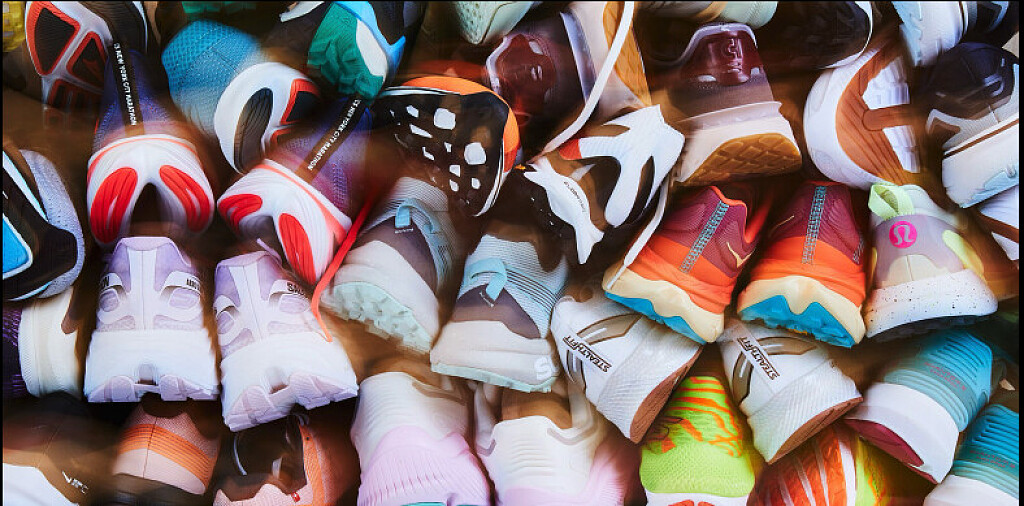
Research Confirms Rotating Running Shoes Could Save You From Injuries—Here’s How Your Body Benefits
Having a shoe collection is not a frivolous obsession. Here’s how you could possibly benefit from having more than one pair of running shoes.
Once you’ve found yourself the perfect pair—you know the ones you want to spend every run in—it’s kind of hard to give them up. However, doing so could actually work to your advantage by keeping you healthy and strong for each run.
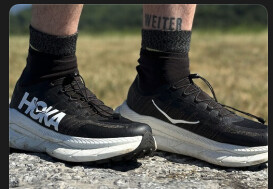
“These days, a lot of people use one shoe for everything, and that puts you at risk for injury,” says Priya Parthasarathy, D.P.M., spokesperson for the American Podiatric Medical Association and partner at USFAS in Silver Springs, Maryland. Running, walking, and weightlifting all require different demands of your feet, so you’ll want to wear different shoes for these activities, she says. Plus, wearing one shoe for all of your workouts can increase the wear on the shoe, so they won’t last as long as you want.
That’s where having a running shoe rotation becomes very helpful. Research and experts back up this idea, and it’s especially helpful to have a shoe rotation if you’re training for a long distance race like a marathon. Here’s what you need to know in order to build a running shoe rotation that meets all of your needs.
Why do you need a running shoe rotation?
Naturally, running places stress on multiple parts of the body, including muscles, bones, and tendons, which can be good for you provided the stress is not too large or frequent that you can’t recover fast enough, says Andrea Myers, D.P.T., who owns a sports performance practice located in Westport and Ridgefield, Connecticut.
”We know from many research studies that different running shoe properties expose the body to different stressors,” Myers says. “We know that minimalist shoes—those with a low or zero drop, flexible sole, and minimal to no stability features—increase the demands on the ankle, foot, and calf muscles, as compared to shoes with a higher drop, which increase the demands at the knee but reduces the demands at the foot and ankle.”
A carefully crafted shoe rotation can possibly offset some of these demands.
To identify characteristics that might contribute to the development of running related injury, a 2013 research study published in the Scandinavian Journal of Medicine and Science in Sport followed 264 runners over the course of 22 weeks. The study found runners who used more than one shoe, a term which they coined “parallel use,” had a 39 percent lower risk of injury. This suggests having more than one pair of running shoes can help you ward off injury.
The reasoning behind it, if you have a cushioned shoe and you let a shoe sit for 24 to 48 hours, the foam in the shoe can de-compress before your next run, says Parthasarathy.
How many shoes do you need in your rotation?
If you’re just starting out, you don’t have to worry about rotating your running shoes, instead, invest in one good pair of running shoes. Parthasarathy recommends finding a shoe with a flexible toe box, firm heel cup, and removable insoles. The one shoe should overall be comfortable to you.
The seasoned recreational runner who runs three to four miles, three days per week, does not need a rotation of four different shoes either, says Myers. Instead, Myers recommends two pairs of shoes that you can rotate every run.
For marathon runners, racking up 35 to 60-plus miles a week with a variety of workouts (easy, long, and speed runs) on their calendars, Myers recommends keeping a shoe rotation of three to four pairs of shoes. This can include one to two pairs of shoes for easy runs and speed workouts, and one pair of shoes for long runs that can handle a variety of different paces. Your long run shoes can also double as a performance trainer, or a lightweight daily trainer, Myers says.
What types of running shoes can you add to your running shoe rotation?
Here are three different types of shoes you can consider adding to your collection, according to Myers:
Daily Trainer: These shoes are primarily for easy running, but can also handle different paces. you can use them to run strides or up-tempo long runs. Good examples of daily trainers include: the Brooks Ghost 15, Saucony Ride 17 or Guide 17, Nike Vomero 17, or Hoka Clifton 9.
Performance Trainer: Best for speed workouts, performance trainers are lightweight shoes that perform best at faster paces and can double as daily trainers as long as you feel comfortable in wearing them for longer distances. Plus, they tend to be more affordable than top-end race performance shoes. A few styles to consider include: Saucony Endorphin Speed 4, Topo Cyclone 2, Mizuno Wave Rebellion Flash 2, and Brooks Hyperion Max.
Racing Shoes: Commonly referred to now as super shoes, racing shoes tend to be more expensive and less durable, considering some shoes have a life expectancy of about 100 to 150 miles. This is why you shouldn’t do the bulk of your training in super shoes, instead you should take them out for a test run or two to ensure they’ll meet all your comfort needs on race day. Saucony Kinvara Pro, Asics Superblast, Adidas Adizero Prime x 2 Strung, and On Cloudeclipse are a few super shoes to consider.
How to find the right shoe to add to your rotation?
Before adding any a shoe to your rotation, you should consider if the shoe is a good fit for your foot arch (flat arch, high arch, or medium arch), running gait (neutral, pronated, or supinated), shoe size, preferred comfort level, and the terrain (treadmill, pavement, or trail) you’ll run on.
“Building a running shoe rotation, especially if you run on different terrains, is important because the shoe wears in different ways,” says Parthasarathy. Meaning where you run will influence some of the characteristics you look for in a shoe. For example, running on hard pavement will require increased cushioning, whereas trail running calls for more stability and traction, she explains.
If you want to change the type of shoe you’re training in, then the recommendation is to ease into the number of miles you try in the new shoe (i.e., don’t go for a long run in a drastically different shoe).
You may experience some soreness if you transition to a different type of shoe, however, you shouldn't experience pain that lasts for days or interferes with your normal running gait pattern on subsequent runs, Myers adds.
Lastly, you’ll want to get rid of your running shoes every so often due to wear and tear that may go unnoticed. ”We recommend you replace your running shoes, especially if you’re doing long distance running every six months or 300 to 500 miles, depending on how hard you are on them,” says Parthasarathy. If you can fold or bend your shoes in half, it’s often an indication the structure of the shoe and cushioning has been broken down, and it’s time for a change, she adds. As mentioned, the new high performance racing shoes tend to have a shorter shelf life when it comes to mileage.
Who should avoid rotating running shoes?
There’s no need to rotate your running shoes if you’re only running a couple of times a week because you’re likely not racking up enough miles to overstress your tissues, says Myers.
Also, don’t rotate running shoes if you have specific biomechanical or orthopedic needs due to injury, foot structure or shape. For example, runners who have arthritis that affects the big toe, a.k.a, hallux limitus, should prioritize running in shoes that can address this condition, which there are few of, Myers says.
Login to leave a comment
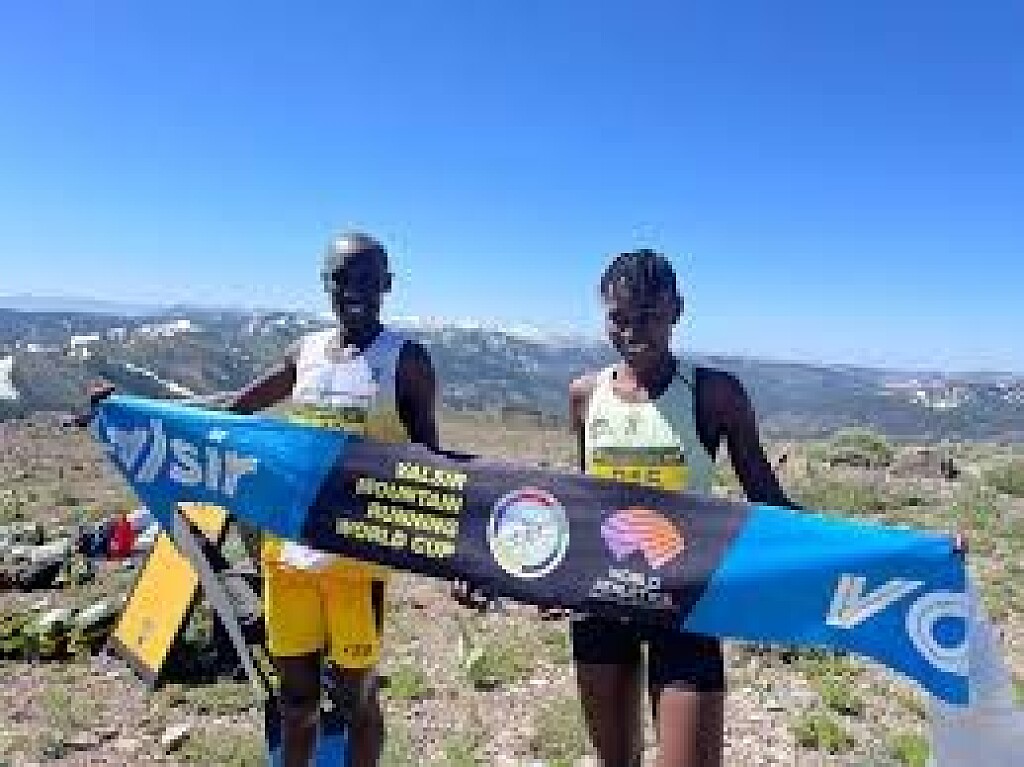
Mountain Running World Cup opens at Broken Arrow
The 2024 Valsir Mountain Running World Cup kicks off in style on Friday (21) at the Broken Arrow in Palisades Tahoe, California. The season launches with the Broken Arrow VK, a short uphill gold label race, and continues with the 23km Broken Arrow Skyrace, a long gold label race, on Sunday.
With a base elevation of 1890m and stunning peaks all around, including the prominent 2700m Washeshu Peak, Broken Arrow has the perfect credentials for mountain racing.
Many of the athletes from last year’s podiums return. In the women’s VK, last year’s winner Anna Gibson is back to defend her title. The 2023 runner up, Jade Belzberg, also returns, as do Annie Dube and Anna Mae Flynn, who finished fourth and fifth respectively last year. But they will face stiff competition in the form of Allie McLaughlin, the uphill champion at the World Mountain and Trail Running Championships in 2022, and Tabor Hemming.
The men’s VK is also looking incredibly competitive. Darren Thomas, second last year, is back, as is last year’s fifth-place finisher Abraham Hernandez Cruz. Joining them will be some big names, including 2023 World Cup winner Philemon Kiriago, Jim Walmsley, Eli Hemming and Christian Allen.
Many runners are contesting both the VK and the Skyrace, with a day in between to recover. Last year the Skyrace was severely affected by snow, but the snowline is not set to be as low this year.
Memorably McLaughlin battled with Gibson last year, taking the lead and stretching it out to win. McLaughlin is doing the double here, as are Tabor Hemming, who was third last year, and Dube. Janelle Lincks, fourth last year, also returns. Sophia Laukli, a breakout star in last year’s World Cup, also looks to be toeing the line and will be one to watch.
In the men’s Skyrace, defending champion Eli Hemming returns, along with the rest of last year’s podium, Chad Hall and Meikael Beaudoin-Rousseau. Allen, Kipngeno and Thomas will double up, which should make things interesting. To shake things up even further, former world champion Joe Gray is on the start list. Zak Hanna, who finished fourth in last year’s VK, is just taking on the Skyrace this year.
The VK on Friday starts on the valley floor and climbs its way up 914m over 4.8km to the summit of Washeshu Peak at 2708m. Despite some changes to the course this year, along the way it still takes in some brutally steep terrain, leading up to the iconic Headwall Ridge and the ‘stairway to heaven’ bolted ladder to the summit of Washeshu Peak. Runners will experience steep rock slabs, snow and scree, which is guaranteed to deliver an exciting race.
On Sunday the Broken Arrow Skyrace is held on a loop which climbs 1533m over the course of 23km. It starts in Palisades Tahoe Village and most of the race takes place above the tree line on technical and demanding trails. Runners will be treated to views of Granite Chief Wilderness and they will experience Emigrant Pass, KT-22 and, like the VK runners, the ‘stairway to heaven’ ladder to Washeshu Peak.
The Broken Arrow offers the first two of 12 races that form part of the Valsir Mountain Running World Cup in 2024. The season closes with the World Cup Final Val Bregaglia Trail on 13 October. There will be a livestream of the Broken Arrow action available on the event website.
Login to leave a comment
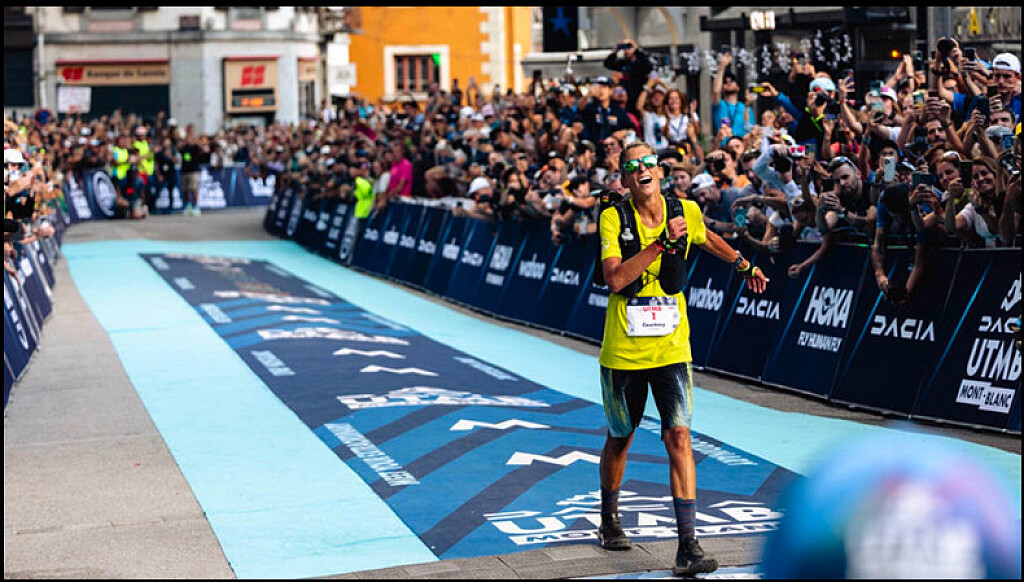
The Keys to Courtney Dauwalter’s Continued Dominance
During a recent press conference, Dauwalter dished oUltrarunner extraordinaire Courtney Dauwalter has picked up in 2024 right where she left off last year. After famously winning three of ultrarunning’s most epic races during the span of about nine weeks last summer—Western States 100, Hardrock 100, and Ultra-Trail du Mont-Blanc—the 39-year-old athlete from Leadville, Colorado, defended her Transgrancanaria 126K title in a decisive wire-to-wire win in late February and won the Mount Fuji 100-miler for the second time on April 27, placing third overall.
She’s now gearing up to go for a third straight win at the Hardrock 100 on July 12-13 in Silverton, Colorado. After Hardrock, she’ll be crewing and pacing her husband, Kevin Schmidt, at the Leadville 100 on August 17-18, and then tackling a yet-unannounced trail running project in September.We caught up with Dauwalter to talk about her fueling and training in a virtual press conference, where she announced the May 20 release of her signature flavor of Tailwind Nutrition Endurance Fuel—Dauwaltermelon with Lime—as a permanent part of the brand’s lineup. Since she’s emerged as one of the world’s top trail ultrarunners, she’s been known for having a sound approach to nutrition and fueling, never shying away from eating whatever she wants, admitting her soft spot for candy and pastries, or having a beer every now and then if she feels like it.
COURTNEY DAUWALTER: I am still eating all of my favorite things whenever they sound good in quantities that sound good, and I am not intending to change that part of my life, because it just gives me a lot of joy to live that way. I guess it’s got to be partly my upbringing, and also with Kevin and I, our idea of how we want to live our lives is to enjoy it to its fullest while it’s here. We just want to enjoy food, enjoy meals out, enjoy the cravings that we have, and not worry about it. But I would say in the past couple of years I do more consistently do a recovery drink after a long run or after putting in big efforts, and that’s something that I was a little more lax with originally, so I feel like that’s a step in the right direction.
When I first got into ultrarunning, I had no nutrition plan. I didn’t know what I was doing. My first race was a 50K, and I remember not knowing that these aid stations would be buffets. My mind was blown when I got to them—all the options were overwhelming. I just started filling my pockets with jelly beans. In those first years, I did a lot of mimicking of what the people around me were doing. So if I came to an aid station and someone was grabbing pickles and drinking Mountain Dew, then that’s what I would do. If they were grabbing pretzels and cheese cubes, that’s what I would go for. It was just kind of roulette for me on what I would end up eating—if it would work, or if it wouldn’t work.
Initially, I never had a fueling plan at all. But then in 2017, I went to the Run Rabbit Run 100 in Steamboat Springs, Colorado, and Tailwind was available on course at all of the aid stations. I had a buddy who had started using it that year, and I remember just loving it and suddenly not having all the stomach issues and energy dips that I often had. I was like, ‘Oh, maybe this is what it’s like to have something reliable.
'At this point we’ve gotten pretty dialed on the race nutrition plan for those 10-to 24-hour efforts or the events of 100 miles or below. I’m not a person who has my watch beeping at me ever to remind me to eat. I don’t get those kinds of reminders, and I don’t want to eat every 15 minutes or 30 minutes during a race. I’m going to just slow drip the calories I have as often as possible—basically it’s an eating contest on the move. Now I know my body functions pretty well with about 200 calories per hour during those efforts. So, depending on the distance between aid stations, I can rely solely on a bottle of Tailwind and then supplement with some chews or waffles or gels, because usually I get actually hungry feeling and having something solid helps with that. But mostly, I’m relying on Tailwind as my backbone to the whole plan and generally aiming for that 200-calorie-per-hour benchmark.The past couple years (working with a nutritionist friend), we’ve been better at creating A, B, C and D plans—because sometimes the perfect nutrition plan that you have relied on isn’t going to work. Our approach is that’s fine, and here are some things you can start subbing in during a race that can cover your needs. I view race nutrition like a puzzle piece, and sometimes it fits into the puzzle right where we want it to, and sometimes we have to kind shift things around a little bit. I think one of the reasons a lot of us love ultrarunning is because, when things just aren’t going to plan, we have to problem-solve it.
That’s one thing I’m hoping to focus on a little bit more on in this buildup and this prep for Hardrock, because in the past couple times I’ve run it, I’ve struggled a little bit with taking stuff in. I would love to just try to intentionally train my stomach to be better at taking in those calories while pushing hard at 12,500 feet or 13,000 feet just to see if we can make some strides forward. So stay tuned on if that works or not.
Not specific things. I think I want to just keep finding the challenges that intrigue me and fire me up to keep putting in the work, the training, the time, the effort to go after them. And so whatever that is, there’s not a list of things I want to check off necessarily, but, I’m continuing to pour myself into this sport and see what’s possible while every one of my systems [muscular, digestive, endocrine, cognitive, emotional, etc.] is allowing that to happen. The Leadville 100 is on my short list of races I would love to do as soon as I can, but as far as a bucket list in general or what intrigues me, I’m still very interested in exploring the longer stuff and how our brains and our bodies can work together to take us over 100 miles. What does that look like to move efficiently for 200 miles or 500 miles? So that’s where I am putting a lot of my attention into—just finding ways to test myself on stuff that’s really long.I am interested in trying a road marathon again at some point because that was what led me to ultrarunning.. I didn’t think I could make that distance, but I finished without dying and then wondered, ‘What else is out there that sounds too hard that I could try?’ And then I stumbled into the ultrarunning world. In those first marathons, I was a casual runner.
I ran every day before work because it made me feel better to start the day, but I wasn’t doing huge miles or running quickly. So circling back to run a road marathon would be kind of fun.I definitely didn’t invent it, and I don’t know who did originally, but I know that for me that phrase just became this imagery that I really grabbed onto—as opposed to the struggle bus or the hurt locker or the many other terms. That one for me was visually something I could see, and it was something that I could work with to be productive. Back in high school, I had a cross country skiing coach who was big on the mental side of the sport and would always remind us and believe in our capacity to push past that moment when it feels like you have nothing left. He was huge on just the idea that there’s always one more gear. So I just crank the knob and believe that it can be cranked a little bit more. Having someone who believed in me so wholeheartedly that I could trust to keep pushing was important because it’s hard to do that when you’re any age, but for sure it’s hard to do when you’re a teenager.
The idea that you feel like you’re about to die and yet you’re telling me there’s more to push past that? That’s hard to learn. So I feel really lucky that I had that coach and to learn about that mental side of sports and digging deeper than you think.
That was so special, a highlight of my life for sure. We ran together through the desert in Arizona, side by side the whole time through all the highs and lows, and made it to that finish line. I’ll remember that forever, and that gift that she gave me of doing this thing with me and the sport I love and spending so much time preparing for it. She was training hard back home in Minnesota, trying to learn how to run trails, trying to power hike hills, and learning how to use all of the gear because she had never really run trails before. I think the domino effect is that you can start anything at any age. She was 66 when we ran this race together and 64 when she started this journey into trail running. I had told her my dream was to run an ultra with my mom, and now that she has completed a 100K, she has found a lot of joy in the trails. Even though we don’t have a race on the calendar together yet, she is still just finding that peace that the trails bring her, and it’s something she incorporates into her weekly life. I think that’s really cool, and it’s why I hope more people can find out about trail running—not necessarily even ultrarunning—but just getting out on the trails and exploring a little bit because that feeling of moving with your feet surrounded by nature and feeling so small in a big landscape is really, really cool.
My hope is that people hearing about the stuff that I’m doing or that the ultrarunning community is doing helps them believe they could go after something that sounds too hard or something that sounds crazy. Whether that’s running 100 miles or 200 miles or not. We can all find that thing in our lives that we can go after with a little more gusto and raise the bar for ourselves on what we’re actually aiming for. I also hope I can be a small example that you can work really, really, really hard at something and have a lot of fun doing it. Those things can happen at the same time and there’s no reason to separate them. I never predicted this chapter in my life, but I feel grateful every day for it. I’m just trying to squeeze as much living out of this period of life as I can.
n her approach to nutrition and fueling, early-career bonks, and more.
by Outside Online
Login to leave a comment
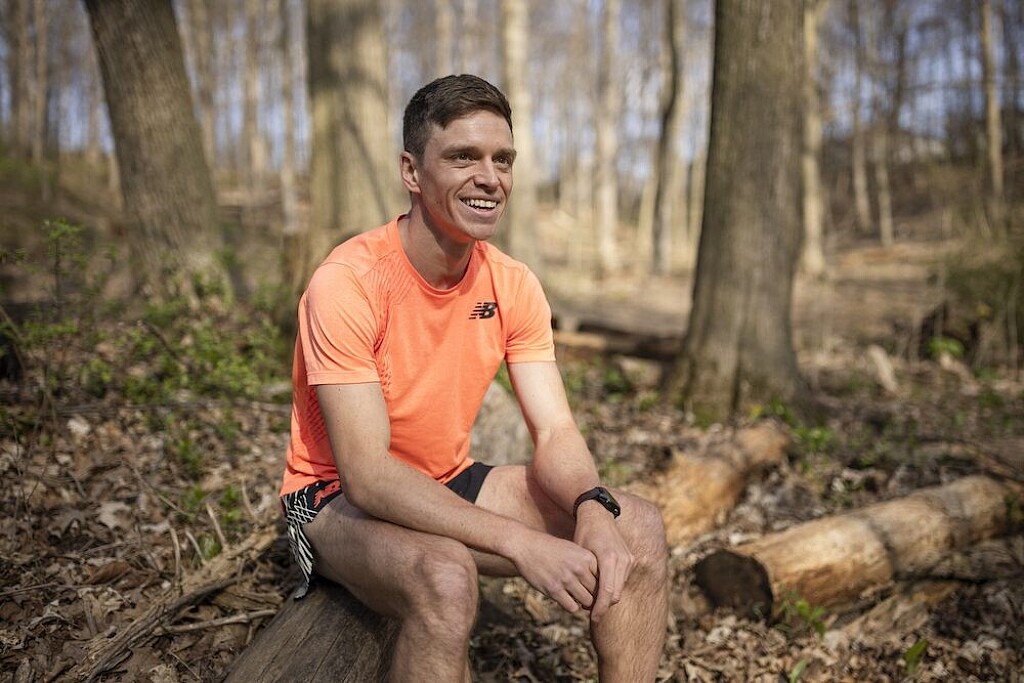
Chris Balestrini: Run Your Way, for the Canadian 50K record holder, running is a reward at the end of a challenging day
Chris Balestrini does it all: trail running, road running and track running. “Pretty much all types of running,” he laughs. “I guess I could say, I’m an outdoor enthusiast.” That downplays his accomplishments: Balestrini is a New Balance-sponsored athlete who holds the Canadian 50-kilometer record, but also runs a smoking fast 10K (29:22). He just finished second at the Vancouver Marathon. And he’s getting his PhD while training as a pro athlete.
“My first memory of running was Grade 3 cross country,” he says. “I remember I wanted to be on the team because all my friends were on the team. I absolutely did not love running at that point.”
A stress fracture early in his high school running career led him to cycling, and he grew to love life on two wheels. But the time commitment for being a pro cyclist was too much once he entered university, so he made the shift back to cross-country running. The engine he built from cycling and the strength built from a few years off to let his bones recover and develop allowed him to make the cross-country team at Western University (but just barely); then he was off and running.
“From there, my love of running kind of came back and grew,” Balestrini says. “I realized that, maybe if I keep if I keep pursuing this, I can do something positive with it.”
Running even lends itself to chasing a doctorate degree, he says: “With running, there’s quite a bit of flexibility in training, when you’re doing experiments and when you’re writing,” he says. “You can find those nice parts of the day to get out and run, compared to when I was in medical school, and it was much more time-consuming. Then, it was harder to fit in training. Sometimes we’re sleeping at the hospital two to three nights a week, and working quite often. So you really have to prioritize running to make it happen. Luckily, I always viewed running as the the treat at end of the day, not something I had to do. That helped my mental health and my energy levels in the hospital. Viewing running as a reward makes a big difference in your outlook.”

He was good at short distances, but as a cyclist, longer durations were intriguing—and that’s where the 50k came in. “From my background in road cycling, the races were always longer than two and a half hours, which is the marathon time,” he says. “I naturally looked at the trails and got my feet a little wet going into the 50K races, then started looking at the 50-milers. The Squamish 50 miler was my debut in that distance last summer and I enjoyed being out all day. I enjoy the more the undulating terrain and not knowing exactly if you’re on pace. On the road, you have splits every kilometer and you have a more strict race plan. If you’re falling off, then it might be a bad day. But on the trails, you can have a bad 10 kilometers and then come back in the next stretch. And I think that really appealed to me, because it’s more of a long-term battle within your body, and also your mind, as well as with the competitors on the course.”
“When I’m looking for a race, I typically want it to be competitive,” he adds. “I want to be able to have not only the course push me, but to have competitors push me too, to explore those deep dark places within yourself.”
“I think “run your way” means to run any surface, any distance, and just go out and put forth your best effort,” Balestrini says. “In the last five years, I’ve raced a 1,500m on the track. I’ve raced marathons. I’ve raced 50-milers on the trails. And when I when I think about those events, I’ve gained experience and I’ve gained happiness. I think it’s important to not pigeonhole yourself into to one event or one distance, or even one type of running, and to just explore everything that running has to offer.”
by Molly Hurford
Login to leave a comment
The Keys to Courtney Dauwalter’s Continued Dominance
Ultrarunner extraordinaire Courtney Dauwalter has picked up in 2024 right where she left off last year. After famously winning three of ultrarunning’s most epic races during the span of about nine weeks last summer—Western States 100, Hardrock 100, and Ultra-Trail du Mont-Blanc—the 39-year-old athlete from Leadville, Colorado, defended her Transgrancanaria 126K title in a decisive wire-to-wire win in late February and won the Mount Fuji 100-miler for the second time on April 27, placing third overall. She’s now gearing up to go for a third straight win at the Hardrock 100 on July 12-13 in Silverton, Colorado. After Hardrock, she’ll be crewing and pacing her husband, Kevin Schmidt, at the Leadville 100 on August 17-18, and then tackling a yet-unannounced trail running project in September.
We caught up with Dauwalter to talk about her fueling and training in a virtual press conference, where she announced the May 20 release of her signature flavor of Tailwind Nutrition Endurance Fuel—Dauwaltermelon with Lime—as a permanent part of the brand’s lineup. Since she’s emerged as one of the world’s top trail ultrarunners, she’s been known for having a sound approach to nutrition and fueling, never shying away from eating whatever she wants, admitting her soft spot for candy and pastries, or having a beer every now and then if she feels like it.
RUN: How did you develop such a sensible approach to nutrition and fueling, and what, if anything, have you changed?
Courtney Dauwalter: “I am still eating all of my favorite things whenever they sound good in quantities that sound good, and I am not intending to change that part of my life, because it just gives me a lot of joy to live that way. I guess it’s got to be partly my upbringing, and also with Kevin and I, our idea of how we want to live our lives is to enjoy it to its fullest while it’s here. We just want to enjoy food, enjoy meals out, enjoy the cravings that we have, and not worry about it. But I would say in the past couple of years I do more consistently do a recovery drink after a long run or after putting in big efforts, and that’s something that I was a little more lax with originally, so I feel like that’s a step in the right direction.”
RUN: What was your fueling strategy when you first got into ultrarunning in 2011?
CD: “When I first got into ultrarunning, I had no nutrition plan. I didn’t know what I was doing. My first race was a 50K, and I remember not knowing that these aid stations would be buffets. My mind was blown when I got to them—all the options were overwhelming. I just started filling my pockets with jelly beans. In those first years, I did a lot of mimicking of what the people around me were doing. So if I came to an aid station and someone was grabbing pickles and drinking Mountain Dew, then that’s what I would do. If they were grabbing pretzels and cheese cubes, that’s what I would go for. It was just kind of roulette for me on what I would end up eating—if it would work, or if it wouldn’t work.”
RUN: You have told stories about a few famous bonks early in your career. When did you start to dial-in your fueling strategy?
CD: “Initially, I never had a fueling plan at all. But then in 2017, I went to the Run Rabbit Run 100 in Steamboat Springs, Colorado, and Tailwind was available on course at all of the aid stations. I had a buddy who had started using it that year, and I remember just loving it and suddenly not having all the stomach issues and energy dips that I often had. I was like, ‘Oh, maybe this is what it’s like to have something reliable.'”
RUN: What is your current approach to race-day nutrition?
CD: “At this point we’ve gotten pretty dialed on the race nutrition plan for those 10-to 24-hour efforts or the events of 100 miles or below. I’m not a person who has my watch beeping at me ever to remind me to eat. I don’t get those kinds of reminders, and I don’t want to eat every 15 minutes or 30 minutes during a race. I’m going to just slow drip the calories I have as often as possible—basically it’s an eating contest on the move. Now I know my body functions pretty well with about 200 calories per hour during those efforts. So, depending on the distance between aid stations, I can rely solely on a bottle of Tailwind and then supplement with some chews or waffles or gels, because usually I get actually hungry feeling and having something solid helps with that. But mostly, I’m relying on Tailwind as my backbone to the whole plan and generally aiming for that 200-calorie-per-hour benchmark”
RUN: You had to overcome some stomach challenges in UTMB in 2022 and then at last year’s UTMB you seemed as physically challenged as you have ever been. How have you adjusted your fueling in those situations?
CD: “The past couple years (working with a nutritionist friend), we’ve been better at creating A, B, C and D plans—because sometimes the perfect nutrition plan that you have relied on isn’t going to work. Our approach is that’s fine, and here are some things you can start subbing in during a race that can cover your needs. I view race nutrition like a puzzle piece, and sometimes it fits into the puzzle right where we want it to, and sometimes we have to kind shift things around a little bit. I think one of the reasons a lot of us love ultrarunning is because, when things just aren’t going to plan, we have to problem-solve it.”
RUN: You’ll be doing a lot of your pre-Hardrock training in and around Leadville between 11,000 and 14,000 feet above sea level once the spring snow subsides. How are you able to fuel at such high altitudes?
CD: “That’s one thing I’m hoping to focus on a little bit more on in this buildup and this prep for Hardrock, because in the past couple times I’ve run it, I’ve struggled a little bit with taking stuff in. I would love to just try to intentionally train my stomach to be better at taking in those calories while pushing hard at 12,500 feet or 13,000 feet just to see if we can make some strides forward. So stay tuned on if that works or not.”
RUN: Do you have any bucket list events you want to tackle in the coming years?
CD: “Not specific things. I think I want to just keep finding the challenges that intrigue me and fire me up to keep putting in the work, the training, the time, the effort to go after them. And so whatever that is, there’s not a list of things I want to check off necessarily, but, I’m continuing to pour myself into this sport and see what’s possible while every one of my systems [muscular, digestive, endocrine, cognitive, emotional, etc.] is allowing that to happen. The Leadville 100 is on my short list of races I would love to do as soon as I can, but as far as a bucket list in general or what intrigues me, I’m still very interested in exploring the longer stuff and how our brains and our bodies can work together to take us over 100 miles. What does that look like to move efficiently for 200 miles or 500 miles? So that’s where I am putting a lot of my attention into—just finding ways to test myself on stuff that’s really long.”
by Brian Metzler
Login to leave a comment
Hardrock 100
100-mile run with 33,050 feet of climb and 33,050 feet of descent for a total elevation change of 66,100 feet with an average elevation of 11,186 feet - low point 7,680 feet (Ouray) and high point 14,048 feet (Handies Peak). The run starts and ends in Silverton, Colorado and travels through the towns of Telluride, Ouray, and the ghost town...
more...
Meet the ultimate ultrarunning power couple
The running accomplishments of Rachel Drake and Tyler Green are astonishing on their own—but there’s far more to this pair of high-achievers than paces and race results. Drake recently earned her entry to the 2024 edition of the legendary Western States 100 with a strong win at Black Canyon Ultras 100K in Arizona, and Green finished second at the 2023 edition of Western States (and capped off his season with a sixth-place finish in the men’s race at UTMB 171K); the couple juggles demanding careers, school (Drake), coaching (Green) and family time with their one-and-a-half-year-old son, Lewis. We connected with the couple to find out how they make it work.
Drake, now 32, grew up in White Bear Lake, Minn., and the family currently lives in Green’s hometown of Portland, Ore. They will soon be moving to Salt Lake City, Utah, so Drake can begin her anesthesiology residency in the summer. The dynamic trail-running duo met at the McKenzie River 50K, and now combine their strengths in raising a family while balancing high-level running performance. Green, 40, works as a trail running coach and a high school cross country and track coach.
From Western States to World Trail Majors
The couple has similar goals for the 2024 season—they are both racing Western States on June 29, and both hope to capture another top performance at one of the World Trail Majors races, with the current plan being to run Ultra Trail Cape Town in November. The couple exemplifies flexibility in running and life—when a recent trip to run Ultra Trail Madeira was entirely derailed due to travel difficulties, they rallied, enjoying time at home instead. And when Black Canyon Ultra 100K in February was delayed several hours due to bad weather, Drake rose to the occasion.
“I’m really proud of how I handled the multiple changes in plans, I never felt stressed or perturbed,” Drake posted on Instagram after Black Canyon 100K was delayed several hours. “And I guess my ability to fall back asleep showed that my catecholamines were indeed not yet surging through my bloodstream. I think having been through medical school, graduate school and the birth of a child has really put things in perspective.”
An element of surprise
Both Green and Drake love being a part of the trail running community, and while being parents adds an element of challenge, they are finding joy in bringing Lewis to events. “Just a few weeks ago we were at the Gorge Waterfalls trail races, and it’s so fun to bring Lewis into the fold,” Drake told Canadian Running. “He was making friends and wandering around at the finish line, and it was just the best.”
While Drake is quick to express gratitude for their lives, she also acknowledges that they have their hands full. “It’s challenging to balance everything. Lewis is a super easygoing kid, but having a toddler definitely adds an element of surprise to every well-laid plan,” she says. “When we travel, the logistics are a lot more complicated, but it’s always worth it.”
Combining strengths
Drake says that, as athletes, her strengths and Green’s are quite different. “Tyler is much more of a 100-mile specialist, and I am more of a 50K specialist,but moving up in distance this year,” she says. “I think I am also more of a speed-oriented runner and Tyler is probably more of a strength runner.”
As well as being partners through life, Drake and Green share a specific dynamic in the running world—that of coach and runner. “Tyler actually coaches me, so he gives me a lot of advice,” Drake explains. “I’ll weigh in on race strategy and planning our competitive calendars, but I don’t get involved with his training, since he has a great coach.”
Drake and Green share a mutual sponsor in the backpack brand Osprey. “Rachel has partnered with Osprey for five years now, and I followed suit three years ago as I saw how positive the partnership was,” Green explains. “Our connection with Osprey runs deep; they have supported us as people first, whether that’s celebrating a great race result, jumping for joy when we shared we were expecting a baby, or caring for us through injury. We feel like our stories are interwoven.”
The brand’s commitment to sustainability and longevity in its products pairs well with the couple’s values. “I have an Osprey backpack I’ve had for 20 years, it’s still my favorite pack, and I think that tells a lot about how our values align with the company,” says Green. “The gear Osprey makes truly performs and lasts. We’re ultrarunners who work incredibly hard to keep going and going and going, and an Osprey pack on our backs reflects that process.”
Running as a new mom
Drake and Green are now parenting a toddler, and while Drake’s top-notch performance may seem remarkable so quickly after having a child, she says she wouldn’t call it a fast return. “I had a sacral stress fracture at four months postpartum and had to take time to recover from that and then build back fitness,” she says, emphasizing that the culture that celebrates “bouncing back” from postpartum rarely includes any discussion about the challenges of returning to running after giving birth.
“I nursed Lewis for a year after he was born,” she adds. “I loved nursing and it felt important to me to prioritize that. While I was nursing, I felt much more limited with my training, so I had to accept that, even though I was preparing for races that I really cared about.”
Drake’s social media captures enviable images of family, travel, running and mountains, almost always with Lewis in tow. The key to the couple’s success: “Lots of communication with each other, planning our days out and capitalizing on getting stuff done during Lewis’s nap time,” Drake says. One could safely predict fans will follow Drake’s and Green’s performances on trails and off, long after the results of this year’s Western States.
by Keeley Milne
Login to leave a comment
Western States 100
The Western States ® 100-Mile Endurance Run is the world’s oldest and most prestigious 100-mile trail race. Starting in Squaw Valley, California near the site of the 1960 Winter Olympics and ending 100.2 miles later in Auburn, California, Western States, in the decades since its inception in 1974, has come to represent one of the ultimate endurance tests in the...
more...