

Running News Daily
Running News Daily is edited by Bob Anderson and team. Send your news items to bob@mybestruns.com Advertising opportunities available.
Index to Daily Posts · Sign Up For Updates · Run The World Feed
Articles tagged #Puma
Today's Running News
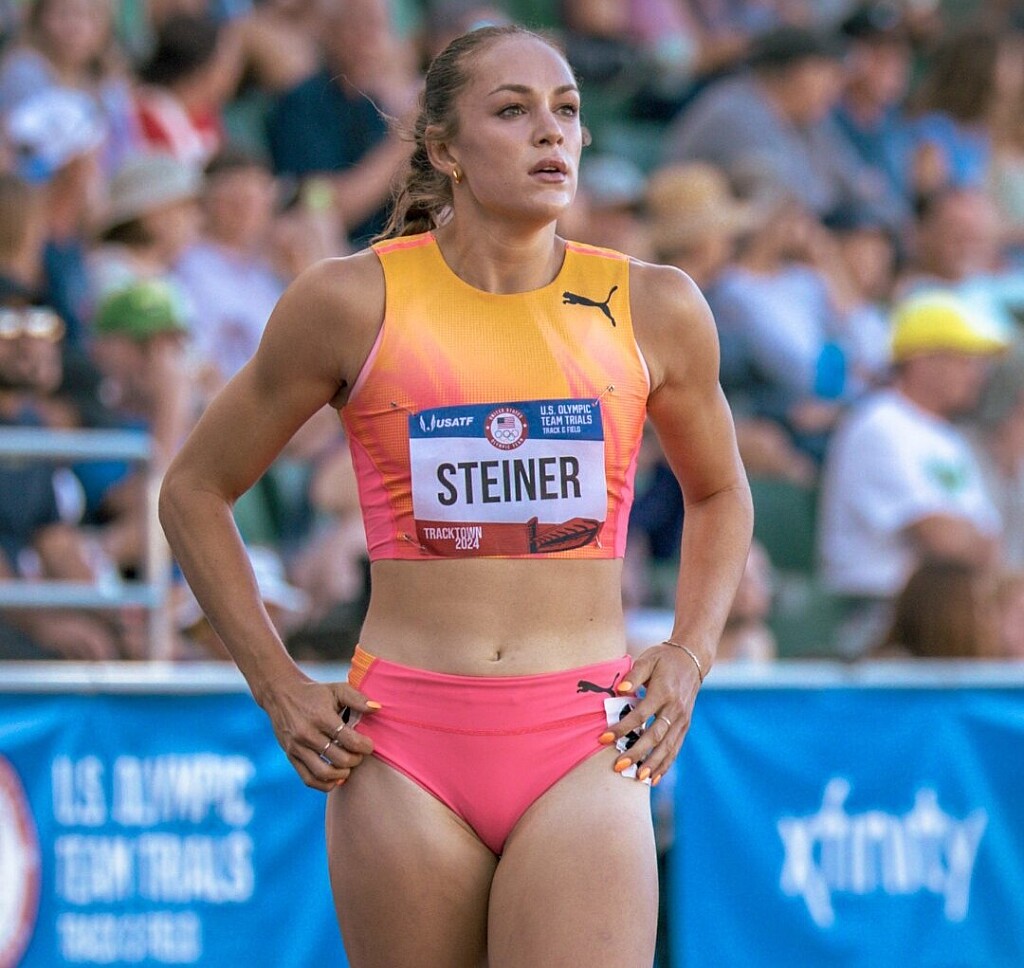


Abby Steiner Takes on Puma: A High-Stakes Legal Battle Over Performance Footwear and Athlete Safety
American sprint star Abby Steiner has stepped into the spotlight for reasons beyond the track, filing a lawsuit against global sportswear giant Puma over what she claims are dangerously defective racing shoes that derailed her career momentum and compromised her health.
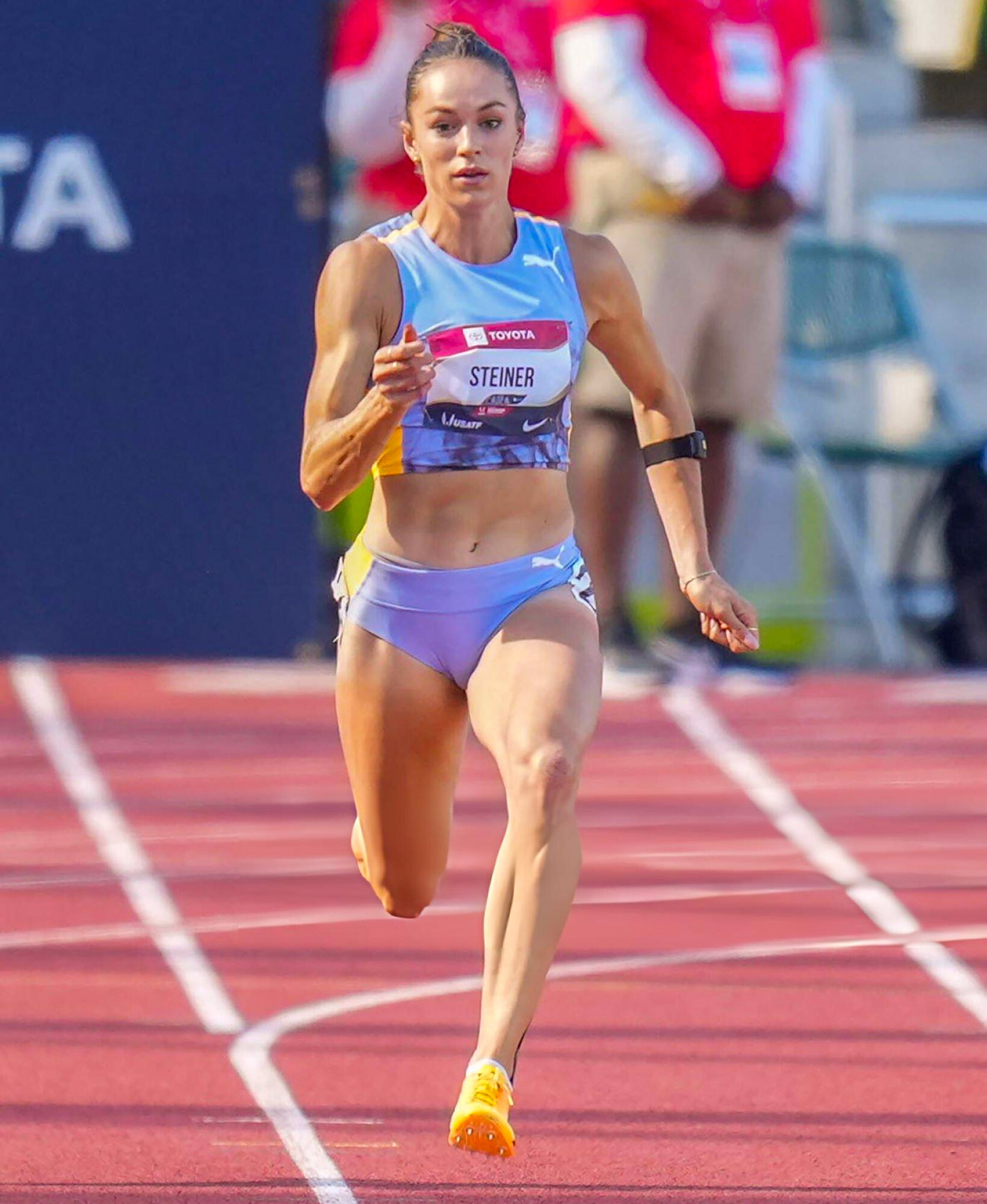
According to the complaint, Steiner alleges that Puma supplied her with high-performance racing footwear incorporating advanced carbon fiber plate (CFP) and nitrogen foam (NF) technology—innovations widely marketed as performance-enhancing breakthroughs. However, rather than elevating her performance, Steiner contends that these shoes triggered a cascade of serious physical issues.
At the heart of the case are claims of chronic and severe injuries, including Haglund’s deformity—a painful bony enlargement at the back of the heel—alongside persistent Achilles tendon complications. These conditions, she argues, were not isolated setbacks but long-term injuries that required multiple surgical interventions and significantly disrupted her athletic trajectory.
The lawsuit further names Mercedes-Benz Grand Prix Ltd., suggesting a collaborative role in the development or endorsement of the shoe technology. Steiner’s legal team asserts that both entities were aware—or should have been aware—of the potential risks associated with the shoe design. Specifically, the complaint highlights concerns that the structural composition of the footwear may increase stress on bones, alter natural biomechanics, and heighten the likelihood of foot and ankle injuries under competitive conditions.
What makes the case particularly compelling is the allegation that the shoes were “not safe for their intended and reasonably expected use,” despite being marketed to elite athletes operating at the highest levels of sport. If proven, this could raise broader questions about innovation in performance gear and the balance between technological advancement and athlete welfare.
Steiner’s case arrives at a time when carbon-plated footwear has revolutionized track and road racing, sparking both record-breaking performances and growing scrutiny. While brands continue to push the boundaries of design, this lawsuit may force the industry to confront the unintended consequences of its innovations.
As the legal proceedings unfold, the outcome could have far-reaching implications—not just for Puma, but for the entire landscape of elite sports equipment manufacturing. For athletes, it underscores a critical reality: in the pursuit of marginal gains, the line between advantage and risk can be dangerously thin.
Steiner has not listed a specific dollar amount publicly, but she is seeking financial and non-financial damages from Puma, including medical costs, lost potential earnings from her running career, and compensation for what the lawsuit describes as loss of enjoyment of life and disfigurement.
by Erick Cheruiyot for My Best Runs.
Login to leave a comment
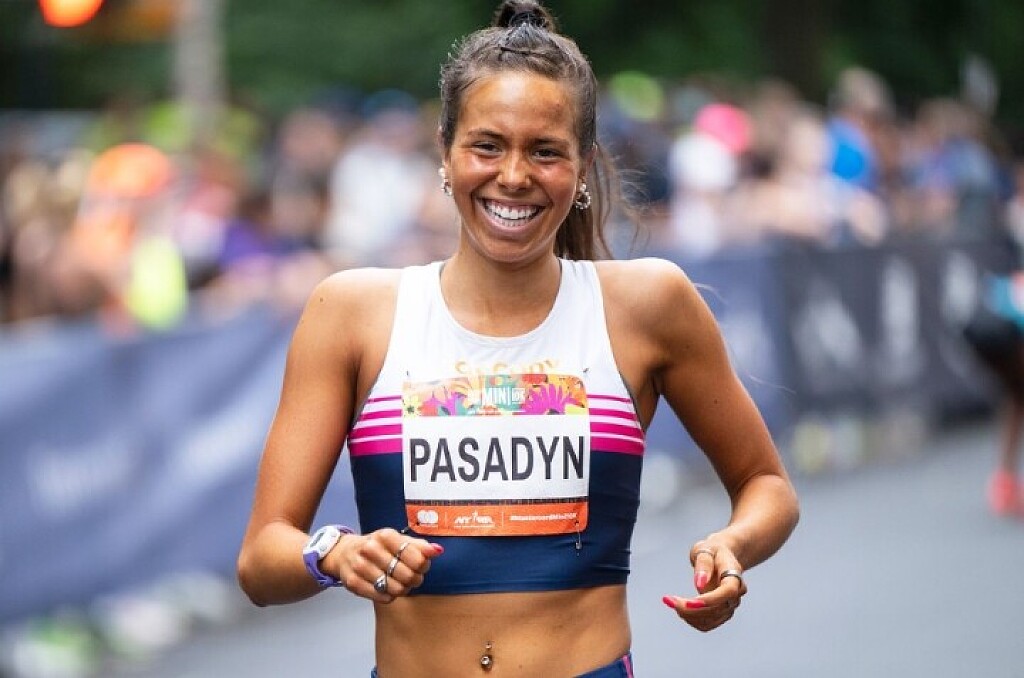
Pasadyn Triumphs Under the Lights as Aroche Rewrites History at The TEN
On a captivating night of elite distance running in San Juan Capistrano, Southern California, the women’s 10,000 metres at The TEN delivered a spectacle defined by precision pacing, resilience, and breakthrough performances. Under ideal racing conditions, a competitive field rose to the occasion, producing fast times and a historic milestone that will echo far beyond the track.
At the front of the race, Felicia Pasadyn executed a composed and authoritative performance to claim victory in 32:04.17. Representing Saucony, Pasadyn demonstrated remarkable control throughout, positioning herself perfectly before unleashing a decisive surge in the closing stages. Her winning time not only secured the top spot but reaffirmed her growing stature in the American distance running scene.
Close behind, Callie Hughes of Team USA Minnesota, competing in Puma, delivered a determined effort to finish second in 32:27.39. Hughes showcased both strength and tactical awareness, holding firm under pressure to secure a well-earned podium finish.
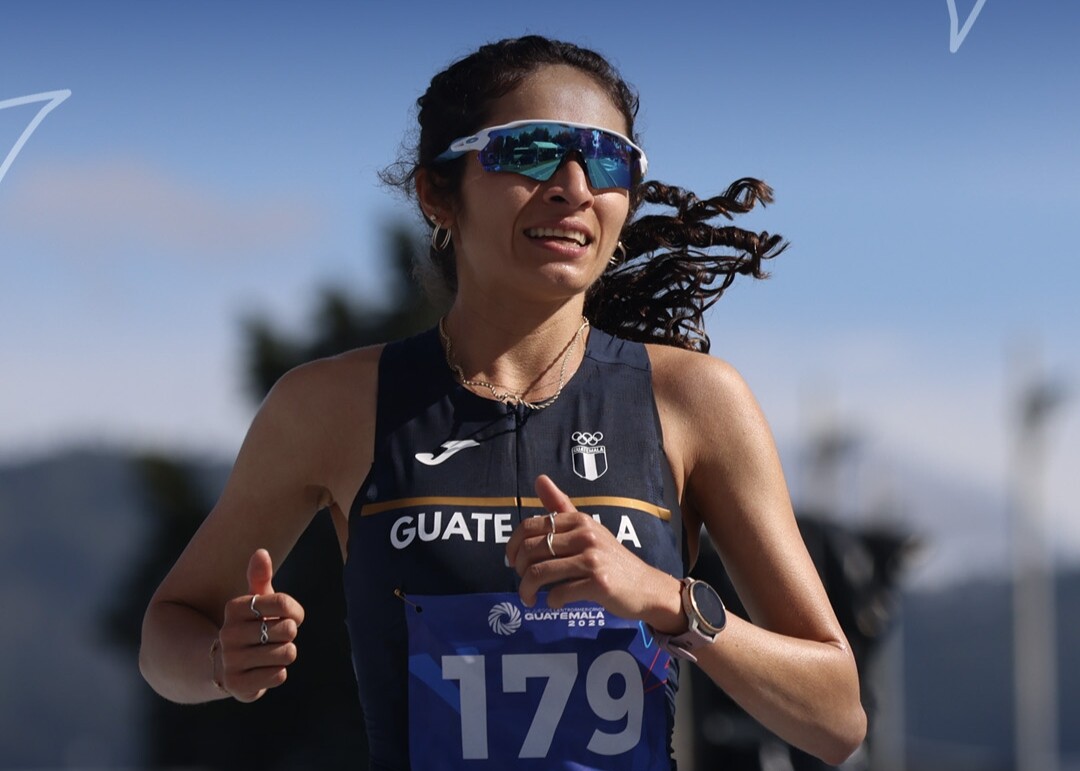
However, one of the most defining moments of the night came from Guatemala’s Viviana Aroche, who produced a performance of historic significance. Finishing third in 32:35.19, Aroche shattered her own national record and set a new Central American benchmark, improving on her previous mark of 32:45.91. Her run was a testament to progression, courage, and the expanding global depth of women’s distance running.
Further down the field, several athletes delivered strong and consistent performances, contributing to the race’s overall depth and quality. The tightly contested competition highlighted the continued rise of emerging talent alongside established names.
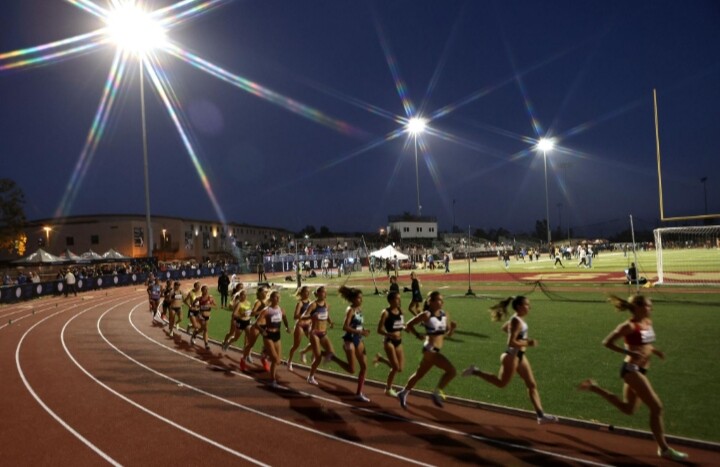
Top 10 Finishers – Women’s 10,000m
1. Felicia Pasadyn – 32:04.17
2. Callie Hughes – 32:27.39
3. Viviana Aroche – 32:35.19
4. Claire Green – 32:57.88
5. Allie Kieffer – 33:20.11
6. Olivia Borowiak – 33:20.62
7. Mariel Salazar Tapia – 33:38.08
8. Erika Priego – 34:15.19
9. Dana Feyen – 34:18.86
10. Lisa Goodin – 34:36.96
As the lights dimmed on another memorable edition of The TEN, the women’s 10,000 metres stood out as a celebration of endurance, ambition, and breakthrough achievement. From Pasadyn’s commanding victory to Aroche’s record-shattering run, the race captured the essence of modern distance running—global, fiercely competitive, and relentlessly evolving. It was a night that not only rewarded excellence but also inspired the next wave of athletes to chase faster times and greater dreams.
by Erick Cheruiyot for My Best Runs.
Login to leave a comment

The Ten
The world's fastest 10,000m races each year have taken place in a sleepy little coastal town in southern California. More national records were broken in 2022 than any other race on the planet as the best in the western hemisphere launched into rarified zones of time and space. The best return to San Juan Capistrano this year to cap off...
more...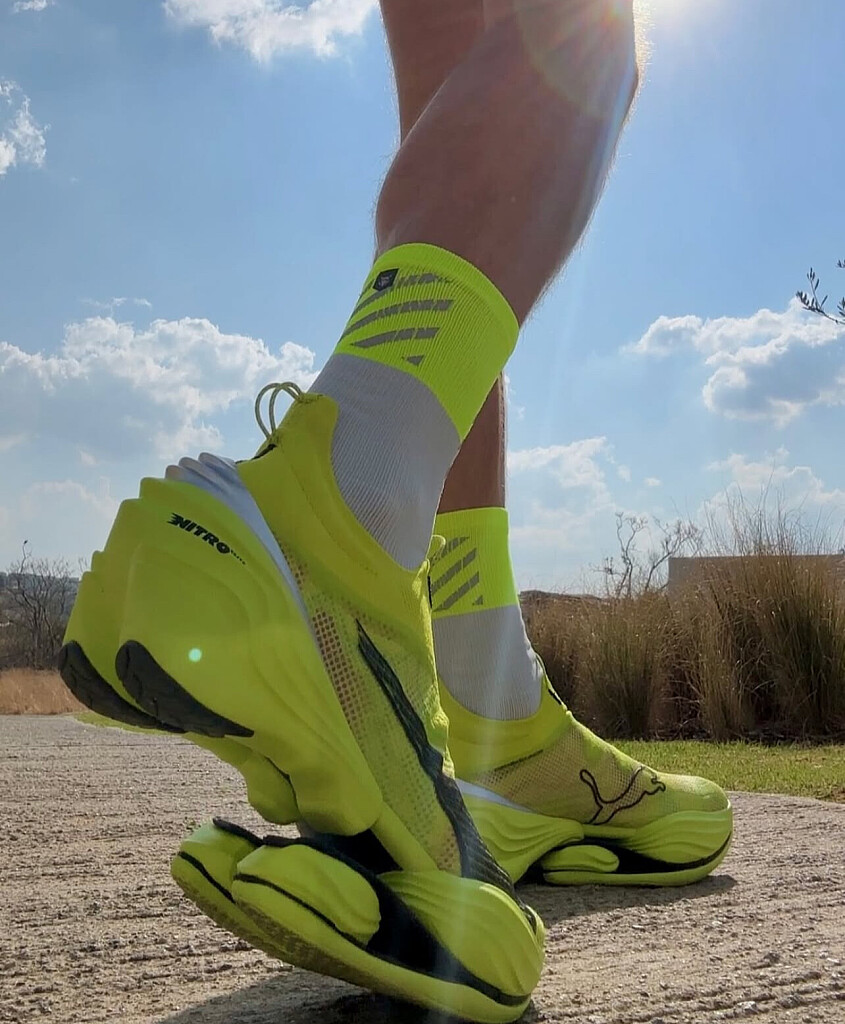
Super Shoes or Super Runners? How Carbon-Plated Racing Shoes Are Reshaping the Distance Running World
A Bold Step Forward—or Too Much?
The eye-catching shoes in the images, with their bright yellow color and radical stack height, exemplify the cutting-edge engineering behind today’s carbon-plated distance racing shoes. These models, possibly from Puma’s Nitro range, showcase an exaggerated rocker design, thick midsoles, and strategically placed carbon plates, all intended to maximize energy return. However, this aggressive design pushes the limits of World Athletics regulations, which restrict stack heights to a maximum of 40mm for road races. If these shoes exceed that, they would be deemed illegal in sanctioned competitions—a fine line that highlights the tension between innovation and fairness in modern distance running.
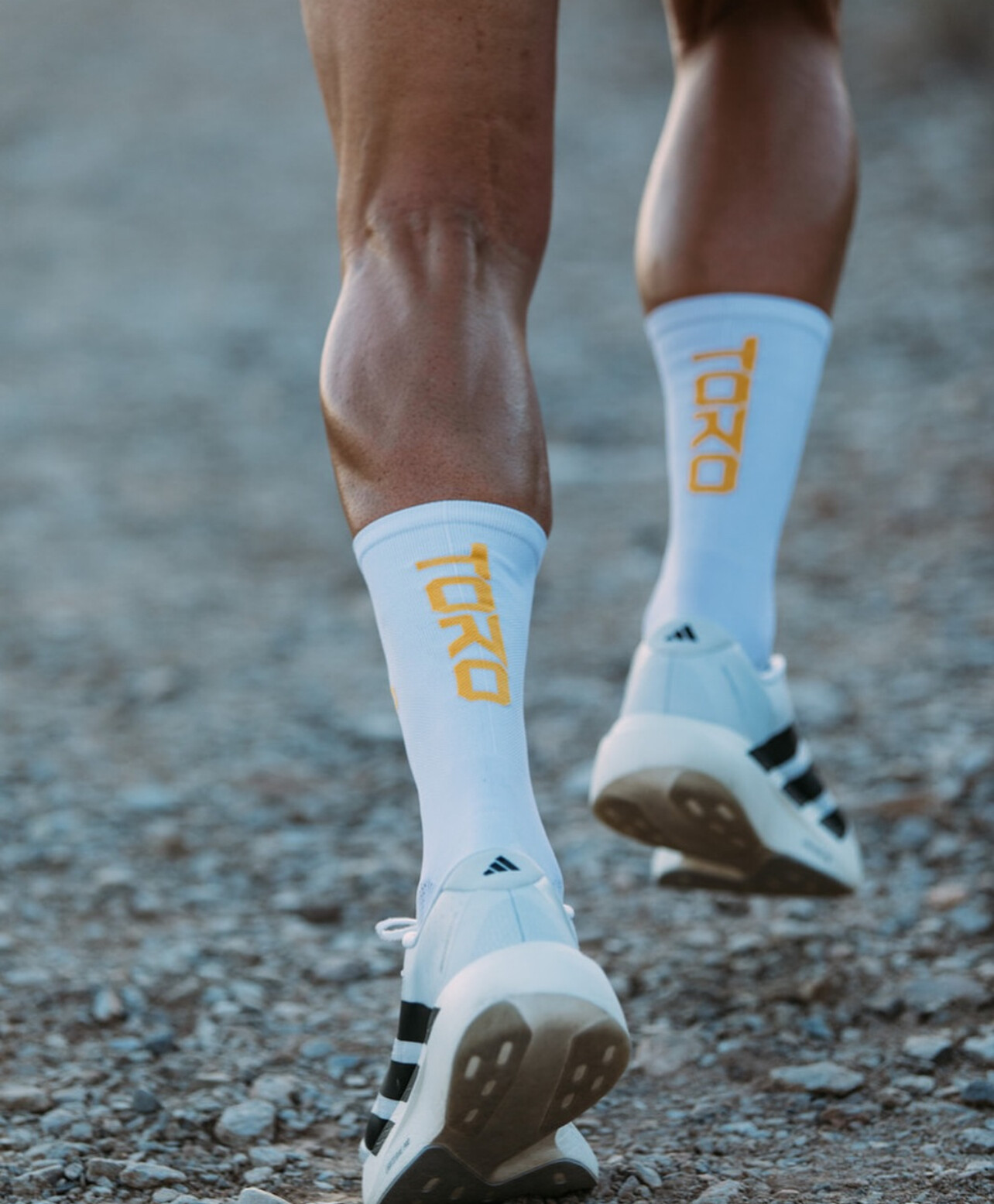
Over the past few years, the distance running community has witnessed a revolution, not just in athletic performance but in technology. At the heart of this transformation are the carbon-plated “super shoes,” with models like the Nike Alphafly 3, Adidas Adizero Pro Evo 1, and Saucony Endorphin Elite capturing headlines—and finish lines.
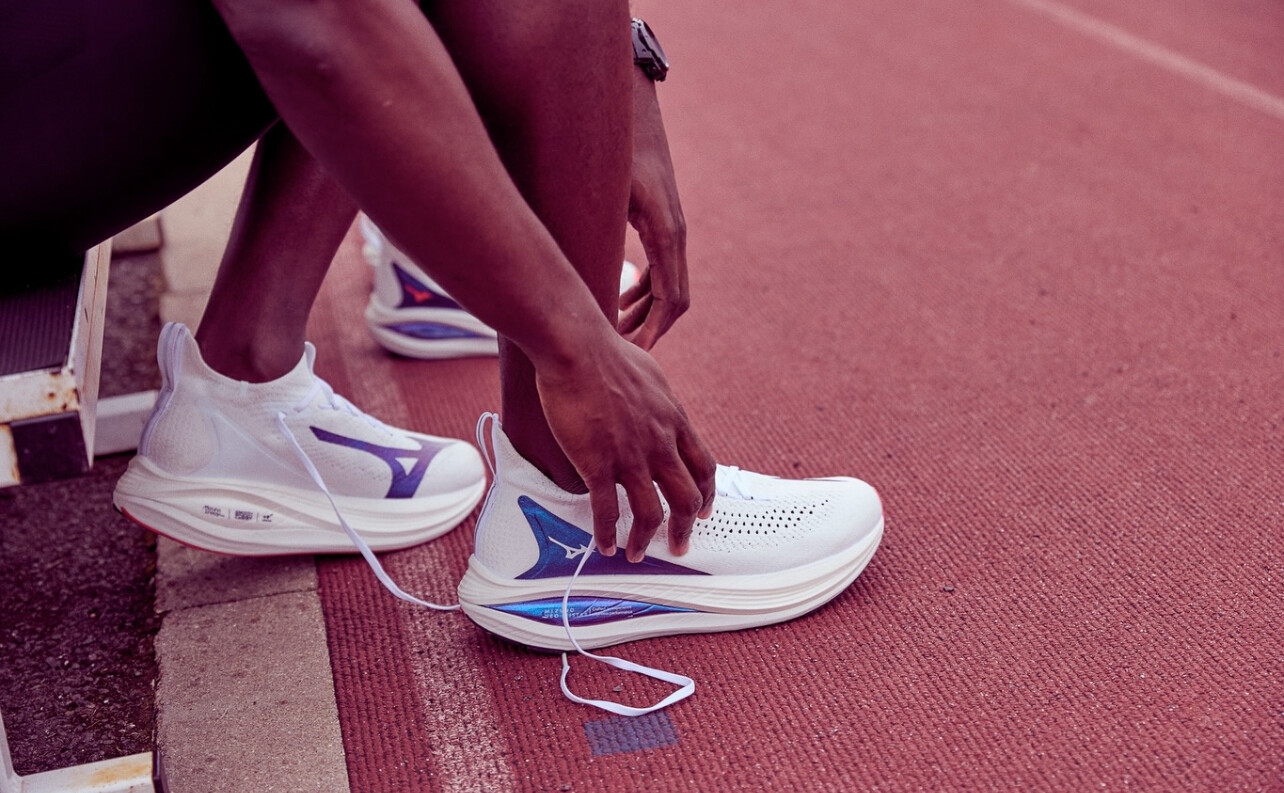
These shoes are more than just a flashy innovation. They represent a fusion of engineering, biomechanics, and material science aimed at optimizing energy return and minimizing fatigue. The secret lies in their construction: a lightweight, resilient foam midsole paired with a rigid carbon-fiber plate that creates a propulsive effect. Research has shown these super shoes can improve running economy by up to 4%, translating into crucial seconds—or even minutes—shaved off race times for elite athletes.
Marathon world records and personal bests are being rewritten at a blistering pace. From Eliud Kipchoge’s sub-two-hour marathon in a prototype Nike shoe to Tigst Assefa’s stunning women’s world record at the Berlin Marathon, the combination of human talent and advanced footwear is undeniable.
However, this technological leap hasn’t come without controversy. Critics argue that super shoes are blurring the line between natural ability and mechanical advantage, creating an uneven playing field. Access is also a concern: with many of these models retailing at $250 or more, elite athletes and well-funded programs often have a leg up on competitors who can’t afford the gear. Some purists feel this shift detracts from the simplicity and rawness of the sport, which historically prized grit and determination over gear.
Yet others argue that innovation is inevitable. After all, every era of distance running has had its technological advances, from cinder to synthetic tracks, from wool to moisture-wicking gear. Super shoes are merely the latest chapter in this ongoing evolution. They offer athletes a tool—how they use it is still up to them.
For amateur runners, these shoes are not just for the elites. Weekend warriors chasing personal records have embraced carbon-plated models, with many reporting improvements in comfort and reduced post-race soreness. But it’s essential to note that no shoe can replace proper training, nutrition, and race strategy.
Looking ahead, the super shoe debate will likely continue, especially as brands develop even more advanced models. World Athletics, the sport’s governing body, has already implemented regulations on shoe design and stack height to maintain some level of fairness.
In the end, the question remains: are we witnessing the rise of super runners, or is this the dawn of a new era where gear becomes as crucial as training? Either way, carbon-plated racing shoes have changed distance running forever—and there’s no turning back.
"As a master runner I like a shoe that does not have such a thick sole," says 77 year old lifetime runner Bob Anderson. "I have taken a few falls and these new super shoes could be a problem."
by Boris Baron
Login to leave a comment
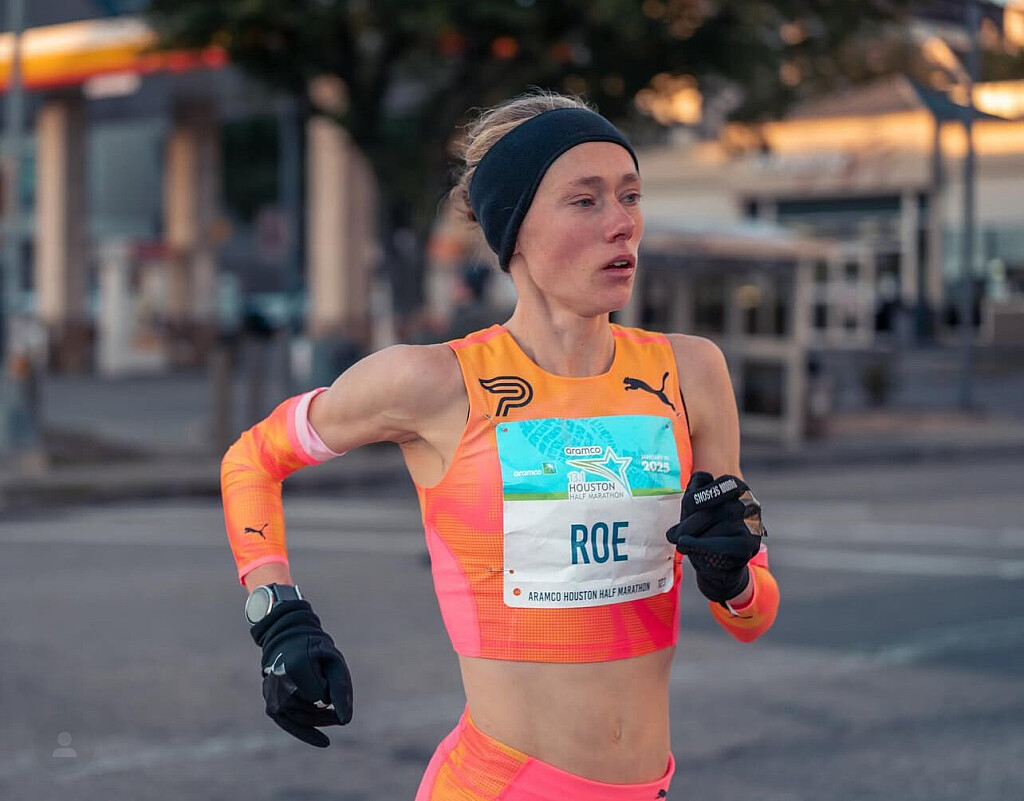
Taylor Roe’s Record Breaking Rise from NCAA Star to American Road Racing Powerhouse
In just over a year, Taylor Roe has gone from a promising collegiate standout to one of the brightest stars in American distance running. Her 2025 campaign has been nothing short of historic—national titles, American records, and international recognition are stacking up fast for the 24-year-old from Lake Stevens, Washington.
From Washington to the NCAA Podium
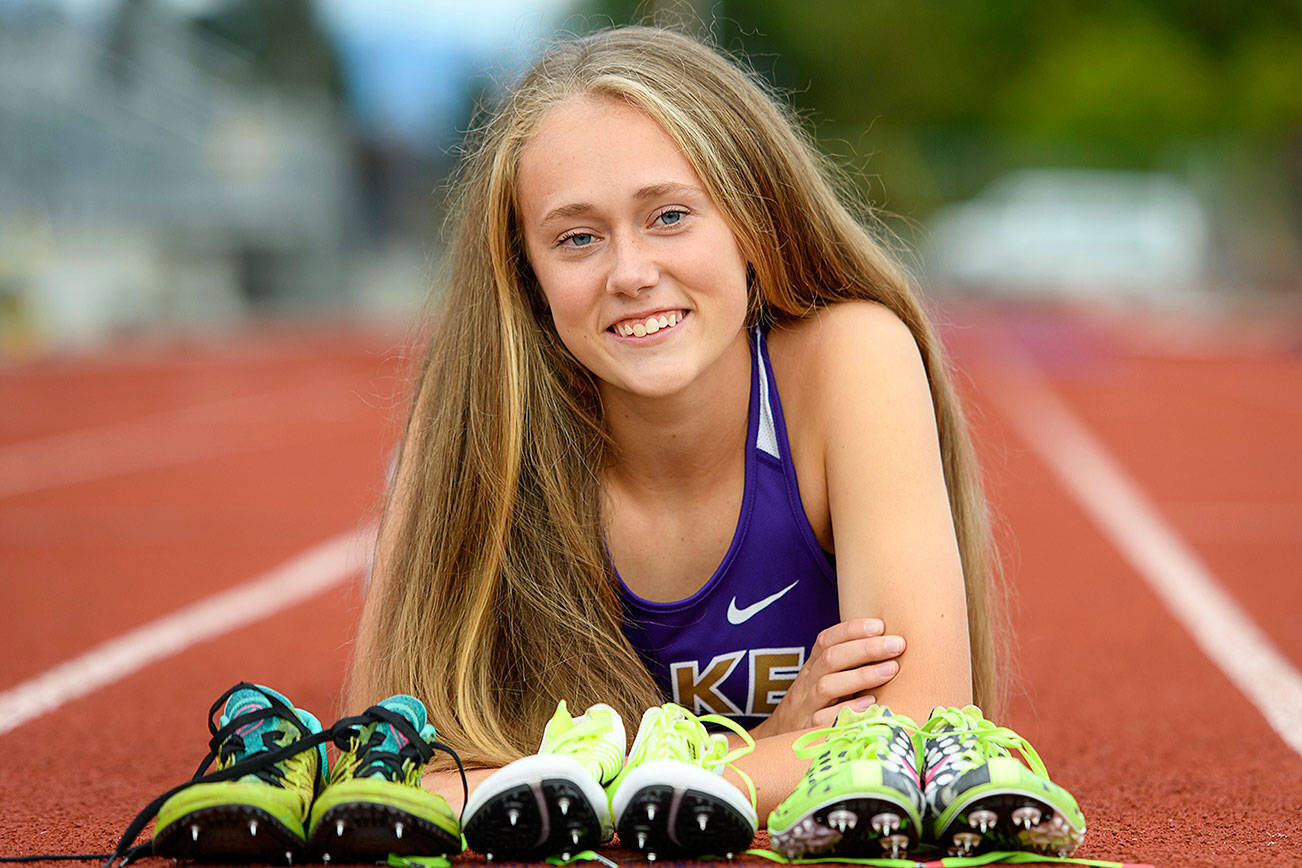
Roe began her running journey in Lake Stevens, where she collected nine individual state titles in cross country and track. At Oklahoma State University, she continued to shine, winning the NCAA Indoor 3000m title in 2022 and placing second at the 2020 NCAA Cross Country Championships. Her final collegiate season in 2024 saw her finish third in the 10,000m and sixth in the 5,000m at the NCAA Outdoor Championships.
Breakout Year on the Roads
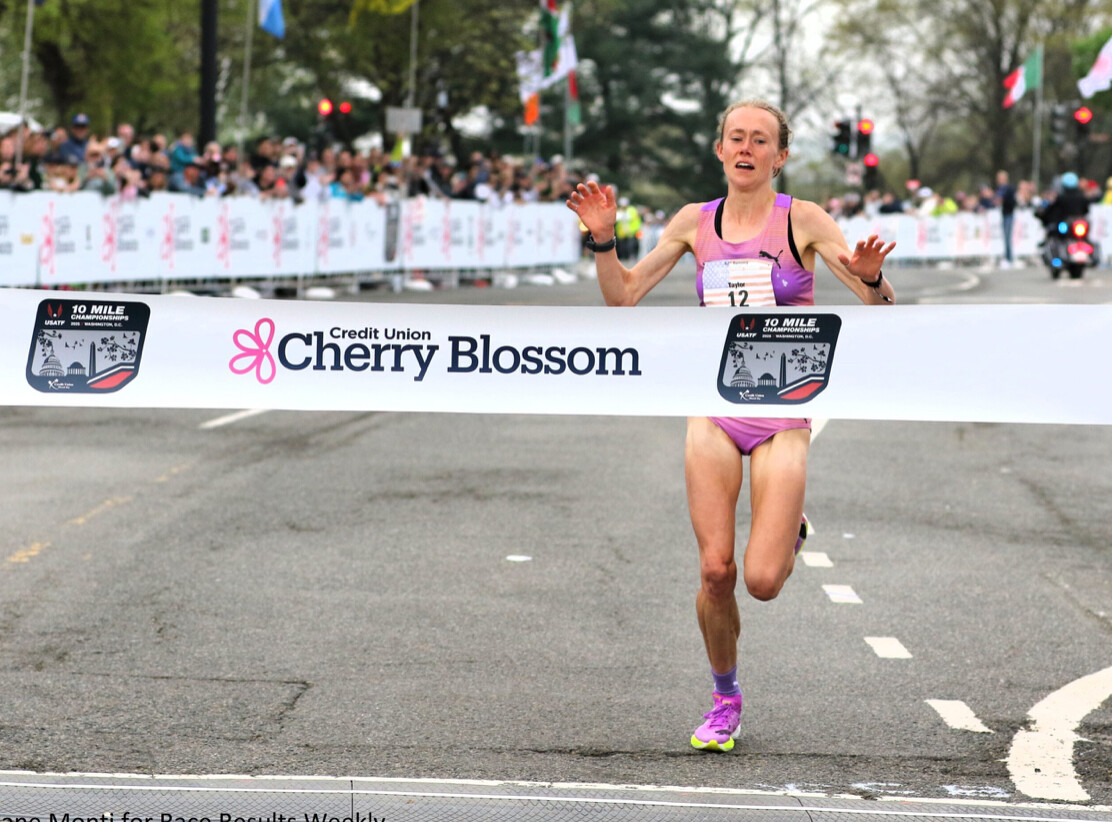
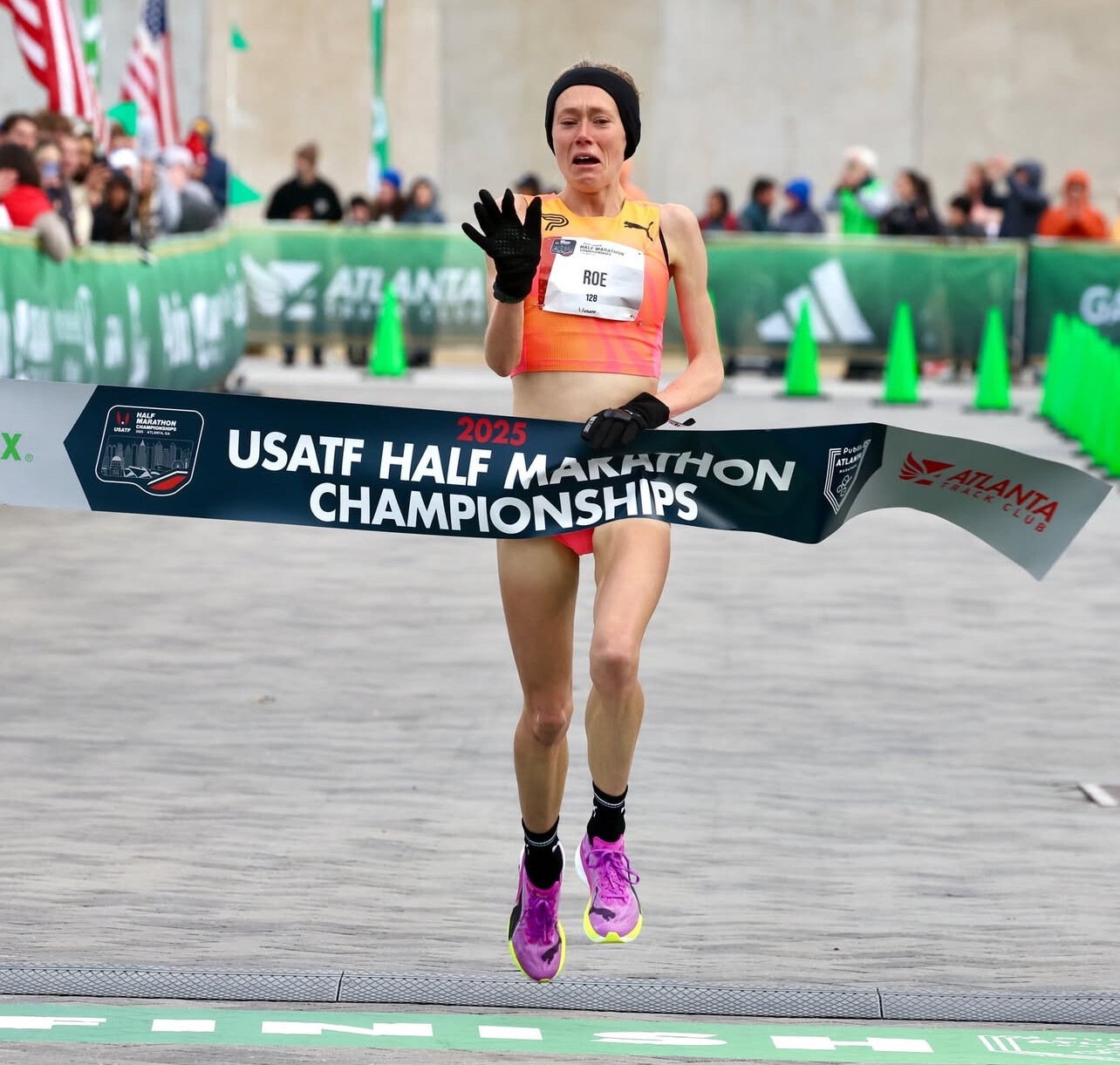
Turning pro in mid-2024 with Puma, Roe wasted no time making her mark. She won the USATF Half Marathon Championships in March 2025 in a personal best of 1:07:22. The win not only earned her a national title but also secured her a spot on Team USA for the World Athletics Road Running Championships.
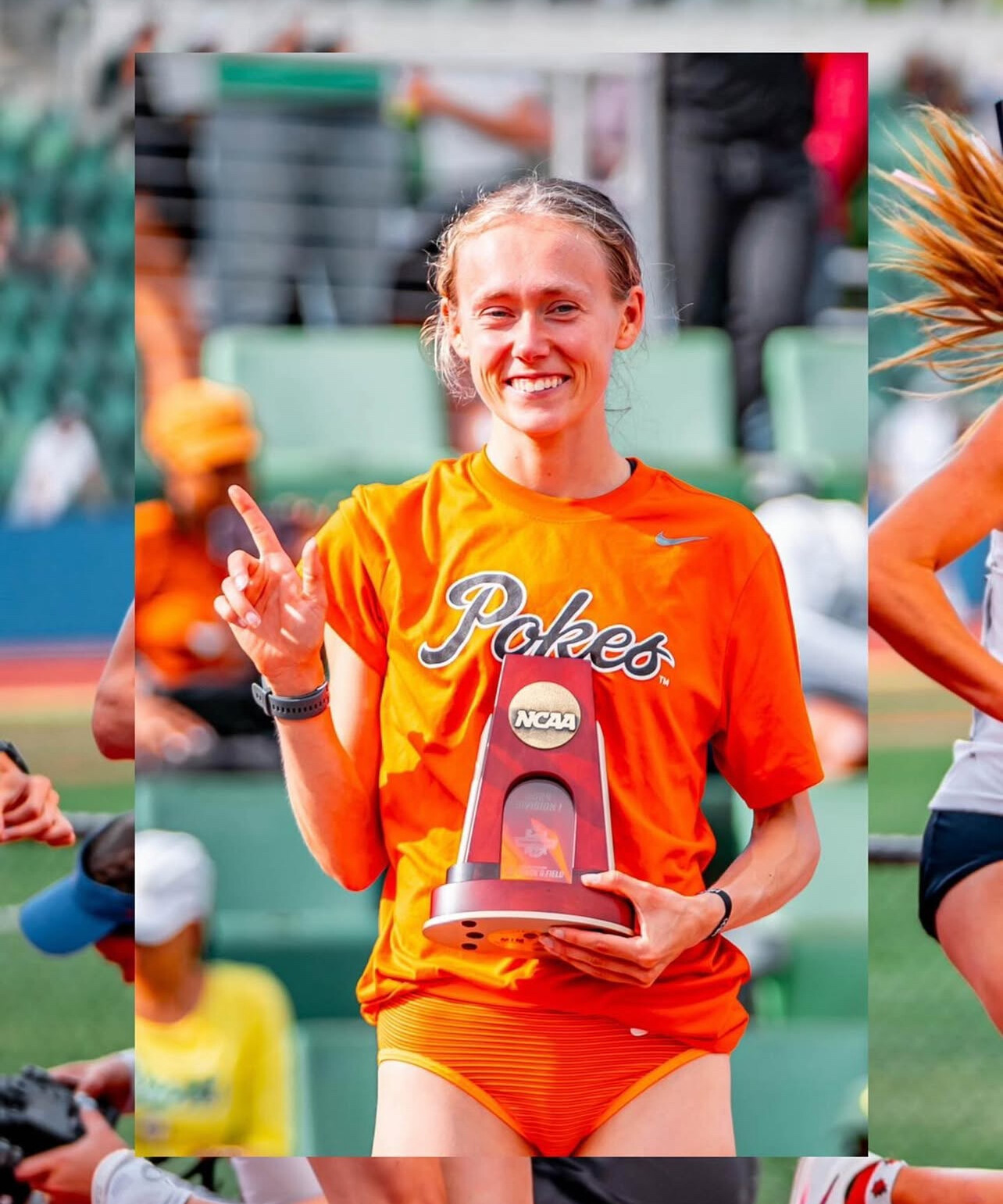
Rewriting the Record Books
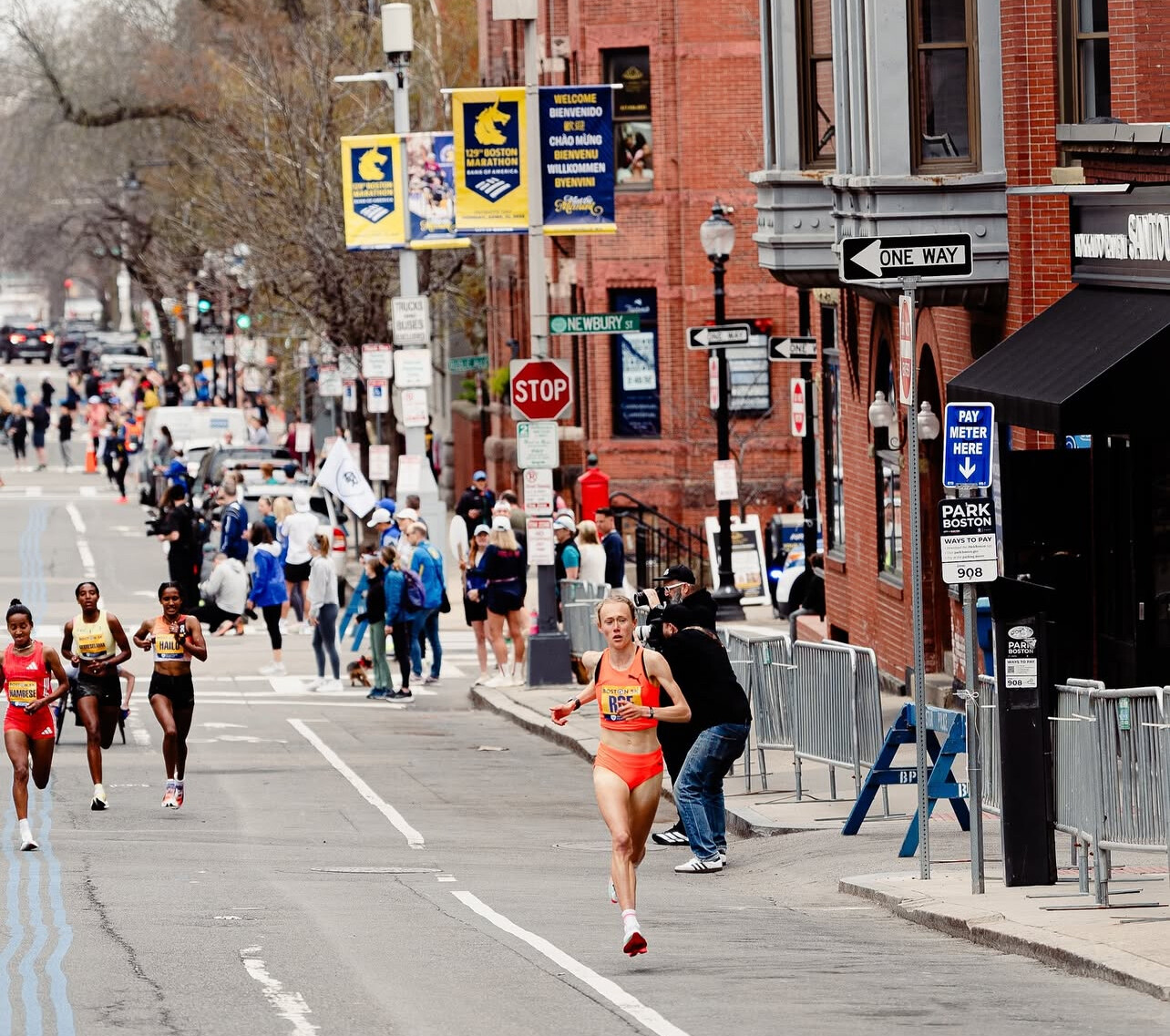
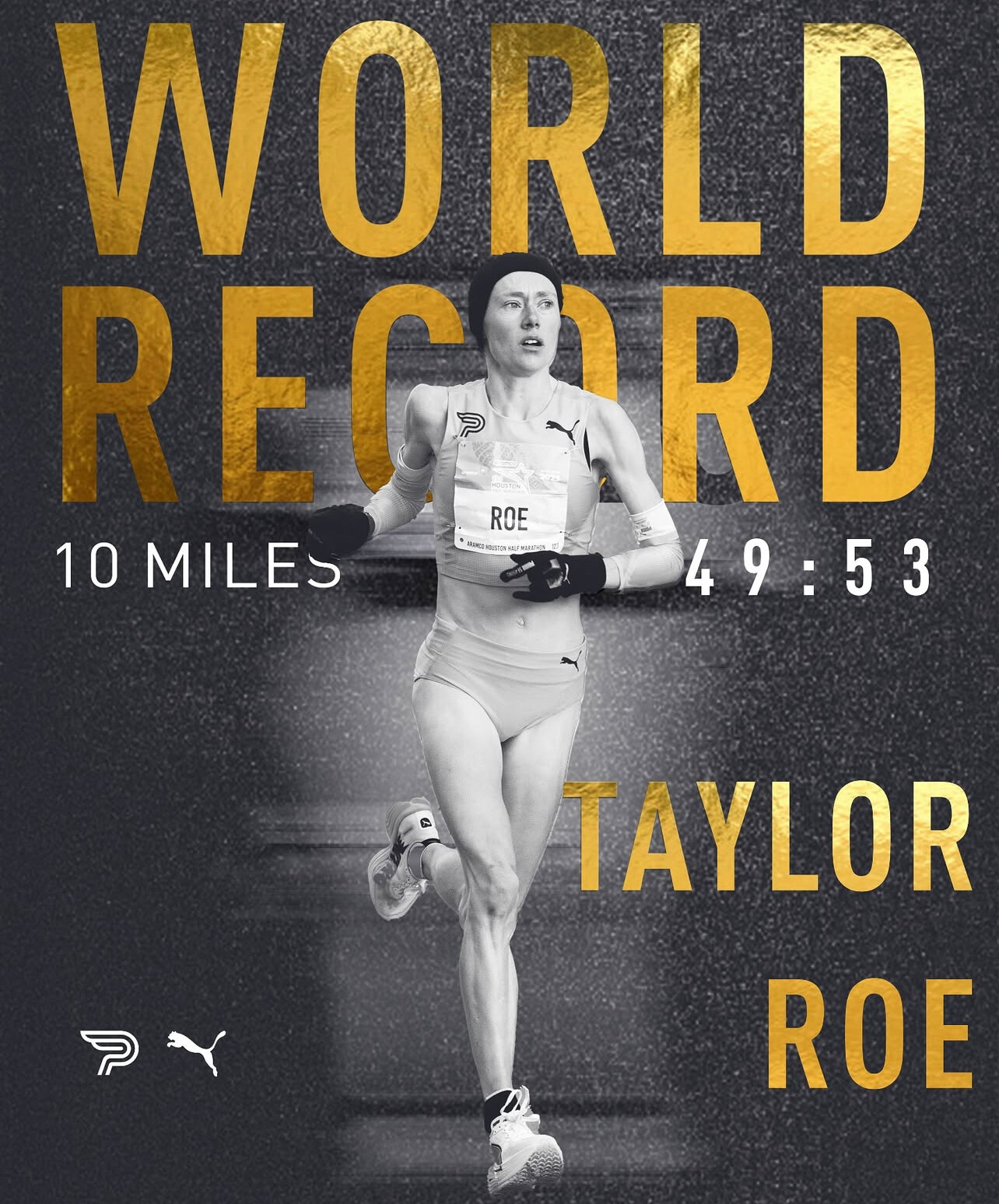
Just a month later, Roe delivered one of the most impressive road racing performances in recent memory. At the USATF 10 Mile Championships in Washington, D.C., she became the first American woman to break 50 minutes for the distance, finishing in 49:53 which is the world best for in an all woman race. On her way to the win, she also set new American records for the 10K (30:56) and 15K (46:24), earning her USATF Athlete of the Week honors.
Breaking down the world best time ever for ten miles in an all woman's race: Looking Ahead
Taylor Roe’s rise has been fast, fierce, and inspiring. As she builds on this foundation, fans of American distance running have plenty to be excited about. With her blend of speed, endurance, and race-day poise, Roe is now firmly on the radar for global championships and Olympic teams. At just 24, she’s entering her prime years with the momentum of a seasoned veteran. If 2025 is any indication, she could soon be the face of American distance running.
Taylor Roe’s 2025 Highlights
• USATF Half Marathon Champion – 1:07:22 (March 2025)
• USATF 10 Mile Champion – 49:53 (April 2025)
• American Records:
• 10K – 30:56
• 15K – 46:24
• 10 Miles – 49:53
• Selected for Team USA – World Athletics Road Running Championships
Taylor Roe’s rise has been fast, fierce, and inspiring. As she builds on this foundation, fans of American distance running have plenty to be excited about.
by Boris Baron
Login to leave a comment
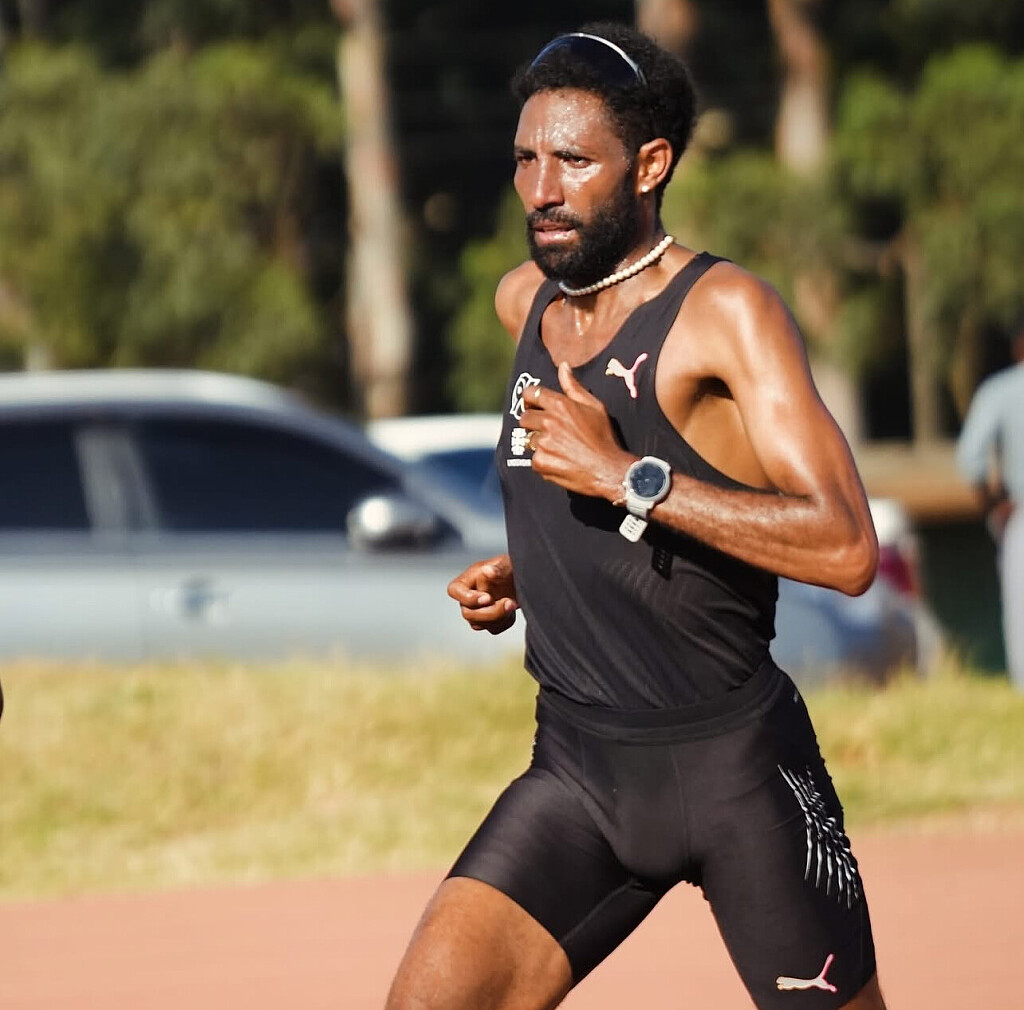
Amanal Petros - From Refugee to Record-Breaker, Eyes Set on London Marathon Glory
German marathon record-holder Amanal Petros is preparing for a significant milestone in his athletic career as he sets his sights on the 2025 London Marathon, scheduled for April 27, 2025. This event will mark his inaugural participation in the London Marathon, where he will compete alongside an elite field featuring renowned athletes such as Eliud Kipchoge and Kenenisa Bekele. Petros’s personal best of 2:04:58, achieved at the 2023 Berlin Marathon, positions him as a formidable contender in this prestigious race.
A Journey of Resilience and Achievement
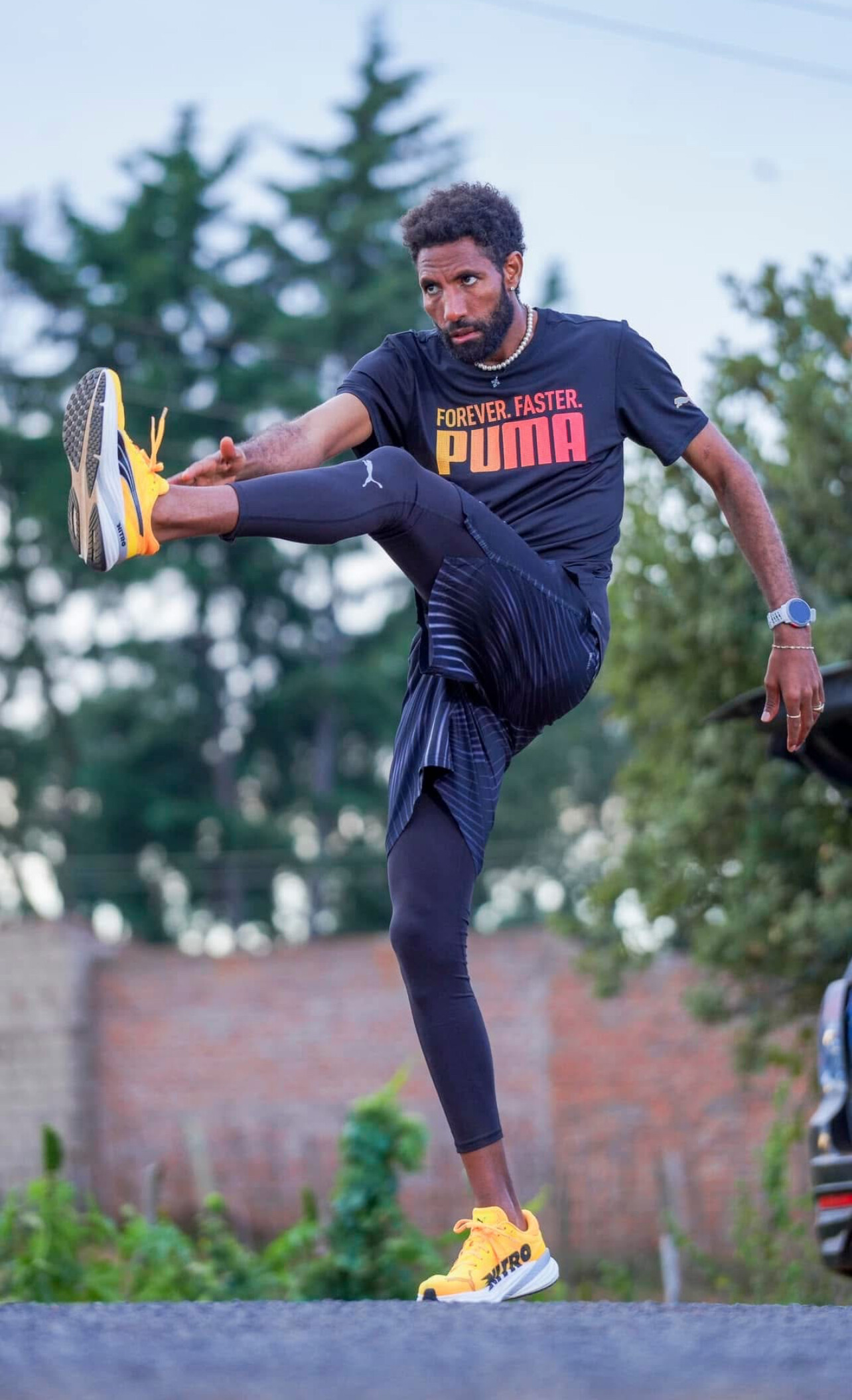
Born on May 17, 1995, in Assab, Eritrea, Petros’s early life was marked by adversity. At the age of two, his family fled the Eritrean-Ethiopian conflict, seeking refuge in Ethiopia. In 2012, as a teenager, Petros embarked on a journey to Germany, where he sought asylum and eventually acquired citizenship in 2015. It was in Germany that he discovered his passion and talent for long-distance running, setting the stage for a series of remarkable achievements.
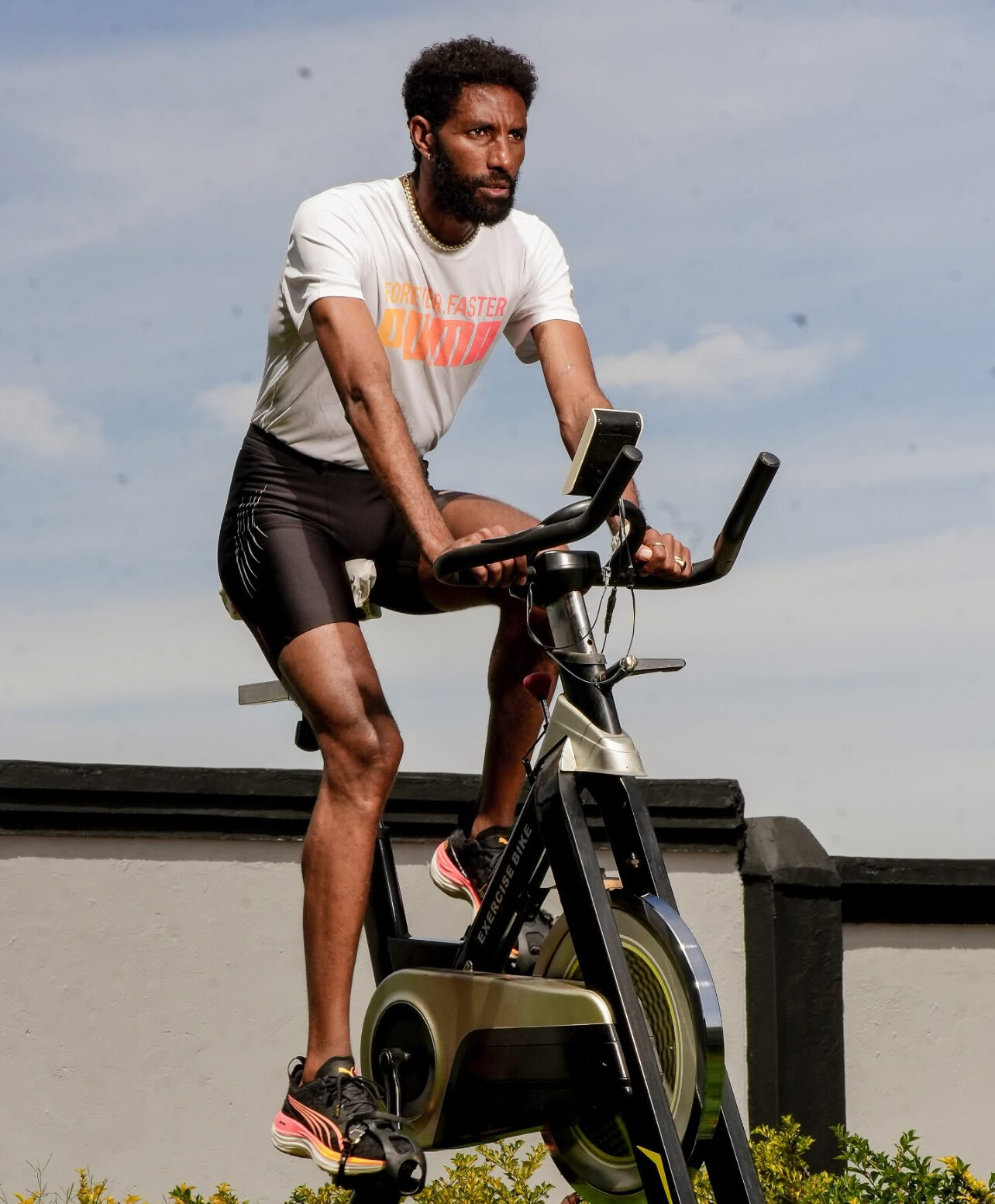
Record-Breaking Performances
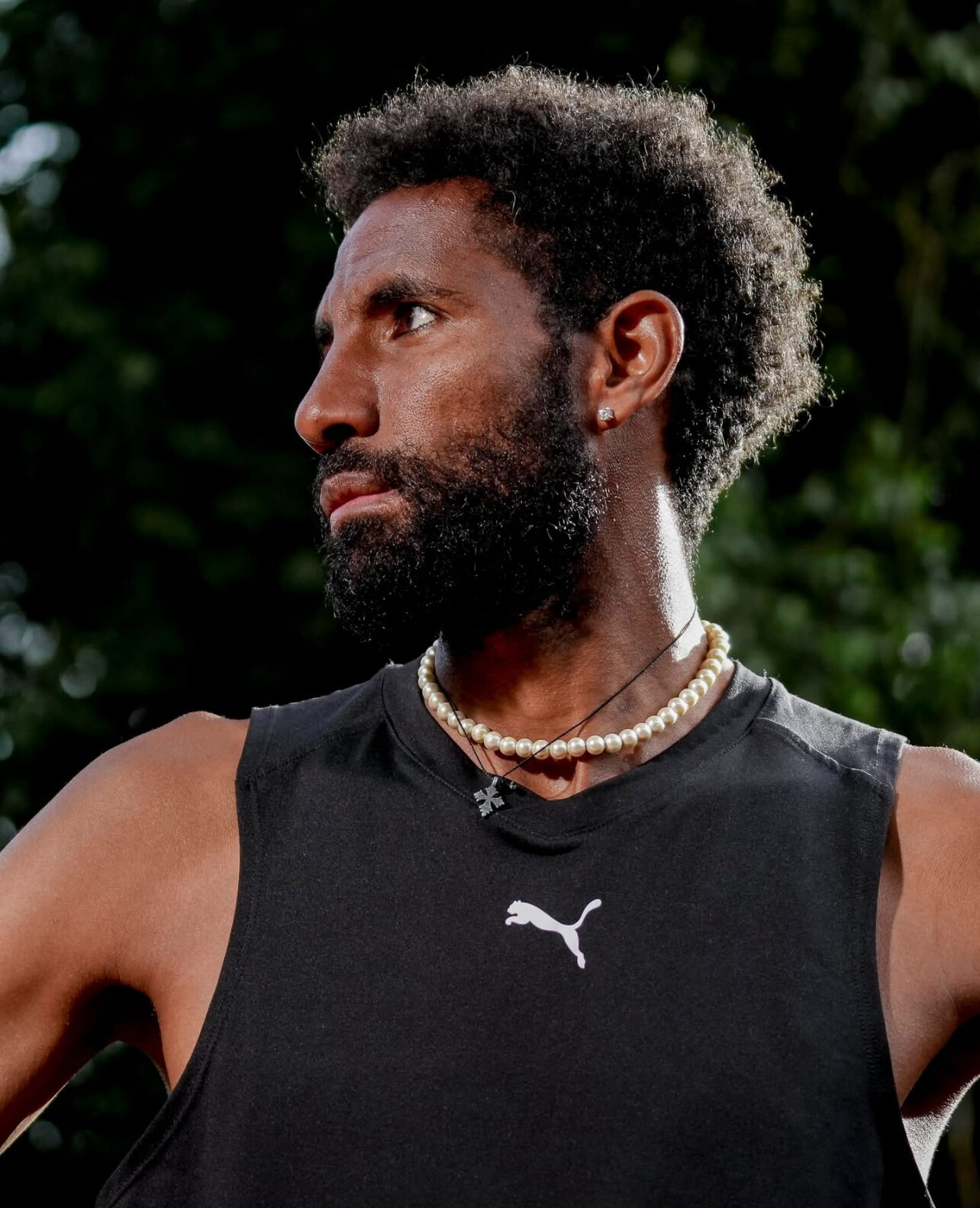
Petros’s dedication and perseverance have led to several national records:
• Marathon: German national record of 2:04:58, set at the 2023 Berlin Marathon.
• Half Marathon: National record of 1:00:09, achieved in Valencia on October 24, 2021.
• 10 km Road Race: National record of 27:32, set in Castellón, Spain, on February 26, 2023.
International Representation
Petros has proudly represented Germany on the international stage:
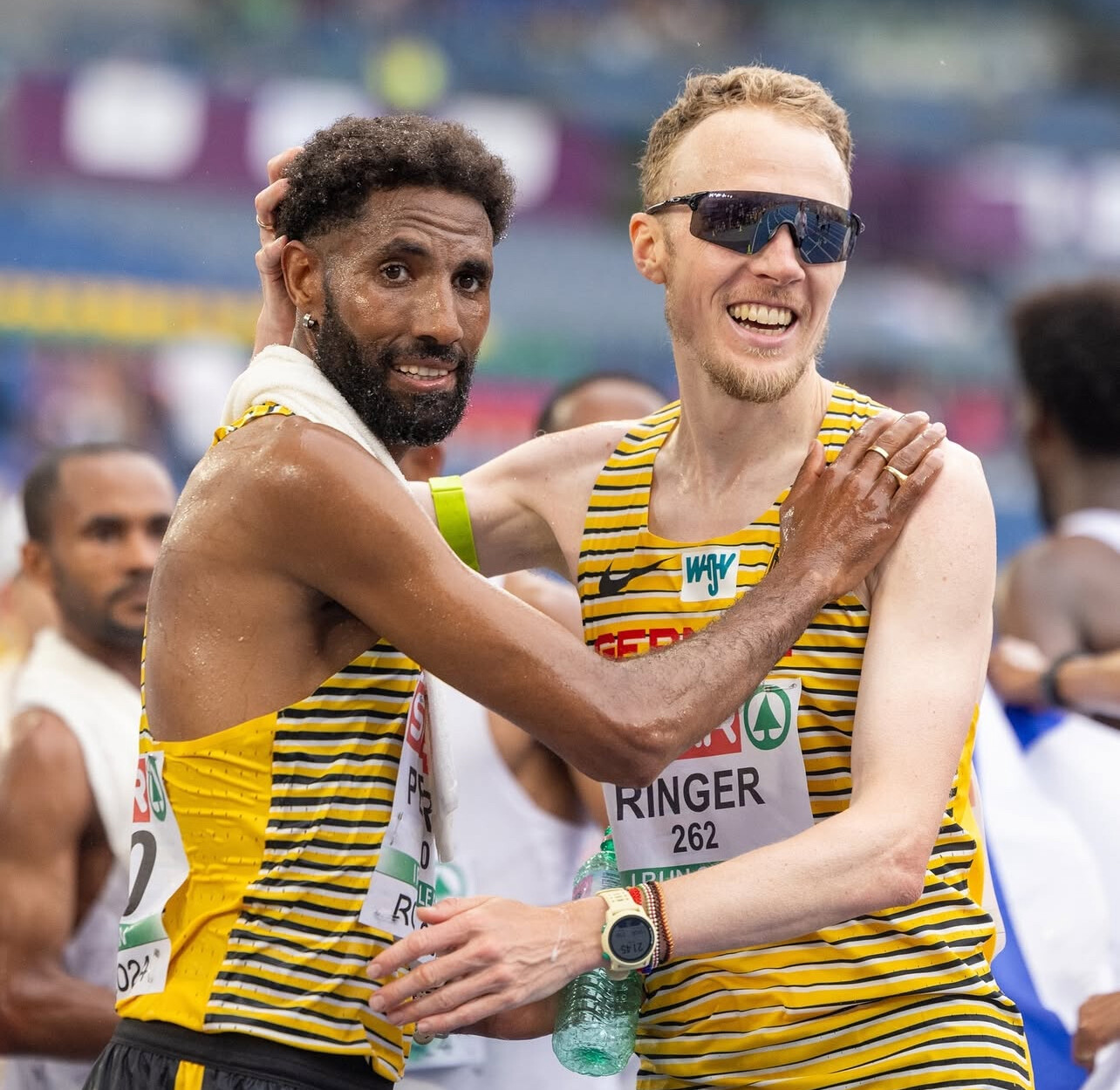
• Olympic Games: Competed in the men’s marathon at the 2020 Tokyo Olympics, finishing 30th.
• European Championships: Secured a silver medal in the team marathon event and placed fourth individually at the 2022 European Athletics Championships in Munich.
Recent Preparations and Professional Milestones
In preparation for the London Marathon, Petros participated in the eDreams Mitja Marató Barcelonaon February 16, 2025, completing the half marathon in 1:01:51. Reflecting on his performance, he stated:
“Today I ran quite far from my German record, but I am happy to run my first competition in 61:50 after the Olympic Games in Paris. Looking forward to my first marathon in London 2025.”
In addition to his athletic endeavors, Petros has recently joined the Puma Running Team, expressing enthusiasm about this new partnership and the opportunities it presents for the upcoming seasons.
Looking Ahead
As the 2025 London Marathon approaches, the running community eagerly anticipates Petros’s performance. His journey from a refugee seeking asylum to a national record-holder exemplifies resilience and determination. With his eyes set on London, Petros continues to inspire and set new benchmarks in long-distance running.
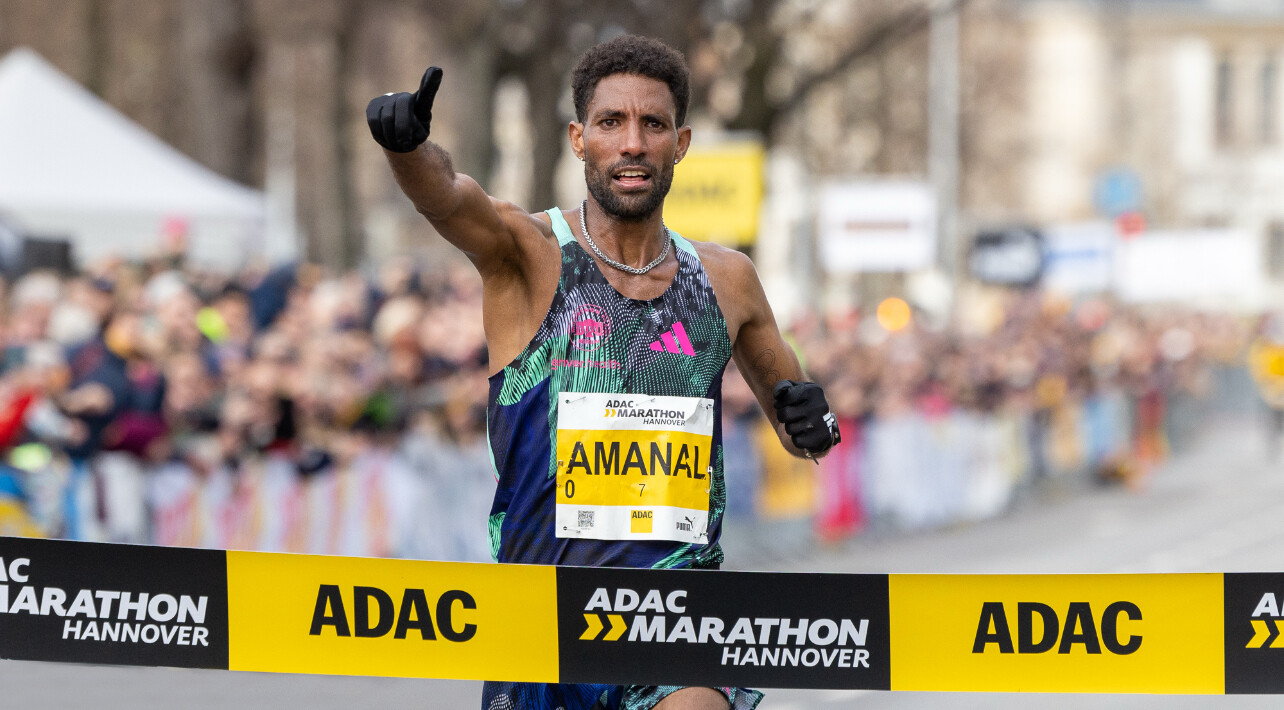
The last photo
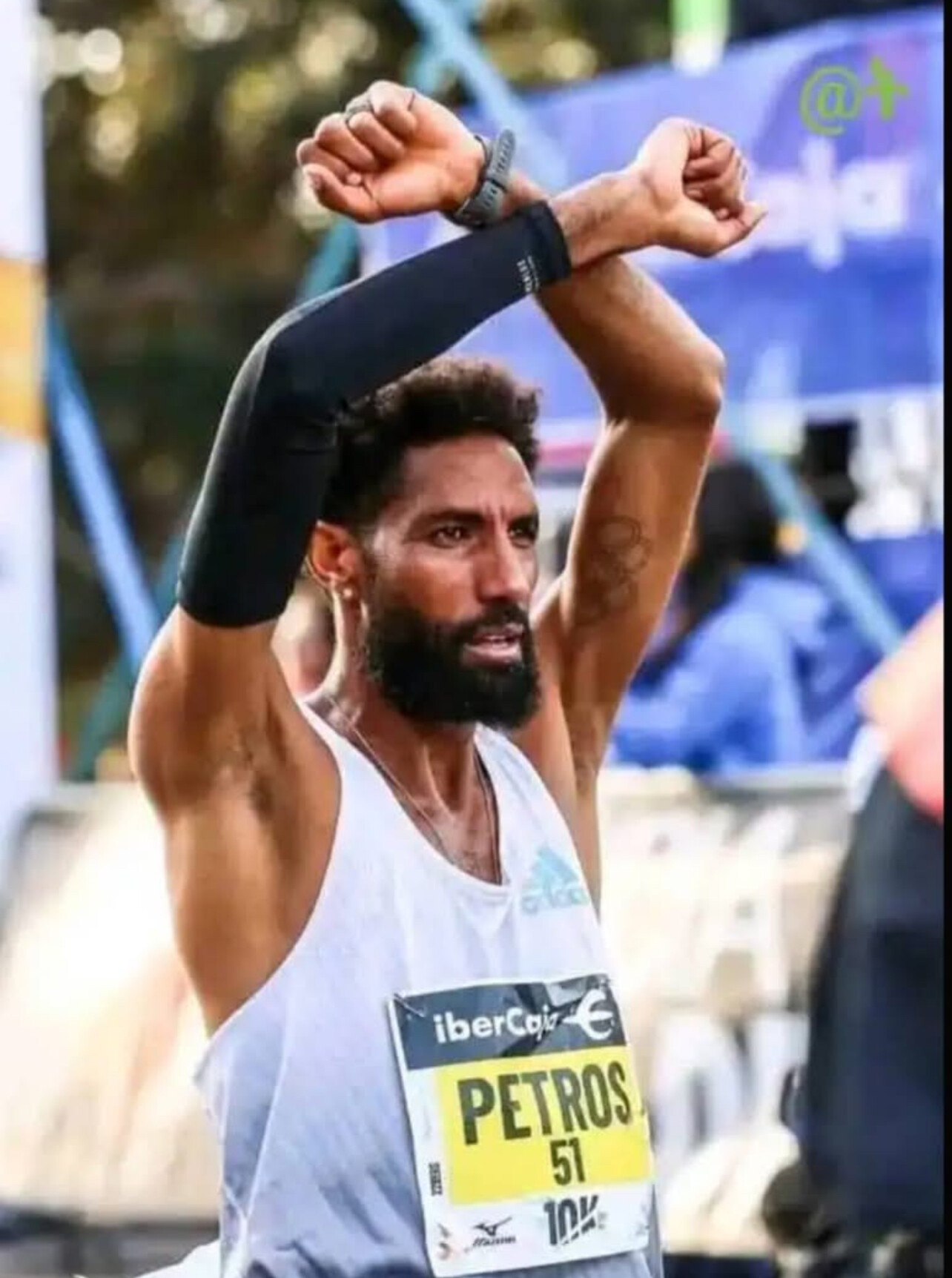
The gesture Amanal Petros is making in this photo — crossing his arms above his head — is a powerful and symbolic act. He does not do this gesture often but his beliefs have not changed.
This “X” gesture has been widely recognized as a sign of solidarity with the Tigray people in northern Ethiopia. It’s used by athletes and others to bring attention to the humanitarian crisis and conflict in the region, where countless civilians have suffered due to war, famine, and displacement.
Petros, who was born in Eritrea and whose roots are in Tigray, is using this moment at the finish line to make a public statement of support and raise awareness.
by Boris Baron
Login to leave a comment
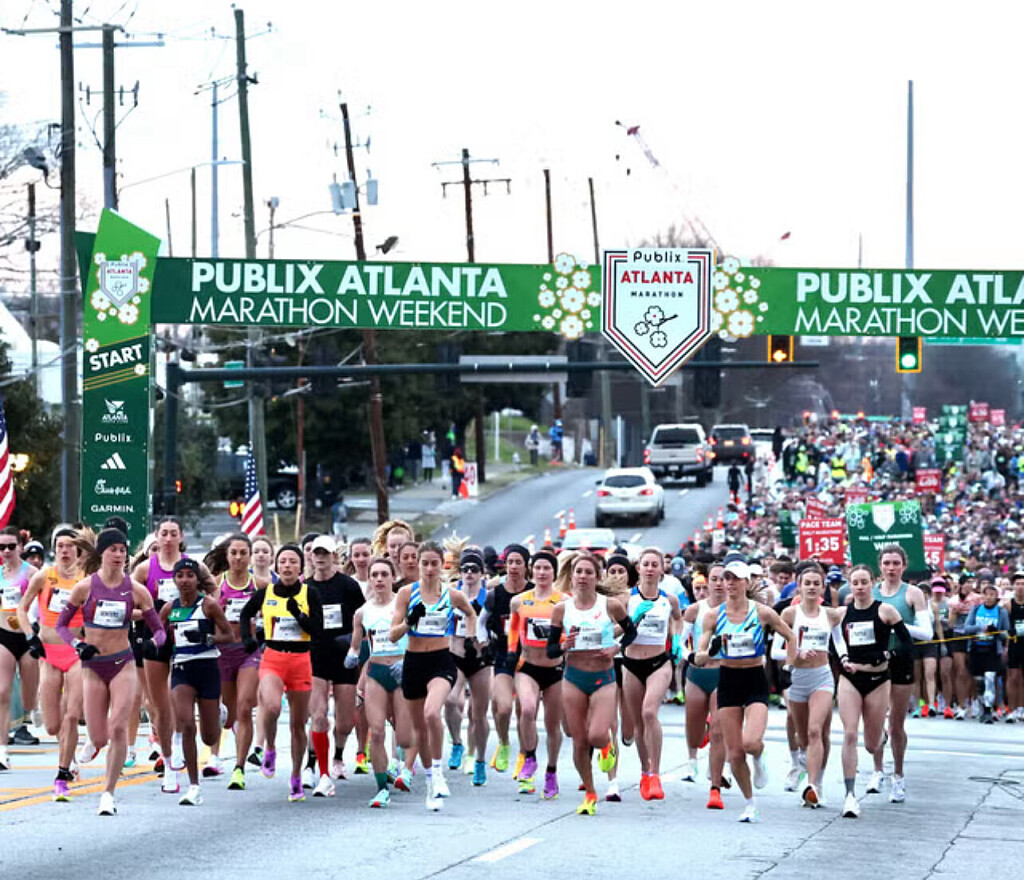
Roe and Maier Dominate USATF Half Marathon Championships
On a chilly morning in Atlanta, runners took to the streets for the USATF Half Marathon Championships on March 2, 2025, battling for national titles and a chance to represent Team USA at the World Athletics Road Running Championships in San Diego this September. With fierce competition and fast times, Taylor Roe and Alex Maier emerged as the day’s champions.
Roe Breaks Away to Claim First National Title
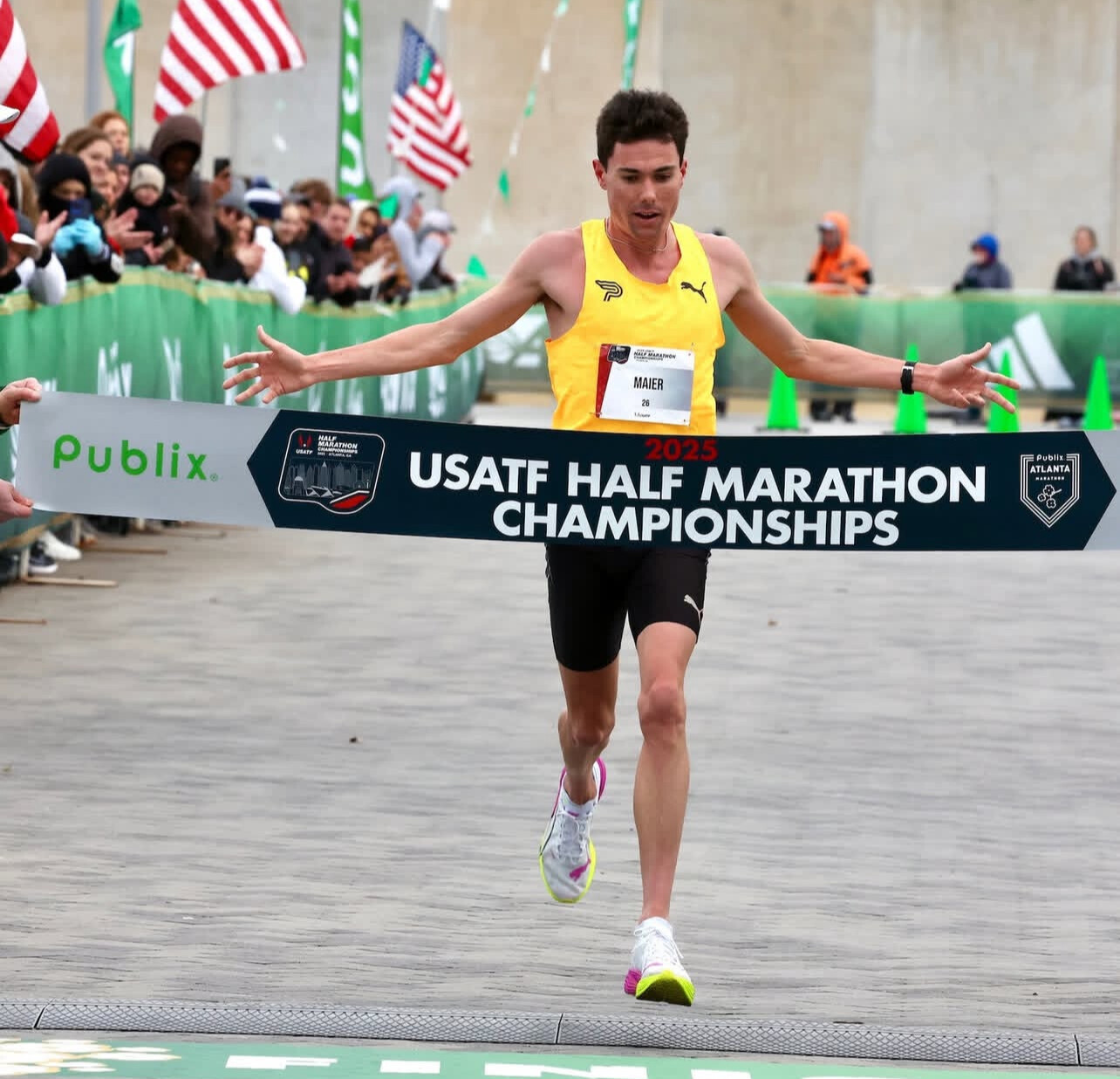
Taylor Roe made a statement in the women’s race, surging ahead in the final miles to secure victory in 1:07:22. The Durham, North Carolina, standout, representing PUMA Elite, held off a strong challenge from Emma Grace Hurley, who finished second in 1:07:35. Amanda Vestri of Blowing Rock, North Carolina, rounded out the podium with a solid 1:08:17.
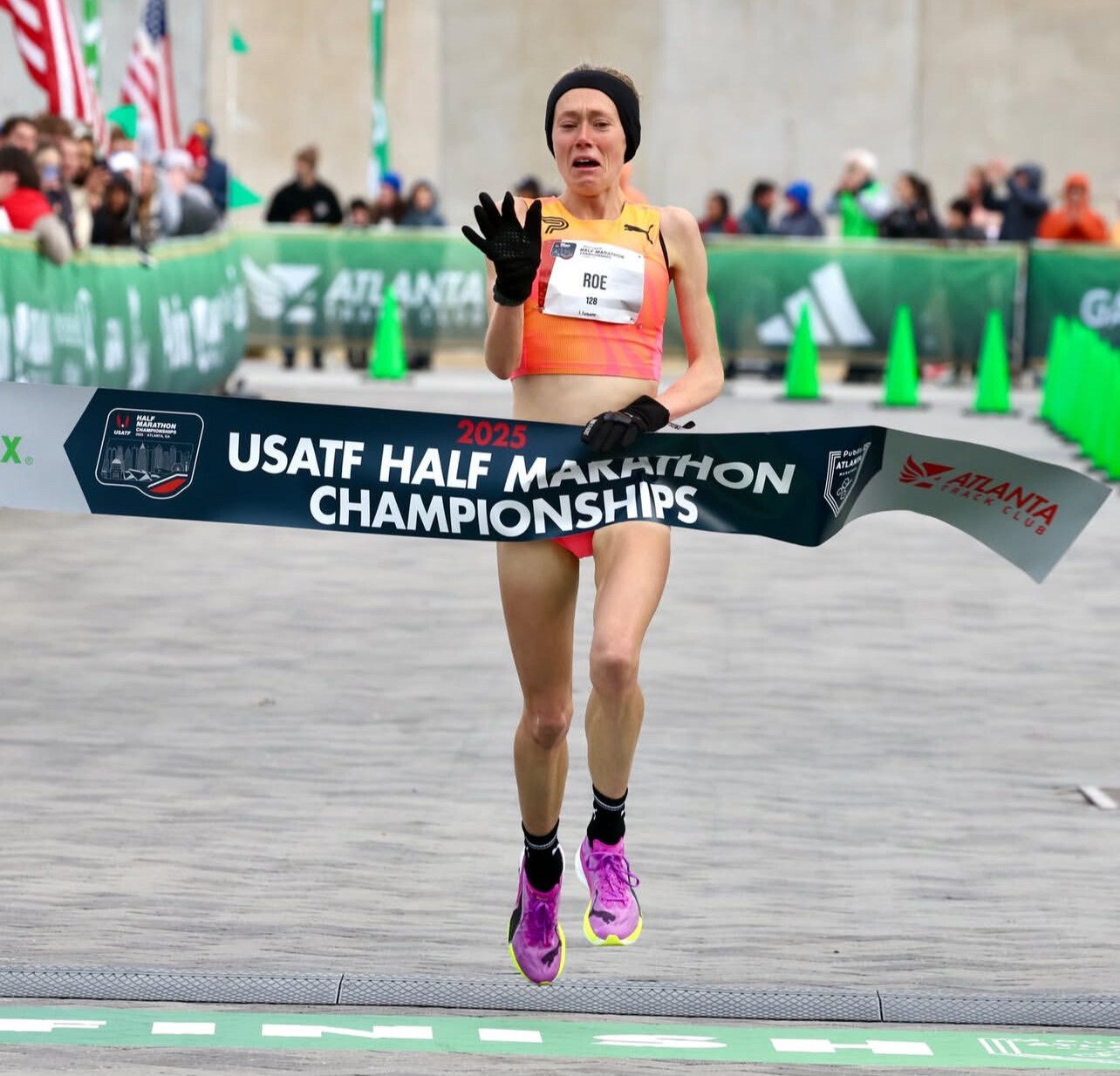
With their top-three finishes, Roe, Hurley, and Vestri secured their spots on Team USA for the World Championships in San Diego.
Top Five Women:
1. Taylor Roe (Durham, NC) – 1:07:22
2. Emma Grace Hurley (Indianapolis, IN) – 1:07:35
3. Amanda Vestri (Blowing Rock, NC) – 1:08:17
4. Jessica McClain (Phoenix, AZ) – 1:08:37
5. Emily Venters (Salt Lake City, UT) – 1:09:03
Maier Holds Off Late Challenge to Take the Men’s Crown
In the men’s race, Alex Maier delivered a strong performance, crossing the finish line in 1:00:48 to claim his first USATF Half Marathon title. The Chapel Hill runner, also representing PUMA Elite, stayed composed as Shadrack Kipchirchir of Colorado Springs pushed hard in the final stretch, finishing just 10 seconds back in 1:00:58. Hillary Bor made it a tight battle for second and third, clocking 1:00:59.
Maier, Kipchirchir, and Bor will now represent Team USA at the World Championships, where they’ll take on some of the world’s best in San Diego.
Top Five Men:
1. Alex Maier (Chapel Hill, NC) – 1:00:48
2. Shadrack Kipchirchir (Colorado Springs, CO) – 1:00:58
3. Hillary Bor (Colorado Springs, CO) – 1:00:59
4. Ahmed Muhumed (Flagstaff, AZ) – 1:01:03
5. Andrew Colley (Blowing Rock, NC) – 1:01:09
All Eyes on San Diego
With the USATF Half Marathon Championships in the books, the focus now shifts to the World Athletics Road Running Championships in San Diego this September. The newly crowned national champions, along with the other top finishers, will have the opportunity to take on the best distance runners from around the globe. If their performances in Atlanta are any indication, Team USA will be ready to make an impact on the international stage.
Login to leave a comment
Try this pro runner’s rust-busting workout for 2025
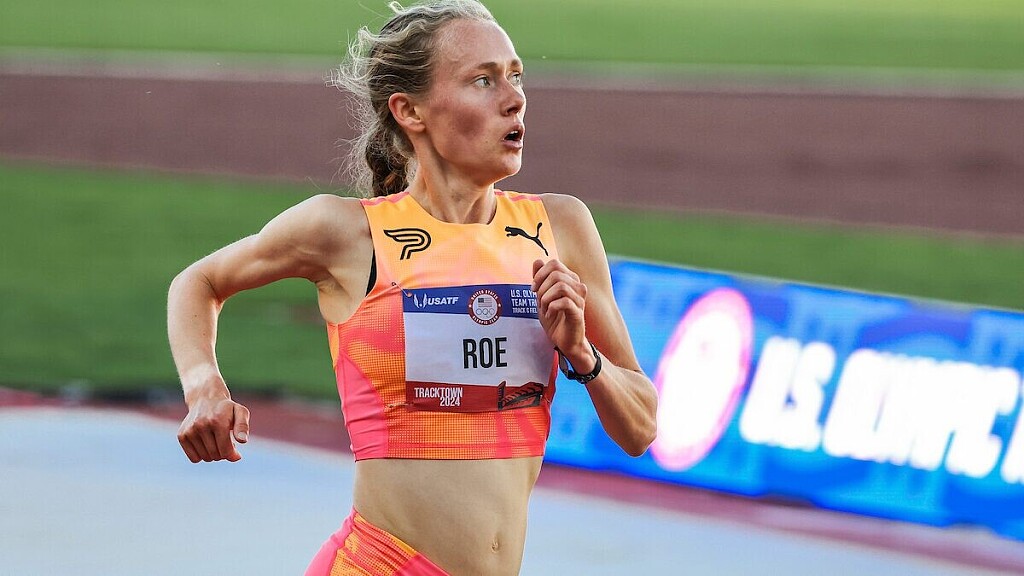
What better way to hit the ground running in 2025 than with an elite-level workout? A YouTube video posted by Track: All-Access on Tuesday revealed professional Puma runner Taylor Roe‘s first workout of the track season–a hefty session filled with fartlek intervals and mile repeats. Give the workout a go if you’re looking for a speedy way to start off a new year of running.
The workout
Set 1: 1,600m. Rest: 90 seconds
Set 2: 1,200m fartlek (4 x 200m, 100m jog)
Set 3: 1,600m. Rest: 2 mins
Set 4: 1,200m fartlek (4 x 200m, 100m jog)
Set 5: 1,600m
Total volume on track: 8,800m
Remember to take the session easier than a mid-season workout–be extra gentle while busting off the rust! Complete the mile repeats at around 5K pace, and take on the 200m portion of the fartlek at a solid effort–faster than the mile pace, but much slower than an all-out attempt. Since it’s the only rest portion of this set, take the 100m jog very easy.
“It’s too early to blow people up,” Puma Elite head coach Alistair Cragg said. “We want to keep everyone in it, working together.”
Roe completed the mile intervals in 5:24, 5:22 and 5:20. Her fartlek sets were around 4:08 (34 seconds for 200m, 28 seconds for easy 100m). “I’m clearly not doing well at pacing,” Roe said to the camera mid-workout. “But it’s not as bad as I thought it would be.”
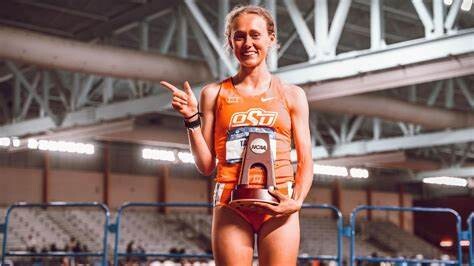
Representing Oklahoma State University, the Washington state native won the NCAA 3,000m title in 2022 with a time of 8:58.95. She took silver in the 2024 NCAA 5,000m in March, finishing runner-up to Olympian Parker Valby. Roe holds 12 NCAA All-American honours from her five-year collegiate career and holds a 5,000m personal best of 15:15.01. The 24-year-old signed with the Puma Elite Running Team in July.
It’s not yet known when the athlete is set to open up her indoor season, but Cragg hinted that it will be won’t be until February. “You’ll blow yourself up,” he said to Roe. “We’re not going anywhere near blowing you up for the next–at least–four weeks.”
by Cameron Ormond
Login to leave a comment

Save or Splurge? How to Decide Which Running Gear is Worth Your Money.
Not every piece of gear is worth it—here’s how to tell.
Running, at its core, is a relatively low-gear sport, but people love to bemoan that it’s increasingly expensive. I agree—paying $120 for a long-sleeve T-shirt or shelling out hundreds for compression boots seems bonkers to me.
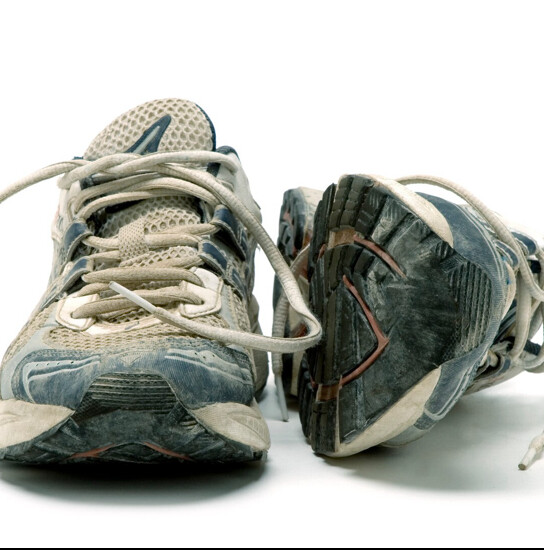
I’ve been running for 10 years now, and for most of that time, I’ve been a broke student or frugal post-grad. I enjoy the competitive element of running, so I typically invest only in pieces that affect my performance. While shopping, I commonly ask myself: Will this make me a better runner, or would it just be nice to have?
Here’s my hard-earned wisdom—from head to toe—about where to splurge and where to save a few bucks.
Hats → Save
I rarely buy hats. And if I do, I buy them for cheap. Caps are a utility to me, and as long as they keep my face shaded and head ventilated, I don’t care too much about appearances. Plus, I sweat regardless, so the fancy ones that claim to be extra breathable seem pointless to me. Each time I go to a major marathon for work, I feel like I come home with at least one new cap. They’re a common freebie at brand events and expo booths.
Shirts → Save
This is another place where I save dough. I don’t obsess over fancy features like UV protection or worry if the material is ultra-breathable. I just wear sunscreen and go shirtless on a hot day.
I still have tech tees that my mom bought me in high school at the outlet mall, and some of my favorite tops have been clearance-rack finds at Marshalls. And you know those “free” shirts you get for signing up for a race? I wear them! Even if they’re ugly. Finally, I’m not afraid to wear cotton—it gets a bad rap, but there’s something poetic about sweat stains proving that you put in some effort.
Shorts → It Depends
For split shorts, I buy them cheap. For half tights, I splurge.
All I’m looking for in split shorts is a loose fit, a comfortable liner, and a little pocket for my house key. I like my short shorts short, so you’ll rarely see me wearing anything longer than a 5-inch inseam. My old Baleaf 3-inch and Nike Challenger 2-inch split shorts have served me well over the years.
Since half tights mean more material on my skin, investing in higher-quality fabrics is worth it. Plus, premium versions tend to have more-secure pockets. I used to hate running with my phone because I didn’t like carrying it, but I got a pair of Janji 8-inch trail half tights that have plenty of pockets and lock my phone into place. They’re worth the $82 to me.
Socks → Save
This might be my hottest take yet, but I like cotton socks. There, I said it! Some of my favorite cheap socks come in a six-pack from Dick’s Sporting Goods. My feet sweat a lot, and I’ve found that socks that are mostly made of cotton help mop up the perspiration better than pricier, “sweat-wicking” polyester (ironic, I know). I will say, I do have some running-specific socks that I enjoy. I usually wear Near Earth crew socks during races (which are a steep $24 per pair). They look sleeker than my white cotton Nike crews, and they match my race-day outfit better since they’re logo-less.
Trainers → Splurge
I believe that trainers are the single most important investment in a running wardrobe. However, shoes are freakin’ expensive nowadays, and if you run a lot, the money adds up. While I don’t recommend buying used shoes, I often scour the internet for last year’s models. Shoe tech has gotten so good in recent years that the difference between the 2023 version of a popular trainer and the 2024 pair isn’t much, and yet saves you a decent amount of money. I scored a new pair of the New Balance 1080 v12, which debuted in the spring of 2022, for under $100
Racing shoes → Splurge
Most marathoning super shoes are north of $200, and while I certainly notice a performance improvement—they’re a nonnegotiable at the elite level now—I’m sparing with how often I lace them up. I do a lot of my workouts in trainers or in old racing shoes that are nearing the end of their lifespan so I can save my good pair for key workouts and races. Lately, my Puma Deviate Elite 3s ($230) have been my weapon of choice. On race weekends, I try to avoid wearing them on shakeout runs, walking around the city, or even on my warmup jog before my race, if I can help it. Many carbon-plated shoes start to degrade around 200 miles, so every mile counts.
Sunglasses → Save
Good news: High-quality sunglasses can be pretty affordable! Sunglasses are easy to forget in a hotel room or sit on in your car (I would know), so I’ve never splurged on a fancy pair. Goodr has been leading the charge, with polarized options starting at only $25. I have three pairs.
Watches → Save
In high school, I bought a bare-bones Garmin Forerunner 10 for around $100, which I wore until the strap broke and I got frustrated with the glacially slow GPS signal. In college, I upgraded to the Forerunner 35 ($150). It served me well, but again, it was slow and lacked some basic features, like a lap button.
Now I have a Forerunner 955—close to the top-of-the-line at $500—that one of our gear editors passed along to me after he got a new watch. I like it better than my first two, but I’m not sure I would shell out my own money for one. I really only need the basics, not the fancy features like ground contact time or suggested workouts. One day, I dream of running with only a simple digital stopwatch, but I can’t will myself to leave the world of GPS yet.
Gloves → Save
Pennsylvania’s Lehigh Valley, where I live, can get cold, but I’ve found that cheap gloves do the trick. I’ve had a $30 pair of Nike basics from a sporting goods store that have done the job for close to a decade. Sometimes, if it’s abnormally cold, I’ll layer two pairs of thin gloves, thus eliminating the need for an expensive ultra-insulated pair.
Outerwear → It Depends
Soft layers, like pullovers, hoodies, and long sleeves, don’t need to be fancy. I cherish my college sweatshirts. But shell layers—rain jackets, windbreakers, insulated jackets—are worth the investment. The difference between being wet and shivering versus dry and comfortable is enough to make me pay a little extra. My Lululemon Fast and Free jacket ($148) is lightweight and totally worth it.
Login to leave a comment
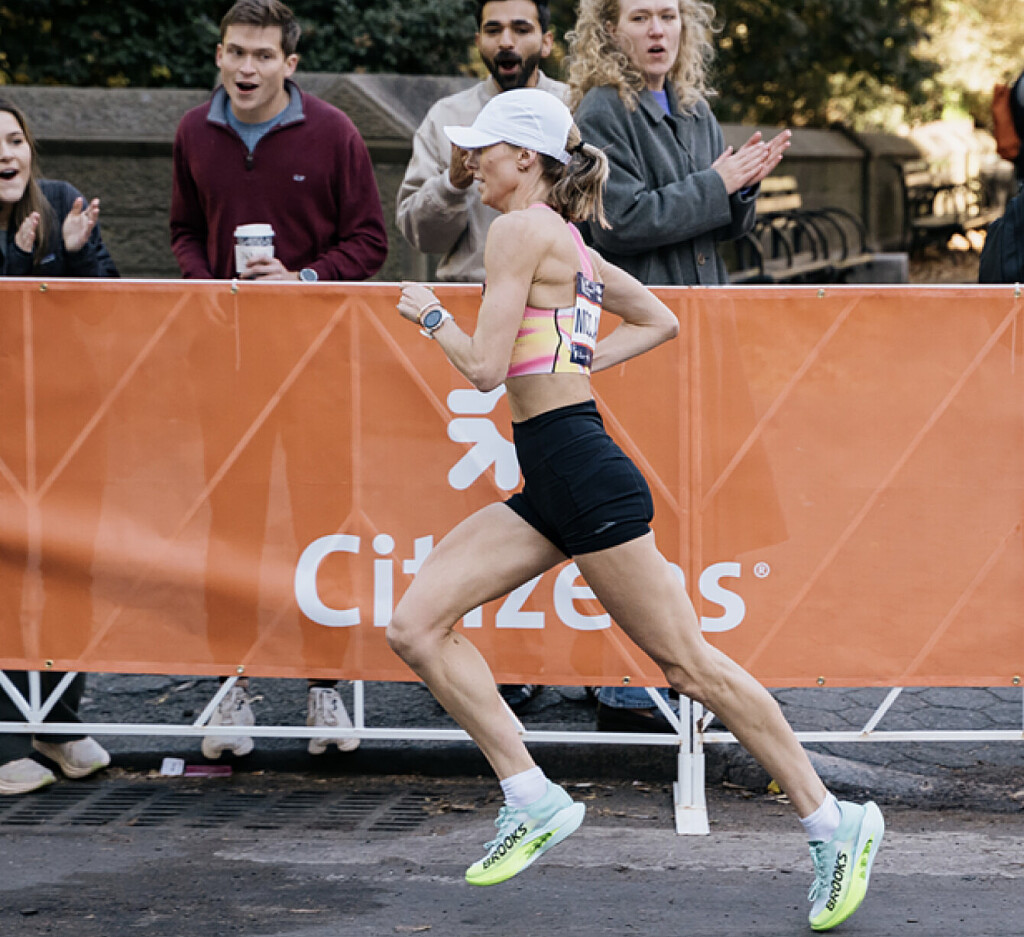
Racing Super Shoes Will Be Lighter, More Responsive, and Likely Even Faster in 2025
New models from Adidas, Brooks, Hoka, On, Puma, and Saucony highlight a speedy new crop of racing and training super shoesEager to run a new personal best in the marathon in 2025? Or are you itching to crank out a quicker half marathon than you ran in 2024? Or maybe a fast effort in a trail race? The continued evolution of speedy shoe technology will be on your side. With new midsole foams and propulsion plate configurations, top-tier racing shoes will be lighter, more responsive, and presumably faster in 2025.
That goes for both road racing and trail racing super shoes that will be hitting running shops from late winter to early summer.Asics, New Balance, and Under Armour will have lighter and more energetic road racing shoes coming out by late spring, while Nike is expected to release its Ultrafly 2 trail racing super shoe in June. While those models are still under embargo, we’ve got the scoop on several race-day super shoes and high-performance training shoes unveiled at The Running Event trade show in November in the roundup below. We haven’t fully wear-tested these shoes yet, so it’s just a preview of what’s to come. When wear-testing is complete, we’ll produce both first-run reviews and in-depth multi-tester reviews with input from the Outside wear-test team and data from the Outside Gear Lab in Denver.2025 Road Racing Super Shoes
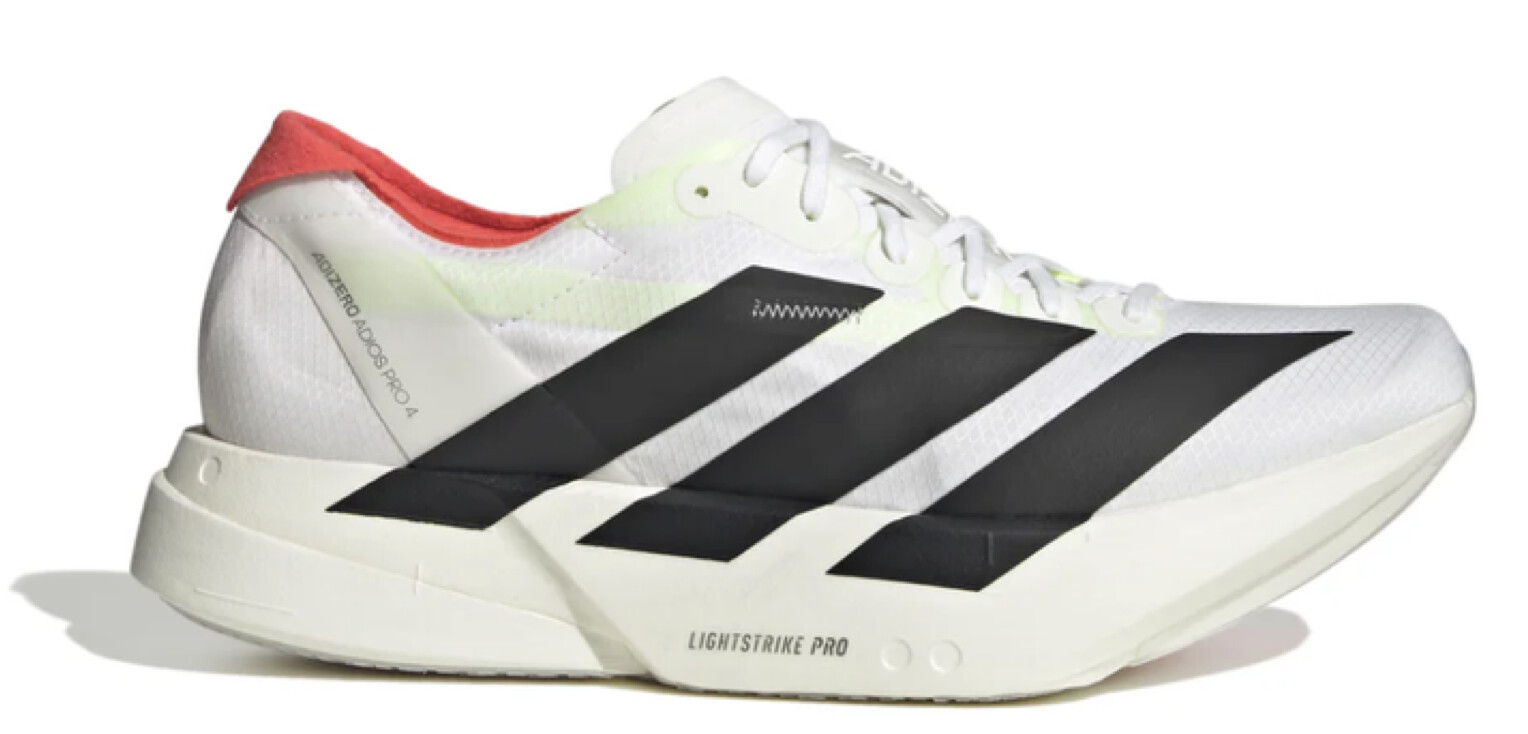
Adidas Adizero Adios Pro 4, $250
Approximate Weights: 6.0 oz. (women’s 8), 7.0 oz. (men’s 9)Heel-Toe Offsets: 6mm drop; 39mm (heel), 33mm (forefoot)Release Date: January
The Adizero Adios Pro 4 was released in limited numbers just before the Berlin Marathon in September, but it will hit stores in mass quantities worldwide in January. It’s been updated with a bouncier Lightstrike Pro midsole, a lighter, stronger stretch-mesh upper with internal locking bands, a new configuration of the Evo Pro EnergyRods, and an aggressive new geometry in which the forefoot rocker point is at 60 percent of the shoe’s length. Several Adidas pros raced in this shoe in the New York City Marathon, including women’s winner Sheila Chepkirui and men’s runner-up Evans Chebet.Brooks Hyperion Elite 4 PB, $250
Approximate Weights: 6.6 oz. (women’s 8), 8.6 oz. (men’s 9)Heel-Toe Offsets: 6.5mm drop; 38.5mm (heel), 32mm (forefoot)Release Date: February
Brooks has been working on enhancing its top-tier road racing shoes for several years. It released the Brooks Hyperion Elite 4 with its DNA Flash v2 midsole compound prior to the 2024 U.S. Olympic Trials Marathon last February, but early in 2025 it will release the Hyperion Elite 4 PB with the brand’s new DNA Gold supercritical midsole foam, a very light and responsive nitrogen-infused 100 percent Peba material, and a very light and airy knit-mesh upper.Brooks Hyperion Elite 5, $275
Approximate Weights: 5.8 oz. (women’s 8), 6.9 oz. (men’s 9)Heel-Toe Offsets: 8mm drop; 40mm (heel), 32mm (forefoot)Release Date: JulyBrooks had hoped to keep the Hyperion Elite 5 under wraps by showing it under embargo at The Running Event trade show, but someone leaked it so it decided to release the details and images of it. It has a DNA GOLD 100 percent PEBA foam midsole with a unique series of half-orb bubble configurations under the arch for optimal compression and decompression. It also has a very light and airy knit-mesh upper and minimal outsole rubber to keep it as light as possible.Craft Kype Pro, $300
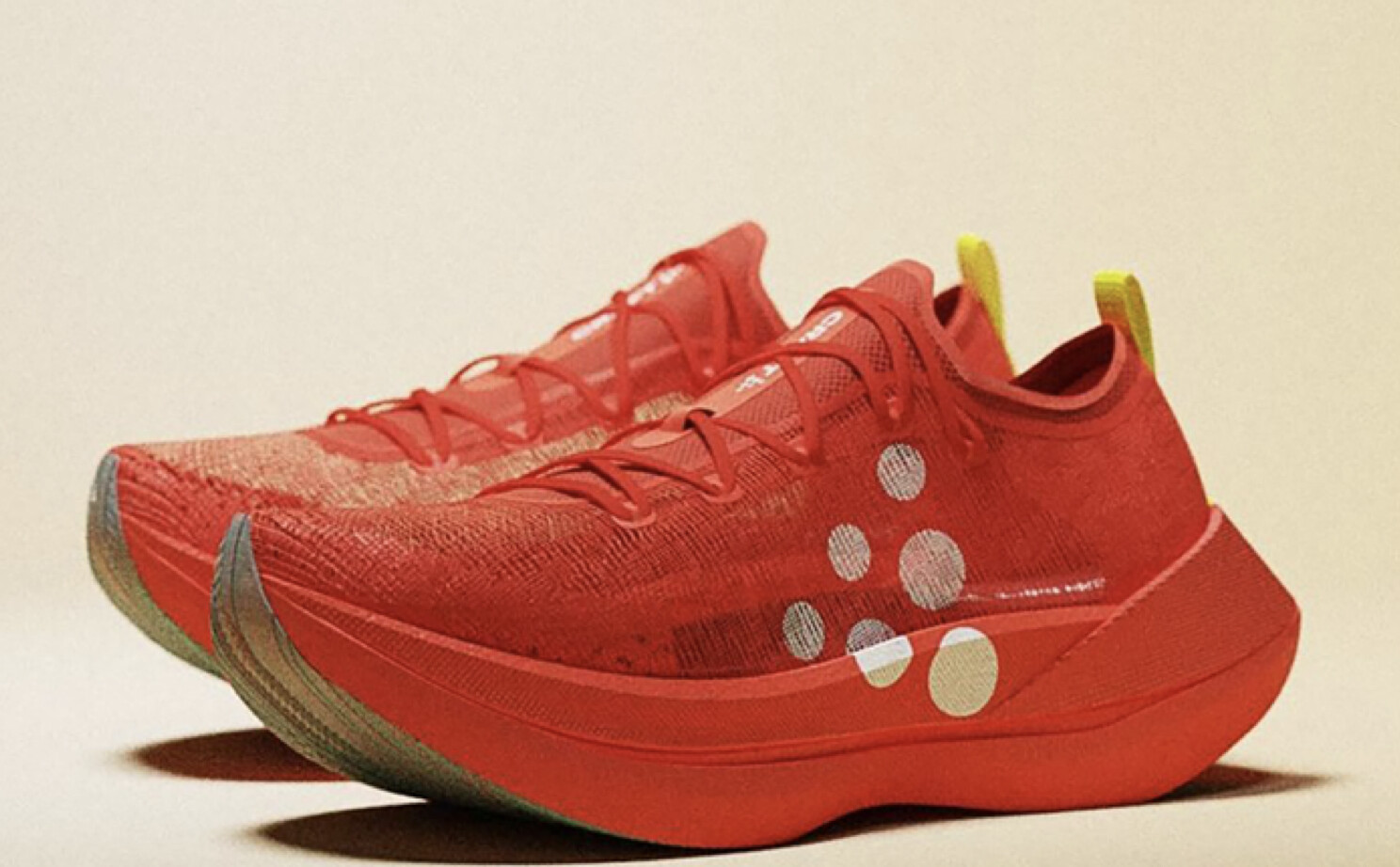
Approximate Weights: 5.8 oz. (women’s 8), 6.9 oz. (men’s 9)Heel-Toe Offsets: 8mm drop; 40mm (heel), 32mm (forefoot)Release Date: March
Craft says the unique heel split design of its new Kype PRO racing shoe significantly reduces the contact surface area between the shoe and the ground, allowing for quicker toe-offs and a more efficient stride pattern. The skeleton-like carbon-fiber propulsion plate (developed in collaboration with Arris) embedded in the midsole of its Peba-based Xx midsole foam weighs less than half of an ounce and has a split heel design and enhanced stiffness The ultra-light AeroMesh knit upper is made from a durable mono yarn knit that offers support, pliability, and breathability, while the bottom of the shoe features a thin, lightweight rubber outsole was developed with Italian bicycle tire manufacturer Vittoria.Hoka Cielo X 1 2.0, $275
Approximate Weights: 7.0 oz. (women’s 8), 8.1 oz. (men’s 9)Heel-toe offset: 10mm; 48mm (heel), 41mm (forefoot)Expected launch: February
Login to leave a comment
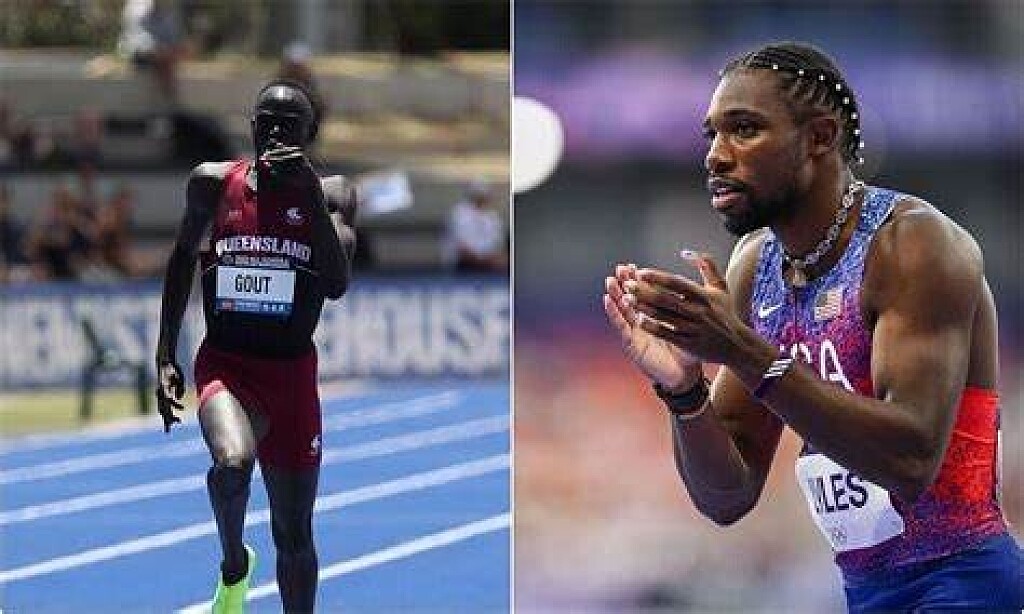
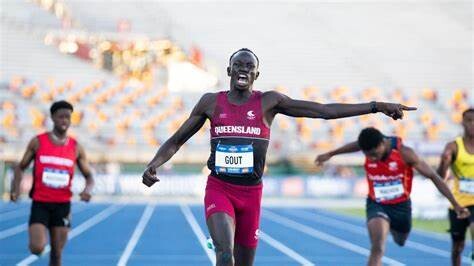
Record-breaking teen sprinter Gout Gout is set to train alongside Noah Lyles
Gout Gout recently signed with Adidas and will have the opportunity to train alongside world champion Noah Lyles, gaining valuable mentorship as he continues his path to the top.
After inking a lucrative deal with leading German athletic apparel and footwear corporation Adidas, Gout Gout will now have a chance to train with triple world champion Noah Lyles.
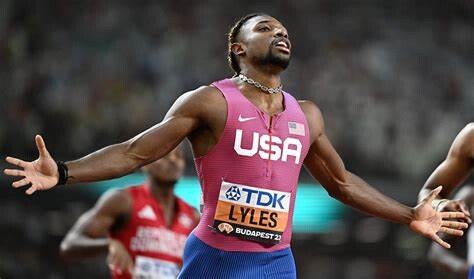
Gout Gout’s manager James Templeton noted that it is a great opportunity for the youngster to interact with Noah Lyles and get to know more about sprinting as he looks to chat his own path to the top.
James Templeton is optimistic that Noah Lyles will be open to teaching Gout Gout a lot, noting that he believes the reigning Olympic 100m champion is a great personality to be around.
Noah Lyles is also an Adidas athlete and earlier this year, the American sprint king extended his contract until the 2028 Olympic Games in Los Angeles. Noah Lyles’ contract with Adidas is considered the richest in track and field since Usain Bolt's deal with Puma.
"We have the opportunity to go to Florida and join the training group of Noah Lyles and coach Lance Brauman (Lyles’ coach). There are about 16 or 18 top sprinters there,” James Templeton told ABC News.
"We'll be heading over for two or three weeks. That'll be a great opportunity, a wonderful educational experience. I haven't heard from Noah, but he's a great guy and I'm sure he'll be happy to take the younger guy under his wing a little bit."
Meanwhile, Gout Gout has been very impressive in his races and since 2022, he has proven to be unstoppable, running crazy times and making headlines. Gout Gout was named the holder of the Australian Under-16 100m and 200m records at the age of 14.
The following year, Gout Gout managed to break the Australian Under-18 men’s 200m record after running 20.87 seconds. He claimed top honors at the Australian Junior Athletics Championships in Brisbane.
In 2024, Gout Gout has been on top of the world with his crazy times and superb form. He started his season with a personal best time of 10.29 seconds to claim the win in the U-18 Boys 100m at the Queensland Athletics Championships.
Gout Gout then won the Australian U20 100m title in a time of 10.48 seconds in Adelaide before heading to the World Athletics U20 Championships in Lima, Peru. In Peru, the Australian youngster won a silver medal in the 200m.
He recently signed with Adidas and then proceeded to the Queensland All-Schools Championships, clocking a time of 20.29 seconds in the heats of the 200m to showcase his authority once again.
by Abigael Wafula
Login to leave a comment
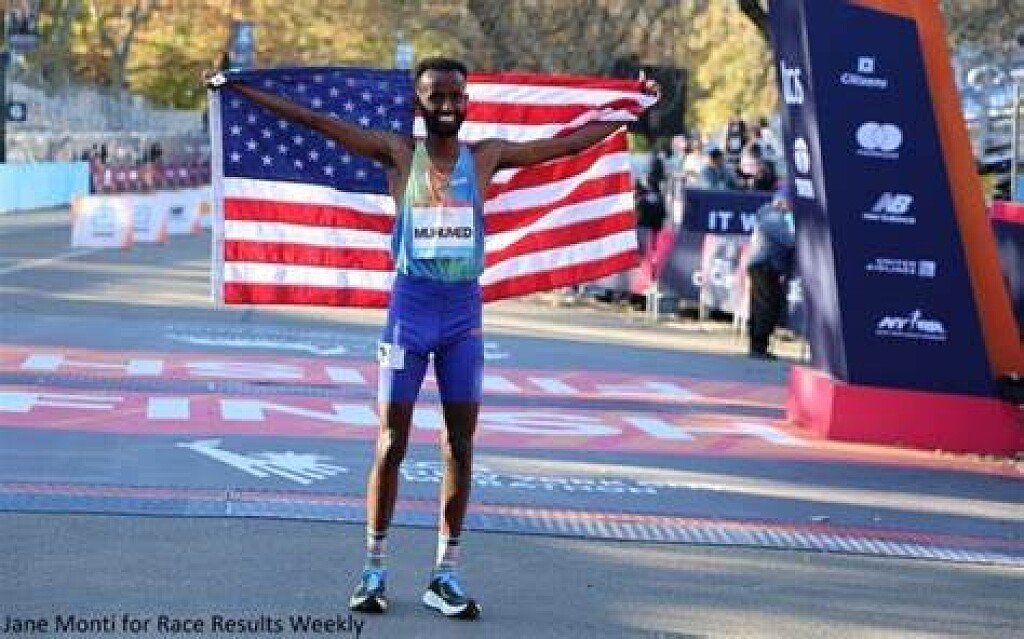
2024 USATF 5K: Ahmed Muhumed And Annie Rodenfels Win
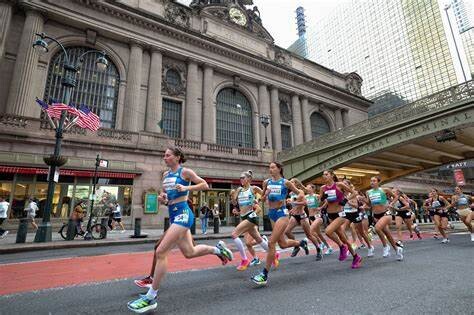
Annie Rodenfels went back-to-back while Ahmed Muhumed claimed his second US title of the year at the 2024 USATF 5K Road Championships on Saturday morning in Central Park. Rodenfels, who runs for the B.A.A. High Performance Team, broke away from Emily Venters and Emma Grace Hurley in the final mile to win in 15:20.
Muhumed, who won the US 8k road title in July and was the runner-up here last year, dropped the field with a hard move at 2 miles and held off a late charge from Sam Prakel to win in 13:38 to Prakel’s 13:39.
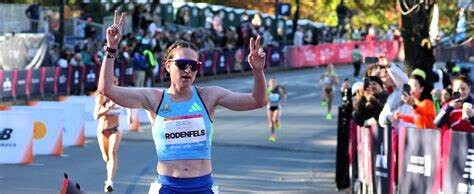
Top 10 results
Men
1. Ahmed Muhumed, HOKA NAZ Elite 13:38
2. Sam Prakel, adidas 13:39
3. Brian Barraza, Roots Running Project 13:42
4. Kirubel Erassa, unattached 13:44
5. Hillary Bor, HOKA One One 13:45
6. Anthony Rotich, US Army 13:48
7. Drew Bosley, unattached 13:49
8. Afewerki Zeru, McKirdy Trained 13:52
9. Abbabiya Simbassa, Under Armour 13:57
10. Morgan Beadlescomb, adidas 13:59
Women
1. Annie Rodenfels, B.A.A. 15:20
2. Emily Venters, Nike 15:25
3. Emma Grace Hurley, Asics 15:31
4. Bailey Hertenstein, Nike 15:32
5. Susanna Sullivan, Brooks 15:36
6. Abby Nichols, HOKA NAZ Elite 15:41
7. Paige Wood, HOKA NAZ Elite 15:41
8. Taylor Roe, Puma 15:43
9. Natosha Rogers, Puma 15:45
10. Molly Born, Puma 15:47
by Jonathan Gault
Login to leave a comment

Dash to the Finish Line
Be a part of the world-famous TCS New York City Marathon excitement, run through the streets of Manhattan, and finish at the famed Marathon finish line in Central Park—without running 26.2 miles! On TCS New York City Marathon Saturday, our NYRR Dash to the Finish Line 5K (3.1 miles) will take place for all runners who want to join in...
more...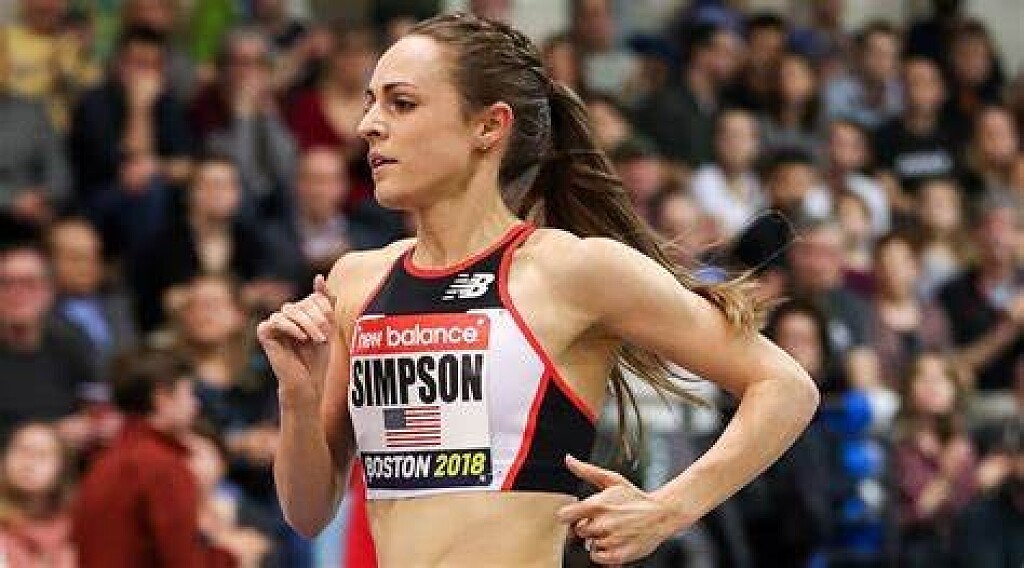
Jenny Simpson is Retiring after the New York City Marathon and Starting a New Adventure
After concluding a stellar, 20-year career, the Olympic bronze medalist will embark on a 50-state running-infused van-life tour of the U.S. with her husband, Jason, in 2025
Jenny Simpson will go down in the annals of American running as one of the greatest of all time. No question about it.
So as she approaches what is likely the last elite-level race of her long and storied career at the November 3 New York City Marathon, she has nothing to prove, no one to impress, and no specific performance goal that she needs to attain to secure her legacy.
As a four-time global championship medalist in the 1500 meters—including a victory in the 2011 World Championships in Daegu, South Korea, Diamond League title in 2014, and bronze medal at the 2016 Rio Olympics—Simpson has long been destined to go down as one of the best runners in U.S. history.
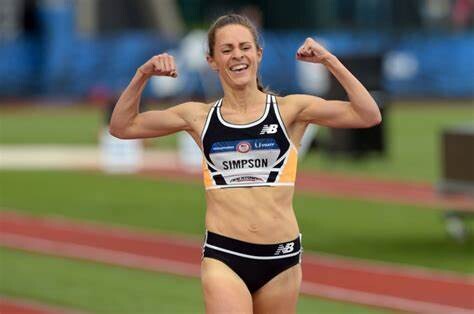
Add to that three Olympic appearances, 11 U.S. titles, three NCAA championships, eight top-10 finishes in international championships, eight Fifth Avenue Mile victories, six NCAA records (in six different events), and two American records (in the 3,000-meter steeplechase), and Simpson will rank among American legends for decades to come.
The fact that she’s been earnestly training to finish her career with a strong marathon performance in New York City epitomizes much of what the 38-year-old runner from Boulder, Colorado, has been about during her 20-year career. She’s not necessarily going out on top—that, she says, would have entailed making the U.S. Olympic team in the marathon for the Paris Olympic Games. But she is going out on her terms: focused, tenacious, and relentless to the end. It’s an opportunity afforded to few athletes, and even fewer distance runners.
“When I say I’m feeling good, it’s that I’m really excited for New York and I feel like I have a really, really good sense about my ability to run well,” she says. “I’m not going into it saying I’m gonna set the world on fire and be the top American or run 2:25 on that course. But I just know as good as I feel and as good as the training has gone, I know I’m capable of having a good day, and, most importantly, I have peace about it all.”
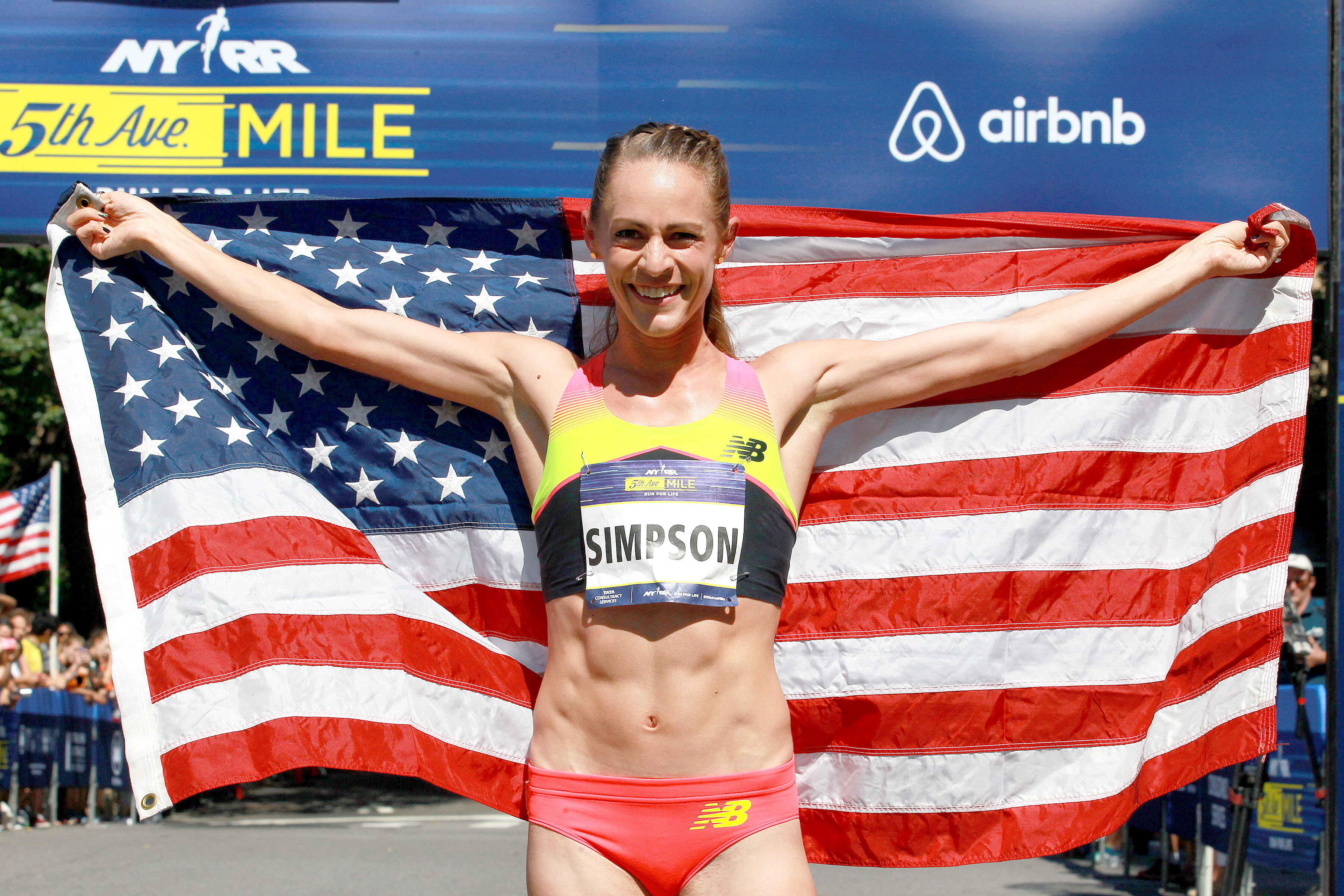
But as this chapter of life closes for Simpson, another very exciting one is about to begin, and that one will include quite a bit of running, too. She and her husband, Jason, are planning to embark on a year-long tour of the U.S. in 2025 that will take them—and their two Jack Russell Terriers, Truman and Barkley—to all 50 states while living out a van-life adventure focused on immersing in America’s thriving running culture.
From participating in races and visiting national parks to running iconic routes like Rim to Rim across the Grand Canyon and discovering hidden trails, Jenny and Jason have said their goal is to capture the heartwarming and inspiring essence of the country through the eyes of runners.
“We want to experience the beauty of this country firsthand, meet the incredible people who call it home, and celebrate everything that makes the U.S. so special,” says Jenny Simpson, who has represented the U.S. on the world stage for nearly two decades. “Through this journey, we hope to show that America’s beauty is not just in its landmarks, but in its people and the unique places they live, run, and explore.”
Out of the Ashes
In December of 2021, a devastating wildfire ripped through the south end of Boulder County—including the communities of Marshall, Louisville, and Superior, where it burned more than 1,084 homes and killed two residents and more than 900 pets. Miraculously, it didn’t burn the Simpson’s house—a restored circa-1900 schoolhouse they bought several years ago that was less than a half mile from the fire’s origin—but the house did incur significant smoke damage that needed mitigating.
The Simpsons were displaced and spent several months living in an apartment with little furniture, which forced them to live a rather spartan lifestyle. While Jason was still able to work as a creative director for a design firm, Jenny’s contract hadn’t been renewed by New Balance, and she wasn’t sure what the future held.
During that time, she had been doing a weekly call with her sister, Emily, and Jason’s sister, Annie, to discuss the book Designing Your Life: How to Build a Well-Lived, Joyful Life, a guide aimed at helping people to reimagine their professional and personal lives. It was through those discussions that Jenny came up with an idea of buying a Winnebago so she and Jason could drive around the country with Truman, who they rescued in 2020 just before the Covid lockdown. (They got Barkley about three years later.)
“My idea was that we can just drive around America and see the place that I’ve had stamped across my chest on my Team USA gear all these years,” she says. “I have been on Team USA, but I really want to know what that means. I’ve raced in some amazing places all around the world, but I really haven’t seen much of our own country. I want to go see the places and the people that I haven’t seen. And then I had this idea of doing a 50 states, 50 weeks tour.”
Jenny told Jason about the idea and he was interested from the start, but it was initially just a fun distraction while Jenny was battling injuries. Jason was so intrigued, though, that he started searching for information about vans online and indulging in YouTube content from a variety of van-life influencers. Eventually, Jenny was healthy and racing on the roads for Puma, ultimately with a quest to qualify for the 2024 U.S. Olympic Trials Marathon.
A year later, they were still casually talking about the enticing “what if” possibilities of owning a van.
“So by 2023, we were like, ‘What do these vans look like? What do they cost? What kind of different layouts are best?” says Jason, 40, a 20-time marathoner with a 2:18:44 personal best. “And then I got really into the travel influencer YouTube videos and at some point told Jenny, ‘Hey, let’s just go look at them.’ And that led to looking at the timelines of: if we were to do this in 2024 or 2025, what would it take? It takes like a long time to build out the vans, and we are definitely not build-it-yourself van people.”
On Her Own Terms
Perhaps the most impressive aspect of Simpson’s career has been her consistency. She qualified for every U.S. national team on the track between 2007 and 2019. Not only did she put in the work and remain virtually injury-free during that time, but she also raced fiercely and rose to the occasion every single time without a single hiccup in any of her preliminary races. (She also made it to the 1500-meter final of the Covid-delayed U.S. Olympic Trials in 2021 at age 35 after what she admitted was a rough gap in competition during the pandemic.)
For most of that time, she was coached by her University of Colorado coaches Mark Wetmore and Heather Burroughs. They continued coaching her as she transitioned to road running over the past three years and ultimately to the build-up to the 2024 U.S. Olympic Trials Marathon in Orlando, Florida. Although she had brief moments of success on the roads—finishing second in the U.S. 10-mile championship in 2021 and turning in a solid ninth-place, 1:10:35 effort in the Houston Half Marathon in 2023—the first injuries of her career disrupted her training and delayed her debut at 26.2 miles until the Olympic Trials.
Over the past three years, continuing to adhere to the rigid lifestyle needed to keep racing competitively was increasingly met at an internal crossroads of wondering when it would feel OK to retire and move on in life and what that would look like.
“Running the Olympics Trials and then running Boston, I would say those were not successful outings,” Simpson says. “I did the best that I could and I got as prepared as I could, but they weren’t what I had hoped for, neither of them were what I’m capable of. I’m really proud of how I ran in Boston because I ran entirely alone after mile 3, but that’s not how I wanted to end my career.”
After Boston, Jenny still wasn’t ready to retire. But she’d heard the chatter that suggested she could give up the ghost and not try to remain competitive on the roads, knowing her legacy was already secure. After she took some time off to recover and reflect, she knew she wanted to get back into training and target one more race on the biggest stage and settled on the New York City Marathon.
She parted ways with Wetmore and Burroughs in the spring and decided to train on her own, although she’s continually received subtle guidance from Jason, who qualified for and raced in the 2020 U.S. Olympic Trials in Atlanta. Although he has imparted bits of knowledge to help keep her balanced, Simpson has been following a training plan in her marathon buildup that she designed.
From Best in the U.S. to Across the U.S.
Casual interest in buying a van led to more in-depth investigation and, after what was an otherwise random training run on the dirt roads north of Denver last year, they passed an RV sales lot and decided to take a look. One thing led to another and they put down a small, refundable deposit that would hold a fully appointed 23-foot Winnebago Ekko during what was expected to be nearly a year-long wait until it was built and delivered.
Fast forward to 2024 and Jenny made her marathon debut on February 3 in Orlando, but it didn’t go at all as she had hoped. She had been running among the top 20 early in the race but eventually dropped out at mile 18. She returned 10 weeks later to run a respectable Boston Marathon in mid-April (she placed 18th overall in 2:31:39 and was the fourth American finisher), and although her effort was commensurate with her inner drive—and some degree of success felt good—she still wasn’t ready to call it a career.
Finally, in April, several days before they were going to travel to Boston, the RV dealership called and told them the van had arrived and they had a week to consider buying it. At that point, Jenny was eager to run Boston to make amends for her Olympic Trials experience, but she was also physically and emotionally fried.
“And I was like, we’re doing it,” she says. “It was the perfect time in the perfect year. Because I was like, ‘I’ve got to get out of here. I’ve got to be done.’ It was killing me. I actually might perish in the middle of the Boston Marathon. I just was so burnt out, and so it was the perfect time for them to call and essentially say, ‘Do you want to drive away into the sunset?’ And I was like, ‘Yes, I do. I really do.’”
Two days after the Boston Marathon, they paid the remainder of the balance on the van and picked it up, immediately sending them into daydreaming mode about where they wanted to go.
Although their plans are still being formulated, they intend to rent their house and hit the road with the charming dogs in January, officially starting their “Jenny and Jason Run USA” tour in Florida. Along the way, they plan to see numerous sights, host or join at least one fun run in every state, promote dog adoptions by publicizing local humane societies, and create a wide range of engaging social media content on their Instagram, Facebook, and YouTube accounts along the way. Given that their longest stint in the van so far was the six-day trip they took to the Grand Tetons and Yellowstone National Park in Wyoming early last summer, they know they’re going to have to learn on the fly and continually adapt. But that’s what an adventure is all about.
“I’ve been nothing but focused on running New York, but I am excited about what’s next,” Jenny said this week. “As I have been tiptoeing toward the idea of being retired from professional running, I don’t know that I’m going to be really great at it or that it’s going to come easily for me. That’s why it’s so wonderful to have a partner in life like Jason because I think he sees that, too. So our goal is to create a lot of time and space to figure that out. I think the year will be kind of interesting and fun and wild and I really don’t know how it’ll end up, and I think that’s really good.”
Approaching the End … and a Beginning
Simpson admits her post-Boston malaise contributed to her having an inconsistent summer of training, in part because she was listening to voices that suggested she should relax and not be so rigid in her approach. When she showed up to run the Beach to Beacon 10K in Cape Elizabeth, Maine, on August 3, she admits she wasn’t very fit, and, as a result, finished a distant 12th in 34:30.
“My Beach to Beacon race was just so bad that it was like validation to me that caring less and trying less doesn’t work for me ever in anything,” she said. “I’m just not that person. It works for some people, but that’s not who I am. I used to joke that when you show up to the track and someone asks, ‘How do you feel?’ I always thought to myself it doesn’t matter how I feel. It’s about doing the work. I always feel like it’s execution over emotion for me all the time and that I have a job to do. I know who I am and I know how I operate, and how I operate is great.”
Simpson got back to work immediately after that race, ramping up her weekly mileage to the 100-mile range in the high altitude environs of Colorado. She says she’s done more than half of her long runs between 8,500 and 10,500 feet, including runs on Magnolia Road above Boulder, Golden Gate Canyon State Park near Golden, and even a loop around the paved Mineral Belt Trail in Leadville.
Her return to rigidity and improved fitness helped bring mental clarity that not only convinced her that she’d be ready to run a strong marathon in New York City, but also brought the revelation that she was ready to admit it was her last race knowing it would allow her to retire on her own terms.
Two months after feeling flat in the 10K, she won the Wineglass Half Marathon on October 5 in Corning, New York, running a near-PR of 1:10:50 (5:24 per-mile pace) as she ran stride-for-stride to the finish line with Jason. (She broke the women’s finisher’s tape for the win, while he ran slightly to the side as the 12th-place men’s finisher and 13th overall.) Now she’s likely in sub-2:30 marathon shape, even though the hilly New York City Marathon course is as equally challenging as Boston in its own way. Jason, meanwhile, will race in the Abbott Dash to the Finish Line 5K the day before the marathon, not only so he can track Jenny on Sunday and meet her at the finish line, but also because he’s running the California International Marathon on December 8.
2025 and Beyond
Simpson arrived in New York City on October 30 healthy, happy, and ready to run hard—definitely not the feeling of holding on for dear life that she felt going into the Olympic Trials and the Boston Marathon. She says she couldn’t be more excited to run through the city’s five boroughs to the finish line in Central Park that she hopes will come with a satisfying result, as well as the beginning of closure to her star-spangled career.
Who knows what’s next after that—Coaching? Law school? A corporate career with a shoe brand? The world seems to be her oyster, but for the time being the cross-country tour might be just what she needs most. She’s excited to detach a bit from the rigid schedule and identity she’s clung to for the past 20 years and enjoy the freedom of the open road. She knows it will be a complete departure from the essence of what she’s all about, and to that point, she’ll likely dig into planning and scheduling early next week even before she recovers from the marathon.
Although she admits she was intrigued while watching some of the top runners finish the Leadville Trail 100 this summer, she says she’s decidedly not interested in running ultras. (However, Jason might be, and Jenny says she’s been keen to pace and crew him.) She might get more into trail running, something she did a little bit early in her University of Colorado career. Or she might even return to road running, but she’s not thinking that far ahead. For now, she’s focused on racing in New York and then continuing to run in 2025—on the magical mystery tour that awaits—and beyond.
“I feel a lot of peace about it, but it’s not like I’m over running. I want to retire so I can do more running and to explore the beautiful country I raced for,” she says. “I wanted to be world class at the marathon, and I’m not. I gave it a good try, and now it’s time to try something else, and I just feel really good about it.”
by Brian Metzler
Login to leave a comment

TCS New York City Marathon
The first New York City Marathon, organized in 1970 by Fred Lebow and Vince Chiappetta, was held entirely in Central Park. Of 127 entrants, only 55 men finished; the sole female entrant dropped out due to illness. Winners were given inexpensive wristwatches and recycled baseball and bowling trophies. The entry fee was $1 and the total event budget...
more...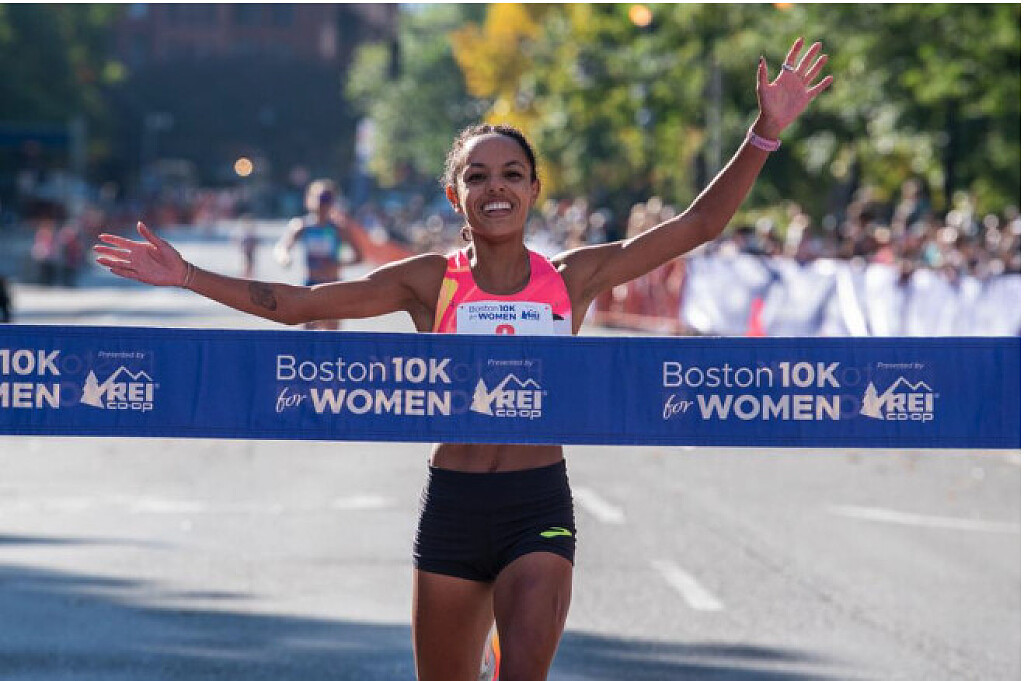
Erika Kemp Wins the 2024 Boston 10K for Women, presented by REI
rika Kemp Wins the 2024 Boston 10K for Women, presented by REI
Kemp holds off Annie Rodenfels and wins her second Boston 10K for Women in 31:48
BOSTON – It was a return to glory for Erika Kemp for Providence, who won the 48th Boston 10K for Women in a personal best time of 31:48. Kemp, who also won the 2022 event in a then-PR of 32:15, outlasted 2023 champion Annie Rodenfels who finished in 31:54. Emily Venters of Salt Lake City finished third in a time of 32:11.
Under a postcard perfect autumn day, temperatures hovered in the 50s as more than 5,000 registrants from 40 states gathered at the second longest-running all-women’s race in the country. Following her fourth-place last year, it was course experience and lessons learned that fueled Kemp’s winning strategy.
“Winning is always so fun, but winning here is a little extra special,” said the 29-year-old Kemp, who earned $10,000 with the win. “Right before the race, one of the volunteers told me I had to do it for the women today, and I was like ‘we’re all here for the women,’ and he said, ‘but you have to do it more,’ and I really took that to heart.”
Kemp, Rodenfels, Venters, and Bethany Jerde represented a four-woman pack that sped through a 5:01 first mile, splitting a canyon of foliage on Beacon Street, before turning right onto the Massachusetts Avenue bridge. As they crossed the Charles River into Cambridge, a 5:11 second mile thinned the chase pack, and four leaders had a six second lead on fifth place.
“I took it out a little hard which I wasn’t necessarily meaning to do,” said Rodenfels, who lives in Boston and earns $5,000 with a second-place finish. “But I felt good, and I thought we would kind of burn [the competition] out a little sooner than if we went out conservatively.”Approaching mile three, Kemp took on a slight headwind and carried the hot pace westward along the Charles River with a 5:01 mile. Jerde fell off the pack as the Memorial Drive course dipped below Massachusetts Ave. “I was a little bit haunted by my fourth-place finish last year,” said Kemp. “I vividly remember going under that underpass around mile three, and that tiny uphill right after the bridge. In those moments last year, I backed off when I should have pushed harder. So this year I stepped on the gas a little more.”
As the three runners switched back to the eastbound direction at the 3.5 mile mark, Kemp and Rodenfels exchanged surges, and Venters fell three seconds behind. Turning back onto the Massachusetts Ave. bridge and heading toward Boston, Kemp, Rodenfels, and Venters were greeted by a roar of thousands of women running in the other direction.
“Coming over that bridge around mile four, running past the field of women – their energy will literally push you through those last two miles,” said Kemp. “And it was on another level today.”
Kemp led by two seconds as the runners re-entered Back Bay, and turned left onto Commonwealth Ave., with Kemp dropping another 5:01 mile between four and five. But Rodenfels would not quit. “She’s a hard competitor,” said Rodenfels of Kemp. “She does not give up and I know that.”
Streaking down Commonwealth Avenue, Rodenfels continued nipping on the heels of Kemp – from Fairfield to Exeter and Dartmouth to Clarendon, the two athletes pushed each other towards new PRs. “It was a good sign that I was with her for that long, Rodenfels added. “And that I was able to keep pushing and maintain a small gap and not let it get bigger and bigger as it went on.”
Kemp was simply too strong. Circling the Boston Public Garden, and before turning left onto the closing stretch on Charles St., Kemp did not waiver and broke the tape in front of a roaring crowd. “It feels great,” said Kemp of her victory and new 31:48 PR. “Winning once is super cool, but now, they’re going to keep saying I’m a two-time champion and that just sounds a lot better.”
In the wheelchair division, 15 year-old Maddie Wilson broke the tape in a time of 34:57. For Wilson, this is a race with which she has grown familiar, having competed on its course since she was just six years old. In the Masters Division, Leslie McCarthy of Milton, MA earned $500 with a time of 39:56.The race is enthusiastically supported by a group of sponsors, led by REI and PUMA, who brought enormous energy to the day’s activities. Formerly known as the Tufts Health Plan 10K for Women, the race is New England’s largest all-women’s sporting event the second longest-running all-women’s race in the country. For the fourth consecutive year, the race saw a rise in participation, this year with a 24% increase in registrations from 2023. “What a wonderful day for our city and our sport, exclaimed Dusty Rhodes, who founded the race in 1977. “To see so many families, first timers, and long timers all here together smiling wide at the finish – it is just so gratifying. What an honor it is to help host this event.” With today’s race, Rhodes extends her legacy as the longest-running female race director in the country.
Login to leave a comment

Boston 10K for Women
The Boston 10K for Women, formerly known as the Tufts Health Plan 10K for Women and the Bonne Bell Mini Marathon, is a major 10K held annually in Boston, on Columbus Day, popular as both an elite world-class competition and a women's running event promoting health and fitness. Feel the empowerment as you unite with over 7,000 fellow runners...
more...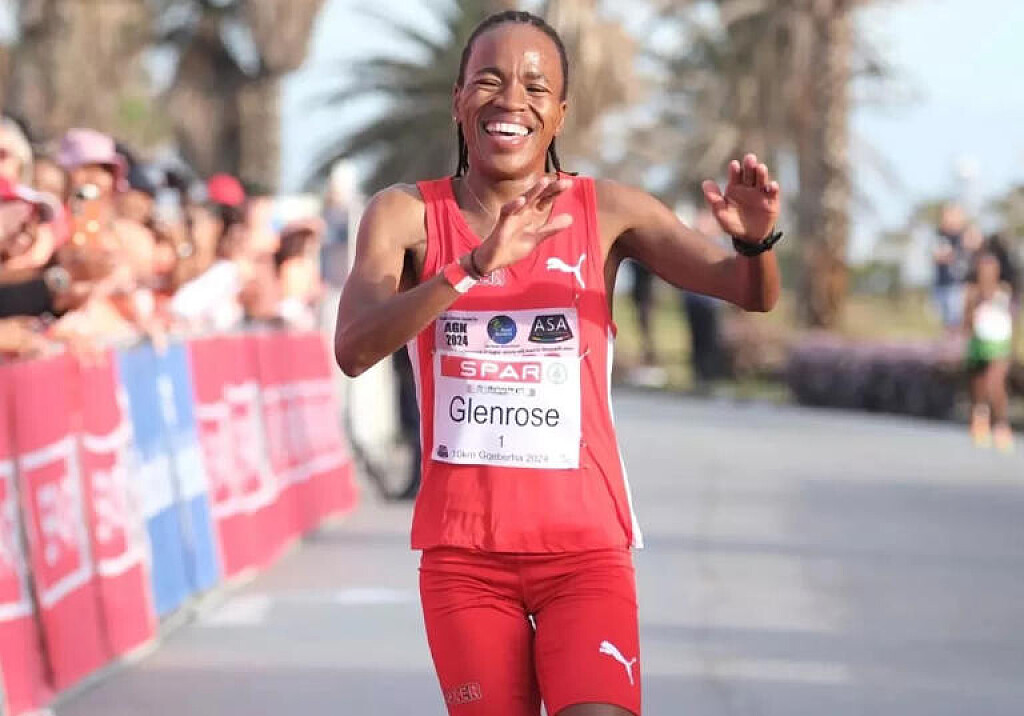
In-form athlete Xaba excited but relaxed ahead of marathon debut
Glenrose Xaba is not putting any pressure on herself as she prepares to make her highly anticipated 42km debut at the Sanlam Cape Town Marathon next month.
Xaba again showed her superb form over the weekend, winning the Spar Grand Prix 10km race in Gqeberha in 31:22.
She was just 10 seconds outside the SA record (31:12) which she set at the Absa Run Your City race in Durban in July.
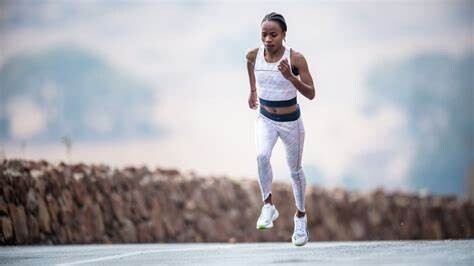
Running from the front in excellent conditions, Xaba shook off a strong field to extend her Grand Prix series lead, with 18-year-old Ethiopian athlete Diniya Abaraya finishing second in 31:33 and Tadu Nare taking third spot in 31:48, one week after winning the Mpumalanga Marathon.
Her latest victory added to a long list of wins picked up by Xaba this season, including the national 5,000m and 10,000m titles on the track and the SA 10km and 21km titles on the road.
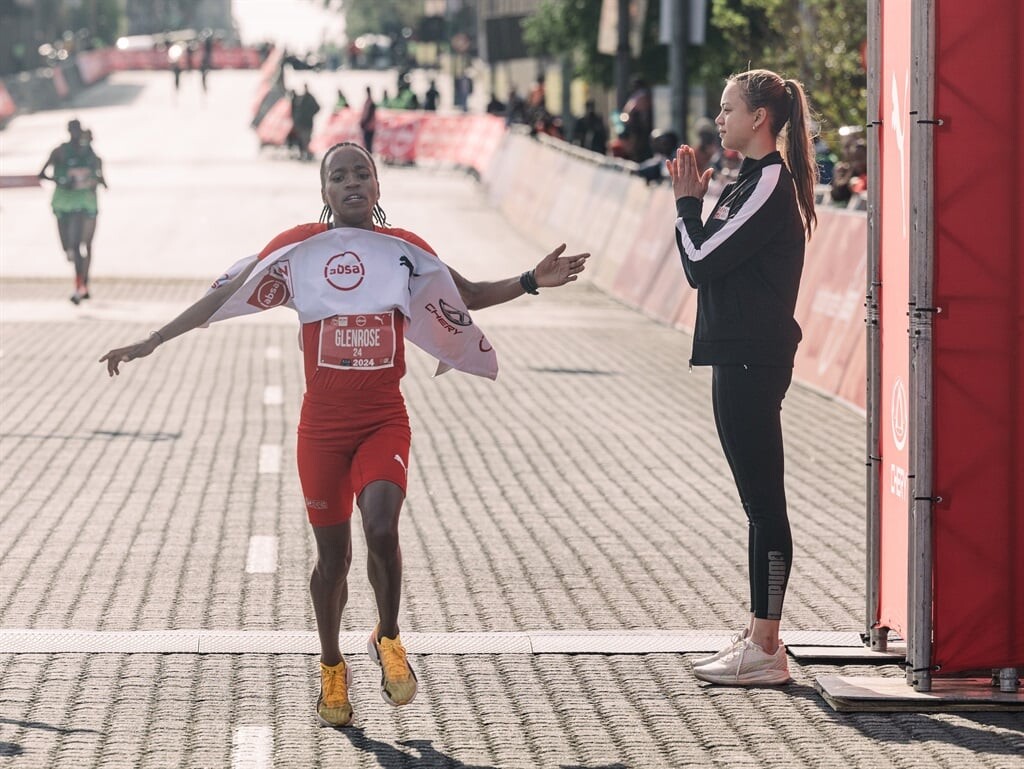
Though it had been a long year for the 29-year-old athlete, Xaba was all set to make her maiden appearance over the classic 42km distance in the Mother City on 20 October.
“My long runs have gone well and I’ve been able to adjust in training,” Xaba said,
“I know it’s a big step for me but I’m very excited to try something new.”
Assessing her marathon potential
The field in Cape Town also includes Cian Oldknow, who set a personal best of 2:25:08 in February, and with a local battle on the cards, Gerda Steyn’s SA marathon record (2:24:03) might be in danger.
Xaba, however, insisted she was not concerned about challenging Steyn’s record in her first attempt at the marathon distance. Instead, she hoped to give herself an indication of whether it might be worth making a more permanent step up in distance.
“The national record is not my focus. If it comes, I will be happy to achieve that, but it’s not my focus,” she said.
“I want to try a marathon and see what time I will be able to achieve in future, and see if I’m strong in the marathon or if I need to focus on 10km and 21km.”
by Wesley Botton
Login to leave a comment

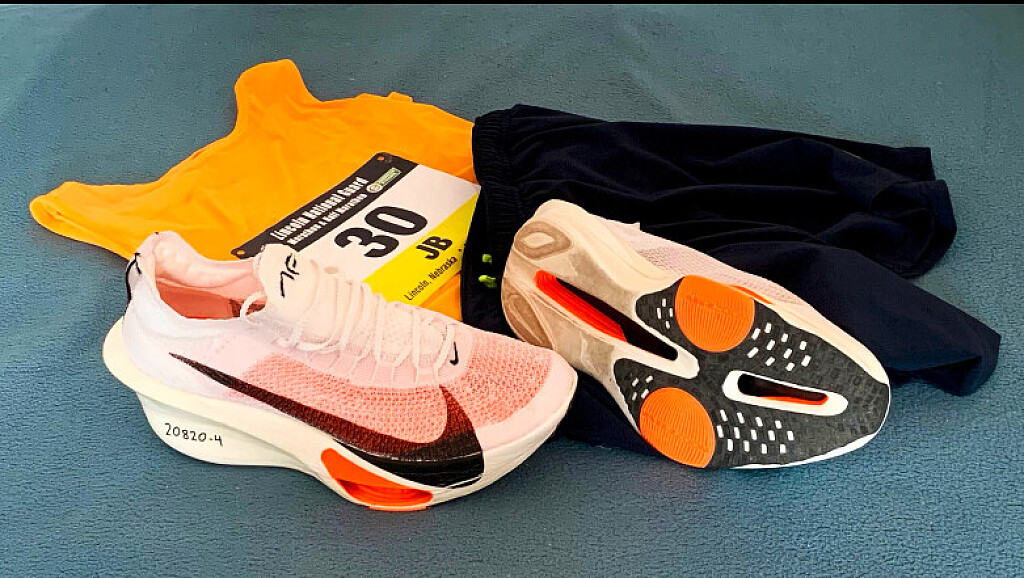
The Best Marathon Racing Shoes (2024)
After a year of testing, we've identified 12 marathon shoes that will boost your performance and make the race more enjoyable
While training undeniably has the biggest impact on your marathon performance, there’s one more thing you can do to ensure you’re ready to give your best on race day: invest in a pair of marathon racing shoes.
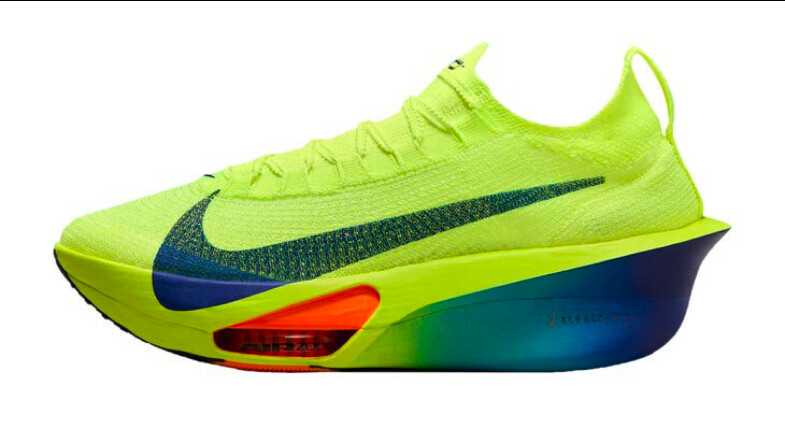
An effective marathon racing shoe can help reduce the repeated impact that miles after miles put on your legs while allowing you to get more energy out of each footstrike. Even more importantly, the right marathon racing shoe will provide you with a platform that is stable and cushioned enough to carry you through 26.2 miles in security and comfort. We’ve spent the last year rigorously testing every option on the market to help you easily pick the perfect pair for you.
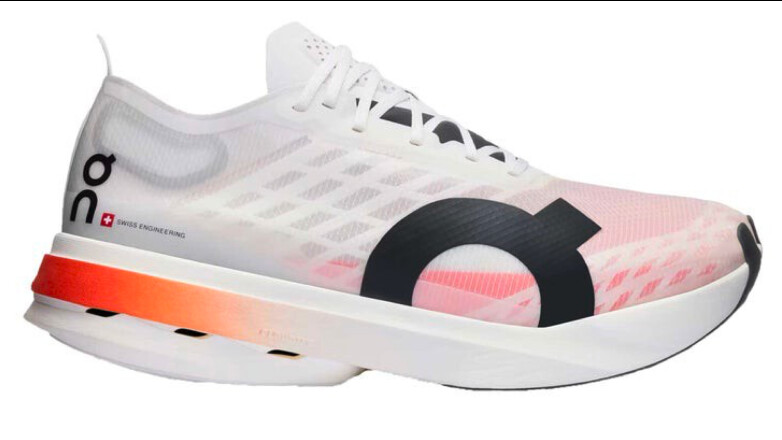
Seven years after the debut of the first super shoe, the thick-stacked, carbon-plated racers are ubiquitous at the front of every marathon and increasingly common among runners in the pack looking to optimize their performance. These shoes have been lab-proven to improve running economy by a few percentage points, making it easier to maintain a faster pace. Runners also report that, when running in a super shoe that complements their stride, they experience less muscular fatigue as well.
These are some of the super shoes that our testers found most comfortable and effective at marathon pace, but your experience may vary (as we found when we had three testers compare 16 super shoes. Every super shoe boasts some sort of ultralight, hyper-responsive foam with an embedded, curved carbon-fiber plate—but each delivers a surprisingly unique ride. You’ll have to experiment to find one that gives you wings.
See our “How to Choose Marathon Shoes” section at the bottom of this article for more guidance on whether you should consider a super shoe and how to select a pair that works for your stride.
Designed specifically for marathons, the Alphafly set a new standard as the fastest marathon shoe ever when Eliud Kipchoge wore them while breaking the 2-hour barrier in a staged marathon, clocking 1:59:40.2 in October 2019.
Now, in its third iteration, the Alphafly 3 continues to dominate as the ultimate marathon racing shoe. Designed with Nike’s Air Zoom Units in the forefoot and a PEBA-based midsole, our more competitive, efficient testers praised the Alphafly 3 for its bouncy, energy-efficient ride.
Subtle adjustments to the shoe’s geometry, including a wider footprint and carbon fiber plate, paired with repositioned Air Zoom Units and strategically sculpted midsole, give the Alphafly 3 a distinctly different feel from its predecessor. These changes effectively address some of the issues found in the Alphafly 2, which many felt was heavy and clunky compared to the original.
The new Alphafly 3 is surprisingly nimble, weighing in as the lightest Alphafly to date. Even running as fast as 5k pace, I found the Alphafly responded quickly, encouraging a fast turnover. That said, it may be too sharp of a tool for some runners, as those who require a stable stance may find it a bit wobbly, especially in the heel.
The redesigned Atomkit 3.0 upper is about as race-y as you can get—extremely light and airy. Though a bit tough to put on because of its tightly woven mesh (like previous models), the new upper is highly breathable and secure, with sawtooth laces that stay tied tight throughout the marathon. You can read our full Alphafly 3 review and how it compared to other racers in our .
A stark contrast to On’s previous carbon fiber racing shoe, the firm-feeling Cloudboom Echo, the Cloudboom Strike is soft, bouncy, and fun to run in. Runners who can maintain their balance on what is a fairly unstable platform are rewarded with a lively, highly cushioned ride that’s comfortable and responsive, making it ideal for long-distance efforts.
The secret to the Strike’s sweet ride lies with the insole. On swapped out the traditional Strobel (a thin layer connecting the upper to the sole) and sockliner for a thick, removable layer of high-energy PEBA foam, thus increasing the amount of performance-enhancing foam underfoot. The result is a legal racer with cushioning that feels like it exceeds the World Athletics’ maximum stack height.
The smooth, ultra-cushioned ride is surprisingly quick for such a thick shoe, responding nimbly even when exceeding 5k pace. The shoe accommodated both long-striding testers and those who prefer to turn over faster.
The Cloudboom Strike fit runs long enough that you might consider sizing down by half a size. However, the one-piece mesh upper, which breathes well and effectively repels moisture, easily cinches down for a secure foot hold. You can read our full Cloudboom Strike review.
The Asics Metaspeed Sky Paris gives runners the best of both worlds—a highly energetic, cushioned feel and a stable ride. Super shoes’s tall, thick midsoles often create a wobbly sensation, forcing your stabilizing muscles to work harder to maintain balance.
The key to the Metaspeed Sky Paris’s stability is its wide base under the forefoot, coupled with an updated, wider carbon fiber plate. This makes the Metaspeed Sky Paris an excellent choice for beginner, intermediate, or unstable runners who want to enjoy the benefits of super shoe technology while still having a supportive, predictable platform. One back-of-the-pack tester noted that the broad base provided a “smooth ride, and the running dynamics worked extremely well with my foot and my own personal gait.”
The shoe’s stability, however, doesn’t compromise its stride-lengthening performance for experienced, efficient marathoners. Testers found that the Metaspeed Sky had the ability to work well for a wide range of runners and paces.
The shoe also has a new, more pliable and comfortable mesh upper and midsole foam that’s approximately 8 percent lighter and, Asics says, has an 8.2 percent better energy return over the previous model. The best part: The shoe got nearly an ounce lighter, making it one of the lightest marathon-racing options. You can read more about the Asics Metaspeed Sky Paris in our .
The groundbreaking adidas Adizero Adios Pro Evo 1 shatters the mold as the lightest super shoe ever made, weighing nearly 2 ounces less than the next lightest super shoe. Yet from the outset, I was amazed that a shoe this light could have this much cushioning.
The Pro Evo 1’s rocker is long and aggressive, curving up to a high toe spring (elevation of the toe box). Initially, at well-below marathon speeds, it felt forced and unnatural. However, once I picked it up to around marathon pace and my toes engaged with the steep curve, I sensed a smooth rolling action that energetically pushed me forward. I believe marathoners averaging seven-minute miles or faster will see the most benefit from these.
Besides being the lightest super shoe on the market, the Evo 1 also claims the title of the most expensive. That, coupled with initial talk of the shoe only working for a single marathon, makes the Evo 1 a big investment. Our test pair, however, lasted nearly 200 miles before the midsole showed signs of wear. While not every runner can expect similar durability, those with an efficient stride should enjoy everything the Evo 1 has to offer much longer than a single marathon. You can read our full review and durability test.
The challenge with super-soft, highly responsive cushioning in super shoes is that they often lack stability, demanding an efficient stride to maintain control as they first squish, then bounce back strongly, magnifying forces—whether propulsive or unbalanced. For runners seeking a more stable carbon fiber shoe without losing the performance benefits, the Brooks Hyperion Elite 4 offers a firmer underfoot feel than most.
Instead of the heavily cushioned sink and trampoline-like bounce of many of today’s super shoes, the nitrogen-infused DNA Flash V2 midsole is extremely responsive, pushing back against the foot immediately and ready to pounce on the pace when needed. That lively firmness, combined with a curved carbon fiber plate embedded in the rockered midsole, gives the Brooks Hyperion Elite 4 a smooth, stable, and forward-propelling ride.
In terms of fit and feel, Brooks nailed the basics. The thin, breathable mesh upper perfectly embodies a racing shoe’s ideal—minimalistic, with a secure midfoot lockdown that makes you feel firmly in control.
These are not for you if you prefer a highly cushioned, springy running experience. However, if you feel bounced around by most super shoes and want a firmer-feeling shoe that offers a good mix of stability and fast-rolling performance, the Brooks Hyperion Elite 4 is the shoe you’re looking for. You can read more about the Brooks Hyperion Elite 4.
With a ride that feels like bouncing on a pogo stick, the Hoka Cielo X1 delivers unmatched spring with every stride. Designed with two layers of über-responsive PEBA foam separated by a winged carbon fiber plate and a severe, heel-to-toe rocker profile, testers marveled at how much fun these shoes were. One tester described running in them as “feeling effortless,” adding, “It almost feels like you’re cheating when you’re wearing these shoes.”
However, a few testers had mixed reactions to the shoe’s prescriptive geometry. The stiff platform and aggressive rocker design seemed most effective for a midfoot strike and within a narrow pace range, specifically around six to eight minutes per mile for our testers.
Another knock concerned the shoe’s stiff, ribbon-like shoe laces. Nearly every tester commented on how difficult it was to get a tight, dialed-in knot. Still, if you can get past the less-than-ideal lacing—or choose to swap them out entirely—and are comfortable in the pace range sweet spot, the ride is worth it and could deliver a fun, fast marathon.
Cielo X1 clocks in at a hefty 9.3 ounces for mens size 9 and for womens size 10, making it the heaviest super shoe on the market. Thanks to the high-energy foam, however, we still found it held its own in the super shoe pack when it came to performance. You can read more about the Hoka Cielo X1.
Unfortunately, there are not a ton of options when it comes to highly cushioned zero drop racing shoes. Fortunately, the only option is a really good one. Now in its second iteration, the Altra Vanish Carbon 2 features three more millimeters of softer, more flexible underfoot cushioning heel to toe. Embedded in the soft, nitrogen-infused, TPE-based midsole is a full-length carbon fiber plate that adds a bit of stabilizing and propulsive stiffness without feeling controlling.
The Vanish Carbon 2’s midsole doesn’t have as dramatic a trampoline sensation as some other marathon racing shoes, but it delivers a smooth, cushioned ride that’s hard to beat. Even as someone who typically struggles with zero-drop shoes, I found the Vanish Carbon 2 enjoyable and surprisingly easy to run in, thanks to the high stack and rockered profile. Testers said the low heel helped increase their cadence and kept them more on their toes.
Despite not having a ton of structure, the lightweight, breathable mesh upper does a surprisingly good job of securing your midfoot while your toes have room to splay in Altra’s signature wide toe box. You can read more about the Altra Vanish Carbon 2.
When it comes to replicating the performance benefits of road super shoes for the trail, shoemakers have struggled to achieve the same level of success. The adidas Terrex Speed Ultra is a standout exception. Designed with one of the most aggressive rockered profiles on a trail running shoe, the Terrex Speed Ultra feels awkward initially, almost like you’re walking downhill.
However, once you get accustomed to the unique profile that wants to push you forward, you’re rewarded with a propulsive ride unlike any other trail running shoe. Inside, the high-performance TPEE (Thermoplastic Polyester Elastomer) midsole incorporates a four-pronged, slightly flexible PEBA-based rod system, providing extra stiffness to the soft foam without creating instability on technical terrain. While it manages well on groomed or rocky sections, like most highly cushioned trail shoes, it’s not designed for prolonged precise technical maneuvering.
Staying true to its race-ready design, the upper is razor-thin and slightly padded to keep weight at a minimum. The quick-drying synthetic material, combined with a gusseted tongue and sawtooth lacing that bites like a threatened rattlesnake, provides excellent midfoot lockdown. The only drawback is the unstructured heel counter, which can cause some heel lift if the laces aren’t pulled extra tight. You can read our full review of the Adidas Agravic Terrex Speed Ultra.
Not everyone wants or needs a super shoe when covering 26.2 miles. Here are some top options without a rigid carbon-fiber plate, sorted with consideration for specific needs and preferences.
Supershoes’ tall, highly cushioned soles create an unstable and wobbly platform, especially for beginner runners who spend more time in contact with the ground than their faster counterparts. Plus their rigid, curved plates dictate how the foot rolls, and are tuned to be optimal for fast, efficient runners.
Puma’s Deviate Nitro 3 combats these issues by combining two foams, a softer one closer to the foot with a firmer one closer to the ground, separated by a semi-flexible carbon-fiber composite plate. This design offers most of the cushioning and propulsive benefits of a super shoe, without the instability or the prescriptive stride control.
What sets the Deviate Nitro 3 apart most, however, is its remarkable ability to deliver a smooth ride at any pace. There’s nothing restrictive about the shoe—it adapts to your running speed and performs effortlessly, making it double as a great everyday trainer as well as a racing shoe.
Keeping comfort in mind, the upper features an engineered knit mesh with moderately padded heel collar. Testers felt the fit was true to size with a small amount of stretch throughout the upper to accommodate foot swelling or irregularities, such as bunions. The stretchy laces received mixed reviews, as one found he needed to keep tightening them to feel secure during the run. You can read our full review of the Puma Deviate Nitro 3.
When the Saucony Tempus first came out, we were blown away by its ability to control the soft, unstable nature of a PEBA midsole without taking away its high-energy, performance-enhancing benefits. Keeping everything the same underfoot, but adding a better fitting, more breathable mesh upper, the Tempus 2 continued to wow us with its supportive, yet lively ride.
The combination of soft, bouncy PEBA foam and a firmer EVA frame that uniquely wraps over and under the high-performance core helps guide the foot into a more stable position, making it perfect for beginners, or any runner, who may struggle with foot alignment, particularly during a long and exhausting marathon. The moderate stack height of 33mm in the heel and 25mm in the forefoot strikes a perfect balance—not so thick and cushioned that you can’t push off effectively, yet not so thin that it compromises comfort. The dual foam midsole, without a plate, provides ample underfoot protection while still allowing for a good sense of ground feel and accommodates any stride pattern.
The main drawback is that it’s relatively heavy for a racing shoe (while light for a trainer). Weighing 9.4 ounces for men and 8.2 ounces for women, it’s the heaviest shoe on our list. However, if you prioritize stability and want to tap into the performance benefits of PEBA in a supportive but not prescriptive shoe, this is still the top choice on the market.
Known for its wide toe box designs, Topo has mastered the balance of offering plenty of space for your toes while ensuring a secure midfoot lockdown. One of only four shoes in this roundup without a plate in the midsole, the Topo Specter 2 delivers a more natural and flexible experience than your stiff-plated super shoe or super trainer. A generous layer of Pebax foam underfoot is tuned firmer than usual, but still delivers its signature bouncy ride. One tester described the midsole as “firm and springy with a lot of response,” adding, “the shoe feels airy and fast with the perfect balance of stiffness versus flex.”
Testers found the Specter 2 incredibly versatile. It delivers the same ease and comfort on easy run days as it does on uptempo runs or races, thanks to its highly cushioned, responsive, and adaptable sole, and low overall weight.
Where the shoe truly stands out, however, is in its fit. One tester said about Topo shoes, “They’ve gone from being one of my least favorite brands to offering some of the best-fitting shoes I’ve tested.” The wide toe box isn’t just for runners with wide feet. Even our runners with regular-width feet appreciated the extra space, once they got used to their toes having room for their natural positioning and splay.
As foams have evolved to be increasingly lighter, marathon racing shoes are getting thicker and more cushioned. Rather than allowing your foot to react to the ground and move naturally, these thick-soled shoes blunt the underfoot feel and dictate how your foot moves through the gait cycle to various degrees. While this works well for some runners, others prefer a more minimalist ride.
If you’re the kind of runner who finds today’s cushioned shoes cumbersome and as restrictive as a stiff suit of armor, look no further. The Topo Cyclone 2 is a free and flexible lightweight racer that lets your foot control the shoe, not the other way around. Testers described the ride as “nimble” and “flexible” with a “slipper-like” feel.
The Cyclone 2’s Pebax midsole delivers the soft feel and springy response of a super shoe, but the comparatively thin stack height (28mm/23mm) keeps the squish and bounce moderate, and lets you feel the ground under the cushioning. You won’t find a plate embedded in the flexible midsole; instead there’s a slight rocker profile to help smooth the transition from stance to toe-off.
We’ve always found Topo Athletic makes some of the best-fitting shoes on the market, and the Cyclone certainly follows suit. A tailored midsection with excellent lockdown gives way to a roomy anatomical toe box. You can read our full review of the Topo Cyclone 2
There are a few factors beginner runners should consider before choosing a carbon fiber shoe. First, most carbon fiber running shoes are designed with fast, efficient runners in mind. Studies have shown that slower runners get less improvement in their running economy from the shoes, and the shoes actually make running harder for a significant number.
If you have developed solid mechanics, you may benefit from a carbon fiber shoe. However, if your form is still a work in progress, the stiffness of the carbon plate and the hyper-responsiveness of the foam could actually magnify poor mechanics, reduce your performance, and increase the risk of injury.
Additionally, every carbon fiber shoe is built differently—the placement and shape of the carbon plate, geometry of the midsole and properties of the foam all are different, model to model. This means no two carbon plated shoes will run exactly the same. It’s important to match your individual gait to a carbon fiber shoe by testing several options for the one that feels the best. In general, beginners should be cautious and make sure they’re fully comfortable in carbon fiber shoes before racing in them.
Our exhaustive testing process involves evaluating every marathon racing shoe on the market, sometimes as long as over a year, with input from more than 20 experienced wear-testers. They each fill out a detailed testing questionnaire evaluating key points such as fit, comfort, cushioning, and speed. The completed questionnaires are compiled and combined with testing feedback from lead tester Cory Smith, who brings over a decade of experience testing running shoes for Outside. Shoes that excel in specific areas are then ranked and categorized in relation to their strengths.
Cory Smith, a former Division One runner at Villanova University, has been running since the mid-1990s. With over a decade of experience testing and reviewing running apparel and shoes for publications like Outside and Runner’s World, he continues to compete as a masters athlete, boasting a masters personal best of 4:31 in the mile at the age of 44. He consistently logs 30 to 40 miles per week on roads, trails, and the track.
.Those looking for a low-profile, flexible ride with some support might consider the Brooks Hyperion 2 GTS, which has a moderate stack height (31.5–23.5mm), responsive cushioning, and gently guides the gait with firmer, raised sidewalls alongside the rearfoot.
After dedicating countless hours to marathon training, it’s just as crucial to invest time and effort into choosing the right running shoe for race day. Unlike your everyday trainer, a marathon racing shoe must strike a balance between providing enough stability to maintain your form over 26.2 miles and offering sufficient cushioning to protect your legs from the constant impact, while not weighing you down or holding you back. Here’s what you must consider when buying the ideal marathon racing shoes.
As running shoes become thicker and softer, they can start to feel unstable and wobbly. This instability forces the stabilizing muscles in your feet and legs to work harder, which can lead to premature fatigue and even injury. To prevent this, it’s crucial to choose a marathon racing shoe that provides a stable enough platform for your stride, ensuring consistent support throughout the race, even when you grow tired and your stride becomes less efficient. Stability is built into a marathon racing shoe by using embedded plates, firmer midsoles, a widened base, and a more structured heel counter and rearfoot hold.
Cushioning refers to the perceived underfoot firmness of a running shoe. While cushioning levels are a matter of personal preference, wearing softer running shoes during the marathon can be beneficial. One 2022 study with 32 recreational runners found that wearing highly cushioned running shoes improved performance by 5.7 percent and reduced oxygen consumption by 3.2 percent during incremental treadmill tests. However, runners must balance cushioning benefits with stability and propulsion needs.
Given the length of the marathon it’s crucial to make sure your marathon racing shoes fit well. Since over the course of the 26.2 miles your feet may swell, you should make sure you have enough room in the toe box to accommodate this swelling. A good general rule of thumb is to make sure you have at least a thumb’s width of space between your longest toe and the front of the shoe. You should be able to wiggle your toes without them bumping up against the front of the shoe. While you want space for your toes to splay, the upper should hold your foot securely around the heel and instep.
While this is a highly debated topic, the current thinking is to limit the amount of time spent training in carbon fiber plated shoes. These shoes are built with a thick, highly cushioned, and unstable platform, and a rigid rocker profile. Unlike more flexible running shoes that allow your foot to move naturally, carbon fiber shoes dictate the way your feet strike the ground and roll forward, potentially altering your natural gait, which can lead to injury. In addition, the powerful bounce magnifies any instability, causing more stress on your muscles, tendons, and joints. Ideally, limit your carbon-plated shoes to race day and a few speed sessions. Super trainers—with the same high-end foams but more flexible plates—can be a great alternative for weekly speed sessions or fast-finish long runs.
The length of marathon racing shoes varies on a runner’s weight, stride efficiency, and model of shoe. Typically, lighter runners who have an efficient stride will realize longer shoe lifespans, while heavier runners who spend more time on the ground will see less. Generally speaking, you should get somewhere around 100 to 200 miles from your marathon racing shoes before the midsole begins to decompress. Visual cues, such as worn down outsole, uneven midsole compression, or holes in the upper, can be your best indicator of it being time to replace your marathon shoes. Outside of that, I’ve found if you start to question whether it’s time to replace your shoes, it’s usually time.
by Outside Online
Login to leave a comment
Canada’s Karla Del Grande sets women’s 70+ 100m world record in Sweden
Toronto’s Karla Del Grande has cemented her status as one of the world’s fastest masters runners, holding more than a dozen world age group records. On Wednesday afternoon at the 2024 World Masters Athletics Championships in Gothenburg, Sweden, Del Grande added another record to her illustrious resume by setting a new world record in the W70+ 100m, clocking an impressive 14.70 seconds.
Del Grande’s time won her the gold in the women’s 70+ event, narrowly edging out her Chilean rival, Sara Montecinos, by just one hundredth of a second. Montecinos took the silver with a time of 14.71 seconds, while Finland’s Sinikka Illaru went home with the bronze, finishing in 15.97 seconds.
To put Del Grande’s world record into perspective, she averaged a speed of 25 km/h over 100m at the age of 71. This marks the second time this season that she has broken the 100m world record for the W70+ age group, having run a similar time at last month’s Puma Twilight meet in Hamilton.
Her gold was one of two medals for Canada on Day 2 of the World Masters Athletics Championships in Gothenburg. Calgary’s Maria Zambrano also brought home a medal, winning silver in the W50+ 5,000 meters with a blazing time of 18 minutes and 19 seconds.
Del Grande’s success at the masters level has been nothing short of remarkable. She began competing in 2002 at the age of 49 and has since set numerous Canadian records in various sprint events across both indoor and outdoor competitions. She has been named Ontario Masters Athletics’ Female Masters Athlete of the Year an astounding 12 times and was honored as the World Masters Athlete of the Decade for 2010-2020.
At 71, Del Grande stands as a beacon of inspiration in Canadian masters running, and is known for her indomitable spirit and record-setting performances. In a recent interview, she voiced her goal of sharing her passion for the sport and encouraging other older women to take up running/track and field.
by Marley Dickinson
Login to leave a comment

This Off-the-Court Oasis Gives These Olympic Athletes an Edge
Just when we thought the Olympic Village was cool, we took a five-minute walk from Stade de France to this oasis for Nike athletes to refuel, relax, and recover
Leo Neugebauer had a grueling schedule at the Paris Olympic Games. As a decathlete, the German multisport athlete , who was a three-time NCAA champion for the University of Texas, competed in the 100-meter dash, long jump, shot put, high jump, 400 meters, 110-meter hurdles, discus throw, pole vault, javelin throw, and 1500 meters over the course of just two days.

But as a Nike athlete, Neugebauer also had a leg up on the competition.
Just a five-minute drive from Stade de France you’ll find the Nike Athlete House. Walk in, past two towering orange statues of Lebron James and Shelly-Ann Fraser-Pryce, and guests are instantly transported into a luxurious, two-floor oasis, complete with swoosh-laden rugs and plush furniture, bright lighting and calm tones reminiscent of your favorite spa, and everything an athlete could need to look and perform their best.
At least that’s the goal, says Tanya Hvizdak, Vice President of Global Women’s Sports Marketing at Nike. Complete with everything from specialty stations for barber, nail, makeup, and tooth gem appointments, to physical therapy and recovery services, plus spaces to unwind with family, and even a nursery—the hospitality locale is on a whole new level from any other Olympic activation the brand has done before.
“What we provide has certainly evolved from this mode of sponsorship to partnership,” Hvizdak says, noting that some athletes stop by the house more than once a day. “We’re listening to the voice of the athlete around what their expectations are and what their needs are.”
“It’s kind of a sanctuary,” adds Tobie Hatfield, Senior Director of Athlete Innovation at Nike. “We want this to be the place where athletes come to get ready for their competition.”
Just Doing It
Nike’s not the only brand to go to great lengths to make their athletes comfortable. Varying in size and offerings, other major players including Puma, Asics, On, New Balance, and Oakley have full-service locations dedicated to their athletes, plus their entourages. Where Nike comes out on top, though, is their proximity to the competition.
Set in the Parisian suburb of Saint-Denis, about a mile and a half north of city limits and five miles north of the Louvre, Stade de France sits quite a ways away from much of the Olympic action at the heart of the city. The Athlete Village is relatively close by, but still a 15- to 20-minute bus ride—assuming bus drivers don’t take any wrong turns, as they’ve been reported to do as athletes stand for up to an hour on cramped buses during the Games.
Relaxing pre-race and recovering immediately after are critical to success on the world stage, something Nike officials readily understand.
“The planning of this space began over three years ago when we were looking at the city, having an understanding of where things like the Athlete Village and track and field were going to be taking place,” says Hvizdak. “The number one priority for us was being in a location that was going to be in close proximity to the athletes.”
The Royal Treatment
While I wasn’t able to time my trip to the house so that I could sit in the Nike x Hyperice boots and vests next to medalists like Jordan Chiles, Sha’Carri Richardson, or Fred Kerley—all whom shared their trips to the space on social media—it’s certainly getting a lot of foot traffic.
The space also offers catering for breakfast and lunch. With reports that the food and conditions in the Athlete Village leave something to be desired, Nike’s culinary staff took it upon themselves to ensure that they had the food game on lock, including tantalizing yet nutritious options like (on the day I visited) grilled salmon and pepper tartlets, vegetable pie, beef moelleux, and noodle salad.
“Something that was requested shortly after we opened was to-go boxes of food,” says Hvizdak, who adds that the meals are definitely a highlight for the folks who come through. “So, we’re now offering takeaway options. Plus, we even changed the hours to stay open later per the athletes’ request.”
And of course—in the true extravagant nature of the space, what’s a good time without a parting gift? Athletes have the option of shopping through the Jacquemus x Nike collection, other new offerings, and to design a hoodie using a new proprietary AI tool on digital tablets—set to potentially launch in-store at a later date.
Neugebauer walked into the Nike House before his competition just to sniff it out. But he was sold after snagging some of the recovery tools to use during his downtime before his daunting 10-event competition.
“I took the Hyperice boots to my hotel room and used them before, during, and after my decathlon,” he says. “The second time I went through the house, I got to do all the fun stuff like customize my own Nike hoodie, it was amazing. And when I heard they had a barber, I was like oh my god, I got a fresh cut., I looked good. I think that’s important. I looked good, and I did good.”
The royal treatment apparently paid off. On August 3, Neugebauer earned the silver medal.
by Outside Online
Login to leave a comment
Cameraman walks into 5,000m racers on the track at Paris Olympics
On Wednesday morning, an unexpected participant made an appearance in the second of two first-round heats of the men’s 5,000m. Two thirds of the way through the race, while filming the women’s javelin event, a cameraman equipped with a large camera rig strolled right through the second lane of the track, stopping just short of lane one. He seemed completely oblivious to the 20 men running straight toward him. Two runners, including Norway’s Jakob Ingebrigtsen, had to run around him to avoid a collision. Even the men on the inside of lane one could barely squeeze by him.
Ingebrigtsen was unimpressed, appearing to make angry hand gestures after dodging the cameraman. The last thing he needed after missing the 1,500m podium on Tuesday night was a mid-race collision in his 5,000m race. “It’s amateurish,’ Ingebrigtsen told the media. ‘That should not happen in an Olympics.” Luckily, the Norwegian had been playing it safe by hanging on to the back of the pack, giving him enough time to steer clear.
This isn’t the first time an incident like this has occurred at a major championships. At the 2022 World Championships in Eugene, Ore., another rogue cameraman got a unique shot during the men’s 3,000m steeplechase–filming from lane two of the straightaway. His back was to the racers; luckily, runners were able to successfully swerve around him, averting a crash.
The incident is characteristic of a chaotic seventh day of athletics in Paris so far. The first heat saw a major collision that took down six athletes, leaving several medal contenders out of the 5,000m final taking place on Saturday, Aug. 10.
Athletics events at the Paris 2024 Olympic Games are taking place from Aug. 1-11. Today’s coverage is brought to you by Canadian Running and PUMA Canada. Follow us on Twitter on Instagram for all things Team Canada and up-to-date exclusive news and content.
by Cameron Ormond
Login to leave a comment

Paris 2024 Olympic Games
For this historic event, the City of Light is thinking big! Visitors will be able to watch events at top sporting venues in Paris and the Paris region, as well as at emblematic monuments in the capital visited by several millions of tourists each year. The promise of exceptional moments to experience in an exceptional setting! A great way to...
more...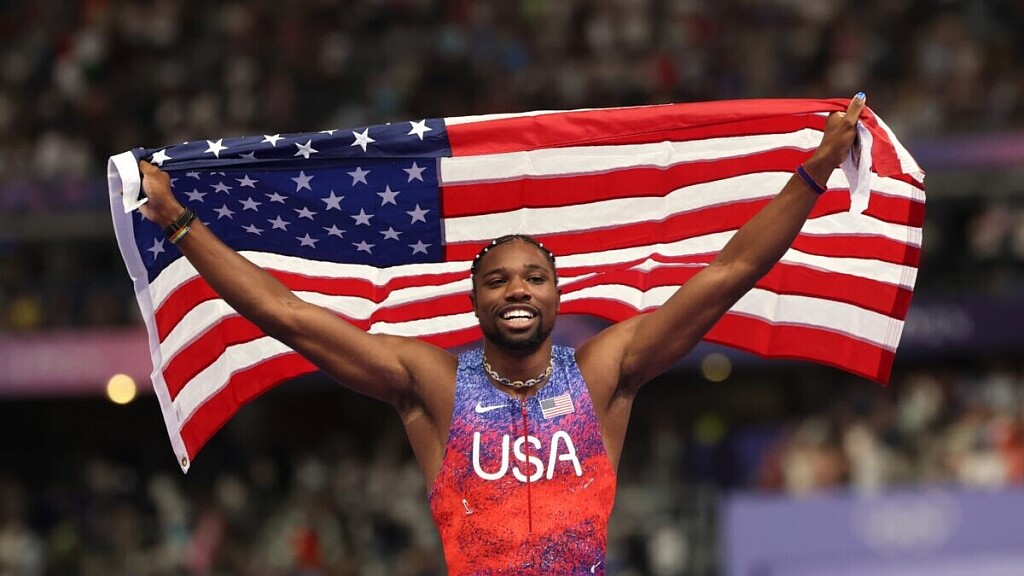
Noah Lyles takes gold in 100m final at Paris Olympics
Lyles was pushed to another personal best by Jamaican Kishane Thompson, who took silver in a photo finish.
The men’s 100m final was a race for the ages on Sunday as the double world champion, Team USA’s Noah Lyles, took the gold medal in a blazing 9.79 seconds, but it was not without a nail-biting photo finish. Lyles was pushed to run the fastest time of his career by Jamaica’s Kishane Thompson, the fastest man in the world over 100m this year, who also ran 9.79 and was awarded the silver medal. Fred Kerley of the U.S. took the bronze medal in a season’s best 9.81 seconds.
Akane Simbine of South Africa was fourth with a new national record of 9.82, leaving the defending Olympic champion, Lamont Marcell Jacobs of Italy, languishing in fifth place, with 9.85. Canada’s Andre De Grasse, the two-time Olympic bronze medallist, did not make the final, finishing fifth in his heat of the semi-final earlier on Sunday.
Men’s 100m final results
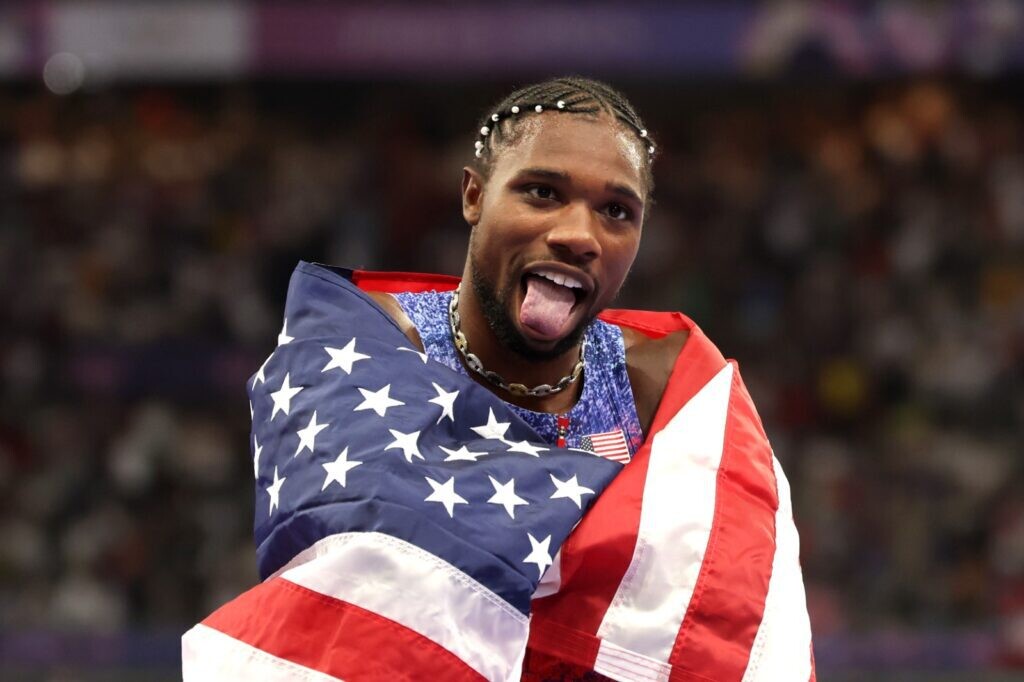
Noah Lyles (USA) 9.79 PB
Kishane Thompson (Jamaica) 9.79
Fred Kerley (USA) 9.81 SB
Akani Simbine (South Africa) 9.82 NR
Lamont Marcell Jacobs (Italy) 9.85 SB
Letsile Tebogo (Botswana) 9.86 NR
Kenny Bednarek (USA) 9.88
Oblique Seville (Jamaica) 9.91
Lyles took his personal best down another two hundredths of a second in the race, having just run 9.81 at the London Diamond League on July 20.
Lyles’s coach, Lance Brauman, said he predicted Lyles would run a PB in the final: “I know his fitness level, and I was pretty confident he was going to run a PB, I have for the past three weeks. It was just a matter of, was he going to run a big enough PB to win the race?”
The American said earlier this summer that his goal is to earn four medals at the Paris Games, i.e., the 100m, 200m, 4x100m relay and the 4x400m relay. Time will tell whether he can make good on his goal; the men’s 200m heats are scheduled for Monday, Aug. 6, with the 4x100m relay heats going on Thursday, Aug. 8, and the 4x400m on Friday, Aug. 9.
Athletics events at the Paris 2024 Olympic Games are taking place from Aug. 1-11. Today’s coverage is brought to you by Canadian Running and PUMA Canada. Follow us on Twitter on Instagram for all things Team Canada and up-to-date exclusive news and content.
by Anne Frances
Login to leave a comment
Paris 2024 Olympic Games
For this historic event, the City of Light is thinking big! Visitors will be able to watch events at top sporting venues in Paris and the Paris region, as well as at emblematic monuments in the capital visited by several millions of tourists each year. The promise of exceptional moments to experience in an exceptional setting! A great way to...
more...
There Are Going to Be People Walking:’ A Look at the Grueling Olympic Marathon Course
Getting to run by all those historic spots requires some epic climbs and descents.The final weekend of the 2024 Paris Olympics will host back-to-back days of thrilling marathons. These prestigious races, set against the backdrop of two of France’s most iconic landscapes—Paris and Versailles—will weave through a tapestry of history, culture, and breathtaking scenery. They begin on August 10 with the men’s race, and then, in a nod to the 40th anniversary of the first women’s Olympic Marathon in Los Angeles, the Paris Olympics will conclude on August 11 with the women’s race for the first time in history.
Here are some of the key details you’ll want to know:
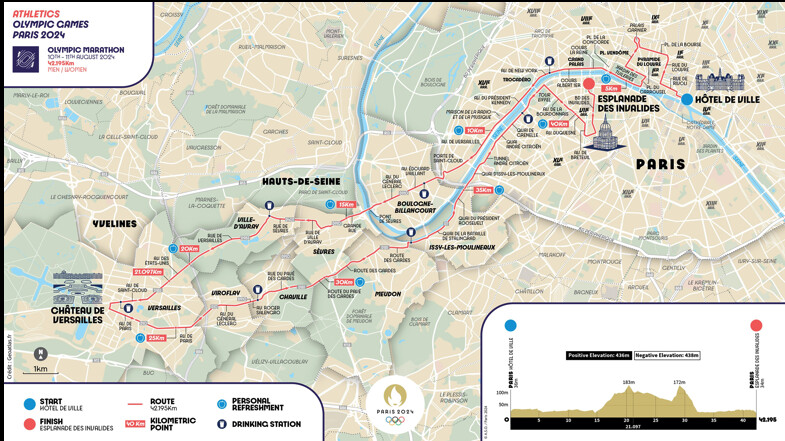
What sites will the runners pass?
It’s not a bad way to tour the area, and it’s quite different than the Paris Marathon that is held each April. Athletes will find themselves tracing a route that dances through nine arrondissements (neighborhoods) of Paris along the banks of the Seine. The runners will begin at the Hôtel de Ville, or city hall, and then pass landmarks such as the Palais Garnier opera house, Place Vendôme, the Louvre museum, and past the Trocadéro.
Next, they will leave the city to run through historic French towns, including Sevres, on their way to Versailles. The return to the city is a different route and will take them through the Forêt Domaniale de Meudon, a forest. When back in the city, they will be on the Left Bank and run past the Eiffel Tower as well as Parisian neighborhoods. The race ends at the Esplanade des Invalides, in which Napoleon is buried.
This route is based on significant French history. In October 1789, between 6,000 and 7,000 Parisian women, joined by men, marched from the Hôtel de Ville through the city to Versailles. It was because of that march that Louis XVI agreed to ratify the Universal Declaration of the Rights of Man and Citizens. The marathoners are symbolically running in their footsteps.
How tough is the course?
Unlike some more recent Olympics and U.S. Marathon Trials races, this course isn’t a circuit of repeated loops. Instead, it’s a full loop starting in Paris and loops down to Versailles outside of the city.
While the elevation profile for the first nine miles looks fairly tame, once the runners are past the halfway mark the landscape changes. The most notable course feature is the three uphill stretches—they’re incredibly steep and very long.
The first big hill comes just before the 10-mile mark, and it climbs at a 4 percent grade, which is roughly the same as Boston’s famed Newton hills. The difference with the Paris version is that it ascends for about 1.25 miles before it levels off for a bit. (Boston’s longest hill is less than half a mile, according to Sean Hartnett, emeritus professor of geography at the University of Wisconsin-Eau Claire, who specializes in marathon routes and other running competitions.)
The next hill at the 12-mile mark is at 5 percent, steeper than anything on the Boston course and 900 meters long. But those two are just appetizers for the real challenge. That hits just after the 18-mile mark.
Runners will have to climb for 600 meters, at an average grade of 10.5 percent. Yes, picture putting your treadmill at 10 percent and trying to run up it at marathon pace. Hartnett calls it a “doozy” and struggles to find courses to compare it to. The Bix 7 in Davenport, Iowa, perhaps? Then he gives up. “It’s unlike anything in any competitive road marathon,” he said. (You can view a detailed description of the 15K-33K section as mapped by Hartnett here.)
In total, the route will include 1,430 feet of elevation gain. Possibly more challenging is the 1,437 feet of descent. The make-or-break point for the route might be just after that final brutal uphill, when they are bombing downhill—at some points at a gradient of 13.5 percent. Runners will have to be efficient going down, without pounding so much they trash their quads before the final flat stretch before the finish. To put the course into some more perspective, the World Marathon Majors that are considered the hilliest—Boston and New York City—each have an elevation gain of a little over 800 total feet. And for one final nugget, the average grade of the Mount Washington Auto Road Race is 12 percent. The course record for that 7.4-miler is at around 8:00 pace.
This course will make the fastest marathoners in the world look almost human at times.
How do the marathoners feel about the course?
Pat Tiernan, an Olympian for Australia who is running the marathon, made two trips to Paris from his training base with Puma in North Carolina to examine the course. His first trip, in early April, was just to get a feel for the course. The second, in late May, was to train on it.
“The first thing you notice,” Tiernan said in a phone call with Runner’s World, “is that it’s going to be a brutal course. There are going to be people walking.”
If you look closely at the official Strava route, you can spot some U.S. Olympic marathoners on the leaderboards of the course’s toughest segments.
On April 10, U.S. team member Clayton Young did a 12.80-mile run on the hilliest section of the course, where he “pushed the uphills, chilled the downhills.” During the steepest climb—right before the mile 18 split—Young tackled a .44-mile segment in 3:09, giving him a modest average pace (for a world-class marathoner) of 7:01 per mile. But if you look at Strava’s “grade adjusted pace,” which factors in elevation, that 7:01 converts to 5:03 mile pace. His average heart rate was 179 beats per minute.
Dakotah Lindwurm, a U.S. team member for the women, also previewed the course in April in a run she called, “Tour de La Olympic hills ?].” She racked up an impressive 16 “course records” during her 10.87-mile workout, and on the same steep segment that Young ran, she averaged 7:43 pace with a grade-adjusted pace of 5:21 per mile.
Emily Sisson, the U.S. record holder in the marathon, has been training for both the hills and the flats. “We’ve been doing a lot of stuff on hills, because [we] want to come out of the hills into the last 10K feeling good,” she says. “That’s also why you don’t want to slack on 10K work, because it could be quite fast at the end. So kind of trying to do it all.”
Tiernan agreed with Sisson on the unique challenge. If marathoners go too hard through the hills, they could struggle at the end, he said. If they go too easy through the hills and subsequent descents, they might be out of touch by the final 10K. He said the Paris course is as “if you were to do a 10K road race, then go and run a hard 10K hill cross country course, then a 10K road race.”
If nothing else, it could make for some surprises on the podium.
When exactly are the races?
The men’s event happens on Saturday, August 10. If you want to watch live, get your favorite espresso ready. The event begins at 2 a.m. ET/11 p.m. PT in the U.S. The following day for the women’s race, the 2024 Paris Olympics fully conclude in honor of the 40th anniversary of the first women’s Olympic marathon event, won by Joan Benoit-Samuelson. The start time is also at 2 a.m. ET/11 p.m. PT.
Who are the major names in each race?
Both races are packed with star power in the form of returning Olympic champions, world record holders, and World Marathon Majors winners. The biggest storyline in the men’s race is whether Eliud Kipchoge, the two-time Olympic marathon gold medalist who many consider to be the greatest of all time, will be able to retain his crown in what may be his final Olympics at age 39.
The women’s event is even more stacked and should make for quite the event to cap off the 2024 Olympics. Newly ratified world record holder Tigist Assefa of Ethiopia will have to match speed and strategy against the likes of Hellen Obiri and Peres Jepchirchir of Kenya and the Netherlands’s Sifan Hassan, who is running the marathon after racing in the 5,000 and 10,000 meters on the track.
Men’s Marathon Contenders
Eliud Kipchoge, Kenya (2:01:09)
Kenenisa Bekele, Ethiopia (2:01:41)
Benson Kipruto, Kenya (2:02:16)
Tamirat Tola, Ethiopia (2:03:39)
Conner Mantz, USA (2:07:47)
Clayton Young, USA (2:08:00)
Women’s Marathon Contenders
Tigist Assefa, Ethiopia (2:11:53)
Sifan Hassan, Netherlands (2:13:44)
Peres Jepchirchir, Kenya (2:16:16)
Emily Sisson, USA (2:18:29)
Hellen Obiri, Kenya (2:21:38)
Rose Chelimo, Bahrain (2:22:51)
Fiona O’Keeffe, USA (2:22:10)
Sharon Lokedi, Kenya (2:22:45)
Did you know there is a mass participation race?
If not, now you do. It’s called the Marathon Pour Tous, and we’re pretty jealous we can’t run this one. There will be a full marathon and a 10K on the same route as the Olympic marathon on the evening of August 10. Yes, a night race in the City of Lights. More than 20,000 participants are expected for each event.
by Runner’s World
Login to leave a comment
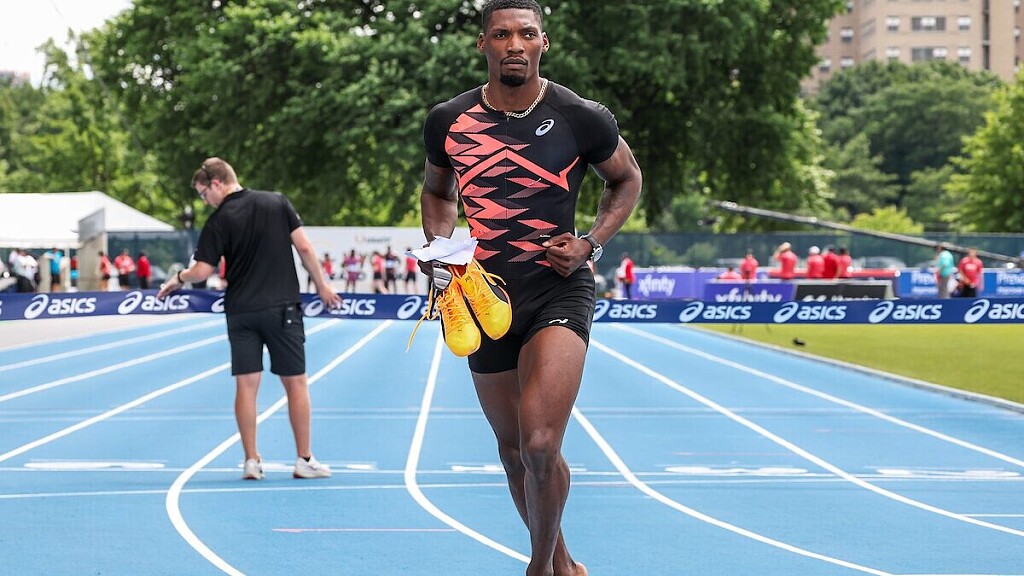
U.S. sprinter Fred Kerley calls out track meet for bad starting blocks
This was supposed to be Kerley's first 100m since he stated he'd break Usain Bolt's world record the next time he raced the distance.
Former world 100m champion Fred Kerley was slated to be a headliner at Sunday’s USATF New York City Grand Prix in the men’s 100m. However, Kerley did not end up racing after he slipped in the starting blocks twice. Despite these mishaps, he chose not to race.
In a post-race interview with Citius Mag, Kerley said that one of his starting block pads was broken, and he had requested new blocks. “I slipped the first time, and then I slipped the second time. I wasn’t about to let it happen a third time,” Kerley said.
He took to Twitter after the race to criticize the World Athletics Continental Tour meet for using “high school level blocks.”
The 100m at the NYC Grand Prix ended up being won by Nigeria’s Udodi Onwuzurike, with a 10.24 second clocking into a -0.7 m/s headwind.
This race was supposed to be Kerley’s first 100m since he publicly stated he’d break Usain Bolt’s world record the next time he raced the distance. Kerley has not competed in the 100m since the Shanghai Diamond League on April 27 and has not yet broken the 10-second mark this season.
Kerley has a personal best of 9.76 seconds from the 2022 World Championships, which he won. He is also the reigning Olympic silver medalist in the 100 meters.
Before the race, Kerley drew attention in the warm-up area at Icahn Stadium, where he was spotted wearing Puma spikes (instead of his sponsor, Asics). It came out after the race that Kerley is now without a sponsor, as Asics announced that they had mutually parted ways with him after reaching a multi-year deal just last year. There has been no official statement on why the sponsorship ended, but Kerley was rumored to be frustrated with the custom “world champion” spikes the brand made for him.
The 29-year-old plans to compete in the 100m and 200m at the U.S. Olympic Trials in two weeks.
by Marley Dickinson
Login to leave a comment
I want a medal in Paris, warning shots fired at Sha'Carri Richardson ahead of Olympics
Another sprinter has expressed her desire to bag a medal in the 100m and 200m at the Olympic Games, firing warning shots at Sha'Carri Richardson and her track rivals.
Julien Alfred has joined the cable of female sprinters who also want a share of the Paris 2024 Olympic cake.
Alfred, a young athlete from St Lucia, wants to make a name for herself and she also wants the world to know that her nation can produce great sprinters.
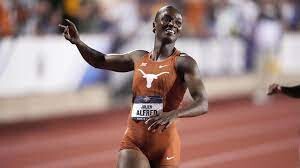
The 22-year-old has expressed her desire to win a medal at the Olympic Games, something she believes would make a great difference in her career and life.
Speaking to World Athletics, Alfred said: “I don’t really pay attention to the media but I do have a lot of supporters back home who give messages to my family and they transfer to me. I definitely want a medal in Paris – a gold, silver or bronze in the 100m and 200m.”

The path to an achievement like that is, however, filled with hard work and tedious, painstaking repetition. In addition to her start, Alfred has been focusing on improving her strength and technique.
Last year, Alfred set collegiate records to win the NCAA indoor 60m title in 6.94 and the 200m in 22.01, both times putting her second on the world all-time lists.
With another dominant sprint double at the outdoor NCAA Championships last June, she won the 100m in 10.72 and 200m in 21.73, closing out a magnificent collegiate career, then signed a professional deal with Puma.
Her goal at last year’s World Championships in Budapest, Hungary was to win a medal, but she did not achieve her targets, finishing fifth in the 100m and fourth in the 200m.
She started training alongside Britain’s Dina Asher-Smith late last year and also admitted that it has been a great step for her. “It’s competitive, which makes it fun. Iron sharpens iron,” she said.
by Abigael Wuafula
Login to leave a comment
Paris 2024 Olympic Games
For this historic event, the City of Light is thinking big! Visitors will be able to watch events at top sporting venues in Paris and the Paris region, as well as at emblematic monuments in the capital visited by several millions of tourists each year. The promise of exceptional moments to experience in an exceptional setting! A great way to...
more...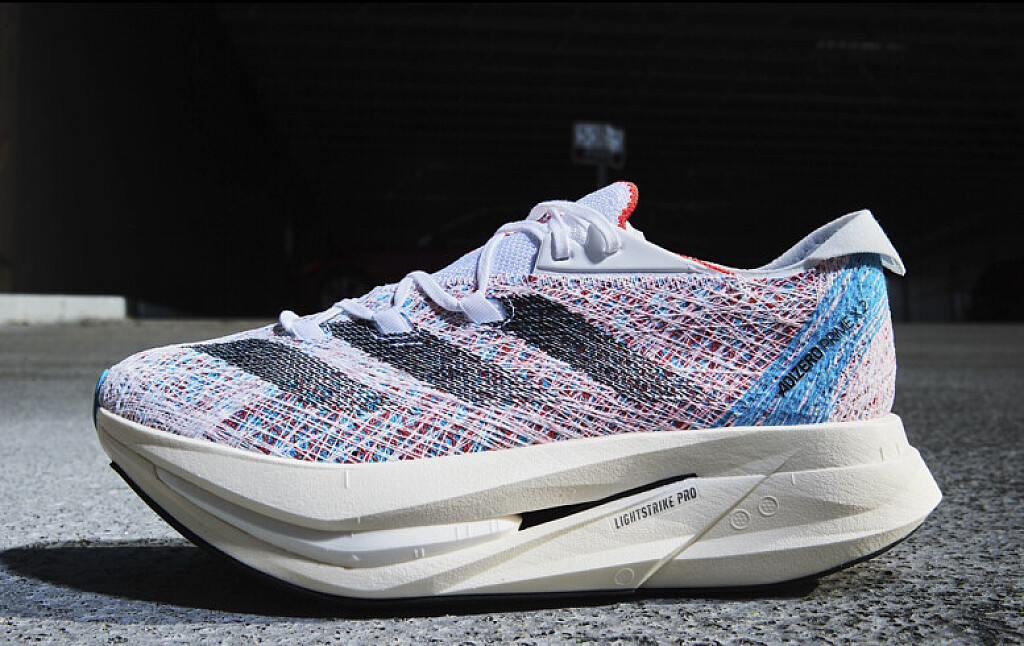
Rise of the “Illegal” Running Shoes
Super trainers are fast, fun, and maybe a little risky. Here’s what to know about these max-cushioned shoes.
Banned shoes emerged courtside long before they found their way onto a marathon course. Legend has it that nearly 40 years ago, Michael Jordan laced up a pair of red-and-black high-tops in violation of the NBA’s approved uniform colors.
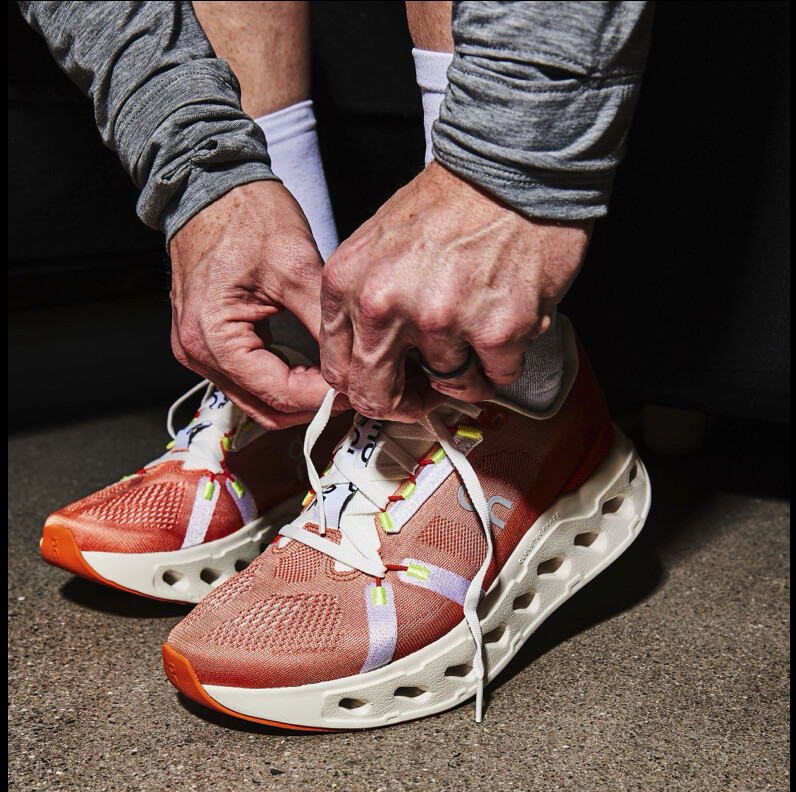
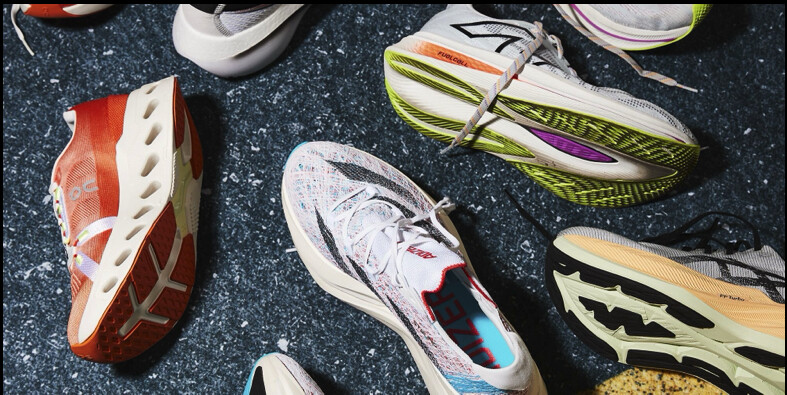
In 2010, the league cracked down again—this time, for reasons besides aesthetics—on a pair of basketball shoes that were shown to increase a player’s vertical-jump height. Today, Nike’s Air Jordan brand is a household name and multibillion-dollar business, and shoemaker Athletic Propulsion Labs (APL) has since released additional banned styles (Superfuture and Concept X) of its performance-boosting kicks.
Though some speculate these bans were mostly crafty marketing, the same can’t be said about the wave of “illegal” shoes that is flooding the roadways on the feet of runners. Super shoes have proven a true performance boon to both elites and recreational runners on race day. Now the tech has trickled down to shoes for daily runs, ushering in super-thick, though still permissible, shoes that have created their own category: super trainers.
What Is a Super Trainer?
Technically, a formal definition doesn’t exist. But we’ll establish some general parameters.
Super trainers share many of the same qualities as super shoes built for race day: a tall stack height, efficient midsole geometry, high-powered super foam, and usually some sort of plate. But these trainers aren’t meant for racing, like a Nike Vaporfly or Saucony Endorphin Elite—they’re designed for everyday mileage.
Super shoes for racing have to balance cushioning and propulsion, but still be lightweight. Super trainers, though, can have beefier constructions that help to extend their life spans. For example, shoe brand On guarantees only four marathons from the Cloudboom Echo 3—that’s little more than 100 miles. Super trainers can handle more mileage, and should have the typical 300- to 500-mile range of a normal running shoe.
To do that, they may have more outsole rubber for durability. Their uppers are usually softer and thicker than a racing shoe’s, as well, with comfortably cushioned ankle collars and tongues. They tie up with sturdier laces and offer a more forgiving fit overall, closer to what you’d expect from a workhorse daily trainer. And, since super trainers aren’t made to toe a starting line, brands can pile on midsole foam in excess of the 40mm limit imposed by World Athletics.
But they’re more than just extremely cushioned running shoes. Super trainers have additional mechanisms and “super foams” geared toward running efficiency and energy return, explained below.
Anatomy of a Super Trainer
If we break down a super trainer into its key components, we see a recurring theme: a stack of super foam in the ballpark of 40mm (or more), a carefully sculpted midsole shape for propulsion, and a plate that harnesses those pieces and holds it all together. This is the tech that puts the “super” in super trainers; it needs to interact with the foot and the rest of the kinetic chain in specific ways to deliver the intended ride and energy return.
Here’s what’s happening inside the midsole under your foot, and how these elements work to boost your stride.
1. Rocker Geometry
When we talk about a rocker sole, we’re describing the curvature of the bottom of the shoe’s sole. Both the heel and the toe curve upward, away from the ground, to give the shoe a more rounded base. The result is a shape like that you’ll find on a rocking chair. This is needed because the shoes are so thick, they don’t bend under the forefoot for a smooth transition during your gait cycle.
Shoe developers can also manipulate the inflection points of the rockers around a runner’s pace and foot strike to potentially manipulate transition time. Usually, you’ll find the most aggressive rocker designs in racing shoes. Still, pronounced rocker soles on super trainers are essential to make transitions comfortable.
→ How do rocker soles work?
Rocker soles in shoes function to mimic the natural rockers of the foot to make us feel more efficient. The foot has three functional rockers—the heel (first), ankle (second), and forefoot (third)—that we use while walking and running. The heel bevel in a shoe prepares the foot to contact the ground and smooths out the shoe’s ride when you land. Forefoot rockers assist movement during toe-off, which generally means the toes and ankle joint don’t have to work as hard.
For some runners, a stiff rocker sole can decrease demand on the calves by transitioning effort upward to the knee and hips. A runner’s experience will depend on their specific biomechanics, where the rocker is placed, and how their footstrike contacts it.
2. Super Foam
Polyether Block Amide, or PEBA, is a common foam compound for super trainer midsoles. (A popular trade name for the material is Pebax, made by a company called Arkema.) It’s the basis for foams like Nike ZoomX, Saucony Pwrrun PB, Puma Nitrofoam, and Asics FF Blast Turbo. Many of those brands leverage the same foam used in their top-tier racing shoes for their super trainer models.
Right now, PEBA-based foams lead the way for energy return. While current research and our own testing indicates that supercritical EVA and TPU blends are also impressive, PEBA has the edge more often than not. Why? It’s lighter than TPU and far softer and bouncier than supercritical EVA. Some iterations are firmer than others, depending on which brand’s flavor you try.
→ How does foam work?
Cushioning serves to absorb shock upon landing and provide overall comfort while running, but it can also return energy to the runner and stabilize the shoe. PEBA foams are especially lightweight, so brands can pile it on—both in thickness and in width—without the same weight penalty applied when using EVA or TPU materials. The additional width is just as important as the height. These shoes often need a wide platform of midsole material to remain stable.
Every brand’s PEBA-based foam compresses at a different rate, with varying amounts of responsiveness, so each offers a unique benefit based on the runner. For example, runners who land with lots of force can bottom out and crush a foam that’s too squishy, so they may prefer a firmer platform. A harder midsole can offer more support without any additional stability elements. On the other hand, a softer foam can provide more comfort, and research suggests that it may have a protective benefit for lighter runners.
Keep in mind that dozens of pieces within a shoe, as well as countless runner-specific characteristics, come together alongside a super foam to deliver its specific ride and response. It’s not always possible to parse each element individually.
3. Plates
Not every super trainer has a plate in its midsole, but it’s increasingly common. That’s because—regardless of whether it’s made from TPU, EVA, PEBA, carbon fiber, or a mix—a plate stiffens the midsole and can add support. It may also give the ride some extra pop, but it largely functions to stabilize the shoe. The Adidas Adizero Prime X 2 Strung, which has a heel stack height of 50mm, requires two stiff carbon-infused plates.
Some shoes need less support and utilize pliable materials with thinner rod constructions or forgo full-length plates for ones that extend only halfway along the midsole.
→ How do midsole plates work?
While plates can add propulsion, research suggests that the true hero is the foam itself. A plate mostly serves to “facilitate motion and add stiffness to the sole to balance out the softer compliant foams,” says Matt Klein, DPT and founder of the Doctors of Running website and podcast.
He explains that the effects of stiff-plated shoes are not clear-cut. “Everything we know [about super trainers] is applied from super shoe and maximal shoe research. These shoes shift work up to the knees and hips. The ankles may do less, but that doesn’t always apply. If the shoe is too stiff, the ankles will actually end up doing more work. But once a midsole gets so thick, it may not need a plate; the amount of material naturally stiffens the ride.”
What Are the Benefits of Super Trainers?
Simply put, these shoes are so much fun to run in. They can lend a bounce to your stride that feels like bounding on a trampoline. And since the springy sensation and high energy return can help you move more efficiently, running fast feels easier.
Plus, a review of 63 research studies concluded that these trainers can also help attenuate shock and dampen some of the hard impacts from training. So, runners recover from hard efforts more quickly; they’ll lace up the next day feeling fresher and less sore than if they’d worn regular running shoes. And for those eager to increase mileage, this may allow some runners to increase their weekly workload with less fatigue and fewer aches and pains.
“These have the benefit of having similarities to super racing shoes. These shoe types certainly increase the capacity of work you can do, so I suspect those running higher miles will probably benefit most from these,” Klein speculates.
But, the recovery boost from super trainers can make it tempting to tack on too many miles too soon or overcook the pace on easy days. “Just because you are less sore does not mean you are at a lower risk for injury. You can still get injured with overdoing things,” Klein says.
Our wear-testers report that they’re able to run faster paces with less effort in super trainers, but it’s still important to keep easy jogs relaxed. Double-check your training log and pull back on the reins if you notice spikes in mileage or intensity outside your typical training volume.
Are There Any Risks to Super Trainers?
Though they feel great, super trainers can have an impact on our natural gaits and biomechanics. “One of the injury risks for this shoe type is that it is so different from normal mechanics and footwear. The current evidence from super shoes and super-max stack-height shoes is that we tend to stiffen our legs in taller, softer shoes,” Klein says. “This is not bad short-term, but some evidence suggests long-term super-max stack-height shoes can actually increase joint loading due to that stiffening.”
“I suspect running in them a ton will cause less joint motion, as the body will stiffen up to find stability as shock absorption isn’t needed. This may be great for a recovery run/faster run, but trying to transition back to normal shoes can take time if you only run in these and super racing shoes.” Klein recommends making the transition slowly to avoid injury and keeping more than one pair of running shoes in your rotation.
“I do suspect that with the workload being shifted up to the knee and especially the hip, there may be an increase in injuries in those areas. The hip still has to work harder being on a softer, less stable surface. So, those with hip instability and strength issues may want to avoid super shoes, at least until these issues have been addressed,” Klein says. New runners should focus on building strength and experience before experimenting with super trainers.
There is little doubt that these shoes have effects at the point where our feet meet the midsoles as well as farther along our kinetic chains. Super trainers shift more of the workload of running to the hamstrings, which means that you won’t engage the calves and lower leg muscles as much. Moving some of that effort to larger muscle groups can be beneficial for some runners, like those who are struggling with calf or Achilles tendon injuries. But those who have a nagging hamstring strain may need to be wary. Whether or not it’s your goal, those upper leg muscles will receive more of a workout.
At the very least, one thing can be said for sure. It’s that all the foam underfoot is going to put a lot of distance between your foot and the ground. This limits the amount of ground feel you receive from the shoe. It can be easier to wipe out if you’re hopping a curb on a night run. And on rain-slicked sidewalks or technical trails, it can be tough to steer a thick and bulky midsole. If you’re prone to ankle rolls or need a keen sense of where and how your foot is landing whenever you touch down, a super trainer might not serve you well.
Will I Really Get DQ’d in a Race?
It depends. If you’re an elite runner, absolutely. But if you’re going for a 3:10 BQ, it’s unlikely. Ethiopian runner Derara Hurisa won the 2021 Vienna Marathon in 2:09:22 but was disqualified when race organizers found he’d raced in the Adidas Adizero Prime X, a different shoe than he’d declared on his prerace form. Another runner at a fall 2023 half marathon was disqualified after winning in the same shoe.
Our Favorite Super Trainers
Running shoes aren’t cheap. Maxed-out midsoles with top-end shoe tech only add to the bill. Most super trainers will cost you $180 at least, and there are options to be had for well over $200.
by Runner’s World
Login to leave a comment
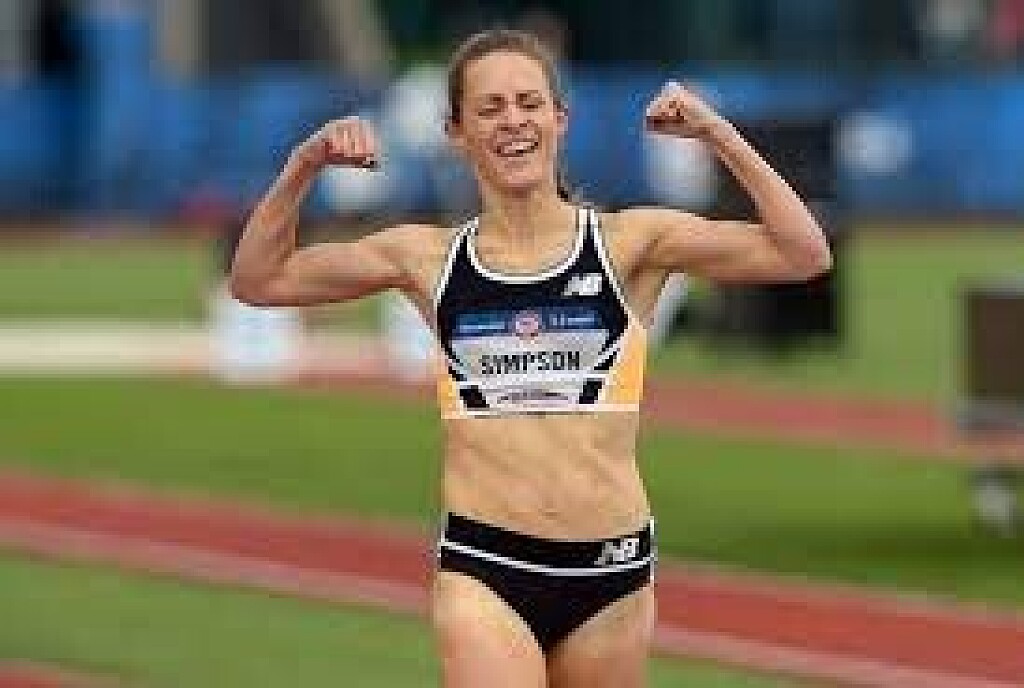
Jenny Simpson Targets NYC Half
For the first time in her running career, Jenny Simpson faced a decision that she’d never considered in a race. At mile 18 of the 2024 U.S. Olympic Marathon Trials, her debut at the distance, the most decorated U.S. 1500-meter runner in history made the difficult choice to drop out of the competition on February 3.
The marathon leaves runners vulnerable to a number of challenges—nutrition issues, tough terrain, the rigors of high mileage—which can derail even the most experienced runners on a bad day. When Simpson, 37, started cramping with 16 miles left in the race, the setback shocked her. After spending months transforming her body from an explosive middle-distance runner to a long-distance athlete on the roads, Simpson felt ready to take on 26.2, which made the race in Orlando, Florida, all the more confusing.
“One of the beautiful things about running is that so often what you put in is what you get out, but the [Olympic Marathon Trials] wasn’t that way at all,” Simpson told Runner's World.
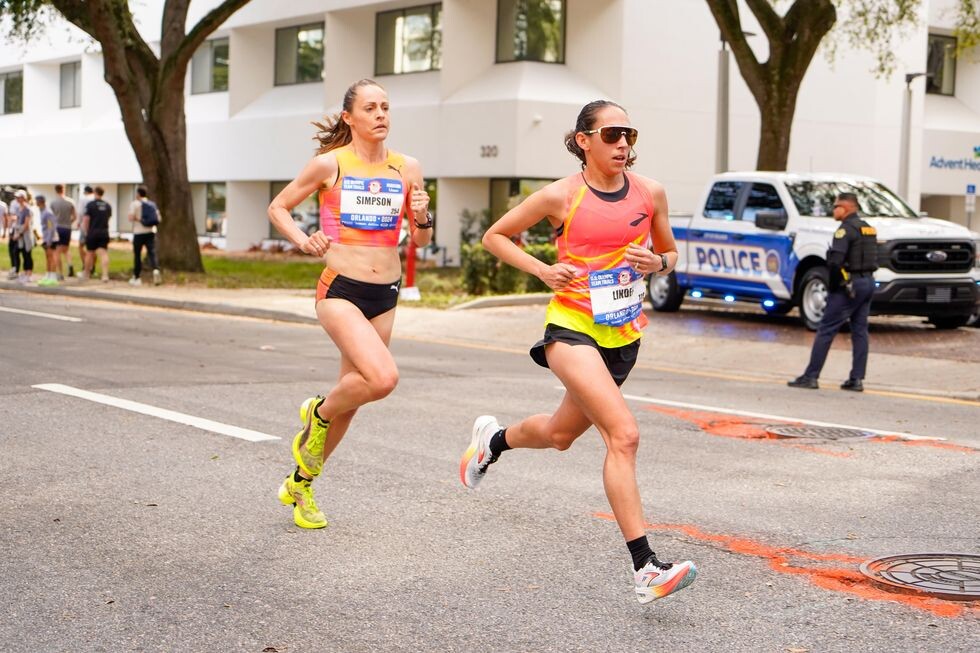
After the race, Simpson took time to reflect. For two days, the three-time Olympian relaxed with her family in Oviedo, Florida, her hometown located just outside Orlando. In between playing with her nieces and enjoying home-cooked meals, she expected to feel sad following the race. But to her surprise, that feeling never came. Instead, Simpson felt motivated to find another opportunity to show her fitness.
While riding in an Uber on the way home from the Denver airport to her house in Marshall, Colorado, Simpson sent a text message to a contact at the New York Road Runners (NYRR), asking if there were any spots available to race the NYC Half. The event in New York City on March 17, one of 60 adult and youth races organized by NYRR throughout the year, will include Simpson in her third half marathon.
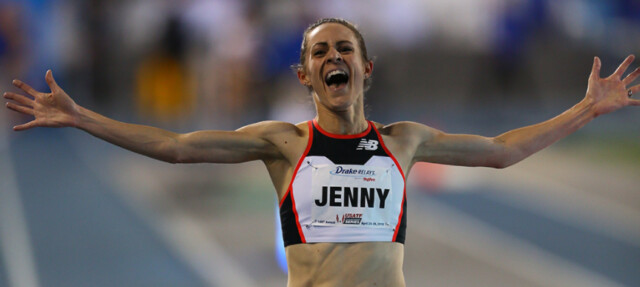
Coming out of a tough few years of personal and professional hardships, Simpson has a new perspective on disappointment. For her, the Olympic Trials is just another exercise in the importance of having faith in the process and her ability to bounce back.
“The race didn’t turn out the way I wanted, but I still believe in myself,” Simpson said. “I’m up at the plate, gripping the bat and I swung once, totally missed, but I’m gonna swing again because I believe I’m ready for it.”
Marathon metamorphosis
After spending well over a decade dominating American middle-distance running and collecting medals on the global stage—including world championship gold (2011), two silver medals (2013 and 2017), and Olympic bronze at the 2016 Rio Games—Simpson’s streak of making U.S. teams ended during the pandemic. In 2021, she made the finals of the 1500 meters at the Olympic Trials, but she finished 10th.
That fall, she started to transition to the roads with her first 10-mile race. But at the end of 2021, her life was upended by injury, the conclusion of a longtime sponsorship with New Balance, and a devastating wildfire that she and her husband, Jason, narrowly escaped on December 30, 2021. While their home was spared, most of their neighbors’ houses were destroyed. For three months, the couple was displaced while damage was repaired.
By the spring of 2022, things started to turn around for Simpson. Her sports hernia was healing, she and her husband returned to their home, and she was in conversations with shoe companies. That fall, she signed with Puma and shared her intent to focus on the roads.
In January 2023, she made her debut in the half marathon with a 1:10:35 in Houston. That summer, she announced her plans to race the U.S. Olympic Marathon Trials, her first 26.2.
In collaboration with her longtime coaches, Mark Wetmore and Heather Burroughs, Simpson threw herself into the event. She built up to 100-mile weeks during the training cycle, worked with a nutritionist on mid-race fueling, and spent three weeks in Orlando acclimating to the heat in preparation for the championship.
Lessons learned
On race day, Simpson started out at a pace that felt manageable (she ran between 5:23 and 5:38 per mile through the first 10), resisting the urge to go with the blazing pace set by the leaders. Just past halfway, Simpson got a side stitch, and then she started cramping, first in her toes and then in her calf and hips. “Over the course of a few miles, I went from being able to race, to feeling like I was in trouble being able to move through my normal range of motion,” she said.
Simpson tried to double down on hydration at the aid stations, but the muscle cramps got worse as the race progressed. While battling through the setback, Simpson ultimately decided to accept the loss. For an athlete who is used to being on the podium, dropping out was an agonizing choice, but the crowd’s support on the course helped her cope.
“It’s one thing for people to say, ‘We’re proud of you no matter what,’ and I’ve heard that my whole life. I’ve been the woman who can make the team,” Simpson said. “To actually be in the position where I’m not doing well and I’m not making the team and everyone is good on that promise to be proud of me no matter what, I’m just so grateful.”
Now almost three weeks out from the race, Simpson and her team are determining takeaways from the competition. After spending many years following a set schedule of Diamond League competitions and international championships on the track circuit, Simpson wants to choose races that excite her. Right now, that means conquering a half marathon through Times Square and Central Park.
“2024 for me is gonna be about embracing the freedom to dial in on the experiences that I want to have before this is all over,” Simpson said. “It’s not going to last forever, and that doesn’t mean I’m retiring tomorrow or anytime soon, but we’ve been through some tough years, and I still think life is beautiful.”
by Tailor Dutch
Login to leave a comment

United Airlines NYC Half-Marathon
The United Airlines NYC Half takes runners from around the city and the globe on a 13.1-mile tour of NYC. Led by a talent-packed roster of American and international elites, runners will stop traffic in the Big Apple this March! Runners will begin their journey on Prospect Park’s Center Drive before taking the race onto Brooklyn’s streets. For the third...
more...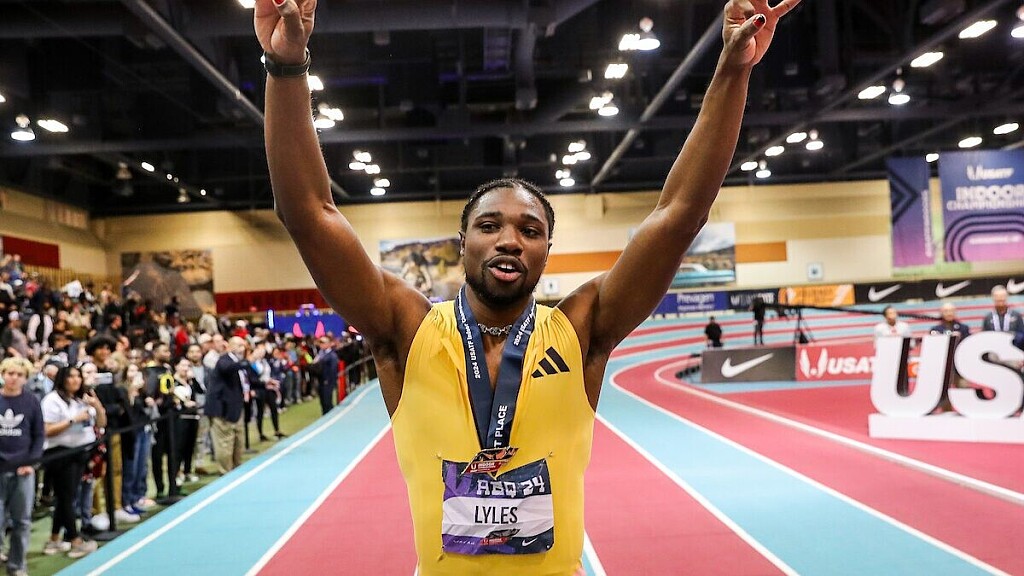
Noah Lyles signs record-setting contract with Adidas
The world 100m and 200m champion, Noah Lyles, has signed a record-setting deal with Adidas that will run through the L.A. 2028 Olympics. The exact dollar figures have not been disclosed, but it has been dubbed the richest contract in track and field since the retirement of Usain Bolt.
Bolt’s contract with Puma in 2013 was estimated at around $10 million a year, and the deal took him to the end of his career, in 2017. Lyles’s new contract is likely in the ballpark.
Adidas has been Lyles’s sponsor since the 2016 U.S. Olympic Trials, when he finished fourth in the men’s 200m as a high school senior. Lyles has since become the world’s most dominant sprinter, winning three consecutive World Championships titles over 200m, breaking the 26-year-old American record in 2022 (19.31 seconds) and winning all three sprint gold medals in the 100m, 200m, and 4x100m relay at the 2023 World Athletics Championships in Budapest. He is only the fifth man to accomplish that feat, and the first since Bolt at the 2015 World Championships in Beijing.
“When I first signed with Adidas in 2016 along with my brother, Josephus, it was like a dream come true for us,” Lyles said in a press release. “Today is just a continuation of that childhood dream.” Lyles shared his vision of achieving all he can on and off the track, and his goal to make a change for future generations. “This is what drives me,” he said.
Lyles has had a fast start to the 2024 season, clocking a new personal best of 6.45 at the New Balance Grand Prix earlier this month, then following up his performance with a 60m win at the U.S. Indoor Track and Field Championships in a world-leading 6.43 seconds, beating his compatriot and former 100m world champion Christian Coleman.
The 26-year-old is the favourite to win gold in the 100m and 200m at this summer’s Paris Olympics. (He has yet to win an Olympic gold medal.) He won bronze in the men’s 200m in Tokyo, losing to Canada’s Andre De Grasse and American Kenny Bednarek.
Along with Adidas, Lyles also has partnerships with Omega Watches, Celsius Fitness Drinks, Comcast and Visa.
by Marley Dickinson
Login to leave a comment
Shericka Jackson shares secret to maintaining great form in the Olympic season
Jamaican track star Shericka Jackson has shared the secret to maintaining her great form as she eyes the Olympic Games in Paris, France.
Two-time world 200m champion Shericka Jackson has shared the secret to her great form as she eyes a grand return to the Olympic Games in Paris, France.
Speaking on a video shared by her sponsor, Puma Running, the Olympic 100m silver medalist noted that consistency is what keeps her grounded.
“Consistency for me has played a great role in my life. For me, it’s more mental and physical and once I’m physically fit and mentally ready I think it plays such a great role to just stay consistent by working hard and staying grounded,” Jackson said.
Meanwhile, the Jamaican will hopefully enjoy her 2024 season just like she did in 2022 and 2023. In 2022, Jackson won her first-ever gold medal in an individual event at the World Championships in Eugene, Oregon. In the 100m, she bagged a silver medal, finishing second behind compatriot Shelly-Anne Fraser-Pryce.
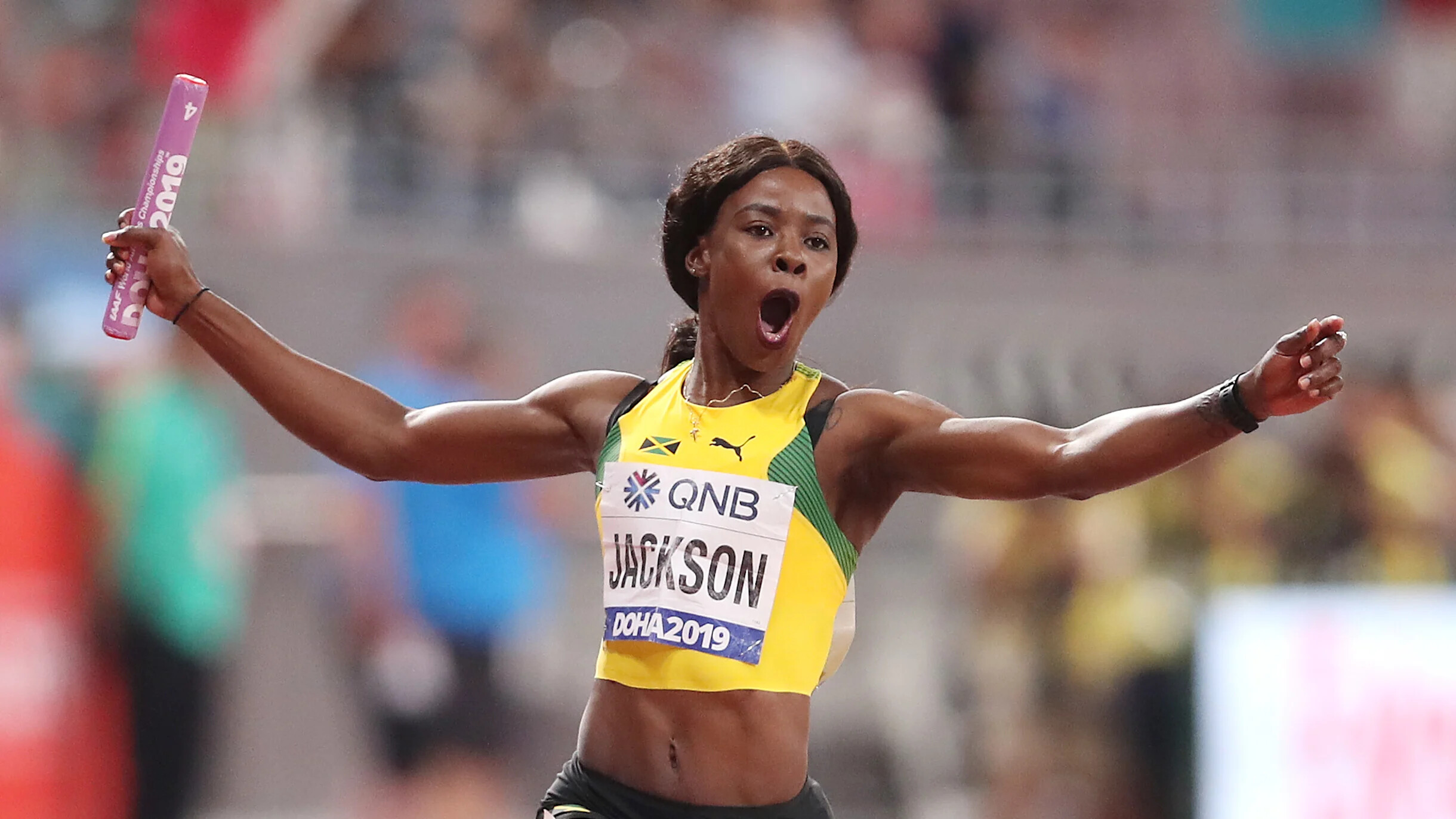
At last year’s World Championships in Budapest, Hungary, she clocked the second-fastest time, behind Flo-Jo’s world record in the 200m to successfully defend her title. She then settled for silver in the 100m, behind American Sha’Carri Richardson.
She proceeded to win a double (100m and 200m) at the Prefontaine Classic, the Diamond League Meeting final held in Eugene, Oregon. Her eyes are now set on the Olympic Games where she intends to have a good run and don the Jamaican colors with pride.
by Abigael Wuafula
Login to leave a comment
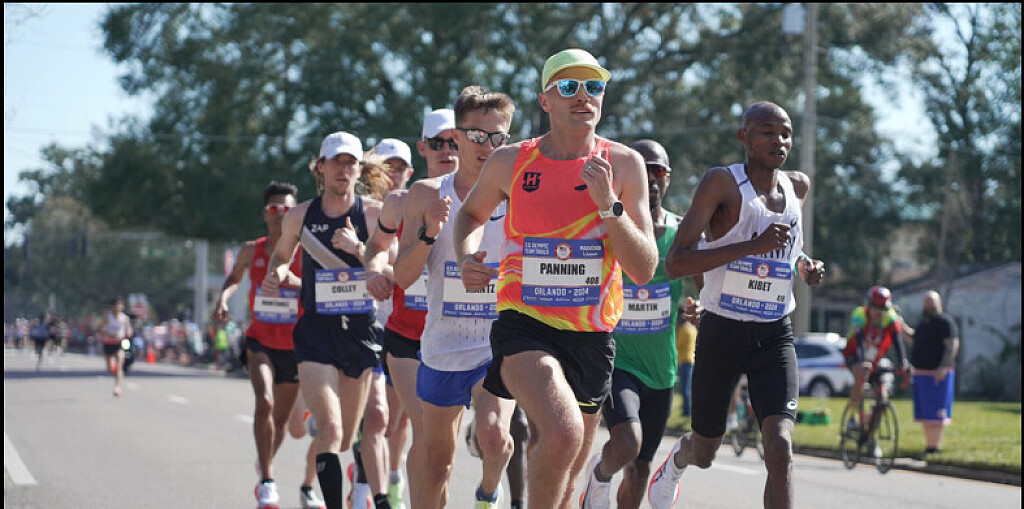
These were the Fastest Shoes of the 2024 Olympic Marathon Trials
Asics, Puma, and Nike had a big day.
The city of Orlando witnessed some amazing performances under a blistering sun, with tickets to Paris at stake. When the dust settled after three loops, six brands placed among the top 10 men’s and women’s finishers. There was a time Nike ruled the roads, but Asics topped them in this year’s Olympic Trials Marathon, with two men and four women making my list below.
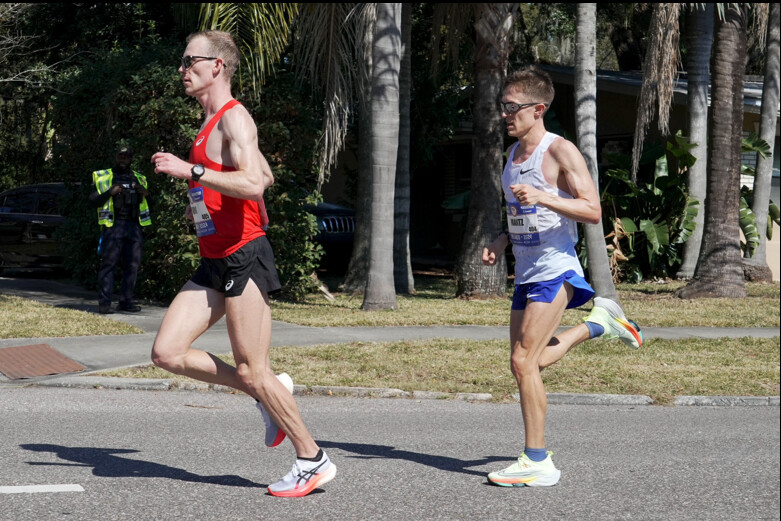
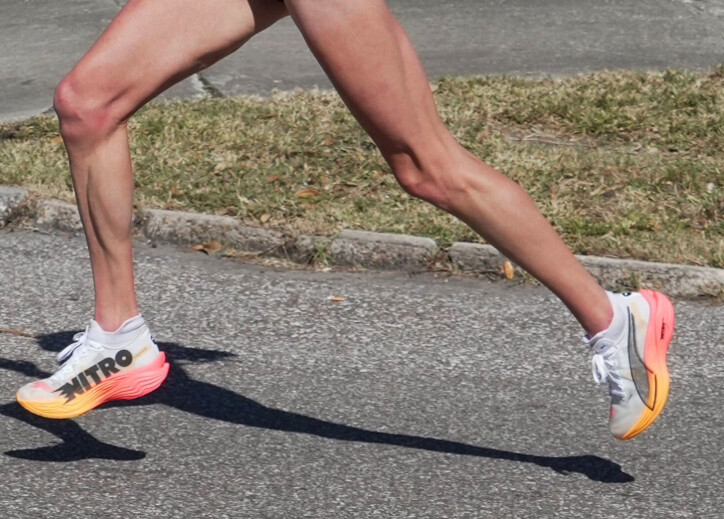
Here’s a look at what the top 10 finishers in both races wore in their quests for a spot on the Olympic team.
MEN’S TOP 10
1st — Conner Mantz, 2:09:05
Nike Air Zoom Alphafly Next% (v1)
Despite two updates to the Alphafly, Mantz (right in the image above) continues to wear the very first version. If it ain’t broke, don’t fix it.
2nd — Clayton Young, 2:09:06
Asics Metaspeed Sky 3 prototype
Young (left, above) looks to be wearing the newest, unreleased Metaspeed Sky. Asics has three “development” shoes (prototype) approved by World Athletics for use in competition, currently. This colorway looks a lot like the existing Metaspeed Sky+ and Edge+, but when we zoom in closer we don’t see any labels, and the sidewall of the midsole looks different than the shoe you can buy now.
3rd — Leonard Korir, 2:09:57
Nike Air Zoom Alphafly 3
Korir laced up the latest Alphafly and might just have run himself onto the squad headed for Paris. We reviewed the Alphafly 3 recently.
4th — Elkanah Kibet, 2:10:02
Asics Metaspeed Edge 3 prototype
Kibet is wearing a prototype, like Young. His, however, appears to be the Metaspeed Edge. You can see the ridge on the sidewall of the forefoot swoops down low toward the sole of the shoe. The Edge’s plate curves lower, allowing for more foam between your foot and the plate than in the Sky.
5th — CJ Albertson, 2:10:07
Brooks Hyperion Elite 4 prototype
It looks like CJ is wearing Brooks’s top racing shoe, which was just announced. But, the company also has a “Hyperion Elite 4 RD.010” prototype shoe that was approved by World Athletics for use in competition just two weeks ago. It’s likely he wore that version (we don’t have details yet) but the outsole of CJ’s race shoe has gray rubber, whereas the newly announced version has a web of black and orange rubber.
6th — Zach Panning, 2:10:50
Brooks Hyperion Elite 4 prototype
Panning seems to be wearing the same prototype of the Hyperion Elite 4 that CJ wore.
7th — Nathan Martin, 2:11:00
Nike Air Zoom Alphafly 3
8th — Josh Izewski, 2:11:09
Nike Air Zoom Alphafly 3
9th — Reed Fischer, 2:11:34
Adidas Adizero Adios Pro 3
Fischer rolled to a top-10 finish with an all-white version of the Adios Pro 3. Adidas does not have any prototypes on the list of approved shoes as of race day.
10th — Colin Bennie, 2:12:17
Brooks Hyperion Elite 4 prototype
Bennie seems to be wearing the same prototype as Albertson and Panning.
WOMEN’S TOP 10
1st — Fiona O’Keeffe, 2:22:10
Puma Deviate Nitro Elite 3
Not a bad first effort for O’Keeffe and Puma. Fiona won her first marathon in record fashion. And Puma claimed victory with the Deviate Elite 3 on the first day it was approved for use in competition. The World Athletics approved shoe list shows the 3 green lighted for use as a “development” as of Feb. 3, 2024.
2nd — Emily Sisson, 2:22:42
New Balance FuelCell SuperComp Pacer
New Balance has a new super shoe, the FuelCell SuperComp Elite v4, out. But Sisson laced up the thinner, lighter Pacer. It’s a shoe most of us recreational runners might only grab for a 5K or 10K (maybe). Seems like it’s working just fine for the American record holder.
3rd — Dakotah Lindwurm, 2:25:31
Puma Deviate Nitro Elite 3
Lindwurm also wore the new Puma racer. Hey, Puma, need me to re-send my address?
4th — Jessica McClain, 2:25:46
Nike Vaporfly 3
This marks an insane shift in racing footwear. On the men’s side, four of the top 10 runners laced up Nike. Only McClain, the team’s first alternate, cracked the top 10 women’s runners wearing the swoosh. Folks, we’re living in the golden age of running shoes. Pick the pair that fits and feels best—and rip it.
5th — Sara Hall, 2:26:06
Asics Metaspeed Edge 3 prototype
Like Kibet, it appears Hall wore the Metaspeed Edge prototype.
6th — Caroline Rotich, 2:26:10
Asics Metaspeed Edge+
Unlike Hall, Kibet, and Young, Rotich’s shoe seems to be the current Metaspeed Edge+ that you can buy right now.
7th — Makenna Myler, 2:26:14
Asics Metaspeed Sky 3 prototype
Myler is likely wearing the Sky 3 prototype—again, check out that ridge in the forefoot; it’s closer to the foot. One heck of a day for Asics, if I do say so.
8th — Lindsay Flanagan, 2:26:25
Asics Metaspeed Edge 3 prototype
N + 1.
9th — Emily Durgin, 2:27:56
Adidas Adizero Adios Pro 3
Durgin held onto a top-10 finish wearing Adidas’s most popular marathon racer.
10th — Annie Frisbie, 2:27:56
Puma Deviate Nitro Elite 3
Asics packed four runners in the top 10, but Frisbie finished strong to give Puma a triumphant trio, all wearing the new Deviate Elite 3.
by Runner’s World
Login to leave a comment
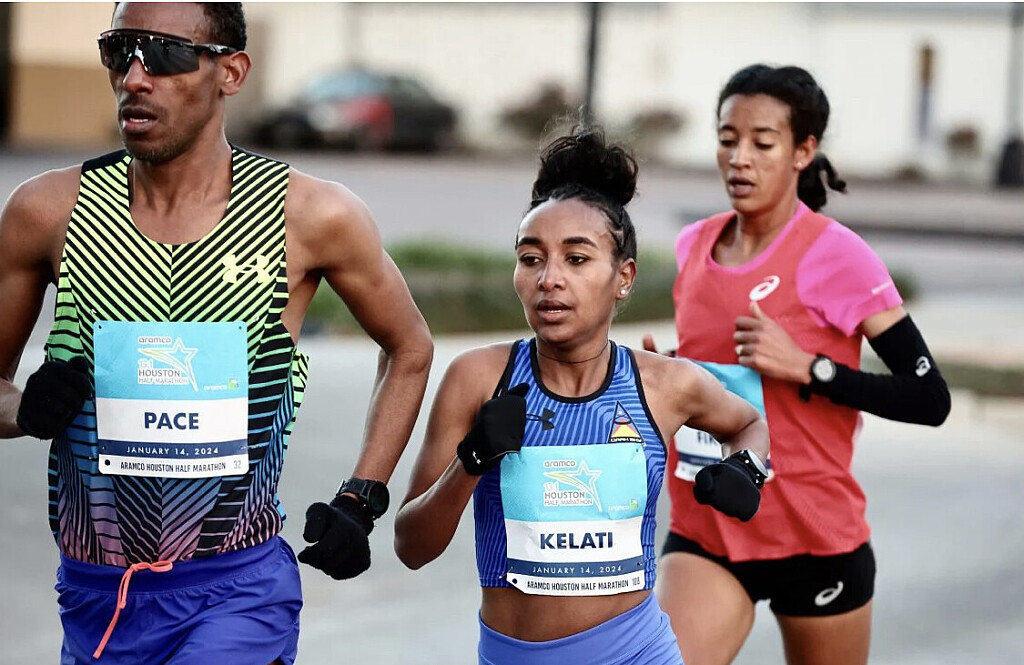
Ethiopians Jemal Yimer (60:42) and Sutume Kebede (64:37) won the overall titles in Houston Half
In what is becoming an annual tradition, Weini Kelati ran 66:25 on Sunday to break the American record at the 2024 Aramco Houston Half Marathon. It was the third straight year the record was broken in Houston as the 27-year-old Kelati, making her half marathon debut, followed in the footsteps of Sara Hall (67:15 in 2022) and Emily Sisson (66:52 in 2023) to become a record-breaker in Houston. Sunday marked the third time the record had been broken in the past year as Keira D’Amatolowered Sisson’s record to 66:39 at the Asics Half Marathon in Australia in July.
Kelati finished 4th overall as Ethiopia’s Sutume Kebede, a late addition to the women’s field, upset Hellen Obiri to win in 64:37, a US all-comers record that moves her into a tie for 9th on the all-time list. The time was a pb of more than three minutes for Kebede, who was previously best known for finishing 3rd at the 2020 Tokyo Marathon and running 2:18:12 at the 2022 Seoul Marathon. Obiri, who was with Kebede through 10k (30:28) faded over the second half and wound up a distant 2nd in 66:07.
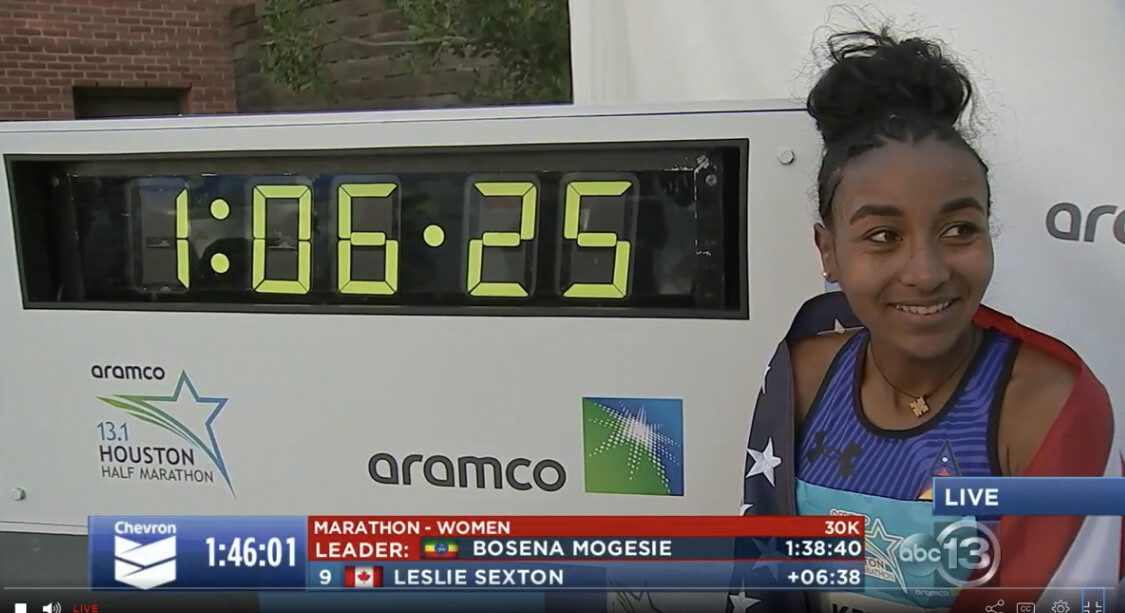
The men’s race came down to a five-man sprint finish with Ethiopia’s Jemal Yimer, who won in Houston in 2020 and was 4th at the World Half Marathon Championships in October, prevailing in 60:42. Wesley Kiptoo of NAZ Elite and Kenya was 2nd for the second straight year in 60:43 with 2022 champ Milkesa Mengeshaof Ethiopia 3rd in 60:45.
Biya Simbassa was the top American man in 60:45 in 4th, just ahead of a resurgent Diego Estrada, who led for the first 20 minutes and finished 5th in a pb of 60:49. Galen Rupp, tuning up for the Olympic Marathon Trials three weeks from now, hung back from the leaders and finished 14th in 62:37.
In the Chevron Houston Marathon, contested simultaneously, former NAIA star Zouhair Talbi of Morocco won the men’s race in 2:06:39 to boost his chances of Olympic selection. 2016 NCAA XC champion Patrick Tiernan, now training as part of Alistair and Amy Cragg’s Puma Elite Running team in North Carolina, was 4th in 2:07:45, hitting the Olympic standard and moving to #2 on the all-time Australian marathon list.
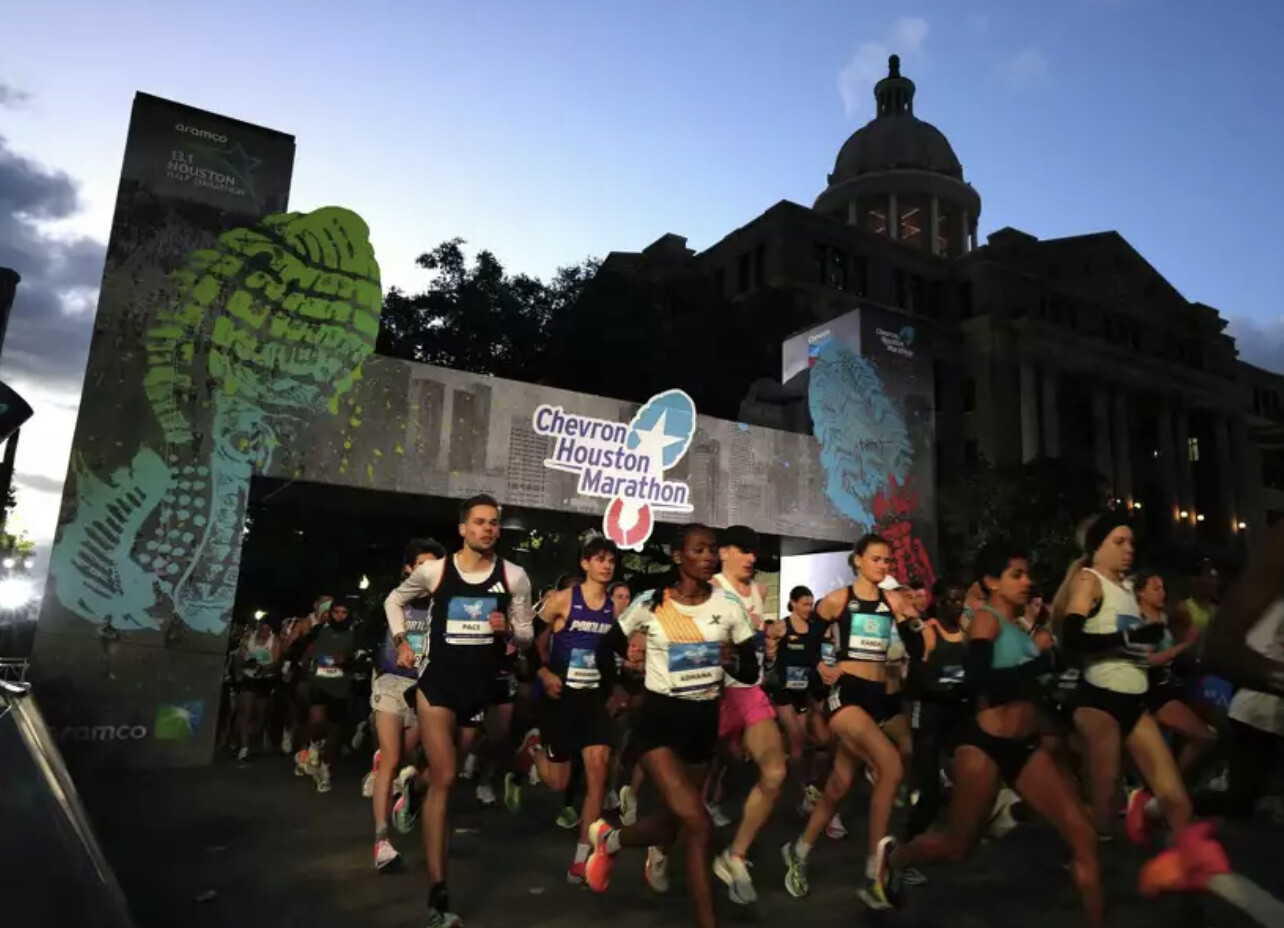
Ethiopia’s Rahma Tusa, the runner-up behind American Betsy Saina in September’s Sydney Marathon, won the women’s marathon in Houston in 2:19:33.
The races featured temperatures in the low 40s with 10 mph winds and gusts up to 17 mph, which made for a challenging end to the half marathon as miles 9, 10, and 11 were run directly into the teeth of the wind.
Below, six takeaways from the day’s racing in Houston.
2024 Houston Half Marathon men’s top 51. 60:42 Jemal Yimer, Ethiopia2. 60:43 Wesley Kiptoo, Kenya3. 60:45 Milkesa Mengesha, Ethiopia4. 60:45 Biya Simbassa, USA5. 60:49 Diego Estrada, USA14. 62:37 Galen Rupp, USA
2024 Houston Half Marathon women’s top 51. 64:37 Sutume Kebede, Ethiopia2. 66:07 Hellen Obiri, Kenya3. 66:24 Buze Diriba, Ethiopia4. 66:25 AR Weini Kelati, USA5. 67:36 Mestawut Fikir, Ethiopia
by Jonathan Gault (Let’s Run)
Login to leave a comment

Aramco Houston Half Marathon
The Chevron Houston Marathon provides runners with a one-of-a-kind experience in the vibrant and dynamic setting of America's fourth-largest city. Renowned for its fast, flat, and scenic single-loop course, the race has earned accolades as the "fastest winter marathon" and the "second fastest marathon overall," according to the Ultimate Guide to Marathons. It’s a perfect opportunity for both elite athletes...
more...
Molly Seidel Stunned the World (and Herself) with Olympic Bronze in Tokyo. Then Life Went Sideways.
She stunned the world (and herself) with Olympic bronze in Tokyo. Then life went sideways. How America’s unexpected marathon phenom is getting her body—and brain—back on track.
On a clear December night in 2019, Molly Seidel was at a rooftop holiday party in Boston, wearing a black velvet dress, doing what a lot of 25-year-olds do: passing a joint between friends, wondering what she was doing with her life.
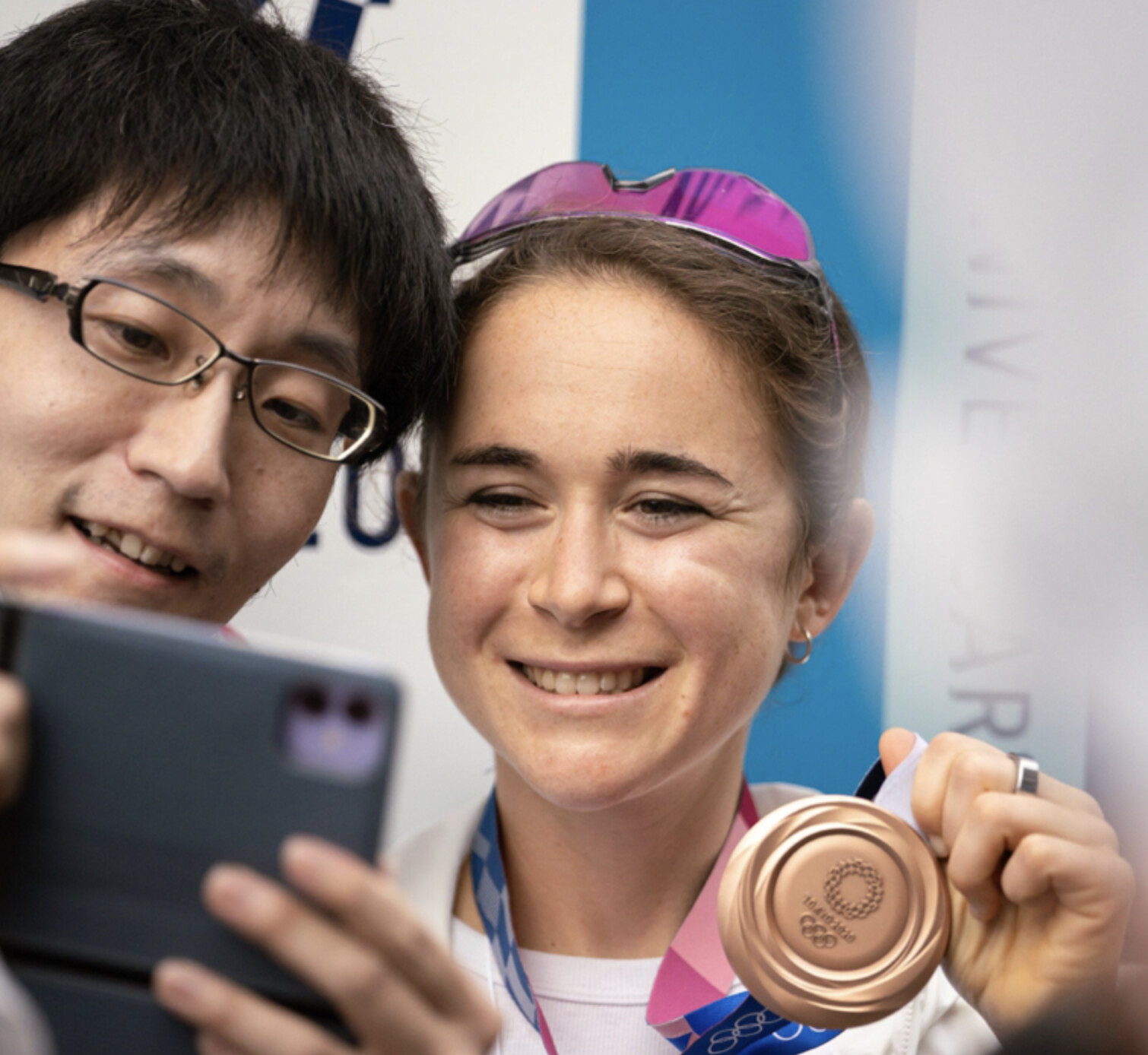
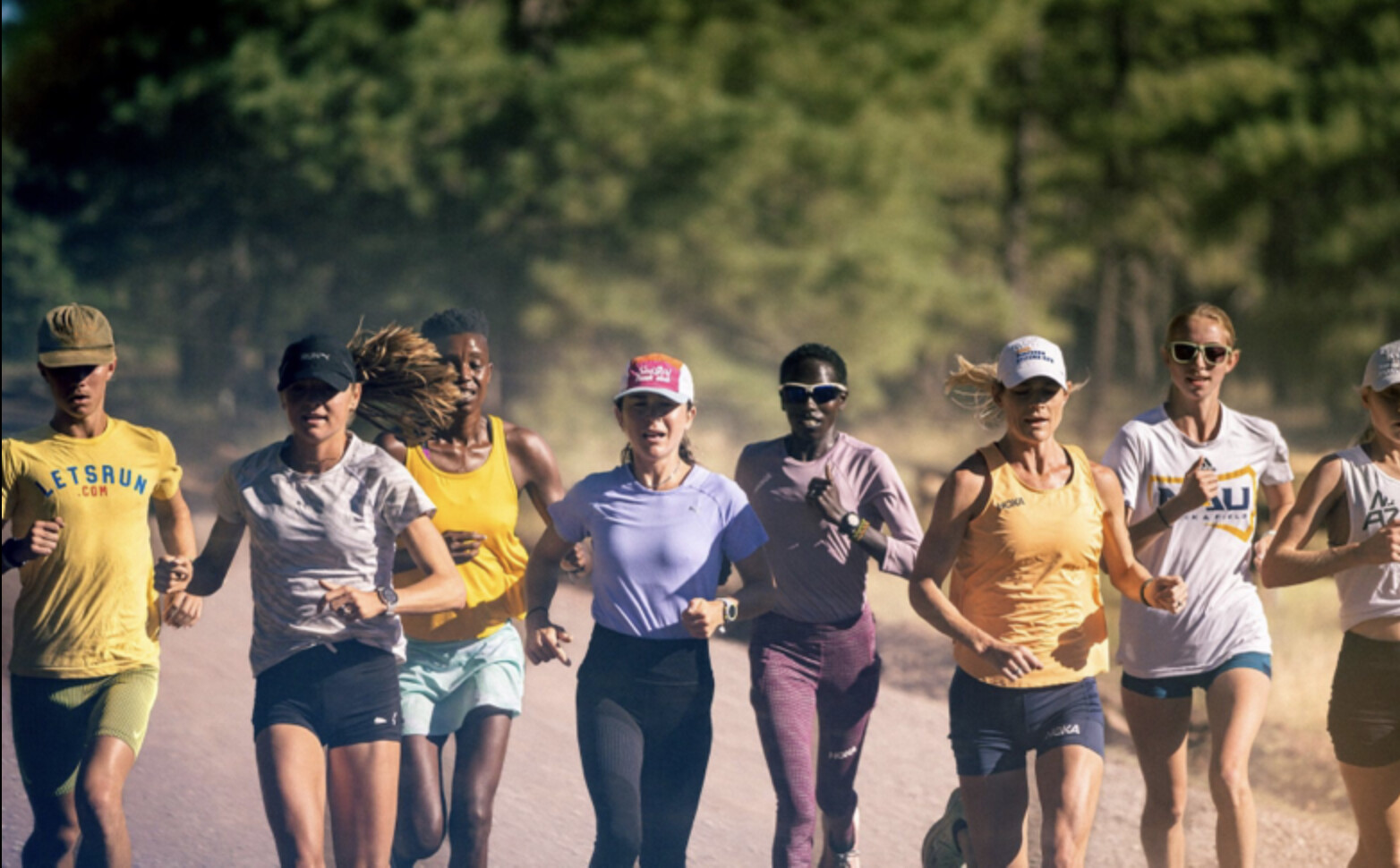
“You should run the Olympic Trials,” her sister, Izzy, said, as smoke swirled in the chilly air atop The Trackhouse, a retail shop and community hub on Newbury Street operated by the running brand Tracksmith. “That would be hilarious if you did that as your first marathon.”
Molly, an elite 10K racer who’d spent much of 2019 injured, looked out at the city lights, and laughed. Why the hell not? She’d just qualified for the trials, winning the San Antonio Half with a time of 1:10:27. (“The shock of the century,” as she’d put it.) True, 13.1 miles wasn’t 26.2—but running a marathon was something to do. If only because she never had before.
A four-time NCAA track and cross-country champion at The University of Notre Dame in Indiana, Molly had moved to Boston in 2017, where she’d worked three jobs to supplement her fourth: running for Saucony’s Freedom Track Club. The $34,000 a year that Saucony paid her (pre-tax, sans medical) didn’t go far in one of America’s most expensive cities. Chasing kids around as a babysitter, driving around as an Instacart shopper, and standing around eight hours a day as a barista—when you’re running 20 miles a day—wasn’t ideal. But whatever, she had compression socks. And she was downing free coffee and paying rent, flying to Flagstaff, Arizona, every so often for altitude camps, and having a good time. Doing what she loved. The only thing she’s ever wanted to do since she was a freckly fifth-grader in small-town Wisconsin clocking a six-minute mile in gym class.
“I was hustling, and I loved it. It was such a fun, cool time of my life,” she says, summarizing her 20s. Staring into Molly’s steely brown eyes, listening to her speak with such clarity and conviction about her struggles since, it’s easy to forget: She is still only 29.
After Molly had hip surgery on her birthday in July 2018, her doctors gave her a 50/50 chance of running professionally again. By summer 2019, she’d parted ways with FTC, which left her sobbing on the banks of the Charles River, getting eaten alive by mosquitoes and uncertainty. Her biggest achievement lately had been being named #2 Top Instacart Shopper (in Flagstaff; Boston was big-time).
The day after that rooftop party, Molly asked her friend and former FTC teammate Jon Green, who she’d newly anointed as her coach: “Think I should run the marathon trials?” Sure, he shrugged. Nothing to lose. Maybe it’d help her train for the 10K, her best shot—they both thought—at making a U.S. Olympic team.
“I’m going to get my ass kicked six ways to Sunday!” she told the host of the podcast Running On Om six weeks before the trials in Atlanta.
Instead, on February 29, 2020, she kicked some herself. Pushing past 448 of the fastest, most-experienced women marathoners in the country, coming in second with a 2:27:31, earning more in prize money ($60,000) than she had in two years of racing—and a spot on the U.S. trio for the 2020 Tokyo Olympics, along with Kenyan-born superstars Aliphine Tuliamuk and Sally Kipyego. “I don’t know what’s happening right now!” Molly kept saying into TV cameras, wrapped in an American flag, as stunned as a lottery winner.
Saucony who? Puma came calling. Along with something Molly hadn’t anticipated: the spotlight. An onslaught of social media followers. And two weeks later, a global pandemic and lockdown—and all the anxiety and isolation that came with it. She was drowning, and she hadn’t even landed in Tokyo yet.
The 2020 Olympics, as we all know, were postponed to 2021. An emotional burden but a physical boon for Molly, in that it allowed her to get in a second marathon. In London, she finished two minutes faster than her debut. When the Olympics finally rolled around, she was ready.
Before the race, Molly says, “I was thinking: ‘Once I cross the starting line, I get to call myself an Olympian and that’s a win for the day.’”
But then she crossed the finish line—with a finger-kiss to the sky and a guttural Yesss!—in third place with a 2:27:46, just 26 seconds behind first (Kenya’s Peres Jepchirchir). And realized: She gets to call herself an Olympic medalist forever. Only the third American woman to ever earn one in the marathon.
Lots of kids have fleeting hopes of making it to the Olympics. I remember thinking I could be Mary Lou Retton. Maybe FloJo, with shorter fingernails. Then I decided I’d rather be Madonna or president of the United States and promptly forgot about it. But Molly held tight to her Olympic aspirations. She still has a poster she made in 2004, with stickers and a snapshot of her smiley 10-year-old self, to prove it. “I wish I will make it into the Olympics and win a gold medal,” she wrote, and signed it: Molly Seidel, the “y” looping back to underline her name. In case there was any doubt as to who, specifically, would be winning the medal.
Molly grew up in Nashotah, Wisconsin, and is the eldest of three. Her sister and brother, younger by not quite two years, are twins. Izzy is a running influencer and corporate content creator for companies like Peloton; and Fritz favors Formula 1 racing and weightlifting and works for the family’s leather-tanning business. The family was active, sporty. Dad, Fritz Sr., was a ski racer in college; Mom, Anne, a cheerleader. You can tell. Watching clips of Molly’s mom and dad watching the Olympic race from their backyard patio, jumping up and down, tears streaming, is the kind of life-affirming moment you wish you could bottle. “I’m in shock. I’m in disbelief,” Molly says into the mic, beaming. “I just wanted to come out today and I don’t know…stick my nose where it didn’t belong and see what I could come away with. And I guess that’s a medal.” When the interviewer holds up her family on FaceTime, Molly breaks down. “We did it,” she says into the screen between sobs and smiles. “Please drink a beer for me.
Molly hasn’t always been unabashedly herself, even when everyone thought she was. A compartmentalizer to the core, she spent most of her life hiding a huge part of it: anorexia, bulimia, anxiety, obsessive-compulsive disorder, debilitating depression.
It started around age 11, when she learned to disguise OCD tendencies, like compulsively knocking on wood, silently reciting prayers “to avoid God getting mad at me,” she says. “It was a whole thing.” She says her parents were aware of the behaviors, but saw them more as odd little habits. “They had no reason to suspect anything. I was very high-functioning,” she says. “They didn’t realize that it was literally taking over my life.”
She wasn’t officially diagnosed with OCD until her freshman year of college, when she saw a therapist for the first time. At Notre Dame, disordered eating took hold, quietly yet visibly, as it does for up to 62 percent of female college athletes, according to the National Eating Disorders Association. As recently as the Tokyo Olympics, she was making herself throw up in the airport bathroom, mere days before taking the podium. Molly hesitates to share that detail; she fears a girl might read this and interpret it as behavior to model. “Having been in that place as a younger athlete, I know I would have,” she says. But she also understands: Most people just don’t get how unrelenting eating disorders can be.
In February 2022, she finally received a diagnosis of the root cause for all of it: ADHD. About being diagnosed, she says, “It made me feel really good, like [I don’t have] a million different disorders. I have a disorder that manifests itself in a lot of different symptoms.”
She waited to try Adderall until after the Boston Marathon in April, only to drop out at mile 16 due to a hip impingement. Initially, the meds made her feel fantastic. Focused. Free. Until she realized Adderall hurt more than it helped. She couldn’t sleep, couldn’t eat, lost too much weight. Within weeks, she devolved. “The eating disorder came roaring back,” she says, referring to it, as she often does, as its own entity, something that exists outside of herself. That ruthlessly takes control over her very need for control. “I almost think of it as an alter ego,” she explains. “Adderall was just bubblegum in the dam,” as she puts it. She ditched the drug, and her life—professionally, physically—unraveled.
In July 2022, heading into the World Championships, she bombed the mental health screening, answering the questions with brutal honesty. She’d been texting Keira D’Amato weeks prior. “Yo girl, things are pretty bad right now. Get ready…” Sobbing on the sidewalk in Eugene, Oregon, she texted D’Amato again. And the USATF made it official: D’Amato would take her spot on the team. Then Molly did what she’d been “putting off and putting off”— checked herself into eating disorder treatment for the second time since 2016, an outpatient program in Salt Lake City, where her new boyfriend was living at the time.
Somehow (see: expert compartmentalizer) mid-meltdown, in February 2022, she had met an amateur ultrarunner named Matt, on Hinge. A quiet, lanky photographer, he didn’t totally get what she did. “I didn’t understand the gravity of it,” he tells me. “I was like, Oh she’s a pro runner, that’s cool. I didn’t realize she was, like, the pro runner!”
Going back to treatment “was pretty terrible,” she says. At least she could stay with Matt. Hardly a honeymoon phase, but the new relationship held promise. “I laid it all out there,” says Molly. “And he was still here for it, for all the messiness. It was really meaningful.” And a mental shift. “He doesn’t see me as just Molly the Runner.”
Almost a year later, on a freezing April evening in Flagstaff, Molly is racing around Whole Foods, palming a head of cabbage, grabbing a thing of hummus, hunting for deals even though she doesn’t need to anymore.
“It’s all about speed, efficiency, and quality,” she says, explaining the secret to her earlier Instacart success. She checks the expiration date on a container of goat cheese and beelines for the butcher counter, scans it faster than an Epson DS3000, though not without calculation, and requests two tomato-and-mozzarella-stuffed chicken breasts. Then she darts over to the beverage aisle in her marshmallow-y Puma slip-ons that Matt custom-painted with orange poppies. She grabs a case of La Croix (tangerine), then zips to the checkout. We’re in and out in under 15 minutes and 50 bucks, nothing bruised or broken.
Other than her body. Let’s just say: If Molly were an avocado or a carton of eggs, she probably wouldn’t pass her own sniff test. The week we meet, she is just coming off a month of no running. Not a single mile. She’s used to running twice a day, 130 miles a week. No wonder she’s spraying her kitchen counter with Mrs. Meyer’s and scrubbing the stovetop within minutes of welcoming me into her new home.
The place, which she shares with Matt and his Australian border collie, Rye, has a post-college flophouse feel: a deep L-shaped couch draped in Pendleton blankets, a bar cluttered with bottles of discount wine, a floor lamp leaning like the Tower of Pisa next to a chew toy in the shape of a ranch dressing bottle. Scattered about, though, are reminders that an elite runner sleeps here. Or at least tries to. (“Pro runner by day, mild insomniac by night” reads the bio on her rarely used account on what used to be Twitter.) There’s a stick of Chafe Safe on the coffee table. Shalane Flanagan’s cookbooks on the counter. And framed in glass, propped on the office floor: Molly’s Olympic kit—blue racing briefs with the Nike Swoosh, a USA singlet, her once-sweat-drenched American flag, folded in a triangle. “I’m not sure where to hang it,” she says. “It seems a little ostentatious to have it in the living room.”
With long brown curls and a round, freckly face, Molly has an aw-shucks look so innocent that it’s hard, at first, to perceive her struggles. Flat-out ask her, though—How are you even functioning?—and she’ll tell you: “I’m an absolute wreck. There’s no worse feeling than being a pro runner who can’t run. You just feel fucking useless.” Tidying a stack of newspapers, she adds, “Don’t worry, I’ve had therapy today.”
She’s watched every show. (Save Ted Lasso, “too sickly sweet.”) Listened to every podcast. (Armchair Expert is a favorite.) She’s got nothing else to do but PT and go easy on the ElliptiGo in the garage, onto which she’s rigged a wooden bookstand, currently clipped with A History of God: The 4,000 Year Quest of Judaism, Christianity and Islam. “I don’t read running books,” she says. “I need something different.”
Like most runners—even the most amateur among us—running, moving, is what keeps her sane. “What about swimming? Can you at least swim?” I ask, projecting my own desperation if I were in her size 8.5 shoes. “I fucking hate swimming,” says Molly. Walking? “Oh, yeah, I can go on walks. Another. Long. Walk.”
The only thing she has on her schedule this week is pumping up a local middle school track team before their big meet. The invitation boosted her spirits. “Should I just memorize Miracle on Ice?” she says, laughing. “No, I know, I’ll do Independence Day.”
Injuries are nothing new for Molly. Par for the course for any professional athlete. But especially for women, like her, who lack bone density—and have since high school, when, according to a study in the Orthopedic Journal of Sports Medicine, nearly half of female runners experience period loss. Osteoporosis and its precursor, osteopenia, are rampant in female runners, leading to ongoing issues that threaten not just their college and professional running careers, but their lives.
Still, Molly admits, laughing: She’s especially accident-prone. I ask her to list every scratch she’s ever had, which takes her 10 minutes, and goes all the way back to babyhood, when she banged her head against the bathtub spout. There was a cracked spine from a sledding incident in 8th grade, a broken collarbone from a ski race in high school, shredded knee cartilage in college when a driver hit her while she was riding a bike. “Ribs are constantly breaking,” she says. In 2021, two snapped, and refused to heal in time for the New York City Marathon. No biggie. She ran through the pain with a 2:24:42, besting Deena Kastor’s 2008 time by more than a minute and setting the American course record.
Molly’s latest injury? Glute tear. “Literally a gigantic pain in the ass,” she posted on Instagram in March. Inside, Molly was devastated. Pulling out of the Nagoya Marathon—the night before her 6:45 a.m. flight to Japan, no less—was not in the plan. The plan, according to Coach Green, had been simple. It always is. If the two of them even have one. “Just to have fun and be consistent.” And get a marathon or two in before the Olympic Trials in February 2024.
She’d been finally—finally—fit on all fronts; ready to race, ready to return. She needed Nagoya. And then, nothing. “It feels like I’m back at the bottom of the well,” says Molly, driving home from Whole Foods in her Toyota 4Runner. “This last year-and-a-half has been so difficult. It’s just been a lot of doubt. How do I approach this, as someone who has now won a medal? Like, man, am I even relevant in this sport anymore?” She pops a piece of gum in her mouth. I wait for her to offer me some, because that’s what you do with gum, but she doesn’t. She’s so in her head. “It’s hard when you’re in the thick of it, you know, to figure out: Why the fuck do I keep doing this? When it just breaks my heart over and over and over again?”
We pull into her driveway. “I was prepared for the low period after Tokyo,” she says. “But this has been much longer and lower than I expected.”
The curse of making it to the Olympics, let alone coming back with a medal: expectations. Molly’s own were high. “I think I thought, after the Olympics, if I win a medal, then I will be fixed, it will fix everything.” Instead, in a way, it made everything worse.
That’s the problem that has plagued Molly for most of her running career: Her triumphs and troubles intermingle, like thunder and lightning. Which, by the way, she has been struck by. (A minor backyard-grill, summer-thunderstorm incident. She was fine.)
The next morning in Flagstaff, Molly’s feeling like she can run a mile, maybe two. It’s snowing, though, and she doesn’t want to risk the slippery track, so we meet at Campbell Mesa Trails. She loops a band around the back of her truck to stretch and sends me off into the trees to run alone while she does a couple of laps on the street.
Molly leaves for an acupuncture appointment, and we reunite later at Single Speed Coffee (“the best coffee in Flagstaff,” promises the ex-barista who drinks up to three cups a day). We curl up on a couch like it’s her living room, and she talks as freely—and as loudly—as if it was. Does she realize everyone can hear her? She doesn’t care. I guess that’s what happens when you’ve grown so comfortable sharing—in therapy, on podcasts, in a three-part video series on ADHD for WebMD—you just…share. Loud and proud.
Mental illness is so insidious, says Molly. “It’s not always this Sylvia Plath stick-my-head-in-a-fucking-oven thing, where you’re sad all the time,” she says. “High-functioning depressed people live normal successful lives. I can be having the happiest moment, and three days later I’m in a total downward spiral.” It’s something you never recover from, she says, but you learn to manage.
“I’m this incredibly flawed person who struggles so much. I think: How could I have won this thing when I’m so flawed? I look at all the people around me, all these accomplished people who have their shit together, and I’m like, ‘one of these things is not like the other,’” she says, taking a sip of her flat white. “I was literally in the Olympic Village thinking: Everybody is probably looking at me wondering: Why the hell is she here?”
They weren’t. They don’t. She knows that.
And yet her mind races as fast as she does. It takes up So. Much. Space. When she’s running, though, the noise disappears. She’s not Olympic Molly or Eating Disorder Molly, she’s not even, really, Runner Molly. “When I’m running,” she says, “I’m the most authentic version of myself.”
Talking helps, too. Molly first shared her mental health history a few years ago, “before she was famous,” as she puts it. After the Olympics, though, she kept talking and hasn’t stopped. The Tokyo Games were a turning point, she says. Suddenly the most revered athletes in the world were opening up about their mental health. Molly credits Simone Biles’s bravery for her own. If Biles, and Michael Phelps and Naomi Osaka, could come clean... then maybe a nerdy, niche-y, unlikely medaling marathoner could, too.
“Those guys got a lot more shit for it than I did,” says Molly. “I got off easy. I’m not a household name,” she laughs. She knows she can be candid and off the cuff—and chat freely in a not-empty café—in a way Biles never could. “I’m a nobody!” she laughs.
Still, a nobody with 232,000 Instagram followers whom she has touched in very IRL ways—becoming an unintentional poster woman for normalizing mental health challenges among athletes. “You are such an incredible inspiration,” @1percentpeterson posts, one comment of a zillion similar. “It’s ok to not be ok!” says another. Along with all the online love is, of course, online hate. Molly rattles off a few lowlights: “She’s an attention-seeking whore,” “Her bones are so brittle she’ll never race again,” “She’s running so badly and posting a lot she should really focus on her running more.” Molly finds it curious. “I’m like, ‘If you hate me, you don’t need to follow me, sir.’”
It’s Molly’s nobody-ness—what Outside writer Martin Fritz Huber called her “runner-next-door” persona, and I’ll just call “genuine personality”—that has made her somebody in running’s otherwise reserved circles.
Somebody who (gasp!) high-fives her sister in the middle of a major race, as she did at mile 18 of the 2021 New York City Marathon. “They shat on me in the broadcast for it,” she says. “They were like, ‘She’s not taking this seriously.’” (Except, uh, then she set the American course record, so…)
Somebody who, obviously, swears like a sailor and dances awkwardly on Instagram, who dresses up like a turkey, and viral-tweets about getting mansplained on an airplane. (“He starts telling me how I need to train high mileage & pulls up an analysis he’d made of a pro runner’s training on his phone. The pro runner was me. It was my training. Didn’t have the heart to tell him.”)
Somebody who makes every middle-aged mom-runner I know swoon like a Swiftie and say: “OMG! YOU HUNG OUT WITH MOLLY SEIDEL!!?” Middle-aged dad-runners, too. “I saw her once in Golden Gate Park!” my friend Dan fanboyed when he heard. “I waved!” Did she wave back? “She smiled,” he says, “while casually laying down 5:25s.”
And somebody who was as outraged as I was that I bought a $16 tube of French toothpaste from my hip Flagstaff motel. (It was 10 p.m.! It was all they had!) “For that price it better contain top-shelf cocaine,” she texted. Lest LetsRun commenters take that tidbit out of context: It’s a joke. It’s, in part, what makes Molly America’s most relatable pro runner: She’s not afraid to make jokes. (While we’re at it… Don’t knock her for smoking a little legal weed, either. That’s so 2009. Per the World Anti-Doping Agency: Cannabis is prohibited during competition, not at a Christmas party two months before it. Per Molly: “People would be shocked to know how many pro runners smoke weed.”)
I can’t believe I never asked to see it. Molly’s medal. A real, live Olympic medal. Maybe because it was tucked into a credenza along with Matt’s menorah and her maneki-neko cat figurines from Japan. But I think it was because hanging out with Molly felt so…normal, I almost forgot she’d won one.
People think elite distance runners have to be one-dimensional, she says. That they have to be sculpted, single-minded, running-only robots. “Because that’s what the sport has been,” she says.
Molly falls for it, too, she says. She scrolls the feeds, sees her fellow pros living seemingly perfect lives. She wants everyone to know: She’s not. So much so that she requested we not print the photos originally commissioned for this story, which were taken when she was at the lowest of lows. (“It’s been...refreshing...to be pretty open and real with Rachel [about] the challenges of the last year,” she wrote in an email to Runner’s World editors. “But the photos [were taken at] a time when I was really struggling and actively trying to hide how bad my eating disorder had become.”)
Molly finds the NYC Marathon high-five thing comical but indicative of a more serious issue in elite running: It takes itself too seriously. It’s too…elitist. Too stilted. “Running a marathon is a pretty freaking cool experience!” If you’re not having fun, she asks rhetorically, what’s the point? Still, she admits, she isn’t always having fun. Though you wouldn’t know it from her Instagram. “Oh, I’m very good at making it seem like I am,” she says.
She used to enjoy social media when it was just her friends. Before she gained 50,000 followers in a single day after the trials, and some 70,000 on Strava. Before the pandemic, before the Olympics. Keeping up with content became a toxic chore. “You feel like you’re just feeding this beast and it’s never going to stop,” she says. She’s taken to deleting the app off her phone, reloading it only to fulfill contractual agreements and post for her sponsors, then deleting it again.
As much as she hates having to post, she enjoys plugging products the only way that feels natural: through parody. As does Izzy, her influencer sister, who, like Molly, prefers to skewer rather than shill (à la their idea behind their joint Insta account: @sadgirltrackclub). “The classic influencer tropes make me want to throw up,” she says (perverse pun as a recovering bulimic not intended). “New Gear Drop!’ or ‘This is my Outfit of the Day!’ Cringe. “Hot Girl Instagram is not how I identify,” she says.
Nor is TikTok. “Sponsors tell me all the time: You should TikTok! I’m like, ‘I am not doing TikTok.’ I know how my brain works. They’ll say, ‘We’ll pay you less if you don’t’—and I’m, like, I don’t care.”
And to those sponsors who ghosted her after she returned to eating disorder treatment, good riddance. “Michelob dropped me like a bad habit,” she says. “Whatever. You have watery-ass beer anyway.”
To those who have stood by her, though, she’s utterly devoted. Pissed she couldn’t wear the Puma panther head to toe in Tokyo, Molly took off her Puma Deviate Elites and tied them over her shoulder, obscuring the Nike logo on her Olympic singlet for all the world to see. Or not see. “Nike isn’t paying my fucking bills.”
The love is mutual, says Erin Longin, a general manager at Puma. After decades backing legends like Usain Bolt, Puma was relaunching road running and wanted Molly as their guinea pig. “She’s a serious athlete and competitor, but she also has fun with it,” says Longin. “Running should be fun. Molly embodies that.” At their first meeting, in January 2020, Molly made them laugh and nerded out over their new shoes. “We all left there, fingers crossed she’d sign with us,” says Longin.
Come February, they all flipped out. Longin was watching the trials, not expecting much. And then: “We were all messaging, “OMG!!” Then Molly killed in London. Medaled in Tokyo. “What she did for us in that first year…” says Longin. “We couldn’t have planned it!”
Then came the second year, and the third, and throughout it all—injuries, eating disorder treatment, missed races, missed opportunities—Puma hasn’t flinched. “It’s easy for a company to do the right thing when everything is going great,” Molly posted in April, heartbroken from her couch instead of Heartbreak Hill. “But it’s when the sh*t hits the fan and they’re still right there with you….” She received 35,000 hearts—and a call from Longin: “You make me feel so proud.”
Does it matter to Puma if Molly never places—never races—again? “Nope,” Longin says.
My last afternoon in Flagstaff, it’s cloudy skies, still freezing. I find Molly on the high school track wearing neoprene gloves, black puffy coat, another pair of Pumas. Her breath is white, her cheeks red. Her legs churning in even, elegant strides. Upright, alone, at peace, backed by snow-dusted peaks. Running itself is what matters, not racing, she tells me. “I honestly don’t give a shit about winning,” she says. All she wants—really wants, she says—is to be healthy enough to run until she’s old and gray.
Molly’s favorite runner is one who didn’t get to grow old. Who made his mark decades before she was born: Steve Prefontaine. “Pre raced in such a genuine way. He made people feel something,” she says. “The sports performances you truly remember,” she adds, “are the ones where you see the struggle, the work, the realness.”
Sounds familiar. “I hate conversations like, ‘Who’s the GOAT?’” Molly continues. “Who fucking cares? Who’s got the story that’s going to get people excited? That’s going to make some kid want to go out and do it?”
I know one of those kids: My best friend’s daughter, Quinn, a rising track phenom in Oregon, who has dealt with anxiety and OCD tendencies. She has a picture of Molly Seidel, and her times, taped to her bedroom wall. This past May, Quinn joined Nike’s Bowerman Club. She was named Oregon Female Athlete of the Year Under 12 by USATF. She wants to run for Notre Dame.
“Quinn loves running more than anything,” her mom tells me, texting photos of her elated 11-year-old atop the podium. “But I don’t know…” She’s unsure about setting her daughter on this path. How could she not, though? It’s all Quinn wants to do. Maybe what Quinn, too, feels born to do.
It’ll be okay, I tell her, I hope. Quinn has something Molly never had: She has a Molly.
Molly and I catch up via phone in June. A team of doctors in Germany has overhauled her biomechanics. She’s been running 110 miles a week, feeling healthy, hopeful. Happy. A month later, severe anemia (and accompanying iron infusions) interrupts her summer racing schedule. She cancels the couple of 10Ks she had planned and entertains herself by popping into the UTMB Speedgoat Mountain Race: a 28K trail run through Utah’s Little Cottonwood Canyon—coming in second with a 3:49:58. Molly’s focus is on the Chicago Marathon, October 8th; her first major race in almost two years.
Does it matter how she does? Does it matter if she slays the Olympic Trials in February? If she makes it to Paris 2024? If she fulfills her childhood dream and brings home gold?
Nah. Not if—like Matt, like Puma, like, finally, even Molly herself—you see Molly the Runner for who she really is: Molly the Mere Mortal. She’s the imperfect one who puts it perfectly: What matters isn’t her time or place, how she performs on the pavement. Or social media posts. What matters—as a professional athlete, as a person—is how she makes people feel: human.
She’d been finally—finally—fit on all fronts; ready to race, ready to return. She needed Nagoya. And then, nothing. “It feels like I’m back at the bottom of the well,” says Molly, driving home from Whole Foods in her Toyota 4Runner. “This last year-and-a-half has been so difficult. It’s just been a lot of doubt. How do I approach this, as someone who has now won a medal? Like, man, am I even relevant in this sport anymore?” She pops a piece of gum in her mouth. I wait for her to offer me some, because that’s what you do with gum, but she doesn’t. She’s so in her head. “It’s hard when you’re in the thick of it, you know, to figure out: Why the fuck do I keep doing this? When it just breaks my heart over and over and over again?”
by Runner’s World
Login to leave a comment
PUMA Is Using Nitrogen Gas to Improve Your Stride
The ForeverRUN Shoe with NITRO technology could help you develop a healthier running form
One thing is true when it comes to picking an everyday running shoe: it’s an incredibly personal choice. With so many options out there, upgrading your footwear can be a daunting task. So let’s simplify things. If you want lightweight, responsive, and durable shoes to support your daily mileage goals, PUMA has the perfect match. Here’s why the ForeverRUN with NITRO™ technology is your next everyday running shoe.
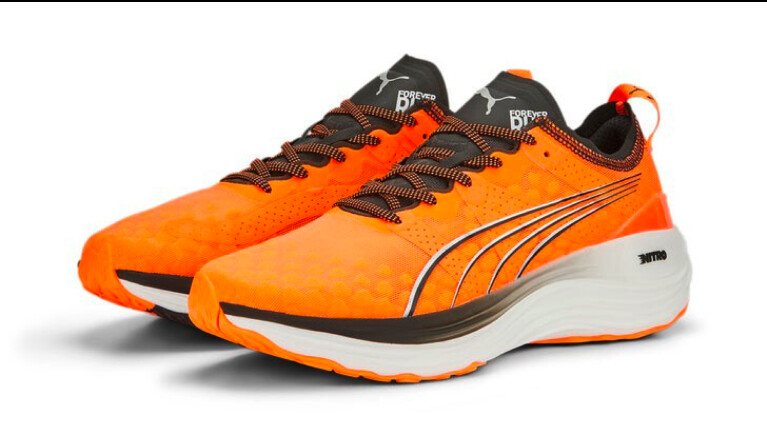
Regardless of your mileage or pace, having the right technology underfoot is key to maximizing the time you spend running. Every running shoe in the PUMA performance lineup is equipped with innovative NITROFOAM™ technology, which is designed to deliver responsiveness, durability, and comfort.
PUMA created its NITROFOAM™ technology through an innovative process that infuses the shoe’s foam with nitrogen gas. This technology allows PUMA to provide the support all runners require without tacking on additional weight.
For many runners, the ForeverRUN NITRO™ can be a one-shoe quiver. From pre-work jogs to weekend runs logging double-digit miles, the ForeverRUN NITRO™ hits the mark as a comfortable everyday running shoe. Featuring a 10-millimeter drop specifically designed to help runners embrace a healthier stride, ForeverRUN NITRO™ is a supportive ride for all.
The shoe’s stability is fueled by NITROFOAM™ technology, which provides two different foam densities in the midsole. Pair that with the asymmetrical heel counter—built to help keep the foot in place and aligned with each step—for solid support underfoot. The ForeverRUN also caters to frequent runners who need a little extra cushion or want to keep their foot a bit more neutral. To help maintain stability throughout the gait cycle, PUMA used a wider medial rubber segment on the outsole to keep the foot centered.
Fans of the ForeverRUN shoes call them “a dream to run in” and a “fave everyday trainer.” One runner, who suffers from back pain, loved that the cushioning allowed them to run comfortably enough to increase their weekly mileage—and with noticeably less pain. If you’re looking for a shoe engineered for comfort that will help you develop a more stable stride, look no further than the ForeverRUN from PUMA. Because the best runs are fueled by NITRO™.
PUMA is one of the world’s leading sports brands, designing, developing, selling and marketing footwear, apparel and accessories. For 75 years, PUMA has relentlessly pushed sport and culture forward by creating fast products for the world’s fastest athletes. PUMA offers performance and sport-inspired lifestyle products in categories such as Football, Running and Training, Basketball, Golf, and Motorsports. It collaborates with renowned designers and brands to bring sport influences into street culture and fashion. The PUMA Group owns the brands PUMA, Cobra Golf and stichd. The company distributes its products in more than 120 countries, employs about 20,000 people worldwide, and is headquartered in Herzogenaurach/Germany.
by Outside Online
Login to leave a comment
Do Women Need Gender-Specific Running Shoes?
Hint: It’s not a yes or no answer—it’s about having options
I’ve been wearing running shoes for 30-plus years, and still, when I lace up a new pair that fits me just right, it makes me want to take them for a spin right then and there—but finding perfectly fitting running shoes can be a challenge, even for someone like me who has access to innumerable pairs as a running shoe reviewer.

Because I test shoes, people always ask me, “What’s the best running shoe?” And while my male counterpart, Cory Smith, and I vet, test, and write up all the best shoes on the market each season for the Outside Gear Guides and other roundups throughout the year, I always respond with some version of: “There are a lot of great ones out there, but what’s most important is that those great shoes fit your specific feet.”
Much of the running experience depends on comfort, and so much about comfort depends on how well a running shoe fits the individual person’s foot. Yes, other factors differentiate running shoes from each other—midsole compounds, traction, upper materials, lacing systems—and all of them matter in creating a comfortable and effective ride for individual runners and their technique and preferences. But none of it matters if the shoe rubs, bites, or binds your feet uncomfortably. Fit should never be overlooked, and it is linked to the shape of your foot, which is tied to your gender.
So how big a role does gender play in finding your ideal running shoe? Most brands offer men’s and women’s sizes and colorways in each of their shoe models, with both size ranges based on the same last, or, the shape/mold around which the interior of the shoe is built. Some shoes come in men’s sizes only (usually shoes from smaller brands and “niche” models, like weatherized mountain running shoes). Women buy those shoes, but the fit isn’t always right. Many of them have a higher-cut heel cup than women’s models, which can put pressure on a woman’s Achilles. And most often, a men’s shoe fits wider than a women’s.
A handful of brands (Altra, Asics, Hoka, New Balance, Saucony) offer some of their shoe models in widths for both men and women, which offer a broader range of choices. But a select few brands (Altra, Adidas, Hoka, Under Armour) offer all or some of their models in truly gender-specific fits—shoes molded off of gender-specific feet to create gender-specific lasts. And a few brands have come to market with models meant just for women: Lululemon’s Blissfeel and Blissfeel Trail, Hilma’s road-to-trail shoe, UnderArmour’s Flow Synchronicity road shoe, and Puma’s Run XX Nitro road shoe are some examples.
Brian Beckstead, co-founder of shoe company Altra—a brand that’s offered men’s and women’s-specific fits in all of their models since the brand launched in 2011—explains how the differences between men’s and women’s-specific lasts are found around three main places in the foot. One: Women’s lasts are generally narrower in the heel than men’s or gender-neutral lasts, because women tend to have narrower heels. Two: Women’s lasts generally have more support around the midfoot, or arch, because ladies generally have higher arches than men. And three: Because men and women tend to have different “Q-angles”—the angle drawn between the hip, the patella, and the upper shin, which differs genetically for the purpose of child-bearing, according to the National Library of Medicine—most women’s lasts are built up slightly around the interior of the heel or calcaneus bone, with more room on the lateral side of that bone.
But gendered fits aren’t always black and white. “I know women who like to buy the men’s fit [of Altras] and I know men who like to buy the women’s shoes just because they have a really narrow heel,” says Beckstead. “It’s a matter of having options. It’s just a matter of having more variations for a dialed-in fit.”
Regardless of brand preferences and gender designations, some women have wide feet and flat or fallen arches, and some men have narrow feet and high arches. Not all women have more pronounced Q-angles than men. (Personally, I have narrow feet with fallen arches, and appreciate a little space in the toe box, but a secure midfoot wrap.)
And what if you don’t identify as either male or female? That’s a question the running shoe development team at Salomon has been asking lately, as they’ve relaunched a handful of their trail running shoe models as “unisex,” with what aims to be inclusive color palettes (though the fit is based off a men’s last).
It’s a trend we may see continuing throughout the footwear space.
What really matters, regardless of your gender or how you identify, is that you find a running shoe that fits your particular foot. Ill-fitting shoes can create blisters and discomfort, which can make you alter your gait and lead to injury. Great fitting shoes, on the other hand, can excite you to head out for a run and make that experience as enjoyable as possible.
So head to a local running shop with good reviews where you can get to know your feet with some professional help and assess the options available to you. The perfect shoe for you is out there.
by Outside Online
Login to leave a comment
2023 Trail World Championships 80k Men’s Race
Starting under cool and clear skies in Neustift, the men’s race went out fast up the “starting loop,” which happened to feature a 1,200-meter (4,000 feet) climb over 8.2 kilometers straight out of the starting gate. While things hadn’t split up significantly over the first climb, both Zach Miller (pre-race interview) of the U.S. and Andreas Reiterer (pre-race interview) of Italy came across the top in the top 10, clearly stating their intents for the day.
Back down in the valley, the two chased Baptiste Chassagne of France as the top three, as the race left the Stubai Valley and headed back up into the mountains toward Innsbruck. Benjamin Roubiol of France, Peter Fraňo of Slovakia, Aritz Egea of Spain, and Thibaut Garrivier of France all ran comfortably in the top 10, though Garrivier looked noticeably distressed compared to the others. Pre-race favorite, Nicolas Martin (pre-race interview) of France, was not in contention and would eventually drop after the halfway point due to knee pain.By the 36k mark, Reiterer had taken over the lead from Chassagne as they went over the biggest climb of the day, tallied at 1,400 meters (4,600 feet). From an outside observer’s perspective, Reiterer looked incredibly comfortable, running well within himself and appearing to have everything under control. Egea, Miller, Roubiol, Garrivier, and Fraňo all stayed in the top 10, all within 10 minutes of each other, biding their time.
Over the course of the next three major climbs, all around 600 meters (2,000 feet), high in the mountains between the two host cities, Reiterer continued to lead the slowly stretching field. The steep trails were no barrier to his steady effort and the race’s cameraman was seen breathing harder than he was. Roubiol followed about six minutes back over the top of the last climb in the series, with Fraňo, Egea, and Garrivier completing the top five, still within 10 minutes of each other. Miller continued to hold on in sixth.More than halfway now, the runners bombed down into the village of Grinzens in the valley at 54k, now back to their original starting elevation, except on the other side of the mountains, with more descending to go before the final climb and descent into Innsbruck.
Reiterer and Roubiol maintained their top-two positions while the rest of the top 10 continued to shuffle amongst themselves with Garrivier continuing to move up in the field and Miller dropping another place into seventh. Miller, looking spry and claiming that he still had legs, continued to keep tabs on the men in front of him, clearly intent on reeling them in.
Continuing down to the low point of the course in Kranebritten at 66k, the top five looked like Reiterer, Roubiol, Fraňo, Garrivier, and Tomáš Fárník of the Czech Republic. Now, all that stood between the front end of the race and the finish was a final 1,000-meter (3,400 feet) climb and a wild drop back down into Innsbruck. While anything could happen, with more than a four-minute lead, it seemed like it was Reiterer’s lead to lose.
But on the final climb of the race, the ever-patient Roubiol made his move, surging into the lead at Aspachhütte at 71k, and opening a four-minute gap on a fading Reiterer. Roubiol looked incredibly focused as he made his way up the mountain. Fraňo and Garrivier remained solid in third and fourth, and Miller started to make good on his promise of still having legs, moving into fifth. The gap between Roubiol and Reiterer only continued to grow, eight minutes at 73k, and nine minutes at 75k, as they made their way to the top of the final climb. Fraňo stayed strong in third, Garrivier in fourth, and Miller and Fárník continued to battle for fifth, 25 minutes off the lead.From there, it was all downhill to the finish. Benjamin Roubiol flew down the final descent to win the 2023 Trail World Championships 80k in 9:52:59. Reiterer followed just under eight minutes back, the gap holding steady the whole descent. Fraňo and Garrivier both held onto their places to finish third and fourth.
I'm Behind them, U.S. teammates Drew Holmen and Eric LiPuma made a strong push to catch up to their teammate Miller. Holmen would out sprint Miller at the line, and the two were followed less a minute later by LiPuma, the trio taking fifth through seventh.
For the team competition, Chassagne would be the third French finisher in 17th place, securing the team victory for France. The strong fifth through seventh finishes of the U.S. men slotted them into second in the team competition, just over five minutes behind the French in over 30 hours of cumulative racing. Reiterer would lead the Italian team to a third-place finish.
Login to leave a comment

World Mountain and Trail Running Championships
Welcome all athletes, officials, coaches, and families to THE AMAZING THAILAND WORLD MOUNTAIN & TRAIL RUNNING CHAMPIONSHIPS 2021 (WMTRC2021). The event will feature 80km and 40km trail races, classic up and down and uphill only mountain races. It replaces World Championships previously hosted with World Athletics, WMRA (mountain running) and IAU and ITRA (trail). The Amazing Thailand World Mountain and...
more...
German sprinter runs 9.51 seconds, discovers clock was broken
Those in attendance at the Puma Fast Arms, Fast Legs track meet on Wednesday in Wetzlar, Germany, were in shock when German sprinter Milo Skupin-Alfa stopped the clock at 9.51 seconds in heat two of the 100m qualifying round. The timing clock showed Skupin-Alfa ran the fastest 100m time in history, but moments later it was discovered to be broken.
Germany is well known for its fast tracks–it’s where the great Usain Bolt set his 100m world record of 9.58 seconds at the 2009 World Championships in Berlin. But Skupin-Alfa will have to go back to the drawing board to run 9.51 seconds.
The time would have been a massive result for the 24-year-old, Skupin-Alfa, who held a personal best of 10.23 seconds heading into the race. Meet officials managed to get the clock fixed shortly after and credited him with the heat win and a time of 10.36 seconds (+2.4 m/s).
Only one sprinter in history has, unofficially, run faster than Bolt’s world record. In 2011 on a Japanese TV show, U.S. sprinter Justin Gatlin ran 9.45 seconds for 100m with the help of several massive wind fans gusting +20.0 m/s tailwinds. The 2004 Olympic 100m champion had a large industrial fan behind his starting blocks and four wind fans strategically placed in the lanes beside him.
Even though Skupin-Alfa did not run a personal best or world record in Wetzlar, he has a promising career ahead of him.
by Running Magazine
Login to leave a comment
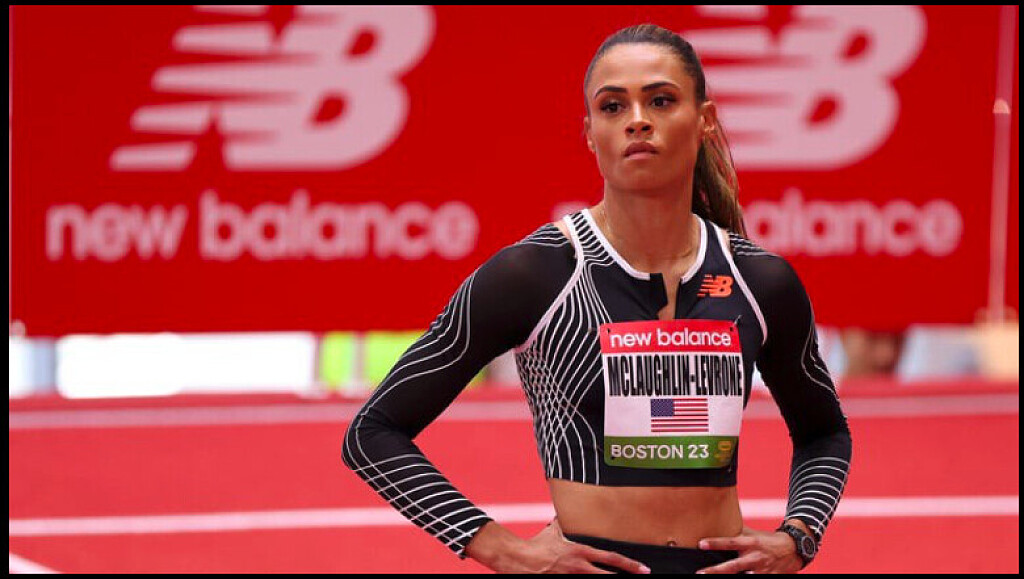
10 Reasons to Start Following Track and Field This Year
The 2023 season should be full of record-breaking performances from the sport’s biggest stars. Here are the most important things to know.
Track is back, and if the results from the indoor season and early outdoor meets are any indication, it should be another year of eye-popping results around 400-meter ovals this summer.
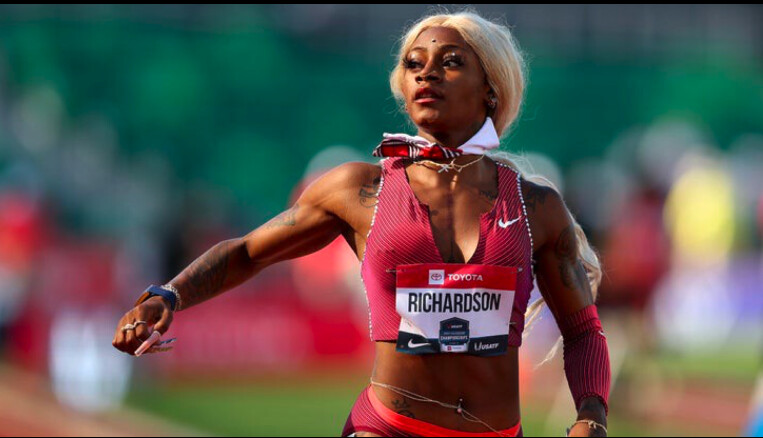
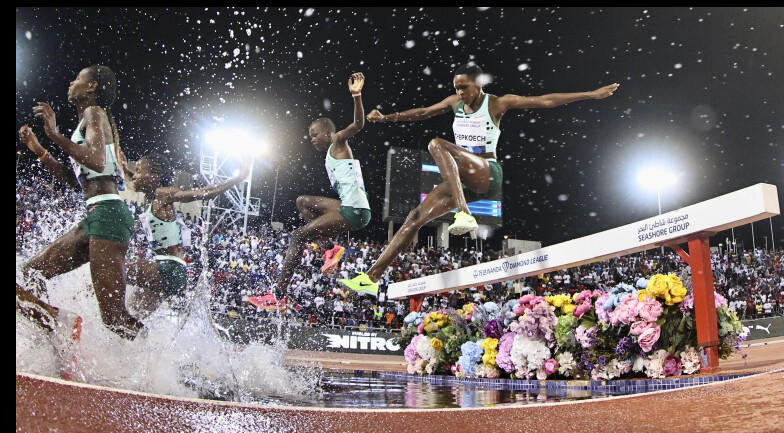
Why is track and field relevant to the average recreational runner?
Perhaps you’re running some of the same distances in your training and racing. Or maybe you have a connection to some of the events from your youth, days in gym class or on the playground. From a human performance perspective, no sport showcases the all-out speed, red-line endurance, max power, dynamic agility, and meticulous bodily control as track and field does.
Here’s a primer on the most awe-inspiring athletes and events of this summer’s track season. Because, come on: with a sport that includes events as multifaceted as the pole vault, as primal as the shot put, and as wild as the 3,000-meter steeplechase—a 1.8-mile race with 28 fixed barriers to hurdle and seven water pits to jump—what’s not to like?
One of the many things that makes track and field so special is that it’s one of the most diverse sports on the planet, both culturally and athletically.
Last summer, athletes from a record 29 different countries earned medals in the 25 different running, jumping, and throwing events at the World Athletics Championships in Eugene, Oregon.
At the highest level, there are athletes of all shapes and sizes from every culture and socioeconomic background. While there certainly are racial and cultural stereotypes that need dissolving and vast inequality among competing countries, from a performance point of view the sport is largely meritocratic, based on the time or distance achieved in a given competition.
Watching American Sydney McLaughlin-Levrone masterfully win the 400-meter hurdles in a world-record time last summer in front of a deafening crowd at Hayward Field in Eugene was a riveting experience. It was vastly different than watching Grenada’s Anderson Peters win the javelin world title with a career-best throw of 90.54 meters on his final attempt to beat India’s Neeraj Chopra, but both had edge-of-your-seat excitement, athletic excellence, and cultural significance.
One of the knocks against track and field in recent years is that it hasn’t done enough to attract casual fans the way professional football, basketball, hockey, and soccer have. Following the On Track Fest, the USATF Los Angeles Grand Prix on May 26-27 in Los Angeles is trying to up the ante by combining a mix of elite-level competition, an interactive fan festival, and top-tier musical performances.
Billed as the one of the deepest track meets ever held on U.S. soil, it will feature a star-studded 400-meter face-off featuring Americans Michael Norman, the reigning world champion, and Kirani James, a three-time Olympic medalist from Grenada, and a women’s 100-meter hurdles clash with world champion Tobi Amusan of Nigeria, Olympic silver medalist Keni Harrison of the U.S., and Olympic gold medalist Jasmine Camacho-Quinn of Puerto Rico.
Saturday’s action will be broadcast live on NBC Sports from 4:30 P.M. to 6 P.M. ET and be followed by a concert event called the Legends Jam, which will include appearances from some legendary athletes and be headlined by Grammy-winning singer Judith Hill.
American sprint sensation Sha’Carri Richardson will be racing the 100-meter dash at the USATF Los Angeles Grand Prix. You probably remember her for her perceived failures more than the astounding times she’s actually achieved on the track.
Two years ago, the sprinter from Dallas blew away the field in the 100-meter dash at the U.S. Olympic Trials with a 10.86 effort, but then she was famously suspended after testing positive for cannabis (which is on the World Anti-Doping Agency’s list of banned substances) and missed the Tokyo Olympics as a result. (She admitted using the drug to cope with the pressure of qualifying for the Olympics while also mourning the recent death of her biological mother.)
Then last year, despite strong early season performances, Richardson failed to make the finals of the 100-meter or 200-meter at the U.S. championships, so she missed out on running in the first world championships held on American soil.
This year, the 23-year-old sprinter appears to be locked in and better than ever, posting a world-leading 10.76 100-meter time on May 5 in Doha (she also ran an eye-popping 10.57 with an over-the-limit tailwind on April 9 in Florida) and posted the second-fastest time in the 200-meter (22.07) on May 13 at a meet in Kenya.
If she keeps it all together, expect Richardson to finally contend with elite Jamaican sprinters Shericka Jackson and Shelly-Ann Fraser-Pryce in the 100 and 4×100-meter relay in August at the World Athletics Championships in Budapest, Hungary.
A few years ago, American sprinter Fred Kerley was on his way to becoming one of the world’s best 400-meter runners. But he wanted more than that. What he really had his heart set on was becoming the world’s fastest man, a moniker that goes with the most dominant sprinter in the 100-meter dash.
Ignoring doubters, Kerley retooled his training and earned the silver medal in the 100-meter at the Tokyo Olympics (.04 seconds behind Italy’s Marcell Jacobs) and then continued his ascent last year by winning the U.S. championships (in 9.76, the sixth-fastest time in history) and world championships (9.86).
The 28-year-old from San Antonio, Texas, also became one of just two other runners (along with American Michael Norman and South African Wayde van Niekerk) to ever run sub-10 seconds in the 100-meter, sub-20 seconds in the 200-meter, and sub-44 seconds in the 400-meter. So far this year, Kerley has two of the four fastest 100-meter times of the season, including a speedy 9.88 on May 21 in Japan.
After trading barbs on social media this spring, Kerley and Jacobs are expected to face off in an epic 100-meter showdown on May 28 at a Diamond League meet in Rabat, Morocco, marking the first time the Olympic gold medalist and the world champion in the men’s 100m face off since the 2012 Olympic final, when Jamaican Usain Bolt beat countryman Yohan Blake. American Trayvon Bromell, the silver medalist at last year’s world championships, is also in the field, so it should be an extraordinary tilt.
If you’re a gambler, bet on Kerley to win that one and eventually get close to Bolt’s 9.58 world record. (To do so, he’ll be running faster than 26 miles per hour!) But don’t count out Kenya’s Ferdinand Omanyala, the early world leader (9.84), or fellow American sub-9.9 guys Bromell, Norman, Christian Coleman, and Noah Lyles at the 2023 World Athletics Championships on August 20, in Budapest. Depending on which three Americans join Kerley (who has an automatic qualifier) at the world championships, it’s actually quite likely the U.S. could sweep the top four spots in the 100 in Budapest.
If you’ve ever wanted to see the world’s top track and field stars competing live in the U.S., this is the year to do it. The May 26-27 USATF Los Angeles Grand Prix meet and June 3-4 Portland Track Festival are part of what might be the mosst compelling outdoor track season ever held on U.S. soil.
If you’re looking for an athlete to marvel at, start with Sydney McLaughlin-Levrone, the gold medalist in the 400-meter hurdles at the Olympics in 2021 and World Athletics Championships last summer. She’s been one of the sport’s rising stars since she was a teenager and yet she’s only 23. Her trajectory is still rising—especially since she moved to Los Angeles to train under coach Bob Kersee. Driven by her strong faith, McLaughlin-Levrone is the personification of hard work, grace and competitiveness.
This year she’ll temporarily step away from her primary event to show off her pure sprinting prowess when she opens her season in a “flat” 400-meter race at the Diamond League meet in Paris on June 9. Her personal best in the 400-meter is 50.07 seconds, set when she was a freshman at the University of Kentucky, but she clocked a speedy 50.68 while running over hurdles, en route to a world-record setting win at last summer’s world championships.
Her best 400-meter split as part of a 4×400-meter relay is 47.91, so it’s within reason to think she could be one of several runners to challenge the long-standing world record of 47.60 set in 1985 by East German Marita Koch. Because McLaughlin-Levrone has an automatic qualifier to the world championships in the 400-meter hurdles, she will likely run the open 400-meter at the U.S. championships and decide after the meet which one she’ll focus on.
American 800-meter ace Athing Mu has looked unbeatable for the past several years as she won Olympic gold in the event at the Tokyo Olympics and last year’s world championships. In fact, she has been unbeatable, having won 13 straight races since she dropped out of a mile race at the Millrose Games in January 2022. Going back to 2020 (when she was a senior in high school) and 2021 (during her one season at Texas A&M), she’s finished first in 51 of her past 53 races (relays included), with her only loss being a narrow runner-up finish to Kaelin Roberts in the 400-meter at the 2021 NCAA indoor championships.
Mu, who is also coached by Kersee and trains with McLaughlin-Levrone, seems to be the most likely athlete to challenge the women’s 800-meter world record of 1:53.28, set in 1983 by the Czech Republic’s Jarmila Kratochvílová. It’s the longest standing record in track and field, and only two runners have come within a second of it in the past 15 years. Her personal best of 1:55.04 is an American record and the eighth-fastest time in history. She’s still only 20 years old, so she has many years to keep improving and other historic opportunities ahead of her.
Mu said earlier this year she’d like to try a 400-800-meter double at an Olympics or world championships if the schedule permits—it’s only been done once successfully by Cuba’s Alberto Juantorena at the 1976 Games—but her coach has said she might attempt a 800-1,500-meter double next year at the Paris Olympics.
This year, Mu will run the 1,500 meters at the USATF Championships in July, but will likely defend her 800-meter title at the world championships in Budapest, as well as potentially running on the U.S. women’s 4×400-meter relay and the mixed-gender 4×400-meter relay (with McLaughlin-Levrone) for an opportunity to win three gold medals in a single championships.
With apologies to quarterback extraordinaire Patrick Mahomes, gymnastics all-arounder Simone Biles, and skiing superstar Mikela Shiffrin, pole vaulter Armand Duplantis just might be the most dynamically talented athlete in the world. That’s because he’s the world’s most dominant athlete (and has set six world records) in arguably the most demanding discipline, not only in track and field but quite possibly in any sport. No sport discipline involves such a dynamic combination of speed, power, precision and agility, and Duplantis, who is only 23, is already the greatest of all-time.
Prove me wrong or watch him set his latest world record (6.22 meters or 20 feet, 5 inches) at an indoor meet on February 25 in Clermont-Ferrand, France. That’s the equivalent of vaulting onto the roof of a two-story building, and in his case, often with room to spare.
Duplantis, who grew up in Lafayette, Louisiana, to athletic parents with Swedish and Finnish heritage, represents Sweden in international competitions. He started pole vaulting at age three, set his first of 11 age-group world-best marks at age seven, and won an NCAA title in 2019 as a freshman competing for LSU before turning pro.
All indications are that North Carolina State junior Katelyn Tuohy could become the next American running star. All she has done since she was young is win races and break records.
After winning the NCAA outdoor 5,000-meter a year ago, she won the NCAA cross country title in November. During the indoor track season this past winter, she set a new collegiate mile record (4:24.26) and won both the 3,000-meter and 5,000-meter title at the NCAA indoor championships in March. On May 7, the 21-year-old from Thiells, New York, broke the NCAA outdoor 5,000-meter record by 17 seconds, clocking 15:03.12 at the Sound Running On Track Fest.
Tuohy will be running both the 1,500-meter and 5,000-meter at the NCAA East Regional May 24-27 in Jacksonville, Florida, with the hopes of eventually advancing to the finals of both events at the June 7-10 NCAA Division I championship meet in Austin, Texas.
University of Arkansas junior Britton Wilson is a top collegiate star who is ready for prime time at the pro level. She won the 400-meter in a world-leading and collegiate record time of 49.13 in mid-May at the SEC Championships, where she also won the 400-meter hurdles (53.23) in a world-leading time. The 22-year-old from Richmond, Virginia, was the runner-up in the 400-meter hurdles at last year’s U.S. championships and fifth in the world championships, and could contend for a spot on Team USA in either event at the July 6-9 U.S. championships.
Kerley and Lyles are expected to square off in a 200-meter race at the USATF New York Grand Prix meet on June 24 at Icahn Stadium on Randall’s Island in New York City. There are also two high-level Puma American Track League meets in Tennessee—the Music City Track Carnival June 2 in Nashville and the Ed Murphey Classic August 4-5 in Memphis—and two Under Armour Sunset Tour meets organized by Sound Running on July 22 in Los Angeles and July 29 in Baltimore.
The best U.S. meet of the year, though, will be the USATF Outdoor Championships held July 6-9 in Eugene, Oregon, where American athletes will be vying for top-three finishes to earn a chance to compete for Team USA at the 2023 World Athletics Championships August 19-27 in Budapest.
The U.S. season will culminate with the September 16-17 Pre Classic in Eugene, Oregon, a two two-day meet that will double as the finals of the international Diamond League circuit and should include many of the top athletes who will be representing their countries in next summer’s Paris Olympics. (And if you want to see the country’s top high school athletes run unfathomable times for teenagers, check out the Brooks PR Invitational on June 14 in Seattle, Washington.)
At the June 2 Diamond League meet in Rome, Italy, the men’s field in the 5,000-meter run will have what might be the fastest field ever assembled, with 13 runners who have personal best times of 12:59 or faster.
The field will be headlined by Joshua Cheptegei of Uganda, who lowered the world record to 12:35.36 in Monaco three years ago. (That’s a pace of 4:03 per mile!). But it will also include Kenya’s Jacob Krop (12:45.71) and Nicholas Kipkorir (12:46.33), Ethiopia’s Yomif Kejelcha (12:46.79), American Grant Fisher (12:46.79), Canadian Mohammed Ahmed (12:47.20), and Guatemalan-American Luis Grijalva (13:02.94), among others. With a big prize purse at stake and pacesetters ramping up the speed from the start, it should be a race for the ages.
by Outside Online
Login to leave a comment
Designing a Shoe for “The Running Class”
Why Tracksmith, an apparel brand immersed in the culture and heritage of running, started making shoes
Several times every month, Matt Taylor can be spotted wearing a well-worn gray cotton T-shirt on his daily morning runs in suburban Boston.


The “Tracksmith” lettering across the front has faded after an estimated 1,000 miles of running and more than a 100 cycles through the wash, but the original Grayboy brand produced at Tracksmith’s inception, in 2014, has otherwise held up pretty well.
To Taylor, the 45-year-old co-founder, CEO, and primary visionary for the venture capital-backed upstart, it’s a personal reminder and validation of the quality Tracksmith strives for in everything it makes, but also tied to the durable functionality necessary for the authentic daily training of a committed runner. It hearkens back to the previous generations of runners who toiled in the daily grind, another key element of Tracksmith’s vibe.
“We want to make high-quality products with the best raw materials, but we think about value, not price,” Taylor says. “If we can create a product that has a lot of value because of those things—durability, some performance characteristics, even something that aesthetically that looks and feels a lot better than anything else in the market—that’s where we put our focus.”
After eight years of making a name for itself in the apparel business, Tracksmith is making new waves at the start of 2023 with the launch of its first shoe, the Eliot Runner. It’s a retro-inspired, everyday training model with a modern Pebax midsole and insole that embodies the look and quality craftsmanship the brand has become known for, while also celebrating the culture of the sport.
The Eliot Runner is designed to be a performance-oriented training workhorse that’s capable of long runs, up-tempo workouts, recovery runs, and, well, just about any kind of running except for racing. And true to the brand’s running lifestyle aesthetic, it also looks nice with jeans.
The new shoe, like a lot of Tracksmith’s running apparel, ranks at the higher end of the price range for training models, but that’s directly related to the high-quality products it strives to produce, Taylor says. Tracksmith is focused on style, quality, and running culture. Those three tenets are baked into everything it produces—its apparel line, its thoughtful storytelling content, and now, its training shoe—by way of premium materials and a distinctive design aesthetic rooted in the heritage of the sport.
“It’s about being uncompromising on performance, but bringing more of a refined look to it, too,” says Tracksmith brand president Ryan Eckel, who previously worked alongside Taylor when both held marketing roles at Puma more than a decade ago. “When the company launched with apparel, it was able to rethink the aesthetic of what traditionally would look like for running, and we’ve tried to take that approach to footwear as well.”
When Tracksmith burst onto the scene as a premium running apparel brand in 2014, it didn’t intend to be a disruptor, but it quickly caught the attention of the marketplace with its retro vibe. It comes across as proud of its small but growing indie status, while relentlessly waving the flag of the “running class,” non-professional yet competitive runners dedicated to the pursuit of personal excellence.
At the time, the running apparel market was dominated by running shoe companies and outdoor brands focused primarily on making brightly colored nylon and spandex clothes in the midrange price point.
Tracksmith’s rise, along with Oiselle, Ciele, and Rabbit at about the same time, opened the floodgates for a wave of upstart apparel brands blending style and performance, including Roark, Saysky, Bandit Running, Satisfy, and Territory Run Co.
“Running apparel was not very inspired back then,” says Taylor, himself a former collegiate steeplechase runner. “All the resources were going into footwear, creating an opportunity to come out with product that was higher quality, with a different style and aesthetic to it, that was built from the subculture of running. That was a really powerful way to launch the brand, and it also created some reactions from people who were not sure what to make of it.”
In its early years, Tracksmith’s disruption was met with some resistance by an aging adult running population dominated by Baby Boomers and Gen Xers, but it found a connection with Millennials and Gen Z’ers who were interested in a different look and deeper meaning in their identity to running. Tracksmith has served that up continually with authentic, multi-platform storytelling.
Although runners have known Tracksmith as an apparel company, they’ve also been able to immerse in the brand’s social media posts, TV commercials, printed catalogs, and Meter magazine, all providing an immersive look into the sport. Prior to working at Puma, Taylor was an independent filmmaker who produced a series called “Chasing Tradition” about college cross country programs and athletes in pursuit of U.S. Olympic Trials qualifying times.
With Taylor’s leadership, Tracksmith has made it a point to create marketing campaigns based on real athletes doing real workouts, as opposed to having super fit models pose or do camera run-bys as most other brands do. During the 2021 U.S. Olympic Trials track championships, Tracksmith aired several TV spots during the NBC broadcast that included raw footage of amateur runners doing a workout of 400 repeats on the track. These more avant garde commercials, narrated by author and amateur runner Malcolm Gladwell, earned rave reviews from running fans for their authenticity and also because they weren’t blatantly hawking Tracksmith products.
Tracksmith also recently produced a mesmerizing long-form video called “Church of the Long Run,” in which director Emily Maye orchestrated a crew and a sophisticated camera rig mounted on a truck to film runner Sam Roecker as she did a solitary 14-mile, 80-minute run on a snow-covered road in the foothills near Rollinsville, Colorado.
“Matt has really been ahead of his time with that type of storytelling,” says running coach Mario Fraioli, creator of “The Morning Shakeout” podcast and newsletter. “He was doing that before his experience at Puma, and his experience at Puma clearly helped put him in the position to launch Tracksmith. But if you look at the storytelling that the brand does, that’s been there since day one, and that’s all Matt Taylor. It’s been very intentional on his part. He saw an opportunity that, from a brand perspective, those types of stories weren’t being told.”
Inherent to the Tracksmith’s DNA is the celebration of the daily grind, the long-term training journey toward big goals, and the community and culture built around the shared suffering it fosters. It doesn’t sponsor top-tier elites like Nike, New Balance, and Hoka, but instead embraces the amateur spirit of passionate athletes who are otherwise unsponsored but are fervently committed to training. For example, Tracksmith’s community manager, Lou Serafini, broke four minutes in the mile as an unsupported runner and lowered his marathon PR to 2:14, after starting with the company in 2017. (He eventually signed a pro contract with Puma.)
A few years ago, Tracksmith began informally supporting amateur athletes who were close to the U.S. Olympic Trials qualifying standards in the marathon and long-distance events on the track. That led to a more formal Amateur Support Program (ASP) that provided racing kits and training gear to 130 athletes who competed in the 2020 U.S. Olympic Trials Marathon in Atlanta. The program expanded to support dozens of athletes in every discipline at the Track and Field Trials in Eugene, Oregon, in 2021, and has continued to evolve into 2023.
This year, athletes from both the U.S. and U.K. can apply to be part of the program that will provide them four quarterly stipends of $250 along with a racing kit, warmups, and Tracksmith Eliot Runner shoes, as well as virtual coaching and support through Zoom-based seminars.
That goes a long way in supporting hard-working athletes on the cusp, says Carmen Graves, a Denver-based runner in her second year with the ASP. “It’s pretty wild to see the sea of Tracksmith jerseys at the U.S. championships and Olympic Trials,” says Graves, who was seventh in the 3,000-meter steeplechase at last year’s U.S. outdoor track championships. “Tracksmith definitely stepped up to fill that gap between unsponsored and under-sponsored athletes. Just giving us something to help is sometimes enough to get to the next level, and I think that’s really important.”
Mostly, the program helps athletes sustain their careers with the chance to chase their dreams, but for several runners it has led to compete at the highest levels of the sport. For example, Keira D’Amato was 12th at the U.S. Olympic Trials Marathon while racing in Tracksmith gear, which she leveraged into an eventual Nike sponsorship that led to her breaking the American record last year at the Houston Marathon. Similarly, 3,000-meter steeplechase athlete Mason Ferlic competed unsponsored in Tracksmith gear on the track and earned a spot on the U.S. team that competed in the Tokyo Olympics.
“We know as runners, there are no shortcuts to anywhere worth going, but I think a lot of brands—and they would never say this explicitly—take a lot of shortcuts in how they do things, whether it’s with the products they’re making or marketing campaigns,” Fraioli says. “With Tracksmith, from the beginning, they have really prioritized authenticity and quality over quantity. They’ve never sacrificed the quality of their offerings, whether its products, events, experiences, in order to go big and appeal to a mass market. I think that was a major differentiating point, and I think that resonated with their customers and the people who feel most connected to their brand.”
Although Taylor is nearly 10 years into his role at Tracksmith, he says footwear has been on the brand’s roadmap since it set out to be a full-fledged running brand. It was always just a matter of timing and when the company would have the resources, internal team, and the bandwidth to properly develop a shoe coherent with its image and likeness, he says.
“We’re pretty particular in how we bring things to market,” Taylor says. “We wanted to make sure it was the best version of what we could achieve. To be honest, it took a little bit longer than expected. I think entrepreneurs are eternal optimists, and in my original pitch deck, I thought we’d get to footwear in year three, and we’re doing it in year eight. As we continue to execute our vision of being a global lifestyle running brand, footwear will play prominently into that strategy.”
When Tracksmith started its initial foray into the shoe business, internally, more than five years ago, the first modern marathon super shoes hadn’t even been released yet. But as soon as Nike unveiled its original models with carbon-fiber propulsion plates embedded in their midsoles in 2017, it signaled a massive shift in the industry that had every big running shoe brand consumed by the racing shoe category.
And while every brand eventually did launch their own versions of modern racing shoes, it created a hole in the training shoe category of the market. As Tracksmith worked behind the scenes on developing its new shoe, several other small brands entered the market, too, including Atreyu, Speedland, Norda, Nobull and Vimazi, while also giving rise to “athleisure” brands like AllBirds.
What sets Tracksmith’s approach to shoes apart, says product line manager product line manager Brent James, is that its focus has been more about serving the needs of dedicated runners and less about the actual products. In other words, it got into footwear on its own terms and timeline without concern for wholesale sales pressures about timing, pricing, and quantities.
“Being authentic to running and runners, it’s not always about those glamor race moments when you’re achieving PRs or winning races,” James says. “We know running is really about the work, and that’s really communicated through the imagery we share and the blood, sweat, and tears we represent through each launch. Delivering a shoe that is along for that ride and helping you through that, and equipping you for that work, is what we set out to do first.”
Launching a footwear line, even if it’s just one shoe, is no small task. In addition to gaining a company-wide competency of the footwear business and ramping up with new team members, Tracksmith also required developing new manufacturing partners and creating a distribution plan that doesn’t, at least at the outset, include running specialty stores. Most of Tracksmith’s apparel has been sold directly through its website, its original Boston retail store, and pop-up stores managed in New York and London.
Initially, the Eliot Runner will only be available through a similar network, although the brand’s presence in New York and London has evolved into exquisitely crafted retail shops with the same boutique atmosphere as its Boston location. Additional pop-up stores might become part of the brand’s marketing strategy, as well as wholesale distribution avenues.
Taylor and Eckel expect footwear to become a large part of Tracksmith’s business going forward, but not overnight. While the brand has a lot of ideas about potential future models, for the moment, there’s nothing else in the development channel. The brand will focus on pushing the Eliot Runner into the marketplace this spring and summer, while evaluating the feedback it gets from its unique distribution model.
“We want to be competitive with those brands within the mindshare of the consumers, for sure,” Eckel says. “Whether that’s at a literal shoe wall at a specialty store or somewhere else. We’re confident in our abilities to make product that is as good or better than other brands out there. So yeah, we certainly think we can compete with those brands over the long-term.”
by Outside
Login to leave a comment
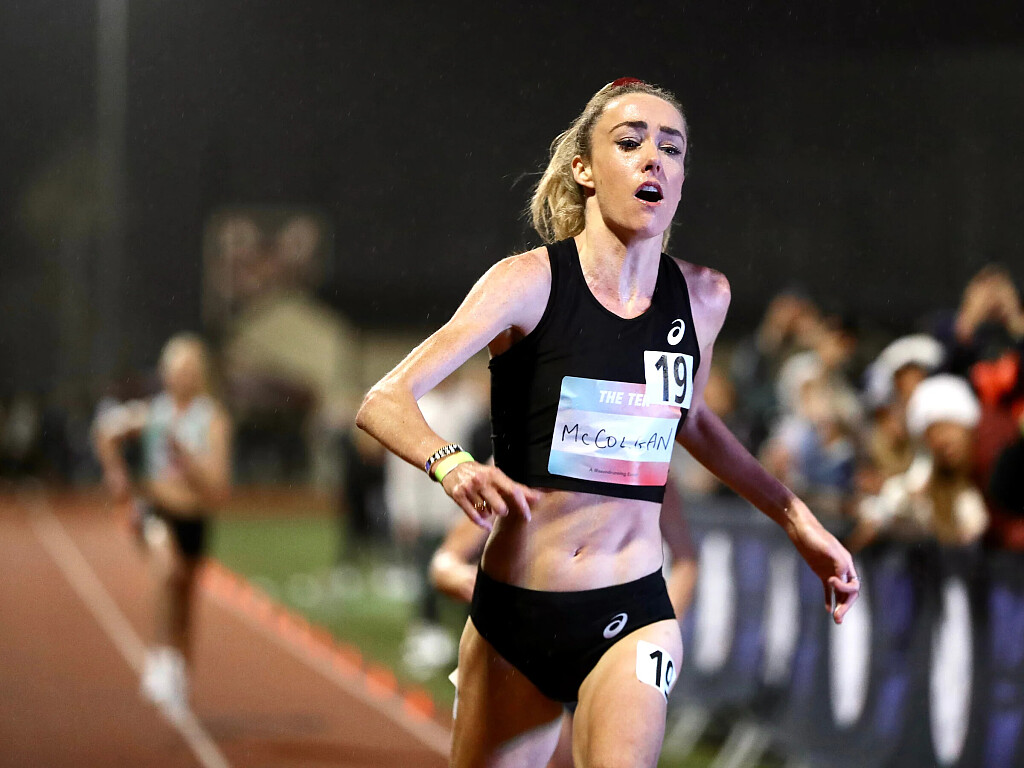
Eilish McColgan (30:00.87) and Alicia Monson (30:03.82) Break National Records At The TEN
The British and American records in the women’s 10,000 meters both went down late Saturday night in California as Eilish McColgan outdueled Alicia Monson over the final lap of The TEN in San Juan Capistrano. McColgan, the Commonwealth Games champion at 10,000 who is building up for her marathon debut in London on April 23, was only added to the field this week but felt confident in her fitness after five weeks of altitude training in Colorado. It proved an inspired decision as she ran 30:00.87 to narrowly break Paula Radcliffe’s British record of 30:01.09 set in August 2002.
A few seconds behind McColgan, Alicia Monson nabbed her second American record of 2023, running 30:03.82 to smash the previous record of 30:13.17 set by Molly Huddle in the 2016 Olympic final in Rio. Three weeks ago, Monson ran 8:25.05 at the Millrose Games to break the American indoor (and overall) record for 3,000 meters.
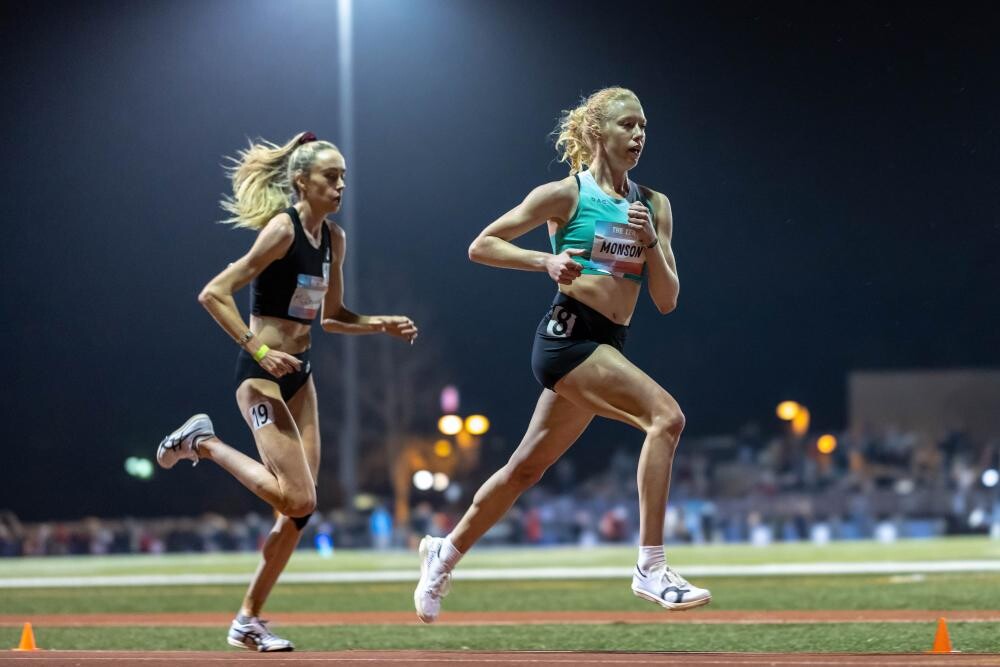
Both women were also safely under the 30:40 standard for the 2023 World Championships and 2024 Olympics on a good night for running fast (50-degree temps, still conditions).
Monson and her camp had billed the race as an American record attempt and they enlisted her On Athletics Club teammate Josette Andrews (a 14:51 5k runner) to handle pacing duties, along with Eleanor Fulton. When Andrews dropped out at 5k (15:09 for McColgan and Monson), they were actually a few seconds behind AR pace, but Monson took over and righted the ship, dropping the pace from 73-second laps to 72’s, then 71’s. By the bell, which Monson reached in the lead thanks to a 70.45 penultimate lap, the question was not whether the AR would go down, but whether either woman would break 30:00 – and of course, who would win the race?
McColgan, who had clung faithfully to Monson throughout the race, finally went wide on the backstraight of the bell lap and passed Monson, and the American had no response as McColgan powered to victory with a 64.87 last 400m. Monson could not match that speed, closing out her effort in 67.99, and though she did not win, her American record was very well-deserved after so much grinding from the front.
No one else earned the World/Olympic standard, but a trio of Americans earned big personal bests in 3rd-4th-5th. Running just her second 10k, 2021 NCAA 5k champ Elly Henes won the battle for 3rd in 30:48.26 to edge 2022 Worlds team member Natosha Rogers (30:48.69) as both women moved ahead of Emily Sisson (30:49.57) and Deena Kastor (30:50.32) into 6th and 7th on the all-time US list. Rogers’ Puma Elite teammate Fiona O’Keeffe also got a pb in 5th, running 30:55.05 to become the 11th American woman to go sub-31.
Results (Analysis at bottom)
1 Eilish McColgan Asics 30:00.86 #$WRLD
2 Alicia Monson On Athletics Club 30:03.82 #$WRLD
3 Elly Henes Adidas 30:48.26
4 Natosha Rogers Puma Elite 30:48.69
5 Fiona O’Keeffe Puma Elite 30:55.05
6 Laura Galvan Hoka 31:04.08
7 Dominique Scott Adidas 31:14.00
8 Carrie Verdon TEAM Boulder 31:52.94
9 Susanna Sullivan unattached 31:55.80
10 Amy Davis-Green Hansons-Brooks ODP 32:10.59
11 Katie Izzo Adidas 32:22.47
12 Jeralyn Poe Tracksmith 32:39.10
Men’s race
The men’s race came down to a battle of the last two US 10,000-meter champions: Woody Kincaid and Joe Klecker. Just as he did five weeks ago over 5,000 meters in Boston, Kincaid earned the victory, though he made his move slightly earlier this time around, taking the lead with 900m to run and holding off Klecker on the last lap, closing in 55.96 to Klecker’s 56.92 as Kincaid ran 27:06.37 to Klecker’s 27:07.57. Both men ran personal bests (they now sit #5 and #7 on the all-time US list) and both hit the 2023 World Championship standard of 27:10, but neither was able to earn the Olympic standard of 27:00.
Klecker and Kincaid both went in with the aim of hitting the Olympic standard and joining Grant Fisher, Galen Rupp, and Chris Solinsky as the only American members of the sub-27:00 club. Klecker’s OAC teammate Ollie Hoare was the main pacemaker (though there were several: Ehab El-Sandali, Amon Kemboi, and Athanas Kioko all helped out) and he took them through 5k in 13:35, at which point British Olympian Sam Atkin, running with the lead pack, surprisingly dropped out.
When Hoare stepped off after covering 6400m in 17:23.90 (27:11 pace), sub-27:00 was within striking distance. But Klecker, despite working hard, could not increase the pace, and Kincaid showed no interest in sharing the lead despite Klecker motioning for him to do so.
By a mile to go, Klecker and Kincaid had dropped everyone else, and Kincaid, sensing the World standard slipping away, hit the front with 900 to go. Klecker stuck right with him, however, and it wasn’t until the final turn that Kincaid was able to gain real separation as both men closed well to get under the World standard – though not the Olympic standard.
Kioko, who stayed in the race, was the best of the rest, running 27:23.84 for 3rd, holding off Conner Mantz, who ran 27:25.30 in the midst of his Boston Marathon buildup (just .07 off his personal best from this meet last year).
Results (analysis below results) *Lap by lap splits
1 Woody Kincaid Nike 27:06.37 WRLD
2 Joe Klecker On Athletics Club 27:07.57 WRLD
3 Athanas Kioko pacer 27:23.84
4 Connor Mantz Nike 27:25.30
5 Jonas Raess On Athletics Club 27:26.40
6 Ren Tazawa Komazawa Univ 27:28.04
7 Nils Voigt Puma 27:30.01
8 Sam Chelagna US Army WCAP 27:38.02
9 Luis Grijalva Hoka 27:42.56
10 Alex Masai Hoka NAZ Elite 27:42.80
11 Wesley Kiptoo Hoka NAZ Elite 27:45.81
12 Ben Flanagan On Running 27:49.67
13 Kanta Shimizu Subaru 27:51.23
14 Benjamin Eidenschink unattached 27:51.74
15 Tatsuhiko Ito Honda 27:54.64
16 Aaron Bienenfeld unattached 27:55.96
17 Ahmed Muhumed unattached 27:56.99
18 Frank Lara Altra/Roots Running Project 28:00.75
19 Emmanuel Bor unattached 28:01.09
20 Alberto Gonzalez Mindez Guatemala 28:30.63
21 Zach Panning Hansons-Brooks ODP 28:35.52
Login to leave a comment
The Ten
The world's fastest 10,000m races each year have taken place in a sleepy little coastal town in southern California. More national records were broken in 2022 than any other race on the planet as the best in the western hemisphere launched into rarified zones of time and space. The best return to San Juan Capistrano this year to cap off...
more...
Olympic 100m champion Marcell Jacobs signs with Puma
On Feb. 2, German sports brand Puma announced they have signed the reigning Olympic 100m champion, Italy’s Marcell Lamont Jacobs, to a long-term contract.
In 2021, Jacobs sprinted onto the scene by winning a series of big races, including Olympic gold in the 100m and the 4x100m relay. He is also the reigning European 100m champion and the world and European 60m indoor champion, two titles he won in 2022. His personal best over the 100m is 9.80 seconds.
“We are thrilled to welcome Jacobs, as Usain Bolt’s successor, to the PUMA Family,” said Pascal Rolling, head of sports marketing at Puma. “With Jacobs, Andre de Grasse, Shericka Jackson, Elaine Thompson-Herah and many others, PUMA has an incredible lineup of sprint athletes ahead of some very important track and field events this year and next.”
Last summer, Jacobs pulled out of the World Championship semi-final in Eugene due to an injury he suffered to his biceps femoris (part of the hamstring). His injury also resulted in him withdrawing from three Diamond League meets earlier in the season.
Jacobs has over one million followers on Instagram, where he is known as “crazylongjumper”, a reference to the event he first competed in as a pro—the long jump. Jacobs was previously with Nike during all four of his major championship wins.
“The combination of his athletic success and his great personal style makes him an ideal ambassador for Puma,” said Rolling in a press release.
Jacobs will make his season debut this Saturday in Poland, wearing Puma’s new exclusive evoSPEED Tokyo Nitro spikes, which offer the ultimate combination of power and propulsion for maximum speed.
by Marley Dickinson
Login to leave a comment
Here's Why It Feels Like Every Elite Runner Is Changing Sponsors Right Now
Tim Tollefson celebrated the new year shoveling a lot of snow, dreaming about a summer of possibility, and changing his shoes.
After six years with Hoka, Tollefson, 37, the well-known elite American ultrarunner from Mammoth Lakes, California, signed a new multi-year sponsorship deal with Craft. It might seem like a curious move this time of the year, but, in reality, most athlete sponsorship contracts in running are one-year partnerships that end on December 31. That typically gives brands the upper hand in these situations because they can have an easy out whenever an athlete doesn't have a great year of results, or they no longer fit with their marketing goals. It always comes down to the money, though sometimes it's in the athlete's best interests to start fresh, to leverage their recent results and social media platform to find a better deal with a brand that better fits their racing goals.

Because there are more brands partnering runners than ever before, and presumably more sponsorship money available, top-tier distance runners who are still at the top of their game-like Tim Tollefson, Allie McLaughlin, Josette Norris, Paige Stoner, David Ribich, Dani Moreno, Erin Clark, Natosha Rogers, Colin Bennie, Dillon Maggard, Camille Herron, and others-have been able to seek out new opportunities to continue their careers with the necessary support.
The terms of the newly signed deals haven't been disclosed, but there is a huge range in pay for professional distance runners-roughly $15,000 on the low end for a partially sponsored trail runner without significant international results, to $300,000 at the high end for a top-tier marathoner with Marathon Majors podium results. Certainly that means some live a life of luxury, while others are forced to work part-time jobs and pinch pennies to get by.
But there are also often signing bonuses, as well as premiums paid for earning appearance fees, major victories, global medals, podium finishes, breaking records, and other incentives, so running faster can be a fast track to a boost in income. However, most athletes are considered independent contractors, and many have to pay for their own healthcare, body work, and travel, depending on the details of their brand partnership.
"You start getting an idea of who's going to be available, for one reason or other, in the last few months of the year, and that's when brands and athletes start talking," said Mike McManus, Hoka's global sports marketing director. "As an athlete, you're as valuable as whatever money anyone wants to give you, but it's a process and all about negotiating. Sometimes you can match the money being offered; sometimes it just doesn't make sense for the partnership."
What Tollefson liked about Craft was similar to what he liked about Hoka six years ago-an upstart brand ready to make an impact in trail racing, its new line of trail shoes, and the trail community overall. Craft sees Tollefson as a runner with name recognition and several significant race wins in the past three years, not to mention a leader in the sport who started the Mammoth Trail Fest last year.
"This [new partnership with Craft] has reignited my deep passion for the sport and has reminded me of the things I want to accomplish," he said. "It's almost like a start-up situation led by passionate people who are excited to make an impact and want to support the people who are along for the journey. Curiosity drives me and I like a challenge. I know I am going to have some lifetime achievements ahead."
More Big Moves in Trail and Ultra
After an extraordinary year of racing on the trails, Allie McLaughlin changed from On to Hoka as her primary sponsor. The charismatic 32-year-old from Colorado Springs won the daunting Mount Marathon race in Alaska, placed among the top five in several Golden Trail Series races, and won both gold and bronze medals in the inaugural World Mountain and Trail Running World Championships in Thailand. She'll be representing the U.S. in this year's World Championships in Austria, in June, while also returning to the OCC 54K race, as part of the Ultra-Trail du Mont-Blanc (UTMB) festival in Chamonix, in August.
"It was really interesting to see how much trail means to them [Hoka], not only with their sponsorship of UTMB, but in general how they're helping push the sport forward," said McLaughlin, who had been with On since 2021. "There are a lot of reasons I like what Hoka is doing, but ultimately, the emphasis they're putting on the team and their athletes is really exciting."
Other trail and ultrarunners who have switched brands include Erin Clark, who finished 7th at last year's CCC, who left Hoka to sign with Nike, even though her partner, Adam Peterman, the 2022 Western States 100 champion and ultrarunning world champion, re-signed with Hoka.
Spanish trail runner Sara Alonso has changed from Salomon to ASICS, while Craft also signed Arlen Glick, a prolific 100-mile specialist from Ohio, and Mimmi Kotka, a Swedish runner with numerous podium finishes in Europe, to its team. Meanwhile, previously unsponsored American trail runners Tabor Hemming (Salomon) and Dan Curts (Brooks) are among those who have signed new deals.
Meanwhile, Dani Moreno, a world-class mountain runner from Mammoth Lakes, California, and Camille Herron, a record-setting ultrarunner from Warr Acres, Oklahoma, are both also leaving Hoka for yet-to-be-announced brands that offered better deals.
Bigger Transitions for Road and Track Runners
For track athletes and marathon runners, a change of shoe brands is often a more involved change, mostly because it often means changing training groups and coaches, too.
For example, Josette Norris, the fifth-place finisher in the 1,500m at the 2022 World Athletics Indoor Championships, not only switched from Reebok to On, but she left Reebok's Virginia-based Boston Track Club, and coach Chris Fox, and moved west to Boulder, Colorado, to join the On Athletics Club under Dathan Ritzenhein.
Similarly, David Ribich, one of the best American mile runners on the track last year, switched from the Seattle-based Brooks Beasts track club to the Nike-backed Union Athletics Club under Pete Julian.
Colin Bennie, the top American finisher in the Boston Marathon in 2021-previously with Reebok but unsponsored last year-signed with the Brooks Beasts but will be training on his own in San Francisco. Dillon Maggard, who was second at the U.S. cross country championships and ninth in 3,000m at the indoor world championships in 2022, is returning to Seattle to train with the Brooks Beasts, after being unsponsored last year. Natosha Rogers, who was a finalist in the 10,000m at last summer's World Athletics Championships in Eugene, Oregon, has changed from Brooks to Puma, but will continue to train on her own in Colorado. Middle-distance runner Cruz Culpepper, after short stints at the University of Washington and the University of Mississippi, gave up his remaining college eligibility to sign with Hoka and its NAZ Elite (NAZ) team.
Last summer, Paige Stoner left the Virginia-based Reebok group and Fox, her longtime coach, to train in Flagstaff, Arizona, partially because she didn't have other marathoners to train with on a regular basis in Charlottesville. She increased her volume last fall training with Sarah Pagano and Emily Durgin and won the U.S. championship at the California International Marathon in December with a course record of 2:26:02, her debut at the distance.
In January, Stoner parlayed that into a new deal with Hoka, as she also joined the Flagstaff-based Northern Arizona Elite and will be training with a group of strong marathoners-including Aliphine Tuliamuk, Alice Wright, Kellyn Taylor, and the recently unretired Stephanie Bruce-under the guidance of coaches Alan Culpepper, Ben Rosario, and Jenna Wreiden.
"I was especially drawn to NAZ because they have proven to be a powerhouse in the marathon, which will likely be my primary focus in the years to come," Stoner said. "I believe the team has all of the tools it takes to compete at the highest level in the sport, and I am eager to begin this new chapter."
Learning the Ropes
For track and road running, the path to success for elite-level, post-collegiate athletes typically includes earning a sponsorship right after the track season in June and joining a sponsored training group and coach. From there, it's all about improving times and placing high in U.S. championship races, with hopes of becoming fast enough to earn a spot in elite track meets in Europe or one of the World Marathon Majors.
But most road and track runners have agents to help smooth out those transitions, whereas most trail runners do not. Plus, trail running is considerably more unstructured, with a greater range of race distances and a lot more unknown variables. That means the challenge of figuring out what opportunities exist on the trails-what races to run, how to train on trails, what gear is needed, how to race considerably longer distances, and how to attract sponsors-often requires them to learn on the fly.
Those are all reasons professional trail runner Andy Wacker recently formed The Trail Team, a non-profit organization that will help guide young runners along the path becoming successful, potentially sponsored trail runners, while also playing a role in boosting the level of competitive trail running in the U.S.
The Trail Team put out a call for candidates to become one of six inaugural team members in 2023. Once selected this spring, those athletes will go through a training camp, receive a stipend, get continued mentorship from Wacker, McLaughlin, Adam Peterman, and Grayson Murphy, and prepare for a variety of U.S. races.
"I've reached out to a lot of young athletes and the main thing I found is they need a mentor," said Wacker, a Salomon-sponsored athlete. "They don't necessarily need a coach-a lot of them have a college coach that they might continue working with-but they need someone who is going to help them with all of their questions and translate everything to trail running.
"It's still really hard to be an individually sponsored athlete, and I think it's hard for a young athlete to get recognition and build their brand, so we're hoping to help with that," he added. "There are more participants and more excitement than ever in trail running, but there are also growing pains. So there are a lot of ways we think we can help so they don't have to figure it out on their own."
Like Wacker, Tollefson is one of those athletes who did have to figure it out on his own. He was a good runner in high school and college, but he never qualified for the state meet and never earned All-American honors. But, with a relentless work ethic, he's become one of the most successful American trail runners of the past decade, having placed second at the CCC 100K in Chamonix, in 2015, and twice placed third in the Ultra-Trail du Mont-Blanc 171K in 2016 and 2017.
Although his personal race plans aren't finalized yet, those deals are allowing him to step away from his career as a physical therapist and become fully immersed in running for the first time in his career.
"All of us athletes are multidimensional; we're more than just a pretty face rocking a bib," Tollefson said. "Everyone has a unique story. I think there are more brands interested in telling those stories, and Craft is definitely one of them. Some people have written me off, but I'm confident my best races are ahead of me. Craft believes in me, and I feel like I need that belief to get the best out of myself."
by Trail Runner Magazine
Login to leave a comment
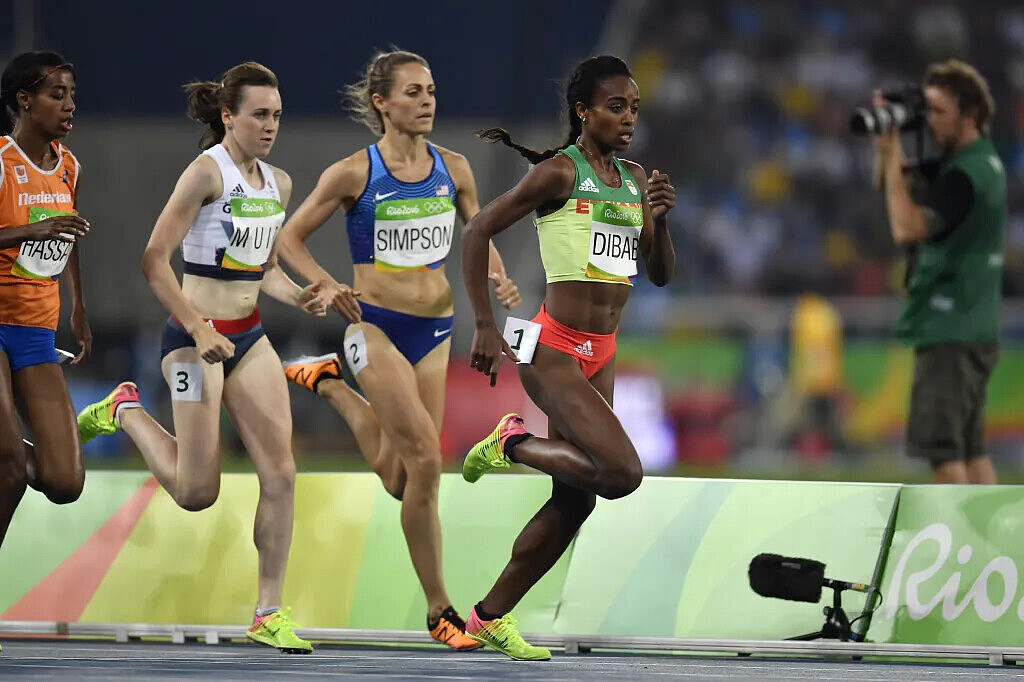
Track legend Jenny Simpson puts her most challenging year behind her as she turns to the roads in 2023
After a year in which her world was turned upside down, the track legend has a new sponsor and new event as she makes her half marathon debut in Houston on Sunday.
As the Marshall Fire approached her house on December 30, 2021, there was a brief moment where Jenny Simpson thought to herself, I can’t believe I’m doing this. The house Simpson shares with her husband Jason was formerly a schoolhouse, built in 1900 and located in Marshall, Colo., 15 minutes southeast of Boulder. And on that day, it was under threat from what would eventually become the most destructive fire in state history.
The fire, spread by wind gusts of over 100 miles per hour, was moving quickly. As thick smoke enveloped their property, choking their lungs and blocking their vision, the Simpsons prepared for the worst. Trying to limit the burn, they watered down the yard with hoses, inadvertently soaking their clothes as the wind blew the spray everywhere. Then, as the flames moved in, Simpson took one last lap around the house, grabbing their laptops, their Jack Russell terrier Truman, and a bag containing her running medals and memorabilia — one she had assembled a month earlier while being interviewed for a documentary and fortunately had yet to unpack.
Simpson, like many of us, had previously had that conversation about the one thing you would grab if your house was burning down. She had always answered with her Bible, handed down to her from her great-grandmother Genevieve Schermerhorn (“Grandma Jenny”), for whom she was named. So, as she grabbed the Bible from her office and dashed out of the house, it hit her: I think I’m grabbing the thing that you get because we might lose everything.
By the time Simpson made it to her car, she no longer knew where Jason was or whether he would make it back to the car — the smoke was so dense, it was difficult to see. He eventually made it and they sped away from their house, not knowing when they would return — or if the house would still be there when they did.
Over the course of two days, Marshall Fire would ultimately burn over 6,000 acres, destroy over 1,000 buildings, and cause over $500 million in property damage, making it the most destructive fire in Colorado history. It was a traumatic event for Simpson and her community.
Though the Simpsons’ home survived the fire, it sustained damage, forcing them to live elsewhere while it was repaired. They bounced around from a hotel to the spare bedroom of some friends from church to, eventually, a sparse apartment near the University of Colorado campus, living out of a backpack with the few things they had managed to grab from their home before the fire hit.
“It’s hard to describe how stressful that time was,” Simpson says.
On top of that, Simpson was working through a sports hernia and stress reaction in her right hip — the most significant injury of her career — and her professional future was less certain than ever. During the 2010s, few athletes were more consistent and dependable than Simpson. From 2007 through 2019, Simpson made all nine World/Olympic teams for the United States, piling up 11 national titles, three World Championship medals, and an Olympic bronze in 2016. That success led to a series of lucrative contracts from her sponsor, New Balance, and, as a highly-ranked athlete, health insurance from USOPC.
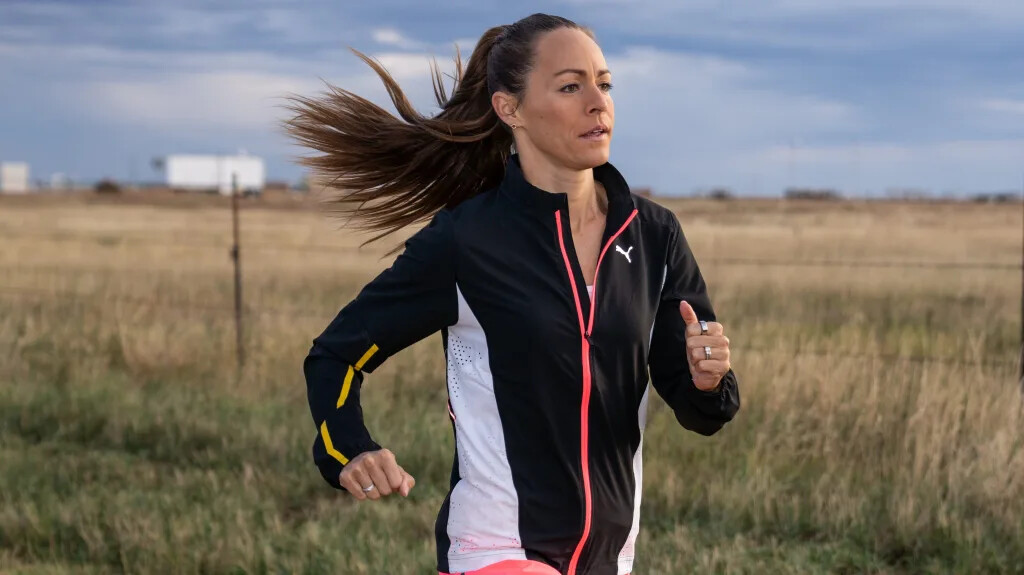
But Simpson’s New Balance contract expired at the end of 2021 — just two days after the fire that displaced her from her home. On January 1, she lost her health insurance coverage from USOPC (to qualify for coverage, an athlete had to have medalled at either the 2019 Worlds or 2021 Olympics, finished in the top 12 at the 2021 Olympics, or finished the season ranked in the top 15 in the world in their event; Simpson no longer met any of the criteria). As 2022 began, she still had Jason, and she still had the support of her longtime coaches, Mark Wetmore and Heather Burroughs. But the other constants in her life suddenly weren’t so constant.
“This last year, I felt more vulnerable than ever,” Simpson says. “The major safety nets in my life have been being a top-performing athlete and being in the tier system and in the USATF system, being a New Balance athlete and knowing I have a future there and my security at home. And my health. All of those things were really wobbly and testy and some of them fell apart in the last year.”
Rebuilding and replacing
One year has passed since the fire that upended Simpson’s world. Some elements of her life have been rebuilt, others replaced. The Simpsons moved back into their house in Marshall on April 1, and after months of work, she says it is 100% back to normal. Her body is also back to full health. That too required months of work.
Simpson had felt pain in her hip area during the fall of 2021 and though she didn’t give it much thought initially, it grew into something that significantly disrupted her training. Even as 2022 began, she remained in denial. After her streak of making teams ended at the 2021 Olympic Trials, Simpson knew she couldn’t afford to miss time if she was to return to her best.
“Pushing through cross training, pushing through the life challenges that we were going through, I definitely made my circumstances a lot worse,” Simpson says. “And I don’t think that’s unusual for runners. That’s kind of in our nature.”
Simpson was determined to avoid surgery, but realized such a path would require a more conservative approach. As winter turned to spring, Simpson, reluctantly, began to back off the intensity to allow her body to heal.
“The toughest thing about having a sports hernia injury and choosing to rehab and go that route and not jump straight into surgery is that it’s just slow,” Simpson says. “And none of us that are athletes, I think in particular runners, want to take anything slow.”
Simpson did not race at all last spring or summer, missing USAs for the first time since 2006 and missing the chance to represent the US at the first World Championships held on American soil. Simpson is now healthy again, but she’s still rebuilding the fitness she lost in 2022.
Another pillar of Simpson’s life — her New Balance contract — had to be replaced rather than rebuilt. Simpson did not want to go into specifics, but says that while New Balance verbally offered her a deal at a reduced level from her previous contract, the two sides ultimately could not reach an agreement. Eventually, Simpson, who had not used an agent since 2014, hired Hawi Keflezighi to negotiate a new deal and announced a sponsorship agreement with Puma in October.
Leaving New Balance behind was painful. Simpson signed with the company coming out of the University of Colorado in 2010, and after 12 years together had envisioned staying with the brand in some fashion for the rest of her life. Seconds after crossing the finish line in 10th in the 2021 Olympic Trials 1500, Simpson looked at the scoreboard and saw that Elle St. Pierre, Cory McGee, and Heather MacLean — all New Balance athletes — had gone 1-2-3 to make the team; Simpson was the first to congratulate them. She figured that, even once her racing days were over, there would still be some sort of role for her at New Balance.
“My whole future in sport and beyond was about how can I take what I’m learning in my career and make that in any possible way benefit the women’s team in the future,” Simpson says. “So seeing that [1-2-3 at the Trials] and knowing there was a strong middle distance future here and how can I continue to pour into that, that’s what I thought my future was.”
A move to the roads and a new beginning
For the first decade of her professional career, Simpson’s running life was fairly straightforward. She was consistently one of the best in the world in her event, meaning she could enter any race she wanted and was always in-demand from her sponsor (two of the reasons she went without an agent for so long). Every year since rejoining Wetmore and Burroughs in 2013 (she was coached by Juli Benson from 2010-12), she would sit down with them and figure out how to be at her best in the biggest race of the year, either the World Championship or Olympic final. More often than not, she succeeded.
But after failing to make the Olympic team in 2021, Simpson began to ponder her athletic mortality. She was nearing her 35th birthday and had a few options if she wanted to stay in the sport.
“The biggest consideration was, do I move up to the 5k, do I try to run a great 10k, or do we do something totally different?” Simpson says.
(LetsRun founder Robert Johnson will be devastated to learn Simpson did not mention the steeplechase, the event in which she won two US titles and set the American record in 2009).
Simpson dipped her toes into Option C by running the Cherry Blossom 10-Miler in September 2021 (she finished 2nd in 52:16). Midway through 2022, she had fully committed to the roads.
“It’s always been part of the plan that I would give the roads some good years of my career,” says Simpson. “And I think I just saw those really good years becoming fewer and fewer and I realistically wanted to make the transition before I was so, not just physically tired, but also just emotionally drained and psychologically drained from the intensity of it.”
The last few years, Simpson carved out a niche as a mentor to some of the up-and-coming athletes in the Colorado program. As a volunteer assistant at CU, Simpson was able to watch runners like Dani Jones and Sage Hurta at practice, then aid their transition to the professional ranks by traversing the circuit alongside them as a competitor/friend. With Simpson’s move to the roads, that period of her career is over.
“I think that’s what I’ll miss the most, is feeling like I get to be a little bit of a mother hen for the [Colorado] women that are doing really well and have a future as a pro in the sport,” Simpson says.
Now, Simpson is heading into the unknown. The training, obviously, is different. Though Simpson ran relatively high mileage for a 1500 runner — it was not uncommon for her to hit 80 miles in a week — she is now running 80+ regularly, doubling up to five times per week. During her track career, a long workout for Simpson would consist of 12 or 14 by 400m. Now she’s running 2k and 3k repeats on the track.
“That’s a long way to go for someone like me,” Simpson says. “…You go out on the first lap or two and you think, Are you kidding me? This is it? But it doesn’t stay easy for very long.”
Simpson has also had to educate herself about the road races themselves. When we first spoke for this story in November, Simpson admitted that, outside of the World Marathon Majors, she didn’t know many of the major road races and was still learning about how they stacked up against each other in terms of prestige.
Part of that is due to how the sport is structured. Track is simple: Worlds or the Olympics is the end goal and the rest of the season is built around that. The roads are different — people reach top fitness at different times. For marathoners, it’s fairly intuitive — pick one race to peak for in the spring and one in the fall. But Simpson isn’t a marathoner (yet). For road racers at shorter distances, it’s more choose-your-own-adventure.
Simpson’s plan: sit down with Wetmore and Burroughs, pick a race to gear that year’s training around, and attack it like they would a World Championship or Olympics.
“Even though it’s not to the world a big World Championships, it will be Mark and Heather and Jenny’s World Championships,” Simpson says.
As for the marathon, Simpson would not commit to running one eventually, but did not rule it out either. She watched Jason, after years of grinding, finally qualify for the Olympic Marathon Trials at CIM in 2018 and knows how difficult the event is. She has no desire to rush into one.
“It is really freaking hard,” Simpson says. “You don’t know for sure that your body is suited for it just because you’ve been a good runner…What it will take for me to run a marathon? If I have a great half and I feel like my body’s handling that workload really well, we’ll absolutely do a marathon. Because at that point, you’ve gotta find out, right?”
Next stop: Houston
The big question hanging over all this: will Jenny Simpson be any good on the roads? It’s no certainty that prime Simpson, the one who won a record eight Fifth Avenue Miles, would have been a force over 10k and beyond, much less the 36-year-old version coming off the most disruptive injury of her career.
Thirty-six is not necessarily old by distance standards, though. Last year, Keira D’Amato broke the American marathon record at 37 and Sara Hall broke the American half marathon record at 38. Like Simpson, both were for a time milers on the track before moving up — though it took each several years before their big breakthrough.
After down years in 2021 and 2022, logic says Simpson could have a tough go of things. The bar for success, certainly, will have to be recalibrated. At her best on the track, Simpson was one of the top three women in the world in her event. That level of accomplishment is virtually impossible for her on the roads, but could she become one of the best in the US in the 10k, half, or marathon?
Her road debut at Cherry Blossom in 2021 was auspicious (2nd place, 52:16), her appearance at last fall’s USATF 5K champs in New York less so (she was 17th in 16:07, 39 seconds behind winner Weini Kelati) — though Simpson wasn’t fully fit in New York and knew that going in.
2023 will be the real test of whether Simpson has anything left to give on the roads. And for Simpson, 2023 begins in Houston, where she will make her half marathon debut on Sunday. There is a lot riding on the outcome, which is how Simpson likes it. She has yet to pick that one race that she will plan her 2023 season around; Houston will help her make that decision.
“This will kind of chart my course of whether we stick with the half marathon, whether I start dreaming about a marathon, or whether I say maybe it’s better for me to get back on the track, spike up, and do some faster stuff over the next year,” Simpson says.
Simpson says that while her training has gone well, the adjustment to training for the half marathon has been more challenging than she expected.
“When I ran Cherry Blossom and I ran 5:14/mile pace the whole way, the idea of running 5:10’s for a half marathon (67:43 pace) seemed right around the corner,” Simpson says. “Now having gone through a year of injury and a lot of other life challenges, I’m having to adjust what I think my half marathon debut is going to look like.”
Simpson will have Jason with her as a pacer on Sunday and said they will plan to go out faster than her pace at the Army 10-Miler in October, a race she won in 54:16 (71:08 half marathon pace). She says she has a time goal in mind but elected not to share it. Her main hope is that she can finish the race well. During her track career, Simpson was famous for her strength in the final 100 meters, but in her last two road races, she felt as if she was holding on for dear life at the end.
Simpson will step to the line on Sunday with an uncertainty that did not exist during her track career. When Simpson started a 1500-meter race, she came armed with knowledge gleaned from years of experience. She knew exactly what sort of time she could expect her workouts to translate to and how to respond tactically to every race scenario. In the half marathon, she’s starting over.
“That’s one of the trepidations of going into the race in Houston is that I’m so used to having such a clear idea of what I am capable of,” Simpson says. “My race in Houston will be as much of a discovery as the training has been.”
Even Simpson admits she doesn’t know how many more years she’ll continue to race professionally. A few years ago, she had scripted out a storybook ending for herself: a fourth Olympic team in Tokyo and a home World Championships in front of friends and family in Eugene. Make those two teams, she thought, and she would have total freedom to do whatever she wanted afterwards, whether it was continuing to race on the roads, pursuing a coaching career, or starting a family.
That, of course, did not happen. In professional sports, endings rarely go according to plan. But Simpson is embracing the adventure that comes with her new path, wherever it leads.
“The idea I had in mind was kind of cool, but there are some things that we’re now looking forward to that I couldn’t have even imagined,” Simpson says. “And if it turns out that way, it will end even better.”
by Jonathan Gault
Login to leave a comment
Aramco Houston Half Marathon
The Chevron Houston Marathon provides runners with a one-of-a-kind experience in the vibrant and dynamic setting of America's fourth-largest city. Renowned for its fast, flat, and scenic single-loop course, the race has earned accolades as the "fastest winter marathon" and the "second fastest marathon overall," according to the Ultimate Guide to Marathons. It’s a perfect opportunity for both elite athletes...
more...
World ultrarunning champion Camille Herron parts ways with Hoka
The women’s 100-mile world record holder, Camille Herron, announced on social media today that she is parting ways with her longtime sponsor, Hoka, and beginning a partnership with a major brand new to the ultra-trail community in 2023.
“The end of 2022 marks the end of my journey representing Hoka. Thank you for all the wonderful support,” Herron wrote on her Instagram. “My time with the brand has been some of the best years of my career, and it is a testament to the harmony and happiness I have felt while representing Hoka.”
The 2022 season was eventful for the 41-year-old ultrarunner from Norman, Okla. She set 12-hour and 100-mile world records on the track and road and became the 117th runner and the youngest female ever to reach the 100,000 Lifetime Miles club.
She is also the first and only woman to run under 13 hours for 100 miles, exceed 150 km for 12 hours and reach 270 km over 24 hours.
Herron plans to announce her new sponsor in mid-January, but she gave her fans a hint, stating that she was presented with a dream opportunity to partner with a major brand that will be new to the ultra-trail community. “Right now is the time for brands to get behind, support and elevate women in a significant way, and I am excited about all the possibilities to come from this new collaboration,” Herron wrote.
Many major running brands, such as Nike, New Balance and Adidas, have already dipped into the ultra-trail scene. Two running brands with strong records of empowering women in sport are Puma and Lululemon, neither of which has really dipped into the ultra-trail scene yet.
Herron said on her Instagram that the news will come in a few weeks.
by Marley Dickinson
Login to leave a comment
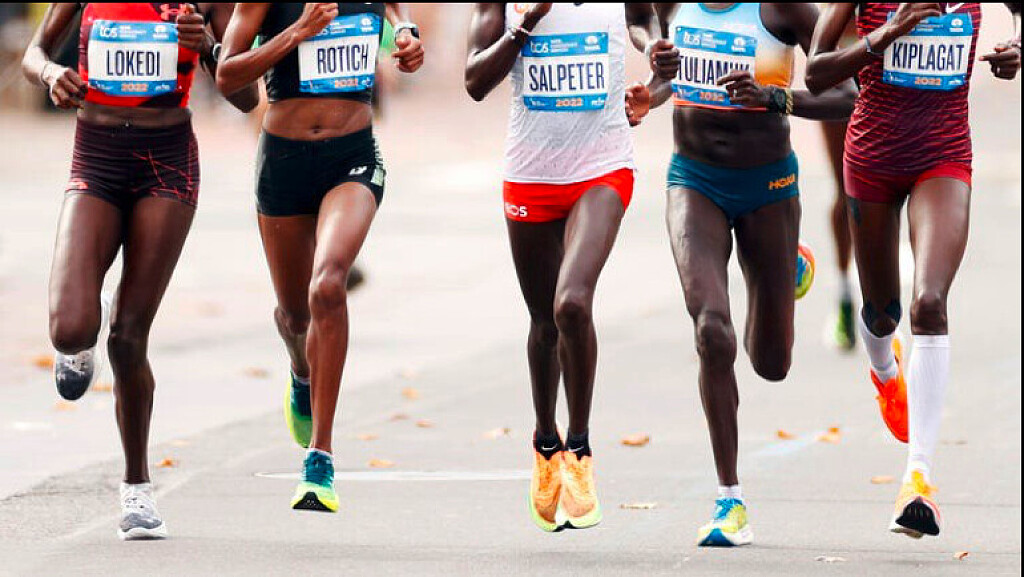
Who Wore Which Shoes at the New York City Marathon?
The running shoe hype train was high in New York City with a few fast yet-to-be-released shoes in the men’s and women’s elite fields.
For a few miles early in the New York City Marathon, Desi Linden surged into the lead of the women’s elite field. The two-time Olympian and 2018 Boston Marathon champion didn’t think she’d run away and win the race that way, but she was just trying to keep the pace honest.
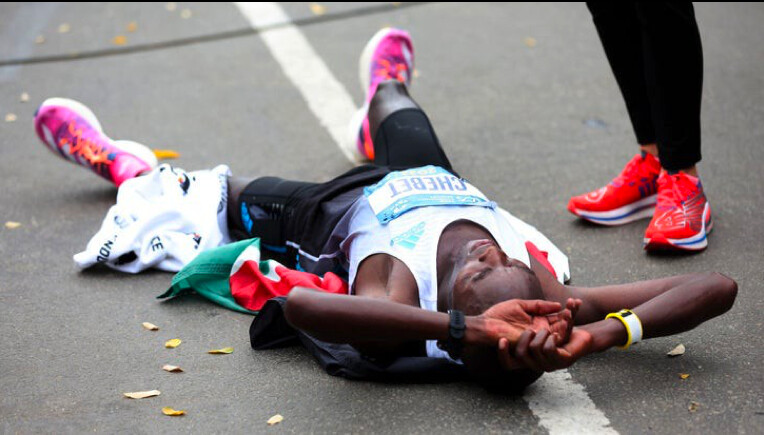
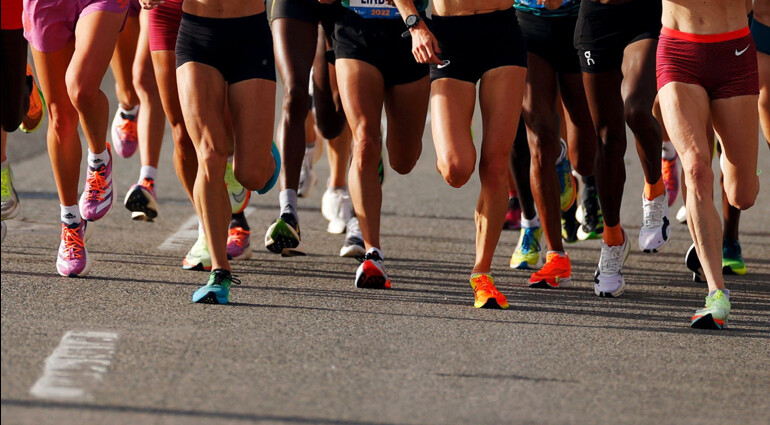
However, hiding in plain sight on her feet as she was off the front of the pack was a yet-to-be-released pair of orange, white and black Brooks prototype racing shoes. A day later, no one is willing to give up any details of the shoe, except that, like all of the other top-tier racing shoes in both the men’s and women’s elite fields, it features a carbon plate embedded in a hyper-responsive foam midsole. And although it’s all in accordance with World Athletics regulations, it won’t be released in Spring 2024 … so we’ll all have to wait a bit to see what that shoe is all about.
Linden’s shoes weren’t the only speedy outliers among the top 25 men’s and women’s finishers. While Nike, Adidas and ASICS shoes were the most prevalent brands among elite runners, there were several shoes that aren’t yet available to the public.
For example, the first runner to cross the finish line of this year’s New York City Marathon, women’s winner Sharon Lokedi, was wearing a pair of Under Armour Velociti Elite shoes. That’s notable for several reasons—because it was Lokedi’s first marathon, because the shoe won’t become available until early 2023 and because it’s the first podium finish at a major international marathon for a runner wearing Under Armour shoes.
There were also three pairs of yet-to-be-released Hoka Rocket X 2 shoes on the feet of three Hoka NAZ Elite runners — two of whom set new personal best times, Aliphine Tuliamuk (7th, 2:26:18) Matthew Baxter (12th, 2:17:15). Those fluorescent yellow shoes with orange, white and blue accents and blue laces were on the feet of Hoka pros at the Boston Marathon in April and Ironman World Championships in Hawaii in October, but they won’t be released to the public until late February or early March.
Meanwhile, the winner of the men’s race, Evans Chebet, was wearing a pair of Adidas Adizero Adios Pro 3, a shoe worn by four other runners in the top 25 of the men’s race and six among the women’s top 25, making it the second most prevalent model among the elites. Oddly, that was the same shoe worn by Brazil’s Daniel do Nascimento, who went out at record-setting sub-2:03 pace on his own, only to crumple to the ground at mile 21 after succumbing to fatigue and cramping.
The most common shoe among the top finishers was the Nike ZoomX Vaporfly Next% 2, which was on the feet of 11 of the 50 runners among the women’s and men’s top 25 finishers. There were eight runners wearing either the first or second version of the ASICS MetaSpeed Sky.
Six runners wore Nike Air Zoom Alphafly Flyknit shoes, three wore Nike Air Zoom Alphalfy NEXT% 2. There were two pairs of On Cloudboom Echo 3 in the field, including those worn by Hellen Obiri who finished sixth while running a 2:25:49 in her marathon debut, while three runners wore Puma Fast R Nitro Elite.
And what about actor Ashton Kutcher? He wore a pair of purple Nike Air Zoom Alphafly NEXT% Flyknit shoes and finished in a very respectable 3:54:01.
Matt James, the former lead of the Bachelor, finished in 3:46:45 with Shalane Flanagan as his guide wearing a pair of New Balance FuelCell Comp Trainer shoes. Flanagan wore Nike Air Zoom Alphafly Next% Flyknit shoes, as did Meghan Duggan, an Olympic gold medalist hockey player who ran a solid 3:52:03. Lauren Ridloff, actress from “The Walking Dead,” ran in a pair of Brooks Glycerin 20 and finished in 4:05:48, while Chelsea Clinton, daughter of Bill and Hillary Clinton finished in 4:20:34 wearing a pair of Brooks Ghost 14 and Tommy Rivers Puzey (aka “Tommy Rivs,” a former elite runner who survived a deadly bout of cancer in 2020, wore a pair of Craft CTM Ultra Carbon Race Rebel and finished in 6:13:54.
Here’s a rundown of what was on the feet of the top 25 women’s and men’s finishers in the Big Apple.
1. Sharon Lokedi (Kenya) 2:23:23 — Under Armour Velociti Elite
2. Lonah Salpeter (Israel) 2:23:30 — Nike ZoomX Vaporfly Next% 2
3. Gotytom Gebreslase (Ethiopia) 2:23:39 – Nike ZoomX Vaporfly Next% 2
4. Edna Kiplagat (Kenya) 2:24:16 — Nike ZoomX Vaporfly Next% 2
5. Viola Cheptoo (Kenya) 2:25:34 — Adidas Adizero Adios Pro 3
6. Hellen Obiri (Kenya) 2:25:49 — On Cloudboom Echo 3
7. Aliphine Tuliamuk (USA) 2:26:18 — Hoka Rocket X 2
8. Emma Bates (USA) 2:26:53 — ASICS MetaSpeed Sky+
9. Jessica Stenson (Australia) 2:27:27 – ASICS MetaSpeed Sky
10. Nell Rojas (USA) 2:28:32 — Nike Air Zoom Alphafly Flyknit
11. Lindsay Flanagan (USA) 2:29:28 – ASICS MetaSpeed Sky
12. Gerda Steyn (South Africa) 2:30:22 — Adidas Adizero Adios Pro 3
13. Stephanie Bruce (USA) 2:30:34 — Hoka Rocket X 2
14. Caroline Rotich (Kenya) 2:30:59 — ASICS MetaSpeed Sky+
15. Keira D’Amato (USA) 2:31:31 — Nike Air Zoom Alphafly Flyknit
16. Des Linden (USA) 2:32:37 — Brooks Prototype
17. Mao Uesugi (Japan) 2:32:56 — Adidas Adizero Adios Pro 3
18. Eloise Wellings (Australia) 2:34:50 — Adidas Adizero Adios Pro 3
19. Sarah Pagano (USA) 2:35:03 — Adidas Adizero Adios Pro 3
20. Grace Kahura (Kenya) 2:35:32 — Nike ZoomX Vaporfly Next% 2
21. Annie Frisbie (USA) 2:35:35 — Puma Fast R Nitro Elite
22. Molly Grabill (USA) 2:39:45 — Nike Air Zoom Alphafly NEXT% Flyknit
23. Kayla Lampe (USA) 2:40:42 — ASICS MetaSpeed Sky+
24. Maegan Krifchin (USA) 2:40:52 — Adidas Adizero Adios Pro 3
25. Roberta Groner (USA) 2:43:06 — Nike Air Zoom Alphafly NEXT% 2
1. Evans Chebet (Kenya) 2:08:41 — Adidas Adizero Adios Pro 3
2. Shura Kitata (Ethiopia) 2:08:54 — Nike ZoomX Vaporfly Next% 2
3. Abdi Nageeye (Netherlands) 2:10:31 — Nike ZoomX Vaporfly Next% 2
4. Mohamed El Aaraby (Morocco) 2:11:00 — ASICS MetaSpeed Sky+
5. Suguru Osako (Japan) 2:11:31 — Nike ZoomX Vaporfly Next% 2
6. Tetsuya Yoroizaka (Japan) 2:12:12 — Nike ZoomX Vaporfly Next% 2
7. Albert Korir (Kenya) 2:13:27 — Adidas Adizero Adios Pro 3
8. Daniele Meucci (Italy) 2:13:29 — ASICS MetaSpeed Sky+
9. Scott Fauble (USA) 2:13:35 — Nike Air Zoom Alphafly NEXT% 2
10. Reed Fischer (USA) 2:15:23 — Adidas Adizero Adios Pro 3
11. Jared Ward (USA) 2:17:09 — Saucony Endorphin Pro 3
12. Matthew Baxter (New Zealand) 2:17:15 — Hoka Rocket X 2
13. Leonard Korir (USA) 2:17:29 — Nike ZoomX Vaporfly Next% 2
14. Matthew Llano (USA) 2:20:04 — Under Armour Velociti Elite
15. Olivier Irabaruta (Burundi) 2:20:14 — On Cloudboom Echo 3
16. Hendrik Pfeiffer (Germany) 2:22:31 — Puma Fast R Nitro Elite
17. Jonas Hampton (USA) 2:22:58 — Adidas Adizero Adios Pro 3
18. Alberto Mena (USA) 2:23:10 — Nike ZoomX Vaporfly Next% 2
19. Jacob Shiohira (USA) 2:23:33 — Nike Air Zoom Alphafly Flyknit
20. Edward Mulder (USA) 2:23:42 — Nike Air Zoom Alphafly Flyknit
21. Jordan Daniel (USA) 2:24:27 — Nike ZoomX Vaporfly Next% 2
22. Nathan Martin (USA) 2:25:27 — ASICS MetaSpeed Sky+
23. Jeff Thies (USA) 2:25:45 — Nike Air Zoom Alphafly NEXT% 2
24. Shadrack Kipchirchir (USA) 2:28:15 — Puma Fast R Nitro Elite
25. Abi Joseph (USA) 2:29:16 — Nike Air Zoom Alphafly Flyknit
by Outside
Login to leave a comment
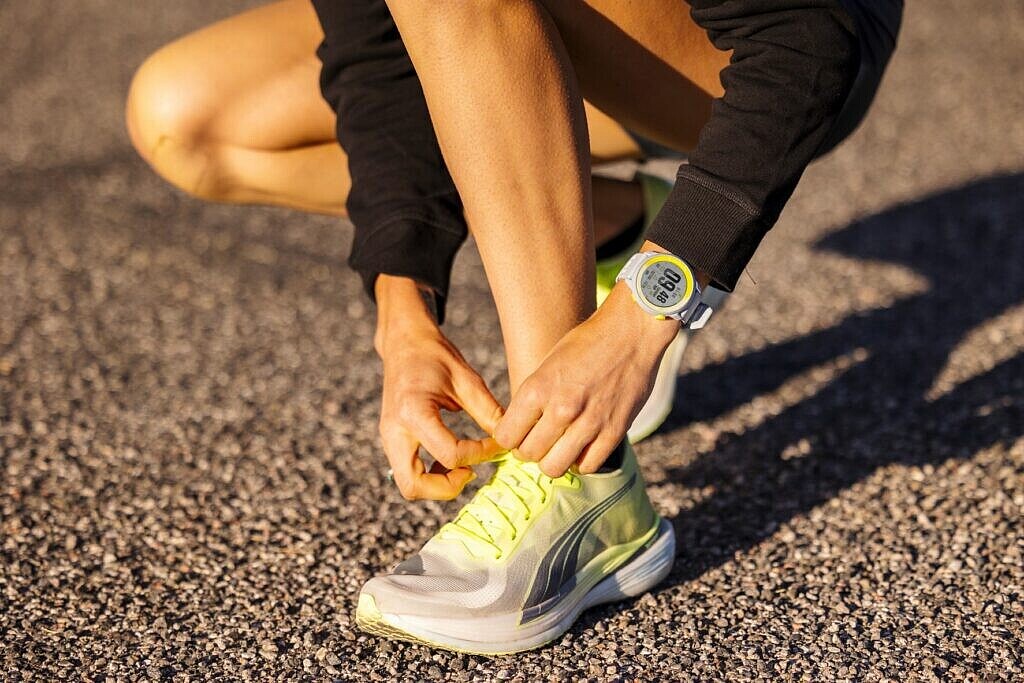
Coros introduces limited-edition Molly Seidel watch
The endurance sports watch company Coros has released a limited Molly Seidel edition of the Pace 2, which celebrates the Olympic bronze medallist’s achievements and captures her unique and fun personality.
The design of this special edition watch was a collaborative process with Seidel and her team, and features colors to represent her: two shades of green (her favorite color–a vibrant green to match her Puma race kit, and a more earthy green as a nod to the environment).
Seidel’s limited edition Pace 2 comes with two watch bands: a green silicone band and an extra nylon band with Seidel’s famous “full send” catchphrase after she won bronze in the marathon at the 2020 Tokyo Olympics.
The watch also comes with a scannable QR code to a custom 12-week marathon training plan created by COROS, Seidel and her coach, Jon Green of Verde Track Club in Flagstaff.
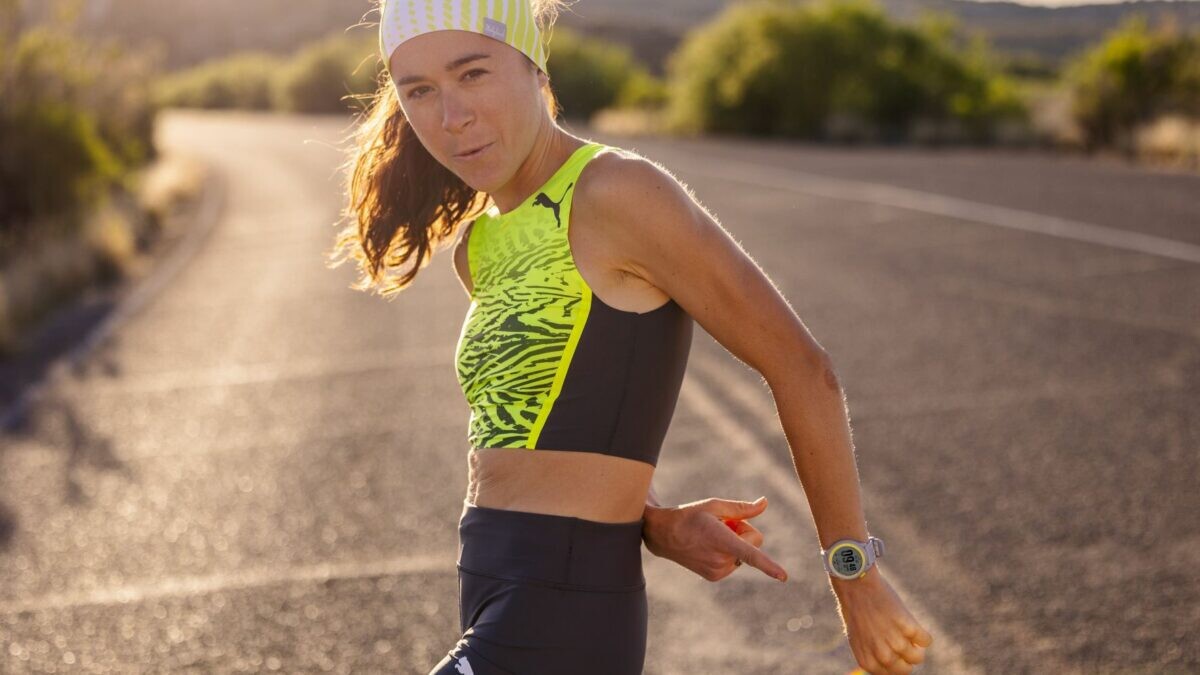
Seidel was using a Coros watch before she signed on as an official athlete for the brand. When she won her Olympic bronze, Seidel wore the Coros Apex, and made headlines as her bronze-medal-winning marathon quickly became the most kudo’d women’s activity on Strava. In November 2021, she officially signed on as a Coros athlete and was the top American at the 2021 New York City Marathon, where she wore the lighter-weight Coros Pace 2.
The Pace 2 is an excellent watch for anyone who likes to walk, run or cycle daily and wants to understand the simple statistics around their exercise. The watch also has everything you need for serious training, with stellar 30-hour GPS battery life and easy-to-understand metrics and statistics.
“This watch is Molly, and it represents all aspects of her personality, from her grit and determination to her youthful energy,” said Dan Suher, Director, Global Sales at Coros. “It is an honor to celebrate everything she has already accomplished in her career and know how much is still to come.”
The Coros Pace 2 Molly Seidel edition is available now on Coros.ca and through select running specialty retailers with a retail price of CAD $349.00.
by Running Magazine
Login to leave a comment
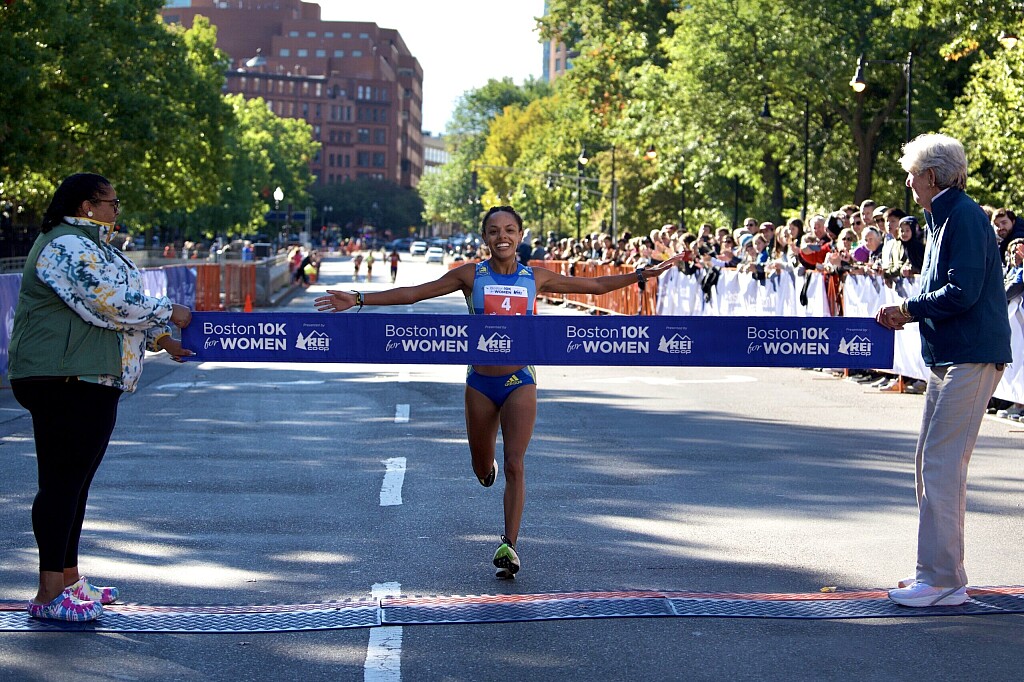
Bostonian Erika Kemp Wins the 2022 Boston 10K for Women
It was a hometown victory at the 46th Boston 10K for Women, presented by REI, as 27-year-old Erika Kemp broke the tape and set a new personal best with a time of 32:15. In her race debut, Kemp surged at mile five and cruised onto Charles Street for a 17 second victory over Kenyan Risper Gesabwa. Gesabwa’s time of 32:32 put her four seconds ahead of American Taylor Werner, who clocked 32:36, one second shy of her personal record.
‘I’ve been waiting for this day for seven years,’ said an elated Kemp, who credited her course familiarity with her PR performance. “My training overall has been pretty good. I’ve just had a really hard time putting it together in a race. It wasn’t super surprising, but it was very rewarding to see it all come together.”
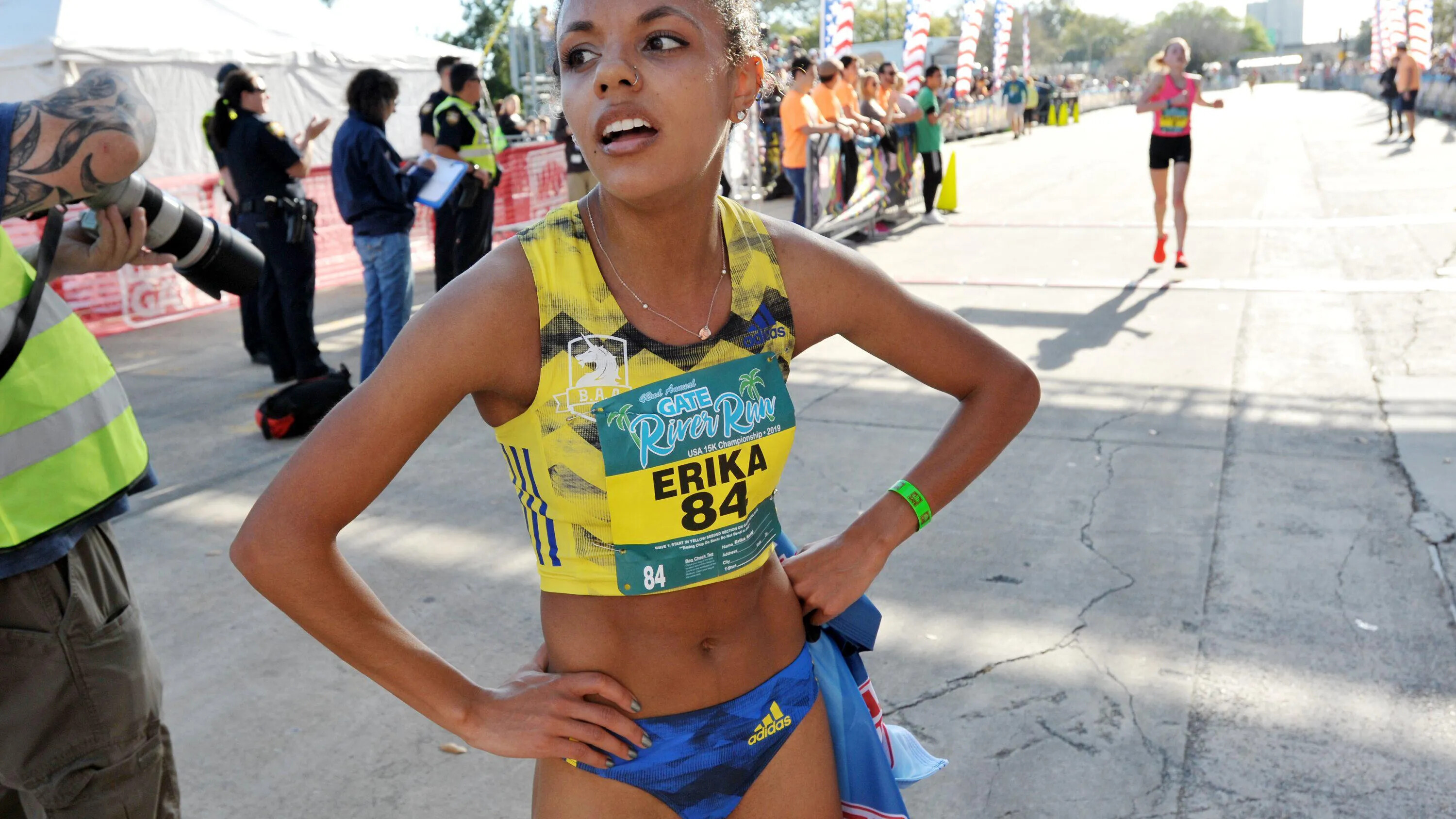
Under sunny skies and a temperature of 50 degrees, Kemp, Gesabwa, Werner, and Mary Munanu of Kenya formed a pack of four quickly after the 9:00 a.m. start. Sticking together across the Massachusetts Avenue bridge into Cambridge, they jostled along Memorial Drive, while switchbacks brought the cheers of nearly 3,000 women who chased them. “Towards mile three and four, Mary [Munanu] and I surged a tiny bit, and we got some space going into mile four,” recalled Kemp, who earned $9,000 with the victory.
Munanu and Kemp accelerated as they returned into Boston, and the crowd roared as they turned left onto Commonwealth Ave. Gesabwa and Werner stuck close behind, battling for the third podium spot. “We were side by side at mile five, and there was a sharp turn, where Mary surged,” recalled Kemp. “And I was like ‘no I can’t quit.’ So, I put in a surge and this was the only time she didn’t respond, so at that point I knew this was my chance, and I just went for it.”
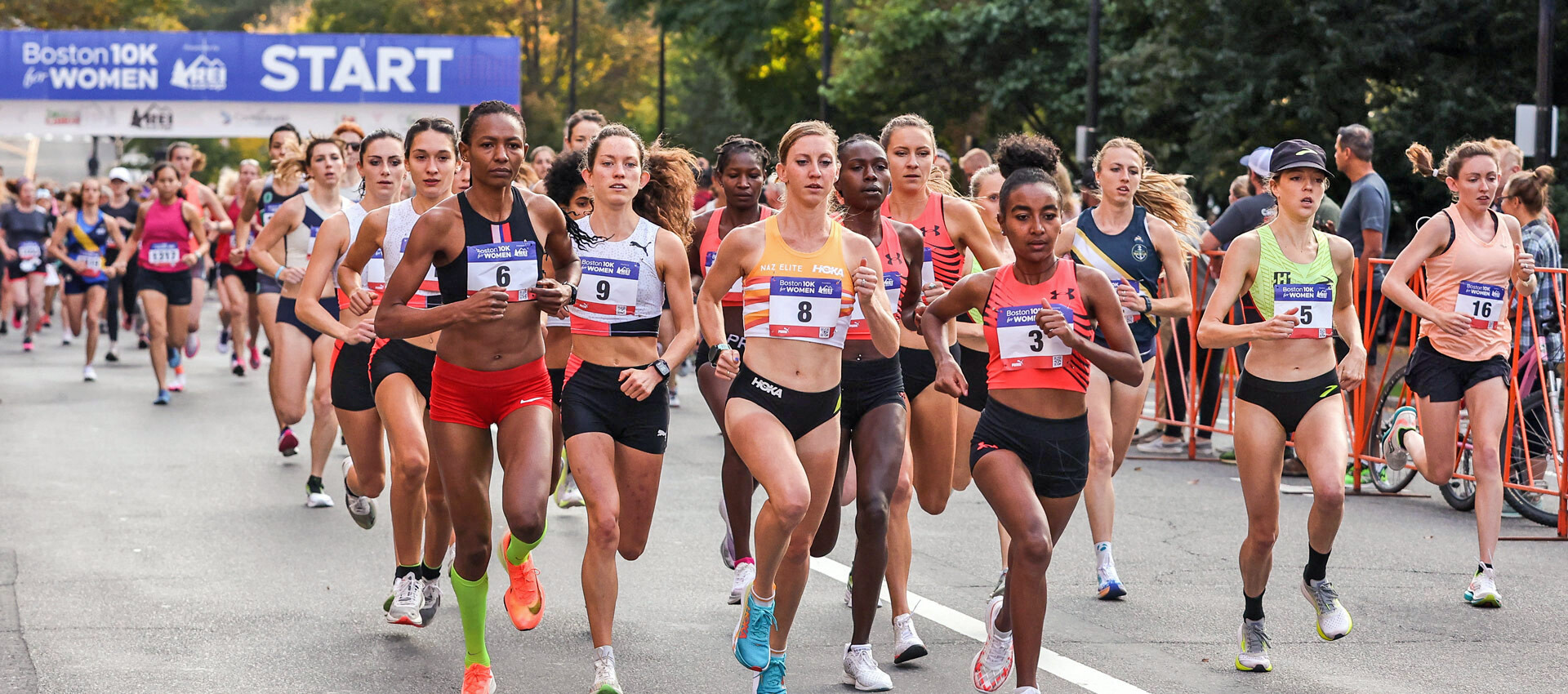
The late surge was a welcomed sign for Kemp, who runs for the Boston Athletic Association High Performance Team. “The other races I’ve done so far this year, I get to about three miles, and I’m just dead – mentally, physically, emotionally, just like, nothing left. So when you’re coming back on the bridge, and you’re just running past a stream of women and they’re cheering so hard for you, it just gives you new energy.”
The race attracted 3,556 official registrants to a bustling Boston Common as the sun rose over Boston. For the 46th year, the women’s race gathered athletes of all ages and backgrounds, representing 37 states, 11 countries, and six continents. Runners from ages 10 to 88 registered for the event. “It was amazing,” said Kemp on the sea of women runners. “The way the course runs when you run past all the women on the Mass Ave Bridge, it’s just so incredible.”
The race saw a 15% increase in registrations from 2021, and is enthusiastically supported by a group of sponsors, led by REI and Puma, who brought enormous energy to the day’s activities. Formerly known as the Tufts Health Plan 10K for Women, the race is New England’s largest all-women’s sporting event the second longest-running all-women’s race in the country.
Boston 10K for Women, Presented by REI
Established in 1977 as the Bonne Bell Mini Marathon, the Boston 10K for Women, Presented by REI is the longest-running all-women’s sporting event in New England. With thousands of runners and spectators each year, it’s New England’s largest all-women’s road race, and has been organized every year by Conventures, Inc. Known for many years as the Tufts Health Plan 10K for Women, the race features a flat out-and-back course through Boston’s Back Bay neighborhood and stretches of Memorial Drive in Cambridge, finishing at Boston Common. More than 180,000 women have raced in the event since its inception.
by Running USA
Login to leave a comment
Boston 10K for Women
The Boston 10K for Women, formerly known as the Tufts Health Plan 10K for Women and the Bonne Bell Mini Marathon, is a major 10K held annually in Boston, on Columbus Day, popular as both an elite world-class competition and a women's running event promoting health and fitness. Feel the empowerment as you unite with over 7,000 fellow runners...
more...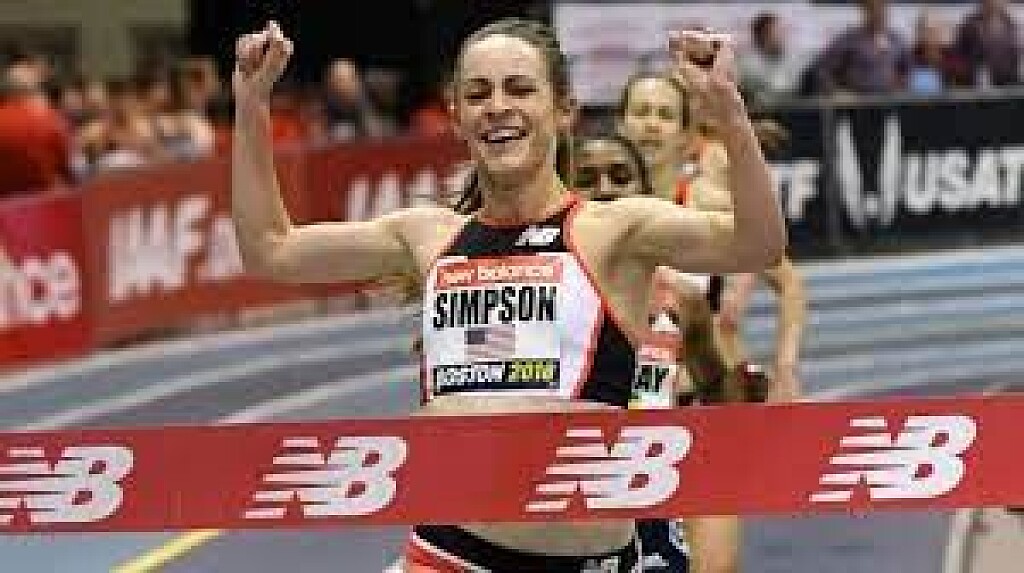
Is Top Miler Jenny Simpson About to Become a Marathoner?
The Olympic medalist signs with Puma and moves to the roads—although she still hits the track in spikes.
Jenny Simpson refuses to come out and say she’s training for a marathon. But all signs point to her training for a marathon.
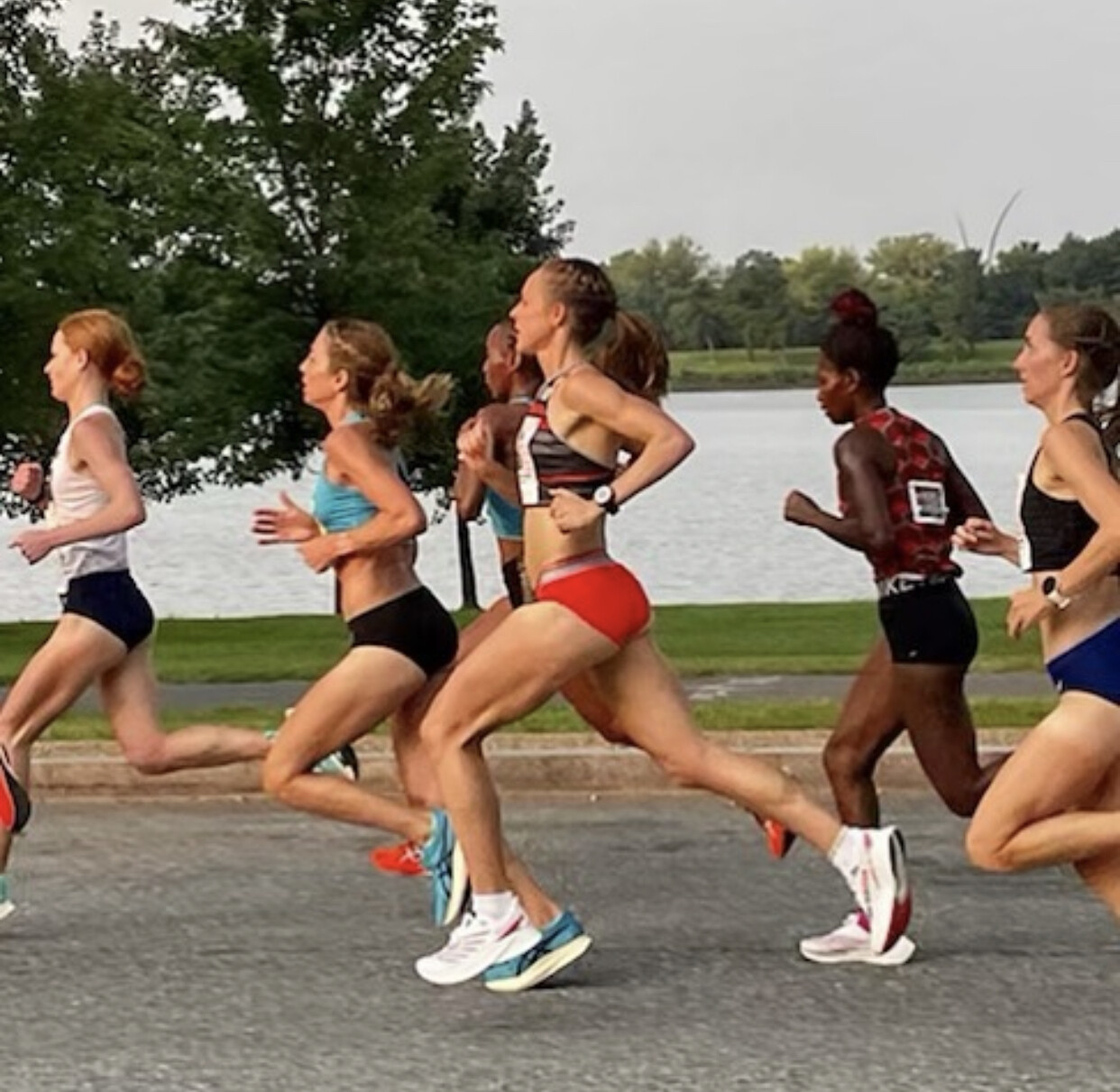
She’s consistently running the highest mileage of her life (85 miles per week). And she has a new sponsor, Puma.
“It’s correct that my emphasis is on the roads,” she said on an October 6 call with Runner’s World. “These next few years is an exploration in the distances and some of the challenges in running that I haven’t tried yet. That’s what I’m most excited about.”
Simpson, 36, has been a stalwart on the track since she was in college at the University of Colorado, going to Europe every summer and building her training around Olympics and World Championships cycles. Between 2011 and 2017, she won four global medals: a gold and two silvers in the World Championships 1500 meters, and Olympic bronze in the same event.
Through 2019, she made every U.S. team going back to 2007. But the pandemic put a sudden halt to that streak. In 2021, she made the finals of the 1500 meters at the Olympic Trials for the postponed Games in Tokyo, but she finished 10th.
“I had such an incredible run on the track,” Simpson said. “And then, just like a lot of people starting in 2020, the vision that I had for those next few years of my career got derailed.”
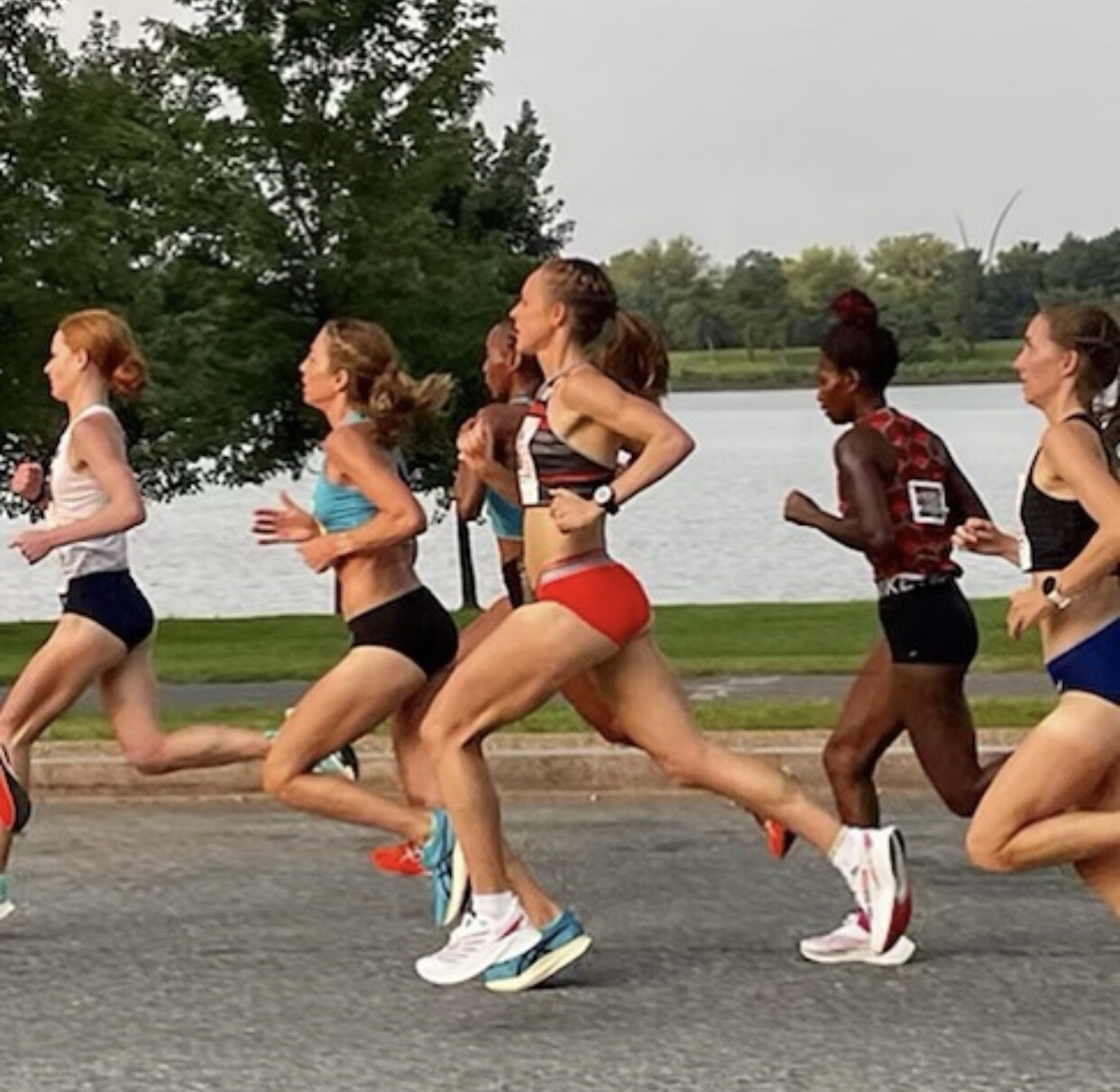
That fall, she began her transition to the roads, racing the Cherry Blossom 10-miler and finishing second in a sprint finish to Nell Rojas. But at the end of the year, Simpson’s life was upended.
Simpson suffered a stress reaction in her right hip, which took a long time to heal. She was diagnosed with a sports hernia in one of her adductor muscles, which pulled tissue away from one of the pubic bones. “A lovely place to be injured and have people poking and prodding,” Simpson said.
It was by far the most serious injury of her career, but she was able to avoid surgery with hours of physical therapy, working on her adductors, hamstrings, core, and glutes—anything near the hips. When she returned to running, she had several months of stopping and starting until she was finally pain-free.
At the same time, she learned that her future with New Balance—the company that had sponsored her since the beginning of 2010—was not secure.
And then on December 30, 2021, a wildfire broke out close to Simpson’s home, an old schoolhouse in South Boulder, Colorado, that she shares with her husband, Jason, and their dog. They had to flee with little warning. Most of the Simpsons’ immediate neighbors lost their homes, and entire neighborhoods in the bordering towns of Louisville and Superior were destroyed. The couple was displaced for three months while damage was repaired.
“So many things in my life were disrupted at the same time,” she said. “Between the fire and no longer having a sponsor and an injury, all those things swallowed up the first half of my 2022.”
By late spring, things were starting to come around. The Simpsons were back in their home. Her injury was healing. And sponsors were still interested. Simpson, who had represented herself for years, enlisted an agent, Hawi Keflezighi, to help her with a new shoe deal.
“Parting ways with New Balance will be one of the great heartbreaks of my life,” she said. “It was really hard. I didn’t want to make a change. But life is full of surprises. The change to doing a different event felt like this is going to give me some new energy and a new scene. Now that I’m on the other side of a contract with a new brand, I feel very much the same way. Puma believed in what I want to do. That’s really invigorating.”
Puma has made a substantial investment in American women’s distance running over the past two years. The company has added marathoners Molly Seidel, Annie Frisbie, and Dakotah Lindwurm to its roster, and funds a Puma training group with Fiona O’Keeffe and others in North Carolina. But it’s not just 20-somethings. They’ve also signed track runner turned marathoner Sara Vaughn, and now Simpson.
To be clear, Simpson doesn’t intend to just dabble in the roads. She wants to be excellent. And that’s the only thing that’s keeping her from saying “yes,” she’s doing a marathon.
“I will do one if I believe I can be competitive at it,” she said. “We don’t have enough information yet to know if I’ll be really good at it. I have the desire to do it, if my body and mind can handle it.”
Simpson is relishing the chance to reimagine what the end of her career might look like. For a long time, she said, she laser focused on the 1500 meters (and yes, she still spikes up for track workouts). “I’ve been one thing, a very good one thing, for a long time,” she said.
But now it’s time to try something different. She sees American marathoners running well into their late 30s, and doing it after having children, and she realizes she has to adjust her own thinking about what’s possible.
“This new wave of women racing later and having families and racing competitively at the same time, I feel like people just don’t remember how much of a zero option that was when I was younger,” she said. “And it’s not just the world is progressing. I have to progress. I don’t have to just pack it in.”
Simpson said she wants to show that she can try to be good at something else.
“I don’t know if I’m going to be great at the marathon,” she said, “but I really want to try.”
MORE FROM RUNNER'S WORLD ON APPLE NEWS
by Runner’s World
Login to leave a comment
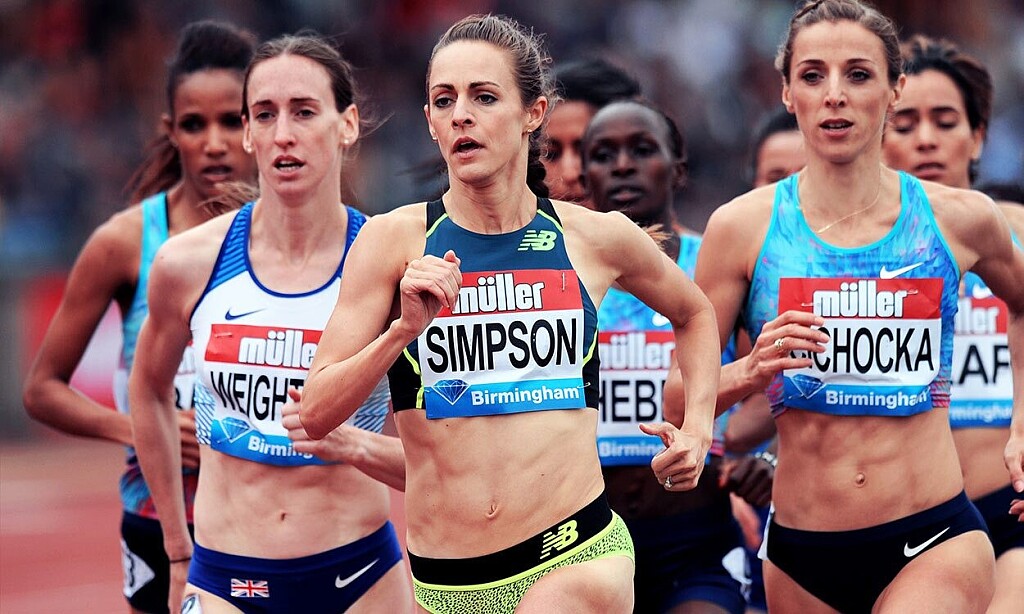
Olympic 1,500m medalist Jenny Simpson is moving to the roads
One of the fastest U.S. milers in history is taking on a new challenge, according to her Instagram. The 2016 Olympic 1,500m bronze medallist, Jenny Simpson, may have hung up her spikes on the track, but will shift her focus to road races with her new sponsor, Puma.
“She’s ready to answer the call of the roads,” Puma’s Instagram reads. “Welcome to the FAM, Jenny. We are excited to see where this next challenge leads.”
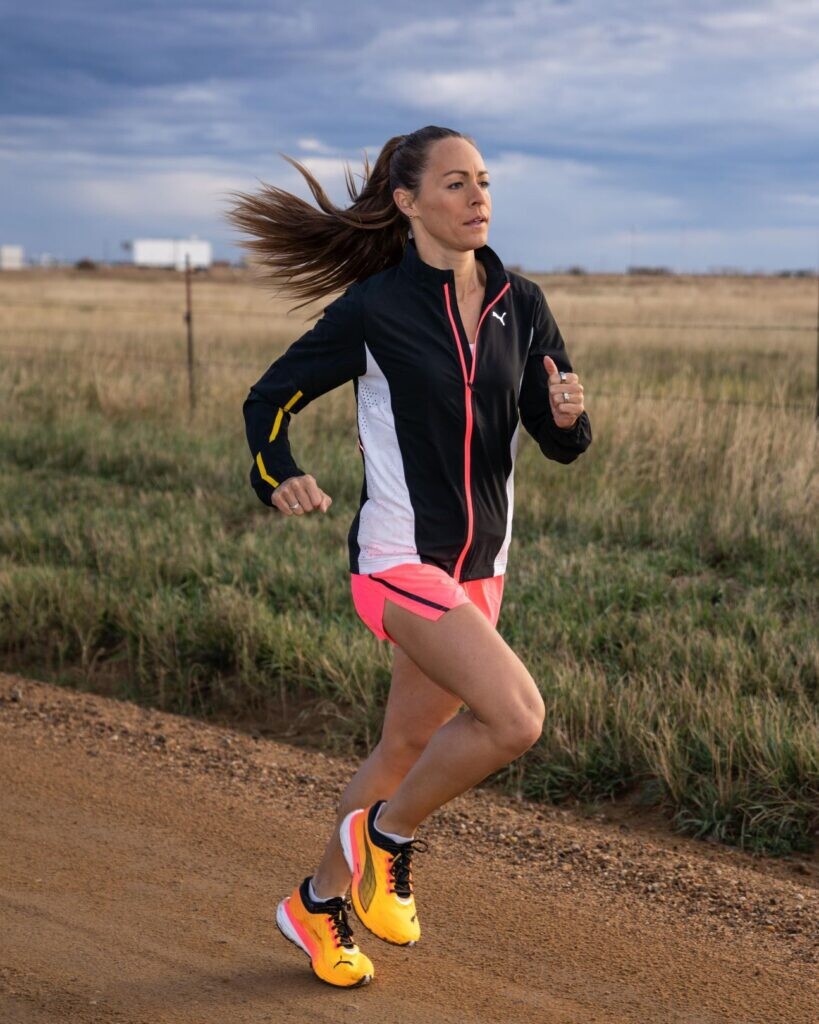
Simpson, whose last race (according to World Athletics) was the Cherry Blossom 10-mile road race in Washington, D.C. in September 2021, will run what she called “a little rust-buster” at the Army Ten-Miler in Washington on Oct. 9.
The Cherry Blossom 10-miler was Simpson’s first race longer than 5,000m. Although she has made the shift to distance running, the 36-year-old hasn’t hinted at whether she plans on moving up to the marathon distance.
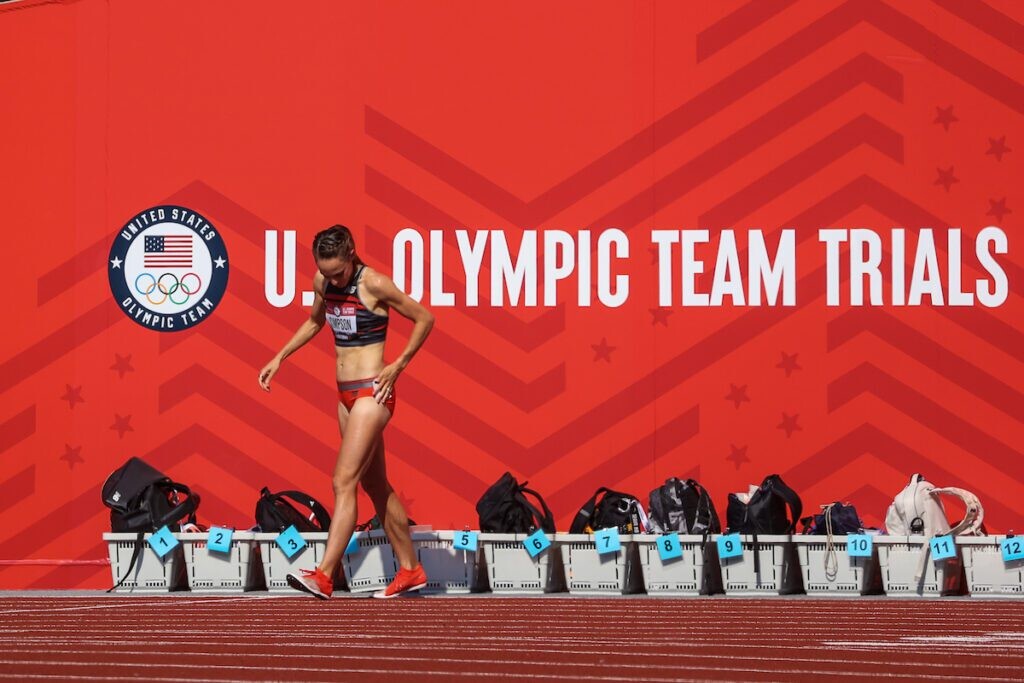
Simpson made her first Olympic team in 2008 in the 3,000m steeplechase, then in 2012 and 2016, she ran the 1,500m, earning a bronze medal in Rio behind Faith Kipyegon and Genzebe Dibaba. She is the only female U.S. athlete to win both a world championship title and an Olympic medal in the 1,500m.
She holds career PBs of 14:56 in the 5,000m, 4:16 in the road mile and 3:57.22 over 1,500m.
Throughout her career on the track, Simpson had a lot of success in road miles, winning eight NYC 5th Ave. Mile titles, including seven consecutive titles between 2013-2019.
Simpson focused much of her time through the pandemic helping her Boulder, Colo. community rebuild from a December 2021 fire. She is also a volunteer coach at the University of Colorado for the track and field and cross-country team.
by Marley Dickinson
Login to leave a comment
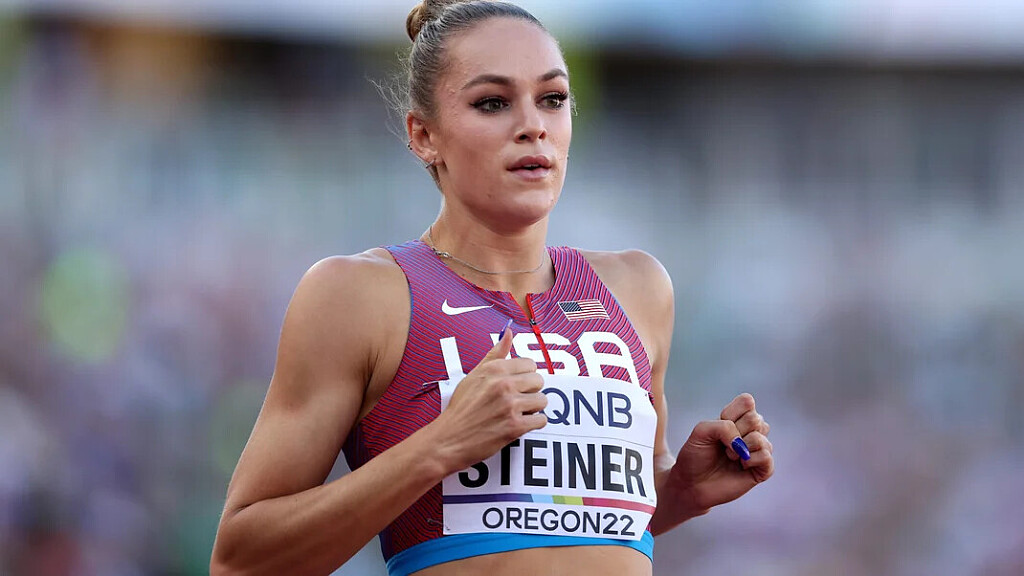
Abby Steiner Delivers a Solid Debut at the World Championships
Last night in Eugene, Oregon, Abby Steiner placed fifth in the world in the 200 meters, with a time of 22.26. She was the top American. Her 21.77 at U.S. championships a few weeks ago was the second-fastest time in the world this year coming into the World Championships. She’s the sixth fastest American ever in the event.
“It was just such a great learning experience,” she said. “I got to compete against some of the people I have looked up to for so long in this sport.”
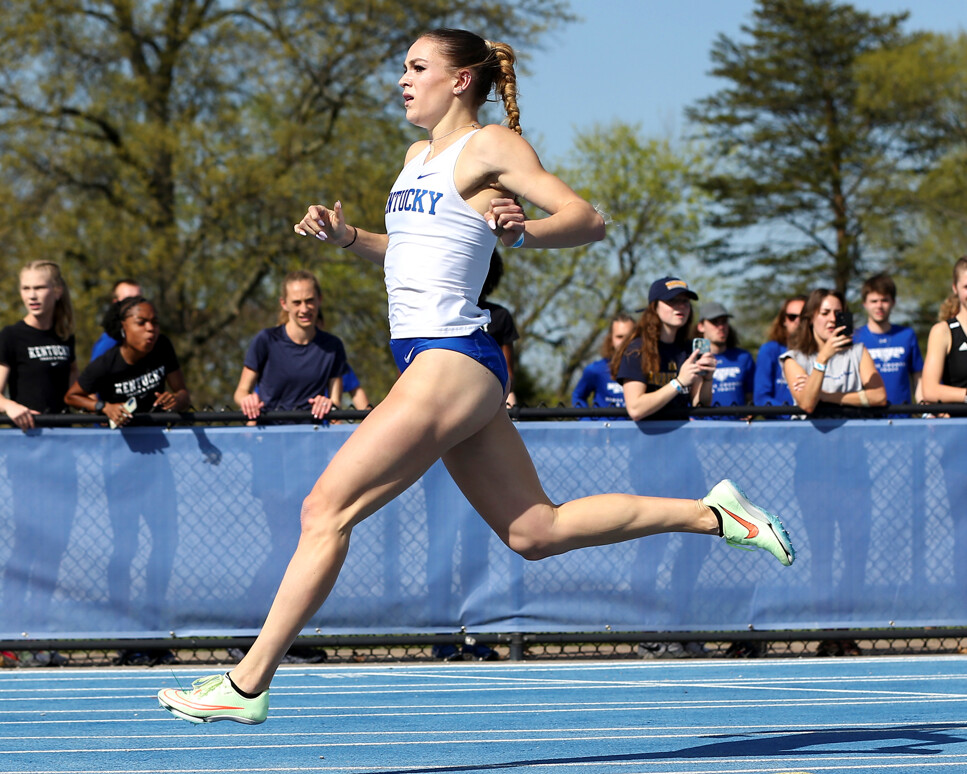
Nearly every time she’s raced a 200 so far this year (and she’s been in a lot of races), Steiner is clearly in the front. She usually gets out of the blocks well and comes off the turn leading. This was the first time this year the lanes around her were filled by women who are just as fast as her, or faster.
The 200m Final at the World Athletics Championships
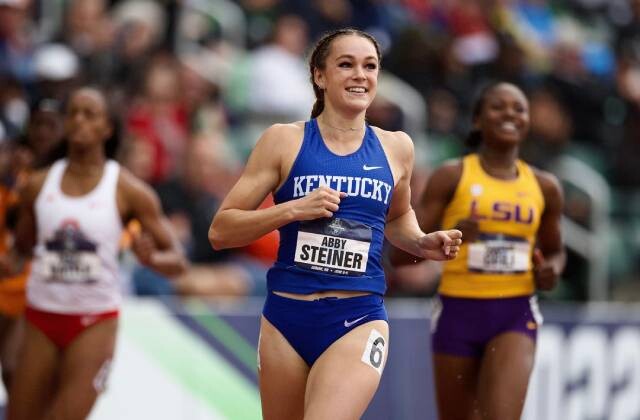
Jamaica’s Shericka Jackson won the race in 21.45, a championship record. She’s the second fastest woman ever in the event after Florence Griffth-Joyner, who ran 21.34 in 1988. Shelly-Ann Fraser-Pryce, also of Jamaica, finished second in 21.81, after winning the 100 meters a few days ago. Great Britain’s Dina Asher-Smith finished third in 22.02, after setting a national record in the 100 final a few days ago, where she finished fourth.
The very American crowd in Hayward Field had their eyes on Steiner. Nobody really knows anything about her; her Instagram page doesn’t provide anything substantial about her—other than the fact that she’s very, very fast. But we already knew that.
Sports have always been a huge part of her life; Steiner even played soccer at Kentucky in addition to running track when she first got to college. Her degree is in exercise science, and if she weren’t a track athlete, she’d want to be a physical therapist. She’s passionate about the mechanical, physiological lens of running, even though she has unconventional form. She has a dramatic left arm swing that makes her form recognizable from across the stadium.
What the Future Holds for Abby Steiner
Steiner has deferred an acceptance into a Masters program in physical therapy for the foreseeable future while she does pro running full time. “It’s been a dream of mine for a very long time,” she said. “I want to give back the way those people gave back to me. As an athlete I know that injury is inevitable.” She pulled her ACL playing soccer in high school, and that was a pivotal moment for her: Sports are all she knows, and what she loves was momentarily taken away from her.
Beyond sports, she’s “really into crossword puzzles right now.” I double-taxed and told her she can’t be serious and she laughed. “I also do jigsaw puzzles,” she said. Strenuous hobbies are not for her, as her career is already strenuous and she wants to take the time to decompress and chill out very seriously. She said she spends a good amount of time alone and is trying to read 25 books this year. She’s already 14 deep, and currently reading The Invitation by Lucy Foley.
She’s also interested in bringing fashion to track and field. She signed with Puma this week and the new Puma uniform only has one shoulder. “I love that fashion is coming back into track and field. Bold uniforms, bold hairstyles, makeup, I love it,” she said. “I honestly feel like when I look good I run good. I feel like my confidence exudes itself on the track.” During our interview, her entire outfit was the same color blue and she had matching blue nails—a nod to her alma mater, the University of Kentucky, where she just graduated but plans to continue living and training.
Steiner really likes and trusts her college coach and doesn’t want to part with him. “My coach is one of the main reasons I’m in this position. He completely developed me from freshman year until now.” Lexington is also not far from her hometown of Columbus, Ohio, which is where her family lives.
Steiner was fifth in the world, but she’s just turned 22. Fraser-Pryce is 35. Jackson is 28. Steiner’s got time. We’ll be hearing her name for a while.
by Abby Steiner
Login to leave a comment

World Athletics Championships Budapest23
Budapest is a true capital of sports, which is one of the reasons why the World Athletics Championships Budapest 2023 is in the right place here. Here are some of the most important world athletics events and venues where we have witnessed moments of sporting history. Throughout the 125-year history of Hungarian athletics, the country and Budapest have hosted numerous...
more...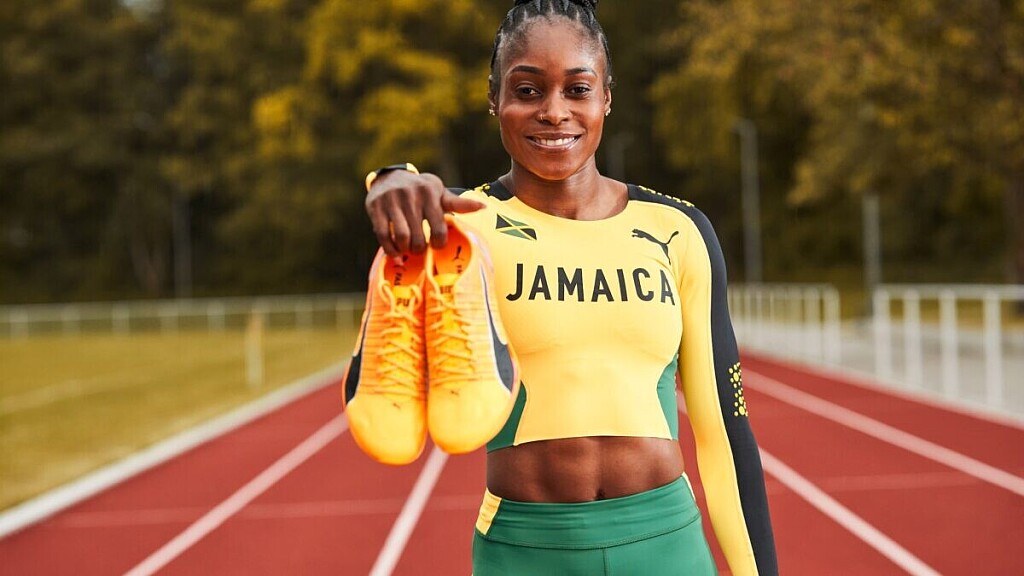
The second fastest woman in history Elaine Thompson-Herah has signed with Puma, and now wants the world record
Five-time Olympic champion and the second fastest woman of all time has signed a sponsorship deal with Puma Running. Elaine Thompson-Herah, the back-to-back Olympic 100m and 200m champion, will boost the company’s impressive roster of track and field athletes ahead of the 2022 World Athletics Championships in Eugene, Ore.
“Puma just felt like the right fit,” says Thompson-Herah. “The company has been working with the world’s fastest athletes for decades and I can’t wait to be part of such an elite group.”
In 2021, Thompson-Herah became the second fastest woman in history when she clocked 10.54 seconds at the 2021 Prefontaine Classic. The 30-year-old Jamaican 100m and 200m record holder spent several years with Nike, and now has her sights set on breaking Florence Griffith-Joyner’s 100m world record of 10.49 seconds from 1988.
“Now is the time to break it,” says the double Olympic champion. “I think there’s still a lot I can unleash.”
Puma has a long history in the sport of track and field, and has sponsored the Jamaican Athletics Team since 2002. Thompson-Herah now joins her Jamaican compatriot, 100m and 200m world record holder and eight-time Olympic gold medallist Usain Bolt.
Thompson-Herah kicks off her 2022 World Championship campaign on Saturday evening in the women’s 100m heats.
by Marley Dickinson
Login to leave a comment
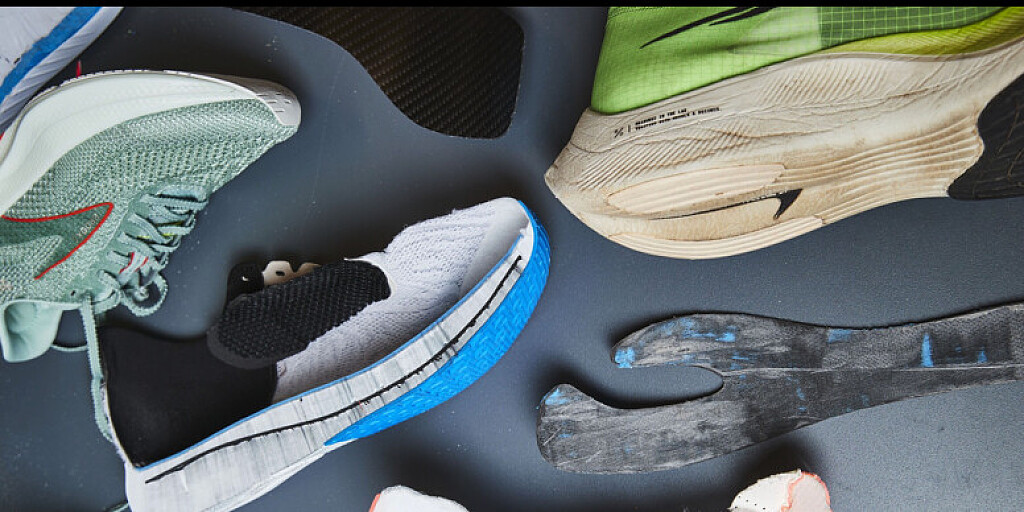
Demystifying Carbon Fiber, A Key Super Shoe Ingredient
The plate is just one part of a midsole’s secret sauce.
Four years ago, Nike launched the Vaporfly 4%, enthralling us with the promise its name implied: a 4-percent boost in running economy. Before the shoe’s release, Eliud Kipchoge wore the Vaporfly while attempting to run a marathon in less than two hours in 2017’s Breaking2 Project. He eventually succeeded two years later in the Alphafly Next%, the Vaporfly’s beefed-up, controversial descendant.
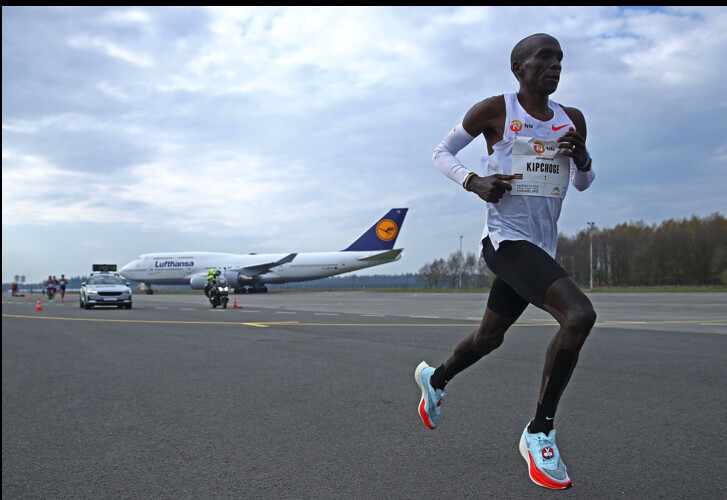
It takes a superhuman like Kipchoge to break what was once thought an impossible barrier, but stats show the average runner can also benefit from running in super shoes. In 2019, Strava data showed runners ran 4 to 5 percent faster in the Vaporfly or Next% compared to runners wearing an average trainer.
Trailing Nike, other brands dove in, releasing their own rendition of super shoes, and adding a smidge of original flavor (e.g., Saucony’s Speedroll tech; the decoupled midsole on the Puma Fast-R). But there are two common denominators these models share: a responsive midsole foam and a carbon-fiber plate. The midsole foam is usually made from a polyether block amide thermoplastic (also known as Peba, or the Arkema-trademarked Pebax). Examples include Nike’s ZoomX, Puma’s Nitro Elite, and Saucony’s PwrrunPB. Compared with standard foam (EVA), Peba is lighter, more compliant, and more resilient.
“Typically, foams act as a cushioning ingredient and plates act as a stiffening ingredient,” said Rebekah Broe, director of product and performance footwear at Hoka, on a video call. The plate limits flexibility, acting as a propulsion agent in the gait cycle. It works in harmony with the responsive foam sandwiching it, thus delivering even higher energy return as you run.
Elliot Heath, Nike product line manager, referred to the carbon-fiber plate as an “enabler.” In constructing the Vaporfly and subsequent models, the Nike running footwear team focused on stiffness and propulsion. The placement of the plate as well as its shape—it has curves like a spoon—enhances your stride’s toe-off.
The plate in Hoka’s road racing models, for example, is fork-shaped and sits closer to the heel. It curves higher in the rear of the shoe and swoops down closer to the ground in the forefoot. “Its offset helps reduce energy loss at the ankle joint and increases stiffness to reduce energy loss at the big toe,” said Broe. “It gives you this balanced ride because you have really soft compliant foam under the foot.”
Hoka released a carbon-fiber trail shoe, the Tecton X, earlier this year. We dissected its midsole in “The Cut Up” last issue, revealing two parallel plates to allow dexterity over obstacles while still providing that propulsive stiffness. The ski-like plates are markedly different from the wishbone-shaped single plate in Hoka’s road racing shoes. Broe said Hoka worked with carbon-fiber vendors to finesse and mold the plates to meet the shoes’ specific needs.
Broe was evasive about which carbon-fiber vendors Hoka uses, withholding that specific information. As predicted, Nike also dodged the question, with Heath stating, “We’re not really in a position to talk exactly about our manufacturers, but all of the initial research and building is done here at Nike campus.”
At The Running Event in Austin, Texas, last November, I met with the carbon-fiber manufacturer Carbitex. Founded in 2010, the company shifted its focus to footwear about five years ago. Shoe brands, including Adidas, Altra, and Scott, are listed on Carbitex’s site.
Carbon fiber is valued not only for its stiffness to encourage propulsion but also because shoe manufacturers can control flexibility. The human foot, Carbitex founder Junus Khan explained on a video call, is asymmetrical; its tendons and ligaments change in stiffness based on need. The malleability of Carbitex’s plates allows the foot to bend in its natural way while providing stability and the prized propulsion PR chasers crave. “When it comes to sporting equipment, how do you create technology that helps augment people’s natural performance?” asked Khan. “The traditional carbon-fiber plates in shoes kind of tell you how to run because it’s a fixed rigid plate.”
Carbon fiber, according to Khan, has been around for only about 50 years. It’s still the new kid on the block in terms of usage. It’s implemented in a host of sectors, from military aerospace to backpacks. Khan describes Carbitex’s role working with shoe brands as “the best supporting actor,” not the main event. The relationship is built on independent research, data, and athlete testing.
Carbitex’s Three Plate Technologies
Khan’s team is currently working on a plant-based carbon-fiber material. The next phase for carbon-fiber-plated footwear is making it more accessible, Khan said, pointing to Vibram, Gore-Tex, and Boa as examples. “They’re still premium but have found their way into products that are able to benefit a wider population,” he said. “That’s not necessarily what people think about when they think of technology development, but to enable new technology to come down in price requires a whole different type of engineering.”
It’s still too early to know the long-term effects of running in shoes with carbon-fiber plates, but there’s some concern that overuse could weaken a runner’s foot muscles. Conversely, a study at the University of Calgary found that stiffness improved foot biomechanics, potentially staving off MTP (metatarsophalangeal) joint injury, turf toe, and other ailments. Still, another study conducted at the Georgia Institute of Technology found that there was no improvement in running economy when carbon-fiber plates were added to shoe soles.
Only time will tell which party is correct. It should be noted, however, that the plate is only one part of the equation; everything must work in concert for the ultimate running experience. “You can have a great shoe that has one bad feature that throws everything else off versus having a bad shoe with one awesome feature that is not going to fix it,” said Khan. “People ask, ‘What is the secret?’ And the secret is the sum. The sum is greater than the parts.”
by Runner’s World
Login to leave a comment

Nike Tries to Ban Imports of Adidas Knit Shoes, Accusing It of Copying Designs
Nike Inc. is asking a U.S. trade agency to block imports of a wide range of Adidas AG Primeknit shoes, saying they copy the Oregon company’s patented inventions for a knitted fabric that reduces waste without any loss in performance.
The complaint, filed Wednesday at the International Trade Commission in Washington, seeks to ban imports of shoes, including Adidas by Stella McCartney Ultraboost, Pharrell Williams Superstar Primeknit Shoes and Terrex Free Hiker hiking shoes. Nike also filed a patent-infringement suit in federal court in Oregon making similar allegations.
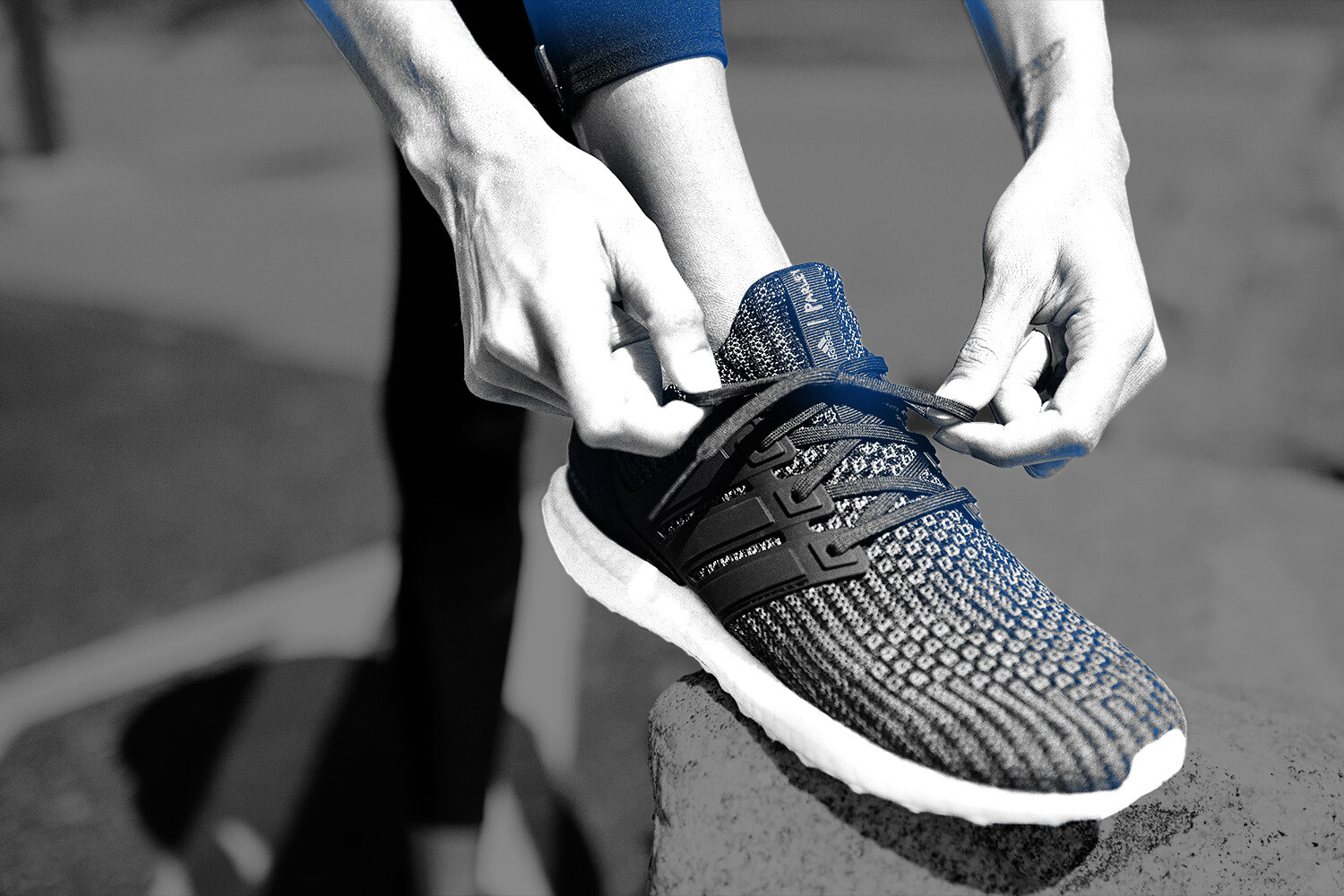
The patents cover Nike’s FlyKnit technology, which uses specialized yarn from recycled and reclaimed materials to create a sock-like fit in the upper part of the shoe. Nike said it was the result of more than $100 million and a decade of research -- almost all done in the U.S. -- and “represented the first major technology innovation in footwear uppers in decades.”
FlyKnit was first introduced before the 2012 London Olympics and has been adopted by “basketball great LeBron James, international soccer superstar Cristiano Ronaldo, and world record marathoner Eliud Kipchoge,” Nike said in the complaint.
“Unlike Nike, Adidas has forgone independent innovation,” Nike said in a court filing. “Instead, Adidas spent the past decade unsuccessfully challenging several of Nike’s patents directed to FlyKnit technology -- all while using Nike’s patented technology without permission.”
Nike said it was “forced to bring this action to defend its investments in innovation to protect its technology by halting Adidas’ unauthorized use.”
Adidas said it’s analyzing the complaint and “will defend ourselves against the allegations.”
“Our Primeknit technology resulted from years of dedicated research and shows our commitment to sustainability,” Mandy Nieber, an Adidas spokeswoman, said.
Several of Nike’s patents, including two of the six in the ITC complaint, have been the target of regulatory challenges by companies including Adidas. Nike said they were filed only because it refused to pledge not to sue the German company.
The civil suit, filed in Portland, Oregon, accuses Adidas of infringing those six patents and three others related to FlyKnit technology. It seeks unspecified damages and asks that any award be tripled for the intentional copying. It’s also seeking an order to halt sales.
Nike has been aggressive in protecting its FlyKnit and other shoe inventions. A lawsuit against Puma SE settled in January 2020 and ones against Skechers USA Inc. settled in November.
The U.S. trade agency is a popular forum for companies looking to derail rivals in the world’s biggest market. The commission works more quickly than most courts, with final decisions typically in 15 to 18 months. Not only can it block products at the U.S. border, it can halt sales of products already brought into the country, an order that’s harder to get in district court.
The cases are In the Matter of Knitted Footwear, 337-3580, U.S. International Trade Commission (Washington) and Nike v Adidas, 21-1780, U.S. District Court for the District of Oregon (Portland).
Login to leave a comment
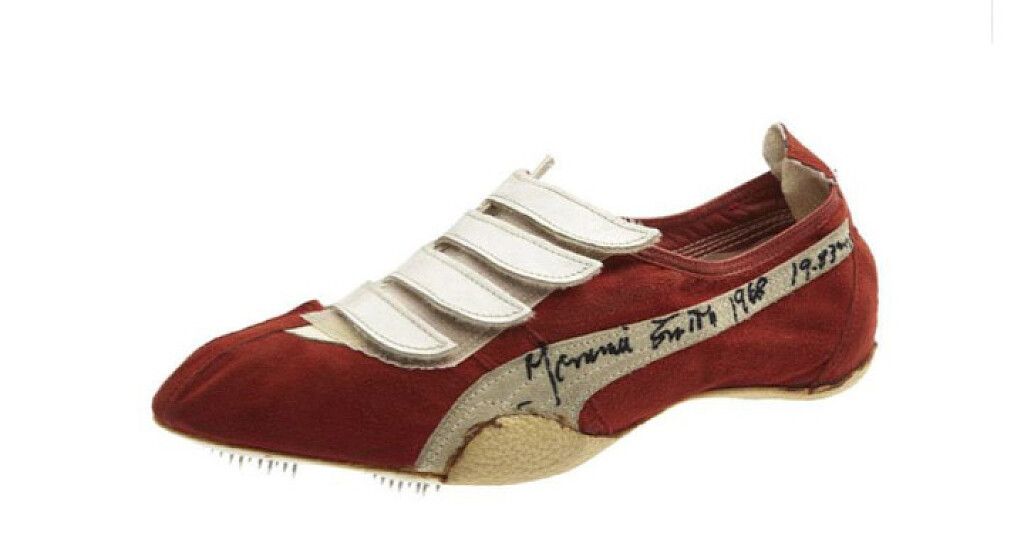
Rare Puma track spike featured on Pawn Stars
A pair of prototype track spikes from Puma made an appearance on the American hit reality TV show Pawn Stars. The limited-edition 296 track spike was created leading up to the 1968 Olympics in Mexico City, and is widely considered to be worth over USD $100,000.
A pair of prototype track spikes from Puma made an appearance on the American hit reality TV show Pawn Stars. The limited-edition 296 track spike was created leading up to the 1968 Olympics in Mexico City, and is widely considered to be worth over USD $100,000.

The owner brought them to the pawnshop asking for USD $150,000. The shop’s owner brought in a shoe expert to appraise the shoe, and he discovered that the shoes were in their original box and had never been worn. Then a sports memorabilia expert predicted the shoes could were worth six figures at auction, since they were one of only 100 pairs that came from Germany to North America. The shop owner offered $90,000, but the shoes’ owner refused to sell them for less than $100,000, and left.
The 296 prototypes were worn by the ’68 Games 200m gold medallist Tommie Smith at his U.S. Olympic Trials, helping him set the old 200m American record in 1968, which was unratified because the spikes were illegal.
by Running Magazine
Login to leave a comment
