

Running News Daily
Running News Daily is edited by Bob Anderson and team. Send your news items to bob@mybestruns.com Advertising opportunities available.
Index to Daily Posts · Sign Up For Updates · Run The World Feed
Articles tagged #Maude Mathys
Today's Running News
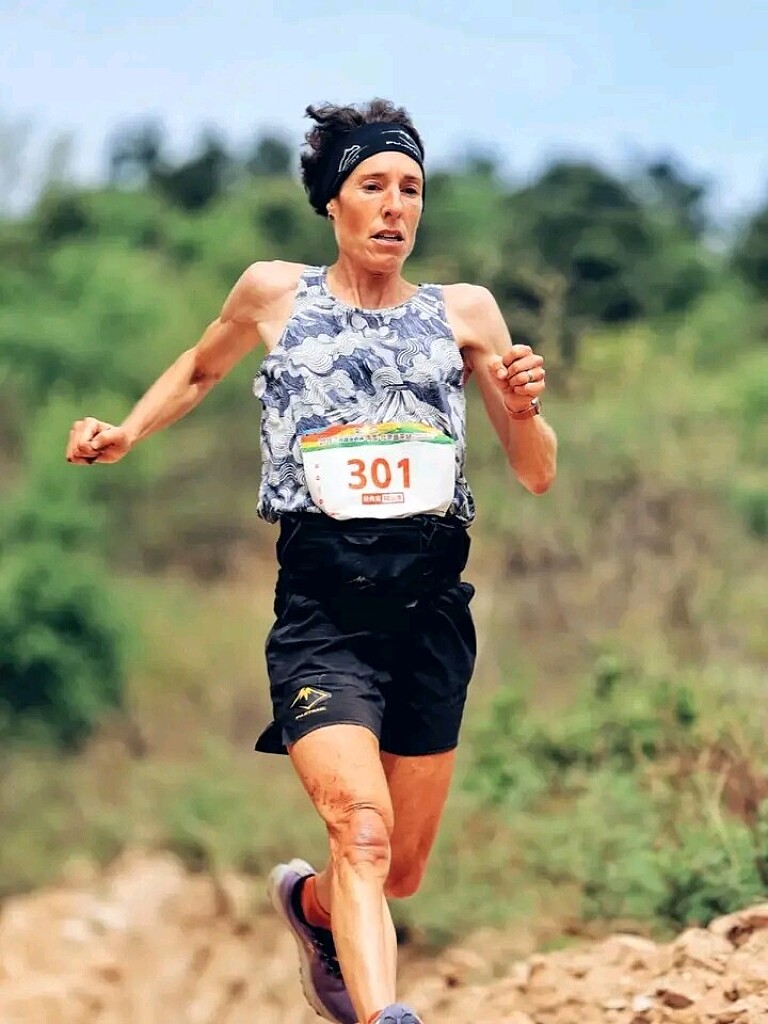


Maude Mathys Set for Another European Trail Running Showdown in Slovenia
Swiss trail-running icon Maude Mathys is preparing for another major championship appearance as she targets glory at the upcoming European Athletics Off-Road Running Championships in Kamnik, Slovenia, from June 5–7.
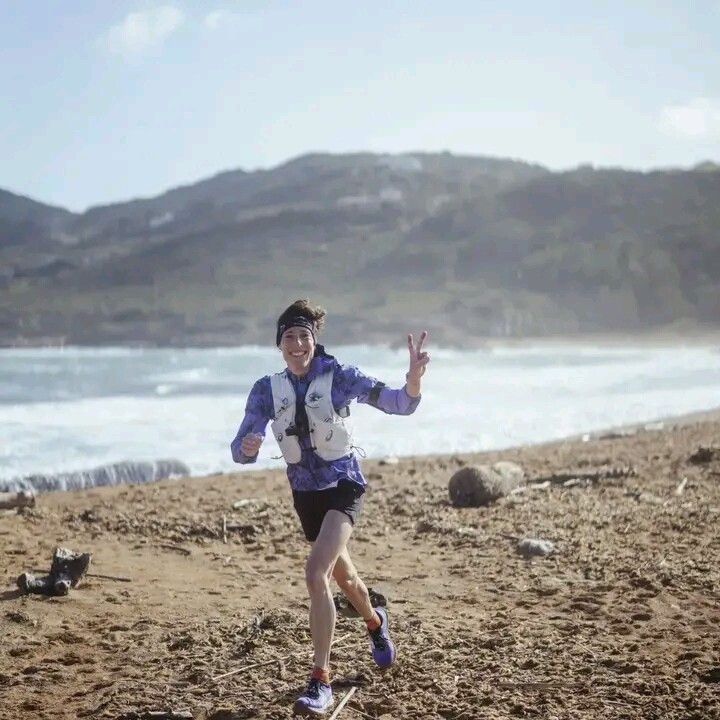
Widely regarded as one of Switzerland’s greatest mountain and trail runners, Mathys arrives at the championships with an already remarkable legacy behind her. The decorated Swiss athlete has claimed multiple world medals and three European titles, cementing her place among the finest off-road runners of her generation.
Her return to the continental stage immediately adds intrigue to the senior trail race, where Europe’s best endurance athletes will battle across the demanding Slovenian terrain.
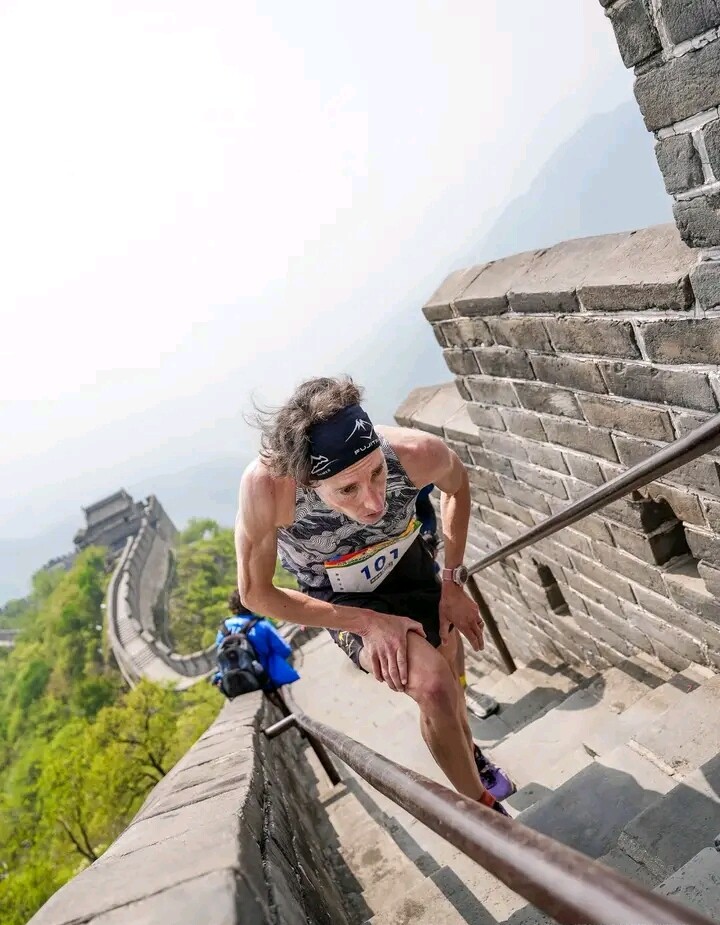
Known for her climbing strength, race intelligence, and consistency on technical courses, Mathys has repeatedly delivered under pressure throughout her career. Even among a new generation of emerging talent, the Swiss veteran remains one of the most respected and dangerous competitors in the field.
The championships in Kamnik are expected to provide a stern test, with rugged climbs, unpredictable terrain, and high-level competition likely to push every athlete to their limits.
But if history is any indication, Mathys rarely enters a championship simply to participate. She arrives with experience, pedigree, and the ability to perform when the stakes are highest.
With another European title potentially within reach, all eyes will once again be on the Swiss star as she returns to the mountains where she has built her reputation.
by Erick Cheruiyot for My Best Runs.
Login to leave a comment
What is Endurance? A New Study Shows the Importance of Mind-Body Connection In Endurance Running
Do you ever have this type of internal dialogue?
"Today, my legs were 'heavy' in the first couple of miles, but this was to be expected after a quicker run yesterday and training through last weekend's race. I know this is the last 'long' run before tapering into next week's race and freshening up - these heavy, fatigued runs are just part of the course. While I may have felt a little 'leggy,' especially in the early stages, the run was mainly on trails from thereon, thus much more forgiving on my slightly weary legs."
This is an example of lived body fatigue and heaviness.
A recent book chapter analyzes endurance and 'endurance work' in women's cross country and trail running. What is termed 'endurance work' (in sociology) conceptualizes endurance in a specific way as cognitively, physically, and interactionally lived. The research focuses on the lived experience and social production of endurance in trail and cross-country running.
The chapter "Endurance and the Production of 'Endurance Work' in Women's Cross-Country and Trail Running," by Prof. Jacquelyn Allen-Collinson and Dr. Patricia C. Jackman, was published in the new book, Contemporary Meanings of Endurance: An Interdisciplinary Approach. The book investigates the concepts of endurance from various schools of thought. This includes the lived experiences of mundane daily activities to physical performances.
The research utilizes a theoretical approach and analyzes data from three autoethnographic and autophenomenographic research projects on distance running. "Autoethnography is where the researcher analyzes their own experiences of the culture," explained Dr. Patricia Jackman. "Autophenomenography is where the researcher analyzes their own experience of a particular phenomenon, such as their lived experience in an activity like running."
Autoethnography is a research approach, grounded in anthropology, and has grown considerably in the social sciences in recent decades. Autophenomenography, in contrast, is a relatively novel approach that focuses on the researcher's direct, lived experiences of a phenomenon, such as trail running, to generate rich, detailed data from the perspective of an 'insider.'
The thinkpiece explores various experiences of endurance that may differ between individuals and may manifest themselves at different times (i.e., your experience of running up a hill may vary from running 100 miles).Endurance and Endurance Work
What is endurance? For premier female trail runner, Maude Mathys, of Switzerland, "Endurance is an ability to sustain a constant rhythm, concentration, repeated action, which sometimes seems easy, but sometimes difficult."
The authors loosely define endurance as what it means to keep going while facing adversity, discomfort, fatigue, and pain. It is a process to be learned - and relearned - over time through effort and training.
As mentioned, 'endurance work' conceptualizes endurance as mind-body, and interactionally lived. "Endurance work involves an approach to how mind-body-environment connections shape our sensory experiences," the authors explain. "To undertake distance running demands that physiological endurance is developed through physical training." As such, the cognitive and the physical are inextricably intertwined. Prof. Allen-Collinson emphasizes that such endurance of mind-body is never achieved once and for all, but rather is provisional, contingent, and can become eroded. The Study
The researchers analyzed two forms of running: cross-country and trail running. Cross-country encompasses multi-terrain running in rural or countryside areas, while trail running encompasses running in natural environments, including mountains, deserts, forests, or countryside, and both forms seek minimal possible contact with paved or asphalted surfaces.
The study explores endurance as cognitively, physically, and interactionally lived and communicated through endurance work. The mind-body linkage is central to understanding endurance, as distance runners must learn to endure physiologically and psychologically.
The authors explore the direct, physical, and mental experiences of endurance as lived in their running lives.
In analyzing their experience of endurance in running, the researchers analyzed data from three research projects on running, undertaken over many years. The researchers systematically recorded their experiences through field notes, daily training logs, reflective notes, and taped daily training, and also rehabilitation, during the processes of training, and also being injured and recovering. They identified two key themes in their analysis of the experience of endurance: 1) Pain and Discomfort; and 2) Fatigue. Pain, Discomfort, and Fatigue
Pain and discomfort are central elements of experience in endurance running. As runners, we learn and develop our own ways of knowing how to distinguish between the discomfort of niggles and the type of pain that merits medical treatment. As such, discomfort and pain are often normalized and even glorified in endurance cultures. This is often considered a given - or prerequisite - following the effects of considerable training volumes.
A key component of endurance work draws on the accumulated knowledge of different kinds of pain and injury, enabling us to identify these, and then draw on the willingness, to persist through such niggles.
The data reveal that runners engaged in discussions, with themselves, co-runners, and the wider running community, about the nature of the pain or discomfort. Enduring the discomfort of manageable injuries is often a pragmatic and necessary strategy.
Runners learn over time and experience how to distinguish between good and bad pain. We understand how to discern and tolerate forms of pain and discomfort. Such knowledge and practice are often shared resources within distance running cultures.
Additionally, as runners, we become more attuned to fatigue, engaging in meaning-making around the sensations of fatigue while learning how to cope and endure tiredness of mind and body. Such fatigue - of mind and body - also constitutes an essential part of the experience in the endurance work of distance runners.
Feelings of fatigue can have favorable implications for our running. While adapting to general fatigue, it is generally accepted as routine to progress. However, expending high levels of energy can be detrimental if combined with under-fueling and can spill over into Relative Energy Deficiency in Sport (RED-S).
With experience, runners learn to endure various levels of fatigue. "Part of this cognitive and corporeal knowledge encompasses the ability to detect and identify subtle, nuanced variations in the nature of our fatigue, and also to communicate these to co-runners and others, as part of endurance work," the authors explain.
To continue running while experiencing fatigue, runners often rely on embodied memories of enduring similar experiences. The mental experience of running fatigued becomes embedded in our minds. To extrapolate this idea, the researchers portrayed analytically their fatigue levels.
"For us, as for many endurance runners and athletes, it can seem as if the muscles themselves hold memories of this fatigued modus operandi, and somehow feel 'instinctively' that they will be able to endure, to keep going through the run," the authors explain.
'Endurance work' involves social agency, and is an active, ongoing, social, and reflexive form of work that often requires mindful engagement with both the physical and social worlds. Endurance is embedded in our consciousness. Endurance itself has to be worked at, for it is contingent, and part of an ongoing body project never achieved once and for all. Endurance can begin to decay when endurance practices start to fall out of use. Endurance must be learned over time and with experience, cognitively and physically, and sometimes it must be re-learned. Simply put, endurance is plastic, and can be learned and enhanced over time.
Theory in Practice
It is important to note that the study's authors have charted their endurance experiences over many years. Their accounts should not be seen as rigidly dogmatic, capturing the essence of endurance, unlike classical 'generalizable' results that may apply to a broad population.
Their research findings may or may not apply to your experiences. The resonance is the important thing. "We provide an account, and it may be the case that this will resonate with people," explained Dr. Jackman. "The main question we pose to readers is: does this resonate with you? Did it speak to you? Did you find yourself nodding your head (in agreement)?"
by Trail Runner magazine
Login to leave a comment
More Prize Money Is Flowing Into Trail Running. What Does That Mean for the Sport?
Annie Hughes, one of the top trail runners in the U.S. for the past two years, had another amazing season running ultra-distance races in 2022. On September 17, the 24-year-old Hoka-sponsored runner and part-time college student won the Run Rabbit Run 100 in Steamboat Springs, Colorado, her fourth win of 100 miles or longer since April. Earlier this year, she won the Coldwater Rumble 100 in January, Cocodona 250 in April and the High Lonesome 100 in July.
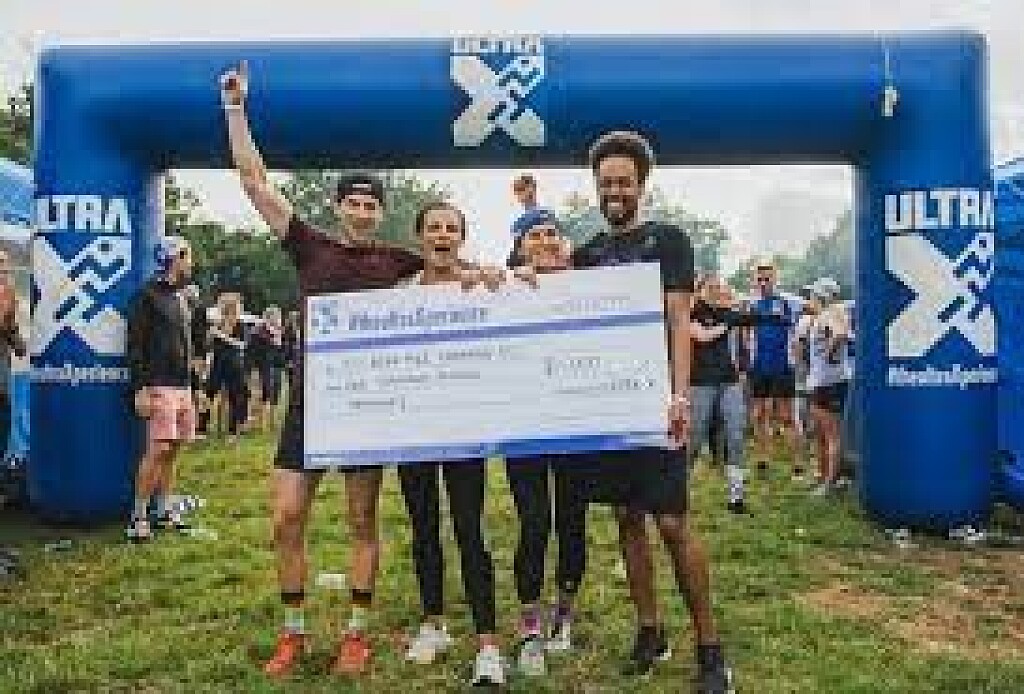
Those were all exceptional efforts in really challenging races, but the big difference she experienced after crossing the Run Rabbit Run finish line, 21 hours and 26 minutes later, was that she won $17,500. (And yes, she was handed one of those cartoonish, oversized checks at the awards ceremony.)
Run Rabbit Run is one of the rare American trail races that offers a relatively large prize purse, and for a decade, it's been the largest in the sport. Hughes earned $15,000 for winning the women's race and split another $5,000 with Arizona trail runner Peter Mortimer (who placed 12th overall) as part of the event's new team competition.
"That wasn't the reason I was drawn to the race, but it was definitely pretty cool to win that much money," Hughes said. "I'm glad I did it, because it wound up being a really great race with an amazing course on a beautiful day."
The origins of trail running were always more about the joy and freedom of ambling through the natural world, and less about the specific time and pace of any run or race, which is why winning big cash prizes is mostly uncommon in the sport, even for top-tier runners like Hughes. Over the past two years, Hughes has won 10 races of 50 miles or longer, yet her Run Rabbit Run victory was the first time she's ever earned money for her efforts.
More sponsorship money and bigger cash prizes are flowing into the sport, helping the top athletes earn a full-time living in the sport and become global stars. But that evolution has also created a desperate need for a unified governing body and more consistent drug-testing as doping becomes a more acute concern.
A Windfall of Prize Money
Historically, America's biggest and most notable trail running races haven't offered any prize money at all-Western States 100, Hardrock 100, Dipsea Trail Race, Leadville 100, Mount Marathon Race, Seven Sisters, Black Mountain Marathon/Mount Mitchell Challenge-partially because races simply couldn't afford to pay it, and also because, at the soul of the sport, that's not what the races were historically about or why most top runners were competing.
But with the continued growth of the sport-trail running has grown by 231 percent over the past 10 years, according to one report-and the dawn of a new level of professionalization over the past decade, there is a lot more money being injected into the sport. That includes more high-profile events and race series, more brands investing in the sport, more sponsored runners and trail running teams, as well as a growing expectation that prize money should be part of the equation as it is in road running, triathlon, and even obstacle course racing.
For many years, The North Face 50 near San Francisco was one of the only ultra trail races in the world to offer a significant prize purse. From its inception in 2006, until it disappeared after 2019, that race famously awarded $30,000 in prize money, which included $10,000 to the top finishers in the men's and women's races, plus $4,000 for second and $1,000 for third. It was a race to look forward to at the end of the calendar year, both for the cash awards and the prize-induced competition that drew top runners from around the world.
During that span, Run Rabbit Run, though a lower-profile race, quietly began dishing out some of the biggest payouts in the sport, in part because race organizers Fred Abramowitz and Paul Sachs believe in rewarding its top athletes for their efforts (as well as giving back to the community via even bigger charitable contributions). The race winnings come primarily from entry fees of the 600-runner event and sponsors, if and when the race has them. That wasn't possible back in the early days of the sport, when entry fees were minuscule and cash sponsors were mostly non-existent, but things have started to change.
Abramowitz and Sachs, who both earn their living as attorneys, are unique in that they want to give back to the elite athletes and the Steamboat Springs community, but they also want to help grow the sport. Abramowitz outlined what he calls "A Blueprint for Sponsors of Ultra Running," a three-page document that explains how and why trail ultrarunning-both as a sport and as individual races-can connect to more casual runners, sports fans, and the general public.
He points to the rampant growth of NASCAR, Professional Bull Riding, and professional poker over the past 20 years from their roots as fringe sports, relatively speaking, to mainstream spectacles with massive fan bases, TV contracts, and social media followings. Trail and ultrarunning aren't there yet, Abramowitz has noted, but they've certainly been growing rapidly.
"Today millions watch those events, though the actual number of participants is minuscule," Abramowitz wrote in his missive. "Ultrarunning can learn from these events: it needs new ideas, new ways of attracting the already committed runners and the casual sports fan to our terrific sport. Fields need to be competitive and races [need to be] dramatic; there are hundreds of 100-mile races, but those that offer competitive fields are a handful at most. Most ultra-races offer spectacular scenery in interesting venues."
Abramowitz said sponsors should support races such as Run Rabbit Run that offer prize money not merely because it's good for sport, but also because prize money can attract competitive fields, and competitive fields attract interest-from spectators, participants, potential sponsors, and the general public. He also points out that having prize money at more domestic races is a way to keep the sport from becoming entirely Euro-centric, which has been an increasing trend in the past several years.
The trend of cash purses seems to be increasing, and on the face of it, that's good for elite athletes capable of podium finishes. But it's a complex topic and one that certainly will simultaneously increase the competitiveness of the sport while, some argue, continue to pull the sport away from its organic, racing-in-nature roots that was mostly viewed as the antithesis of competitive road racing.
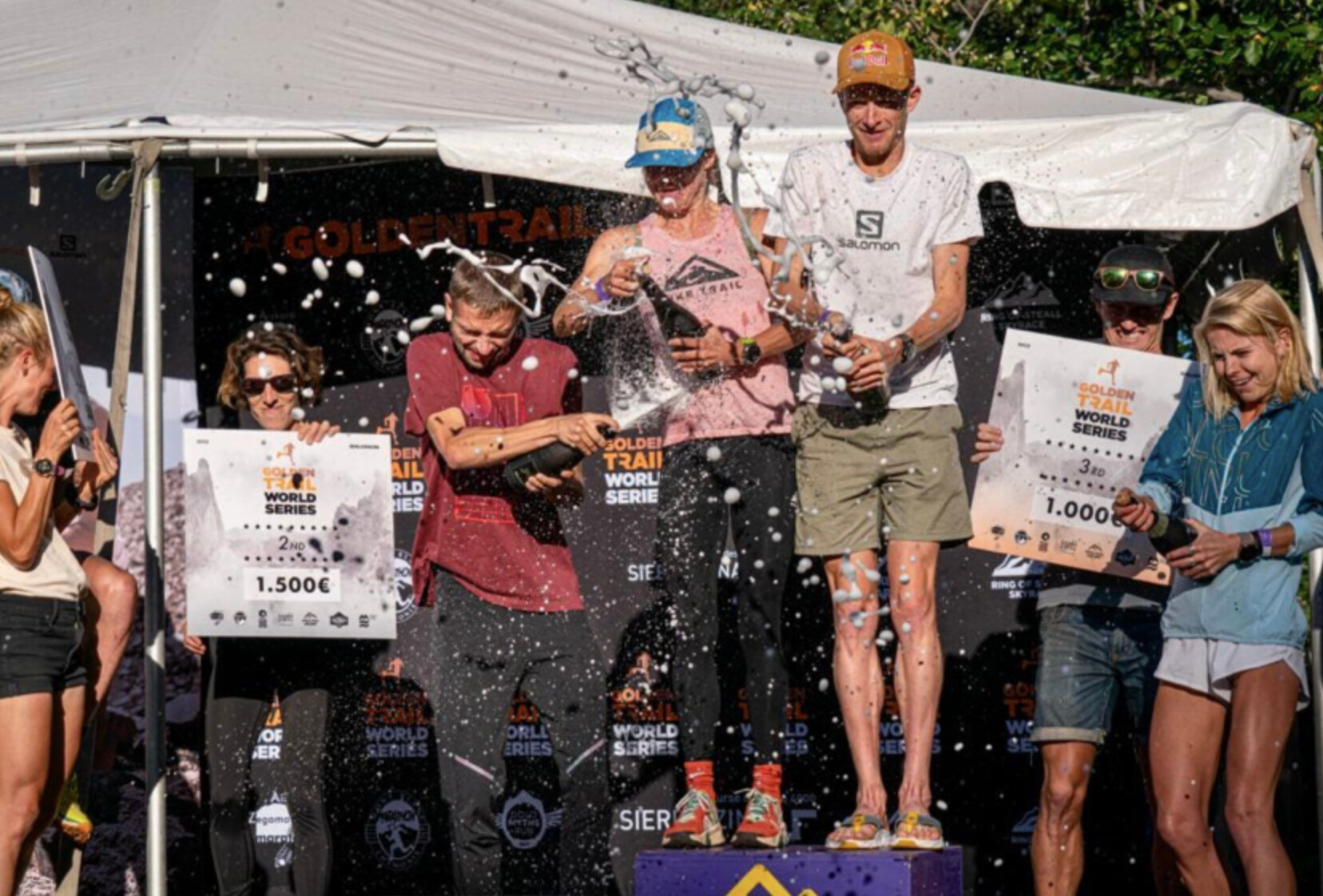
On the same day Run Rabbit Run paid out $75,000 in total prize money, the Pikes Peak Ascent awarded $18,000 in prize money for its top 10 finishers-including $3,000 apiece to the men's and women's winners-while the Pikes Peak Marathon, on September 18, had an additional $10,500 in total prize money for the top five runners. The races also offered $2,000 (Ascent) and $4,000 (Marathon), respectively, as course-record bonuses, and a $10,000 premium to any runner surpassing a pie-in-the-sky time well ahead of the course records. None of those records were broken, but the $28,500 in total prize money-partially backed by the Salomon-sponsored Golden Trail Series-was one of several large prize purses offered at U.S. races this year.
Other big American prize purses were also primarily tied to the Golden Trail Series events-the $50,000 spread over four races at the mid-June Broken Arrow Sky Races in Olympic Valley, California, and the September 25 Flagstaff Sky Peaks 26K race in Flagstaff, Arizona, where runners competed for $18,000 in prize money and a chance to compete at the Golden Trails World Series Final, and the $15,000 winner's earnings at the Madeira Ocean & Trails 5-Day Stage Race in October.
Also of note, the November 18-20 Golden Gate Trail Classic paid out $25,000 in total prize money to the top five finishers in both the 100K and half-marathon races, which were part of this year's nine-race $270,000 Spartan Trail World Championship Series.
Meanwhile, the Cirque Series, sponsored by On, paid out $3,600 in total prize money at each of its six sub-ultra mountain running races in the U.S., including $1,000 for the men's and women's winners. The Mt. Baldy Run-to-the-Top on September 5 in Southern California offered $3,000 to runners who broke the event's longstanding course records, and Joe Gray and Kim Dobson obliged by taking down each mark.
Most U.S. Trail and Mountain Running Championships have a minimum of $2,000 in prize money. Typically that comes from regional sponsors eager to support the local race organizations, such as the case with Northeast Delta Dental's contributions behind this year's Loon Mountain Race in Lincoln, New Hampshire, which hosted the U.S. Mountain Running Championships. That event had a $1,500 total prize purse that was paid out to the top three men and women in each race, but it also had an additional $1,500 for an Upper Walking Boss premium that was spread among the top three fastest times in each gender on the super-steep upper part of the course.
Meanwhile, the 2022 World Mountain and Trail Running Championships in Thailand paid out $66,000 to the top five finishers over four races, including $4,000 to the winners of each event.
"(The prize money) is way better than it's ever been, both for the athletes earning it and the number of sponsors who are contributing to it," says Nancy Hobbs, executive director of the American Trail Running Association and the chairperson of the USATF Mountain Ultra Trail Council that oversees national championship races and the U.S. Mountain Running Team.
From a longer view over the past decade or so, Joe Gray agrees there is more money coming into the sport than ever before. As a top-tier pro since 2008 and 21-time U.S. champion, he's regularly won more prize money at high-level races in Europe for more than a decade. But more than the growth of prize money, he has seen more brands interested in putting money behind athletes, races, and the sport in general.
"I think there has always been prize money there, and if you're successful you could make a lot more money really quickly," said Gray, a two-time World Mountain Running Champion. "I do think there is more money coming from the sponsors paying out better contracts and bigger bonuses, which I think will wind up being more beneficial to athletes overall."
Most elite trail runners get annual stipends from their sponsoring brands and bonus money for top performances. Gray is backed by Hoka, but he also has sponsorship deals with Fox River Socks, Kriva, Never Second, Knockdown, Tanri, Momentous, Casio, and GoSleeves. In addition to Hoka, Annie Hughes gets additional support from Ultraspire, Coros, and Tailwind Nutrition. But the life of professional trail runners-independent contractors who don't get healthcare and retirement program benefits-can get expensive with the growing cost of travel, regular bodywork/physio treatments, and private health insurance.
The sport's top-tier elite athletes-Joe Gray, Kilian Jornet, Courtney Dauwalter, Jim Walmsley, Maude Mathys, and Scott Jurek, among others-make a good living from their sponsorships. But there are really only a handful American trail runners making more than about $50,000 a year from shoe brand sponsorships. (Most "sponsored" trail runners are making somewhere between $10,000 to $30,000 per year.) The bottom line is that winning prize money, for those who are fast enough to consistently finish on the podium in big races, certainly helps make ends meet and is necessary to keep the sport's top athletes from having to work other jobs so they can focus entirely on training, recovery, and racing.
"This [2022] is the first year I've gone all-in on trail running," said Hughes, who worked as a waitress in Leadville the previous two years. "I'm able to live off what I make, but I'm not really saving anything. So it was really nice to win that money because then I can put some away in savings."
Higher European Standards
So far, Abramowitz appears to be right about the sport shifting to more of a European focus, and it's, at least in part, tied to the increased prize money that has attracted competitive athletes. While many top-tier European events have paid out modest prize purses for years, some of those races have also helped out visiting runners by way of travel stipends, hotel accommodations, or appearance fees. That's partially because European races are generally larger (500 to 1,000 participants or more) than U.S. races (typically fewer than 500 participants).
Unlike Hughes, who only raced in the U.S. this year, American runner Abby Hall, who runs for the Adidas-Terrex team, raced three times in Europe and earned prize money each time. She placed second in the Transgrancanaria 126K in the Canary Islands in March (which doubled as the Spartan Trail World Championship), finished third in the CCC 100K in Chamonix in August, and won the Transvulcania by UTMB 72K back in the Canary Islands in October.
Like Hughes, Hall receives an annual stipend and race bonuses from her sponsor, but admits it's been nice to have more opportunities to win money-both because it helps her make a living wage and because it's consistent with other professional endurance sports.
"In the past, it hadn't even been a consideration before, for how income would work out as an athlete," Hall said. "But this year it actually added up to be a decent amount. I'm grateful for the opportunities."
In 2022, American runner Hayden Hawks won an off-the-radar 100K a race in Krynica, Poland, and brought home the 100,000 zloty winner's prize ($26,000), one of the bigger individual purses ever awarded in trail running. In 2017, when Hawks won the CCC race, he didn't win anything because UTMB had refused until 2018 to offer prize money at its races, partly because race founders Catherine and Michel Poletti have believed that increased prize money will bring more incentive for some athletes to consider doping or that agents would take too big of a cut.
UTMB finally began offering prize money to podium finishers in 2018 with a total purse of about $34,000 (35,000) and continued that through 2021. But after forging a business relationship with Ironman and launching the new UTMB World Series, it has increased the prize money awarded in Chamonix. In 2022, UTMB said it paid out about $162,000 in total prize money (the approximate equivalent of its stated 156,000 prize purse) to the top 10 men and women finishers of the UTMB, CCC, and OCC races.
That includes $10,400 to the winners of each of those races, with approximately $5,200 going to second-place finishers and $3,125 for third. Fourth- and fifth-place finishers in each of those races earned about $1,500, while 6th through 10th took home $1,000.
While those more notable ultrarunning paydays can be big windfalls for a trail runner, they still pale in comparison to what elite-level road marathoners and triathletes earn at the biggest races that have a much larger audience, including live TV coverage. For example, the 2022 Boston Marathon awarded $876,500 in prize money and $150,000 to the winners, while New York City Marathon paid out $530,000 in total prize money at its November 6 race, including $100,000 to the men's and women's winners. The 2021 Ironman World Championships in St. George, Utah, had a $750,000 prize purse, including $125,000 to the winners, similar to what was awarded at the 2022 Ironman World Championships October 6-8 in Hawaii.
While only a few top trail runners could have opted to pursue a marathon or triathlon career instead of trail running, what's more relevant is the spike of growth trail running. Although it is not yet internationally televised as major marathons and triathlons are, the surge in participation and livestream viewing options is starting to bring in more media attention and sponsorship money than ever before. And more media attention begets more participation and professionalization.
"I think we'll definitely see ultra-trail running continue to grow for years to come," says Mike McManus, director of global sports marketing for Hoka. "I think it's at a point where it's just on the cusp of the real growth that's coming and all that will come with it, similar to where the marathon was in the 1980s and triathlon in the 1990s. It might never be as big as marathoning, but trail running will definitely get more built out as it continues to grow."
"It's nice to make some money for the sport we do. This is my job, and being able to support my family with a decent chunk of money is pretty nice," Hawks says. "I definitely don't go after races just for money, but if there is a gap in my schedule where I can win a little bit of money, I am definitely going to take advantage of that for sure. I want to continue to be in this sport and live this lifestyle as long as I can, so knowing that there are sponsors and races investing more in runners is something I am really grateful for."
The Ongoing Dilemma
While Abramowitz and Sachs have been eager to give out prize money at Run Rabbit Run, not all races are equipped to do so. Many U.S. races are garage-shop operations that barely break even, while some are just too small to make it happen. The Western States 100-Mile Endurance Run (WSER) is operated by a non-profit organization, and offering prize money goes against the mission of the race, says race director Craig Thornley.
The biggest concern that race directors have, including Thornley, is that prize money attracts athletes willing to use performance-enhancing drugs because the sport lacks a comprehensive anti-doping strategy that includes both post-race testing and out-of-competition testing.
"In general, I think the prize money is probably a good thing because professional athletes are able to make a living," Thornley said. "But I think, as a sport, we'll probably have to be more aware of people trying to use drugs or some other ways to get that prize money."
A few years ago, the Western States 100 famously announced its zero-tolerance policy regarding the use of performance-enhancing drugs (PEDs) that prohibits any athlete who has been determined to have violated anti-doping rules or policies-by World Athletics, World Anti-Doping Agency (WADA), U.S. Anti-Doping Agency (USADA), or any national sports federation-is ineligible for entry into the WSER. Although Western States has regularly drug-tested its top finishers, only a few other big trail or ultra-distance races test its finishers with a WADA-sanctioned program.
Thornley believes the incentive to cheat has probably increased as more brands have stepped up to sponsor athletes, but the increase in prize money probably makes it more tangible.
He's not the only one. Ultrarunning coach and podcaster Jason Koop, an outspoken proponent for authentic drug-testing in the sport, agrees, saying that it's time for the sport to collectively start developing mandatory drug-testing protocols, even on a small scale. While he doesn't believe doping is prevalent in trail running, he believes it's definitely already an issue.
"People would be fooling themselves if they thought that every trail running performance was clean. If you think that that's the case, then I have a bridge to sell you," Koop says. "Prize money or no prize money, I think the bigger thing is that the ecosystem is developed enough and there is enough financial reward at stake to where everyone kind of owes it to everybody else to get something done."
In other words, it's time for the sport to take some next steps-either by big governing bodies or small factions of people interested in the long-term health of the sport-to develop more structure and universal anti-doping policies.
by Trail Runner Magazine
Login to leave a comment
2022 World Mountain Running Championships Uphill Results: McLaughlin and Kipngeno Win
It’s finally happening! Years of postponements are done and the first-ever combined World Mountain and Trail Running Championships have started. The festivities are all just outside of Chiang Mai, Thailand, a city of 127,000 people in the mountainous northern part of the country.
Friday’s Uphill race went 8.5 kilometers uphill and with 1,065 meters of gain. Alternately, that’s 5.3 miles and 3,500 feet of elevation gain.
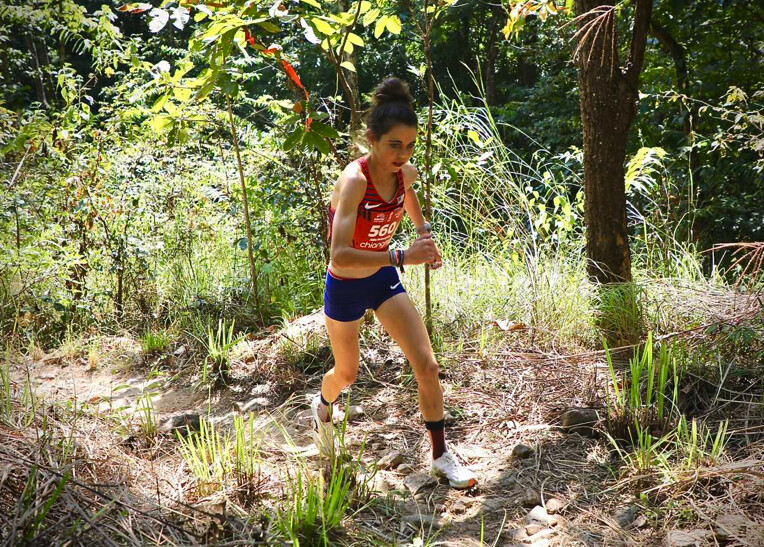
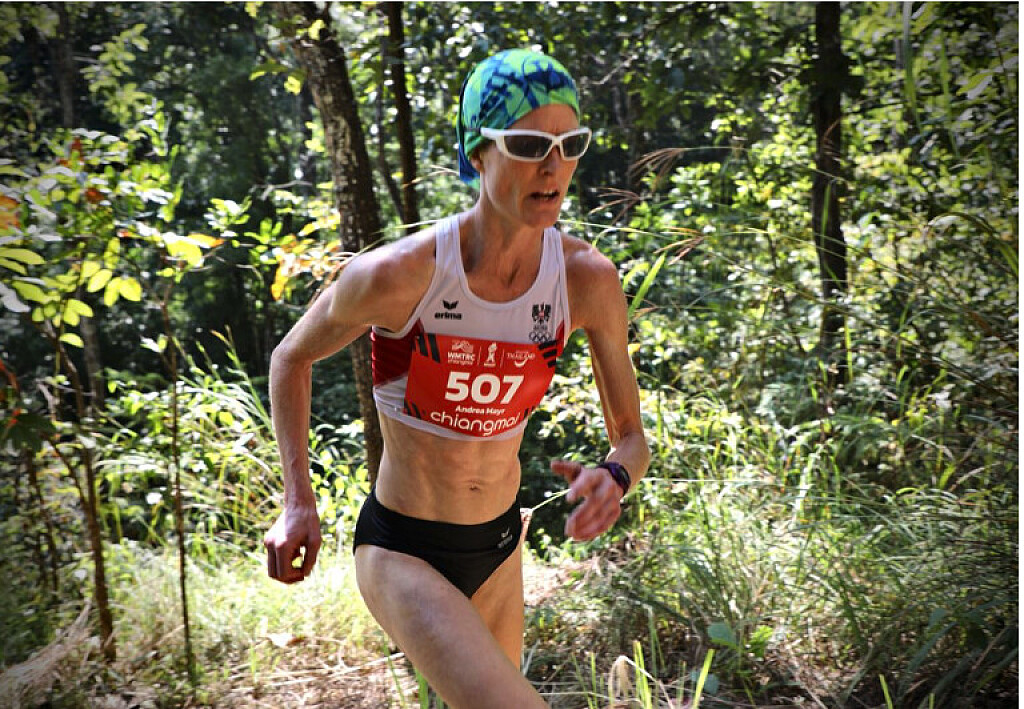
Allie McLaughlin (USA) dethroned Andrea Mayr (Austria) for the women’s crown. The pair raced up in 55:15 and 55:41, and Maude Mathys (Switzerland) was just behind in 56:00 for third.
McLaughlin just came off the Golden Trail World Series Finals in Portugal. Mayr, now 43 years old, is a six-time World Mountain Running Champion, typically excelling in uphill years. All three are expected to double back for the Classic Up and Down race on Sunday.
Monica Madalina Florea (Romania) and Onditz Iturbe (Spain) were fourth and fifth in 57:44 and 57:56.
[In 2015, Maude Mathys received a warning without suspension from the Disciplinary Chamber for Doping Cases of Swiss Olympic for two positive tests for clomifene (previously clomiphene) after it was determined that she was mistakenly taking the drug without first obtaining a World Anti-Doping Agency Therapeutic Use Exemption.]
n the teams competition, Team USA took gold, Great Britain and Northern Ireland took silver, and Switzerland rounded out the podium in third.
by I Run Far
Login to leave a comment
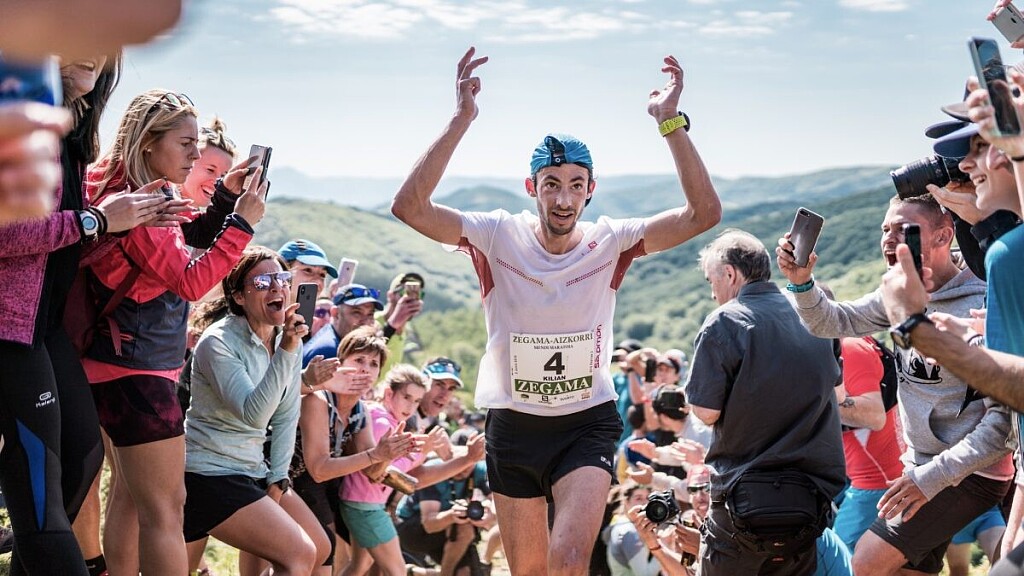
Kilian Jornet and Nienke Brinkman smash Zegama-Aizkorri Marathon course records
On Sunday, at the first stage in the Gold Trail World Series (GTWS), Spain’s Kilian Jornet and Nienke Brinkman of the Netherlands both won the Zegama-Aizkorri Marathon in a course record time.
Jornet has now won the race for the 10th time in 11 attempts on the trail of Zegama-Aizkorri, in the Basque Country, Spain. His time of 3:36:40 took nine minutes off the previous record of 3:45:08 set by Stian Angermund-Vik in 2017.
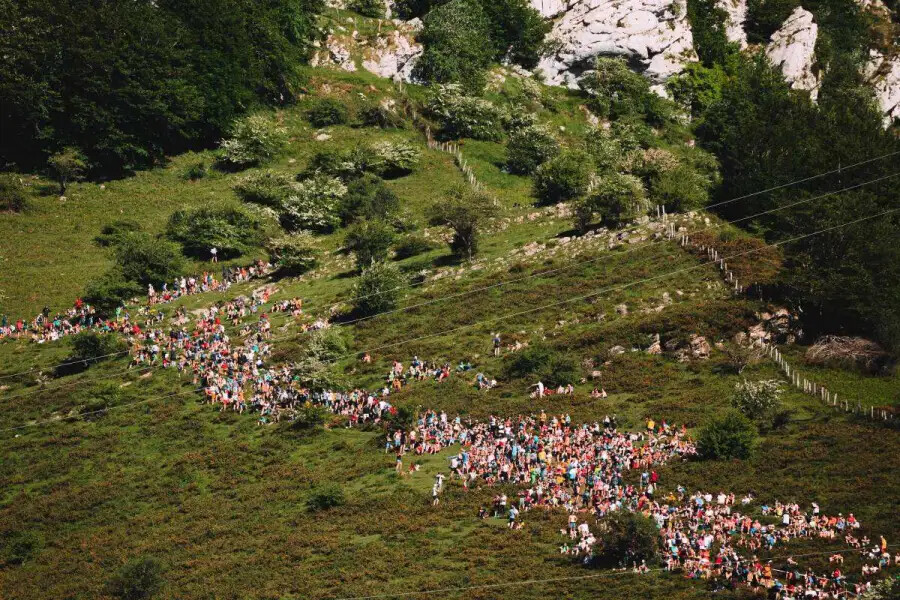
The 34-year-old trail runner covered the 42-kilometre course at a fierce pace while climbing a steep 2,736 metres of elevation gain. Runners had to deal with seasonally warm temperatures but were greeted by thousands of people posted along the course.
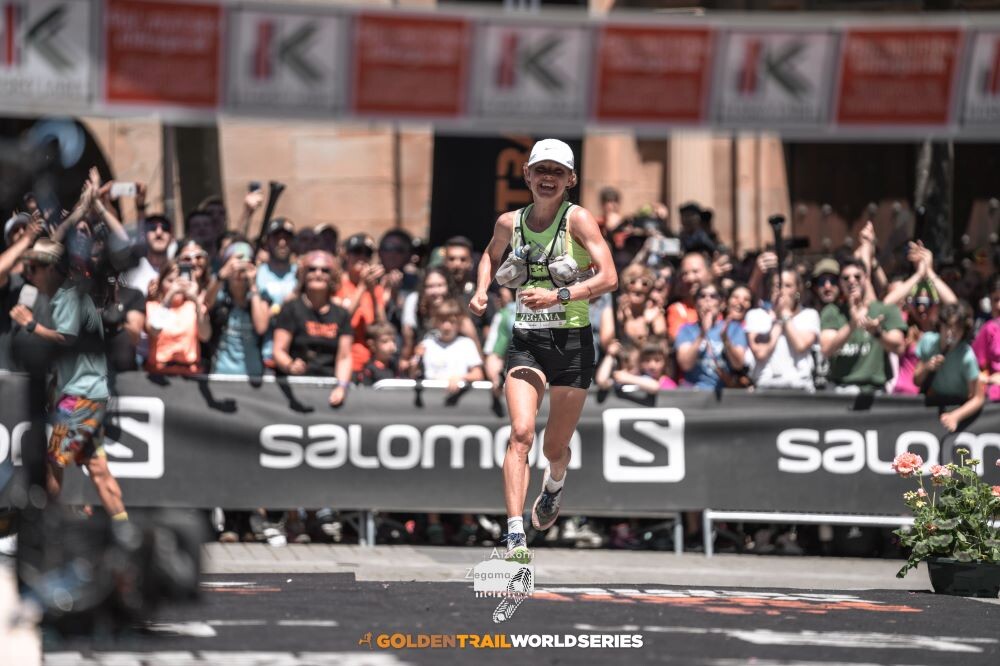
Jornet finished three minutes ahead of Italy’s Davide Magnini (3:39:31), with whom he duelled for a long time until the final climb around 33 km. Spain’s Manuel Merillas, who is the reigning skyrunning world champion and speed record holder on Mont Blanc, finished third in 3:45:43.
Jornet has won Zegama in 2007, 2008, 2010, 2011, 2012, 2013, 2014, 2016, 2019 and now 2022. The big goal for Jornet this year is to win the Hardrock 100 miler, which takes place in Silverton, Colo., on July 15, where he will have to compete against the 2021 UTMB champion, François D’haene of France.
In the women’s race, it was all Dutch-phenom Brinkman. The 28-year-old Dutch marathon record holder never trailed in the race and ran the entire race alone past 10K. Brinkman led Maude Mathys of Switzerland by three minutes at the halfway point and beat Mathys by over nine minutes at the finish, smashing the existing course record by 18 minutes in 4:16:43. Mathys was second in 4:26:03 and Sara Alonso of Spain rounded out the top three, 37 seconds behind Mathys. All three women were well inside the previous course record.
In two months, Brinkman has notched a 2:22 marathon performance in Rotterdam and the Zegama Marathon course record. She is a former Dutch field hockey player, who only started running seriously at the start of the pandemic in 2020. At the end of 2021, she joined Nike’s NN Running Team.
Brinkman currently lives in Zurich, Switzerland, where she does a lot of training on the trails and difficult mountain paths.
by Running Magazine
Login to leave a comment
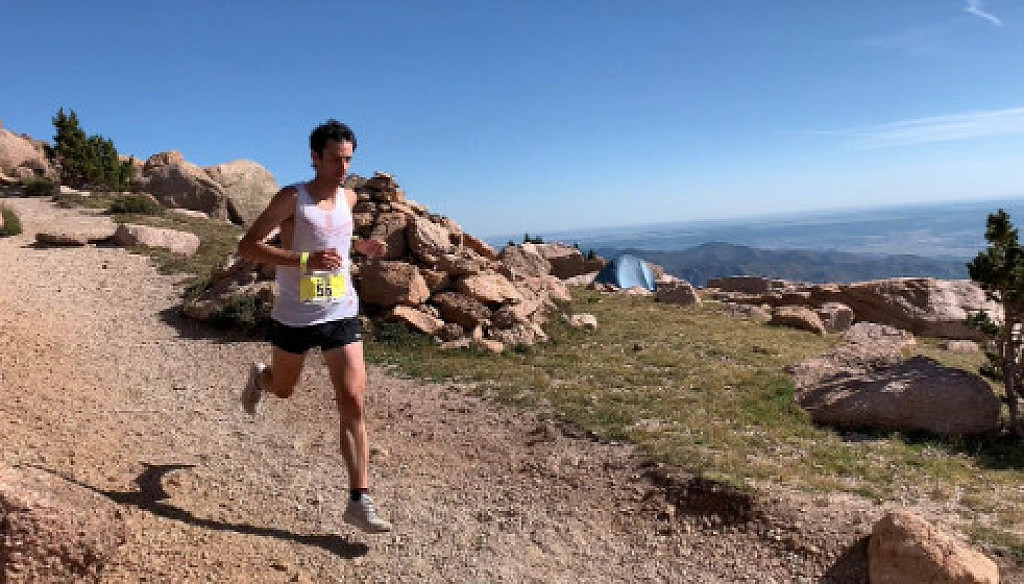
Kilian Jornet falls short of Pikes Peak Marathon record as Maude Mathys obliterates women’s mark set last year
Catlan runner ran 3:27:39, nearly 11 minutes shy of Matt Carpenter’s record, which has stood for 26 years
One of the most revered records in American mountain running has withstood a challenge from this generation’s greatest ultrarunner.
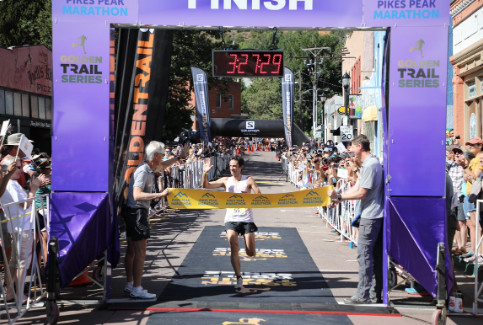
Despite an early fast pace, Catalan mountain running superstar Kilian Jornet fell short of breaking Matt Carpenter’s ascent and overall course record in the 64th edition of the Pikes Peak Marathon on Sunday, finishing in 3 hours, 27 minutes, 29 seconds — nearly 11 minutes slower than Carpenter’s 3:16:39, set in 1993.
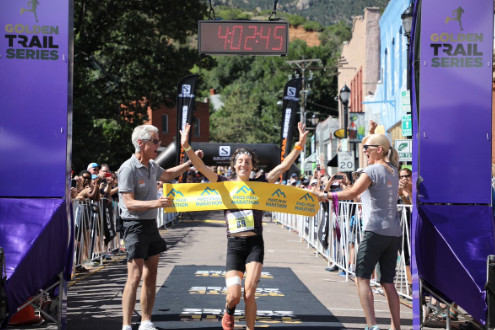
But Swiss ultrarunner Maude Mathys still provided reason to celebrate. Mathys won the women’s division in 4:02:45, crushing the course record set by Megan Kimmel last year in 4:15:04.
Carpenter’s course record has stood for 26 years. Jornet came to the Pikes Peak Marathon as part of the Salomon Golden Trail World Series, a collection of some of the top mountain races in the world, racing in the hopes of breaking the record after also falling short in 2012.
But he said afterward that his legs felt heavy during his morning warmup. He set a course record at the Sierre-Zinal trail race in Switzerland just two weeks ago, but he said that the short turnaround wasn’t a factor in his race today.
At the halfway mark — the summit of Pikes Peak — the record quest appeared to be in jeopardy. Jornet summited in 2:09:15, more than eight minutes behind Carpenter’s 2:01:06 ascent record, which Carpenter set in the same race he recorded the overall record.
For Carpenter, now 55, Pikes Peak is and remains his domain. He has won the marathon 12 times and the ascent-only run — held the day before the marathon — six times. He has lived in Manitou Springs for years and trained frequently on the Pikes Peak course, learning how to handle the altitude while navigating the flats, switchbacks and steep sections.
In recent years, trail running has exploded in popularity throughout the U.S. and the world, ushering a sport from the fringes of distance running to the mainstream. That has brought a new era of young, accomplished runners who have broken and rebroken records and so-called fastest-known times — thought to be untouchable. Despite the onslaught, Carpenter’s records at both Pikes Peak and the Leadville 100 still stand years after they were set.
The Pikes Peak Marathon course starts in Manitou Springs at 6,300 feet, before climbing more than 7,700 feet to Pikes Peak’s summit at 14,115 feet. The race is the second-oldest marathon in the United States and was the first in the U.S. to record an official women’s finisher.
Just past the first mile, Jornet was already leading the pack by a few steps. Just before five miles, he had built up his lead to more than 90 seconds, on pace to hit the summit in under two hours. But his legs soon caught up with him, and he slowed, summiting in 2:09:15.
Jornet had run this race in 2012, winning in 3:40:26. But he also competed with a heaver race schedule then.
Pikes Peak is one of only three races Jornet will do all year. Already, Jornet holds the course record counterclockwise and clockwise for the Hardrock 100, one of Colorado’s other esteemed ultra runs that starts and finishes in Silverton and loops through Ouray, Telluride and Lake City in the San Juan Mountains, forcing runnings to ascend some 33,000 feet over 100.5 miles.
Login to leave a comment

Pike's Peak Marathon
A Journey to the Top and Perhaps Back The Pikes Peak Ascent® and Pikes Peak Marathon® will redefine what you call running. Sure, they start out like a lot of races on Any Street, USA. But your first left turn will have you turning in the direction of up! During the next 10 miles, as you gain almost 6,000...
more...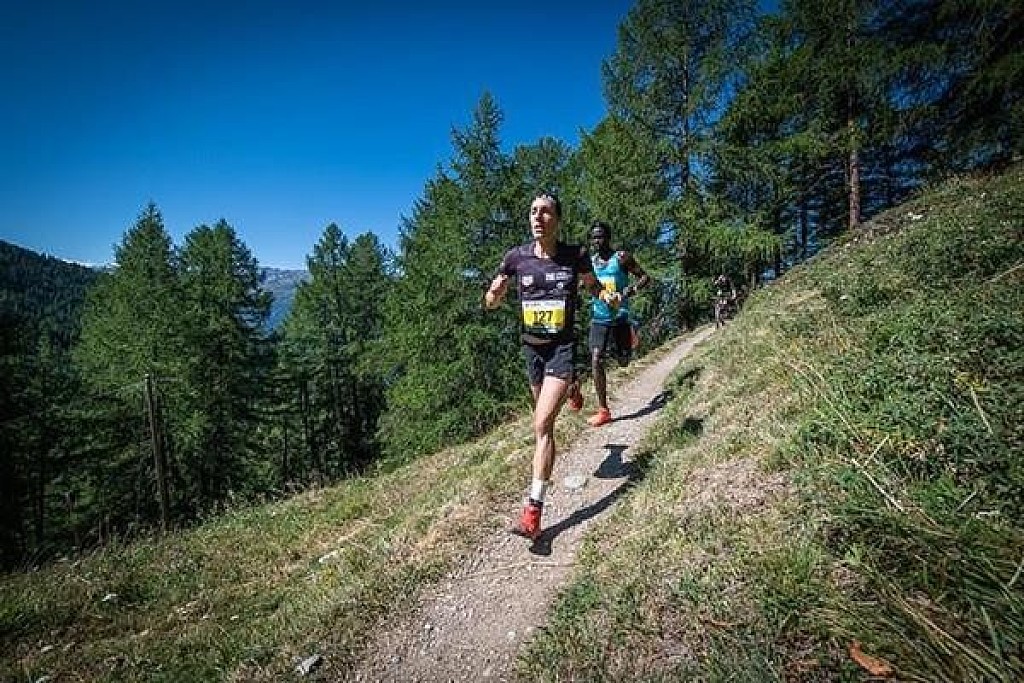
Kilian Jornet of Spain and Switzerland's Maude Mathys smashed the respective course records at the Sierre-Zinal in Switzerland, the fifth race in the 2019 World Mountain Running Association on Sunday
Jornet clocked 2:25:35 over the 31km course to break the 2:29:12 record set by Jonathan Wyatt in 2003. Mathys was even more dominant, clocking 2:49:20 to clip more than five minutes from the previous mark of 2:54:26 set by Czech Anna Pichrtova in 2008.
The iconic race, which starts in the Valais town of Sierre and climbs to the village of Zinal, has a total ascent of 2200m and 1100m of descent and features a course offering views of five of the area’s 4000-meter peaks, lending it the nickname, the "Five 4000s Race”.
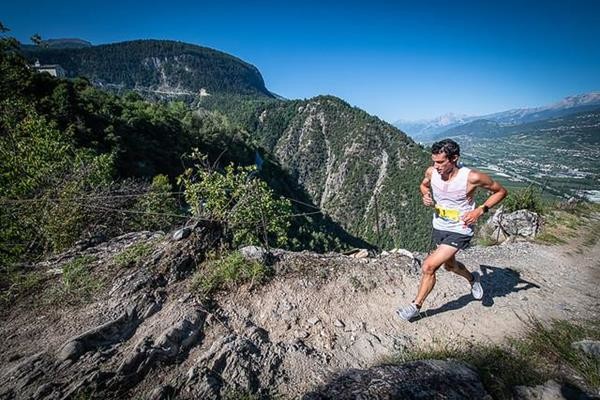
Jornet broke away early, soon after leaving Sierre and had built a two minute advantage over 2016 winner Petro Mamu by the Ponchette checkpoint seven kilometres into the race. Between the Chandolin and Hotel Weisshorn checkpoints, Jornet eased the pace, allowing Mamu to reduce the gap to 1:27.
From Weisshorn, at 2337m the course's highest point, the race once again picked up steam. The key for Jornet was his powerful performance on the uphill sections, normally the weaker part of his race. While Mamu continued to chip away at the lead, Jornet held on, beating the Eritrean by 42 seconds to take his seventh victory at the event. Mamu clocked 2:26:17, also well inside the previous record.
Jim Walmsley of the US, who last May clocked a world best over 50 miles (80.46km), rounded out the podium in 2:31:52, a solid performance in his European trail and mountain running debut. Juan Carlos Carrera of Mexico and Robbie Simpson of Great Britain completed the top five, clocking 2:32:52 and 2:33:55, respectively.
Briton Andrew Douglas finished sixth to solidify his lead in the WMRA World Cup standings. With 450 points, the Briton has pieced together an unassailable lead with two races remaining in the series.
Mathys, who raced to the European title last year, dominated the women's contest, padding her lead with each passing kilometre before beating compatriot Judith Wyder by exactly five minutes. Wyder's 2:54:20 was also faster than the previous course record.
Italy's Silvia Rampazzo was third in 2:56:17 to finish off the podium. New Zealander Ruth Croft edged Anais Sabrie of France for fourth by just two seconds in 3:01:56.
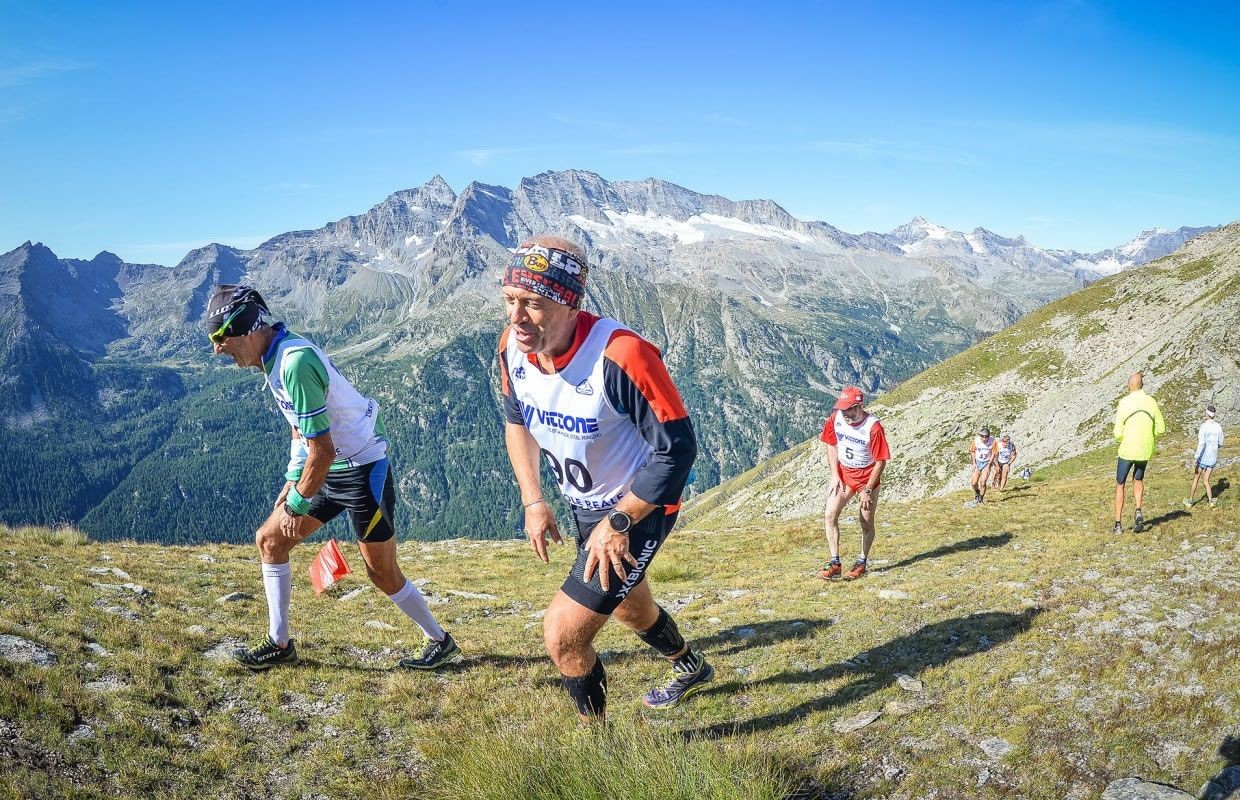
Irishwoman Sarah McCormack finished 12th to up her point tally in the World Cup standings to 305. Injury forced Kenyan Lucy Wambui, one of the pre-race favorites, out early on, solidifying McCormack's chances for her overall World Cup title bid.
The WMRA World Cup resumes on 14 September at the Drei Zinnen in Sexten, in the heart of Italy's Dolomites before its traditional conclusion at the Smarna Gora race just outside the Slovenian capital Ljubljana on 12 October.
by IAAF
Login to leave a comment

World Mountain Running Championships
A person's need to run quickly over both short and long distances is as old as humankind. To be fast helped us to survive, to catch an animal for food, to escape from danger and natural catastrophes, to be successful in war or, as in the case of the first marathon, to take messages. And where did this hunter, warrior,...
more...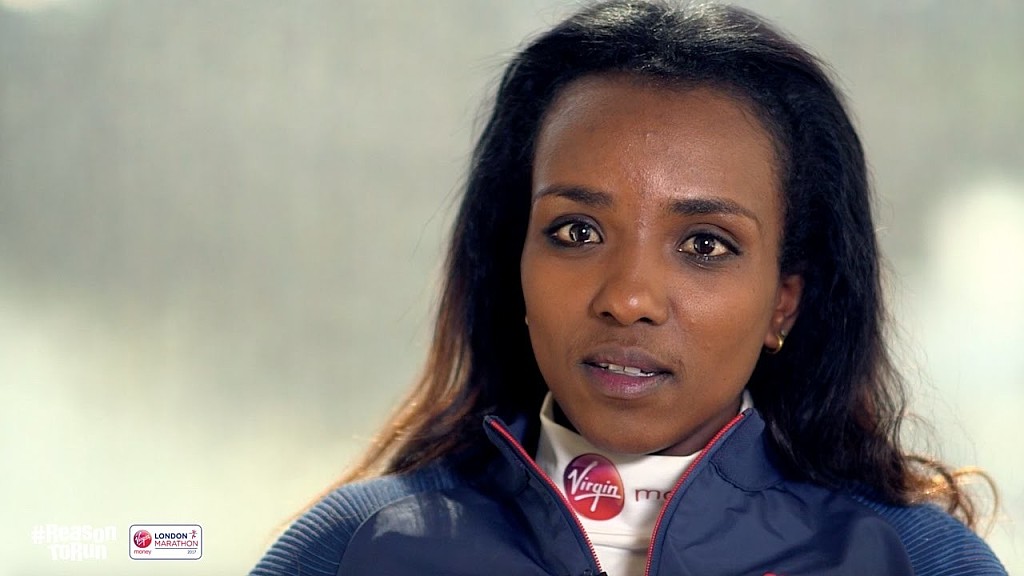
Ethiopia’s Tirunesh Dibaba has withdrawn from the 2019 Virgin Money London Marathon for personal reasons
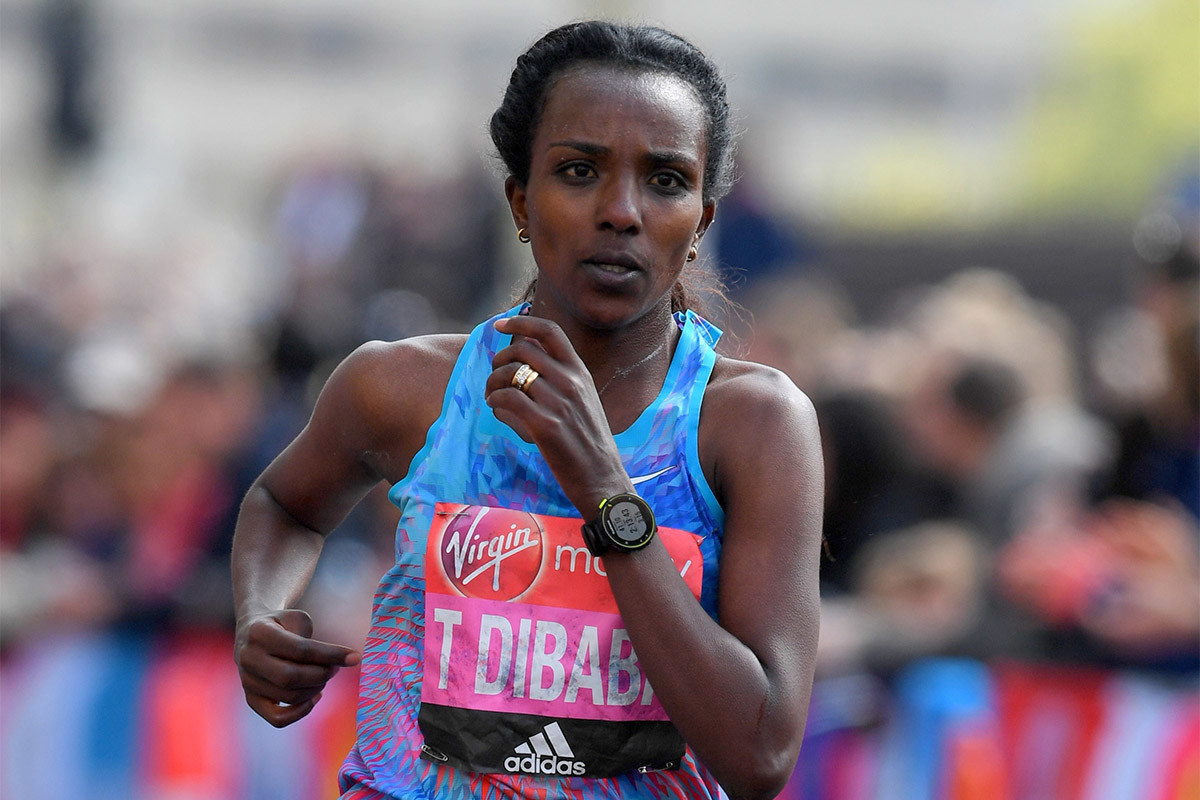
The three-time Olympic champion and current 5,000m world record holder was second in the 2017 Virgin Money London Marathon when she set a personal best (PB) of 2:17:56, making her the fifth fastest female marathon runner in history.
Dibaba, 33, is one of a handful of notable changes to the fields for the elite men and elite women races since they were first released at the end of January.
USA’s Allie Kiefer, who was seventh at last November’s TCS New York City Marathon, has withdrawn as has Denmark’s Anna Holm Jorgensen – the daughter of Henrik Jorgensen, the 1988 London Marathon champion who died earlier this year.
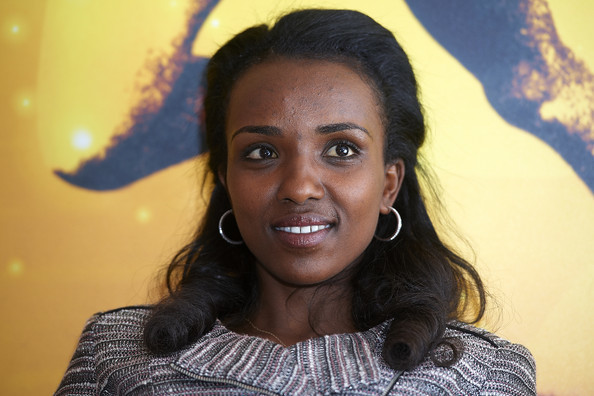
Swiss pair Maude Mathys and Martina Strahl have both also pulled out, as has Ireland’s Emma Mitchell and the British duo Eleanor Davis and Laura Graham.
In the elite men’s race, North American pair Chris Derrick (USA) and Cam Levins (CAN) are the biggest name withdrawals while Mikael Ekvall (SWE) and Matt Sharp (GBR) are both also no longer running.
Login to leave a comment

TCS London Marathon
Since its inaugural edition on March 29, 1981, the TCS London Marathon has grown into one of the world's most prestigious road races, blending elite competition with an extraordinary charitable legacy. Founded by former Olympic champion and journalist Chris Brasher alongside Welsh athlete John Disley, the event has been staged every year and has been held in the spring annually...
more...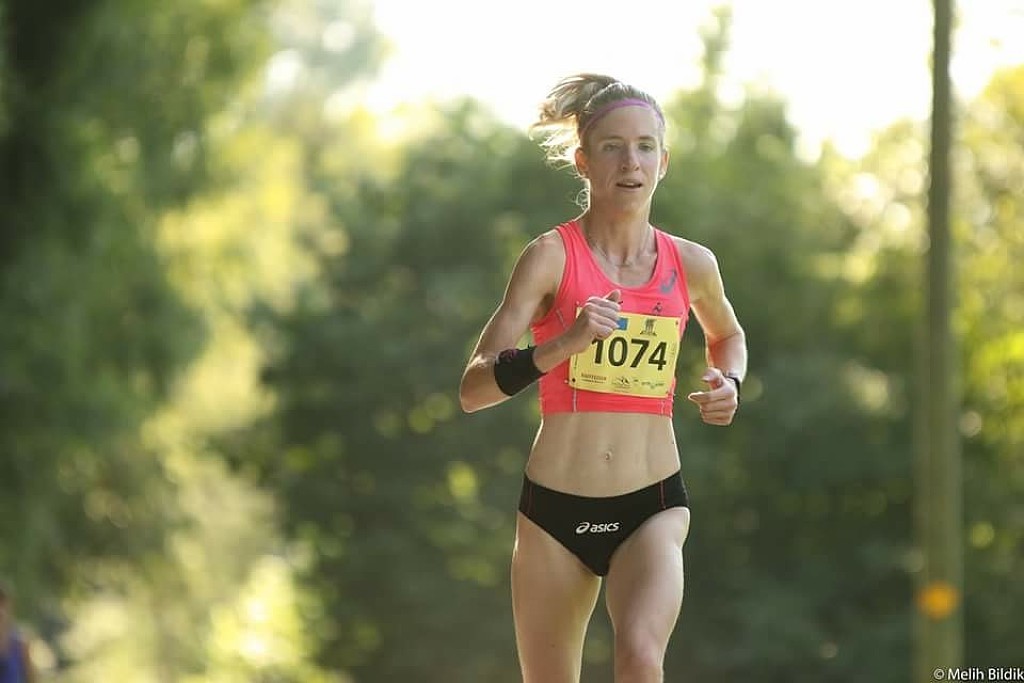
Martina Strähl from Switzerland is considered the favorite at The Jungfrau Marathon
Login to leave a comment
