

Running News Daily
Running News Daily is edited by Bob Anderson and team. Send your news items to bob@mybestruns.com Advertising opportunities available.
Index to Daily Posts · Sign Up For Updates · Run The World Feed
Articles tagged #Baby stroller
Today's Running News
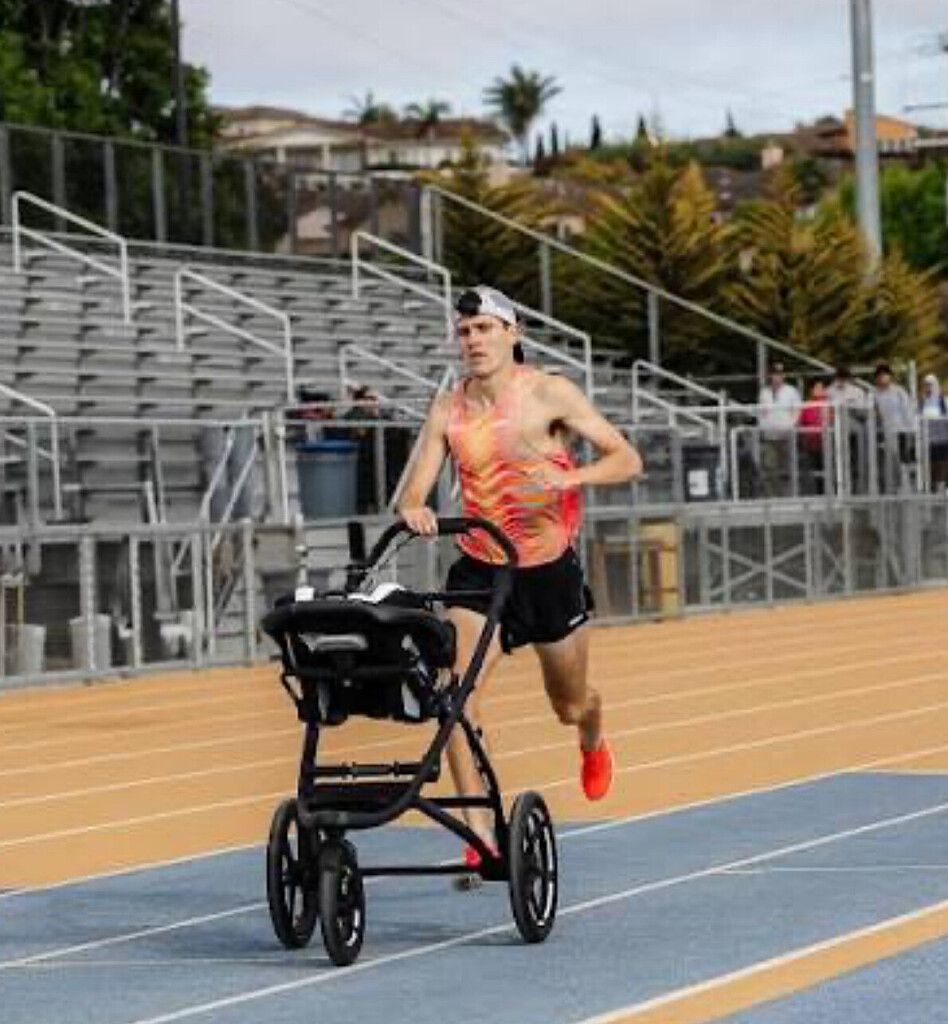


New Baby Stroller Mile World Record Set at 4:26.29
In one of the most unique records in running history, American runner Silas Frantz has set a new Baby Stroller Mile World Record, clocking an astonishing 4:26.29 while pushing his son, Otto.
The feat took place on the track, where Frantz combined world-class speed with the added challenge of safely guiding a stroller for four laps. The video of his record-breaking run has quickly gone viral, drawing awe and admiration across the running community.
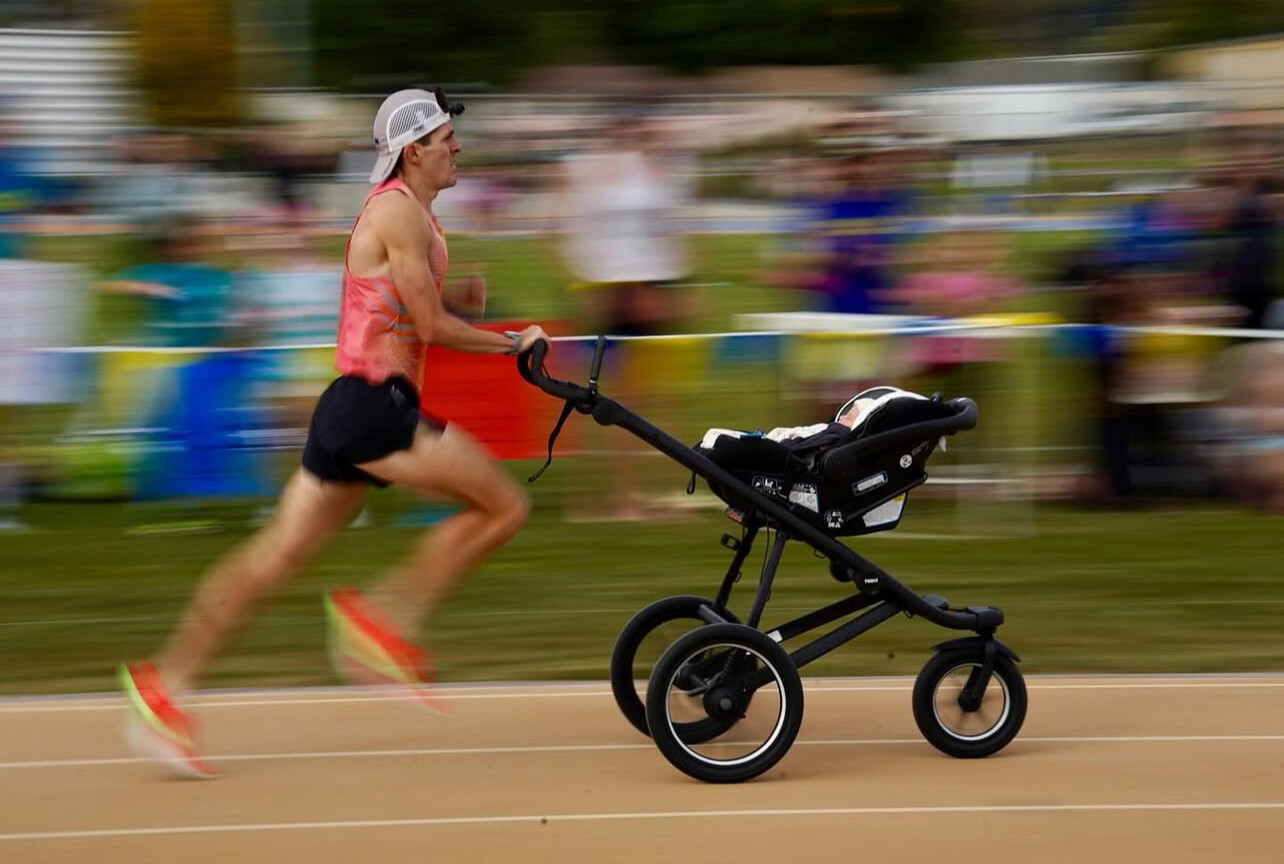
Frantz, a former collegiate standout, showed that fatherhood and elite fitness can blend in extraordinary ways. While stroller runs are often a part of new parents’ training routines, taking it to this level—running sub-4:30 for the mile—demonstrates exceptional strength, coordination, and determination.
A Growing Trend: Stroller Running Records
Running with a stroller has grown in popularity, with both casual parents and competitive athletes incorporating it into training. Records have been tracked for stroller 5Ks, 10Ks, half marathons, and marathons—but the stroller mile is a rarer challenge.
To put it in perspective, running a 4:26 mile solo is already elite territory. Doing it while pushing the weight and resistance of a stroller makes this one of the most impressive niche records in recent years.
Otto: The Youngest Record Holder?
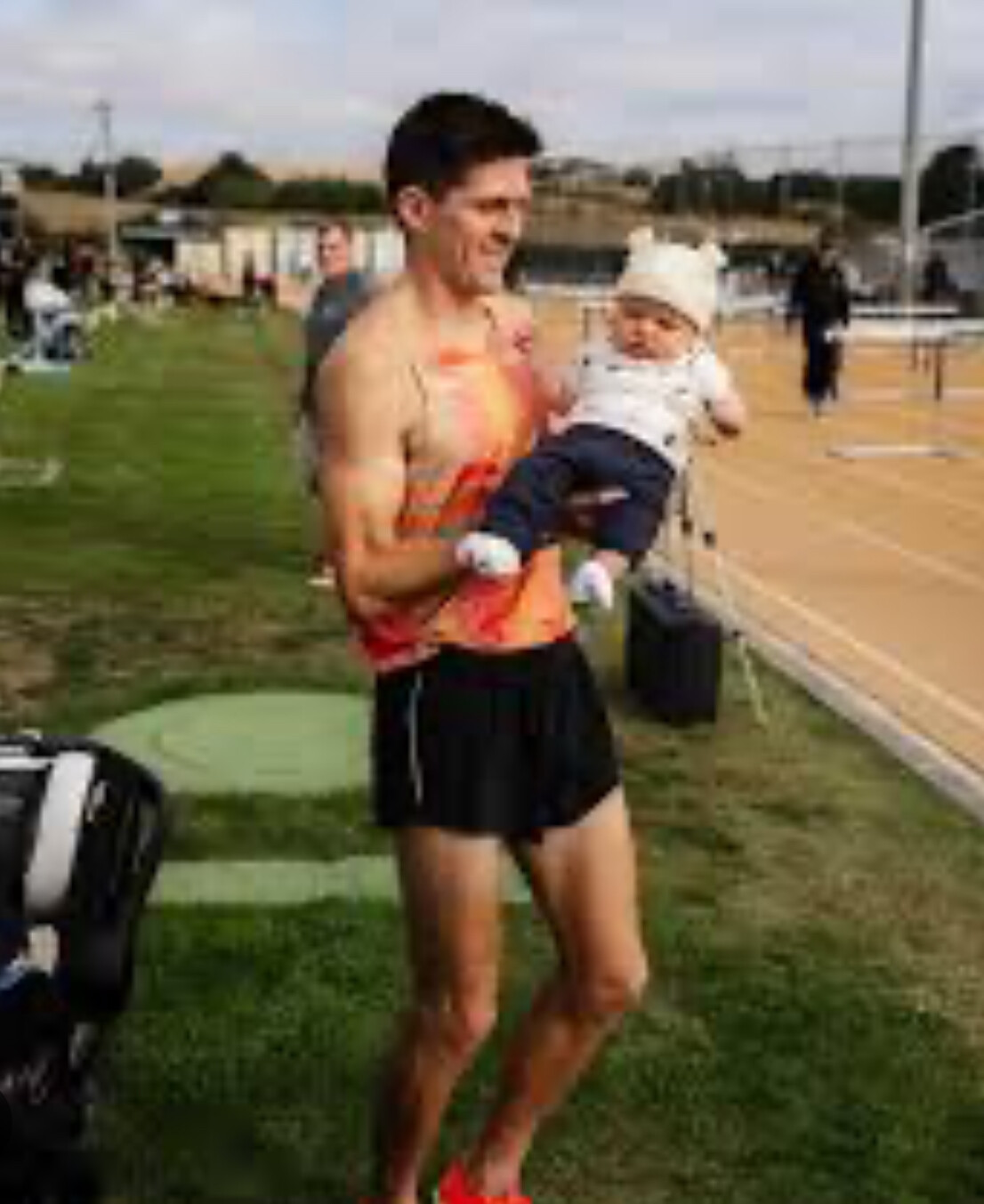
While all eyes are on Silas Frantz’s speed, baby Otto gets to share in the glory—earning the title of perhaps the youngest co-participant in a world record mile. Comfortably bundled in his stroller, Otto looked completely unfazed during the effort, while his dad powered around the track at near-professional pace.
The Viral Moment
Clips of the run shared on social media by @lane.one.run and picked up by Bleacher Report have racked up hundreds of thousands of likes and comments. Fans are calling it one of the most heartwarming and jaw-dropping running achievements of the year.
Community Reactions
“Unbelievable—try running a mile that fast without a stroller first!” one fan commented. Another joked, “Future Olympian Otto already has a world record under his belt.”
Even elite runners chimed in. Sara Slattery, former U.S. Olympian, encouraged a fan who joked about trying the 400m stroller sprint: “You’d kill it!!”
Silas Frantz’s stroller mile record is more than just a quirky achievement—it’s a testament to creativity, family, and the endless ways runners continue to push boundaries.
by Boris Baron
Login to leave a comment

7 Legit Benefits of Running At Night—And How To Do It Safely
It was around mile two of the Joshua Tree Half Marathon that I started to hear animals I couldn’t see. Was that a horse? I wondered (and hoped). The daylight was officially gone.
But I realized that as spooky as night running might be, it also creates an eerie kind of magic. Lights twinkled in the valley below the hilly path I was climbing, but all around me it was pitch black, aside from the few feet of sandy trail that each runner’s headlamp illuminated. With nothing else to see, all I had to focus on were my own footsteps and my breath—and how I could race through the desert as quickly as possible.
Amie Dworecki, B.S., M.A., MBA, Amie Dworecki, B.S., M.A., MBA, is a running coach and founder of Running With Life.
Brad Whitley, DPT, physical therapist at Bespoke Treatments in Seattle
Marnie Kunz, CPT2, USATF- and RRCA-certified running coach
Most long-distance races take place in the morning, but this half marathon starts right around sunset. Because the scenery of the course is a tad monotonous, the race organizers embrace the adrenaline rush you can get from running under the stars.
I joined as part of a press trip sponsored by Nathan Sports, Skechers, and Swiftwick. The experience reminded me that even when the days are short during the winter and pushing your pace after the sun goes down becomes the norm, night running can be its own unique adventure.
The more I looked into running at night, the more advantages I found—even if you need to take a few extra safety precautions when you’re lacing up.
The perks of running at night
What are the main benefits of night running? Here are a few of the top reasons to get in a nocturnal workout.
1. The temperature is cooler
Earlier in the day before the Joshua Tree race, I’d been cowering from the heat anytime the sun touched my skin. But once it was dark out, the desert air got so cool that my sweat-wicking T-shirt barely had any work to do.
As it turns out, temperatures around 40° Fahrenheit are ideal for long-distance running, largely because our hearts don’t have to work quite as hard to pump our blood to cool us down, according to a May 2012 study in PLOS One.
Even if the mercury doesn’t get quite that low after dark in a hot or humid climate, night running after sunset (or, alternatively, heading out before sunrise) is clearly the way to go to nab those cooler running temperatures.
2. Your body’s more ready to run
Running shortly after rolling out of bed can sometimes feel like wading through molasses. It’s no surprise why: You’ve just been lying stationary for hours, so your body temperature and mobility aren’t exactly ideal.
3. It might feel easier
The dark can be a secret weapon for runners. One August 2012 study in the Journal of Sport & Exercise Psychology on optic flow (our perception of our movement in relation to our surroundings) suggested that because we can’t see as far in the dark, we feel like we’re going faster because close objects seem to pass by more quickly than those in the distance.
Even though your watch might not record any speedier miles, running in the dark can be a helpful confidence boost when you get the sense that you’re zooming along.
4. Night running can help you sleep
How can running at night affect your sleep quality? Despite rumors to the contrary, there’s some evidence to suggest evening runs might actually help you get deeper zzzs.
An October 2018 meta-analysis in Sports Medicine found that as long as you finish running more than an hour before your bedtime, it most likely won’t mess with your sleep quality. Instead, it could actually help you spend slightly longer in those restorative deep sleep stages.
Anecdotally, some people say they also seem to fall asleep faster.
That’s something to experiment with, according to certified running coach Amie Dworecki, CPT. Everybody’s different, so you might need to find out what works best for your own circadian rhythm.
5. You’re likely better fueled
Eating can be tricky for morning runners—you’ll run better with some food in your stomach, but if you don’t give yourself enough time to digest, you might run into GI issues.
At night, though, you should be fairly well-fueled from noshing all day, Dworecki says. Just be sure to have a snack to top off your carbohydrate stores before heading out the door, says certified running coach Marnie Kunz, CPT.
6. It’s more peaceful
Depending on where you run, during the day you might feel like you’re playing Frogger with traffic and pedestrians, dogs, and baby strollers. At night, most of those hurdles typically fade away.
“It's really almost a meditative experience because of the quiet and solitude,” Dworecki says. “It can really add relaxation to your running.”
7. You have more options
Because you’re less likely to have a certain time you need to be back by at night than you would in the morning, it’s easier to choose your own adventure based on how you’re feeling. You can add a couple extra miles if you feel like it, or end early and walk home instead.
Running at night vs. morning: How to choose
Many runners swear by their morning miles. But obviously, the a.m. hours aren’t the only time to run. How do you know whether night or morning runs will serve you best?
For some people, it’s purely logistical: The best time to get in a run is whenever you can run. But if you have a choice, it might help to pay attention to the natural ups and downs in your energy levels.
“If you're a night person, you can actually feel better or more energetic if you're running in the evenings,” Dworecki says. Or, she adds, you might be able to use running to give yourself an energy boost at a time when it would typically dip.
If you’re someone who needs camaraderie to lace up, one of the benefits of night running is you’re more likely to find a group run to join after the work day, or convince a friend to join you for a few social miles.
Even if you’re alone, night running can also give you more of a thrill than the chore-like approach you might take to morning runs.
“It's kind of an adrenaline rush running at night sometimes,” Kunz says.
On the other hand, running in the morning can be safer because there’s typically more people on the street, and more daylight means you’re more visible to cars.
Running first thing in the morning can also make you more consistent—even if you get stuck working late hours or friends convince you to head out for a happy hour, your workout will already be done.
Safety precautions for night running
1. Make sure you have enough light
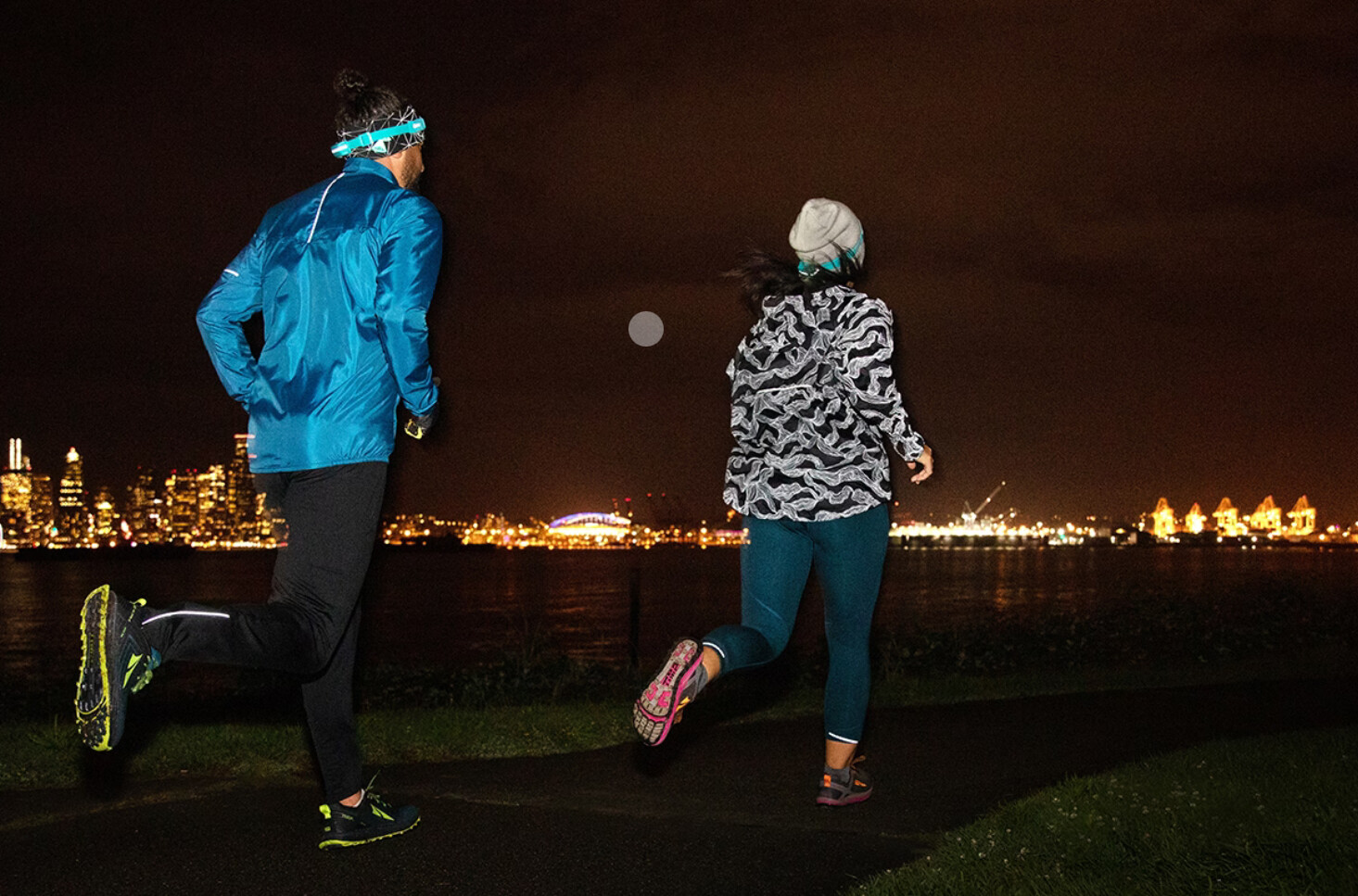
Unless you know you’ll be running in a well-lit area, you’ll need to bring or wear your own running lights, Dworeck says.
I ran the Joshua Tree Half Marathon with the lightweight Nathan Sports Neutron Fire RX 2.0 Runner’s Headlamp, which securely attached to my forehead, and gave me 250 lumens of light in any direction I turned. Although it took me a little while to find the right spot on my forehead so it didn’t slip or bounce, once I did, I forgot it was even there.
If the thought of wearing a light on your head doesn’t sound appealing, you can also opt for a chest lamp or carry your own small flashlight. There are even have lights you can put on your shoes or your gloves, Dworecki says.
2. Stay visible to cars
Before the race, I was sent Nathan’s Laser Light 3 Liter Hydration Pack, which has a genius double-duty design that gives you a place to stash water as well as lights on the back in case you’re running anywhere there might be cars.
If you don’t have actual lights on your body, at least be sure to wear bright reflective gear so drivers can easily see you. Light-up reflective vests aren’t your only option—these days, many pieces of running gear stylishly incorporate reflective details, and there are even several reflective running shoes.
3. Consider leaving your headphones at home
Night running probably isn’t the right time to zone out to a podcast. Because you won’t be able to see as well, it helps to keep your other senses sharp.
“Watch your use of headphones just to be aware of what's around you,” Dworecki says.
4. Let someone know where you are
Although running when the streets are quiet can feel less stressful than during busier, noisier parts of the day, empty roads or trails can also be dangerous.
“Let someone know where you're going or share your run so they can track you,” Kunz says.
Apps like Strava let you proactively send your location to select contacts in real time. Alternatively, you can choose to stick to sidewalks or a track where you know other people will be out and about.
How to motivate yourself to run at night
After a long day, forcing yourself to get off of your warm couch and out into the dark doesn’t always sound super appealing. Kunz suggests making a promise to yourself to simply run 10 minutes—it’s just a little exercise snack that doesn’t feel like too much pressure.
“You know you can turn back, but once you're out the door, usually you'll feel okay and just keep running,” she says.
Dworecki adds that for some people, it’s easier to run right from their workplace. When I was training for an ultramarathon, for instance, I used to run home four miles from my office every night so that I didn’t waste half an hour commuting on the subway—my commute was my run (and it only took slightly longer). Then, once I stepped in the door, I could just relax without having to convince myself to leave again.
It can also be helpful to make night running more social by joining a group run or turning it into a date with a friend to catch up after work.
“[It] makes your run more fun and it gives you some accountability,” Kunz says. Even running with a dog can help a night run feel less lonely.
FAQ
1. Do I need a light to run at night?
If you’re going on trails or areas without ample street lamps, you’ll want to bring your own light source with you to make sure you can see where you’re going and what you’re about to step on. The most popular option among runners is a headlamp.
2. Can running at night help in managing stress?
Running is always a good stress release—the extra blood flow to our brain triggers a release of dopamine and endorphins, sometimes leading to the famous “runner’s high.” These benefits might be especially welcome at night.
“It's a great way to kind of blow off steam at the end of the day, and help unwind and relax before going to sleep,” Kunz says.
3. Is it bad to run at 10 p.m.?
Sometimes the only chance you have to fit in a workout is after many people go to bed. Dworecki says that sometimes when she’s struggling with insomnia, she might head out for a run around 1 a.m.
Just know that working up a sweat with intense exercise, like running vs. walking, for instance, will raise your heart rate pretty high, so be sure to give yourself enough time (at least an hour) to wind down after you're finished so it doesn’t mess with your sleep.
No matter when you get back home, do a cooldown, take a hot shower, eat some food, and settle in for the night knowing you’ve gotten all those longevity benefits and health perks.
Login to leave a comment
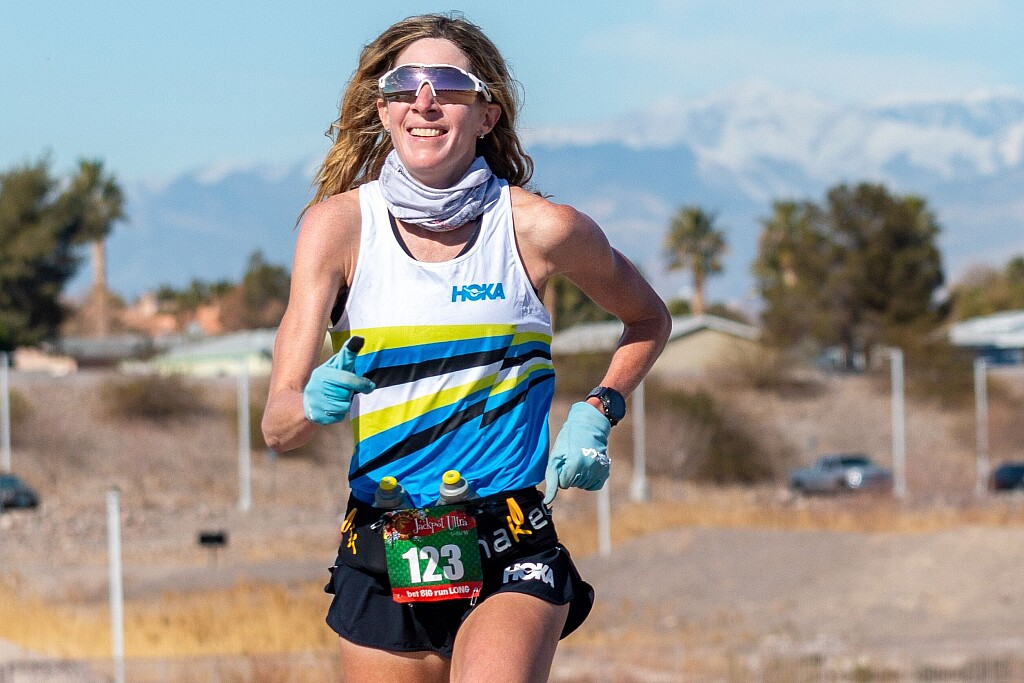
Camille Herron’s 100-mile world record may go unratified
Renowned ultrarunner Camille Herron beat her previous world record 100-mile time at the Jackpot Ultra Running Festival in Henderson, Nev., in February, setting a new record that the USA Track and Field (USATF) committee has decided not to ratify, the Washington Post reported on Wednesday.
Herron, 40, won the race in 12:41:11, beating second-place (and first male) finisher Arlen Glick by more than 30 minutes and surpassing her own 2017 record of 12:42:40 by almost a minute and a half. The race doubled as the USA Track and Field 100-mile road championships, and Herron, who is a champion of clean sport and respected for holding herself and others to high standards in competition, was celebrated globally.
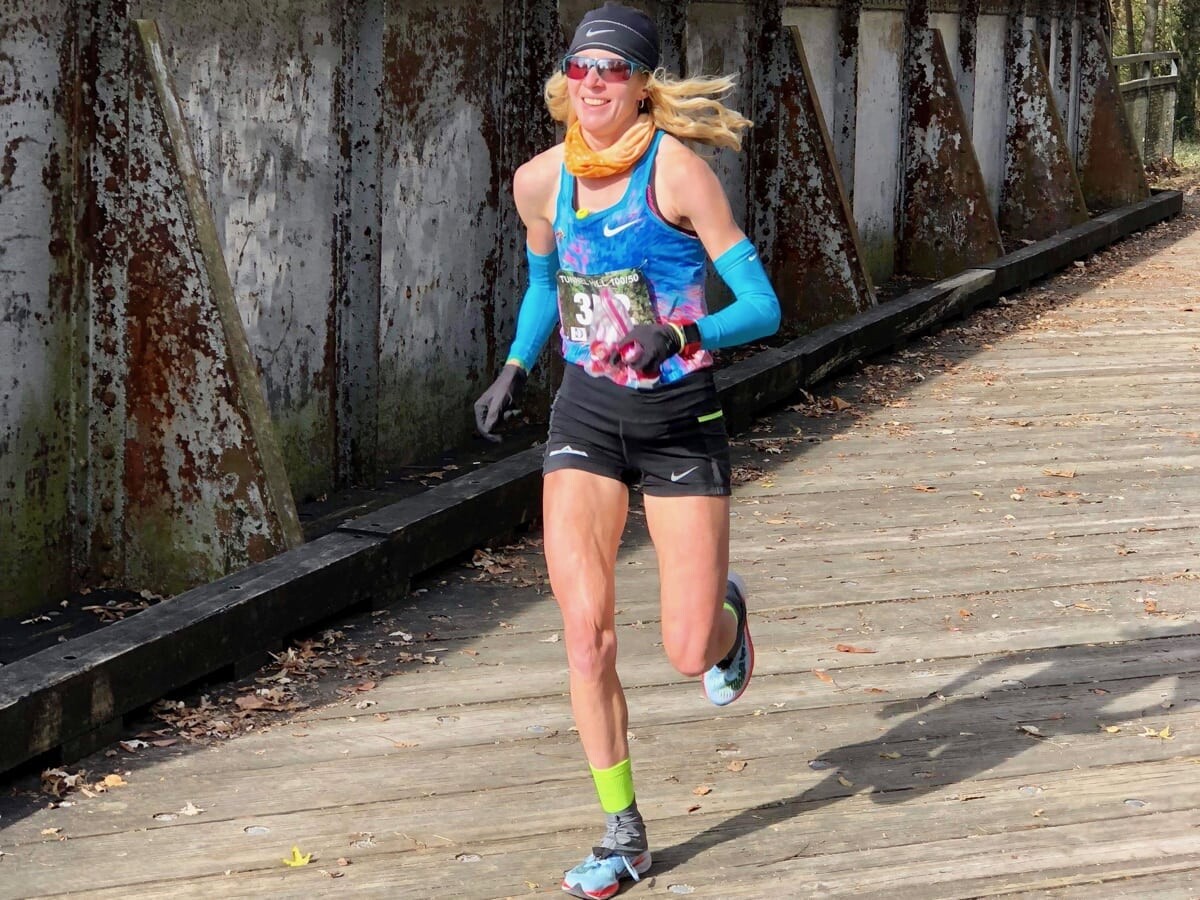
A certified race is always remeasured (course verification) after a record is set–the Jackpot Ultra was measured post-race in February, found to be accurate, and Herron’s record was thought to be clear while not yet official. In October, USATF official Brandon Wilson returned to the Jackpot course and measured once again, determining that the course was short by 716 feet, coming in at 99.864336 miles.
The record ratification process is often lengthy, but there has been no clarification as to why the USATF returned to the course in October, without race director Ken Rubeli (who has since sold the race) present.
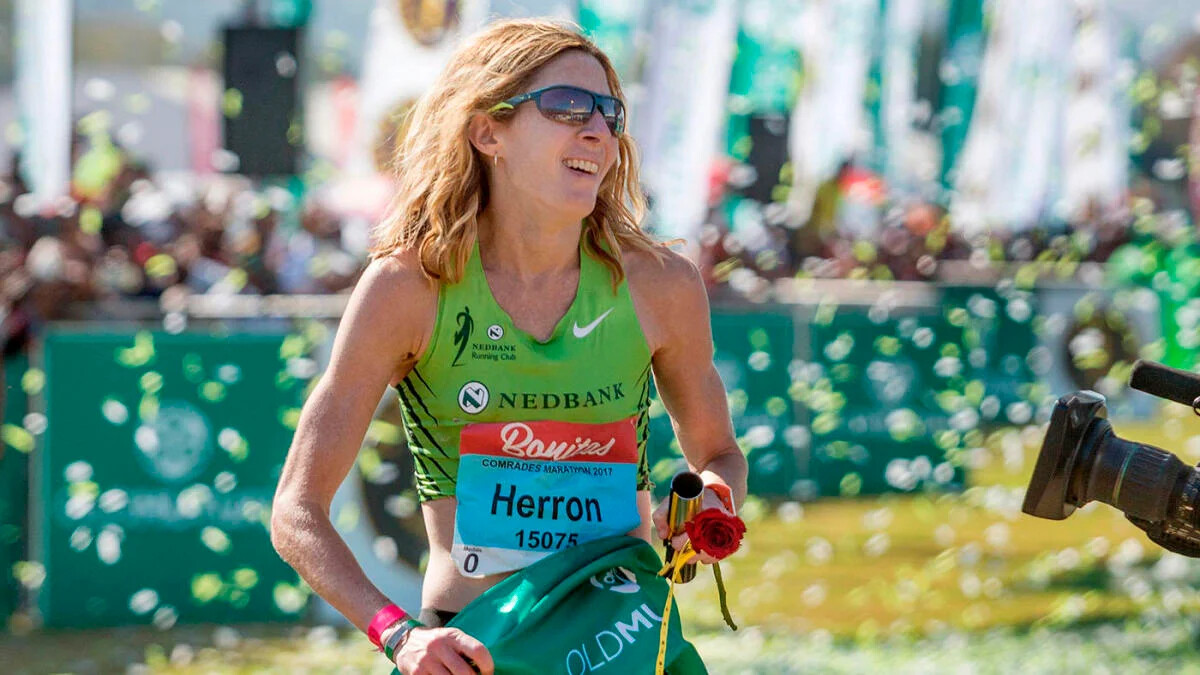
Herron and Conor Holt (her husband and coach) have expressed frustration with the USATF’s process and lack of transparency, along with Rubeli, who sent a letter to USATF questioning the accuracy of measurements made eight months post-race.
“I set a world record in that race, and now they’re telling us that we don’t know whether the course was 100 miles or not,” Herron said to the Post. She shared that the situation has been stressful for her, and has impacted her performance in races since.
“My time is now that I’m in the best shape of my life. And, I mean, these moments can be fleeting. I put my heart and soul into that performance, and it was such a big deal for the sport and the history of the sport that it needs to count,” Herron said.
The Jackpot Ultra is held on a 1.17-mile loop, and the distance was questioned after Wilson (the measurer in February) attended the event, because his wife was running in the 100-mile race, and noticed a discrepancy between the course being run and the certified course map on the USATF website.
Former race director Rubeli explains that he changed one turn on the course for safety reasons, “due to a near collision between a runner and a baby stroller,” adding that he compensated for the change with precise cone placements on the course–something that wasn’t taken into account in Wilson’s February measurement.
Herron, Rubeli, and others are firm on their stance that Herron’s 100-mile record should stand, and the situation is ongoing. “It’s not a done deal yet that it’s unratified,” explains Herron. “USATF wasn’t working with Rubeli the last eight months, so we think the lack of communication created the current situation.”
Herron who describes herself as “propelled by joy and tacos,” has remained positive on social media, noting that she’ll be chasing several of her world records at the upcoming Desert Solstice Invitational, an elite-level event held on a track in Pheonix, Ariz.
by Keeley Milne
Login to leave a comment

Global Run Challenge Profile: Michael Wardian has had very few injuries and here is why
RUN THE WORLD: "Running is my life and who I am," says 44-year-old Michael Wardian. "I love running and hope to run till my last days." Michael started running after he stopped playing Lacrosse in college to stay in shape.
He lives in Arlington, Virginia with his wife and two children. Michael has accomplished so much. In 2008 he won the US National 100K championships. In 2006 he won four out of five marathons he raced in 45 days.
He held the world record for the fastest marathon time pushing a baby stroller. He set a record of running a marathon on an indoor 200-meter track. He ran the 2012 Olympic Marathon trails clocking 2:21.
The next day he ran another marathon clocking 2:31. He ran seven marathons in seven days on 7 continents clocking an average of 2:45 for each marathon (photo). With so many highlights on his resume, I asked him what would be his top two.
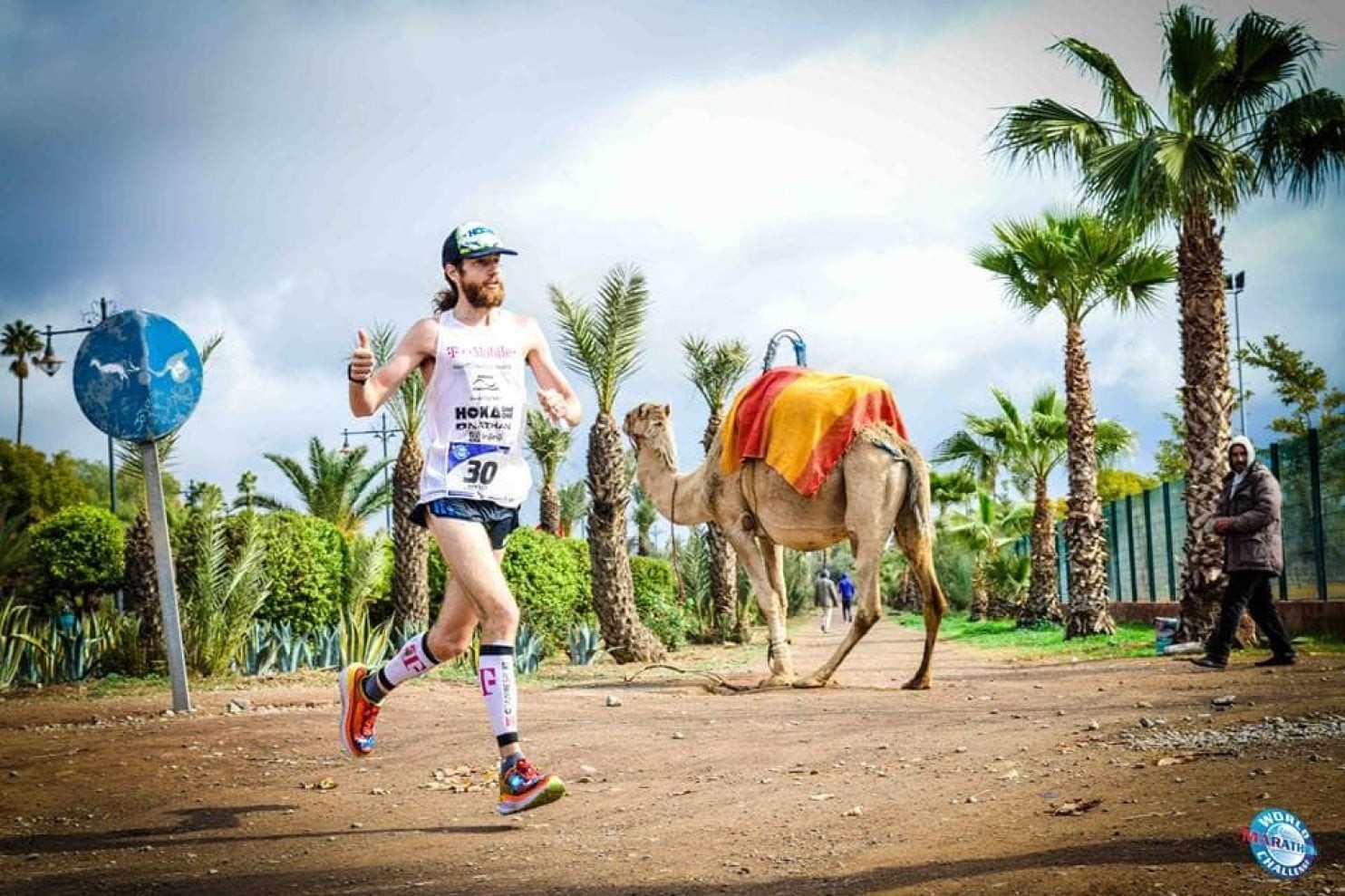
"In 2011 I ran 2:17:49 (PR) at Grandmas Marathon and the same year I placed second at 100k World Championships," Michael said. He is a vegetarian and works as an International Ship-broker.
How about injuries? "I have been very lucky, I have not had many injuries and I think my best secret is to keep moving. After big events, I do an easy jog, hike or even just walk. It keeps everything moving," says Michael.
Why did he enter this challenge? "I think the Run The World Challenge is cool and I hope it gets more people out there," he says.
He is a professional marathon and ultra marathon runner and has been running since 1996. He has represented the USA in the 50k and 100k world championships, and has participated in three Olympic Marathon Trials.
Just recently (July 20-21) Michael placed 11th at the Hardrock 100 clocking 30 hours and 23 minutes for the 100.5 mile very challenging trail race held in Silverton, Colorado.
by Bob Anderson
Login to leave a comment
