

Running News Daily
Running News Daily is edited by Bob Anderson and team. Send your news items to bob@mybestruns.com Advertising opportunities available.
Index to Daily Posts · Sign Up For Updates · Run The World Feed



Road To LA28: World Athletics Unveils Olympic Marathon Qualification Rules As Sub-2:05:00 Men And Sub-2:22:20 Women Target Los Angeles 2028!

The race for places at the Los Angeles 2028 Olympic Games has officially taken another significant step forward, with World Athletics publishing the qualification system for the athletics programme, outlining the standards, qualification windows and selection procedures that will determine which athletes earn the opportunity to compete on the biggest sporting stage.
However, it is the marathon qualification pathway that is already attracting considerable attention, with the governing body setting demanding entry standards of 2:05:00 for men and 2:22:20 for women as the world's leading distance runners begin preparing for the journey to Los Angeles.
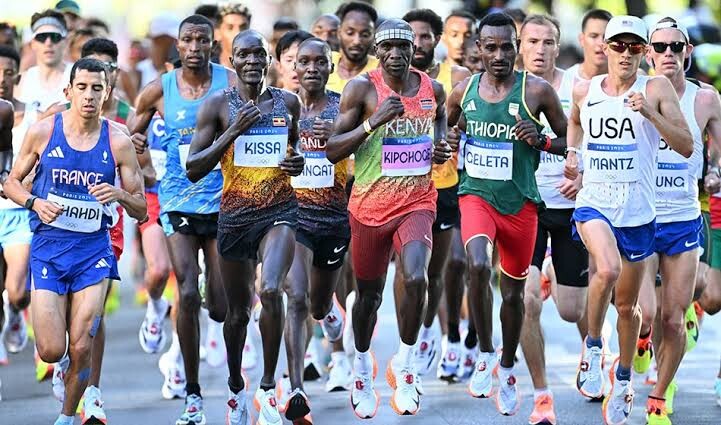
The marathon qualification period will run from 1 November 2026 through to 30 April 2028, giving athletes an extended opportunity to secure their Olympic places through outstanding performances at recognised competitions and the World Athletics rankings.
Unlike previous qualification systems that relied on a more balanced distribution between entry standards and rankings, LA28 will adopt a dual-pathway approach in which approximately 40 per cent of athletes are expected to qualify through the automatic entry standards, while the remaining 60 per cent will earn their places through world rankings.
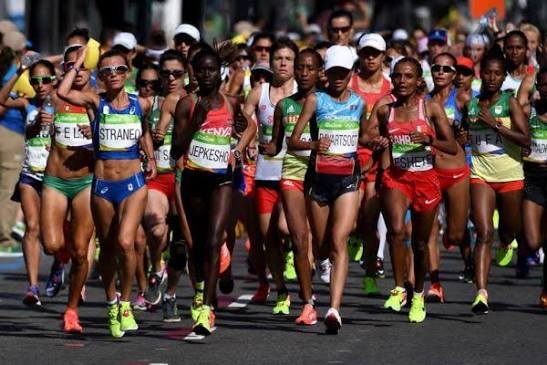
Importantly, achieving the qualifying standard will not automatically guarantee an Olympic place if the number of athletes meeting the mark exceeds the available quota. In such circumstances, priority will be given to the athletes with the strongest performances during the qualification period, within the established allocation limits.
For the men's and women's marathon, the qualification process will also introduce a significant ranking-based mechanism designed to provide greater clarity well before the final selection deadline.
According to the published regulations, any athlete ranked within the top 56 on the filtered 'Road to LA' marathon qualification list as of 19 March 2028 will be considered qualified, with the rankings calculated using a maximum of three athletes per National Olympic Committee.
The remaining 15 places will subsequently be allocated through the established dual qualification system, without displacing athletes who have already secured their positions by the March deadline.
Another important feature of the marathon qualification pathway concerns performances at Platinum Label marathons. The first five finishers at these designated races throughout the entire qualification period will automatically be considered to have achieved the Olympic entry standard and will receive priority placement on World Athletics' official 'Road to LA' qualification list.
National Olympic Committees will also retain limited flexibility when finalising their Olympic teams. They may reallocate a marathon quota place to an athlete who has not otherwise qualified, provided the selected runner has recorded at least 2:11:00 for men or 2:29:00 for women during the qualification window.
The new standards reflect the increasingly competitive nature of international marathon running, with World Athletics explaining that its calculations were informed by performances from the previous four major global championships: the 2022 and 2023 World Athletics Championships, the 2025 World Championships and the Paris 2024 Olympic Games.
The governing body also considered the continuing improvement in marathon performance levels, particularly the trend towards faster winning and qualifying times during Olympic years, when performances have historically been approximately 30 to 60 seconds quicker than ordinary projections.
With the marathon qualification window opening in November 2026, elite runners now have a clearly defined target as they begin planning their campaigns towards Los Angeles. The coming months and seasons will be crucial for athletes seeking to establish themselves among the world's leading marathoners and secure a place in the Olympic conversation.
The Los Angeles 2028 Olympic athletics programme will feature 23 events for men and 23 for women, alongside two mixed relay events. The Games are scheduled to take place from 15 to 30 July 2028, with athletics once again expected to provide some of the most compelling moments of the Olympic competition.
World Athletics is expected to launch its official 'Road to LA' qualification monitoring platform during the latter part of 2027, allowing athletes, national federations and athletics fans to follow the developing Olympic qualification race.
With the qualifying standards now officially published, the countdown to the Los Angeles Olympic marathon has entered a new phase, setting the stage for an intense international battle as the world's finest distance runners chase their Olympic dreams.
by Erick Cheruiyot for My Best Runs.
Login to leave a comment
Latest Running News
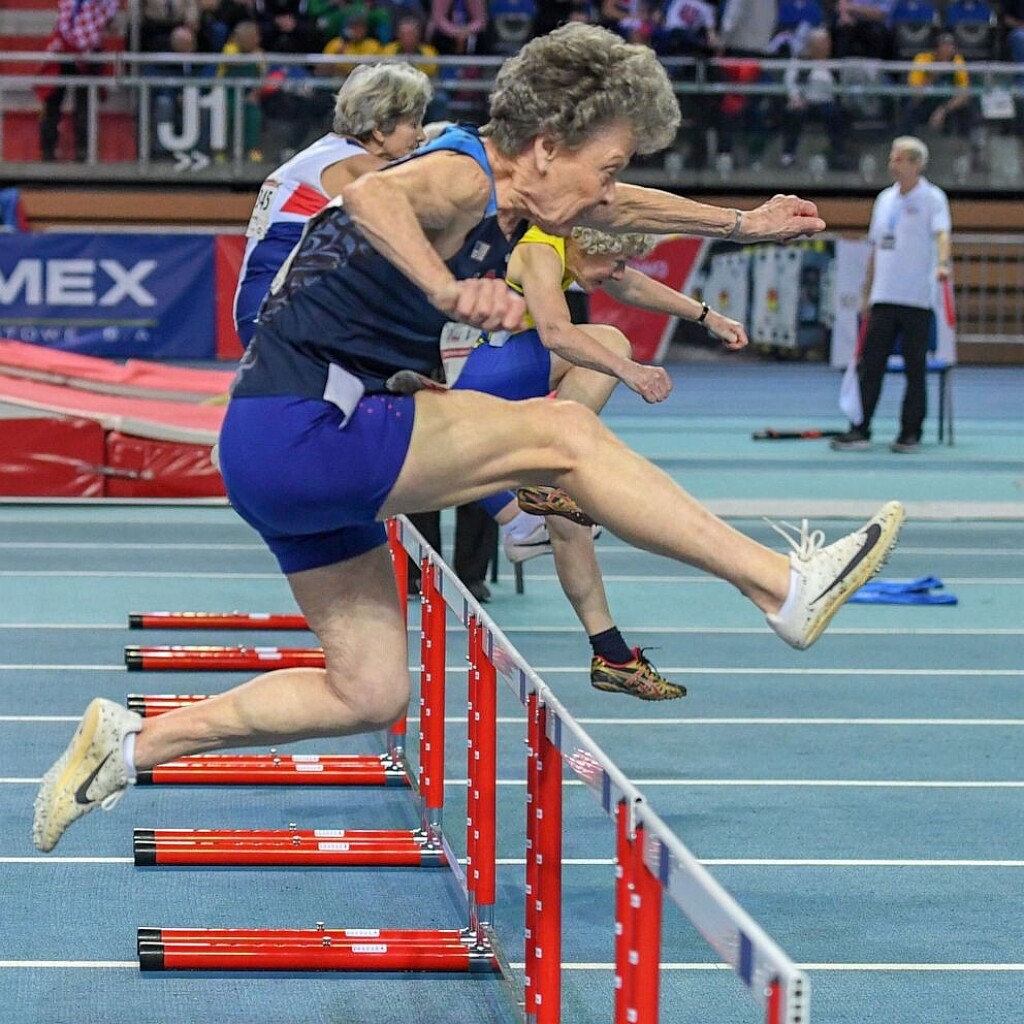
Age Is Just A Number! 91-Year-Old Flo Meiler Continues To Shatter World Records After Starting Athletics At 60!
At an age when many people have long stepped away from competitive sport, 91-year-old American athletics sensation Florence “Flo” Meiler is continuing to rewrite the limits of what is possible in masters athletics, proving that determination, discipline and a passion for competition do not have an expiry date.
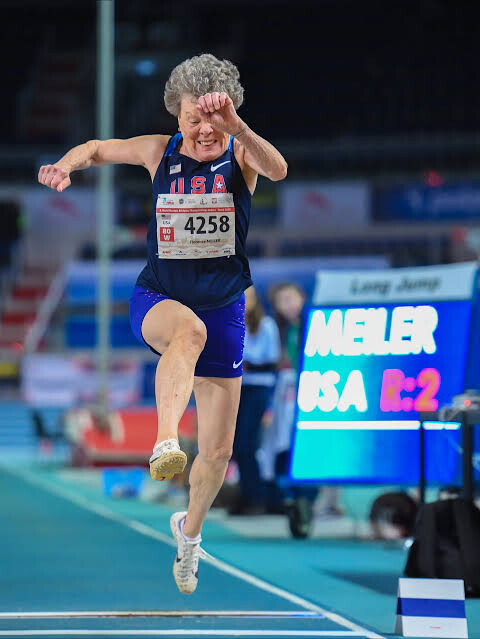
The remarkable athlete from Shelburne, Vermont, United States, has become an extraordinary figure in the masters athletics community, holding six World Masters Athletics records in the women's 90–94 age category. Her achievements span an impressive range of disciplines, including the 2,000m steeplechase, 80m hurdles, pole vault, high jump, triple jump and pentathlon.
What makes her story particularly remarkable is that Meiler did not begin competing in track and field until she was 60 years old. More than three decades later, she is still competing, setting records and inspiring athletes across generations.
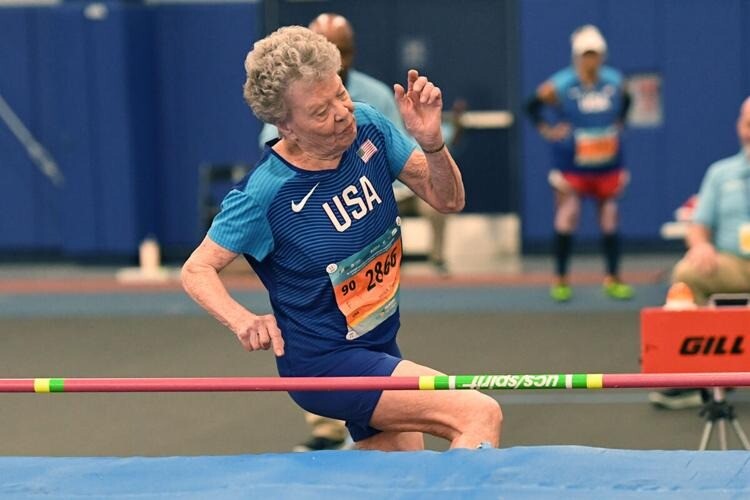
Her introduction to athletics came through her close friend Barbara Jordan, who encouraged her to try the long jump at the Vermont Senior Games. What began as an opportunity to experience something new soon developed into a lifelong sporting passion.
The two friends went on to train and compete together for approximately 20 years, challenging one another and achieving remarkable success. Their partnership was more than a sporting relationship; it was built on friendship, encouragement and a shared determination to keep improving.
However, their journey together eventually came to an end after Jordan was diagnosed with cancer. She stopped participating in sport and passed away in 2020 at the age of 85. Meiler has openly spoken about missing her longtime friend, remembering the special bond they shared on and off the track.
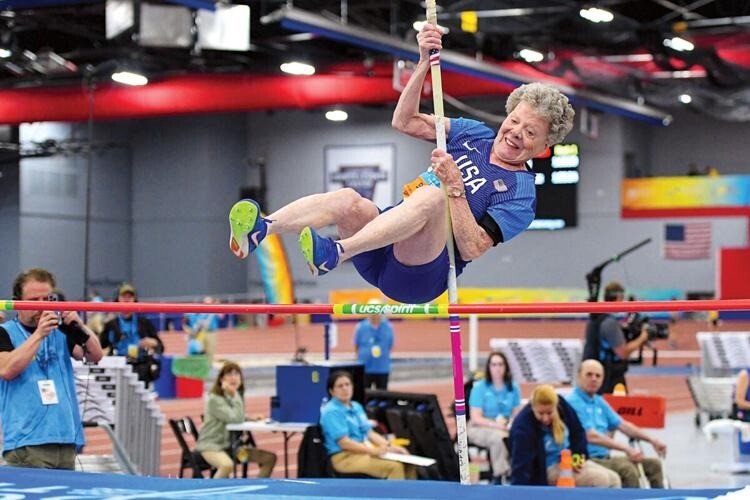
Despite the emotional loss, Meiler has continued pursuing the passion they built together. Training without her longtime companion has not always been easy, but she has maintained her competitive determination and continues to honour those memories through her performances.
According to World Masters Athletics, her six world records in the 90–94 age category demonstrate extraordinary versatility, particularly in technically demanding events such as pole vault, hurdles and the multi-event pentathlon.
Her achievements are also a reminder that masters athletics offers opportunities for people to remain competitive, discover new sporting interests and pursue ambitious goals well beyond the conventional years of elite competition.
Beyond the records and medals, Meiler takes great satisfaction in knowing that her journey has encouraged other people to remain active and challenge themselves. She has spoken about the special feeling she gets when fellow athletes approach her to explain how much her achievements have inspired them.
Her philosophy is beautifully captured in three simple words she previously shared with the Olympic Channel: “Never too late.”
At 91, Flo Meiler is not simply collecting records; she is challenging perceptions about ageing and demonstrating that the desire to compete, improve and achieve something extraordinary can remain alive throughout life.
Her story is a powerful reminder that sporting dreams do not necessarily have to begin in childhood, and that some of the most remarkable journeys can start when others might assume the opportunity has already passed.
With every training session and competition, Meiler continues to make her mark on masters athletics, offering an inspiring example of resilience, friendship and lifelong dedication to sport.
by Erick Cheruiyot for My Best Runs.
Login to leave a comment
Heartbreaking Career Decision: Latvian Olympian Agate Caune Announces Retirement From Professional Athletics At Just 22 After Remarkable Rise!
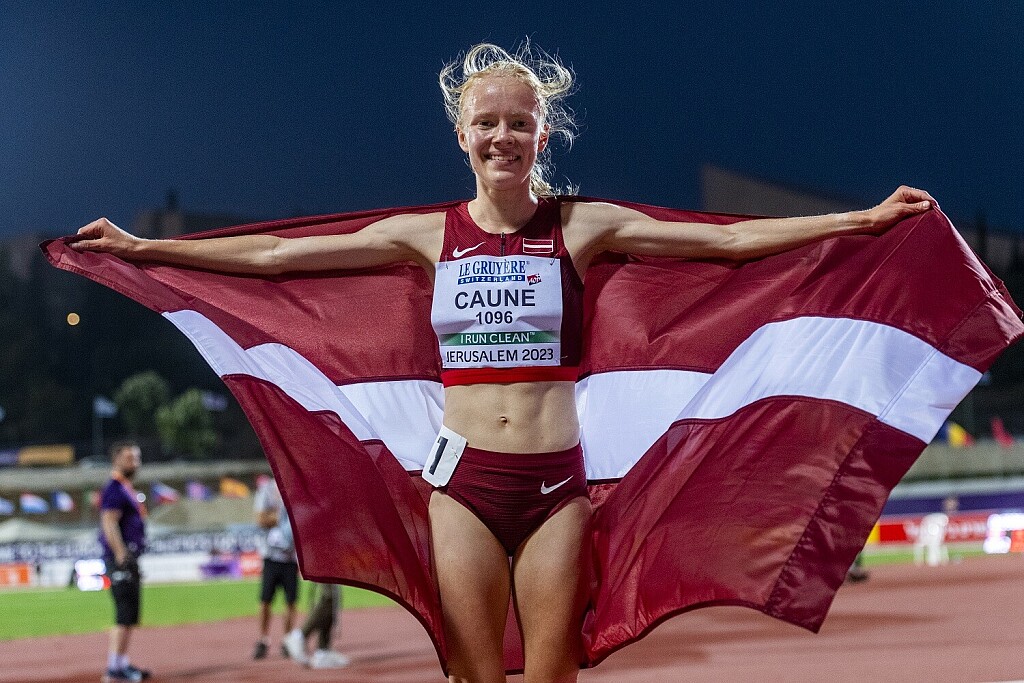
Latvian distance-running sensation Agate Caune has announced her retirement from professional athletics at just 22 years old, bringing an unexpected end to a promising career that saw her rise from a highly decorated junior athlete to an Olympian and one of Europe's most exciting young distance-running talents.
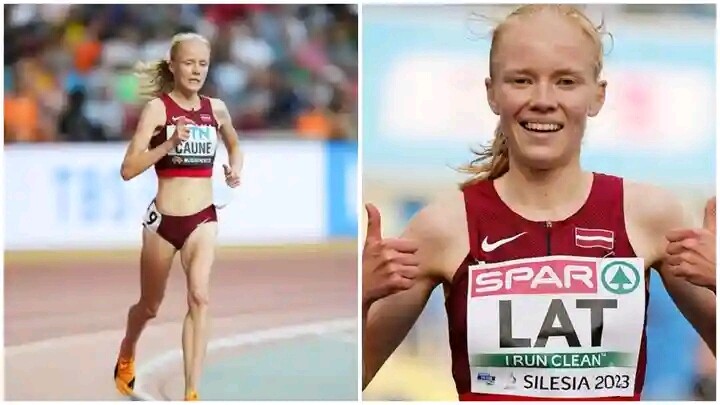
Caune made the announcement on Monday, November 9, opening up about the difficult experiences behind her decision to walk away from competitive athletics at an age when many distance runners are only beginning to reach their full potential.
In reflecting on her journey, the young Latvian revealed that her career was not always as straightforward as it appeared from the outside. She spoke candidly about periods when she questioned whether her body could continue coping with the physical demands of professional running and whether she would ever achieve the performances she had worked so hard to reach.
She also disclosed that certain hurtful words and experiences affected her more deeply than those around her may have realised, offering a glimpse into the personal challenges she faced away from the competition arena.
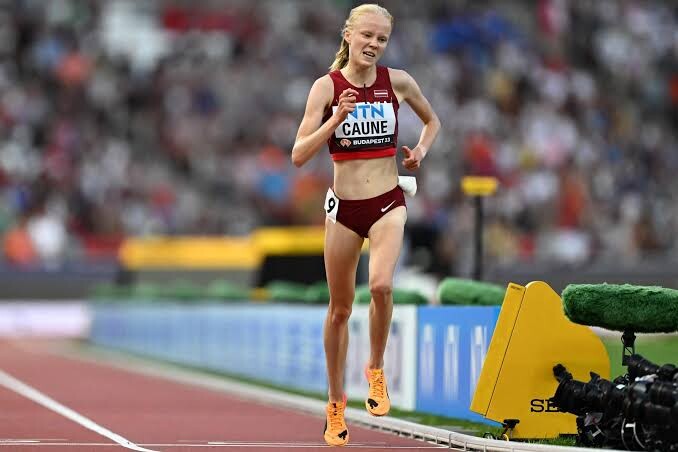
Despite the difficult moments, Caune looked back on her athletics journey with gratitude, emphasising that the experiences and achievements she collected along the way had given her more than she could have imagined.
"Some may say my athletic career was short, but I would say it was long enough to experience and achieve a lot," she reflected.
She also expressed appreciation to the people who supported her throughout her career, extending her gratitude to her coaches, physiotherapists, doctors, family members, supporters and everyone who played a part in her development and stood beside her during both the successful and challenging periods.
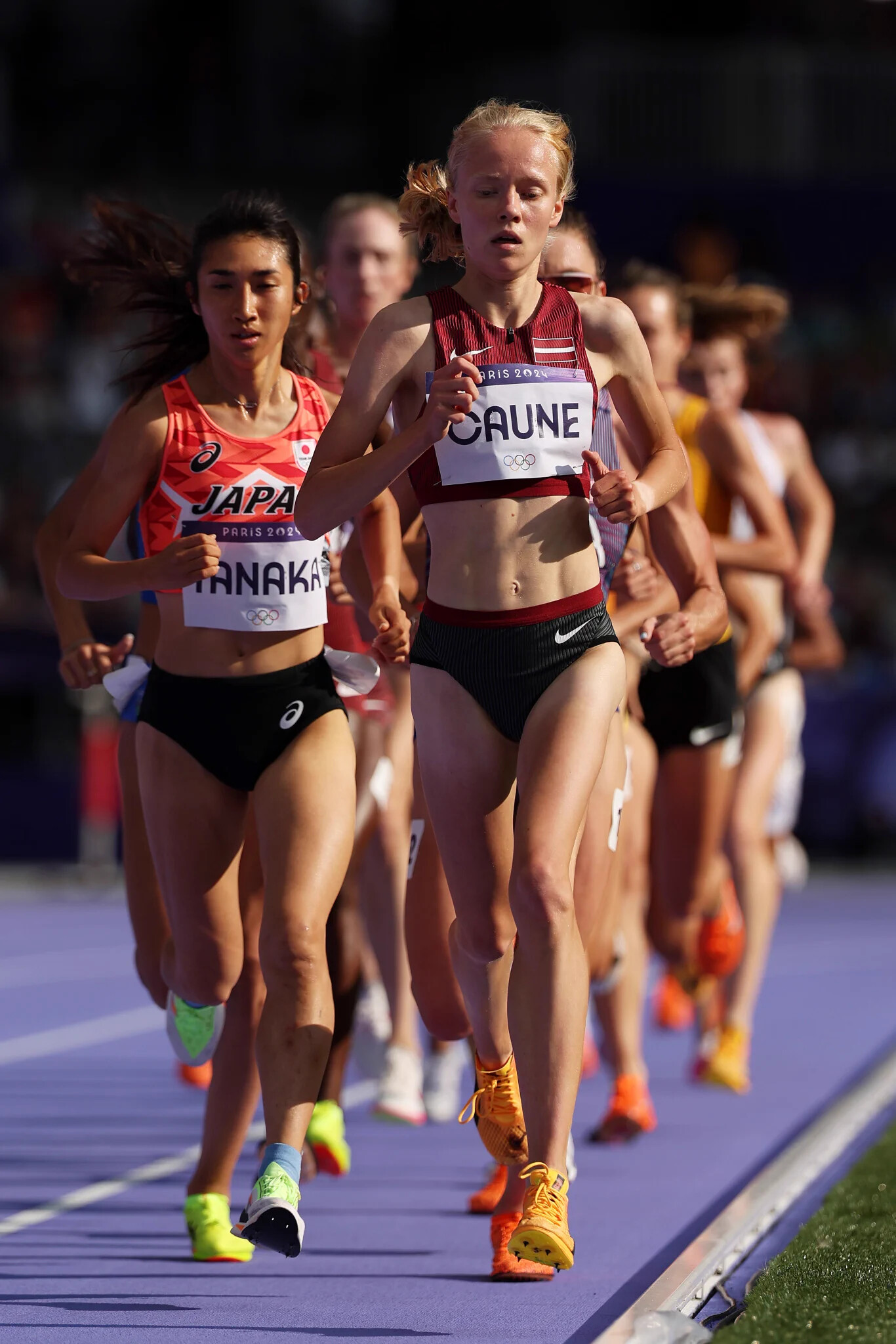
Although she is stepping away from professional competition, Caune has made it clear that running itself is not leaving her life. She intends to continue running for fitness, personal enjoyment and occasionally alongside friends, while turning her attention towards new ambitions, opportunities and challenges beyond professional sport.
Her departure marks the conclusion of a career that delivered several outstanding achievements, particularly during her remarkable junior years. Caune first attracted international attention at the 2022 World Athletics U20 Championships in Cali, Colombia, where she secured silver in the women's 5000m, establishing herself among the most promising young distance runners in Europe.
She continued her impressive progression in 2023, producing a memorable double victory at the European Athletics U20 Championships in Jerusalem, Israel, where she captured gold medals in both the 3000m and 5000m. The performances confirmed her status as one of the continent's leading emerging talents.
That same year, she added another significant achievement by winning the women's 5000m title at the European Games in Poland, further strengthening her growing reputation on the international stage. She also established several Latvian age-group records during her development, underlining the scale of her potential.
One of the defining moments of her career came at the 2023 World Athletics Championships in Budapest, Hungary, where she demonstrated remarkable courage against some of the biggest names in women's distance running.
Competing in the 5000m heats, Caune took an aggressive approach, surging into a commanding lead ahead of established stars including Ethiopia's Gudaf Tsegay and Kenya's Beatrice Chebet. Although the experienced contenders eventually caught and passed her in the closing stages, her fearless performance earned her a place in the final and attracted widespread attention.
In 2024, she reached another major milestone when she represented Latvia in the women's 5000m at the Paris Olympic Games, taking her place among the world's finest distance runners on the biggest sporting stage.
Her competitive journey also extended beyond the track, with Caune exploring road racing as part of her development. During the 2026 season, she competed in the women's half marathon at the World Athletics Road Running Championships, finishing 72nd in 1:14:27.
For an athlete who had achieved so much in such a relatively short period, the decision to leave professional athletics at 22 represents a particularly unexpected turning point. Her journey, however, is a reminder that the life of an elite athlete involves challenges that are not always visible through medals, records and championship appearances.
From junior championship podiums and European titles to the World Championships and Olympic Games, Caune leaves professional competition having represented Latvia on some of the sport's biggest stages.
While her professional racing career has come to an end, her connection with running remains. The Latvian now looks forward to a different chapter, one in which she can enjoy the sport without the pressures and demands of elite competition, while pursuing new goals beyond the athletics track.
by Erick Cheruiyot for My Best Runs.
Login to leave a comment
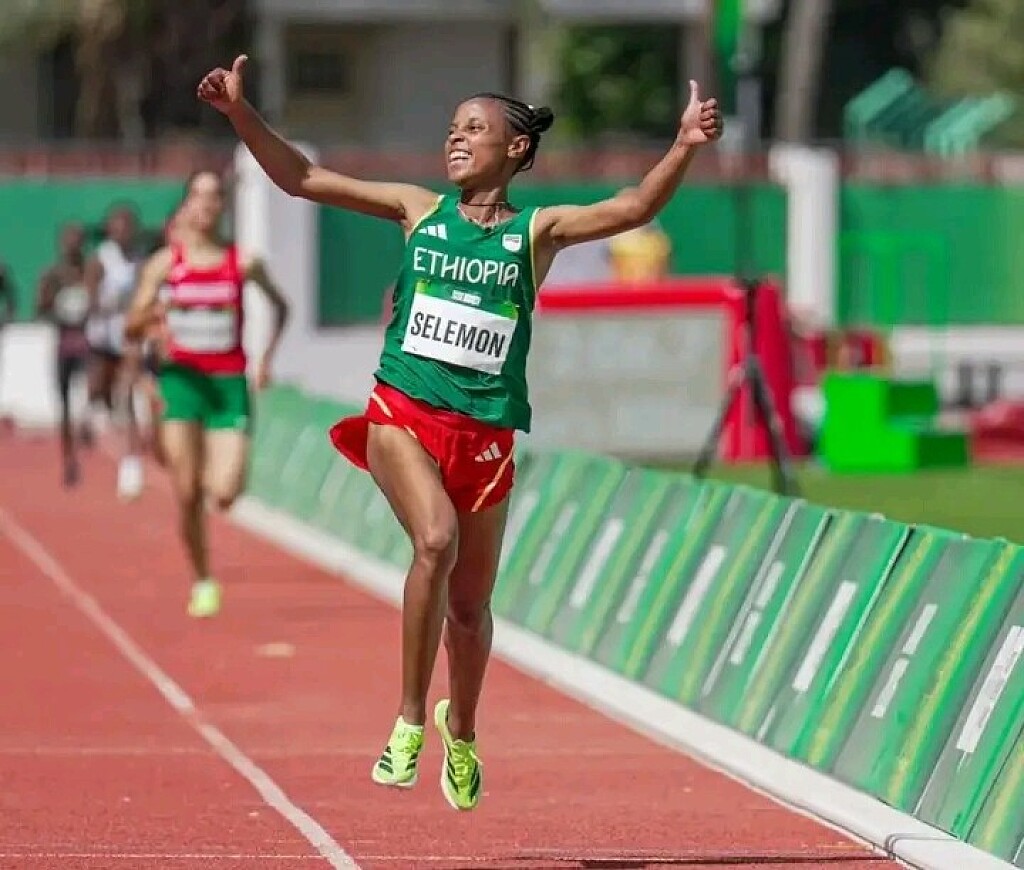
Ethiopia’s Netsanet Selemon Claims Youth Olympic 800m Gold As The Philippines’ Naomi Cesar Makes History With Silver In Dakar!
Ethiopia’s Netsanet Selemon delivered a commanding performance to capture the women’s 800m title at the 2026 Summer Youth Olympic Games in Dakar, Senegal, while the Philippines celebrated a historic breakthrough as Naomi Marjorie Cesar secured the silver medal.
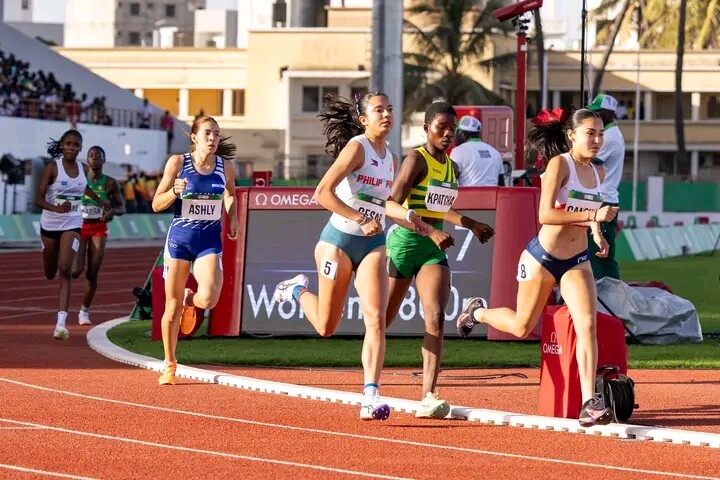
Selemon produced an impressive performance in Monday’s final on November 9, crossing the finish line in 2:04.43 to take the gold medal and establish a new personal best. The Ethiopian showcased her strength and composure over the two laps, securing another major achievement for Ethiopia’s celebrated middle-distance running tradition.
The biggest talking point of the race, however, was Cesar’s outstanding second-place finish. Representing the Philippines, she clocked 2:09.34 to claim the silver medal, delivering a landmark result for her country on the international athletics stage. Her podium appearance marked a significant milestone for Philippine athletics and placed her among the standout young performers of the competition.
In a particularly memorable achievement, Cesar became the first Philippine athletics athlete to win a medal in Youth Olympic Games history. Her silver also gave the Philippines its first medal at the 2026 edition of the Games in Dakar, making her performance an important moment for the country's sporting history and a source of inspiration for the next generation of Filipina athletes.
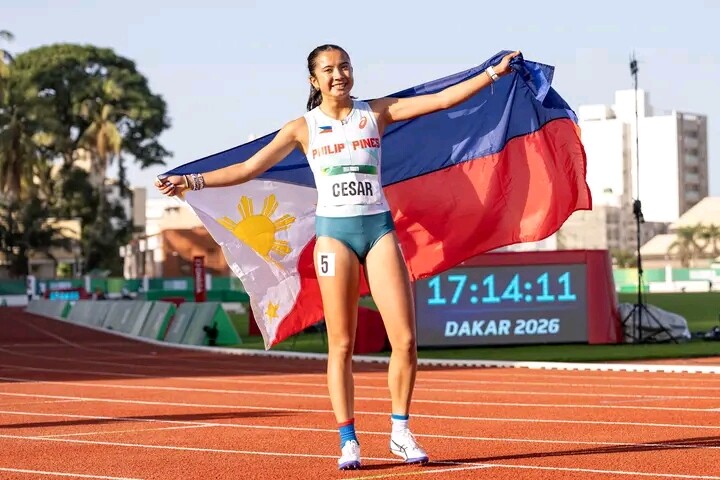
Cesar's achievement was even more remarkable considering the competitive nature of the final. The young Filipina demonstrated determination and confidence against an international field, securing her place on the podium and bringing considerable attention to the development of middle-distance running in the Philippines. Her breakthrough represents a significant step forward for Philippine athletics on the global stage.
Morocco’s Khadija Elmostaqim completed the podium, taking bronze in 2:10.05 after a strong performance, while Slovenia’s Masa Weber finished fourth in 2:10.58.
Togo’s Yvette Kpatcha placed fifth in 2:15.80, followed by Chile’s Valentina Cancino in sixth with 2:18.59. Spain’s Benítez Ashly finished seventh in 2:21.07, Botswana’s Mpho Maano was eighth in 2:26.58, and Mali’s Awa Diarra completed the top nine in 2:31.29.
The final brought together emerging middle-distance talents from different continents, highlighting the growing international depth of women’s 800m running and providing a glimpse of athletes who could make their mark at senior level in the years ahead.
For Ethiopia, Selemon’s victory added another gold-medal moment to the country’s rich athletics legacy. For the Philippines, Cesar’s silver-medal achievement provided one of the most significant stories of the competition, underlining the growing reach of athletics beyond its traditional powerhouses.
The women’s 800m final in Dakar will be remembered for Selemon’s gold-medal performance and Cesar’s historic breakthrough, as two young athletes from different continents made their mark on the Youth Olympic stage.
by Erick Cheruiyot for My Best Runs.
Login to leave a comment
Barefoot Warrior At 75! Idomeneas Avramakis Completes Athens Marathon In Ancient Greek Armour To A Thunderous Ovation!
At an age when many people have long stepped away from competitive sport, 75-year-old Idomeneas Avramakis continues to demonstrate that determination, resilience and an extraordinary love for running can overcome challenges that would force many others to give up.
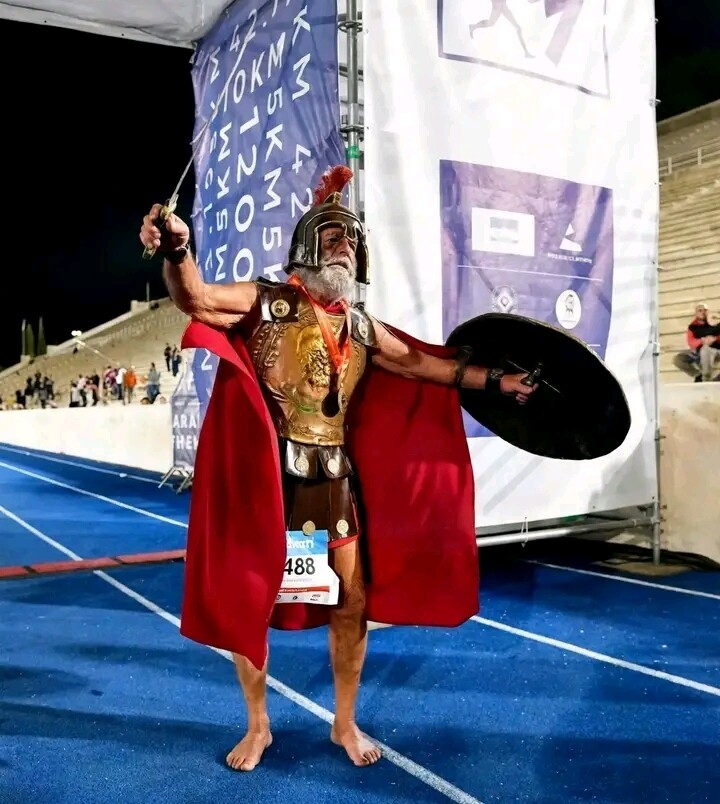
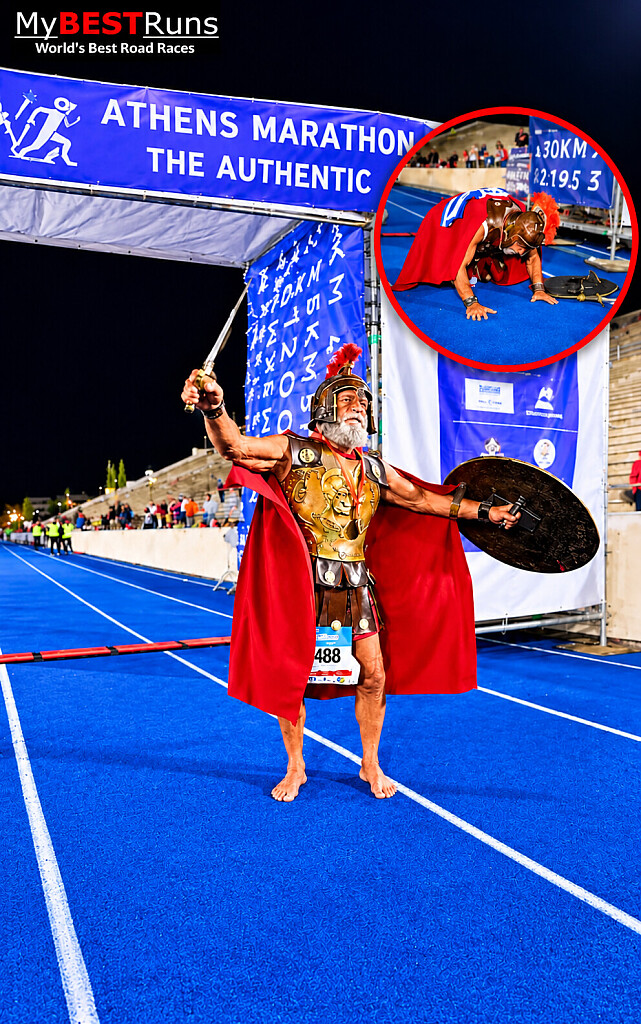
The Greek veteran became one of the most memorable figures at the 43rd Athens Authentic Marathon on Sunday, November 8, 2026, after completing the historic race barefoot while dressed as an ancient Greek hoplite warrior. Wearing a traditional-style bronze helmet, a red cloak and carrying a shield and sword, Avramakis brought the event to a remarkable conclusion, receiving a warm ovation as he entered the iconic Panathenaic Stadium.
Representing Heraklion, Crete, the retired employee of the Region of Crete took on the demanding 42.195-kilometre course in an outfit inspired by the ancient Greek soldiers associated with the Battle of Marathon. His arrival at approximately 6:15 p.m., more than nine hours after the race began, marked the closing chapter of an extraordinary day of marathon running.
However, behind the unusual appearance lies a deeply personal story of survival, recovery and an unwavering commitment to life.
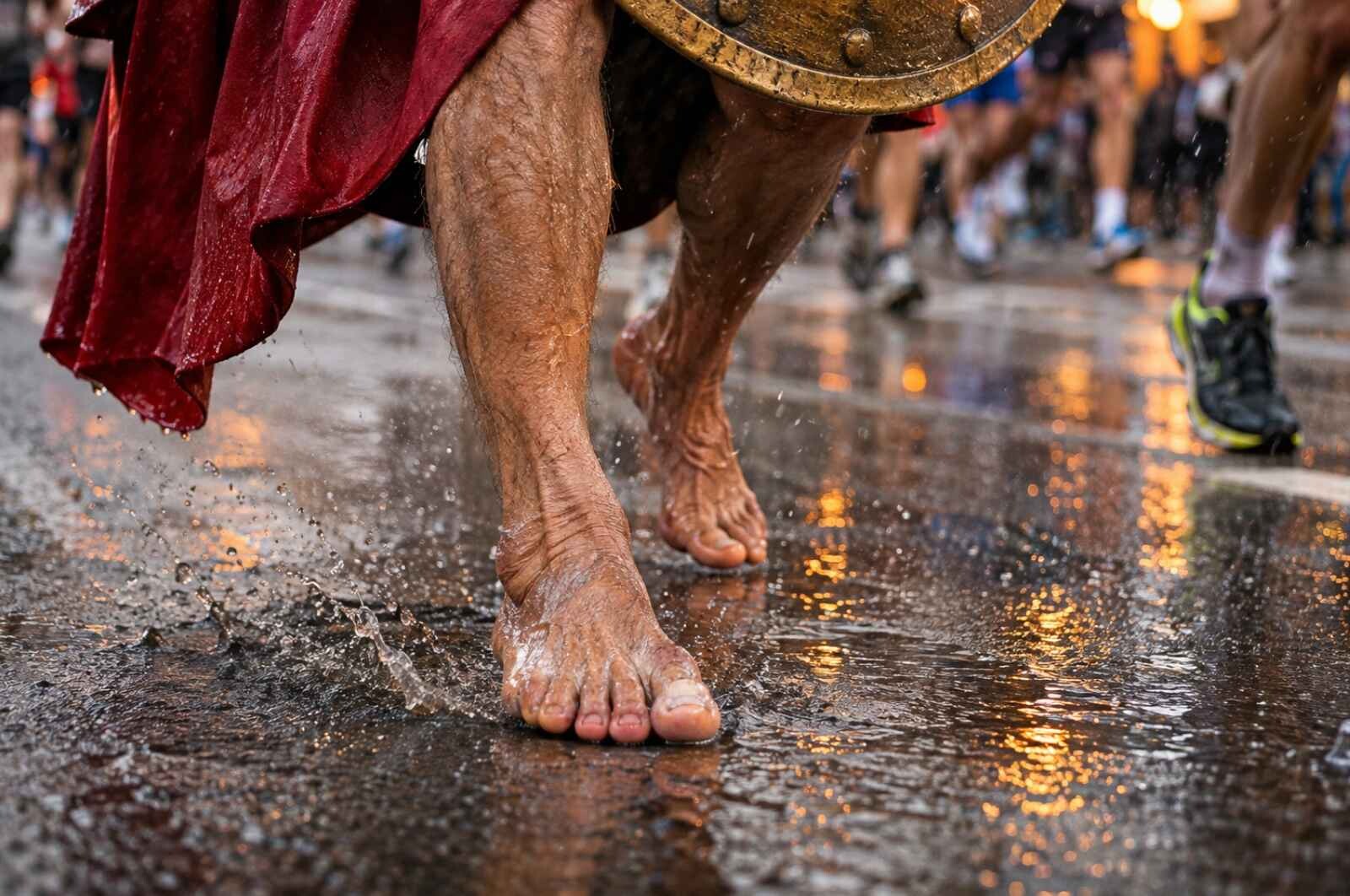
Avramakis' journey into barefoot running and ancient Greek warrior attire began approximately 18 years ago, following a serious health crisis that left him fighting for his life. He spent about a month in intensive care and reportedly remained in a coma during that period. Following his recovery, he made a remarkable return to physical activity, abandoning running shoes and choosing to compete barefoot.
Since then, running without shoes has become an essential part of his identity, while the hoplite costume has symbolised what he considers a second opportunity at life. His participation in the Athens Authentic Marathon carries additional meaning because the event celebrates the legendary journey of Pheidippides, the ancient Greek messenger associated with the historic run from Marathon to Athens.
His determination was tested once again in 2022 when he suffered serious injuries in a road accident. The incident required surgery, during which doctors inserted a metal rod into his leg. Despite the lasting difficulties associated with the injury, Avramakis refused to abandon his passion for distance running.
Instead, he gradually returned to training and competition, demonstrating remarkable perseverance. In 2024, at the age of 73, he completed the Athens Authentic Marathon in 8 hours and 47 minutes, despite challenging weather conditions.
His latest appearance at 75 further underlined his extraordinary consistency. According to reports, he has completed more than 54 marathons throughout his running journey, although he has admitted that he has lost count of the exact number.
Avramakis also maintains an active lifestyle away from competition. His training reportedly includes barefoot running sessions lasting between two and a half and three and a half hours every other day, alongside swimming in the sea throughout the year and hiking in the mountains. He believes that the human body can gradually adapt to running without footwear, although his approach remains a personal choice rather than a recommendation for other runners.
The Athens course itself presents a considerable challenge, with a demanding uphill section extending through much of the middle kilometres before the route descends towards the city centre. Completing that distance barefoot, while carrying a shield and sword and wearing a warrior's costume, makes his achievement even more remarkable.
The historic significance of the occasion was also reflected in the atmosphere at the finish line. Sofia Sakorafa, president of the Hellenic Athletics Federation (SEGAS), was present to welcome Avramakis and personally award him his finisher's medal. After crossing the line, the 75-year-old knelt down, bringing an emotional end to his extraordinary marathon journey.
His philosophy is captured in a Greek expression he frequently repeats: "Run so that they don't run you." The saying reflects his belief in remaining active, embracing life and continuing to move forward while the opportunity exists.
He has also made it clear that unfavourable weather conditions are no reason to abandon his passion. In a previous interview with the Cretan newspaper Patris, he expressed his love for running even in heavy rain, revealing the mindset that has kept him committed to the sport for nearly two decades.
Barefoot marathon running has a remarkable history, most famously associated with Ethiopia's Abebe Bikila, who captured Olympic marathon gold at the 1960 Rome Games without shoes. Although Avramakis' story is different, his appearance in Athens once again highlights the many ways people connect with the sport and its history.
The 2026 Athens Authentic Marathon attracted a record 85,000 participants from 124 countries across its various race categories, making it a landmark edition of the historic event. Ethiopia's Manazot Siyum Taferi won the men's marathon in a course-record time of 2:10:03, but as the evening approached, the spotlight shifted to a 75-year-old barefoot runner whose determination had captured the imagination of spectators.
For Avramakis, however, the greatest victory was never about finishing ahead of another competitor. It was about returning to the starting line despite surviving a life-threatening illness, overcoming a serious accident and continuing to pursue his passion well into his seventies.
He may have been the final athlete to complete the 2026 Athens Authentic Marathon, but his arrival became one of the day's most unforgettable moments, proving that sometimes the most inspiring marathon stories are not written by those who reach the finish line first, but by those who refuse to stop moving.
by Erick Cheruiyot for My Best Runs.
Login to leave a comment
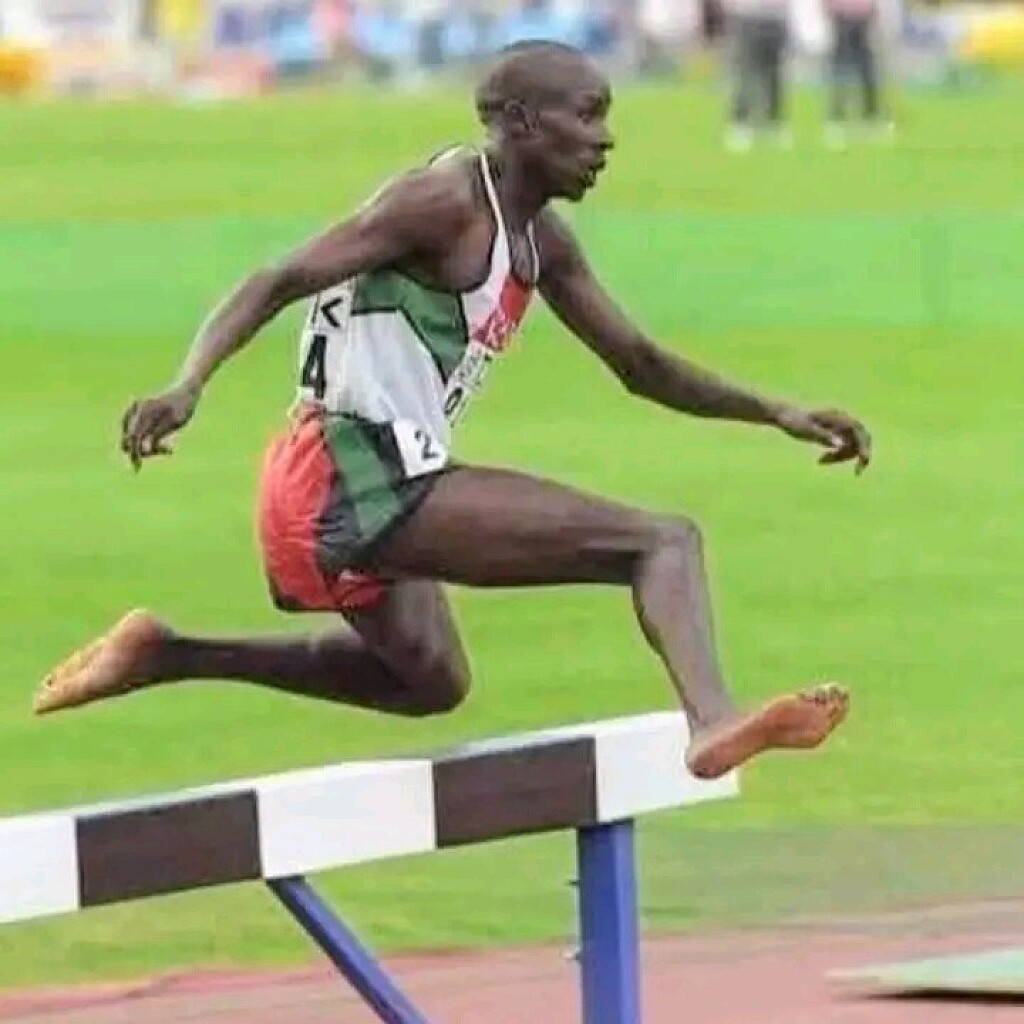
Barefoot To World Champion! The Extraordinary Story Of Christopher “Jogoo” Koskei, Kenya’s Fearless Steeplechase Legend!
In modern athletics, where advanced running shoes, carbon technology and highly engineered equipment have become part of the pursuit of excellence, the story of one Kenyan distance runner stands out for an entirely different reason.
His greatest statement to the world was made without wearing a pair of running shoes.
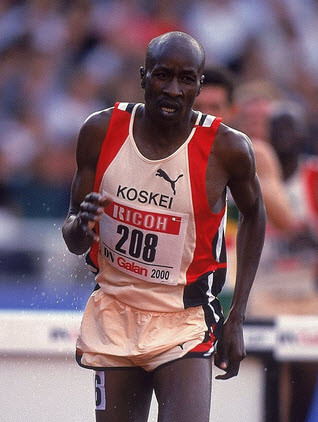
His name was Christopher Koskei, popularly known as “Jogoo” (The Rooster), a fearless Kenyan steeplechaser whose unconventional approach to competition, remarkable determination and eventual rise to world championship glory made him one of the most fascinating characters in Kenyan athletics history.
Long before running barefoot became a talking point in international athletics, Koskei had already demonstrated that extraordinary talent and determination could overcome expectations.
Koskei announced himself on the global stage at the 1995 World Championships in Gothenburg, Sweden, where he delivered one of the most memorable performances of his career.
While the world's leading steeplechasers prepared for battle in their racing spikes, the Kenyan took to the track barefoot. It was an unusual sight in a championship where every competitive advantage mattered. Yet Koskei appeared completely comfortable with his decision.
As the race unfolded, he demonstrated his exceptional ability over the barriers and water jumps, holding his own against some of the world's finest specialists.
When the competition was over, he had secured the silver medal in the men's 3000m steeplechase, establishing himself as one of Kenya's most remarkable distance runners. His performance became an unforgettable part of the championship's history, proving that his approach to the sport was anything but ordinary.
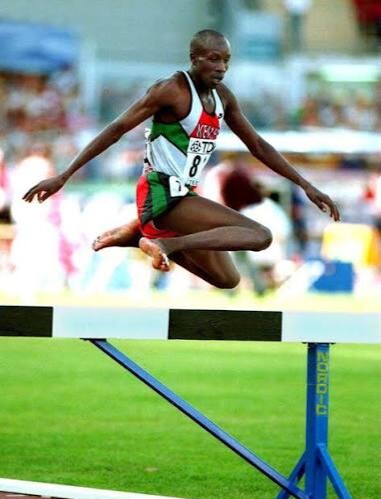
However, Koskei's international breakthrough was not an overnight success. Two years earlier, at the 1993 World Cross Country Championships, he had already demonstrated his potential by winning silver in the junior men's race.
The result placed him among Kenya's promising young distance-running talents and offered an early indication of the remarkable career that would follow. His ability to compete at the highest level across different terrains and disciplines reflected the natural endurance and competitive spirit that would later define his steeplechase performances.
Koskei became widely recognised by his nickname, Jogoo, which means rooster in Kiswahili. The name suited his personality and competitive identity. He was known for his fearless approach, confidence and distinctive presence on the athletics stage.
He was not the kind of athlete who needed to follow conventional expectations to make his mark. His barefoot appearances, particularly at the 1995 World Championships, made him a memorable figure among athletics followers and added another dimension to his already distinctive personality.
For many Kenyan athletics fans, Jogoo represented a generation of runners whose confidence came from their abilities rather than the equipment they wore.
Following his breakthrough in Gothenburg, Koskei experienced challenging seasons that threatened to derail his progress. His performances declined during 1996 and 1997, while his 1998 season also proved difficult. At one point, he was so discouraged that he considered walking away from competitive running.
However, an important meeting with Italian coach Renato Canova in October 1998 would change the direction of his career.
Canova helped him rediscover his confidence and rebuild his training approach, giving the Kenyan another opportunity to fulfil his enormous potential.
The transformation became evident in 1999. At the World Championships in Seville, Spain, Koskei returned to the global stage with renewed determination and delivered the performance of his life.
In the men's 3000m steeplechase final on August 22, 1999, he defeated a strong international field to claim the gold medal, finishing ahead of compatriot Wilson Boit Kipketer, who took silver, while Morocco's Ali Ezzine secured bronze.
Four years after winning silver in Gothenburg, Koskei had reached the summit of world athletics. The barefoot runner who had attracted worldwide attention was now a World Champion.
It was one of the remarkable comeback stories in Kenyan distance-running history, demonstrating the importance of perseverance and the ability to overcome difficult periods in an athletic career.
Koskei's triumph in Seville was so special that it became more than just another sporting achievement. Upon returning home to Kenya, he celebrated his historic victory in a way that would preserve the memory for generations.
According to a feature published by World Athletics in December 1999, he named one of his young sons Seville, after the Spanish city where he had won the world title. It was a beautiful tribute to the moment that transformed his career and brought him international recognition. For the family, the name would forever carry a reminder of the day their father conquered the world.
Koskei's achievements were also part of an extraordinary family athletics legacy. His younger brothers, Stephen Cherono and Abraham Cherono, would go on to establish themselves as accomplished steeplechasers in their own right.
Stephen later changed his name to Saif Saaeed Shaheen after representing Qatar and went on to become one of the greatest steeplechasers in history, setting the world record of 7:53.63 in Brussels in 2004.
Abraham also enjoyed an impressive career, winning silver in the 3000m steeplechase at the 1998 World Junior Championships and representing Kenya at major international competitions.
It was an exceptional family connection, with three brothers making their mark in the same demanding discipline and contributing to Kenya's remarkable reputation in steeplechase running.
Although Koskei eventually competed in running shoes, his barefoot performances had already secured their place in athletics history.
His story was never simply about refusing to wear shoes. It was about individuality, self-belief and the courage to compete differently in a sport where athletes constantly search for advantages.
He demonstrated that world-class performances could come from extraordinary determination, years of hard work and an unwavering belief in one's abilities.
Today, when modern athletics is increasingly influenced by technology, equipment and scientific innovation, the story of Christopher Koskei remains a fascinating reminder of an earlier generation.
From the barefoot silver medallist in Gothenburg in 1995 to the world champion in Seville in 1999, Jogoo carved out a unique place in Kenyan athletics history.
He was more than a fearless steeplechaser. He was a character, a comeback champion and a member of a remarkable running family whose influence extended across international athletics.
Christopher “Jogoo” Koskei's legacy remains a powerful chapter in Kenya's rich distance-running history — a story of courage, resilience and a champion who proved that greatness is ultimately measured by what an athlete achieves, not simply by what they wear.
by Erick Cheruiyot for My Best Runs.
Login to leave a comment
