

Running News Daily
Running News Daily is edited by Bob Anderson and team. Send your news items to bob@mybestruns.com Advertising opportunities available.
Index to Daily Posts · Sign Up For Updates · Run The World Feed
Articles tagged #Jogoo
Today's Running News
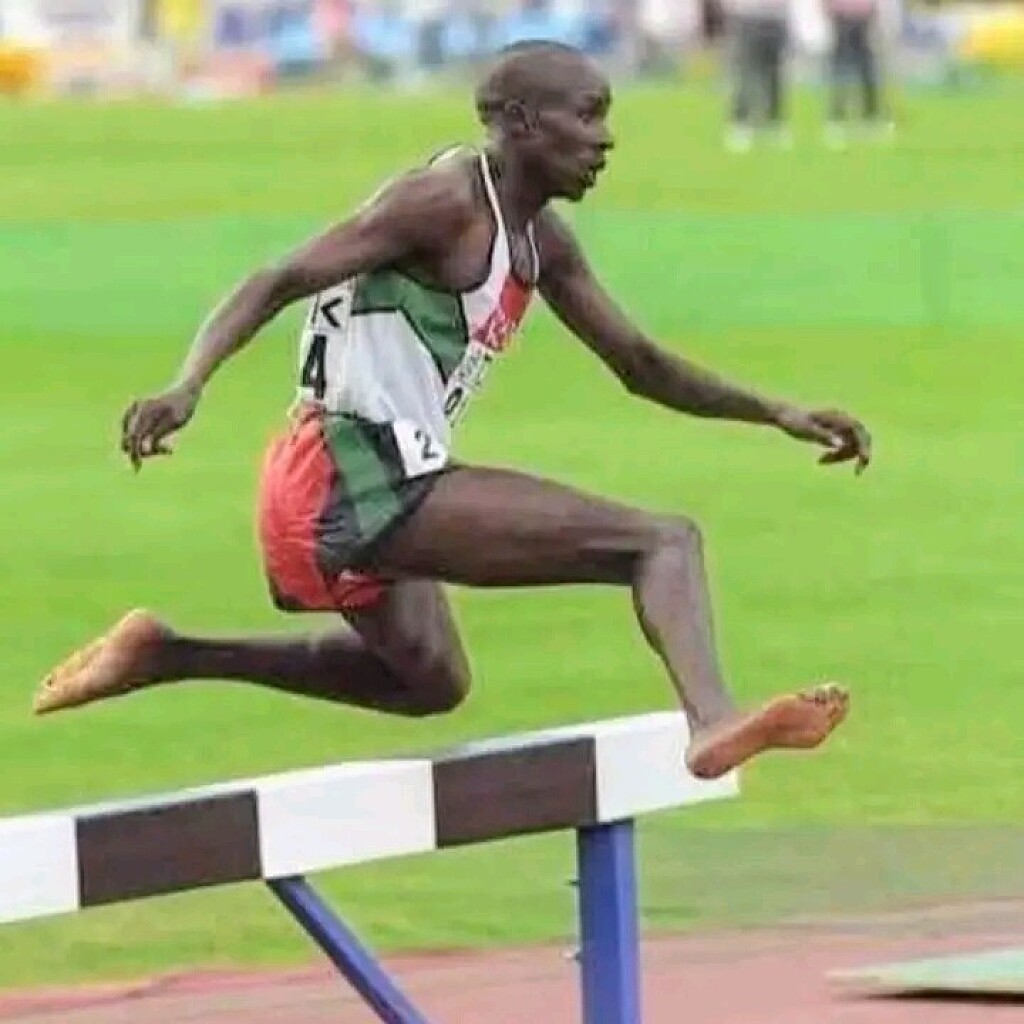


Barefoot To World Champion! The Extraordinary Story Of Christopher “Jogoo” Koskei, Kenya’s Fearless Steeplechase Legend!
In modern athletics, where advanced running shoes, carbon technology and highly engineered equipment have become part of the pursuit of excellence, the story of one Kenyan distance runner stands out for an entirely different reason.
His greatest statement to the world was made without wearing a pair of running shoes.
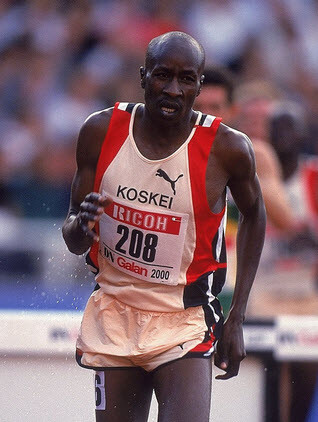
His name was Christopher Koskei, popularly known as “Jogoo” (The Rooster), a fearless Kenyan steeplechaser whose unconventional approach to competition, remarkable determination and eventual rise to world championship glory made him one of the most fascinating characters in Kenyan athletics history.
Long before running barefoot became a talking point in international athletics, Koskei had already demonstrated that extraordinary talent and determination could overcome expectations.
Koskei announced himself on the global stage at the 1995 World Championships in Gothenburg, Sweden, where he delivered one of the most memorable performances of his career.
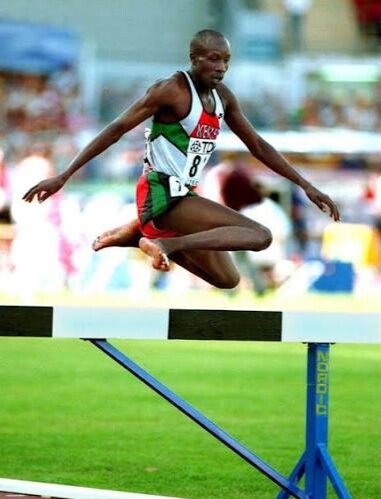
While the world's leading steeplechasers prepared for battle in their racing spikes, the Kenyan took to the track barefoot. It was an unusual sight in a championship where every competitive advantage mattered. Yet Koskei appeared completely comfortable with his decision.
As the race unfolded, he demonstrated his exceptional ability over the barriers and water jumps, holding his own against some of the world's finest specialists.
When the competition was over, he had secured the silver medal in the men's 3000m steeplechase, establishing himself as one of Kenya's most remarkable distance runners. His performance became an unforgettable part of the championship's history, proving that his approach to the sport was anything but ordinary.
However, Koskei's international breakthrough was not an overnight success. Two years earlier, at the 1993 World Cross Country Championships, he had already demonstrated his potential by winning silver in the junior men's race.
The result placed him among Kenya's promising young distance-running talents and offered an early indication of the remarkable career that would follow. His ability to compete at the highest level across different terrains and disciplines reflected the natural endurance and competitive spirit that would later define his steeplechase performances.
Koskei became widely recognised by his nickname, Jogoo, which means rooster in Kiswahili. The name suited his personality and competitive identity. He was known for his fearless approach, confidence and distinctive presence on the athletics stage.
He was not the kind of athlete who needed to follow conventional expectations to make his mark. His barefoot appearances, particularly at the 1995 World Championships, made him a memorable figure among athletics followers and added another dimension to his already distinctive personality.
For many Kenyan athletics fans, Jogoo represented a generation of runners whose confidence came from their abilities rather than the equipment they wore.
Following his breakthrough in Gothenburg, Koskei experienced challenging seasons that threatened to derail his progress. His performances declined during 1996 and 1997, while his 1998 season also proved difficult. At one point, he was so discouraged that he considered walking away from competitive running.
However, an important meeting with Italian coach Renato Canova in October 1998 would change the direction of his career.
Canova helped him rediscover his confidence and rebuild his training approach, giving the Kenyan another opportunity to fulfil his enormous potential.
The transformation became evident in 1999. At the World Championships in Seville, Spain, Koskei returned to the global stage with renewed determination and delivered the performance of his life.
In the men's 3000m steeplechase final on August 22, 1999, he defeated a strong international field to claim the gold medal, finishing ahead of compatriot Wilson Boit Kipketer, who took silver, while Morocco's Ali Ezzine secured bronze.
Four years after winning silver in Gothenburg, Koskei had reached the summit of world athletics. The barefoot runner who had attracted worldwide attention was now a World Champion.
It was one of the remarkable comeback stories in Kenyan distance-running history, demonstrating the importance of perseverance and the ability to overcome difficult periods in an athletic career.
Koskei's triumph in Seville was so special that it became more than just another sporting achievement. Upon returning home to Kenya, he celebrated his historic victory in a way that would preserve the memory for generations.
According to a feature published by World Athletics in December 1999, he named one of his young sons Seville, after the Spanish city where he had won the world title. It was a beautiful tribute to the moment that transformed his career and brought him international recognition. For the family, the name would forever carry a reminder of the day their father conquered the world.
Koskei's achievements were also part of an extraordinary family athletics legacy. His younger brothers, Stephen Cherono and Abraham Cherono, would go on to establish themselves as accomplished steeplechasers in their own right.
Stephen later changed his name to Saif Saaeed Shaheen after representing Qatar and went on to become one of the greatest steeplechasers in history, setting the world record of 7:53.63 in Brussels in 2004.
Abraham also enjoyed an impressive career, winning silver in the 3000m steeplechase at the 1998 World Junior Championships and representing Kenya at major international competitions.
It was an exceptional family connection, with three brothers making their mark in the same demanding discipline and contributing to Kenya's remarkable reputation in steeplechase running.
Although Koskei eventually competed in running shoes, his barefoot performances had already secured their place in athletics history.
His story was never simply about refusing to wear shoes. It was about individuality, self-belief and the courage to compete differently in a sport where athletes constantly search for advantages.
He demonstrated that world-class performances could come from extraordinary determination, years of hard work and an unwavering belief in one's abilities.
Today, when modern athletics is increasingly influenced by technology, equipment and scientific innovation, the story of Christopher Koskei remains a fascinating reminder of an earlier generation.
From the barefoot silver medallist in Gothenburg in 1995 to the world champion in Seville in 1999, Jogoo carved out a unique place in Kenyan athletics history.
He was more than a fearless steeplechaser. He was a character, a comeback champion and a member of a remarkable running family whose influence extended across international athletics.
Christopher “Jogoo” Koskei's legacy remains a powerful chapter in Kenya's rich distance-running history — a story of courage, resilience and a champion who proved that greatness is ultimately measured by what an athlete achieves, not simply by what they wear.
by Erick Cheruiyot for My Best Runs.
Login to leave a comment

Olympic medalists Chebet, Kibiwott promoted to corporal
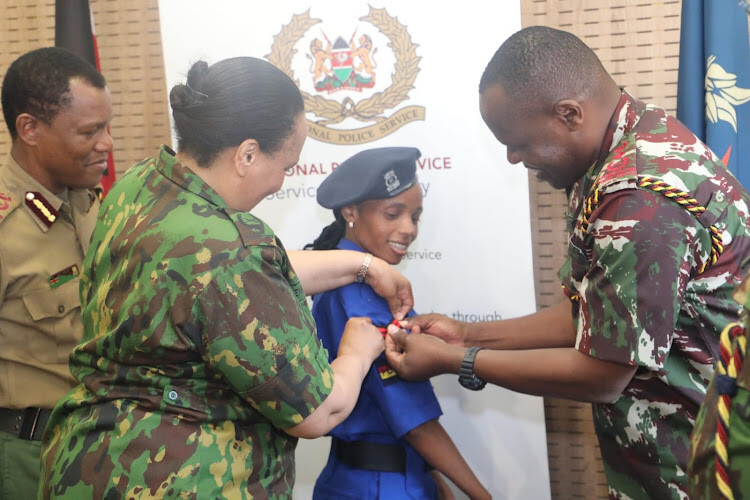
Beatrice Chebet and Abraham Kibiwott left Kenya for the Paris Olympics games as a constable in the police service, but ascended to the rank of Corporals, upon landing back.
Chebet was promoted to the rank by acting Inspector General of Police Gilbert Masengeli at Jogoo House on Wednesday, after grabbing gold in the women's 5000m and 10000m races.
Meanwhile, Kibiwott won bronze in the men’s 3000m race, to also get one star added on his sleeve, moving to the Corporal rank.
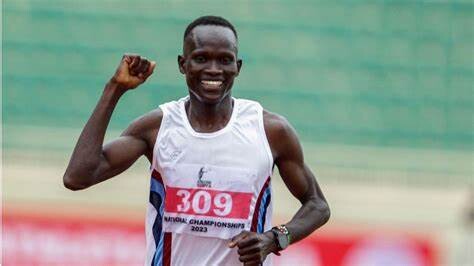
It is a custom that officers in the discipline forces are always promoted one rank higher for their stellar performances in all disciplines on the international stage.
Chebet who is based in Kericho couldn’t hide her joy, saying she achieved her goals through hard work and discipline and promised to continue making Kenya proud.
“It feels good to be promoted and I thank my boss Masengeli, for awarding my efforts handsomely. I also appreciate my collogues, teammates, and my family for pushing me towards this achievement.”
The Olympics debutant beat an experienced field of runners on August 6t, to claim the 5000m gold in 14 minutes and 28.56 seconds, finishing ahead of compatriot Faith Kipyegon and Dutch legend Sifan Hassan respectively.
The 24-year-old national police officer is based in Kericho and is coached by Peter Bii.
The best performer in team Kenya’s camp completed her historic double on August 9th 2024 in style grabbing the 10,000m race in 39:43.25.
She beat Italy's Nadia Batocletti and Sifan in that order, at the iconic Stade de France.
Chebet’s historic performance places her among the legends of long-distance running, becoming only the third woman to win both events at the same Olympics.
Meanwhile, Abraham Kibiwott who is an Administration police officer based in APTC training school Embakasi, also made a courtesy call to his boss for his coronation hours after landing from Paris.
Kibowott who was among the five Kenyan bronze medalists, clocked 8:06.47, to finish behind America’s Kenneth Rooks and Morocco’s Soufiane El Bakkali.
The 28-year-old who hails from Uasin Gishu County, has a personal best of 8:05.51 minutes.
He also claimed bronze in the 2023 World Championships in Budapest and the 2016 Durban, African Championships.
“I did my best, but I couldn’t get the desired gold. I will continue working towards it. I want to thank my boss for acknowledging my efforts, I am so happy to have climbed one rank higher,” said Kibiwott.
Both athletes proceeded to Eldoret the City of Champions where President William Ruto, hosted the Kenyan Olympics for a breakfast meeting.
President Ruto is expected to award the medalists with cash-winning bonuses.
Team Kenya finished at position 17 in Paris with 11 medals; 4 gold, 2 silver and 5 bronze medals.
by George Ajwala
Login to leave a comment
