

Running News Daily
Running News Daily is edited by Bob Anderson and team. Send your news items to bob@mybestruns.com Advertising opportunities available.
Index to Daily Posts · Sign Up For Updates · Run The World Feed
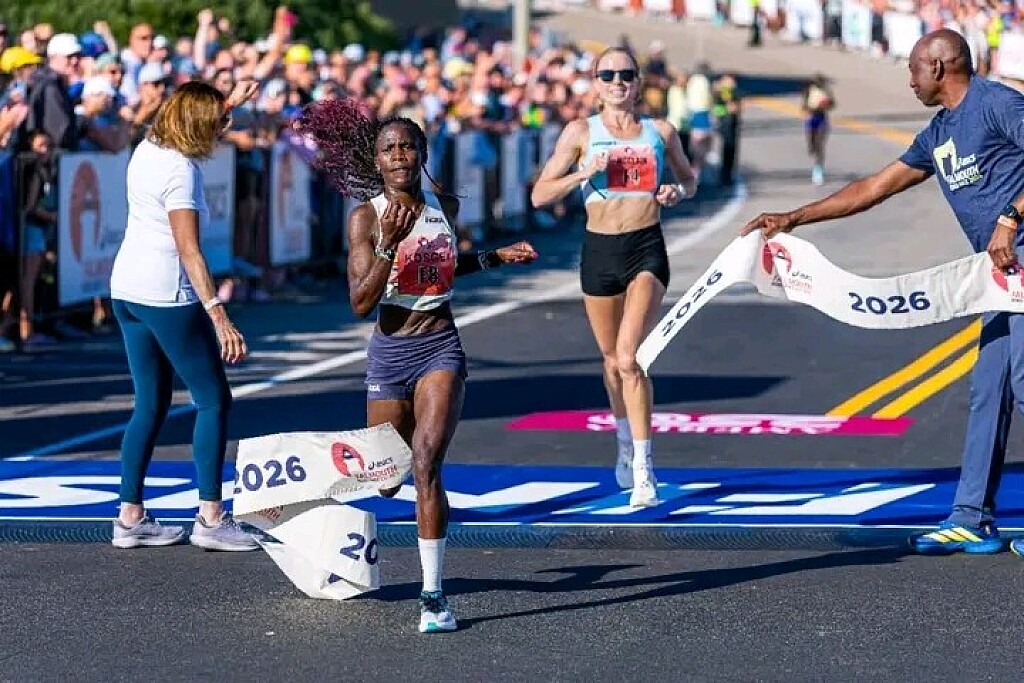


Pamela Kosgei Triumphs In Thrilling Falmouth Road Race 7-Mile Finish

Pamela Kosgei delivered a breathtaking performance to capture the 2026 Falmouth Road Race 7-mile title, producing a perfectly timed finish to edge American challenger Jessica McClain in a dramatic battle that went right down to the wire.
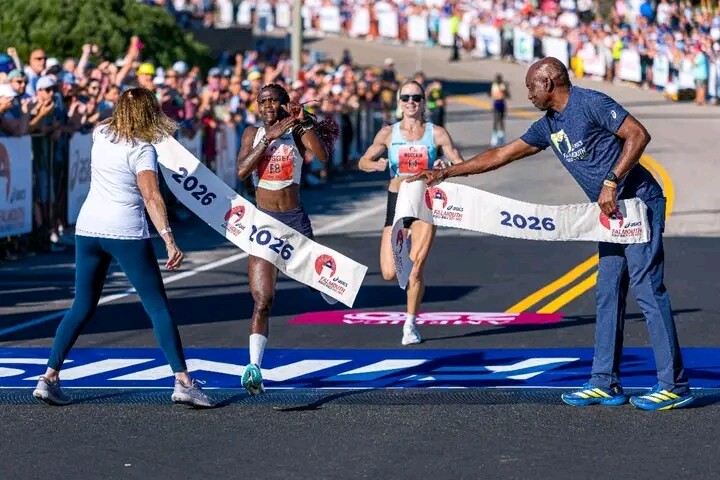
Kosgei and McClain both stopped the clock at 35:25, but the Kenyan had just enough of an advantage at the finish to secure the coveted victory. It was a remarkable display of composure and determination, with neither athlete willing to surrender an inch in the closing stages of the seven-mile contest.
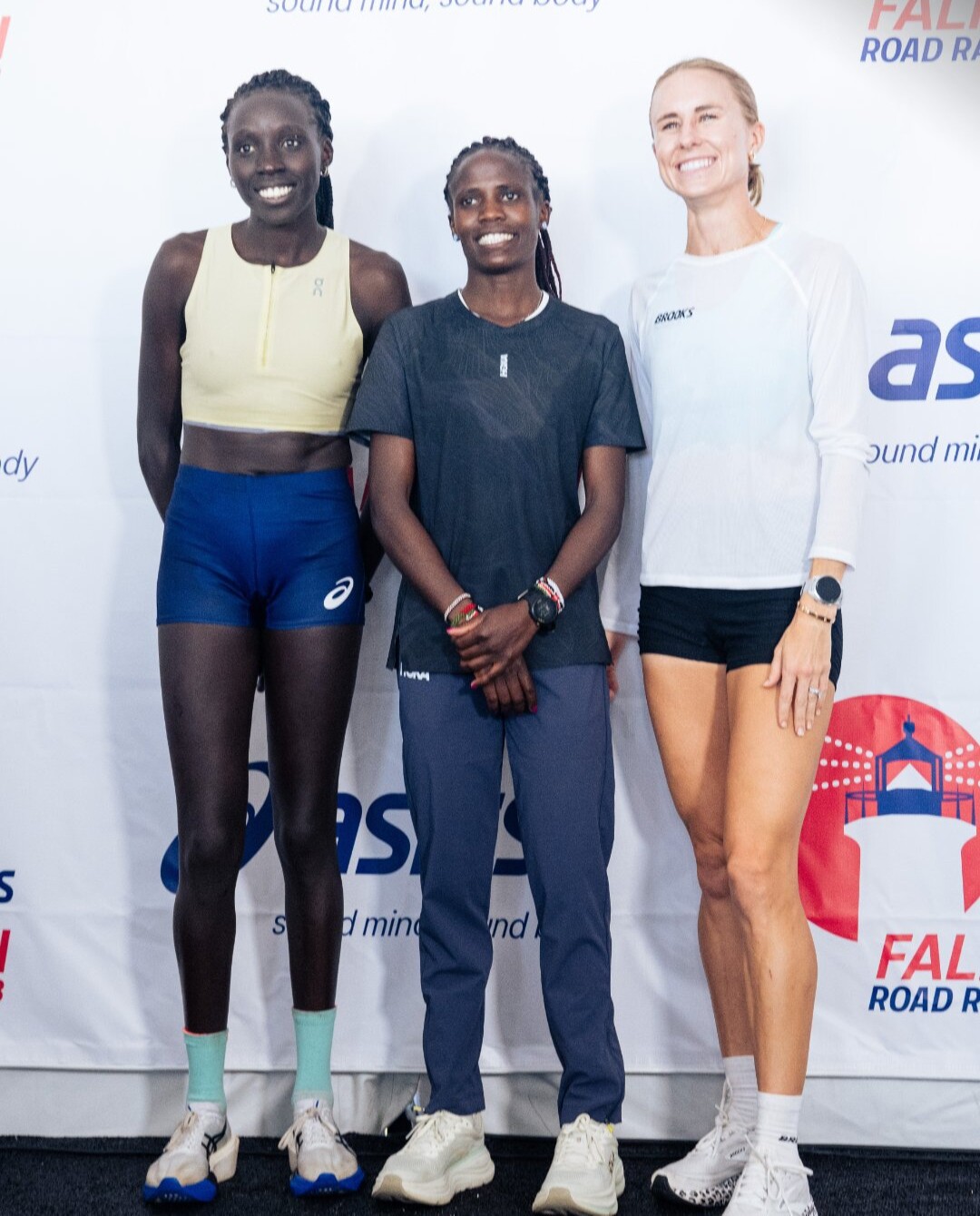
The victory adds another impressive chapter to what has already been a remarkable rise for Kosgei. At the 2025 Outdoor NCAA Championships, she captured both the 5000m and 10,000m titles, earning valuable points for the University of New Mexico Lobos during her freshman campaign. Her success on the track has now translated beautifully onto the roads.
Remarkably, Kosgei has only recently begun testing herself over the roads. Making her road debut just a few weeks ago, she announced herself in emphatic fashion by winning the Beach to Beacon Road Race. She then carried that winning momentum into Falmouth, producing another confident performance against a strong international field.
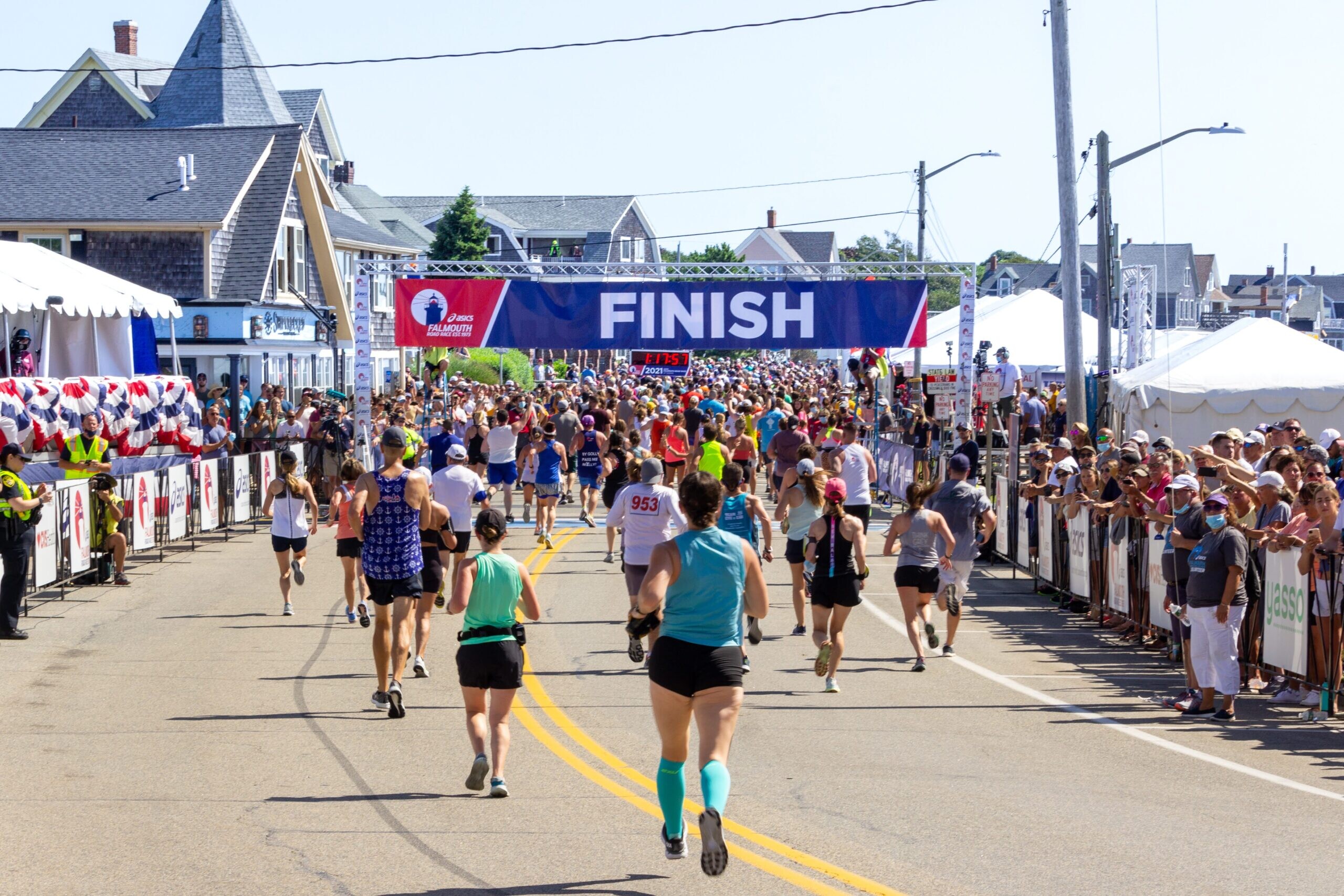
The Kenyan triumph was made even sweeter by Everlyn Kemboi, who stormed into third place in 35:34, giving Kenya a powerful double presence on the podium. Behind them, America's Emma Grace Hurley produced a solid run to finish fourth in 35:36, while Kenya's Mercy Chelangat completed the top five in 35:55.
Kosgei's rise also carries a remarkable family legacy. Her older sister, Brigid Kosgei, is an Olympic silver medallist in the marathon and a former marathon world-record holder. With Pamela now making her own mark across the track and roads, the Kosgei name continues to shine brightly in elite distance running.
It was a race filled with speed, suspense and relentless determination, with the leading athletes separated by only seconds. Kosgei's victory was ultimately forged through her ability to remain composed under immense pressure and produce the decisive effort when it mattered most.
The victory also carried a special touch of excellence, as Kosgei stood proudly at the summit while McClain and Kemboi strengthened the depth among the leading finishers. Together, the performances painted a beautiful picture of determination, resilience and the unmistakable fighting spirit that continues to make distance running so captivating around the world.
For Kosgei, this was more than simply another road-racing victory. It was a statement of strength, resilience and competitive maturity on an international stage. From NCAA champion to emerging road-racing star, her rapid transition has been nothing short of impressive—and Falmouth may only be the beginning of an exciting new chapter.
Top 5 Finishers
1. Pamela Kosgei — Kenya — 35:25
2. Jessica McClain — USA — 35:25
3. Everlyn Kemboi — Kenya — 35:34
4. Emma Grace Hurley — USA — 35:36
5. Mercy Chelangat — Kenya — 35:55
With a thrilling finish, the Falmouth Road Race once again showcased the beauty and competitiveness of elite distance running, bringing together determined athletes from different backgrounds and nations. Kosgei's victory, McClain's fierce challenge and the strong performances throughout the field combined to create a memorable contest that will linger long after the finish line.
by Erick Cheruiyot for My Best Runs.
Login to leave a comment
Falmouth Road Race
The Falmouth Road Race was established in 1973 and has become one of the premier running events of the summer season. Each year the race draws an international field of Olympians, elite runners and recreational runners out to enjoy the scenic 7-mile seaside course. The non-profit Falmouth Road Race organization is dedicated to promoting health and fitness for all in...
more...Latest Running News
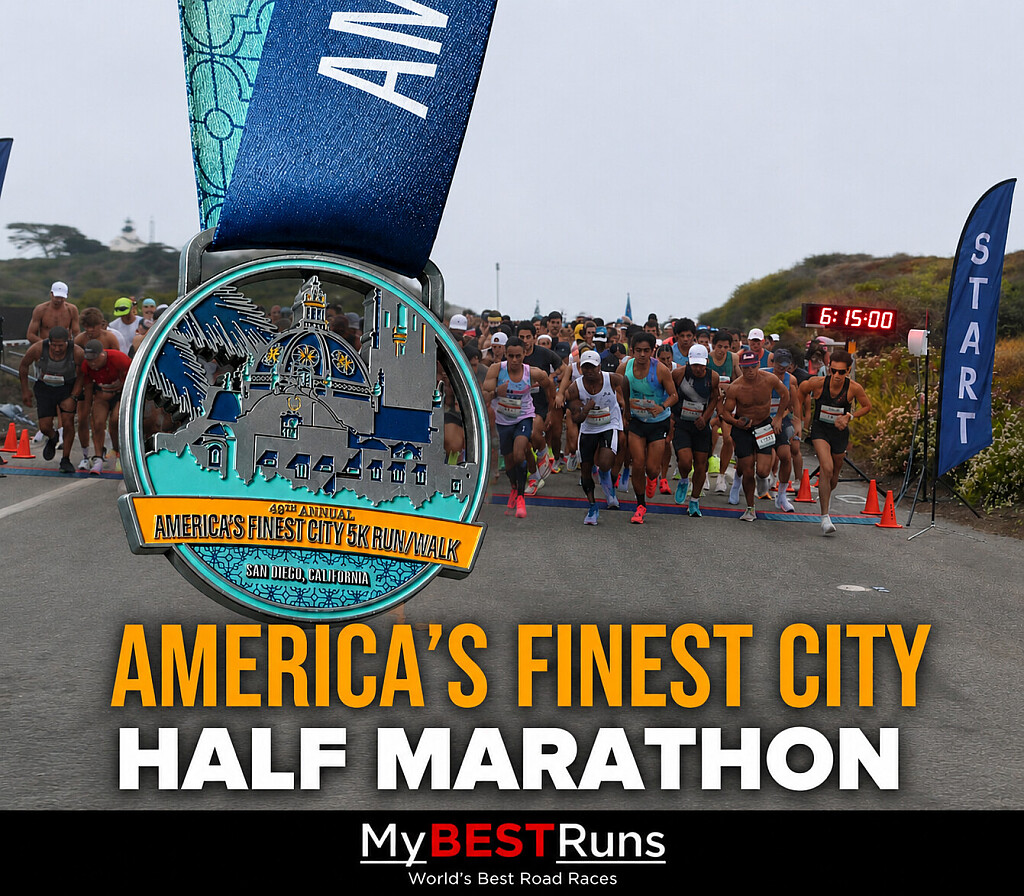
About 5,000 Runners Turn San Diego Into A Sea Of Energy At The 49th America’s Finest City Half Marathon
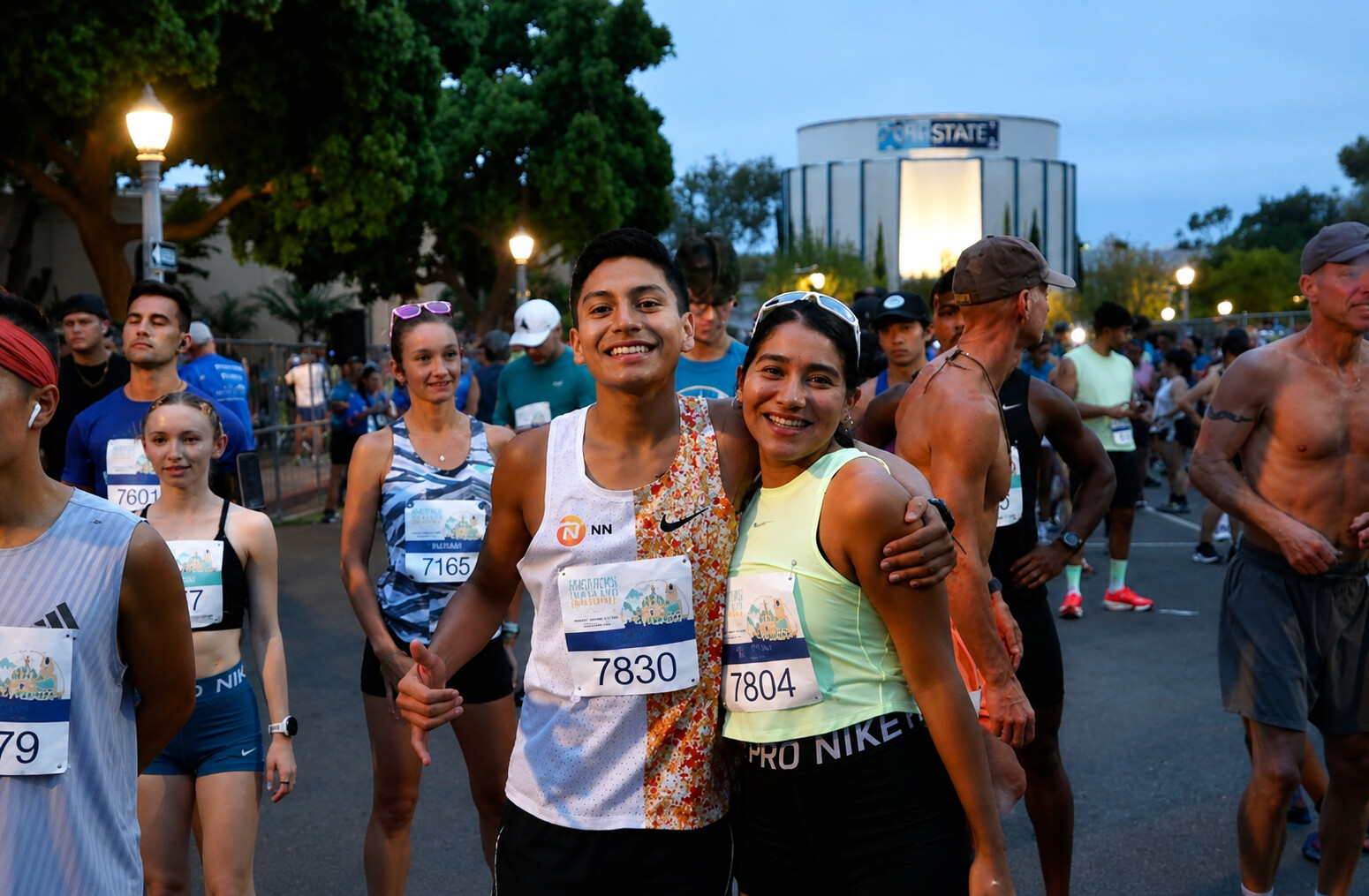
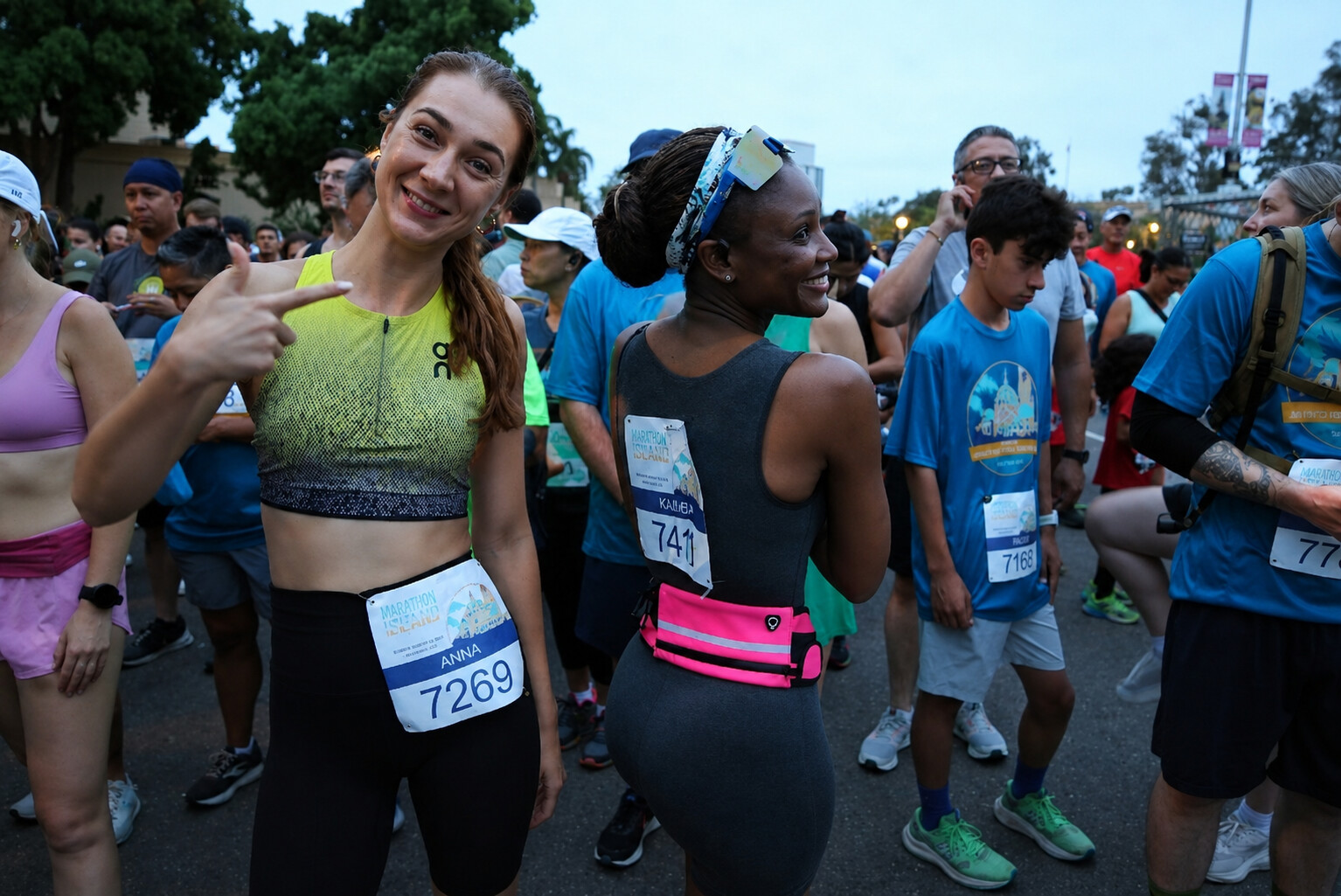
San Diego came alive on Sunday, August 16, 2026, as approximately 5,000 runners from across the region and beyond took to the streets for the 49th annual America’s Finest City Half Marathon & 5K, bringing together competitive athletes, recreational runners, families, running clubs and spectators for one of the city’s longest-running road racing traditions.
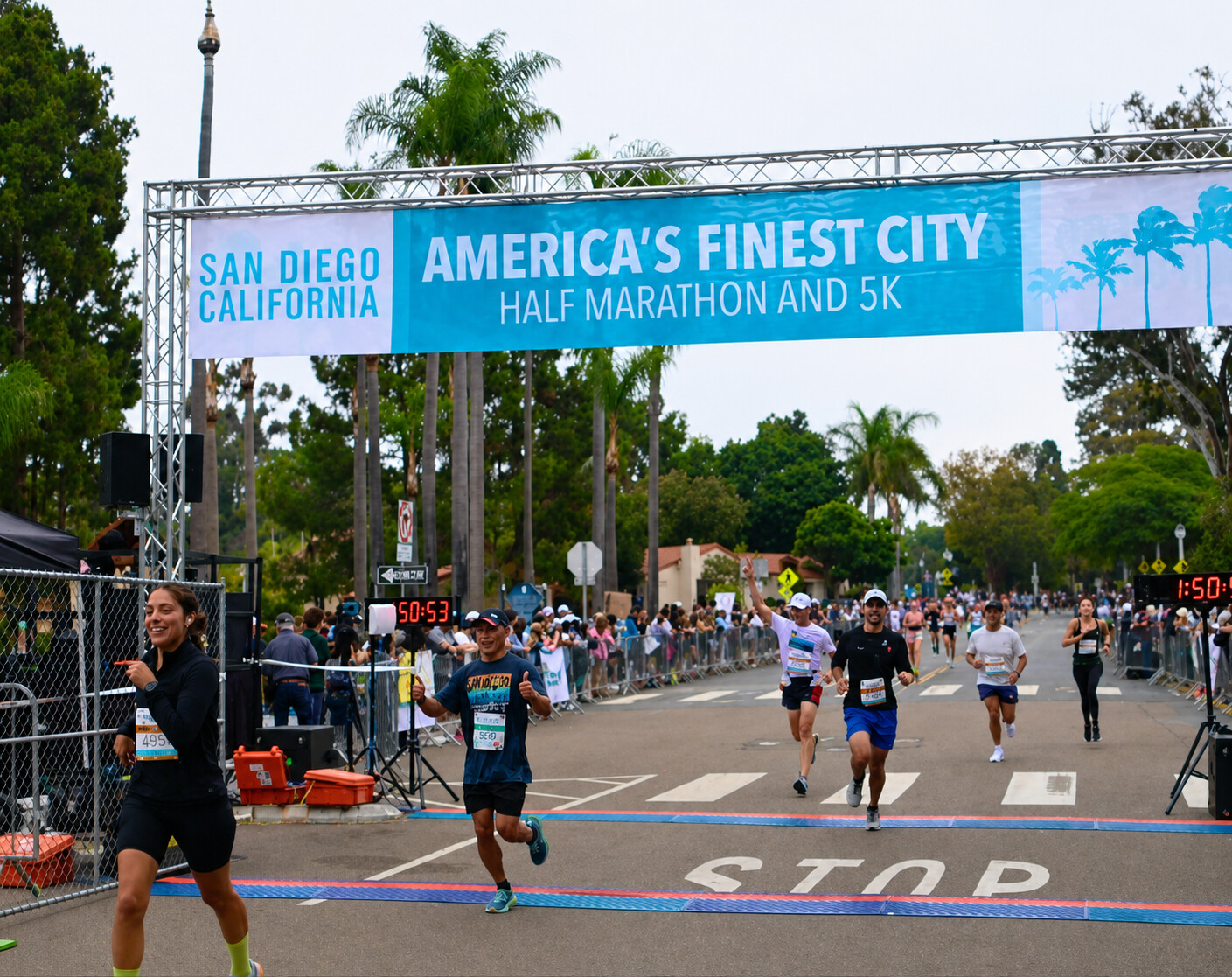
Established in 1978, the America’s Finest City Half Marathon has become a signature event on San Diego’s running calendar, with the 2026 edition once again showcasing the city’s spectacular coastline, historic landmarks and vibrant urban landscape. The event also featured a 5K, giving runners of different abilities an opportunity to take part in the morning’s festivities.
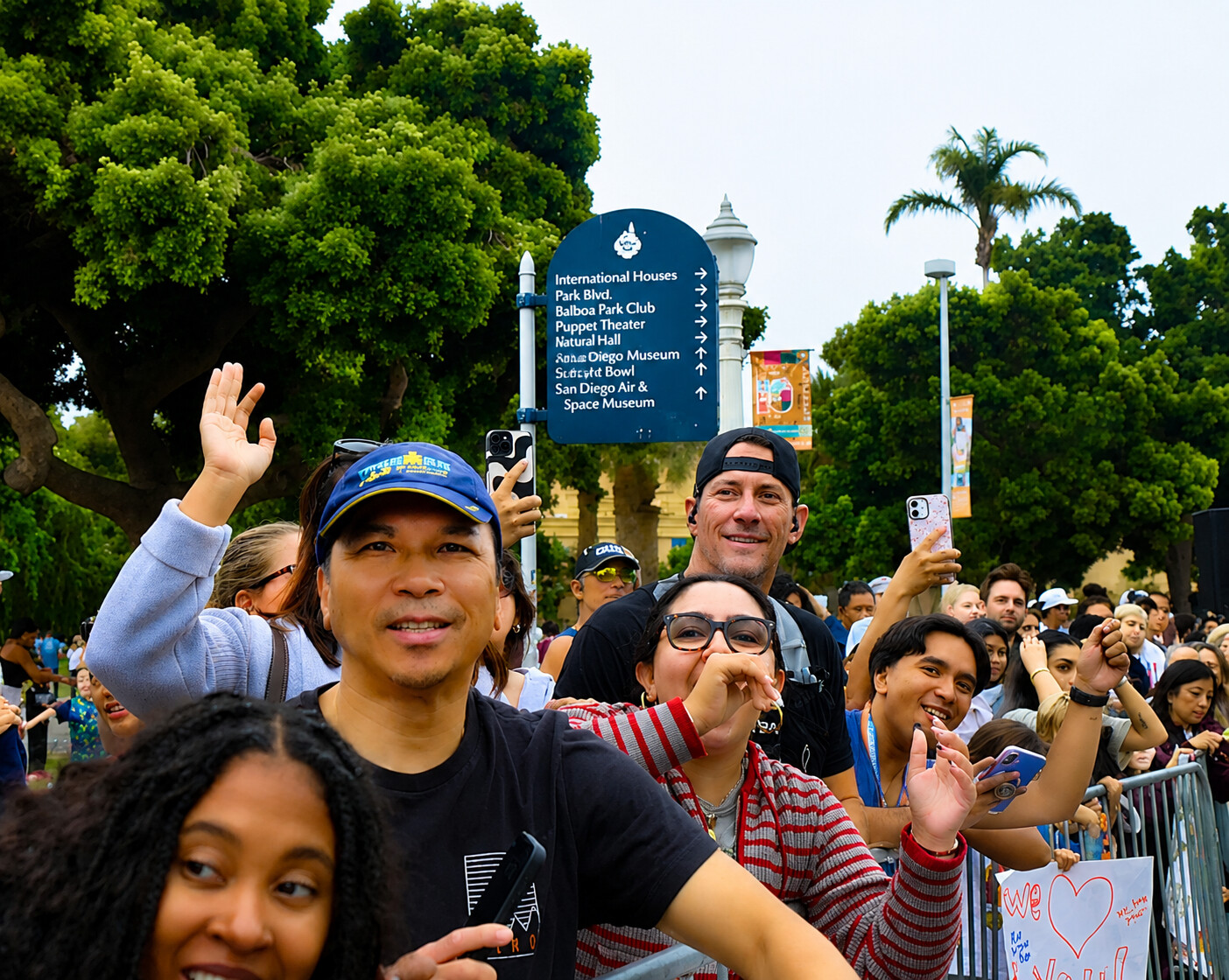
The 13.1-mile half marathon followed a scenic point-to-point course that began at the historic Cabrillo National Monument. With panoramic views of the Pacific Ocean and San Diego Bay setting the tone, runners embarked on a journey through some of San Diego’s most recognizable locations.
From the starting point, the course moved through historic Fort Rosecrans and Point Loma before continuing along San Diego Bay and Harbor Island. Participants then travelled through downtown San Diego before making their way to the finish at iconic Balboa Park, where cheering spectators, live music and celebrations greeted runners as they completed their journey.
At the front of the race, Edward Buck produced the fastest performance of the day, winning the men’s half marathon in 1:04:39. The 25-year-old from Newark, United Kingdom, held off a closely packed group at the finish, with San Diego’s Lars Dewall finishing just five seconds behind in 1:04:44.
Jaquavious, 29, from Orem, Utah, secured third place in 1:05:04, while Phoenix’s Aron Orar finished fourth in 1:05:19. The first four men were separated by just 40 seconds, underlining the competitive nature of the race.
Morgan Jensen claimed the women’s title in 1:13:12, with the 24-year-old from Sandy, Utah, producing a commanding performance over the 13.1-mile course. Melissa Berry, 26, of Flagstaff, Arizona, finished second in 1:16:26, while Katelyn Yunker, 24, of Carlsbad, California, completed the women’s podium in 1:18:41.
Hope Stark, 22, of Colorado Springs, Colorado, followed in fourth with 1:19:23. Jensen’s winning margin was 3 minutes and 14 seconds, while only 42 seconds separated Yunker and Stark in the battle for third and fourth.
The accompanying 5K offered a shorter, fast and flat route through the heart of Balboa Park, providing an accessible option for runners of all levels while adding to the lively atmosphere surrounding the main event.
The 49th edition also carried special significance as it marked the conclusion of the 2026 SoCal Triple Crown, giving participants an additional reason to celebrate after completing the Southern California race series.
With thousands of runners filling San Diego’s streets and spectators supporting them along the way, the America’s Finest City Half Marathon & 5K once again proved that the appeal of road racing extends far beyond competition. From the breathtaking views at Cabrillo National Monument to the historic streets of Point Loma, the waterfront, downtown and the finish in Balboa Park, the event offered runners a memorable journey through the heart of San Diego.
The 2026 edition ultimately brought together speed, scenery and community, reinforcing the America’s Finest City Half Marathon’s place as one of San Diego’s most distinctive and enduring running celebrations.
by Erick Cheruiyot for My Best Runs.
Login to leave a comment
America's Finest City
America's Finest City Half Marathon is run on a fast, scenic, point-to-point course. The race starts at the historic Cabrillo National Monument at the tip of Point Loma with its world-renowned vistas of San Diego Bay and the Pacific Ocean, follows scenic San Diego Bay and Harbor Island along the Embarcadero to the Star of India, winds through downtown San...
more...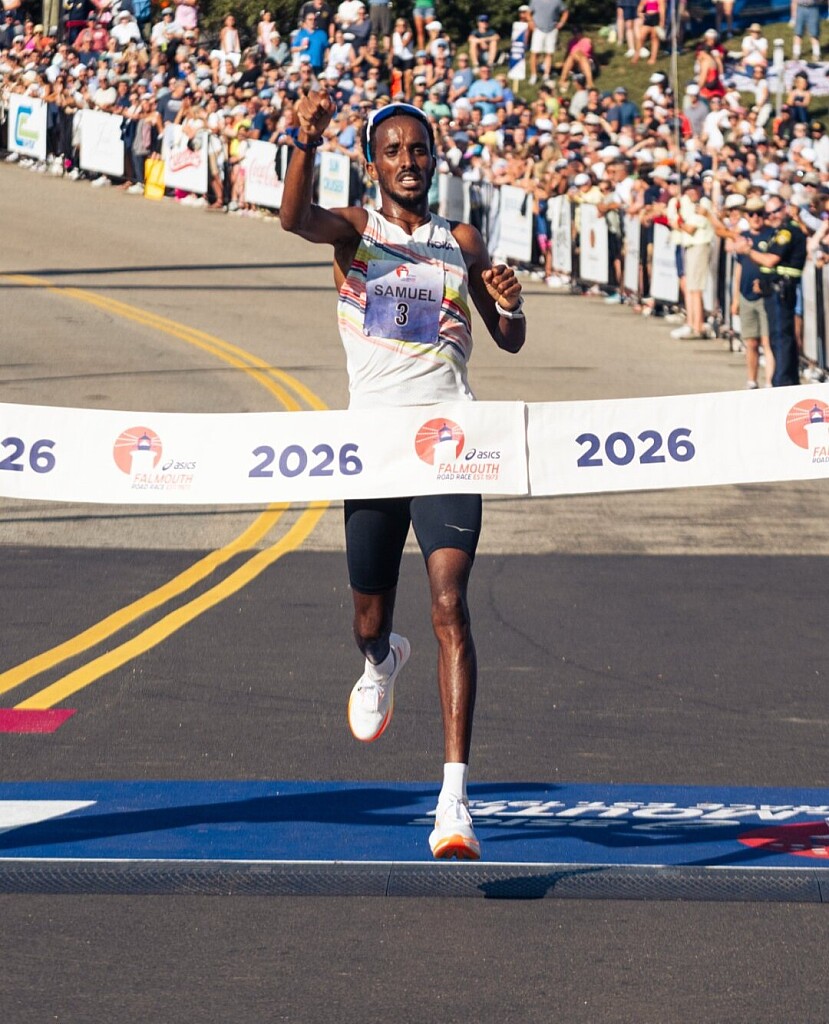
Habtom Samuel Makes Falmouth History With A Record-Breaking Sub-31-Minute Victory
History was made on Sunday morning, August 16, 2026, as Eritrea’s Habtom Samuel produced a breathtaking performance at the Falmouth Road Race, becoming the first athlete in the event’s history to break the 31-minute barrier.
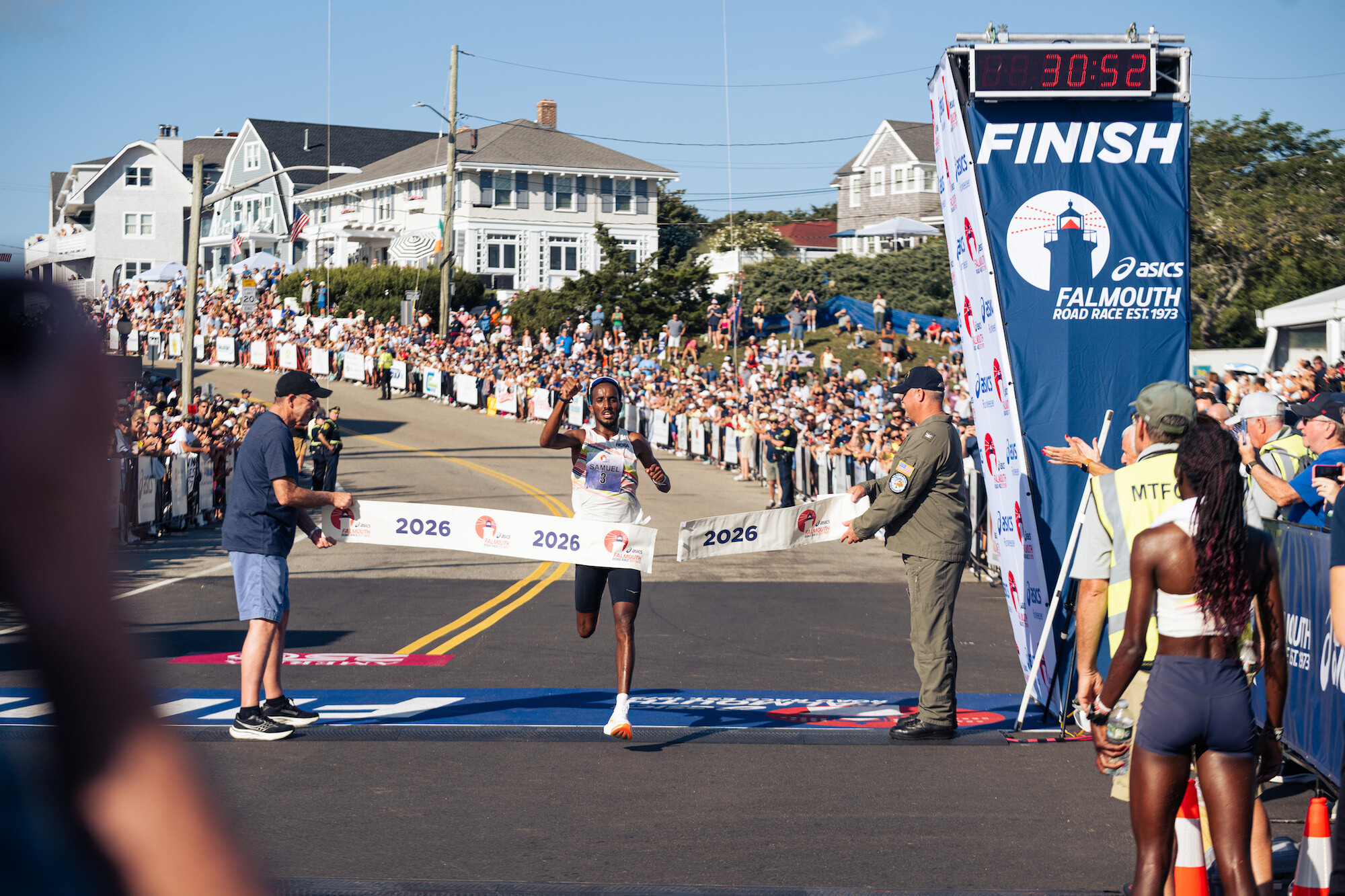
The 22-year-old Samuel, competing in his first Falmouth Road Race and only his second professional road race, turned an already remarkable debut into a piece of history. The former University of New Mexico standout completed his transition to the professional ranks following an undefeated collegiate season and has now opened his professional career with two victories.
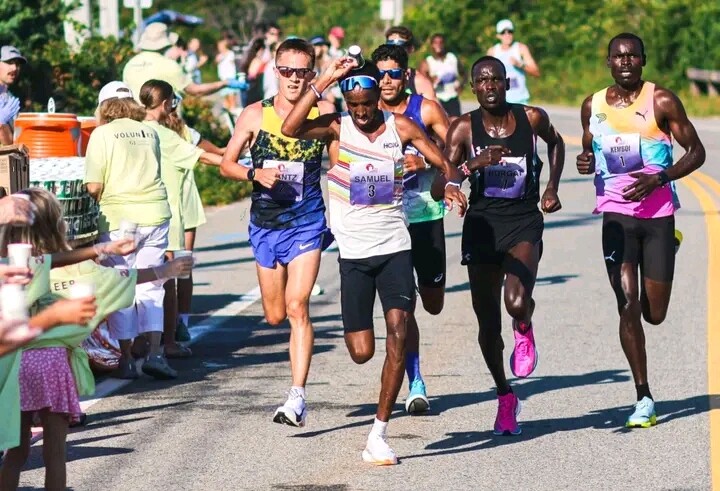
The men’s race unfolded at a ferocious pace from the opening miles, with the leaders threatening the long-standing course record almost immediately. By the fifth mile, the contest had narrowed to a two-man duel between Samuel and Kenya’s Edwin Kurgat.
The pair remained together from the end of Surf Drive until around the turn onto Falmouth Heights Road, matching each other stride for stride as the race entered its decisive stages.
Then Samuel found another gear.
With roughly a mile remaining, the Eritrean surged decisively away from Kurgat and never looked back. He powered toward the finish with authority, creating an 11-second winning margin and stopping the clock in 30:54.
His performance shattered the previous course record of 31:08 and made him the first athlete ever to dip under 31 minutes at Falmouth.
The record had stood for more than two decades. Kenya’s Gilbert Okari first established the 31:08 mark in 2004, while compatriot Wesley Kiptoo equalled it in 2023. Samuel’s extraordinary run finally moved the benchmark into a new era.
“Breaking this course record in this amazing historical road race is awesome,” Samuel said. “I’m so proud of myself and I’m glad to be the first person able to run under 31 minutes.”
Samuel’s victory also continues a remarkable start to his professional career. After completing an undefeated campaign at the University of New Mexico, he made his road-racing debut at the Beach to Beacon 10K in Maine in July, where he immediately claimed victory. His Falmouth triumph now makes it two wins from two professional road races.
Kurgat, meanwhile, produced a performance that would have been enough to win every previous edition of the Falmouth Road Race. The 2019 champion crossed the line in a remarkable 31:04, finishing comfortably inside the former course-record mark despite being unable to match Samuel’s decisive late surge.
The American men also delivered a memorable battle behind the leading pair.
Zouhair Talbi, the American course-record holder at the Boston Marathon, and Conner Mantz, the American record holder in both the half marathon and marathon, spent much of the race locked together as they battled for the top American position.
Talbi ultimately prevailed, finishing third overall in 31:17 and setting a new American course record for the Falmouth course. It marked his best finish at the race, improving on last year’s fifth-place result.
Mantz followed closely in 31:19, also running faster than the previous American course record.
The result was a spectacular morning on Cape Cod, with the race producing a new overall course record, a historic first sub-31-minute performance and four men finishing faster than the previous 31:08 benchmark.
But above them all stood Samuel, whose remarkable surge in the final stages transformed a closely fought road race into one of the defining performances in Falmouth Road Race history.
by Erick Cheruiyot for My Best Runs.
Login to leave a comment
Falmouth Road Race
The Falmouth Road Race was established in 1973 and has become one of the premier running events of the summer season. Each year the race draws an international field of Olympians, elite runners and recreational runners out to enjoy the scenic 7-mile seaside course. The non-profit Falmouth Road Race organization is dedicated to promoting health and fitness for all in...
more...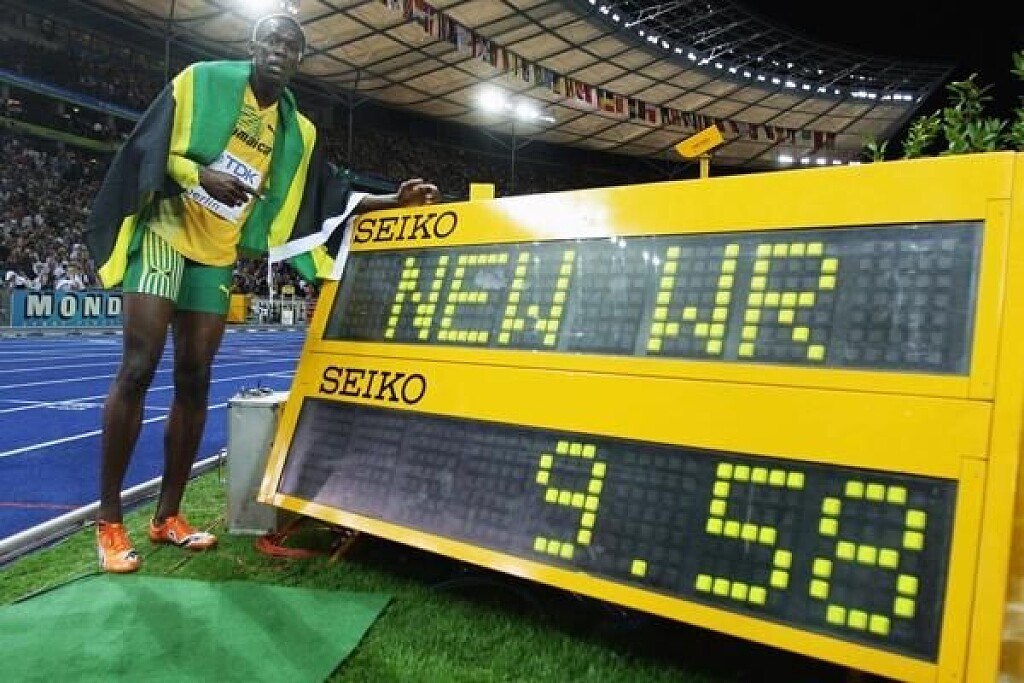
Seventeen Years On, Usain Bolt’s 9.58 Still Stands Alone
Seventeen years ago today, Jamaica’s Usain Bolt produced one of the most extraordinary performances in the history of athletics, sprinting into sporting immortality with a breathtaking 9.58 seconds in the men’s 100m final at the 2009 World Championships in Berlin.
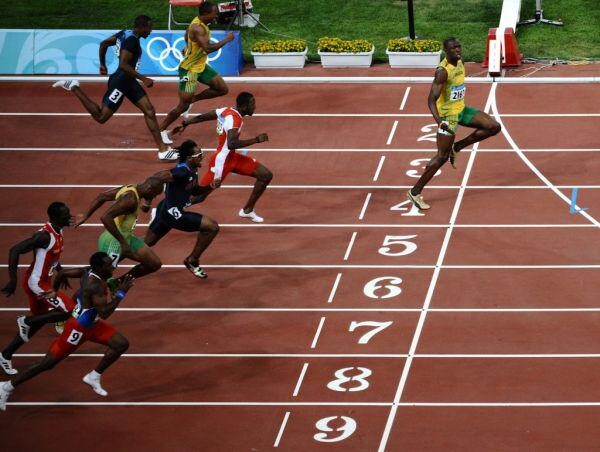
Under the lights of Berlin’s Olympic Stadium, the Jamaican superstar dismantled his own world record, slicing an astonishing 0.11 seconds from the 9.69 he had set at the Beijing Olympics exactly one year earlier. With a legal tailwind of +0.9 m/s, Bolt crossed the finish line in 9.58 — a mark that remains the fastest 100m ever recorded by a man.
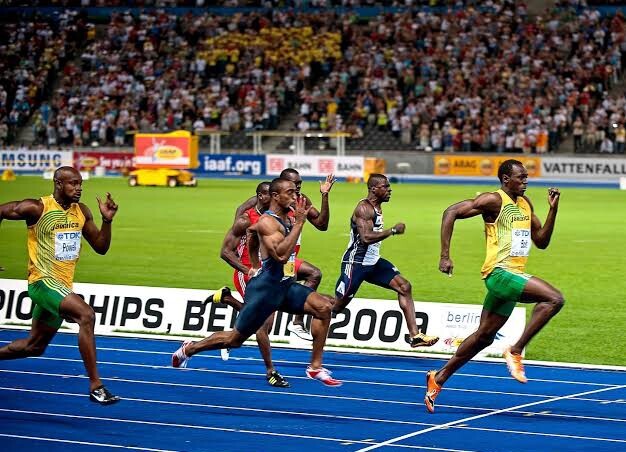
The race was billed as a heavyweight showdown between Bolt and American Tyson Gay, but once the Jamaican found his rhythm, the contest was effectively decided. Bolt surged away from the field with his trademark long, powerful strides, stopping the clock in a time that seemed almost beyond the limits of human speed.
Behind him, Gay produced a remarkable 9.71 for silver, setting a United States record, while Jamaica’s Asafa Powell claimed bronze in 9.84. Yet the night belonged entirely to Bolt, whose performance became the defining image of the Berlin championships.
What made the achievement even more remarkable was the scale of the improvement. Bolt had already rewritten the world record in Beijing with 9.69, but in Berlin he went to another level, becoming the first man to break the 9.6-second barrier. His 9.58 also represented the largest improvement to the men’s 100m world record since electronic timing was introduced.
Seventeen years later, the number still carries an almost mythical quality: 9.58 seconds. Generations of sprinters have chased faster times, but Bolt’s Berlin masterpiece remains untouched. The record has survived Olympic cycles, world championships and a new generation of elite sprinters, continuing to stand as one of the most enduring monuments to human speed.
On August 16, 2009, Usain Bolt did more than win a world title. He created a moment that transcended the race itself — a performance that continues to remind the world just how extraordinary the limits of speed can be.
Seventeen years on, 9.58 still belongs to Bolt. And the world is still waiting for someone to catch him.
by Erick Cheruiyot for My Best Runs.
Login to leave a comment

Michael Roeger’s Long Road Back to the Marathon World Record — and Now Sydney Awaits
On August 30, approximately 35,000 runners will line up at Miller Street in North Sydney for the 2026 TCS Sydney Marathon. Among them will be an athlete who already owns a piece of marathon history: Michael Roeger, the Australian T46 marathon world-record holder and one of the most remarkable endurance athletes of his generation.
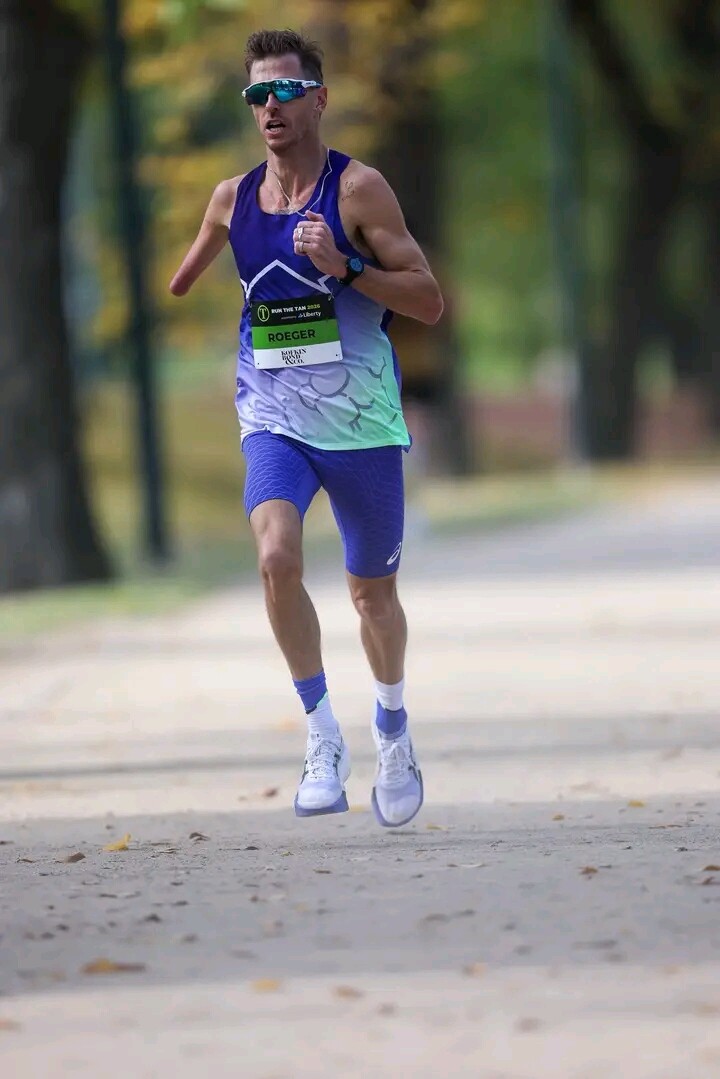
At 38, Roeger returns to the marathon with a career shaped by persistence, reinvention and an extraordinary ability to keep moving forward whenever circumstances have threatened to derail him.
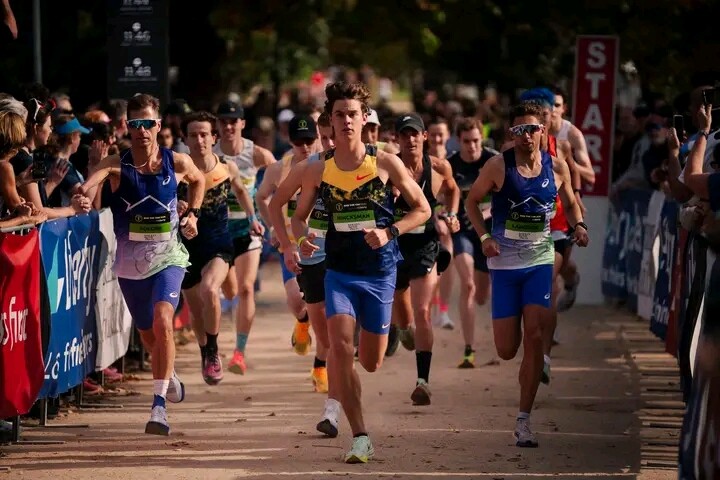
Sydney is a fitting stage for the next chapter. The marathon, now part of the Abbott World Marathon Majors, takes runners through some of the city's most recognisable landmarks, beginning in North Sydney, crossing the Harbour Bridge and eventually finishing near the Opera House. For Roeger, however, this is about far more than another marathon.
He is returning to the distance in the city where he set the fastest T46 marathon ever recorded.
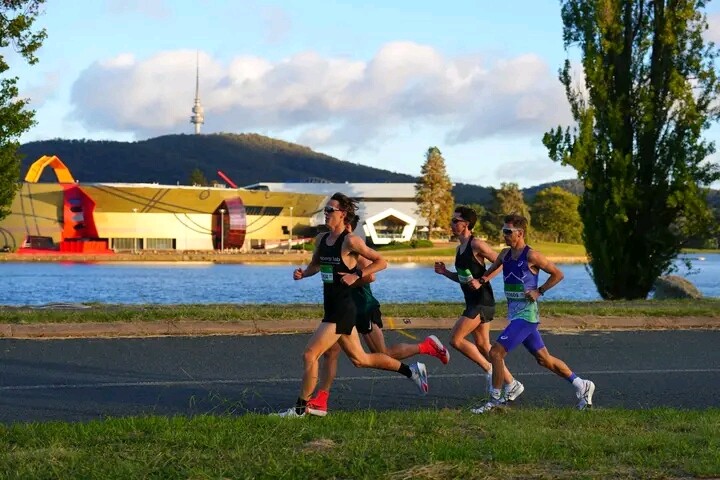
Roeger grew up in Langhorne Creek, a small South Australian community about 55 kilometres south of Adelaide. Born without the lower half of his right arm, he discovered Para athletics after Paralympian Neil Fuller visited his school when Roeger was 12.
What began as an introduction to sport eventually developed into a career spanning five Paralympic Games, world championships, major medals and multiple world records.
His T46 classification covers athletes with an arm amputation or comparable upper-limb difference. Yet describing Roeger's performances simply through his classification fails to capture the complexity of what he has achieved.
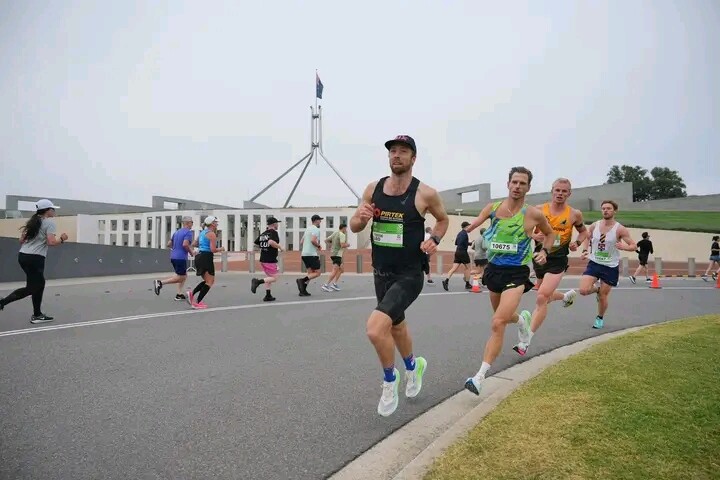
Running is an intricate coordination of the entire body. The arms contribute to balance, rhythm and control, helping the torso manage the rotational forces created by every stride. Over 42.195 kilometres, maintaining efficient movement is an enormous physical and technical challenge.
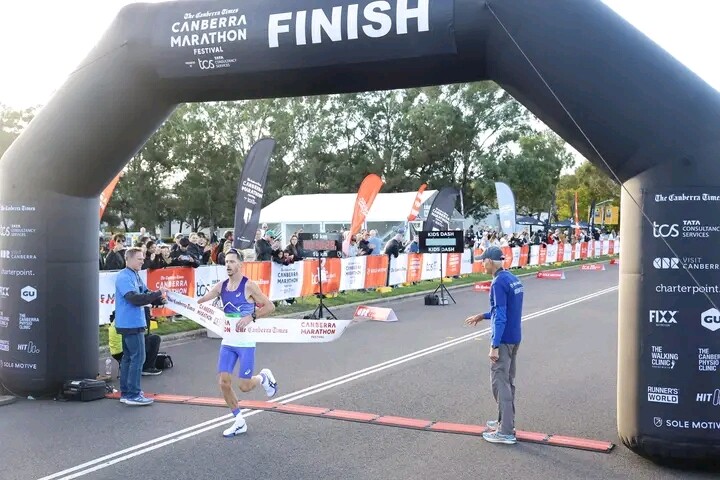
Roeger's marathon performances therefore represent much more than a number attached to a classification. They are elite endurance performances in their own right.
His transition to the marathon was remarkably rapid. Roeger made his marathon debut at the Melbourne Marathon in October 2018, running 2:23:31. The performance was faster than the existing T46 world record at the time, although it was not ratified as a world record because the race did not have the necessary status.
Six months later, he returned to the distance at the 2019 London Marathon, where the World Para Athletics Marathon Championships were staged within the race.
This time, everything came together.
Roeger won the T46 world title in 2:22:51, lowering the ratified world record and establishing himself as the world's leading marathoner in the classification. Even when cramp began to trouble him during the closing stages, he held on to become a world champion.
The progression continued.
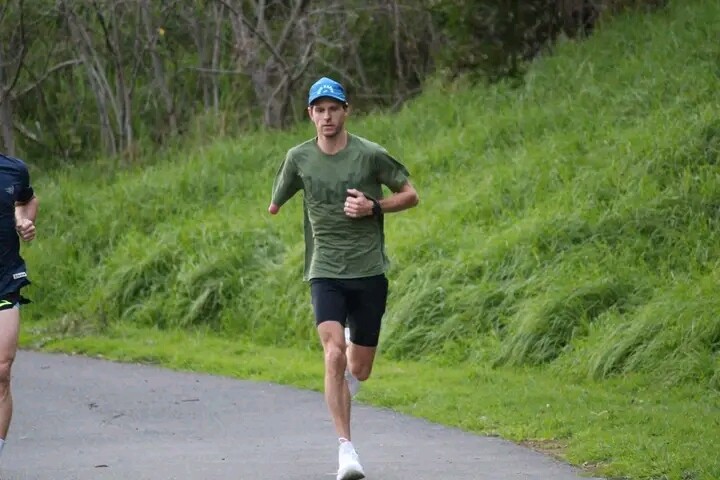
At the 2020 Chevron Houston Marathon, Roeger ran 2:19:33, becoming the first ambulant Para athlete to break the 2:20 barrier and once again lowering his own world record.
But his most significant breakthrough came back in Australia.
On April 25, 2021, Roeger lined up in Sydney for the Athletics Australia Tokyo Qualifying Marathon. He produced the fastest marathon of his career, crossing the finish line in 2:18:53.
That performance remains the T46 marathon world record.
The progression is remarkable. From 2:23:31 in Melbourne to 2:22:51 in London, 2:19:33 in Houston and finally 2:18:53 in Sydney, Roeger repeatedly moved the benchmark forward.
It was almost five minutes of improvement across four marathon performances.
But the record is only one part of the story.
Roeger's career has never followed a smooth upward trajectory. At the 2008 Beijing Paralympic Games, aged only 20, he contested the 800m, 1500m and 5000m T46 events, with seventh place in the 1500m his best finish.
Four years later in London, he arrived with genuine medal ambitions. Instead, gastrointestinal bleeding struck on the eve of the T46 800m. He still started the race but was forced to withdraw after one lap.
Rio 2016 finally delivered a Paralympic medal, with Roeger winning bronze in the 1500m. That success helped convince him to move towards the longer distances and eventually make the marathon his primary focus.
Then came another major setback.
Six weeks before the Tokyo 2020 Paralympic Games, Roeger suffered a stress fracture in his lower leg, destroying much of his preparation for the marathon. Despite the injury, he travelled to Tokyo and made the start line.
He finished sixth in 2:34:45, a time far outside the level he had demonstrated before the Games.
For most athletes, such a setback could have marked the end of the road. For Roeger, it became another chapter in a career defined by adaptation.
Before the Paris 2024 Paralympic Games, another obstacle emerged when the T46 marathon was removed from the programme. The event in which Roeger had become a world-record holder was no longer available at the Games.
His only remaining distance was the 1500m.
So he adapted once again.
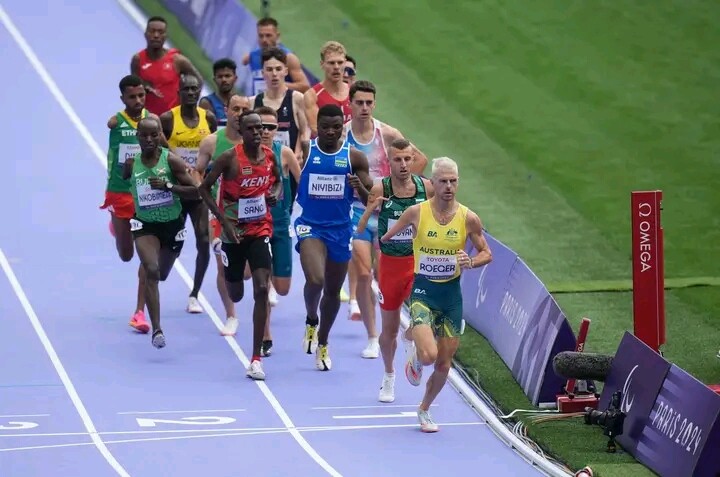
Roeger returned to the track and competed in Paris, ultimately adding another Paralympic medal to his collection with silver in the T46 1500m.
Now the marathon is calling again.
The 2026 TCS Sydney Marathon will provide a very different challenge from the flat courses on which many of the world's fastest marathon times are produced. The route begins in North Sydney, crosses the Sydney Harbour Bridge and winds through the city before finishing at the Opera House.
The course features substantial elevation changes, with approximately 313 metres of climbing across the 42.195 kilometres. It is a course that rewards strength, patience and the ability to maintain efficient form when the legs are already carrying the fatigue of a long marathon.
For Roeger, that challenge will be amplified by the quality of the field around him.
The Australian elite field includes a strong collection of domestic marathoners, while the international men's race features considerable depth, with numerous athletes holding personal bests below 2:10.
Roeger will therefore not be lining up in isolation as a Para athlete. He will be part of a major international marathon field, surrounded by runners pursuing national titles, personal bests and elite honours.
That is also central to the way he has approached his career.
Roeger has long resisted the idea that Para athletes should be viewed as fundamentally separate from their able-bodied counterparts. His philosophy has been simple: once the starting gun goes, the competition is about running.
That attitude has helped him move comfortably between Para athletics and open elite competition, and Sydney 2026 offers another opportunity to do exactly that.
His partnership with coach Dr Philo Saunders has been particularly important throughout his career, helping him develop into a world-class athlete across multiple distances.
Yet perhaps the most impressive part of Roeger's story is not any individual medal or record.
It is the number of times he has had to begin again.
From a small South Australian town to five Paralympic Games. From disappointment in Beijing and London to a medal in Rio. From the track to the marathon. From a devastating injury before Tokyo to a world-record performance. From losing his marathon event before Paris to returning to the 1500m and winning another Paralympic medal.
Every time the route has changed, Roeger has found another way forward.
Now, at 38, he is returning to the marathon once more.
And there could hardly be a more fitting destination than Sydney.
It is the city where he produced his 2:18:53 world record in 2021. Five years later, he will return to the same city carrying the experience of a career that has tested his resilience at almost every turn.
The world record is already in his name.
On August 30, Michael Roeger will have another chance to show the world what remains in the legs of the man who refused to let setbacks define the limits of his career.
by Erick Cheruiyot for My Best Runs.
Login to leave a comment
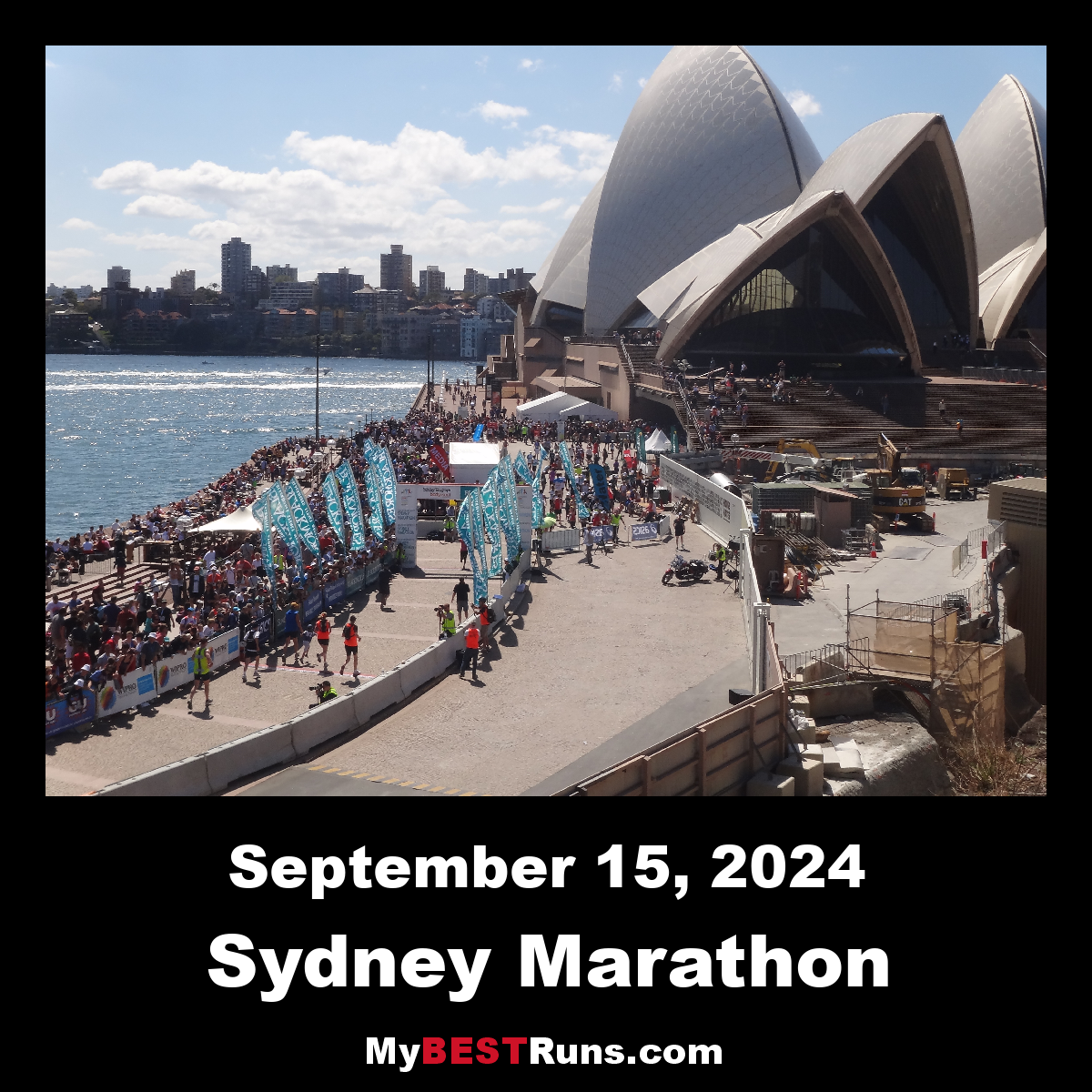
Sydney Marathon
The Sydney Marathon is a marathon held annually in Sydney, Australia. The event was first held in 2001 as a legacy of the 2000 Summer Olympics, which were held in Sydney. In addition to the marathon, a half marathon, 9 kilometres (5.6 mi) "Bridge Run", and a 3.5 kilometres (2.2 mi) "Family Fun Run" are also held under the banner...
more...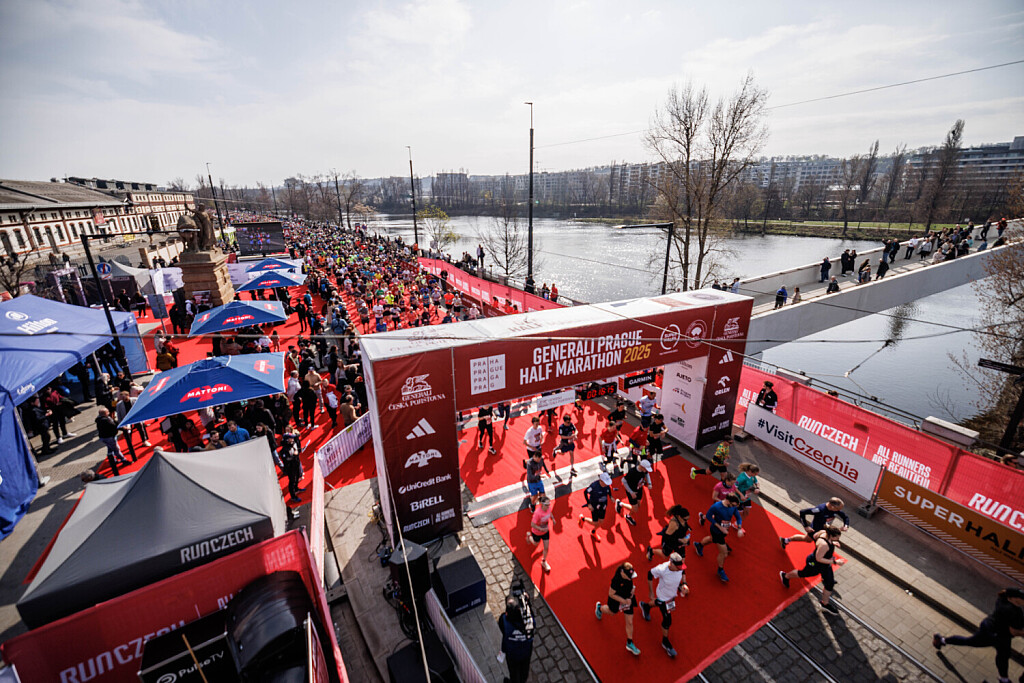
Prague Half Marathon’s First Ballot Draws More Than 70,000 Applications
The Generali Prague Half Marathon has entered a new era of unprecedented demand, with more than 70,000 runners reportedly applying for places in the race’s first-ever ballot for the 2027 edition.
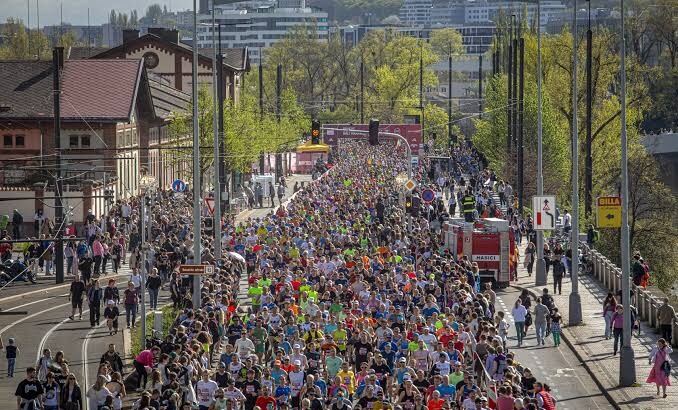
The remarkable response underlines the extraordinary international appeal of one of Europe’s most celebrated half marathons. With the race limited to 17,000 participants, the number of applications means demand exceeded available places by more than four times. RunCzech confirmed that the ballot attracted more than six times the race capacity in applications.
The move to a random draw marks a significant change from the previous registration system. In 2026, the 17,000-place field disappeared within just 2 hours and 23 minutes of registration opening, demonstrating how fiercely contested entry had become. Rather than rewarding those who happened to be quickest online, the new system gives applicants an equal opportunity through a random selection process.
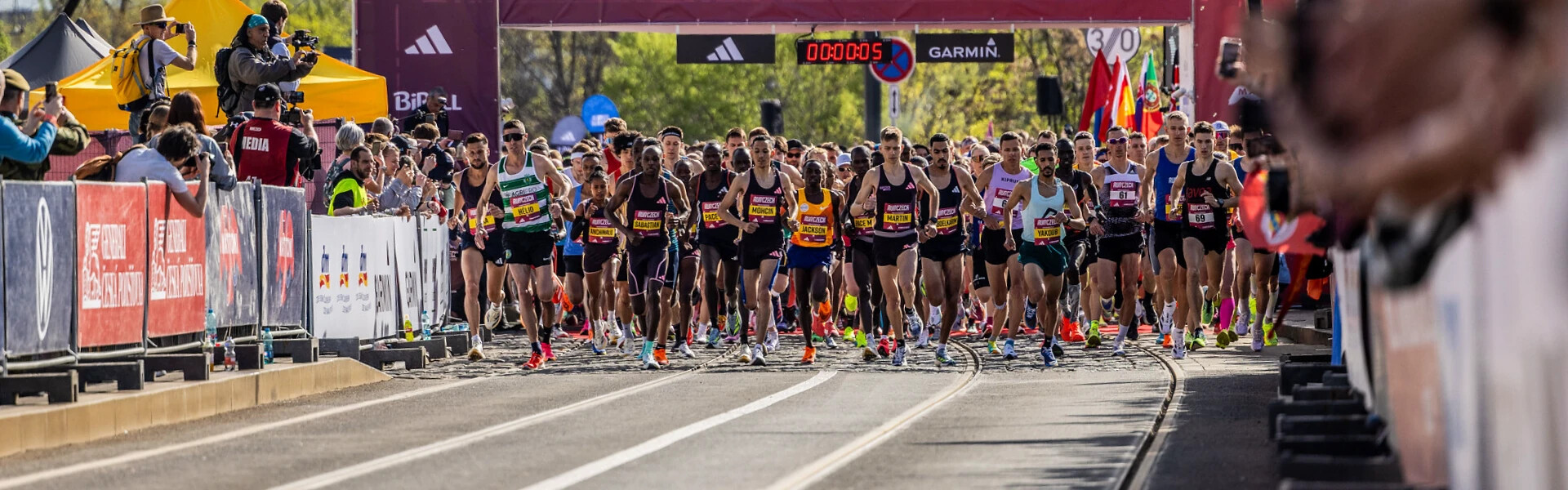
Applications opened on July 21 and closed at midnight heading into August 12, bringing three weeks of intense anticipation to an end. The draw is scheduled to take place this week, with every applicant due to receive the outcome by email no later than August 21. Those fortunate enough to secure a place will then have seven days to complete their registration before any unclaimed entries are returned to the pool.
The scale of the international interest is particularly striking. Applicants came from 161 countries, with 77 per cent of all applications submitted from outside the Czech Republic. The United Kingdom and Germany provided the largest overseas applicant groups, while Spain, Poland, Portugal, Italy and France were also strongly represented. Almost 1,300 applications came from Brazil and more than 700 from the United States.
For runners chasing the prestigious SuperHalfs series, Prague carries even greater significance. The race is one of the six founding members of the European half-marathon series, alongside Berlin, Copenhagen, Lisbon, Valencia and Cardiff, making a place on the start line highly coveted among runners pursuing the full collection. Around 45 per cent of ballot applicants already hold a SuperHalfs passport.
The 27th Generali Prague Half Marathon will take place on Saturday, April 3, 2027, taking runners through the historic heart of the Czech capital. The event also holds World Athletics Elite Label status, reinforcing its reputation not only as a mass-participation spectacular but also as a race capable of attracting world-class athletes and producing elite performances.
The huge ballot has transformed the meaning of simply getting to the start line in Prague. For thousands of runners, preparation has already begun, but their next step is not a training session or a race-plan decision—it is an email. This time, the fastest internet connection cannot guarantee a place; chance will decide who gets to experience the roar of the crowds, the historic streets and the unmistakable atmosphere of Prague at 21.1 kilometres.
The first ballot has therefore delivered a message that is impossible to ignore: Prague is no longer merely a race runners want to run—it is a race runners are competing to enter. With more than 70,000 applications chasing 17,000 places, the 2027 edition is already shaping up to be one of the most sought-after starts on the European road-racing calendar.
by Erick Cheruiyot for My Best Runs.
Login to leave a comment

Prague Half Marathon
Start the RunCzech season with one of the biggest running events in the Central Europe! Every year the Sportisimo Prague Half Marathon excites spectators with performances of elite athletes breaking records. Enjoy a course with incomparable scenery in the heart of historic Prague that follows along the Vltava river and crisscrosses five beautiful bridges. Take in majestic views of the...
more...