

Running News Daily
Running News Daily is edited by Bob Anderson and team. Send your news items to bob@mybestruns.com Advertising opportunities available.
Index to Daily Posts · Sign Up For Updates · Run The World Feed
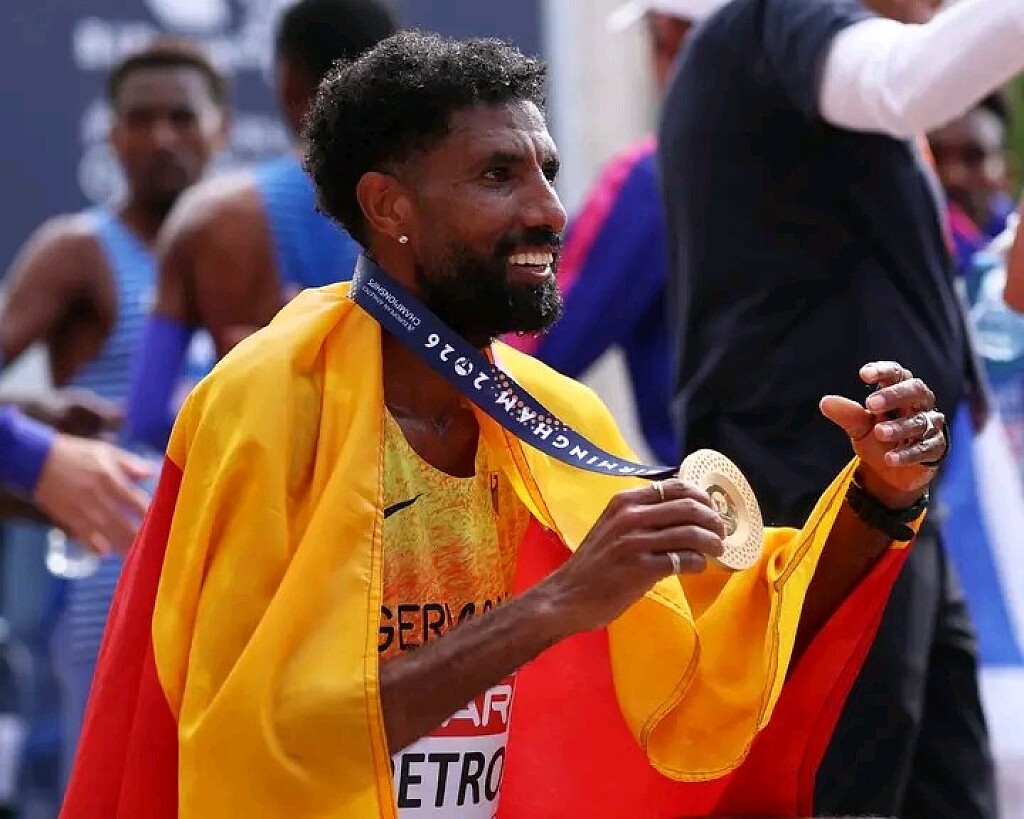


Amanal Petros Strikes Gold in Birmingham with Championship Record

Germany’s Amanal Petros has crowned a remarkable rise to the European marathon summit, winning the men’s marathon title at the European Athletics Championships in Birmingham in a championship-record 2:09:11.
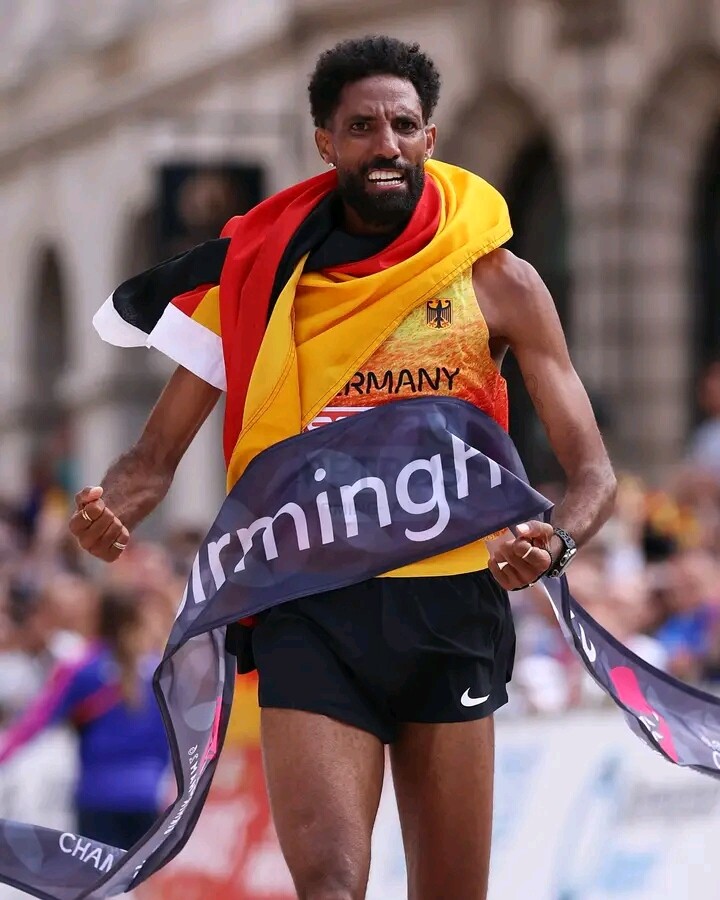
Petros arrived in Birmingham with a major championship medal already secured at global level. After taking silver in the marathon at last year’s World Athletics Championships in Tokyo, the German moved one step higher on the podium this time, converting his international consistency into European gold.
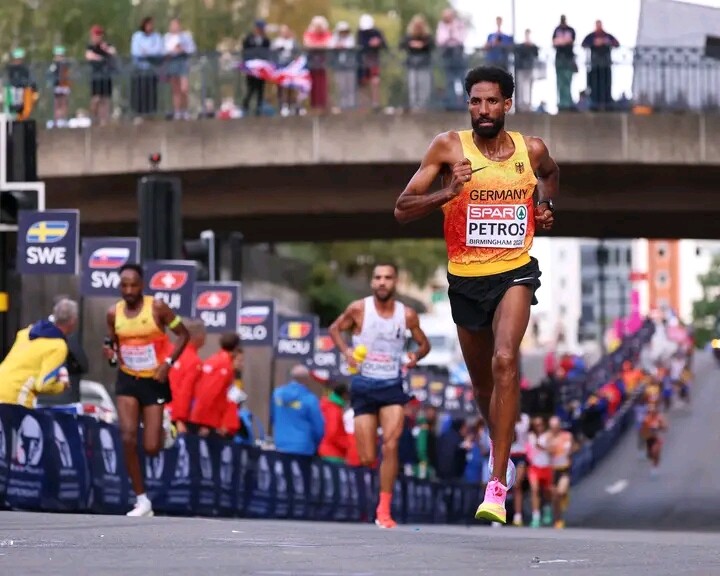
The victory adds another significant achievement to a season that has already included a strong performance at the London Marathon in April, where Petros finished 15th. Four months later, he produced a much stronger showing on the championship stage, delivering when the European title was at stake.
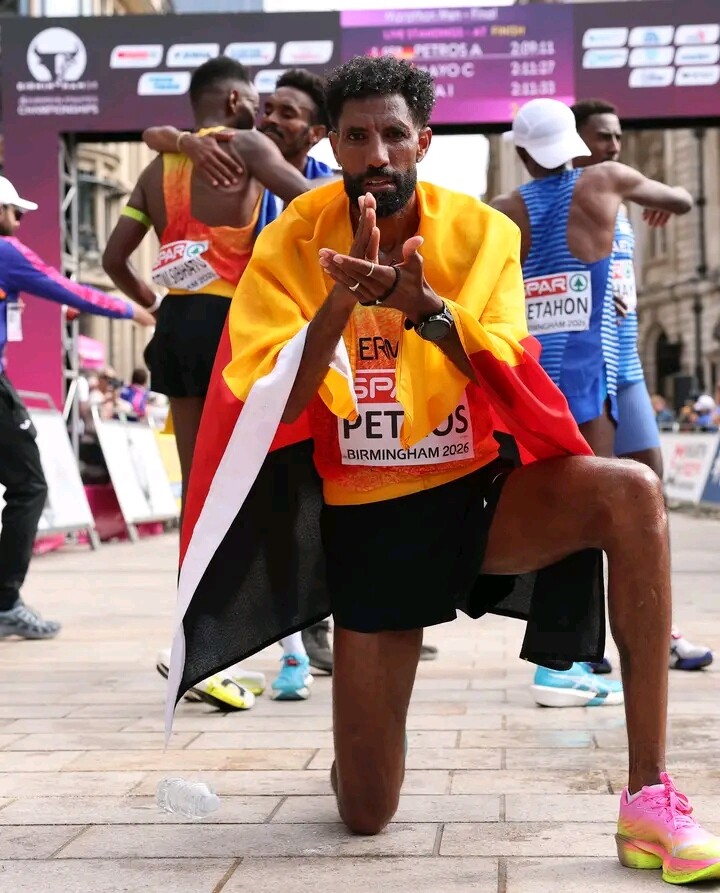
His 2:09:11 was enough not only to secure the gold medal but also to set a new European Athletics Championships record for the men’s marathon. Petros held off a tightly contested battle for the podium, with Italy’s Pietro Riva taking silver in 2:09:18 and Israel’s Gashau Ayale completing the podium with 2:09:21.
The three medalists were separated by just 10 seconds, highlighting the intensity of the Birmingham race. Riva came within seven seconds of Petros, while Ayale was a further three seconds behind, ensuring a thrilling finish to the championship marathon.
The victory also gives Petros another milestone in a career that continues to gather momentum. From his world silver medal to his latest European triumph, the German has steadily established himself as a formidable championship performer, and Birmingham has now provided the biggest title of his career so far.
For Petros, Birmingham provided the perfect opportunity to turn his recent championship success into the ultimate European prize. After his world silver medal in Tokyo, he can now add a European title and a championship record to his growing collection of major international honours.
The German’s latest triumph represents another important chapter in his career and confirms his status among Europe’s leading marathon runners.
by Erick Cheruiyot for My Best Runs.
Login to leave a comment

European Athletics Champioships
The27thEuropean Athletics Championshipswill be held from 10 to 16 August 2026 at theAlexander StadiuminBirmingham, United Kingdom.[1] This is the first time that a British city will have staged the European Athletics Championships although Birmingham has hosted many high-profile events, including the2007 European Athletics Indoor Championships, the2003and2018 IAAF World Indoor Championshipsand the2022 Commonwealth Games. Alexander Stadium was renovated between 2019 and...
more...Latest Running News
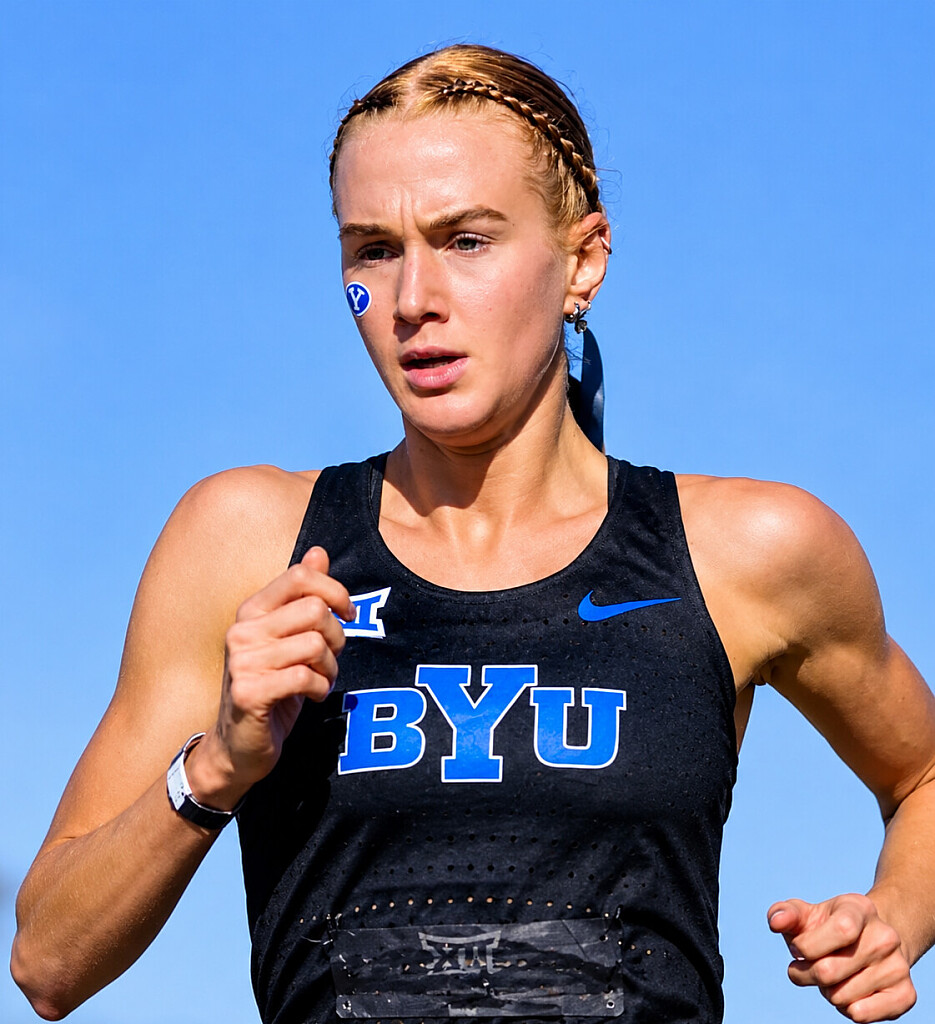
From NCAA Record Holder To 39th Place! Jane Hedengren Shows Grit By Fighting Through Calf Injury To Secure All-America Honours!
Jane Hedengren arrived at the 2026 NCAA Division I Cross Country Championships in Terre Haute, Indiana, as one of the biggest favourites for the women's individual crown. However, what unfolded on Saturday was a difficult test of resilience for the BYU sophomore, whose championship ambitions were overshadowed by a calf problem that nearly prevented her from competing.

The reigning NCAA 5,000m and 10,000m record holder had every reason to believe she could challenge for the national title. After finishing runner-up behind Alabama's Doris Lemngole at last year's championships, Hedengren returned with enormous expectations and the credentials of an athlete capable of dominating the collegiate distance-running scene.

But the race almost never happened.
According to BYU head coach Diljeet Taylor, Hedengren had been struggling with a calf issue that came close to forcing her out of the championship altogether. Despite the uncertainty surrounding her fitness, the determined American chose to take her place on the starting line and give herself a chance to compete.
Unfortunately, the physical problem appeared to take its toll as the race progressed. Unable to reproduce the form that had made her one of the most feared competitors in the field, Hedengren gradually slipped down the standings before eventually crossing the finish line in 39th place.
It was a dramatic contrast to her second-place finish a year earlier, representing a drop of 37 positions on a championship course that returned to Terre Haute for the first time in seven years.
Yet, even on a day when everything seemed to go against her, Hedengren managed to secure something important: All-America recognition. By finishing 39th, she stayed inside the top 40, the cutoff for All-America honours, ensuring that her difficult afternoon did not end without something to show for her determination.
Her performance also puts her journey into perspective. Hedengren has previously battled back from a stress fracture during her high school years and has spoken about the importance of carefully managing her training workload. Her latest setback is another reminder that even the most talented athletes can find themselves confronting challenges that go beyond fitness, preparation and expectations.
For BYU, which had significant hopes riding on its star sophomore, the result was undoubtedly disappointing. For Hedengren, however, simply making it to the starting line and fighting through the race under difficult circumstances demonstrated a different kind of competitive spirit.
Championships are often remembered for victories, records and podium celebrations, but they also reveal the character of athletes when circumstances refuse to cooperate.
Jane Hedengren may not have left Terre Haute with the NCAA title she came to pursue, but she leaves with another All-America honour and a difficult experience from which to rebuild.
Sometimes, the biggest victory is finding the courage to keep going when your body is telling you to stop.
by Erick Cheruiyot for My Best Runs.
Login to leave a comment
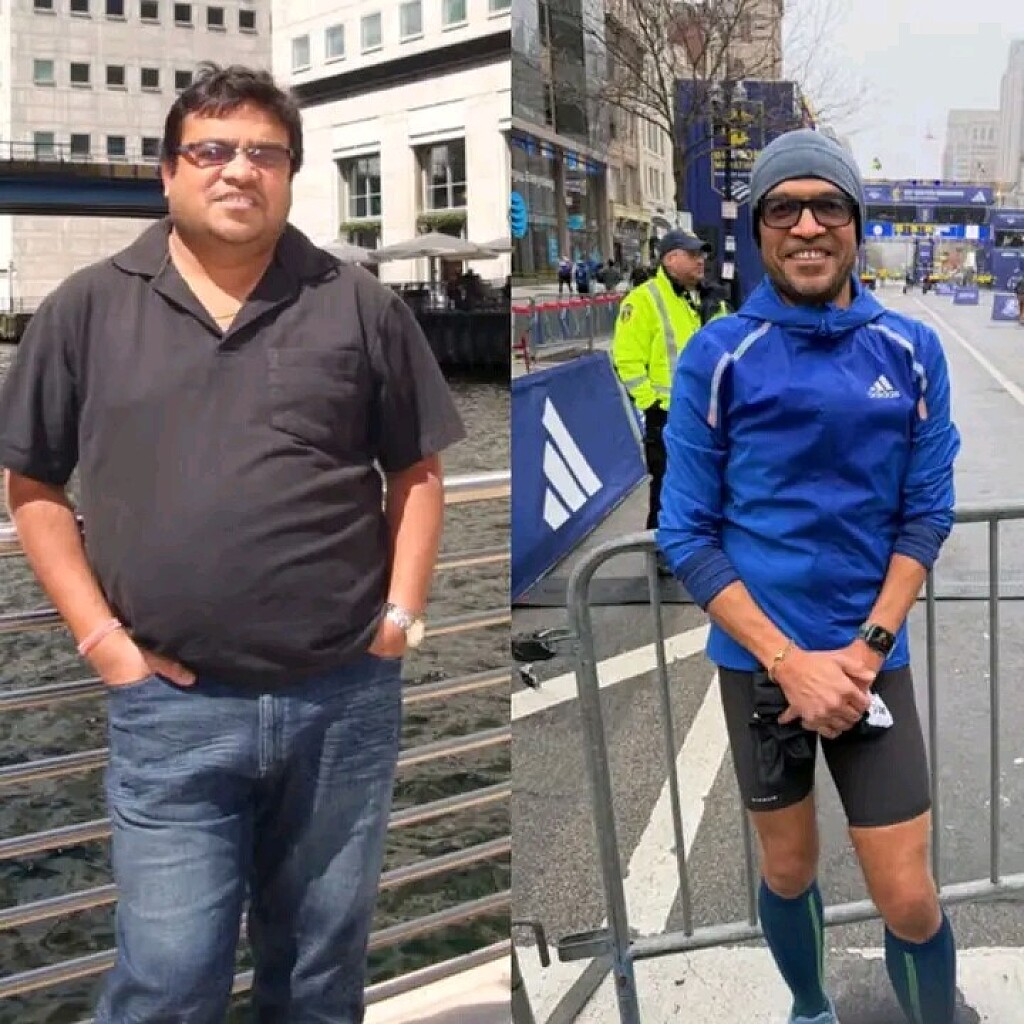
From 100kg And Struggling To Run 100 Metres To Conquering All Six World Marathon Majors At 52! Raj Sinha’s Extraordinary Journey Of Courage, Discipline And Transformation!
At 47, Raj Sinha was facing a battle that extended far beyond his physical fitness. Weighing 100kg and living with Type 2 diabetes, chronic hypertension and dangerously high cholesterol, even running 100 metres was an enormous challenge. Yet, five years later, he has transformed his life in remarkable fashion, becoming a marathon runner and completing all six Abbott World Marathon Majors at the age of 52.
His incredible transformation did not begin with an ambitious marathon target or an elaborate training programme. It started with a simple but life-changing decision to take responsibility for his health and make a fresh start.
With no expensive running coach or overnight solution, Raj began by taking slow walks around his neighbourhood. As his fitness gradually improved, he challenged himself to run his first 100 metres. Even that short distance was difficult, forcing him to stop two or three times to catch his breath before continuing.
However, rather than allowing his limitations to discourage him, he embraced the process and remained committed to improving one step at a time.
His progress was gradual but consistent. He moved from 100 metres to 200 metres, then 300 metres, 400 metres and eventually longer distances. What initially seemed impossible slowly became achievable, with every small milestone strengthening his confidence and determination.
Over the following five years, Raj lost an astonishing 35kg, reducing his weight from 100kg to approximately 65kg. More importantly, his health improved dramatically. Under medical supervision, his blood sugar, blood pressure and cholesterol returned to healthy ranges, and his reliance on medication changed with guidance from his medical team.
But transforming his health was only the beginning of an even bigger adventure.
Having discovered what consistency and determination could achieve, Raj set his sights on one of the most prestigious accomplishments in distance running: completing the Abbott World Marathon Majors.
One by one, he took on the six legendary races in Tokyo, Boston, London, Berlin, Chicago and New York. Each marathon presented its own challenges, but his determination carried him through, ultimately earning him the coveted Six Star Finisher Medal.
For someone who once struggled to run even 100 metres, completing six of the world's most celebrated marathons represents an extraordinary personal achievement.
Now aged 52, Raj is refusing to slow down. Having completed the original six World Marathon Majors, he is already looking towards two more races as he pursues the prestigious Nine Star Medal.
His story is a powerful reminder that a person's starting point does not have to determine their destination. It demonstrates what can happen when determination, patience and consistency become part of everyday life.
Raj's journey is not simply about losing 35kg or collecting marathon medals. It is about reclaiming his health, rebuilding his confidence and discovering possibilities he may once have considered beyond his reach.
From struggling to run 100 metres at 47 to conquering six World Marathon Majors at 52, Raj Sinha has shown that life-changing transformations do not necessarily begin with extraordinary achievements. Sometimes, they begin with one small step, followed by another.
His message is simple but powerful: Start where you are, work with what you have and never underestimate the power of consistency.
Because sometimes, the greatest victory is not crossing a marathon finish line ahead of thousands of other runners. It is overcoming the obstacles that once made you believe you could never get there.
Raj Sinha did not just change his body. He changed the direction of his life, one step at a time. What an extraordinary reminder that it is never too late to start again!
by Erick Cheruiyot for My Best Runs.
Login to leave a comment
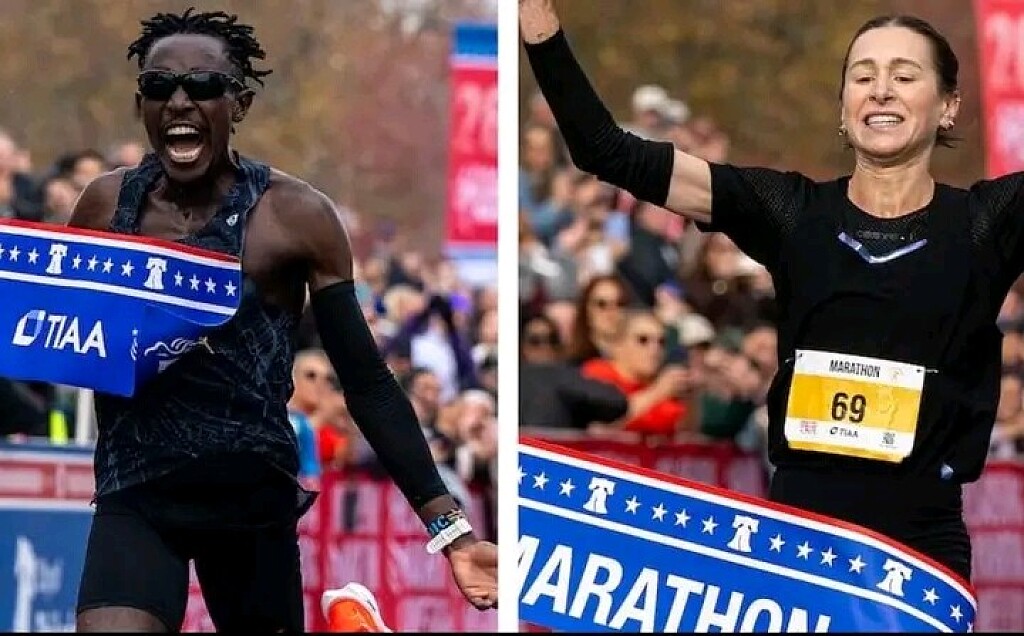
Kenya And Canada Conquer Philadelphia! Victor Shitsama And Dayna Pidhoresky Smash Course Records At The 2026 Philadelphia Marathon!
The 2026 Philadelphia Marathon delivered a spectacular morning of distance-running excellence on Sunday, November 22, as Kenya's Victor Shitsama and Canada's Dayna Pidhoresky produced outstanding performances to capture the men's and women's titles, with both athletes setting new course records.
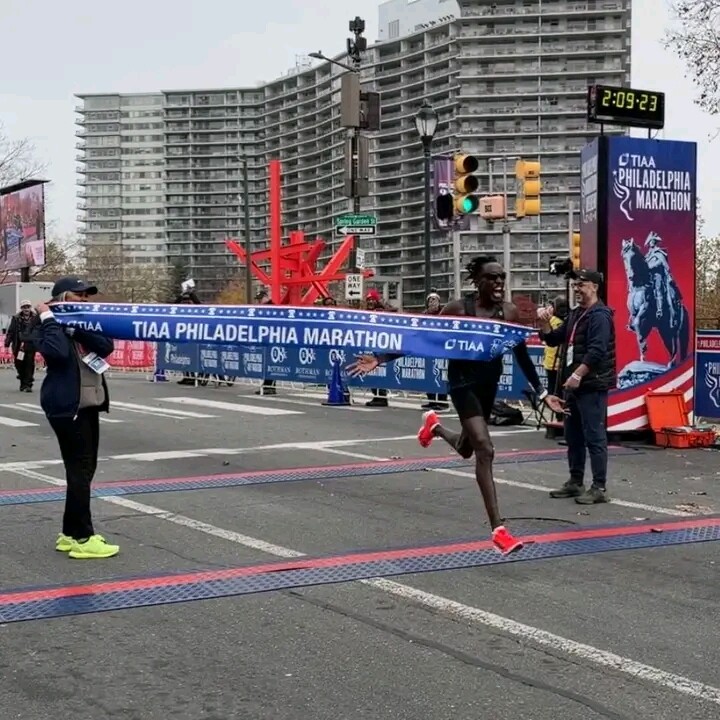
On a humid morning in Philadelphia, Shitsama dominated the men's race, powering his way to an impressive victory in 2:09:23. The Kenyan delivered a commanding performance over the 26.2-mile distance, finishing more than five minutes ahead of his nearest challenger to secure the men's crown and establish a new course record.

American-based Milton Rotich, representing the United States, finished second in 2:14:34, while compatriot Jared Ward claimed third place in 2:18:29. Aaron Davidson followed in fourth in 2:19:02, with Brendan Flynn completing the top five in 2:20:52.
Colin McCauley secured sixth place in 2:21:41, followed by Christian Schaaf in seventh in 2:22:30. Colombia's Edisson Gilberto Bernal Triana finished eighth in 2:23:46, while American Connor Pivirotto claimed ninth in 2:27:47. Evan Dorenkamp rounded out the men's top ten in 2:31:02.
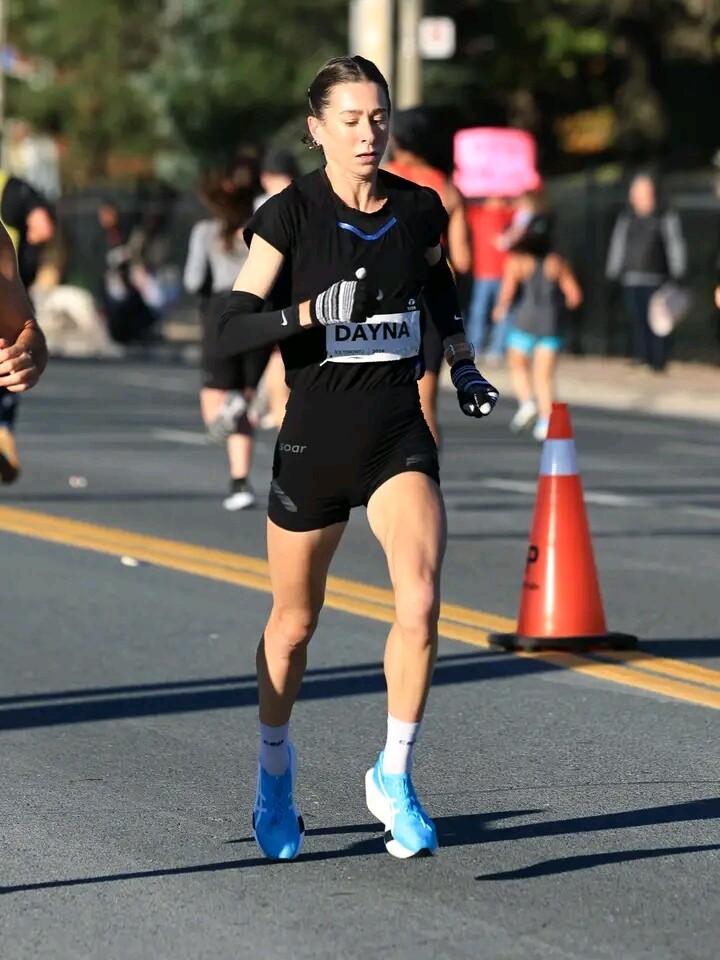
The women's contest also produced an outstanding display of marathon running, with Canada's Dayna Pidhoresky taking control of the race and powering to an emphatic victory in 2:26:34. Her performance secured the women's title and a new course record, underlining her impressive strength and determination over the marathon distance.
American Orla Rocha finished second in 2:34:05, while compatriot Rachel Schilkoswky claimed third place in 2:35:32. Madison Offstein crossed the line fourth in 2:36:28, followed by Mia Behm in fifth in 2:39:27.
Dee Buchholz finished sixth in 2:42:00, with Amanda Chang taking seventh in 2:43:39. Lauren McAdams secured eighth place in 2:44:51, ahead of Lauren Kelly, who finished ninth in 2:46:29. Susan Pardo completed the women's top ten in 2:47:19.
The 2026 edition will be remembered for two impressive course-record performances, with Shitsama delivering a dominant victory for Kenya and Pidhoresky bringing Canada into the spotlight with her commanding performance in the women's race.
Both champions produced memorable displays of endurance and determination, adding their names to the history of the Philadelphia Marathon and bringing an exciting conclusion to another major day of road racing.
by Erick Cheruiyot for My Best Runs.
Login to leave a comment

Philadelphia Marathon and Half
Have the time of your life in 2022 completing 13.11 miles! Runners will start along the Benjamin Franklin Parkway in the cultural Museum District and wind through Philadelphia’s most scenic and historic neighborhoods. From the history-steeped streets of Old City, through one of the liveliest stretches of Center City, across the Schuylkill River...
more...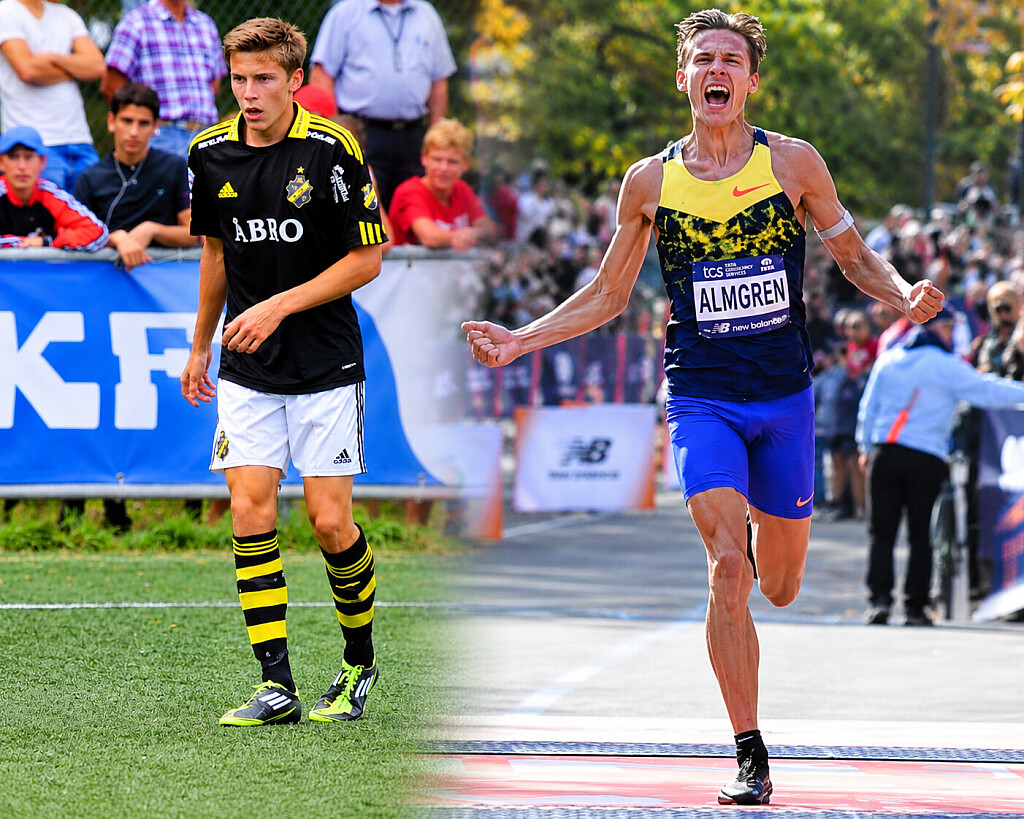
From The Football Pitch To Marathon History! Andreas Almgren's Extraordinary Journey Of Resilience, Reinvention And World-Class Success!
Long before becoming one of the most accomplished distance runners in European athletics, Sweden's Andreas Almgren dreamed of making his mark in an entirely different sport. His ambition was football, not running. Yet an unexpected twist of fate would eventually redirect his career and set him on a remarkable path to international athletics glory.

Growing up in Sollentuna, north of Stockholm, Almgren was a talented young footballer who developed his skills in the youth ranks of AIK, one of Sweden's most prominent football clubs. Playing as a right-back and wing-back, he appeared destined to pursue a future in the beautiful game.
However, persistent injuries brought that ambition to an abrupt halt. At just 18, recurring stress injuries affecting both feet forced him to reconsider his sporting future. What initially appeared to be a devastating disappointment ultimately became the turning point that introduced him to the world of competitive athletics.
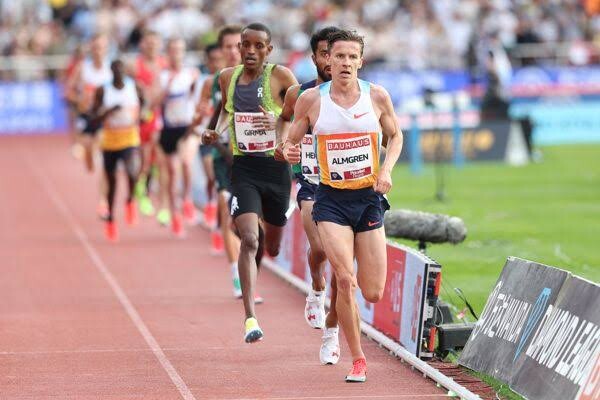
Almgren wasted little time demonstrating that his athletic ability extended far beyond the football pitch. His speed, strength and natural running talent quickly translated into impressive performances on the track.
In 2014, barely a year after committing himself to athletics, he secured bronze in the men's 800m at the World Junior Championships in Eugene, Oregon. It was an early indication of the immense potential he possessed and marked the arrival of a promising new name in Swedish athletics.
But his rise was far from straightforward. Behind the early success was a young athlete whose determination would repeatedly be tested by injuries and lengthy periods away from competition.
One of the most difficult chapters came in 2016, when a serious navicular bone fracture required surgery and prevented him from competing at the Rio Olympic Games. Additional physical setbacks, including stress fractures and a torn meniscus, further disrupted his progress. For an athlete with ambitions of reaching the highest level, such interruptions could easily have marked the end of a promising career.
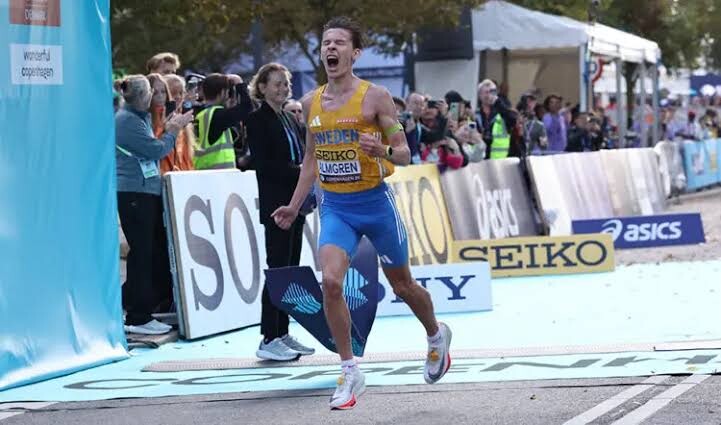
Almgren, however, refused to let those disappointments define his future.
Instead of abandoning his ambitions, he gradually reassessed his approach, adjusted his training and began exploring longer distances. His transition from middle-distance running towards the 5,000m, 10,000m and eventually road racing would prove to be a defining decision in his career.
His academic background in industrial engineering and interest in sports data science also complemented his development. He increasingly embraced a scientific approach to training, incorporating carefully monitored sessions and lactate-guided workouts to understand his body's responses and improve his performance.
The transformation has been extraordinary. The athlete who once specialised in the 800m has developed into one of the most versatile and formidable distance runners of his generation, establishing himself among the finest athletes in European distance running.
His remarkable progression across different distances tells the story of an exceptional talent. Almgren boasts an 800m personal best of 1:45.59, a European 5,000m record of 12:44.27, a Swedish 10,000m record of 26:52.87 and a European 10km road record of 26:45. He has also established himself as a world-class half-marathon runner, recording 58:06, and has now added a spectacular marathon performance of 2:06:01 to his growing list of achievements.
Winning bronze in the 10,000m at the 2025 World Athletics Championships in Tokyo was another major milestone. He followed that achievement with an impressive European 10,000m title in Birmingham in 2026, producing a championship record of 27:23.44.
His ability to excel on both the track and the roads has made him an increasingly rare athlete in modern distance running. Rather than limiting himself to one discipline, he has continued to demonstrate an extraordinary capacity to adapt, compete and succeed across different distances.
In November 2026, Almgren reached another historic milestone when he made his marathon debut at the TCS New York City Marathon. Rather than being overwhelmed by the challenge of 26.2 miles, the Swedish star delivered a performance worthy of his growing reputation, crossing the finish line in 2:06:01 to claim victory.
He became the first man since Ethiopia's Gebre Gebremariam in 2010 to win the New York City Marathon on his debut, adding another remarkable achievement to an already distinguished career.
For an athlete whose sporting ambitions once revolved around football, conquering one of the world's most prestigious marathons represented another extraordinary chapter in his transformation.
Perhaps the most remarkable aspect of Almgren's story is not simply the records, medals or victories, but the journey behind them. He began as a promising footballer, was forced to change direction because of injuries, emerged as an 800m international medallist, endured years of physical setbacks and eventually reinvented himself as a European record holder, world champion and marathon winner.
His career demonstrates that setbacks do not necessarily have to determine an athlete's destination. Sometimes, the road to greatness takes an entirely unexpected direction. Almgren's journey highlights the importance of patience, adaptability, intelligent training and, above all, the courage to embrace new challenges when circumstances change.
From the football pitches of Sollentuna to the streets of New York, Andreas Almgren has travelled an extraordinary distance, both literally and figuratively. What began as an unexpected change of sporting direction has evolved into one of the most fascinating transformations in modern distance running.
And at just 30 years old, Sweden's marathon champion has every reason to believe that his remarkable journey may still have many more historic chapters to come.
by Erick Cheruiyot for My Best Runs.
Login to leave a comment
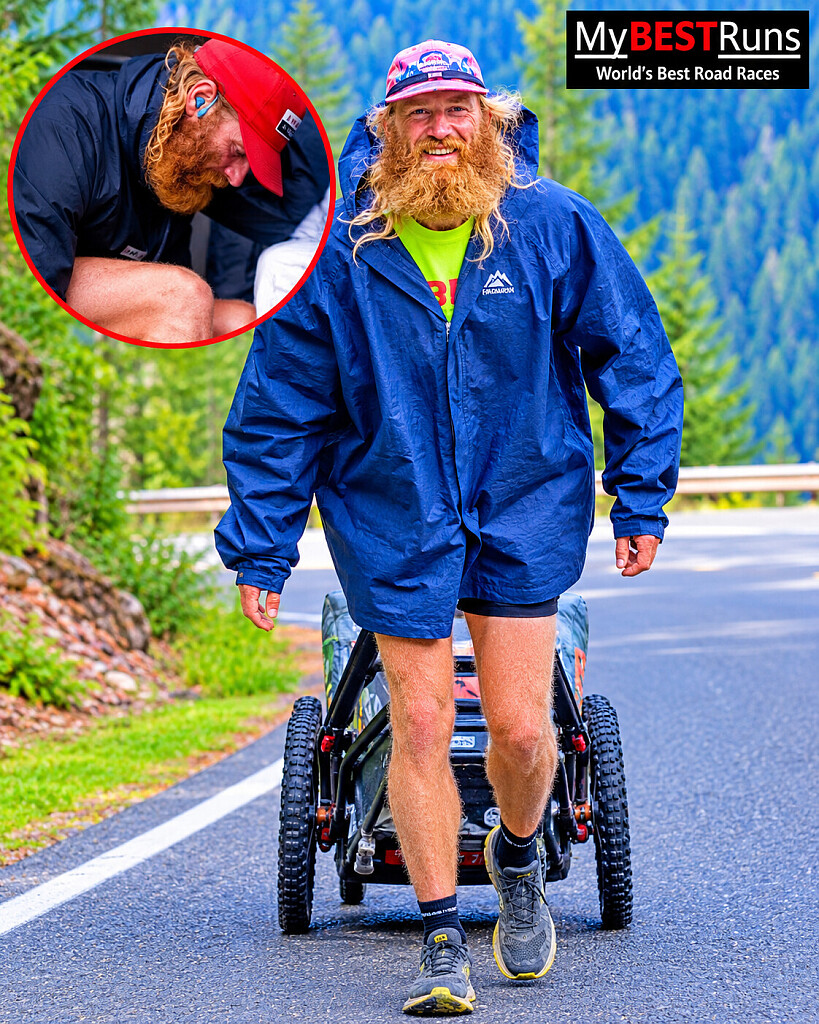
From A Battle With Depression To Running History! Cameron Balser Conquers America In 41 Days, Smashing A 10-Year-Old Record!
In one of the most extraordinary endurance achievements ever witnessed, American ultrarunner Cameron Balser has made history by becoming the fastest person on record to run across the United States, completing an incredible 3,067-mile journey from coast to coast in just 41 days, 16 hours and 45 minutes.
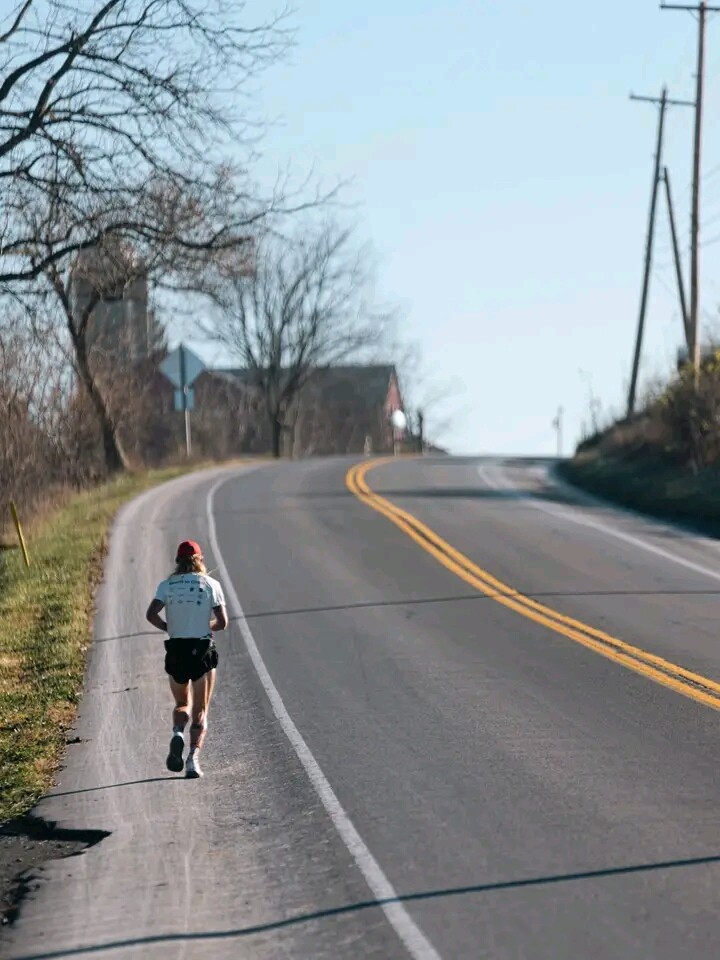
The 35-year-old Indiana native brought his remarkable challenge to an end at New York City Hall at 11:45 p.m. on Friday, November 20, after setting off from San Francisco City Hall at 5:00 a.m. on October 10.
His remarkable performance shattered the previous record of 42 days, 6 hours and 30 minutes, established by fellow American ultrarunner Pete Kostelnick in 2016. Balser finished 13 hours and 45 minutes faster, bringing an end to a record that had stood for a decade.
The numbers behind his achievement are almost difficult to comprehend. Balser averaged approximately 73.6 miles (118.5 kilometres) every day, spending between 15 and 16 hours on the road as he pushed his body across the country. His support crew followed closely, meeting him approximately every five miles to provide essential assistance throughout the demanding journey.

However, the challenge was far from straightforward. He encountered difficult weather conditions in the Rocky Mountains, where heavy rain made a dirt road too soft for his support vehicle, forcing him to cut one day's running short. He also battled through snow while crossing Cameron Pass in Colorado, demonstrating extraordinary determination in the face of unpredictable conditions.
As the miles accumulated, Balser remained committed to his mission, eventually making his way through numerous states before reaching the East Coast. His final kilometres became a celebration of community, with several dozen runners joining him around the George Washington Bridge for the run into Manhattan.
Yet, beyond the extraordinary statistics and record-breaking performance, Balser's journey carries a much deeper personal meaning.
Running has played a significant role in rebuilding his life. In 2017, he experienced a difficult period that led to a hospital stay while battling depression. His subsequent return to running became an important part of his recovery, helping him rediscover purpose, direction and a sense of belonging.
His passion for endurance running has since taken him on remarkable adventures. In 2023 and 2024, he completed an extraordinary 11,170-mile solo journey around the perimeter of the United States, carrying his essential supplies in a cart without the support of a dedicated crew.
This latest challenge, however, was driven by a purpose beyond personal achievement. Through his Breaking 42 project, Balser raised funds for the Grant County Family YMCA in Marion, Indiana, an organisation that supported him during his recovery and holds a special place in his life. He intends for the donations raised through the initiative to benefit the YMCA.
His achievement has also earned admiration from the man whose record he surpassed. Kostelnick publicly congratulated Balser, expressing genuine appreciation for someone willing to pursue a mark that had demanded so much from him to establish. His message reflected the respect that exists within the ultrarunning community, where extraordinary performances often inspire the next generation to push beyond perceived limits.
For Balser, the journey was about much more than taking a record away from another athlete. It was about resilience, gratitude, human connection and demonstrating what determination can accomplish when supported by a community.
Running more than 3,000 miles across an entire country in less than 42 days is an achievement that places extraordinary demands on the human body and mind. But Balser's story also serves as a reminder that running can be much more than a sport; it can become a source of hope, recovery and renewed purpose.
The record-setting performance is still awaiting formal ratification, but his remarkable coast-to-coast achievement has already captured the attention of the running world.
From the streets of San Francisco to the heart of New York, Cameron Balser has delivered a historic performance, proving that sometimes the greatest victories are measured not only by the distance covered or the records broken, but also by the personal battles overcome along the way.
by Erick Cheruiyot for My Best Runs.
Login to leave a comment
