

Running News Daily
Running News Daily is edited by Bob Anderson and team. Send your news items to bob@mybestruns.com Advertising opportunities available.
Index to Daily Posts · Sign Up For Updates · Run The World Feed
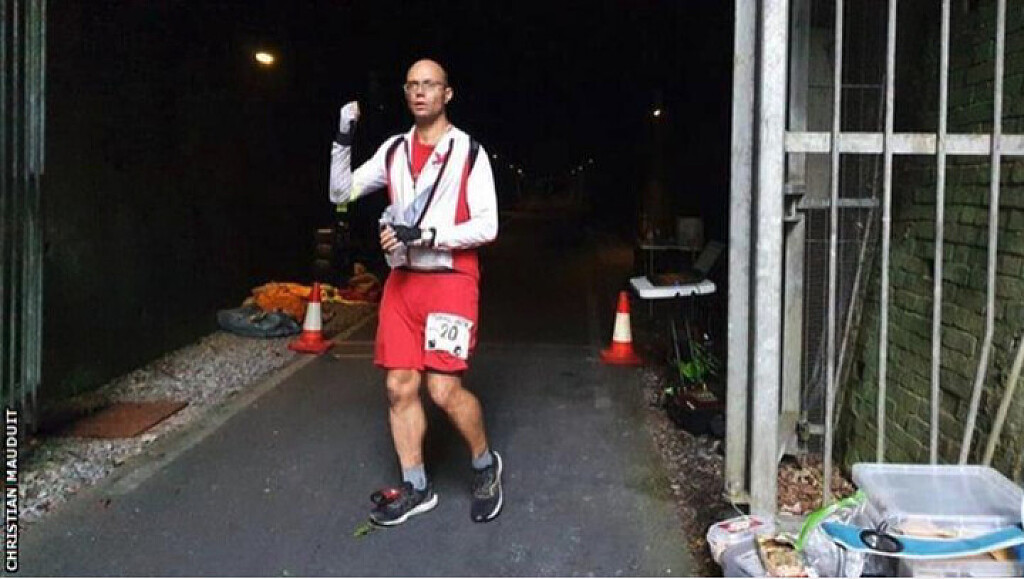


Tunnel Ultra: The mind-bending 200-mile ultra-marathon in the dark

How do you like to spend your weekend off?
Do you put your feet up in front of the TV? Maybe shopping is your way to unwind? Perhaps you're a bit more adventurous and enjoy a stroll in the countryside?
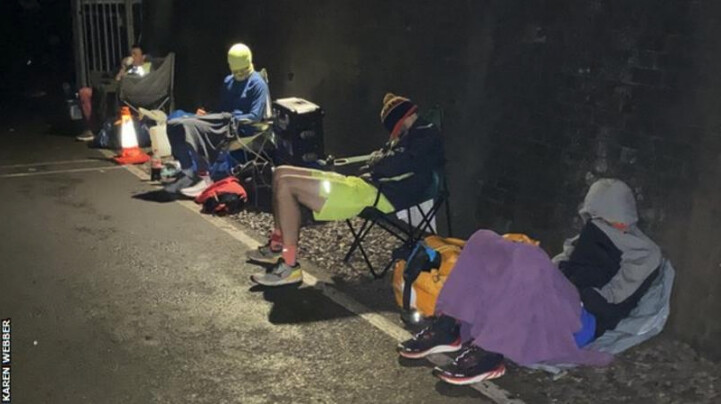
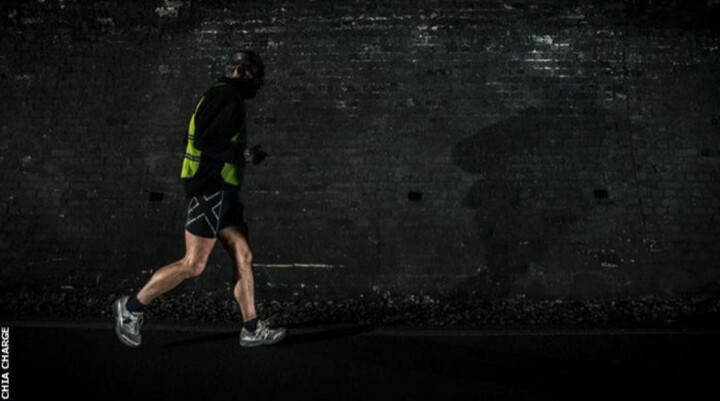
That doesn't quite cut it for some people, who choose to run a 200-mile ultra-marathon in a disused railway tunnel instead.
The Tunnel Ultra is a race like no other. It's easy to find longer events. Some even involve repeating the same loop for days on end. But nowhere else can you take part in a race so twisted that you spend more than two days in darkness doing a one-mile shuttle run 200 times, or so punishing that one runner went temporarily blind - then thanked the race organiser for the privilege.
No outside support is permitted, headphones are banned and runners are not allowed to run side by side. Oh, and there is a strict time limit of 55 hours.
The Tunnel website describes it as "a mind-bending test of extreme endurance and sensory deprivation". It is more health warning than marketing slogan.
"I could be sat on the sofa watching Strictly with the wife and kids. Or do I want to be in a dripping tunnel, tired and miserable, knowing I've got work on Monday?" Guy Bettinson, a 45-year-old programme manager from Cumbria who won the Tunnel in 2020, wonders out loud. "I'd rather waste my weekend putting myself through misery."
"It's so pointless. You're not getting from A to B, which makes it such a massive mental challenge," says Andy Persson, another finisher that year. "If you can push your mind further than you think is possible, it's quite empowering."
Christian Mauduit, a French software engineer who won the 2021 edition, says: "I'm chasing that internal adventure - that meeting with myself. It's like a little kid - they want to see how close they can come to the fire. I'm still that little kid."
Bettinson describes every ultra-marathon start line as a "mid-life crisis anonymous meeting". "We've all got issues," he says. "It's clearly some kind of therapy."
The race takes place in Combe Down Tunnel, a mile south of Bath city centre, and starts at 4pm on a Friday in March. No more than 40 runners make it that far, partly because of a strict - and deliberately opaque - qualification process and largely because the tunnel is not big enough to accommodate many more. "Even the start line is weird," says Mauduit. "You have to stand one behind another in a queue."
Combe Down was restored as a cycle path in 2013 after 47 years under weeds. It is the UK's longest foot tunnel - and the obvious setting for an ultra-marathon if your name is Mark Cockbain.
"I like things that have got an X-factor," says Cockbain, a prolific former ultra-runner who set up the Tunnel in 2019 to add to his brilliant yet brutal portfolio of events as a race organiser. "As soon as I got permission to use the tunnel, it was a no-brainer."
The race is low key in the extreme. A fold-up table outside one end of the tunnel serves as race HQ. There is no shelter or rest area to speak of unless runners have the foresight to bring a camping chair. They must all share a portable toilet which, by the end of the weekend, would not look out of place at a music festival. Refreshments are limited to water and tea, while the most luxurious snacks are Pot Noodles. If you're lucky, they might not be out of date.
"I cut back on delicacies," says Cockbain in the matter-of-fact style for which he has become famous in the ultra-running community. "You can get through any of these races with a bit of water and food. I wanted to make it all about the running."
For Mike Raffan, a 43-year-old IT manager from Aberdeen who finished second in 2021, that's part of the appeal. "It's nice that there isn't any nonsense," he says. "The Tunnel is pure, unadulterated running. You run from one end to the other in a straight line, turn around a traffic cone, come back again, and just keep going. That's it." Persson agrees. "There's no fanfare. If you're looking to be pampered, you've come to the wrong place."
All of which adds up to a notoriously low finish rate. Of the 31 runners who started the inaugural Tunnel, only two completed it, and 13 in total in the three years it has been in existence.
"I don't want there to be no finishers," says Cockbain. "But I do want them to go through hell to get there."
So how exactly do you survive a race that is deliberately designed to break you physically, mentally and emotionally?
In one sense, it is simple. "The only things you have to think about are moving, eating, drinking, sleeping and going to the toilet. That's the limit of your universe," says Max Newton, a fundraising manager from Sheffield who was among the seven finishers in 2020. "All that jazz in real life is nonsense."
"One tactic for me is 100% commitment," says Raffan. Those words carry added weight from someone who ran 182 miles in 42 hours around his back garden three months after open-heart surgery in 2020. During another Cockbain race he continued running in conditions so bleak that his eyeball froze. "I never thought about not finishing the Tunnel. Before the race I told them, 'Do not let me stop unless there's a medical reason for it'."
Mauduit's approach is similar. "I'm asking myself all the complex questions - 'Why am I doing this? Should I go there?' - before the race, in training. During the race I just finish the lap - there's no question."
"You have to be all in. If doubt creeps in, you're gone," says Cockbain. A 50-year-old electronics engineer by trade, he completed 199 marathons and 106 ultras - including some of the toughest in the world, notably five Spartathlons, three Badwaters, a double Badwater and a 300-mile race in the Arctic - before knee problems forced him to stop running in 2011. "I could sit in a corner and hit my head with a spoon for three days if that's what I decided to do."
Bettinson admits the "possibility of failure was a big thing" when he stood on the start line, yet he went on to finish in a scarcely believable 43 hours nine minutes. It remains a Tunnel record by more than six hours and is "up there with some of the all-time greatest ultra achievements", according to Cockbain, not a man given to hyperbole.
Repeatedly running along the same stretch of tarmac throws up a mental challenge rarely found in races of any distance, let alone 200 miles (the total distance is actually 208 because the tunnel is slightly longer than a mile).
"The difficult thing with doing 100 laps is there are 100 chances to stop," says 49-year-old Newton, who also ran a 300-mile lapped ultra last summer. Even if runners quit mid-lap, they must make their way back to the start line. Mauduit agrees that the turnaround point at race HQ is often the most difficult. "Once you're on the course it's easy - everyone can do two miles," he says.
"When you reach the start line again you're facing two choices. One is calling it a day. You will still suffer, your legs will hurt, the pain will follow you for hours, and you have to deal with the fact you gave up. Or you can beat your own personal record in the tunnel and write history. You only have to be motivated for five seconds - just enough time to pick your butt up and get into the tunnel. During the Tunnel I don't do 200 miles; I do two miles 100 times."
A positive mindset is universal - some would argue essential - among those who have completed the race.
"When it's really hurting and I'd rather be in bed, I say to myself, 'I love this tunnel and I can't believe I've got this opportunity'," says Persson, a 57-year-old counsellor from Bristol who once ran 900 miles from Land's End to John O'Groats in 17 days.
"You've got to embrace it - there's no point fighting it or being grumpy. You have to find the bits that make it good," says Newton. Alan Cormack, who finished second in the inaugural Tunnel, adds: "You don't have to worry about weather, mud, navigation. And you don't have to carry a pack."
With no scenery, music or conversation, surely it must be boring? "On these runs you're often very busy," says Mandy Foyster, who staggered over the finish line five minutes inside the time limit in 2021 to become the only female runner to have completed the race. "You don't have time to get bored - you're doing maths in your head and you're so focused on keeping going."
Persson says "my personality likes routine", while Mauduit positively loves it. He once ran 238 miles in 48 hours on a treadmill, but says his favourite events are six-day races. His record is 541 miles.
For Raffan, ultras are his meditation. "People ask what I think about when I'm running. Absolutely nothing. At the best points your mind is empty. When you're in that proper trance state you're not thinking about anything."
Running 200 lengths of the tunnel means running 200 times past a speaker built into the wall at the midway point that resembles a giant eyeball and pumps out classical music on loop all day and night. "There are these little submarine-style windows which glow different colours," says Newton. "It's like super stereo."
Cormack describes it as a screeching violin, which Bettinson claims "adds to the weirdness and psychological torture". Mauduit is more direct: "It drives you nuts."
More psychological torture comes in the form of darkness. There is only dim lighting in the tunnel - which is shared with cyclists and walkers during the day - and even these are switched off between 11pm and 5am.
"Not only are you in the darkness, but you are alone and you have no headphones. It's like a giant meeting with you and your feet," says 47-year-old Mauduit. "All human bodies are conditioned by daylight. In a standard race, when the sun rises you feel great. In the tunnel you have no reference - it's always night."
"It became a very big battle to stay awake," says Foyster, a seasoned ultra-distance athlete whose idea of celebrating her 50th birthday was to cycle between Ben Nevis, Scafell Pike and Snowdon and sleep on the summits of each. "When I got to the end of the tunnel I'd step out in the daylight and just stand there for 10-15 seconds."
Foyster put more thought than most into keeping the so-called sleep monsters at bay - "I had perfume to spray and a Vicks to stick up my nose - anything to stimulate your senses" - but her most valuable tool was a small spray bottle. "When I felt myself falling asleep I sprayed myself in the face with water. That was absolutely fantastic."
Some runners might grab a power nap outside the tunnel - and pray it doesn't rain. Others treat sleep as an inconvenience in a race with an already demanding time limit. A rare few don't even afford themselves the luxury of sitting down.
"If you stop you've got to start again. If you don't stop you don't have to start again. I just kept going," says Bettinson, whose 17 years in the Army have proven an excellent grounding for ultra-running. "I did end up lying down a couple of times, but you're in so much pain by the second night that you can't sleep anyway. And you're just wasting time by not moving."
Raffan pulled out of the 2019 Tunnel after 100 miles to join his wife and daughter at the zoo. It remains his only DNF from more than 50 ultras. When he returned in 2021 he deliberately did not bring a chair. "I ended up sitting on somebody else's, but that was good because whenever they needed it, it forced me to get out."
"I don't trust myself to set an alarm and wake up, so I didn't take the risk," says Mauduit. "The only time I stopped was at the refreshment table or to go to the bathroom."
If sleeping is optional in the Tunnel, hallucinations are all but guaranteed.
"I saw a family of abominable snowmen, a massive slug and I thought I was on the edge of a cliff," says Karl Baxter, who failed to finish the race in 2020 but conquered it with less than an hour to spare the following year.
"Orange blobby monsters kept floating at me out of the darkness," says Foyster, who blames her good friend Baxter for convincing her to sign up for the race. "I wasn't in a tunnel a lot of the time - I was running through Egyptian tombs or over a suspension bridge with deep ravines."
Mauduit recalls: "On the last day it got insanely bad. I was seeing stairs; I was walking on a glass floor. I couldn't escape from it. The hallucinations were an order of magnitude stronger than anything I've ever had before. It was mind-blowing."
Cockbain has seen it countless times. "It's just total carnage," he says. "People are losing their marbles. If they stop for a rest, they can't remember which way they're going."
The effects lasted beyond the race for Persson. "I saw ticker tape, carvings in the wall, and I was convinced there was a glass conservatory with flowers. My wife and daughter picked me up and I was still hallucinating by the time I got home. I've never had that level of it before - it was so extreme."
Training for the race varies wildly between competitors. Bettinson's longest run in the build-up to his victory was a mere 12 miles; Foyster "did a lot of fast walking"; Cormack, who was scared of the dark as a child, favoured night-time runs; and Baxter attempted to simulate the boredom with lengthy treadmill sessions or by running up and down a one-mile stretch of road. He managed 48 of them one day.
Eating and drinking strategies are equally individual, but, given that runners burn about 20,000 calories during the course of the race, hunger triumphs over health. Dentists and doctors, look away now.
Pizzas, chocolate, cake and flat cola fuelled Foyster for nigh on 55 hours. Baxter polished off tube after tube of salt and vinegar crisps, all eaten on the move to save time. Jam sandwiches, flapjacks and Pot Noodles - "they really hit the spot" - kept Newton going. Raffan tucked into supermarket meal deals and butteries - a "really dense, stodgy" Scottish pastry - but describes cold custard as his "secret weapon". Persson's menu of quiche, sausage rolls and overnight oats seems positively gourmet by comparison.
Bettinson is powered by a concoction of Lucozade, pineapple juice and beetroot juice. He also liquifies food and puts it in baby pouches "so it's easy to get down". Because it is impossible to replace the energy you are burning, his plan is "fuel early and then cling on".
As the saying goes, what goes in must come out, although most runners visibly wince when they remember a toilet situation that Newton laughingly describes as "a disgrace".
Bettinson says: "The first time I did the Tunnel it was a little chemical kiddy loo that you'd take camping. It was in a half-collapsed tent with a broken zip. Mark deliberately put it in a puddle, so you had to get your feet wet just to get inside it, and after the first 50 miles it was like a festival loo - you had to hover over the top."
Even if runners can cope with the boredom, darkness and sleep deprivation, pounding tarmac for longer than some weekend breaks last takes an immense physical toll.
"Of course your legs will hurt - you're running 200 miles. What did you think was going to happen?" says Mauduit, a man whose CV also features winning a Deca Ironman - a triathlon consisting of a 23-mile swim, 1,118-mile bike ride and a 262-mile run.
"Everything after 20 miles involves pain," says Bettinson, who admits that theory was tested when his hips were in "absolute agony" 100 miles in. "Anyone can get round it - you just have to want to."
Newton's approach veers towards the spiritual. "In a weird way, if you run through excruciating pain it doesn't hurt any more," he says, with the caveat that this approach doesn't always translate to his partner Anna. "She's worried I'm going to die. She has seen me in a bad state - sometimes it has been a bit messy."
Cockbain has this advice: "The feeling of wanting to give up doesn't last - if you put something in its place."
Runners know better than to expect sympathy from Cockbain, whose stable of events also includes an unsupported 300-mile run from Hull to the south coast as well as a race where pairs of runners in boiler suits are chained together and have 24 hours to cover as much ground as possible. You can sense the disappointment in his voice when he recalls how The Hill, which involved climbing up and down a hill in the Peak District 55 times - equating to 160 miles - in 48 hours had to be scrapped after the pub which doubled as the checkpoint closed down.
Perhaps Bettinson sums up Cockbain best: "Mark has a motivational speech at the start of his races: 'If you're going too slow, speed up.'"
Baxter, a 51-year-old from Norfolk who spent 12 years in the Army and now drives lorries for a living, turned an ankle during his second attempt at the Tunnel. "It came up like an egg. I sat down for 20 minutes and I was going to quit. Mark said, 'A twisted ankle never killed anyone' and told me to carry on. It taught me a lot. Once I got to 150 miles I knew I was going to finish."
Individual motivation comes in different forms, but a common thread among finishers is the time, energy and money they have invested in a race that often few people outside their close circle of family and friends know about. Nobody gets into ultra-running for the glory, least of all those taking part in Cockbain's events.
"My wife is handling all the family by herself, working and having no fun," says Mauduit, who rode his motorbike from Paris to take part in the Tunnel. "I'm having this five-day vacation so I should do something good with that."
Bettinson flips the question on its head. "My why for being there is I chose to be there. I've paid the money, I've done the training, I've turned up. Why on earth wouldn't I finish?"
Foyster, meanwhile, does it for the sheep. Having grown particularly fond of the animals during endurance adventures such as running the width of the UK or cycling the length of it, she now uses ultra-marathons to help raise funds for a sheep sanctuary in Lincolnshire.
"When I was struggling in the Tunnel, my friend sent me videos of the sheep. I'm thinking of them at the tough times," she says. "Some people ask me if I have a coach. I say my coach is a sheep called Bella."
Foyster, who works at an animal sanctuary near Norwich, has run the London Marathon dressed as a sheep and even had a fancy dress costume lined up for the Tunnel, but never got chance to wear it because she was in such bad shape later in the race. What was the outfit? "A sheep dressed up as Darth Vader."
The gruelling nature of Cockbain's races and the derisory finish rate creates a special sort of camaraderie among runners, evident from the dark humour on the start line to the support they offer each other as they push beyond their limits.
"Everyone feels like they're in it together. It doesn't feel competitive," says Newton. Cormack, who runs a cleaning company in Aberdeen, adds: "Nobody cares if you're first or you're 20th." Bettinson says: "Mark's events feel less like a race and more about the entrants against the event as a collective. You're only ever racing against yourself."
Foyster, 56, says she goes into any event with a "1,000% determination to finish it", but her unwavering drive in the Tunnel took her to a place she had never been before.
"After 100 miles my body started to break down," she recalls. "By 150 miles I had adopted my walk-shuffle approach, and in the last 10 miles I completely lost my mind. I kind of went over to the other side.
"At mile 192 I became completely disorientated and started going the wrong way. I thought I was wandering along a quiet country lane. I didn't know who I was or what I was or what I was doing."
In a rare moment of weakness/graciousness (delete depending on the coldness of your heart), Cockbain allowed Foyster's friend to accompany her as she staggered to beat the time limit. He even turned cheerleader on Foyster's final lap.
"At mile 198 my vision went," says Foyster. "I couldn't see anything. I crashed into the wall a few times. I had a broken tooth. I felt like I just needed to collapse on the floor. It was the first time that I'd felt worried about myself physically.
"Mark appeared behind us on a bicycle shouting 'you've got to go faster'. I was running blind - I was running into a white mist. I felt like I was sprinting flat out. I kept running until Karen the timing lady caught me in her arms." Foyster had finished in 54:55, not even time for another lap.
Because she was "in a complete and utter state", Foyster says she did not get to savour the finish line moment. "That's the only bit I regret."
She didn't miss much. "There are only a handful of people there. You get a bit of a clap, Mark shakes your hand and gives you your medal," says Persson. "It's not like you've got people patting you on the head," says 55-year-old Cormack, who then slept on the back seat of his car because he was too tired to put his tent up.
"Mark said a few words - I was so knackered I can't remember what - and I just picked my box up and went to the train station," says Bettinson. "It was a busy weekend and there were a lot of people ready for a day out. There was me, absolutely stinking, wheeling this box and eating bits of scabby old sandwich."
Foyster was so spent that she had to be carried to her hotel room. Baxter, who did some of the carrying, says: "That was just as hard as the last few miles."
"If you finish one of Mark's races you get respect from him. That means a lot," says Newton. Bettinson agrees. "Most of my medals I chuck in the bin. If it's one I'm bothered about I keep it in a drawer. I've kept the Tunnel one."
Cockbain's goal is simple: "All I want is that someone walks away remembering it for the rest of their life. Ultimately we're going to live and die. How are you going to fill up the middle of that? Achievements last forever."
"Races aren't pretty - that is real life," says Foyster. "The Tunnel is the hardest I've pushed myself. I've never needed help like that, so my overwhelming feeling was I was so grateful."
Mauduit, who describes the Tunnel as an "awesome race", adds: "I thank Mark for putting it together. I discovered something new. It was a blast. It all makes sense because it doesn't make sense. It's worth every penny."
Baxter remembers clearly his feelings in the week after the Tunnel. "I was buzzing. I felt on top of the world. I felt invincible." Newton recalls: "When I was telling people about the Tunnel I was talking with a smile on my face."
But what on earth is next for those who have completed one of the most challenging ultra-marathons invented?
Baxter tells a story typical of a certain breed of ultra-runners. "My girlfriend said, 'Is that it?' I said, 'No way. I want to go further.' Plus, no-one has done it twice." He may have company. "I'll be back one day," says Mauduit. "I'm thinking about it."
Cockbain recognises the signs from his own running days. "It's a drug. It's an addiction. It's a never-ending 'what's next?' You never get satisfied."
Even Bettinson, the record holder, says: "My holy grail is I want to finish an event where I know I've given absolutely everything - even if I don't finish. It could be one mile or it could be a thousand miles.
"I'm still chasing that unicorn."
by BBC
Login to leave a comment
Latest Running News
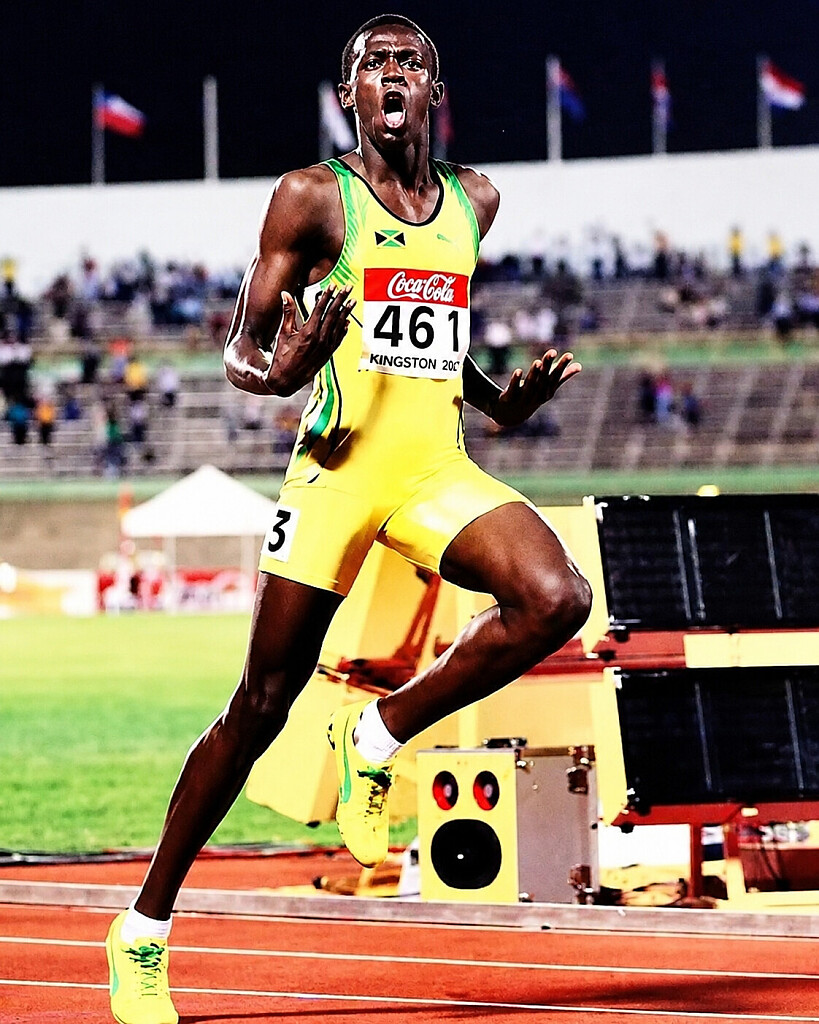
Where Greatness Begins: The Day a 15-Year-Old Usain Bolt Changed Sprinting Forever
Long before he became the fastest man in history, before the Olympic gold medals, world records, and global superstardom, Usain Bolt was simply a gifted teenager with extraordinary speed and limitless potential. In 2002, on the track at Kingston's National Stadium in Jamaica, the world witnessed the first chapter of a story that would forever change athletics.
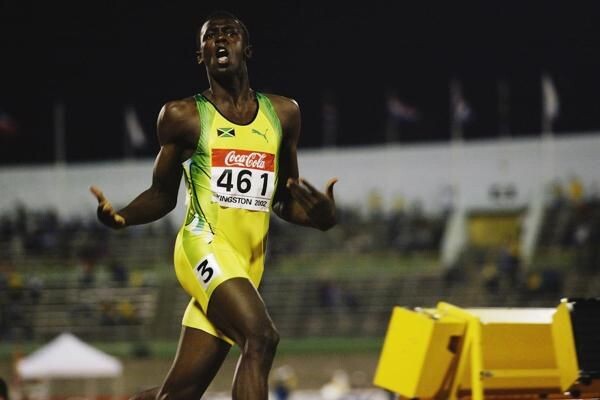
At just 15 years old, Bolt lined up for the men's 200 metres at the World Junior Championships with the weight of expectation resting on young shoulders. Competing before a passionate home crowd, the Jamaican prodigy produced a performance that instantly captivated the athletics world. Crossing the finish line in 20.61 seconds, he became the youngest athlete ever to win the men's 200m title at the championships.
It was far more than a gold medal. It was the moment the world realised that a once-in-a-generation talent had arrived.
Bolt's victory in Kingston marked the beginning of one of the greatest careers in sporting history. Over the years that followed, he rewrote the record books, dominated the Olympic Games and World Championships, and transformed sprinting into a global spectacle through his breathtaking speed, infectious personality, and unrivalled confidence. His legacy continues to inspire young athletes across the globe, many of whom dream of following the same path he once began as a teenager.
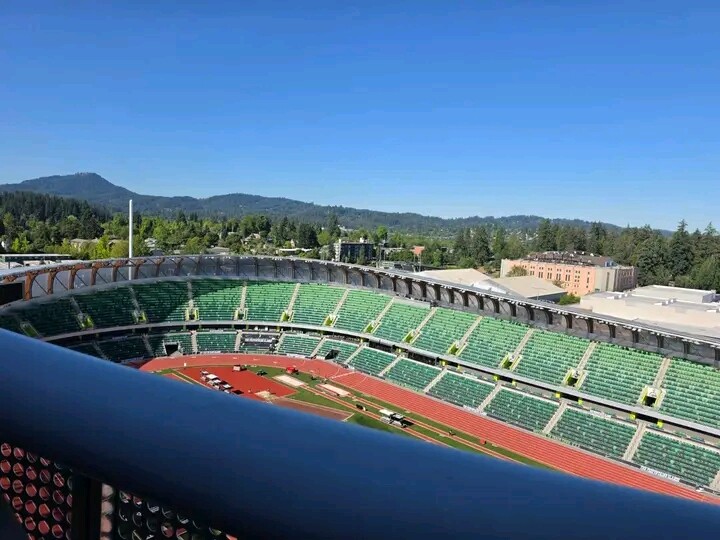
This week, that dream comes alive once again as the World Athletics U20 Championships take centre stage at the iconic Hayward Field in Eugene, Oregon. The venue has already witnessed the birth of future superstars. In 2014, it was where Britain's Dina Asher-Smith and Uganda's Joshua Cheptegei captured their first global titles, launching careers that would later produce world championships, Olympic medals, and lasting legacies in athletics.
Twelve years later, another generation arrives in Eugene hoping to create its own defining moment.
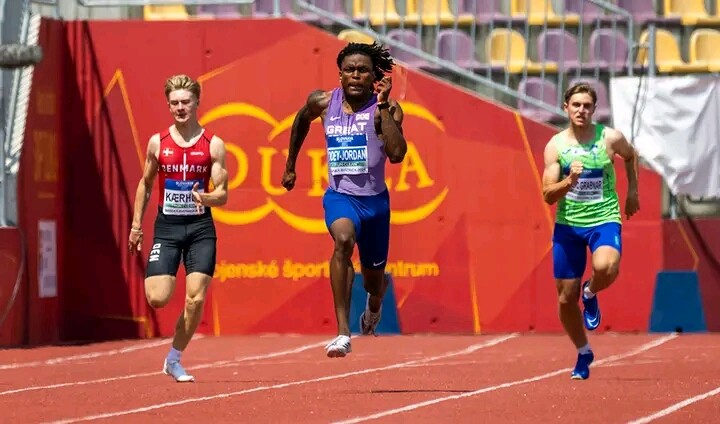
Among the brightest young talents is Great Britain's Jake Odey-Jordan, the 200m bronze medallist from Lima who now owns the European U20 100m record after an astonishing 10.01-second performance. He enters the championships eager to build on his growing reputation as one of Europe's most exciting young sprinters.
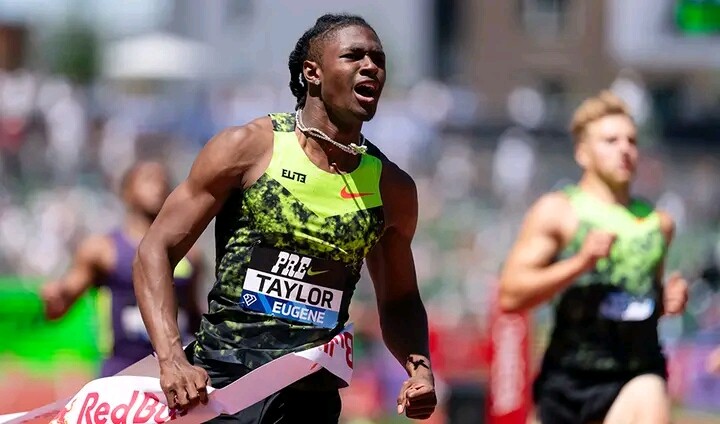
The United States will look to Tate Taylor, who has already made history as the first American high school athlete to break the 20-second barrier for the 200 metres. Fresh from a Diamond League victory in a sensational 19.75 seconds, he arrives in Eugene carrying the momentum of one of the most remarkable junior seasons ever recorded.
Jamaica, the nation that introduced the world to Usain Bolt, will once again have high hopes through Shanoya Douglas. The talented sprinter has established herself as one of the championship's leading contenders after producing lifetime bests of 10.98 seconds for the 100m and 22.11 for the 200m this season.
History has repeatedly shown that the World U20 Championships are far more than a junior competition. They are often the first chapter in the careers of future Olympic champions, world record holders, and global icons. Every generation arrives with ambitious dreams, but only a select few leave having announced themselves to the world.
No one can say with certainty whether the next Usain Bolt will emerge this week. Greatness cannot be predicted, and legends are never manufactured. Yet every legendary career begins with a single breakthrough performance.
For Bolt, that defining moment came in Kingston in 2002.
Now, under the famous lights of Hayward Field, another group of gifted teenagers stands ready to chase history. Somewhere among them could be the next athlete whose name will inspire the world for years to come.
by Erick Cheruiyot for My Best Runs.
Login to leave a comment
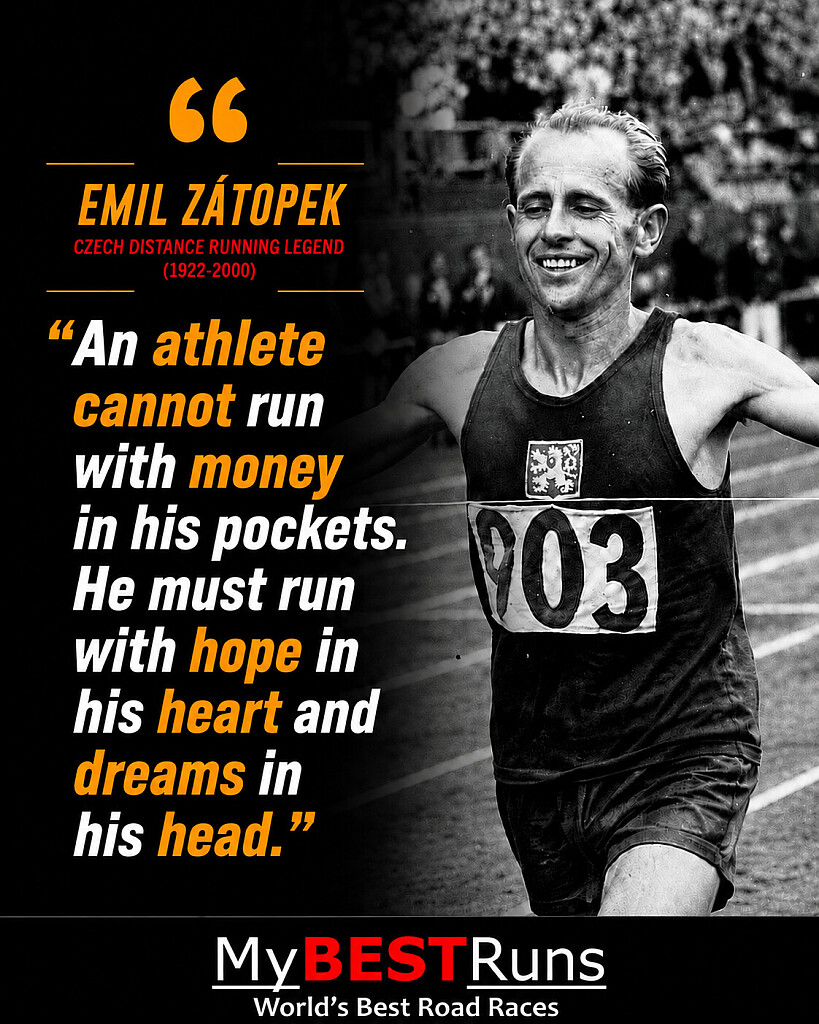
The Dream That Outruns Money: Emil Zátopek's Timeless Lesson for Every Runner
"An athlete cannot run with money in his pockets. He must run with hope in his heart and dreams in his head." More than seventy years after those words were spoken, they remain among the most powerful messages ever shared in distance running. They are often quoted as simple motivation, but behind them lies a remarkable story of sacrifice, courage, conviction, and an unwavering belief that true greatness is never measured by financial reward.
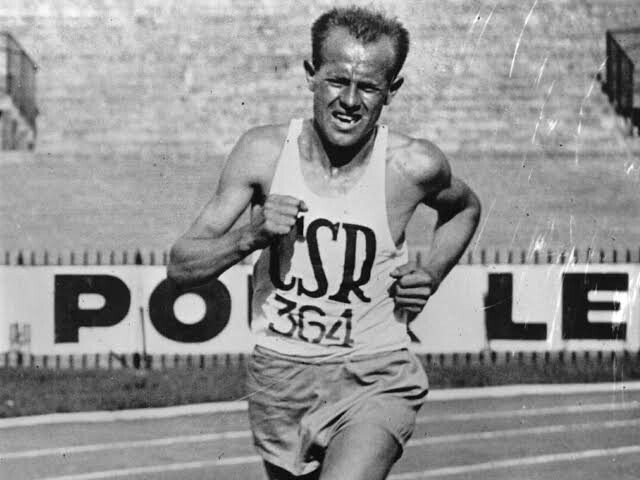
Few athletes have left a legacy as enduring as Emil Zátopek. Known around the world as "The Czech Locomotive" for his relentless determination and unmistakable running style, he redefined what was possible in endurance racing. His legendary performance at the 1952 Olympic Games in Helsinki still ranks among the greatest achievements in athletics history. In the space of just nine days, he captured Olympic gold in the 5,000 meters, the 10,000 meters, and, incredibly, the marathon—a race he had never attempted before.
Yet the world in which Zátopek competed was vastly different from today's professional athletics landscape. During the 1950s, elite sport officially operated under strict amateur rules. Olympic athletes were forbidden from accepting prize money or earning a living directly from competition, although unofficial financial arrangements existed in many sports. Zátopek himself never raced for appearance fees or lucrative prize purses. Instead, he served as an officer in the Czechoslovak People's Army, receiving a military salary while representing his country. Running brought him glory, but not personal wealth.
It was within that environment that his famous words carried genuine meaning. For Zátopek, success was never driven by the promise of money. He believed the greatest performances were fueled by hope, ambition, discipline, and the courage to pursue dreams that seemed impossible. Those qualities, rather than financial incentives, formed the foundation of lasting excellence.
With the benefit of history, his words carry even greater significance. In 1968, during the Prague Spring, Zátopek openly supported democratic reforms in Czechoslovakia. When the movement was crushed, he paid a heavy personal price for standing by his principles. He was stripped of his military rank, removed from public life, and forced into years of manual labor. The man who had once stood proudly atop the Olympic podium found himself performing physically demanding jobs, far removed from the stadiums where he had inspired millions.
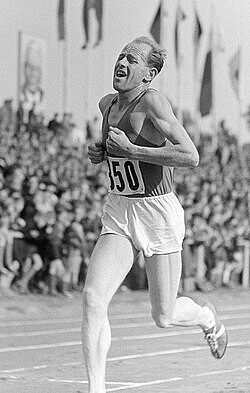
His story reminds us that the values he expressed were not empty words crafted for public admiration. He lived by them, even when doing so came at enormous personal cost. His belief that hope and conviction mattered more than material rewards became evident not only in the races he won, but also in the hardships he endured with remarkable dignity.
Distance running has changed dramatically since Zátopek's era. Today's elite athletes compete in a fully professional sport where prize money, sponsorship contracts, appearance fees, and endorsement deals can be worth millions. Success on the track and roads now offers opportunities that were unimaginable during the age of amateur competition. Professionalism has transformed the sport, allowing athletes to train full-time, access world-class coaching and sports science, and build financially secure careers.
Yet despite these changes, the essence of Zátopek's message has never lost its relevance.
Every elite runner naturally hopes to earn a good living from years of dedication and sacrifice. There is nothing wrong with financial success, and the rewards available today have elevated the standard of competition across the world. But history consistently shows that money alone is rarely enough to sustain greatness. The athletes whose careers endure the longest are often those driven by an inner passion to improve, to test their limits, and to chase excellence for its own sake. Financial rewards become the result of that commitment, not the reason for it.
When competition is motivated solely by wealth, its deeper purpose can fade. But when an athlete races with genuine belief, relentless determination, and an unwavering dream, extraordinary performances often follow naturally.
That is why Emil Zátopek's words continue to resonate across generations. His legacy extends far beyond Olympic medals and world records. It lives in every runner who laces up their shoes with a goal that cannot be measured in dollars, every athlete who refuses to surrender when the race becomes painful, and every competitor who understands that the greatest victories begin long before the finish line.
The economics of distance running may have evolved beyond recognition, but the heart of the sport remains unchanged. Every athlete still arrives at the starting line carrying something far more valuable than money—hope in their heart and dreams in their head. Those invisible qualities have always been, and will always remain, the true fuel of greatness.
by Erick Cheruiyot for My Best Runs.
Login to leave a comment
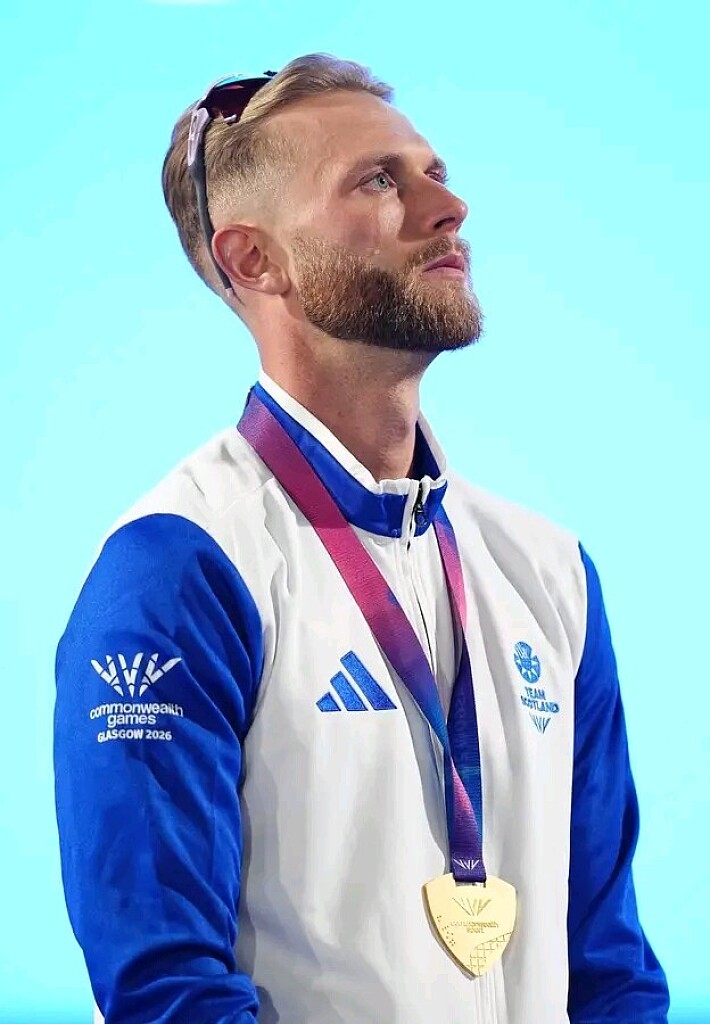
How Josh Kerr Built a Commonwealth Masterpiece: The Splits That Tell the Story of a Golden Mile
Winning a major championship is never just about crossing the finish line first. Behind every gold medal lies a carefully crafted race plan, and Josh Kerr's unforgettable Commonwealth Games triumph in Glasgow was a perfect example of tactical brilliance meeting extraordinary finishing speed.
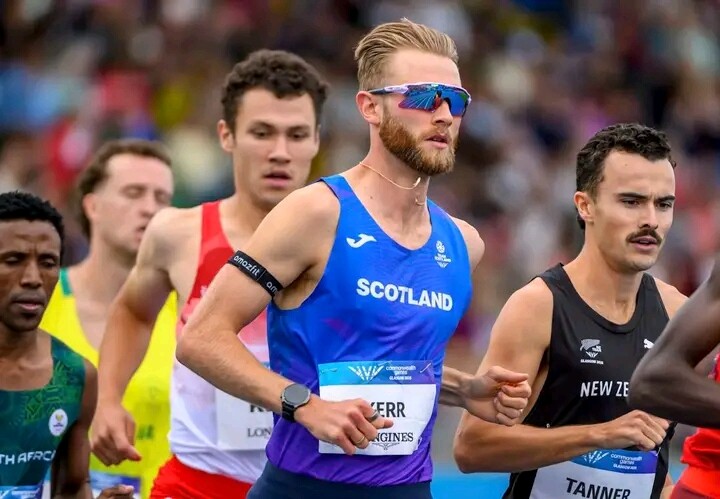
While the final time of 3:54.12 for the mile will be remembered as the official result, the split times reveal a much deeper story—one of patience, precision, and devastating acceleration when it mattered most.
Kerr resisted any temptation to force the pace from the gun. Instead, he settled into a controlled rhythm, allowing the opening stages to unfold naturally. His first four 100-metre segments—14.9, 15.1, 15.3 and 15.1 seconds—brought him through 400 metres in 60.4 seconds, a measured opening that conserved valuable energy while keeping him firmly in contention.
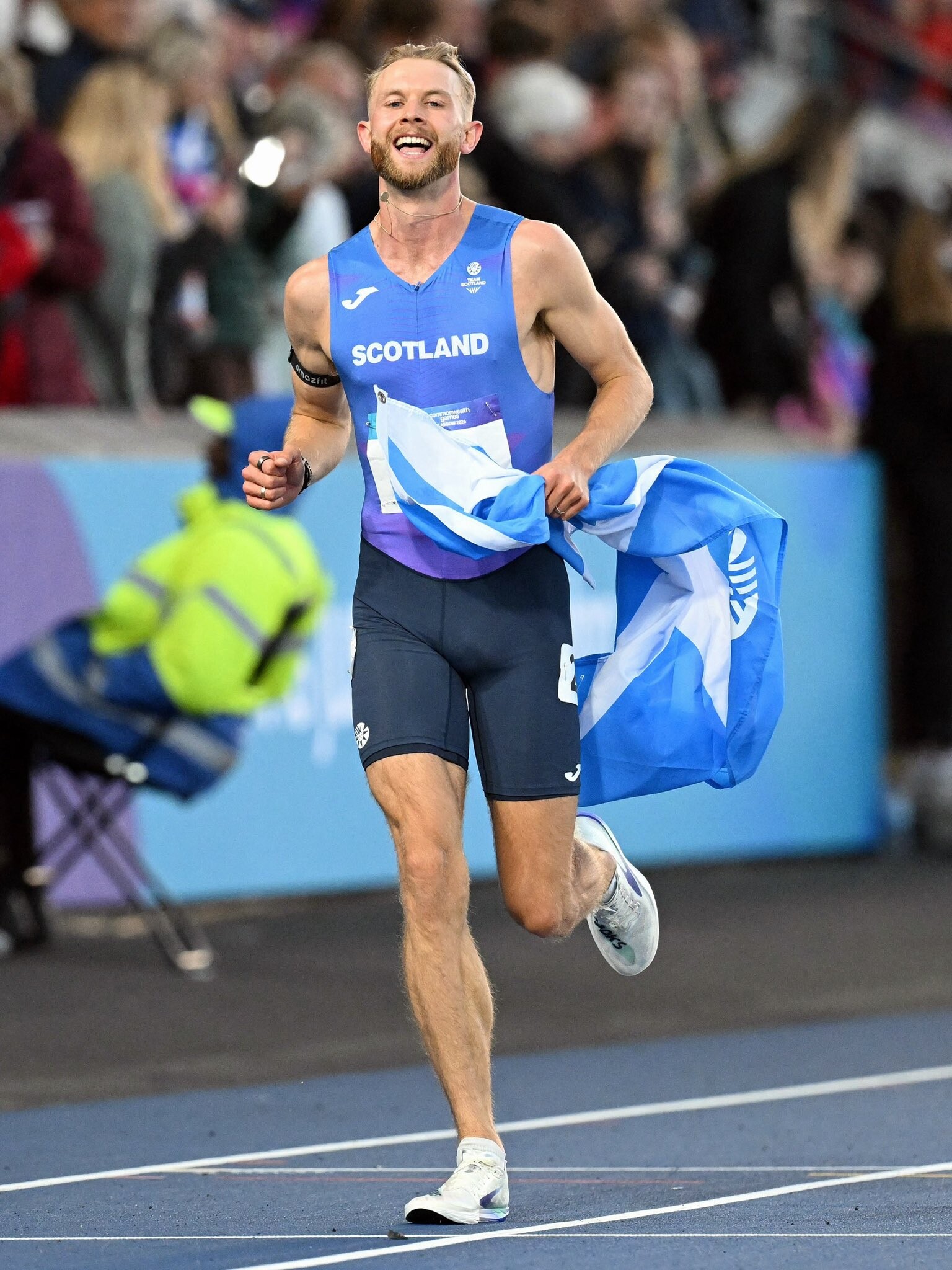
The second lap remained equally composed. Passing 500 metres in 15.3 seconds before recording splits of 15.7, 16.2 and 15.4, Kerr reached 800 metres in 2:03.0. The pace had eased, but that was exactly where the Scottish star wanted to be. Rather than chasing early speed, he was setting the stage for a decisive finish.
Everything changed after halfway.
Kerr gradually increased the tempo with smooth, controlled acceleration. His 900-metre and 1,000-metre splits of 15.2 and 14.9 seconds signalled that the race was beginning to stretch. He then surged through 1,100 metres in 14.3 seconds before covering the next 100 metres in just 13.4 seconds to reach 1,200 metres in 3:00.8.
From there, the home crowd witnessed championship running at its finest.
Instead of fading, Kerr became even stronger. He reeled off three consecutive 100-metre splits of 13.4, 13.4 and 12.8 seconds, dismantling the field with every stride. His final 100 metres were covered in a stunning 12.5 seconds, sealing an emphatic victory and sending the Glasgow crowd into celebration.
The progression of his race was remarkable. After opening with relaxed 15-second splits, Kerr transformed the closing stages into a demonstration of world-class speed endurance. His ability to accelerate continuously over the final 600 metres highlighted not only exceptional fitness but also supreme confidence in his race plan.
Championship middle-distance racing is rarely about producing the fastest possible time from the start. More often, it rewards athletes who understand when to conserve energy and when to unleash everything they have left. Kerr executed that philosophy to perfection.
His split chart paints the picture of a runner who never panicked, never wasted effort, and saved his greatest weapon for the closing stages. It was a textbook display of patience followed by relentless aggression—a combination that turned a tactical race into a memorable Commonwealth gold medal performance.
For aspiring middle-distance runners, Kerr's Glasgow masterpiece offers an important lesson: the strongest finish often belongs not to the athlete who runs hardest from the gun, but to the one who knows exactly when to make their move. On home soil, Josh Kerr timed that move to perfection, producing a performance that will stand as one of the defining moments of the championships.
by Erick Cheruiyot for My Best Runs.
Login to leave a comment
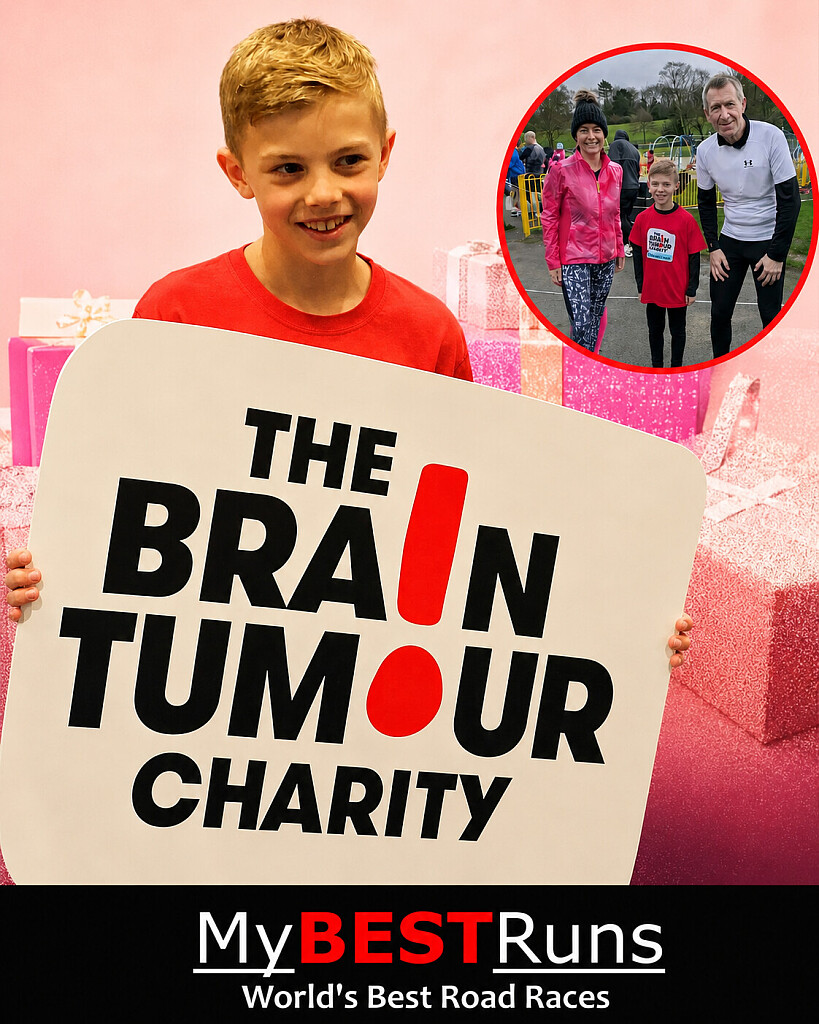
From Small Steps to a Giant Impact: Nine-Year-Old Oliver Smith's Inspiring Run for Hope
At just nine years old, Oliver Smith has achieved something extraordinary—not by chasing records or medals, but by proving that determination, compassion, and consistency can create a life-changing impact.
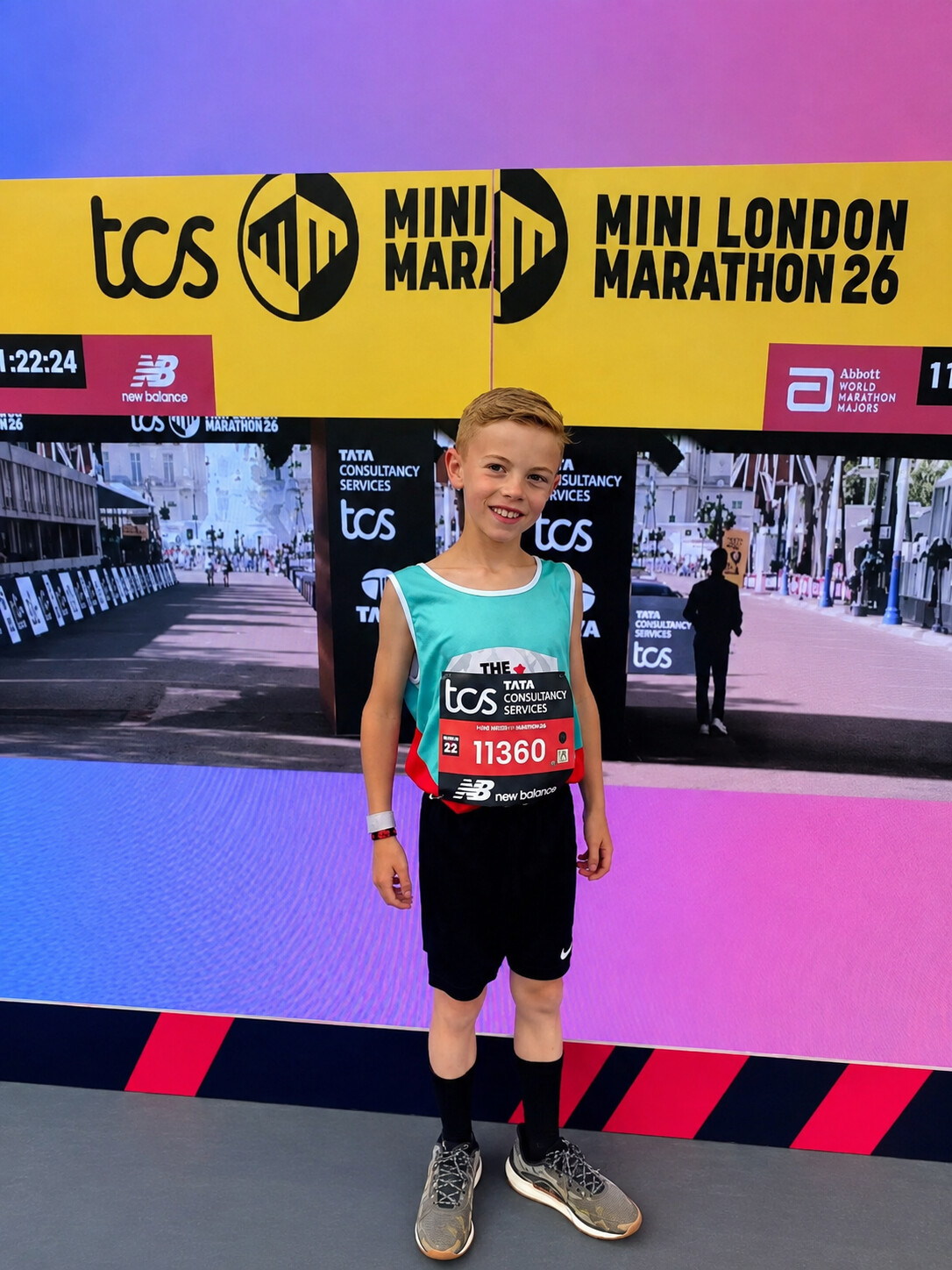
Hailing from Wombwell, on the outskirts of Barnsley, Oliver set himself a remarkable challenge at the beginning of the year. Rather than attempting a single marathon, he decided to complete the equivalent distance of nine marathons over several months. From January 1 to April 26, the young runner covered an incredible 380 kilometres, breaking the distance into manageable daily runs suitable for a child his age.
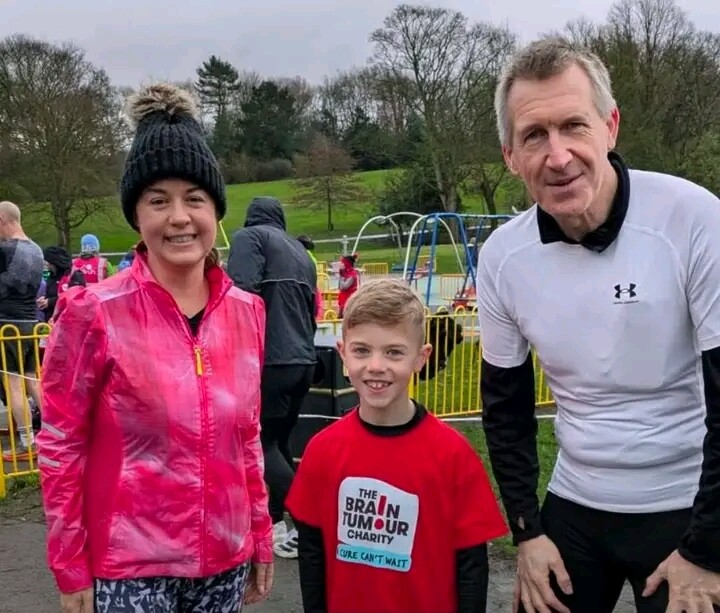
His routine was built on dedication. Saturdays were reserved for parkrun events, Sundays for junior parkrun, while the remaining kilometres were steadily accumulated throughout the week. Averaging approximately 3.3 kilometres each day, Oliver never lost sight of the goal that inspired every step.
The challenge carried deep personal meaning. Last summer, Oliver's father, Tom Smith, suffered a devastating health setback after losing most of the vision in one eye. Medical examinations revealed a 4-centimetre meningioma wrapped around his optic nerve, leading to a complex 12-hour operation at the Royal Hallamshire Hospital in Sheffield.
Throughout the family's difficult journey, The Brain Tumour Charity provided invaluable guidance, support, and reassurance. Grateful for the help his family received, Oliver decided he wanted to give back in the most meaningful way he could. He launched a fundraising campaign with an initial goal of raising £2,000 to support others facing similar challenges.
What followed exceeded everyone's expectations.
Oliver brought his incredible fundraising challenge to a memorable conclusion at the Mini London Marathon, finishing on the very same day his mother, Hannah Smith, completed her first-ever London Marathon. It was a fitting family celebration of courage, resilience, and perseverance.
By the time Oliver crossed the finish line, donations had soared beyond £16,500—more than eight times his original target. His remarkable achievement captured the hearts of supporters, demonstrating how one young boy's determination could unite an entire community behind an important cause.
For Oliver, however, the journey is far from over. Inspired by the overwhelming support and the difference his efforts have made, he has already begun working toward his next fundraising challenge.
His story serves as a powerful reminder that age is no barrier to making a meaningful difference. Sometimes, the greatest acts of courage are measured not by speed or distance, but by the willingness to take one small step after another for the benefit of others.
Oliver Smith's inspiring journey is more than a fundraising success—it is a testament to the strength of family, the power of kindness, and the extraordinary impact that can begin with the simplest decision to help.
by Erick Cheruiyot for My Best Runs.
Login to leave a comment
From Last Qualifier to Commonwealth Glory: Navasky Anderson Completes Remarkable 800m Triumph in Glasgow
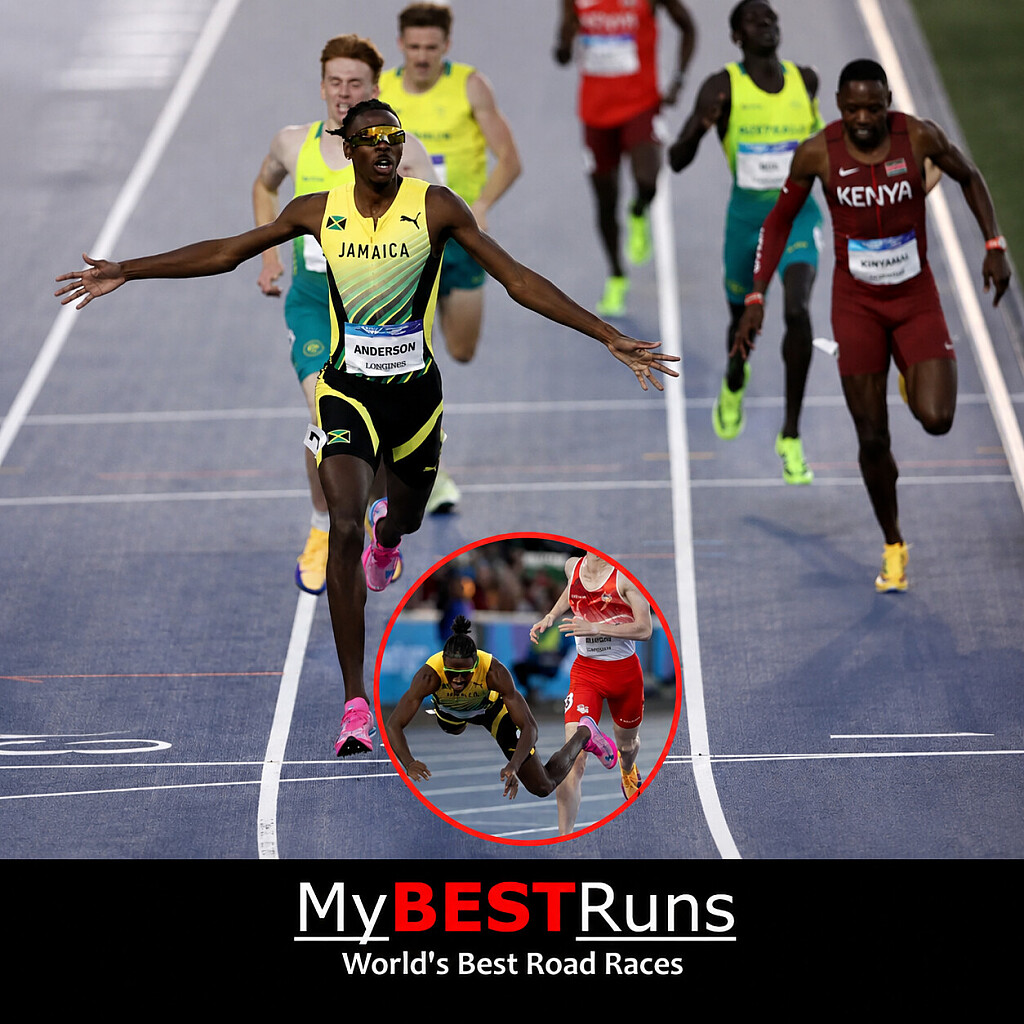
Sometimes the smallest opportunity creates the greatest triumph, and Jamaica's Navasky Anderson proved exactly that with a stunning performance to capture the men's 800m title at the 2026 Commonwealth Games in Glasgow.
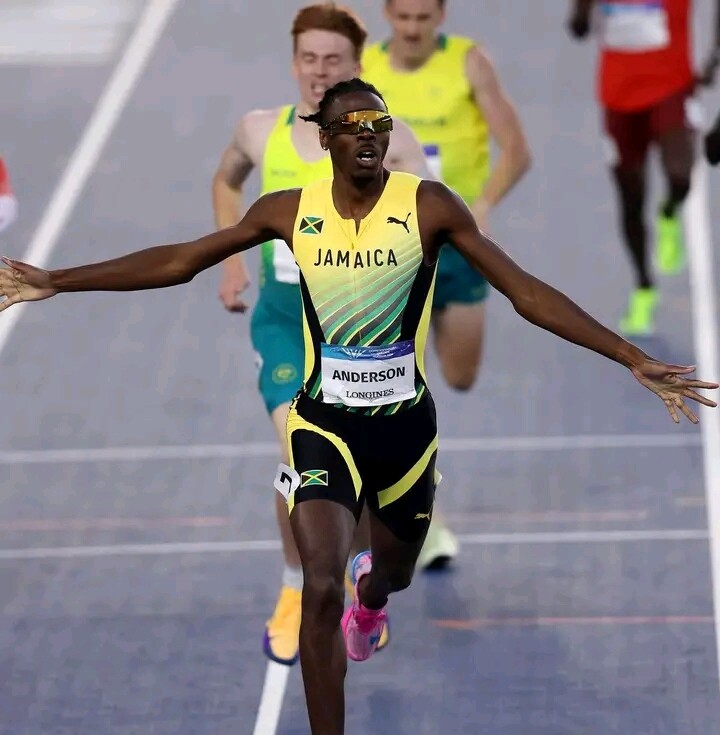
Less than 24 hours after scraping into the final by the slimmest of margins, Anderson produced the race of his life, surging to victory in 1:45.33 to complete one of the most remarkable comeback stories of the championships. His gold medal was not only a reward for exceptional talent but also for courage, determination, and unwavering belief when everything was on the line.
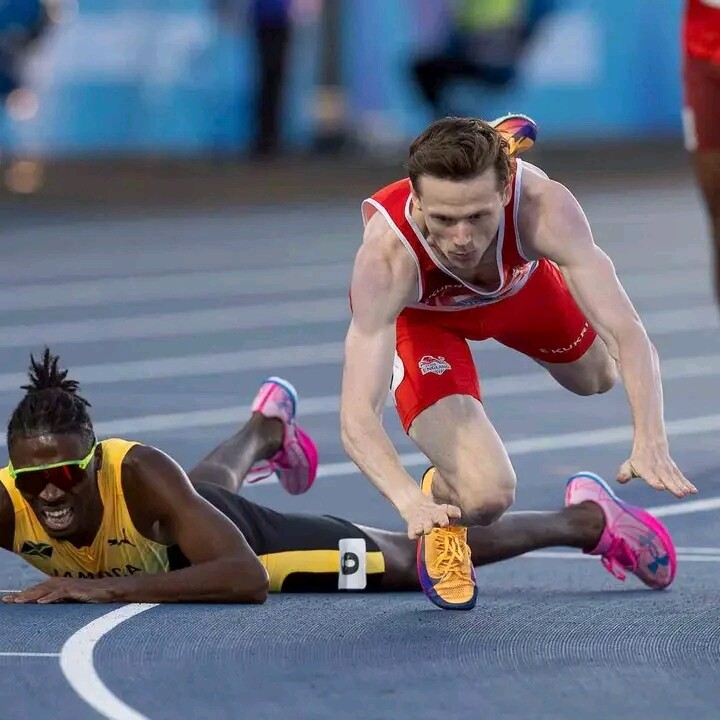
The journey to the top nearly ended in the semifinals. Locked in an intense battle with England's Max Burgin for the final qualification place, Anderson threw himself across the finish line in a dramatic dive, stopping the clock at 1:45.38. That desperate effort earned him the last available place in the final as the fastest non-automatic qualifier, keeping his Commonwealth dream alive by the narrowest of margins.
With another chance in his hands, the Jamaican made sure it counted.
In a fiercely contested final, Anderson displayed outstanding tactical awareness and patience throughout the opening stages before unleashing a devastating finishing kick down the home straight. His perfectly timed acceleration left the rest of the field with no answer as he crossed the finish line first, securing a memorable Commonwealth crown and one of Jamaica's standout victories of the Games.
Australia's Luke Boyes delivered an impressive performance to claim the silver medal in 1:45.93, while Kenya's Wyclife Kinyamal battled strongly to take bronze in 1:46.12 after another highly competitive championship race.
Anderson's unforgettable triumph will be remembered as one of the defining moments of Glasgow 2026—a powerful reminder that championships are not always won by the fastest qualifier, but often by the athlete who refuses to surrender. From a fearless dive that kept his hopes alive to a brilliant gold-medal performance less than a day later, the Jamaican wrote one of the most inspiring chapters of these Commonwealth Games.
Men's 800m Final Results
1. Navasky Anderson (Jamaica) — 1:45.33
2. Luke Boyes (Australia) — 1:45.93
3. Wyclife Kinyamal (Kenya) — 1:46.12
Navasky Anderson arrived in the final as the last man to qualify, but he left Glasgow as the Commonwealth champion—a remarkable transformation that perfectly captures the unpredictable beauty of championship athletics.
by Erick Cheruiyot for My Best Runs.
Login to leave a comment
