

Running News Daily
Running News Daily is edited by Bob Anderson and team. Send your news items to bob@mybestruns.com Advertising opportunities available.
Index to Daily Posts · Sign Up For Updates · Run The World Feed
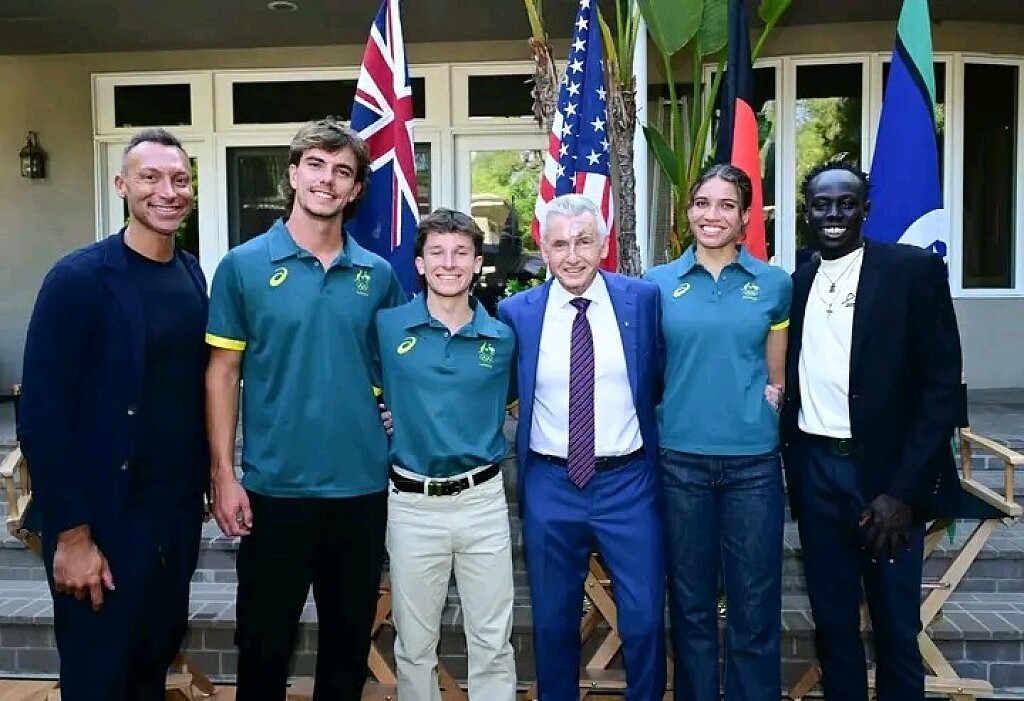


Gout Gout, Ian Thorpe and Australian Athletics’ Rising Stars Celebrate Olympic Dreams in Los Angeles

Australian athletics’ next generation received a memorable welcome in Los Angeles as rising sprint sensation Gout Gout joined Olympic great Ian Thorpe and a host of high-profile guests at a special Olympic Club of Australia gathering.
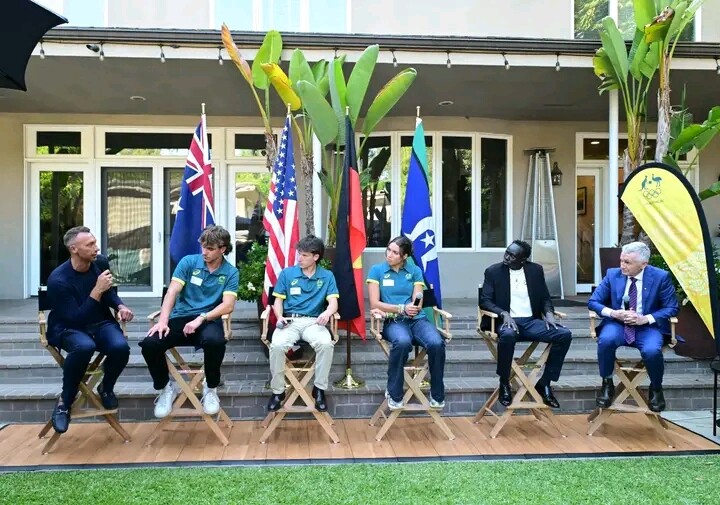
The event, hosted by Australia’s Consul-General to Los Angeles, Tanya Bennett, brought together members of the Australian Athletics U20 team on their return journey from Oregon, where they had been competing on the international stage.
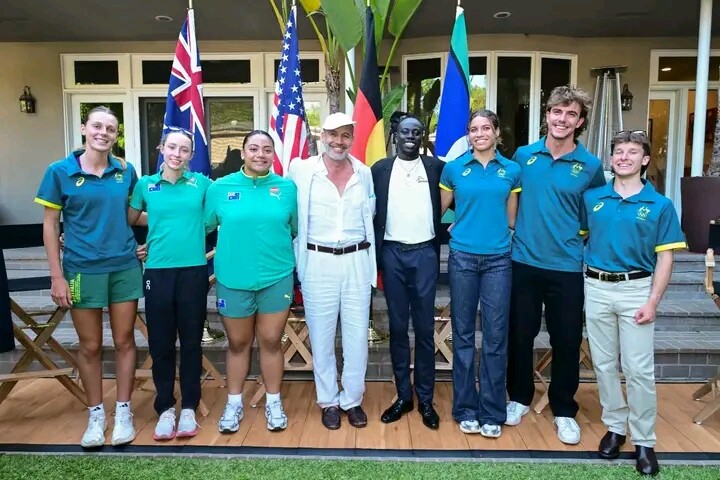
Gout, one of the most closely watched young talents in Australian athletics, was among the athletes at the gathering alongside Thorpe, the legendary five-time Olympic gold medallist. Broadcaster Bruce McAvaney and actor Billy Zane were also part of the star-studded occasion, creating an unusual but fitting meeting of Australian sporting excellence, media and entertainment.
The celebration came at an important moment for Australia’s young athletes, with the Los Angeles 2028 Olympic Games increasingly becoming a realistic target for many of the emerging stars. Beyond LA28, the prospect of competing at a home Olympics in Brisbane in 2032 offers an even bigger incentive for this generation to continue developing and dreaming on the world stage.
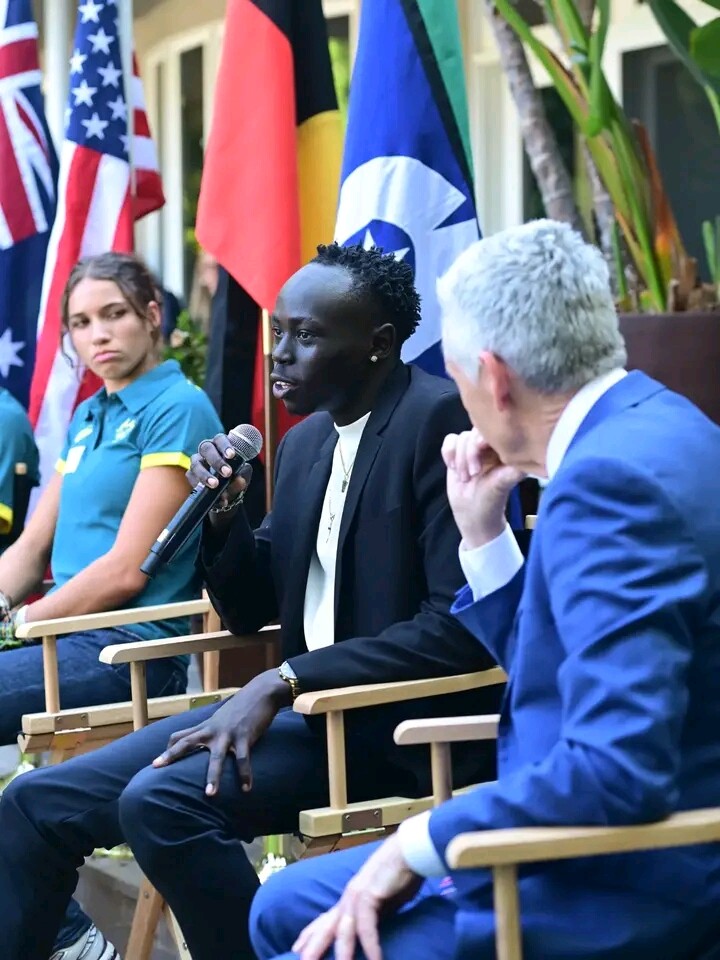
The occasion also highlighted the newly launched Olympic Club of Australia, an initiative of the Australian Olympic Committee designed to help raise funds in support of Olympians and coaches.
For Australia’s emerging athletes, the significance goes well beyond financial support. Olympic sport can provide young people with role models and demonstrate what can be achieved through ambition, commitment and perseverance.
With Gout and his fellow U20 athletes now beginning to look towards the next stage of their careers, the road to Los Angeles could mark the beginning of an exciting new chapter for Australian athletics.
And with Brisbane 2032 waiting beyond LA28, the athletes being celebrated today could ultimately become some of the biggest names carrying Australia’s hopes on home soil.
by Erick Cheruiyot for My Best Runs.
Login to leave a comment
Latest Running News
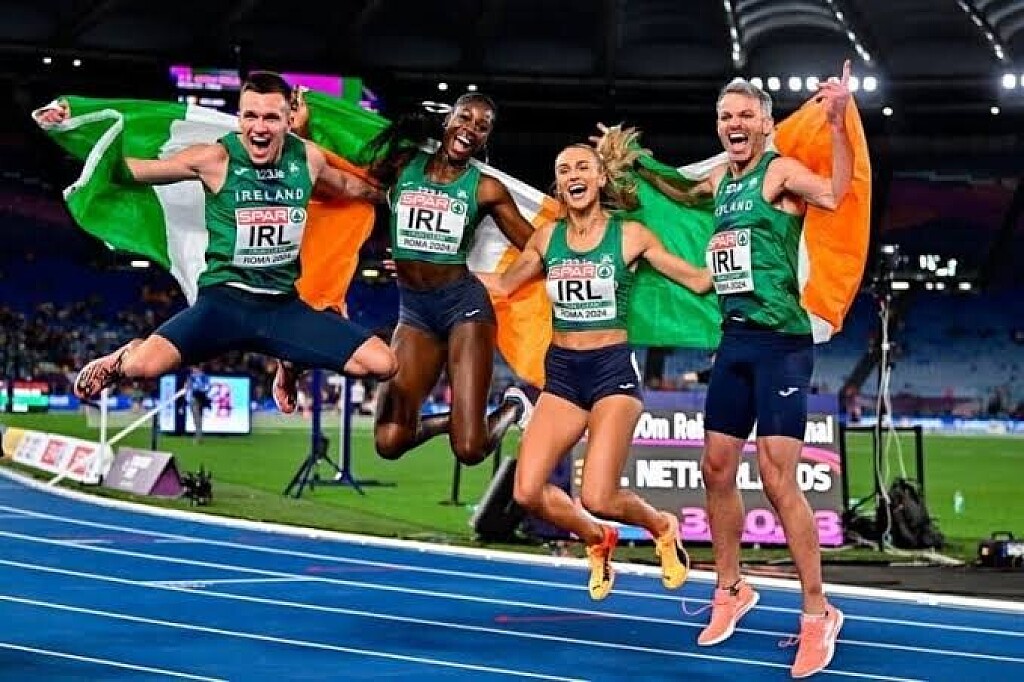
European Athletics Raises Silesia 2028 Prize Money to Record €3.5 Million
European Athletics has announced a record €3.5 million prize-money fund for the Silesia 2028 European Athletics Championships, significantly raising the financial rewards available to athletes competing for continental honours.
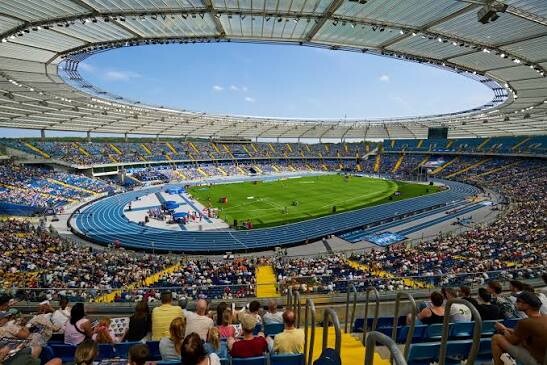
The expanded prize pool will cover every one of the 50 event disciplines on the championships programme, with prize money awarded to athletes finishing inside the top eight. The move represents a major commitment to rewarding performances across the full range of championship events.
Individual event winners will receive €30,000, while silver medallists will earn €15,000 and bronze medallists €10,000. Athletes finishing fourth will receive €5,000, with €4,000 for fifth, €3,000 for sixth, €2,000 for seventh and €1,000 for eighth.
The prize-money structure ensures that athletes who reach the final and finish among the leading eight will receive financial recognition for their performances, extending rewards beyond the medal positions.
Relay athletes will also be included in the prize-money programme, although the allocated prize will be shared among members of the respective team.
The Silesia 2028 championships will therefore offer athletes not only the opportunity to compete for European titles and medals, but also a substantial financial incentive throughout the competition. With a record €3.5 million available across the championships, European Athletics is placing greater emphasis on rewarding excellence across all 50 disciplines.
by Erick Cheruiyot for My Best Runs.
Login to leave a comment
From Championship Glory To Community Miles: Georgia Hunter Bell Brings 2026 Season To A Close
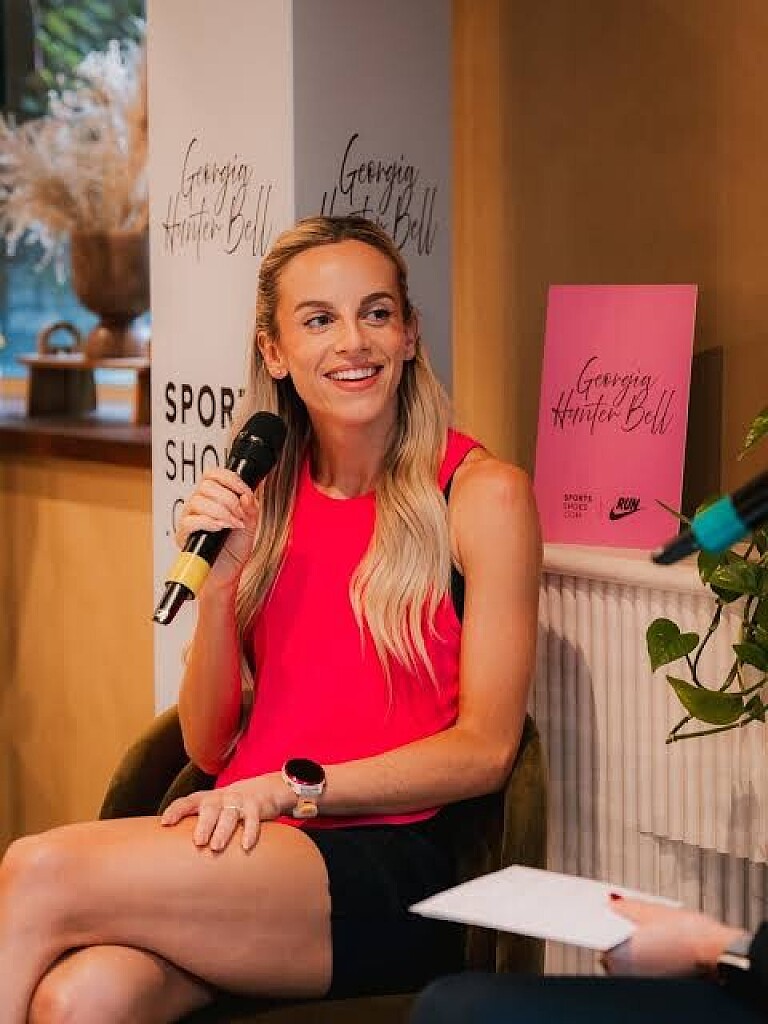
British middle-distance star Georgia Hunter Bell has brought her remarkable 2026 season to a memorable close — not beneath the lights of another championship stadium, but surrounded by runners, stories and the wider running community in London.
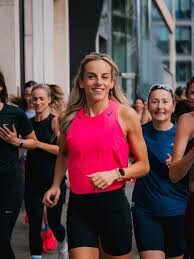
The Olympic medallist hosted an intimate run and brunch at Curve Club, bringing runners and fans together for an opportunity to share miles, exchange stories and celebrate a season that delivered some of the biggest moments of her career.
Hunter Bell’s 2026 campaign was anything but ordinary. Across 20 races, she navigated the intensity of elite competition while collecting three major championship gold medals and building another impressive chapter in her career. Her season ultimately concluded with a strong second-place finish in the mile at ATHLOS London.
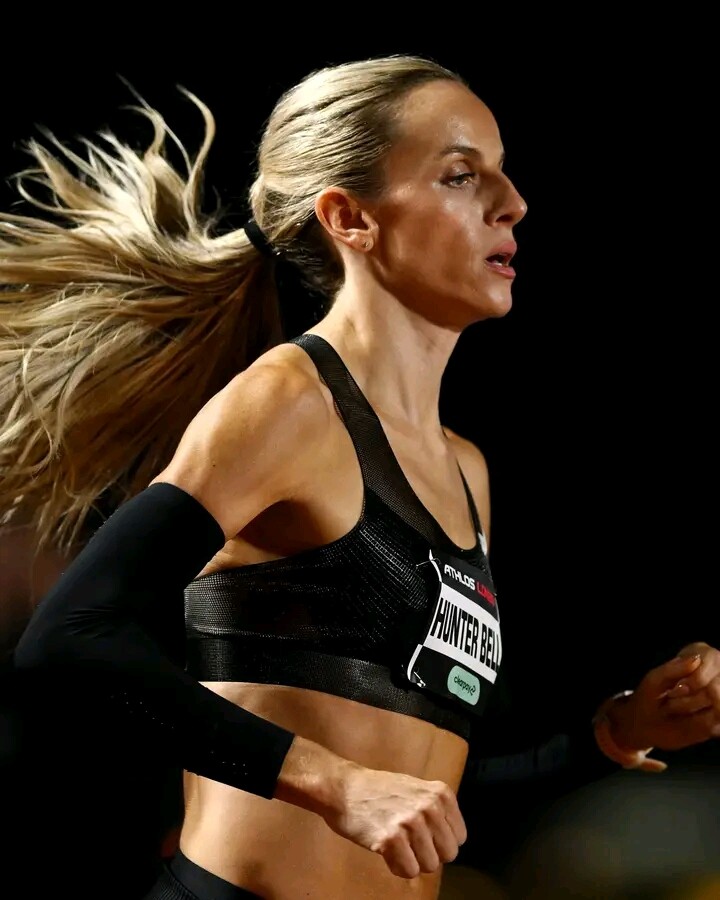
Yet the final gathering was about far more than results and medals.
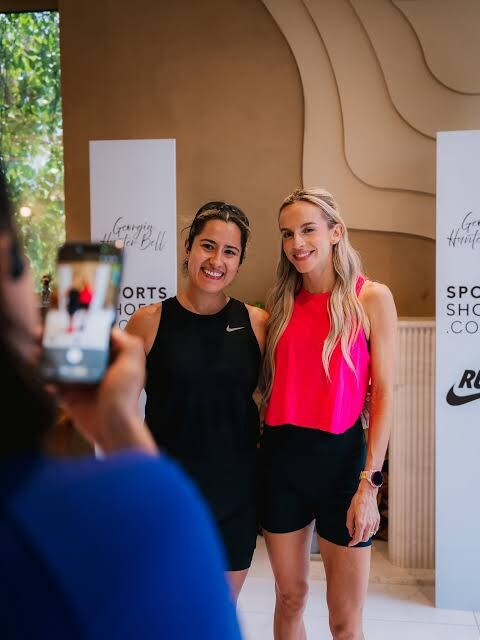
Away from the pressure of championship racing, Hunter Bell opened up about the defining moments of her season, the challenges that tested her along the way and the experiences that shaped her throughout the campaign. She also offered fans a glimpse into life inside the M11 Track Club training camps, providing an insight into the demanding work and experiences that often remain unseen beyond the finish line.
For Hunter Bell, the gathering also highlighted another important side of athletics — the sense of community that exists beyond elite competition. Sharing her experiences in a relaxed setting allowed her to connect with the people who follow her journey while celebrating the shared passion that brings runners together, whether they are chasing championship medals or simply enjoying another run with friends.
That perspective made the London gathering particularly meaningful. Elite athletics is often measured in times, places and medals, but Hunter Bell’s season-ending celebration highlighted the people, conversations and community that make running much bigger than competition alone.
From the intensity of major championship tracks to relaxed miles with fellow runners, Hunter Bell has shown that an athlete’s journey is not defined solely by what happens on race day.
After 20 races, three major championship titles and countless demanding miles, the British star can now look back on a season filled with triumphs, challenges and unforgettable experiences.
And what better way to close it than by sharing the journey with the running community?
by Erick Cheruiyot for My Best Runs.
Login to leave a comment
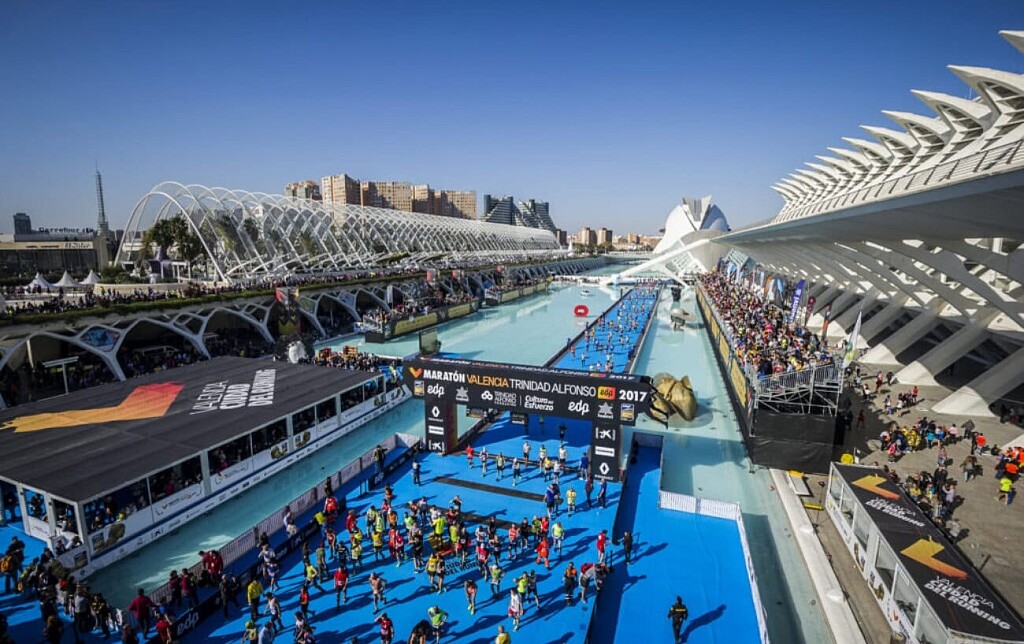
Valencia Marathon Offers €1 million World Record Jackpot As Kejelcha And Korir Lead Star-Studded Field
The road to marathon history will lead to Valencia on December 6, where the 2026 Valencia Marathon has put a staggering €1 million — approximately KSh 148.7 million — on the line for any athlete who breaks the official marathon world record on its fast Spanish streets.
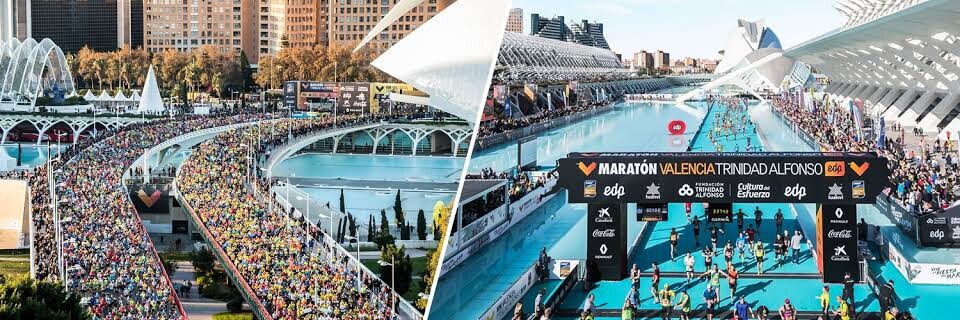
According to the race's official 2026 regulations, the million-euro bonus is available separately for both the men's and women's world records. The target for men is 1:59:30, while the women's target is 2:09:56. Athletes must be officially entered in the race, and the performances must pass the required recognition and anti-doping procedures.
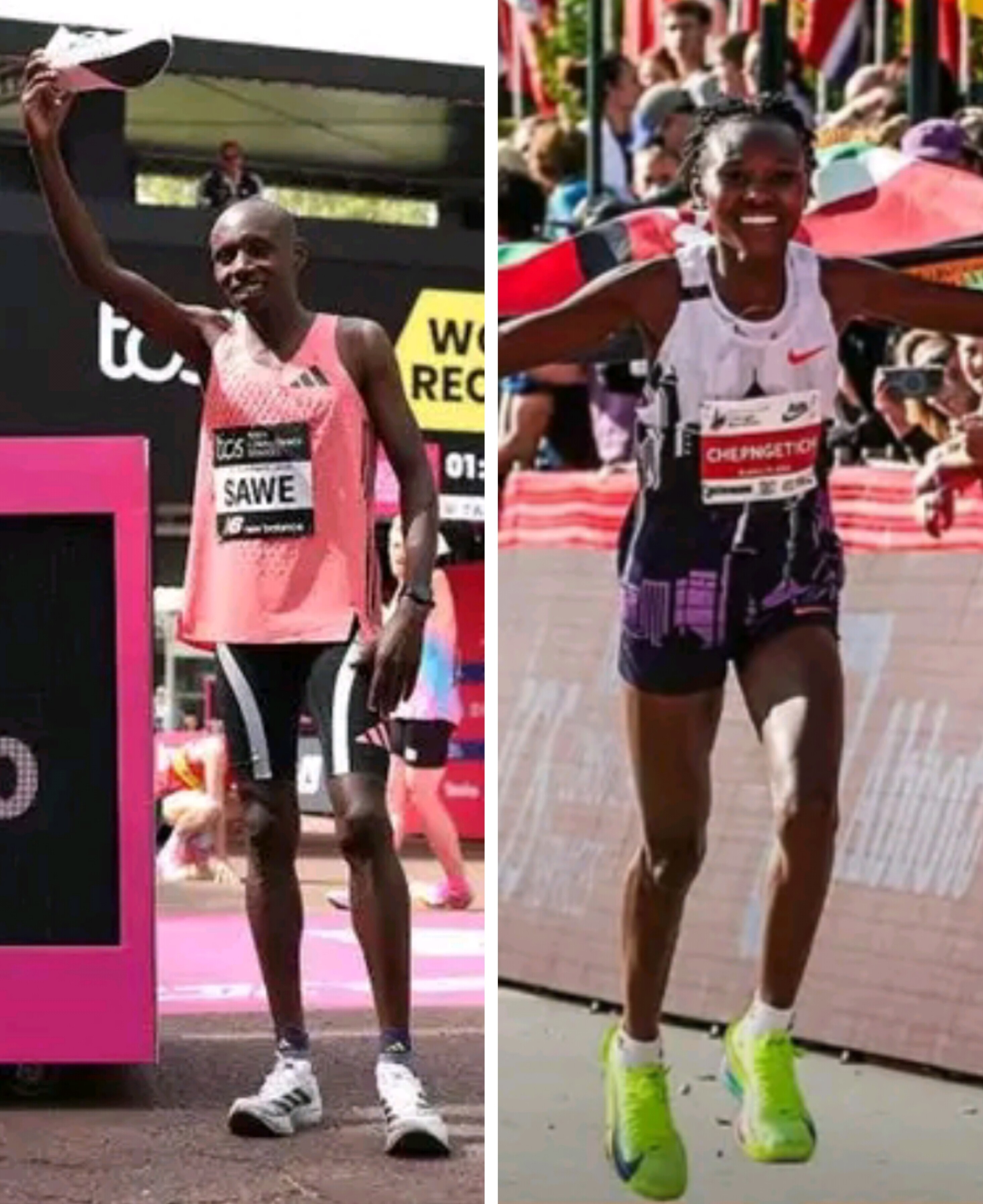
The men's benchmark was established by Kenya's Sabastian Sawe when he became the first man to officially break the two-hour barrier, running 1:59:30 at the 2026 London Marathon. Ethiopia's Yomif Kejelcha finished second that day in 1:59:41, becoming the second-fastest marathoner in history at the time and producing the fastest marathon debut ever.
On the women's side, the mark to beat remains Kenya's Ruth Chepngetich's 2:09:56, set at the 2024 Chicago Marathon. That performance made her the first woman to officially run under 2:10 for the marathon.
The enormous incentive is closely connected to the ambition of Valencia's running movement and the backing of businessman and philanthropist Juan Roig, whose Trinidad Alfonso Foundation has played a major role in supporting the marathon and the wider development of athletics in Valencia. Roig has previously spoken about the ambition of bringing the marathon world record to the city.
And the timing could hardly be more intriguing.
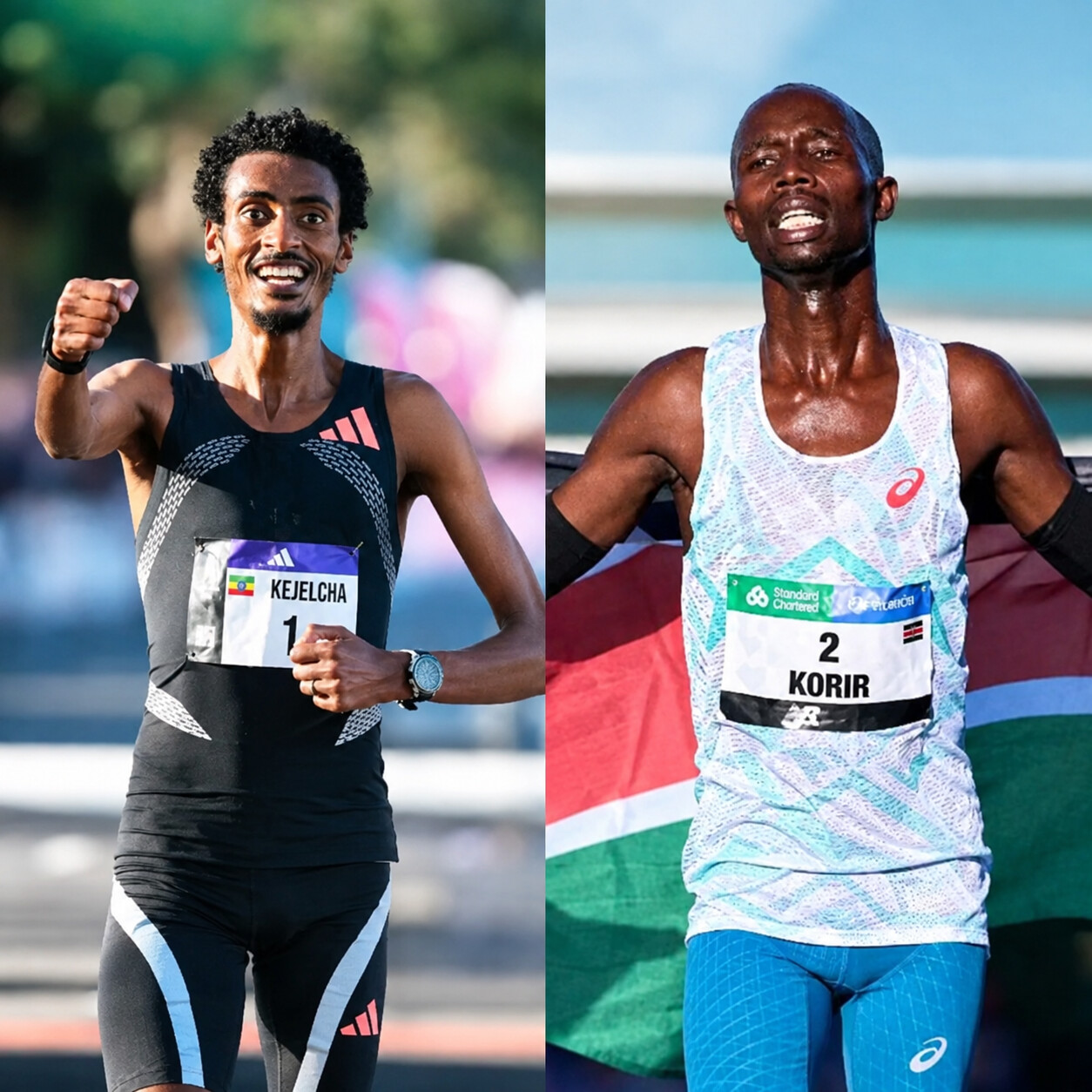
Kejelcha will return to Valencia for his second marathon, while defending champion John Korir of Kenya will be back after winning the 2025 edition in 2:02:24. The official elite announcement also includes Alexander Mutiso, Dawit Wolde and Nibret Melak, creating an exceptionally deep men's field.
Kejelcha arrives with a remarkable 1:59:41 from London, meaning he has already demonstrated the ability to sustain the extraordinary pace required to challenge the two-hour barrier. Korir, meanwhile, knows the Valencia course intimately and will be seeking to defend his title while chasing an even faster performance.
Valencia has earned its reputation as one of the world's fastest marathon destinations. Its course record currently stands at 2:01:48, set by Ethiopia's Sisay Lemma in 2023, while the 2025 edition saw Joyciline Jepkosgei run 2:14:00, the fastest women's marathon of that year.
With KSh 148 million-plus waiting for a successful world-record assault, a defending champion hungry for another victory and Kejelcha returning after coming within 11 seconds of the men's world record in London, Valencia is shaping up to be one of the most closely watched marathons of 2026.
On December 6, the question will be simple: will Valencia finally witness another marathon world record — and send one athlete home with a seven-figure euro cheque?
by Erick Cheruiyot for My Best Runs.
Login to leave a comment

VALENCIA TRINIDAD ALFONSO
The Trinidad Alfonso EDP Valencia Marathon is held annually in the historic city of Valencia which, with its entirely flat circuit and perfect November temperature, averaging between 12-17 degrees, represents the ideal setting for hosting such a long-distance sporting challenge. This, coupled with the most incomparable of settings, makes the Valencia Marathon, Valencia, one of the most important events in...
more...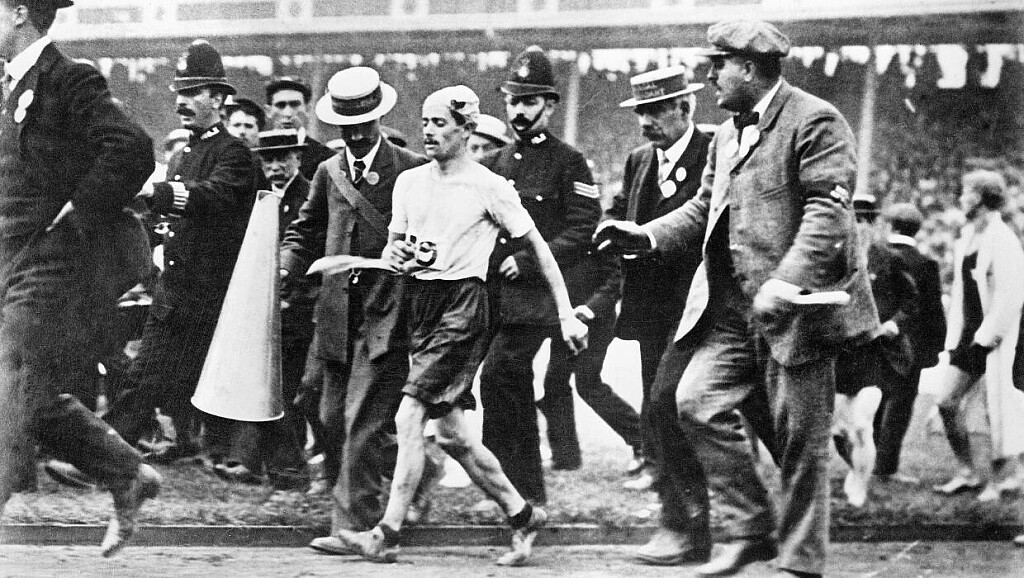
The Strangest Olympic Marathon Ever: Cars, Rotten Apples, Wild Dogs And Strychnine
Few Olympic races have produced a story as bizarre, chaotic and brutal as the marathon at the 1904 Games in St. Louis.
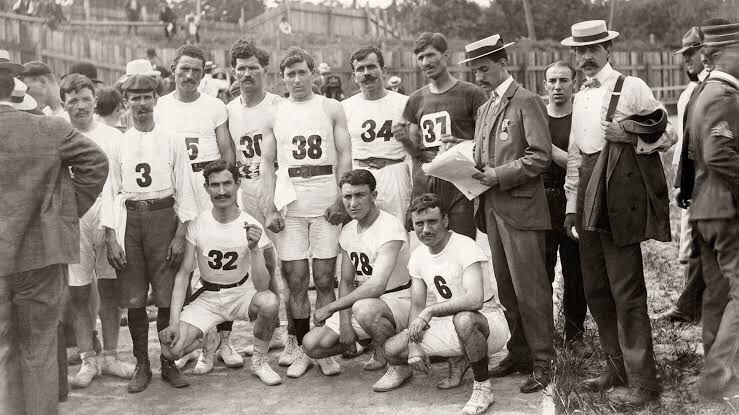
Held on August 30, 1904, the race took place over roughly 40 kilometres in oppressive heat, on dusty country roads where passing automobiles stirred clouds of dust into the air. Water was extremely limited, and the combination of heat, hills, dehydration and poor race organization turned the event into an extraordinary test of survival.
Thirty-two runners started the marathon, but only 14 reached the finish. What happened along the way would eventually make the St. Louis marathon one of the most infamous races in Olympic history.
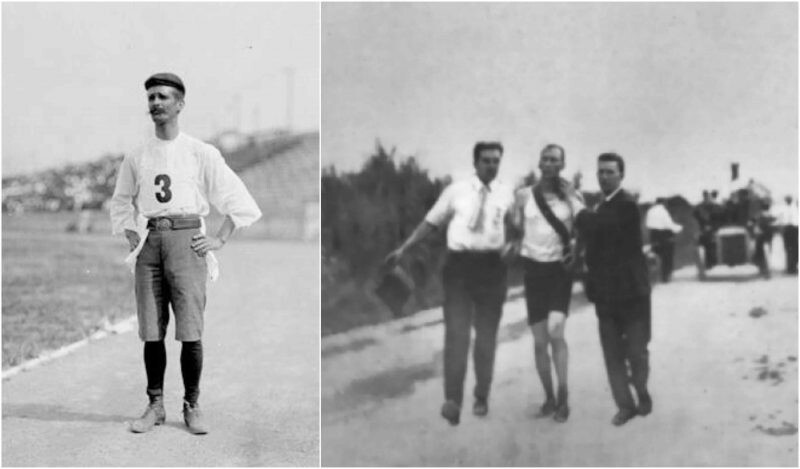
Among the strangest episodes was the story of American runner Frederick Lorz.
Lorz was initially celebrated as the winner after reaching the stadium first in 3:13:00. But the apparent victory quickly collapsed when officials discovered that he had been transported by automobile for a substantial portion of the course after suffering severe cramps. Accounts place the car ride at roughly 11 miles.
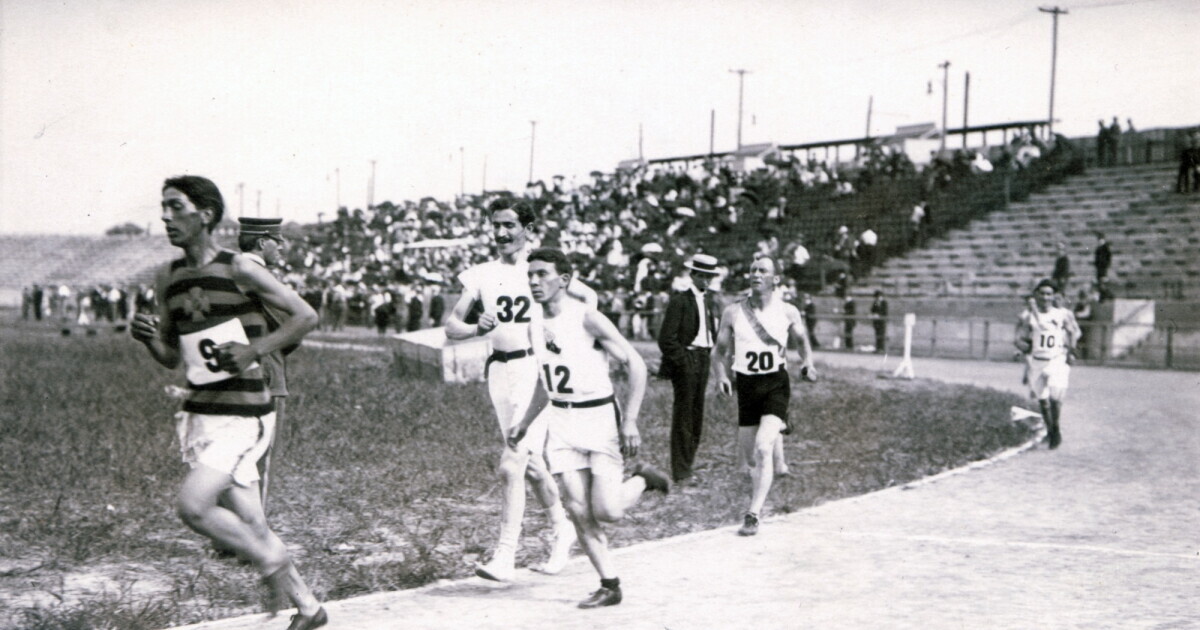
When the automobile eventually broke down, Lorz returned to the road and continued running. He crossed the finish line first, but his deception was uncovered almost immediately and he was disqualified. Lorz later described the incident as a joke rather than an attempt to claim the Olympic title.
That left Thomas Hicks as the official Olympic champion, but his journey to the gold medal was almost as extraordinary.
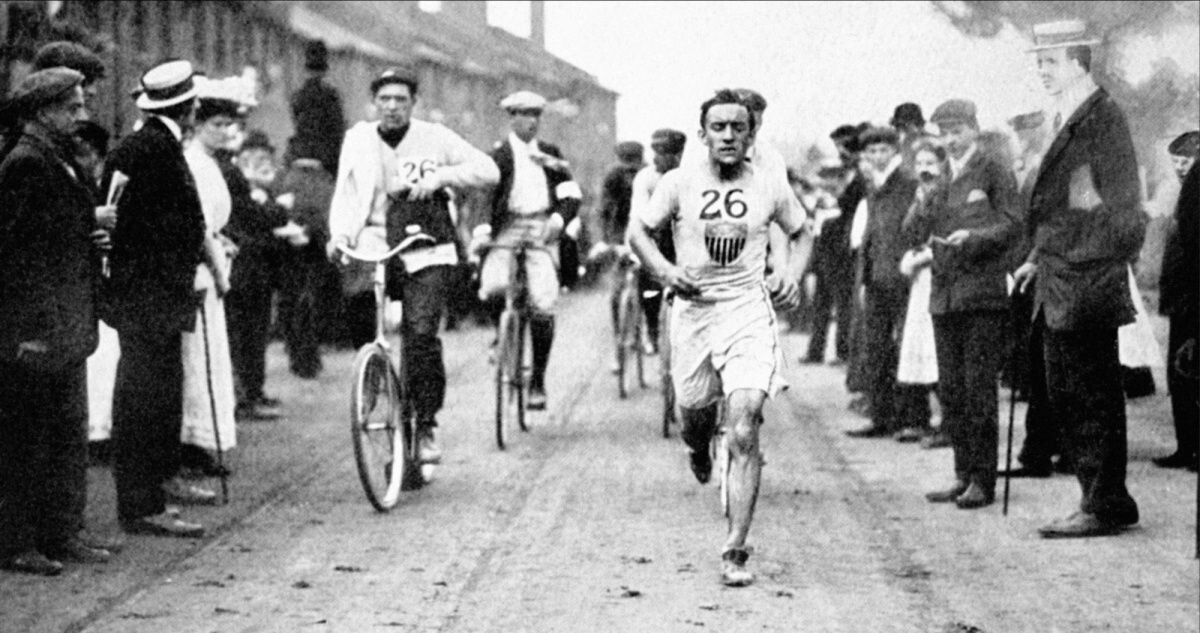
Hicks completed the marathon in 3:28:53, a time that remains the slowest winning performance in Olympic marathon history. Yet the number on the clock tells only part of the story.
As Hicks began to fade badly during the latter stages, his support team gave him a mixture containing strychnine and egg white, followed later by brandy. Strychnine was regarded at the time as a stimulant in very small quantities, although today it is recognized as a highly poisonous substance. There were no modern anti-doping rules at the 1904 Games to prohibit such treatment.
Hicks became increasingly exhausted and reportedly hallucinated during the closing stages. His condition deteriorated so badly that his trainers eventually helped carry him across the finish line while his legs continued moving beneath him.
Afterward, he needed medical attention before he was well enough to leave the stadium. The Olympic Museum records that four doctors were required to attend to him following the race.
Then there was Andarín Carvajal, the Cuban postman whose Olympic debut sounded more like an adventure than a marathon.
Carvajal arrived in St. Louis shortly before the race and had little of the equipment expected of a serious marathon runner. He competed in long trousers and a long-sleeved shirt, with the legs of his trousers cut down to make them more suitable for running.
Despite his unconventional preparation, Carvajal ran remarkably well and stayed among the leading competitors.
But hunger became a problem. Having gone for a long period without proper food, he stopped along the course and ate apples he found. Unfortunately, the fruit was rotten, leaving him with severe stomach cramps. At one point, he lay down beside the road and fell asleep.
Remarkably, he recovered, got back on his feet and continued running. Carvajal eventually finished fourth, an extraordinary result considering the conditions and the obstacles he encountered.
The race also marked an important moment in Olympic history for Africa.
Len Taunyane and Jan Mashiani, two South Africans of Tswana background, became the first Black Africans to compete at the Olympic Games. They were in St. Louis as part of a South African exhibition connected to the World's Fair and entered the marathon almost unexpectedly.
Historical accounts have long described the pair as running barefoot, although surviving photographs indicate that the footwear situation was more complicated, with at least one of them appearing to have shoes. Their names were also recorded inconsistently in contemporary reports.
Taunyane became part of one of the race's most extraordinary stories when he was reportedly chased off the course for about a mile by a wild dog. Despite the incident, he recovered and continued the race.
Taunyane finished ninth, while Mashiani placed 12th, making their appearances significant not only because of the bizarre circumstances but also because they represented an important milestone in Olympic history.
There were other dangers too. The roads were so dusty that the automobiles accompanying the runners created clouds of dust that made an already punishing race even more difficult. One American runner, William Garcia, reportedly collapsed after dust severely affected his throat and stomach, illustrating just how dangerous the conditions had become.
The 1904 St. Louis marathon was therefore unlike almost anything seen in modern distance running.
There were no sophisticated hydration stations, no carefully measured modern course, no sports science teams and no anti-doping regulations. Instead, runners faced extreme heat, dusty roads, limited water and primitive medical practices.
One athlete rode in a car. Another stopped to eat rotten fruit and fell asleep. Two pioneering African competitors endured an extraordinary race, with one reportedly being chased by a dog. And the eventual champion was administered a dangerous stimulant mixture before being helped across the finish line.
More than a century later, the St. Louis marathon remains a remarkable reminder of just how different Olympic distance running once was.
It was a marathon where survival sometimes seemed as important as speed—and where almost every mile produced another unbelievable chapter.
by Erick Cheruiyot for My Best Runs.
Login to leave a comment

Allyson Felix Launches ‘Project Six’ With Eyes On Historic LA28 Comeback
Allyson Felix is preparing to write another extraordinary chapter in her remarkable career, with the American sprint legend targeting a return to competition and an unprecedented sixth Olympic appearance at the Los Angeles 2028 Games.

Felix, now 40, retired from elite competition after the 2022 season, bringing an illustrious career to a close after six Olympic Games and 11 Olympic medals. She is now embarking on what she has called “Project Six” — an ambitious attempt to return to the track and put herself in contention for the United States mixed 4x400m relay pool for LA28.
The comeback is expected to begin with a return to structured training under her longtime coach Bobby Kersee, with Felix targeting a return to racing in 2027. Rather than simply revisiting the past, the project represents a completely new challenge for an athlete who has already achieved almost everything possible in the sport.
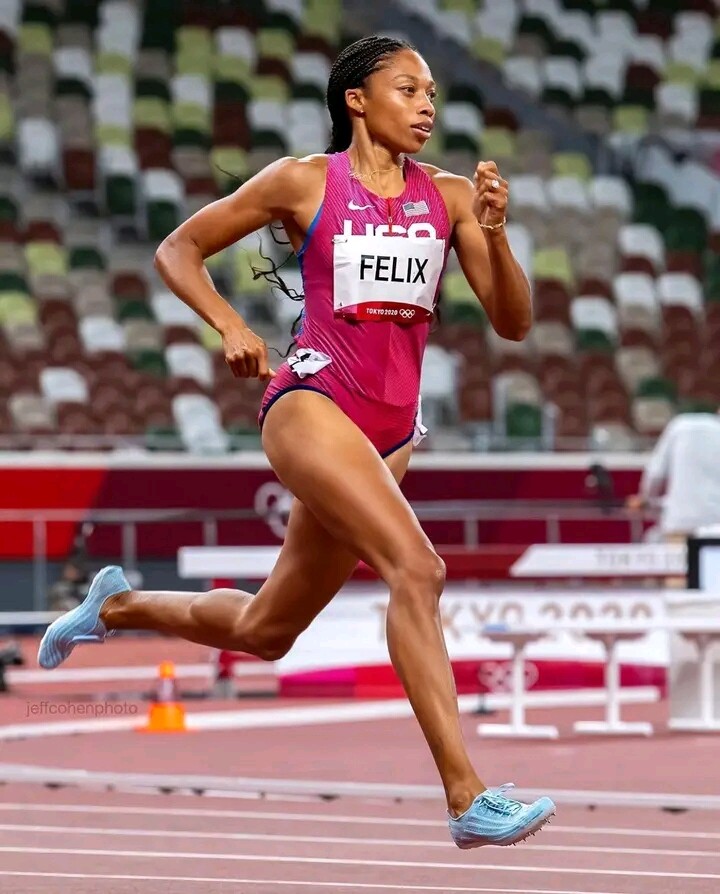
Felix has described the journey as a “live experiment in human potential,” framing the comeback not only around medals or records but around the experience of pursuing something difficult and uncertain. With her two children watching, she sees the project as an opportunity to demonstrate what it means to commit to a dream even when the outcome is far from guaranteed.
Her proposed route back to the Olympic stage is particularly intriguing. Instead of attempting to rebuild a full individual programme, Felix is targeting the United States mixed 4x400m relay, an event in which her experience over one lap could become central to her hopes of making the Olympic team.
If she succeeds, Felix would compete at the Olympics at the age of 42, potentially becoming the first American track and field athlete to appear at six Olympic Games. That would add another remarkable milestone to a career that already includes 11 Olympic medals and a place among the most decorated athletes in the history of the sport.
The location makes the potential comeback even more significant. Los Angeles is Felix’s hometown, while the LA28 athletics programme will be staged at the historic Los Angeles Memorial Coliseum, creating the possibility of an extraordinary homecoming on the Olympic stage.
For Felix, the prospect of returning to that setting would bring her career full circle — from an 18-year-old Olympic debutant in Athens in 2004 to a veteran mother attempting one final journey toward an Olympic team more than two decades later.
Nothing about the road to LA28 will be guaranteed. Felix will first have to rebuild her competitive form, navigate the demands of elite training at 40 and beyond, and ultimately earn her place against a new generation of American 400m runners.
But that uncertainty is precisely what makes Project Six so compelling. After a career defined by longevity, resilience and repeated reinvention, Allyson Felix is once again testing the boundaries of what is possible.
And this time, the finish line could be waiting in Los Angeles.
by Erick Cheruiyot for My Best Runs.
Login to leave a comment
