

Running News Daily
Running News Daily is edited by Bob Anderson and team. Send your news items to bob@mybestruns.com Advertising opportunities available.
Index to Daily Posts · Sign Up For Updates · Run The World Feed
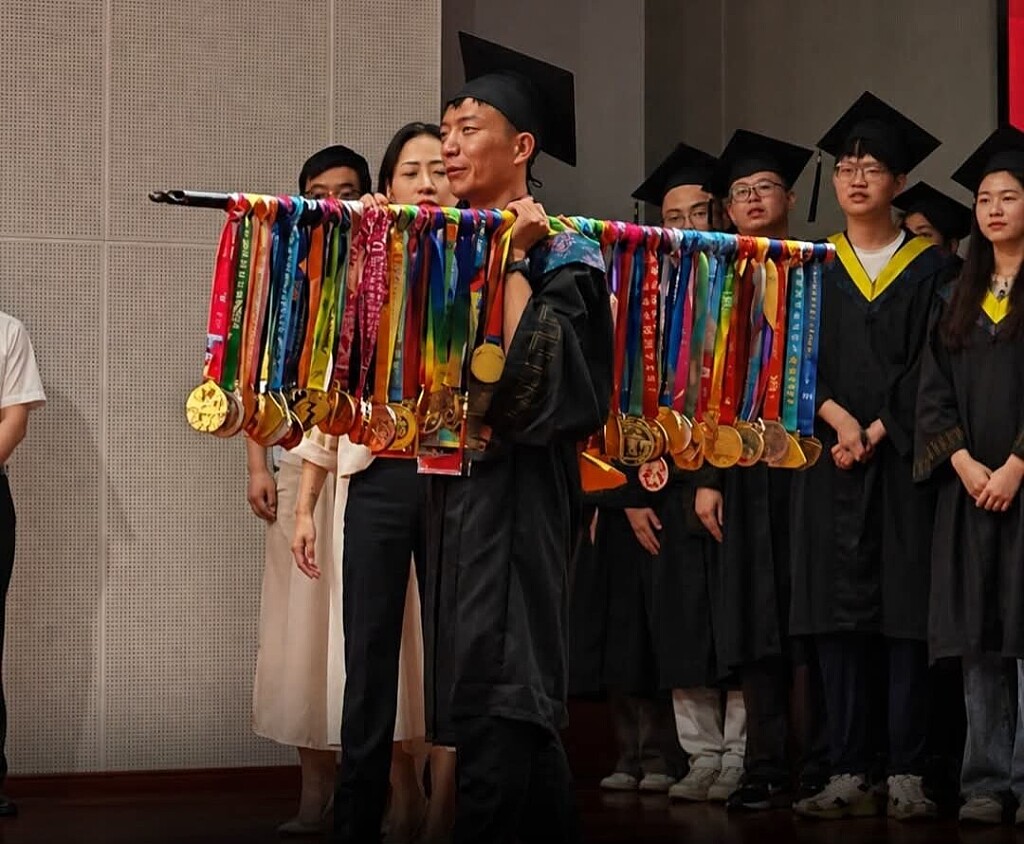


From Marathon Miles to a University Degree: Chinese Graduate Stuns Ceremony With 70+ Medals Earned Through Running

For most graduates, a university degree is the defining symbol of years of dedication and sacrifice. For 24-year-old Jin Yanwei, however, that achievement shared the spotlight with another remarkable testament to perseverance—more than 70 marathon medals that helped shape his journey to graduation.

On June 23, during the graduation ceremony at Xi'an Traffic Engineering Institute in Shaanxi Province, China, Jin walked across the stage to receive his degree like every other student. But moments later, he returned carrying a shoulder pole weighed down by over 70 marathon medals, with several more draped around his neck. The unexpected display left the audience in awe, drawing thunderous applause before the striking moment quickly captured the attention of millions online.

What many in the hall did not know was that Jin's success had been built not only in lecture rooms but also on roads and race courses across China. Although he was not a sports major, he transformed his passion for distance running into a source of financial support throughout his university years.
Jin completed his first marathon in 2021, a milestone that sparked an extraordinary commitment to endurance racing. Over the following years, he regularly competed in marathons and other long-distance events, using prize money and race incentives to help cover his educational expenses. What began as a personal challenge gradually became a practical way to finance his studies while pursuing his academic goals.
His achievements were no accident. They were the product of relentless discipline and consistency. Jin maintained a demanding training schedule, averaging around 15 kilometres every day and covering between 350 and 400 kilometres each month. In the past two years alone, he has run an astonishing 7,835 kilometres, a distance that reflects countless hours of dedication, resilience, and self-belief.
The image of Jin standing proudly in his graduation gown, balancing a shoulder pole overflowing with marathon medals, has since become a powerful symbol of determination. Every medal represented another finish line crossed, another challenge conquered, and another step towards securing both his education and his future.
Jin Yanwei's story is a powerful reminder that success is often built one step at a time. His graduation was not only the celebration of academic achievement but also the culmination of thousands of kilometres, unwavering commitment, and the courage to turn passion into purpose. In the end, those marathon miles delivered far more than medals—they helped carry him all the way to his university degree.
by Erick Cheruiyot for My Best Runs.
Login to leave a comment
Latest Running News

Jon Strong’s Alphabet Marathon Challenge Comes Down to One Final Letter
At 60, retired Newcastle teacher Jon Strong is preparing to complete a marathon challenge 12 years in the making — and there is just one letter left to tick off.

Strong has already completed 25 marathons, with each race beginning with a different letter of the alphabet. Now, only J remains.
The final chapter will be written at the Jersey Marathon on October 4, where Strong will line up for the 26th and final race of his remarkable A-to-Z marathon project, which he began in 2014.
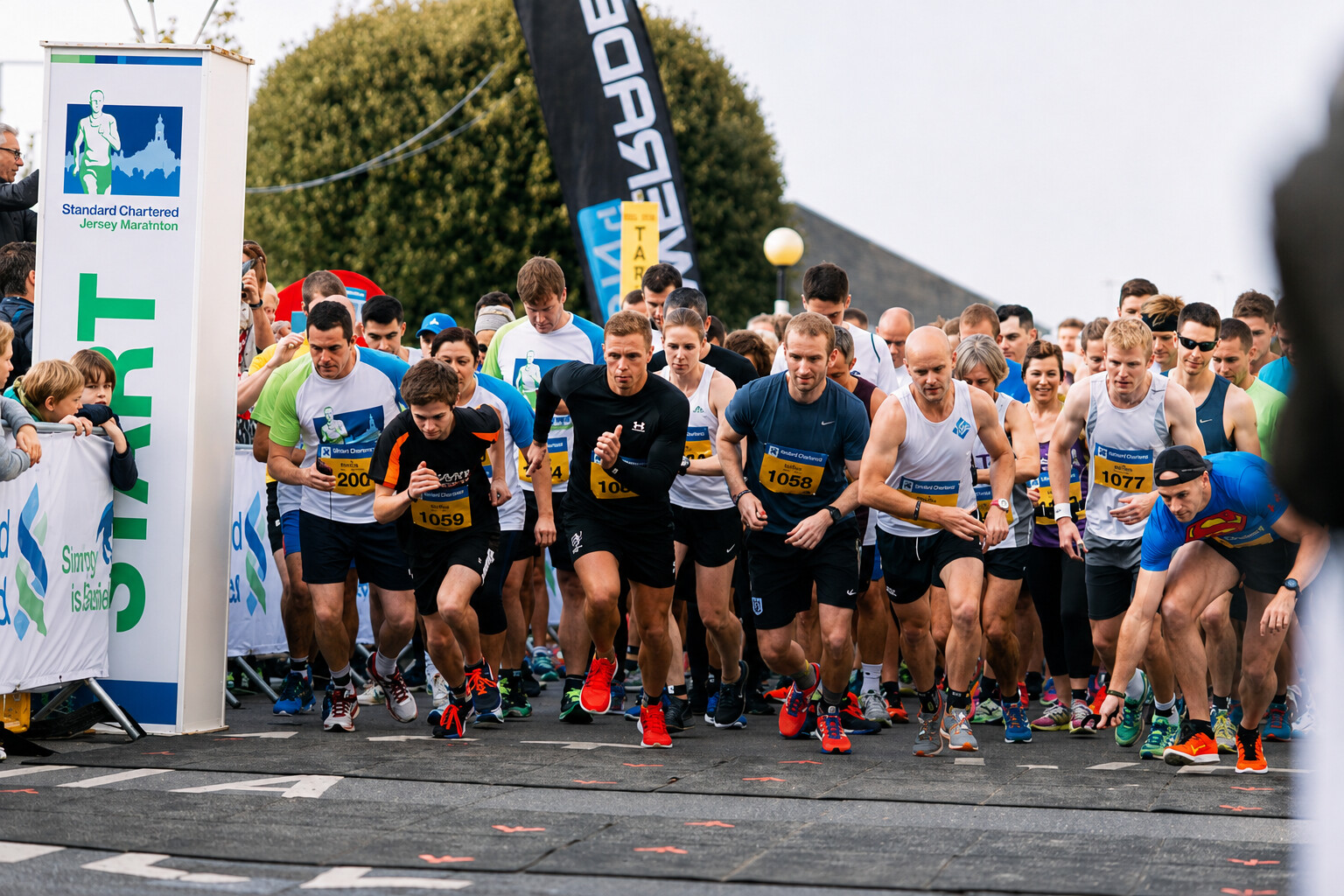
For Strong, however, completing the alphabet has been about more than simply finding 26 races. His commitment to environmentalism means he does not fly, making travel to certain marathons considerably more complicated.
That was precisely why the letter J remained unfinished for so long.
The Jersey Marathon takes place on a Sunday, and for years the ferry schedule made the trip difficult to combine with his teaching commitments. Getting back in time for school on Monday morning was simply not possible.
That changed when Strong retired this summer after an impressive 28-year career teaching French, German and Spanish at Dame Allan’s Schools in Newcastle, where he most recently served as Head of Modern Languages.
With his teaching career now behind him, the final piece of the puzzle could finally fall into place.
His alphabet marathon journey has taken him to races across Europe, including the Venice Marathon, Rotterdam Marathon, Germany’s X-ray Marathon and Spain’s Quijote Marathon, named after the legendary character Don Quixote.
Many of those races have been completed in under three hours and 30 minutes, while Strong’s marathon personal best stands at an impressive 2:58.
There is also one unusual ritual that has accompanied him throughout the journey: beetroot juice.
Strong drinks it three hours before every marathon — a routine he has followed for so long that he jokes he would not dare stop now.
After 25 marathons, countless training miles and years of travelling by ferry rather than plane, the finish line in Jersey will represent far more than the end of another 26.2-mile race.
It will complete an extraordinary 12-year quest to run a marathon for every letter of the alphabet.
On October 4, the long-awaited J will finally be ticked off.
One alphabet. Twenty-six marathons. Twelve years. One final letter.
by Erick Cheruiyot for My Best Runs.
Login to leave a comment

Jersey Marathon
The Standard Chartered Jersey Marathon is an established niche marathon situated on the stunning island of Jersey in the British owned Channel Islands. The race, which is split into three categories, Marathon, Relay Race and 3K Fun Run, attracted some 2,700 entrants in 2017 with over 50% of marathon runners coming from off the Island. With a professional yet friendly...
more...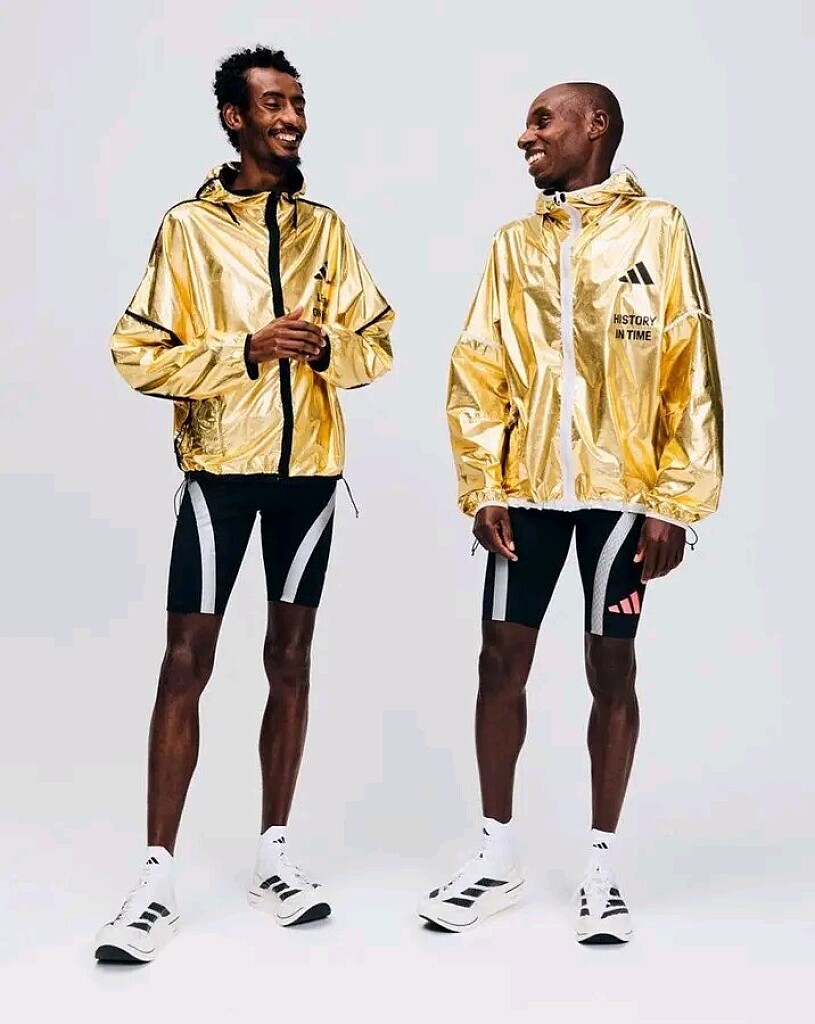
Kejelcha and Sawe: Two Men Driving Road Running Into a New Era
Men's road running is moving into extraordinary territory, and two athletes are increasingly at the heart of its breathtaking evolution: Yomif Kejelcha of Ethiopia and Sabastian Sawe of Kenya.
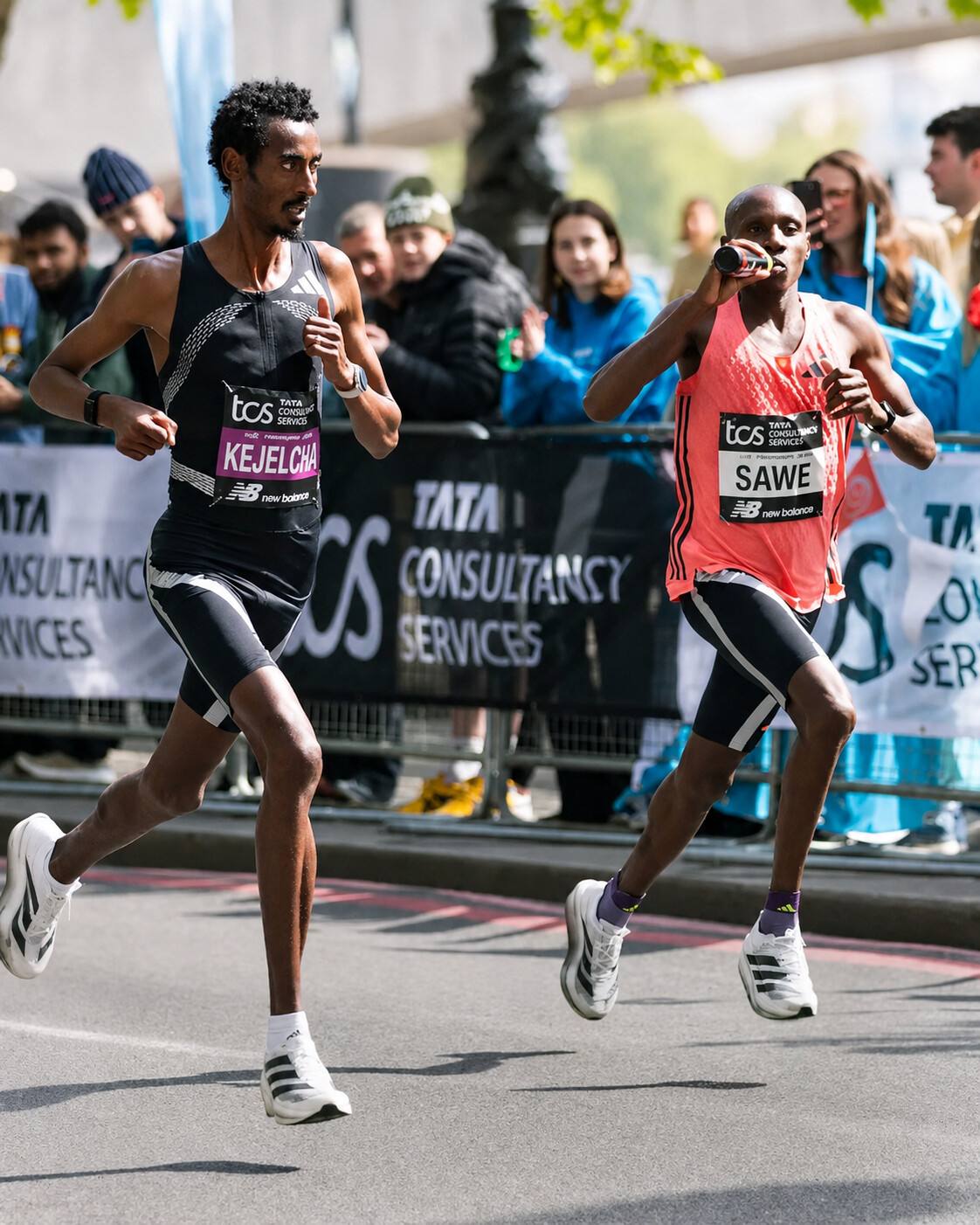
The pair represent the remarkable depth of modern East African distance running, but they are also doing something even more significant: pushing the boundaries of marathon and half-marathon performance to levels that once seemed almost unimaginable. Through their exceptional speed, endurance and ability to perform at the highest level, Kejelcha and Sawe are helping to redefine what is possible on the roads.
Sawe has established himself as one of the most formidable marathon runners in the world. His astonishing 1:59:30 marathon performance at TCS London Marathon on April 26, 2026, marked as a world record, African record and Kenyan record, demonstrated the extraordinary level the marathon has now reached. It also underlined his position at the very top of the men's marathon world rankings.
Kejelcha has been equally sensational, although his journey has highlighted a different kind of versatility. The Ethiopian, whose background includes world-class performances on the track and across shorter road distances, ran 1:59:41 for the marathon debut also at the TCS London Marathon on April 26, 2026, a performance marked as a national record. Just four months later, he delivered another stunning display by clocking 56:51 for the half marathon at the Argentina's capital, Buenos Aires on August 23, 2026, with the performance marked as a pending world record, African record and Ethiopian national record.
That combination of performances illustrates just how exceptional this new generation has become. Kejelcha's ability to threaten the absolute limits over the half marathon while also producing a sub-two-hour marathon performance speaks to his extraordinary range. Sawe, meanwhile, has continued to establish himself as a dominant force over the classic 42.195km distance, combining remarkable efficiency with the strength and speed required to compete at the very highest level.

The two stars are now preparing to take their talents to different stages of the road-running calendar. Kejelcha's next focus is the Valencia Marathon on December 6, where he will once again turn his attention to the marathon distance and look to build on his remarkable breakthrough over 42.195km. Sawe, meanwhile, is set to race the BMW Berlin Marathon on September 27, giving the Kenyan another major opportunity to showcase his extraordinary marathon strength on one of the world's fastest and most prestigious courses.
Those upcoming races add another fascinating dimension to their respective journeys. While Kejelcha heads to Valencia carrying exceptional speed and versatility into another marathon challenge, Sawe will arrive in Berlin with his sights firmly fixed on maintaining his dominance at the highest level of the sport.
What makes their rise particularly exciting is the wider message it sends to athletics. The marathon is no longer progressing only through small margins. The standards at the top are being pushed relentlessly forward, and performances that once appeared impossible are becoming increasingly realistic.
The official sub-two-hour marathon remains one of athletics' ultimate frontiers. Achieving it under standard race conditions would represent one of the greatest endurance breakthroughs in sporting history. Yet with athletes such as Sawe already breaking the two-hour barrier and Kejelcha running only seconds above it while also producing unprecedented half-marathon speed, that frontier appears closer than ever.
Their careers are different, and their strengths are not identical. Sawe has rapidly become a dominant marathon specialist, while Kejelcha brings exceptional versatility from the track to the roads and across multiple distances. But together, they symbolize the relentless progression of men's road running.
Yomif Kejelcha and Sabastian Sawe are not merely among the fastest men of their generation. They are helping to drive the sport toward a future that once seemed unthinkable. With Valencia and Berlin now on their horizons, the next chapter of this remarkable road-running revolution is already waiting to be written.
by Erick Cheruiyot for My Best Runs.
Login to leave a comment
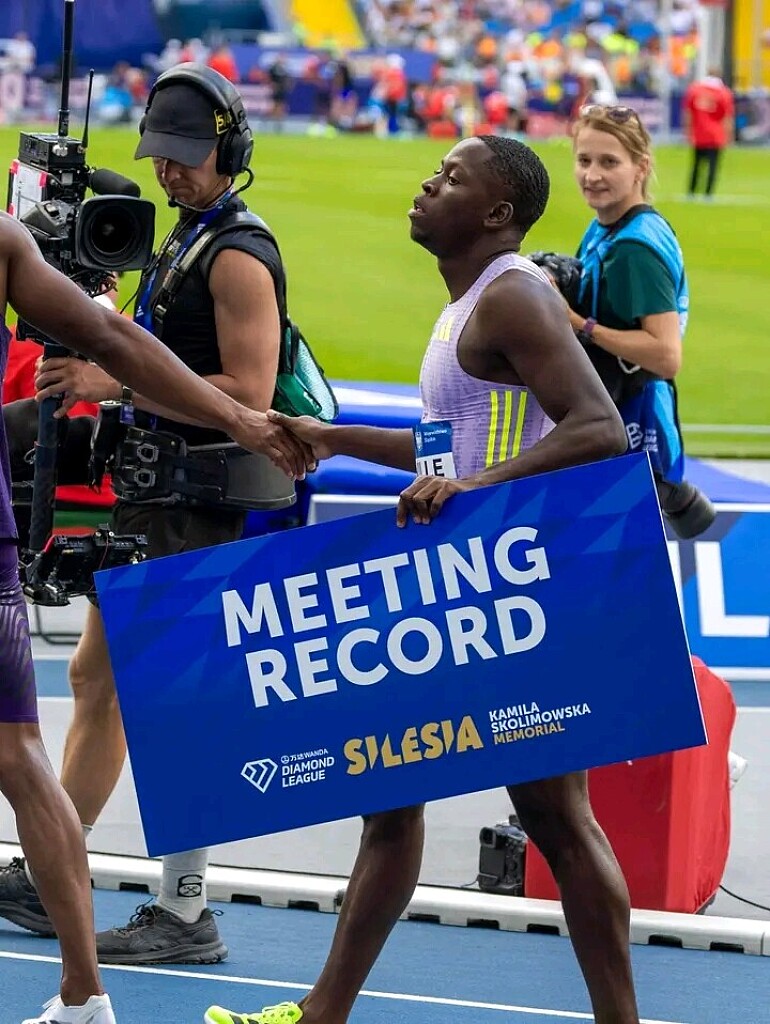
Oblique Seville Blazes to Meeting Record in Historic All Nine-Sub-10 Silesia Showdown
Jamaica’s Oblique Seville delivered another sensational statement at the Silesia Wanda Diamond League, storming to victory in a breathtaking men’s 100 metres and setting a new meeting record of 9.83 seconds that made sprinting history in Chorzów, Poland.
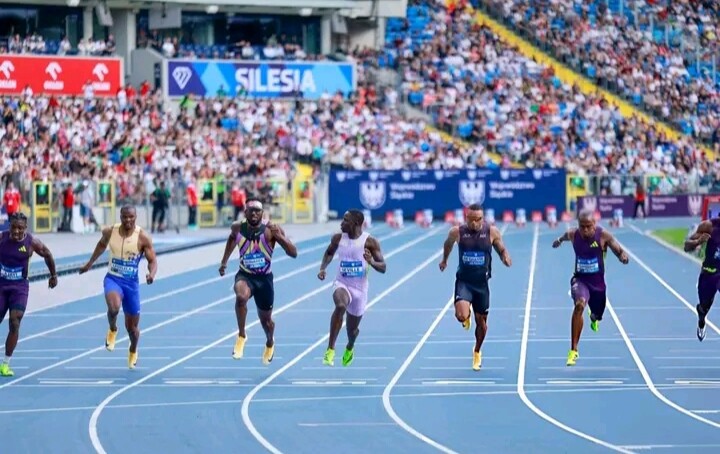
In one of the deepest and most extraordinary sprint races ever witnessed, Seville powered clear of a world-class field to take the win, with Kenneth Bednarek of the United States finishing second in 9.87 and fellow American Christian Coleman completing the podium in 9.93.
But Seville’s meeting-record victory was only one part of the remarkable story. For the first time in history, all nine athletes in a single men's 100m race broke the 10-second barrier, producing an unprecedented display of sprinting depth.
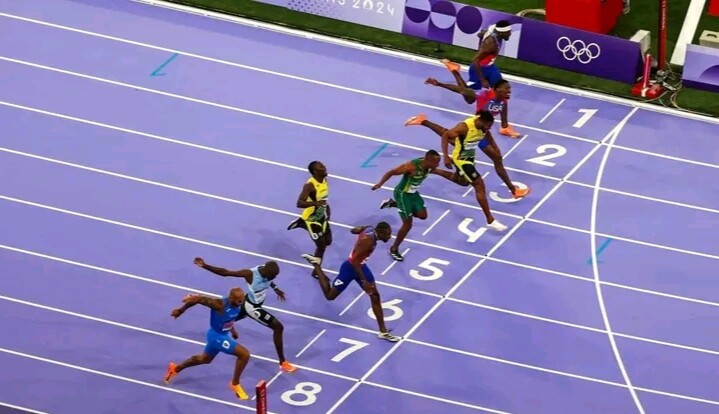
The historic race also marked only the second time that every athlete in a men's 100m final had broken 10 seconds, following the eight-man final at the Paris 2024 Olympic Games. In Silesia, however, the achievement went even further, with an entire nine-man field dipping below the iconic barrier.
Nigeria’s Kayinsola Ajayi produced another impressive performance to finish fourth in 9.94, while South Africa’s Gift Leotlela followed in fifth with 9.95. Canada’s Olympic champion Andre De Grasse clocked 9.96 in sixth, with South African star Akani Simbine recording the same time in seventh.
American Ronnie Baker added another sub-10-second performance with 9.97 for eighth place, while Cameroon’s Emmanuel Eseme ensured the historic sweep was complete by running 9.99 in ninth.
Men's 100m Results – Silesia Wanda Diamond League
1. Oblique Seville (Jamaica) — 9.83 Meeting Record
2. Kenneth Bednarek (United States) — 9.87
3. Christian Coleman (United States) — 9.93
4. Kayinsola Ajayi (Nigeria) — 9.94
5. Gift Leotlela (South Africa) — 9.95
6. Andre De Grasse (Canada) — 9.96
7. Akani Simbine (South Africa) — 9.96
8. Ronnie Baker (United States) — 9.97
9. Emmanuel Eseme (Cameroon) — 9.99
For Seville, the victory was another emphatic demonstration of his exceptional form and his ability to rise to the occasion against the strongest opposition. His 9.83 not only secured the Diamond League win but also lowered the Silesia meeting record, putting an exclamation mark on a performance of the highest quality.
Nine men went under 10 seconds. Seville went under 9.84. On an unforgettable day in Silesia, the Jamaican stood tallest in a race that pushed the boundaries of what men's sprinting has ever seen.
by Erick Cheruiyot for My Best Runs.
Login to leave a comment
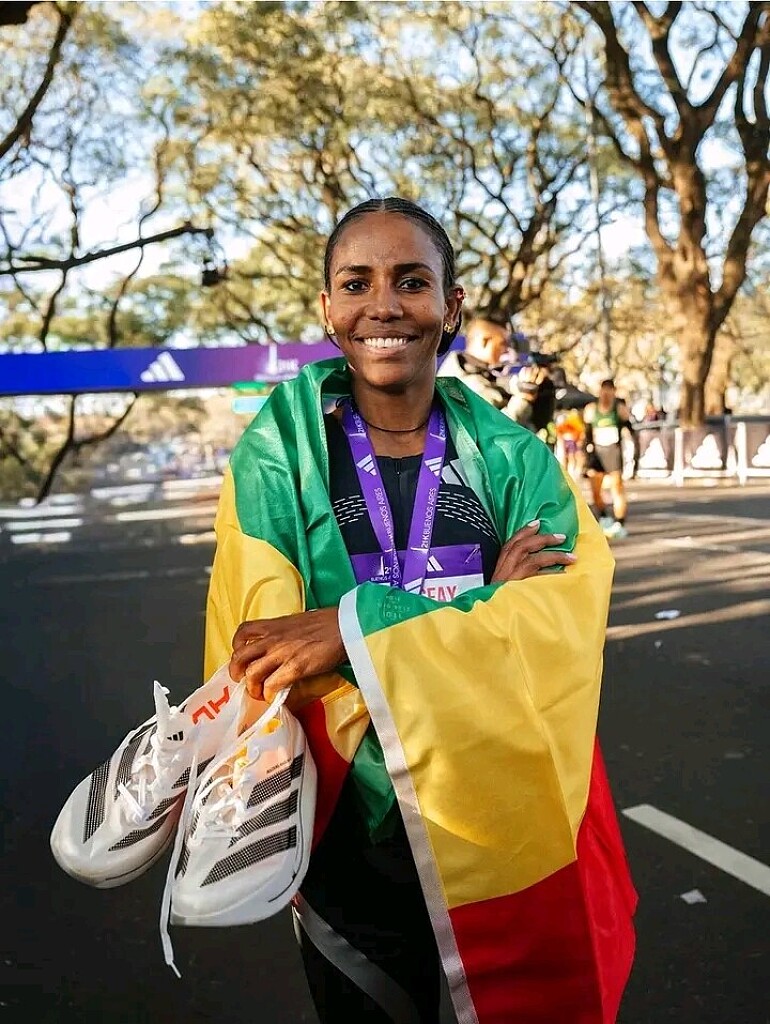
Fotyen Tesfay Haylu Smashes Buenos Aires Half Marathon Record with Historic 1:03:57 Performance
Ethiopia’s Fotyеn Tesfay Haylu delivered one of the most remarkable women’s half-marathon performances ever seen on American soil on Sunday, powering to a commanding victory at the 2026 Buenos Aires Half Marathon in Argentina in 1:03:57.
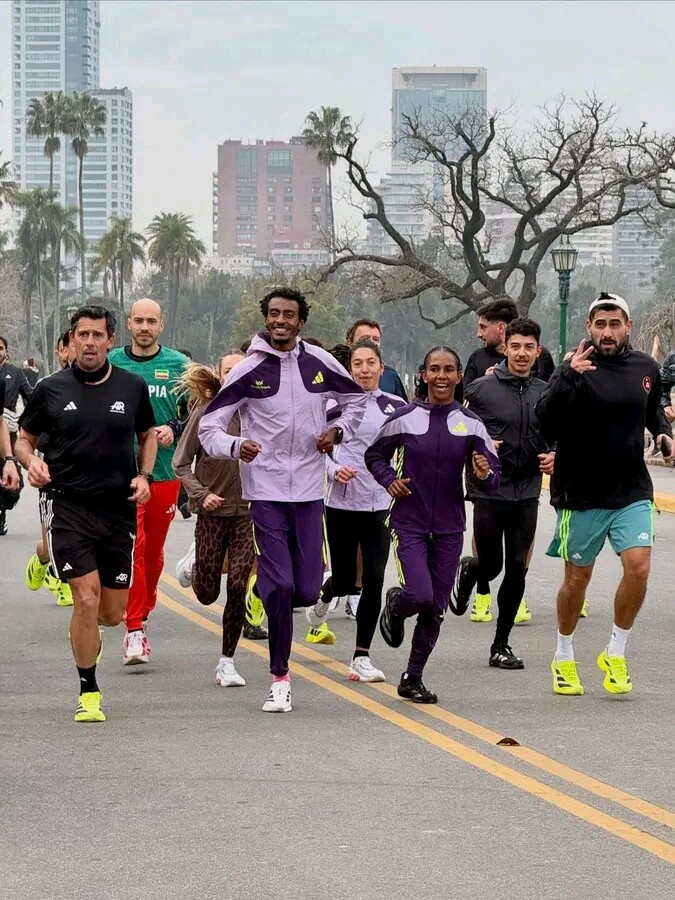
Running with exceptional confidence and strength, Tesfay took control of the race and produced a superb solo performance to rewrite the event record. Her breathtaking run also carried historic significance, as she became the first woman to break the 64-minute barrier for the half marathon in the Americas, producing what is being celebrated as the fastest women’s half-marathon performance ever recorded on the continent.
The Ethiopian star was in a class of her own, crossing the finish line more than a minute clear of Turkey’s Nevin Can, who finished second in 1:05:06. Another Turkish athlete, Selin Can, completed the podium in third place with 1:05:11, as the leading trio all produced strong performances on the fast streets of Buenos Aires.
Kenya also featured prominently in the top positions, with Irene Jepchumba Kimais taking fourth in 1:06:04, followed by Sheila Chepkirui in fifth with 1:06:13. Magaret Akidor Ngathike finished sixth in 1:06:46, while fellow Kenyan Deborah Samum claimed seventh place in 1:08:32.
Brazil’s Nubia de Oliveira Silva was eighth in 1:11:13, while Argentina’s Sofia Luna and Dahyana Juarez rounded out the top 10 with times of 1:11:21 and 1:11:28, respectively.
Top 10 Women – 2026 Buenos Aires Half Marathon
1. Fotyеn Tesfay Haylu (Ethiopia) – 1:03:57
2. Nevin Can (Turkey) – 1:05:06
3. Selin Can (Turkey) – 1:05:11
4. Irene Jepchumba Kimais (Kenya) – 1:06:04
5. Sheila Chepkirui (Kenya) – 1:06:13
6. Magaret Akidor Ngathike (Kenya) – 1:06:46
7. Deborah Samum (Kenya) – 1:08:32
8. Nubia de Oliveira Silva (Brazil) – 1:11:13
9. Sofia Luna (Argentina) – 1:11:21
10. Dahyana Juarez (Argentina) – 1:11:28
For Tesfay, it was far more than a race victory. Her 1:03:57 performance was a statement of extraordinary quality, combining speed, endurance and remarkable solo running to produce a landmark result in Buenos Aires. In a race that will be remembered for years to come, the Ethiopian did not simply win—she redefined what was thought possible for women’s half-marathon running in the Americas.
by Erick Cheruiyot for My Best Runs.
Login to leave a comment

Buenos Aires Half Marathon
The Buenos Aires Half Marathon is one of the most important in Latin America and attracted more than 25,000 runners from all over the world. Dare to run the fastest half marathon in Latin America....
more...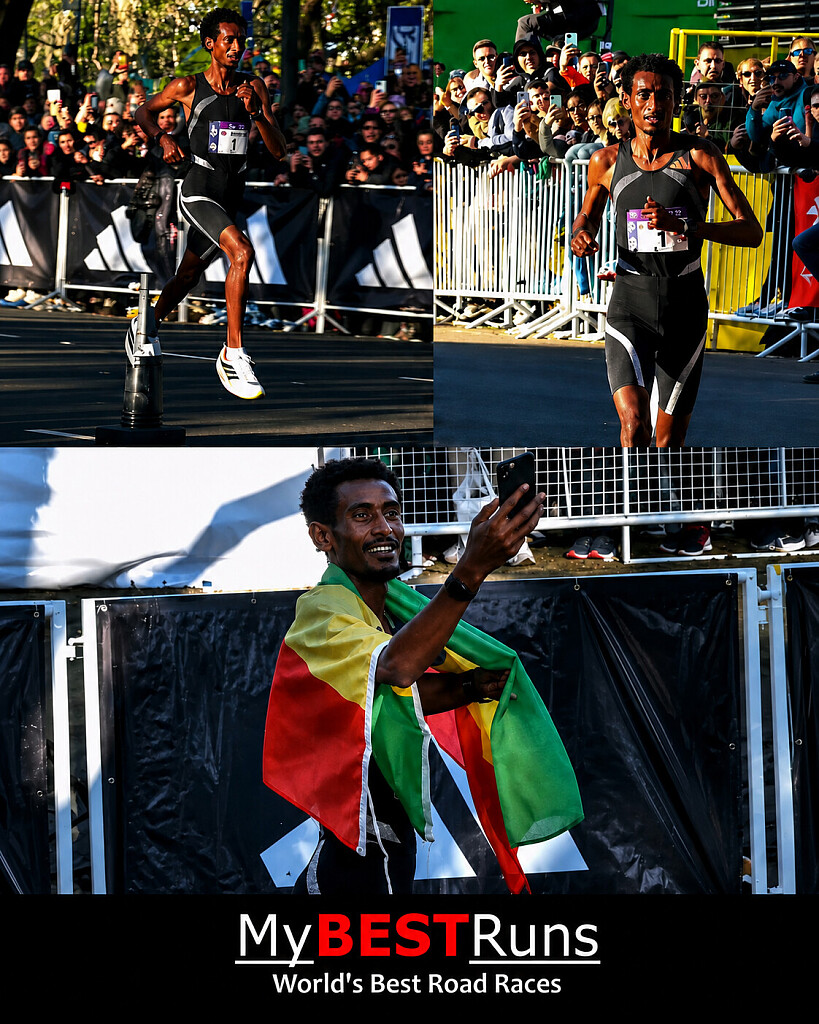
Yomif Kejelcha Smashes Half Marathon World Record with Sensational 56:51 in Buenos Aires
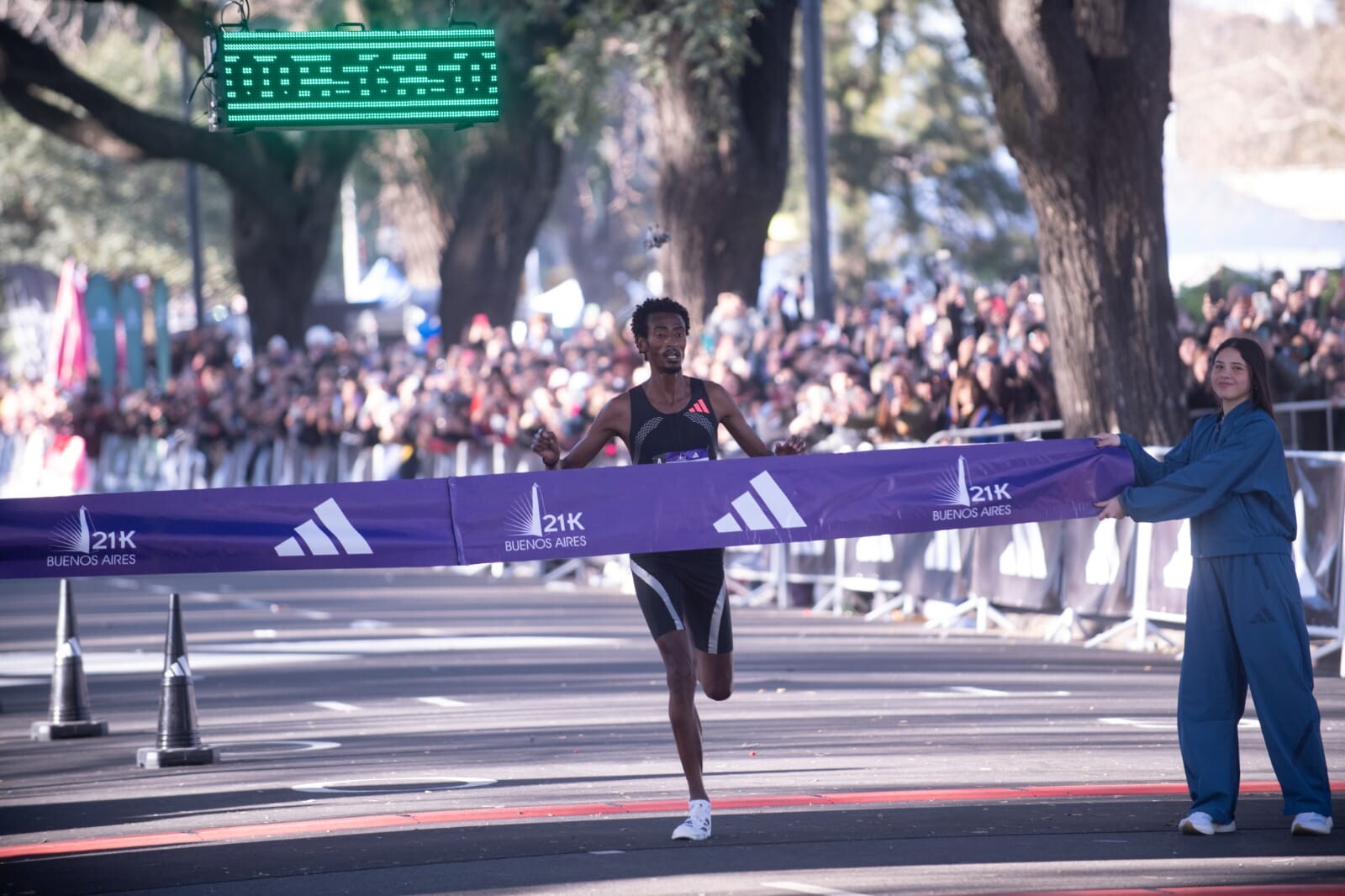
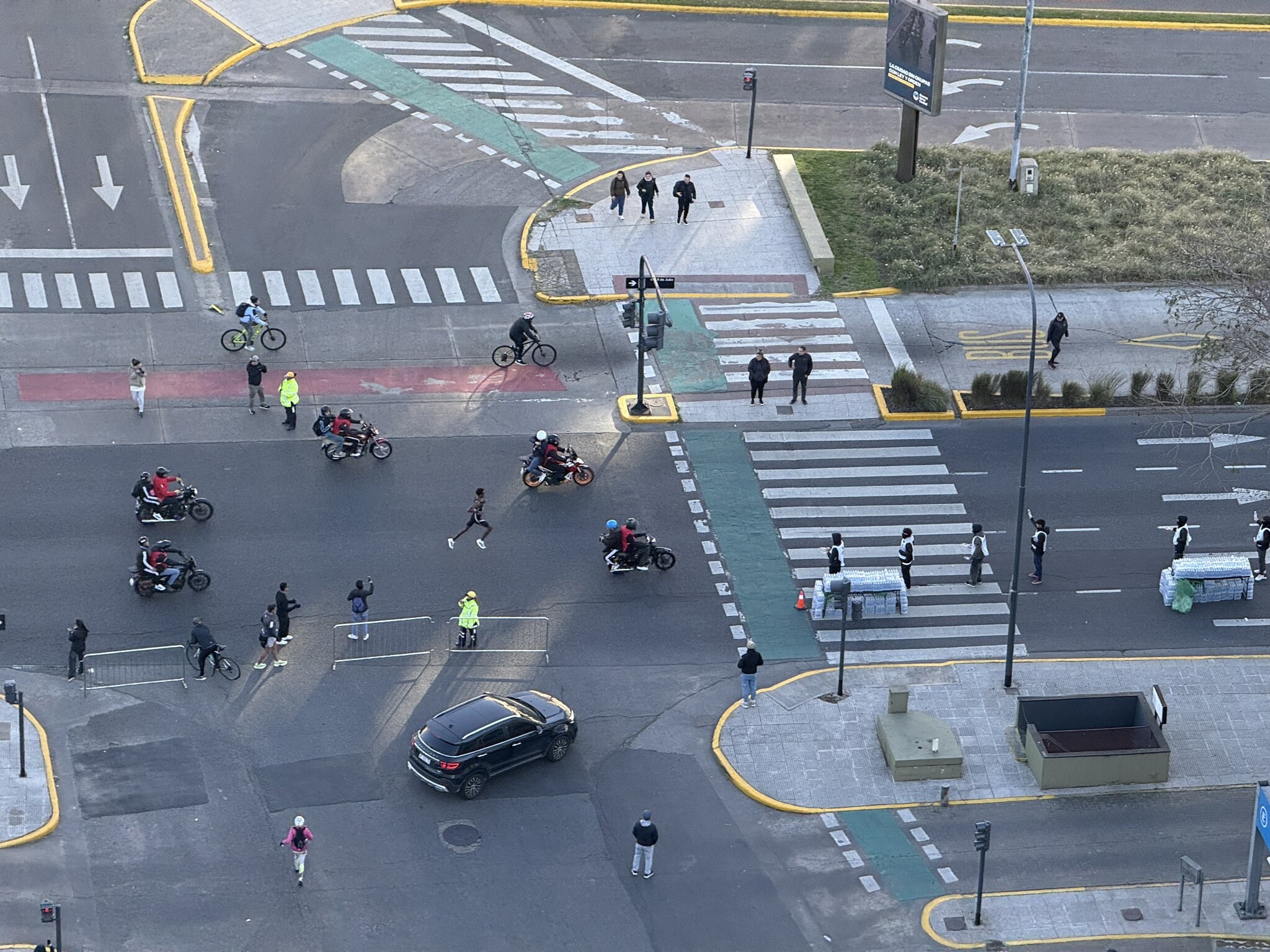
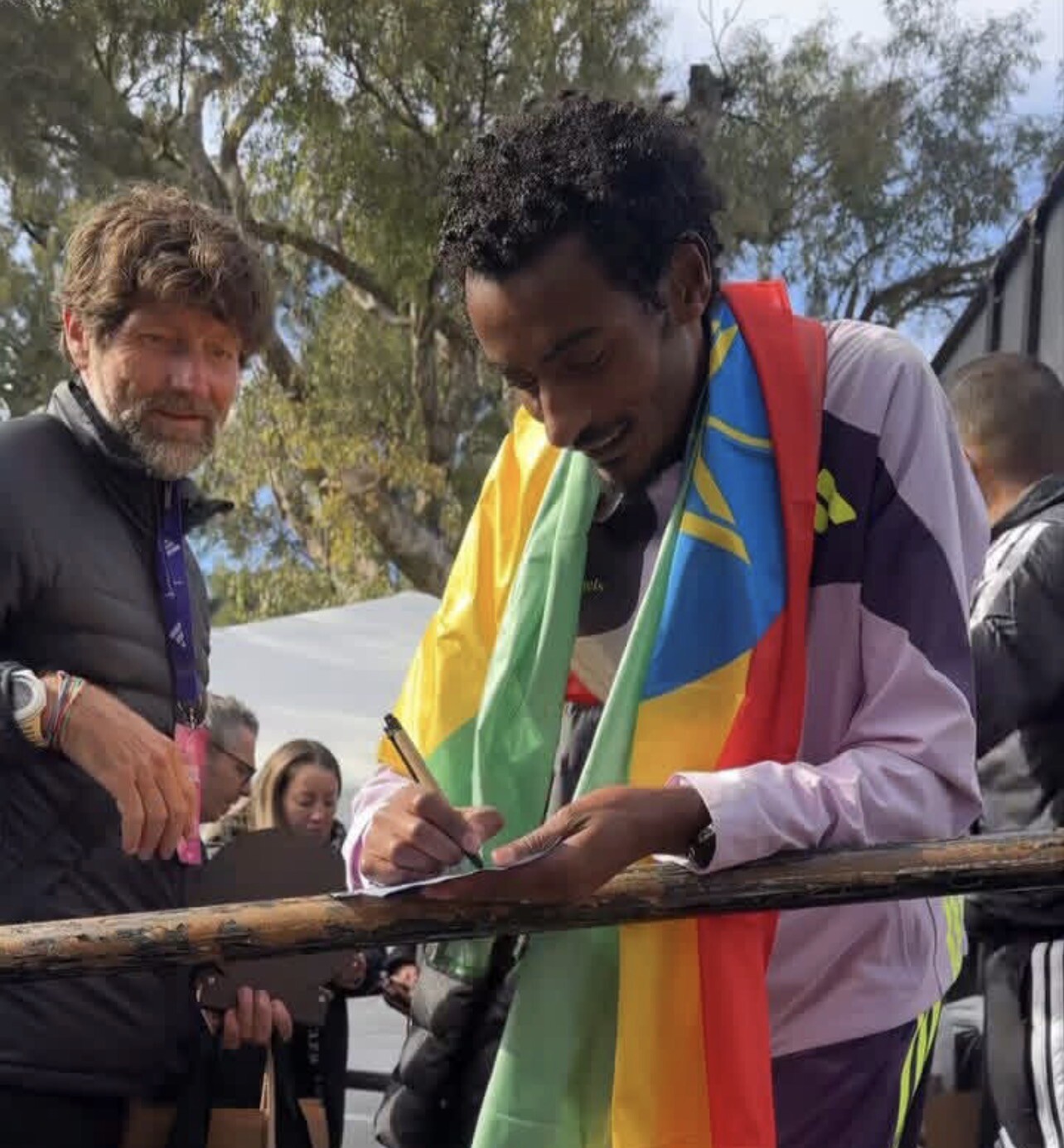
Ethiopia’s Yomif Kejelcha produced one of the most extraordinary performances in road racing history on the streets of Buenos Aires, Argentina, reclaiming the half marathon world record with a sensational 56:51 performance at the 2026 Buenos Aires Half Marathon.
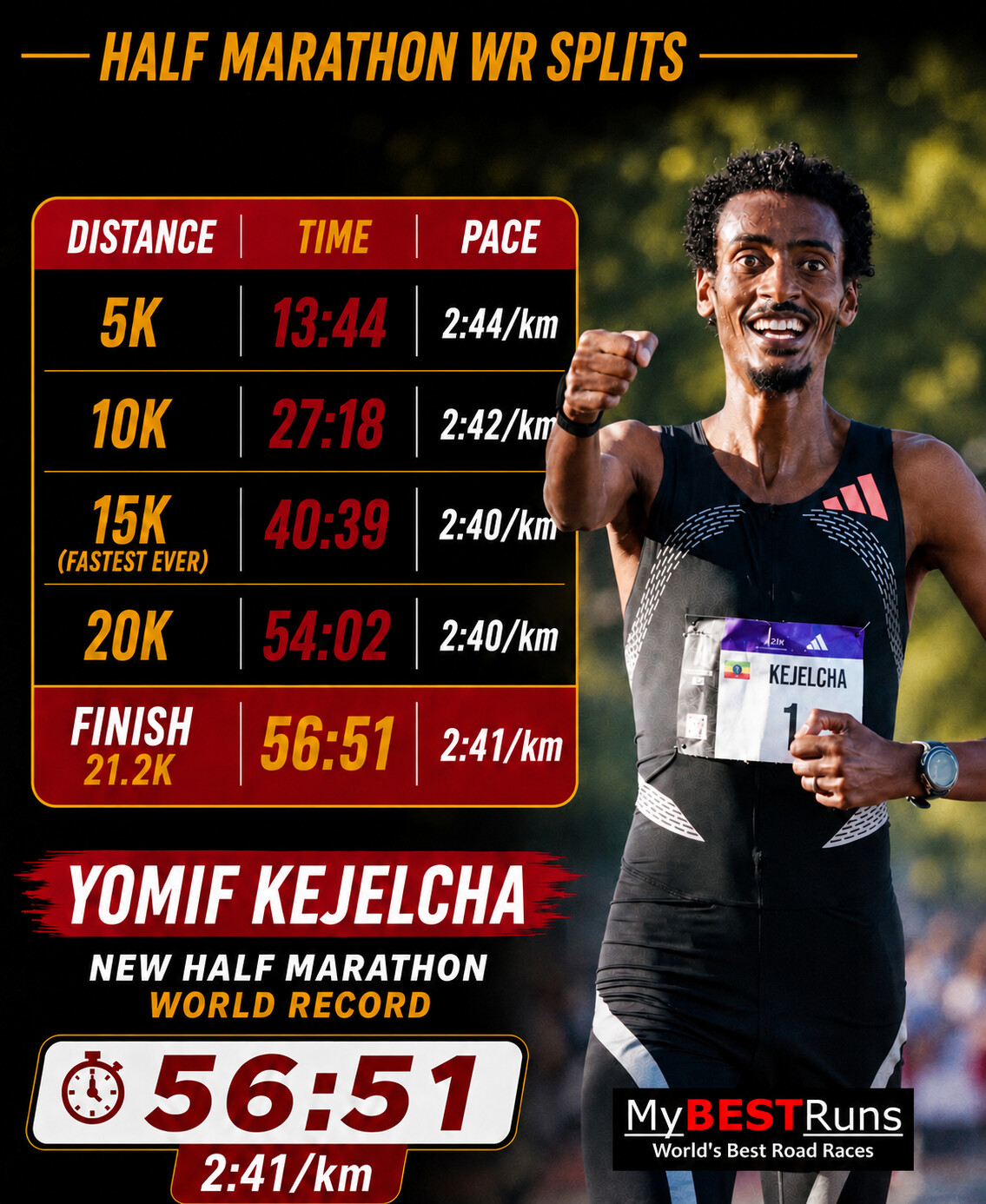
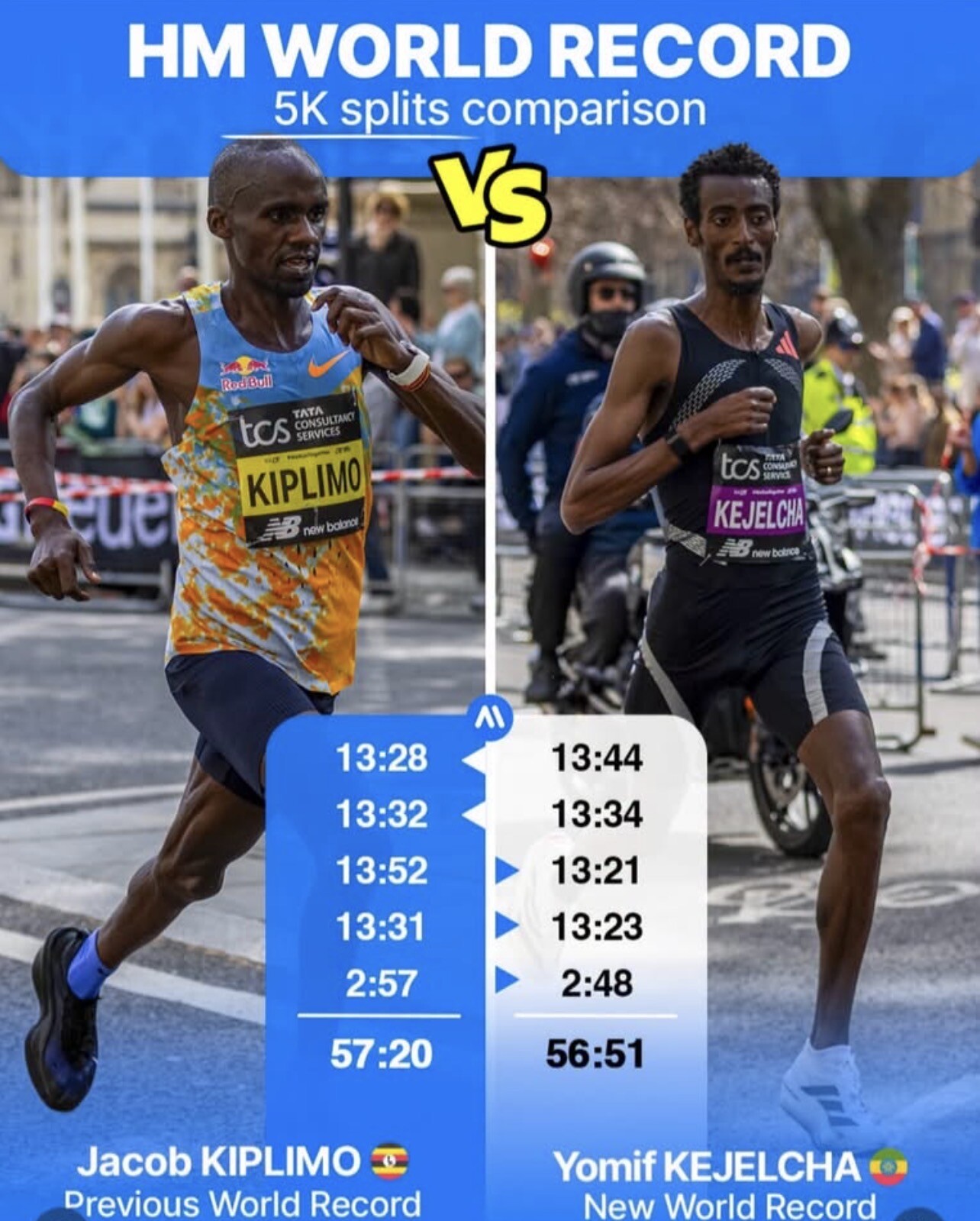
The former world record-holder delivered a breathtaking exhibition of speed and endurance to take 29 seconds off the previous pending mark of 57:20, set by Uganda’s Jacob Kiplimo and takes a huge chunk from his own former official world record. Kejelcha's new performance is pending the standard ratification procedures, but if officially ratified, it will return the world record to the Ethiopian star and mark another remarkable chapter in the evolution of the event.
Kejelcha's achievement is particularly significant because the 57-minute barrier had already been broken before. Jacob Kiplimo had previously run under 57 minutes, clocking 56:42 that was not ratified demonstrating that the once-unthinkable barrier was possible. Kejelcha, however, has become the second man to run under 57-minute barrier who now returns to the top of the all-time rankings with another historic performance in Buenos Aires.
The Ethiopian's race was remarkable not only for the final time but also for the way he built his performance. He covered the opening five kilometres in 13:44 before reaching 10km in 27:18. Rather than slowing, Kejelcha accelerated through the middle stages, passing 15km in 40:39 and 20km in 54:02 as he continued to push the limits of elite road racing.
By the time he reached the finish line, Kejelcha had completed the race at an extraordinary average pace of approximately 2:42 per kilometre, producing one of the most astonishing sustained efforts ever witnessed in distance running. His stunning run sent a powerful message to the athletics world and further strengthened his status as one of the most formidable distance runners of his generation.
Behind the record-breaking champion, Ethiopia completed a dominant clean sweep of the men's podium. Tadese Worku Gebresilase claimed second place in 59:18, while Bereket Nega Batebo secured third in 1:00:17, giving Ethiopia a memorable one-two-three finish in the Argentine capital.
Kenya’s Jonathan Kipkoech Kamosong finished fourth in 1:00:20, followed by compatriot Simon Maywa in fifth with 1:00:55. Argentina’s Ignacio Erario gave the home supporters plenty to celebrate with an impressive sixth-place finish in 1:00:57, breaking the one-hour barrier in front of an enthusiastic local crowd.
Dillon Kipyeko of Kenya finished seventh in 1:01:07, with Robert Kiprop Koech eighth in 1:02:01. Mexico’s Julio Ortiz Ponce took ninth place in 1:03:17, while Colombia’s Jimmy Gómez completed the top 10 in 1:03:34.
The Buenos Aires Half Marathon will now take its place in the history books as the scene of a truly extraordinary breakthrough. For Kejelcha, this was more than just another victory. It was a spectacular return to the top, reclaiming a world record he had previously held and once again rewriting the limits of the half marathon.
The 56:51 performance remains pending ratification, but Yomif Kejelcha's run has already delivered one of the defining moments in the history of road racing.
by Erick Cheruiyot for My Best Runs.
Login to leave a comment

Buenos Aires Half Marathon
The Buenos Aires Half Marathon is one of the most important in Latin America and attracted more than 25,000 runners from all over the world. Dare to run the fastest half marathon in Latin America....
more...