

Running News Daily
Top Ten Stories of the Week
7/20/2019
These are the top ten stories based on views over the last week.
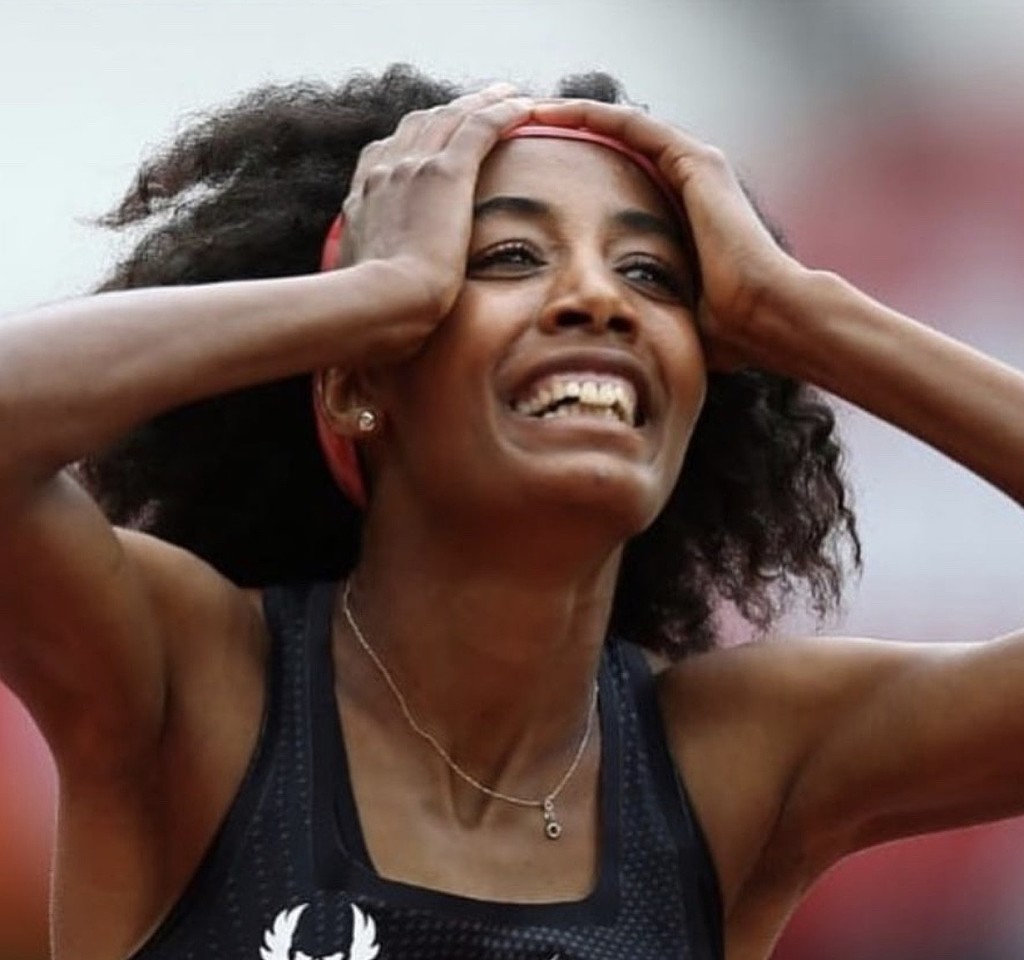


Sifan Hassan breaks women world record for the mile clocking 4:12.33 in Monaco
Sifan Hassan, who arrived on the Stade Louis II track tonight July 12 as the third fastest miler of all time, departed the Herculis EBS Diamond League meeting as the fastest, having produced a marvel of a final lap to finish in 4:12.33, thus breaking the 23-year-old mark of 4:12.56 held by Russia’s 1996 Olympic 800 and 1500m champion Svetlana Masterkova.
Hassan had said on the day before the race that she intended to run “three or four seconds” faster than her best of 4:14.71, set in London in 2017.
As things turned out, she failed in that ambition; not that she looked too put out about it after the race as she lay on her back with a radiant smile on her face.
After the field had been paced through 800m in 2:08.20, Hassan moved into the lead with 600 metres remaining, with Ethiopia’s Gudaf Tsegay the only runner in touch at that stage.
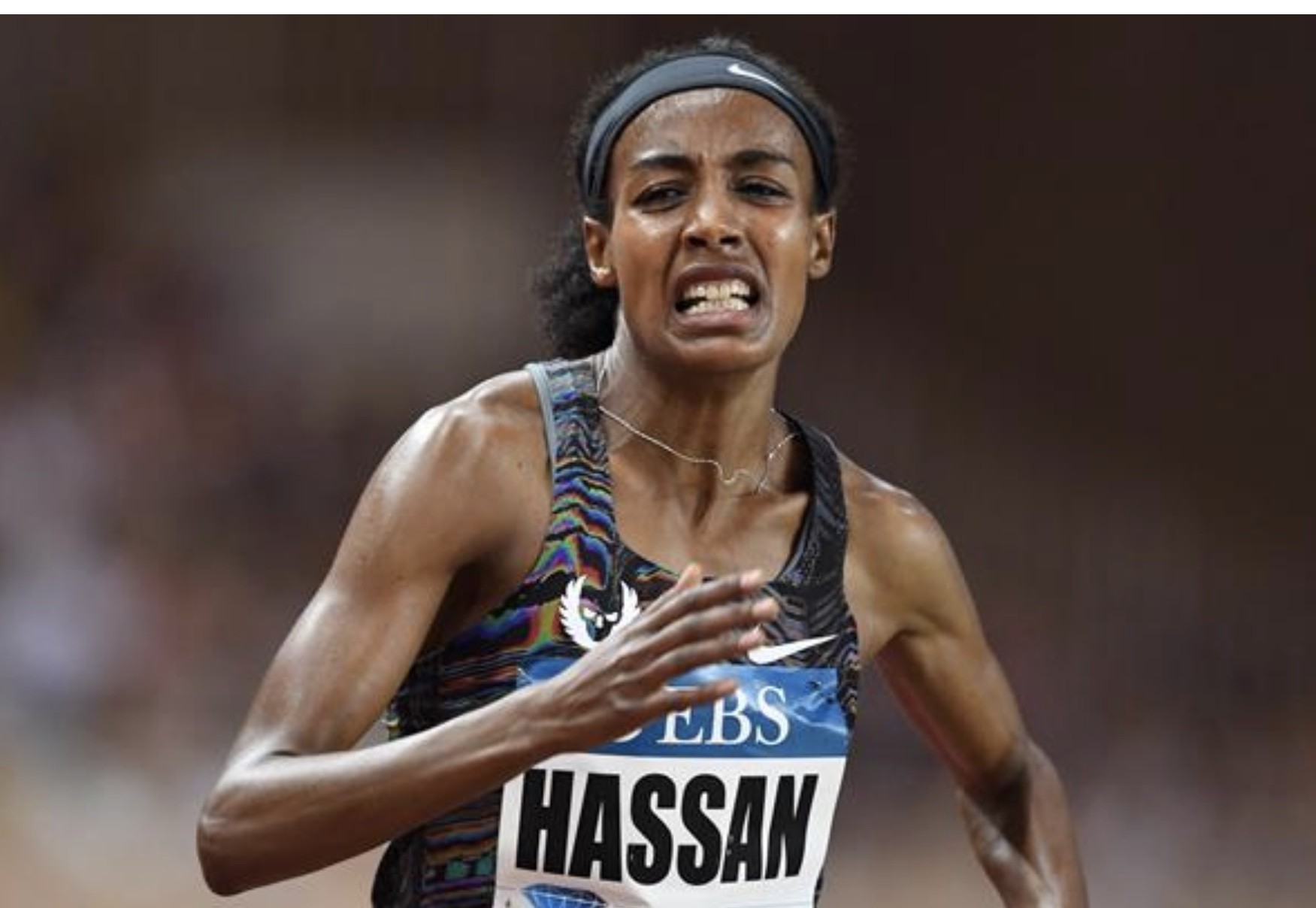
Hassan, who had broken the 5km road race world record in the Principality in February, simply cut loose over the final lap and was suitably rewarded for her enterprise by the digital clock.
In her wake the effort of chasing told on Tsegay, who faded to fourth in a season’s best of 4:18.31 as Britain’s Laura Weightman came through to finish second in a personal best of 4:17.60 and Gabriela Debues-Stafford of Canada took third place with a national record of 4:17.87.
“I knew I could run fast but the first 800 was a bit slow, so after that I wasn’t thinking it would be a world record,” Hassan, the European 5000m champion, said. “When I crossed the line I was so surprised.
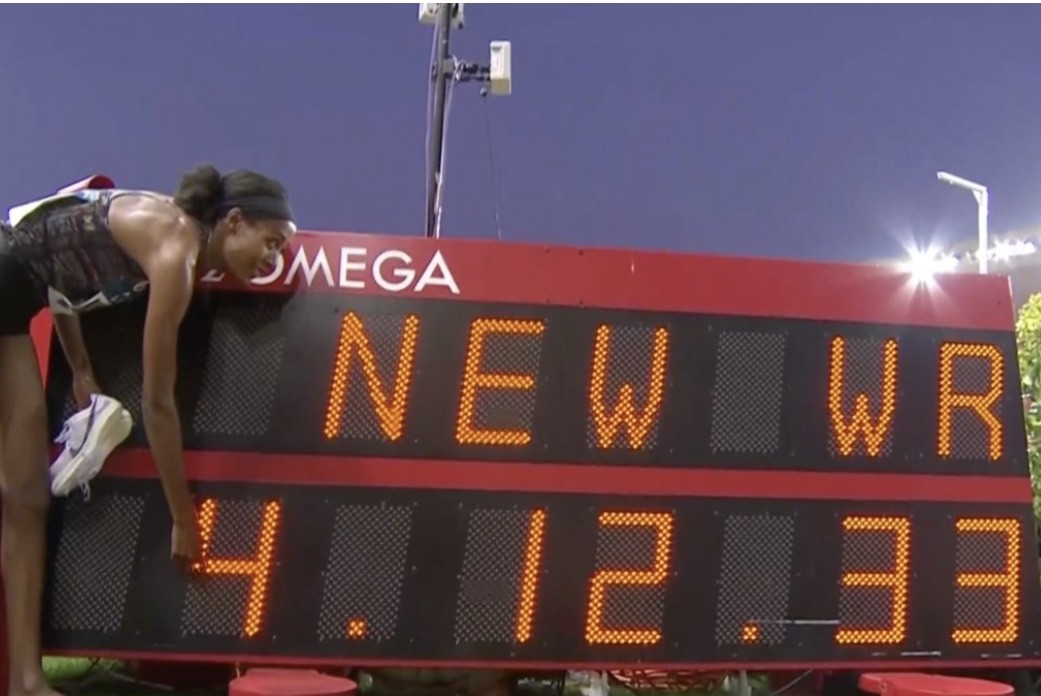
“After you run a last 400 like that, and set a world record, it gives me so much confidence over 5000m. I want to double over 1500 and 5000m in Doha and the way I finished the last 400 there, it’s amazing!”
Hassan said she had been lifted by the crowd in the closing stages of the race. “That made me extra happy,” she said. “It was a beautiful last lap with the crowd supporting me.”
Her next race, she said, would be a 5000m. “I don’t know where yet. The one world record I would love would be the 5000m.”
Before the start of the women’s mile, re-named the Brave Like Gabe Mile, a short film clip was shown featuring the US runner Gabe Grunewald who fought cancer for so long before succumbing earlier this year, and the crowd showed their respect and appreciation.
Two other Monaco world record breakers - Ethiopia’s Genzebe Dibaba, who set the current 1500m world record of 3:50.07 on this track four years ago, and Kenya’s Beatrice Chepkoech, who set a new world 3000m steeplechase mark here last year – had been due to race but had pulled out.
Whether their presence would have also have produced a world record race remains an open and, now, irrelevant question.
(07/12/19) Views: 612IAAF
How ultra running is helping extreme athletes and others in Colorado battle addiction
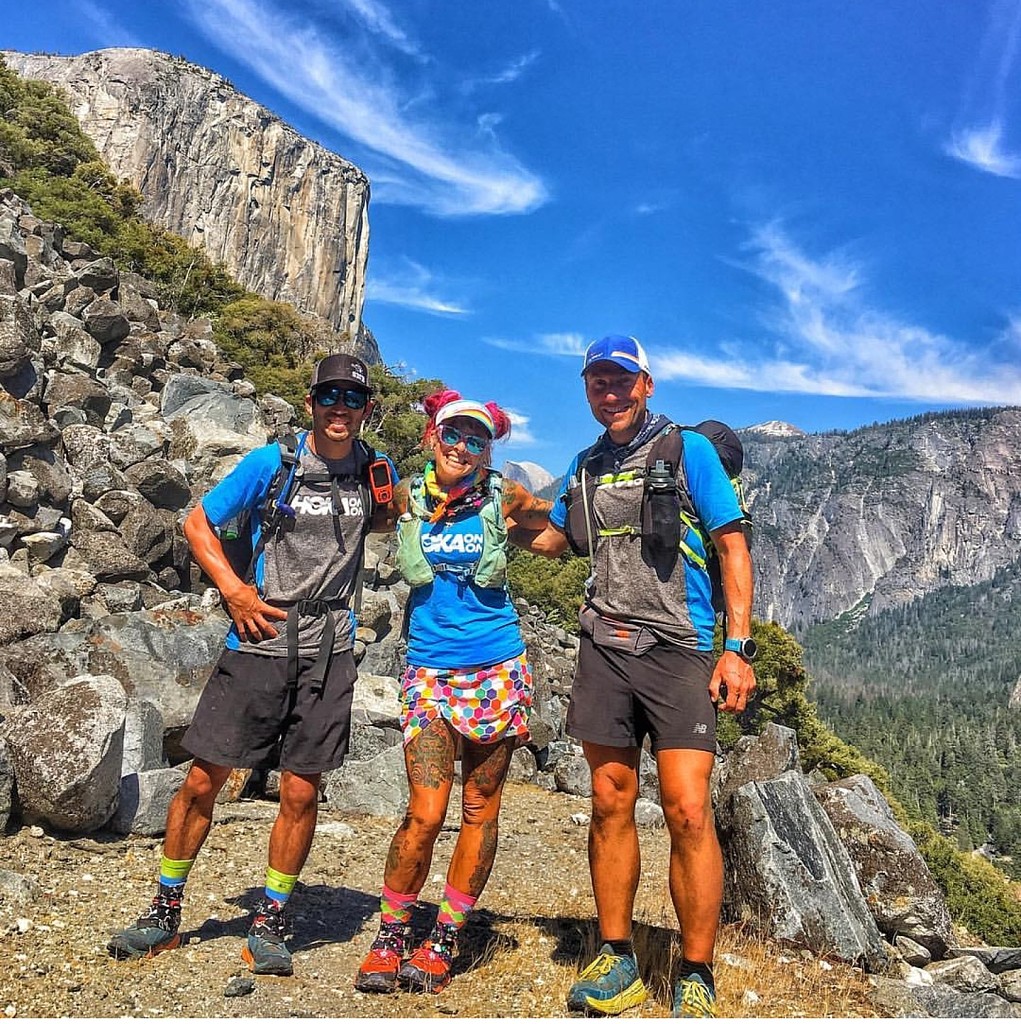
On an afternoon 25 years ago, Catra Corbett figured her life was over.
She looked in a mirror and saw purple dashes under her bulging, red eyes, a face painted white, black lipstick and a sad, tired expression that wondered when her next hit was coming. She looked like an extra in “Buffy the Vampire Slayer.” She was a go-go dancer who sold drugs and danced all night in clubs. She’d been up three days.
“This sucks,” she thought to herself, but she saw no way to change it.
But it did change, after the cops broke down her door and arrested her. A judge, knowing this was her first offense, made her a deal: If she gave up drugs, he would give her a clean slate. If she didn’t, she would go to jail.
One night in jail scared her enough to give up drugs. She returned to her hometown of Fremont, Calif., away from the club and her friends, and moved in with her mom. She was depressed. She was bored. She wondered if she would stay off drugs. And then she entered a 10K.
Now she is one of the most successful ultrarunners of all time, a woman who completed more than 250 races and ran 100 miles more than 125 times. She is also the most extreme and famous example of the turnaround that extreme sports see in an unusual percentage of its participants.
She is the most visible example, with pink hair, bright, colorful clothes and tattoos all over her body, but there are many others. Corbett once said she believed that 50 percent of all ultrarunners are addicts.
That figure is likely too high, especially with the boom in ultrarunning and the waves of extraordinary athletes and tough-as-nails competitors dominating the sport now, but there are many examples that suggest it is not only a piece of its history, it is still a part of the sport, a part that ultrarunning or other extreme sports don’t care to hide.
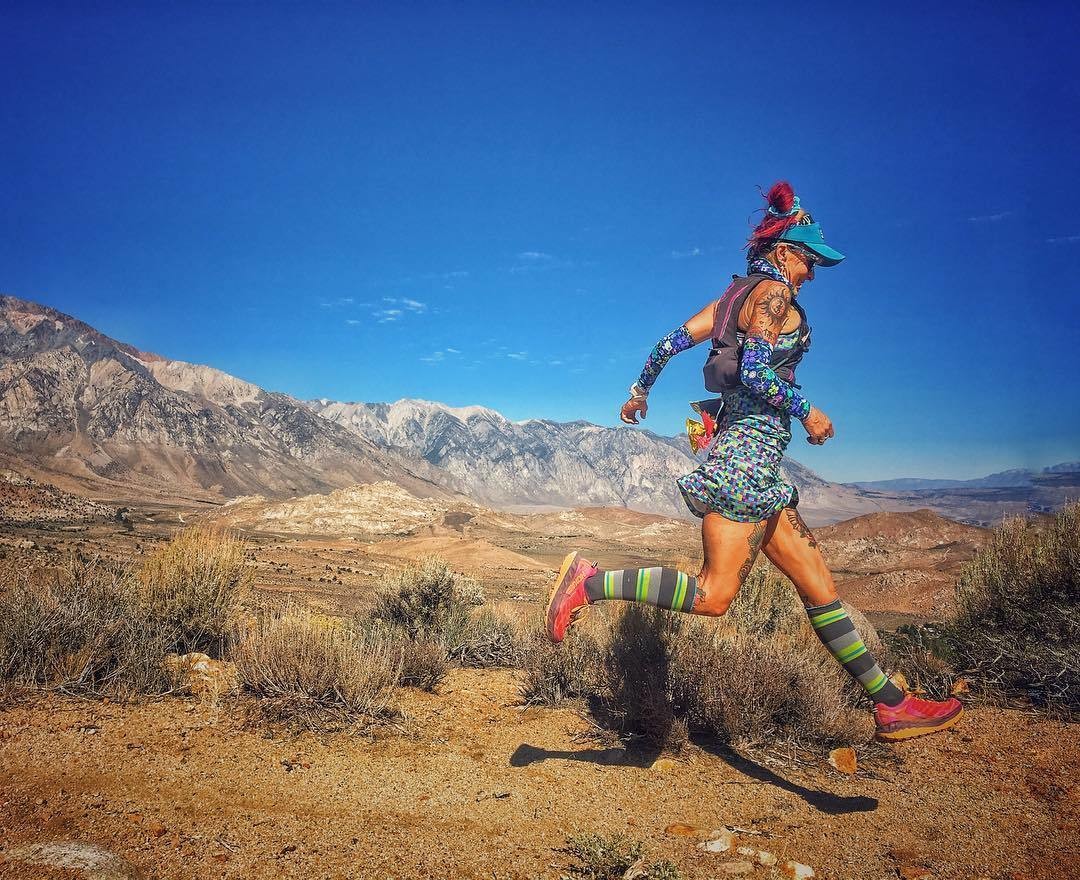
Timothy Olson, a recovering addict, won the Western States 100, perhaps the most prestigious ultra, in 2012 and 2013 and once held the course record. Charlie Engle, one of the sports best-known extremists, was a crack addict.
Other extreme endurance sports have attracted addicts as well, such as Lionel Sanders, who signed up for the Ironman triathlon in 2010 to help him beat his addiction to drugs and became a star, finishing second in the Ironman World Championships in 2017. Corbett was clean when she began running, but she said it helped her stay that way.
“It was mostly the running,” she said in an interview. “It gave me a purpose kept me focused.”
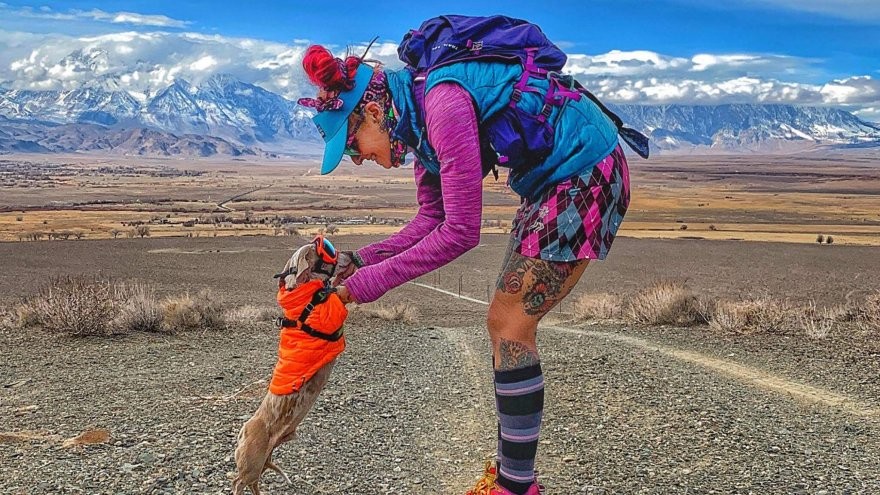
Experts saw the potential link between exercise and fighting addiction and are now using it to help addicts battle their cravings, even if they aren’t running 100 miles to do it. Even a 10-minute walk, one expert said, can stifle the need for a fix.
Experts have long searched for solutions to the problem of helping people stay sober when little else seems to work. But more are finding that the solution isn’t frog’s breath or a strange hobby or therapy dog. It’s just a matter of moving.
“It’s not a magic bullet,” said Alex Murphy, behavioral health consultant with North Range Behavioral Health in Greeley who has treated drug addiction. “But there’s a lot of good things that come from it.”
Those good things include dopamine, along with serotonin, which triggers happiness, and norepinephrine, which helps with energy. Those neurotransmitters are released in generous quantities when you work out, especially when you do it outside.
Many drugs trigger the release of dopamine — even a brisk, 10-minute walk can release a bit and help an addict fight cravings.
“Dopamine drives both motivation and pleasure,” Murphy said. “The more we can find healthy releases of that, the better. It won’t provide the same levels that the drug will, but it can give you a higher baseline and squash some of the cravings.”
Corbett said the natural high — many call it the “runner’s high,” even though many longtime runners say it’s a gross exaggeration — was a key to keeping herself off drugs.
(07/15/19) Views: 160Dan England
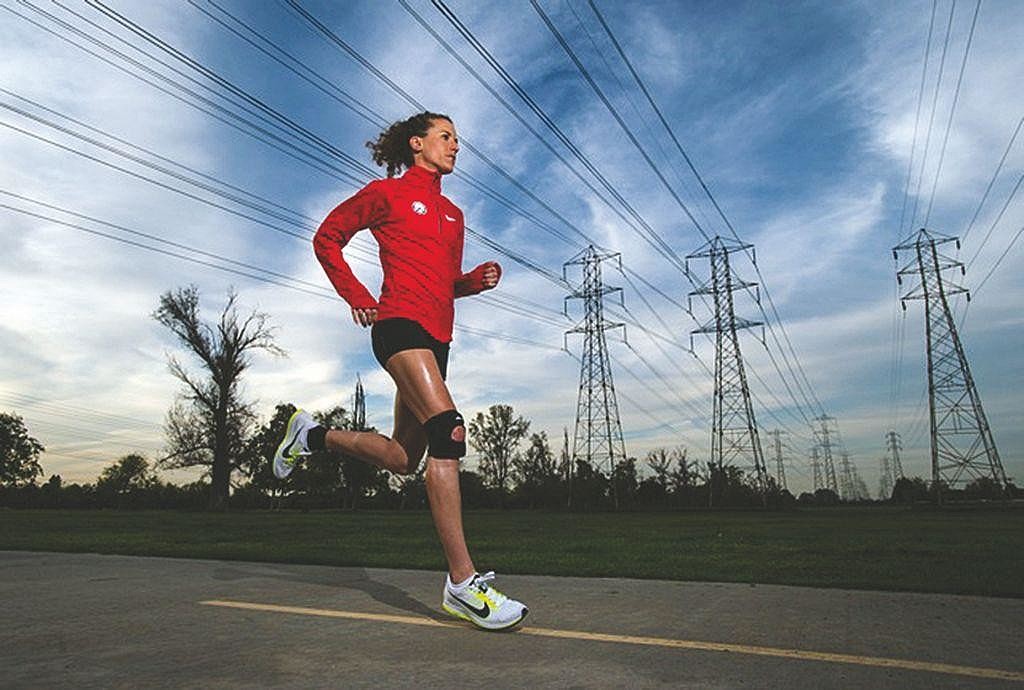
Amy Cragg Puts Trust in Her Team, and now she’s back training for the 2019 Chicago Marathon after 18 months away from racing 26.2-miles
Cragg, 35, is a member of the Bowerman Track Club, based in Portland, Oregon, under the direction of coach Jerry Schumacher. And now she’s back training for the 2019 Chicago Marathon on October 13, after 18 months away from racing 26.2-miles. The last time was the 2018 Tokyo Marathon, where she placed third in 2:21:41, a personal best by more than five minutes, making her the fifth-fastest U.S. woman at the distance.
In the past year, the overriding goal, Cragg said, was doing whatever was best to ultimately make the 2020 Olympic team. The Olympic Trials are set for February 29 in Atlanta, where the top three finishers who have the Olympic qualifying standard will be named to the team. Cragg still needs to achieve the Olympic standard within the specified window—either by time (2:29:30) or by placing in the top 10 in Chicago. Those are her primary goals for the October race, but as her training tells her more about her fitness in the months ahead, she’ll likely target a few more ambitious secondary goals.
“In training and everything we’re going to protect that goal of the qualifying standard for the Olympics—that’s what we’re going there to do,” she said. “But at the same time if things go well, we’ll narrow the focus of what I want to achieve on race day.”
The Chicago Marathon may serve as a good preview for the February Trials, too. Jordan Hasay, the second-fastest U.S. woman in the marathon, is also planning to compete—her personal best of 2:20:57 was set at the 2017 Chicago Marathon, when she placed third. Hasay has indicated she’d like to set the American record in October, currently held by Deena Kastor in 2:19:36.
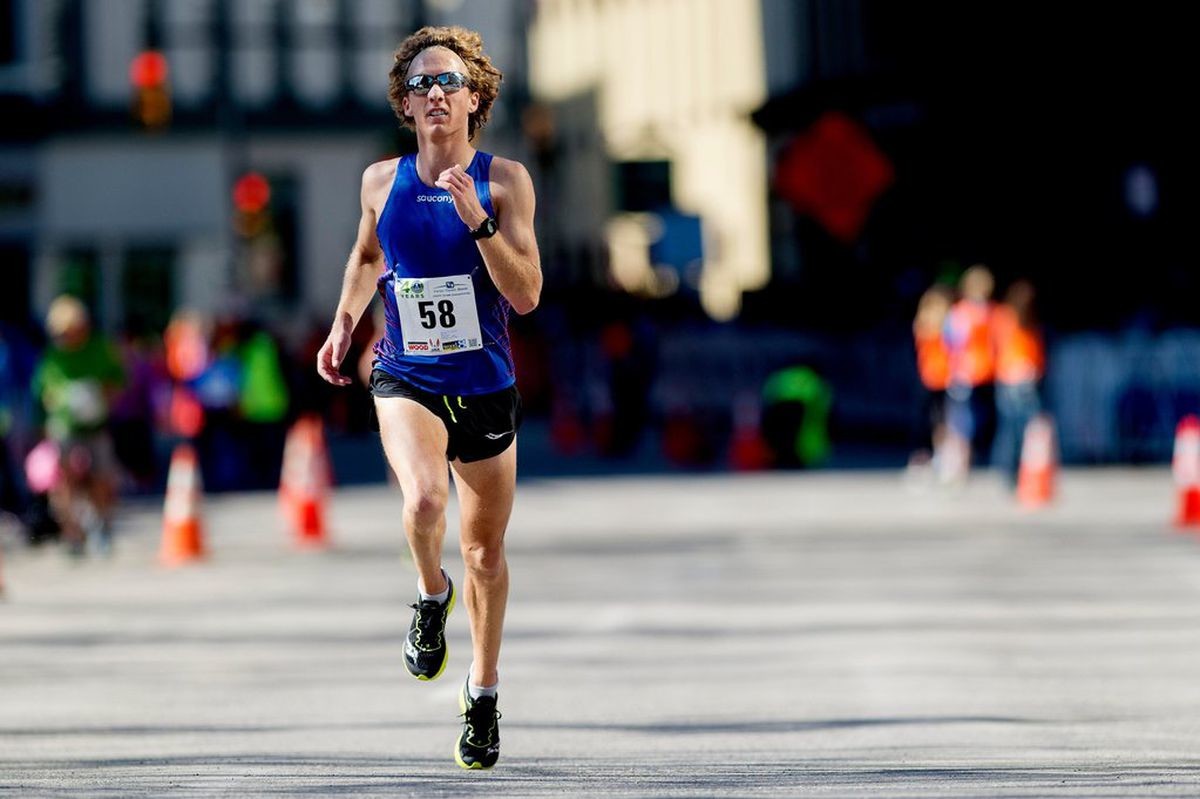
Although she was upset to not compete last year, not all was lost for Cragg after she withdrew from the marathon. She started focusing on shorter distances and was thrown into workouts with her teammates, all of whom are Olympians specializing in middle-distance events—and are rather good at them, too. Like Shelby Houlihan, American record holder in the 5,000 meters (14:34.45) and Colleen Quigley, national indoor mile champion.
“It was really hard. It’s a different stimulus than I’m used to,” Cragg said. “They’re the best in the world at what they do. There were a lot of tough moments, putting my head down and hanging on in practice.”
As a result, though, Cragg took third in the national road 5K championships in November and fifth at the U.S. cross-country championships in January. And she believes the focus on quicker cadence will help her in the marathon, too.
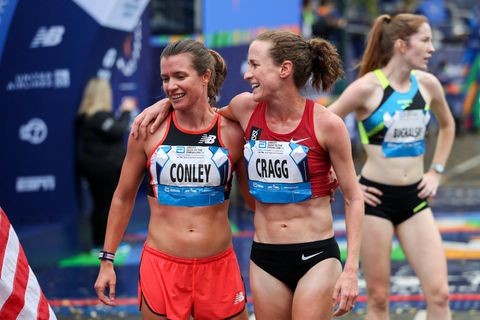
“It’s so important to go back to that faster stuff because your legs can almost go kind of dead after all that marathon training—if you’re just running 130 or 140 miles a week, day-in and day-out, all of a sudden those regular runs just naturally start slowing down,” she said. “You need to throw in that extra speed to keep the quality high. There will be five-minute miles thrown into a marathon—it’s not the speed that kills you, it’s the faster turnover.”
The Bowerman women’s group has plenty of members to keep things moving. In the past year, the group has added to its roster, including Karissa Schweizer, a six-time NCAA champion from the University of Missouri; Vanessa Fraser, a nine-time All American at Stanford University; and Elise Cranny, an 12-time All American at Stanford.
(07/17/19) Views: 109Erin Strout

Mom of three runs 3:11 Marathon Pushing a Triple Stroller
Last year, Cynthia Arnold shattered the world record for pushing a three-kid stroller through the Missoula Half Marathon. After that race, she decided to go for the full marathon record.
And this year, Arnold shattered that record, as well, going nearly an hour faster than the previous record-holder. Arnold crossed the line in 3 hours, 11 minutes, 53.7 seconds.
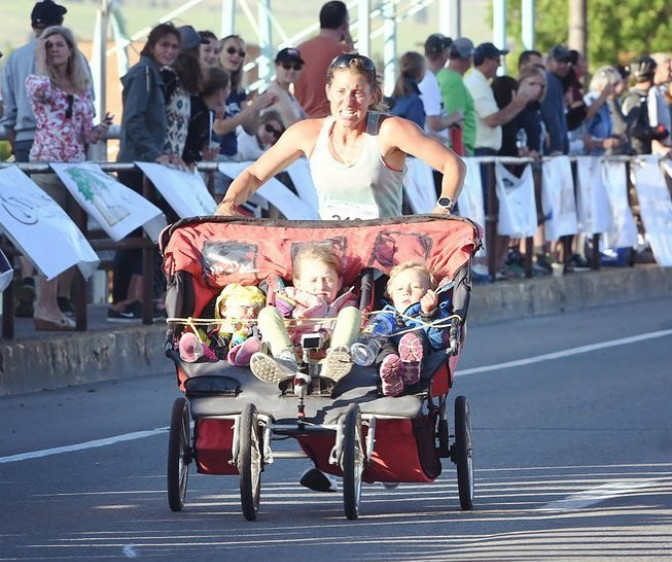
While it looks like Arnold pushes through the 26.2 miles with ease, she said it’s no small task.
“The kids are a year heavier, and I was feeling that. The stroller felt really heavy this year,” said Arnold, a Polson native.
Arnold said she wasn’t even hitting her pace times prior to the race, but on race day some new energy kicked in.
“The neat thing that happened this year was that there were a lot of spectators who knew what I had done last year and that I was going for the marathon this year, so there were a lot of people there saying things, personal things, actually addressing me about it, and that was a neat experience and really touching,” Arnold said.
On top of the 26 miles, Arnold said one of the biggest challenges was keeping the kids comfortable during the three-plus hours.
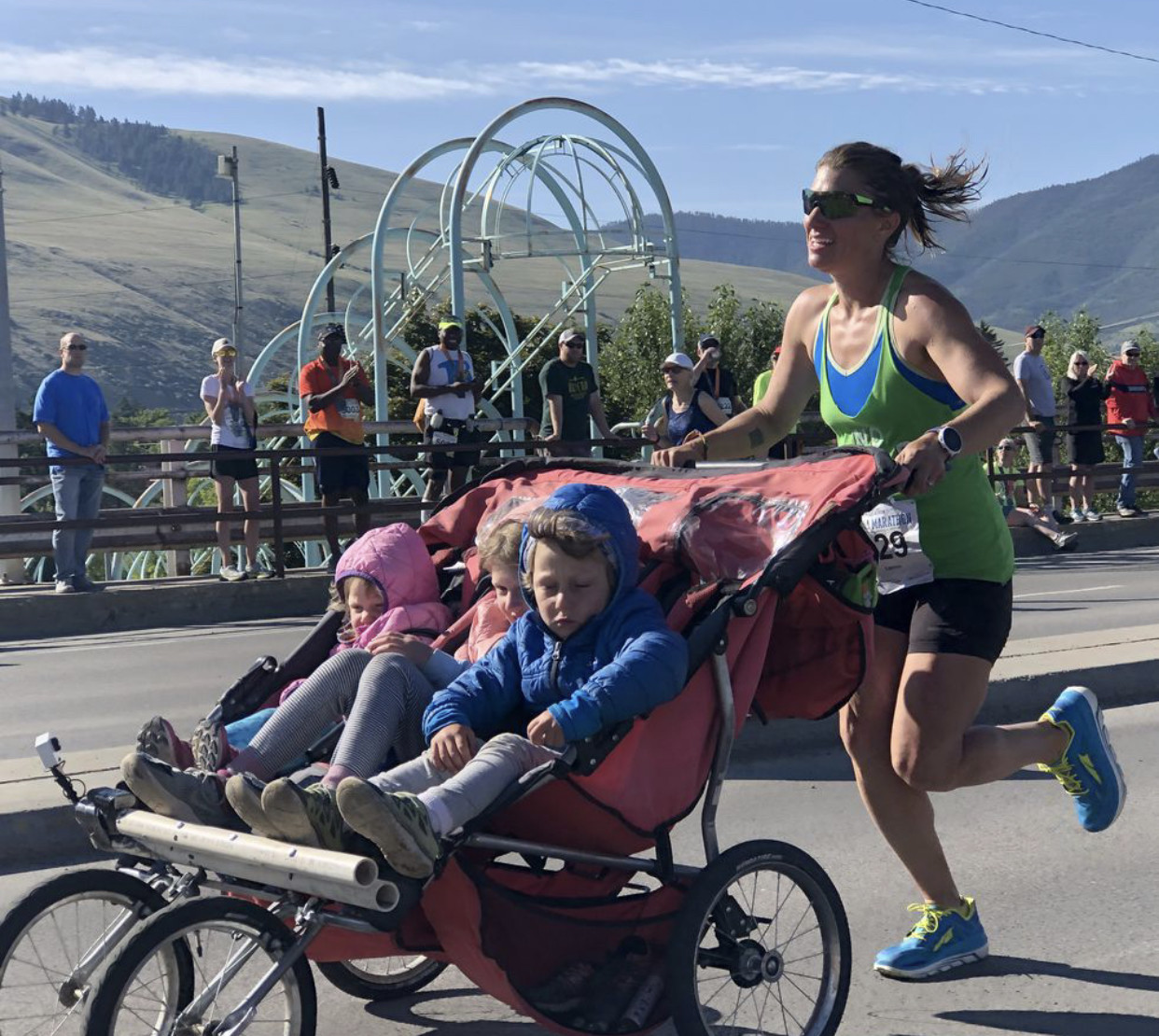
“They’re usually in the stroller more like one hour to one hour and 20 minutes, so it was a little over twice as long,” Arnold said. “So, that was going be a big challenge for us, which is where Margarite kind of came in. I thought she could read to them. They like I-spy, so she could initiate I-spy if they were kind of getting tired or bored.”
Three world records later and the kids getting bigger every year, Arnold said this was most likely the last competitive run she’ll do with the kids, but that doesn’t mean she’s done at the Missoula Marathon. She plans to run it by herself in 2020.
(07/13/19) Views: 108
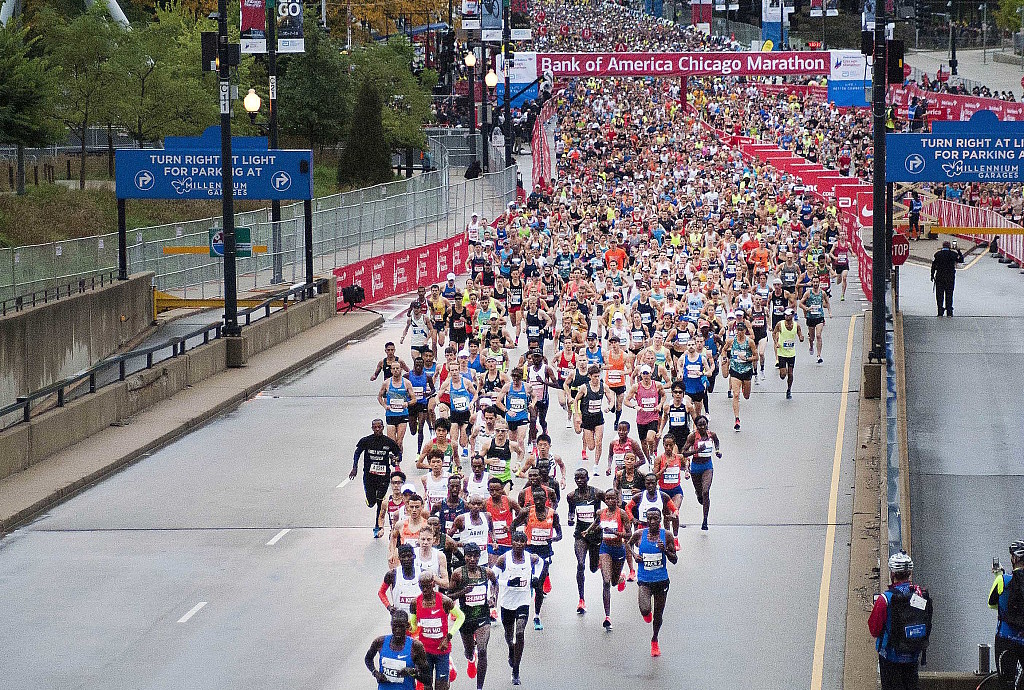
Strong field of American runners will join previously announced superstars Galen Rupp and Jordan Hasay at the Chicago Marathon on October 13
“This year’s elite field highlights an exciting resurgence we are seeing in American distance running right now,” said Bank of America Chicago Marathon Executive Race Director Carey Pinkowski. “We have a deep pool of American runners who are coming to Chicago to run fast, and we cannot wait to welcome them in the fall. We could see new American records and a lot of personal bests in October.”
With a PR of 2:20:57, Jordan Hasay leads this year’s women’s field as the second-fastest American woman in history and the fastest to ever run the Bank of America Chicago Marathon. Hasay hopes to put Deena Kastor’s long-standing American record, 2:19:36, in jeopardy.
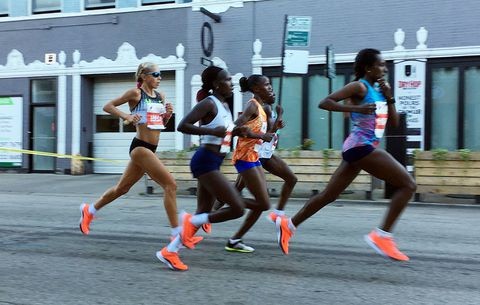
But Hasay’s primary competitor won’t be the clock alone – Amy Cragg, Emma Bates, Stephanie Bruce, Lindsay Flanagan and Taylor Ward represent a strong contingent of U.S. women all vying for podium finishes. The last time three American women finished in the top five in Chicago was 1994, and the last time U.S. women claimed the top two spots was 1992. Chicago’s history could be rewritten this fall.
Cragg, a member of Nike’s Bowerman Track Club since 2015 and the winner of the 2016 U.S. Olympic Marathon trials, enters this year’s field as the fifth-fastest American woman in history with a personal best of 2:21:42. Cragg stunned the world at the 2017 IAAF World Championships Marathon when she ended a 34-year medal drought by taking home the bronze. While she hasn’t raced much in 2019, she won the one-time Road to Gold eight-mile road race in Atlanta in March.
Galen Rupp, a two-time Olympic medalist in the marathon (bronze) and 10,000m (silver) and the current holder of four American records, stands out in the men’s field as the 2017 Bank of America Chicago Marathon champion and as one of the fastest runners in U.S. history with a PR of 2:06:07. While it will be difficult to match the foot speed of someone like Rupp, several American men have the potential to run significant personal bests and place inside of the top ten.
Brogan Austin, Chris Derrick, Scott Smith, Diego Estrada, Dathan Ritzenhein, Noah Droddy and Brendan Gregg are among some of the top Americans in this year’s field. Austin closed out 2018 with a career-boosting win, a national title and a huge personal best, 2:12:38, at the California International Marathon. Prior to that breakthrough performance, he broke the course record at the Indiana Monumental Half Marathon, clocking 1:02:39. He built on his 2018 momentum by winning the Road to Gold eight-mile road race in March.
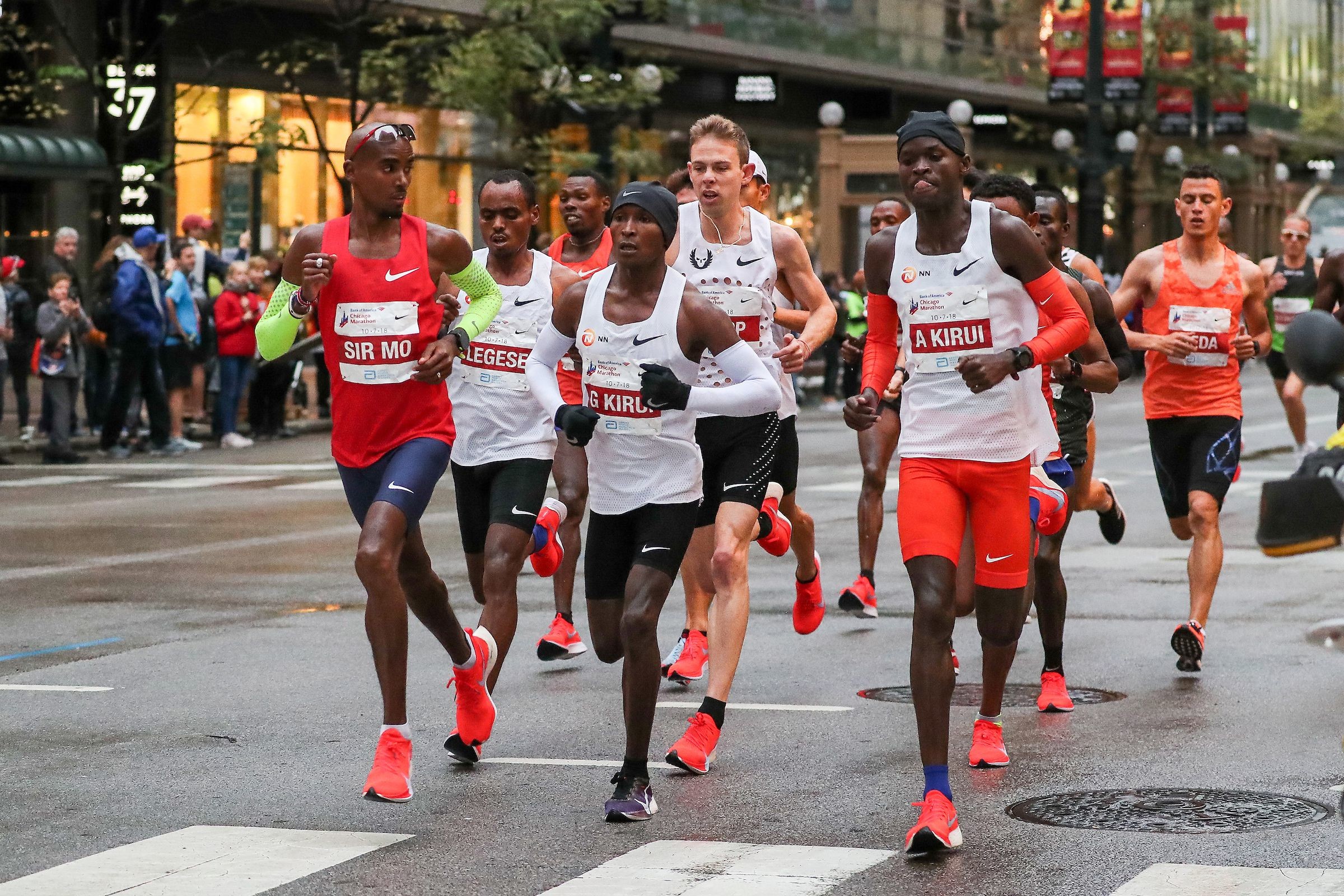
The Chicago Marathon will be Austin’s third go at the marathon. Derrick, a native of Naperville, Illinois and the 2013-2015 U.S. Cross Country champion, made his highly anticipated marathon debut in Chicago in 2017, running 2:12:50 to finish ninth. He followed up his debut performance with a ninth-place finish in 2:13:08 at the 2018 New York City Marathon.
Derrick, one of the elite pacers for Nike’s Breaking2 project in 2017, is one of the most versatile runners in the field with PRs of 13:08 in the 5,000m, 27:31 in the 10,000m, and 1:01:12 in the half marathon.
Smith, a 4:01-miler, experienced a huge breakthrough in the marathon in 2017 when he posted a 2:12:21 in Frankfurt, and then he hung on to finish sixth overall at the 2018 Boston Marathon (the now infamous year where runners endured whipping winds and freezing rain). He trains with Northern Arizona Elite, and he has represented the U.S. internally in both the half marathon and marathon at the IAAF World Championships. Smith’s strongest performance came in May when he finished second at the USATF 25K national championships.
Estrada has been a favorite among Chicagoans, ever since his 2016 breakout performance in Chicago and his second-place finish at the 2017 Bank of America Shamrock Shuffle. After slipping on a bottle at the 10K mark during his Chicago debut and badly twisting his ankle, Estrada rallied to finish eighth overall (first American) in his still-standing personal best, 2:13:56. He finished 16th in 2017 and he did not race a marathon in 2018. Estrada hasn’t raced much on the roads in 2019, but his half marathon speed (1:00:51) and 2:13 PR indicate that he has the talent to be a top marathon runner heading into 2020.
Ritzenhein (“Ritz”), a three-time Olympian and the fifth-fastest American in history, enters Chicago with one of the most impressive resumes. He has broken 13 minutes in the 5,000m, run 27:22 in the 10,000m, collected four national titles, and earned a bronze medal at the 2009 IAAF World Championships Half Marathon. He set his marathon PR seven years ago in Chicago, 2:07:47. At 36 and now racing with the Hansons-Brooks Distance Project, Ritzenhein is a veteran, but his 1:01:24 half marathon earlier this year still makes him a top contender.
Droddy and Gregg both bring massive potential to this year’s field. Droddy, always a crowd favorite, ran his personal best, 2:16:26, in Chicago in 2017, but his half marathon best, 1:01:48, suggests that there is room to demolish his PR this fall. Gregg made his debut in Chicago in 2014 in 2:18:30, and he experienced his best performance in 2018 at the California International Marathon, running 2:13:27.
This year’s field also includes 25K American record-holder, Parker Stinson, and exciting debuts from Reed Fischer and Justin Gallegos. In 2018, Gallegos became the first professional athlete with cerebral palsy to sign a contract with Nike.
(07/12/19) Views: 84
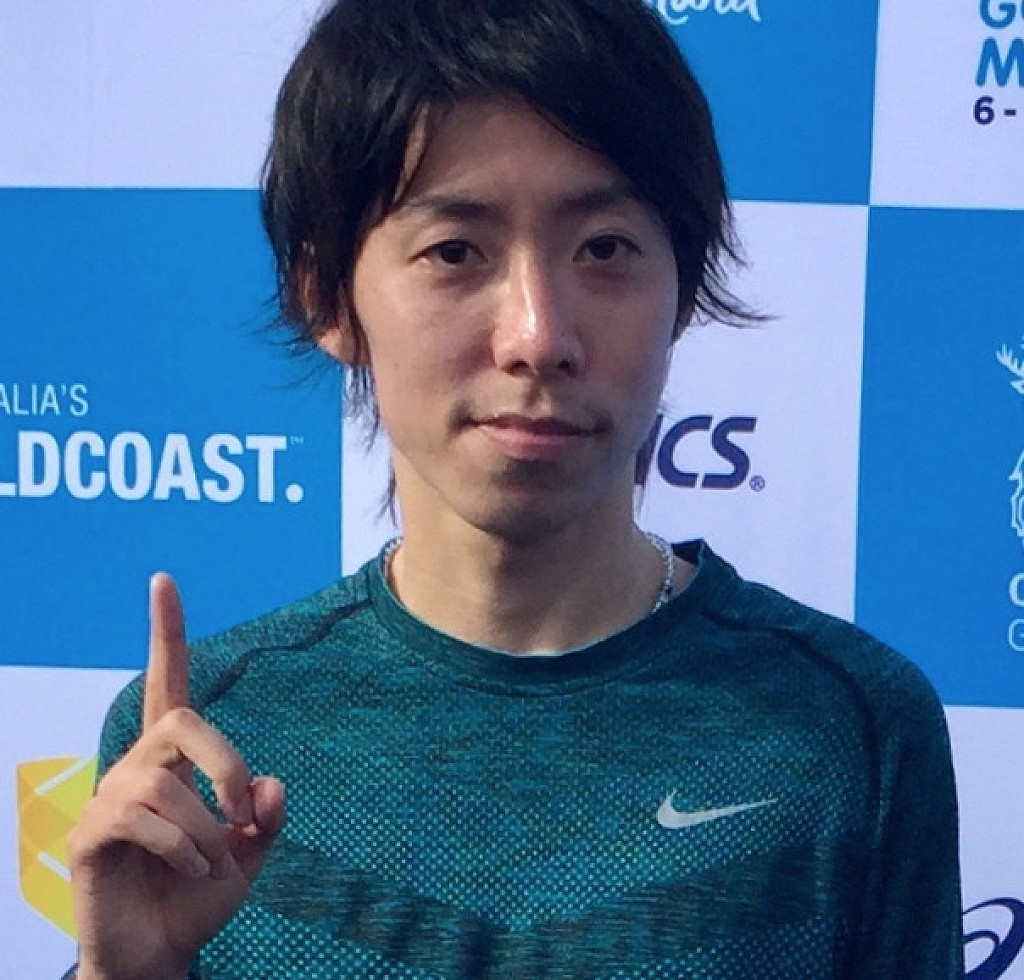
Yuta Shitara said after running 2:07:50 and winning the Gold Coast Marathon, If We Ran the Trials Right Now I'd Win
Former marathon national record holder Yuta Shitara (27, Honda) returned to Narita Airport on July 8 after scoring his first-ever marathon win at Australia's Gold Coast Marathon.
Shitara won clocking a course record time of 2:07:50, lending momentum to his buildup for the MGC Race 2020 Olympic marathon trials just over two months away.
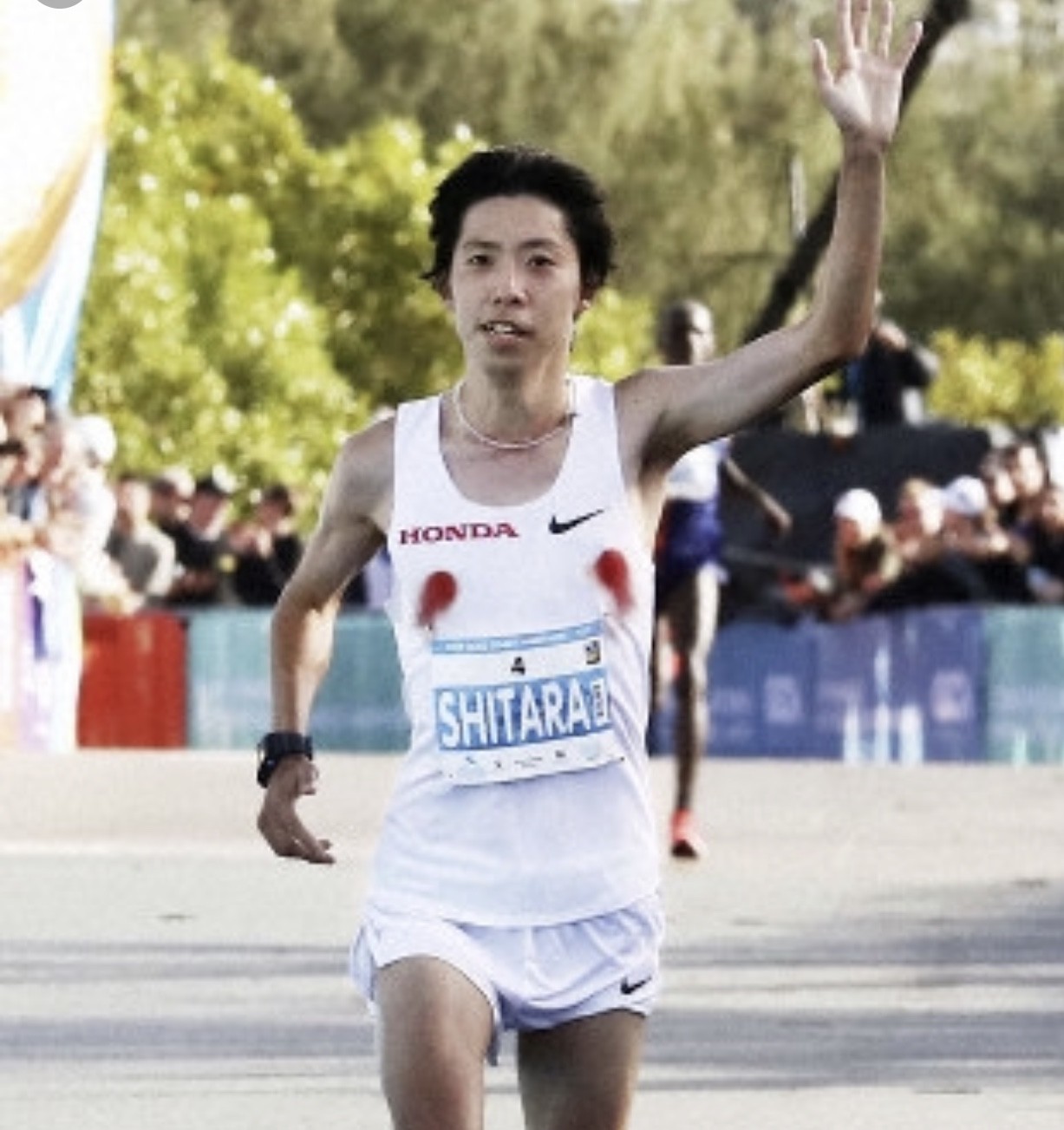
During the race Shitara suffered a mishap, bleeding from both nipples early on. "It rained right before the start," he said, "and once I started running it started chafing. I was a little worried about it, but if you want to compete at the top of the game then there are no excuses."
Shrugging it off, even as his uniform soaked up the blood Shitara kept up his fast pace. "My training paid off in this result," he said with obvious satisfaction.
"Winning gives me confidence, and I want to make good use of that after this."Up to now Shitara has followed his own training program, never running longer than 30 km. But, having had problems maintaining his speed in the second half of the race, this time he increased his longest runs to 35 km starting in June. The results paid off on the Gold Coast as he was tough over the last stage of the race, pulling away for the win in the final kilometers.
"In the training camp for this race I had the feeling that I could go 2:07," he said.In the buildup to the MGC main event Shitara plans to begin training together with his twin brother Keita Shitara (Hitachi Butsuryu) in Hokkaido for ten days starting in late July.
Keita, who starred at the Hakone Ekiden alongside Yuta during their days at Toyo University, didn't qualify for the MGC Race. But he will still play a valuable role as Yuta's main training partner like when the two of them were in university, dreaming of someday going to the Olympics as a pair.
"We're going to win this together, the two of us," Yuta said. "At the MGC Race nobody's going to be able to say our training was a waste.
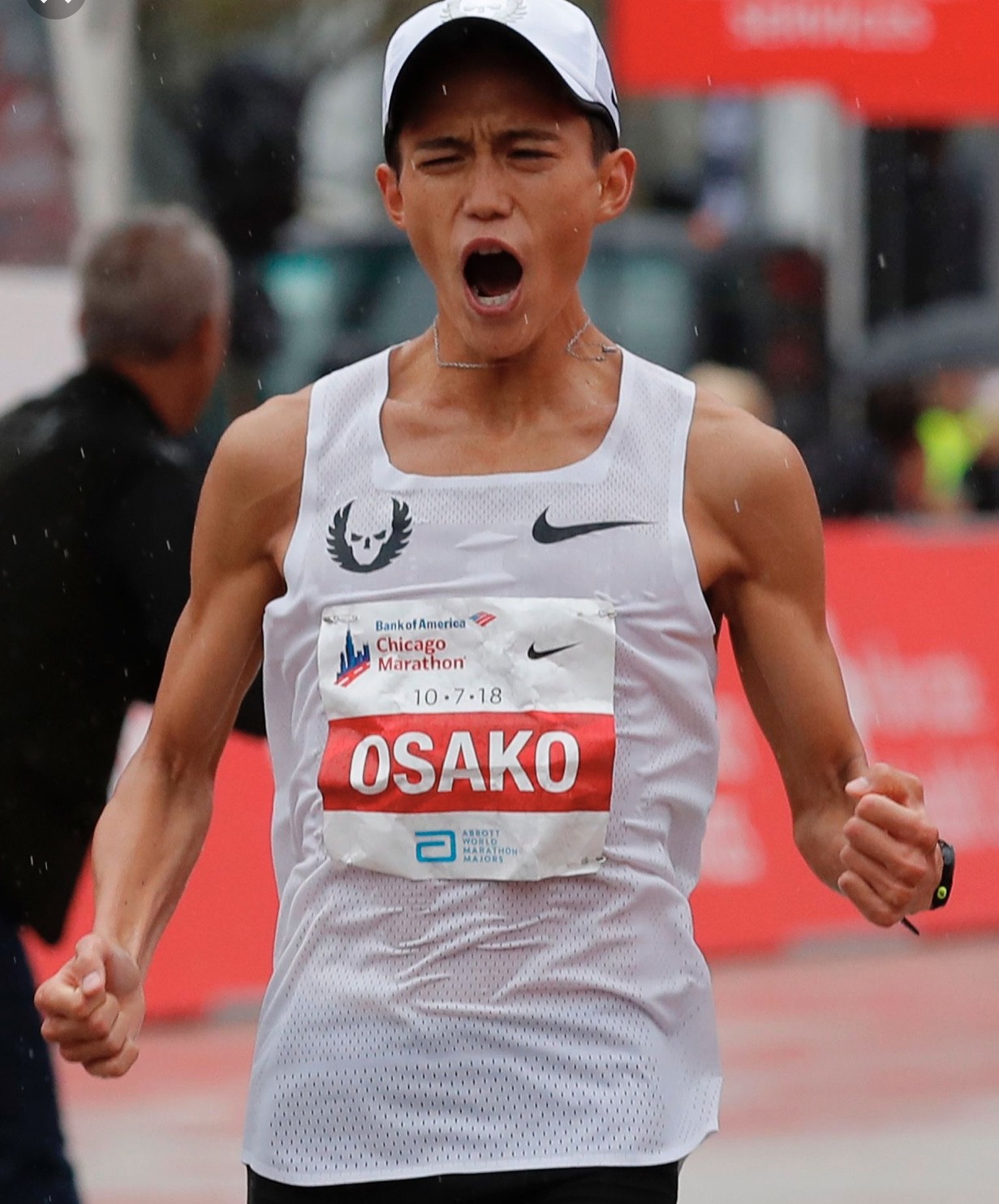
"At the MGC Race Shitara will face the man who broke his national record, Suguru Osako (Nike Oregon Project) and other tough competition. But, he said, throwing down an intimidating challenge to them all, "I've got nothing but confidence that I'm going to win. Even if we ran it right now I'd win."
(07/15/19) Views: 69Japan Running News
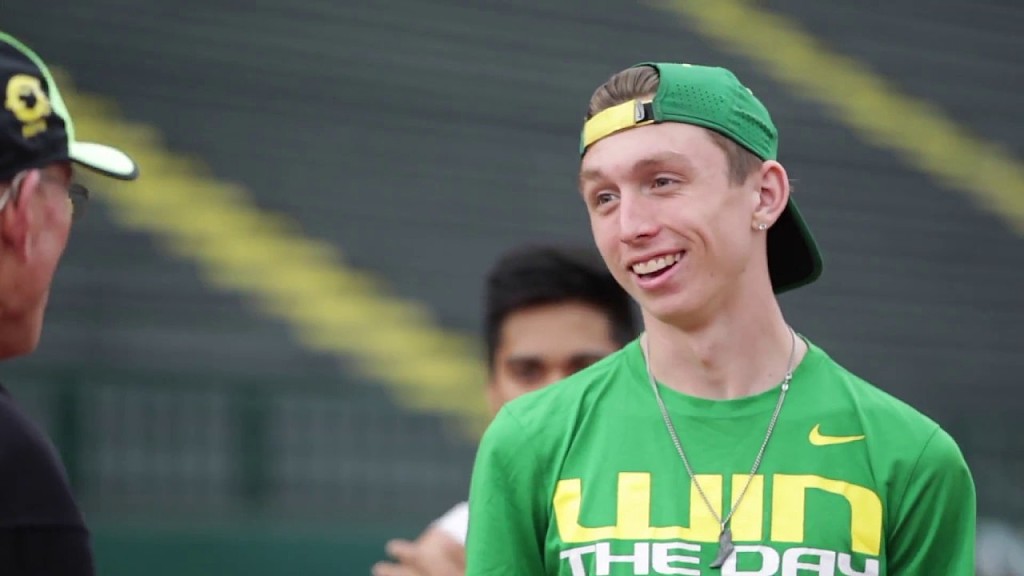
Justin Gallegos, a runner with cerebral palsy, is set to run the 2019 Chicago Marathon
Gallegos, a runner with cerebral palsy, plans to run the 2019 Chicago Marathon, race organizers announced on Thursday.
The Oregon senior completed his first half marathon in May 2018 and finished the 13.1-mile course in two hours and threes minutes. Gallegos became the first professional athlete with cerebral palsy to sign a contract with Nike in October 2018 and with his reaction went viral in a film captured by a film crew.
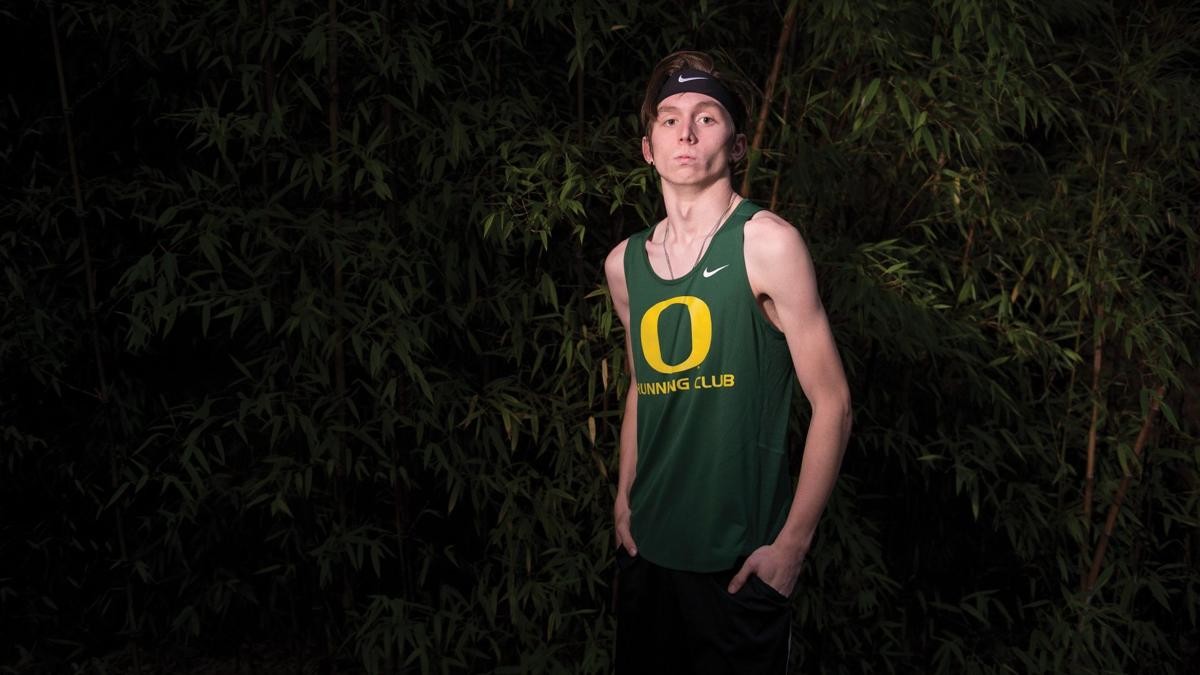
Before signing with Nike, Gallegos played a major role in the company's testing and promotion of the Fly Ease running shoe that features a zipper on the heel to assist someone with putting the shoe on.
“I’ve always wanted to work myself up to a full marathon and beyond,” Gallegos said in May 2018.
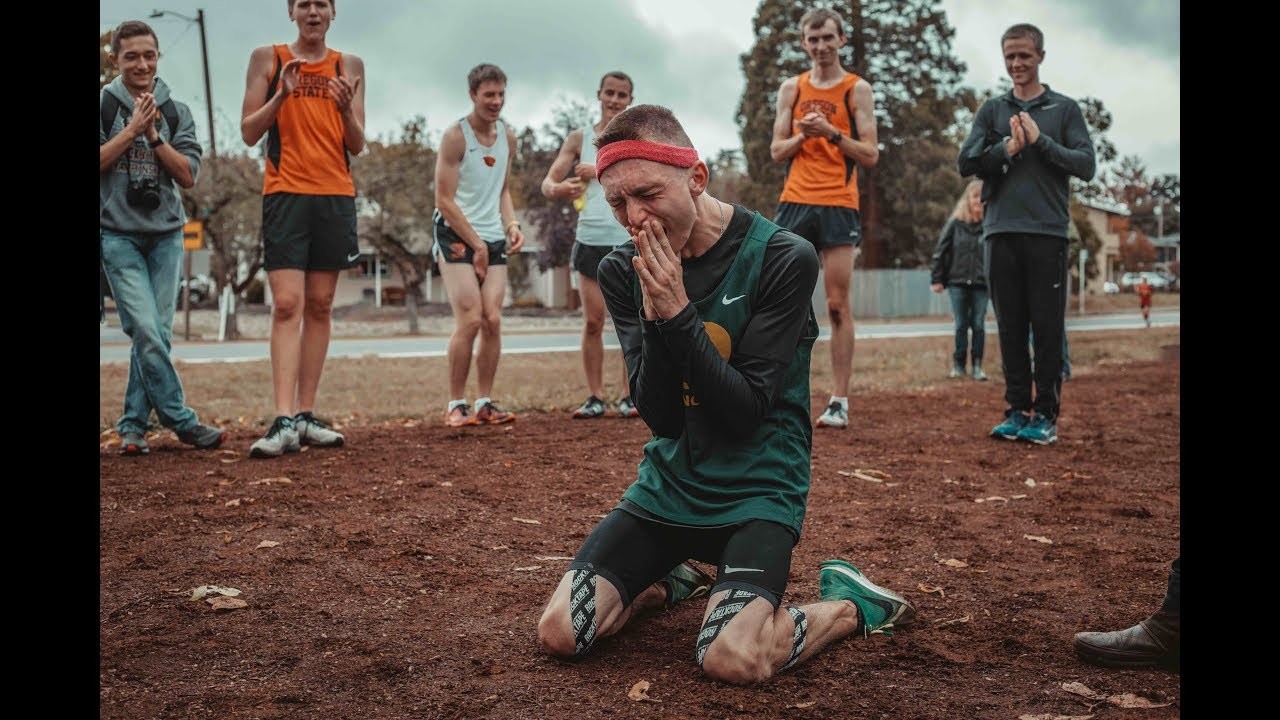
Gallegos will have his chance to complete a marathon this October in Chicago.
This year's Chicago Marathon professional men's field includes Olympic bronze medalist and 2017 Chicago Marathon champion Galen Rupp and two-time Olympian Dathan Ritzenhein.
(07/12/19) Views: 63Michael Shapiro
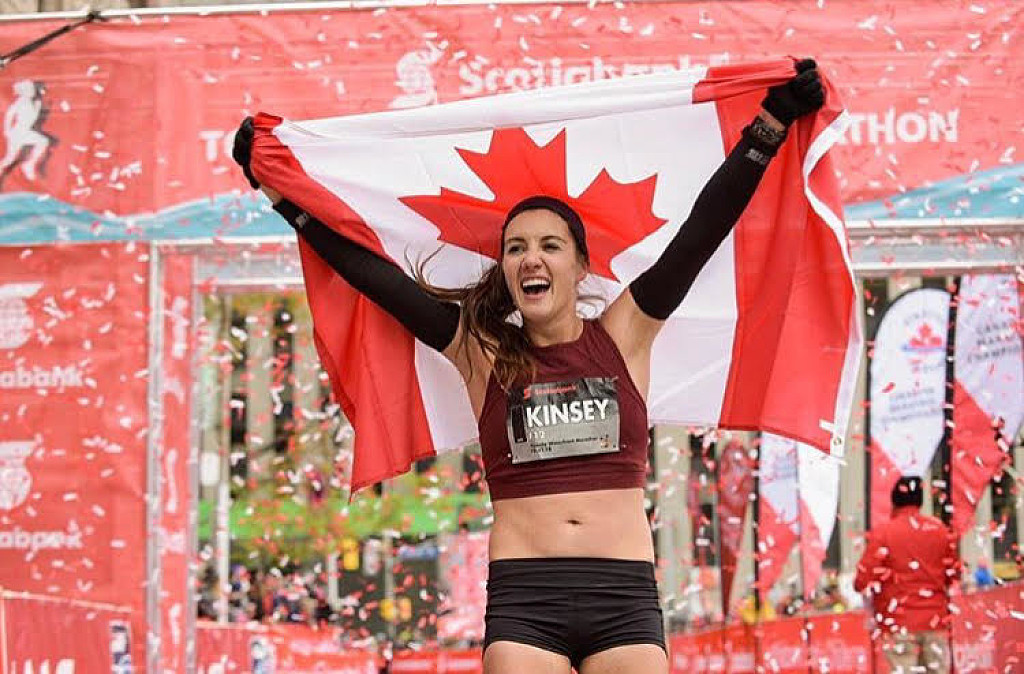
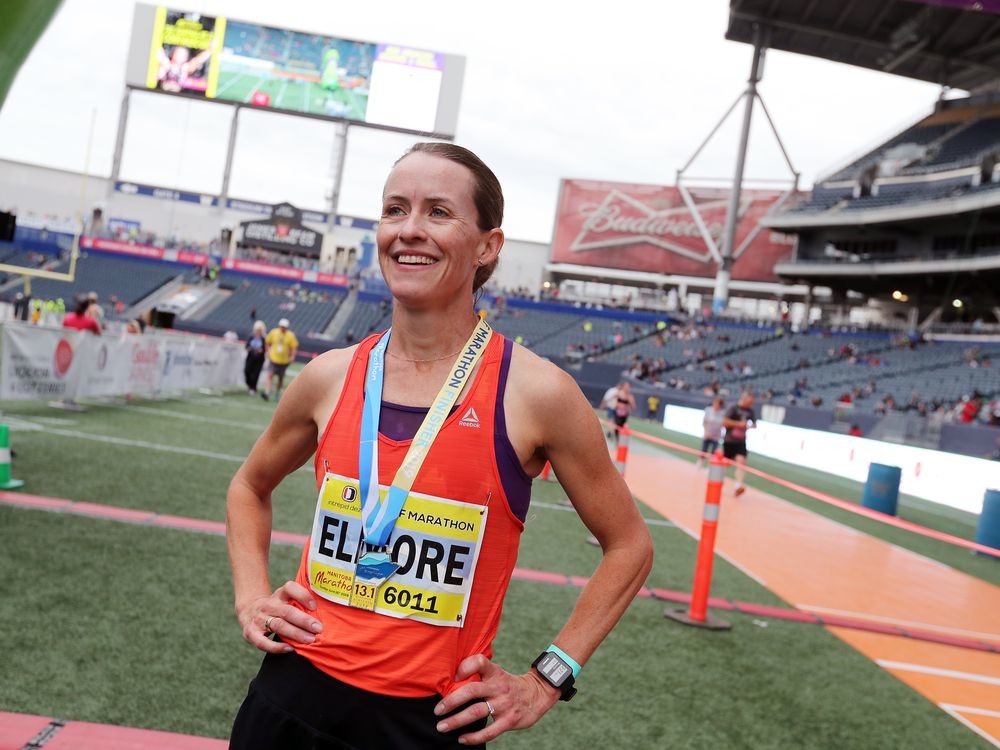
Kinsey Middleton and Malindi Elmore are both seeking a spot on Canada's Olympic marathon team going to Tokyo
Kinsey Middleton and Malindi Elmore both ran their first marathons in the last nine months, Middleton becoming Canadian champion at Scotiabank Toronto Waterfront Marathon last year, and Elmore making a strong debut at Houston in January.
Though they are at very different points in their lives and careers, their times were almost identical (2:32:09 and 2:32:15), and both are now chasing a spot on Canada’s Olympic team in the marathon. Middleton and Elmore will contest the Canadian Marathon Championships (which double as the Canadian Olympic marathon trials) at Scotiabank on October 20.
Middleton, 26, claims to have learned a lot from her first marathon. A native of Boise, Idaho, which is at 800m altitude and surrounded by mountains (she has dual citizenship, since her mother is Canadian), Middleton has relatively easy access to higher altitudes for training purposes.
She says she may plan to surpass the 190K peak weekly mileage she reached during last summer’s build, with the goal of getting even faster.
Malindi Elmore 39, represented Canada at the 2004 Olympics, the 2006 Commonwealth Games and the 2011 Pan Am Games, then became a triathlete for a while before returning to running. She has two children, and is in the midst of a comeback after retiring from her career as a 1,500m runner seven years ago–a comeback that surprises even her.
“I didn’t see this coming at all,” Elmore told us last month after her third-place finish at the Vancouver Sun Run. “I didn’t even think this was possible a year ago. I started running for fun and then the marathon went really well along with my 10K and half training. I’m feeling fresh again.”
Middleton and Elmore went two and three at this year’s Vancouver Sun Run, behind Canadian 10K and 10,000m champion Natasha Wodak.
(07/12/19) Views: 59Anne Francis
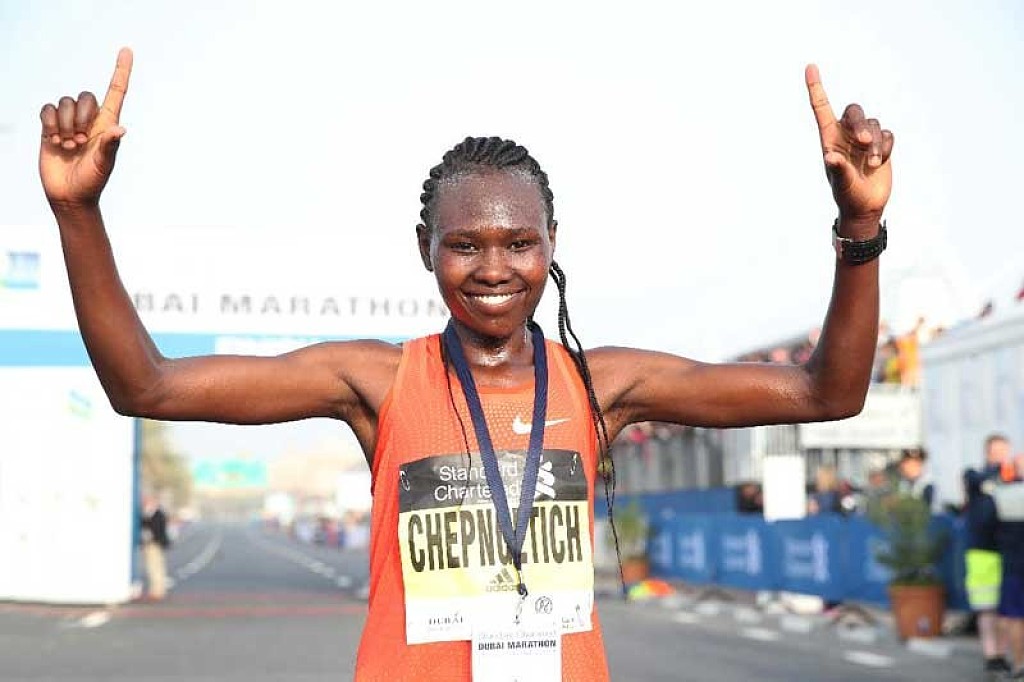
The Kenyan marathon team has worked extra hard and hopes to sweep this year's World Championships in Doha, Qatar in October
Kenya's marathon team head coach Richard Metto says Kiplagat, who is the Boston marathon silver medalist and her colleagues, Dubai Marathon champion, Ruth Chepngetich and Sally Chepyego will be hard to beat and hopes they sweep the medals in the marathon.
"Kiplagat returns inspired seeking a hat-trick of gold medals at the World Championships. It will be her fifth attempt and she has won a medal in each of the three races she was involved in Daegu, Korea and in Moscow, Russia. It's only in Beijing 2015 that she finished fifth. I don't think the team requires another motivation," Metto said on Thursday in Nairobi.
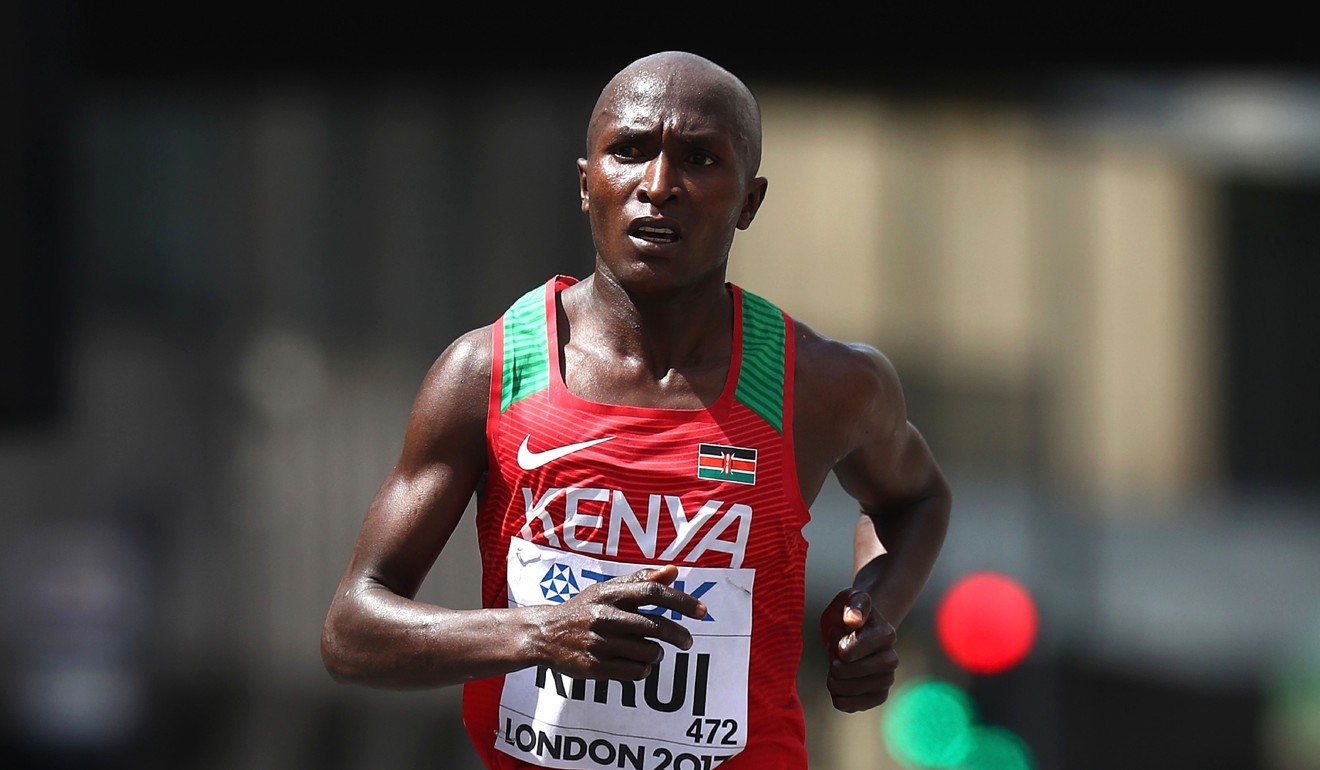
The men's team has defending champion Geoffrey Kirui, Amos Kipruto, who finished second in Berlin Marathon last year and the 2018 Paris Marathon champion Paul Lonyangata.
But speaking in Ngong, in the outskirts of Nairobi where the team is training, Kiplagat revealed she still has the hunger to excel in marathon despite being 39-years-old.
"I still have a dream to win a third marathon title at the World Championships," said Kiplagat. "It will go down well with my record in dominating the world championships."
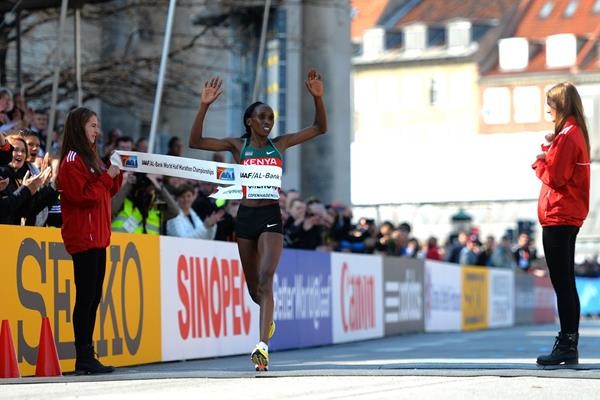
Kiplagat finished fifth in Beijing as defending champion and was second in London losing to Bahrain's Rose Chelimo.
Chepngetich, the fastest marathoner this year after her exploits at the Dubai Marathon with a course record in a time of 2:17.07, says the country has an abundance of talent.
"Depending on how the training goes, I think we have a very strong team. Kenya has never lacked talent in the marathon," she said.
Chepngetich who cites her victory in the Turkish capital last year, where she set a new course record of 2:19.35, as her best race so far says she is training adequately for that particular event.
"It all goes down to preparation, I believe nothing is impossible when one has prepared well," said the athlete.
Despite Chepngetich being the third fastest woman in the history of the marathon after Briton Paula Radcliffe (2:15:25) and Kenya's Mary Keitany (2:17:01), she still does not see the need of having a coach.
"I will not be having one any time soon, I think training with my colleagues does well for me. Some athletes think I am weird, but I like it that way," she added.
(07/12/19) Views: 55
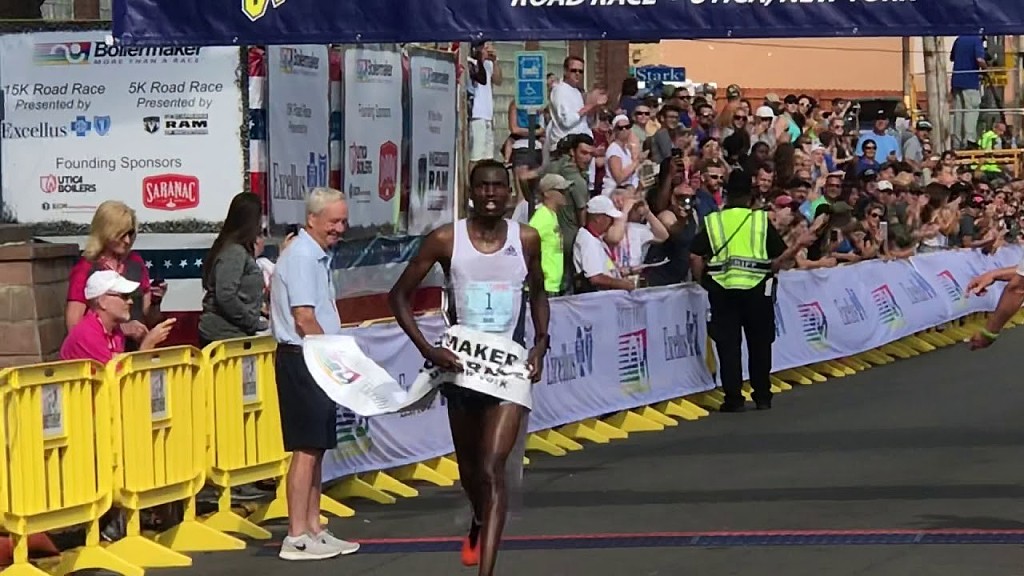
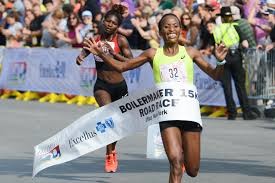
Tanzania’s Gabriel Geay and Kenya’s Caroline Rotich, were the 15K Boilermaker winners
Gabriel Geay was surprised. Not so much so that it cost him the 2019 Boilermaker Road Race, however.
The 22-year-old Tanzanian held off an unexpected challenge from Mohamed Red El Aaraby, outkicking the Moroccan veteran over the last mile, and winning the 42nd annual 15-kilometer classic in 43 minutes, 36 seconds Sunday.
Geay cut four seconds off his winning time of last year in becoming the first back-to-back male open champion since John Korir put wins together in 2003 and 2004. El Aaraby was three seconds back in 43:39.
“He surprised me,” Geay said. “He’s a strong guy.”
Geay had more than enough, however, to get the best of El Aaraby, a Boilermaker newcomer who set the Beirut Marathon record of 2:10:41 in November.
Caroline Rotich, 35, the 2015 Boston Marathon champion, took the female open title with a time of 49:08, just edging out Iveen Chepkemoi by several strides and one second. Rotich, like Geay, earned $7,000 for her win.
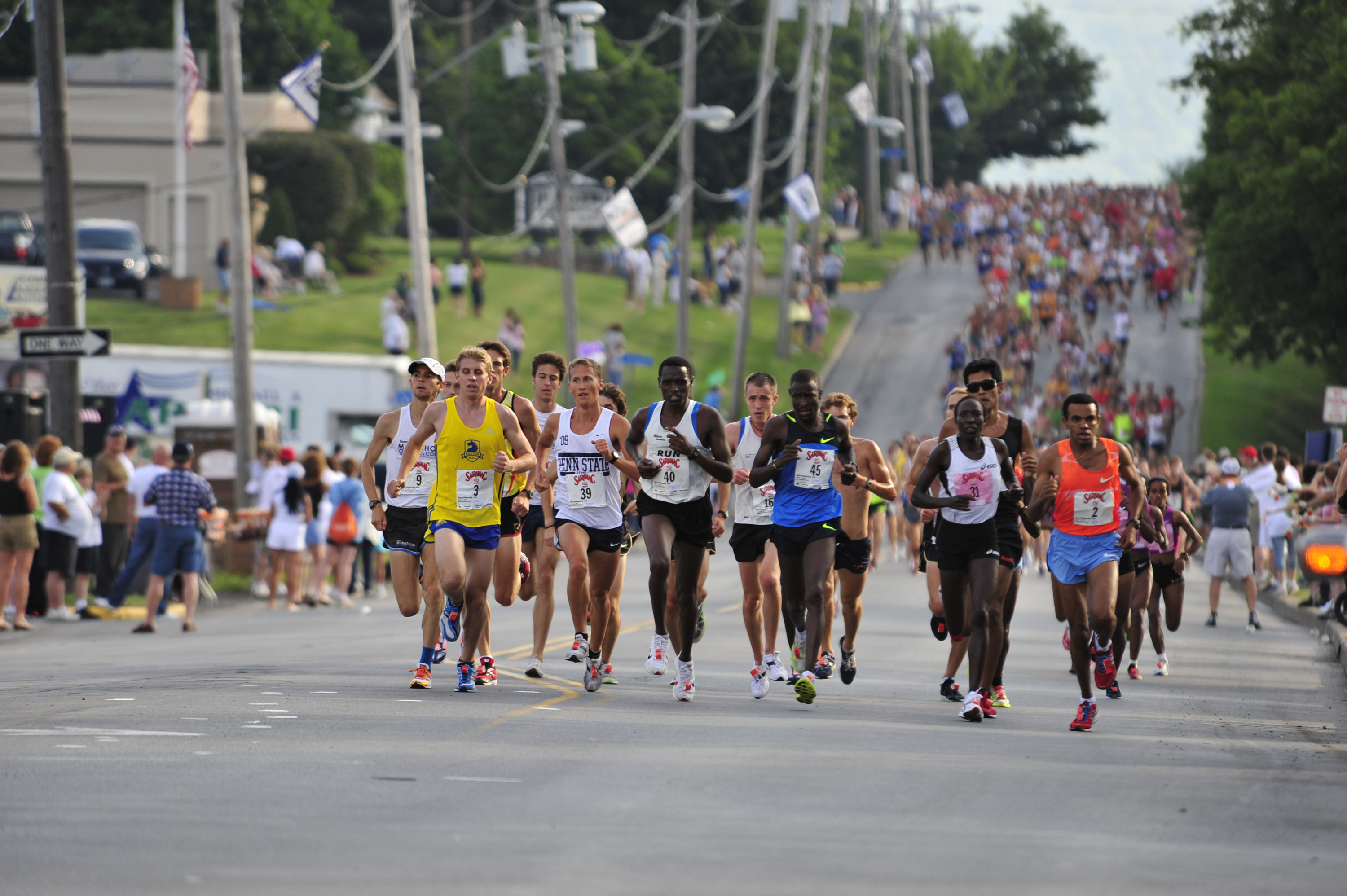
Abdi Abdirahman, 40, and Kate Landau, 42, both of the United States, ran 46:31 and 52:39, respectively, in winning masters titles. They both earned $2,000. Haron Lagat, 35, was the top American male, finishing in 44:21, fifth overall. Belainesh Gebre, 31, lead the American women with a time of 51:03, sixth overall. They earned $3,000 apiece.
None of the times approached Boilermaker course records.
The race started after a delay of about 22 minutes because of homicide investigation off of Culver Avenue. It began under mostly cloudy skies, with a temperature of 69 degrees and some humidity.
A group of about 20 runners separated themselves from the pack almost immediately after the gun went off, with Terefa Debela Delesa of Ethiopia and Stephen Kiptoo Sambu of Kenya setting the pace, as they would for much of the race. The pace was somewhat leisurely, with the first mile taking 4:46.
The lead group was down to eight runners once they reached the turn into Steele Hill Road and Valley View Golf Course, with Geay pressing ahead for the first time. The climb and descent — the fifth mile, downhill, was covered in a little more than four minutes — left it a four-man race, with Geay, El Aaraby, Delesa and Sambu fighting it out. They were still together turning onto Champlin Avenue, but Geay pulled out at Mile 7, and only El Aaraby went with him. They were shoulder to shoulder as they motored to eight miles, past and then made the turn onto Whitesboro Street.
Shortly afterward, Geay began to open things up — two strides, three strides, then a few more.
“I thought maybe I should push,” he said. “I was worried he might come back, but he didn’t.”
Geay opened it up to 30 yards coming down through the wildly cheering crowd on Court Street, and had no trouble cruising in for the win.
“I needed some speed at the end,” said El Aaraby, who was running his first Boilermaker at age 29. “He has more speed than I do.”
(07/15/19) Views: 53John Pitarresi
