

Running News Daily
Top Ten Stories of the Week
3/11/2023
These are the top ten stories based on views over the last week.
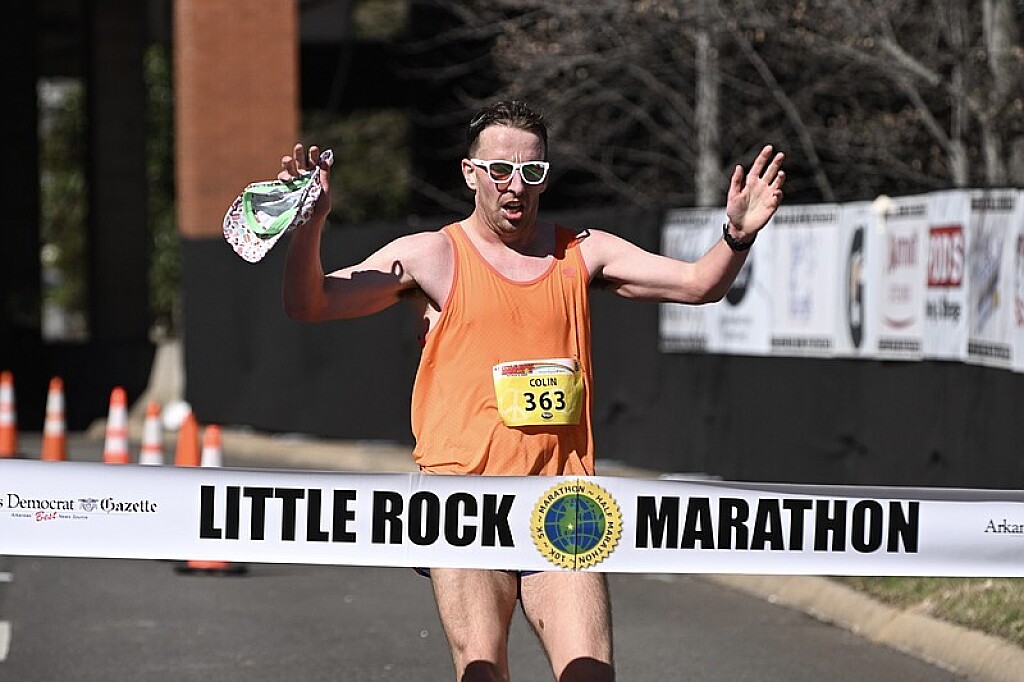


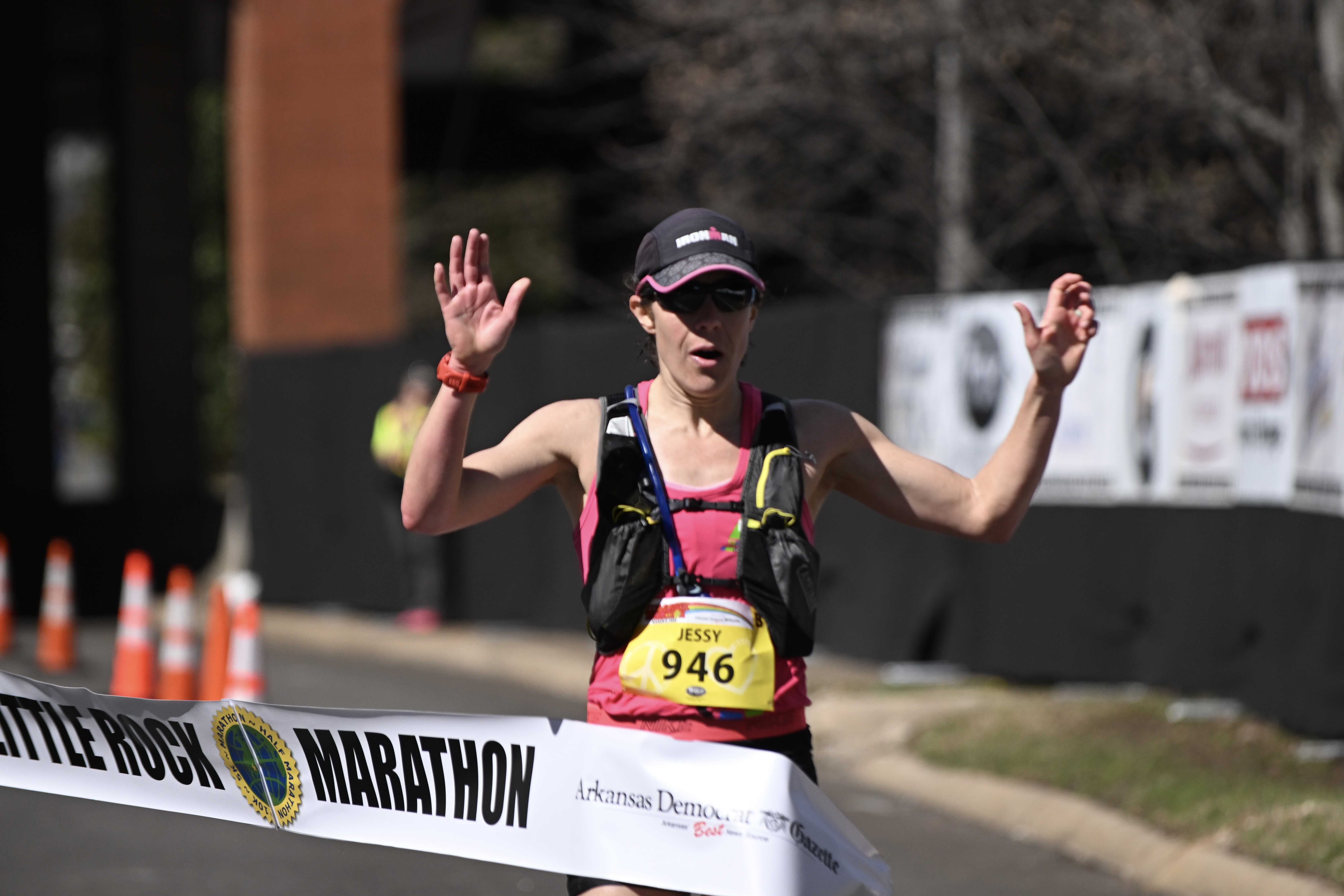
Colin Boerger and Jessy Sorrick win 2023 Little Rock Marathon
Colin Boerger and Jessy Sorrick are the winners of the 2023 Little Rock Marathon.
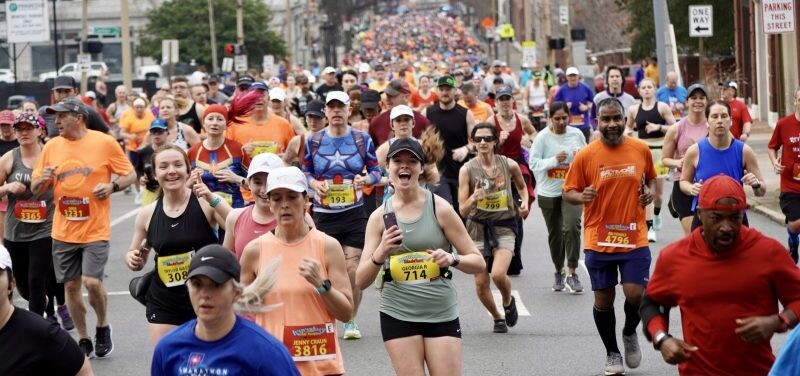
Beginning shortly after 11 a.m. Sunday and continuing into the afternoon, finishers of the 21st Little Rock Marathon will trickle across the finish line on La Harpe Boulevard.
Their legs plenty tired after completing the 26.2-mile course, runners will take a couple hundred more steps, following the signs directing them inside the back of the Statehouse Convention Center.
The runners will pose for pictures, then go grab a snack to refuel or some more water. Others might go for a celebratory Michelob Ultra -- or two -- before seeking out their friends and family for a hug.
But before any of that, each finisher will find a smiling volunteer and bow their head, awaiting one of the hundreds of oversized, sparkly, brightly-colored medals that will be placed around their neck.
Since its third edition in 2005, the Little Rock Marathon has awarded those who complete the race with a distinct, intricate prize -- enormous in size while also extravagant in detail.
This year's medal is no different, measuring in at more than 8 inches wide and nearly 3 pounds. Inspired by the theme, "Peace, Love, Little Rock Marathon," it features an interlocking peace sign and heart surrounded by symbols associated with the hippie movement such as flowers, doves, music and a van, brought to life with an array of bright, sparkly colors as is tradition for executive director Geneva Lamm.
Year after year, Lamm attempts to one-up herself with a unique and elaborate design, ensuring that each runner -- everyone from Searcy native Tia Stone, winner in five of the last seven women's races, to the final finisher -- has something to appropriately commemorate their accomplishment.
The idea spawned from a race Lamm ran in southern Texas shortly after beginning her role with the Little Rock Marathon in 2002. Lamm had just finished the marathon and her friend had completed the 5K race.
"When we finished, we got the same medal, and I was like, 'Oh, no, no, I did the marathon. I didn't do the 5K,' Lamm recalled. "They're like, 'No, that's the medal for everybody.' "
That didn't sit right with Lamm. She believed that everyone should get a medal the size of their individual achievement.
So, Lamm set out to make that the case for her race in Little Rock. She sketched out what she wanted of the first medal -- mostly in stick figures -- but quickly discovered that the companies bidding to produce them had a different idea of what it would actually look like.
That led Lamm to teach herself how to use the Adobe Creative Suite so she could specifically design the medals on her own. In 2006, she produced a sparkly version of the race's corporate logo, which Lamm calls "The Shield."
From there, the medals took on a life of their own, and each year, Lamm tasks herself with designing something one-of-a-kind to fit that race's theme.
In 2008, it was "Six in the City" to celebrate the race's sixth edition. In 2012, the theme was disco. The 2015 race was pirate-themed -- perhaps Lamm's favorite to date -- and as is the case each year, Lamm and race organizers encourage runners to dress in costume.
But idealizing and designing the medals is one thing. It's another to produce them, especially as the race has grown as large as 10,000 total runners across the different competitions -- marathon, half-marathon, 10K and 5K.
Steve Hasty, owner of Hasty Awards in Ottawa, Kan., has worked in conjunction with Lamm on and off for the last 12 years. It's not guaranteed Hasty will be the one chosen to produce the medals each race -- because the Little Rock Marathon is a fundraiser for the City of Little Rock's Parks and Recreation Department, Lamm has to run an annual blind-bidding process to determine who will get the contract for a given year.
But Hasty holds a special place in his heart for Little Rock because the medals are such a passion project for Lamm.
"There's no question that the Little Rock Marathon is the most fun race," Hasty told the Arkansas Democrat-Gazette. "[Geneva] is an educated customer, which makes it a lot easier."
The bidding typically begins in June, and for an early March race, Hasty likes to begin production no later than September.
For the marathon medals, the die-casting process begins by forcing each of the different colors of zinc-based alloy into the molds. Each of the different colors, many with glitter -- a Lamm specialty -- is allowed to dry before Hasty moves on to the next color.
All told, creating the Little Rock Marathon medal takes about 50 days. That's before the ribbon is hand-sewn on, all adding up to a cost of $13 per medal and leaving little profit margin for Hasty.
The goal is then to have all the medals completed and in Little Rock no later than January. Across the different competitions, that's between 9,000 and 10,000 medals -- almost a 400% increase from the 2,502 that participated in the inaugural race in 2003.
Lamm keeps a notepad on her desk at home with ideas for future themes, and she's already thinking about concepts and designs of medals for at least the next five years.
After 19 years, it's nothing but "a labor of love."
"It's always on my mind," Lamm said. "We're always trying to figure out how to do something better and new. ... The payoff for me and my staff is seeing those people cross the finish line."
(03/06/23) Views: 156Mitchell Gladstone
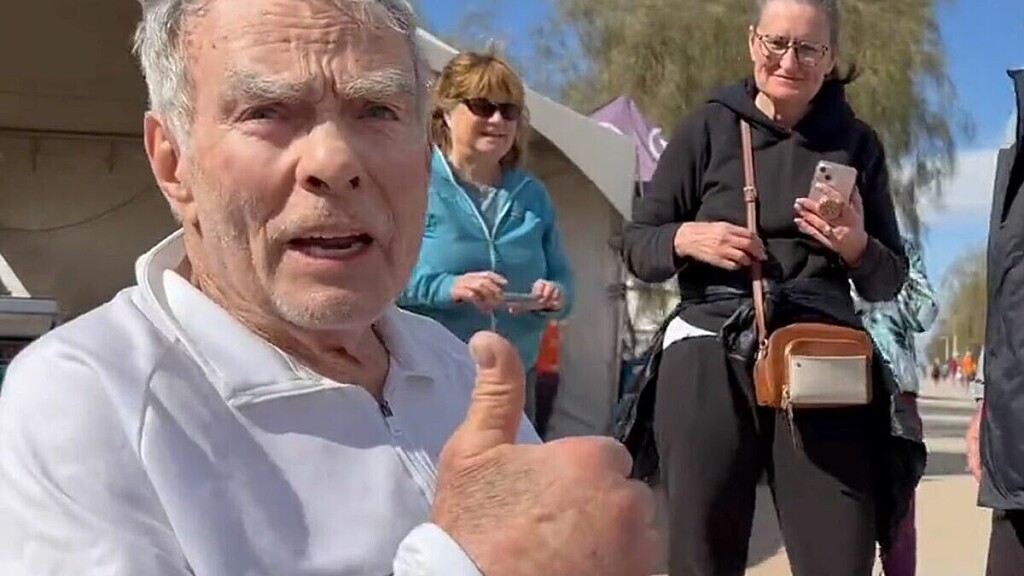
80-year-old runs wild time at USATF 100 Mile Championships
The USATF 100-mile road national championships were held in Henderson, Nev. on Friday and Saturday at the Jackpot Ultra Running Festival, and while the elite men and women produced impressive results, the performance of the weekend has to go to David Blaylock, an 80-year-old athlete from Salt Lake City, Utah. Blaylock finished the race in a fantastic time of 29 hours, 47 minutes and 29 seconds, and he was followed by three other men in the 80-plus age division, each of whom finished the race.
80-plus division
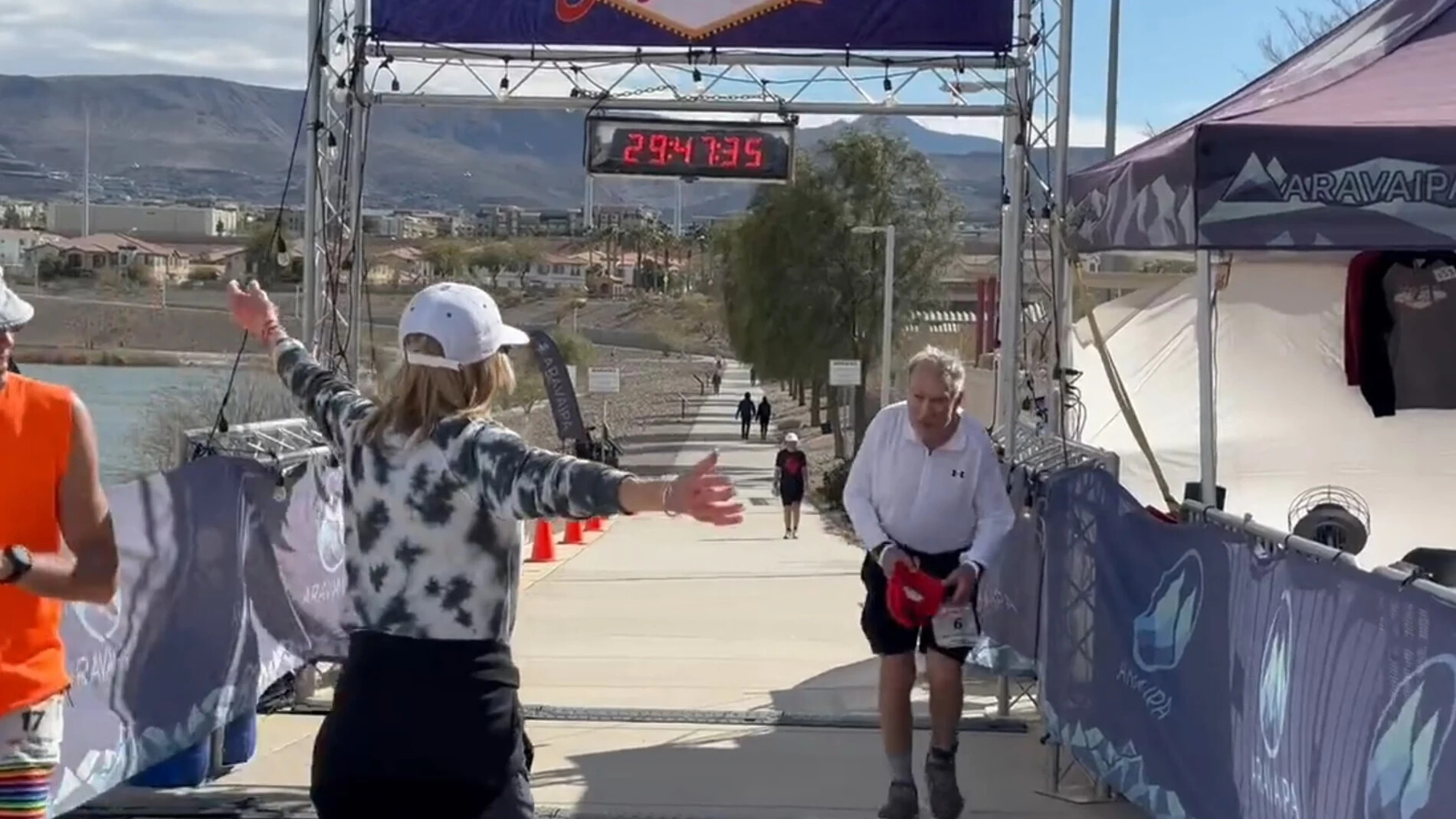
Before this year’s race, Blaylock had already raced the Jackpot 100 several times, and he had managed to break 30 hours on multiple occasions. In 2022, the final year of his 70s, he ran 31:56:28 at the event. While this was still a great result, it wouldn’t have been a surprise if Blaylock, now in the M80 division, didn’t break 30 hours again over 100 miles, but he did just that on Saturday, crossing the finish line with 12 and a half minutes to spare.
The fact that Blaylock ran 100 miles at the age of 80 is impressive enough, but his sub-30-hour result makes the achievement all the more amazing. His average pace was just over 11 minutes per kilometre for the 160K race. Although it’s unclear where Blaylock’s result ranks all-time among Americans, based on the USATF record books, his 29:47 sits near the top. The current M80 American record over 100 miles belongs to Maurice Robinson, who posted a time of 29:03:21 at a race in Kansas in March 2022.
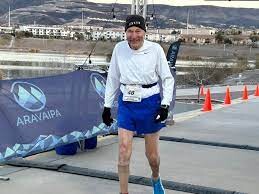
While Blaylock ultimately won the M80 race by more than 20 minutes, his victory was far from a lock. He had to chase 83-year-old Edward Rousseau for most of the run, and for a long stretch, he was an hour back of first place. It wasn’t until the 95th mile that Blaylock made the pass on Rousseau, and from that point on, his lead only grew.
Rousseau ended up crossing the line in a fantastic time of 30:09:08, and 80-year-olds Ian Maddieson and Denis Trafecanty finished third and fourth, respectively, in times of 37:15:39 and 37:59:42.
The elite races
San Francisco‘s Jonah Backstrom, 49, took home the men’s national 100-mile title with a winning time of 14:11:03. He won the race by more than 30 minutes over second-place finisher Zach Merrin, who finished in 14:48:59. Third place went to Pete Kostelnick, who stopped the clock almost an hour later in 15:47:24. In the women’s race, Nevada local Sierra DeGroff won in 15:59:56, just eking out a sub-16-hour result. She finished close to an hour ahead of second-place Lisa Cabiles, who completed the race in 16:42:54. Heather Huggins finished third in a time of 17:09:29.
(03/07/23) Views: 147Ben Snider-McGrath
Koech, Wanjiru spearhead Team Kenya in Sunday's Tokyo race
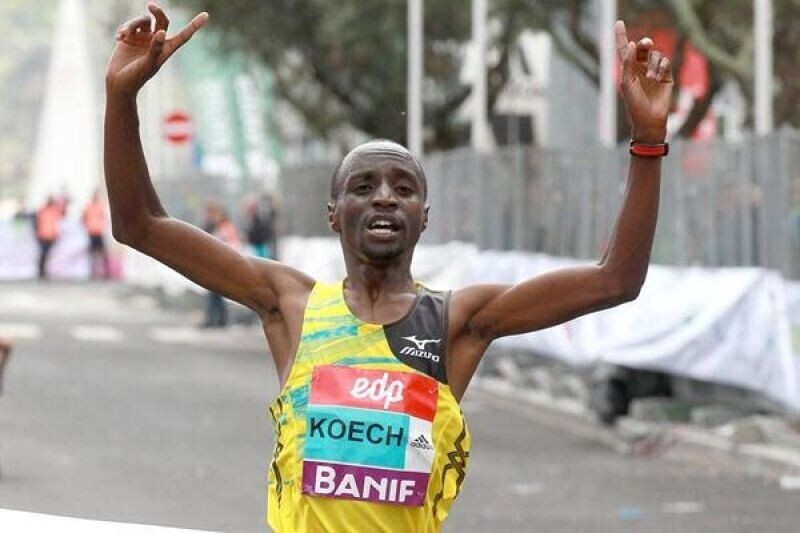
Bernard Koech will lead a strong Kenyan contingent for the Tokyo Marathon this Sunday.
Koech, who has a personal best of 2:04:09 set at the Amsterdam Marathon in 2021, where he finished second.
Kenya's Mike Kipruto Boit, Brimin Misoi and Vincent Raimoi are also contenders for the title.
The Kenyan quarter will, however, face a stern test from 2021 London Marathon champion Sisay Lemma of Ethiopia.

Lemma won the London Marathon in 2:04:01 and will have compatriots Tsegaye Getachew, Mohamed Esa, and Deme Tadu Abate for the company as he seeks to add another feather to his hat.
Getachew has a personal best of 2:04:49 posted while winning the Amsterdam Marathon last year while Esa's PB is 2:05:05 recorded while placing fifth in Amsterdam in 2022. Abate's PB of 2:06:28 was achieved in Berlin, where he placed third last year.
Japan had entered the last three national record holders, Kengo Suzuki, Suguru Osako and Yuta Shitara but the withdrawal of Suzuki last month leaves two to battle for the honours.
Osako is the fastest Japanese man in the field with a 2:05:29 set in Tokyo three years ago.
Hidekazu Hijikata, Kyohei Hosoya, Ryu Takaku and Hiroto Inoue have all run 2:06 and another nine Japanese men on the list have run 2:07.
At the pre-race press conference, Japan's most consistent marathoner over the last few years, Hosoya said he is in great shape and will be going for the Japanese NR and at a minimum the top Japanese spot.
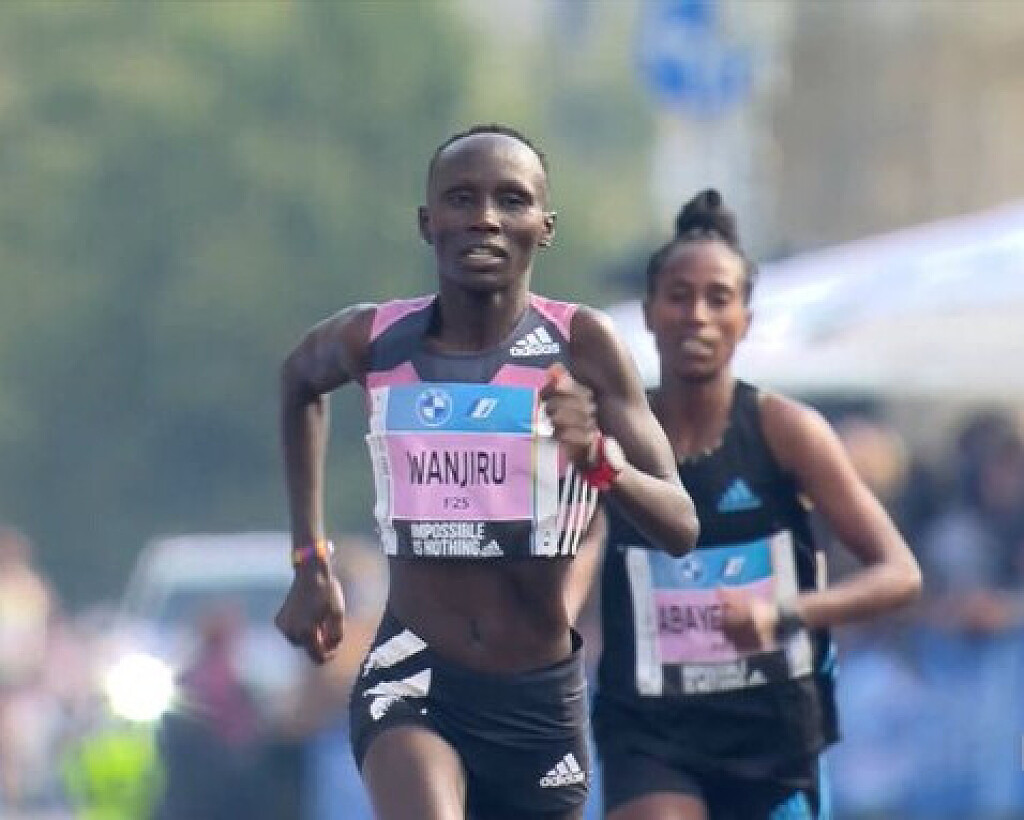
In the women's category, Rosemary Wanjiru will spearhead Kenya's quest for glory in the Japanese capital.
Wanjiru has a personal best of 2:18:00 posted when she finished second in the Berlin Marathon last year.
She will have fellow Kenyan and 2022 Toronto Marathon champion Antonina Kwambai for the company. Another Kenyan Betsy Saina will be among the athletes to watch. Saina is back from maternity leave and ran a promising 1:08:25 for the win at the Seville Half Marathon earlier this year.
Ashete Bekere of Ethiopia is the race favourite with a personal best time of 2:17:58 when finishing second at the event in 2021.
Others to look out for the title include compatriots Tigist Abaychew and Worknesh Edesa.
(03/04/23) Views: 105William Njuguna
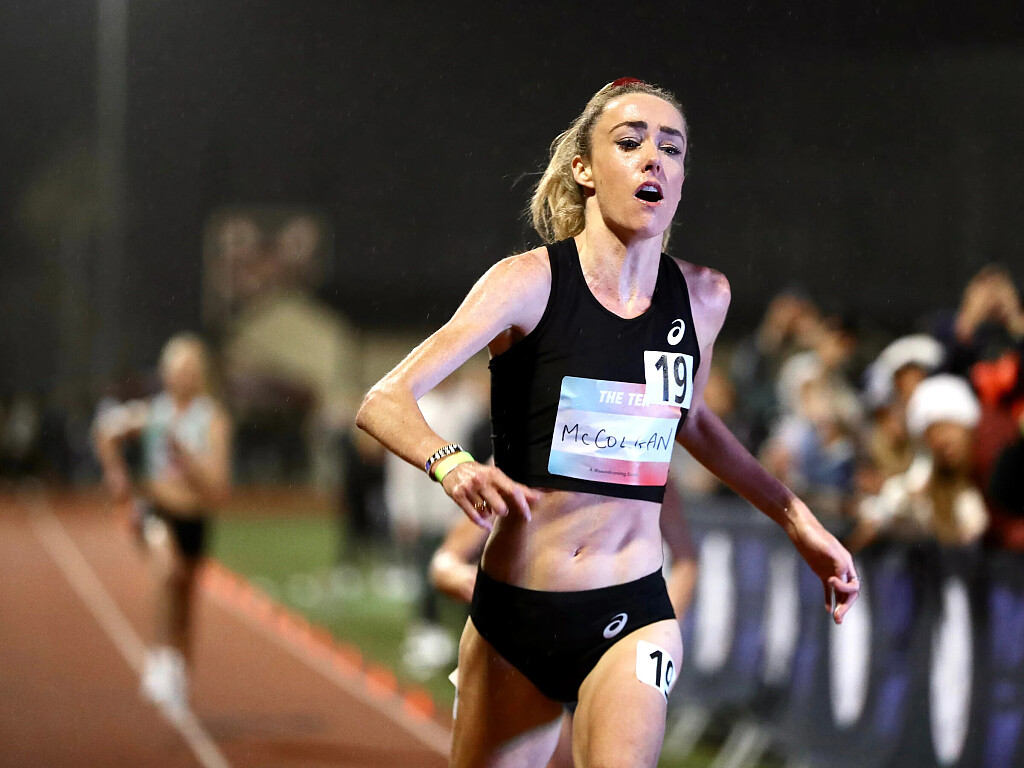
Eilish McColgan (30:00.87) and Alicia Monson (30:03.82) Break National Records At The TEN
The British and American records in the women’s 10,000 meters both went down late Saturday night in California as Eilish McColgan outdueled Alicia Monson over the final lap of The TEN in San Juan Capistrano. McColgan, the Commonwealth Games champion at 10,000 who is building up for her marathon debut in London on April 23, was only added to the field this week but felt confident in her fitness after five weeks of altitude training in Colorado. It proved an inspired decision as she ran 30:00.87 to narrowly break Paula Radcliffe’s British record of 30:01.09 set in August 2002.
A few seconds behind McColgan, Alicia Monson nabbed her second American record of 2023, running 30:03.82 to smash the previous record of 30:13.17 set by Molly Huddle in the 2016 Olympic final in Rio. Three weeks ago, Monson ran 8:25.05 at the Millrose Games to break the American indoor (and overall) record for 3,000 meters.
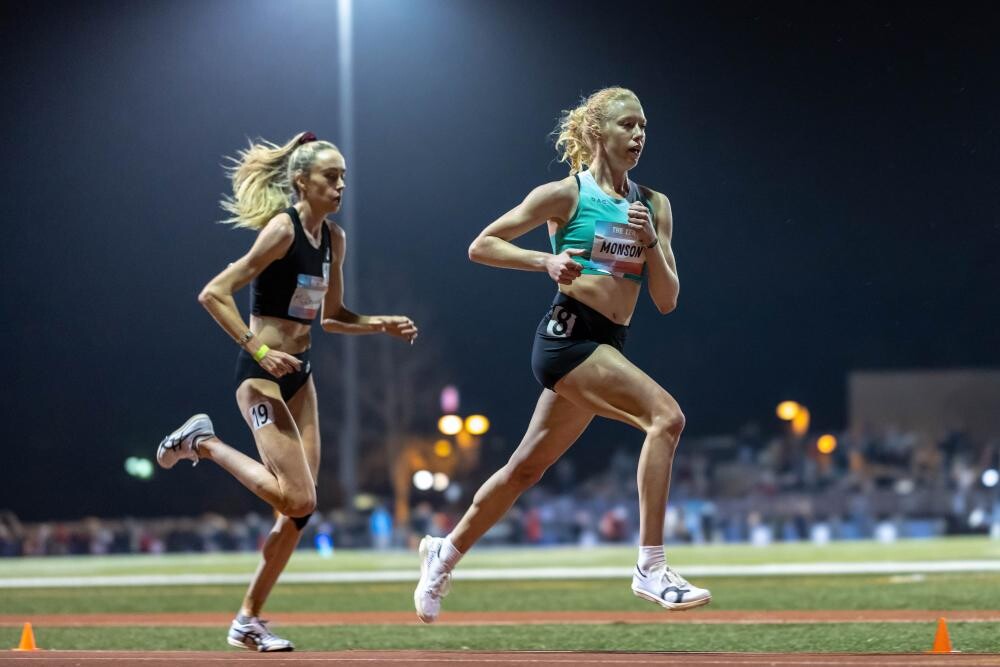
Both women were also safely under the 30:40 standard for the 2023 World Championships and 2024 Olympics on a good night for running fast (50-degree temps, still conditions).
Monson and her camp had billed the race as an American record attempt and they enlisted her On Athletics Club teammate Josette Andrews (a 14:51 5k runner) to handle pacing duties, along with Eleanor Fulton. When Andrews dropped out at 5k (15:09 for McColgan and Monson), they were actually a few seconds behind AR pace, but Monson took over and righted the ship, dropping the pace from 73-second laps to 72’s, then 71’s. By the bell, which Monson reached in the lead thanks to a 70.45 penultimate lap, the question was not whether the AR would go down, but whether either woman would break 30:00 – and of course, who would win the race?
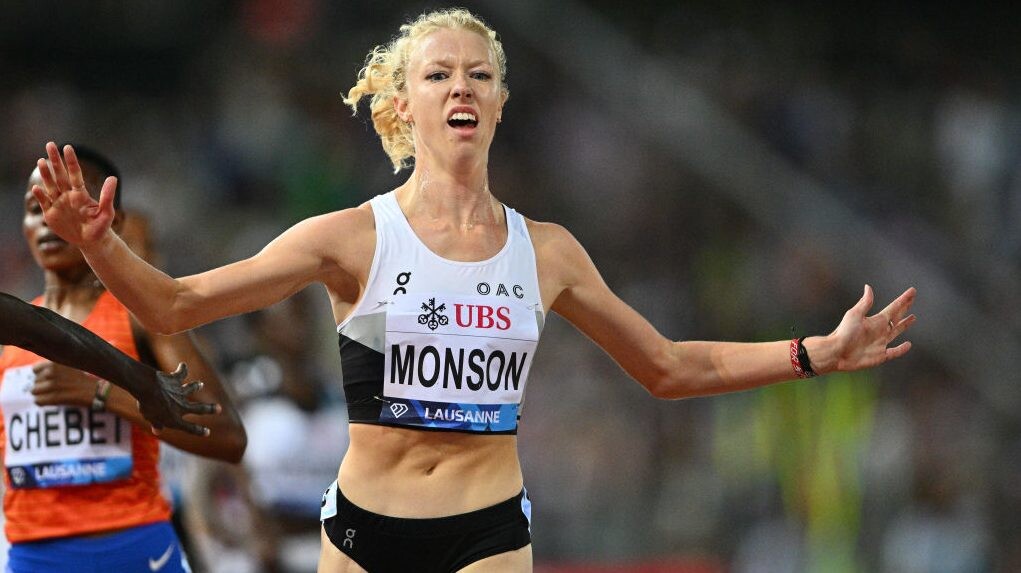
McColgan, who had clung faithfully to Monson throughout the race, finally went wide on the backstraight of the bell lap and passed Monson, and the American had no response as McColgan powered to victory with a 64.87 last 400m. Monson could not match that speed, closing out her effort in 67.99, and though she did not win, her American record was very well-deserved after so much grinding from the front.
No one else earned the World/Olympic standard, but a trio of Americans earned big personal bests in 3rd-4th-5th. Running just her second 10k, 2021 NCAA 5k champ Elly Henes won the battle for 3rd in 30:48.26 to edge 2022 Worlds team member Natosha Rogers (30:48.69) as both women moved ahead of Emily Sisson (30:49.57) and Deena Kastor (30:50.32) into 6th and 7th on the all-time US list. Rogers’ Puma Elite teammate Fiona O’Keeffe also got a pb in 5th, running 30:55.05 to become the 11th American woman to go sub-31.
Results (Analysis at bottom)
1 Eilish McColgan Asics 30:00.86 #$WRLD
2 Alicia Monson On Athletics Club 30:03.82 #$WRLD
3 Elly Henes Adidas 30:48.26
4 Natosha Rogers Puma Elite 30:48.69
5 Fiona O’Keeffe Puma Elite 30:55.05
6 Laura Galvan Hoka 31:04.08
7 Dominique Scott Adidas 31:14.00
8 Carrie Verdon TEAM Boulder 31:52.94
9 Susanna Sullivan unattached 31:55.80
10 Amy Davis-Green Hansons-Brooks ODP 32:10.59
11 Katie Izzo Adidas 32:22.47
12 Jeralyn Poe Tracksmith 32:39.10
Men’s race
The men’s race came down to a battle of the last two US 10,000-meter champions: Woody Kincaid and Joe Klecker. Just as he did five weeks ago over 5,000 meters in Boston, Kincaid earned the victory, though he made his move slightly earlier this time around, taking the lead with 900m to run and holding off Klecker on the last lap, closing in 55.96 to Klecker’s 56.92 as Kincaid ran 27:06.37 to Klecker’s 27:07.57. Both men ran personal bests (they now sit #5 and #7 on the all-time US list) and both hit the 2023 World Championship standard of 27:10, but neither was able to earn the Olympic standard of 27:00.
Klecker and Kincaid both went in with the aim of hitting the Olympic standard and joining Grant Fisher, Galen Rupp, and Chris Solinsky as the only American members of the sub-27:00 club. Klecker’s OAC teammate Ollie Hoare was the main pacemaker (though there were several: Ehab El-Sandali, Amon Kemboi, and Athanas Kioko all helped out) and he took them through 5k in 13:35, at which point British Olympian Sam Atkin, running with the lead pack, surprisingly dropped out.
When Hoare stepped off after covering 6400m in 17:23.90 (27:11 pace), sub-27:00 was within striking distance. But Klecker, despite working hard, could not increase the pace, and Kincaid showed no interest in sharing the lead despite Klecker motioning for him to do so.
By a mile to go, Klecker and Kincaid had dropped everyone else, and Kincaid, sensing the World standard slipping away, hit the front with 900 to go. Klecker stuck right with him, however, and it wasn’t until the final turn that Kincaid was able to gain real separation as both men closed well to get under the World standard – though not the Olympic standard.
Kioko, who stayed in the race, was the best of the rest, running 27:23.84 for 3rd, holding off Conner Mantz, who ran 27:25.30 in the midst of his Boston Marathon buildup (just .07 off his personal best from this meet last year).
Results (analysis below results) *Lap by lap splits
1 Woody Kincaid Nike 27:06.37 WRLD
2 Joe Klecker On Athletics Club 27:07.57 WRLD
3 Athanas Kioko pacer 27:23.84
4 Connor Mantz Nike 27:25.30
5 Jonas Raess On Athletics Club 27:26.40
6 Ren Tazawa Komazawa Univ 27:28.04
7 Nils Voigt Puma 27:30.01
8 Sam Chelagna US Army WCAP 27:38.02
9 Luis Grijalva Hoka 27:42.56
10 Alex Masai Hoka NAZ Elite 27:42.80
11 Wesley Kiptoo Hoka NAZ Elite 27:45.81
12 Ben Flanagan On Running 27:49.67
13 Kanta Shimizu Subaru 27:51.23
14 Benjamin Eidenschink unattached 27:51.74
15 Tatsuhiko Ito Honda 27:54.64
16 Aaron Bienenfeld unattached 27:55.96
17 Ahmed Muhumed unattached 27:56.99
18 Frank Lara Altra/Roots Running Project 28:00.75
19 Emmanuel Bor unattached 28:01.09
20 Alberto Gonzalez Mindez Guatemala 28:30.63
21 Zach Panning Hansons-Brooks ODP 28:35.52
(03/06/23) Views: 103
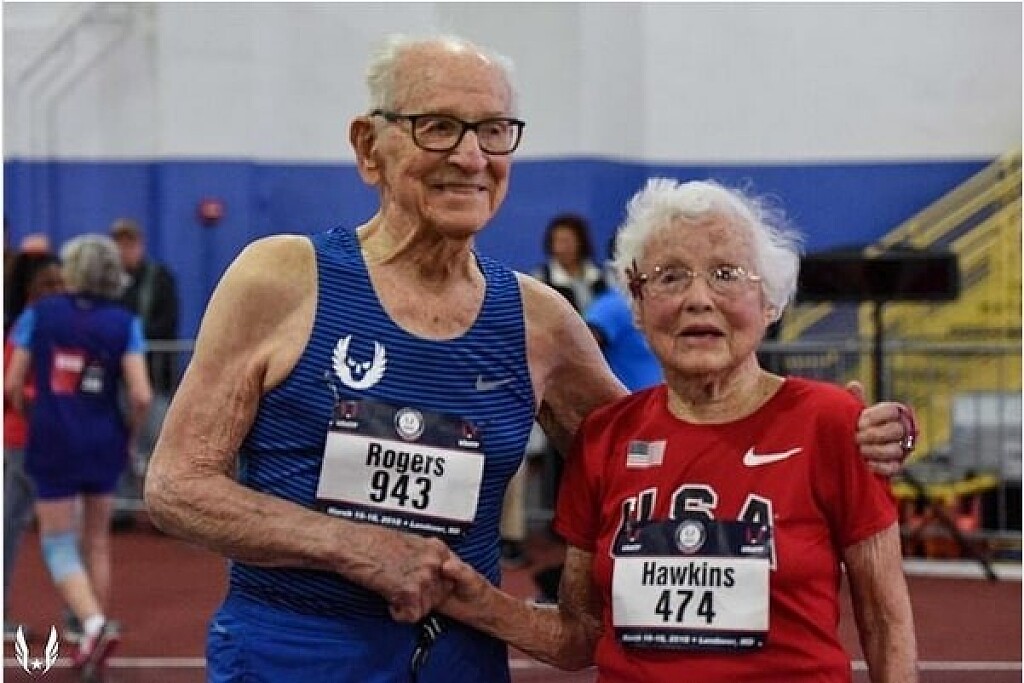
Five times runners proved that age is just a number
We know that running is a sport for anyone, regardless of age, but it can still be quite surprising when senior citizens throw down amazing race results. The rest of us can only hope to be able to put our bodies through running races when we reach our 80s, 90s and beyond. There have been so many times that older athletes have wowed the running community, but here are five from the past few years that really impressed us.
The 93-year-old road runner
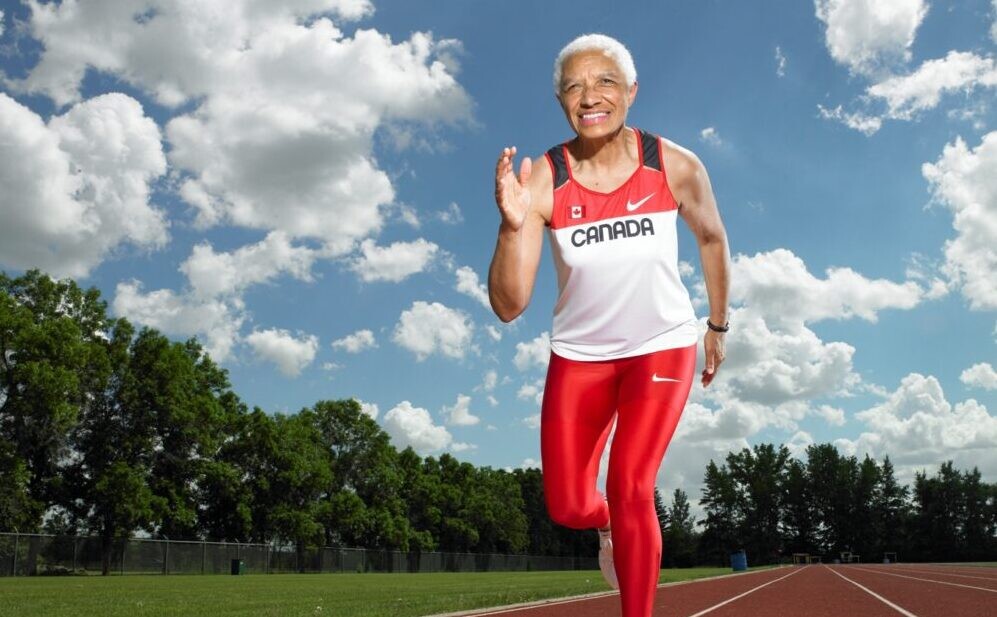
Canio Polosa of London, Ont., is the owner of multiple Canadian masters records in the M90 division. In 2021, then 93, Polosa broke the 5K record at a Halloween road race in London, where he ran 36:30. Just a few months later in April 2022, he ran another London race, this time a 10K, and although he was hoping to get anywhere under an hour and 20 minutes, he ran an amazing 1:14:04. This time was the 10K Canadian record, and he also beat the five-mile and 8K M90 records en route to the finish.
Running and jumping into the record books

Canadian Carol Lafayette-Boyd was named 2022 World Masters Athlete of the year after breaking a whopping six world records in the W80 age division last year. She broke the outdoor 100m (16.23 seconds), 200m (34.90 seconds), long jump and triple jump records, as well as the indoor long jump and 60m dash. In her time as a masters athlete, Lafayette-Boyd has amassed an amazing 17 world records, and she doesn’t show any signs of slowing down.
A 90-year-old record holder
In the summer of 2022, Australian masters athlete David Carr turned 90, and in the following months, he broke five M90 world records on the track. Carr ran a 1,500m race in 7:32.95, a 3,000m in 16:20.96, the 5,000m in 29:47.83, a 10,000m in 62:48.93 and the 2,000m steeplechase in 12:50.43. All of these times are incredible, but to truly appreciate just how fast Carr is, one needs to look at his age-graded 1,500m result. The current 1,500m world record is 3:26.00, but Carr’s age-graded time works out to 3:16.00. He may not be a household name, but Carr is a track superstar, all the same.
Hurricane Hawkins
In 2021, American Julia “Hurricane” Hawkins became the first 105-year-old woman to race the 100m. She set a PB and world record of 1:02.95, although this was far from her first big result. Amazingly, Hawkins only started running when she turned 100, and she promptly began earning world records in the 100+ age division.
The battle of the 105-year-olds
Another 105-year-old woman recently broke Hawkins’ 100m world record. India’s Rambai ran the world record in June 2022 when she posted a time of 45.40 seconds. Rambai ran this time at the National Open Masters Athletics Championship in Vadodara, India, just a year after she began running competitively (that’s right–she started racing at 104). Not surprisingly, Rambai was the only runner in the 100-plus age division, but the lack of competition didn’t appear affect her motivation, and she smashed the previous world record by 17 seconds.
(03/03/23) Views: 100Ben Snider-McGrath
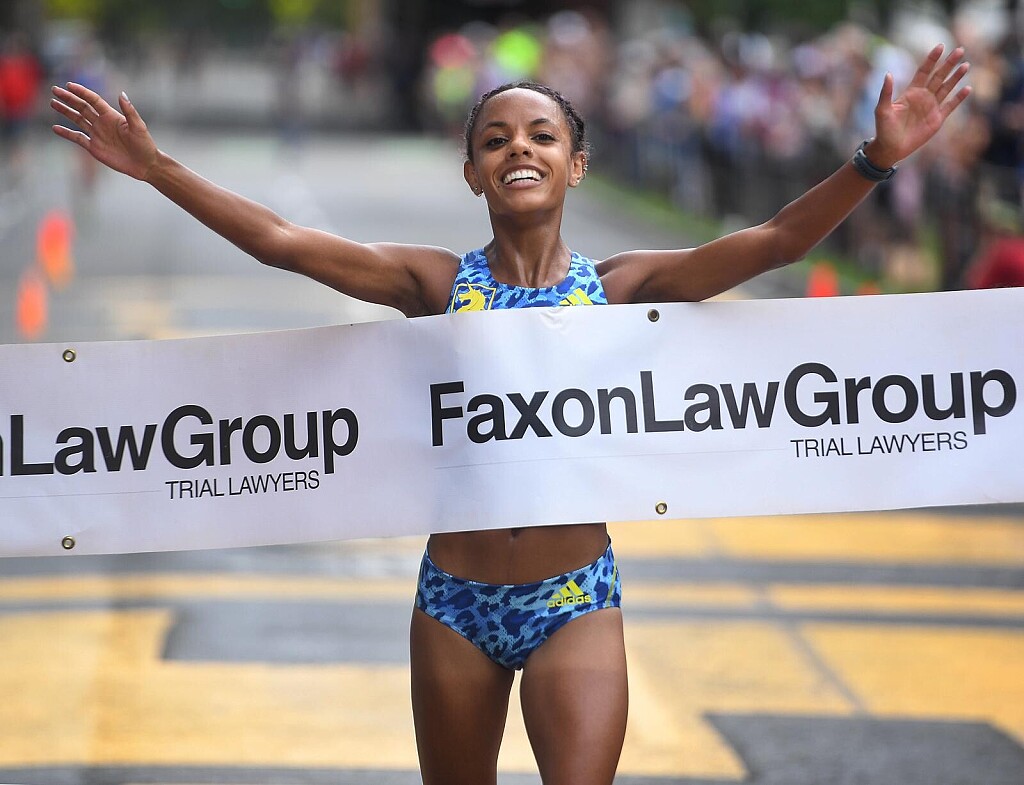
U.S. Champion Erika Kemp is set for Boston Marathon debut
Erika Kemp has lived in Boston since 2018, training with the Boston Athletic Association’s pro team. But she has never trained on the Boston Marathon course. Why would she? Most of her training was for track and road 5Ks and 10Ks and the occasional longer distance, like the U.S. 20K championships, which she won in 2021.
Now that Kemp’s making her marathon debut—at Boston—she and her new coach, Kurt Benninger, who is based in Providence, Rhode Island, figured it was time to put some long runs in on the road she’ll be racing in April. The plan on February 26 was for her to run 20 miles, the longest run she’s ever gone, starting at mile 3 of the course and getting through the Newton hills. It’s a straight shot—at least for most people.
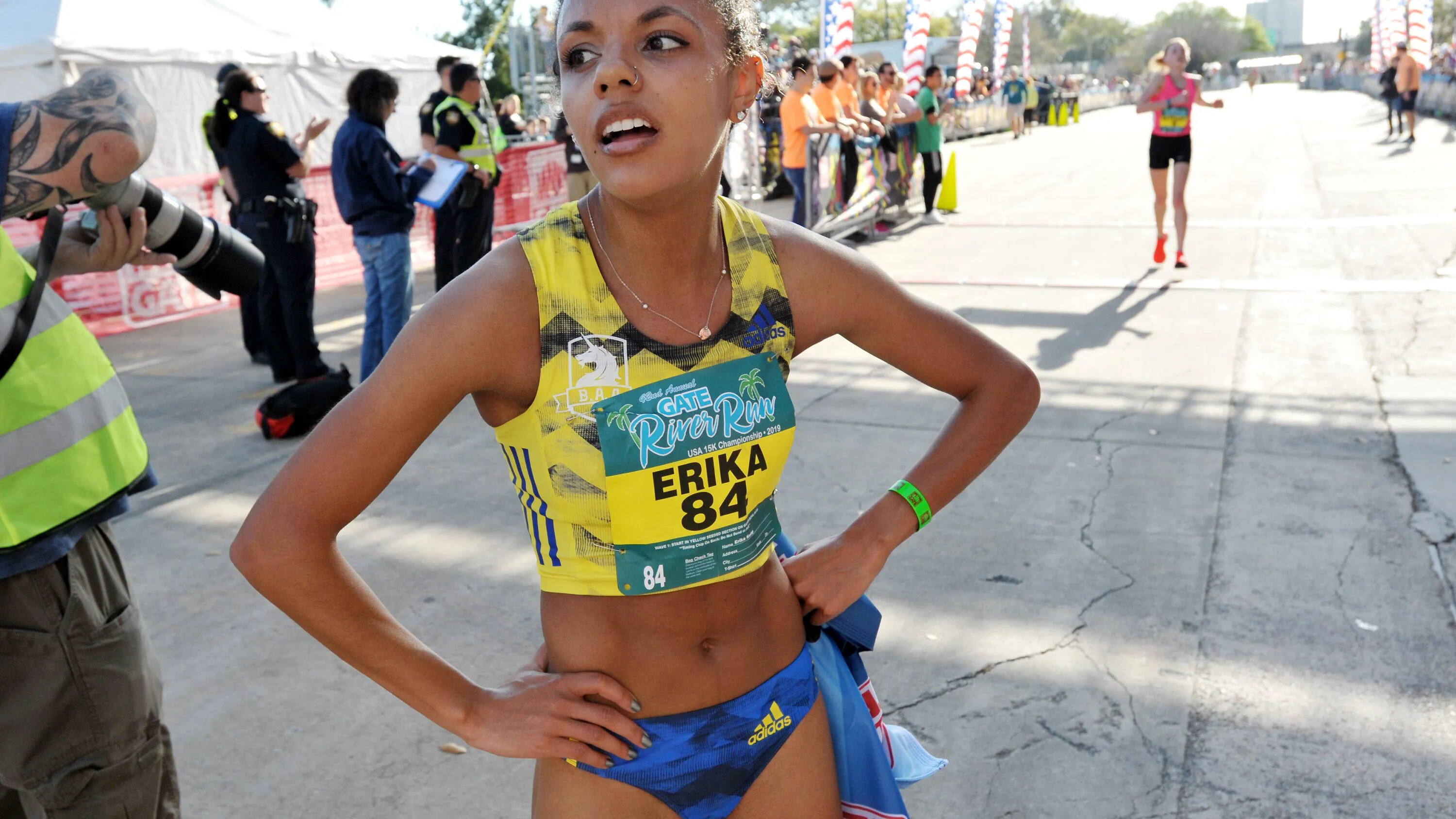
But Kemp, 28, who admits she gets lost easily, was running on the right side of the road through the town of Wellesley when she inadvertently got off course. She ran onto Route 9, an unappealing stretch of road with office parks, car dealerships, and a 50-mile-per-hour speed limit. She didn’t realize she was on the wrong road until 6 miles later. By the time she got back to her home in Boston’s Allston neighborhood, she had exceeded 23 miles—and she never did see those Newton hills.
She put in a call to Benninger.
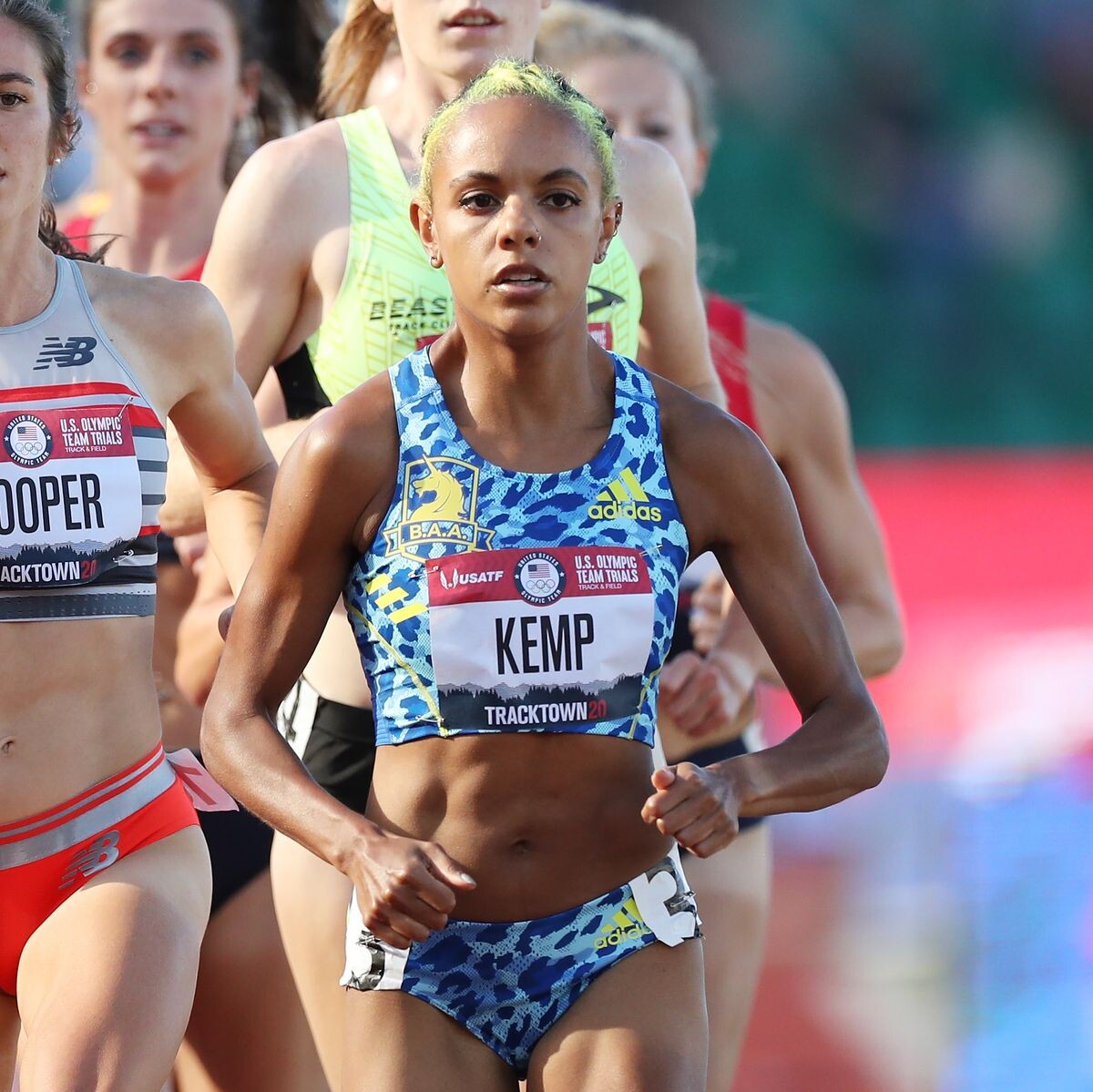
“I didn’t quite know how to tell him,” Kemp said. “It’s still a relatively new coaching relationship. How do I tell him I ran an extra 20 minutes and didn’t see the second half of the course I was supposed to see?”
Benninger, though, thought it was funny. So did Kemp. “He was super chill about it,” she said, and he told her, “Well, you got some extra volume. We’ll definitely go over directions more carefully next time.”
New beginnings
Early 2023 has brought many new roads for Kemp—some figurative, some literal. She decided not to re-sign with the B.A.A.’s High Performance Team at the end of last year. Now, in addition to the new race distance she’s trying, she has a new sponsorship deal with Brooks and a new training situation.
After Boston, she’ll move to Providence to be in person with Benninger’s group, which includes pros Marielle Hall, Helen Schlactenhaufen, and Brian Shrader (though the latter two train mainly in Boston). In addition, Benninger’s wife, Molly Huddle, who is coached by Ray Treacy, comes to a lot of their practices. Occasionally Emily Sisson, another Treacy athlete, will be in town. Kemp expects she’ll match up with Hall for most of her workouts.
It’s a big change from what she’s been doing, but Kemp felt like she needed it. She was a six-time All-American at North Carolina State University, and she improved on her college times at the B.A.A., running 15:10 for 5,000 meters on the track and 31:35 for 10,000. But she felt like she came up short at the biggest moments.
“I have yet to feel like I really have had that breakthrough race,” she said, “where all of my training and improvements have been reflected in a singular performance. I have had a lot of races the last couple of years where I got to the start line kind of fatigued. I don’t feel like it’s 100 percent reflective of how much I’ve improved.”
When she decided to leave the B.A.A., she didn’t have a training situation lined up for herself yet, and she was still talking to sponsors. So she got herself through the early days of marathon training by consulting with friends and a network of experienced marathoners, building up her mileage to 90 per week from the high 70s or low 80s she had been doing. It was a big jump for her, but she handled it well.
The only downside to marathon training is the constant hunger. Kemp is usually a sound sleeper, but she found herself waking up at 3 a.m. several nights in a row. Finally she realized she was hungry and started scarfing down a bowl of cereal. Then she’d go right back to sleep.
“You’re literally eating a bowl of cereal in the dark, and thinking, ‘What is my life right now?’” she said.
Whatever she was running—and eating—worked: In January, she finished seventh at the Houston Half Marathon in a PR of 1:10:14, averaging 5:22 per mile. With the performance, Kemp qualified for the 2024 Olympic Marathon Trials in Orlando, which she intends to run.
She said that Brooks felt like a natural fit as a sponsor, and the company didn’t mind if she wanted to stay on the East Coast instead of joining one of its two established training groups in Michigan or Seattle.
(03/03/23) Views: 100Sarah Lorge
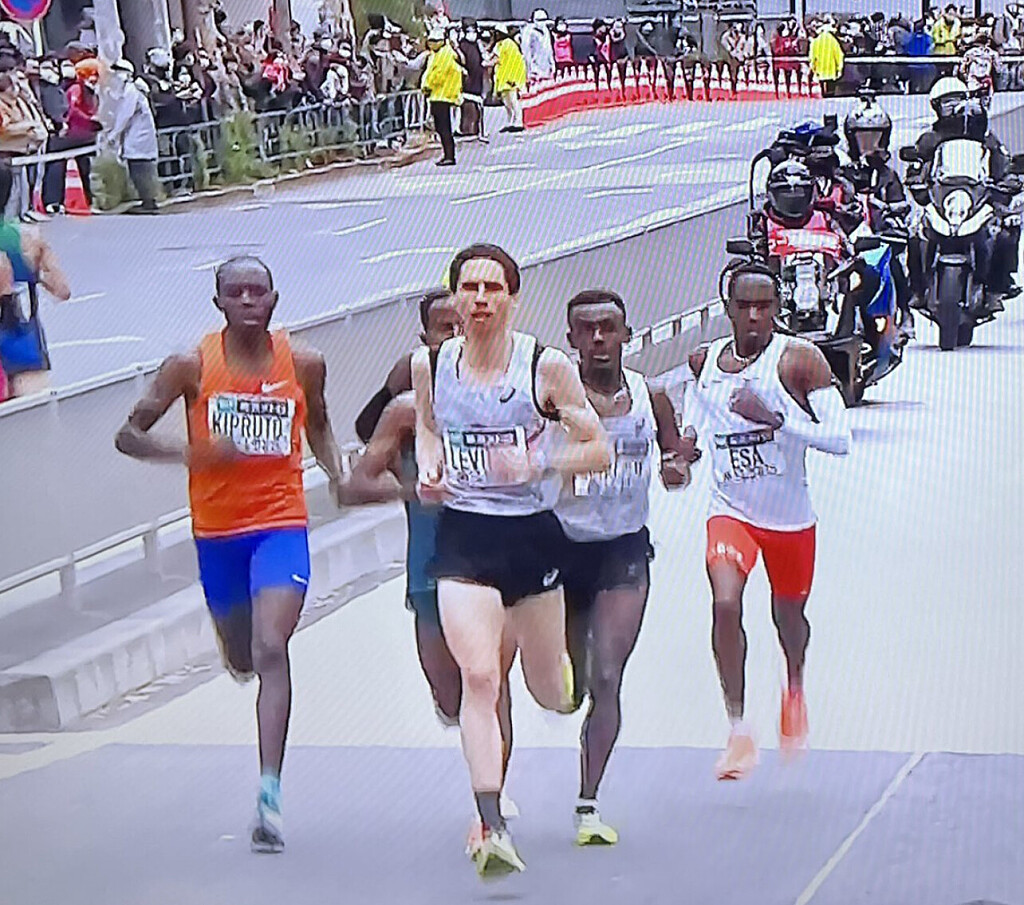
Cam Levins becomes the first Canadian runner to break 2:06, running to a fifth-place finish in Tokyo
On Sunday morning in Tokyo, Cam Levins of Campbell River, B.C., solidified himself as the fastest marathoner in North American history at the 2023 Tokyo Marathon, placing fifth in 2:05:36 to shatter his previous Canadian record of 2:07:09 and breaking the long-standing North American record of 2:05:38.
The 33-year-old marathoner has put Canadian distance running on the map, once again, nearly winning the Tokyo Marathon. Levins ran the perfect race, staying patient early on and making all the right moves to contend for the victory.
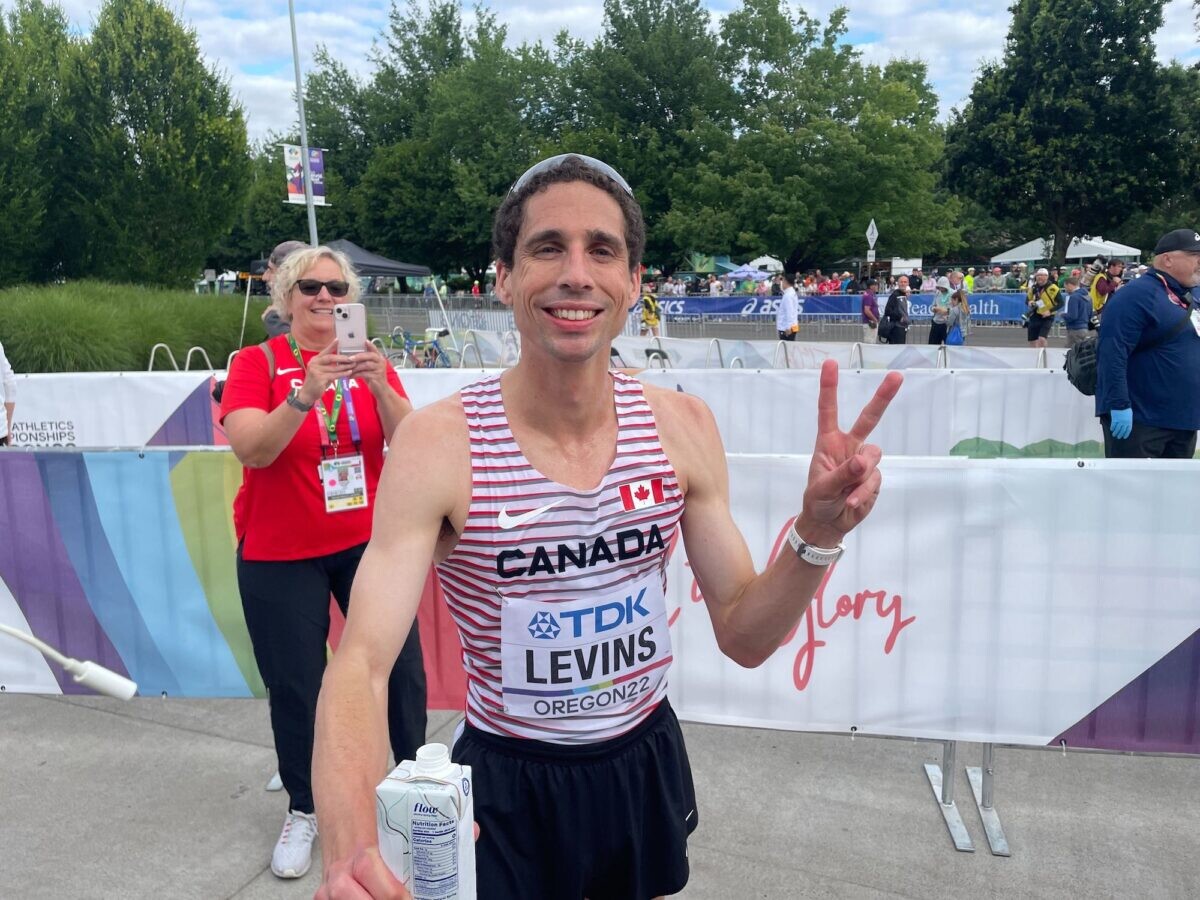
With one kilometre to go, Levins was in a group of five runners vying for the win, but Ethiopia’s Deso Gelmisa sprinted away with 400m left, winning the 2023 Tokyo Marathon.

It was an Ethiopian sweep of the podium in Tokyo, with Gelmisa taking the win in his first Abbott World Marathon Major, in 2:05:22. His compatriot, Mohamed Esa, finished one second back for second, and Tsegaye Getachew was third (2:05:25).
Levins said, going into the race, that he was shooting for a time of 2:05 after his spectacular half-marathon record run of 60:18 in early February.
His time of 2:05:36 (pending ratification), breaks U.S. marathoner Khalid Khannouchi’s North American record of 2:05:38 from the 2002 Tokyo Marathon. American Ryan Hall is the only athlete to run faster than Levins, 2:04:58 at the 2011 Boston Marathon (though Boston is considered non-record-eligible by World Athletics since it is a net downhill, point-to-point course).
Cam Levins now has four of the six fastest Canadian marathon times in history.
In potentially her last major marathon, Canada’sKrista DuChene ran her fastest time in four years, clocking 2:38:53 for 19th overall. The last time DuChene, 46, broke the 2:40 mark was at the 2019 Berlin Marathon, where she ran 2:32:27.
(03/04/23) Views: 100Running Magazine

Running your first race? Tips to make the most of the experience
Running a race can be an intimidating experience. There are the logistics: where it starts; where it ends, the timing, the course, etc. There are plenty of people including runners, volunteers and spectators to contend with. There are rules to consider, both official and unwritten. Not to mention that you have to do something that is physically and mentally really hard.
Especially for beginners, running a race can make one feel anxious, nervous and possibly even afraid. Pre-race nerves are experienced by almost every runner so know you are not alone. There is also tremendous value in acknowledging those nerves and reframing them as excitement and anticipation for what you are about to do.
Here we present some of the most common concerns runners–both new and experienced–report from their race experiences and offer a number of solutions and strategies to overcome them in order to make the most of your running and racing:
Before the race…
Getting a good night’s sleep the night before a race is useful but not essential. Rather, aim to get as much quality sleep as you can the entire week before your race.
Set an alarm and get up early so you don’t feel rushed on race morning.
Have your running stuff–gear, apparel, shoes, accessories–all laid out and ready to go. This includes pinning your bib to your shirt, singlet or jacket.
Follow a pre-run/race routine that you’ve used before and that works for you. Eat the same foods for breakfast. Wear gear you’ve tested before. Do the same stretches or warm-up. The best advice you can possibly take: Nothing new on race day!
Know exactly where you’re going and how you’ll get there as well as where you’ll park. Also, have an exit strategy in mind.
Once you arrive…
Aim to arrive early so you don’t feel rushed. This will also allow you to get a sense of the start (and finish) area before it gets busy. Become familiar with key locations such as the start and finish line, the registration/bib pick-up, bag check, the washrooms (usually porta-potties), first aid and medical services, etc.
Know the schedule and create a timeline. When does the race start and how long will it take you to line up/get into your corral? Working backward, give yourself enough time to use the washroom (there are always lines), check your bag, warm-up properly and anything else you know you need to do.
If you’re not a fan of large crowds or feeling overwhelmed, remove yourself from the scene until you absolutely have too. Remain at your car, find a quiet coffee shop nearby or warm-up/stretch on a side street.
Consider using earphones before the race to listen to music, the radio, a podcast, whatever you prefer. This will help distract you from the commotion of the crowds.
Once you join the rest of the runners, try to focus on yourself, on how you’re feeling and use a variety of calming and meditative exercises to think about your upcoming run.
Line up according to ability. The faster you are, the closer you should be to the start line. In larger races with hundreds of participants, events often use corrals to separate runners based on their expected finish times. If you don’t know where you should be, look for pace bunnies or ask a fellow runner for guidance. For the safety of others, be sure to line up appropriately as not to obstruct faster runners.
Running your best race…
Hopefully you have some idea of how you plan to run your race. How long it will take; what pace you’ll run at; if/how often you’ll hydrate and/or consume fuel. Having a race plan is always a good idea and better still, have a backup plan in the event that weather/conditions are not ideal.
Most races have aid stations with water, electrolyte/energy drinks and possibly even fuel (bars or gels) along the course. Depending on the length of the race or whether you carry your own, plan to use these to stay hydrated and fuelled.
As mentioned, have a plan regarding how fast you plan to run. Know your desired pace and do your best to stick to it. Avoid going out too fast at the start–THE most common mistake made by ALL runners in a race–and if anything, aim to start slower than you need to and plan to pick up the pace as the race goes on.
At/after the finish–Congratulations!
Once you cross the line, it’s important you keep moving forward to avoid obstructing those behind you.
Take a few minutes to collect yourself, catch your breath and try to take a moment to truly appreciate the moment.
You’ll likely be handed a finishers medal and ushered toward some refreshments. Try to drink and eat something to kick-start the recovery process.
If you’re not feeling well, seek out a race official or volunteer who can help you get some medical attention. Some races also offer post-race massage.
Once you’re starting to feel yourself again, proceed to pick up your bag, meet your friends and family and enjoy the entertainment or post-race festivities.
(03/04/23) Views: 98Dan Way
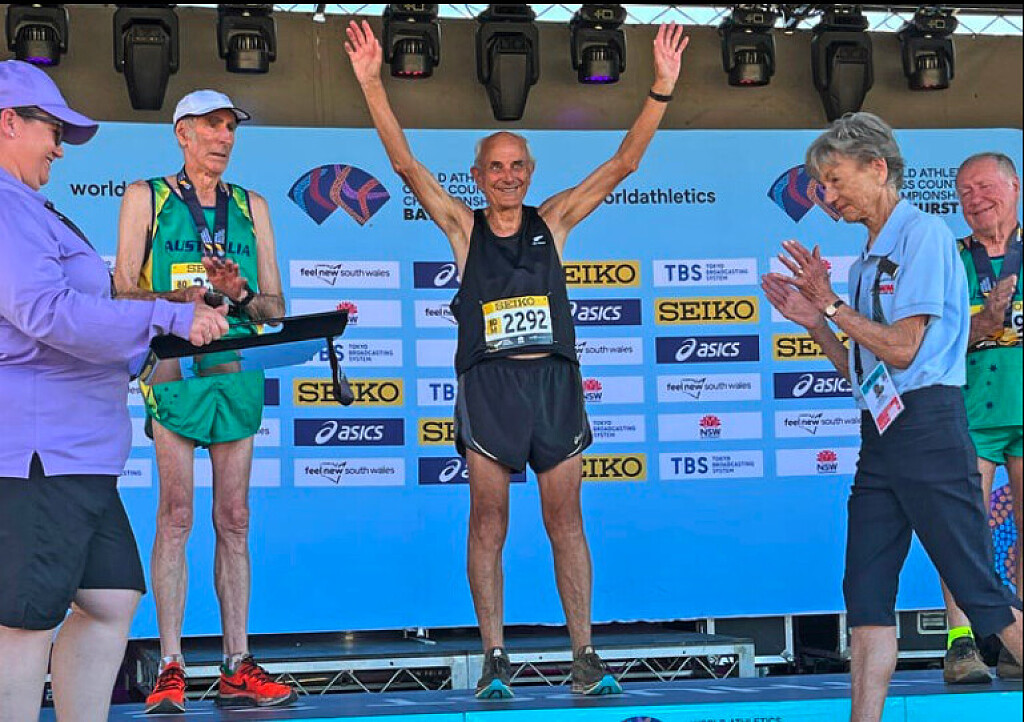
How I Won the World Cross-Country Championship at Age 83
Seventy years after his first cross-country race and 46 years after competing as an elite runner, the author competes—and triumphs—on a tough Australian course
Last weekend, in Bathurst, Australia, I did something I thought I would never do again: I ran once more in the World Cross-Country Championship. Not the main men’s open race, in which I competed for England in 1966 and New Zealand in 1977. Not at age 83. But for the first time, the World Athletics federation added Masters championships, and—almost like a dream—I not only participated again, but raced at the front of the M80 field and managed to outlast a stubborn Australian for the win.
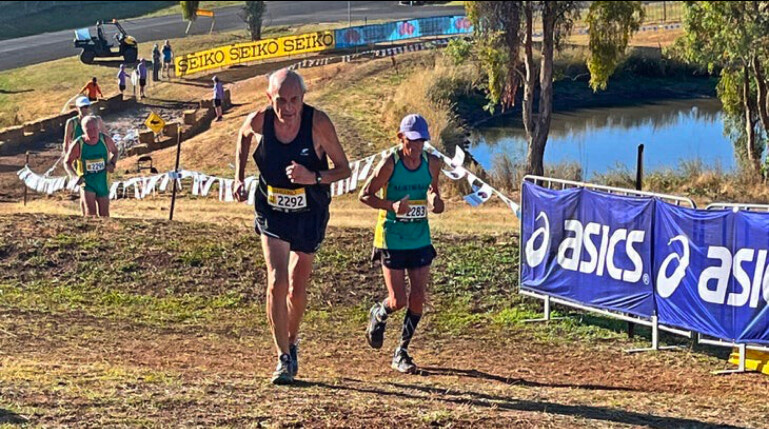
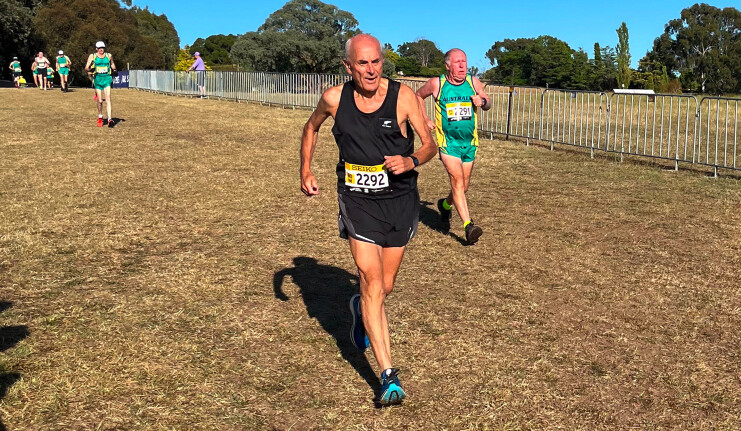
If you believe that running after eighty is about leisurely slow toddling, wait till you’re up there, racing to your limit, and you make the sharp u-turn at halfway and see that you are being closely stalked by a lean lanky Aussie with M80 on his bib and a threatening scowl like Mel Gibson in Lethal Weapon.
He is called James Harrison, and he made me work for it. I have won and lost many hard races over the years, and this was one of the hardest. The only possible tactic was unrelieved pressure. I finally broke him three-quarters through the four-kilometer distance, on the second two-kilometer lap, as we gasped up a big steep rough-surfaced hill that broke many hearts that weekend. At last, I sensed him drop. It took tenacity, months of focused training (including hill repeats), and years of learning the wiles that true cross-country demands.
This was a course where every decision counted about where you placed your next stride. Every sharp oxygen-draining uphill demanded that you keep momentum over the crest, every downhill was there for attack, not recovery, every tight turn required poise and pace. Those things don’t come easily after age eighty (and on two replaced knees in my case), but it was a World Championship of cross-country running, and we were there to take those tests.
I won’t claim the sheer thrill of winning the race was the same as ever. But it was real, and it had a private significance. I ran below my best in the senior world championship in the past. Nothing can change those results, but it felt good this time to get it right. And the sense of achievement is something that few things in the last years of life are ever likely to equal.
World Athletics, under President Seb Coe (who learned cross-country in England in his early teens), has grown tired of holding its cross-country championships on boring flat safe horse-race circuits, like those I encountered in my days in the main race. They decided to take some security risks to revitalize the sport. American senior administrator David Katz now acts as course consultant for each World Cross-Country, and insists on the real thing.
“Cross-country has one distinctive thing, the course. That has to be the talking point, and each one must be unique as the race moves around the world. The media and the public need to understand that cross-country is special in its challenges, not just another long race,” Katz said in Bathurst.
The previous championships in 2019 in Aarhus, Denmark, set the world chattering about a course that included loops over the steeply-sloping grassed roof of the Moesgaard Museum. This time (after several Covid-related postponements) the Aussies gave us a course that was a raw slice of the Australian outback. On the side of Mount Panorama, it was broken and unpredictable, rusty dirt, grey raggedy scrub grass, and diabolical hills. Scattered blue gum trees provided the only shade. Each morning, you could find fresh kangaroo poop.
They added some challenges to make it even more uniquely Australian. There was a “billabong,” of treacherous ankle-deep wet mud that caused many runners to skid and flop to a slimy downfall. (Some of the slower kids in the scholastic races lay down and daubed themselves heroically.) There was a dash through the straight vines of a winery, followed by tight turns, and, in honor of Bathurst’s motor-race circuit, a “chicane” where you had to steer through a forest of car tires.
High on a dry hillside there was a stretch named “Bondi Beach,” deep shifting sand decorated with lifeguard flags and “Beware of Sharks” signs. An Aussie joke, yet for the runners, another testing change of racing rhythm, another response to the challenge of contours and terrain. No other kind of running does that. Cross-country is the closest our sport gets to true interaction with the earth.
Added to all that was the Outback summer heat, 95 degrees for the main races on the Saturday late afternoon. In the different races, several runners were taken to hospital, and at least four passed out during the race, including, it seemed, the women’s favorite and race leader, Letesenbet Gidey (Ethiopia), who collapsed dramatically and glazy-eyed as she was passed by Beatrice Chebet (Kenya) within strides of the finish.
As a serious evening storm approached, its clouds like dark riders, the men’s race was hastily moved forward, and 22-year-old Ugandan Jacob Kiplimo had to win his first major title while lightning flashed behind the mountain and brutal wind gusts sent runners staggering. Slower runners were caught in torrential rain. Australia does nothing by half measures.
For me and many others, Australia was an unexpected opportunity. Three months before the race, World Athletics and World Masters Athletics announced that they were combining to add masters championships, part of a new and excellent policy to make the event a full cross-country festival, as well as the world’s elite team and individual championships. Hundreds of spectators doubled as competitors. I met so many old friends out there, it was like a global runners’ reunion.
In addition to the usual competitors from Europe, North America and Africa, there were teams from Fiji, Papua New Guinea, Tonga, and other Pacific nations, none of them obvious participants in a sport that is essentially one of cold winter.
I guess an 83-year-old who last ran the World Cross-Country in 1977 was another less-than-obvious participant. I never imagined it. I gave up cross-country for good, I believed, when my orthopedic surgeon confessed, after he watched me and the knee he had implanted struggle over a muddy course, that it gave him nightmares for weeks.
But a lifetime of racing has taught me that you have to seize the moment. Before committing, I watched videos of the course, which like a good actor came across looking much more attractive than it was. When I actually saw the steep downhills, I thought I was out of my mind. But another thing I have learned is that in running, only one thing is absolutely certain—you won’t run well if you’re not in the race.
I registered. I did the work. I seized my moment. I got the sheer thrill of winning a race. I was lucky in that the course’s surface proved (mostly) not too lumpy or too soft, and I was lucky in some top Europeans and South Americans not making the journey. In every race, you can only compete against those who show up.
Young readers, please note. In January 1953, aged 13, I ran my first cross-country race, in my high school’s inter-house league, well back in the field. Seventy years a runner. You never know what a high school race might lead to.
Being called world champion at 83 is a nice way to celebrate that small private anniversary—and at this age, I can surely be forgiven a memory lapse, if sometimes I forget to add “over-80.” It could also be a nice way to round off seventy years of running. Round off, except for the next race, that is.
(Roger Robinson ran the world cross-country championship for England and later New Zealand, and set a Masters record of 2:20:15 at the Boston Marathon. He is regarded as the outstanding historical writer on running. He recaptures history from personal observation in When Running Made History (Syracuse University Press) and he researches vivid and accurate accounts of the sport’s best stories in his new book, Running Throughout Time: the Greatest Running Stories Ever Told (Meyer & Meyer). Available through Amazon and all online outlets and bookstores.)
(03/05/23) Views: 95Outside (Roger Robinson)
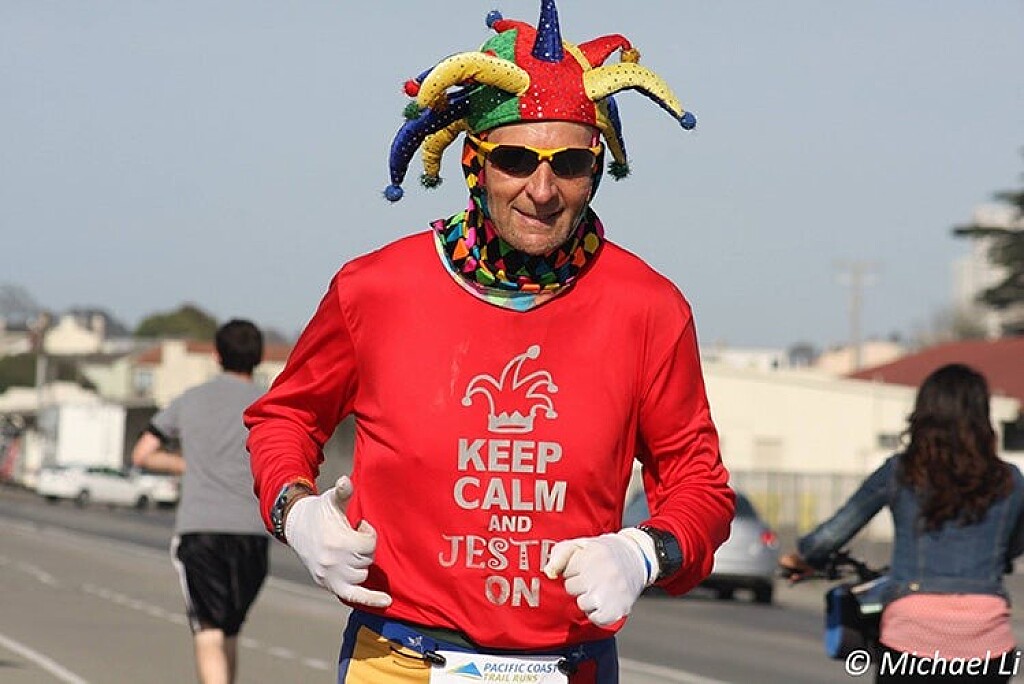
Love Advice from the Non-Runner Significant Other
Runners love runners, and while runners often date and marry other runners, some runners date non-runners who despise running.
My fiance is the latter. Running isn't for her. It isn't for everyone. A large part of me wishes we could share the miles and time together, and she wishes we could actually spend a Saturday morning together instead of me going on a long run only to come back, eat, and nap.

There's give and take in any relationship, but with any passion comes sacrifice. We see the passion on display everyday, but little do we hear about the sacrifice, the unfiltered thoughts of those who might not share the same affinity for run culture.
This Valentine's Day, we give them the mic. To my fiance, and to anyone else in similar situations, I hope you feel seen today.
Forty Years and 200+ Hundred Milers
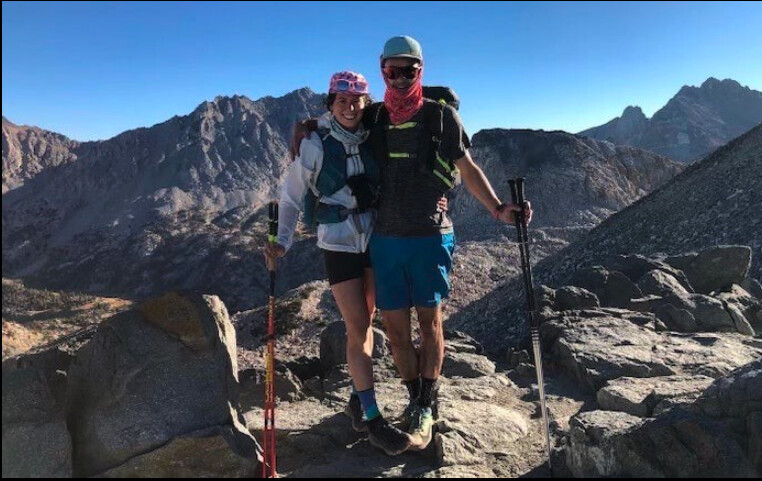
If anyone can understand the grind and sacrifice of supporting an ultrarunner, it's Martha Ettinghausen. Her husband, Ed, 60, has logged more than two hundred 100-plus milers since his first in 2009-one of three people ever to hit that milestone.
For the vast majority of those races, the couple from Murieta, California, has done it all stride for stride. Martha was crew chief, sacrificing weekends, birthdays, and Mother's Days for her runner. It also included nights at home waiting to eat dinner until late hours, delayed romantic evenings on vacation due to Ed being "lost in the moment" of a run, and endless time and money poured into the sport.
"It really has cost us a fortune," Martha said. "There's so much sacrifice, if you want to call it that, that was given up for Ed to pursue his dream. I look at the time and money spent over the years. Sometimes I say, 'This could be our new car,' or, 'This could be an amazing vacation.' Really, it's kind of a selfish hobby, but so is any hobby."
But that's not what Martha takes away from Ed's passion. It has taken years to find balance, and also to recognize that you can be supportive without having to attend every race like she did at first. Now, she goes when she wants to.
"For the first 19 years of marriage, I don't think we spent one night apart," Martha said. "That was a lot of time together. We did everything together, and I like that connection, but in order to find my own life outside of it while he's off doing his thing, I had to learn to do my own thing. He's pursuing his passion; I can pursue mine also."
This has taken various forms: Saturday morning walks with her friends, starting her own business, not waiting to eat meals, even walking 104 miles herself last April at Beyond Limits in California. A big reason she pursued most of these passions was Ed's inspiration.
"One of the biggest things I've learned from Ed doing ultras is going in with a positive mindset and believing you can do it," Martha said. "Never be negative or allow doubt. That carries into every aspect of life. Don't take it so seriously. Watching Ed, I'm like, "You know what? I can do anything.'"
These are lessons learned from 40 years of marriage and 14 years of ultras. While it has its pros and cons and still requires conversations and compromises from both, Martha said the best advice she has for a non-runner significant other is letting each other know what makes the other happy and working toward those goals.
"I would never ask him not to run because that would be like taking his soul away," Martha said. "It's about finding a balance, about what's going to make both people happy. It's sitting down and asking, 'Can we satisfy the runner's desires and passion with the partner's desires and passions?'"
We Don't Talk About Trail Running
When you love something, you want to share it with those you love. Take running. Runners love sharing their goals, training, miles, tales from run group, what the pros are doing, what they read, listened to, or saw about running, *insert endless examples here.*
If you paused at any point during that and sighed, you've likely been on the receiving end of a runner, and Stephen Ettinger, 33, wants you to know something:
"I've gotten the impression that it's a widespread problem among ultrarunners," he said. "Corrine and I have this anecdote that, at some point, I was like, 'You have to find some other people in the trail running community to talk about this stuff. Find an outlet. Talk about trail running with them because I can't listen to you talk about trail running all the time. It's driving me bonkers.'"
He's (mostly) kidding, but he's not wrong. If you put a quarter in a runner's jukebox, that song will play in its entirety. His wife, pro runner Corrine Malcolm, was guilty of it, and she heard that feedback. She's now a podcaster, author, editor-in-chief of FreeTrail, race announcer, Pro Trail Runners Association board member, and various other trail adjacent projects.
Ettinger gets his ultra stories in moderation now, and, with someone who lives and breathes the sport, he knows how important it is for her. It's a lot, but it's a healthy outlet runner's need, especially as Malcolm faced injuries in recent years.
"An injured runner is an unhappy runner," Ettinger said. "It's super frustrating for them, and it's hard to be the partner of someone who's frustrated because you don't want them to be sad and bummed out. How can you not when you can't do the thing you love? Like anyone, they need an outlet."
Ettinger has found his own outlet in recent years. It wasn't something he expected after retiring from professional mountain biking and going to medical school and doing his residency in San Francisco. But when the trails in the city weren't as accessible to bikes as running was, he ran with it.
Before that, the couple split up at trailheads to bike and run. Going together, he says, brought them closer. They understand that Ettinger could spend that time reviewing charts and Malcolm could be going faster to train.
He's not sure why, but he said he might even sign up for an ultra this summer.
"It's not my most favorite thing, but I do enjoy it," Ettinger said. His parting advice: "Never expect 10 toe nails. Expect weird tan lines, and make sure to give your dog a break from running every now and then."
Balancing 'Me Time' and 'Us Time'
Char Ozanic, 46, of Grand Junction, Colorado, is not a fan of running. She recalled bad experiences with the required elementary school mile. When asked if she'd ever run a race again now, she said, "I'm giggling so much it hurts. No."
Ultrarunning found its way into her life through her husband, Matt, 48. They have two boys, and when they moved out, running filled his rediscovered free time as a work destresser.
"By the time the boys left, we had already been in the schedule mode of practices, dinners, and booked weekends so we fell back into that rhythm again quickly," Char said. "But, instead of the boys, it was Matt."
There were mixed feelings initially. Matt had found a passion, but it involved hours they could otherwise spend together or visiting their boys. If this was going to be their life, compromises were a must. Mostly, they had to prioritize scheduling things they wanted or needed around, and not over, those of the other.
"We had a lot of sit-downs," Char said. "You can't get your feelings hurt about every moment you're expecting to get [with your partner] because I also have a life of my own. It's our schedule. It belongs to both of us. You just need to be mindful of each other."
Part of the adjustment was significant amounts of "me time," Char said. Matt usually does two 100 milers a year. This year, one is the Moab 240. Many nights after work and long-run weekends add up fast for Matt.
"You have to genuinely be okay with being by yourself," Char said. "I go see movies by myself all the time, especially movies Matt might hate, or have a spa day. I do a lot of mental health stuff when he's trekking some big miles."
Sometimes it can be tough to find time together, especially in big mileage weeks. Char said that sometimes that means combining "me time" with "us time."
"If I'm craving more us time, I'll go to the trail with him and aid him along the way," she said. "I get my 'me time' and I get time with him. Other times, I like kicking him out the door to read a good book. It's all about balance."
This is also the case for races. Char has only missed one ever for Matt. Travel, she says, is her favorite perk. "It brings us to so many places," Char said. "He'll sign up for a race in, like, Beaver Canyon, Utah. I've never heard of it. Then we go and it's so beautiful. When he's racing, I can go on these small hikes and venture out to do what I want, too. I Google things I can try."
His best advice for anyone dating a distance runner: "Always have snacks around. Easy to grab. Runners can go from wanting a snack to ragingly starving quickly. Trust me. Snacks."
Never Run to Impress
Who hasn't done something to impress a person they're dating? Justin Charboneau, 33, can relate. When he started dating his now-wife, Brittany, 34, in 2016, she was qualifying for the 2020 U.S. Olympic Marathon Trials with sites on going pro.
So, Justin did what any love-struck person would do in that situation: sign up for a half marathon. He completed it, plus some other races and triathlons, too. It wasn't his thing, but he kept up the charade because he thought Brittany wanted him to run.
But in 2022, they hadthe talk.
"I started a cookie company in 2019 and running stopped," he said. "I still do Peloton and cycling now, but I kept running sometimes, and it got to a point where Brit's like, 'Do you like running?' I said no. She was like, 'You don't have to be a runner.' It was a huge weight off my shoulders."
Though he doesn't run anymore, Justin admires the work Brit, and other runners, put in to complete these long distances. He experienced running firsthand, and he wasn't a fan, but what Brittany does inspires him. At the same time, it can be a challenge. Being Denver-based with most friends from the running community, running can dominate the conversation and the attention.
"I've felt a little bit not heard or lonely because Brit does so much," he said. "There were times early on when it felt like Brit was doing all these awesome things and everyone's telling me my wife is so amazing. I got to a point where I'm like, 'What can I do to get some attention?' Eventually, I stepped back and realized that this is us. It's our life. Everything either of us do is for both of us. She inspires me, and it makes me excited to celebrate with her and be her support system."
That same friend group has no judgments since Justin stopped running. He joins them for "Fun Club" after runs and he's heartily welcomed, he said. The only other challenge, Justin says, is working around a runner's schedule. Brit goes to bed early and Justin is a social night owl, so compromising is a must.
"Being social after work fills my bucket. Sometimes, that's completely opposite of what Brit needs during training," Justin said. "It's an interesting thing to navigate because we still want to spend time together, so how can we find those things that fill both our buckets? It's a challenge, but definitely doable."
Finally, his best advice for anyone dating a distance runner: "Always have snacks around. Easy to grab. Runners can go from wanting a snack to ragingly starving quickly. Trust me. Snacks."
Young Love on the Trails
We conclude with our youngest couple: Heidi Strickler, 33, and Hannah Gordon, 38, of Seattle, Washington, an 11-month-old relationship between two passionate outdoor lovers. Strickler is more the runner of the two, competing in ultras and spending days in the mountains. Gordon enjoys a three- to six-mile run here and there, but is more of an outdoor generalist with passions for hiking, biking, and rock climbing.
Together, they find love on and off the trails.
"I view our relationship as three relationships: Heidi with herself, me with myself, and us," Gordon said. "I think we're pretty aligned. We both have interests in certain things and would like to pursue those, and also share them. But that doesn't mean the other person needs to be 100 percent in it."
Each part of that trio requires intentionality and attention, Gordon adds. When she goes on her adventures, or Strickler goes on hers, they both return fulfilled in their passion and, in turn, better versions for their partners.
"I almost wonder if there's an independence level in both parties that works well for people who are partnered, with ultrarunning or some big passion," Gordon said.
At the same time, scheduling becomes intentional, too. Planning their passions is as important as planning to be together. For example, Tuesdays are set aside for just them. Outside of that, they work around friends, work, and being outside, to spend time together. Through communicating ahead of time, they make it work. One thing they haven't experienced yet, Gordon and Strickler said, was a big training block for Strickler.
"I see the potential conflict depending on how many races per year are being trained for if that gets in the way of what we're hoping for intentional time together," Gordon said. "I think I could see that would be something we would just need to talk about. I think it's still solvable."
Additionally, Gordon says that having someone with inner drive to do things like ultras is attractive.
"Watching Heidi, I see such joy and exuberance when she comes back from the mountain," she added. "For me as a partner, I am very thankful that I am with somebody who finds so much joy in the activity that she's born to do. I can see the joy on her face when she comes back and brings in the mud and she's just smiling and beaming that she got to get so dirty and run 30 miles in the cold - which makes no logical sense to me."
(03/05/23) Views: 89Trail Runner Magazine
