

Running News Daily
Top Ten Stories of the Week
3/4/2023
These are the top ten stories based on views over the last week.
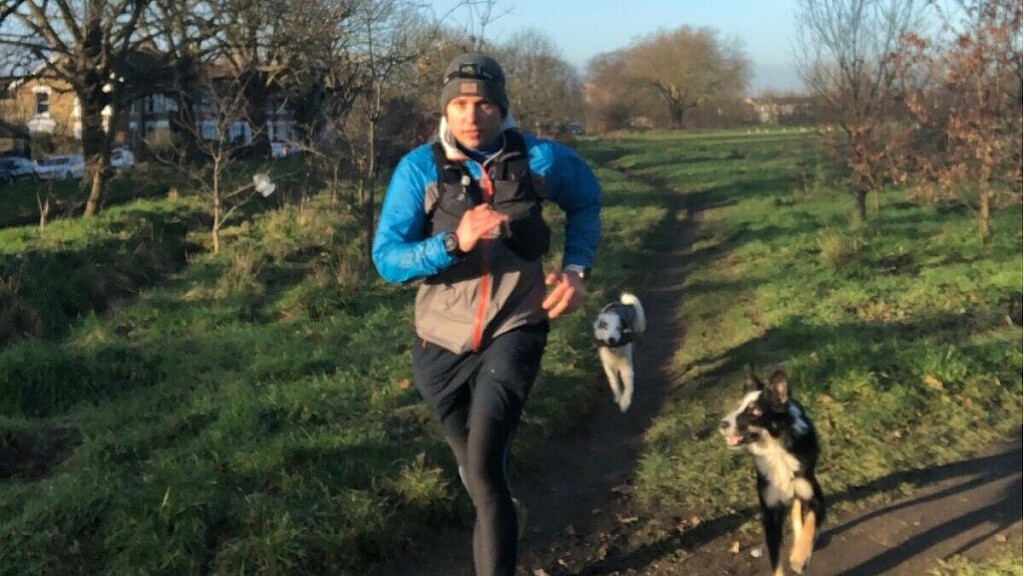


British man runs 70+ consecutive marathons with his dogs
During the past two months, a British man has taken running with his dog a step further (literally). Aaron Robinson of London and his two border collies, Inca and River, have completed a mind-boggling 72 consecutive marathons together.
The trio sets out from their home in east London at 3 a.m. to run a marathon loop around nearby parks and woodlands, before Robinson heads to work. Robinson told the Daily Mail that each marathon takes around five hours.

Robinson and his dogs have broken the previous human/dog Guinness world record for consecutive marathons, which was 62. Since breaking the record, Robinson has faced a lot of heat online for putting this mileage on his dogs, but defended himself: “Since border collies are working dogs, if they weren’t pets they would be used to working on a farm all day, so they’re very used to running and working hard, and actually the cruel thing is just to keep them inside,” says Robinson. “They love it.”
During his journey, the 40-year-old dog owner and marathoner has been fundraising for the charity he works for, Hope for Justice, which aims to tackle human trafficking and modern slavery in London.
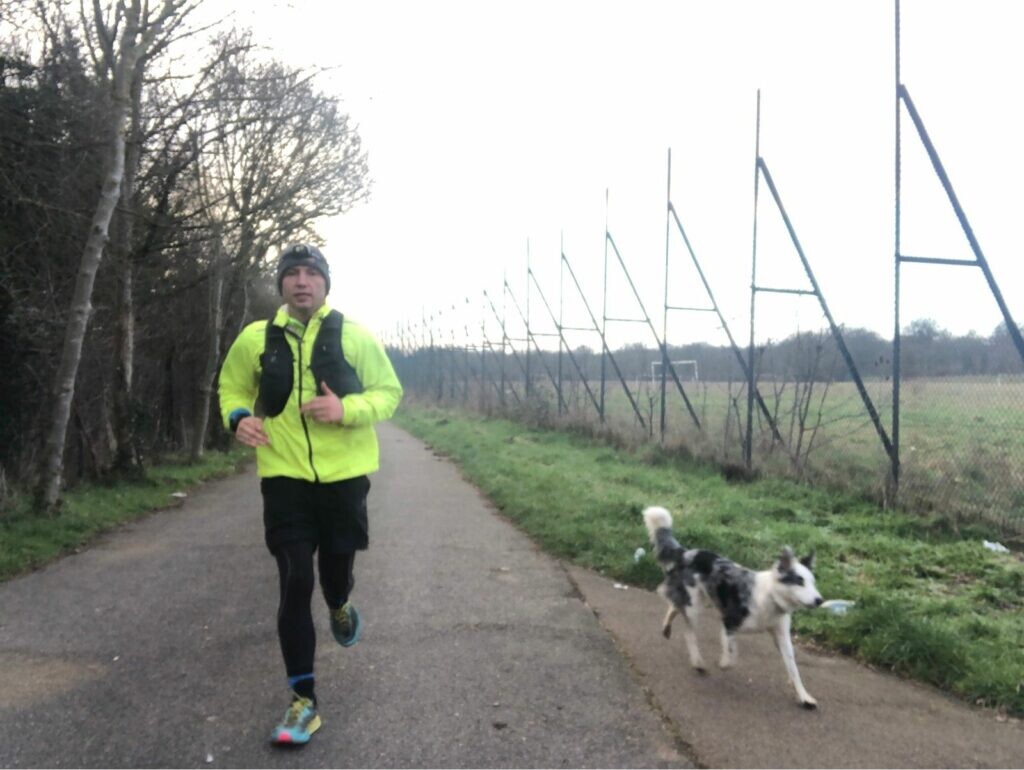
Border collies are known to be athletic and exceptional runners that can easily outpace their owners if given a chance. The number of kilometres a dog can run can vary depending on the dog’s breed, health, attention span and training.
Robinson said in another article that the marathons have become hard work, adding, “It’s quite hard to get enough sleep, get enough calories in and then go to work afterwards—you don’t really recover 100 per cent before the next one.”
Robinson has not decided when he will stop his challenge, and plans to continue to run a marathon every day.
(02/28/23) Views: 226Marley Dickinson
Runners set world, state records at Publix Atlanta Marathon
ATLANTA — With nearly 8,000 participants, world and state records were set in the Publix Atlanta Marathon weekend. From distances of 50 meters to 26.2 miles, runners of all ages shattered records.
On Sunday, during the half marathon, Kenyans Nicholas Kosimbei and Dorcas Tuitoek made history. Kosimbei ran the fastest half marathon ever in Georgia shattering the previous mark of 1:03:59 and finishing more than two minutes ahead of his nearest rival with a time of 1:00:36.Tuitoek also shattered the record with a time of 1:08:22 in the women's half marathon race just seven seconds under the Georgia state record set by Molly Seidel last year, who went on to win a bronze medal in the Olympic Games marathon.
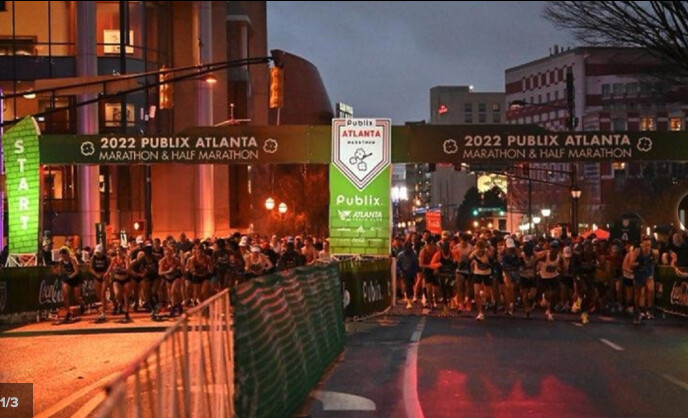
Additionally, Matt McDonald of Cambridge, Massachusetts, finished 6th overall in the half marathon at 1:05:32 and Dakotah Lindwurm of Eagan, Minnesota, finished with a time of 1:12:27. Chris Nasser of Atlanta won the Push Assist Division at 1:17:14.
“It’s fun to run by so many of my old spots,” McDonald said. “Almost every mile, I had some memory of some good time in that neighborhood, whether it was Georgia Tech where I did my Ph.D. or Piedmont Park where I did all my workouts.”
Shlomo Fishman of Silver Spring, Maryland, finished in 1st place in the Atlanta Publix Marathon with a time of 2:37:32.
“At Mile 18, I just decided I needed to get out of the rain,” Fishman said, who ran a personal best in his first marathon victory. “So, I picked it up a little bit and just went for it.”
In the women's marathon race, Amanda Furrer of Bethlehem, Pennsylvania, finished in 1st place with a time of 3:02:47, despite starting in Wave C, eight minutes behind the first non-elite runners. “I was alone for a while, so the cyclist on the course just started telling everyone my name. So people kept cheering for me. It was awesome!” Furrer said.
On Saturday, the 5K was won by Luke Mortensen, 39, of Athens, at 16:11 and Ellen Flood, 24, of Atlanta, at 17:25. Flood is also a former Georgia Tech runner.
Atlanta Track Club also hosted the USATF 5km Masters Championships, with 225 athletes ages 40 and over competing for both overall and age-group titles. Bryan Lindsey, 41, of Zionsville, Indiana, and Jessica Hruska, also 41, of Dubuque, Iowa won the overall titles. A world record was set by 97-year-old Betty Lindberg of Atlanta, a legend of the Atlanta Track Club. Her time of 55:48 set a world age-group record winning her 95+ division and destroying the previous mark by more than 30 minutes.
The 3K Atlanta Publix Kids Marathon was won by 13-year-old Nuriel Shimoni Stoil of Atlanta and 14-year-old Valeria Zambrano of Marietta.
(02/26/23) Views: 178

Smash your spring 5K with this 15/30 interval session
With the spring racing season around the corner, there are less than six weeks to squeeze in speed workouts before race day. If you’re training for a 5K, there’s no better way to prepare yourself to run fast than adding short fartlek interval sessions to your training regimen.
Fartlek (interval) training involves frequent changes in speed and effort, where the total distance and time are structured or random to get you comfortable with a range of paces.
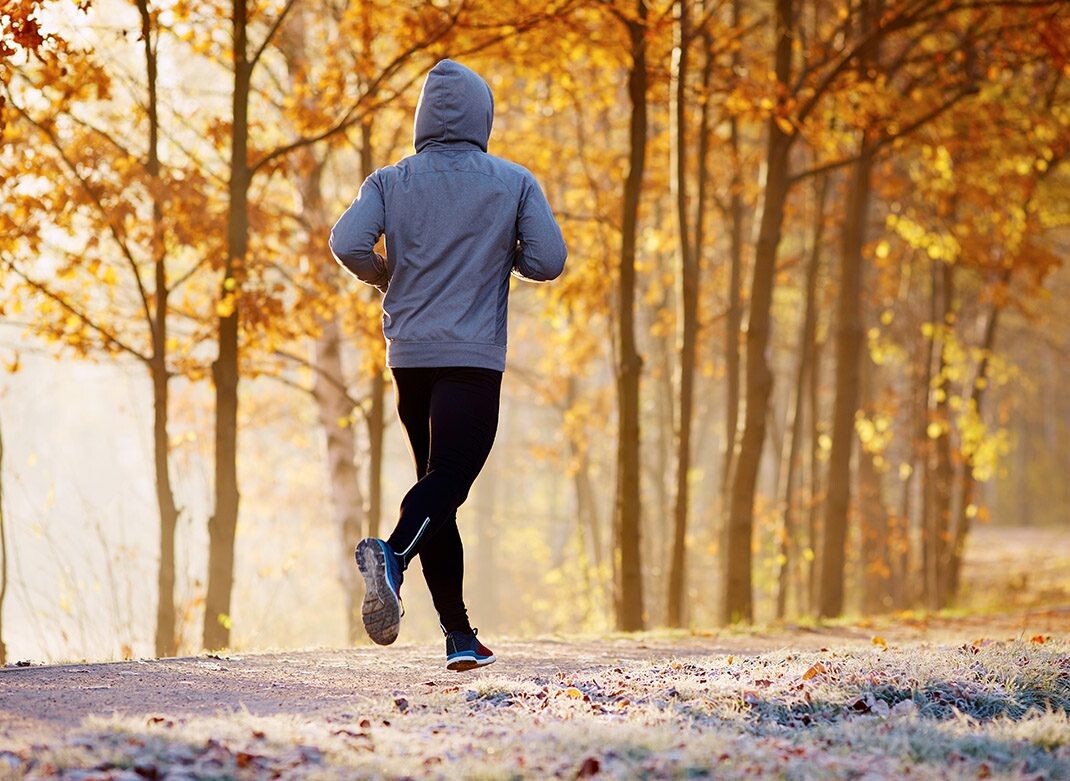
Short interval sessions are great for runners training for a 5K, or generally looking to improve their speed and racing tactics. The constant change of pace simulates the ups and downs of a 5K or mid-distance track race, helping you get comfortable with changing speeds on a dime.
The workout
15 to 20 reps of 15 seconds fast, 30 seconds float jog (continuous)
Each 15-second rep should be done at a comfortably-fast pace (at 5K pace or faster)—and the 30-second float should be done at a half marathon/marathon pace, a little faster than you would do easy runs.
The purpose of this workout is to train your body to become more familiar with faster paces on shorter, faster recovery. If training for your first 5K, aim for 15 reps and make sure you start slow. If you need to walk between reps, it’s a sign that you are pushing too hard during the 15-fast or 30-float.
An experienced 5K runner should aim for between 20 and 25 reps to simulate the pace changes of the race. Another great thing about this workout is that it can be done on any surface (road, track or trail), or the treadmill.
Adding one or two fartlek interval workouts to your weekly training regimen will quickly improve your speed and endurance, helping prepare your body and mind for faster efforts on race day.
(02/25/23) Views: 129Marley Dickinson
A Record-Breaking Day at the Osaka Marathon
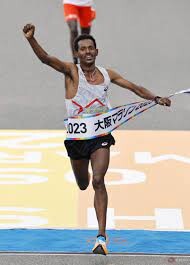
With five 180˚ turnaround points and serious hills in its last 12 km the Osaka Marathon course isn't the fastest around, but that didn't hold back record-breaking runs in both the women's and men's races. Great conditions, 5˚~7˚C, light clouds and very light winds definitely helped.
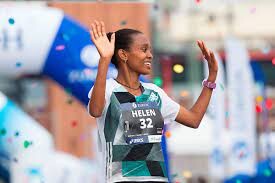
The women's race went steadily on 2:22 pace, an early group of six shaking down to just four, Japan's Momoko Watanabe (Tenmaya), favorite Vivian Kiplagat (Kenya) and Ethiopian duo Helen Bekele Tola and Beyenu Degefa, by 30 km with Australian a few seconds behind. Bekele made the winning break, pulling away to win in a course record 2:22:16. Watanabe, who came into the race with a best of only 2:30:42 PB, led Degefa in the home straight but lost out in the last kick. Degefa was 2nd in 2:23:07 and Watanabe 2:23:08 for 3rd, clearing the 2:24:00 auto-qualifying standard for MGC Race Olympic marathon trials qualification.
Only getting faster with age, the 43-year-old Weightman ran Kiplagat down for 4th in 2:23:15, beating her PB from last fall's Berlin Marathon by 45 seconds. Weightman is also entered to run next weekend's Tokyo Marathon. Misaki Nishida (Edion) and Yuri Karasawa (Kyudenko) also caught Kiplagat, Nishida taking 5th in a PB 2:25:51 to qualify for the Olympic trials and Karasawa running 2:27:27 in her debut but missing qualification by 27 seconds. The pre-race favorite, Kiplagat fell to 7th in 2:28:44.
The shinkansen effect was in full effect in the equally well-paced men's race, a quartet led by Tomoki Ota (Toyota) running with almost zero variation through 25 km in 1:15:00 and pulling along a pack of almost 50. After Ota stopped at 25 km the pacing over the next 5 km was a bit shakier, but after hitting 30 km in 1:30:13 and the remaining pacers dropping out Eritrean Merhawi Kesete initiated a series of attacks that saw six different athletes take the lead over the hilliest section of the course. Among them was former Toyo University Hakone Ekiden star Kazuya Nishiyama (Toyota), who made moves to the front twice while on 2:06 pace in his debut.
With 5 km to go Ugandan Victor Kiplangat threw off his hat and surged, pulling South African Stephen Mokoka, Tanzanian Alphonce Felix Simbu and #1-ranked Ethiopian Hailemaryam Kiros with him. Behind them a chase trio of Nishiyama and fellow first-timers Charles Kamau (NTN) and Yohei Ikeda(Kao) congealed, all three of them sub-61 half marathoners and on the cusp of hanging on to a 2:06 debut. Kiplangat, 2:05:09 in Hamburg last fall, did all the work up front, shaking off Mokoka and Simbu but unable to get rid of 2:04:41 man Kiros.
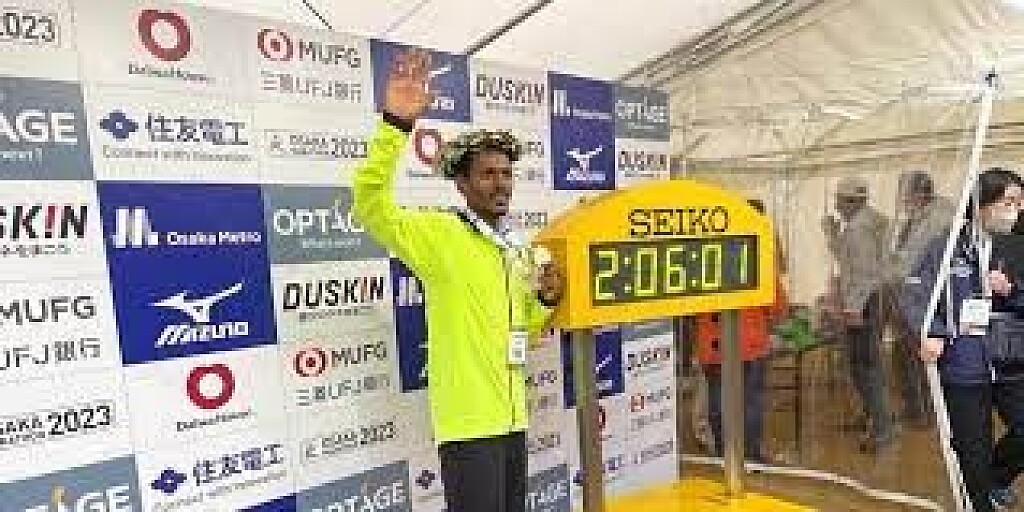
With just 200 m to go Kiros surged, taking the win in a 2:06:01 CR with Kiplangat just 2 seconds back. Simbu was 3rd in 2:06:19, but behind him Kamau closed hard to run down Mokoka for 4th, 2:06:37 in his debut to the veteran Mokoka's 2:06:42. Mokoka had a near-miss on the South African NR, finishing just 9 seconds off Gert Thys' 2:06:33 at the 1999 Tokyo International Marathon.
Both only 24 years old, Nishiyama and the Toshinari Takaoka-coached Ikeda were next in 2:06:45 and 2:06:53, each of them well under the old debut marathon NR of 2:07:31 set by last year's Osaka winner Gaku Hoshi. With Nishiyama having dominated Hakone's First Stage at Toyo and Ikeda having been the top Japanese finisher on its most competitive stage his fourth year the relationship between Hakone success and later marathon performance is clearer than ever. 2021 Olympic team alternate Shohei Otsuka (Kyudenko), another Hakone stage winner, closed hard to take 8th in 2:06:57 and make it three Japanese men under 2:07.
Already qualified for the Olympic marathon trials after a 2:11:41 debut for 2nd at August's Hokkaido Marathon, Yugo Kashiwa (Toyo Univ.) ran the 2nd-fastest collegiate time ever, 2:08:11, for 20th. Like Mokoka, Mongolian Jamsran Olonbayar came painfully short of the Mongolian NR, missing Ser-Od Bat-Ochir's 2:08:50 record by just 8 seconds at 2:08:58 for 29th. Tokyo Olympian Yuma Hattori (Toyota) had his best race since the 2019 trials, finishing 34th in 2:09:47, but will have to try again before the end-of-May deadline to hit a trials qualifier. Further back, visually-impaired T11 WR holder Shinya Wada broke his own best with a new world record of 2:24:29.
Including Nishiyama and Ikeda a total of nine men qualified for October's MGC Race Olympic marathon trials, along with Watanabe and Nishida in the women's race. The top 18 went under 2:08 and top 29 under 2:09, both bettering the numbers at the legendary 2021 Lake Biwa Marathon where 15 men were sub-2:08 and 28 sub-2:09. But this year's Osaka came up short of Lake Biwa's depth further down, with only 35 men sub-2:10 versus 42 at Lake Biwa. But with over 50 men on the entry list at Tokyo next week having run sub-2:10 in the last three years the stage is set for something even wilder there.
(02/26/23) Views: 128Brett Larner, Japan Running News
Japanese man runs 3:28 marathon in wooden sandals
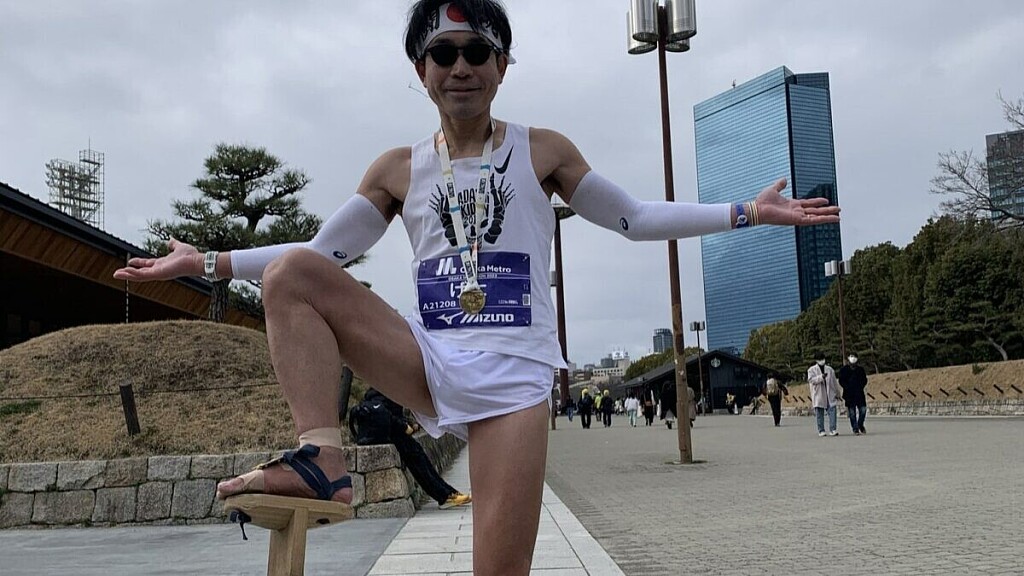
Finishing a marathon is hard enough, but one Japanese runner pushed his limits at the 2023 Osaka Marathon, clocking a three-hour and 28-minute marathon while wearing traditional wooden Japanese geta sandals.
Takanobu Minoshima, a 47-year-old runner from Sapporo, averaged a pace of 4:56/km over 42.195 kilometres while wearing the wooden shoes and even had the word “Geta” as his name on his Osaka Marathon bib.
His final finishing time was 3:28:11 for 2,896th place (out of 10,000+ runners), which is only eight minutes shy of the 2023 Boston Marathon qualifying time of 3:20:00 for his M45 to 49 age group.
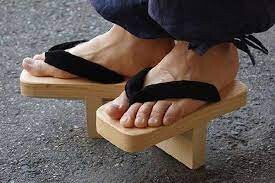
Geta are traditional Japanese sandals that are often paired with the yukata (robe) for informal occasions, such as summer festivals. The geta has a slab of wood attached to the foot with strings or ribbons and rests on a sturdy piece of wood (that’s a little higher than the maximum stack height allowed by World Athletics!). We have to hand it to him for being able to stay on his feet for an entire marathon while wearing these.
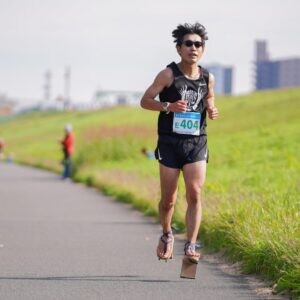
This isn’t the first time Minoshima has raced wearing geta. In 2019, he ran a 100K ultra race in 13 hours and 45 minutes at the Kamalai Shrine 100 in Taiwan. He has a marathon best of 2:59:20 from the Hokkaido Marathon in 2014, when he wore regular running shoes.
(03/02/23) Views: 122Running Magazine
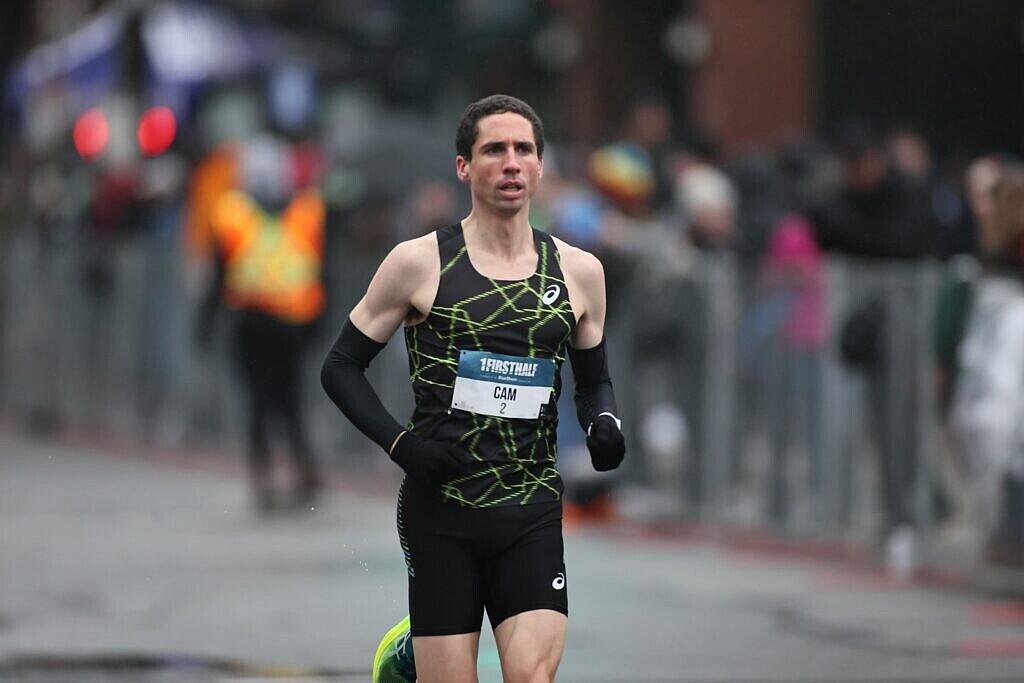
Cam Levins has signed with Asics
It is official–Canada’s fastest marathoner, Cam Levins, has signed a sponsorship deal with the Japanese sporting brand Asics.
The 2:07 marathoner spent the entire 2022 season unsponsored, after leaving Hoka in late-2021. His fourth-place finish in the men’s marathon at the 2022 World Athletics Championships was the highest finish by a Canadian in the men’s marathon at a major championship in the IAAF/World Athletics era.

Levins’s time of 2:07:09 shattered his previous Canadian marathon record of 2:09:25 from the 2018 Toronto Waterfront Marathon.
The 33-year-old continued his string of solid performances earlier this month when he smashed the Canadian half marathon record by 42 seconds at the Vancouver First Half, running 60:18. This was the first time a Canadian runner has gone under the 61-minute mark over 21.1 kilometers.
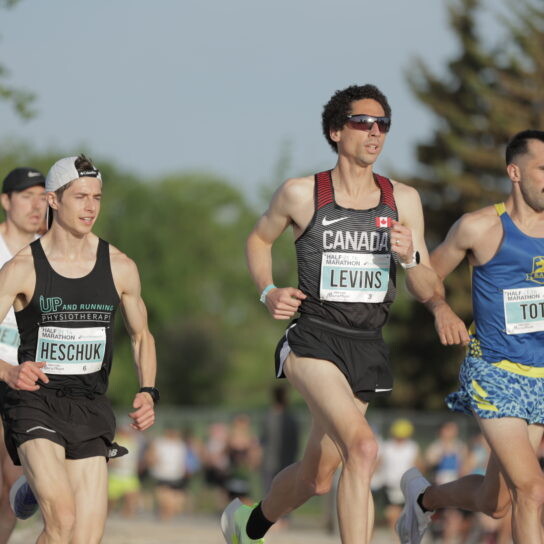
Levins is on the elite list for the 2023 Tokyo Marathon on March 5, and indicated to Kate Van Buskirk on Canadian Running’s The Shakeout Podcast that he’s “ready for something really special there.”
“I am excited to head back to Japan for another opportunity to compete in a major marathon,” Levins said on Instagram.
The last time Levins was in Japan, it was for the 2020 Olympic marathon in Sapporo, where he ended up finishing a disappointing 72nd. “The Olympics were a low point for me,” Levins said in an August 2022 interview. “I felt I was right there, but I realized I was so far behind the best in the world.”
The men’s field for Tokyo features nine sub-2:05 runners, including 2022 Amsterdam champion Tsegay Getachew; London 2021 champion Sisay Lemma and his former training partner and Japanese 5,000m (and formerly, marathon) record holder, Suguru Osako.
Levins currently lives and trains in the Portland, Ore. area, and is coached by Victoria’s Jim Finlayson.
(02/25/23) Views: 121
Marley Dickinson
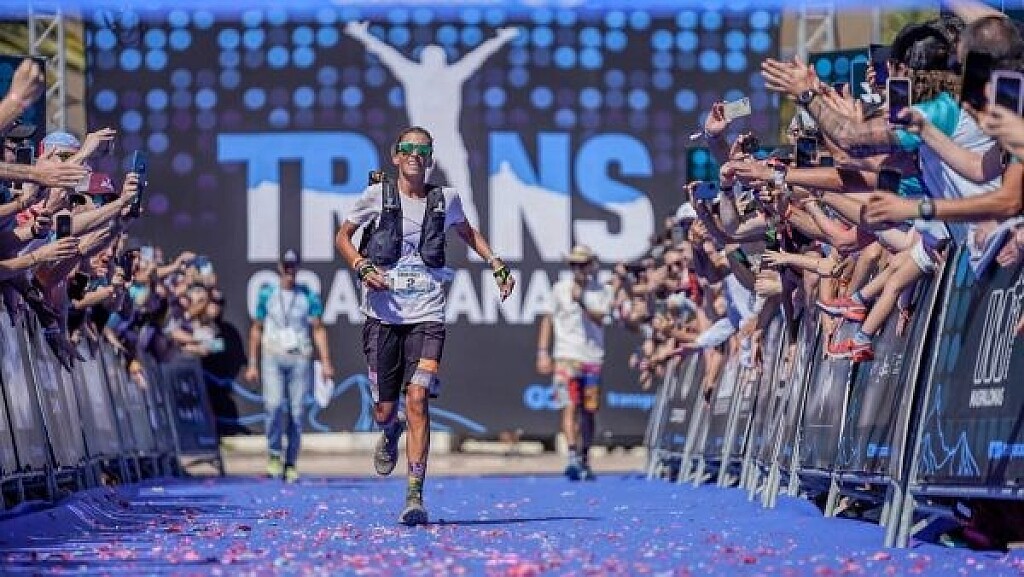
Courtney Dauwalter dominates Transgrancanaria in record-setting fashion
American ultrarunning star Courtney Dauwalter proved why she’s the athlete to beat on the ultramarathon scene after an incredible performance at the Transgrancanaria in Spain’s Canary Islands on Saturday. Dauwalter crossed the finish line of the 128K course in 14:40:39, a course record and almost two full hours ahead of second-place finisher (and Canadian) Jazmine Lowther. The Transgrancanaria marked the start of the 2023 Spartan Trail World Championships series.
Dauwalter’s dominance
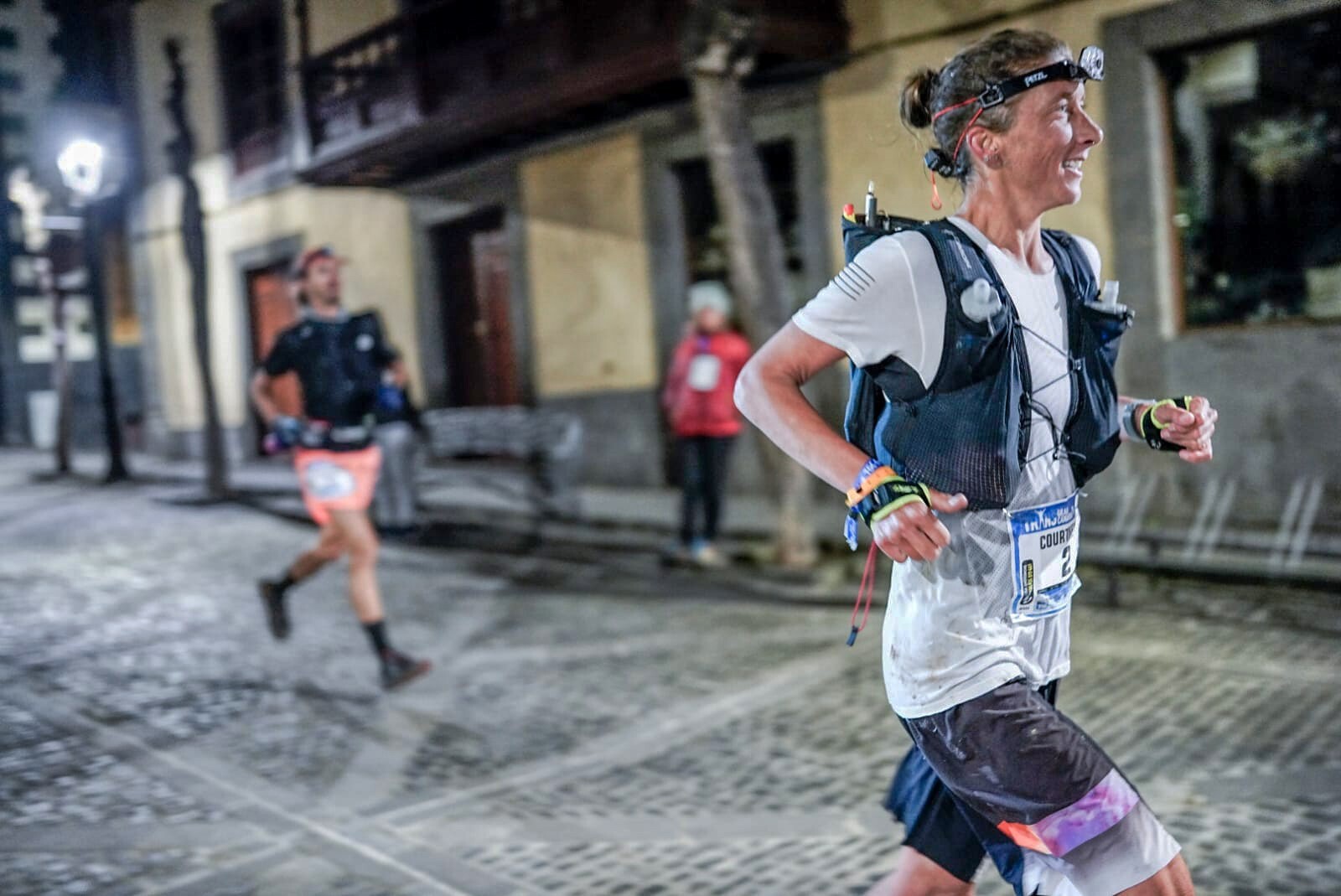
Everyone in the trail and ultrarunning communities knows that Dauwalter is an all-time great, but it’s still awe-inspiring when she shows up to hotly contested races and dominates her competitors. As listed on the trail and ultrarunning results database UltraSignup, Dauwalter entered the Transgrancanaria on a 14-race win streak that stretches all the way back to March 2021. (The last time she failed to reach the top step of the podium came at the Barkley Marathons.) She added yet another win to her resume on Saturday, extending that amazing streak to 15 and counting.
The Transgrancanaria is held on Gran Canaria, one of the Canary Islands, and it takes athletes along an arduous 128K course that features more than 7,000m of elevation gain. Dauwalter started the race chasing Lowther and Spain’s Claudia Tremps, who led for the opening stages of the run. About a quarter of the way into the race, Dauwalter took control of the field and moved into first place. From that point on, she never looked back, leaving Lowther and Tremps to battle it out for second place.
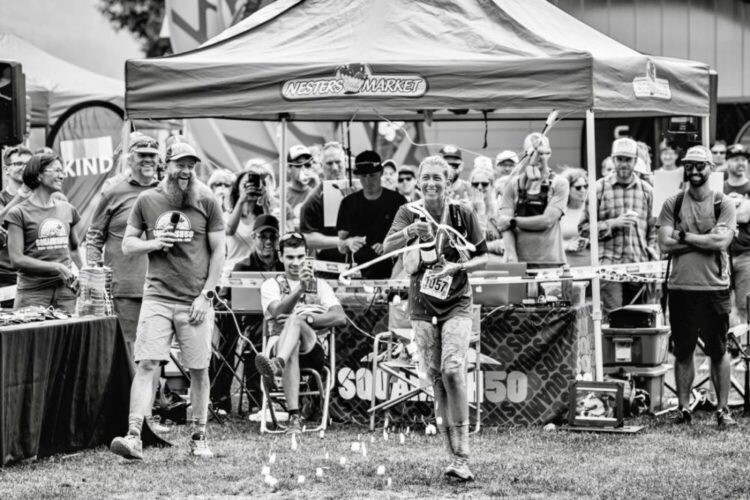
Dauwalter’s relentless attack on the course worked out to an average pace of 6:53 per kilometer, a blazing speed to hold in a race as long and as difficult as the Transgrancanaria. More than 90 minutes behind her, the race for second was quite close. Lowther and Tremps ended up just seven minutes apart, with the Canadian crossing the line in 16:26:41 and the Spaniard stopping the clock in 16:33:34.
In the men’s race, Spain’s Andreu Simon won in 13:39:33, followed by Portugal’s Miguel Arsénio (13:44:37) and American Tyler Green (14:06:46).
(02/27/23) Views: 120

5 one-liners to use on runners
Runners are complex individuals. One of the best ways to get to know a runner you’d like to date is by doing the thing they love with them. But how do you break the ice? There are plenty of cheesy running lines out there, but you need to make sure your icebreaker is 1) clever, and 2) effective.
If you are on dating apps, it’s easy to get excited when you come across someone who shares your hobby. Asking a runner, “What are you training for?” or “What’s your Strava?” can seem too forward. Instead, try any of these running-inspired one-liners to spark your sense of humour and showcase your knowledge of the sport.
Is your middle name Garmin? Because you make my heart race!
Simple. Witty. What more could you ask?
Roses are red, violets are blue. Do you mind if I come on a run with you?
Who doesn’t love a good rhyme–or a running partner? According to Women’s Health, any fitness challenge between two parties is great for emotional bonding, attraction and motivation. Plus, you get to help each other chase training goals.
Is this a speed workout? Because you just took my breath away!
It might be a bit on the cheesy side, but in our eyes, it’s a 10.
You must be a marathoner, because you’ve been running through my mind all day!
This line could also work on ultrarunners–but they’re likely still out there.
Your PB isn’t the only number I’m interested in.
A personal best can last a year or two, but nowadays, a phone number can last forever… unless they change it.
(02/25/23) Views: 112Running Magazine
Betty Lindberg sets world 5k record for age 98
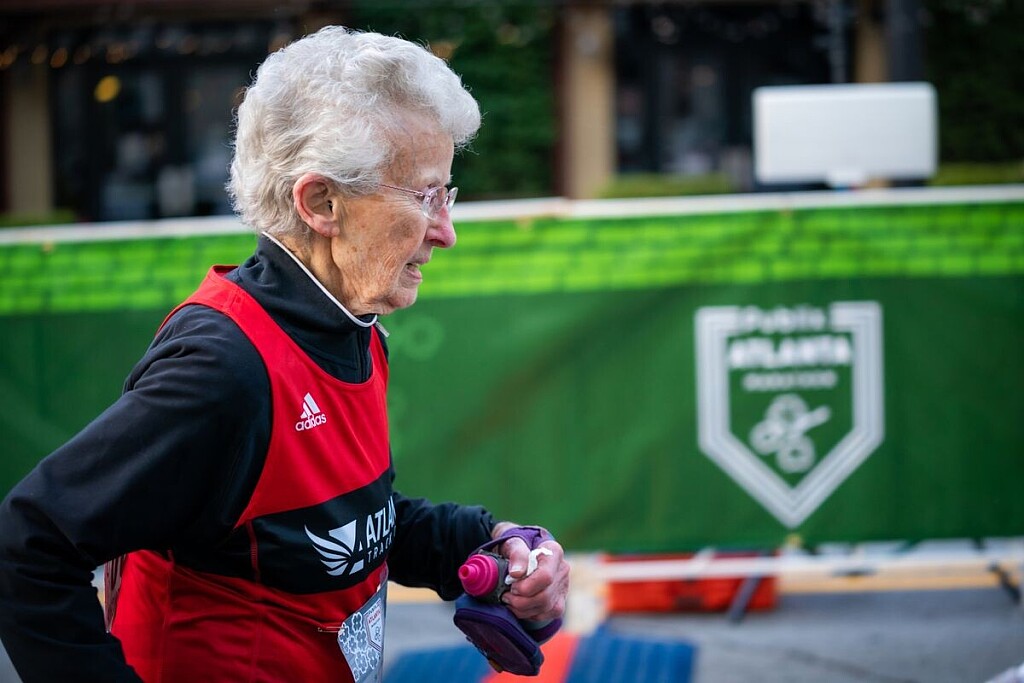
At 98 years old, Betty Lindberg continues to demonstrate that age is merely a number. This past Saturday, Lindberg, the world age-group record holder in the 5K, completed the Publix Atlanta 5K in a blazing 59 minutes, 6 seconds, an accomplishment that topped her age group at the USATF Masters 5K Championships. Lindberg, who walked for the duration of the race, clocked an 11-minute per kilometer pace.
Lindberg was greeted with flashing cameras and applause from fellow runners as she crossed the finish line. Still, the nonagenarian was oblivious to the fanfare as the first thing she did after crossing the timing mat was, of course, stop her watch.
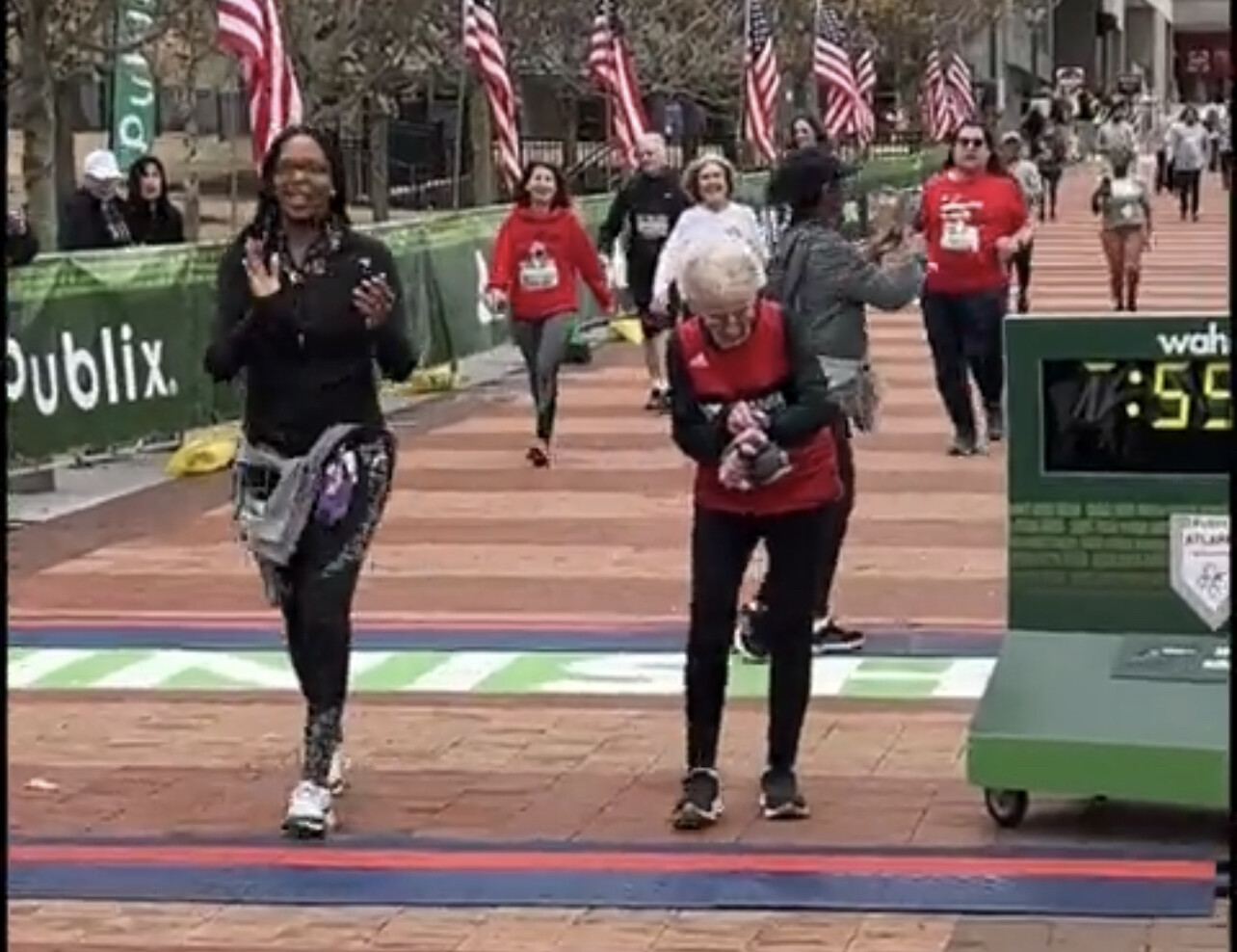
Last year, the Atlanta native made headlines when she crushed the previous 5K world record for her age group by more than 30 minutes, running a time of 55:48. That record, set in 2017 by 96-year-old Betty Ashley, was 1:28:36. (If you are a Betty between the ages of 95-99, you have a decent shot at toppling a record.) She told local media at that race she thought the record was achievable but was amazed at her record-breaking speed. “I simply stroll, as quick as I can,” Lindberg told the Atlanta Journal-Constitution.
Lindberg has been making local headlines for years with her racing exploits. She began running in the Atlanta Journal-Constitution Peachtree Road Race, an annual 10K, after driving her children to the race’s starting line in 1988 and feeling inspired by the runners there. “I was watching all these people come running by, and I said, ‘I can do that,’” she told WXIAlast year.
“I always say I’m never going to do it again,” Lindberg, then 97, told the news outlet in 2022. “I guess I just don’t know any better. As soon as I get across that finish line, all the aches and pains just disappear.” Since her first race in 1989, she has only missed one Peachtree Road Race.
At 91, Lindberg broke the world record in the 800m for women over 90 at an All Comers Track and Field Meet hosted by the Atlanta Track Club. Her time of 6:57.56 outdid the previous record of 6:59.18 set in 2001.
Lindberg works with a personal trainer three times a week to stay in top racing form while still getting in runs around her neighborhood regularly.
With Lindberg’s inspiring story, she serves as a reminder that age should never keep anyone from running. Take it from Lindberg herself, who told Runner’s World last year: “At 97, why are you supposed to do so poorly?”
(02/28/23) Views: 111Runner’s World
10th edition of the 10k FACSA Castelló report
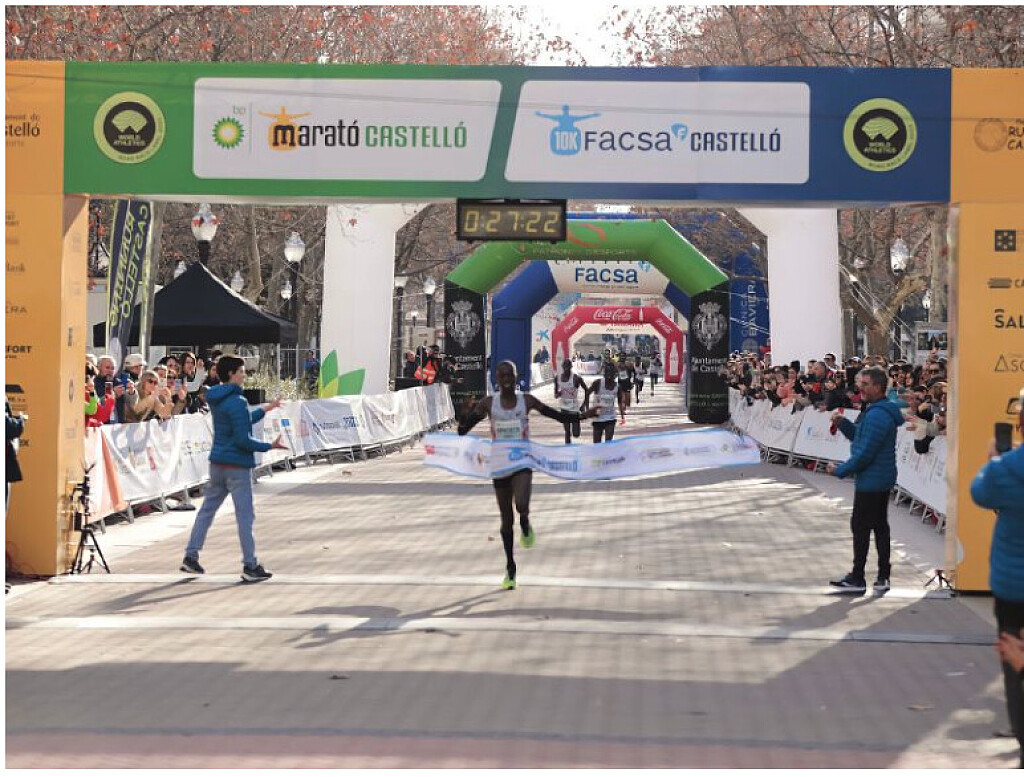
This morning the tenth edition of the 10k FACSA Castelló race was held, in which the presence of elite athletes and the interest of international runners in visiting the city and improving their times stood out. The test has started at 9:00 am and has had a high density of participants who have achieved times under 28 minutes.
The Kenyan athlete Hillary Kiproech has been the first to cross the finish line with an impressive mark of 27:23, although she has not managed to surpass the test record reached in 2022 by Ronald Kwemoi (27:16).The podium was completed by Patrick Kabirech, also a Kenyan, in second place, with a time of 27:26, advancing practically together throughout the race, and Kenyan David Kimaiyo in third place, with the same time of 27:26.
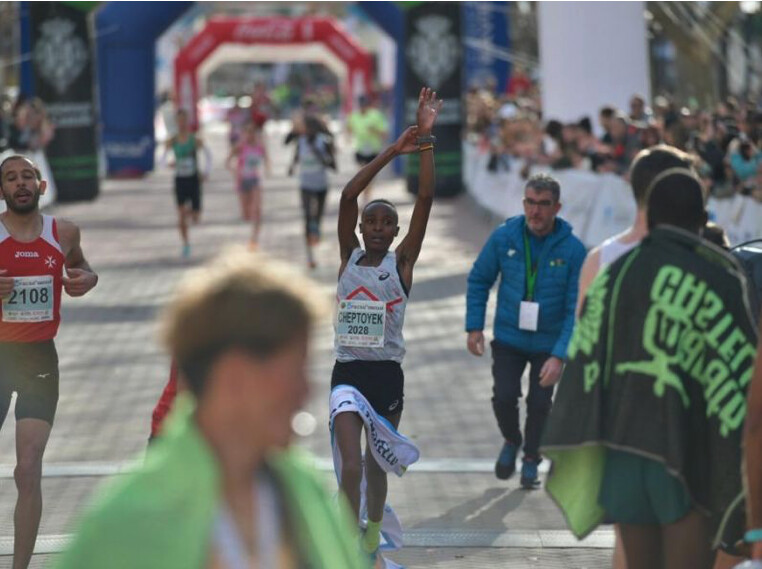
As for the men's category, it should be noted that the German record has been broken thanks to Amanal Petros, fourth classified, with a time of 27:32.In the women's category, the Ugandan athlete Joy Cheptoyek has managed to stop the clock at 30:50, but she has not been able to surpass the record time of Yalemzerf Yahualaw, who set the world record last year (29:14) and therefore , the test record.
The second classified was the Kenyan Edith Jepchumba, with a time of 30:53, and in third place was the Japanese Rino Goshima, stopping the clock at 30:55 and thus establishing a new Japanese record.
Regarding the regional classification of this edition, the winners in the men's category have been Rubén Belloví (30:55), Pablo Alba (30:59) and Guillem Segura (31:04), while in the women's category they have been Vanessa Romero (35:07), Bárbara Ramón (35:31) and Carmen Amaro (37:45).
As for the athletes from Castellón, those who have climbed to the podium are Rubén Belloví (30:55) and Pablo Alba (30:59), and in third place, Alejandro Benages (32:26), while in the female category, the first three positions have been occupied by Nuria Conejos (38:41), Patricia Cabedo (39:58) and Lorena Martínez (40:27).
It is important to note that in this edition, the 10k FACSA Castelló has achieved international recognition, the World Athletics Road Race Label, like its older sister, the bp Castelló marathon, which has revalidated it. Both races are a worldwide benchmark and have attracted more than 3,100 athletes in this edition.
The excellent results obtained in recent years are largely a consequence of the redesign of a circuit that is increasingly faster, straighter and flatter. These results reflect the upward trajectory of the sporting event.
(02/26/23) Views: 106
