

Running News Daily
Top Ten Stories of the Week
12/3/2022
These are the top ten stories based on views over the last week.
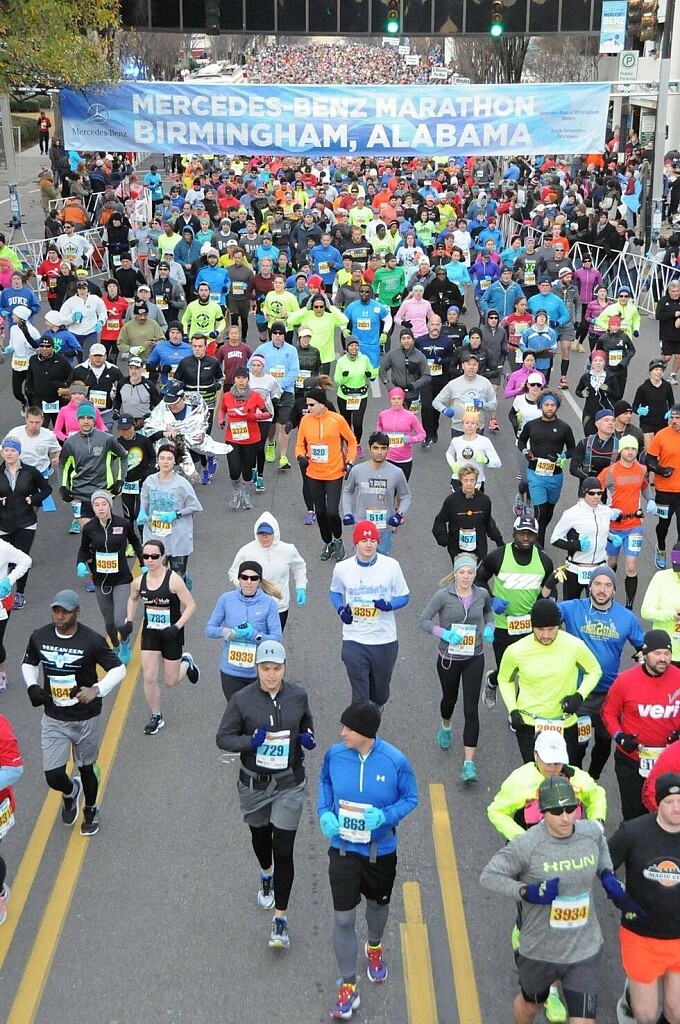


Mercedes-Benz Marathon announces final race in Birmingham
Mercedes-Benz Marathon Weekend of Events, presented by Birmingham Marathon, Inc. and Mercedes-Benz U.S. International (MBUSI), announces its final race weekend to take place in Birmingham Feb. 10-12, 2023. The 21-year partnership with Mercedes-Benz U.S. International has attracted more than 200,000 runners, has helped local charities raise in excess of $5 million dollars and provided more than $60 million in direct economic impact for the Greater Birmingham region. Comprised of a Full Marathon, Half Marathon, Marathon Relay, The Bell Center Children’s Run, Regions Superhero 5K and Kids Marathon presented by Blue Cross and Blue Shield of Alabama, each race will still start and finish at Birmingham’s Linn Park, where more than 10,000 runners are expected to participate. Founded in 2001, the Mercedes-Benz Marathon Weekend of Events benefits The Bell Center for Early Intervention Programs along with other local charities.
Participants and spectators are invited to celebrate the grand finale of the race in February. Although the Mercedes-Benz Marathon Weekend of Events remains Alabama’s premier running event and boasts the country’s largest Kids Marathon, increases in event production costs and a decline in financial and other resource support have led Birmingham Marathon, Inc. to consider new events and avenues to support local beneficiaries.
“With this being the finale of the prestigious Mercedes-Benz Marathon Weekend of Events, we want to say how tremendously thankful we are of all the support we have received from Mercedes-Benz U.S. International, the community and countless sponsors throughout our more than two decades in existence,” said Valerie McLean Cuddy, Mercedes-Benz Marathon Weekend of Events Founder. “We hope this year will be the biggest and best race weekend we’ve ever put on and we can’t wait to give participants an incredible experience. We hope the future holds plans for other events to come that will benefit The Bell Center.”
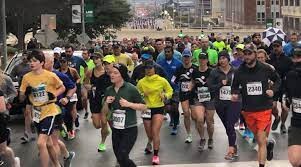
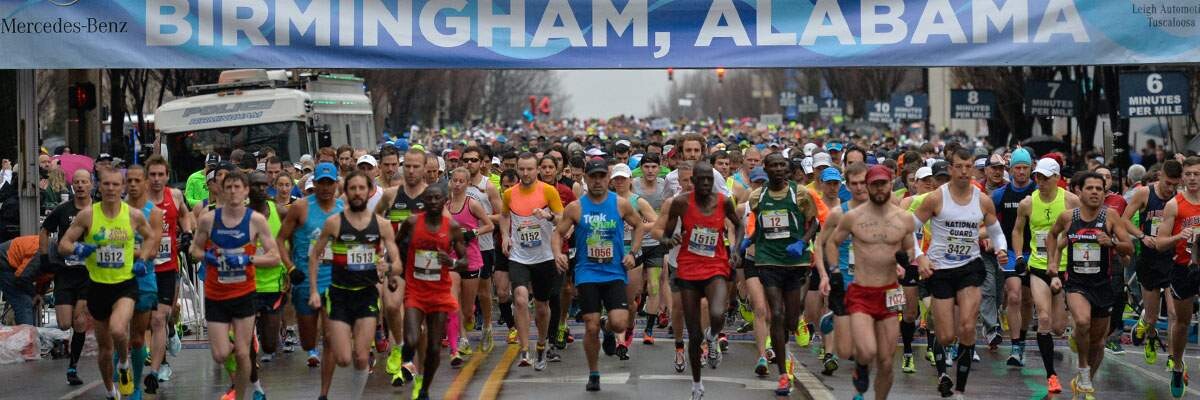
A Boston Marathon qualifying race and previous host for U.S. Olympic Men’s Marathon Trials, the Mercedes-Benz Marathon Weekend of Events has offered regional, national and international runners a unique running experience full of Southern hospitality and charm.
“It has been an honor to put our name and faith behind what has become one of the biggest, most talked about races in the southeast,” said Mercedes-Benz US International CEO Michael Göbel. “MBUSI understands how important it is to support our local community. We believe our success is linked with the growth and vitality of those around us. By lending our time and a helping hand to worthy causes like the Mercedes-Benz Marathon Weekend of Events benefiting The Bell Center, their successes will in turn make our community an even better place.”
As the official benefactor of the race, The Bell Center provides crucial early intervention therapy services to help children maximize their unique potential. Each year, The Bell Center’s 16 therapists and dozens of volunteers serve hundreds of families from the Birmingham metro and surrounding areas. The Mercedes-Benz Marathon Weekend is The Bell Center’s largest fundraiser every year and brought in $175,000 in 2022, with more than $3 million raised specifically for the organization in the race’s history. Many times, The Bell Center, which was founded in 1984, is the first call parents make after they have learned their child has a diagnosis of Down syndrome, cerebral palsy, autism, brain injuries, blindness or more than 100 other genetic diagnoses or delays.
“At The Bell Center, not only do we care deeply for the children we serve, but we embrace our responsibility in building community for people with special needs starting with our children,” said Jeannie Colquett, executive director of The Bell Center. “The Mercedes-Benz Marathon Weekend gives us an enormous opportunity for everyone to see our children as children first. We’re sad that this is the final Mercedes Marathon Weekend, but The Bell Center will continue well beyond this weekend serving our children and their families and helping them to continue to play an important part in the fabric of our community.”
The Mercedes-Benz Marathon Weekend of Events includes The Bell Center Children’s Run on Saturday, Feb. 11, where the children from The Bell Center will showcase their individual potential as they cross the official marathon finish line.
“The crowd really looks forward to this part of our event - there isn’t a dry eye among the thousands of spectators when this takes place,” says Cuddy. “Seeing the children walk, run, cycle or be pushed in strollers to that finish line is one of the most rewarding moments for us all. It shows the determination and perseverance of the children and their families.”
The race’s BellRunner program is designed to motivate and support participants who agree to raise $100 per mile for The Bell Center when they run/walk the Marathon, Half Marathon, Relay Marathon or Superhero 5K. The program pairs a participant with a child who is receiving life-changing early intervention therapies at The Bell Center, and the runner/walker will train and raise funds in the name of that child. Many runners say it is an awesome, life-changing experience to dedicate hours of training and focus for a child at risk for developmental delay and then share the race day adventure by wearing a photo of The Bell Center child.
Additionally, other local organizations and individuals can also create teams to run for their own cause. Mercedes-Benz Marathon Weekend provides an excellent opportunity for charities and organizations to raise funds for a cause without the hassle and expense of hosting their own event. Team members are encouraged to participate in and fundraise at any weekend events that meet their personal abilities, allowing charities to benefit from all events of the weekend.
(11/29/22) Views: 140
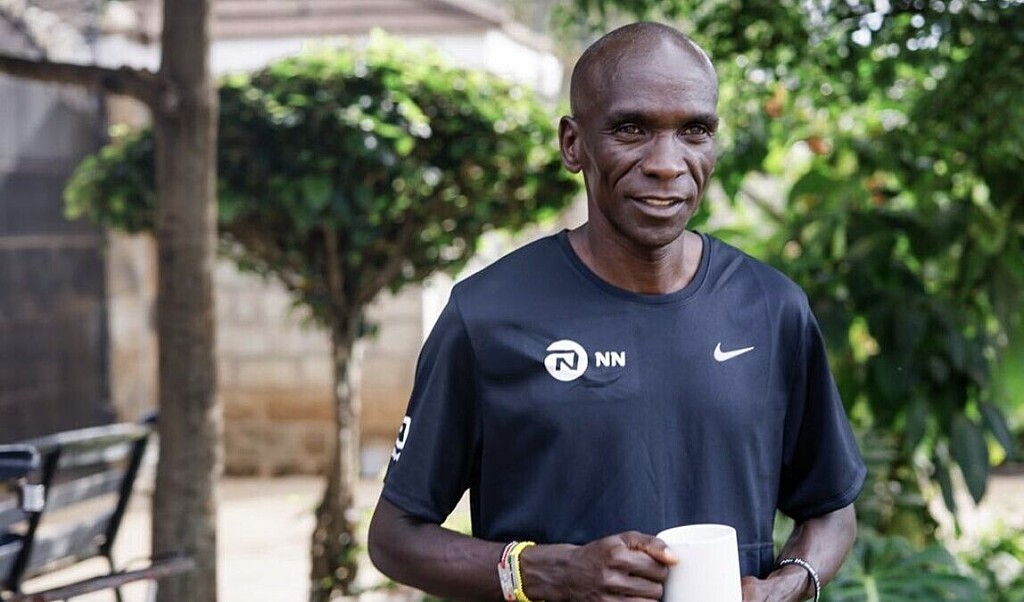
Recover like Kipchoge: three simple ways you can be like the GOAT
The world’s fastest marathoner knows how to take care of himself. Eliud Kipchoge, 38, lives and trains at the NN Running camp in Kaptagat, Kenya. While the athlete is constantly in demand to share his wise words and insight with the world, he knows how to say no (he calls it Vitamin N) in order to keep his focus where it is most needed.
Here are three simple ways Kipchoge makes sure he takes care of his body and mind during his downtime. Most of us wouldn’t be able to keep up with Kipchoge on a training day, but we can certainly follow his recovery plan.
Sleep is essential
Aim for a minimum of 8 hours of sleep a night. Research increasingly shows how essential sleep is to all aspects of our lives, and how detrimental spending months or years sleep-deprived can be. Kipchoge gets close to 10 hours of sleep daily.
Kipchoge follows a strict sleep schedule, heading to bed by 9 pm at night and rising at 5:45 am. He also fits in a daily nap. Sports writer and commentator Cathal Dennehy spent three days in 2021 at Kipchoge’s training camp, and writes: “Despite the many demands on his time, he’s very, very good at doing nothing.”
Hydrate well, and eat nutritious food
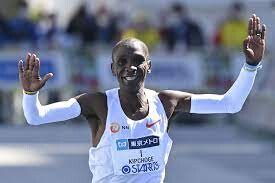
The exact amount of water we need to drink is oft-debated, but you’re probably not drinking enough. Kipchoge hydrates well and his diet consists largely of simple, whole foods. The GOAT has worked with a nutritionist to tweak his diet for optimal performance, including adding more protein. Many runners tend to eat less on recovery days, thinking their bodies don’t need as many calories–but we actually need to dial in nutrition on recovery days to help our bodies repair tissue damage and become stronger. Protein is essential.
Dennehy observed that Kipchoge eats simple, mainly local food: “homemade bread, local fruits and vegetables, lots of Kenyan tea, some meat, and a generous daily helping of his favourite–ugali, a dense maize-flour porridge.”
Massage and physiotherapy are fantastic (but so is listening to your body)
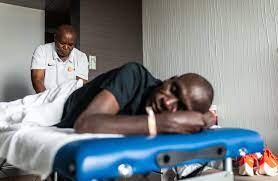
Kipchoge sees his long-time physiotherapist, Peter Nduhiu, twice a week for a massage. The athlete hasn’t reported any major injuries, and Nduhiu says there’s a reason for that. “He hasn’t had injuries, but he makes it easy for me, because he follows what the coach says,” he explains. “If you’re managing an issue and tell him to slow down, he does exactly that.”
Massage and physiotherapy are fabulous tools if they are accessible to you. If they aren’t, self-massage and mobility work can help. Most importantly, listen to your body: if Kipchoge slows down to help his body recover well, so can you.
(11/28/22) Views: 109
Running Magazine
Imagine running a one hour seven minute half marathon inside an airport
When most of us get to the airport, we tend to spend the extra hours looking at the duty free or just consuming expensive coffee, but why not use that time to get a bit of training done?
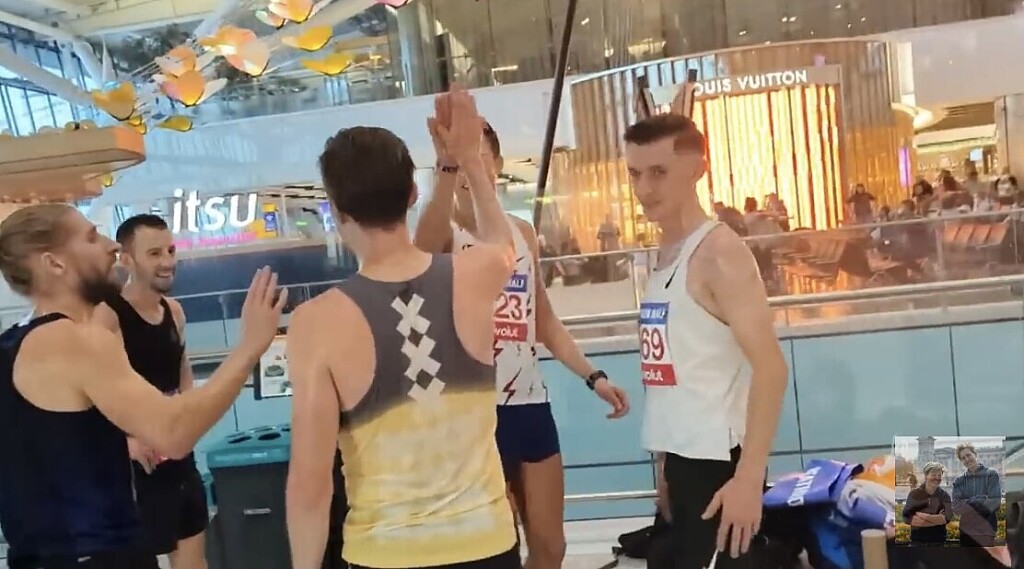
Well, YouTubers Josh Pieters and Archie Thomas Manners went one step further and organised a half marathon race in Terminal 5 at Heathrow airport.
The logistics of pulling it all off involved recruiting some pro runners, buying plane tickets to Belfast (because it was the cheapest flight they could find) and measuring a 2.1-km loop around the departure lounge, for runners to complete 10 times – all while dodging security. The result? A half marathon like no other.
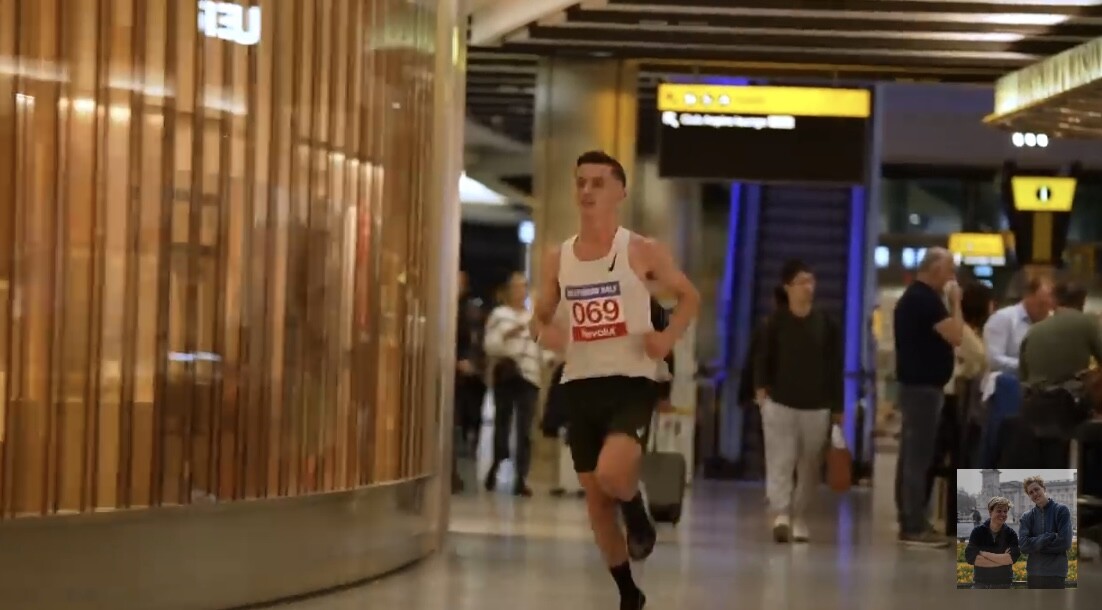
Runners needed to successfully complete the distance between clearing security for their flight and arriving at their gate, which closed 4o minutes before departure.
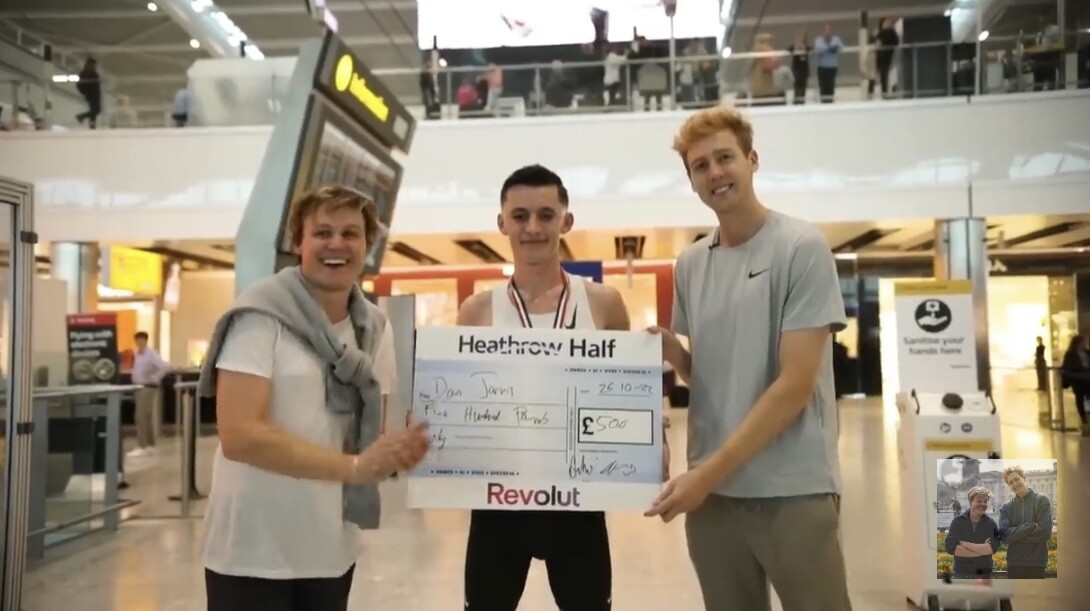
Pro athletes taking part included Team GB athletes Josh Griffiths, who has run a 2:11:24 Marathon, and Steeplechaser Dan Jarvis.
Jarvis took the win in 67:30, just in time to receive his medal and arrive at his gate – and with a whole 10 minutes to spare.
Bandit races are not a new thing and modes of transport have often been the source of inspiration – remember this Race To The Tube video from a few years ago?
Why? We're not sure. But they certainly make for good viewing.
(12/01/22) Views: 109Runner’s World

No ban for Kenya, says World Athletics president sebastian Coe
World Athletics president confirms east African nation will not receive a global suspension from the sport despite an alarming spate of drugs positives.
Speculation that Athletics Kenya will be barred from international competition was proved unfounded on Wednesday (Nov 30) when World Athletics president Seb Coe said the country has escaped a ban but will continue to sit on an anti-doping ‘watch list’.
Speaking at a World Athletics council press conference in Rome, Coe said the large number of top Kenyan athletes to test positive for drugs was “concerning” but the nation will not receive a Russian-style suspension due to, among other things, a pledge by the Kenyan government to plough $5 million per year into anti-doping efforts over the next five years.
“World Athletics has been concerned,” said Coe. “Kenya has been on the watch list for a few years already.
“In one year 40% of all the positive tests in global athletics have been in Kenya and this is not a situation that World Athletics was prepared to sit and watch develop.”
Coe added that there has been “a lot of recent reportage, some of which has been correct and some not. But we have made real progress.”
As well as the Kenyan government funding, Coe said the Athletics Integrity Unit (AIU) will continue to work closely with Kenya to implement the plan.
He added: “All stakeholders internationally and domestically are now aligned to resolve this situation and I am pleased we have a united response. But my instinct tells me it will be a long journey.
“This has to be collectively driven through all the stakeholders, internationally and domestically, who have a role and responsibility to solve this as quickly as possible.”
Coe said money would be spent on anti-doping education and “a deeper dive into the entourage of some of the people who surround the athletes”.
This, he said, “allows us more horsepower to challenge some of these issues”.
Kenya aside, an update on the ongoing Russian ban was tackled by Coe and Rune Andersen, head of the World Athletics taskforce on restoring Russia to global competition.
Coe emphasised that two separate sanctions exist – the anti-doping related ban and the sanction relating to the Russian invasion of Ukraine.
With regards anti-doping, good progress and cultural change has been made and Russia’s possible reinstatement into competition will be discussed again in March 2023.
Related to this, the Ukrainian Athletic Association was awarded the ‘president’s award’ as part of the World Athletics awards with Coe presenting Ukrainian AA president Yevhen Pronin with the honor during the press conference.
“I couldn’t think of anyone worthier than this for this year’s award,” said Coe. “What the Ukrainian Athletics Federation president, the coaches, and the athletes have done is just worthy of everyone’s respect and recognition.”
Elsewhere, Coe spoke about 2022 being “an immensely strong year for athletics” with four World Athletics Series events involving more than 4000 competitors from 180 countries with 554 national records and a television audience of more than one billion people.
The World Indoor Championships in Belgrade had an economic impact of $43m with the World Championships in Oregon having an impact of $273m.
The Continental Tour, meanwhile, saw 162 events with 12,000 athletes across 159 nations with 118 national records and 2400 PBs. Diamond League figures, Coe added, were not yet available for 2022.
Further council decisions included awarding the World Relays to Bahamas in 2024 as a qualifying event for the Paris Olympics. The road mile will become an official world record event from January. And the World Road Running Championships will switch from a biennial event to annual from 2025.
(11/30/22) Views: 97
Jason Henderson
Tips for Your First Ultramarathon
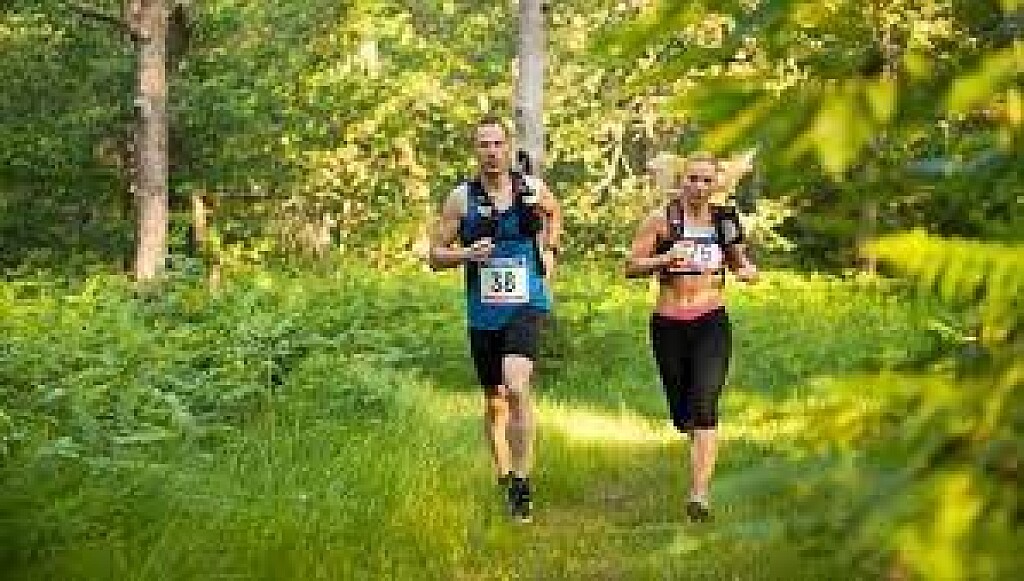
By definition, an ultramarathon is anything longer than 26.2 miles. Maybe you've run a marathon and you want to a new challenge. Maybe you've never run farther than 13.1. Ultramarathons are just like any other running race--any able body person can complete one. Ultras are becoming more popular every year. Whether it's 50K, 50 miles, 100K, 100 miles or more, here are 10 tips for tackling your first ultramarathon.
Don't Carry Too Much Stuff With You
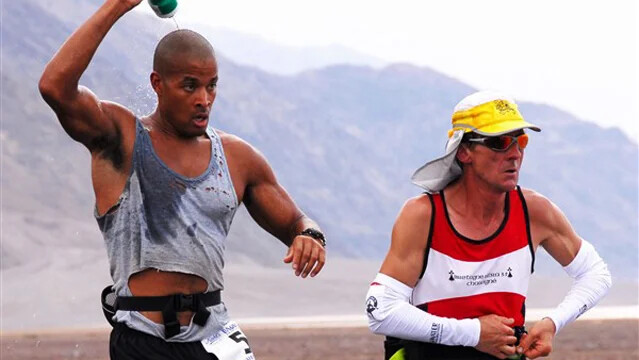
It's tempting to pack everything but the kitchen sink in your hydration vest for those "just in case" moments. But there's no need to carry the extra weight if the aid stations are stocked or you have a crew. Less is best if you can get away with it.
Know the Aid Stations

Knowing how far apart the aid stations are from each other will help you plan if you need to use a hydration vest, a handheld bottle or strictly rely on course aid. Most races also list what will be available for nutrition and hydration at each station. Decide prior to the race if you will be using your own nutrition or hitting up the fuel provided.
Stick With Your Hydration/Nutrition Plan
During your training, practice your hydration/nutrition plan. Finding what works for you prior to race day will help eliminate any surprises. Don't be tempted to change things up when you hear some other runners talking about their nutrition plan. Stick with what works for you. Eat early, eat often and don't stop eating/drinking in the later miles because you think you are almost done. The last thing you need is to bonk a few miles from the finish line. Keep up with your nutrition plan for the duration.
Run by Effort, Not by Pace
There are so many factors that go into your race day pace, like elevation, trail conditions, weather, and terrain that it's best to go by the effort you are putting out rather than what your GPS watch says.
Don't Let Race Day Adrenaline Dictate Your Effort
Just like any race, it's hard not to run fast as soon as it's go time. The adrenaline is pumping, and you are feeling GOOD. That feeling will not last. Sooner or later, those faster miles will catch up with you.
Power Hike the Hills
Want to know a secret? Almost every single person in an ultramarathon walks at some point. Even the winners might do it! Power hiking the hills is a great way to conserve energy. Plus, you most likely will cover the hills quicker by hiking than running.
Run the Mile You Are In
It's easy to let your mind wander to the miles that lie ahead. However, thinking of running 50 miles at one time can seem impossible. Stay present in where you are. Breaking down the race into smaller sections, like aid station to aid station, will make it seem more attainable.
You Will Cycle Through Feeling Good and Not-So-Good Multiple Times
The good thing about the distance in an ultra is that it's long enough to feel good again after feeling bad. Don't feel like the race is over as soon as you start to feel poorly. Assess the situation (usually it's an eating or nutrition issue), and take care of it. You'll probably feel better in a few miles.
Repeat Your Positive Mantras Throughout the Race--Even When You Are Feeling Good
The physical side of running is tough, but the mental side is what's going to get you across the finish line. Having positive mantras on repeat, even when you are feeling good, will keep you mentally in the race. When a negative thought pops up, replace it with a positive one.
Keep Moving Forward
A body in motion, stays in motion, right? Resist the urge to linger at aid stations too long. Grab what you need and keeping moving. The more time you spend sitting or standing still means you are losing the forward momentum to keep going.
(11/26/22) Views: 90Angela Bakkala
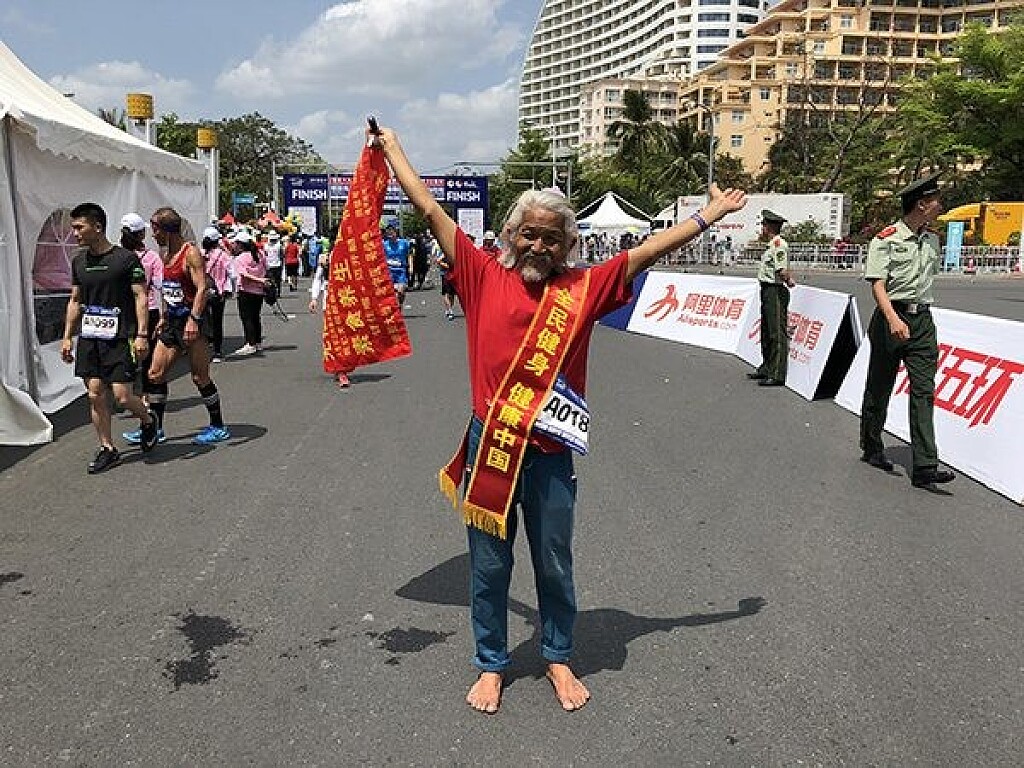
This marathoner just completed his 237th barefoot marathon
In the days of performance-enhancing footwear, 65-year-old runner Wu Jiase refuses to make the jump to wearing shoes, completing his 237th barefoot marathon at Sunday’s Xiamen Marathon in Xiamen, China.
Jiase, known by his nickname “the barefoot fairy” because of his unique running style, completed the marathon in five hours and 16 minutes wearing his signature pink T-shirt, blue singlet and rolled-up sweatpants. He has a barefoot best of 3:06 from the Beijing International Marathon in 2007, when he was 50.
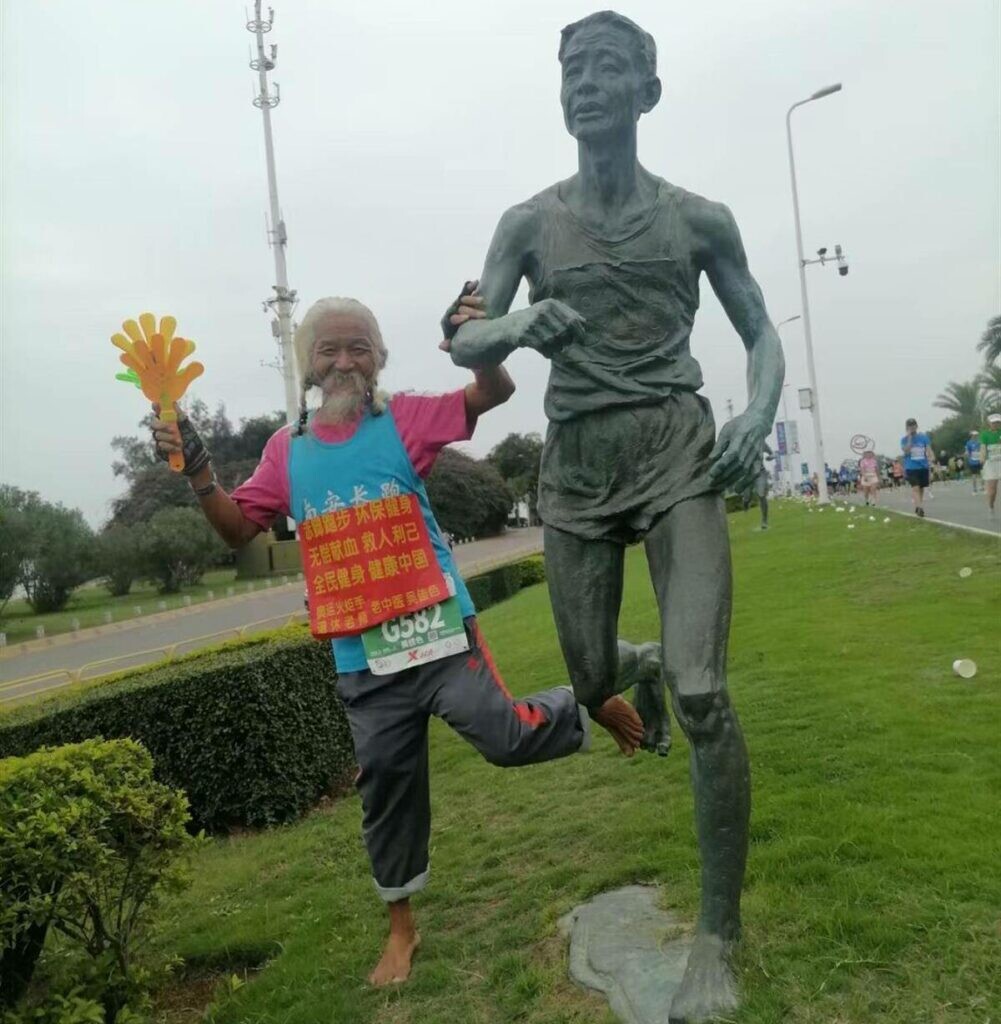
His first barefoot marathon was 20 years ago, in Xiamen, and he has since completed 236 marathons all over the country. Jiase doesn’t only race barefoot, he reportedly trains 70 to 100 kilometers a week in his hometown of Quanzhou. The reasoning behind his barefoot running is that a marathon will hurt the soles of your feet no matter what, so running barefoot is a test of his strength and perseverance.
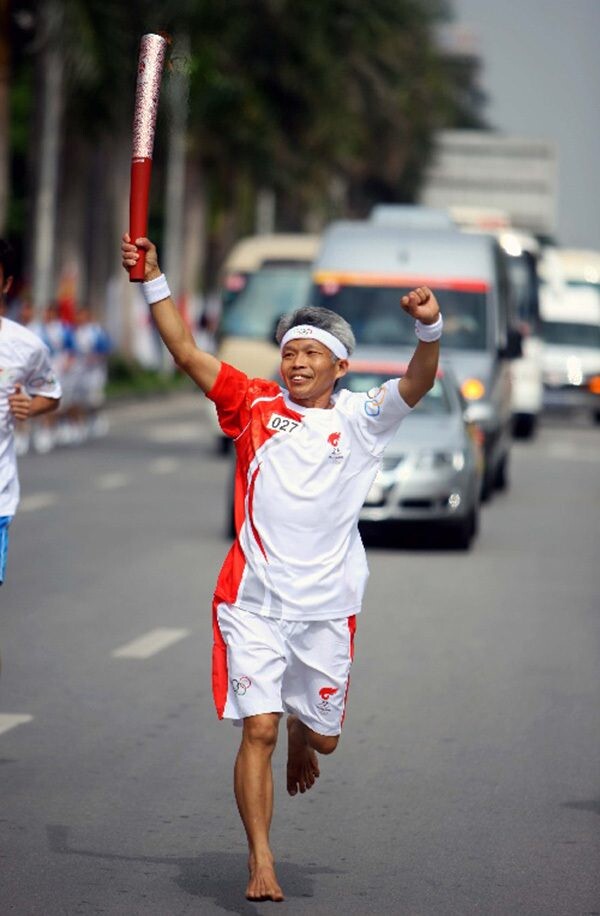
Jiase is a celebrity within the Chinese running community—the organizers of the Xiamen Marathon have created a statue of him. He also ran a leg of the Olympic torch relay at the 2008 Beijing Olympic Games.
His goal is to continue to run barefoot until age 85. His health has also allowed him to give back; he says he’s been able to donate over 390 liters of blood since he’s started running marathons.
Running Magazine
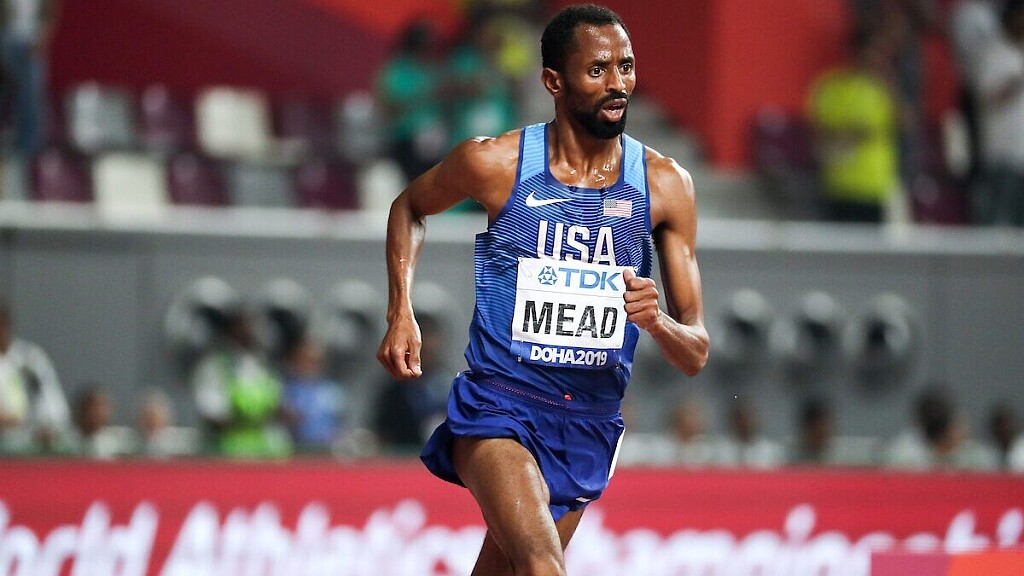
U.S. Olympian Hassan Mead accepts three-year doping ban
Former U.S. Olympian and 2018 NACAC 10,000m champion Hassan Mead has accepted a three-year suspension for an anti-doping rule violation.
On Nov. 29, USADA announced that Mead, 33, tested positive for two anabolic agents—ostarine (enobosarm) and ligandrol (metabolite di-hydroxy-LGD-4033) as the result of an out-of-competition urine sample collected on Oct. 17. Mead has not competed since the 2022 Prefontaine Classic on May 27.
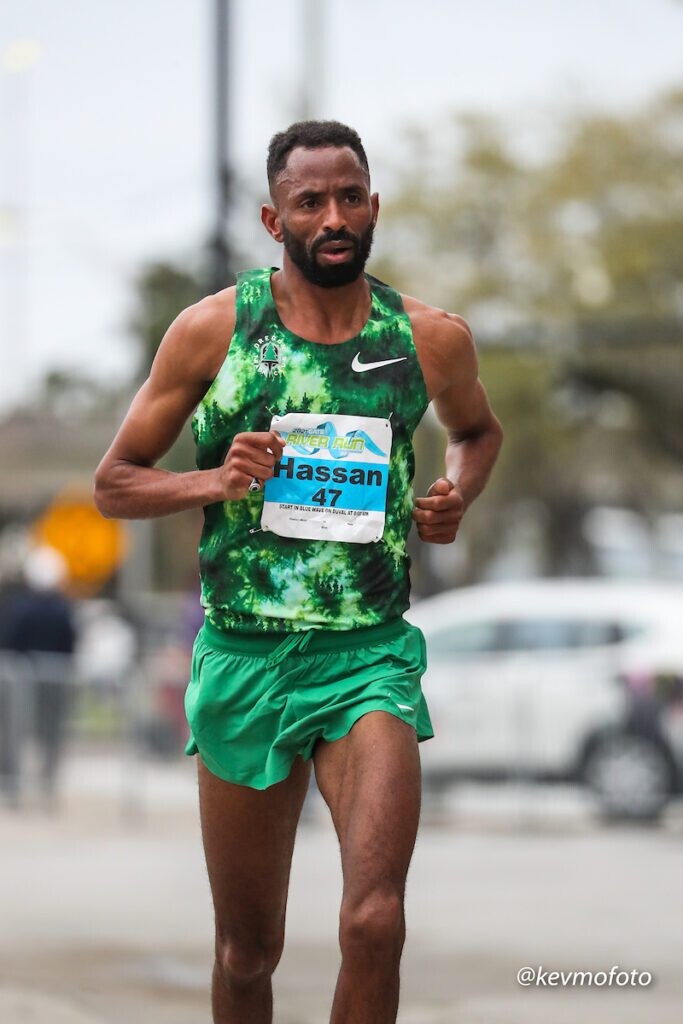
Athletes will use ostarine to increase muscular strength and power without causing excessive weight gain or water retention. Ligandrol can make fat loss more efficient and has muscle-gaining effects.
Although Mead has not raced in six months or announced his retirement, he will not be eligible to compete until 2025. Since 2012, Mead trained with Nike’s Oregon Track Club (OTC) under coach Mark Rowland. Rowland is currently the Athletics Canada West Hub Coach (Endurance) in Victoria, a position he took earlier this summer.
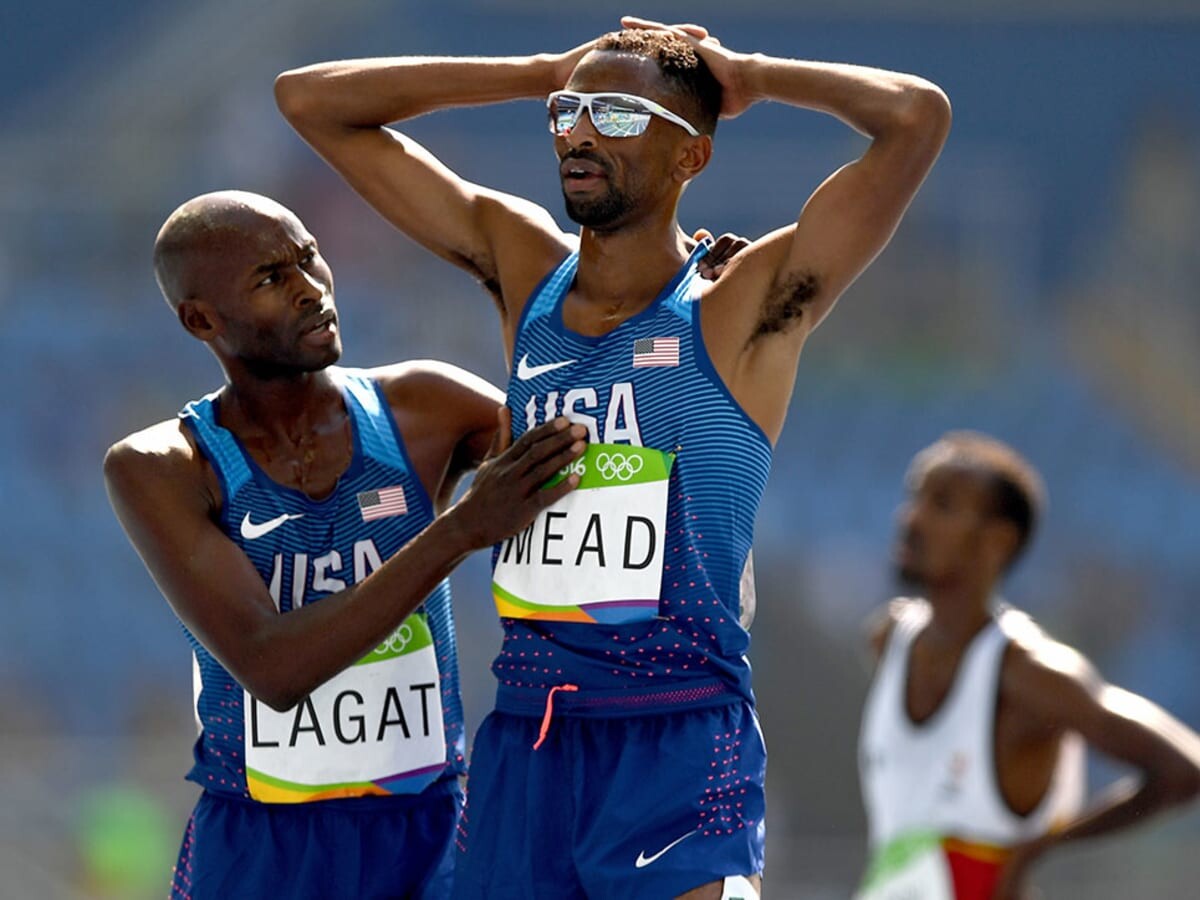
Mead’s agent Chris Layne gave a comment to CitiusMag regarding the ban:
“Mead stopped running and let us know he would be retiring immediately at the end of May 2022. At this point, he stopped training and started to take an over-the-counter pre-workout drink for lifting in the gym. Mead made a regrettable decision to not file the retirement paperwork, which kept him in the USADA testing pool until November. Mead has never failed a drug test while competing and this is a sad situation of not filing paperwork on time.”
The Portland, Ore. runner is the second OTC athlete to receive anti-doping sanctions this year. His teammate and 2012 Olympic silver medallist in the 800m, Nijel Amos, was provisionally suspended by the Athletics Integrity Unit (AIU) for the use of GW1516—a drug that modifies how the body metabolizes fat and that boosts endurance.
Mead has represented Team USA six times internationally, with his top finish coming at the 2016 Olympic Games, where he was 11th in the men’s 5,000m final. He made a run at qualifying in the 5,000m for the 2020 Olympics in Tokyo, but he wound up 11th at U.S. Olympic Trials.
(11/30/22) Views: 85
Marley Dickinson

Yoga for feet, toes and ankles: give your neglected lower limbs some help
You probably don’t pay enough attention to your feet. We’re all guilty of it–even those of us that fit mobility and strength work into our training routine tend to focus on quads and hamstrings, the larger leg muscles. As a runner, your feet probably take a fair bit of abuse, and the smaller muscles there deserve some care and attention.
Not only will your feet feel amazing after these stretches, they’ll also be better equipped to handle the uneven terrain you run over in winter or on trails, providing stability to the rest of your body. Keeping your feet mobile and flexible can be a game changer–healthy, strong feet lead to more efficient, pain-free running.
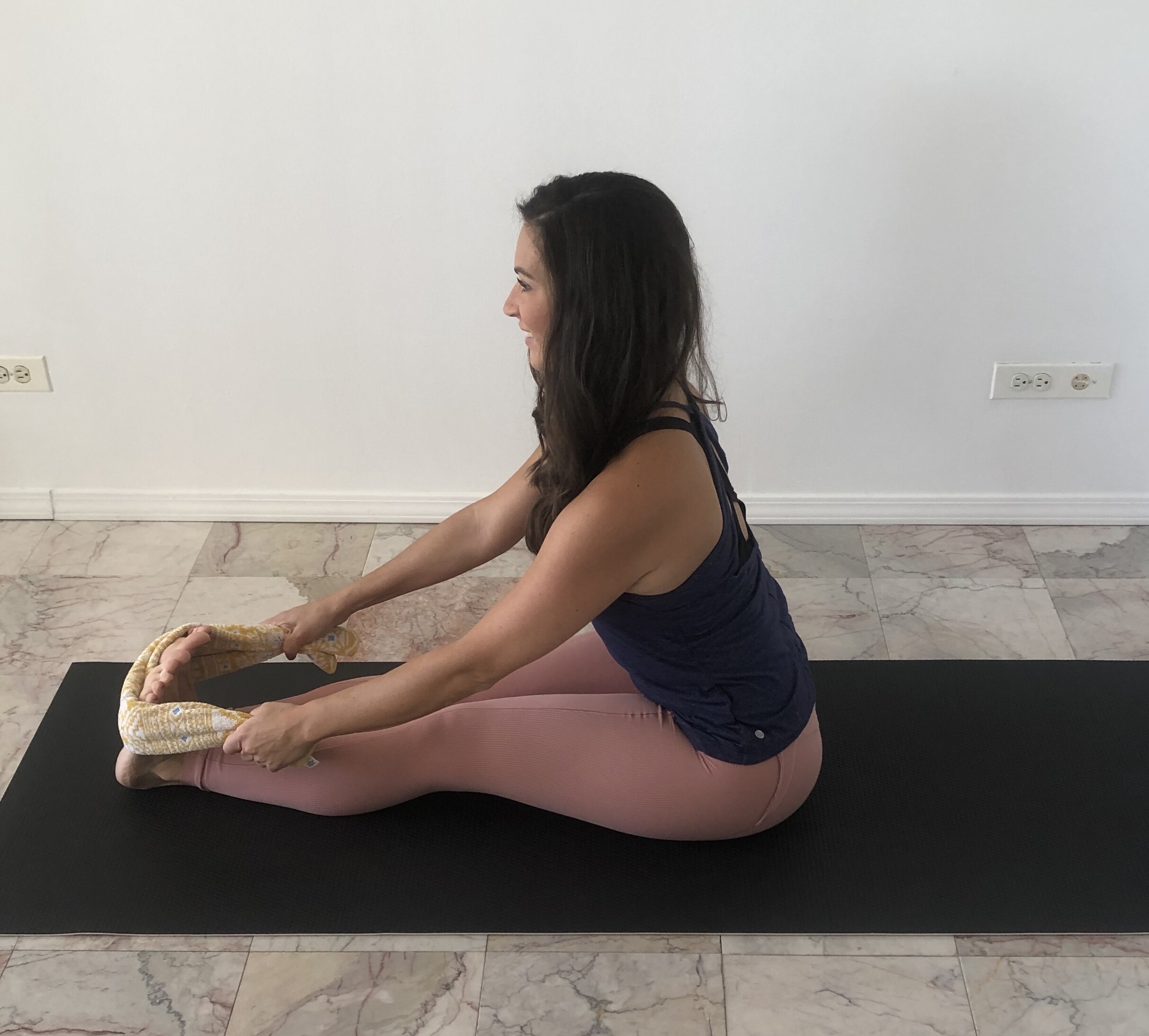
Easy ways to target feet and ankles
Try these simple stretches when you’re watching TV, or while sitting at your desk. Get started by rolling your ankles in gentle circles. From a seated position, try lacing your fingers through your toes to clasp your foot, and gently guiding it in circles.
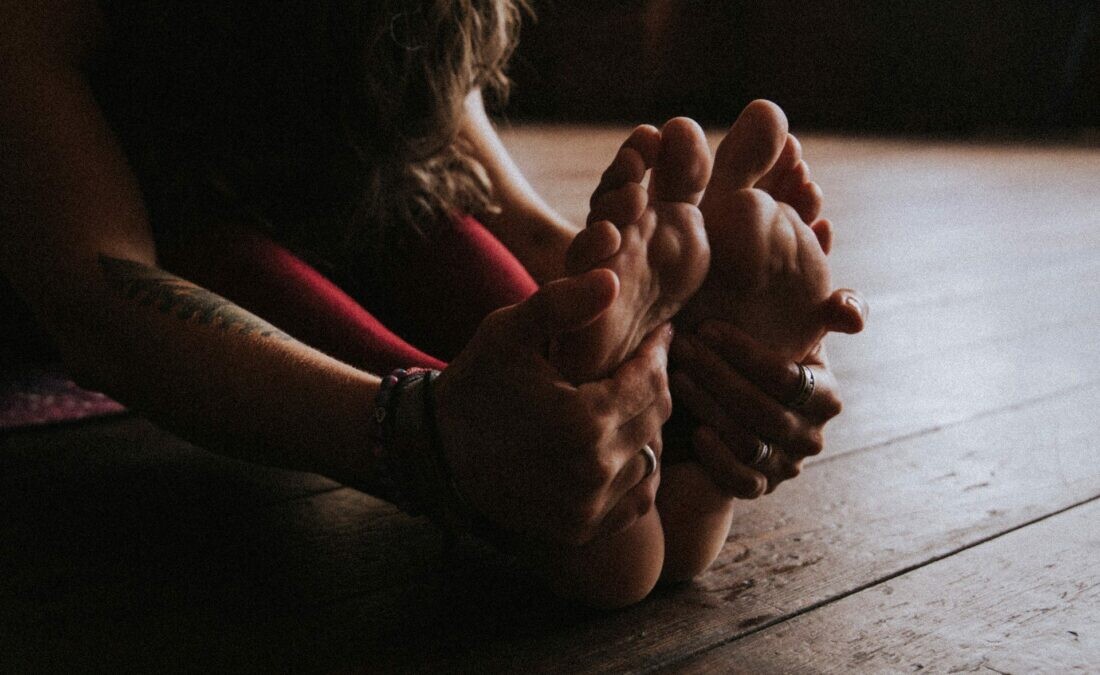
Scrunch your toes up tightly and release, repeating a few times. Finally, place your feet flat on the ground and (without using your hands) stretch your toes out as widely as possible, gripping the ground with them (think of a lizard). Hold for a few seconds, release, and repeat.
Toe squat
Sitting in a toe squat can be challenging, and you’ll notice immediately if your feet are tight. While you can stay in this pose for several minutes to really give your feet and toes a release, it’s OK to start small at first and release when you need to.
Kneel on the floor with your toes tucked under and heels up. Aim to be on the balls of the feet, not the tippy toes. Reach down and tuck the little toes under if they’re escaping.
Slowly shift your hips back so your butt rests on your heels and you feel a deep stretch. Hold for 30 seconds to two minutes. Focusing on keeping a nice, steady breath can be helpful to make the time pass and lessen the intensity.
To release, shift forward, place your hands on the ground and untuck your toes. If it feels good, tap your feet on the ground as a release.
Modifications
If the feeling in your feet becomes too much, shift forward onto your knees to take the weight off your feet at any point, coming back to the pose when you’re ready. Intensity is fine here (and expected) but if the posture is actually painful, come out. If having your knees on the ground is uncomfortable, place a folded blanket under them to add more cushioning.
To deepen the stretch, shift your hips further back.
Ankle stretch (also targets the feet)
This pose follows the deep foot stretch perfectly, and you can move right into it, or take a break and come back.
Return to a kneeling position with feet flat on the ground, toes untucked. Bring fingertips to the floor next to your hips or place them on blocks (stacks of books work just fine).
Sit back onto your heels and shift your weight back as you lift your knees off the floor. You’ll start to feel a stretch around your ankles and the tops of your feet.
Modifications
If your feet feel uncomfortable on your mat or the ground, try adding a folded blanket there for cushioning.
To take the stretch deeper, place your hands on your knees and gently pull them toward you.
Tennis ball massage for feet
Try this short, guided tennis ball massage for your feet to help release every inch.
(11/30/22) Views: 85Running Magazine
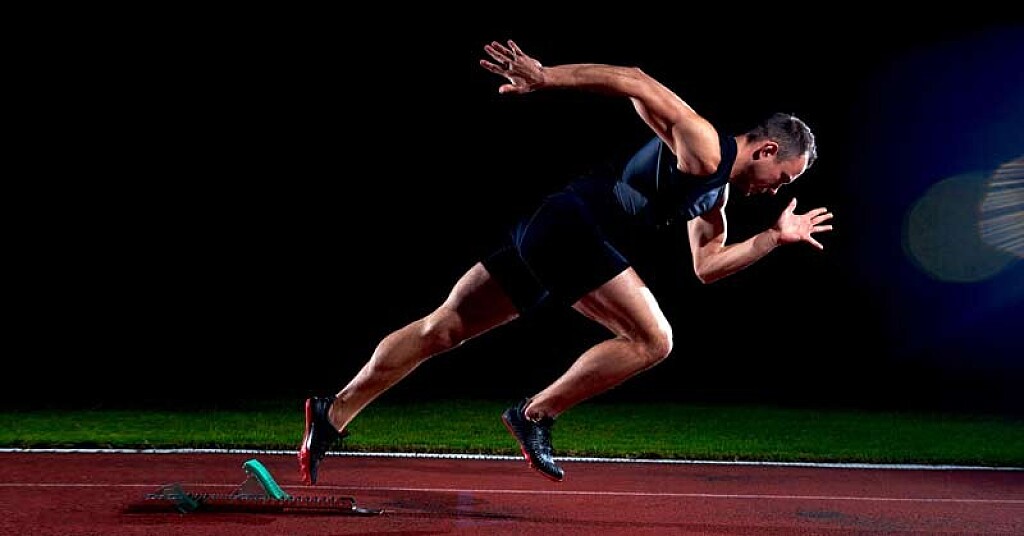
Understanding the basics of speedwork to improve your racing pace
Speedwork is one of those words runners toss about while meaning different things. It encompasses a variety of workouts and has a range of physiological and mental benefits, and there’s an entry point for every runner. Here’s what you need to know about speedwork, and why it should be a regular part of your running repertoire.
Whether you are training for a 5K or a marathon (or even an ultra), speedwork should be a component of your weekly mileage. The benefits of speedwork are well-researched and multifaceted.
What is speedwork?
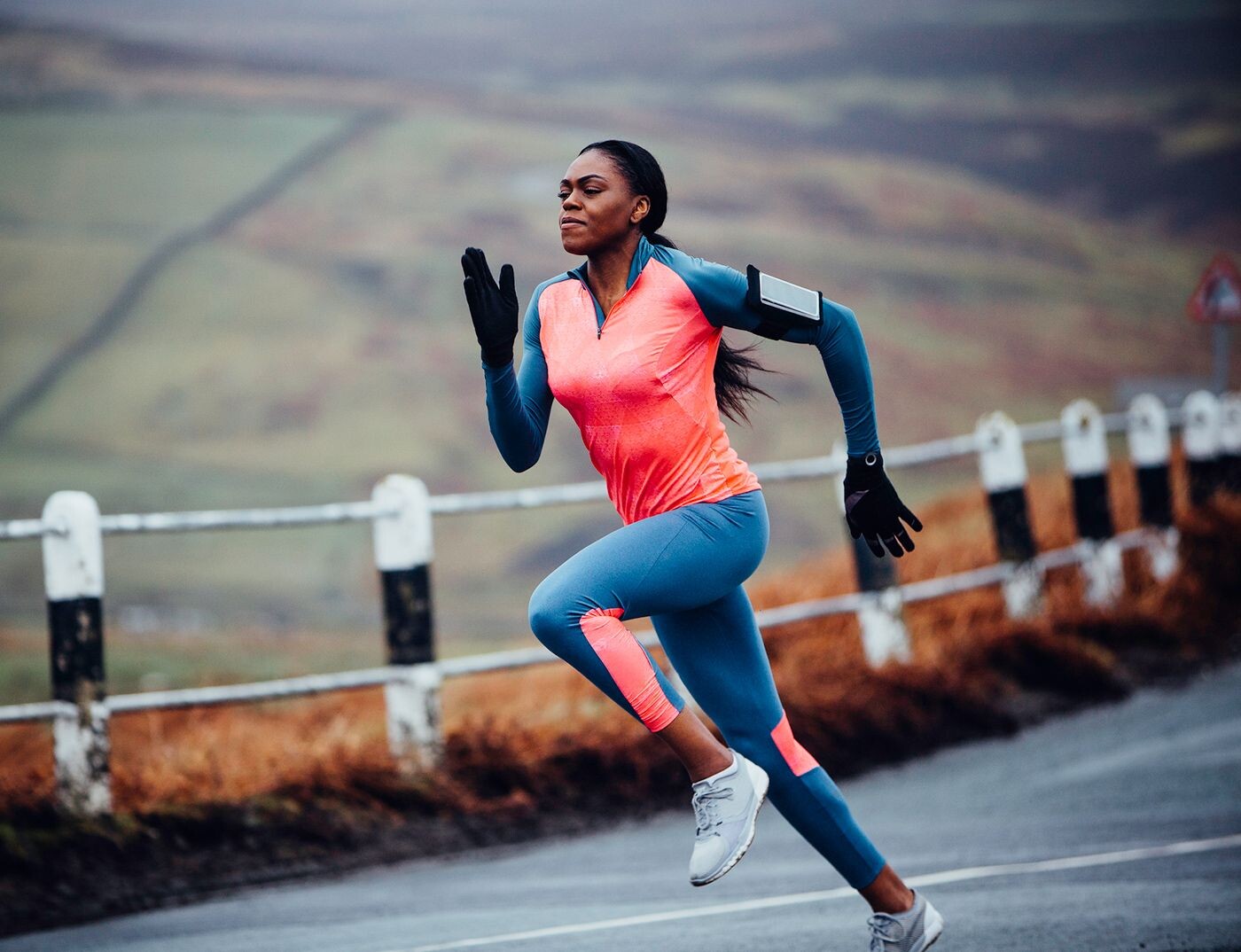
Speed training (when done in interval sessions) involves running multiple bouts of certain distances at high intensities with recovery in between. Intervals (or repeats) can range from 15 seconds to 20 minutes (or even longer), depending on what distance you’re training for. Tempo runs, fartlek workouts and accelerations can all serve as different forms of speedwork.
While the majority of your running should be easy, at least one workout a week should include something more challenging. Legendary coach and author Jack Daniels writes in Daniels’ Running Formula that it’s always important to know the purpose or intention of each workout. Regardless of what it’s called, if the purpose is to improve speed, you’re doing speedwork.
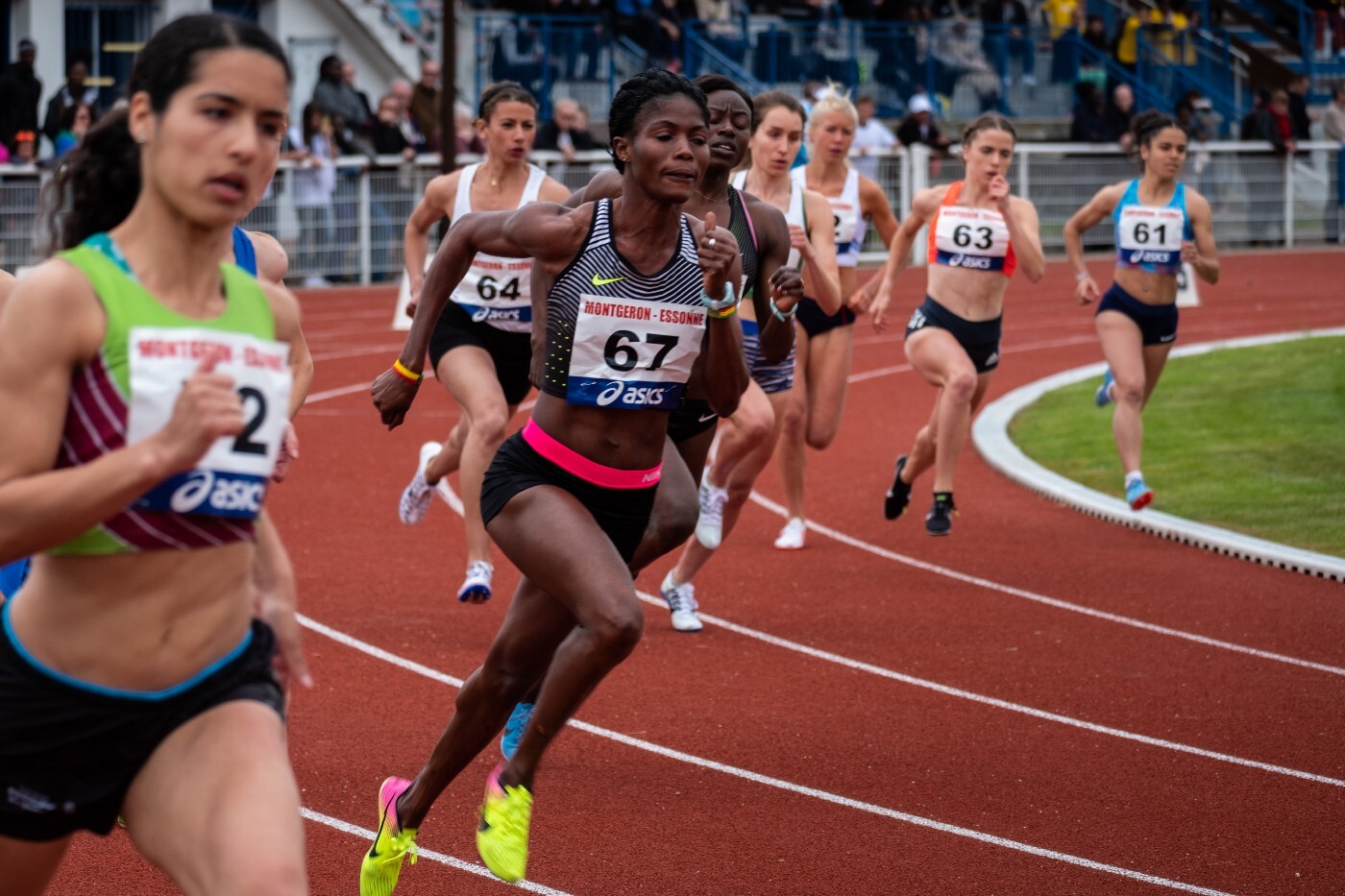
The overload principle
The overload principle is the idea that regular exposure to a specific exercise will enhance certain physiological functions, and in doing so, elicit a training response: your fitness improves. If you run at faster speeds, even for very brief periods, your body will learn and adapt, and you will become stronger and faster. This is the basis of speedwork or any training effect you may be working toward while you run.
What happens during speedwork
During speed sessions, our body is forced to recruit more muscle fibres to provide aerobic energy. The result–running economy, or how efficiently your body is able to use oxygen at a certain pace, improves.
Your body will also increase the production of myoglobin during fast workouts. Myoglobin helps transport oxygen to the muscles and then to the mitochondria. With increased myoglobin, the higher demand for oxygen is met. Speed training can also improve your anaerobic threshold: the highest exercise intensity that you can sustain for a prolonged period without lactate substantially building up in your blood.
During speed sessions, glycogen is providing upwards of 90 per cent of your energy. When you begin doing speedwork, you’ll burn through that glycogen quickly, but over time your muscles will adapt and store more glycogen for future workouts.
Mentally, speedwork teaches your brain to handle more pressure (easy runs should be low-pressure days) and harder work. As you challenge yourself in workouts, you’ll be better prepared to handle the effort on race day.
Get started today
If you’re thinking about adding some faster running into your program and you’re not sure where to start, simply pick one day per week and do four to eight short, 15-20 second repetitions, either on a flat road or a moderate hill. Better yet, alternate each week between hills and flat ground to give your body an extra challenge. Allow for 40-45 seconds of recovery between harder efforts for recovery, and enjoy the feeling of pushing your body a little harder.
(11/30/22) Views: 83
Running Magazine
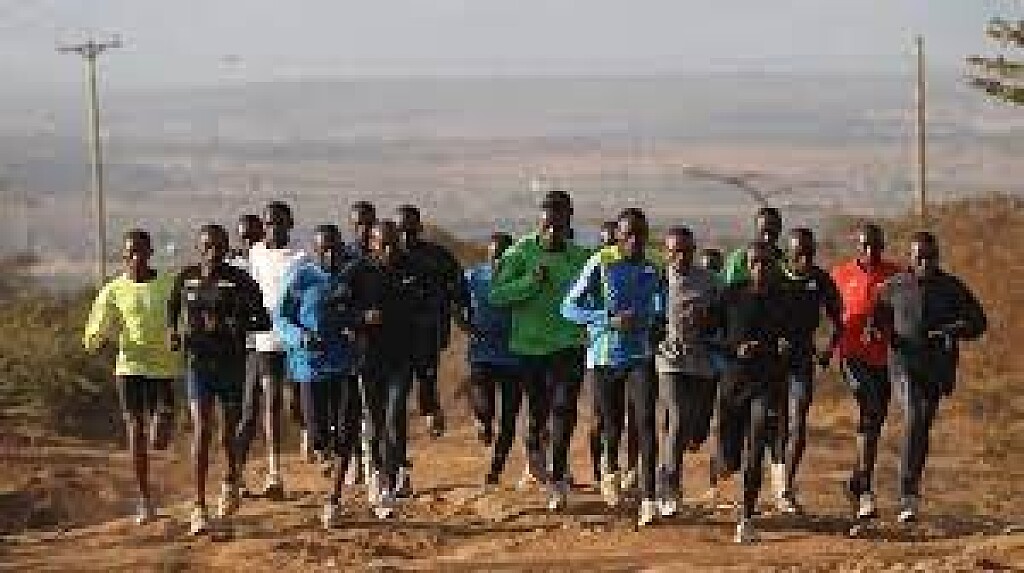
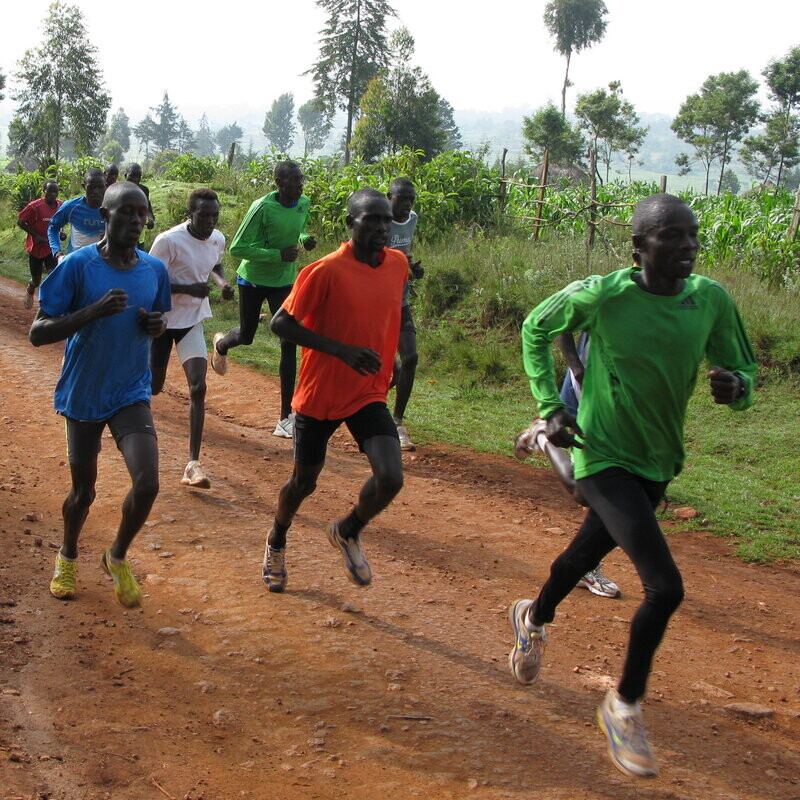
Kenya doping: World Athletics urged not to ban country despite doping cases
World Athletics has been urged not to ban Kenya from the sport for violations of doping rules by a government minister from the East African country.
The nation is reportedly at risk of a sanction following a string of cases, with 55 of its athletes serving suspensions issued by the Athletics Integrity Unit (AIU).
Kenya's situation will be discussed at the World athletics council meeting in Rome next week, BBC Sport Africa understands.
Ababu Namwamba, the cabinet secretary for the Ministry of Youth Affairs, Sports and the Arts, has written to World Athletics president Lord Coe to assure him that Kenya's government is taking firm measures to uphold the integrity of athletics.
"We cannot allow our nation to be banned because of the actions of some greedy unethical individuals," Namwamba said.

"We will target and deal decisively with the criminals and their syndicates. We must work together to eradicate doping and cheating from athletics and sports in general."
Kenya is among seven countries deemed a 'Category A' federation - the highest doping risk - by the AIU, meaning athletes from the countries have to undergo at least three tests in the 10 months prior to a major event to be able to compete there.
Its total of 55 athletes serving bans is the third most of any nationality behind Russia (102) and India (61).
Russia has been banned by World Athletics from competing as a nation in athletics since 2015 but untainted athletes were still able to compete under a neutral flag until the country's invasion of Ukraine in February, when all athletes, support personnel and officials from the country were banned.
Seventeen Kenyan athletes have been sanctioned by the AIU this year for a range of violations, with a further eight provisionally suspended and awaiting the outcomes of their cases.
An overarching ban by World Athletics and the AIU would be a huge blow to the reputation of the East African country, which has won 34 of its 35 Olympic gold medals in track and field events.
The National Olympic Committee of Kenya (NOC-K) welcomed the government's intervention and said it would continue supporting "all efforts and actions as a partner in dismantling all systems and avenues perpetuating the vice of doping in athletics".
A statement from the body said the country had built an "illustrious history" in the sport and that "it is not ready to sacrifice this reputation due to the greed of a few actors".
"We join our voice in pleading with World Athletics and other parties to withhold any punitive measures such as a ban and consider the multifaceted efforts of the Kenyan community, led by the government, as a positive sign and contribution towards a zero-doping environment in Kenya," NOC-K president Paul Tergat added.
Two-time Olympic champion and marathon world record holder Eliud Kipchoge has said the increasing number of doping cases is "worrying" and "clean sport is the way to go".
The Ministry of Youth Affairs, Sports and the Arts said Kenya has a zero tolerance to doping and is "fully committed to ending the doping menace".
"We must defeat doping and its perpetrators. This is a serious concern and that is why the government is giving total undivided attention," Namwamba added.
"We are treating it as a matter of top strategic national interest."
(11/25/22) Views: 82BBC Sport
