

Running News Daily
Top Ten Stories of the Week
10/29/2022
These are the top ten stories based on views over the last week.
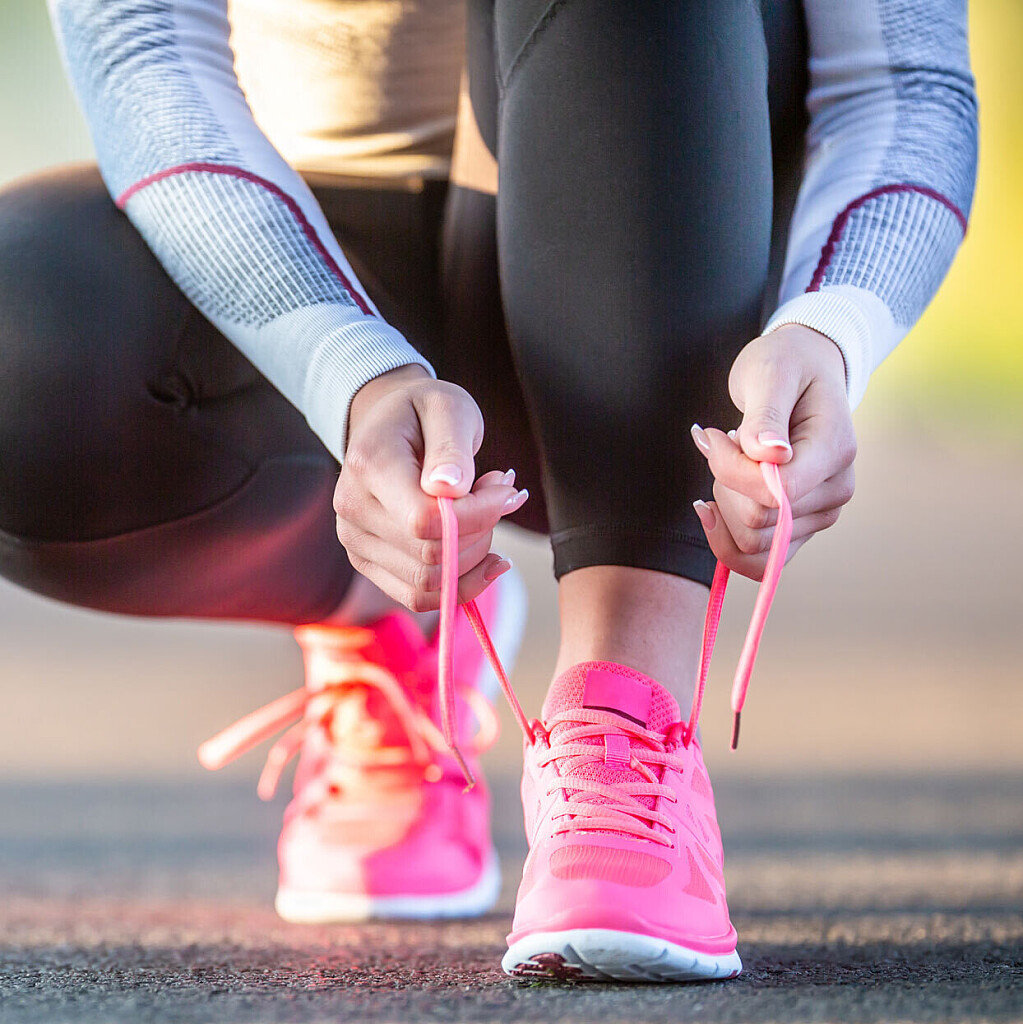


What Is the Average Walking Speed and Jogging Speed?
Plus, how to pinpoint the pace that works for you.
Getting started with a new walking or jogging routine can be exciting and a little nerve wracking. It’s only natural after a walk or two to wonder, “Am I doing this right? Am I walking fast enough? Should I be jogging or running, instead? How do I compare to other walkers and joggers? What even is the average walking speed?”
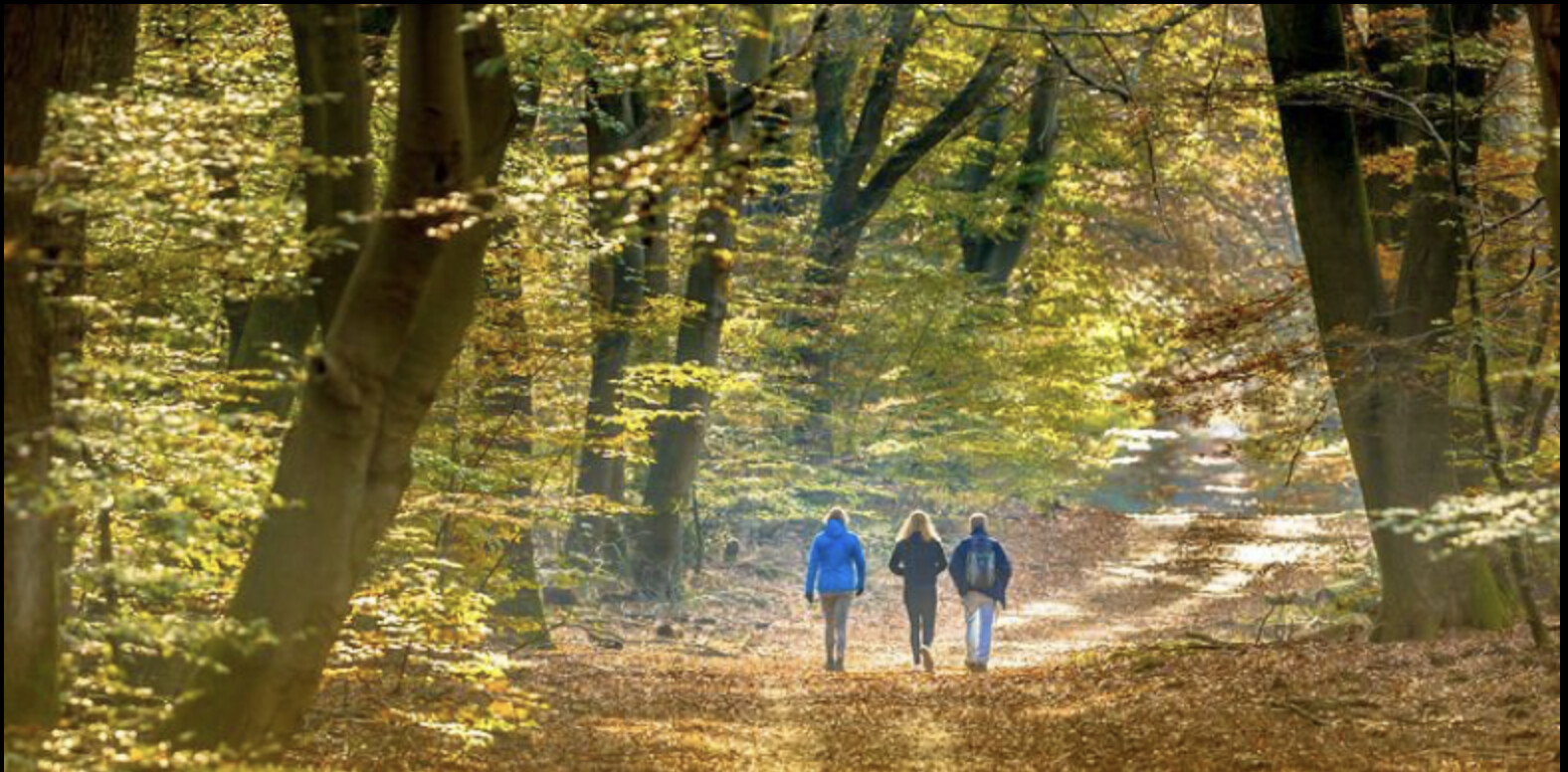
Before you get too caught up in the comparison game, remember that any walk or jog you do is better than doing nothing at all. In fact, increasing your daily step count (regardless of pace) can help improve overall health and reduce the risk of chronic diseases like heart disease, diabetes, and even some cancers. So you’re doing your body good no matter your speed or intensity.
That said, knowing how to gauge your progress and make improvements to your walking and jogging speed over time can lead to more advantages. So here’s what you need to know about the average walking speed and jogging speed, as well as when and how to change up your own pace.
The average walking speed and jogging speed in the United States
First and foremost, it’s important to recognize that “average walking speed” and “average jogging speed” are just that—the average. That means some people go faster, and others slower. So when you’re just starting out, it’s important to pay attention to how you’re feeling on your walk or jog, rather than getting caught up in what you should be doing based on averages.
Also, it’s important to note that averages are different for males and females, and that average walking speed and jogging speeds tend to slow with age. In other words, a 20-year-old man is likely to walk faster than a 60-year-old, and may walk faster than his 20-year-old female counterpart, as well.
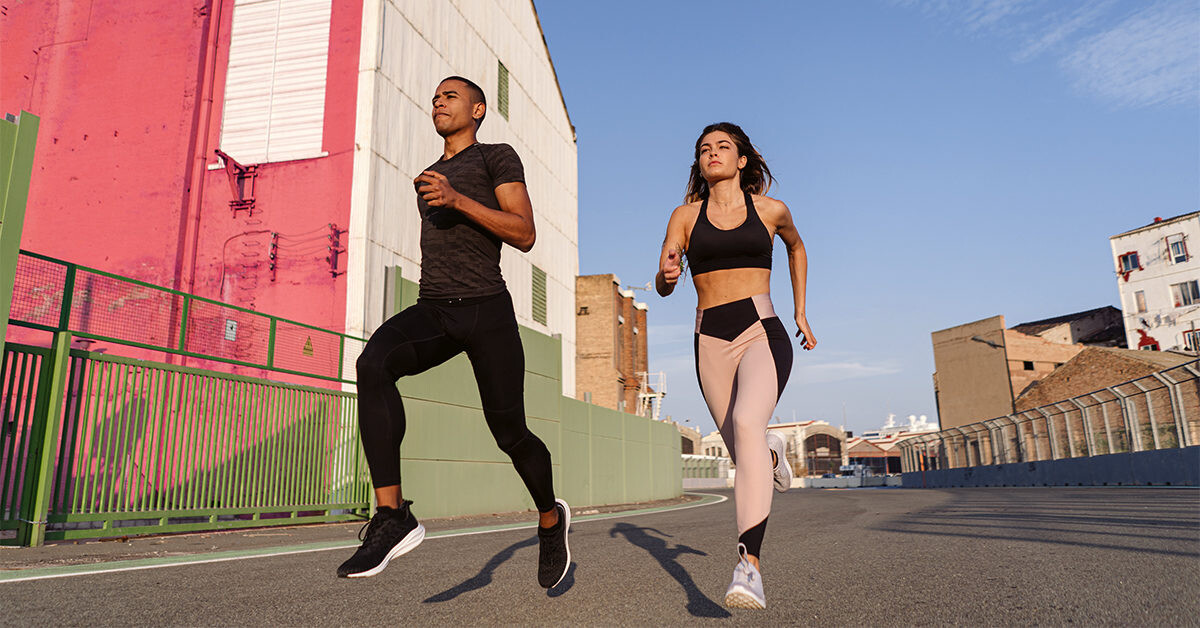
What the research says about average walking speed
In a 2011 study published in PLOS ONE, researchers used accelerometer data to measure the walking speed of participants in their day-to-day life. The results found that participants walked between 2.3 and 4.6 miles per hour, with a median walking speed of about 2.8 miles per hour. Of course, this is just a single study, and it measured walking in everyday life, which could vary from ambling slowly from the couch to the refrigerator to speed walking to an elevator to catch it before the door closes.
A systematic review and meta-analysis published in 2021 in the journal Sports Medicine, researchers looked at outdoor walking speeds across 35 different studies. Based on the results, researchers broke the average speeds down into categories of slow, usual, medium, and fast, with results averaging 1.8, 2.9, 3.3, and 3.8 miles per hour, respectively.
So if you’re using national averages to assess how fast you should aim to walk while exercising, anything from about 2 to 4 miles per hour is a good goal, depending on your fitness level and age.
What the research says about average jogging speeds
When it comes to jogging, judging averages is a little trickier simply based on the idea of “what are we averaging?” Most people don’t just jog around in daily life, unless they’re trying to run to catch a plane, stop their child from running into the street, or the like. So the information available is largely gathered from compilations of data found on fitness and running apps. This means it’s from people who are jogging (or walking or running) for distance on a regular basis, biasing the sample size toward those who are more consistently training for distance running, rather than an average that includes all possible demographics (like perhaps the less-competitive newbies).
This is further confused by the fact that “jogging” and “running” are technically two different things. Jogging is typically considered speeds between 4 to 6 miles per hour (a 10- to 15-minute mile), while running is considered anything faster than 6 miles per hour (a 10-minute-per-mile pace).
That said, based on stats released by Strava in 2017, the average speed to complete a mile was 9:48—that’s slightly more than a 6-mile-per-hour pace, which technically crosses over into the “running” category of speeds. In other words, this implies the data gathered skews more toward runners than joggers, further highlighting that it’s hard to pinpoint an “average” speed when it comes to lower-intensity jogging because it’s hard to find a good data set.
The 2021 Strava report points to a similar average pace, based on the average run length and distance. So if you’re just getting into jogging, aiming for any speed between 4 to 6 miles per hour is a good bet. And if you gradually want to work your way into running at faster speeds, know the average pace tends to hover just above 6 miles per hour.
How to find your ideal walk or jog speed
Averages mean very little when you, an individual, are starting a walking or jogging routine. It’s most important to find a pace that works for you, rather than to worry about what is or isn’t the “average.” And finding a good speed takes a little trial and error.
Here’s how to help you find what works for you:
The “Halfway Test”
“My personal favorite tip for finding your perfect pace is the ‘halfway test,’” says Erin Beck, C.P.T., director of training and experience for STRIDE Fitness. “The first half of your walk should feel like, ‘Hey, I got this. I could keep this up for a while.’ Once you hit halfway (either of the time you’ve set aside for your walk, or your halfway distance), you should start to feel like, ‘Uh-oh, I may not have this. I’m going to need a break pretty soon!’”
This is essentially a reminder not to start out too fast and furious—it’s okay to pick a doable pace, as long as you do a mid-point check-in. “If you’re starting to feel tired halfway through, try to hold your speed for the second half. Or, if your heart rate is still fairly calm and you think you can increase your speed, go for it,” Beck says.
If the “halfway test” feels a little nebulous to you, it’s not the only way to self-monitor your speed. In fact, there are a couple other good ways to do so, whether you’re walking or jogging.
The “Talk Test”
“With my clients, I like to use a cue I call ‘conversational pace,’” says Heather Hart, RRCA-certified running coach and co-founder of Hart Strength & Endurance. “I tell them to imagine they’re running with a friend they haven’t seen in a long time, and they’re catching up with a conversation. They should be running (or walking) at an effort where they can speak in short sentences, without feeling winded or out of breath.”
This is a particularly helpful way to gauge your intensity if you are, in fact, walking or jogging with a buddy. Without having to clock your speeds or pay attention to distances or times, you can determine whether you’re maintaining a reasonable pace.
Rate of Perceived Exertion (RPE)
To determine a good walking or jogging speed for you, Hart also suggests considering your personal rate of perceived exertion, or RPE. This is a sliding scale of exertion based from 1 to10. “One is fast asleep in bed. Three is a super fast walk to try and get to your gate on time at the airport (but there’s no need to run). Seven is ‘this is a pretty hard run, but I can keep going for a little longer.’ Ten is running for your life from a bear,” explains Hart. That basically means your “sweet spot” for a walk or jog should range from a 3 to 6, and if you’re jogging, specifically, “a good easy pace to build endurance is usually around a 4 to 5,” says Hart.
Increasing your average walking or jogging speed—the right way
Maybe you want to walk faster, or maybe you want to gradually move from a walking workout to a jogging routine—either way, there are two factors that play a role. This includes when you should increase your speed, and how you should go about doing it.
When to increase your walking or jogging speed
One of the best ways to end up injured is to start doing too much, too soon when it comes to your workout. Increasing your speed, distance, or even the number of workouts you’re doing each week before your body is ready for it won’t do you any long-term favors.
“I prefer to have my new clients build up to the point where they’re comfortable with three to four workouts a week, for around six to eight weeks, before incorporating speedwork,” says Hart. And while she’s referring specifically to jogging or running clients, she emphasizes that the same parameters apply to walkers. “This allows the client time to begin making the physical adaptations necessary before adding the increased stress of speed. It also gives them time to work on fine-tuning other aspects, such as finding the right shoes, becoming familiar with pacing and effort, and feeling comfortable with form.”
If, after six to eight weeks of consistent walking or jogging workouts, you’re starting to feel like your workouts are getting easier, and you’re getting better at gauging your effort, you might want to consider adding some speed sessions to your weekly schedule to help bump up your personal average pace.
How to safely increase your walking or jogging speed
Once you’ve determined you’re ready for speed work, embrace the mantra, “slow and steady.”
“When clients are ready to start speedwork, we start small,” emphasizes Hart. How she does that: “One speed workout per week that includes a sufficient warmup and focuses on shorter, faster intervals. This workout does not have to be long or taxing.”
It’s important to remember “speedwork” and “faster intervals” are all relative to your starting point. “For beginners, it’s a great idea to just start by incrementally increasing the amount of time you set out to jog (or walk faster) versus your standard pace. The faster intervals should still be at a fairly easy pace. When you start to feel winded, it’s a good idea to switch back to your original speed, until you feel ready to speed up again,” says Serena Marie Hunt, RD and RRCA-certified running coach.
If you need a little more guidance on how to go about implementing intervals, Hunt suggests a loose form of Fartlek training. “Fartlek runs (or walks) can be done by simply choosing a point in the distance and speeding up to reach it. You should feel tired but not totally exhausted when you complete your interval,” she says. You repeat that push to a tree, car, or other landmark a few times throughout your workout, allowing recovery intervals in between, before you wrap it up.
The benefit of adding “bursts” of speed to your walks or jogs
Keep in mind: More speed isn’t necessarily better, and small, consistent changes will really pay off, both for your performance, and your health. In fact, even if you’re having a hard time meeting walking goals related to distance or time (like 10,000 steps per day, or 30 minutes of activity per day), implementing occasional bursts of increased walking speed may carry many of the same health benefits, according to a study published in the journal JAMA Internal Medicine and another in JAMA Neurology.
The first study focused on daily step count and walking intensity and the associated risk of incidence of cardiovascular disease and cancer, as well as mortality from these conditions and all-cause mortality; the latter focused on daily step count and walking intensity and its association with incident of dementia. Both examined UK Biobank data, which involves more than 78,000 individuals.
“Walking pace is tied closely with intensity, and this is tied to heart rate. Walking at a faster pace will lead to an increase in intensity. For adults who may not be very active, increasing walking intensity (pace) for short periods during the day can improve aerobic capacity,” explains Matthew Ahmadi, postdoctoral research fellow at The University of Sydney’s School of Health Sciences and an author on both JAMA studies.
Ahmadi says the goal should be to walk a little faster than your comfortable walking speed. “This can improve your overall cardiovascular health which will lower your risk for cardiovascular disease, [it will] help maintain brain health by lowering the risk for vascular dementia, and [it will] improve body inflammation and immune responses, which can lower the risk for cancers,” he explains.
In other words, a little bit of effort, and a slow and steady approach to your walking or jogging program, can go a long way.
The bottom line on average walking speed and jogging speed
While knowing the general population’s average walking and jogging speeds can help motivate you to move more, it’s smart to focus on your own average pace and consider working to improve upon that pace. The key, though, is gradually getting faster.
“One of the biggest mistakes I see new exercisers making is making all of their workouts too difficult. It’s incredibly important to include recovery and ‘easy’ days, so that in turn, you can make your harder workouts hard enough. The recovery aspect of training is equally as important. Those who make the most progress are those who truly learn the discipline to go easy when they need to,” Hart says.
(10/22/22) Views: 305Runner’s World
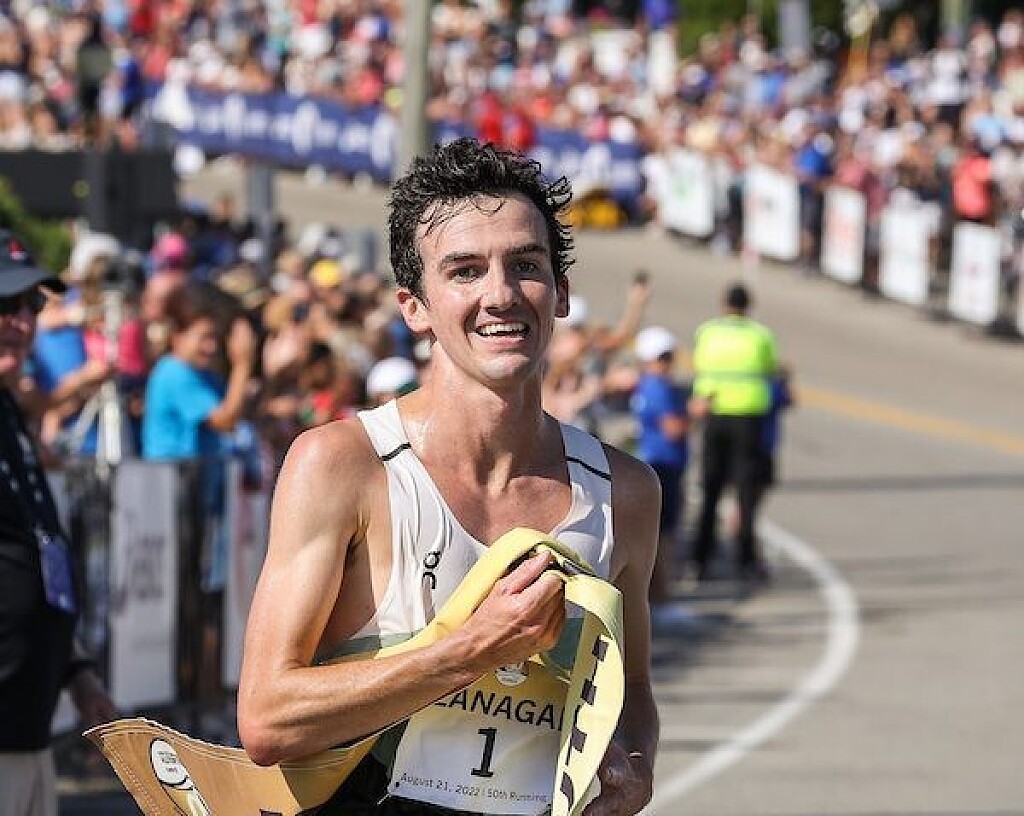
Ben Flanagan snags Canadian record at Valencia Half Marathon
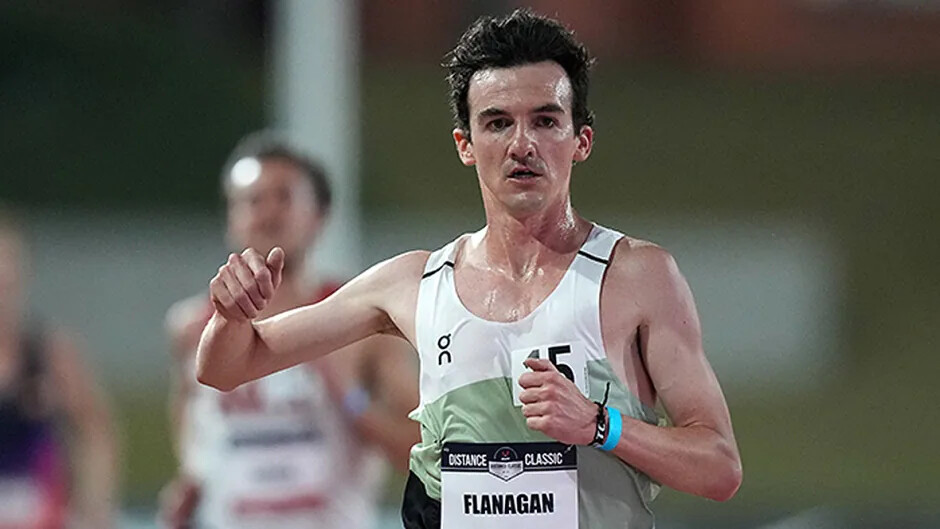
Two Canadians ran to national records and personal bests at the Valencia Half Marathon on Sunday morning. Ben Flanagan, 27, continued his winning ways on the roads, setting a new Canadian record in the half-marathon in 61 minutes flat. Fellow Canadian and national record holder in the marathon, Cam Levins, 33, finished right on Flanagan’s heels in a new personal best of 61:05.
Levins’s time was the second fastest in Canadian history, and the two athletes finished in 18th and 19th places, respectively. The previous Canadian half-marathon record of 61:08 was set by Rory Linkletter in January, besting a national record that had held for 22 years. Valencia’s record-breaking run was also a 38-second personal best for Flanagan, who became the 2022 Canadian 10K champion in May and 5K champion in September.
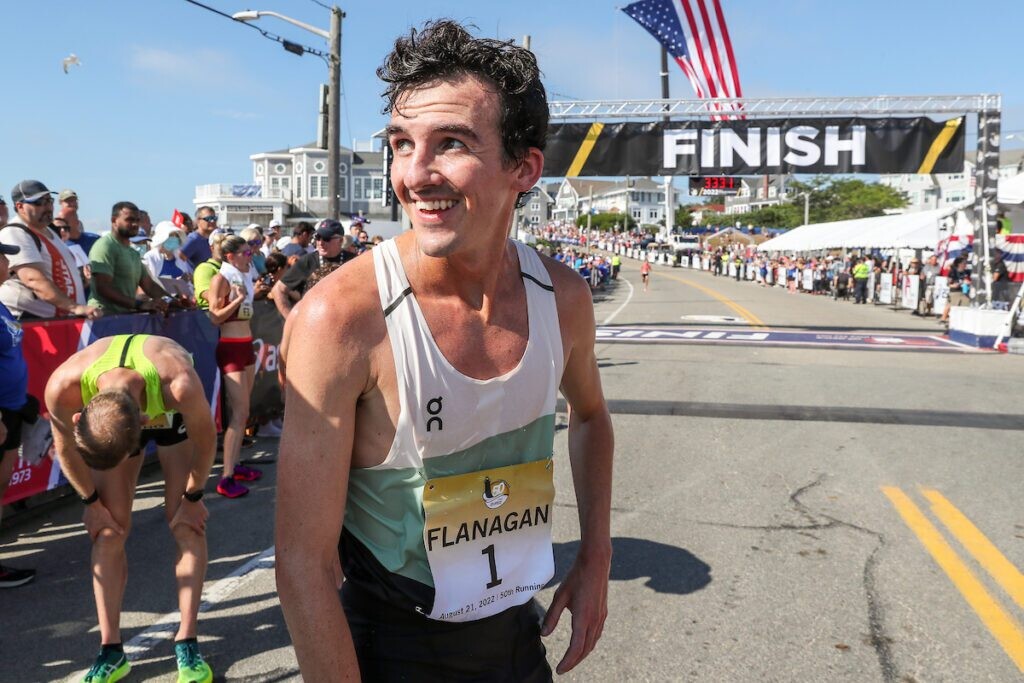
The Valencia Half Marathon is known for its fast course and deep elite fields, and heading into the race, speculation abounded about a possible new world record. The men’s race kicked off slightly slower than expected, with unseasonably high temperatures (17 C) and humidity.
Kenyan’s Kibiwott Kandie and Germany’s Konstanze Klosterhalfen captured the overall victories in the half-marathon. Kandie, who broke the world record here two years ago, broke away from the lead pack to finish in 58:10, followed by Ethiopia’s Yomif Kejelcha in 58:32 and last year’s third-place finisher, Daniel Mateiko in 58:40.
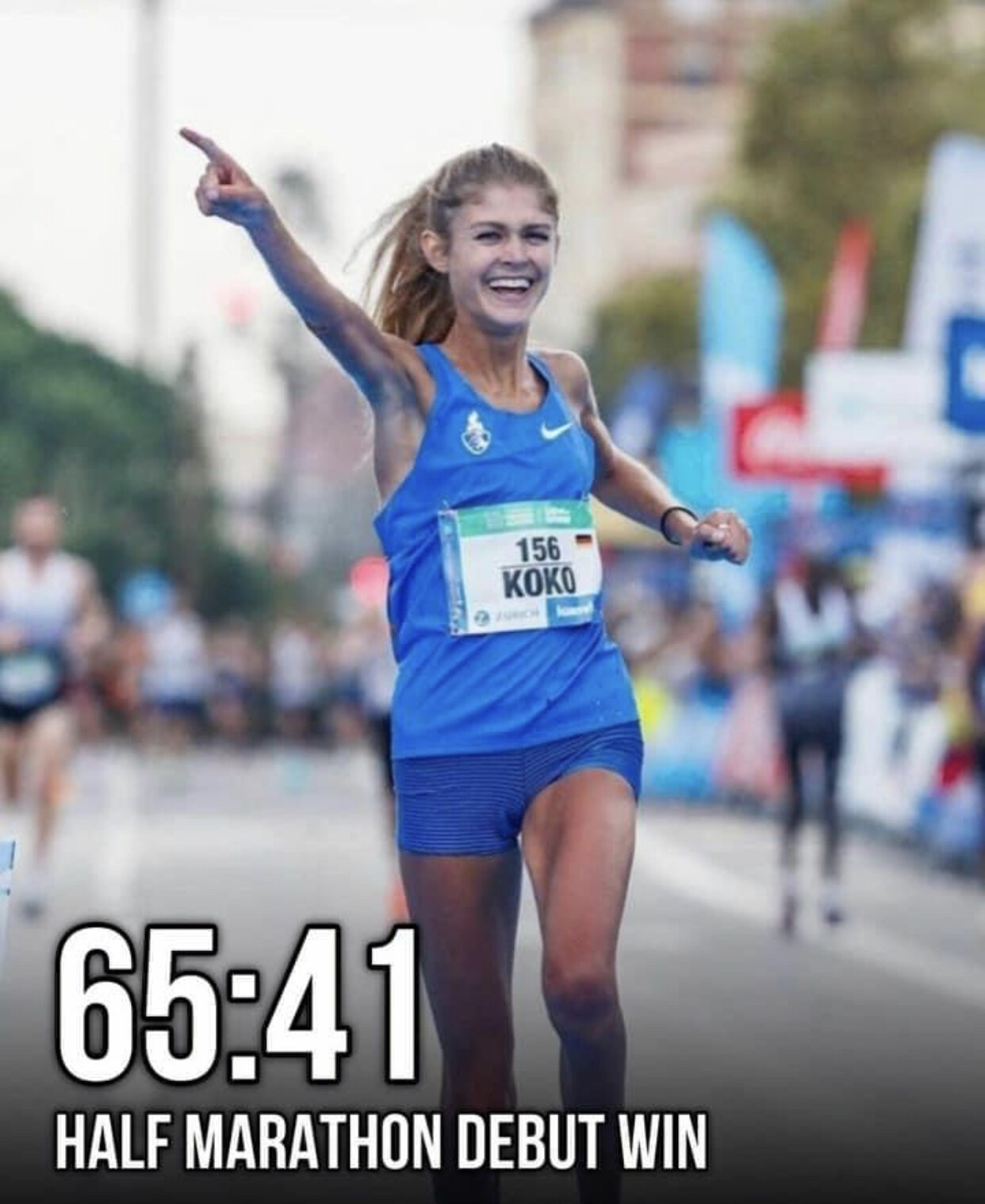
Klosterhalfen finished with a kick in the last kilometer, winning her half-marathon debut in 65:41.The European champion and 2019 world bronze medalist over 5000m told World Athletics: “I chose Valencia because of the fast times set over the previous years and my decision proved to be right today.” She was followed by Ethiopia’s Tsigie Gebreselama in 65:45 and Hawi Feysa (also from Ethiopia) in 66:00.
(10/24/22) Views: 131Running Magazine
Hot and humid slowed Kandie and Klosterhalfen in Valencia
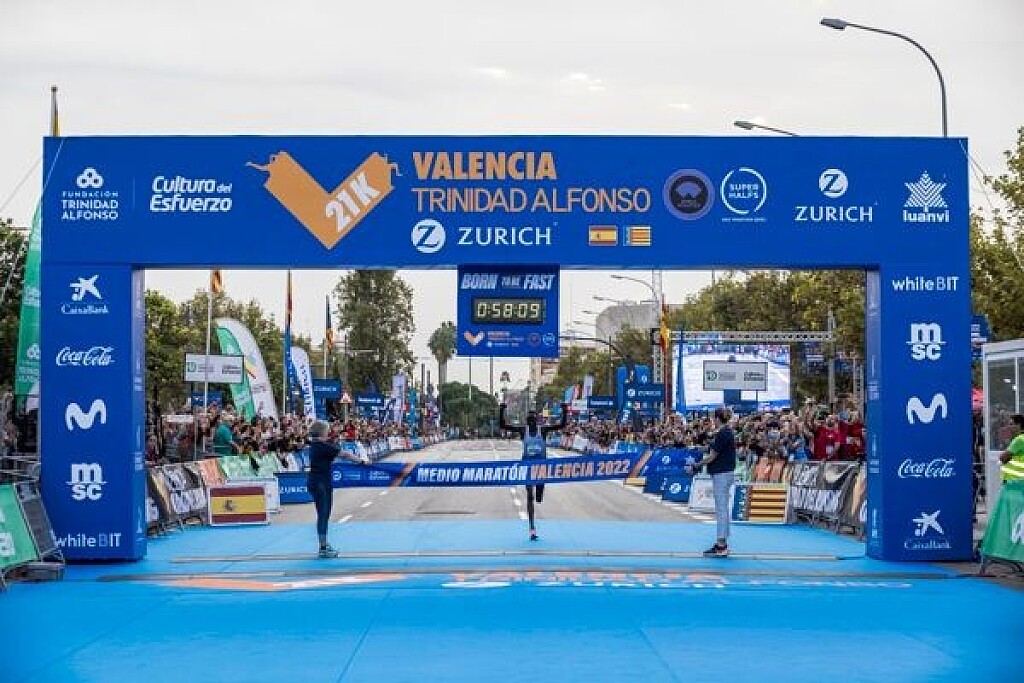
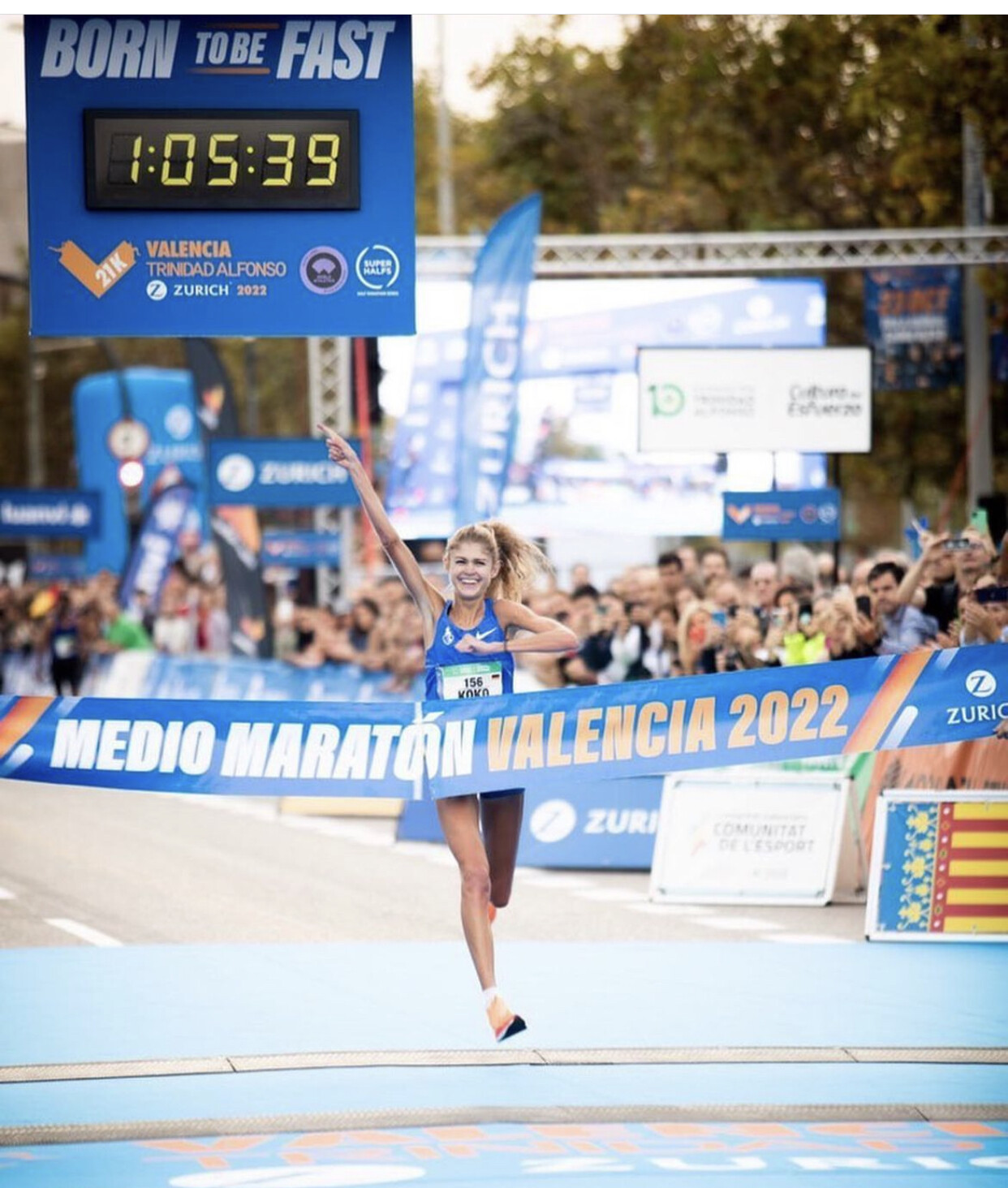
Kenyan's world half marathon silver medallist Kibiwott Kandie and Germany's Konstanze Klosterhalfen captured the victories at the Valencia Half Marathon Trinidad Alfonso EDP – a World Athletics Elite Label road race – on Sunday (23).
Kandie, who broke the world record here two years ago, effectively ended the race in the 14th kilometre to finish like a train in 58:10, while half marathon debutante Klosterhalfen made her move in the last kilometre, winning in 1:05:41.
Likely due to the unseasonably high temperature (17C) and 75% humidity, the men’s race kicked off slower than expected. Led by pacemakers, the leading group went through the opening 5km in 13:56, right on schedule for a 58:40 finishing time with all the main favourites such as Kandie, Sabastian Sawe, last year's third-placed Daniel Mateiko, Rodgers Kwemoi, Ethiopia's two-time world indoor 3000m champion Yomif Kejelcha and his compatriot Tadese Worku, who was making his debut over the distance.
Ten men remained in the lead group by the 10km checkpoint, which was reached in 27:51 to virtually rule out a sub-58-minute final clocking.
The key movement came shortly after the 13th kilometre when Kandie broke away with incredible ease to gradually open a sizeable gap over Mateiko, Kejelcha and Worku. After a swift 14th kilometre of 2:39, the 26-year-old Kenyan maintained his speed to reach 15km in 41:17, having covered the previous 5km segment in 13:26. By then he had built a ten-second margin over the chasing trio.
Despite a decrease in pace in the closing stages, Kandie continued to increase his lead and he had a 23-second margin by 20km. He romped home unopposed in a season’s best of 58:10, the third fastest time in the world this year. Taking advantage of his track pedigree and speed, Kejelcha managed to finish ahead of Mateiko to grab the runner-up spot in 58:32 and fulfil his pre-race target of breaking the Ethiopian record. Mateiko completed the podium eight seconds behind Kejelcha while debutant Worku finished in 58:47.
“I have been preparing so hard for this race over the last two months and that effort has paid off today,” said Kandie. “Despite the humidity, I felt great throughout and decided to increase the pace after midway, I'm quite satisfied with my performance.”
The women’s race was of a similar high standard with the first three athletes finishing in 66 minutes or quicker.
Perfectly paced by Kenya's Jeremiah Cheserek, the main group went through the opening 5km and 10km checkpoints in 15:29 and 31:08 respectively, slightly inside 1:05 finishing pace. The eight-woman lead pack included Klosterhalfen, Kenya's world 10,000m bronze medallist Margaret Chelimo Kipkemboi, Vicoty Chepngeno, Agnes Ngolo and Ethiopia’s Hawi Feysa and Tsigie Gebreselama.
There were no major changes over the following 5km section, which was covered in 15:35, but with two kilometres remaining, only Klosterhalfen, Feysa and Gebreselama were left at the front. In the closing stages, the 25-year-old German managed to open up a gap on her rivals to win in 1:05:41 while Gebreselama set a PB four seconds in arrears and Feysa came third in 1:06:00.
“I'm both surprised and delighted with what I've managed today and definitely I'll try to improve on my time next time and hopefully break the German record,” said Klosterhalfen, the European champion and 2019 world bronze medallist over 5000m. “I chose Valencia because of the fast times set over the previous years and my decision proved to be right today.”
Leading results
Women1 Konstanze Klosterhalfen (GER) 1:05:412 Tsigie Gebreselama (ETH) 1:05:453 Hawi Feysa (ETH) 1:06:004 Agnes Ngolo (KEN) 1:06:385 Margaret Chelimo (KEN) 1:06:506 Magdalena Sahuri (KEN) 1:07:077 Irine Kimais (KEN) 1:07:108 Purity Komen (KEN) 1:07:279 Yasemin Can (TUR) 1:07:4510 Vicoty Chepngeno (KEN) 1:07:54
Men1 Kibiwott Kandie (KEN) 58:102 Yomif Kejelcha (ETH) 58:323 Daniel Mateiko (KEN) 58:404 Tadese Worku (ETH) 58:475 Kennedy Kimutai (KEN) 59:046 Sabastian Sawe (KEN) 59:237 Ronald Kirui (KEN) 1:00:108 Isaac Kipkemboi (KEN) 1:00:119 Edward Cheserek (KEN) 1:00:1310 Weldon Langat (KEN) 1:00:28
(10/23/22) Views: 110Emeterio Valiente (World Athletics)
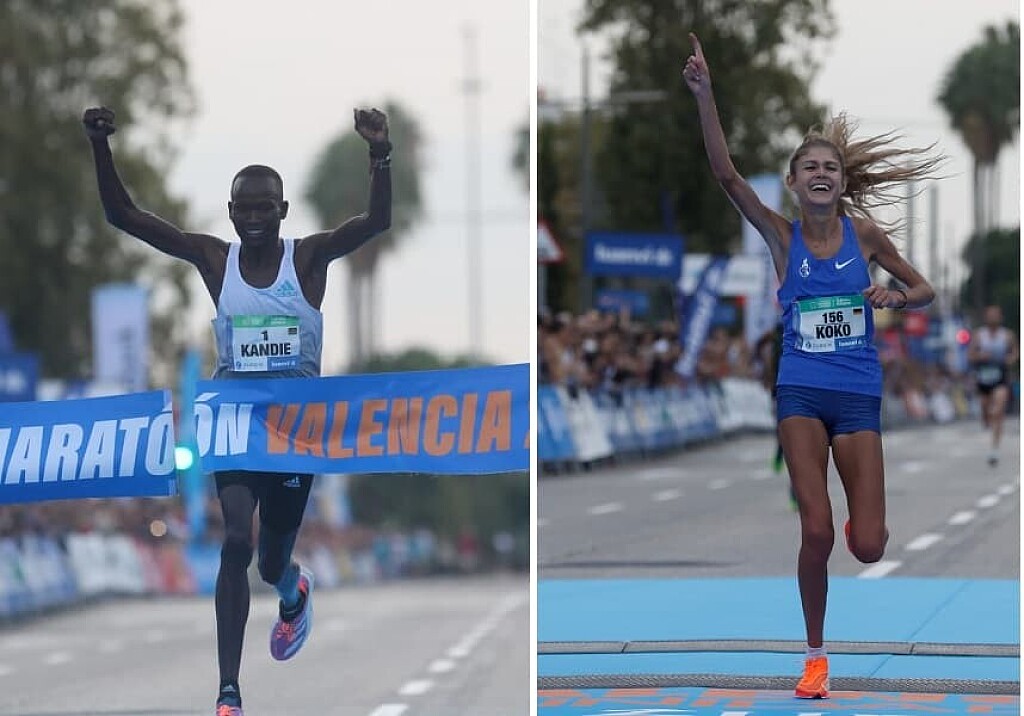
Kibiwott Kandie wins the Valencia Half Marathon in 58:11
Kenya’s Kibiwott Kandie is the new Valencia Half Marathon champion.
Kandie on Sunday reclaimed the title he lost last year after crossing the finish line in 58:11 ahead of Ethiopia’s Yomif Kejelcha.

Kibiwott missed his earlier personal best of 57:32 which was a world record time he set in 2020 before Uganda’s Jacob Kiplimo lowered it by one second at the 2021 Lisbon Half Marathon.
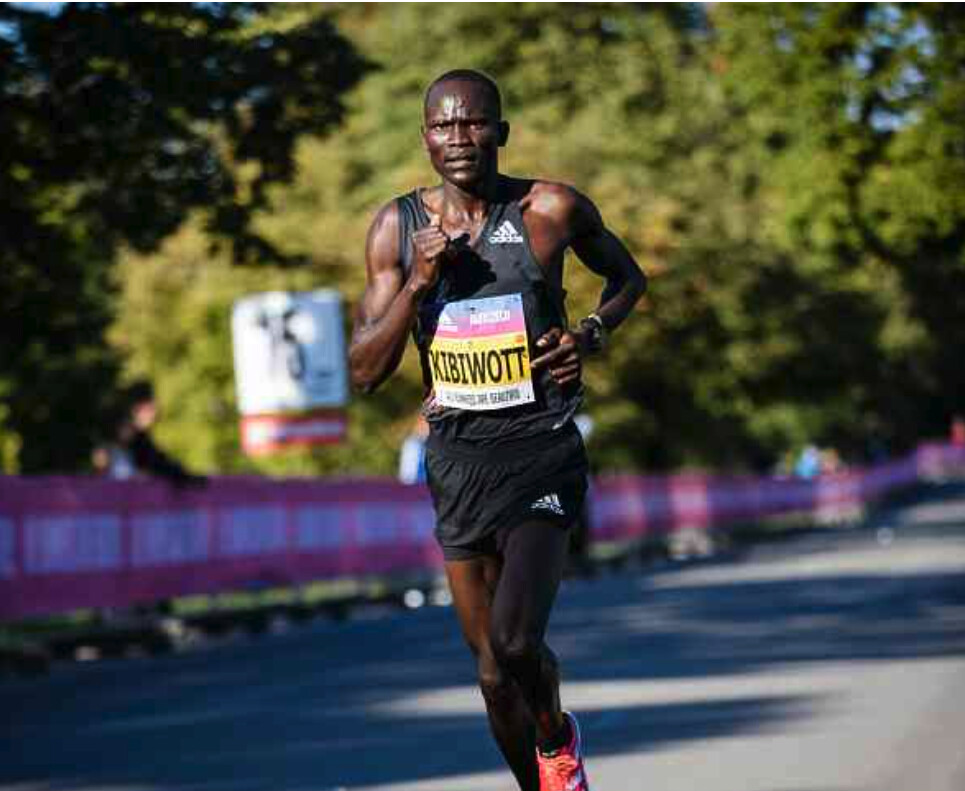
Kejelcha clocked 58:32, while another Kenyan Daniel Mateiko was third in 58:40.
Kennedy Kimutai (59:04), Sebastian Kimaru (59:23), Ronald Kiprotich (1:00:10) Isaac Kipkemboi (1:00:12), Edward Kimutai (1:00:14), and Weldon Kirui (1:00:28) were in fifth, sixth, seventh, eighth, ninth and 10 positions respectively.
The women’s race was won by European 5000m champion, German Konstanze Klosterhalfen who clocked 65:41 on her debut.
Kenyans missed the podium positions with Kapsabet-based Margaret Chelimo finishing fourth in 1:06:50.
Irene Kimais (1:07:12), Purity Komen (1:07:29), Vicoty Chepngeno (1:07:55) and Dorcas Kimeli (1:08:17) were sixth, seventh, ninth and 10th.
Ethiopians Tsigie Gebreselama (1:05:46) and Hawi Feysa Gejia (1:06:00) placed second and third respectively.
(10/23/22) Views: 106
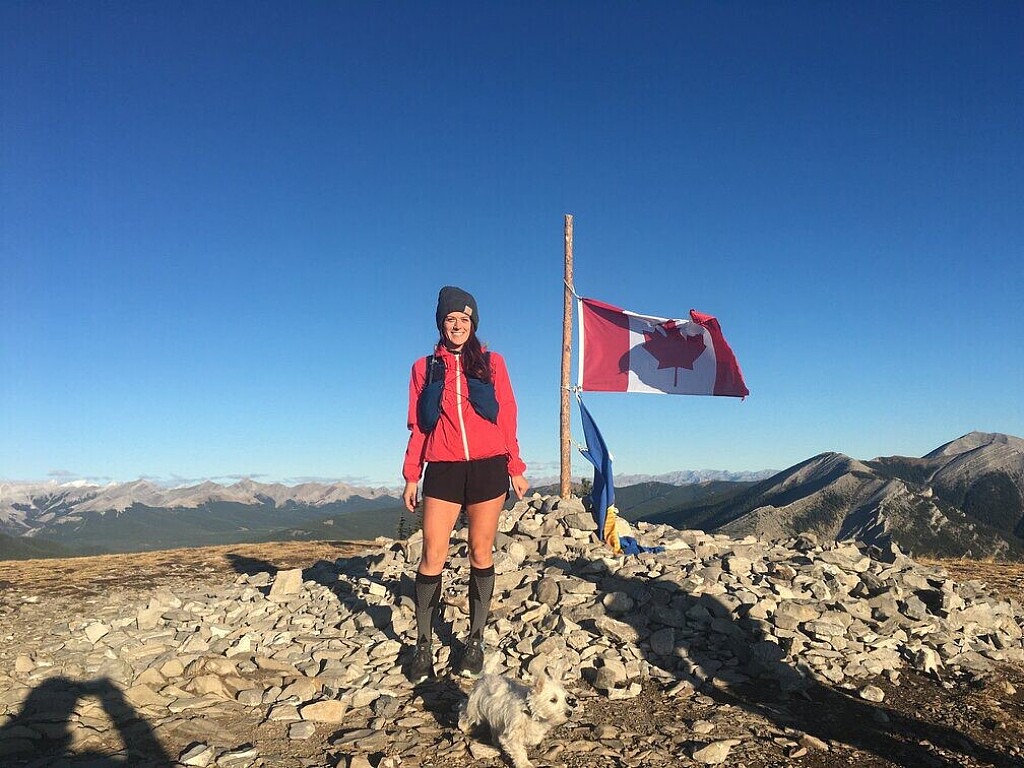
Run longer and stronger with tips from trail-phenom Priscilla Forgie
Priscilla Forgie wants you to be more flexible. She doesn’t mean you should hit a yoga class, either–Forgie says adding versatility to her running routine has allowed her to master the art of listening to her body, elevating her performance.
If you aren’t familiar with Forgie after this year’s ultratrail season, consider this your update: the Edmonton-based athlete has had a record-breaking year, winning almost every race she has entered and demolishing course records at the Near Death Marathon (where she also was the overall winner) and Squamish 50/50. She’s also fairly new to the ultratrail scene and is open about the setbacks and learning curves she’s experienced so far.
“When I discovered I had a stress fracture in January I realized I hadn’t truly been listening to what my body needed,”she says. Forgie says that key to optimizing her running this year was taking preventative action to care for her body in her day-to-day life, becoming more flexible with training and mileage. Here’s what Forgie suggests you try, so that you, too, can break personal barriers and crush your goals, all while staying healthy.
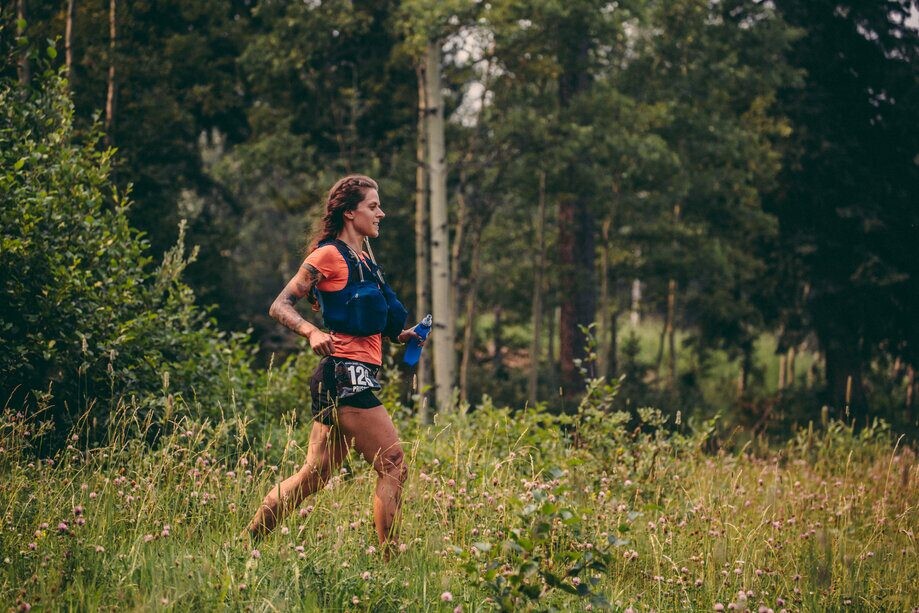
Have flexibility in your training plan
Forgie says that opening ourselves up to the possibility of not sticking to a regimented training schedule is key. “I can appreciate that a training plan can help hold us accountable and keep us motivated, but no plan can take into account the complexities of our everyday lives and what our bodies are asking for each day,” she says. While Forgie doesn’t follow a strict plan, she acknowledges that it works for some people, and suggests that runners try to remain adaptable.
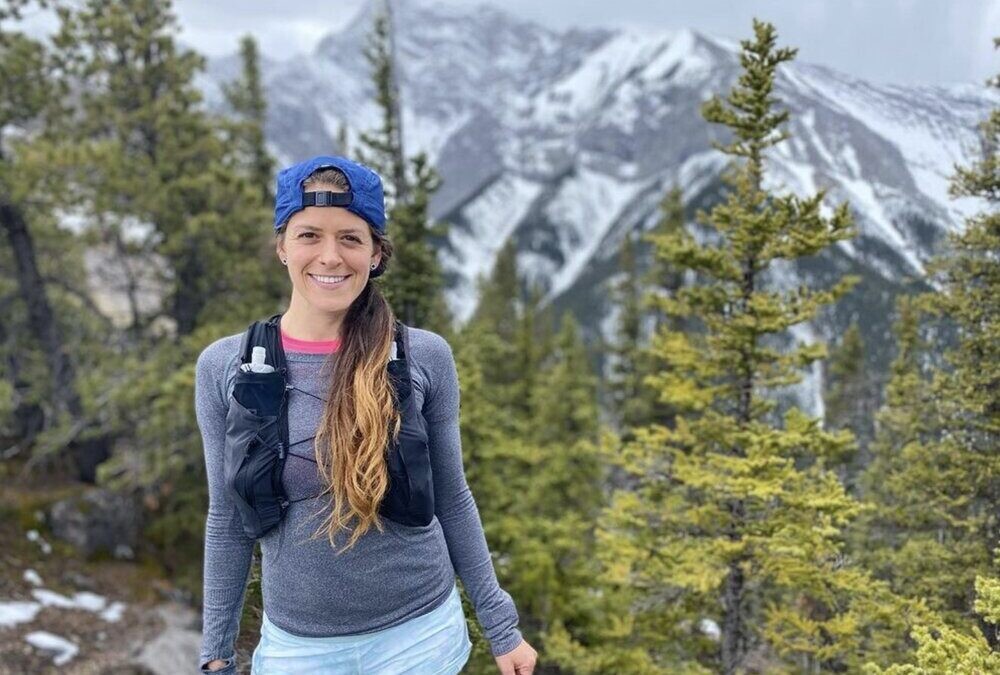
Forgie suggests making the change from a km/day goal, and instead giving yourself a distance or time range to shoot for each day, adjusting throughout the week as needed. “This allows us the opportunity to rest when needed and free up time if life gets in the way,” she says.
Get comfortable with switching things up
Forgie says this is particularly important for your key workouts. “You want your body to be feeling its best during these sessions, so pushing through speedwork after a lousy sleep will not help you reach your goals,” she explains. If you have a challenging workout planned but are feeling under the weather, far better to head out for an easy run or take a recovery day, and do the speedwork when you’re well-rested.
Another form of switching it up that Forgie loves: hit the trails instead of running hill repeats or road-based speedwork. While trails are where Forgie’s passion lies, they’re a great addition to any runner’s repertoire. “Who doesn’t need more trail time?” she says.
Tap into your inner couch potato
“A huge part of listening to our bodies is recognizing when we need rest,” says Forgie, adding that it’s likely more often than a lot of us allow. She suggests following the 80/20 rule (keeping 80 per cent of your workouts easy, 20 per cent hard). “Letting our bodies recover with good food, sleep, and slow miles will result in our bodies thanking us later,” she says.
With so many athletes reporting stress fractures or being diagnosed with RED-S syndrome, recovery is something every runner should personally focus on.
Try running doubles (but not Ingebrigtsen-style)
Forgie advocates breaking up a long-run session into a double. “Double run days are my favourite,” she says. “Doing this gives your body a bit of a break, frees up some time in your schedule, and definitely helps when you’re really ramping up those kilometres in peak weeks.” Doubling has made headlines recently due to its popularity among elite athletes like Jakob Ingebrigtsen, who will run two hard training sessions in a single day. Forgie’s format is a gentler version, a way to adapt a long workout, or to increase mileage when training for a big race.
Being open to trying new things in your running schedule is a fantastic idea for all of us, and Forgie’s success on the trails demonstrates how well it has been working for her.
(10/24/22) Views: 105Keeley Milne

Four Helpful Tips for Anyone Who's Just Starting to Run
As a long-distance runner for almost 15 years, the most common comments I get from nonrunner friends are “I wish I could do that” or “I can’t even run a mile.” But the truth is, that’s actually normal when you’re starting to run. In fact, most seasoned runners also didn’t knock out a quick mile on their very first go.
I first started running as a high school sophomore, slowly building up a few laps on the track at a time. The next semester, I joined the track and cross-country teams. I kept up with consistent shorter runs through college before eventually running my first half marathon when I was 21 and my first full marathon when I was 23, eight years after I got started. I credit my very gradual buildup with helping me stay injury-free and letting me ease into the sport so I could actually enjoy it (instead of end up resenting it).
When you’re excited about starting a new activity, like running, it’s easy to get ahead of yourself and pile on too much too soon. After all, it seems logical that pushing yourself hard will help you jump right into it and get better faster. But when it comes to running, that’s definitely not the best approach—in fact, this mind-set is a big reason why many optimistic beginners ultimately end up not sticking with a running routine. If you set your expectations high and then fail to meet them, it’s easy to think “I’m just not a runner”—when really, you just needed to start a little slower and expect to get better gradually.
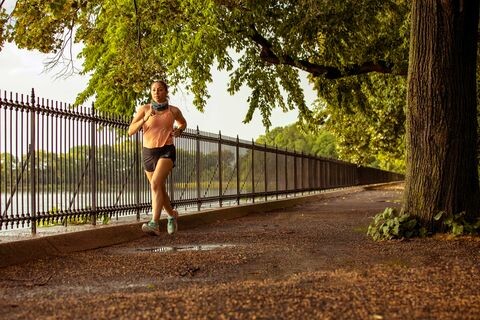
Here are a few tips from professional coaches on how to approach running as a first-timer without ending up intimidated or discouraged by the sport. I promise, once you feel comfortable doing it, running is a lot of fun.
1. Alternate between running and walking your first few weeks.
One of the biggest things coaches stress to brand-new runners is to simply focus on spending time on your feet and not get caught up in the numbers. Most would agree that you shouldn’t start out running more than a few minutes at a time, with walk breaks in between.
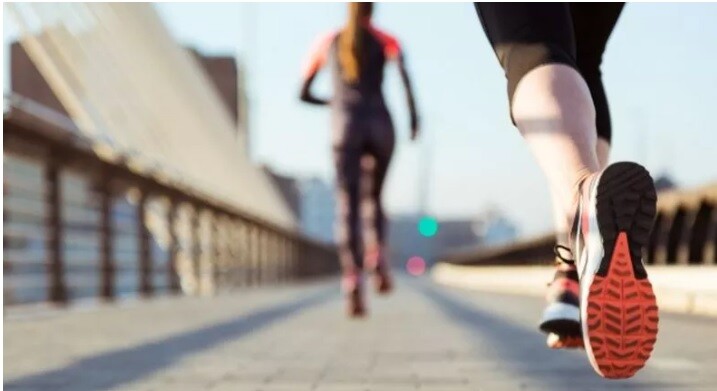
Jimmy Balmer, a certified running coach with Strait Speed in the Philadelphia area, recommends beginner runners start with a run/walk three times a week, in which they run for one minute and walk for 90 seconds for a total of 20 minutes per session.
Many long-term training plans aim to have runners increase their total mileage by 10 percent each week, but Balmer maintains that this doesn’t pertain to runners starting from scratch. “I recommend these runners stay at the same volume for three weeks before beginning to gradually increase the volume and duration of their runs every fourth week,” he says. “Realistically, you should expect to still be doing walking intervals for the first six weeks of this routine.”
Another approach: “A simple and attainable goal is to just add a minute per week to each run segment,” adds Rebekah Mayer, a USATF Level 1 coach and national training manager at Life Time Run in Minneapolis. “If you were already very active, you will find you can increase your mileage more quickly.”
If you are already cross-training with another activity such as cycling or swimming, you already have a base level of cardio conditioning, which will give you a leg up when you start running. “Cardiovascular activities like indoor cycling or Step aerobics classes can help to get the heart and lungs ready to take the next step and add running, while having a foundation of muscle strength can help with injury prevention,” Mayer says. “But if you’ve just been doing strength work, it’s not wise to be overconfident and attempt to knock out an hour-long run right from the start.”
Strength training experience is still helpful, though. Having a foundation of strength will help you to take on additional activity with less aggravation and soreness. You are in a better position than being totally sedentary in that you are less likely to get injured, Balmer says. “Either way, I would still recommend new runners start with the run/walk routine instead of just running in the beginning,” he says.
2. Choose a realistic first training goal.
Building up to a 5K with little to no stopping within about eight weeks after beginning to run is a realistic time frame, Mayer says. She recommends waiting about two years before considering training for a longer race like a half marathon.
Another key in tackling a longer distance—regardless of how long you’ve been running—is to make sure you’re running enough of a base before your new training plan starts, Mayer says. This means, for example, you should be able to run an easy 6 miles before beginning a training plan for a half marathon, and an easy 8 to 10 miles before beginning a 16-week training plan for a marathon.
“One of the most frustrating things as a coach is to get a call from someone wanting to start training for a marathon 12 weeks out, yet they are only currently running 3 to 4 miles max,” Mayer says. “That is the type of coaching request I would decline, as it’s too risky. I would rather protect a runner from getting injured by helping them reframe their goals to run something shorter along the way to the eventual bigger goal.”
3. Consider joining a social running club for one of your weekly sessions.
These days, it’s not hard to find a free group running option in just about any city or town, whether it’s hosted by a gym, running store, running club, or even a local pub. The beauty of these runs is that they attract runners of all levels because they are more focused on enjoying the sport rather than grinding out the speed. If you’re feeling insecure about how far you have or haven’t run, a social run is a great place to start because you’ll find many people in the same boat as you, making it easier to relax and feel confident.
“Social runs are very beginner-friendly and are a great way to meet people to build your motivation and chase your goals with,” Mayer says. You might just walk out of there with a new running buddy who can help keep you motivated and excited about logging miles.
4. Be patient when it comes to noticing progress.
It’s important for new runners to remember that it can take weeks before they’re running without needing walk breaks and before running actually feels more comfortable.
“There are always going to be plateaus, peaks, and valleys with starting a new program,” Balmer says. “Don’t get discouraged if you feel like you’re not seeing immediate results while you adapt to those first few weeks of stress on the body.” If you keep at it, you’ll start to notice your body adapting eventually, meaning that running will feel easier and you’ll be able to run faster or longer than you did at first.
It’s also important to remember that while consistency is key, occasionally missing a planned session because life or bad weather gets in the way won’t make or break your progress, Balmer says. (This is true for both beginners and for seasoned runners.) “It’s also key to prioritize rest and recovery and enjoy days off both physically and mentally.”
And if you ever feel discouraged, remember this: Just getting out there and starting to run is a huge success in itself. Being patient with yourself, and giving your body the time it needs to get used to this new sport, will pay off down the road. Just think about how great it will feel to look back in a few months and see how far you’ve come.
(10/22/22) Views: 102Emilia Benton
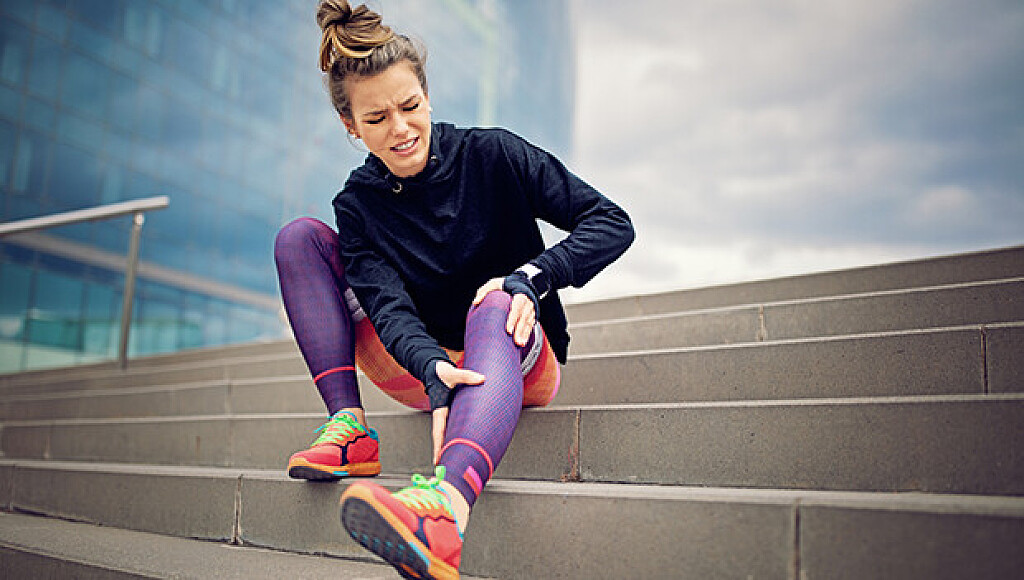
Runners and stress fractures: why you should start taking vitamin D
If you’re a regular runner, you probably know someone who has had to take time out due to a dreaded stress fracture. You may have heard of pro athletes like Molly Seidel and Gabriela DeBues-Stafford taking time out for stress reactions.
Vitamin D has long been known to help the body absorb and retain calcium and phosphorus; both are critical for building bone. Recent studies have shown that vitamin D insufficiency is not only common in athletes but can be a serious factor leading to a stress fracture. Should you be taking a supplement? Here’s what you need to know.
Stress fractures v. stress reactions

Readers may be more familiar with the term “stress fracture,” which is further along the stress injury spectrum. (In other words, a stress reaction may lead to a stress fracture if left untreated.) The cause of the initial reaction (and subsequent possible fracture) is usually overuse, as opposed to more serious traumatic types of fractures from falls or other accidents.
Stress injuries are classified upon diagnosis: early (stress reaction) or late (stress fracture). A stress reaction can be considered similar to a deep bone bruise. A stress fracture is a small hairline crack in the bone.

The study
Researchers reviewed more than 180 scientific studies to determine the impact of vitamin D on musculoskeletal health and athletic performance. They found that stress fractures impact approximately 20 per cent of all athletes, both elite and amateur.
The review explores the importance of vitamin D in athletes’ diets, what type of athletes are most likely to be affected by stress fractures and what precautionary measures athletes can take. While runners of any kind were one of the most common groups sidelined by stress fractures, athletes in a wide range of load-bearing sports are affected by them.
The takeaway
We get vitamin D largely from the sun’s ultraviolet-B (UVB) rays, and many people, particularly those living above the equator, are vitamin D deficient. While only one per cent of the general population is impacted by stress fractures, one in five athletes (20 per cent) will experience one.
Vitamin D plays important role in preventing stress fractures and can be safely taken as a preventative measure. Runners should ask their doctor for regular bloodwork to check vitamin D levels, along with calcium, creatinine and parathyroid hormone. Insufficient levels of vitamin D can be restored by optimizing your diet (while few foods naturally have much vitamin D, some are fortified with it) and taking supplements.
Work with your doctor to find the right amount of vitamin D to take: researchers determined that the prevalence of stress fractures decreased when athletes are supplemented daily with 800 IU vitamin D and 2,000 mg calcium.
(10/21/22) Views: 93Keeley Milne
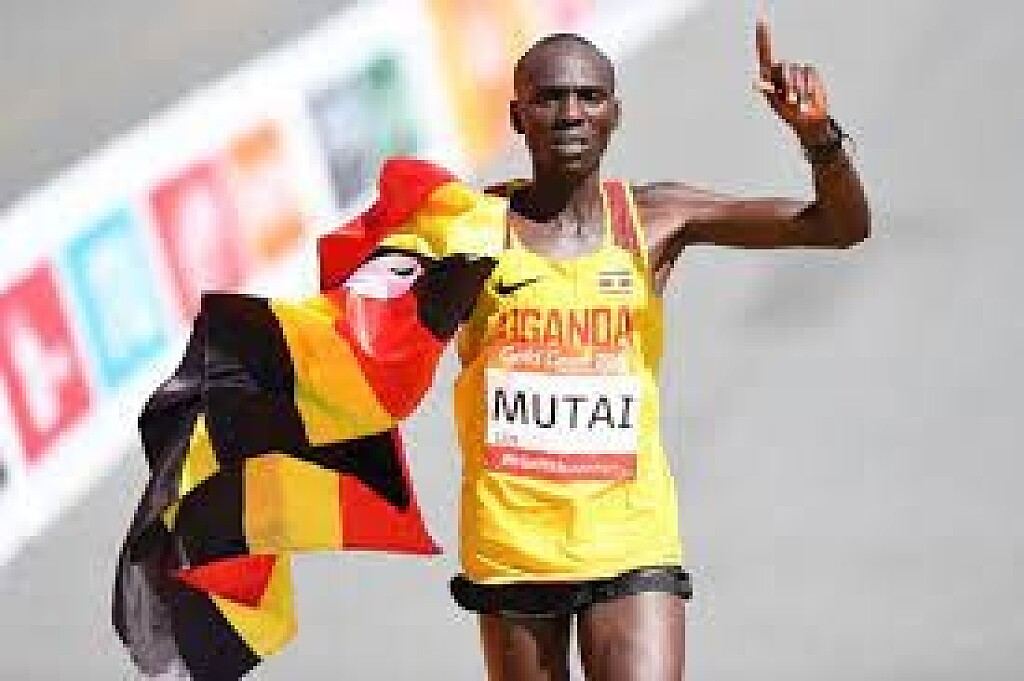
Ugandan Solomon Mutai breaks Venice Marathon course record
Solomon Mutai is a happy man after beating his fellow African elite competitors to win the Venice Marathon in Italy on Sunday.
The experienced Ugandan gifted himself a day after his 30th birthday by posting a winning time of two hours, eight minutes and 10 seconds at the World Athletics Bronze Label Road Race.
“It was good and challenging,” Mutai said hours after his race. He became the ninth different nationality to conquer the course in Venice after breaking away from Kenyan Emmanuel Naibei and Ethiopian Abebe Tefese.
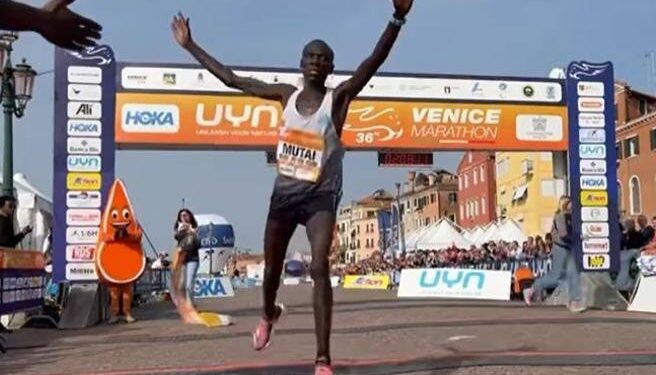
And the victory produced emotions out of the 2018 Commonwealth silver medallist. Upon crossing the tape, Mutai spread his arms wide and knelt down after being humbled by the feat.
“I am happy because it was not an easy race because there were too many bridges,” he said of the course difficulty.
This marks Mutai’s first win since winning his debut 42km race at the 2013 Mombasa Marathon in Kenya and it came with not only a personal best (PB) but also a new course record.
Also, this is Mutai’s best performance post Covid-19 pandemic since he took third place at the Vienna Marathon in Austria with the old PB of 2:08:25.
Previously, he did not complete the Xiamen Marathon in Tuscany, Italy in early 2021 thereby missing out on selection to the Tokyo 2020 Olympics.
When he finished third at the Istanbul Marathon in Turkey last November, it came after a time of 2:10:25 after countering hilly terrain towards the finish.
And early in April, Mutai could only post 2:11:01 in sixth place at the Enschede Marathon in the Netherlands.
On Sunday, Mutai was redefined and even better focused, thereby lowering his PB and also beat the previous course record mark of 2:08:13 set by Kenyan John Komen.
Mutai, a bronze medallist at the 2015 Beijing World Championships in China, was quiet in the mix, the lead group crossing through the 21km mark at 1:03:56.
After 30km, it was down to Mutai and Naibei but when they reached the Liberty Bridge some 4km ahead, Mutai made his move.
He pulled away in style, going around the River Sette Martiri to glory with Naibei clocking 2:09:41 while Tefese coming third in 2:09:54.
Mutai now moves third on the list of male marathoners in search of the three available tickets to the Budapest World Athletics Championships set for next August in Hungary.
(10/24/22) Views: 92Allan Darren Kyeyune
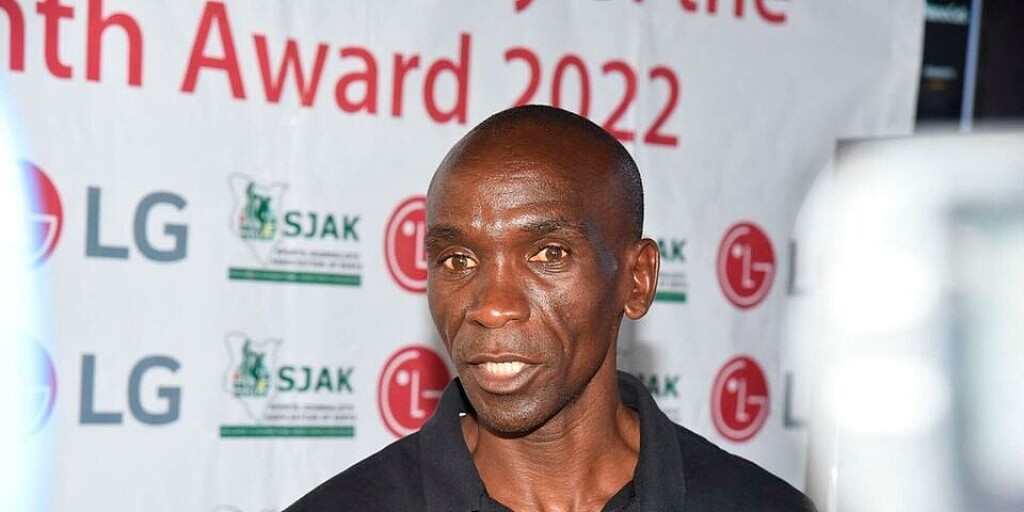
Eliud Kipchoge wins LG Sports Personality of the Month award
World Marathon record holder Eliud Kipchoge is the LG/ Sports Journalist Association of Kenya (SJAK) Sports Personality for the month of September.
Kipchoge won the recognition after his world record-breaking 2:01:09 run at the Berlin Marathon on September 25 this year where he lowered his record by 30 seconds to win a fourth title.
In an interview with journalists on Tuesday in Eldoret, Kipchoge said that he was glad to have been recognized for his exploits in Berlin.

Kipchoge was awarded an LG refrigerator which doubles up as a top mount freezer and water dispenser worth Sh150,000 and a personalized trophy.
He hailed SJAK and LG for constantly recognizing sportsmen and women for their exemplary performances.
“I’m excited today to be recognized by the journalists’ body and this is the second recognition after the breakfast meeting by Isuzu two weeks ago and I must admit that when you work hard, good things come your way.

I want to thank SJAK and LG for this award and this is a testament that we should always strive for more, there are no limits but rather everything is achieved through belief and determination. Breaking the world record in Berlin was very crucial for me as I wanted to inspire the human race,” said the Double Olympic marathon winner.
Kipchoge said that he is starting his season soon as he eyes a trio of wins at the 2024 Olympics in Paris.
“I have a plan to compete in the remaining major races before the 2024 Olympic Games where I’m eyeing to retain my title for the third time and I believe next season will be great,” he added.
William Kimore, the Content manager LG East Africa, said Kipchoge is a good inspiration to the young athletes who look up to him.
“We are proud to be associated Kipchoge one of the greatest marathoners who has demonstrated that hard work and persistence pays with his record-breaking heroics and we shall continue recognizing and awarding those who perform well in various sports,” said Kimore.
Kipchoge beat other nominees including track stars Beatrice Chebet (5000m) and Emmanuel Korir (800m), both of whom claimed Diamond League trophies in the 2022 season finale held in Zurich, Switzerland, and Hellen Obiri, who successfully defended her Great North Run title in the same month.
Others nominees included Malkia Strikers opposite attacker Sharon Chepchumba, who emerged top scorer for Kenya at the World Championships in the Netherlands, Karan Patel, who won the ARC Rwanda Mountain Gorilla Rally in Kigali, and former Hit Squad captain Nick Okoth, who bagged silver at the African Championships in Maputo, Mozambique.
He joins a growing list of sportsmen and women who have won the award this year including junior WRC3 contender McRae Kimathi (February), Japan’s Nagoya Marathon winner Ruth Chepng’etich (March), Boston Marathon men’s winner Evans Chebet (April), national women’s volleyball team star Sharon Chepchumba (May), WRC3 Safari Rally winner Maxine Wahome (June), Wimbledon Open Doubles Junior Champion Angela Okutoyi (July) and Commonwealth Games 100m champion Ferdinand Omanyala (August).
(10/25/22) Views: 91Bernard Rotich
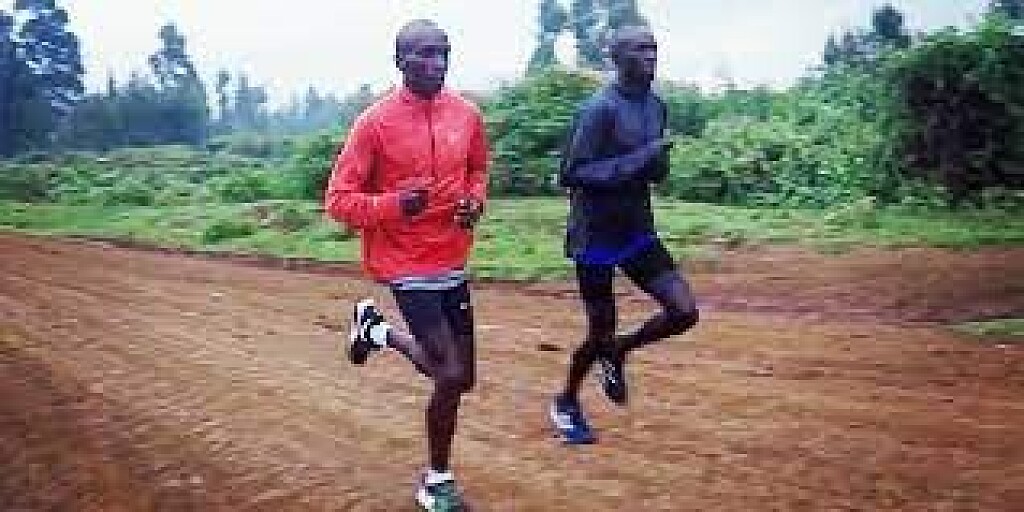
Run like Kipchoge: start applying these principles to your running today
Coach and author Brad Stulberg had a ‘pinch me’ moment watching marathoning GOAT Eliud Kipchoge credit his book, The Practice of Groundedness, as inspiration going into his recent marathon world record in Berlin. Stulberg’s principles are simple and applicable to any runner. Here’s how you can incorporate them into your life and elevate your running game, maybe setting your own personal record (and optimizing the journey along the way).
Consistency is key for improvement (be patient)

“Small and consistent victories compound over time,” says Stulberg. He uses Kipchoge as an example in his book: the runner is consistent and patient, and trains and acts with ease, rarely pushing his body beyond 80 per cent in practice. “Adopting a mindset that favours consistent small steps may take the excitement out of experiencing massive highs and lows, but it leads to more enduring progress,” Stulberg adds. Far greater than putting in occasional huge performances and risking burnout is keeping your focus on day-to-day consistent efforts and improvements.
Accept where you are to get where you want to be

Stulberg suggests you accept where you are, have realistic expectations, and trust your training. Conventional wisdom and practice argues that if you want to be great at something you must be continuously hungry and pushing, setting up a mindset craving specific and measurable results. Progress is not linear, Stulberg argues, and the conventional mindset tells us that only when we achieve the results we are pursuing are we worthy human beings. “The stress and pressure of carrying this weight is miserable,” says Stulberg. Accepting your current abilities and circumstances will allow you to perform from a place of freedom.
Focus on the process, and the outcomes will fall into place
Instead of focusing on the singular achievement of a giant goal, break goals down into parts, and direct your focus on those parts. Stulberg says this serves as an incredibly powerful focusing mechanism. “For most consequential endeavours, long-term progress is less about heroic effort and more about smart pacing; less about intensity on any given day and more about discipline over the course of months, and in some cases even years,” he explains.
By staying consistent over time, accepting where you are at and acknowledging that achieving goals is often non-linear, and keeping your eyes on the process rather than the outcome, you’ll find yourself running with what Stulberg calls groundedness: “unwavering internal strength and self-confidence that sustains you through ups and downs.” You’ll make progress like Kipchoge does, “slowly by slowly.”
(10/24/22) Views: 90Running Magazine
