

Running News Daily
Top Ten Stories of the Week
2/26/2022
These are the top ten stories based on views over the last week.
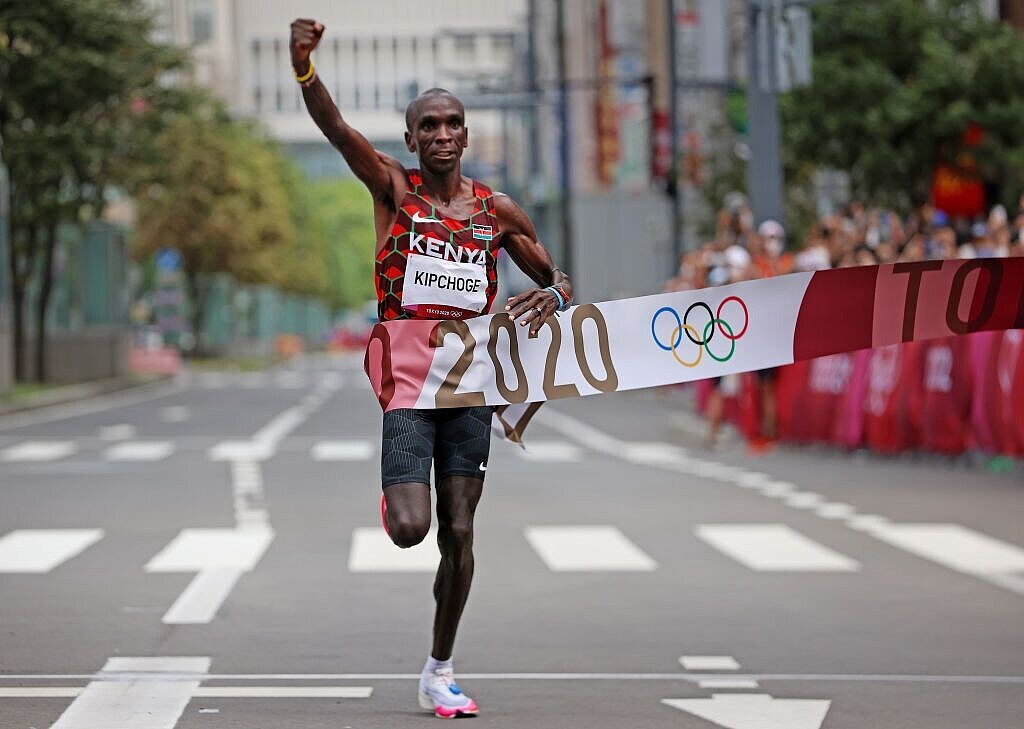


Top things to know about 2022 Tokyo Marathon
Eliud Kipchoge's addition to the elite list for the Tokyo Marathon has made it one of the key athletics races of the year.
The Kenyan heads back to Japan where, last August, he became the third man to retain the Olympic marathon title after Ethiopia’s Abebe Bikila and Waldemar Cierpinski of Germany.
After being postponed in 2021 due to the global pandemic, Tokyo Marathon 2021 returns on March 6, with Kipchoge and fellow marathon world record holder Brigid Kosgei part of a stellar field.
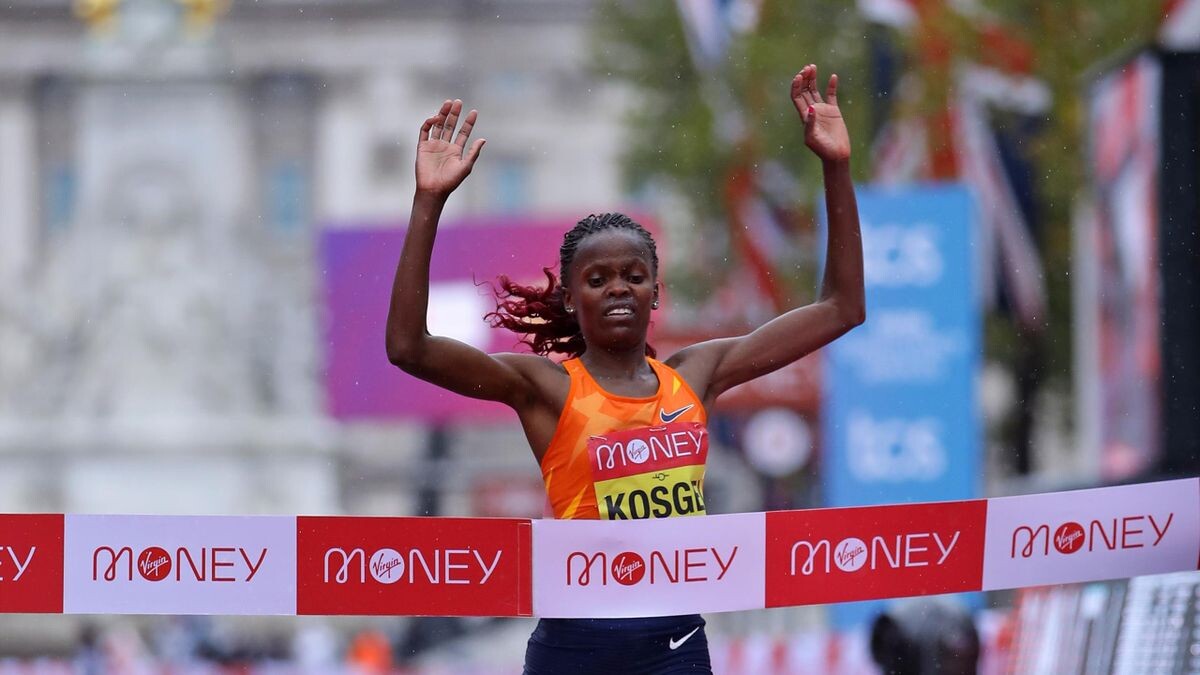
Here’s your guide to the top athletes to watch out for in the newest of six the World Marathon Majors, plus the route course and schedule.
After winning back-to-back Olympic golds with the largest victory margin since the 1972 Munich Games, Kipchoge cemented his reputation as the greatest marathon runner in history.

But the Kenyan, who ran the first sub-two-hour marathon in October 2019, says he wants to compete at Paris 2024 and become the first athlete to win three Olympic marathon titles.
“I still have something boiling in my stomach, that’s why I am looking forward to it… I want to be the first human to run and (win) three consecutive Olympics,” the 37-year-old star said on his plan for his fifth Olympics.
Kipchoge, a 5000m bronze and silver medalist on the track at Athens 2004 and Beijing 2008 respectively, has previously won the Marathon Majors in Chicago, Berlin (three times) and London (four times).
Tokyo will be his fourth stop, and he plans to complete the majors by running in Boston and New York City before he rounds off his marathon career that began in 2013.
With Tokyo boasting a fairly flat course, Kipchoge could go close to his world record of 2:01:39 although Wilson Kipsang's course record of 2:03:58 may be a more realistic target.
But it certainly will not be just a race against the clock.
Up against him will be the third-fastest marathon runner in history, Ethiopia's Birhanu Legese, who is a two-time Tokyo Marathon winner. His compatriot Mosinet Geremew, fourth on the all-time list, will also be in action. Geremew’s PB of 2:02:55 was from the 2019 London Marathon where he finished behind Kipchoge.
Shura Kitata, who ended Kipchoge's seven-year unbeaten run in the marathon at London in 2020, another high-class Ethiopian in the field along with Olympic bronze medalist Tamirat Tola and Kenya’s Amos Kipruto, a world bronze medalist.
Kosgei aiming for Tokyo Marathon after Olympic silver
After her silver behind Peres Jepchirchir, which earned Kenya a historic 1-2 at the Olympic marathon held in Sapporo, Kosgei returns to Japan seeking her first Marathon Major win in two years.
The 27-year-old set a world record of 2:14:04 in the 2019 Chicago Marathon.
Her four-race winning streak came to an end in the Olympic marathon and, two months later, she was only fourth in her unsuccessful bid for a third consecutive London title.
With Jepchirchir not competing, Kosgei will be expected to win although she faces significant opposition from her fellow Kenyan, Angela Tanui, who won last year's Amsterdam Marathon.
There are also two strong Ethiopians in 2021 Berlin Marathon winner Gotytom Gebreslase and Ashete Bekere who was third - one place ahead of Kosgei - in London last year.
USA's Sara Hall, who took a surprise second place behind Kosgei in the 2020 London Marathon is in the line-up, as is home favourite Niiya Hitomi who won the first Tokyo Marathon back in 2007 and was 21st at last year's Olympics.
There is plenty at stake for the home runners as the race serves as a trial for July's World Athletics Championships in Eugene, Oregon.
Tokyo Marathon 2021 course
The Tokyo Marathon runs on a flat course through the city’s famous tourist spots. What prevents it from being a super-fast course are at least a handful of 180-degree turns.
The runners will start outside the Tokyo Metropolitan Government Office and then go downhill by about 30m in the first 5km.
They take on a winding route through the streets of the Japanese capital, crossing the Sumida River, going back through Nihombashi and then Minato City before the finish in between the Imperial Palace and Tokyo Station.
(02/23/22) Views: 173Evelyn Watta

Carbs, fats, proteins: what’s the best diet for runners? Researchers say a balanced diet is best for runners looking for better performance
Advice for runners about performance nutrition can be confusing and often contradictory. Should you eat more fat and restrict carbs to increase fat burning? Or should you increase your carbohydrate intake so you always have a quick source of fuel? New research suggests that for most runners, the best diet is one that contains a balance of fat and carbohydrates for optimal performance.
Fat oxidation and performance
When you exercise, your body primarily uses carbohydrates (glucose) and fat for energy. Your body will always use the easiest energy source first, which is usually blood glucose. From there, it will draw upon your glycogen stores to use for fuel, but this process takes a bit longer because you have to convert glycogen to glucose before you can use it.

The problem with glucose and glycogen, however, is that your body only has so much of it, so it needs to be replaced by taking in exogenous carbohydrates (think gels, sports drinks, etc.). Fat, on the other hand, is stored in the body in much greater quantities, and provides more energy per gram than carbohydrates. The problem with fat, unfortunately, is that your body needs oxygen to burn fat for fuel (a process called fat oxidation), which means you have to slow down enough so that you can get the oxygen you need for this process to happen.
This isn’t helpful for short-distance runners like sprinters, or runners competing in races like the 800m or the mile, but fat is a valuable fuel source for long-distance athletes. As long as you can get enough oxygen to use fat, you could presumably run for hours while burning fat for fuel.

Over the years, researchers, coaches and athletes have experimented with high-fat, low-carbohydrate diets during training to “teach” your body to burn fat more efficiently for fuel, but is this really necessary, or effective? That is the question researchers recently attempted to answer.
The study
The authors of the study, published in the journal Frontiers in Physiology, had 28 competitively-trained male distance runners (who ran half-marathons, marathons and ultras) complete an incremental exercise test to exhaustion, as well as three three-hour runs, each with a different carbohydrate-feeding protocol. Throughout the experiment, participants were consuming a balanced macronutrient diet of approximately 57 per cent carbohydrates, 21 per cent protein and 22 per cent fat.
After the endurance tests, the researchers found that the participants were able to achieve a high level of fat oxidation despite consuming a mixed macronutrient diet and consuming carbohydrates during their run. They also found that runners who consumed the highest amounts of carbohydrates during their run were the most likely to experience GI distress, highlighting the importance of moderating your mid-run carb intake to maximize performance while minimizing stomach troubles.
The bottom line
If you’re wondering whether you should consider using a low-carbohydrate, high-fat diet to maximize your body’s ability to burn fat for fuel, this research says it’s likely not necessary. Runners who consume a diet that has a balance of carbohydrates, fats and protein are able to use fat for fuel efficiently during a long run.
Of course, the runners in this study were well-trained athletes, which means their bodies are able to use all types of fuel very efficiently. So how can less-experienced runners improve their rate of fat oxidation? Simply by training. By training consistently, your body will become more and more efficient at using both carbs and fats for fuel, which will allow you to run faster and longer.
(02/21/22) Views: 112Brittany Hambleton
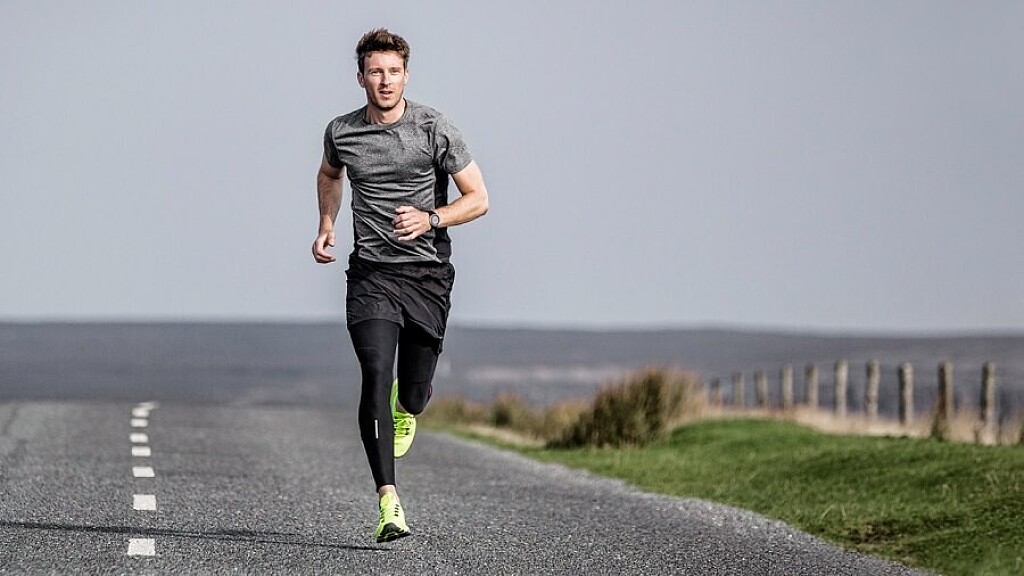
Six mental tricks to make you a more confident runner, gain mastery over your mind so you can tackle any challenge
If you struggle with confidence, you’re not alone. A lot of runners prepare for weeks or months for their goal race, only to sabotage themselves with negative self-talk and self-doubt. A little confidence can take your race from good to great, so use these tricks as you prepare for your next goal race to strengthen your mind along with your body.
1.- Ditch weak words
Instead of saying “I think I can do it,” say “I know I can do it,” or “I believe I can do it.” Rather than “I’m going to try my best,” say “I’m going to do my best.” Small changes like those remove all doubt from the phrase and put you in the driver’s seat.
2.- Flip your negative assumptions
Maybe you’ve never had an amazing finishing kick, or hills haven’t always been your strong suit. When we come up against something that we struggle with, we tend to immediately file that in the “I’m bad at this” drawer, and that’s that. By pulling those negative assumptions out and flipping them around, you will build confidence and be a better runner. Try saying “I’m going to give it everything I’ve got at the end of the race, no matter how slow or fast that is,” or “I’m going to attack the hill to the best of my ability.” Repeat that over and over again until you believe it.

3.- Picture a time when you succeeded
Bad races or workouts tend to stick in our heads and erode our self-confidence, so as you train for your next goal race, make the effort to picture times when you ran really well. Maybe there was a time when you crushed your kilometre repeats, or maybe on a long run you felt like you could run forever. Focus on the times when you succeeded to remind yourself that you’ve accomplished your goals in the past and you can do so again.
4.- Get off Strava
Have you ever come in from a run you felt really great about, then gone on Strava and saw someone else who ran longer and faster and immediately felt less accomplished? Apps like Strava can be great for connecting with other runners and tracking your progress, but can become negative when you fall into the comparison trap. If this often happens to you, it’s time to set the phone down, ignore what others are doing and bask in the glow of a job well done.
5.- Dress for success
It may sound trivial, or even superficial, but wearing clothes that you feel good in can go a long way toward making you more confident. So put on your favourite running tights, buy your favourite T-shirt in every colour, and look good to feel good.
6.- Trust your training
In the days leading up to their goal race, many runners worry if they’ve done enough or if they could have done more. If you’ve trained consistently and put in the work, you have to trust on race day that you’re ready to go. Repeat phrases like “I’ve worked hard for this and I’m ready,” to remind yourself that you’ve got what it takes to succeed.
(02/22/22) Views: 89Brittany Hambleton
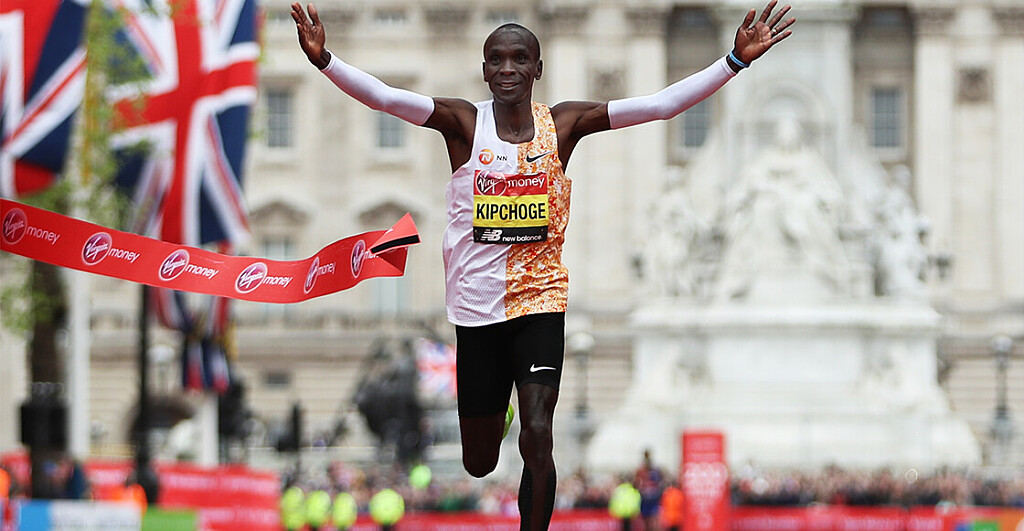
Eliud kipchoge set to run Tokyo Marathon and he dreams of winning all six world Abbott World Marathon Majors
The marathon world record holder and double Olympic champion Eliud Kipchoge has accepted his invitation to the 2022 Tokyo Marathon, making his return to racing on Mar. 6.
Kipchoge announced via Instagram that he will return to Japan for his Tokyo Marathon debut. “My focus has been on Tokyo from the beginning of my training cycle,” Kipchoge said in his post. “I am ready to race there.”
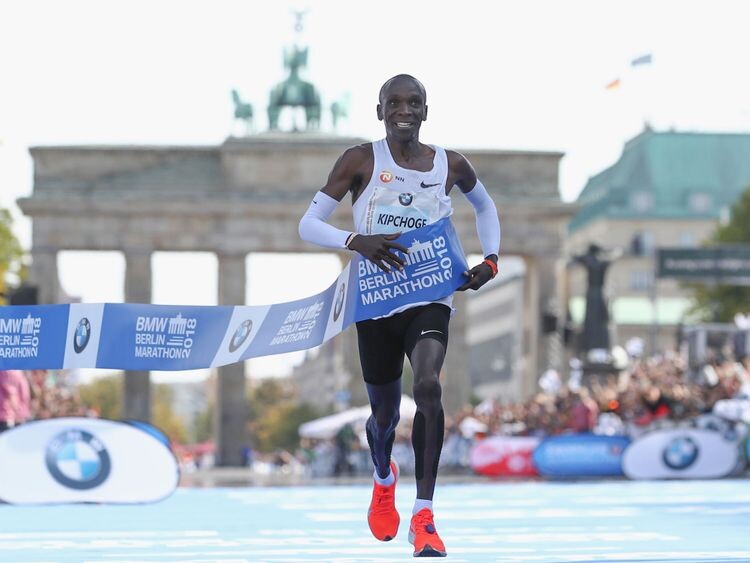
The Kenyan holds the marathon world record with a time of 2:01:39, set at the Berlin Marathon in 2018. In 2019, Kipchoge became the first man to break the two-hour barrier at an unofficial race in Austria.
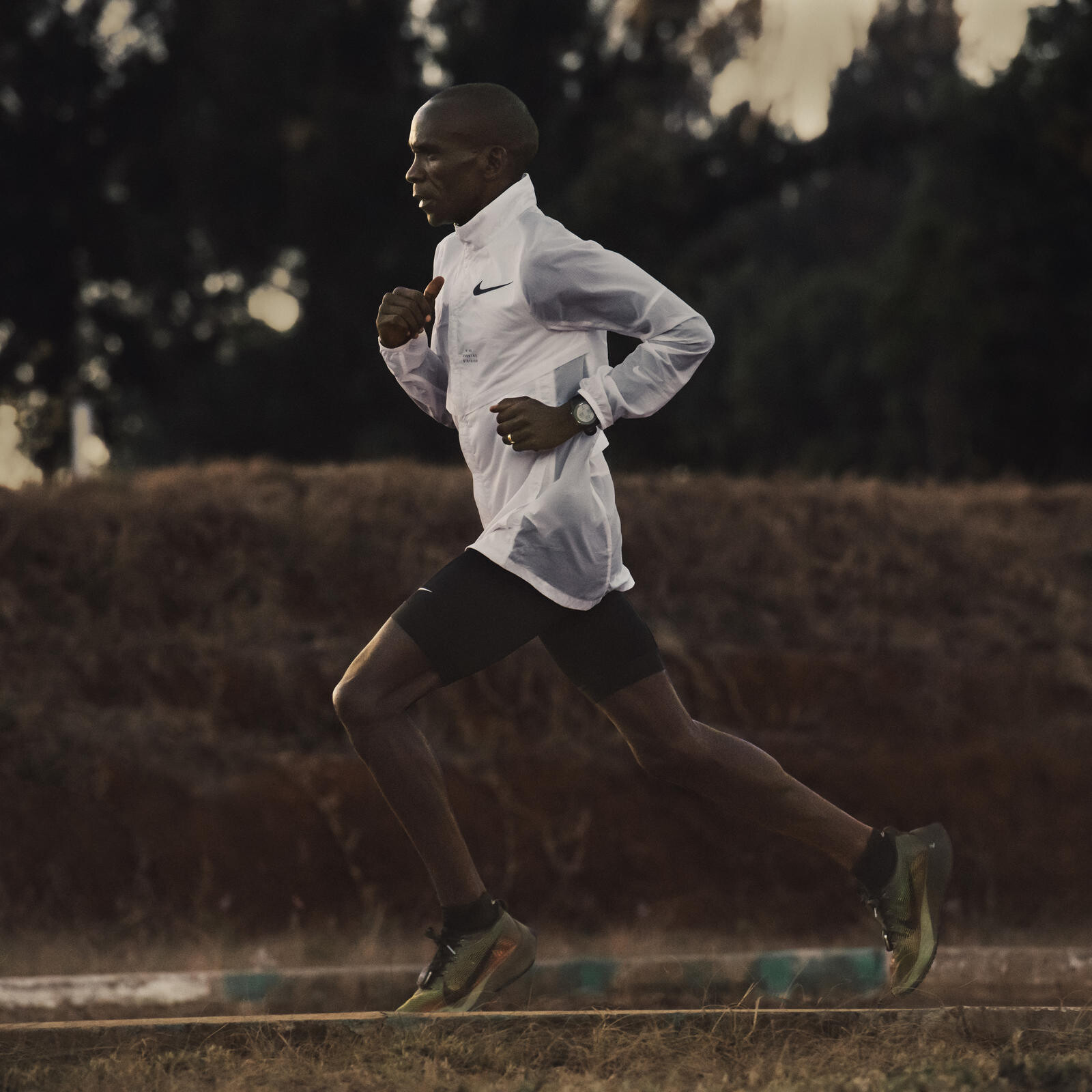
Kipchoge will have his eyes on the course record of 2:03:58, set by Wilson Kipsang in 2017. Kipchoge has mentioned in the past that it is his dream to win all six world marathon majors, a feat no runner has accomplished. He currently has three of six, with multiple world major wins–in London (2015, 2016, 2018, 2019), Berlin (2015, 2017, 2018) and Chicago (2014).
This year will mark the first time the Tokyo Marathon has taken place in person since 2020, due to the pandemic.
(02/18/22) Views: 86Marley Dickinson
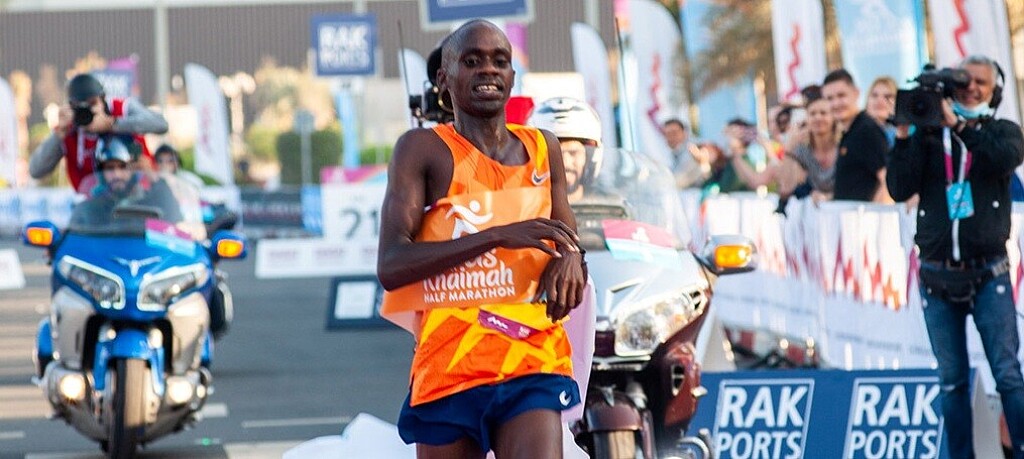
Jacob Kiplimo and Girmawit Gebrzihair break course records in Ras Al Khaimah
Uganda’s Jacob Kiplimo and Ethiopia’s Girmawit Gebrzihair ran course records to win the Ras Al Khaimah Half Marathon on Saturday (19), clocking 57:56 and 1:04:14 respectively during another fast edition of the World Athletics Elite Label road race.
Kiplimo had gone into the race targeting his own world record of 57:31, which he set in Lisbon in November. The 21-year-old world half marathon champion, who finished third in the 10,000m and fifth in the 5000m at the Tokyo Olympics last year, was on blistering pace for much of the race, recording a split of 13:23 for 5km and then going through 10km in 26:56 – on target for a sub-57:00 half marathon. By that point he was 16 seconds ahead of Kenya’s Rodgers Kwemoi, with a group including Kenneth Kiprop Renju, Alexander Mutiso, Daniel Kibet, Amedework Walelegn, Abel Kipchumba, Seifu Tura and Kennedy Kimutai another six seconds back.

Kiplimo’s pace dropped slightly over the next 5km but he still passed 15km in 40:43, a time which beats the world 15km best of 41:05 which had been set by his compatriot Joshua Cheptegei in Nijmegen in 2018. Although the world half marathon record seemed to be moving out of reach, Kiplimo went through the 20km mark in 54:53, 33 seconds ahead of Kwemoi, before crossing the finish line in 57:56 to win by 34 seconds.
The fifth-fastest half marathon in history, it is the third occasion that Kiplimo has broken 58 minutes for the distance, a time that only three other athletes – Kenya’s Kibiwott Kandie, Rhonex Kipruto and Mutiso – have ever achieved.
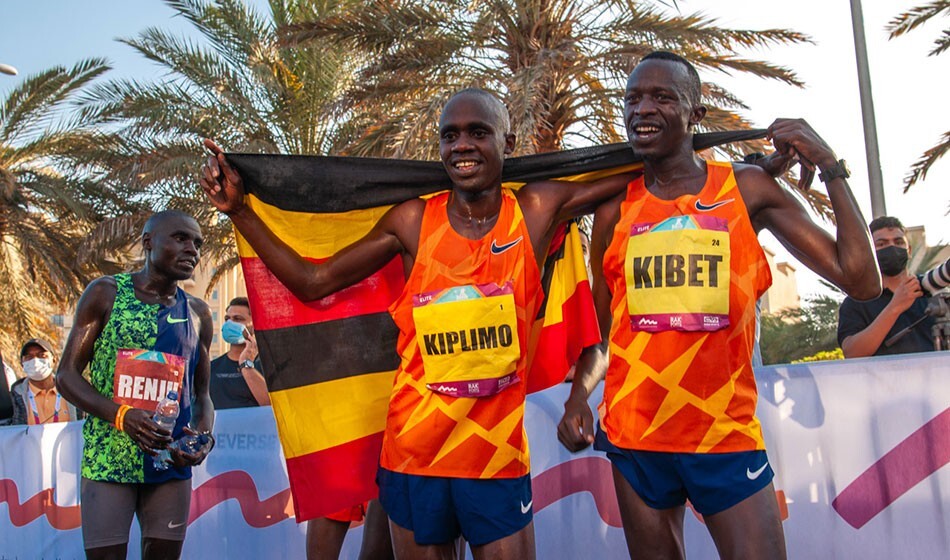
The top six athletes all beat the previous course record of 58:42, which had been set by Bedan Karoki in 2018 and then matched by Stephen Kiprop in 2019. Kenya’s world 10,000m fourth-place finisher Kwemoi was second in 58:30, which moves him to 11th on the world all-time list, while his compatriot Renju was third in 58:35.
Ethiopia’s Tura was one second back in fourth, with his compatriot Walelegn fifth in 58:40 and Kenya’s Kibet sixth in 58:45. Mutiso and Kipchumba also dipped under 60 minutes, running 58:48 and 59:47 respectively.
Gebrzihair wins on debut
Gebrzihair made a successful start to her half marathon career in the women's race, her course record of 1:04:14 being the second-fastest ever women’s debut for the distance behind Letesenbet Gidey’s world record of 1:02:52 run in Valencia in October.
The 20-year-old Gebrzihair, who claimed world U20 5000m bronze in 2018 and recently finished second in the Great Ethiopian Run 10km, was joined by athletes including Kenya’s two-time world 5000m champion Hellen Obiri and Sheila Chepkirui as well as Ethiopia’s Bosena Mulate in an eight-strong group which went through 5km in 15:12. That pack was down to five athletes by the 10km point, which Gebrzihair, Obiri, Mulate, Chepkirui and Kenya’s Judith Jeptum passed in 30:28.
Obiri, Gebrzihair and Chepkirui then broke away and went through 15km together in 45:50, before Chepkirui was dropped and the leaders clocked 1:01:04 through 20km. Gebrzihair kicked over the closing stages to secure success on her debut, eventually winning by eight seconds in 1:04:14 to Obiri’s 1:04:22. Chepkirui was third in 1:04:36 and the top three in Ras Al Khaimah now respectively sit fourth, fifth and seventh on the world all-time list.
Jeptum finished fourth in 1:05:28 and Mulate fifth in 1:05:46. In sixth, Britain’s Eilish McColgan ran 1:06:26 to break Paula Radcliffe's national record of 1:06:47, which had stood since 2001.
Kenya’s Daisy Cherotich, Bahrain’s Eunice Chebichii Chumba and Kenya's Pauline Esikon were all also under 68 minutes, with respective times of 1:06:33, 1:07:22 and 1:07:50. Yeshaneh was also in action but after passing 15km in 46:08, the former world record-holder did not finish the race.
The performance improves on the 1:04:31 course record – then a world record – set by Ababel Yeshaneh the last time the Ras Al Khaimah Half Marathon was held in 2020.
(02/19/22) Views: 85World Athletics
Megertu and Abderehman break course records in Seville
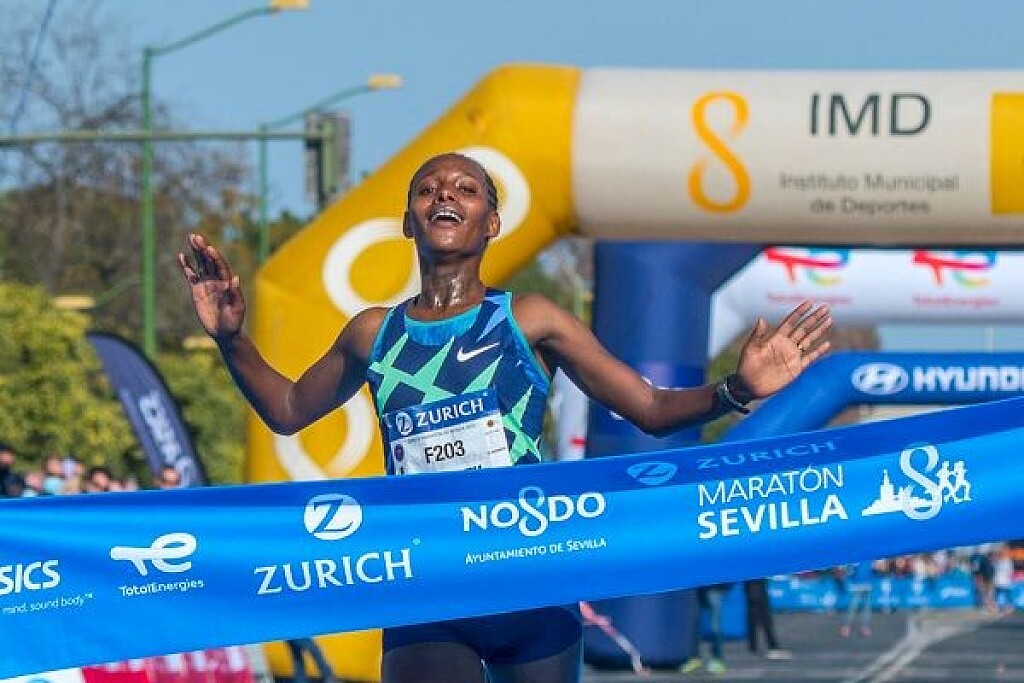
Alemu Megertu and Asrar Abderehman secured an Ethiopian double at the Zurich Maratón de Sevilla, a World Athletics Elite Label road race, on Sunday (20) with huge world-leading PBs of 2:18:51 and 2:04:43 respectively.
Both men’s and women’s races had strong depth as seven men finished inside 2:07 with the 13th finisher clocking 2:08:30, while nine women went sub-2:26, confirming the course is conducive to fast times.
Perfectly paced by Hassan Aouchar, the women's contest opened at a brisk pace with opening splits of 16:13 (5km) and 32:44 (10km), suggesing a finishing time well inside 2:20, which would smash the course record of 2:23:13. By then the leading quintet was formed by Ethiopians Megertu, the fastest entrant thanks to a 2:21:10 PB, Meseret Gola, runner-up at last November's Barcelona Marathon in a PB of 2:24:09, Kalayu Chekole, Chimdesa Kumsa and Alema Gebremedhin. Behind them, Britain's Jess Piasecki, eager to improve on her marathon best after smashing her half marathon PB with 1:07:20 last month, passed through 10km in 33:24.Megertu and her compatriots went through halfway in 1:09:25, more than a minute ahead of Piasecki.
But Kumsa, then Gebremedhin and finally Chekole lost ground from the heading duo and the race became a two-woman battle between Megertu and Gola, both still following the pacemaker.
The key movement came at 35km when Gola simply could not live with the steady 3:17 pace and began to lose contact. Megertu, meanwhile, metronomically maintained her cadence and reached the finish line in a massive career best of 2:18:51, having ran halves of 1:09:25 and 1:09:26.
Runner-up Gola also set a massive PB of 2:20.50 while Chekole completed an Ethiopian sweep of the podium with a lifetime best of 2:21:17. Kumsa held on for fourth place (2:22:13), while Piasecki overtook Gebremedhin just before 40km and finished fifth in 2:22:27, becoming the second-fastest Briton in history behind former world record-holder Paula Radcliffe.The men's pacemakers, Enock Onchari and Wilfred Kimeli, were asked to maintain a 2:57/km tempo in the hunt for a race record (2:04:46) but they covered the opening 5km in 14:54, a bit slower than expected, closely followed by the main favourites which included Eritrea's 2015 world champion Ghirmay Ghebreslassie, his compatriot Awet Habte and a large Ethiopian contingent led by Abderehman, Adugna Takele and debutante Adeladlew Mamo among others.
The pace heated up over the following kilometres and the leading group reached 10km in 29:39, 15km in 44:22 and the half-way point in 1:02:31, still eight seconds outside the required pace to break the record. By then, 12 men remained in the heading pack. Way back, Spain's 40-year-old Ayad Lamdassem, who finished fifth at the Tokyo Olympics, was in the chasing group, timed at 1:03:16 by halfway.
The steady pace progressively whittled down the main group and by the time the pacemakers dropped out at 30km, the Ethiopian pair of Abderehman and Mamo took command and opened a sizeable gap on the rest. The leaders took turns at the helm but it was Mamo who made most of the pacing duties with his fellow Ethiopian running alongside.By 35km the lead duo was timed at 1:43:17 with Ghebreslassie and Takele 27 seconds in arrears.
A 35-40km split of 15:26 seemed to ruin the chances of a course record but Abderehman unleashed a devastating kick with some 1200m to go and built a sizeable margin over Mamo to secure the win in 2:04:43, a course record by three seconds and an improvement of more than three minutes on his previous best.
Runner-up Mamo produced a promising 2:05:12 debut, while Ghebreslassie got rid of Takele in the closing stages to complete a classy podium in 2:05:34, a massive PB for the 26-year-old Eritrean. Debutant Habte finished fifth in 2:06.25.
Running negative splits (1:06:17/1:06:08) Lamdassem placed sixth to improve his own national record by 10 seconds (2:06:25). Likewise, Israel’s Maru Teferi dipped under 2:07 for the first time to improve on his national record, while compatriot Tachlowini Gabriyesos, a member of the Athlete Refugee Team at the Tokyo Olympics, clocked a PB of 2:10:09.
Abderehman prevails over debutant Mamo
(02/20/22) Views: 76
What are the Fastest Marathons in the UK?
The marathon distance is something that many runners aspire to. It’s a lot more taxing than a half marathon and requires serious mental and physical resilience to complete. Most people can run a 5k or 10k without a lot of training. It’s even possible to get around a half marathon on minimal training, although it won’t be a pleasant experience! But if you want to bag a coveted marathon medal, you’ll need to train hard and long.
Chasing a PB
Completing a marathon isn’t enough for some runners, since they are intent on chasing a personal best. If you fall into this category, a fast marathon course is essential. After all, you have zero chance of achieving a PB if you enter the Snowdonia Marathon, which includes 1,685 metres of ascent. You’re also likely to end up with very sore calves and quads!
Luckily, there are a few flat marathons for runners hoping to smash their personal records over a 26.2-mile course. And if you can’t face the idea of all that training, visit OnlineCasinos and find an online casino where you can place a bet on one of the pro athletes who will be out to break a record or two. OnlineCasinos lists casinos with the best welcome bonuses and rates them too.
Read on to discover which marathon races are the flattest, with the best PB potential.
Edinburgh Marathon
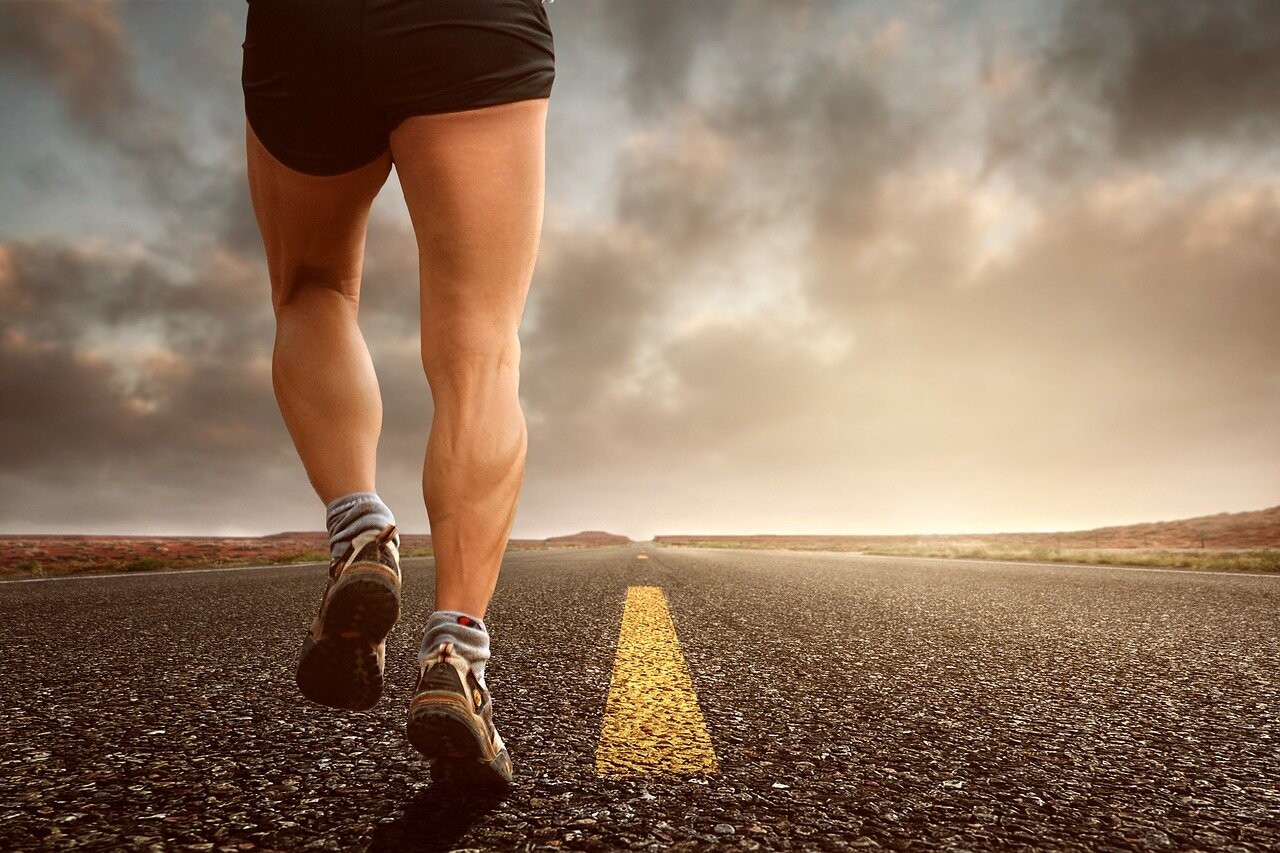
Edinburgh has a flat and very fast course and Runners World voted it the fastest marathon in the UK. If you are chasing a PB, this is the race for you.
Edinburgh Marathon is extremely popular, with both casual runners and elite runners. It attracts more than 30,000 runners each year and is the second-largest marathon after London, so it is a good idea to get your entry in early if you want to compete.
One of the great things about Edinburgh is that the support is excellent. Some less popular marathons have large sections with few spectators, which makes it hard for any runners who are struggling. In a typical year, tens of thousands of people line the route to cheer runners on, and it makes a big difference!
Another reason to sign-up for Edinburgh is that the course is very scenic and takes in a lot of the most famous parts of the Old Town. You will pass Greyfriars Bobby, run along the Royal Mile, and go through the Prince’s Street Gardens. It’s a fantastic course!
Manchester Marathon
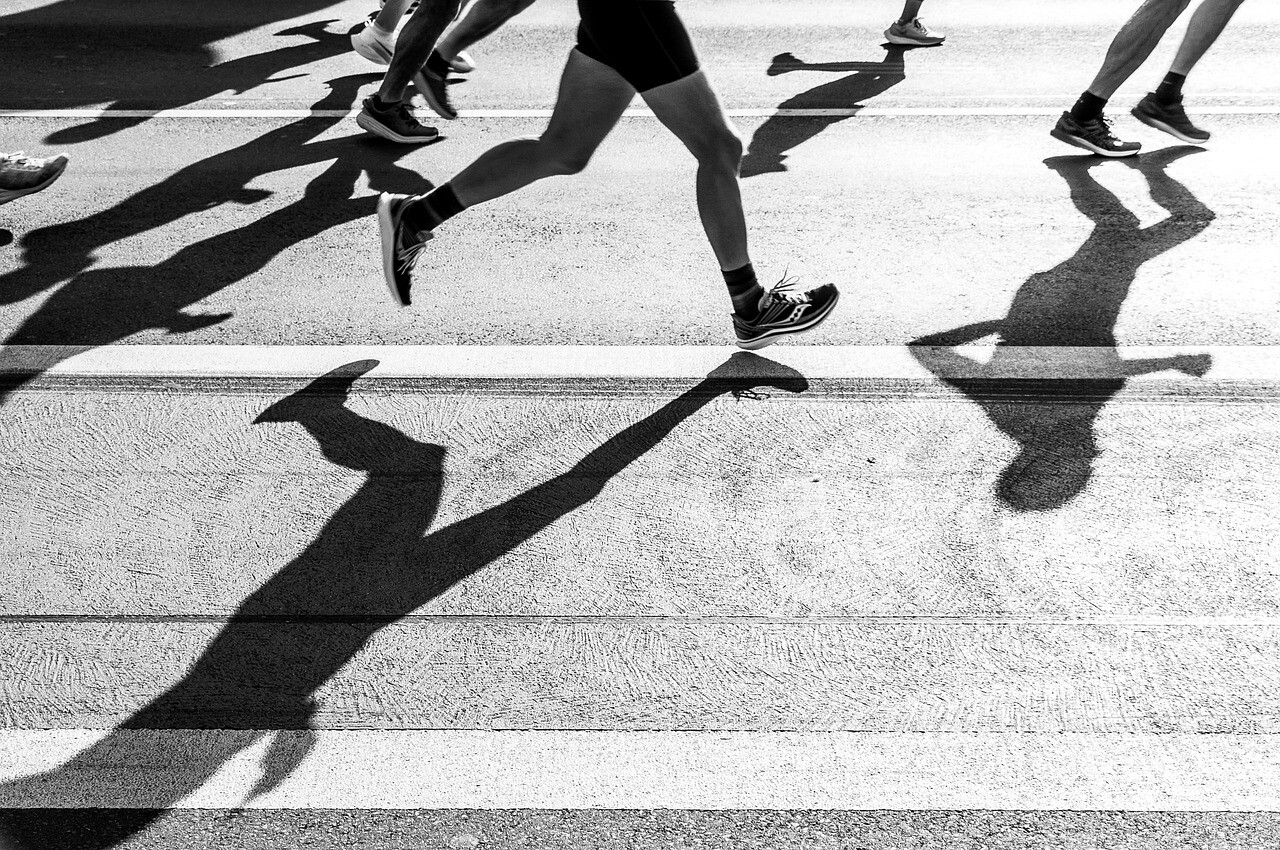
Manchester Marathon has a fantastic reputation for being fast, flat, and very well supported. This one takes place in the spring and is an excellent race to target if you don’t get a place at London. In 2015, Manchester Marathon was voted the Best Marathon in the UK for the second time, which goes to show just how amazing this race is. It’s also the fourth most popular marathon in Europe, in a strong field that contains the Rome Marathon, Paris Marathon, and Berlin Marathon.
Why is Manchester so popular? Aside from the speed of the course, with no horrific hills to sap your will to live, there is entertainment around the course, with bands and singers there to keep tired legs going. In addition, the race finishes in Man United’s home at Trafford Park, which is sure to appeal to footy fans.
If you do enter Manchester, keep an eye out for Olympians, as the course usually attracts some of the world’s best elite runners.
Blackpool Marathon
The seaside resort town of Blackpool is famous for its promenade light displays, but it is equally famous for the annual Blackpool Marathon. The course is fast and flat, and you can score a PB running down the iconic promenade.
The Blackpool Marathon is a two-lap course, which might not appeal to everyone. But it attracts thousands of runners and there is lots of support along the course. You get to run along the famous Golden Mile, with amusement arcades on one side and the sea on the other. The course then takes runners out to Lytham St Annes, where there is a turnaround point, all the way back through Blackpool to Cleveleys, before heading back into town again.
Enter this race if you fancy making a weekend of it. You can run the marathon while the rest of your family chills on the beach or blow their pocket money in the arcades.
Milton Keynes Marathon
MK Marathon starts in the city centre, but soon winds out into the countryside. It’s a great race for novices new to the marathon distance, but equally, because the course is fast and flat, the Milton Keynes marathon also attracts more experienced runners.
As well as lovely scenery along the route, which takes runners through country parks, woodland, and past lakes, you can look forward to a fantastic stadium finish. The race is limited to 3,000 runners, so the route won’t be too crowded if you dislike having to fight through the crowds, but there is still plenty of atmosphere to keep runners motivated.
This event is also a qualifier for London and Boston if that’s important to you.
Yorkshire Marathon
The Yorkshire Marathon is one of the newer full-distance races on the racing calendar, with the first event taking place in 2013. Not surprisingly, thanks to a fast course, this marathon has proven popular and each year, the event grows bigger and more prestigious.
The route is very scenic. It winds through some historic parts of York before meandering out into the adjacent villages, along pretty country lanes. There is plenty of entertainment and support along the route, which will distract you from the pain of the last six miles.
If the Yorkshire Marathon is on your bucket list, make sure you enter early, as places usually sell out quickly.
Other flat marathons for PB chasers include Chester Marathon, Abingdon Marathon, and the most iconic of them all, London Marathon. And if a marathon is a step too far, why not enter a half-marathon instead?
(02/21/22) Views: 74
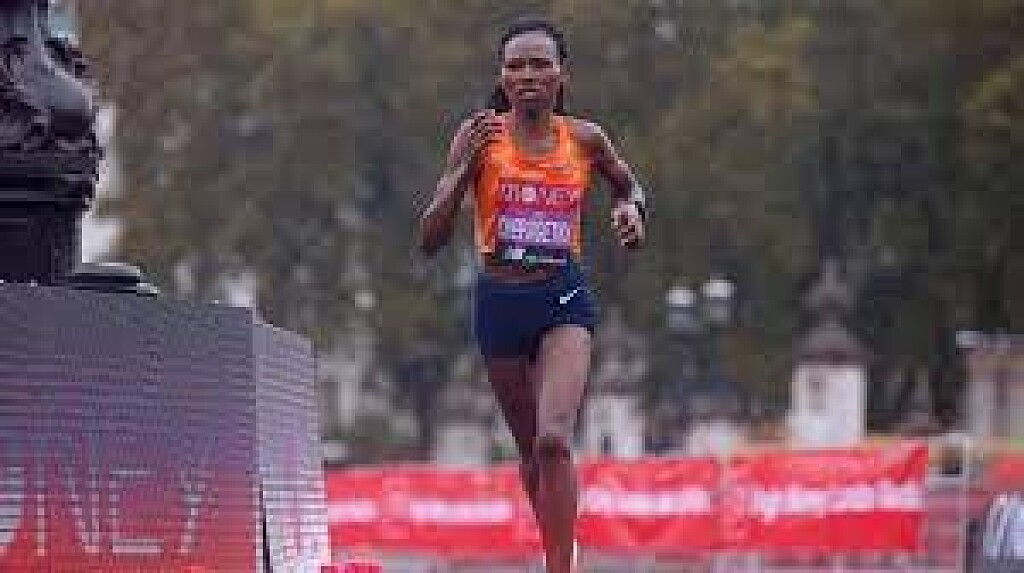
World marathon champion Ruth Chepngetich and Lonah Chemtai Salpeter set for Nagoya Women’s Marathon
World marathon champion Ruth Chepngetich and Tokyo Marathon winner Lonah Chemtai Salpeter will be among the athletes racing for victory at the Nagoya Women’s Marathon – a World Athletics Elite Platinum Label road race – on 13 March.
They are among the four sub-2:24 athletes announced for the event, with Japan’s Yuka Ando and Reia Iwade joining them on the start line.
As well as victory, athletes in Nagoya will be racing for the largest first prize in the world of marathon running: US$250,000. Being the world’s largest women’s marathon, one of the world’s top-level races, and the only women’s race with a World Athletics Platinum Label, the Nagoya Women’s Marathon continues to be a global leader in women’s running.
After winning the world title in Doha in 2019, Kenya’s Chepngetich – who has a PB of 2:17:08 from Dubai in 2019 – went on to finish third in the 2020 London Marathon and then won in Chicago last year after being unable to finish the Olympic marathon in Tokyo.
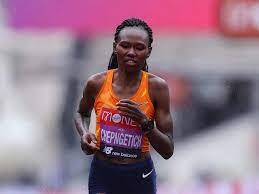
She will be seeking success on her return to Japan, where she will go up against Israel’s Salpeter, who ran 2:17:45 in Tokyo in 2020 to set a national record and break the course record.
Ando ran her PB of 2:21:36 when finishing second in Nagoya in 2017 and started this year with a half marathon personal best of 1:08:13 in Yamaguchi, while Iwade ran her best marathon time of 2:23:52 in Nagoya in 2019.
They will be joined by athletes including Australia’s Sinead Diver and Japan’s Rie Kawauchi.
Last year’s edition of the Nagoya Women’s Marathon was held as a domestic race, and was won by Japan’s Mizuki Matsuda in 2:21:51.
(02/18/22) Views: 68World Athletics
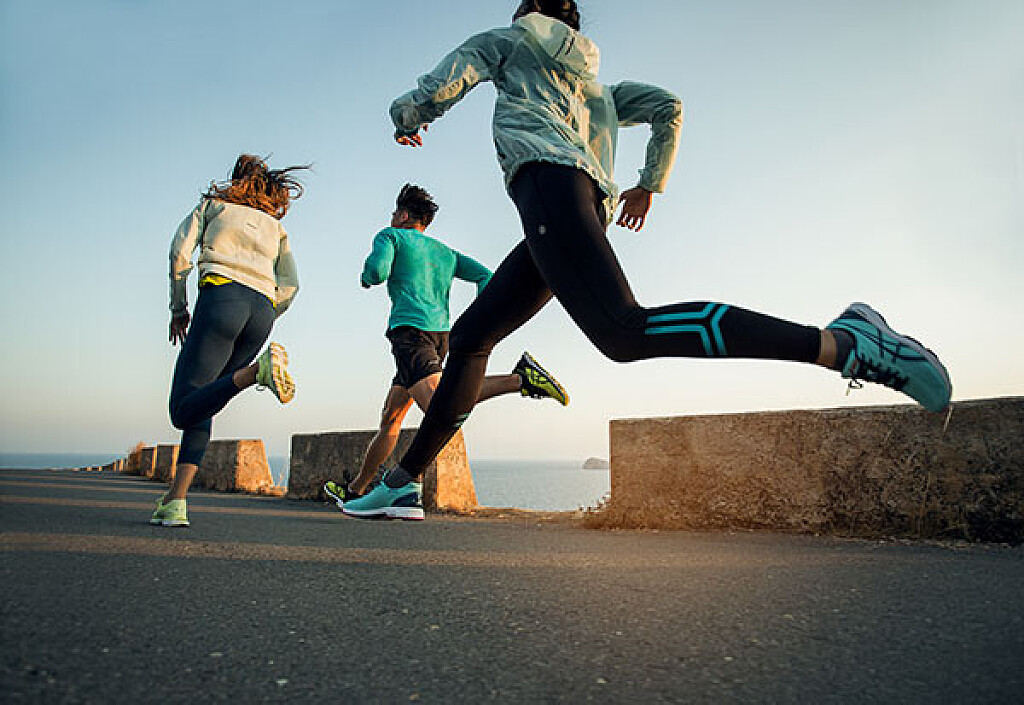
Three steps to building mental strength, what to do before, during and after your run to cultivate mental toughness
Runners understand all too well the importance of mental toughness during a hard workout or race, but just like you train your body for your goal race, you also have to train your mind if you want it to be strong. For many, training your mind can seem not as straightforward as physical training, so if you’re not sure where to start, follow these three steps to fortify your mind before, during and after training.
Before your run
Building mental strength starts before you even start your run. As you’re getting yourself ready to head out the door, start going through the workout in your mind. Remind yourself why you’re doing that particular session, and go over how you’re going to get yourself through the tough parts.

For example, you could say something like this: “I’m doing my long run today to build my endurance so my body will be ready to handle my race distance. When I start to feel tired, I’m going to use my running mantra and motivational self-talk to push myself to keep going.”
Think of this as your “mental workout plan,” and keep running through it in your mind as you put on your shoes and make your way to the door.
During your run
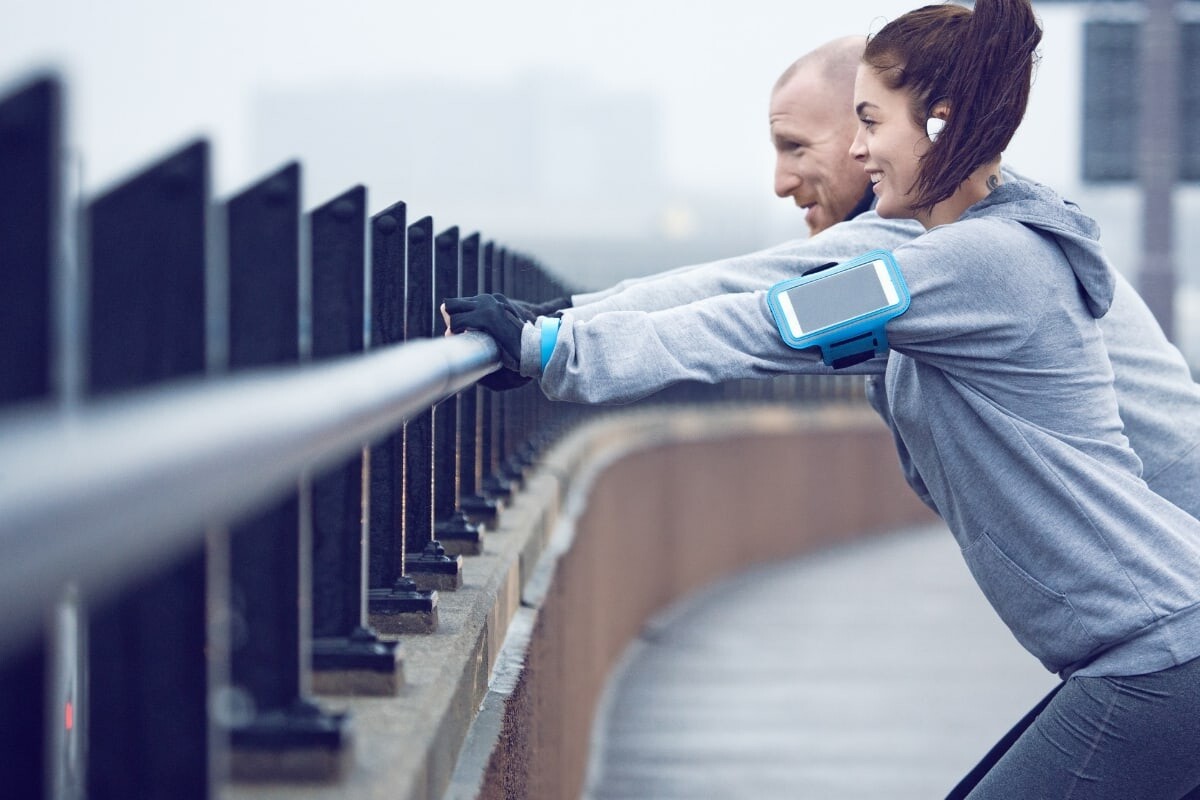
This is when the most challenging mental work happens. During your run, especially when you start to get tired, is when you need to draw upon those strategies that you were thinking about before the run started. As we already mentioned, having a running mantra is a really helpful strategy for developing mental strength during a run or workout. Don’t have one already? Follow these tips to create the perfect running mantra that will keep you going.
After your run
The mental strength training doesn’t stop when your run is over. Before you head inside and carry on with your day, take a minute to go over how your run went in your mind, making note of what you did well during that session. Maybe you weren’t as fast as you had hoped, but you didn’t give up when you saw you were behind. Perhaps that run felt hard, but you managed to push through it and stay mentally tough. If your mental game slipped during that run, make a note of what went wrong so you can work on it next time.
Intentional mental work
The key here is that you have to be intentional about working on your mental toughness. Many runners believe that their mental strength will improve passively alongside their physical strength as they train, but this is often not the case. Too often, runners’ mental strength lags behind their physical abilities, holding them back from realizing their full potential. Make a point of working on at least one aspect of your mental game every time you step out the door, and your performance will improve right along with it.
(02/19/22) Views: 67Brittany Hambleton
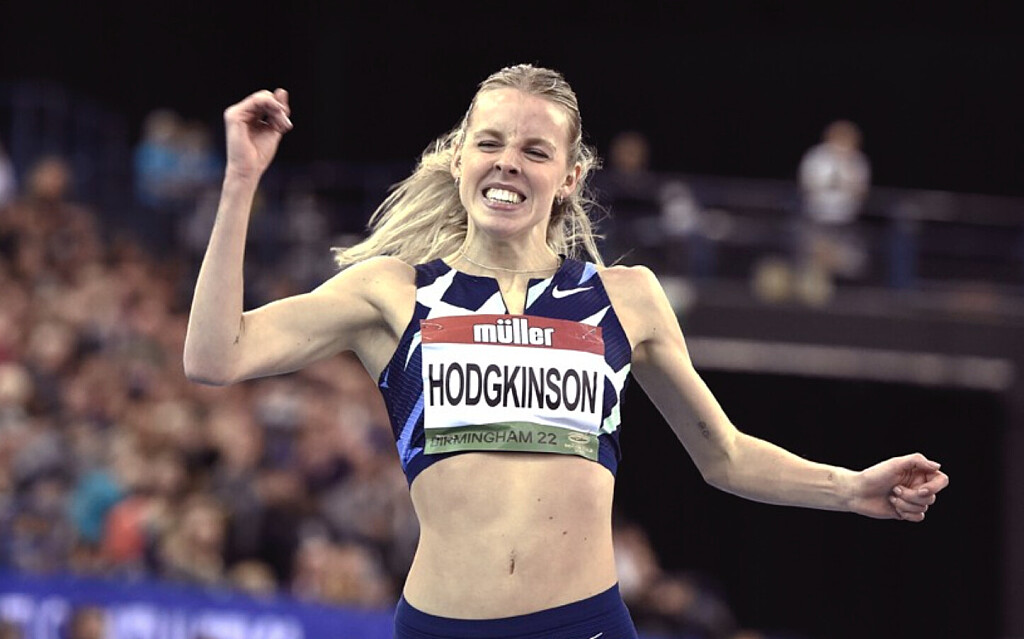
Hodgkinson and Duplantis produced outstanding performances in Birmingham
British teenager produces the fastest indoor 800m for 20 years while pole vault world record-holder comes agonisingly close to reaching new heights at Müller Indoor Grand Prix
Keely Hodgkinson produced a real statement of intent as she brought the house down with another memorable 800m performance at an entertaining and boisterous Müller Indoor Grand Prix in Birmingham on Saturday (February 19).
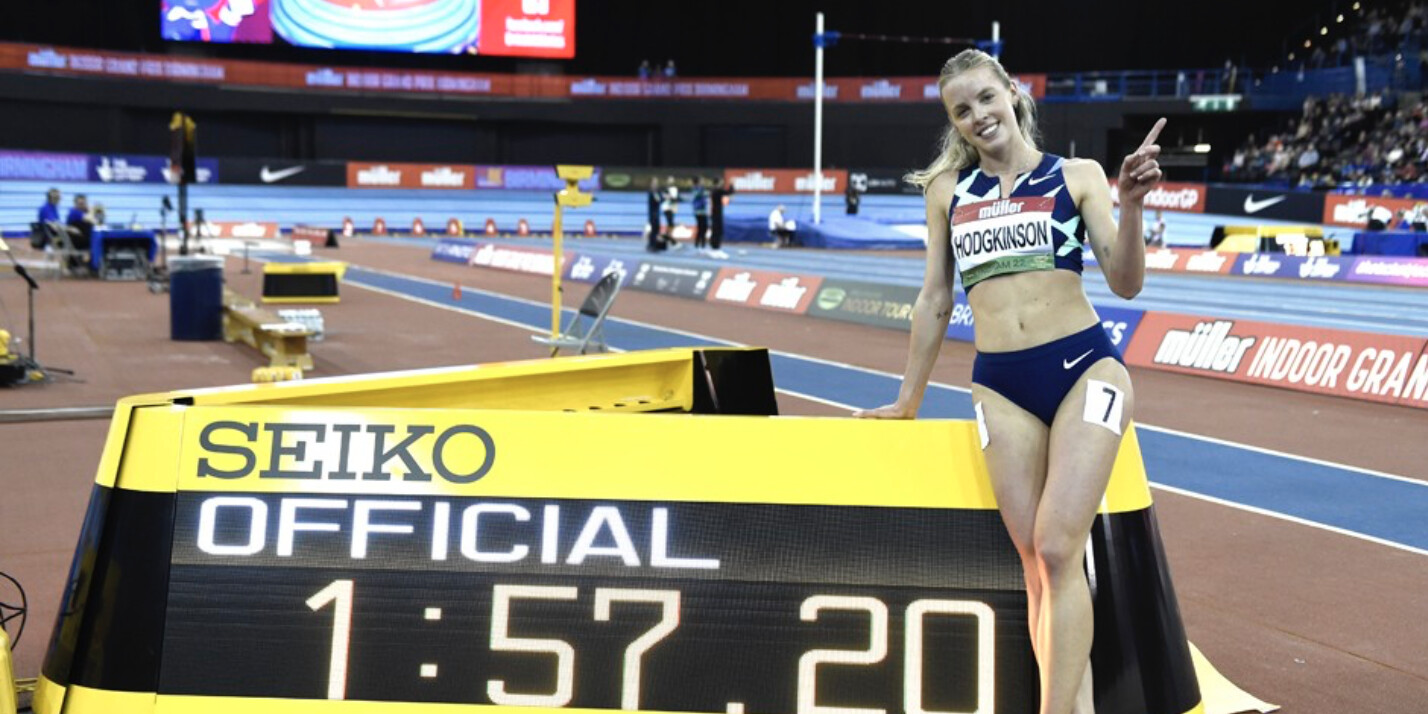
In the final track event of the day, the Olympic silver medallist was roared on by a full house at the Utilita Arena as she began her competitive year with a hugely impressive victory over a quality field in 1:57.20 – not only a British indoor record but also the fastest indoor 800m performance by a woman in 20 years.The 19-year-old will leave her teens behind next month and it so happens that the day she was born – March 3, 2002 – was when the current women’s 800m indoor world record of 1:55.82 was set by Jolanda Čeplak.
While that mark wasn’t expected to come under threat this weekend, for Hodgkinson to have produced the quickest time since that performance from the Slovenian two decades ago speaks volumes.
Her margin of victory was over two seconds, with Australian Catriona Bisset also clocking a national record (1:59.46) while Jamaican Natoye Goule, who had been the world leader going into this event, ran 1:59.85.
“I wrote down the aims for this year and one of them was a British indoor record,” grinned Hodgkinson, now sixth on the all-time indoor lists.“I was 100 per cent in shape for this record and I just wanted to go for it and there were some good girls in that race. I’ve never run in front of a British crowd this big and it was such a comfortable environment.”Another athlete who appears supremely comfortable in the spotlight is Mondo Duplantis and, moments after the dust had settled from Hodgkinson’s run, he was targeting a pole vault world record in the last action of the programme.
Having cleared a world-leading stadium record of 6.05m at the final attempt, the Olympic and European champion immediately set the bar at 6.19m as he looked to surpass the 6.18m he cleared at this meeting in Glasgow two years ago.
His opening two attempts failed but, when it came to the third, for a moment it looked as if he had created history again. The jubilant spectators began to get to their feet in celebration but, just as they did, the bar wobbled and fell. The world record will have to wait – but surely it won’t be long.
“I’ve got mixed emotions,” said Duplantis. “6.05m is a good jump and result but I really wanted that 6.19m. I have expectations of myself and I know there are good conditions indoors so I can break the world record, I want it so badly.
“I appreciated that everyone who stayed and it’s a cool feeling where the attention is just on you.”
(02/20/22) Views: 64
