

Running News Daily
Top Ten Stories of the Week
2/19/2022
These are the top ten stories based on views over the last week.



Is running a good idea for your first date?
One perk of running on the first date is that if it ends up going poorly, it's easier to run away
With Valentine’s Day right around the corner, you might be looking for some date ideas to spice up your love life. Your training could also use a boost, and you’re thinking of inviting your crush to go for a run on your first date. You’ve been on running dates before, but is running a good idea for a first date?

According to a study done by dating site PlentyOfFish, almost 75 per cent of users go for coffee or dinner on their first date. The run date is a non-traditional-style date, which presents many parties with a change of scenery and a chance to bond over their mutual love for the sport.
What’s attractive about running on a first date is the chance to chat while facing straight ahead (for the most part), and the fun of exploring a new route together. (Chances are, you don’t run the same routes, so it’ll be new for at least one of you.) Running is a great way to see something new while showing your date a cool spot they didn’t know about.
One perk of running on the first date is that if it ends up going poorly, you can cut it short. There’s no need to wait for a check on a run; if the date is going badly, it’s easy to make an Irish exit.
First dates can get expensive, especially if you are going on a lot of them. Running is typically inexpensive, plus you’re getting some exercise.
But before you propose a run for the first date, here are some caveats. First and foremost, plan to eat after the run, not before. The last thing you want on a first date is to be gassy, or to have to make an emergency pit stop because you had Indian food two hours before.
Second, find out what pace and distance your date is accustomed to running, and plan a route accordingly. The last thing you want is to get lost and to see your 8 km run turn into 18 km. And agreeing on a pre-set pace at which both of you can run comfortably will be crucial in securing that second date if things go well. Remember – the date is not a race. There’s no need to start ripping three-minute kilometres (and if you do, you probably won’t see your date again).
Last, bring a change of clothes, a towel and maybe a stick of deodorant to clean up afterward, especially if you’re planning to hang out together for dinner or coffee.
(02/13/22) Views: 271
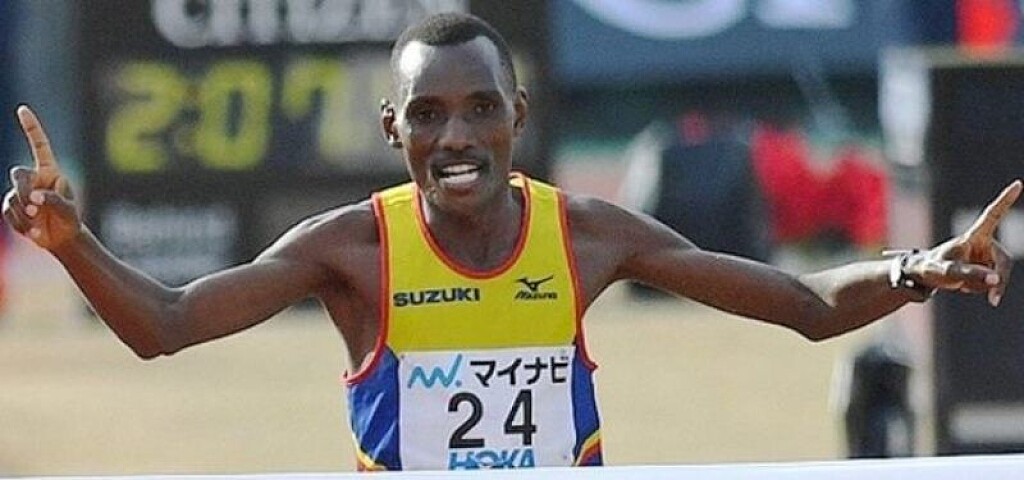
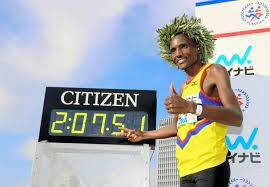
2021 Fukuoka Marathon champion Michael Githae will lead a competitive Kenyan field in Tokyo
Michael Githae will be one of the frontrunners for the coveted title having won the Fukuoka event in December in 2:07:51.
Githae will have Simon Kariuki for the company in the event. Kariuki finished third in the Lake Biwa Marathon last year in a time of 2:07:18.
Benard Kimani, who finished fourth at the Eindhoven Marathon in 2019 in 2:11:31, and Daniel Kitonyi who has a personal best of 2:14.41 set at the Nagano Marathon two years ago, will be seeking to upset the formbook.
Nicholas Kosimbei, who has a personal best of 1:00.20 in the half marathon, will also make his debut in the full marathon.
Japan will be represented by Kengo Suzuki, who has a PB of 2:04:56 set at the Lake Biwa Marathon alongside Hidekazu Hijikata (PB 2:06:26), Kyohei Hosoya (PB 2:06:35), and 2020 Fukuoka winner Yuya Yoshida (2:07:05).

Seven men with recent times under 2:07, 31 under 2:10, 112 under 2:20, and two debuting sub-61 half marathoners have confirmed participation.
Elsewhere, the Osaka Marathon is slated for February 27 with two Kenyans in the field.
The 2018 Lake Biwa winner Joseph Macharia Ndirangu with a PB of 2:07:53 and James Rungaru (PB 2:08:250 will compete at the event.
(02/16/22) Views: 108William Njuguna

Grant Fisher (12:53.73) DESTROYS US 5,000 Record in Boston, Moh Ahmed (12:56.87) and Marc Scott (12:57.08) Break Canadian and British Records
As the runners were getting ready for the elite section of the men’s 5000 meters at the 2022 Boston University David Hemery Valentine Invitational on Saturday evening, we should have known we were in for a treat. After all, the slow heat had just been won in 13:05.
It’s crazy, when you think of it: Bowerman Track Club coach Jerry Schumacher had decided Woody Kincaid, the reigning US 10,000-meter champion, was not quite ready to mix it up with his BTC teammates in the fast section and Kincaid wound up running 13:05.56, at the time the second-fastest indoor 5,000m ever by an American.

Just as crazy: Schumacher was kind of right. Because what we saw in the fast heat was the deepest 5,000-meter race ever contested on US soil, indoors or out.
Grant Fisher, a former high school phenom who won two Foot Locker titles and broke 4:00 in the mile while balancing soccer with running, delivered on his immense promise and ran 12:53.73 to win the race, smash Galen Rupp’s American indoor record of 13:01.26, and come within a whisker of Bernard Lagat’s American outdoor record of 12:53.60. He is now the fifth-fastest human ever at 5,000 meters indoors, one spot ahead of a guy by the name of Eliud Kipchoge.
Fisher’s Bowerman teammate Moh Ahmed, the Olympic silver medalist last year, was next across, running 12:56.87 to break his own Canadian indoor record of 13:04.60. Marc Scott completed the BTC national record sweep in third, and like Ahmed, Scott lowered his own European indoor record, taking it from 13:08.87 to 12:57.08.
In the process, Scott became the first man born in the United Kingdom – and just the third born in Europe – to break 13:00, indoors or out. The race marked the first time that three men broke 13:00 in the same race indoors (only once before had even two done it in the same race).
The times were so fast up front that would-be historic performances were relegated to also-ran status. Emmanuel Bor ran the second-fastest time in US
indoor history (under Rupp’s previous AR) but was only 4th (13:00.48). Sam Atkin of Great Britain and Jonas Raess of Switzerland both ran faster than the previous European indoor record but had to settle for 5th (Atkin in 13:03.64) and 6th (Raess in 13:07.95).
Florida State’s Adriaan Wildschutt of South Africa ran the second-fastest NCAA time ever indoors and third-fastest under any conditions – 13:09.20 – setting a national indoor record in the process and he was only 5th – in the B heat. Notre Dame’s Dylan Jacobs ran 13:14.04, #4 on the NCAA all-time indoor list and an American indoor collegiate record.
It was sheer madness.
In the main race, the early pacing was good, with 2020 US indoor 1500 champ Josh Thompson and 27:20 man Zouhair Talbi of Morocco taking the field through 3k in 7:53.51, but the real racing didn’t get going until just under a mile to go, when Atkin signaled for Fisher to pass him, knowing he could no longer hold the pace Fisher wanted to run.
From there, Fisher conducted a symphony of pain on the BU track, stretching the field out until Atkin, Scott, Ahmed, and finally Bor had dropped, leaving Fisher all alone for the final 400 as the crowd roared him into the history books. His last four 400m splits: 60.00, 58.95, 59.91, 58.74, good for an otherworldly 3:57.56 final 1600.
Fisher’s performance, just like almost every elite distance performance in the year 2022, must be placed into the context of its era. Earlier in the day on the same track, Notre Dame’s Yared Nuguse, the Olympian and 2019 NCAA 1500 champ, broke Alistair Cragg’s 7:38.59 indoor collegiate record which had stood since 2004. And last night, Gabriela DeBues-Stafford and Elise Cranny set dueling Canadian/American records, Cranny taking 14 seconds off Shalane Flanagan’s 14:47.62 AR.
Fisher and Cranny’s talents have long been known, and they are undoubtedly great runners. Yet between them, they own a grand total of one NCAA and one US title. That they could annihilate national records established by two of the greatest distance runners in American history is yet more evidence that we have entered a new age of distance running ushered in by super shoes, one in which the standards must be (and are being) adjusted.
(02/13/22) Views: 103
Let’s Run
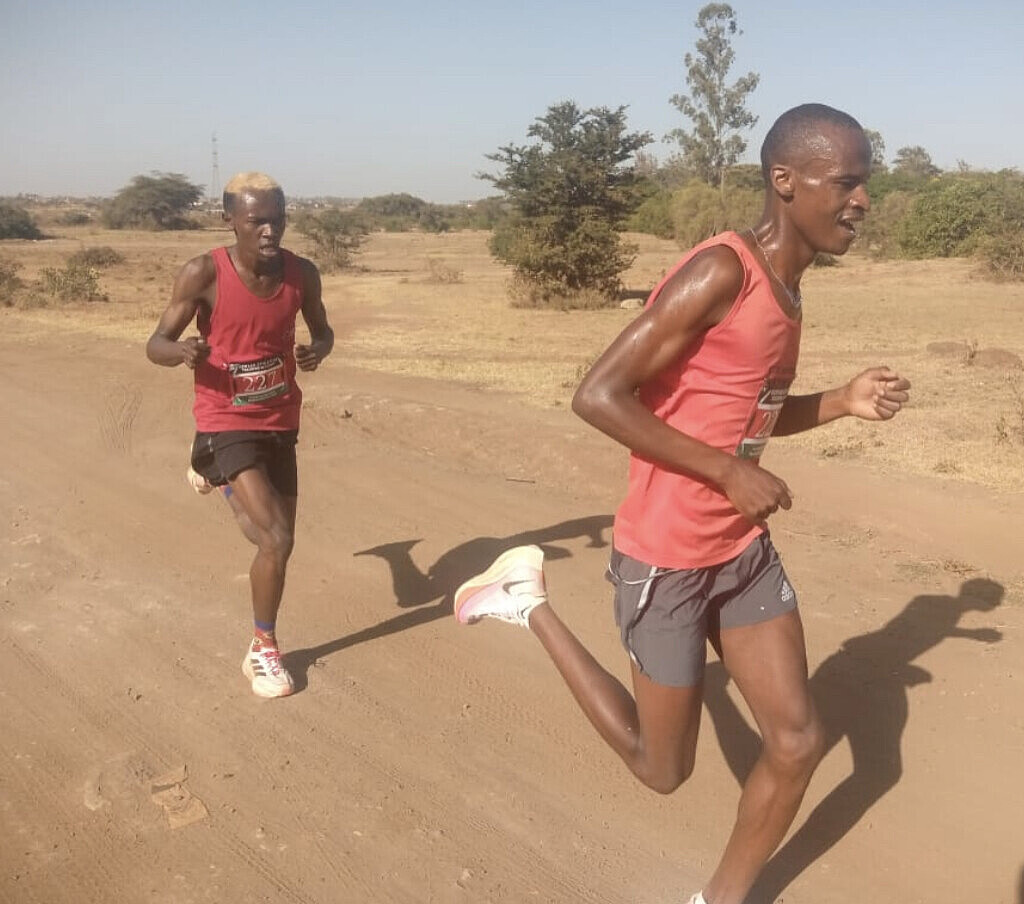
6th KATA 10k Time Trial Series continues in Thika
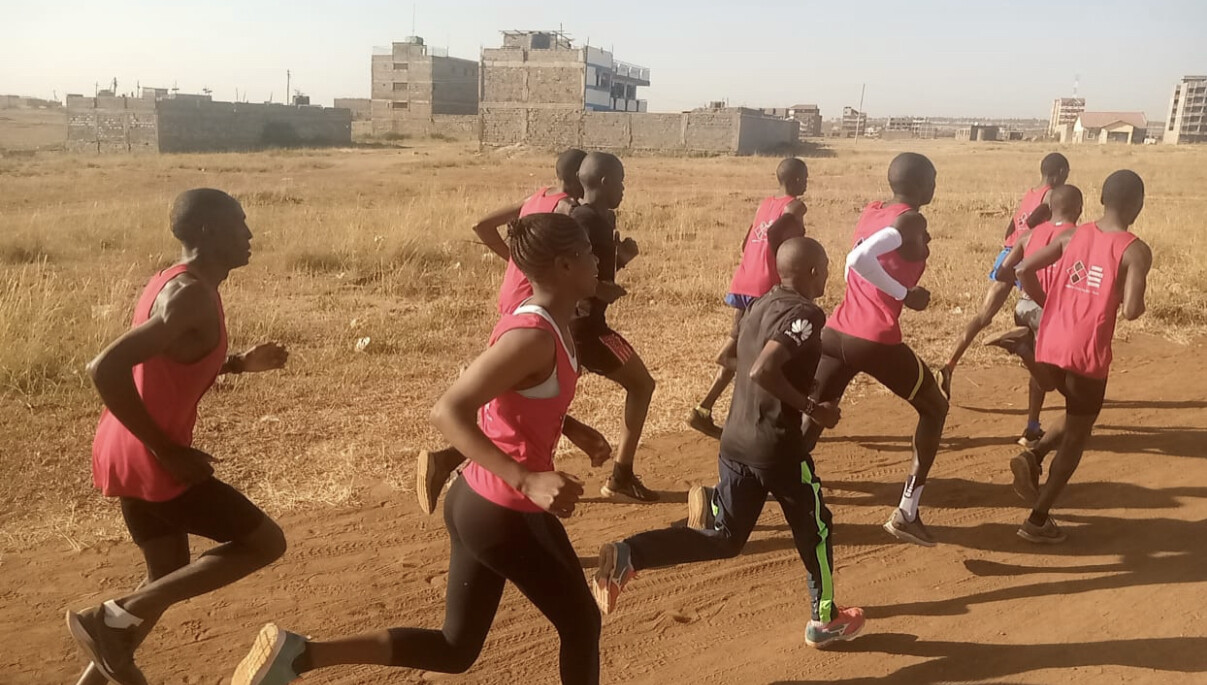
The Kenyan Athletics Training Academy (KATA) 6th edition of the 10K Time-Trials series was held on the 5Km loop course outside KATA in Thika Kenya Feb 16.
Peter Mwanikie was the winner.
Peter, the winner of last month’s edition, broke away from closest rival Zakari Kirika in the last 20 meters after running shoulder to shoulder most of the ways to finish in 31:39.9

Zakari, who finished 4th in January, clocked 31:44.8 followed by Erick Mutuku in 33:01.6 on the winding and rough course starting and finishing outside the Academy.
The lone lady, Caren Chepkemboi, fresh from High school and a week old in the Academy, did 50:29.4. The monthly event sponsored by KATA and My Best Runs had 15 participants.
The date for the 7th edition will be held March 16th. The series is for athletes training at KATA and for others. There is no entry fee and no prize money. "This is a good event to measure your fitness and to see your results published online," says KATA director and My Best Runs publisher Bob Anderson working from his office in Mountain View California.
"We run our series on two courses. This is the tougher one," says head coach Joseph. "The course record on this course is 29:59. The course record on the other course 5k from KATA is 29:40."
The results (two lap course by KATA)
1. Peter Mwaniki 24 31:39.9
2. Zakari Kirika 21 31:44.8
3. Erick Mutuku 20 33:01.6
4. Erick Cheruiyot 26 33:50.6
5. Fredrick Kiprotich 23 34:22.2
6. Raphael Gacheru 23 35:07.4
7. Lamech Cheleket 21 36:56.8
8. Paul Ng’ang’a 42 36:59.1
9. Alfred Kamande 24 37:44.2
10. Godfrey Migwi 22 41:32.8
11. Caren Chepkemboi 21 50:29.4
(02/16/22) Views: 80

2022 Dubai Marathon is set to make a comeback in December this year
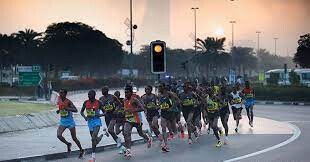
The 22nd edition of Dubai Marathon, the Middle East’s largest mass participation event, will be staged on December 10 this year. The last time the hugely popular event was staged in January 2020.
Preparations are now underway for the 22nd staging of the event, in consultation with Dubai Sports Council with registration now open for the three race-event. Runners looking to secure a place in the race of their choice can do so now, online only, through the official website www.dubaimarathon.org.
The 2022 Dubai Marathon will also be the first in the event’s history to be staged on a Saturday following the change in the UAE working week. For runners both elite and amateur alike, the news is a welcome boost after a long period of inactivity due to the necessary health and safety restrictions activated because of the global pandemic.
“It has been a very challenging time for the sports events industry, so we are excited to be able to look ahead to working closely with the appropriate Dubai Government departments to stage another memorable race,” said Peter Connerton, Managing Director of Pace Events, organisers and promoters of the Dubai Marathon.
“We have enjoyed a close working relationship with the city for many years and we now look forward to taking the next step and working to grow the event, inspire the people of the UAE to become more active and health conscious and underline the Dubai Marathon as one of the world’s greatest distance races.”

Recently ranked third of all global marathons by World Athletics, the Dubai Marathon regularly attracts participants from around 145 countries and produces many of the fastest times in the sport.
Till the recent Dubai Marathon in 2020, Dubai had produced 24 of the 100 fastest men’s times in history, while 18 of the 100 fastest women’s times in history had been set over the streets of the city.
Over the coming months, runners will be encouraged to take part in the full marathon, the popular 10km road race and the 4km Fun Run with registration information and event news available from the race website www.dubaimarathon.org.
(02/11/22) Views: 69

Three steps to safely increase your mileage, follow these guidelines to run more while avoiding injuries
Whether you’re training for a longer race or simply trying to bump up your mileage to snag a new personal best, increasing your weekly running volume without over-training or getting injured can often be a challenge. If you’re trying to increase your mileage, follow these guidelines to ensure you do so safely.
Determine your starting point
Before you start adding mileage to your weekly total, first determine your starting point. This should be an amount of running that you know you’re comfortable with — it shouldn’t be too easy, but it shouldn’t challenge you, either.

To determine this total, ask yourself a few questions: what’s the number of kilometers that I can run in a day that doesn’t leave me wiped out? How many days off do I need so that I get to the end of the week still feeling good? Can I add a long run? Keep in mind that this is base mileage, so this is an amount you can comfortably run at a steady pace, without any speedwork thrown into the mix. Another easy way to figure out your starting point is to look back into your training over the last several months and find the weeks that were comfortable for you.

Once you’ve determined that number, how quickly you increase your mileage depends on where you’re at currently. If you’re building up to your starting point, you can add mileage more aggressively, but once you surpass that number, you should be much more conservative. Adding between five and 10 per cent every other week is a good way to build gradually while decreasing your risk for injuries.
Repeat your training
It takes time for your body to adapt to higher mileage or bigger workouts, so one way to give yourself more time to adapt is simply to repeat a week of training. This is especially helpful for injury-prone runners who need more time for their bodies to get used to increases in volume or intensity.
Yes, this means doing word-for-word, kilometer-for-kilometer the same week as the one prior. Same workouts, same long run, same recovery runs. You may not need to do this if you’re building up to your starting point, but once you’re over your comfortable level of mileage, this is a very useful tool to build safely.
Add in taper weeks
As you’re building toward a goal race, plan your training so you can include a mini-taper week every four to six weeks. This gives your body a chance to absorb the training you’ve been doing and decreases the load to give your body a chance to recover and prepare to resume your training program the following week. Depending on your experience level or your injury history, you should decrease your training during these weeks by 10 to 25 per cent.
This means that if you’re running 50km per week, you should decrease your weekly total by five to 12 kilometers. If you’re running 60km, you should decrease your total by six to 15 kilometers. Keep in mind that this decrease should be spread across the entire week — don’t just shorten your long run and call it a day. All of your runs and workouts should reflect the decrease in mileage.
Following these guidelines will take some patience, but will help you increase your weekly mileage in a safe and controlled way. Remember, you should never rush yourself into fitness, especially when you’re training for a new, longer distance. Give yourself time to build up slowly so you can get to the start line healthy.
(02/14/22) Views: 68Brittany Hambleton
Why training doesn’t stop after your run
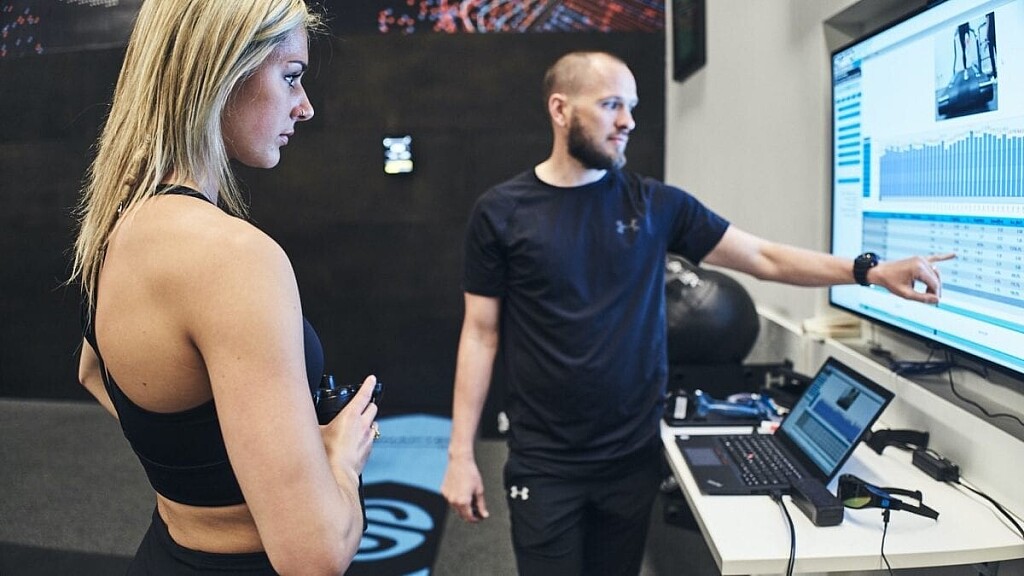
Under Armour’s approach to training is different from its competitors. The company believes that performance doesn’t just come from training, it comes from a holistic approach to running which includes considering emotional, psychological, physiological and nutritional strategies. They call this approach 360 Performance – it means that running doesn’t stop when your watch does and highlights the ways in which training really is all-encompassing. This approach to running may seem daunting, but actually, it’s geared towards balance.
For Aisha Praught-Leer, a UA athlete and 1,500m Olympian, 360 Performance is how she lives her life. “Showing up on race day is such a small part of my existence. Everything else, the getting there, happens in the quiet moments.”
Georgia Ellenwood, Ashley Taylor, Patrick Casey and Aisha Praught-Leer are all professional UA athletes. However, when they talk about 360 performance, they talk about things beyond the nuts and bolts of training. To them, 360 means taking care of your entire being and improving yourself in every way.

Michael Watts, Under Armour’s Director of Global Athlete Performance, feels that 360 Performance is what sets UA apart. “Every minute and every hour matters in the life of an athlete, if they are not training or competing then they are in a perpetual state of recovery. How they optimize their recovery depends on their own circumstances and journey. We want athletes to become more knowledgeable about themselves and how best to optimize their performance based on their data. Why does it matter? Because the best athletes in the world sweat the details, they are on a constant journey to master their mind, body and craft. We just help guide them.”
Believe in yourself
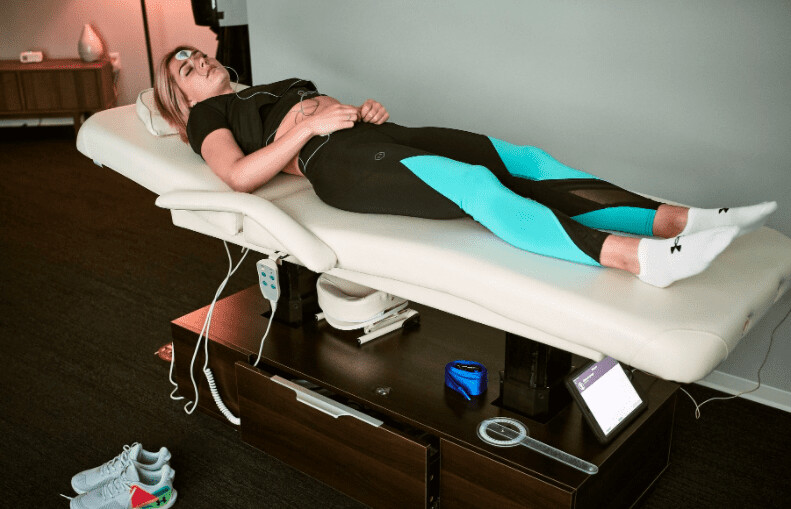
Ellenwood, a Canadian heptathlete, saw a difference in her results when she began to believe in herself. She says 360 Performance means so much more than training – it means emotional, psychological and physiological harmony. Under Armour helped her find this. “I’m a real perfectionist,” Ellenwood says. “I used to be so worried about taking risks in practice, because I didn’t want to look dumb or to fail. But I think sometimes you need to hit a hurdle hard or you need to fall. Do the ugly stuff in training.” Ellenwood says she’s made way more progress after allowing herself to make mistakes and becoming process-oriented, as opposed to obsessing over results.
When it comes to practically preparing for her day, Ellenwood needs to get her body physically and mentally prepared. “Before I even leave the house I do pre-hab, so that means getting my feet ready, I warm up my legs with a heat pack, I have an hour of exercises before I even start practice.”
From there, Ellenwood will train for six to eight hours. In order to maintain that level of activity, she says she takes comfort in her routine and allows rest when needed. “Running is my full-time job and I love it, but sometimes it becomes a lot. If I need to stop for a moment if I’m becoming overwhelmed by the load, I let myself. I’ve learned that stepping away from the track for a minute, to regroup, is ok.”
Be patient
Taylor, a Canadian 800m runner, echoes this statement. She says that she, too, used to place a big emphasis on results, but she feels supported by an organization that sees her as more than a runner. “UA gives us a lot of sport-specific support. But they support us beyond that. They help remind me to love myself through the process and to be patient.” With her goals for 2020 entirely changed, patience has been key.
Casey might be the most patient of the four UA athletes. The American miler has been looking forward to the 2020 Olympic Trials for nearly eight years. After being sidelined due to injury in 2016, he had his sights firmly set on qualifying this July. However, like everyone else, Casey’s plans have changed. He said he’s coping quite well with the new training, and feels like he’ll be ready when the time comes to line up again. “I used to think of running as the two or three hours I’d actually be training everyday. Now I think of it as what I’m doing when I’m not running. How I’m recovering, how I’m preparing myself – because you can only do so much physically in a day.”
It’s a lifestyle
All of the athletes feel that thinking about training in this new way, as a lifestyle as opposed to one aspect of their day, has made them better runners. Aisha Praught-Leer, a 1,500m runner and Olympian, feels like she places more of an emphasis on overall happiness now, which has in turn, made her a better runner.
“Showing up on race day and running a fast time is just a miniscule part of my existence. That’s just the tip of the iceberg. Training is how I’m sleeping, how I’m eating and how I’m keeping myself happy as a person.” Praught-Leer says while she’s a social person at practice, she’s an introvert at heart. For her, she unwinds with a solo run or a self-care routine that she’s perfected. While painting her nails doesn’t seem like training, it helps her unwind. She feels like the better she’s feeling about her life overall, the faster she will run. “My job is high pressure, so it’s imperative to take care of the below-the-surface stuff, to be able to run fast times on race day.”
Praught-Leer has learned that taking care of the below-the-surface stuff needs to be a priority. “Like Under Armour encourages, I really take a holistic approach to my training. It’s not my couple hours a day when I’m training. It’s how I recover, it’s how I’m sleeping, how I’m eating, how I’m hydrating and how I’m keeping myself happy and sane and motivated.”
360 Performance isn’t just about running – it’s actually about everything else outside of training that allows you to enjoy your sport. For the athletes above, running is their job, and they still ensure they’re loving what they do. If running is your leisure activity, enjoyment is even more important. A happy runner is a fast runner, and that’s what Under Armour wants to see in those they support.
(02/12/22) Views: 64
Madeleine Kelly

What is Runner's Dystonia?
World championships silver medalist and two-time Olympian Kara Goucher announced today that she has been diagnosed with runner's dystonia.
"For the past year I've been quietly battling for my health," she wrote on Instagram. In the post she described difficulties she's had staying balanced while walking and running and numbness in her legs.

Goucher courageously shared her diagnosis and the implications it would have on her life. "The doctor confirmed repetitive exercise dystonia, and tried to tell me, as gently as possible, that the more I run the worse my symptoms will get. I have to drastically cut back or not only will I lose the ability to run at all, I will struggle to walk as well," she wrote.
It's important to note that the disorder is considered rare-though dystonias in general are the third most common movement disorder in the United States. Here's more about what runners should know about repetitive exercise dystonia.
What is a Dystonia?
A dystonia is classified as an involuntary muscle contraction, affecting different parts of the body depending on the type. Symptoms can range from foot cramping or dragging to tremors or difficulty speaking.
Like a lot of neurological disorders, the exact cause of dystonia is unknown, though the American Association of Neurological Surgeons cites an alteration in regions of the brain or communication between those regions as a likely cause. According to the Dystonia Medical Research Foundation the disorder "can be caused by a staggeringly diverse variety of factors and conditions."
Dystonia can be idiopathic (having no clear cause of onset), genetic or acquired. That diversity in causes makes it difficult to study, but researchers are trying to understand what common mechanisms might connect them.
Runner's dystonia is a type of task-specific dystonia. According to the National Institute of Neurological Disorders and Stroke, these dystonias occur only when participating in a repetitive activity. Runners might experience it in their lower limbs, while writers, pianists and singers may have similar flare ups in their respective musculature.
Runner's dystonia is most likely to present itself in distance runners. Symptoms can include an unusual gait, involuntary toe clawing or extending, knee hyperextension, or weight shifting to the inner or outermost planes of the foot (ankle supination or inversion). The involuntary muscle movements can also spread to the trunk or pelvis.
Unfortunately, there is no cure or preventative medications, though there are some ways to ease the symptoms. Doctors may prescribe off-label medications, surgery, deep brain stimulation, physical therapy or botulinum toxin (Botox) injections to decrease muscle spasms.
If you're experiencing involuntary muscle movements, you should see a doctor to rule out any other movement disorders like Parkinson's disease. If you suspect you have runner's dystonia, a specialized neurologist called a movement disorder specialist can help you understand the disorder better.
Runners who have this disorder might have to dial back their training, but often find ways to keep running in their life. They meet up in supportive Facebook groups to share tips, stories, and lean on one another.
Justine Galloway, for example, set a Guinness World Record for running the fastest half marathon backwards. After her runner's dystonia diagnosis she began seeing a physical therapist. It was with her PT that she discovered that her legs wouldn't fail her if she were running backward.
"I fought for the ability to continue to run," Galloway told Women's Running back in 2015. To this day she continues to train and run races backwards.
As for Goucher, she shared that while she was grateful her diagnosis wasn't multiple sclerosis (MS) or amyotrophic lateral sclerosis (ALS)-two diseases that were ruled out for her-she has to accept that her relationship to running will have to change. She admits that is hard.
"I loved running before I knew I was good at it. It made me feel alive, to push, to feel my lungs expand. It has been one of the most glorious aspects of my life. From the silent meditation on a solo run to representing my country at the Olympic Games. I'm not sure where running ends and I begin, we are so intertwined as one. I'm unsure what the future holds, but I'm trying to embrace it."
(02/12/22) Views: 57Trail Runner Magazine
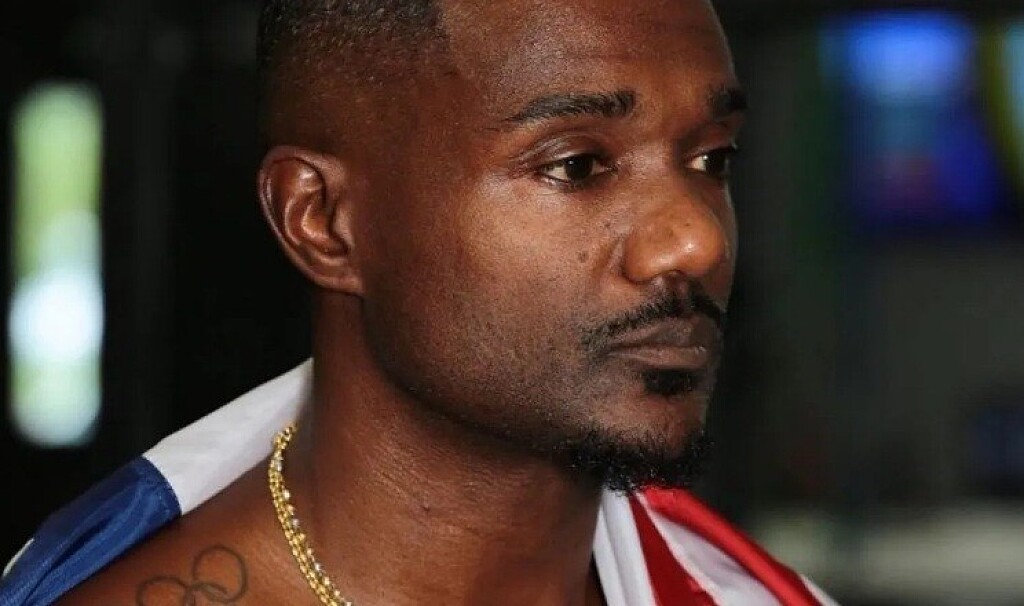
American sprinting legend Justin Gatlin has announced his retirement
Gatlin will be hanging up his spikes after a 19-year career that included an Olympic gold medal, multiple World Championship titles and several doping bans.
On Feb. 10 (his 40th birthday), American sprinting legend and 2004 Olympic champion Justin Gatlin announced his retirement from athletics via Instagram. Gatlin will be hanging up his spikes after a 19-year career that included an Olympic gold medal, multiple World Championship titles and several doping bans.

Gatlin won the 100m and 200m sprint double at the World Championships in Helsinki in 2005, and gold in the 100m at the 2017 World Championships in London, achieving a rare victory over Jamaica’s Usain Bolt.
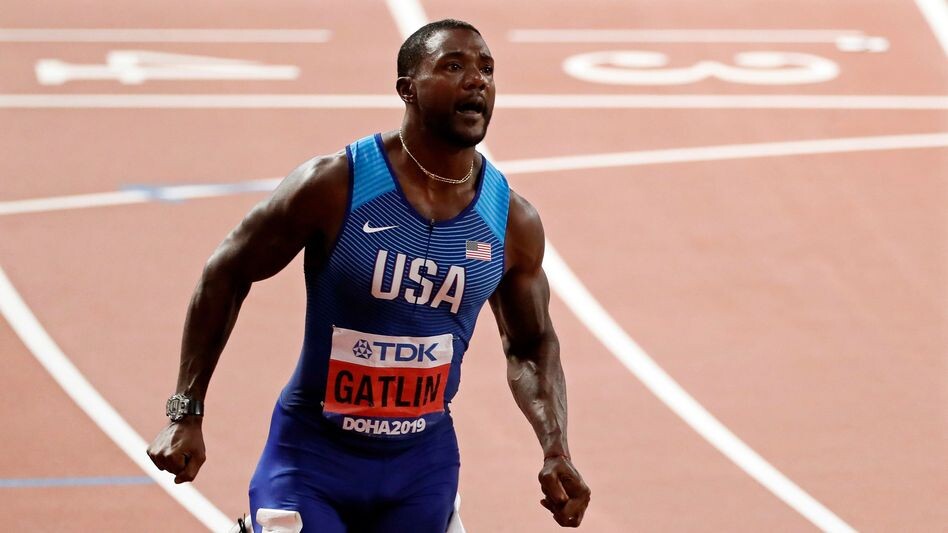
He was also a part of the U.S. gold-medal-winning 4x100m relay team at the Doha World Championships in 2019.
His career was also tainted by doping scandals. Gatlin served two suspensions – one in 2001 and again in 2006 – for his use of testosterone.
(02/12/22) Views: 57Marley Dickinson

Ten incredible Health Benefits of a morning run
It’s no secret that running is an incredibly popular way to exercise, whether you go for a morning run, after work, or in the evening. In fact, tens of millions of people do it each year. From light jogs around town to die-hard marathon runners and everyone in between, there seems to be a type of running that satisfies everyone’s needs.
Not only is running accessible, but it’s also effective. Regular running is linked to a myriad of health benefits, can help people lose weight, and improve mood and self-esteem.
Fabulous has a training program that can help you build a consistent morning exercise routine.

Anyone who runs regularly knows that the experience can be quite spiritual, especially when running early in the morning. There’s something magical about being up before the rest of the world, taking special time for yourself to boost your health and energize yourself for the day ahead.
Below are 10 benefits of a morning run:

1. Running burns more calories than most exercisesRunning is a high-impact, high-intensity workout that requires multiple muscle groups and works them hard. And, not only does running burn more calories up front, high-intensity workouts continue to burn calories for up to 48 hours after you exercise!
2. Running is inexpensive compared to other forms of exerciseForget expensive gym memberships, equipment, and all those other bells and whistles. Just get a good pair of running shoes. Plus, outside is open 24 hours a day, 7 days a week.
3. Running can lower stress and improve moodAny kind of exercise will release endorphins, which make you feel happy and good. But they don’t call it a “runner’s high” for nothing! High-intensity workouts flood your body with feel-good chemicals, which will certainly come in handy when you’re getting the kids to school or rushing to meet a deadline at work.
4. A morning run is a much easier commitmentWe are really good at convincing ourselves not to do things when we’re tired. After a long day at work or in school, the last thing we want to worry about is working more. If you go for a run in the morning, however, you “get it out of the way,” freeing up your evenings for much-needed relaxation. It’s also something you can do consistently.
Fabulous team members have shared ideas on how they are building daily exercise routine.
5. Nature is at its finest in the morningIf you can run outside in the morning, you’ll notice two things: Fewer people and more nature. So you can listen to the calming sounds of birds and other animals while on your run.
6. Mornings are rarely too dark or too hotPerhaps the main disadvantage of running outside is that you are at the mercy of Mother Nature. It can be too hot to run later in the day, or too dark when the sun sets sooner. Plus, running in the morning reduces the need for sunscreen.
7. Running can give you an early-morning energy buzzHigh-intensity workouts flood your body with endorphins and adrenaline, both of which make you feel more focused and alert. Mornings can be a particularly frantic time, so an energy boost can really come in handy!
8. It can also make your nights betterRunning at any time of day will help you sleep better, but exercising later in the day, especially before bed, can leave some people too restless to fall asleep easily. If you exercise in the morning, however, that energy boost is long gone by the time you’re ready to hit the sheets.
9. It’s good for your self-esteemWho’s going to have anything bad to say about someone so disciplined that they wake up extra early just to go out for a run? Plus, posting those #morningworkout selfies and beautiful sunrises on Instagram may hold you accountable to keep up the habit!
10. You can “program” your brain to run in the morningIt’s as simple as running every morning consistently. This kind of conditioning will actually make getting out of bed easier; your body will expect you to need energy shortly after waking so you can run and will provide accordingly.
(02/14/22) Views: 57Jeffrey Johnson
