

Running News Daily
Top Ten Stories of the Week
5/19/2018
These are the top ten stories based on views over the last week.


How Boulder Colorado became the Mecca for elite distance runners and runners of all abilities
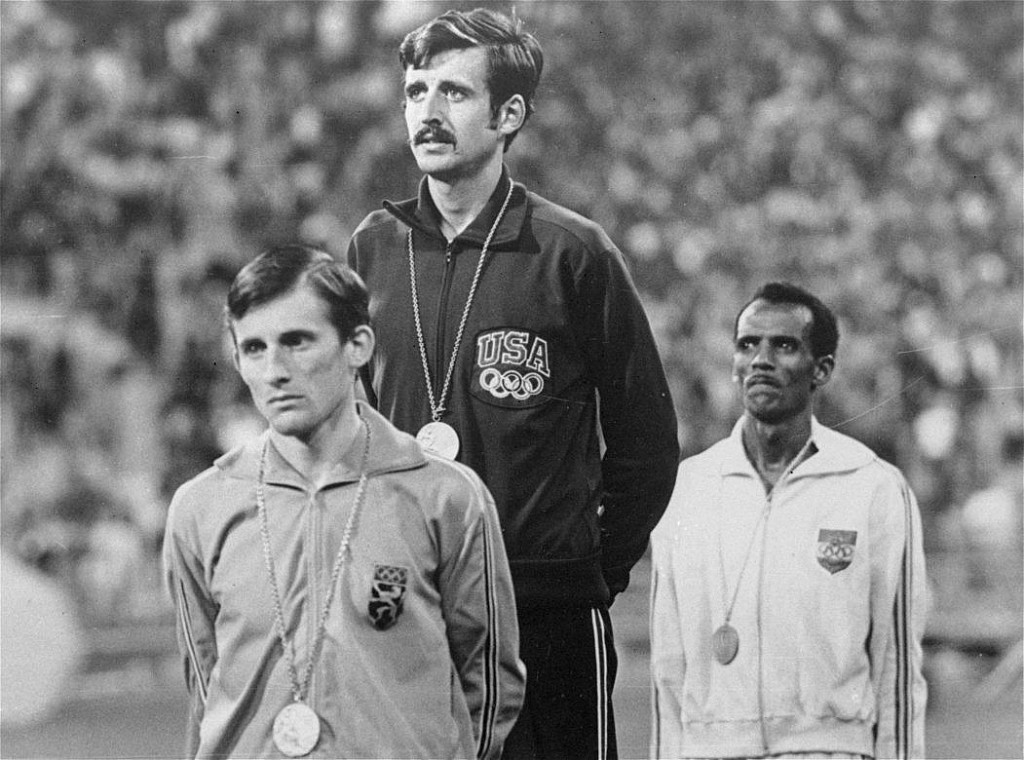
DID YOU KNOW: Frank Shorter helped turn Boulder into the mecca for elite distance runners and hotbed for recreational athletes that it is today.
The two-time medalist, gold in 1972, silver in 1976, came to Boulder for the first time after graduating from Yale. Raised in New York, Shorter became an early believer in the benefits of altitude training.
In setting his course for Olympic glory, he chose Boulder because the University of Colorado had the only indoor track above 5,000 feet in the United States. He remembers only a couple of other post-collegiate runners in town at the time, including a hotel dishwasher who ran a crash pad for hippies.
Two years after his first training stint in Boulder, Shorter became the first American in 64 years to win an Olympic marathon.
Shorter’s historic breakthrough at the Munich Olympics, coupled with his silver medal four years later in Montreal, helped ignite the recreational running boom of the late 1970s, and inspired subsequent Olympic hopefuls to move to Boulder for the same reasons he did.
Then-exceptional international runners, including three world-record holders, arrived in the ’80s. After that came the world-class cyclists and triathletes. Meanwhile, CU emerged as a power in cross country running, producing six individual national champions and seven team titles.
Today, Boulder teems with world-class endurance athletes and some of the country’s fastest recreational runners, and it all traces back to Shorter’s hunch about altitude training. Runners of that era didn’t know why it worked — scientific explanations would come later — they just knew if they trained at altitude, they ran faster when they raced at sea level.
“I sensed it,” Shorter said. “There was no real science you could look at. I didn’t know your blood volume increased. All I knew was that I was getting better, more on an exponential curve than even a straight line. I knew that there was something about doing it that didn’t just have to do with my increased training intensity.”
(05/13/18) Views: 1,169John Meyer/ The Denver Post
Wilson Kipsang is going after sub 59 minutes at Gothenburg Half Marathon
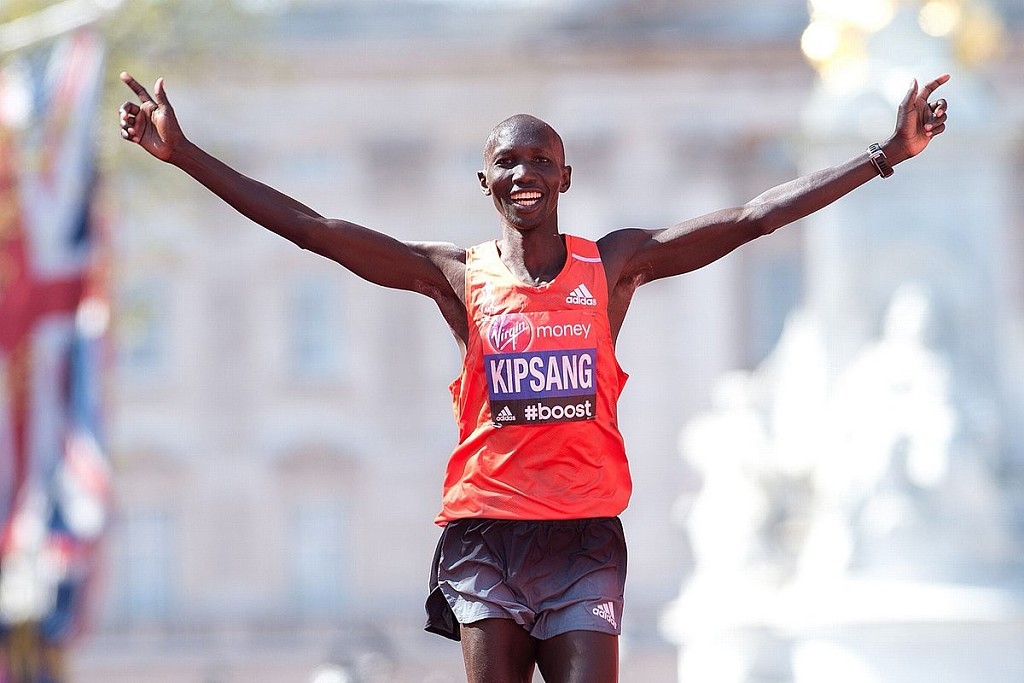
Kenya's former world marathon record-holder Wilson Kipsang will have his first competitive race after almost three months when he takes part in the Gothenburg Half Marathon on May 19. Kipsang, 34, had to let his Tokyo Marathon title go without much fight after he developed problems just 15 kilometers into the race back in February.
However, he has recovered from his injury and will be trying to gauge himself against some of the fastest half marathon runners in the Swedish race on Saturday.
"During my last race, I really wanted to go fast, but after suffering from stomach problems just days before the race, I didn't have the power to run a decent race. I'm still disappointed, I was really ready for it," said Kipsang on Tuesday from Iten, Kenya.
The former world marathon record holder (2:03:23) and Olympic bronze medalist believes he has the strength to challenge his personal best time of 58:59 when he lines up in Gothenburg, the second-largest city in Sweden.
"I have done well since pulling out of Tokyo Marathon and will be keen to test my limits again," he said. Kipsang will be out to use the race in Gothenburg as part of his preparations before the latter half of the year, where he is expected to race in Berlin, Chicago or New York.
Kipsang faces a strong line-up including Kenyan teammates Leonard Langat (59:18) Peter Kirui (59:22), Albert Kangogo (59:25), Richard Mengich (59:35) and Ethiopia's Abera Kuma (60:19). Former world 10,000m champion Ibrahim Jeilan, who has a best time of 61:47 will also compete. T
(05/15/18) Views: 801
Galen Rupp was selected as USATF Athlete of the Week after winning the Prague Marathon clocking 2:06:07
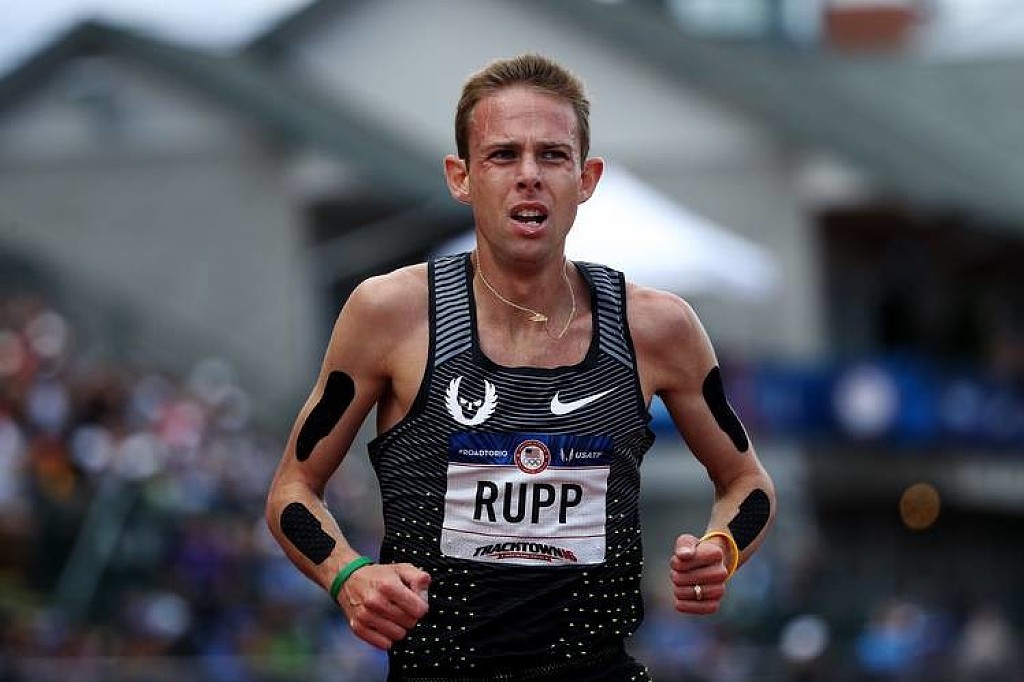
Galen Rupp, the bronze medalist at the 2016 Olympic Games, ran 2:06:07 to win the Prague Marathon May 6 by almost a minute over Sisay Lemma of Ethiopia.
He sliced more than three minutes off his previous lifetime best of 2:09:20, set in winning Chicago last year. His time ranks him second only behind American record-holder Khalid Khannouchi, who ran 2:05:38 in 2002, on the U.S. all-time list. (Not including Ryan Hall’s time on the point-to-point Boston course.)
Rupp has never placed lower than third in any of the five marathons he has finished. He has also improved his PR on each marathon he has finished. Rupp (Portland, Oregon) won the Prague Marathon and became the second-fastest U.S. man ever in the event to earn USATF Athlete of the Week.
Now in its 17th year, USATF’s Athlete of the Week program is designed to recognize outstanding performers at all levels of the sport.
(05/11/18) Views: 559
Gallen Rupp and Jordan Hasay have confirmed they will be running the Chicago Marathon
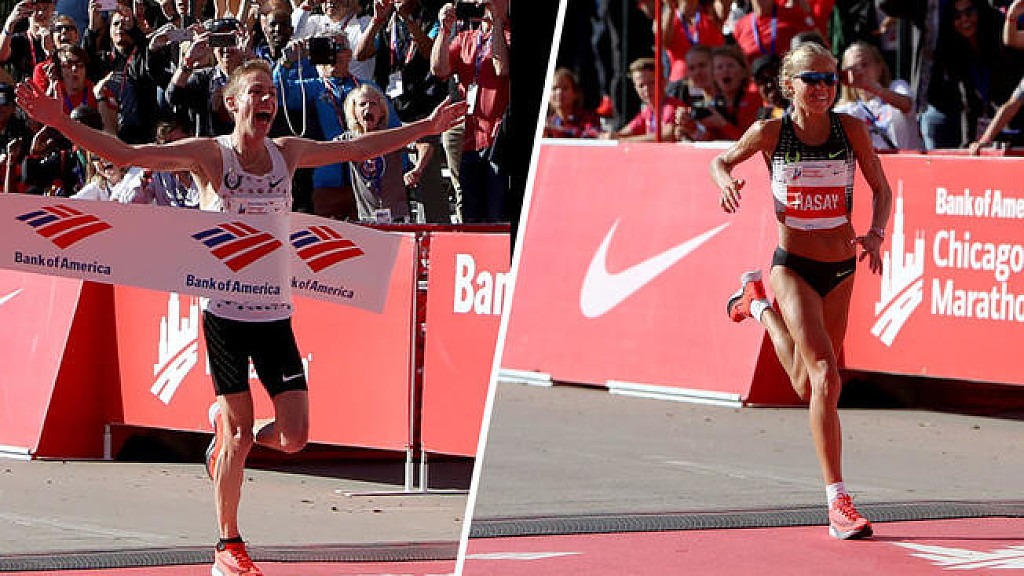
The Chicago Marathon announced on Wednesday that Nike Oregon Project team members Galen Rupp and Jordan Hasay will return to the race on October 7.
In 2017, Galen Rupp became the first American man to win the Bank of America Chicago Marathon in more than a decade. That same year, Jordan Hasay became the fastest American woman to run the Chicago Marathon.
In 2018, they'll look to do it all again. Rupp and Hasay will both return for the 41st annual marathon in Chicago, being held Sunday, Oct. 7, race organizers announced Wednesday. Rupp emerged from the 40th anniversary Chicago Marathon last year as the first US winner since Khalid Khannouchi won in 2002.
Joined by Hasay, the two became the first American duo to finish in the top three since Jerry Lawson and Kristy Johnston took home a pair of second-place finishes in 1996.
“Galen and Jordan are leading an exciting American resurgence in the marathon, and we are thrilled to welcome them back to Chicago this coming fall,” Executive Race Director Carey Pinkowski said in a statement.
“Galen won in a decisive move last year and just dominated a talented men’s field. He’s a phenomenal athlete who has taken his track speed to the roads with incredible success.
"Jordan ran with pure guts and she was rewarded with a podium finish and the fastest American time ever run on Chicago’s course. She has found her distance with the marathon.”
(05/16/18) Views: 558
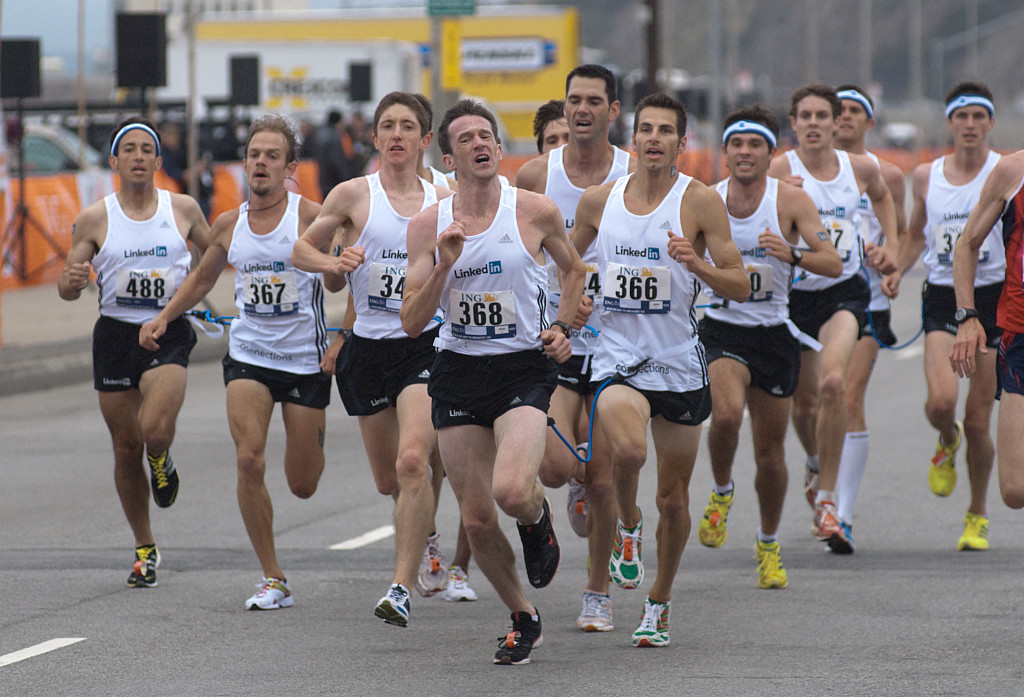
40 Years Ago the first Centipede crossed the finish line at the Bay To Breakers
Bay to Breakers features a special team division called "centipedes." Dwayne "Peanut" Harms and Doug Peck came up with the idea and were members of the first-ever "Pede," all members of the UC Davis men's track team, ("Aggies"). A special division of the 12K race was created in which 13 runners are connected as a unit with a "Head Pede" out front which is the leader of the centipede. An additional runner, a floater, usually the team captain, is allowed to run along untethered to pace the team or substitute for a drop out runner. Despite the novelty, the centipede race is very competitive. The record for men which is very fast was set in 2012. Team Linkedin (photo) clocked 36:44, which is 4:55 per mile. The same year the Impala Racing Team posted 46:37 for the women's record. The Bay to Breakers is the official site of the World Centipede Running Championships which is now sponsored by Saucony. Dwayne Harms wrote, "On May 14, 1978, at the 68th running of the Bay to Breakers, the world’s first Centipede was unveiled to the public. We quickly rolled out the Centipede in front of a crowd of other runners about 30 minutes before the race. I clearly remember how other runners and spectators that were in the area had cheered, laughed and made jokes about the Centipede once we had all gotten in our proper positions and donned our antennae and feelers. These people had no idea what this group of crazy UCD distance runners were about to do. They had never seen anything quite like it. It was not only weird, but also crazy and fun." Peanut continued, "Now, 40 years after our first UCD Aggie Centipede, I still find it hard to believe that this fun-loving group of runners I trained with, raced with and socialized with for so many years at UCD put together the idea to run in the world’ first Centipede which has now become so famous." (05/17/18) Views: 192
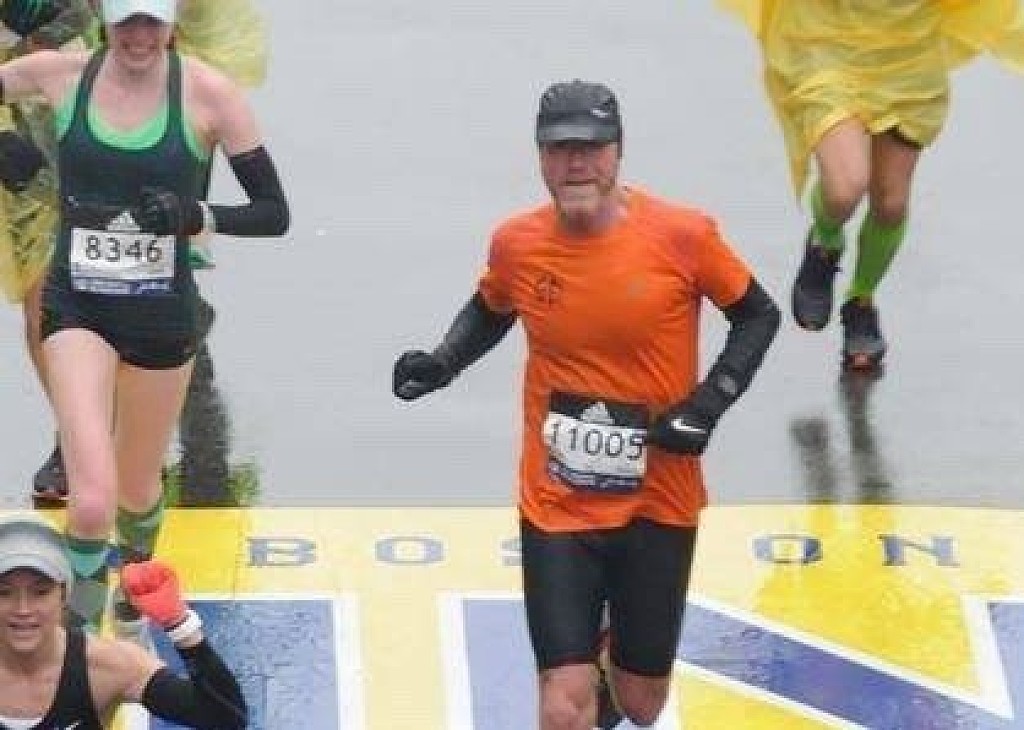
Completing the Boston Marathon was number one on Daniel's Bucket List
Australian's Daniel Gooch has ticked off the number one item on his bucket list – completing the Boston Marathon. He was one of nearly 30,000 competitors who entered the iconic event on April 16. Race morning the weather was horrible but it was still the fulfillment of a childhood dream. Not even bad weather was going to stand in the way. “Since I was a teenager really – 17, or 18-years-old – that was always one of my big goals,” he said. “It has been so long and I have really been focusing on it for the last 18 months, you have to run a qualifying race which I had to train for and then having traveled to the States for it, it was certainly overwhelming to get across the finish line and to have run well.” Gooch hasn’t planned his next major race yet. “Not at the moment, I have been thinking about it but I don't think anything will surpass Boston,” he said. “That has been so long in the making -it was one of those lifelong bucket list items.” (05/11/18) Views: 129
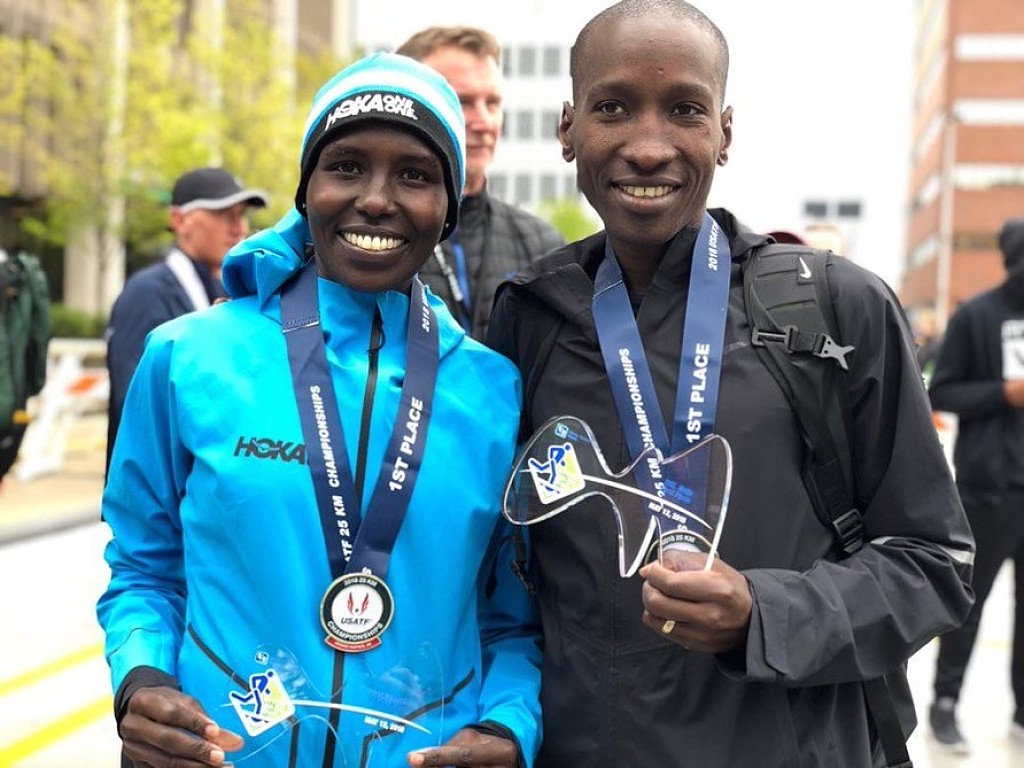
Sam Chelanga won the 41st Annual River Bank Run 25K Saturday
Sam Chelanga, 33 from Colorado Springs won the 41st Fifth Third River Bank Run and USA 25K Championships clocking 1:14:52. Scott Fauble, 26 from Flagstaff was just three seconds back. They both passed the half marathon mark at 1:03:10. Greg Meyer, the elite race coordinator, said on Tuesday that Sam was "the man to beat" having run a 60:37 half marathon and holder of the NCAA 10,000-meter record (27:08). Aliphine Tulisnuk, 29 was first woman winning again clocking 1:25:34. The race presented by Amway with Spectrum Health the Official Health Partner was held on Saturday, May 12, 2018 in downtown Grand Rapids, Michigan offering a prize purse of $112,400. This is the largest 25K road race in the country. More than 16,000 people registered. (05/12/18) Views: 101Bob Anderson
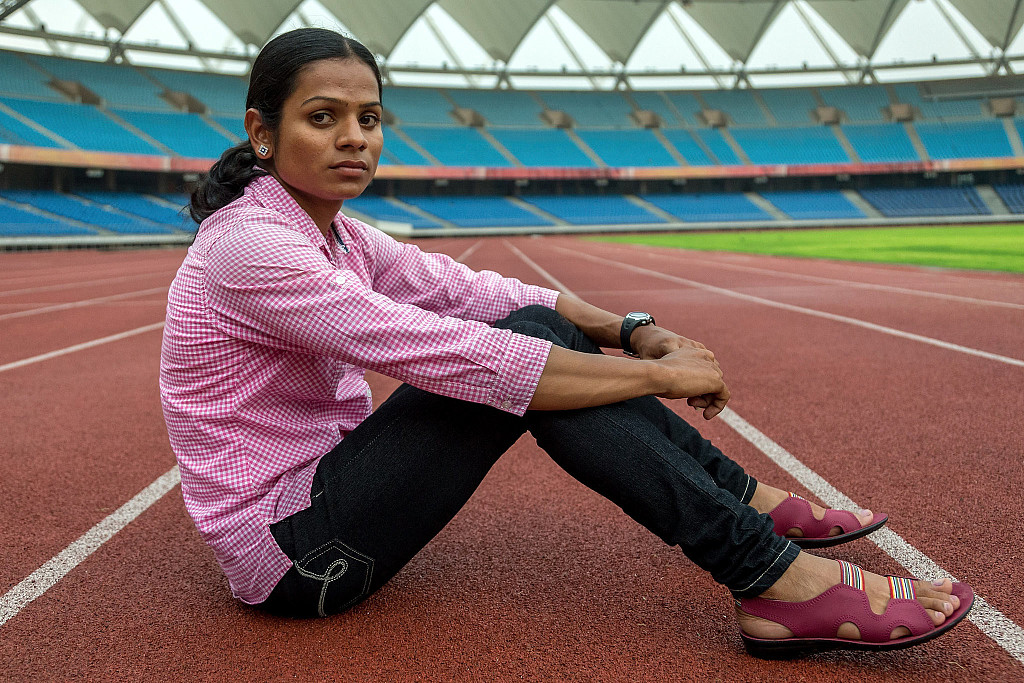
Science has never fully backed the IAAF claims that DSD athletes have a massive advantage
The science has never fully backed up the IAAF's claim that so-called DSD athletes have a massive advantage in women's races. In 2012, Indian sprinter Dutee Chand (photo) appealed a similar rule restricting testosterone levels to the Court of Arbitration for Sport. The court ruled the regulation was discriminatory and it was suspended. The IAAF was given time to come back and show that elevated testosterone levels result in a male-like advantage of 10 to 12 per cent. The track body's latest research says athletes like Semenya enjoy a "competitive advantage" but still fails to demonstrate that even a 10 per cent edge exists. And the supposed advantage is based on data from a 2018 study that has yet to be published or reviewed. So if the data still doesn't appear to be there, what is this really about? Are there other factors driving Caster Semenya's critics? 'This is a racist, targeted test' Some supporters of Semenya believe two of the factors may be race and geography. They wonder if the IAAF would have pursued Semenya for nearly a decade if she were a white runner from the global North. "All of these [efforts] seem to coincide with the recent dominance by women from Sub-Saharan Africa in certain track and field events, and that wasn't the case before," says Katrina Karkazis, a Stanford University bioethicist who was involved in the Chand case and has written extensively about intersex issues. "That is one way this is racialized. Who is winning those events? Who has won historically?" University of Toronto professor Bruce Kidd is a longtime member of the Olympic movement and was also involved in the Chand case. "They [the IAAF] have identified seven events where they think there is a correlation [between testosterone levels and performance]. Two of them are the pole vault and hammer throw and they have not made them part of this new rule, and those are events that are dominated by white women," Kidd points out. "They have targeted the mile, an event that is currently dominated by black women. And the mile isn't even part of their study. It's hard not to draw the conclusion this is a racist, targeted test." Semenya's success and physical appearance — she appears more muscular than many of her rivals — have drawn attention and doubt from track officials. (05/16/18) Views: 101
laszlo Tabori was the third man to break four minutes for the mile
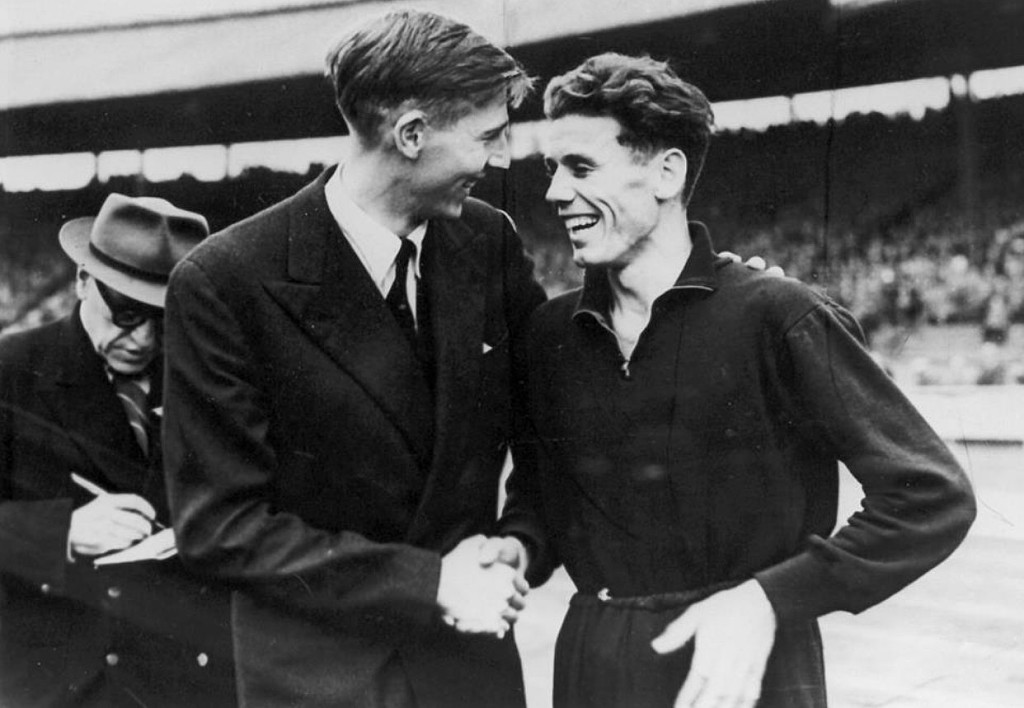
DID YOU KNOW: Laszlo Tabori was the third man in history to break the sub-four minute mile barrier, setting a new European Record with a time of 3:59 on May 28, 1955. Roger Bannister was there. Laszlo posted this on Facebook March 5th after Roger Bannister passed away.
“One of my favorite pictures with Sir Roger Bannister... We were all chasing the sub 4 minute mile. In those days it was a feat comparable only with climbing Mt. Everest. Roger was someone I looked up to and admired.
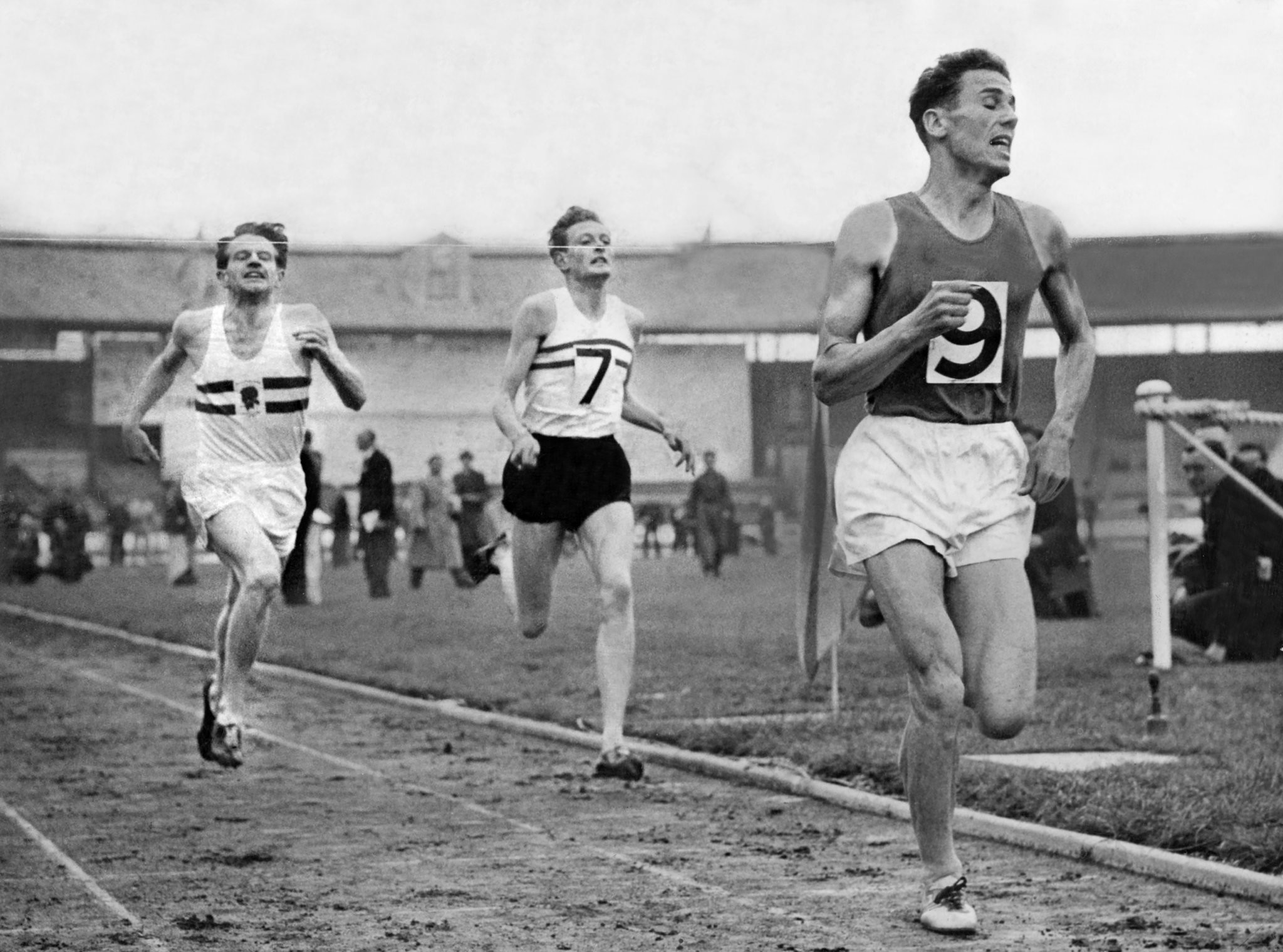
At the height of his running career, he stopped in order to concentrate on his studies in medicine. I had the great fortune to be one of the early ones who followed in his footsteps just a year later at White City Stadium, London. Here Roger is shaking my hand and offering congratulations as I had quite unexpectedly just became the 3rd person to enter this very elite sub-4 min mile club,” wrote Laszlo Tabori.
Laszlo was born in Košice. Although he had already taken up running in his youth, his serious career only started in the early 1950s under Mihály Iglói, the legendary coach.
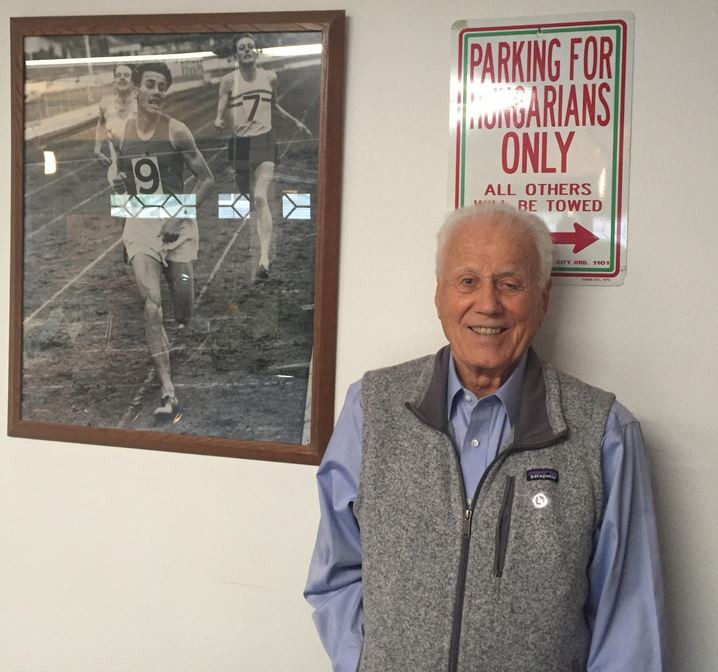
Among Laszlo’s many accomplishments include being an Olympian in the 1956 Olympic Games in the 1500 and 5000m races. Mihaly Igloi and his track team were in Budapest, and saw the chaos of the Soviet invasion, but were fortunate to leave the country and arrive in Melbourne.
Understandably, the Hungarians performed poorly at the Games. After the competition, Igloi, and one of his top runners, Laszlo Tabori, made the fateful decision to forgo their return to Hungary and defect to the United States.
Tábori retired from running in 1962, since he couldn’t compete for Hungry and was not a United States citizen. Tábori returned to distance running as a coach in 1967, his training methods based directly on Iglói's, and has been the coach of San Fernando Valley Track Club since 1973.
(05/16/18) Views: 84Bob Anderson
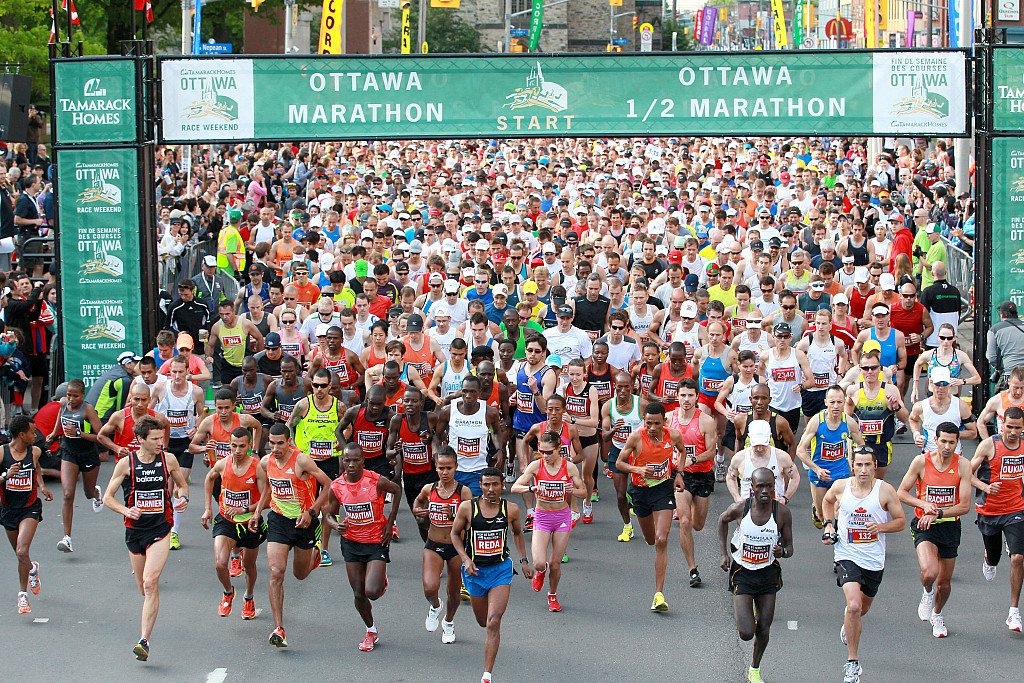
Course record holders return to Ottawa Marathon, Sara Hall top American Female
Canada's largest running event is the Scotiabank Ottawa Marathon and Half Marathon is coming up May 27 in Ottawa, Canada. Yemane Tsegay, the Ethiopian star who set the Ottawa course record with a blistering time of 2:06:54 in 2014, heads the list of marathon speedsters. Tsegay will be challenged by Eliud Kiptanui, the Kenya native who claimed last year’s title with a 2:10:14 clocking. Don’t be surprised to see three other Ethiopians joining them in the lead group, either. Haile Lemi Berhanu, who won the 2016 Boston Marathon, owns a personal best time of 2:04:33. Deriba Robi has completed the marathon in 2:05.58 and Adugna Takele Bikila owns an all-time best of 2:08.51. On the women’s side, course record holder Tigist Tufa is also returning, hoping to challenge her 2014 time of 2:24:31. Tufa also won the 2015 London Marathon. Tufa will have her hands – and feet – full with Gelete Burka, who ran a 2:20:45 marathon earlier this year. Joining Tufa in the women’s field is U.S. Marathon champion Sara Hall. Hall has improved in nearly every marathon she has run over the past year, placing sixth at Tokyo in 2017 before winning the U.S. Championships later that year. (05/14/18) Views: 69
