

Running News Daily
Running News Daily is edited by Bob Anderson and team. Send your news items to bob@mybestruns.com Advertising opportunities available.
Index to Daily Posts · Sign Up For Updates · Run The World Feed
Search Results for Ethiopia
Today's Running News
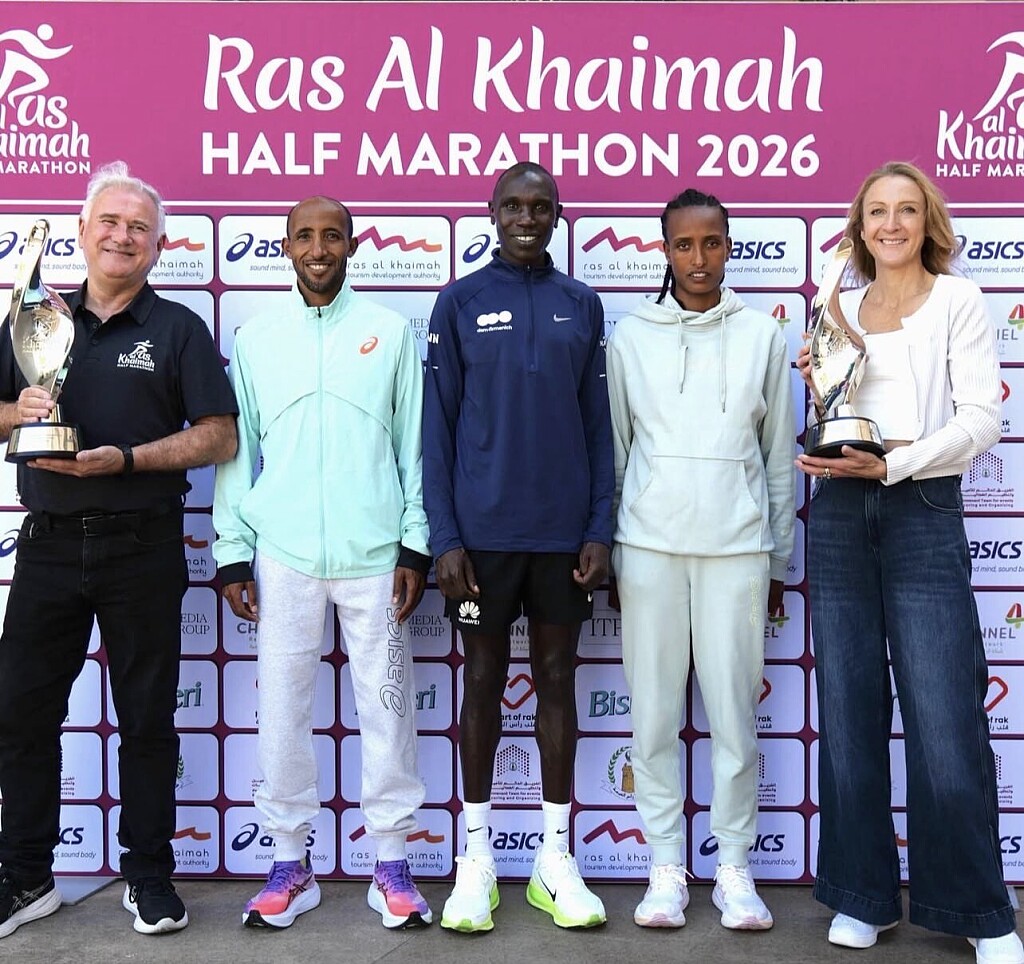


Geoffrey Kamworor Returns to Ras Al Khaimah, Chasing Redemption on the Course That Launched His Career
Thirteen years after announcing himself to the world on the roads of Ras Al Khaimah, Geoffrey Kamworor returns to the Ras Al Khaimah Half Marathon this Saturday with renewed purpose, hard-earned resilience, and the belief that his best running may still lie ahead.
Few athletes in modern distance running have endured such dramatic highs and devastating setbacks. Kamworor’s victory here in 2013 marked his first major senior triumph and began a remarkable stretch of dominance. He went on to win three consecutive World Half Marathon titles and twice captured the World Cross Country Championships, establishing himself as one of the most versatile and formidable distance runners of his generation. His half marathon world record of 58:01, set in Copenhagen in 2019, remains one of the defining performances in road racing history. He also conquered the marathon stage, winning the New York City Marathon twice with commanding authority.
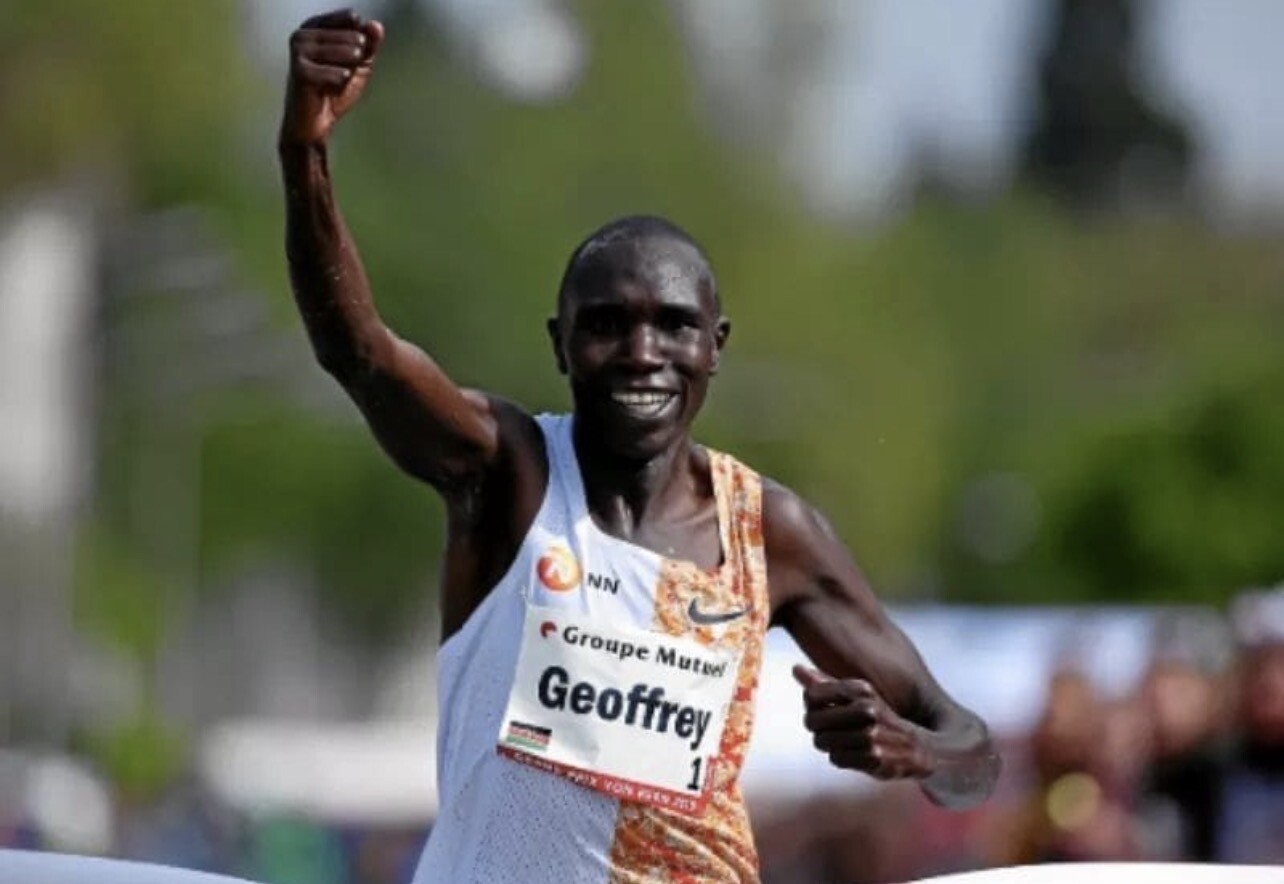
One of Kamworor’s most unforgettable moments came at the 2016 World Half Marathon Championships in Cardiff. After falling at the start and being trampled by competitors, he rose, regrouped, and delivered a stunning comeback victory.
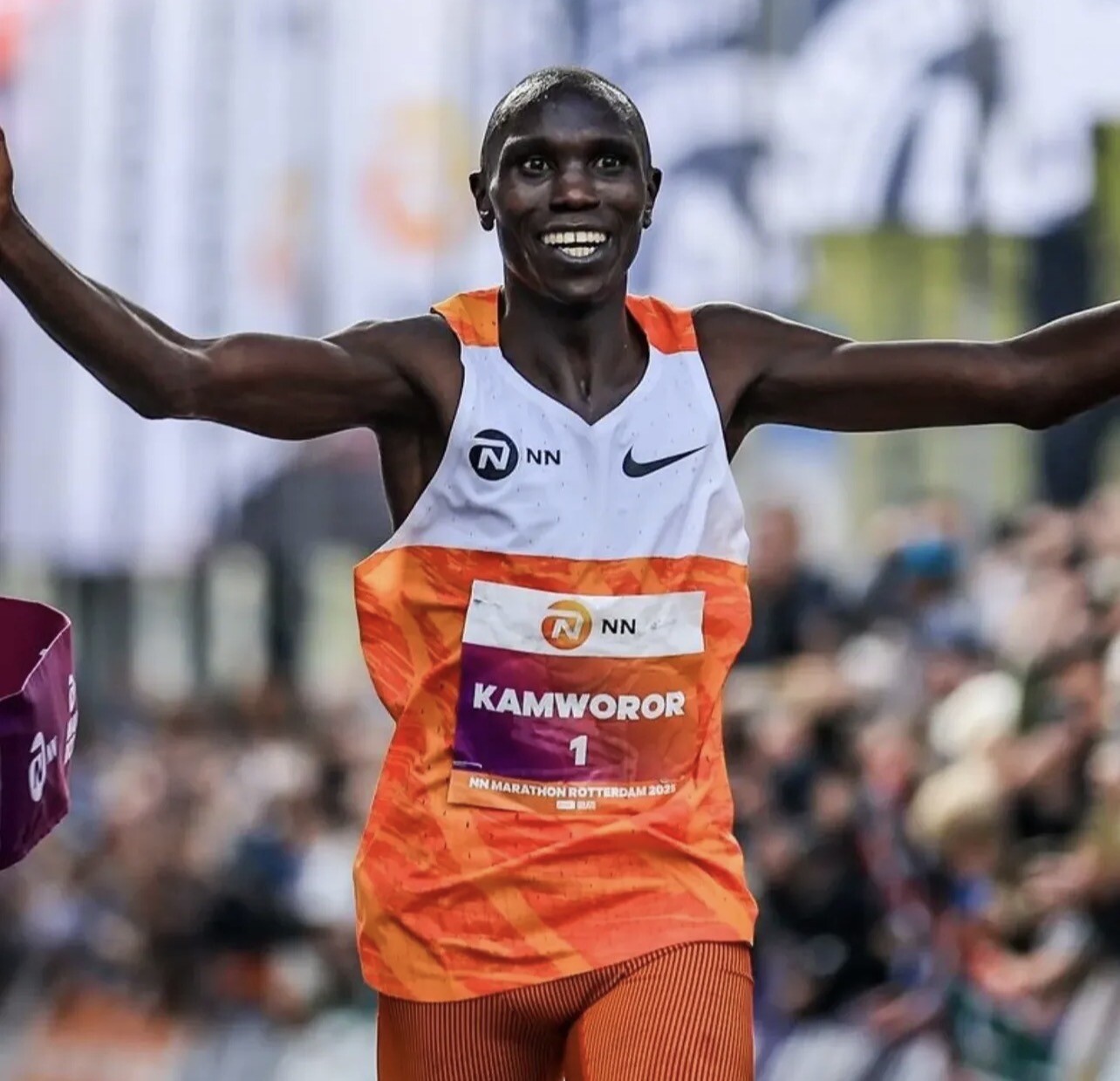
“In Cardiff, it was wet and I slipped at the start,” Kamworor recalled. “Nobody tripped me. It was hard running through the crowd, but the fall made me more determined.”
That determination would be tested even further. In 2020, during the isolation of the COVID-19 pandemic, Kamworor’s career was nearly derailed when he was struck from behind by a motorcycle while training in Eldoret.
“I fractured my tibia and couldn’t run for six months,” he said. “When I started running again, my body was still out of balance and I kept getting injured. It took me over three years to be able to run properly.”
His return has been gradual but encouraging. In 2023, Kamworor stunned observers by finishing second at the London Marathon in a personal best of 2:04:23, proving his resilience on the global stage. He followed that performance with a marathon victory in Rotterdam last year, finishing just ten seconds slower than his London breakthrough.
Now 33, Kamworor brings both experience and renewed confidence back to Ras Al Khaimah.
“I think I’m training as well as ever,” he said. “I remember this flat, fast course from when I won in 2013. I’m just grateful to be back running without problems.”
Age is no barrier for distance runners at the highest level. History offers powerful examples, including Portugal’s Carlos Lopes, who won Olympic marathon gold at 37, and Romania’s Constantina Dita, who claimed Olympic marathon victory at 38. Kamworor hopes to add his own chapter to that legacy.
Strong Rivals Await on a Fast Course
Kamworor will face formidable competition. Ethiopia’s Jemal Mekonen enters with a personal best of 58:33, while Kenya’s Brian Kibor has run 58:39. Ethiopia’s Amedework Walelegn (58:40) and several rising talents add further depth to a field built for speed.
The women’s race is equally compelling, led by Ethiopia’s Wede Kefale, who clocked 65:21 in Copenhagen last year. Kenya’s Gladys Chepkurui (65:46) and Jesca Chelangat (66:13) are among those capable of challenging for victory.
A Race Built on Speed and Records
Since its debut in 2007, the Ras Al Khaimah Half Marathon has earned global respect as one of the fastest half marathons in the world. Sammy Wanjiru’s 58:53 in the inaugural race set the tone, and the women’s race has been particularly historic. Mary Keitany (65:50), Peres Jepchirchir (64:52), and Ababel Yeshaneh (64:31) all set world records here, cementing the race’s reputation.
The flat, fast roads around Al Marjan Island once again promise ideal conditions for world-class performances.
Men’s Elite Field (Personal Bests)
• Geoffrey Kamworor (KEN) – 58:01
• Jemal Mekonen (ETH) – 58:33
• Brian Kibor (KEN) – 58:39
• Amedework Walelegn (ETH) – 58:40
• Antenayeh Dagnachew (ETH) – 59:17
• Yismaw Dillu (ETH) – 59:23
• Birhanu Balew (BRN) – 59:41
• Enos Kales (KEN) – 60:17
• Bayelign Teshager (ETH) – 60:22
• Mao Ako (TAN) – 60:28
• Benson Kiplangat (KEN) – Debut
Women’s Elite Field (Personal Bests)
• Wede Kefale (ETH) – 65:21
• Gladys Chepkurui (KEN) – 65:46
• Jesca Chelangat (KEN) – 66:13
• Magdalena Shauri (TAN) – 66:37
• Gete Alemayehu (ETH) – 66:37
• Cynthia Chepkwony (KEN) – 67:20
• Bertha Gebreslasie (ETH) – 67:26
• Orba Chemurgor (KEN) – 67:56
• Wudinesh Alemu (ETH) – 68:08
• Debash Kelali (ETH) – 68:10
• Annet Chelangat (UGA) – 68:12
• Melknat Wudu (ETH) – 68:53
A Full-Circle Moment
For Kamworor, Saturday’s race represents more than competition—it is a return to the place where his journey toward greatness began. After years of adversity, injuries, and recovery, he now stands once again on familiar ground, ready to test himself against the world’s best.
Whether he wins or not, his presence alone is a powerful reminder of the resilience that defines champions—and of the unfinished chapters still waiting to be written.
(02/13/2026) ⚡AMPby Race News Service
Rak Half Marathon
The Rak Al Khaimah Half Marathon is the 'world's fastest half marathon' because if you take the top 10 fastest times recorded in RAK for men (and the same for women) and find the average (for each) and then do the same with the top ten fastest recorded times across all races (you can reference the IAAF for this), the...
more...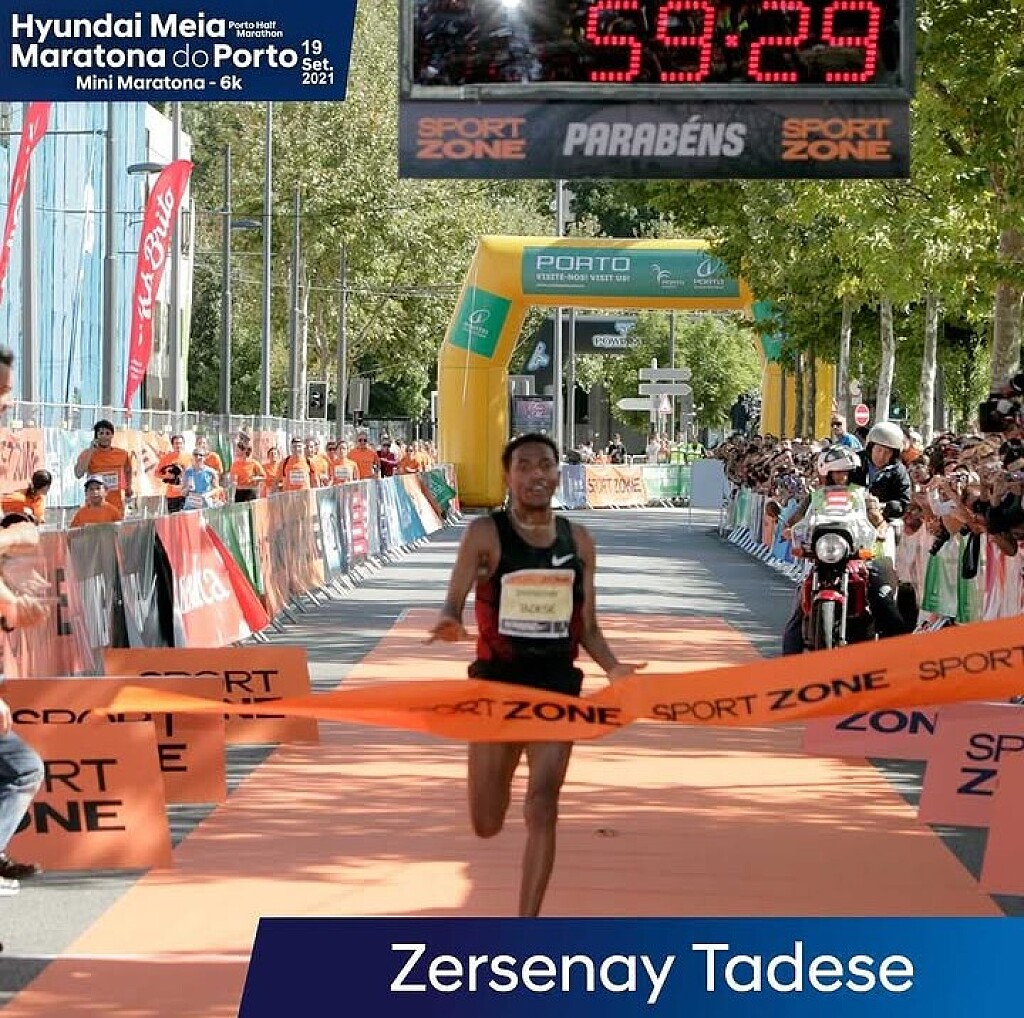
Zersenay Tadesse: The Trailblazer Who Put Eritrea on the World Distance Map
Born on 8 February 1982 in Adi Bana, Eritrea, Zersenay Tadesse rose from humble beginnings to become one of the most accomplished long-distance runners of his generation. Through consistency, resilience, and historic performances, he not only dominated the global stage but also reshaped Eritrea’s place in world athletics.
A specialist in long-distance track and road events, Tadesse built an extraordinary career highlighted by his four world titles in the half marathon, a level of dominance rarely seen in the discipline. His name entered the history books on 21 March 2010, when he produced a landmark performance at the Lisbon Half Marathon in Portugal, clocking 58:23 to break the world record by ten seconds and redefine the limits of human endurance over the distance.
Tadesse’s impact extended far beyond records. At the Athens 2004 Olympic Games in Greece, he made history by becoming the first Eritrean athlete to win an Olympic medal, earning bronze in the 10,000 metres behind Ethiopian greats Kenenisa Bekele and Sileshi Sihine. Two years later, in 2006, he achieved another national first by claiming the World Half Marathon Championship title in Hungary, securing Eritrea’s first-ever individual world championship gold.
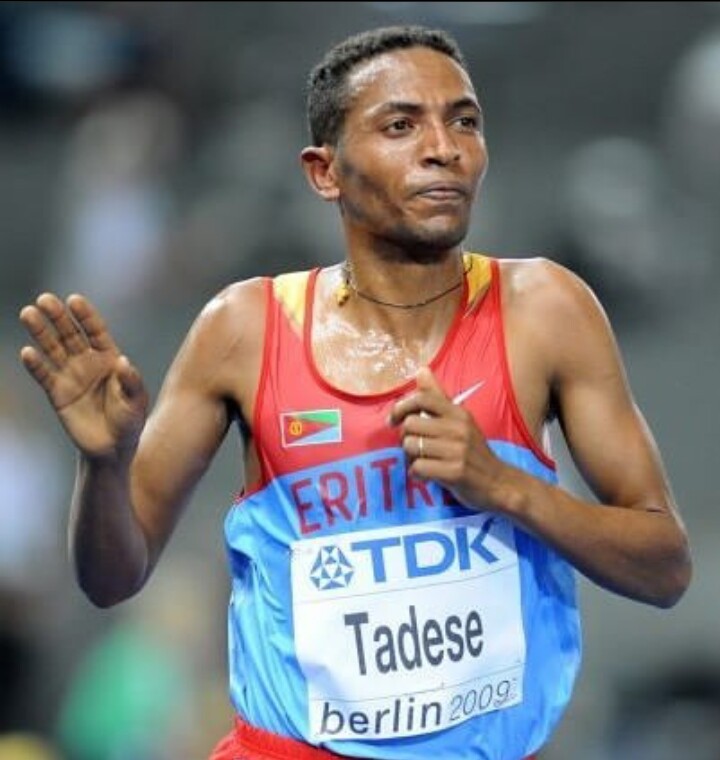
The year 2006 marked a defining chapter in his career. In April, Tadesse finished fourth at the World Cross Country Championships, playing a crucial role in Eritrea’s team silver medal alongside Yonas Kifle, Ali Abdallah, and Tesfayohannes Mesfen, narrowly beaten by Kenya. Later that year, in September, he captured gold at the inaugural IAAF World Road Running Championships over 20 kilometres, further cementing his versatility across surfaces.
December 2006 brought another iconic moment. Racing through the streets of Madrid, Spain, at the San Silvestre Vallecana, Tadesse shattered the 10-kilometre world record, stopping the clock at 26:54 and surpassing the previous mark held by Ethiopian legend Haile Gebrselassie. In 2010, he returned to the same event and claimed victory once again after a late navigation error by race leader Ayad Lamdassem of Spain, showcasing his experience and composure under pressure.
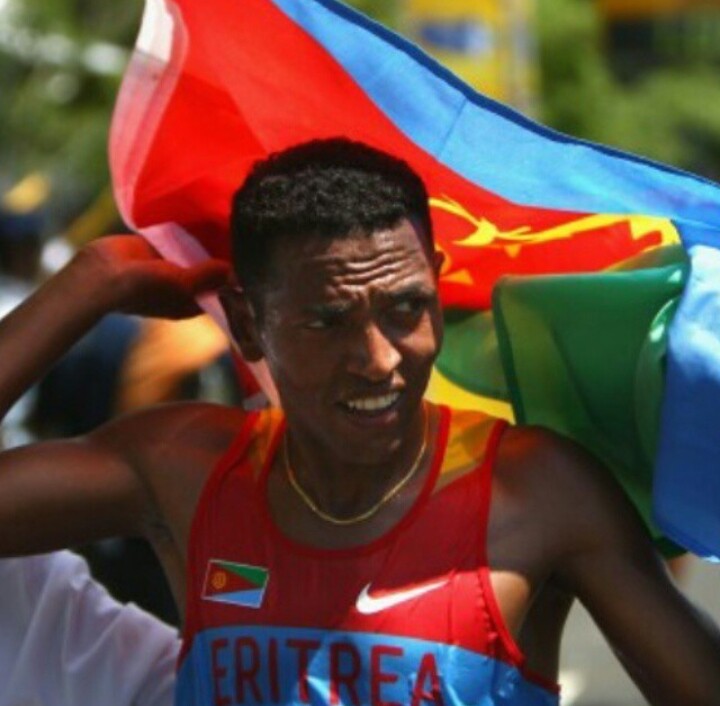
One of the crowning achievements of his career came in March 2007, when Tadesse conquered the World Cross Country Championships in Mombasa, Kenya, defeating Kenyan stars Moses Mosop and Bernard Kipyego on their home terrain in a powerful display of strength and tactical intelligence.
His medal collection reflects years of excellence at the highest level:
Olympic Games: Bronze
World Championships: Silver
World Cross Country Championships: Gold, two silvers, and four bronzes
World Half Marathon Championships: Four golds and one silver
Tadesse’s personal bests underline his remarkable range, from track to road:
3000 m – 7:39.93 | 5000 m – 12:59.27 | 10,000 m – 26:37.25 (Eritrean record) | 10 km road – 26:54 | 15 km – 42:17 | 20 km – 55:21 | Half marathon – 58:23 (world record) | Marathon – 2:08:46.
More than a champion, Zersenay Tadesse is a pioneer. He opened doors for Eritrean athletics, inspired generations, and proved that greatness can emerge from any corner of the world. His legacy is written not only in medals and records, but in the history he made for his nation.
(02/09/2026) ⚡AMPby Erick Cheruiyot for My Best Runs.
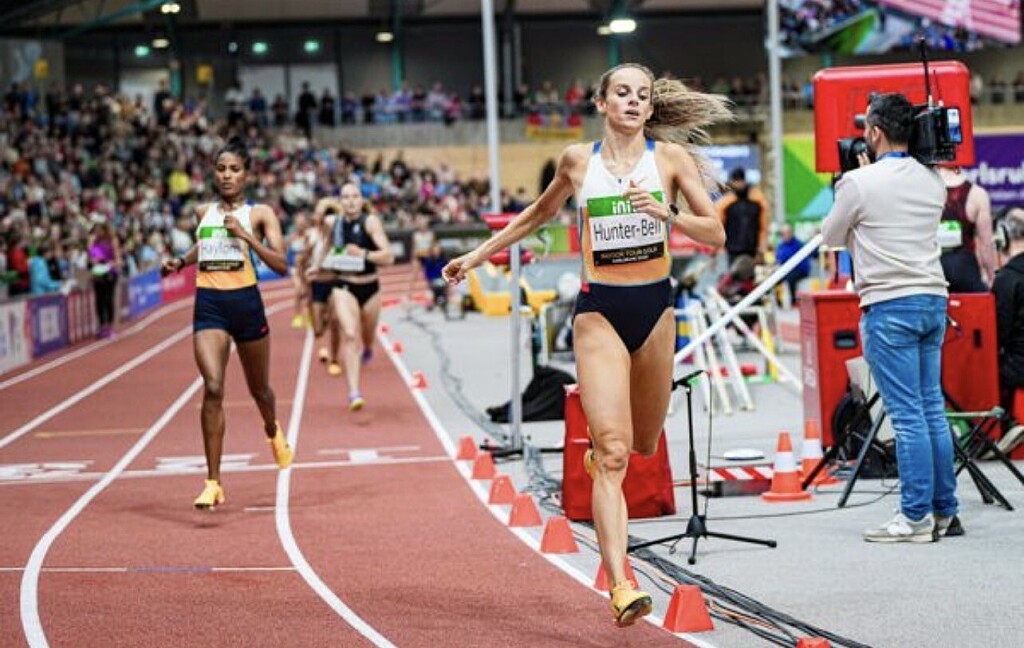
Georgia Hunter Bell Runs World Lead 4:00.05 to Win 1500m at Karlsruhe World Indoor Tour Gold
Georgia Hunter Bell delivered the performance of her indoor career, running a world-leading 4:00.05to win the women’s 1500 meters at the World Athletics Indoor Tour Gold meeting. Showing poise, tactical awareness, and a devastating finishing kick, the British star confirmed her arrival as one of the world’s top middle-distance runners.
The breakthrough came on February 7, 2026, in Karlsruhe, Germany, where a deep international field gathered on one of Europe’s fastest indoor tracks. The race unfolded at a strong but controlled pace, with Ethiopia’s Gudaf Tsegay and Birke Haylom helping ensure honest early splits. Hunter Bell remained composed throughout, positioning herself carefully in the lead group and conserving energy while others tested the pace.
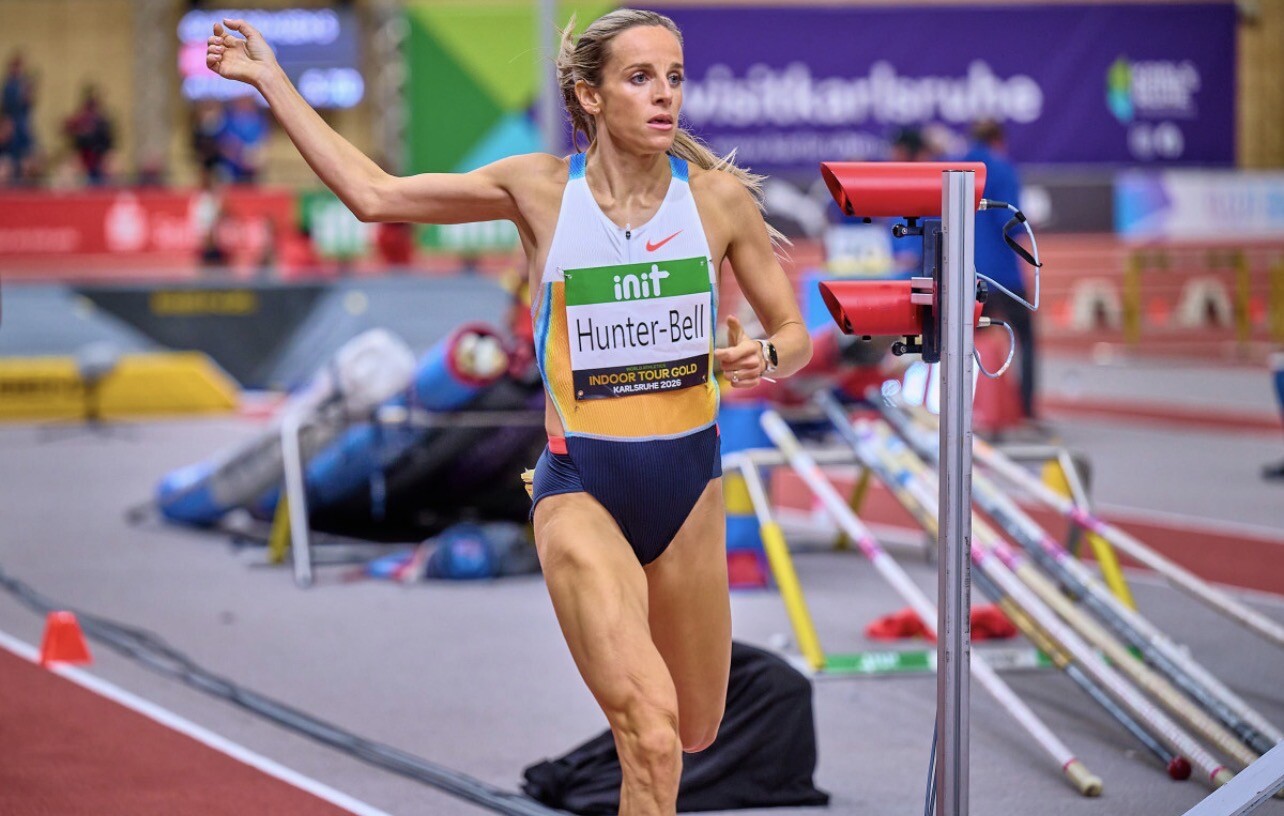
With just over 300 meters remaining, she made her move. Smoothly accelerating into contention, Hunter Bell surged into the lead as the bell sounded for the final lap. Her stride remained efficient and relaxed as she powered down the final straight, pulling clear of the field and crossing the line in 4:00.05, the fastest indoor 1500m run in the world so far in 2026.
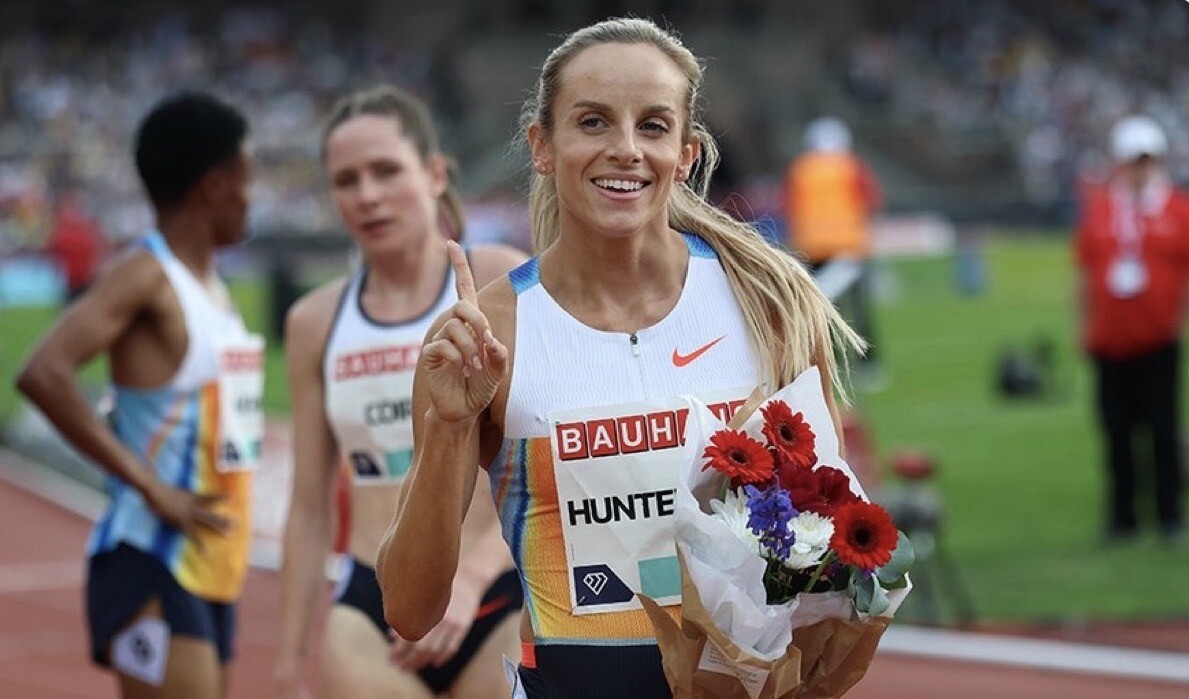
Gudaf Tsegay finished strongly to claim second place, while Birke Haylom secured third in another impressive performance for Ethiopia. Great Britain’s Laura Muir, one of the most accomplished championship racers in the field, finished fourth, and American Heather MacLean rounded out the top five
Hunter Bell’s performance marks a major milestone. Breaking the four-minute barrier indoors places her among the fastest women in the world and highlights her steady progression into the global elite. Her ability to execute a disciplined race plan and deliver a decisive finishing kick demonstrates the maturity required to compete at the highest level.
As the indoor season continues toward championship competition, this victory establishes Hunter Bell as a serious contender. Her world-leading performance in Karlsruhe sends a clear signal that she is entering the prime of her career and is ready to challenge the best in the world.
Women’s 1500m — World Indoor Tour Gold, Karlsruhe — February 7, 2026
1. Georgia Hunter Bell (GBR) — 4:00.05 (World Lead)
2. Gudaf Tsegay (ETH) — 4:01.20
3. Birke Haylom (ETH) — 4:02.11
4. Laura Muir (GBR) — 4:03.45
5. Heather MacLean (USA) — 4:04.72
(02/09/2026) ⚡AMPby Boris Baron
Ras Al Khaimah Awaits as Kamworor and Yeshaneh Return to the Roads That Made Them Legends
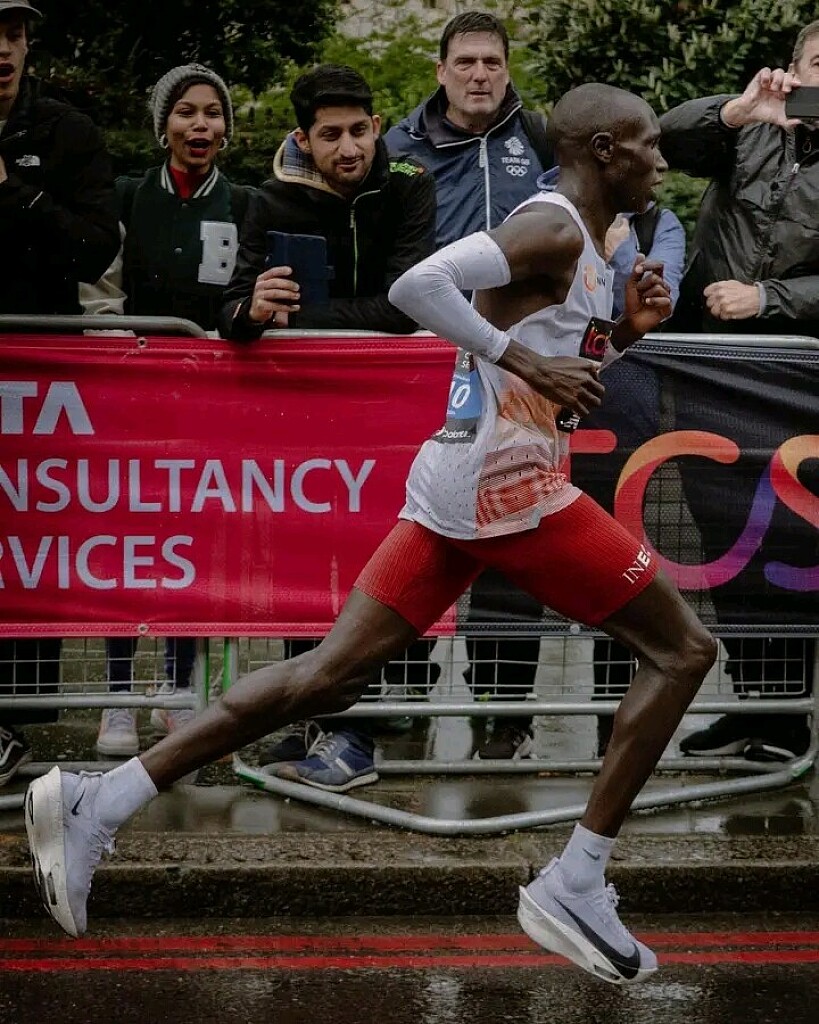
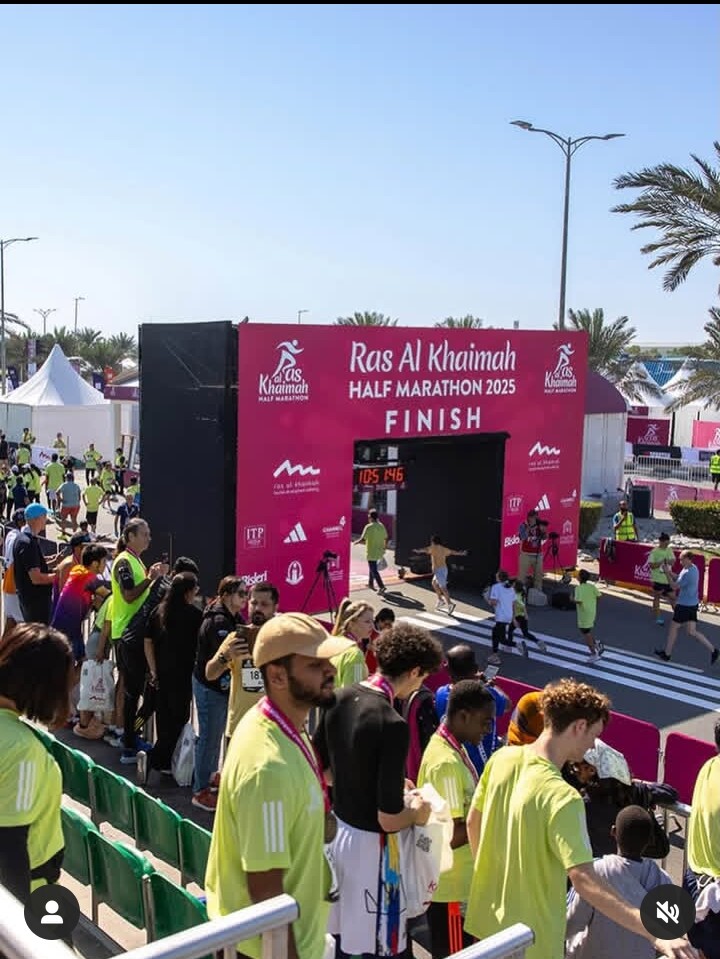
The Ras Al Khaimah Half Marathon is set to reclaim the global spotlight as two of the most accomplished distance runners of their generation prepare to headline its 19th edition on Saturday, 14 February. Kenya’s three-time world champion Geoffrey Kamworor and Ethiopia’s former women’s world record holder Ababel Yeshaneh lead a powerful elite field, returning to a race that has played a defining role in both of their careers.
For Kamworor, Ras Al Khaimah is where his rise to the very top truly began. In 2013, the then-emerging Kenyan delivered a stunning breakthrough performance, clocking 58:54 to announce himself on the world stage. More than a decade later, he returns as one of the most decorated half marathon runners in history. His achievements include three consecutive World Half Marathon titles, two World Cross Country crowns, and marathon victories at the New York City Marathon in 2017 and 2019. His 58:01 world record set in Copenhagen in 2019 still places him among the fastest men ever over 21.1 kilometers and makes him the quickest athlete on the 2026 Ras Al Khaimah start list.
Matching that pedigree on the women’s side is Ababel Yeshaneh, whose name is forever woven into the fabric of this event. Her extraordinary run of 64:31 in 2020 did more than secure victory—it redefined what was thought possible in the women’s half marathon, lowering the world record by 20 seconds against a field of proven champions. That performance remains one of the most iconic moments in the history of the race.
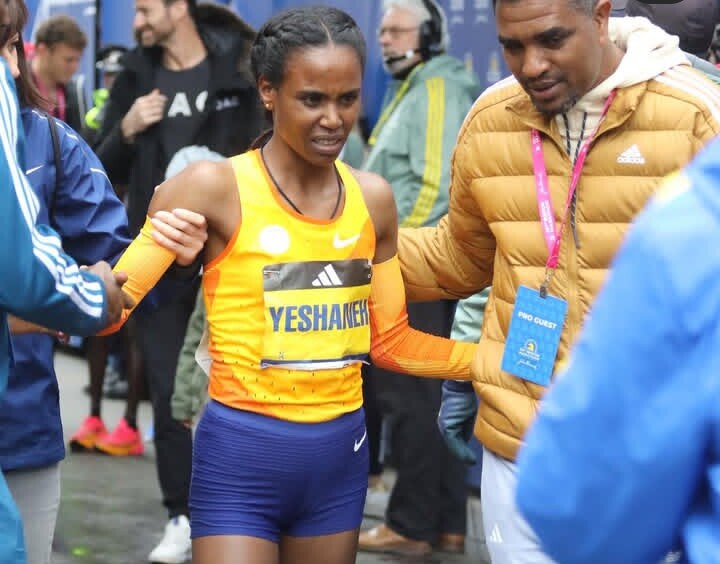
Yeshaneh’s career has been built on consistency and excellence across both track and road. She emerged internationally as a teenager before finishing ninth in the 10,000 meters at the 2013 World Championships in Moscow and competing in the Olympic 5,000 meters final in Rio in 2016. Away from the track, she has claimed half marathon victories in Istanbul and Buenos Aires and earned podium finishes at major city marathons in Boston, Chicago, and New York. Her more recent appearances in Ras Al Khaimah have added further depth to her story, from a non-finish in 2022 to a strong return in 2024, where she placed second in a fast 65:44.
Since its launch in 2007, the Ras Al Khaimah Half Marathon has grown into one of the most respected and fastest races on the global road-running calendar. Its flat, sea-level course and consistently favorable conditions have made it a magnet for the world’s best distance runners, a place where careers are launched, records are challenged, and history is often rewritten. The 2026 edition, once again staged entirely on Al Marjan Island, reinforces the event’s identity as a true proving ground for speed and excellence.
With Geoffrey Kamworor and Ababel Yeshaneh returning to the roads where defining moments of their careers were forged, the 2026 Ras Al Khaimah Half Marathon stands poised for another chapter of elite racing at its highest level. When proven champions and a course built for speed come together, the outcome is never ordinary. On these familiar shores, the world will once again watch as history, ambition, and excellence converge over 21.1 kilometers.
(02/09/2026) ⚡AMPby Erick Cheruiyot for My Best Runs.
Rak Half Marathon
The Rak Al Khaimah Half Marathon is the 'world's fastest half marathon' because if you take the top 10 fastest times recorded in RAK for men (and the same for women) and find the average (for each) and then do the same with the top ten fastest recorded times across all races (you can reference the IAAF for this), the...
more...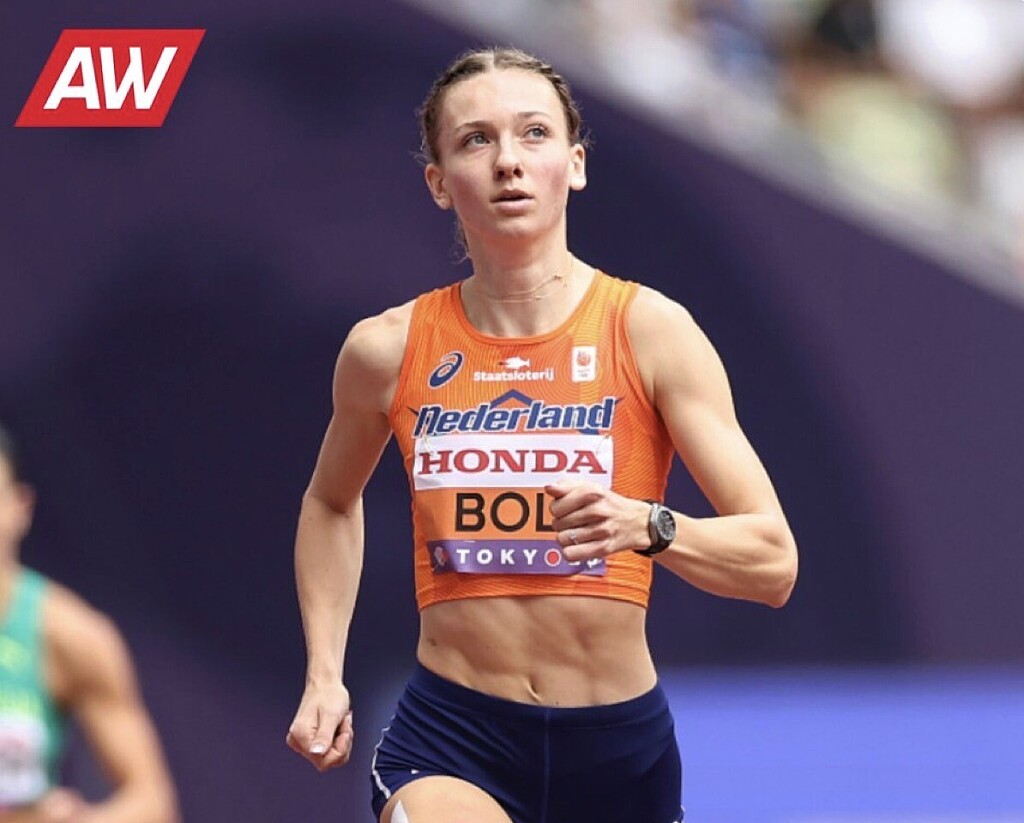
Metz Indoors 2026: Ethiopian Sweep in 3000 m, Femke Bol Breaks Dutch Record in 800 m
METZ, France — February 8, 2026 — The Metz Indoors meeting delivered an early-season showcase of world-class middle-distance running, highlighted by a commanding Ethiopian sweep in the women’s 3000 meters and a national record performance by Dutch star Femke Bol in the 800 meters.
From the opening laps of the 3000 m, Ethiopia’s Birtukan Molla and Shito Gumi asserted control, setting a confident tempo and quickly separating themselves from the field. Gumi led the early stages with a brisk 2:51 opening kilometer, ensuring the race would be decided by strength as well as tactics. A lead pack formed that included fellow Ethiopian Aster Areri and Canada’s Lucia Stafford, while the rest of the field struggled to maintain contact.
Molla remained composed throughout, running efficiently just behind Gumi and conserving energy for the decisive final laps. As the race entered its closing stages, Stafford made a determined attempt to challenge, but the Ethiopian trio responded with authority.
With 300 meters remaining, Molla surged past Gumi and powered down the final straight to secure victory in 8:40.49. Gumi followed in 8:41.18, and Areri completed the sweep in 8:41.75, underlining Ethiopia’s remarkable depth in women’s distance running. Stafford ran a strong race to finish fourth in 8:42.87, narrowly missing the podium in one of the fastest indoor 3000 m races of the season.
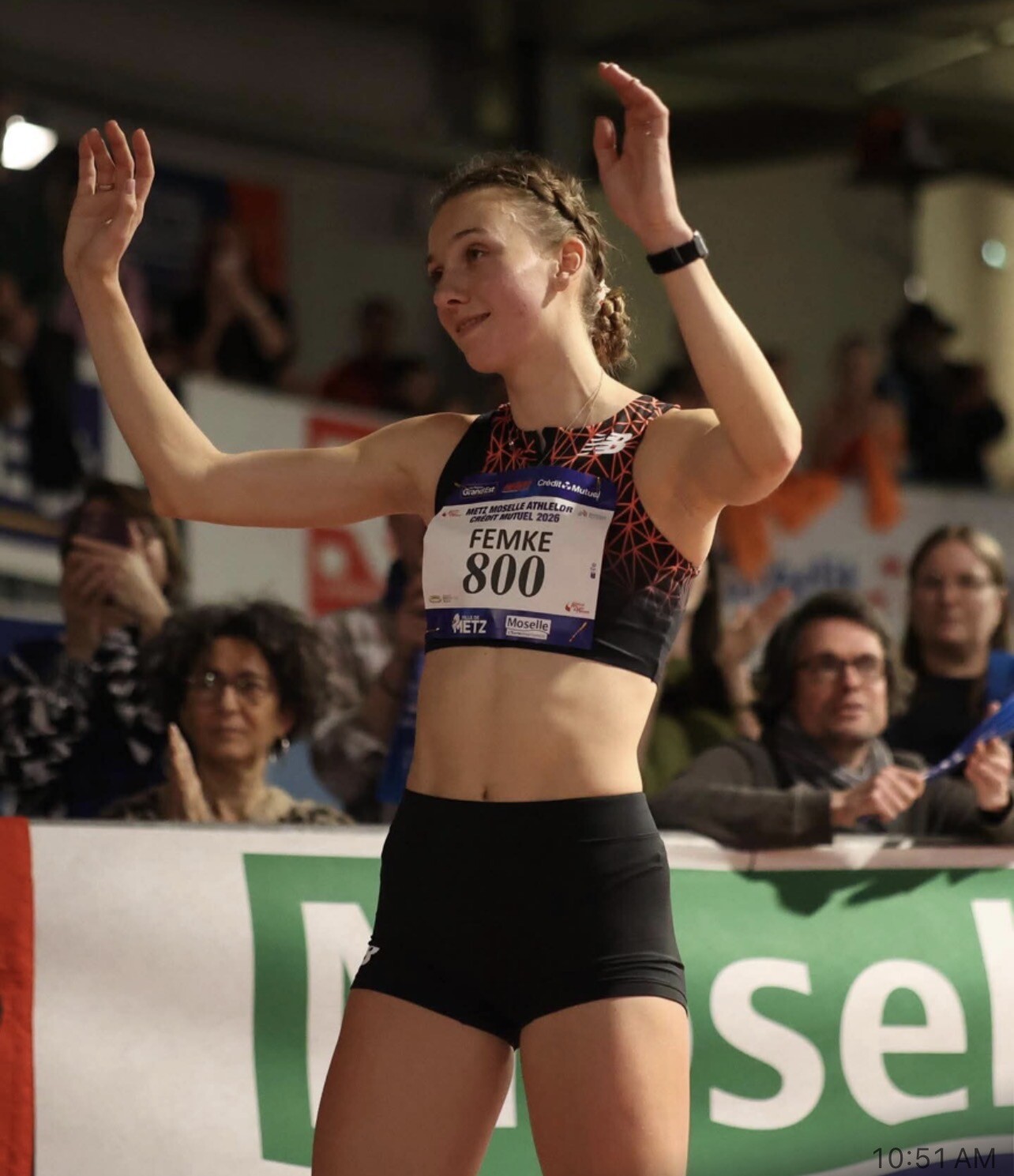
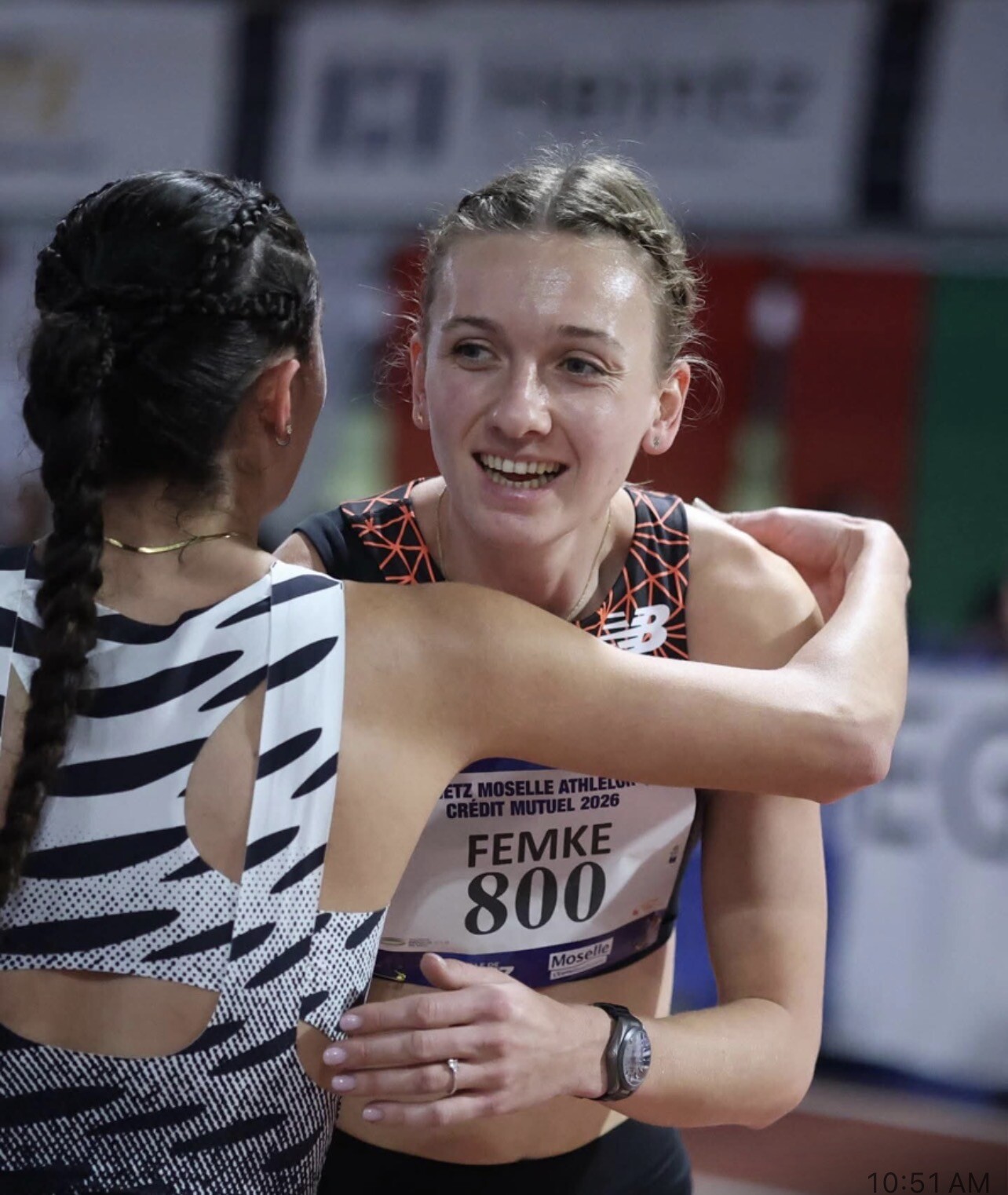
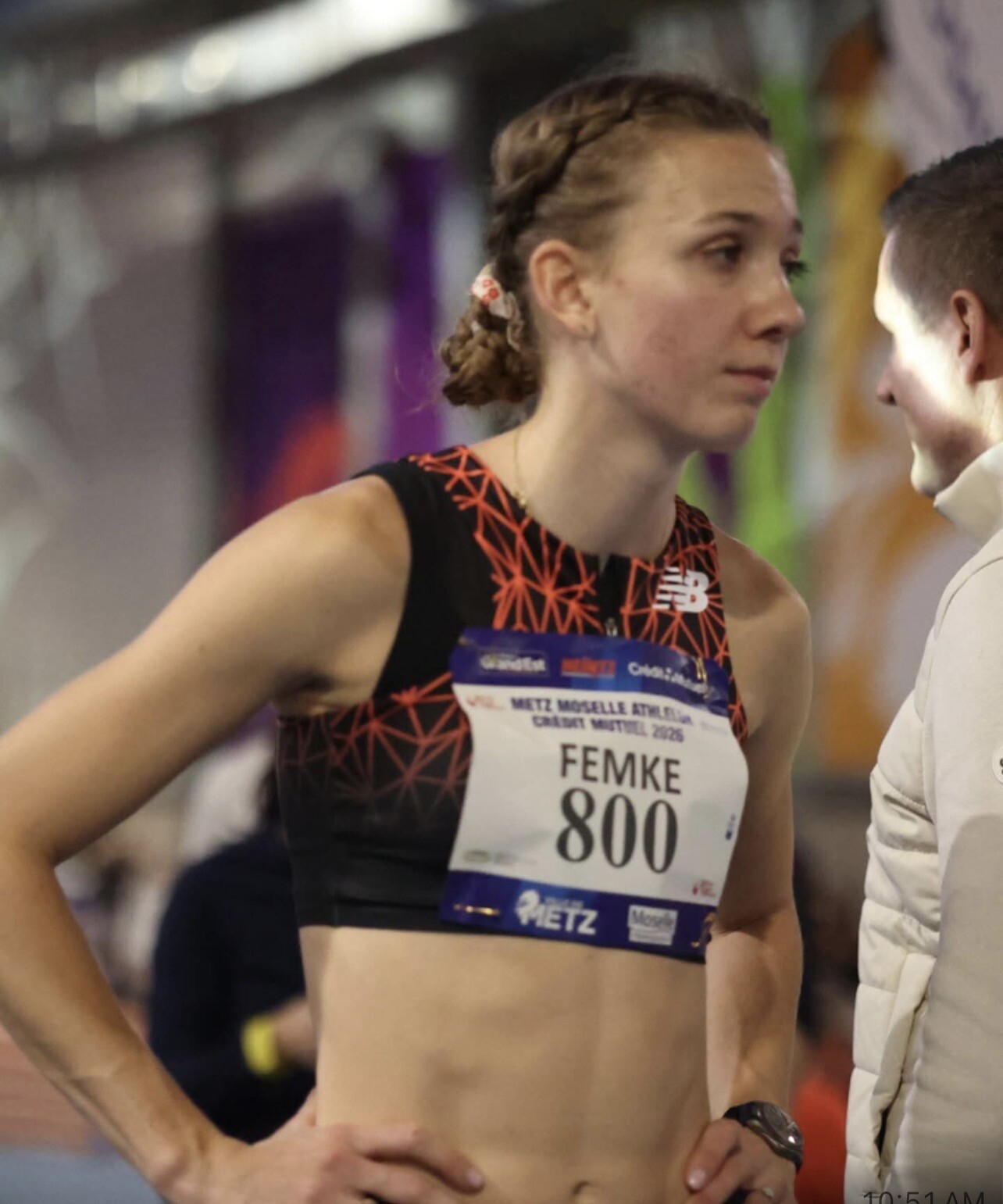
The women’s 800 m provided another highlight of the evening, as Femke Bol demonstrated her range and speed beyond her traditional specialty. Best known as one of the world’s dominant 400 m hurdlers, Bol delivered a breakthrough performance over two laps, winning convincingly in 1:59.07 and setting a new Dutch national record.
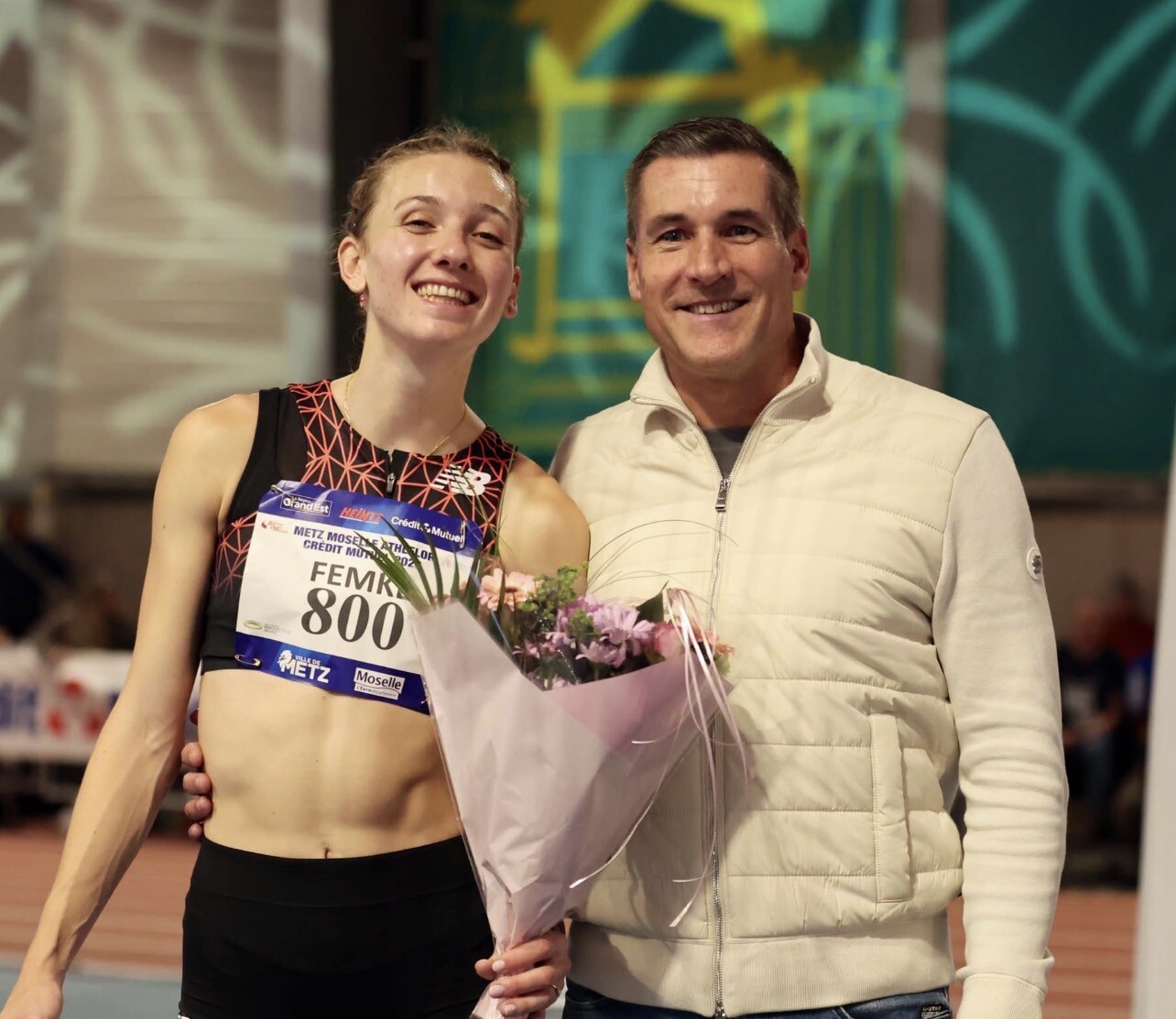
Switzerland’s Valentina Rosamilia and Lore Hoffman ran outstanding races, both breaking two minutes with times of 1:59.90 and 1:59.91 respectively, but Bol’s smooth stride and decisive finishing strength proved untouchable. Germany’s Smilla Kolbe and Italy’s Marta Zenoni followed, but the margin reflected Bol’s complete control over the race.
The Metz Indoors meeting continues to establish itself as a key stop on the international indoor circuit, offering athletes the opportunity to test their fitness and set the tone for the season ahead. Ethiopia’s continued dominance in the longer distances and Bol’s emergence as a national-record holder in the 800 m signal that the 2026 indoor season will feature exceptional depth and compelling performances across events.
Women’s 3000 m – Official Results
1. Birtukan Molla (ETH) – 8:40.49
2. Shito Gumi (ETH) – 8:41.18
3. Aster Areri (ETH) – 8:41.75
4. Lucia Stafford (CAN) – 8:42.87
5. Revee Walcott-Nolan (GBR) – 8:49.08 PB
6. Betelhem Olana (ETH) – 8:49.37
7. Cari Hughes (GBR) – 8:57.47
8. Eline Dalemans (BEL) – 8:57.62
9. Veerle Bakker (NED) – 8:58.03 PB
10. Sofia Thogersen (DEN) – 8:58.58
11. Vera Bertemes-Hoffmann (LUX) – 9:04.66 NR
12. Adelle Tracey (JAM) – 9:05.09
Women’s 800 m – Official Results
1. Femke Bol (NED) – 1:59.07 NR
2. Valentina Rosamilia (SUI) – 1:59.90 PB
3. Lore Hoffman (SUI) – 1:59.91 PB
4. Smilla Kolbe (GER) – 2:01.75
5. Marta Zenoni (ITA) – 2:05.35
(02/08/2026) ⚡AMPby Robert Kibet
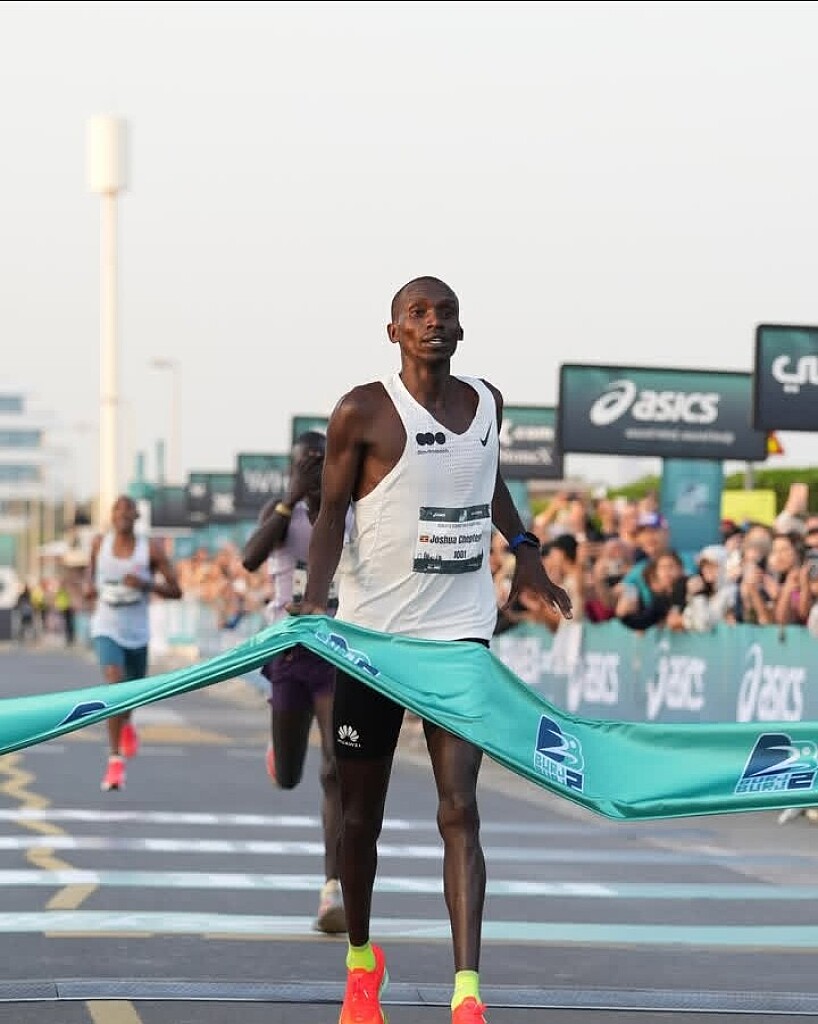
Seconds Decide, Champions Rise: Cheptegei and Cheptai Shine at a Thrilling Burj2Burj Half Marathon 2026
The Burj2Burj Half Marathon 2026 delivered a compelling showcase of elite road running, as Dubai’s iconic course provided the backdrop for high-speed racing, tactical brilliance, and photo-finish drama across both the men’s and women’s fields.
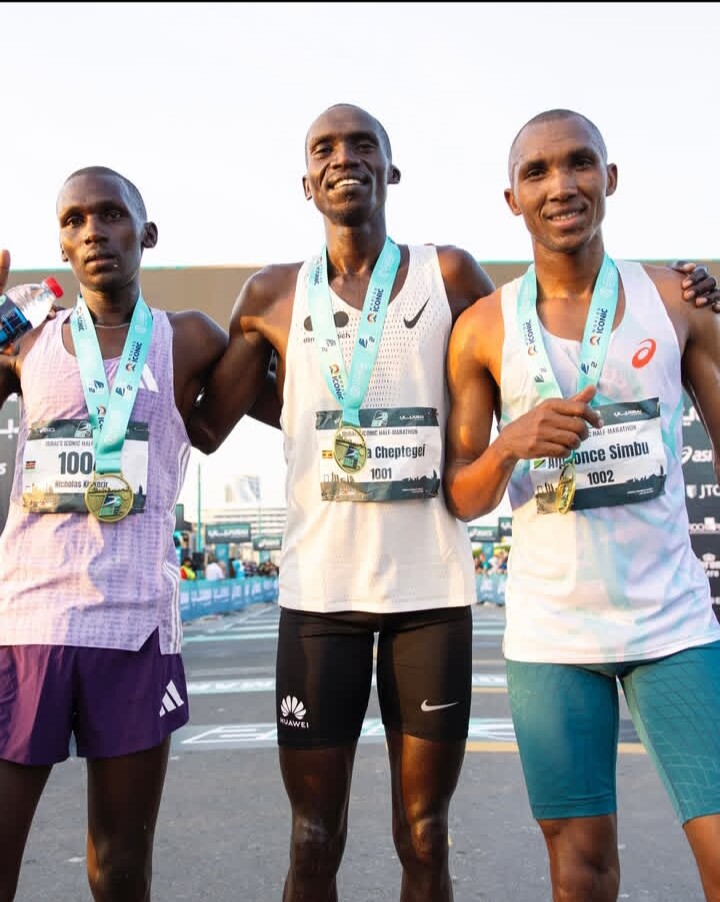
In the men’s race, Ugandan icon Joshua Cheptegei once again demonstrated his pedigree on the roads, powering to victory in 59:26 after a relentless battle over 21.1 kilometers. The Olympic champion and 5000m & 10,000m world record holder was pushed to the very limit, with Kenya’s Nicholas Kipkorir crossing the line just two seconds behind in 59:28, while Tanzania’s Alphonce Felix Simbu secured third place in 59:30. Only four seconds separated the podium finishers, reflecting the uncompromising pace and intensity from start to finish.
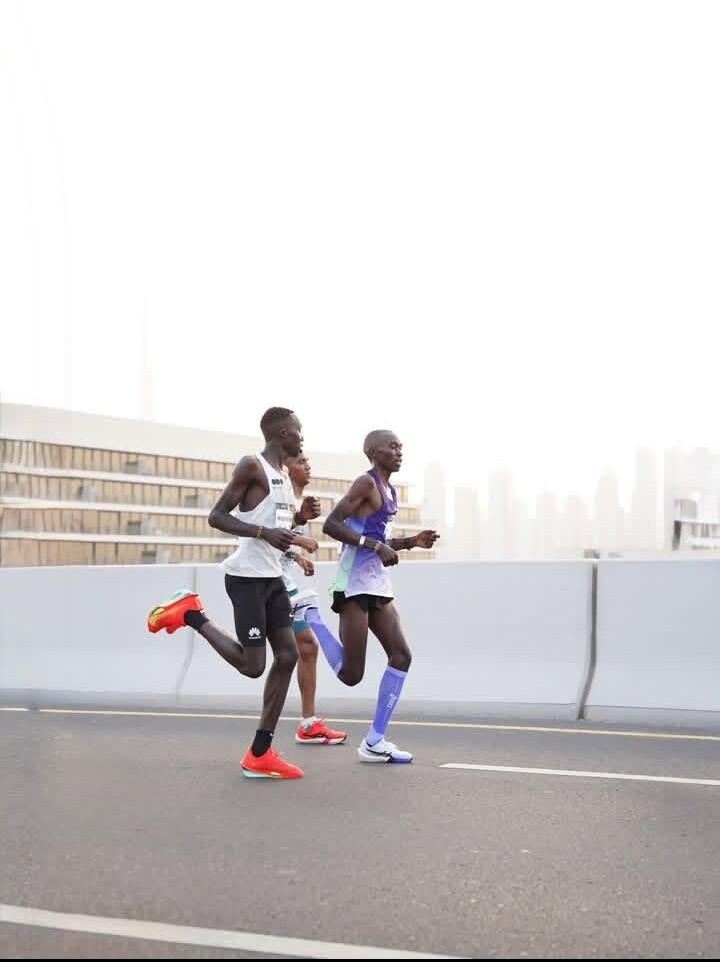
Kenya’s Enos Kipruto narrowly missed a place on the podium with 1:00:03, followed closely by Ethiopia’s Lulu Negera in 1:00:04, as the leading group maintained pressure throughout the fast course. Ethiopia’s Aklilu Asfaw, Germany’s Richard Ringer, Kenya’s Yonah Mateiko, and Ethiopia’s Haftu Teklu rounded out a deep and competitive top nine, while Carlos Díaz of Chile completed the top ten in 1:03:34 after a determined run against world-class opposition.
The women’s race matched the men’s contest for quality and suspense, producing a dramatic outcome decided by the narrowest of margins. Kenya’s Irene Cheptai delivered a composed and authoritative performance to claim victory in 1:06:57, demonstrating sharp tactical awareness as she stayed patient within a tightly packed lead group before asserting control in the decisive final stages.
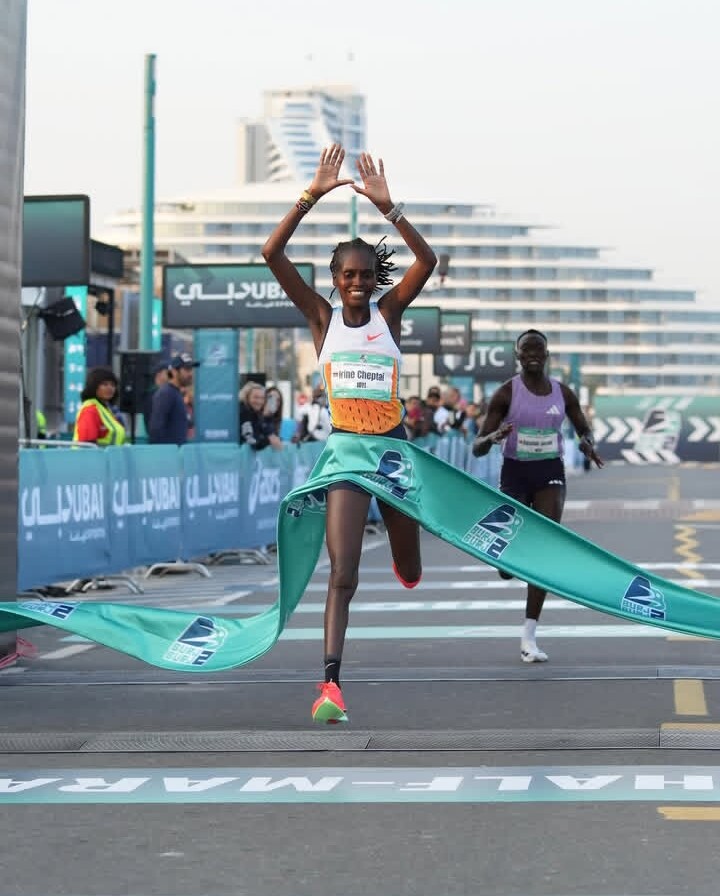
She was closely followed by compatriot Daisilah Jerono, who finished just two seconds adrift in 1:06:59, securing a Kenyan one-two, while Ethiopia’s Ftaw Zeray completed the podium in 1:07:01. As in the men’s race, only four seconds separated the top three, underlining the elite depth and competitiveness at the front of the field.
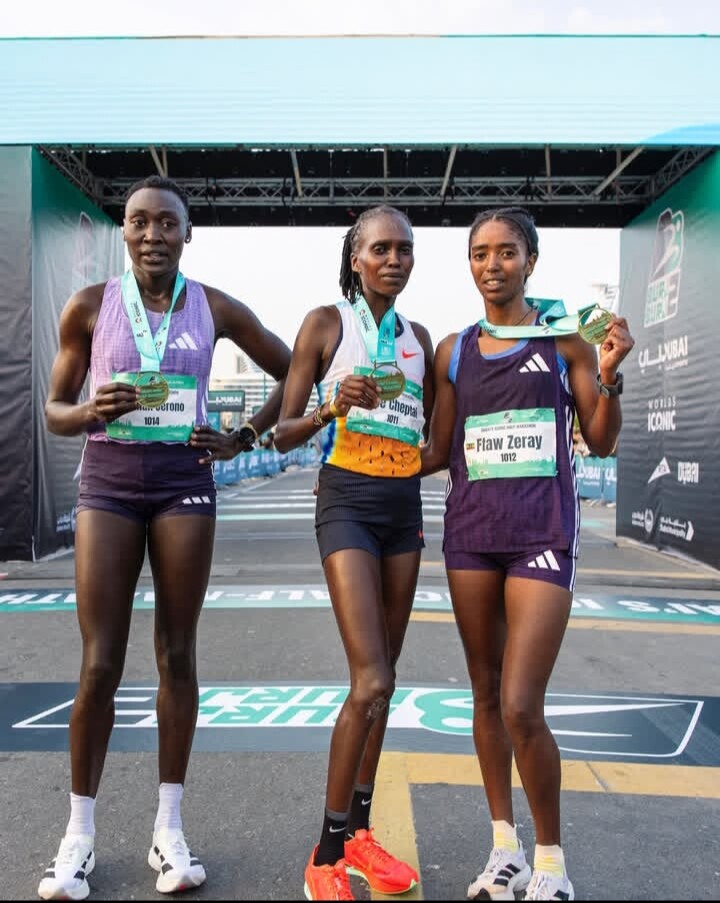
Behind the medalists, the strength of the women’s race was equally evident. Jackline Cherono reinforced Kenya’s presence with a strong fourth-place finish in 1:09:11, while Alexandra Bell of Great Britain impressed in fifth with 1:09:35. Meritxell Soler of Spain led the European contingent in sixth, followed by Ethiopia’s Seba Diba in seventh. The international top ten was completed by Mikky Keetels of the Netherlands in eighth, Tea Faber of Croatia in ninth, and Nada Ina Pauer of Austria in tenth, highlighting the global appeal of the event.
With world-class performances, deep international fields, and victories decided by seconds, the Burj2Burj Half Marathon 2026 once again stood out as a premier road-running spectacle, where precision, patience, and championship pedigree defined a memorable day of racing on the streets of Dubai.
(02/07/2026) ⚡AMPby Erick Cheruiyot for My Best Runs.
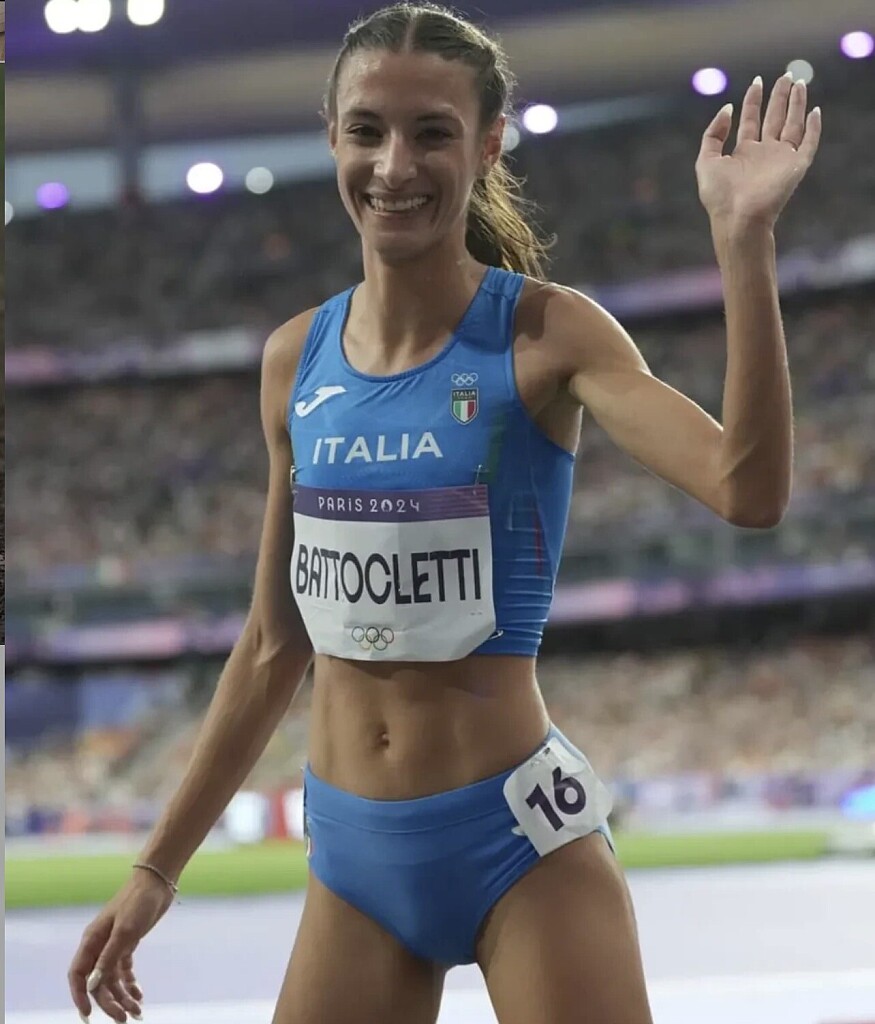
Haylom Holds Off Battocletti in Madrid Thriller as Arroyo Breaks Two Minutes at World Indoor Tour Gold
The World Athletics Indoor Tour Gold meeting in Madrid delivered a spectacular showcase of women’s middle-distance running, featuring a historic 1500m duel and a breakthrough sub-two-minute performance in the 800m. With rising Ethiopian stars facing off against Europe’s best on one of the circuit’s fastest indoor tracks, the evening produced performances that will resonate throughout the 2026 indoor season.
Haylom Prevails in Historic 1500m Showdown
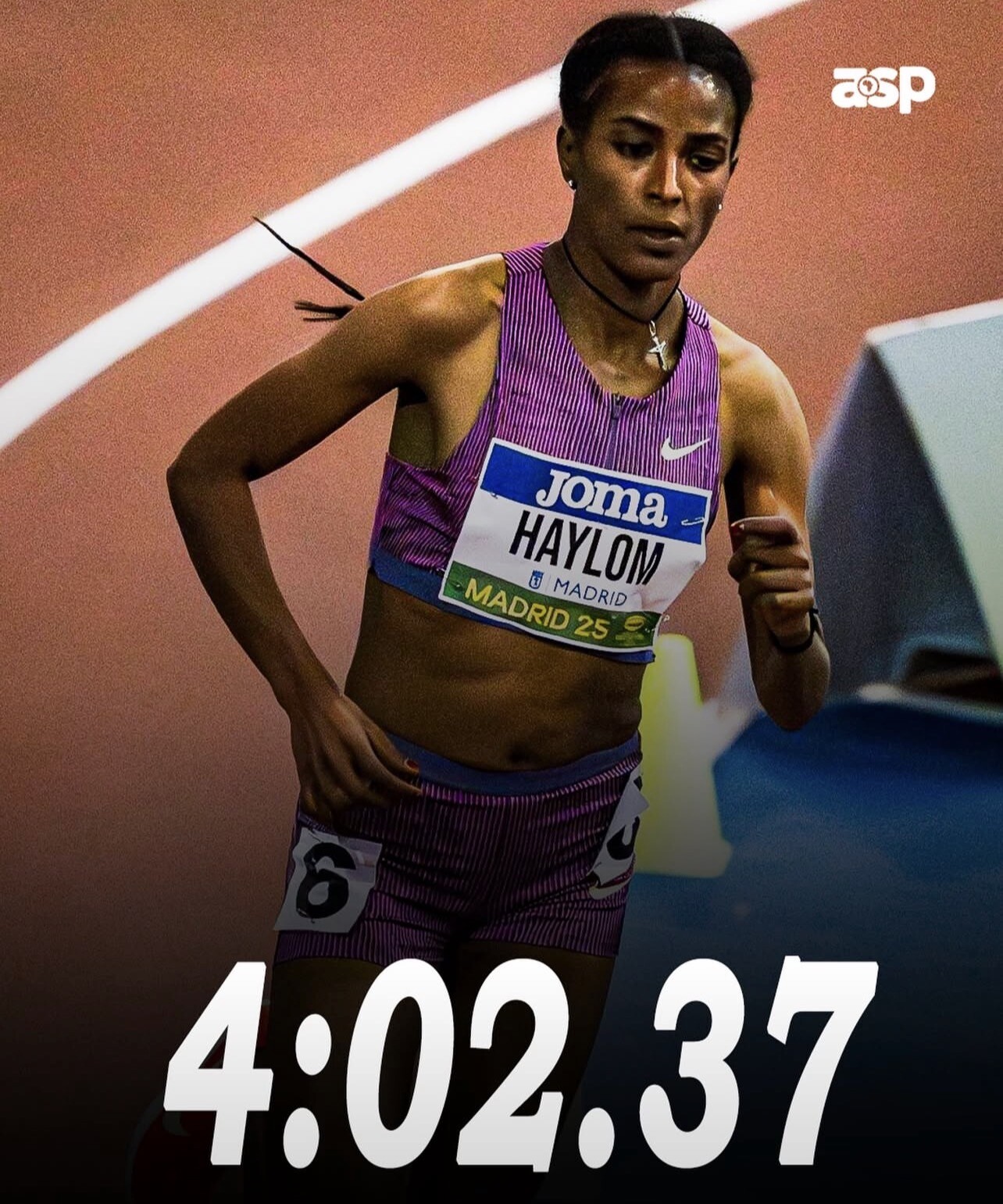
The women’s 1500 meters featured one of the most anticipated matchups of the meet, as Ethiopia’s Birke Haylom, unbeaten indoors in 2026, faced Italy’s Nadia Battocletti, one of Europe’s most versatile and respected distance runners.
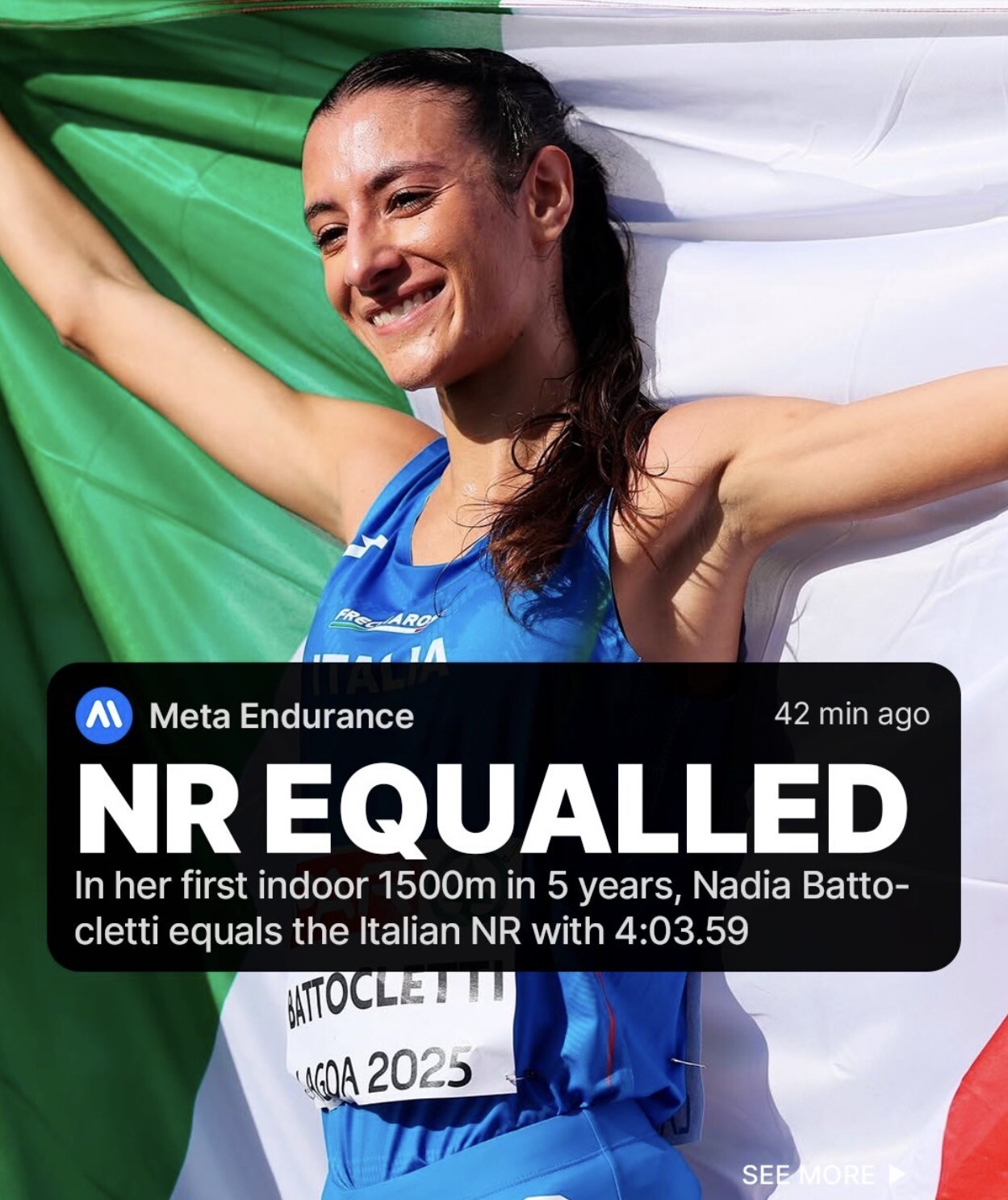
Haylom immediately took control, setting a strong and honest pace from the opening lap. The move stretched the field and ensured that only the strongest contenders remained in contention. Battocletti, known for her strength and racing intelligence, stayed composed and positioned herself carefully for a late challenge.
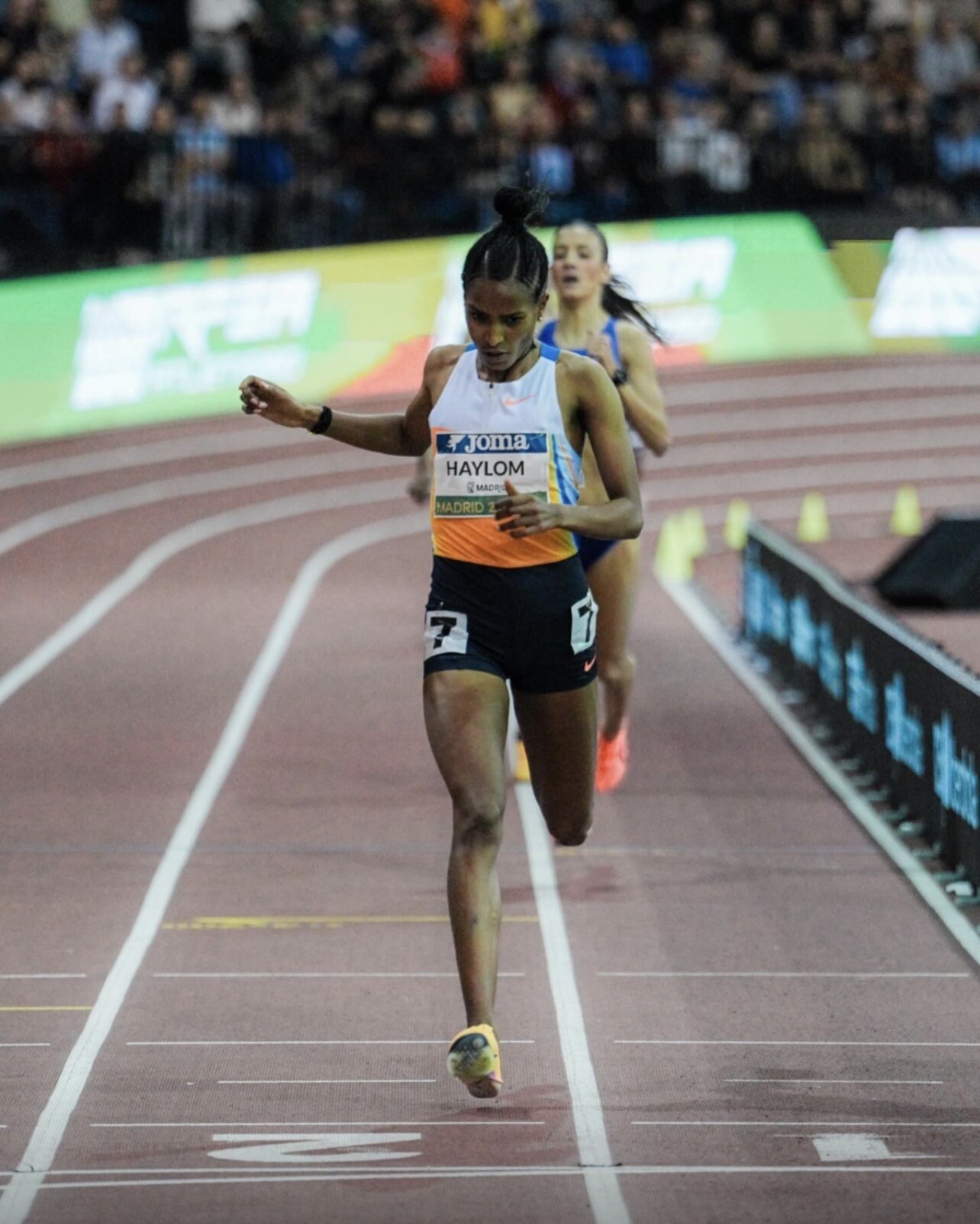
With just over 300 meters remaining, Battocletti surged decisively into the lead, igniting the Madrid crowd and briefly appearing poised for victory. But Haylom responded with the confidence of a seasoned champion. Over the final 100 meters, she unleashed a powerful finishing kick to reclaim the lead and secure the win in 4:02.37.
Battocletti finished second in 4:03.59, matching the Italian indoor national record and recording a personal best. Ethiopia’s Saron Berhe claimed third in 4:04.39, while Italy’s Ludovica Cavalli ran a personal best of 4:06.38 to finish fourth.
Women’s 1500m — World Indoor Tour Gold, Madrid (Feb 7, 2026)
1. Birke Haylom (ETH) – 4:02.37
2. Nadia Battocletti (ITA) – 4:03.59 (=NR, PB)
3. Saron Berhe (ETH) – 4:04.39
4. Ludovica Cavalli (ITA) – 4:06.38 (PB)
5. Haregeweyn Kalayu (ETH) – 4:06.74
Arroyo Breaks Two Minutes in Breakthrough 800m Performance
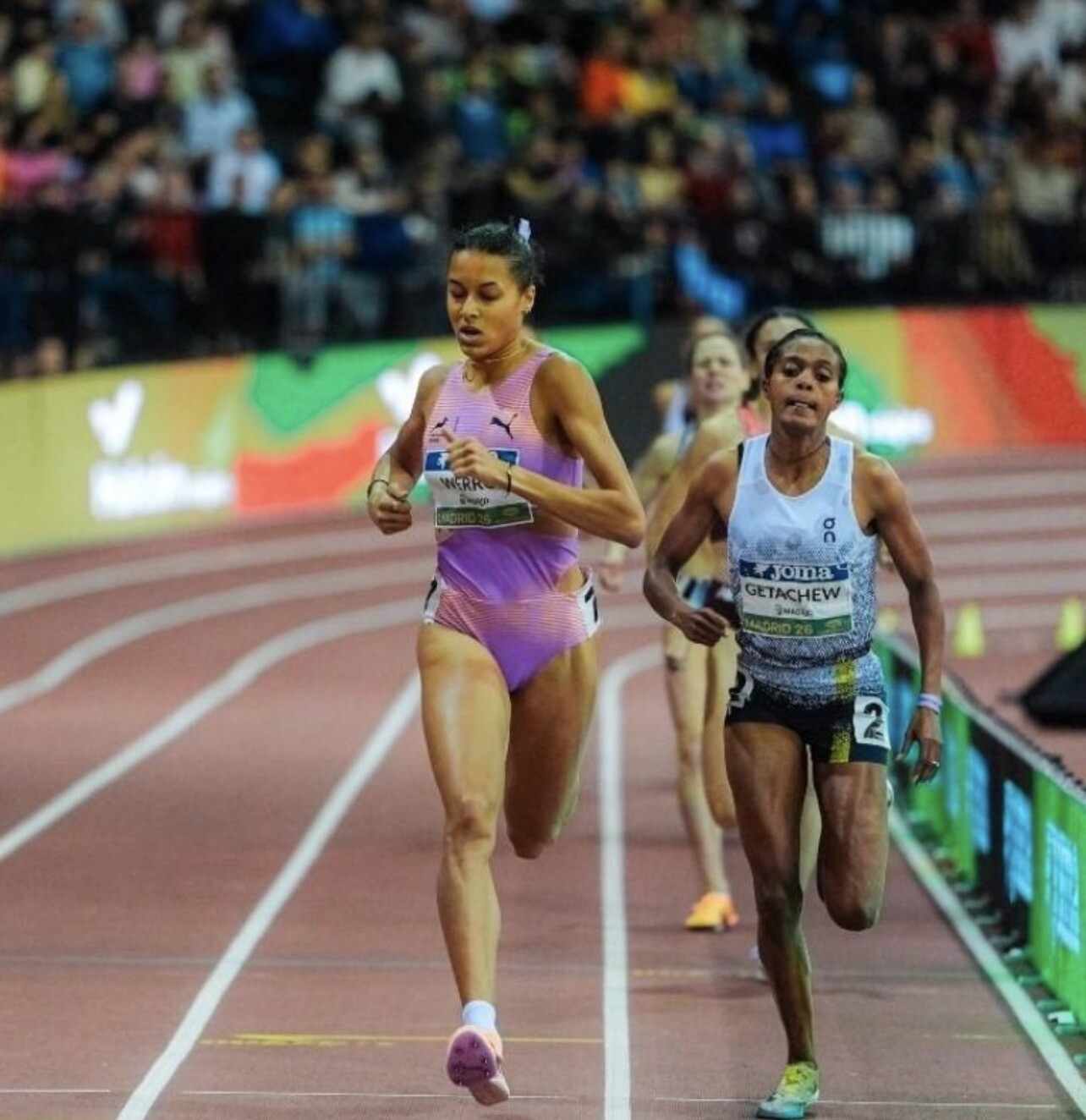
The women’s 800 meters produced another defining moment of the evening. Switzerland’s Audrey Werro delivered a strong performance in the faster section, winning in 2:00.68 after holding off Ethiopia’s Nigist Getachew in a tightly contested final lap.
However, the fastest performance came from Spain’s Rocio Arroyo in the second section. Running with confidence and precision, Arroyo broke the two-minute barrier for the first time, clocking 1:59.97, a personal best and one of the most important performances of her career.
Switzerland’s Lore Hoffmann followed closely with 2:00.69, confirming the exceptional depth and competitiveness of the event.
Women’s 800m — World Indoor Tour Gold, Madrid (Feb 7, 2026)
1. Rocio Arroyo (ESP) – 1:59.97 (PB)
2. Audrey Werro (SUI) – 2:00.68
3. Lore Hoffmann (SUI) – 2:00.69
4. Nigist Getachew (ETH) – 2:00.76
5. Clara Liberman (FRA) – 2:01.54
Madrid Confirms Strength and Depth of Global Middle Distance Running
The Madrid Indoor Tour Gold meeting once again delivered world-class racing, highlighting both established stars and emerging talents. Haylom’s commanding victory reinforced her growing dominance in the 1500 meters, while Arroyo’s sub-two-minute breakthrough marked her arrival among the world’s elite.
With championship season approaching, Madrid provided a clear message: the next generation of middle-distance runners has arrived, and the battles ahead promise to be among the most exciting in recent memory.
(02/07/2026) ⚡AMPby Robert Kibet for My Best Runs
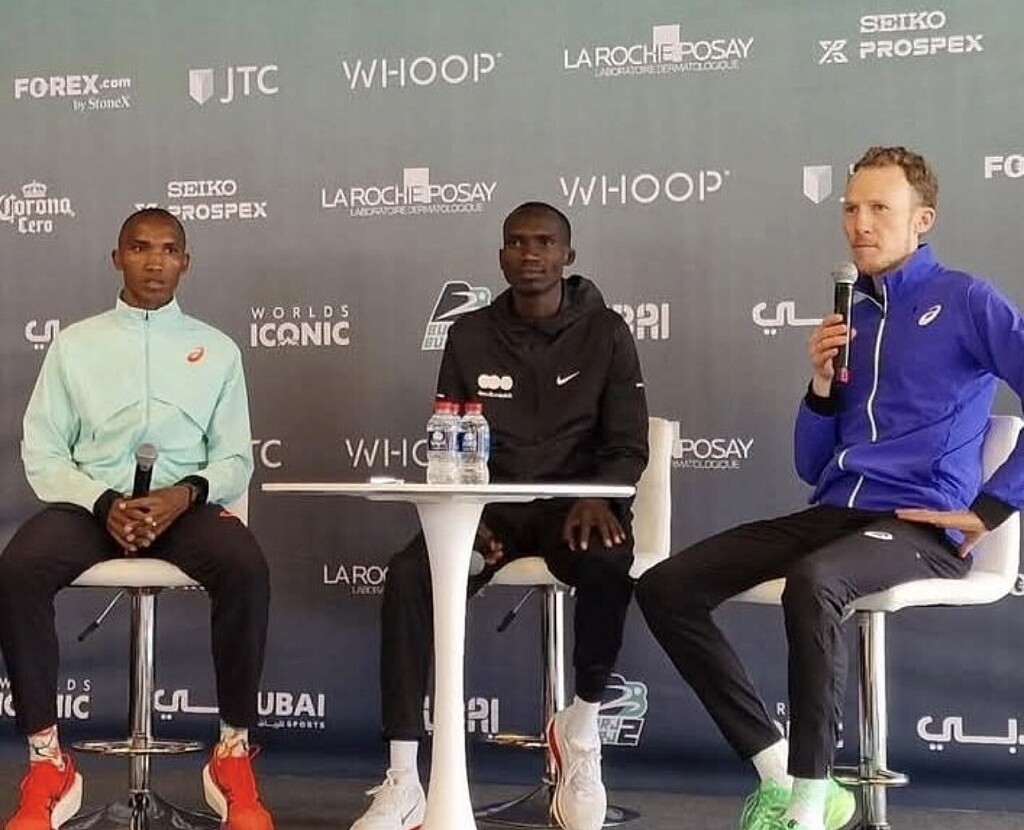
Burj 2 Burj Half Marathon Returns to Dubai with Kipkorir and Cheptai Headlining Elite Field
The Burj 2 Burj Half Marathon returns Sunday (Feb 8 in Dubai UAE, bringing a focused but highly competitive international field to one of the fastest and most visually striking courses in the Middle East. Framed by Dubai’s modern skyline and anchored by two of the city’s most iconic landmarks, the race has steadily grown into an important early-season test for elite road specialists and track stars transitioning to longer distances.
With flat terrain, predictable weather, and a reputation for honest pacing, the event offers athletes a valuable opportunity to establish form and confidence as the global road racing calendar begins to take shape.
Men’s Race: Kipkorir Leads, Cheptegei Adds Star Power
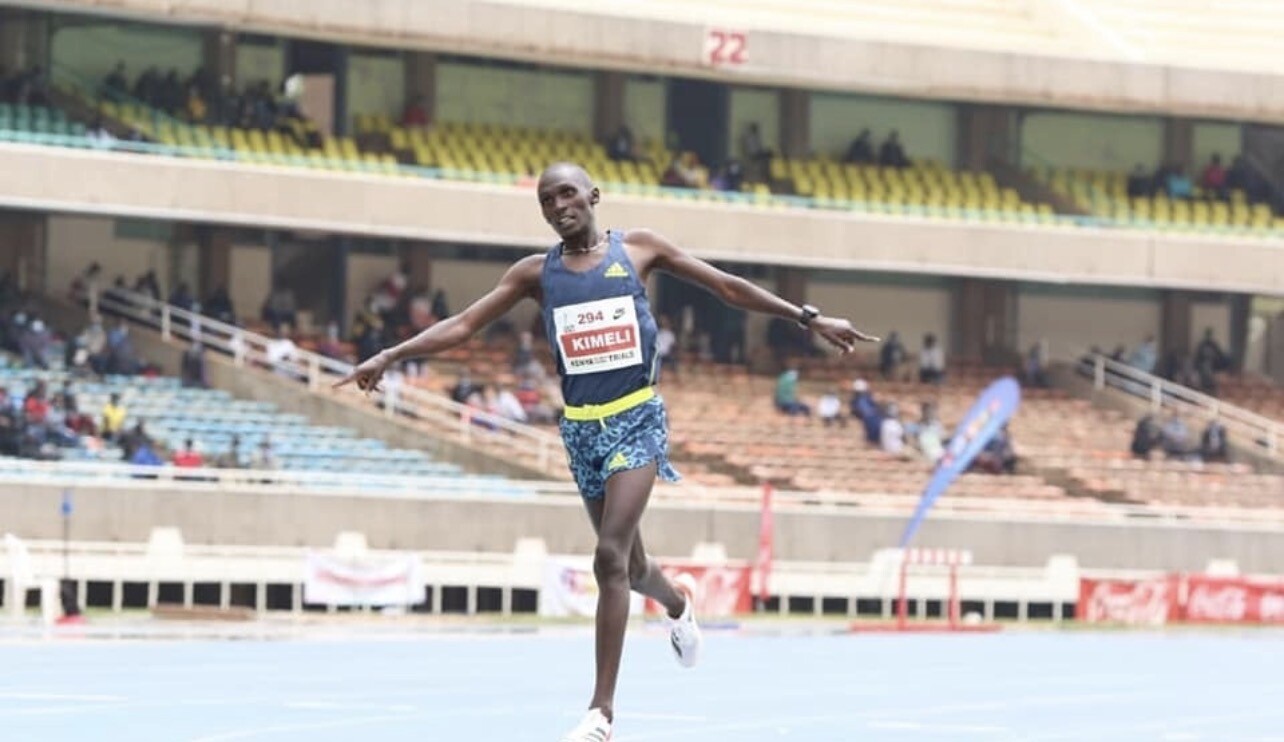
Kenya’s Nicholas Kipkorir enters as the clear favorite, carrying the fastest personal best in the field at 58:23. A proven road performer, Kipkorir has built his success on rhythm, efficiency, and the willingness to commit early. The Burj 2 Burj course traditionally rewards athletes who are prepared to take initiative, and his aggressive racing style makes him the man to watch from the gun.
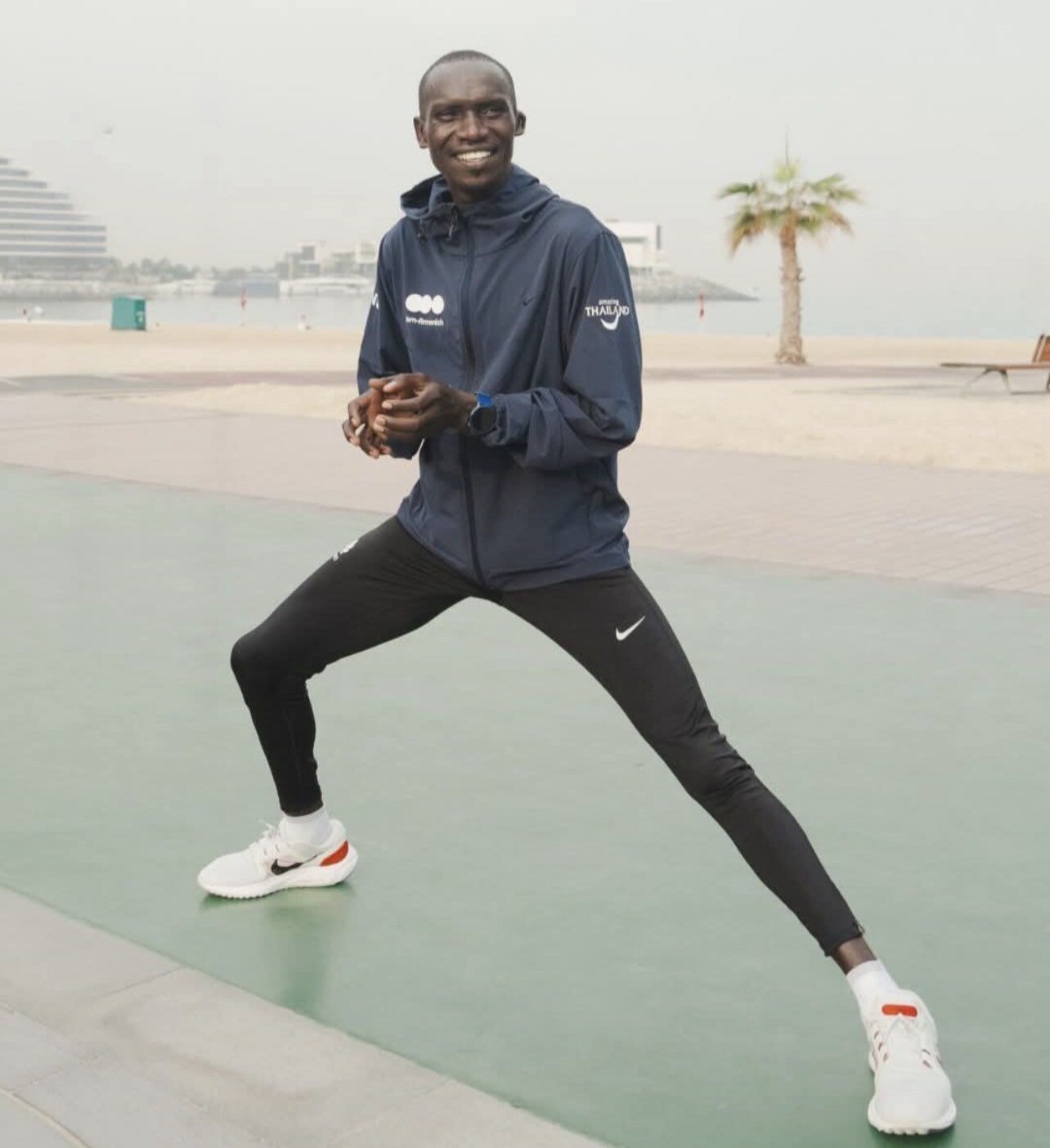
Providing the strongest challenge is Uganda’s Joshua Cheptegei, whose 59:21 personal best tells only part of his story. One of the most decorated distance runners of his generation, Cheptegei brings unmatched championship experience, including multiple world titles on the track. His continued transition to road racing has been closely followed, and Dubai presents another key opportunity to test himself against seasoned half marathon specialists. If the race becomes tactical, his finishing speed and composure could prove decisive.
Tanzania’s Alphonce Simbu, owner of a 60:03 best, adds depth and resilience to the field. Known for his strength in demanding competitions, Simbu excels in races where patience and mental toughness become critical. Kenya’s Enock Kipruto and Germany’s European marathon champion Richard Ringer, both with personal bests of 60:51, round out a men’s lineup where discipline and timing may ultimately determine the outcome.
Women’s Race: Cheptai Brings Momentum and Confidence
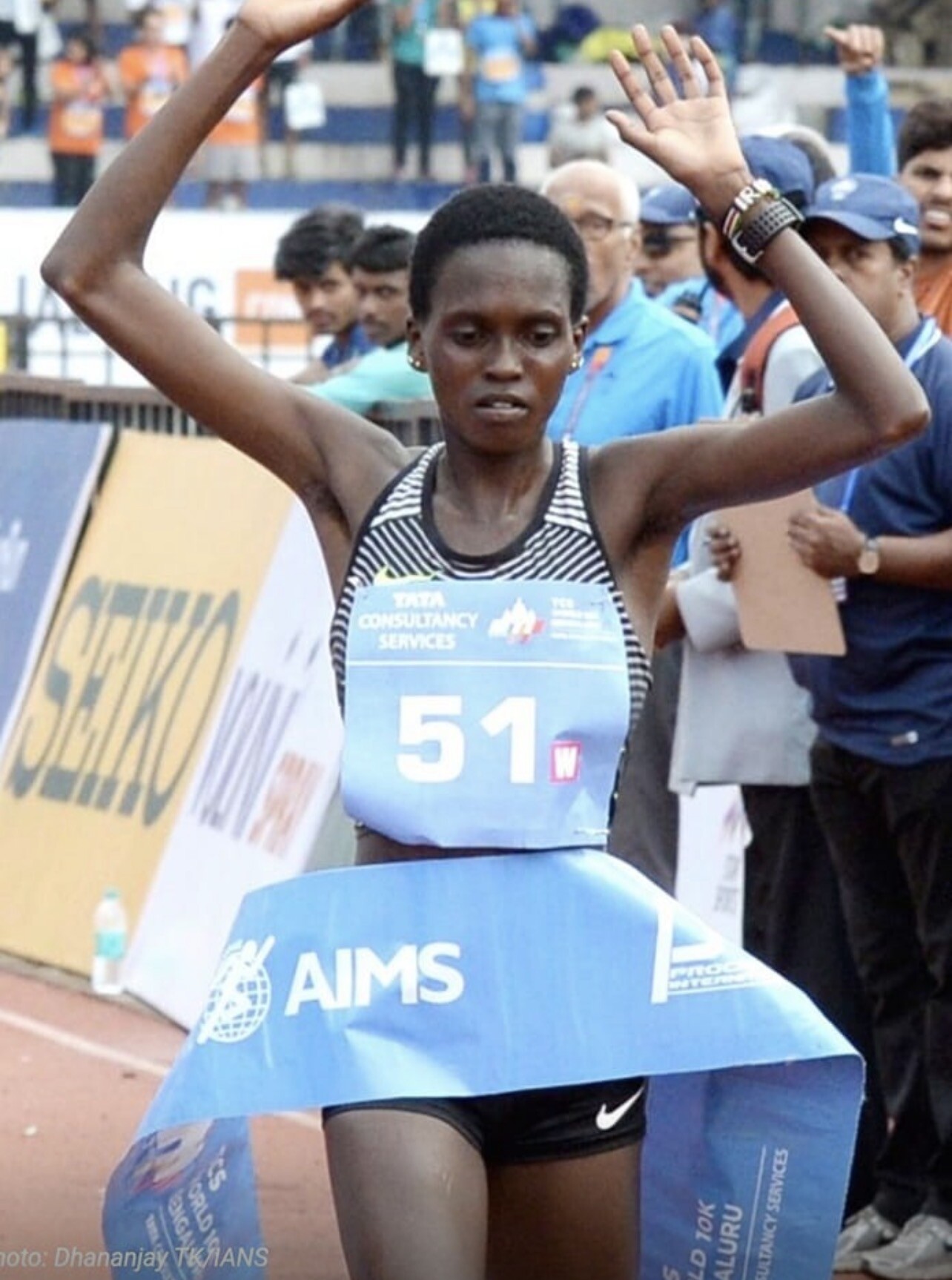
In the women’s race, Kenya’s Irine Cheptai stands out as the athlete to beat. Her impressive personal best of 64:53 places her at the front of the field, and she arrives with the experience and tactical awareness needed to control the race. Cheptai has demonstrated consistency across distances, and her ability to manage pace and respond under pressure makes her a formidable favorite.
Romania’s Joan Melly, with a 65:04 personal best, represents the closest challenger on paper. Melly’s strength lies in efficiency and measured racing, qualities that could allow her to remain within striking distance deep into the final kilometers.
Ethiopia’s Ftaw Zeray (66:04) brings the tradition of Ethiopian endurance excellence, while Kenya’s Jackline Cherono (67:16) adds further depth. In a field where the margins are slim, positioning and timing will likely prove decisive.
Dubai Provides the Perfect Early-Season Stage
The Burj 2 Burj Half Marathon continues to establish itself as more than just a fast race. It has become a strategic checkpoint for athletes aiming to build momentum, test fitness, and position themselves for major races later in the year.
With Nicholas Kipkorir and Irine Cheptai leading their respective fields, expectations are high. But with championship-tested competitors like Joshua Cheptegei and emerging challengers ready to seize opportunity, the outcome remains far from certain.
As the 2026 road racing season gains momentum, Dubai once again offers a stage where preparation meets opportunity—and where the next chapter of the season begins to unfold.
(02/07/2026) ⚡AMPby Robert Kibet for My Best Runs
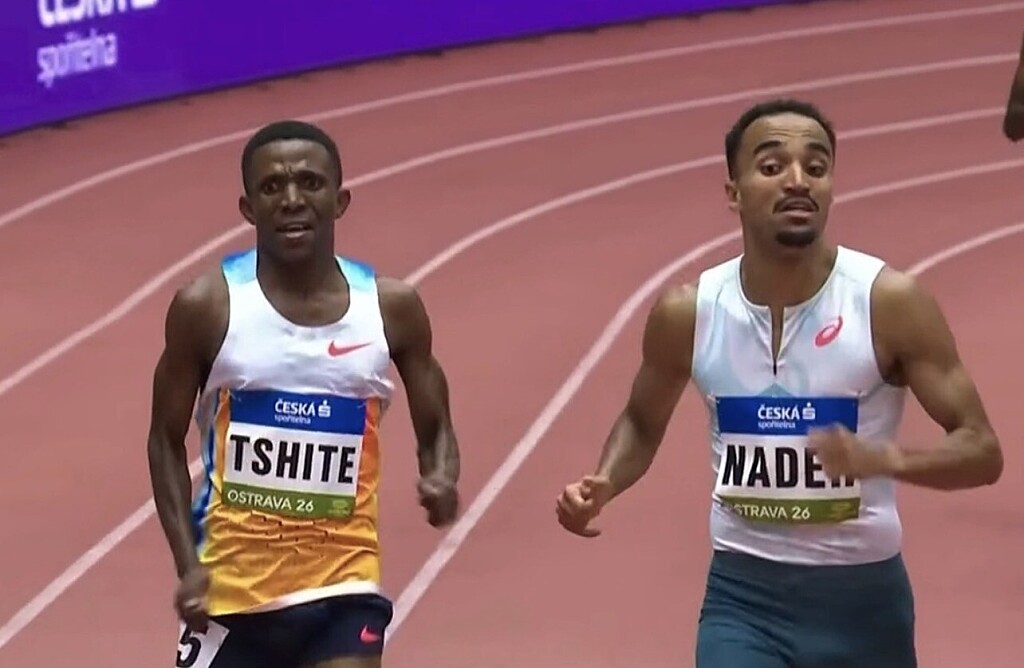
Tshite Times It to Perfection, Wins 3000m Thriller at Madrid Indoor Tour
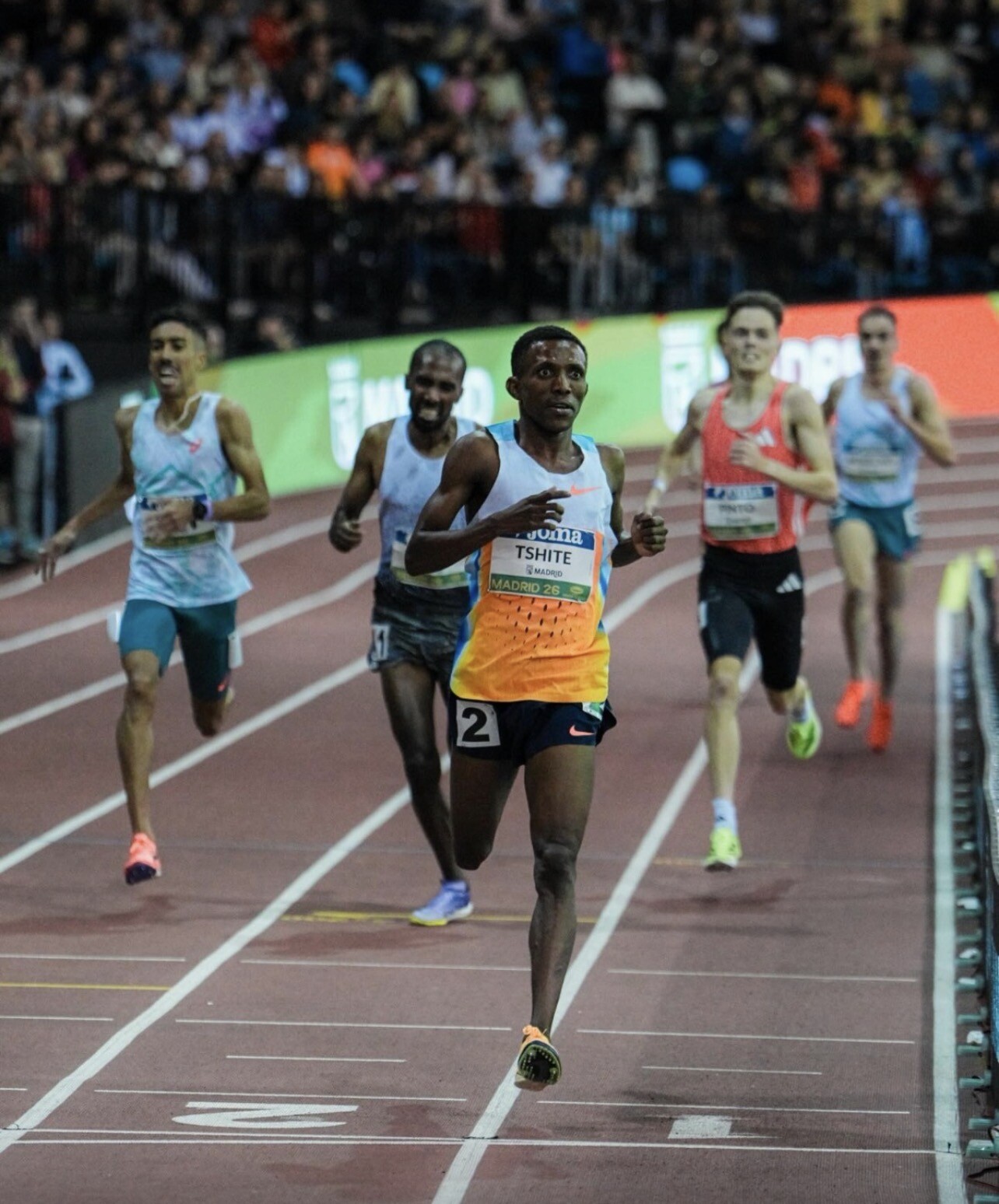
The men’s 3000m at the Madrid Indoor Tour delivered exactly what modern indoor racing promises: patience, positioning, and a decisive final lap where speed becomes the ultimate weapon. In a race featuring championship experience and rising global talent, South Africa’s Tshepo Tshite emerged victorious with a perfectly timed finishing surge, clocking 7:39.11 in one of the most competitive indoor races of the season.
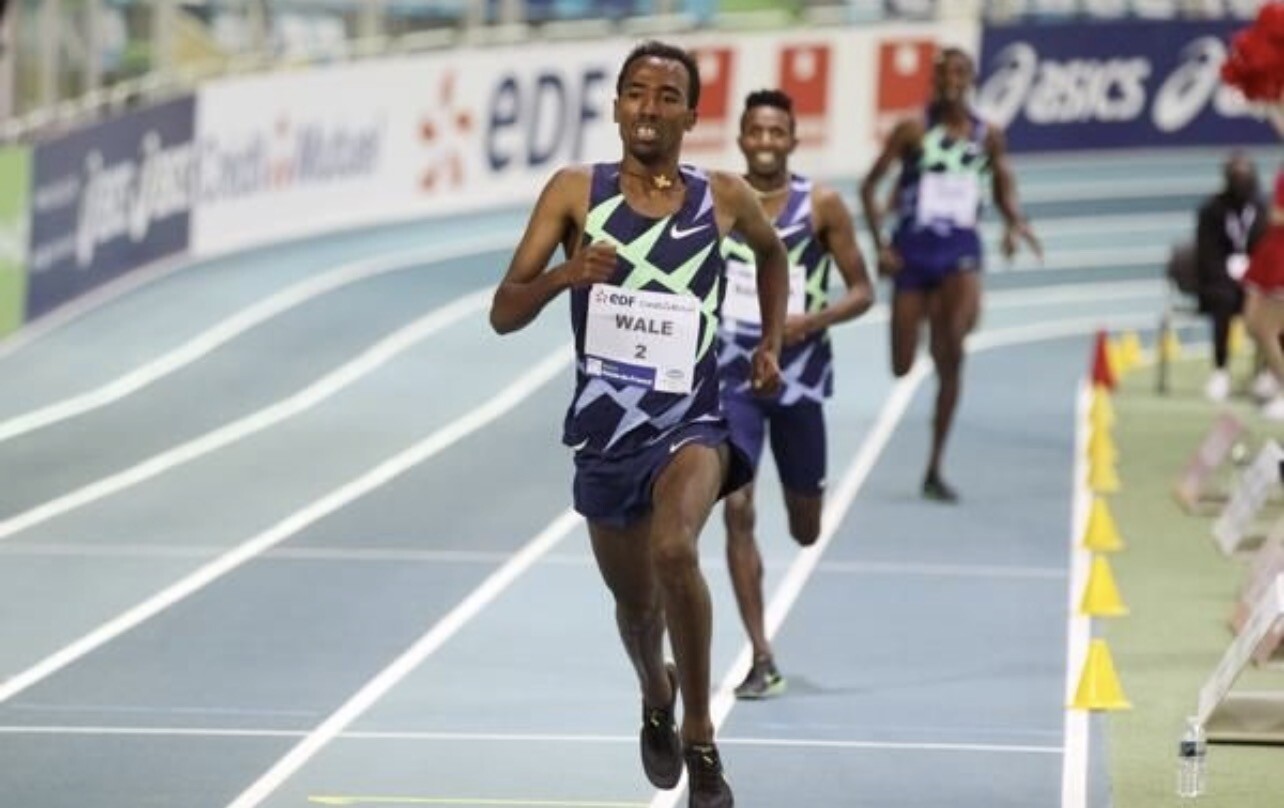
Ethiopia’s Getnet Wale entered the race as the clear favorite. Known for his relentless strength and proven championship pedigree, Wale took responsibility early, setting a controlled tempo designed to gradually wear down the field. For much of the race, the pack remained tightly grouped, with no one willing to commit too early in what quickly became a tactical contest.
In today’s indoor 3000m, races are often decided not by who leads early, but by who executes best when it matters most. That moment came with just over one lap remaining.
Tshite, a former 800m and 1500m specialist, demonstrated both patience and confidence. With 400 meters to go, he made his move, accelerating decisively and forcing the field to respond. Uruguay’s Valentín Soca, one of the sport’s fastest-rising young talents, answered immediately, matching Tshite stride for stride as the two separated themselves from Wale and the rest of the pack.
The final straight became a test of speed, timing, and composure. Tshite held his form and crossed the line first in 7:39.11. Soca followed closely in 7:39.91, while Wale, who had carried the early pace, finished third in 7:39.98, underscoring how narrow the margins are at this level.
Tshite’s victory continues an exceptional stretch of racing. Just days earlier in Ostrava, he set a South African indoor record of 7:38.17, confirming his transition from middle-distance specialist to elite 3000m contender. His ability to combine endurance with world-class finishing speed makes him one of the most dangerous competitors on the indoor circuit.
Soca, only 23, continues to build his reputation as one of South America’s most promising distance runners. Already a continental record holder, he showed he belongs among the world’s best, demonstrating both tactical intelligence and finishing strength.
For Wale, the race reinforced both his consistency and the evolving nature of modern distance running. His strength and experience remain formidable, but indoor racing increasingly rewards athletes who can shift gears instantly in the closing stages.
Madrid’s 3000m was a clear reminder of how the event continues to evolve. Strength still matters—but speed, timing, and tactical precision now define success. On this night, Tshepo Tshite delivered all three, and his victory confirmed his arrival as one of the leading distance runners of 2026.
(02/06/2026) ⚡AMPby Robert Kibet for My Best Runs
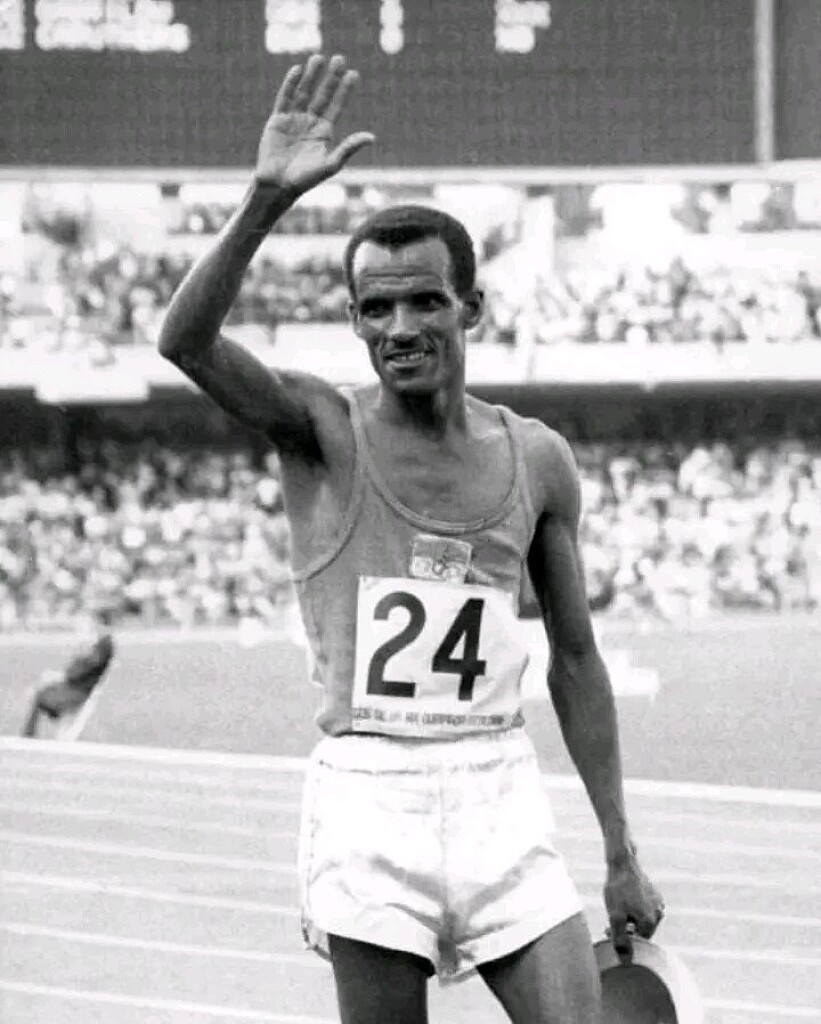
Degaga “Mamo” Wolde: The Marathoner Who Carried Ethiopia to Olympic Immortality
Long before Ethiopian distance running became a global empire, there was a man who first showed the world what the green, yellow, and red could achieve on the biggest stage of all. Degaga “Mamo” Wolde was not just an athlete; he was a pathfinder, a symbol of endurance, and a quiet force who reshaped how the world viewed Ethiopian athletics.
Born on June 12, 1932, Wolde emerged in an era when global recognition for African runners was still rare. His journey was built on patience and range, developing from middle-distance races into the most demanding events on the track and road. That versatility became his trademark. From the 800 meters to the marathon, Wolde demonstrated an uncommon ability to adapt, endure, and excel, steadily sharpening his craft across decades of competition.
The defining chapter of his legacy unfolded at the 1968 Olympic Games in Mexico City. Battling altitude, pressure, and the weight of national expectation, Wolde delivered a performance that would echo through history. He stormed to Olympic gold in the marathon, running with authority and composure to claim one of Ethiopia’s most iconic sporting triumphs. As if that were not enough, he doubled back onto the track to secure a silver medal in the 10,000 meters, underlining his extraordinary endurance and competitive spirit. In a single Olympic Games, Wolde cemented himself among the greatest all-round distance runners the sport has ever seen.
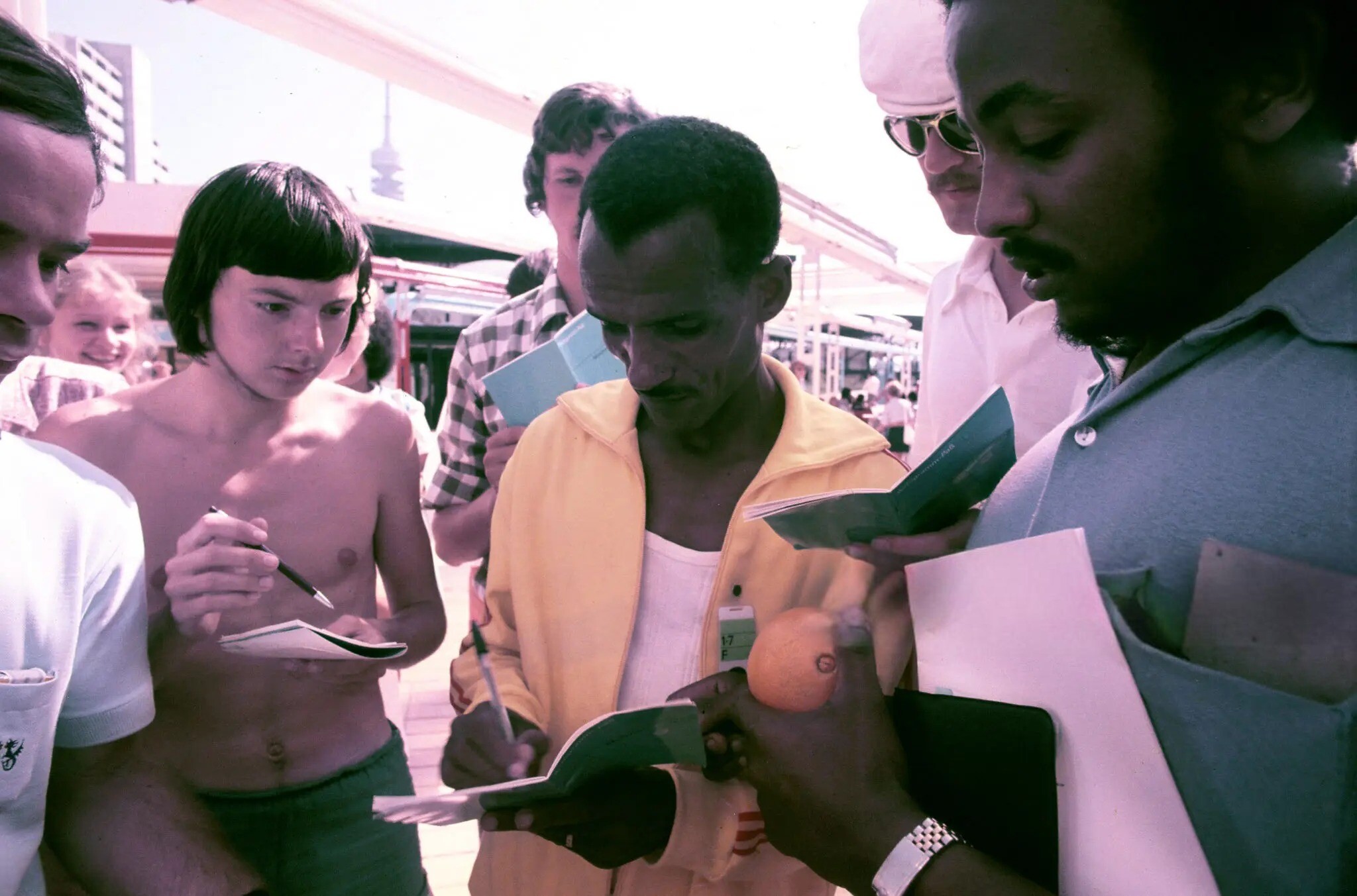
His excellence did not fade with time. Four years later, at the 1972 Munich Olympic Games, Wolde once again stood on the podium, earning a bronze medal in the marathon. It was a powerful statement of longevity, proof that his success was not a moment of brilliance but the result of sustained discipline and resilience. Across his career, his personal bests told the same story—speed over 800 meters, tactical strength in the 1500 and 5000 meters, grit in the 10,000 meters, and supreme stamina over the marathon distance.
Yet Wolde’s impact reaches far beyond medals and times. He laid the foundation for Ethiopia’s distance-running tradition, inspiring generations who would follow his footsteps onto global podiums. Every Ethiopian marathon victory since carries a trace of his pioneering spirit. He showed that athletes from the Horn of Africa could dominate not just one event, but the entire spectrum of endurance racing.
When Degaga “Mamo” Wolde passed away on May 26, 2002, Ethiopia lost a national hero—but his legacy did not leave with him. It lives on in every long stride taken by Ethiopian runners across the world, in every championship won, and in every young athlete who dares to believe that greatness can rise from humble beginnings.
Mamo Wolde did more than win races. He carried a nation’s pride across finish lines, turning belief into history and endurance into legacy.
(02/05/2026) ⚡AMPby Erick Cheruiyot for My Best Runs.
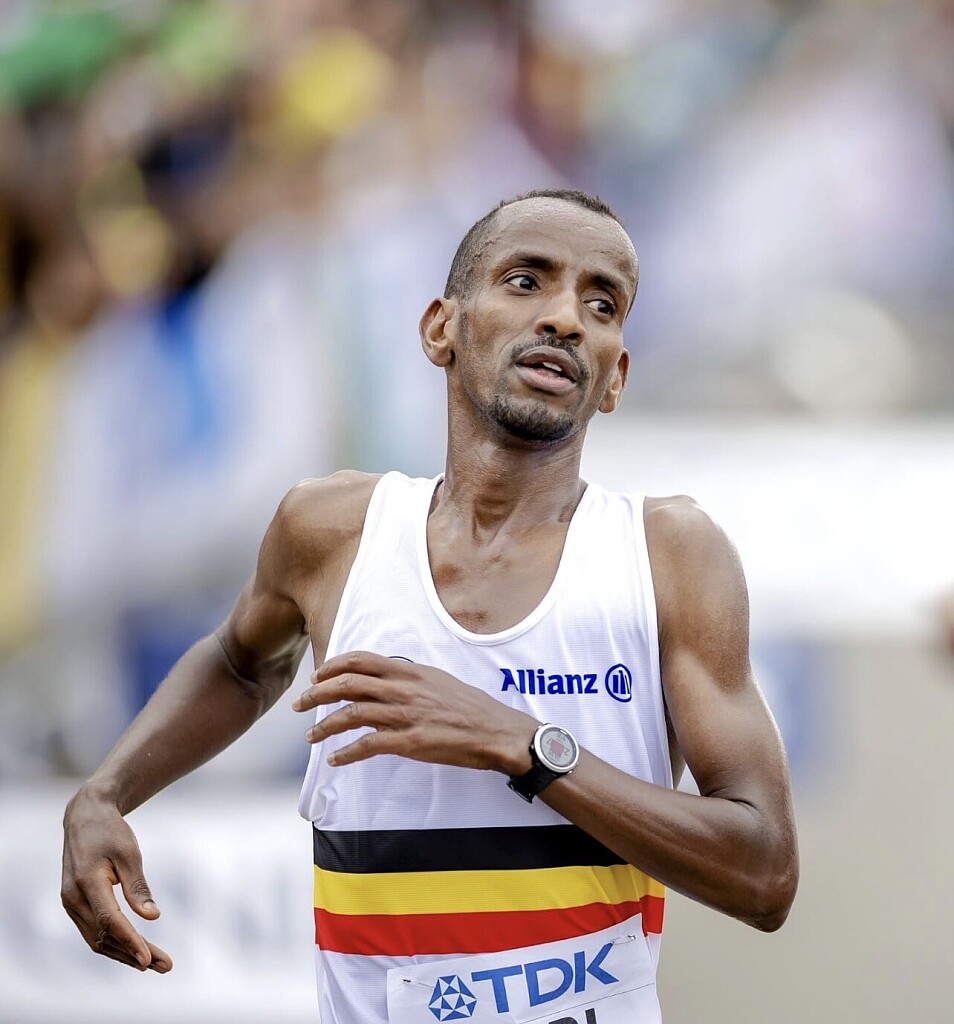
Rotterdam Ready for Speed as Elite Stars Converge for the 45th NN Rotterdam Marathon
The NN Rotterdam Marathon returns on April 12, bringing the global running spotlight back to the Netherlands and to one of the fastest, most respected courses in the sport. Now in its 45th edition, Rotterdam has built a reputation for fearless pacing, deep elite fields, and breakthrough performances — the kind of race where personal bests aren’t surprises, they’re expectations.
This year’s men’s field suggests another fast day is coming.
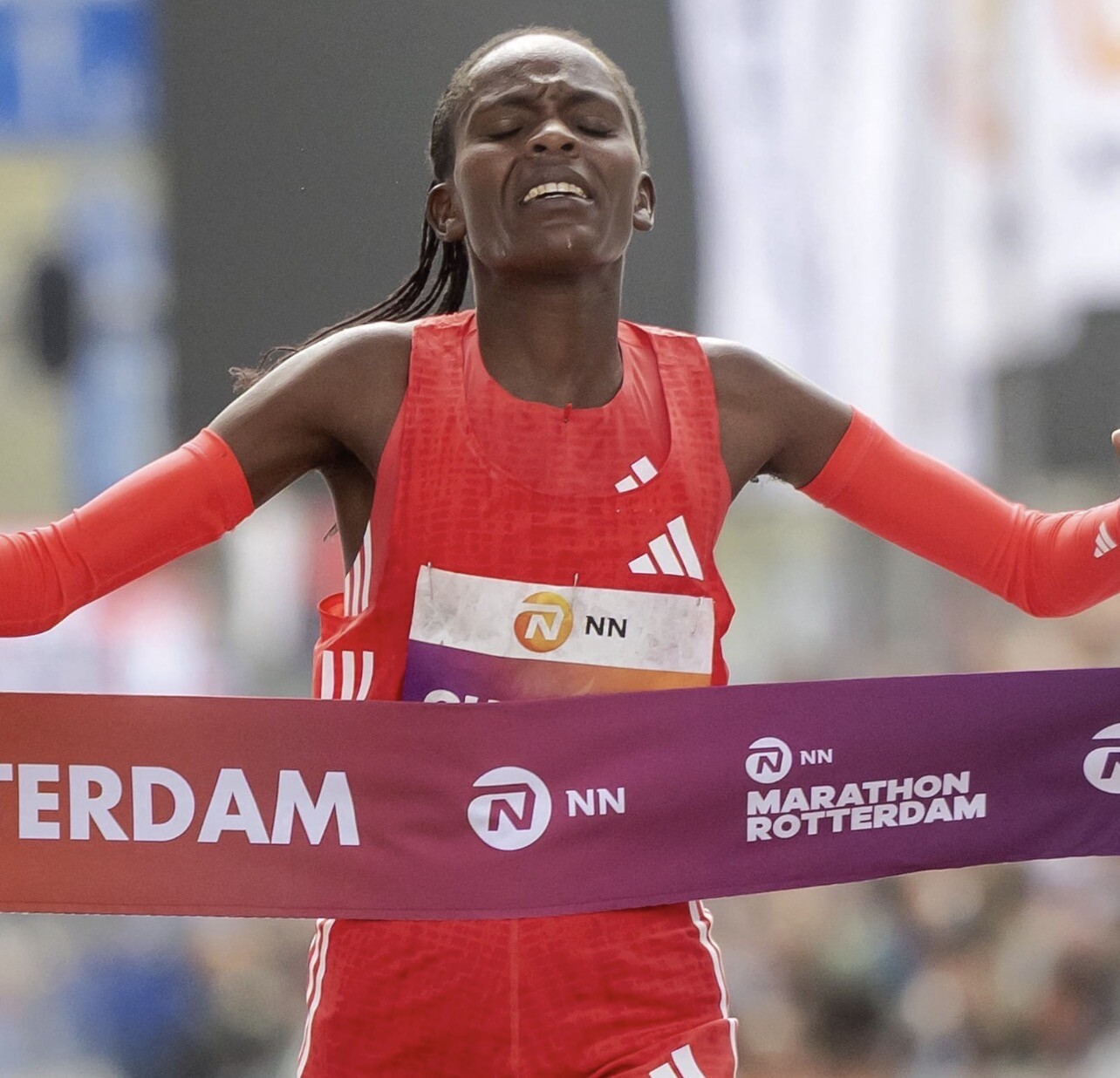
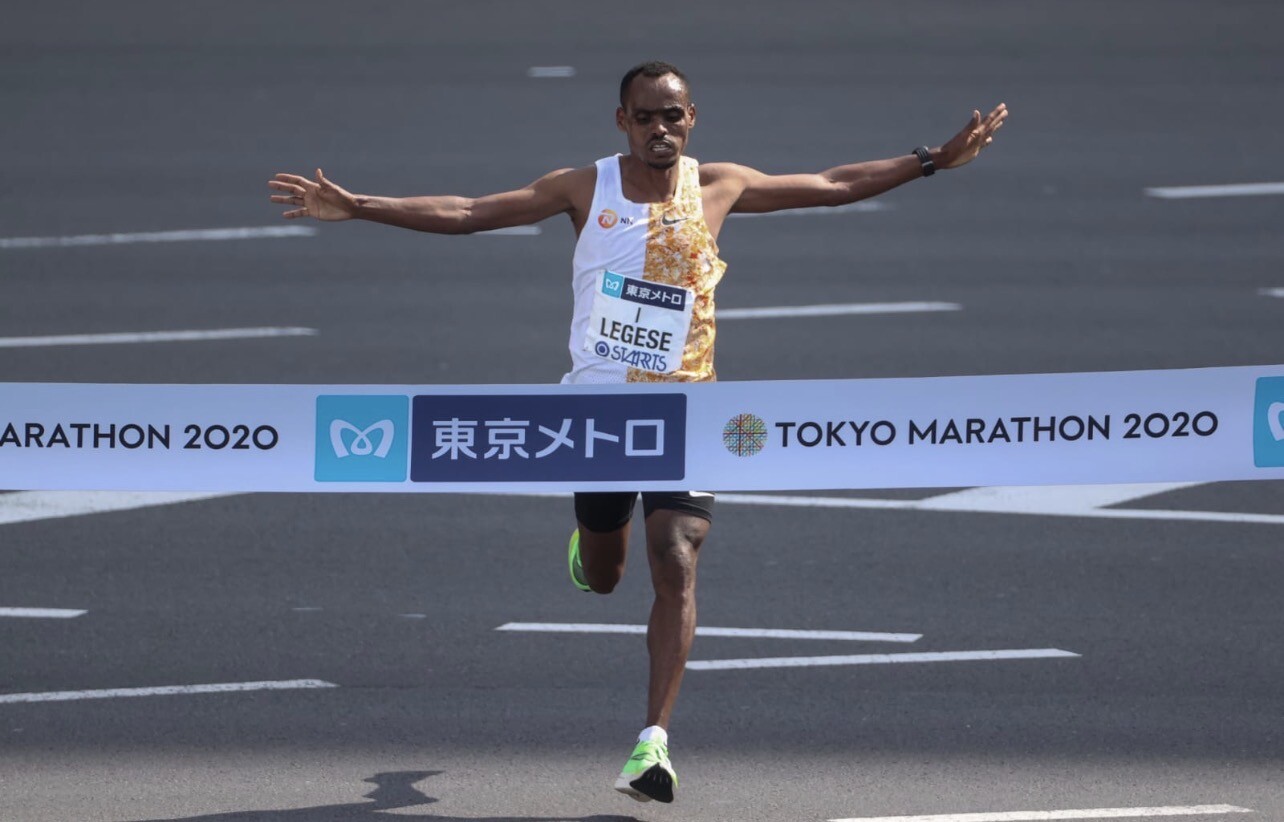
Ethiopia’s Birhanu Legese leads the charge with a personal best of 2:02:48, a time that immediately signals serious intent. When Legese lines up, the pace rarely lingers. Fellow Ethiopian Haymanot Alew (2:03:31) and Bashir Abdi (2:03:36) add both speed and experience, while Guye Adola strengthens an Ethiopian squad that looks ready to push the race from the opening kilometers.
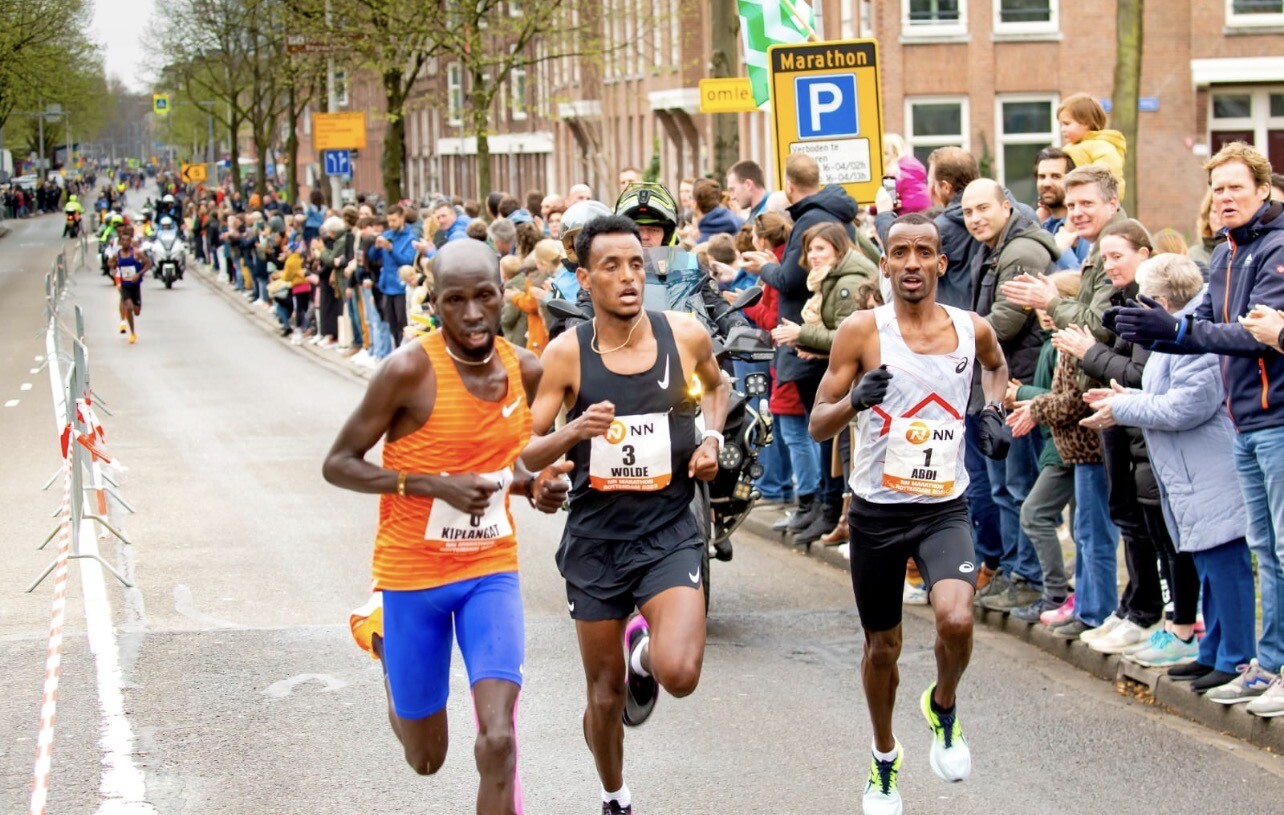
Kenya counters with depth and resilience. Erick Sang, already proven at 2:04:30, heads a group that includes Kenneth Kipkemoi, Mike Kiptum Boit, and Lameck Too — seasoned competitors known for their strength late in races when others begin to fade. Ethiopia’s Chala Regasa and Filmon Tesfu add even more firepower, while Belgium’s Koen Naert brings European savvy and big-race composure to a field loaded with proven marathoners.
The women’s race promises just as much intrigue.
Shitaye Eshete of Ethiopia arrives as the fastest entrant on paper at 2:20:32, but she won’t have any room for comfort. Meskerem Assefa and Dolshi Tesfu are separated by only seconds in their personal bests, creating the potential for a tightly packed lead group deep into the race. Kenya’s Jackline Cherono and Aminet Ahmed bring tactical patience and finishing speed, capable of striking if the pace falters. Ethiopia’s Derartu Hailu adds further strength, while Gete Alemayehu’s marathon debut introduces an unpredictable and compelling storyline.
Rotterdam’s course has long rewarded boldness. Flat roads, wide turns, and enthusiastic crowds create the rhythm of a race built for speed. Commit early, hold steady, and the clock often delivers something special.
On April 12, expect a race run with purpose — aggressive splits, little hesitation, and athletes chasing more than just podium spots. In Rotterdam, history has a way of showing up when the gun goes off.
(02/04/2026) ⚡AMP
by Erick Cheruiyot for My Best Runs

NN Rotterdam Marathon
The marathon has been the biggest one-day sporting event in the Netherlands for many years in a row with over 35000 athletes professionals inclusive. The world's top athletes will at the start on the bustling coolsingel, alongside thousands of other runners who will also triumph,each in their own way.The marathon weekend is a wonderful blend of top sport and festival. ...
more...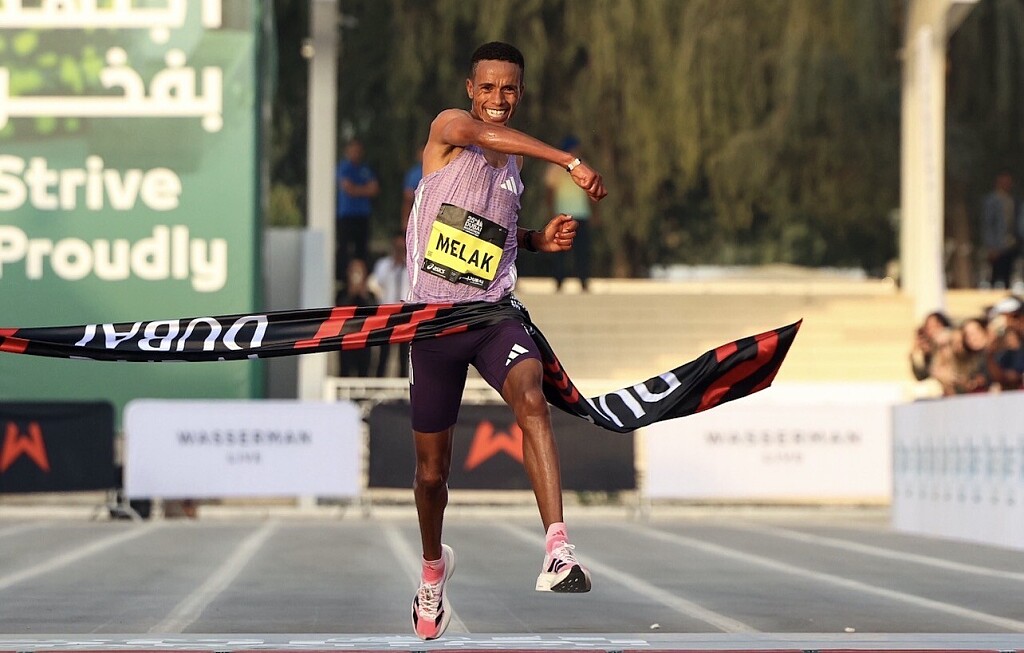
If the Dubai Marathon had a theme song, it would be the Ethiopian national anthem
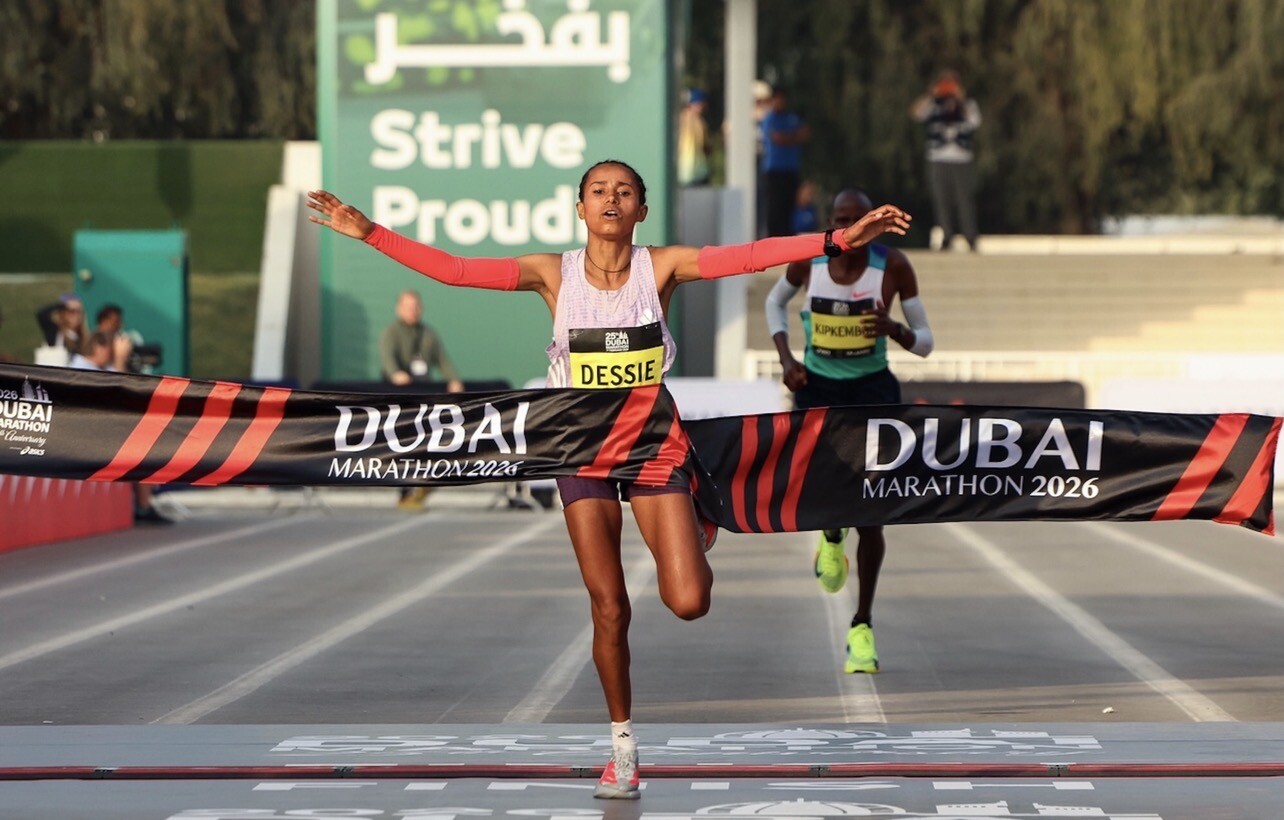
Once again, “March Forward Dear Mother Ethiopia” echoed across the Dubai Police Academy start–finish area as Ethiopian runners swept both titles at the race’s 25th anniversary edition. Nibret Melakwon the men’s race in 2:04:00, and Anchinalu Dessie captured the women’s crown in 2:18:31, pushing Ethiopia’s all-time Dubai tally to 18 men’s and 19 women’s victories.
Melak’s debut was decisive and fearless.
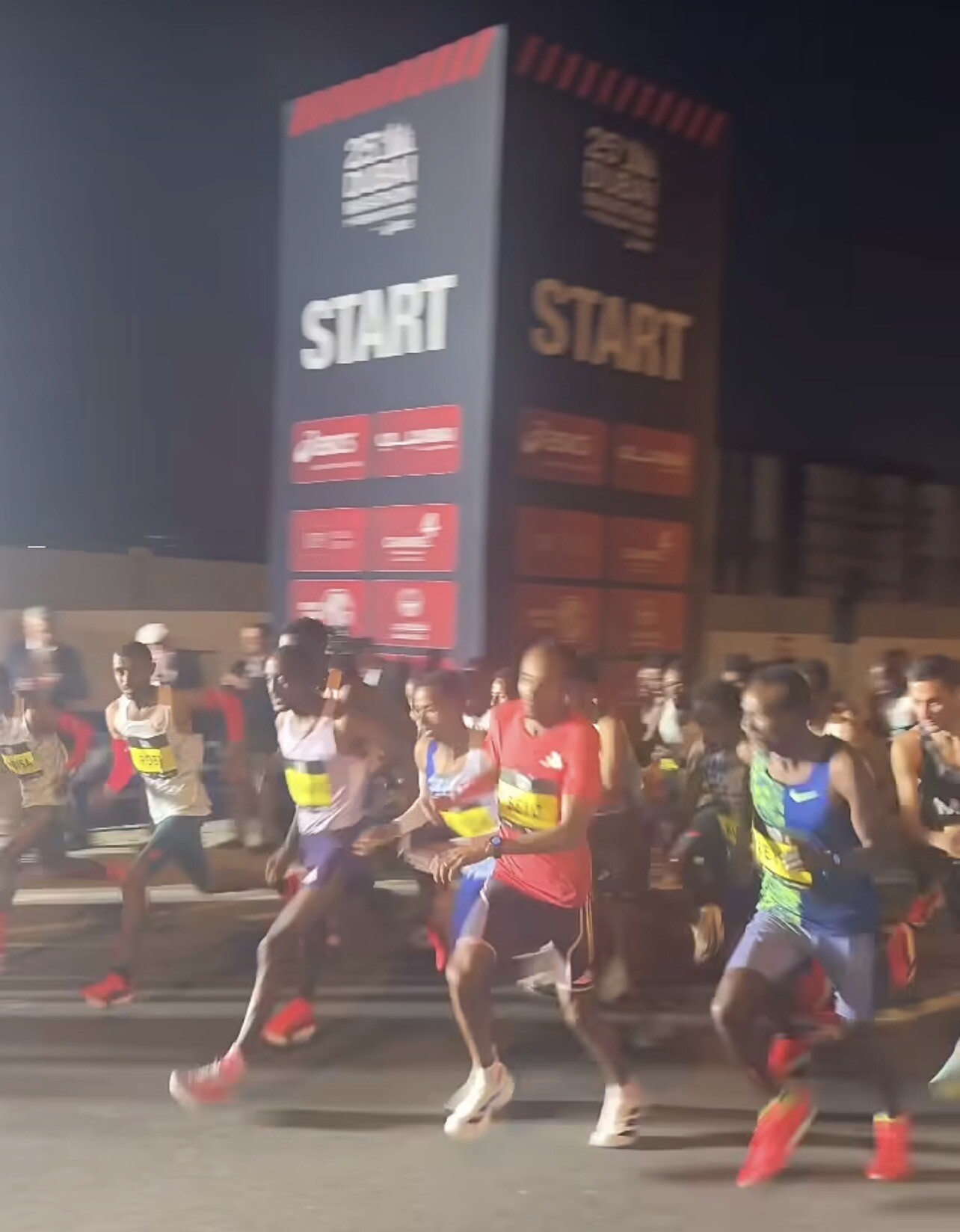
A large pack of 20 hit halfway in 62:07 and stayed together until the final pacemaker stepped aside at 35K. As the pace stalled and contenders hesitated, Melak attacked. A 3:00 36th kilometer was followed by a surge 10 seconds faster — a move no one could match. He opened a clear gap and never looked back, finishing nearly two minutes ahead of training partner Yasin Haji (2:05:52). Rwanda’s John Hakizimana took third in 2:06:04, breaking his national record.
“I didn’t know what to expect in my first marathon,” Melak said. “My coach believed I could run 2:03. I waited for the right moment and went.”
On the women’s side, Dessie continued a perfect streak. Three marathons, three wins.
After victories in Seville and Beijing, she delivered her fastest yet in Dubai, slicing more than three minutes off her best. She battled compatriot Muliye Dekebo deep into the race before pulling away late. Dekebo rallied for second in 2:18:43, while Fantu Worku finished third in 2:19:08.
Conditions helped: 14°C (57°F) at the start, among the coolest in race history.
For Ethiopia, it was simply another chapter in a story that keeps repeating — strength, patience, and a well-timed surge when it matters most.
Results
Men
1. Nibret Melak (ETH) – 2:04:00
2. Yasin Haji (ETH) – 2:05:52
3. John Hakizimana (RWA) – 2:06:04
4. Molalign Fantahun (ETH) – 2:06:48
5. Gizealew Ayana (ETH) – 2:06:48
6. Jiregna Geleta (ETH) – 2:06:57
7. Berehanu Tsegu (ETH) – 2:07:13
8. Gadissa Tafa (ETH) – 2:07:51
9. Dechasa Alemu (ETH) – 2:08:21
10. Belay Bezabeh (ETH) – 2:08:23
Women
1. Anchinalu Dessie (ETH) – 2:18:31
2. Muliye Dekebo (ETH) – 2:18:43
3. Fantu Worku (ETH) – 2:19:08
4. Tiringo Mulu (ETH) – 2:21:12
5. Maritu Ketema (ETH) – 2:21:25
6. Askale Alemaheyu (ETH) – 2:22:56
7. Aberash Shilima (ETH) – 2:23:04
8. Fantu Shugi (ETH) – 2:23:29
9. Elifinesh Demise (ETH) – 2:23:30
10. Abebech Afework (ETH) – 2:23:52
(02/01/2026) ⚡AMPby Race News Service
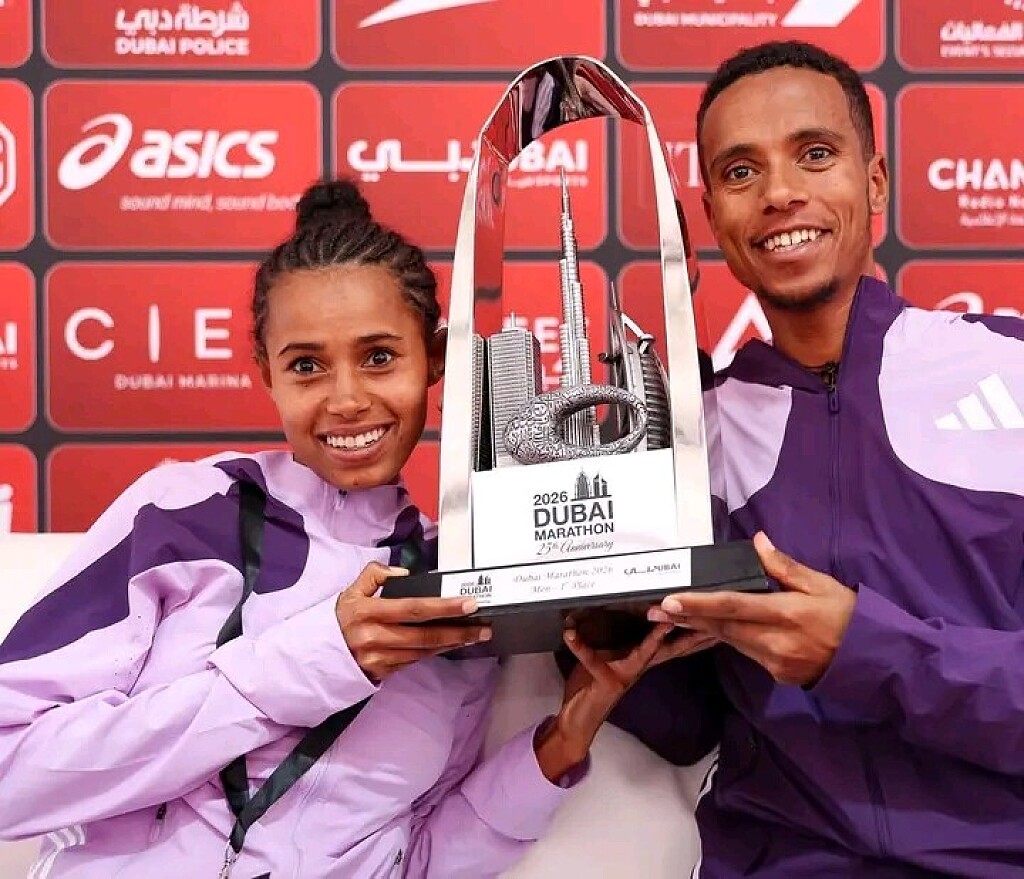
Heat, Grit and Glory: Dubai Marathon 2026 Delivers a World-Class Show
The streets of Dubai became a true arena of endurance and excellence as the 2026 Dubai Marathon unfolded under punishing heat and humidity. In conditions that demanded not only physical strength but also tactical intelligence, the world-class field delivered a performance worthy of one of the globe’s most respected road races, turning adversity into a showcase of resilience and elite competition.
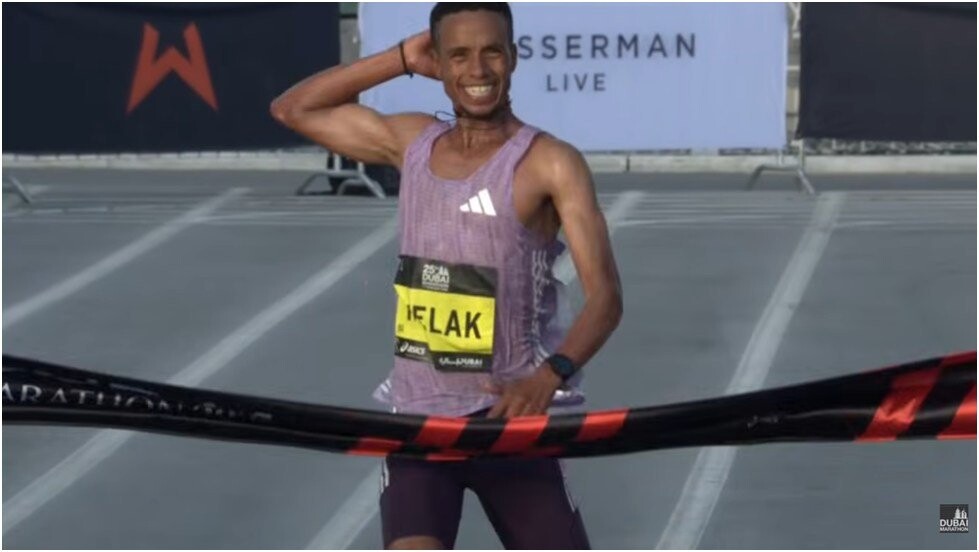
In the men’s marathon, Ethiopia’s Nibret Melak emerged as the undisputed star of the day. Calm, calculated, and commanding, Melak controlled the race from the early stages before asserting his dominance when it mattered most, crossing the finish line in a brilliant 2:04:00. It was a performance defined by patience and precision, sealing a memorable victory on Dubai’s demanding course. Fellow Ethiopian Yasin Haji followed with a strong and consistent run to take second place in 2:05:52, while Rwanda’s John Hakizimana produced a courageous display to secure third in 2:06:04, earning a landmark podium finish for his nation.
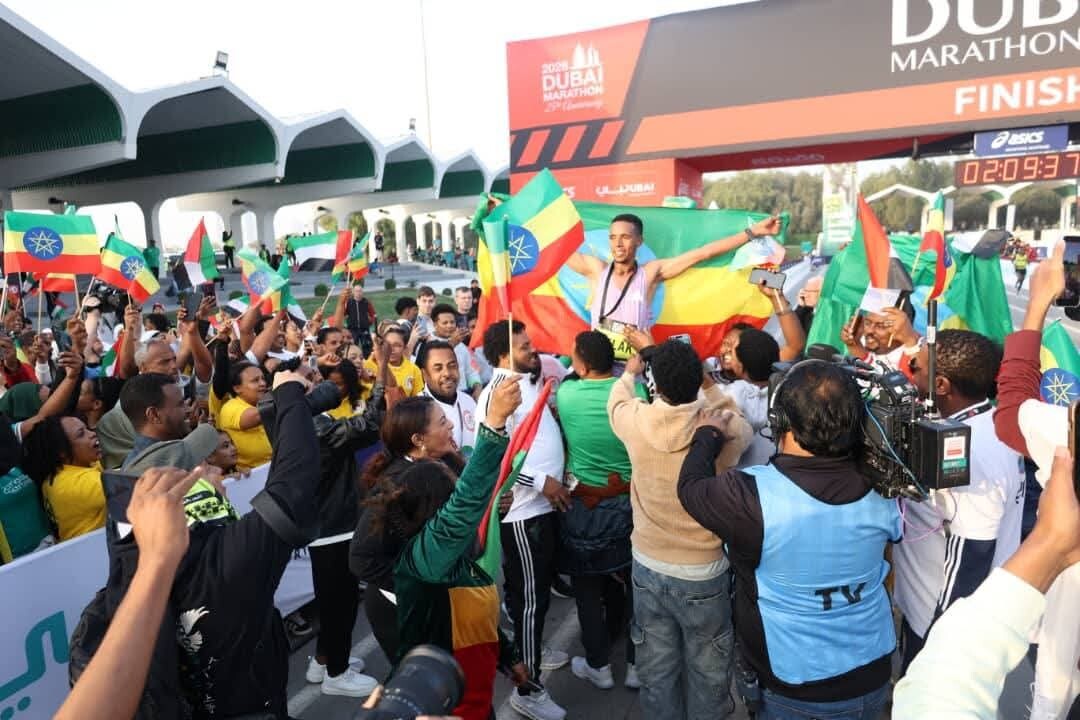
The depth of competition was evident throughout the top ten, with Ethiopian athletes filling much of the leading pack in a tightly contested race where margins were razor thin. Molalign Fantahun and Gizealew Ayana finished together in 2:06:48, closely followed by Jiregna Geleta, Berehanu Tseku, Gadissa Tafa, Dechasa Alemu, and Belay Bezabeh, all of whom battled relentlessly through the oppressive conditions to deliver high-quality performances.
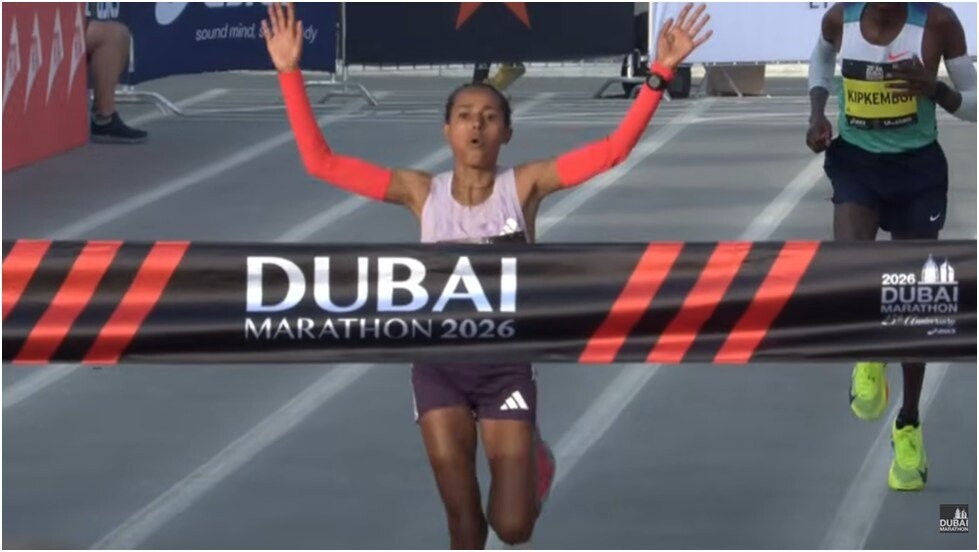
The women’s marathon matched the intensity of the men’s race and added a powerful chapter to the day’s narrative. Ethiopia swept the podium in commanding fashion, led by Anchinalu Dessie, who claimed victory in 2:18:31 after executing a perfectly balanced race that combined control with decisive strength in the latter stages. Muliye Dekebo kept the pressure on throughout, finishing a close second in 2:18:42 following a determined and disciplined pursuit. Completing the clean sweep was Fantu Worku, whose resilience carried her to third place in 2:19:08, rounding out an all-Ethiopian podium that highlighted the nation’s enduring dominance in the marathon.
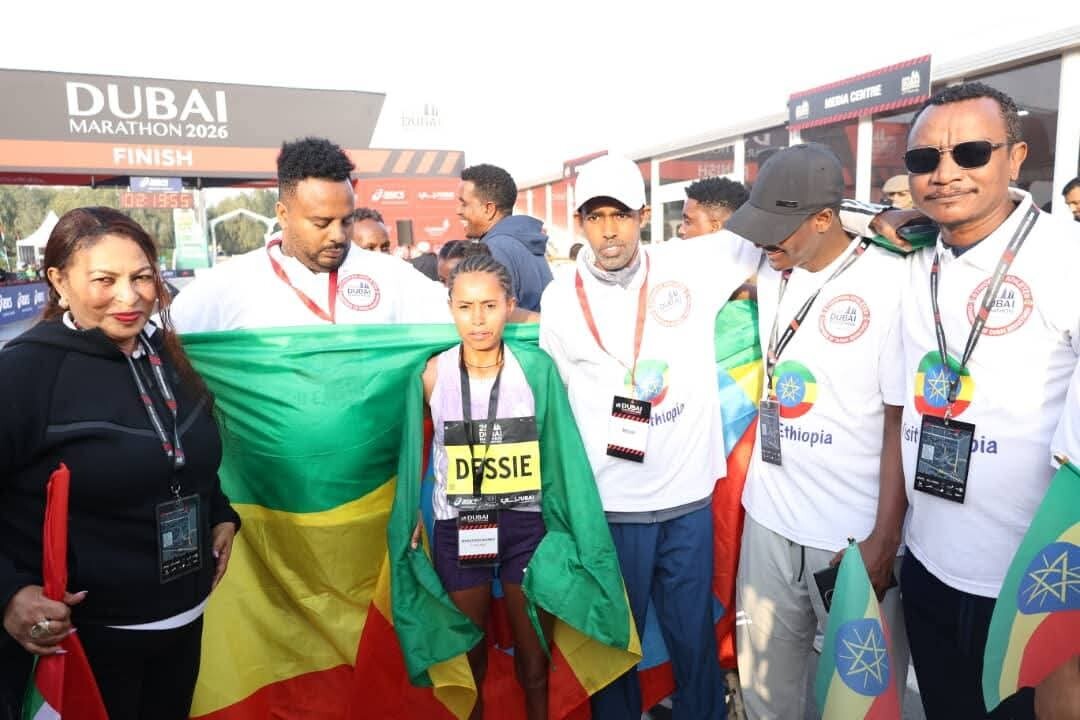
Beyond the podium, the scale of Ethiopia’s dominance in the women’s race was extraordinary. Ethiopian runners occupied all positions in the top ten, a complete sweep that underscored the nation’s unmatched depth, preparation, and tactical awareness in women’s marathon running. From the front to the chasing pack, the consistency of pace and composure under extreme conditions painted a clear picture of a system producing excellence at every level.
As the final runners crossed the line, Dubai Marathon 2026 stood as a celebration of grit, strategy, and world-class athleticism. In extreme conditions, champions rose, national pride was on full display, and the global running community witnessed performances that reaffirmed Dubai’s place among the elite events on the international marathon calendar.
(01/31/2026) ⚡AMPby Erick Cheruiyot for My Bestruns.

Dubai Marathon
In its relatively brief history (the race was first held in 2000), the Dubai Marathon has become one of the fastest, most respected and the most lucrative marathon in the world in terms of prize money. Each year thousands of runners take to the roads in this beautiful city in the United Arab Emirates (UAE) for this extraordinary race starting...
more...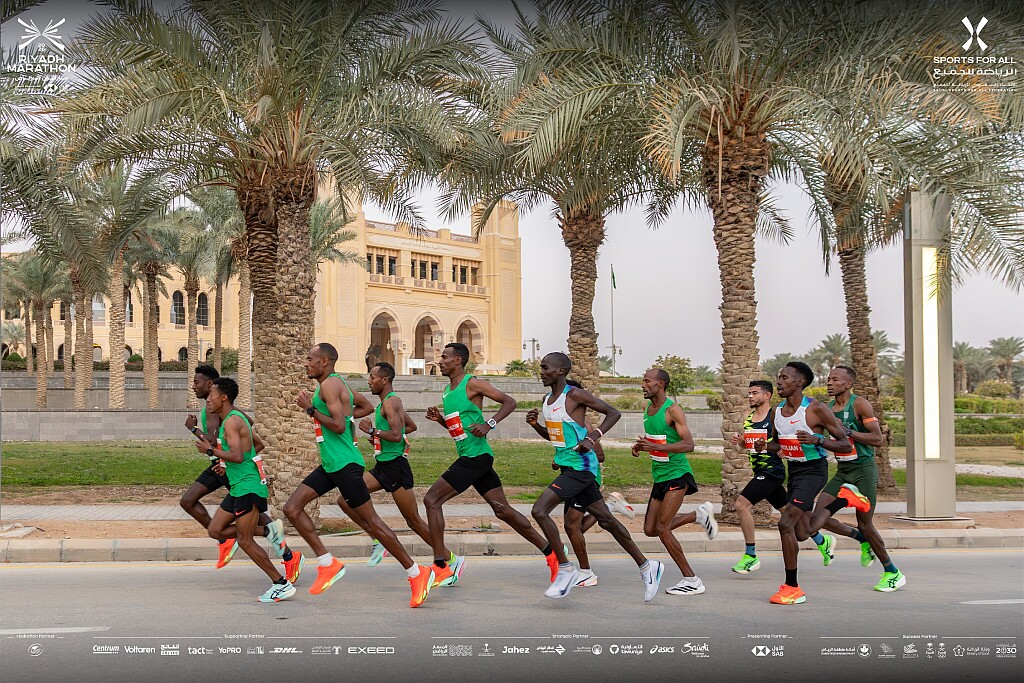
Under the Riyadh Sun, Ethiopia Writes a Marathon Masterpiece
The Riyadh Marathon 2026 delivered a race shaped by extremes, where punishing heat and heavy humidity turned the streets of the Saudi capital into a proving ground for endurance, patience, and tactical brilliance. In conditions that demanded restraint as much as speed, the world’s elite rose to the challenge—and by day’s end, Ethiopia stood unmistakably at the center of the story.
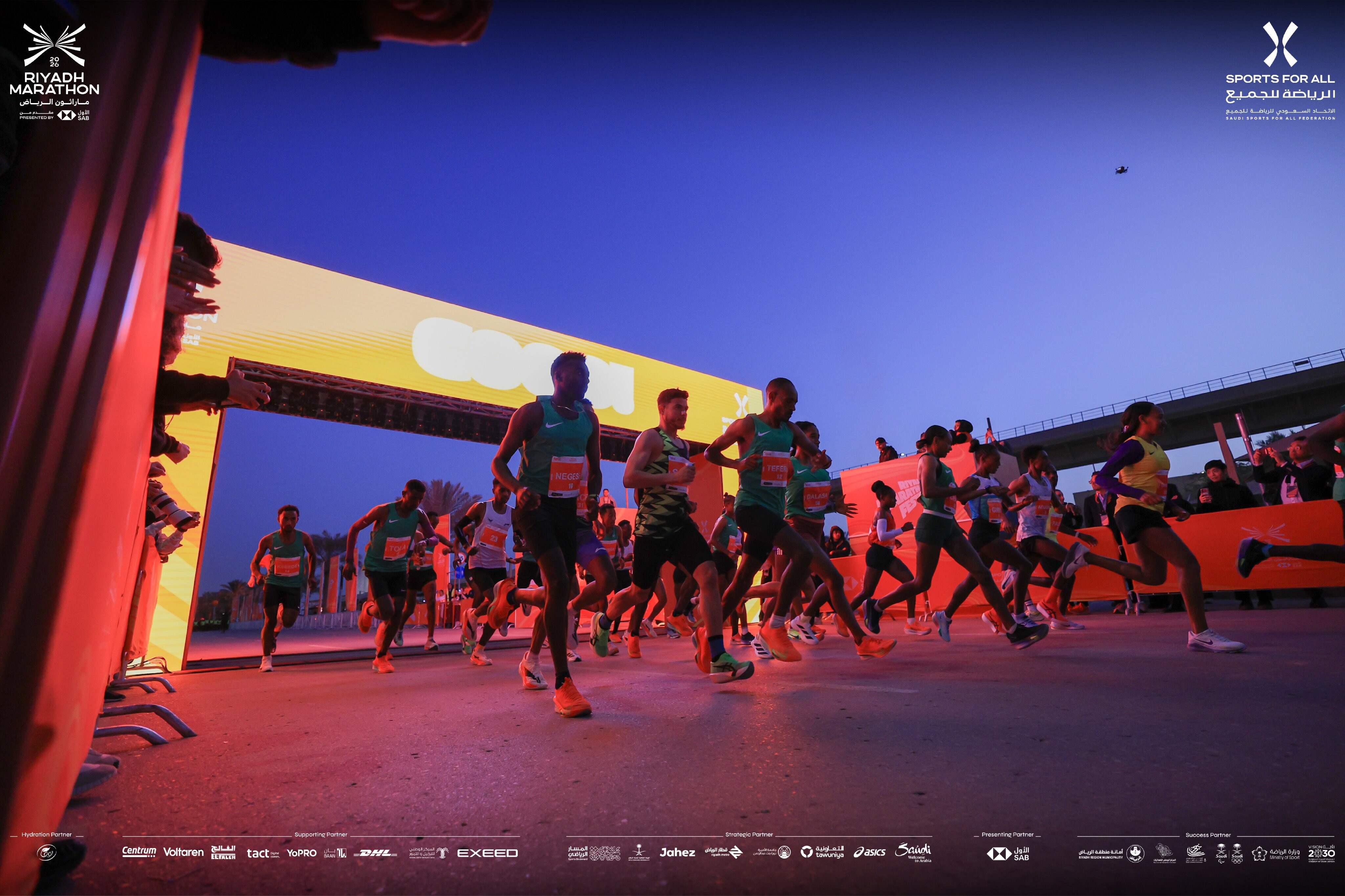
The men’s race unfolded as a calculated battle rather than a flat-out pursuit of fast times. A compact lead group held together through the early stages, conserving energy as the sun intensified and the humidity drained every stride. When the decisive moment arrived deep in the second half, Abebaw Muniye made his move with confidence and precision. Drawing on remarkable strength over the closing kilometers, he broke clear to claim victory in 2:09:30, sealing his triumph with a powerful finish that reflected both preparation and poise.
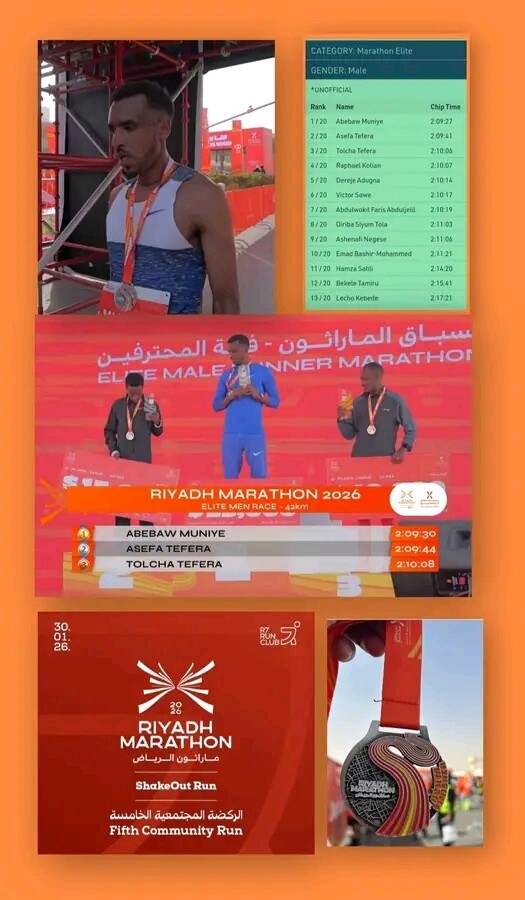
Just behind him, compatriot Asefa Tefera mounted a determined chase, refusing to let the leader escape, and crossed the line only 14 seconds later in 2:09:44, completing a commanding Ethiopian one-two. The podium sweep was secured by Tolcha Tefera, who held his form under immense physical stress to finish third in 2:10:08, confirming Ethiopia’s complete control of the men’s race as rivals battled bravely but fell just short in the final kilometers.
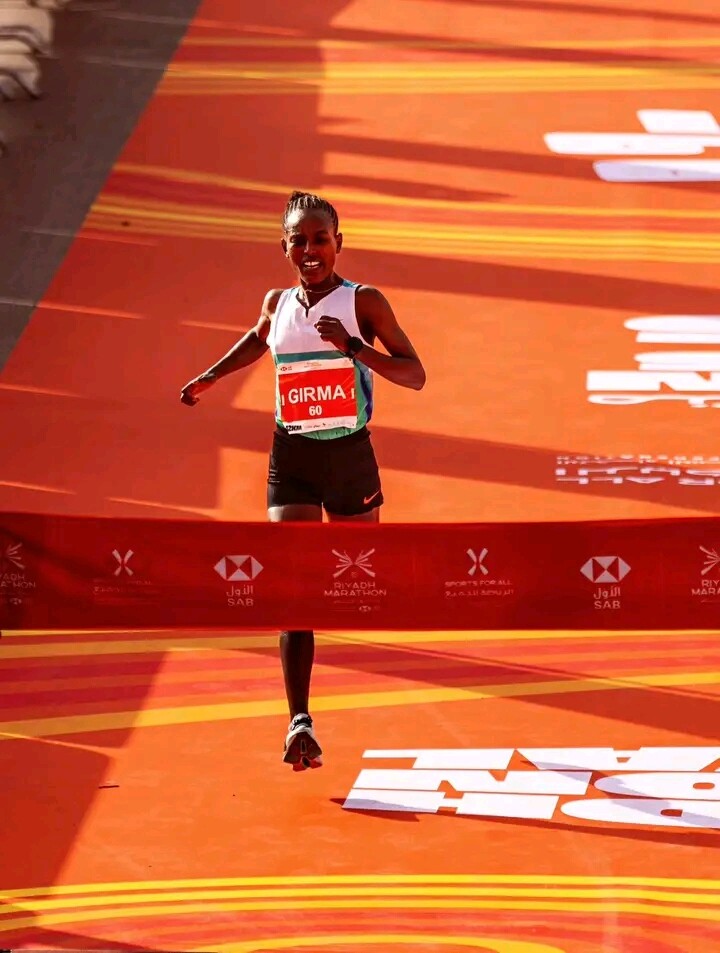
As demanding as the men’s contest proved to be, the women’s race echoed the same narrative of discipline and dominance. From the early stages, the Ethiopian athletes imposed authority, managing the pace with composure while the heat steadily took its toll on the field. At the front, Kena Girma delivered a performance defined by control and consistency, gradually stretching her advantage before powering home to a convincing victory in 2:25:54.
Behind her, Aberash Demissie ensured another Ethiopian one-two finish with a strong run of 2:27:13, while Nigist Muluneh completed the podium in 2:29:18, sealing a clean sweep that mirrored the men’s result and highlighted the extraordinary depth of Ethiopian women’s marathon running.
When the finish lines were crossed and the medals decided, the Riyadh Marathon 2026 stood as more than just a race—it was a testament to resilience under extreme conditions and a showcase of elite-level execution. In a city steadily carving its place on the global marathon calendar, this edition will be remembered for the heat, the courage it demanded, and a commanding Ethiopian display that turned adversity into absolute mastery.
(01/31/2026) ⚡AMPby Erick Cheruiyot for My Bestruns.

Ryadh Marathon
The Riyadh Marathon is set to be a premier international event, offering multiple race distances to ensure runners of all ages and fitness levels can participate. Kicking off at King Saud University, this event will bring together elite athletes, recreational runners, and families looking to embrace an active lifestyle in the heart of Saudi Arabia’s capital. “This international event aligns...
more...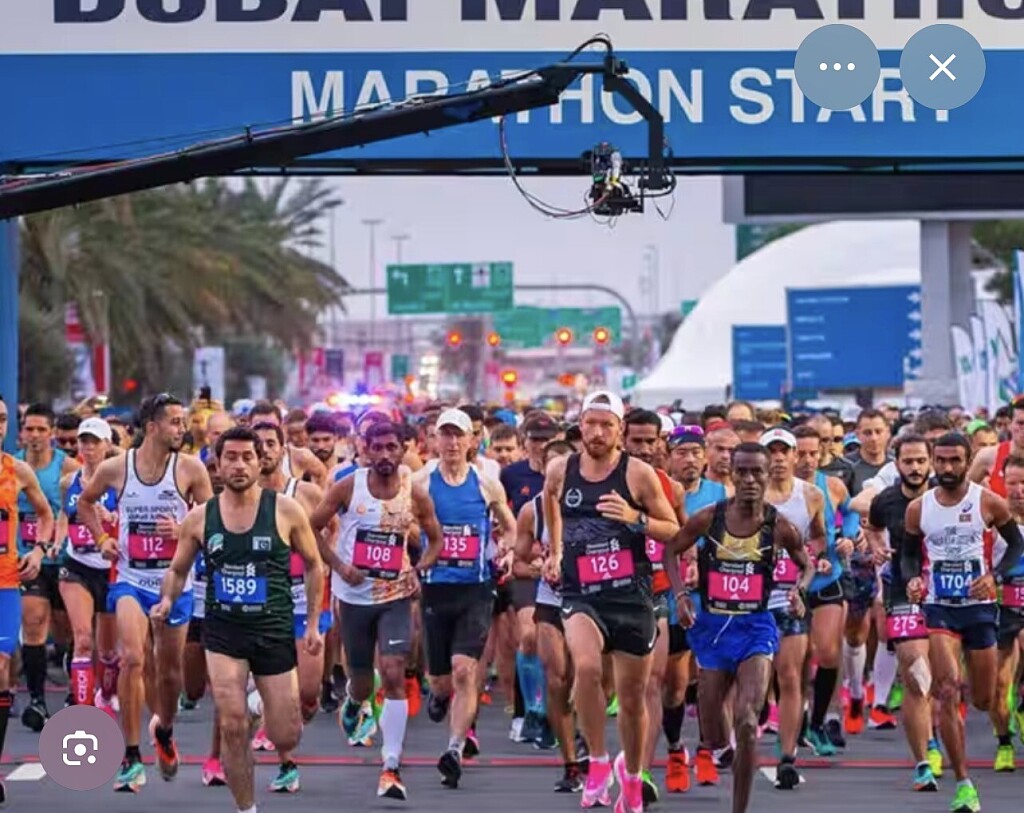
Dubai at 25: A Proven Launchpad for Ethiopian Marathon Greatness
When the Dubai Marathon made its debut at the turn of the 21st century, the city itself was still compact—just a few square kilometres around the centuries-old trading settlement of Dubai Creek. Fewer than 200 runners lined up for that first marathon, with several hundred more opting for the half-marathon.
A quarter century later, Dubai has expanded dramatically toward Abu Dhabi, its metro stretching to the edges of the desert. The marathon has grown just as impressively, now standing as one of the world’s most prominent road races, drawing thousands across the marathon, 10K, and 4K events.
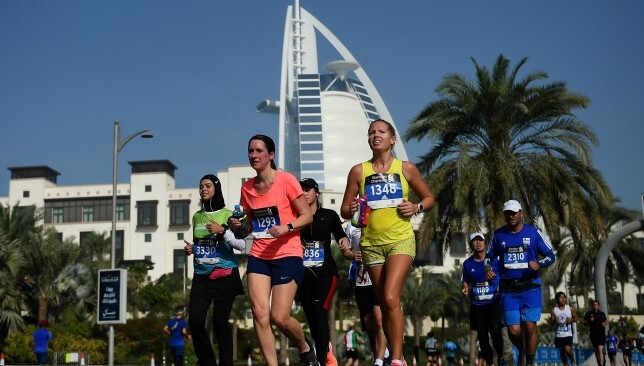
In its early years, winning times were respectable but modest—around 2:10 for men and the mid-2:30s for women. That changed decisively in 2008, when race director Peter Connerton and his partner Ahmad Al Kamali brought world record holder Haile Gebrselassie to Dubai for three consecutive years. Haile’s first appearance alone lowered the course record by more than five minutes, instantly propelling Dubai into the top tier of global marathons.
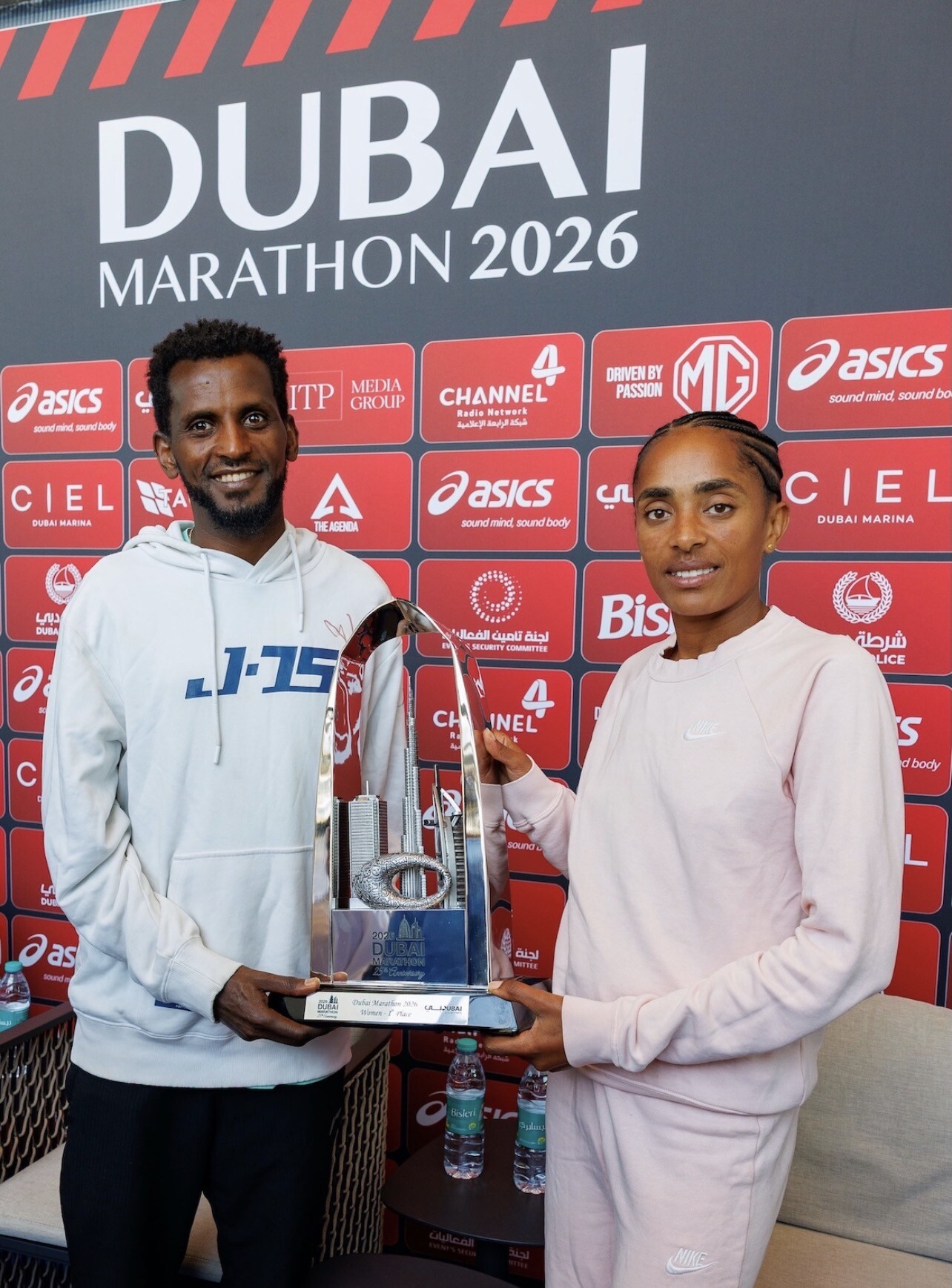
As the focus shifted toward debut runners, the race continued to redefine what was possible. In 2012, on a record-eligible course, four men finished under 2:05, ten under 2:07, and 17 under 2:10, while three women broke 2:20—achievements that came before supershoes and modern performance supplements pushed times even further.
Dubai’s reputation as a launchpad for greatness was reinforced in 2014, when 18-year-old Tsegaye Mekonnen of Ethiopia stunned the field with a debut victory in 2:04:32, an unofficial junior world record. In 2018, seven men broke 2:05 and four women dipped under 2:20—both unprecedented at the time. A year later, Ruth Chepngetich of Kenya claimed victory in 2:17:08, then the third-fastest women’s marathon ever, while Ethiopia’s Getaneh Molla won the men’s race in 2:03:34, setting a course record that still stands.
Time and again, Ethiopian runners have used Dubai’s exceptionally fast course—its total elevation change is only a few metres—as a springboard to world-class success. Remarkably, the men’s race has been won by debutants five times in a row. Two years ago, Tigist Ketema delivered another standout debut, winning the women’s race in a course-record 2:16:07, an unofficial debut world record that remains intact.
Several Dubai champions have gone on to achieve global success. Lelisa Desisa later became the 2019 Marathon World Champion, while Tamirat Tola captured Olympic gold in 2024. Dubai’s influence has also helped spark the growth of other major regional races, including the Abu Dhabi Marathon and the Ras Al Khaimah Half Marathon, now under the same management.
Sunday’s 25th-anniversary edition marks a milestone that reflects both longevity and resilience. The pandemic forced a two-year pause, but the event has re-established itself with strong prize money—$80,000 for the men’s and women’s winners—and performances that continue to rank among the world’s best.
Conditions appear ideal this year. With an earlier elite start time of 5:45 a.m., temperatures are expected to hover around a cool 16°C. Ethiopia’s Fantu Worku, who ran 2:21:57 in her Berlin debut four months ago, will welcome the change after racing in much warmer conditions. On the men’s side, Gadisa Birhanu arrives with a personal best of 2:04:59 from his 2023 Seville victory and a clear objective: contend for the win on one of the fastest marathon stages in the world.
A live stream of the Dubai Marathon will be available on race morning via the event’s official website.
Favourites with Personal Bests
Men
• Gadisa Birhanu (ETH) – 2:04:59
• Berehanu Tesgu (ETH) – 2:05:24
• Abera Kuma (ETH) – 2:05:50
• Deribe Robi (ETH) – 2:05:58
• Hailu Zewdu (ETH) – 2:06:31
• Belay Bezabeh (ETH) – 2:06:58
• Gadissa Tafa (ETH) – 2:07:02
• Gizealew Ayana (ETH) – 2:07:15
• Yasin Haji (ETH) – 2:07:45
• Nibret Melak (ETH) – Debut
• Semachw Sewnet (ERI) – Debut
Women
• Mimi Belete (BRN) – 2:21:22
• Fantu Worku (ETH) – 2:21:57
• Anchinalu Dessie (ETH) – 2:22:17
• Tigst Getnet (ETH) – 2:23:17
• Abebech Afework (ETH) – 2:23:33
• Sofia Assefa (ETH) – 2:23:33
• Zinash Mekonen (ETH) – 2:24:55
• Muliye Dekebo (ETH) – 2:25:35
• Maritu Ketema (ETH) – 2:25:55
• Tadelech Bekele (ETH) – 2:26:23
• Lemlem Hailu (ETH) – No mark
• Alemaddis Eyayu (ETH) – Debut
• Aberash Shilima (ETH) – Debut
(01/30/2026) ⚡AMPby Race News Service
Dubai Marathon
In its relatively brief history (the race was first held in 2000), the Dubai Marathon has become one of the fastest, most respected and the most lucrative marathon in the world in terms of prize money. Each year thousands of runners take to the roads in this beautiful city in the United Arab Emirates (UAE) for this extraordinary race starting...
more...
Sandals, Speed, and History: Barnabas Kiplimo Shines at the 2026 Buriram Marathon
On Saturday, January 24, 2026, the streets of Buriram, Thailand hosted one of the most eye-catching marathon performances of the season. It wasn’t just about the winning time or the podium finish—it was about how the race was won.
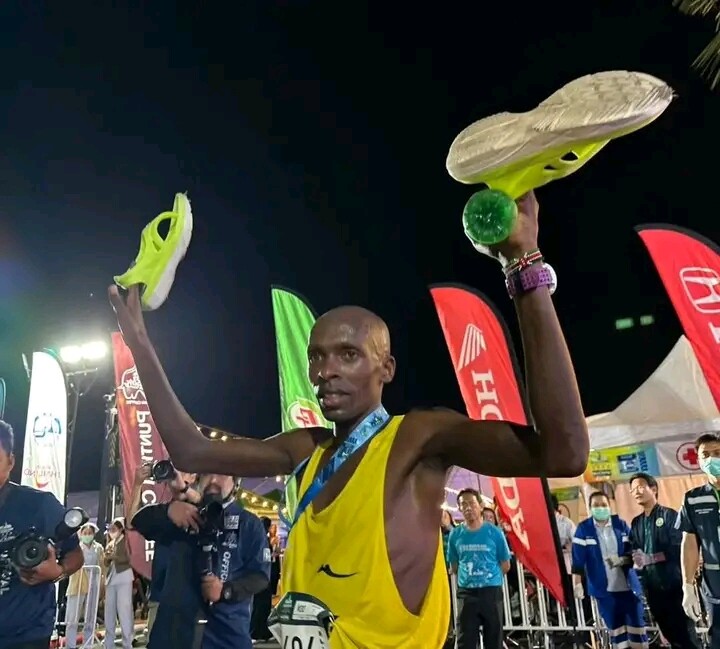
Kenyan runner Barnabas Kiplimo once again rewrote the script, storming to victory at the Buriram Marathon in a remarkable time of 2:21:16. What made the performance truly unforgettable was not only the speed, but the footwear—or rather, the lack of conventional shoes. Kiplimo crossed the finish line wearing carbon-fiber plated racing sandals, produced by Thai brand Ving Thailand, the same model that carried him to victory the previous year.
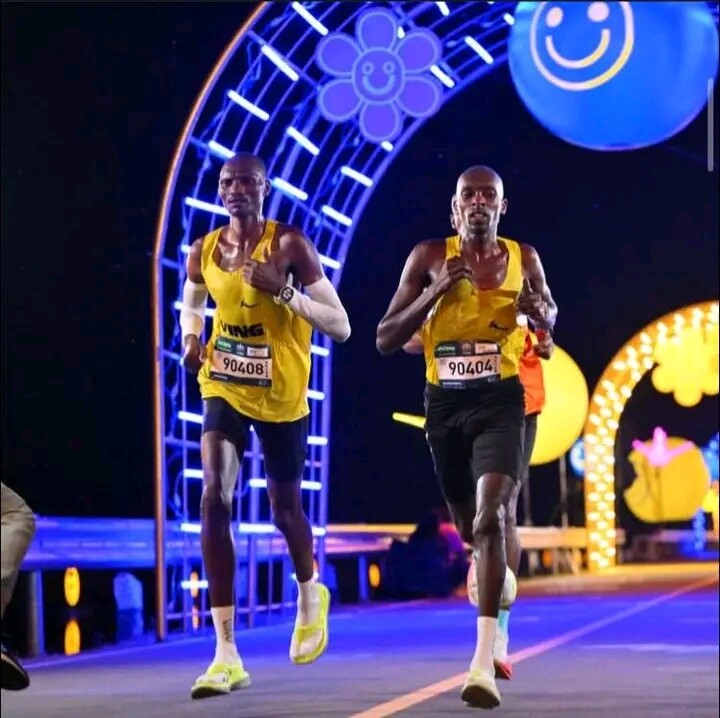
This win marked yet another milestone in Kiplimo’s unconventional rise. In 2025, he had already turned heads by winning the Khon Kaen Marathon in Thailand with an even faster time of 2:18:55, becoming the first elite marathon winner to achieve such a feat using the brand’s original sandal model. That breakthrough sparked global curiosity—and now, history has repeated itself.
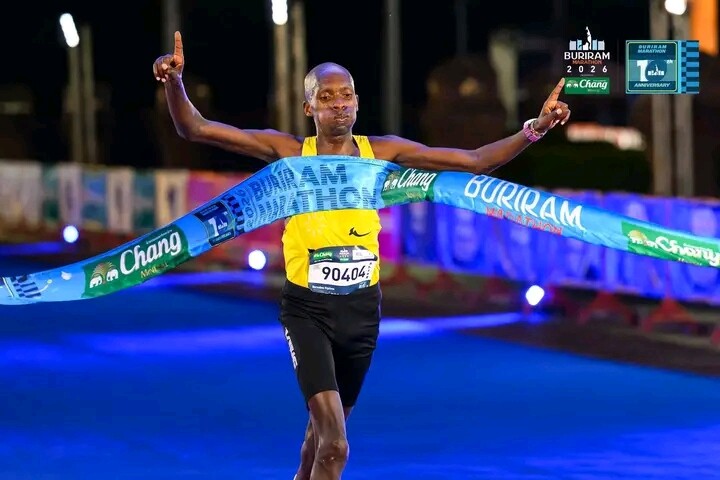
This time, Kiplimo raced in the Nirun model, Ving Thailand’s latest innovation. According to the brand, the philosophy behind Nirun is to “simplify the footwear industry” by creating what they describe as the world’s first super sandal—a minimalist design fused with modern performance technology, including a carbon-fiber plate usually reserved for elite racing shoes.
What made the Buriram Marathon even more compelling was the fact that Kiplimo was not alone in proving the concept. The third-place finisher, fellow Kenyan Julius Tarus, also competed in the performance sandals, reinforcing that this was no gimmick—it was a genuine shift in how marathon racing can be approached.
2026 Buriram Marathon – Men’s Podium
1. Barnabas Kiplimo (Kenya) – 2:21:16
2. Wendwesen Dante (Ethiopia) – 2:22:52
3. Julius Tarus (Kenya) – 2:27:34
As marathon running continues to evolve through innovation and bold experimentation, Barnabas Kiplimo’s success challenges long-held assumptions about performance footwear. In Buriram, tradition met innovation—and innovation prevailed.
From Kenya to Thailand, and from shoes to sandals, one thing is now clear: the future of marathon running may look very different from what we once imagined.
(01/30/2026) ⚡AMPby Erick Cheruiyot for My Bestruns.

Buriram Marathon
Thailand's First Gold label Marathon! Buriram Marathon is created by Mr.Newin Chidchob, the President of Buriram United and the Executive of Chang International Circuit, aiming to promote Buriram as a “Thailand’s Sport City Center.” The purposes of Buriram Marathon are to make Buriram one of the best marathon stadiums in the world, and to be a destination that the every...
more...
Dubai Awaits a World-Class Marathon Morning as Elite Stars Chase Speed and Glory
Dubai is set to wake up to world-class distance running on Sunday, February 1, 2026, as an outstanding elite field lines up for one of the fastest and most anticipated marathons on the global calendar. Known for its smooth roads, cool early-morning conditions, and history of exceptional performances, the Dubai Marathon once again offers the perfect stage for the world’s best to chase fast times and major victories.
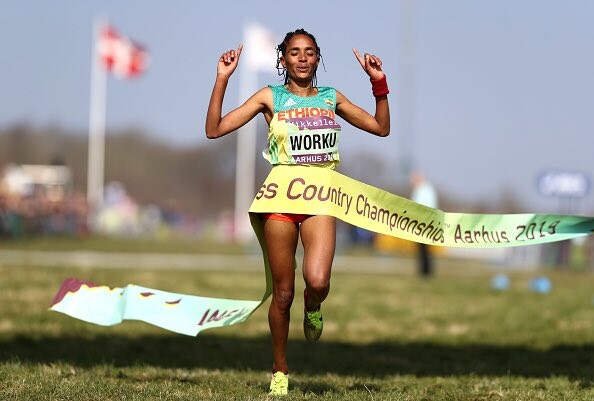
Leading the women’s race is Ethiopia’s Fantu Worku, who arrives with a personal best of 2:21:57 and the confidence of an athlete well accustomed to performing on big occasions. She will be closely challenged by compatriot Anchinalu Dessie (2:22:17), whose consistency and strength over the full distance make her a serious threat. Also in the mix are Tigist Getnet (2:23:17) and Abebech Afework (2:23:33), two experienced runners capable of turning a fast early pace into a decisive late-race move if conditions remain favorable.
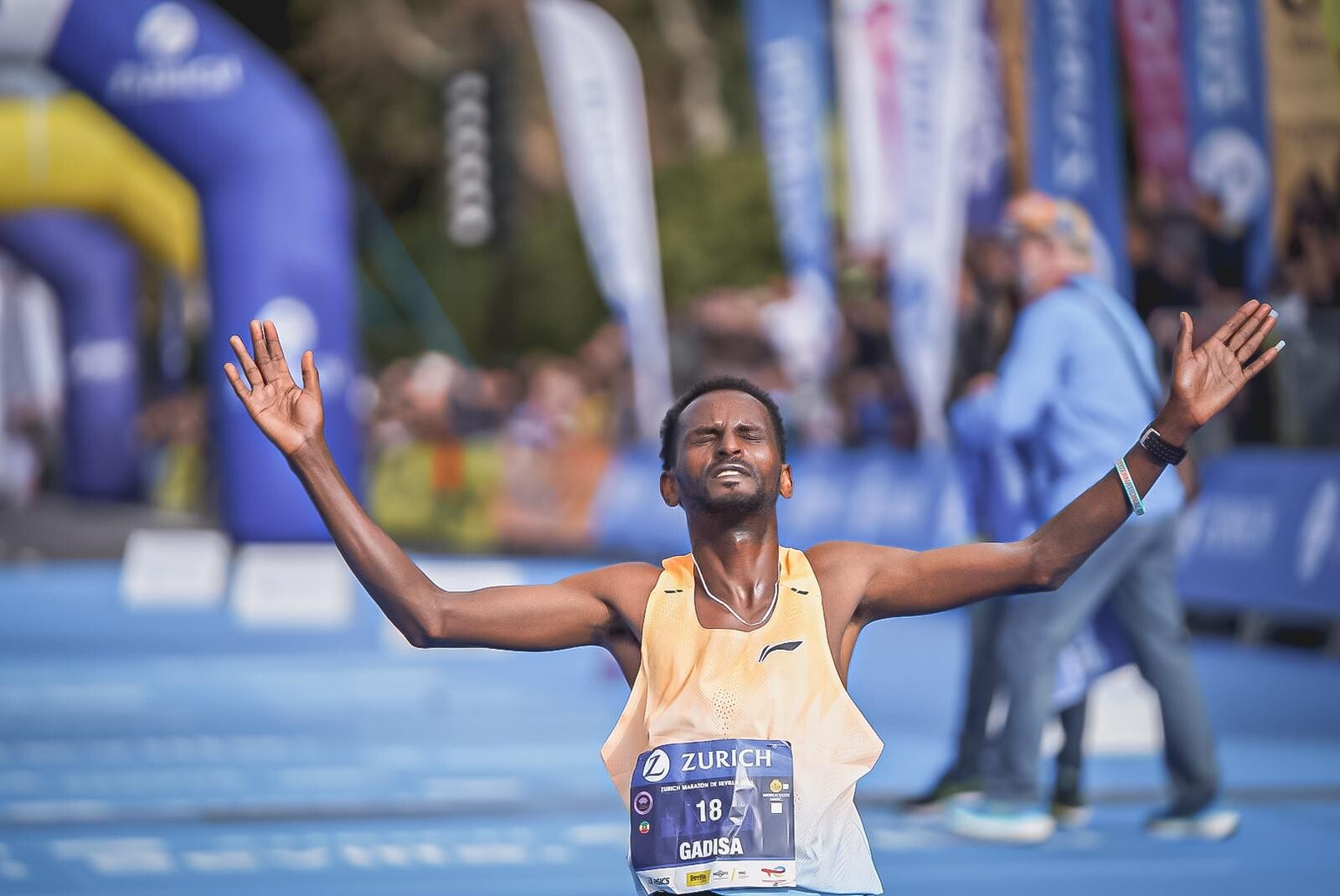
The men’s elite contest promises equal intensity and speed. Gadisa Birhanu of Ethiopia headlines the field with a formidable personal best of 2:04:59, underlining his status as one of the quickest marathoners in the world. Fellow Ethiopian Berehanu Tsegu (2:05:14) brings aggressive racing instincts, while Kenya’s Eric Kiptanui (2:05:47) adds depth and international rivalry to the field. Completing a formidable leading group is Abera Kuma (2:05:50), another athlete well positioned to capitalize if the race unfolds at a relentless tempo.
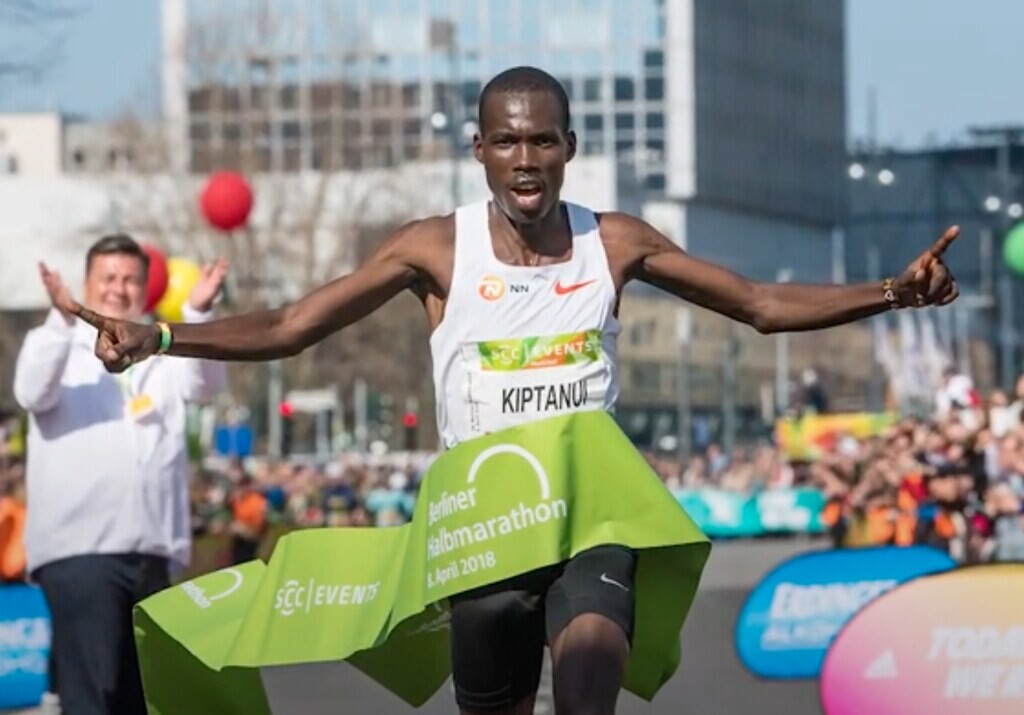
The race begins at 5:45 AM local time in Dubai, a start designed to maximize performance under cool conditions. Fans across Africa will be watching from 4:45 AM, while audiences in the United States can follow the action on Saturday evening at 5:45 PM Pacific Time, as the marathon unfolds across time zones.
With a lineup stacked with proven performers and emerging contenders, the 2026 Dubai Marathon is set to deliver a showcase of speed, endurance, and tactical racing at the highest level. As dawn breaks over the city, the world’s fastest athletes will chase excellence on the road, reaffirming Dubai’s place as a true home of elite marathon running.
(01/30/2026) ⚡AMPby Erick Cheruiyot for My Bestruns.
Dubai Marathon
In its relatively brief history (the race was first held in 2000), the Dubai Marathon has become one of the fastest, most respected and the most lucrative marathon in the world in terms of prize money. Each year thousands of runners take to the roads in this beautiful city in the United Arab Emirates (UAE) for this extraordinary race starting...
more...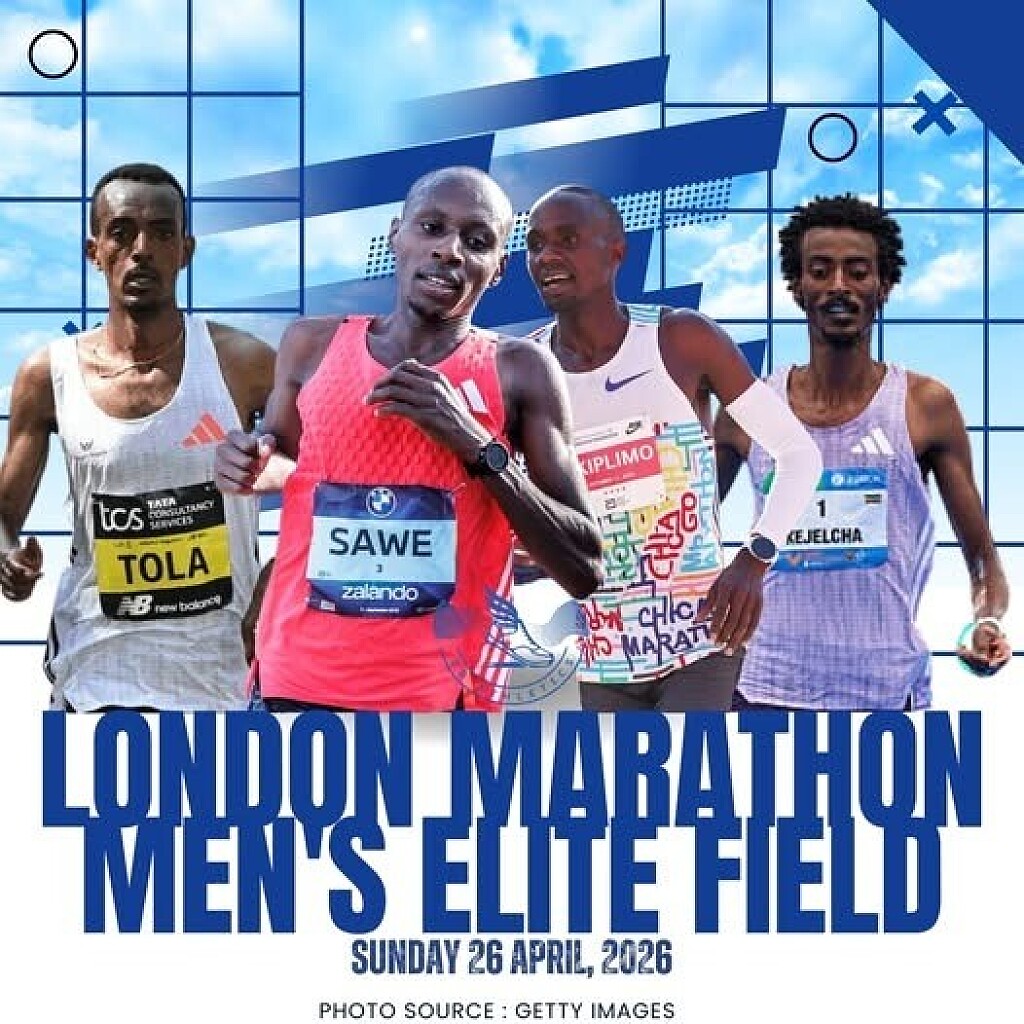
London Awaits a Blockbuster Men’s Marathon as World-Class Stars Line Up on April 26, 2026
The TCS London Marathon, set for Sunday, April 26, 2026, is already shaping up to be one of the most compelling races in the event’s rich history. The men’s elite start list reveals a field defined not just by star power at the top, but by extraordinary depth throughout—bringing together proven champions, fearless challengers, and highly anticipated debutants on one of the world’s fastest and most iconic courses.
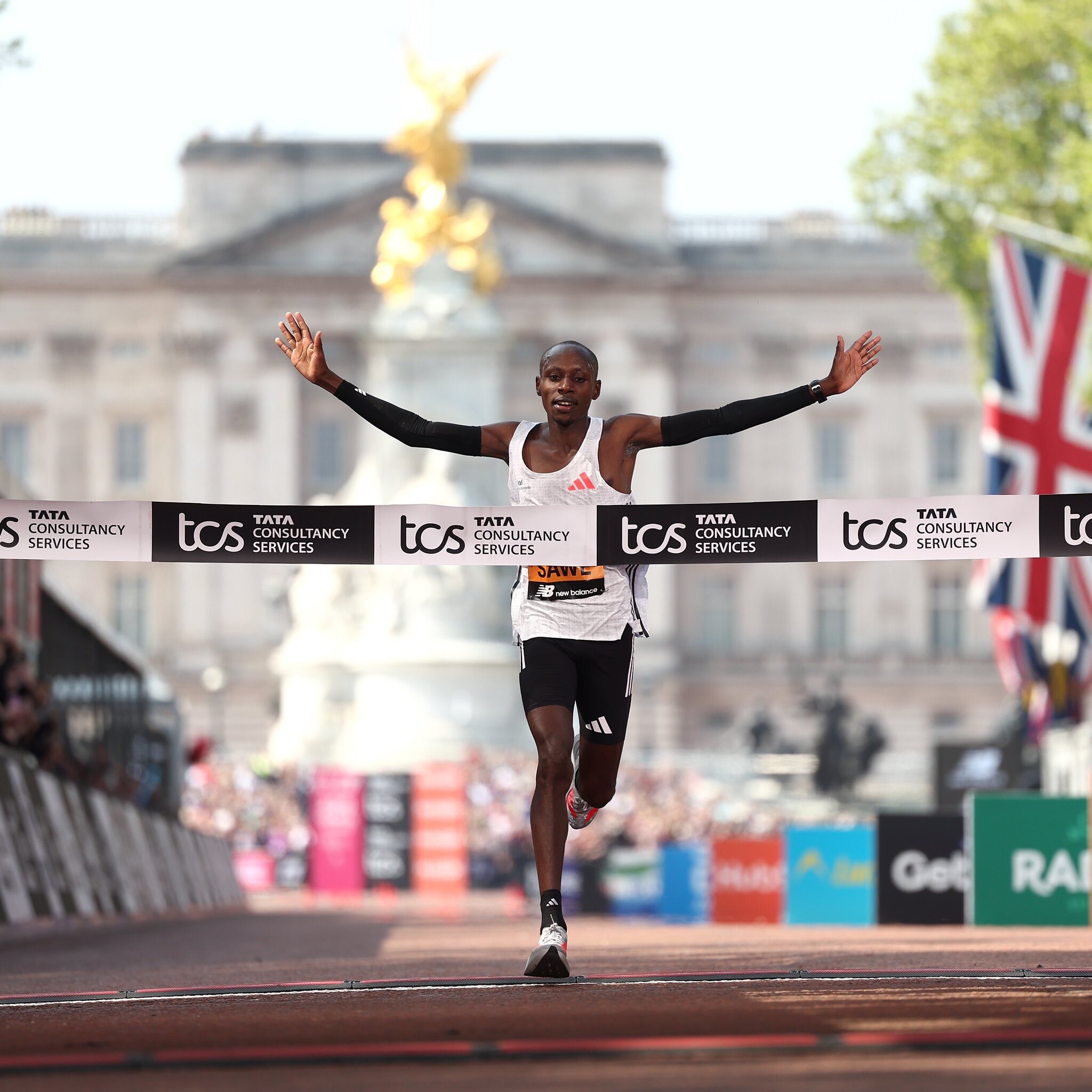
Leading the charge is Sebastian Sawe of Kenya, the fastest man entered with a personal best of 2:02:05. Efficient, composed, and devastatingly consistent, He is the defending champion and will arrive in London as a clear contender, capable of dictating the rhythm of the race from the early miles. Close behind him on the start list is Jacob Kiplimo of Uganda (2:02:23), whose evolution into the marathon continues to fascinate the running world. Known for his strength, speed, and fearless racing style, Kiplimo’s presence adds a layer of unpredictability to an already volatile contest.
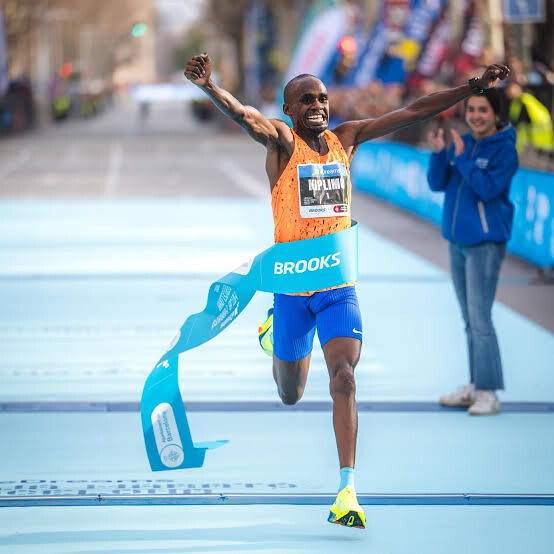
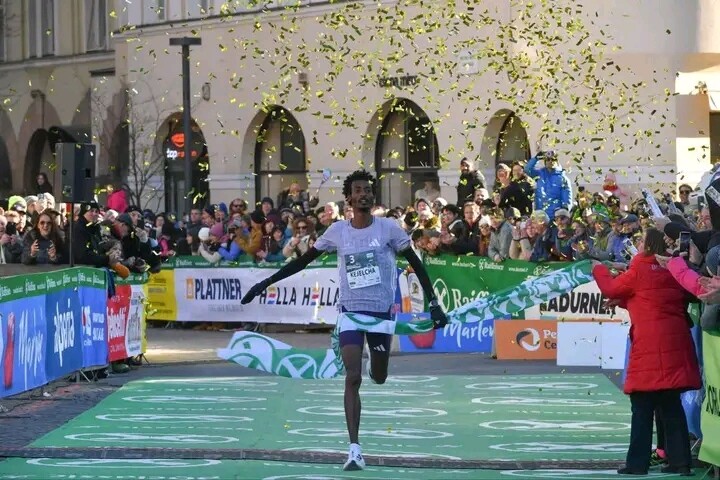
Ethiopia counters strongly through Deresa Geleta, owner of a 2:02:38 best and a runner respected for his smooth efficiency and reliability at the highest level. Adding further intrigue is Yomif Kejelcha, one of the most eagerly awaited marathon debutants in recent years. A global star on the track, Kejelcha now steps into uncharted territory, and how his speed and range translate over 42.195 kilometers will be one of the defining narratives of race day.
As the list unfolds, the depth of the field becomes impossible to ignore. Amos Kipruto of Kenya (2:03:13) brings championship pedigree and tactical intelligence, while Olympic marathon champion Tamirat Tola of Ethiopia (2:03:39) arrives with proven resilience and the ability to rise when the stakes are highest. Germany’s Amanal Petros (2:03:04), a national record holder, continues to push European marathon running forward and enters London in peak form.
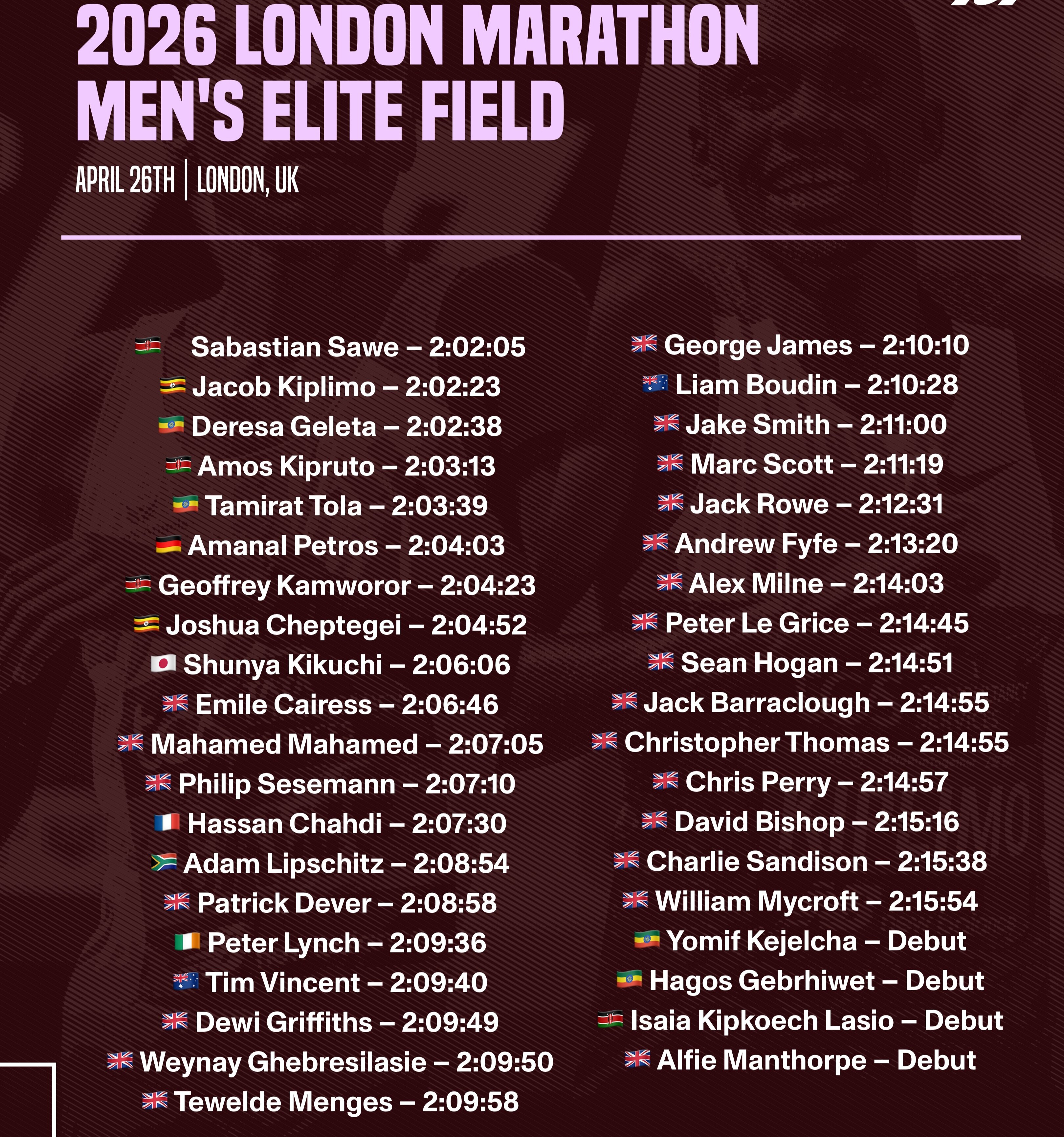
Even further down the start list, the quality remains striking. Geoffrey Kamworor of Kenya (2:04:23), a multiple-time world champion, offers experience, patience, and racing instinct that few can match. Uganda’s Joshua Cheptegei (2:04:52), one of the most decorated track athletes of his generation, continues his marathon journey with determination and growing confidence. Japan’s Shunya Kikuchi (2:06:06) represents a nation synonymous with marathon tradition, while Emile Cairess of Great Britain (2:06:46) carries home hopes, eager to make his mark on London’s global stage.
Beyond these names, the men’s elite start list continues deep, featuring more established performers and additional debutants ready to test themselves against the world’s best. This depth ensures that the 2026 race will not be won on reputation alone; it will demand patience, precision, and courage deep into the final miles.
When the gun sounds on Sunday, April 26, 2026, the TCS London Marathon will once again deliver what it promises best—a true test of endurance and excellence, where the margins are thin, the competition relentless, and the outcome anything but certain.
(01/29/2026) ⚡AMPby Erick Cheruiyot for My Bestruns.

TCS London Marathon
The London Marathon was first run on March 29, 1981 and has been held in the spring of every year since 2010. It is sponsored by Virgin Money and was founded by the former Olympic champion and journalist Chris Brasher and Welsh athlete John Disley. It is organized by Hugh Brasher (son of Chris) as Race Director and Nick Bitel...
more...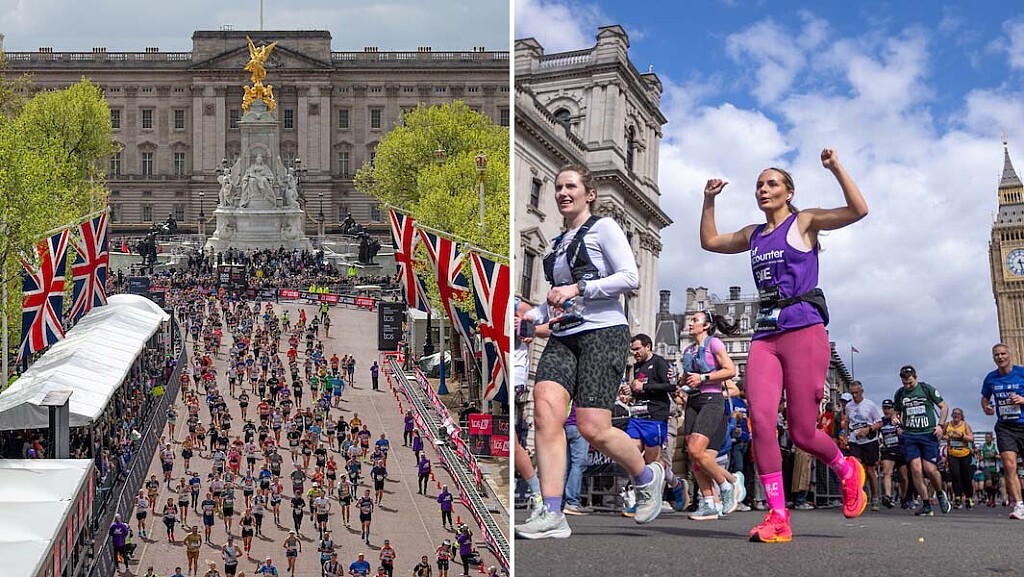
A Dream Showdown Awaits: London Marathon Unveils a Historic Women’s Elite Field
The 2026 TCS London Marathon, scheduled for Sunday, April 26, 2026, is shaping up to be one of the most electrifying races in the event’s storied history, with an elite women’s field that reads like a roll call of modern marathon greatness.
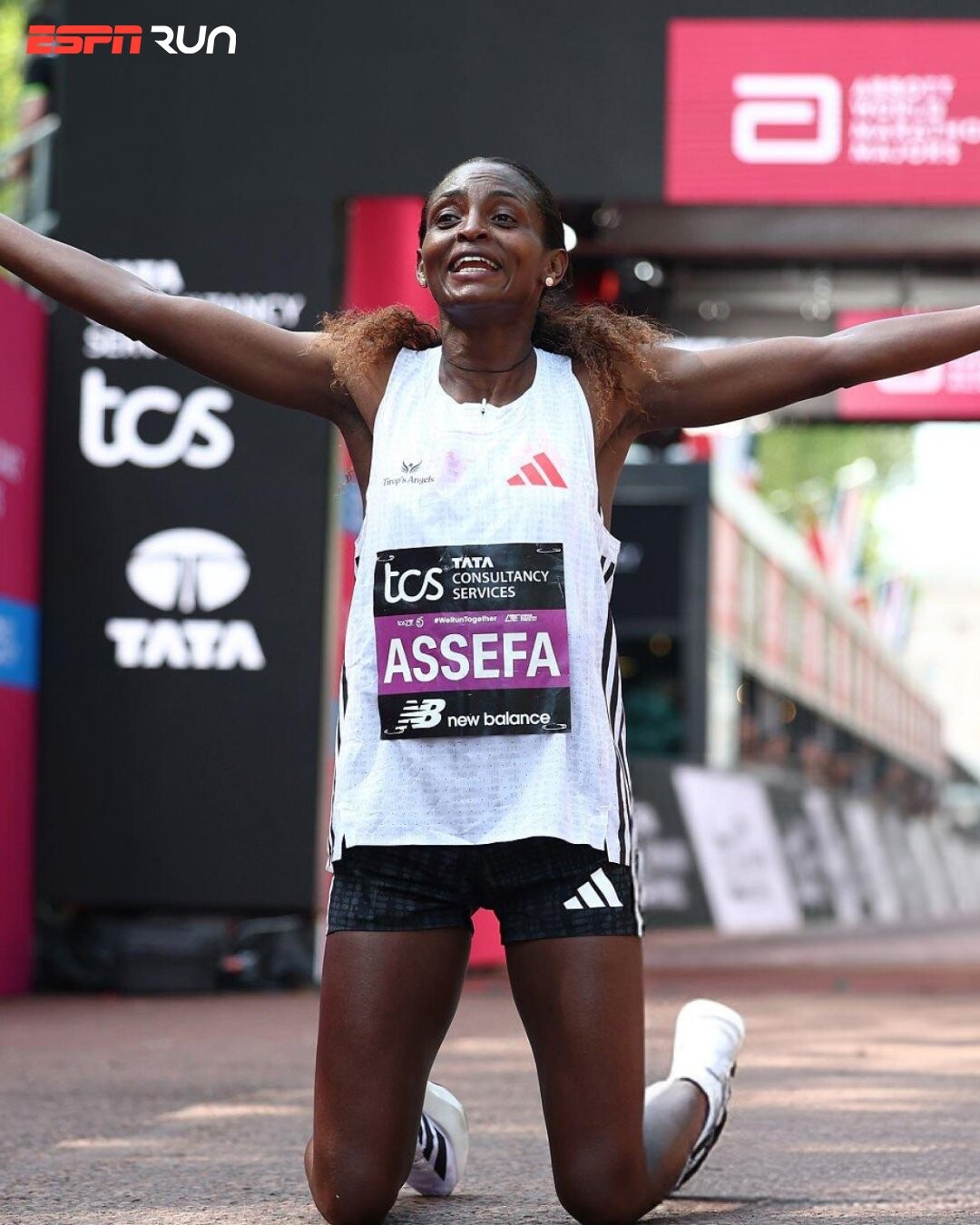
Reigning champion Tigst Assefa returns to London carrying both confidence and unfinished business. The Ethiopian star, whose 2:11:53 personal best ranks among the fastest ever recorded, will once again test her limits on the streets of the British capital. But this time, the challenge is even steeper.
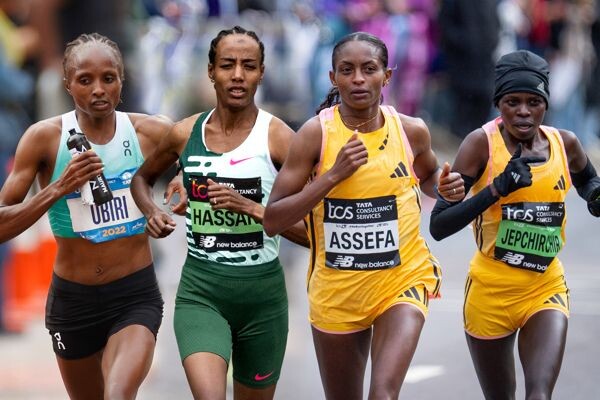
Standing in her way are the current Olympic and world marathon champions, Sifan Hassan and Peres Jepchirchir, setting the stage for a clash that fans have long dreamed of. Hassan’s fearless racing style and unmatched versatility have redefined what is possible in distance running, while Jepchirchir’s tactical brilliance and finishing power make her one of the most dangerous competitors over 42.195 kilometers.
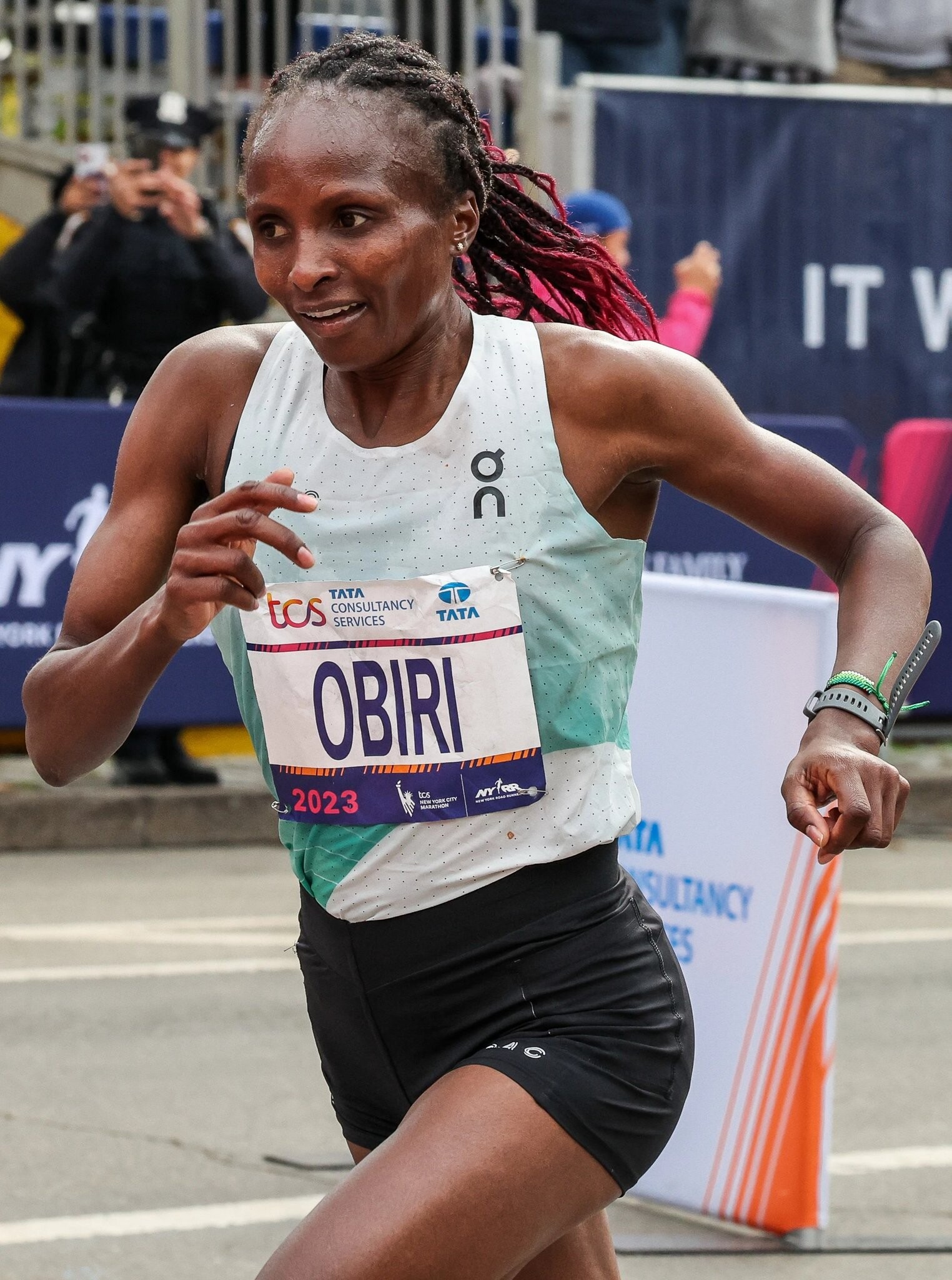
Adding another layer of intrigue is Hellen Obiri, the double New York City and Boston Marathon champion, who will be making her long-awaited London Marathon debut. Already proven on the toughest courses in the world, Obiri’s arrival in London raises expectations and deepens an already stacked field.
Experience and consistency also feature prominently through Megertu Alemu, a familiar force in major marathons. With four podium finishes at World Marathon Majors—two of them in London—Alemu knows exactly what it takes to perform on this stage and could once again play a decisive role.
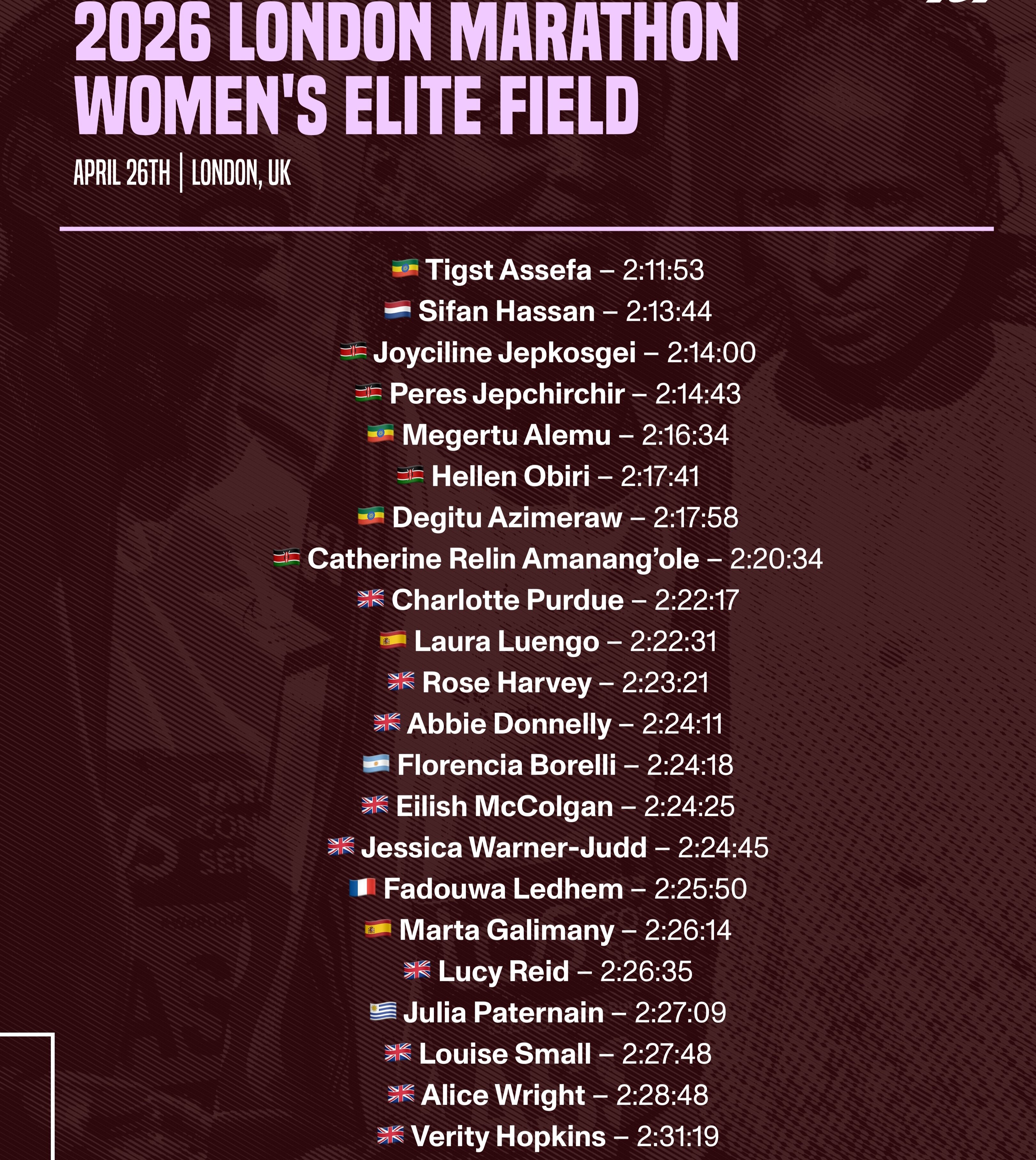
The depth does not end there. Former London winner Joyciline Jepkosgei, along with accomplished athletes such as Degitu Azimeraw, Catherine Amanang’ole, Charlotte Purdue, and Laura Luengo, ensures that no moment of the race will be predictable. From the opening kilometers to the final stretch along The Mall, pressure will be relentless.
More than just a race, the April 26, 2026 showdown promises a celebration of excellence, resilience, and fearless competition. With world-class champions, debutants hungry for glory, and proven contenders ready to strike, this year’s women’s race is not merely about winning—it is about redefining greatness on one of marathon running’s biggest stages.
The countdown to London has truly begun.
(01/28/2026) ⚡AMPby Erick Cheruiyot for My Bestruns.
TCS London Marathon
The London Marathon was first run on March 29, 1981 and has been held in the spring of every year since 2010. It is sponsored by Virgin Money and was founded by the former Olympic champion and journalist Chris Brasher and Welsh athlete John Disley. It is organized by Hugh Brasher (son of Chris) as Race Director and Nick Bitel...
more...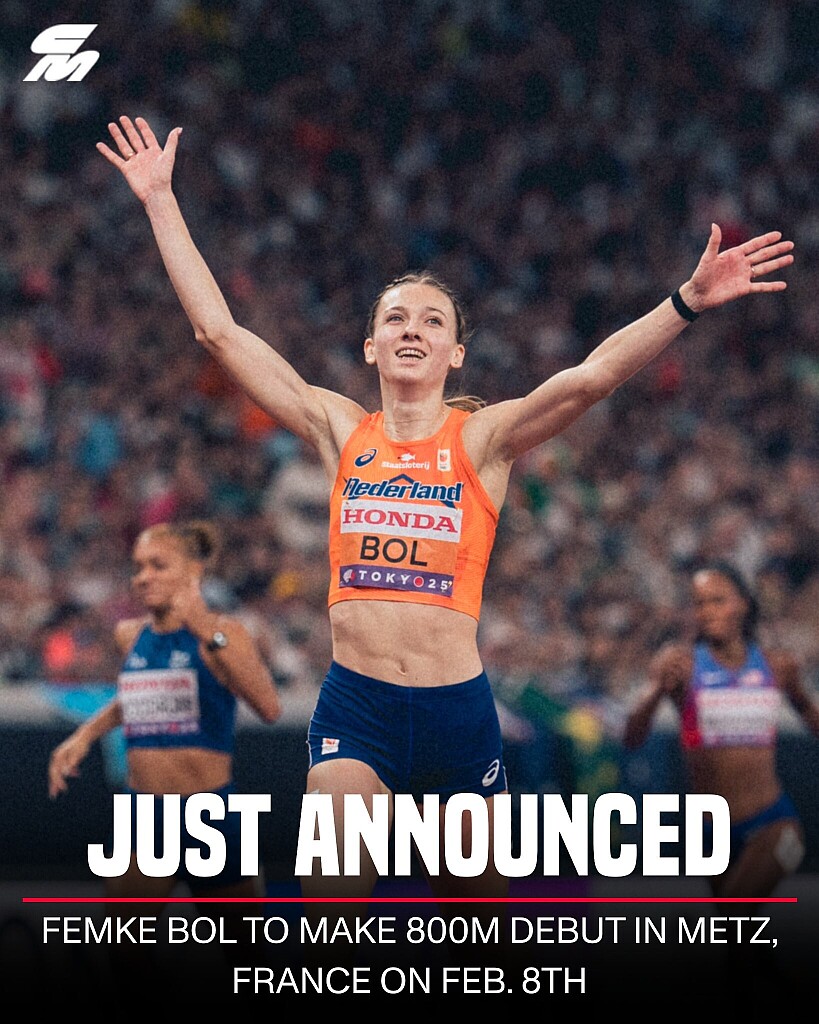
Femke Bol Set for 800m Debut at Athelor Meeting in Metz
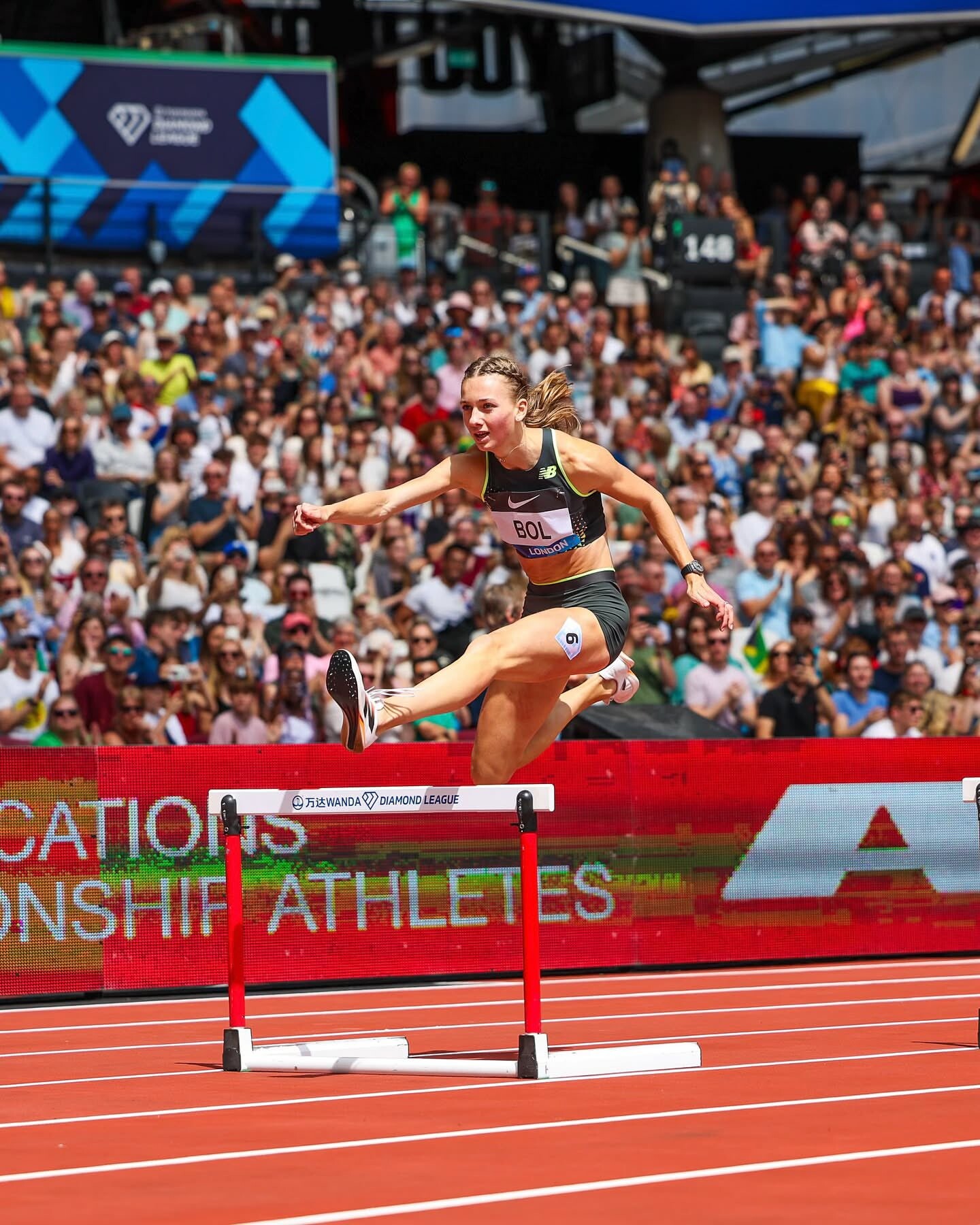
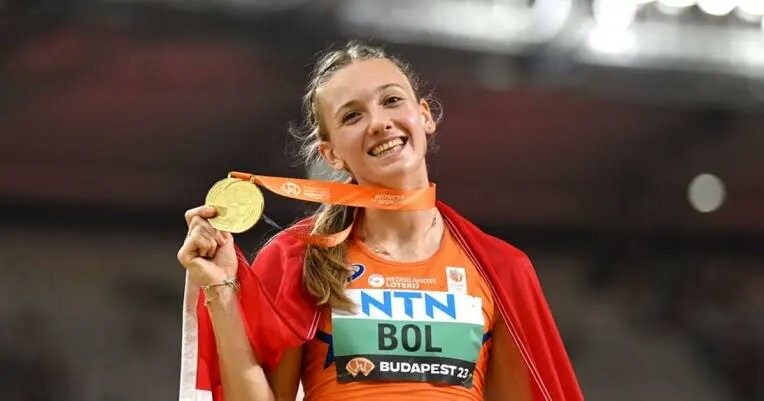
The moment many athletics fans have been waiting for has finally arrived. Two-time world 400m hurdles champion Femke Bol is set to make her much-anticipated 800m debut at the Athelor Meeting in Metz, France, on February 8, meet organizers have confirmed.
The announcement was made on Moselle TV, sparking excitement across the track and field world as the Dutch superstar prepares to test herself over a new distance. Bol took the decision to explore the 800m back in October, shortly after sealing her second consecutive world title in the 400m hurdles in Tokyo, further cementing her dominance in the event.
Meet director Dominique Abisse explained why Metz was chosen as the venue for this important career moment, highlighting both familiarity and comfort as key factors.
“She has chosen a place that reassures her, where she is on known ground, and a land that she appreciates,” Abisse said, speaking to French media.
The choice of Metz also makes sense from a performance perspective. The city proved it can deliver fast middle-distance races last season, when Ethiopia’s Tsigie Duguma edged Britain’s Jemma Reekie in a thrilling 800m showdown, clocking 1:58.97 to Reekie’s 1:59.72. That race underlined the meet’s reputation as a stage capable of producing high-quality times.
Bol’s move to the 800m will be closely watched, given her exceptional speed, endurance, and tactical intelligence—qualities that have made her nearly untouchable over the one-lap hurdles. Whether this debut signals a long-term shift or a strategic experiment remains to be seen, but one thing is certain: all eyes will be on Metz on February 8 as one of the sport’s biggest stars takes on a bold new challenge.
(01/26/2026) ⚡AMPby Erick Cheruiyot for My Bestruns.
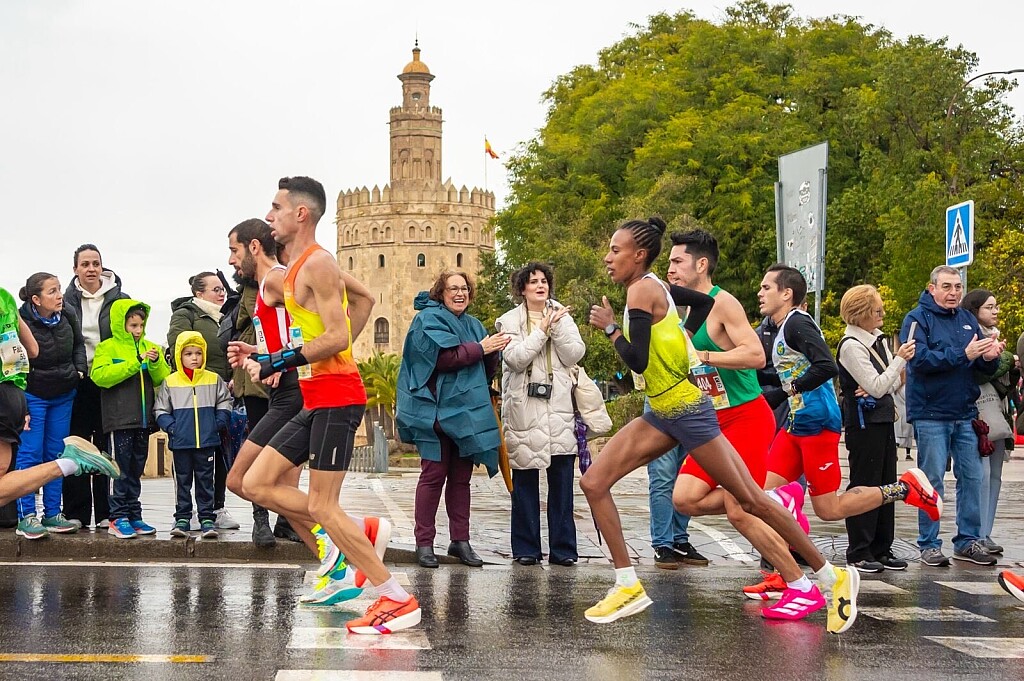
Seville Half Marathon 2026 Delivers Sprint Drama and a Course Record
The 2026 Seville Half Marathon, held on Sunday, 25th January, delivered everything elite road racing promises — raw speed, fearless competition, and moments that will linger long after the finish tape was broken. On the fast streets of Seville, the world witnessed a men’s race decided in the final strides and a women’s performance that redefined the course itself.
From the opening kilometers, the men’s elite field set an uncompromising tempo, with a tightly packed lead group refusing to give an inch. As the kilometers clicked away, it became clear that victory would not be earned early, but fought for to the very end.
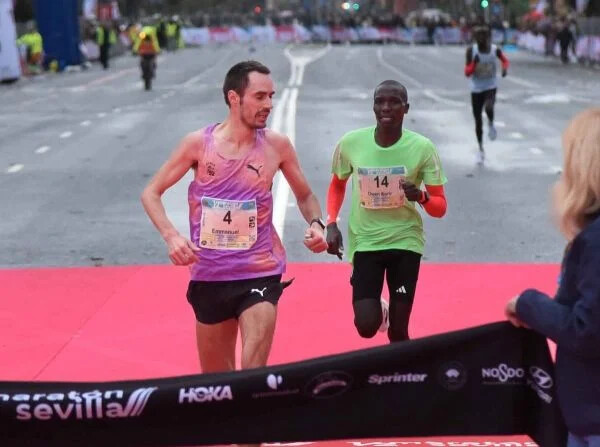
That prediction proved true in dramatic fashion. With just 300 meters remaining, France’s Emmanuel Roudolff-Levisse summoned a perfectly timed kick, surging clear in a furious sprint to snatch victory in 1:00:24. His move caught the field at full stretch, and although Kenya’s Owen Korir Kapkama responded instantly, the line arrived a fraction too soon. Kapkama finished second in 1:00:25, separated from gold by the narrowest of margins. Fellow Kenyan Jonathan Kipkoech Kamosong completed the podium in 1:00:33, capping a race defined by intensity and precision.

Behind the leaders, the international depth of the race was on full display. Eritrea’s Melkeneh Azize Abebe and Belgium’s Simon Debognies rounded out the top five, while the home crowd found its moment of celebration as Spain’s Roberto Alaiz emerged as the leading Spanish finisher in 1:03:55, drawing loud applause along the course.
As the echoes of the men’s sprint finish faded, the women’s race unfolded with a different but equally compelling narrative — one of control, confidence, and historic speed.
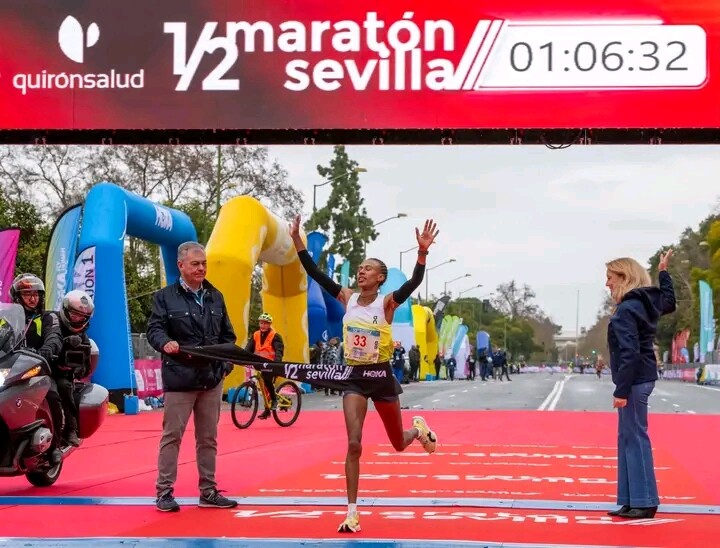
Ethiopia’s Zeineba Yimer Worku asserted her authority early, running with smooth efficiency and relentless rhythm. Kilometer by kilometer, she extended her advantage, turning the race into a personal exhibition of elite road-running excellence. When she crossed the finish line in 1:06:33, it was more than a victory — it was a statement. Her performance established a new Seville Half Marathon course record and stood out as one of the finest women’s road-running displays of the season.
In one unforgettable morning on 25 January, the Seville Half Marathon 2026 delivered drama measured in hundredths of a second and history written in bold new numbers — a true celebration of global road racing at its finest.
(01/26/2026) ⚡AMPby Erick Cheruiyot for My Bestruns.

EDP Seville Half Marathon
The EDP Marathon Half of Seville is one of greater participation of the south of Spain. AD Athletics San Pablo, with the collaboration of the Municipal Sports Institute of Seville and the sponsorship of EDP and Ibercaja, proposes to celebrate with us. The 27th edition will present improvements, such as the inclusion of the RFEA calendar test. A measure that...
more...
Stella Chesang Stuns the World in a Thrilling Osaka Marathon Victory
OSAKA, JAPAN — January 25, 2026 — The Osaka International Women’s Marathon 2026 delivered a spectacle of speed, endurance, and drama, as Uganda’s Stella Chesang powered to a remarkable victory in 2:19:31. From the opening kilometer to the final sprint, the race captivated fans and showcased some of the finest talent in women’s distance running.
Chesang’s triumph was the result of perfect pacing and relentless determination. She broke away at key moments, maintaining a steady, punishing rhythm that left her competitors chasing in her wake. Her win marks another milestone in an already stellar career and adds her name to Osaka’s list of marathon greats.
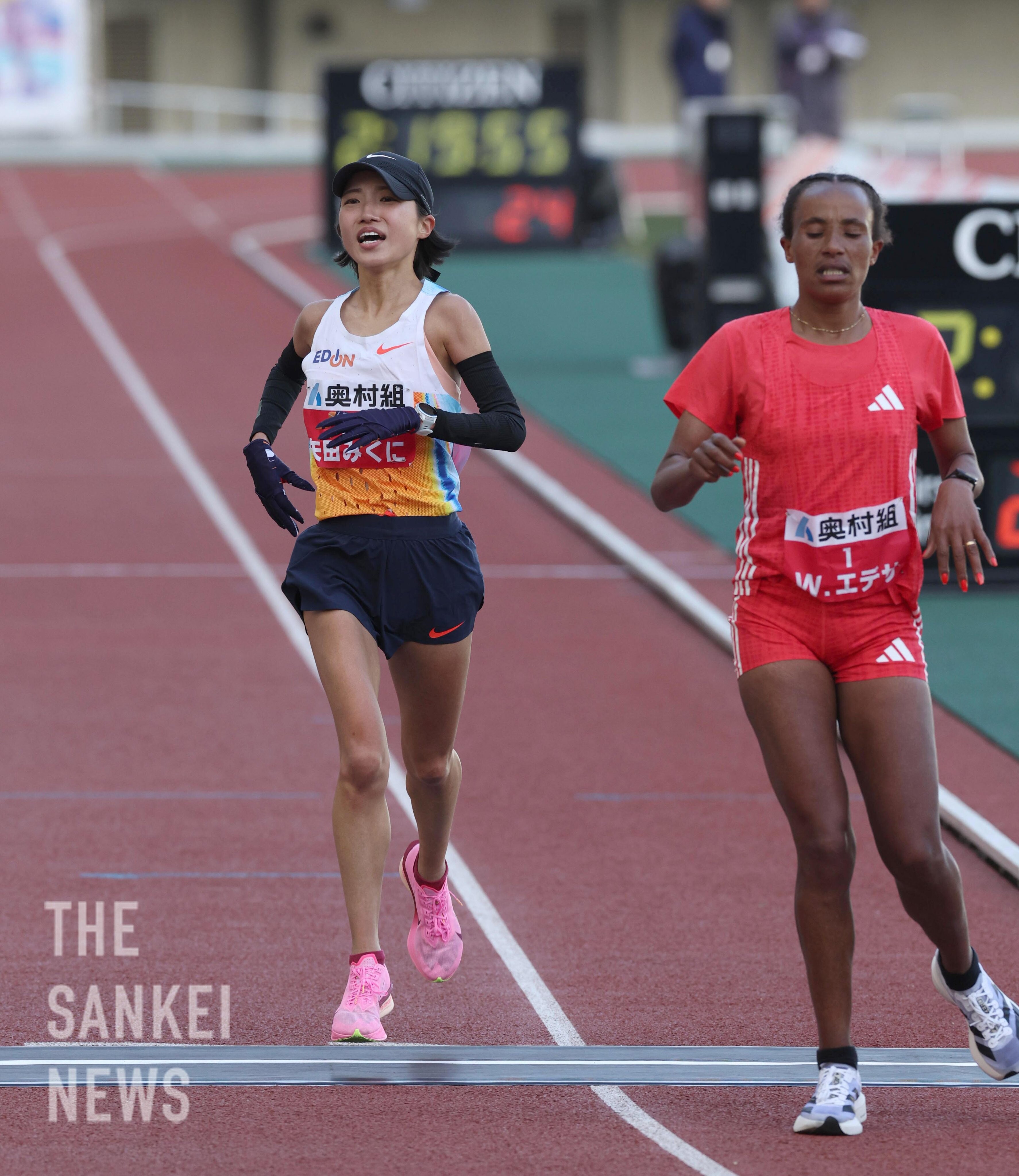
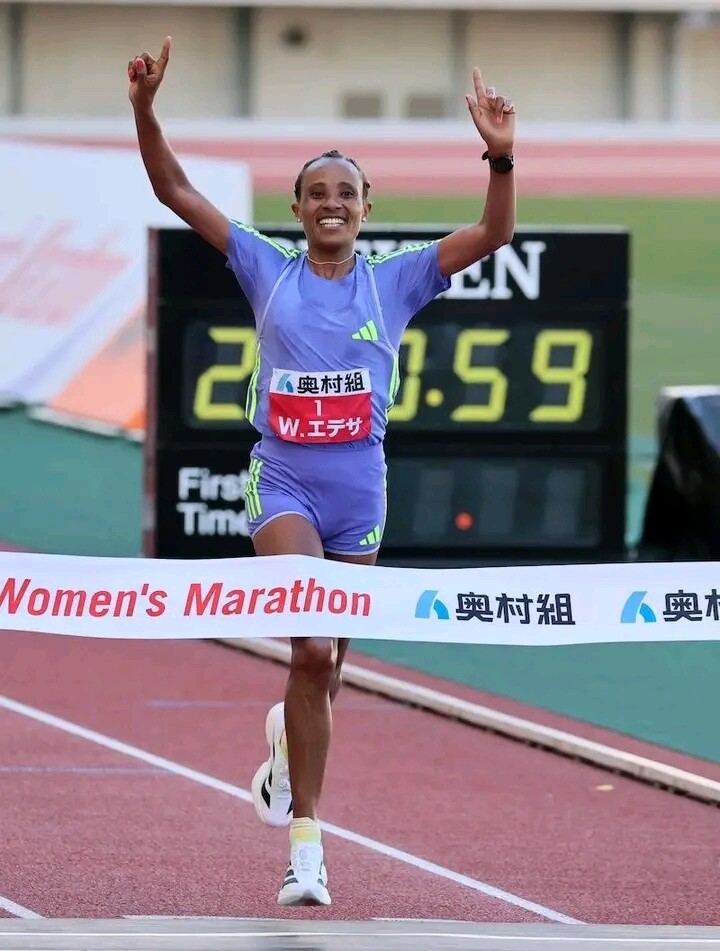
Ethiopia’s two-time defending champion Workenesh Edesa fought valiantly for silver, finishing 23 seconds behind Chesang in 2:19:54. Close behind, her compatriot Bedatu Hirpa crossed third in 2:19:56, completing an impressive East African sweep of the podium.
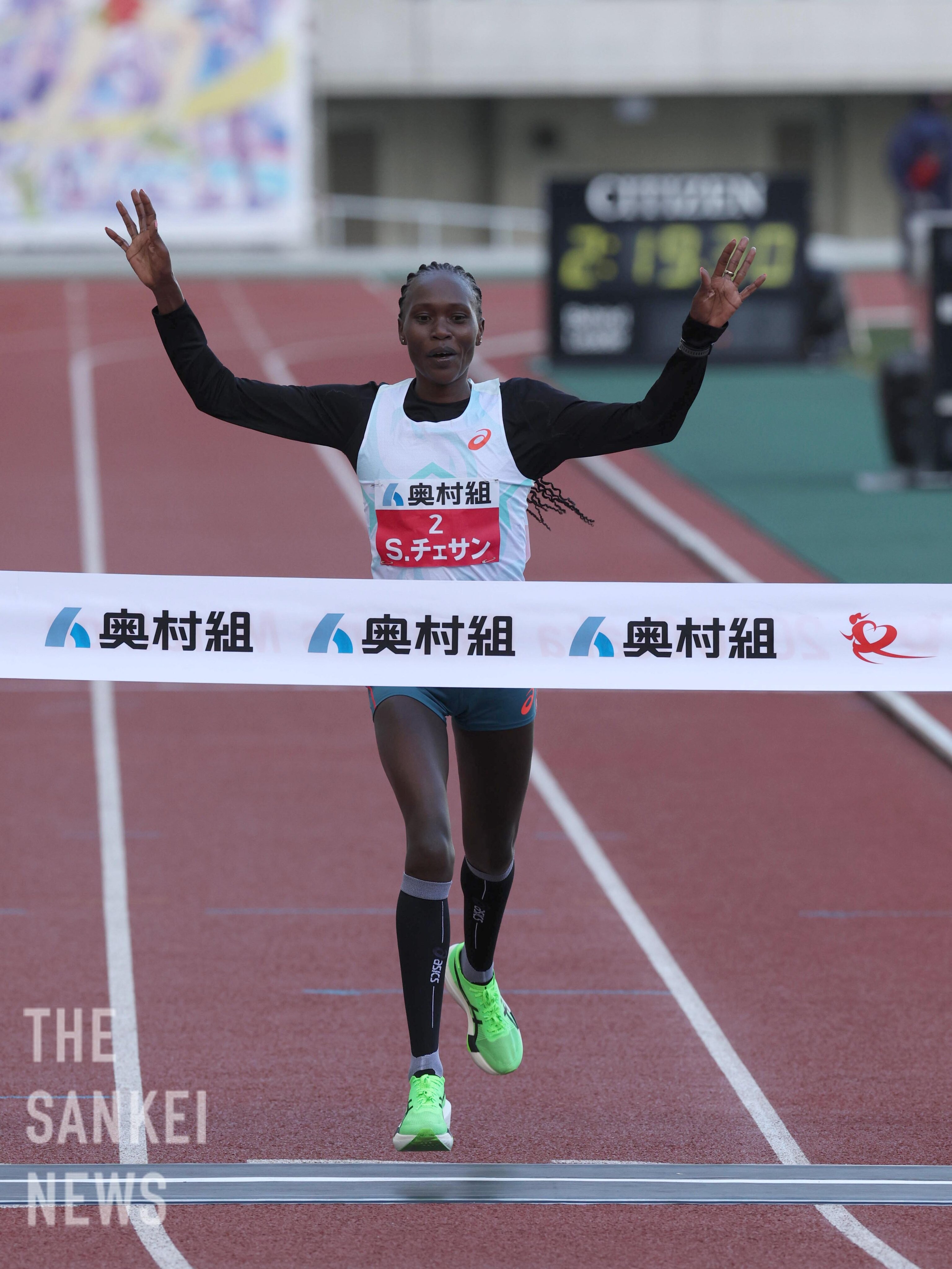
The race also had a historic moment for Japan. Mikuni Yada, in her marathon debut, ran courageously against the world’s best, finishing fourth in 2:19:57. Her time set the fastest marathon debut in Japanese women’s history, a performance that promises a bright future for the nation’s distance running scene and earned thunderous applause from fans.
The depth of talent in Osaka was on full display. Japanese athletes like Mao Uesugi (2:23:07), Rie Kawauchi (2:24:16, PB), Mizuki Matsuda (2:26:16), and Nanaka Izawa (2:27:45, PB) proved that the country’s marathon scene is strong and rising, while international stars added fierce competition at the front.
From the first kilometer to the final finish line, the 2026 Osaka Marathon was a showcase of endurance, strategy, and heart. Chesang’s victory, Yada’s historic debut, and the tight finishes across the top positions made this edition a race to remember — a perfect example of why Osaka remains one of the world’s premier women’s marathon events.
Top 10 Finishers:
1. Stella Chesang (UGA) — 2:19:31
2. Workenesh Edesa (ETH) — 2:19:54
3. Bedatu Hirpa (ETH) — 2:19:56
4. Mikuni Yada (JPN) — 2:19:57 (Debut NR)
5. Mao Uesugi (JPN) — 2:23:07
6. Rie Kawauchi (JPN) — 2:24:16 (PB)
7. Mizuki Matsuda (JPN) — 2:26:16
8. Nanaka Izawa (JPN) — 2:27:45 (PB)
9. Mizuki Nishimura (JPN) — 2:28:21
10. Madoka Nakano (JPN) — 2:29:29
The Osaka International Women’s Marathon 2026 will be remembered as a race of courage, records, and unforgettable performances — a true celebration of elite women’s distance running.
(01/25/2026) ⚡AMPby Erick Cheruiyot for My Bestruns.
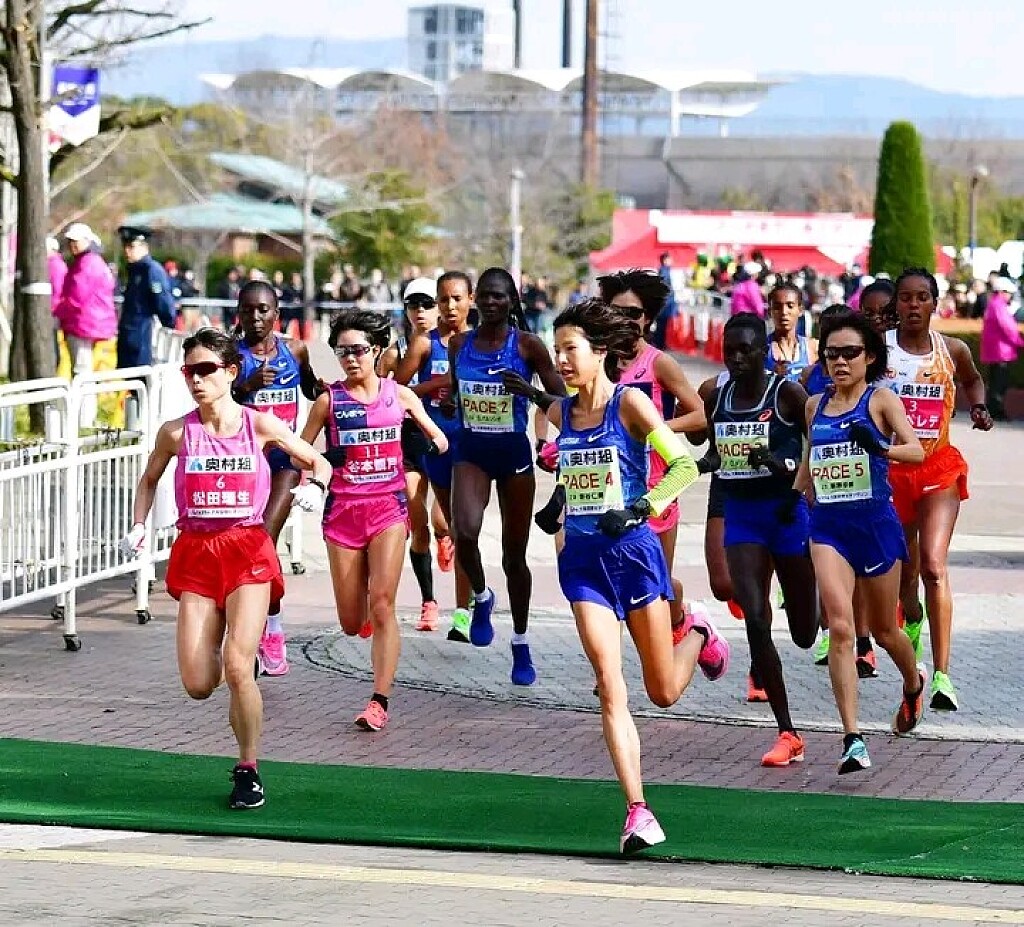
Crowned by the Streets of Osaka: Marathon Queens Clash for 2026 Glory
As dawn breaks over Osaka, the city will transform into a grand stage of endurance, elegance, and elite ambition. On Sunday, January 25, the 2026 Osaka Women’s Marathon returns with a promise that goes beyond distance — a promise of history, pride, and fierce competition among the world’s finest women marathoners.
The clock will strike 12:15 PM local time in Japan, while Africa awakens to the drama at 6:15 AM, and the Pacific coast watches under Saturday night lights. When the starting gun fires, all eyes will be fixed on the flowing rhythm of champions chasing both victory and legacy.
At the heart of this year’s spectacle stands Workenesh Edesa of Ethiopia, a runner already woven into Osaka folklore. Champion in 2024 and 2025, Edesa arrives seeking a rare and remarkable third consecutive title. Calm, composed, and devastatingly efficient, the 33-year-old brings with her a personal best of 2:17:55, set in Hamburg in 2025 — a statement of form that makes her the woman to beat once again.
But history does not go unchallenged.
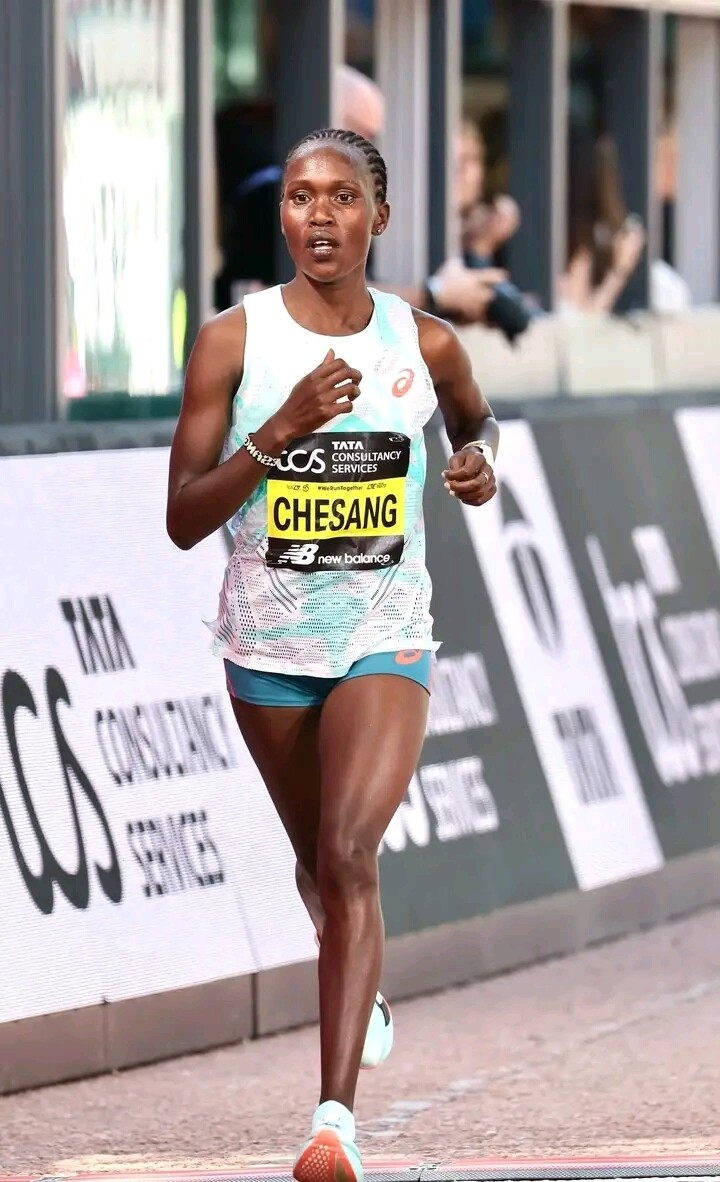
From Uganda, Stella Chesang steps onto the Osaka roads with quiet menace. At 29, she blends patience with explosive strength, owning a 2:18:26 personal best from Valencia. Her presence ensures that any moment of hesitation could be punished, and that the race will demand courage as much as conditioning.
Completing the African trio is Ethiopia’s rising force, Bedatu Hirpa. At just 26, Hirpa represents the new generation — fearless, relentless, and hungry. Her 2:18:27 from Dubai signals readiness to step fully into the spotlight, and Osaka could be the stage where promise turns into authority.
Yet this marathon is not solely an African affair.
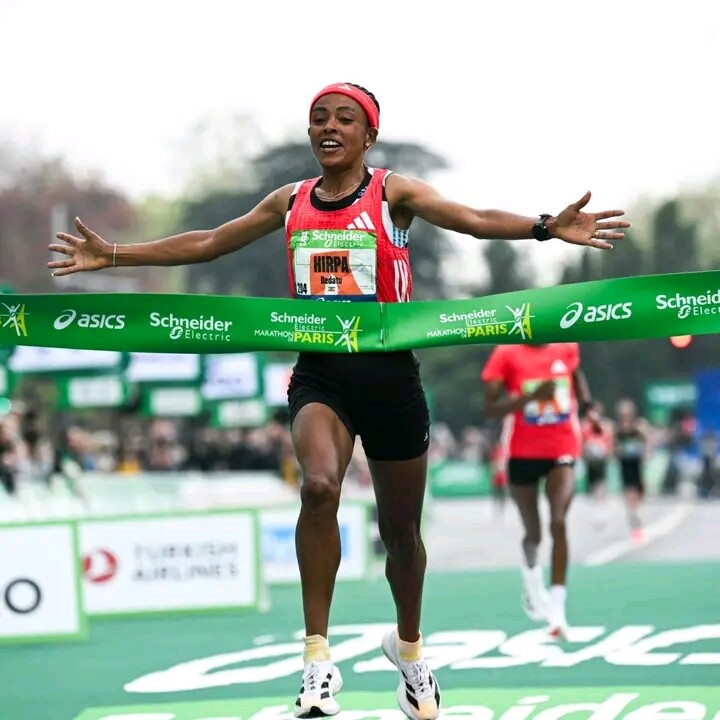
Japan answers with depth, discipline, and home-ground resolve. Mizuki Matsuda, racing for Osaka-based Daihatsu, leads the domestic charge. Her 2:20:42 from Berlin places her among Japan’s most reliable contenders, and the roar of local support may fuel something special. Alongside her, Mao Uesugi and Mizuki Nishimura embody consistency and youthful ambition, while veterans like Chiharu Suzuki, Madoka Nakano, and Nanaka Izawa bring experience carved from countless kilometers.
The Japanese lineup is rich in contrast — youth beside wisdom, patience beside boldness — each runner chasing her own definition of success on these familiar streets.
Osaka has always been more than a marathon course. It is a proving ground. A place where champions are tested not only by pace, but by pressure; not only by rivals, but by expectation. Every corner, every crowd, every silent stretch of road asks the same question: Who is ready to rule today?
On Sunday, the answer will be written step by step, breath by breath, across 42.195 unforgiving kilometers.
Three-time glory or a new queen’s coronation — Osaka is ready.
(01/23/2026) ⚡AMPby Erick Cheruiyot for My Bestruns.

Osaka International Womens Marathon
The Osaka International Ladies Marathon is an annual marathon road race for women over the classic distance of 42.195 kilometres which is held on the 4th or 5th Sunday of January in the city of Osaka, Japan, and hosted by Japan Association of Athletics Federations, Kansai Telecasting Corporation, the Sankei Shimbun, Sankei Sports, Radio Osaka and Osaka City. The first...
more...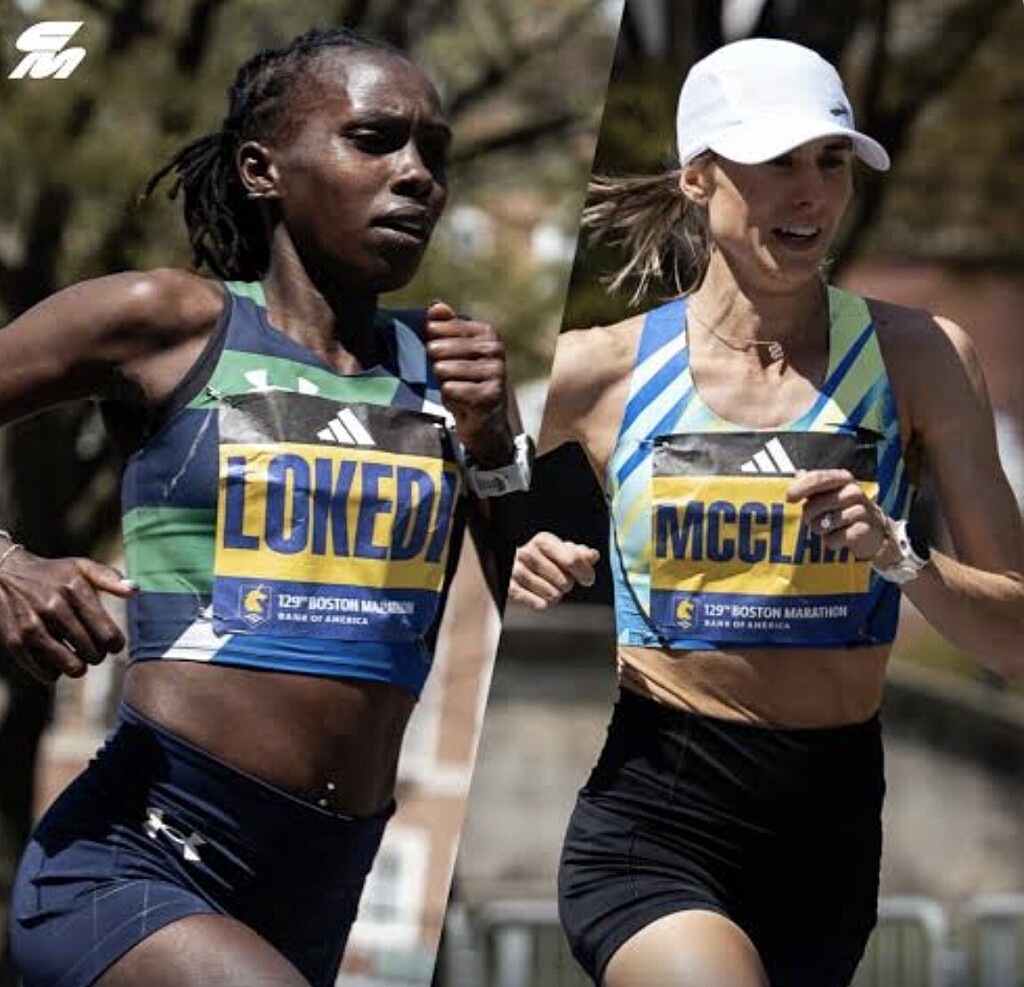
American Depth Meets Global Firepower in Women’s Field for 130th Boston Marathon
The Boston Athletic Association (B.A.A.) has unveiled the women’s professional field for the 130th Boston Marathon presented by Bank of America, and the lineup signals one of the most competitive women’s races in event history. Athletes representing 18 countries will take the start, led by what may be the deepest American contingent ever assembled in Boston.
Thirteen U.S. women in the field have broken 2:26 for the marathon, setting the stage for aggressive racing on a course where experience and tactics often matter as much as raw speed.
“The 130th edition of the Boston Marathon presented by Bank of America will feature unrivaled depth and head-to-head racing,” said Mary Kate Shea, Chief Operating Officer of the B.A.A. “The strength of the American field combined with the international experience sets the stage for a thrilling race on Boylston Street.
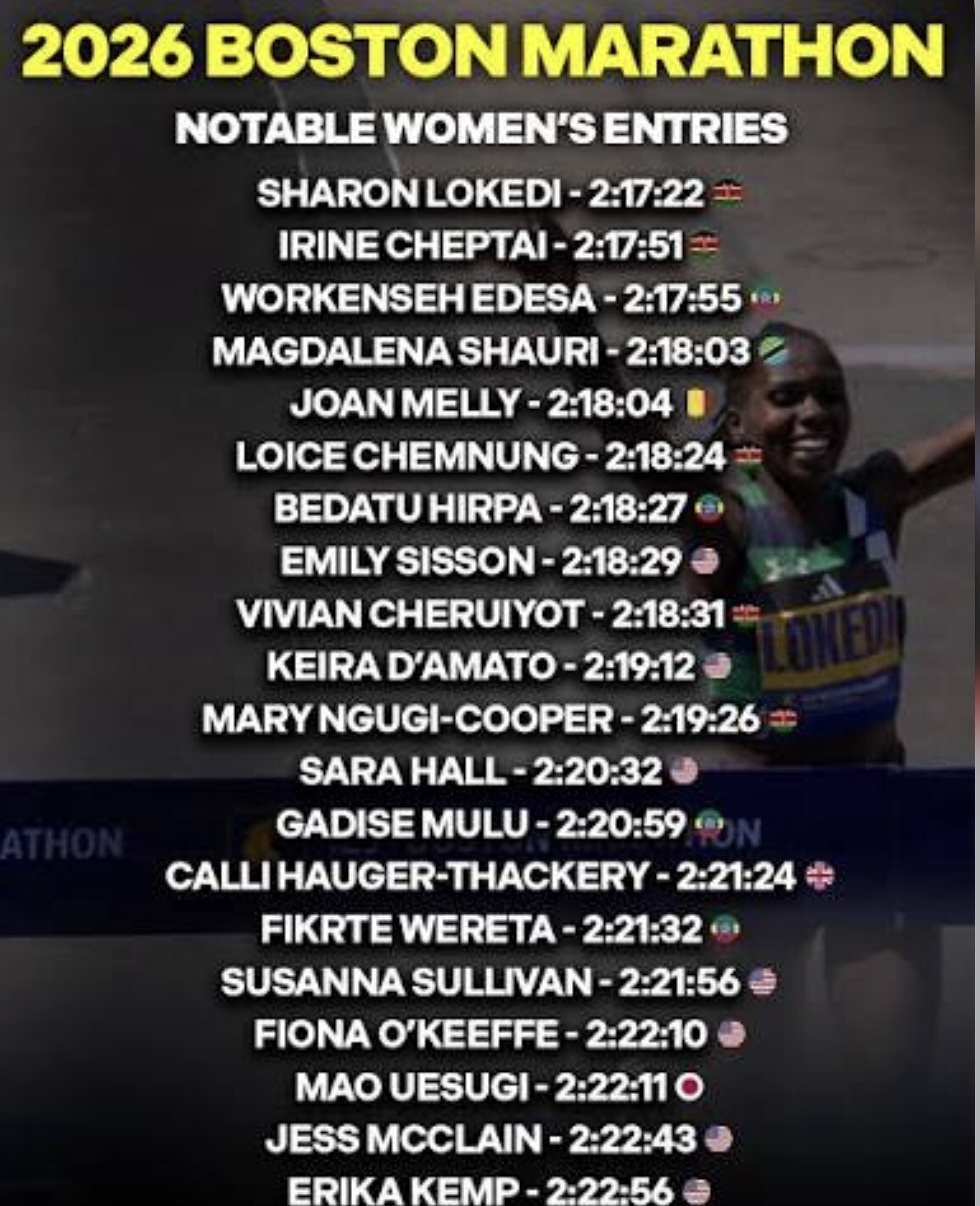
Headlining the U.S. squad is the full 2024 Olympic Marathon team: Emily Sisson, Fiona O’Keeffe, and Dakotah Popehn. Sisson enters as the American record holder at 2:18:29, while O’Keeffe is coming off a strong fourth-place finish at the 2025 New York City Marathon. Popehn posted a lifetime best of 2:24:21 at Chicago last fall.
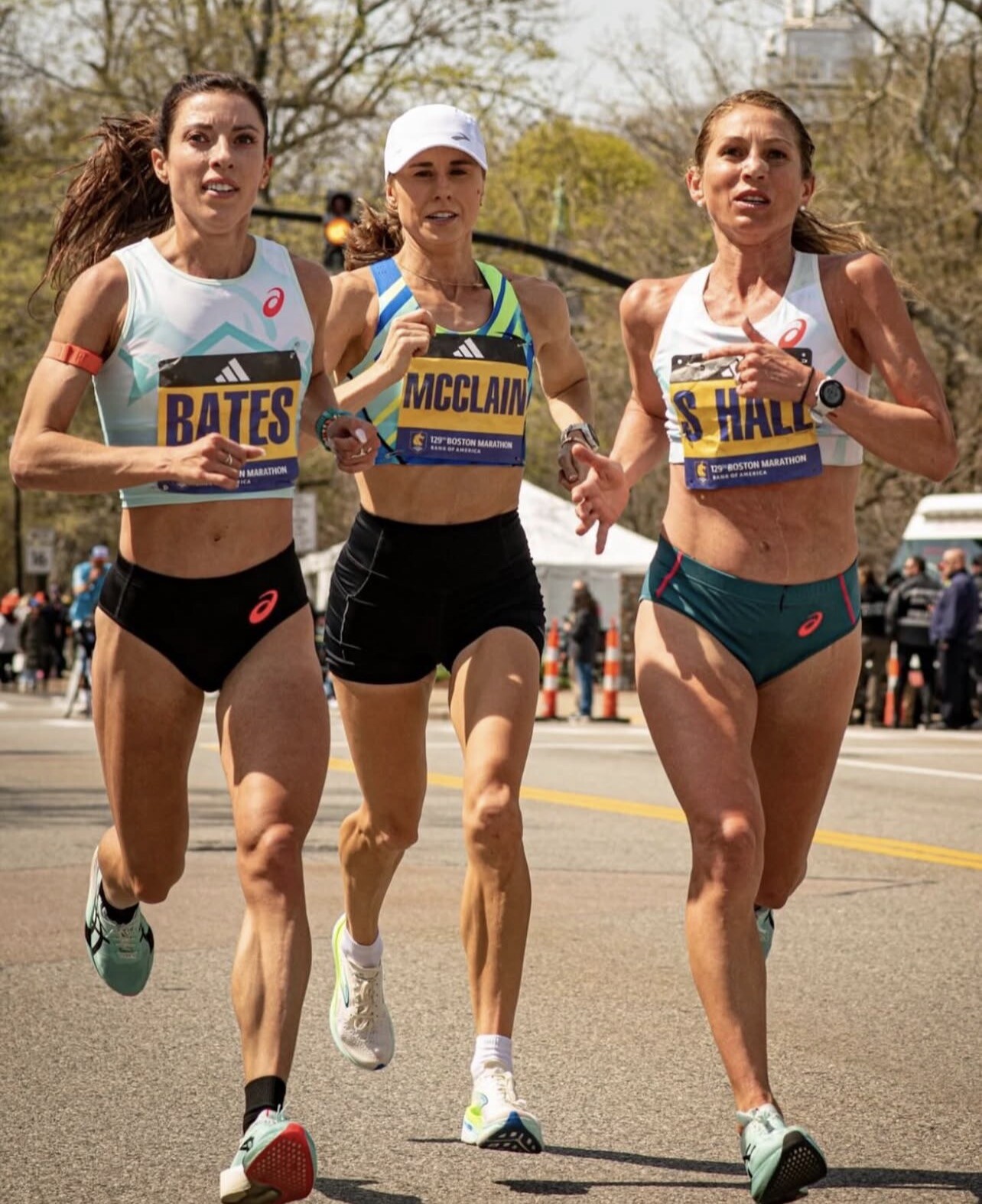
Joining them is the entire U.S. team from the World Championships Marathon in Tokyo: Susanna Sullivan, Jess McClain, and Erika Kemp. McClain was the top American at Boston last year, finishing seventh in 2:22:43, while Kemp owns a personal best of 2:22:56, the fastest marathon ever run by a U.S.-born Black woman.
Annie Frisbie, eighth in Boston last year, returns after a fifth-place finish in New York, and Keira D’Amato, the former American record holder, will make her third Boston appearance. Veteran Sara Hallalso returns after a runner-up finish at the Houston Marathon in January.
Several Americans will make their Boston debuts, including Megan Sailor, Natosha Rogers, and Amanda Vestri, underscoring the breadth of U.S. talent now entering the marathon ranks.
Internationally, the challenge remains formidable. Defending champion Sharon Lokedi returns after her course-record 2:17:22 victory last year, joined by fellow Kenyans Irine Cheptai and Vivian Cheruiyot. Ethiopia is represented by Workenesh Edesa and Bedatu Hirpa, both proven winners on the global circuit.
Experience on Boston’s unforgiving course will be key for Calli Hauger-Thackery, who enjoyed a breakout 2025 season, and Kenya’s Mary Ngugi-Cooper, a five-time Boston top-ten finisher with a personal best of 2:19:25.
In the women’s wheelchair division, defending champion Susannah Scaroni leads the field after a dominant 2025 season that included victories in Boston, Chicago, New York, and Sydney. Switzerland’s Catherine Debrunner and Manuela Schär return as top challengers, with Schär holding the course record.
With elite depth across disciplines and generations, the women’s race at the 130th Boston Marathon is shaping up as one of the most compelling editions in recent memory—where tactics, experience, and courage will once again decide who claims glory on Boylston Street.
(01/21/2026) ⚡AMPby Boris Baron

Boston Marathon
Among the nation’s oldest athletic clubs, the B.A.A. was established in 1887, and, in 1896, more than half of the U.S. Olympic Team at the first modern games was composed of B.A.A. club members. The Olympic Games provided the inspiration for the first Boston Marathon, which culminated the B.A.A. Games on April 19, 1897. John J. McDermott emerged from a...
more...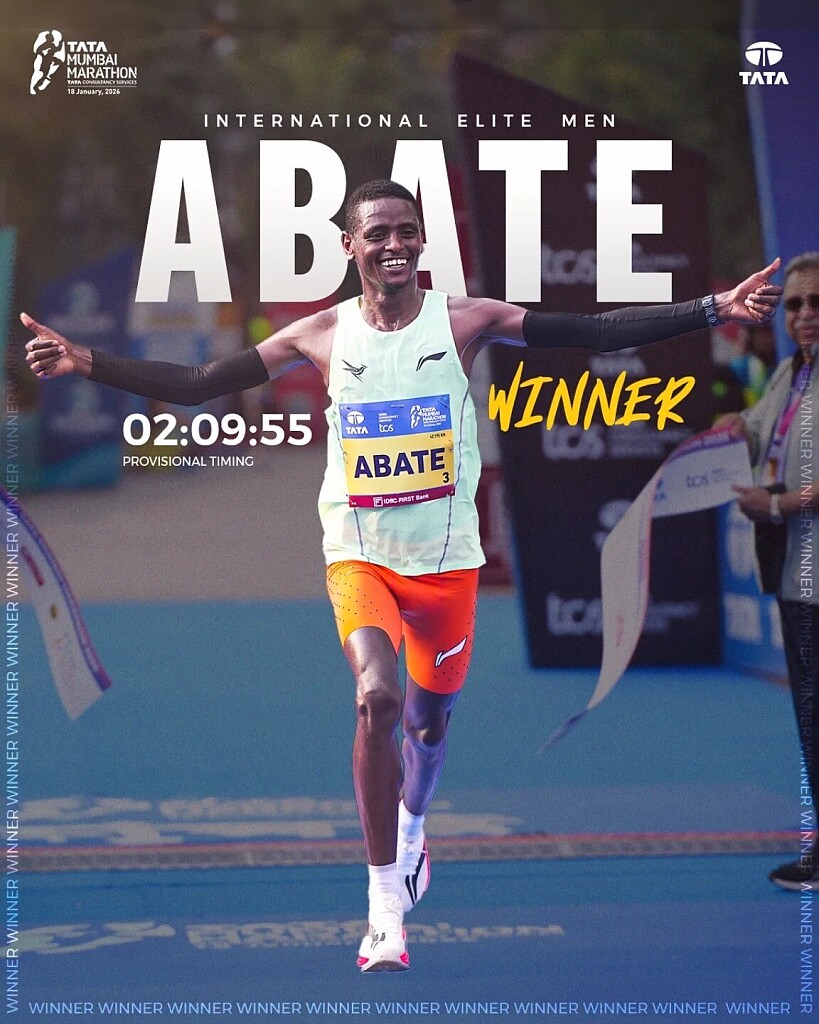
21st Tata Mumbai Marathon: Abate Deme Surges to Victory in Tactical Men’s Thriller
The 21st edition of the Tata Mumbai Marathon, staged under the title sponsorship of the Tata Group, produced a compelling men’s race shaped by strategy, endurance, and mental resilience. Run over Mumbai’s iconic 42.195 km course — featuring long exposed stretches along Marine Drive and a demanding spiral climb in the closing kilometres — the race unfolded under rising January temperatures and increasing humidity, turning it into as much a test of judgment as raw strength.
A High-Stakes Duel in the Final Kilometres
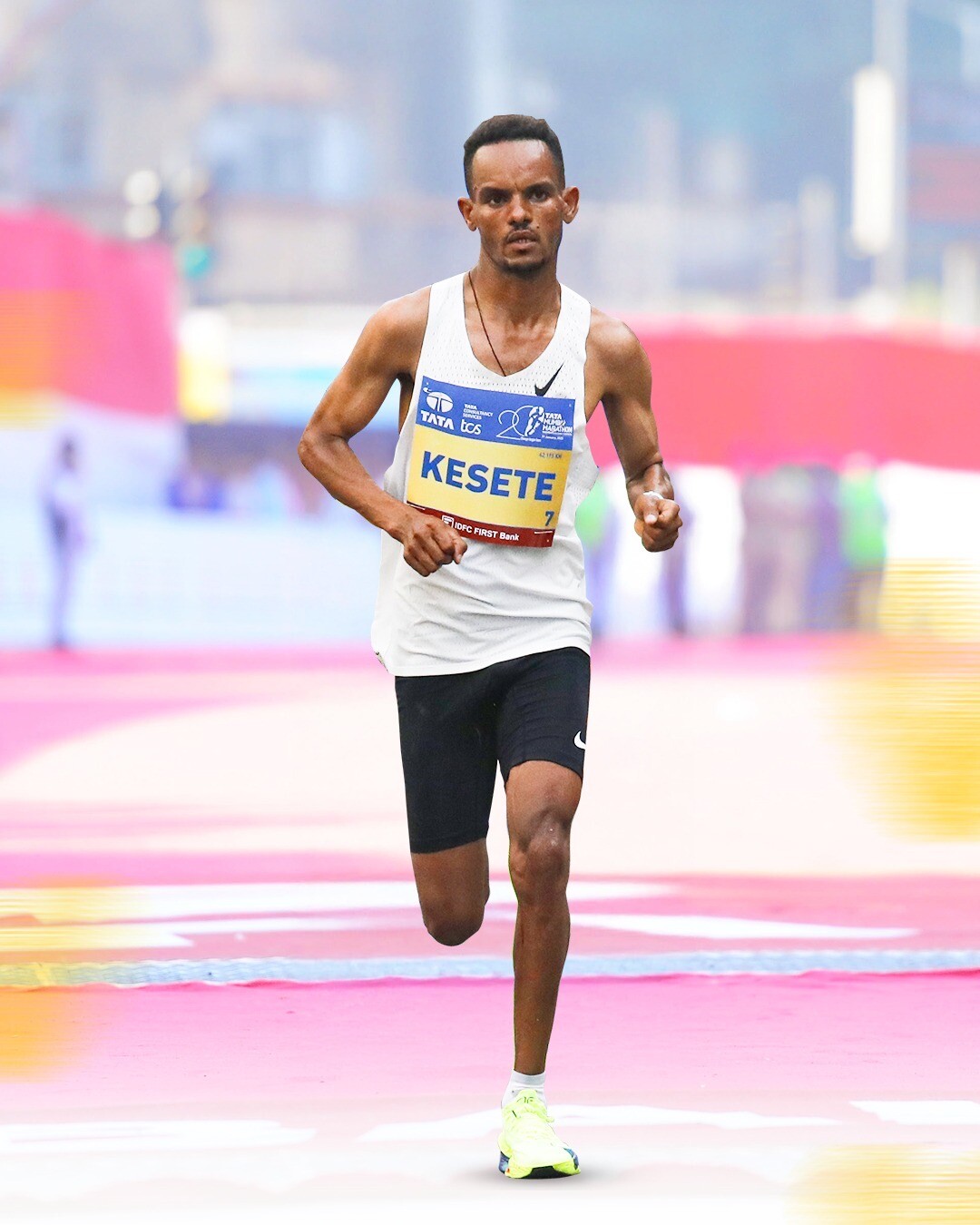
The men’s contest ultimately narrowed to a gripping duel between Ethiopia’s Tadu Abate Deme and Kenya’s Leonard Lang’at, with Eritrea’s Merhawi Kesete Weldemaryam remaining in contention deep into the race. As the decisive kilometres approached, the tension was unmistakable. “Neither of them giving any quarter. They’re both absolutely exhausted here,” commentators observed, capturing the mental and physical toll exacted by the Mumbai course.
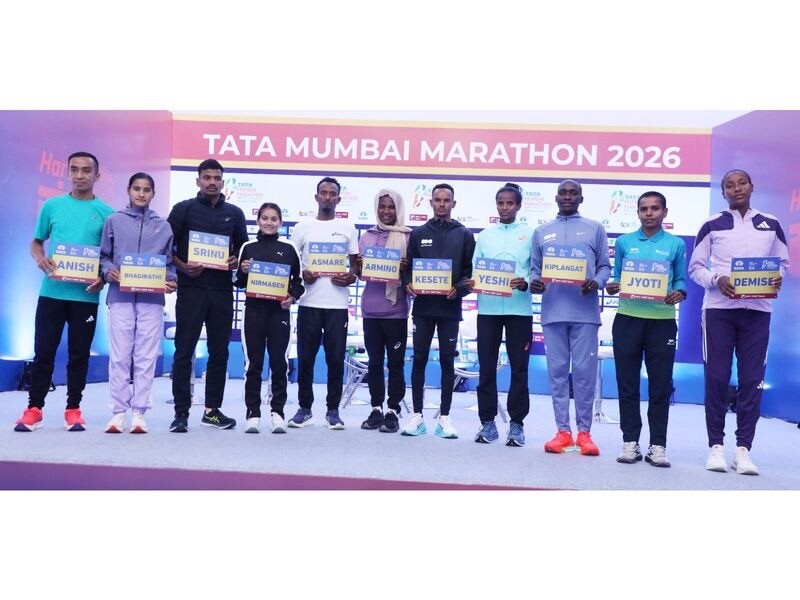
Abate, 28, arrived with an impressive résumé. His personal best of 2:05:55, set three years earlier in Tokyo, highlights his ability to combine speed with endurance. A frequent and consistent racer, Abate completed three marathons in 2025 alone — including one just six weeks before Mumbai — demonstrating exceptional recovery and conditioning. Inspired by Kenenisa Bekele, he blends track-like efficiency with road-racing instincts, conserving energy and striking precisely when it matters most.
Lang’at brought his own credentials to the battle. A seasoned marathoner known for strong finishes and tactical awareness, the Kenyan owns personal bests in the 2:08–2:09 range and has built a reputation as a relentless competitor in tightly contested races. As the leaders broke clear late, commentators noted, “It’s a mental battle between these two now, as much as a physical battle… Abate is moving smoothly. He can relax a little now; he’s got the race won.”
Weldemaryam, representing Eritrea, showcased steady progression on the international stage. Though unable to match Abate’s final acceleration, his endurance kept him among the leaders until the closing kilometres. “He’s been a good runner… getting better and better like a good wine,” the commentary reflected, underscoring his continued development.
Tactical Racing Takes Center Stage
By 40 km, the leaders had passed through 2:03:08, a clear signal that the race had shifted from time-chasing to a tactical contest of patience and resolve. Abate’s decisive move came after the final left-hand turn away from Marine Drive, where he surged with authority and opened a gap Lang’at could not close despite a determined pursuit.
The Mumbai course’s exposed roads, coastal winds, and late-race climb demanded precise energy management. Abate executed his race plan flawlessly — staying controlled through the middle stages, reading his rivals, and accelerating only when fatigue began to show in the field.
Lang’at, while ultimately second, demonstrated grit and composure throughout, while Weldemaryam and the chasing pack added depth to a men’s race in which every kilometre required concentration and discipline.
A Race Defined by Intelligence and Strength
The men’s race at the 21st Tata Mumbai Marathon will be remembered as a high-calibre strategic battle — one where Ethiopian excellence once again prevailed, but Kenyan and Eritrean challengers ensured a gripping international contest. Abate Deme’s well-timed surge earned him victory in 2:09:55, with Lang’at close behind and Weldemaryam rounding out the podium.
Once again, Mumbai proved that it rewards tactical intelligence, mental fortitude, and resilience as much as speed, reinforcing its reputation as one of Asia’s most demanding and strategically complex marathons.
Men’s International Elite Top 6 – 2026 Tata Mumbai Marathon
1. Tadu Abate Deme (ETH) – 2:09:55
2. Leonard Lang’at (KEN) – 2:10:10
3. Merhawi Kesete Weldemaryam (ERI) – 2:10:22
4. Gada Gemsisa Gudeta (ETH) – 2:10:49
5. Victor Kiplangat (UGA) – 2:11:02
6. Benjamin Kigen (KEN) – 2:15:28
(01/18/2026) ⚡AMPby Robert Kibet for My Best Runs

Tata Mumbai Marathon
Distance running epitomizes the power of one’s dreams and the awareness of one’s abilities to realize those dreams. Unlike other competitive sports, it is an intensely personal experience. The Tata Mumbai Marathon is One of the World's Leading Marathons. The event boasts of fundraising platform which is managed by United Way Mumbai, the official philanthropy partner of the event. Over...
more...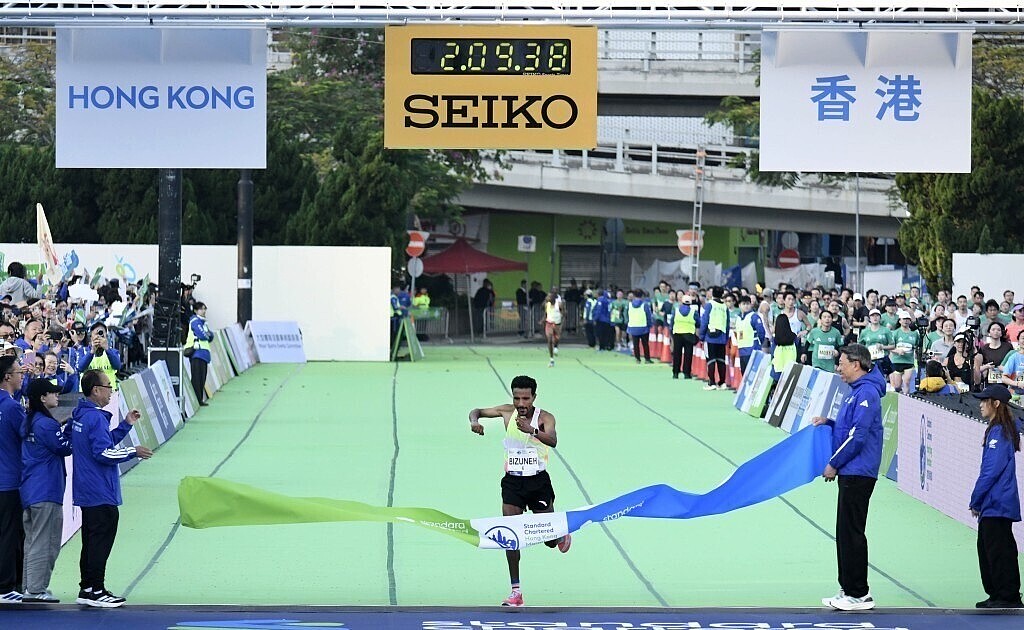
Balachew and Eshete Claim Hong Kong Marathon Titles in Thrilling 30th Edition
Ethiopia’s Bizuneh Balachew and Bahrain’s Shitaye Eshete Habte claimed top honors at the 30th Standard Chartered Hong Kong Marathon, delivering decisive performances on one of Asia’s most demanding urban courses along Victoria Harbour.
From the opening kilometers, the men’s race unfolded as a tactical chess match. A tightly packed lead group — including Kenyans Silas Too, Francis Kipkorir, and Douglass Kimeli — matched Balachew stride for stride through the first 25 kilometers. The pivotal moment came just past 30 km, when Balachew surged decisively, opening a small but crucial gap.
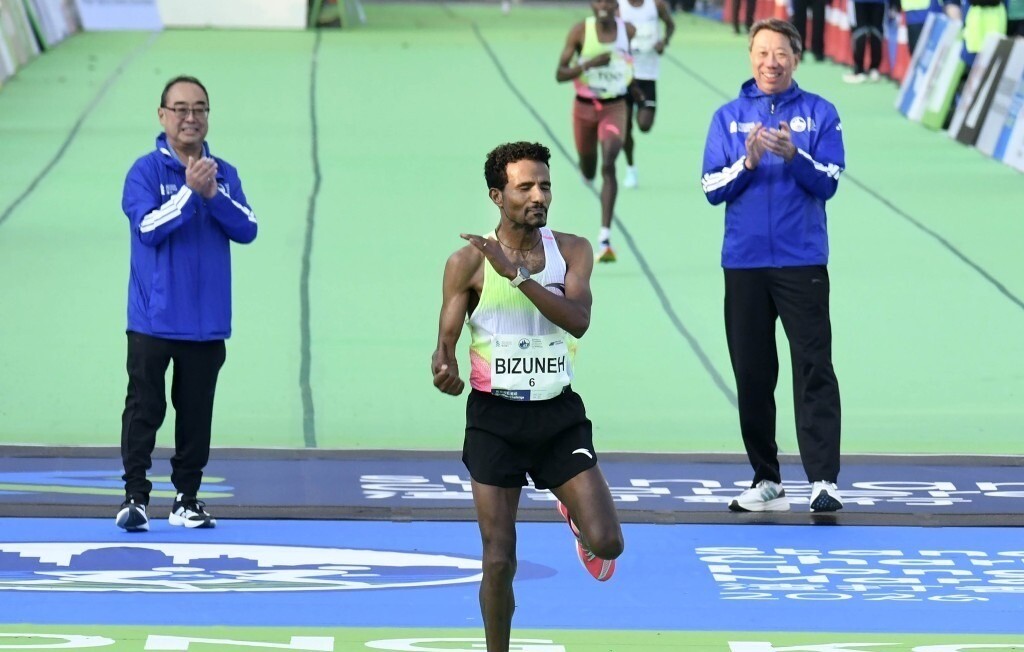
Despite an aggressive chase from the Kenyan trio, Balachew held his form and composure to cross the line in 2:09:39, finishing 17 seconds ahead of Too and 20 seconds clear of Kipkorir. The victory marked a significant international win for Balachew, who owns a personal best of 2:06 from Berlin in 2024.
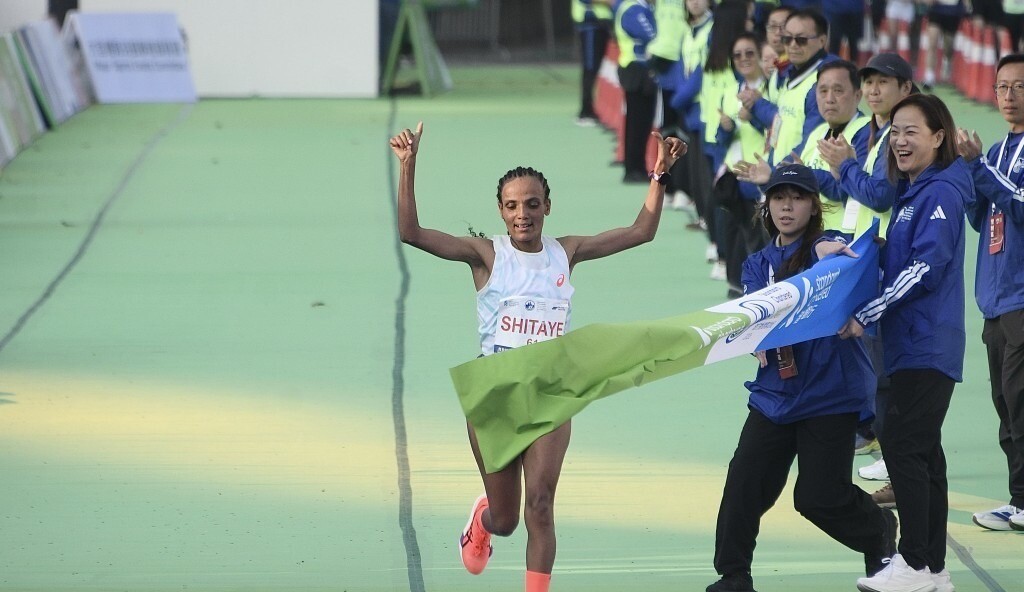
The depth of the men’s field was evident throughout the top ten, with Kimeli (2:10:17), Edwin Koech (2:10:24), and Han Ii Ryong (2:10:39) all finishing within a minute of the winner.
The women’s race proved equally compelling. Eshete Habte ran patiently through the early stages, keeping Ethiopia’s Tesfay Haftu and Kenya’s Linet Masai within reach. In the final kilometers, Eshete injected a well-timed surge, creating just enough separation to secure victory in 2:29:03 — 10 seconds ahead of Haftu and 20 seconds in front of Masai.
The women’s top ten reflected the event’s international depth, featuring athletes from Bahrain, Ethiopia, Kenya, and North Korea, underscoring the global competitiveness of the Hong Kong Marathon.
Course conditions played a defining role throughout the day. The 42.195 km route — beginning on Nathan Road, winding through tunnels, crossing the Stonecutters and Ting Kau Bridges, and finishing in Victoria Park — tested athletes with rolling terrain, tight turns, and coastal winds. While not conducive to fast personal bests, the course rewarded tactical intelligence, resilience, and patience — qualities exemplified by both champions.
Local runners also delivered standout performances, with Hong Kong residents Wong Yin-chun and Law Ying-ting impressing in the marathon divisions. Across the half marathon and 10 km races, tens of thousands of recreational runners filled the streets, creating a vibrant festival atmosphere.
The 30th edition of the Standard Chartered Hong Kong Marathon once again confirmed its reputation as a World Athletics Gold Label event — seamlessly blending elite competition, international representation, and mass participation into one of Asia’s most celebrated road races.
Elite Top 10 – Men
1. Bizuneh Balachew – 2:09:39
2. Silas Too – 2:09:56
3. Francis Kipkorir – 2:09:59
4. Douglass Kimeli – 2:10:17
5. Edwin Koech – 2:10:24
6. Han Ii Ryong – 2:10:39
7. Kiprono Kipkemoi – 2:10:53
8. Irena Gemechu – 2:10:54
9. Gebre Ayenew – 2:11:07
10. Anderson Seroi – 2:11:46
Elite Top 10 – Women
1. Shitaye Eshete Habte – 2:29:03
2. Tesfay Haftu – 2:29:13
3. Linet Masai – 2:29:23
4. Adilo Kesir – 2:30:00
5. Caroline Kilel – 2:30:44
6. Geremew Workenesh – 2:31:08
7. Emily Chebet – 2:32:29
8. Jon Su Gyong – 2:32:30
9. Pak Sol Gyong – 2:35:33
10. Vivian Kosgei – 2:35:37
(01/18/2026) ⚡AMPby Robert Kibet for My Best Runs

HONG KONG MARATHON
The Hong Kong Marathon, sponsored by Standard Chartered Bank, is an annual marathon race held in January or February in Hong Kong. In addition to the full marathon, a 10 km run and a half marathon are also held. Around 70,000 runners take part each year across all events. High levels of humidity and a difficult course make finishing times...
more...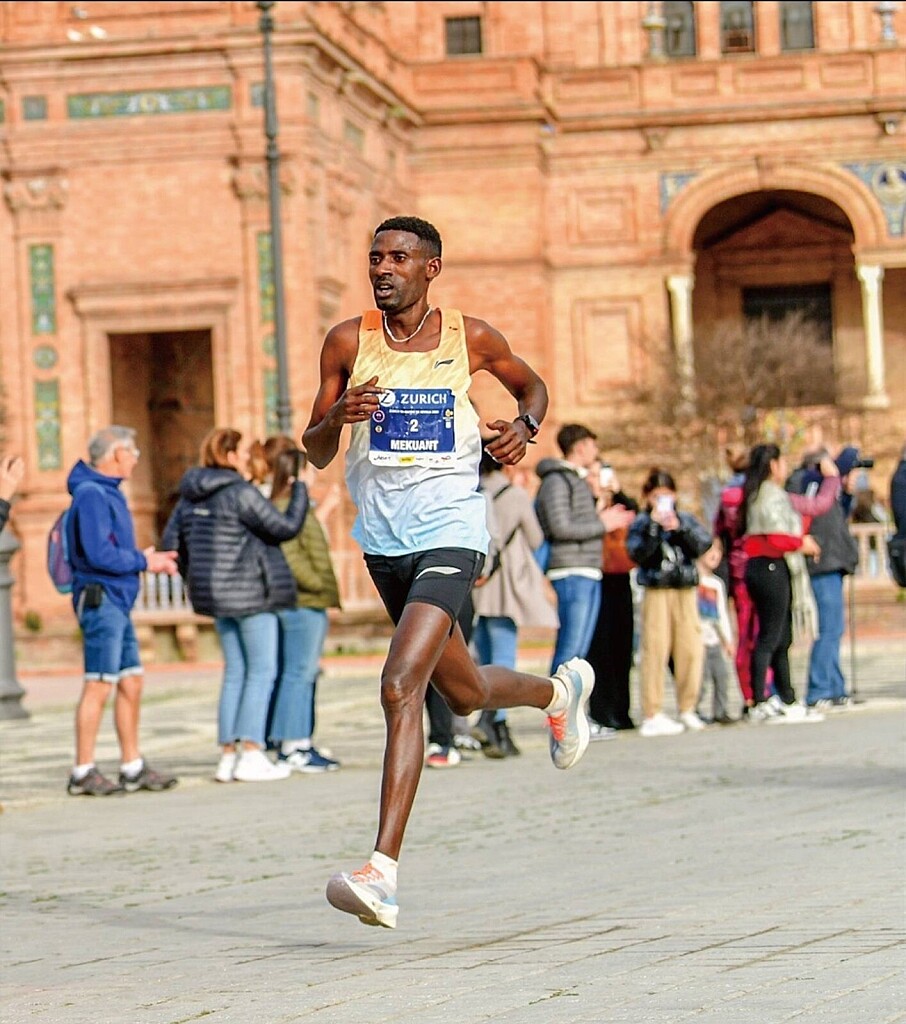
A Tactical Marathon Showdown: Elite Entrants Eye Hong Kong Glory
The Standard Chartered Hong Kong Marathon returns on Sunday, January 18, 2026, shaping up as one of the most intriguing early-season tests on the global marathon calendar. Established in 1997 and now a World Athletics Gold Label event, the race has built its reputation not on record-chasing, but on tactical nuance—where patience, positioning, and timing often trump raw speed.
That dynamic makes this year’s edition especially compelling, as a deep and accomplished elite field converges on a course known for demanding smart racing.
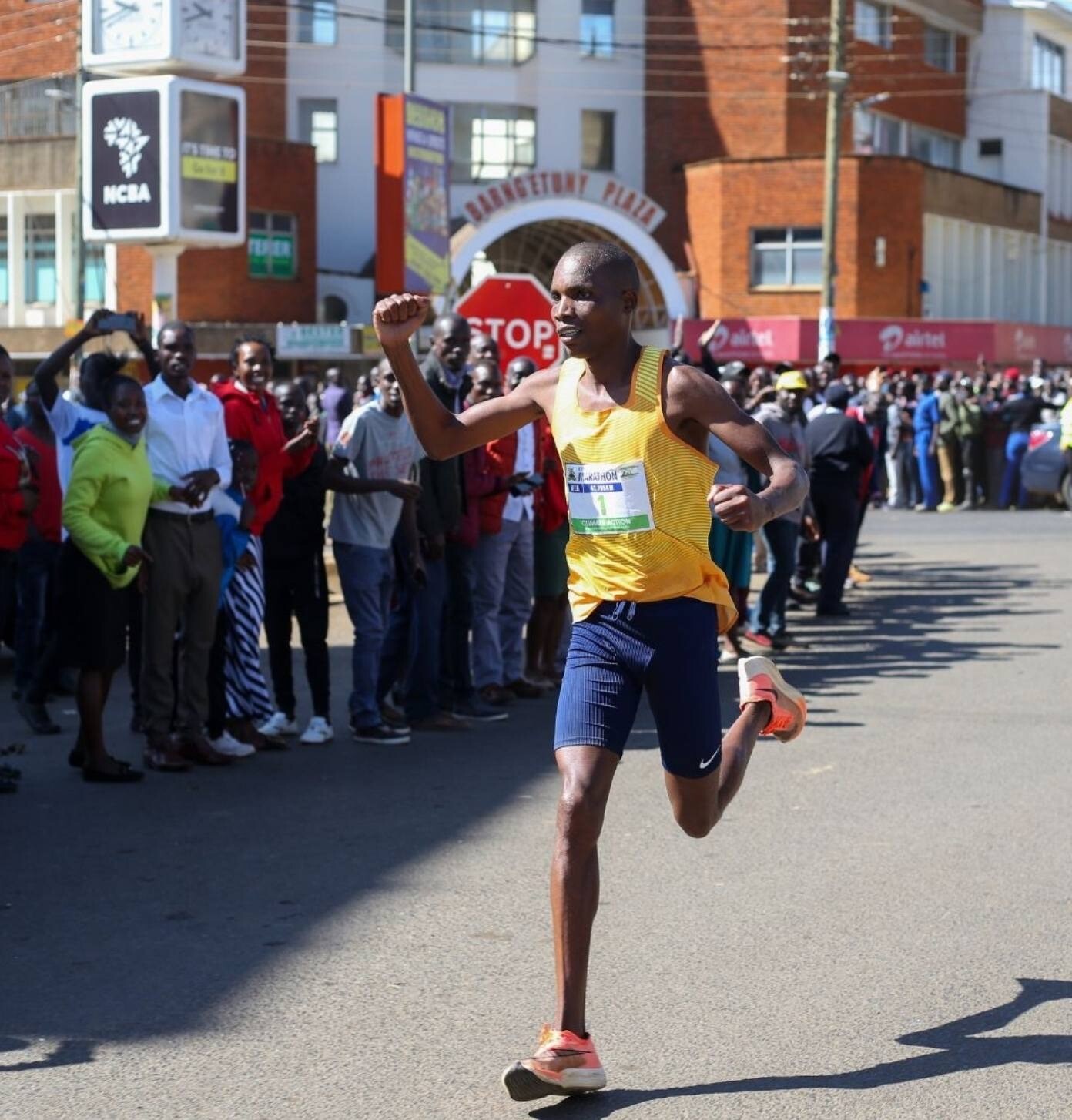
Leading the men’s start list is Ethiopia’s Gebre Mekuant Ayenew, whose personal best of 2:04:46 positions him as the clear favorite on paper. By global standards, Ayenew ranks among the sport’s upper tier—an athlete capable of world-class times if conditions allow.

But Hong Kong rarely rewards straight-line speed alone. The urban course, winding from Nathan Road to Victoria Park, features sharp turns, rolling sections, bridges, and the ever-present factor of subtropical winter humidity. These elements routinely transform the race into a chess match, where tactical awareness becomes as decisive as fitness.
Kenya’s contingent arrives with depth and experience, forming a formidable counterbalance. Victor Kipchirchir (2:05:43) stands out as the most immediate threat. Known for measured pacing and a strong finish, Kipchirchir is well-suited to a race that rewards restraint before aggression.
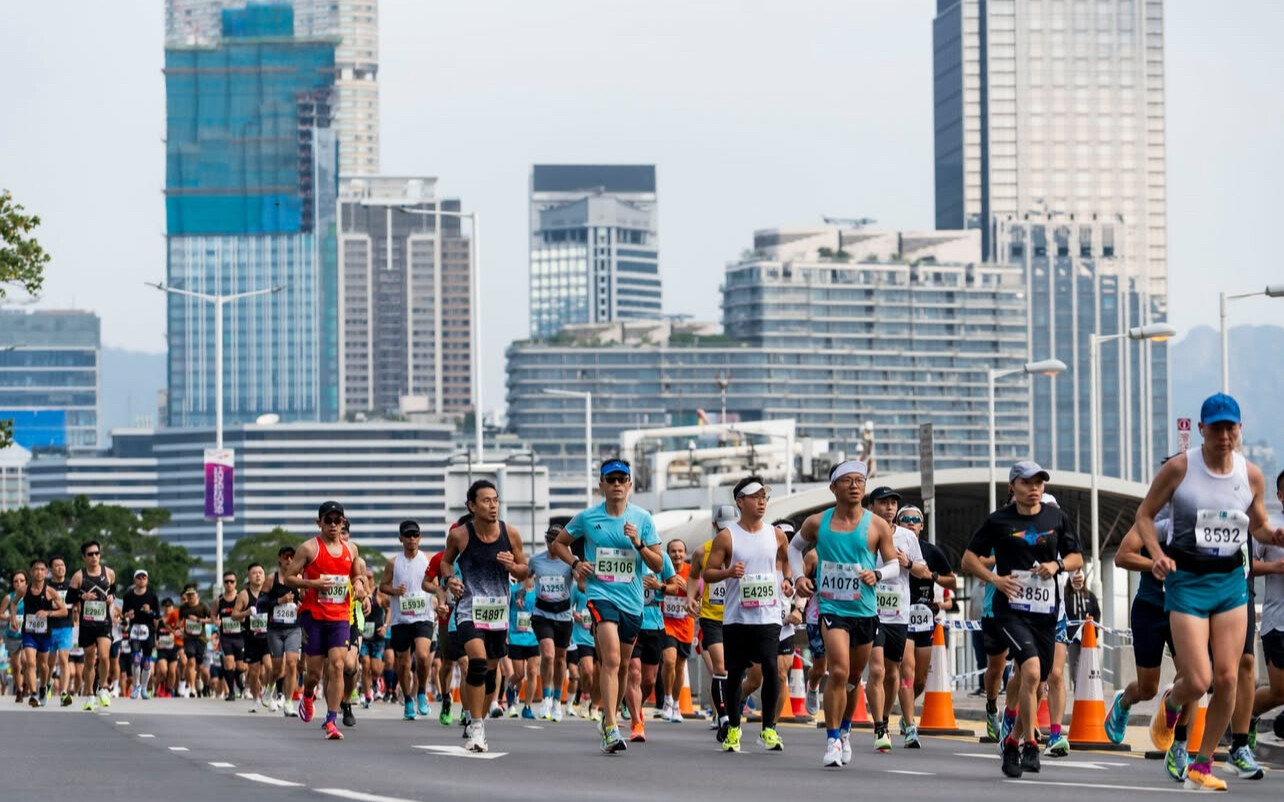
Backing him are Silas Kiprono Too (2:06:32), Kipkemoi Kiprono (2:06:45), Reuben Kiprop Kerio(2:07:00), and Simon Kipkosgei (2:07:07). Collectively, they offer tactical versatility and the ability to apply pressure during the critical middle stages—often where Hong Kong races are won or lost.
Ethiopia counters with its own depth. Abdi Fufa Nigassa (2:05:57), Gebru Nguse Redahgne(2:05:58), Yitayal Atnafu Zerihun (2:06:21), and Melaku Belachew Bizuneh (2:06:30) complete a formidable lineup. While their personal bests suggest the potential for fast running, Hong Kong history suggests that tactical surges and energy management often dictate the podium.
International intrigue comes courtesy of Yuki Kawauchi (JPN, 2:07:27), one of the sport’s most unpredictable racers. Renowned for his aggressive, fearless approach, Kawauchi has a habit of disrupting conventional pacing and forcing rivals into uncomfortable decisions. He is joined by Ghazouany Mohamed (MAR, 2:09:01) and Han Il Ryong (PRK, 2:09:42), underscoring the truly global character of the field.
Recent history provides useful perspective. In 2025, winning times hovered around 2:11–2:12, with Kenyan runners dominating the podium. The 2024 edition was similarly measured, reinforcing the course’s tactical reputation. Against that backdrop, the 2026 start list represents a notable shift: several contenders arrive with sub-2:06 credentials, raising the possibility of a quicker race—if the lead pack commits to pushing the tempo.
Still, the course demands respect. Early aggression has often been punished, while disciplined positioning and energy conservation through the mid-race sections have proven decisive. Misjudgment can lead to dramatic fade-outs over the final 10 kilometers; patience, on the other hand, often opens the door to late-race surges and podium-deciding moves.
That tension sets up a fascinating strategic question: will Ethiopia attempt to control the race through collective pacing, or will Kenya counter with tactical pressure and well-timed attacks? And could Kawauchi’s trademark aggression fracture the rhythm entirely?
With personal bests tightly clustered and tactical variables at play, Hong Kong once again promises a marathon where intelligence and restraint may outweigh even the fastest résumés.
As the 2026 marathon season gets underway, all eyes turn to January 18 when Hong Kong’s streets will host a contest shaped by history, strategy, and split-second decisions—another reminder that here, the smartest runner often wins.
(01/17/2026) ⚡AMPby Robert Kibet for My Best Runs
HONG KONG MARATHON
The Hong Kong Marathon, sponsored by Standard Chartered Bank, is an annual marathon race held in January or February in Hong Kong. In addition to the full marathon, a 10 km run and a half marathon are also held. Around 70,000 runners take part each year across all events. High levels of humidity and a difficult course make finishing times...
more...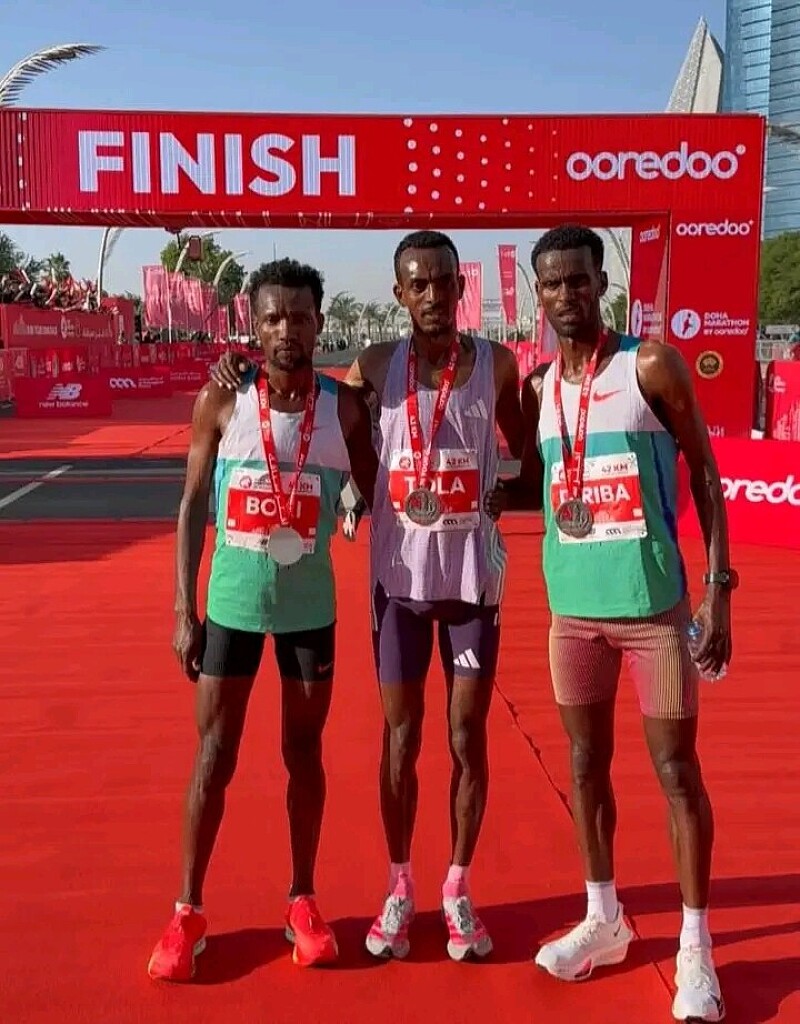
Tamirat Tola and Ethiopia’s Marathon Masterclass in Doha 2026
As dawn lifted over the Corniche and the desert air settled into a rare stillness, the 2026 Doha Marathon unfolded not as a contest of nations, but as a demonstration of Ethiopian supremacy. On the fast, flat streets of Qatar’s capital, the race became a study in patience, precision, and perfectly timed execution — orchestrated by an Olympic champion who understood exactly when to act.
Tamirat Tola arrived in Doha with quiet authority. Olympic gold had already sealed his place among the greats of the marathon, yet this race demanded a different mastery — one shaped by tactics, restraint, and the grinding reality of late-race fatigue. For much of the morning, the lead pack moved as a single organism, the pace controlled and efficient rather than reckless, each athlete conserving reserves for the moment when the marathon finally reveals its truth.
Through halfway, the tempo pressed gently against history. Tola’s running was economical and composed — shoulders relaxed, cadence smooth, effort measured. He allowed the race to come to him. By the final ten kilometers, attrition began its quiet work. One by one, challengers fell away until the contest distilled into an all-Ethiopian duel — strength set against strength, patience tested by resolve.

The decisive moment arrived at 41 kilometers, where illusion disappears and only conditioning and conviction remain. Tola shifted gears with a calm, deliberate surge. Asefa Boki responded bravely, matching strides at first, but the gap slowly widened. Fifteen seconds would separate them at the line — a margin modest on paper, immense in execution.
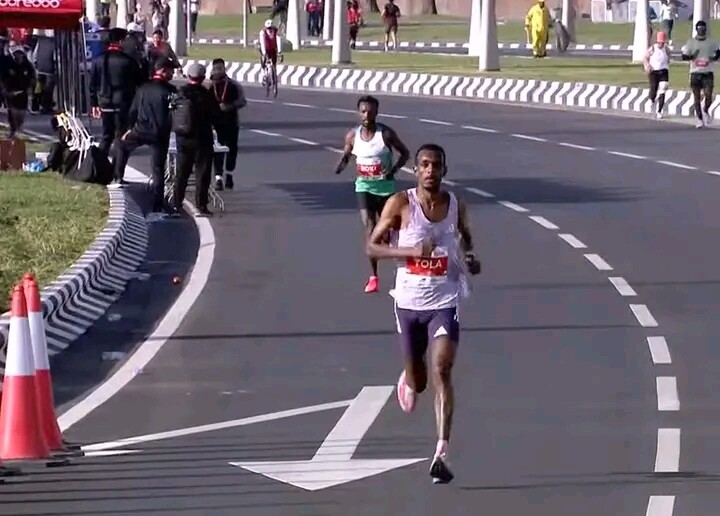
Tola crossed first in 2:05:40, shattering the previous course record of 2:06:49 and redefining what was possible on Doha’s roads. Boki followed in 2:05:55, with Boki Diriba claiming third in 2:06:26, completing an emphatic all-Ethiopian podium sweep. The dominance extended beyond medals: Dinkalem Ayele and Balew Yihunle secured fourth and fifth, sealing a clean Ethiopian lockout of the top five. Eritrea’s Oqbe Kibrom Ruesom and Kenya’s Nicholas Kirwa fought gamely further back, but on this day, Doha belonged unmistakably to Ethiopia.
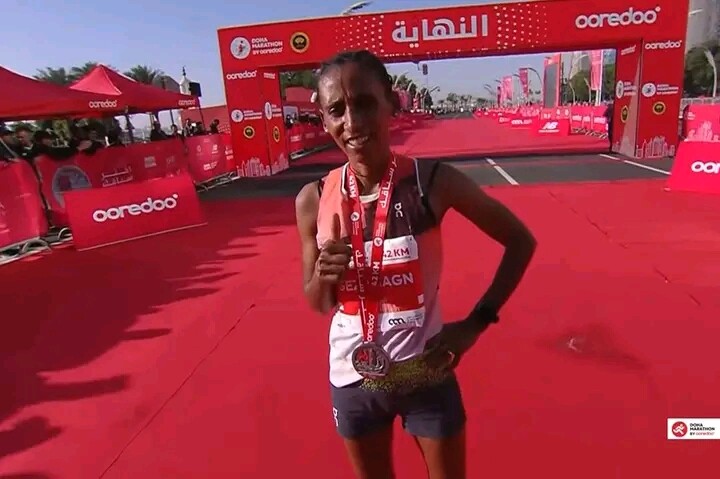
That authority was echoed powerfully in the women’s elite race. Tigist Gezahagn delivered a commanding performance to claim victory in 2:21:14, finishing just 28 seconds shy of the women’s course record of 2:20:46. Her run was defined by discipline — controlled pacing, intelligent energy management, and composure in the decisive closing kilometers. Tigist Girma followed in 2:22:33, while Guta Abiyote secured third in 2:23:21, confirming another Ethiopian sweep of the podium.
The depth was striking. Nine of the top ten women were Ethiopian, a reflection not merely of individual brilliance, but of a system that consistently produces marathoners who are technically sound, tactically intelligent, and resilient under pressure.
Beyond times and placings, Doha delivered a message. Tola, Gezahagn, and their compatriots showcased the full spectrum of Ethiopian distance-running excellence — patience over panic, precision over impulse, and authority when fatigue strips the race down to its essence. This was not just a marathon won; it was a hierarchy reaffirmed.
As the finish tape fell and the sun climbed higher over the Corniche, the conclusion was unmistakable. Ethiopian distance running remains not only alive, but dominant — and Tamirat Tola, operating at the height of his powers, continues to accelerate precisely when others begin to slow.
(01/16/2026) ⚡AMPby Erick Cheruiyot for My Bestruns.

Ooredoo Doha Marathon
The Ooredoo Doha Marathon was created to bring the community together, inspire healthier lifestyles, and contribute to impactful charitable causes in Qatar. This annual event is a celebration of fitness, unity, and giving back, attracting participants of all ages and abilities. All proceeds from entry fees are donated to a variety of local charities, ensuring that every step taken supports...
more...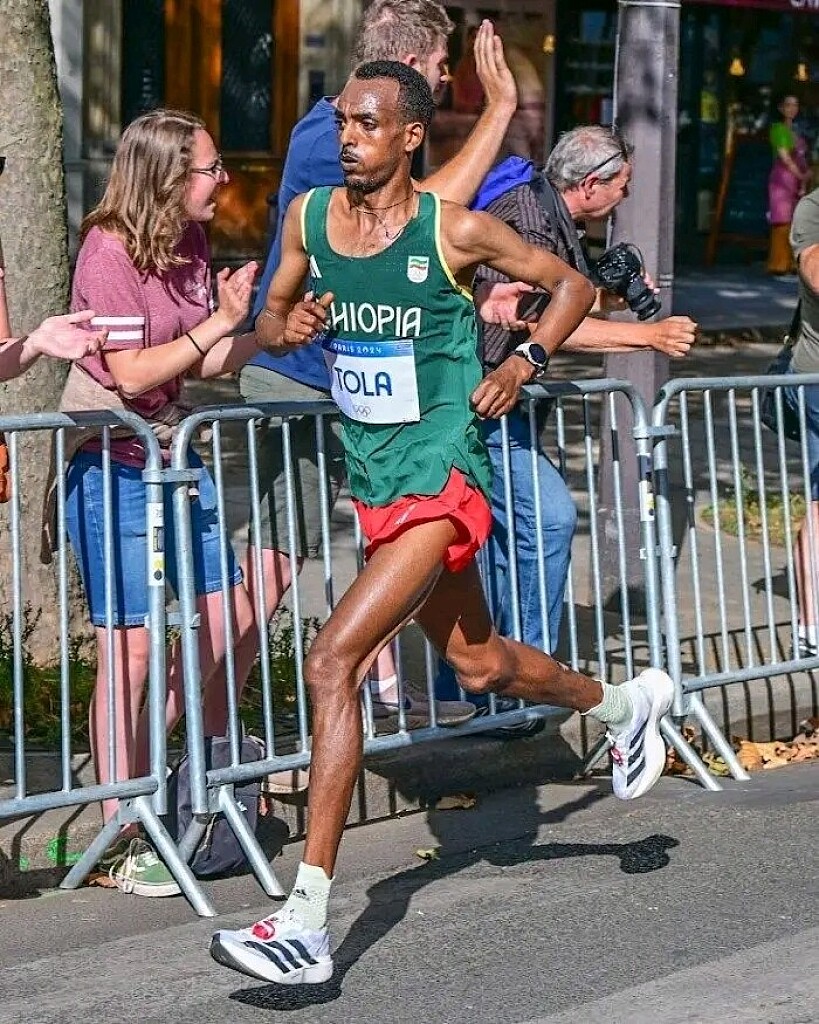
Against Time and Heat: Tamirat Tola and the Long Morning in Doha
Morning arrives softly in Doha, but the marathon never does. As the city stirs beneath the first light of January, the Doha Marathon 2026 begins its quiet negotiation with heat, humidity, and human limits. On these wide, sun-touched roads stands Tamirat Tola of Ethiopia, Olympic champion and master of the long distance, preparing to test not just his rivals, but the fragile balance between pace and survival that defines elite marathon racing.
Tola’s reputation precedes him, yet reputation alone offers no shelter in a race where conditions often dictate outcomes more than pedigree. The 6:00 AM local start is a calculated concession to the climate, but even at dawn the air carries warmth that demands restraint. In such races, the marathon ceases to be a pure test of speed and becomes instead a contest of efficiency — how economically oxygen is used, how smoothly rhythm is maintained, and how long lactate accumulation can be delayed before the inevitable reckoning in the final kilometers.
From Addis Ababa to Doha, the clocks align neatly, but the physiological demands do not. Running in warm conditions elevates heart rate, accelerates dehydration, and magnifies the cost of early aggression. The first half of this race will likely be defined not by who leads, but by who resists. Expect conservative opening splits, controlled pack running, and constant monitoring of hydration strategies, as elite athletes attempt to preserve glycogen stores for the decisive final third of the course.
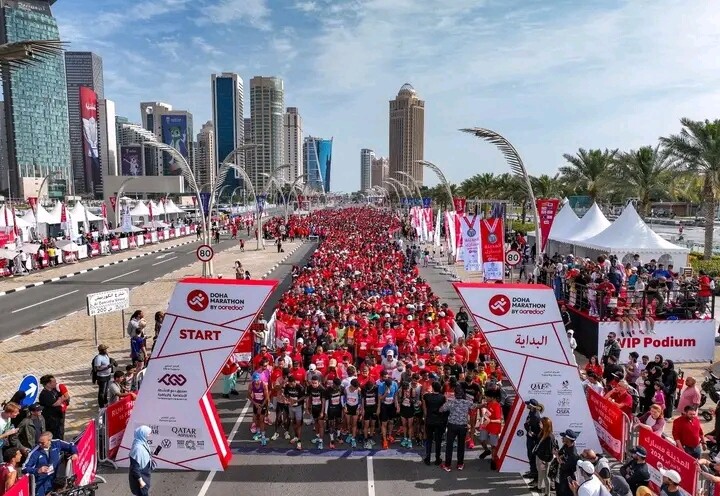
For Tola, the equation is familiar. His greatest performances have been built on patience and an instinctive sense of timing — the ability to allow a race to come to him before asserting authority. Should the pace remain honest rather than reckless, his experience in championship-style marathons may prove invaluable. However, the Doha field is deep, populated by athletes skilled in negative splits and late surges, runners who understand that in the heat, the marathon is often won after 35 kilometers, when efficiency triumphs over ambition.
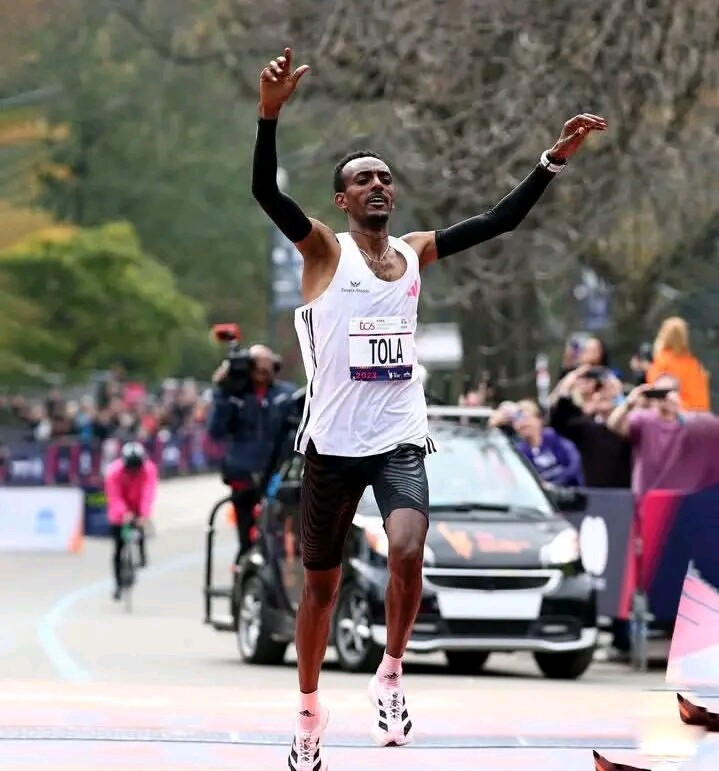
As the sun begins to rise higher and shadows shorten along the course, the race will narrow to its essentials. Cadence, posture, and fueling will matter as much as courage. A slight lapse at a drink station, a surge taken too eagerly, or a moment of tightening muscles can redraw the podium entirely. This is the quiet cruelty of the marathon: it punishes impatience with precision.
And so the question hangs over the road, unspoken but universal — can the Olympic champion impose his will on a race designed to resist it? The answer will unfold slowly, written in footfalls and breath, as the field thins and the city watches. Whether Tamirat Tola claims victory or yields to the conditions and competition, the Doha Marathon 2026 promises a truthful verdict, one delivered not by reputation or expectation, but by execution in the heat of a long Qatari morning.
(01/15/2026) ⚡AMPby Erick Cheruiyot for My Bestruns.

Habtom Samuel Commands Houston: Historic Half Marathon Debut with Course Record
On a cool Sunday morning, the streets of Houston became the stage for a remarkable debut and two fiercely contested elite races at the Aramco Houston Half Marathon. Eritrean distance runner Habtom Samuel, representing the University of New Mexico, delivered one of the most memorable performances in the event’s history, winning his first-ever half marathon in 59:01 and breaking the course record.
Minutes earlier, the women’s elite race produced its own drama, as Ethiopia’s Fentaye Belaynehoutkicked compatriot Tsigie Gebreselama in the final metres to claim victory in 1:04:49, capping a tactical and tightly controlled contest.
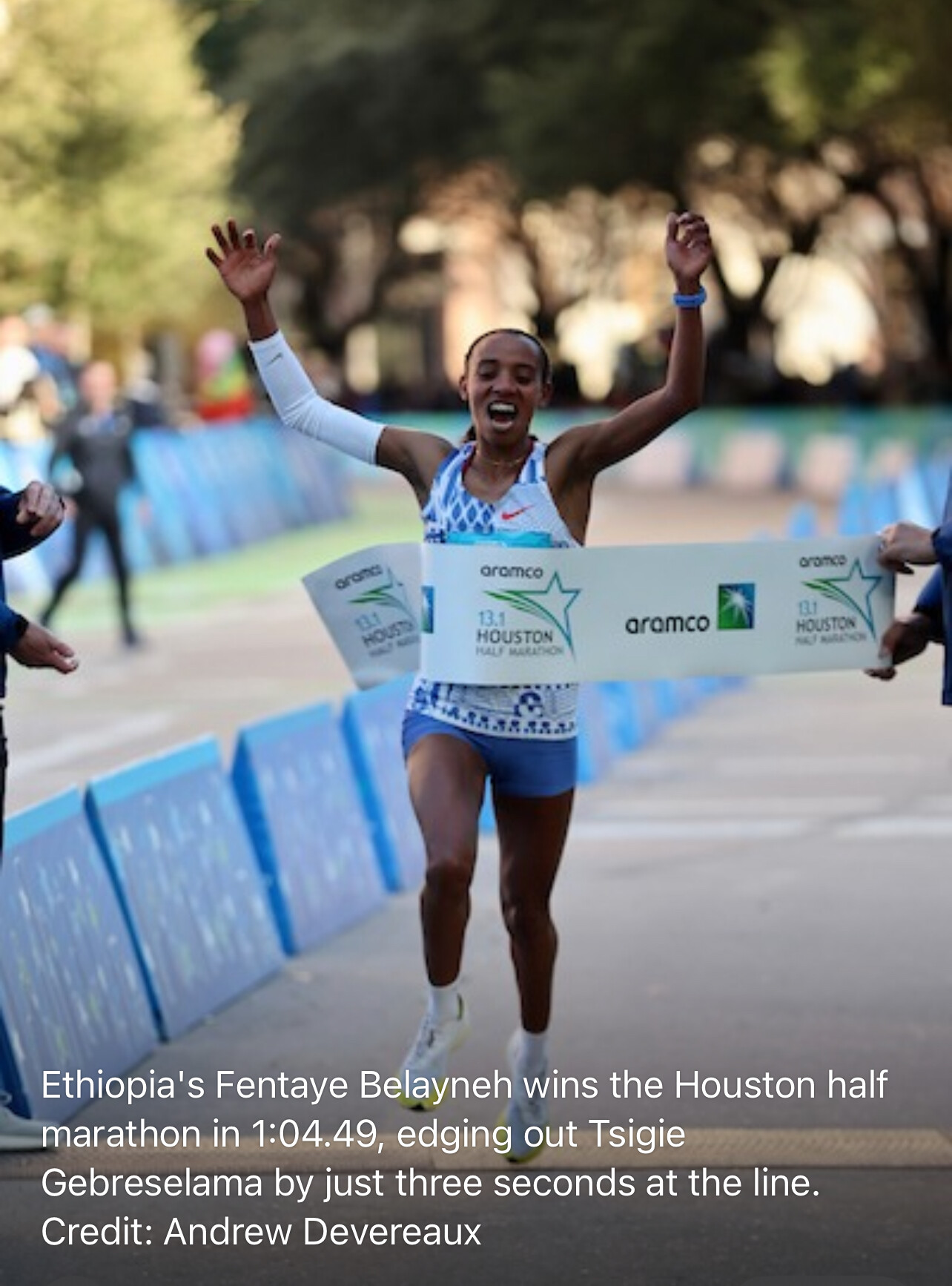
A Breakthrough Debut on the Roads
Samuel arrived in Houston quietly confident, but fully aware of the depth of the field. Known primarily for his NCAA cross-country titles and success on the track—particularly at 10,000 meters—he had spoken before the race about wanting to “test myself on the roads and see how I stack up against top professional athletes outside of track and cross country.”
That mindset guided his approach from the gun.
The men’s race unfolded at a measured tempo, with the lead pack carefully monitoring one another through the early miles. Kenya’s Patrick Kiprop briefly asserted control, opening a small gap and forcing the contenders to respond. Samuel remained composed, running efficiently just off the lead, conserving energy and reading the race with veteran patience.
Observers noted the maturity of Samuel’s tactics—an athlete clearly prepared not just physically, but mentally. His decision to race Houston, which he had described simply as “trying something different,” revealed itself as a calculated experiment executed to perfection.
Tactical Racing in the Women’s Field
In the women’s race, a similar theme of intelligent pacing played out. From early on, runners such as Taylor Roe and Buze Diriba Kejela pressed the pace, but it was Belayneh and Gebreselama who separated decisively by the halfway mark.
The Ethiopian duo worked together through much of the second half, steadily distancing themselves from the chase pack. Americans in the field pushed hard, but the early separation proved decisive, setting the stage for a head-to-head sprint finish.
Decisive Moves and a Record Falls
As the men’s race passed the 10-mile mark, the lead group began to fracture. Samuel moved with precision, smoothly closing on Kiprop before launching his decisive surge in the final mile. Once he moved to the front, the gap opened immediately—and decisively.
His final kilometers were controlled, powerful, and confident, culminating in a 59:01 finish that rewrote the course record on one of America’s fastest half-marathon routes.
Though post-race interviews were not yet available at the time of writing, Samuel’s body language and execution spoke volumes. The performance suggested not just success, but the arrival of a serious new force in elite road racing.
Belayneh’s finish was equally compelling. Timing her move perfectly, she edged Gebreselama in the closing strides, securing victory in 1:04:49 in one of the strongest women’s fields assembled this season.
Setting the Bar in Houston
Samuel’s course-record performance was remarkable not only because it came in his debut, but because it was achieved against a deep international field packed with experienced professionals.
Belayneh’s victory further reinforced Ethiopia’s depth in women’s distance running, while American Taylor Roe emerged as the top U.S. finisher in 1:06:20, continuing her steady rise on the road circuit.
A Launchpad for What’s Next
The significance of Houston extends well beyond one morning’s results. For Samuel, the transition from collegiate standout to elite road racer could not have been more emphatic. His debut suggests a future filled with major opportunities over longer distances.
For Belayneh, the win reaffirmed her tactical sharpness and finishing speed in a discipline that continues to deliver thrilling, high-level competition.
Houston once again proved why it remains one of the premier proving grounds in road racing—and why performances here often signal what’s coming next.
Top 10 Results — Aramco Houston Half Marathon 2026
Men’s Half Marathon
1. Habtom Samuel (ERI / University of New Mexico) — 59:01
2. Patrick Kiprop (KEN) — 59:14
3. Mohammed El Youssfi (MAR) — 59:21
4. Alex Maier (USA) — 59:23
5. Casey Clinger (USA) — 59:34
6. Ryan Ford (CAN) — 59:48
7. Rory Linkletter (CAN) — 59:49
8. Isai Rodriguez (USA) — 59:57
9. Hillary Bor (USA) — 1:00:04
10. Vincent Ngetich (KEN) — 1:00:29
Women’s Half Marathon
1. Fentaye Belayneh (ETH) — 1:04:49
2. Tsigie Gebreselama (ETH) — ~1:04:52
3. Buze Diriba Kejela (ETH) — approx.
4. Taylor Roe (USA) — 1:06:20
5. Natosha Rogers (USA) — 1:07:30
6. Makenna Myler (USA) — 1:07:37
7. Amanda Vestri (USA) — 1:07:43
8. Erika Kemp (USA) — 1:08:42
9. Susanna Sullivan (USA) — 1:08:44
10. Dakotah Popehn (USA) — ~1:08:54
(01/11/2026) ⚡AMPby Robert Kibet for My Best Runs

Aramco Houston Half Marathon
The Chevron Houston Marathon provides runners with a one-of-a-kind experience in the vibrant and dynamic setting of America's fourth-largest city. Renowned for its fast, flat, and scenic single-loop course, the race has earned accolades as the "fastest winter marathon" and the "second fastest marathon overall," according to the Ultimate Guide to Marathons. It’s a perfect opportunity for both elite athletes...
more...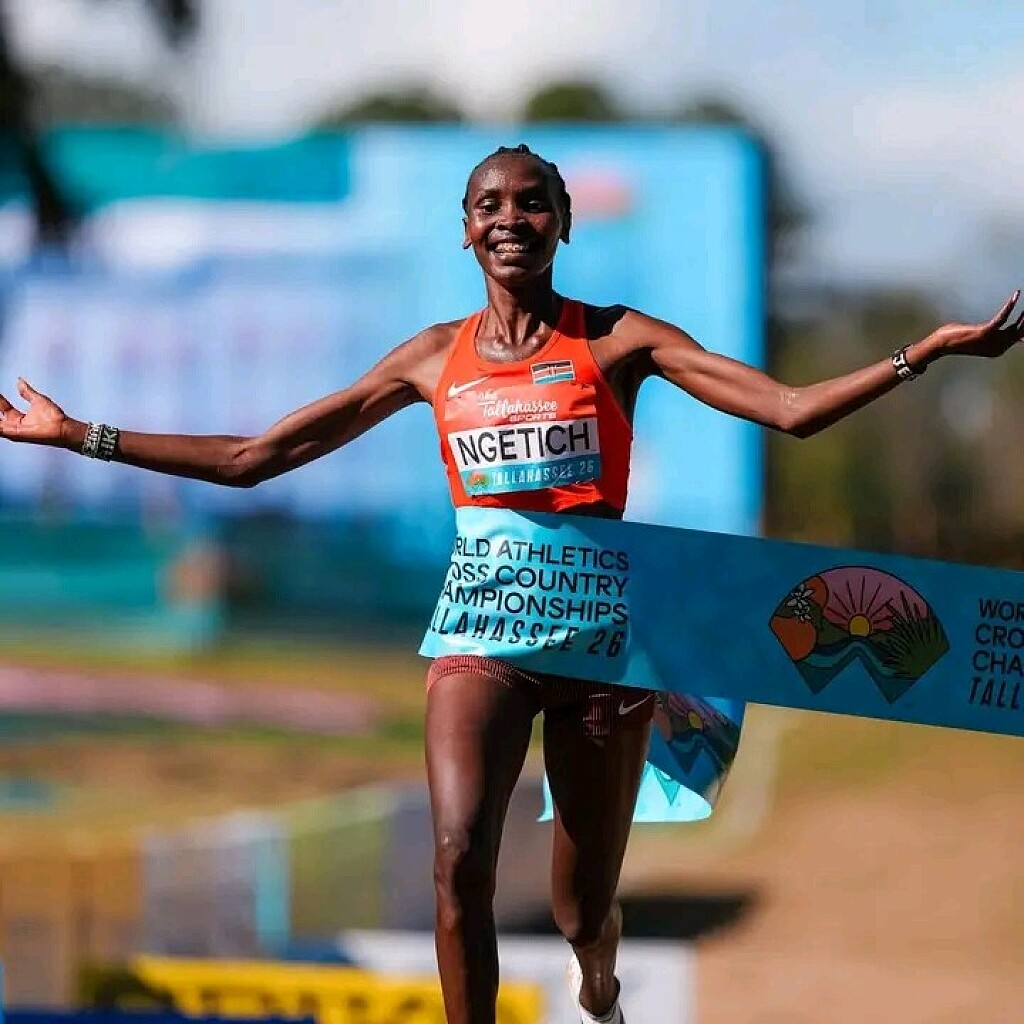
Agnes Jebet Ngetich Rewrites World Cross Country History with a Commanding 10km Masterclass
Agnes Jebet Ngetich did not just win the women’s senior race at the World Cross Country Championships — she redefined dominance.
On a demanding 10km course, the Kenyan star delivered one of the most emphatic performances ever witnessed in championship history, storming to gold in a breathtaking 31:28. From the opening kilometers, Ngetich ran with supreme confidence and authority, stretching the field relentlessly until the contest became a solo exhibition of speed, strength, and tactical brilliance.
By the time she crossed the finish line, the damage was done. Ngetich claimed victory by an astonishing 42 seconds, the second-largest winning margin ever recorded in the history of the World Cross Country Championships. It was not merely a win — it was a statement.
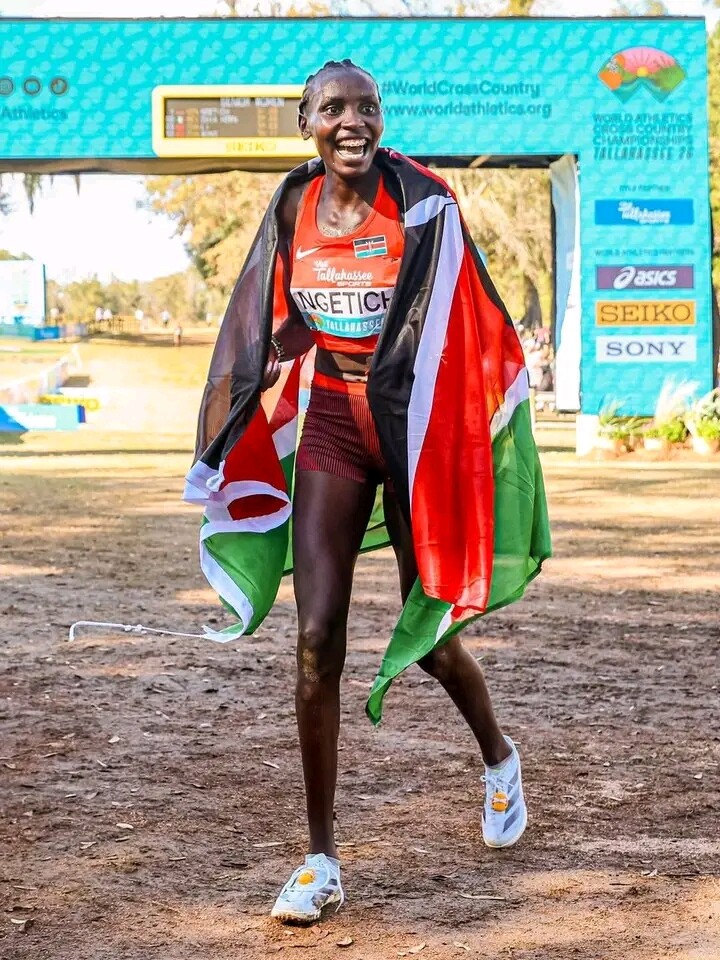
Behind her, Uganda’s Joy Cheptoyek fought valiantly to secure silver in 32:10, while Ethiopia’s Senayet Getachew completed the podium in 32:13, as Africa once again asserted its unrivaled supremacy in distance running.
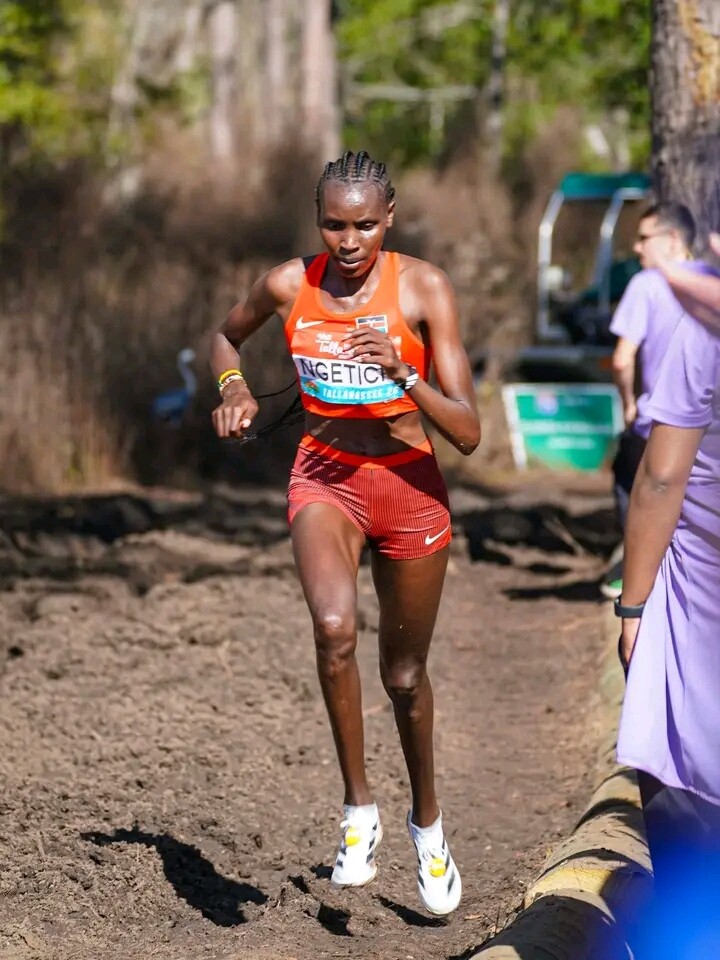
Women’s Senior 10km Medalists
Gold: Agnes Jebet Ngetich (Kenya) — 31:28
Silver: Joy Cheptoyek (Uganda) — 32:10
Bronze: Senayet Getachew (Ethiopia) — 32:13
The top-20 results showcased the depth and global reach of women’s distance running, with strong performances from Ethiopia, Uganda, Kenya, the United States, Australia, and Europe. Yet at the center of it all stood Ngetich — untouchable, unshaken, and in complete control.
This triumph further cements Agnes Jebet Ngetich’s status as one of the most formidable athletes of her generation. Known for her road racing excellence, she seamlessly transferred that brilliance to the cross-country stage, proving she is not only a queen of the roads but now a world champion on the grass and mud.
Her victory is a powerful celebration of women’s endurance, courage, and competitive fire — and another proud chapter in Kenya’s storied distance-running legacy.
As the dust settled and the cheers echoed, one truth remained unmistakable:
Agnes Jebet Ngetich did not chase history — she ran straight through it.
(01/10/2026) ⚡AMPby Erick Cheruiyot for My Bestruns.
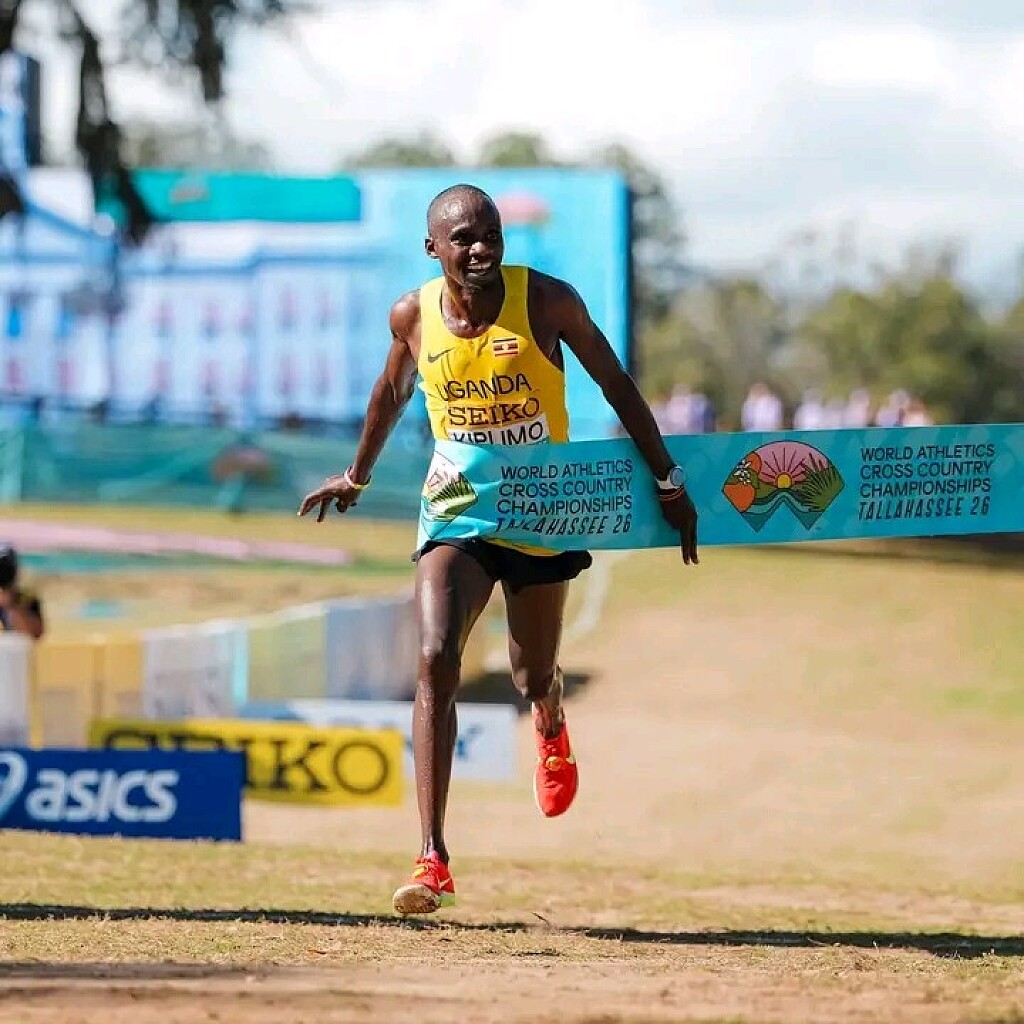
Jacob Kiplimo Reigns Supreme as the Undisputed King of Cross Country
The men’s senior 10km final delivered exactly what fans around the world hoped for—intensity, courage, and a breathtaking display of class from one extraordinary athlete. On a demanding course and under relentless pressure, Uganda’s Jacob Kiplimo once again reminded the world why his name is etched among the greats of cross country running.
For much of the race, a tightly packed lead group moved with caution, each contender waiting for the decisive moment. Ethiopia’s Berihu Aregawi and Kenya’s Daniel Simiu Ebenyo looked composed, matching every surge and refusing to blink. But champions are defined by timing, and with just two kilometers remaining, Kiplimo chose his moment perfectly.
What followed was ruthless brilliance.
With a sudden and devastating change of rhythm, Kiplimo shifted gears and simply ran away from the field. His acceleration was clean, controlled, and utterly decisive—within seconds, the gap opened, and the race was effectively over. No one could respond. No one could follow. The Ugandan star powered on alone, floating over the final stretch with authority and confidence.
He crossed the line in 28:18, arms raised, sealing a glorious victory for Uganda and reaffirming his status as the master of cross country. Behind him, Aregawi fought valiantly to secure silver in 28:36, while Ebenyo showed trademark grit to claim bronze for Kenya in 28:45 after a hard-fought battle through the closing stages.
The depth of the field was remarkable, with athletes from Africa, Europe, Oceania, and the Americas filling the top 30—proof of the global strength of the event. Yet above them all stood Kiplimo, untouchable when it mattered most.
This was not just a win. It was a statement.
In a race packed with talent and ambition, Jacob Kiplimo delivered a performance of absolute dominance—calm under pressure, explosive at the critical moment, and supreme to the finish. Once again, the cross country crown belongs to Uganda’s golden champion.
(01/10/2026) ⚡AMP
by Erick Cheruiyot for My Bestruns.
The Hardest Gold in Athletics: Men’s 10km World Cross Country Championship Preview
The world’s toughest distance runners are converging on Tallahassee, Florida, where the men’s senior 10km race at the 2026 World Cross Country Championships will crown the next ruler of the sport’s most unforgiving discipline. On Saturday morning, January 10, cross country running returns to its rawest form — a test where tactics, terrain, weather, and sheer willpower matter far more than personal bests or stadium glory.
All eyes will be on Uganda’s Jacob Kiplimo, the defending champion, who arrives carrying both confidence and expectation. Calm under pressure and devastating when the pace surges, Kiplimo understands that defending a cross country title is often harder than winning it. Every rival knows his strengths, every move will be marked, and any moment of hesitation could cost him the crown.
Ethiopia’s Berihu Aregawi comes to Tallahassee with unfinished business and revenge on his mind. One of the most consistent long-distance performers of his generation, Aregawi has conquered the track but still seeks ultimate validation on the grass and dirt. If the race stays controlled, his finishing speed could become lethal; if it turns brutal, his patience and efficiency may carry him through.
Kenya counters with depth, aggression, and hunger, led by the fearless Daniel Simiu Ebenyo. A natural racer who thrives in chaos, Ebenyo is at his best when the pace is relentless and the course unforgiving. With a powerful supporting cast behind him, Kenya’s strategy may be simple — make the race hard from the gun and dare everyone else to survive.
Europe arrives determined to break East Africa’s dominance. France’s Jimmy Gressier, the reigning 10,000m world champion, brings championship confidence and sharp race instincts, while Spain’s European cross country champion Thierry Ndikumwenayo is built for grinding, tactical battles where strength outweighs speed. If the race becomes a war of attrition, Europe’s challenge could grow stronger with every kilometer.
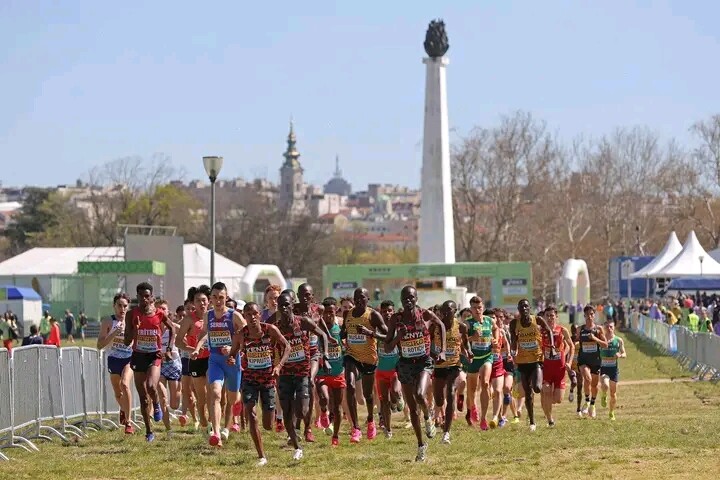
Danger also lurks beyond the favorites. Ethiopia’s rising force Biniam Mehary has the ability to follow any surge and strike late, while Tanzania’s Gabriel Gerald Geay, the reigning world marathon champion, brings enormous endurance and leadership to a discipline that often rewards resilience over reputation. Add in a deep and global field from the United States, Japan, Canada, Australia, and beyond, and Tallahassee promises one of the most competitive men’s races in championship history.
When the gun goes, there will be no hiding. Mud, hills, surges, and tactical games will strip the field down to its strongest contenders. By the final kilometer, medals will no longer be decided by rankings or predictions, but by heart, courage, and the willingness to suffer when the body pleads to stop.
Cross country crowns no easy champions. In Tallahassee, only one man will rise above the chaos to claim global glory — and when he does, he will have earned it the hardest way possible.
(01/09/2026) ⚡AMPby Erick Cheruiyot for My Bestruns.
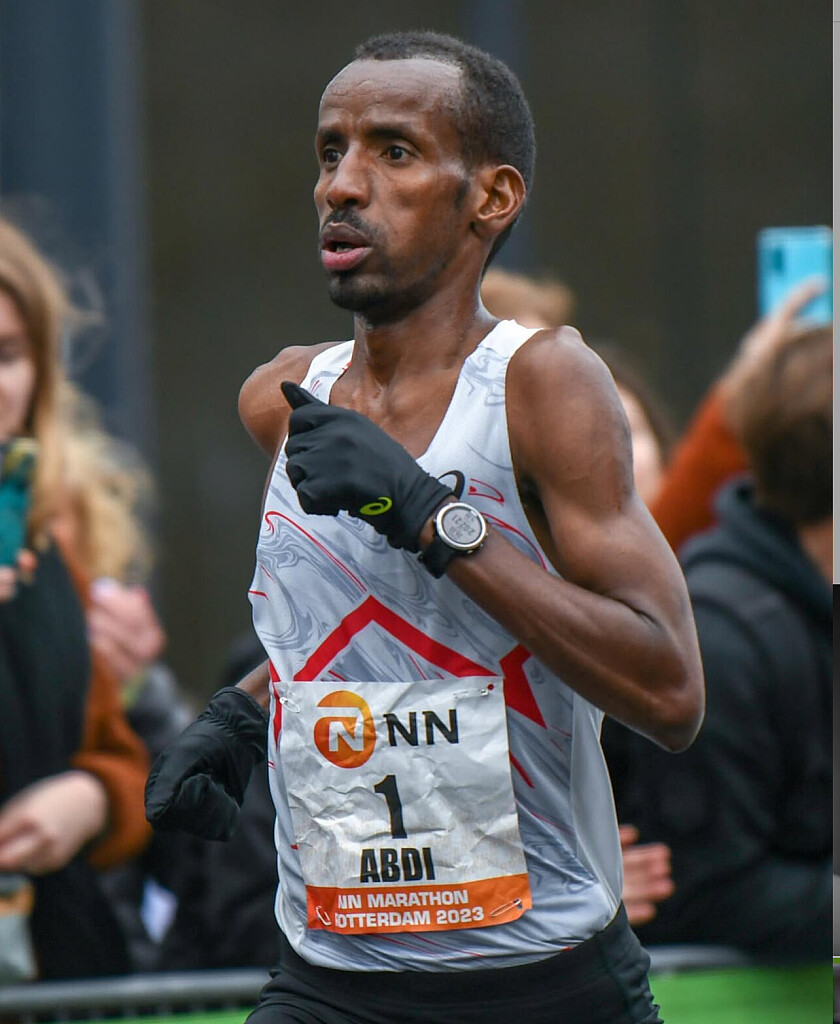
Bashir Abdi Targets European Record and Third Rotterdam Crown in 2026
After an injury-disrupted 2025 season, Bashir Abdi, who represents Belgium, is resetting his sights on a bold and ambitious 2026 campaign—one centered on Rotterdam, records, and redemption.
The two-time Olympic marathon medalist has confirmed his intention to return to the NN Rotterdam Marathon on April 12, where he will seek an unprecedented third victory and renew his pursuit of the European marathon record.
“It’s a special marathon,” Abdi told Sporza.be. “I’ve already run 14 marathons, four of which were here in Rotterdam. It won’t be easy to win here, as there will be a strong field. But I’m especially looking forward to running with a good feeling.”
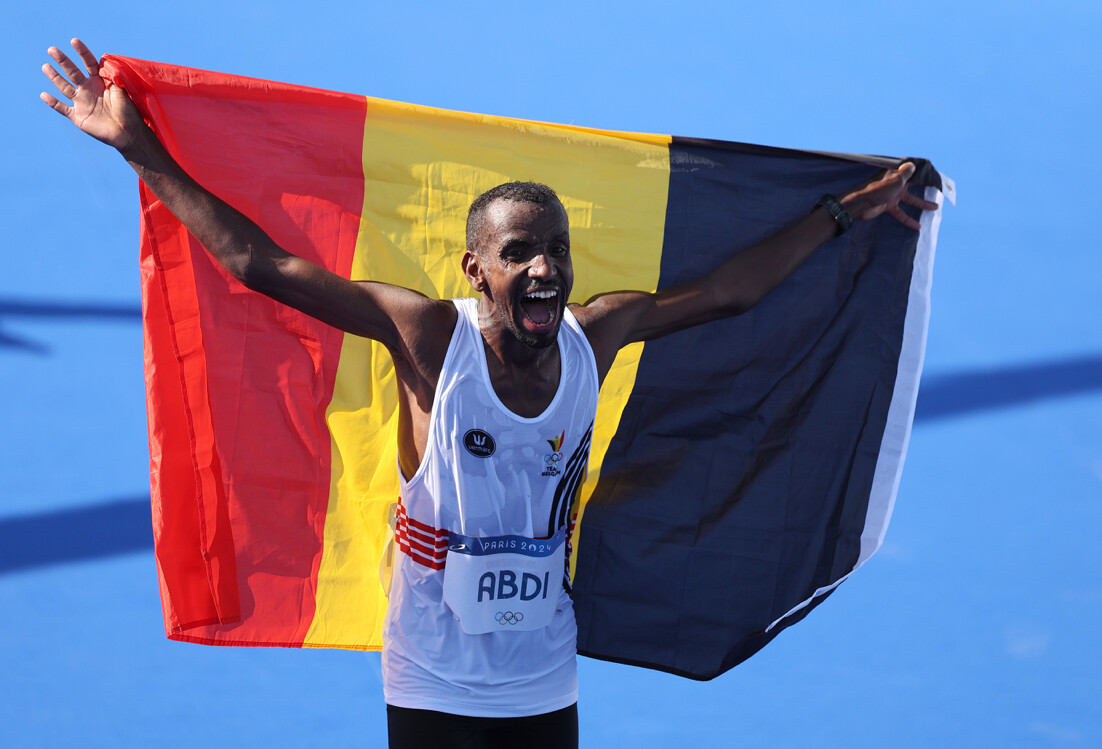
That “good feeling” has been central to Abdi’s career—one built on patience, consistency, and an unusually long peak for a modern elite marathoner.
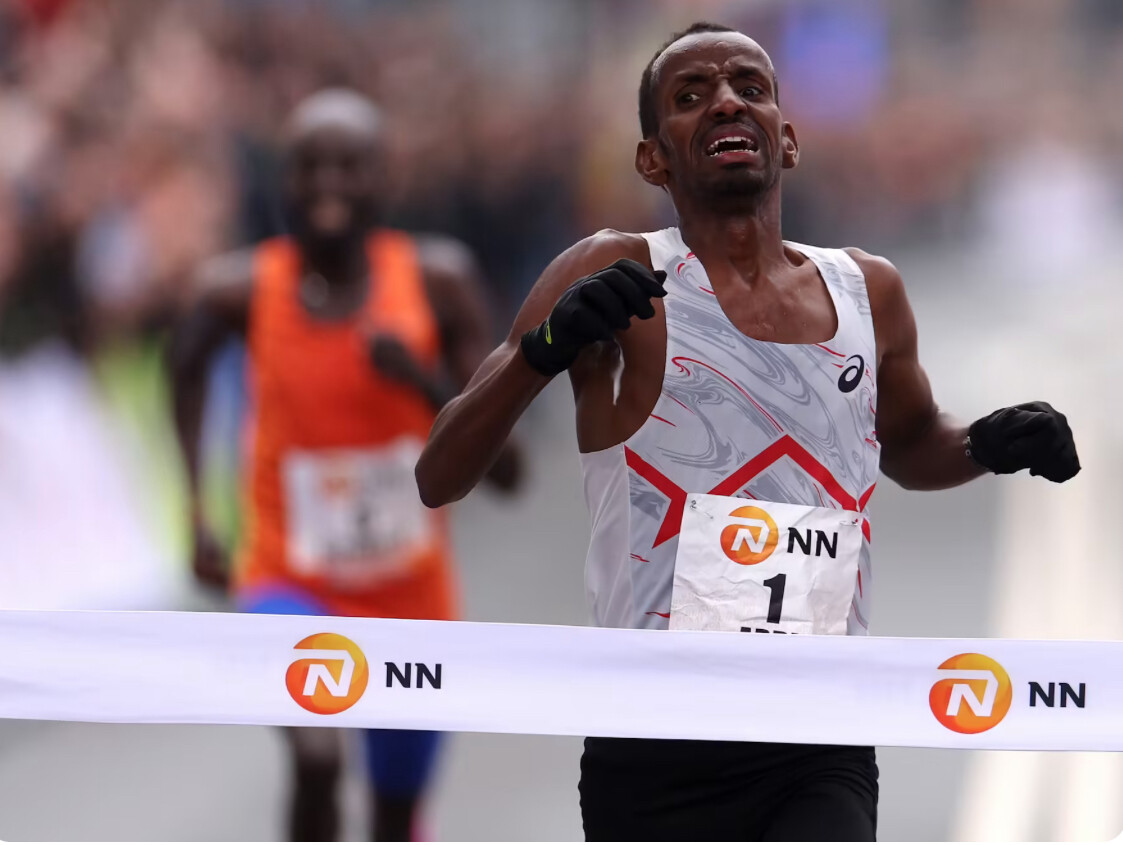
Born in Somalia, Abdi moved to Belgium as a child and later emerged as one of Europe’s most reliable championship performers. While many of his contemporaries built their reputations on a single breakthrough race, Abdi distinguished himself through durability across courses, conditions, and competitive formats. He has repeatedly delivered on the biggest stages, including Olympic Games, World Championships, and major city marathons.
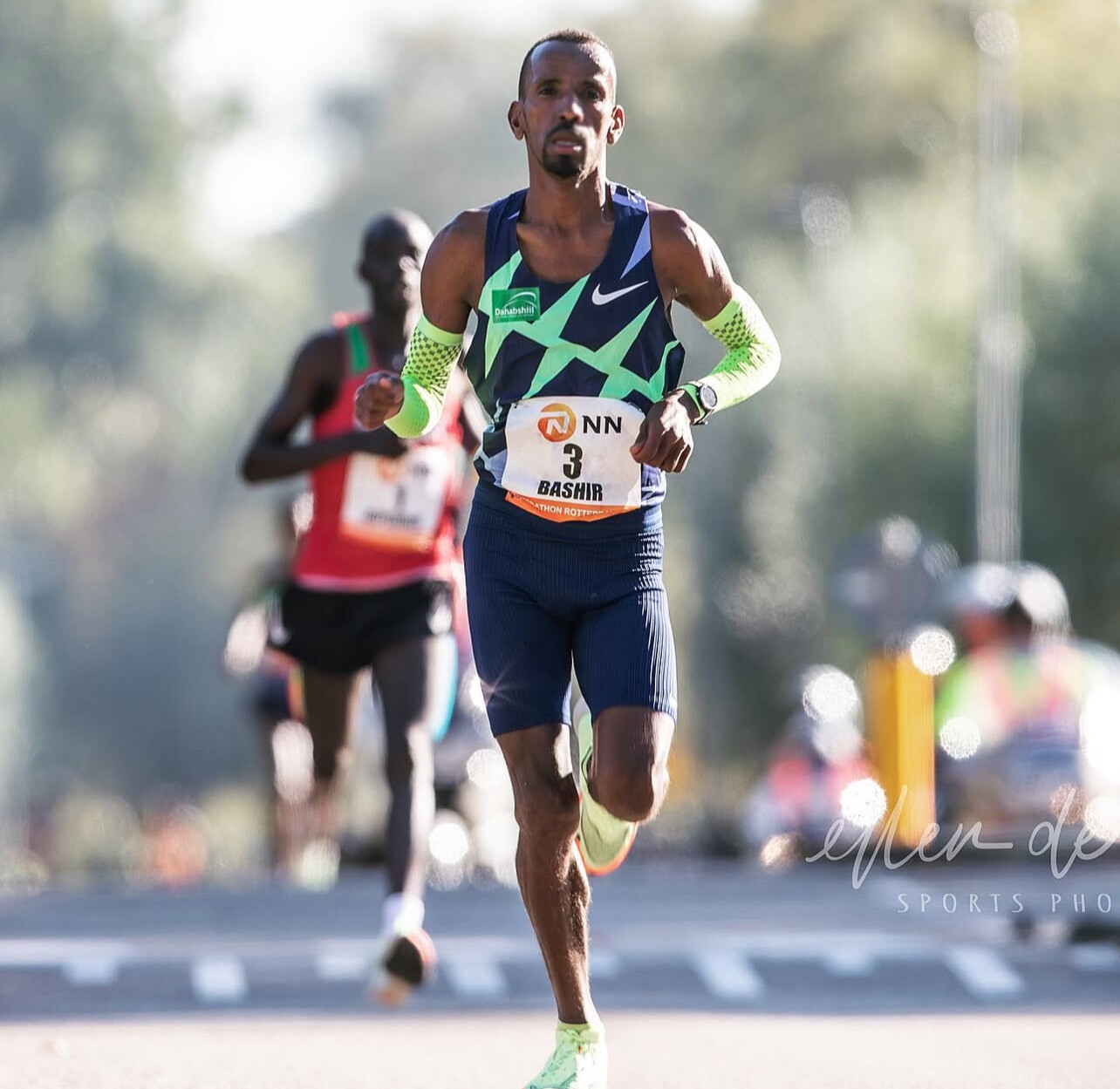
In 2021, just two months after winning Olympic bronze in Tokyo, Abdi produced the defining performance of his career in Rotterdam, winning in 2:03:36 to set a European marathon record. The run confirmed him not only as a medal contender, but as a time-trialist capable of matching the world’s fastest marathon specialists.
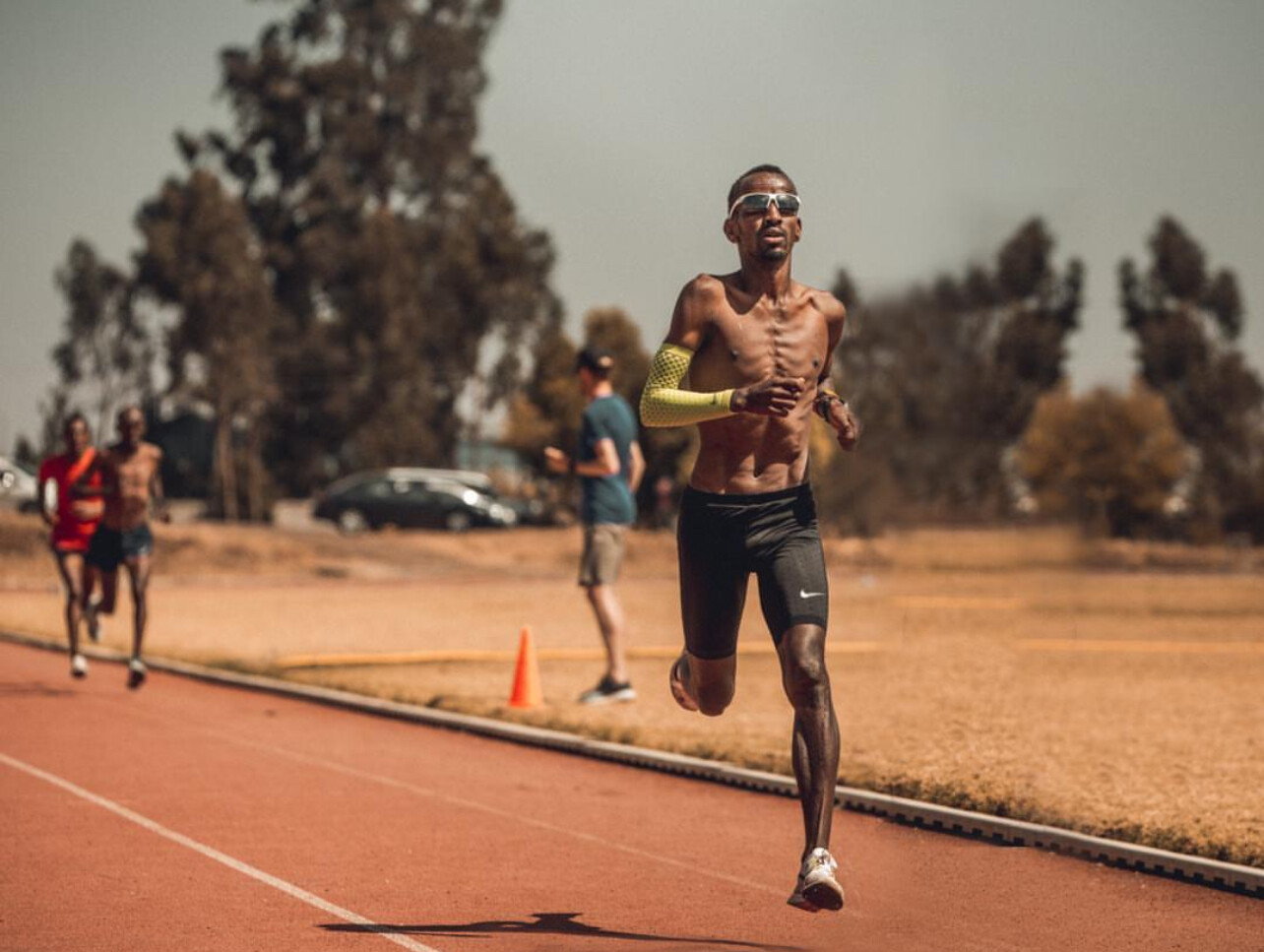
Two years later, he returned to Rotterdam and nearly surpassed his own mark, winning again in 2:03:47—just 11 seconds shy of the European record. That performance reinforced his unique connection to the course and his ability to execute under pressure.
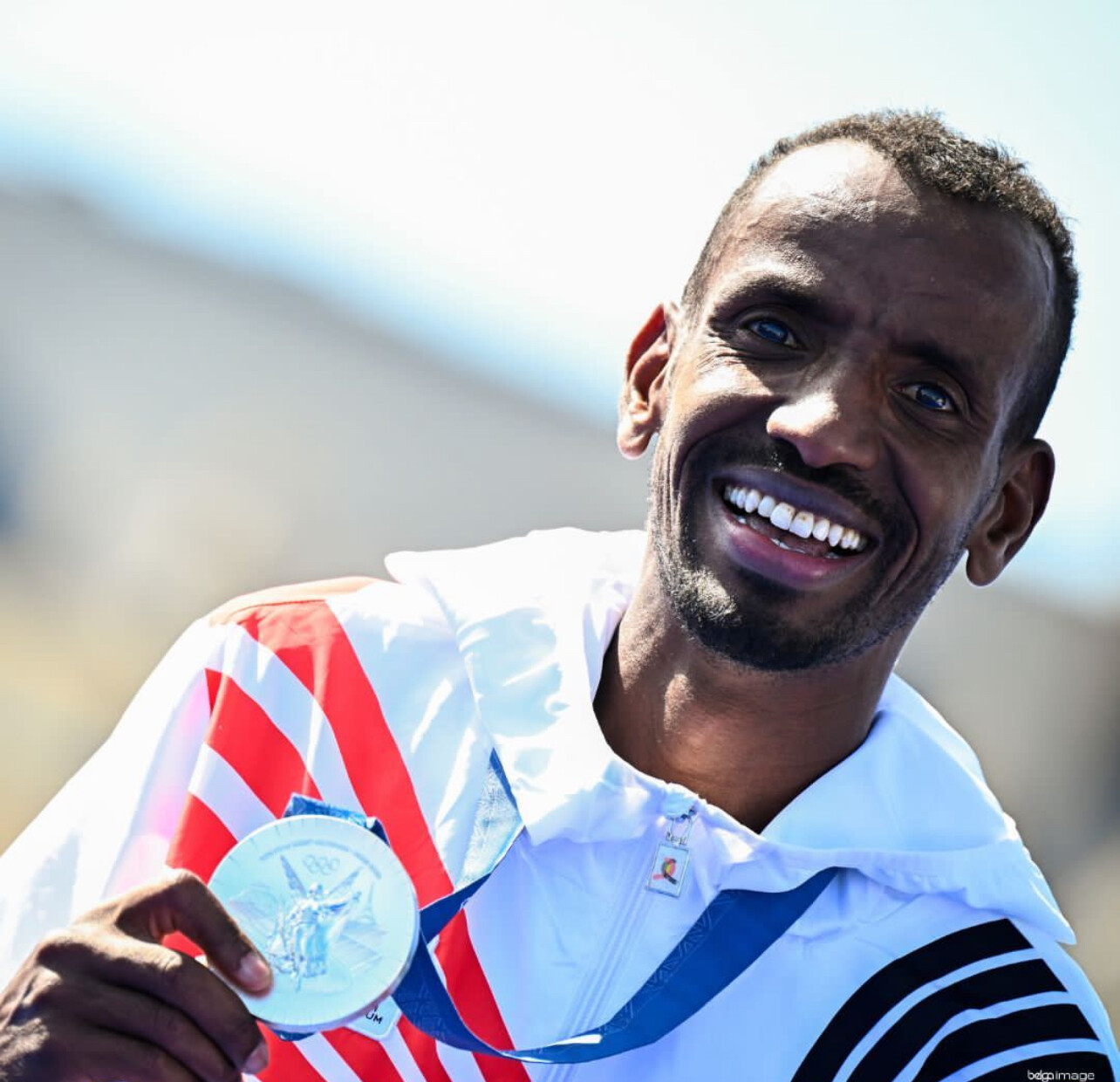
Now 36, Abdi is acutely aware that the margins are tightening.
“I feel many athletes are getting close to that record,” he said. “If I want to hold on to it for a few more years, I have to go faster. Whether it’s in this edition or another time, I don’t know. But my ambition is to break that European record.”
Ahead of Rotterdam, Abdi will test his form in familiar surroundings at the Gent Half Marathon on March 8, using the race as a barometer after a year that never fully came together physically. For a runner whose success has been built on rhythm and continuity, regaining health may be the most important victory of all.
A Course Built for History
Rotterdam’s reputation as one of the world’s fastest marathon courses is long established.
In 1985, Portugal’s Carlos Lopes set a world record of 2:07:12 there. Three years later, Ethiopia’s Belayneh Dinsamo lowered the mark to 2:06:50—a time that stood for a decade. In the women’s race, Tegla Loroupe rewrote history in 1988 with a world record of 2:20:47, ending Ingrid Kristiansen’s long reign.
It is into this lineage of record-breaking performances that Abdi has firmly placed himself—and where he hopes to return once more in 2026.
Bashir Abdi’s 10 Fastest Marathon Performances
• 2:03:36 – 1st, 2021 Rotterdam Marathon
• 2:03:47 – 1st, 2023 Rotterdam Marathon
• 2:04:32 – 3rd, 2023 Chicago Marathon
• 2:04:49 – 2nd, 2020 Tokyo Marathon
• 2:05:19 – 3rd, 2022 London Marathon
• 2:05:23 – 4th, 2022 Rotterdam Marathon
• 2:06:14 – 5th, 2019 Chicago Marathon
• 2:06:47 – 2nd, 2024 Olympic Games (Paris)
• 2:06:48 – 3rd, 2022 World Athletics Championships (Eugene, Oregon)
• 2:07:03 – 7th, 2019 London Marathon
(01/08/2026) ⚡AMPby Boris Baron
NN Rotterdam Marathon
The marathon has been the biggest one-day sporting event in the Netherlands for many years in a row with over 35000 athletes professionals inclusive. The world's top athletes will at the start on the bustling coolsingel, alongside thousands of other runners who will also triumph,each in their own way.The marathon weekend is a wonderful blend of top sport and festival. ...
more...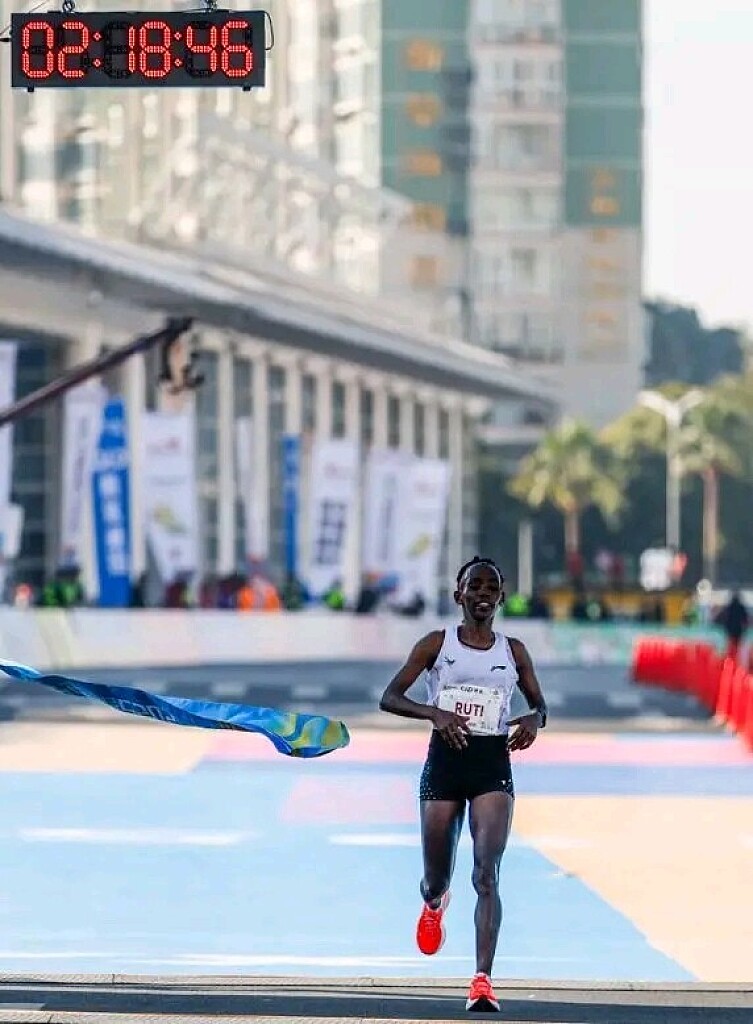
Ruti Aga Sora Headlines a Powerful Women’s Field at the 2026 Xiamen Marathon
The international road racing calendar turns its focus to Asia as Ethiopia’s consistent and battle-tested marathoner Ruti Aga Sora arrives in China for the 2026 Xiamen Marathon, scheduled for January 11 in the coastal city of Xiamen China. Known for her ability to deliver strong performances year after year, Sora enters the race carrying both experience and expectation in one of the deepest women’s elite fields seen at the event.
With a personal best of 2:16:34, Sora stands as the fastest athlete in the line-up. Beyond the numbers, her greatest strength lies in how she manages championship races—patient in the early stages, composed through the middle miles, and decisive when fatigue begins to shape the outcome. That racing intelligence could prove decisive on a course that often rewards control as much as speed.
She will be challenged by a powerful group of elite runners, led by fellow Ethiopians Megertu Alemu (2:18:09) and Meseret Abebayehu (2:19:50), alongside Fikrte Wereta Admasu (2:21:32). Kenya’s challenge is equally compelling, with Helah Jelagat Kiprop (2:21:27), Stacy Jepkemoi Ndiwa (2:23:29), and Mercy Jerop Kwambai (2:23:58) all capable of influencing the race if the pace remains honest deep into the final kilometers. On paper, the depth suggests a controlled opening followed by an increasingly tactical battle as the field thins.

The race will start at 7:30 AM local time in China, which corresponds to 2:30 AM in Kenya and 3:30 PM Pacific Time in the United States, allowing fans across multiple continents to follow the action live. Xiamen’s growing reputation as a fast and competitive marathon makes it an ideal setting for elite athletes seeking both performance and prestige.
As the kilometers unfold along Xiamen’s coastal roads, experience will collide with ambition. East Africa’s dominance in women’s marathon running once again takes center stage, but the outcome will be decided not by reputations or personal bests, but by resilience after 30 kilometers. When the finish line finally comes into view, only one athlete will claim victory—but every contender will be pushed to the limit.
(01/06/2026) ⚡AMPby Erick Cheruiyot for My Bestruns.
Mengesha and Loibach Conquer the World’s Longest Sea Bridge at Zhuhai–Macao Half Marathon
Ethiopia’s Milkesa Mengesha delivered a commanding performance to claim the men’s title at the 2026 Zhuhai–Macao Bridge Half Marathon, stopping the clock at 1:01:27 as elite runners battled wind and exposure on one of the most extraordinary road courses in the world.
Staged on the Hong Kong–Zhuhai–Macao Bridge, the longest sea-crossing bridge on the planet, the race offered a rare blend of speed, spectacle, and sustained mental challenge. Athletes surged onto wide, open tarmac suspended above the Pearl River Delta, facing long straightaways, gentle undulations, and uninterrupted views of open water stretching in every direction.
Mengesha remained patient through the early kilometres as a tightly packed lead group controlled the tempo. He broke clear late in the race, asserting his strength when conditions began to bite. Kenya’s Patrick Mosin stayed close throughout but settled for second in 1:01:30, just three seconds back, while fellow Ethiopian Haftu Teklu completed the podium in 1:02:54.
A Course That Tests Rhythm and Resolve

Unlike traditional city courses lined with spectators, the bridge route is defined by exposure. January brought cool temperatures and steady coastal winds—ideal for fast running but demanding precise pacing. With little shelter on the open deck, runners were forced to manage rhythm and energy as gusts disrupted stride patterns and pack dynamics.
The out-and-back layout added another tactical layer, allowing athletes to measure themselves directly against the field. The turnaround point became a revealing moment, separating those with reserves left for the return leg from those already on the edge.
Loibach Leads Kenyan Sweep in the Women’s Race
In the women’s contest, Kenya’s Grace Loibach Nawowuna underlined her rising status on the international road circuit, claiming victory in 1:07:56 after a fiercely contested race among a deep Kenyan contingent.
She was followed closely by Sheila Chelangat (1:08:06) and Viola Chepngeno (1:08:09), with the top four women finishing within half a minute of one another—a reflection of both tactical racing and the course’s unforgiving nature.
Loibach’s winning time marked an improvement on last year’s performance, highlighting both favourable conditions and the increasing depth of competition the race continues to attract.
A Step Forward From Last Year
In the previous edition, winning times were marginally slower, shaped by cautious early pacing. This year’s performances—particularly at the front—reflected a shift toward more assertive racing, aided by calm early conditions and strong international fields from East Africa and Asia.
The Zhuhai–Macao Bridge Half Marathon is rapidly establishing itself as a destination race for elite and sub-elite runners alike, offering genuine speed potential on a course unlike any other on the global road calendar.
For many competitors, it was more than a race for time or position—it was an experience of running between sea and sky, where concentration, patience, and strength mattered as much as raw speed.
RESULTS – ZHUHAI–MACAO BRIDGE HALF MARATHON
Men
1. Milkesa Mengesha (ETH) — 1:01:27
2. Patrick Mosin (KEN) — 1:01:30
3. Haftu Teklu (ETH) — 1:02:54
4. Weldon Langat (KEN) — 1:02:57
5. Luke Kiprop (KEN) — 1:02:57
6. Negasa Dekeba (ETH) — 1:05:03
7. Yuki Kawauchi (JPN) — 1:07:52
8. Chong See Yeung (HKG) — 1:09:44
9. Man Ho (HKG) — 1:10:36
Women
1. Grace Loibach Nawowuna (KEN) — 1:07:56
2. Sheila Chelangat (KEN) — 1:08:06
3. Viola Chepngeno (KEN) — 1:08:09
4. Gladys Chepkurui (KEN) — 1:08:23
5. Gotytom Gebreslase (ETH) — 1:08:54
6. Miriam Chebet (KEN) — 1:09:59
7. Daisy Jepkemei (KAZ) — 1:10:08
8. Megertu Mideksa (ETH) — 1:11:41
9. Ying Chu Lo (HKG) — 1:16:45
10. Shiu Yan Leanne Szeto (HKG) — 1:20:15
(01/04/2026) ⚡AMPby Robert Kibet for My Best Runs
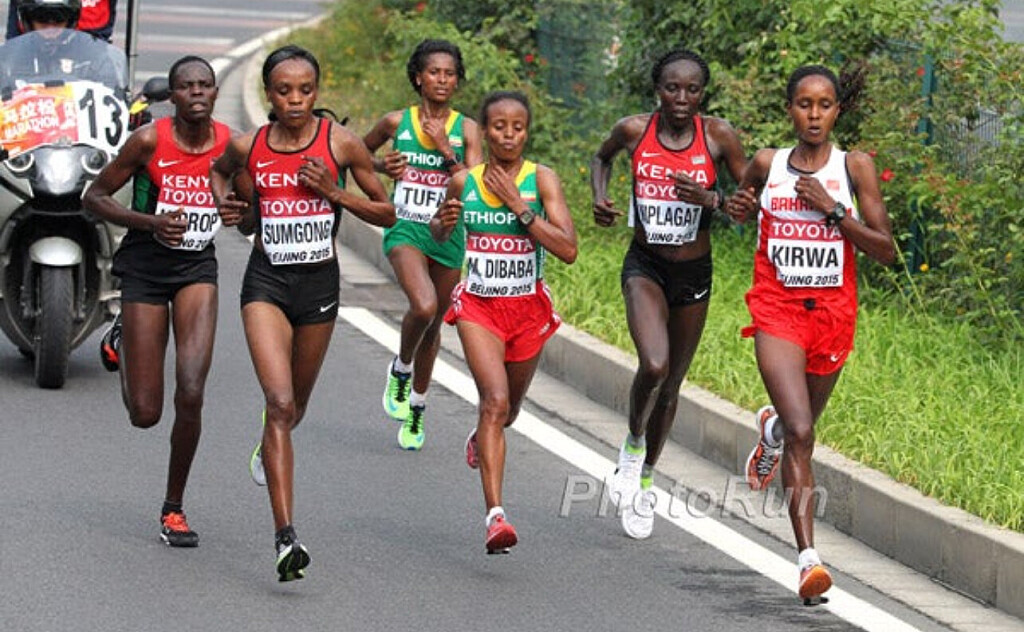
Women’s Marathon Power by Nation: What the Fastest Times Ever Reveal About Global Depth
When we talk about greatness in the women’s marathon, records and medals often dominate the conversation. A world record here, an Olympic podium there. But those moments, as extraordinary as they are, don’t always tell the full story.
A deeper question matters just as much:
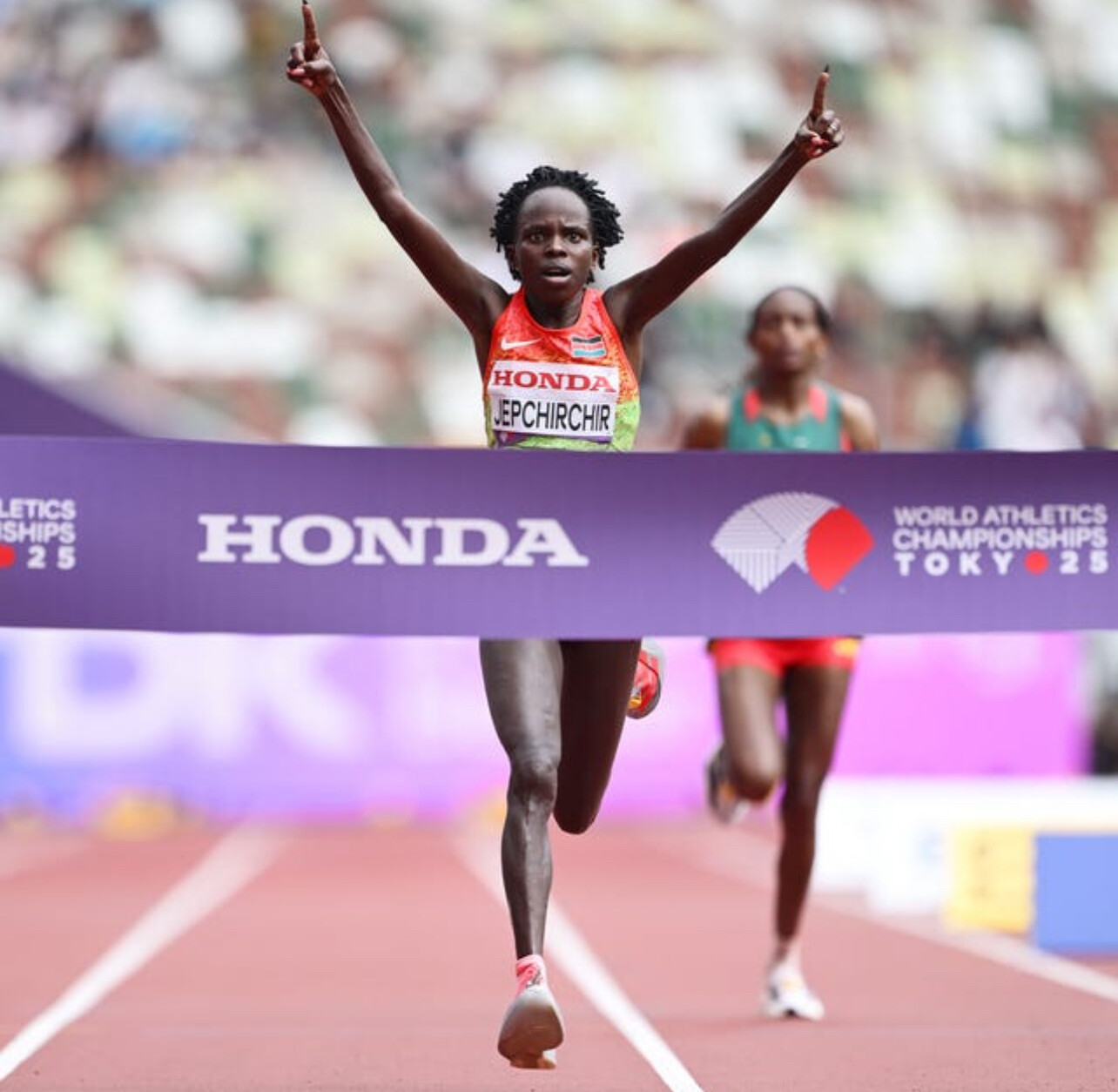
Which countries consistently produce elite women marathoners—year after year, athlete after athlete?
To answer that, analysts have stepped away from single seasons and headline performances and instead examined historical depth. The result is a ranking based on the average of the 10 fastest women’s marathon times ever recorded by each country, compiled as of December 31, 2025.
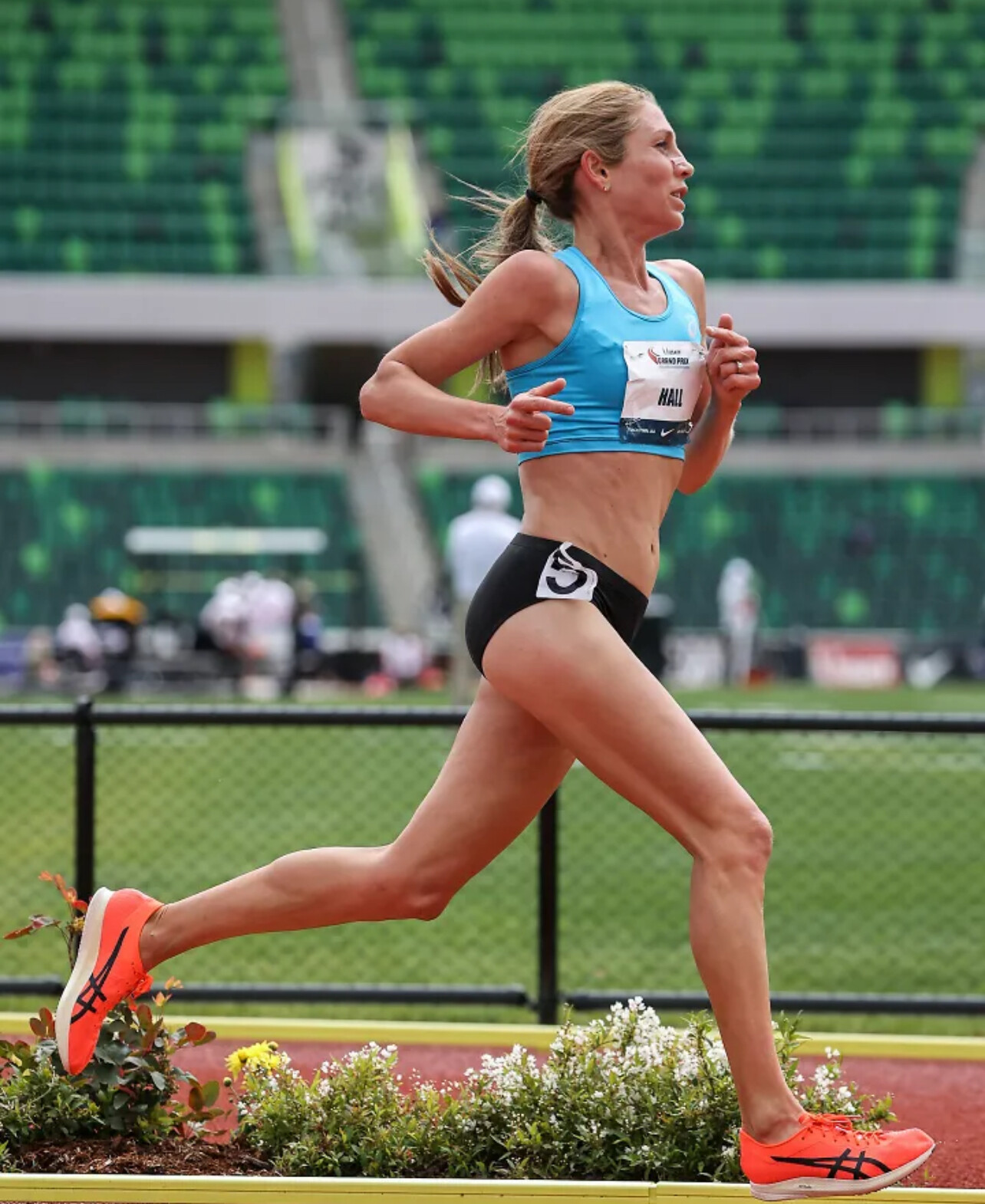
This is not about who ran best in 2025.
This is about who has built lasting excellence.
How the Rankings Were Calculated
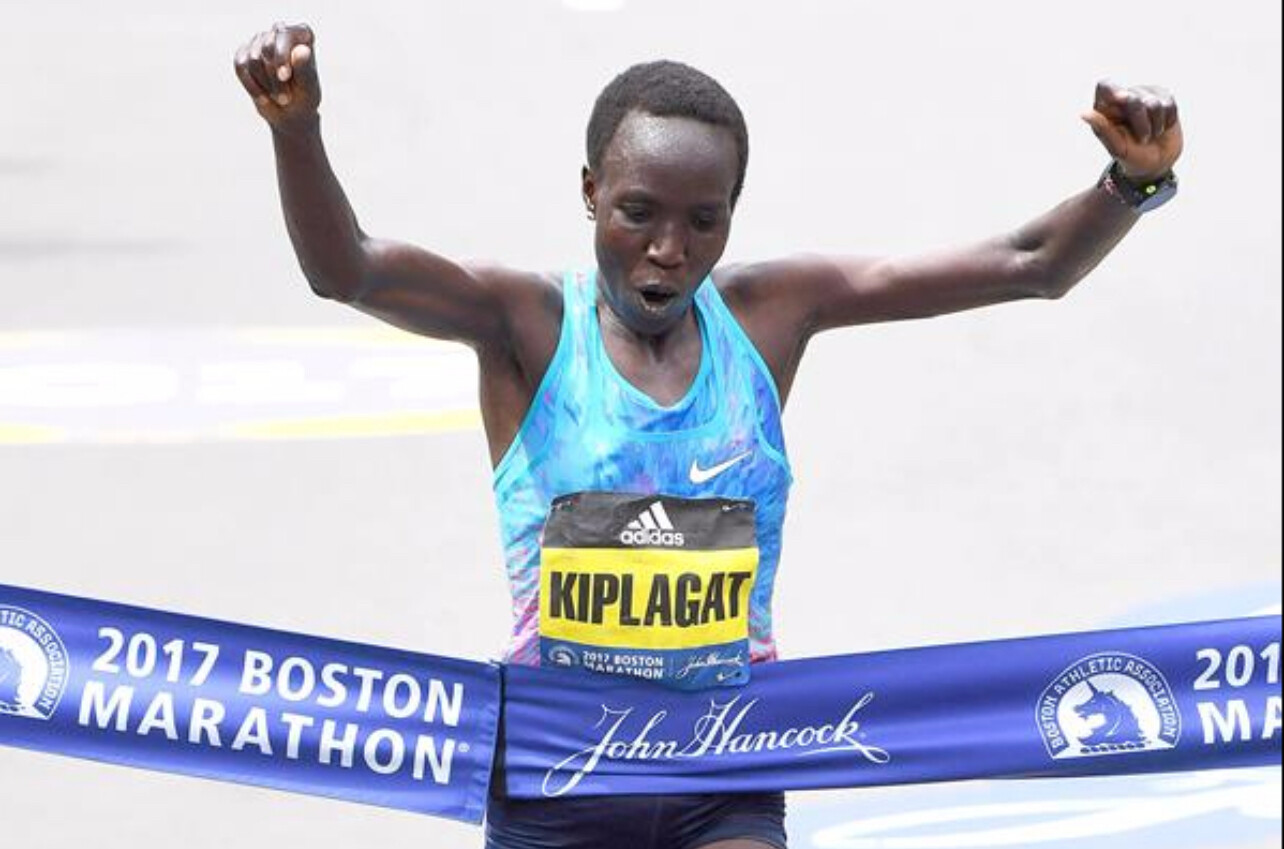
For each country:
• All women’s marathon performances in the historical record were reviewed
• The 10 fastest marathon times ever recorded by women from that country were identified
• Those ten times—regardless of year—were averaged
• The resulting figure represents that country’s all-time marathon depth
The year a performance occurred does not matter. An athlete needed only to run a marathon once to be included, as long as the time ranked among the nation’s fastest ten ever.
This approach shifts the lens from short-term form to long-term system strength.
A Dead Heat at the Top
At the summit of women’s marathon history sit two familiar giants—and they are inseparable.
Ethiopia and Kenya, both averaging 2:17:10, are tied at the top.
This is not the work of a single superstar. It reflects ten separate performances from each nation that, when averaged, would place comfortably on the podium at nearly any major marathon in the world. It is dominance built on depth—high-altitude environments, strong road-racing cultures, and generations of knowledge passed forward.
Japan and the United States: Different Systems, Similar Results
Behind the East African leaders, Japan (2:23:14) and the United States (2:23:39) stand out.
Japan’s strength comes from a uniquely structured system: corporate teams, deep domestic racing calendars, and an enduring cultural reverence for distance running. The consistency is remarkable.
The United States, by contrast, reflects a more decentralized model—athletes emerging from NCAA programs, professional training groups, and a growing focus on marathon specialization. The result is increasing depth at the elite level, even without a single dominant pipeline.
Europe’s Collective Strength
Europe does not produce women’s marathoners in quite the same numbers as East Africa, but its breadth is unmistakable.
Great Britain, Germany, the Netherlands, France, Spain, and others cluster tightly in the mid-2:20 range. No single nation dominates the continent, but together they form a strong competitive core, driven by improved sports science, professional racing opportunities, and increased global exposure.
Expanding Global Reach
One of the most telling aspects of this ranking is how widely excellence is distributed.
From Australia to China, from Bahrain to Peru, competitive women’s marathon running is no longer confined to a handful of regions. National programs, migration, dual citizenship, and professional opportunities have reshaped the global map.
Even countries lower on the list demonstrate something important: producing ten world-class marathon performances is no longer rare—it is becoming achievable.
Why This Ranking Matters
This list is not meant to replace medals, championships, or seasonal rankings. Instead, it complements them by answering a different question:
Who has built a system capable of producing elite marathon performances over time?
By focusing on all-time best performances rather than a single season, the rankings reward:
• Development, not just talent
• Consistency, not just peaks
• Depth, not just stars
In the modern era of women’s marathon running, that depth is what sustains greatness.
The Bigger Picture
The women’s marathon has never been deeper, more global, or more competitive than it is today. And as more countries invest in athlete development, the next reshuffling of this list may come from unexpected places.
What will not change is the lesson this ranking makes clear:
Greatness in the marathon is not built in one race or one year—it is built over generations.
Countries Included in This Ranking (with Average Times)
The following countries are represented in the women’s marathon depth analysis, based on the average of their 10 fastest women’s marathon performances ever recorded, compiled as of December 31, 2025:
• Ethiopia — 2:17:10
• Kenya — 2:17:10
• Japan — 2:23:14
• United States — 2:23:39
• Bahrain — 2:24:34
• Great Britain — 2:25:28
• Australia — 2:25:53
• China — 2:26:31
• Germany — 2:26:43
• Morocco — 2:26:43
• Netherlands — 2:27:56
• North Korea — 2:27:29
• France — 2:28:04
• Spain — 2:28:13
• Russia — 2:31:18
• Peru — 2:32:25
• Canada — 2:33:19
• South Korea — 2:33:19
• Poland — 2:35:01
• Sweden — 2:35:16
(01/03/2026) ⚡AMPby Boris Barron

Elite Distance Stars Set for Fireworks at the 2025 BOclassic Alto Adige 10K
As the athletics world prepares to usher in the New Year, all eyes will turn to Bolzano, Italy, where the iconic BOclassic Alto Adige returns on December 31, 2025, with a world-class field worthy of its legendary status.
Headlining the elite lineup is Yomif Kejelcha, one of Ethiopia’s most formidable distance runners and a global championship medalist. Renowned for his devastating finishing speed and sharp tactical sense, Kejelcha brings pedigree, experience, and a championship mindset to the fast, spectator-friendly streets of Bolzano.
Kenya’s challenge will be led by Charles Rotich, a proven road-racing specialist whose strength and consistency make him a threat on any course. Representing Team Kenya, Rotich embodies the nation’s enduring dominance in distance running and will be eager to close the year with a statement performance on European soil.
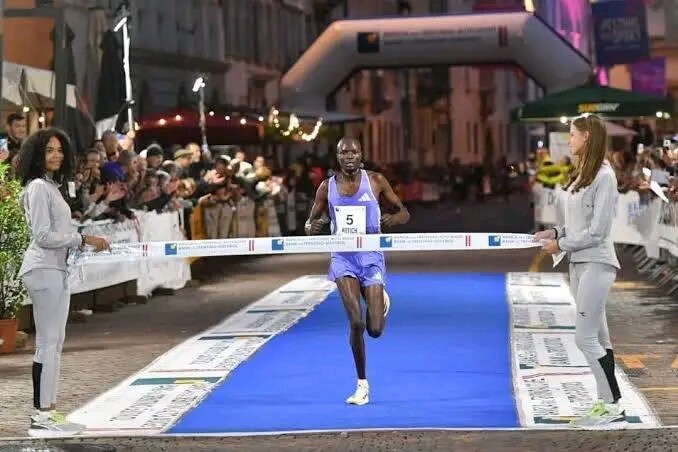
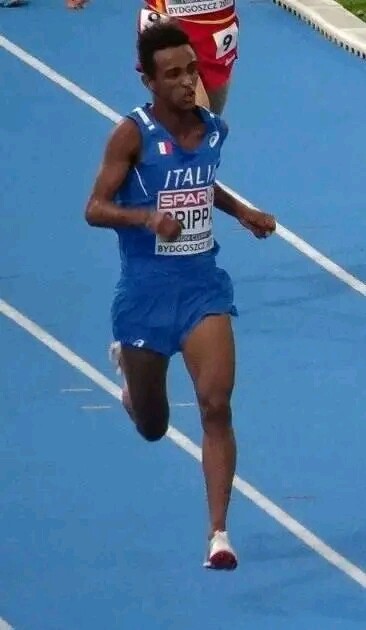
Completing the trio of elite contenders is Yemaneberhan Crippa, Italy’s distance-running standard-bearer. Racing on home ground, Crippa carries the hopes of the host nation as he faces Africa’s finest. His fearless racing style and deep familiarity with the BOclassic atmosphere make him a genuine podium contender.
With athletes from Ethiopia, Kenya, and Italy converging on one of the most historic road races in the world, the 2025 BOclassic Alto Adige promises a compelling showdown of speed, strategy, and national pride. As tradition dictates, Bolzano will once again provide the perfect stage to celebrate the past season—and launch the new one—with a spectacular clash of global distance-running excellence.
(12/30/2025) ⚡AMPby Erick Cheruiyot for My Bestruns.

BOclassic Alto Adige 10k
Challenge yourself against the world’s best! The BOclassic Raiffeisen New Year’s Eve Run is a prestigious year-end road race held annually, attracting elite international athletes alongside amateur runners. Known for its competitive field and festive atmosphere, the event provides a rare opportunity to test your speed on the same course as some of the world’s top distance runners. Whether you...
more...
Where Only the Strong Endure: Countdown to World Cross Country in Tallahassee Florida USA
Cross country running has never been about comfort. It is a ruthless examination of endurance, strength, terrain awareness, and mental resilience. In just over a week, the world’s finest distance runners will converge in Tallahassee, Florida, for another chapter of the sport’s most unforgiving championship: the World Cross Country Championships.
History tells us these titles are rarely decided by fitness alone. More often, they are determined by survival.
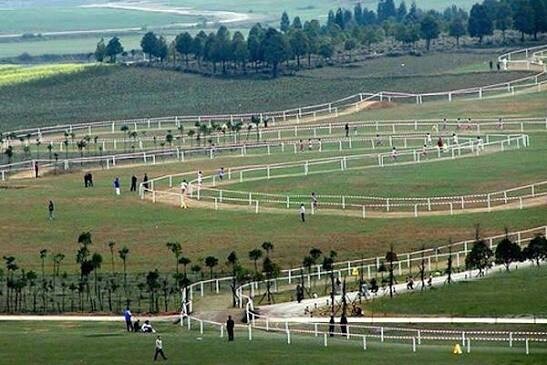
Courses That Defined Greatness
Mombasa – 2007
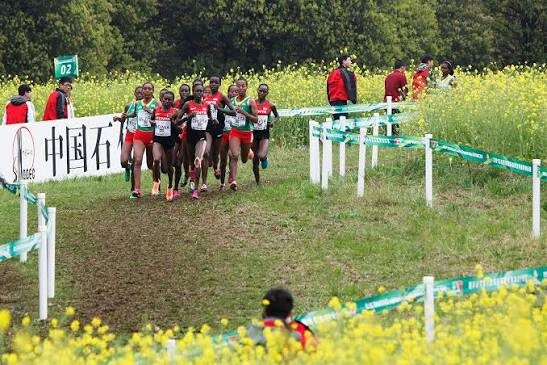
Few championships have tested human limits like Mombasa. Run in suffocating coastal heat and humidity, the race devolved into a war of attrition. Athletes dropped out in waves, legs seized, and only the strongest endured. It remains one of the most punishing championships ever staged—a reminder that in cross country, nature is always part of the field.
Aarhus – 2019
Engineered for cruelty, the Aarhus course was a tactical nightmare. Deep mud, sharp climbs, uneven footing, and relentless turns demanded total concentration. Every stride mattered, every mistake was punished. Strength counted as much as speed, redefining what it meant to be a complete cross country runner.
Bathurst – 2023
An adventure disguised as a race. Extreme weather shifts, hard surfaces, exposed terrain, and constant elevation changes combined to create one of the most laborious championships in modern history. Bathurst rewarded resilience, adaptability, and fearless racing.
Now Tallahassee Awaits
As Tallahassee prepares to host the world, the central question is not who is fastest—but who is toughest. The terrain, conditions, and championship pressure will once again strip the sport down to its raw essence.
Nations with deep cross country heritage—Kenya, Uganda, Ethiopia, along with challengers from across the globe—will arrive knowing one truth:
World cross country titles are earned, not given.
In Tallahassee, reputations will be tested, legacies will be forged, and only those willing to suffer will stand on the podium.
The countdown is nearly over.
The world is watching.
Cross country’s ultimate test is about to begin.
(12/30/2025) ⚡AMP
by Erick Cheruiyot for My Bestruns

Kenya Sharpened Its Edge in Kigari as World Cross Country Battle Lines Were Drawn
As dawn broke each morning over the rolling hills of Kigari in Embu County, Kenya’s cross-country runners surged into punishing training sessions, their collective focus fixed firmly on January 10, when the 46th World Cross Country Championships will unfold in Tallahassee, Florida.
The residential camp was never about mileage alone. It was a deliberate, finely calibrated response to a shifting global cross-country landscape—one in which Kenya’s long-held dominance now faces sustained and increasingly sophisticated challenges.
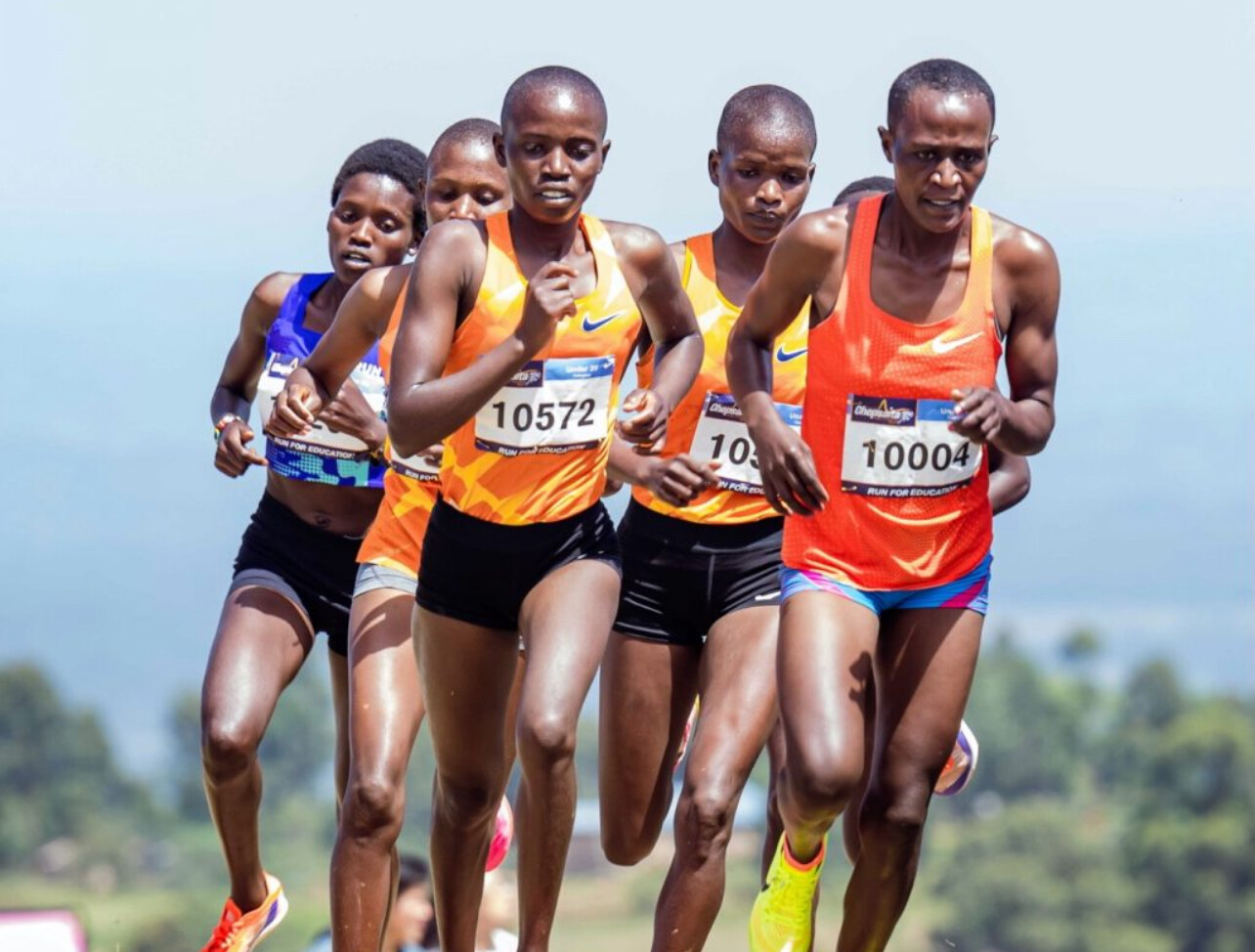
Since reporting to camp on November 23, athletes were immersed in a demanding but carefully structured five-week program designed to sharpen endurance, tactical awareness, and mental resilience.
“Since our arrival, everything went as planned,” said head coach Japheth Kemei. “The athletes responded very well to the training, and we used different venues depending on what each session required.”
Training for the Unknown
Preparation in Kigari extended far beyond altitude conditioning. The technical team deliberately exposed athletes to uncomfortable, varied environments to mirror the unpredictable demands of international cross-country racing.
“Some of the venues we used were at the foot of Mount Kenya, where the ground was almost wet all the time,” Kemei explained. “We also trained inside the forest, where it was darker and colder. By doing this, we felt we were giving the athletes exactly what they required.”
With Florida’s winter expected to present cooler, unfamiliar conditions, adaptability—not comfort—was the guiding principle.
“It was cold compared to Kenya,” Kemei said, “but the athletes were prepared.”
Defending More Than Medals
Kenya will travel to Tallahassee as the overall defending champion following a dominant showing at the previous championships in Belgrade, where the team collected 11 medals and swept all team titles except the senior men’s race.
During a visit to the camp, Barnaba Korir, Athletics Kenya’s Youth Development Director and First Vice President of the National Olympic Committee of Kenya, struck a balance between confidence and realism.
“Kenya will be defending the title we won in Belgrade,” Korir said. “The women won, the junior men and women did a splendid job, and this young team has the capacity to do it again.”
Yet the margins are tightening. Ethiopia and Uganda remain persistent threats, while European and American athletes continue to close the gap.
“The Ethiopians were beaten badly recently, so they are likely to come back with fire,” Korir noted. “But we are also ready.”
Youth, Belief, and the Senior Men’s Question
The Kigari squad was notably youthful, anchored by experienced figures such as Daniel Ebenyo and newly transitioned senior Ismail Kipkuri, but largely built around emerging athletes being groomed for the next competitive cycle.
“It was a young team, but we were not worried at all,” Kemei said. “The spirit among the athletes was very high, and we believed they would give Kenyans what they expected.”
The senior men’s 10km—a title Kenya has narrowly missed in recent editions—remained a central theme throughout the camp.
“We kept reminding them about the need to bring home that title,” Kemei revealed. “They assured us.”
Korir echoed that belief.
“Ebenyo and Ismail have a real chance to contest for the top positions. I am really excited to see what they can do.”
Ebenyo: Carrying Kenya on His Shoulders
As team captain and Kenya’s leading contender in the men’s 10km, Daniel Ebenyo framed the championships as both a sporting challenge and a national responsibility.
“In Tallahassee, it will not only be a race against the best athletes in the world,” Ebenyo said. “We will race with the spirit of Kenya on our shoulders.”
He described the Kigari camp as exhaustive but purposeful.
“Training went very well. Every obstacle that would be there, we were shown. The team is ready to compete with discipline, humility, and hard work.”
For Ebenyo, consistency has come through structure and accountability.
“My consistency came from discipline—being disciplined with my coach, my training partners, and my training,” he explained.
Returning to the national team after time away, Ebenyo embraced the moment with renewed hunger.
“I was happy to be back in Team Kenya. This time, I wanted to do my best, because I love cross-country medals.”
Fear, he said, had no place in camp.
“We were not scared. May the best win.”
Chepsaita Promise Fulfilled: Juniors Join Team Kenya
Beyond elite preparation, the Kigari camp reflected Kenya’s long-term investment in youth development. Two standout junior athletes—Kelvin Kariankei and Joan Chepkurui—earned places on Team Kenya after dominant victories at the 2025 Great Chepsaita Cross Country Run, a World Athletics Gold Label event.
Kariankei powered to victory in the men’s U20 8km in 25:20, while Chepkurui controlled the women’s U20 6km in 21:34 on a demanding course that tested both strength and tactical maturity.
Their selection fulfilled a promise by Farouk Kibet that the top junior male and female finishers at Chepsaita would earn a fully paid trip with Team Kenya to Florida—an initiative aimed at early international exposure, motivation, and long-term succession planning.
Sacrifice Over Comfort
One of the clearest indicators of intent came during the festive season, when athletes collectively chose to remain in camp rather than return home.
“The amazing thing was that the athletes decided not to go home for Christmas,” Korir said. “They chose to continue training so they could perform well.”
Support systems were firmly in place. Nike competition kits had been delivered, and athlete allowances approved.
“They had everything they needed,” Korir said. “They were protected and taken care of.”
Confidence in the Women and the Relay
Confidence extended strongly into the women’s race and the mixed relay, where continuity and form inspired belief.
“Agnes, who finished fifth last time, was back and in good shape,” Korir said. “The mixed relay team had raced together before. They had a big chance of winning.”
Kemei was equally assured.
“The women were good. We had new faces, but that was not something to worry about. Kenyans are Kenyans.”
Kigari’s Quiet Statement
As departure day approaches, Kigari has become more than a training base—it has become a statement. Kenya understands the rising pressure from Uganda’s momentum, Ethiopia’s resurgence, and the growing sophistication of European and American cross-country programs.
But forged in mud, forest shade, discipline, sacrifice, and renewed youth promise, the team leaves Embu with belief intact—ready once more to test its legacy against the world, carrying Kenya’s spirit firmly on its shoulders.
(12/29/2025) ⚡AMPby Robert Kibet
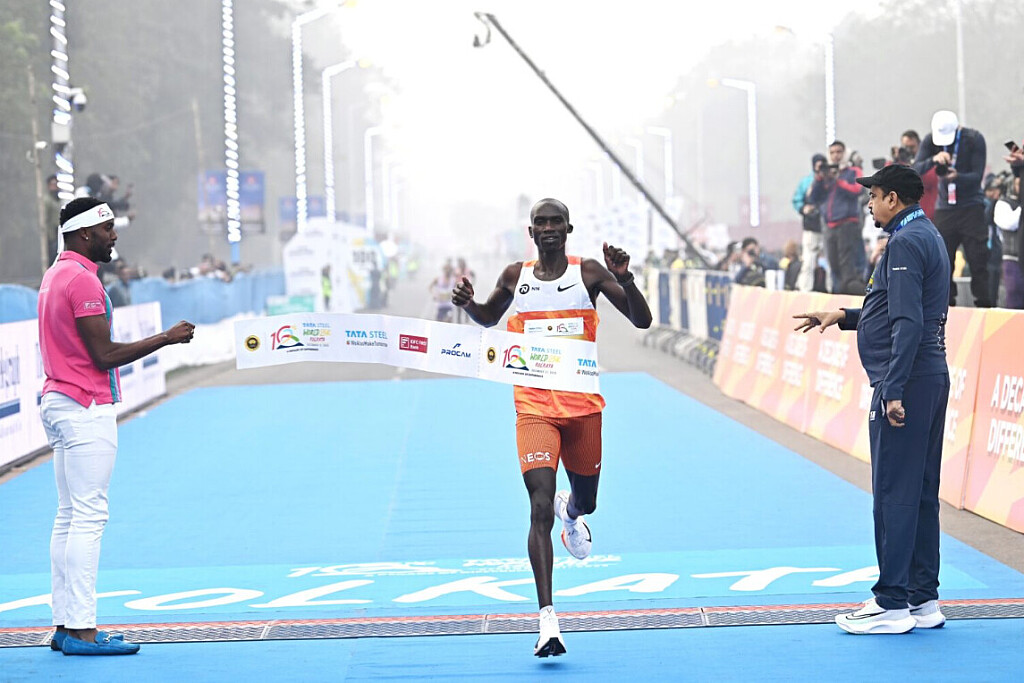
Joshua Cheptegei and Degitu Azimeraw Win Kolkata 25K
The 10th edition of the Tata Steel World 25K delivered a compelling blend of experience and debut brilliance on Sunday (Dec 21) morning in Kolkata, India. Ethiopia’s Degitu Azimeraw claimed a comeback victory in the women’s race, while Olympic and world champion Joshua Cheptegeiproduced a measured, authoritative win in his first-ever 25K appearance.
Azimeraw Returns to the Top
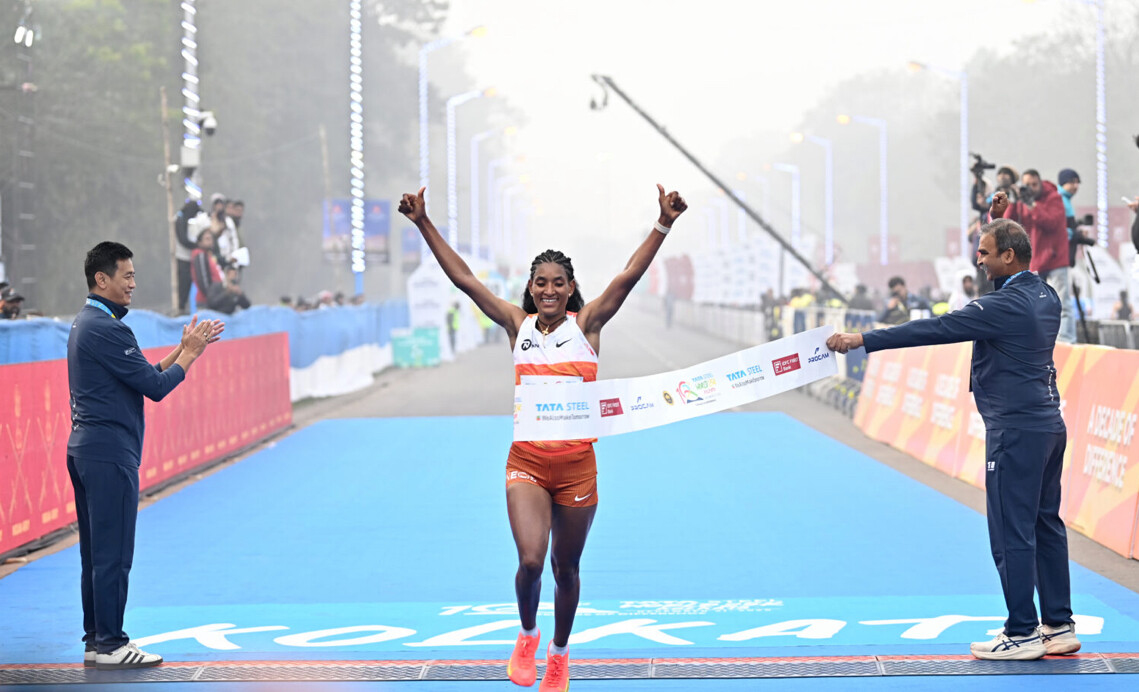
Run under cool conditions, the women’s race opened with a tightly packed Ethiopian quartet through the opening 5 km. Sutume Asefa Kebede—winner of this year’s Tokyo Marathon and a two-time defending champion in Kolkata—was the most decorated name in the group, joined by Azimeraw and Meselech Alemayehu.
Azimeraw, who won in Kolkata in 2017 and finished fourth the following year, stayed patient through the early stages. Alemayehu briefly edged ahead around 15 km, but Azimeraw responded decisively soon after, lifting the pace and asserting control.
She crossed the line in 1:19:36, securing her second Kolkata title eight years after her first. Kebede rallied late but had to settle for second in 1:20:28, with Alemayehu third in 1:20:48.
“It wasn’t the plan before for me,” Azimeraw said afterward. “My legs were a little stiff early, so I focused on staying strong. After 10 km, they felt better, and I kept building my race and speed. I’m very happy with this win.”
Cheptegei Delivers on 25K Debut
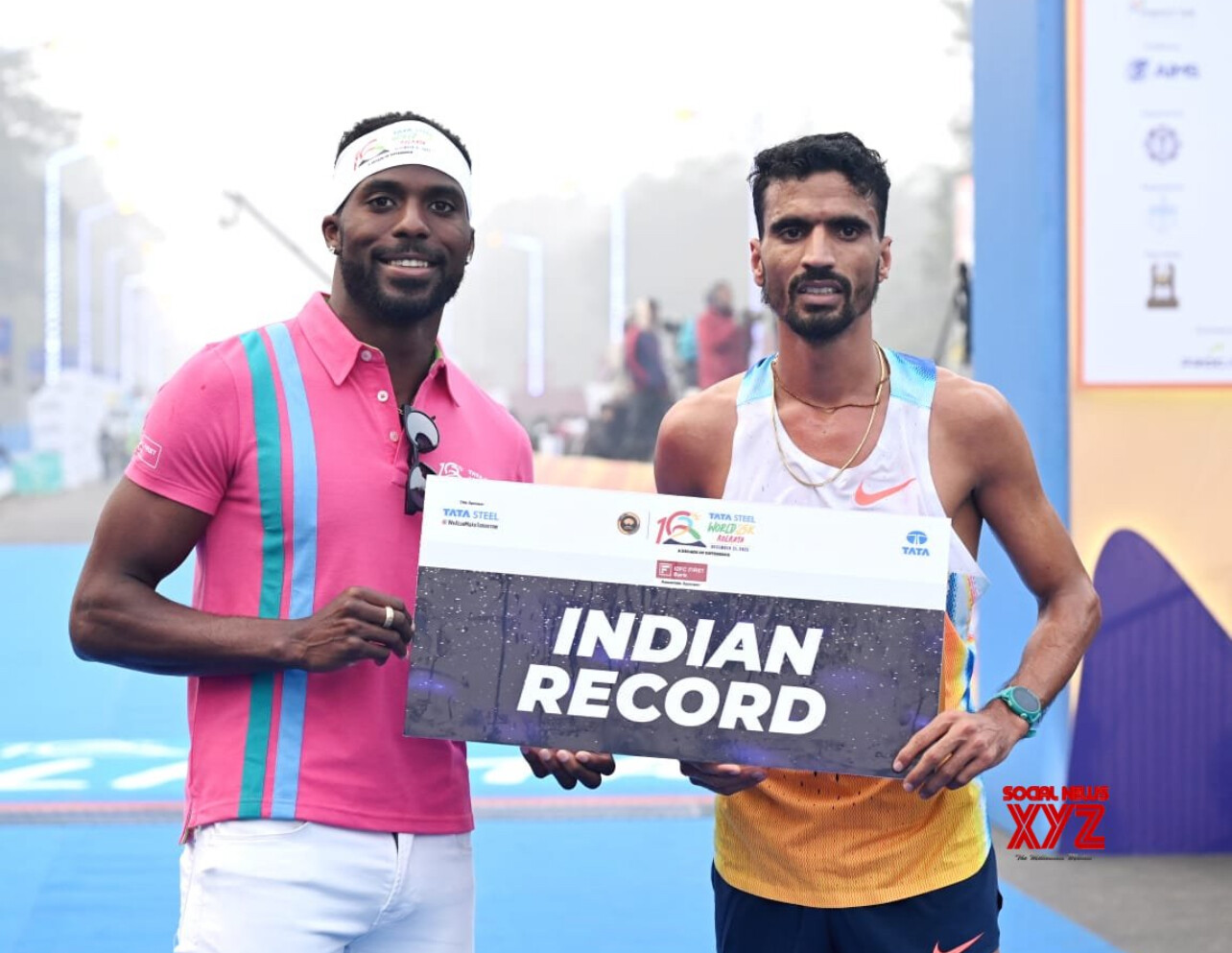
The men’s race unfolded as a tactical contest, led for much of the distance by Lesotho’s Tebello Ramakongoana. Tanzania’s Alphonce Simbu and Cheptegei shadowed closely as the leaders passed 20 km in 57:34 and the half-marathon mark in 60:49.
Cheptegei made his move soon after, breaking clear with a controlled surge that gradually opened daylight. Despite a determined late chase from Simbu, the Ugandan star held firm to win in 1:11:49, his first victory at the distance. Simbu followed in 1:11:56, with Ramakongoana third in 1:11:59.
“Winning mattered more than the record for me,” Cheptegei said. “Coming back to Kolkata and winning here is special. This victory gives me confidence and positivity as I prepare for my next marathon.”
Neither winner managed to break the world best or course record, narrowly missing out on the event’s top performance bonuses.
Indian Runners Rewrite the Record Books
India’s elite races provided some of the day’s most striking storylines. Gulveer Singh delivered a statement run, finishing sixth overall in 1:12:06 and slicing more than two minutes off his own Indian best of 1:14:10 set in 2024. His aggressive yet controlled effort left the rest of the domestic field trailing by significant margins.
“Records come from consistency,” Gulveer said. “With strong support, dedicated coaches, and relentless training, the goal is to be better than yesterday. India is rising, step by step.”
In the women’s Indian elite race, Seema matched that authority. The Asian cross-country champion stopped the clock at 1:26:04, breaking the long-standing Indian course record of 1:26:53 set in 2017. She dominated from early on, steadily increasing her lead before cruising home with energy to spare.
“The course is more challenging now, but I came here with the mindset of winning,” Seema said. “Discipline and sacrifice are everything. My next goal is qualifying for the Asian and Commonwealth Games.”
A Decade of World-Class Racing
As the Tata Steel World 25K celebrated its 10th edition, Sunday’s results reinforced its status as one of Asia’s premier road races—where Olympic champions, seasoned marathoners and rising national talents meet on equal footing. For Azimeraw and Cheptegei, Kolkata offered confidence and momentum; for India’s best, it marked another step forward on the global stage.
Overall International Men
1. Joshua Cheptegei (UGA) — 1:11:49
2. Alphonce Felix Simbu (TAN) — 1:11:56
3. Tebello Ramakongoana (LES) — 1:11:59
4. Collins Kipkorir (KEN) — 1:12:02
5. Gulveer Singh (IND) — 1:12:06
6. Fikadu Liche (ETH) — 1:12:09
7. Wisley Yego (KEN) — 1:12:12
8. Haymanot Alew (ETH) — 1:14:35
9. Niguse Abera (ETH) — 1:14:38
10. Harmanjot Singh (IND) — 1:15:11
Overall International Women
1. Degitu Azimeraw (ETH) — 1:19:36
2. Sutume Asefa Kebede (ETH) — 1:20:28
3. Meselech Alemayehu (ETH) — 1:20:48
4. Kuftu Tahir (ETH) — 1:23:32
5. Demilew Zemenaw (ETH) — 1:23:34
6. Netsanet Tafere (ETH) — 1:23:56
7. Rediet Daniel (ETH) — 1:24:18
8. Aberash Minsewo (ETH) — 1:24:48
9. Ergat Heshe (ETH) — 1:24:59
10. Seema (IND) — 1:26:04
(12/22/2025) ⚡AMPby Christopher Kelsall

Kolkata 25k
In Kolkata, a city rich in history, culture and custom, the third Sunday in December is a date that is eagerly anticipated. The Tata Steel Kolkata 25K (TSK 25K) has become synonymous with running in eastern India since it began in 2014. India’s first AIMS-certified race in the unique 25 km distance, the TSK 25K went global in its fourth...
more...
Mailu and Omare Win Bangsaen21 Half Marathon in Thailand
The coastline of Bangsaen, Thailand, provided a fitting stage for season-ending statements as the Bangsaen21 Half Marathon unfolded in the cool pre-dawn hours. On a course that rewards discipline as much as speed, Kenya’s Samwel Nyamai Mailu and Dolphine Nyaboke Omare delivered controlled, authoritative victories—closing their 2025 campaigns with confidence and setting a clear tone for the road season ahead.
From the opening kilometres, the race signaled its intent. The pace was honest but restrained, shaped by exposed coastal stretches and rising humidity along the Gulf of Thailand. Rather than early fireworks, both elite fields settled into rhythm, waiting for the moment when patience would turn into purpose.
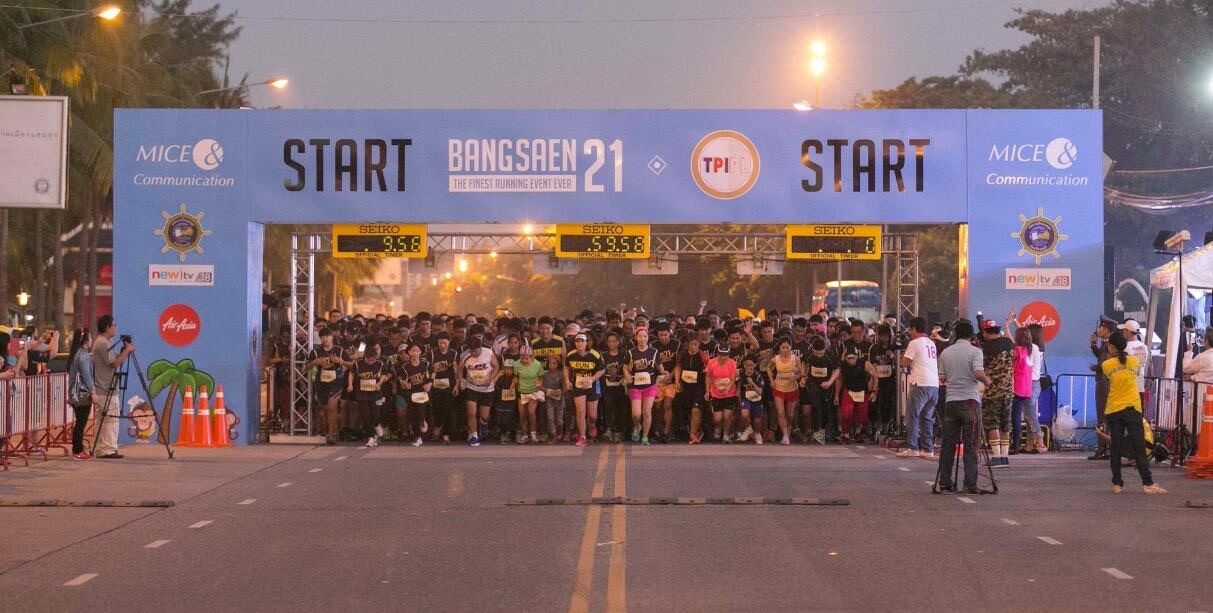
Mailu Times It Perfectly
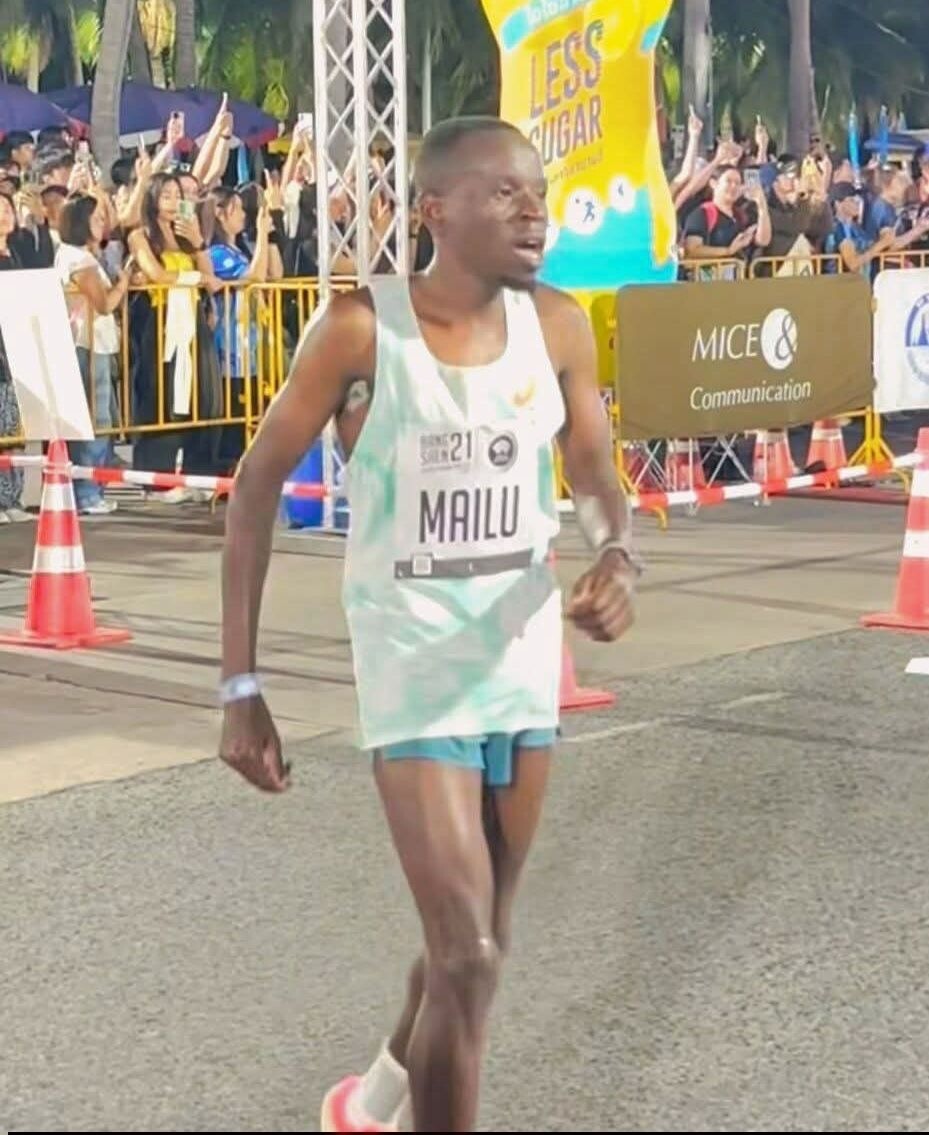
In the men’s race, a compact lead pack flowed smoothly through the early stages, with Kenyan and Ethiopian runners sharing the workload. Mailu ran economically and composed—never forcing the pace, never drifting from contention.
As the field passed halfway, the tempo tightened. Between 15 and 18 kilometres, Mailu applied sustained pressure, lifting the pace without a sharp surge. The move was subtle but decisive. Ethiopia’s Teresa Nyakola and Regasa Seyoum Beharu responded gamely, but the Kenyan’s rhythm proved relentless. By the closing kilometres, the gap had opened, and Mailu crossed the line in 1:02:59, a victory built on control and timing.
“This race was important for me to close the year well,” Mailu said. “I ran with patience and trusted my training. Now I’ll return to training and start preparing for next year’s road races.”
Nyakola secured second in 1:03:22, with Seyoum third in 1:03:36, completing a podium defined by tactical intelligence rather than early aggression.
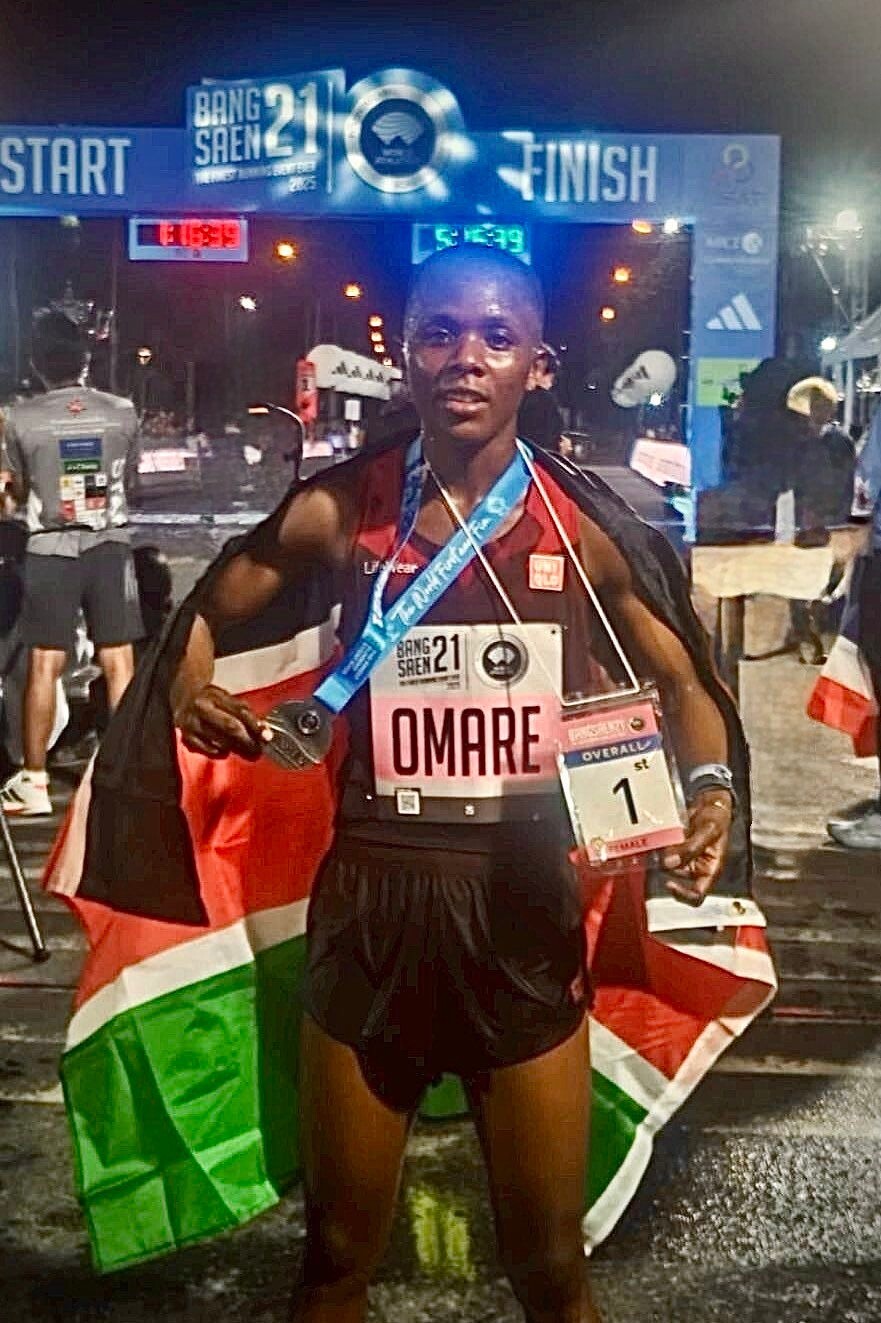
Omare’s Authority in the Women’s Race
If the men’s contest was about timing, the women’s race was about command.
From the outset, Omare took responsibility at the front, dictating a steady, uncompromising tempo. Ethiopia’s Beriha Gebreslasie and Mehret Gemeda stayed close, forming a compact trio through the middle stages as the course flattened along the coast.
The separation came quietly. Between 12 and 16 kilometres, Omare increased the pace gradually, stretching the elastic until it finally snapped. Without drama, she edged clear, maintaining form and cadence as the humidity deepened. Omare crossed the line in 1:10:14—a performance marked by calm authority and fatigue resistance.
“I’m happy to finish the year with a win,” Omare said. “This race gives me confidence. I’ll focus on next year’s road season, building step by step for the big races ahead.”
Gebreslasie finished second in 1:11:12, while Gemeda claimed third in 1:12:30, both producing resilient runs that kept the contest honest deep into the second half.
Discipline Rewarded on the Coast
Bangsaen21 once again proved to be a race that rewards restraint. The flat profile invites ambition, but the conditions punish excess. Those who conserved early and committed late emerged strongest.
For Mailu and Omare, the victories were about more than the clock—closing a demanding year with clarity, validating months of preparation, and turning the page with purpose. As the sun rose over the Gulf of Thailand and applause filled the finish area, the message was clear: the champions leave Bangsaen with momentum, eyes already fixed on 2026 and the global road calendar ahead.
Bangsaen21 2025 Results
Men
Samwel Nyamai Mailu (KEN) — 1:02:59
Teresa Nyakola (ETH) — 1:03:22
Regasa Seyoum Beharu (ETH) — 1:03:36
Gelana Teshome (ETH) — 1:04:20
Eyob Faniel (ITA) — 1:05:54
Abdi Kebede (ETH) — 1:05:55
Nattawut Innum (THA) — 1:10:10
Arthit Soda (THA) — 1:10:50
Pongsakorn Suksawat (THA) — 1:11:32
Women
Dolphine Nyaboke Omare (KEN) — 1:10:14
Beriha Gebreslasie (ETH) — 1:11:12
Mehret Gemeda (ETH) — 1:12:30
Lelise Bekele (ETH) — 1:13:49
Kalkidan Debeb (ETH) — 1:17:59
Pareeya Sonsem (THA) — 1:22:05
Ornanong Wongsorn (THA) — 1:22:14
Linda Chantachit (THA) — 1:24:13
Kawinthida Thadased (THA) — 1:25:35
Thanaporn Phatthanothai (THA) — 1:25:37
(12/22/2025) ⚡AMPby Robert Kibet for My Best Runs

Bangsaen 21
We woud like to invite all kind of runners from all over the world to join us in the firts an only half marathon "World Athletics Elite Label" Award in Thailand. Bangsaen 21 Half Marathon, ASIA´S best Half Marathon. A single race of Half Marathon distance, experience the most beautiful and challege course along the unique Bangsaen Beach....
more...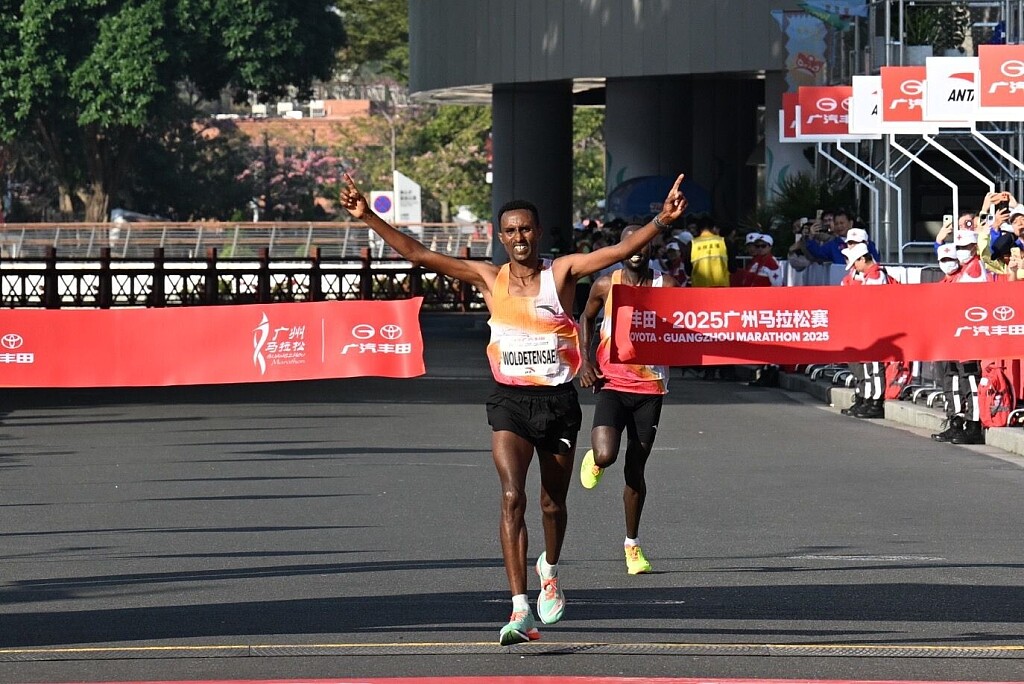
Ethiopian, Kenyan and Chinese Stars Shine at the Guangzhou International Marathon
Held in Guangzhou, the 2025 Guangzhou International Marathon brought 26,000 runners to the streets of southern China on December 21, unfolding beneath a crisp Lingnan sunrise at Tianhe Sports Center. From elites hunting fast times to first-timers savoring the spectacle, the day delivered standout performances and a citywide celebration of running.
The race followed the classic “One River, Two Banks” course—an urban showcase linking riverside boulevards, gleaming skyscrapers and historic districts, with signature crossings such as Liede Bridge and Haixinsha Island Park before the final run-in.

Men: A Two-Second Duel

Ethiopia’s Afewerk Mesfin Woldetensae controlled the men’s race with poise, timing his effort perfectly through the middle stages and holding firm to the line for victory in 2:12:23. Kenya’s Felix Kirwa pressed relentlessly and finished just two seconds back in 2:12:25, a thrilling margin that kept spectators on edge to the finish.
The loudest cheers came for China’s Zhaxi Ciren, who surged to third overall in 2:14:06 to claim top domestic honors—an important podium for home athletes on one of the country’s biggest road-racing stages.
Chinese runners showed impressive depth throughout the top eight. Yang Chunlong clocked 2:17:57, Solang Cairen followed in 2:18:34, while Zhou Youfa (2:20:15) and Deng Guomin (2:20:22) rounded out strong performances that underscored a rising competitive standard.
Women: Record-Setting Authority
The women’s race belonged to Kenya’s Joyce Chepkemoi Tele, who produced a commanding, front-to-back run to win in 2:22:40 and break the course record. Her effort combined bold early pacing with measured control and sustained strength to the tape.
Ethiopia completed the podium sweep as Betelihem Afenigus Yemer (2:27:52) and Chaltu Chimdesa Kumsa (2:31:37) followed, highlighting the nation’s depth and tactical sharpness on fast, city courses.
Chinese women also had reason to celebrate. Ding Changqin led the domestic contingent with a fine 2:35:40 for fifth overall. She was followed by Tang Xiaofang (2:40:26), Song Jinting (2:41:41) and Li Yingcui (2:45:36), all finishing inside the top eight.
A Festival on the Run
Beyond the front of the race, Guangzhou embraced marathon day. Creative costumes—from Cantonese opera tributes to animated mascots—dotted the route, while spectators packed bridges, plazas and riverside promenades, turning the course into a moving festival.
Organizers matched the energy with careful planning. Cooling mist stations, clearly marked aid points and visible safety crews helped ensure the 42.195-kilometer journey was both competitive and runner-friendly.
By day’s end, the 2025 Guangzhou International Marathon had crowned champions, rewritten records and delivered personal victories for thousands. For elites, the results will resonate into the season ahead; for the wider field, it was a day of breakthroughs and shared joy—running through one of China’s most vibrant cities.
Top Results — 2025 Guangzhou Marathon
Men
1. Afewerk Mesfin Woldetensae (ETH) — 2:12:23
2. Felix Kirwa (KEN) — 2:12:25
3. Zhaxi Ciren (CHN) — 2:14:06
4. Yang Chunlong (CHN) — 2:17:57
5. Solang Cairen (CHN) — 2:18:34
6. Zhou Youfa (CHN) — 2:20:15
7. Deng Guomin (CHN) — 2:20:22
Women
1. Joyce Chepkemoi Tele (KEN) — 2:22:40
2. Betelihem Afenigus Yemer (ETH) — 2:27:52
3. Chaltu Chimdesa Kumsa (ETH) — 2:31:37
4. Pending official release
5. Ding Changqin (CHN) — 2:35:40
6. Tang Xiaofang (CHN) — 2:40:26
7. Song Jinting (CHN) — 2:41:41
8. Li Yingcui (CHN) — 2:45:36
(12/22/2025) ⚡AMPby Robert Kibet for My Best Runs

Guangzhou International Marathon
The Guangzhou Marathon was launched in 2012 and certified by CAA as the A level event. From 2014 to 2017,Guangzhou Marathon was recognized as the CAA Gold Medal Race for four consecutive years. The year of 2018 has seen this event was upgraded as IAAF Gold Label Road Race after it was awarded as IAAF Bronze and Silver Label Road...
more...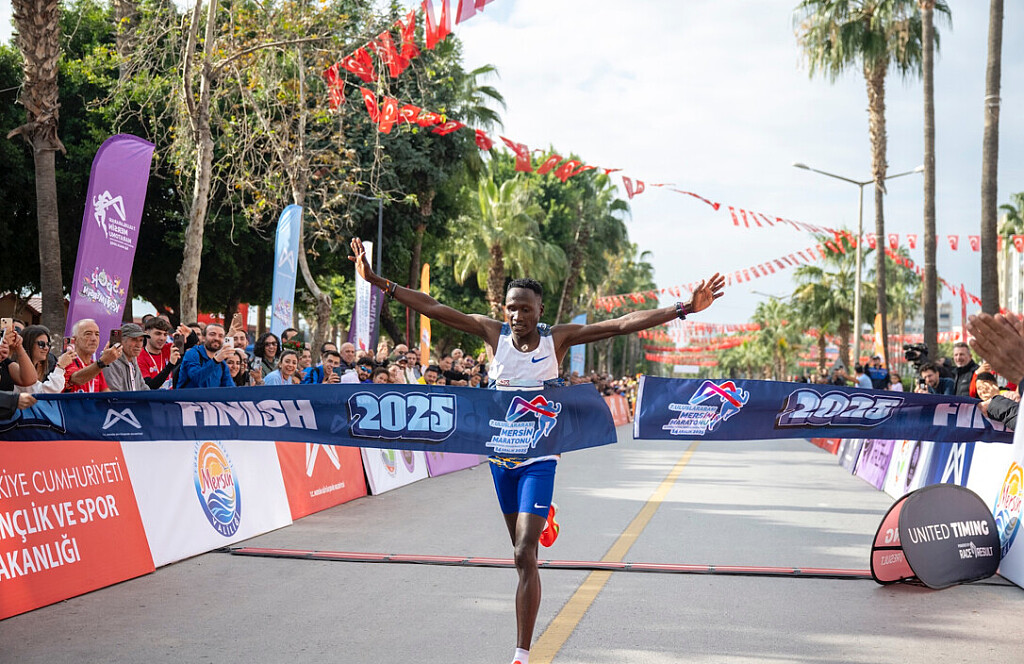
Vitalis Kibiwott Shatters Turkish Allcomers’ Record at Mersin Marathon
Vitalis Kibiwott delivered the breakthrough performance of his career on Sunday, storming to victory at the Mersin Marathon and smashing the Turkish Allcomers’ record. The 27-year-old Kenyan clocked a stunning personal best of 2:07:14, improving both the national mark and the course record by nearly a minute.
In the women’s race, pre-race favorite Rebecca Tanui of Kenya lived up to expectations, winning convincingly in 2:25:35 under excellent weather conditions. The Mersin Marathon holds World Athletics Elite Label status.
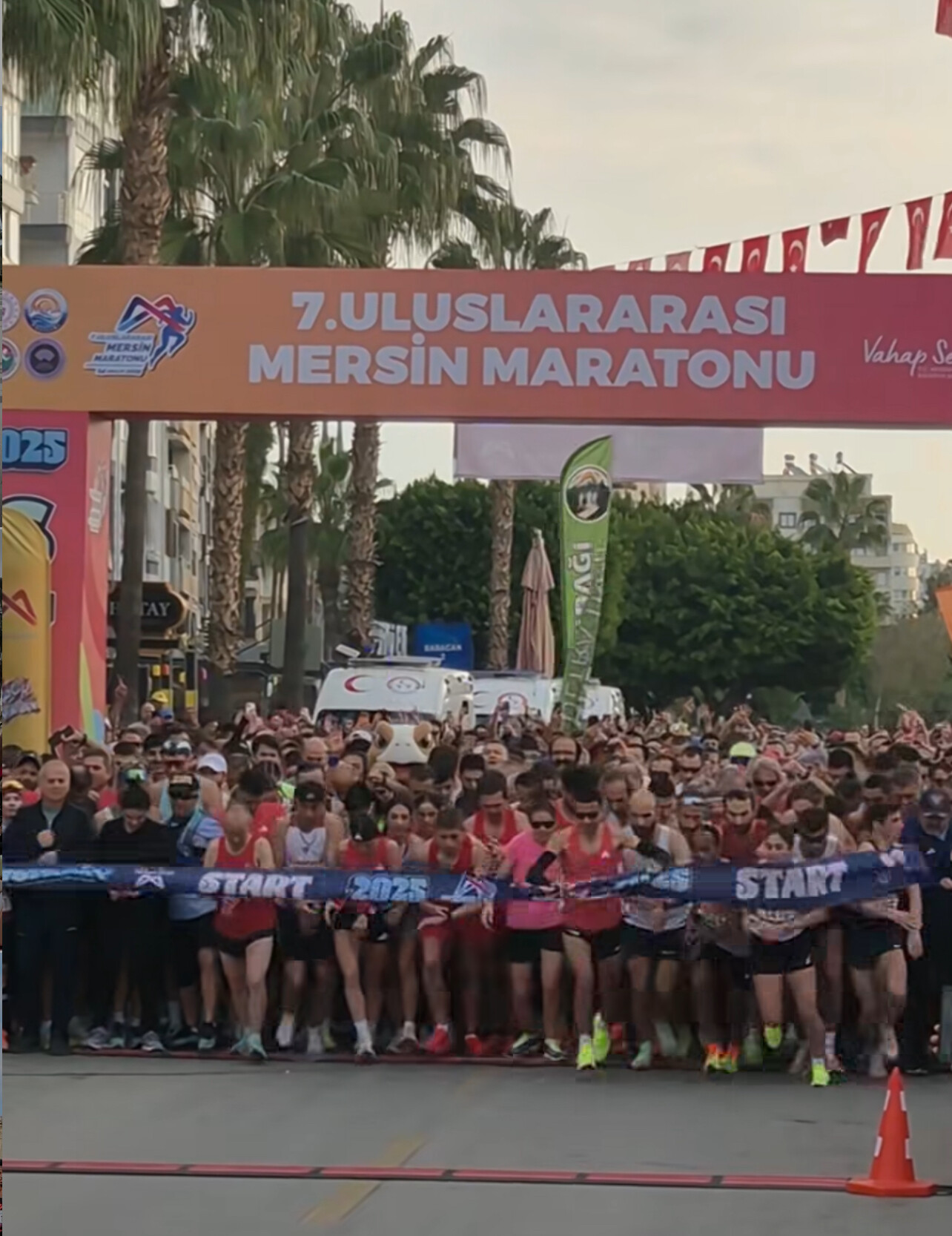
Still relatively unknown on the international marathon calendar, the Mersin Marathon is held in the major port city of Mersin, located on Türkiye’s southeastern Mediterranean coast and home to just over one million people. The seventh edition of the race attracted just over 400 marathon runners, alongside approximately 2,000 participants in the non-elite 10K. Despite its modest field size, the event has steadily built a reputation for fast times on its flat, out-and-back course.
The headline name on the men’s start list was Ghirmay Gebreslassie, Eritrea’s 2015 world champion. However, the 30-year-old was forced to drop out at 18 kilometers after developing a hamstring problem. That opened the door for a surprise turn of events, as his 18-year-old brother Abraham Embaye boldly took control of the race, passing halfway in 63:52.
Embaye remained in front deep into the race, but with just over five kilometers to go, experience prevailed. Kibiwott steadily closed the gap before moving past the young Eritrean, followed shortly by fellow Kenyan Albert Kangogo. Embaye fought on gamely to secure third place in 2:08:29.
Kibiwott finished powerfully to claim the win in 2:07:14, slicing 59 seconds off the Turkish Allcomers’ record. A year earlier, Kenyan Bethwell Kipkemboi had won in 2:08:13. Coming into the race with a personal best of 2:11:08, Kibiwott had been ranked only 11th on the start list—making his near four-minute improvement all the more remarkable.
“My training was very good, so I was expecting to run sub-2:08 and fulfilled my expectations,” said Kibiwott. “The young Eritrean was far ahead early, but I didn’t hurry. I felt strong at the end and made my move. The Mersin Marathon has a completely flat and very fast course.”
Women’s Race
Rebecca Tanui took command of the women’s race early and reached halfway in 72:30, closely shadowed by Ethiopia’s Genet Robi. The two remained together until around the 30-kilometer mark, where Tanui gradually pulled clear to secure a decisive victory.
While the course record of 2:23:08 remained intact, Tanui’s 2:25:35 was the fastest women’s marathon time run in Türkiye this year. The 33-year-old continues to show impressive consistency at the distance, following her victory at the 2023 Košice Marathon (PB 2:21:08) and a runner-up finish at this spring’s Vienna City Marathon.
Results
Men
1. Vitalis Kibiwott (KEN) – 2:07:14
2. Albert Kangogo (KEN) – 2:07:26
3. Abraham Embaye (ERI) – 2:08:29
4. Samuel Naibei (KEN) – 2:08:59
5. Abebaw Desalew (ETH) – 2:09:14
6. Isaac Kibet (UGA) – 2:10:19
Women
1. Rebecca Tanui (KEN) – 2:25:35
2. Genet Robi (ETH) – 2:26:07
3. Peninah Jerop (KEN) – 2:30:52
4. Millicent Kibet (KEN) – 2:31:05
5. Letebrhan Gebreslasea (ETH) – 2:35:35
(12/14/2025) ⚡AMPby Race News Service

John Korir Set for Valencia Marathon Showdown After Boston Glory and Chicago DNF
The streets of Valencia—long known as a launchpad for marathon breakthroughs—will welcome another major storyline this Sunday as Boston Marathon champion John Korir lines up for one of the fastest races in the world.
Korir, who claimed the 2024 Boston Marathon title, heads to Spain looking to reset his momentum after a disappointing DNF at the Chicago Marathon. Valencia, however, has a reputation for revitalizing careers and producing history-making performances. It was here that Kelvin Kiptumastonished the running world with his 2:01:53 debut, and where Sebastian Sawe delivered his own blazing introduction to the distance.

This year’s edition will test Korir against another powerhouse field.

A Clash With Sisay Lemma and a Deep Kenyan Contingent
Leading the opposition is Sisay Lemma, the Ethiopian star and one of the most consistent marathoners on the international circuit. Lemma, who has repeatedly delivered world-class marks, will be targeting a major statement run in Valencia.
The Kenyan challenge will be formidable as well, with a trio of established athletes joining Korir on the start line:
• Hillary Kipkoech – former track standout making waves on the roads
• Edward Cheserek – the 17-time NCAA champion continuing his marathon evolution
• Justus Kangongo – a proven performer capable of big breakthroughs
Each arrives with something to prove—and Valencia’s flat, rapid course has a way of rewarding ambition.
Why Valencia Matters
The Valencia Marathon has earned its reputation as the fastest marathon outside of the World Marathon Majors, regularly producing:
• Course records
• National records
• Top-10 all-time performances
• Breakout debuts for emerging stars
For Korir, the race presents the perfect environment to reestablish his position among the world’s elite and build momentum heading into the 2025 season.
What’s at Stake
A strong performance would reinforce Korir’s Boston victory as a sign of lasting form—not a one-off moment. With Olympic selections and global rankings in play, every second in Valencia matters.
As fans await Sunday’s race, one question stands out:
Will the City of Running deliver yet another defining chapter in marathon history?
My Best Runs will have full coverage and results as the race unfolds.
(12/04/2025) ⚡AMPby Boris Baron

VALENCIA TRINIDAD ALFONSO
The Trinidad Alfonso EDP Valencia Marathon is held annually in the historic city of Valencia which, with its entirely flat circuit and perfect November temperature, averaging between 12-17 degrees, represents the ideal setting for hosting such a long-distance sporting challenge. This, coupled with the most incomparable of settings, makes the Valencia Marathon, Valencia, one of the most important events in...
more...
Kosgei Shatters Course Record as Mengesha Leads Ethiopian Sweep at the 2025 Shanghai Marathon
The 2025 Shanghai Marathon delivered the kind of fireworks organizers were hoping for on Sunday, November 30—fast times, dominant front-running, and a powerful statement that Shanghai is ready to join the World Marathon Majors.
More than 23,000 runners started at the Bund at 7 a.m., racing through one of the world’s most iconic skylines before finishing at Shanghai Stadium. Both the men’s and women’s races produced standout performances.
Kosgei Back on Top With a Historic Run
Former world record-holder Brigid Kosgei returned to the top of the podium in commanding style. The 31-year-old Kenyan surged early, hit halfway under 69 minutes, and never looked back, winning in 2:16:36—
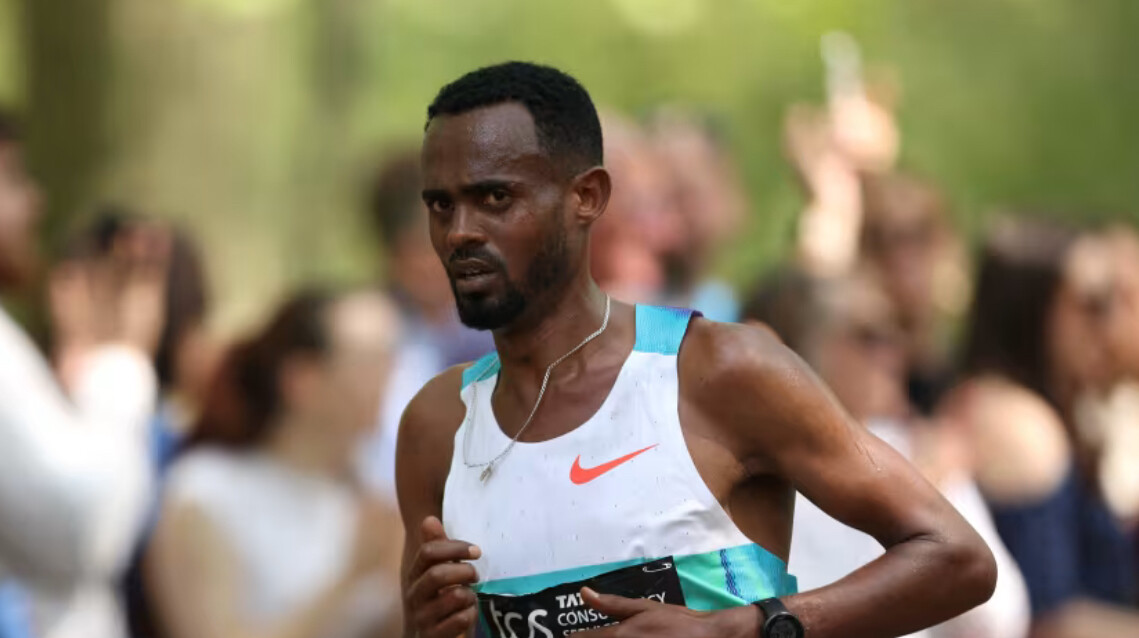
• the fastest marathon ever run on Chinese soil,
• a new Shanghai course record, and
• the third-fastest performance of her career.
Only compatriot Irine Chepet Cheptai could stay close in the early miles, eventually taking second in 2:18:51. Ethiopia’s Tiruye Mesfin finished third in 2:20:38, followed closely by fellow Ethiopian Bekelech Gudeta at 2:20:59.
China’s top star Zhang Deshun placed fifth in 2:25:13, continuing her impressive streak of top domestic finishes.
Ethiopia Sweeps the Men’s Podium
The men’s race unfolded differently—a large, aggressive pack early on before Ethiopia dominated the final 10K. In a furious sprint to the line, Milkesa Mengesha broke the tape in 2:06:25, edging compatriot Dawit Wolde by two seconds. Deresa Geleta finished third in 2:06:36, completing an all-Ethiopian podium.
Five Ethiopians broke 2:07, underscoring the depth at the front.
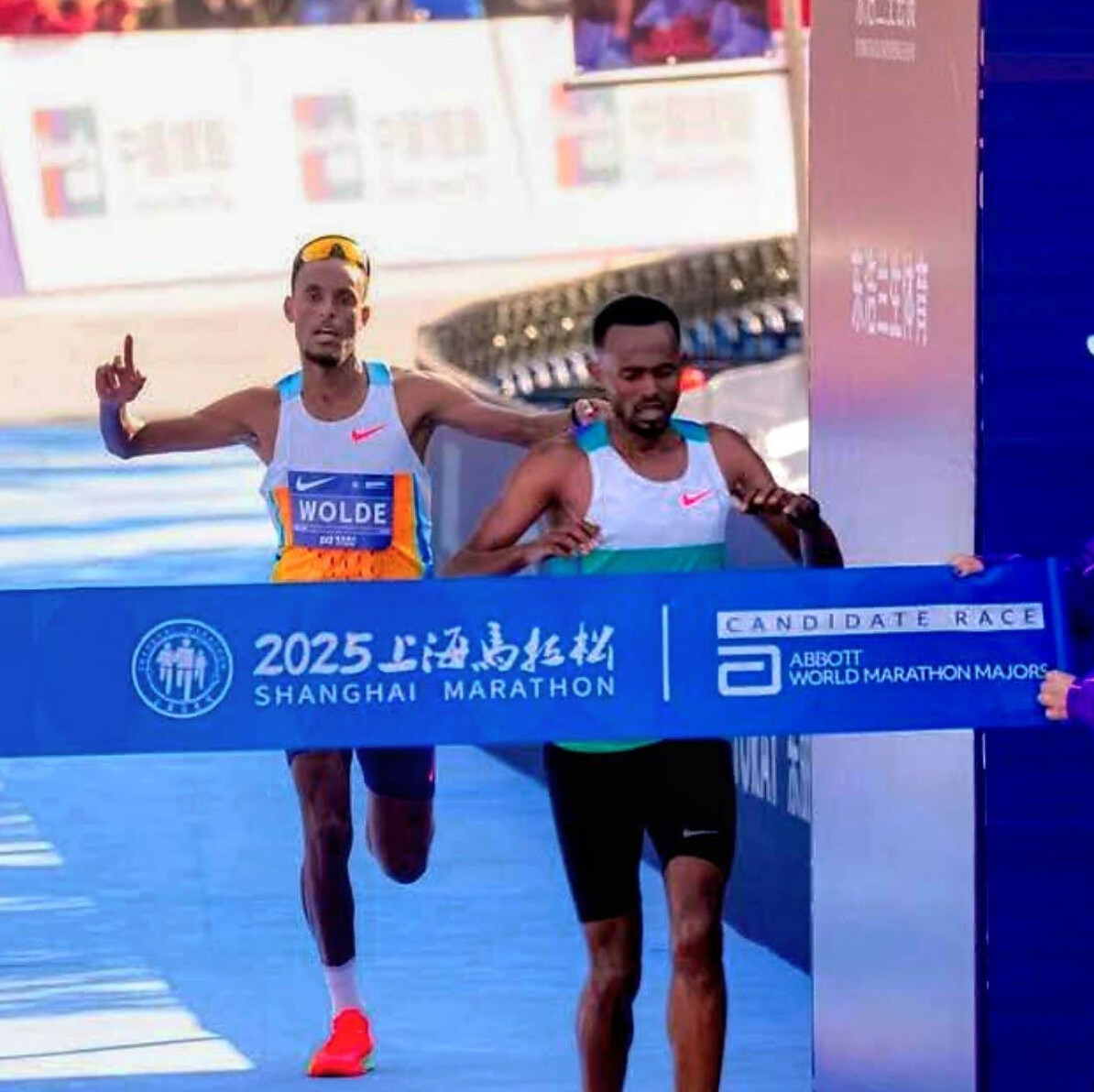
China’s Feng Peiyou delivered the best domestic performance of the day, clocking 2:08:36, the fastest marathon ever run by a Chinese athlete in Shanghai. Countrymen Yang Kegu, Li Dalin, and Ma Rui also cracked the top ten.
Top 10 Results
Men
1. Milkesa Mengesha (ETH) – 2:06:25
2. Dawit Wolde (ETH) – 2:06:27
3. Deresa Geleta (ETH) – 2:06:36
4. Haftu Teklu (ETH) – 2:06:57
5. Challa Gossa (ETH) – 2:08:06
6. Feng Peiyou (CHN) – 2:08:36
7. Solomon Kirwa Yego (KEN) – 2:09:42
8. Yang Kegu (CHN) – 2:12:00
9. Li Dalin (CHN) – 2:13:11
10. Ma Rui (CHN) – 2:13:26
Women
1. Brigid Kosgei (KEN) – 2:16:36 (course & Chinese all-comers record)
2. Irine Chepet Cheptai (KEN) – 2:18:51
3. Tiruye Mesfin (ETH) – 2:20:38
4. Bekelech Gudeta (ETH) – 2:20:59
5. Zhang Deshun (CHN) – 2:25:13
6. Veronicah Njeri Maina (KEN) – 2:26:33
7. Wu Shuang (CHN) – 2:27:17
8. Yao Miao (CHN) – 2:31:13
9. Shen Jiayao (CHN) – 2:31:57
10. Ma Xuexian (CHN) – 2:34:51
Shanghai’s Road to Becoming a Major
For the second straight year, organizers staged the race under the “Run Beyond Borders” banner, showcasing deep elite fields, expanded medical and volunteer support, and international broadcast coverage. Shanghai is currently undergoing World Marathon Majors evaluation, with the earliest possible inclusion in 2027.
(12/01/2025) ⚡AMPby Boris Baron

Shanghai International Marathon
Shanghai International Marathon has established itself as the marquee running event on China’s Marathon calendar. Every November, tens of thousand participants run passing the many historical places of this city such as Bund Bull, Customs House, Shanghai Museum, Shanghai Grand Theater, Shanghai Exhibition center, Jing’an Temple, Nan Pu Bridge, Lu Pu Bridge, Long Hua Temple, Shanghai Stadium. The course records...
more...
Stacked Fields Set for Sunday’s Shanghai Marathon as Kosgei and Kipchumba Return
The 2025 Shanghai Marathon — a World Athletics Platinum Label event — is set for Sunday (30), and both the women’s and men’s races are shaping up as some of the strongest in the event’s history. Former world record-holder Brigid Kosgei and defending men’s champion Philimon Kiptoo Kipchumba headline a deep international lineup chasing fast times on one of Asia’s premier courses.
The mass start field in Shanghai will once again deliver the energy and depth that has become a signature of this Platinum Label event, with tens of thousands of runners pouring through the city streets behind one of the strongest elite line-ups of the season. Local club runners, age-group veterans, first-time marathoners, and international amateurs will all share the course with the world’s best, creating a fast, colorful, and highly competitive atmosphere from start to finish.
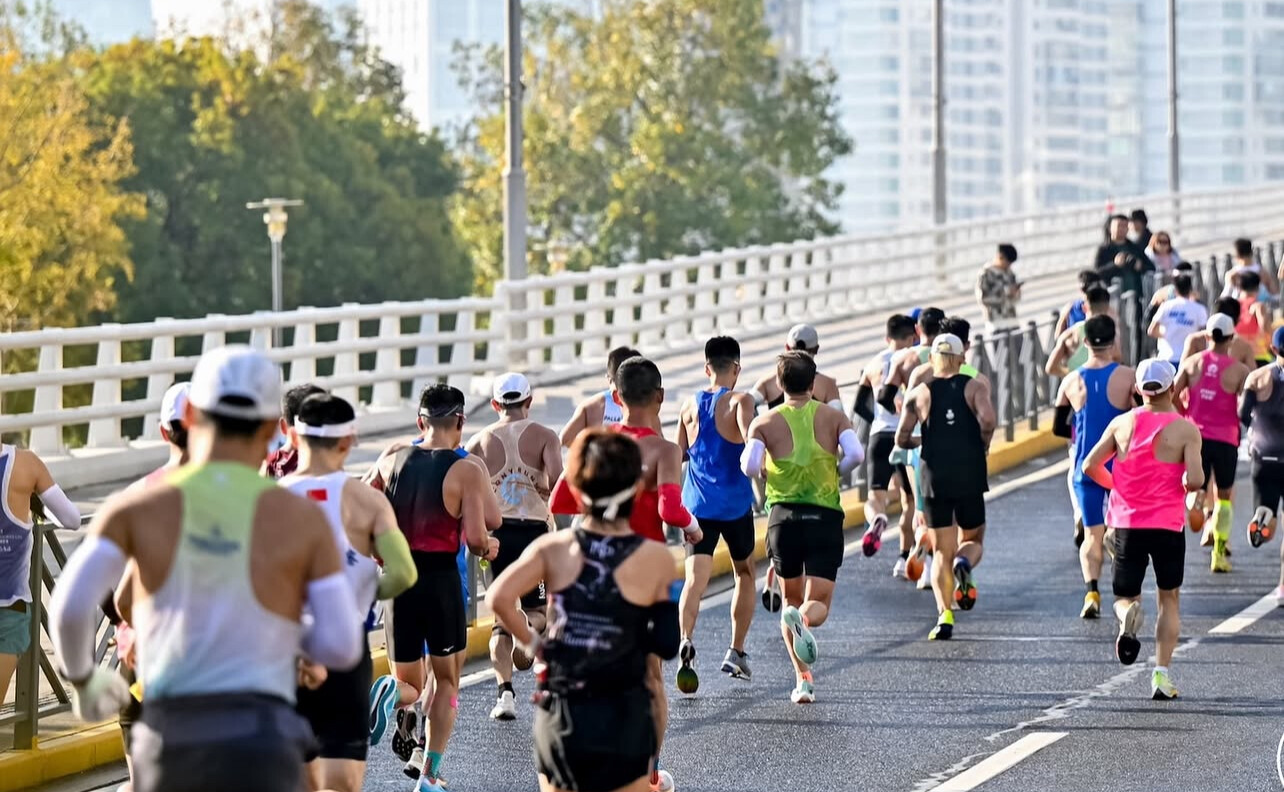
With ideal late-November conditions expected and Shanghai’s reputation for producing personal bests, the mass field is poised for another year of standout performances and unforgettable marathon moments.

Kosgei Targets First Win in Two Years — and a Course Record
Brigid Kosgei, whose 2:14:04 stood as the world record from 2019 to 2023, lines up for her third marathon of the year. The 31-year-old Kenyan has been consistently sharp in 2025—second in Hamburg (2:18:26) and again in Sydney (2:18:56).
A victory in Shanghai would be her first since Abu Dhabi 2023, but the stakes go beyond winning:
• The course record stands at 2:20:36 (Yebrgual Melese, 2018).
• Pacers have been asked to roll out at 2:17:50 pace, fast enough to challenge both the course mark and the Chinese all-comers’ record (2:18:09 by Ruti Aga, 2023).
Kosgei will not be alone. Two sub-2:20 performers stand in her way:
• Irine Cheptai (KEN) — PB 2:17:51, coming off strong runs in Chicago and Boston.
• Tiruye Mesfin (ETH) — PB 2:18:35, part of Ethiopia’s long history of dominance here.
Ethiopian women have won 10 of the last 14 editions, and Mesfin leads their charge again.
China brings a serious contender as well.
• Zhang Deshun, the No. 3 all-time Chinese marathoner (2:20:53 at Tokyo), returns just two weeks after winning the National Games.
Add in Bekelech Gudeta (ETH) — who won marathons in Seoul and Mexico City this year — and the women’s race becomes one of the most competitive in Shanghai’s history.
Four Sub-2:04 Ethiopians Lead Men’s Lineup

The men’s race may be even deeper. Ethiopia sends a quartet capable of pushing into all-time territory:
• Deresa Geleta (ETH) — 2:02:38, fastest in the field
• Birhanu Legese (ETH) — 2:02:48, two-time Tokyo champion
• Milkesa Mengesha (ETH) — 2024 Berlin winner
• Dawit Wolde (ETH) — former Xiamen champion
Geleta has been brilliant when healthy, clocking 2:02:38 in Valencia and 2:03:51 in Tokyo this year, though he dropped out of Wuxi and the World Championships. Legese tuned up with a 1:00:54 at the New Delhi Half.
But Ethiopia is far from guaranteed victory.
Kiptoo Kipchumba Returns to Defend His Title
Kenya’s Philimon Kiptoo Kipchumba, the 2023 champion, owns the Chinese all-comers’ record of 2:05:35 set in Shanghai. He hasn’t raced since placing 10th here last year, but he returns with unfinished business.
He is joined by a strong Kenyan contingent:
• Titus Kipruto — 2:04:54
• Solomon Kirwa Yego — 2:05:42
• Kenneth Keter — 2:05:53
• Edmond Kipngetich — 2:06:47
China’s biggest hope is Feng Peiyou, the second-fastest Chinese marathoner ever (2:07:06). A small improvement would break the national record of 2:06:57.
Pacers will target 2:58/km (≈2:05:00) — fast enough to threaten Kiptoo’s all-comers’ record.
Leading Entries
Women
• Brigid Kosgei (KEN) – 2:14:04
• Irine Chepet Cheptai (KEN) – 2:17:51
• Tiruye Mesfin (ETH) – 2:18:35
• Selly Chepyego Kaptich (KEN) – 2:20:03
• Zhang Deshun (CHN) – 2:20:53
• Bekelech Gudeta (ETH) – 2:21:36
• Veronicah Njeri Maina (KEN) – 2:24:46
• Xia Yuyu (CHN) – 2:25:45
• Wu Bing (CHN) – 2:26:01
• Li Meizhen (CHN) – 2:27:51
• Shen Ni (CHN) – 2:28:47
• Huang Xuemei (CHN) – 2:29:51
Men
• Deresa Geleta (ETH) – 2:02:38
• Birhanu Legese (ETH) – 2:02:48
• Dawit Wolde (ETH) – 2:03:48
• Haftu Teklu (ETH) – 2:04:42
• Titus Kipruto (KEN) – 2:04:54
• Philimon Kiptoo Kipchumba (KEN) – 2:05:35
• Solomon Kirwa Yego (KEN) – 2:05:42
• Kenneth Keter (KEN) – 2:05:53
• Edmond Kipngetich (KEN) – 2:06:47
• Feng Peiyou (CHN) – 2:07:06
• Challa Gossa (ETH) – 2:07:32
• Wu Xiangdong (CHN) – 2:08:04
(11/29/2025) ⚡AMPby World Athletics
Shanghai International Marathon
Shanghai International Marathon has established itself as the marquee running event on China’s Marathon calendar. Every November, tens of thousand participants run passing the many historical places of this city such as Bund Bull, Customs House, Shanghai Museum, Shanghai Grand Theater, Shanghai Exhibition center, Jing’an Temple, Nan Pu Bridge, Lu Pu Bridge, Long Hua Temple, Shanghai Stadium. The course records...
more...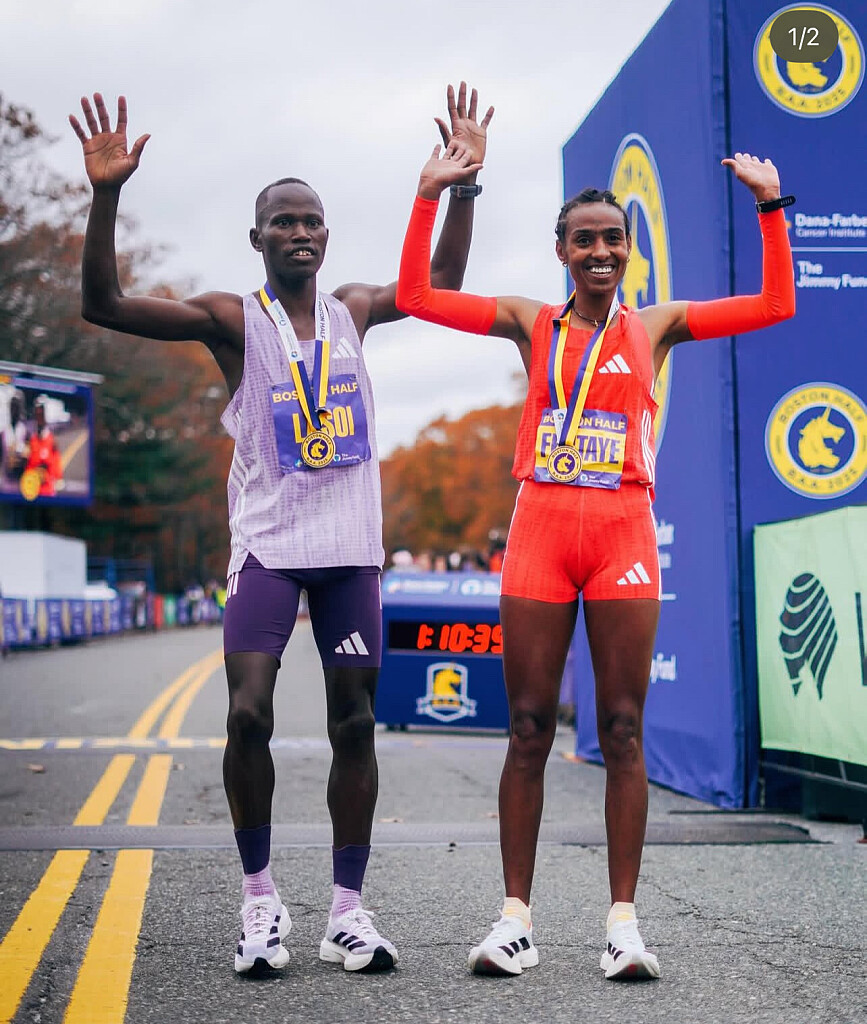
Fantaye Belayneh Repeats, Isaia Lasoi Shines at the 2025 Boston Half Marathon
Boston’s Emerald Necklace once again set the stage for one of the country’s most scenic and competitive half marathons on Sunday morning. Over 7,000 runners lined up at Franklin Park for the 2025 Boston Half Marathon, where Ethiopia’s Fantaye Belayneh successfully defended her women’s title and Kenya’s Isaia Lasoi powered to an impressive victory in the men’s race. Each champion earned $15,000 for their wins.
Men’s Race – Lasoi Dominates in 1:00:59
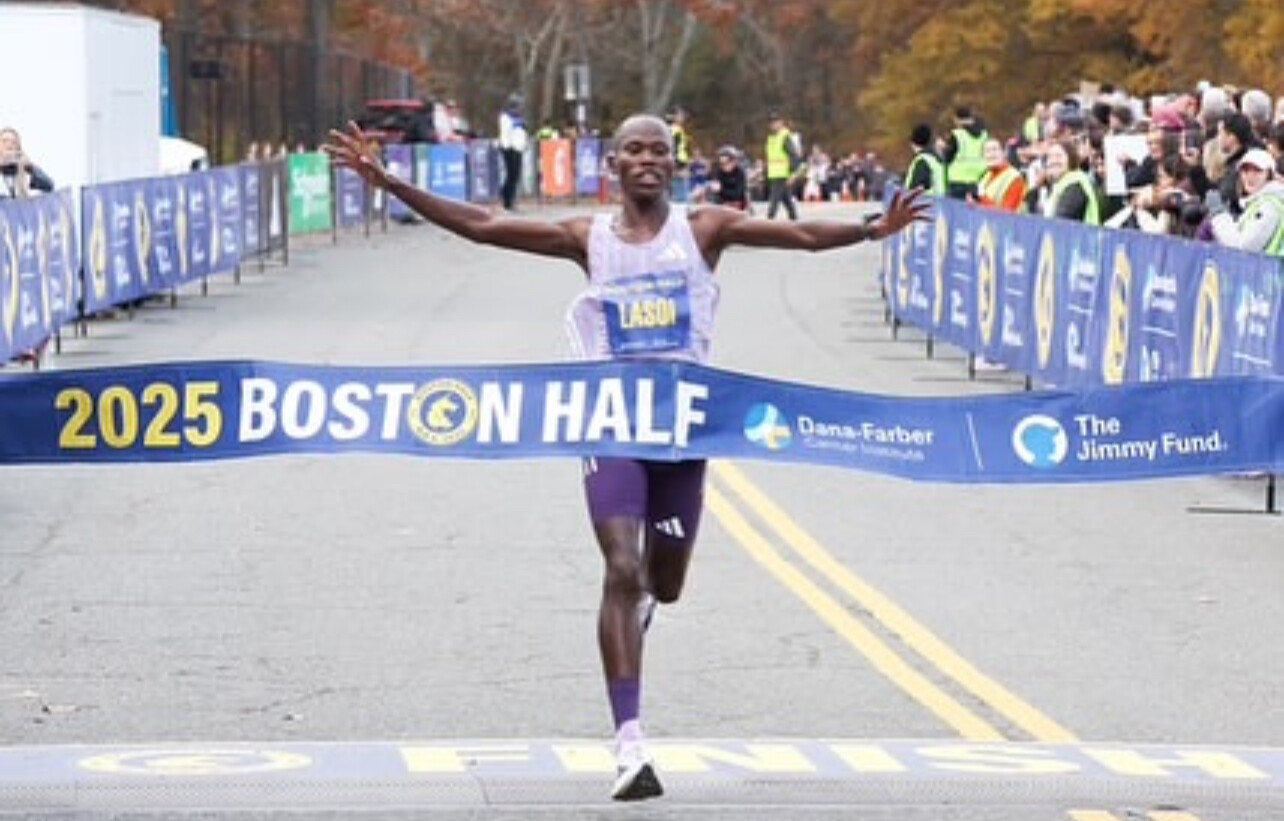
Kenya’s Isaia Lasoi delivered a commanding performance, clocking 1:00:59 to capture the men’s crown and the $15,000 winner’s prize. The race unfolded at a fast but controlled pace through the park-lined streets, with Lasoi making his decisive move in the final 5K. Uruguay’s Santiago Catrofefollowed in 1:01:23, while Kenya’s Andrea Kiptoo secured third in 1:01:30.
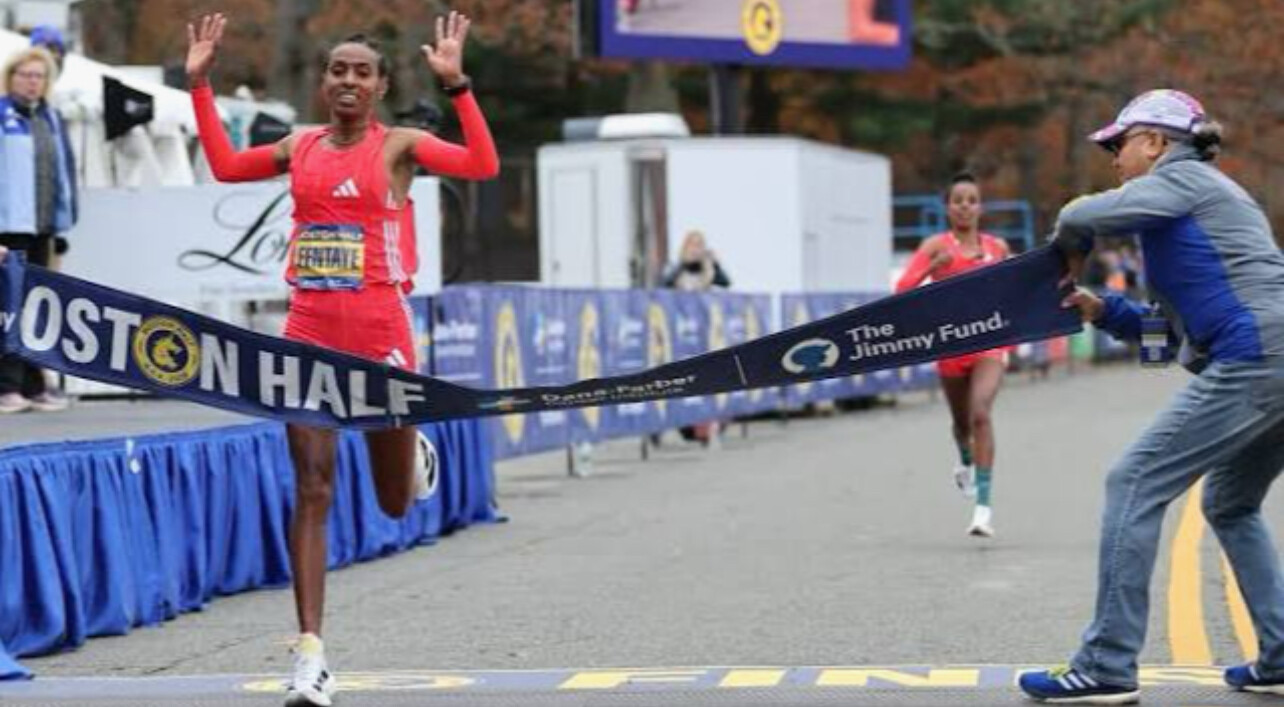
Lasoi’s sub-61 performance on Boston’s undulating course reinforced his growing status among Kenya’s new generation of road racing talent. His powerful stride and tactical patience over the final stretch left no doubt about his supremacy.
Women’s Race – Belayneh Holds Off Wudu in a Thrilling Finish
In the women’s division, Ethiopia’s Fantaye Belayneh out-kicked her compatriot Melknat Wudu in a dramatic finish, crossing the line in 1:08:51 — just two seconds ahead of Wudu (1:08:53). Kenya’s Evaline Chirchir completed the podium in 1:09:01. Belayneh’s repeat win also earned her $15,000, matching Lasoi’s prize.
Her victory made her the first woman since Joan Chelimo Melly (2017–2018) to win back-to-back Boston Half titles. With calm focus and a perfectly timed surge in the final meters, Belayneh turned a shoulder-to-shoulder battle into a defining moment of determination and poise.
Course and Conditions
Runners traversed Boston’s “Emerald Necklace,” a 13.1-mile loop of winding parkways and rolling roads connecting the city’s most picturesque green spaces. Conditions were ideal — cool temperatures and light winds — creating the perfect backdrop for fast times and fierce competition.
Race Legacy and Global Field
The Boston Half Marathon continues to attract elite international athletes alongside thousands of passionate runners from around the world. With its blend of competition, camaraderie, and New England charm, the event remains one of the premier fall half marathons in the United States.
Belayneh and Lasoi’s victories underscored the enduring global depth of distance running — and confirmed once again that Boston’s roads remain among the finest proving grounds for champions.
(11/10/2025) ⚡AMPby Boris Baron
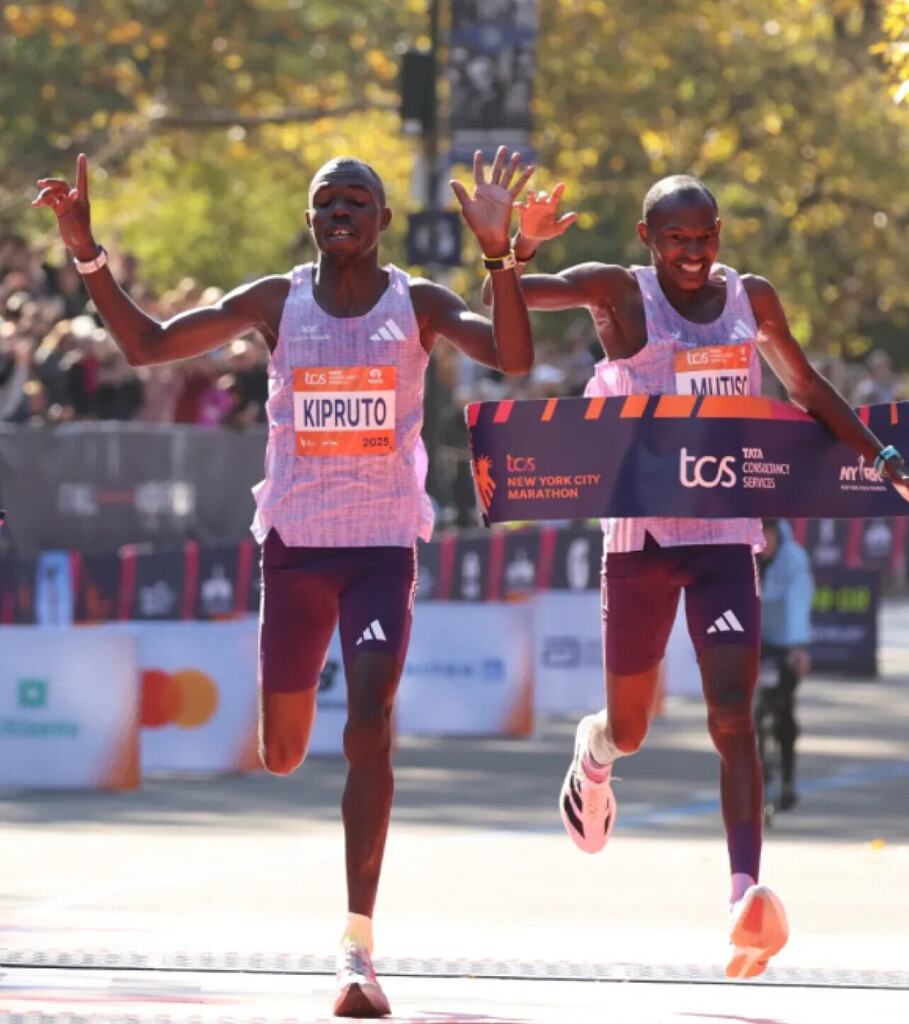
Benson Kipruto Wins a Thrilling 2025 New York City Marathon as Kipchoge and Bekele Fade
The streets of New York witnessed one of the most dramatic finishes in recent marathon history as Benson Kipruto of Kenya edged compatriot Alexander Mutiso by fractions of a second to win the 2025 TCS New York City Marathon. Both men were clocked at 2:08:09, with Kipruto leaning ahead in the final meters of Central Park to claim the title.
The victory marked a triumphant return to the top for Kipruto, who has previously won the Boston and Chicago Marathons. On a day when tactics mattered as much as fitness, he delivered a perfectly timed surge to secure the crown.
Alexander Mutiso finished a close second in 2:08:09, just 0.16 seconds behind, while 2021 New York champion Albert Korir completed the Kenyan sweep in third with a time of 2:08:57. Great Britain’s Patrick Dever ran a superb debut marathon to finish fourth in 2:08:58, and Swiss athlete Matthias Kyburz crossed the line fifth in 2:09:55.
All eyes were on Eliud Kipchoge, the two-time Olympic champion and marathon world record holder, making his long-awaited debut in New York. The legendary Kenyan started conservatively and remained in the lead pack through halfway, but the relentless climbs and bridges of the course eventually took their toll. Kipchoge finished 17th in 2:14:36, smiling as he crossed the line, suggesting this could be his final appearance at a World Marathon Major.
Ethiopian great Kenenisa Bekele also started among the favorites but faded after the 30-kilometer mark and did not finish the race. His withdrawal, along with Kipchoge’s struggles, highlighted the unique difficulty of New York’s course—one that tests strategy and strength more than sheer speed.
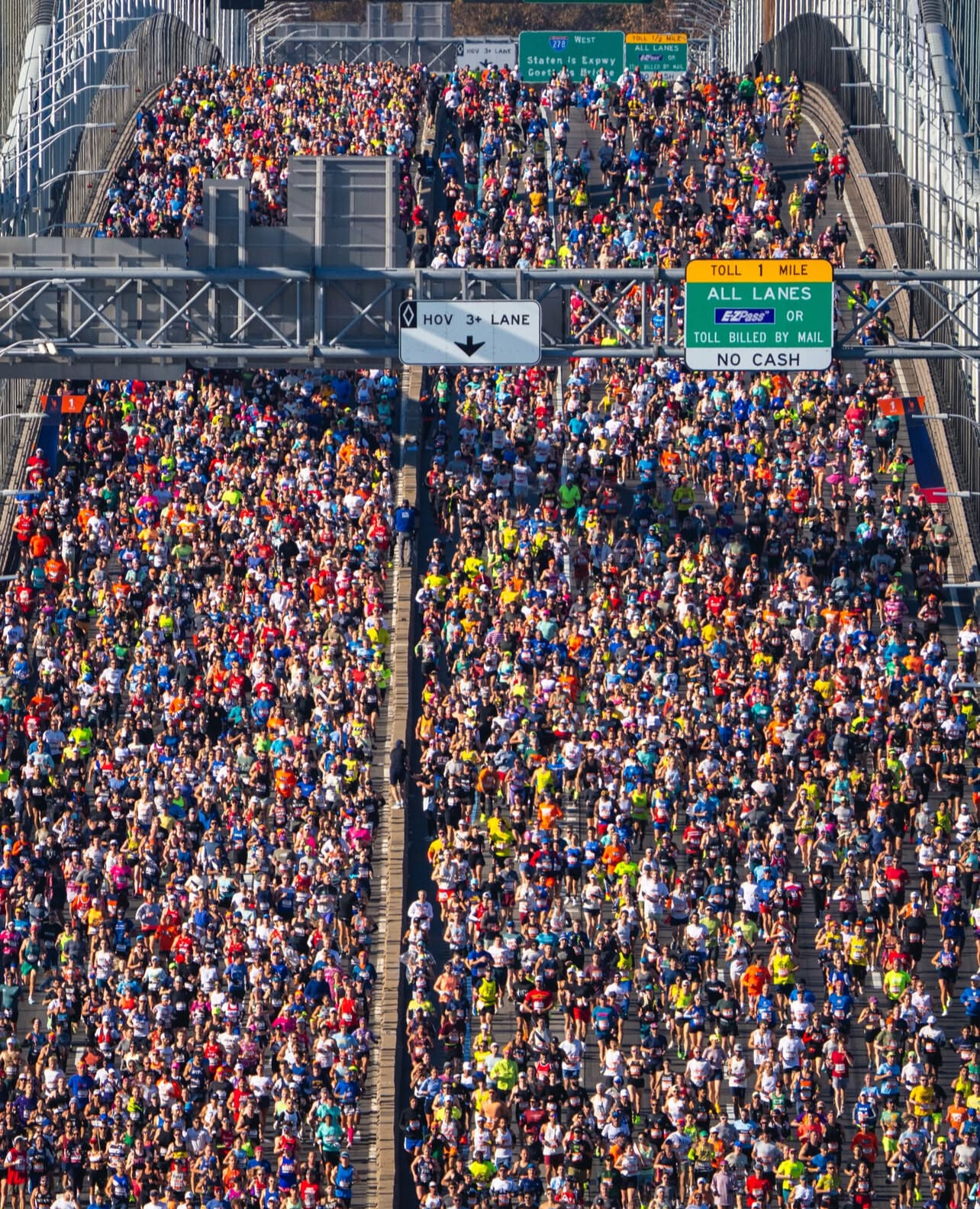
Despite the absence of a record-breaking time, the 2025 edition of the TCS New York City Marathon delivered unforgettable drama. The Kenyan trio’s podium sweep reaffirmed the country’s dominance in distance running, while thousands of runners from across the globe once again turned the streets of the five boroughs into a festival of endurance and inspiration.
Top 10 Men’s Results – 2025 TCS New York City Marathon:
1. Benson Kipruto (Kenya) – 2:08:09
2. Alexander Mutiso (Kenya) – 2:08:09
3. Albert Korir (Kenya) – 2:08:57
4. Patrick Dever (Great Britain) – 2:08:58
5. Matthias Kyburz (Switzerland) – 2:09:55
6. Joel Reichow (United States) – 2:09:56
7. Charles Hicks (United States) – 2:09:59
8. Sondre Moen (Norway) – 2:10:15
9. Tsegay Weldlibanos (Eritrea) – 2:10:36
10. Joe Klecker (United States) – 2:10:37
Eliud Kipchoge finished 17th in 2:14:36.
Kenenisa Bekele did not finish (DNF).
(11/02/2025) ⚡AMPby Boris Baron
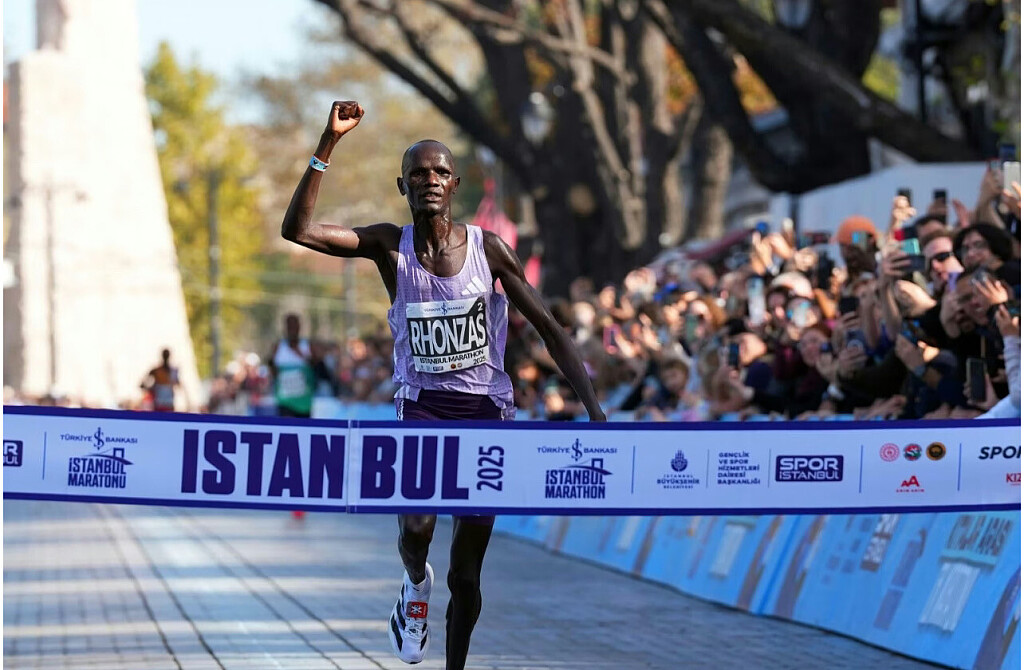
Rhonzas Kilimo and Bizuager Aderra Triumph in Thrilling Istanbul Marathon
ISTANBUL, November 2, 2025 — Kenya’s Rhonzas Kilimo and Ethiopia’s Bizuager Aderra claimed sensational victories at the 47th Türkiye İş Bankası Istanbul Marathon, both securing the biggest wins of their careers and pocketing $50,000 each.
In warm, sunny conditions, 29-year-old Kilimo edged out defending champion Dejene Debela in a fierce uphill battle to the finish, clocking 2:10:12. Debela was just 11 seconds back in 2:10:23, with fellow Ethiopian Sufaro Woliyi third in 2:10:26.
The women’s race delivered the closest finish in the marathon’s history. 22-year-old Bizuager Aderraemerged as a surprise champion, breaking her personal best with 2:26:19 — just two seconds ahead of Olympic steeplechase silver medalist Sofia Assefa. Kenya’s Joan Kilimo, unrelated to the men’s winner, finished third in 2:26:36.
More than 6,000 runners competed in the marathon, with a total of 42,000 participants across all distances. The event holds a World Athletics Gold Label and is Turkey’s premier marathon.
Men’s Race: Kilimo Conquers the Hills
The men’s race began at an even pace, with the lead pack — including 16 athletes and four pacemakers — passing 10K in 30:41 and halfway in 1:04:41. Hopes of breaking the six-year-old course record (2:09:44 by Daniel Kibet) faded as the tempo dropped in the second half under 20°C heat.
As the runners approached the final mile-long climb, five men remained: Kilimo, Debela, Woliyi, Kenya’s Isaac Too, and Turkey’s Hüseyin Can. Too and Woliyi began to fade, leaving Kilimo and Debela to duel for victory.
“I had no clue about the uphill section at the end — it was a surprise to me,” Kilimo said afterward. “But I train in hilly areas around Iten, so I was ready.”
Kilimo, who ran a personal best of 2:06:09 in Seoul in 2024, crossed the line first in 2:10:12. “This was my biggest win so far,” he added. “My next goal is to run 2:03 on a fast course.”
Can delighted the home crowd by finishing fifth in a personal best of 2:10:58.
Women’s Race: Aderra’s Last-Minute Surge
The women’s field set an ambitious early pace — 33:38 at 10K and 1:11:22 at halfway — led by a pack of five: Ethiopians Bizuager Aderra, Sofia Assefa, Tigst Getnet, Gete Dukale, and Kenya’s Joan Kilimo.
As the temperature rose, the pace slowed. Assefa briefly fell behind but fought back, and with one kilometer to go, four women were still in contention. Assefa appeared to edge ahead, but Aderra responded with a decisive surge over the final 400 meters, sprinting into Sultan Ahmet Park to secure the win.
“This is the biggest win of my life — and a personal best,” said Aderra, whose previous mark was 2:28:27 from Rabat earlier this year. “My next goal is to go under 2:20.”
Top Results
Men
1. Rhonzas Kilimo (KEN) – 2:10:12
2. Dejene Debela (ETH) – 2:10:23
3. Sufaro Woliyi (ETH) – 2:10:26
4. Isaac Too (KEN) – 2:10:45
5. Hüseyin Can (TUR) – 2:10:58
6. Dickson Nyakundi (KEN) – 2:12:15
7. Charles Mneria (KEN) – 2:13:04
8. Dominik Bett (KEN) – 2:17:26
Women
1. Bizuager Aderra (ETH) – 2:26:19
2. Sofia Assefa (ETH) – 2:26:21
3. Joan Kilimo (KEN) – 2:26:36
4. Tigst Getnet (ETH) – 2:26:44
5. Gete Dukale (ETH) – 2:29:19
6. Roman Gidey (ETH) – 2:29:53
7. Rael Cherop (KEN) – 2:32:25
8. Yenenesh Tilahun Dinkesa (ETH) – 2:34:03
(11/02/2025) ⚡AMPby Race News Service

N Kolay Istanbul Marathon
At the beginning, the main intention was simply to organise a marathon event. Being a unique city in terms of history and geography, Istanbul deserved a unique marathon. Despite the financial and logistical problems, an initial project was set up for the Eurasia Marathon. In 1978, the officials were informed that a group of German tourists would visit Istanbul the...
more...